Joe Hill | NOS4A2

joe hill

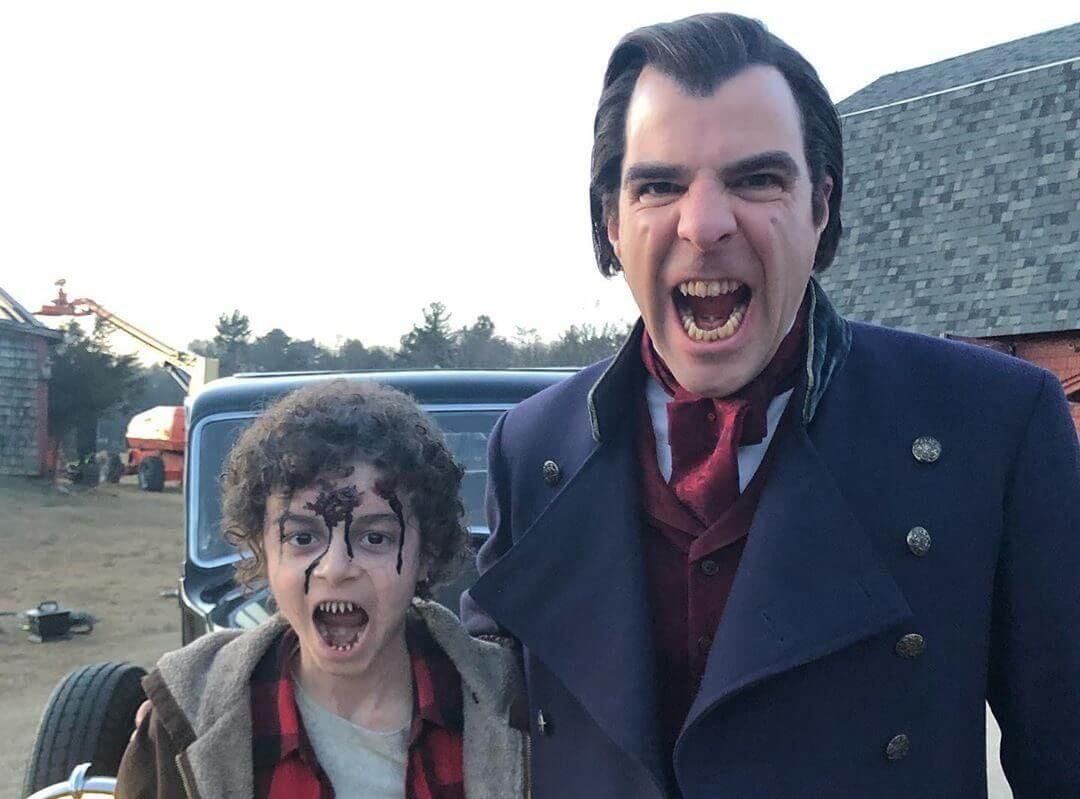
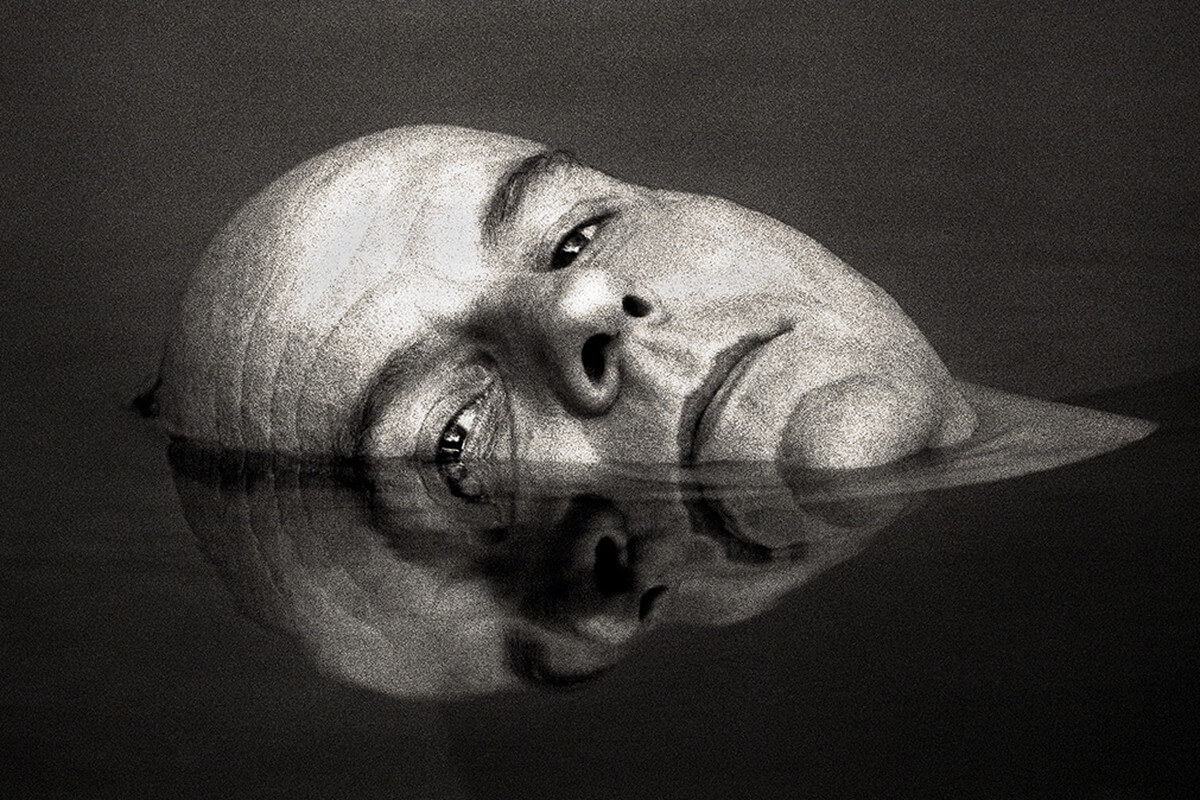
STARBURST chats to author JOE HILL about the TV adaptation of NOS4A2, which is now available on DVD.

There was a bridge in Bangor, Maine where I grew up. It was this terrifying covered bridge that crossed the Penobscot River,” author Joe Hill recalls from his home in New Hampshire. “It smelled of dog pee and bats and if you rode across it on your bike, you could see the gaps between the board and the river below. We would dare each other to ride across it because there was this real feeling that at any moment the thing could collapse. So it was like a right of passage and courage to ride your bike across it and I guessed I always kind of imagined that when I came out on the other end I would come out in Narnia or something. It kind of had a feel that there was something about this that wasn’t a normal bridge. So I’ve kind of carried that bridge in my head for years and eventually I found the right book to use it in.

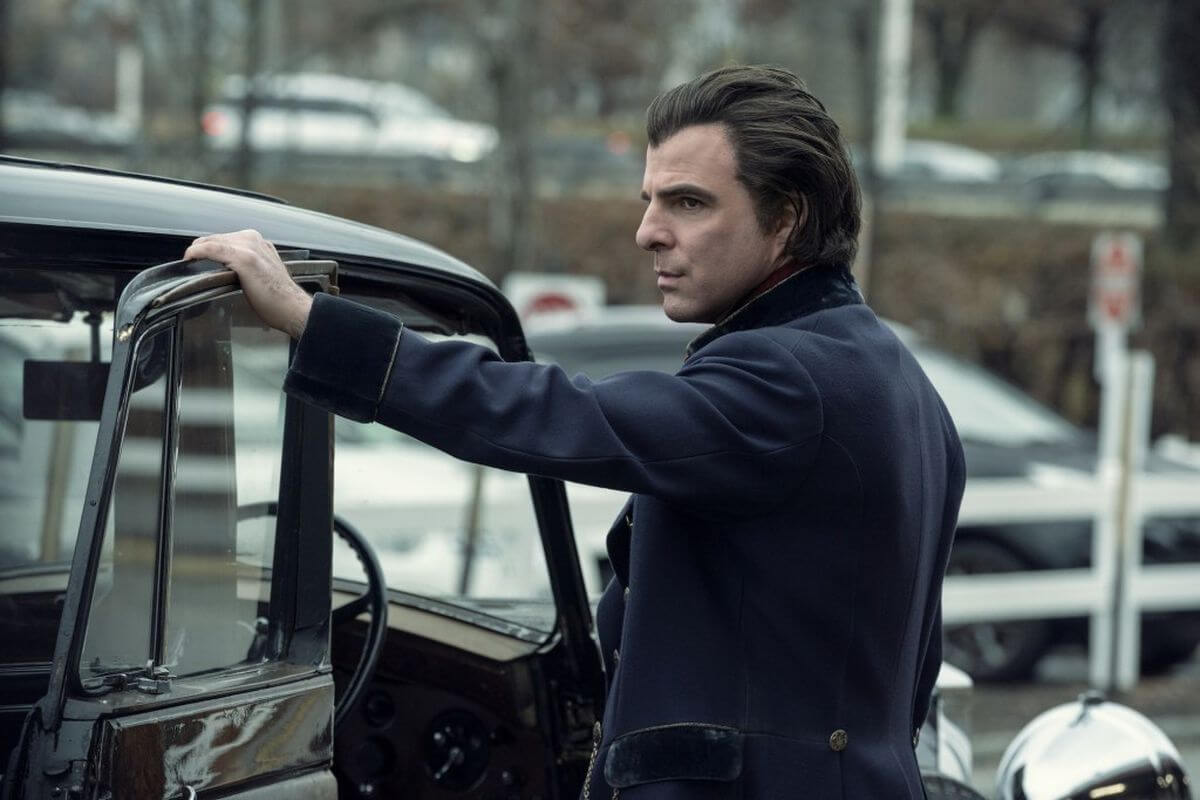
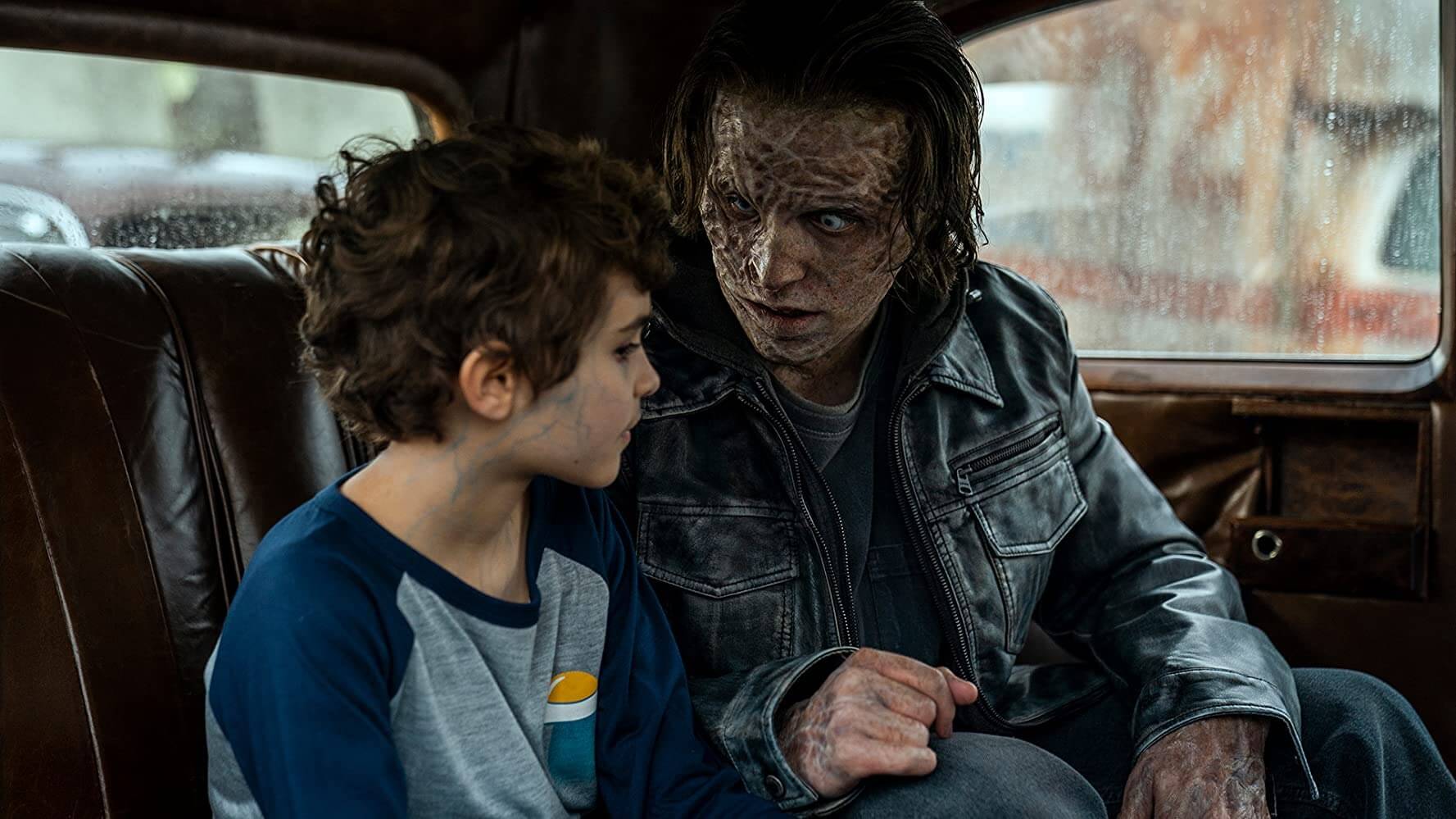
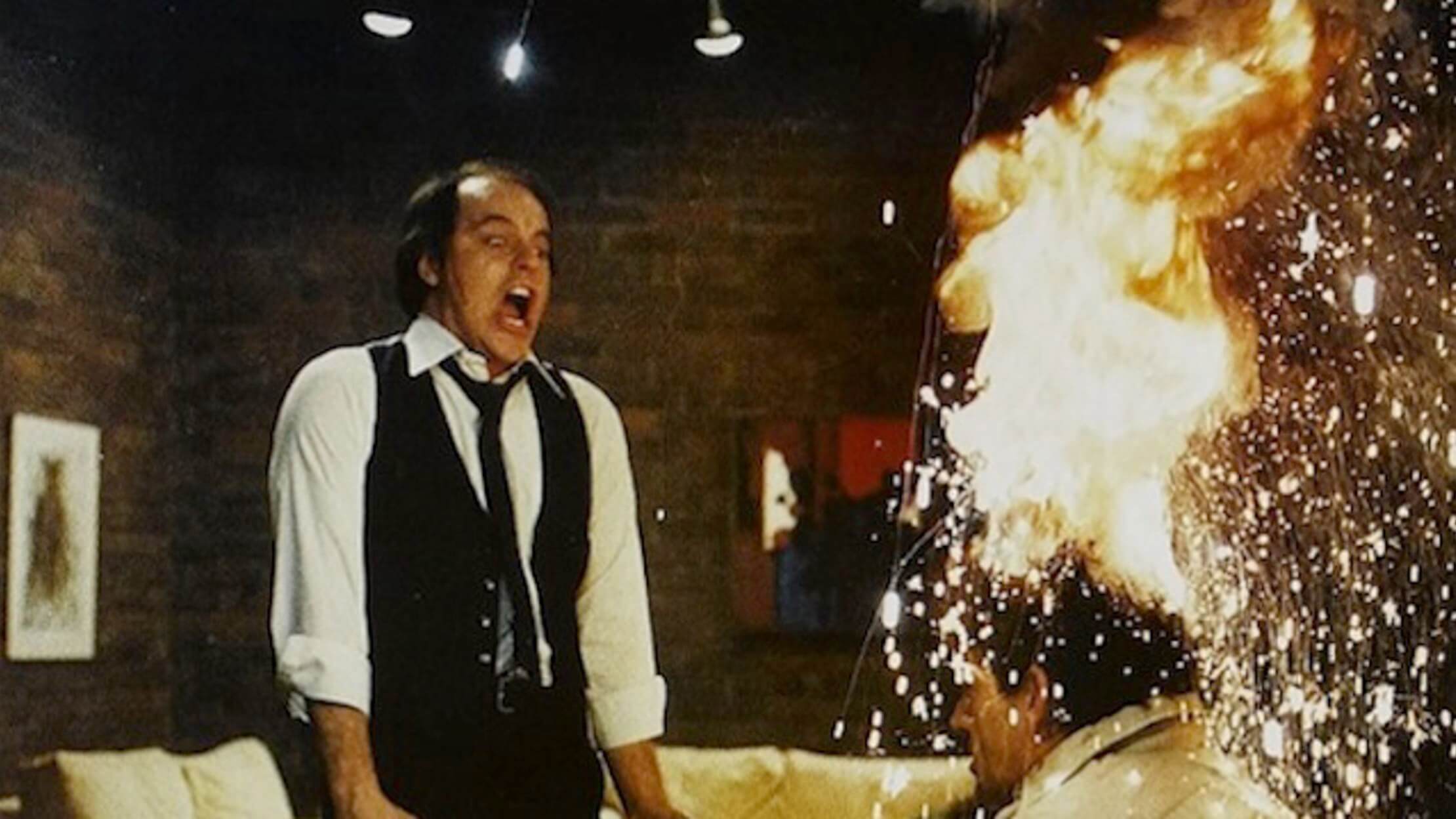
That bridge would eventually lead the son of arguably the world’s most acclaimed and prolific living authors to a keyboard on the 4th of July, 2009 as he begun work on his third novel, NOS4A2. Now, over a decade later, the story has made its way to screens in the acclaimed AMC series of the same name and he couldn’t be more delighted. “The show and the story is about this sinister guy, Charlie Manx, who’s over a hundred years old,” Hill explains with enthusiasm. “He drives this car that runs on human souls instead of gasoline. Charlie has been abducting children since the 1930s and he takes them on a long drive, and over the course of this drive he feeds off of their souls. When he’s done with them, they’re little monsters, everything delights them, so they’re filled with happiness. Their mouths are like these fang-lined holes. He takes them to this almost demonic other world called Christmasland where every night is Christmas Eve and every day is Christmas morning and the fun never stops. The kids play on all the amusement rides and are always having fun whether they’re on the rollercoaster or they’re playing a game of ‘Scissors for the Drifter’ where someone gets stabbed to death.

Charlie meets his match when he runs afoul of Vic McQueen who is a young woman who has a supernatural gift of her own. She can get out on her Triumph motorcycle and find her way to a bridge – the Shorter Way Bridge – that really doesn’t exist in our world. She can use her powers to materialise it into existence. While most bridges cover physical distance, her bridge covers the distance between lost and found. So if there’s something she’s looking for it’s always on the other side even if it’s a 1000 miles away. If she’s looking for a lost watch, she can leave the bridge in New Hampshire and arrive on the other side in Rhode Island and get the watch from where it was lost years before. So these two people then clash over the course of 20 years in the book and in the TV show.

The rickety bridge from Hill’s childhood wasn’t the only inspiration that fed into the crafting of this modern day horror classic. “I was thinking about this Lon Chaney quote,” Hill explains.  “He once said; ‘There’s nothing funny about a clown at midnight’ and I totally get that. You know if you woke up at midnight and you looked out the window and a clown was standing under the streetlight with a single black balloon you’d probably fall to your knees and start crying for Momma. And by the same token I was thinking that Christmas music is heart-warming in December, but if it’s the middle of a blazing hot summer and you’re lost in the woods and you’re walking along a path and you come to an old barn with boarded up windows and you hear watery Christmas music playing inside you’re not going to go in to see who’s there! You’re just going to turn around and go in the other direction as fast as your feet can carry you. So that’s a lot of what writing successful horror fiction is about, is finding these juxtapositions. You take something lovely and comforting and then poison it for everyone. That’s me, I’m the poisoner!

nos4a2

While Hill might be more than happy to contaminate our hearts and minds with abject terror, one thing he has fallen short of is allowing his fans to feel short changed when it comes to adaptations. Hill’s critically acclaimed comic series Locke and Key has recently been picked up for a third season on Netflix and this latest adaptation, NOS4A2 has been widely praised by fans and critics alike. What is perhaps most interesting about the latter’s reception is just how much it differs from his original text. Perhaps even more unique, is Hill’s readiness to embrace these changes. “I didn’t think that there was anything that I loved about the book that didn’t make it into the show,” he admits. “When we first meet Vic in the book she’s 12-years-old and when we meet Vic in the TV show she’s about 18. By starting the story when she was 18, Jami O’Brien put us in a position to be able to use the same actress throughout the series. Ashleigh Cummings, the brilliant Australian actress who played Vic is at the right age, she’s in her early 20s so can convincingly play 18 and a 28-year-old mother of an eight-year-old. So for me that was a sensible, functional decision that I thought played pretty well. I actually think in the second season we do see Vic as a child. I think she made a good rational choice to not want two different actresses to play Vic.

O’Brien also embellished some of the more supernatural aspects of the story, in particular elaborating on the ‘gifts’ that some characters have. “Certain beings can access their inscapes,” Joe enthuses. “They’re like landscapes of the mind, and they can pull these landscapes of the imagination into the real world. There’s some of that in the book but one of the pleasures of the TV show is that the show runner Jami O’Brien expanded on that, sort of looked at the book as a kind of compressed accordion and then pulled it wide open. So you have a lot of different characters who are strong ‘Creatives’ running around. It’s definitely one of the great pleasures of the show.

One of the show’s characters that was most notably expanded was that of Maggie Leigh which, again, was a welcome addition to the author. “Maggie Leigh has a magical Scrabble bag. The bag is sort of bottomless and she can ask the universe a question then reach into the bag, pull out a bunch of letters, put them down and rearrange them and spell the answer to her question. With some limitations. She can’t ask it, for example, ‘Who killed this person?’ because the answer to this question would be a proper noun which is not allowed in Scrabble. So the Scrabble bag has to follow the rules of Scrabble even though it can answer anything else. It was great to see Maggie Leigh brought to life. She was performed by Jahkara Smith in her first screen role and she’s absolutely sizzling, so great in the part and it was great to see Maggie get her own story whereas in the book she’s more of a secondary character. I certainly felt that by the second season of the show it’s almost equally Maggie and Vic’s story, that they are together, Butch and Sundance. Ashleigh and Jahkara had such great energy together. It was Jami O’Brien’s instinct. You learn things as you go along, how to make a TV show and I think it was Jami O’Brien’s realisation as she went into the second season that what people liked best about the show was seeing Ashleigh and Jahkara together. Watching them support each other, challenge each other, be foils for each other. That was exciting, in the way we like seeing Cumberbatch and Martin Freeman spar off one another.

nos4a2

While the novel of NOS4A2 spans around 20 years, the first season of the show only tackles Vic’s teen years, which would suggest that the show was always envisioned as having a two-season life-span. “I think it was possible to look at it and say, ‘We can do two seasons that tell the book – beginning, middle and end,” Hill concurs. “Give all these characters their due and give the readership what they want. But after that we may hit a point of diminishing returns’. If we go to a third or fourth season we might start to bleed our audience so let’s finish strong instead of finishing weak. Of course that makes sense in the new environment of TV. What you want to have is a show that people will return to the way that people return to favourite books. Whereas in the old days you just rode the horse until it died right underneath you. If you could squeeze another season out of it, you’d squeeze another season out of it. So I think that this is a more thoughtful way of making TV.

In the years since Hill really made a name for himself with his acclaimed first novel Heart Shaped Box in 2007, it was clear to see that he was forging a well-earned path for himself as a credible horror author. “I collected my rejection letters, which is all part of the process, I gradually figured out how to write a short story then started writing some good ones. I kind of developed my own voice,” Hill explains. He would manage around a decade before word spread that his father was none-other than the master of literary horror, Stephen King. “I was a really insecure guy especially in my teens and 20s, which is why I wrote as Joe Hill rather than Joseph King because I didn’t want to get published because I had a famous dad,” Hill admits. “I needed to feel like when I sold a story, I sold it for the right reasons, because an editor was excited by it. By the time it became widely known who my dad was I’d had a book of short stories published by a small press in England, I had locked in the sale of my first novel Heart Shaped Box and I had built up some security and confidence.

nos4a2

Interestingly, we note that, more so than any other work of Hill’s, his father’s DNA seems more apparent in NOS4A2, which perhaps speaks to Hill’s new found comfort in his own skin. “I had more freedom to celebrate my dad’s work,” Joe agrees. “I’m a big Stephen King fan! Writer’s talk about influence all the time. For me there’s really no influence that could ever come anywhere close to the influence of my father and mother. My ear for a good sentence is based on everything I’ve learned from my Mum and the way she would talk about what made a good sentence pop. My idea of what keeps people turning the pages was completely developed from reading Stephen King novels. So it’s inevitable that the work is going to have echoes in it of where I come from and who I am.

It would seem that the appreciation for his father’s work runs both ways as while NOS4A2, a book about a soul vampire, mentions The True Knot (also soul vampires) in King’s The Shining sequel, Doctor Sleep, his Dad returned the favour by referencing Charlie Manx in Sleep. “There are two things you can do with that situation,” grins Hill. “You can run from it and try to hide that there’s any similarity – but that’s kind of cowardly, that doesn’t really have nerve. Another thing you can do is embrace it and underline it and make it seem more intentional instead of the totally random accident that it was.

In fact world building is something that King is particularly known for amongst his ‘constant readers’, which is something that Hill seems keen to carry on. While the first true mention of King’s world came in NOS4A2, it would seem that there is an underlying element in his previous book, The Fireman. “There is this idea that in [King’s] Dark Tower stories, that the Tower is the lynchpin of a multiverse,” Hill explains. “That there are all these difference universes on different floors of the Tower. Every floor of the Tower looks into a different narrative universe. In some ways that’s how I thought of my fourth novel, The Fireman [also a pathogen story]. The Fireman narratively very consciously echoes a lot of what happens in The Stand. My idea of The Fireman is that it’s taking place on one level of the Tower one floor up from the events of The Stand. I’ve always kind of been a weak one for trying to Elmer’s Glue my universes to others. I’ve done a lot of work in comics and right now I’m writing a Locke and Key/Sandman crossover. So my comic book world is colliding with Neil Gaiman’s epic Sandman universe and that’s been a real delight. And to me, it feels like the two stories were always waiting for each other. They naturally fit together.

While Hill’s novels continue to gather acclaim, it is perhaps his work as a comic book writer that has accelerated his notoriety thanks to Locke and Key and his own imprint at DC entitled Hill House Comics. Yet rather than a conscious move away from novel writing, Hill’s experience in the comic medium was actually intended as somewhat of a pallet-cleans. “I wrote these two really long novels, The Fireman and NOS4A2 back-to-back,” Joe explains. “And after that there was a book of novellas called Strange Weather and another book of short stories called Full Throttle. So I needed a little while to think, ‘What am I going to say now? What do I want to do as a novelist next?’ And I wasn’t really sure, so I wound up taking almost 18 months off to write comic books.

At present, Hill is currently around 500 pages into his latest novel, intriguingly titled King Sorrow. Although that’s as much as we’re likely to find out at this point. “I’m so superstitious I don’t dare say anything about the plot,” Hill apologises. “Hopefully, I’ll finish it this year and it’ll be out next year. You never know. You don’t know until it’s done.” Until then, we get to revel in the world that Hill created, embellished perfectly by showrunner Jami O’Brien as we take an uncomfortable journey in the back Charlie Manx’s Rolls Royce Wraith with that foreboding number plate rattling at the front, NOS4A2.

NOS4A2 – Season One and Two is out now on DVD, read our review here.

Frank Grillo | BODY BROKERS

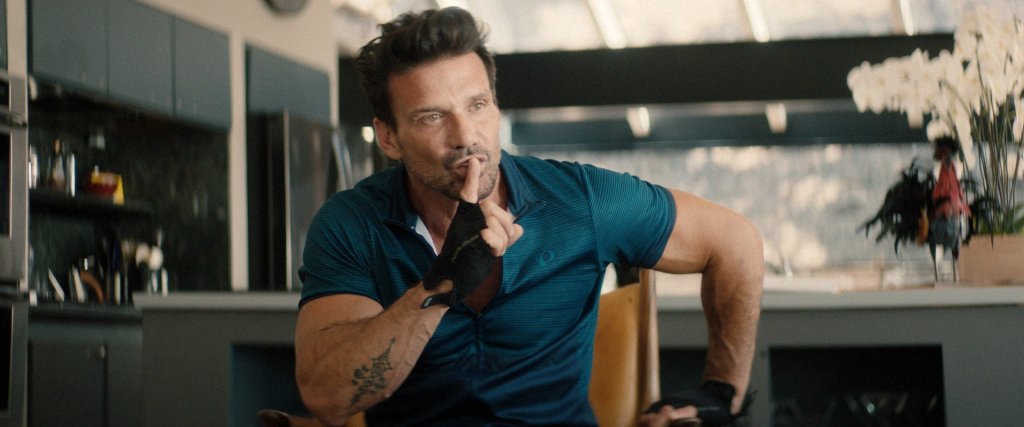
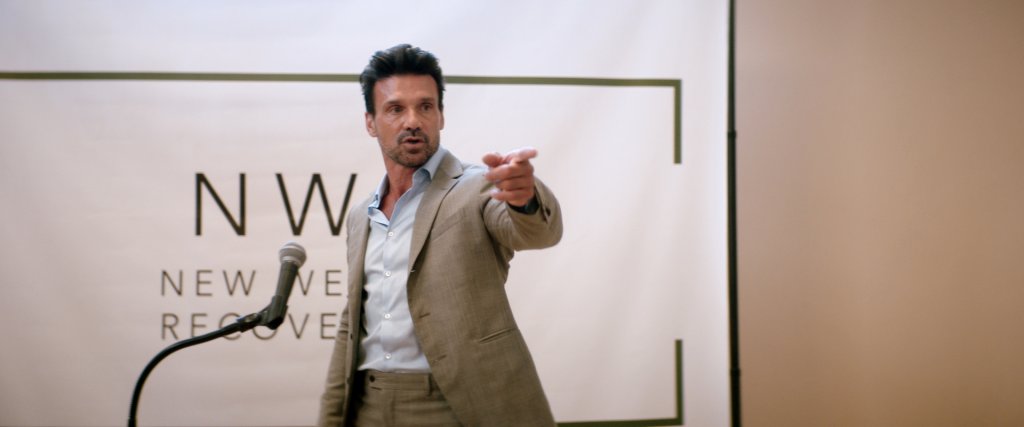
Frank Grillo as Vin in Body Brokers film

It’s a very busy year for MCU and The Purge franchise actor, Frank Grillo. Alongside his new time-loop action movie Boss Level releasing on Hulu, fans can watch him soon in Body Brokers and No Man’s Land, as well as in the upcoming The Hitman’s Wife’s Bodyguard alongside Samuel L. Jackson, Salma Hayek, and Ryan Reynolds. STARBURST had the pleasure of catching up with Grillo ahead of Body Brokers’ release, a film which sees a recovering drug addict learn of a multi-billion-dollar fraud operation designed to keep addicts returning to rehab centres.

STARBURST: You have eight movies coming out this year. That’s insane.

Frank Grillo: Yeah, something like that, in one form or another. Because of COVID everything kind of got bottlenecked and made me look like I’m in high demand, but I’m not. Let’s perpetuate the lie.

What keeps you motivated to take on project after project in that way?

My ability to keep having work happened later in my life, so I still have that working class mentality. And, you know, I’m certainly not a star. I’m just a working actor, and I want to keep working. I’m always afraid that the ice cream cone is gonna melt, so I’ll keep working until it does.

Frank Grillo as Vin in film Body Brokers.

And you’re involved in so many different types of projects, from No Man’s Land which is an indie Western, to big budget action movies. How do you select these films?

Well, myself and my partner Joe Carnahan, who directs Boss Level [out in the U.S. March 5th], we have a production company together. And Boss Level was a big action-comedy that we’ve been trying to make; we try to make one or two movies a year with our company, and then I try and fill the rest of my life around that. You know, movies like Body Brokers and No Man’s Land, they’re $2-3 million films that I do because I love the story. And I’m able to come on and just be one of the cast, which is fun.

Body Brokers is particularly interesting, as it’s based on a true story. Did its subject of insurance-funded rehab centres and US healthcare fraud come as a shock when you first read the script?

You know, it didn’t come as a complete shock. What was really eye-opening was the depth of it, and the amount of money that is stolen. But years ago, my father was a victim of a body broker scam. He had a drinking problem. And they flew him first class from New York to San Diego, he wasn’t even sober. He was still in pyjamas. And then they put him in a stretch limousine and drove him to where the recovery centre was, and that’s where he stayed for 90 days. And it dawned on me that he was a victim of this kind of scam in the recovery system, and the insurance company paid the whole thing. So that was why I needed to do this movie. It’s an important thing for people to know about, plus it’s kind of a fun movie. And I love the director who also wrote the script [John Swab], so it was all a great, easy thing to do.

How did the situation end with your father?

You want to know the truth? It’s sad, he’s not with me anymore. I adored the guy, he had a great heart, but he just couldn’t shake the alcohol thing. He went to rehab eleven times, and my mother’s insurance paid all eleven times. And if you add that up over the course of many years, I mean, that is millions and millions of dollars that an insurance company is responsible for. We have screwed up healthcare in America.

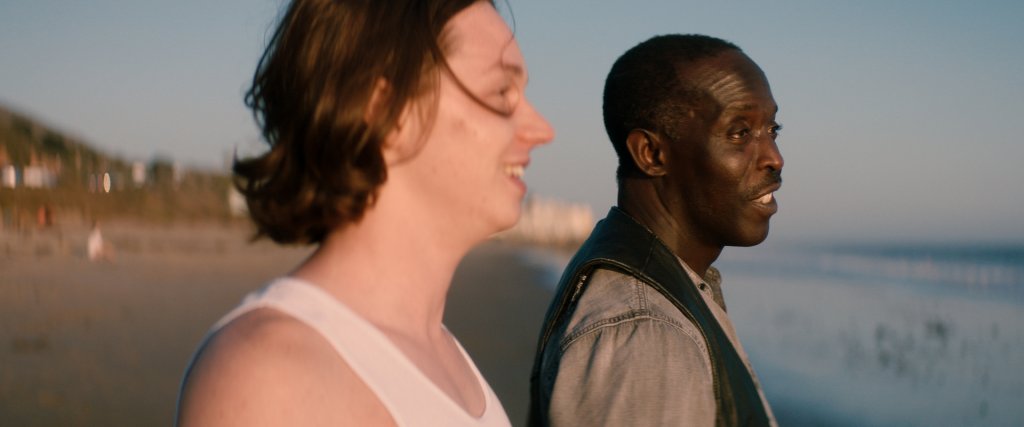
Michael Kenneth Williams and Jack Kilmer in Body Brokers

I would ask if you did any research for the role, but first-hand experience is as good as it gets.

I did do research into the Health Care Act that allowed all this to happen. And I did more research into other recovery places. And then I just fashioned the character, imagining what would Tony Robbins be if he went bad?

You also have No Man’s Land coming out soon, and these are both roles that are admittedly quite different from what audiences might expect from you. Do you have any reservations about being seen first and foremost as an action star?

No, I mean, it’s flattering. I’m really leaning into it now, so it’s great fun. But I’m equally inclined to go and stretch myself as an actor and go play a guy from a rancher from South Texas, or this Tony Robbins-esque guy from California and have some fun. But, you know, action movies are what I grew up on. I grew up on these movies that people are now associating me with. When you’re in the world of real movie stardom, like Tom Cruise or those guys, you have to be real careful about what projects you take on. But I get to jump all over the place. It’s fun. It’s like I said, I’m a working actor. So as long as I’m working, I’m okay.

And your production company, War Party, is intended mostly to make action movies reminiscent of the golden era of the 80s and 90s. What do you love most about that genre, from an actor’s and a viewer’s perspective?

I think what we loved about it was, first and foremost, that all those movies had great lead characters. They were flawed. They were fun to watch. You think about the Mel Gibson’s and the Stallone’s, even the Kurt Russell’s types of movies. There was something about them that made you want to watch them, and you knew they were going to get themselves out of trouble and they were winking at you while doing it. I think we lost that particular kind of movie along the way. And Joe and I’s mission statement is to bring an elevated version of that back into the world if we can. It’s so much fun to do this, it’s not work. It’s hard to do but while you’re doing it, you just think, “wow, we’re so lucky.”

Frank Grillo as Vin in Body Brokers

Your career really launched from your roles in The Purge: Anarchy and Election Year, and as Crossbones in the MCU. Given the opportunity, would you return to those roles?

Well, it’s funny that you should say that because James DeMonaco, the creator of The Purge, he and I are in discussions about going back to do The Purge 6. So the answer is yes! Truth be told… every time I open my mouth about Marvel, that becomes the lead story anywhere, and I’m a secondary character at best. At the end of the day though, if Kevin Feige said they were going to bring Crossbones back then yes, absolutely.

With so many projects coming out, is there anything else you want to plug?

There’s a movie called Cop Shop that our company made, that’s with myself and Gerard Butler, and Joe Carnahan directed and wrote it. That’s a little bit more of a cerebral action flick and has Butler as you’ve never seen him. I’m excited about that, that’s a big movie. There’s Ida Red, which is myself and Josh Hartnett, and Melissa Leo. That’s from the same director as Body Brokers. And I got a couple of other things coming out that I don’t remember, it’s hard to keep track of release dates.

Any movies you’re excited about that you haven’t started production on?

I’ve got a couple of movies. I’m leaving to do one shortly with the director of Body Brokers. And then I’m gonna go do a little movie with Jamie Foxx. And then Joe and I have a movie that we’re about to get financed, and we’ll do that in the summertime.

BODY BROKERS releases on Digital Platforms March 8th.

Watch the full interview below:

Sylvester McCoy | THE OWNERS

mccoy owners

Sylvester McCoy is still fondly-remembered for his portrayal of the seventh incarnation of the Doctor in the last three years of the ‘classic’ run of Doctor Who and his role as Radagast in Peter Jackson’s epic three-film adaptation of The Hobbit. His latest film, THE OWNERS, is a dark and disquieting ‘home invasion’ thriller with a twist that allows the Scottish-born actor to deliver one of his most disturbing and chilling performances. STARBURST spoke to Sylvester about the perils of modern home ownership…

STARBURST: In The Owners you pay Robert Huggins, who appears to be a quiet, home-loving family man devoted to his ailing wife – played by Rita Tushingham – and living a quiet life out in the countryside. What more can you tell us about your character?

Sylvester McCoy: Robert is a doctor – typecasting, I guess! – and he has a wife who he loves desperately who has Alzheimer’s, and she needs a great deal of care. But every Friday, regularly, as old people do, he and his wife leave their house and go off to have a meal. Their cleaning lady’s son knows about this and she has clearly mentioned to her son that there’s a huge safe door in the basement. He happens to let this spill to his mates in the pub and a new guy in the group, who’s very villainous, decides that they should break in and get all the dosh that’s behind the door. So they break in, but we come back because they took too long to break into the safe, so they capture us and terrorise us.

It’s fair to say that things don’t go as the audience might expect and Robert isn’t quite as he seems. What attracted you to this very out-of-character role?

The fact that Robert turns and I get to play against type! Peter Jackson once said to me ‘Sylvester, you’re too nice to be able to play anything bad and I wanted to prove to him that I could!’ What’s always the dream when playing the villain in any film is to try to find the humanity in him and hang on to it because not everyone is completely bad.

How do you prepare yourself for the rigours of filming days where you, as an actor, need to be very physical and very violent?

I’m afraid I’m not a method actor, I’m more of an instinctive actor. I sometimes don’t know what’s going to happen! I step off the cliff and see if I can fly and I’m blessed in that most times I do fly; something instinctive happens. Someone said years ago that I was a ‘bum actor’ – not that I was a bad actor but that I acted with my whole body and my bottom, which isn’t really the British way of acting, it’s more the American way of acting. It’s all involved with that physicality, some magic happens and I don’t know where it comes from! I became an actor when I was 27 and discovered I was carrying this baggage of physicality that I didn’t know I had, which has led to me playing Buster Keaton – one of my gods – and Stan Laurel, very physical guys and I found it was just there. Stuntmen always hate working with me because I like to do my own stunts but because of my age now I can’t do quite as many as I used to do.

Had you worked with Rita Tushingham who plays your wife in the film before?

SM: No, I hadn’t and I must say it was an utter joy working with her. She’s from Liverpool, say no more, but she’s got an amazing sense of humour! Of course, when you’re making these kinds of films, when you leave the set you tend to go for comedy so we became a sort of double act. The makeup ladies and the wardrobe and the technicians looked forward to us coming off the set because suddenly we had to release the horror and turn it into comedy. I adored working with her, we had such fun.

Maisie Williams is also in the cast as one of the main protagonists. What were your impressions of her?

She was a real ball of energy and was really in her own zone too. She’s got such energy and I predict not only that she will carry on with her vey successful acting career but I wouldn’t be at all surprised if she became a director and/or a producer. She’s grown up in the industry and she knows it inside out, she’s wonderful. I enjoyed working with all the young actors, though, they were just great, I was so impressed by them all when I saw the film for the first time. The whole cast and crew were a joy to work with, it was great to go in every day and that’s not something you can say all the time in film and television, but this lot were so nice.

How would you prepare the audience for the experience of The Owners?

Be prepared to jump in your seat in the cinema! It’s a sweet love story but the centre of the sweet is full of violence and shocking surprises.

THE OWNERS is available on digital download on February 22nd and DVD on March 1st.

You can watch the full interview below:

Gary J. Tunnicliffe | HELLRAISER JUDGEMENT

gary hellraiser

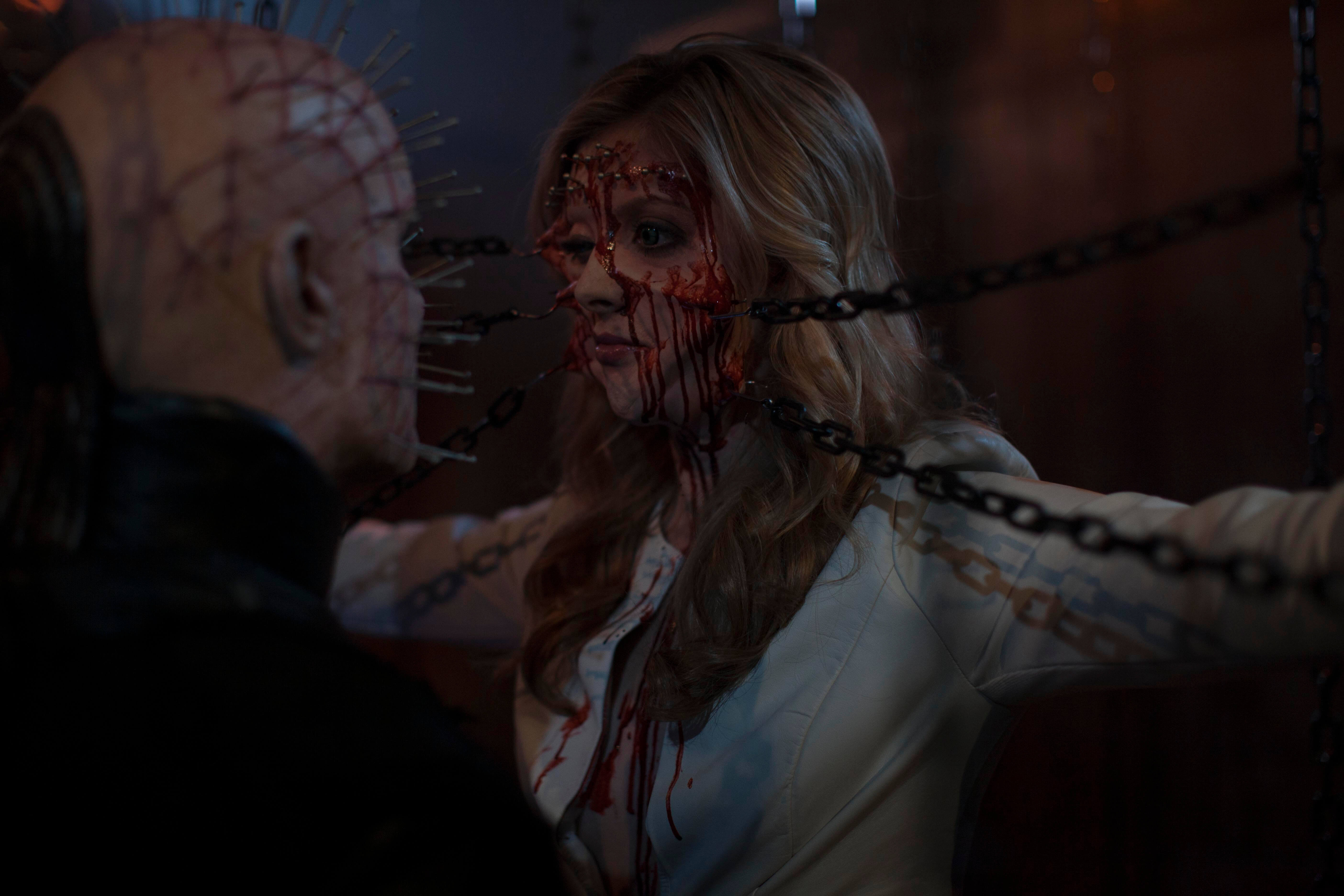
As we have a new entry into the Hellraiser franchise, Hellraiser Judgement, we caught up for the director Gary J. Tunnicliffe, who has a long history with the series as he handled the special effects on all the films since the third film…

STARBURST: There was quite a long development to get to Hellraiser Judgement. A few different starts in terms of pitches. Can you tell us how you got to this point?

Gary J. Tunnicliffe: Initially, I got called and they said “look, it’s not the film we’d like to offer you, we’d like it to be a bigger budget, it isn’t, its 400,000, and would you like to do it?” And I was like “yes, I would do it for $20, a Big Mac, and a video camera, so I’m in.” I’d had this idea for a script called Judgement, which I’d already written and taken all the Hellraiser stuff out of it because I knew I didn’t own those rights, so there was stuff that was ready to be put back into it. So I suggested Judgement, did a treatment and they were like “no, that’s awful, it’s too weird, it’s too strange, what the hell is all this audit crap? We don’t want that” and I was like “you have to understand Hellraiser needs something a bit different” and they said “ok, go away and rewrite it then”. I rewrote it, sent it to them and they said “no, still too weird, still too strange, we don’t get it.” Third time “no, too weird, what’s all this spitting in the mouth and weird Auditor guy and all this”. So then I said ‘OK, I’m going to write two pitches for you” and I rewrote Judgement and I sent them a thing called Hellraiser: Enter Darkness which was a very traditional Hellraiser tale, and of course, they read it and said ‘We love Into Darkness. It’s fantastic, this is exactly what we want” but it was just a complete retread of Hellraiser. And I said “I understand, but I’m telling you now Judgement is the film to make.” And they said ‘Ok then, if you believe in it so much, here’s the deal. You will write Judgement for us and if we don’t like it, you’re writing Into Darkness for free.” And like an idiot I said ok, and they read it and luckily it was one of those nice meetings and they went ‘we actually quite like Judgement, we get it now; we understand what you want. We have a few notes.” And you’re like ‘oh, fucking hell’ and of course, it begins the period of every writer’s misery which is trying to implement the notes you like into the script and ignore the ones you really hate hoping people will forget about the terrible notes. And that’s all I did for about two months of rewrites. It’s always a compromise but I think the movie is about 65% of what I wanted to do. At one point during the edit process, they asked if we could lose the whole audit scene and Auditor, and I said “are you mad? That’s the stuff horror fans will gravitate towards and enjoy, and it’s what gives a different angle to Hellraiser”. It wasn’t too painful, only a couple of months of rewrites but there was definitely a lot of back and forth.

The auditing bit is what sticks out the most. You’ve expanded more and brought more into it Hellraiser.

I’ve been maligned for it and rejoiced for it. All horror films tend to polarise. There’s definitely a lot of people wondering what the whole audit thing is about, but I felt it was important to innovate and not replicate, which is something I’m trying to do all the time now. Let’s not just rehash the same thing, let’s put a fresh spin on it. And I needed an antagonist who could speak again, and I don’t like having Pinhead just turn up and talk because he becomes a bit of a Bond villain – we all know what’s going to happen – so I thought the Auditor would be an interesting foil, and I like the idea of this other segment of hell. They’re not Cenobites, they’re the Stygian Inquisition as I call them. I thought it would be interesting to be in a hell world and see what goes on in this bureaucratic situation. I also really wanted to bring in the idea of Christianity. I’m not religious personally but in Hellraiser II, Pinhead literally says “your suffering will be legendary in Hell”, so we have to be in Hell and if there’s a Hell there’s a Heaven and I thought the most interesting subjects of the film would be that Heaven runs Hell. They have a hand in it. It’s their dirty IT department and no one wants to go down to the basement to deal with it but they have a hand in it. Clearly it serves a useful purpose for them. If all the bad things in the world are being created by the Devil then God will be like “yeah, let’s do that and do that”. It’s a big advertising campaign to get more people to believe in God.

And the original devils and demons are the fallen angels anyway.

It’s interesting, I spoke with someone the other day and it’s like how do you approach that in film? If you were to take two versions of the Devil that I adore: Viggo Mortensen in The Prophecy, this beautiful, subtle understated character in a black suit, and Tim Curry as Darkness in Legend and you couldn’t have two more different takes on it, and you wonder if those two were to meet, how would they regard each other? So when you’ve got very little budget like I had you have to rely on simpler ideas. So for me, an angel – Jophiel – who’s been around for thousands and thousands of years, she could look like anything she wants. It just so happens in this movie she looks like something out of the pages of Vogue.

We always thought Peter Stormare in Constantine was an interesting and stripped back but memorable devil depiction.

Oh, absolutely. I love Constantine and I definitely feel Japhiel has a nod to Gabriel in Constantine. They had the big budget version but I went for the demure, English speaking version. But Constantine’s a movie I relate to a lot. And both movies are linked by Frank Capello, who wrote them.

With this being the 10th film in the series, and with Hellraiser being so iconic, were you intimidated taking it on?

I didn’t feel intimidated. I knew I was sticking my head in the lion’s mouth no matter what. With Hellraiser movies you’re damned if you do, damned if you don’t. What I definitely decided to do was rather than be a chef who thinks “now what does the audience want on a hamburger? I’m going to put these things in” I decided “well, fuck that, I’m going to make a hamburger I like and cut half of it off and hand it to them” and if they go “this is a really good hamburger” then that’s all I can do. I’m not going to try to please the fans, I’m going to make something that I think would interest me on a very limited budget. So that’s how I approached it. So I wasn’t intimidated in any way, I was excited. But I knew people would be out for blood and there were some who were out when it wasn’t Doug Bradley. If it’s not him it’s not Hellraiser and they were out from that moment. But it’s been nice because you’ve seen people who were like “10th Hellraiser, how good can it be?” And they’ve been surprised. And if you look at Hellraiser rankings, it’s routinely never at the bottom. It’s five and up and some people put it at third, which is mind blowing and very humbling.

And with Pinhead – did you want to play back to his origins or do something different with him?

The only difference I thought was if Paul was going to be Pinhead, he should be changed slightly so it was his Pinhead. So I felt it was a gracious thing to do to alter the makeup, just subtly. I definitely wanted to go back to the demeanour and the delivery of the original Pinhead. I wanted Paul to give his own little take on it. We looked at Peter Cushing in Star Wars – Grand Moff Tarkin – and that’s why we subtly changed the costume. I gave him the robe over the top, the Leviathan cut over the chest. The makeup is slightly different. I took a cut out of the jaw and we had a floating square at the back. Just little things so that if anyone was looking at pictures they could see that’s the Paul Taylor version, because he does look surprisingly like Doug at certain times. Which was weird for me because I’d be directing him on set and at times he would laugh or do something, and sometimes he would smile and his face would be so close to Doug’s.

It’s difficult with fandoms, and now with the Internet discourse, like you said you’re damned if you do, damned if you don’t. People seem to want something different but something the same as well. You can never quite balance it.

People will be like “there’s hardly any Pinhead in this movie” but there’s more Pinhead in this movie than in the original. Six minutes in the first one and that’s why it works so well. It’s like anything. I used to describe it as a cake. Cenobites are the icing on the cake, and Clive Barker made this great chocolate cake with this lovely icing on it. There was this whole moist cake with a little bit of Cenobite icing. And immediately the studios get it and just want all icing and a little cake. And it doesn’t work. The villains become less interesting the more you know about them. Leave them wanting. Especially with the Cenobites, the more they talk the less frightening they become. So I’ll have the Auditor be a talky character and then Pinhead can be proactive when we see him. He gets his thing done. He’s the sharp end of the spear.

It’s interesting because it starts with the audit sequence and you think it seems to be Cenobite admin but it’s still so interesting and compelling. That’s where all the good images of the film come out.

That was a nightmare because originally that was where I wanted it. Seventeen minutes at the beginning, no titles, almost no dialogue, just this whole big sequence and the studio said no, start with the detective sequence and we’ll do the audit in the middle. Then when they saw it they thought it should be at the beginning, which was a pain as I’d rewritten everything. But I wanted something that was almost Japanese or European. Just start with a really weird sequence. I literally said, I hope people are watching asking “what is this? What the fuck is going on?” I just wanted to start with this pedophile getting a letter and being invited to this house and that’s how it would start. Then seventeen minutes later you’d get the credits. The audit was supposed to be even longer with additional characters. The bone collectors, the seamstress. It was meant to be this trial almost for the audience. Can you get through it? I wanted it to be strange and bizarre.

Can you tell us a bit more about the Auditor and his back story? Sometimes he came across as an unwilling participant. There’s moments where he shies away or is scared.

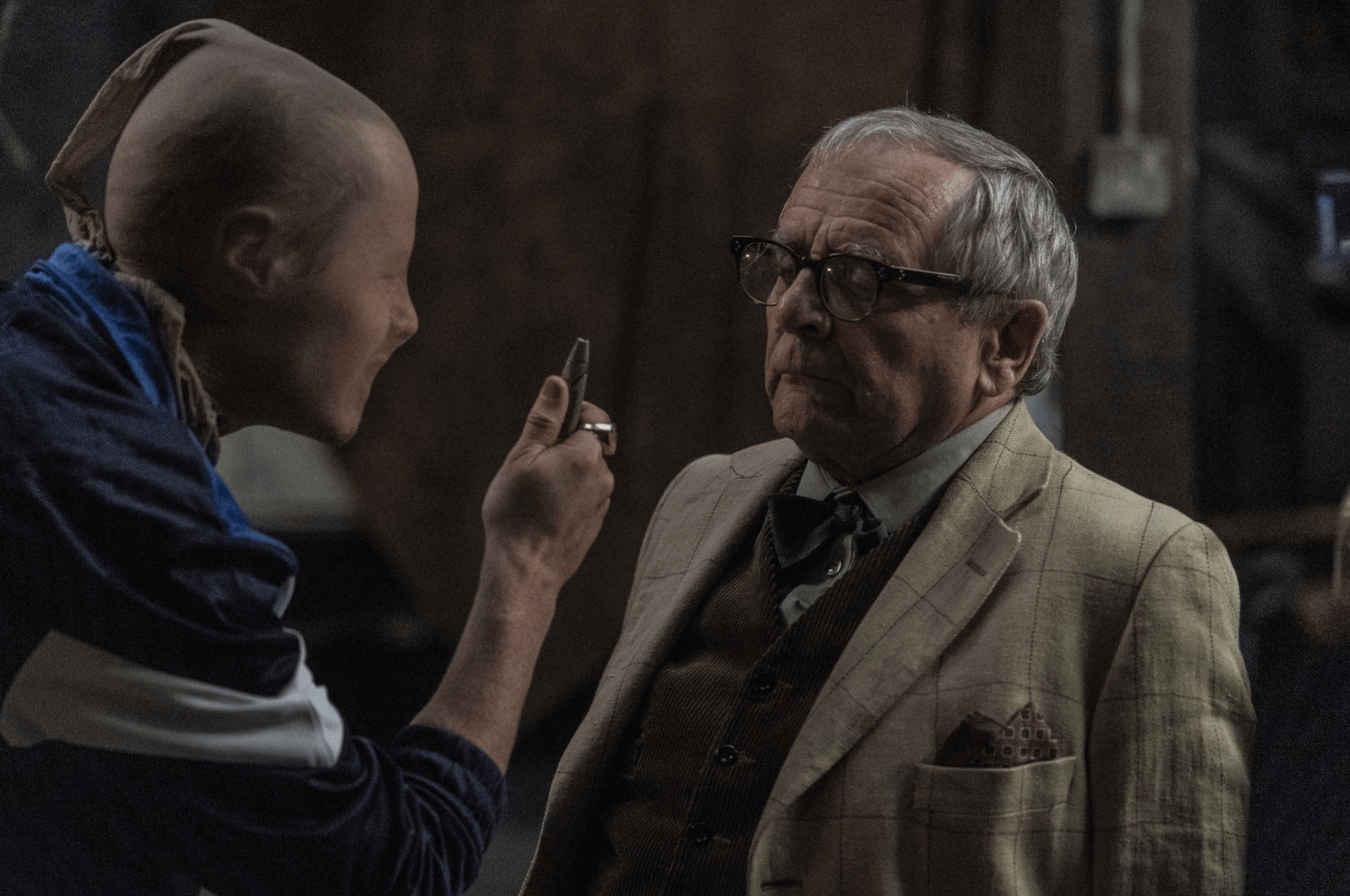
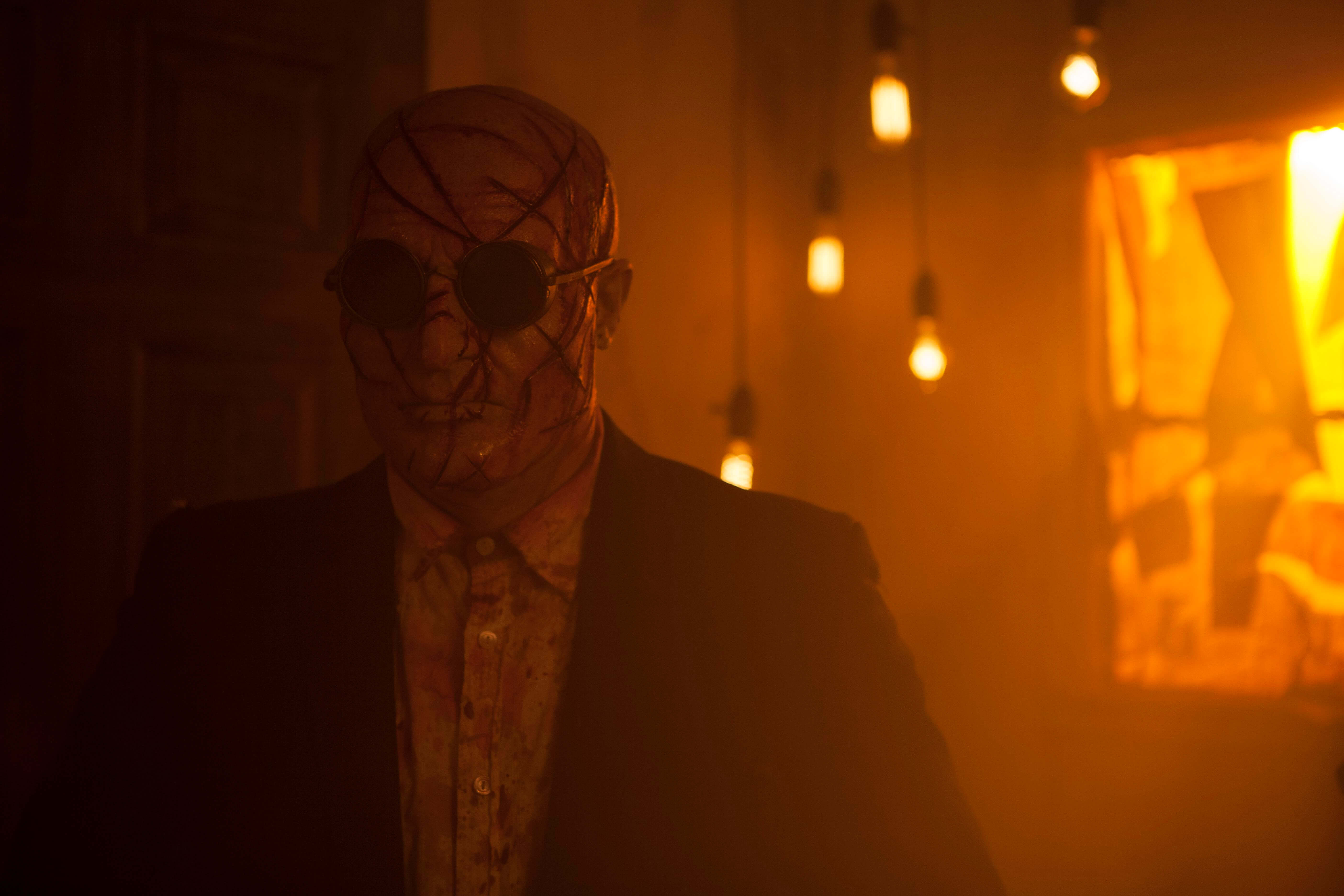
He’s not a Cenobite. In the grand scheme, I think there are many, many Auditors. The idea was there were thousands of these houses all over the world and they’re spider’s webs. And masses of letters would get sent out. Ideally you’d have scenes where there’s thousands of these bizarre characters typing letters and they’re going out all the time. I had a scene originally in the movie where there are two kids who kick a ball into the backyard of the house and ask for it back and they’re welcomed in, then later in the movie there’s a deflated ball on the front lawn. I wanted it to be that sinister. Even if someone left a baby on the step, it was like even a child isn’t born without sin. Everyone’s guilty no matter what. As for the Auditor’s backstory, it was strange because two months later I’m watching a movie I love, Schindler’s List, and I’m looking at Ben Kingsley’s character and I go “it’s the fucking Auditor”. He’s got the round glasses, the disheveled look, top button undone, at a typewriter. So I imagined what it would be like if Ben Kingsley’s character had gone to hell and someone said “you were quite good at this in a former life. You were a good accountant” and I think he knows the politics and he’s basically constantly surfing to try and make sure he doesn’t get fired. The reality is he wouldn’t be shocked at what they’re doing when he does that reaction but I had nothing else to cut to and I wanted that push in, and if he’s offended or disturbed by it then clearly the audience should wonder how terrible what’s happening is. And those glasses and that soulless face give you that. To me, it was dark humour. That’s what was fun about the character. I was amazed, and it’s one of the reasons I wanted to play the character, I was shocked what you could do with a little tilt of the head and the cut would read massively. A look or a stare would get a response from the audience. With prosthetics, what all people who wear them have to know is that your face is already screaming at the audience. People are trying to digest that.

Schindler’s List was a movie we didn’t think would be brought together with Hellraiser Judgement! What were your influences when shooting the film? We can see Se7en and the Nine Inch Nails Closer video. And you’ve worked with Fincher before on Gone Girl.

I was definitely influenced by him. I think as a DP on horror films you can do some bold things. A lot of the time it was things like the sequence when they’re trying to find the lair. We didn’t have money for a big set, so the best way was to turn off all the lights and have just have flash lights. Find a warehouse with nothing in it and just use flashlights, and we managed to make a fan work. So what Fincher would probably do is he’d have the look in his head and have it built and designed, but I just thought we’d turn it black and make it grimy and that infuses the tone of the movie. And if you look at the colouring, we kept the blue light for the Cenobites, and the Stygian Inquisition were bathed in quite straw tones and yellows to divide the factions. Everything was smoked up all the time. I like horror films to look like horror films. I watched a period drama the other day and they cut to a shot inside and it looked like Blade Runner, it was that smoky in that room. You could see where that smoke was coming from. Whereas with a Hellraiser movie and horror films, you can get away with it. We’ve all seen the shot where the house in the woods has light blaring up behind it. Makes no sense, but it’s a horror film so who gives a fuck? We definitely tried to make it look pretty and Sam Calvin did a great job. Try to make a film look pretty with twenty minutes in-between shots. It’s really hard. So Fincher, and Gilliam as well, the butcher with the baby mask, that’s definitely a tip of the hat to Brazil. I’ve always loved his visuals. And Schindler’s List, really. If I can shoot a movie in black and white I would, I think it’s so powerful. Schindler’s List is without a doubt the scariest horror film on the planet.

I was definitely hands on about everything probably to the point of being a pain to the people in various departments. I obviously designed all the makeup effects, but I knew what I wanted from all the sets. And I wanted to keep all the rooms close to each other so we wouldn’t tire the electrical crew. If you can have rooms close you just turn the cameras round and relight. Your DP can be lighting one room while you’re shooting another, it’s easier than driving to another location. With rooms with the coroners, it’s a tiled room and I said we just need some gurneys and one light, that’s all it needs and a tiled floor. I went in the day of shooting and they’d put furniture in there, and pictures and I got rid of the furniture. It’s great with just the gurneys, its negative space. And no one knows it’s a paper cupboard the characters are coming out of, it doesn’t matter; it could be the doorway to another department. Sometimes things can be overthought. I’d done what I wanted people to wear for the wardrobe. I was hands on. It might seem power crazy but when you know what you want, sometimes it’s quicker for me to do it than explain it. I’ve done it before so I’ll just do it, it’s not a power trip. Stephen Norrington is the same. When we did Blade, he was pushing the snow around with the broom, redecorating for the sequence in Russia. The producer said “at the beginning I would have fought him on it but I now know he can do it and he knows what he wants so why fight him on it?” The most humbling thing was we only shot five days a week but we had the camera, so on a weekend I could just take it and shoot some sequences, shoot some inserts. So I asked the DP if he could come in for a few hours and we’d just do it with a flashlight and some lights. So I said “Saturday, 12 o’clock, I’ll get a pizza or something” and that first Saturday I walked in and there were twelve people there. And they all wanted to come in for free, I was blown away. They just wanted to help, they enjoyed it. And the following Friday they asked if it was the same. I said “yeah, I’ll buy the beers, you bring the pizza” and that was the most humbling thing of all when the crew will come and work for free and help out. And those little inserts and pieces are what make it better. They’re the details you need to make a film look a bit fatter. Hopefully that’s why people look at the film and say “it doesn’t look like $300,000”. Hopefully it looks like a bigger film.

It’s the 10th in the series and a lower budget and you get expectations with that but it’s a lot smoother and better put together than you might expect at that time of a franchise.

That’s exactly what we were trying to do. I know a lot of tricks to get around it. I’ve seen people get it wrong. If they’d told me they were going to give me twelve million dollars, I would have said it would be ridiculous. You don’t need to spend that much money on it unless you’re going to cast a really famous actor. If someone said tomorrow “here’s eighty million dollars to make a movie “I’d say you’re out of your mind. That’s crazy. Why would you want to spend that much money on a film? You’re risking so much money. You don’t need to spend that much, you really don’t. You can cut corners. But sometimes you get more by being creative because of cost cutting. It’s amazing. You wouldn’t have done something if you’d had the money but now you’ve done it like that and it’s spot on or it’s interesting to look at.

You’ve had a long career in the makeup and special effects departments. Did you always want to expand into the acting, directing and writing side as well?

I always wanted to be an actor but I knew I didn’t have the looks for it. So I thought makeup effects would be a good sideline into it but I ended up loving the art of makeup effects more than anything and was lucky enough to live through a time where they were the cherry on the cake. Makeup effects artists were treated differently to how they are now and it was an exciting time to be a makeup effects artist.

How did you get started and get your break? It’s something that not many people know how you can move into.

Well, now it’s a piece of cake. I literally get angry with people if they say they want to do it but don’t know how. Are you crazy? Look at YouTube, there’s a million and one videos on there, and there are courses and everything else. When I and people like me started, people like Mark Coulier, who’s won a bunch of Oscars, and Paul Jones, and Chris Halls who became Chris Cunningham, you couldn’t go online, you had to go to a library. Or read the pages of Starlog or STARBURST and find something that might talk about blue screen effects or makeup effects. I literally started because I saw An American Werewolf in London and The Thing – they blew me away and freaked me out, and I wondered how they did that. I started reading bits in magazines, and library books about prosthetics – Lee Baygan’s Three Dimensional Makeup and Vincent Kehoe’s The Art of the Professional Makeup Artists. A friend of a friend got me some materials from a dentist technician he knew and I made my first teeth casts. Pulled my friend’s eyebrows out and did all that. Slapped latex on myself. Gave my sister my allowance so I could paint her face and it started as cuts and bruises and cat makeup then it became old age makeup. I got this legendary book called Dick Smith’s Do It Yourself Monster Makeup, which was where he’d done all his makeups on his son, and I worked my way literally through the whole book, copying the makeups and taking photos, building up a portfolio. I eventually got the address of Christopher Tucker, who did The Elephant Man and sent him some pictures. He invited me to his house. He said what was good, what wasn’t, what to work on. Eventually, he said I could work with him on a project. He was a complete nightmare, like a sadomasochist psycho who probably endangered my health by having me run appliances in a box room, mixing chemicals that were very dangerous in a tiny room in a giant beautiful mansion in Reading. I managed to escape from him and called Bob Keen at Image Animation. When he heard I did six months unpaid at Chris Tucker’s he hired me and said “anyone who can survive six months at Chris Tucker’s can come work for me”. I went to Image Animation and that’s where I met Paul Spitteri, Shaun Harrison, Mark Coulier, all these people who have gone on to have careers and do great things. We were like a band of brothers. You ate, slept and lived at the studio. But it was a great time and I learned all kinds of effects and met all kinds of people. I was at Pinewood Studios when they did Alien 3. It was a great time and I worked my way up the ladder of the company to eventually become a partner. Bob Keen was the one who gave me my start.

It reminds us of the stories of Bad Taste where Peter Jackson made the masks in his mum’s oven.

Exactly. That’s why we’re a band of brothers. I’ve never met Peter, but I’ve got friends who do work with him. Like when I met Richard Taylor, there was instantly a bond. You have a rivalry with other companies but when you sit down you realise you’ve all done the same thing. You’re all these weird kids who liked monsters and monster magazines, and loved growing up watching Karloff and Chaney and all those guys then gravitated to horror films and making stuff. It’s like anything, you can’t just watch a five-minute video and get it. You’ve got to put in the hours. That’s how you learn. Gravitating into directing, a couple of producers saw me directing effects sequences and asked if I’d like to direct a script they had. They probably thought they’d get all these makeup effects for cheap, that’s why they hired me as director. I did that film – Within the Rock – and looking back on it, I realise now that it was 100% my film school. I thought I knew how to do it, I acted like I did, but the truth is I learned everything on the job. Bullshitted my way into it then learned it all. Then I did a couple of children’s films over the years and while they weren’t well known, they had decent budgets and I got to work with genre legends like Christopher Lloyd, Chevy Chase, Wallace Shaun, James Earl Jones, Lynn Redgrave, Dakota Fanning, Chloë Grace Moretz. I got to direct a bunch of really cool people and learn my craft there. But really, I’m about true blood horror. Making low budget, gutsy horror films that don’t replicate but innovate.

I actually called Clive Barker when I directed my first film. We’d done Lord of Illusions and Bloodline, and I called him and said I was directing my first film and asked if he had any tips. He said “I have two things; one: comfortable shoes. And two: just remember, you’re doing the one job everyone thinks they can do better than you.” Which is true and the amount of times I’ve sat on set wondering what a director is doing. But it was a good film school. Predominantly what I learned was how important the edit is, and how thinking about the edit and transitions makes a huge difference. And what you can achieve in the editing room and what you can get away with. What you don’t need to shoot on set – you can overshoot. I never understand directors who direct a scene then just say ‘go again. Action. And go again, action” and by take five the actors are wondering if they’re doing something wrong or if they’re going to get any notes at all. I like to be with the actors, talk to them, and if we haven’t got it in three takes, something’s wrong, you need to have a discussion. That was one of the ways I could minimise my time and make use of my role as the Auditor. I would shoot myself and do a line several ways in a take then I’d move on and I’ve given myself three different versions. I didn’t need to reset, I’d just do my dialogue in different ways. I sometimes wish actors would do that. I’ve seen De Niro do it on Killing Season. Then in the edit room you’ve got great choices. It’s amazing how different they can make a scene feel.

Editing’s one of those things where if it’s great you don’t notice it, but when it’s bad you do. It’s vital but you don’t always think about what it’s doing.

I’ve directed second unit for a couple of people where they’ve fought me on second unit. With Patrick Lussier and his thought is, he’s been an editor, his attitude is you can’t have enough footage for a scene. So I’d do a list of shots I thought they needed but weren’t asked for. When we’d finished by halfway through the day we would just go and shoot some fun shit like stock shots of the building, or extra little pieces. Patrick would love it. They’re just great little bits you can add to a scene, they’re what make higher budget films look better, it’s the coverage. Coverage is nice and inserts are great to flesh it out. Now what’s amazing, and scares the hell out of DPs is you can run up on a set and I can come up with a phone camera and shoot something. An insert for the movie. You can filter it. And chances are, and this is what director’s need to realise now, especially in pandemic and the ‘death of cinema’, is most people will watch films on their phone or on a laptop. So that’s what we need to shoot for. That’s why I tended to shoot a lot of close ups on Judgement – single images on faces – rather than wide vista shots because I knew it would be seen on that smaller format.

Hellraiser Judgement is available on digital download from February 22nd and DVD and Blu-ray March 1st. You can read our review here.

Emile Mosseri | MINARI

emile

Composer Emile Mosseri has, in his short career scoring feature films, worked on some very notable productions. He scored director/producer Joe Talbot’s debut, The Last Black Man in San Francisco, has worked with Miranda July on Kajillionaire, and also tackled the second season of the Amazon series, Homecoming. His latest score is for Lee Isaac Chung’s Minari, a drama about a Korean American family trying to make their way as farmers in rural Arkansas.

All of these might be very different films, but Mosseri’s scores for each help define the world in which they take place through superb use of melody and pop sensibilities. We spoke with the composer about his process.

STARBURST: It seems like your career as a composer has really jumped up very quickly.

Emile Mosseri: Yeah, it’s been sort of a strange time right now to have this kind of experience during this lockdown. What would already feel surreal feels even less real because it’s all virtual. It’s a strange time to be busy in this way, but I’m really grateful for everything, as well.

Was the score finished before lockdown or did you have to deal with trying to set up groups to play this music remotely?

Luckily, I didn’t have to deal with that. I know a lot of other composers that did but thankfully, I actually finished two scores right before. In January and February, I turned in a few projects and we recorded an orchestra for the TV show in February, so it was really right by down to the wire. Trent [Reznor] and Atticus [Ross] and a bunch of other composers miraculously recorded during lockdown in really inventive and exciting ways, but it seems like one challenge that I wouldn’t want.

It seems as though almost everything you’ve done has been with directors who are, essentially, peers of yours in terms of age. Is that just happenstance or because you are in the same sort of circles?

I think that I have gotten been very lucky to be connected with amazing directors that I admire. I got lucky to work with directors that are making really pure and honest works. That I’ve been able to collaborate with them and try to lend my thing to their vision and try to be part of the team. Each film and each director are very different in all kinds of ways, so what’s exciting about this job is that it’s constantly changing.

We’re glad that you said the films and directors are all different because your scores are also all quite different. It also seems they’re all – and we apologize for using this word, but we couldn’t think of a better descriptor – they all seem very pretty.

Thank you. That’s a great. I’ll take it.

Is there a specific root from which you’re working when you start on a score?

I think I’m mainly trying to internalise and absorb the film – and the spirit of the film – emotionally and then, I just write a bunch of music from that place and then send it to the director or play different things for the director and then we find our score from inside-out. I think that’s the thread.

We’ve talked with a bunch of different composers and some get to start with a script or when the script is just finished and others come in and they’re scoring to what is a mostly-edited film. What’s been your experience? Have you gotten to start early on or later or has it been a combination of the two?

It depends, project-to-project. Some films I get involved with, they bring me on board once there’s an early cut of the film – when they’ve already shot it, but they haven’t finished the edit. With Kajillionaire, it was a locked cut before I got my hands on it and then Minari was the complete opposite: I’d written from the script stage before they started shooting. Each film in each process has been very different and I think that shapes the score, in a way.

We have noticed that you do have a few through-lines in your scores: sweeping strings, choral accents and, obviously, piano seems to be a big part of your work. Are those intentional things? You’re not using them like throughout every score, obviously, but we noticed – especially in The Last Black Man in San Francisco and Minari – these little choral accents that really grab the ear.

Yeah, I think that there’s certain things that I gravitate toward. I think the human voice is one of them. I like to have some sort of singing in my scores. I think there’s just a way to breathe life into the score – literally, if in different ways, sometimes. Most of the time, I use other vocalists sort of snuck into the mix – even if it’s a subtle way – to bring some character to the tapestry and to the fabric of the score.

Piano is another one, just because I compose using the piano, so that ends up in a lot of the scores in one way or another. Strings and woodwinds and other orchestral elements – I think it’s case-by-case. It’s always a dream to be able to use an orchestra if the film calls for it.

Speaking of vocals: Minari marks the third time you’ve collaborated with another artist to record a song for a film. You’ve done it previously for Kajillionaire and The Last Black Man in San Francisco, but this song is very interesting because it’s got Yeri Han singing it and these lyrics had to be translated from your English into Korean so it seems like that’s a very involved process because there’s translation involved, on multiple levels.

That was a dream. That was a very cool process for me that I’d never experienced before. I’d never written a song in English and had it translated into another language before. I’d had the idea to write a song for the end credits of the film. Then, this amazing lyricist – Stefanie Hong – had translated my song into Korean and sent it to Yeri. She would then send us these tracks from Korea and we pieced it together here.

The song also became this kind of lullaby, because of Yeri’s part in the film. It was amazing to have her sing: it took on a whole new meaning. It was just a really cool thing to have a song that was inspired by a film and then be sung by somebody that was such a huge part of the film. It was like a nice full-circle. When a piece of music gets touched by hands and it has a progression like that – that was really rewarding.

Does having pop songs in a film come out of your indie rock background or is this more a director’s choice?

I think it’s something that is both. The director needs to be on board and sometimes it depends on the film. Sometimes it’s the director’s choice but I do think that I try to make a point to have a song on each record or something in each film, but also have – even within the score itself – to try to write song-based music or melodic music or lyrical music, even when it’s instrumental. I think that just comes from being a songwriter first, then a composer.

With every composer, I think they take their experience and their background, and their natural instincts will be shaped by their experiences musically, so that’ll bleed through in their work. I’d like to think that’s why that’s happening in the films that I’m scoring.

Last year, your music was twice released on vinyl by Mondo, with the music for the second season of Homecoming, and also Kajillionaire. Is it cool to get to be embraced by this very hot, hip vinyl soundtrack label?

Absolutely. Mondo’s amazing. They did incredible work with the packaging on both Kajillionaire and Homecoming and I was very shocked to work with them and with Lakeshore and BackLot and now, Milan Records and Sacred Bones for Minari. It’s great to work with these labels that are championing soundtrack music. It’s a very cool thing. I feel lucky to be in the mix. It’s such a wide-ranging group of labels, but I feel like Sacred Bones has a very different aesthetic than Mondo, but each brings something else to it, which is cool.

Are you a physical product person? Is it cool to have your scores exist somewhere other than digitally?

Very much. I love vinyl and there’s nothing like holding the record in your hands, you know? That’s the most rewarding part for me. That the record ends up in some people’s houses, if we’re lucky: there’s something really special about that experience that can’t be replaced digitally.

The soundtrack for Minari is available now.

Phil Hopkins | Fandor

phil fandor

In the middle of January, it was announced that video-streaming company Cinedigm had acquired the indie streaming service Fandor, which hasn’t acquired any new content since late 2019. In addition to the impending relaunch of the service with new content, it was announced that the Film Detective’s Phil Hopkins would be helping to run Fandor. The Film Detective – a site devoted to finding and restoring lost and forgotten films, many of which are public domain and only available in terrible transfers – was itself acquired by Cinedigm in October of last year.

Also, Fandor will relaunch its Keyframe site, which offered content and writing which did an amazing job of finding film historians, aficionados, and more to really dive deep into the films the service offered and put them into context for viewers. It’s a very exciting prospect, so we were equally excited to discuss what this new partnership will offer film fans by speaking with Hopkins…


STARBURST: How did you start the Film Detective? It’s always been such a fascinating thing, because what has always really been appealing about it is the idea that you’re taking a lot of these movies that are public domain, have been floating around, and popped up on Mystery Science Theater 3000 and things like that or appeared in any of the number of bargain DVD sets at Walmart and you’re making them into something watchable.

Phil Hopkins: Absolutely, and that’s the technology and the ability to get good material. You know, there was a wasteland of junky film prints for so long in the market and it’s wrong, because people got this weird perception about movies in terms of what was good and what was not good. Ultimately, a studio made every film. There was always a director, so it’s not like these movies just came out of the abyss and ended up in the wasteland, but the care and the love and the appreciation was hard to manage.

Back years ago, when I was collecting film prints – or even collecting movies that were not readily available – you’d have to go to shows like Chiller or you’d have to go to like flea markets and I remember spending probably $ 25 or $30 for a VHS copy of a Coffin Joe film because you just couldn’t get it. I spent a small fortune building up a VHS library of rare movies that I thought I’d never see, that I’ve read about in either Famous Monsters of Filmland or Fangoria or any of the publications that I used to get when I was a kid, going to the newsstand to absorb all this stuff.

It was a big deal to find any copy of anything back then and then when the home video explosion with DVD took place, nobody really bothered to make a huge effort to upgrade from your bootleg-quality VHS and to me it was sort of like, “Well, why wouldn’t you?” If you have the movies, why wouldn’t you try to make a better version, since DVD is supposed to look better than VHS? And then, when Blu-ray came out, everyone was sort of like, “Well, why do you want to spend the money on a PD [public domain] movie?”

I’m like, “Because it’s a great movie. It doesn’t matter if it’s PD or not. It’s still a famous movie that is probably more famous because of things like Mystery Science Theater or the fact that, in the case of Night of the Living Dead, there’s a hundred copies out there and it’s famous because it’s so circulated. It’s a strange proposition, but at the end of the day you’re still chasing the best material and trying to come up with something that’s going to look like the original and that, to me, is the best part of what I do, which is chasing down elements and trying to find an 80 or 90-year-old film and make it look great.

Seeing the restoration of Eegah on the big screen when they used it for the MST3K live tour was one of those cases. It was like, this movie looks great! It’s still a terrible movie, but it doesn’t look like it.” It wasn’t filmed poorly – it is a good looking movie – which is what you’re alluding to: the idea that so many of these movies like are downgraded simply because the only way you’ve been able to see them is from a copy where it looks like it was filmed in the dark or over-saturated or something like that. Is being able to put them out in a version like this, where you can actually see what’s going on, allowing folks to re-contextualise and re-evaluate their opinion of the film?

You’re spot on. Joel [Hodgson] – who’s a friend of mine – when I talked to him, he even said, “I gotta tell you: it was like seeing it for the first time,” because with the junky film print that they used when they did the original broadcast, it’s washed out and so you miss all of this information: you miss how cool the cars look or Arch Hall Jr.’s hair or his guitar even just sort of how insane Richard Kiel looks.

Everything just takes a different shape and form when you’re seeing it the way it was meant to be seen. I went to a couple of the live events and it was amazing, watching a theater full of people appreciate how good the movie looked and how much more they were able to enjoy it because of the quality.

If not for people like Mike Vraney over at Something Weird, who actually spent the better part of his life tracking down material and preserving and taking care of the stuff – these people are the custodians of all the genre and cult movies, who saved them, literally. Some of these people, including myself, have saved some film negatives out of going into the dumps.

That’s absurd, but when the movie labs closed, a lot of these films were orphaned. They were sitting there for years and people just didn’t know what to do with them and they were junking film negatives, in some cases. When Movie Lab closed, there’s a rumour about a lot of them getting dumped into the East River.

Cinedigm acquired the Film Detective towards the end of last year and now they’ve announced that they’re going to relaunch the streaming sevice Fandor. We know that the Film Detective and Fandor are going to be separate but we see them as dovetailing very nicely, considering that Fandor was known for being the one place where you could go to find all of these movies that nobody else was streaming – which ties in nicely with what the Film Detective does, because every time a new streaming service launches, one of the things that’s brought up is the fact that it really lacks historical depth, in terms of what’s available. Once you start getting past the ’90s, the amount of titles trails off precipitously.

The thing with Fandor is that it came out so early and the concept of editorialising and contextualising the films was so perfect but the reality was that it was still an early adopter, when even Hulu and Amazon Prime Video and whatnot were still looking to get studio titles and most of the studios wouldn’t give streaming companies content because none of them paid. It was all a matter of “Who’s going to participate and wait for your revenue?” so that was the big challenge, in terms of the entry point.

The studios were unwilling to participate early on in the on-demand game, so Fandor was in a great position to get cinephiles editorially and build something that really spoke to the genre and cinephile audience. Sadly, as a lot of these streaming platforms exploded, all of a sudden they’re owned by major media companies. They didn’t want content like this: they were making their own content. They were the new Hollywood studio, so we became nomadic. All of our indie friends that had shit up on Hulu and other platforms needed to go someplace.

Then, a couple years ago, my friend and mentor Sam Sherman reached out to me and said, “Listen: Fandor’s going under. They’re in receivership right now. They’ve got a transitional company. You should reach out to them. You should try to run Fandor. We can’t let them close: it’s one of the few places to go.”

So, I started talking to them two years ago and I spent the better part of the last two years trying to find investors and trying to roll up this whole concept of Film Detective managing Fandor and building a whole kind of indie coalition. Of course, all the major companies were just looking at Fandor as a liability asset that didn’t really have any growth potential but Cinedigm, thankfully, is really forward-thinking and they totally understood what the opportunity could be if it was handled with a little TLC and given some life support.

They agreed when they purchased Film Detective and I told them about what I’ve been trying to do with Fandor. They were very supportive and it was great timing. It was really a perfect situation. We’re really optimistic in terms of getting back to market as it’s been in limbo for two years, so there hasn’t been content added to it. There has been really no marketing and promotion, but there’s still a very impassioned group of people that want to see it continue, so we’re psyched.

It seems as though like a big part of this is – as you mentioned earlier – the contextualising of everything. A key part of that is the fact that Keyframe will also be returning and that is so crucial to older or international films: to be able to put it into context of the time or the place where it was made, and also where it fits in terms of a grander cinematic history. So many people, it seems, watch old movies and have that reaction of, “Oh, they’re doing that? That’s such a cliché!” because they don’t understand that was the first movie to do it and it had never been done: this is where it all came from and you have to look at it in that context.

Oh, absolutely. We did a restoration for Turner for Flash Gordon Conquers the Universe three or four years ago and I’m telling the kids at work, “Now, this is where Star Wars got the scrolling concept” and they’re like, “Oh, my god: you’re right! That’s so amazing!” so, immediately, you get 20-year-old millennial kids excited to watch a 1930’s serial because now they have a connection to it, opposed to, “Oh, it’s black and white.”

So many people are just like, “Well, but it’s black and white!” and you kind of have to be like, “You lost your mind over The Lighthouse! Why is something like Kiss Me Deadly all of a sudden a turn-off?”

Right? Why would you want to colourise something like Kiss Me Deadly? Why would you want to make it look like what you’re accustomed to seeing and not appreciate what film noir is and understand it. I appreciate the whole deliberate side of making something look interesting artistically, opposed to, “It’s in black and white and my brain is going to shut off.”

Looking at the success of something like the chrome edition of Mad Max: Fury Road or Logan Noir – when you take a colour movie and you put it out in black and white, it’s going to make you focus on all kinds of stuff that you didn’t know.

I think that’s not what the directors necessarily had in mind. With noir, it was all about light and shadow and kind of atmosphere and creating an anonymous feel for the movie. I think that the education and once you engage people and you come up with a clever way of introducing something, sky’s the limit.

It seems that you’re very excited about this, and it also seems that folks are going to be very excited about the fact that Fandor – much like the Film Detective – will have an ad-supported way to watch it.

I think so. I am, certainly, and I know that a lot of other fans of the platform will be – once we start getting out to all the producers and the rights holders in terms of making sure that they know now that they’ve got an alternative. They’re not beholden to Netflix or Hulu or Amazon to get an audience for their movies. We’re going to try to be a voice in the landscape to support the stuff that it will have.

It’s all about the curation because there’s so many platforms where you just have a sea of titles and nothing makes sense. You go onto the site and it’s just like, “How do you even navigate this stuff?” so I think the curation, the editorial – those are critical. Even more so now, because there’s so much competition and so much content and so much crappy content. Just because you can you can make something doesn’t necessarily mean it’s worth making. I would rather watch like the worst Ed Wood movie than watch a superficial romantic comedy that’s formulaic that doesn’t have any meat to it. It has no depth.

Fandor will relaunch sometime this spring, and more information will be found at the service’s website.

David Arquette | 12 HOUR SHIFT

arquette 12 hour shift

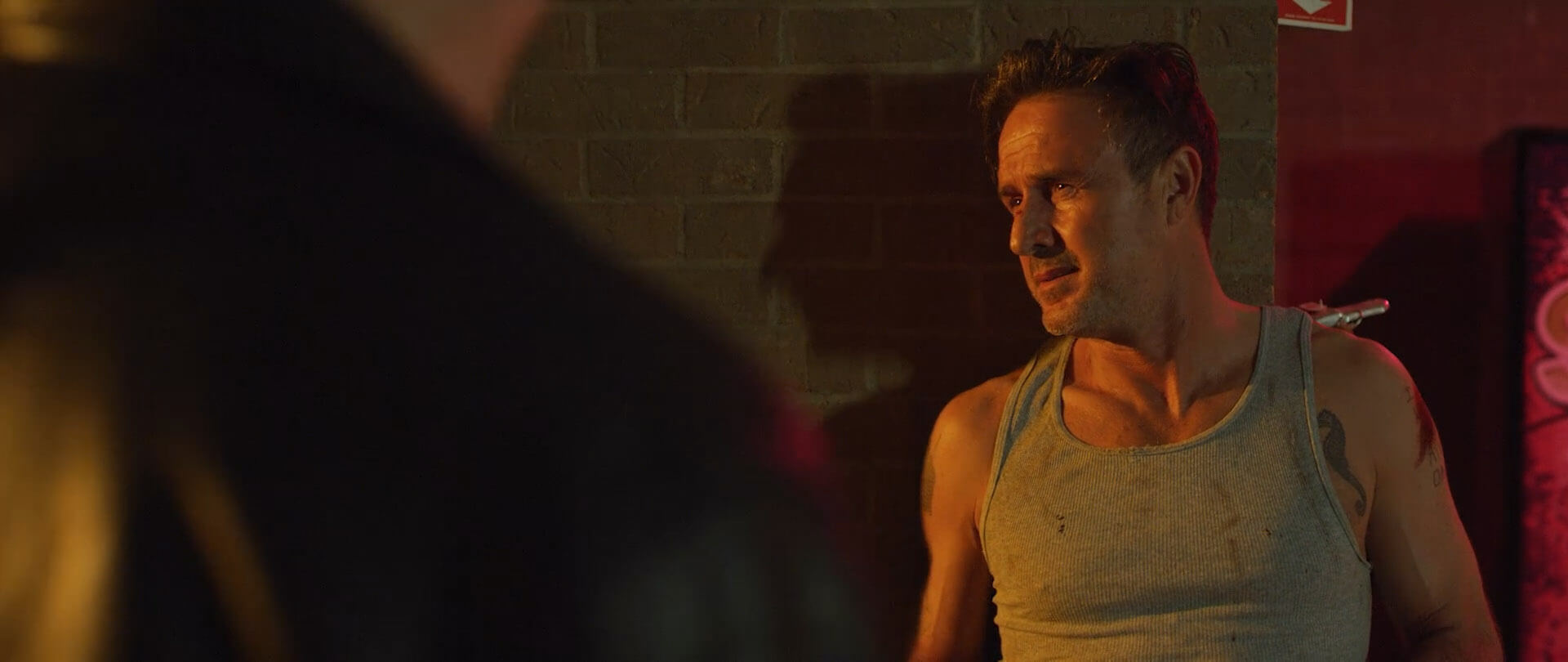
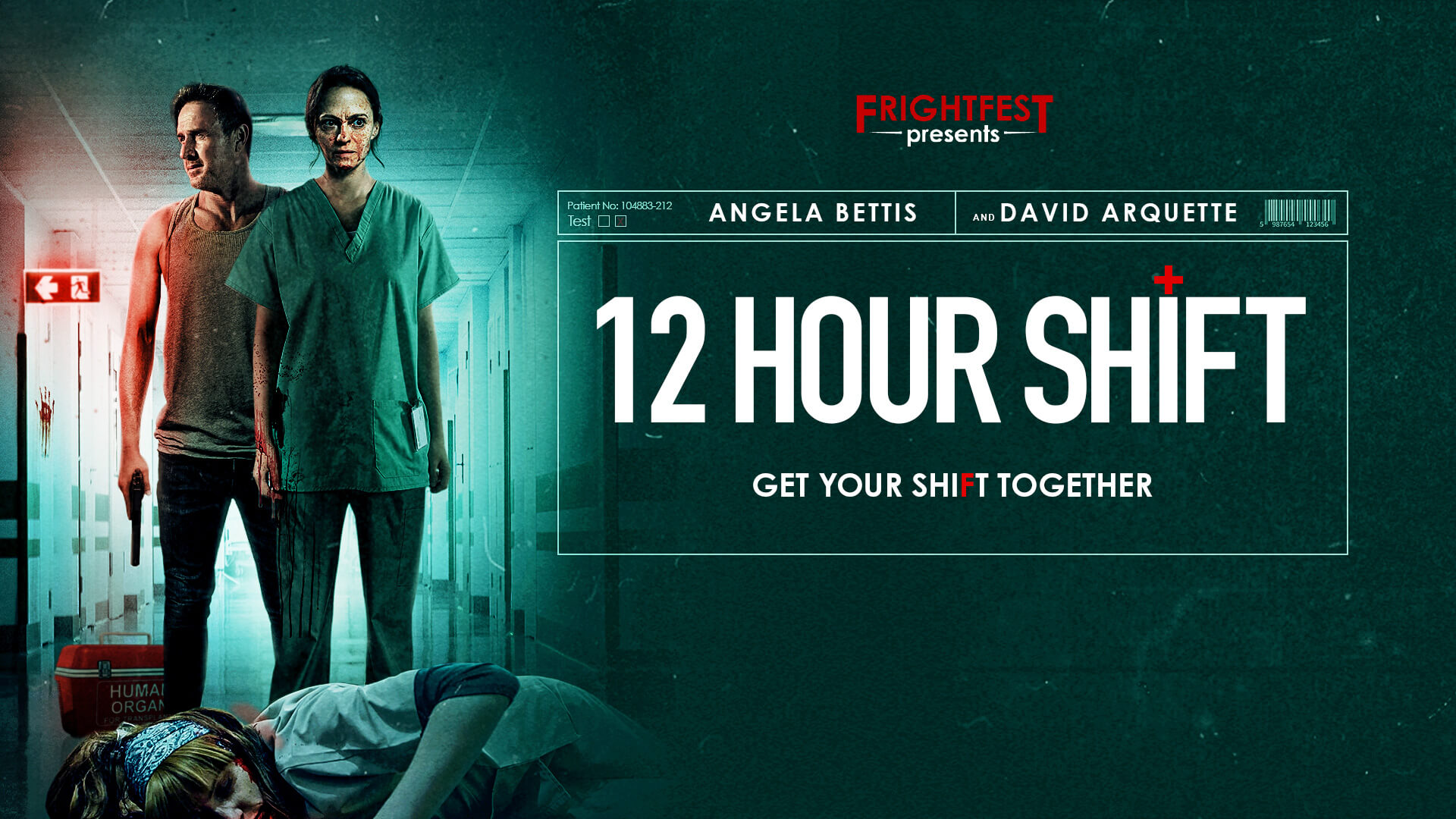
Following a successful festival run, Brea Grant’s latest film as a director 12 Hour Shift hits the digital realm in the UK. We caught up with the versatile David Arquette, who acted as a producer as well as acting in the movie, to find out more…

STARBURST: For anyone who doesn’t know, what’s the concept of the movie?

David Arquette: It’s a 12-hour shift in the ‘90s at a hospital; a nurse’s experience of a night that goes way out of control. She’s involved in, at first it seems a crime without a victim really, when people die whether they’re donors or not donors, they’re taking their organs are selling them on the black market. But it takes a really nasty turn and really starts snowballing after that [laughs].

As you mentioned, the film is set in the ‘90s, where the significance of that era?

Well, especially in respect of what we’re living through right now, it does seem like a much simpler time where social media wasn’t a powerful force. There was just an element of fun and a carefree element that was going on back then, which really appealing to me.

You’re also producer on this film, what did that involve?

My wife, Christina Arquette, really did the heavy lifting in the producer department, and HCT media, Matt Glass, Jordan Long, and Tara Perry, they were the main producers. My thing was calling up Mick Foley and asking if he’d do us a favour and be part of a little independent film. I do the weird stuff, like trying to take the edge off a little independent film, like getting some craft service, different snacks, different meals, just helping move the ball forward really.

Did you and Mick Foley bond over your death matches/match?

[Laughing] He was really funny, I’m probably getting this wrong but I mentioned something and he said he was going to put it through his ‘instantaneous risk/reward calculation’ or something like that. In the moment, even though a lot of the things are planned, some of things are like “well I, uh, guess I’ll go for this”, even if it might be risky or something. He was really fun, he’s been really supportive, and he’s just an incredible guy. If you don’t know, he loves Santa Claus, he really loves Christmas and the beauty of that. So much so that he’s even got his own Santa stationary, and he’ll write these really detailed handwritten calligraphy letters from Santa to all the kids of his friends. He’s just such a generous guy and such a talented actor. He did such a great job and he’s just so effortlessly intimidating.

Your character in the film is a much grittier, bad ass than previous roles. How was this for you?

It was fun, I love playing the bad boy, a smouldering kind of character who’s tough. It was right along the run of all my wrestling, so I was in pretty good shape at the time and was just able to lean into it. He was a character who essentially wanted to get out of jail so he could get to a hospital, so he could get high. That is what was in my mind of what got him there. So that’s what I leant into.

Is that a role you’d like to play in future?

What going to a hospital and getting some drugs? [Laughs]

A sort of bad ass guy…

I’m just kidding. Yeah, right now I’m on a little independent pilot in Memphis and yesterday I had this scene where I’m this bad ass drug dealer. It’s weird, I’ve been acting for 30 years now, so it’s funny, the older you get, the more bad guys you play for some reason, or at least for me. I don’t know why that is, it’s kind of interesting, you get different opportunities, you know, it’s fun not to always play the goof character. I get it, it’s a part of my personal character and I really believe in drawing from what you know. But yeah, it’s fun. I like playing all different kind of roles and being in all different kind of films. I’ll do a kids film, and I’ll do a horror film, and I’ll do a dramatic film and a romantic film, so just being able to have those opportunities is a blessing and I feel very grateful for it. I haven’t lost the love for acting, I haven’t lost the love for being part of movie making, for that I’m really grateful.

What’s the longest shift that you’ve ever done?

We’ve done easy 18 hours on films, on something like this, an independent film, I was up until like 2.30am, woke up a 7am, got back to the set a 9am. Filmmaking, a lot of the time, there are really long hours, especially if it’s something physical. Or like in wrestling where you’ll do a match, you’ll hop in the car, drive 200 miles, get a little sleep, you wake up, you go to the place, you wrestle, get beat up, get back in the car. Sometimes the clock doesn’t stop, so I don’t know the longest shift I’ve ever had! On a typical job, I guess 12-hour shifts is typically what I’d do, but you know I started acting when I was 17, so I haven’t had a tonne of other jobs. I worked at newsstand, I worked for a delivery company, and I [laughs] sold maps to stars homes.

Currently in the UK we’re in lockdown, how has the situation affected you and how you work?

Oh man, right now we’re doing this little independent pilot, we got shut down twice because of COVID [sighs]. We had to test people, and contact trace and make sure everyone’s safe and that the set’s really safe. But on a personal level, I think it’s really had us all take a hard look at ourselves, and for me, it’s brought a lot up for things I still need to work on, as far as patience, or I tend to be moody at times. Just Figuring out how to navigate the world in way works for you, that’s also within the flow of what’s going on, then when obstacles come and how you address them. The older I get, I’m able to recognise “oh why am I feeling this” and “why’s this exchange with this person bringing up this thing in me”. Typically, if you’ve done therapy and you start looking into why you react to certain things, you can identify them a little easier, and then it gives you tools on how to not take things personally, to recognise that this might be what this person’s going through and it doesn’t really affect me personally even though it’s feeling like its personal.


I do a lot a lot of writing in the STARBURST video games section. You were in a couple of sport titles back in the early noughties, do you have any interest in video games?

I love video games, but I haven’t really had the time to play them recently. We have kids, so they play some games. We try to limit, but it’s been hard in lockdown because it’s like something they love doing, so you want to allow them to have and enjoy them but, you also have to parent what games they’re playing. And it doesn’t really allow me to play Call of Duty in the house. I haven’t been playing games recently, but I love being a part of them. I’m supposed to be a part of one coming up. I love the world of video games, there’s just so much that goes into it, the designing of them, the art, and the storytelling that’s involved. I love the evolution of them. And it’s not just video games, it’s films, too. People in general are becoming better storytellers, I believe. People are understanding the process even more. A lot of people who have never been part of making a movie are starting to understand what goes into it. A lot of people are doing stories on their phones, they’re starting to understand comic timing. It’s really interesting to see the way storytelling’s evolving. And then there’s these different niches; you can go to a horror convention and there’s the Evil Dead 2 fan base and The Evil Dead one fan base, who thinks it’s far better. You know what I mean, there’s all these niche groups and its fun. I love Comic-Con, you see all these people, I love that there’s Sonic the Hedgehog and The Mandalorian, and they bring these weirds things together.

You alluded in your last interview with us, that you’re never truly done with wrestling. Is there any chance we’ll see you wrestling in the UK, perhaps against STARBURST’s own Sean Only?

[Laughing] Oh gosh, I don’t know. It was such a weird thing, I’d done this movie and we were really excited about it coming out and it literally came out right as the world changed, and literally everyone got benched in that world. I don’t know if I’ll ever wrestle again to be honest with you, I love that it lives within that movie.

Yeah, he said you’d be too scared.

[Laughing] Yeah, I’m full of fear, that’s right!

Any good ribs played on you by wresters?  You must have done if you’re one of the boys.

I don’t know, I’ve always been this weird outsider. I kinda feel like I’m sort of one of the boys, but I still feel like I’m an outsider. I don’t know.

As an ex-wrestler and a wrestling fan, I feel as though what happened in the late ‘90s, you shouldn’t have been put in that position. I feel like the wrestling world owes you an apology, so….. sorry.

No, I’m a big boy, so I don’t need any apologies or anything. I love the experience of acceptance, but when the wrestling movie came out, WWE, AEW, no one wanted anything to do with me still [laughs] so…

When Scream comes out they will

[Laughs] I know, exactly.

Maybe a surprise Royal Rumble entrant next week?

Oh gosh, I don’t know. It’s such a painful thing, when you get a little distance from it, you’re like, “it’s probably alright that I’m not gonna wrestle again”. There are some pains that you go through and the sense memory of them, I think about certain things like breaking a rib and then taking bumps on it, it’s just like deep, deep pain.

12 Hour Shift is available on digital platforms from January 25th. You can watch our interview with the film’s director Brea Grant here.

Author Andy Weir Talks PROJECT HAIL MARY, THE MARTIAN, and More!

weir

Known for stranding Mark Watney on Mars in THE MARTIAN, author Andy Weir is back with another isolated, pressurised space tale, PROJECT HAIL MARY! It’ll see astronaut Ryland Grace awaken with memory loss to a confusing, save-the-world situation. Andy’s books have captured the attention of readers all over the world, with his genius sci-fi ideas even being wonderfully interpreted to the big screen by none other than Ridley Scott, and we have no doubt that PROJECT HAIL MARY will one day achieve a similar result!

How and when did the idea for Project Hail Mary come about?

After The Martian and before Artemis I worked on a novel called Zhek. I ultimately abandoned it because it just wasn’t working. However, some of the elements of Zhek were very solid, so I built a story around them. I can’t give too much away without spoiling Project Hail Mary, but several plot elements clicked together really well.

How long did it take to come together, and how did this process compare overall to any book that you’ve worked on before?

I came up with the idea slowly. Even ignoring the time spent working on and ultimately rejecting Zhek, it was still slow. There were a few things I had to work out for the story to make sense.

So, how would you describe Project Hail Mary to someone that – for some unforgivable reason – isn’t familiar with your writing just yet?

It’s a story of a lone astronaut on a desperate mission to save Earth from annihilation. Problem is: he has complete amnesia and no idea what his own name is, let alone what he’s supposed to do to save humanity.

Given that it shares similar themes to The Martian, what do you like most about isolating a story to one character, whilst putting them under immense survivalist pressure?

The story becomes much simpler when there’s only one character to focus on. As long as the character is likeable and the readers like spending time with them, you’re fine. That having been said, this differs from The Martian in several ways – the main character here isn’t fighting for his life, he’s trying to save Earth. Also, a lot of the book is flashbacks so we see this character interacting with the other characters much more often than poor Mark.

 Leading on from this, and you probably get this question a lot, but we must ask, what originally attracted you to writing stories that are set in space? What is it you just love so much about working in that setting?

I guess I’ve just always been a nerd. Space is my thing. And since I’m in to it, I’ve researched it a ton. And that leads to ideas, and so on.

What was the hardest part about putting Project Hail Mary together for you, and why?

The main character of Ryland Grace himself. When I first started writing, I didn’t have a unique or interesting personality for him. But as I wrote, his personality developed and became clearer to me. Then I went back and rewrote the earlier scenes to match the personality that came forth. It worked out well but I spent a lot of time working on the book worried that the main character was boring.

We can’t let you go without asking a couple of questions about the brilliant Artemis. Looking back, how happy are you with it still, and also, what do you remember the most about putting it together?

I’m happy with it. What I remember most about it was the tremendous research and effort I put into make Artemis itself – the city on the Moon. I worked out how to make it, how it could be financially solvent, what things would be like there, etc. I had a lot of fun doing that.

There’s an Artemis film in early production, with directors Phil Lord, Christopher Miller, and writer Geneva Robertson-Dworet already behind it. A great trio to say the least. How excited are you for that, and what would you really like to see come from the film?

I’m super excited! But I try not to get my hopes up too much. You never know with Hollywood. You can never predict if a film will get greenlighted. There are usually a bunch of factors left up to chance that have nothing to do with your story. Market activity, other films in the studio’s slate for that year, availability of the big-name performers, etc.

Also, was there anything you learnt from putting Artemis together that you maybe applied to the creative process for Project Hail Mary?

I think so. I tried very hard in Artemis to make characters with depth and complexity. Also I worked hard to make sure no one was ‘perfect’. Everyone had flaws, especially the main character Jazz. But I think I went too far. A lot of people didn’t like Jazz – they found her obnoxious and self-destructive. So for Project Hail Mary I dialled it back. Ryland is a very likeably person but I believe he also has depth. I’m still learning how to make good characters.

Finally, why should STARBURST Magazine readers check out Project Hail Mary?

Because if they don’t, I don’t get money from royalties, and that would be a tragedy!

PROJECT HAIL MARY is released May 4th from Del Rey.

OH MY! An Interview with GEORGE TAKEI

takei

STARBURST catches up with GEORGE TAKEI, an actor whose portrayal of Sulu in STAR TREK made him a legend and whose humanity earned him iconic status

STARBURST: There was a motto on Star Trek: live long and prosper; did you think that the show would go on as long as it has?

George Takei: Ah yes, the Vulcan greeting; live long means to go on and on and on. We are not going to live long. As you know, some of our colleagues have passed on, but they have contributed to the prosperity of Star Trek. And prosper; we have six spin-off series, we call them our children, and a seventh, Picard, starts this month, and we have the 14 feature films. That’s really a phenomenon; a TV series that was low-rated for three seasons has gone on and become this sensation of 14 major budget feature films, a wall of Star Trek books. We are also action figures. So we have lived long and prospered! I see no indication of us not continuing to do so.

After The Original Series finished, the show returned in an animated form, and you were back in that – what was that like for you?

It was not as satisfying as the live-action, because then we were there on the set together, playing scenes with each other. With the animated version, when I arrived at the recording studio, Leonard might be leaving, and I would step into the booth and do just my lines. The scene might be with Leonard or with Nichelle, but it would only be me alone with my lines highlighted. Then when I’m finished and leaving, Jimmy Doohan would be coming in, so it was not a very fun way of working.

But overall there are nothing but good memories for you with Star Trek then?

I’m very proud of my association with it, there have been stressful moments, but they go with the uplifting ones. We used to shoot into the wee hours of the morning, but some of the wonderful scenes worked beautifully. And I have fond memories of the fun episodes like The Naked Time – that episode where I, at last, get unchained from that damn helm console, and I get to take my shirt off, grab my fencing foil and demonstrate my swashbuckling prowess.

Absolutely, whenever you search classic Star Trek, that iconic image always comes up.

You went on to the movies and then actually returned in Voyager as well. Would you have liked to do more as a captain in your own series?

You know that there was this movement that began after Star Trek VI: The Undiscovered Country by the fans for a new TV series called Starship Excelsior with the brand new captain of the Excelsior, Captain Sulu. The Star Trek fans don’t just sit back and absorb it as entertainment, they take the show that they see as a stimulus, as inspiration, and they act on it. And one of their actions was to try to get Captain Sulu a regular TV series. But the powers that be at Paramount are deaf, dumb, and blind.

The readers of STARBURST were particularly taken with Star Trek VI – it’s a good thriller and it had a strong political message.

Exactly, yes. From the first scene when Praxis explodes, and the vibrations come through the galaxies and shake the Starship Excelsior – that explosion was inspired by what was happening in reality at Chernobyl. The explosion at Chernobyl signified the crumbling of the Soviet Union, and – onscreen – of the Klingon Empire. The David Warner character, the ambassador from the Klingon Empire, was essentially Gorbachev, coming to the west to build a rapprochement over the crumbling Soviet Union.

Yeah, it’s a very clever film, full of Shakespearean quotes and a lot of allegories. With politics, you’ve had a platform, and you’ve used it very wisely; you’ve done a lot for LGBT rights and you’ve spoken up for a lot of people that don’t have a voice or find it very difficult. You once joked about going after Devin Nunes’ seat in Congress, would that be something you’d ever really do?

Did you know the date that I posted that? April 1st. Some people didn’t get that, and they started signing cheques that we had to send back. That immediate reaction was so, so wonderful, though.

You’ve also very recently brought out a graphic novel, They Called Us Enemy, about your experience as a young Japanese American during World War II.

Yes, we were imprisoned by the United States government. I remember that morning. It was terrifying, I had just turned five years old; my parents got me up very early. They got me up, and they dressed us hurriedly. My brother and I were told to wait in the living room, and my father said they’d be doing some last-minute packing in the bedroom. And so we were just gazing out the front window, looking at the neighbourhood. Suddenly, we saw two soldiers marching up our driveway. They carried rifles with shiny bayonets. They stopped at the front porch, and they began pounding on the door; it was a terrifying sound that seemed to make the whole house tremble. My father came to answer the door, and literally at gunpoint, we were ordered out.

We were innocent Americans of Japanese ancestry. We had nothing to do with Pearl Harbour. My mother was born in Sacramento, California, my father in San Francisco. They met and married in Los Angeles, we were two generations of Americans. My grandparents were the immigrants, and they were innocent as well. And yet, we looked exactly like the people that we were at war with. We were at war with Germany and Italy also, but Italian Americans and German Americans looked like the rest of America. It was without question a racist act and a hysterical, irrational act. There was no charge, no trial. Due process, which is the central pillar of our justice system, simply disappeared. We were imprisoned in camps with barbed wire fences; I still remember that fence that combined us. High sentry towers with machine guns pointed us. When I made the night runs from our barrack to the latrine, searchlights followed me. That five-year-old me thought it was nice that they lit the way for me to pee. It’s the same experiences like that of my parents, but parallel, different stories. I wanted to tell that child’s story because I want to reach a youth readership: preteens, teens, young adults, but via the child’s account, I also led them into the larger story of the harrowing experience for my parents. But I wanted to reach young people via the comic strip format. When I was a teenager, I read comic books voraciously, and I remember retaining the information; you know at that age when you’re a teenager, you’re absorbing information through your pores. And I wanted to reach young people, while they’re still absorbing because they’re going to be the leaders of tomorrow. They’re going to be the movers and shakers of tomorrow. Some may run for public office, and I think it’s vitally important for them to know that history of the United States – a time when we reacted so irrationally, so hysterically, and in such a racist way, which is entirely contrary to what we stand for as Americans, and, if we have a populace that’s informed that way, we won’t let it occur again.

There are parallels to today…

Yes, but that is an even lower, grotesque aberration because we were always together with our parents, we were never separated. What they’re doing today is tearing away infants and putting them in filthy cages with human waste and overcrowding them, and to really underscore the evil, they’re randomly scattering them to the far reaches of the United States, far from the southern border. Also to make the situation worse, when the court orders the children be brought together with their parents, this administration is so incompetent that they can’t find the right child or the right parents to bring them together and those children’s lives have been permanently changed.

The novel is incredible, there are many things we didn’t realise about the time, and it tells the story so vividly. Although it’s distressing, it’s equally uplifting and the way that you introduce some of the childish wonders into it makes it more palatable. One thing that did come across was that your mother and father seemed incredible people. Do you feel that they live on in you, with their values?

My mother was a gutsy lady, and my father said ‘people just make mistakes’; it’s my responsibility to tell their story. That’s been my mission: to raise awareness because there are people today that I consider well-informed but when I tell them about my childhood imprisonment, they’re shocked. They’re aghast, they don’t know about it. We have a lot of glorious chapters in American history, but we don’t know about the instances where we failed our ideals. And I think we learn more from our failures than we do from the glorious chapters that we already know about. And that’s where I’m trying to fill the void, with this object lesson of the importance of people who cherish the ideals of our system to participating in a democracy.

We wish more people were as brave as you are.

Well, the Star Trek philosophy, infinite diversity in infinite combinations, I think is what we need to know more about and take into our bodies at a time like this. Our culture is universal. What happens here affects us in Southern California, what happens in China affects our economy, we live in a global society. And what we said on Star Trek was that the Enterprise was a metaphor for Starship Earth, and the strength of our starship is having the diversity of it all coming together and working in concert, as a team, and boldly going where no one has gone before.


THEY CALLED US ENEMY is available now and can be purchased HERE.

[This interview was originally published in issue 469, February 2020.]

Michael Ironside | TOTAL RECALL

ironside

When making a genre movie in the ‘80s and ‘90s, there were a clear set rules that had to be adhered to in order to make it a success: hire Arnold Schwarzenegger as the hero, cast Sharon Stone as the femme-fatale and as for the bad guy? Well, there was only one guy you needed to call and it seemed that back then, everyone had one particular actor on speed dial… Michael Ironside.

Total Recall was one of those great gifts that was given to me,” Ironside says with a warm smile, speaking from his home. “I’d just come off V, which had garnered a lot of heat and there’s a lot of crossover between Richter and my character in V. In V, I constructed someone that couldn’t give affection and couldn’t receive affection and that character actually helped build the foundation for the character of Richter. Paul, I think wanted a much more in-depth, much more specific emotional character and we worked on that. I worked on that very hard.”

While 1990’s mega-budget sci-fi blockbuster Total Recall was arguably Ironside’s biggest mainstream exposure, it certainly wasn’t his first foray into the genre, or for that matter, the hearts of sci-fi fans around the world. It was in 1981 that the Canadian-born actor exploded onto the scene (literally) in David Cronenberg’s Scanners, followed by a string of appearances in film and TV, predominantly as the bad guy.

“It’s my experience that you don’t pick your type,” Ironside says when asked about the uniformity of his on-screen roles. “It’s an old story that if you hit an old lady with a shovel and people make money off it, then that’s what they want you to do. I’ve used this metaphor the last 23 years; the shovel may become gold plated and the lady may turn out to be Diana Rigg, Sophia Loren or whoever, or the shovel may become an Uzi or a stick of dynamite. Millions of dollars are invested in this, people take risks on you. It’s very hard to get hired if you haven’t shown what you can do. And once they’ve made money off you it’s very hard to get somebody to say, ‘Well why would I get you to do this when that guy over there does it and I make money off of him doing that. He kisses the ladies and you kill them’. So what I do is I make a lot of money playing ‘heavies’. I’ve done it over my career and actually still do quite a bit.”

The life of a well-paid film actor is as far removed as you could imagine from Ironside’s humble beginnings. Hailing from east of the Don river in Toronto, Ironside was the eldest of six siblings and lived in a house just twelve and a half feet wide that he also shared with his grandfather and various pets. “Where I grew up there was no privacy,” Ironside explains, “There was always somebody from the neighbourhood in the house so it was always very crowded. So privacy was in reading and writing and I would create my own things when I was writing.”

It would be Michael’s escapism through literature that would prove to be the stepping stone towards his later career, although it would take the intervention of someone that believed in him to kick start it. “I was writing my autobiography when I was 13 years old. And this student teacher named Judy Millen saw what I was doing and she said, ‘What are you doing?’ and I said, ‘I’m writing my life story’. She didn’t laugh and she asked if she could take a look and I let her take it home. She came back and she said, ‘Your dialogue and your characters are absolutely brilliant but your descriptive narrative is shite’. So I asked what she meant and she said, ‘Have you ever thought about writing plays?’ At that time all I knew was basically Shakespeare and the stuff they touch on at High School in a working class background and she gave me Ibson and Strindberg. Strindberg would go on for two or three pages with description, he was such a control freak. So I asked, ‘Why would I do this? I can’t do my whole life’, and she said, ‘No, take one episode’.”

“There was an episode that had happened to me when I was 13, before I started writing this, where there’d been a fight at home and I basically ran away for two days. I stayed at a Salvation Army shelter downtown. I was big enough and old enough that they let me stay and I saw some stuff there. There was an old fella who was trying to get me to kill him, he had me almost convinced that he could give me super powers if I killed him. Because he was crippled and he couldn’t get out and he didn’t want to live anymore. We tried to convince me to suffocate him. There was a guy who got beaten to death in the shower and the attendants didn’t give a shit because they didn’t want any trouble. There was 180 guys sleeping in three different dormitories. So she says, ‘Take that, it’s one set, maybe two acts, maybe three’. So I did it, she gave me some editorial choices and stuff and I handed it in after the summer and she said, ‘Wonderful’ and I went away and carried on writing. She went ahead and entered it into a Canada-wide contest for University students and I knew nothing about it. She was a bit of a champion in the sense that she wanted more money spent at a grass-roots level in education. She was from a fairly literate family, she and her sister moved into the neighbourhood because they believed if you’re gonna teach in the neighbourhood you have to live in the neighbourhood. She thought money should spent on children in education not on the finished product in Universities. So to make a point she didn’t tell anyone I was in Grade 9 or 10 at the time, she entered it and it won first prize.”

The incredible win would wind up setting Ironside on a path towards the arts, which was as far removed from the life his family knew at the time as he could possibly imagine. He just didn’t know it yet! “I had a full time job at night as a young teenager, I was painting factories at night and then going to school in the daytime. I came home one day and there were all these suits in the kitchen with their hats on so I thought it was the police. They were all talking to my Mom and I remember hiding thinking, ‘Fuck, what have I done? I haven’t done anything wrong’. And I heard my Mom say, ‘We can’t send our kids anywhere physically but we can send them there in books’, and I thought, ‘What’s she telling that to the police for?’ So I buggered off, went to work and came home later that night about 12 (I worked about 5.30-12/12.30, if I skipped lunch I could come home early). Now my father always went to bed at 11.30 as soon as the news was over. That man worked three jobs for us to make ends meet. He’d come home, dinner was at 5/5.30, sit at the table and talk until 6 and then he would go doing what he did, fixing things in the basement and things until 11, watch the news and then go to bed at 11.30. I came home at 12.30, the light was still on in the kitchen and he was still awake. I thought, ‘What the fuck’. So I go in and I said, ‘Dad I didn’t do anything’, he said, ‘What are you talking about?’ I said, ‘I saw the cops were here’, he said, ‘No, no they weren’t cops they were reporters. Evidently you won some contest. Who’s this Judy Millen?’ I said, ‘She’s my teacher in school, she’s been helping me with my writing,’ and he said, ‘Ah. Well she went ahead and entered this in a Canada-wide University contest and it won first prize so you get a chunk of money (either $5,500 or $7,500) and you get to have your play produced anywhere in Canada. But there’s a huge stink because you’re not in University, she’s making some political statement’. He said, ‘They’re trying to figure this out and I’ve got an idea for you’.”

In retrospect, Michael admits that it wasn’t just Miss Millen that helped make the right choices for him. “I get emotional when I tell this because I didn’t realise until I was well into my 40s what my Dad did”, Ironside says. “He said, ‘If you give up the money, they can split the money half and half between second and third place and you get to see your play produced.’ So I said, ‘Okay’ and he wrote it up and I signed it. They agreed to it, they got the money and I got my play produced. It didn’t hit me until I was in my 40s, that my Dad had never seen that kind of money in his whole life. This is a man who’s worked three jobs to make ends meet and he says, ‘Give away the money and you get the chance to see something you wrote’. The gift of parenting, when parents understand stuff.”

Winning the competition and seeing his play produced (by a small Canadian company called Factory Lab) gave Michael the boost he needed to find his feet in the creative arts. His second play, East of the River was picked up by the Toronto Workshop and while he was writing, he began taking acting roles to help enhance his understanding of the process from their perspective.

“There’s an old saying,” Ironside explains. “If a dog shows up in the same place enough times, they’re going to give it a screen test. It’s not whether you get the screen test, it’s what you follow it up with. You have to be constantly moving forward. There’s no standing still in this industry. You’re either going backwards or you’re going forwards. You’re either learning and progressing or you’re going backwards and then you’re forgotten. So it’s not getting a break, it’s what you do with the bloody break. What you follow it up with.”

As time would tell, Michael Ironside followed up his successes with a string of TV and film appearances. But while it would be Scanners that would put his face on the map (literally all over it in little pieces) it was roles in successful shows such as The A-Team, Hill Street Blues and most importantly, the alien drama V that would begin to make him a household name.

“The original story, I’m told, was that that was a lot like the Man in the High Tower,” Ironside reveals. “What if America had lost the war. And the Networks were like, ‘This is bullshit, who’s gonna watch this?’ so he went off and made all the Nazis aliens.” V would be the springboard that propelled Michael to more mainstream fair, including the likes of Top Gun, while it would be the role of Richter in Total Recall that would firmly cement him as a genre favourite. His follow up, as General Katana in the often-lamented sequel Highlander II would be no exception. In fact, no sooner had we begun chatting than Ironside spotted my replica Masamune samurai sword from the first Highlander film sitting behind me. “Hold on a second”, Ironside says with a grin before disappearing off camera. When he returns, he’s waving his screen-used sword from The Quickening. “You wanna go?” It’s a moment that would make any fan of either Highlander or Ironside grin from ear to ear. “I’m a huge fan of Japanese history and storytelling,” Michael expounds. “My father took me to see The Seven Samurai. I was very, very young. I actually got to show that to my daughter about 10 years ago – she’s now 24 – and that’s the basis of The Magnificent Seven. I remember in an interview with Kurosawa they asked, ‘do you feel abused or feel like you’ve been stolen from when people take your material?’, he said, ‘No, it’s not what you steal it’s how you steal’. It’s that whole thing of how all movies are about six or seven plots. I think it was D.W. Griffith who said ‘There are only really eight storylines out there and six of them are Westerns’.”

Today, Ironside continues to both act and write, “I’m a morning writer, I’m writing right now,” although these days he has the luxury of being able to pick and choose his roles. “I do large films where I get to affect distribution and I have a bit of say in things,” Michael explains. “And then I’ll go out and do small independent films where I’ll play the father, grandfather, damaged son or someone who has a certain amount of empathy about them. I do things that make me stretch. I got offered a job last year to do a film in Chicago and it was another psychopath, ageing paedophile motherfucker that they’re hunting down. They offered me a lot of money for it and I just told them that I’m not interested. I told my agent that the little boy in me just wants to go home after three days if there’s nothing there for me to reach for. Instead, I went and did this little independent film with no money in Upstate New York and had an absolute ball. The larger films allow me to put my daughters through college and make sure they’ve got a car and can pay for their vet bills and stuff. Then the smaller films I get to experience growth and learning. I don’t need the profile. Some work and some don’t.”

As we wrap up our chat, we turn our attention back to Total Recall and his time working with director Paul Verhoeven, not once but twice. “Of all the directors I’ve worked with, Paul is in the top five of what I would call true directors,” Ironside elates. “He’s in absolute charge of everything, he knows exactly where he wants everything and where he wants it. He’s a true craftsman. He said about a year ago, ‘We should do a third one’. Quite a few years back he said, ‘I’m going to do Speer, Hitler’s architect, I would like you to play him as an older Speer, the man who gets out of prison’. So he sent me over a book on Speer and I read all this stuff and this sociopathic character, such an amazing character, despicable human being. But he couldn’t get money for it. But he does say he wants to do a third one.”

And for that, we wait eagerly.