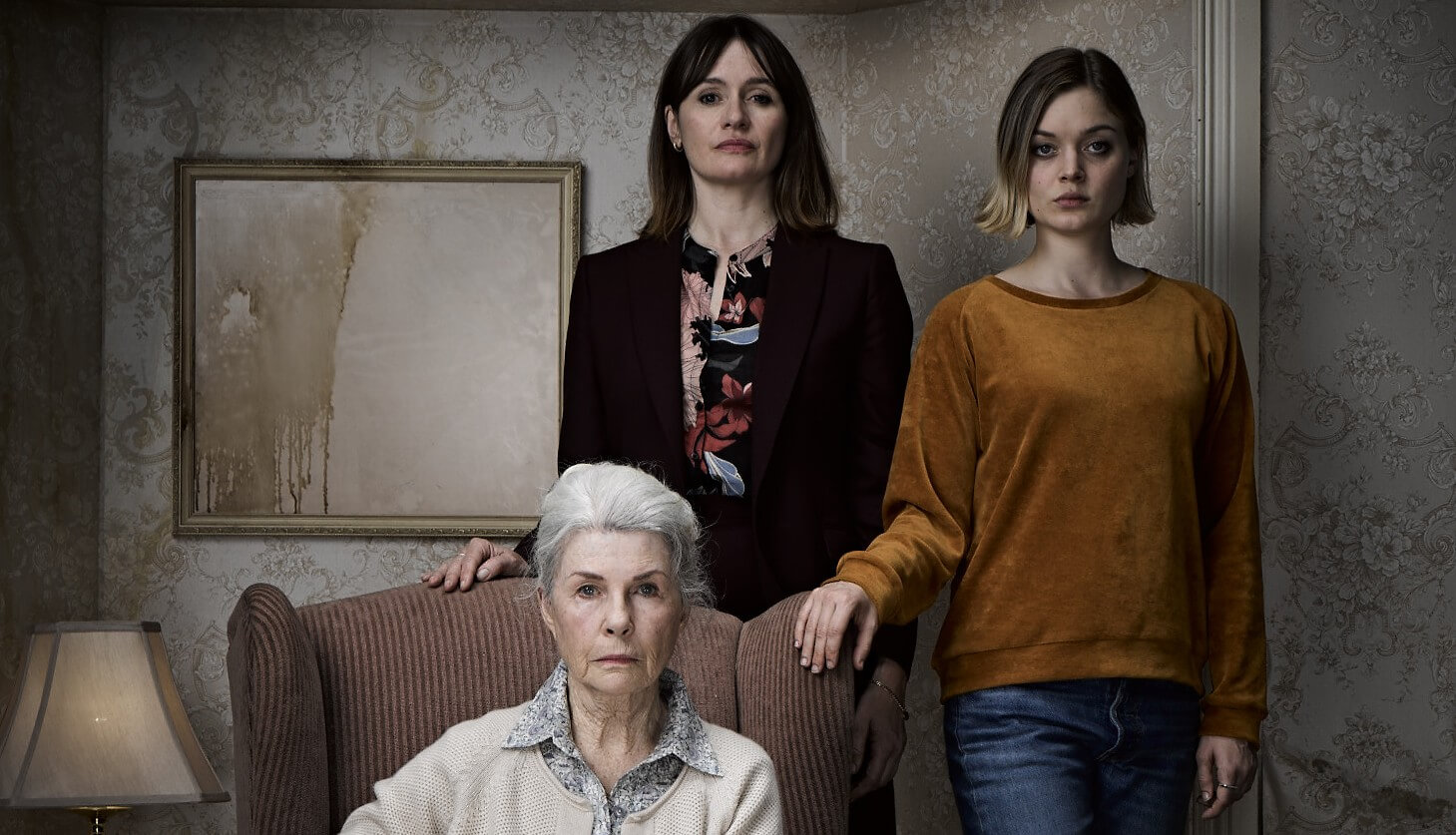
One of Hollywood’s best emerging talents, writer/director Natalie Erika James has proven herself an empathetic storyteller capable of delivering studies of life’s most harrowing interpersonal challenges. Her debut feature, Relic, takes the painful business of contending with dementia and crafts a wholly original, relentlessly raw story that will endure and endear itself to audiences long after the credits roll. STARBURST was fortunate enough to nab some time with the director, who is hard at work on her next feature and graciously offered up insights into the making of the film and what it all means to her…
STARBURST: Forgetting can be a really terrifying thing, as can watching a loved one deteriorate.What kinds of things were you drawing from when you were writing this script?
Natalie Erika James: It really did come from a very personal place. My grandmother had Alzheimer’s for quite some time before she passed. I guess a lot of it came from, to be honest, guilt. She lived in Japan and I actually started writing Relic when I went to go see her. But she couldn’t remember who I was on that trip. So I felt guilt about not having gone and seen her more often. A lot of it was also trying to capture the uncanny sense of someone who, for all intents and purposes, looks the same but it feels like they’re becoming someone different. Something other than who they are. And it was also observing the heartbreak for them going through the experience. It is hard for the people around them but it’s a really devastating process for them, especially in the beginning when they are really lucid about what’s happening. They start to blame themselves, get really upset, and… yeah, all of those things fed into the writing of the film.
Do you think the best movie monsters are the ones we know or the ones we don’t know?Like, something that’s familiar and close to home or something more otherworldly and Lovecraftian?
I’m a massive fan of Gothic horror and Asian horror and both of those genres really play on psychological horror, which is a lot to do with the terror within ourselves and within our homes and our family dynamics. So I think there’s something more potent about that genre and that approach compared to something like a monster that’s kind of invading from the outside. I guess I draw from what I’m actually scared of, and that’s just what interests me. If I watch a slasher film, I always feel like I can just lock my doors and I’m fine. But if the menace is already inside the house, there’s not a lot you can do.
As a horror filmmaker, do you think your topic or your subject matter should scare you more than it should scare the audience?
The writer/director is the best gauge of what is going to be scary and, to a certain degree, you have to use that as your compass for what you write. If I write something and I can’t put myself in the character’s shoes and imagine being scared, then I’m probably not going to shoot it because I can’t imagine anyone else being scared in that position. I think you try your best to write stuff that scares you because you hope that there’s commonality in your audience.
Circling back to the guilt you were discussing earlier, that seemed like a pretty prominent aspect of the film. The guilt Kay feels is really potent.
Right! The things that we owe our parents. The simmering resentments and how your dynamics can change… yeah. It’s a really emotional time for people and you have to constantly negotiate the power balance in your relationship because, effectively, you have to start parenting your parent. And there can be a real resistance to that.
What are you tackling next? Any details you can share?
I’ve got a few things but the one I’ve been writing the longest is a folk horror set in Japan. Relic is about mortality and death and this one is more about creation and birth… motherhood, really. A folk horror using Japanese mythology.
RELIC is available in the UK digitally from Jan 8th, and on DVD/Blu-ray from Jan 18th. Check out our review here.
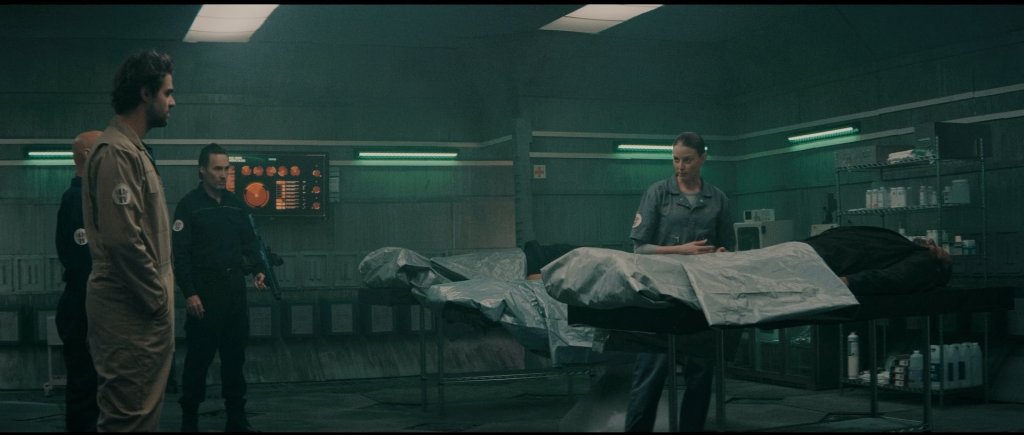
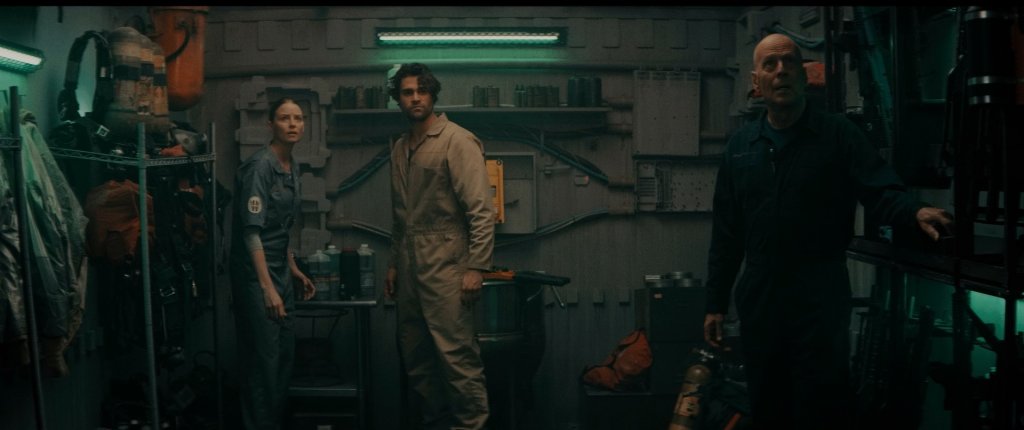
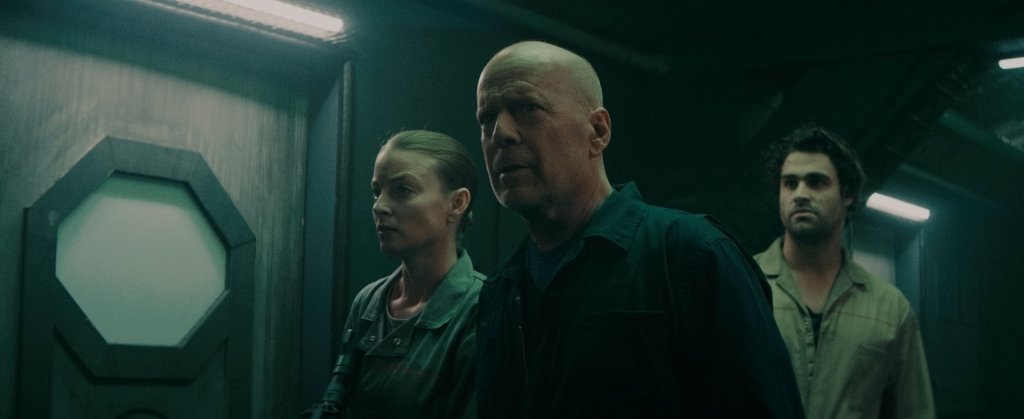
Breach is an alien invasion thriller directed by John Suits, and which stars Bruce Willis, Rachel Nichols, Cody Kearsley, and Timothy V. Murphy as the crew aboard a spaceship carrying precious cargo, which they must protect from a malevolent cosmic force intent on their destruction. Ahead of the movie’s releases on December 18th, STARBURST spoke with genre icon Rachel Nichols (Continuum, G.I. Joe, Star Trek) about her turn as ship medic Chambers.
STARBURST: As always, it’s great to see you in an action sci-fi role! What attracted you to this film, and more specifically to the character of Chambers?
Rachel Nichols: The first thing that attracted me to the film was John Suits. He directed it, and I had done a movie with him a couple years ago – I say a couple, I think it was about five years – called Pandemic. We did it on a tiny budget, but the cast was great, we had Missi Pyle, Mekhi Phifer, and Alfie Allen, and John had such a vision for it. The whole experience was very special and different, and interesting. It’s a movie that I’m very proud of. And so John was the reason that I wanted to do Breach, I saw his name on the script and I went, “Oh my gosh, of course I want to work with him!”. And I sent him a text saying, “Hey dude, I just saw your script, I’m so excited” and he went, “I’ve been trying to text you, you weren’t responding!”. And I asked like, “What number do you have for me?” and it turns out he had my old Canadian number. I don’t know who this person was that was at the receiving end of his texts, but we got it all straightened out. And it was also an interesting character who was a doctor, it was sci-fi, Bruce Willis and Timothy V. Murphy were going to be in it, it all just came together.
That sounds really lucky though, because had you not then seen the script you might not have heard from him again!
Oh, 100%. I actually texted him yesterday because I’m filming in the depths of Mississippi right now, and we were having such issues with the connection here. And I texted him, like, “John, I don’t want you to think I’m not doing interviews for Breach, I’m having a really hard time getting connected and wanted to reach out to you specifically, because I didn’t want to lose connection with you!”. And he was just laughing via text, like “I know, they told me things may or may not work!” but I needed to make sure that the misconnection didn’t happen again.
Of course. And you mentioned working on Pandemic, which was another end-of-the-world apocalyptic movie just like Breach. What do you like most about this kind of sci-fi sub-genre?
You know, I love sci-fi because it’s a genre that you can have fun with, and it allows you to escape reality. But also, there are a lot of rules and regulations that go along with sci-fi and how it works; whether you’re talking about time travel, or whether you’re talking about New Earth, or a zombie apocalypse, you’ve got to abide by a certain set of guidelines for sci-fi fans, because they’re very particular. And if you do something right, they love you; if you do something wrong, they’ll come for you. And I’ve always been drawn to that because, like I said, you can have fun with it or you can think about it and pick it apart. And you know, I shot a movie called Pandemic and look where we are now! And now we have Breach where we’re shipping people off to a different planet because we’ve ruined Earth – and I don’t think that’s so far out of the realm of possibility. There’s a part of me that believes that could happen, and that’s what’s super interesting about the genre.
As well as sci-fi roles, you tend to pick ones like GI Joe and Continuum that are also very action-heavy. What keeps you coming back to these?
I love them. I love action. I mean, first fight scene I ever did in my entire career was on Alias, and I was playing a Russian hooker. I had a red wig, a very short Dolce Gabbana dress, and I loved it. It was just so cool, and there was such a great team of people. Funnily enough, Zoë Bell was in that fight scene doubling Amy Acker in my coverage, and I ducked a punch but came up too soon. And Zoë clocked me, and she felt terrible! She’d never hit anyone ever before, and it was totally my fault but she felt so bad. And years later we did a film together called Raze and we have a massive fight scene in which she totally kicks my ass. But we were laughing because I’m the only person she’s ever hit and she still felt bad about it after all these years! I love action stuff. I will do fight scenes until I’m too old and my body starts breaking down.
Zoë Bell is of course a huge action star, but you also work with Bruce Willis in this one, and he’s pretty much synonymous with the action movie genre. What was it like working with him?
He’s such a badass, but he’s also kind of a teddy bear. He’s super nice to everyone, and everyone on set. And I asked him questions about the films he’d made, and I also told him I had watched the Comedy Central Roast of Bruce Willis before I came to do the movie, and I was more excited to meet Bruce in person than I was to meet Bruce, the actor. And he totally lived up to expectations. He’s a goof, he’s funny. He tells these amazing stories, hilarious stories about when he was doing Tears of the Sun. Or one of my favourite movies of all time is Moonrise Kingdom, so I got to ask questions about that. And he’s very open and very honest, and just fun to be around. He’s amazing.
Sounds like a great atmosphere on set.
It really was, between him and John, and all the other people involved. It was a really great experience, even though we were in a small town in Georgia where I also got no service! We made it work and had a great time.
They’re just picking these shoot locations to keep you focused.
I think so. Like no internet, no cell service, no Netflix. Sorry!
The film is being called Breach or Anti-Life, depending on territories. Which do you think best represents the movie?
I definitely prefer Breach. It makes more sense to me given the plot-line of the film.
What was your favourite scene to shoot?
The cafeteria scene was certainly one of my favourites. We just laughed a ton! And I think Johnny Messner ate his weight in pancakes that day.
So what is it that you’re filming in Mississippi right now?
It’s a sci-fi, thriller type movie called Demigod. There is a character in this movie that reminds me of the Crone from Robin Hood, Prince of Thieves.
Do you have other upcoming projects you’d like to share with us?
I also have two films, Climbing Life and Night at the Carriage House which are slated for next year. They are all very different kinds of roles and stories, so I am very excited. It is really nice just to be back at work!
And lastly, what do you think your odds are of surviving an alien attack?
I think I stand a pretty good chance. I would grab my husband, my pup Lolo and go into hiding at my dad’s secluded cabin in northern Maine. Aliens would never find us!
BREACH releases in select theatres, on demand and digital on December 18th.
The sci-fi sequel Skylines is in selectcinemas from December 18th, so we caught up with some of the talent behind the film. In this video, we talk to actor Alexander Siddig.
Don’t forget to subscribe to our YouTube channel for more exclusive interviews and content.
The sci-fi sequel Skylines is in selectcinemas from December 18th, so we caught up with some of the talent behind the film. In this video, we talk to actor Lindsey Morgan.
Don’t forget to subscribe to our YouTube channel for more exclusive interviews and content.
The sci-fi sequel Skylines is in selectcinemas from December 18th, so we caught up with some of the talent behind the film. In this video, we talk to director Liam O’Donnell.
Don’t forget to subscribe to our YouTube channel for more exclusive interviews and content.
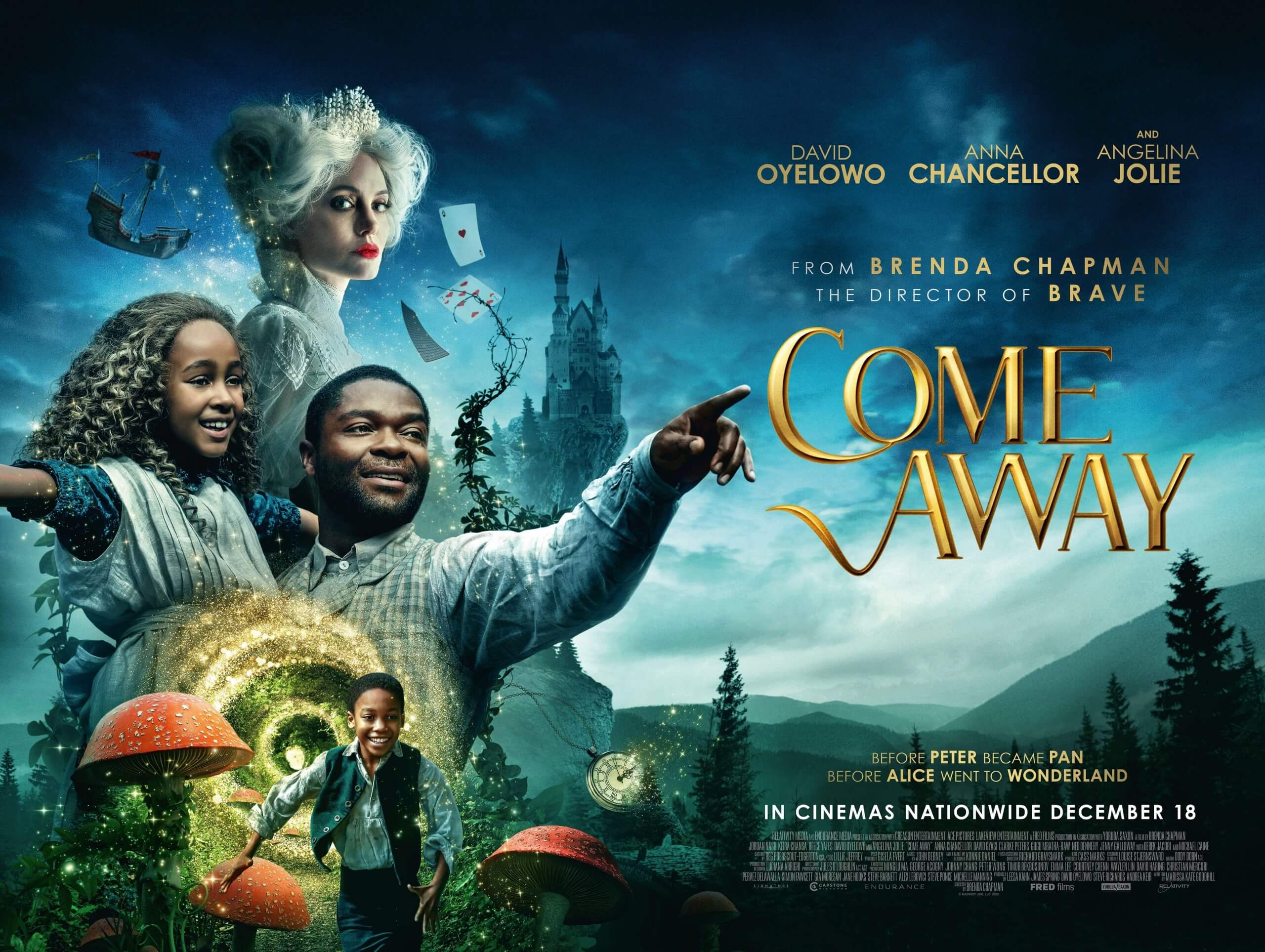
In his new film, Come Away, David Oyelowo adds another instance of the great British literary canon to his illustrious career. While the actor is equally known for his roles in historically-based dramas, wherein he portrays real people – such as Dr. Martin Luther King, Jr. in the Oscar-winning 2014 film, Selma – Oyelowo has acted in Shakespearean plays, voiced James Bond, and next year sees him joining up with Peter Rabbit.
However, in the conceit of Come Away, the actor plays Jack Littleton, the father to Alice and Peter, who will soon come to be better known by the appellations of Alice in Wonderland and Peter Pan, respectively. It’s an intriguing concept, made all the more interesting by the fact that the film was directed by longtime Disney, Pixar, and DreamWorks filmmaker Brenda Chapman, in her live-action directorial debut. There’s a lot to take in when discussing his career, but it was a joy to speak with David Oyelowo and see how the actor connects historical fact with literary fancy, and what it means to him as an actor.
STARBURST: It seems as though Come Away is a further example of your work wherein you get to be part of this grand literary tradition, as well as one that’s specifically British. You’ve done many adaptations of classic works: you got to be James Bond for the audiobook of Anthony Horowitz’s Trigger Mortis, you’ve done Shakespeare, you’re tied into both Peter Pan and Alice in Wonderland with this film, and you’ve got Peter Rabbit 2 coming out next year. What’s it like, getting to be a part of this historical literary tradition?
David Oyelowo: I think it’s born out of my love of literature – my love of the classics, whether it be plays or stories – so I gravitate to those. They’re tried and tested. They are beloved, and with good reason. Sometimes it’s because you get to play dress up as well. [laughs] These period dramas – which I definitely grew up on, being from the UK – there’s something elevated about them, as well. You can either be a superhero and wear a costume or you can play Javert and wear a costume so, yeah, I probably gravitate towards them partly for those superficial reasons but mainly because the stories are just really good and the characters are wonderfully complex. They’re great challenges to try and conquer.
We imagine that was part of what attracted you to Come Away, as well as probably the possibility of working with Brenda Chapman in her live-action feature directing debut?
It really was. Brenda’s work has been a fan favourite of ours in our house with The Lion King. Prince of Egypt is a big film in our house. I have a daughter who adores the film Brave and so, again – a tried and tested filmmaker and storyteller. Also, the concept behind this story was just really imaginative. The idea of putting Peter Pan and Alice from Alice in Wonderland together as brother and sister sort of feels like an idea that should have been had a long time ago, but when Brenda approached me with the script, I realised that someone like me was now going to be reflected in a story that I had loved growing up, but never really seen anyone who looked like me within.
Not only was that going to be something for me, but something for my kids – something for kids all over. Partly why I gravitate towards these kind of roles is, I would love to see them normalised. I would love to see it normalised that someone like me gets to be in those stories, because the truth of the matter is black people didn’t pop up in the middle of slavery or the civil rights movement or the Windrush in the UK. We’ve been on this planet for a very long time and participating in its well-being in ways that transcend struggle and racial issues and so that should, therefore, be reflected in storytelling.
It is such a wonderful thing to see representation in adaptations of classic literature, rather than simply going with the flow of, “Well, this is the way it’s always been done.” Now, this is sort of apropos of nothing we’ve been discussing but, whenever I see Michael Caine in a film, I have a bit of joy, no matter how briefly he’s in it, such as in this picture. Did you know that you would be working with him when you signed on and if so, was that also part of the appeal?
No, I did not at all. It was a complete surprise. We approached him almost as a bet to each other and, lo and behold, it happened really quickly. It happened within a week of us going out to him and suddenly, he was on set with us. It was a really discombobulating thing because it’s Michael Caine with that voice and that face and I now had to do scenes opposite him, which really threw me because I felt like, “Why is Michael Caine doing an impersonation of Michael Caine?”
It just felt so odd having that voice come at me in the midst of a scene but, again, just one of the joys of being an actor is getting to work with your heroes. For me, to get to work with Angelina Jolie and Derek Jacobi and Clarke Peters, and a friend of mine, David Gyasi – let alone these wonderful young actors – it was just a just a complete dream.
You are best known for your work in historical drama and we were really intrigued by the idea that you’ve done all of these literary works, but you’ve also done so many things where you’re playing real people. How does that process differ or how is it the same? We assume that, in both cases, you’re having to work based on already extant presuppositions of how people might think these people should be.
It’s an added layer of challenge. Any role you’re playing is exposing, especially when it comes to film. You’re putting yourself out there, so to speak, but historical characters – or, I should say, even just characters who people have, like you say, a presupposition, with their own assumption of what they should be – I would almost put historical figures and literary figures in the same bucket, because whether it’s Dr. King or Javert, people are coming at it with their own baggage.
You have to just accept that you are not going to please everyone and so therefore, the thing to fastidiously do is to figure out what your best three-dimensional interpretation of that character is and to do it unapologetically, because the temptation is to half do it and sort of fall somewhere in the middle or do an impersonation of someone else or even the character you’re playing and then that feels surface, rather than revelatory. I just think you go full ball and just accept you’re not going to please everyone. Tell the truth. That tends to be the guiding principle for me.
You mentioned your family. Can we assume that possibly some of the roles you take are so that your children can see you in films? We know some actors have this thing of taking roles because they’re like, “Oh, my kids are going to like this.” Does that happen with you at all?
Absolutely, it does. Earlier on in your career, you take these roles that appeal to you and your sensibility and your journey and maturation as a human being. Then, you have children and you suddenly turn around and your kids are 10, 12, and 13 or whatever and you go, “They don’t know what I do because they haven’t seen anything I’ve done,” because it’s just inappropriate for them.
Peter Rabbit 2, which I did not long ago and will be coming out sometime next year, was a film I actually turned it down quite a few times because I was about to direct a film – my directorial debut, called The Waterman. I was understandably nervous about directing a film and wanted to give myself all the preparation possible and then, Peter Rabbit 2 came at a time where it would bleed into my prep time, but my daughter heard me over the phone turning down Peter Rabbit 2 and said, “Daddy, what are you doing?!” She loved the first one so much and so literally, Zoe is the reason I am in Peter Rabbit 2, but the byproduct of that is just getting to do a breadth of things, which is what I want. I want to appeal to the whole family, not just a certain demographic and so, getting to mix it up is not a bad thing.
Your career has been something that we think any actor would be like immensely satisfied to do. You seem to get these parts that allow you to have something in which to sink your teeth. Would that be an accurate description?
Yeah. It’s partly by design. I once heard someone say the greatest power an actor has is to say, “No,” which is a very privileged thing to be able to say. Most actors are just trying to make them nuts and enough to live. You’re doing incredibly well to make an actual living from being an actor but I’ve been very blessed with opportunities and thankfully, blessed enough that I can be a bit more judicious with my choices.
Every time you say, “No,” rather than panicking about whether you’re gonna work again – my approach has been, every time I say, “No,” it’s to create room for the thing I really want to say “Yes” to and the things I say “Yes” to are the kind of roles that you allude to: they have a bit more meat on the bone. They have something to say. They are holding a mirror up to humanity. I like films that have both magic and meaning but, most of all, I want to be thoughtful. I don’t particularly want to be in things that are pure entertainment with no real substance. Nothing is more satisfying to me when I watch a TV show or a film then if it stays with me – if it has me thinking or if it has me ruminating on it.
You don’t always succeed! Don’t get me wrong: there are definitely choices I’ve made that didn’t go as well as I would like, but the intent has always been to do something that has some substance to it.
In terms of substance, your role in Come Away is a father and you are a father and the heartbreak at the core of this film – we can’t imagine what it’s like, as a parent, having to work with material such as that, where you’re dealing with the loss of a child. Is it a little difficult or a little too close to the bone at times, when you’re having to deal with something like that?
Inevitably, one of the things you do as an actor in a given situation that you have to play is you think about what that would mean for you as a husband, as a father, as a friend – in any given circumstance, how would this impact you? Of course, some of what my character and Angelina Jolie’s character go through in the film is the worst thing you could have to deal with as a parent – or, indeed, a human being – and it’s very uncomfortable to have to entertain those thoughts, but that’s the job. The job is to reflect the reality of humanity as best as you can and I would much rather play those circumstances than experience them myself, in my own personal life.
Sometimes, the portrayal of those difficult circumstances can be incredibly healing for an audience, some of whom have been through some of that stuff. I lost my dad this September. He lived with us for the last four years and I’ve had to watch my kids go through the challenges of losing their grandfather and in our film, we are trying to balance fantasy and reality and trying not to patronise kids and trying to equip them to deal with the challenges that we will all inevitably face in one way or another, and especially now, in the middle of this pandemic. There is something cathartic about watching it played out in films that, hopefully, can help people deal with this stuff in life.
We can’t imagine what it’s like to have to have something such as that in the back of your mind while you’re promoting a movie about a family. Without giving too much away for folks who’ve not yet seen Come Away, in the film, you are not only the father to Peter Pan and Alice of Alice in Wonderland but, essentially, you are the grandfather to another set of literary characters. How does it feel to be such a grand patriarch?
That’s a great way of putting it. What I love about that side of things is the fact that, for people who will see this film in years to come, I just love the idea that we can start to normalise stories like this that have beloved literary characters, where we’re seeing those characters through many different lenses in many different forms and guises from different cultures and backgrounds and ethnicities. The thing about Alice in Wonderland, Peter Pan, and a myriad of fairy tales is the reason they endure – the reason they stick around for such a long time – is because they are universal in their relatability they speak to all of humanity.
Whether you’re black, white, African, Asian, American, South American, Russian: they go to the heart of humanity, much like Shakespeare does and if any piece of literature does that, then I think it behooves us to tell and retell those stories through the guise and eyes of different kinds of people to allow them ownership of those stories. So, for me to play the “grand patriarch,” as you call it, of these literary characters: of course, it’s a great thing for me, but I hope it’s going to be very meaningful to audiences of all shades who will watch this film as the years go.
Arguably the most famous horror thriller of all time is BRAM STOKER’S DRACULA. While Stoker himself passed away in 1912, his cultural legacy lives on, with his literary estate curated by his great-grandnephew, writer, historian, and lecturer DACRE STOKER. Vampires have been a never-ending fascination of humanity throughout the ages, from the Egyptian goddess Sakhmet to Vlad Tepes to Edward Cullen. We were privileged to recently check in with Dacre to talk about his work surrounding the legendary author…
STARBURST: What made you want to honour Bram Stoker’s legacy professionally?
Dacre Stoker: It started off being very simple really, I just wanted to learn more about my ancestors, in particular my great-grandfather, Dr. George Stoker, Bram’s youngest brother. The more I dug into my family’s interesting past, the more I found about the close relationship between Bram and George. I found correspondence between the two, which, in turn, led to more interesting finds about both of them. As a teacher and an athletics coach, I have always been very interested in what makes a person ‘tick’. I was obviously aware of Bram’s writing and the worldwide interest in his novel Dracula. I have become fascinated in both what kind of a person he was and what led him to write such an incredible novel.
You have written both an official sequel and an official prequel to Dracula. Do you try to emulate Bram Stoker’s style, or do you strike for something different?
My goal is to simply contribute to my great-granduncle’s legacy through my writing, both fictional and non-fiction, and through giving lectures to interested audiences. Many people around the world are familiar with the Dracula story, but I have found that there are far less who are familiar with its author, his life, and his research and writing of his best-known novel. In writing Dracul with J.D. Barker, we decided to write in the epistolary style, like Bram did when developing the novel. It was challenging for us, but we realised that many fans of Dracula appreciated our efforts.
You give numerous tours of the Romania of Vlad Tepes. Do you have a favourite site, or some lesser known tips?
I have led tours for the past five years to locations in Romania associated with both the real Vlad Dracula III, and to sites associated with Bram’s fictional Count Dracula. While the castles, palaces, and fortresses are interesting, my favourite location is the Saxon village of Viscri with its beautifully restored fortified church dating back to 1100. Although there is no proof that Vlad the Impaler visited Viscri, and there is no action in the novel Dracula set in this quaint little village, Viscri epitomises the romance of rural Transylvania and allows one’s imagination to bring you back to earlier times of Vlad Dracula. I have recently started to visit and have plans to lead tours to Cruden Bay; this is the quaint village in northern Scotland where Bram spent at least thirteen of his summer holidays. Local researcher and author Mike Shepherd has found evidence of the different houses and the hotel where Bram and his family stayed over the years. Mike, in his book When Brave Men Shudder, has pointed out that Bram wrote parts of Dracula here as well as two other novels actually set in this area. I am convinced that Slains Castle, a ruin on the outskirts of town, provided Bram with an interior layout that he needed for describing Castle Dracula. You see, Slains contains a unique octagonal room precisely like the one Bram describes in Chapter 2.
There is endless rich history behind both Vlad Tepes and the mythology of vampires. You tend to do a lot of history-based work in addition to your literary work. Are there any specific tales or peculiar historic facts that you would like to share?
I continue to be fascinated with analysing the myth of the vampire in many different cultures. Many of them seem to stem from the lack of understanding of biological decomposition, as well as that of germ theory and the contagious aspects of diseases like cholera, plague, and tuberculosis. I am always looking for any ‘strange but true’ reports or accounts in old newspapers. When I do research for a story, in this age where many newspapers are digitised, it is fairly easy to find real accounts of events happening during the period that my story is taking place, thus I can insert these events to make the story seem more believable.
Your great-granduncle was heavily involved in the theatre scene. So much so that writing novels seems almost an afterthought of his. What do you believe that the performing arts have to teach us about culture, literature, and the arts in general?
Bram’s writing was a sideline to his primary career as Manager of the Lyceum Theatre in London for twenty-seven years. It appears that he was only able to find the time to research and write his stories and novels when he was on holiday. I can imagine he probably also found the time to write when he was crossing the Atlantic at least sixteen times to travel back and forth to America with the Lyceum actors. Bram was a lover of the Arts; as a college student, he wrote theatrical reviews in a Dublin newspaper, this is what led him to a meeting with Henry Irving, the actor, and the dream job offer to move to London to Manage the Lyceum Theatre. Bram won a prize from the Royal Hibernian Society as a young boy for drawing, and later he became a founding member of the Dublin Painting and Sketching Club. Bram gravitated towards the freedom of expression found in the fantasy world of theatre and at the same time that same trade teaches the discipline associated with portrayal of plays, memorising scripts, attention to dialects, accuracy of costumes and set designs.
The world of vampires has grown significantly since Bram wrote his book. There are endless games, books, movies, TV shows, and everything else. With this, we have seen a seemingly infinite number of changes to vampire lore. Vampires in Twilight, for example, are vastly different thanDracula, but both have legions of dedicated followers. What is your opinion on the wide variation in depictions of vampires up to this point?
Obviously, vampires in literature have changed a lot since Bram Stoker introduced Count Dracula back in 1897. Bram’s Count was a very dark figure, very animalistic in nature; it needed a complete makeover when he hit the stage as Bela Lugosi in the early 1920s. Slowly, over the years, the name stayed the same, but Count Dracula became more human-like and sexier in his demeanor. Over the course of the next fifty years, creative writers such as Richard Matheson, Anne Rice, Stephen King, Charlaine Harris, Kim Newman, and Chelsea Quinn Yarborough, just to name a few, each adapted their vampires to become unique and possess more human-like qualities. What started as a revenant-like creature from the grave slowly morphed into eastern European debonair aristocrats, before the undead more recently started appearing like the boy or girl next door. Personally, I think it is wonderful that so many authors have been inspired by Bram’s novel and I recognise that variation and originality is necessary to keep the readers coming back for more.
Can you tell us about your keynote presentation, Stoker on Stoker?
I’ve been doing Stoker on Stoker: The Mysteries Behind the Writing of Dracula for the past five years. My talks provide an audiovisual glimpse behind the scenes of the life and the writing of one of the least known authors of one of the world’s most famous books. I weave together details of Dracula’s history with Stoker family lore, and Bram Stoker’s life in Dublin and London. I’ve been fortunate to obtain seldom-seen historic images associated with Bram’s research and writing process. Recently, I have added some of the background research and images of locations in the novel Dracul, co-authored with J.D. Barker.
Bram was, among many other things, an Irishman working in London at a time when there was often contempt towards the Irish. Vampires have, continuously, been depicted as the ultimate outsiders. What do you think that vampires can teach us about acceptance and diversity?
Being more accepting of vampires is not a good example of building tolerance for others who are different from us or are from different cultures. A vampire is a supernatural creature who simply wants to take your life; therefore, it would make good sense to protect yourself and keep your distance. On a more serious note, Bram did experience what is what like to be an outsider from Dublin, Ireland, living and working in London, England for twenty-seven years. I believe that Bram was also very aware of the tensions and confrontations associated with religious differences between Protestants and Catholics growing up in Ireland.
On a related note, there are endless disabled creators looking to get into the professional scene. Disabled actors, writers, set designers, puppeteers, you name it! As a veteran creator, what is your advice for those with disabilities looking to get a leg-up in the creative world?
Bram dealt with some version of a disability himself for the first seven years of his life. It is not known exactly what led to his sickly childhood and to what degree he was affected, but he did recover to become a champion athlete at Trinity College in Dublin. Nowadays, as a result of increased awareness and appropriate laws, many parts of the world have become more accommodating for people with disabilities. My advice is to not hold back, apply yourself, become highly skilled and qualified for your desired roles and do not let your disability become a factor.
Hardcover and paperback copies of DRACULA THE UN-DEAD, DRACUL, and BRAM STOKER’S LOST JOURNAL are available to buy at BRAMSTOKERESTATE.COM, alongside some fun merch such as Bram Stoker Bobblehead figures and the new Vintage Dracula Book Cover necktie. For information about STOKER ON STOKER presentations and tours that Dacre leads to Transylvania, Dublin, Ireland, Whitby, Scotland, and other sites associated with the research and writing of Dracula, visit DACRESTOKER.COM
This interview was originally published in STARBURST issue 475.
STARBURST caught up with exploitation legend William Grefé to talk about his career, which is celebrated with the Arrow Video release He Came From the Swamp: The William Grefé Collection…
STARBURST: Did you ever think that people would still be enjoying your films 50 years plus later?
William Grefé: No, not really. When we made those films, they went in the local drive-ins. The sad part about all of this is the laboratories threw away a lot of stuff. For example, I met someone at one of the film festivals up in New York, he called me about three four years later, he said, ‘Listen, I was going by the LOX laboratory and they were throwing all these big cans in a dumpster. I crawled in and I found The Naked Zoo – which is the Rita Hayworth movie – are you interested?’ I said sure! He said, ‘I don’t want anything, just pay the freight’. So I sent him a check for $70, and that’s the way I got The Naked Zoo, which is insane. What really makes me sad as well, I did Impulse – that William Shatner movie. They threw the negative away. So we are in the process of trying to put together the best existing prints. It’s so interesting now that Arrow is putting out all the seven films on Blu-ray. I mean this is a big unbelievable that people are getting in touch all the world.
How did you get started in the film industry?
Well, ever since I was a kid, I love the movies. When I was like 11 years old, I wrote a play. I was in grammar school, and I wrote a script and we performed at the school. My script, which I directed at 11 years old! Anyway, I used to go up to New York to visit my aunt in Long Island. And back then, on 42nd Street, they had maybe a dozen theatres that played three feature films for 25 cents. I would just go over in the morning and I lived in the theatres. After high school, I did Summer Stock in Woodstock, New York, which later became quite the famous Cape Town Woodstock. I was in the Summer Stock at The Maverick Theatre with a guy named Lee Marvin. Anyway, I guess I’d seen too many John Wayne movies and I joined up for the Korean War. And when I got out, I got married.
After I got married, I said boy this acting is not too secure. My wife got pregnant, so I joined the Miami fire department and I was a fireman. When I was at the fire department, you have a lot of spare time because we worked 24 hours on and 48 off. So I ended up writing screenplays. And I wrote probably five or six screenplays – I had the rejection slips to prove I wrote them anyway! I finally sold one called The Checkered Flag, which was about automobile racing up at Sebring. I took a 30-day vacation from the fire department, and they bought me on set for rewrites. The director ended up having a nervous breakdown the first day. All of the investors panicked. Back then in Florida, there were absolutely no directors. The film business there was in its infancy. So they said we got to get a director from California. The cameraman said ‘look, by the time the guy gets here, the races will be over – what the hell, make the writer the director’. So they drafted me at one in the morning to direct the movie. I knew zilch about the mechanics of it, so the cameraman sort of carried me through. Fortunately, the movie made money.
You were pretty much the person who invented the Miami film scene…
Well, Florida, actually, yeah. Orlando was nothing because Disney wasn’t there at that time. When Castro took over Cuba, all of the Cuban film community fled Havana and they came to Miami. My sister spoke fluent Spanish, so I found all these Spanish filmmakers and Julio Chávez, who became my director of photography – he probably did at least 10 of my films. There was only one mixing facility in Florida. So I went to them and told them I have a limited budget. The place closed at five o’clock, so I asked if I could mix my film at night. And so the guy said I can give you my mixer, Henry Lopez, who was the office boy. Henry is like 18 years old. So we would stay up all night till nine in the morning. It took two weeks to mix the film.
Was it true that you made Death Curse of Tartu in seven days?
Yeah, the way that came about was I had directed Sting of Death, and back then, all of the various drive-ins always wanted to horror movies as a package. The distributor had a stake in the film, but he couldn’t find another horror movie. So he said the magic word – if I could get a horror movie, he would finance it. This was like December; back then, making movies took forever. He said ‘the only monkey I’ll put on your back is I’ve got to have the movie April 15th’, because that’s when all the drive in theatres open up after the winter. I wasn’t about to turn the deal down, so I said no problem. I had to start shooting immediately, so I stayed up all night, and I wrote Death Curse of Tartu in one day. I shot the film in seven days, and of all the films I’ve made, Death Curse of Tartu will not die, it keeps coming back to life.
You also followed the lead of Willard, the famous rat film, by making Stanley, how did that come about?
I had become president of Ivan Tors Studio, which was the studio that did Flipper and Gentle Ben, and all those series. So I was the executive in charge but I loved independence, so in my contract, I was allowed to make one film independently from the studio, but I had to give them first crack. So I was out in Los Angeles on their business, and I pick up Variety and it says ‘Willard – biggest grossing independent film’. And I thought, boy, animal horror movies – that’s the next trend. You see, if you jump on a bandwagon, you’ve got to be the second guy out, maybe the third, and you’ll make money. If you’re a fifth or sixth guy, you won’t make money. So, I don’t know what I ate that night, but I went to sleep and I dreamt Stanley. I went by Crown International, a studio that had handled one of my films, The Wild Rebels. The distributor was an old crusty guy named Red Jacobs, and so I said I’ve got a great idea for a movie. ‘Okay, leave me the screenplay, I’ll read it over the weekend’. I said I don’t have a screenplay. He said, ‘Well, give me the synopsis then’. I don’t have a synopsis. ‘Get the hell out of my office!’ [Laughs] He smoked these big Havana cigars that were about a foot long and I reached out and grabbed one. ‘Put that back!’ I said, look, calm down, bring in Mark Tenser – who was the vice president – and Paul Joseph – publicity – and let me tell you the story. I told him the story. And afterwards he said, ‘how much will you make this movie for?’ I said $125,000, we shook on it and when you shook hands with him, it was better than any written contract. He said ‘I’m only gonna put one monkey on your back, Grefé, I’ve got to have it April 15th’. [Laughs]
Anyway, I was taking the red eye back from Los Angeles to Miami. So I thought, ‘What can I do? I’ve got to start shooting next week. And I thought, Gary Crutcher, the writer. Gary was a pill-popper, he was a druggie with uppers and downers, so I told him to meet me at LA airport. So I sat down with a yellow pad and I wrote down all the characters and the story. This was a Friday night, and I said, ‘Gary, I got to have a screenplay Monday morning in Miami’. Back then, there were no faxes or emails, so Sunday night, he had to put it on the red eye plane to pick it up at the airport. So Gary just popped the pill and rolled it like a day and a half. That’s the way Stanley came about. The last thing on Stanley, we opened in Los Angeles, against the most expensive, biggest film Hollywood had that year, called The Godfather. The Godfather in Los Angeles took $181 thousand. Stanley pulls $175 thousand. We’re only $6000 under The Godfather.
That’s something to be very proud of! You actually had the jump on Steven Spielberg with Mako:Jaws of Death, because you had already written that, is that right?
Yeah, but I couldn’t get arrested! Nobody was interested. Then, when Universal came out with Jaws, every major magazine, Time Magazine, Life, everything was shark, shark, shark. So my phone rang off the hook with distributors and people that I’d shown the story to them. So I wasn’t stealing Jaws, I rode on the publicity of Jaws.
He Came From the Swamp: The William Grefé Collection is out now from Arrow Video.
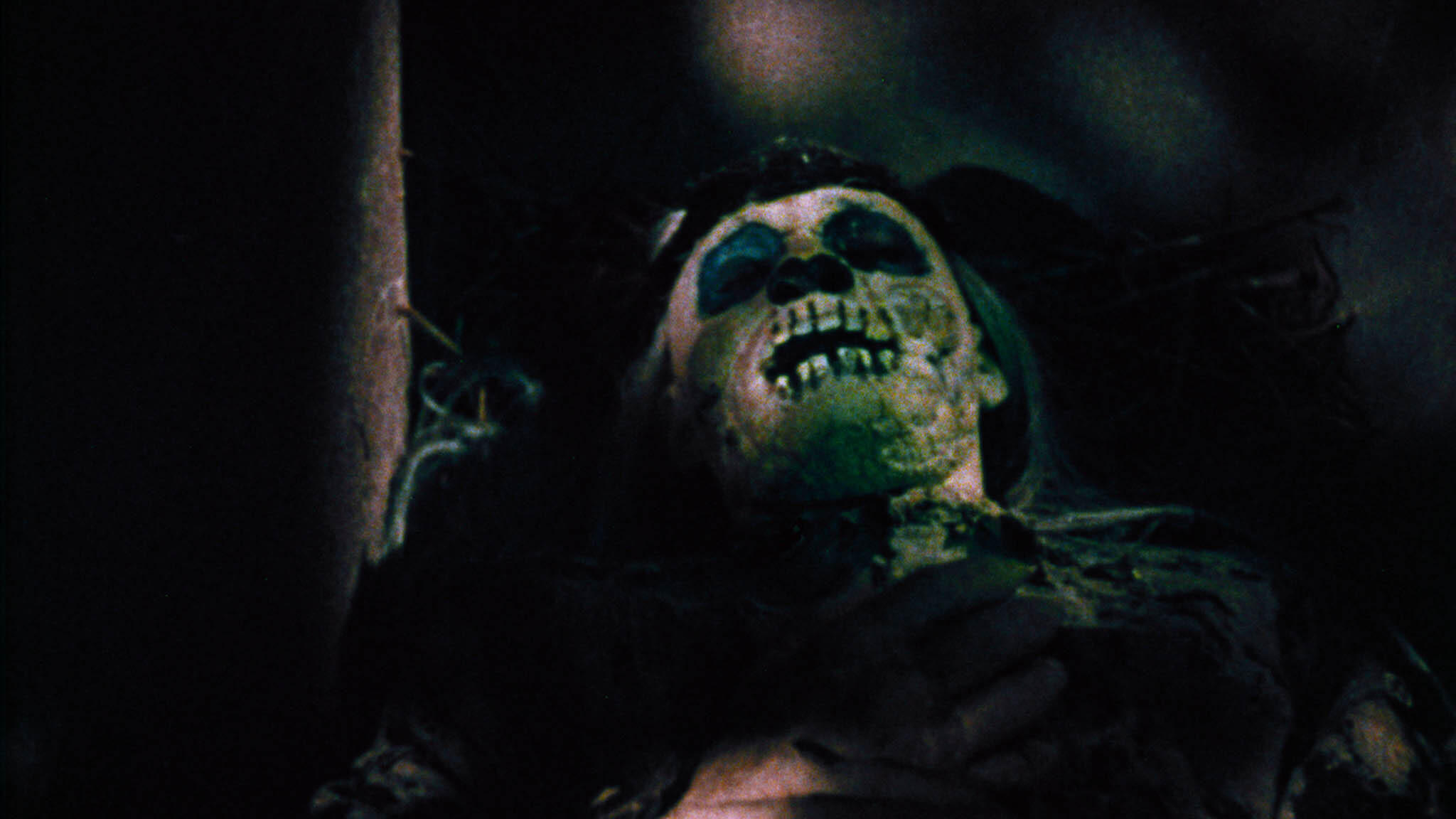
1993 cult sci-fi biopic Fire in the Sky told the story of Travis Walton, who claimed in his book The Walton Experience that he had been abducted by aliens. Actor D.B. Sweeney played the film version of Walton and the movie is set to be released on Blu-ray for the first time by Via-Vision’s Imprint label. We caught up with him to have a quick chat about the role…
STARBURST: How did you approach the role of Travis Walton?
D.B. Sweeney: I thought it was a strong setup in the script. It was a great opportunity for me to do something that hadn’t really been done before in terms of making zero gravity believable.
Can you tell us a little bit about what it was like filming Fire in the Sky?
It was like two movies really. The great time in Oregon with James Garner, Robert Patrick, and Peter Berg filming everything outside the spaceship. Then the second movie was just me and Rob at Industrial Light and Magic with their incredible team doing the alien sequences. Both movies were fun but a lot of long hours.
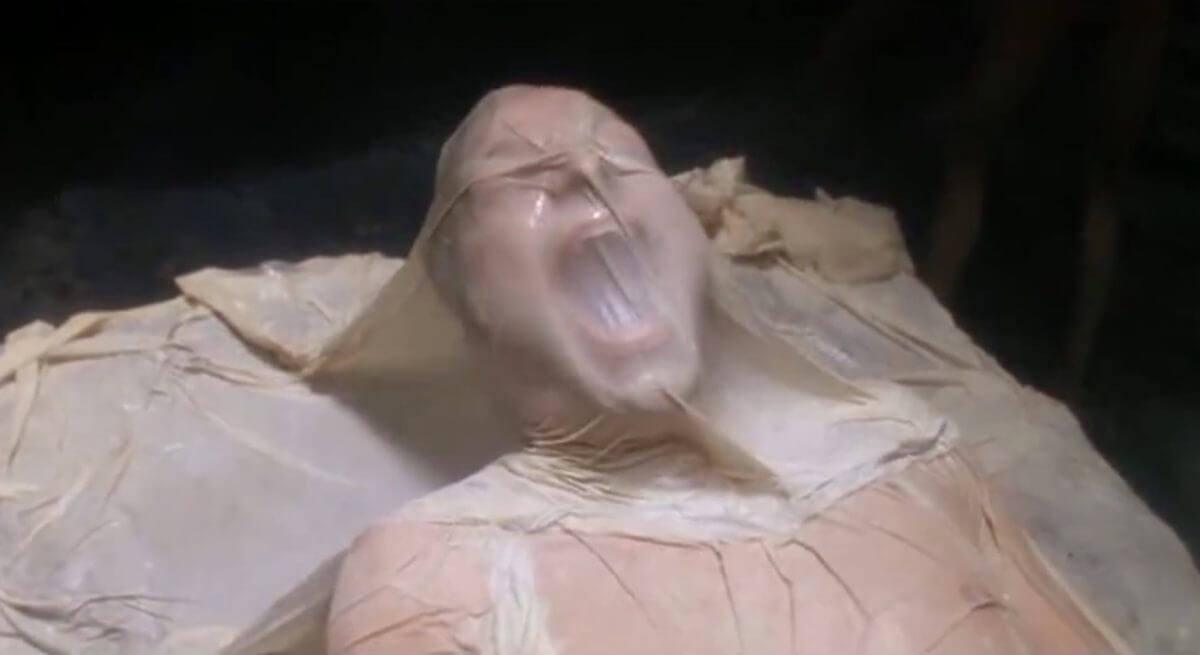
There’s a moment in the film where the character is covered in a rubber-type material, what was that like?
ILM had so many cool ideas and setups that it made it really easy for me to buy in as an actor that we could pull it off. Really creative, cool dudes trying to make some magic.
What was the most difficult part of the role?
The weightless sequences required me to be in a harness on wires, hung upside down for long periods of time. That was hard on the body even though I had trained hard to be fit for it
What do you think you’d do if you were abducted by aliens? Is there anything in particular you’d want to ask them?
I think I would tell them how much I enjoyed their gentle cousin in E.T. and hope they took the hint.
What’s next for you?
I have a film called Haymaker about to drop and then The Manson Brothers Midnight Zombie Massacre, which is really fun. And my short film Two Dum Micks co-starring Sean Astin has won over 60 film festival awards and is still going strong on that circuit! You can check it out at twodummicks.com.
Fire in the Sky gets its worldwide Blu-ray debut on December 30th from Australian label Imprint.
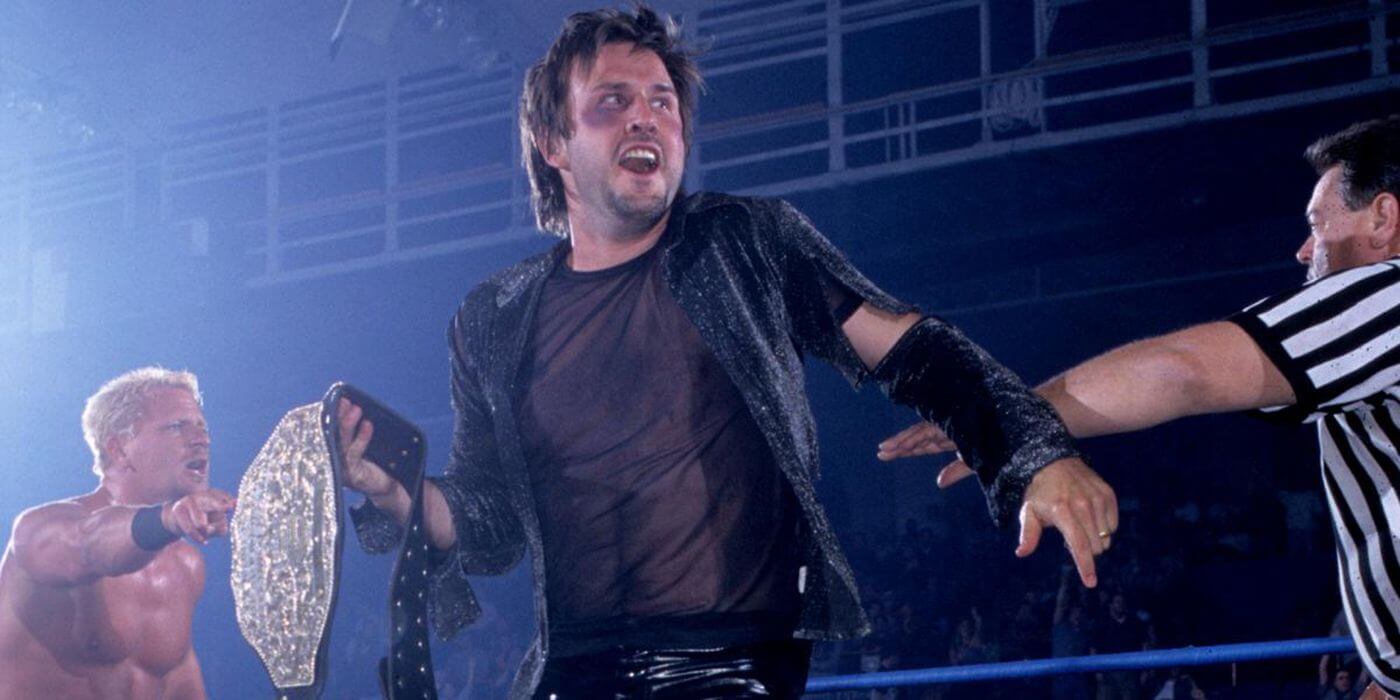
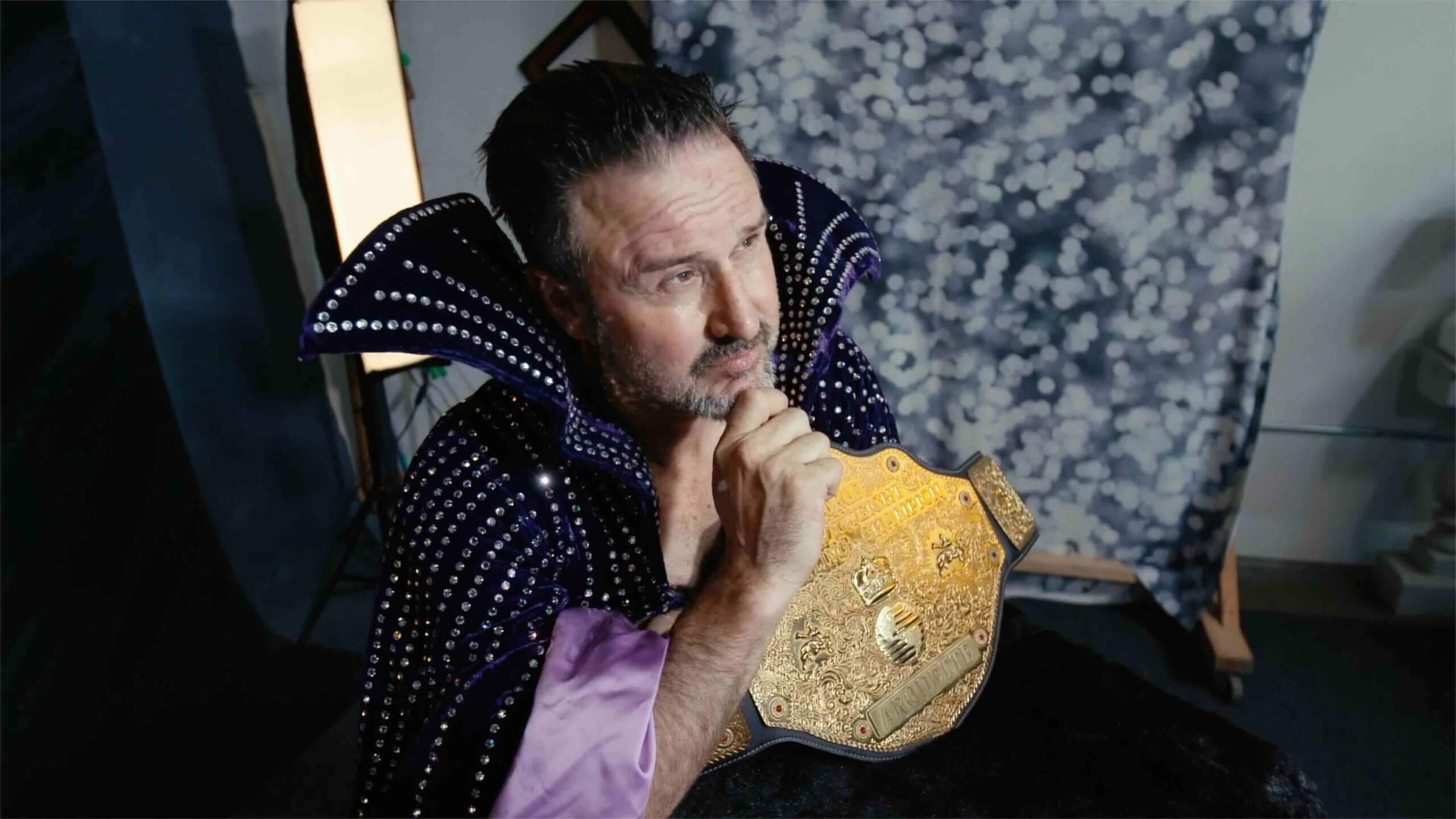
From Hollywood to Hulk Hogan, from movies to matches, from acting to ass-kicking, David Arquette has had a roller coaster few years. For those only familiar with Arquette for his acting career, back in 2000 he became the WCW World Heavyweight Champion. Effectively a marketing tool to promote the Ready to Rumble film, many wrestling fans have spent years lambasting a decision that some cite as one of the final nails in WCW’s coffin (the company being bought out by Vince McMahon’s then-WWF less than a year after Arquette’s title win).
A lifelong wrestling fan, Arquette decided a couple of years ago that he was going to right these perceived wrongs, deciding to undertake formal wrestling training in order to show his respect for the industry and to seek an acceptance and approval from those who have spent over a decade throwing all kinds of abuse Arquette’s way – and the details of this journey of have been documented in the stunning You Cannot Kill David Arquette. As the film now gets a worldwide release, we sat down with Arquette to talk all things wrestling and even a little bit of Scream 5…
STARBURST: By the time that You Cannot Kill David Arquette comes to a close, you actually get to have your literal ‘Macho Man’ Randy Savage moment. How was it to get to be the Macho Man, even if just for one day?
David Arquette: Oh, it was the coolest. I got to work with him, which was amazing, on Ready to Rumble. I was eight pages into my script, and I called my agent, “It says ‘Macho Man’ Randy Savage here! Is he gonna be in this movie? I’ll do it!” I got to work with him and meet him, and it was just such a thrill. Even through the process of wrestling, I’ve been able to talk to people and hear fun stories. Roller carts started coming out, where the wrestlers could have rollers. Macho Man would never have one, he’d always carry his bag because he thought the roller carts didn’t look tough enough. He was living the gimmick the whole time.
Throughout your WCW spell and the years since, Diamond Dallas Page always seems to have been so supportive of you. How was it to have him on your side throughout all of this?
Man, Diamond Dallas Page is such a mentor. He’s like the Yoda of wrestling. He’s this really wise man, this really spiritual guru. He’d been through a lot in his personal life until he got the success in wrestling. It just shows his understanding of the world, his compassion for others. He’s just been tremendously supportive. Also, his workout program, DDPY, really helped me lose a bunch of weight at the beginning of this journey and also not get injured in the ring by stretching me out.
This is very much a warts ‘n’ all documentary where you lay yourself bare. Was there any trepidation to showing such vulnerability?
There wasn’t. Maybe there should’ve been [laughs], because in retrospect I cringe a little watching it. I’ve always been an open book, I’m not big on people having facades of presenting what they want people to see. I just don’t like that kind of stuff, so I’ve always been trying to be very honest with who I am. As ugly as it is, there’s also beauty in it as well. Learning through the process and changing and evolving has been part of it for me. I love documentaries where the subject matter is really open and expressing their pain and their struggles so that people can relate to them. People going through similar stuff to what I’m going through, I like them to feel that they’re not alone – whether that’s health aspects or substance struggles.
People don’t realise that you donated your WCW pay to the widows of Owen Hart and Brian Pillman and to paralysed wrestler Darren Drozdov. You’ve had so much abuse in the 18 years since you won the WCW World Heavyweight Championship, but it says so much about you that you didn’t go public with that information when it could’ve taken so much of that heat away from you.
I was never doing it for money, but Diamond Dallas Page helped me a lot with who to help and helping with the idea of it. I was always looking for a way to show the fans that I love the business and that I’m not here to syphon from it. One of the big fears in the wrestling business is that people outside the business will expose it. Even some people think that within this documentary I expose aspects of it. Specifically, there’s a scene with me and RJ City where we’re going over our match and intercutting. I asked the producer and referee that are also in that scene if they were alright with us showing this side of the business. They said they were fine with it, that it had been done before. A lot of the stuff was back from a time where people were saying that it wasn’t sports entertainment. All of these things had changed since then, so I thought it was okay to be able to do that. Diamond Dallas Page had brought it up one time, because he was getting a lot of heat and I was getting a lot of heat, and he wanted to explain to people that I wasn’t just this Hollywood guy who was just trying to steal from the business. At the end of the movie, we kinda mention it. But the main reason it’s in the movie is that I wanted Brian Pillman Jr. to be in the movie. He mentioned it and said I was family, and that’s sort of the point of the whole film – it’s that I wanted to be accepted. Him saying that said it in the clearest way that when you become part of this group, you become part of this family.
RJ City is a total dick on social media and as a persona, but he plays such an important role here in how your match for David Marquez’s Championship Wrestling From Hollywood resulted in fans chanting your name. After the years of negativity, how was it to finally get that fan acceptance?
Yeah, it was really nice. I’d just been kneed to the face by RJ, but it was really nice. After that, I didn’t know if I wanted to go on. I’d accomplished going back and training and performing, and it really felt like I’d done it. I was in so much pain at that point that I didn’t know if I could go on. I had two fractured ribs and I had to take all of these bumps to the mat. The pain that goes through your entire body, I’ll never forget. RJ is a heel in the wrestling world and he lives that persona online. He’s really hilarious, but in reality, and he’ll hate for me to say this, he’s one of the kindest people I’ve met in this business. He’s super-talented, and a wonderful television writer and artist in general.
To earn the respect of the wrestling business, you busted your ass to get into phenomenal shape, you went to Mexico, you worked with Peter Avalon, and you put your body through so much. The obvious example would be the Death Match with Nick Gage, but do you personally think you ever went too far in your question for redemption?
Yeah, the Death Match was me definitely in over my head. I wasn’t really aware of all the complexities of a Death Match and that a lot of mainstream wrestling people frowned upon it as not a legitimate form of wrestling. Backyard wrestling had been such a big thing. A lot of the new talent involved in wrestling nowadays had come up through that world, so I knew I wanted to honour that world and include it and be a part of it. This Death Match thing came up because someone had injured themselves, so it was presented to me. I thought, “Well, one of the main things is people didn’t think I was tough or a badass in any way. If I take on the ‘toughest people’ in the ‘toughest element’ of wrestling, maybe I could change their minds?” So, it did accomplish that. I went into this building and these fans hated me, but by the time I walked out of the building they were cheering me. It really was what I set out to do, but it nearly cost me my life in the process. I learned a lot in that match. It was super dangerous, but I learned a lot, so it was worth it.
You had your neck split open with a lighting tube and were rushed to hospital – that’s a tough lesson to learn! Have you spoken to Nick Gage after that or was it just left as it was?
No, I didn’t really. I called him out a few times, that if we were to fight again in would be in an octagon or something, because it felt more like UFC. But no, he’s actually a really incredible wrestler. I don’t think people give him the credit he deserves. I think they write him off as just this Death Match wrestler, but he’s a good performer. There were a lot of factors that were involved in that match that went off the rails, and I did a lot of things that weren’t scripted – and one of them caused me to get my neck sliced. So yeah, I dunno. He text me after saying, “You’re a cool dude!” That was our only real interaction, so that was pretty funny [laughs]. He’s a good guy, I don’t have any hard feelings.
In You Cannot Kill David Arquette, we see that it was your close friend Luke Perry who took you to hospital. Since Luke sadly passed away, you’ve had the chance to wrestle his son Jack, aka Jungle Boy. How special was it to share the ring with Jack?
It was really special, it was incredibly special. One of the things that I’m so grateful about this experience is that it reconnected me with Luke before his passing. If I hadn’t seen him during this time period, I don’t know if I would’ve got to see him before he passed. I got to spend a couple of days with him, one of them being him rushing me to hospital with Jack. But yeah, it’s been amazing to watch Jack. I got to ask Luke, “Isn’t it exciting to get to see Jack wrestler?” He said, “Are you kidding? I’m filled with fear every time I watch!” I’d never really thought of it that way. Luke was a really special person. We hadn’t been in touch a ton before he passed, so I really was grateful that wrestling reconnected us.
When you decided to embark on this journey, what prompted you to document it?
I just thought it would be interesting for people to see. For one, I was overweight and had to lose a ton of weight. As an actor, you kinda learn how to do that. No carbs, exercise every day. When you start training your body as if you were an athlete, it starts reacting the way an athlete’s body does. If you eat the right way, burn a ton of calories, you’ll lose weight in a healthy way. So I knew how to turn my body into like a superhero kinda look. I knew that alone would be interesting for people to see, and I knew that the journey would be something that I always desired that I wanted out of wrestling when I first got involved – to hit the road, to learn how to wrestle properly. I thought that would be interesting. Ultimately, when I said yes to winning the WCW World Championship, the reason was because I’d always dreamt of it. I’d always seen these guys holding up those belts and I always thought it would be so cool to be a champion. When I had the opportunity, Dallas said, “Either you do this now or the whole Ready to Rumble thing’s dead, your wrestling thing’s dead. That’s it, go home after this.” I said, “Well, what happens if I DO do it?”“Well, you stay on for the next PPV, you travel with us for the next two weeks.”“Are you kidding? I get to travel and be a part of this world that I love?”
Be one of the boys?
Yeah! But I never was one of the boys until I properly trained, until I paid my dues, until I did this version and this experience. I knew that if I could accomplish that it would be really interesting, especially for wrestling fans to get a glimpse of this world. I wanted to make a love letter to wrestling. I’ve always loved wrestling and I didn’t want to disrespect it.
While You Cannot Kill David Arquette is phenomenal and we could happily talk wrestling all day, we do have to ask about Scream 5 – or just ‘Scream’ as it’s now titled. Obviously you can’t say too much, but did you ever think this movie would happen without Wes Craven?
Yeah, it’s been really sad without Wes. Matt [Bettinelli-Olpin] and Tyler [Gillett] want to honour Wes, they were inspired by Wes, they grew up watching these films, and so they’re approaching it from a really sweet, honourable place. But it was hard. It’s been sad. There’s a lot of looking back and memories. It feels very similar to the first one. We have this incredible group of actors that are just incredibly talented and really have their heads on their shoulders in the right way. They’re professional, they’re skilled and they’re really sweet people. I was really thrilled to be a part of it. All I can really say is that I’m ten years older and a lot sexier than I’ve ever been in any of the others [laughs]. I think people will enjoy reconnecting with all of our characters, and then also to meet this new group.
Where is David Arquette at now? Is wrestling done with or does the Magic Man want to crack the famed PWI #500 once again? You were ranked as the 453rd best wrestler in the world two years ago…
That was unreal, that was awesome. Honestly, that was one of the most heart-warming aspects. Once you’re in the wrestling business, you’re always part of it. There’s no getting back from that. I do love it. To be involved somehow, even if that’s just working with wrestlers in films, however that manifests itself. I love wrestling. It’s hard on the body, and I’m nearly 50 years old, so I have to consider that, but I do love the business and I love meeting the fans. I love traveling and having that experience too, so I’m not sure it’s all over. AEW and WWE have never really expressed and real interest in me, but there’s some great promotions out there. I love the indy circuit, I love meeting the fans on that level. There’s something so personal about it.
As someone personally who often finds themselves revisiting certain wrestling matches as a go-to happy place of sorts – Bret Hart vs. Roddy Piper, Randy Savage vs. Ultimate Warrior, King of the Ring ’93, etc – do you yourself have a wrestling match or moment that you like to watch in that regard?
There’s something fun about the Saturday Night Main Events, but I always love seeing something that I’d forgotten about. I watch a lot of Junkyard Dog. Now you can Google things like Gorgeous George, and George ‘the Animal’ Steele is always fun to watch.
Blue Finch Film Releasing presents You Cannot Kill David Arquette on Digital Download 23 November.