Five Films to Check Out on Horror Channel This Week – 210621

horror picks

Here are some of our picks for the next seven days on Horror Channel:

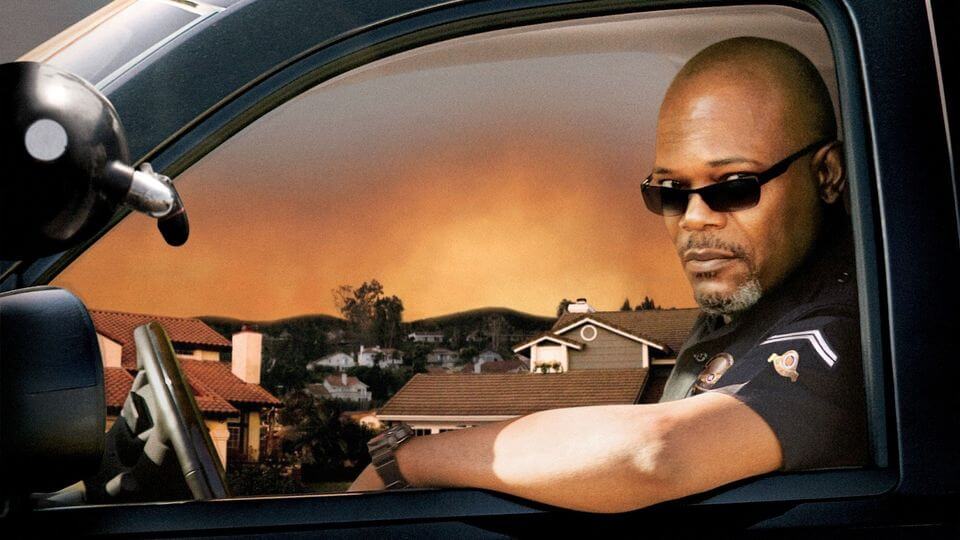
Wednesday June 23rd, 9pm – The Super (2017)

Patrick John Fleuger plays a new superintendent of an apartment building where some mysterious disappearances are taking place. When his daughter becomes obsessed with one of his colleagues (played by Val Kilmer), he begins to suspect he is behind the missing tenants. Kilmer is fantastic as the creepy janitor.

Thursday June 24th, 9pm – Retreat (2011)

Peaky Blinders star Cillian Murphy and Westworlds’ Thandiwe Newton play a couple who have the peace of their remote getaway cottage spoiled when Jamie Bell (Billy Elliot) suddenly arrives claiming that there is an airborne disease that has wiped out a lot of the population and they are survivors. Do they believe him or does he have a more sinister motive for being there?

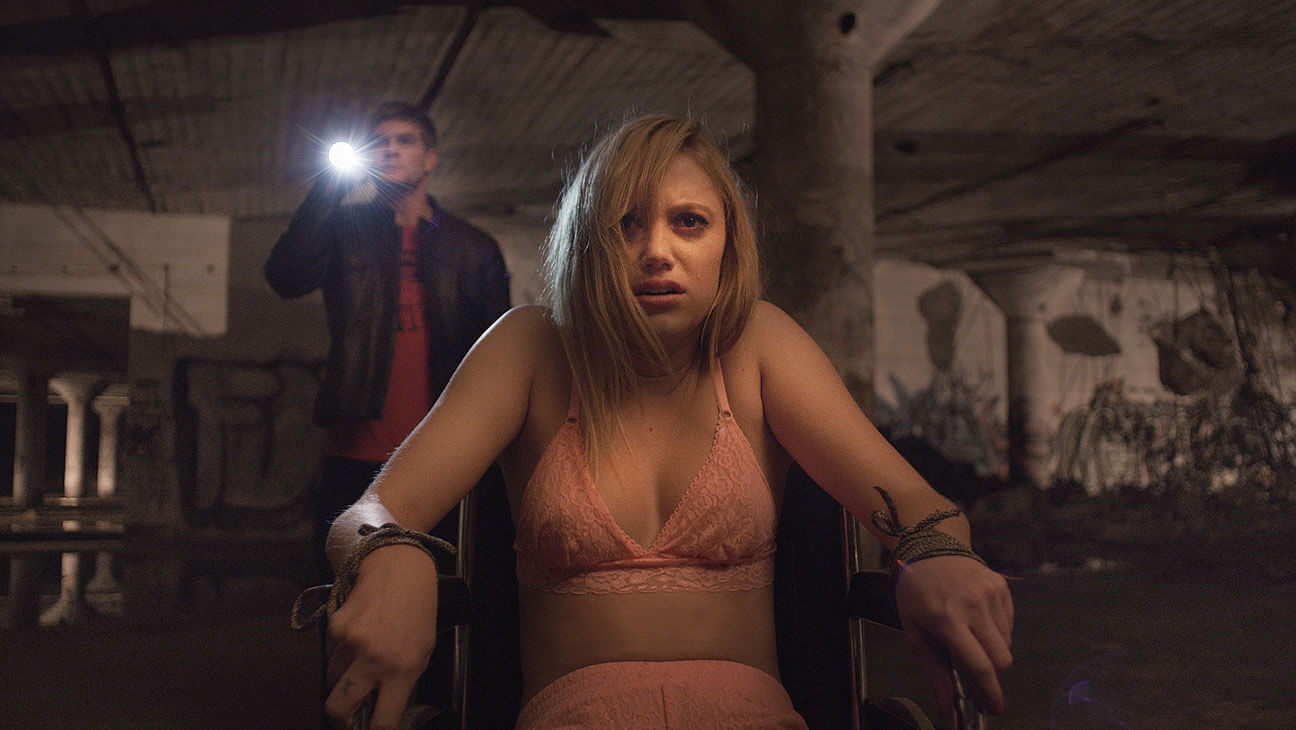
Friday June 25th, 9pm – It Came From the Desert (2017)

Based on the classic video game, this one proves you can adapt them successfully. Wonderful low budget thrills abound as a celebration following a motocross tournament gets disturbed by mutant ants from the nearby military base.

Saturday June 26th, 10.50pm – The Cleaning Lady (2018)

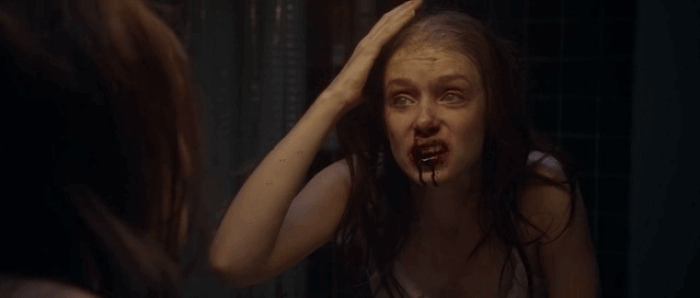
Alexis Kendra (who also co-wrote) plays a seemingly perfect woman, except that she’s having an affair with a married man. She begins to confide in her cleaning lady (Rachel Alig), who is hideously disfigured following a fire. Unfortunately, her scars are more than skin deep. A brilliant indie gem.

Sunday June 27th, 9pm – The ‘Burbs (1988)

Joe Dante’s brilliant cult dark comedy has been rediscovered over the past few years. A cracking cast – including Tom Hanks, Bruce Dern, Carrie Fisher, and Corey Feldman – is just one reason not to miss this twisted look into clean-living suburbia and neighbourly suspicions.

Tune into Horror Channel on Sky 317, Virgin 149, Freeview 68, Freesat 138.

Top 3 Casino-Themed Movies

casino movies

Casino gaming has found its way into every part of our lives – including movies. No matter what way you prefer to play, whether it’s live casino games on Karamba or taking a seat at your local gaming table. To get you in the mood, why not take a look at some of the best casino-themed movies, before moving onto your next game? Read on to find out more.

The Hangover (2009)

Definitely not a how-to guide for new casino players, this R-rated comedy follows an unlikely group of middle-aged men who are just trying to have a successful stag party. Chance would be a fine thing! Their location of choice is Las Vegas, and things quickly take an extreme turn for the worst. Before we know it, the comedy trio finds themselves in debt to a dangerous criminal and one man short – the groom! So, they turn to the casino as a way to make money and settle their newfound debt, in the hopes of retrieving their friend.

They visit one of the many grand casinos in Vegas and decide to try their hands at Blackjack, which is one of the most popular card games of them all. The aim of Blackjack is to beat the dealer, either by reaching a combined value of 21 with your hand or to watch the dealer go bust before you. One of the main characters takes the lead in the game, demonstrating the act of card counting. This age-old strategy is extremely frowned upon, although not illegal, and involves counting how many of each kind of card has been dealt so far, therefore figuring out what is left in the deck. Whilst we don’t recommend this method, it certainly takes a sharp brain to keep up and count the cards successfully.

Rain Man (1988)

Perhaps one of the most famous movies of all time, Rain Man is not just a cult classic, but also a great example of the casino featuring in a hit film. It’s also worth noting that the cast and crew of this film were the first to ever be allowed to shoot scenes in the iconic Caesars Palace in Las Vegas. The “Emperor’s Suite” is where the Babbitt brothers spent the night after their wildly impressive win, and is now continuously referred to as the “Rain Man Suite”.

This film poses as another great example of Blackjack in the movies, as well as card counting. The film’s protagonist – Charlie “Rain Man” Babbitt – has a super computer-style brain, and can easily count cards without the use of an aid. Counting cards is not encouraged but isn’t technically cheating unless an external device or helper is used. Once Babbitt sees his brother go bust, drawing a Queen after already having a hand of 18, so our protagonist can easily deduce that there are no more Queens left in the pack, and use this information to his advantage.

Casino Royale (2006)

The iconic James Bond loves a good old showdown at the casino. In this film, Bond sits down at the take with three other men, all four of the players going all in, confident that they are holding the winning hand.

The game that they’re playing is Poker, and is used to demonstrate the use of bluffing as a technique. This is when a player acts as if they are already holding the winning hand, regardless of what they’re actually holding. This is to coax the other players into backing down, folding or making needlessly risky decisions. This is a key part of any thrill-seeking Poker game, and the perfect choice for Bond to bamboozle his opponents.

Gambling can be addictive, please play responsibly.

Click HERE for more info.

[ENDED] Win ENCOUNTER OF THE SPOOKY KIND from Eureka on Blu-ray

spooky kind win

We’re teamed up with Eureka Entertainment to give three lucky readers a chance to win a copy of the classic Encounter of the Spooky Kind on Blu-ray. To be in with a chance, just read on, watch the trailer, and enter below:

Eureka Entertainment release ENCOUNTER OF THE SPOOKY KIND, the unique ground-breaking action-horror comedy from legendary director Sammo Hung, on Blu-ray (a worldwide debut of this brand-new 2K restoration on home video) for the first time in the UK as part of the Eureka Classics range from June 21st. The First Print Run of 2000 copies will feature a Limited-Edition O-card Slipcase, Collector’s Booklet and Reversible Poster.


A defining film in Hong Kong genre cinema, Encounter of the Spooky Kind blended kung fu, special effects, and Chinese folklore to invent a whole new sub-genre of Asian cinema, the Jiangshi film, which only a few years later would spawn the iconic and hugely successful Mr. Vampire.

Sammo Hung plays Courageous Cheung, a man well known in his local village for his lack of fear. His reputation is soon put to the test after he is tricked into spending the night in a temple full of spirits, zombies, and vampires!

Not content with delivering a bucket load of supernatural chills and thrills, Sammo also delivers some of the finest action choreography of his career. Eureka Classics is proud to present Encounter of the Spooky Kind on Blu-ray for the first time in the UK, from a brand new 2K restoration!

a Rafflecopter giveaway

ENCOUNTER OF THE SPOOKY KIND, Sammo Hung’s ground-breaking blend of horror, comedy and kung-fu, is OUT NOW on Blu-ray and can be purchased here https://amzn.to/39Rb2lT

Tim Sheridan | BATMAN: THE LONG HALLOWEEN

Batman: The Long Halloween Part One, Batman leaping through Gotham city

From Jeph Loeb and Tim Sale’s pivotal story, screenwriter Tim Sheridan adapts the iconic mid-1990s DC story The Long Halloween into a two-part animated feature, directed by Chris Palmer. Batman: The Long Halloween Parts One and Two begin as a brutal murder forces an alliance between Gotham’s young vigilante and two of the city’s few, non-corrupt lawmen (Police Captain James Gordon and District Attorney Harvey Dent) to take down crime boss Carmine Falcone, aka The Roman, and uncover the identity of a mysterious Holiday killer.

With an all-star voice cast that includes Supernatural and The Boys’ Jensen Ackles as Batman, Naya Rivera as Catwoman/Selina Kyle in her last film role, as well as Josh Duhamel, Jack Quaid, Titus Welliver, Troy Baker, Billy Burke, and David Dastmalchian, this highly-anticipated feature is sure to delight fans of the comics. STARBURST spoke with Sheridan about Batman’s early days, his journey to becoming the greatest detective, and how one navigates adapting a beloved comic book to the screen.

Jensen Ackles as Batman in Gotham City, The Long Halloween

STARBURST: The Long Halloween is an iconic storyline in the Batman mythology. In your opinion, what is the significance of that arc to Batman’s overarching narrative?

Tim Sheridan: Butch Lukic, our executive producer, Jim Krieg and I, the first thing we talked about was that this book was a sort of Batman: Year Two. And we were coming in after a long cycle of movies from James Tucker, and getting to do something new. We felt like the Year Two element was incredibly important to the legacy of Batman, and it was something we should really home in on in the film.

Specifically, we call Batman the world’s greatest detective, but there was a time when he wasn’t. And I feel like this story, which plays out over the course of a year, exposes Batman’s early weaknesses as a detective. We address it in the movie from the perspective that he hadn’t expected that being a detective would be part of the job. So The Long Halloween gives us an opportunity to fill in that blank. That’s important to the Batman legacy.

It’s a learning curve. And a lot of people who mostly know Batman from the films probably don’t think of him first as a detective. They think of him as a guy with money and gadgets, so it’s interesting to introduce the detective element here.

Tim Sheridan: Yeah, we don’t see it in movies a lot. In the comics, you have a long time to play out those detective stories, which is something you don’t necessarily have time for in a movie. So the fact that we were able to make two movies for The Long Halloween gave us more ground to explore some of that, and to explore what it means for Batman to be in the early stages of his crime-fighting career.

In that vein, how closely did you stick to the comic series canon? I imagine there’s some temptation to change certain elements in order to surprise fans, but there’s also an expectation that you’ll be completely faithful to the source material.

Tim Sheridan: For us, the guiding star was to be as faithful as we can be. Now, “faithful” can mean different things. I think some people will hear “faithful” and think this should be a one-for-one adaptation of the comic book. But that’s not something you can do; a movie is a whole different thing. But being faithful to the scenes, the story, and the ideas put forth – that’s paramount.

The Holiday killer in Batman: The Long Halloween from DC Animations

We stick to the way things play out plot-wise in the book, just with slight variations to make sure it works cinematically. We had to streamline some stuff in order to let the real story shine, because there’s a lot of red herrings and stuff that happens in the book. And that’s great when you’re reading a monthly issue because it keeps you guessing, but we were worried that people were going to be too far ahead of the story – especially fans who know the book really well – and we wanted you to be able to enjoy the experience of watching the story play out in a slightly different way.

So, we did look for opportunities to surprise long-time fans who know this story inside and out, and I think what we came up with makes sense, is a surprise, and helps to get to the meat of this story. If you’re missing something you love from the book, my opinion is to pick up the book again! It’s always there, and I hope that this movie is seen as a celebration of the book and only enriches people’s love for the original material.

Since, like you said, this isn’t a play-by-play replica of the comic, what does your retelling add to the story?

Tim Sheridan: It’s impossible to do a play-by-play replica when you have something as good as The Long Halloween. The comics are an exercise in economic storytelling, and not just in terms of what Tim Sale does with light and shadow, which I think he uses to great effect to punctuate important moments, but just in terms of the actual narrative. With comic books in general, we fill in a lot of the story by reading between panels. We can’t really bring that to life because everyone has their own version of what’s happening between the lines. But what we can do is look for moments that the book implies happened off-screen and, if there’s a need for it and it would help the story along in some way, then we include it. The idea was to be additive, not subtractive or trying to replace something for the sake of it. Everything we did was in service of the greater story.

Beyond the obvious, did you draw from any other sources for inspiration?

Tim Sheridan: In terms of a script, we knew that this was a Detective Noir. That was Butch’s guiding principle as we went into it. I was all for that, and then the more I thought about it, the more I realised the Detective Noir elements are mostly visual ones – so it was actually the artists’ and animators’ department. I just focused on telling the best cinematic version of The Long Halloween that I could tell on the page. And I think that, as someone who had nothing to do with the artwork, it’s an great achievement. When people watch this, I hope they appreciate the richness and levelling up of the animation and the visual storytelling.

Jensen Ackles as Batman and Naya Rivera as Catwoman in Batman: The Long Halloween Part One

The opening sequence going through Gotham and climbing up into Falcone’s office, is particularly stunning.

Tim Sheridan: That scene was one that haunted me more than anything when we started the process. I wanted people to know, from the moment this movie starts, that they’re in good hands and amongst people who love the book and want to be as faithful as can be. So the first scene is almost a word for word adaptation of the first sequence in the book. It’s a great microcosm of the whole movie, too. We moved one line, added one line, but only in order to do it in a way that was cinematic – that’s how we approached the whole movie. It’s painful, but the tweaks are necessary to make it a good cinematic experience.

But that scene also sets the tone for everything, for the whole emotional journey Batman embarks on. I’m really happy and proud of the way it came out, and hopefully people will agree.

When we spoke last year, you were releasing Superman: Man of Tomorrow, and you talked about the many reasons why you love Superman and what made him the right hero for the time. So now, why don’t you tell us what you love most about Batman?

Tim Sheridan: First of all, what I love most about it is Jensen Ackles. He was born to play this role [laughs]. But to answer your question seriously and in terms of the character, I think that – certainly in movies – we are often presented with a very dark version of the Dark Knight. I mean, it’s there in the name… but I grew up studying Shakespeare, and to me there’s so much of Hamlet in the character of Batman. The tragedy that he’s gone through is massive and this movie doesn’t just touch on his parents being murdered; it explores the story of his parents and their relationship to Gotham City, and in that there’s something about what his own relationship to Gotham is. There’s more tragedy there to mine in order to get a better understanding of who Batman is, and who Bruce Wayne is.

The opportunity to see someone who has risen out of great tragedy to do great things is at the core not only of who Batman is, but also who Superman is. That’s why I love hero stories. The best hero stories are about people who grow to become heroes out of great and terrible tragedy. That’s something which we get to see in The Long Halloween from a slightly different angle. We see it in even more focus in this movie than we might have seen in the book.

Batman: The Long Halloween Part 1 is available on DVD, Blu-ray™ & Blu-ray™ steelbook June 21st and on Digital June 22nd.

Nico Tortorella | THE WALKING DEAD: WORLD BEYOND

nico

“When The Walking Dead premiered 12 years ago I was an avid fan,” actor Nico Tortorella recounts. “And then I got an audition for Fear the Walking Dead and didn’t get the job so then refused to watch it! Then this show came around.”

The show Nico is referring to is The Walking Dead: World Beyond, the latest spin-off to emerge from the Walking Dead universe. Whereas Fear jumped off at the very beginning, World Beyond leaps ahead of time and picks up the story 10 years after the zombie outbreak, lining up roughly with main series’ timeline. What is markedly different, however, is that the series showcases the shadowy Civic Republic front and centre as the seeming villains who will stop at nothing to ensure a brighter future for mankind. In addition, the show’s main protagonists are for the most part, just kids. It’s here that Nico’s character, Felix, comes in. A big-brother of sorts to the two main female protagonists, its their task to ensure everyone stays alive as they make their way across country.

“It was definitely a little daunting to step into a massive universe,” Nico admits as they talk during a break in shooting the show’s upcoming second season. “I really had to make the decision to commit, and to understand that I’m a tiny piece of a puzzle that’s massive.” No stranger to committing, Tortorella is probably best known to audiences as Josh on the long-running series Younger which has just reached its seventh, and final, year. They’ve also been part of one of Hollywood’s biggest horror film franchises thanks to a role in the last Scream outing. “Obviously Scream isn’t in the same genre as The Walking Dead but I’m used to blood and guts so I was comfortable there.”

Without doubt, one of World Beyond’s greatest accomplishments is in its remit to world build, allowing us, for the first time, to see behind the curtain of the Civic Republic. Predictably, it raises the question of potential crossovers with characters from the other shows, and perhaps the one we all want to see most. “A Rick Grimes/Felix moment? Come on!” Nico laughs. “They would fuck up some shit. I’m there for it. Felix has been mentoring everyone else, I think it would be a cool dynamic for Rick to mentor Felix.”

It is perhaps Felix’s mentoring that endears the audience to the character most initially, although as the first season progresses we are allowed to see the more intimate areas of their life. What transpires is a touching love story that is almost surprising in its fulfillment as Nico’s grounded portrayal of Felix is worlds apart from what is often seen to be a stereotypical queer character on screen.

“That was a decision from the get,” Tortorella elaborates. “Scott [Gimple] and Matt [Negrete] were really open to the idea. I tend to use my normal life to break down stereotypes so that’s how I try to approach characters. Felix’s sexuality is just a part of who they are and honestly that’s just a wealth of experience. I think, post-apocalypse, priorities shift and the only thing that you’re truly fighting for is your life.”

With seven years of Younger, almost two seasons of World Beyond and a series of eclectic appearances on shows such as Ru Paul’s Celebrity Drag Race and the US version of Just Tattoo of Us – “I saw some shit that I’d never imagined. I learned more about the human experience doing that show than anything I’ve ever worked on” – it seems there’s no stopping Nico Tortorella. Although, for now, they feel like it might be a good time to take stock.

“For the first time in seven/eight years I’m actually like, totally available,” Nico laughs. “I don’t have anything in the books. I’m kind of in the space where I’m re-prioritising exactly what I want to be doing and figuring out what the next step is. I’m taking my time and I’m going to be a little bit pickier but I’m excited for the future.”

As for the future of the Walking Dead universe, it would appear that it will only go from strength to strength. “Just wait until you see the second.” Tortorella teases. “The first season was super intimate right? The second season is much, much bigger.”

RLJE Films will release THE WALKING DEAD: WORLD BEYOND – SEASON 1 on DVD/Blu-ray on June 15, 2021

Howdy gamers! Check out these rooting-tooting Wild West Slots

Dive deep into the world of the Wild Wild West with the magic of Slots, removing the need to saddle up, dust off your cowboy hat or even leave the house. Thanks to the Paddy Power casino games website, you can now stroll into a western saloon from the comfort of your own home and start spinning with a click of a button.

Read on for our top slot recommendations.

King of the West

Stay on guard as you spin through this uncharted territory, and get ready for a selection of gun blazing characters. The backbone of this slot is undoubtedly the legend of the King of the West who is known to explore these lands, and he’s inviting you along for the ride. Spin across these reels and look out for ways to impress this western king, with 20 ways to win and a maximum jackpot of up to 10,000x your first bet.

The lowest paying symbols in this game are represented by playing card symbols including the 10, J, Q, K and A, although they have been given a much-needed western makeover to fit within the scene. In order to gain the big bucks, you’ll want to look for the higher paying symbols, in the form of classic wild west items such as cowboy boots, lassos and the mighty bounty hunter. The wild icon is represented by the world “wild” itself, again, fleshed out to correlate with the game’s theme. This symbol has the power to substitute for any other icon on the reels, apart from the scatter. This ability is crucial to helping you form even more winning combinations. Going back to the scatter, this is the prime icon if you’re hankering for some free spins. Simply land three or more of these scatter symbols anywhere on the reels and you’ll be awarded with those gratis spins.

Mustang Gold

Ready yourself for another wild west adventure, set across five reels and filled to the brim with horses, cowboys and cowgirls welcoming you into the game. Whilst spinning across these reels, you’ll have the chance of bagging a jackpot of up to 10,000x your first wager, if you roll in the right combination of symbols.

Speaking of symbols, you’ll find a selection of different icons once you get the reels spinning. The white horse icon pays out the highest amount of 20x your bet, whilst the sleek, dark counterpart isn’t far behind with a maximum payout of 12 coins. The joyful cowboy can dish out 10x your initial bet and the cowgirl pays out up to 8x. As you’re probably used to by now, playing card numbers and letters deliver the lower payouts, although still worth adding to your bankroll. The game’s logo acts as the wild icon, popping up on the second, third fourth and fifth reels, with the ability to replace all other symbols apart from the scatter. This scatter will come in the form of a roaring campfire, whilst the golden horseshoe acts as the bonus symbol. Roll in three of the scatter on the middle reel and you’ll be rewarded with 1x your bet and up to eight free spins.

THE TELEPHEMERA YEARS: 1975 – PART 3

telephemera 1975 strange new world

Ah, telephemera… those shows whose stay with us was tantalisingly brief, snatched away before their time, and sometimes with good cause. They hit the schedules alongside established shows, hoping for a long run, but it’s not always to be, and for every Knight Rider there’s two Street Hawks. But here at STARBURST we celebrate their existence and mourn their departure, drilling down into the new season’s entertainment with equal opportunities square eyes… these are The Telephemera Years!

1975-76

By 1975, American television was smack bang in the middle of a glorious age of telefantasy, and the detective show was king. Kojak, Cannon, Police Story, Police Woman, Baretta, The Streets of San Francisco, Hawaii Five-O, The Rockford Files, and Petrocelli were joined by a little show called Starsky and Hutch, as punishment was dealt out to criminals all over the prime-time network schedules.

Meanwhile, Wonder Woman and The Bionic Woman joined The Six Million Dollar Man for superpowered action, and Welcome Back Kotter added laughs to those already provided by M*A*S*H and Happy Days. But what of the shows planned for the 1975-76 season that didn’t make it to air? This is the story of five failed pilots…

Brenda Starr (ABC): Brenda Starr, Reporter was a popular newspaper strip by Dalia “Dale” Messick, which first appeared in the Sunday Chicago Tribune in 1940 and ran for seventy-one years. Its titular star was a glamorous newspaper reporter who used her feminine wiles to crack cases and break hearts, and was renowned for its sexiness, at least by the standards of the time.

David L Wolper Productions – best known for the documentary series The March of Time and The Undersea World of Jacques Cousteau, as well as the Willy Wonka & the Chocolate Factory movie – had dipped their toes into TV drama, and scored a minor hit with the female-led Get Christie Love! With Welcome Back, Kotter a major hit for the studio, George Kirgo, and Ira Barmak wrote a pilot which took the ace newshound to Brazil to find a reclusive billionaire and expose a voodoo cult.

telephemera 1975 brenda starr

Former Bond girl Jill St John was installed in the central role, with back-up from Lassie’s Jed Allan and the future Boss Hogg, Sorrell Booke, and Lalo Schifrin provided a groovy score, but ABC passed on a full series, belatedly airing the pilot as a TV movie on May 8th 1976. Brooke Shields later played the role in a feature film, which was to have been released in the Summer of 1987 but sat on the shelf until 1992, finally released to lacklustre returns.

The Supercops (CBS): Supercops was based on the true-life exploits of NYPD lawmen Dave Greenberg and Robert Hantz, a pair of detectives honoured by the city’s Police Commissioner for the number of cases solved, and drugs and weapons taken off the streets. The exploits of the pair filled two popular mass market paperbacks in the early 1970s, and were adapted into a 1974 film, starring Ron Liebman and David Selby.

telephemera 1975 super cops

Two years later, MGM’s Bruce Geller, who a decade earlier had created Mission: Impossible, decided that their story would be perfect for an ongoing series, and hired veteran TV writers Austin and Irma Kallish to work up a script for a pilot, which was aired on March 21st 1975 as part of CBS’s Friday Night at the Movies. Hopes were high that ratings would be good enough for a series to be commissioned for the Fall 1975 season.

With Steven Keats and Alan Feinstein as the “Batman and Robin of the streets,” as they were known, and Dick O’Neill as their grizzled captain, the pilot saw the supercops on the hunt for a brutal thief, but didn’t score well enough that CBS ordered a full season. The 1974 movie has gained a cult following, mostly thanks to the efforts of Edgar Wright, who cited it as an influence on Hot Fuzz.

Search for the Gods (ABC): In the mid-1970s, ancient aliens were big business, with the books in Erich von Daniken’s Chariots of the Gods? series flying off the shelves. Never afraid to jump on a bandwagon, Douglas S Cramer – who had greenlit Star Trek and brought Wonder Woman to the small screen – commissioned a pilot for ABC which exploited the themes of von Daniken’s books.

telephemera 1975 search for the gods

Starring Stephen McHattie and a young Kurt Russell, Search for the Gods featured a pair of adventurers in possession of a piece of an alien Rosetta stone, searching for the rest of the artifact which, when pieced back together, could unlock the secrets of the alien races who visited Earth long ago and influenced the evolution of mankind with their advanced technology.

With a story by Herman Miller, who had created McCloud and developed Kung Fu for the network, ABC aired the pilot on March 9th 1975 in its Sunday Night Movie strand, but it was thin gruel and they decided against a full series order. The pilot can be seen on YouTube and the themes explored in the show would, however, form the backbone of later hits such as The X-Files, Stargate, and more.

905-WILD (NBC): Emergency! had debuted as a mid-season replacement in 1972 and went on to enjoy a six-season run, with audiences thrilling to the adventures of firefighters and paramedics John Gage and Roy DeSoto. The series expanded to feature other branches of the emergency services, often with an eye to spinning them off into their own shows, and on March 1st 1975 viewers were treated to the exploits of the Los Angeles Bureau of Animal Control.

Intended by Jack Webb’s Mark VII Productions as a backdoor pilot for the Fall 1975 season, 905-WILD followed Mark Harmon and Albert Popwell’s animal control officers as they dealt with mountain lions straying into suburbia, seals sneaking into beach homes, and skunks stinking up restaurants, the script was written by veterans of such shows as The Beverley Hillbillies, The Munsters, and The Addams Family, and raced through its thirty minutes at a breakneck pace.

telephemera 1975 905-wild emergency

The NBC bigwigs didn’t feel that there would be sufficient drama in a whole series of animal control adventures and passed on ordering any more episodes, and Mark Harmon bounced around the TV schedules in various police and detective roles until landing the part of Dr Robert Caldwell on St Elsewhere.

Strange New World (ABC): In 1975, Ronald F Graham and Walon Green became the latest producers tasked by Warner Bros with bringing Gene Roddenberry’s post-Star Trek project Genesis II to fruition, and had to do so without the involvement of Roddenberry, who had moved on to other, never-realised ideas.

telephemera 1975 strange new world

With John Saxon returning to the concept – having starred in Roddenberry’s second attempt at the idea, 1974’s Planet Earth –  Strange New World borrowed a little from Planet of the Apes and had Saxon as one of three astronauts kept in suspended animation in orbit for two-hundred years before returning to Earth, only to find it an apocalyptic wasteland.

Directed by Disney veteran Robert Butler, the film saw the trio exploring their changed planet on a quest to find the headquarters of the organisation that sent them into space, and was aired on July 13th 1975 as part of ABC’s Sunday Night Movie block. The reaction to the film wasn’t strong enough to earn it a full series but you can judge for yourself on YouTube, where Saxon’s manliness can be seen in all its glory.

Next: grab your spoons and dig into the most sugary cereal imaginable as we take a look at the Saturday morning cartoons of 1975!

Check out our other Telephemera articles:

The Telephemera Years: 1966 (part 1, 2, 3, 4)

The Telephemera Years: 1968 (part 1, 2, 3, 4)

The Telephemera Years: 1969 (part 1, 2, 3, 4)

The Telephemera Years: 1971 (part 1, 2, 3, 4)

The Telephemera Years: 1973 (part 1, 2, 3, 4)

The Telephemera Years: 1975 (part 1, 2, 3, 4)

The Telephemera Years: 1977 (part 1, 2, 3, 4)

The Telephemera Years: 1980 (part 12, 3, 4)

The Telephemera Years: 1982 (part 1, 2, 3, 4)

The Telephemera Years: 1984 (part 1, 2, 3, 4)

The Telephemera Years: 1986 (part 1, 2, 3, 4)

The Telephemera Years: 1987 (part 1, 2, 3, 4)

The Telephemera Years: 1990 (part 1, 2, 3, 4)

The Telephemera Years: 1992 (part 1, 2, 3, 4)

The Telephemera Years: 1995 (part 12, 3, 4)

The Telephemera Years: 1997 (part 1, 2, 3, 4)

The Telephemera Years: 2000 (part 1, 2, 3, 4)

The Telephemera Years: 2003 (part 1, 2, 3, 4)

The Telephemera Years: 2005 (part 1, 2, 3, 4)

The Telephemera Years: 2008 (part 1, 23, 4)

Titans of Telephemera: Irwin Allen

Titans of Telephemera: Stephen J Cannell (part 1, 2, 3, 4)

Titans of Telephemera: Hanna-Barbera (part 1, 2, 3, 4, 5)

Titans of Telephemera: Kenneth Johnson

Titans of Telephemera: Glen A Larson (part 1, 2, 3, 4)

Titans of Telephemera: Quinn Martin (part 1, 2)

Five Films to Check Out on Horror Channel This Week – 140621

horror picks

There are plenty of great films and TV shows on Horror Channel each week. Here are some of our picks for the next seven days:

Tuesday June 15th, 10.45pm – Let Me In (2010)

A surprisingly good remake of the superb Swedish classic Let the Right One In. Chloë Grace Moretz plays a vampire, forever a youngster, who makes friends with a bullied 12-year-old (Kodi Smit-McPhee). While the English-language version of the story wasn’t particularly needed, the resurrected Hammer Films and director Matt Reeves (Cloverfield) pull off the unexpected.

Wednesday June 16th, 8pm – First Wave

The cult series returns to Horror Channel’s Sci-Fi Zone, alongside Space: 1999 (6pm) and Star Trek: Voyager (7pm). The show is a great conspiracy style as a man is framed for a murder because he knows too much about an alien invasion.

Friday June 18th, 9pm – Haunt (2019)

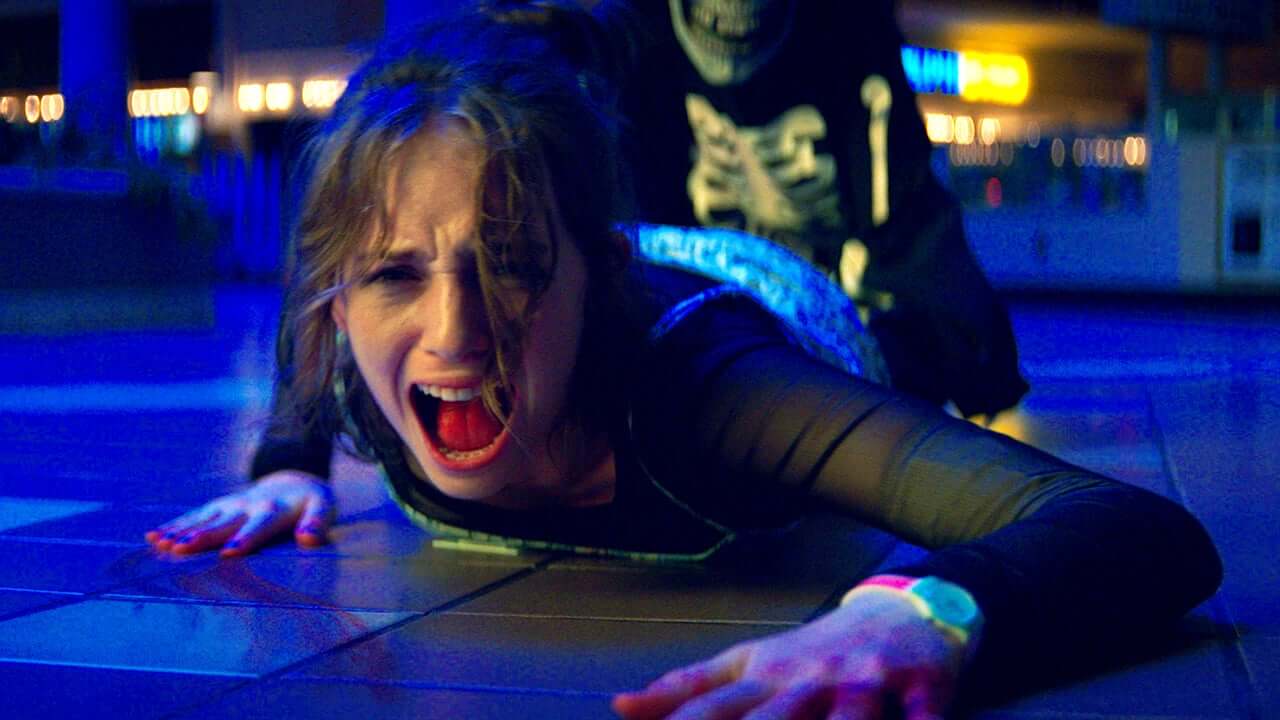
A fun haunted house-cum-slasher flick starring Katie Stevens and Lauryn McClain as friends whose decision to enter a scare house attraction with their pals proves to be a bad one. A great, fun film from directors Scott Beck and Bryan Woods, who co-wrote A Quiet Place.

Saturday June 19th, 9pm – Straw Dogs (2011)

Another remake that was much better than expectations. Updating Sam Packinpah’s 1971 classic, Rod Luries’ version transplants the action to the US, and stars James Marsden and Kate Bosworth as the terrorised couple.

Sunday June 20th, 6.40pm – Robot Overlords (2014)

A superb family-friendly sci-fi romp starring Callan McAuliffe, Gillian Anderson, and Ben Kingsley as the big bad. The action takes place soon after an invasion, in which alien robots monitor the world and confine people to their homes. Packed with impressive effects, it’s one not to miss.

Tune into Horror Channel on Sky 317, Virgin 149, Freeview 68, Freesat 138.

Ben Wheatley and Reece Shearsmith | IN THE EARTH

in earth

The latest film from Ben Wheatley, IN THE EARTH sees a scientist and a park scout (Joel Fry and Ellora Torchia) venture deep into an unusually fertile woods. Here they encounter not only mysterious hermit Zach (Reece Shearsmith), but also the forest itself coming to life around them. Filmed last summer, the movie takes place against the familiar backdrop of a disastrous pandemic. STARBURST caught up with Wheatley and Shearsmith to find out more…

STARBURST: Several movies have shown up in the past year about the struggle of being locked inside, but In the Earth made us terrified to go outside. How did this idea for a different take on the pandemic era develop?

Ben Wheatley: I started writing within a week of the actual lockdown, to try and make some sense of what was going on. I found myself having a bit of a freak out, which I’m sure lots of people did; you know, you just kind of go, I can’t work it out, because it’s all so unique, it’s never happened before. It seemed to be getting exponentially worse every four or five days. It’s when they released that thing and went, “oh, we’re gonna be locked down for a year,” everyone went: “a year, that’s mad.” And if they’d have said in two weeks’ time, “and now we’ve organised a set of games where you have to fight for food,” you’d have gone, “oh yeah, OK, that seems reasonable, the way things are changing.”

So I sat down, and I started writing this thing, and part of it was projecting into the future to be a bit more optimistic that we were gonna get out of it. And then I started looking at stuff online, and all the VOD movies up until that point all felt suddenly really out of date. Anything that had a crowd in it seemed really bizarre. All the movies I have made have been about a reaction to the current situation – Colin Burstead’s the same, Kill List is the same. And I thought, I need to make something that encapsulates the nowness of what’s going on.

There are some familiar pandemic-era sights in the film – characters wearing masks and sanitising – and references to current events in the dialogue, but it feels like background detail rather than being overbearing. That must have been a difficult balance to hit.

Wheatley: Well, it’s to do with the idea of horror as metaphor. There’s no point making a film directly about what happened to us, because we all understand exactly what it is. The redelivering of the news of the pandemic back to the population – it’s like, we’ve just lived through it, you know, so it’s not important.

But the idea that you would ignore the fact that everyone had lived through it seemed to be strange to me. That’s a current thinking – some dramas are coming out that don’t even mention it. It’s almost like they’re in a divergent timeline where it never happened. I think that’s very, very strange. It’s infantilising – it’s all too nasty to think about, so we’ll never think about it again.

But if you look at historical events like 9/11, the Second World War, or Vietnam, you have to come to terms with these things eventually, and it has to come back into the culture. So I was like, well, this is happening, but also, other stories are happening at the same time.

And Reece, what did you think when you saw Ben’s script?

Reece Shearsmith: I was really thrilled to be asked to do it, because it got me out the house! It felt like we were going back to a great experience that we had together when we filmed A Field in England, which was all outside and we filmed it in two weeks, in order, in a field. This was in the woods, and it felt an interesting jumping off point from the pandemic, where you go somewhere where you think it’s not going to get you. Zach, my character, has gone off grid into the woods, where there’s no people, to escape it.

And yet we get this essay on science and nature and how humans tell themselves a story to convince themselves that there’s reason and meaning behind the things that are happening. Zach has got a very definite story in his head about what’s happening and why it’s happening, and then we meet the counterpoint to him, Doctor Wendle, who’s the science version. 
In the Earth Reece Shearsmith

What was the on-set experience like? Did the safety measures affect the way you told the story?

Wheatley: I’ve made four or five movies that are at this scale, so it wasn’t any different really from those productions, except for the PPE, which we were all worried about, but turned out to be nothing. I was a bit like, “I don’t want to wear a mask”, but then after a day, I didn’t even notice I’d got a mask on, it was fine. And then the rest of it was just a lot more handwashing.

Shearsmith: There’s always more people than you think – even when there’s three of us in the tent, there’s twenty-five people outside, so it did feel like normal filming in one way. But then in another way, it was sort of extraordinary that we knew no one else was doing this now – we were the first that crept out into the world and were capturing this thing.

And it was strange to be mirroring the story in the fact that all the crew had PPE on, masks and gloves and everything. It was a bit odd, a bit alien, because you didn’t have that normal connection that you have with people on set, and everyone was being careful, socially distanced. But we were tested every day and it was probably the safest it had ever been at that point, because it was low in the community in August. So we felt fine, but it was just a real thrill; it felt like a ray of hope that it was possible to make a film.

Reece, you’ve worked with Ben a few times now. What is it about his films that keeps you coming back?

Shearsmith: He always tells really great, interesting stories, and uses the palette that he has to tell a story in a way you might not have seen before. In a way, he’s similar to what we try to do with our TV show, Inside No. 9, which is to use the tools of how to tell a story, and not just tell a story, but to stretch the very medium itself to its limits in how you present your story.

A Field in England did that, at the end when he went into this psychedelic trip with the editing. And then we get this film, where again he’s using light and sound front and centre as part of your experience. I can’t wait to see it in a cinema, because I’m sure it’ll be a real onslaught on the senses.

We get some more of that psychedelic style of editing in In the Earth. How do you approach putting these sequences together, Ben?

Wheatley: A lot of that stuff is about the communication with the creature in the woods. I figure that the creature doesn’t communicate in a standard way. It doesn’t appreciate time in the same way that we do. And what would communication between an alien and a human be like?

And in the nuts and bolts of it, the creature thinks in a recursive, circular way about time, but humans don’t, so what you get within those psychedelic moments is the recursive animations that Cyriak Harris did, but also the film is kind of blitzed and reversed and passed backwards and forwards within itself, and then there’s rhythms within that which are more like music in the way of motifs. So there’s a logic to it, but it’s a kind of logic that’s not explained. So you can see there’s a pattern there, but as a human you can’t understand it… on purpose.

A large part of the experience of watching the film relates to that editing and to Clint Mansell’s score. When you’re on set, Reece, do you have any idea what the finished film will be like?

Shearsmith: Ben has got it all in his head, and it’s not by accident that anything is there. Because he’s an editor and he edits it himself, we’d film a day and he’d go back to his hotel room and edit the day’s work. He was editing as we went, so he’d be very on top of what we needed if we needed to go back and do anything else. He’s very sure of the story he wants to tell and how to tell it.

He does another great thing, which is he plays in music. So these big speakers were brought in and this big ambient music was playing. Your life is suddenly scored, and you feel like you get another level of performance that you might not get if that wasn’t there.

So there were a lot of great anchor points that give you clues into how it’s gonna actually feel watching it. It’s that weird thing of, it’s written, then it’s filmed, then you hoover up the bits you need, and it’s all reconstructed again in the edit, but he manages to blur that feeling of how it’s gonna actually be by bringing some of that end result to the actual field.

The film is set to be released in cinemas this month. With restrictions slowly easing, how confident are you about releasing your film this way?

Wheatley: If the last year and a half has taught me anything, it’s: don’t expect anything. We will see what we will see. Everything seems to be OK at the moment in terms of the release patterns, but… I just dunno.

The thing is, I haven’t seen the film yet in the cinema with an audience. It’s a very bizarre situation. It had a general release in the States, and people went out to see it there, so that was good. I hope people get the chance to see it in the cinema.

Would you be confident going to a cinema to see it, Reece?

Shearsmith: I think I would. I suspect it would still be socially distanced and there’ll be gaps in the seats, but I would happily go in with a mask on and watch a film. I’d love to think that people will be confident enough to go and see it in a full cinema. I’m not sure whether people would do that yet, but I’m very excited to see it on the big screen. But I’m daring to think it’s gonna be all right.

IN THE EARTH is in cinemas 18th June, with advanced previews on 17th June.


STANDBY FOR SPACE: 1999

space 1999 standby

We take a look back at the popular seventies live-action Gerry Anderson series that propelled the world – or at least our moon – into orbit and the (then) far-off future…

By the mid-1970s, the glory days of Gerry Anderson and Century 21 productions were long gone, a distant memory in a rapidly evolving British entertainment landscape. Throughout the 1960s, mainly from an unassuming factory unit (recently – and shamefully – demolished) on the Slough Trading Estate Gerry, his then-wife Sylvia and a crew of loyal, hard-working writers, designers, FX technicians, puppeteers, and voice artists and actors had created a slew of extraordinarily ambitious marionette adventure series (‘filmed in Supermarionation!’). The shows captivated and fired the imaginations of a generation. Stingray, Thunderbirds, and Captain Scarlet and the Mysterons are iconic landmarks in the history of the development of the British television industry. In their heyday, under the enthusiastic auspices and financial patronage of Lew Grade at ITC, the Andersons built a veritable cottage industry of spin-off merchandise such as comics (specifically the massively influential TV Century 21), die-cast action vehicles, books, annuals, records, toys, and so much more. The Anderson shows created, in so many ways, the template for the mass merchandising enjoyed by so many of today’s big bucks film and TV franchises.

Times change, though, and by the end of the 1960s, the Anderson puppet show bubble had burst, in no small part due to a couple of less enthusiastically received productions such as Joe 90 and The Secret Service. Both of these shows failed to capture the same broad appeal of their predecessors; the latter in particular cancelled by Lew Grade halfway through its production run. Grade quite rightly suspected that its quirky, parochial concept – the exploits of a puppet version of gobbledegook British character actor/comedian Stanley Unwin as a secret agent priest and his miniaturising assistant – stood even less chance of making an impression overseas than Anderson’s more explosive earlier shows. Century 21 staggered on into the 1970s and UFO – the last series to bear the spine-tingling dramatic musical ‘sting’ at the start of an Anderson show – is arguably the most sophisticated, mature, and forward-thinking show ever produced by Gerry and Sylvia. But it never stood a chance in the UK as the shadow (pardon the pun) of the Andersons’ previous productions – regarded as disposable, silly children’s science fiction adventures – loomed large over the grittier, live-action adventures of Ed Straker and the heroes of the Supreme Headquarters Alien Defence Organisation and UFO. When it was screened at all in the UK, it either ended up in random late-night regional slots or else used as Saturday morning or afternoon filler. It seemed that the cold, austere 1970s were no place for the Andersons colourful, fast-paced adventure stories and Gerry and Sylvia found themselves press-ganged into spending two years working on The Protectors, a bland, by-the-numbers action series starring Robert Vaughn and Nyree Dawn Porter.

Meanwhile, in the United States, something strange was happening. UFO had started airing and attracting both good reviews and decent audience figures. The wheels were set in motion for a putative second season, the requirement being that the show had to abandon its earthbound settings and storylines and relocate its action to the Moon, presumably with the original series’ Moonbase now established as the frontline in SHADO’s ongoing battle against hostile body-harvesting aliens. But as the Andersons worked on a new format for UFO2, the original series started to flag stateside, and enthusiasm for the new project quickly waned. Never one to waste an idea, Gerry laboured to refashion the concepts and ideas for the second run of UFO into an entirely new series. His original plan of kicking off a show with the Earth being destroyed was considered a step too far; a quick rethink led to a story in which the Moon itself is blown out of the Earth’s orbit and off into space, carrying with it a human contingent aboard the sprawling Moonbase Alpha complex. Space: 1999 was born.

If the show’s gestation had been troubled, then it’s birth and first, faltering steps were also beset by a number of teething problems. To make the new series attractive to American audiences and networks, Lew Grade insisted that the two lead roles – new Moonbase Commander John Koenig and its medical office Dr Helena Russell – had to be played by American actors despite strong objections, in particular by Sylvia Anderson. Martin Landau and Barbara Bain, something of a minor Hollywood ‘power couple’ following their run in the hit US drama Mission: Impossible, moved to the UK to star in the series. The cast also included Barry Morse as the show’s ‘voice of wisdom’, Professor Victor Bergman and hunky Australian actor Nick Tate as space pilot Alan Carter (usually seen at the helm of one of the show’s iconic Eagle Transporter space vessels, which generally served to take the action – and the characters – away from the confines of Moonbase Alpha). Regular supporting roles were given to Prentis Hancock, Zienia Merton, and Clifton Jones.

At the time it was the highest budgeted British TV series ever made, the first season alone attracted a veritable ‘who’s who’ of British acting talent with a guest list including the likes of Christopher Lee, Roy Dotrice, Joan Collins, Peter Cushing, Ian McShane, Peter Bowles, Leo McKern, Patrick Troughton and, inevitably, Brian Blessed. The show entered production in November 1973 with Brian Johnson working on the show’s vast amount of practical special effects and modern sequences, and live-action production of the first episode was hastily relocated from Elstree Studios to Pinewood in Buckinghamshire when it appeared that the latter was in danger of imminent closure. Series opener Breakaway overran its scheduled ten-day filming bock by over a fortnight and, with scripts hastily rewritten and the format continually being tweaked. The first twenty-four episodes were completed over a protracted fifteen-month period, largely thanks to a series of industrial disputes and power shortages that caused massive disruptions across the country in the mid-1970s.

space 1999

Space: 1999 – complete with a pounding, urgent score from Anderson regular Barry Gray and a genuinely exhilarating, action-packed ‘in this episode’ title sequence – eventually debuted in September 1975 and reaction was somewhat mixed. Fans adored the explosive visuals and the sheer scope and scale of the production, while being conscious that many of the stories were ponderous and pedestrian, and often had a tendency towards the metaphysical. Several episodes suggested that the Moon’s wanderings were being orchestrated and directed by some mysterious god-like superior being or power. It was not without its supporters, and when it was firing on all cylinders, it was thrilling, eye-popping spectacle of the type that hadn’t been seen on British television before.

Despite its lavish productions values, starry cast and impressive visuals, Space: 1999’s first season never quite caught fire, and the show danced with cancellation for a while. Lew Grade, in particular, was not impressed by the show’s failure to attract network attention in the US. However, there was clearly enough potential evident on screen for ITC to commission a second season when Anderson and Fred Freiberger, already drafted in to co-produce the next series (following Sylvia’s exit from the production in the wake of her acrimonious split with Gerry), pitched a second series with new characters and new storylines. Space: 1999 lived to fight another day in a second season… but maybe that’s another story for another time, another place.

The first season of Space: 1999 is a flawed but ambitious series. At its best, it’s a colourful, vibrant adventure show. Albeit one plagued by its portentousness and self-consciousness and utterly unwilling or unable to kick back and have fun with its concept and present its characters as real, believable people caught up in an unbelievable situation. Visually, however, it still stands up to the cold, merciless eye of 21st century expectation and is not only a worthy addition to the formidable Gerry Anderson canon but also, at times, a fitting postscript to the glory days of Century 21 Productions and the man who really should be acknowledged as the British Walt Disney.

Space: 1999 returns to Horror Channel as part of the Sci-Fi Zone (6pm- 9pm) from June 11th. Sky 317, Virgin 149, Freeview 68, Freesat 138.