Sosie Bacon | SMILE

sosie bacon smile

For her first major lead performance, Sosie Bacon (Mare of Easttown/Scream: The TV Series/13 Reasons Why) is taking on the character of Rose in the psychological horror Smile. STARBURST caught up with Sosie to find out how she approached such an intense and multi-layered role, what it was like to work with its writer/director Parker Finn, and why readers should watch this movie on the big screen…

STARBURST: Can you tell us how you got involved with the world of Smile

I was sent the script and the short film Laura Hasn’t Slept. Mare of Easttown had come out, and I was trying to figure out what I was going to do next. I always wanted to do a horror movie eventually, I just wanted to be choosy about it because there are so many out there, and I like the genre a lot. I read the script, and I’m really bad at reading scripts, I prefer reading novels where they explain everything that’s going on around the person. With scripts, you have to make it up, and try to be visually engaged. It’s so hard for me. I read it, and there’s this one jump scare that you will see when you see it, but it really shook me, and I was like “Wow! OK, I’ve never seen that”, so that got me. The psychological aspect got me into it, the thriller nature, and the following of this woman. It was really well done, and then I watched Parker’s short, and that really solidified it as well. Visually, it was just so interesting, the way he told the story with the camera and the set design. It was clear that he had a unique take on this, so I was stoked.

Can you tell us about the research you did when you found out you were going to be Rose? Obviously, you could look back on Laura Hasn’t Slept, but is there anything else you wanted to look into? 

Yeah I mean for sure, when it comes to building a character, I’ve done that so many times. What I liked about this one, was finding out a lot about mental illness that I wasn’t aware of, about childhood trauma, and sort of how it manifests itself in adult life. I’m very schooled in therapy stuff, just because I love it, and find it fascinating, and also, what a person who works in an emergency psychiatric unit does on a daily basis. It’s intense, and it’s a lot. The education process of getting there is a lot. So that was fun stuff to research.

Was there anything that you really wanted to bring across from Laura Hasn’t Slept into Smile? We know the plot isn’t exactly the same, but maybe there was something contained within the short that inspired you? 

I think that most of that stuff, was the filmmaker’s job, Parker’s job. The thing that really caught me was the way that it was done, and I was excited that he had a vision to continue that. It’s just really cool when you’ve seen so many movies, to see how they did something with a camera and what that revealed, what they chose to put in that shot, and the way they used special effects. We used almost all practical SFX in Smile, which he did in the short, and it really adds a creepy element of realism, kind of gross, nasty. It just all feels like the way movies used to be made. I love all of the CGI stuff and everything, but it’s cool to see that being attempted and pulled off.

Within the movie, you’re obviously dealing with a supernatural threat, but at the same time, what we see feels quite grounded in a sense of realism. What were the challenges behind balancing those two elements, and how did you make it work? 

I can’t really act in a non-grounded way, which I don’t think is good for my own self, and brain, when it comes to a movie that is this dark. I really can’t go to this other level of ridiculous, and be honest with it. The performances have to be grounded and honest, and with this one, I considered it no different. It’s just that the circumstances were really dark and really gnarly. What’s funny is there are a couple of moments where things do go off the rails in a way that’s almost ridiculous, which happens in most horror movies. I know that I was doing that, but it’s not because I was trying to do that, it’s because I think that it was later in the shoot, and I had bought into the fact that this was my world, so those were my genuine reactions. People will think that I’m doing that, but I’m not. I was just deep in; my brain was in the world.
This is your first major lead role, and according to Parker, you’re in almost every scene in the movie. What has the filming process been like for you overall, and how do you think it compares to anything else you’ve worked on so far? It sounds pretty intense to, say the least! 

Yeah, I’m in every single scene, and almost every frame. It’s so cool that I got this opportunity, I’ve been doing this for a really long time, but I did want to get the opportunity to lead a movie, and be the one that is there throughout it. It’s hard to get that. I’m grateful for a lot of things, one is that I did so many supporting roles for so many years because I think it really builds you up to the place where you have the ability to take on the leading role. So it couldn’t have come at a better time, but people do have a hard time taking those risks. Because it’s the person that is going to lead the whole thing, and it’s a bigger job than just acting in the scenes, there’s a way that you have to carry the whole thing. It’s a lot, and I don’t think there’s anything to prepare you for that kind of experience. I think you just have to kind of do it, it was hard, it was tough, but I’m grateful that I got that opportunity, and hopefully people feel like it works, and then I can do it again, because I would love to do it again! I’d also love to do the supporting role, and just be able to chill for a second!

Can you tell us more about what it was like to work with Parker when it came to bringing Rose to life, and was there something in particular that he really wanted to see from you? 

What was great about working with Parker was that he stayed true to the vision that he had from the beginning. It’s rare for someone who hasn’t directed a feature before to get the opportunity to direct a studio feature, it’s a big deal. So the reason why that happened, is I believe, that he had a very clear, and specific vision. And he really was passionate about seeing that through. Sometimes, when you get to set, and a million things are going on, you don’t have time, a lot of first-time directors of features would let things go, this one shot, or this and that. But he stayed very true to his vision, and one of the best things he was passionate about doing was keeping it from Rose’s point of view. Taking time with those moments where she was alone, just as much as moments when she was with other people. Her face and her eyes, lead the whole movie, which is a testament to Parker. Those are the things that start to fall by the wayside typically when you lose time.

Since Parker is both the writer and the director, what kind of effect did that have on the collaboration process between you? Did you have a really direct and clear vision from him throughout?

Yeah, he had a very specific, clear vision every step of the way. I do most of my preparation, kind of alone. I build it by myself, I don’t think it changes the performance that you get necessarily, in a very obvious way, but a lot of that stuff I do on my own, and then you get there, and then you start working together.

Parker also mentioned that one of the elements he enjoyed bringing to the movie was that idea of “No one around you, trusting you”. Would you agree that that’s an important factor Rose has to live with, and how interesting was that to work on?

Yeah, that’s huge. I mean, it’s like everybody’s worst nightmare to be so certain of something and nobody believes you. I feel like that is one of the more disturbing feelings, it’s a feeling that probably women get very often. It’s a tough subject to contend with, and it’s terrifying. Watching her go through that, I think – I don’t know for a fact – will be anxiety-inducing for audiences.

Caitlin Stasey, who played the lead in Laura Hasn’t Slept is in this movie, what was she like to work with, and did she maybe give you any stories/memories from playing Rose herself? 

She’s lovely. She came in for a day to do that whole sequence. It’s a lot. It was a long, and challenging day, and she killed it. Once you see the movie, you’ll notice that the way that was done is cool because a lot of the times we are on one character’s face, and then on another character’s face. It’s very one character, then one character. Which is amazing, and it also makes it so that you do a lot of takes. It was a lot of takes to be so emotional, all that physical stuff, and it was cold! So yeah, she was amazing. We didn’t get to talk too much about the short, we were working a lot, and it was very work-focused when we were on set, because we had so much to get through. Hopefully, I’ll see her at something coming up, because now I want to chat socially, like “Hey!”
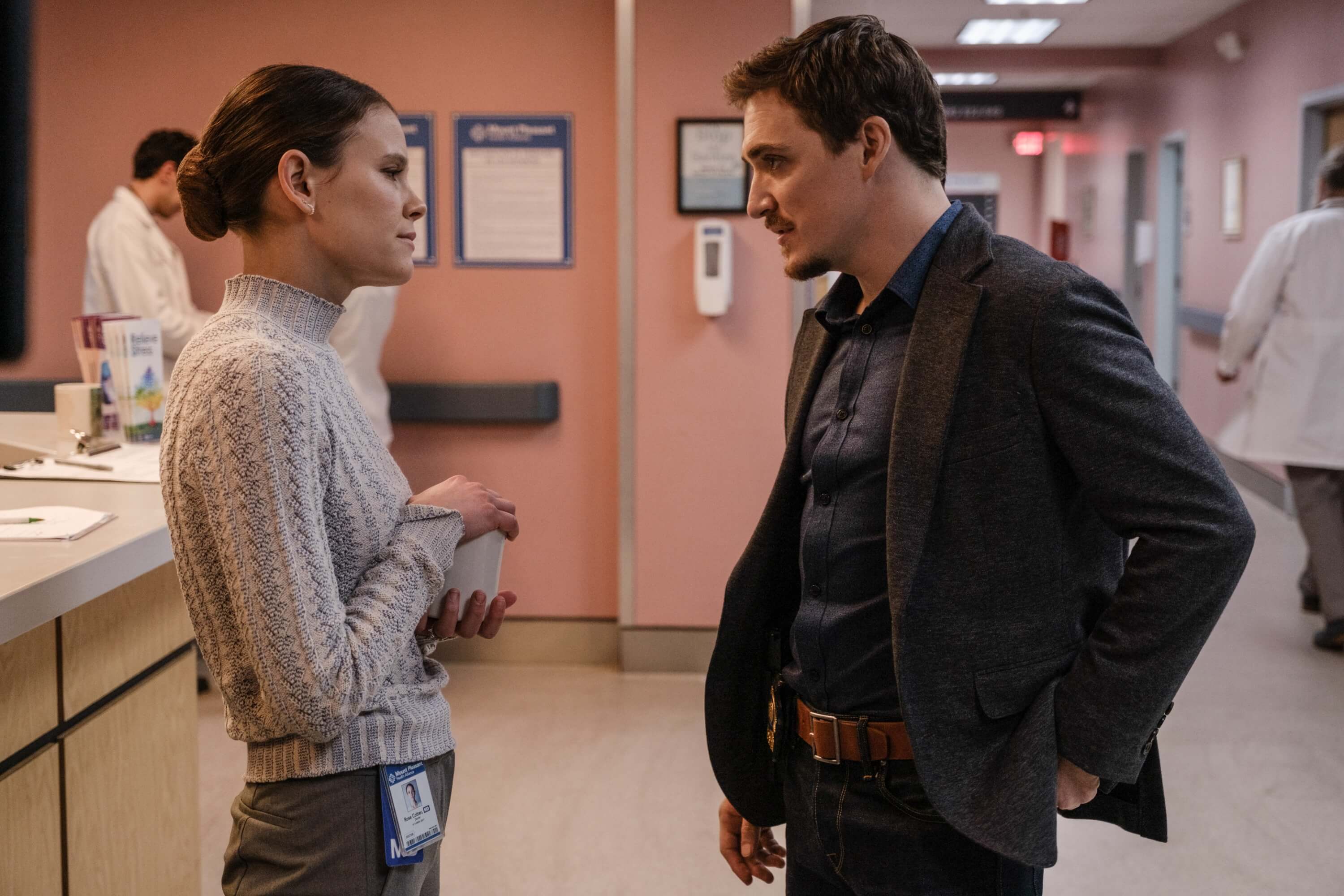
From Kyle Gallner and Jessie T. Usher alone there’s just a really great cast in this movie! Could you tell us a bit more about what the main cast were like to work with, and what you think they brought to Smile

Everyone brought something different. Like I said, I was spending most of my time acting alone, so when somebody got to come on set and be with me, I was just so grateful. Jessie was so fun, and cool, and had such a grounded, calming energy compared to my crazy anxiety. Robin Weigert has been in theatre in New York forever, and she’s lovely, also very calming, and it was also cool to work with such a legend in the New York theatre world. She is prolific in her acting. Kyle and I vibed from the second we met each other. I just think he is amazing. We just had so much fun, and he was a real support for me throughout. Jessie was only in a little bit at the beginning, well, throughout, but he was in this one location, so Kyle kind of saw it all through, and he was in a lot of the moments. He was a real leaning post for me, because it was hard. He is a wonderful actor.

Leading on from that, Parker said that filming in New Jersey went so well, that it ended up becoming a character in the movie. Do you also see it that way, and what did you yourself enjoy the most about working in that location?

Well, I’m from Manhattan in New York City, so it was kind of interesting and cool for me to shoot out there. The thing about New Jersey is it’s so suburban, if you go to Newark, where the airport is, which is around where we were shooting, first of all, it’s so depressing. Then you go a little further and there are all of these fancy, New England towns. I don’t know, it just has everything, and it had everything that we were looking for in terms of the locations informing what you see in the movie. I love that, because for me that’s a real way to hook into a story, a movie, and a character, by looking around and going “Where am I? What does this mean about who I am, where I grew up?”

Was there a particular location, or set piece that you found particularly rewarding to work on?  

The hospital bed. They built the interior of the hospital on a stage, specifically because Parker wanted a very specific colour palette. It’s just really cool, the way that it’s painted, the way that it’s shot, it’s very interesting. I don’t know how to explain it without giving it away, but there’s something very sinister about that hospital and the way that it’s put together. Even though it was on a stage, and people never like the stage portion because it’s not a location. Once you see the movie, you’ll realise that the hospital is really iconic.

Finally, why should STARBURST readers check out Smile

It’s just so fun to go and see a horror movie in the theatres. After this whole time that we haven’t been going to theatres, the only movies that are in theatres are these big Marvel movies and action movies. So I just think there’s something nostalgic and fun about going. I’m not promising you’re going to have fun! There’s something nostalgic and fun about going with your friends to a horror movie. Making a night of it. Seeing it on the big screen, screaming. If you go with a date, you can hold hands! It’s a good way to decide if you like a person. Horror movies are so nostalgic, but it’s really scary, so I don’t want to lead people astray as if it’s going to be so fun. But do it, go see it in the theatre, definitely don’t wait for streaming on this one, because it’s a theatre movie. It’s important that you do.

SMILE is in cinemas on September 28th. You can read our interview with writer/director Parker Finn here.

ENDED] Win Shudder Original THE TWIN on DVD

win the twin

Prepare for double the trouble as we come face to face with The Twin – a disturbing and terrifying psychological horror from Finnish director Taneli Mustonen (Lake Bodom, Reunion). Midsommar and Hereditary fans will be thrilled with this unflinchingly eerie and spine-chilling Shudder Original, arriving on Blu-ray, DVD, and digital on October 3rd, 2022 from Acorn Media International. We have a copy to give away. Just read on and enter below…


In the aftermath of a tragic accident that saw their son killed, Rachel (Teresa Palmer – A Discovery of Witches, Lights Out) and Anthony (Steven Cree – Maleficent, Outlander) decide to move to the other side of the world to focus on their surviving twin son, Elliot (Tristan Ruggeri – The Witcher).

What begins as a time to heal in the isolated Scandinavian countryside turns into a desperate battle for the very soul of their child. When an entity claiming to be his dead brother possesses Elliot, Rachel must embark on a deadly and disturbing journey to unravel the horrible truth about the twin. Forced to confront the unbearable truth, Rachel’s nightmare is only just beginning…

This horror promises twists and turns galore and sinister shocks aplenty that will keep viewers guessing until the very end.

Dare you meet The Twin in this highly atmospheric and unrelentingly tense thriller?

a Rafflecopter giveaway

Shudder Original The Twin is released on DVD and digital on October 3rd. 

Parker Finn | SMILE

smile interview parker

Writer/director Parker Finn has turned the DNA from his short movie Laura Hasn’t Slept into a full, studio-backed movie. Set in the heart of New Jersey, Smile tells the story of Dr Rose Cotter (Sosie Bacon) as she attempts to figure out why she is being stalked by extremely freaky and mysterious characters on a daily basis, and if the disturbing trailer is anything to go by, then we are truly in for an unsettling time. STARBURST caught up with Parker to dig into the creative process behind Smile and much more…

STARBURST: Can you tell us how the idea for Smile first came about and how it links with your short movie Laura Hasn’t Slept?

Parker Finn: When I had been in post-production on ‘Laura Hasn’t Slept’, this idea for a much larger movie started to form that was, I want to say, inspired by the short. It was not the exact same, but there were threads of DNA from the short that were running through this feature idea that became Smile. I wanted it to be something that was not just a direct adaptation, but it was also something new. It’s not a re-tread of the short, nor a simple expansion, but rather a fully formed, separate story that just used the short as a springboard. I was interested in exploring the horrors of some of the things that we carry around inside of us, and I wanted to meditate on what it might feel like to have your mind turning against you. At the same time, I wanted to lean into the fear of not being believed by the people closest to you. I think that’s a universal fear, I wanted to take all of that stuff and see if I could turn it into a film that felt like a constantly escalating nightmare.

Were there any major challenges in making that a reality?

No more challenges than what it takes to develop a full-length movie in general. As I said, it wasn’t about taking the short and expanding it, it was about taking the things from the short that really inspired me and fusing them into the DNA of the feature. I find that I can only be made to feel scared or afraid during a horror film if I truly care about the characters. I really wanted to start from a place that was character-driven, and I wanted to tell a story that succeeded first as a human character drama, which also has these incredibly frightening horror elements infused into it.

Taking it back to Laura Hasn’t Slept and your other short movie The Hidebehind; was there anything you learnt from the directing process on those two shorts, that you just really wanted to apply, or even expand upon in Smile?

For me, hopefully, you get better with every project. When you’re making shorts with either no budget or a modest budget, you’re really up against it with what you can pull off. You’re constantly trying to figure out how to punch above your budget and your schedule. I wanted to take those same things and apply it to a feature film. Even though I was working with Paramount, we were a monster-budgeted studio film, but I didn’t want to let that get in the way or dictate, what kind of film I was going to make. We really set out to stretch the budget, schedule, and everything that we could, in order to tell a story that feels much bigger than the sum of its parts. Then visually, I’m somebody who really leans into prep, I shot this, my entire script before we headed into production, I worked on it with my director of photography, and really started to hone it in so that we had this insanely strong plan going into production. Then it’s all about trying to hold on to that North Star that we’ve set for ourselves, and execute.

We did want to ask, why did the name of the movie change from Something’s Wrong with Rose to Smile? Is there a big story there, or was it just a quick decision?

Something’s Wrong with Rose was certainly a bit of a play on the original thing that started it all with Laura Hasn’t Slept. It felt very fun. I love the ‘70s, timeless feel of that. The further along we got into post-production, we started really feeling how the movie was playing, and what the people we were showing it to were gravitating towards and grabbing onto. Working with the studio, the title Smile rose to the surface. We all agreed that it was a really strong title that captured the essence of the movie.

How did Sosie Bacon end up becoming Rose, and can you tell us about what she’s been like to work with, and just what she brings to playing Rose?

I knew from the beginning that the entire film was going to hinge on the performance of Rose. When I first met Sosie, I was incredibly impressed with her as an actor, how emotionally intuitive she was, and how committed she was to her craft. We figured out that we had very similar tastes in storytelling, and the kind of characters that we were trying to bring to life. She has this amazing ability to draw an audience in through nuance, through these moments. Where a character is experiencing something extraordinary, and really, really outside the realm of normal, and yet she grounds it in this amazingly human performance. The degree of difficulty with what she had to pull off for this film is enormous. The character is in almost every scene and she’s operating at these extreme levels of anxiety, stress, and fear, and it’s this incredibly physical performance. When you’re performing, your body doesn’t know the difference between real and the performance that you are putting on. So, it’s very gruelling and exhausting, but she tackled it in this really mature, amazing way. I personally think that she’s given one of the most stunning debut lead performances in recent years, and I can’t wait for people to see it.

From Jessie T. Usher to Kal Penn to Kyle Gallner, there’s a really great cast in Smile! Could you elaborate on what the main cast members have been like to work with, and what you think they’ve brought to ‘Smile’?

I really wanted to put together a cast that was surprising for a horror film. Jessie T. Usher plays Trevor, who is Rose’s fiancé, and he has this incredible, natural charisma and coolness to him, and he’s able to lean into this sense of detachment and a looseness that was very important to the character. I’m really excited for people to see why. Kyle Gallner has been really crushing it in genre films for years, I’ve been a big fan of his for a long time. He’s done so many awesome movies. I wanted to bring him in, he has got this thing about him, where you instantly want to root for him, that was very important to his character Joel. What I really like is that he is able to use humour as a defence mechanism, which was very important for his character. I have also been such a fan of Kal Penn for a long time, I grew up on the first Harold and Kumar, I think that he’s so intelligent, but has such a great sense of humour, and he’s somebody that you just instantly want to like. He plays Rose’s boss and mentor in the film, Dr Morgan Desai, and I wanted to cast somebody who could lean into the intelligence of that character, but also be somebody that we definitely didn’t want to be disappointed in us! That was very important. Kal was such a pleasure to work with. Caitlin Stasey was in Laura Hasn’t Slept and I was so impressed with working with her the first time around. When it came to Smile, there’s a role that Caitlin plays, which is not the same, but it’s parallel to the short film, and yet it sort of turns the whole thing on its head. There’s nobody else I could have imagined in the role, I wrote the role specifically for her, she came in, and really took everyone’s breath away with her performance.

Can you tell us about the main filming process for Smile? Where was it shot, and what was it like to put together over a pandemic?

We shot in New Jersey, in some of the cities. We were in Newark, Jersey City, and Hoboken, but we also got out into some of the suburbs and some of the more rural areas as well. We shot New Jersey for New Jersey and it quietly plays a character in the film. I love that there’s both an amazing industrial feel to it, but there’s also all of this incredible greenery, old rusty bridges, these very cool rivers, and just all of this amazing landscape there. We were very lucky because when we were in prep, everything was still green but we knew that leading up to our production that we might get lucky and catch fall just beginning to start, and we did. The leaves began to turn colours, it instilled this sense of autumn into the film. I think it’s this really wonderful thing, which I was very excited to be able to capture on-screen. We were shooting during COVID, and it definitely could have been a hindrance, but we had an excellent COVID team on set, who kept us safe while also making sure it was the least intrusive it could possibly be. I’m very grateful that we had a successful shoot during the pandemic.

You’re the writer and director on Smile, what is it like to balance these two titles as you work, and by being in both of these major roles, did you feel like you had the freedom to do what you wanted?

When you’re spending other people’s money, you never really have the full freedom to do whatever you want! But my partners at Temple Hill and Paramount were wonderfully supportive, and they really got behind the film in a major way. I’m incredibly grateful, I wasn’t sure what to expect when entering the studio machine, but I got to tell this story the way I really wanted to, and we were all on the same page from the beginning. For me, writing and directing go so hand in hand, I write things the way that I want to direct them. They become different stages of the same process. There’s a really interesting element when you’re both the writer and director where you’re writing all of these things that are going to be incredibly difficult to pull off, so by the time you get into prep, you’re cursing the writer, but it’s also yourself! That knowledge of anything that you put down on the page, it’s also going to be up to me to figure out how to do it. You keep that in mind, but for me, it’s always about trying to stretch the budget, the schedule, and punch beyond our weight class. I really like trying to set impossible tasks. Trying to convince actors that they can do impossible things, but also trying to convince my department head, my crew, producers, everybody that we can do all of these things that might seem insurmountable. If we all create a really solid plan and lock arms, then we’ll figure out how to do it!

Based on the trailer alone, and looking at those haunting smiles, We’re already getting a really freaky tone! How did you want this movie to feel for the viewer overall, and how did you go about capturing it?

Smile is going to surprise audiences while also respecting their intelligence. It’s intensely psychological, but it’s also shockingly visceral and physical. It’s got these big frightening moments that are hopefully going to cause the audiences to jump out of their seats and scream. But it also leans into this creeping sense of dreadful unease that I think, if we’ve done our jobs right, then it’s going to linger with the audience long after the credits roll.

How do you go about capturing an unsettling smile? Because in the trailer, the actors have done an incredible job at creating a disturbing atmosphere. I really felt like there must have been some kind of interesting process behind it?  

I chose to use a smile to represent the evil in the film because I think of the strength of the inherent contradiction. Smiles are meant to be these warm, friendly gestures. They’re very inviting, and it’s something very primal in us as human beings. We learn how to smile as babies before we even learn how to speak, and I wanted to see if I could take that and flip it on its head, and allow the evil to wear a smile as a mask. To hide something really horrible and malevolent behind it, to use a smile as the promise of a threat. When it came to capturing them, I knew that from the beginning, I wanted them to be true human performances. I didn’t want to lean into visual effects, CGI trickery, or anything like that, I knew that if I could capture them through human performance then it would really lean into the eerie, uncanniness of it all. The way it actually began was with myself, before I showed anybody, just trying different stuff in the mirror, which felt quite silly while doing it! Then working with each of the actors, and I think somebody walking past might have found it quite humorous, we would stand a few feet away from each other and start smiling back and forth, honing in the exact smile. Once we got it right, it’s all about the unnaturally wide, way-too-toothy smile. The real trick is having these dead eyes that go along with it. Then it was really all about how we captured it, with the lenses we chose, the lighting, the colour palette, the blocking, and the stillness that was often involved with it, and really bringing in all of the other elements of sound and music, or sometimes silence. All of those things together create this really freaky alchemy that I can’t wait for audiences to experience.


How fun has it been for you to watch the reactions to the trailer?

It’s been really wild, it’s been incredible to see all of the reactions to the trailer. I’ve been in the theatre a few times myself, as a viewer to see other movies, and seeing the trailer play in front of a packed house, and nobody knows that I’m sitting in the theatre with them. Just hearing the audience physically and audibly recoil, react, and scream to parts of the trailer has been nothing short of amazing. I’m in that zone right now, where the movie is finished, but it hasn’t come out yet. It holds many mysteries that I’m excited for the audience to discover. It’s going to surprise them in ways, that I hope nobody will see coming.

Finally, why should STARBURST readers check out Smile?

Smile is a really, really intense, unique movie. It’s going to scare you, it’s going to shock you, it’s going to make you want to cover your eyes. It’s this mysterious, nightmarish, rollercoaster of an experience that as soon as the credits roll, you’re going to want to turn and discuss it with your friends and debate some of the mysteries from inside it. There’s nothing that can prepare you for what’s going to happen.

SMILE is released in cinemas on September 28th. You can follow Parker on Twitter.

Five Films to Check Out on Legend This Week – 260922

legend mole people

Legend continues to pack their schedules with great films and TV shows, but here are our picks you shouldn’t miss this week…


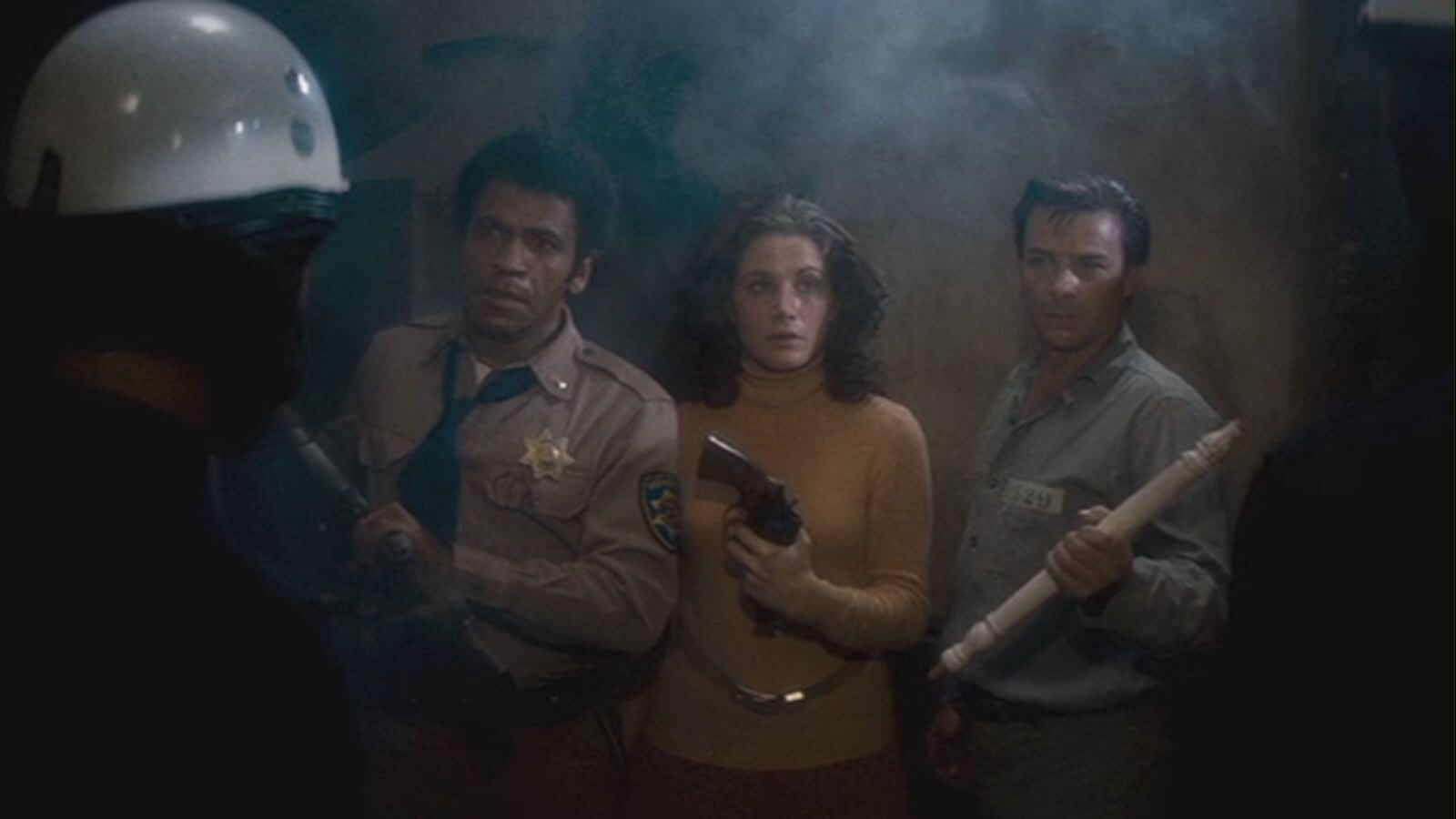
Monday September 26th, 9pm – Assault on Precinct 13 (1976)

John Carpenter’s tense crime thriller in which a cop gets the help of a pair of convicts when his station comes under siege by a local gang.


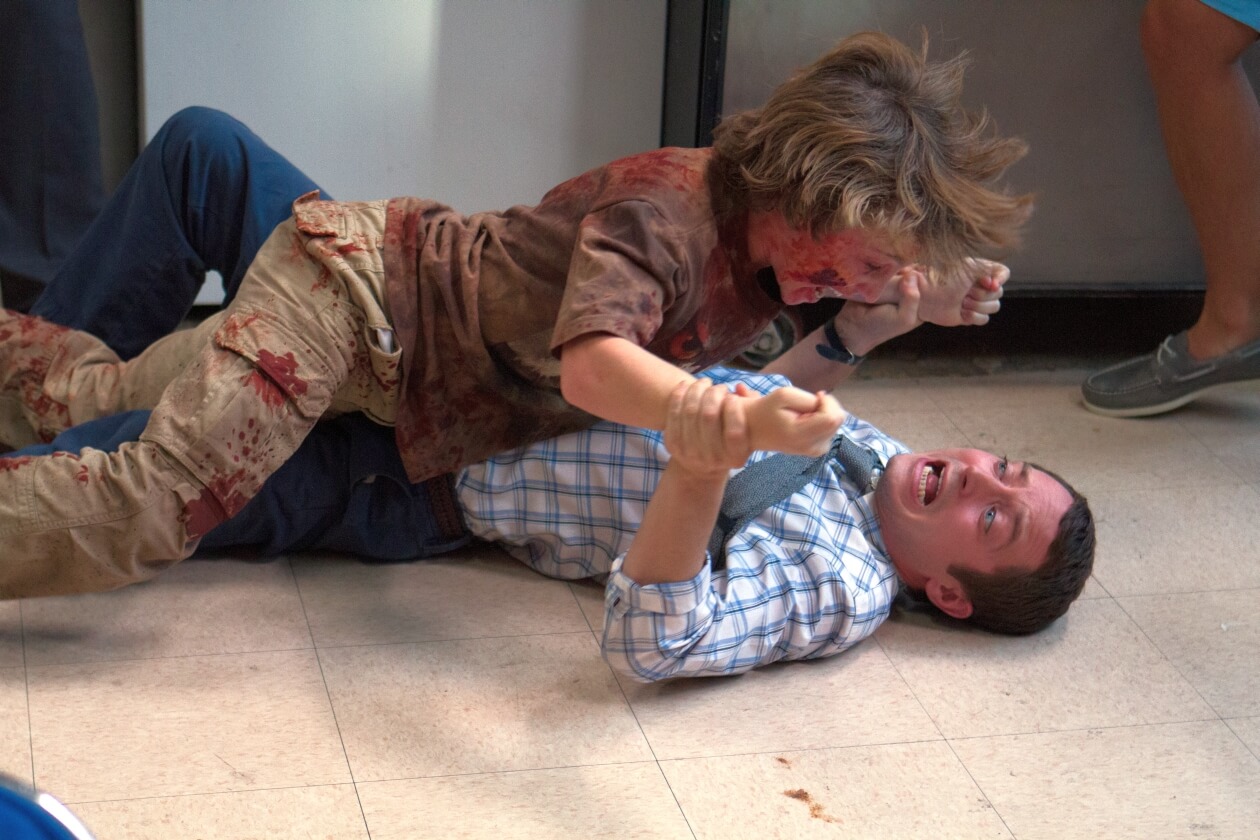
Wednesday September 28th, 1am – Cooties (2015)  

Elijah Wood heads the cast of this school-set infectious comedy-horror. In this case, it’s a tainted batch of chicken nuggets that turn the kids into rabid zombies.


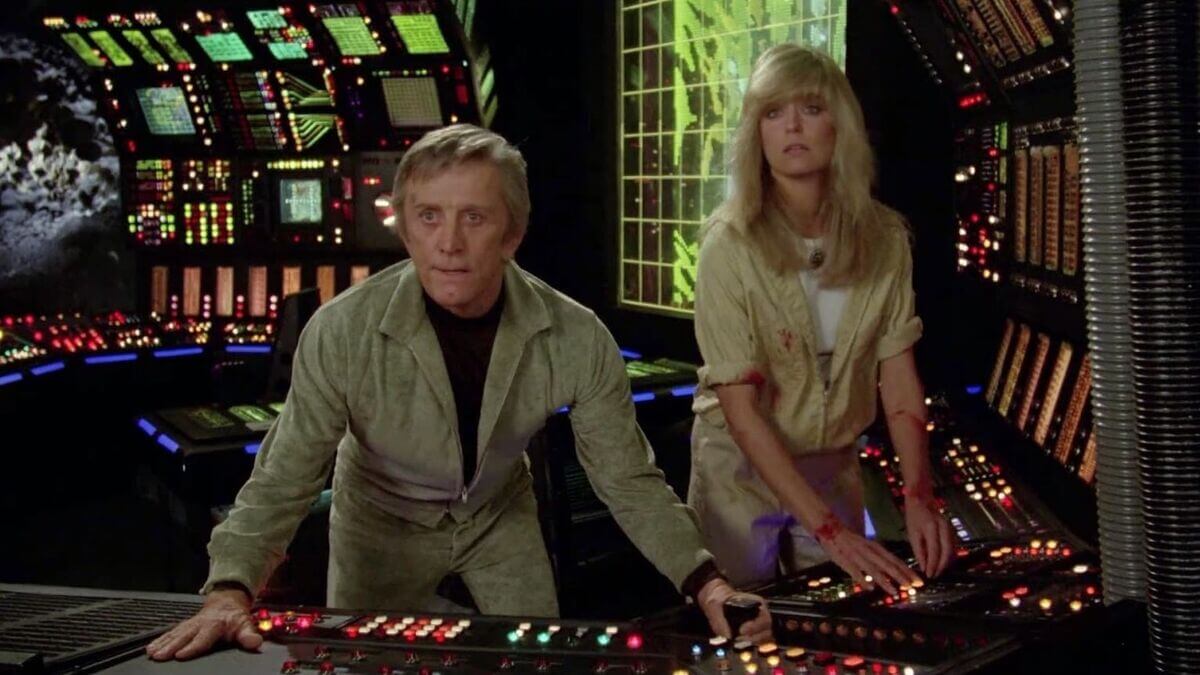
Friday September 30th, 9pm – Saturn 3 (1980)

An all-star cast – Harvey Keitel, Kirk Douglas, and Farrah Fawcett are almost upstaged by the robot Hector in this British sci-fi thriller. Surprisingly, it’s directed by Stanley Donen, better known for films like Seven Brides for Seven Brothers and Singin’ in the Rain!


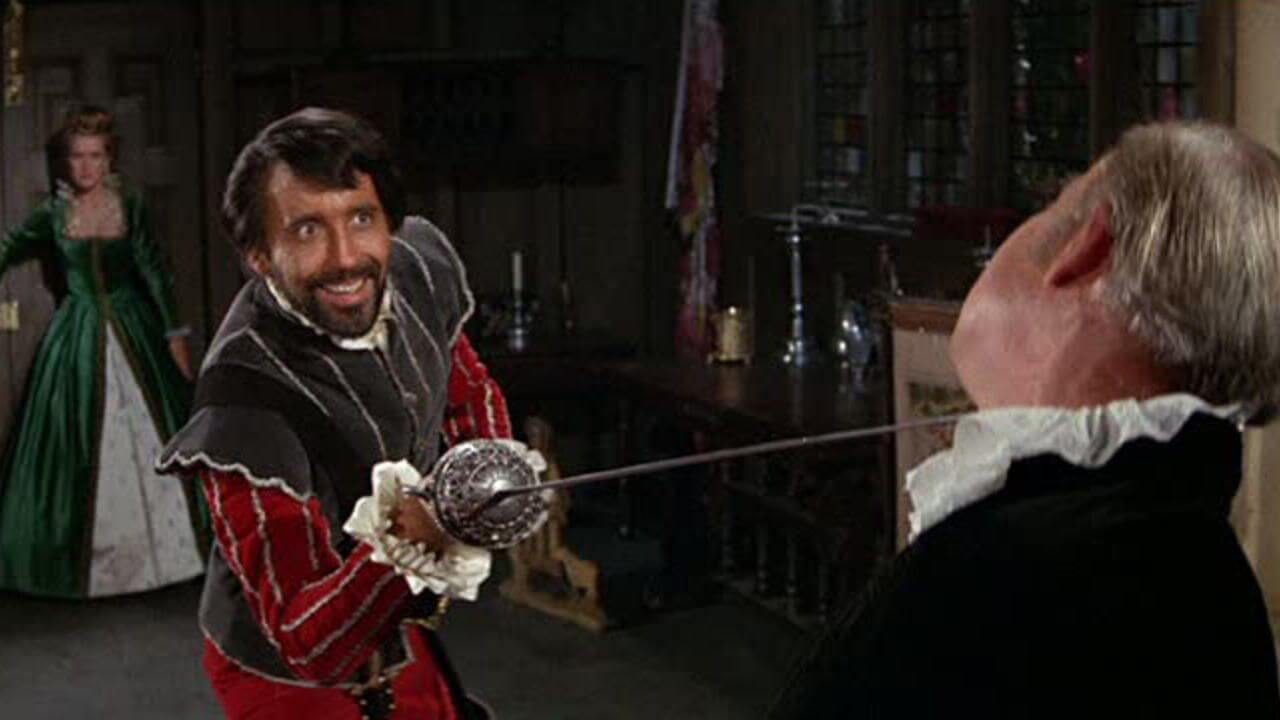
Saturday October 1st, 9pm – The Devil Ship Pirates (1964)

Hammer goes all swashbuckling with this adventure. Starring Christopher Lee and Andrew Keir, it’s directed by Don Sharp (The Kiss of the Vampire).


Sunday October 2nd, 9pm – 12.05am The Vintage Vault

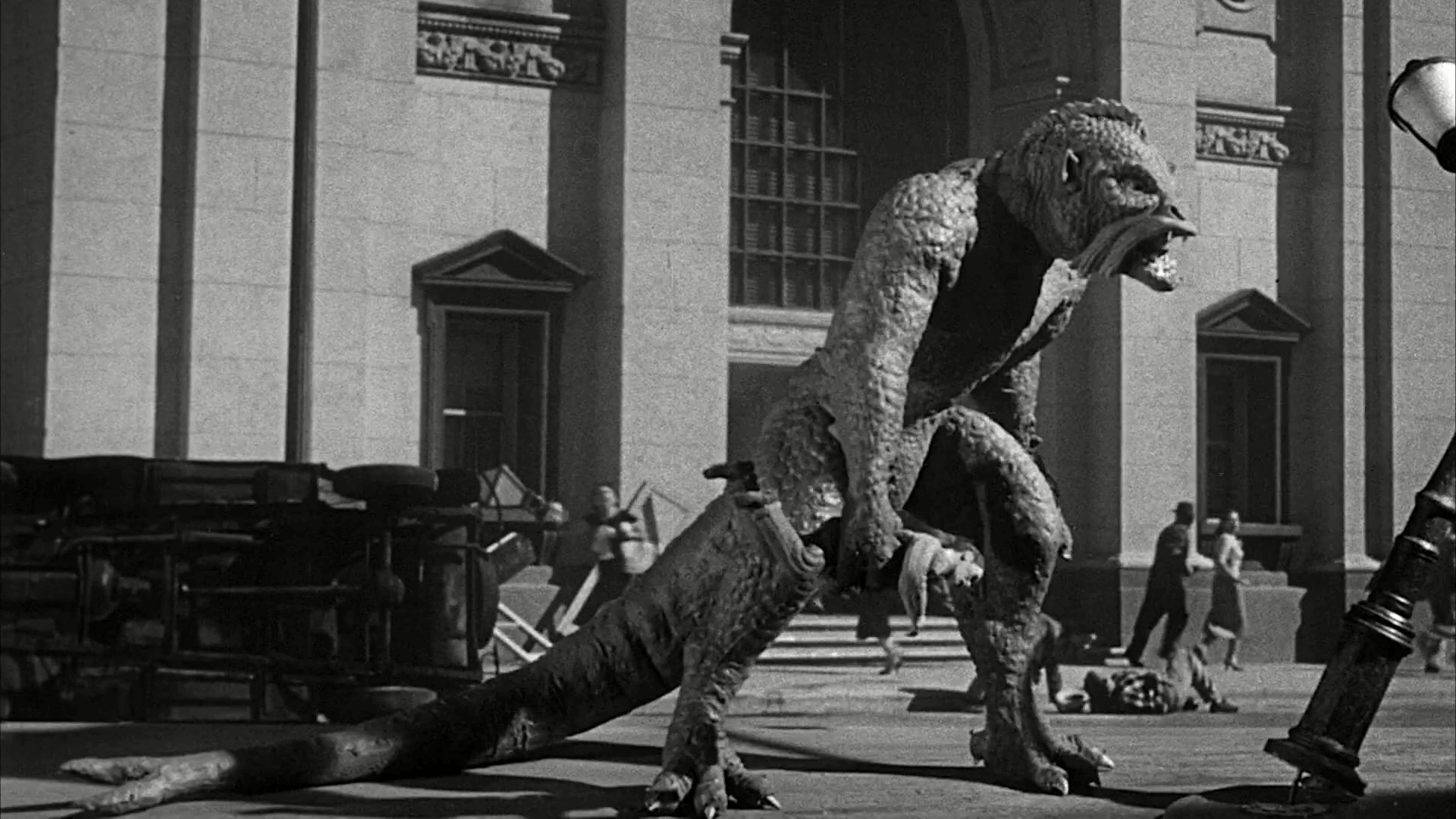
Legend continues to celebrate the Golden Age of genre cinema with a season of double bills. This week, there are a pair of fifties creature features. First up, we go underground to face The Mole People (1956), as B-movie hero John Agar tries to battle the subterranean creatures. The stop-motion work of Ray Harryhausen follows with 20 Million Miles to Earth (1957) in which a creature from Venus lays waste to Rome.

Find out more information at https://www.legend-tv.co.uk/

Kogonada & Justin H. Min | AFTER YANG

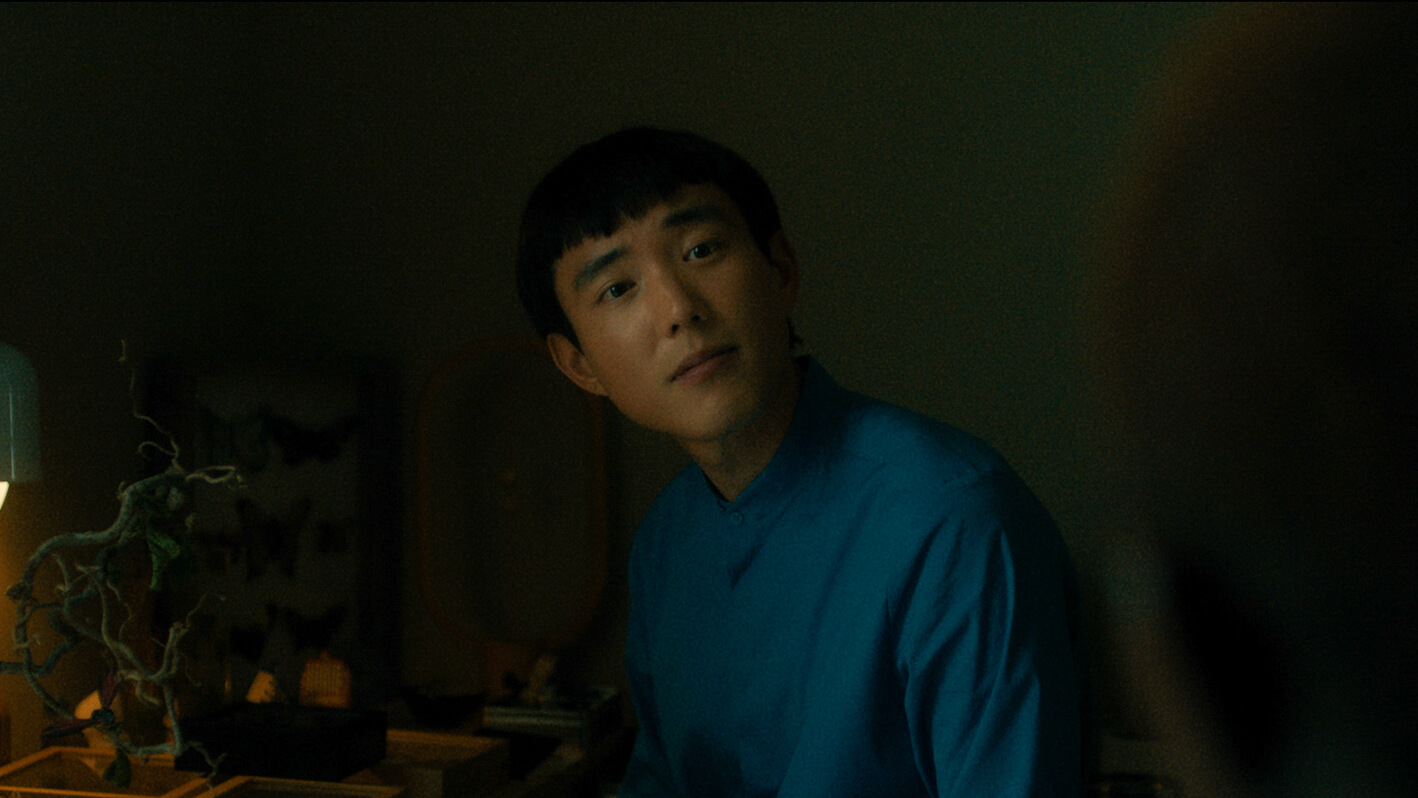
Justin H. Min as Yang in Kogonada sci-fi After Yang

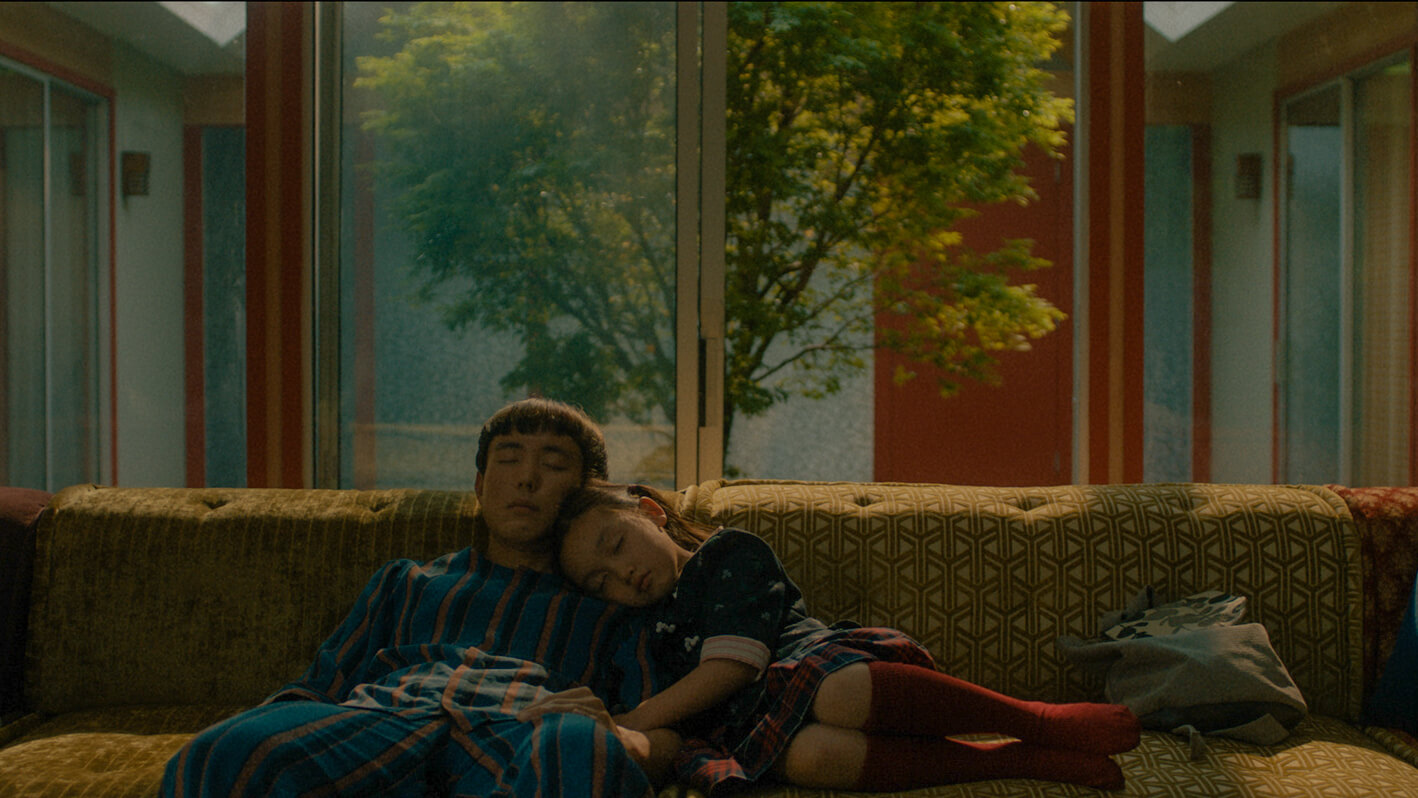
A muted, gorgeous, and thoughtful film about what it means to be alive, After Yang is Kogonada’s sophomore feature and stars The Umbrella Academy’s Justin H. Min , Colin Farrell, Jodie Turner-Smith, Haley Lu Richardson, and Malea Emma Tjandrawidjaja. Ahead of After Yang’s release, STARBURST sat down with writer-director Kogonada and actor Justin H. Min to discuss constructions of Asianness, the nature of memory, and familial connection.

STARBURST : When you first read the short story ‘Saying Goodbye to Yang’ by Alexander Weinstein, what inspired you most to develop it into a feature?

Kogonada : There was just a real, lo-fi mood about it; it took place in the future but was so deeply grounded in its scale. It wasn’t about the end of the world and some hero trying to save the city from mass destruction. It was just about a family trying to get through a day. In the short story, it really was just one day in the life of a father trying to fix this robot. And initially, he’s annoyed, but by the end of the day, he’s reminded of his own memories of Yang and that creates a grief in him that he didn’t even know he had.

I was also drawn to the fact that – and the writer wasn’t Asian – but this idea that the robot was a construct of Asianness immediately resonated with me. Justin and I have been talking about how we feel about the identity of that kind of construct of Asianness. I knew I’d get to explore that, as well as fatherhood, connection, and memory. It had all the right ingredients for a project I wanted to explore.

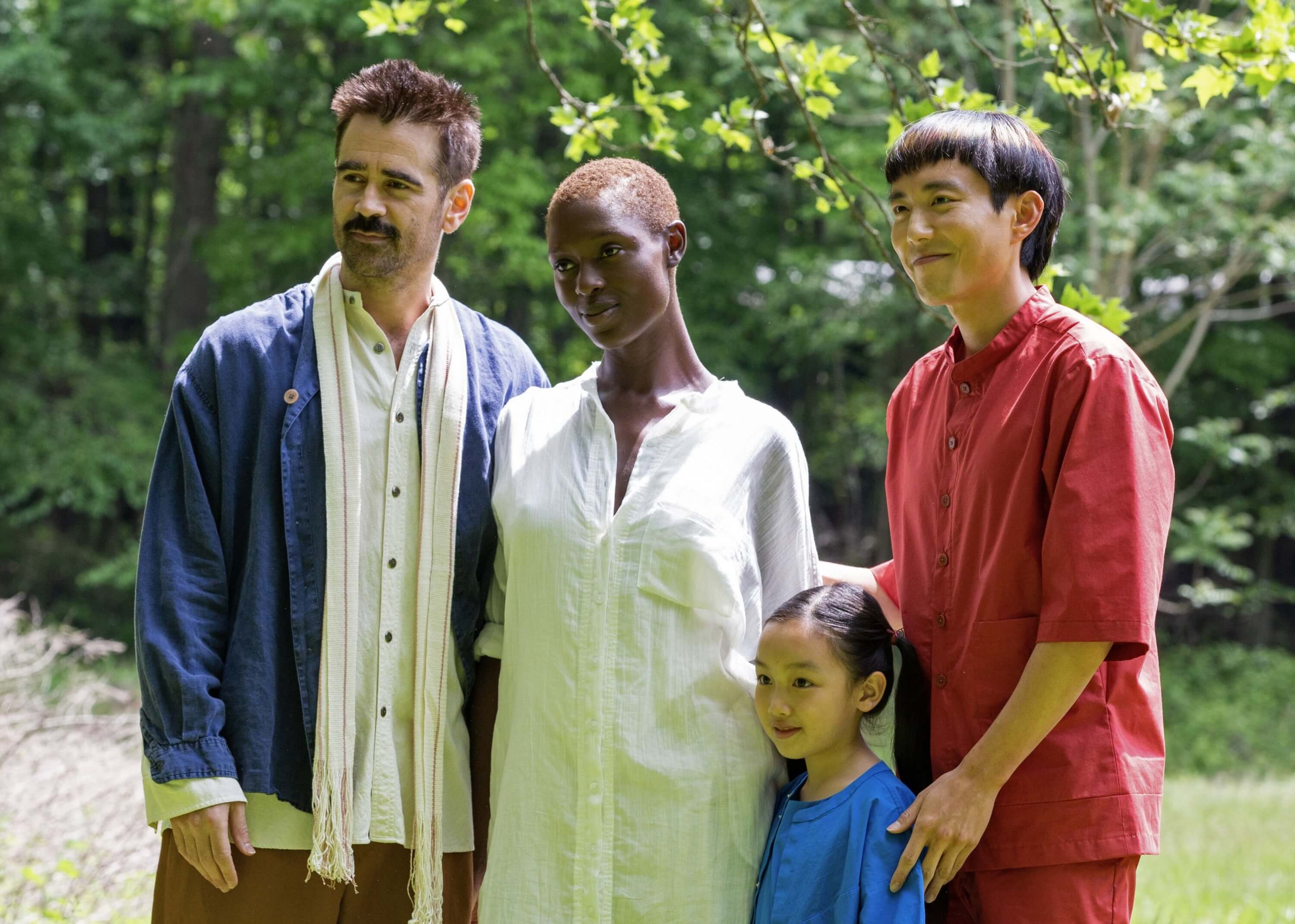
Jodie Turner-Smith, Colin Farrell and Justin H. Min in After Yang dance sequence


And for you, Justin, at which point in reading the script did you decide you wanted to be involved?

Justin H. Min : From the title page. I don’t say that in jest, because the title page had Kogonada’s name on it, and I was a huge fan of his visual essays. I had also watched Columbus immediately when it came out, and I was just such a fan of his directing work. So, to be able to see what his second feature would be was really exciting. Then as soon as I finished it, it was like – you know those fears you have when you read something by someone you admire, and you’re afraid you’re going to be let down? Well, it exceeded my expectations. I immediately told my team, “I need to audition for this.” And that’s how the process began.

What kind of conversations did the two of you have about the character of Yang and what you wanted to do with this film?

Justin H. Min : In many ways, Kogonada gave me a lot of ownership of the character, which I really appreciated. Of course, one of my first questions to him after getting the part was, how “robot” is this character? What do you need me to do? And he was like, “What do you think?” [laughs]. And I realise now, in retrospect, that it was very strategic. He wanted to keep the mystery of being for himself and the film. And so, it was just a constant exploration for me.

And in my preparation work, I think the thing I focused most on was Yang’s relationship with each of the characters. Each one I considered to be unique. I wanted the grief to feel real, and for that to happen, the connection and love between Yang and the others need to feel real – especially in the flashback scenes. So, I knew that I needed to do the work within myself of creating all these memories with each of the characters that aren’t seen in the film so that the flashbacks don’t feel like empty moments pulled from the void.


A lot of classic sci-fi feasts on Orientalism and Asian stereotypes, which often manifests as those Asian characters being denied an internal life. Justin, how did that awareness affect your acting choices and Kogonada, why did you hold back from explaining the character further?

Justin H. Min : It’s not something that I wanted to think about. I wanted to do the most accurate portrayal of this character and have that be separate from the conversation of what this film represents for Asian-Americans and the Asian-Americans that have been represented in previous sci-fi films. I just didn’t want any of that noise in my head. I just wanted to portray the character that I thought Yang was, and so much of it is written on the page; it’s such a beautifully written script, and there was so much room for me to play and to bring life to this character.

And you know, it’s so interesting because I understand the criticism – not even exclusively in the sci-fi world, but generally – about Asian-Americans in film and TV being silenced and silent characters. But it’s also interesting because, in a way, we have talked about the beauty of silence and how powerful silence is. For me, the moments of quiet and silence in Yang are some of his most powerful moments and how he takes the most agency. And so, for me, that felt like a redemptive thing: for him to be silent at times and to be the observer. Because it’s only through Yang’s eyes that Jake can have this revelation about his life.

Kogonada : I think it’s very well observed. I think the sci-fi future world is so much a kind of Orientalism and aesthetic. And we talk about us having to contend with our own construct of Asianness; when you’re separated from your homeland and lived in a largely Western world, part of what we have to navigate is the way Asianness has been represented to us. I’ve been surrounded by a kind of Orientalism – which is different when you are Asian.

I was aware of it as we were building out this world, and the fact is, Yang is a manufactured idea of Asianness, right? And that world, we see a kind of Asian aesthetic. I didn’t want to strip that away either; I certainly wanted to keep the complexity of what we have to navigate through in this future world. We see some of the influences of Asia, the conflicts of Asianness, and the allusions to war in the East.


And another thing is the perception sometimes that Asians are robotic. The thing that I trusted and thought was nicely ironic is that our Asian robot might have the richest interior life of anyone in the film. Part of the reason why I would throw those questions back to Justin is that I really trusted him. I knew in my bones that he was the right person to play Yang, just by the first audition that he gave – and that’s because he was playing him not as a robot but as this dedicated older brother. And he has this certain quality, this soulfulness, that I knew would resist any idea of a robotic Asianness.

It’s also interesting that, on paper, this is the story of Jake reconnecting with himself and his family, yet the film centres on Yang’s experiences and memories. Since that wasn’t the case in the short story, can you talk us through reframing that narrative for the film?

Kogonada : Right. The short story really is about Jake’s memory and these flashback sequences of him remembering a moment, but I love the idea of those memories functioning not just as flashbacks, which are sometimes offered as a certainty. I also wanted to play with memory so that when we experience memory through Jake, those memories feel elusive and repetitive – repetitive in the sense that it’s refining what was real and the subjectivity of that.

And the thing is, when the film begins, we don’t know Yang at all. So, when he malfunctions, we don’t have any feeling of loss. It has to be the work of his memories to create a presence for him where the viewer feels that absence – in much the same way as Jake has to evolve from seeing Yang as an appliance, as something that gives him time not to really parent.

It’s one of those stories where you might have imagined a typical narrative where the father is going to be heroic and save this robot for his daughter, but at the end of the day, it really is Yang saving Jake. Just by engaging with Yang’s memory, he is being challenged and awakened.


Throughout the film, you also suggest a broader socio-political context to this world, with a war in China happening on the edges of the screen. Why hint at it and then not address it head-on?

Kogonada : Originally, I was going to reveal even less because I wanted the window of the world to be presented through a family. You know, I often think that sci-fi is always about the world at large and a significant threat to it and the most heroic figures navigating that. I think I originally had written in the script that we will only feel the world through the sliver of a window, maybe in a reflection; at one point, I had it really contained within the house and maybe having the car. But then I felt we had to offer just a hint, but it was about the family.

In sci-fi, I always wish I would get to know what everyday life was like. If I’m watching the biggest blockbuster, I’ll see a background figure and wonder what it’s like for them to get through a day. So, given the opportunity to work in that sci-fi genre, I wanted to feel it from a domestic space. Because the truth is, there are wars and pandemics going on right now, but how we experience them is just very mundane. So, it’s not that the broader context was insignificant – it shaped everything we saw, but I wanted to experience the world through a domestic lens.

Is that also why you approached the design elements of this world in a much more organic manner? Usually, with a sci-fi setting, it’s grandiose backgrounds and sprawling buildings, but After Yang keeps its world very muted.

Kogonada : Yes. And it also tells us about the broader world. We had a backstory where a cataclysmic climate event had occurred, and where this family lives now is a rebuilt city. So, this future has to integrate with nature, or life will no longer be sustainable. That was very much a part of the organic construct of this one house, so its design tells you what you need to know about the broader world.

Justin H. Min : Just to piggyback off that, I will just add that as an actor, it was so refreshing to read something that took place in a potentially distant future where half of the script wasn’t explaining everything. As an actor, you are often given scripts set in a different world or universe, and sometimes half the script is expository, telling us why things are the way they are. I love how immersive this film is, from the moment you get thrown into it. It’s like, this is how it is, and it won’t be explained. What’s important here is the relationships between these characters, and I love that so much.


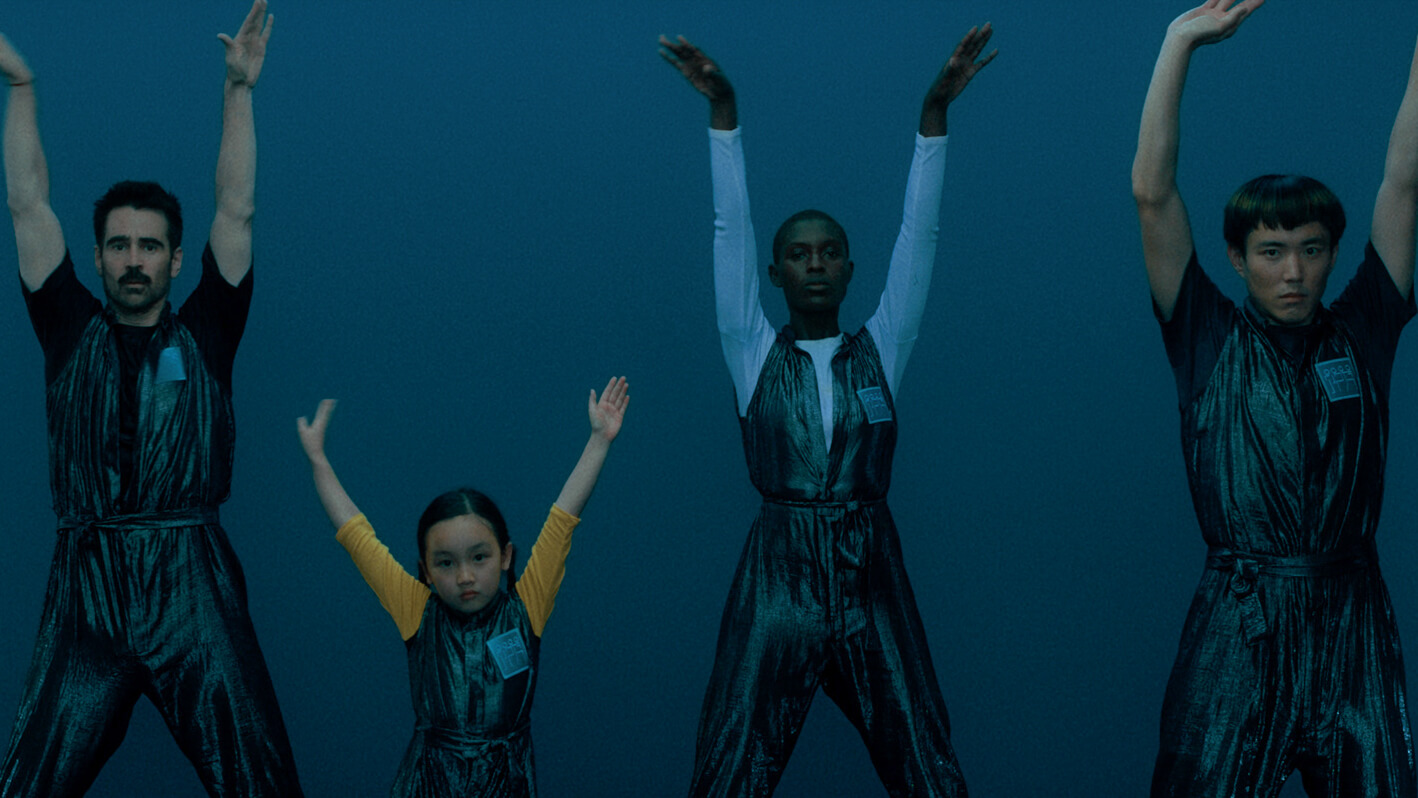
And on a lighter note, one of the film’s most enjoyable scenes is the dance number through the opening credits. How did you prepare and balance the dynamism of that sequence with the film’s gentle tone, ensuring the two didn’t jar?

Justin H. Min : The dance was traumatic [laughs]. We had an incredible choreographer; we had a few days before we started filming to learn the choreography in the studio. You know, dance is so vulnerable, it’s embarrassing, it’s all of these emotions – but it’s also an incredible icebreaker. And that sequence was one of the first things that we filmed, and so to have that helped jumpstart the film and create cohesion within our family unit. It was amazing because we took that and ran with it for the rest of filming. And yeah, it was just very adrenaline filled. Each group would go to their own corners, and it felt like a dance competition. It was a lot of fun, and I’m so glad it opened the film.

Kogonada : To answer your question about it potentially being jarring: it is. I think I knew when I wrote it that I wanted this hard cut. And I knew, because it was going to be part of the credit sequence, that it would already be a little bit suspended – all credits sequences are. I wanted it close to the front for that reason. I think if it were in the middle of the film, it would be jarring in a different way. Sometimes that works, but for me, it’s not only about seeing this family in sync but all these other families attempting to be in sync with each other. That’s what all families strive for, to be functional. And as we all know, there are more dysfunctional families than functional ones. There was something beautiful about seeing these families try to be in sync, only to begin then to see the dissolution of one. Though really, the choreographer had the best description of the dance’s role in the film: she said it’s like a pop of confetti, and the rest of the film is spent watching the confetti fall to the ground. I think that’s really well put.

After Yang will be released in cinemas and on Sky Cinema from 22nd September.

The Top 5 Movies To Watch While Studying

film study

Students face many difficulties in school, and as essential as reading is, it’s one of the most difficult things they must do in college. While you cannot do without studying for your exams at any level, you can ensure that you don’t strain yourself to do it. It’s important to either stay relaxed or take breaks between studying. Essay writing websites cannot save you when it comes to exams and tests. You must study by yourself, but ensure you don’t overstress yourself.

When studying for an exam, many people suggest that’s the best time for you to step away from the screens. But in reality, that’s almost impossible to achieve today. Sometimes, all you want to do is sit back and relax for two hours without having to think or worry about anything academic. This is where movies help you relax your head and relieve the built-up stress in your body. This is also not the time to swim through the sea of movies on streaming platforms like Hulu and Netflix, searching for what you think is the right movie. This article provides a list of some movies to watch while studying.

How to choose the right movie to watch while studying

There are several facts to note before choosing a movie at a time like this. You don’t want to get engrossed in the movie and forget that you’re still studying. So, you can’t pick a random movie, the same way you can’t buy custom essay from anyone but the best essay writing services. You know what’s at stake. So, here are things to note when picking a movie:

  • Choose a background movie to aid your multitasking. It’s better if the movie is less distracting.
  • Don’t pick any movie from your watchlist. This isn’t the time for that.
  • Choose a comedy. You don’t have to concentrate fully or watch every scene to have a good laugh and relieve stress.
  • Musicals are a great choice. You’ll enjoy both the story and the songs.

The best movies for your studying

You can outsource your essays, assignments and theses to the best thesis services, but you can’t outsource reading. Another thing you can’t outsource is your health. Don’t put your health at risk while studying. You can take a break with any of these movies:

  1. Dead poets’ society

John Keating is an unconventional English teacher who uses classic literature and his love for poetry to break down the barriers at an oppressive Welton Academy. He soon inspired his young students to take charge, seize the day, and challenge the school’s strict rules while being true to themselves.

This movie has several touching and emotionally-charged scenes. One of those scenes that will give you goosebumps is when the students prove to him how much he meant to them.

  1. Freedom writers

This movie didn’t get as much recognition as it deserved in 2007, but that doesn’t take away from its genius. This inspirational movie is a true-life story of Erin Gruwell’s success. Gruwell was a teacher that developed a unique teaching style that saw some underachieving inner-city students get to the pinnacle of academic success.

Hilary Swank does an excellent job playing Erin and impressively portrays a woman with a passion and drive for education. By the time she got all her students to start studying, she could completely turn their fortunes and lives around.

  1. Good Will Hunting

Will Hunting is a 20-year-old math prodigy with a rough past, several run-ins against the law, and a street-fighting tendency. Matt Damon impressively played this role, and the movie proves how underachievers can turn their world around.

Some inspiring scenes from the movie include Hunting’s therapy session with a psychologist. He was able to put down his defense and show the genius in him.

  1. The pursuit of happiness

This is another real-life story of Chris Gardner, who went from spending the night on the subway to becoming a millionaire and founder of a brokerage house with perseverance and hard work. He never missed an opportunity and always studied hard. He worked his way up professionally within a few years, from a medical equipment salesperson to a financial hotspot. If you have never watched a movie to demonstrate what it means to persevere and not give up irrespective of what happens, this is the one.

  1. Stand and deliver

This movie is a true story based on Jamie Escalante’s life, who quit his job to become a math teacher at a school known for rebellious students and focuses more on discipline than education. During his two years at the school, he helped his students go from struggling with academics to being successful at it. The main high was when the students cleared their advanced calculus examinations.

This movie proves that current struggles and different backgrounds don’t make academic success impossible to achieve. The story teaches possibilities, irrespective of the past.

Conclusion

These are some movies to help you relax while studying as well. Many might not see it as ideal, including experts at the best academic writing services, but you can only do well in your academics if you’re healthy enough to.

THE TELEPHEMERA YEARS: 1969 – PART 4

Here Comes the Grump, 1969

Ah, telephemera… those shows whose stay with us was tantalisingly brief, snatched away before their time, and sometimes with good cause. They hit the schedules alongside established shows, hoping for a long run, but it’s not always to be, and for every Street Hawk there’s two Manimals. But here at STARBURST we celebrate their existence and mourn their departure, drilling down into the new season’s entertainment with equal opportunities square eyes… these are The Telephemera Years!

1969-70

Although the Age of Aquarius had proved to be a false dawn, with Vietnam still raging and the Summer of Love a distant memory, America was still trying to laugh away its worries, with half the top ten shows aimed at tickling the viewers’ funny bones. Top of the roost was Rowan & Martin’s Laugh-In on NBC, who otherwise only had Bonanza and Walt Disney’s Wonderful World of Color among the top rating shows that year. Bonanza wasn’t the only  high-flying Western, either, and CBS’s Gunsmoke pushed Rowan and Martin all the way. The Tiffany Network dominated the ratings, enjoying another five places in the top ten, and seeing Hawaii Five-O sneak into the top twenty.

Marcus Welby, MD was the hit new show, joining The Brady Bunch on ABC’s new Fall line-up, while NBC debuted Night Gallery and The Bill Cosby Show in prime-time. For genre fans, Land of the Giants was finishing its two-season run on ABC, who also offered spooky fun with Bewitched and The Ghost & Mrs Muir. Get Smart moved to CBS from NBC, who only had I Dream of Jeannie on offer in a very thin year for sci-fi and fantasy fans. That’s all well and good for the adults in the room but what were their offspring watching beneath their attention? This is the story of 1969’s new Saturday morning hits…

Hot Wheels (ABC): Elliott Handler, the co-founder of Mattel, found his son Kenneth playing with model cars manufactured by Matchbox, one of Mattel’s rivals in the toy business. Rather than enjoy one of those fleeting moments when a parent can see true joy on their face of their children, Handler (whose wife Ruth had come up with the idea for the Barbie doll) instead decided that Mattel needed a cut of Matchbox’s action and rush Hot Wheels into production in 1968, a colourful brand of model cars inspired by the craze for outlandish hot rods.

The Hot Wheels line was an instant success, becoming a playground sensation, but Mattel wanted to consolidate their position and commissioned Carson/Roberts Advertising to find a way of breaking through to more homes through TV. Rather than the usual method of buying commercials, Carson/Roberts fell back on a sponsorship deal model that was growing out of fashion. They didn’t stop there, though, and enlisted Ken Snyder Productions, who’d created Roger Ramjet for NBC in 1965, to produce an animated show starring the Hot Wheels cars.

Hot Wheels, 1969

ABC bought the show to air on Saturday mornings in the Fall of 1969 but were immediately met with opposition from the Federal Communications Commission, who charged that the show was one big advertisement for Mattel’s toys and so broke rules governing advertising time. Backed by the National Association of Broadcasters, ABC contested the charges, pointing out that there was no contractual commitment to advertise Mattel products during the show, and that Hot Wheels themselves had never been advertised.

The FCC found a middle ground of insisting that stations carrying the show counted part of it towards their advertising time and Hot Wheels ran for two seasons, during which time the adventures of Jack “Rabbit” Wheeler and his Hot Wheels Racing Club always found time to stress how important safety was, especially when compared to their racing rivals, Dexter’s Demons. The show isn’t currently available on home video, but you can find episodes on YouTube if you want to join the club.

Scooby Doo, Where Are You! (CBS): In 1968, a number of parent-run organisations (including Action for Children’s Television) began to put pressure on the three TV networks over what they perceived to be too much violent content in Saturday morning cartoons. Particularly citing Hanna-Barbera’s adventure shows such as Space Ghost, Birdman and the Galaxy Trio, and Herculoids, their efforts ensured that many of these shows were taken off the air.

With an obvious hole to fill, CBS executive Fred Silverman asked Filmation to come up with a family-friendly show, resulting in the tepid teen comedy of The Archie Show (and a subsequent number one pop hit, “Sugar Sugar”). Silverman asked Hanna-Barbera if they could repeat the trick, this time with a mystery angle, and Joseph Barbera (who was the ideas half of his team) came up with House of Mystery but couldn’t quite nail the concept. Barbera handed the assignment off to H-B writers Joe Ruby and Ken Spears, who came up with Mysteries Five, the story of a five-piece pop band (and their dog, Too Much) who solved mysteries between gigs.

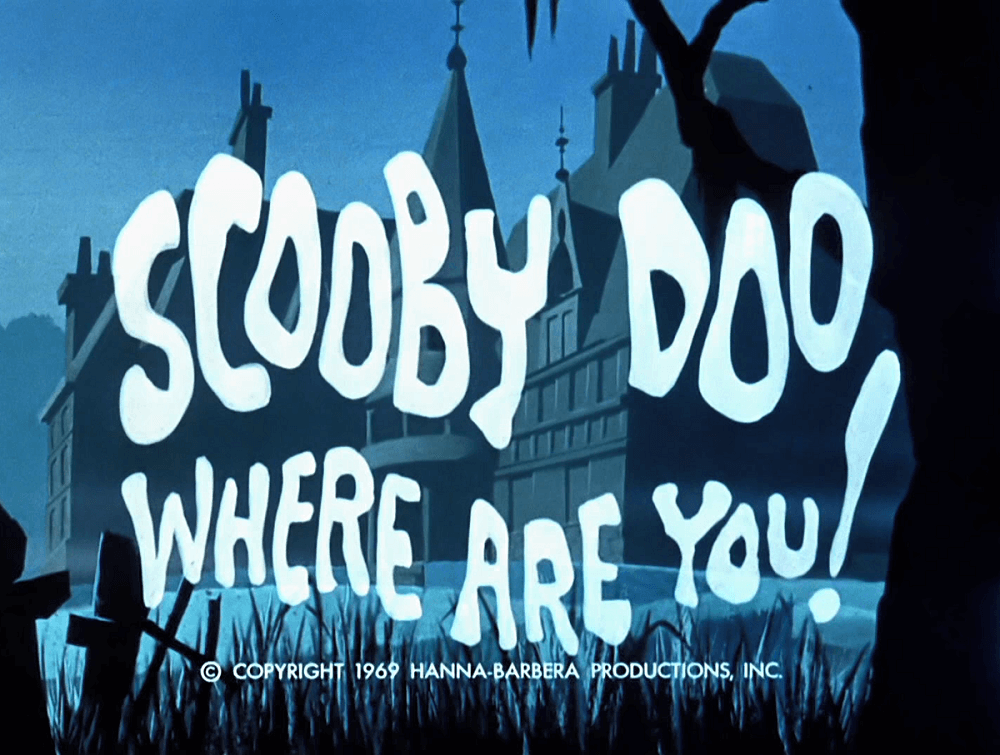
Scooby Doo, Where Are You!, 1969

Silverman wasn’t overly sold on the pitch and asked them to come back with another. This time, Ruby and Spears used the cast of the 1960s teen comedy The Many Lives of Dobie Gillis as inspiration rather than The Archies, though keeping the dog (which switched between Old English Sheepdog and Great Dane as the concept evolved) and a toned down musical element. Now Silverman was happy, but he didn’t like the title, offering Who’s S-S-Scared? instead, and presented the idea to his bosses for inclusion in the Fall 1969 season.

CBS President Frank Stanton thought Who’s S-S-Scared? was too, well, scary, and passed on the show, but Silverman was sure they had something special, although he could give or take the teens being part of a band. He kept working the concept and, apocryphally, he heard the Frank Sinatra song “Strangers in the Night” on his way to a development meeting; liking Ol’ Blue Eyes’s trademark “doo-bee-doo-bee-doo,” Silverman came up with Scooby Doo for the name of the dog and the name of the show. The rest, as they say, is mystery history!

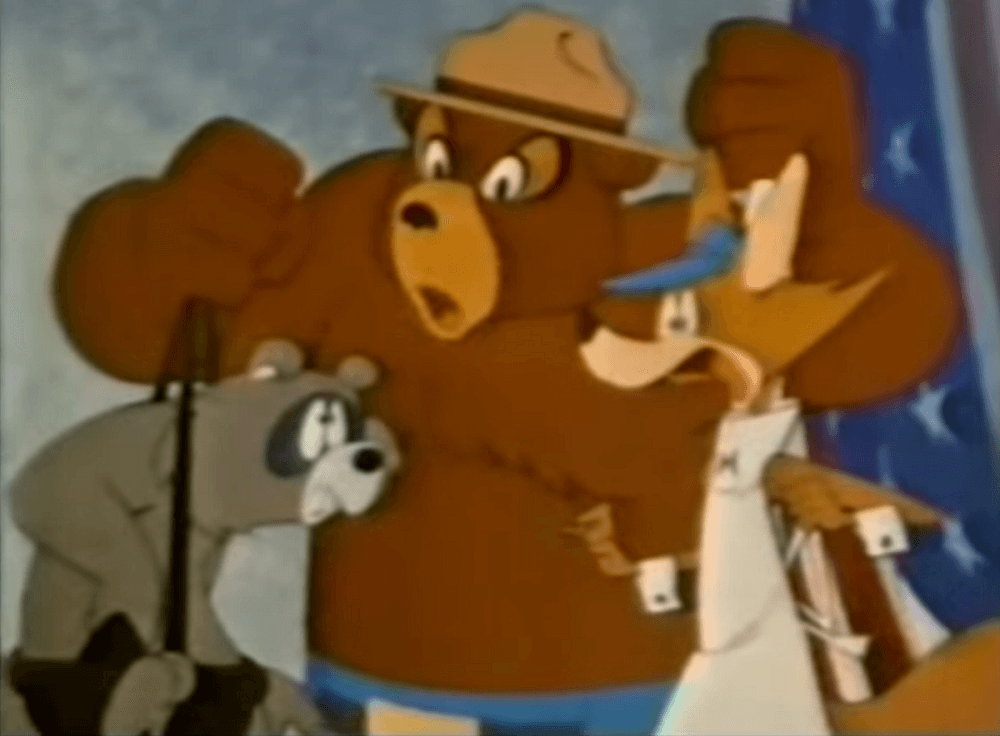
The Smokey Bear Show (ABC): In need of a cute mascot to stop people setting fire to trees, either by accident or on purpose, the US Forest Service enlisted the aid of Disney’s cute little orphan deer Bambi, running a series of poster campaigns in 1942 as forest fires became increasingly problematic during the US’s participation in World War Two. The license to use Bambi expired after a year and a new character was sort as a replacement, one that would be owned by the USFS and be fully licensable.

Smokey Bear was the creation of artist Harry Rossell, who named him after a New York fireman who’d suffered horrific injuries in the course of saving lives. He made his debut on a 1944 poster, painted by Albert Staehle, which showed our ursine hero literally pouring cold water on a fire, tagged with the message, “Smokey says – Care will prevent 9 out of 10 forest fires!” Three years later, the message was tweaked to read, “Remember… only YOU can prevent forest fires!” and this remained the key takeaway from Smokey encounters for over fifty years.

The Smokey Bear Show, 1969

Smokey made the transition to comic books in 1955, appearing in issues of Dell Comics’ Four-Color Comics series over the next six years. The comic book’s stories often skewed wild, with Communist spies and even weasel paparazzi somehow coming under Smokey’s purview. Smokey went one step further in 1969 when Rankin/Bass Productions – who’d enjoyed massive and perennial Christmas success since 1964 with their “animagic” Rudolph the Red-Nosed Reindeer special, and had produced an animagical Smokey special two years later – teamed with Japanese animation studio Toei to give the bruin his own animated show, adapting stories from the comic books (although eliminating some of the more extreme moments).

The Smokey Bear Show debuted on ABC on September 6th 1969 and ran for the customary seventeen episodes a season. Each episode was made up of three segments (the middle of which was a story of Smokey as a cub) and ended with a Public Service Announcement. Heavy on conservation themes, the show was arguably ahead of its time, which may explain why it wasn’t renewed for a second season.

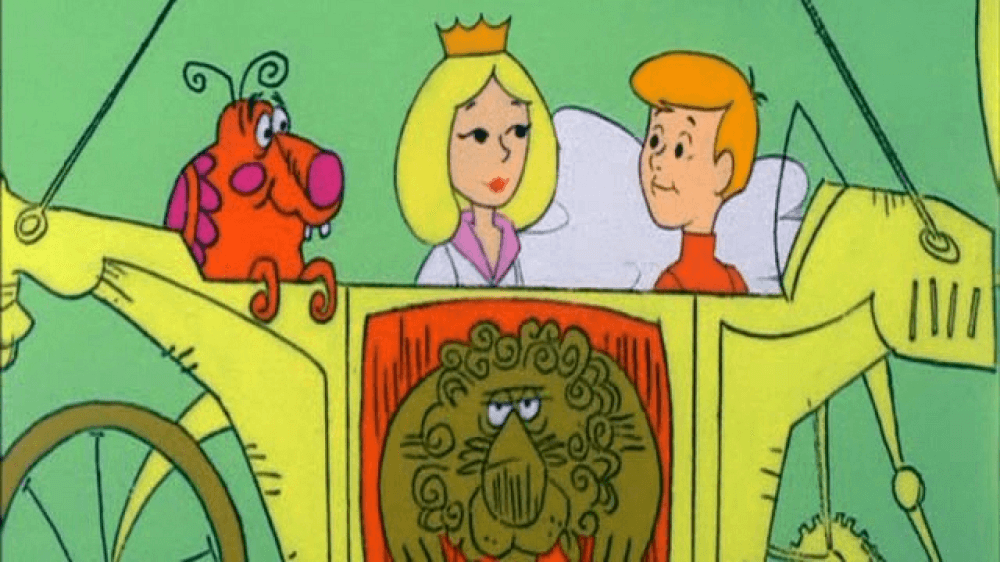
Here Comes the Grump (NBC): Unusually, the main character in this Saturday morning cartoon from DePatie-Freleng Enterprises is the villain of the piece, a cantankerous wizard who has placed a spell of gloom on the kingdom of Dawn. Opposing The Grump was the Princess of Dawn and her friend from “our” world, Terry Dexter; their search for a crystal key to lift to spell, and The Grump’s efforts to stop them, formed the basis of this good versus evil tale.

Fritz Freleng based The Grump on Yosemite Sam, a character he had created for Warner Bros in 1945. Perfectly voiced by comedian Rip Taylor, The Grump was aided – but more often hindered – by a dragon called Bingo, who was prone to fits of sneezing at inopportune moments. Jay North (the former live-action Dennis the Menace) voiced Terry, with Stefanianna Christopherson as the Princess; Christopherson was also the original voice of Scooby Doo’s Daphne. Needless to say, our heroes never succeeded in freeing the kingdom of Dawn from The Grump’s control, but neither was he ever truly able to take advantage of his spell.

Here Comes the Grump, 1969

The team of Don R Christensen, Nick George, and Bill Lutz wrote every one of the show’s thirty-four episodes. Christensen and George had worked at Disney during the studio’s classic era and were recruited – along with newcomer Lutz – to the staff of DePatie-Freleng when the studio was created in 1963. It was the only show the trio collaborated on; George retired, Christensen soon left animation to write comic books for Western Publishing (who had all the major cartoon licenses), while Lutz jumped to Hanna-Barbera in 1970, sadly dying in 1973 aged just fifty-one.

The show debuted in NBC on September 6th 1969 and was given something of a push, with the Ben Cooper company even producing a Grump mask for Halloween 1969. Regardless, it was cancelled after just one season, although NBC continued to re-run old episodes in the Fall 1970 season. The complete series was released on DVD in 2006 but is long out of print. An animated movie, updated but not necessarily improved, was released in 2018, titled A Wizard’s Tale and was very successful in Mexico.

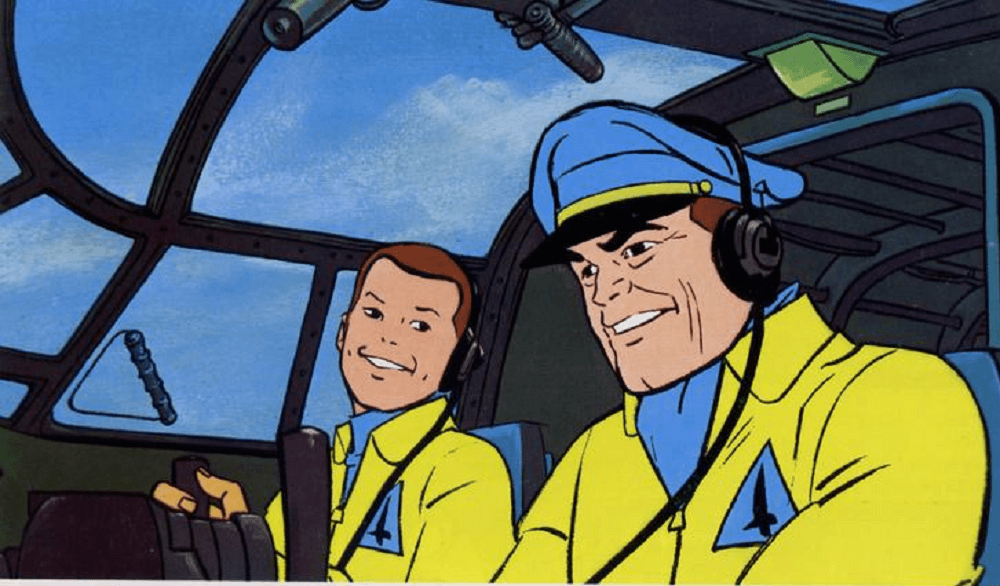
Skyhawks (ABC): Hot Wheels wasn’t the only show sponsored by Mattel in 1969; they also sponsored Skyhawks, another Ken Snyder show that featured the adventures of a daredevil team of transport and rescue pilots. Unlike Hot Wheels, there were no accompanying toys, although the show was driven by Mattel and presumably if it had been a success the toys would have followed.

Skyhawks Inc was a homespun operation headed by Mike “Cap” Wilson, a widower who enlisted his children – seventeen-year-old twins Steve and Carolyn – into the family business, along with two foster children nicknamed Red and Mugs. With a crew rounded out by Cap’s girlfriend Maggie (seriously, this show’s dynamic was nuts) and mechanic Joe, the team undertook rescue missions, carried freight into dangerous locations, and even worked for the government, all the while looking out for dirty tricks by Cap’s rival, Buck Devlin.

Skyhawks, 1969

Whereas Hot Wheels preached a message of safety, Skyhawks was sure to drive home a different moral each week, from the problems of pollution to the mistreatment of animals, and is remembered fondly by those viewers old enough and lucky enough to have seen it during its single-season run. The show shared much of the same creative team and cast as Hot Wheels, with Michael Rye voicing both Cap and the Hot Wheels Racing Club’s Jack Wheeler, and Bob Arbogast, Melinda Casey, and Casey Kasem also doing double-duty.

Like Hot Wheels, the show has never been released on home video, although there are rumours of a 2023 DVD release, and it doesn’t appear to have made its way onto YouTube, bar a few clips and the opening sequence of small plane drama and Jack Fascinato’s saccharine theme tune.

Next time on The Telephemera Years: It’s back to the future for a trip to 1986!

Check out our other Telephemera articles:

The Telephemera Years: 1966 (part 1, 2, 3, 4)

The Telephemera Years: 1968 (part 1, 2, 3, 4)

The Telephemera Years: 1969 (part 1, 2, 3, 4)

The Telephemera Years: 1971 (part 1, 2, 3, 4)

The Telephemera Years: 1973 (part 1, 2, 3, 4)

The Telephemera Years: 1975 (part 1, 2, 3, 4)

The Telephemera Years: 1977 (part 1, 2, 3, 4)

The Telephemera Years: 1980 (part 12, 3, 4)

The Telephemera Years: 1982 (part 1, 2, 3, 4)

The Telephemera Years: 1984 (part 1, 2, 3, 4)

The Telephemera Years: 1986 (part 1, 2, 3, 4)

The Telephemera Years: 1987 (part 1, 2, 3, 4)

The Telephemera Years: 1990 (part 1, 2, 3, 4)

The Telephemera Years: 1992 (part 1, 2, 3, 4)

The Telephemera Years: 1995 (part 12, 3, 4)

The Telephemera Years: 1997 (part 1, 2, 3, 4)

The Telephemera Years: 2000 (part 1, 2, 3, 4)

The Telephemera Years: 2003 (part 1, 2, 3, 4)

The Telephemera Years: 2005 (part 1, 2, 3, 4)

The Telephemera Years: 2008 (part 1, 23, 4)

Titans of Telephemera: Irwin Allen

Titans of Telephemera: Stephen J Cannell (part 1, 2, 3, 4)

Titans of Telephemera: Hanna-Barbera (part 1, 2, 3, 4, 5)

Titans of Telephemera: Kenneth Johnson

Titans of Telephemera: Glen A Larson (part 1, 2, 3, 4)

Titans of Telephemera: Quinn Martin (part 1, 2)

Books for Students Who Want to Find a Job | Secrets Of Recruiting

find a job

The job market is very promising for experienced people, but for students who need to begin at a trainee level, things are very difficult. The job market at the junior level is highly competitive as there are more candidates than available opportunities. And if you are trying to get into an established company with a good brand value and is known for its great work culture, you need to do your best in every regard. An outstanding professional-level CV, confidence, and personality to clear the interview. Knowledge to clear written tests, if any, and skills to clear a group discussion – you need everything that a good employer would need in a candidate.

For this, you need to prepare yourself well in advance, before the campus recruitment starts or before you start the application process independently. Going through useful training videos, getting information about the company, and having a strong grasp of your educational books are just some of the preliminary things.

Besides, you should also target some popular books that talk about the recruitment process and how candidates can see it through and get the job they really want. Books are an excellent resource for those of us who are interested in the topic of finding a job in a competitive market. It helps to be informed, up-to-date, and well-read on the subject. Here’s a list of such books that provide highly useful information on cracking interviews and how the entire process works out.

The CV Book: Your Definitive Guide to Writing the Perfect CV: Innes, James

James Innes, the marvelous author behind the popular book The CV Book: Your Definitive Guide to Writing the Perfect CV, is an entrepreneur who is regarded as one of the top CV experts in the UK. He has done deep research and touched on every point a candidate should focus on to get the interview call. Your CV is the first thing that lets a recruiter know about you, so James Innes focuses greatly on the idea that you should give your best to not only the CV but also the cover letter. Some of his pointers are:

  • Keep the CV brief. It is not your biography, so do not make it unnecessarily lengthy.
  • Do not talk about travel plans and the salary part as these things come at a later stage and not in the initial part of the recruitment.
  • Different jobs require different skills and personalities, so keep your CV different and make it unique so that it talks about you in specific and what value you can add to the job.
  • Some other basics like – Writing in the third person, always using Word documents and do not go for handwritten CVs, writing with a positive approach and focus largely on the first quarter as it can be the make or break for your interview call chances.

James Innes talks about how only a tiny percentage of CVs make the final cut, and the rest of them go to the bins. So your CV writing skills matter a lot in deciding if your CV will go in the bin or will remain on the recruiter’s desk. It is also worthwhile to note that not every person is capable of writing great CVs and cover letters and if this is the case with you, seek help from writing professionals. External help from Writix for academic assignments, cover letters, personal statements, and other writing or editing requirements is the best idea. By having input from expert writers, you will be able to accomplish what you aim for.

The Recruiting Snitch: Recruiting Secrets to Help Land Your Dream Job 

Many people looking for work view recruiters as opaque gatekeepers of employment opportunities. Job seekers know that recruiters play important roles in the hiring process; nevertheless, it can be more challenging to understand what recruiters perform daily.

Students should get a copy of Metzler’s The Recruiting Snitch if they want to discover the secrets behind successful recruiting. You can tell a lot about a book by its title: Throughout the book, Metzler exposes the inner workings of the staffing sector, providing readers who are looking for work with an extremely candid view of how recruiters perform their duties.

Having the spell for good grades when you understand what goes on behind closed doors in recruiting, the process of looking for a job will seem much less scary to you.

Culture Driven Recruiting: There is No “Talent War” If You Eliminate the Competition 

Culture Driven Recruiting: There is No “Talent War” If You Eliminate the Competition is a book written by Lee-Anne Edwards, the founder of One in Mil and a “Talent Matchmaker.” In this book, he lays the groundwork for breaking away from traditional methods of recruiting. In this book, Edwards explains how to shake up your approach to recruiting to better appeal to candidates and eliminate competition. Specifically, the book focuses on how to do both.

Through the use of challenging questions and spell for good grades, the sharing of stories and experiences, and the provision of guidance on how to navigate the often challenging waters of attracting (and retaining) high-quality talent, Culture Driven Recruiting teaches human resources departments and CEOs alike how to keep their one-in-a-million talent. This is accomplished by asking difficult questions.

What Color Is Your Parachute? 2019 By Richard Bolles 

When you find a title that has sold more than ten million copies and is updated every year, you will know that you have selected that title well. In this book, Bolles will provide you with sound and up-to-date advice on how to land the job of your dreams, including how to make effective use of social media. This book was one of the first titles to deal with recruitment guidance and has been called “the bible of career advice.”

The original version of this book was one of the first titles. Bolles has made certain that it will continue to be useful by ensuring that it is kept up to date. The process of looking for a job will be easier to understand when you have worked through it, including the notorious flower exercise.

The Number One Job Hunting Book in the World

Jim Stroud is the only author who could get away with referring to his book as The Number One Job Hunting Book in the World. It is important to remember that Jim Stroud is one of the unrivalled champions of the recruiting and hiring industries.

The Number One Job Hunting Book adopts the graphic novel style, communicating Stroud’s ideas in a manner that is accessible, interesting, and thrilling through the use of many photos, images, and even QR codes. In addition, the book provides a wealth of actionable advice on establishing oneself as a candidate in high demand by accumulating the kinds of talents and experiences in demand among employers in the modern era. Making yourself into the kind of person that companies compete over is the ultimate goal of Stroud’s counsel, and there is no better way to find the job that’s appropriate for you than to take this approach.

Conclusion

Recruiting is not only about assessing skill sets but also about assessing personalities. During school years, teachers’ comments on students’ writing can help them in their quest for an excellent job. This is because applicants represent themselves in their resumes and face-to-face with interviewers to assess their personality traits, which are key to success in any endeavour.

[ENDED] Win a EUROTRASH Complete Series DVD Box Set

win eurotrash

Eurotrash is back and we’ve got a bumper 20-disc box set of the show to giveaway thanks to Network. Just read on, watch the trailer, and enter below…


Let two delightful, devil-may-care Frenchmen take you firmly by the hand and lead you into a surreal world of weird wonders, celebrity interviews, sexy supermodels – and more smut than you can shake a stick at! Hosted by everyone’s favourite Gallic charmers, Antoine de Caunes and Jean-Paul Gaultier and narrated by Maria McErlane, Eurotrash reigned supreme for over a decade and still sends a shiver down the spines of prudes and people of a nervous disposition to this day!

If you can imagine it then it’s almost certainly been covered here by our two chums from across the channel! Naked golf, rubber fetish weekends, pubic coiffeurs, the world’s only brothel-tester, a man who convinced the world that cats can paint, a (quite different) man who can slip into forty consecutive pairs of underpants without stopping and Poland’s erotic version of Jeremy Clarkson, and plenty of familiar faces including Graham Norton, Eddie Izzard, Julian Clary, Melinda Messenger, Naomi Campbell, David Hasselhoff, Kylie Minogue, Bjork and Lolo Ferrari to name a few.


A TV phenomenon for over a decade with its uncompromising cultural commentary and quirky magazine format, Eurotrash was the enfant terrible of ‘90s telly that pulled in millions of viewers each week, and will be remembered with fondness and horror by young and old alike.


a Rafflecopter giveaway


Eurotrash is on DVD and digital from September 26th

Taking a look at the biggest UK casino movies

UK casino movies

British filmmakers haven’t been afraid to make movies about gambling, which is good. Although Las Vegas commands respect, British filmmakers have created an amazing selection of gambling films that have captured the world’s interest.

In Britain, 007 is often thought of as the best gambler in the country, but most Bond movies are actually shot outside of Britain.

We now turn our focus to the top gambling films from Great Britain.

Since this article is about the best casino films in the UK it might induce some gambling urges. You should try this Megaways slot for an example of what a good slot feels like.

Funny Man

Funny Man is a genre mashup that passes for horror while mixing in plenty of side-splitting laughs. It is equal parts comedy and horror. Audiences have dubbed this piece of something unexpectedly humorous as an English horror film, and there are more than a few references to gambling throughout. The plot is, dare I say, thin as paper, and it’s all done with a joke. To convey the tale of Max Taylor, Simon Sprackling penned and filmed the film, Funny Man.

He wins Callum Chance’s ancestral mansion by playing high-stakes poker. Max’s family is brutally murdered by a murderous court jester named Funny Man, who has truly horrible intentions and is motivated by them. Funny Man, which has a meager budget of 50,000 pounds, is not expected to top the rankings as the most successful gaming product in the United Kingdom. If you love dark comedy, you’ll enjoy this.

Revolver

Jason Statham’s character, played here by Green, is a recently released felon. He is freed from solitary prison after serving 7 years, and he begins gambling. He is a skilled gambler who can swiftly amass a large sum of money by betting it on slot machines, poker, and other table games. But, ultimately, his motivation for gambling is vengeance. Mr. D, also known as Dorothy Macha, is the target of his rage.

This cruel criminal is the same guy who put Jake in jail. To put it mildly, the ante is raised to a fever pitch, and a hit is delivered to Jake Green in no time. This British casino film offers everything you might want in terms of tension, desperation, and action. With continuous flashbacks and heartbreaking moments, action addict Jason Statham delivers a tour de force, expertly assisted by André Ben and Ray Liotta. Revolver is a movie that doesn’t waste any bullets according to Guy Ritchie, who also wrote and directed it.

Croupier

In one of his most underrated movies, Clive Owen does a great job. Croupier came out in July 2000, and it made a total of $7,120,000 around the world. Owen, which stars Jack Manfred, is about a writer who has no prospects. He unknowingly decides to disregard caution and work as a croupier at a casino as a result. The allure of the gaming industry is simply too strong to ignore. But his compulsions are not without cost. Gambling affects his relationship with Marion. Jack Manfred meets a troubled gambler, and the action heats up.