Hamish Steele | DEADENDIA

hamish steele deadendia

by Ed Fortune

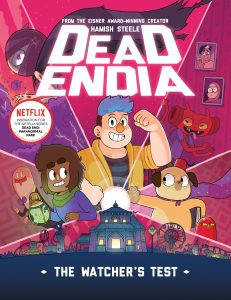
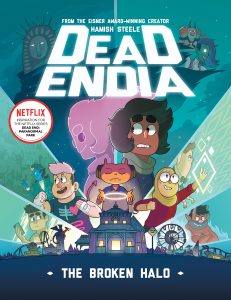
Hamish Steele is an Eisner award-winning, London-based Animation Director, Comic-Book Artist and Writer.  He’s best known for the DeadEndia comic books and the Netflix series Dead End: Paranormal Park.  His latest books are part of the DeadEndia series: The Broken Halo and The Watcher’s Test. We caught up with him to find out more…

STARBURST: What’s the elevator pitch for the DeadEndia books The Broken Halo and The Watcher’s Test?

Hamish Steele: Well, it’s about an elevator! So if I’m pitching these books inside one, then that’s half the job already done! Except this elevator takes its riders to the “Multi-Plane”, a 13-level universe of demons and angels, and Earth is the neutral ground! Unfortunately, this elevator happens to be located where Barney and Norma work, at a kitschy theme park called Phoenix Parks. They just wanna get through their 9 to 5 but are constantly swept up in the centuries-long battle between good and evil.

What should fans of the TV show expect from the Graphic Novels?

They’ll recognise the same characters, heart, and tone of the show but see a slightly different story. They’ll be plenty of surprises and twists for readers who think they know the TV show back to front.

Are more books planned?

DeadEndia: The Divine Order is slated for May 2024, and I’m currently working on it now. That’s meant to be the end of the trilogy, but if it’s a hit, I’ve got plenty of ideas for other stories set in the same world.

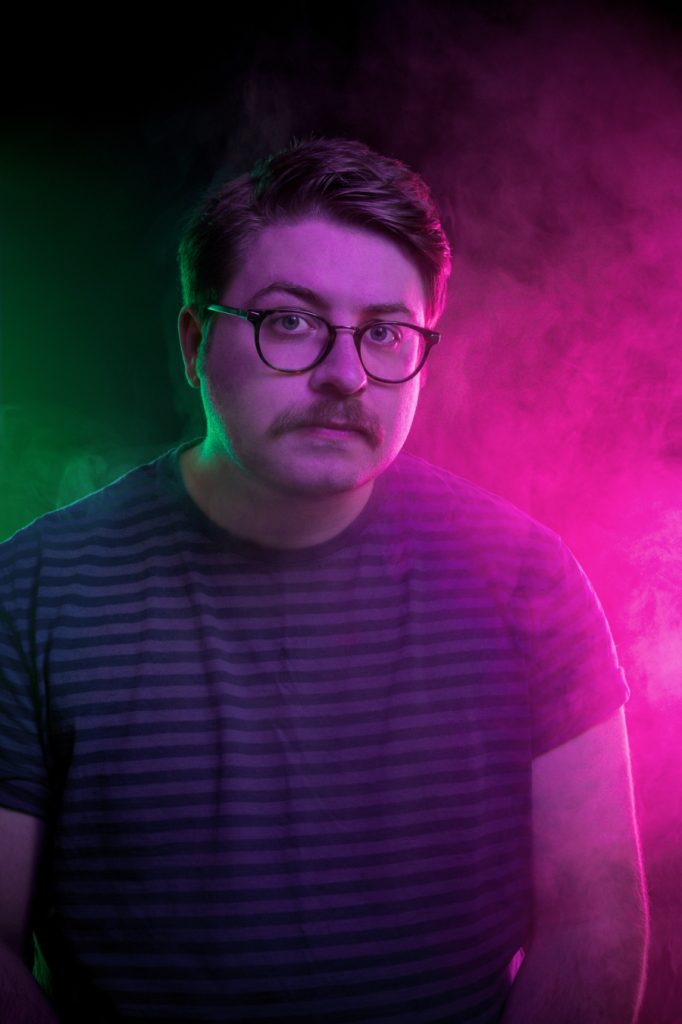
photo credit: Dashiell Silva

Are the books essentially another season?

Season 1 was loosely inspired by Book 1, and Season 2 was loosely inspired by Book 2,  but we swapped many story beats around for the show in order to keep it fresh. Book 3 will feature a lot of what we planned for Season 3, but it’ll be a true ending for the books. I hope it gives show fans some closure, though.

Should we expect to see DeadEndia in other formats?

I’m planning to take a break from it and focus on new stories as I’ve been working on DeadEndia for over 10 years. But I’ve had discussions about bringing DeadEndia to the world of gaming, both video and table top.

How different is the process of creating a comic book from a TV show?

TV is all about collaboration. Making a comic can be a pretty solitary experience. I definitely feel lucky that I get to do both, as there are things I like about working with a team and things I like about just knuckling down on my own.

What can you do with the graphic novels that you couldn’t do with the TV show?

The books feel a lot more intimate, I feel a lot more connection from my thoughts and feelings to my readers. On any tv production, every aspect has to go through dozens of stages of approval, but in the book, I can really say what I want to say, unfiltered. Also, just from a technical point of view, in the comics, I can have my characters wear whatever I like and not worry about our character design and rigging team working over time!

The show tackled some pretty important themes. How is this reflected in the books?

All those important themes are from the books, although I think they’re handled a little differently. The books were originally written as webcomics on Tumblr, and as you can imagine, the LGBTQIA+ themes were more preaching to the choir than anything. I was writing a book for our community from our community. When it came to making the TV show, we had to assume a much wider and potentially less clued-up audience. In the books, Barney is just trans, and all his friends know, and it’s no big deal – in the show, we needed that coming out moment, that moment to potentially educate our audience.

Another big difference is Norma being on the spectrum. It’s an element of the character I feel is explored really differently in the show and the books. In the show, she feels younger, less jaded, and more willing to trust. But she has a bad experience when her special interest turns out to be a bad person. The version we meet in the books feels like the Norma who has already been through a lot of those tough experiences and is a little more world-weary. It’s kind of cool to explore different ways being autistic can affect your life all within the same character.

DeadEndia has some amazing characters. Who’s the most fun to write?

I find Pugsley the most fun to write because he’s so innocent. No matter how wild the storyline gets, it’s always nice to get his sweet, childlike perspective on it.

What sort of spooky stories inspire? What’s your favourite type of spooky / horror story?

I absolutely love horror, and DeadEndia was my take on the spooky story of the week style show like The Twilight Zone or Goosebumps or even The Simpson’s Treehouse of Horror. I’m a big fan of ’70s horror, stuff like Suspiria and Hausu, things where bright, gaudy colours sit alongside brutal, terrifying imagery. My all-time favourite work of horror, though, is BBC’s Ghostwatch. Some elements have aged poorly, but some still haunt me whenever I hear a loud bang or see the reflection of something that isn’t there.

Is there an element of the DeadEndia world that you haven’t had a chance to explore yet, and what would that be?

I never feel like I have enough time to show everything this world has to offer, be it because of page limits or episode lengths. There are 13 planes, and we’ve barely seen any of them. In Book 3, I really get to explore angel culture. But if I did books after this, I’d be tempted to make more of the main characters’ demons and see the world from their POV.

What other projects do you have planned? 

I’ve just signed a deal for my next big book series, which I’m very excited about. I am being vague and cagey, but it’s my tribute to Godzilla, which is my all-time favourite series, and it has an autistic lead character. I recently got my autism diagnosis thanks to writing Norma in DeadEndia, but I’m excited to explore that even further in my next series. Other than that, I’m pitching several shows, working on games and writing a movie – so watch this space!

Hamish’s books are out in late June 2023. You can get your hands on them here.

STARBURST’s Hollywood Fringe Picks 2023

hollywood fringe 2023

by Ed Fortune

With the Edinburgh Fringe 2023 almost here, we thought we’d look at some other Fringe theatre events before August to whet your appetite for fun. Of course, Fringe Theatre is an international movement, so let’s start with something a little bit outside of STARBURST’s usual geographical comfort zone; the Hollywood Fringe, which is currently running in Los Angeles, California, until June 25th, 2023.

Here’s our suggestion for shows you should check out if you just happen to be in the area.


Lord of the Rings: Fellowship of the Ring-Extended Edition, Part One

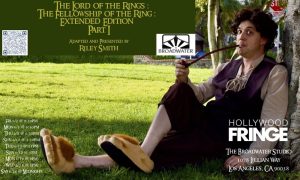
According to his mother, Riley Smith is the funniest person in the world, and with four years on USC’s Premier Improv team Commedus Interruptus under his belt, that may well be sort of true. Riley has chosen to re-imagine Peter Jackson’s classic adaptation of Professor Tolkien’s genre-defining fantasy classic, and we understand it might even be funny. A goofy, funny example of shared geeky joy, all on stage. Tickets can be found here

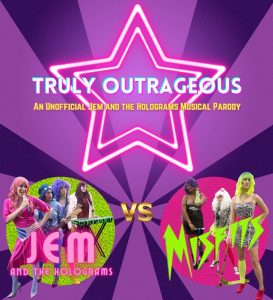
Truly Outrageous: A Jem & The Holograms Parody Musical

80’s extended toy advert and inevitable queer icon Jem, and her band, The Holograms, have had something of a revival in recent years. Thanks in part to some rather fabulous comic books, lots of nostalgia and a 2015 movie. Though this Hollywood Fringe show appears to be very much a parody of the Hasbro franchise with its tongue rammed firmly into its cheek, it does look good. Also available via live stream. Find out more here and pick up tickets here.

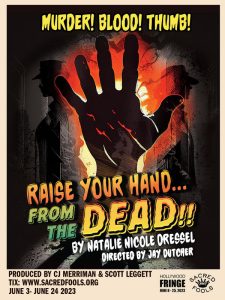
Raise Your Hand… From the DEAD!

Over at STARBURST Towers, we love a bit of murder mystery horror, especially the highly camp theatrical kind that you only really get to see at fringe shows. This light-hearted, absurdist show takes itself just seriously enough to ask questions like ‘Who is the mysterious Doctor Manos?’ and “Is a disembodied hand really responsible for a string of murders” and “How hard can you laugh without turning red in the face?” Details about the theatre company Sacred Fools can be found here, and tickets are available via this link. Note that there is a live stream performance on Saturday, June 17 2023.


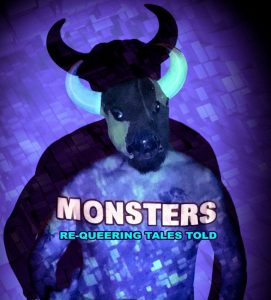
MONSTERS

A one-man show that takes some of our oldest myths and remixes them through a modern, queer perspective? Portrayed using simple costumes, clever lighting, well-designed soundscapes and some rather intense acting? Yes, please, count us in. Tickets can be found here.

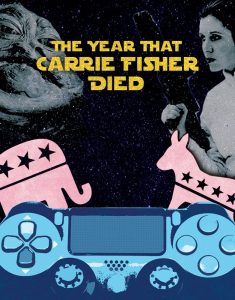
The Year That Carrie Fisher Died

Carrie Fisher died in 2016, which was also a year of social and political upheaval for many. This show is about two geeky friends, Lukas, a trans-male geek and his bipolar polyamorous pansexual bestie Quinn. Join them on a journey of discovery during difficult times, guided by all things fantasy, science fiction and fun. Tickets here.


THE TELEPHEMERA YEARS: 1967 – PART 3

Dick Tracy, 1968

Ah, telephemera… those shows whose stay with us was tantalisingly brief, snatched away before their time, and sometimes with good cause. They hit the schedules alongside established shows, hoping for a long run, but it’s not always to be, and for every Street Hawk there’s two Manimals. But here at STARBURST we celebrate their existence and mourn their departure, drilling down into the new season’s entertainment with equal opportunities square eyes… these are The Telephemera Years!

1967-68

Is it 1967 or 1867, because cowboy dramas still have a big hold on US TV this year, with Bonanza and Gunsmoke joined by The High Chapparal, as well as a slew of lesser successful, rightfully forgotten shows. Andy Griffith and Lucille Ball, of course, were still riding high at the top of the TV charts, with this being The Andy Griffith Show‘s swansong season, but there were sitcoms and variety hours galore to make America laugh while its sons died in a foreign war fought purely over political ideology.

It wasn’t just a dark time for anyone with a relative in Vietnam, there was also tragedy for superhero and sci-fi fans as Batman, The Invaders, Lost in Space, The Man from UNCLE, and Voyage to the Bottom of the Sea also reached the end of their runs, along with The Monkees (although Head was still waiting, tantalisingly, in November 1968). Never mind, Gentle Ben and Ironside arrived to alleviate the gloom, as well as a whole load of other shows that didn’t stick around in the popular memory. At least they made it to air, though – this is the story of those that didn’t…

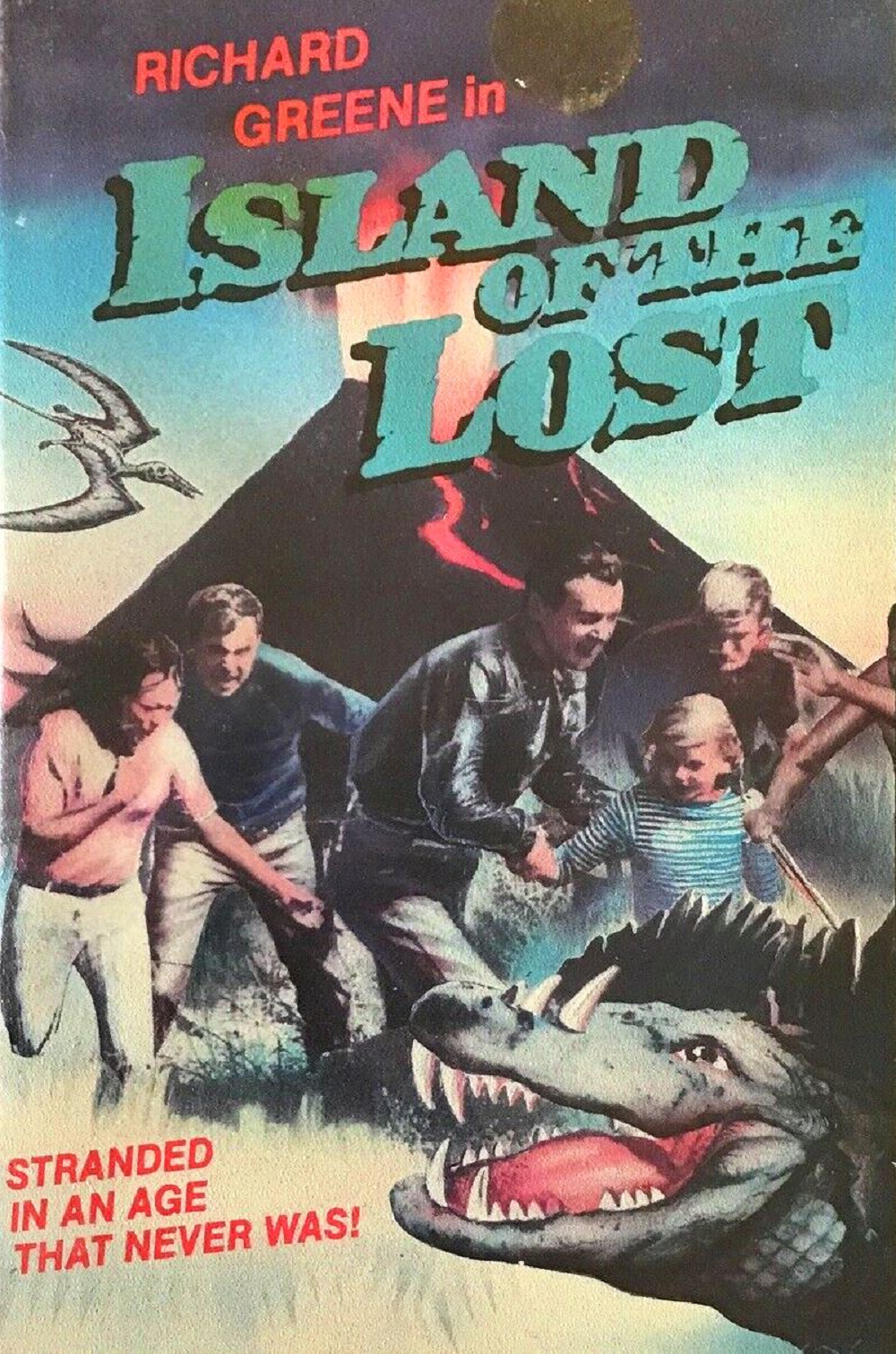
Island of the Lost (ABC): Producer Ivan Tors – responsible for Flipper, Daktari, and (more apt for this magazine’s interests) Science Fiction Theatre – turned his hand to the lost island trope with this 1967 pilot, starring Richard Greene. British actor Greene, who had made his name in the title role of the ITV series The Adventures of Robin Hood, returned to the US for the role despite some reservations after an unhappy time there in the 1940s and 1950s.

He was exactly the square-jawed lead Tors needed for the role of anthropologist Josh Macrae, shipwrecked on a remote Pacific Island with his family and discovering that prehistoric creatures have somehow survived there. Lining up alongside him were Sheilah Wells and newcomer Robin Mattson as daughters Sharon and Lizzie, and Flipper’s chief dolphin-botherer Luke Halpin as son Stu.
Island of the Lost, 1967

The dinosaurs and other extinct animals that populated the island – alongside some headhunters straight out of central casting, naturally – were mostly of the “stick some spikes and stuff on a crocodile” variety but there are appropriate amounts of peril, at least for the family audience Tors clearly aimed his shows at.

ABC declined to pick the show up for series and the pilot was re-edited for release as a theatrical feature, complete with an escape by raft to tie things up. Tors still had Daktari on the air at the time and so can’t have been too concerned, although that was followed by a slew of failed pilots and aborted projects, with only Salty – basically Flipper with a seal – getting any traction. That was still better than Halpin, who drifted from small role to bit part, eventually ending up in stunt work and marine film consultancy, but who now lives happily in retirement in Florida.

Mad, Mad Scientist (NBC): It’s fair to say that, after The Munsters ended in 1966, Fred Gwynne was typecast. Playing a seven-foot-tall Frankenstein’s Monster will do that for an actor, even one with as considerable a comic talent as Gwynne, and he struggled for decent roles in both film and television. Luckily, Ed Haas and Norm Liebmann – scripters for The Munsters, Get Smart!, and others – had an idea for a new show, one which would be perfect for Gwynne’s comedic range.

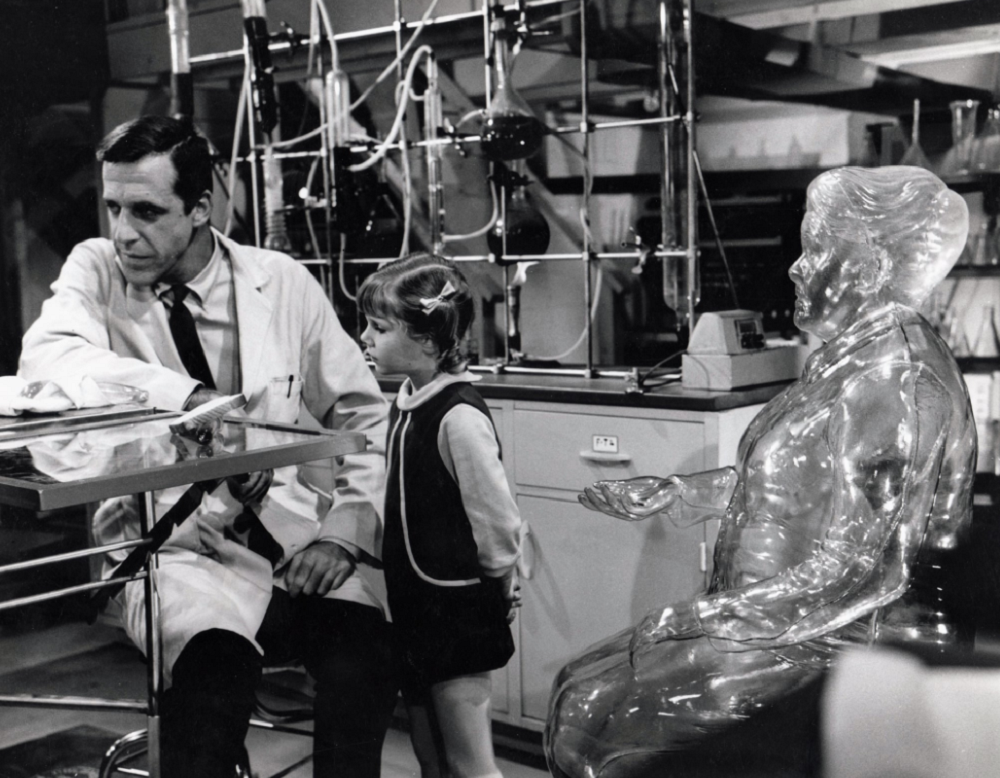
In The Mad, Mad Scientist, Gwynne played Warren Springer, a chemist for a paint company who can’t help but retreat to his home laboratory to concoct strange potions. Bridget Hanley – soon to be cast in Civil War logging comedy Here Come the Brides, alongside David Soul – was his suffering wife Bonnie, with experienced child actor (and future voice of Lucy in the Peanuts animated films) Pamelyn Ferdin as daughter Sally.
Mad Mad Scientist, 1968

A pilot was shot that saw Gwynne’s mad scientist turn housekeeper Phoebe to liquid, among other mishaps, but NBC passed on taking the show to series. It sat on a shelf for almost two years before being aired as special under the title Guess What I Did Today?  in September 1968, when it garnered decent reviews but nothing near those needed to resurrect a long-dead project.

After the failure of the pilot, Gwynne mostly opted out of Hollywood for a while, instead touring with regional theatre companies and indulging his love of musical acting, although he would occasionally do a TV or film project, including a TV remake of the Ealing comedy Arsenic and Old Lace (albeit playing a role made famous by Boris Karloff…). He had a long run in CBS Radio Mystery Hour and was primed for a mainstream comeback with Punky Brewster in 1984 until the director called him Herman one time too many.

Out of the Blue (CBS): 3rd Rock from the Sun was a massive hit for the husband-and-wife team of Bonnie and Terry Turner, running for five seasons from September 1996 and featuring the misadventures of a quartet of aliens masquerading as an Ohio family in order to learn about human beheaviour. Almost thirty years earlier, Bewitched creator Sol Saks came up with almost exactly that premise, proving that both there are no new ideas in Hollywood and that timing is everything…

Out of the Blue starred Shirley Jones and Carl Ballantine as members of an alien spearhead sent to investigate whether Earth was suitable for colonisation by their planet. Taken in by a kindly Professor, the pilot episode saw them encounter strange Earth customs and reveal quirks of their own society, such as the glamourous Jones being considered unattractive on their home planet and the paralysing effect that alcohol had on their species.

Veteran Sherman Marks was brought in to helm the pilot, with a cast that also included It’s a Mad Mad Mad Mad World’s Marvin Kaplan and future singing Pontius Pilate Barry Dennen, ending with a shot of the aliens driving away with an “unattractive” Earth woman and one of their kind – stiff as a board – in a trailer hitched to their car. Sadly (or not?), that was the last anyone saw of the extra-terrestrials, and even then only when it was aired as part of CBS’s pilot burn-off series Premiere in the Summer of 1968.

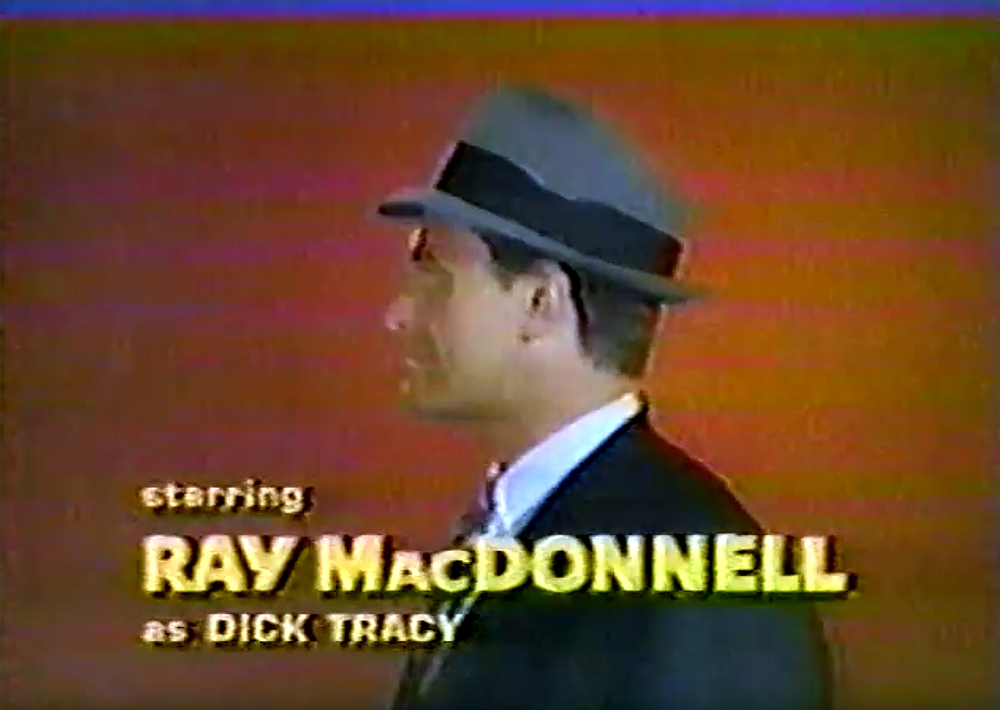
Dick Tracy (NBC): Having revolutionised Batman with his hokey, sound-effect laden TV spectacular, William Dozier had an eye on what came next. His Greenaway Productions had already brought Green Hornet – similarly tongue in cheek and starring a young Bruce Lee – to screen, but needed more shows to keep the TV monster well fed. First planning a Wonder Woman show, which got as far as a screen test for Ellie Wood Walker as the titular heroine, the producer instead turned his attentions to a live-action Dick Tracey show, figuring the detective’s rogue’s gallery – which had been building since the newspaper strip’s inception in 1931 – to be every bit the match for those of the Caped Crusader.

Chester Gould’s creation had enjoyed film serials and feature films in the 1940s and 1950s, and even got a TV show of its own in 1950, ending when star Ralph Byrd died in 1952. In early press for the new show, Dozier explained that Dick Tracey had topped a list of cartoons to turn into TV shows even before he started work on Batman, and a newspaper appeal for suggestions to play the title role saw The Chicago Tribune swamped with replies. Victor Mature a clean fan-favourite for the role but the job was given to relative unknown Ray MacDonnell, with production beginning on a pilot in October 1966.
Dick Tracy, 1968

The pilot film saw Tracey got toe-to-toe with the dastardly Mr Memory (Victor Buono), who planned to derail a NATO conference, and was played fairly straight, although it used the trademark Greenaway technicolour palette. Completed in November, it was under consideration as a mid-season replacement for that season but when NBC announced their new line-up, Dick Tracey was absent.

Still, the real goal was a Fall 1967 debut, and the show was included on a list of hopefuls by Broadcasting magazine, but declining ratings for both Batman and The Green Hornet on ABC may have played a part when it failed to make the cut for the NBC line-up released in April 1967. By the turn of the decade, Greenaway Productions was wound up and Dozier went into semi-retirement, making occasional guest appearances on shows such as Love, American Style and Marcus Welby MD. Warren Beatty, of course, gained the rights to Dick Tracey in 1985, delivering a so-so movie in 1990 and holding onto the rights ever since without attempting any further TV or film treatments.

Return of the Original Yellow Tornado (NBC): Having debuted a year earlier to rave reviews and great ratings, Batman was the show everyone was seeking to copy for the 1967 season. CBS had Mr Terrific as a mid-season replacement in January 1967, starring Stephen Strimpell as a mild-mannered gas attendant turned superhero, and NBC offered up Captain Nice, which starred William Daniels as a mild-mannered police chemist turned superhero, but both shows failed to attract much of an audience and were not considered for renewal.

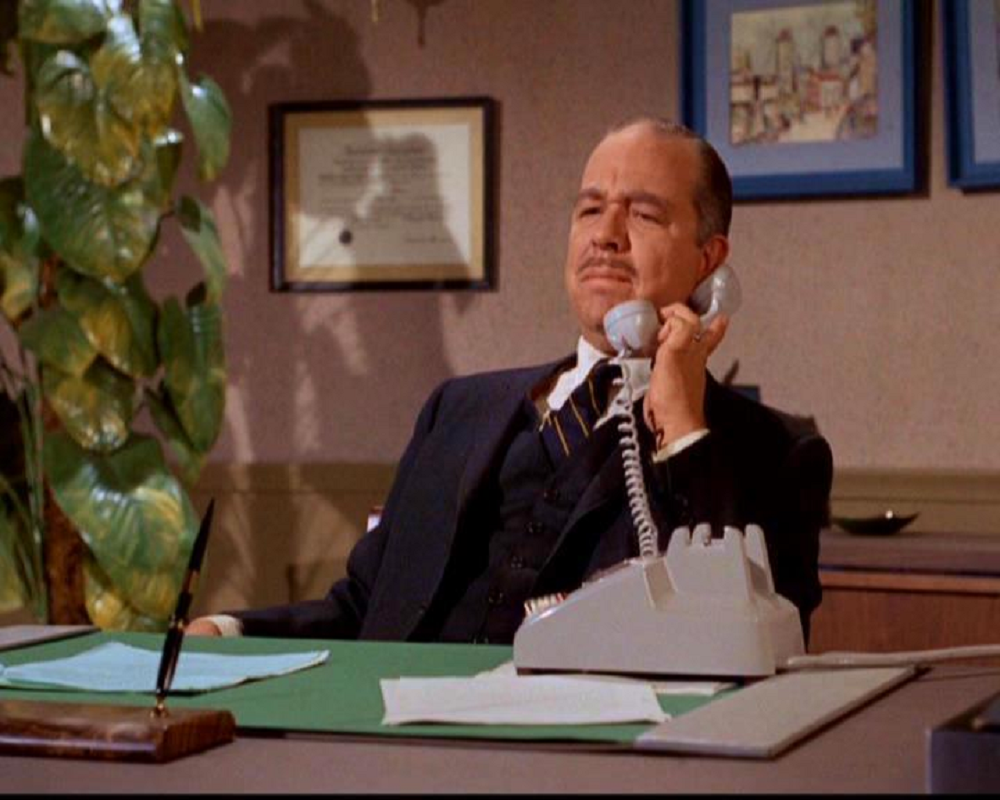
Perhaps the problem was that these were young superheroes, certainly something that The Return of the Original Yellow Tornado could not be accused of. Starring Mickey Rooney as the eponymous retired superhero, and Eddie Mayehoff as his equally ageing sidekick Dickie Boy, the pilot for the proposed series saw them brought back after years of peace by the return of Rooney’s old arch-enemy.

Created by Jack Laird, the script was written by George Bazler, Hal Goldman, and Al Gordon, a trio of funny men who came together on The Jack Benny Program in the early 1950s and had written the original treatment for Mr Terrific. It was planned that Eileen Wesson’s character – introduced as Dickie Boy’s “Gal Friday” – would eventually develop a costumed identity of her own and secretly solve the crimes the elder statesmen could not.

The pilot for The Return of the Original Yellow Tornado had actually been shot before both Captain Nice and Mr Terrific, and languished in their disappointing wake. NBC passed on picking it up, although they did order some reshoots and redubbing in order that the footage be turned into a feature film, but these eventually came to nothing. Thirty years later, however, an ageing super-agent was brought back to deal with the return of his arch-nemesis after years of peace, but that was less superpowers and more Austin Powers

Next time on The Telephemera Years: The kids were alright in 1967 and they had plenty to occupy their Saturday mornings…

Check out our other Telephemera articles:

The Telephemera Years: 1966 (part 1, 2, 3, 4)

The Telephemera Years: 1967 (part 1, 2)

The Telephemera Years: 1968 (part 1, 2, 3, 4)

The Telephemera Years: 1969 (part 1, 2, 3, 4)

The Telephemera Years: 1971 (part 1, 2, 3, 4)

The Telephemera Years: 1973 (part 1, 2, 3, 4)

The Telephemera Years: 1975 (part 1, 2, 3, 4)

The Telephemera Years: 1977 (part 1, 2, 3, 4)

The Telephemera Years: 1978 (part 1, 2, 3, 4)

The Telephemera Years: 1980 (part 12, 3, 4)

The Telephemera Years: 1982 (part 1, 2, 3, 4)

The Telephemera Years: 1984 (part 1, 2, 3, 4)

The Telephemera Years: 1986 (part 1, 2, 3, 4)

The Telephemera Years: 1987 (part 1, 2, 3, 4)

The Telephemera Years: 1989 (part 1, 2, 3, 4)

The Telephemera Years: 1990 (part 1, 2, 3, 4)

The Telephemera Years: 1992 (part 1, 2, 3, 4)

The Telephemera Years: 1995 (part 12, 3, 4)

The Telephemera Years: 1997 (part 1, 2, 3, 4)

The Telephemera Years: 2000 (part 1, 2, 3, 4)

The Telephemera Years: 2003 (part 1, 2, 3, 4)

The Telephemera Years: 2005 (part 1, 2, 3, 4)

The Telephemera Years: 2006 (part 1, 2, 3, 4)

The Telephemera Years: 2008 (part 1, 23, 4)

Titans of Telephemera: Irwin Allen

Titans of Telephemera: Stephen J Cannell (part 1, 2, 3, 4)

Titans of Telephemera: DIC (part 1, 2)

Titans of Telephemera: Hanna-Barbera (part 1, 2, 3, 4, 5)

Titans of Telephemera: Kenneth Johnson

Titans of Telephemera: Sid & Marty Krofft

Titans of Telephemera: Glen A Larson (part 1, 2, 3, 4)

Titans of Telephemera: Quinn Martin (part 1, 2)

Titans of Telephemera: Ruby-Spears

 

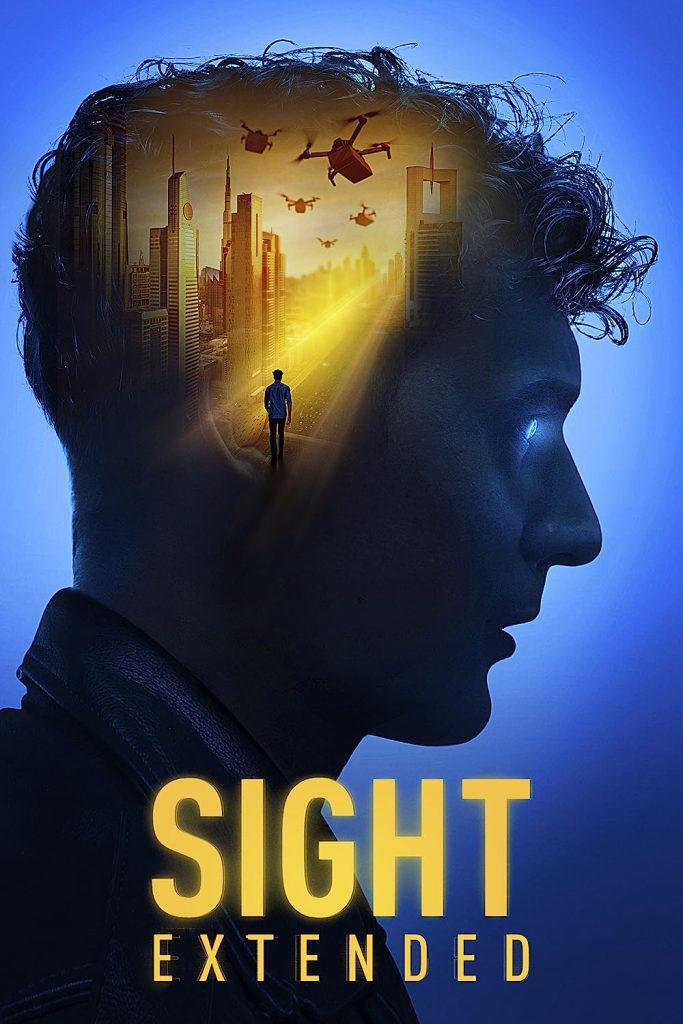
[ENDED] Win a Digital Code for AI Sci-Fi Film SIGHT EXTENDED

Win sight extended

The topical subject of AI (artificial intelligence) is at the heart of the new sci-fi movie Sight Extended, and to celebrate the digital release of the film on June 12th – Sight Extended (lnk.to) –, we have a pair of iTunes vouchers to redeem to watch the film! Just read on, watch the trailer and enter below…

In a near future dominated by augmented reality eyepieces, a troubled young man who suffers from agoraphobia experiences an unlikely transformation when he comes across a mysterious AI that transforms every facet of his life into a game.

Check out the trailer…

a Rafflecopter giveaway

Sight Extended (lnk.to) is out now on digital platforms.

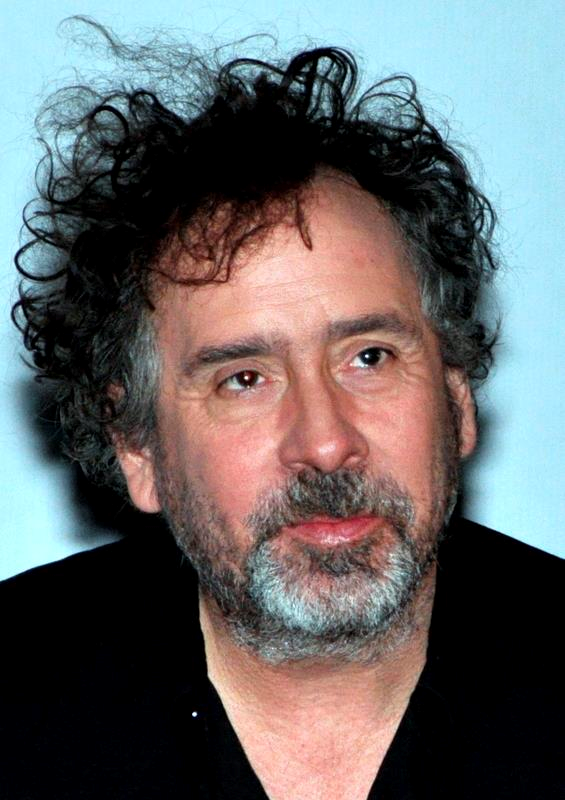
Revisiting a Tim Burton Classic: MARS ATTACKS!

by Ben Bradley

With Tim Burton remakes grabbing headlines, we thought it would be a great idea to revisit one of his all-time classics: Mars Attacks! This is a science fiction masterpiece that has stood the test of time. Here, we will tell you some of the things you may not have known about Mars Attacks! and some of the ways fans have expanded their passion for the film.

source

Tim Burton in the News

Tim Burton is one of the biggest names in science fiction and fantasy film. He has also recently expanded into the world of streaming series. Netflix is now streaming Wednesday, which is not a homage to the middle of the week, but rather a spin-off to a beloved and quirky dynasty: The Addams Family.


Tim Burton is also coming out with another addition to a beloved classic. In the year 2024, we are expecting Beetlejuice 2. The original Beetlejuice came out in the 1980s and was a huge success. It grossed more than $70 million in 1988.


Beetlejuice 2 will feature such big stars as Michael Kheaton, Winona Ryder, and Jenna Ortega. It is scheduled to be released on September 6, 2024, by Warner Bros. Pictures. Filming has not yet begun, so the overall details are still thin. For example, we do know that Danny Elfman will be returning to compose the soundtrack for the film.


These big and contemporary releases, fans are reconnecting with other blockbusters from Burton’s canon.


Expand Your Passion

Fans of Mars Attacks! are finding new ways to connect to this thriller. The Vegas setting is central to the movie, as aliens terrorize casino patrons, dressed up as Pharaohs or just enjoying themselves as players.


One way people are bringing this movie to life is to enjoy free spins at online casinos. There are plenty of online casinos that give out free spins without any deposit required. These promotions are normally limited geographically, with these in particular being available in Canada. Connect with the movie’s Vegas setting and check out the best free spins by category, including Best Overall, Best for Low Wagering, and Best for Number of Spins.

Other fans have been donning Mars Attacks! costumes. The most popular one is a long, red, shimmery robe with the large green alien head and a laser pistol. Another common option is the lady alien with the red dress with a mermaid cut. This character was reportedly based on Marilyn Monroe.

Things You May Not Have Known About Mars Attacks!

There are many surprises that even huge fans of the movie may not know. Here are some of the best trivia to pull out at the next party you attend.

It was based on a card game

Originally, Mars Attacks! emerged as a series of trading cards in 1962, depicting the invasion of Earth by a corrupt Martian government. These cards gained immense popularity among children. However, due to complaints from concerned parents about the graphic content, Topps, the creators, had to halt production.

It ended up being smaller than originally planned

The movie adaptation of Mars Attacks! faced a significant setback when Warner Bros. limited their budget to $60 million, despite the initial plan estimating it at $260 million. As a result, scenes portraying the Martians’ attacks on the Far East, Europe, and Africa were removed to reduce costs. The invasion was confined to only three major cities instead.

They actually destroyed a hotel

In the scene where the Martians destroy the Galaxy Hotel, the filmmakers incorporated actual footage of the building’s implosion.

Back in 1995, the Landmark Hotel and Casino, a renowned establishment that once welcomed iconic figures like Elvis Presley and Frank Sinatra, was demolished in Nevada. This is definitely going the extra mile when it comes to bringing the movie to life!

Two actors were also in Independence Day

Actor Rance Howard and voice artist Frank Welker accomplished a remarkable feat by appearing in two significant alien invasion movies during the same year.

Rance Howard portrayed a Texan investor in Mars Attacks! and also portrayed a chaplain in Independence Day. On the other hand, Frank Welker provided his voice talent to bring aliens to life in both films.


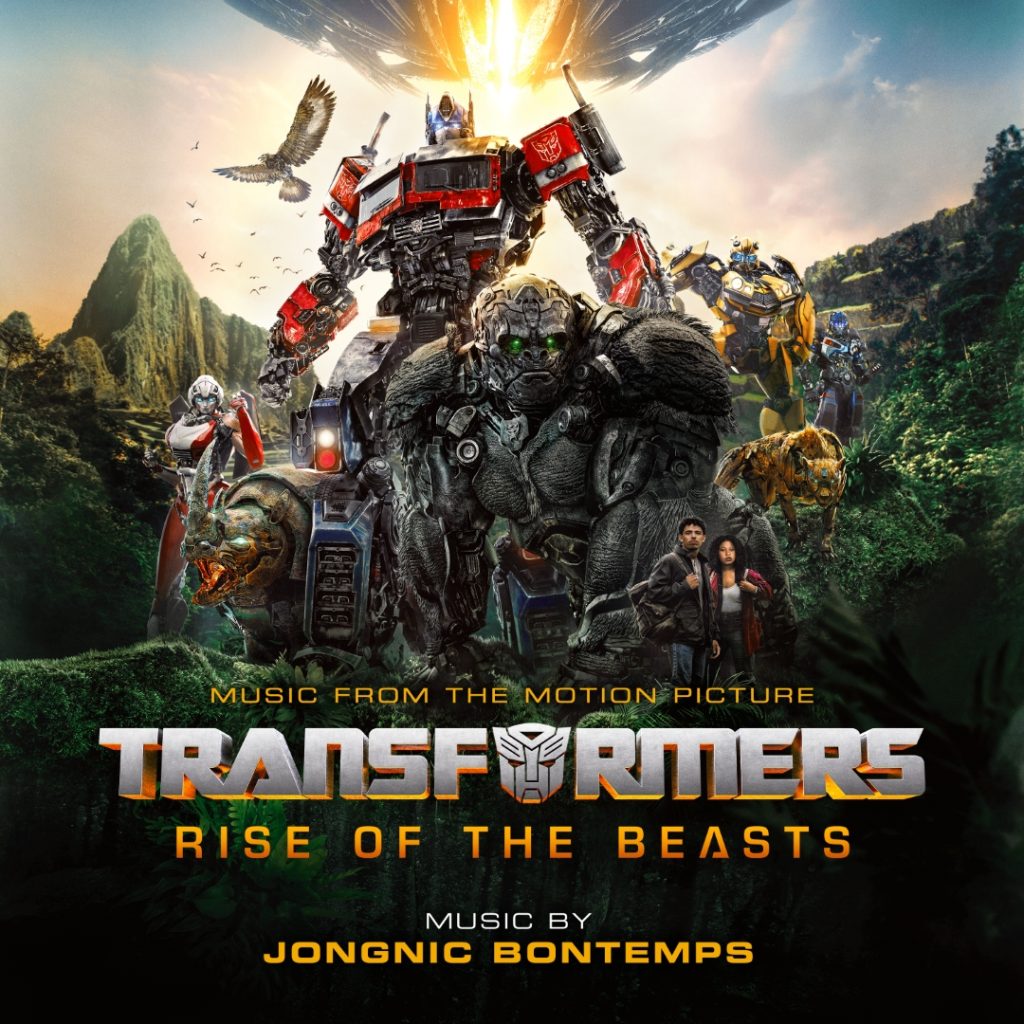
Jongnic Bontemps | TRANSFORMERS: RISE OF THE BEASTS

by Nick Spacek

Composer Jongnic Bontemps is having one heck of a start to the summer. Last month saw the release of the open-world, co-op FPS, Redfall, developed by Arkane Austin and published by Bethesda Softworks, for which Bontemps created music that he explains is like “if the Goonies had trap music” where he combined traditional horror sounds with chamber strings and mixed it together to create ‘spooky hip-hop’ music with some electronic and techno elements.

On June 9th, Bontemps’ biggest project to date is released on the big screen. The seventh live-action instalment in the blockbuster film franchise, Transformers: Rise of the Beasts, is the latest collaboration between director Steven Caple Jr. and Jongnic Bontemps, the duo having previously worked together on The Land and Creed II. It’s an impressive 2023 for a composer who only began working in the field professionally 13 years ago. We spoke with Jongnic Bontemps to discuss his rise.

STARBURST: This is a big couple of months for you. Redfall just came out at the start of May, and you’ve got Transformers: Rise of the Beasts coming out almost exactly a month later. That’s gotta be something for you, huh?

Jongnic Bontemps: It feels like I am having a bit of a moment! It feels like the leap of faith that I took 12-13 years ago to leave my software background and jump into a career in writing music for media is finally being – rewarded is not the right word – but at least it is culminating way bigger than I ever thought it could!

When you say that, like, what do you mean? What were your goals and dreams for success in taking this leap?

Well, I always wanted to do big movies. I always wanted to do action movies, and even the little music I was writing in my home studio at the time that only my wife and kids would hear was aspirational of this kind of music. It wanted to be this kind of music. I didn’t have the skills or the experience to write at it at the time, but that was what I was working toward.

But, even though this was sort of a dream, I never thought that would be a film like Transformers. When I first got into this, I was thinking about game music, and I wanted to be a video game composer. I was a big fan of games like Uncharted. That Uncharted series was amazing. I was like, “The music in that was amazing. That’s what I wanna do,” but I also knew I wanted to do movies, as well, when I finally figured this out.

I looked at the landscape, and I saw that game composers are very rarely asked to do film and TV stuff, but film and TV composers are regularly asked to do a game, so I said, “I’ve gotta start on film and TV and then migrate to games, right?” That was my career. I focused on film and TV, and I did lots and lots of short films and documentaries and eventually some TV series and that kind of stuff. I was having a pretty good career. I was like, “Okay, I’m happy.”

I was actually asked to do Redfall ’cause I had done some music on additional music on Call of Duty: WWII with a game composer called Wilbert Roget II, who’s amazing. He invited me to work with him on Call of Duty: WWII, and when the audio director from Redfall was looking for composers and saying, “A spooky hip hop score is what we’re looking for. Do you know anybody?” Wilbert referred me because I had done some stuff that was in that vein.

My score for United Skates and my score for Godfather of Harlem were hybrid scores that pulled in the ideas of hip-hop into underscore, so when they came to me with this idea for spooky hip-hop, I was like, “I’m all in. Let’s do this.” I was like, “Okay, this is great and I’m really happy doing this kind of thing.”

When Transformers: Rise of the Beasts came up as a possibility, it was because the director was this guy named Steven Caple Jr., who I met while I was at USC and I worked on his very first project in USC and everything after that – web series, his first feature, he brought me on as an additional composer on Creed II.

When he was tapped to do Rise of the Beasts, I was like, “You know what? I love you, man, but I understand. I probably not gonna go on this one with you, so I’ll catch you on the next one. I’m gonna keep working on my little stuff, and maybe I’ll catch you on the next one so I can get some more credits,” but he believed in me, and he put my name in the ring.

I ended up writing a demo that I believe captured what I believed the Transformers world was. I guess that demo resonated with some people because they ended up giving me a meeting, and a few months later, I was hired to be the composer. I never thought that that was ever gonna happen.

What are the challenges for you as a composer when these movies have been going on for almost 20 years now, but this is also kind of a prequel, kind of a sequel? There’s a lot going on. How do you honour the 20-year history of this film franchise – to say nothing of the animated series and the animated movie and the video games and the comic books and all these things?

Right. The good news is that I was in love with Transformers as a kid. I had the toys, I watched the animated series. I watched the animated movie. When the Michael Bay Films came out, I was first in line at the theatre to watch all of those. I wouldn’t call myself a Transformer stan because I know people who are Transformer stans now, and I was like, “Okay, y’all really love Transformers. I love Transformers too. So I’m gonna put myself in the right position here.”

But I do love the franchise, and I love the world and when. I was asked to come and be a part of this. I already had a deep love and respect for the music of the movies and the music that Steve Jablonsky wrote. I knew the themes. I could sing them. I was in love with the music. I listened to the albums, all this stuff. I was a big fan of those scores, so when I was asked to come in and do something, I knew the music that I was writing had to be of that world. It had to have what I would call “nobility and honour,” which was so intrinsic to that sound and was gonna be important.

I also knew it had to be a hybrid orchestral score that merges both the humanism of the orchestra with obviously the electronics and precision and the mechanics of synthesizers. Those things were sort of set in stone for me because I understood the world, I understood the assignment, and these are the things that are part of that world.

Where the challenge that came to me is, “How can I take these tools and create something new – create something a little different?” One of the things that they were doing was trying to create a new chapter in the franchise. I know that they hired a director like Steven Caple Jr. because they wanted to do something new, and that’s gonna be across the entire board, so that included music. How can I take this legacy and then create something new with that legacy?

That was a huge challenge, so I had to rely on a couple of things. One is I knew that the movies took place in Brooklyn in ’94, so I said, “Okay, that’s almost like the second version of hip hop, right?” Not quite the birth, but let’s say maybe like the second wave of hip hop. That was an era that I grew up in, and I understood that music, so it was about how can I bring the essence of that music into the score, right? This is not a hip-hop score, this is a Transformers score, but I wanted it to have that little hip-hop seasoning.

One of the things I want to get into right away is the sound of the Roland 808 drum machine, which is so iconic for that era. You would instantly hear that drum machine, and you’re like, “Boom!” It brings you right back, so I said, “We have to make sure that this drum machine and the sounds of this drum machine are present in the score when we’re in Brooklyn.”

Then the next thing I thought about was, well, this journey takes us to Peru, right? I wanna make sure that we honour the music of Peru and the culture of Peru, and how can we integrate that sound again into a Transformers score? I called a friend of mine who was a Peruvian composer, and he gave me a deep dive into Peruvian music. He gave me so many YouTube links and recordings of music from the Andes, music from Cuzco, music from the jungle, and I kind of settled on music from the coastal Afro-Peruvian Tradition.

So I started thinking about, “Okay, if I wanna bring in the Afro-Peruvian grooves, how does that work?” And I met a guy through my journey – well, he’s not a guy, he’s actually a percussion legend named Alex Acuña – and he brought his troop in, and we were able to then start work hopping how we could integrate some of these grooves in there.

So for me, it was not only about honouring the legacy of and the tradition of the past movies but bringing in the flavour of the era, time, and cultures right, that we are visiting and travelling through to this movie. I think those two things merged together with, obviously, my voice, gave us something new for the franchise.

But it was a struggle. I mean, I’d been on this project for two years, so during that two years, there was a lot of music in the garbage. A lot of failed attempts, a lot of things that no one will ever hear because we went really crazy, and it’s like, “Oh, that was nice, but that didn’t work out so well.” There’s a lot of that going on here, but I think where we ended up is something that will stay true to the tradition of the series but feel new, and I hope that the fans really enjoy it.

You got to really, really live the dream that you had when you first took this leap.

It is very true, but maybe the more accurate thing is, yes, I always dreamed of doing movies of this size, right? But it was a dream that I was okay with it, never being realized. Another thing that’s very sobering to me is that I’m the first African-American to do a movie of the size, to compose the score for a movie of the size.

There was no person before me to open the door and say, “Hey, this is something that is a possibility.” I was very happy doing my TV series and video game and all this kind of stuff, so this exceeded my wireless expectations – and also so quickly. I didn’t do 40 blockbuster films, and then now I’m asked to do Transformers, right?

My biggest prior project was probably Redfall, or Creed II, where I was really the additional composer. Ludwig Göransson was the main composer on that. Quite honestly, it was a huge leap and something that I did not expect to happen this early in my career.

Transformers: Rise of the Beasts is released in cinemas on June 9th from Paramount, with Milan Records set to release the Original Motion Picture Soundtrack the same day.

CONTEXT IS MAGIC

magic museum

A Guide to the Art of Magic: the Gathering

by Tiziano Antognozzi

STARBURST and Wizards of the Coast have teamed up with the Italian art historian, Tiziano Antognozzi, of Scuola IMT Alti Studi Lucca, to explore the cultural themes and nuances found within the cards produced for Magic: The Gathering’s March of the Machine.

Presented below for your education and delight is Tiziano’s essay, Context is Magic, a guide to the art of Magic: The Gathering. The piece explores character, shape, and flow and how the artwork of the cards binds itself with the overall strategic and playful elements of the game…  

There’s a constant relationship between a piece of art and the context in which it has been originally produced for. Inasmuch as a label or an audio guide might tell us everything that happened to a specific altarpiece before being exposed in a museum, when the context of the exhibition changes, so does the artwork. Every time an artwork is seen, its performance changes according to the audience, the stage, and the time. Here’s a slightly less predictable example: while appreciating the sophisticated allegories depicted by Piero di Cosimo within his “Procri’s Death” on display by the National Gallery of London, a large share of the audience might not recognize its original destination. The painted wood panel was, indeed, originally a headboard. Surely the headboard must have belonged to the bedroom of a wealthy and cultured aristocratic family, but still a place very different from an art gallery.

Piero Di Cosimo, Procri’s Death or ​​A Satyr mourning over a Nymph, c. 1495. National Gallery, London

The act of looking at art from the past outside of its context it’s something we are by now widely accustomed to. Given that the vast majority of the images we look at today are created and reproduced with an unprecedented speed, our acquired ability to understand a painting despite a changed context it’s actually very useful. If there’s indeed always an original environment of creation – without that, we’d be reading a novel by skipping the first chapters – it is also true that an artwork might contain several interpretations and, accordingly, several ways of using that image. Images are indeed necessary in order to create, to communicate, to remember. But not only that.

In the year of its 30th birthday, Magic: the Gathering it’s still the most famous trading card game, played and beloved by millions of fans around the world. Whereas In 1993, the game created by Richard Garfield only featured a few hundred of cards to choose from to build your own personalized 60-card deck, with the newly published March of the Machine, the total amount now exceeds the number of 30,000.

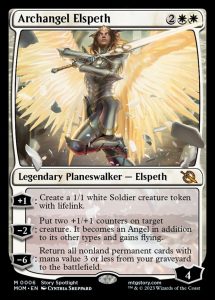
“Archangel Elspeth”. Illustration by Cynthia Sheppard

For each of these cards, the game’s Art Directors have commissioned illustrations to more than 450 artists from all over the world, thus creating, at this point, a huge collection. A quick calculation: if one would exhibit every single Magic card in a Gallery, the space needed would be fifteen times the exhibition capacity of Milan’s Pinacoteca di Brera.


Tran Nguyen, “Cut Short”

The game’s Lead Designer, Mark Rosewater, has often defined Magic as a group of games unified by the same rules system. Indeed, every single image within this landscape can be used in various ways and thus looked at accordingly. Let’s take the illustrations for “Cut Short”; a first level of interpretation lies in the text rules, namely, telling us what the actual effect of the card is.

It’s not the artwork’s colours or the number of figures which will lead us to win the match, but still, the fact that the card is aptly recognizable in its features also helps us to quickly remind us what that card does and how it interacts with the others. In a game of the complexity of Magic, every step towards simplification translates into a thick strategic markup.


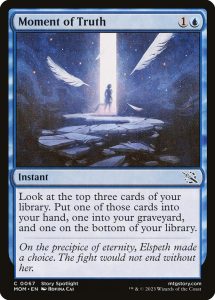
Rovina Cai, “Moment of Truth”

A further way of reading Magic illustrations lies in their narrative function. Wizards of the Coast has been indeed producing a wide corpus of stories, novels, comic strips and more which are published alongside expansion sets in order to understand what is actually going on, as these are all woven together into an overarching narrative with recurring characters and ongoing plots. But besides that, it’s because of the cards and their illustrations that one is able to visualize the story and actively live in it through playing the game. As an instance, we may look at Rovina Cai’s “Moment of Truth”, where we see a person from behind within an abstract composition which seems to hint at some fatal momentum.

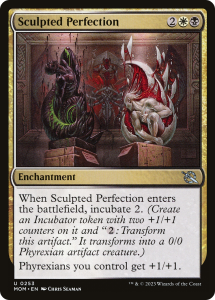
Chris Seaman, “Sculpted Perfection” 
Chris Seaman, “Sculpted Perfection”

The character is called Elspeth Tirel, a veteran knight crossed by a tormented past, now vowed to justice and the fight against oppression. Elspeth and her allies are called to stop Phyrexians, a civilization of half-machine, half-organic beings willing to spread, conquer and convert every form of life into instruments of their ideology: absolutistic, dominant, coercive, immutable.

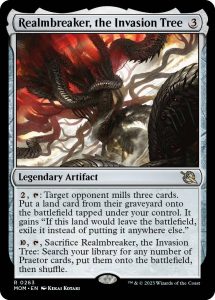
In “March of the Machine”, Phyrexians have now found a way to travel into the Multiverse, being this is the complex of worlds – in the game, they are called “planes” – in which Magic stories are set. The invasion is made possible by Realmbreaker, a gargantuan tree turned mechanic by the Phyrexian infection and whose branches can open passages through the Multiverse towards any plane.

Kekai Kotaki, “Realmbreaker, the Invasion Tree”


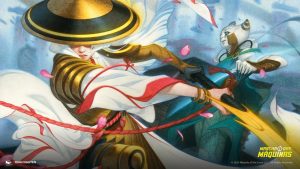
Until now, the only individuals capable of this were Planeswalkers, special beings who are able to spark this power within themselves after an intensely traumatic event in their lives. Planeswalkers such as Elspeth represent the extreme defence of the Multiverse. The Phyrexians know it; they have been studying planeswalkers for long and eventually managed to infect and convert some of them into stewards of the Multiverse invasion. We can thus witness fights such as the one depicted in “Cut Down”, where Tran Nguyen has chosen an elegant crayon palette in order to render the intense confrontation between the Wandering Emperor, ruler of the plane of Kamigawa, is forced to confront and eliminate her counsellor and friend Tamiyo. This has been converted into a Phyrexian, some black articular prosthesis emerging from her hands, an oily cry straining from her empty and apathetic eyes. In the whirling rhythm of the composition, our gaze has the time to stop only two times: one on the suffering but finally human expression on Tamiyo’s face, the other on the Emperor’s tightly closed lips, her eyes concealed by the hat forming a moving counterpose to the resolved severity of the enemy’s execution.

The cards’ illustrations may thus also function for a further purpose. In between the necessities of the game and the narrative, an illustrator may also find a platform for expressing something more personal. This lyrical breath allows the scene to resound in terms of human experience through the artistic tools of visual arts.

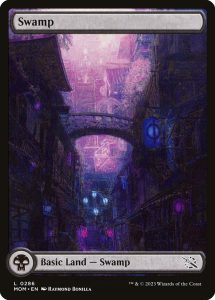
An educated eye may, for instance, recognize some suggestive dialectics with traditional painting techniques. We can detect some of this in this “Swamp”, which Raymond Bonilla decided to set on the already seen Kamigawa. Beside the subtle inclusion of narrative elements – that circle crossed by a perpendicular line is the Phyrexian trademark – Bonilla here dedicated some special care to the chromatic weights of the canvas, whose compositional balance stays vibrant despite a very narrow palette of selected purple tones.

Raymond Bonilla, “Swamp - Kamigawa”
Raymond Bonilla, “Swamp – Kamigawa”


The brushes widens, tightens, and vividly varies according to light spots and perspective, up to creating some essay of intense expressive verve. The most intense illuminated section at the center, leaves us wondering whether those thick lumps of paint spiking out of the canvas are trying to chase some Impressionist vibe. Many Magic illustrations are totally realized with digital means, but artists like Cai, Nguyen, Bonilla chose to rediscover traditional techniques in order to visually communicate on a different linguistic ground, suggesting surprising questions on the amphibious importance of the past and the role in which the human factor plays in this. 

Among the many intense happenings of “March of the Machine”, none seems to peak the pathos of Wrenn’s story. Wrenn is a dryad with powers allowing her to literally feel what she calls a being’s own “song”, a voice telling of its identity, temperament, aspirations. This faculty allows her to enter in a perfect symbiosis with some specially featured trees, with which Wrenn establishes a functional exchange: she gains a way to walk which would otherwise be impossible for her, while the tree turns sentient through the connection with Wrenn’s mind. If needed, the dryad can also channel her own song through the tree and turn into a pyre.

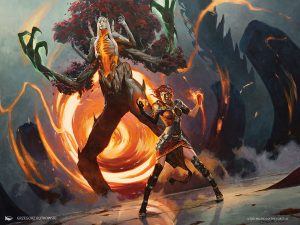
Gregorz Rutkowsky depicts Wreen at the beginning of the March of the Machine story, together with her fellow planeswalker Chandra Nalaar.

Grzegorz Rutkowsky, “Into the Fire”

The two have just ported themselves on New Phyrexia (the Phyrexians home plane) to cut the interplanar links created in the Multiverse by Realmbreaker. Wrenn’s plan is to connect with the Phyrexian tree while her allies are frontally charging the enemies in a basically suicidal attempt to buy her time. Miraculously, the dryad manages to navigate the tree’s suffering soul and connect with it.

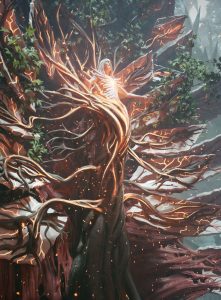
Cristi Balanescu, “Wrenn & Worldbreaker”
Cristi Balanescu, “Wrenn & Realmbreaker”

However, in the attempt of channelling her own fire into the tree, Wrenn is pushed to the extreme and sacrifices herself in a burning inferno which Anato Finnstark visually rendered in this literally burning composition.


Anato Finnstark, “Seal from Existence”


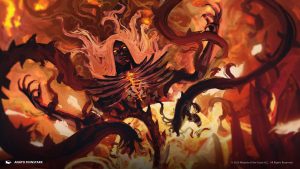
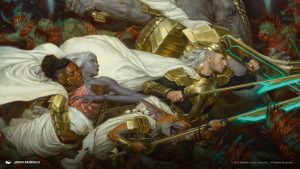
Whereas the tale in its full breath may only emerge after reading the stories, looking at the images and playing the game, there are artworks which seem to solidify the whole experience through the depiction of the single, most intensely dramatic peak of emotional tension. Jason Rainville has chosen to portray Wrenn while her companions are struggling to break ground through Phyrexian defences and take her close to Realmbreaker. The narrative is all built throughout the sculptural poses of the characters, all caught in some convoluted physical efforts and signalling us their emotions: struggle, will, suffering, hope, fear, and union. Among them, the firmly resolute gaze on Wrenn’s face is looking outside of the frame, apparently conscious of her destiny, her being other than a human but also other than a machine: she is the elected, her powers are unique, she can’t stand back.

Jason Rainville, “Storm the Seedcore”

Like using a Director’s camera, Rainville infuses the scene with an intense Neoclassical taste that peaks on Wrenn’s shroud. The drapery wrapping her lets the scene go on higher grounds, resounding with themes of historical, homeric, biblical precedents, definitely defining one of the absolute peaks among the huge collection gathered on Magic cards across the last thirty years.

The digital museum is open anytime, and you can visit it here.


THE TELEPHEMERA YEARS: 1967 – PART 2

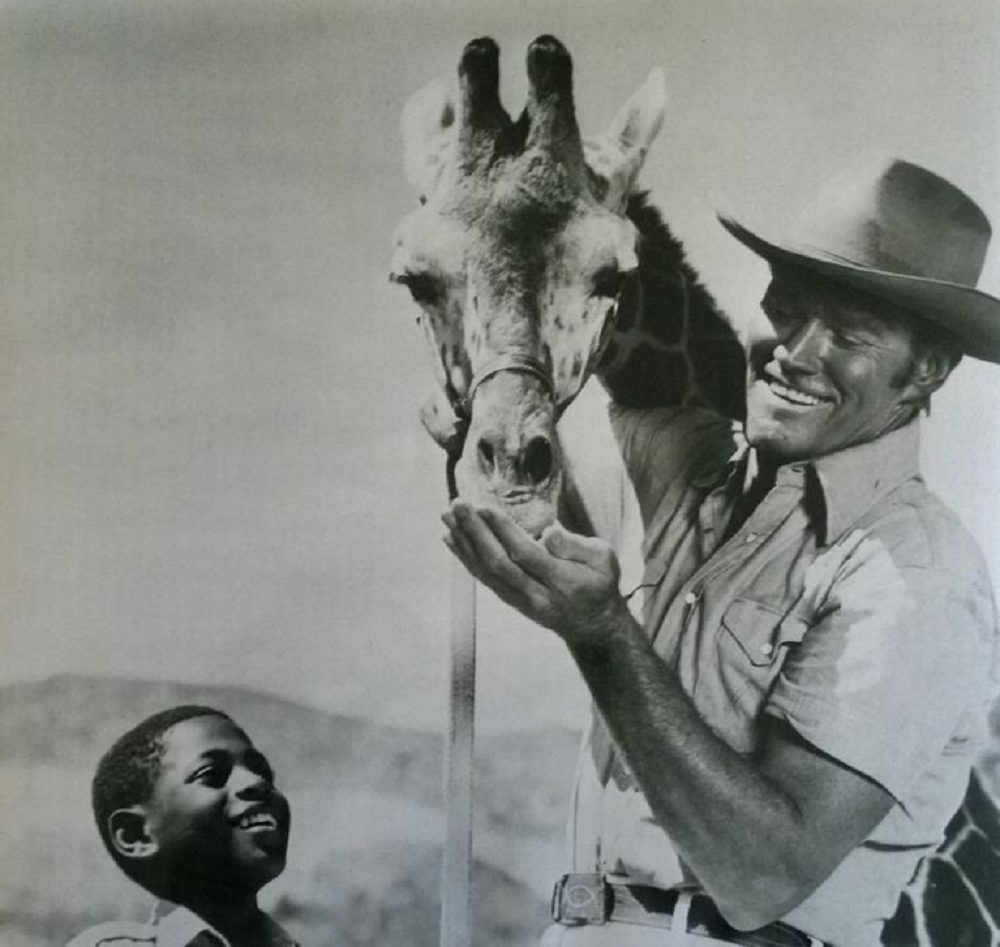
Cowboy in Africa, 1967

Ah, telephemera… those shows whose stay with us was tantalisingly brief, snatched away before their time, and sometimes with good cause. They hit the schedules alongside established shows, hoping for a long run, but it’s not always to be, and for every Street Hawk there’s two Manimals. But here at STARBURST we celebrate their existence and mourn their departure, drilling down into the new season’s entertainment with equal opportunities square eyes… these are The Telephemera Years!

1967-68

Is it 1967 or 1867, because cowboy dramas still have a big hold on US TV this year, with Bonanza and Gunsmoke joined by The High Chapparal, as well as a slew of lesser successful, rightfully-forgotten shows. Andy Griffith and Lucille Ball, of course, were still riding high at the top of the TV charts, with this being The Andy Griffith Show‘s swansong season, but there were sitcoms and variety hours galore to make America laugh while its sons died in a foreign war fought purely over political ideology.

It wasn’t just a dark time for anyone with a relative in Vietnam, there was also tragedy for superhero and sci-fi fans as Batman, The Invaders, Lost in Space, The Man from UNCLE, and Voyage to the Bottom of the Sea also reached the end of their runs, along with The Monkees (although Head was still waiting, tantalisingly, in November 1968). Never mind, Gentle Ben and Ironside arrived to alleviate the gloom, as well as a whole load of other shows that didn’t stick around in the popular memory. This is the story of more shows from 1967 that failed to capture the public imagination…

Cowboy in Africa (ABC): As the US struggled to define its place in the post-war world, it reached back to the glory days of manifest destiny, elevating the Western to an art form that dominated TV schedules for most the 1950s and 1960s. While more straightforward approaches such as Gunsmoke and Bonanza were obviously popular, there were occasionally efforts to do something a little bit different with the genre and that’s how Cowboy in Africa came to ABC in September 1967.

Set in the modern day, but every bit as rugged as the adventures of the Cartwrights, Cowboy in Africa starred Chuck Connors as Jim Sinclair, an expert ranch hand hired by stiff Englishman Wing Commander Hayes (Ronald Howard) to modernise the operation of his colonial ranch in Kenya. With Sinclair is his constant companion, a Navajo named John Henry (played by the non-Navajo Tom Nardini), and their group is completed by the end of the first episode as Sinclair is adopted by ten-year-old local boy Samson as his surrogate father.

Cowboy in Africa, 1967

Cowboy in Africa had its roots in a pilot produced a year earlier, starring Hugh O’Brien as Sinclair and John Mills as Hayes, which was released instead as a theatrical feature under the title Africa Texas Style. Ivan Tors – who had already brought the likes of Flipper, Daktari, and Gentle Ben to TV – tweaked Andy White’s script to give it enough life to springboard a series, casting former baseball and basketball star Connors, who he’d used in the Flipper movie as his star. Connors had spent five years as Lucas McCain in The Rifleman and was becoming typecast but was, at least, an experienced hand at this sort of thing.

The show was filmed in Los Angeles, but expert animal handler Ralph Helfer was on hand to ensure Sinclair encountered his fair share of exotic wildlife and former child star Marshall Thompson shot second unit footage in Mozambique, as he had done for Daktari (in which he also starred). Still, even all this wasn’t enough to see off Gunsmoke and The Monkees in its timeslot, and the twenty-sixth episode would be the last, replaced for the 1968-69 season by the final season of The Avengers.

Dundee and the Culhane (CBS): John Mills may not have reprised his role as Wing Commander Hayes when Cowboy in Africa came to TV, but he was present as another attempt to do a twist on the Western made its bow in September 1967. Mills was the Dundee in Dundee and the Culhane, one of a pair of lawyers in the Old West. Alongside him was Sean Garrison as The Culhane, a young Irish American legal eagle.

The show was greenlit on the strength of its pilot, “The Turn the Other Cheek Brief” (each episode was titled the something Brief), but as production continued the network started to lose faith in the show, concerned by the quality of subsequent scripts despite creator Sam Rolfe’s best efforts to mix the Western and legal genres.

Dundee and the Culhane, 1967

Still, CBS were hopeful that Dundee and the Culhane would find its audience, scheduling it at ten o’clock on Wednesday nights opposite the The ABC Wednesday Night Movie and a fading Run for Your Life on NBC. Viewers, though, seemed to agree with the network’s conclusion and stayed away in their droves, despite the obvious attractions of Mills, Garrison and guest stars including Charles Bronson, John Barrymore, and Warren Oates.

After just two episodes had aired, CBS cancelled the show, airing the other eleven completed episodes before replacing it with The Jonathan Winters Show, a variety showcase that played host to early performances by the likes of The Doors, Peaches and Herb, and The Strawberry Alarm Clock. Rolfe – who had earlier enjoyed success with Have Gun, Will Travel and The Man from UNCLE – took time to recover from the failure but eventually returned with an adaptation of Donald Hamilton’s Matt Helm, leaving the Old West safely back in the 1960s where it belonged.

The Second Hundred Years (ABC): A man out of time has always been a popular idea, as far back as Washington Irving’s Rip van Winkle in 1819. With that in mind, crediting Father Knows Best veteran Roswell Rogers with the “idea” for The Second Hundred Years may well be the greatest grift known to man. Still, that’s what the credits say, although surely Ed Simmons, a joke writer for Jerry Lewis and others, bears the lion’s share of responsibility for this sitcom yarn about a prospector from 1900 who is thawed out after sixty-seven years under ice.

Monte Markham played Luke Carpenter, the hapless gold hunter who left his family one day, seemingly never to return. In 1967, however, he finds his son Edwin now has a song of his own – thirty-three-year-old Ken, who in a clever piece of casting is also played by Markham. Initially bewildered and confused by changes he can barely understand, Luke must learn to live in this new world with his son as his guide.

The Second Hundred Years, 1967

Sworn to secrecy by the military men that had revived him, lest word of his miraculous survival spark a scientific arms race, Luke finds that he is often better at adapting to modern life than stick in the mud Edwin. During the course of the show’s twenty-six-episode run, he meets an old girlfriend, locks his boss at the bank in the vault, falls in love with a hippy, frees a go-go dancer from a cage, and engages in as many swapping hijinks with Ken as you could shake an old stick at.

Critics were not kind ahead of the show’s premiere in September 1967 but it initially garnered strong ratings. These soon fell away, however, and by October The Second Hundred Years was in the bottom twenty-five shows airing in prime time. Still, the network had faith enough to keep plugging away, hopeful that a better lead-in than the moribund Custer might help ratings. The decline continued, however, and even a move to Thursday to fill the slot vacated by Batman didn’t help, a decision made in March 1968 that there would be no second season for The Second Hundred Years.

NASL (CBS): It’s tempting to think of the US as a football backwater. Proper football, that is, rather than the handsy version they claim as their own. However, during the 1920s, the American Soccer League was one of the highest payers in the world, attracting players from Europe and South America to the extent that FIFA threatened to declare them outlaws if they didn’t stop “stealing” players. After that, the US game became a purely amateur affair, at least until TV audiences for the 1966 World Cup showed a resurgent interest in the game.

Reacting to an apparent desire to see top class football by American fans, two rival leagues sprung up for the 1967 season, only one of which – the United Soccer Association – had official backing. Realising that they were two bald men fighting over a comb, a decision was made to merge the leagues into one, the North American Soccer League, inheriting the CBS TV deal negotiated by the other league – the National Professional Soccer League – before the merger.

NASL, 1968

Although it was nothing compared to the razzamatazz that the mid-1970s would bring, this was the beginning of football as a major sport in the US. Seventeen teams, from New York and Washington DC in the east to Los Angeles and Oakland in the west, played for the honour of becoming the first truly national champions in the US for almost forty years, with an Atlanta Chiefs team backed by English club Aston Villa picking up the honours after a play-off final.

CBS showed thirty-two live games on Sunday afternoons during the season, culminating in that play-off final, but ratings were poor even for weekend afternoons and the sight of almost empty stadiums did nothing to help the image of the league. At the end of the 1968 season, all seventeen teams had lost money, resulting in twelve clubs folding and CBS ending the TV deal. It would be 1974 before they came back on board, just in time to welcome Brazilian legend Pele to the New York Cosmos, the league’s glamour side, sparking a six-year spell at the very top of American sports. After that, things fell away again until the arrival of Major League Soccer in 1996, but that’s a story for another day…

Next time on The Telephemera Years: The shows that didn’t make it to air, including the greatest rogue’s gallery in newspaper comic strip history!

Check out our other Telephemera articles:

The Telephemera Years: 1966 (part 1, 2, 3, 4)

The Telephemera Years: 1967 (part 1)

The Telephemera Years: 1968 (part 1, 2, 3, 4)

The Telephemera Years: 1969 (part 1, 2, 3, 4)

The Telephemera Years: 1971 (part 1, 2, 3, 4)

The Telephemera Years: 1973 (part 1, 2, 3, 4)

The Telephemera Years: 1975 (part 1, 2, 3, 4)

The Telephemera Years: 1977 (part 1, 2, 3, 4)

The Telephemera Years: 1978 (part 1, 2, 3, 4)

The Telephemera Years: 1980 (part 12, 3, 4)

The Telephemera Years: 1982 (part 1, 2, 3, 4)

The Telephemera Years: 1984 (part 1, 2, 3, 4)

The Telephemera Years: 1986 (part 1, 2, 3, 4)

The Telephemera Years: 1987 (part 1, 2, 3, 4)

The Telephemera Years: 1989 (part 1, 2, 3, 4)

The Telephemera Years: 1990 (part 1, 2, 3, 4)

The Telephemera Years: 1992 (part 1, 2, 3, 4)

The Telephemera Years: 1995 (part 12, 3, 4)

The Telephemera Years: 1997 (part 1, 2, 3, 4)

The Telephemera Years: 2000 (part 1, 2, 3, 4)

The Telephemera Years: 2003 (part 1, 2, 3, 4)

The Telephemera Years: 2005 (part 1, 2, 3, 4)

The Telephemera Years: 2006 (part 1, 2, 3, 4)

The Telephemera Years: 2008 (part 1, 23, 4)

Titans of Telephemera: Irwin Allen

Titans of Telephemera: Stephen J Cannell (part 1, 2, 3, 4)

Titans of Telephemera: DIC (part 1, 2)

Titans of Telephemera: Hanna-Barbera (part 1, 2, 3, 4, 5)

Titans of Telephemera: Kenneth Johnson

Titans of Telephemera: Sid & Marty Krofft

Titans of Telephemera: Glen A Larson (part 1, 2, 3, 4)

Titans of Telephemera: Quinn Martin (part 1, 2)

Titans of Telephemera: Ruby-Spears

Justin Gary – SOLFORGE FUSION

by Ed Fortune

Justin Gary is professional Magic The Gathering player and games designer. His latest game is Sol Forge Fusion, a  semi-randomised card game that he created with the legendary Richard Garfield, who invented the collectible card game genre with Magic The Gathering. We caught up with Justin to find out more.

STARBURST: what is Sol Forge and how did it come to be?

Justin Gary: Yeah, so this is this is a great story. It’s honestly one of the joys of my entire career. And so, you know, I used to I started off as a pro magic player, right played in one of the US National Champions when I was 17, paid my way through college, travelling around the world playing wedding photos, things like that. And then I started working on game design, working on the Marvel and DC VS  trading card games and a variety of others. I actually met Richard Garfield, and I launched my own game Ascension, about 12 years ago, I met Richard Garfield at PAX Dev, and he was giving a talk on design. And I was in the audience because, you know, it’s Richard Garfield, of course, you want to hear what he has to say about game design. So he asked at the end of the talk, someone asked him what his favourite game was right now. And he said, Ascension. So I literally like jump up in my seat in the back of the room. And everybody kind of laughed, but it gave me an opening to go start talking to him. And we started talking. And it became very clear that we both wanted the exact same thing for our next project.

And that was Sol Forge?

Yes, that project ended up being So Forge. And so that was a project. We began as a purely digital trading card game because none of those things existed at the time; when the cards levelled up as you played them, and it was really cool, very tight experience. You know, we launched that on Kickstarter, we ended up producing the game, we ran it for several years, it was really well received. Eventually, that project had to sunset but we kept having to think about how we might bring it back.

Once I saw Richard’s other game design Keyforge,  I saw the idea of an algorithmically generated deck. And I thought, wow, this is there’s something here. And the fact that Sol Forge needed these levelling up card. I thought this was a perfect way to be able to bring Sol Forge back in a new form. So I called Richard up, we started talking about what was good about Key Forge what was bad about Key Forge, how we could improve it, what could work. And, you know,  Sol Forge Fusion was born out of that. And so we created a hybrid deck game where every deck is one of a kind, but you can shuffle them together to play so that you can still customise your deck. Everything can be scanned, and played online through Tabletop Simulator. So it’s still true to it’s digital roots. It’s true to the kind of roots of the algorithmic design, but it’s bringing something new to the table in both cases. And so we’re both really thrilled with what we were able to create and now bring it to the world.

What’s the business model?
Yeah, that’s great question. So we have starter kits, which I think you already have one in your hand from what I can tell. Each starter kit comes with four unique faction decks. So again, every one is one of a kind. And then all the accessories you need to play play mats, little minion tokens, little tracker tokens. And so every every box you buy is unique.

So you could just buy one of those and any of those four decks can be combined to make six different unique playable backs. And then we have booster kits that are basically the same thing.

SolForge Fusion can be found here.

B. Dave Walters • FOUL PLAY

by Ed Fortune

B. Dave Walters is best known as the writer of Dungeons & Dragons: A Darkened Wish for IDW comics and creator and DM of the Shadow of the Red Rage streaming show for Wizards of the Coast. His latest work is Foul Play, a digital, immersive, improvised comedy murder mystery game created through a collaboration of tabletop gaming’s brightest and best award-winning Broadway professionals. We caught up with B Dave Walters to find out more…

STARBURST: What is the elevator pitch to have thought of Foul Play? How would you describe this to a beloved, elderly relative?
B. Dave Walters: It is a series of interactive murder mysteries; you get to see an opening sequence with some very colourful characters. Spoiler alert: a murder happens, then you can follow along and investigate the case and the way it is set up. And it’s all happening in real-time. So it’d be if I’m here listening to you. I’m not listening to what’s happening over there. So part of the fun is figuring out who you’re going to follow, which trails and conversations you’re gonna keep track of which clues you’re looking for. So that by the end, you can find out or try to figure out who did it and why.

So it’s an on-demand interactive murder mystery game?
I think on-demand is an accurate description of how it is. It’s the type of experience that, obviously, the first time through is going to be very unique because you won’t know what’s going on. But then you can experience it multiple times. It’s for instance, you follow different people over the course of the night and see what’s going on. What do you miss? Knowing at the end how it actually worked, going back and seeing how it all played out? All fantastic stuff.

What does this like? How do you build an experience like this? Do you start with, like, a role-playing game with some experience, or do you try and build an escape room?
Well, I was a part of the writing process. We began with Andrew Barth Feldman, Brennan Lee Mulligan and Artie Gollapudi. We got together, and we just brainstormed. And that’s why the stories are all so different. We were, “What if there were just the standard whodunit murder mystery? What if there were a reality show? What if there was something like Lord of the Rings?” The one I love the most is the one that was kind of inspired by Mr. Roger’s Neighbourhood. And then it’s like, once we kind of had the concept, we were like, well, who are the people involved? And then we kind of got the people, and then we’re like, and who gets killed and why. So we had those things, which they then took, added a tonne of production value and some very talented performers, who then improv the characters we created. They let them go and play it out in real time. So even though I helped write it, even I kind of know the beginning. In the end, I feel it, but a lot of the stuff in the middle, even I haven’t seen yet.

Would you compare this to something like Bandersnatch? Or is it closer to something like The Mousetrap?
I would say it’s probably closer to Bandersnatch, though, in Bandersnatch, you can alter the outcome. I think it’s almost closer to something like Sleep No More, the experiential Macbeth play where it’s kind of like each stage of the warehouse, and the different act of the play is happening in real-time. So if you go there, you’ll see it, but if you’re not there, you won’t, and it’s all just kind of moving in parallel until you get to the end.

How influential is the movie Clue on this project?
I mean, I guess conceptually, it must because we’ve all seen it. It was in the back of our minds, but I don’t know that it ever came up in the process of us actually writing it and trying to create something. I mean, a lot of that, I think the first one, the first one that is the kind of the more traditional, whodunit the murder of Vanguard mentioned, I think that is probably the most Clue adjacent. And even still, it’s not like we set out in any way to, like, make an homage to that beyond kind of an homage to the genre. We’re all at dinner, and the lights go out, the lights come up someone’s dead.

What is your favourite crime, mystery drama?
The BBC shows Luther, with Idris Elba, is my favourite and I like crime dramas and crime procedurals quite a lot. So I think this is probably my favourite genre. And for Foul Play? Mr. Robertson’s World of Imagination for certain reasons, but I don’t want to say why because I don’t want to spoil anything. But we were very proud of all the ones we wrote. Mr. Robertson’s in particular, we were like, “Oh, this could be a movie, this could be a play like we should do, we can really do a lot with this idea.” So I think that when has a special place in my heart.

Will you be doing more of these?
I know there is at least one we wrote that did not get produced. So I don’t know if that is that is saving something for the sequel. I don’t know if that is the type of thing that we would revisit. I mean, I think like anything, obviously, the more successful this is, and the better it is received, the more likely it is we’re gonna get to do some extra ones. Also, shout out to Alex Boniello. He was also there at the inception of this and is a vital part of a lot of these as well.

What do you think brings people more to this sort of experience? Is it games like Werewolf or Murder in the dark? Or is it games like Dungeons and Dragons?
I think this is almost more traditional; whodunit? I don’t even know that I look at it like a game as such. Because there are no mechanics as such. Is it just you trying to figure out what happened? You know? So it is almost more like the game clue in that, I suppose. I don’t know that you need to know anything about TTRPG games like a one-night werewolf or fun things like that in order to experience this and enjoy it, if that makes sense.

If you could ensure one book (or piece of music, painting etc) survived till the end of time, what would it be?
The meditations of Marcus Aurelius. I keep a picture of him right here, with the modern idea of what he would have looked like. I think if there were one book to survive the human race, that would be a beautiful record of our most noble selves.

Simpsons or Futurama?
Futurama, I was a huge Simpsons fan for about 15 years. And I mean, by now, that was, like, 20 years ago, you know? So I can’t remember the last time. I just remember being so disappointed by the Simpsons Movie. And the same thing that was 20 years ago now. Versus Futurama. Even though some episodes are definitely better than others. I definitely have far more fond memories of Futurama, if you know recently.

Doctor Who or Doctor No?
Doctor Who is the single greatest television show ever made. There are funnier shows; they’re scarier shows; they’re better adventure shows; they’re sadder shows; they’re better action shows. But there’s no other show that does all of those things, especially sometimes in the same episode. That being said, I didn’t love the 12 or 13 doctors’ run. But you know, I have high hopes for what lies ahead.

All episodes of Foul Play are available to enjoy now and can be found on the Foul Play website.