THE TELEPHEMERA YEARS: 1998 – PART 2

Brimstone, 1998

Ah, telephemera… those shows whose stay with us was tantalisingly brief, snatched away before their time, and sometimes with good cause. They hit the schedules alongside established shows, hoping for a long run, but it’s not always to be, and for every Street Hawk there’s two Manimals. But here at STARBURST we celebrate their existence and mourn their departure, drilling down into the new season’s entertainment with equal opportunities square eyes… these are The Telephemera Years!

1998-99

Back in the last millennium, there was this thing called Must See TV, where NBC put ALL the best shows in one three-hour block and dominated the lives of everyone with a television. Friends, new Christina Applegate vehicle Jesse, Frasier, Veronica’s Closet, and ER were all the TV you needed, although the usual news and football was also on offer for anyone not tickled by NBC’s powerhouse line-up. Jesse wasn’t the only new show that NBC threw at viewers; they also had Will & Grace tucked in their back pocket. The other big new arrivals were over on HBO and Fox, where Sex and the City, Family Guy, and Futurama all hit the screens for the first time.

There were plenty of shows going the other way, with Home Improvement, Due South, Homicide: Life on the Street, Mad About You, and Baywatch entering their final runs, and genre fans had particular cause to feel aggrieved as the axe was about to fall on Millennium, Star Trek: Deep Space Nine, and Hercules: The Legendary Journeys, with only Third Wave and Farscape on the docket to replace them. Well, there were others, of course, but they were part of that group of shows no-one much remembers; this is the story of four more lost treasures…

Brimstone (Fox): For those lucky enough to have seen it, Brimstone rates highly on any list of shows that were axed before their time, a decision made even more heartbreaking given that the show was set out to have a finite number of episodes anyway! Premiering on October 23rd 1998, Brimstone was given an 8pm slot on Fridays by Fox, a night best suited to western and medical dramas, but was seen as a decent lead-in to the third season of Millennium.

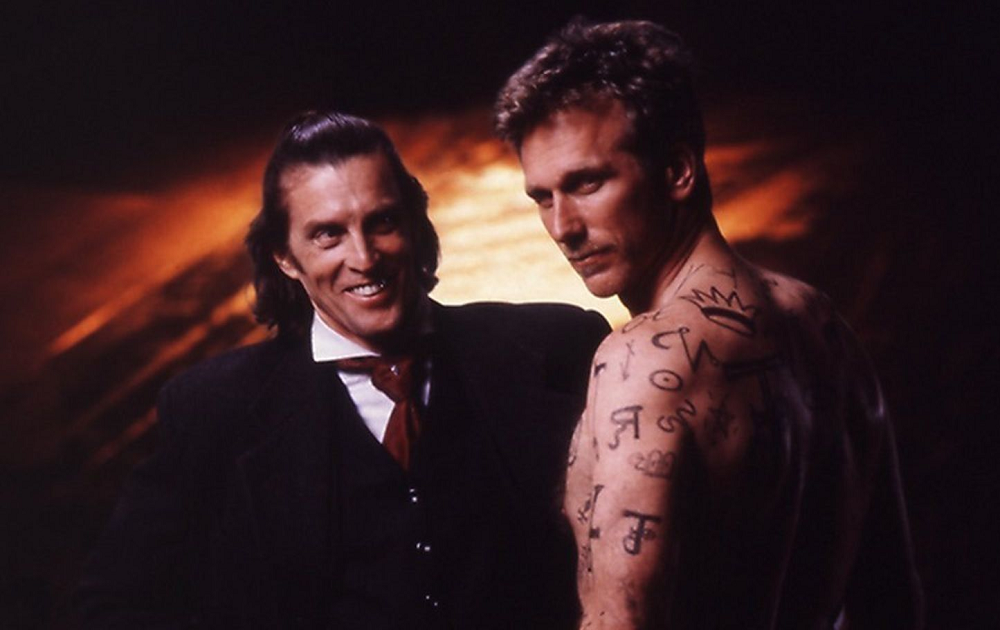
Peter Horton is Ezekiel Stone, a New York police detective who overstepped the boundaries of his authority when he killed the man who raped his wife in 1983. When he dies two years later, he is sent to Hell for his crime, despite dying the most decorated cop in New York history. Fifteen years later, a mass breakout from Hell occurs, resulting in one-hundred-and-thirteen souls escaping. The Devil comes to Stone and offers him a deal: track them all down and he will receive a second chance at life.
Brimstone, 1998

Stone is a likeable hero, and John Glover as The Devil gives the performance of his career, popping up in each episode to impart cryptic information on Stone’s latest target. The cast is rounded out by Lori Petty, Terri Polo, and a host of guest stars as the demon of the week, all working to a neat series bible concocted by creators Ethan Reiff and Cyrus Voris, who had enjoyed recent success with Demon Knight and Josh Kirby… Time Warrior!

Unfortunately, Fox seemed unwilling to give Brimstone the time it needed to find its audience, noting that ratings were low in the face of competition from NBC’s Providence, the sixteenth most-watched show of the season. It was a slot they’d struggled to fill successfully since Sliders ended and Brimstone was merely the latest victim of that trend, cancelled after thirteen episodes, at least one-hundred short of its optimum run. It’s never been released on DVD or Blu Ray but retains a strong cult following, its irregular re-runs being hotly anticipated by fans who want to imagine what could have been.

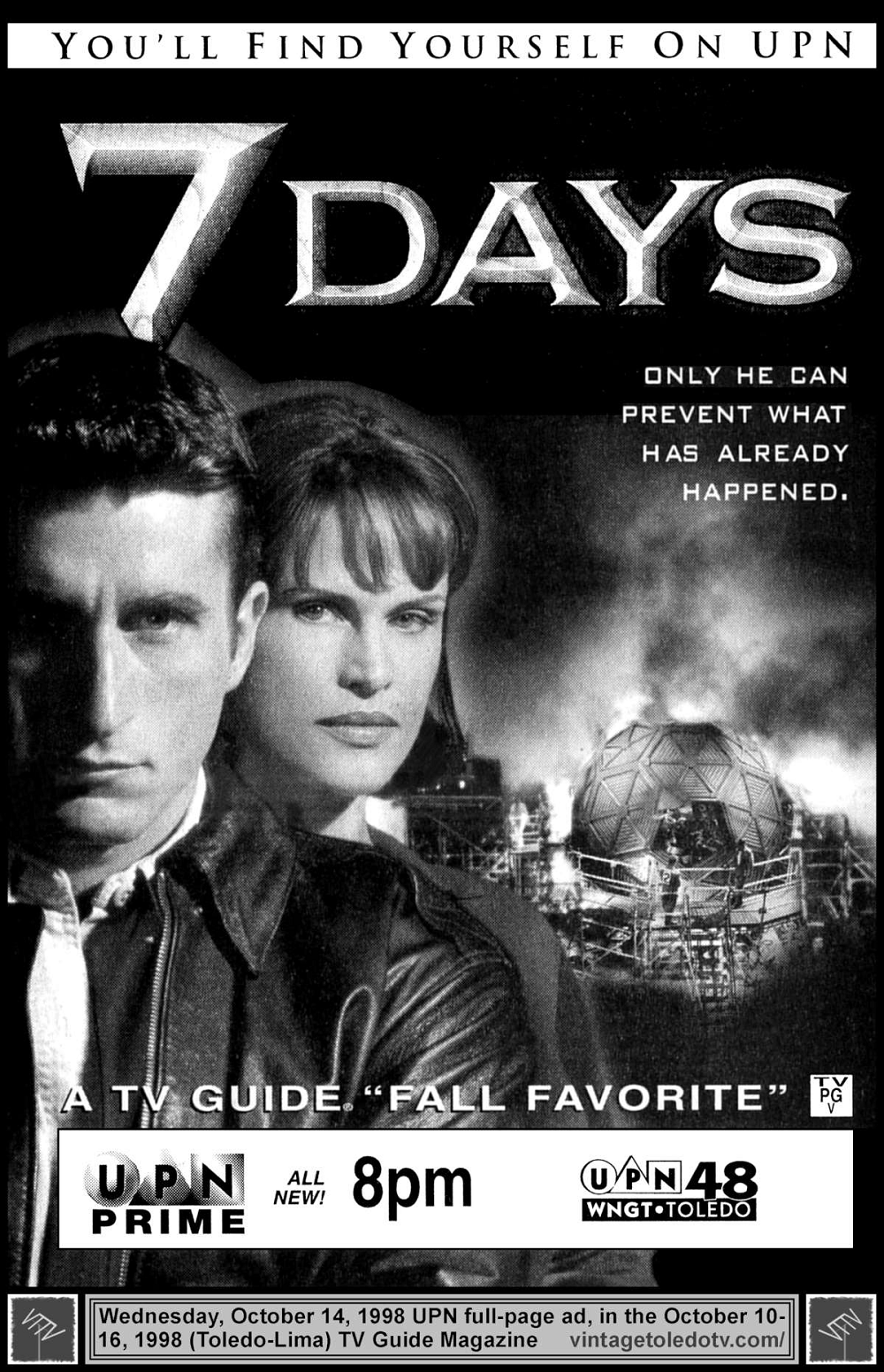
Seven Days (UPN): Part of a resurgence in time travel TV that also included Time Trax, TimeCop, and Early Edition, Seven Days’ high concept sell was that time travel had been invented due to backwards engineering of Roswell technology, but that it could only send one human back to seven days before. Under the auspices of a secret branch of the National Security Agency, ex-Navy SEAL and CIA operative Frank Parker is chosen to be the one who “backsteps,” his first mission to prevent the assassination of the US President!

Seven Days was created by Christopher Crowe, in association with his brother Zachary, from a basic idea by President of Paramount Television, Kerry McCluggage. Crowe had a long career in film and TV, having created the TV shows BJ and the Bear and the 1994 reboot of The Untouchables, as well writing the script for Michael Mann’s Last of the Mohicans and designing the logo for the band Cheap Trick.
Seven Days, 1998

Australian émigré Jonathan LaPaglia – brother of Anthony – was cast as Parker, his second main role after becoming a regular in the final season of New York Undercover. Justina Vail as Russian doctor Olga Vukavitch provided a will-they, won’t-they angle, and over the course of the first season the pair helped prevent not only the assassination of the President but also the release of a deadly virus, nuclear war, and a Waco-style massacre.

Renewed for two further seasons, the storylines became increasingly tied up in internal logic and the search for fresh reasons to travel back seven days surely reached its nadir when Parker had to go back and stop the President’s daughter from dying at a rave. Vail had given notice midway through filming series three but was convinced to shoot scenes that would tie up her character’s arc, and with no real Backup Sphere available to change her mind, it was decided not to go forward with a season four.

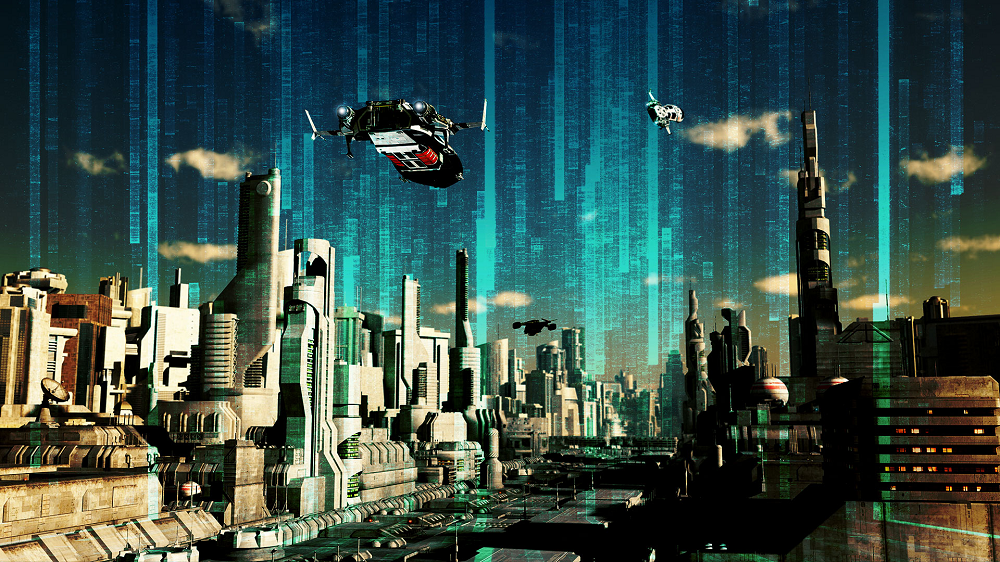
Welcome to Paradox (Sci-Fi): An anthology series created by Lewis Chesler, a Canadian producer best known for the 1983 HBO show The Hitchhiker, Welcome to Paradox established the city of Betaville (based on Jean-Luc Godard’s Alphaville) as the location for all of its stories, despite their original sources having no connection to such a place or each other. Betaville is a paradise, where crime, violence, and disease have been eradicated but it has a dark undercurrent…

Chesler’s story picks were classic sci-fi stories by authors such as Greg Egan, Alan Dean Foster, and Ron Goulart that are principally concerned with the effect of technology on the human mind and body. This was filtered through a cyberpunk aesthetic that saw the citizens of Betaville challenged by artificial intelligence, virtual reality, and gene therapy, often with unforeseen connotations and unpleasant consequences.
Welcome to Paradox, 1998

Each episode had a narrator – The Bold and the Beautiful’s Michael Phillip – to introduce and wrap-up the story, offering any lessons to be learned and warning us that technology isn’t always the advantage it first appears to be. The cast included a host of Canadian TV regulars alongside guests such as Ice T, Mayim Bialik, Henry Rollins, and Alice Krige, although the show’s biggest star was probably the then-New Volkswagen Beetle, chosen to be the vehicle of choice for the inhabitants of Betaville.

Welcome to Paradox aired on the Sci-Fi Channel in the US and Showcase in Canada, debuting simultaneously on August 17th 1998. Thirteen episodes were produced, stretching into early November but there was to be no future for Betaville beyond the end of episode thirteen’s tale of AI law enforcement. The show was only ever given a home video release in Australia but can be found on YouTube in its entirety and is worth a watch if you’re after a less cynical Black Mirror.

Fantasy Island (ABC): In the original Fantasy Island, Ricardo Montalban’s Mr Roarke oversaw a deliberately enigmatic place where wishes could come true, even if they weren’t the wish you thought you were wishing for when you wished it. Aided by Herve Villechaize’s diminutive Tattoo, any magic that may have seemed necessary for events to play out as they did was kept under wraps, the mystical nature of the eponymous island never fully explored.

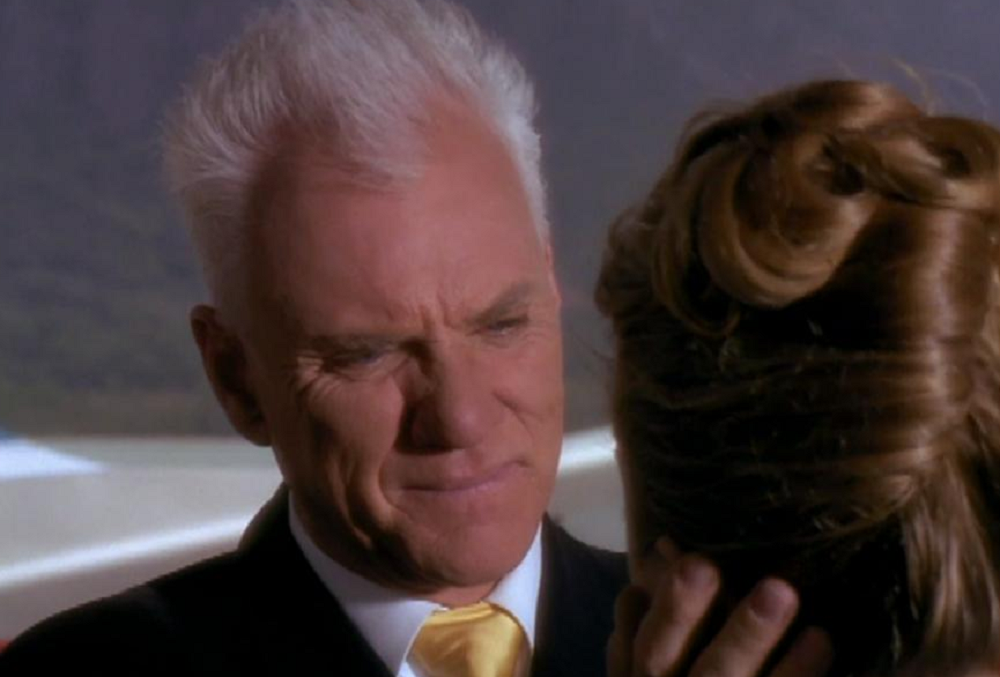
This was a stark contrast to the 1998 reboot where Malcolm McDowell’s Mr Roarke – who dressed in black and had a coterie of assistants rather than one shouty little man – welcomed visitors to an island that was unashamedly supernatural. This was a conscious decision taken by executive producer Barry Sonnenfeld, fresh off launching Men in Black and with a back catalogue including such darkly humorous tales as The Addams Family and Get Shorty.
Fantasy Island, 1998

Indeed, it was often hinted that the island was a place of purgatory for souls caught between afterlives, something later explored in Lost to the chagrin of those seeking a definitive ending, and that it was all in service of some greater power, perhaps the island itself. Unlike the original show, there was an ongoing storyline that played out between each episode’s two “guests,” although the superstar appeal of the original was not often recreated in the new show, with Kadeem Hardison, Lennox Lewis, Dean Cain, and Dwight Schultz a far cry from the likes of Sammy Davis Jr and Debbie Reynolds!

Unfortunately, the TV audience of 1998 was a different beast to that of two decades previously and even those looking for another dose of schmaltz were probably put off by the reboot’s post-modern twist. After seven episodes, ABC took it off the air for a month while they rethought its future, returning it to the schedule to see out the remaining six completed episodes after deciding it wasn’t worth the cost of producing the show on location in Hawaii. The concept was revived for a Blumhouse horror prequel in 2020, followed by an unrelated Fox TV reboot a year later, which lasted two seasons with a female Roarke which took place in the same continuity as the original series, consigning the 1998 show to non-canon limbo. Which might be an island.

Next time on The Telephemera Years: The shows that didn’t make it to air, including the Hoff with an eye patch!

Check out our other Telephemera articles:

The Telephemera Years: 1966 (part 1, 2, 3, 4)

The Telephemera Years: 1967 (part 1, 2, 3,

The Telephemera Years: 1968 (part 1, 2, 3, 4)

The Telephemera Years: 1969 (part 1, 2, 3, 4)

The Telephemera Years: 1971 (part 1, 2, 3, 4)

The Telephemera Years: 1973 (part 1, 2, 3, 4)

The Telephemera Years: 1975 (part 1, 2, 3, 4)

The Telephemera Years: 1977 (part 1, 2, 3, 4)

The Telephemera Years: 1978 (part 1, 2, 3, 4)

The Telephemera Years: 1980 (part 12, 3, 4)

The Telephemera Years: 1982 (part 1, 2, 3, 4)

The Telephemera Years: 1984 (part 1, 2, 3, 4)

The Telephemera Years: 1986 (part 1, 2, 3, 4)

The Telephemera Years: 1987 (part 1, 2, 3, 4)

The Telephemera Years: 1989 (part 1, 2, 3, 4)

The Telephemera Years: 1990 (part 1, 2, 3, 4)

The Telephemera Years: 1992 (part 1, 2, 3, 4)

The Telephemera Years: 1995 (part 12, 3, 4)

The Telephemera Years: 1997 (part 1, 2, 3, 4)

The Telephemera Years: 1998 (part 1)

The Telephemera Years: 2000 (part 1, 2, 3, 4)

The Telephemera Years: 2003 (part 1, 2, 3, 4)

The Telephemera Years: 2005 (part 1, 2, 3, 4)

The Telephemera Years: 2006 (part 1, 2, 3, 4)

The Telephemera Years: 2008 (part 1, 23, 4)

Titans of Telephemera: Irwin Allen

Titans of Telephemera: Stephen J Cannell (part 1, 2, 3, 4)

Titans of Telephemera: DIC (part 1, 2)

Titans of Telephemera: Hanna-Barbera (part 1, 2, 3, 4, 5)

Titans of Telephemera: Kenneth Johnson

Titans of Telephemera: Sid & Marty Krofft

Titans of Telephemera: Glen A Larson (part 1, 2, 3, 4)

Titans of Telephemera: Quinn Martin (part 1, 2)

Titans of Telephemera: Ruby-Spears

How to handle the spice of the Hot Hot Chilli Pot slot

Hot Chilli Pot slot

by Ben Bradley

When it comes to handling the virtual heat of the online Slots, could there be anything fierier on the gaming tastebuds than the Hot Hot Chilli Pot slot?

We’re here to see what exactly is involved in this bubbling pot found within the online Slots and games collection on the virtual floor, to help you decide whether you have what it takes to handle the spice and the heat of the game.

If you’re ready, grab your virtual spoon, as we’re about to taste test a whole lot of traditional chilli in our quest to know more about this Mexican themed slot.

Scroll to start tasting.

Hot Hot Chilli Pot

It’s time to tuck into a Mexican fiesta of a slot, full to the brim of equal parts spice and heat across a game grid comprised of seven reels and seven rows, that well and truly puts the virtual tastebuds to the test.

Hot Hot Chilli Pot is set in a Mexican kitchen, where the game grid spins above a boiling, bubbling, pot of chilli.

Symbols

Of course, no slot is complete without its symbols, and in Hot Hot Chilli Pot, the symbols add some extra spice to the game, in the form of – you guessed it – chillies!

Alongside the chillies, adding the heat to the slot and adding flavour to the reels and the pot below are symbols such as:

  • Kidney beans
  • Avocado
  • Sliced red chillies
  • Tortilla chips
  • Red onion
  • Courgette
  • Steak
  • Carrot
  • Yellow chilli pepper
  • Flaming hot chilli – wild
  • Chilli sauce bottles of red, green and yellow – the wild symbols of the slot
  • A fully loaded taco – the jackpot symbol when playing Hot Hot Chilli Pot with a Daily Jackpot attached

The power of the bottled chilli sauces

Now, we thought the bottled chilli sauces of the Hot Hot Chilli Pot deserved their own section in this article because, boy do they kick a punch when tipped onto the reels!

  • Red – when activated, this hot sauce will remove all lower-paying symbols off the reels
  • Yellow – will pour flaming hot chilli wilds onto random tiles on the reels
  • Green – adds a multiplier to your total win

Bonus features

There are two bonus features to be unlocked during play, one called chain reaction, and the other, Armageddon.

  • Chain reaction – whenever you form a winning combination of symbols on the reels, these symbols disappear into the chilli pot below. The chain reaction then comes into play by filling the gaps with the help of virtual gravity. Symbols will fall and fill the gaps. If more matches are created due to these filled gaps, the same cycle will happen and the symbol combination will disappear and be replaced with falling symbols. The chain reaction will keep occurring until no further matches can be made.
  • Armageddon – this bonus feature can occur at any time without warning. If and when Armageddon occurs during gameplay, flames from beneath the chilli pot will rise and alight the reels. Wild bottles of chilli sauce will fall from the sky, with some landing on the reels. These bottles, along with the heat they contain, will be released onto the game grid to potentially transform your spin!

So, do you think your gaming tastebuds can handle the heat of Hot Hot Chilli Pot? There’s only one way to find out!

Greater Manchester Fringe Festival Picks 2023

Manchester Fringe

by Ed Fortune

The English city of Manchester has a famously irrepressible arts and culture scene. The city is well known for being the place where many adventures begin, and that includes all sorts of music and theatre. Two major arts festivals run throughout July this year; the more mainstream Manchester International Festival 2023 and the inevitable response to such a thing, The Greater Manchester Fringe.

The Fringe is filled with new talent and experimental acts, many of which can be seen after work for about a tenner. Don’t forget to visit STARBURST’s favourite bar, Fab Café, for pre-show drinks beforehand.

Let’s look at some of the cult entertainment-style shows on offer in 2022.

Awkward Re-Entry – A night of weird sci-fi comedy The Fitzgerald: Fri 14th Jul – Sat 15th Jul 18:30

Instagram: @realphillipcarter More: linktr.ee/Phillipcarter

Author, comedian and poet Phillip Carter’s new show, Awkward Re-Entry, is an exploration of science fiction and how we use the genre to explore ourselves. Hear the cracking tale of Phillip’s crash landing on Earth, encounters with parallel universes, ghost crab cakes and Tin Foil Tim. Sounds like a great evening to us. 

Ahoy! Ballad of the Time Kraken The Salford Arts Theatre: Fri 28th Jul – Sat 29th Jul 19:30,14:00

Instagram: @rocket_whip More: linktr.ee/rocketwhip

From the folk who brought us “Communism: The Musical” and “Skedaddle: A Space Opera”, Rocket Whip Productions return to the Greater Manchester Fringe with our brand new comedy musical Ahoy: Ballad of the Time Kraken!, featuring time travelling pirates and music!

Foxdog Studios: Robo Bingo The Kings Arms Theatre: Mon 31st Jul 19:30

Instagram: @foxdogstudios More: foxdogstudios.com/gigs

Bingo meets tech. Join comedy IT consultants Lloyd and Pete in this interactive show (so bring your phone). Expect chaos. This show will also be at the Edinburgh Fringe. 

The Magic Bookmark The Salford Arts Centre: Sun 16th Jul 14:00

Instagram: @MamaGStories. More: linktr.ee/MamaGStories

Honestly, if you don’t love Mama G, then we don’t know what to say. The nation’s beloved Pantomime Dame and storyteller, Mama G, is back with this wholesome story about the magic of reading and the wonder of understanding as they take a family-friendly audience on a journey to discover the Magic Bookmark.

A cartoon of Panto Dame Mama G bursting out of a book

Neil Harris: CODEBREAKER The Vault @ Fierce bar: Thu 20th Jul 19:00

Twitter: @neildownstandup More: neilharrisonline.com

Join comedian Neil Harris on a journey through historical events. Join him and Helpy the Lion as he looks at the Enigma machine and how Alan Turing and Bletchley Park were able to crack it. Neil can also be found at the Edinburgh Fringe later this year.

Glad To Be Dead? Gullivers Lounge: Mon 17th Jul – Wed 19th Jul 19:00

Instagram: @mimtheatre. More: linktr.ee/mimtheatre

A journey into gothic morality and philosophy, with plenty of dark humour, Glad To Be Dead? gives voice to the dead as we hear from fictional beings, historical figures, murderers and victims in this tale of regret and social commentary.

Lucifer Speaks The Fitzgerald: Mon 24th Jul – Tue 25th Jul 19:00

Twitter: @NORTHERNPOETSSOCIETY

Spoken Word poetry from THE DEVIL HIMSELF. Probably the most Manchester and the most fringe theatre act we’ve heard of this year. 

Feast- An evening of folk horror and storytelling The Peer Hat: Tue 11th Jul 19:00

Instagram: @feastmcr. More: The Peer Hat

Feast is Manchester’s latest spoken-word folk-horror-themed event. Food-themed also, which sounds like a good idea for supper to us.


Should The Bond Franchise End With Daniel Craig?

daniel craig bond

by Ben Bradley

The most recent Bond movie, No Time to Die, officially did something that no other movie in the franchise has ever dared to do: kill James Bond. This wasn’t a fakeout unlike previous attempts in the franchise either. The writers confirmed separately that the missile strike at the end did officially finish off the spy, which makes sense as it would have been a difficult task to write Bond a believable escape from that fate.

For the first time in decades, the franchise is a little up in the air. Long-term fans and movie lovers don’t genuinely believe that the studio will permanently keep the character dead, simply because he is one of their most bankable and profitable properties. From a business point of view, it would be crazy to dump the franchise altogether. As we’ve already said here at StarburstMagazine.com before, it’s not a question of ‘if’ but ‘who’ will be the next Bond.

One question that has been doing the rounds on the Internet, however, is whether Bond should be continued. With a long legacy of countless Bond iterations and plenty of other spy heroes out there to explore or bring to the silver screen, some people are questioning whether the franchise needs to be continued at all. Opinions, as always, are very divided.

Retiring The Licence To Kill

The main reasoning behind the calls to permanently retire the character is that, as a main protagonist, every single story that could be told has already been told, even twice in some cases. We are now over 60 years into a franchise with the same character and unlike other incredibly long-lived characters like The Doctor from Doctor Who, Bond has always been portrayed with the same characterizations and traits.

Some have suggested that the franchise could continue on with a new character, perhaps finally a female one, although it’s hard to see the box office appeal without the big name to it. There’s also the issue that taking Bond out of the films will make it difficult to separate the franchise from all the other spy thrillers out there.

A Bygone Era?

Along the same lines, there’s an argument that the super-spy and his extensive list of famous personality traits are no longer compatible with the modern world. The elite, super-rich class of VIP men is quite quickly losing popularity in the world with fewer and fewer people connecting with the character.

Things like high-end luxury cars have had their images somewhat watered down over the years as they’ve become more available to everyone, while things like the high-roller gambling lifestyle are now accessible via alternatives, beyond glitzy and glamorous casinos. For example, one brief look at the listings on CasinoReviews.com (one of many online casino directories) will prove that there are hundreds of sites out there, offering players classic table games and even immersive live variants of these popular old-school favorites. A taste of high-roller life no longer requires a long trip to Monte Carlo or a mandatory tuxedo.

Put simply: things that once made Bond an iconic male role model don’t quite line up with newer male ideals.

In Defence Of 007

The arguments supporting the continuation of the character usually come down to a handful of things. To start with, the character is an icon with such an indisputable legacy that letting him simply fall away would feel like something of a tragedy. Bond is one of the most popular British creations ever, and the British feel a particular affection for him. This was highlighted when Daniel Craig appeared in character alongside the late Queen Elizabeth for a small segment in the Olympics as reminisced by Scotsman.com.

As for the character feeling ‘out-of-date’, many see Bond as a perfect way to shift expectations of male role models for the modern age. Plenty of young men still look up to Bond as a shining example of what it means to be a man, so rather than doing away with him, subtle shifts to his portrayal could do wonders to influence positive change in future generations.
At the end of the day, Bond isn’t realistically going anywhere. Modern Hollywood knows the value of a recognizable brand and money will talk louder than anything else. We’re still waiting on official news about any upcoming Bond projects with an entirely new, non-Fleming story being rumored, but it feels far more like a matter of ‘when’ than ‘if’ now.


THE TELEPHEMERA YEARS: 1998 – PART 1

Mercy Point, 1998

Ah, telephemera… those shows whose stay with us was tantalisingly brief, snatched away before their time, and sometimes with good cause. They hit the schedules alongside established shows, hoping for a long run, but it’s not always to be, and for every Street Hawk there’s two Manimals. But here at STARBURST we celebrate their existence and mourn their departure, drilling down into the new season’s entertainment with equal opportunities square eyes… these are The Telephemera Years!

1998-99

Back in the last millennium, there was this thing called Must See TV, where NBC put ALL the best shows in one three-hour block and dominated the lives of everyone with a television. Friends, new Christina Applegate vehicle Jesse, Frasier, Veronica’s Closet, and ER were all the TV you needed, although the usual news and football was also on offer for anyone not tickled by NBC’s powerhouse line-up. Jesse wasn’t the only new show that NBC threw at viewers; they also had Will & Grace tucked in their back pocket. The other big new arrivals were over on HBO and Fox, where Sex and the City, Family Guy, and Futurama all hit the screens for the first time.

There were plenty of shows going the other way, with Home Improvement, Due South, Homicide: Life on the Street, Mad About You, and Baywatch entering their final runs, and genre fans had particular cause to feel aggrieved as the axe was about to fall on Millennium, Star Trek: Deep Space Nine, and Hercules: The Legendary Journeys, with only Third Wave and Farscape on the docket to replace them. Well, there were others, of course, but they were part of that group of shows no-one much remembers…

Strange World (ABC): With a few notable exceptions, most of the shows written about here at least make it to half a dozen episodes, if not a half-season of thirteen, before the axe falls on their screen futures. However, once in a while, a show gets such short shrift from a network that it not only disappears before it reaches two hours of total screen time, but that its producers are able to craft an ending for the show before it even begins to air.

That’s the story of Strange World, a mid-season replacement on Tuesdays on ABC while NYPD Blue took a break, from the fertile imaginations of Howard Gordon and Tim Kring. The show is set among the machinations of the real-life US Army Medical Research Institute of Infectious Diseases, set up in 1970 to deal with the ramifications of biological and chemical warfare on its soldiers. In his first lead role, Tim Guinee plays Captain Paul Turner, a USAMRIID doctor suffering from a disease brought on by exposure to chemicals in the Gulf War, brought out of retirement to seek justice for those similarly affected.

Strange World, 1999

So far, so trad right, but Strange World’s tangent was that Turner had already been cured of his illness by a shadowy agency working against the USAMRIID. Turner has to walk a line between doing his job and pleasing his secret paymasters, uncovering all manner of medical and scientific abuses as he goes, or at least he did in the three episodes that aired before ABC pulled the plug, a 1990s version of Doomwatch seemingly not what they were after.

By that point, production had reached its thirteenth episode, the last of its early order from the network, and it was already clear that the show had no chance of being renewed. Gordon and Kring were able to alter scripts for the last few episodes as they went, manging to wrap things up for Turner, USAMRIID, and their antagonists. When the full run aired on the Sci-Fi Channel in 2002, viewers were able to find some closure, at least. Gordon went on to showrun 24 and co-create Homeland, while Kring was responsible – your mileage may vary on whether to congratulate or blame him – for Heroes.

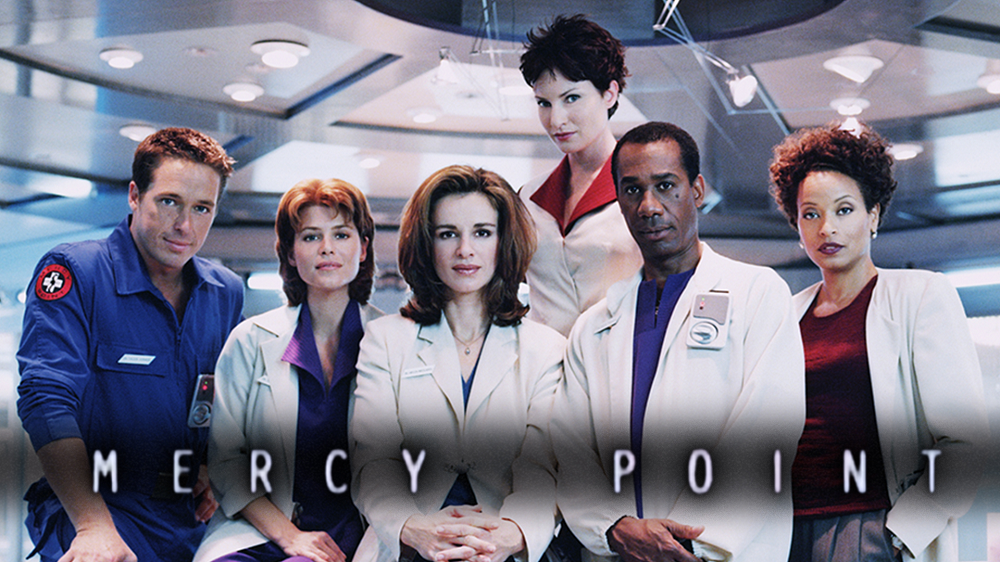
Mercy Point (UPN): With ER top of the ratings, it’s no surprise that medical shows with a twist were high on the want list for networks in 1998 and setting your hospital show two-hundred-and-fifty-years in the future- and in space – is one hell of a twist. Mercy Point was created – as Nightingale One – by Trey Callaway with a feature film in mind, but studios were wary of sci-fi films after the relative failure of Starship Troopers.

Mandalay Television were interested, however, and engaged Adventures in Babysitting writer David Simkins and Milo Frank to help Callaway retool the concept for television, casting Joe “Brother from Another Planet” Morton as alien physiologist Dr Grote Maxwell and Street Legal’s Maria del Mar as his boss, surgeon Haylen Breslauer. The show was filmed in Vancouver and a full set was built, allowing director Joe Napolitano to flesh out the world of the eponymous medical space station.


Mercy Point, 1998

As the show begins, Breslauer’s younger sister Dru arrives to start work as a resident, creating tensions with her sister and a libidinous ex, Dr Jurado (Brian McNamara). As with more terrestrial medical procedure shows, an emergency of the week propels the subplots forwards and the team have to deal with a computer virus that has jumped to humans, a shuttle accident, and premature ageing among other, more trivial concerns.

Hopes were high for the show, and UPN were confident of a hit, but the pilot aired against the World Series and ratings never recovered. With each episode costing as much as two or three episodes of cheaper shows aimed at UPN’s prime teen demographic, the decision was made to put the show on hiatus after just three episodes had aired. That hiatus was made permanent before the final four completed episodes were shown in the Summer of 1999, and the seven-episode series has never been released on DVD.

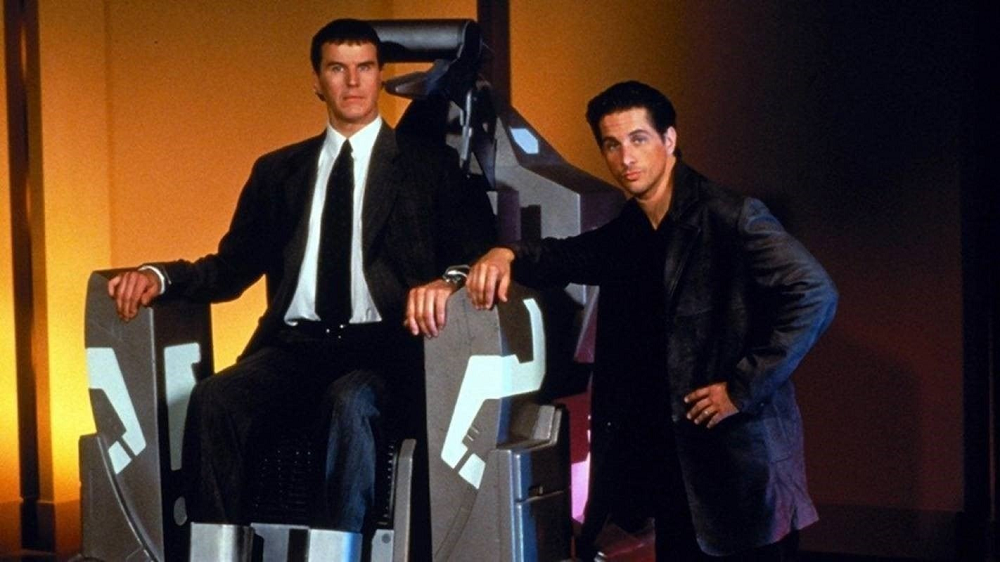
Total Recall 2070 (Showtime): You could say that Total Recall 2070 is loosely inspired by the 1990 film from which it takes its name (and therefore from Philip K Dick’s We Can Remember It For You Wholesale), but really the only common thread is the concept of virtual vacations provided by the Rekall corporation.

Rather than the technicolour world of the Arnold Schwarzenegger, showrunner Art Monterastelli – with previous credits including Seaquest DSV, Nowhere Man, and Timecop – went for a grimy, cyberpunk vibe as he told the story of David Hume (VR.5‘s Michael Easton), a Citizens Protection Bureau detective whose partner is killed by a rogue android. With new android partner Ian, Hume tackles exactly the sort of crimes you’d expect would plague the world of 2070, such as (more) rogue androids), biohazards, genetics, and computer dating.

Total Recall 2070, 1998

One particular crime is rampant, that of black-market memory implants, and Hume’s wife discovers that her memories prior to meeting him have been altered, leading to their marriage breaking up. Behind it all is the sinister “Consortium” – can Hume manage to bring them down, despite their powerful interests? The show was filmed on a disused airbase in Toronto, with futuristic cityscapes added digitally by John Gajdecki’s studio, and received its first airing on the Canadian channel OnTV in January 1999.

Two months later, pay channel Showtime began airing Total Recall 2070 in the US, committing to the full twenty-two-episode first season run, albeit with some edits made to remove nudity and cursing. Reviewers felt the show resembled Blade Runner more than Total Recall, and that’s probably responsible for it failing to find its audience either in Canada or the US. While a hardy band of followers eagerly awaited new episodes, no second season was ever forthcoming, and Monterastelli moved on to his next project, The Hunted, a feature film starring Tommy Lee Jones and Benicio del Toro.

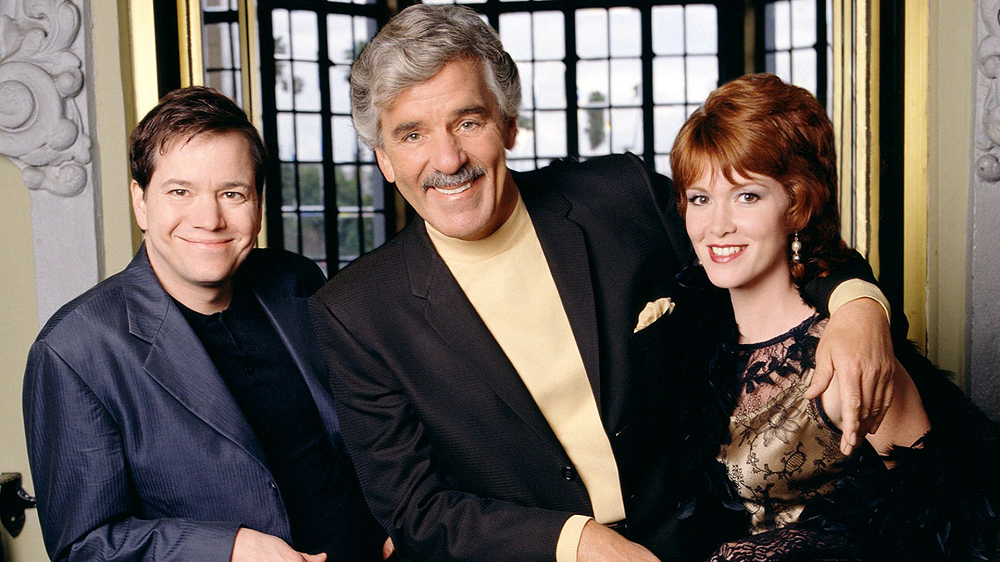
Buddy Faro (CBS): A former police detective, Dennis Farina had played his fair share of cops and gumshoes down the years, from FBI agent Jack Crawford in Manhunter to Lt Mike Torello in forty-four episodes of Crime Story. Buddy Faro, though, had something none of them did: a backstory written by Twin Peaks co-creator Mark Frost.

Prior to his time in the Pacific Northwest with David Lynch, Frost had spent three years writing for Hill Street Blues and so was no stranger to police procedurals but the dark humour he brought to Buddy Faro was right out of the Lynch playbook, filling each hour-long episode with smart dialogue and quirky cases. From the off, there was something different about Buddy, a detective from the 1970s who disappeared after trying to solve the murder of a woman he fell in love with. Twenty years later, he is tracked down by Bob Jones, a young PI in over his head and convinced to return to Los Angeles and to his old job.

Buddy Faro, 1998

Frank Whaley should have been huge, but fans of his work can at least console themselves with a filmography of small but charismatic performances, and his Bob Jones is one to add to the list, perfectly accenting Farina as the proverbial odd couple. There’s also great back-up from Alison Smith and Charlie Robinson, and a writing staff that included Melrose Place’s Kimberly Costello and Frost’s brother, Scott, but somehow the parts never came together to form enough of a whole that CBS viewers made it a regular stop.

The network called a halt after just eight episodes had aired, with a further five produced but not shown. Frost’s clever mix of 1930s noir, 1970s chic, and 1990s realism may have been a step too far for ordinary viewers and Buddy Faro languishes in TV obscurity, exactly the kind of show this column aims to spark a remembrance of. Luckily, there are a few episodes to glory in on YouTube, should you be so disposed (and you really should).

Next time on The Telephemera Years: More of 1998’s failed experiments, including a devilish gem…

Check out our other Telephemera articles:

The Telephemera Years: 1966 (part 1, 2, 3, 4)

The Telephemera Years: 1967 (part 1, 2, 3, 4)

The Telephemera Years: 1968 (part 1, 2, 3, 4)

The Telephemera Years: 1969 (part 1, 2, 3, 4)

The Telephemera Years: 1971 (part 1, 2, 3, 4)

The Telephemera Years: 1973 (part 1, 2, 3, 4)

The Telephemera Years: 1975 (part 1, 2, 3, 4)

The Telephemera Years: 1977 (part 1, 2, 3, 4)

The Telephemera Years: 1978 (part 1, 2, 3, 4)

The Telephemera Years: 1980 (part 12, 3, 4)

The Telephemera Years: 1982 (part 1, 2, 3, 4)

The Telephemera Years: 1984 (part 1, 2, 3, 4)

The Telephemera Years: 1986 (part 1, 2, 3, 4)

The Telephemera Years: 1987 (part 1, 2, 3, 4)

The Telephemera Years: 1989 (part 1, 2, 3, 4)

The Telephemera Years: 1990 (part 1, 2, 3, 4)

The Telephemera Years: 1992 (part 1, 2, 3, 4)

The Telephemera Years: 1995 (part 12, 3, 4)

The Telephemera Years: 1997 (part 1, 2, 3, 4)

The Telephemera Years: 2000 (part 1, 2, 3, 4)

The Telephemera Years: 2003 (part 1, 2, 3, 4)

The Telephemera Years: 2005 (part 1, 2, 3, 4)

The Telephemera Years: 2006 (part 1, 2, 3, 4)

The Telephemera Years: 2008 (part 1, 23, 4)

Titans of Telephemera: Irwin Allen

Titans of Telephemera: Stephen J Cannell (part 1, 2, 3, 4)

Titans of Telephemera: DIC (part 1, 2)

Titans of Telephemera: Hanna-Barbera (part 1, 2, 3, 4, 5)

Titans of Telephemera: Kenneth Johnson

Titans of Telephemera: Sid & Marty Krofft

Titans of Telephemera: Glen A Larson (part 1, 2, 3, 4)

Titans of Telephemera: Quinn Martin (part 1, 2)

Titans of Telephemera: Ruby-Spears


Kevin Iannucci | CHAMPIONS

kevin Iannucci champions

by Hayden Mears

As one of the breakout stars of Bobby Farrelly’s Champions, Kevin Iannucci has been receiving quite a bit of attention for his portrayal of one of the film’s central characters.

Champions follows basketball coach Marcus Marakovich (Woody Harrelson), who, after a brush with the law, is ordered to coach a local basketball team with disabilities as community service. Iannucci portrays Johnny, one of the players Marakovich ends up coaching.

We recently caught up with Iannucci about Champions, acting, and his experience working with Kaitlin Olson and Harrelson…

STARBURST: Let’s start by talking a bit about the road to getting the role of Johnny in Champions…

Kevin Iannucci: I started acting at a young age. Acting comes naturally to me, so I did theatre, I did stage plays. What I actually wanted to do more was TV and movies, and I’ve actually auditioned. A lot. I’ve got a few small roles, and my biggest is Champions. That was a magical dream come true. It was unbelievable. 

Do you have a favourite on-set memory?

The carpool karaoke I did with Kaitlin Olson and Woody Harrelson. I enjoyed that a lot. We had tents set up outside because it was freezing. In the tent, we were going over the lines we needed to do in the car. It was so much fun! Everyone had a great time.

How was it working with Woody Harrelson and Kaitlin Olson?

They are both supportive and very funny!

You mentioned earlier that acting has always come naturally to you and that you’ve always wanted to be on TV and in movies, and now you are in a movie! And it’s a big role, too. What other types of acting roles would you like to take next? Is there a genre you like most?

I’d love to do horror. I like the Scream movies. Romantic comedies, too. But the big one is Marvel. I’d love to be in one of those movies. I have the DVD collection and some Funko pops.

Which Marvel movie interests you most?

I like the Chrises! Between Thor and Captain America, Chris Evans is one of my favourites. 

I want to switch gears slightly and talk specifically about your character in Champions. What can your character, Johnny, teach people in this movie? I think he’s a great character who has lots to teach people. 

He teaches them to be confident and imagine what they can do because they are capable of doing so much more!

Champions is now available digitally and on DVD/Blu-ray. 

The Timeless Power of Nostalgia

nostalgia

by Jacob Walker

Is there a more powerful force in our modern society than nostalgia? The word is a Greek compound of nostos (homecoming) and algos (sorrow); the second word is an interesting one and is key to understanding why the feeling is so popular. It was first coined in the 17th century by a medical student and used to describe the plight of Swiss mercenaries fighting away from home. The feeling has always been with us, whether it’s poets wanting to return to the medieval landscape of chivalrous knights or the Daily Mail lamenting the blitz mentality of 1940s London. This feeling is often triggered by a catalyst, a smell, sound, or image. Therefore, the feeling is even more relevant in our modern society. With the dominance of the Internet, we can access film, TV, magazines, and newspapers at the touch of a button, so moments are frozen in time forever. We don’t have to imagine it; we can see the originals whenever we want. It doesn’t matter if these artefacts from the past still have worth or not, we have them, and that’s all that matters to a brain that feeds off nostalgia. But why is this feeling so powerful, and how does that manifest itself through film? Let’s take a look.

We love to be sad, a strange thing to admit, as it’s seen as a negative emotion, so why then does it play such an integral role in the most successful stories, from Romeo and Juliet to The Color Purple. Firstly, it’s a counterbalance to happiness – you can’t feel one without the other. Secondly, it’s a key part of our emotional range. To feel all emotions is the experience of living, and what we believe separates us from less sentient animals and machines, even Chat GPT! To long is to live. 

Music is subjective, but if you look at the most popular songs, denoted originally by their chart position but now by how many streams they have on Spotify or on Apple Music, sad songs carry the most weight. When Mike Skinner asked us to dry our eyes in 2004, we listened. Tony Rich, aka The Tony Rich Project, is an artist with seven albums, but we only know him for his single; Nobody Knows, in which he describes dying inside over a lost love. How many people have listened to that alone in their bedroom and tried to work through grief? As a species, we don’t shy away from sorrow, beautifully illustrated by Lord Tennyson when we wrote: ‘I feel it, when I sorrow most; ‘Tis better to have loved and lost /Than never to have loved at all.’ (In Memorium A.H.H. 1850).  

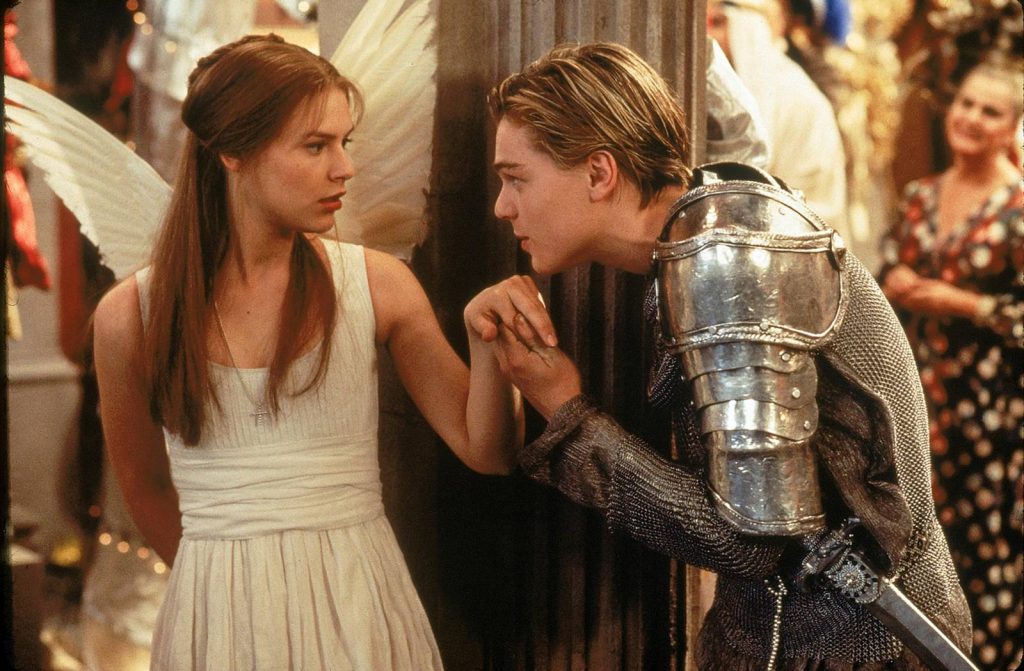
This is what makes nostalgia so powerful; it is inextricably linked to sorrow, one of our most powerful emotions. This manifested itself in Hollywood in the 1980s, firstly due to technology and visual effects making it easier to represent the past, and secondly due to a group of filmmakers who grew up in the 1950s and ‘60s coming-of-age as film directors and producers. George Lucas was the pioneer, helming American Graffiti (1973), celebrating California in 1962 with Cadillacs and diners aplenty. It’s no coincidence that Lucas was 18 in ‘62 and wanted to celebrate his youth. This inspired a whole host of filmmakers in the 1980s to take a nostalgic trip back to their childhood days, the most famous and era-defining being Back to the Future (1985).

Robert Zemeckis took us back to 1955, 3 years after he was born, in a sports car! The world lapped up the nostalgia of 1950s America, a simpler time laced with rock ‘n’ roll, slick haircuts, and school dances. Back to The Future has a double hit of nostalgia, as the 1980s are now just as revered as the 50s, complete with fun characters and a killer concept; no wonder it has captured audiences’ imaginations ever since. But the 1980s were full of journeys back to the past. We had Stand by Me (1986), Stephen King’s Coming of age novella, set in 1959, about a group of 12-year-olds (King was also this age in 1959, another coincidence?) searching for a dead body. A Night in the Life of Jimmy Reardon (1988) also starred the late River Phoenix and found him deciding on his future after graduating high school in 1960. All these films have an idealist view of the past, using it to remember the young lives of its creators. This is the magic of the movies; it can create a timestamp, even if that time never really existed, as every period in history has its negative aspects that are not always depicted on screen. As well as longing for the past, all these films are tinged with melancholy, as we can never truly travel back in time like Marty McFly, and Stephen King’s characters can never recreate their bitter-sweet journey into manhood. We can never return, which is the ultimate sadness.  

As the years passed, audiences then took a big gulp of 80s Americana, typified by the films of John Hughes, even if the angst is always through the eyes of white privilege in films like Sixteen Candles (1984) and Ferris Buller’s Day Off (1986). This brings us to modern filmmakers in the 2020s, who were conditioned by the 1980s and 1990s. At first, the 1980s was utilised in a quirky manner; for comedy in The Wedding Singer (1997) or to be horrified but secretly revel in the excess of the era in American Psycho (2000). But then it seeped into the mainstream with Scorsese’s filthy marathon, The Wolf of Wallstreet (2013) and even more so with Wonder Woman 84 (2020), which appeared to be set in the era for no other reason than nostalgia baiting. Director Patty Jenkins clearly knew the power of the feeling for a past that you can’t return to.

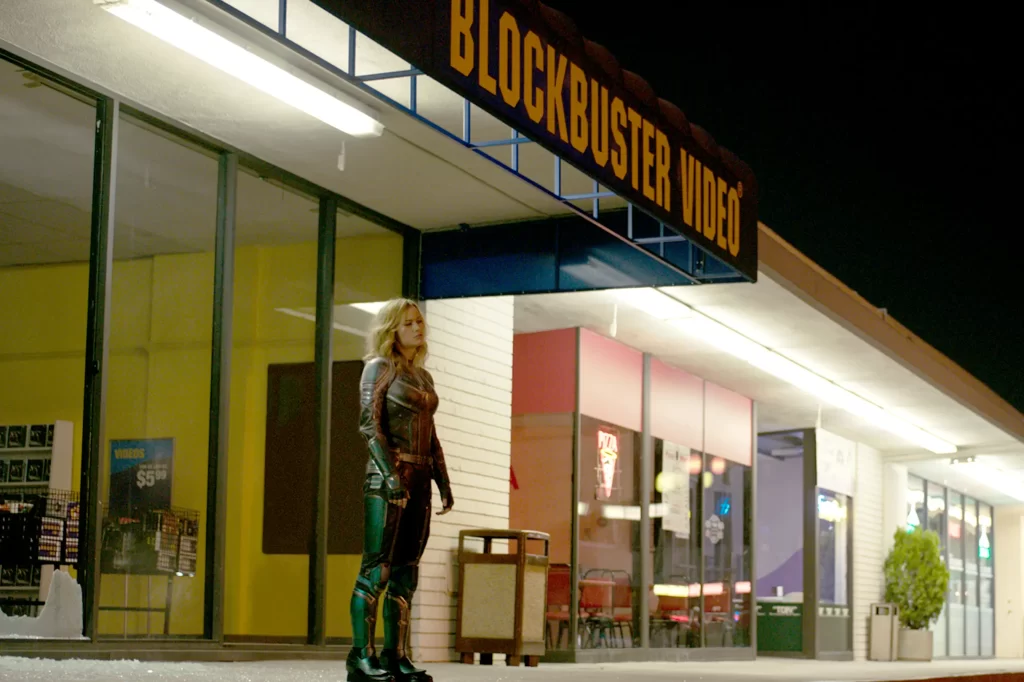
Naturally, this has also begun to happen with the 90s, Captain Marvel (2019) being set in the era of baggy clothes, so Brie Larson can crash into a Blockbuster video, which any movie fan will have fond memories of exploring on a rainy afternoon. Jonah Hill’s directorial debut: Mid90s (2018) basks in nostalgia-heavy ‘90s LA, hell even Angry Birds 2 (2019), had a ‘90s nostalgia moment, featuring the music from Dawson’s Creek (1998-2003), clearly trying to appeal to the young parents who had been dragged to the cinema having watched Kevin Williamson’s ’16-year-olds’ spout perfect English prose when they should have been doing their homework.  

Of course, this will continue, and it won’t be long before we have films set in the year 2000 and beyond. There is nothing innately wrong with this; media, especially film, can travel in time, which is one of its many amazing qualities. We will always long for the past, for people and products that don’t exist anymore. Swimming in sadness from time to time is healthy and part of being human, the key to not drowning – is to enjoy every moment as it happens and realise that not everything from the past has value. Enjoy the present before it disappears into the mist of time and becomes yet another halcyon day.  

THE TELEPHEMERA YEARS: 1967 – PART 4

Spider-Man, 1967

Ah, telephemera… those shows whose stay with us was tantalisingly brief, snatched away before their time, and sometimes with good cause. They hit the schedules alongside established shows, hoping for a long run, but it’s not always to be, and for every Street Hawk there’s two Manimals. But here at STARBURST we celebrate their existence and mourn their departure, drilling down into the new season’s entertainment with equal opportunities square eyes… these are The Telephemera Years!

1967-68

Is it 1967 or 1867, because cowboy dramas still have a big hold on US TV this year, with Bonanza and Gunsmoke joined by The High Chapparal, as well as a slew of lesser successful, rightfully-forgotten shows. Andy Griffith and Lucille Ball, of course, were still riding high at the top of the TV charts, with this being The Andy Griffith Show‘s swansong season, but there were sitcoms and variety hours galore to make America laugh while its sons died in a foreign war fought purely over political ideology.

It wasn’t just a dark time for anyone with a relative in Vietnam, there was also tragedy for superhero and sci-fi fans as Batman, The Invaders, Lost in Space, The Man from UNCLE, and Voyage to the Bottom of the Sea also reached the end of their runs, along with The Monkees (although Head was still waiting, tantalisingly, in November 1968). Never mind, Gentle Ben and Ironside arrived to alleviate the gloom, as well as a whole load of other shows that didn’t stick around in the popular memory. What about cartoons, though? Surely there was gold in 1967’s animated hills..?

Fantastic Four (ABC) / Spider-Man (ABC): The bombastic superpowered adventurers of Marvel Comics made their TV debut in September 1966 with a series of barely animated serials under the banner The Marvel Superheroes in first-run syndication. Essentially taking art from the comic books and adapting it for action, the shows were a poor spectacle and an especially risible translation of the entertainment found between the covers of works by Jack Kirby, Steve Ditko, and others.

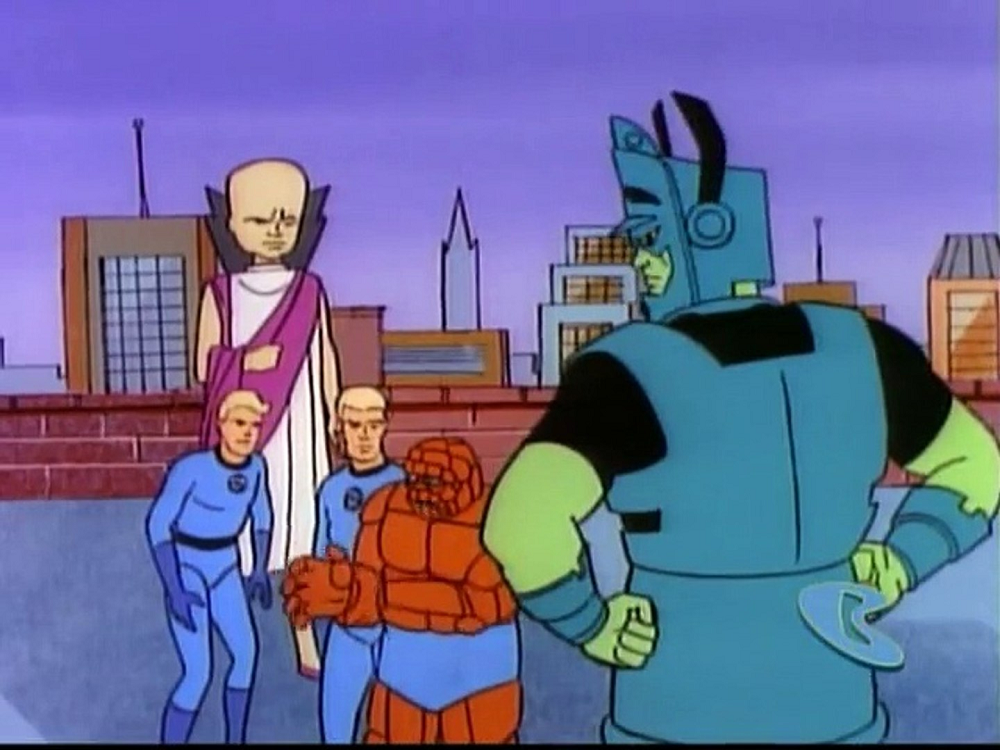
A year later, and seemingly having learned the lesson of The Marvel Superheroes, the company partnered with two experienced animation studios to properly bring their characters to life in a pair of shows debuting on ABC on September 9th 1967. Hanna-Barbera – who also had six other shows premiering in the Fall 1967 Saturday morning line-up – were behind The Fantastic Four, using their considerable skill to adapt stories from the first few years of the comic’s run, along with original stories featuring characters from the wider Marvel universe, while Grantray-Lawrence were given a second chance to get things right with Spider-Man.

Fantastic Four, 1967

The FF enjoyed a nineteen-episode run that saw them tangle with Dr Doom, the Mole Man, Magneto, and more, but were not brought back for the 1968 season, despite fans of the comics generally being appreciative of the effort. Spider-Man, however, was given a second and third season, but only after production moved to Canadian studio Krantz Films, where Ralph Bakshi made the most of a reduced budget to bring weekly thrills to cereal munchers everywhere.

Under Bakshi, spider fans got to see how Peter Parker became an irradiated superhero in the first place, saw him tussle with the Kingpin, the Rhino, and Mysterio, and fight a whole heap of villains invented especially for the show (and often reusing footage from another Krantz show, Rocket Robin Hood). Bakshi left Krantz in 1969 and there was nobody left at the studio willing – or able – to take the job on afterwards. As the 1970s came around, Marvel switched their attentions to live-action adaptations of their heroes and there wouldn’t be another Saturday morning show until 1978’s The New Fantastic Four.

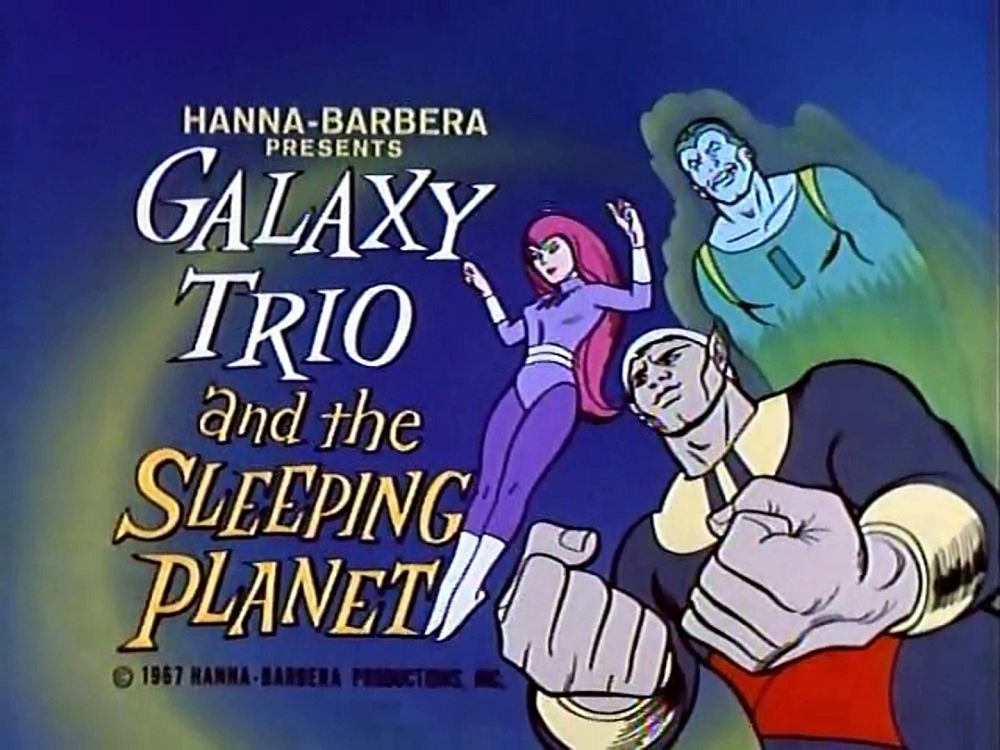
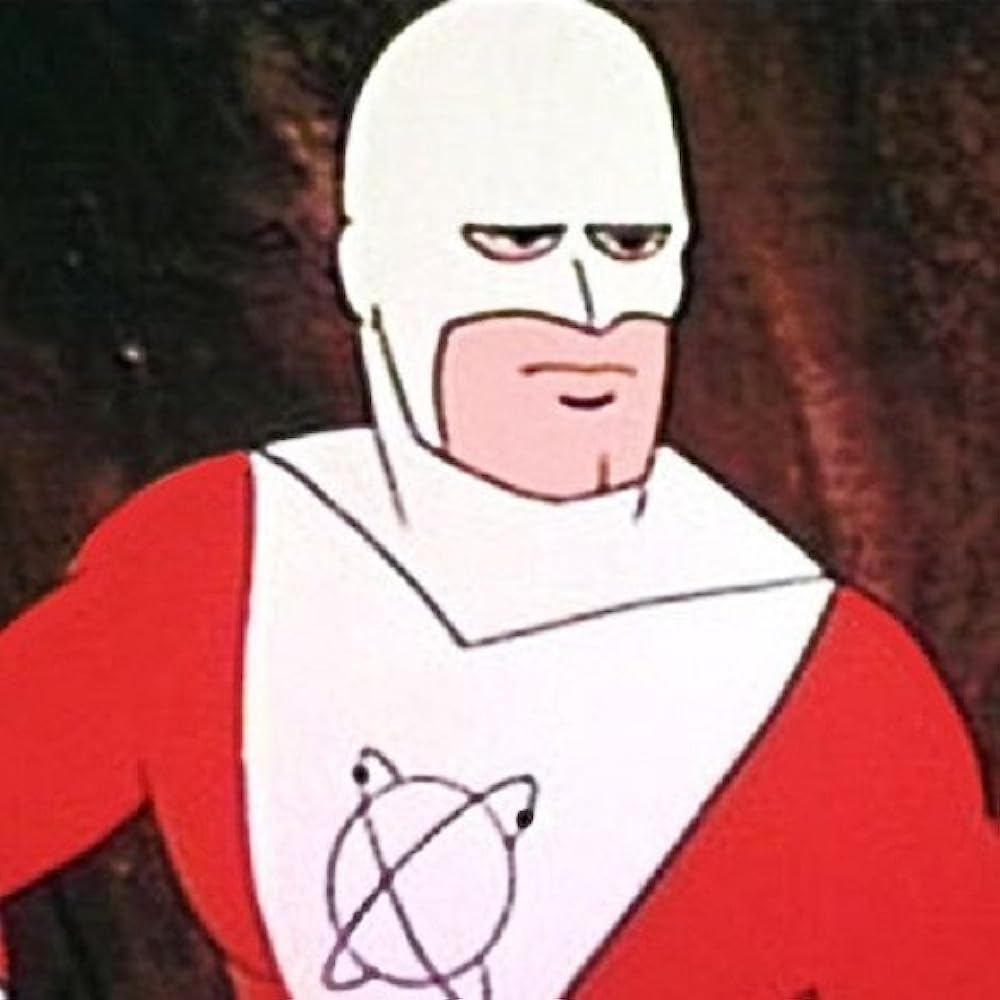
Birdman and the Galaxy Trio (NBC): It wasn’t just Marvel superheroes that Hanna-Barbera were bringing to screen in the late 1960s and Birdman and the Galaxy Trio was a follow-up to the previous year’s Space Ghost hit. Two shows in one, each episode featured two Birdman stories with a Galaxy Trio adventure sandwiched between them, all presented in a style that brought designer (and comic book veteran) Alex Toth’s vision to life.

Birdman is secretly Raymond Randall, a man given strange powers by the Sun god Ra and recruited by top secret organisation Inter-Nation Security to keep the peace worldwide. In addition to the power to summon energy shields and the ability to shoot blasts from his hands, Birdman can also fly thanks to wings that sprout from his back, and is constantly accompanied by his faithful eagle, Avenger. He later acquires a sidekick in the shape of Birdboy and takes orders from INS leader Falcon-7, directing him to thwart the evil schemes of Dr Millennium and the agents of FEAR.


Birdman and the Galaxy Trio, 1967

The Galaxy Trio, on the other hand, were three space-bound adventurers – Gravity Girl, Meteor Man, and Vapor Man – who patrol the stars in their spacecruiser Condor One, receiving missions from a man known only as Chief, and facing villains such as Computron, space pirate Kragg, and Titan the Titanium Man.

Birdman and the Galaxy Trio lasted for a single season of twenty episodes on NBC and was popular enough that Birdman got his own comic book from Dell Comics, issue two of which featured all four heroes teaming up for the first (and only) time. Much later, of course, Birdman returned as Harvey Birdman, Attorney at Law (with the Galaxy Trio making guest appearances alongside just about every other Hanna-Barbera character) and the lore continues to this day with Birdgirl, the semi-comedic adventures of the winged avenger’s successor.

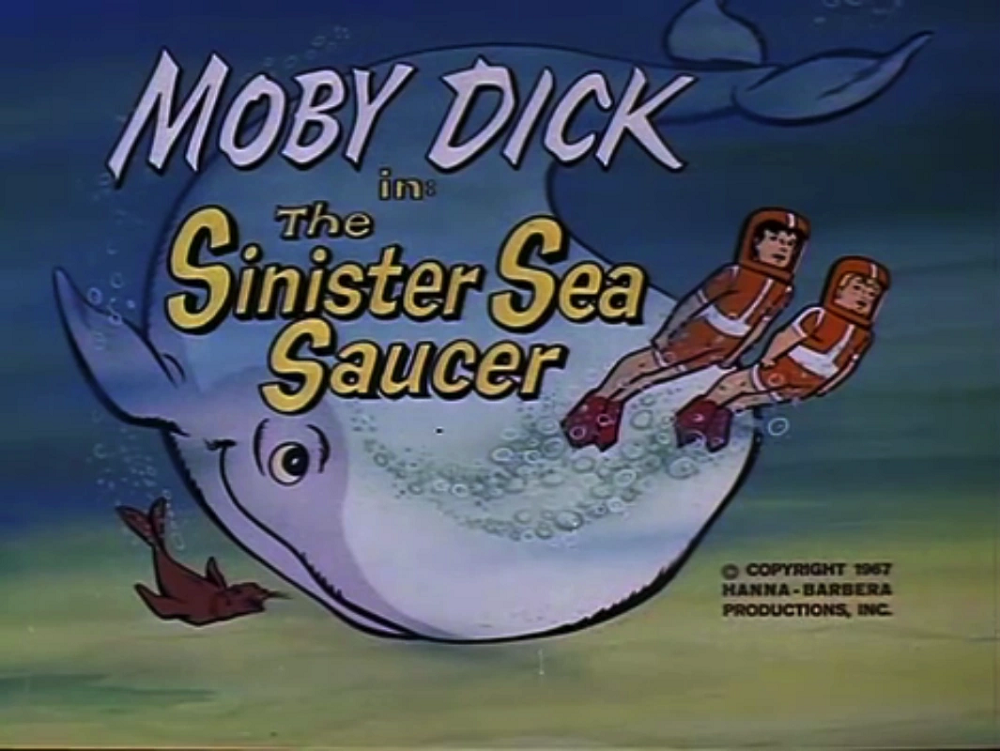
Moby Dick and Mighty Mightor (CBS): Needing to produce so many shows to satisfy demand can’t have been easy for Hanna-Barbera but luckily they had an ace team of imagineers with a boundless capacity for thinking up the wackiest premise. That can be the only explanation for Moby Dick, one half of the Moby Dick and Mighty Mightor half-hour, which starred the literary Cetacean in adventures beyond those which drove Captain Ahab insane.

The titular whale was paired with two young boys, Tom and Tubb, who he rescues from a shipwreck. Together (and along with the boys’ pet seal Scooby – two years before Scooby-Doo, Where Are You!), the pals face the perils of the two-thirds of Earth’s surface that are covered by the sea, including the shoctopus, the aqua-bats, the Eel Queen, and more.

Moby Dick and Mighty Mightor, 1967

Taking equal billing with the ninety-foot albino was Tor, a teenage caveman who rescues an ancient hermit and is rewarded with a magical club that enables him to transform into Mightor, a prehistoric superhero with super strength, the power of flight, and the ability to shoot energy blasts from his club. Mightor is accompanied by flying dinosaur pal Tog and encounters threats such as the Cave Creatures, the Serpent Queen, and an imposter Mightor who claims control of Tor’s village.

As with many of their shows, H-B produced just a single season of eighteen episodes of Moby Dick and Mighty Mightor – although there were two Mightor stories to one Moby Dick story each week – before their brains trust came up with yet another idea for their Saturday morning offering. Characters from the show appeared in episode seventeen of Space Ghost, aired the same week they debuted, and have continued to make guest appearances in comic books and comedy shows featuring the Hanna-Barbera adventure characters over the years.

Super President (NBC): Borrowing liberally from the origin of the Fantastic Four and the powers of the DC superhero Metamorpho, US President James Norcross is bathed in cosmic rays on a mission to space, gaining the ability to alter himself on a molecular level to any substance, including electricity. Becoming Super President, Norcross must live a double life as a superhero and the leader of the western world, his identity known only to his closest advisor…

Look, put to one side the fact that – despite wanting to hide the fact that he’s the President of the United States – he chose the name Super President, and appreciate this new twist on superheroes from the DePatie-Freleng studio, with Paul Frees doing double duty as both Norcross and the show’s narrator. The main show was paired with Spy Shadow, a Ted Cassidy-voiced secret agent with the ability to control his own shadow, debuting on NBC on September 16th 1967.

Super President and Spy Shadow, 1967

From the off, Super President attracted the attention of the Action for Children’s Television pressure group, who usually concerned themselves with the amount of violence found in Saturday morning cartoons. On this occasion, however, their contention was with the fact that the superhuman on show was the President himself, something they said was tantamount to NBC supporting totalitarianism.

It’s a shame that the controversy diverted attention from a show that, while silly, had its merits, an unusually original idea in a sea of cookie cutter superhero concepts. Thirty episodes were made, shown through to December 1968, and although there’s never been an official release, a thriving grey market kept the show alive during the 1970s and 1980s, until the advent of the internet meant that episodes are available to view on popular video sharing sites.

The Herculoids (CBS): Appreciating the creative freedom afforded by TV animation, and the lucrative financial rewards compared to comic book work, Alex Toth seemed to enjoy his time working for Hanna-Barbera. Although he continued to do comics work for the horror magazines published by Warren, it is creations such as Space Ghost and Birdman that continue to resonate, years after his death.

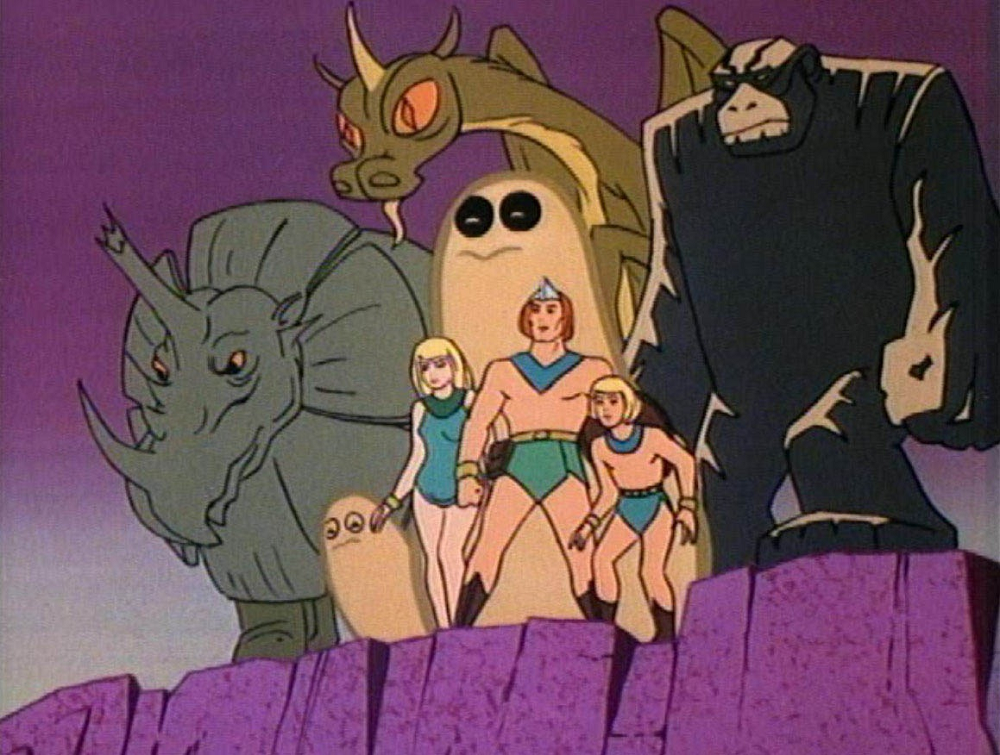
Created by Toth for the Fall 1967 season, The Herculoids mixed two popular tropes – dinosaurs and aliens – into a tale of a family of space barbarians fighting alongside their monstrous pets to keep their planet safe from invading forces of every conceivable type. The Herculoids of the title, the titanic defenders included Igoo the great rock ape, the rhinoceros-like Tundro, laser-breathing dragon Zok, and the blob monster Gloop. Gloop’s child Gleep was on hand to provide comic relief, interacting with barbarian child Dorno.

The Herculoids, 1967

Threats such as the Beaked People, space pirates, Andropon and his robot army, and the High Priest of Trax, all repelled successfully by our intrepid heroes across eighteen episodes (with two stories per episode). Hanna-Barbera – or really any – Saturday morning shows rarely got more than one season at the time and The Herculoids was no exception, finishing its run in January 1968 but enjoying syndicated re-runs alongside other H-B shows over the next decade.

In 1981, it was added to a Space Stars block that also included Space Ghost, Teen Force, and Astro and the Space Mutts, with eleven new episodes created for the run. The characters have returned periodically in other Hanna-Barbera productions, most notably the tongue-in-cheek Harvey Birdman series, and also made their comic book return in 2016 as part of DC Comics’ Future Quest series, uniting with other Toth-created heroes to save the universe once more.

Next time on The Telephemera Years: 1998 awaits, a very Strange World indeed!

Check out our other Telephemera articles:

The Telephemera Years: 1966 (part 1, 2, 3, 4)

The Telephemera Years: 1967 (part 1, 2, 3)

The Telephemera Years: 1968 (part 1, 2, 3, 4)

The Telephemera Years: 1969 (part 1, 2, 3, 4)

The Telephemera Years: 1971 (part 1, 2, 3, 4)

The Telephemera Years: 1973 (part 1, 2, 3, 4)

The Telephemera Years: 1975 (part 1, 2, 3, 4)

The Telephemera Years: 1977 (part 1, 2, 3, 4)

The Telephemera Years: 1978 (part 1, 2, 3, 4)

The Telephemera Years: 1980 (part 12, 3, 4)

The Telephemera Years: 1982 (part 1, 2, 3, 4)

The Telephemera Years: 1984 (part 1, 2, 3, 4)

The Telephemera Years: 1986 (part 1, 2, 3, 4)

The Telephemera Years: 1987 (part 1, 2, 3, 4)

The Telephemera Years: 1989 (part 1, 2, 3, 4)

The Telephemera Years: 1990 (part 1, 2, 3, 4)

The Telephemera Years: 1992 (part 1, 2, 3, 4)

The Telephemera Years: 1995 (part 12, 3, 4)

The Telephemera Years: 1997 (part 1, 2, 3, 4)

The Telephemera Years: 2000 (part 1, 2, 3, 4)

The Telephemera Years: 2003 (part 1, 2, 3, 4)

The Telephemera Years: 2005 (part 1, 2, 3, 4)

The Telephemera Years: 2006 (part 1, 2, 3, 4)

The Telephemera Years: 2008 (part 1, 23, 4)

Titans of Telephemera: Irwin Allen

Titans of Telephemera: Stephen J Cannell (part 1, 2, 3, 4)

Titans of Telephemera: DIC (part 1, 2)

Titans of Telephemera: Hanna-Barbera (part 1, 2, 3, 4, 5)

Titans of Telephemera: Kenneth Johnson

Titans of Telephemera: Sid & Marty Krofft

Titans of Telephemera: Glen A Larson (part 1, 2, 3, 4)

Titans of Telephemera: Quinn Martin (part 1, 2)

Titans of Telephemera: Ruby-Spears
 

[ENDED] Win Sci-Fi Action Film RESTART THE EARTH on Blu-ray

win restart the earth

Futuristic Chinese sci-fi action thriller Restart the Earth is out now on Blu-ray, DVD, and digital download, and we have two copies of the Blu-ray to give away! Just watch the trailer, read on, and enter below…

When a drug to replicate plant cells creates a sentient form of flower, the planet is over taken by plant life and humankind is depleted. A Chinese task force, a widowed father and his young daughter fight to survive in a mission to inject an antidote to the core of the plants to reverse their growth.

a Rafflecopter giveaway

Dazzler Media presents Restart the Earth out now on Blu-ray, DVD, and Download.


STARBURST Summer Gift Guide 2023

fathers day gifts

by Ed Fortune

Summer is here, and that tends to mean lots of Birthdays and special occasions. Events such as Father’s Day are a good excuse to give that special someone in your life a lovely geeky gift, though you don’t need a reason, and you don’t need to be related to someone to send them a lovely surprise. Let’s look at some of the lovely things you can spend your hard-earned cash on.

Original Stormtrooper Beer

Though not for everyone, a lot of us like a good drink. Stormtrooper Space Craft Beer is inspired by the iconic armour produced and designed by Andrew Ainsworth, and this beer from a Galaxy Far Far Away is officially licensed by his company, Shepperton Design Studios. They do a nice collection of drinks, from Galactic Pale Ale to Shadow Stout, as well as a variety of Stormtrooper helmet-themed goods. Only available in the UK.

Dungeons and Dragons Coffee

Coffee and D&D go hand in hand; if you’re pulling an all-nighter to finally defeat the Frost Maiden, you’ll probably want a lovely cup of coffee to keep you going. With names like Beholder Brew, Dragon Fire Roast Blend and Displacer Decaf, these are all fun flavours to add to the experience. Available with all the branded accessories you need so you can keep going before you take a long rest to recover your spell slots. 


Bruce Lee at Golden Harvest – Arrow Exclusive

Ten discs of 4K Ultra Bruce Lee action? Presented by Arrow Video, who always do superb work? In its own luxury box set with documentaries, as well as a hardback book and many photos, etc. How can you say no? This is a must-have and a very nice present for the Bruce Lee fan in your life. (Which is all of us, yes?)

 Wallace & Gromit Techno Trousers

Though aimed at kids, Build Your Own’s range of paper-based craft projects are likely to delight all ages. These ‘just complicated enough’ cardboard and paper kits required patience and a large table, and ended up with something rather fun at the end. In this case, the Techno Trousers from the Wallace and Gromit classic, the Wrong Trousers. Deeply silly, and yes, of course, it comes with its own Feathers McCraw.

Doctor Who: Serpent Crest (Tom Baker Signed Edition)

If you’re a serious collector of all things audio, you already have a collection of very special vinyl, and every big Doctor Who fan loves Tom Baker. Doctor Who: Serpent Crest brings these two things together in a rather lush collection. This full-cast audio adventure by Paul Magrs co-stars Susan Jameson as Mrs Wibbsey and Richard Franklin as Mike Yates. Featuring Tom Baker, David Troughton, Michael Jayston, Simon Shepherd, Terrence Hardiman, Joanna David, Sophie Ward, Andrew Sachs and Nerys Hughes, and original sound design accompanies the familiar Doctor Who theme from the BBC Radiophonic Workshop. And some very lovely looking vinyl, sleeve covers and notes.

Star Wars: Shatterpoint

Probably the most significant table-top miniatures release this year, Star Wars Shatterpoint is a miniature skirmish game that is both fun to paint and play. It’s a larger scale than your typical minis game, and the models are from the Clone Wars era of the franchise, which means we get Ahsoka, Anakin, Darth Maul, Asajj Ventress, some clone troopers, some Mandalorians and a whole bunch of droids and scenery. It’s fast to play and easily available.

Beadle and Grim – Magic: The Gathering Platinum Edition Set

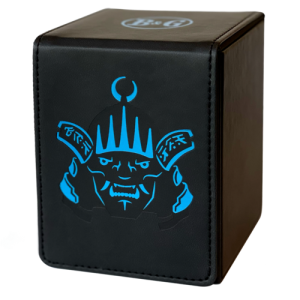
If you really, really like Magic The Gathering, take a look at Beadle and Grim’s luxury Magic the Gathering set, which contains pretty much everything you want to be inspired by Magic’s cyberpunk and sorcery Kamigwa setting. Including a backpack, card sleeves, deck boxes and setting material such as maps, art, plushies and a demon mask necklace.

Scaletrix batmobile

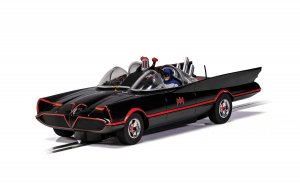
Scalextric 1966 TV Batmobile

Scalextric is great fun, and their TV and Movie tie-in cars are nicely detailed. Everything from Mr Bean to Knight Rider can be found in their new range. The Batmobile is especially joy-filled, featuring the classic 60’s rocket car and very goofy-looking Adam West Batman. 

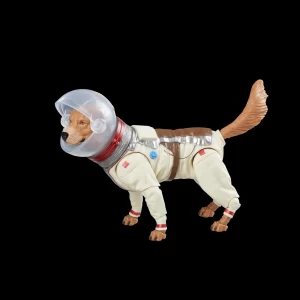
Cosmo The Dog

Marvel Legends Series Guardians of The Galaxy Volume Three

You’re never too old for action figures, and Hasbro’s Legend series are particularly nice toys. The most recent Guardians of the Galaxy movie has inspired some particularly nice models, which include Adam Warlock and an exceptionally shifty-looking Kraglin. One of these toys makes a lovely gift, and the entire series also gives you enough parts to assemble Cosmo, the best space dog in the world.

Robosen Elite Optimus Prime

The new Robosen Elite Optimus Prime is a highly advanced and innovative robot that can be programmed and will actually transform. Standing 16 inches tall, this toy is modelled after the original generation one toy. With 125 different sound effects, including performances from the voice of Optimus Prime himself, Peter Cullen. Though it’s not the Robo Butler we were promised by the cartoons, it’s still an awesome thing.