Neil Marshall | THE LAIR

by Andrew Dex

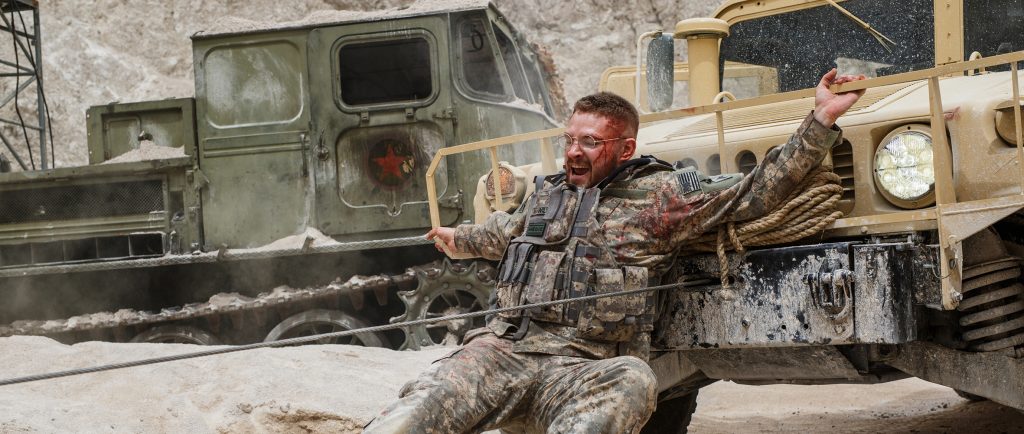
After a successful decade in the TV realm, taking on huge projects such as Game of Thrones and Lost In Space, director/writer Neil Marshall has now fully returned to the movie format, to bring us some more of his classic horror style! Collaborating with actress/writer Charlotte Kirk (The Reckoning) once more, Neil is back with The Lair, a monster-filled movie based in Afghanistan. Confirmed by Neil as a distant cousin to Dog Soldiers, The Lair sees Neil amp up on gore, action, and gallows humour like one-liners…

STARBURST: This is your latest collaboration with Charlotte Kirk. Can you tell us about how you first started working together and how this then led to the creation of The Lair? 

Neil Marshall: I guess we first started working together when we were just literally sitting around talking about ideas, stories we’d like to tell, films we’d like to make, and things like that. The first one that originated was actually the film that we did last year, a film called Duchess, which we’ve shot, but it hasn’t come out yet. Then after that, we wrote The Reckoning, and then we wrote The Lair. That came about basically because of COVID. At the time, we were stuck in LA, and a friend of mine approached me and said, “I know some friends who have a house in the desert; maybe we could put a little crew together and shoot something around this house in the desert? Would you fancy that?” And that came and went very quickly. It was a nice idea, but it never happened. But something stuck in my head like, “Well, during COVID, maybe we could shoot something in the desert? Maybe it could be like about some home invasion or something like that!” As always happens with me, what started out to be a very low-budget, simple idea of like a home invasion in the desert, suddenly became, “Oh, it’s in Afghanistan, and it’s Aliens! There are underground complexes!” I started throwing in ideas from other scripts that I had had for ages about this underground lair and stuff like that. Bit by bit, it just expanded into this B-movie, war movie, alien movie thing. So yeah, that’s how it came about.

Can you tell us about what Charlotte brought to The Lair as Capt Kate Sinclair, and what kind of military training she had to do for the part?

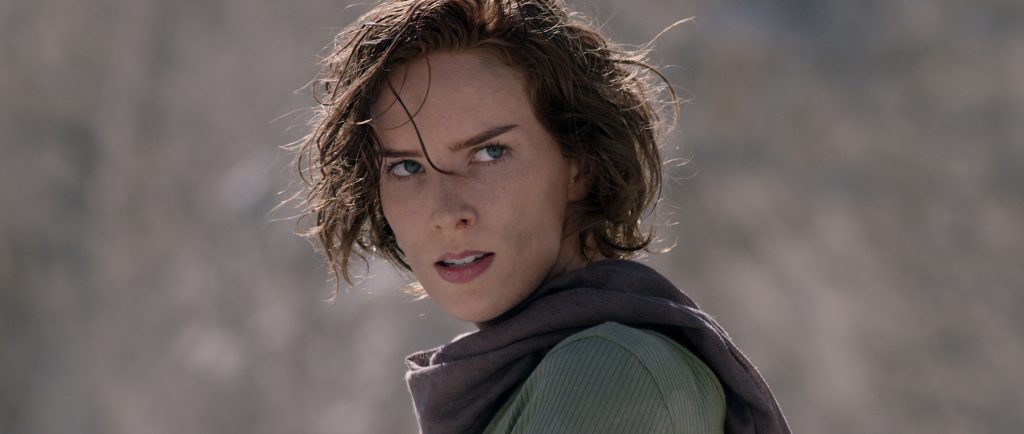
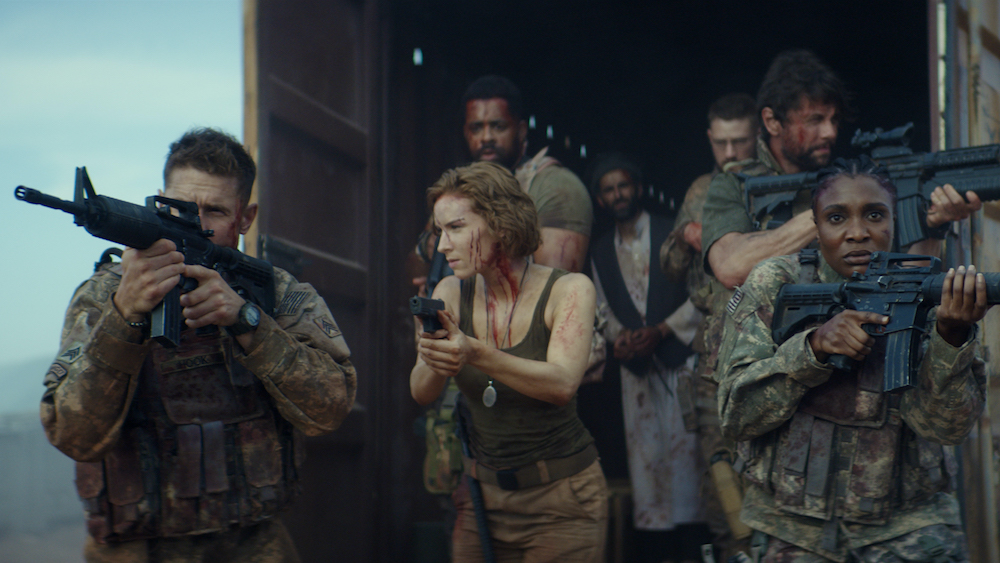
I was trying to get her to go up in a tornado, but we didn’t manage to arrange that, but otherwise, we found an RAF pilot who she did a lot of research with. She interviewed, talked to, and got a sense of the language and the whole vibe of the thing through that. Then we did a lot of action training for the film, fight training, and weapons training which is the main thing, because, as I discovered when making it, because it’s an all-British cast, not many British actors have experience handling firearms. You go to the States, and like every actor, at some point, has done a cop show, or a movie, or something like that. They’ve all handled firearms at some point. Over here it’s a lot less prominent in the industry, in some cases, it was an actor’s first time even seeing a firearm, let alone even handling one. So we had to go through some rigorous training with all of them, through like a boot camp of military training, and weapons training, and stuff. Charlotte did all of that as well. Obviously, she cut off all of her hair, stuff that actors do for their roles. Just to give a different look from The Reckoning and things like that. She really got 100% into the role.

The start of the movie instantly felt like The Thing, with the music and the way it was shot. Can you tell us about the movies that inspired The Lair, and maybe how you wanted the overall tone to feel for the viewer?

The overall tone I wanted to feel like a classic B-movie, I grew up with those great B-movies like Alligator, and later on, things like Anaconda and stuff like that. They’re great monster movies, but they’re just meant to be entertaining. They’re not striving for any kind of pretensions at all, they’re just meant to be fun and entertaining, and I love those kinds of movies. I thought that I just wanted to make a full-on B-movie, with monsters, and soldiers, and larger-than-life characters, with things like that in it. So that was kind of the origin of it. Then obviously, I’m inspired by movies like The Thing, certainly. Both versions. The original, and the Carpenter one, obviously the Carpenter one, is a lot darker and more serious, but the first one is like a classic B-movie in its own right. And Aliens, anything with soldiers, so, and I call it a distance cousin to Dog Soldiers because it kind of exists in a similar universe, with soldiers fighting monsters, it has that kind of vibe to it. So that was the thing. I wanted to make something that was just fun. My previous film, The Reckoning, had got bogged down in maybe being a little bit too serious, trying to tell a worthy story. I think it does tell a worthy story, but after doing that, I was like, “No, I just want to have some fun and give the audience some fun, let’s explode some heads and do lots of fights and explosions, and stuff like that.”
Neil Marshall | THE LAIR

In a similar vein to say, Aliens, where you’ve got Hudson and his humour-filled one-liners, there’s a similar feel with The Lair! How do you balance outrageous one-liners like that with a plot that is actually, truly terrifying?

I think the lines only work if they come from the character. Like, they have to emerge from the character because Hudson was that guy. So anything he said makes sense for his character, so it’s the same for this, and it’s the same for Dog Soldiers, and it’s the same for everything. It’s like, the best kind of humour in these situations emerges from character, and I find that people under extreme duress, and extreme pressure, sometimes their sense of humour inherently shows through it. It’s gallows humour, it’s trench humour, which I really love, and it’s a very kind of British thing as well. But yeah, that kind of gallows humour. I think it’s really funny. And then giving some of the best lines to the least obvious candidate, the Afghan freedom fighter guy who is like cracking some of the most choice lines.

Great! So can you tell us about how the look of the Ravagers originally came together, and what did you really want to see from them on-screen?

Teeth! Mostly. Yeah, I kind of wanted to. You take away things like eyes and stuff like that and just leave, essentially, teeth. They’re alien, so you don’t really know how they see or sense things around them. It’s like, “Let’s just leave that to the imagination”, and I thought, well “Let’s give them a kind of built-in body armour of, like, skin that’s as thick and as tough as Kevlar; we can shoot them a few times, and they’re going to get up, and come back again.” So there are a lot of elements behind the design process, like when the guys would design the whole thing, I was like, “Can we do this, can we do that?” There’s a specific phobia called trypophobia, a fear of textures that have lots of holes in them. You’ll see it online; it’s like certain textures that have lots of holes in them. People have a real phobia of it, and it makes them want to vomit. So I thought, how could we apply that to the creatures, so their face came from a thing, where it’s just like, loads of holes, and things come out of the holes, and stuff like that. So the design idea there was if they look so repulsive, then some people will have a physical reaction to it, so that’s pretty good.

You’ve always been a huge fan of practical effects. That is quite clear from the projects you’ve worked on. So, we have to ask, what do you love the most about working that way, and what has practical effects brought to The Lair?

It’s just that ability to have the creature in the room with you when you’re filming it, and interacting with the actors, interacting with the light, interacting with the dust, and the dirt, debris and god knows what else is flying around on set, and you get happy accidents. You get things happening that if you contrived it in CGI, then everything would be perfect. Whereas you get happy accidents of things bumping into things, reactions to things. Which I love about practical effects. It holds up on camera because it is there, it’s not faked in any way, and so I just kind of used the same technique that Guillermo does on his movies, where you do like 90% practical, and then enhance that practical with some CGI stuff, be it like blinks, eye movements, things like that. In my case, it was with the mouths, I wanted the mouth to open wider than it possibly could, so we did a few CG shots, where we extended the jaw and put an extra set of teeth in there and things like that. But those are the only kind of CG enhancements to something I’ve done practically on set. The other thing is, I don’t know how many ravagers you thought there were in the film, but we only had two suits. One hero suit and one backup suit. So we managed just to do editing, and a couple of visual effects duplication shots, to make it look like there were a lot more. When you find out that James Cameron only had eight Alien suits for Aliens, it’s like, right, you can work wonders!
You put this movie together in Budapest. Can you elaborate on what it was like to work there and how you went about making it feel like the middle of Afghanistan?

That’s the thing, you wouldn’t look at it and go, “Oh, that’s Budapest.” We just worked in Budapest on The Reckoning, so we knew the infrastructure there, and we knew there was a good kind of tax credit and incentive to go there. I was dubious at first because I was like, “Why aren’t we going to Morocco, or why aren’t we going to Jordan or somewhere like that.” They were just too expensive at the end of the day, so we went out to Budapest, I was a bit cynical, and we started doing a tour of all of the major quarries near Budapest. Outside of town, we found these really massive quarries, and in the summertime there, it was like 40 degrees heat anyway, so we had the sunshine, we had the heat, and we had the dust and the quarries, and then just with some very clever visual effects, set extensions were added into the surrounding desert for the shots that needed it. I mean, the actual fort, we built that on top of a hill, next to a quarry. It was surrounded by green fields and things like that. In the movie, we managed to make the few shots that you can see in its situation. We replaced all of that with desert. These visual effects guys are phenomenal. I don’t even ask how they do it, but if it looks good, I’ll take it!

What was that particular scene when the team are examining the Ravager like to work on, and is there anything special you did to capture it?

I don’t know if I’ve seen many films like that, but at some point, I just thought, “Wouldn’t it be awesome if this Ravager that was there with its guts hanging out, suddenly woke up, and attacks them, right when you least expect it.” So I thought that would be a lot of fun, and then when we shot it, we ran it several times, it was absolutely hilarious, that moment when it gets up, and everybody is running, diving, bumping into each other, screaming, and shouting. You’ve got somebody trying to hit it and blow it up, stuff like that. We ran that as a master shot from a few different angles. Each time it just got more and more hysterical and hilarious. I wanted that energy in the film; I wanted that, from going into a very quiet scene, as you said, this is one that very much is a homage to The Thing, like the autopsy scene, where they’re pulling its guts out, and all of this stuff, they think “It can’t be alive now” and then boom, it suddenly comes alive.

And going on from that, and this might be a tough question, but what was your personal favourite scene to put together in The Lair, and why?

Well, I do like the scene we just spoke about. It was a lot of fun. I kind of liked the madness in the elevator at the end because it was an idea I actually conceived of for The Descent: Part 2, which got rejected for budget reasons or whatever. So I kept this idea in the back of my pocket of being stuck in an elevator that is hooked up to the winch on a car, and then the elevator gets stuck, and it drags the car into the elevator shaft, and everything is kicking off in the elevator before the car crashes down the elevator shaft, and I thought that that was a lot of fun. I just like that idea of like lots of different things going on, and one thing leads to another, leads to another, etc.
You and Charlotte have a couple more movies coming up together. At this point, is there anything you can tell us about these upcoming projects?

So yeah, we shot Duchess last summer, it’s all finished, and it played in Cannes. We’re just looking for a distributor on that one at the moment, that’s a violent gangster movie, and then we’ve just finished filming a thriller out in Malta. It’s like a slasher movie, an erotic thriller kind of thing. So we’ve only just finished filming that, and we are editing that at the moment.

THE LAIR comes to Blu-ray, DVD, and digital on July 17th

Bonnie Discepolo | HYPNOTIC

Bonnie Discepolo | HYPNOTIC

by Andrew Dex

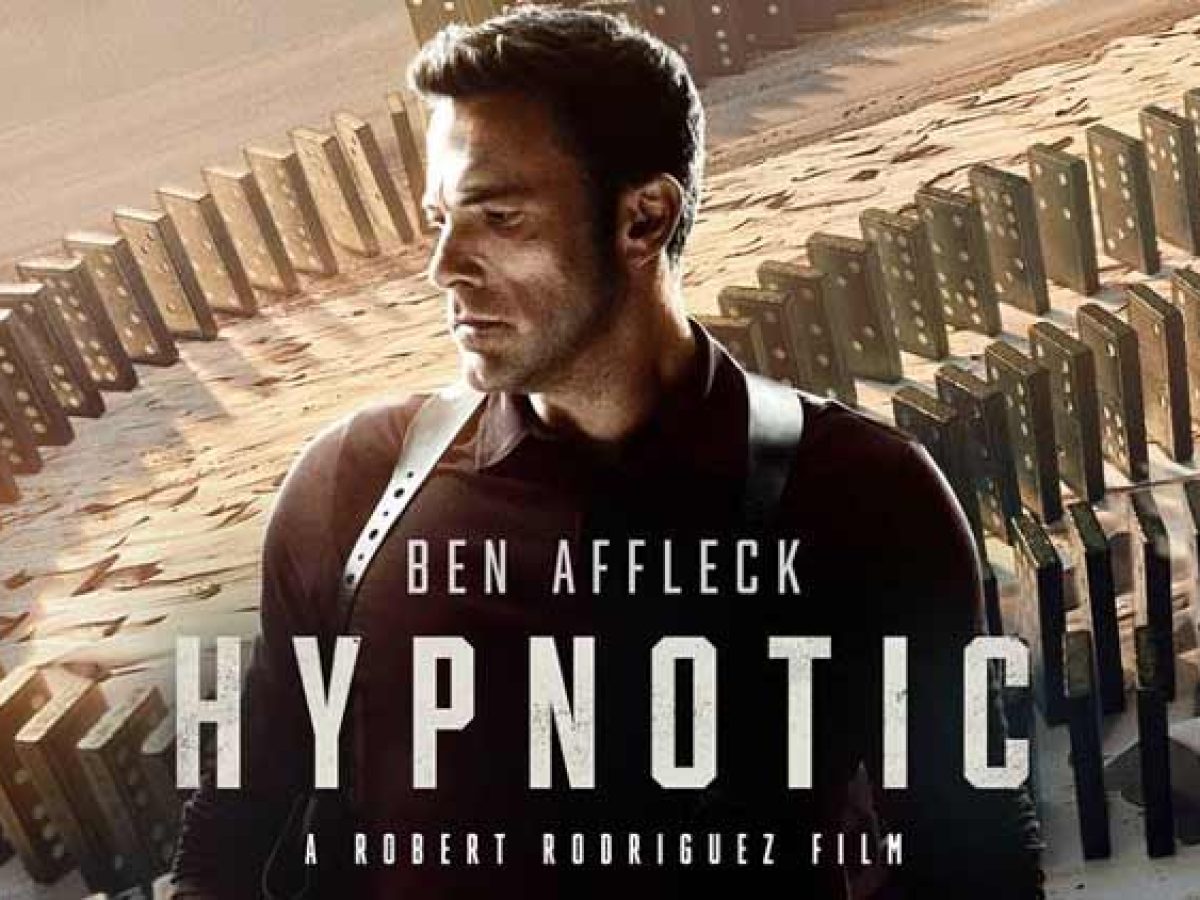
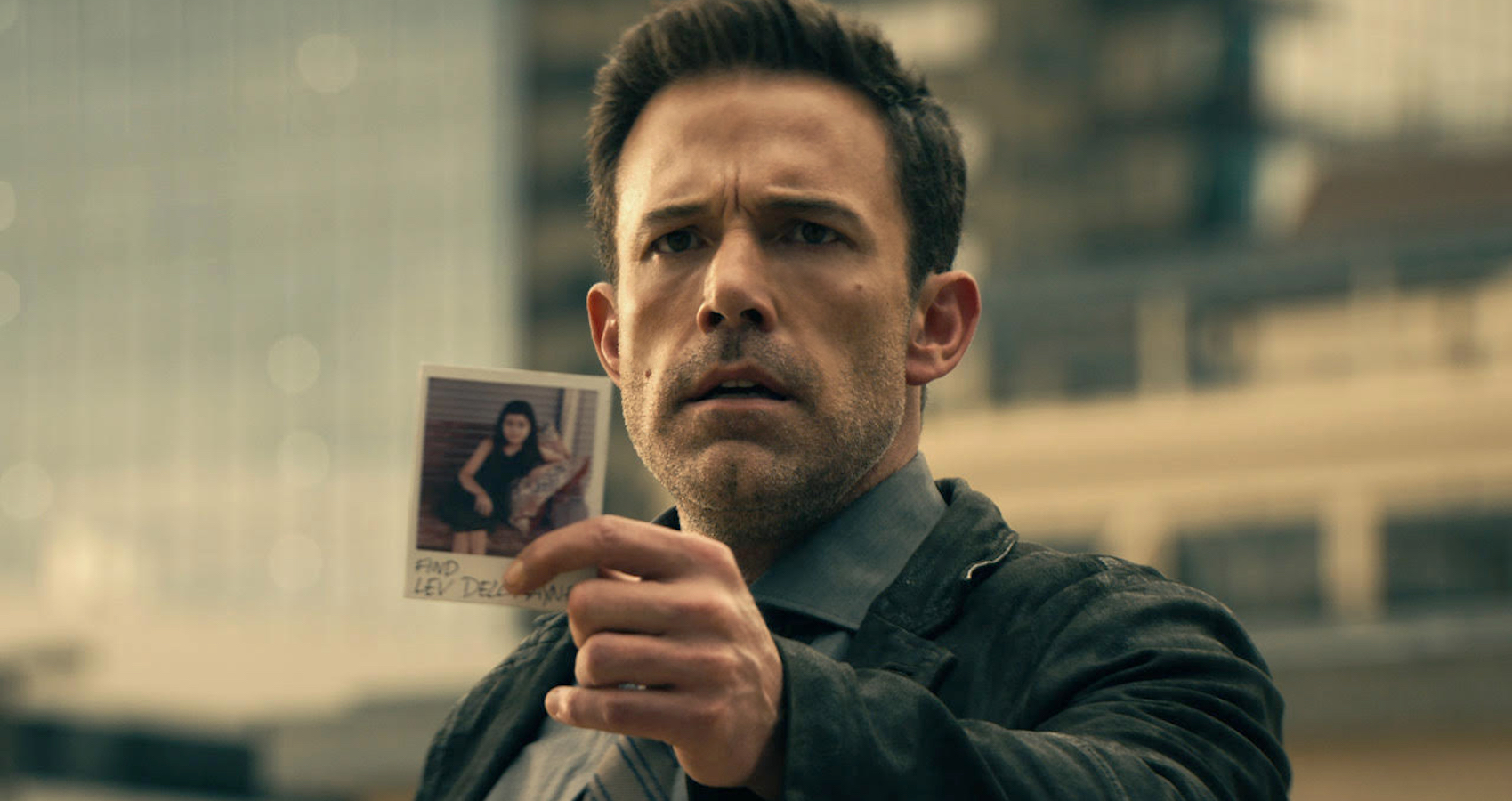
Based on the character of Danny Rourke (Ben Affleck), Hypnotic tells the story of a Detective struggling to find his daughter. However, not everything is as it seems in this sci-fi trip, and its constant twists and turns are going to pull you in! STARBURST talks with actor Bonnie Discepolo to find out what her action-packed and hypnotised style sequence within Hypnotic was like to work on alongside William Fichtner and writer/director Robert Rodriguez…

STARBURST: What attracted you to working on Hypnotic, like, what stood out the most to you in the script? 

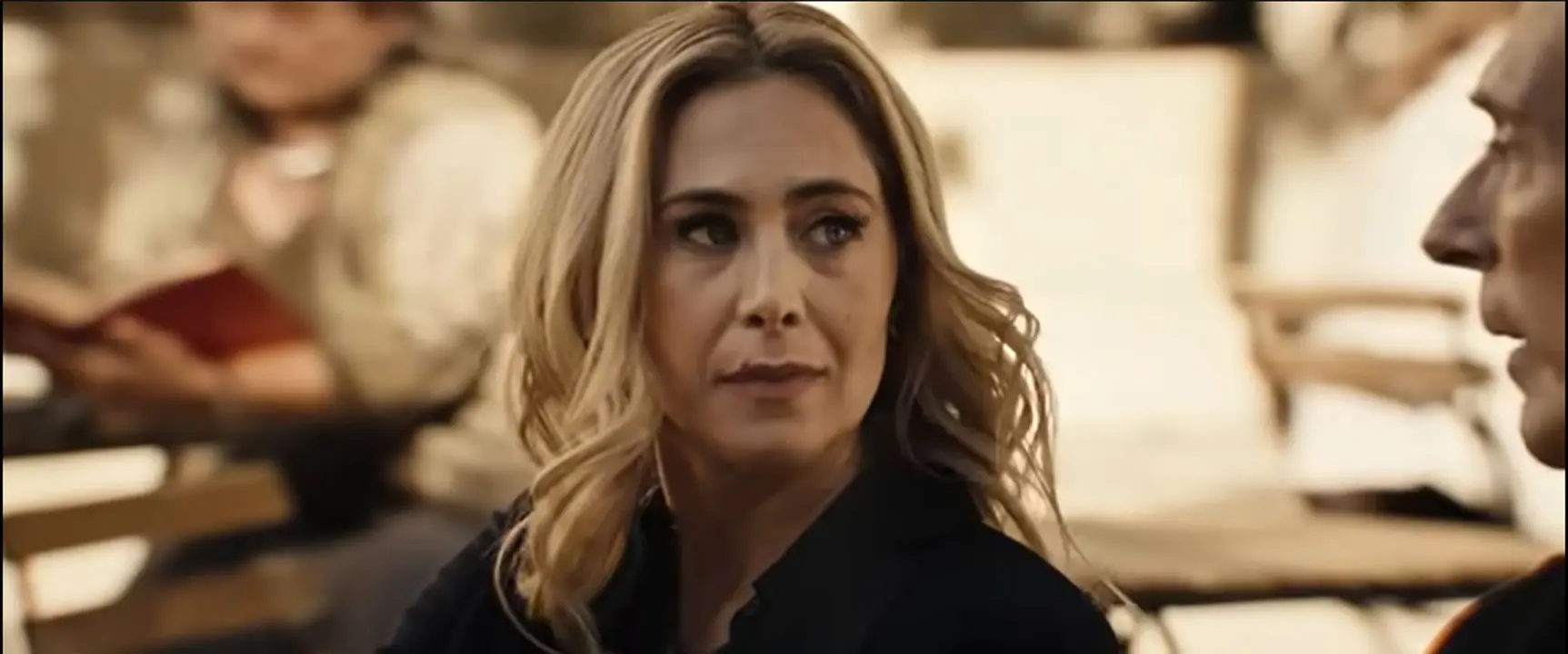
Bonnie Discepolo: So, I actually have known Robert since 2017, when I was one of his directing mentees on Rebel Without A Crew, the series. He had a TV show where he let five directors, first-time filmmakers, make a feature film in two weeks, for seven thousand dollars. The same way he made El Mariachi. So at that time, Robert was my mentor, and I kept in touch with him over the years, and during the pandemic, he was making Hypnotic, and I knew that it was a big action thriller with a movie star that had guns and special effects, cars exploding, and helicopters, and I wanted to see the indie, low budget film-maker Robert make something like that. So I actually went to Austin, originally just to watch him make it, and I was there, observing him as a director, and one day, the actress that had the role which I now have tested positive for COVID, and Robert mistook me for her, and he said “Oh, wait, what are you doing here? I thought you had COVID?” and I lowered my mask because we were wearing masks at the time, and I said “Robert, it’s me Bonnie!” and he was like “Oh, my gosh! We have a major emergency, the actress got COVID, but you’re an actress, do you want to audition?” and I was already there, watching, and I’m in my hoody, in director mode. He was like, “Yeah! Audition! Let’s do it right now, today!” and so I immediately went from watching the action to Robert auditioning me, and there was no question the second he said, “OK, so here’s the thing, I just want to tell you about what you’re going to do, and what this role is. You’re acting, but there’s action, there are stunts, you are going to be wandering into traffic, and there’s a lot of stuff! Do you want to do that?” and I said, without any hesitation, “Absolutely!” The opportunity to work with Robert, William Fichtner and Ben Affleck that’s what attracted me!

And, what do you think the idea of being hypnotised brings to a movie, since anything could happen, because William’s character, Dellrayne, was so powerful? You just really didn’t know what was going to happen next! Which is brilliant.  

Yeah, I think it does exactly what you’re saying, that anything can happen. I was talking to my dad about it yesterday, and he loves the movie, and he said the thing that he loves about it is that he watched it three times, and he feels like each time he watches it, he has a completely different perspective on what’s happening, and I think that’s the coolest thing about the script because, on the first watch, you think “Oh, this is a fun action movie! Where there’s a hypnotist, and Ben Affleck is up against him.” And then, with each watch afterwards, I think you get a completely different view of what’s happening. I have now watched it, I think, five times, and I never watch movies I’m in that much, but with this one, I’m like, oh, what’s Alice Braga’s character Diana doing? What’s Ben Affleck’s real journey? It’s got so many layers that it feels like each time it’s really fun.

You share a scene with William Fitchner, so can you tell us about what he was like to work with and what he brought to your sequence in particular?

William Fichtner is a national treasure. He is a worldwide treasure! He is my absolute favourite person that I have ever worked with. I can’t say enough good things about him, but I got to the trailer the first day, and he was in hair and makeup. I walked in, and he knew that my character had been replaced, and he walked right up to me and he said, “Hi! I’m Bill. I hear we have this scene together? That we are shooting tomorrow. Would you like to rehearse?” and I was like “Yeah! I would love to rehearse.” The day before we shot that scene, we were doing stuff that was mostly with Ben Affleck, so Ben was on set, and Bill had to be in the background, but he wasn’t doing a big acting scene, so every time he was off camera, he was pulling me aside, saying “OK! Let’s do our scene again!” and the scene that we actually had in the film, was much longer, it was this two-page scene, and we really talked about a lot of stuff, and so we rehearsed it a bunch of times. It was such a fun story because Robert had told us that the scene we were doing was the story that Quentin Tarantino had told him, and so Robert said, “Quentin, I’m stealing this story. I’m going to put it in my movie!” So Bill and I kept rehearsing, and it was just the most fun, the most present, the most exciting. He was so engaged we had a ball shooting the scene. I wish you could see the whole thing. I watch it now, and I know that for the pace of action, it doesn’t make sense to have a big two-page long scene where people are just talking when you’re in the middle of that action, but I think it was a great scene.

Going on from that, can you tell us about what your whole sequence was actually like to put together after your encounter with William because it looked quite crazy? There were cars crashing in the background whilst you were hypnotised? It looked like it took some time to put together. 

Yeah, the whole sequence was a really huge process. We shot just that bank heist section for six, maybe seven days. It was a really big piece of the movie, and so the inside of the bank took two days, and then the outside of the bank, where William is hypnotising people, where the bus is crashing, where the other cars are crashing into each other, just that section took five days. And so, it was a full day of set up, a whole day of the scene on the bench with the hypnoses, and then three more days of action and stunts. So one day with the bus, one day was the car crash and then the fire hydrant, and then we had a whole final day just for the explosion. It was a team of 100 people. There were special effects people. We could only do the car flipping once, so everything had to be orchestrated perfectly. There were four cameras and a huge stunt team. Everybody else that was in the movie there, they are stunt actors. I was the only one in the middle, and they’d be like, “You’re a real actor, are you OK with this?” I was like, “I’m fine, just don’t hit me”.

Due to COVID, your filming locations changed a little bit, can you tell us about where your sequence was eventually shot and why that location worked so well for Hypnotic? 

Yeah, so we shot the whole movie in Austin, Texas. Prior to my involvement, I think there were two other locations that the film was supposed to shoot in, and then due to COVID it got shut down twice, and then finally when it actually went into production, Robert said he lives in Austin, he shoots in Austin, he’s got this studio there, he can make it at a smaller budget, he can make it work. So that’s when they took it to Austin, which made it so amazing because it was just such a classic Robert Rodriguez experience.

And didn’t he have this idea in mind for a very long time?

So while I was there, it was amazing because I had originally gone to observe him, and I was like, “Robert, I want to see you do this big thing” so every time we weren’t actually shooting, he’d pull me aside and be like “Let me show you what I’m editing here. Let me show you how I’m shooting this!” So I got to have a much more behind-the-scenes experience, and what he said was that twenty years ago, while he was in the midst of doing the Spy Kids films, he had this idea that he wanted to do a Hitchcock thriller, and he was like “What would a Hitchcock thriller be? Start with one word?” and he had the idea of Hypnotic. Then he was like, “OK, but what would it be?” so that’s what he told me, that it all came from that idea of doing a homage to Hitchcock.

How exciting is it to be in a movie with Ben Affleck?

I still can’t believe it. Right now, I’m with my dad and their dogs in the country, and I’ll just be walking the dogs, and then at some point, it hits me, and I think, “Wait a second, I was just in Cannes, in a movie with Ben Affleck! What is happening!” It is mind-boggling, and it feels like it’s someone else’s life. I’ve been at it for a while, I’ve been acting, I’ve done some TV shows, and some indies, but I was sort of like, “Yeah, that giant movie star thing, well, it’s probably not going to happen” I have so many friends who haven’t done that and are very successful actors, so it wasn’t even in the realm of my dreams, and then I didn’t know Ben Affleck was in it. Everything was very top secret, so when I got to set, and it was a scene with just me and Ben, I was like, “What’s happening!” it was amazing, and Jennifer Lopez is so beautiful.

And as a director yourself, what does that bring to your acting career? Like, do you maybe you see scenes and prepare for them differently because of your directing history?

You know, that’s a great question. I didn’t realise until I started directing that I had been looking at acting completely the wrong way, and I sort of think that the reason I’m working so much all of a sudden is because I started directing. When I went to acting school, and I went to a conservatory, I’d be like, “OK, this is my scene, this is my character, what do they want me to do?” I would approach it from that perspective, and now that I look at it as a writer and director. I look at a scene, and I say, “Huh, OK, why did the director choose to make that character? Why does the writer put that scene in that moment of the film?” and I look at it from a whole story perspective, and I think “Well, this is page 30, this is about my protagonist, this character exists to do something to the protagonist”, so it’s taking myself out of it, and now I look at it from a whole storytelling perspective, and I’m like, how can I serve the story, what can I bring that impacts the character in the most profound way, and it has nothing to do with my acting skills, it’s really much more about serving the story.  

So, how crazy has it been to work on Shazam! Fury of the Gods, Guardians of the Galaxy Vol. 3, and Hypnotic in the same year, and what do you think you’ve learnt the most from this part of your career?

It’s no big deal; it’s very chill! A really normal year! It’s been a dream come true. With each step of the way, I keep pinching myself, saying, “When am I going to wake up from this dream!?” where I’m getting to do everything that I’ve ever wanted to do in one year. It’s been amazing, I just feel incredibly grateful. I keep running around every set I go to now, being like, “It’s a miracle!” and people say, it’s not a miracle, I auditioned, and I got the job, and I’m like “No, it’s a miracle!”

What’s next for you as an actor?

That’s a great question. So you may have heard that Hollywood is on strike, so there’s not a ton on the horizon for most people. Luckily, I shot a great film in the spring with Kathleen Turner and this new actor Sekai Abenì. It’s a very cool modern noir, so that will be coming out, and I’m very grateful for that. In the meantime, I’m visiting family, and I’m writing a script, and I’m hoping that they make a good deal for the writers, so we can all get back to work.

How would you describe Hypnotic? 

It’s the craziest thing they’re going to see all year! If you, like me, are bored of movies where you know what happens from watching the trailer, you know exactly how it’s going to go. You sit down for Hypnotic, you lean back, and you say, “I have no idea what I’m in for” With every ten pages, it shifts, and you think “Wow, I didn’t know we were going there!” it just keeps happening. So if you just want a wild ride full of surprises, then I think you will love Hypnotic.

There are so many twists and turns within this movie!

That was the other thing about it. There are no moments of leaning back and saying, “OK, we are going to watch for a couple of minutes before it changes again” It’s just like “Change, change, change!” There’s nothing like it!

You can rent Hypnotic via digital platforms right now.

Stacey Thomas – THE REVELS

Stacey Thomas - THE REVELS

by Ed Fortune

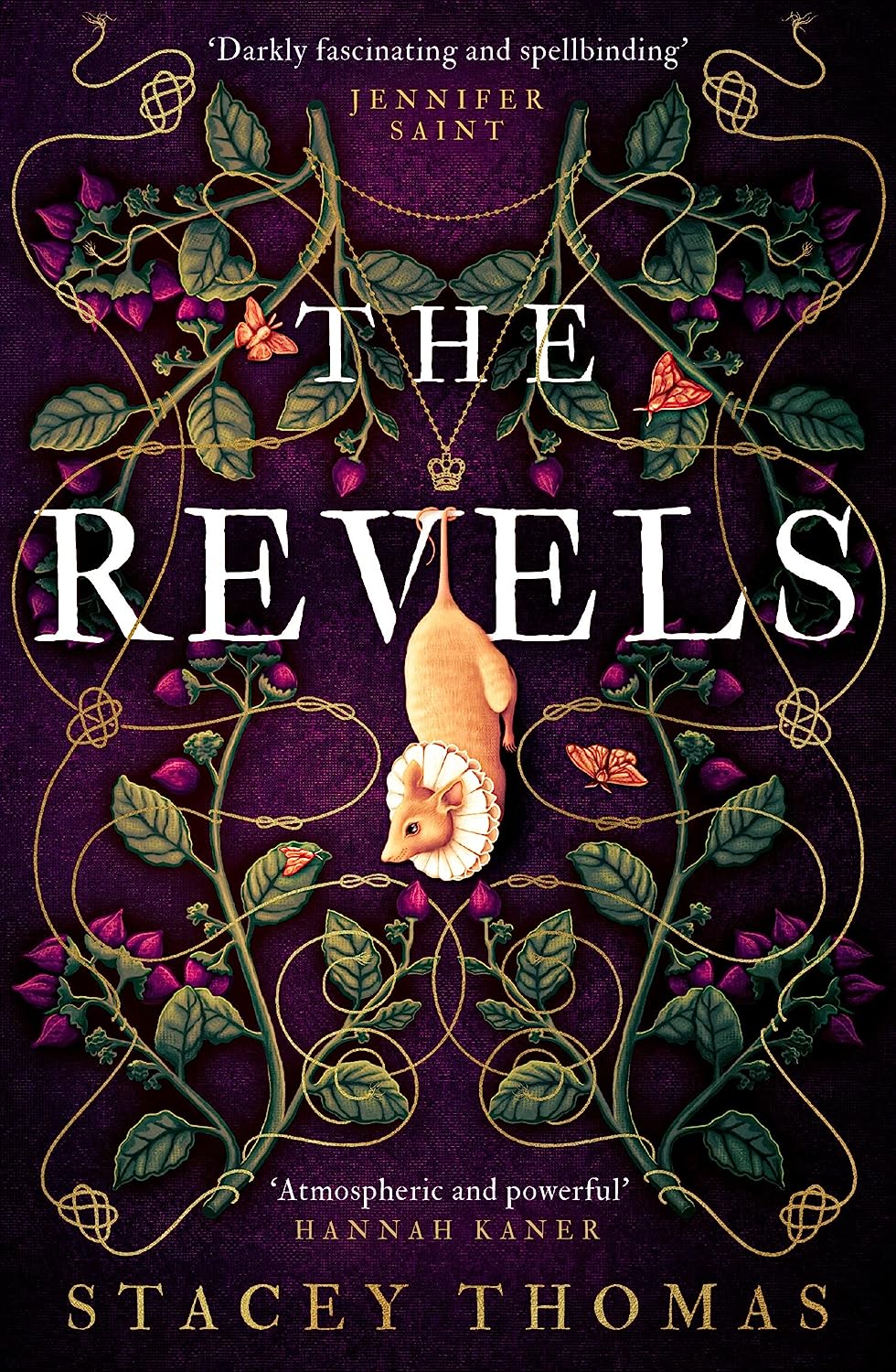
Stacey Thomas is an alumna of the Curtis Brown Creative Novel Writing course, where she wrote her debut novel, The Revels, which mixes historical fiction and witchcraft to great effect. The Revels won HarperCollins’ inaugural Killing It Competition for Undiscovered Writers and comes out this month. We caught up with her to find out more…

STARBURST: What’s the elevator pitch for The Revels?

Stacey Thomas: In a country torn apart by war and rumours of witchcraft, Nicholas Pearce hides a secret: the dead sing. He hears their secrets, but will he find the courage to speak up to save innocent lives, even if it means putting himself in great danger?

What was the hardest piece to write?

The first line! The Revels was my first attempt at writing historical fiction, a genre I’ve always loved reading but has always intimidated me as a writer. Initially, I struggled to find my way into the story. It wasn’t until I came up with the first line that I had an idea of who my character was and the story I was trying to tell.

Why this particular period of history?

The Revels is set during the English Civil War, a time when the country was divided between King and Parliament. The war resulted in political and social upheaval, which proved a ripe environment for the witch persecutions and the events of my novel.

Do you have other books planned in a similar vein?

My next book is set in 1950s London, but similarly to The Revels, it has a supernatural streak running through it.

Why are we so fascinated with talking to the dead?

I think because there’s still such a taboo around death. I’ve always found death frightening, as there’s nothing more scary than having to come to terms with the end. That’s probably why talking to the dead is so fascinating, as it’s the promise of something more.

Why witch hunters/witchcraft?

I’ve always been fascinated by witchcraft and real-life witch hunters, including Matthew Hopkins, Witchfinder General. He was only in his twenties when he took up witch-hunting, and I can still remember my shock when reading the number of witches he condemned to death. The more I read about Hopkins, the more I kept asking myself why someone would choose to become a witch hunter. The Revels is my attempt to answer this question.

What character is the most fun to write?

Grace was probably the most fun character to write. I love morally grey characters, and I had a lot of fun describing her interactions with the other characters, especially her withering put-downs.


Which character seriously needs to have a word with themselves?

Definitely Grace, and also the witch-hunters Rush and Clements, who covet power even though the price is condemning innocent people to death.

What would you say the biggest influence on this book is?

The Revels is very much influenced by King James’ whose obsession with the supernatural stems back to 1590 when his return to Scotland with his wife Anne of Denmark was beset by storms. The delay was blamed on witchcraft, and James personally interrogated the suspected witches in what would become known as the North Berwick witch trials. My book takes a slightly speculative approach to history by having King James establish a commission for witch-hunters, the legacy of which is a major subplot in my book.

Which writers inspire you?

I’ve always loved historical fiction and stories with supernatural/speculative edges. For those very reasons, the writers I’m most inspired by are Octavia Butler, Susanna Clarke, Hilary Mantel, Maggie O’Farrell and Sunyi Dean.

What tropes do you personally avoid the most?

Oooh! I don’t have any tropes that I avoid as I feel that the best (and most challenging) part of writing to a trope is doing it in a way that feels fresh and surprises your readers.

How would you describe your process?

As a new writer, I feel like I’m still trying to find a process that works for me, especially since I write around my day job. I find planning helps as I’m more productive when it comes to writing days. Plus it reduces my tendency to procrastinate.

If we like this book, what other books do you recommend?

If you like The Revels, then I recommend Bridget Collins’ The Binding, Stacey Halls’ The Familiars, and if I might be so bold, Susanna Clarke’s Jonathan Strange & Mr Norrell.

The Revels can be ordered here.


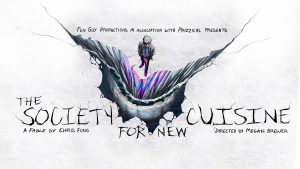
Chris Fung – THE SOCIETY FOR NEW CUISINE

Chris Fung - THE SOCIETY FOR NEW CUISINE

by Ed Fortune

Chris Fung is an actor, singer and writer whose credits include Frozen The Musical, Cyrano de Bergerac, The King and I, and Evita. He recently teamed up with the director Alex Sims to create The Society for New Cuisine, a one-person satirical show with the sort of vibes that will appeal to STARBURST readers. We caught up with him to find out more.

STARBURST: What’s the pitch?
Chris Fung: Guided by a shadowy organisation, a rational man processes his existential crisis. In his search for satisfaction, he pursues some unusual appetites.

Why are we so fascinated by the act of eating?

In a capitalistic society, we eat. It’s all we do. And it’s all we’ve done for a long time. It’s a deep theme in mythology. I’m talking Joseph Campbell’s Hero with a Thousand Faces, The Brothers Grimm, Ovid’s Metamorphosis, even the fundamental tenets of Buddhism, Christianity and Islam, Charlie Brooker, Harlan Ellis, Lovecraft – whether it’s big bad wolves, or bodies of Christ, or the beautiful meditation that is Ramadan. We’ve all got food on the brain. But what are we really hungry for?

This is really relevant now in the wake of the big quit/great resignation, which saw 20-25% of US/UK/AU workers leave their jobs over 2019-2022. This hunger is echoed in Tangping, a social movement in China where millions have left high-paying, 6 figure jobs to go live in rural villages to chill and earn much less. Why?

Globally, everybody is asking the question of why we cut off parts of ourselves to feed to others. If our lives are about eating, when will it be our turn? Why are we allowing the system to eat us?

What does theatre bring to this story that other formats don’t?

This is an excellent question and the very first that any dramaturg should ask. Why is this story, not a YouTube video, a novel, a three-hander, a TV series, or a comic book? ‘Because I Want It To Be’ is a cop-out. As is, ‘One person shows are cheaper/more pragmatic.’ There’s also the much harder to acknowledge ‘Because I want to show people how great I am.’

I think that all one-person shows fundamentally explore the disconnect of one person from a group.

It is always a collective audience against the singular performer. You are cut off. Removed from the herd. One-person shows are about exploring this isolation, so the themes tend to revolve around more selfish emotions, things you can’t explore politely unless you are alone.

It’s interesting to me because you have a bunch of practical problems: ‘how do you flit between direct audience address, narrating the story, commenting about different characters, being different characters, holding a dialogue?’ When you only have one voice and one body, how do you vary the flow and pace and rhythm so that there is enough interest for an audience to stay engaged? What do you want the relationship with the audience to be?

The most interesting question of all in the format to me is ‘how do you write for subtext in a 1-person piece? Is it in the unreliability of the narrator? The things that they can’t, won’t say, but that are crystal clear if the audience is paying attention?

People should only choose theatre because there is something ephemeral and tangible and real between the words. Theatre is about the shared humanity of letting the air charge with spirit. It is the most visceral of the arts, and it is arguably the artistic format most about the now.

There’s something beautiful in the idea that theatre is exclusive. You have to have been there. You have to be in one of these 60 seats now. And when it is over, the moment is too. This is also true of the monumental amount of work that goes into beautiful food. Years of work, gone in 5 minutes.

Why this sort of horror story?
Horror is only scary if you can relate to it. If you can’t see yourself, it’s not scary. Horror is based on empathy. The fundamental concepts in our piece are right there in the world. Since Covid, the world is more disconnected and apathetic. We are all fundamentally questioning ourselves. Hopefully, our team has found a cool way to express it in our piece.

Why the Edinburgh Fringe?

We’ve been cooking this one up for 2 years now and have had feedback from some world-renowned creatives. Everybody has had a bunch to say, but one piece of feedback comes back, which is our style is pretty unique. I’d say tonally, the closest match might be Mallatratt’s adaptation of The Woman In Black, but this stuff is never exact.

The Fringe is the biggest and noisiest arts festival in the world.

Our hope is that in that noise, we can find our people. I’m looking to connect with the next generation of sharp-toothed, horizon-breaking creatives who are interested in the same things I am. Who is unafraid of different? I want to show them my cool thing, and then talk about their cool thing, and then go off and maybe make some cool things together later.

They are thousands of shows at the fringe. Why should STARBURST readers seek this out?

Because you are curious. Because we have put a lot of thought into this. Because you wonder if we might actually be good. Because you are hoping that we are. Because it might be fun.

How similar to is this show to, say, Frozen and The King And I.

Musicals like Frozen and The King and I are limited in what they can express because the format is limited. There are simply fewer words per minute when the majority of a piece is sung. This means there’s limited time to explore, you have got to make your point, and you have to move quickly, so how you spend your time is important.

They also say that about the one-hour format of Fringe Festivals.

So we, too, have clashed against this limiter. We have some larger concepts to tackle, but we also want to make sure that there is room to breathe and wander. I wonder how we will have done. If you’re too simplistic, there’s no meat. If you’re overly dense, there’s no room for empathy.

I think Frozen and The King and I found good balances. But balances shift, and much of it has to do with writing towards a specific audience.

How would you describe your process?

Well, for the past month now, I’ve been posting a little diary on my Instagram that talks about exactly how we have made the piece, from the start all the way to get up to Edinburgh Fringe. All of it, the ugly parts, the easy parts, losing collaborators, being ignored, the insights of established creatives, huge pushes from unexpected directions, hard-won recognition, the little triumphs, the gradual build. Basically, what the industry and Fringe ecology has been like through the stupidly small lens of my attempt to make a play, warts and all.

If you want to check that out, head on over to my insta.

What media are you currently enjoying?

I’m a physical pages person: Goscinny and Uderzo, Murakami, Yongey Mingyur Rinpoche, Butterworth, RF Kuang, Gaiman, Cixin Liu, Sarah Kane’s Sad 5, Bartlett and Crimp.

Four things that recently stole my breath: Simon Stephen’s gorgeous Seawall, Tim Crouch’s genius interrogation of form in An Oak Tree, and The Inheritance by Matthew Lopez. But the most heart-rending and human end to Act 1 in a play I have probably ever read, The Deep Blue Sea by Terence Rattigan. Some plays have too much humanity.

Things are too real. Those are the things worth fighting to find, I think because that’s where you find little bits of yourself.

The Society for New Cuisine runs from August 3rd to the 13th, and again from August 15th to the 27th, from 18:40 at Venue 61, Underbelly Cowgate.
You can book tickets here
and the show’s linktree is here.


Never Tell Me the Odds: The 7 Best Casino TV Shows

7 Best Casino TV Shows

by Ben Bradley

The world of casinos is a seductive mistress, tempting us with its glitz, glamour, and the thrill of high-stakes games. While not everyone can jet off to the bustling floors of Las Vegas, television brings the magic right into our living rooms. Whether your thing is intense poker showdowns to heartstopping blackjack battles, casino TV shows offer a front-row seat to the captivating world of high-stakes entertainment.

We’re delving deep into the realm of risk and reward to uncover the seven best casino TV shows that have left us wanting to book a flight. So, grab your popcorn and your favourite online social game, settle in, and prepare for an adrenaline-fueled journey through the top picks of television’s casino classics.

1.   LAS VEGAS (2003-2008)

Welcome to Sin City, where the fictional Montecito Resort and Casino reigns supreme in the hit TV series Las Vegas. Join us as we step behind the scenes of this mesmerizing oasis, following the lives of the glamorous staff. With a star-studded cast led by the charismatic duo of Josh Duhamel and James Caan, Las Vegas serves up a cocktail of intrigue, romance, and unadulterated casino drama.

Each episode is a rollercoaster ride of emotions, promising unforgettable moments and leaving you yearning for more.

2.   HIGH STAKES POKER (2006-2011, 2020-PRESENT)

Calling all poker enthusiasts! High Stakes Poker is a haven for those seeking the rush of high-stakes poker games. This electrifying TV show brings together the poker elite, pitting them against each other in epic battles of wit, strategy, and sheer nerve. Brace yourself for heart-stopping bluffs, jaw-dropping pots, and moments that will make your palms sweat. High Stakes Poker is the ultimate adrenaline fix for those craving the excitement and intensity of the poker table.

3.   BREAKING VEGAS (2004)

Prepare to be captivated by the audacious world of Breaking Vegas. This gripping documentary series delves into the covert realm of card counting, a technique used by skilled players to gain an edge in blackjack. Through meticulous reenactments and eye-opening interviews, Breaking Vegas shines a spotlight on the cunning minds that dared to challenge the casinos.

Uncover the secrets, the strategies, and the pulse-pounding moments as the battle between the players and the house unfolds.

4.   WORLD SERIES OF POKER (2003-PRESENT)

Enter the hallowed halls of poker greatness with the World Series of Poker (WSOP). This iconic TV series showcases the most prestigious poker tournament in the world, where the finest players gather to compete for fame, fortune, and the coveted gold bracelet. Experience the electric atmosphere, witness the triumphs and heartbreaks, and marvel at the sheer talent displayed on the felt. The WSOP is the pinnacle of poker glory, a spectacle that will leave you in awe of the game’s grandeur.

5.   MIND OF A GAMBLER (2013-2014)

Step into the intricate labyrinth of the gambler’s mind with Mind of a Gambler. This thought-provoking series delves into the motivations, strategies, and emotional rollercoasters experienced by professional gamblers. Through intimate interviews and expert analysis, Mind of a Gambler uncovers the psychological intricacies that drive individuals to take calculated risks in the pursuit of fortune. Gain a deeper understanding of the enigmatic world of gambling as you peer into the minds of those who dance on the precipice of chance.

6.   CASINO CONFIDENTIAL (2012)

Ever wondered what happens behind the glitzy façade of a bustling casino? Casino Confidential lifts the veil, taking you on a thrilling journey into the heart of renowned gambling establishments. Explore the secrets, the larger-than-life characters, and the extraordinary stories that unfold within the walls of these iconic venues. From high-rolling VIPs to eccentric regulars, Casino Confidential reveals the hidden tales that make the casino world so captivating.

7.   TILT (2005)

For a gripping fusion of drama and poker, Tilt is a hidden gem. Immerse yourself in the lives of professional poker players as they attempt to navigate the treacherous waters of the high-stakes poker world and achieve justice along the way. Fueled by rivalry, ambition, and their own personal demons, Tilt explores the intense psychological battles that can unfold both on and off the poker tables.

With its intricate storytelling and complex characters, Tilt offers a captivating portrayal of the dark underbelly of the poker universe.

This weekend, let these captivating series transport you to a universe where risk and reward reign supreme. The allure of the casino awaits, right at your fingertips.

Daniel Locke and David Blandy | ECO MOFOS!!

ECO MOFOS!!

by Ed Fortune

Daniel Locke is a Brighton-based graphic novelist who works in science education and created the TTRPG Helms of The Multiverse.  David Blandy is an artist whose work has been shown in the Tate and the Wellcome Collection. He’s also a TTRPG writer and designer whose work includes Babel and Lost Eons. We caught up with the pair of them to talk about ECO MOFOS, a mid-future ecopunk ruin-delving survival game currently on Kickstarter.

STARBURST: What’s the pitch for Eco Mofos?

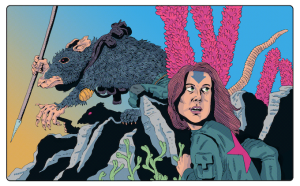
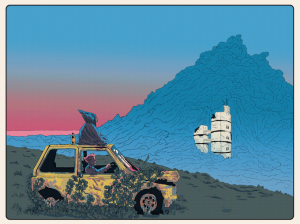
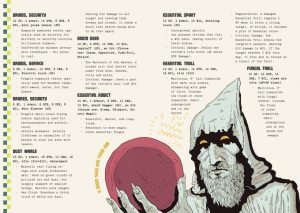
Daniel Locke: ECO MOFOS!! is a weirdhope science fantasy tabletop roleplay game in a world of Punks, Wasters, Bandits and Corpos. It is fully written, with pages of tables to explore, and supports group and solo play. For the physical release, the entire book is being redesigned for simple use at the table while incorporating reams of intricate, colourful art by Daniel Locke. It’s a streamlined and flavourful game, with procedural adventures, using random tables to build journeys and sites, and gameplay building on the great work of Cairn and Into the Odd, but with a number of innovations.

It will be edited by Iko of the Lost Bay, and we have confirmed special guest writers for a series of adventures by Zedeck Siew, Sam Leigh and Logan Dean, and Brandon Yu is creating a Solo play aid. Iko, Daniel and myself are also writing modules.

What’s Weirdhope?

David Blandy: Simply, Weirdhope is a fractal mirror of Grimdark. Rather than assuming that in a broken world, life will get far worse, perhaps we can imagine the situation fostering new communities brought together by difficult times. Perhaps a radical shift in what is considered normal could open up the world to positive change. That the world will be full of beauty and wonder. But Weirdhope also acknowledges that any altered future is going to be strange, as change creates new situations and new relationships that can be unsettling or uncanny, even horrific. So it’s weird. But it’s hopeful.

Daniel: What David said. I’d also add that Weirdhope is a kick-ass battle cry, a call to action. It’s a refusal to roll over and accept that things can’t get better.

Why rules lite? Don’t more complex rules make for more complex play?

David: I’ve been building and tinkering with game systems since I was a kid rolling dice for my Action Force (GI JOE in the USA) figures in the garden. But for me, play always comes first. What is fun? What allows the game to flow? So after exploring dice-pool systems and the FKR (Free Kriegsspiel Revolution, a collection of understandings for playing games with minimal rules), I became increasingly impressed by the simplicity and elegance of the Into the Odd lineage of games, particularly what Yochai Gal has created with his open source system, Cairn.

It has that feel of old-school dungeon-delving but boils it down to a simple form with very little maths. Play is fast and eventful, only rolling when there’s a risk, and combat is brutal and swift with no to-hit rolls, just damage that can be partially absorbed by armour. The key to the system is putting the player’s choices first, so I’d argue it actually becomes more complex, in a good way, difficult decisions demanding decisive answers.

Daniel: If I’m honest, I don’t think more rules necessarily equates to more complex play. Though perhaps it depends on the reasons an individual has for playing in the first place. I mean, a lot of this comes down to personal preference, and one of the things that I love about TTRPGs is the variety and the ‘big tent-ness’ of the scene.

My personal focus is on what happens between the players at the table. I just love the experience of being with a group of people and collaboratively building a narrative and a world full of stories. I find that too many rules or crunchy systems can get in the way of that, and rather than making the experience of playing more complex, they can make it more disjointed. So rules lite suits me. Having said that, I do like to roll a die every now and then! And I just love a randomiser table. Honestly, I can’t get enough of them. It’s a bit of a problem for me.

Do you have similar games planned?

David: I always have several games and adventures in the pipeline. Currently, I’m working with a team on a Cairn conversion of an old D&D module from 1981 called Palace of the Silver Princess that has a complex history as the first published D&D module by a woman, Jean Wells, which was then pulped and completely reworked due to either some egregious art or plain sexism, depending on who you believe. It also has real resonances with Japanese RPGs like Zelda and Final Fantasy, and apparently, it was one of the two modules that first reached Japan, even before the rules books themselves.

I also have further plans for my post-colonial collaborative map-making game, Gathering Storm, which could be expanded into something intense. Maybe build a video game around it or something.

Daniel: Always, there’s always more to do, always other games planned. I have this idea for a game, or maybe a setting – not sure yet – that places players in an unbelievably fragmented and hostile environment full of totally mad NPCs. It’s in a very bullet-point state at the moment, but I’m very excited by it and looking forward to sharing it as it develops. I’m also keen to write and draw some settings and adventures for ECO MOFOS!! I absolutely love that world and can’t wait to contribute more to its expansion. I say that as a creator but also, and, I’d say more importantly, as a player too.

David and I have used this project to set up a creator’s cooperative. It’s called Copy/Paste, and I’m very much looking forward to seeing what happens in that space too.

Why a TTRPG? Why not a novel or comic book?

David: What I love about TTRPGs is that they give a space for people’s imagination, a space to make their own narrative. It’s a world to inhabit. Of course, novels and comics and video games and films all create fantasy spaces for our minds to inhabit, but only TTRPGs offer you a limitless window into that other world. And there’s a sociability to TTRPGs that I love, that it can be just a good excuse to hang out with your favourite people with no agenda but to have fun. And with its potential as a solo game, it can be a space to explore on your own terms. You decide where the story goes when the session ends. A TTRPG is the most collaborative of media, only completed by play.

Daniel: I think comics and TTRPGs are very, very different beasts. The point, at least to me, for a TTRPG is to provide a place where stories can be told. A TTRPG book offers up some resources, ideas and procedures that hope to stimulate the collaborative creation of a story. A comic seeks to tell a story. They might use some of the same tools, but they are very different things. The world of ECO MOFOS!! could most definitely be the setting for a totally kick-ass comic book series. But one of the things that makes it so interesting to me as a TTRPG is the fact that putting aside the magic and mutations and all that brilliant jazz, it’s a really relevant world that speaks directly to many of the problems we are living with. I like the idea that this game could help people address those issues, think about them and engage with them.

Why make the players Misfits by default?

Daniel: There’s a worrying trend in the world that is seeing global resources pooled and gathered by increasingly smaller numbers of people. There are way too many billionaires. Way too many food banks. Life is too hard for too many people, and it needn’t be. I think in such a world, everyone (other than the one per cent) should consider themselves Misfits, or rather Punks, and demand back what should, by right, belong to us all: a community, a safe home, and fair, equal access to the world’s resources.

David: It’s an angry game, a game of resistance against the ‘normality’ that’s got us in this mess. And players in all RPGs, certainly at my tables, act as agents of change, often of chaos. So it felt natural to assign that sort of role to the players. This game started as a mashup of Yochai Gal’s Cairn and Micah Anderson’s bastards. as a way of finding a new way to approach the world of my more Solarpunky game, Lost Eons, and I think a lot of that attitude survived in the DNA.

What makes this game different to others?

David: The setting is clearly unusual, a post-post-apocalyptic world in recovery, a world of resistance, wonder and horror only a few steps away from our own, imbued with magic. The combination of elements in the gameplay, with procedural adventures that can be created as the table as you play, generating intriguing stories and events to react to, alongside the factions that surround the players making their own moves to alter the world. There are also story-game elements to this ruin-exploring game, partially developed from an element of Chris McDowell’s Mystic Bastionland, where the Punks take on emotional Burdens if using spells or adding new Adaptations that require certain needs to be fulfilled in order to remove them from your inventory.

The game is built on a huge d666 table of Items, also called Stuff and Loot, that you roll on when you come across it at certain points in play, some of which are ‘key items’, implants, weird substances, Orbs, that you have to absorb into your body to gain new abilities. So the game becomes a search for new abilities in the detritus of the old world, the treasure being your own development, your own ability to negotiate the difficult world around you. In OSR terms, it circumvents XP for Gold, as by adventuring, the treasure you find helps you grow both in the narrative and in the game.

What was the art direction? it’s got a unique look.

Daniel: There isn’t really any art direction, though I’m pleased you think it has a unique look! Thanks so much.

The aesthetic of the book has developed out of the friendship David, and I share. We constantly talk and show each other things that inspire us. We offer up the things that we’ve made for others to consider, and I guess the look of ECO MOFOS!! Has just sort of bubbled up out of that soup. I think it helps that we have very complementary skill sets, and we trust and understand each other. We’ve been close friends for decades.

David: I think that what might be referred to as ‘art direction’ is really an organic development of our collaborative aesthetic. We worked on a TTRPG together before, LONE EONS, and that was where we first talked of mixing a Saturday-morning cartoon feel with elements of a more Old School art style (like the late great Russ Nicholson), illustrations from books like The Warlock of Firetop Mountain and Romantic art like Caspar David Friedrich. For ECO MOFOS!! We really wanted to make something fresh and colourful, hopeful, but that had loads of attitude, and a touchstone became the 80’s illustrations of 2000AD, artists like Carlos Ezquerra. Add to that Moebius (eerie weirdness) and Miyazaki (organic beauty), and I think you can start to see where we’re coming from. Punk zines have also been an inspiration; growing up in the UK in the ’80s, very into grunge (I was in a grunge band for years) in the ’90s.

Why are TTRPGs cool now?

Daniel: TTRPGs have always been cool! At least since I first discovered them, alongside comics, in about 1986. Seriously though, I think the rise in popularity of TTRPGs has many causes. I mean, it’s easy to point to their inclusion in shows like Stranger Things, but I think there’s more to it than that. And I’m pretty sure it has something to do with our fragmented way of living.

Role-playing games offer a way to personally connect with each other, a way to test out ideas. They provide a space to explore notions that might be terrifying, notions like climate change or resource scarcity or conflict. That’s got to be for the good, hasn’t it? Feels to me that the world right now can use as many things in it as possible that facilitate sharing, conversation and collaboration.

Which creators inspire you?

David: Authors like Ursula Le Guin, Octavia Butler, Marge Piercy, Samuel Delaney, Philip K Dick, Hayao Miyazaki, and Moebius. Then TTRPG writers like Zedeck Siew, Luke Gearing, Chris McDowell, Patrick Stuart, Wendi yu, Chris Bissette, Jack Harrison, and so many others. I’m so in awe of this scene, to be honest.

Daniel: Yeah, I’d get behind a lot of the list David has offered there. I love the likes of Ursula Le Guin, Philip K Dick, Hayao Miyazaki, and Moebius too. I’d add Taiyō Matsumoto and Becky Chambers. As far as TTRPGs are concerned, Luke Gearing, Chris Bissette, Daniel Sell, Brandon Yu and all the people on David’s list! It’s honestly bewildering the amount of talent that is in the scene right now.

How would you describe your process?

David: Making TTRPGs is both my relaxation and my obsession. Probably not a healthy combination, but there you go. I’m constantly tapping at tables, noodling out little rule changes and tweaks in my spare moments when working, waiting for a video to render or making a cup of tea. Then I have intensive periods of layout and writing where I put everything together, incorporating the ideas I’ve been having, roughing out a zine or pamphlet or book before refining again and again. It’s very organic, with ideas leading to more ideas, reacting to those, testing and changing. And if I get to an impasse, I move on to one of my other projects for a while and try to freshen my mind. The fun stuff is just imagining tiny scenarios or characters and trying to capture them in as little prose as possible. I love writing tables.

Daniel: Organic. I find it really hard to describe my process, if I’m honest. It tends to boil down to a system of trial and error. I make something, step back and then go back in and tweak. Ultimately what I’m hoping is that I can find my way to a place that feels defined by a sense of discovery. That sweet spot where you’ve not finished making, but you’re excited to see where it lands. It’s a journey picked out by following your nose.

What games are you playing?

David: Recently, I’ve been running one-shots for a group on Discord called The Game Pube, which is the gaming wing of The White Pube, and the whole community seems to live somewhere between art and games. We’ve been playing rules-lite horror; I ran Ghost of Ypsilon 14, a Mothership adventure but using a Cairn hack, Meteor. That was incredible, really intense.

Then this week, we played Wet Grandpa by Evey Lockhart using Cairn and had an absolute blast, one character ending up with minus one hand. Good times.

Daniel: I’ve been working my way through the fighting fantasy books. I’m currently on Midnight Rogue, it kicks ass. And with some friends (David included), playing the new Star Wars RPG, is it called Age of Rebellion? Something like that. I used to play the 2nd edition when I was a kid, so it’s been nice to revisit the galaxy far, far away.

How can I support the game?

Daniel: You can support the game by clicking on the link and following or pledging support for the project, depending on when you’re reading this. We can’t wait to get this beautiful book in your hands so you can start playing.

You can contribute to the ECO MOFO’s Kickstarter here.


THE TELEPHEMERA YEARS: 1998 – PART 3

Nick Fury, 1998

Ah, telephemera… those shows whose stay with us was tantalisingly brief, snatched away before their time, and sometimes with good cause. They hit the schedules alongside established shows, hoping for a long run, but it’s not always to be, and for every Street Hawk there’s two Manimals. But here at STARBURST we celebrate their existence and mourn their departure, drilling down into the new season’s entertainment with equal opportunities square eyes… these are The Telephemera Years!

1998-99

Back in the last millennium, there was this thing called Must See TV, where NBC put ALL the best shows in one three-hour block and dominated the lives of everyone with a television. Friends, new Christina Applegate vehicle Jesse, Frasier, Veronica’s Closet, and ER were all the TV you needed, although the usual news and football was also on offer for anyone not tickled by NBC’s powerhouse line-up. Jesse wasn’t the only new show that NBC threw at viewers; they also had Will & Grace tucked in their back pocket. The other big new arrivals were over on HBO and Fox, where Sex and the City, Family Guy, and Futurama all hit the screens for the first time.

There were plenty of shows going the other way, with Home Improvement, Due South, Homicide: Life on the Street, Mad About You, and Baywatch entering their final runs, and genre fans had particular cause to feel aggrieved as the axe was about to fall on Millennium, Star Trek: Deep Space Nine, and Hercules: The Legendary Journeys, with only Third Wave and Farscape on the docket to replace them. There could have been more, of course, but some shows didn’t even make it as far as the TV Guide. This is the story of 1997’s unsold pilots…

Nick Fury: Agent of SHIELD (Fox): The nineties were a strange decade for Marvel Comics, beginning with the highest comic book sales since World War Two and ending with a critically-acclaimed revamping of some of their darker characters by creators more usually found writing and drawing independent comics. In between those two high points was the lowest of the low, a bankruptcy that almost put an end to one of popular culture’s biggest icons and some very strange decisions made regarding film and TV.

Nick Fury had originally been created as a World War Two hero, mopping up those comic book readers in the early 1960s who wanted to distract themselves from the oncoming disaster in Vietnam with some stories from a war that at least made some sense. Seven months after his first appearance, and with creator Jack Kirby intent of developing a line-wide continuity, Fury popped up in Fantastic Four #21, now a super spy trying to deal with a world that had gotten very complicated indeed.

Nick Fury, 1998

Fury went on to enjoy his own series and became an integral part of the Marvel Universe but few would have expected him to graduate to his own TV series, although given that the previous properties chosen for this honour had been Power Pack and Generation X, anything could happen in mid-nineties Marvel. It was thought, with some justification, that Fury and the SHIELD agency he headed could be a modern-day Mission: Impossible or The Man from UNCLE, and Fox tapped David Goyer to write a script for a pilot film.

Goyer had been building a reputation for tightly-plotted B-movies and would go on to write the Blade trilogy, and his Fury script hits all the beats, roping in SHIELD’s eternal nemeses Baron von Strucker and Hydra to threaten the safety of the world. When it came to casting the title role, producer David Roessell wanted star power and, against the misgivings of the studio, gave the role to Baywatch star David Hasselhoff, who agreed to don the famous eyepatch. Goyer had always intended there to be a kitsch feel to his script but it seems only Hasselhoff got the joke, his (deliberately?) hammy performance lending an air of the ridiculous to the world-threatening situations faced by Fury.

Fox aired the pilot in May 1998 to mostly negative reactions, and it rated fourth in its timeslot, beaten by re-runs on the other networks. Plans for a series were dropped and Hasselhoff returned to patrolling the beaches of California and saving the world from Communism. Nick Fury would eventually return ten years later at the end of Iron Man, still with his trademark eyepatch but now resembling Samuel L Jackson and implementing the Avengers Initiative. Wonder how that turned out?

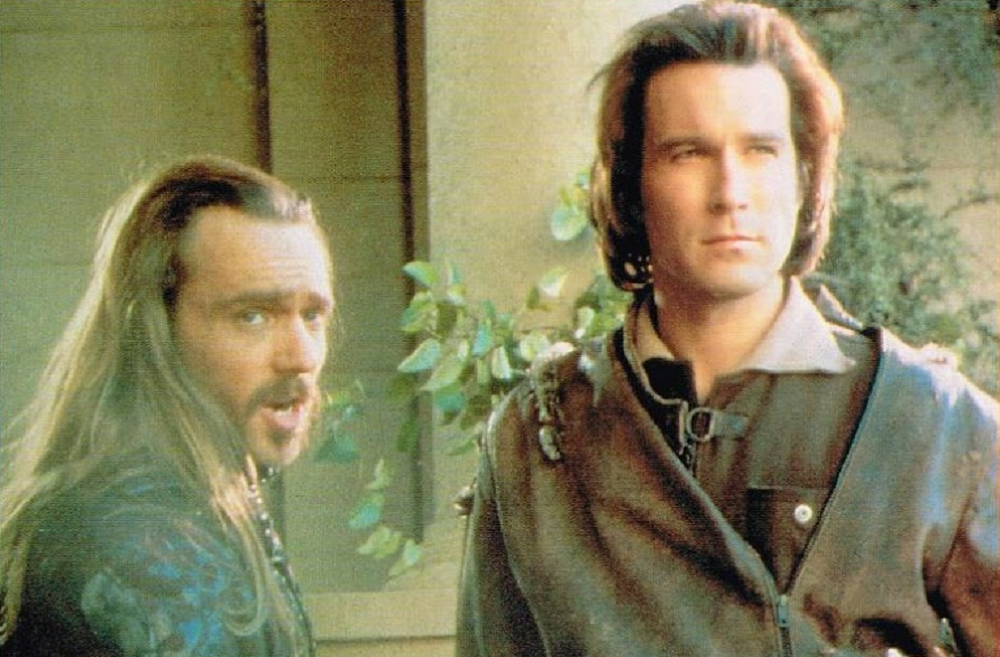
The Osiris Chronicles (UPN): Much of the middle part of the 1990s for Joe Dante was taken up by preparing Small Soldiers for its eventual release in 1998. He still found time, though, to keep his hand in on other projects, such as satirical HBO comedy The Second Civil War and this curiosity for UPN, produced by his own Renfield Productions company.

From a script written by novelist Caleb Carr, whose The Alienist had been a sensation two years earlier, The Osiris Chronicles tells the story of Justin Thorpe (Northern Exposure’s John Corbett), a loveable rogue from the planet Caliban 5 who returns home after a theft/salvage mission to discover his sister Nova has been abducted. Given command of the starship Osiris by Rod Taylor’s General Lars Sorensen, whose granddaughter is Nova’s best friend, Thorpe searches the galaxy for his sister…

The Osiris Chronicles, 1998

For many fans, Corbett had been the real star of Northern Exposure, his zen disc jockey winning hearts and minds while Joel and Maggie danced their dance, and he’d follow The Osiris Chronicles with The Visitor, a Roland Emmerich series about a returning alien abductee that failed to find its audience. He plies his trademark understated charisma here, but even with backing from Law & Order’s Carolyn McCormick and John Pyper Ferguson as Warlord Xian, the enemy who might be Thorpe’s only hope of rescuing his sister and saving the universe, there’s little for him to work with.

The pilot aired on January 27th 1998, almost two years after its completion, and it was clear why it had sat on the shelf for so long. Even a filmmaker as talented as Dante couldn’t make much sense of Carr’s story of the enigmatic Engineers and their plan to use the sum of their ancestors knowledge and souls, and despite an ending that led nicely into the further adventures of the crew of the Osiris, nothing more was ever heard of them.

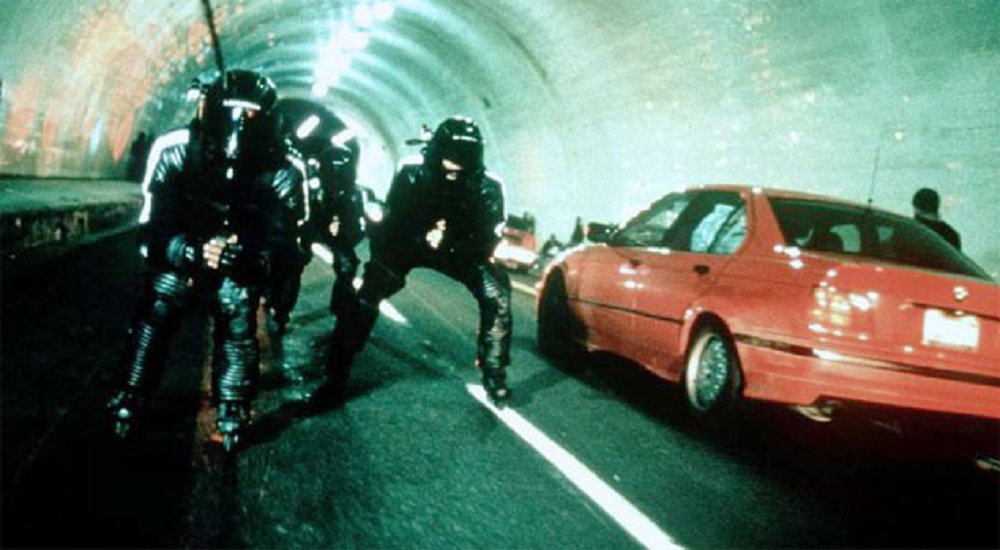
Blade Squad (Fox): What’s up, fellow kids? How would you like you watch a new TV show, one that is so bleeding edge cool that its very name includes a sharp implement? A show that not only features maverick policemen but maverick policemen on roller blades, maverick policemen on roller blades that are propelled by JET PACKS?!? Well, have I got the show for you…

The history of television occasionally throws up the odd show that was obviously the result of a last minute power lunch, ideas scrawled on a napkin, possibly inspired by whatever the coked-up producers happened to see gliding past the restaurant window while they panicked about their impending pitch meeting. That’s the only possible explanation for Blade Squad and the real mystery is how it got past that initial pitch to become a fully-formed TV pilot.

Blade Squad, 1998

From the fevered mind of Street Hawk creator Robert Wolterstoff and Point Break scripter W Peter Illiff, the idea of a gang of rollerblading crimefighters may be triggering memories of Prayer of the Rollerboys, a 1990 dystopian epic starring Corey Haim and Patricia Arquette that has been all but erased from popular memory (and with good cause). Illiff also wrote that and it’s to his credit that he managed to resist putting Harrison Ford on blades for Patriot Games, because it’s clear who he sees as the real stars of this show, despite the best efforts of a cast including Yancy Arias, Corin Nemec, and Zack Ward.

There is a story underlying extensive shots of slow-motion rollerblading, one that involves Ward’s Billy Mustard attempting to gain revenge for his brother’s injury while serving on the squad (and, of course, coming to realise that being on the Blade Squad is actually cool and good), but I’m not sure anyone stayed for its conclusion. Fox aired the pilot in August 1998, by which time they’d already passed on a full series of extreme action. Inexplicably, the film retains a small cult following among Wolterstoff fans who no doubt dream of a rollerblade/motorcycle mash-up that, sadly, will never arrive…

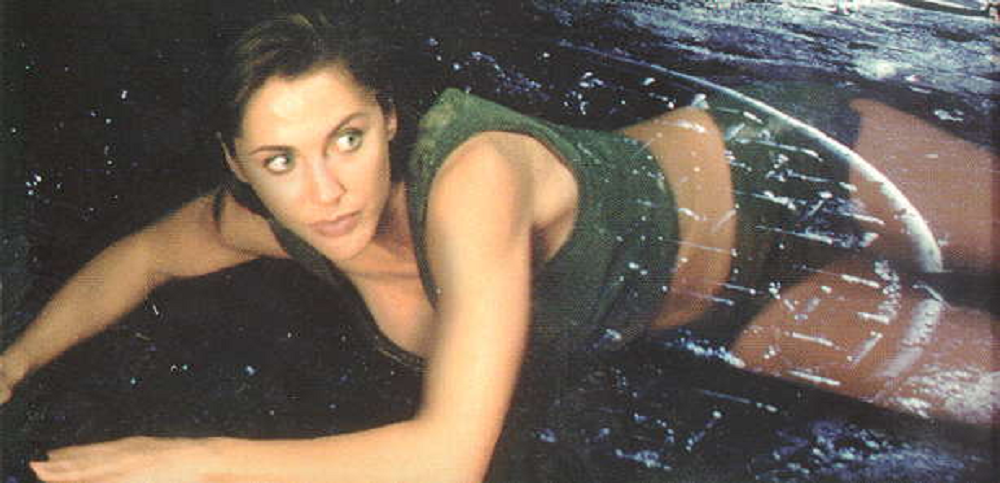
Chameleon (UPN): Set thirty years in the future, the Chameleon of the title is a genetically-engineered assassin with chameleon-like powers whose latest mission goes awry when she discovers maternal feelings for his target, a small child. Played with smouldering sex appeal by Bobbie Phillips (whose previous roles included a limo driver in the bizarre Sir Mix-a-Lot vehicle The Watcher), Kam – get it? – turns against her government masters and goes on the run to protect young Ghen (The Santa Claus’s Eric Lloyd), the son of a rebel leader.

Writer Bennett Cohen had a handful of TV movies under his belt before he created Chameleon and sold his script to production company Village Roadshow Pictures at just the right time. The Australian-American studio had just reached an agreement with Warner Bros to finance their next few projects and this opened doors for Cohen’s script, attracting interest from Paramount TV, who greenlit a pilot.

Chameleon, 1998

Direct-to-video veteran Stuart Cooper was brought in to direct the pilot and he delivered something of a mixed bag, a film that can’t seem to settle on its target audience, delivering some tame action scenes alongside simmering sexual tension and a hero/child relationship taken almost note for note from Terminator 2. The end result found little favour with TV bosses but did spark interest from Paramount’s movie arm, who saw potential in a main character displaying plenty of flesh for the home video market.

Chameleon II: Death Match followed a year later, with the kid eliminated from the mix in favour of Casey Siemaszko and John Waters (yes, that John Waters), and a third instalment – Dark Angel – emerged in 2000. Unfortunately, fans were less enthused by Kam’s battle with her evil twin brother and that was all she wrote for Chameleon, its lasting impact being a cult following for Phillips, who was last seen in 2018’s The Gandhi Murder.

Next time on The Telephemera Years: Godzilla and Hercules do battle for Saturday morning attention spans!

Check out our other Telephemera articles:

The Telephemera Years: 1966 (part 1, 2, 3, 4)

The Telephemera Years: 1967 (part 1, 2, 3,

The Telephemera Years: 1968 (part 1, 2, 3, 4)

The Telephemera Years: 1969 (part 1, 2, 3, 4)

The Telephemera Years: 1971 (part 1, 2, 3, 4)

The Telephemera Years: 1973 (part 1, 2, 3, 4)

The Telephemera Years: 1975 (part 1, 2, 3, 4)

The Telephemera Years: 1977 (part 1, 2, 3, 4)

The Telephemera Years: 1978 (part 1, 2, 3, 4)

The Telephemera Years: 1980 (part 12, 3, 4)

The Telephemera Years: 1982 (part 1, 2, 3, 4)

The Telephemera Years: 1984 (part 1, 2, 3, 4)

The Telephemera Years: 1986 (part 1, 2, 3, 4)

The Telephemera Years: 1987 (part 1, 2, 3, 4)

The Telephemera Years: 1989 (part 1, 2, 3, 4)

The Telephemera Years: 1990 (part 1, 2, 3, 4)

The Telephemera Years: 1992 (part 1, 2, 3, 4)

The Telephemera Years: 1995 (part 12, 3, 4)

The Telephemera Years: 1997 (part 1, 2, 3, 4)

The Telephemera Years: 1998 (part 1, 2)

The Telephemera Years: 2000 (part 1, 2, 3, 4)

The Telephemera Years: 2003 (part 1, 2, 3, 4)

The Telephemera Years: 2005 (part 1, 2, 3, 4)

The Telephemera Years: 2006 (part 1, 2, 3, 4)

The Telephemera Years: 2008 (part 1, 23, 4)

Titans of Telephemera: Irwin Allen

Titans of Telephemera: Stephen J Cannell (part 1, 2, 3, 4)

Titans of Telephemera: DIC (part 1, 2)

Titans of Telephemera: Hanna-Barbera (part 1, 2, 3, 4, 5)

Titans of Telephemera: Kenneth Johnson

Titans of Telephemera: Sid & Marty Krofft

Titans of Telephemera: Glen A Larson (part 1, 2, 3, 4)

Titans of Telephemera: Quinn Martin (part 1, 2)

Titans of Telephemera: Ruby-Spears

Durham Fringe Festival Picks 2023

Durham Fringe 2024

by Ed Fortune

Only in its third year, The Durham Fringe Festival is a newcomer to the International Fringe scene. 

Running from July 26th to 30th, it’s a small but fierce festival. Based in the North East of England, it has rapidly become a very welcome addition to fringe theatre across the UK. It’s also a handy stop on many a show’s journey to Edinburgh. Let’s take a look at a handful of shows that might appeal to STARBURST readers.


 Frankenstein The City Theatre: 27th & 29th July 8.15pm

 Twitter: @NTCtheatre More: NTC Touring Theatre Company

The NTC Touring Theatre Company presents Frankenstein, an adaptation of the classic science-fiction novel by Mary Shelley. Using the 1818 novel as a guide, this version of the story tries to stick as close as it can to Shelley’s classic work, creating something very different to the Frankenstein you may be familiar with from film and TV.

Buckets Of Blood – Fairy Tales Not For Kids Cafédral: July 27th 8.10pm

Twitter: @StoriesAlive More: storiesalive.co.uk

Join storyteller Eden Ballantyne as we dive into the darker side of fairy tales. What was Red Riding Hood running from? What was in Cinderella’s slipper? What isn’t Disney telling you? This promises to be a Grimm and grimmer retelling of some classic stories. 


 Watson: The Final Problem The Assembly Rooms Theatre : 26th & 27th July, check for times. 

 Twitter: @timmarriott_ More: smokescreenprods.com

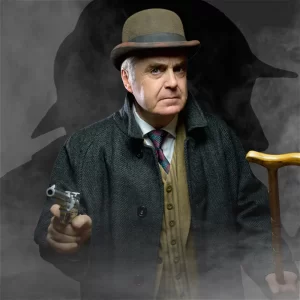
John Watson is alone; Mary is long gone, Sherlock is nowhere to be found. It is 1894, and London still seethes with crime, false reports and rumours. Tim Marriott’s performance as Watson has been described as ‘mesmerising’. This is a must for fans of the Sherlock mythos.

 This show will also be at the Edinburgh Fringe.


There’s a Monkion in Your Attic Klute : 29th & 30th July 6:00pm

Twitter: @HookyProductio1 More:  linktr.ee/hookyproductions

The portal has opened! The Monkions are here, and they are in every attic. Bizarre creatures from another dimension are coming, and they’re coming to make you laugh. Surreal and unique performance-based comedy.

This show will also be at the Edinburgh Fringe.


The Rotting Hart The City Theatre: 28th & 29th 5:45pm

Twitter: @CrestedFools More: linktr.ee/crestedfools

Queer horror inspired by the history of homophobia in Spain. A captivating look into hate and the monster that lurks in the heart of us all, with more than a touch of eerie horror for good measure.

 This show will also be at the Edinburgh Fringe.


Jo Reid | BORDER RISING

Jo Reid border rising

by Ed Fortune

Jo Reid is a Glasgow-based filmmaker, curator, games designer and writer. As film-maker, they primarily work with archival materials to explore ideas of memory, the past, and how we see our own histories. Their most recent film, The Freedom Machine, explored the history of women cyclists through archival material from across the UK.

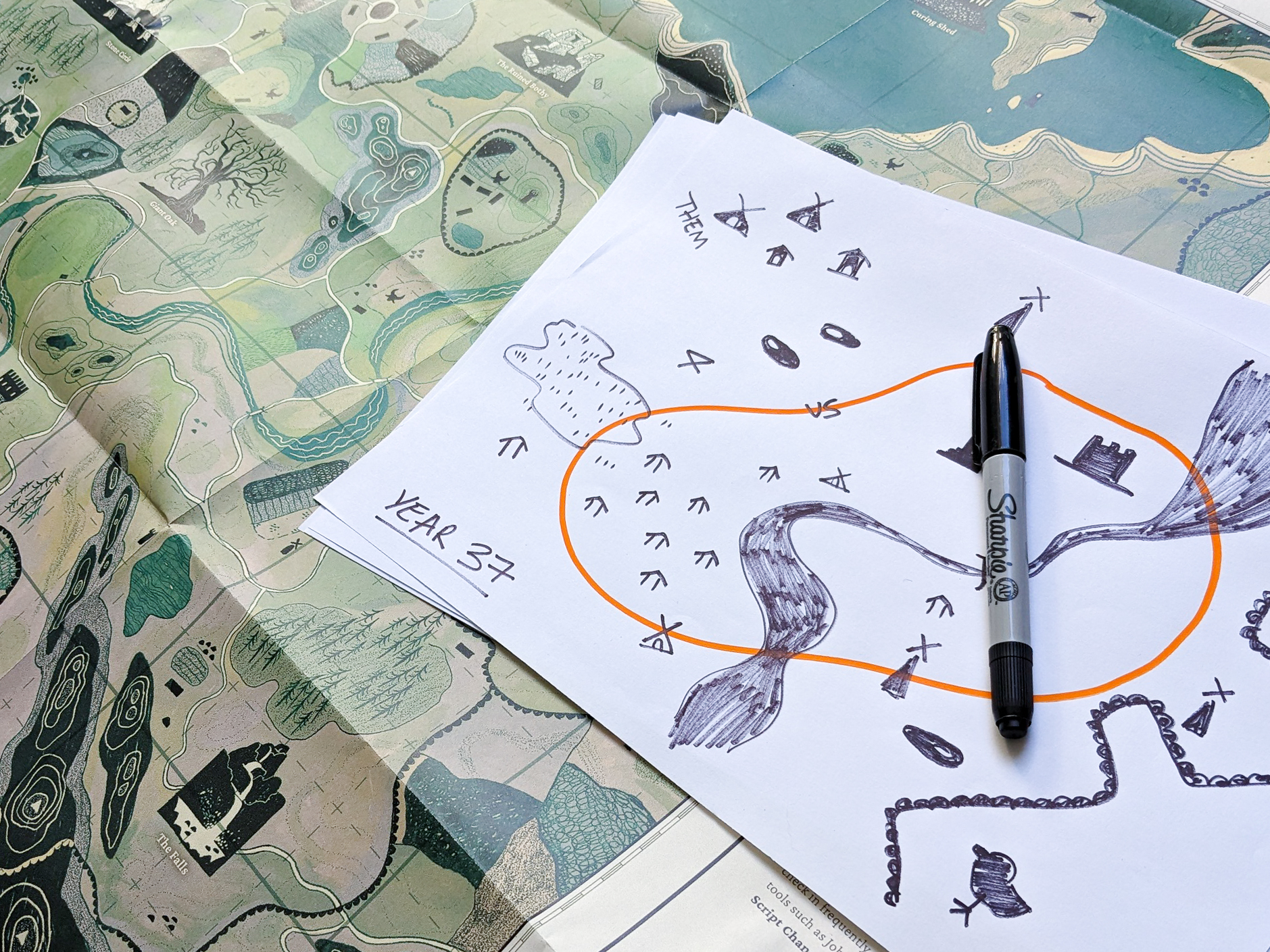
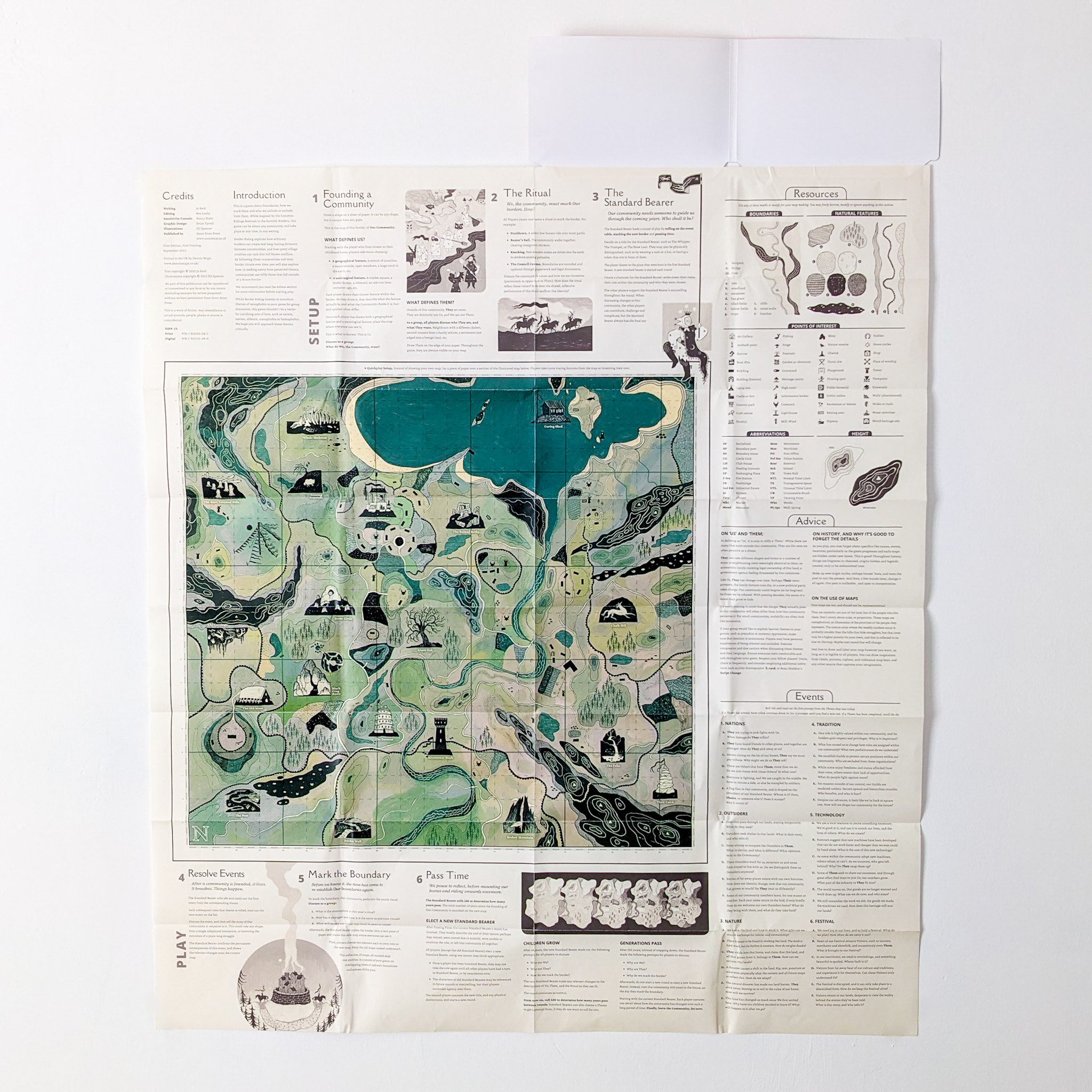
Their new project is Border Risings, a collaborative history-building game played by drawing evolving town maps on scraps of paper, which is printed on an old-school fold-out map and is currently on Kickstarter. We caught up with Jo to find out more.

STARBURST: How would you describe Border Riding to those new to tabletop games?

Jo Reid: Haha, I’ve had a lot of practice with this! My family are not tabletop people and do not know about the scene beyond Dungeons & Dragons – and that’s pushing it! When I’ve spoken with people from my hometown about Border Ridings, I generally use D&D as a jumping-off point and then explain that it’s nothing like that!

How do you play the game?

Border Ridings is a map drawing game where the players create a new map each round, capturing a year in a community’s life. As each new map changes from the previous one, your community changes too. The community at the end of the game will be very different from the community at the beginning of the game. The stories they tell, the borders they draw, and the heroes they celebrate are a reflection of their values. Border Ridings uses the act of drawing maps as a mechanism to tell the story of a small community discovering itself through its yearly festival. To play Border Ridings, you don’t have to be good at drawing! All you need is to bring your imagination, a few hours, and some good friends and together, you can create a whole new world on a few sheets of paper.

It feels like an incredibly personal game. Where did the idea for it come from?

Growing up in a small village, where these festivals and rituals are regular and normal, I always found it hard to explain the Whipman, my local Common Ridings festival, to friends from the city. I have always been quite dismissive of these festivals, playing up the weirdness and traditional aspects of my village for an easy joke. In 2020, when all these festivals had to stop because of Covid-19, I began to reflect on them, their place in my childhood, and how I feel about it as an adult. Moving away always changes your relationship with your hometown and allows me to see it with a lot more clarity.

These traditions and rituals can seem so strange and random, and yet diving into their history is really fascinating, particularly as you track the different influences piling up and mashing together to create these events that are a modern-day interoperation of a Victorian interpretation of a mediaeval procession. We look at history through so many different lenses and that’s something I wanted to explore through play, particularly as these events are a sort of community role-playing themselves!

Why did you choose this style of game?

Since these festivals are often built around marking borders, a map drawing game seemed like a logical way to adapt it to a game. I love encouraging players to physically draw a border as their communities do the same; the synchronicity really appealed to me. I am also a visual person, and I like games that produce something to be shared at the end. Seeing maps that are nonsense to anyone who wasn’t at the game table is really great and reflects how it must feel as an outsider to witness folk traditions you know nothing about – mystifying, bizarre, and a little funny.

Do you have other projects planned?

Nothing too major planned yet, but I do have some ideas on the backburner that I think I’m ready to excavate. One is a two-player card game based around the relationship between a patron and an artist, initially inspired by mediaeval Welsh bardic poetry but extrapolated to apply to subscribers and YouTubers, politicians and journalists. Really an exploration of power, legacy, images and who is really in control in an artist/patron relationship and how those power dynamics change.  

Why are old maps so important?

I think looking at old maps can generate a lot of nostalgia, even if it was from before the time you lived there. It’s probably similar to why old photos of Glasgow are so popular on social media – it’s a record of the past, and it’s fun to see how things have and haven’t changed. With old maps, it requires a certain level of insider and local knowledge to recognise these changes within a familiar landscape – particularly when you can put it in the context of personal details. For example, there used to be a train line/forest/roman road/bog where my house is now! These old maps can therefore feel distant but extremely personal.

Of course, looking through old maps can be extremely important as a historical resource! You can discover a lot about a community through their maps. For example, placenames can give insight into the languages and communities that have historically lived there. What I hope to capture with Border Ridings is that even in modern-day maps, you can find traces of earlier communities through things like ruins of monuments, placenames, and buildings, even after the original meanings and people have long gone.

Does tradition matter?

Yes. Also no. Tradition can ground us; it can connect us to our past, our heritage. It can also block us from change and can be used to exclude others. It is extremely collective and deeply conservative. It matters because we hold so much value in it, and how we approach our traditions and which ones we choose to discard is massively revealing on how we view ourselves and what values we hold. 


It looks spectacular. What inspired this design?

Thank you! I think so too. The design was primarily inspired by Ordnance Survey maps. In fact, it’s even printed by the same people that print OS maps. It’s super nostalgic to me. As a kid, when we went on holiday, I was the one who’d be tasked with deciphering the tiny icons and symbols for my dad, who was driving. I’d be wrestling with this fold-out map as big as me, careful not to rip or damage it.

I love the layout; that was all Brian, my publisher. They have been so wonderful from beginning to end in shaping Border Ridings, and he totally understood and enhanced my vision. The OS map was his idea, too – just the perfect touch. The illustrations by Eli Spencer are also excellent. We really wanted a feeling of adventure, history and magic, which she has captured perfectly. I absolutely cannot wait to display it on my wall.

Which creators inspire you?

One of my biggest inspirations is the podcast Friends at the Table, for both the way they have changed and developed my understanding of narrative, storytelling and using games to tell a story and the way they tirelessly champion the independent TTRPG scene. No one does it like them!

Other people that have and continue to inspire me include Takuma Okada, who created Stewpot Tales from a Fantasy Tavern and Ech0. A lot of their games are able to build really beautiful and often quite sad worlds but still have a great sense of fun and play within them.

What tropes do you personally avoid the most?

I think any trope can be done well if used in a thoughtful way and in the right context. However, I can find myself getting tired of the same kind of tropes being deployed over and over again. I personally avoid games that maybe are a bit too black and white with violence, where it’s seen as the most effective way to communicate with the world. It’s not my thing. I think there is a place for it, but I personally think it’s more interesting if there’s some sort of cost or commentary if characters are straight-up murdering people willy-nilly. If that is the case, It should say something about the game world and how it values human life!  

Also, I’m not a big fan of really number-crunchy, dense gameplay tactical games. Nothing wrong with them, but I’m no good at maths, and my brain just doesn’t work that way!

What games are you playing?

I’m just about to start a game of Vampire: The Masquerade. It’s my first time playing it, and I’m really excited to dive into Gothic horror.

I bought Tiny Tome on Kickstarter last year and am having fun going through all the one-page TTRPGs. I particularly like Angela Quidam’s Symbiosis, really elegant and economical mechanics using a Jenga block. I love games that marry physical action with game mechanics.

What games do you consider to be a classic?

Fiasco is always a classic to me. I don’t think you can have a bad time with it. The rules are very good at forcing you to play in the genre and really allow you to take your story in weird and wacky directions while staying quite structured.

I also often find myself revisiting The Quiet Year. It definitely inspired Border Riding, and I think it is undeniably a classic of TTRPGs. Everyone should play it.

Border Ridings is currently on Kickstarter until July 21st. You can find out more about the game’s publisher, Stout Stoat, here.  


Buxton Fringe Festival Picks 2023 

buxton fringe

by Ed Fortune

The Buxton Fringe has been bringing fantastic fringe theatre shows to Buxton, Derbyshire, in England, since 1980. This year’s Fringe runs from July 5th to the 23rd and is frequently used by artists as a dry run for the Edinburgh Fringe. We took a quick look at some shows that might appeal to STARBURST readers.

The Canterville Ghost: The Musical United Reformed Church Green Room Hall (55b): 22 & 23 Jul 

Twitter: @TheatreMagpie More: MagpieTheatreLiverpool

A musical version of Oscar Wilde’s classic ghost story, which inspired the movie Beetlejuice? With an original score and soundtrack? Sounds great. When a modern American family moves into an old English mansion, the resident spook determines to scare them off, but it’s not that simple.  

This show will also be at the Edinburgh Fringe.


Star Warts! – A New Hip St Anne’s Community Centre: 17 & 21st Jul 8pm to 9pm

Twitter: @RECYouthTheatre More: REC Youth Theatre

A theatrical re-telling of a classic late 20th-century science fiction fantasy drama? That may or may not be inspired by Hidden Fortress and tells the story of a radicalised Farm Boy who blows up a military installation? With its tongue rammed very, very far into its cheek? Sounds fun to us.


The Final Girl – Underground: 19, 20, 21 & 23 July – times vary

Twitter: @sweet_prods More:  @hrandrews90

Award-Winng Heather-Rose Andrews presents final girl, an exploration of horror and the women who endure them, rooted in a lifetime love of the genre. Darkly comic entertainment from the talented folk who brought us the stunning Jekyll and Hyde: A One-Woman Show


Edy Hurst’s Comedy Version Of … The War of The Worlds – Underground: Thurs 13th July, 7pm

Twitter: @edyhurst More: linktr.ee/edyhurst

The full title of this show is Edy Hurst’s Comedy Version Of Version Of H.G. Wells’ Literary Version (Via Orson Welles’ Radio Version And Steven Spielberg’s Film Version) Of The War Of The Worlds. 


Drag queens vs vampires


Drag Queens vs Vampires – Underground: 18&20 July, 9pm

Twitter: @hausofdench More: campsite.to/hausofdench

Stakes are high as the award-winning Haus of Dench return! Kate Butch and Crudi Dench jet off to Transylvania as UK finalists for the Eurovision Song Contest. Will they become stars? Something much worse? 

How will they handle their Air BnB host, a certain Mr Dracula? 

This show will also be at the Edinburgh Fringe.