B. Dave Walters • FOUL PLAY

by Ed Fortune

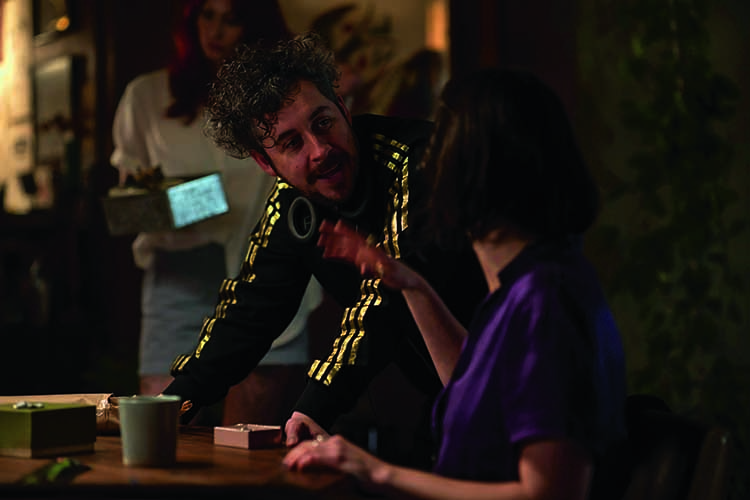
B. Dave Walters is best known as the writer of Dungeons & Dragons: A Darkened Wish for IDW comics and creator and DM of the Shadow of the Red Rage streaming show for Wizards of the Coast. His latest work is Foul Play, a digital, immersive, improvised comedy murder mystery game created through a collaboration of tabletop gaming’s brightest and best award-winning Broadway professionals. We caught up with B Dave Walters to find out more…

STARBURST: What is the elevator pitch to have thought of Foul Play? How would you describe this to a beloved, elderly relative?
B. Dave Walters: It is a series of interactive murder mysteries; you get to see an opening sequence with some very colourful characters. Spoiler alert: a murder happens, then you can follow along and investigate the case and the way it is set up. And it’s all happening in real-time. So it’d be if I’m here listening to you. I’m not listening to what’s happening over there. So part of the fun is figuring out who you’re going to follow, which trails and conversations you’re gonna keep track of which clues you’re looking for. So that by the end, you can find out or try to figure out who did it and why.

So it’s an on-demand interactive murder mystery game?
I think on-demand is an accurate description of how it is. It’s the type of experience that, obviously, the first time through is going to be very unique because you won’t know what’s going on. But then you can experience it multiple times. It’s for instance, you follow different people over the course of the night and see what’s going on. What do you miss? Knowing at the end how it actually worked, going back and seeing how it all played out? All fantastic stuff.

What does this like? How do you build an experience like this? Do you start with, like, a role-playing game with some experience, or do you try and build an escape room?
Well, I was a part of the writing process. We began with Andrew Barth Feldman, Brennan Lee Mulligan and Artie Gollapudi. We got together, and we just brainstormed. And that’s why the stories are all so different. We were, “What if there were just the standard whodunit murder mystery? What if there were a reality show? What if there was something like Lord of the Rings?” The one I love the most is the one that was kind of inspired by Mr. Roger’s Neighbourhood. And then it’s like, once we kind of had the concept, we were like, well, who are the people involved? And then we kind of got the people, and then we’re like, and who gets killed and why. So we had those things, which they then took, added a tonne of production value and some very talented performers, who then improv the characters we created. They let them go and play it out in real time. So even though I helped write it, even I kind of know the beginning. In the end, I feel it, but a lot of the stuff in the middle, even I haven’t seen yet.

Would you compare this to something like Bandersnatch? Or is it closer to something like The Mousetrap?
I would say it’s probably closer to Bandersnatch, though, in Bandersnatch, you can alter the outcome. I think it’s almost closer to something like Sleep No More, the experiential Macbeth play where it’s kind of like each stage of the warehouse, and the different act of the play is happening in real-time. So if you go there, you’ll see it, but if you’re not there, you won’t, and it’s all just kind of moving in parallel until you get to the end.

How influential is the movie Clue on this project?
I mean, I guess conceptually, it must because we’ve all seen it. It was in the back of our minds, but I don’t know that it ever came up in the process of us actually writing it and trying to create something. I mean, a lot of that, I think the first one, the first one that is the kind of the more traditional, whodunit the murder of Vanguard mentioned, I think that is probably the most Clue adjacent. And even still, it’s not like we set out in any way to, like, make an homage to that beyond kind of an homage to the genre. We’re all at dinner, and the lights go out, the lights come up someone’s dead.

What is your favourite crime, mystery drama?
The BBC shows Luther, with Idris Elba, is my favourite and I like crime dramas and crime procedurals quite a lot. So I think this is probably my favourite genre. And for Foul Play? Mr. Robertson’s World of Imagination for certain reasons, but I don’t want to say why because I don’t want to spoil anything. But we were very proud of all the ones we wrote. Mr. Robertson’s in particular, we were like, “Oh, this could be a movie, this could be a play like we should do, we can really do a lot with this idea.” So I think that when has a special place in my heart.

Will you be doing more of these?
I know there is at least one we wrote that did not get produced. So I don’t know if that is that is saving something for the sequel. I don’t know if that is the type of thing that we would revisit. I mean, I think like anything, obviously, the more successful this is, and the better it is received, the more likely it is we’re gonna get to do some extra ones. Also, shout out to Alex Boniello. He was also there at the inception of this and is a vital part of a lot of these as well.

What do you think brings people more to this sort of experience? Is it games like Werewolf or Murder in the dark? Or is it games like Dungeons and Dragons?
I think this is almost more traditional; whodunit? I don’t even know that I look at it like a game as such. Because there are no mechanics as such. Is it just you trying to figure out what happened? You know? So it is almost more like the game clue in that, I suppose. I don’t know that you need to know anything about TTRPG games like a one-night werewolf or fun things like that in order to experience this and enjoy it, if that makes sense.

If you could ensure one book (or piece of music, painting etc) survived till the end of time, what would it be?
The meditations of Marcus Aurelius. I keep a picture of him right here, with the modern idea of what he would have looked like. I think if there were one book to survive the human race, that would be a beautiful record of our most noble selves.

Simpsons or Futurama?
Futurama, I was a huge Simpsons fan for about 15 years. And I mean, by now, that was, like, 20 years ago, you know? So I can’t remember the last time. I just remember being so disappointed by the Simpsons Movie. And the same thing that was 20 years ago now. Versus Futurama. Even though some episodes are definitely better than others. I definitely have far more fond memories of Futurama, if you know recently.

Doctor Who or Doctor No?
Doctor Who is the single greatest television show ever made. There are funnier shows; they’re scarier shows; they’re better adventure shows; they’re sadder shows; they’re better action shows. But there’s no other show that does all of those things, especially sometimes in the same episode. That being said, I didn’t love the 12 or 13 doctors’ run. But you know, I have high hopes for what lies ahead.

All episodes of Foul Play are available to enjoy now and can be found on the Foul Play website. 

Ivan Van Norman • TILL THE LAST GASP / DARRINGTON PRESS

Ivan Van Norman – TIL THE LAST GASP

by Ed Fortune

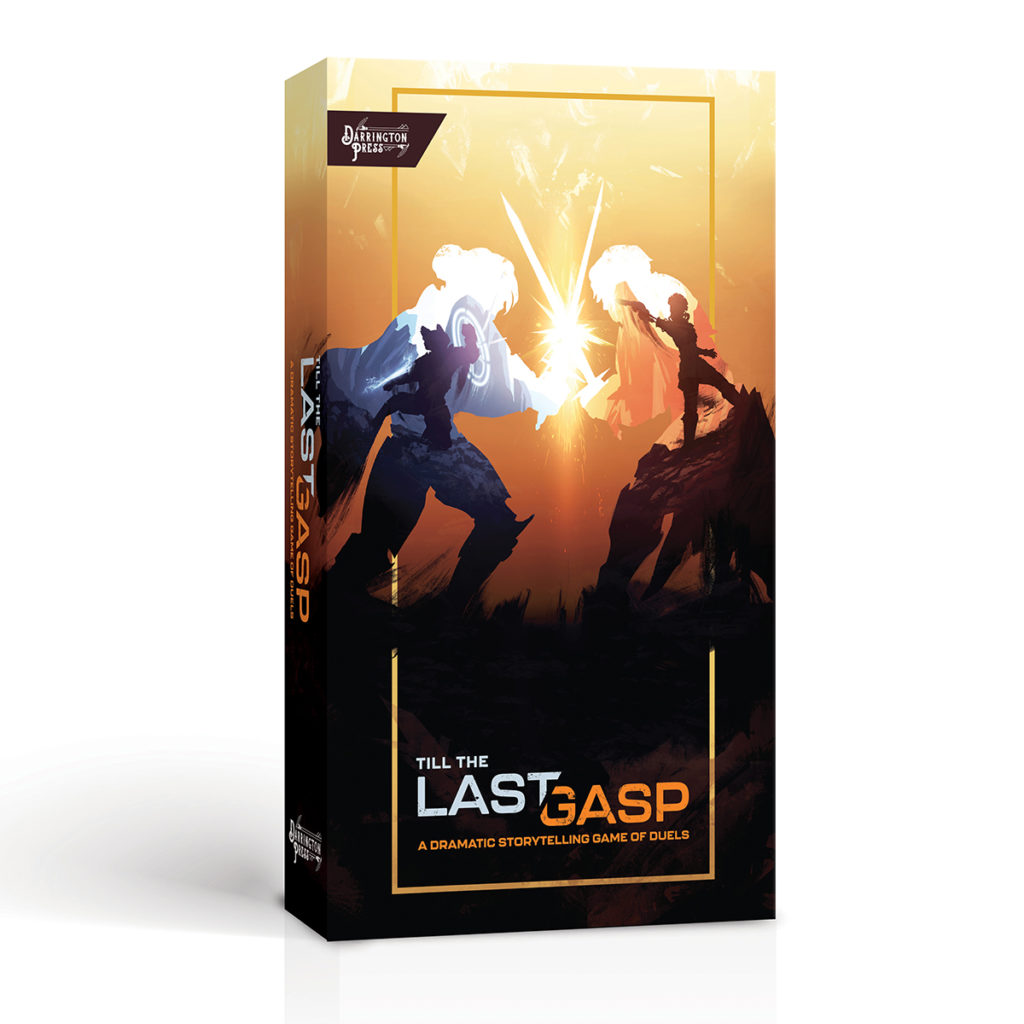
Ivan Van Norman is the co-owner of Hunters Entertainment and Head of Critical Role’s publishing house, Darrington Press. Ivan has been producing TTRPGs for quite a while now; we caught up with him to talk about the narrative duelling card game Till The Last Gasp and also about the future of Darrington Press.

STARBURST: How would you describe Till The Last Gasp to a family member who’s just starting to play board games?

Ivan Van Norman: It’s a storytelling game, which means it’s odd. It’s not a board game. And it’s not an RPG. Although it shares a lot of similar concepts with both, like a lot of shared DNA. The goal is to experience the story. Unlike a role-playing game, but similar to a board game, it’s actually a game you can win. There is a decisive winner to the duel at the end. And that is the process of actually seeing the game versus a role-playing game, which, as people might have heard of with D&D and other kinds of standard RPGs, it’s a game that is ongoing and ongoing and ongoing and requires a Game Master to help facilitate the story and this, you don’t need a Game Master at all. You just play between two people; two people sit and help collaboratively tell the story together. But there’s not that third-like adjudicator that you often see in role-playing games. So it’s a weird hybrid of both. I’m not saying it takes the best of both, and I’m not saying it takes the worst of both, but it is just a beautiful blend between trying to find a through line with the story but also having a decisive outcome at the end of it similar to a board game.

It seems very flexible in terms of story because you’ve got all sorts of different characters, which feel like they could be from anywhere. Is it set in a specific world?

Yeah, so it’s crazy. We call it a sandbox game, right, like it’s a tool chest. It’s like a kitchen sink genre game, right, because it doesn’t have a set world. It is like a tool belt. Till the Last Gasp honestly acts very much like a power tool in your storytelling utility kit. We have a lot of preset maps and genres and things inside of it. But the game is really designed to provide you with a system in which to tell a cool duel between two interested parties. One of the things that made the game so interesting to me is how seamlessly it fits into like a long-term campaign of D&D, Pathfinder, or Starfinder, or just as a standalone. You can play it in 90 minutes with a friend just to kind of hang out and play a cool duel, or it can be this beautiful, intricate sidebar or, you know, an offshoot of a major campaign. So that way, I think it has a crazy amount of utility, but it does not exist in like a preset world, which is what a lot of people are used to when it comes to both Darrington Press and Critical Role. They’re used to seeing Exandria and Exandria stuff and everything being in Matt’s world. 

This is an interesting departure for Darrington Press. It feels like it’s a bit of an experiment to see how far you can expand the genre.

Only time will tell. Yeah, yes, no, one of Darrington’s big goals has always been to explore stories and concepts outside of the world of Critical Role. There are a lot of great stories out there to tell. But you know, it doesn’t all have to be exclusively out of the wide-spanning world that is Matt and Exandria that now features other GMs such as Brennan and Aabria.

Till the Last Gasp is designed by Will Hindmarch and Alex Roberts, both of whom have done some very interesting work in the past. Did Darrington Press seek them out, or did they come to you?

Will came to me initially to kind of talk about the game and talk about something he wanted to do. And I have been a big fan of those games in the past, like I played, The Quiet Year, I played. Dialect. I helped help Spencer Stark create Icarus and Alice is Missing when I was with Hunters Entertainment. So I’m used to these non-GM facilitated storytelling games. It wasn’t a new concept for me, but I had never really seen a duelling one like this before. That being said, I’m a huge fan. Will brought it to me initially, but I’m also a huge fan of Alex Roberts’s work, especially For The Queen and a lot of these other storytelling titles as well, too. And I just really felt like it was a perfect pairing. Like, I’m a big fan of, like, when a design comes in, do you want to challenge the design to be better? Always, right? It’s very rare that you get a single designer that just hits it out of the park without ever having another designer come in. It’s because there is so much playtesting, so much iterating, and so much work; it basically isn’t their design anymore. So I’m always a big fan of like setting up designs in order to see how it suffers against other designer concepts, you know, again, long as they aren’t two different design philosophies competing against each other.

Till The Last Gasp does feel like a series of dramatic prompts, almost like tools for your inner actor. Is that the intended ‘style’ of Darrington Press games? Is there an intended style?

Yeah, so that’s an interesting question because it has been coming up a lot of, like, what’s Darington’s voice? And even though the company has been around for a few years already, I would say it’s still finding its voice; it still wants to discover who it is; it’s still very much in that, like, freshman year of college, I’m going to pick a major, but maybe I’ll change it in a year, kind of a vibe. That being said, the through line that we do have that is very clear to us is that we are here to tell stories. Whatever comes out, we want games that help tell stories and are very cinematic in the way they exist in your brain. We don’t just want to create games for people who want to do improv; I think those games are great, and I do enjoy them, but not everyone wants to play an active game, so I’m interested in seeing those games under our umbrella as well.

Darrington Press’ output is very good, but it does take its time to come out. What’s the process? Do you take lots of things and whittle them down until you have the final product, or is one idea that’s constantly being refined? Is it a perfectionist approach?

I think it’s a little bit of columns A, B, and C, right? Like you want to take your time with it, you want to make sure it’s good. We are very grateful to be in a process where we can go into a design and say, “Is it is it what we want it to be?” even after spending some time with it because creatively, stuff evolves and always does. Even during the pandemic, I wanted to try to meet as many designers as possible to talk about their games. And it is usually about finding the right one; one of the things that I’ve enjoyed as a producer over the years is just really identifying passion and opportunity in games. Because even though there’s a great opportunity, if there’s no passion, it will probably not see itself to the finish line. And vice versa, if you have a great game, but you’re not, you know, finding a creator or someone who’s really passionate about their process and their progress, you’re going to just run into issues and in, you know, hurdles and difficulties throughout the entire step that doesn’t make anybody happy. I found a lot of great games. And I found a lot of great designers. Sometimes we make it through to the point where we can work on stuff together. And that’s the stuff I get really excited about. But it takes time to do all of it. Like we, I’m really I’m happy that you’ve identified that we are a quality-over-quantity kind of company because that is definitely the cadence that I want to keep. I would prefer to put out really beautiful games that play well and are replayable and timeless.

You mentioned expansions; when should we be expecting them?
Well, that is, I like to leave that up to the market quite a bit in the fan base. You know, I think I think it’s a little bit of hubris to plan expansions for games that I don’t even know if people like yet. If Till The Last Gasp comes out, and it people are really soaking it up and really enjoying it, and I see a lot of content come out of that game and bringing stuff together, then, you know, hell yeah, we’re going to support that. But right course, we’re going to make sure that people are continuing to be heard if they’re enjoying that game in that process. At the same time, I’m always excited about the next game as well as the next opportunity.

What games are you enjoying?
I played a lot of Gloomhaven, kind of like, three or four years ago; I played it a lot. And we went through the campaign, and we played it over the course of, like, two years like I watched my, my small child, my small baby become a toddler and then become a child through the process of Gloomhaven. So, needless to say, we have Frost Haven in our house now.  I’m just a huge fan of a game that is so thoughtful in its process. That is a thoughtful game as far as how they do design and elements in there. But we also are enjoying My Father’s Work. I love that. I got the I got I played a bunch of prototypes, which, you know, I wish I could talk about, but I can’t. I did. We also played a delightful little game called that was called Deadwood 1876. It’s a card game of strategy and perceived luck. It’s from a company called Facade, and I actually never heard of them before. It’s a very wonderful kind of beer and pretzels party game for two to nine players. I was very impressed at how easy it was. It’s a party game without the referee style you get in party games. It’s good to see everyone else is doing it. Clever Girl is another one. It’s a solo game; you can play it by yourself right here. By Wretched and Alone. Basically, you play the human, and you play the Raptor. And you can do cooperative play, or you can play semi-competitive play where you know, you are, you are trying to survive against crushing odds that both the Raptor version and the human edition of the game.

Are we heading back into an era of wild invention when it comes to gaming?
There’s a game for every table, right? And there’s a game for every gamer. Because no matter what you enjoy, whether and this is why it’s like there are these archetypes that people were like people who just will not touch games out there, and you think about like, those kinds of tropes, and I want to challenge those tropes. That’s not a good business model. You don’t just go find that niche market and then try to serve as the niche market. But at the same time, personally, I think it’s very fun to say like, how do I get people who are traditionally not into games and find something that makes them delightful, but not, but not shoved, but like, Hey, this is the game for non-role players, right? I see a lot of those games right now. I see a lot of the people who are trying to make the role-playing game for not role players, and coming out of the gate with that kind of a statement, I think, is the wrong way of going about the game design, instead of just trying to say, hey, you know, I’m going to make it easy, right? Instead, you just need to say, well, what can make it delightful, right? How can I make an experience so pleasant? To enjoy? That kind of level of integration? That I am, that I just, I just, I want to buy it, right? Because that’s what’s more important, are they having so much fun they want to keep playing? Or do you just want to make it so easy that it’s not difficult to play? Right? That’s kind of two different attitudes towards it.

People like having fun, yeah?
I am coming, literally, from a world of seven-plus people all sitting and playing a game filled with joy, right? And an entire brand built around the joy of the game and the joy of the process. Right? And then, you know, people discovering that joy and wanting to buy into it, right? So I don’t think a UI UX experience needs to be any different than then watching people laugh and joke and find camaraderie and be, again, to use the word delightful around each other.

Till The Last Gasp is out now via all good games stores. And check out Darringon Press’s quick start rules for their forthcoming Candela Obscura game here.


Franklin Ritch | THE ARTIFICE GIRL

the artifice girl still

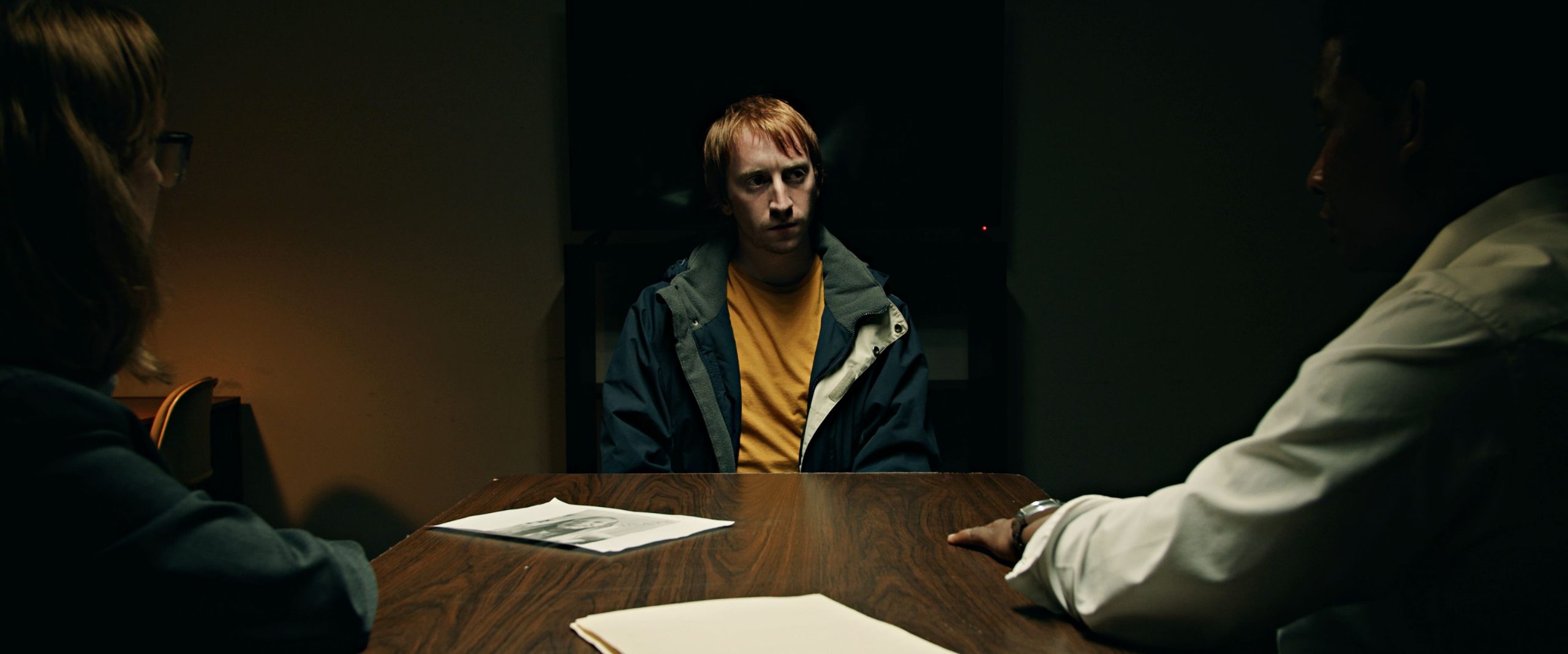
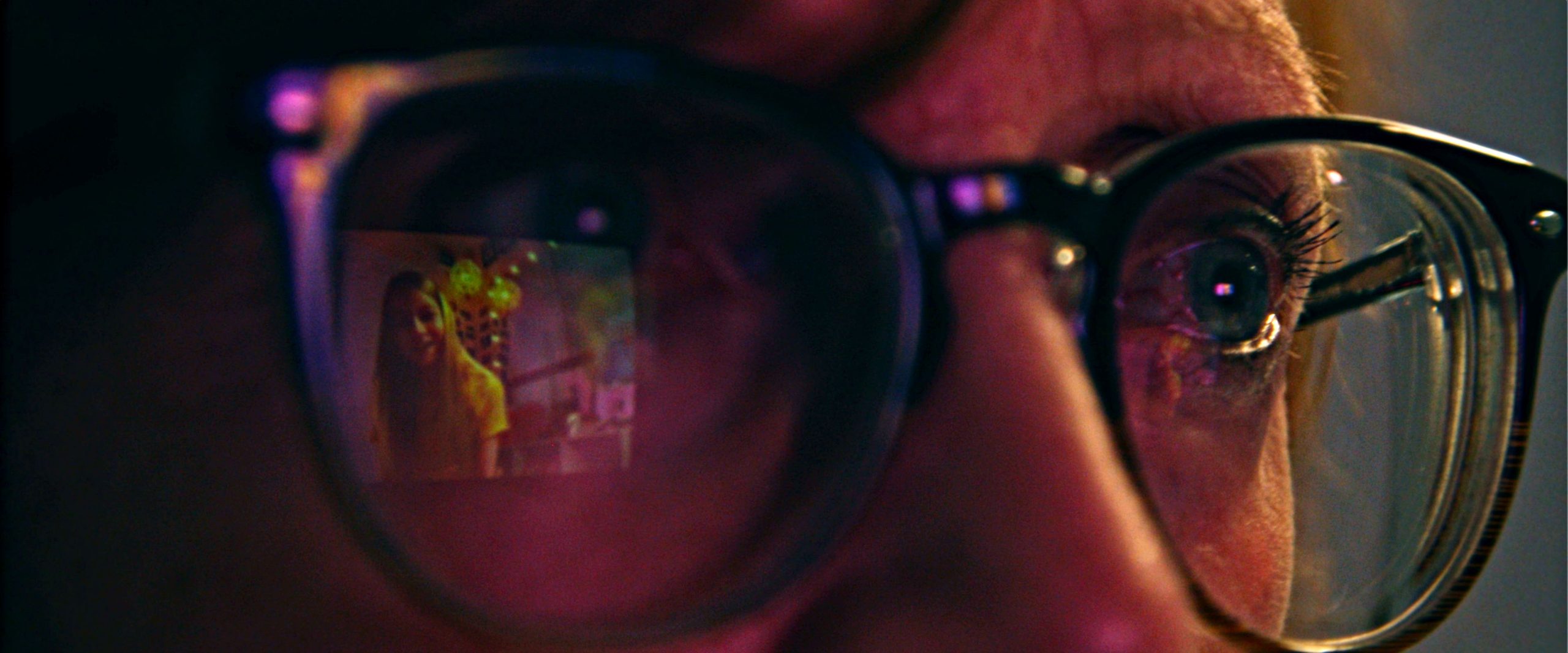
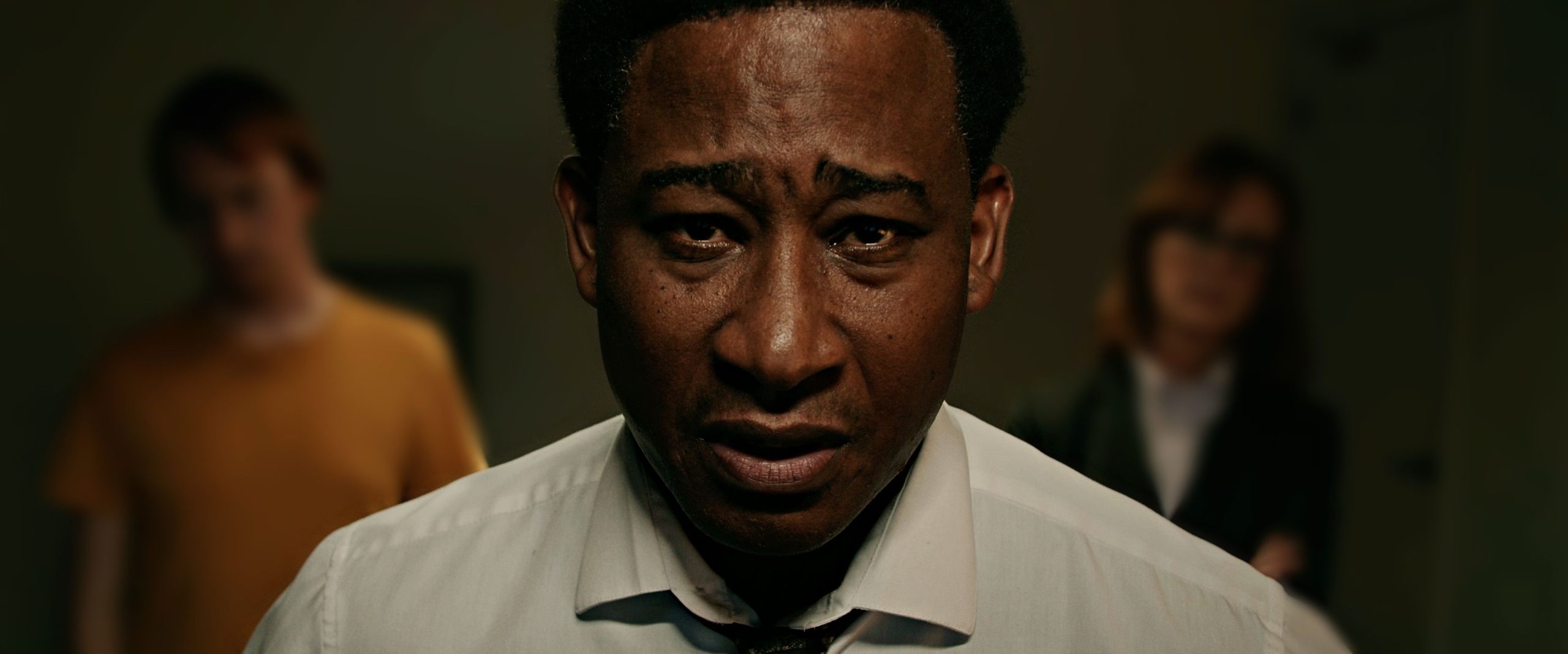
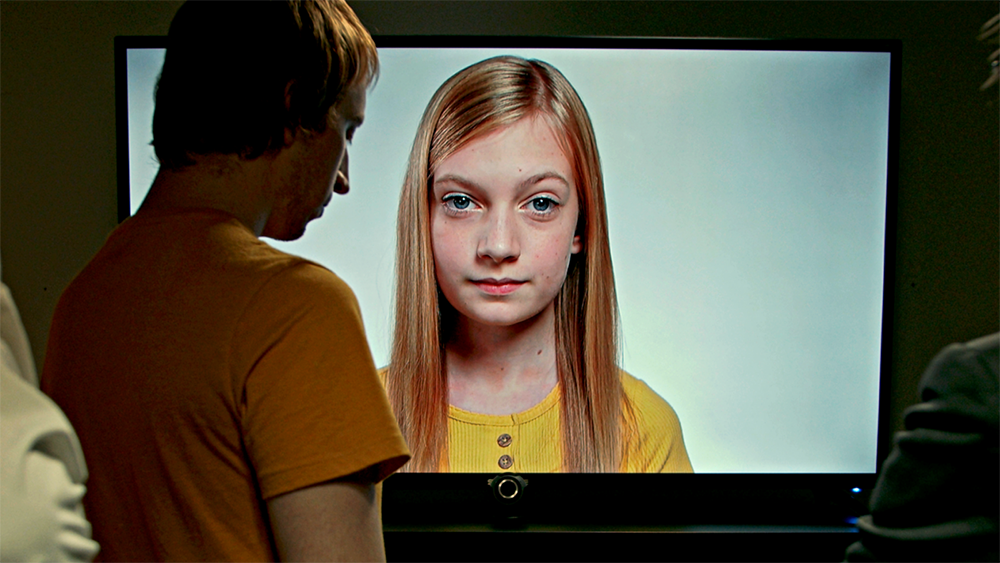
In The Artifice Girl, a team of special agents discovers a revolutionary new computer program to bait and trap online predators. After teaming up with the program’s troubled developer, they soon find that the AI is rapidly advancing beyond its original purpose. In his feature film debut, Franklin Ritch writes, directs, and stars in this indie sci-fi which muses on the ethical considerations of artificial intelligence and theorises on the technology’s future.

Nominated for the Adam Yauch Hörnblowér Award at SXSW and winner of the Best International Feature at the 2022 Fantasia Film Festival, The Artifice Girl comes to cinemas and digital from April 27th. Ahead of the film’s release, STARBURST spoke with Ritch about his work developing this intense, nuanced, and tightly written gem and asking the big questions.  

What first inspired this script?

Franklin Ritch: I read a lot of articles over the years about how technology and AI were being used to catch criminals and hunt down predators. And I thought that was just a fascinating, awesome way to use technology for good, and I wondered what kinds of conversations were happening with the developers behind closed doors. And I kind of shelved the idea for a minute because it was early during COVID and it seemed like such a massive idea… but then, I decided to re-approach it and think, okay, how can I tell the story with one location and just a few actors?

At one point, there was just this moment of epiphany to make a thematic connection between the budding adolescence of AI and childhood trauma. And once that line was drawn, in my mind, I knew that was a story I had to tell. The writing process just sort of flowed from there.

You really go from a tongue-in-cheek discussion of VFX in Star Wars to AI outliving humanity in just 90 minutes! The Artifice Girl tackles so many different themes, from intergenerational trauma and sentience to the ethics of AI and the future of humankind. How did you ensure the story kept its through-line and didn’t veer off on a tangent?

Franklin Ritch: Yeah, I wasn’t excited by the idea of a robot or the sci-fi elements, I was more interested and excited by the ethics and the philosophy. And so that ended up being quite beneficial to the film’s budget because instead of having, say, an action scene where Cherry’s in a flying car doing backflips, it was more about exploring the ideas and inciting conversations.

So, when writing the opening interrogation scene, which feels more like a drama procedural sort of scene, I knew that I also wanted to explore what happens, say, fifty years later. I want to do both. I don’t have the budget for a three-season series, so it was about finding the key moments and focusing on a real-time scene in those key moments. That happened very early in the conceptualisation process, which was very helpful in structuring the film.

There are a lot of discussions that happen between characters on the ethics and morality of what they’re attempting. Did that stem from your research and arguments you’d read, or is a lot of it drawn from your own internal debates on those issues?

Franklin Ritch: I think a little of both. I wanted to make sure that all parties of thought were present in these dialogues, even ones that I disagreed with. For instance, I often disagreed with the character of Gareth, but it’s good to have a character like that so that the others challenge him on his views. There’s some validity to every view.

In terms of research, definitely, the biggest help for me was talking to professionals in the fields of AI and tech. You know, just now we’re having these very timely conversations – AI has progressed so much just in the three years since we started this project. Obviously, this past month there’s been a lot of discussion around ChatGPT, but even these conversations they have in the film about, whether it’s okay to bring an actor back from the dead with CGI deepfakes? It’s a very short road between that and questions like, should robots have rights?

And I’m not here to speculate on what AI will look like in five years. The Artifice Girl is only really tapping into a very specific, singular situation. Cherry is not supposed to represent the future of AI in our world, she’s supposed to represent just this one AI in this one particular story, who is meant to replicate human behaviour and in doing so, she becomes a reflection of the best and worst parts of her developer.

You do see that progression as Cherry becomes more “human-like”, for lack of a better term, in her interactions with the other characters. What directions did you give Tatum Matthews as to how to blur the line between being human-passing but edging into the uncanny valley?

Franklin Ritch: It was a balancing act for her. You know, if she seems too unnatural, then she wouldn’t pass as a child to the predators. But if she’s too human, the audience won’t buy that she’s an AI. We decided very early on not to do a deepfake of her own face or to do a CGI version of her because we wanted the audience to be more in line with Amos’ perspective, who sees her and can’t tell the difference, even as the other two characters claim they can spot the subtleties.

So with her performance, I can’t take any credit. She did so much homework and research on her own. We had conversations and did table work about her different stages of evolution and pinpointed like, this is version one of Cherry, then here’s what version two would look like, etc… Ultimately though, it just comes down to the way that she performs it, which is just incredible. I’m still astounded when I watch the film that she has that perfect balance, especially in those moments when she transitions from one version of herself to another. It’s striking, how well she pulls it off, but in the latter half we just said, don’t even think about being an AI. Almost be confused when every once in a while, you’re reminded that you’re not human.

The idea of AI and the line it blurs between artifice and humanity has long been a fascination of the science fiction genre. In your opinion, what does that movie canon get wrong, and what aspects of it did you want to correct or develop in Artifice Girl?

Franklin Ritch: I have a lot of love for stories about AI. Even films like The Terminator, where it seems to argue that AI is inevitably evil, and I disagree with that. I feel like everybody seems to be in camps when it comes to AI: you’re either really excited or you’re absolutely terrified. But I think that AI is going to be a reflection of the people who make it. If it’s built with altruistic intentions, that’s good – just be careful that you don’t accidentally put your personal trauma into the AI [laughs]. If it’s built with selfish, nefarious purposes, it’s going to do exactly that. If it’s built with Capitalistic intent, that’s what it’s going to do.

So, I find it helpful if, instead of looking at AI like a bogeyman, we look at it like a child. A child can grow up to be whatever it’s raised to be.

It’s also interesting that Gareth never wants to acknowledge his trauma, or that he could have passed that trauma onto his AI creation. Can you talk about the emotional core of that relationship and how it drives the story?

ARTIFICE GIRL

Franklin Ritch: I think Gareth never meant to be an abuser. No parent ever does. It’s not that he ever actively did anything harmful, it’s more the fact that he passively never opened up about his trauma. He never shared that, just walled himself off and fixated on an intention, rather than trying to build connections in his life. I think that’s why what happens, happens, because of his resistance to healing. He sees healing as something that could weaken his intention – as though if he got over what happened to him, then he wouldn’t be as focused on hunting down criminals. Yet by doing that, he passes that trauma onto Cherry. I think it goes back to the idea that AI will inevitably inherit the best and worst parts of us.

THE ARTIFICE GIRL releases in cinemas, on demand and digital on April 27th, 2023. Watch the trailer here

Michael Witwer | D&D THE LEGEND OF DRIZZT VISUAL DICTIONARY

LEGEND OF DRIZZT Michael Witwer

by Ed Fortune

Michael Witwer is a New York Times bestselling author known for his work on the Hugo-nominated Dungeons & Dragons: Art & Arcana, the critically acclaimed Empire of Imagination: Gary Gygax and the Birth of Dungeons & Dragons, and the bestselling Heroes’ Feast: The Official Dungeons & Dragons Cookbook. His latest book details everything about everyone’s hero of the Forgotten Realms, Drizzt Do’urden. We caught up with him to find out more about the Dungeons & Dragons The Legend Of Drizzt Visual Dictionary. We caught up with him to find out more…

STARBURST: Why did Drizzt and his companions become so popular?
Michael Witwer: Drizzt is just about everything one could ask in a hero: brave, virtuous, and skilful, but what really makes him so compelling is that he chooses right in the face of extraordinary adversity. As Drizzt creator R.A. Salvatore says, Drizzt “does what’s right even when it hurts.” What’s not to love about a hero like that?  Just as important to the Legend of Drizzt are his ‘companions’ – his friends to the end – who are an amazing and dynamic cast of characters who bring every bit as much to the table as Drizzt!

What’s your favourite Drizzt story?
With such a storied franchise, it’s hard not to say the first book of the series [The Crystal Shard 1988], but my favourite might be Homeland, which is the fourth book in the series but a prequel and Drizzt’s origin story. One of the things I like best about Drizzt’s books is his personal journal entries, which really help you understand his depth and motivations. Similarly, reading Drizzt’s heart-breaking backstory in the Dark Elf Trilogy [Homeland, Exile, and Sojourn] really helps you understand where he’s coming from and what he’s about.

What’s your favourite location in the Forgotten Realms?
The Sword Coast metropolis of Waterdeep is pretty hard to beat. It has a little bit of everything, including the Forgotten Realm’s most iconic tavern [the Yawning Portal] and probably its most famous dungeon [the Undermountain], maybe for something less obvious, how about the Ivy Mansion in Longsaddle, which is the ancestral home of the Harpell family, a quirky family of wizards and friends to the Companions. The Ivy Mansion is full of illusions, magic gates, tricks and enchantments, it sounds pretty cool and a place you could get lost in… literally!.

What piece of information did you have to put in the book, no matter what?

Well, it wasn’t a single piece of information but rather a whole timeline’s worth! When you are doing a book that supplements and summarises a 40-book series, it’s very hard to know what stays and what goes; you only have so many pages, after all! You know you need to cover all the key characters and locations, which was not so simple to curate after this many books. We really wanted to put a Drizzt timeline in there that covers his whole story – about 200 years – to provide the proper context for the remainder of the material and allow this book to stand alone. It was a super challenging task to do in a single spread!

Are you currently playing D&D? Tell us about your game?
Yes! I started playing D&D in the 1980s and have been playing in on-and-off campaigns since then. Our current campaign is run by my brother [Riverdale‘s Sam Witwer] with a group of long-time friends, and we’ve been doing this one for about four years. We’re located across the US, so we play on a virtual tabletop.

Why do you think D&D become so popular recently?
I could write a whole book about that! In fact, I have, and it’s coming out in October!. The short answer is something like this: well-designed fifth edition rules with lots of testing and audience feedback + the popularisation of Actual Play streams/shows like Critical Role to help people learn the game + Hollywood and celebrity love of the game, and a public fascination with eighties nostalgia = blockbuster success!

If you woke up and found yourself in Mithral Hall, what would you do?
Ha! I would go straight to the Hall of Dumathoin and grab as many magical items as I could carry!

What’s your favourite illustration in the book?
This book is so beautiful. It would be impossible to choose just one! However, of the new illustrations that were commissioned for this book, I’d say my favourite is the illustration of Tier Breche, which is the Menzoberranzan cavern that hosts the city’s three colleges: Sorcere [wizardry]; Arach-Tinilith [clerics of Lolth]; and Melee-Magthere [martial combat]. There had previously been very few depictions of this locale, and we worked with one of my favourite D&D artists, Jason Rainville, who did an amazing job giving us the size, scale and aura of the place.

What D&D project would you love to handle next?
As I mentioned, I have a couple more, as yet announced, D&D projects coming out in the fall, as well as my first middle grade/young adult novel, Vivian Van Tassel and the Secret of Midnight Lake, which is not D&D, but unsurprisingly heavily inspired by TTRPGs!. I love the game and the brand, so I’m up for pretty much anything D&D related!

Dungeons & Dragons The Legend Of Drizzt Visual Dictionary is out now.


Lee Cronin | EVIL DEAD RISE

lee cronin evil dead rise

by Sol Harris

It’s been ten long years since the last film in the EVIL DEAD franchise was released. A fifth entry in the series is finally upon us in the form of EVIL DEAD RISE, written and directed by LEE CRONIN (The Hole in the Ground). We sat down with him to find out what we can expect when the deadites are unleashed upon cinemas once more…

STARBURST: After Sam Raimi, the director of the original Evil Dead trilogy, and Fede Álvarez, who made the 2013 instalment, you’re only the third person to ever helm an Evil Dead movie. What was it like taking on such a beloved and iconic series, and did you feel any pressure, given how it’s a series that’s managed to maintain a real quality of output?

Lee Cronin: It was a really exciting opportunity, first and foremost. I come from a place of being a fan of the franchise. It had a big influence on me in my younger years. I always thought I would love the opportunity to make one, but unlike some other franchises, you’d imagine there’s less opportunity. There hasn’t been an enormous amount of movies made underneath the title, and I think that’s what’s quite special about it.

I know speaking to Sam and Rob [Tapert] and Bruce [Campbell], they’re quite picky about wanting to do one, when they’ll do one and what it is. I had an approach and a vision for a new Evil Dead movie that got them excited – that felt fresh – like it’d move the compass. Three of the four movies before essentially took place in the cabin, and there was the continuity of Ash as a well-ingrained character at that point in Army of Darkness. I was taking on something where I was leaving not only the cabin in the woods behind but also Ash, which is the first time that has happened. I think that’s what’s quite unique about Evil Dead Rise.

I think Evil Dead fans are actually quite hungry for more. I don’t want to say they’re forgiving because they still want a great movie; there is always that percentage that are like, “No Ash? No movie”, and I can’t change what those people think. They’ll probably still watch it and can judge it in whatever terms they want. All you can do is make the movie that you want to make and the best movie that you can. And being a fan myself is one of the most challenging aspects, separating your fandom from it so you can create a story. I had a lot of fun when I was creating this movie, especially in the writing, at finding particular touchstones and references and certain things that I would play a new way. So I think there’s a huge amount there for the fans.

The development and writing of this movie were one of the smoothest processes I’ve ever had. They liked what I had to say from the start. You’d say, “I had them at ‘Hello'”. They liked the approach. They liked what I was trying to do. Once I pitched them an in-depth storyline, they were all on board. There are always opinions, but they were very, very trusting and, a lot of times, added and made suggestions that built on the things I was trying to do.

It was supportive and understanding, and I never felt like anybody was breathing down my shoulder. I just felt like people were there to give me a pat on the shoulder when I needed it. Sam Raimi is a filmmaker who would have inspired me had I made an Evil Dead movie or not, so in a weird way, it was already in my DNA. I didn’t have to think too hard. They showed me a lot of trust because I think they knew instinctively that there was no point in making another Evil Dead movie that in any way felt like a retread.

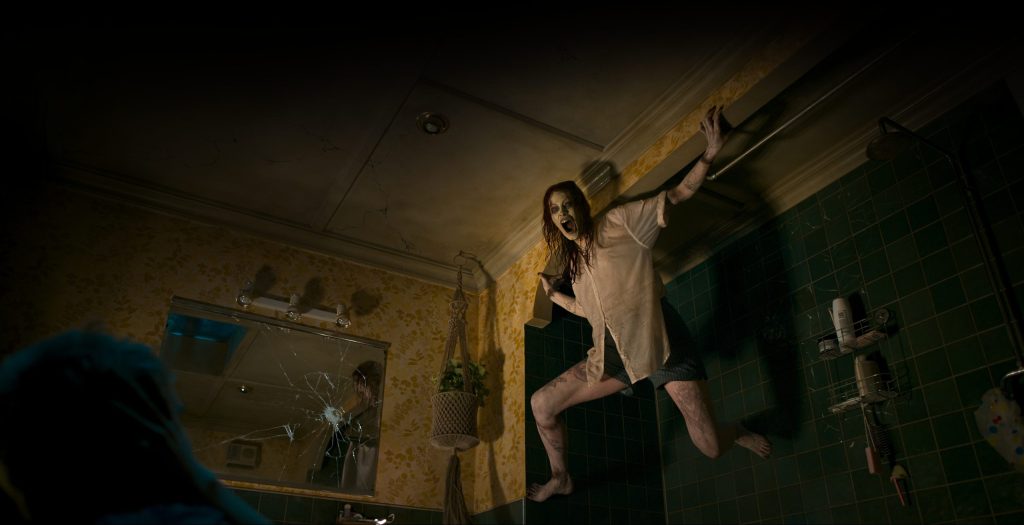
Evil Dead Rise swaps out the series’ iconic cabin in the woods for a high-rise apartment, the home of a small family. While it’s incredibly common to see children in horror films, they tend to be tamer and more psychological in nature. It’s still extremely rare to watch a film and see children put in such visceral, potentially violent danger as seems to be the case with Evil Dead Rise. What drew you to include children in the story?

The last three things that I’ve made all had children in the story. I think a lot of times when I think of ideas; I think of childhood. I also take influence from my own family — I don’t have children, but I have a lot of nieces and nephews. They love horror movies, and we talk about horror movies, and I tell them what I’m working on and tell them scary ideas, whatever they might be. There was no doubt in my mind that putting kids in the firing line [of] deadites [was] pretty hardcore, but I wanted it to be something new, and Evil Dead movies push the envelope. They test the limits. Certain things in the older movies test the limits, and this is testing a different limit.

The core idea was I wanted to bring the deadites into the home. I wanted to bring the deadites into somewhere familiar and around people that you’re familiar with, which pointed towards an urban environment and an apartment. It pointed towards family. It pointed towards children, so it was almost a natural step for me as a place to take it. It definitely raises the bar, and I think that makes this movie stand out in a particular way. This is certainly going to be up there in terms of the volume of blood versus children in a movie, you know what I mean?

Amazingly given how simple the original film was, the world of Evil Dead has developed a deep, interesting lore. This film is set within the same continuity as the other four movies in the franchise, so how exactly do the pieces all fit together?

It’s a funny world we live in; there’s ‘soft reboot’, ‘hard reboot’, ‘remake’, ‘requel’, and whatever you want to call it. To me, this is just a fresh direction inside the universe, and I always felt like more stories could be told in that world.  I think one of the things that Sam really vibed with when I said it to him was: “In Army of Darkness, there are three books. You had one, Fede [Alvarez] had one, I’m going to take that third one and do something else“. So that connectivity is there. It’s in the world where those three books exist, and we’re with this book in this story. There’s a direct line and a sequence within the movie that reflects on the existence of the book and of books. So where I see it, it’s happening in the here and now. It’s fresh; it’s contemporary; it’s of its moment. The timeline says The Evil Dead and Evil Dead II were when they were made, and similar to Fede’s movie, this is happening in the now.

Fans can probably repeat watch this movie and, each time they do, notice deeper references and deeper things that are in place that connect Evil Dead Rise to the canon. The Delta is not in the movie. There’s a new car. We made this movie during a challenging time of COVID, and getting our hands on a Delta was not always going to be straightforward. Again, they want to move the story forward, but there is a stylistic similarity. For example, the chainsaw is exactly the same shade of yellow as the Oldsmobile Delta. Evil Dead’s DNA permeates throughout the movie.

Of course, there’s more to making this a ‘real’ Evil Dead movie than just the surface-level trappings. The series is also famous for its distinctive and unique aesthetic. What was your approach to making sure Rise fit within the franchise from that perspective, and what can we expect to see tonally?

We shot the movie in New Zealand, and Ash vs Evil Dead and Evil Dead (2013) were also shot in New Zealand, so it was of great benefit. It was really additive to bring people who had worked as crew on past Evil Dead productions into that world. I was able to reflect with those people, especially when it came to some practical effects and physical effects and blood work and things like that. But I think what got the crew really excited in the early reads and prep was they saw we were making something that had my own unique vision and my unique tastes, and the choices I wanted to make.

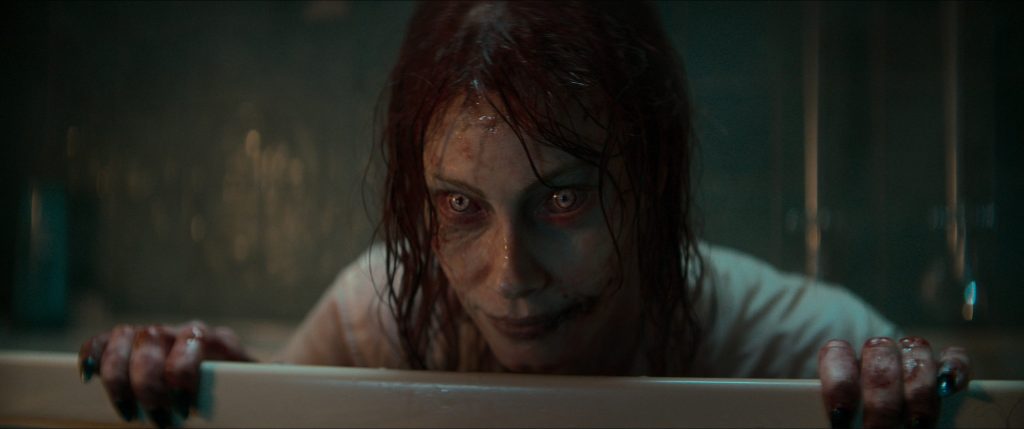
I think the word ‘balance’ is the most important thing of all. Throughout the process of making a movie, you’re testing it with audiences and different people are seeing it. Some of these people are obviously fans, and one consistent thing people have said is, “Oh my god. It’s absolutely an Evil Dead movie“. There’s no escaping the fact. It rings true and holds true to what makes Evil Dead unique, which I think is the relentlessness when the horror kicks in. With Evil Dead, you know you have to cross the line; when you cross that line, you keep hammering and hammering and hammering. I would have looked to Evil Dead II, not in tonal ways, but just in terms of that relentless, refreshing entertainment where something happens and, just as you’re catching your breath, the next thing happens. There’s a familiarity to the experience for sure, but the context is different, and the characters are different. You’ve got the book, you’ve got insane deadites; you’ve got those deadites probably waging greater psychological warfare than we’ve seen before in an Evil Dead movie. I’ve amped that aspect up. And I think in a lot of ways, it’s just tuning all those things. That’s the balancing act.

I don’t think it’s a comedy in the Evil Dead II sense, but it does have levity. Sometimes, when you’re working, you leave little keywords around your laptop. I had one Post-it note that just had the word ‘entertaining’. To me, whatever the tone, whether it be the first film, the second, Army of Darkness, or Fede’s movie… they’re all entertaining on their own terms. And this one does have its own specific tone. It definitely hits hard, it’s relentless, and it’s brutal, but the visual style, the kind of visual verve, and the outlandishness of some of the things that happen raises laughter. It’s definitely the type of movie that, with a packed audience in the cinema, it’s going to have a vocal crowd. So, although it’s not jokes, there’s definitely levity and release through the scale and madness of what unfurls onscreen. It’s a very dense movie. It’s packed with detail, visual style, energy, and, in basic terms, just shots galore. There’s a hell of a lot happening inside the movie, and that’s a little bit of my own taste. I love the detail, and I love refreshing imagery for audiences and never really feeling like you’re treading through the same moment at all. It’s an Evil Dead movie, but on a very different canvas.

After laying somewhat dormant for a long, long time, the Evil Dead franchise really feels like it’s having a moment right now thanks to last year’s release of Evil Dead: The GameEvil Dead Rise, and word from Bruce Campbell that a new animated TV series is in development. Are there plans to continue the series with further movies after Rise?

Someone very wise who I worked with said, “The audience decides“. I’ve left two or three doors open. Specific doors that are open in terms of places that we could go. There’s connectivity within this story where you could go 100 years in the past if you wanted to. You could also go forward 10 minutes and continue that story further as well. Part of the plan in making Evil Dead Rise and moving the franchise forward, and breaking the mould ever so slightly was to create opportunities to continue to tell more stories within the Evil Dead world, which is something that I hope happens and something that I’d like to be involved with.

How does it feel knowing the film is being released soon? 

At the height of COVID, this movie was going ahead, as many movies were at the time, as a release on a streaming platform. But the film tested extremely well with audiences, and it was always created to be a theatrical experience with audiences, so the movie is ready to go. We’re very, very close to the world premiere and then people will get a sense of what this movie is.

I’m really excited for people to experience these characters and then realise, “Oh shit. We’re going to have to go to Hell and back with these people“.

EVIL DEAD RISE is in cinemas on April 21st

Julian Scherle | MISSING

by NICK SPACEK

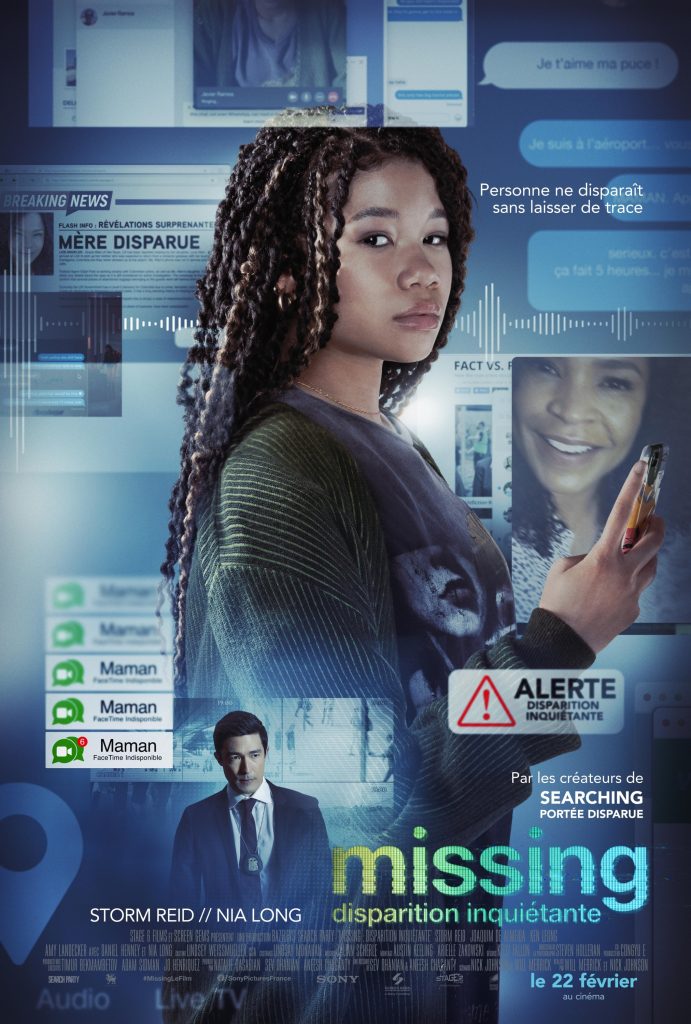
Composer Julian Scherle’s latest project is Missing from Sony Pictures. Releasing in UK cinemas soon, along with the soundtrack from Milan Records, Missing tells the story of June: “When her mother (Nia Long) disappears while on vacation in Colombia with her new boyfriend, June’s (Storm Reid) search for answers is hindered by international red tape. Stuck thousands of miles away in Los Angeles, June creatively uses all the latest technology at her fingertips to try and find her before it’s too late. But as she digs deeper, her digital sleuthing raises more questions than answers…and when June unravels secrets about her mom, she discovers that she never really knew her at all.”

A continuation of his work with the filmmakers of Searching – whose storyline also unfolds entirely via digital screens – Scherle wrote an experimental score, exploring the musical possibilities of machine-learning to the point where he wrote his own code, took audio files and recompressed them with the worst possible MP3 converter about 5000 times. We spoke with Scherle about the work which went into Missing.

STARBURST: What work did we pull you away from – or can you talk about it?

Julian Scherle: Not a specific project. I do write music for myself and I was very engrossed in a piece of music that I’m working on right now. Whenever I’m not on a project, I just write music just for myself. I release music under different pseudonyms and kinda explore different aspects of my personality that way. I’m pretty active with just writing music nonstop.

We’ve talked to Mark Mothersbaugh about his scoring work, and he mentioned that he gets to work two hours before he has to start so he can just make stuff for himself before he has to do it for other people.

Right. Exactly. I mean, it’s ultimately still work for other people when you write a film score. It’s very refreshing to just write music for yourself. Kind of keeps the love alive.

One also imagines it keeps you limber, and you can explore different things that you cannot necessarily do with film score, which sometimes can also influence the film score side. Getting to play around without any sort of boundaries, you just come up with ideas and you can try things out without the time crunch of a release date.

Yeah, absolutely, and you’re the only person who’s going to give yourself notes.

Did the score for Missing come out of any experimentation you’ve done on your own?

Yeah, it actually did. I did release a concept album a couple of years ago under one of my pseudonyms, and the directors found that and were listening to it when they were working on the script. And then at some point, when it came to hiring someone to do the score, they were like, “Oh, we should find out who this person is,” and they found out it’s me. Coincidentally, I also knew one of the producers from years ago. We worked on a short movie together, so they brought my name to the producer, and she’s like, “Oh yeah, I know this guy. I worked with him before.” So yeah, they kind of found me exactly through one of my side projects.

So much of the score is technologically driven, either right from the synthesizers or via the various compression and distortion that you apply. How did it come about?

The movie Searching, the entire story is told through digital interfaces. You always just see computer screens, basically. Anything you see is basically represented on that screen. It uses a lot of technology to tell a story, and our very first basic area that we wanted to explore sound-wise was, “What’s the human-machine interaction and what kind of elements get lost on the way, compared to if you would have a human-to-human interaction?”

Face-to-face, we might interact differently than we do compared to being on a Zoom call or on a phone call. That was the basic concept and my first question was, “What is that to the audio part?” one of the first things was, “Well, there’s always compression involved.”

Whenever you have any type of digital transmission, that type of compression affects the way how we perceive audio. I found an interesting study that was basically exploring exactly that. It was using orchestral instruments and played those instruments one time, compressing them, and then playing that compressed audio to some random audience and basically just looking at what that does.

The findings were that basically the more compression you have, the more anxiety-inducing those signals become. I thought, “Well, that’s kind of interesting. What happens if we don’t compress it one time, but maybe thousands of times? Does that still basically apply? Does it get even more anxiety-inducing?”

The results were pretty, pretty interesting – just a soup of compression artifacts to the point where it’s not recognizable, but the original signal was still there. I applied that to all kinds of different acoustic sounds, electronic sounds, different – sometimes I use elements from production audio, so Storm’s voice for instance, just dialogue, snippets, and pieces.

Another one was that I used a microphone that would pick up electrical interference instead of audio signals that are transmitted through the air. It really just picks up on electric radiation, and with that, you can capture any kind of sound that electronic parts are radiating. If you have light sources or any kind of LEDs or any kind of board, it really just constantly emits some type of sound, and you can capture that with that microphone.

It’s really digital, harsh kind of sounds. They’re not picked up through air, so there’s no room sound. It really is just directly, basically in your face. It’s really good for creating this type of claustrophobic feeling that I was going after – really being really close to the main actor and really being kind of caught inside the machine.

And then the last part that I was very interested in exploring was to include AI and machine learning in the process of creating sounds. And I found this platform by Alphabet. It’s kind of like a research platform for resynthesis, and you can train your own modules basically with the set of input signals and create an algorithm and then retrain other things to apply basically that module to it and resynthesize those sounds.

I used all kinds of stuff from the other two elements that I described and trained that module with the electrical interference sounds and used some vocals or some audio material from Storm and saw what that did. A lot of trial and error. I was involved pretty early in the process, so I had a decent amount of time to come up with all that stuff. But yeah, all the technical technological stuff, all this is really for the very anxiety-inducing, stressful, uncomfortable part of the score. It was huge fun for me to explore this field and come up with all those crazy sounds.

Julian Scherle’s score for MISSING is available now via most digital streaming sites, while the film itself is out now to rent/buy digitally in the States, and in UK release cinemas on April 21st.


Alexandra Bracken | SILVER IN THE BONE

Alexandra Bracken

by Ed Fortune

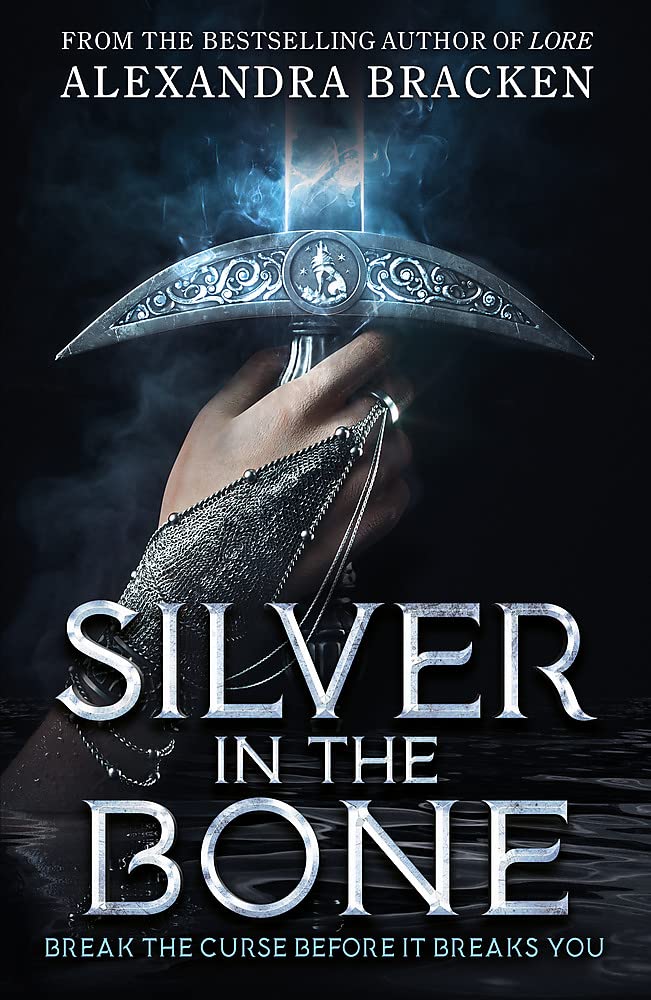
Alexandra Bracken is a New York Times bestselling American author known for her young adult thriller series The Darkest Minds and the time-travel duology Passenger/Wayfarer. Her latest book, Silver in the Bone, is a contemporary fantasy. We got in touch to find out more.

STARBURST: What’s your Elevator pitch for Silver in the Bone?
Alexandra Bracken: I’ve been pitching it as being like if Indiana Jones was a teenage girl, crossed with Arthurian legend and a dash of The Last of Us

How does this compare to your other novels? Was Silver in the Bone a challenge to write?
Silver in the Bone was a challenge but in the best possible way. I really wanted to write a story that touched on a less-explored part of King Arthur’s world, namely the Isle of Avalon. Getting to really imagine that world from the ground up, not to mention dream up a dark scenario to test its inhabitants down to their very souls–was an absolute blast.

Of my past work, this book is probably most like Lore, as it takes familiar mythology and legend and brings it into the modern world to tell an entirely new tale.

What was your favourite scene to write?
The athame scene at the lake, you’ll know it when you read it!

If you could take one of the characters from the book out for a drink, who would it be, and what would you say to them?
I feel like I owe the entire Isle of Avalon a round of drinks on me, honestly! From the main cast, I definitely want to take Tamsin, mostly so I can apologize for what I subjected her to in this book.

How would you describe your writing process?
I’m what some people call a headlights plotter, meaning that I don’t do massive, detailed outlines, but I don’t completely pants my stories either. Once an idea comes together in my mind, I know I’m ready to dive in when I know the main character’s arc, as well as the midpoint and the ending. Everything else is discovery as I’m drafting. So… lightly chaotic?

Which writers inspire you?
I’m continually inspired by so many of my author friends as they push themselves to hone their craft and write better and better books! I also love how Holly Black incorporates fairy tales and folklore so seamlessly into her work.

When you’re world-building, how does magic change a society?
When I’m thinking about magic and worldbuilding, I always start with how it has directly impacted the main character, and I let it all grow organically out of that. For example, in Silver in the Bone, Tamsin doesn’t have any magic of her own, and it intensifies her need to prove her worth beyond it, as well as makes her feel like an outcast from the hidden world of treasure hunters she’s part of. Like any concept of power, I think magic can absolutely bring out the very best and worst in people. I think a lot about how it defines different characters’ identities, what they believe about it, and, most important of all, its limitations.

If you weren’t writing books, what would you be doing?
Good question! I would probably have gone on to teach history, or I would have worked in historic preservation.

What’s your next big project?
I wish I could tell you, but it’s still a secret! Right now, though, I’m editing the sequel to Silver in the Bone and can’t wait to share the title of it with everyone soon!

Silver in The Bone is available now from all good bookshops.


Ron Wasserman | MIGHTY MORPHIN POWER RANGERS: ONCE & ALWAYS

ron wasserman power rangers

by Nick Spacek

Musician and composer Ron Wasserman’s ’90s output for Saban Films is legendary. In addition to having created, performed, and sung the seminal theme song of the Mighty Morphin Power Rangers, Wasserman also composed the theme for X-Men: The Animated Series and composed for Dragon Ball Z.

Wasserman has returned to the much-beloved series to score the upcoming 30th anniversary Netflix film Mighty Morphin Power Rangers: Once & Always. The new film, out April 19th, “brings back two of the original Power Rangers, Billy (David Yost) and Zack (Walter Jones), in their fight against the newly resurrected Rita Repulsa to stop her plot to go back in time and stop the Power Rangers from ever forming.”

We spoke with Ron Wasserman about his career, returning to the Power Rangers, and more. You can watch the full interview below…


Scout Taylor-Compton | THE BEST MAN

scout best man

by Andrew Dex

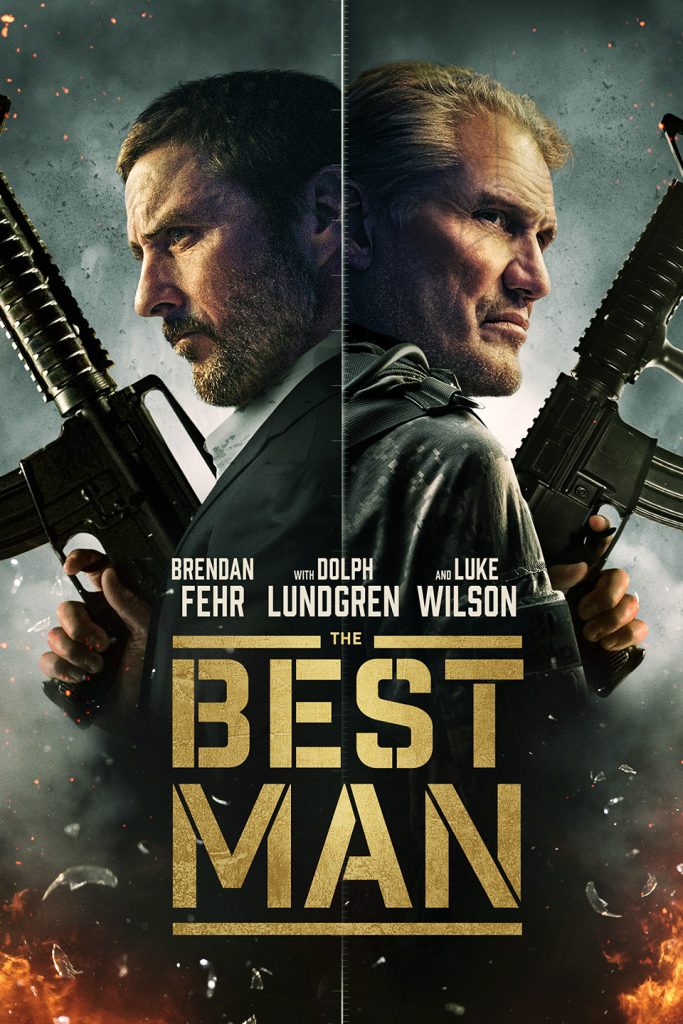
She fought Michael Myers in the Halloween franchise, and now she’s taking on terrorists in her brand-new action-packed thriller The Best Man. STARBURST catches up with actor Scout Taylor-Compton to find out what it’s been like to work alongside a brilliant cast on a Die Hard-inspired action movie that, interestingly, features a wedding taking place at the centre of it…

STARBURST: How did you get involved with the movie, and what made you want to work on a story like this?

Scout Taylor-Compton: I just got a call, just an offer. Nicky Whelan, who plays my sister Brook in the movie, texted me, saying, “I’m attached to this movie. They’re going to reach out to you. Please do it!” I love Nicky, I’ve worked with her on another movie, and now we are very close friends. When I read the script, it was a quick yes. I love action and anything that’s fast-paced. It’s always my vibe. It was a fast yes for me, for sure.

How did you prepare for a role that would see you playing a maid of honour within an action movie? What kind of research did you do for that?

I just made sure I drank a lot of water! Obviously, it’s hard to move in a dress, but my whole thing was making sure that I found shoes that weren’t going to be a pain in my ass when it came to running around. I already told the director that the shoes were coming off asap. I just need to be barefoot in order to keep up with Brendan Fehr moving fast. There wasn’t really much preparation, I feel like with action and horror, it’s a lot of movement. They go hand in hand, so it’s pretty easy.

What was it like to work on your character Hailey with the director Shane Dax Taylor, and what do you think he wanted to see from her within the movie? What did he want her to bring to the story?

What was interesting is that Hailey is spunky anyways. She’s a daddy’s girl. I’ve never played that sort of girl, so it was fun; she’s very flirtatious. She’s a go-getter and knows what she wants, which is a fun and confident role to play. Which was really fun in itself, and then as soon as shit hits the fan, she turns into this vulnerable, like, “Help me, save me!” kind of thing, but we definitely wanted to find the medium ground of she can also take charge, which you see in the movie, which was really fun to work on with Shane. There were a lot of times when I wanted to find Hailey’s courage and strength through this, and Shane was really helpful with that, making that colour palette work.

It’s an interesting idea, where a wedding turns into a hostage situation! So, I was wondering, what do you think the wedding side of the story does for an action movie like this? Like, maybe it makes the viewer care for the characters more?

Yeah, I think so! I mean, who doesn’t love Die Hard? So, it’s like it’s Die Hard, but at a wedding! I think that is what it did. We fell for these characters a bit more, and I would assume they’re more realistic. They are all different from one another too, which is really great; even with Nicky and my character, we’re polar opposites in the film. You follow a bride and a groom on what’s supposed to be the happiest day of their lives, but it ends up not being that. I’m getting married next year, and if something like this happened, I’d be mortified! And I would hope that my groom would protect me! Like Luke Wilson did with his bride.

You share a lot of scenes with Brendan Fehr, who plays Bradley, can you tell us a bit about what he was like to work with and what you think your dynamic brings to the movie?

I got really lucky working with him and have been a fan of him forever. We actually did a movie together where he played a dad figure! So that was hilarious. I said, “Guess what, Daddio, I’m now your partner!” It’s always interesting when you act with someone previously, and then when you collaborate again on another movie, you both play something completely opposite. That was really fun, but he is one of those actors where we work the same. It was really easy to manoeuvrer with him; we’re very laid back, and we’re goofballs in general, so it was very fun being able to work with him. We kind of snap in and snap out of the role, which was nice. Sometimes it’s a little harder when you’re working with someone who is like a method actor or so into it, where you’re like, “Hey! Let’s have a normal conversation not regarding our characters”. It was lovely working with him, and he brought out a lot in Hailey, a lot more playfulness, which is just fun. When you work with an actor, you never know what they’re going to give you until you hit that moment, and I think what we gave each other was magnetic. So, it was really cool.

What was it like to work alongside Dolph Lundgren as Anders, and what do you think his history with action movies brings to The Best Man?

Coolness, credibility! He is a legend, and I was starstruck, to be honest. He has a big presence and is just a big guy. It was just like. Sometimes I couldn’t even get words out; I couldn’t believe that I was standing next to him. He doesn’t have to do anything, and he is badass. You’re intimidated by him. He brought so much and didn’t even need to say a word, which is cool.

You yourself are no stranger to intense action sequences. Looking at the Halloween movies alone, you’ve had to work on some huge sequences. What was the most rewarding scene for you to work on in The Best Man, and why?

There are so many. I’m marrying a stuntman, so if I don’t know how to do stunts/action, he is going to kick me to the curb. Obviously, any of the fight scenes, I love doing it! I know he is a stuntman, but I often say, “I want to do my own stunts, I don’t need anybody”, but it’s really incredible what they’re able to do, compared to what you’re not able to do with your body and actually be OK. Any of the gun work too, when you’re holding machinery like that, you feel badass. So any of that stuff is really cool to do as well.

Saban Films will release THE BEST MAN in US theatres, on-demand, and digitally on April 21st, 2023

Brendan Fehr | THE BEST MAN

Brendan Fehr best man

by Andrew Dex

Set during a wedding, a team of ex-special forces must protect themselves from a wave of terrorists inside a hotel resort, and at the heart of the plot – and the action – is Final Destination‘s Brendan Fehr. STARBURST catches up with Brendan to discuss what The Best Man was like to work on whilst revealing how he brought his character Bradley to life alongside a talented cast!

STARBURST: How did you get involved with this movie?

Brendan Fehr: One of the line producers I’d worked with before, who I’d kept in touch with, said, “I’m doing a movie in New Mexico”. He knew I was there, and he was like, “I’m going to send it to you, and if you like it, then I think we can make it happen!” So I read it and I said, “Yeah, something with Luke Wilson and Dolph Lundgren, little shoot ’em up, let’s go do it!”

What do you remember the most from reading the script for the first time? What stood out to you?

Well, the first thing was, “Oh, I’m the best man? That’s cool”. When he sent it to me, he said, “It’s for the role of Bradley”, and I was like, “Alright, how soon am I going to die in this thing?” Between Luke and Dolph, I was thinking, “Do I die on page nine? Or do I make it to the second act!” No spoilers, but I’m there for a while! I think for me, it’s an action movie; they’re going to have the classic shoot ’em ups, running around, and fights and all of that stuff. Those always look great, you leave those to the stunt coordinators, and you do your best to make them look real. Editing helps a little bit. But for me, I looked at it and thought that it was an interesting relationship with the maid of honour. Me talking with other actors, as a character in the scenes is a lot more enjoyable than doing fights or stunts. Fights and stunts are very cool to watch when they’re done well, and they can add to a movie, but as an actor, they’re somewhat unfulfilling to me. They’re satisfying in the end, but doing them is very unsatisfying. It’s just piece by piece, little by little, and you build this thing. Whereas, interacting with another character, whether you’re amicable or whether you’re butting heads, or whatever the case may be, that’s kind of the fun stuff for me.

It’s an interesting idea, where a wedding turns into a hostage situation. What do you think the wedding side of the story does for an action movie like this? Like, maybe it makes the viewer care for the characters more?

Yeah, no story works if you don’t care about the characters, so that’s where I always put my focus; you know, as I said, I’ll leave the actiony stuff to everybody else because you could have the coolest stunts in the world, and the last thing you want is for the audience to go “I hate this character, I just hope he doesn’t make it through that stunt” My job is to create a relationship with the other characters, and then with the audience, whether they’re supposed to love me or hate me, or go back and forth. So I think with the wedding, and my character in particular, his back story is a great jumping-off point for how he arrives at the wedding, and then he hooks up with the maid of honour, and then the ambush takes place. I just had a lot of fun working with Scout Taylor-Compton on that and us trying to establish that chemistry because it’s got to kind of come quickly, it’s not like the whole movie is about us and our relationship, as we had too much shooting and fighting to do in the middle. So that kind of relationship has got to happen relatively quickly, and I think that it does in the movie. We had great chemistry, and she was wonderful to work with. We talked about every scene. We were super collaborative. We both had the attitude that no ideas are too dumb, even when the ideas were really dumb. It was a safe space to try them, and then we tried them, and we were like, “That was dumb. We shouldn’t do that.” It was a lot of fun to work with her because that’s when it’s easiest to do your best work when you feel comfortable, and you can throw anything out there.

You filmed much of the movie at the Inn of the Mountain Gods. Can you elaborate on what it was like to work there, and maybe why you think that location worked so well!?

It’s kind of in the mountains of New Mexico. It’s a beautiful place. I’d been there before. I filmed a little bit of Wander there as well. Yeah, so we ended up at the Inn of the Mountain Gods, which has some great golf courses, and I’m a big golfer. But I didn’t get to golf at this particular juncture. It’s always interesting shooting in a casino. It’s just got that vibe, we didn’t shut the whole thing down, but we could shut certain areas off. Casinos have just got that vibe of late nights, and there’s drinking. You get a whole cast of characters in there, walking around. It added a little air of excitement, I guess, you’re always hearing the noises of the machines, and you just want to make sure that you don’t waste your money at the craps table!

Going on from that, can you tell us about what it was like to work with your director Shane Dax Taylor?

Shane was great. I’d never met or worked with him before, but we got along really well. The movie is run and gun, but the filming was run and gun as well. Given the time frame of what we had to shoot and accomplish, he didn’t get flustered or frustrated. It was a real undertaking. We didn’t have a lot of time to shoot,, we tried to pack a whole lot in, just maintaining an even keel and being there for any questions we had. He left us to our own devices in terms of the characters that we had created. I think he liked what everyone was bringing to the table. My thing with every director I have is just like, “Mould me, I’m going to bring something to it. If it’s really bad, let me know, and if it’s close but not quite there, let’s talk about it, and let’s try to shape this into something, and get the best we can out of me”. I’m a real open book for that, so if I had any questions, he was always open. It was great that way, a good working relationship.

Saban Films will release THE BEST MAN in US theatres, on-demand and digitally on April 21st, 2023.