Bonnie Discepolo | HYPNOTIC

Bonnie Discepolo | HYPNOTIC

by Andrew Dex

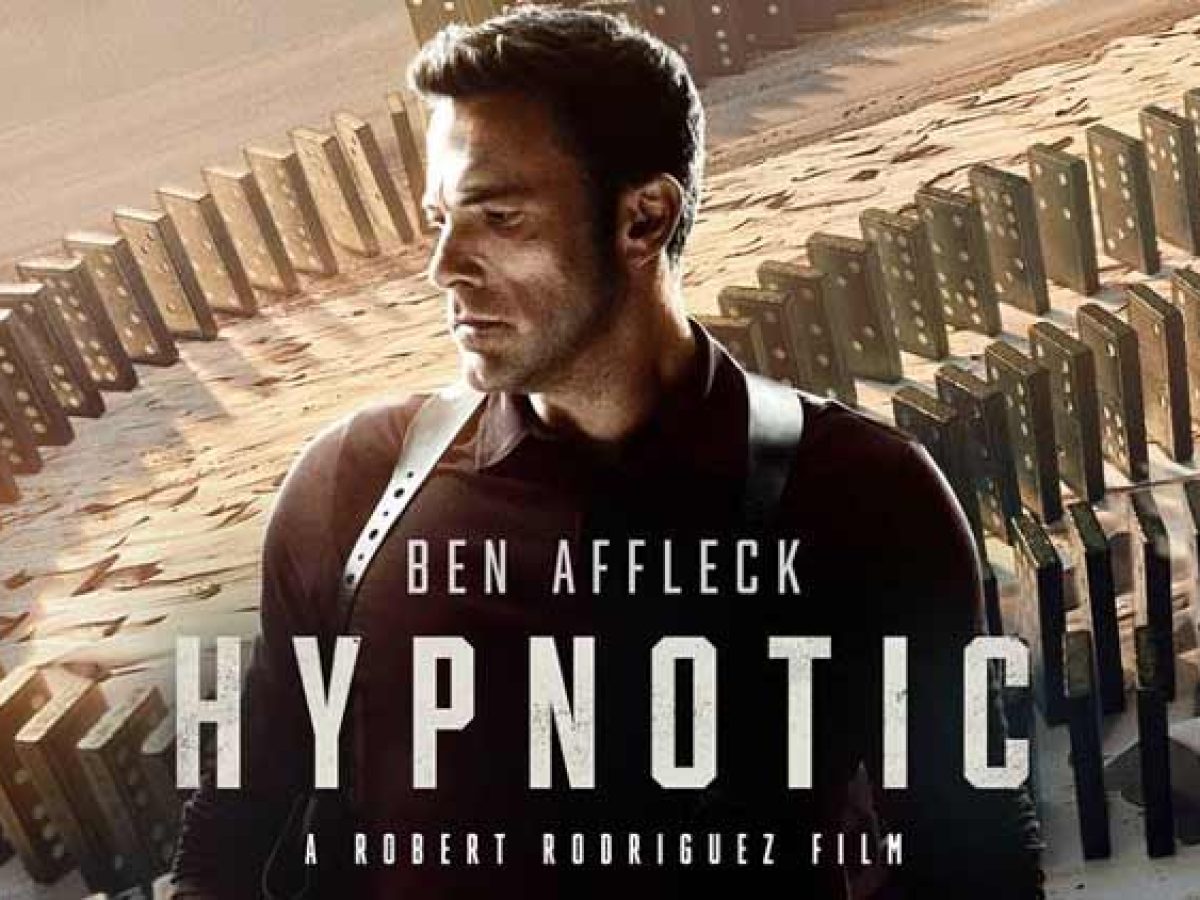
Based on the character of Danny Rourke (Ben Affleck), Hypnotic tells the story of a Detective struggling to find his daughter. However, not everything is as it seems in this sci-fi trip, and its constant twists and turns are going to pull you in! STARBURST talks with actor Bonnie Discepolo to find out what her action-packed and hypnotised style sequence within Hypnotic was like to work on alongside William Fichtner and writer/director Robert Rodriguez…

STARBURST: What attracted you to working on Hypnotic, like, what stood out the most to you in the script? 

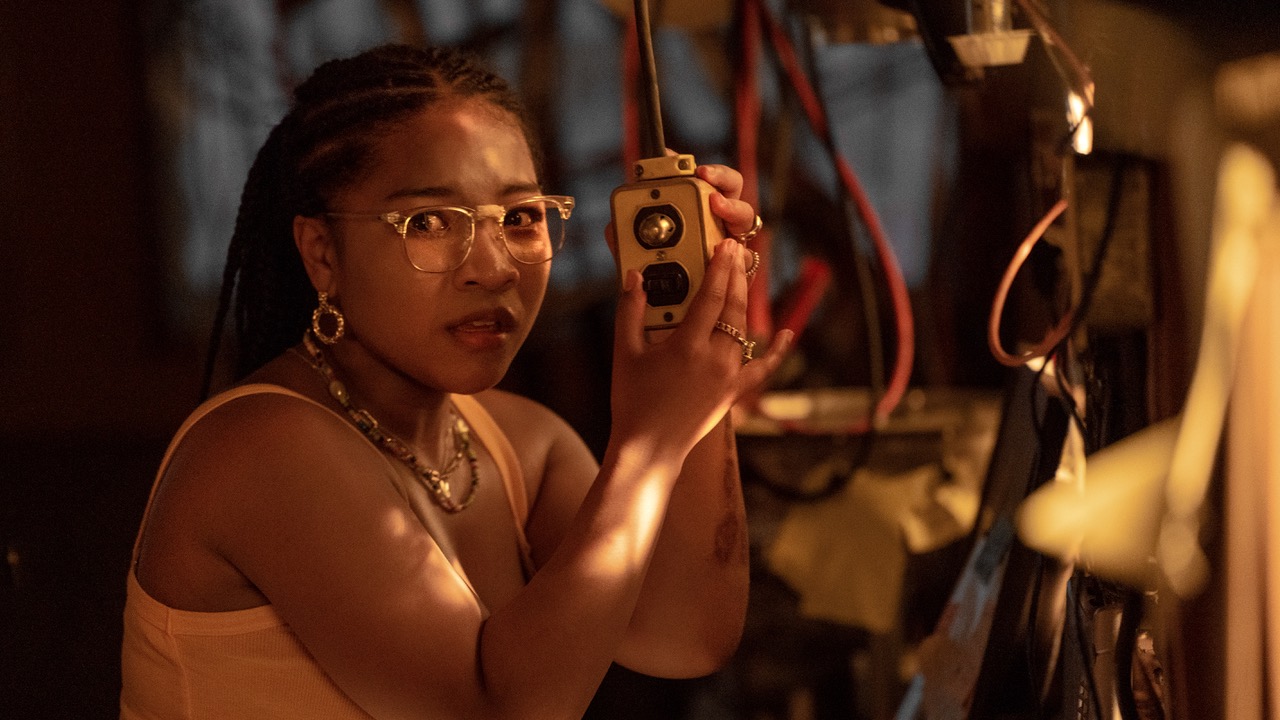
Bonnie Discepolo: So, I actually have known Robert since 2017, when I was one of his directing mentees on Rebel Without A Crew, the series. He had a TV show where he let five directors, first-time filmmakers, make a feature film in two weeks, for seven thousand dollars. The same way he made El Mariachi. So at that time, Robert was my mentor, and I kept in touch with him over the years, and during the pandemic, he was making Hypnotic, and I knew that it was a big action thriller with a movie star that had guns and special effects, cars exploding, and helicopters, and I wanted to see the indie, low budget film-maker Robert make something like that. So I actually went to Austin, originally just to watch him make it, and I was there, observing him as a director, and one day, the actress that had the role which I now have tested positive for COVID, and Robert mistook me for her, and he said “Oh, wait, what are you doing here? I thought you had COVID?” and I lowered my mask because we were wearing masks at the time, and I said “Robert, it’s me Bonnie!” and he was like “Oh, my gosh! We have a major emergency, the actress got COVID, but you’re an actress, do you want to audition?” and I was already there, watching, and I’m in my hoody, in director mode. He was like, “Yeah! Audition! Let’s do it right now, today!” and so I immediately went from watching the action to Robert auditioning me, and there was no question the second he said, “OK, so here’s the thing, I just want to tell you about what you’re going to do, and what this role is. You’re acting, but there’s action, there are stunts, you are going to be wandering into traffic, and there’s a lot of stuff! Do you want to do that?” and I said, without any hesitation, “Absolutely!” The opportunity to work with Robert, William Fichtner and Ben Affleck that’s what attracted me!
And, what do you think the idea of being hypnotised brings to a movie, since anything could happen, because William’s character, Dellrayne, was so powerful? You just really didn’t know what was going to happen next! Which is brilliant.  

Yeah, I think it does exactly what you’re saying, that anything can happen. I was talking to my dad about it yesterday, and he loves the movie, and he said the thing that he loves about it is that he watched it three times, and he feels like each time he watches it, he has a completely different perspective on what’s happening, and I think that’s the coolest thing about the script because, on the first watch, you think “Oh, this is a fun action movie! Where there’s a hypnotist, and Ben Affleck is up against him.” And then, with each watch afterwards, I think you get a completely different view of what’s happening. I have now watched it, I think, five times, and I never watch movies I’m in that much, but with this one, I’m like, oh, what’s Alice Braga’s character Diana doing? What’s Ben Affleck’s real journey? It’s got so many layers that it feels like each time it’s really fun.

You share a scene with William Fitchner, so can you tell us about what he was like to work with and what he brought to your sequence in particular?

William Fichtner is a national treasure. He is a worldwide treasure! He is my absolute favourite person that I have ever worked with. I can’t say enough good things about him, but I got to the trailer the first day, and he was in hair and makeup. I walked in, and he knew that my character had been replaced, and he walked right up to me and he said, “Hi! I’m Bill. I hear we have this scene together? That we are shooting tomorrow. Would you like to rehearse?” and I was like “Yeah! I would love to rehearse.” The day before we shot that scene, we were doing stuff that was mostly with Ben Affleck, so Ben was on set, and Bill had to be in the background, but he wasn’t doing a big acting scene, so every time he was off camera, he was pulling me aside, saying “OK! Let’s do our scene again!” and the scene that we actually had in the film, was much longer, it was this two-page scene, and we really talked about a lot of stuff, and so we rehearsed it a bunch of times. It was such a fun story because Robert had told us that the scene we were doing was the story that Quentin Tarantino had told him, and so Robert said, “Quentin, I’m stealing this story. I’m going to put it in my movie!” So Bill and I kept rehearsing, and it was just the most fun, the most present, the most exciting. He was so engaged we had a ball shooting the scene. I wish you could see the whole thing. I watch it now, and I know that for the pace of action, it doesn’t make sense to have a big two-page long scene where people are just talking when you’re in the middle of that action, but I think it was a great scene.
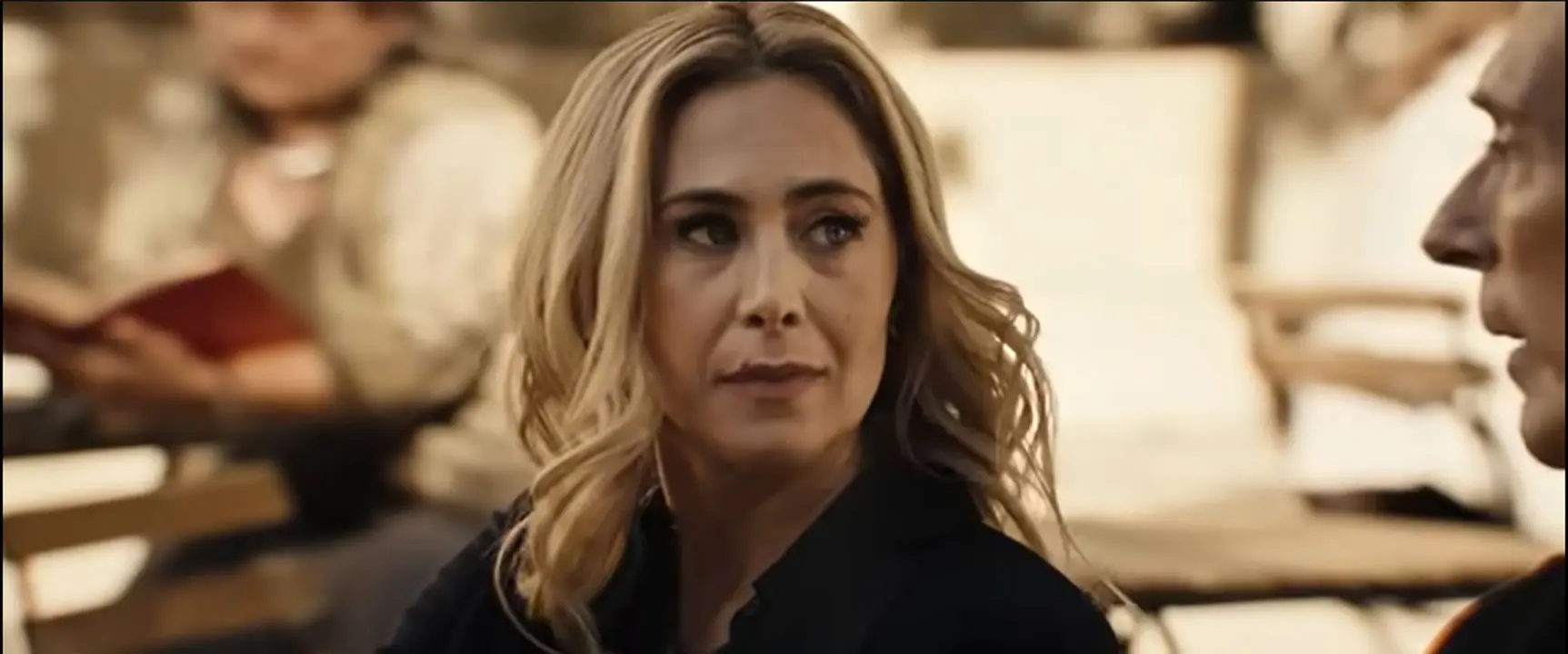
Going on from that, can you tell us about what your whole sequence was actually like to put together after your encounter with William because it looked quite crazy? There were cars crashing in the background whilst you were hypnotised? It looked like it took some time to put together. 

Yeah, the whole sequence was a really huge process. We shot just that bank heist section for six, maybe seven days. It was a really big piece of the movie, and so the inside of the bank took two days, and then the outside of the bank, where William is hypnotising people, where the bus is crashing, where the other cars are crashing into each other, just that section took five days. And so, it was a full day of set up, a whole day of the scene on the bench with the hypnoses, and then three more days of action and stunts. So one day with the bus, one day was the car crash and then the fire hydrant, and then we had a whole final day just for the explosion. It was a team of 100 people. There were special effects people. We could only do the car flipping once, so everything had to be orchestrated perfectly. There were four cameras and a huge stunt team. Everybody else that was in the movie there, they are stunt actors. I was the only one in the middle, and they’d be like, “You’re a real actor, are you OK with this?” I was like, “I’m fine, just don’t hit me”.

Due to COVID, your filming locations changed a little bit, can you tell us about where your sequence was eventually shot and why that location worked so well for Hypnotic? 

Yeah, so we shot the whole movie in Austin, Texas. Prior to my involvement, I think there were two other locations that the film was supposed to shoot in, and then due to COVID it got shut down twice, and then finally when it actually went into production, Robert said he lives in Austin, he shoots in Austin, he’s got this studio there, he can make it at a smaller budget, he can make it work. So that’s when they took it to Austin, which made it so amazing because it was just such a classic Robert Rodriguez experience.

And didn’t he have this idea in mind for a very long time?

So while I was there, it was amazing because I had originally gone to observe him, and I was like, “Robert, I want to see you do this big thing” so every time we weren’t actually shooting, he’d pull me aside and be like “Let me show you what I’m editing here. Let me show you how I’m shooting this!” So I got to have a much more behind-the-scenes experience, and what he said was that twenty years ago, while he was in the midst of doing the Spy Kids films, he had this idea that he wanted to do a Hitchcock thriller, and he was like “What would a Hitchcock thriller be? Start with one word?” and he had the idea of Hypnotic. Then he was like, “OK, but what would it be?” so that’s what he told me, that it all came from that idea of doing a homage to Hitchcock.

How exciting is it to be in a movie with Ben Affleck?

I still can’t believe it. Right now, I’m with my dad and their dogs in the country, and I’ll just be walking the dogs, and then at some point, it hits me, and I think, “Wait a second, I was just in Cannes, in a movie with Ben Affleck! What is happening!” It is mind-boggling, and it feels like it’s someone else’s life. I’ve been at it for a while, I’ve been acting, I’ve done some TV shows, and some indies, but I was sort of like, “Yeah, that giant movie star thing, well, it’s probably not going to happen” I have so many friends who haven’t done that and are very successful actors, so it wasn’t even in the realm of my dreams, and then I didn’t know Ben Affleck was in it. Everything was very top secret, so when I got to set, and it was a scene with just me and Ben, I was like, “What’s happening!” it was amazing, and Jennifer Lopez is so beautiful.
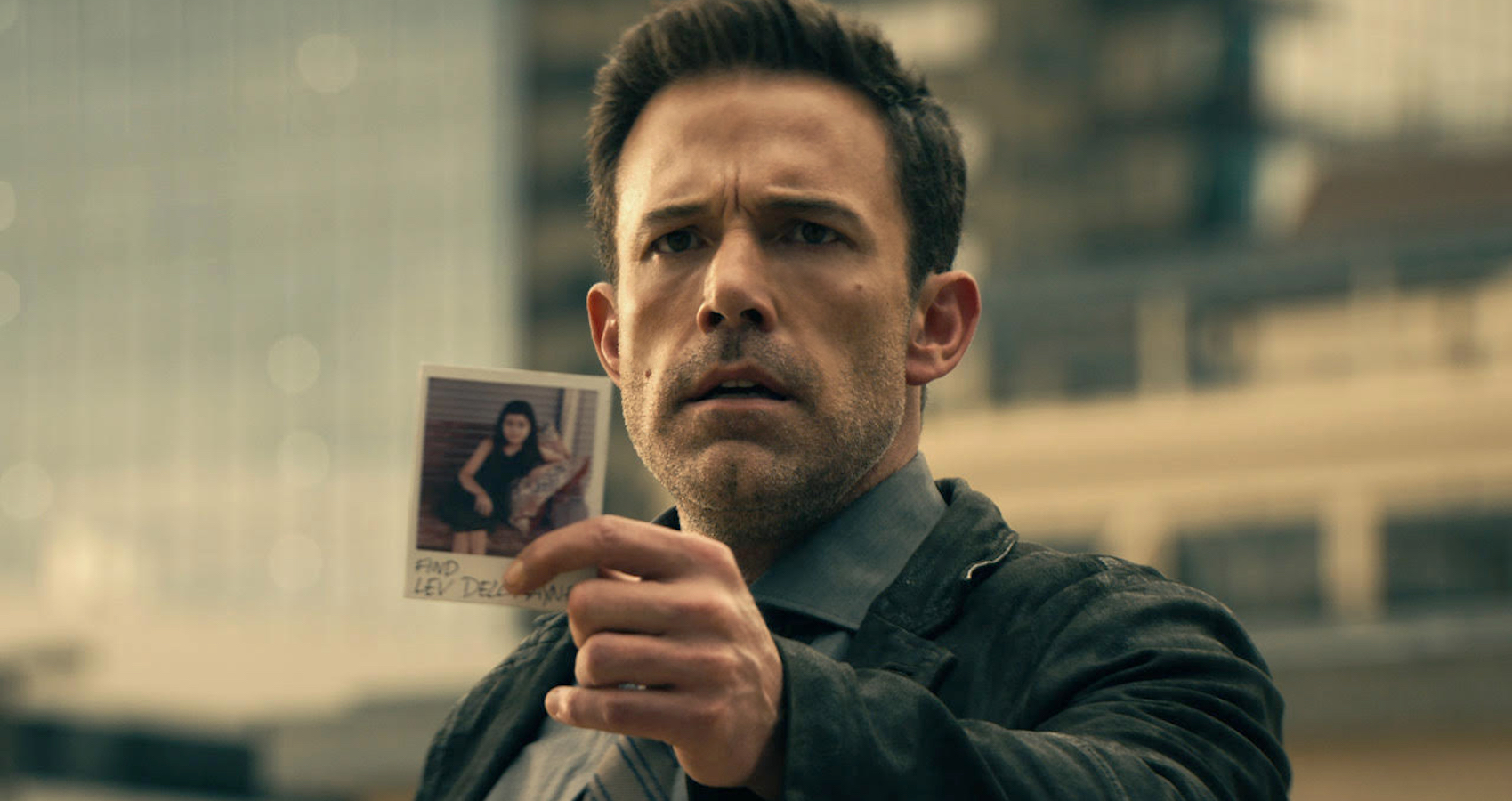
And as a director yourself, what does that bring to your acting career? Like, do you maybe you see scenes and prepare for them differently because of your directing history?

You know, that’s a great question. I didn’t realise until I started directing that I had been looking at acting completely the wrong way, and I sort of think that the reason I’m working so much all of a sudden is because I started directing. When I went to acting school, and I went to a conservatory, I’d be like, “OK, this is my scene, this is my character, what do they want me to do?” I would approach it from that perspective, and now that I look at it as a writer and director. I look at a scene, and I say, “Huh, OK, why did the director choose to make that character? Why does the writer put that scene in that moment of the film?” and I look at it from a whole story perspective, and I think “Well, this is page 30, this is about my protagonist, this character exists to do something to the protagonist”, so it’s taking myself out of it, and now I look at it from a whole storytelling perspective, and I’m like, how can I serve the story, what can I bring that impacts the character in the most profound way, and it has nothing to do with my acting skills, it’s really much more about serving the story.  

So, how crazy has it been to work on Shazam! Fury of the Gods, Guardians of the Galaxy Vol. 3, and Hypnotic in the same year, and what do you think you’ve learnt the most from this part of your career?

It’s no big deal; it’s very chill! A really normal year! It’s been a dream come true. With each step of the way, I keep pinching myself, saying, “When am I going to wake up from this dream!?” where I’m getting to do everything that I’ve ever wanted to do in one year. It’s been amazing, I just feel incredibly grateful. I keep running around every set I go to now, being like, “It’s a miracle!” and people say, it’s not a miracle, I auditioned, and I got the job, and I’m like “No, it’s a miracle!”

What’s next for you as an actor?

That’s a great question. So you may have heard that Hollywood is on strike, so there’s not a ton on the horizon for most people. Luckily, I shot a great film in the spring with Kathleen Turner and this new actor Sekai Abenì. It’s a very cool modern noir, so that will be coming out, and I’m very grateful for that. In the meantime, I’m visiting family, and I’m writing a script, and I’m hoping that they make a good deal for the writers, so we can all get back to work.

How would you describe Hypnotic? 

It’s the craziest thing they’re going to see all year! If you, like me, are bored of movies where you know what happens from watching the trailer, you know exactly how it’s going to go. You sit down for Hypnotic, you lean back, and you say, “I have no idea what I’m in for” With every ten pages, it shifts, and you think “Wow, I didn’t know we were going there!” it just keeps happening. So if you just want a wild ride full of surprises, then I think you will love Hypnotic.

There are so many twists and turns within this movie!

That was the other thing about it. There are no moments of leaning back and saying, “OK, we are going to watch for a couple of minutes before it changes again” It’s just like “Change, change, change!” There’s nothing like it!

You can rent Hypnotic via digital platforms right now.

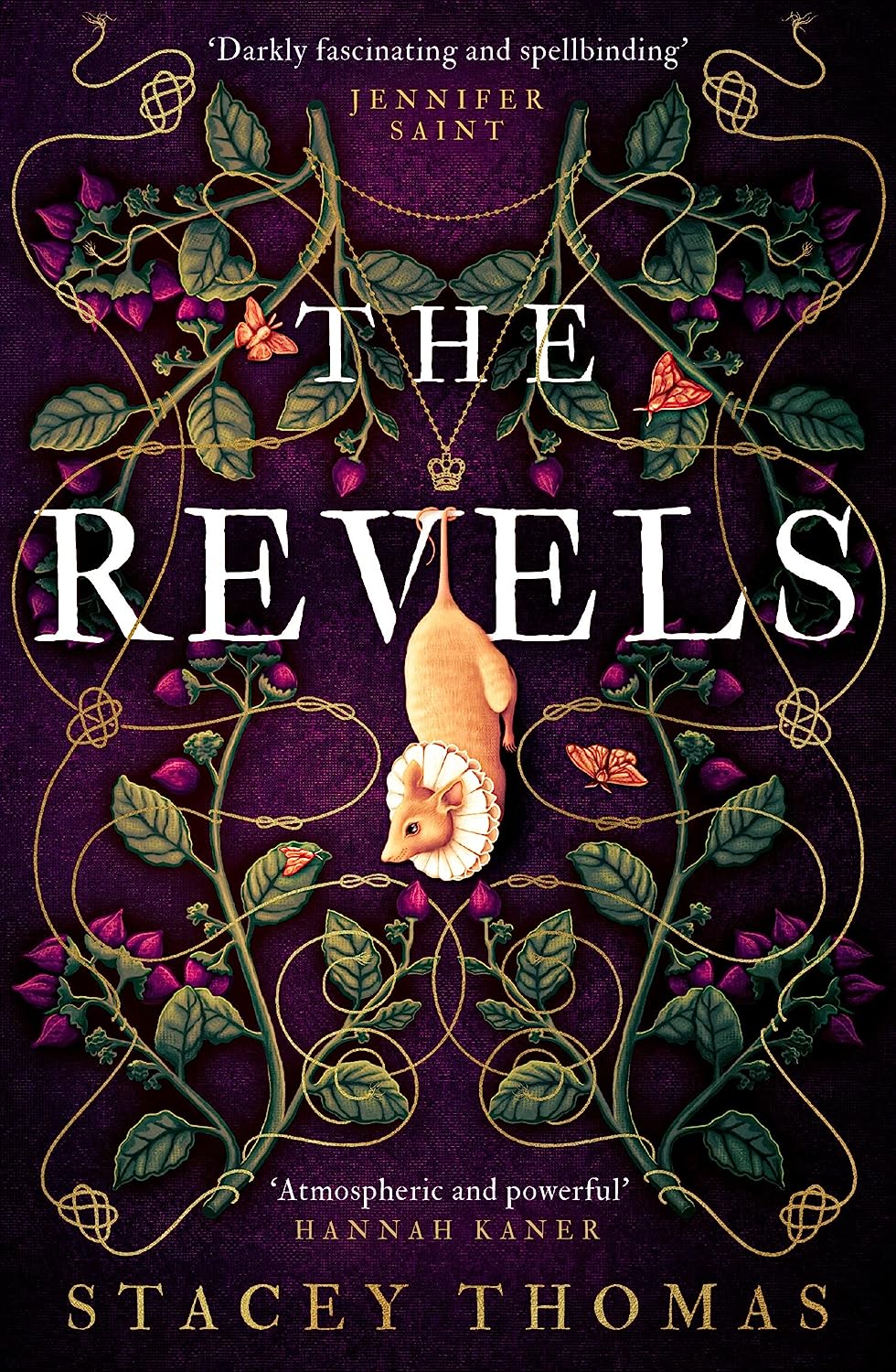
Stacey Thomas – THE REVELS

Stacey Thomas - THE REVELS

by Ed Fortune

Stacey Thomas is an alumna of the Curtis Brown Creative Novel Writing course, where she wrote her debut novel, The Revels, which mixes historical fiction and witchcraft to great effect. The Revels won HarperCollins’ inaugural Killing It Competition for Undiscovered Writers and comes out this month. We caught up with her to find out more…

STARBURST: What’s the elevator pitch for The Revels?

Stacey Thomas: In a country torn apart by war and rumours of witchcraft, Nicholas Pearce hides a secret: the dead sing. He hears their secrets, but will he find the courage to speak up to save innocent lives, even if it means putting himself in great danger?

What was the hardest piece to write?

The first line! The Revels was my first attempt at writing historical fiction, a genre I’ve always loved reading but has always intimidated me as a writer. Initially, I struggled to find my way into the story. It wasn’t until I came up with the first line that I had an idea of who my character was and the story I was trying to tell.

Why this particular period of history?

The Revels is set during the English Civil War, a time when the country was divided between King and Parliament. The war resulted in political and social upheaval, which proved a ripe environment for the witch persecutions and the events of my novel.

Do you have other books planned in a similar vein?

My next book is set in 1950s London, but similarly to The Revels, it has a supernatural streak running through it.

Why are we so fascinated with talking to the dead?

I think because there’s still such a taboo around death. I’ve always found death frightening, as there’s nothing more scary than having to come to terms with the end. That’s probably why talking to the dead is so fascinating, as it’s the promise of something more.

Why witch hunters/witchcraft?

I’ve always been fascinated by witchcraft and real-life witch hunters, including Matthew Hopkins, Witchfinder General. He was only in his twenties when he took up witch-hunting, and I can still remember my shock when reading the number of witches he condemned to death. The more I read about Hopkins, the more I kept asking myself why someone would choose to become a witch hunter. The Revels is my attempt to answer this question.

What character is the most fun to write?

Grace was probably the most fun character to write. I love morally grey characters, and I had a lot of fun describing her interactions with the other characters, especially her withering put-downs.


Which character seriously needs to have a word with themselves?

Definitely Grace, and also the witch-hunters Rush and Clements, who covet power even though the price is condemning innocent people to death.

What would you say the biggest influence on this book is?

The Revels is very much influenced by King James’ whose obsession with the supernatural stems back to 1590 when his return to Scotland with his wife Anne of Denmark was beset by storms. The delay was blamed on witchcraft, and James personally interrogated the suspected witches in what would become known as the North Berwick witch trials. My book takes a slightly speculative approach to history by having King James establish a commission for witch-hunters, the legacy of which is a major subplot in my book.

Which writers inspire you?

I’ve always loved historical fiction and stories with supernatural/speculative edges. For those very reasons, the writers I’m most inspired by are Octavia Butler, Susanna Clarke, Hilary Mantel, Maggie O’Farrell and Sunyi Dean.

What tropes do you personally avoid the most?

Oooh! I don’t have any tropes that I avoid as I feel that the best (and most challenging) part of writing to a trope is doing it in a way that feels fresh and surprises your readers.

How would you describe your process?

As a new writer, I feel like I’m still trying to find a process that works for me, especially since I write around my day job. I find planning helps as I’m more productive when it comes to writing days. Plus it reduces my tendency to procrastinate.

If we like this book, what other books do you recommend?

If you like The Revels, then I recommend Bridget Collins’ The Binding, Stacey Halls’ The Familiars, and if I might be so bold, Susanna Clarke’s Jonathan Strange & Mr Norrell.

The Revels can be ordered here.


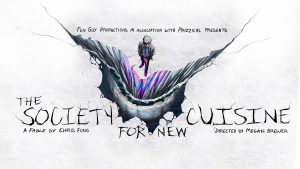
Chris Fung – THE SOCIETY FOR NEW CUISINE

Chris Fung - THE SOCIETY FOR NEW CUISINE

by Ed Fortune

Chris Fung is an actor, singer and writer whose credits include Frozen The Musical, Cyrano de Bergerac, The King and I, and Evita. He recently teamed up with the director Alex Sims to create The Society for New Cuisine, a one-person satirical show with the sort of vibes that will appeal to STARBURST readers. We caught up with him to find out more.

STARBURST: What’s the pitch?
Chris Fung: Guided by a shadowy organisation, a rational man processes his existential crisis. In his search for satisfaction, he pursues some unusual appetites.

Why are we so fascinated by the act of eating?

In a capitalistic society, we eat. It’s all we do. And it’s all we’ve done for a long time. It’s a deep theme in mythology. I’m talking Joseph Campbell’s Hero with a Thousand Faces, The Brothers Grimm, Ovid’s Metamorphosis, even the fundamental tenets of Buddhism, Christianity and Islam, Charlie Brooker, Harlan Ellis, Lovecraft – whether it’s big bad wolves, or bodies of Christ, or the beautiful meditation that is Ramadan. We’ve all got food on the brain. But what are we really hungry for?

This is really relevant now in the wake of the big quit/great resignation, which saw 20-25% of US/UK/AU workers leave their jobs over 2019-2022. This hunger is echoed in Tangping, a social movement in China where millions have left high-paying, 6 figure jobs to go live in rural villages to chill and earn much less. Why?

Globally, everybody is asking the question of why we cut off parts of ourselves to feed to others. If our lives are about eating, when will it be our turn? Why are we allowing the system to eat us?

What does theatre bring to this story that other formats don’t?

This is an excellent question and the very first that any dramaturg should ask. Why is this story, not a YouTube video, a novel, a three-hander, a TV series, or a comic book? ‘Because I Want It To Be’ is a cop-out. As is, ‘One person shows are cheaper/more pragmatic.’ There’s also the much harder to acknowledge ‘Because I want to show people how great I am.’

I think that all one-person shows fundamentally explore the disconnect of one person from a group.

It is always a collective audience against the singular performer. You are cut off. Removed from the herd. One-person shows are about exploring this isolation, so the themes tend to revolve around more selfish emotions, things you can’t explore politely unless you are alone.

It’s interesting to me because you have a bunch of practical problems: ‘how do you flit between direct audience address, narrating the story, commenting about different characters, being different characters, holding a dialogue?’ When you only have one voice and one body, how do you vary the flow and pace and rhythm so that there is enough interest for an audience to stay engaged? What do you want the relationship with the audience to be?

The most interesting question of all in the format to me is ‘how do you write for subtext in a 1-person piece? Is it in the unreliability of the narrator? The things that they can’t, won’t say, but that are crystal clear if the audience is paying attention?

People should only choose theatre because there is something ephemeral and tangible and real between the words. Theatre is about the shared humanity of letting the air charge with spirit. It is the most visceral of the arts, and it is arguably the artistic format most about the now.

There’s something beautiful in the idea that theatre is exclusive. You have to have been there. You have to be in one of these 60 seats now. And when it is over, the moment is too. This is also true of the monumental amount of work that goes into beautiful food. Years of work, gone in 5 minutes.

Why this sort of horror story?
Horror is only scary if you can relate to it. If you can’t see yourself, it’s not scary. Horror is based on empathy. The fundamental concepts in our piece are right there in the world. Since Covid, the world is more disconnected and apathetic. We are all fundamentally questioning ourselves. Hopefully, our team has found a cool way to express it in our piece.

Why the Edinburgh Fringe?

We’ve been cooking this one up for 2 years now and have had feedback from some world-renowned creatives. Everybody has had a bunch to say, but one piece of feedback comes back, which is our style is pretty unique. I’d say tonally, the closest match might be Mallatratt’s adaptation of The Woman In Black, but this stuff is never exact.

The Fringe is the biggest and noisiest arts festival in the world.

Our hope is that in that noise, we can find our people. I’m looking to connect with the next generation of sharp-toothed, horizon-breaking creatives who are interested in the same things I am. Who is unafraid of different? I want to show them my cool thing, and then talk about their cool thing, and then go off and maybe make some cool things together later.

They are thousands of shows at the fringe. Why should STARBURST readers seek this out?

Because you are curious. Because we have put a lot of thought into this. Because you wonder if we might actually be good. Because you are hoping that we are. Because it might be fun.

How similar to is this show to, say, Frozen and The King And I.

Musicals like Frozen and The King and I are limited in what they can express because the format is limited. There are simply fewer words per minute when the majority of a piece is sung. This means there’s limited time to explore, you have got to make your point, and you have to move quickly, so how you spend your time is important.

They also say that about the one-hour format of Fringe Festivals.

So we, too, have clashed against this limiter. We have some larger concepts to tackle, but we also want to make sure that there is room to breathe and wander. I wonder how we will have done. If you’re too simplistic, there’s no meat. If you’re overly dense, there’s no room for empathy.

I think Frozen and The King and I found good balances. But balances shift, and much of it has to do with writing towards a specific audience.

How would you describe your process?

Well, for the past month now, I’ve been posting a little diary on my Instagram that talks about exactly how we have made the piece, from the start all the way to get up to Edinburgh Fringe. All of it, the ugly parts, the easy parts, losing collaborators, being ignored, the insights of established creatives, huge pushes from unexpected directions, hard-won recognition, the little triumphs, the gradual build. Basically, what the industry and Fringe ecology has been like through the stupidly small lens of my attempt to make a play, warts and all.

If you want to check that out, head on over to my insta.

What media are you currently enjoying?

I’m a physical pages person: Goscinny and Uderzo, Murakami, Yongey Mingyur Rinpoche, Butterworth, RF Kuang, Gaiman, Cixin Liu, Sarah Kane’s Sad 5, Bartlett and Crimp.

Four things that recently stole my breath: Simon Stephen’s gorgeous Seawall, Tim Crouch’s genius interrogation of form in An Oak Tree, and The Inheritance by Matthew Lopez. But the most heart-rending and human end to Act 1 in a play I have probably ever read, The Deep Blue Sea by Terence Rattigan. Some plays have too much humanity.

Things are too real. Those are the things worth fighting to find, I think because that’s where you find little bits of yourself.

The Society for New Cuisine runs from August 3rd to the 13th, and again from August 15th to the 27th, from 18:40 at Venue 61, Underbelly Cowgate.
You can book tickets here
and the show’s linktree is here.


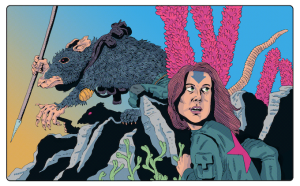
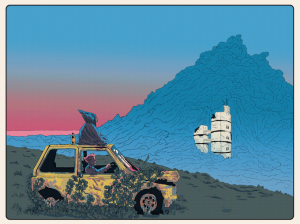
Daniel Locke and David Blandy | ECO MOFOS!!

ECO MOFOS!!

by Ed Fortune

Daniel Locke is a Brighton-based graphic novelist who works in science education and created the TTRPG Helms of The Multiverse.  David Blandy is an artist whose work has been shown in the Tate and the Wellcome Collection. He’s also a TTRPG writer and designer whose work includes Babel and Lost Eons. We caught up with the pair of them to talk about ECO MOFOS, a mid-future ecopunk ruin-delving survival game currently on Kickstarter.

STARBURST: What’s the pitch for Eco Mofos?

Daniel Locke: ECO MOFOS!! is a weirdhope science fantasy tabletop roleplay game in a world of Punks, Wasters, Bandits and Corpos. It is fully written, with pages of tables to explore, and supports group and solo play. For the physical release, the entire book is being redesigned for simple use at the table while incorporating reams of intricate, colourful art by Daniel Locke. It’s a streamlined and flavourful game, with procedural adventures, using random tables to build journeys and sites, and gameplay building on the great work of Cairn and Into the Odd, but with a number of innovations.

It will be edited by Iko of the Lost Bay, and we have confirmed special guest writers for a series of adventures by Zedeck Siew, Sam Leigh and Logan Dean, and Brandon Yu is creating a Solo play aid. Iko, Daniel and myself are also writing modules.

What’s Weirdhope?

David Blandy: Simply, Weirdhope is a fractal mirror of Grimdark. Rather than assuming that in a broken world, life will get far worse, perhaps we can imagine the situation fostering new communities brought together by difficult times. Perhaps a radical shift in what is considered normal could open up the world to positive change. That the world will be full of beauty and wonder. But Weirdhope also acknowledges that any altered future is going to be strange, as change creates new situations and new relationships that can be unsettling or uncanny, even horrific. So it’s weird. But it’s hopeful.

Daniel: What David said. I’d also add that Weirdhope is a kick-ass battle cry, a call to action. It’s a refusal to roll over and accept that things can’t get better.

Why rules lite? Don’t more complex rules make for more complex play?

David: I’ve been building and tinkering with game systems since I was a kid rolling dice for my Action Force (GI JOE in the USA) figures in the garden. But for me, play always comes first. What is fun? What allows the game to flow? So after exploring dice-pool systems and the FKR (Free Kriegsspiel Revolution, a collection of understandings for playing games with minimal rules), I became increasingly impressed by the simplicity and elegance of the Into the Odd lineage of games, particularly what Yochai Gal has created with his open source system, Cairn.

It has that feel of old-school dungeon-delving but boils it down to a simple form with very little maths. Play is fast and eventful, only rolling when there’s a risk, and combat is brutal and swift with no to-hit rolls, just damage that can be partially absorbed by armour. The key to the system is putting the player’s choices first, so I’d argue it actually becomes more complex, in a good way, difficult decisions demanding decisive answers.

Daniel: If I’m honest, I don’t think more rules necessarily equates to more complex play. Though perhaps it depends on the reasons an individual has for playing in the first place. I mean, a lot of this comes down to personal preference, and one of the things that I love about TTRPGs is the variety and the ‘big tent-ness’ of the scene.

My personal focus is on what happens between the players at the table. I just love the experience of being with a group of people and collaboratively building a narrative and a world full of stories. I find that too many rules or crunchy systems can get in the way of that, and rather than making the experience of playing more complex, they can make it more disjointed. So rules lite suits me. Having said that, I do like to roll a die every now and then! And I just love a randomiser table. Honestly, I can’t get enough of them. It’s a bit of a problem for me.

Do you have similar games planned?

David: I always have several games and adventures in the pipeline. Currently, I’m working with a team on a Cairn conversion of an old D&D module from 1981 called Palace of the Silver Princess that has a complex history as the first published D&D module by a woman, Jean Wells, which was then pulped and completely reworked due to either some egregious art or plain sexism, depending on who you believe. It also has real resonances with Japanese RPGs like Zelda and Final Fantasy, and apparently, it was one of the two modules that first reached Japan, even before the rules books themselves.

I also have further plans for my post-colonial collaborative map-making game, Gathering Storm, which could be expanded into something intense. Maybe build a video game around it or something.

Daniel: Always, there’s always more to do, always other games planned. I have this idea for a game, or maybe a setting – not sure yet – that places players in an unbelievably fragmented and hostile environment full of totally mad NPCs. It’s in a very bullet-point state at the moment, but I’m very excited by it and looking forward to sharing it as it develops. I’m also keen to write and draw some settings and adventures for ECO MOFOS!! I absolutely love that world and can’t wait to contribute more to its expansion. I say that as a creator but also, and, I’d say more importantly, as a player too.

David and I have used this project to set up a creator’s cooperative. It’s called Copy/Paste, and I’m very much looking forward to seeing what happens in that space too.

Why a TTRPG? Why not a novel or comic book?

David: What I love about TTRPGs is that they give a space for people’s imagination, a space to make their own narrative. It’s a world to inhabit. Of course, novels and comics and video games and films all create fantasy spaces for our minds to inhabit, but only TTRPGs offer you a limitless window into that other world. And there’s a sociability to TTRPGs that I love, that it can be just a good excuse to hang out with your favourite people with no agenda but to have fun. And with its potential as a solo game, it can be a space to explore on your own terms. You decide where the story goes when the session ends. A TTRPG is the most collaborative of media, only completed by play.

Daniel: I think comics and TTRPGs are very, very different beasts. The point, at least to me, for a TTRPG is to provide a place where stories can be told. A TTRPG book offers up some resources, ideas and procedures that hope to stimulate the collaborative creation of a story. A comic seeks to tell a story. They might use some of the same tools, but they are very different things. The world of ECO MOFOS!! could most definitely be the setting for a totally kick-ass comic book series. But one of the things that makes it so interesting to me as a TTRPG is the fact that putting aside the magic and mutations and all that brilliant jazz, it’s a really relevant world that speaks directly to many of the problems we are living with. I like the idea that this game could help people address those issues, think about them and engage with them.

Why make the players Misfits by default?

Daniel: There’s a worrying trend in the world that is seeing global resources pooled and gathered by increasingly smaller numbers of people. There are way too many billionaires. Way too many food banks. Life is too hard for too many people, and it needn’t be. I think in such a world, everyone (other than the one per cent) should consider themselves Misfits, or rather Punks, and demand back what should, by right, belong to us all: a community, a safe home, and fair, equal access to the world’s resources.

David: It’s an angry game, a game of resistance against the ‘normality’ that’s got us in this mess. And players in all RPGs, certainly at my tables, act as agents of change, often of chaos. So it felt natural to assign that sort of role to the players. This game started as a mashup of Yochai Gal’s Cairn and Micah Anderson’s bastards. as a way of finding a new way to approach the world of my more Solarpunky game, Lost Eons, and I think a lot of that attitude survived in the DNA.

What makes this game different to others?

David: The setting is clearly unusual, a post-post-apocalyptic world in recovery, a world of resistance, wonder and horror only a few steps away from our own, imbued with magic. The combination of elements in the gameplay, with procedural adventures that can be created as the table as you play, generating intriguing stories and events to react to, alongside the factions that surround the players making their own moves to alter the world. There are also story-game elements to this ruin-exploring game, partially developed from an element of Chris McDowell’s Mystic Bastionland, where the Punks take on emotional Burdens if using spells or adding new Adaptations that require certain needs to be fulfilled in order to remove them from your inventory.

The game is built on a huge d666 table of Items, also called Stuff and Loot, that you roll on when you come across it at certain points in play, some of which are ‘key items’, implants, weird substances, Orbs, that you have to absorb into your body to gain new abilities. So the game becomes a search for new abilities in the detritus of the old world, the treasure being your own development, your own ability to negotiate the difficult world around you. In OSR terms, it circumvents XP for Gold, as by adventuring, the treasure you find helps you grow both in the narrative and in the game.

What was the art direction? it’s got a unique look.

Daniel: There isn’t really any art direction, though I’m pleased you think it has a unique look! Thanks so much.

The aesthetic of the book has developed out of the friendship David, and I share. We constantly talk and show each other things that inspire us. We offer up the things that we’ve made for others to consider, and I guess the look of ECO MOFOS!! Has just sort of bubbled up out of that soup. I think it helps that we have very complementary skill sets, and we trust and understand each other. We’ve been close friends for decades.

David: I think that what might be referred to as ‘art direction’ is really an organic development of our collaborative aesthetic. We worked on a TTRPG together before, LONE EONS, and that was where we first talked of mixing a Saturday-morning cartoon feel with elements of a more Old School art style (like the late great Russ Nicholson), illustrations from books like The Warlock of Firetop Mountain and Romantic art like Caspar David Friedrich. For ECO MOFOS!! We really wanted to make something fresh and colourful, hopeful, but that had loads of attitude, and a touchstone became the 80’s illustrations of 2000AD, artists like Carlos Ezquerra. Add to that Moebius (eerie weirdness) and Miyazaki (organic beauty), and I think you can start to see where we’re coming from. Punk zines have also been an inspiration; growing up in the UK in the ’80s, very into grunge (I was in a grunge band for years) in the ’90s.

Why are TTRPGs cool now?

Daniel: TTRPGs have always been cool! At least since I first discovered them, alongside comics, in about 1986. Seriously though, I think the rise in popularity of TTRPGs has many causes. I mean, it’s easy to point to their inclusion in shows like Stranger Things, but I think there’s more to it than that. And I’m pretty sure it has something to do with our fragmented way of living.

Role-playing games offer a way to personally connect with each other, a way to test out ideas. They provide a space to explore notions that might be terrifying, notions like climate change or resource scarcity or conflict. That’s got to be for the good, hasn’t it? Feels to me that the world right now can use as many things in it as possible that facilitate sharing, conversation and collaboration.

Which creators inspire you?

David: Authors like Ursula Le Guin, Octavia Butler, Marge Piercy, Samuel Delaney, Philip K Dick, Hayao Miyazaki, and Moebius. Then TTRPG writers like Zedeck Siew, Luke Gearing, Chris McDowell, Patrick Stuart, Wendi yu, Chris Bissette, Jack Harrison, and so many others. I’m so in awe of this scene, to be honest.

Daniel: Yeah, I’d get behind a lot of the list David has offered there. I love the likes of Ursula Le Guin, Philip K Dick, Hayao Miyazaki, and Moebius too. I’d add Taiyō Matsumoto and Becky Chambers. As far as TTRPGs are concerned, Luke Gearing, Chris Bissette, Daniel Sell, Brandon Yu and all the people on David’s list! It’s honestly bewildering the amount of talent that is in the scene right now.

How would you describe your process?

David: Making TTRPGs is both my relaxation and my obsession. Probably not a healthy combination, but there you go. I’m constantly tapping at tables, noodling out little rule changes and tweaks in my spare moments when working, waiting for a video to render or making a cup of tea. Then I have intensive periods of layout and writing where I put everything together, incorporating the ideas I’ve been having, roughing out a zine or pamphlet or book before refining again and again. It’s very organic, with ideas leading to more ideas, reacting to those, testing and changing. And if I get to an impasse, I move on to one of my other projects for a while and try to freshen my mind. The fun stuff is just imagining tiny scenarios or characters and trying to capture them in as little prose as possible. I love writing tables.

Daniel: Organic. I find it really hard to describe my process, if I’m honest. It tends to boil down to a system of trial and error. I make something, step back and then go back in and tweak. Ultimately what I’m hoping is that I can find my way to a place that feels defined by a sense of discovery. That sweet spot where you’ve not finished making, but you’re excited to see where it lands. It’s a journey picked out by following your nose.

What games are you playing?

David: Recently, I’ve been running one-shots for a group on Discord called The Game Pube, which is the gaming wing of The White Pube, and the whole community seems to live somewhere between art and games. We’ve been playing rules-lite horror; I ran Ghost of Ypsilon 14, a Mothership adventure but using a Cairn hack, Meteor. That was incredible, really intense.

Then this week, we played Wet Grandpa by Evey Lockhart using Cairn and had an absolute blast, one character ending up with minus one hand. Good times.

Daniel: I’ve been working my way through the fighting fantasy books. I’m currently on Midnight Rogue, it kicks ass. And with some friends (David included), playing the new Star Wars RPG, is it called Age of Rebellion? Something like that. I used to play the 2nd edition when I was a kid, so it’s been nice to revisit the galaxy far, far away.

How can I support the game?

Daniel: You can support the game by clicking on the link and following or pledging support for the project, depending on when you’re reading this. We can’t wait to get this beautiful book in your hands so you can start playing.

You can contribute to the ECO MOFO’s Kickstarter here.


Jo Reid | BORDER RISING

Jo Reid border rising

by Ed Fortune

Jo Reid is a Glasgow-based filmmaker, curator, games designer and writer. As film-maker, they primarily work with archival materials to explore ideas of memory, the past, and how we see our own histories. Their most recent film, The Freedom Machine, explored the history of women cyclists through archival material from across the UK.

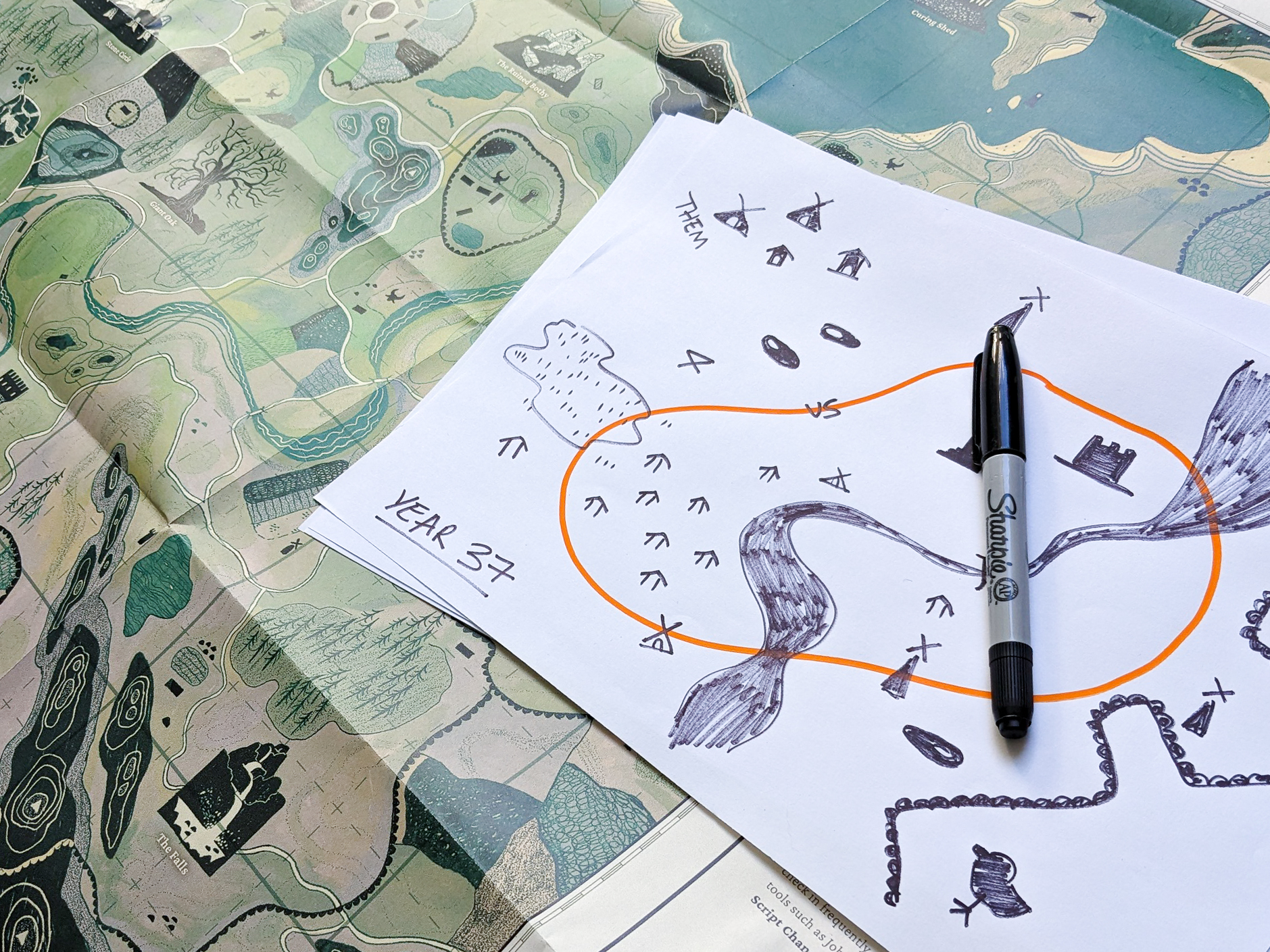
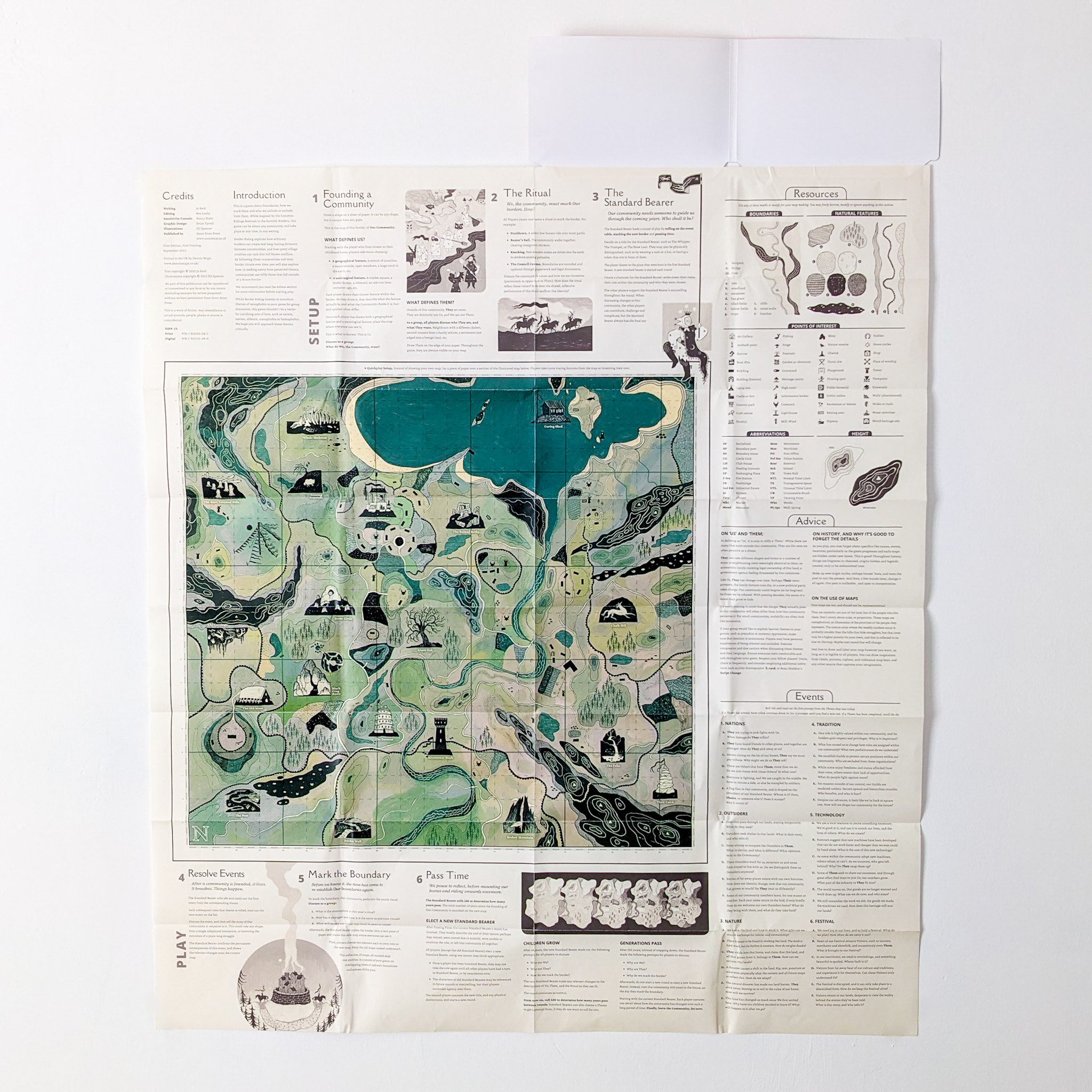
Their new project is Border Risings, a collaborative history-building game played by drawing evolving town maps on scraps of paper, which is printed on an old-school fold-out map and is currently on Kickstarter. We caught up with Jo to find out more.

STARBURST: How would you describe Border Riding to those new to tabletop games?

Jo Reid: Haha, I’ve had a lot of practice with this! My family are not tabletop people and do not know about the scene beyond Dungeons & Dragons – and that’s pushing it! When I’ve spoken with people from my hometown about Border Ridings, I generally use D&D as a jumping-off point and then explain that it’s nothing like that!

How do you play the game?

Border Ridings is a map drawing game where the players create a new map each round, capturing a year in a community’s life. As each new map changes from the previous one, your community changes too. The community at the end of the game will be very different from the community at the beginning of the game. The stories they tell, the borders they draw, and the heroes they celebrate are a reflection of their values. Border Ridings uses the act of drawing maps as a mechanism to tell the story of a small community discovering itself through its yearly festival. To play Border Ridings, you don’t have to be good at drawing! All you need is to bring your imagination, a few hours, and some good friends and together, you can create a whole new world on a few sheets of paper.

It feels like an incredibly personal game. Where did the idea for it come from?

Growing up in a small village, where these festivals and rituals are regular and normal, I always found it hard to explain the Whipman, my local Common Ridings festival, to friends from the city. I have always been quite dismissive of these festivals, playing up the weirdness and traditional aspects of my village for an easy joke. In 2020, when all these festivals had to stop because of Covid-19, I began to reflect on them, their place in my childhood, and how I feel about it as an adult. Moving away always changes your relationship with your hometown and allows me to see it with a lot more clarity.

These traditions and rituals can seem so strange and random, and yet diving into their history is really fascinating, particularly as you track the different influences piling up and mashing together to create these events that are a modern-day interoperation of a Victorian interpretation of a mediaeval procession. We look at history through so many different lenses and that’s something I wanted to explore through play, particularly as these events are a sort of community role-playing themselves!

Why did you choose this style of game?

Since these festivals are often built around marking borders, a map drawing game seemed like a logical way to adapt it to a game. I love encouraging players to physically draw a border as their communities do the same; the synchronicity really appealed to me. I am also a visual person, and I like games that produce something to be shared at the end. Seeing maps that are nonsense to anyone who wasn’t at the game table is really great and reflects how it must feel as an outsider to witness folk traditions you know nothing about – mystifying, bizarre, and a little funny.

Do you have other projects planned?

Nothing too major planned yet, but I do have some ideas on the backburner that I think I’m ready to excavate. One is a two-player card game based around the relationship between a patron and an artist, initially inspired by mediaeval Welsh bardic poetry but extrapolated to apply to subscribers and YouTubers, politicians and journalists. Really an exploration of power, legacy, images and who is really in control in an artist/patron relationship and how those power dynamics change.  

Why are old maps so important?

I think looking at old maps can generate a lot of nostalgia, even if it was from before the time you lived there. It’s probably similar to why old photos of Glasgow are so popular on social media – it’s a record of the past, and it’s fun to see how things have and haven’t changed. With old maps, it requires a certain level of insider and local knowledge to recognise these changes within a familiar landscape – particularly when you can put it in the context of personal details. For example, there used to be a train line/forest/roman road/bog where my house is now! These old maps can therefore feel distant but extremely personal.

Of course, looking through old maps can be extremely important as a historical resource! You can discover a lot about a community through their maps. For example, placenames can give insight into the languages and communities that have historically lived there. What I hope to capture with Border Ridings is that even in modern-day maps, you can find traces of earlier communities through things like ruins of monuments, placenames, and buildings, even after the original meanings and people have long gone.

Does tradition matter?

Yes. Also no. Tradition can ground us; it can connect us to our past, our heritage. It can also block us from change and can be used to exclude others. It is extremely collective and deeply conservative. It matters because we hold so much value in it, and how we approach our traditions and which ones we choose to discard is massively revealing on how we view ourselves and what values we hold. 


It looks spectacular. What inspired this design?

Thank you! I think so too. The design was primarily inspired by Ordnance Survey maps. In fact, it’s even printed by the same people that print OS maps. It’s super nostalgic to me. As a kid, when we went on holiday, I was the one who’d be tasked with deciphering the tiny icons and symbols for my dad, who was driving. I’d be wrestling with this fold-out map as big as me, careful not to rip or damage it.

I love the layout; that was all Brian, my publisher. They have been so wonderful from beginning to end in shaping Border Ridings, and he totally understood and enhanced my vision. The OS map was his idea, too – just the perfect touch. The illustrations by Eli Spencer are also excellent. We really wanted a feeling of adventure, history and magic, which she has captured perfectly. I absolutely cannot wait to display it on my wall.

Which creators inspire you?

One of my biggest inspirations is the podcast Friends at the Table, for both the way they have changed and developed my understanding of narrative, storytelling and using games to tell a story and the way they tirelessly champion the independent TTRPG scene. No one does it like them!

Other people that have and continue to inspire me include Takuma Okada, who created Stewpot Tales from a Fantasy Tavern and Ech0. A lot of their games are able to build really beautiful and often quite sad worlds but still have a great sense of fun and play within them.

What tropes do you personally avoid the most?

I think any trope can be done well if used in a thoughtful way and in the right context. However, I can find myself getting tired of the same kind of tropes being deployed over and over again. I personally avoid games that maybe are a bit too black and white with violence, where it’s seen as the most effective way to communicate with the world. It’s not my thing. I think there is a place for it, but I personally think it’s more interesting if there’s some sort of cost or commentary if characters are straight-up murdering people willy-nilly. If that is the case, It should say something about the game world and how it values human life!  

Also, I’m not a big fan of really number-crunchy, dense gameplay tactical games. Nothing wrong with them, but I’m no good at maths, and my brain just doesn’t work that way!

What games are you playing?

I’m just about to start a game of Vampire: The Masquerade. It’s my first time playing it, and I’m really excited to dive into Gothic horror.

I bought Tiny Tome on Kickstarter last year and am having fun going through all the one-page TTRPGs. I particularly like Angela Quidam’s Symbiosis, really elegant and economical mechanics using a Jenga block. I love games that marry physical action with game mechanics.

What games do you consider to be a classic?

Fiasco is always a classic to me. I don’t think you can have a bad time with it. The rules are very good at forcing you to play in the genre and really allow you to take your story in weird and wacky directions while staying quite structured.

I also often find myself revisiting The Quiet Year. It definitely inspired Border Riding, and I think it is undeniably a classic of TTRPGs. Everyone should play it.

Border Ridings is currently on Kickstarter until July 21st. You can find out more about the game’s publisher, Stout Stoat, here.  


Kevin Iannucci | CHAMPIONS

kevin Iannucci champions

by Hayden Mears

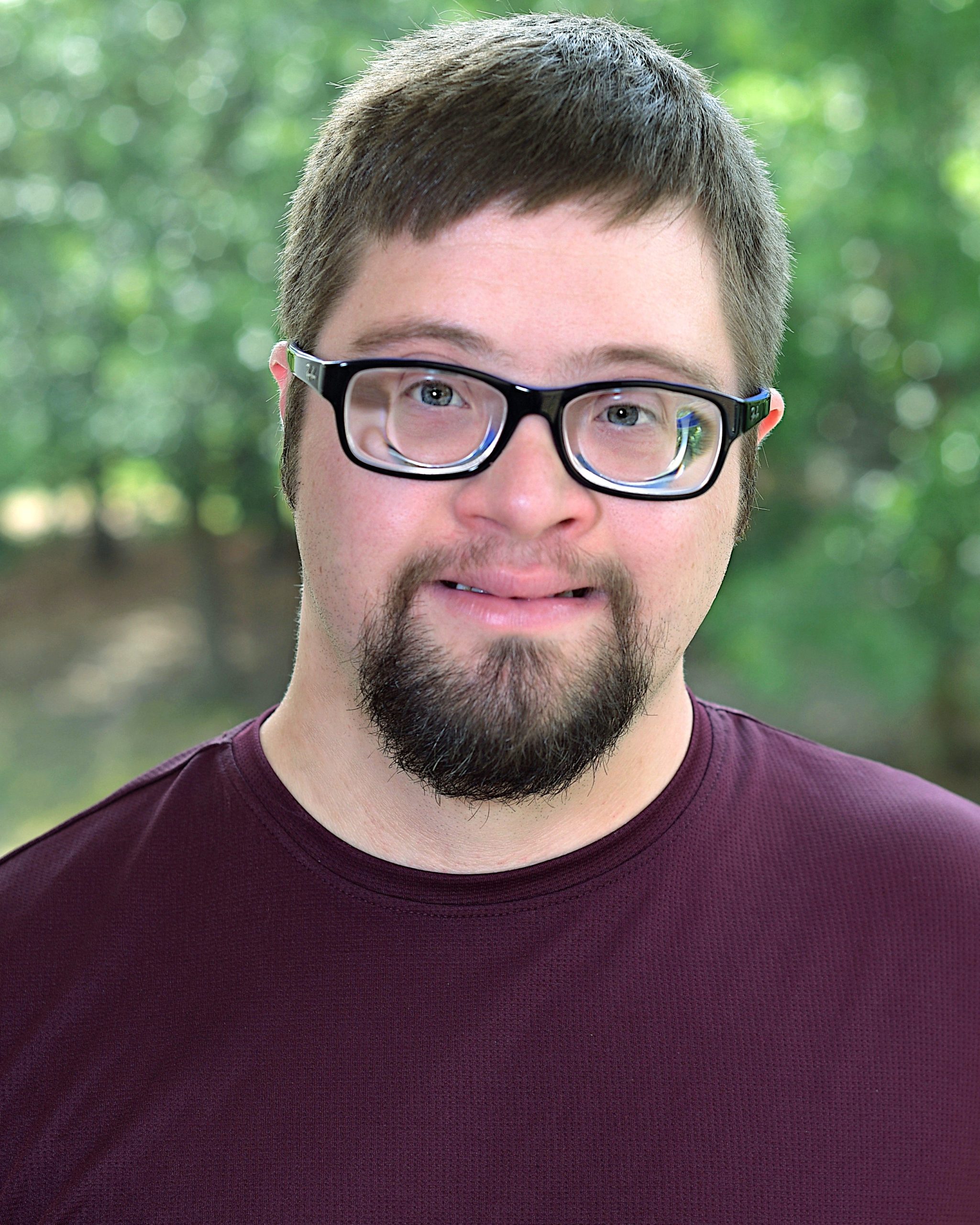
As one of the breakout stars of Bobby Farrelly’s Champions, Kevin Iannucci has been receiving quite a bit of attention for his portrayal of one of the film’s central characters.

Champions follows basketball coach Marcus Marakovich (Woody Harrelson), who, after a brush with the law, is ordered to coach a local basketball team with disabilities as community service. Iannucci portrays Johnny, one of the players Marakovich ends up coaching.

We recently caught up with Iannucci about Champions, acting, and his experience working with Kaitlin Olson and Harrelson…

STARBURST: Let’s start by talking a bit about the road to getting the role of Johnny in Champions…

Kevin Iannucci: I started acting at a young age. Acting comes naturally to me, so I did theatre, I did stage plays. What I actually wanted to do more was TV and movies, and I’ve actually auditioned. A lot. I’ve got a few small roles, and my biggest is Champions. That was a magical dream come true. It was unbelievable. 

Do you have a favourite on-set memory?

The carpool karaoke I did with Kaitlin Olson and Woody Harrelson. I enjoyed that a lot. We had tents set up outside because it was freezing. In the tent, we were going over the lines we needed to do in the car. It was so much fun! Everyone had a great time.

How was it working with Woody Harrelson and Kaitlin Olson?

They are both supportive and very funny!

You mentioned earlier that acting has always come naturally to you and that you’ve always wanted to be on TV and in movies, and now you are in a movie! And it’s a big role, too. What other types of acting roles would you like to take next? Is there a genre you like most?

I’d love to do horror. I like the Scream movies. Romantic comedies, too. But the big one is Marvel. I’d love to be in one of those movies. I have the DVD collection and some Funko pops.

Which Marvel movie interests you most?

I like the Chrises! Between Thor and Captain America, Chris Evans is one of my favourites. 

I want to switch gears slightly and talk specifically about your character in Champions. What can your character, Johnny, teach people in this movie? I think he’s a great character who has lots to teach people. 

He teaches them to be confident and imagine what they can do because they are capable of doing so much more!

Champions is now available digitally and on DVD/Blu-ray. 

Hamish Steele | DEADENDIA

hamish steele deadendia

by Ed Fortune

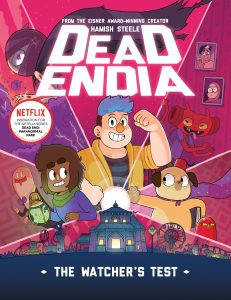
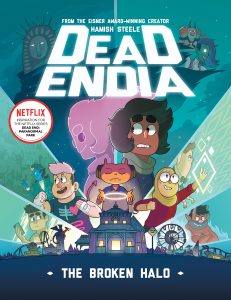
Hamish Steele is an Eisner award-winning, London-based Animation Director, Comic-Book Artist and Writer.  He’s best known for the DeadEndia comic books and the Netflix series Dead End: Paranormal Park.  His latest books are part of the DeadEndia series: The Broken Halo and The Watcher’s Test. We caught up with him to find out more…

STARBURST: What’s the elevator pitch for the DeadEndia books The Broken Halo and The Watcher’s Test?

Hamish Steele: Well, it’s about an elevator! So if I’m pitching these books inside one, then that’s half the job already done! Except this elevator takes its riders to the “Multi-Plane”, a 13-level universe of demons and angels, and Earth is the neutral ground! Unfortunately, this elevator happens to be located where Barney and Norma work, at a kitschy theme park called Phoenix Parks. They just wanna get through their 9 to 5 but are constantly swept up in the centuries-long battle between good and evil.

What should fans of the TV show expect from the Graphic Novels?

They’ll recognise the same characters, heart, and tone of the show but see a slightly different story. They’ll be plenty of surprises and twists for readers who think they know the TV show back to front.

Are more books planned?

DeadEndia: The Divine Order is slated for May 2024, and I’m currently working on it now. That’s meant to be the end of the trilogy, but if it’s a hit, I’ve got plenty of ideas for other stories set in the same world.

photo credit: Dashiell Silva

Are the books essentially another season?

Season 1 was loosely inspired by Book 1, and Season 2 was loosely inspired by Book 2,  but we swapped many story beats around for the show in order to keep it fresh. Book 3 will feature a lot of what we planned for Season 3, but it’ll be a true ending for the books. I hope it gives show fans some closure, though.

Should we expect to see DeadEndia in other formats?

I’m planning to take a break from it and focus on new stories as I’ve been working on DeadEndia for over 10 years. But I’ve had discussions about bringing DeadEndia to the world of gaming, both video and table top.

How different is the process of creating a comic book from a TV show?

TV is all about collaboration. Making a comic can be a pretty solitary experience. I definitely feel lucky that I get to do both, as there are things I like about working with a team and things I like about just knuckling down on my own.

What can you do with the graphic novels that you couldn’t do with the TV show?

The books feel a lot more intimate, I feel a lot more connection from my thoughts and feelings to my readers. On any tv production, every aspect has to go through dozens of stages of approval, but in the book, I can really say what I want to say, unfiltered. Also, just from a technical point of view, in the comics, I can have my characters wear whatever I like and not worry about our character design and rigging team working over time!

The show tackled some pretty important themes. How is this reflected in the books?

All those important themes are from the books, although I think they’re handled a little differently. The books were originally written as webcomics on Tumblr, and as you can imagine, the LGBTQIA+ themes were more preaching to the choir than anything. I was writing a book for our community from our community. When it came to making the TV show, we had to assume a much wider and potentially less clued-up audience. In the books, Barney is just trans, and all his friends know, and it’s no big deal – in the show, we needed that coming out moment, that moment to potentially educate our audience.

Another big difference is Norma being on the spectrum. It’s an element of the character I feel is explored really differently in the show and the books. In the show, she feels younger, less jaded, and more willing to trust. But she has a bad experience when her special interest turns out to be a bad person. The version we meet in the books feels like the Norma who has already been through a lot of those tough experiences and is a little more world-weary. It’s kind of cool to explore different ways being autistic can affect your life all within the same character.

DeadEndia has some amazing characters. Who’s the most fun to write?

I find Pugsley the most fun to write because he’s so innocent. No matter how wild the storyline gets, it’s always nice to get his sweet, childlike perspective on it.

What sort of spooky stories inspire? What’s your favourite type of spooky / horror story?

I absolutely love horror, and DeadEndia was my take on the spooky story of the week style show like The Twilight Zone or Goosebumps or even The Simpson’s Treehouse of Horror. I’m a big fan of ’70s horror, stuff like Suspiria and Hausu, things where bright, gaudy colours sit alongside brutal, terrifying imagery. My all-time favourite work of horror, though, is BBC’s Ghostwatch. Some elements have aged poorly, but some still haunt me whenever I hear a loud bang or see the reflection of something that isn’t there.

Is there an element of the DeadEndia world that you haven’t had a chance to explore yet, and what would that be?

I never feel like I have enough time to show everything this world has to offer, be it because of page limits or episode lengths. There are 13 planes, and we’ve barely seen any of them. In Book 3, I really get to explore angel culture. But if I did books after this, I’d be tempted to make more of the main characters’ demons and see the world from their POV.

What other projects do you have planned? 

I’ve just signed a deal for my next big book series, which I’m very excited about. I am being vague and cagey, but it’s my tribute to Godzilla, which is my all-time favourite series, and it has an autistic lead character. I recently got my autism diagnosis thanks to writing Norma in DeadEndia, but I’m excited to explore that even further in my next series. Other than that, I’m pitching several shows, working on games and writing a movie – so watch this space!

Hamish’s books are out in late June 2023. You can get your hands on them here.

Denzel Whitaker | THE ANGRY BLACK GIRL AND HER MONSTER

denzel whitaker in the angry black girl and her monster film

by Laura Potier

A sci-fi horror adaptation of Frankenstein, writer-director Bomani J. Story’s directorial debut The Angry Black Girl and Her Monster premiered at the South by Southwest film festival earlier this year to widespread acclaim. Starring Laya DeLeon Hayes, Denzel Whitaker, and Chad Coleman, the film tells the story of seventeen-year-old genius Vicaria (Hayes) as she struggles growing up amidst racial violence and personal tragedy. After losing both her mother and older brother to gang violence and police brutality, Vicaria vows to end her community’s suffering by curing death.

Ahead of The Angry Black Girl and Her Monster releasing in cinemas and on digital, STARBURST spoke with star Denzel Whitaker (Training Day, The Purge, Black Panther), who plays local drug dealer Kango, about the enduring appeal of Frankenstein’s monster, defying stereotypes, and more.

STARBURST: With The Angry Black Girl And Her Monster acting as a modern retelling of Mary Shelley’s Frankenstein, we wanted to know, what was your first introduction to the gothic tale?

Denzel Whitaker: I think growing up, I watched a lot of Frankenstein-inspired cartoons, but having seen the original Universal Frankenstein really young was probably my first introduction. Obviously, with the classic horror monsters, everyone wants to do their own interpretation, so you see it throughout pop culture and are very much aware of it. That’s why it was really interesting to see what Bomani [J. Story]’s take could look like – which I think is not so much on the nose, but definitely has those deep roots in the original.

Why do you think people keep going back to the story of Frankenstein as a way of dissecting social norms?

Denzel Whitaker: I think, number one, we’re fascinated with our own mortality – as we should be, since we can’t predict how long we’re going to live. Obviously, we would love to spend as much time here with each other as possible! But there’s an interesting depth to the story of Frankenstein because it makes us ask: can we bring something back to life? Can we create something? And ultimately, it’s about focusing on Vicaria as the mirror to Victor in the Frankenstein story and understanding his plight, his background, his torment, even as most retellings focus solely on the monster. By focusing on Vicaria’s story, we’re understanding the social issues that she is having to deal with.

denzel whitaker interview for the angry black girl and her monster

When you first read the script, besides the Frankenstein inspiration, what most interested you about the project?

Denzel Whitaker: The humanity and the characters – how well-rounded all the characters were, the subtext and the layers explored in this film. It’s not just a creature feature. I think that’s what really drew me the most: what’s being said here, beyond the shock, awe, or entertainment. I love the nuance, and I love what Bomani wanted to say culturally, for us and from us. It was all fascinating.

One of the film’s key themes is the idea that you are bound to become what society views you as. Can you speak a little about how that theme is explored in your portrayal of Kango?

Denzel Whitaker: Audiences will watch this film and immediately, watching Kango, they’ll have a snap judgement of who they think he is. And we see this far too often – brothers and sisters who come from similar environments already have this predisposed idea of who and what they need to be. And that’s all by design. That’s decades upon decades, history upon history, that someone won’t know any better because they have no exposure to a world outside of the one they’re born into.

So when you look at a character like Kango, you’ve got to think, ‘Well, who were his OGs? Who was his dad in the community? Who was his mother? Why does he feel like this is his only avenue?’. As people get to know Kango, they start to see that he could be just as brilliant as Vicaria, if only he’d had the same opportunities that she had. Feeling like this is his only outlet and that, through drugs and violence and how he asserts himself within the community, he feels like he’s doing his active part. And because society will only view him a certain way, he puts that skin on. For him, that’s survival; that’s a means of making money, of providing for the people around him. It’s a means of protection for those around him. He almost internalises himself and, as we start to see his character arc throughout the film, we start to understand that there are reasons for the choices he makes. And unfortunately, if he was placed into different circumstances, he probably wouldn’t have felt he needed to make those choices.

So would you say that, if he’s making choices for the sake of survival, it’s almost as though he’s denied any choice at all?

Denzel Whitaker: Choices are limited. You always have a choice, but his options are less. There are fewer opportunities for him to really thrive and to be something else. That goes back to the idea that if society says that you’re a monster enough times, you start to believe you are. But to say that he doesn’t have a choice would also be to say that Vicaria doesn’t have a choice. Yet we see her going to the school across town, her interest in science, and they very much come from the same neighbourhood. So, why are her choices so much grander than Kango’s? Those might be from influences before him, from the people who raised him so that, unfortunately, his scope may be more limited than her scope. But both their scopes are still more limited than they are for, say, someone who grew up on the other side of the tracks.

denzel whitaker in the angry black girl and her monster film

What’s interesting about Kango is that, as you mentioned, he’s a very black-and-white version of a villain. Then over time, you uncover other facets of him and see him through his redemption arc. What conversations did you have with the director about Kango’s journey?

Denzel Whitaker: We wanted to make sure he wasn’t two-dimensional, and I really wanted to make sure that he wasn’t just the stereotype. He comes from cats that we knew in our own neighbourhoods, from examples that we’ve seen first-hand. Some of the most ruthless and intimidating individuals can also be some of the most loving. So, Bomani and I were extremely adamant about not making Kango paper thin.

Yes, on the surface, he looks like a no-good drug dealer stereotype. So, how do we make him well-rounded? That set the intention. I didn’t want to just perpetuate the narrative that we’re thugs, just hanging around smoking weed on a couch, you know? What is it about Kango that really makes him tick? That’s something we are constantly challenging on the page. We’d write notes, have calls in the middle of the night, and would meet up to talk about it all, all to ensure you feel this is a very nuanced and complicated character.

Is that what you’d hope audiences take away from your performance? To not judge a book by its cover, essentially?

Denzel Whitaker: Absolutely. That’s one of the core themes of the film, not just for my character but for all the characters. It all goes back to that line: if society tells you you’re a monster, you start to believe it. And that’s not true.

The Angry Black Girl and Her Monster will release in cinemas on June 9th, 2023, and will release on demand and digital on June 23rd, 2023. It will also stream on AllBlk and Shudder at a later date. 


Jongnic Bontemps | TRANSFORMERS: RISE OF THE BEASTS

by Nick Spacek

Composer Jongnic Bontemps is having one heck of a start to the summer. Last month saw the release of the open-world, co-op FPS, Redfall, developed by Arkane Austin and published by Bethesda Softworks, for which Bontemps created music that he explains is like “if the Goonies had trap music” where he combined traditional horror sounds with chamber strings and mixed it together to create ‘spooky hip-hop’ music with some electronic and techno elements.

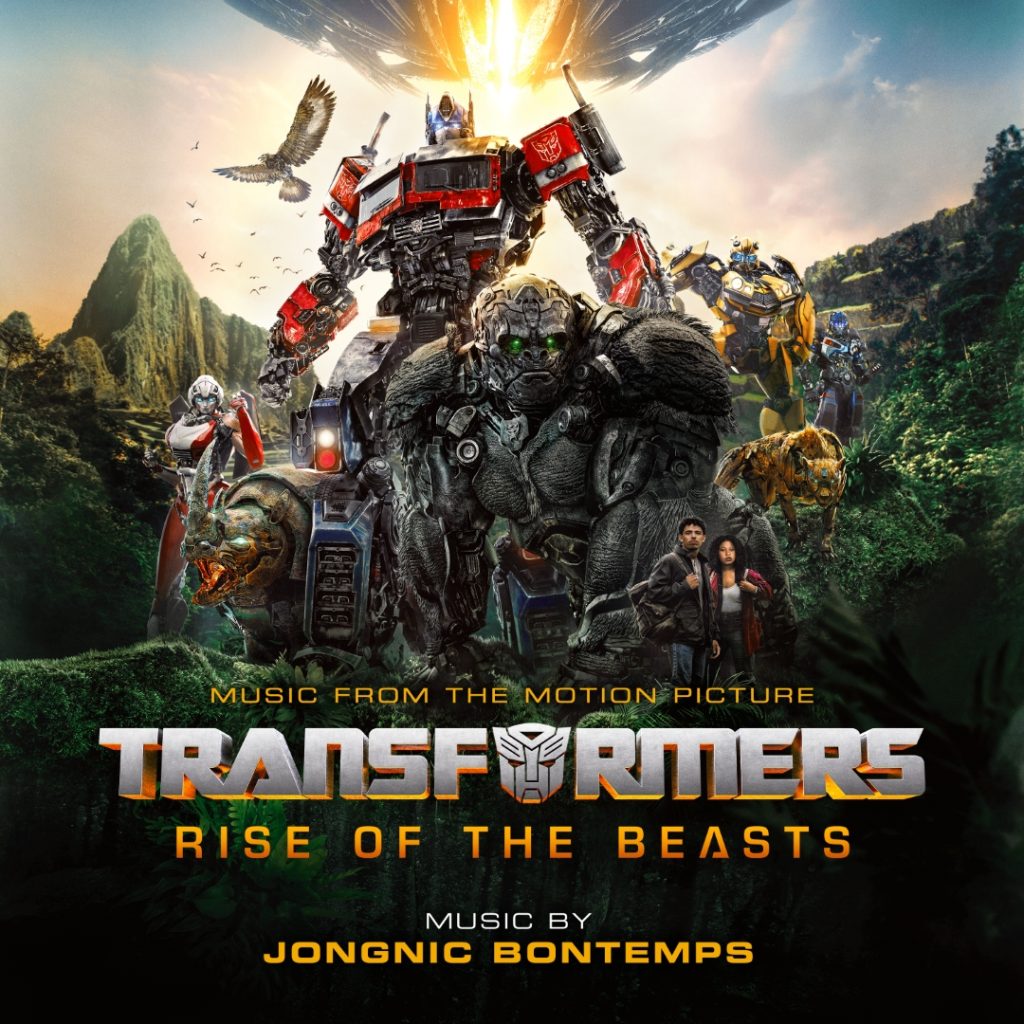
On June 9th, Bontemps’ biggest project to date is released on the big screen. The seventh live-action instalment in the blockbuster film franchise, Transformers: Rise of the Beasts, is the latest collaboration between director Steven Caple Jr. and Jongnic Bontemps, the duo having previously worked together on The Land and Creed II. It’s an impressive 2023 for a composer who only began working in the field professionally 13 years ago. We spoke with Jongnic Bontemps to discuss his rise.

STARBURST: This is a big couple of months for you. Redfall just came out at the start of May, and you’ve got Transformers: Rise of the Beasts coming out almost exactly a month later. That’s gotta be something for you, huh?

Jongnic Bontemps: It feels like I am having a bit of a moment! It feels like the leap of faith that I took 12-13 years ago to leave my software background and jump into a career in writing music for media is finally being – rewarded is not the right word – but at least it is culminating way bigger than I ever thought it could!

When you say that, like, what do you mean? What were your goals and dreams for success in taking this leap?

Well, I always wanted to do big movies. I always wanted to do action movies, and even the little music I was writing in my home studio at the time that only my wife and kids would hear was aspirational of this kind of music. It wanted to be this kind of music. I didn’t have the skills or the experience to write at it at the time, but that was what I was working toward.

But, even though this was sort of a dream, I never thought that would be a film like Transformers. When I first got into this, I was thinking about game music, and I wanted to be a video game composer. I was a big fan of games like Uncharted. That Uncharted series was amazing. I was like, “The music in that was amazing. That’s what I wanna do,” but I also knew I wanted to do movies, as well, when I finally figured this out.

I looked at the landscape, and I saw that game composers are very rarely asked to do film and TV stuff, but film and TV composers are regularly asked to do a game, so I said, “I’ve gotta start on film and TV and then migrate to games, right?” That was my career. I focused on film and TV, and I did lots and lots of short films and documentaries and eventually some TV series and that kind of stuff. I was having a pretty good career. I was like, “Okay, I’m happy.”

I was actually asked to do Redfall ’cause I had done some music on additional music on Call of Duty: WWII with a game composer called Wilbert Roget II, who’s amazing. He invited me to work with him on Call of Duty: WWII, and when the audio director from Redfall was looking for composers and saying, “A spooky hip hop score is what we’re looking for. Do you know anybody?” Wilbert referred me because I had done some stuff that was in that vein.

My score for United Skates and my score for Godfather of Harlem were hybrid scores that pulled in the ideas of hip-hop into underscore, so when they came to me with this idea for spooky hip-hop, I was like, “I’m all in. Let’s do this.” I was like, “Okay, this is great and I’m really happy doing this kind of thing.”

When Transformers: Rise of the Beasts came up as a possibility, it was because the director was this guy named Steven Caple Jr., who I met while I was at USC and I worked on his very first project in USC and everything after that – web series, his first feature, he brought me on as an additional composer on Creed II.

When he was tapped to do Rise of the Beasts, I was like, “You know what? I love you, man, but I understand. I probably not gonna go on this one with you, so I’ll catch you on the next one. I’m gonna keep working on my little stuff, and maybe I’ll catch you on the next one so I can get some more credits,” but he believed in me, and he put my name in the ring.

I ended up writing a demo that I believe captured what I believed the Transformers world was. I guess that demo resonated with some people because they ended up giving me a meeting, and a few months later, I was hired to be the composer. I never thought that that was ever gonna happen.

What are the challenges for you as a composer when these movies have been going on for almost 20 years now, but this is also kind of a prequel, kind of a sequel? There’s a lot going on. How do you honour the 20-year history of this film franchise – to say nothing of the animated series and the animated movie and the video games and the comic books and all these things?

Right. The good news is that I was in love with Transformers as a kid. I had the toys, I watched the animated series. I watched the animated movie. When the Michael Bay Films came out, I was first in line at the theatre to watch all of those. I wouldn’t call myself a Transformer stan because I know people who are Transformer stans now, and I was like, “Okay, y’all really love Transformers. I love Transformers too. So I’m gonna put myself in the right position here.”

But I do love the franchise, and I love the world and when. I was asked to come and be a part of this. I already had a deep love and respect for the music of the movies and the music that Steve Jablonsky wrote. I knew the themes. I could sing them. I was in love with the music. I listened to the albums, all this stuff. I was a big fan of those scores, so when I was asked to come in and do something, I knew the music that I was writing had to be of that world. It had to have what I would call “nobility and honour,” which was so intrinsic to that sound and was gonna be important.

I also knew it had to be a hybrid orchestral score that merges both the humanism of the orchestra with obviously the electronics and precision and the mechanics of synthesizers. Those things were sort of set in stone for me because I understood the world, I understood the assignment, and these are the things that are part of that world.

Where the challenge that came to me is, “How can I take these tools and create something new – create something a little different?” One of the things that they were doing was trying to create a new chapter in the franchise. I know that they hired a director like Steven Caple Jr. because they wanted to do something new, and that’s gonna be across the entire board, so that included music. How can I take this legacy and then create something new with that legacy?

That was a huge challenge, so I had to rely on a couple of things. One is I knew that the movies took place in Brooklyn in ’94, so I said, “Okay, that’s almost like the second version of hip hop, right?” Not quite the birth, but let’s say maybe like the second wave of hip hop. That was an era that I grew up in, and I understood that music, so it was about how can I bring the essence of that music into the score, right? This is not a hip-hop score, this is a Transformers score, but I wanted it to have that little hip-hop seasoning.

One of the things I want to get into right away is the sound of the Roland 808 drum machine, which is so iconic for that era. You would instantly hear that drum machine, and you’re like, “Boom!” It brings you right back, so I said, “We have to make sure that this drum machine and the sounds of this drum machine are present in the score when we’re in Brooklyn.”

Then the next thing I thought about was, well, this journey takes us to Peru, right? I wanna make sure that we honour the music of Peru and the culture of Peru, and how can we integrate that sound again into a Transformers score? I called a friend of mine who was a Peruvian composer, and he gave me a deep dive into Peruvian music. He gave me so many YouTube links and recordings of music from the Andes, music from Cuzco, music from the jungle, and I kind of settled on music from the coastal Afro-Peruvian Tradition.

So I started thinking about, “Okay, if I wanna bring in the Afro-Peruvian grooves, how does that work?” And I met a guy through my journey – well, he’s not a guy, he’s actually a percussion legend named Alex Acuña – and he brought his troop in, and we were able to then start work hopping how we could integrate some of these grooves in there.

So for me, it was not only about honouring the legacy of and the tradition of the past movies but bringing in the flavour of the era, time, and cultures right, that we are visiting and travelling through to this movie. I think those two things merged together with, obviously, my voice, gave us something new for the franchise.

But it was a struggle. I mean, I’d been on this project for two years, so during that two years, there was a lot of music in the garbage. A lot of failed attempts, a lot of things that no one will ever hear because we went really crazy, and it’s like, “Oh, that was nice, but that didn’t work out so well.” There’s a lot of that going on here, but I think where we ended up is something that will stay true to the tradition of the series but feel new, and I hope that the fans really enjoy it.

You got to really, really live the dream that you had when you first took this leap.

It is very true, but maybe the more accurate thing is, yes, I always dreamed of doing movies of this size, right? But it was a dream that I was okay with it, never being realized. Another thing that’s very sobering to me is that I’m the first African-American to do a movie of the size, to compose the score for a movie of the size.

There was no person before me to open the door and say, “Hey, this is something that is a possibility.” I was very happy doing my TV series and video game and all this kind of stuff, so this exceeded my wireless expectations – and also so quickly. I didn’t do 40 blockbuster films, and then now I’m asked to do Transformers, right?

My biggest prior project was probably Redfall, or Creed II, where I was really the additional composer. Ludwig Göransson was the main composer on that. Quite honestly, it was a huge leap and something that I did not expect to happen this early in my career.

Transformers: Rise of the Beasts is released in cinemas on June 9th from Paramount, with Milan Records set to release the Original Motion Picture Soundtrack the same day.

Justin Gary – SOLFORGE FUSION

by Ed Fortune

Justin Gary is professional Magic The Gathering player and games designer. His latest game is Sol Forge Fusion, a  semi-randomised card game that he created with the legendary Richard Garfield, who invented the collectible card game genre with Magic The Gathering. We caught up with Justin to find out more.

STARBURST: what is Sol Forge and how did it come to be?

Justin Gary: Yeah, so this is this is a great story. It’s honestly one of the joys of my entire career. And so, you know, I used to I started off as a pro magic player, right played in one of the US National Champions when I was 17, paid my way through college, travelling around the world playing wedding photos, things like that. And then I started working on game design, working on the Marvel and DC VS  trading card games and a variety of others. I actually met Richard Garfield, and I launched my own game Ascension, about 12 years ago, I met Richard Garfield at PAX Dev, and he was giving a talk on design. And I was in the audience because, you know, it’s Richard Garfield, of course, you want to hear what he has to say about game design. So he asked at the end of the talk, someone asked him what his favourite game was right now. And he said, Ascension. So I literally like jump up in my seat in the back of the room. And everybody kind of laughed, but it gave me an opening to go start talking to him. And we started talking. And it became very clear that we both wanted the exact same thing for our next project.

And that was Sol Forge?

Yes, that project ended up being So Forge. And so that was a project. We began as a purely digital trading card game because none of those things existed at the time; when the cards levelled up as you played them, and it was really cool, very tight experience. You know, we launched that on Kickstarter, we ended up producing the game, we ran it for several years, it was really well received. Eventually, that project had to sunset but we kept having to think about how we might bring it back.

Once I saw Richard’s other game design Keyforge,  I saw the idea of an algorithmically generated deck. And I thought, wow, this is there’s something here. And the fact that Sol Forge needed these levelling up card. I thought this was a perfect way to be able to bring Sol Forge back in a new form. So I called Richard up, we started talking about what was good about Key Forge what was bad about Key Forge, how we could improve it, what could work. And, you know,  Sol Forge Fusion was born out of that. And so we created a hybrid deck game where every deck is one of a kind, but you can shuffle them together to play so that you can still customise your deck. Everything can be scanned, and played online through Tabletop Simulator. So it’s still true to it’s digital roots. It’s true to the kind of roots of the algorithmic design, but it’s bringing something new to the table in both cases. And so we’re both really thrilled with what we were able to create and now bring it to the world.

What’s the business model?
Yeah, that’s great question. So we have starter kits, which I think you already have one in your hand from what I can tell. Each starter kit comes with four unique faction decks. So again, every one is one of a kind. And then all the accessories you need to play play mats, little minion tokens, little tracker tokens. And so every every box you buy is unique.

So you could just buy one of those and any of those four decks can be combined to make six different unique playable backs. And then we have booster kits that are basically the same thing.

SolForge Fusion can be found here.