by Laura Potier
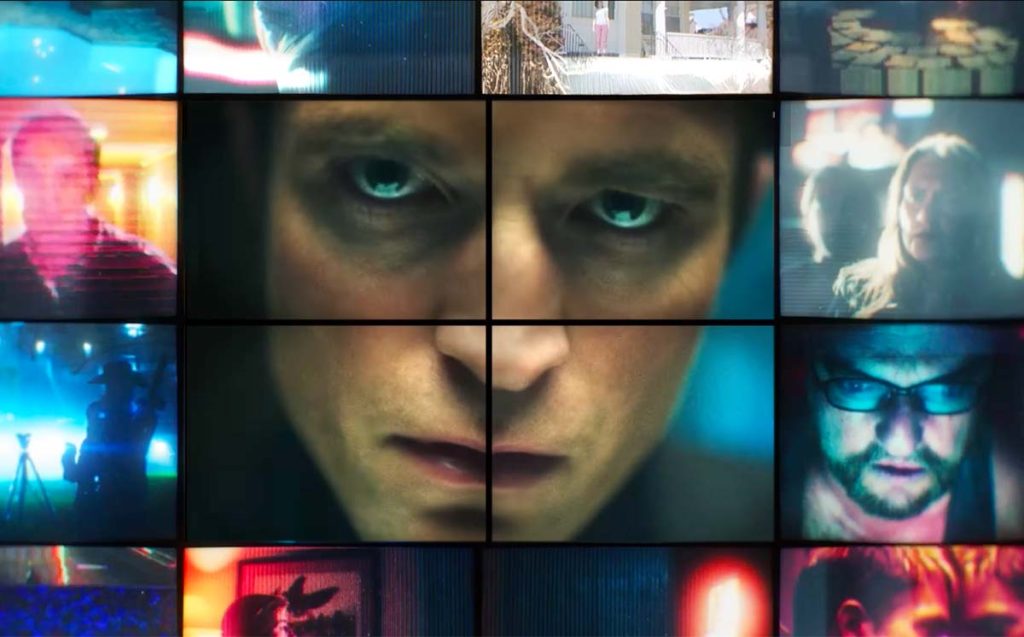
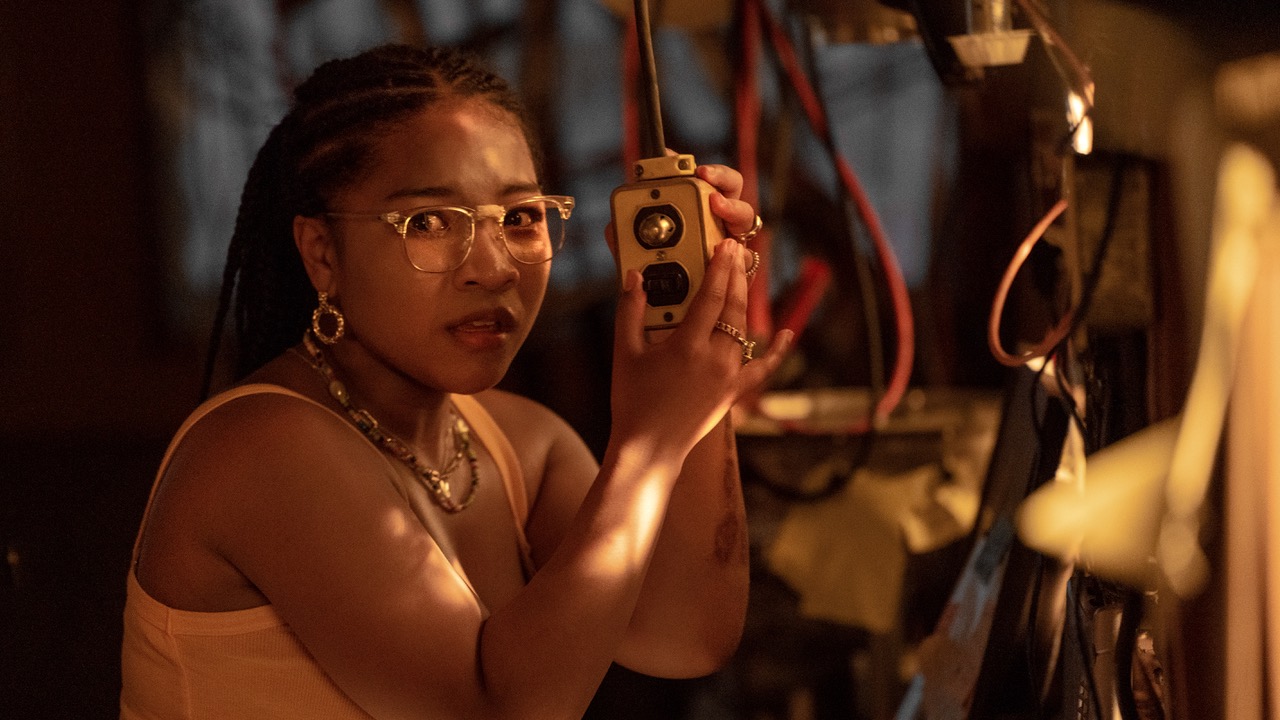
A sci-fi horror adaptation of Frankenstein, writer-director Bomani J. Story’s directorial debut The Angry Black Girl and Her Monster premiered at the South by Southwest film festival earlier this year to widespread acclaim. Starring Laya DeLeon Hayes, Denzel Whitaker, and Chad Coleman, the film tells the story of seventeen-year-old genius Vicaria (Hayes) as she struggles growing up amidst racial violence and personal tragedy. After losing both her mother and older brother to gang violence and police brutality, Vicaria vows to end her community’s suffering by curing death.
Ahead of The Angry Black Girl and Her Monster releasing in cinemas and on digital, STARBURST spoke with star Denzel Whitaker (Training Day, The Purge, Black Panther), who plays local drug dealer Kango, about the enduring appeal of Frankenstein’s monster, defying stereotypes, and more.
STARBURST: With The Angry Black Girl And Her Monster acting as a modern retelling of Mary Shelley’s Frankenstein, we wanted to know, what was your first introduction to the gothic tale?
Denzel Whitaker: I think growing up, I watched a lot of Frankenstein-inspired cartoons, but having seen the original Universal Frankenstein really young was probably my first introduction. Obviously, with the classic horror monsters, everyone wants to do their own interpretation, so you see it throughout pop culture and are very much aware of it. That’s why it was really interesting to see what Bomani [J. Story]’s take could look like – which I think is not so much on the nose, but definitely has those deep roots in the original.
Why do you think people keep going back to the story of Frankenstein as a way of dissecting social norms?
Denzel Whitaker: I think, number one, we’re fascinated with our own mortality – as we should be, since we can’t predict how long we’re going to live. Obviously, we would love to spend as much time here with each other as possible! But there’s an interesting depth to the story of Frankenstein because it makes us ask: can we bring something back to life? Can we create something? And ultimately, it’s about focusing on Vicaria as the mirror to Victor in the Frankenstein story and understanding his plight, his background, his torment, even as most retellings focus solely on the monster. By focusing on Vicaria’s story, we’re understanding the social issues that she is having to deal with.
When you first read the script, besides the Frankenstein inspiration, what most interested you about the project?
Denzel Whitaker: The humanity and the characters – how well-rounded all the characters were, the subtext and the layers explored in this film. It’s not just a creature feature. I think that’s what really drew me the most: what’s being said here, beyond the shock, awe, or entertainment. I love the nuance, and I love what Bomani wanted to say culturally, for us and from us. It was all fascinating.
One of the film’s key themes is the idea that you are bound to become what society views you as. Can you speak a little about how that theme is explored in your portrayal of Kango?
Denzel Whitaker: Audiences will watch this film and immediately, watching Kango, they’ll have a snap judgement of who they think he is. And we see this far too often – brothers and sisters who come from similar environments already have this predisposed idea of who and what they need to be. And that’s all by design. That’s decades upon decades, history upon history, that someone won’t know any better because they have no exposure to a world outside of the one they’re born into.
So when you look at a character like Kango, you’ve got to think, ‘Well, who were his OGs? Who was his dad in the community? Who was his mother? Why does he feel like this is his only avenue?’. As people get to know Kango, they start to see that he could be just as brilliant as Vicaria, if only he’d had the same opportunities that she had. Feeling like this is his only outlet and that, through drugs and violence and how he asserts himself within the community, he feels like he’s doing his active part. And because society will only view him a certain way, he puts that skin on. For him, that’s survival; that’s a means of making money, of providing for the people around him. It’s a means of protection for those around him. He almost internalises himself and, as we start to see his character arc throughout the film, we start to understand that there are reasons for the choices he makes. And unfortunately, if he was placed into different circumstances, he probably wouldn’t have felt he needed to make those choices.
So would you say that, if he’s making choices for the sake of survival, it’s almost as though he’s denied any choice at all?
Denzel Whitaker: Choices are limited. You always have a choice, but his options are less. There are fewer opportunities for him to really thrive and to be something else. That goes back to the idea that if society says that you’re a monster enough times, you start to believe you are. But to say that he doesn’t have a choice would also be to say that Vicaria doesn’t have a choice. Yet we see her going to the school across town, her interest in science, and they very much come from the same neighbourhood. So, why are her choices so much grander than Kango’s? Those might be from influences before him, from the people who raised him so that, unfortunately, his scope may be more limited than her scope. But both their scopes are still more limited than they are for, say, someone who grew up on the other side of the tracks.
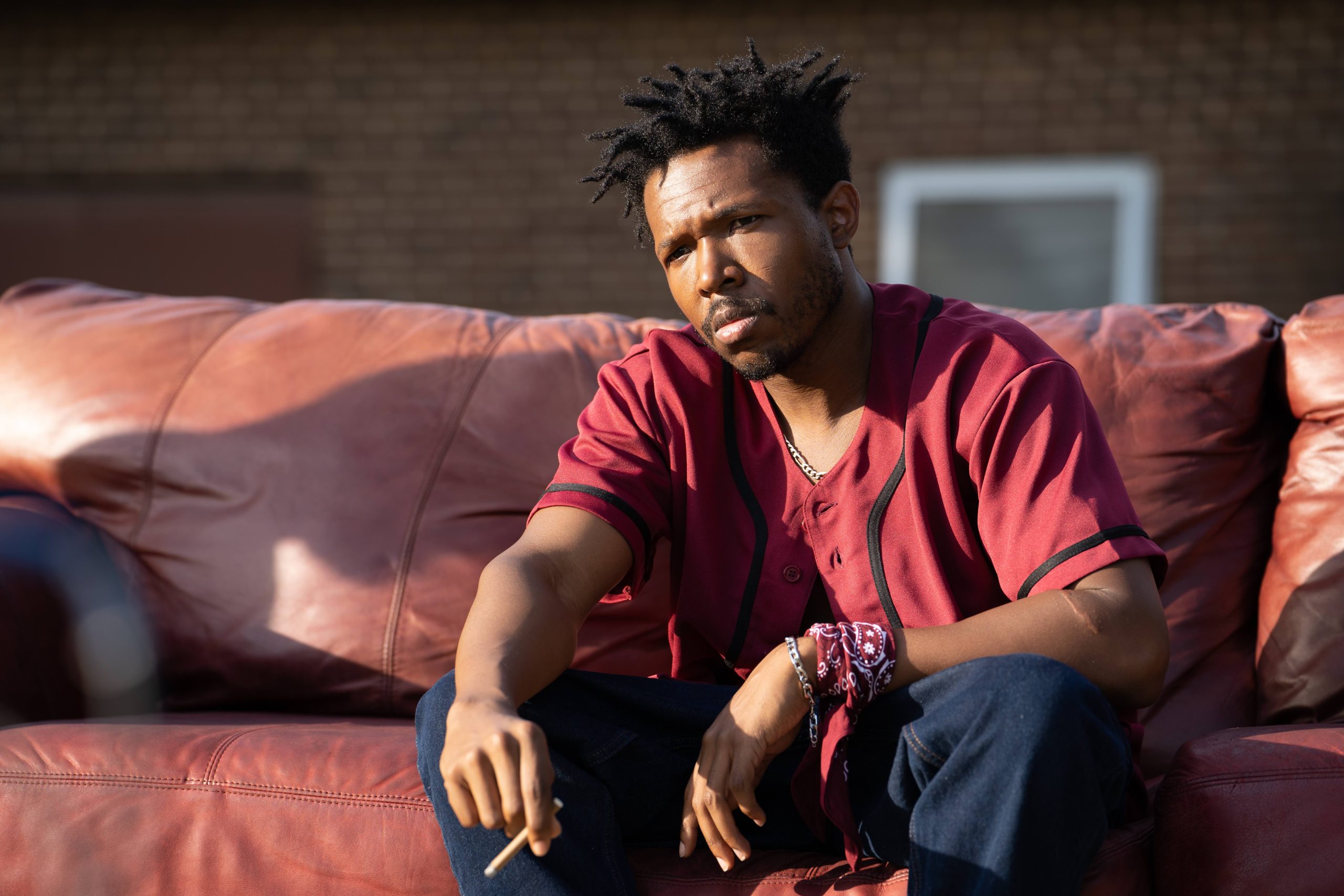
What’s interesting about Kango is that, as you mentioned, he’s a very black-and-white version of a villain. Then over time, you uncover other facets of him and see him through his redemption arc. What conversations did you have with the director about Kango’s journey?
Denzel Whitaker: We wanted to make sure he wasn’t two-dimensional, and I really wanted to make sure that he wasn’t just the stereotype. He comes from cats that we knew in our own neighbourhoods, from examples that we’ve seen first-hand. Some of the most ruthless and intimidating individuals can also be some of the most loving. So, Bomani and I were extremely adamant about not making Kango paper thin.
Yes, on the surface, he looks like a no-good drug dealer stereotype. So, how do we make him well-rounded? That set the intention. I didn’t want to just perpetuate the narrative that we’re thugs, just hanging around smoking weed on a couch, you know? What is it about Kango that really makes him tick? That’s something we are constantly challenging on the page. We’d write notes, have calls in the middle of the night, and would meet up to talk about it all, all to ensure you feel this is a very nuanced and complicated character.
Is that what you’d hope audiences take away from your performance? To not judge a book by its cover, essentially?
Denzel Whitaker: Absolutely. That’s one of the core themes of the film, not just for my character but for all the characters. It all goes back to that line: if society tells you you’re a monster, you start to believe it. And that’s not true.
The Angry Black Girl and Her Monster will release in cinemas on June 9th, 2023, and will release on demand and digital on June 23rd, 2023. It will also stream on AllBlk and Shudder at a later date.