George Mann | STAR WARS: THE BATTLE OF JEDHA

george battle jedha

by Ed Fortune

George Mann is a highly prolific and well-regarded author known for both his critically acclaimed original fiction and tie-in work. We caught up with him to find out more about Star Wars: The Battle Of Jedha

STARBURST: What is the elevator pitch for The Battle of Jedha?

George Mann: On the Pilgrim Moon of Jedha, everything is about to go wrong. Jedi Master Creighton Sun and Jedi Knight Aida Forte are there to oversee what should be nothing more than the simple ratification of a peace treaty between the warring worlds of Eiram and E’ronoh. But when a terrorist attack kills one of the ambassadors, it’s the first step on the road to utter failure. With the strange sect known as the Path of the Open Hand also present and stirring dissent in the streets, it’s only a matter of time before the conflict erupts, and the city of Jedha will never be the same again.

This story seems to connect various bits of the Star Wars narrative to each other. How difficult was this to do?

It was perhaps the most challenging Star Wars story I’ve written to date because of the way it interacts with so many other bits of storytelling, picking up threads from the adult, young adult, and middle-grade High Republic novels, as well as the Marvel comics and the Star Wars Insider stories. It’s very much a linchpin moment at the heart of Phase II, putting the characters on the trajectory they need to be on for the big finale that’s coming soon.

So, there was a lot of coordination and a fair amount of tweaking and reworking to ensure I was picking up all the threads that needed developing and leaving things at exactly the right place they needed to be for the other writers. Doing that while still delivering a complete and, hopefully, satisfying story was a real juggling act!

How does this all tie into Tales of Enlightenment?

One of the key things that had already been established about Jedha in this era was that there was going to be a bar that was a bit like Rick’s bar in Casablanca, a place where everyone is welcome – a neutral ground. I knew immediately that this bar and its locals were going to play a large part in the audio story, but when I was offered the opportunity to write a series of short stories also set in the bar, I thought it was a great opportunity to feature the same set of locals. That way, the stories could interweave with the audio, and the two projects could shed light on each other. So in Star Wars: Tales of Enlightenment, you get to see some alternate perspectives on events, characters or themes that play a significant part in the wider story of Jedha in this era.
As you mentioned, as well as the script book, there’s the audio drama; which should people choose?

It was important for us to offer both. Reading the script and listening to the drama are two different experiences. The story was written to be heard, but some people struggle with audio dramas, and for them, we wanted to ensure they still had a way to engage with and experience the story. Others like to read the script alongside the performances to gain a little insight into the lines and the atmospheric effects. I don’t think the two formats are mutually exclusive, and neither is the ‘right’ way to enjoy the story. We’re all about offering options here!

The Star Wars: High Republic series has a lot of authors creating work for it; how much negotiation is required to make the series fit together smoothly?

There’s an excellent spirit of collaboration between the various writers on the team. We all discuss the stories and outlines we’re working on, checking details with each other where needed. Negotiations don’t often come into it, because we all want what’s best for the stories and don’t tend to be precious. In fact, my experience is one of generosity, really. The overall picture is very ably pulled together by the Creative Director of Lucasfilm Publishing, Michael Siglain. He works ceaselessly to keep us all on the right track!

What Star Wars stuff – other than the ones you’re connected to – are you really enjoying?

I LOVED Andor. What an amazing story, with such stunning performances, writing, and directing. I can’t wait for Season Two!

The book does interesting things with the Force and Force users. Can you tell us more about this approach?

How can you write a story about Jedha without delving into the Force and Force users at least a little bit? In truth, it was always the plan to explore this side of the story. What’s interesting about Jedha at this point in the timeline is that the Jedi aren’t revered at all. They don’t even have a temple or outpost on Jedha. They’re just another sect of Force users like all the others on Jedha. And that’s a hugely interesting angle to come at the Jedi from. Couple with that, we have the Path of the Open Hand and their mission to ‘free the Force’ – a completely alternative perspective on the Force. So, in many ways, the entirety of Phase II is underpinned by these questions. What Jedha does is allow us to explore that in a microcosm, to juxtapose the Jedi and the Path of the Open Hand against other Force sects, and in doing so, hopefully come to understand them better.

What part of the Star Wars universe would you like to explore next?

There are tons still left to explore in the High Republic! I’d love to revisit the Pathfinders. And to explore some of the characters from Phase I, too. Marchion Ro is such a great villain. Beyond that, I’d love to write more about the ancient Sith, and Qui-Gon.

If you could have a real working holocron, what would be in it?

Books! Lots and lots and lots of books!

And if you could take one Star Wars thing and ensure that it would survive for thousands of years, what would it be?

If I could only choose a single thing, I think it would have to be the original movie. That’s where it all started, and it’s still the guiding compass of what Star Wars is. I hope future generations can keep on being inspired by it, just as I was.

Star Wars: The Battle Of Jedha is out now.

Andy Votel | THE DEVIL

by NICK SPACEK

Musician Andy Votel is a talented DJ and archivist whose work with his label, Finders Keepers, has regularly unearthed long-lost music from the hinterlands of experimental, avant-garde, and beyond, frequently tied to the world of film music. As mentioned in the most recent print edition of STARBURST, Finders Keepers unearthed the “bloodline of Eastern European kosmische and groundbreaking, grinding cinematic psych rock” with the release of the Andrzej Korzyński score to Żuławski’s 1972 film, Diabeł (aka The Devil).

“Sourced from the elusive original master tapes with the full cooperation of the CeTA archives in Wroclaw in collaboration with GAD Records,” this release is a fuzzed-out, echoplex-resplendent score sure to make all but the most hard-hearted film music and stoner rock fans drool with delight, and comes just in time for the massive rediscovery of Polish director Andrzej Żuławski via the release of his 1981 film Possession on horror streamer Shudder.

Additionally, on March 29th, Votel will perform a live score of music to a screening of The Devil as part of the Kinoteka Polish Film Festival in London. The music will comprise Korzyński’s scores for Żuławski’s most iconic films as well as other Polish music of the 1970s. We spoke with Andy Votel all about it ahead of Wednesday’s performance…

STARBURST: The music which you release, as well as that which you spin, covers a wide swathe of genres and locales. Where did you first start in this worldwide journey of musical discovery?

Andy Votel: I’ve always been fascinated with vinyl from a very young age. Touching the record player in our family home was forbidden in the 1980’s so I developed a fascination. Through hip hop I learned to deconstruct music and looked for the finest obscure ingredients. My modus operandi was to leave my comfort zone so I decided to not buy any English language music for many years. An art school trip to Poland in 1993 introduced me to Polish, Hungarian, Czech, Russian, and East German music. As a DJ, I’ve been lucky enough to travel the world buying records from every continent, which eventually teaches you a lot of cultural and creative lessons through art, film, design etc.

When did you first discover something you knew needed to be heard by more people?

My first ever records and remixes all included samples from records and films that I felt needed to be decontextualised. I have felt like this all my life. My initial source library for unusual samples and sounds eventually got so large and nuanced that I started to make mixtapes and compilations. I learned to manufacture records working as a designer for Grand Central, then ran my own label Twisted Nerve, so Finders Keepers was born from that experience. The first record, L’Enfant Assassin De Mouches, was the perfect record to launch the label because it resembled a very erratic mix-tape within itself. Almost like an entire label on one disc with multiple styles of music. It is the perfect template for the label’s discography.

Diabeł by Andrzej Korzyński

The records Finders Keepers reissues sometimes represent years of work by the time they appear. How much patience does this job require?

Anyone who is serious about record collecting and finding rare records will understand that patience is the key component. In an era where people expect music and art at the click of a switch, it might be hard to understand. Finding records and searching for one particular piece of old music can take years, and you have to hope that your tastes don’t change. Finding original artists and master tapes and rights holder is no different. But, the first records we released on FK 18 years ago are still in print to today, so we like to specialise in “timeless’ music or records that are so unique that they stand the tests of time or evade trends.

In addition to performing at festivals, do you get to travel in order to bring these reissues to life?

Yes.

Your performance at the festival will see you paying homage to Andrzej Korzyński by remixing both that composer’s work, as well as that of other Polish musicians. How do you stay true to the original musical themes of The Devil, while also crafting something new?

I don’t intend to stay true to the themes, I prefer to decontextualise the music and the films and view and project it from a different perspective, like a hall of mirrors. It is important for me to retain some cultural aesthetics though, and by strictly using Polish music this also presents a challenge which is a great breeding ground for creativity and experiments, as well as happy accidents. I believe this is how Korzyński and Zulwaski’s relationship worked when they made these collaborations up to 50 years ago.

When crafting mixes, is it easier to work within a theme, or does that create new challenges?

It’s certainly not easier, but it’s more fun, and more challenging. I have so many avenues at my disposal now, so as long as you have an open mind, you can apply a concept to most mixes and collages. I think it’s unfortunate when projects are not conceptual, it’s a lost opportunity. Although I do enjoy spontaneity too. I have a radio show called Randomonium which is strictly concept-free and spontaneous.

Along those lines, how familiar does one need to be with a film in order to craft a new score from component parts as it plays?

For me personally, you have to be very familiar, but I only really work with films that I know and love. Again it is great to improvise, but my scores are painstakingly crafted… ideally you would find the correct balance in between. The film scores for Jean Rolling by Francois Tusques are completely improvised, and most of the soundtrack work a treat, before Jean Rolling had to edit it. You need to edit, I think that is the key to a good collage.

The Devil + Live Music will screen as part of the Kinoteka Polish Film Festival on March 29th. Details on that show here.

Patrick Fabian | BATMAN: THE DOOM THAT CAME TO GOTHAM

by ED FORTUNE

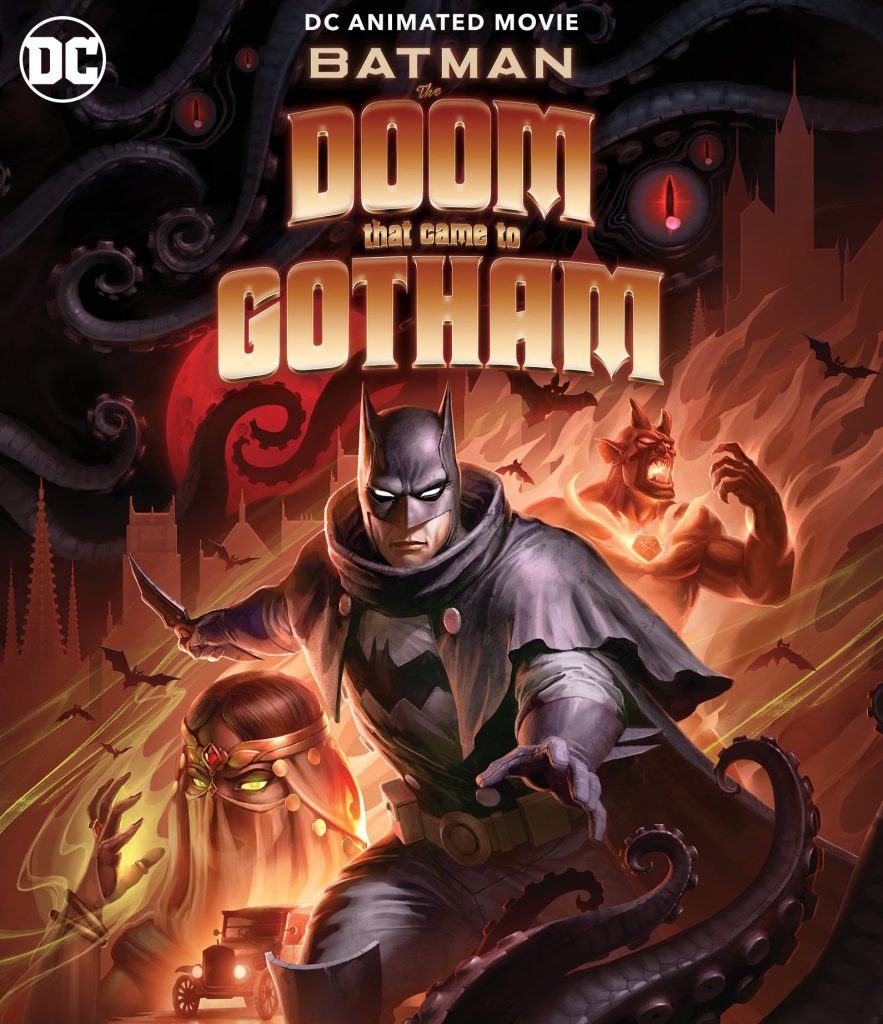
Patrick Fabian is best known for his role as Howard Hamlin in cult crime-drama Better Call Saul, as well as Cotton Marcus in 2010’s found footage horror, The Last Exorcism, and Alastaire in RomZomCom Eat, Brains, Love. His voice acting roles include The Death of Superman and Reign of the Supermen DC Animated features, but we recently caught up with him to discuss his role as Harvey Dent in the latest DC animated movie, The Doom That Came To Gotham…

STARBURST: What should we expect from The Doom That Came To Gotham?
Patrick Fabian: All your favourite characters from Batman in a completely different world! You’ll be surprised how some of them act, and you should be delighted at what they do.

And what drew you to the project?
DC animation is so cool. And anytime you get a chance to be a part of it, you want to say yes, and I was lucky enough to be a part of The Reign of the Supermen and be Hank Henshaw, Cyborg Superman. When this came around, I was lucky enough to get asked to do Harvey. Of course, I said yes because nothing’s more exciting than the changes coming from those DC animators’ art.

How familiar were you with the source material?
You know what, not a ton. I sheepishly have to admit I’m not a comic book head – I’m not caught up on everything. A great thing about being part of these projects is that I’ve started to read more. But I was not familiar with The Doom That Came To Gotham and this whole Elseworlds situation, which I found to be really cool. I love the whole supernatural take, the whole H.P. Lovecraft into the field to everything. And I think it’s fun to go ahead and sort of take characters out for a spin and in a different realm. I think the audience will really dig it.

How did you find that the mix between Lovecraftian cosmic horror and DC comic books?
It’s funny, it’s tough to blend stuff like that, isn’t it? Because there’s such a familiarity with the world that you’ve already established with DC, right, everybody thinks they know what’s going on. But in the end, there are characteristics of the characters that get to stay the same while allowing us to see other ways of who they are. I like the fact that Batman is so reality-based but gives in to the supernatural quality of it. I love that we see Harvey Dent, mostly in this as the good guy, and the whole Two-Face part of it doesn’t really come up until towards the very end.

As an actor, what is it like to play Harvey Dent/Two-Face? You’re kind of being asked to do two roles for the price of one…
You should be my agent! Maybe we should go back to Warner Brothers and renegotiate, I don’t know [laughs]. Playing Harvey Dent is awesome because you do get to go ahead and be two people. What I like about this film is that Harvey is running for mayor, and he’s a good guy, he’s upstanding and optimistic and helpful.

You’ve played lawyer roles before, not just Harvey Dent but also Howard Hamlin. How do you get into those roles?
It’s funny what you draw on. In the case of Better Call Saul, I drew a lot on my father. Because my father was a very upstanding man and a good guy who would do the right thing. And we could have an argument about whether that was the case for Howard Hamlin, but for Harvey, he isn’t just a lawyer. There is this outward show of wanting to help the city, but like any politician, there’s a healthy dose of ego that’s involved there – a healthy dose of ‘only I can solve it’ sort of idea. And I think that leads ultimately to the downfall of many people, and it’s true for Harvey.

We touched on Lovecraft earlier, we’re guessing you’re more a fan of horror than superheroes?
It’s funny, The Doom That Came To Sarnath was one of the first H.P. Lovecraft things that I ever read. A friend of mine gave me a book of short stories. And I remember there was an illustration – obviously very Lovecraftian, as it were – but as a kid, it was so spooky and scary. I love horror and dark stuff. Nothing would make me happier if you said the rest of my career from here on in was set in the moonlight bathed in blood!

What’s your dream project?
I’ve been fortunate enough to be a working actor for like 30 years. And what that means is that you’re able to do a lot of different things. I’d like to be the sheriff in a western; I’d like to be the guy with the badge on – I haven’t done that yet! That would be fun.

So if DC decided to do more with Jonah Hex, you’d be interested?
That’d be great – I would love to do Jonah Hex! If DC call, my answer is yes, whatever they want me to do. That’s the truth. The good thing about being a working actor is you never know what’s going to happen next. By saying yes to things you find yourself in New Zealand, kissing Xena, the warrior princess, beating up the bad guys! You find yourself on a boat playing a ship captain and jumping into the ocean. Life is an adventure.

What’s next for you?
I just got done doing an independent film called The Way We Speak, and I’m the lead of that. It’s sort of a cultural, political theatre, and it’ll be out sometime, hopefully next year.

BATMAN: THE DOOM THAT CAME TO GOTHAM is out from March 27th on Blu-ray and digital.

Jase Ricci | BATMAN: THE DOOM THAT CAME TO GOTHAM

by ED FORTUNE

Jase Ricci is a writer and producer best known for Tangled: The Series (2017) and 2012’s Teenage Mutant Ninja Turtles. He’s also the creative force behind Batman: The Doom That Came To Gotham, the latest feature from DC Animation. We recently spoke with him to find out more…

STARBURST: How would you pitch this movie to someone who doesn’t know either Batman or H.P. Lovecraft?
Jase Ricci: It’s funny because I think one of the benefits of the Elseworlds projects is that they are very niche. This is a mix of Batman and Lovecraft. And if you don’t know Batman or Lovecraft, you probably want to figure out Batman and Lovecraft first! Not that it’s not accessible to general audiences, but I do feel like it is a little more niche, and it doesn’t have the same effect If you’re not familiar with how a Lovecraft story goes to the world or how a Batman story goes. I think if you’re looking for a Batman story and you’re not familiar with Lovecraft, you’re still going to enjoy it, but you’ll enjoy it more if you have that niche appetite.

When writing an Elseworlds story like this, how do you keep it ‘Batman’?
Well, fortunately, we had a really strong creative team element that kept us in check. And being a lifelong fan of Batman, I feel pretty confident that I know the characters. There’s a beauty to something like Batman. Is Adam West Batman? Yes. Michael Keaton? Yes. Is Christian Bale? Yes. Is Kevin Conroy? Yes. Every version of Batman is Batman. He’s one of the most identifiable characters in the world, so he’s so malleable in many ways. There are so many different versions of Batman that when you’re working on an Elseworlds project like this, you have that latitude in the room to sort of push Batman to a place he has not been before. As long as you have those touchstone elements and that familiarity.

Jase Ricci

In H.P. Lovecraft’s mythos, the characters always end up crazy. How do you do that here? Batman’s already crazy!
Good question. Denial. You’re right because I think the point of this story is that he’s still the hero. He has this almost otherworldly bat vision at the very start of his journey to becoming Batman. But he blocks it out of his mind. He embraces logic in order to hide from it. And it’s not until he lets go of that semblance of sanity – that says through logic and reason believe in the rationale – that he lets himself fall into the insanity. It’s not about him going crazy, it’s about him realising he’s crazy! It’s a really cool twist on your expectations of a Lovecraftian story.

Is kid-friendly horror a thing you like to do?
Yeah, I really hit my groove with a bunch of projects that are marrying my love of sci-fi, horror, and Teenage Mutant Ninja Turtles. And, you know, one of the greatest things ever was we had Jeffrey Combs in this project as Kirk Langstrom. He’s been a hero of mine forever. He was actually the Rat King in an episode that I wrote for Ninja Turtles. And whenever I can, I look for projects with horror elements, or there are episodes of Teenage Mutant Ninja Turtles where I can fit in a horror element -werewolves and ghosts and stuff like that. I think it’s fun to cross genres!

BATMAN: THE DOOM THAT CAME TO GOTHAM is out from March 27th on Blu-ray and digital.

Claudio Sanchez | COHEED AND CAMBRIA

by NICK SPACEK

For anyone into modern progressive rock, the band COHEED AND CAMBRIA should need no introduction. Over the course of their nearly 30-year history, the group has melded sci-fi, comic books, and music in a way not seen in decades, due in no small part to CLAUDIO SANCHEZ – the lead singer, guitarist, and primary lyricist for COHEED AND CAMBRIA. While the band was on tour in Europe this fall, we took the opportunity to speak with SANCHEZ away from any new album to talk about the musician’s overall creative process…

STARBURST: It’s always interesting talking to musical artists who don’t have anything to promote, but it seems like you always have something you’re in the middle of. How do you keep it all going?

Claudio Sanchez: For me, I think it’s just I have a pretty good team around me, with my wife as a collaborator and management just helping to facilitate some of these wild ideas. I think that really helps. When I sort of constructed the idea in ’98 – which was a complete idea – and then actually started trying to execute it in 2003, a lot of that had to do with that assistance. The help involved by some of my collaborators – that’s what really helps keep it all in line and structured because I come up with these ideas all the time. I really need somebody to help narrow it down and ensure that they can actually happen, rather than just, “Here’s a bunch of stuff,” and I can’t figure out how to execute it.

When you start out a band that is also going to be comic books and novels and things like that, how do you even begin to find people who are willing to be like, “That’s a big start, but let’s go”?

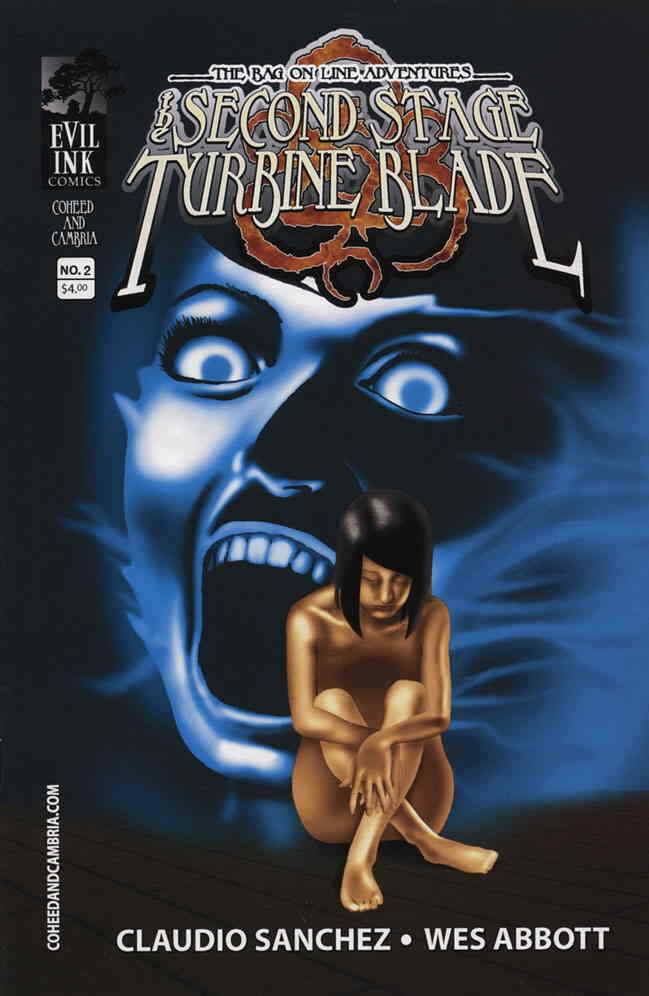
Well, again, I think it just happened through time and proximity because at first I’m not entirely sure that anybody really understood the idea. Certainly the band, in its infant stages – I mean, I don’t think they knew how to digest it, and management sort of saw it through time, through those first years, as something unique that will allow his involvement started to blossom. Our first book at the time – Armory Wars‘ initial title was The Bag.On.Line Adventures.

It was taken from a small bag shop that I was living across the street from in Paris, France. This is 1998. Coheed and Cambria isn’t really a band, it’s just an idea. Then when 2003 comes around and it’s like, “Oh, we want to actually really start to make this happen,” our manager, Blaze, took the initiative to go to San Diego Comic-Con and look for artists that were willing to participate. Those first two issues, which got our feet wet, never went further than those first two issues until we got involved with Image. But Blaze just took the initiative, and he found an artist there that was willing to give it a shot, and that artist’s name was Wes Abbott. It just takes somebody to think outside of the box – to see it as something special, I guess.

For someone who enjoys comics and music, getting involved with Image Comics as you’re getting going has got to be a real cool feeling – you know somebody really believes in your work when you’re working with a major comic publisher, especially one with the pedigree that Image has.

Absolutely. I mean, for me, it’s funny – when I was younger, the initial idea of the DIY mentality and the idea of independent labels really started with the exodus of all of those artists that started Image Comics: McFarlane. Lee. Silvestri. All these dudes, when they did that, that was like the initial idea of “doing it yourself” that, when I started to become more involved with music, I started to realize there are these independent labels. You don’t have to necessarily be on a major label for success. That just started to equate to me like, “Oh yeah, like the guys when they left and started Image, you know?” When it was brought up as a potential idea, I was blown away because one of my favourite artists and creators of the ’90s was Todd McFarlane and his run with Spider-Man. Then, coming off of Spider-Man to create Spawn? I mean – one of my favourite characters of all time. So to be a part of Image Comics at any part of the lineage of The Armory Wars was a huge win for sure.

Are there still plans for this all to evolve into other mediums – like a mini-series or a film?

In the beginning stages, probably after the second record / third part of the story, In Keeping Secrets of Silent Earth: 3, I realized that it was gonna be much longer than just a three-parter. It started to become more about ensuring that it got told the right way in this medium, because I was still learning. I’m still always learning how to better the story, how to strengthen the characters, how to do this, that, and the other thing. I didn’t wanna get to a point where I felt like the cart was getting ahead of the horse, if that makes any sense. I just wanted to make what was the right artistic statement for myself, because again, The Armory Wars is so very much tied to my personality, to who I am, because essentially it is, in a strange way, the fantastic version of telling my autobiography. I understand the code in the story even though it’s pretty all over the place. So I just wanted to make sure that that was right. Through the years, we’ve had these false starts of people interested in adapting it, but it never turned out to be right. I just wanna make sure it’s done properly. I don’t want to just give the keys to the car away just for the sake of a paycheck or something. It’s not about that. To me, it’s so directly connected to everything that we’ve worked for as a band, that it just needs to be in the right hands to ever, ever happen. It isn’t until these 20 years have passed that I’ve really considered it because our audience really wants it. Whenever we have these ‘ask me anythings’ or these Q&As, it is guaranteed that somebody in the audience is going to ask the question of when it becomes a feature, when it becomes a mini-series, when it’s an anime. That question is always there, so part of me almost feels like it’s not a question of ‘if’ – it’s just really ‘when’ it will happen. We’ll see. I mean, I don’t want to get too confident. But at this moment now, it’s starting to make sense to me just because there is a desire to see it happen. But again, it’s the thing that just needs to be executed the right way.

Sandman finally happened as a series after almost 30 years. Maybe ring up Neil Gaiman and see what he had to go through to make this finally happen and turn out right!

Right! [Laughs] Which is funny, because Neil, I think he has a house in Woodstock and I spend so much time in Woodstock cultivating the band, so he’s not too far. If he’s still up there, maybe I’ll go and see what he thinks.

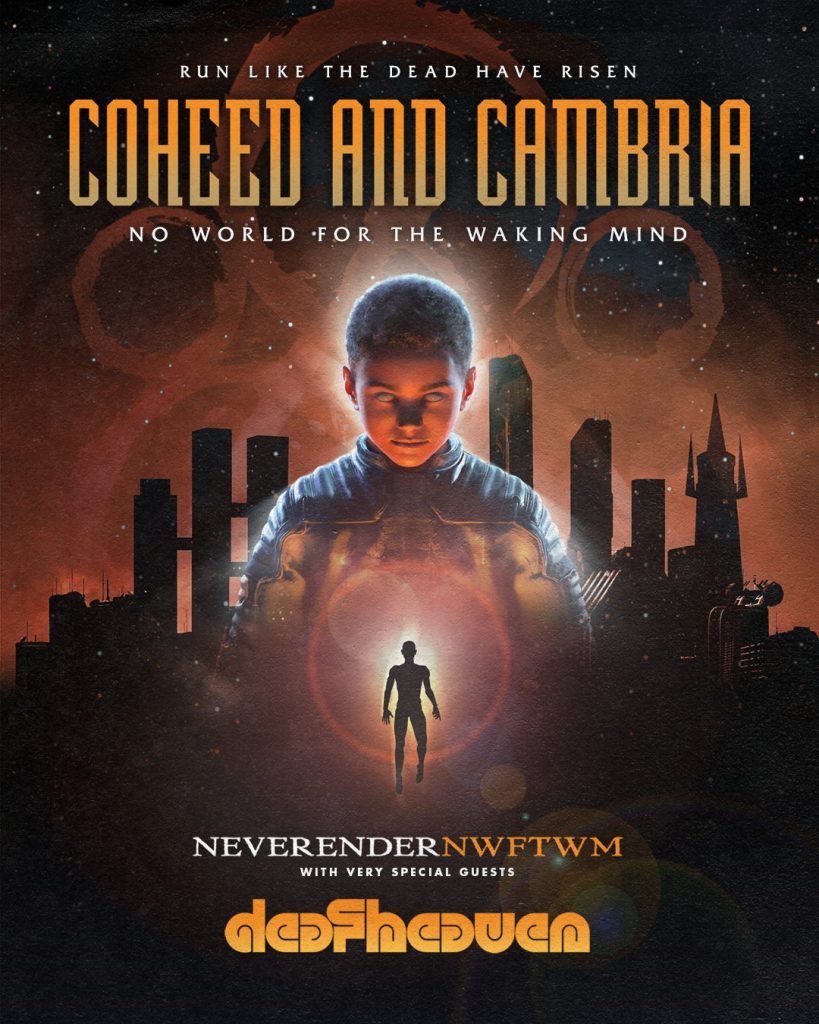
COHEED AND CAMBRIA kick off the NEVERENDER: NO WORLD FOR A WAKING MIND Tour on Friday, April 28th at The NorVa in Norfolk, Virginia. Details on that tour can be found at the band’s website.

Anthony Willis | M3GAN

by NICK SPACEK

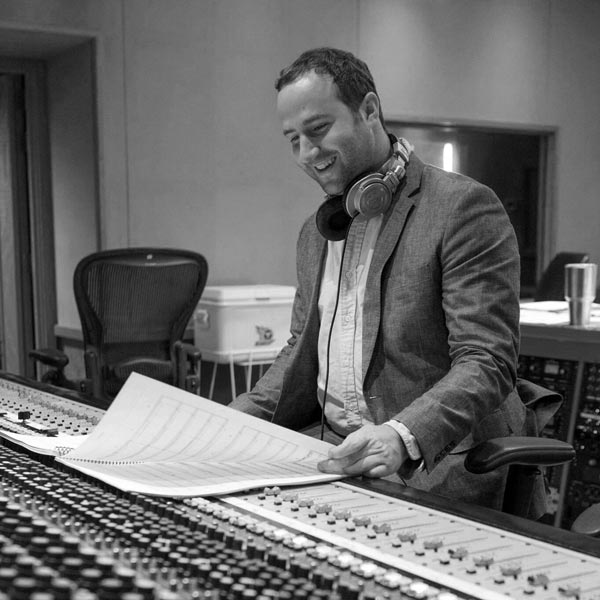
Though we are but three months into 2023, one can safely say without fear of looking foolish that director Gerard Johnstone’s M3GAN is easily on track to become the most iconic new horror creation of the year. The plot of the killer android film is quite straightforward, but it’s the stylistic flourishes which elevate it into something very special. One such flourish is the music by composer ANTHONY WILLIS, who subverts the usual concept for a horror score by utilizing “warm strings, flourishing harps, and breathy, ethereal pop vocals, emulating the innocence of a child.” In addition – and similar to his work on Emerald Fennell’s 2020 thriller, PROMISING YOUNG WOMAN – Willis gets to rework an iconic pop song. We spoke with Willis earlier this year, right around M3GAN’s release…

STARBURST: It’s been so cool to see how the movie’s taken flight in everyone’s hearts and minds. Obviously, it’s had a good response from cinematic audiences, but what attracted you to M3GAN initially?

Anthony Willis: I was approached by the director, Gerard [Johnstone], and I think he was attracted to me because he liked what I’d done for Promising Young Woman, and he was looking at ways like, “How can I make the music for M3GAN different than your typical horror movie?”

I mean, he was already sort of 10 steps ahead of me in terms of just going, “No, no, no. It doesn’t wanna be too tacky and how to bring out M3GAN as a femme fatale – she’s almost like a ’50s housewife – all these things I couldn’t immediately tell from the script. Then, when you saw the way that she’d been designed and the retro styling that she had, and then obviously the way that personality was then married into a 2022 world was just really intriguing, and the issues that come with that.

M3GAN is another affecting drama with a strong message, like Promising Young Woman. Both make for really intriguing films, because they do so in the forum of also entertaining you and making you laugh while also making you feel a little uncomfortable and the points are still made. They still resonate with you with message like, “AI could be bad news.”

Anthony Willis

Were you familiar with Gerard Johnston’s directorial debut, Housebound, at all when he approached you?

I had not seen it, but obviously I did watch it after we’d met and after he invited me to be a part of the project. It very much indicated the kind of tonal guardianship that he could handle. He has such a rich love of music and overall, he’s a very talented director.

What has it been like for you, going to work on films like M3GAN and Promising Young Woman, having come from doing so much work in things that are franchises and well-known properties over the course of your career?

I’m kind of an old soul. I mean, I first fell in love with music partly through classic animation, you know? As kids, we all got to enjoy Disney movies and I’ve always loved animation. I absolutely adored How to Train Your Dragon, the first one, right before I moved here and ultimately then got to work with John [Powell, composer] on the remaining films. And I loved The Lion King growing up, and obviously this arena is a little different in that you are subverting a lot of those associations and it’s how it can be really fun in its own way, just in terms of unleashing and writing music that makes you feel happy and soaring. It’s a different arena than that, but it comes with its own kind of fun. So yeah, it is a different, it is a different thing, but it’s also, as I said, it seems to be very popular right now. I think people seem to really enjoy those kinds of tonal tightropes.

In both M3GAN and Promising Young Woman, you’ve gotten to rework pop songs. Sia’s ‘Titanium’, for M3GAN and ‘Toxic’ for Promising Young Woman, with that version of ‘Toxic’ very prominently featured in one of the trailers. What’s that like for you, as a composer, to not just have to work around a needle drop, but to rework it within the score itself?

Oh, it’s so fun. It’s definitely a “pinch yourself” moment, and I’ve said this in interviews before, but earlier in my career, I’d work on a low-budget movie and the director would have their heart set on using a particular song and of course, it then turned out they couldn’t, so I think even when Emerald first said to me, “Ooh yeah, we’re going to use ‘Toxic,’ let’s do a version of ‘Toxic,’ I was kind of going, “Uuuuuuh – you know, it’s such a big deal to get these licenses,” but she was like, “No, no, no. I’ve been assured. This is the whole movie. This is how we have to do this,” and she was right.

Similarly with, ‘Titanium’, it’s so cool to work on a song that you know so well, and that’s just so brilliant and, and so love, but the most important thing is that narratively, it’s just a loaded treasure chest because it carries so much weight to it.

I could have written a thousand things for the ‘Titanium’ moment. I mean, I did do the original song for ‘Tell Me Your Dreams’, which is a bit more sincere, but you are never gonna tap into that incredible resource, and obviously, that’s what ‘Toxic’ did, as well. In the movie, it’s a very different tool than score, but it’s a really fun one to do. I’m working on a follow-up movie at the moment with Emerald, and it’s got some amazing music songs as well. It’s amazing to get to work with these really incredible songs.

Tell Me Your Dreams’ is a song that – because it is featured in the movie – it’s something you had to write, having not seen any footage. You’re having to write this so that they can sync it up and have it in the film itself. What’s it like getting to do something like that, where you’re working both as the film is being made, but also beforehand?

That was really fun. When I was asked to do the film, it was part of the scope of the brief of the work, and I was really excited about that. But I think literally no sooner had I said, “Yeah, I’d love to do it,” that I realized that this song was, I think, gonna be had to be filmed in about two and a half days and in New Zealand, which really means about one and a half days, so I talked to Gerard about it, and then I wrote the tune, and then he added some brilliant lyrics to it, and it just came together like that.

The blueprint of the song came together really, really quickly. Then, he had to give it to the programmers who had programmed M3GAN’s voice to speak and to sync it so that the movements of her voice moving would, would sync. It was incredibly difficult and complicated. Not hard for me, safely in my studio in L.A., but then we went into the studio with Jenna Davis, who was absolutely brilliant and not only brought incredible characterization to M3GAN with her vocal work throughout the film, but also carried that into her performance of M3GAN singing – including ‘Titanium’, of course.

We recorded that, but for a while, ‘Tell Me Your Dreams’ was basically a piano map. I wasn’t sure at that point. It was early days: was the score gonna be very tech-based? Was it gonna be a kind of mashup of all these different kinds of music that M3GAN puts together?

I’d written the tune in such a way that it was a lullaby but also quite robotic – the sort of thing that I imagine an AI program could probably come up with, so it was sort of simple, and then, later on, as it develops, it gets a little more sonorous. But then, right as we were starting to develop the score, Gerard said to me, “I think we should just make this like a Disney song, rather than it have lots of complicated layers to it.” That would, in theory, communicate that M3GAN is able to do this bizarre AI kind of composition – “Let’s make it legit, like she’s really managed to just write a Disney song.”

Luckily, I think the tune itself I’d written and the harmony already lent itself to that. Gerard had referenced ‘Somewhere Out There’ from An American Tail, which is such a beautiful, beautiful song James Horner wrote for the film. I didn’t think he’d go there in his head, but it just so happened that the tune did kind of have that in its essence, so I orchestrated it, did an arrangement, brought it to life that way, and then he was like, “Yeah, that’s it.”

It all made sense. We didn’t have to rerecord it with Jenna. Her performance already totally worked for that. It’s been really fun to hear how people, especially in the cinema, collectively are like, “Oh my God, she’s just started singing – this is ridiculous!” That laid a plan for ‘Titanium’ to then be the second time she sings. And then of course that, in itself, laid a platform for M3GAN to then do that amazing dance and walk and then, finally, her last “theatrical performance” is playing ‘Toy Soldiers’ on the piano

I think the musicality of M3GAN also really attracted me to the film overall, and that obviously then gets to echo into the way that her score works.

When we started this conversation, you referenced M3GAN being somewhat of a femme fatale and given these noir elements to certain parts of your score, the vocal songs work because many noir films feature your femme fatale spotlit on a stage singing her vamp song or a sad song that tells you her inner emotions. It all ties together so well.

It was definitely ambitious that we threaded so much music together. At first, I was a little hesitant to make the score as diverse in scope as it as it is. Gerard really pushed for, and certainly, one of the big things that I set out to do was Gerard wanted the score to be largely organic, at least when it’s innocent, and so I began to think, “How can you know; how can instruments that are organic do things that in their essence are slightly tacky and modular?”

It was only when we finished the film that I went, “Oh, this totally makes sense. M3GAN is essentially in disguise for a lot of the film, and it’s only really when she becomes violent that she basically lets the cat out of the bag and she’s like, “Yeah, I’m a seriously crazy, powerful robot and have no limits on my physical strength and what I can do”, so the fact that that music was incredibly industrial and intense, it makes sense ’cause M3GAN could hold back.

Not every film can. It’s tricky, and obviously, composers are always trying to create a unified language that binds everything together so that it justifies itself. It’s quite fatiguing to be given too much music but finding that slippery slope where she starts off innocent and then gradually the palette becomes more industrial and electronic – it was a tricky balance, but really fun to do.

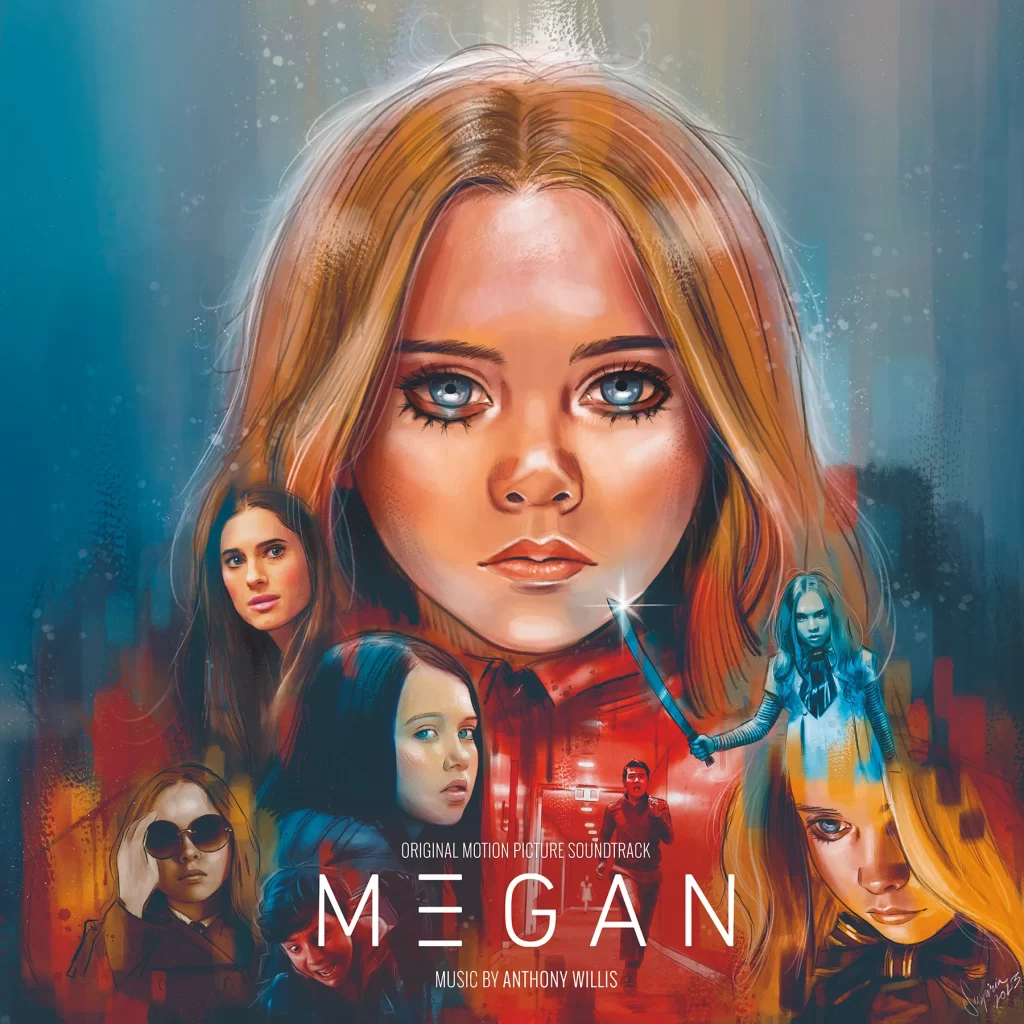
Anthony Willis’ score for M3GAN is now streaming digitally, as well as available to pre-order on vinyl from Waxwork Records.

Josie Campbell | LEGION OF SUPER-HEROES

by Ed Fortune

Josie Campbell is a Los Angeles-based television writer and producer who has written for shows such hits as She-Ra and the Princesses of Power and Jurassic World: Camp Cretaceous. She’s also the writer behind the latest DC Animated feature, Legion of Super-Heroes. We caught up with her to find out more…

STARBURST: You’ve written for absolutely some absolutely fantastic shows. How did? How did this project come about?

Josie Campbell: When I was at Warner Brothers, I actually worked with Jim Craig, who’s one of the producers, and I have worked with Alan Burnett. Jim had known me for a while. So he gave me a call and said that they were interested in doing some sort of DVD with Legion and Super Girl, and they didn’t really have any details. They just knew that they wanted to do something with Legion. And maybe Supergirl could be involved. I’m a huge super-family fan and a huge Legion fan.

What’s the pitch for this movie?

It’s a story about a young girl who tried to find her place and ended up in a crazy sort of fantastical sci-fi world where she’s getting to prove herself. And the people around her are getting to prove themselves and save the world despite the fact that a lot of people doubt that they can do it.

What is it about Supergirl that we want to put her through the wringer so much?

You know, I think if you kind of put your finger on it, which is a super girl has worse luck than almost everybody else. Clark definitely has his ups and downs. But ultimately, he was raised by a very loving family, he’s basically a Midwestern boy, and people really like him. But Kara, her life on Krypton just ended, and now she’s starting over from square one. So I think just that conflict inherent in her is so fascinating to play with. It’s so interesting to write! I also think she’s got a lot of resilience and a lot of grit and a lot of humour – you don’t bounce back from literal world-shattering events without sort of being able to sort of take a step back and look at yourself.

Why this particular line-up of the Legion of Super-Heroes?

Honestly, some of it is that I’m a fan. So I was getting to put in a lot of my favourites. I did a deep dive into every era I could, and was trying to pull out the generic feel from almost every era I could. I love Brainiac Five. It just felt natural to sort of have all of those characters – like Timberwolf and Shadow Lad, Bouncing Boy, and Triple Kick Girl, there’s something very useful and fun about that. I thought we fit really well with the sort of story I was telling.

Arms Fall-Off Boy? Really?

[Laughs] I love Arms Fall-Off Boy! That’s his power, but I love it. He’s always been a delightful soft favourite of mine.

What’s next? If you could grab a project and write for a particular character, what would it be?

You know, I’ve gotten very lucky in my career because I’ve been able to write a lot of my favourite characters.  I’m writing The New Champion of Shazam! comic, which has Mary Shazam in it. So I mean, it’s really hard because in some ways I’ve gotten thrown a lot of my dreams and my heroes. I think if there’s a character that I’d love to write next, I’d love to write some Batman I’d love to write some Damian Wayne and some Catwoman. They’re fantastic. Outside of that, I’d love to write Spider-Man!

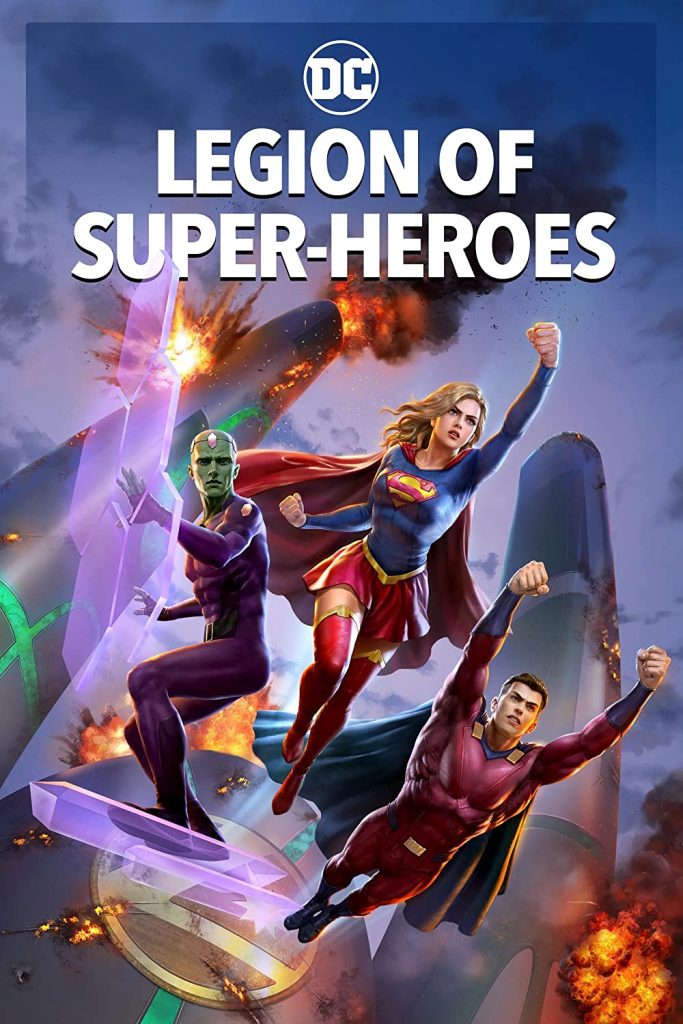
LEGION OF SUPER-HEROES is out now to rent/buy digitally, and is also available on DVD/Blu-ray!


Robbie Daymond | LEGION OF SUPER-HEROES

From Robbie's website, https://robbiedaymond.com

by Ed Fortune

Robbie Daymond is an American voice actor who has played iconic roles such as Peter Parker, Crow in Persona 5 Royal, and Glithunder in The Seven Deadly Sins. He is perhaps best known as the actor behind Dorian Storm, the errant bard from hit streaming show, Critical Role. In the latest DC Animated super-hero movie, Legion of Super-Heroes, he portrays both Brainiac and Timber Wolf. We caught up with Robbie to find out more…

STARBURST: How would you describe the movie Legion of Super-Heroes to an elderly but beloved relative?

Robbie Daymond: [Laughs] Let’s see… I would say “hey, great-grandmother, you remember who Superman is?” And if she says “yes”, “okay, good, good, good. He’s got a cousin who’s a nice young lady. And she’s got all these powers and all of this potential ahead of her. And she’s given the opportunity to become as great a superhero as her older cousin. But she’s got a long way to go to find that path. And she might just have to travel to the future to do it…” And hopefully that would give Grandma a spoiler-free idea of what she’s getting into!

How did you get cast as Timber Wolf for this project?

It was just a regular audition. So I gave it a few takes. We get some limited information – obviously, a lot of it is, is hidden, so there are no leaks or anything like that. I sent in my best three tapes. And they must have liked one of them. So they brought me in!

How familiar were you with Brainiac and Timber Wolf for this role? 

Really I wasn’t. I’m actually pretty familiar with the DC universe, but some of my knowledge is going to be dated. I’m not quite as avid a reader as I used to be,  so I had to go back and look up what this was. And then I got into it. I read some of the backstory stuff about the character and then asked questions – like when in the timeline this transpired? Is this an Elseworld? What’s actually happening here? I read enough to familiarise myself but didn’t go deep enough to where I wasn’t able to take direction once I found out how the film would interpret that.

How different is playing a character like Timber Wolf in Legion of Super-Heroes from a more improv-heavy role such as Dorian Storm in Critical Role? Which one do you feel closest to?

Oh, I don’t think there could be more disparate sort of characters. Dorian is very insecure and uncertain, or at least that’s where he started. I feel like he’s grown a bit from then. Timber Wolf is a grizzled veteran who’s very comfortable and capable of being in charge of people. You know, it’s funny, I don’t think I’m like either. I think if I were like personalising it, which I don’t tend to do with characters, I think more of a Timber Wolf guy because I’m really good in emergency situations. I’m a dad. I enjoy being in charge of things. And that’s the reason why I chose to play Dorian – I wanted to explore what it felt like to be insecure and uncertain and he can still be charismatic while having stage fright. Yeah, very different characters, but equally enjoyable for different reasons.

If you got to do more DC roles, what sort of characters – hero or villain – would you like to play?

I’m not built to play one of my favourite DC villains, which is Doomsday. I know the guys that are built like that. I know what voice that requires. I don’t know, give me like a teenage Doomsday, maybe [laughs]. But seriously, I really love the gallery of villains in the DC universe. That’d be a tough one. As far as heroes go, I really want to play Animal Man. Do you know this character?

Yes, we’re big fans of Animal Man over at STARBURST Towers, especially Grant Morrison’s Coyote Gospel story and Jamie Delano’s classic Flesh & Blood.

Well, my idea for it would be I would love to play like the first few episodes with that sort of cheesy Booster Gold-like fun cop. And I just remember one of the covers is like Buddy and a chimpanzee in the buddy cop pose. It’s so ridiculous! And then have a turn after the first few episodes and do the stuff from the 2011 run with all the really dark body horror stuff. I think that would just be a really intriguing sort of mature audience version of that character. That could be really cool.

What’s the next big thing that you’re excited about? That you’re allowed to talk to us about, at least…

You know, voice actors are a couple of years behind everything. I’ve got a lot of stuff coming out. Video games. Animation, obviously. I’m excited about the Legion of Super-Heroes. I’m a huge fan, so I can’t wait to have it in my collection. And then I’ve got a pretty good run on One Piece. I’ve always wanted to do One Piece. It’s obviously iconic. I’ve got a couple of AAA video games that’ll drop sometime over the summer. And then other more secret stuff that I’m working on… the cheeky answer is that I’m gonna strap on a mocap suit in about a month’s time, so watch out for that!

What’s the worst bit of video game work? Is it the yelling? The repeating of the lines?

I really enjoy it all! The team is good, and 99% of the time, I really enjoy video game work because the repeating of the line part of it is actually really fun for me because you only have to get it right once. And I love how capable of creating magic you are, especially in heavily narrative beats video games. The hardest part is the yelling, though, yes. Absolutely. Say a prayer for my vocal cords!

LEGION OF SUPER-HEROES is out now to rent/buy digitally, and is also available on DVD/Blu-ray!


Mike Turian | MAGIC THE GATHERING – PHYREXIA: ALL WILL BE ONE

Mike Turian is a Magic The Gathering legend. Inducted into the Hall of Fame in 2008, Mike is one of the top Limited players in the history of the Pro Tour. The retired champion now works for Wizards of the Coast full-time as their product architect and responsible for Magic’s epic new range; Phyrexia All Will Be One. We caught up with him to find out more.

STARBURST: How would you describe Phyrexia All Will Be One for those new to magic?

Mike Turian: Phyrexia: All Will Be One features the villains of the Magic universe, the Phyrexians, and their ultimate rise to power. The set captures the Phyrexians in all of their glory, led by the Praetor Elesh Norn, as she sets about to conquer the multiverse.

What was the thinking behind this epic storyline, rather than simply introducing a new part of the multiverse?

One of the great parts about the Phyrexians is that even when pushed back, they find a way to rise up again. As the premier villain for Magic for years, we knew that we wanted to come back to them and have them infiltrate once again. The praetors, including Elesh Norn, are such iconic characters that we knew that we had to feature them again. We loved the idea of having the Phyrexian’s compleat a number of Planeswalkers, especially the ones whose characteristics made them most vulnerable to compleation.

What cards where the most fun to create?

The cycle of five Dominus creatures, who are legendary creatures, each celebrating a different Praetor are god-like beings that all bring both a doubling effect and have the potential to become indestructible. Finding a unique effect to double in each colour and a unique way to make each indestructible, makes them cards that both are unique but also part of a cool cycle!

What cards are you expecting to become fan favourites?

With ten Planeswalkers in the set, I’m expecting some of those to catch on with our fans. In addition to the compelling storyline and character designs, adding in the Phyrexian mana choice for the compleated Planeswalkers really gives players more control than ever before. Getting your Planeswalker down for less mana, at the cost of life and loyalty, is likely a good deal.

Previous sets had quite a few surprises for fans of the Planeswalkers; is anyone going to survive this release?

Yes, there are survivors of Phryexia for sure. While it is true that the number of survivors is dwindling as Phyrexia continues to gain power, for the fans of Mirrans, all is not lost!

What combos should we be looking out for in this new set?

The mechanics of the set really allow for built-in combos. Of course Corrupted wants you to get an opponent to three poison counters to turn on extra abilities. This works perfect with all of the Toxic creatures granting poison and also with Proliferate to amplify the number of poison counters your opponents already have. Additionally, with ten Planeswalkers in the set, Proliferate is a great way to boost their loyalty to get to the Planeswalkers ultimate ability!

What sources of inspiration do you draw on for Phyrexian creatures, especially now as we’ve seen quite a few of these creatures in the past?

One of the fun Booster Fun features we have in the set are the Concept Praetors. Each of the five Praetors shown in the concepts that we started with for Phryexia. We really took inspiration from our past sets and looked to innovate on that look of the Phyrexians. You can see this also in reprints like Phyrexian Obliterator and how we have updated his look and feel since his debut with New Phyrexia.

Find PHYREXIA: ALL WILL BE ONE at your friendly local games store, or by clicking this link here.

Etienne Kubwabo | BEATS OF WAR

Etienne Kubwabo Beats of War

By James Hanton

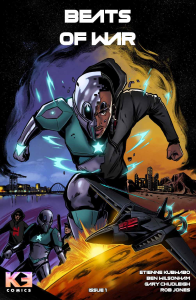
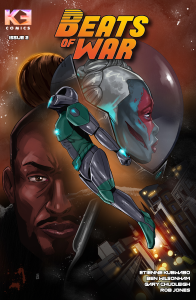
Beats of War is a comic series focused on DJ E.T, who has made history as Scotland’s first-ever black superhero. The series focuses on an alien superhero who arrives on Earth to try and save his home planet, and while here discovers music and decides to take on criminals. Three editions have come out in the past two years, and STARBURST was fortunate enough to sit down with Beats of War’s creator Etienne Kubwabo to discuss his history, his influences, and what led him to create such a distinctive story.

STARBURST: So Beats of War came out in 2020, is that right?

Etienne Kubwabo: Yeah, 20th July, 2020

What first inspired you to get into comics and into filmmaking?

I think. I remember that when I was really young, between 5 and 7 and back in Congo, most of the time when my dad and my mom went to work I would watch a lot of cartoons like Tom and Jerry. The famous one was The Adventures of Tintin, and I watched a lot of Spider-Man too. My mum would always say to me ‘Etienne you have to do homework.’ But every time she would come home from work, she would touch the TV, and know it is really warm because I have been watching a lot of TV instead! We used to have this broken ‘80s TV box. You know, the big ones, the ones you had to get two people to carry. It was at the back of our house and the inside parts of the TV were missing. So what I used to do is take my brothers and sisters round to the back of our house, ask them to lie on the grass, and then I would stick my head through the set. I would then start acting like I was a news anchor, or do a few Spider-Man things that I had seen on TV. And then I remember anything to do with storytelling fascinated me from that time onwards. We also used to go and see our grandmother and she would tell us stories near a fire after she’d given us food in the village where she comes from.

All of these things have just kind of followed me whenever I have gone to see any kind of show or piece of theatre, or when getting into any kind of storytelling. I find it fascinating because I like that whole idea of escaping. When I got to Scotland and I went to college, I decided that I needed to do things that I would be feeling excited about every morning to wake up and go to. And they are filmmaking and storytelling. I just felt like there was some sort of fire within me. I was very excited to tell stories and make people escape to another world, because the world is full of crazy things happening at the moment. And these things you cannot control right? But there is one thing we do appreciate, whether it is reading a good book or going to the cinema and seeing a good film. I just really wanted to be a part of it, and a part of the world of creators who do that as well.

So storytelling has really been a part of your whole life. 

Yeah, I mean I feel excited when sitting down with blank paper and thinking about what story I might be telling next. And then I have to imagine; think of places I have been, my way of growing up, and how I can bring my life experiences of both where I come from and of Scotland, which is my new home, into the story. So it’s always a fascinating experience, even thinking about what other life could be out there in space and what it would be like to meet an alien. Like, what would I say? So all these ideas and things I see open my mind to try and imagine how I can help people escape into a good story.

That fascination with space… is that how Beats of War came about? 

Yeah. I love space. It is so unique and undiscovered. I know people have been there, but it’s still a mystery you know? Not knowing what I could discover if I keep writing and researching… that is what keeps me fascinated. So I wanted to bring Beats of War down from space and bring it to Earth, which is my reality. It’s Scotland and the friends that I have made, and I wanted to bring all of that to life.

Beats of War 1

What did the early stages of planning or drafting Beats of War look like? What was the beginning of the process?

It took me about three years, because I was doing film stuff, short films and stuff like that, and I was at university to finish up my course. I was doing all these music videos as well. But I felt like there was this emptiness within me; that there was this childhood, five-year-old Etienne story that I had not told. The kid who was in the TV box. I felt like there was a story he had not told and needed to tell, but I didn’t know what it was yet. What angle I wanted it to come from. And then I remember doing this Word Up podcast with the BBC where we’re interviewing various actors and people who are part of the Scottish entertainment industry. One of the guys, Sanjeev Kohli [best known for his role as Navid Harrid in Still Game] said something that was quite fascinating. He said something like ‘tell stories based on your own experiences, because you tell those stories a lot better.’ Then I thought that living in Scotland, looking at my life back in Congo and then coming to Scotland… I thought maybe I could base the story on those experiences.

But the idea of the story for Beats of War didn’t come until I went to watch Black Panther. The first time I saw it at the cinema, I remember coming home and staying up until two or three in the morning just drafting up ideas for the script. What the world looked like, what the characters looked like, all of these ideas were suddenly coming to me. I had all of these ideas before, but I didn’t know how I could tell the story. Because obviously people have told superhero stories before, but I wanted it to be an Etiene story – something that I really care about.

You’ve started to answer my next question, which is how have you tried to make Beats of War stand out in a crowded comic book and superhero market?

So Beats of War is a story really based in its characters. DJ E.T comes from a planet being attacked by an army of robotic invaders, and he comes to Earth to find answers to help save his planet. On his journey, he discovers music, because there is no music on his world. He starts connecting to that, but also fighting crime, hence the title Beats of War. I wanted to be honest with myself. I grew up in a country affected by war and with a lot of resources, but despite these resources we still suffered to the extent that I had to leave my country along with my family, and now we are here in Scotland. That always frustrated me. I wanted to imagine Congo in a more positive light, and this planet that I have come up with is how I want to see Congo in a better way; more advanced, more access to their resources, and working with other countries to make the world a better place. 

My journey to Scotland, struggling to fit in for reasons like language and facing a lot of racism but also meeting some really interesting people that have become my friends, has that balance. So I wanted to bring my two worlds of Congo and Scotland together into an epic science fiction story, but also make it unique. The warships in Beats of War are based on musical instruments from Congo that used to be played, so I used them as a reference to create those. And then the mothership is based on the Titan Crane in Glasgow. So indirectly bringing real landmarks into the story lets me pay homage to this new country which is now my home, and this is reflected in the dialogue of the comic book as well. So I am giving the reader these hints that make the story more unique. I also touch on the history of Scotland by including the Razor Gang, who were part of the South East of Glasgow. 

I love a superhero story that is grounded and that people can really connect with. My main character, DJ… his main power is sound manipulation. The reason I wanted to bring in the music element is because, when you look at the world we are in today, with all of these crazy things happening, music brings people together for one moment whether they are dancing in a club or are at a concert. And nobody cares what your gender is, what your colour is, what language you speak… everyone is just happy. So music has that magic that I really love, and I want everyone who reads my story to have a soundtrack to go with what is happening in that world. 

How personal is Beats of War to you?

It’s very personal, because every character in Beats of War is based on my friends or family and they are all friends or family in the story. I lost my mum growing up. She passed when I was really young and I didn’t have a good relationship with her. I didn’t get to know her. I feel like keeping her alive as a queen mother in Beats of War would make me feel connected to the story in that sense. Having my friends and places that I know in the story helps me feel connected to it too, but also hopefully help people in Scotland or who have been to Scotland feel that connection as well. 

Beats of War 2

You have appeared on BBC Scotland and STV in recent years, both for Beats of War and the other projects you have been working on. How much does this increased exposure and recognition mean to you?

It’s been amazing. As a creator, you come up with these worlds and these stories but you don’t know how people are going to receive them. I’ve always said to myself ‘okay, if I am living this one life then I always have to be honest with myself, with my content, and what I am trying to share with the world.’ So seeing a lot of the responses to Beats of War in the media and from people is encouraging and inspiring for me. It gives me that strength to keep going and try to inspire other people to realise that ‘anything you want to do? You can do it if you put your mind to it.’ 

When I am not doing comic book stuff or filmmaking stuff, I’m doing workshops in schools helping kids to reimagine the kind of world they want to live in using superheroes. That’s kind of my way of giving back, because the universe has responded and people have received my work really well. So I am overwhelmed, super happy, and very positive. I’m always very grateful to anybody who gives me an opportunity.

You have a new film coming out soon too, can you tell me more about that?

It’s finished, we are just waiting for it to be released. It’s called The Difference Between Us. It’s based on the story of Alex Watson, who grew up with a posh family in a secluded area in the Highlands. He leaves the Highlands for the first time, and leaves that protective bubble, moving to Glasgow. As a student, he is now learning what it means to be a Black man in this day and age, based on all these stereotypes that are given to people based on what they look like. It’s a very exciting project and again it is very personal to me too. It’s a crime drama shot in Scotland, and we shot it for five weeks last year, so I am pretty excited to see it come out. 

You mentioned Black Panther earlier on. Do you have any other creative people, films, or stories that you take inspiration from? 

Oh of course, I have the two greats! One is Ridley Scott. I’m a big fan of the Alien and Prometheus movies. I love the way he creates his worlds and stories, and even just the look of the worlds in his films and TV shows. Spaceships, warships… he really pays attention to the detail. The other is James Cameron with Avatar. You can tell I am a big science fiction fan! But I’m a big fan of drama too, and of real life stories as well. At this stage of my life, as a film director, I want to focus on something that I can achieve at the moment and then move on to bigger projects and have a bit of a voice. Because I’m giving my life, and hopefully I can make a movie or TV show out of it. But yeah those are the top directors whose work I love. Obviously I also like Christopher Nolan… the work he did with Interstellar and Dunkirk, those are like my top movies. I love great storytellers, but also people who give you the best picture and still respect the whole idea of cinema. 

Is there anybody you want to give a shout out to?

First of all my family, my mum. She is my inspiration. I have a stepmum who I call my mum. She is the one who took me in when I was very young. She has always supported me and encouraged me to work harder. She doesn’t vocally say it. She just does things in her own way and we pick up from that. Also, Clydebank College [now called West College Scotland]. I had never picked up a camera, but my teacher she encouraged me and encouraged me. Now, I’m on my second feature film, and I have shot over 500 music videos. I appreciate them a lot because they took me out of my comfort zone and my bubble, to help me become more confident in myself. And they set me free. 

Issue four of Beats of War is available to buy now.