Rahul Kohli | NEXT EXIT

Rahul Kohli NEXT EXIT

By Andrew Dex
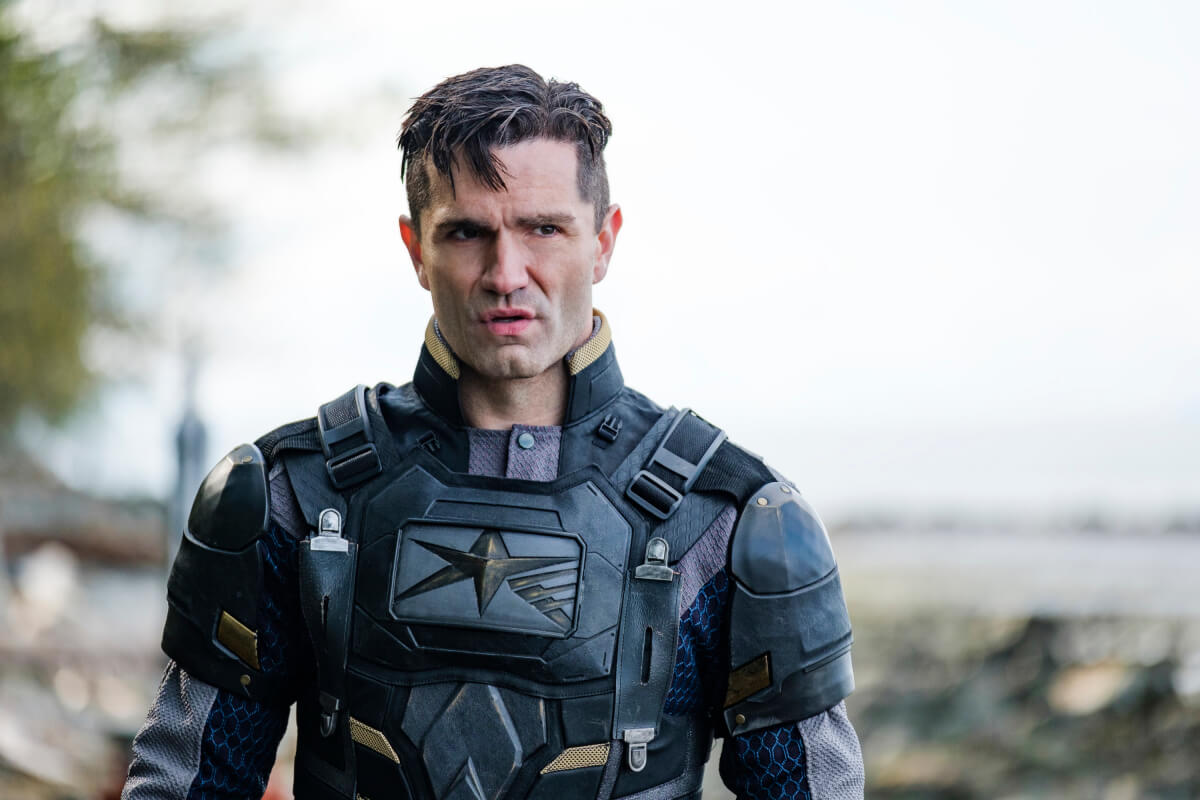
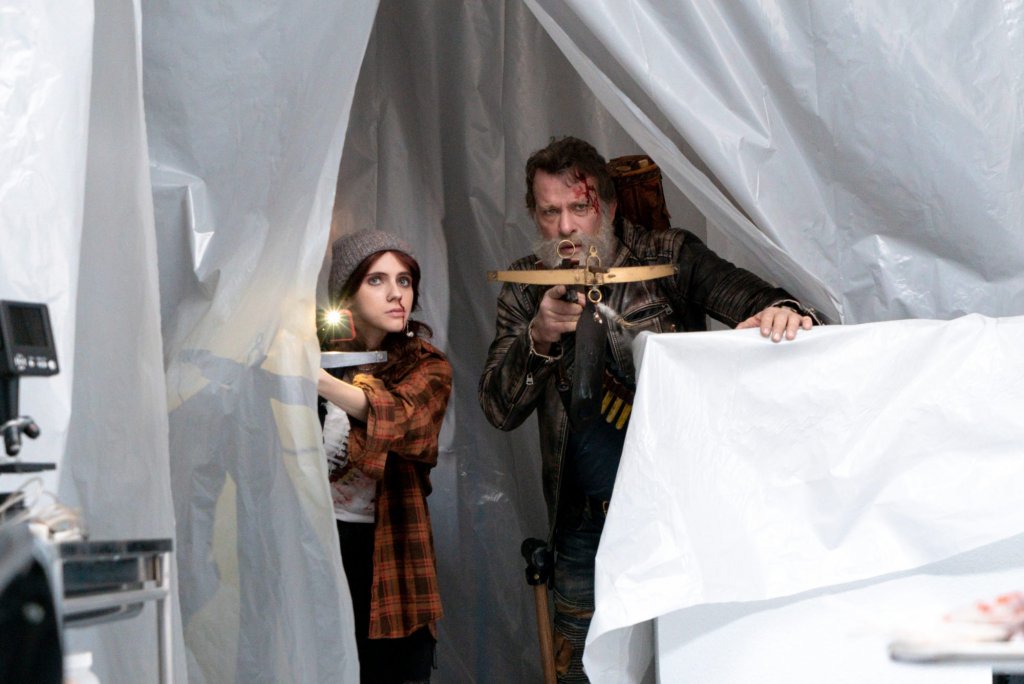
Based in a world where the afterlife has been scientifically proven by a company called Life Beyond, two broken strangers, Teddy (Rahul Kohli) and Rose (Katie Parker) descend upon a car ride through America to a very important appointment. One that will take them from this life, to what Life Beyond declares to be next. The ironic thing is that life isn’t always about the destination, it’s about the journey, and Next Exit is a perfect example of that. From iZombie, Midnight Mass and now NEXT EXIT, it’s clear that Rahul Kohli can’t escape the afterlife! STARBURST caught up with Rahul to discuss his character Teddy, what it was like to work with Mali Elfman, and much more!

**This interview contains some distressing subjects*

STARBURST: As this is Mali Elfman’s directorial debut, could tell us about what she was like to work with, and just what you think she brought to the process overall?

Rahul Kohli: The quickest way to answer that, and the best compliment I can give is it never felt like I was working with someone on their first feature. Mali was as capable and incredible and supportive as anyone else I have worked with who’ve been doing it for X amount of years. So Mali has an amazing future ahead of her, and yeah, it’s her film, it’s a very personal film, it’s something that not only did she direct but obviously she wrote. It’s a story that’s been kind of, permeating in her head for a long time. She has a deep connection to both Teddy and Rose, Mali is fantastic.

As well as being the director, she’s the writer for Next Exit. What was is like to work with someone who was in charge of so much of the movie. Did she just have this concrete plan of what was going to happen every single day?

Actually, no. I’ve been fortunate enough to work with people who are responsible for the material as well as directing. Mike Flanagan [Midnight Mass] is a good example of that. Obviously I’ve now worked with Flanagan a bunch, and there’s something, maybe it’s something that Mali and Mike both share, and it’s not super common to others, but in my experience, when you’re working with someone who wrote and directed something, they’re less precious. They’re actually more collaborative. You’re speaking to the person who wrote this character, who is directing you in the moment, and can see the scene physically play out and understand where changes need to be made now. To get it on its feet. There’s no red tape, you’re directly speaking to the same person and saying “Hey, is it OK if it goes this way?” Whereas, sometimes you’ll speak to one person who agrees with you and then that person speaks to the writer and they don’t necessarily agree with either of you, and that’s when you get a lot of conflict, and you have to kind of fight for it, whereas with someone like Mali or Mike they’re like “I love that, do it. Elevate the material, bring something new to it. Take it somewhere else.” It speaks to their confidence and their artistry.

Let’s talk about Teddy; when you first meet him, you notice that he kind of hides everything behind humour. Is that fair to say, and also, just for you maybe, how would you describe him on a surface level to someone who hasn’t seen the film?

That’s absolutely Teddy. Teddy will verbal diarrhoea on you and make you laugh. The thing with Teddy and Rose is that they’re both holding bags of shit. They both have demons, they are both in trouble, but they wear it very differently, and they wear different types of armour, they have different buffs. Rose’s is a barb wire do not cross, do not trespass sign on a fence. Teddy’s is “If I keep talking at you, and get you talking about X, Y, Z, and make you laugh, then we are avoiding the situation. We’re talking about everything but” and that in itself is another version of armour. That was him.
NEXT EXIT

We read that you didn’t do as much prep for this role as you normally would on other projects. Can you elaborate on why you approached the movie this way, and what you think that it brought to Next Exit?

I have a habit of taking romance out of things. This is where I get very English, and working class about stuff, because I am, that’s my background. I undersell, I always have. The truth is that I did exactly what was required for Teddy, and I said that to Mali. That comment I made was said in front of Mali, and it was said without, it wasn’t a protest type, arrogant thing to say, it was more so that I wanted to bring something to this that I had not been able to do in other stuff. I wanted to be super free and loose with it. I had just worked on a character that required so much discipline, so much prep work. I had many consultants, dialect coaches and I was riding around with the LAPD, doing all of the things that, you know, the awards lot like to hear, and that’s what needed to happen. It wasn’t showy, I needed to do that much work in order to get Sheriff Hassan in Midnight Mass working for me. I wanted the next job to be the opposite of that. I’m still an artist at the end of day, I never want it to feel like a job, so the next thing I wanted to do, I wanted to try, “What if I didn’t do that? What if I didn’t wear a huge costume, and disappear behind a character, and an accent. And what if I was raw, and I showed up, and we trimmed all of the fat of acting, and we just lived in the moment, and I reacted to what was being said there and then. If I felt like saying something that wasn’t in the script, then I’m going to say it”, and that’s what I meant by I didn’t prep, in that respect. It was by design, I wanted Teddy to feel real, I wanted it to feel grounded, because that’s what I felt I wanted to bring to this project, and Mali knew that I was taking that approach, and if Mali didn’t want me to do it, then we wouldn’t have worked together. That was just my interpretation and it was something I wanted to experiment with.

You’ve worked in similar circles as Katie Parker before, but never this much right? What was it like to work directly opposite her, and what do you think that she brings to the character of Rose? 

Yeah Katie and I have a bit of history, I first knew her as Rose McIver’s roommate while we were making iZombie, so that’s how I know Katie, and when we did The Haunting of Bly Manor, we never had a scene together. She was in the episode that none of us were in, but there was enough familiarity that we were comfortable, and we knew each other straight away, and could have a long conversation about our mutual people, and stories. So we already got on, but in terms of actors, we had two very different approaches, and it worked. It makes sense now that it worked, I had just come off of a show, I was in one of the first shows where people were employed during a pandemic. Midnight Mass started right in the thick of the pandemic, it was setting the blueprint for how shows are made in the pandemic, that’s how early we were into that. So, by the time I had wrapped, I didn’t feel like I’d really had an isolated COVID period. I was straight back into work, all be it a new kind of work, whereas Parker wasn’t, and not a lot of the crew were either, it was their first job back. So there was a very different energy between the two of us. I was very much like, hitting my momentum, and I was just off on it, I had that energy of “What shot are we doing? Let’s do it!” I was already in that mode. So, we were coming at it with very different energies. Parker was bearing a huge weight of Rose, which, you know, she had to go to places emotionally that Teddy didn’t have to necessarily, or at least on the surface didn’t have too. Parker approached Rose with a ton of prep a ton of discipline, and professionalism. And I approached it with a ton of stupidity. Not wanting to bury my head in the script. I would rather just mess around, and get us talking and bantering in the car. It was similar to Rose and Teddy, we found a way to connect, I got Parker to start mucking around. When it came to the serious stuff, we were both there for each other. It became a very strong relationship.

We’ve never seen a road trip quite like this, what do you think being isolated in a car for such a long time brings to an intense story like Next Exit?

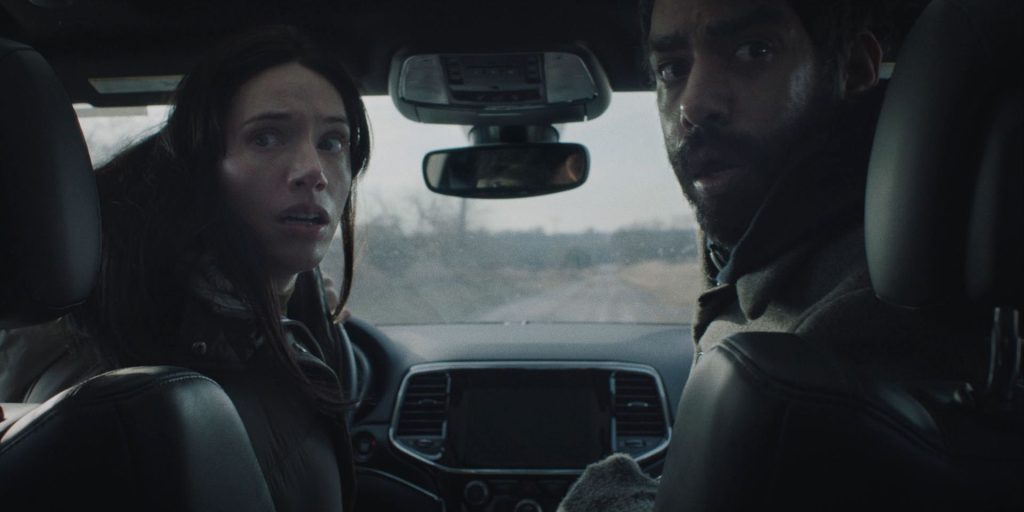
 It definitely aided with the journey. We were physically going on that road trip anyway, we were doing it for real while we were filming. We started off in Albuquerque, we’re in that car, stopping off at motels, sleeping at the motels we were filming at on locations, and then driving in that car, making our way through America down to California. What it did was, and at the end of the day, Parker and I, we were always in that seating position, it never really changed, we were always in that car with our snacks hidden under our chairs, and we just bonded, and it aided in making those two people connect, and feel real. After a while, especially when you’re on the roads, the crew disappear, because Parker is really driving. Mali is on a walkie talkie travelling in a car behind. Not only are you scene partners, it becomes your entire world. You two are now just in this car together. No one else is around, and you’ve just got the scene, and you’re getting direction through a walkie talkie. Your trust, and support for one another grows exponentially.
NEXT EXIT

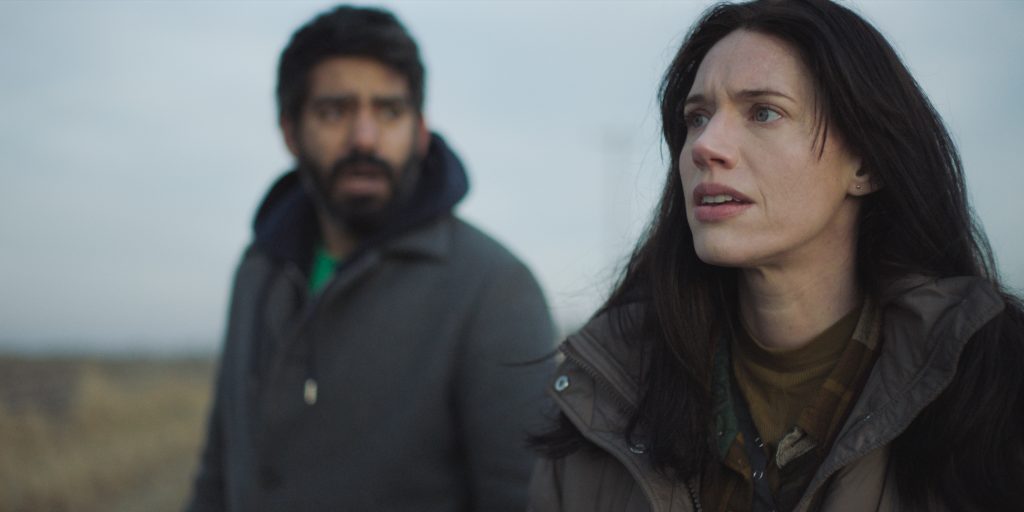
The turning point in this movie is when Teddy and Rose start to talk about ways they’ve attempted to take their own life in the past. It felt like they were on the same page from that moment. Do you have a similar moment in the movie, that you think massively changed the dynamic that we saw in the beginning? 

I think it happens a little bit sooner than that, when they run over someone. I think that’s the first time they look at each other, and I think in that moment, they kind of snap out of where they’re going, and are now just two people in this situation together. That allows then for them to have that conversation about the various attempts they have both made. And funnily enough, I’m pretty sure that that was one of the first scenes we shot. The first day. I think we did that first, which was weird. So, I think we started off with the fun connecting scene, and the running over, the priest, all of that was day one, and then we worked some scenes backwards and went back to the hostile stuff.

Next Exit, Midnight Mass, and, of course, Ghostbusters all deal with the afterlife. So, as you are an atheist, how interesting it is for you to be so submerged in stories like that? What do you take from diving head first into the afterlife as an actor?   

It’s weird. It’s chosen me. iZombie, zombies, The Haunting of Bly Manor, ghosts, Midnight Mass, vampires. More ghosts. I don’t know what’s happening, I’m not doing it, it’s not like I pick projects where I’ll only talk to them if it’s got werewolves or vampires in it. It’s just something that’s kind of happened. Even this isn’t my first indie feature, and it just so happens to have ghosts in it. Yeah, it’s weird, but I’ve broken that streak now, I think. Honestly, it doesn’t benefit or hinder me really, my own personal beliefs. The only thing it does, is that it’s a bit of a party pooper when almost all press junkets, for nearly all my work revolves around “Do you believe in ghosts? Do you believe in an afterlife?” which is the go to thing with my Mike Flanagan projects, and with Mali and Ghostbusters, and I kind of have the thud of “No, I don’t believe in anything”. That’s the only time it affects me, as I don’t have an interesting answer for when we do press!

Next Exit is out now on digital.        
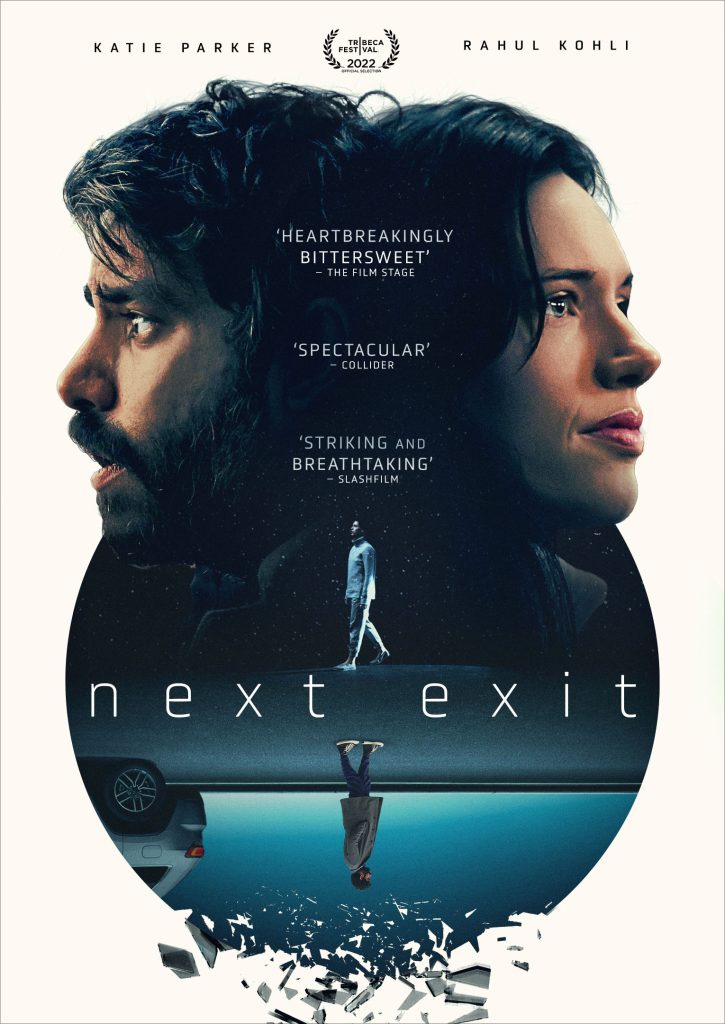
NEXT EXIT

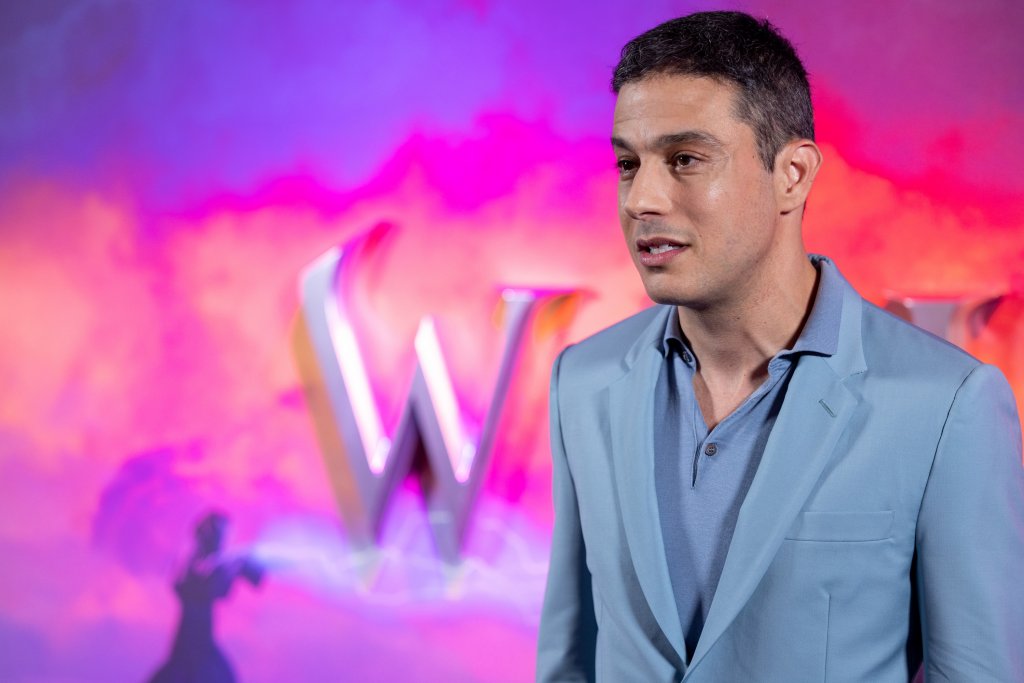
Jonathan Kasdan | Willow

jonathan kasdan willow interview

Ron Howard’s Willow remains one of Lucasfilm’s best, most underappreciated efforts. In a moviemaking landscape where reboots, remakes, and sequels dominate corporate and commercial interest, original stories comprise a precious minority of studio output. With that in mind, you’d think a Willow follow-up would have been a foregone conclusion. It wasn’t until last month, however, that writer and “Lucasfilm legacy character” Jonathan Kasdan brought the sequel to the 1988 classic to life.

The surname ‘Kasdan’ should ring many bells for sci-fi/fantasy fans. Jonathan’s father, Lawrence Kasdan, co-wrote the screenplay for The Empire Strikes Back (and other winners), an achievement that has endeared him to genre fans for decades.

Kasdan’s sequel series teems with characters and personalities that reflect a modern sensibility. It’s fun as hell, too. There’s action, monsters, and aplenty, but there’s also humour, heart, and an attention to detail that longtime fans will appreciate. Kasdan himself is a massive fan of the original Willow, making him a perfect fit for this project.

STARBURST recently sat down with Kasdan to discuss showrunning the Willow sequel series, wax poetic about the brilliance of Warwick Davis, and tease the possibility of a second season.

STARBURST: When you first started developing the Willow series, which elements of the original stuck out as must-haves in the sequel, and which ones were a bit less important or less vital to this particular story?

Jonathan Kasdan: Well, I was in love with the character of Willow. I thought that was the most important thing. I was in love with the character of Madmartigan. I knew those two were the reason that I wanted to do this. I knew that sort of in the absence of having Val, there needed to be something that could fill that space, but it couldn’t be a clone of Val, and you can’t recast Madmartigan ever. That’s undoable, and particularly while using Warwick. So we needed to fill that space, and the sort of answer we came up with was, what if we could surround him with some different kinds of characters that were as unusual to fantasy and as sort of irreverent as Madmartigan himself was in 1988? And that’s sort of what we’ve tried to do in filling out this group around him.

And then the other element of it that I was committed to keeping because it meant so much to me was the darkness and the scariness of the world, was the sense that once you went out there, you were in real danger from all manner of beasts and evil. So I wanted to keep the flavour of the movie and the story of Willow, Sorsha, and Madmartigan alive, but really focus the new series on Elora Danan and how she could evolve as a heroine in the tradition of Luke Skywalker and Harry Potter and so many great magicians-in-training.

Absolutely! One of the things that really stuck out in the first episode was the establishment of a mystery that the series really didn’t have to go with. “Which one of these new characters is Elora Danan?”

Yeah, that was how we wanted to design it, and there’s a great tradition in fairytales and in these myths of characters not knowing their full power, which is a metaphor for teenage years anyway. It’s sort of governing who you are and what you’re capable of, and we wanted to make that a very literal story here. And the way we came at it was this Three-card Monte game of who’s it going to be? And from the word go, you want your savvy audience member to think, “Well, it’s going to be one of these three. Which one is it?” And in Ruby and Erin and Ellie, we found the perfect three women to play that game with. And then they each ended up sort of taking on their own real significances as characters and as sort of the three pillars of this fellowship, if you will.

The new characters are excellent, and we love what you said about Madmartigan being kind of a ballsy character in many ways, and that a lot of these new characters rebel against their archetypes in really, really cool ways.

 Absolutely. Well, that’s a beautiful way of saying it, and exactly as intended, is that you want to take… And it’s not because of any bent except that we’ve reached a cultural moment where we’ve seen these stories so many times. You’re sort of just eager to see variations on how the Tarot deck is sort of lined up a little bit. At least I am. And it’s funny, as the reaction to the show has sort of happened over the last four or five days, you see that certain people are very enthusiastic about the idea of mixing up that Tarot deck, and other people are very offended by the idea of mixing up that Tarot deck, and it’s a great kind of… I sort of respect it all in a way, because it has an element of… You see the depth of people’s love for these stories and the kind of things that they’re passionate about and the kind of things that they’re open to, and it’s all sort of across the map.

 It’s got that epic flavour to it, but it’s got characters that you cannot see anywhere else.

 Yes, and I think that’s part of the magic of Star Wars too. It’s like he did something in the genre that no one had quite done before. And it does have a… I mean, he cast Mark Hamill in the lead role. It’s like, did you get a more California incarnation of a hero than that? And then he continued that tradition with Willow, I think, in a really nice way that sort of merges classical Tolkien elements with this much more contemporary, hip and, frankly, sexy worldview that doesn’t exist in Tolkienverse at all.

I think the lesson that my father gleaned from working with George Lucas as a young man… my dad’s interests were always in noir and darker, more complicated stories. But his career started working with Steven and George on Empire, Raiders, and Jedi. The sweetness and the heart that’s in all those movies really rubbed off on him in his career and then rubbed off on us as his kids, and there’s a real lineage to that, and I hope that that’s infused in this thing, but it’s certainly a humanity that comes from George in a very direct way.


This is more of a comment than a question, but it’s really cool that you have all these legacy characters in here, these new faces filling old roles, and that it’s meta in a way, because in Lucasfilm’s history, you’re a legacy character.

That’s the other big theme, I think, in all of George’s work is this generational struggle and these father figures and how we sort of reconcile the legacies of our parents a little bit, and for me, that’s always been a hilarious and ironic element of my relationship to this whole brand is that I’m sort of the archetypal guy wrestling with the legacy of his previous generations.

You add layers to Willow’s character that’s really special, where in the process did those layers came into play? Because there’s a moment where he casts a spell. And you can see all this uncertainty, and you can see this fear on his face because he’s been underestimated his entire life. Even Sorsha earlier in the series says, “You’re not the greatest ever.”

Totally. Well, I’ll tell you, one thing from the movie that I always loved and really stuck with me is that when he’s trying to transform Fin Raziel into her human form, you see he does this amazing thing where it has a physical toll on him, and at the end, he sort of clutches his arm in pain, and it was something I at least at eight had never seen done with magic before, where someone is actually… It made sense to me almost, dare I say, on a scientific physics level, that to give someone this much power would cost a person something. And that was one of the elements of the magic in Willow I always sort of loved and thought, “Well, okay, so if we’re going to revisit this character 20 years down the road, the physical toll of that would only be increased by age and weariness with the world.”

And I’ve certainly seen that in the filmmakers that I’ve known growing up beyond just my father, frankly, but the failures and the disappointments take their toll, and increasingly the idea of making a big movie becomes harder and more of a lift, and I thought there was a great metaphor for that in Willow, in that he has to manage his power and preserve it, conserve it for when he’s going to need it the most, and that he has this vision that he’s going to have to do a lot, and that he doesn’t have quite enough strength to do was always sort of built into it. And I liked the idea that the others were sort of doubtful of him early on, and then we get a cathartic demonstration of what he can do when he’s upset.

And Warwick Davis does such a great job. 

Yeah, and that’s something that is really authentic for Warwick, to be perfectly honest with you. It’s that he’s got… It’s not as easy as it was when he was 17, and he does feel the physical tolls of life and of being a little person and of all this, and of how hard he’s worked his whole life, and he brought a lot of that to the character, along with all his energies and enthusiasms and comedic genius, and I do think it deepens what Willow is in a meaningful way.

Absolutely. It’s been a joy watching him add even more depth to the role. Any update on the possibility of a Season Two? 

As soon as I’m done with you, I go back into a room full of writers, it’s not so much that we’ve been given a Season Two as that these things take so much planning that in order to be ready for a Season Two, they’re facilitating me going off and breaking it out, so yeah, we have a real plan for where we’d like to go, and hopefully… I think you’ll find, and maybe we’ll talk again when you do, that when you see where it ends up in episode eight, it’s very much designed for the story to continue and for Elora’s journey to go to new and more exciting places.


Willow is now streaming on Disney+.

Writer/Director Parker Finn Talks SMILE

parker finn smile

To celebrate the digital release of Smile we caught up with its writer/director Parker Finn to dig into its escalating nightmare approach and its unsettling tone, and for those that have seen it, we discuss the creative process of a rather scary family gathering! Smile is now one of the biggest horror movies of 2022…

STARBURST: You described this movie as an escalating nightmare, which does feel like. What was it like to capture that gradual progression from normal Rose to paranoid Rose? How did you achieve that? 

Parker Finn: You know it’s always a complicated set of logistics when you’re in production because you’re shooting everything out of order, and you’re trying to maintain that north star of what you’re hoping the film will be. But it was a lot of prep work in talking with the team around me and then just being in constant conversation with Sosie [Bacon] about how we were crafting the performance. We really wanted to track that character as she’s on this downward spiral and make sure that the audience was right there inside of all of that anxiety.

We also like that with Smile, you don’t feel safe in daylight scenes. Normally that’s a safe time in a horror movie, but with Smile, you’re constantly on edge. Was it intentional to make the audience feel this way from start to finish? And what does that bring to Smile

Yeah that was definitely intentional, I think that I love a scare during the daytime, or a sense of anxiety, however, like I said, we wanted to make sure that from the opening moments of the film would reach in, grab your spine and drag you forward unwillingly, all the way until the end.


Talking of not feeling safe. The cinematography and angled camera shots help a lot with that. How fun were those particular shots to work on with cinematographer Charlie Sarroff and when did you initially decide to bring those ideas in? 

They were a lot of fun to work on, we worked very hard to craft a specific visual language for the film. It required a lot of prep work when it came to how we were going to capture things. A whole lot of shot listing, and refining that over and over again, so we had a real plan going into production, and I couldn’t be more thrilled with the result.

There’s a great scene where Sosie Bacon’s character Rose is at a family birthday party, and it doesn’t go very well. How fun was that particular scene to put together, and how did you go about capturing that paranoid feeling?

That scene was a lot of fun, it was also an incredible challenge, working with a bunch of child actors, and tons of extras. Sosie has got to do something so incredibly difficult, in the middle of that scene, with all that stuff going on around her. I have to tip my hat to her because she just really brought it with that performance – throughout the whole film as well – but that scene, in particular, it’s just next level, and I hope that audiences react to it in the way we intended.

The best horrors are the ones that don’t give away all of their secrets straight away, and you’ve done that with Smile. How do you go about creating that fine line, of giving the audience those breadcrumbs along the way, whilst not giving away too much? 

Yeah, I love films that have a sense of mystery to them, like peeling back the layers and discovering what the movie actually is. Those always work really well for me as a fan, and that’s what I was hoping to do as a filmmaker. I really think that it’s part of the theme within the film, it’s what it is to be afraid of the unknown, that’s a very universal fear, and I wanted to capture that both in the plot elements, but also in the thematic elements as well. Just seeing if I could weave those things together in the character journey.

Finally, how do you want the viewer to feel after watching this movie? 

I hope that they are left smiling after the movie finishes!

SMILE is available to Download and Keep on December 14th and on 4K Ultra HD™, Blu-ray™, and DVD on December 26th.

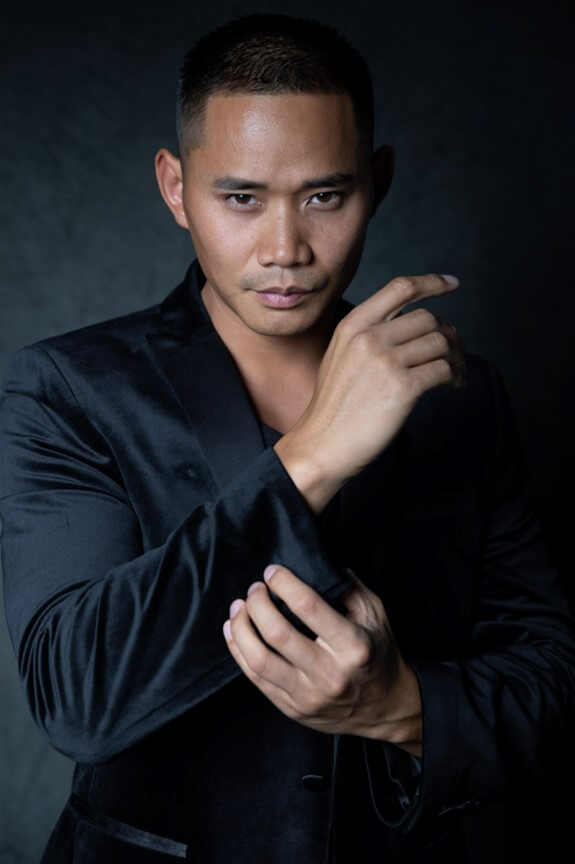
Actor David Cheung Talks Stunts, Andor and More

David Cheung andor

After appearing in a couple of episodes of the superb Star Wars series Andor, actor David Cheung is in demand. We caught up with the stuntman/actor who has also appeared in Willow, The Bubble, and Doctor Strange in the Multiverse of Madness to find out more about his work…


&nbsp

STARBURST: What influenced you to get into the industry?

David Cheung: My Chinese Grandfather was a martial arts teacher who taught me kung fu skills from a young age. I secretly always wanted to be like Bruce Lee and Jackie Chan. I fell into the industry by accident – I saw a casting looking for martial artists, and I thought I would give it a shot.

Why did you get into stunt work?

I was always looking for more action-packed and physically challenging opportunities. My stunt work has meant having the best time ever and meeting so many cool people.


When it comes to stunt jobs, what’s your favourite experience so far?

Being set on fire by Paul Bettany!

And have there been any dangerous stunt/fight scenes you’ve been in?

Yes, there’s always danger in fighting, but it’s always well-rehearsed and performed safely by a good team.

You appeared in a couple of episodes of An

dor; what was that like to work on?

The cast and crew were great, and I had the best time. Everyone was so nice and chilled.


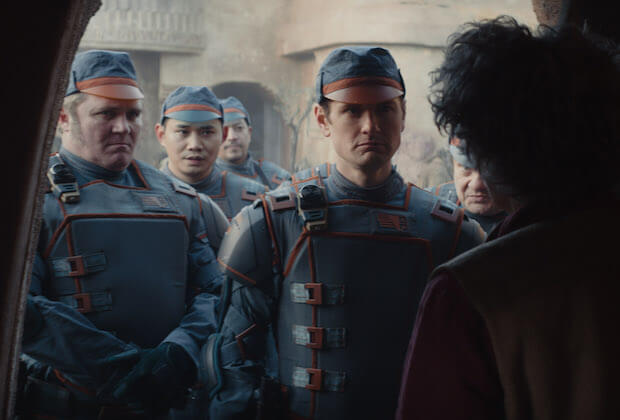
(Counterclockwise, from far left): Sergeant Mosk (Alex Ferns), Syril Karn (Kyle Soller) and Maarva (Fiona Shaw) in a scene from
Lucasfilm’s ANDOR, exclusively on Disney+. ©2022 Lucasfilm Ltd. & TM. All Rights Reserved.

What would be your dream role?

A Marvel character, the Asian James Bond or any superhero with amazing powers – I am all about action-packed roles.

Is there any advice you’d give to people looking to get into stunt work?

Train hard and smart. Don’t give up & stay positive. In life, we are always learning; mistakes teach us things. I made some mistakes in my early days of martial arts and sustained some minor injuries – it taught me to focus more!

What’s next for you?
Time will tell, as nothing is guaranteed in the film industry! But I’m excited to see what next year brings.

You can find out more about David at his website: www.davidcheungofficial.com


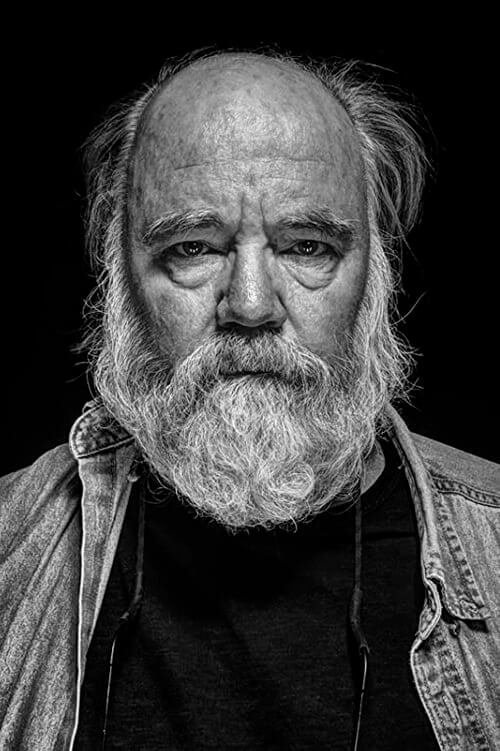
Phil Tippett Talks MAD GOD

mad dog phil tippett

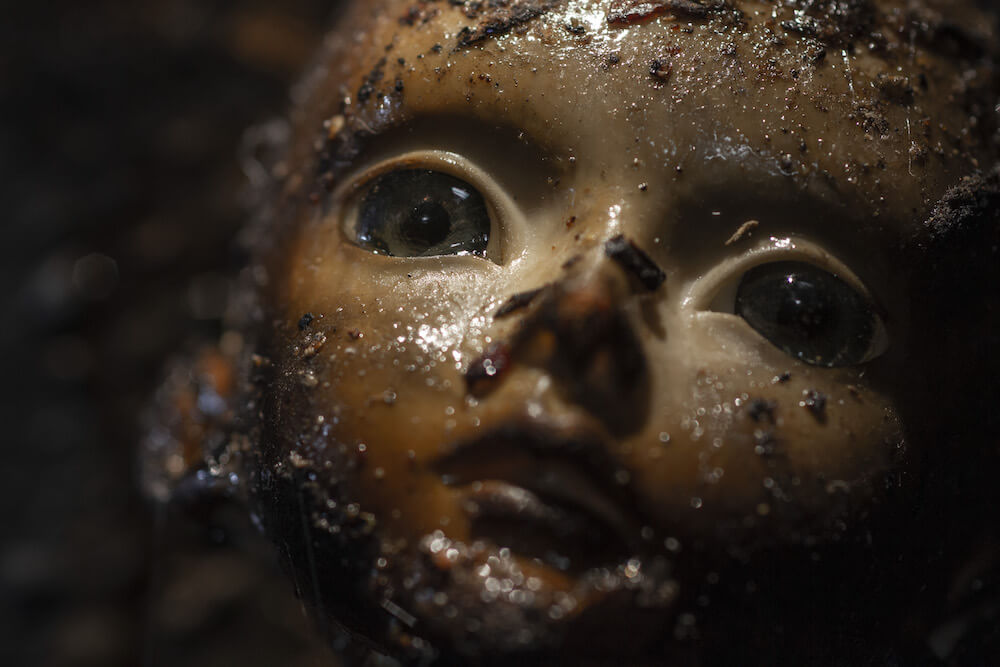
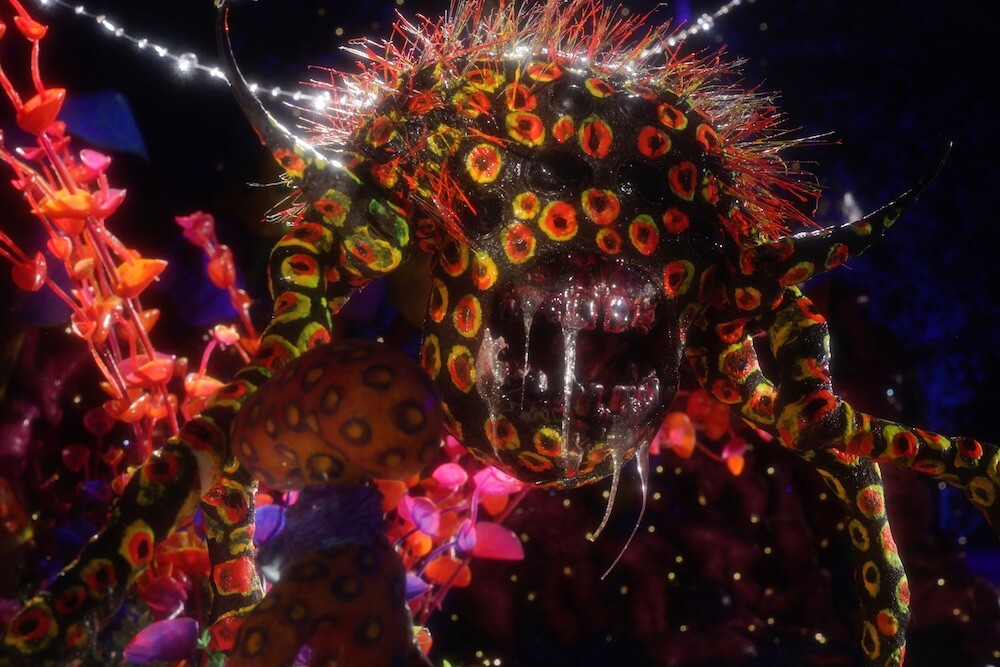
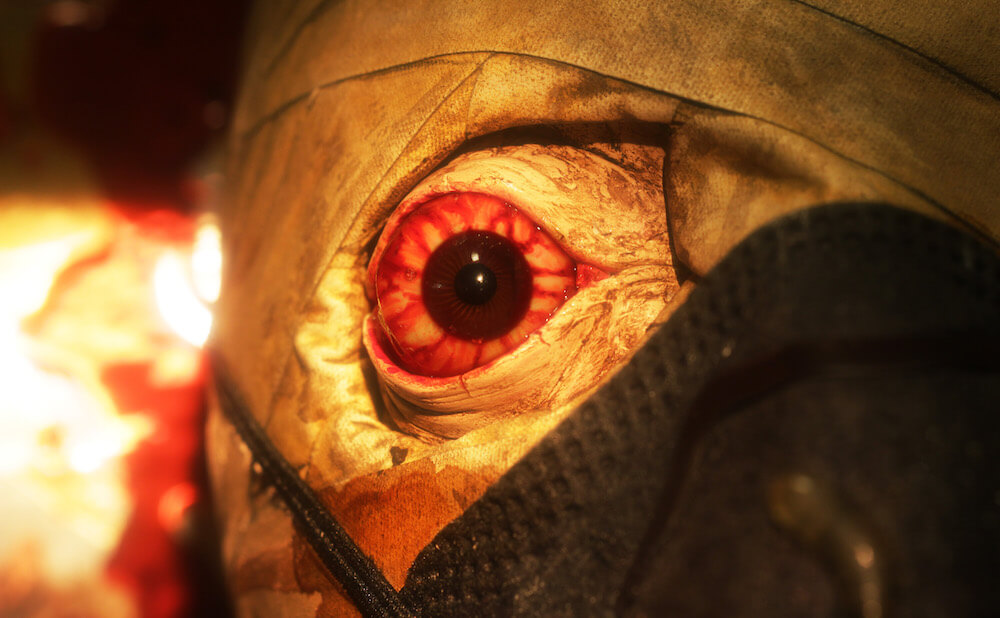
Phil Tippett is the special effects genius responsible for some of the most spectacular sequences in cinema history. After creating the chess game in the original Star Wars, he brought us AT-ATs and Tauntauns for The Empire Strikes Back and the Rancor for Return of the Jedi, which – as head of the creature shop – saw him win his first Oscar. He’d win a second for Jurassic Park, as well as creating other classic sequences, including Robocop’s ED-209 and the alien bugs in Starship Troopers.

Throughout much of this period, Tippett has been working on his passion project, Mad God – a stunning, hellish stop-motion tour de force that he first conceived around the time of Jurassic Park. After that film’s stunning animatronic and CG dinosaurs, Tippett became pessimistic about the future of stop-motion, abandoning the project for years. He was finally persuaded by colleagues and friends to resurrect and complete his magnum opus.

Mad God took its toll on Tippett, which he also wrote and directed. Speaking to STARBURST as the film is released on Blu-ray, the astonishingly frank Tippett told us how the film nearly destroyed him.


STARBURST: Congratulations on the film. It’s genuinely unlike anything we’ve ever seen before. How does it feel to have it out there finally?

Phil Tippett: The people that I showed it to, who were friends, liked it. But, you know, they’d always have an addendum, which was like: “this is not a movie for everyone”. And the first two film festivals that I put it in rejected Mad God – Berlin was one – which sent me into a depression. That was like, okay, I wondered if it was going to go in this direction. And then we were invited to Locarno for the premiere of Mad God, and it just took off from there. It really surprised me, because I set myself up after Berlin for failure, of not being able to reach an audience. It gradually gained a momentum that is still gaining, and it’s about to open in Japan. And they’re doing a huge bunch of publicity. Mad God was really made for Japan.

Why do you say that?

They like weird stuff!


You started working on Mad God 30 years ago. Did your conception of the project change much over that period?

Yes, and no. I mean, it was all very much like a religious vision that really came all at once. There was a star that I was following. It was a classic Joseph Campbell’s hero’s journey where you go down without an objective. I mean, there’s no holy grail that you were seeking. But you will go down a path that will lead to another path that will lead to a gate that would lead to a forest where you get lost, and then there’s a talking crow… and then at some point, the hero dies and has to be reborn.

And that was literally my journey. Because at the end of this 12-year period when we rebooted, I just wore myself out and got exhausted and had some kind of synaptic snap. I had to go into the psych ward for a few days and it took me a few months to recover. It was just an overwhelming experience. Towards the end of it, I just hated working on it. My friends would afterwards let me know that I was disintegrating. I wouldn’t wash my hair; my clothes were all ripped and covered with paint. My hands had all been banged up from making sets and covered with bandages. I didn’t shower, and I went down that path, and it was kind of mentally disintegrating. It just took it all out of me.

It took a while to get over that, but that was the death. There was a rebirth. I think the real resurrection really came when Mad God took off. I was just so relieved that people didn’t hate it.

We’re sorry to hear you went through that. We’d heard you had some problems while you were making it but didn’t realise they were that severe. We hope you’re feeling a lot better now. We feel you’ve half-answered the next question. There’s some very disturbing imagery in the film. Where did that come from?

Well, when I was doing the research during that 20-year hiatus, Dante’s Inferno was an initial guide. And so structurally I knew I was going in a certain direction, which was down. And when I was a kid, maybe 10 or 12 years old, my dad was an artist. And he saw that I was drawing and sculpting all the time. I was friendly and had friends in high school and around that time, but there was nobody that was interested in what I was interested in. So, I just would close myself off in my room. And I was either practising animating on 8mm film or drawing or sculpting, and that’s what I did. I didn’t go to parties or dances and didn’t want to invest in girlfriends. Everything was a time suck for me. And that’s still the way it is today.

You don’t have much time in this life, and there’s a shitload of stuff to do. And so, you have to be very selfish to be an artist sometimes. And the whole disintegration process, you hear that time and time again with artists. Beethoven was a famous one who would just totally get lost in his work, became an alcoholic, and look like a homeless guy. The work owns you at that point in time, and you’re just doing what you’re told to do to complete the vision.


Mad God in some ways feels like a very deliberate throwback to cinema’s past with stop-motion, and there’s no dialogue in it. Was it an intentional throwback? And do you think that with the technology available to filmmakers nowadays, films have lost something?

Well, I’ve always admired silent film, and when sound came in, it destroyed a certain beauty that cinema had in terms of body acting and how one projected as opposed to, you know, blabbing a lot. So, when I set off to make Mad God, I knew that’s what I wanted to do, essentially make a silent film with sound and music.

You also challenged yourself because the film’s plot is deliberately vague. It definitely challenges the audience to think, doesn’t it?

Well, it always made sense to me. One thing leads to the next, which leads to the next, so you’re following a narrative arc, but it’s oblique, with a lot of hard right turns, and hard left turns. The structure’s Dante’s Inferno, where you just go down, down, down, down, down.

During the period that I was working on Mad God, I dreamt prolifically. Every night I would wake up, and the dreams were clear as a bell. Every morning I would write the dreams down in a large journal. And I could do six to ten pages in the morning, which took a few hours to do sometimes. That was really interesting to me, in that if you sit down at the table for breakfast with your family and say, “I had a really weird dream last night, it was about blah, blah, blah,” then you just forget, because it’s put in the category of that was a weird dream. But as I was writing this down, after a few months I went back and was rereading some of the dreams. And many of them have an innate structure, which was that there was a proposition at the beginning, and then in the second act, there was a great deal of uncertainty, and it was like a diversion. And then the third act, there would be a resolution to the first act’s proposition.

Although oblique, it was a cycle very much like the creative process, where there’s something that starts almost out of nowhere, like the creation of matter out of nothing. And then there’s a long period of unconscious thinking, where you’re just processing the first part. But it’s very abstract and doesn’t make a great deal of sense. And then in the third part, that unconscious period informs the third act, and what the proposition was in the first act. And that led me to agree with the concept that storytelling is innate in our DNA. That gave me strength and confidence, to know that even though this project was very oblique, it was in the same tradition of human storytelling that I’m sure was there pretty much at the inception of language.

Mad God is available on Blu-ray from December 5th.


Images: © 2021 Tippett Sudios Inc. https://madgodmovie.com


Sam Witwer Talks SMALLVILLE, MAUL, and THE MIST

witwer

We recently caught up with actor Sam Witwer ahead of his appearance at Liverpool Comic Con to chat about his work on Being Human, The Mist, Smallville, and, of course Darth Maul…

STARBURST: Last year, you did a reunion with the cast of Being Human, and it seems like you are all still close. What did you enjoy the most about working with that cast, and why did it work so well?

Sam Witwer: Just hanging out with them. It was the most tremendous job in that we had no budget; we just showed up, did extraordinary long days, typically sixteen to seventeen hours. The writers were a bunch of maniacs, the crew were a bunch of maniacs, and the actors were a bunch of maniacs. So, if you had to be stuck at work for seventeen hours, those were the people you wanted to be stuck with. Because someone was always doing something that made you laugh.

The Mist has become a classic horror movie – once you see the ending, you can’t forget it. How fun was it to play Private Jessup, and what was it like to work with the legendary Frank Darabont? 

I’m so happy that that movie has grown in the estimation of the audience since it came out, because I always thought it was terrific, and I thought that the black and white version was even more so.

But having said that, the process of working was tough, because it involved being in a really awful place, bawling your eyes out in the corner, and then right before they yell action, you stop crying and then immediately try to play the scene straight, so it seems like you’ve been up all night, like you’ve been exhausted, and terrified, and stuff like that. However, the pleasure of it was everyone was so good, and Frank Darabont is such a sweet, awesome super-nerd like myself. We’ve been friends ever since. I remember feeling like I was a little bit of a weirdo collecting geek stuff, like I have a model of the ‘60s Star Trek Enterprise, for example, and then I went over to Frank Darabont’s house for the first time. He had whole rooms full of the most amazing artefacts: “Oh my god, Frank! Can I touch the Blade Runner gun? Cool!” “Oh my god is that a Drew Struzan original poster of The Green Mile? Oh my god, it’s the real painting!?”

That scene where they throw Jessup out to his death looked pretty intense to put together. You can see the group, literally battling with the decision to cast him out or not…

Yup! And William Sadler beating me up. The way that Will made up for the fact that he would hit me and throw me around was that he would do the voice of Death for me, from Bill and Ted, on command.


Talking of Frank Darabont, and with The Walking Dead ending soon, we thought it a good time to ask you about your brief part on the show, as the ‘Tank Soldier’! What do you remember the most from filming those scenes with Andrew Lincoln? 

Everyone was cool. It was supposed to be a setup for something else we were going to do on The Walking Dead – that character that became the tank zombie was going to be the lead for an episode or two. That was a great idea, that we never got to execute unfortunately, because of the shenanigans that they were pulling on Frank at the time. Shenanigans that I am well documented in calling out publicly, blackballing myself with AMC in the process!

That’s how it goes!      

I’ve been doing this now for a while, well over twenty years, and you realise life is short, and you’ve got to hang out with the people that you like, you’ve got to find enjoyment where you can find it, and every now and then you’ve got to call someone out on their bullshit. That whole thing with Frank was nasty, but I’m glad that it all worked out. He won his court case big time, so there you go.

Smallville is still talked about heavily. What was it like to take on the somewhat mysterious role of Davis Bloome? A role that saw him hide his Doomsday side!  

Really fun, because they wrote great, great, great stuff! Speaking of speaking your mind too much, that’s one of those times where I was honest, but I don’t agree with my timing nor the venue of my honesty. I talked about how I was unhappy with how that character ended, and that level of honesty in interviews at the time, when Smallville was airing, doesn’t really accomplish anything. What you’re doing is putting a bit of a rainy day on an entertainment product, that you want people to enjoy, you worked hard so that people would enjoy it. I think my honesty there was maybe a little uncalled for, because overall, I thought that the Davis arc was fantastic.

I was always a guy who was used for character parts, and a lot of threatening parts, villain parts. Then they wanted me to essentially play the big villain, but play him as a hero, as a good guy, as a sweetheart. And that helped me to develop tools in my toolbox. At the end of the day, my perspective is of extraordinary gratitude, for them having thought of me for that role, and they wrote such wonderful, enduring material.

With Smallville, the seasons are quite long compared to some TV formats we currently have. What do you think that the length of it brought to the viewing experience?  

It’s really cool. And the fact people watch it even now. We do these short episode orders these days, eight episodes, it makes the Being Human thirteen-episode order seem luxurious by today’s standards! But these eight-episode orders, six-episode orders, stuff like that. They’re cool, I love serialised storytelling, I absolutely think it’s great, where you go from episode to episode to tell a bigger story, it’s essentially one big long movie, but there is something to be said for living with characters, and having some episodes be less important than others. Like people think “Oh it’s a filler episode of Smallville or Clone Wars” and you’re like “Yeah, but, you really get to know the characters in a low stake situation!” and often it’s the balance of low stakes and high stakes that make you feel like that character is a part of your family. You know these people, you want to hang out with these people. Like the Star Trek Next Generation crew, or the original Star Trek – no matter where you were in that series, you were hanging out with those characters, and that was amazing, and I think Smallville is the same way.

Let’s talk Darth Maul! What did you want to see from Maul when you first got offered the part?

I wanted to see the damage of the character. Because it was something that I always thought about. Like if they ever brought Maul back, they should make it so he can’t use the force as well. He reaches for something and it doesn’t quite work, which is, by the way, in the damn episode! It’s some of the stuff that I used to think about, and geek out with my friends about. This idea that the damage of the dark side and how jealously these guys hold on to their mortality because they’re terrified of death, because what’s death, death is the ultimate letting go, the ultimate acceptance of the natural order of life. The Sith are not about that, because if you die, you’ll lose everything. That is unacceptable, because they are the most important thing in the galaxy, and they can’t allow that to happen. Whereas the Jedi are like “I’m not the most important thing in the galaxy, the important thing is that I inspire the next generation, so that they can rise to prominence. If I die, it’s OK, I will become more powerful than you can possibly imagine, because I would have already inspired other people to do the right thing.” People like Vader can’t understand that.

Sam Witwer is appearing at Liverpool Comic Con on November 19th and 20th.

Gavin Spokes | HOUSE OF THE DRAGON

gavin spokes

And just like that, Season One of House of the Dragon has ended! After the brutal first episode, fans were completely gripped, and before they knew it, it was all over. So if you were left eagerly wanting more, then we have something special to temporarily fill that dragon shaped void. Ahead of his appearance at London Comic Con STARBURST caught up with actor Gavin Spokes to reflect on his time as Lord Lyonel Strong in an unpredictability savage season, whilst discussing what it was like to work alongside such a fantastic cast!” **SPOILERS AHEAD**


STARBURST: How did you initially get involved with House of the Dragon?

Gavin Spokes: It was about March 2021, and a scipt came through for a new HBO series, and the working title was called “Red Gun”, and it didn’t give too much information, apart from a vague outline of a character, and then I did a self-tape with some dummy sides, so you get like a version of an old script, probably from series two or three of Thrones or something. I sent a self-tape off, and they liked it, and then I did a recall over Zoom actually, with Kate Rhodes-James the casting director, for about an hour and a half. I thought I’ll probably have to have another audition, because the showrunners would want to talk to me, if they like me, because this is a massive job. Then two days later I got offered the job. It was quite a whirlwind, it was like a two week window really. From the first self-tape to the offer. I think I was cast quite late by comparison to a lot of the other guys.

What was that exciting atmosphere like to work in?


It is a bit mad actually, once you’re in the bubble, and you’re working on it at the studios, it doesn’t have that kind of secrecy, because you can stand outside having a cup of tea, outside one of the studios, and then you see people another movie walking past you, and it has that strange thing of like this, everyone is having a tea break, or they’ve gone out for a cigarette, and everybody is dressed up as a gladiator or whatever, and it’s all a bit strange and surreal. But yeah I couldn’t tell people for a long time until it was announced. I probably had about six months on the job where I couldn’t really tell people. But a lot of people kind of go “Ah I think I know what you’re doing! You’re learning to horse ride!”

How much did you know about the books or even the Game of Thrones show before joining House of the Dragon?

I hadn’t read any of the books, I subsequently read a bit of Fire and Blood, mainly the sort of stuff relating to Lord Strong. I hadn’t binged Thrones, but I watched the first series and then I kind of left it for a few years, not sort of deliberately because I was working and doing other stuff, and then I kind of came back to it later and watched probably another two or three series. And then I didn’t go back to it, again, not because I didn’t want to, but it just didn’t come round. I think I didn’t have Sky at that time, and I didn’t have a DVD player, I think I got rid of it. And then, when I got offered the job I was like “Oh that’s 80 hours of TV I need to catch up on”, so I did catch up with most of it.

Was there anything you really wanted to bring or see from Lord Strong?

I think it was quite clear, from what Miguel Sapochnik and Ryan Condal discussed with me, that they really wanted this man to be just decent, because there aren’t many decent people in that world. I mean there are a lot of people who believe they are being decent, and believe their actions are just and correct, but I think they really wanted his moral compass to be very straight. Probably a bit of a traditionalist at the start of the series when he says “You can’t have a queen sitting on the iron throne” but he has loyalty to the king. He believes in tradition. I very much kind of saw him as an officer in the British army, who is one of these loyal guys that doesn’t question the prime minister for taking on a bizarre war, in some poor country that is going to get done over. He just is a very moralistic person on his beliefs really.

He seems to be one of the most grounded characters in the entire show, he feels quite safe?

Yeah he is safe. Little to be said for one of his sons, and his other son actually! He is definitely straight, I think that was the thing. We did get that from the books as well, and George R. R. Martin had said he is a very straight guy, and very intelligent. So that was nice. But yes he had deviancies in his past, he has had a few ladies, and there are several children knocking around, it’s not just the two boys.

Perfect! So, what memories do you have from the first day of filming House of the Dragon?

I wouldn’t know where to start, if I’m honest! It was the most incredible day I’ve had in the business. It was an early pickup. I had already been in for a couple of rehearsals, which were actually probably more terrifying, because they were the first times that I properly met Miguel and Ryan, and some of the producers, and some of the other actors. Then my first day was the scene when we are discussing the succession in episode one, and I’m quite vehemently saying “You can’t put a woman on the throne”, and I was sat opposite Paddy Considine (King Viserys) and Rhys Ifans (Otto Hightower), and Bill Paterson (Lord Lyman Beesbury) and all of these heavy hitters and I just thought “Holy shit this is the big time now Gavin, you’ve got to step up.” I think the nice thing is whenever somebody says “Action” or you step on stage, you are all on the same page because you are all actors, and you’re all just trying to serve the moment, hopefully that’s what you are all trying to do, and you realise at that moment you are all kind of equals, but in my head I’m like “Well you’re not an equal, because that’s Paddy, and he is extraordinary.”

Obviously, you share a lot of scenes with Paddy. Can you tell us what he was like to work with, and what you think he brings to the show overall?

Firstly, I had the most fun with him, because we became good buddies. He is generous to a fault, he is good fun, he is silly. He takes the work incredibly seriously but he doesn’t take himself seriously and he was very generous and helpful with me. We made each other laugh, which is really quite lovely. Secondly, his character really felt like the heartbeat of the show. He wasn’t the engine room of the story, but he is certainly the heart of it, and that moral compass. He was the good driving through everything, trying to keep the ship afloat, and I just think that he did that beautifully. The overall arc of his journey, I just thought was extraordinary really.

Then you’ve got Matt Smith, who really just makes the show an unpredictable watch. What do you remember the most from seeing him on set?

Yeah, to be fair I only did two scenes with Matt. We didn’t really get to do much together, but Matt’s a wonderful actor. He brings so much charm and wit to that role, that that adds to the complexity of Daemon’s dangerous unpredictability. I thought that was wonderful, how you can hate him, and love him all in one. I think that’s why he has become such a popular character within the show, and I think that’s because of what Matt brings to it.

The cast in this show really is just epic. It must have been so much fun to be a part of such a great ensemble of actors.

Absolutely! It really was. It did become, not to all intensive purposes very similar to a theatre job, where there’s a big ensemble so you are with each other the whole time. A lot of us had done a lot of theatre work, and you have that mentality, of being comrades in what is a big machine. There’s a lot of waiting around, and being ready to go as a group. It was quite inspiring to be surrounded by so many brilliant people. Actually I have made so many friends behind the camera, and in front of it, it was a joyful experience from start to finish for me.

Can you tell us what the time jump was like to work on as an actor? Like, how exciting was it, and what do you think it brings to the viewing experience?

I think I’ll have to dance that in two parts. It’s interesting because you’ve got those six years of building up a relationship with two really close friends, Milly Alcock (Rhaenyra Targaryen) anf Emily Carey (Alicent Hightower). Then that jump had to happen in episode six, to then to carry it on to the end of the series, and then going forwards, because they would be too young. I thought it brought just an excitement, you’ve got two sets of people sitting in the same person’s shoes. So their objectives would still probably be the same, their moral compass is the same, but because there’s a different person playing it, they bring their own nuance and diversity to it, and I got to work with Milly and Emily quite a bit and they’re both just cracking people, and I luckily worked with Emily before on a play, she’s an extraordinary actor, and Olivia Cooke [Alicent Hightower] likewise brings something quite extraordinary.

House of the Dragon is known for its incredible sets. I was curious, looking back on the show was there a particular set that you just really loved working on?

I think generally the whole of the red keep is an extraordinary thing to step on. One of my clearest memories from the first day on set, was being taken on a tour around the Red Keep in Leavesden Studios, which, when you walk up a staircase in that set, you’re walking up actual stairs, and then you turn left into an actual small council chamber, and then you walk up another set up of stairs and you walk into the king’s chamber, and then you walk into the courtyard. So you’re walking round an actual castle. I remember saying to Ryan Condal one day, I was like “Mate, wouldn’t it have been cheaper to have just bought a castle? Because this is, for all intensive purposes, a castle” and he said “Well no, this is the cheaper way to do it, if we get a few series out of this, then it’s worth the investment” so the Red Keep is just an extraordinary experience to just be on because it’s so enormous, and so real. The Throne Room feels epic, when you’re in there it feels like a special place to be in, because everybody just associates with the Iron Throne, and what the designers and showrunners did with elaborating on that throne with all of the extra swords, I think gave it an extra little bit of shizzle I suppose!

Great! What were those final scenes as Lord Lyonel Strong like to film, and put together?

There’s two parts to that, I had a cold, and I had a horrendous cough. It wasn’t COVID because we got tested within an inch of our life, and I had this terrible cough, and then I had to pretend to cough because of the smoke, and then I had to scream “Harwin” over and over again for the takes, while trying to smash a door down. So I kept losing my voice, so that had to be done in ADR so there was that going on, so then in the back of my head, every time me and Ryan Corr (Harwin Strong) would see each other, we were just sad because we didn’t want it to be over, we were just gutted. We didn’t film that scene last, it wasn’t the last time we were on set, but it was a sad thing to do, because we knew that that was probably the last time that we were going to be on screen, and it was a big gig for both of us. It was sad, but fun, because filming is always fun.

Like we were saying Lyonel seems to be one of the most grounded. And, it seems that people actually liked him! What do you think his demise has done for House of the Dragon?

Well yeah, I think the original Thrones with Sean Bean as Ned Stark, they set that bar quite early didn’t they by killing him. I think everybody was like “Woah, we are watching something quite different here!” and those people with a good moral compass, don’t generally last long. I think if you’re a decent person stepping into the House of the Dragon or Game of Thrones world you know that you are going to be…I mean, Jon Snow is probably the exception, and they had to bring him back to life. That guy has got a pretty decent moral compass, and they had to bring him back to life, even he was done over.

Sean’s part in Game of Thrones obviously became a crucial point in the show to reflect on. How would you like your character to be remembered by fans when they look back on this season of House of the Dragon?

It’s been quite pleasant actually. There’s been a lot of people who really like him, but that’s to do with, I think most of us always, most people, apart from the arseholes in our midsts, I think most people like a decent person. Most people like a morally sound person. So we try and project our own identity on to them. Like yes, “I’d be like him, this man is the only person talking sense, I like this balding man” Yeah, I think it’s everybody hoping that if they were there, they’d be Lord Strong, and I think that’s why they like him. It’s lovely to know that he is a popular character. Maybe they should just start a petition so that he can come back. I mean you never see me die do you? So let’s start petitioning to Ryan Condal now.

What was the most rewarding scene for you to work on, and why?

That is a tough one. Probably the argument with Ryan Corr, who played my son Harwin, because it was really interesting, because Miguel when we turned up he said “We are not going to be in the room with you” Ryan and I looked at each other and we said “Sorry, what?” he said “I want the room to be completely locked off, I don’t want any crew in here, and I want you both to really go for this argument, and I’m going to film it through the window, because we need Rhaenyra’s perspective. So he gave us a real chance to play, we had certain marks to hit so we could be seen through the parapets of the window frame, and we had a real chance to play that scene. You really see Lyonel expressing fears and his deepest, darkest worries, quite vocally. Which he hasn’t done in the whole series, he is a very measured, collected thoughts person. Here, it was actually like we could see the love for his children, and actually Rhaenyra and his grand-children, and he wanted to protect them all. So that was nice to play as you see this different side of him, and also the fact that we got to play on a slightly wider lens, so you’re not worried so technically about where you were hitting stuff. So that was really rewarding and it was also Ryan’s first day on set. So bless him he had this enormous argument to do with me, and Ryan is a little bit more method actor than me, so he was getting himself all pumped out, and then there was me being a very British actor who was like “I’ll just wait for action Ryan if you don’t mind”, but it was great, and we had a lot of fun filming it. I think it came out really well. So it was good.

How excited are you for your upcoming appearance at London Comic Con, and what can attending fans expect?

I am stupidly excited, I’ve never done one! I went to one, a long time ago when I was a kid, I went to one in Milton Keynes, I think it was like one of the first ones, I think it was Milton Keynes because there was one of The Goonies there, and I think I was about thirteen. So I went and tried to get his signature, but I never met him in the end. I think I went when he was on his lunch break. I really can’t wait for it. Hopefully, I’m not the guy sitting there who doesn’t have anybody coming to say hello to him. Because I know I’m on the same day as Matt Smith, and loads of other big names. I know Paddy will be there on the Sunday as well. I can’t wait, because I’m really looking forward to meeting people, because you get so many messages sent via Instagram or other social media stuff, and you can’t reply to everybody, because if you did that you’d end up having a million different conversations with a load of people you’ve never met. So it’s quite nice to be able to just have a moment with somebody, well yeah, because I know what it’s like to meet people that you watch, and you think they’re cool, I’d like to meet them. I’m particularly like that with sports, sporting people, cricket and rugby people. I understand the excitement for it, and I can’t wait, and I get to see a few of the old cast members, like Jefferson Hall is doing it, he is a really good mate of mine, so that’s nice. And Graham McTavish, there’s quite a few of us doing this, so that will be good.

For those that for some reason, haven’t watched House of the Dragon just yet, why should they check it out?

Because I think, they will be constantly surprised, I’ve had so many friends of mine that are like “Well I’ve watched it Gav because you’re in it, and I really liked it, I really got into it” one of them said “It’s a bit like The Sopranos but with dragons” and I think that’s right. HBO are so good at story. It’s a family drama, in essence, it just happens to have dragons flying around eating each other.

Once you’ve watched the first episode, you’ve got to watch it through to the end!

Absolutely! And like everything you will have episodes that are slower in its journey, but you have to have those for the exposition, for a build up of relationships, to give you plot, and then you can have a blow out in the later episodes. All TV, all story, all narratives work like that. Plays, musicals, there’s always a dip where you think “Oh we might have lost people” but they just need to stay and tune in, and listen harder, because you never know what you’ll miss, especially on something like House of the Dragon, or Game of Thrones, because there’s never a shot wasted.

Gavin appears at London Comic Con on Saturday November 19th. Find out more here: https://londoncomicconwinter.com/guest/gavin-spokes

You can follow Gavin on Instagram here: https://www.instagram.com/gavin.spokes

Thomas Jane Talks SLAYERS

THOMAS JANE is a genre staple with few equals. His turn as Frank Castle in THE PUNISHER, combined with his performances in favourites such as THE MIST and THE EXPANSE, have made him an icon among fans of cult entertainment. Now, Jane stars in SLAYERS, a new horror-comedy pitting a group of social media influencers against a cabal of vampires. We recently caught up with Jane to talk about the film, his love of genre movies, and what kinds of offbeat vampire stories he’d like to see someday…

STARBURST: We loved the movie, but for those readers who’ve yet to see it, what can you tell us about Slayers?

Thomas Jane: It’s kind of an origin story of a vampire slayer, Elliot Jones, played by me. He starts out as an investigative reporter, a clean-cut guy who loves his job and just wants to get to the bottom of the truth. And then tragedy happens – he loses his daughter and because of that starts his own crime show on television. This is a homage to those shows back in the eighties and nineties where they do true crime investigative journalism. But really it’s a front to investigate the death of his daughter. The deeper he digs, the stranger stuff gets until he finally puts the pieces together: a cabal of vampires has been running the world ever since time began. It drives him a little nuts.

Understandably!

So when we meet Elliot, he’s got a big beard. He lives in his RV and he’s just relentlessly tracking down these vampires. And he gets tangled up with this stream team, this group of influencers who are young and obsessed with social media, the Internet, and all that garbage, which is diametrically opposed to who Elliot Jones is and what he’s about.

The movie certainly does a really good job of riding that fine line. Kind of piggybacking off your last answer, Slayers presents vampire hunts from the perspectives of these self-absorbed social media influencers – it’s a fascinating angle because the key to telling original vampire stories lies not in the plot, but in the perspectives through which you frame the concept. We haven’t really seen a vampire movie through the eyes of social media influencers before – it’s hilarious, because we can relate to that too. Spinning out of that, what other funny or unexpected perspectives do you think would lend themselves well to a vampire movie?

Well, that’s a good question. A lot of vampire mythology is based on how deep into history these vampires go and I think if you took a really good movie about – there hasn’t been a whole lot of these, Ron Perlman did one that was really interesting – but the Neanderthals. The Neanderthals versus the Homo sapiens back in the day. Homo sapiens basically wiped out the Neanderthal and became the only sort of sentient intelligent being on the planet. There’s only one, but people still carry around Neanderthal blood. We can find Neanderthal genes in the DNA of a lot of people, actually. And I think that if you added another group – vampires – that might be really fun to see the interplay between Homo sapiens, Neanderthals, and vampires!

Wow. There’s so much story potential there! Let’s dig into the appeal of the vampire subgenre – what do you think makes it so popular?Well, you’ve got to have a connection with the unconscious. There’s a latent power that human beings have, and that is our intellect and our ability to deceive. The ability to deceive might be one of the defining characteristics of what it is to be human. And the shadow side, the dark side of human nature, this is what vampires represent, that’s what they explore and it’s sort of the unending power of that dark side and our confrontation with it. And that’s why it’ll continue to endure – our face-to-face confrontation with the darkest side of humanity.

SLAYERS is out now to rent or buy digitally.


Naoko Yamada | GARDEN OF REMEMBRANCE

To celebrate the World Premiere of the gorgeous short anime film Garden of Remembrance, we were honoured and delighted to be invited to speak in person with Director Naoko Yamada (K-On!, A Silent Voice) about her latest film, her career and her work with studio Science SARU.

Congratulations on the film, it truly is a beautiful piece of art. You’ve had quite the career so far, and we would say that you are one of the most exciting voices in anime today

Thank you so much! That means the world to me.

Garden of Remembrance is a short story centering around loss and moving on with life but remembering the good times. We really connected with it on multiple levels. How did the story and project come about?

There isn’t anything in life that you can say will definitely happen 100% but the ending of one’s life is something we all anticipate – not willingly of course but is something that everyone will experience. So, I thought about how I perceive that event, and how that affects everyone around you. That’s where the idea for this came from.

So, you’ve been working with Science SARU for a while now and this is your first short film with them after the series The Heike Story. We love Science SARU here at STARBURST as they are so unique and ground-breaking in so many ways. How has it been working with this amazing team?

It was lovely to work with them – every single person in the team. They are so positive about creating and very passionate about animation, so I was very touched by that, and it means a lot to me. When producer Eunyoung Choi approached me for this short story I really jumped at the opportunity because I thought that they would allow me the resources to push myself as a creator. And there are so many talented artists working at the studio and I loved every single minute that I worked on this with them.

Why do you think that animation and anime are the perfect form of filmmaking to tell these very personal and deep, human stories?

It’s difficult to say as I’m a director more than a writer so my language is primarily animation. But I do agree with you that anime is the perfect tool to tell these stories and bring out those emotions that mean so much to the audience and connect with them spiritually.

We’d like to ask you a little bit about your history in this industry. We love your previous works including A Silent Voice. What or who was it that truly inspired you to want to work in animation as a creator and filmmaker and embark on this amazing journey?

Originally, at the very beginning of my career, it didn’t have to be animation that I worked in – but I’ve always been interested in creating visual art and storytelling with moving images. I was at an art college so there was a part of me that wanted to draw and paint as well. It wasn’t clear at that point what path I wanted to go down. But then I saw the work of Jan Švankmajer, the Czech animator, and was truly touched by it as it was a breathtaking combination of live-action and animation – so it really showed me what could be possible with this art form.

Garden of Remembrance has a unique trait in that there is no dialogue in the film – just powerful visuals and gorgeous music. How did the creative process differ from your previous work?

There wasn’t as much of a difference compared to what I’d done before. When it comes to creating animation there are different layers to the process – the animation itself, adding dialogue, and then the layer of music. By not having the dialogue, you are taking out one layer so I guess you would have to add a bit more in the other layers to make up for it and help portray what the dialogue usually gives the audience. I was thinking about trying to find the right balance between addition and subtraction in the layering process.

Like most industries, Anime is still very Male dominated – but now with talents such as yourself and Eunyoung-san leading Science SARU and Anime into a Golden Age, how important is it to you that this art form, which is loved by such a diverse audience, now has a much larger diverse cast of talent creating for it, including more female filmmakers and animators?

I agree that the industry is becoming a lot more diverse and borderless. For example, Science SARU is a very international studio – animators themselves are not exclusively Japanese, there are so many talented people working from all over the world, from all walks of life, gender, and sexuality. The path of becoming an animator has changed as well – traditionally you would get a full-time job at a studio to train to become an animator or have studied to become one. Now web animators are becoming more prominent – they create and publish their own work online and then get picked up by big studios. This allows both paths to interlink allowing some truly great voices to work together from all backgrounds.

A lot of animators and filmmakers have a style or trait – recently we spoke to Masaaki Yuasa-san who as you can agree has such a distinct style yet also manages to make each of his projects feel unique. Would you agree that you are also beginning to develop a style and was that always the plan from the beginning when you became a director or has it naturally happened over time?

I think the answer is “yes” to both of those – I definitely wanted to develop a style when I became a director, but at the same time it was something that happened naturally, and I wasn’t pushing for that from day one.

How has London and the UK treated you on your visit here?

I’ve always loved London as a city as I have been a fan of lots of music that originated here – including Electronic, New Wave and Punk. I have loved being here and it is great to see this diverse place, it definitely inspires you!

It has been an honour speaking with you today Yamada-san, we wish you all the best with the Premiere of Garden of Remembrance and we hope audiences love it as much as we did. We can’t wait to see what you do next.

Thank you so much, I really appreciate the kind words and I hope the audience enjoys the film too!

Garden of Remembrance premiered at the 2022 Scotland Loves Anime festival in front of a sold-out crowd and will be available to watch later this year. Read our glowing review of the film here.

There Can Be Only One… Russell Mulcahy

highlander russel mulcahy

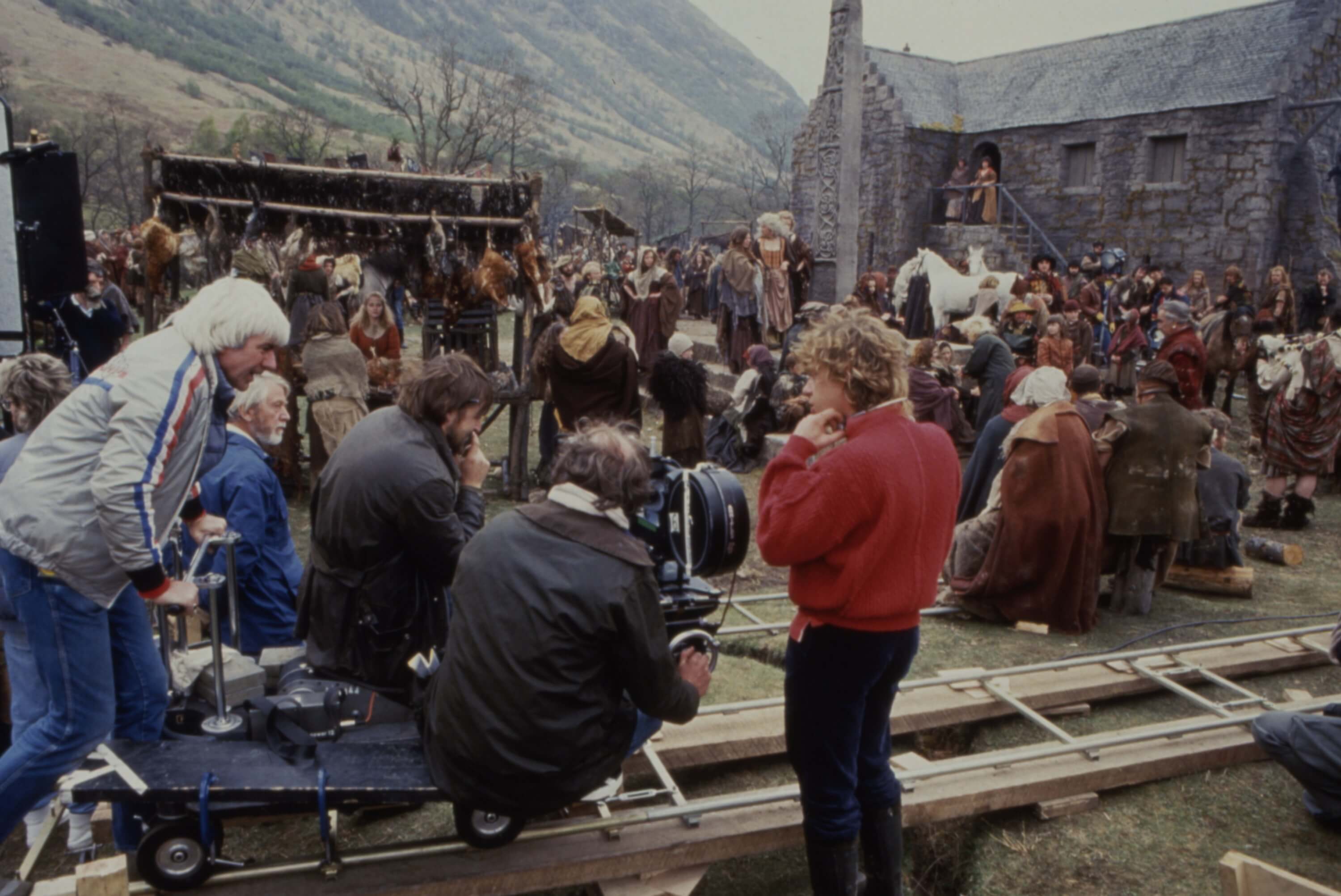
As Highlander prepares to arrive on screens in all its 4K glory, STARBURST talks to maverick film director Russell Mulcahy about how his rule-breaking approach to filmmaking helped the crazy little ‘80s fantasy movie find immortality.

STARBURST: So here we are talking about Highlander again. Do you ever feel like, ‘for God’s sake can we talk about one of my other films?’

Russell Mulcahy: [Laughs] Sometimes I do, but I guess for some reason it’s the one film that resonates more than the others. I guess Highlander has a unique quality that people respond to.

We think one of the reasons that Highlander struck such a chord was because you broke all the rules when you made it. You didn’t apply the normal film rules, you applied the rules you’d learned through making music videos. 

I used the terminology, I think, of the music videos. Also, I was pretty much given free rein in a good way, and I had such wonderful talent with me. I had Alan Cameron, the production designer, Jim Acheson doing costumes and Gerry Fisher the DoP, just wonderful talent behind the scenes.

The first couple of days, I didn’t like the lighting so I asked if they could turn them off and go for natural lighting and they were like ‘Oh my God!’. But when they saw the first couple of days rushes, they all joined the party. They had a great time and there was this sense of creative freedom on the set.


Paul Archuleta/FilmMagic


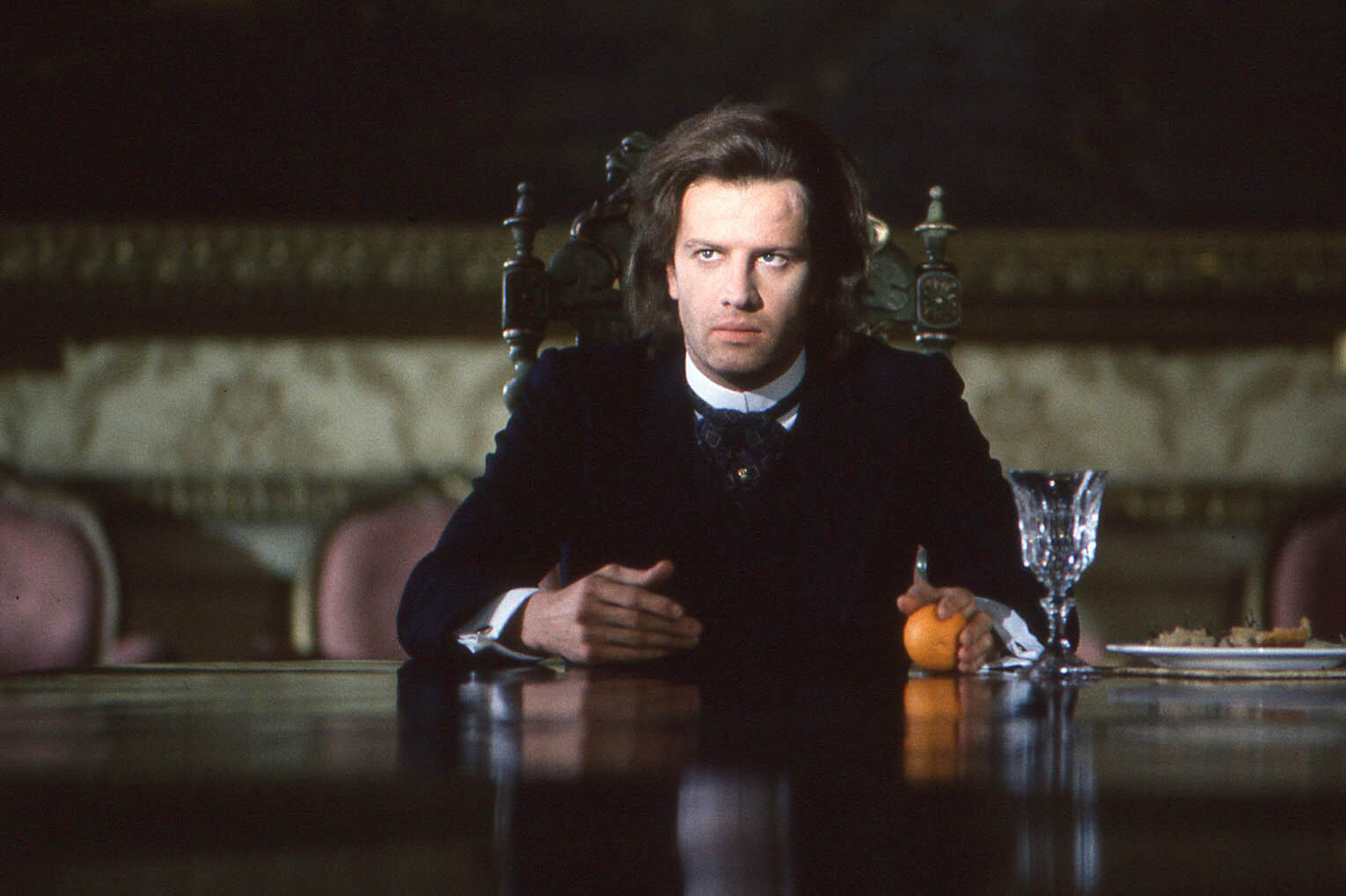
There’s a rumour that the infamous deleted ‘orange scene’ was a case you just shooting something to see if it would fit.

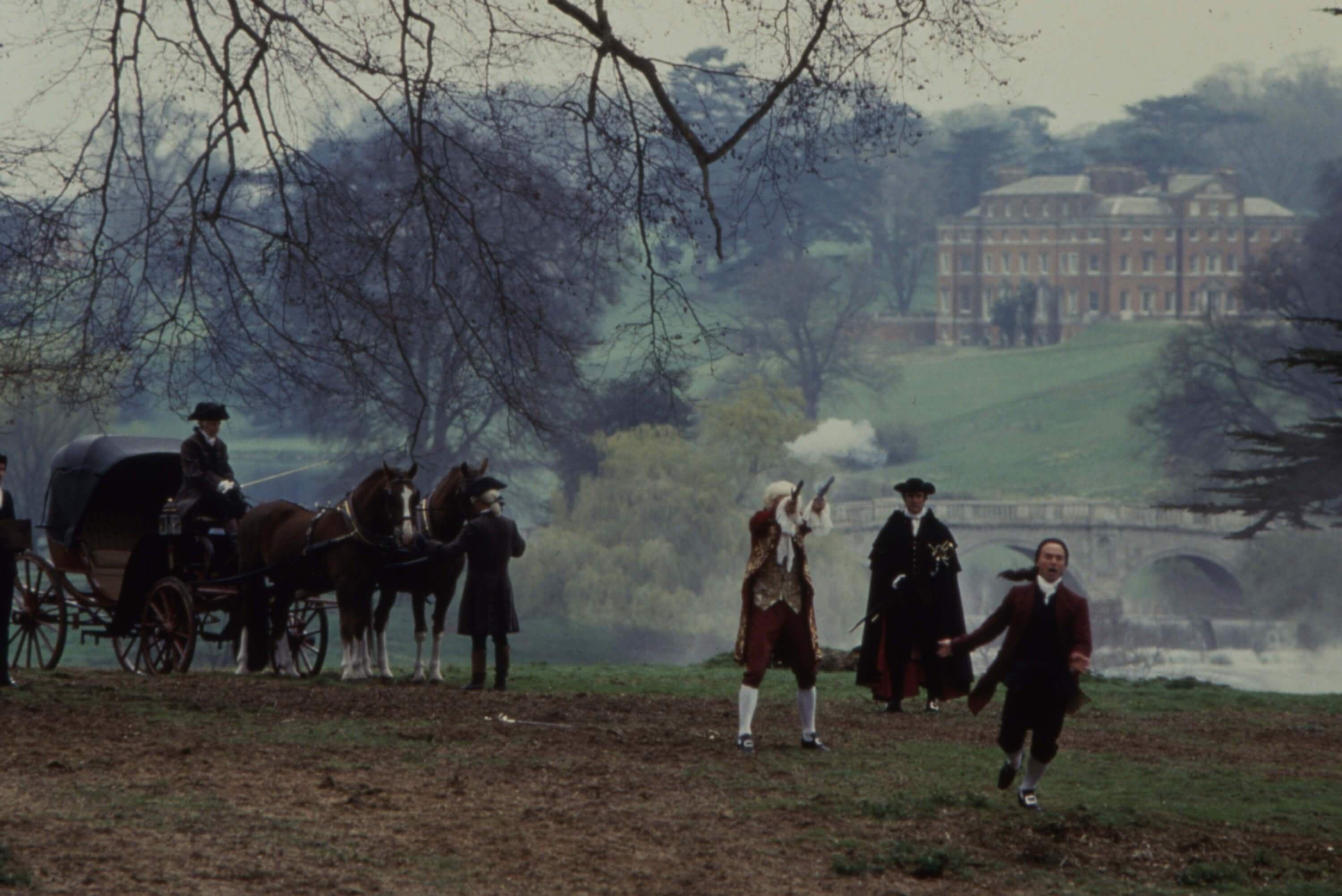
It was the first day of principal photography and we were filming the duel on Boston Common. So we filmed that and there’s this beautiful house in the background of the shot, so we went up there. It’s not in the script but we thought; ‘let’s shoot this scene and maybe if it works we can develop it into another flashback’. But it never developed. It was just an experiment.

We imagine that’s something that these days, you just can’t do.

Yeah. What also helped was that it was an EMI film and I’d done a lot of work with them and Duran Duran on Wild Boys and whatever, so there was very little intervention. It was like, ‘Okay, erm, good luck. Make something good!’

It’s such a shame that the deleted scenes are lost forever.

There was another scene that’s not in the film. It was a fight with Kurgan and another immortal amongst a load of computers. We did all of that and it was fine, but when we saw the first cut we just thought, ‘we don’t need another fight’. It was overkill. The film was already 113 minutes and in those days that was quite a long film. Now films are regularly two hours.


One of the lesser-known deleted scenes involve a lot more of Detective Bedsoe. Was there any particular reason why his role was cut down so much?

It was really just down to pacing. There was already some subplots going on and that one just wasn’t that strong. It was just this guy sniffing around and there was no real conclusion to it. I think the only bit that stayed in was the bit where he’s outside Brenda’s house and spills coffee on himself.

And that scene is only on the American Cut.

I remember being at a test screening, one of the first with an audience and they said we should lose the Boston Common duel, but luckily that didn’t go. But they did cut out the scene in Germany where Connor finds Rachel as a young girl for the American cut.

It’s crazy because that’s such a great scene and it says so much about Connor.

Right, and also the thing about that scene is that it was in the script but it was never filmed because of time and whatever. We cut the film together and I was like, ‘hang on, that bit’s missing’. So I pulled together all of my people from music videos and made a rag-tag little crew and we went out on a Sunday, rented a tank and this and that. We had Nicholas Roeg’s son, Waldo as DoP and when the actor who was going to play the German walked off because it was taking so long, Waldo stepped in and became the German. And we just shot that. It was unbelievable.


Do you have a preferred cut? There’s been a few between the US, UK and the Producers one when they painted out the wires.

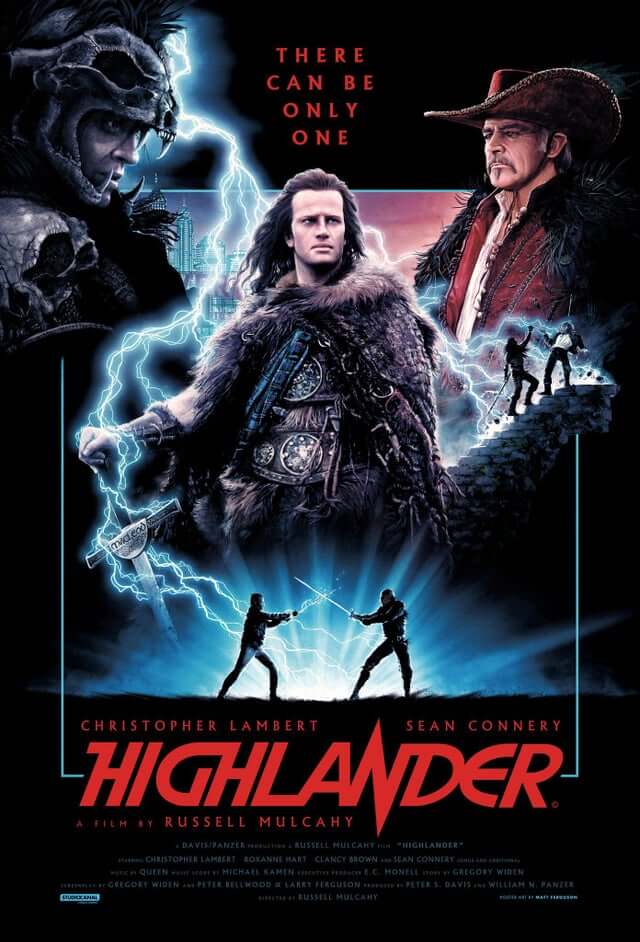
I hope they painted out the wires [laughs]. They were very thick! It is an ode to the past. But I am looking forward to seeing the 4K version, I haven’t seen it yet. The artwork looks great though.

It does, it’s nice to have a change from the same artwork we’ve had for so long.

It was a travesty what happened in the US with the poster artwork. It’s very unusual.

How has the creative freedom you had while making Highlander diminished as you became more popular and the budgets got higher?

There’s still a good amount of creative freedom, you just have to sell it a bit more. When you’re dealing with big budgets you can’t go wacko you have to have a reason. Highlander was made in the crazy ‘80s and everyone was a bit more free in those days. I couldn’t do that film now.

Would you ever return to the franchise?

No, no, no. It holds a very special place in my heart but I wouldn’t want to revisit it.


How do you feel about the reboot?

They’ve been trying to make the reboot for over 10 years and I wish them all the best. Whether it ever happens, who knows? It’s a great story, it’s got romance, the lore. That’s what attracted me to it.

So what are you up to now? You’ve just come off the Teen Wolf movie, right?

We do our final mix in four weeks and then that will be released on Paramount+ in January. There’s a few other things happening but I’m not going to mention them. I’m keeping busy.

Are there any of the upcoming projects where you foresee yourself being able to break all of the rules again in the way that you did at the beginning with Highlander?

One of them, maybe.

We’d really love to see that.

To really let my hair down? I’ll try not to disappoint you.


Highlander arrives on 4K UHD Blu-ray this October 31st from Studiocanal.