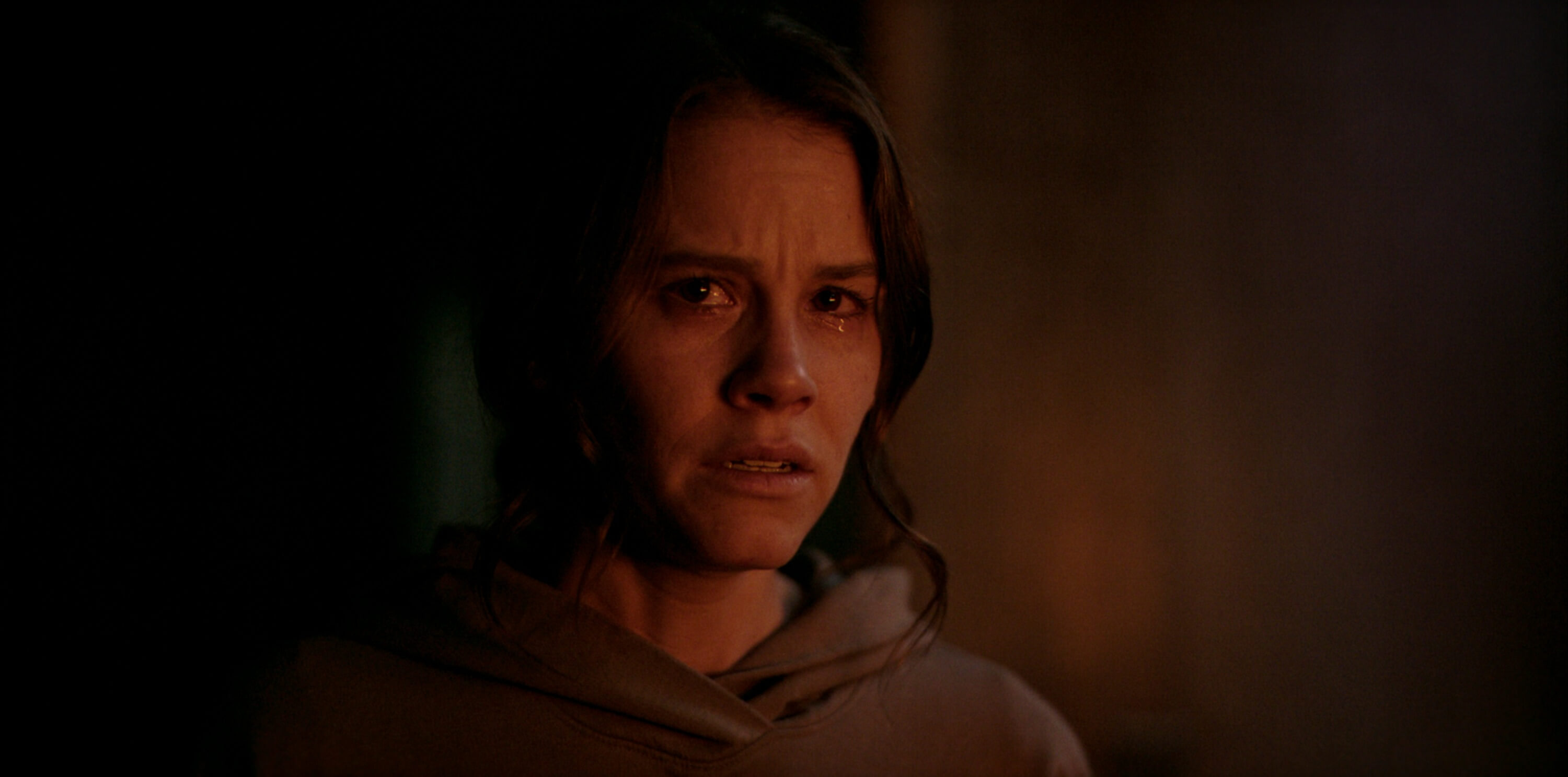
Chris Hayward | BRIAN AND CHARLES

chris wayward brian charles

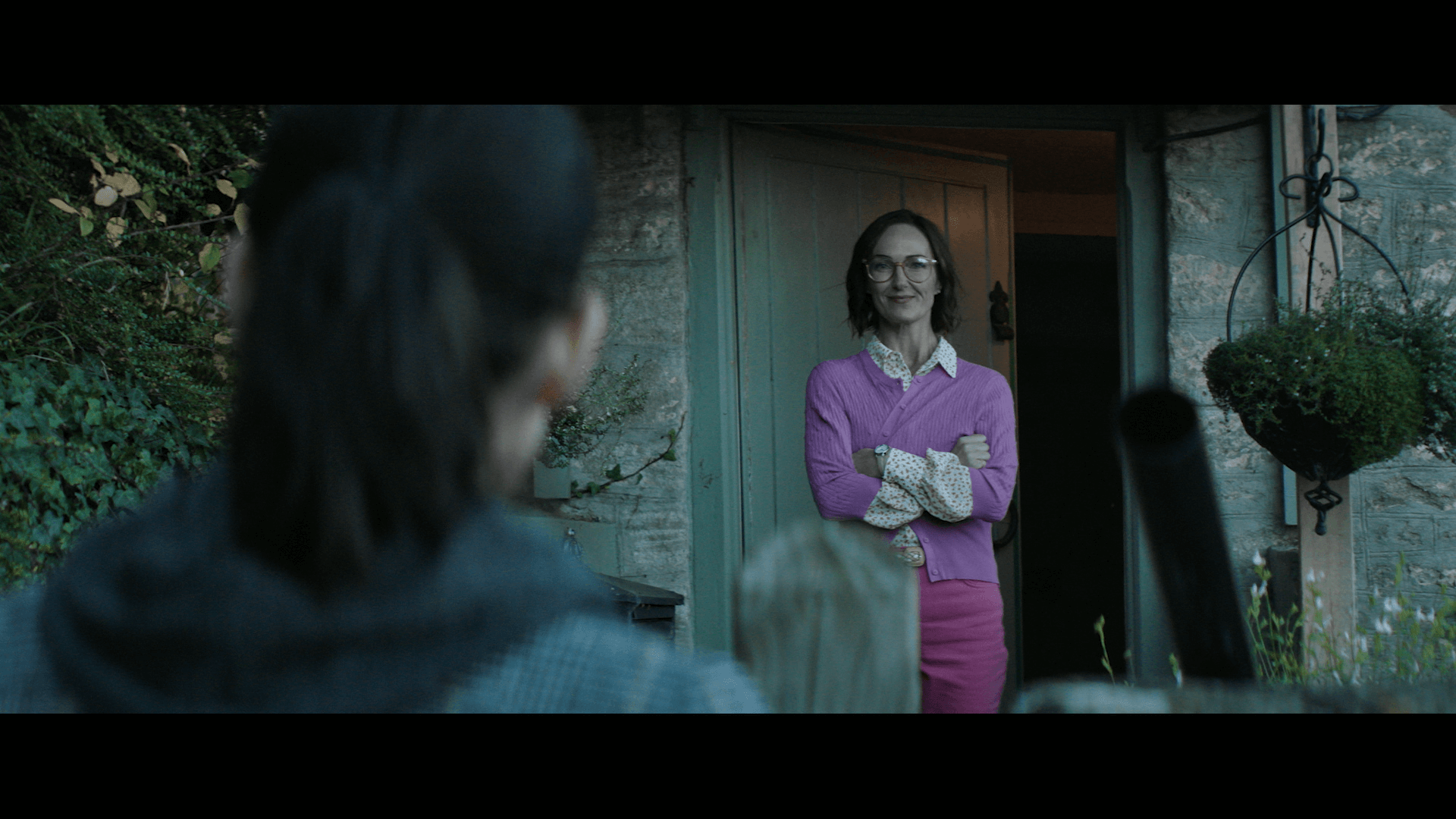
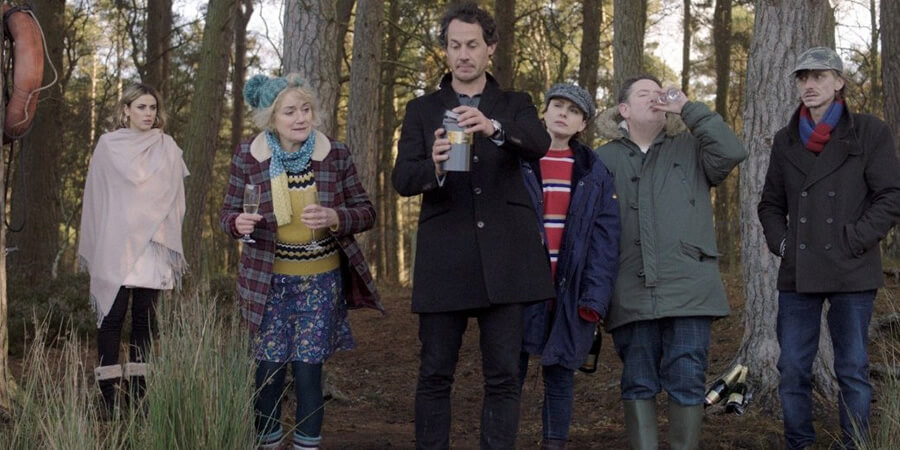
Brian and Charles is a funny, heartwarming tale of a bumbling inventor who builds himself a friend. We loved it and, with the home-media release of the film, we were able to sit down with Chris Hayward (co-writer of the film and Charles, himself) for a chat about bringing these beloved characters to the big screen…

STARBURST: While David Earl’s character of Brian Gittins is something of a cult comedy icon at this point, having hosted numerous stage shows in the comedy scene, appeared in various Ricky Gervais projects and released various hit podcasts, the origins of Chris Hayward’s character, Charles Petrescu, the film’s cabbage-loving robot, are a lot harder to pin down.

Chris Hayward: I was trying to do bits of stand up so I met David through the comedy scene. He started doing a low-fi radio show on the internet where he was being Brian Gittins and it was really funny. We both knew Rupert Majendie (who’s our producer on Brian and Charles) and he would call into David’s show but he would use this voice software to type out what he wanted to say and that became the voice of Charles.

Their conversations together were really funny, so we all got talking and I had an idea of how we could do it live, where I’d be dressed in a costume, on stage with David, and then Rupert would be sat at the back of the comedy club, typing away and doing Charles’ voice. So that’s how it began, really. For two or three years we did these live gigs which were quite mad as you can imagine, but they were a lot of fun and we were trying to work out what to do with them. At one point we were trying to do a live game show – we were trying to work out what the next Shooting Stars could be – but we never worked that out. It was just always mayhem on stage and people were baffled.

The main reason that Brian and Charles made such a splash with its release was that so many people saw and loved the 2017 short film that it was based on. How did that come about?

We’d do Brian and Charles live on stage for a few years and it wasn’t really going anywhere. We had a small group of fans – David certainly did as Brian Gittins. He had a hardcore group of fans. So we got Jim Archer involved, who’s the director. We knew Jim, again, through the comedy scene and through friends. So we all got together, we went away for a weekend in Wales, shot the short film and then that led to us getting commissioned for the film. That sounds like it happened over a few weeks, but from the start of the comedy gigs to making the film, the process took at least 10 years.

We only really ever made it for fun initially. We hadn’t really put anything of Brian and Charles on YouTube and we thought, “Well, they are quite funny together, but it’s only people who come to the gigs who’ve seen them”, so we wanted to put something online. We’d already done a little sketch with them but we wanted to make something with a bit more substance – but we didn’t really think anything of it more than that: just putting something on there and then moving onto the next thing, whatever that was.

FilmFour pretty quickly got in touch with us and said, “Do you think this could work as a feature?” And that led to us talking with them and developing it from there.


The route of turning a short film into a feature is a well-trodden one. How did everyone working on Brian and Charles approach the film in order to ensure they didn’t lose what worked the first time around?

I think if people can do it, I think making a short film is the best thing you can do as a proof of concept because, whether a producer or commissioners, rather than having to read – you know everyone’s making PDFs and treatments of their ideas that they send in. Rather than having to slog through all that, a producer – whoever – can just watch a short film and instantly get if they like it or not. It’s easier to show your ideas when you can film them and show them. Like Brian and Charles, if we’d just sent that in as a script, there’s no way it would have got made. You have to get the tone across and see the dynamic. You really had to see them on screen.

What helped was we knew the characters going in there. We knew them really well having performed them live for so long. We had an advantage there, going into the film knowing what our lead characters are, because obviously that’s the main issue: “What are these characters?” So we had a headstart in that way and, from there, we knew obviously we wanted to keep it as a comedy. But then it was just trying to work out a story, work something out that would keep people’s attention, that wouldn’t be too weird that people turned off – that was a conversation we had a lot of times. I’d often be thinking let’s make this really weird and they’d think people probably won’t like it if it’s too weird.

We had a conversation at first about whether to keep the mockumentary feel or whether to lose that and go with a narrative and we kind of felt like we were losing a bit of the comedy if we lost the mockumentary feel, just because when David as Brian looked at the camera, it was always funny, and saying little asides to the camera was funny. We tried to keep the tone of the short. We tried to keep the lonely aspect of Brian. We tried to remain true to that as much as we could.

In terms of thinking, “What would this look like in a film?” and “Are people going to believe in the character?”… Because even in the short, I think some of the comments were, “You can see it’s a guy’s legs”. They wanted more of a functioning, actual robot but we quite liked that cheeky appeal that it probably was a guy in a suit. It was getting the audience to believe it was a real robot, so that was really tricky but I think there’s something with practical effects that you can relate to more than CGI.

Films that I really love – even if they’re a bit shonky, if they’re practical, I kind of buy it more. It’s real and believable, whereas CGI sometimes feels a bit cold. That gives it a charm sometimes. I mean Charles is a puppet, basically. He’s like a box and I’ve got a mannequin head that I’m operating inside. I just thought, “You can have a Muppets film and they’re obviously puppets but you believe those characters and you invest in it”. C3PO is a guy in a suit, isn’t it? But you buy into the fact that it’s an android, so I was just crossing my fingers and hoping it’d all work out.

Charles is a wonderfully designed robot. Inherently funny, charming and unique in equal measure – all just to look at him. Where did the design come from and what was the process of taking that into a feature film?

I designed the one that we used for the comedy clubs and I just had it in my mind because he sounded like a professor, so I had a “professor-y” look in my mind. I’ve always been a big fan of sci-fi, so I think a lot of that fed into my brain. When I was a kid, there was a terrible, 1980s sci-fi film called Eliminators and there’s a guy in it called Mandroid who’s got like an eye – he’s kind of like The Terminator, but he’s half man, half machine and it was so bad, but I wonder if that fed into my subconscious as a kid and Charles has come out of that in a way. He’s a low-fi construction.

We handed that over to our production department on the film and they pretty much copied it – it’s pretty much the same thing. It’s a box, a mannequin head – we just had to get some new heads, a new box and some new clothes. Other than that, the film version is pretty much made the same way that we did the comedy version. We used them all in the film and they all got quite battered. I’ve had some of them returned to me and the original just looks like he’s been crushed in a crushing machine. And we have, I think, about four heads in total – all in different states of… they all need repairing.

Part of the appeal of Charles is the deadpan delivery of his automated voice software. What are the logistics of working with that as an actor or a comedian?

We had all the lines from the script pre-recorded on a laptop and when we were indoors, Rupert could trigger those lines. At the same time, if we had time, we’d try to do an improvised version of that or try some new lines of dialogue where Rupert could type. When we were outdoors, we often couldn’t use the laptop, so I had to either remember that I say the dialogue that we had written or, again, we’d improvise scenes and I’d be improvising with David and we’d dub over those lines in post. And what was really good was that in post, we could alter whatever Charles said at any point, so even up until the very final picture lock, we could still change Charles’ dialogue. That gave us a lot of flexibility and really helped us change the tone of entire scenes sometimes. It’s a good way to work.

Is this the last we’ve seen of Brian and Charles?

Considering the state of his heads currently… Yes.

But hopefully, we’re talking about trying to bring them back maybe. In what capacity that’ll be, I don’t know. We talked… is there a TV show in there? The sequel? It’s a world that we’d like to revisit and we’re always talking about different ideas that we could come up with. And, certainly for Brian, coming up with inventions was the funnest part of writing that script and different things he can do and you could just have endless fun with that. So stay tuned – is that what they say? Stay tuned.

Brian and Charles is out on DVD & Blu-ray October 24th and is available now to rent or own on digital

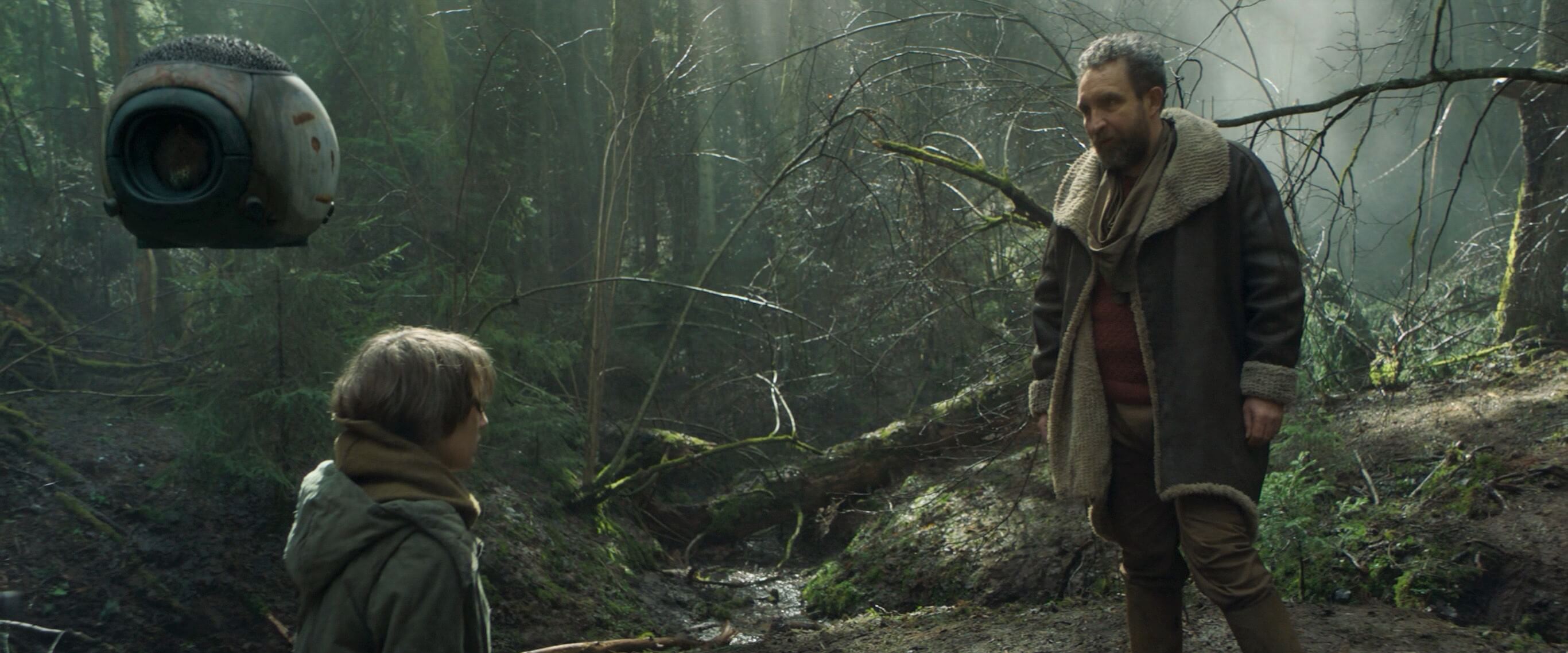
Richard Brake | VESPER

richard brake vesper

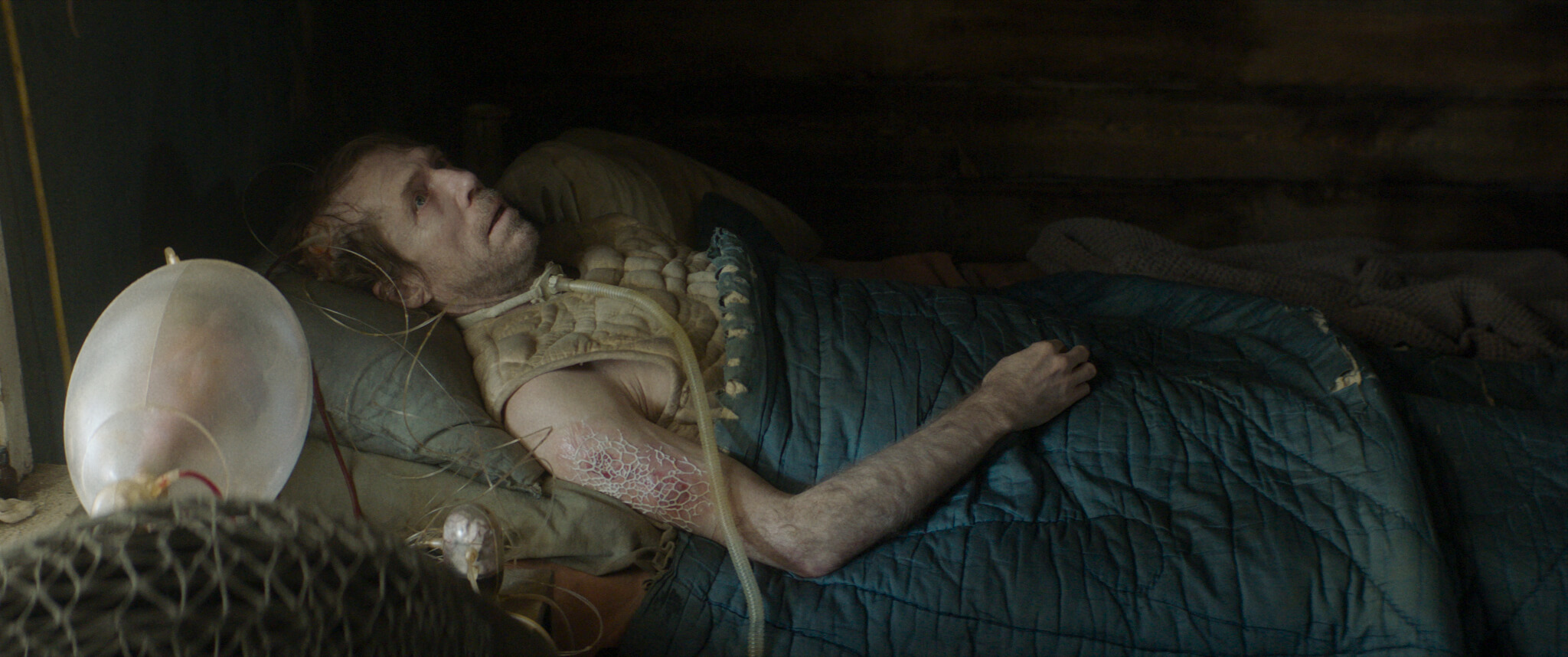
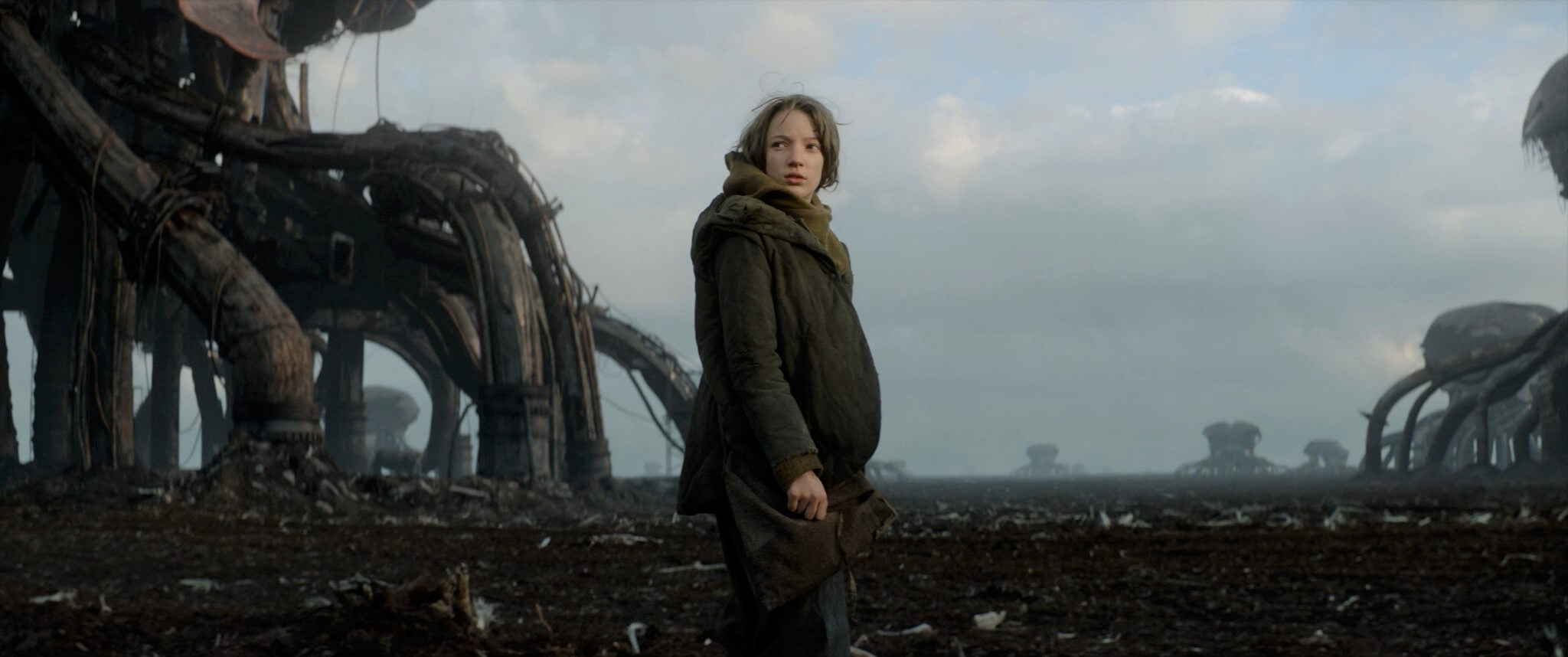
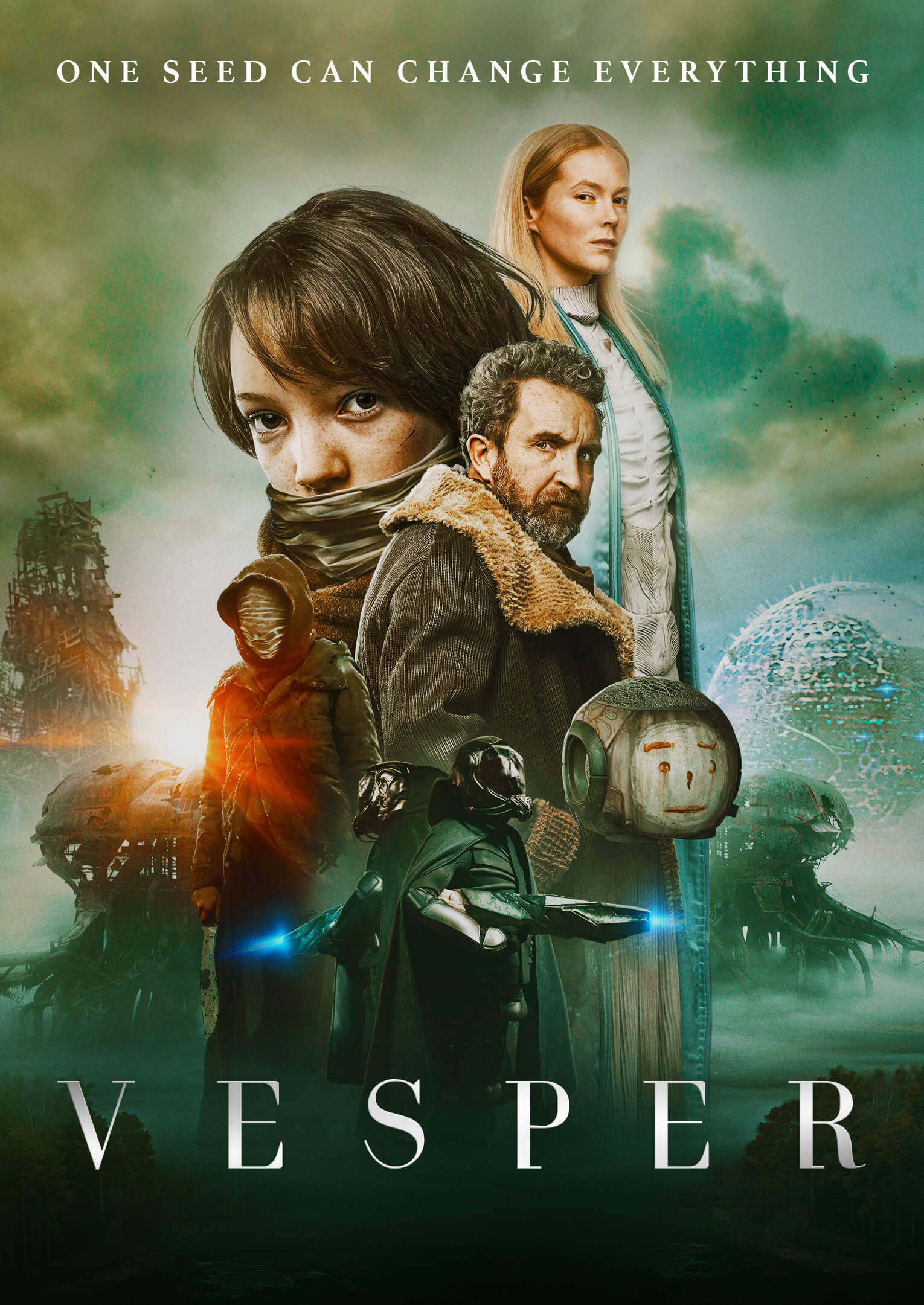
Visually epic, and thematically current, this extremely realistic sci-fi captures a hopeful story contained within a bleak setting. Submerged in this detailed sci-fi, Vesper (Raffiella Chapman) has to fight for a better tomorrow alongside her father Darius (Richard Brake); living with locked-in syndrome he is only able to communicate via his eyes and a drone. STARBURST caught up with Richard, who’s also known for Game of Thrones and The Mandalorian to discuss the challenges of being a parent in an atmosphere like this, the many metaphorical layers that Vesper has, and what it was like to work alongside Kristina Buozyte and Bruno Samper!

STARBURST: When did you first meet Kristina Buozyte, Bruno Samper and Brian Clark, and why did you initially want to work with them?

Richard Brake: I was brought on board maybe a couple of months before filming really. In fact, I didn’t meet them until I arrived in Lithuania! So I received the script through my agent, and they offered me the role of Darius. I read the script, loved it, and then I went back and I watched Kristina and Bruno’s film Vanishing Waves, and I thought they were incredible directors. So I was like “Yes! I want to be in it”. Then I met both Kristina and Bruno once I arrived in Lithuania, right before we started filming when we were preparing for the film. I don’t think I actually ever met Brian. I think Brian was more involved just with the writing of the script. Whereas Kristina and Bruno were more involved in every aspect of it. They are incredibly detailed directors.

Kristina and Bruno had been working on this idea for six years, do you know how the original concept for Vesper came about, and can you tell us about what they’re like to work with?

I can’t really speak for them on that. I think my experience from working with the two of them is that they’re incredibly visual directors, as you can see from both this film and their previous work. But also, especially with Kristina – because from my experience with working with Bruno he is very much the visual guy, very specific with setting every scene up in terms of how it’s going to look. He was moving little bits of things, here and there on the set, like “Oh no, this looks better over here” – Kristina was very detailed with the performance, in terms of what she wanted the characters to express in every scene. She’s an incredibly detailed director, which as an actor, is a wonderful gift to work with.


Leading on from that, and as your character is both voiced, and in the actual movie, we were wondering how they pitched Darius to you in the beginning, and what excited you the most about playing that part? 

My agent said that she had read the script and she said the character had locked-in syndrome, so he doesn’t move, except for his eyes, and he speaks through a drone. So I was like “OK!”, and at first I was intrigued by that breakdown, and that description, and then as I read the script, I began to do some research in terms of what locked-in syndrome actually is. Obviously, there’s a fantastic book, and movie, The Diving Bell and the Butterfly, which is a true story about a man with locked-in syndrome. It fascinated me to try and express what was going on with Darius, without having the ability to speak, and also to move. Literally, I had only my eyes, and what was going on behind my eyes in terms of my thinking, to express all of the emotions that Darius is going through, so for an actor, it was an incredible challenge, and I love a challenge. So yeah, that was thrilling.

Some may assume that there is less to do when you’re acting with just your eyes, however, it’s quite the opposite right?

Especially with Kristina going “No, do it again! We need to see more”, because as I said, she’s very demanding, which is wonderful, to really push for me to do as much as I could. Which is really what good acting is about, because with that we don’t really see anything, it’s all really what’s going on with the thinking of the actor. So it was a really fun challenge. Mind you, having said that, Eddie Marsan, who is a good buddy of mine, continued to take the mick out of me all of the time, saying that it was “The easiest job on the planet”.

There’s a really intense scene with Darius and Jonas [Eddie Marsan] where he basically nearly kills you. How fun or challenging was that particular scene to do, just through your eyes, and what was it like to put together?  

It was a lot of fun because I’ve known Eddie for thirty years, we went to drama school together, so we are very close friends. It was a coincidence that we were in this film, and we’ve been in a few films together. It’s always been a random coincidence, but it’s a great coincidence because even though we both live in London, Eddie is on the west side and I’m on the east side so we see each other rarely in London because we are either working or running around looking after our kids. But we see each other on sets, all over the world. So it’s great to work on this together, and it’s always great to do a scene with him. I love working with him. So that in itself was fun. It’s an interesting scene, and it’s one of my favourite scenes in the film. Eddie is moments – or seconds – away from killing me; it’s powerful and I had to again express all of that emotion with just my eyes. So again, it was challenging but it was incredibly fun. Especially fun doing it with my best mate.


How long did it actually take to get ready for the scenes where you’re lying down, and what was that whole make-up process like? 

It was pretty simple for that one. I had to get grungy, and dirty looking, which is never hard for me. Make-up artists don’t have much trouble with that, with a face like mine. Ironically, now I remember back, I think on one of my first few days of shooting I bent down and my back went out, which happens very rarely. I get a back spasm, so my back just freezes up, so it’s not exactly the most comfortable thing. So I was kind of glad that I wasn’t in a huge action film at the time! I could have moved around, but it’s a pretty saw back. So lying down was an advantage with this film.

Let’s talk about the voiceover work for Darius’s drone. Can you describe the process behind putting a drone sequence together, and also, where did you actually record the lines?

Yeah, good question, because that was done over COVID, because we shot this right at the beginning of 2021, so COVID had just kind of come to the end, but it was still showing its head every once in a while. So they had me record from home because the recording studios in London were closed down at that point. So I actually recorded it on my phone, with Kristina and Bruno, and the recording engineers were all on Zoom, and I recorded all of that drone dialogue on my phone. Over several times. Initially. I think eventually I went into the studio to do the final one, a bit later. I recorded those lines many, many times, for different edits. By the end, I pretty much slept with those lines going through my head.

There’s something very, almost, calming about the voice we hear from Darius’s drone. Can you tell us how they wanted you to sound, and also, was there anything you yourself wanted to bring to shaping how we hear Darius through the drone? 

We just worked it as though it was a real person speaking, and then they, of course, did a lot of editing and effects on to the voice to give it more of a drone quality. The calming sound is probably just my natural voice! With my three-year-old, I put him to sleep quite easily at night, telling him stories. I have a fairly droney voice.

The movie was filmed in Lithuania, and it looks incredible! However, for you, why do you think this location worked so well for capturing the feel of Vesper?

I think a lot of it looks incredible, because of the amazing special effects work. Done on a really tight budget, you have to remember that this film was not made on a Hollywood budget, and to make it look like it looks, real hats off to all of the special effects crew that worked on this. I believe that they were mostly based in France, and with Bruno himself, that was really his forte. I think that has a lot to do with the look of it, there’s a kind of – and I film a lot in Eastern Europe – we have these dense forests out here in Eastern Europe, I’m actually in Slovakia right now shooting a film. Lithuania has an incredible landscape, and they were able to use that as well, to give it that effect. I think one of the things that really struck me about the film, is there is a kind of merge of European and Eastern European, or even Western in terms of American storytelling a little bit. Then with Eastern, it’s like this apocalyptic film Stalker, by Andrei Tarkovsky, a Russian filmmaker in the ‘70s, who made some incredibly bleak, dark post-apocalyptic films, well one film, in particular. There’s kind of a feel of that in this movie as well, I think. I’m a huge fan of Tarkovsky. He is an amazing director, check his films out, they’re incredible!

There’s a big use of practical effects in this movie. How do you think that approach helps to create a realistic feeling?

hey did a great job at making it realistic, a lot of times you’ll notice that a sci-fi or post-apocalyptic film just doesn’t look real. I think, even though obviously a lot of the plants and flowers were created that were imaginary, is that they’re kind of based on a reality, based on what could be real. I think that this film does a fantastic job of merging where we are now to where we potentially could be. It looks like this could take place maybe not now but in the near future. It doesn’t look fake in my opinion, which is why I think it’s touched a lot of people. The film has done incredibly well on the festival circuits, it’s got amazing reviews for such a kind of small film, and I think that’s partly because it’s so grounded in reality for a science fiction film.


So, what was Raffiella Chapman like to work with, and what do you think she brought to the world of Vesper

She was fantastic, an amazing young actor. I think she was about thirteen, she was very young. Often they’ll find actors that are quite a bit older to play that age, and they didn’t here. She was the age of her character. Which for a young actor is challenging. She did amazing, her dedication to the role, and to the shoot was extraordinary. I’ve seen much older actors pull tantrums, and be angry about the fact that they have to work every day and get up early. None of that from her. She was incredibly professional, and she worked so hard. I think she was in pretty much every day of that shoot. Every day was fairly gruelling physically and emotionally. There isn’t really a scene in that that isn’t gruelling for her character. She handled it so well.

For us, the back and forth between Vesper and Camellia represents the difference between rich and poor, would you maybe agree with that, and also, what else do you think their connection does for the viewer?

Yeah I think that’s definitely in the story for sure. The class structure that’s in the film is in reality. It just adds another layer. I think it’s another reason as to why this film has been so successful, and so loved by people and critics. It has many layers. You can just dissect all kinds of different aspects of it, discuss it, and talk about it. A lot of people have left the cinema and had discussions over dinner about the various aspects of the movie. It’s great to be a part of that. I could see that when I read the initial script, there was much more to it than just a thrilling sci-fi adventure. It’s much more than that, which again is kudos to Bruno, Kristina, and Brian, because they spent so much time on the script and their vision of it. Also the shooting of it.

The movie captures so many real-life problems. Like we’ve said, the dynamics between rich and poor, the way humans put greed above anything else, and how it could be a snapshot of our own future. However, was there a certain hard-hitting real-life theme that was captured within Vesper that really resonated with you? 

Yeah, looking after children. I have three children, and I was very much struck, and one of the reasons why I really wanted to do it, was because of the relationship between Darius and Vesper, and how he just wants her to be OK. He knows he’s not going to live forever. He just wants her to be able to survive on her own, which is kind of what any parent wants. For their children to be OK once they’re gone, or even before, hopefully. That for me was really what excited me about the project. Personally, as the character I was playing, to explore that relationship between parents and child, father and daughter. Having explored that intensely and continuing to explore that intensely on a daily basis as me!

We’re also excited for Barbarian, it looks great!

Yeah, that’s exciting. I’m really pleased with how well that’s done. I actually read that script on the way to Lithuania to film Vesper. They sent me the script and when the plane touched down I was texting my agent saying “Yes! I’ll do that for sure”.

Vesper is released in UK cinemas and on-demand from October 21st.


Ben Steiner | MATRIARCH

matriarch interview ben steiner

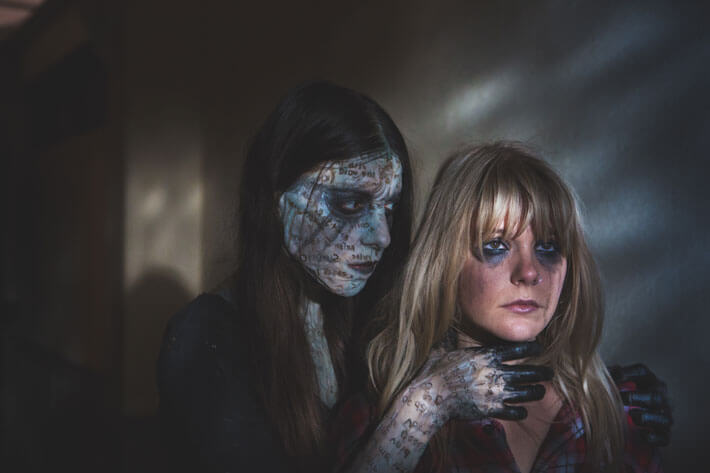
Following his successful shorts The Stomach and Urn, writer/director Ben Steiner has his feature debut with Matriarch, which lands on Hulu in the US and Disney+ in the UK. We caught up with Ben to find out more about the film…

STARBURST: Can you describe the film for our readers?

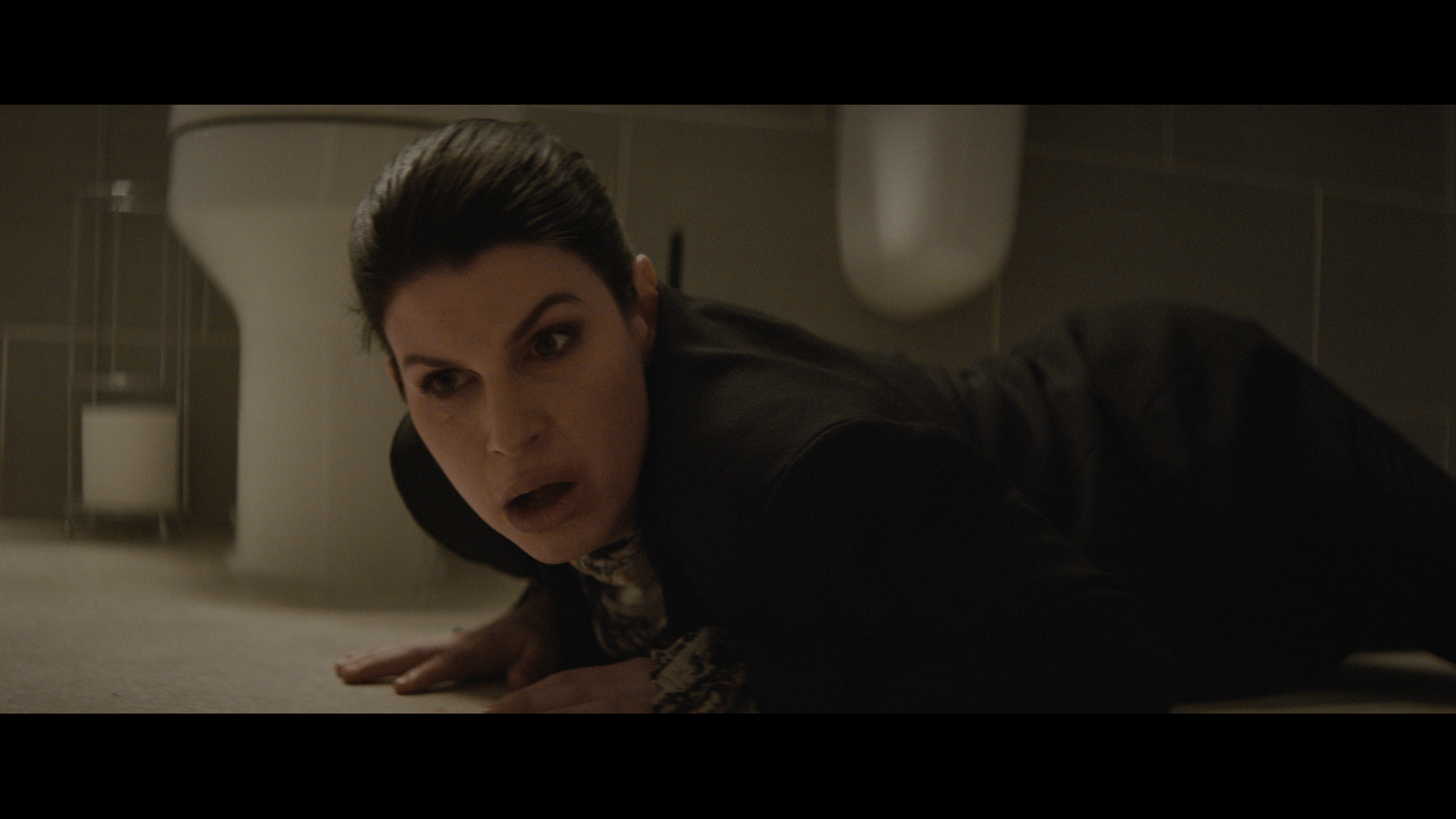
Ben Steiner: Matriarch starts off as a dark drama about an ad exec doing too much coke, then morphs into a gore, sludge, and saliva-spattered black comedy, and by the end is something like The Wicker Man meets Society. What holds it all together is the tension between the two main characters, brilliantly played by Jemima Rooper and Kate Dickie.

What was the inspiration for the story?

The main inspirations were my short film Urn, the landscape around where I live and Tlazoltéotl, the Aztec ‘goddess of filthy things’.

In 2018 I was commissioned by Hulu to make the short film URN which stars the brilliant Alex Reid (Unorthodox, The Descent) as a woman who’s escaped a toxic relationship with her mum by suffocating her with a plastic bag. That led to a commission to adapt the short into a feature, which I accepted without any idea of how I would do it, and the only thing I ended up keeping from the short was the theme of a troubled mother/daughter relationship. As I was developing the feature, the sludgy dankness of the Somerset Levels near where I live in Bristol seeped into the story and I also stumbled across an article about Tlazoltéotl. She merged with a monstrous father demon that I’d drawn several years previously called The Wormeater to form a character who pops up in the latter part of the film but is central to the whole story. The film’s title was actually Wormeater up until halfway through post-production. The original Wormeater has a mouth full of worms (obviously!), is shrouded in swirling black hair, and in a couple of my drawings, is surrounded by floating, worm-riddled turds. The character in Matriarch lost the turds but gained another nest of worms in a place that may raise a few eyebrows…


The cast is fantastic – what was the casting process like?

Thanks! Yes, I couldn’t believe my luck when Jemima and Kate accepted the roles, and I was luckier than I realised because not only were they brilliant actors, but they were also extremely kind, committed and low maintenance, which was a godsend given some of the challenges we had on the shoot.

Jemima and Kate didn’t audition but I did go through that process with the rest of the cast. I’d do a couple of scenes from the script and also an in-character Q&A, to give the actor a chance to really inhabit and own the character. I borrowed/nicked that technique off Ben Wheatley having sat in on auditions he was doing for some GoCompare adverts I co-wrote many years ago. I don’t know if he still does it, but it really works for me. Thanks, Ben!

What was the hardest part of the shoot?

My son tested positive for Covid on the evening of day one, so I had to spend the first week of my first feature directing in isolation via walkie-talkie, first from inside my car and then from inside a sealed tent! And then Jemima got Covid, so we had to totally reschedule the whole shoot. And then one of the main cast got shingles and had to be replaced at the last minute. Meanwhile, we had all kinds of basic day-to-day operational problems going on in the background. But when the team is committed you can get through those kinds of things together and you make it work and it bonds you. The only thing that seriously tested us was that, while the vast majority of the crew were really lovely, talented, and collaborative, we had a few people on board who were none of those things, to put it very diplomatically indeed.


How long was the process from writing to the final cut?

Just under three years, I think. A year to get the script signed off, a year-long Covid interlude and then a year for production from prep to completion.

Were there any films you looked at for inspiration?

The Suspiria remake was a massive influence with its predominantly female cast, grim and grey setting and occasional flashes of smutty humour. Not to mention its matriarch(s)! The cold, autumnal palette and feeling of pervasive moisture were a real touchstone for myself and DOP Alan McLaughlin, too. The Wicker Man obviously looms very large over Matriarch and I referenced it and The Devils in discussions with Hulu when suggesting that a horror film can be funny and even a bit silly without compromising the darkness. Early Cronenberg, especially The Brood, was an influence as I was writing some of the more visceral sequences. While we did struggle to get some of that from script to screen for the crew-related reasons touched upon earlier, our VFX artist Chris Clements and guest prosthetics designer Leigh Cranston did some absolutely sterling work for which I’m eternally grateful.

This is your feature debut, how differently did you approach compared to shooting shorts?

The guts of the process were virtually identical: I storyboarded the whole thing myself as before, rehearsed and blocked in the same way, and confused the actors with long, rambling notes as I always have done. Obviously, there are more people with a bigger cast and crew but that’s a matter of scaling up rather than changing anything. The one massive difference was having a First Assistant Director, the wonderful Kim Heron, to structure each day and keep us on schedule. Prior to that I’d either done it myself (badly) or relied on a resentful producer to do it. As well as doing her actual job brilliantly under very trying circumstances, Kim provided a lot of what you might call pastoral care that held the production together. She was my on-set emotional support animal, which I’d never had, or needed, before!


How does it feel to have your debut feature appear on Disney+ and Hulu?

The whole thing is a dream come true. The world premiere at Screamfest in LA went really well, so hopefully, it’ll get a similar reaction in people’s living rooms. Between them, Hulu and Disney+ have around 200m subscribers worldwide so it’s pretty amazing… and also terrifying!

What’s next for you?

Another feature, I hope! The feature version of my short The Stomach has producers and is seeking finance. I also have a J-Horror-influenced, transgressive haunted house thing called Dead Windows that’s ready to go. And then I have a horror/comedy/true-crime/bio-pic about two young men who perpetrated a vampire hoax around where I grew up in North London. It’s an amazing true story that hardly anyone knows about, and nobody knows more about it than me!

Matriarch is released on Hulu and Disney+ on October 21st. You can read our review here.


Stuart Brennan – Steve Johnson – Chris Watt | STALKER

stalker interview

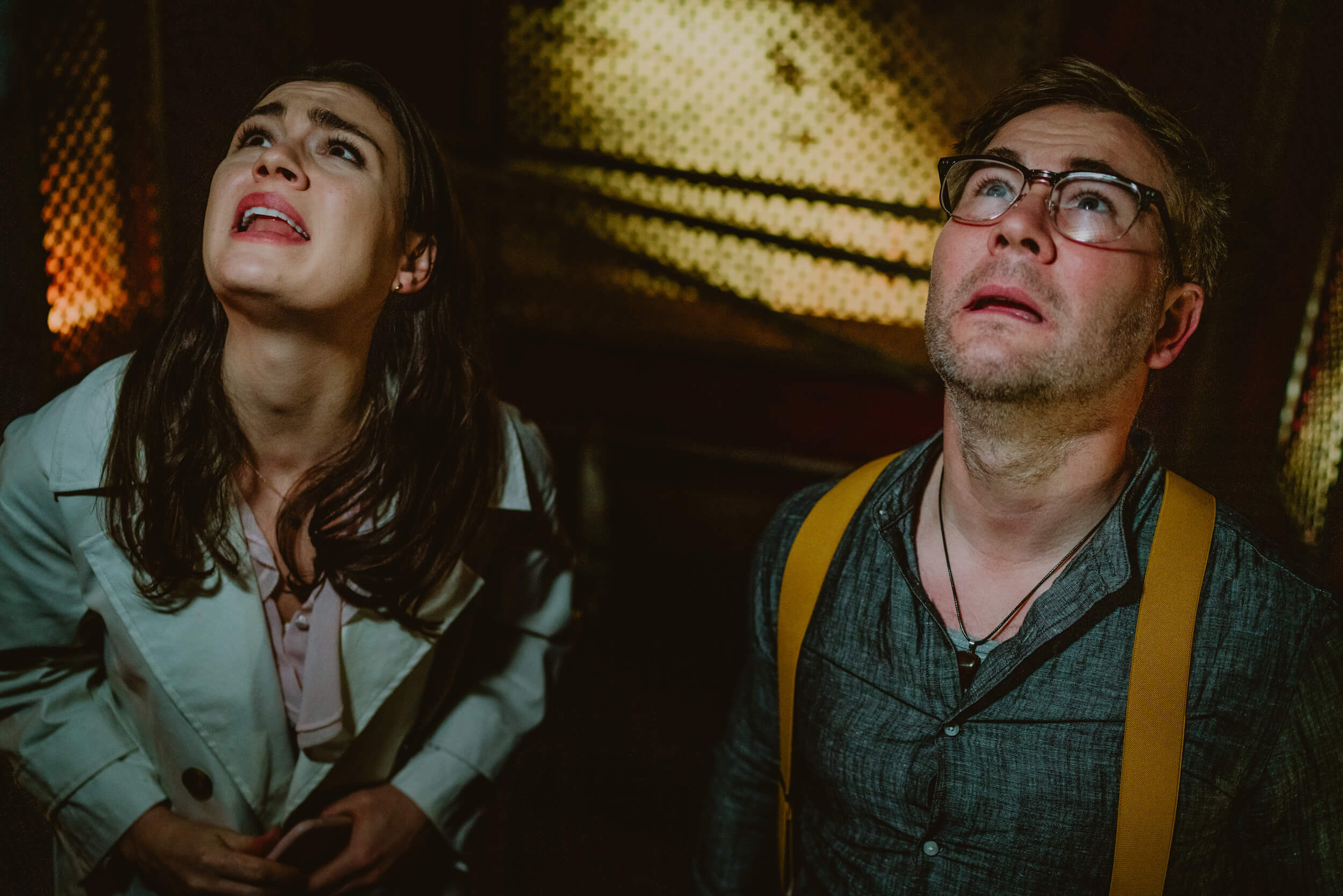
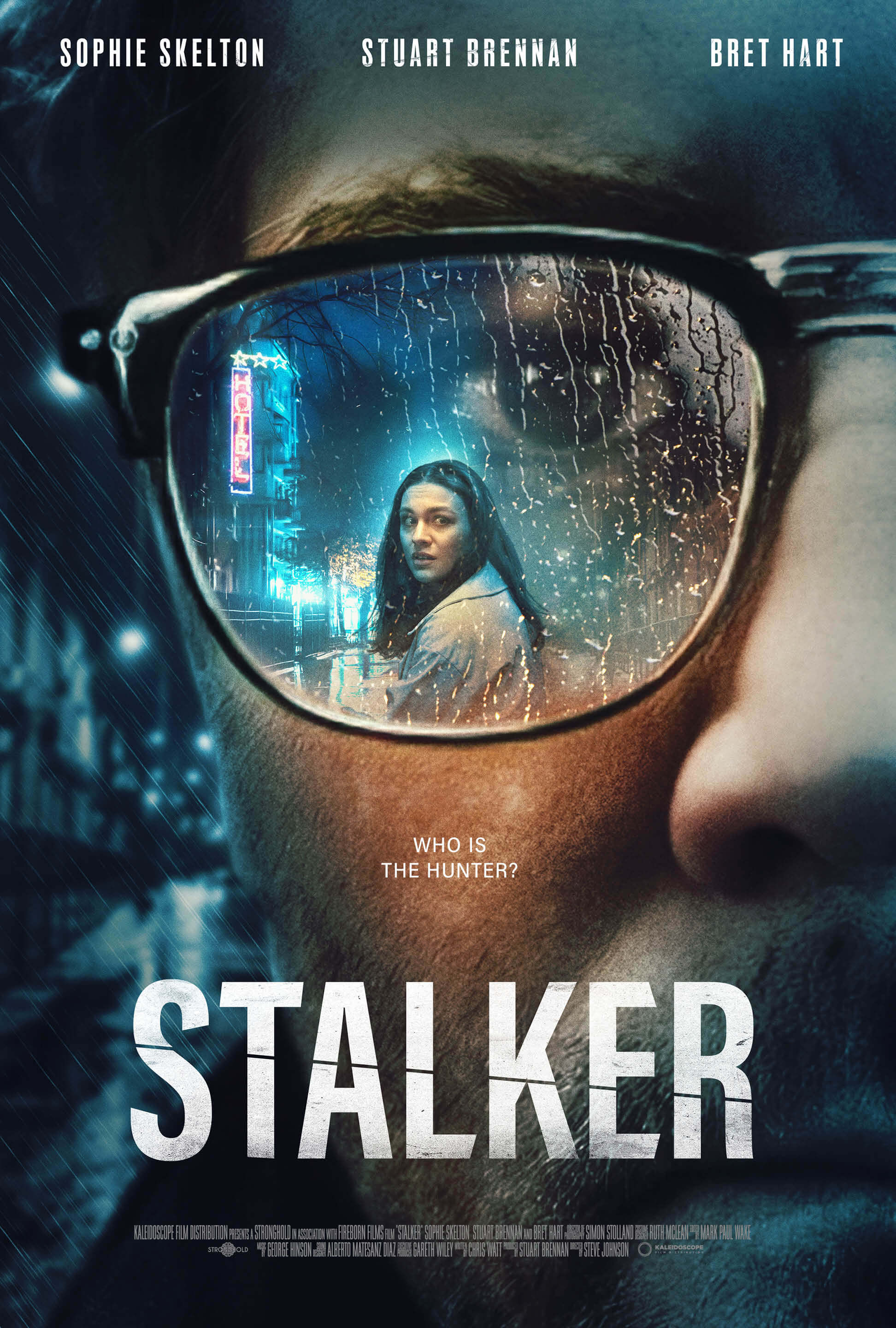
Tense two-hander Stalker hits DVD on October 10th. Set almost entirely in a stuck lift, an actor (Outlander‘s Sophie Skelton) is creeped out by a stranger who knows a little too much about her. STARBURST spent some time with director Steve Johnson, writer Chris Watt, and actor/producer Stuart Brennan to find out more about the shocking thriller, dealing with personal problems on set, MeToo, and much more…

STARBURST: What was it about the film that attracted you guys to it? And Chris, what influenced you to write it?

Chris Watt: It came from an experience I had five or six years ago when I became trapped in an elevator in a shopping centre in Manchester with two or three other people between the second and third floors. Even though it only lasted for a few minutes, it’s one of those claustrophobic experiences you never forget. And as a writer, I just thought I’ll store that in the back of my brain for another time – that’s a good idea for the story. I started writing it when we were in the first lockdown, and knowing that the way films were going to be made from then on was going to have to change fundamentally in terms of less crew, less cast, less sets, I thought I, can marry together this very minimal idea, and yet to try to do something complicated within that and create this 90-minute thriller/horror that could also work as a character piece.

Stuart Brennan: One of the first things we locked on to as a company was looking at a two-hander in one location. It just finished a movie from King Slayer where we had three or 400 people and it was in the middle of COVID we were filming. And that experience was extreme. We only had one case on the entire shoot and that was isolated and taken care of. Even so, you’re risking people’s lives. That’s how we felt at that time. When Chris mentioned he’d written a horror film that was two characters in one location, it certainly pricked my ears up. Then looking at it from a producer standpoint, you go “Well, where’s the challenge of making this film? What makes this film interesting?” For me, I guess I wanted to challenge myself as an actor, essentially doing a stage play on film. And then I wanted to see as a producer, if we could make this genuinely an engaging, if not thrilling, story for 90 minutes. And from there, we start looking at different directors and started going out to people and Steve was one of the people who immediately connected with the material.

Steve Johnson: It was a good story. It was two people in an elevator for 90 minutes, and they don’t go anywhere. You know, you’ve got these other films that are meant to be one-location films, but they always seem to leave, but here, there is nowhere to go. I always knew it was going to be a character piece between these two. For me, it was a no-brainer. I got a chance to work with Stuart. And then obviously, when we started talking about who would we bring on? Who’s going to challenge Stuart as an actor? We were looking at all these actors and we found Sophie Skelton. I think they really sparred with each other in a great way, they just challenged each other consistently.


What’s it like basically working with one person?

SB: It was amazing. It can either be fantastic or it will be a horror story in and of itself. I’m happy to echo what Steve said that it was it was just a beautiful partnership really. She has a very professional approach to work as do I. We both realised once we did our first day on the set that we were going to be doing very long tapes. We needed to work together. We had an unspoken pact that we were going to rehearse every minute that we had and because we were filming and staying in the same hotel, that made it quite easy. So after dinner, would go and rehearse. In the morning, we’d get up at four or five am and then sit and rehearse until everyone else came down for breakfast. Every time we weren’t on the set filming, we were back in the dressing room rehearsing. And that partnership built a trust between us, which then meant that when we were doing anything that was emotional or pushing a boundary, we were able to analyse that together and have both compliments for each other, which are quite hard with two relatively unlikeable characters – “Oh, that was a nice horrible thing you said there!” And then we worked very closely with Gareth Wiley, who was our exec producer. He’s obviously worked with some of the world’s biggest stars like Ewan McGregor, Colin Farrell, and Scarlett Johansson. He was able to give us coaching throughout the whole period, while Steve focused on the crew. He was able to be a bouncing ball for us with ideas and test some of our opinions and theories on the characters to really make them fully-fledged, rounded, organic characters. All of that said, the writing was so good to start with that we had a wonderful foundation to work from.

Have you done any stage that’s similar or anything like this before?

SB: Yeah I have, I was the lead for the international tour of Ghost Stories, which did Australia and I did an international tour of a play of Houdini, so I’ve been on stage quite a lot throughout my career. That’s kind of where I started. So it was, in all honesty, like going back to those roots. And that was really fun.

Chris, is it difficult writing just for two people?

CW: You approach it just like a conversation, you have to also at the same time think about what is that conversation telling us. There’s always a challenge, I think, particularly something like this, in how do you move a story forward when the characters aren’t even moving at all. It becomes about breaking down each scene into its own mini movie; it’s got its own structure, its own arc to it. It’s quite carefully constructed, we had a lot of conversations in order to make every line matter. And I don’t think there’s anything arbitrary within the screenwriting. Everything’s in there for a reason and everything is moving something forward. I think it’s the kind of film that’s going to reward a repeat viewing, so you can start spotting where the seeds were planted.

Did you film it chronologically?

SJ: Yes, we did. And I think that was actually one of the biggest things that helped. Because for each day, as Stuart said, you’d get up early, run lines, and they would do that in the evening, but they always knew where they were in the story. They knew where they were the day before they knew where they were going. So emotionally, they could take that character along the right path, as opposed to doing a scene here, a scene there. Sometimes you can get lost. it was really, really helpful, so by the time that emotion was building towards the final act, then these guys absolutely knew where they were emotionally. That just shows how much of a wonderful performance they gave.


Were there any influences that you went to with setting up the script or from a directing point of view?

CW: In terms of the screenplay, I’ve always loved films that are using the space that they have. I love the way filmmakers like Danny Boyle uses spaces in something like Shallow Grave or 127 Hours, where he’s able to take something and give it energy, even though you’re particularly going anywhere. We also looked to Gone Girl, Panic Room, and things that have a strong female interest as well. And again, things that sort of deal with space. Steve and I had a lot of conversations about that and also the idea of taking a concept and then making something complicated out of it.

SJ: I think those conversations then stemmed into preproduction and design. We spent a fair amount of time looking at the character of the elevator. Rather than say we’re going to make it feel like this film, we wanted to make sure it feels like our film. I think that’s informed by the design work that the guys did and the art department that made the lift a character itself. I wouldn’t say from a directing standpoint that we looked at some films and said we want to emulate that, we wanted to have it is be the world of Stalker and the elevator is the third character.

What was the worst part of filming?

SB: The blood! Because whenever you add blood into a set, or onto characters, continuity suddenly becomes a huge issue. You have to nail it really in one or two takes because the reset time starts getting out of control. And on this, because it’s in that one location, blood is going to get everywhere. It’s not just going to get on you. It’s going to get on the walls, it’s going to get on the floor, it’s going to get on the props, and then it’s going to start getting and the equipment because it’s right in your face. And so the moment we added blood, was the moment that the stakes all just got raised, the tension got raised, the time got shorter. But it highlighted the quality of teamwork going on with the crew and the cast and with everyone involved because everyone pulled together and suddenly we were moving like the clappers getting through scenes very quickly and efficiently.

But it’s a really good question that you’re asking here. I’m thinking about it and thinking that was the hardest thing, and there are often things that people don’t know that happened on a film. Particularly for me, one thing that maybe only two people know was that in the middle of filming, my family died. And I’m a huge dog lover, so it’s like losing a family member. I remember I got the call literally as I was about to leave my room to come down to start filming and obviously that’s a hell of a phone call to get hit by. You can’t hold back that emotion. I was instantly in floods of tears, quickly had another shower, took a deep breath and went down. That day, I would go in and do a scene. I’d then walk out outside, and bawl my eyes out for a couple of minutes until I could hear they were looking for me. Suck it up. Go back on and start acting. Steve and the crew didn’t know, because there’s nothing you can say it was going to make it better and you don’t really want people’s platitudes. You just want to get on with it and get through it. And so for me, that was probably the hardest day of filming. The most difficult thing that went wrong. When real life gets involved and you still have to deliver the professionalism that you hold yourself accountable to and make sure your project doesn’t suffer.

SJ: You know, that does show your professionalism! I didn’t know that and I couldn’t even tell you which day that would be – I take my hat off to you, sir!

SB: Only really Gareth [Wiley], the executive producer, knew as we were very close. And then the sound guy knew because I’m miked up. I remember walking in the first time after taking my little break and just seeing him look at me and he just gave me a friendly nod, like ‘you obviously don’t talk about it, that’s cool, I’ve got your back’. He didn’t tell a soul, I’ve got a lot of respect for that.


How did Bret Hart get involved?

SB: Brett and I have been friends for a number of years. Brett always wants to be a filmmaker, he’s a huge fan of movies, and he has appeared in a couple of films here and there. And when we were looking at a cameo, we knew we needed somebody with a bit of a name. Somebody that would bring an audience, maybe outside of the genre. We were throwing names around for a long period of time. And then we got into filming, and we knew that we could maybe film this another time. Brett was in the country around then, but we couldn’t make it work with the scheduling. Then we thought, let’s shoot it on green screen. So we got a crew together in Calgary and shot it as a VFX sequence. And he was amazing. He is such a professional. It goes without saying because they’re wrestlers they’re performers, but film acting is its own skill in and of itself. And honestly, he’s one of the best I’ve worked with. Dare I say, the best there is, the best there was, the best there ever will be. [Laughs]

What do you think the film says about the film industry post-MeToo?

SB: I think certainly, so many actors, actresses, myself included, have been in compromised situations with professionals where we’ve been abused either emotionally or in some horrible instances physically as well. I think the MeToo movement was so amazing for shining a spotlight on that. Saying ‘We all know what’s going on and what’s happening, it’s kind of a running joke. Let’s hold people accountable please; enough is enough’. That movement was paramount in making the work environment, for actors and crew, better. And I love the fact that that is tied into the film in its own way, in actually asking what is appropriate behaviour socially, in the work environment, and also on film sets. And has it gone? Absolutely not. It’s still there, people are still abusing their power and trust and I for one am very proud that we’re shining a light on that and saying let’s stay on top of this guys, let’s keep making the change happen.

Was that in your writing?

CW: Yeah. It’s one of the things I’m proud to solve in terms of writing that I want to I didn’t want this to be an exploitation thriller or horror. I didn’t want it to feel manipulative. I wanted it to be a film about something. I wanted to contribute to the conversation. A film’s not going to change the world, but contributing to the conversation is incredibly important. I like the idea of strong female characters. I liked the idea of exploring the darker side of nature in both sides. And I liked the moral compass of the story as well because there’s a very thin line between good and evil within this story. The fact that the story asks you to confront subjectively yourself, what you consider to be proper punishment or do the ends justify the means I think that’s one of the more interesting things about it. I’m just very happy that it comes across that way.

SJ: It’s a very powerful role for someone like Sophie, it’s not pure exploitation but people will judge a book by its cover. I’ve already seen on social media: ‘man stalking woman: it’s not for me’. But give it chance because it’s maybe not what you think.


Stalker is released on DVD and digital on October 10th. You can read our review here.
Five Films to Check Out on Legend This Week – 031022

legend deadly mantis

It’s October and Legend continues to pack their schedules with great films and TV shows, but here are our picks you shouldn’t miss this week…


Monday October 3rd, 10.55pm – Tales from the Lodge (2019)

MacKenzie Crook and Johnny Vegas are among the stars of this horror-comedy portmanteau film. What makes it special is each actor directed their own story within the movie!


Wednesday October 5th, 9pm – Piercing (2018)  

Superb, twisted thriller from director Nicolas Pesce (The Eyes of My Mother). A normal guy books into a hotel room with the intention of committing the perfect murder.


Thursday October 6th, 10.50pm – Peripheral (2018)

Directed by Paul Hyett (Howl), technology takes over art when a writer struggles with her new book. Stars Hanner Arterton, Jenny Seagrove, and Tom Conti.


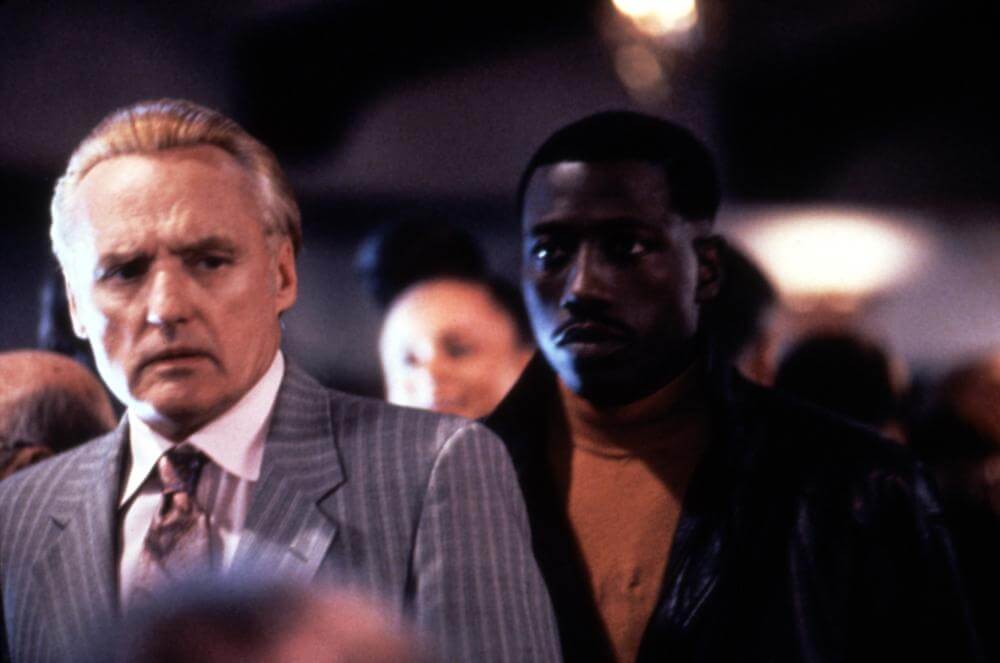
Saturday October 8th, 9pm – Boiling Point (1993)

Wesley Snipes and Dennis Hopper star in this action flick full of mayhem, revenge, and mobsters.


Sunday October 9th, 9pm – 12.10am The Vintage Vault

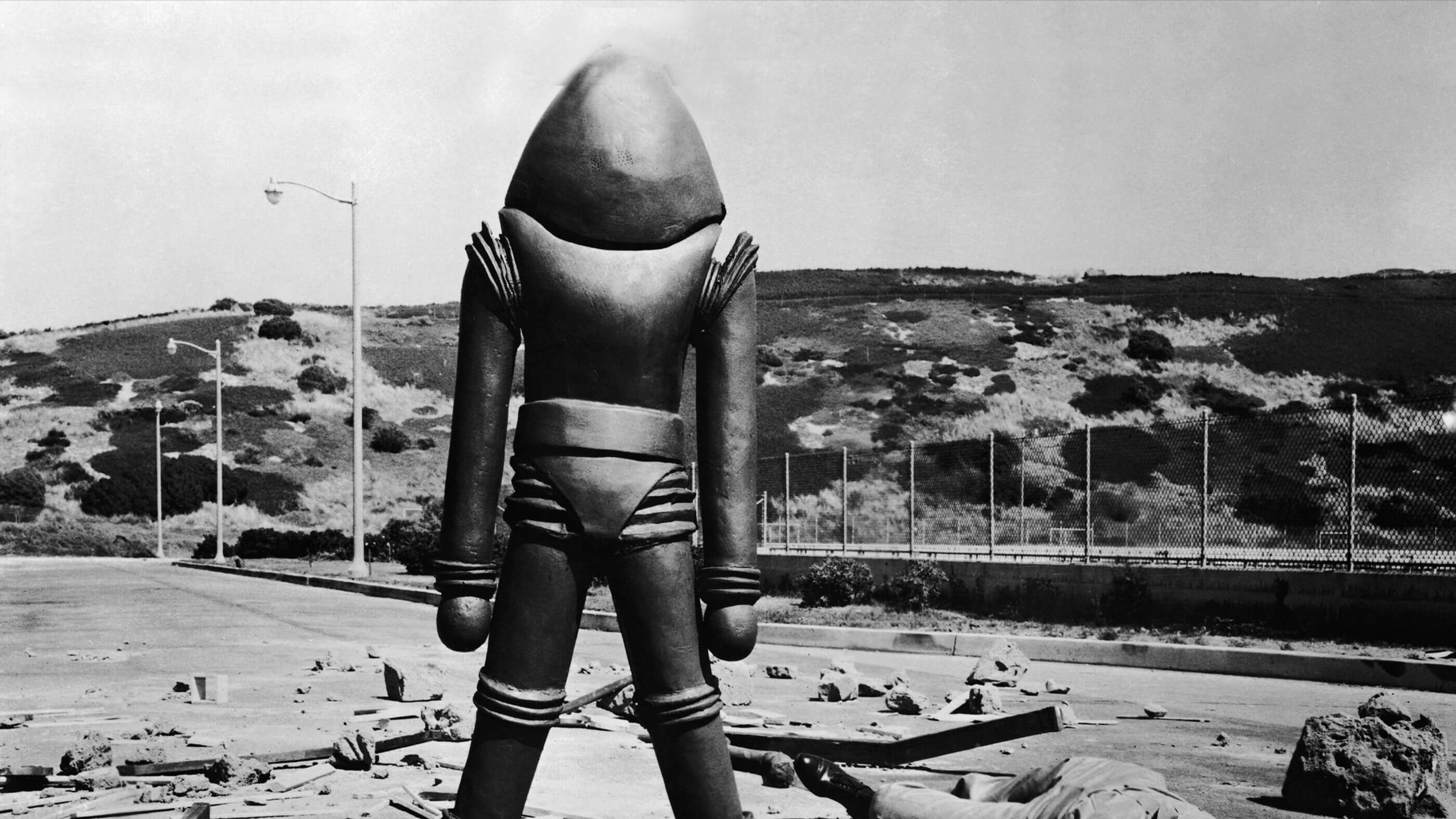
Legend continues to celebrate the Golden Age of genre cinema with a season of double bills. This week, there are a pair of fifties creature features. A giant beastie is on the loose in The Deadly Mantis (1957) and the threat is from outer space in Earth vs the Flying Saucers (1956), which boasts effects by Ray Harryhausen.

Find out more information at https://www.legend-tv.co.uk/

Tune into Legend on Sky 317, Virgin 149, Freeview 41, Freesat 138.

Camille Keaton | I SPIT ON YOUR GRAVE

camille

With I Spit on Your Grave 4K UHD Blu-ray, we revisit our chat with iconic star  Camille Keaton…

STARBURST: What was your initial thoughts when you got the script for Day of the Woman?

Camille Keaton: I really wanted the part. I knew that it was something I couldn’t call my parents up to ask them about it because they would be against it. I wanted to do an American movie because I have been working in Italy for a few years and this was my chance. It’s a character that gets to show many different aspects of her personality and so forth. So, I thought it was a good idea to do it.

What was Meir like as a director?

He was wonderful! A few months later we got married.

And then the name of the film was changed later on. What was your thoughts on that?

It was changed a bit later. When the distribution was taken over. At first I didn’t like it, but now I think it’s a good idea because it’s a title that you remember and it gets your attention.

Were you aware of the controversies that was happening in the UK with it on video?

No, not at the time. I knew it wasn’t an easy film to distribute.

We know there was trouble with Siskel and Ebert over there…

They sure hated the film! When Ebert said what he said about the movie, it just made more people want to go to see it. Meir said, ‘don’t be upset about it, this is good!’

It was similar in the UK, when there was such an outcry, it became a must-see film.

It’s funny how that works, right?

Was there any thought at the time that it would have such a legacy?

Oh, you just don’t know that you’re making a movie. That the film would still around today. I didn’t think it would still be popular. I just had no idea at all. And now they’re coming out with this six-disc set. They’re bringing all the films together, and that’s pretty cool.

What was your favourite kill in the first film?

Oh, I would say the hanging.

Over here, everybody remembers the bath scene.

That was a good scene too. The thing I remember most about the bath scene was we’d already shot a scene for after bathroom scene and my hair is up, when I’m rocking in the rocking chair. But Meir wanted my hair down. I said you can’t have me walking out of the bathroom with my hair down then all of a sudden it’s up! The other actor, Eron Tabor, wasn’t nervous at all about doing that scene, I think I would have been if I was in his shoes!

What were your thoughts about coming back to the sequel after so long?

I’d been asking Meir to make a sequel for many, many years and I gave up on it. Then finally, one day he called me and he said, ‘we’re going to make a sequel’. And I play the mother of Jamie Bernadette, who is the one who gets assaulted this time. She did a magnificent job. We got on great together. If I hadn’t done the part of Jennifer Hills again, I would have liked to have done the part that Maria Olsen did. She did such a great job.

She’s terrifying!

Yes she is, and yet she’s such a nice person!


 I Spit on Your Grave is available on 4K UHD Blu-ray now. 

Interview with the Cast of SMILE

parker finn smile

Within SMILE lies this firm thread that not many of the people surrounding Rose fully trust what she’s going through, and the constant sense of paranoia that it creates becomes an unnerving watch for the viewer. STARBURST talks with Sosie Bacon (MARE OF EASTTOWN), Jessie T. Usher (THE BOYS), and Kyle Gallner (SCREAM) to dig into some of the trust issues and dynamics that the movie projects, whilst avoiding spoiler territory!

STARBURST: Parker Finn [Writer/director] describes Smile as an “escalating nightmare”, which is pretty accurate; however, how would you all personally describe the tone and overall feel of the movie to someone who’s about to watch it for the first time?

Kyle Gallner: I would call it a 90-minute-long panic attack!

Jessie T. Usher: I feel like I’m on the spot! For the overall tone, I feel like it’s just like a building doom. It’s like an inevitable doom.

Kyle: It has a building sense of dread!

Sosie Bacon: I also feel like the last time I watched it was also with an audience, and I felt like actually, the tension was relieved with slight humour, but it wasn’t, like, too on-the-nose humour.

Kyle: When you’re so scared, that’s the release. The laughter is the thing that kind of gets you out of it.

With Trevor, it can feel like maybe he doesn’t trust or believe in Rose. Is that fair to say Jessie, and also, how fun was that element to work on as an actor?

Jessie: That was my favourite element of this character, but it’s not fair to say that he doesn’t trust or believe her. He wants to trust and believe her, his intention is to trust and believe her. He loves and cares for her, and he can see that there’s something wrong, he just wants to know, what it is, so that he can help. When he doesn’t know what it is, and he doesn’t feel like he is of any use, he starts reaching for different things, for somebody to bridge the gap that’s between the two of them, and it starts to almost get personal, and the gap gets further and further, for reasons that honestly don’t even seem like they come from whatever this experience is that Rose is having. So for Trevor he gets further and further away from her because of a lot of things that they can’t control, but I feel like at the root of it, his intention is still to be there for her, he just doesn’t know how too.

Then with Kyle and Sosie, it feels like Joel trusts Rose maybe a bit more than everyone else in the movie. Would you two agree with that, and also, what do you think that this dynamic brings to the overall balance of the movie? 

Kyle: Yeah I think the approach between those two dynamics are completely different. Joel comes from a place of, he is just going to help. He doesn’t need proof, he doesn’t need these things, he knows Rose is in trouble, and that’s all that matters. That’s the most important thing for Joel, is making sure that Rose is OK, or how to help Rose.

Sosie: We talked a lot about this actually. He shares in the darkness with her, and it’s like, they’re not together any more. So there has to be some sort of a reason why someone seeing her that much, is probably too much for her, and she wants to cover, and be with somebody who just maybe isn’t as willing to go there with her. I don’t think that either is right or wrong, I just think that she knows who to go to, when she needs someone to believe her. Like we all do sometimes. So that shared history came into play a lot. Like, why did they break up, etc.

Kyle: And those two probably met when they were younger, and probably went through some serious growing pains with each other, I think the relationship that they shared at that point in their lives is very different than the relationship Rose is in now.

SMILE is exclusively in cinemas on September 28th. You can read an in-depth interview with Sosie Bacon here as well as Parker Finn here

Masaaki Yuasa | INU-OH

To celebrate the release of Inu-Oh on September 28th, we sat down with legendary Japanese director MASAAKI YUASA to talk about the musical rock opera epic.

STARBURST: Congratulations on the film. I loved it, I thought it was such a vibrant and interesting way to tell the story of Tomona and Inu-oh’s fight against a higher power using music and dance.

MASAAKI YUASA: Thank you so much.

As this is the first time we are getting to speak with you we are just wondering what was it that really inspired you all those years ago to pursue a career in this wonderful, vibrant and expressive art form.

I liked anime when I was a child, and when I was in junior high school, there was an animation boom in Japan in the 70s and 80s, so I was looking to get into animation and I realised that you do it as a job. I wanted to do drawings to start with for animation.

We are big fans of your work; especially Eizouken. What stands out to us is that each of your films feels truly unique yet also very much a Masaaki Yuasa project. How do you think you manage to achieve that near-impossible task of making each project feel special in its own way?

I really wasn’t thinking of becoming a director to start with and maybe that’s why I think I don’t have a particular style as such. All I can say is that I take influence from everyone that I’ve met along the way and all of the people that I work with – as I also wasn’t ever planning to write a script. But in recent years when I’ve seen the reactions or feedback from people, I’ve started to think “how can I make more things that people will like?”. Also, another thing I like to think of when adapting someone else’s story is how can I bring the best out of it or how can it bring the best out of the people that I work with. At the end of the day, it is all fun so whenever I get a new project I always want to do something new, fresh and exciting.

What was it about the story of Inu-oh that made you want to tackle this in your classic way?

Actually, what happened was that someone brought the source material into the office and after reading it I realised I had never made a period drama as a director. So I got curious and interested in doing that. And I had wanted to do that for a while so it was a great chance to do that. Also, what’s interesting about it is that Noh as we know it was actually different when it started out so I wanted to tell a version of that history. The best thing about this story is the main character, obviously, he is in this difficult situation but he is resilient, strong and full of humour and he’s just going directly to his dream. Obviously, when I’m working on my projects, there are things that I struggle with but I think about him as my motivation.

Although there a many fantasy elements throughout your films, there are always deep important messages and relatable characters. Is that something that you’ve always enjoyed about the media of film?

Yes, it was enjoyable and I think in my recent works, all of the themes are in a way synchronised with what I was feeling at the time. I think my direction is clearer if that makes sense. Therefore, this was easier to make and I was feeling more motivated. I’m happy if the audience feels the same way and connects with the film.

You co-wrote the film’s amazing songs with Avu-chan, what were some of your favourite moments during that process?

I like music but I’m not really knowledgeable about it, so it was really hard to communicate what I wanted to be honest. This was the hardest project of mine in terms of music – I never had issues in my previous films. So because this is a period drama, we were thinking of using classic music and instruments, but it wasn’t necessarily the direction that I wanted to go with. So the communication in the collaboration was the hardest part. So what I did was make the movie a movie first, and then try to convey what I wanted to say through the music second. The background music was perfect for the first song, we never had to discuss anything for that one but songs with lyrics was really hard.

We love how some of the music set pieces were inspired by real-world events and iconic moments and bands including Queen’s “We Will Rock You” – at least that’s what we got from it. Was it always the plan to blur that line between history and modern times in a fictional fashion?

Because there is no recording of music from that time period, we don’t actually know what they sounded like and also the theme of the film is the world is bigger than we can imagine – so I thought that some modern music may be better suited to the theme. Also, rock was the best genre to show what the characters’ lives were like and what they were going through.

What’s your favourite song or moment from the film?

I really like the very first track in the film, the background track, it really speaks to me. And the scene involving the whale, without spoiling, was really great too.

INU-OH IS IN UK CINEMAS FROM WEDNESDAY 28TH SEPTEMBER 2022

Sarah Mitich • CONTROL

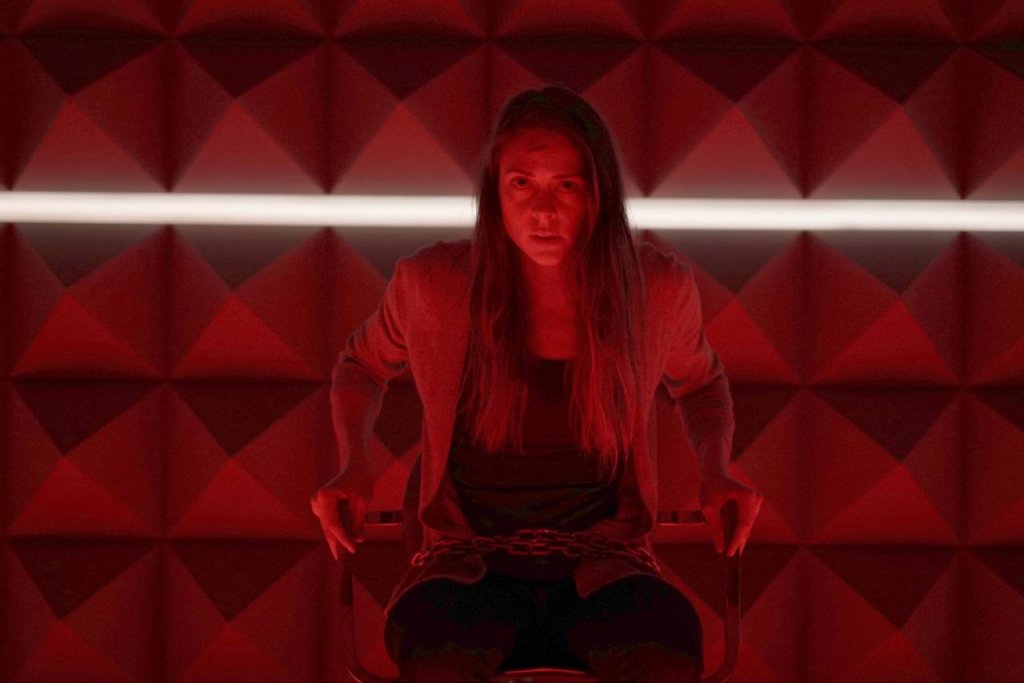
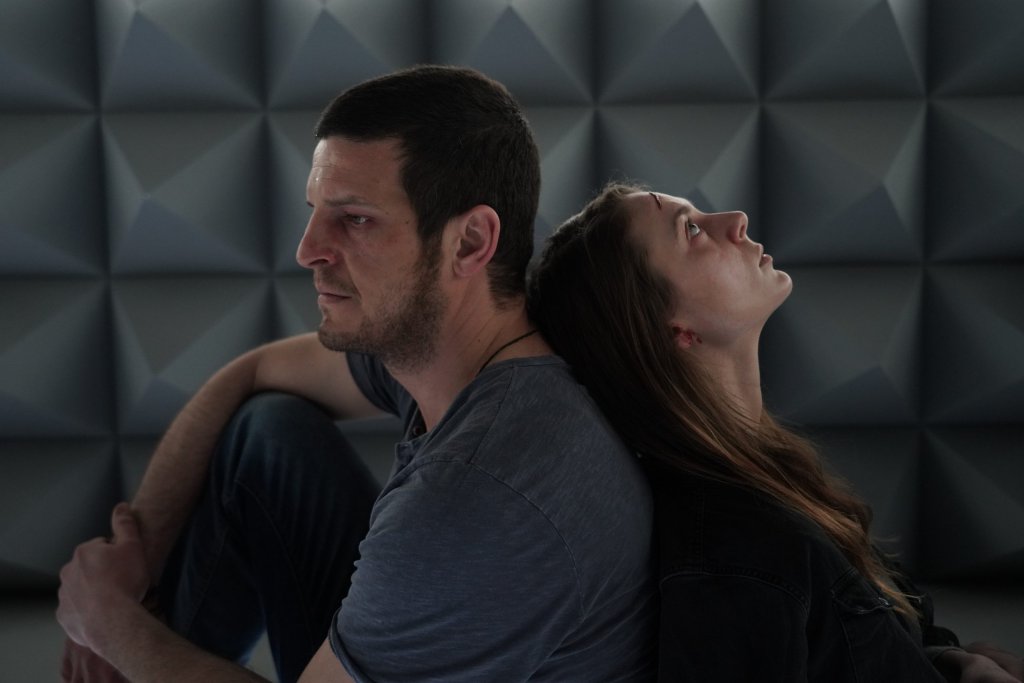
Control is a new sci-fi thriller which tells the story of Eileen, (Sara Mitich) who awakens trapped in a strange room with only fragmented memories of her past. Forced to undertake increasingly difficult tasks in order to save her daughter’s life, Eileen comes to discover that she possesses unexplained superhuman powers.

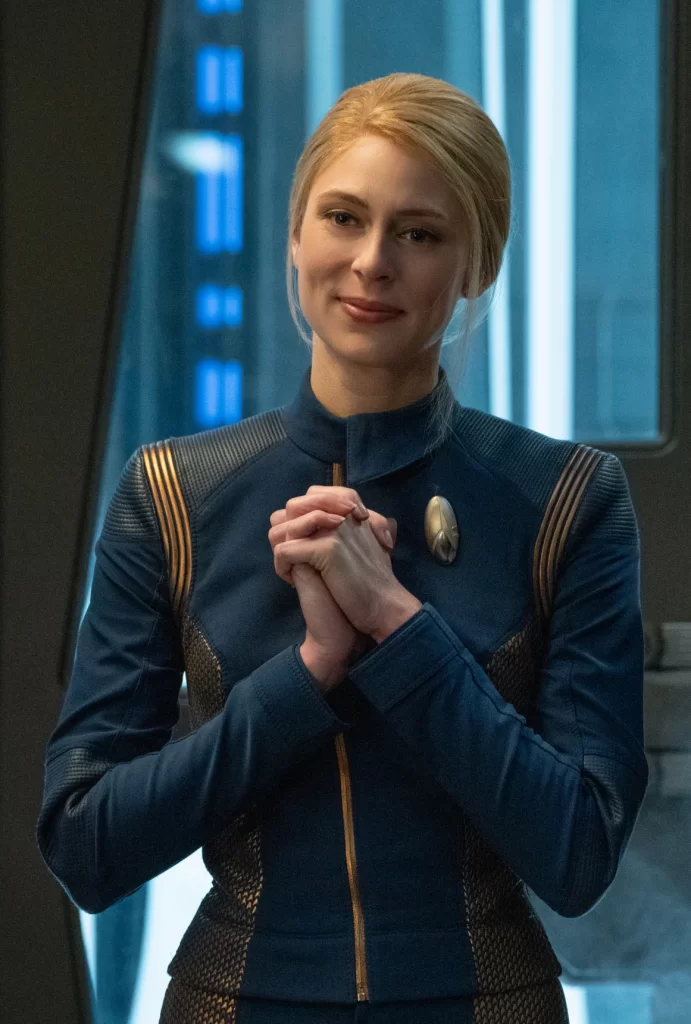
Mitich is best known for Star Trek Discovery, where she initially played cyborg Starfleet officer Airiam, before switching roles in the second season to Lt. Nilsson, and Gia in early episodes of The Expanse. We talked to her about Control, Discovery and her unexpected career in sci-fi..

STARBURST: How did you come to be involved in Control?

Sara Mitich: James (Mark, director) and Bruno (Marino, producer) reached out to my team about it. Bruno and I actually worked together on another project years before, another indie feature. I read the script, immediately fell in love with it and I told my team, “Whatever we have to do, yes!”

You spend a lot of time in this film on your own. What’s it like not having any other actors to play off? Is it harder?

That’s a really great question. Maybe this is a good thing, but I never really thought about what that would be like ahead of time. I created a very specific relationship with that room, with the voice, with the desk, the pencil, the chair, so these other objects, this environment became characters of their own for me, and so it didn’t make it feel like I was alone in that sense.

Of course, I felt a certain amount of loneliness and fear in that, and I think filming in that space for however many days we filmed there, 10, 12, 15, I can’t remember also helps create that feeling of isolation. The beautiful thing is though, this crew was so incredible that I never felt alone or unsupported. James, the director was always there and so I always had a creative partner to play off of.

Your character in the film has telekinetic powers. What was your process for portraying those? Did you watch any specific films or talk to anyone about how you might portray them?

It was actually James. From the beginning James said, “This has been done a lot, and I want to try and find a way to make it look different.” So, James from the beginning was like, “Let’s try to brainstorm. Instead of blood trickling through the nose, maybe it’s blood through the ear?” And he actually came up with the idea of the hands. I didn’t really watch any specific films, because I feel like it had been done, so it was already within my movie database in my head! It was just working with James on figuring out how many twitches is it, how many fingers, what do they do. And thankfully my hands can do weird shit!

That was actually you doing the freaky hand moves was it? I didn’t know if it was effects, or you had a hand double?

That was actually me! I think it’s the ballet background, everything just happens to be double-jointed!

For a lot of it you’re restrained, so it’s a good way of portraying telekinesis.

I think if the audience was just watching me staring at objects for 30 minutes, that could get boring after a while! So, it’s how do we keep it fresh?

Control

Your key relationship in the film is with your daughter, who for plot reasons you only have a few scenes with. What did you draw on to portray that relationship?

I don’t have any kids in real life, so for me to draw on a relationship that is so prominent, that really drives my entire purpose in this movie, it’s a blend of my imagination and substitution. I know where unconditional love lives in me, and where grief lives in me, I know where accomplishment lives in me. So, my process is I blend all of those things together and I imagine what it’s like to have somebody who a) relies on me, b) I would do anything for – that real, true unconditional love, and where that is in my personal life, where I have that. It kind of becomes this beautiful symphony where it’s my imagination, my real life, and the final thing is that suspension of disbelief and that ultimate true commitment to the world of make-believe.

Do you prefer to play roles like this where you’re the lead, or being part of an ensemble like in Discovery, where you don’t have as much responsibility?

There’s pros and cons to both of course. But I love having characters like this with so much meat, and so much where I can just fully dive into the script and fully help create this world. I’ve also never done a movie where it’s literally on my face for 100 pages. That was… it was a gift. Was I nervous? Yes. Did I feel some pressure? Yes, I definitely did. I think that comes with the territory of a lead character like this, and the weight and responsibility of that. But allowing my creative soul to soar in something like this, I’m the kind of actor who loves to push my own boundaries, I love to push the boundaries of humanity, I love to push the boundaries of how we think as a collective, and so as much as it was a big responsibility, it was really a gift.

What are the main differences between making an indie like this to a studio production like Discovery or The Expanse?

The biggest thing is time. On Control I never felt rushed, but again, that’s the crew. The crew was incredible. Maybe there were days where they thought “Oh my gosh, we have to call it,” but I never felt rushed. Especially those emotional scenes, they gave me all the time I needed to do them. That being said, I did so much prep on my own and with James. I was blessed, I think they sent me this script in January, and we didn’t go to camera until March. I had time, and I was shooting season four (of Discovery) at the same time, they actually worked this production around my schedule, so I was so grateful for that as well.

But time, definitely. Sometimes on big shows like Star Trek Discovery or The Expanse you’re shooting maybe four or five (script) pages in a 12–13-hour day. Here we’re shooting ten, and so it’s really go-go-go! Also, resources on other indies. I didn’t feel we lacked any resources on Control. They built this entire set like it was Star Trek. It was incredible. I think the luxury of only having mainly one room was a benefit! So, time, resources, and just how many takes you get to do for a scene. I’d say those are the biggest things in my experience between the indies and the big budget shows.

You tend to do a lot of sci-if with this film and the likes of Discovery, The Expanse and Anon. Is it a genre you’re particularly attracted to?

It’s so funny, I never saw my career turning into this little sci-fi niche. I’m a big believer in everything happening for a reason, and so I think I just naturally attracted these sci-fi roles. I didn’t really grow up watching sci-fi, I was definitely more into fantasy. But I love it. Honestly, I have only the most wonderful experiences with all the sci-fi fans. Maybe I’m biased, but they’re the best fans in the world. And I really like this niche, because as an actor I get to push certain bits of my own creativity. It’s super cool because my little kid imagination gets to take over!

Without going into spoilers, Control leaves things potentially open for a sequel. Is that something that’s been talked about?

No, I’ve never really thought about where it goes after this. But I feel like it leaves so many doors open. I never thought about a sequel, but now I think I should call James and ask what happens after this!

It sets a lot of things up, but doesn’t necessarily resolve everything by the end, so there’s potential.

I love that some movies leave things open, and I think endings like this can split the audience, but even if there’s frustration, I believe leaving an audience to think and intrigued as to what is next is always a good thing.

I’ve got a couple of questions about Star Trek if that’s ok?

I literally cannot say anything! I cannot even confirm if I’m in it or not!

Ok. Are you in Toronto? (Where Discovery is currently shooting its fifth season.)

I am in Toronto.

Can you tell us anything about Season 5 at all?

No, sorry!

How about a question about earlier in Discovery? You switched characters between Seasons 1 and 2 (from Airiam to Lt. Nilsson). Can you talk about how that came about?

It was so cool to play two roles in the show. In sci-fi you can do that, I’m sure other shows do too, but we have the liberty of prosthetics which opens it up. Before diving into Season 2 they called me and asked, “We have this new character coming up. It’ll be with your own face. Are you interested?”

Star Trek Discovery

Don’t get me wrong, I loved playing Airiam, I loved being able to create her. I love roles where I get to physically transform myself as an actor, being able to push my creativity and boundaries. I’d never done prosthetics before, bless Doug Jones (who plays Saru) for taking me under his wing and being the kind and patient person that he is because it was definitely a learning curve. Acting through a prosthetic too, I had to go back to a lot of my theatre training because suddenly all the stillness of film and cinematic performance doesn’t make it through layers of silicone.

I was so grateful to do that role, to physically create that role, but I was also really grateful when they brought me Nilsson. And I love where Airiam went, bringing in Hannah Cheesman (who took over the role in Season 2) who is so talented and everything she did throughout Season 2. Knowing that I’ve been able to be both these characters, I feel very blessed.

Final question – if you could go back and had the choice of continuing to play Airiam, and getting her one huge episode (Season 2’s Project Daedalus, which ends with Airiam sacrificing herself) but leaving the show, or playing Lt. Nilsson, which would you choose?

I’ve thought about this a lot! I don’t know, I really don’t. It’s hard for me because I also can’t see Airiam’s episode being done any differently than how Hannah played it. A blend would be nice! But I truly don’t know which I would prefer.

That’s all we have time for. Good luck with Control and that other thing that you may or not currently be filming.

*Laughs*

Blink twice if you’re in it…

*Covers face* I can’t!

CONTROL is out now to rent or purchase on all good UK digital platforms courtesy of Signature Entertainment


‘With a fragmented memory and no clear way out, Eileen is forced to complete tasks by an unseen entity whilst trapped in a mysterious room, or else her daughter will be killed. Her only clue is Roger, the man imprisoned alongside her and claiming to be her husband – thrust into a reluctant partnership, the two must work together to save Eileen’s daughter. However, nothing is truly as it seems, and very quickly, a much greater plot is unveiled – with Eileen at the centre.’

Sosie Bacon | SMILE

sosie bacon smile

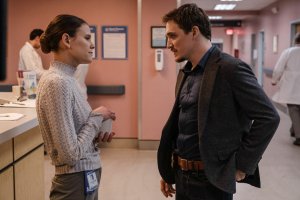
For her first major lead performance, Sosie Bacon (Mare of Easttown/Scream: The TV Series/13 Reasons Why) is taking on the character of Rose in the psychological horror Smile. STARBURST caught up with Sosie to find out how she approached such an intense and multi-layered role, what it was like to work with its writer/director Parker Finn, and why readers should watch this movie on the big screen…

STARBURST: Can you tell us how you got involved with the world of Smile

I was sent the script and the short film Laura Hasn’t Slept. Mare of Easttown had come out, and I was trying to figure out what I was going to do next. I always wanted to do a horror movie eventually, I just wanted to be choosy about it because there are so many out there, and I like the genre a lot. I read the script, and I’m really bad at reading scripts, I prefer reading novels where they explain everything that’s going on around the person. With scripts, you have to make it up, and try to be visually engaged. It’s so hard for me. I read it, and there’s this one jump scare that you will see when you see it, but it really shook me, and I was like “Wow! OK, I’ve never seen that”, so that got me. The psychological aspect got me into it, the thriller nature, and the following of this woman. It was really well done, and then I watched Parker’s short, and that really solidified it as well. Visually, it was just so interesting, the way he told the story with the camera and the set design. It was clear that he had a unique take on this, so I was stoked.

Can you tell us about the research you did when you found out you were going to be Rose? Obviously, you could look back on Laura Hasn’t Slept, but is there anything else you wanted to look into? 

Yeah I mean for sure, when it comes to building a character, I’ve done that so many times. What I liked about this one, was finding out a lot about mental illness that I wasn’t aware of, about childhood trauma, and sort of how it manifests itself in adult life. I’m very schooled in therapy stuff, just because I love it, and find it fascinating, and also, what a person who works in an emergency psychiatric unit does on a daily basis. It’s intense, and it’s a lot. The education process of getting there is a lot. So that was fun stuff to research.

Was there anything that you really wanted to bring across from Laura Hasn’t Slept into Smile? We know the plot isn’t exactly the same, but maybe there was something contained within the short that inspired you? 

I think that most of that stuff, was the filmmaker’s job, Parker’s job. The thing that really caught me was the way that it was done, and I was excited that he had a vision to continue that. It’s just really cool when you’ve seen so many movies, to see how they did something with a camera and what that revealed, what they chose to put in that shot, and the way they used special effects. We used almost all practical SFX in Smile, which he did in the short, and it really adds a creepy element of realism, kind of gross, nasty. It just all feels like the way movies used to be made. I love all of the CGI stuff and everything, but it’s cool to see that being attempted and pulled off.

Within the movie, you’re obviously dealing with a supernatural threat, but at the same time, what we see feels quite grounded in a sense of realism. What were the challenges behind balancing those two elements, and how did you make it work? 

I can’t really act in a non-grounded way, which I don’t think is good for my own self, and brain, when it comes to a movie that is this dark. I really can’t go to this other level of ridiculous, and be honest with it. The performances have to be grounded and honest, and with this one, I considered it no different. It’s just that the circumstances were really dark and really gnarly. What’s funny is there are a couple of moments where things do go off the rails in a way that’s almost ridiculous, which happens in most horror movies. I know that I was doing that, but it’s not because I was trying to do that, it’s because I think that it was later in the shoot, and I had bought into the fact that this was my world, so those were my genuine reactions. People will think that I’m doing that, but I’m not. I was just deep in; my brain was in the world.

This is your first major lead role, and according to Parker, you’re in almost every scene in the movie. What has the filming process been like for you overall, and how do you think it compares to anything else you’ve worked on so far? It sounds pretty intense to, say the least! 

Yeah, I’m in every single scene, and almost every frame. It’s so cool that I got this opportunity, I’ve been doing this for a really long time, but I did want to get the opportunity to lead a movie, and be the one that is there throughout it. It’s hard to get that. I’m grateful for a lot of things, one is that I did so many supporting roles for so many years because I think it really builds you up to the place where you have the ability to take on the leading role. So it couldn’t have come at a better time, but people do have a hard time taking those risks. Because it’s the person that is going to lead the whole thing, and it’s a bigger job than just acting in the scenes, there’s a way that you have to carry the whole thing. It’s a lot, and I don’t think there’s anything to prepare you for that kind of experience. I think you just have to kind of do it, it was hard, it was tough, but I’m grateful that I got that opportunity, and hopefully people feel like it works, and then I can do it again, because I would love to do it again! I’d also love to do the supporting role, and just be able to chill for a second!

Can you tell us more about what it was like to work with Parker when it came to bringing Rose to life, and was there something in particular that he really wanted to see from you? 

What was great about working with Parker was that he stayed true to the vision that he had from the beginning. It’s rare for someone who hasn’t directed a feature before to get the opportunity to direct a studio feature, it’s a big deal. So the reason why that happened, is I believe, that he had a very clear, and specific vision. And he really was passionate about seeing that through. Sometimes, when you get to set, and a million things are going on, you don’t have time, a lot of first-time directors of features would let things go, this one shot, or this and that. But he stayed very true to his vision, and one of the best things he was passionate about doing was keeping it from Rose’s point of view. Taking time with those moments where she was alone, just as much as moments when she was with other people. Her face and her eyes, lead the whole movie, which is a testament to Parker. Those are the things that start to fall by the wayside typically when you lose time.

Since Parker is both the writer and the director, what kind of effect did that have on the collaboration process between you? Did you have a really direct and clear vision from him throughout?

Yeah, he had a very specific, clear vision every step of the way. I do most of my preparation, kind of alone. I build it by myself, I don’t think it changes the performance that you get necessarily, in a very obvious way, but a lot of that stuff I do on my own, and then you get there, and then you start working together.

Parker also mentioned that one of the elements he enjoyed bringing to the movie was that idea of “No one around you, trusting you”. Would you agree that that’s an important factor Rose has to live with, and how interesting was that to work on?

Yeah, that’s huge. I mean, it’s like everybody’s worst nightmare to be so certain of something and nobody believes you. I feel like that is one of the more disturbing feelings, it’s a feeling that probably women get very often. It’s a tough subject to contend with, and it’s terrifying. Watching her go through that, I think – I don’t know for a fact – will be anxiety-inducing for audiences.

Caitlin Stasey, who played the lead in Laura Hasn’t Slept is in this movie, what was she like to work with, and did she maybe give you any stories/memories from playing Rose herself? 

She’s lovely. She came in for a day to do that whole sequence. It’s a lot. It was a long, and challenging day, and she killed it. Once you see the movie, you’ll notice that the way that was done is cool because a lot of the times we are on one character’s face, and then on another character’s face. It’s very one character, then one character. Which is amazing, and it also makes it so that you do a lot of takes. It was a lot of takes to be so emotional, all that physical stuff, and it was cold! So yeah, she was amazing. We didn’t get to talk too much about the short, we were working a lot, and it was very work-focused when we were on set, because we had so much to get through. Hopefully, I’ll see her at something coming up, because now I want to chat socially, like “Hey!”

From Kyle Gallner and Jessie T. Usher alone there’s just a really great cast in this movie! Could you tell us a bit more about what the main cast were like to work with, and what you think they brought to Smile

Everyone brought something different. Like I said, I was spending most of my time acting alone, so when somebody got to come on set and be with me, I was just so grateful. Jessie was so fun, and cool, and had such a grounded, calming energy compared to my crazy anxiety. Robin Weigert has been in theatre in New York forever, and she’s lovely, also very calming, and it was also cool to work with such a legend in the New York theatre world. She is prolific in her acting. Kyle and I vibed from the second we met each other. I just think he is amazing. We just had so much fun, and he was a real support for me throughout. Jessie was only in a little bit at the beginning, well, throughout, but he was in this one location, so Kyle kind of saw it all through, and he was in a lot of the moments. He was a real leaning post for me, because it was hard. He is a wonderful actor.

Leading on from that, Parker said that filming in New Jersey went so well, that it ended up becoming a character in the movie. Do you also see it that way, and what did you yourself enjoy the most about working in that location?

Well, I’m from Manhattan in New York City, so it was kind of interesting and cool for me to shoot out there. The thing about New Jersey is it’s so suburban, if you go to Newark, where the airport is, which is around where we were shooting, first of all, it’s so depressing. Then you go a little further and there are all of these fancy, New England towns. I don’t know, it just has everything, and it had everything that we were looking for in terms of the locations informing what you see in the movie. I love that, because for me that’s a real way to hook into a story, a movie, and a character, by looking around and going “Where am I? What does this mean about who I am, where I grew up?”

Was there a particular location, or set piece that you found particularly rewarding to work on?  

The hospital bed. They built the interior of the hospital on a stage, specifically because Parker wanted a very specific colour palette. It’s just really cool, the way that it’s painted, the way that it’s shot, it’s very interesting. I don’t know how to explain it without giving it away, but there’s something very sinister about that hospital and the way that it’s put together. Even though it was on a stage, and people never like the stage portion because it’s not a location. Once you see the movie, you’ll realise that the hospital is really iconic.

Finally, why should STARBURST readers check out Smile

It’s just so fun to go and see a horror movie in the theatres. After this whole time that we haven’t been going to theatres, the only movies that are in theatres are these big Marvel movies and action movies. So I just think there’s something nostalgic and fun about going. I’m not promising you’re going to have fun! There’s something nostalgic and fun about going with your friends to a horror movie. Making a night of it. Seeing it on the big screen, screaming. If you go with a date, you can hold hands! It’s a good way to decide if you like a person. Horror movies are so nostalgic, but it’s really scary, so I don’t want to lead people astray as if it’s going to be so fun. But do it, go see it in the theatre, definitely don’t wait for streaming on this one, because it’s a theatre movie. It’s important that you do.

SMILE is in cinemas on September 28th. You can read our interview with writer/director Parker Finn here.