by Ed Fortune
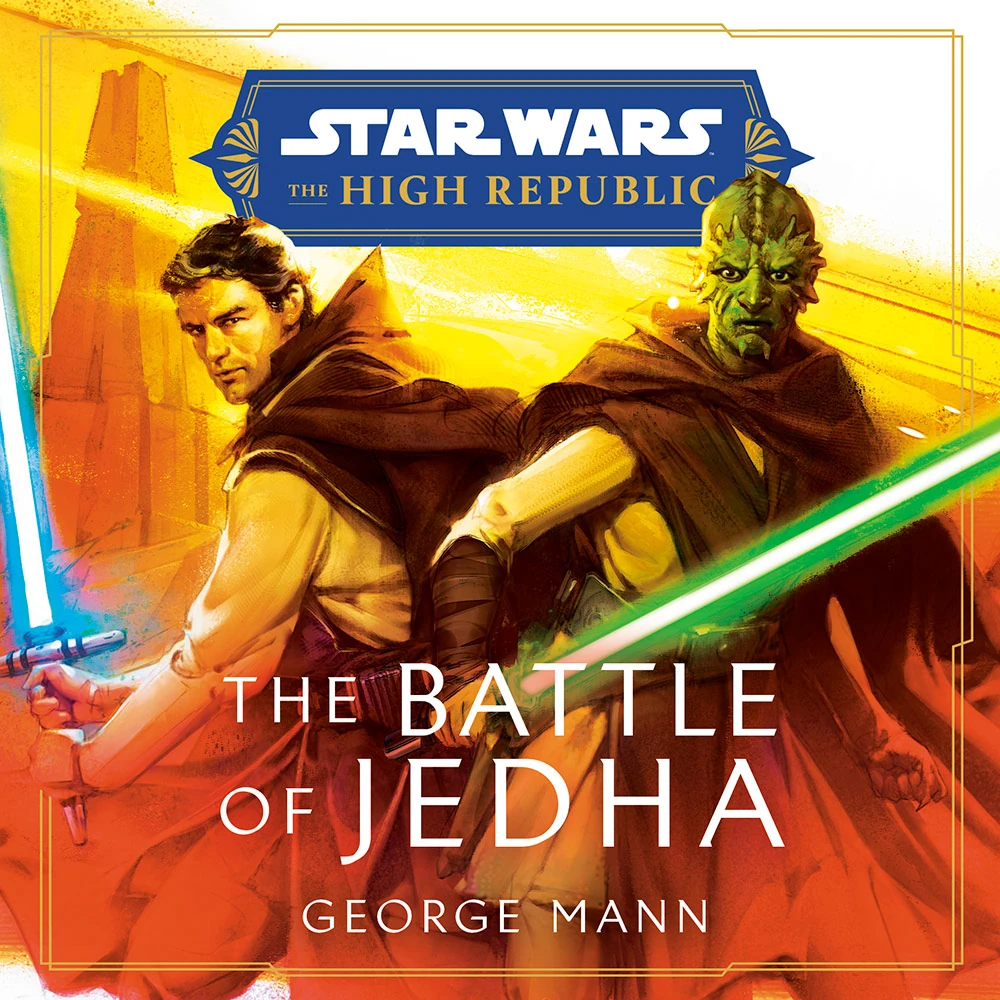
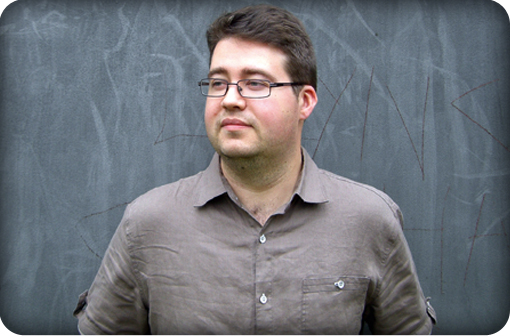
George Mann is a highly prolific and well-regarded author known for both his critically acclaimed original fiction and tie-in work. We caught up with him to find out more about Star Wars: The Battle Of Jedha
STARBURST: What is the elevator pitch for The Battle of Jedha?
George Mann: On the Pilgrim Moon of Jedha, everything is about to go wrong. Jedi Master Creighton Sun and Jedi Knight Aida Forte are there to oversee what should be nothing more than the simple ratification of a peace treaty between the warring worlds of Eiram and E’ronoh. But when a terrorist attack kills one of the ambassadors, it’s the first step on the road to utter failure. With the strange sect known as the Path of the Open Hand also present and stirring dissent in the streets, it’s only a matter of time before the conflict erupts, and the city of Jedha will never be the same again.
This story seems to connect various bits of the Star Wars narrative to each other. How difficult was this to do?
It was perhaps the most challenging Star Wars story I’ve written to date because of the way it interacts with so many other bits of storytelling, picking up threads from the adult, young adult, and middle-grade High Republic novels, as well as the Marvel comics and the Star Wars Insider stories. It’s very much a linchpin moment at the heart of Phase II, putting the characters on the trajectory they need to be on for the big finale that’s coming soon.
So, there was a lot of coordination and a fair amount of tweaking and reworking to ensure I was picking up all the threads that needed developing and leaving things at exactly the right place they needed to be for the other writers. Doing that while still delivering a complete and, hopefully, satisfying story was a real juggling act!
How does this all tie into Tales of Enlightenment?
One of the key things that had already been established about Jedha in this era was that there was going to be a bar that was a bit like Rick’s bar in Casablanca, a place where everyone is welcome – a neutral ground. I knew immediately that this bar and its locals were going to play a large part in the audio story, but when I was offered the opportunity to write a series of short stories also set in the bar, I thought it was a great opportunity to feature the same set of locals. That way, the stories could interweave with the audio, and the two projects could shed light on each other. So in Star Wars: Tales of Enlightenment, you get to see some alternate perspectives on events, characters or themes that play a significant part in the wider story of Jedha in this era.
As you mentioned, as well as the script book, there’s the audio drama; which should people choose?
It was important for us to offer both. Reading the script and listening to the drama are two different experiences. The story was written to be heard, but some people struggle with audio dramas, and for them, we wanted to ensure they still had a way to engage with and experience the story. Others like to read the script alongside the performances to gain a little insight into the lines and the atmospheric effects. I don’t think the two formats are mutually exclusive, and neither is the ‘right’ way to enjoy the story. We’re all about offering options here!
The Star Wars: High Republic series has a lot of authors creating work for it; how much negotiation is required to make the series fit together smoothly?
There’s an excellent spirit of collaboration between the various writers on the team. We all discuss the stories and outlines we’re working on, checking details with each other where needed. Negotiations don’t often come into it, because we all want what’s best for the stories and don’t tend to be precious. In fact, my experience is one of generosity, really. The overall picture is very ably pulled together by the Creative Director of Lucasfilm Publishing, Michael Siglain. He works ceaselessly to keep us all on the right track!
What Star Wars stuff – other than the ones you’re connected to – are you really enjoying?
I LOVED Andor. What an amazing story, with such stunning performances, writing, and directing. I can’t wait for Season Two!
The book does interesting things with the Force and Force users. Can you tell us more about this approach?
How can you write a story about Jedha without delving into the Force and Force users at least a little bit? In truth, it was always the plan to explore this side of the story. What’s interesting about Jedha at this point in the timeline is that the Jedi aren’t revered at all. They don’t even have a temple or outpost on Jedha. They’re just another sect of Force users like all the others on Jedha. And that’s a hugely interesting angle to come at the Jedi from. Couple with that, we have the Path of the Open Hand and their mission to ‘free the Force’ – a completely alternative perspective on the Force. So, in many ways, the entirety of Phase II is underpinned by these questions. What Jedha does is allow us to explore that in a microcosm, to juxtapose the Jedi and the Path of the Open Hand against other Force sects, and in doing so, hopefully come to understand them better.
What part of the Star Wars universe would you like to explore next?
There are tons still left to explore in the High Republic! I’d love to revisit the Pathfinders. And to explore some of the characters from Phase I, too. Marchion Ro is such a great villain. Beyond that, I’d love to write more about the ancient Sith, and Qui-Gon.
If you could have a real working holocron, what would be in it?
Books! Lots and lots and lots of books!
And if you could take one Star Wars thing and ensure that it would survive for thousands of years, what would it be?
If I could only choose a single thing, I think it would have to be the original movie. That’s where it all started, and it’s still the guiding compass of what Star Wars is. I hope future generations can keep on being inspired by it, just as I was.
Star Wars: The Battle Of Jedha is out now.