Jason Blum | THE CRAFT: LEGACY

the craft legacy blumhouse

Ahead of the release of The Craft: Legacy, a standalone sequel to the 1996 cult classic, STARBURST spoke with legendary producer and Blumhouse Productions founder Jason Blum about this latest feature, his company’s rich body of work, and his thoughts on the changing horror and cinematic landscapes.

STARBURST: Why was now the right time for a sequel to The Craft?

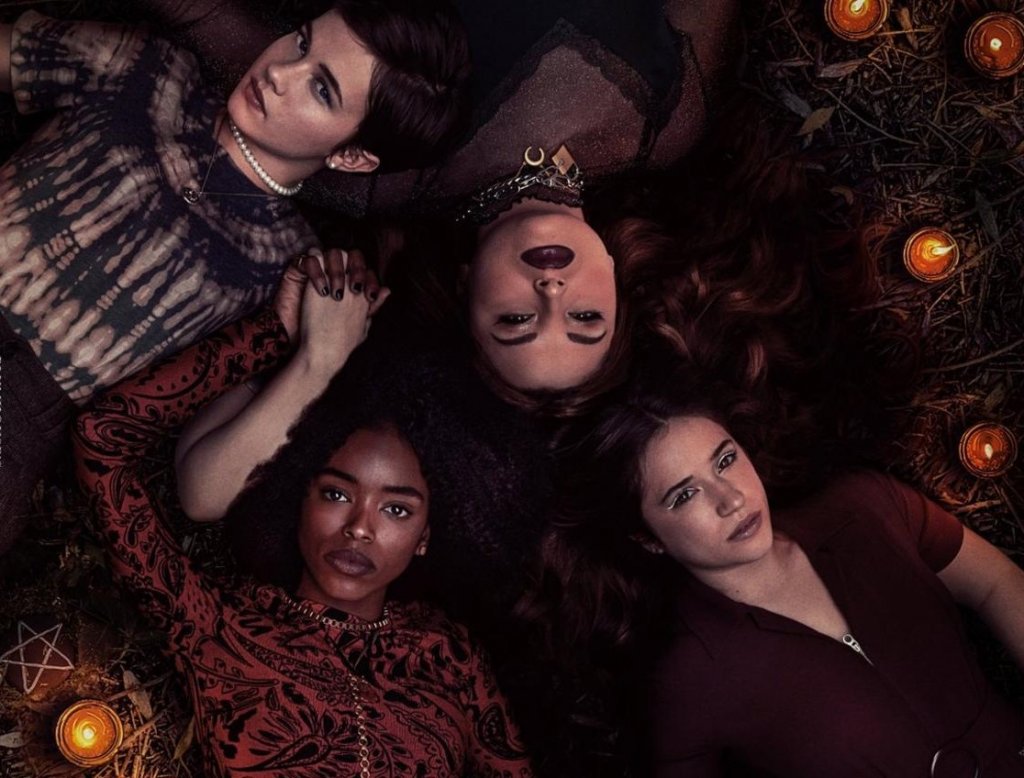
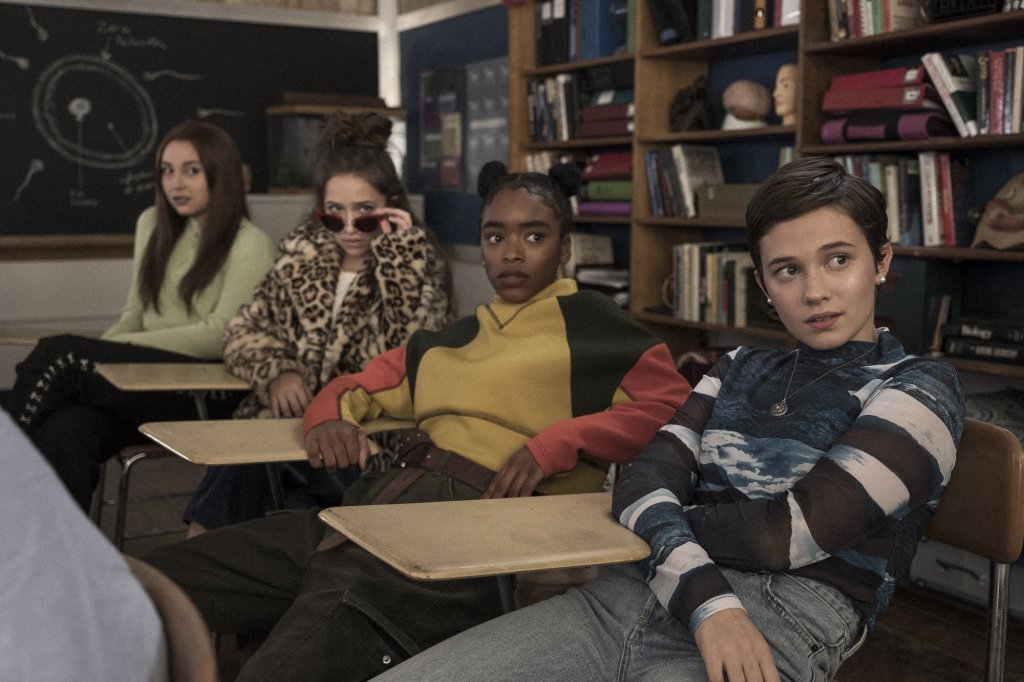
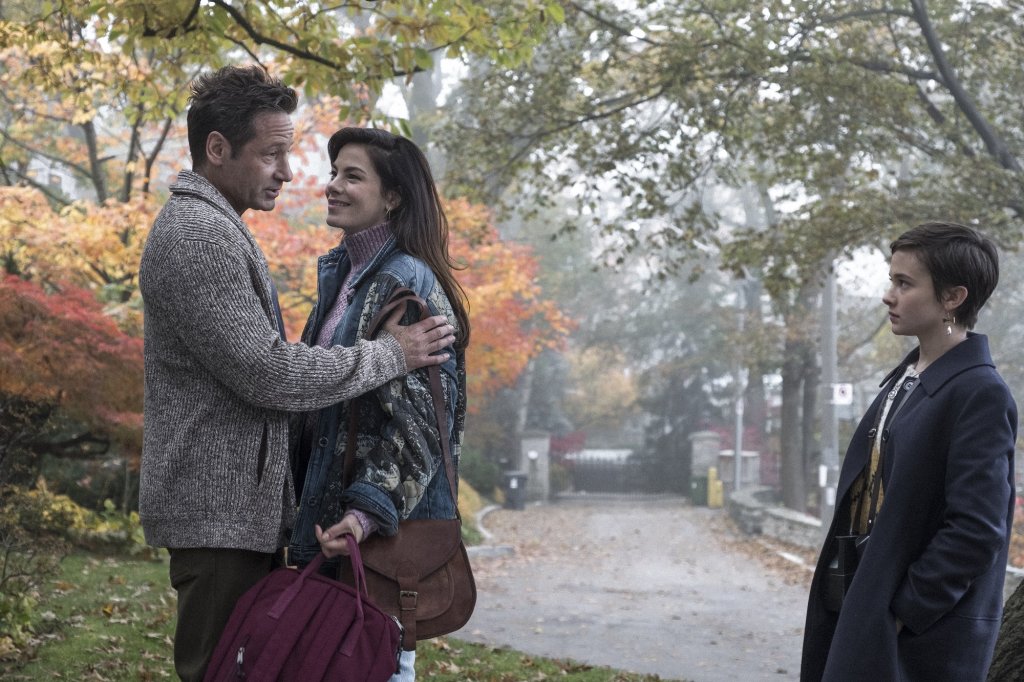
Jason Blum: The Craft is about women having power, and I think what a lot of people are talking about right now is the changing role of women in society and the role of the #MeToo movement, and empowering women and hearing women’s voices getting louder. And I think to a certain degree, The Craft is about all of those things.
the craft legacy

What would you say to fans who might have reservations about this sequel?

You know, every time you reinvent an existing movie, you know not everyone’s going to be happy. You always have people who’ll be mad it got remade at all, and then there are people who might not like our version… you walk a really fine line because you want to call back to the first movie so that those who liked the original are not disappointed, but you don’t want to copy it either, because then why bother doing it? Hopefully most people will feel good about it, but I promise it’s never unanimous. Some people will be upset no matter what.

Legacy is very much in conversation with current feminist discourse, as you’ve said. As someone who with a lot of leverage in the film industry, do you feel you have a responsibility to drive diversity in which projects you produce?  

Yeah, I feel that we’re responsible. We try and do things that are responsible, and I’m attracted to projects that have something to say. We have a TV show airing right now called The Good Lord Bird about John Brown and slavery in the United States. I do feel like I have a responsibility not to be reckless about the stories that we tell.

You’ve recently been picking up a lot more of pre-existing intellectual properties, such as The Invisible Man or Halloween. Why is that?

It’s always been kind of 50/50 between originals and existing IPs. I don’t have a hard and fast rule, but I like to try and do both. With existing IP, the marketing is easier because people know it, but you also run the risk of pissing off a lot of fans. So there’s a blessing and a curse in doing pre-existing IP. And then with originals, you don’t have fans to put off but it’s much harder to get the audience to come and see it. I really love telling stories and how I tell them, whether it’s existing IP or originals, TV or movies, has never been as important to me as the ability to tell them.
the craft legacy

Speaking of, Blumhouse has been doing a lot more TV recently and hiring first-time directors, which is something you’ve previously avoided doing.

Yeah, I don’t think it’s fair to young people to stick them behind the camera of a wide-release theatrical movie, which is most of our horror movies. A first-time director is still learning, and they might make mistakes or they might just get unlucky, and if you release a movie and it doesn’t make any money, it then makes it really tough for that person to work again when it’s their first movie. You don’t have those metrics on streaming movies or TV, you’re not subject to opening weekend stats. It’s more forgiving, you can take more risks in the storytelling. And so on our streaming movies, I think we work with a disproportionate number of young, first-time directors because I think that’s a much better place to start.

There’s currently a real saturation of the entertainment landscape when it comes to genre and horror movies. Does that worry you or do you welcome the fact that they’re getting more recognition, particularly from critical circles?

The influx of horror doesn’t really bother me. Good horror rises to the top, and there’s a lot of bad horror that people don’t pay attention to. And it’s cyclical; there’ll be a few hit horror movies, then all the companies make horror movies, then a lot of them don’t work, and the pendulum swings back. I try to stay focused on what we’re doing. And then for the critics, I think Jordan [Peele] really opened doors for horror movies as a genre to be appreciated and accepted. Personally, I kind of liked when horror movies were more in the ghetto, but ultimately it’s a good thing.

Even before Covid-19, we were seeing cinema attendance slowly decrease. Does that long-term trend concern you?

I don’t know if it’s a concern, but it’s going to change. I think as a result, theatrical windows are going to get shorter and more movies will play in cinemas for shorter amounts of time. I’m not concerned about that. It’s just going to be different than how it was.
The Craft: Legacy

So, what do you expect the film industry will look like in a decade’s time?

I think that instead of four or five movies, there’ll be 1000 or 1500 movies released in theatres, I think you’ll go to the movie theatre on your corner with ten screens that will have ten different movies playing. They’ll play in the theatre for two weeks, and then you’ll have the opportunity to see them at home. There’ll still be these big tentpole movies that play in the theatre for a longer time, but there’ll be fewer of them. And I ultimately think that may make movies more relevant again; I think TV and serialised storytelling has kind of taken the limelight from movies.

Lastly, The Craft: Legacy releases in time for Halloween. What are some three other movies you recommend people watch to celebrate?

They should get ready to watch Freaky [releasing November 13th]. They should watch Happy Death Day. They should watch Split if they haven’t seen it, it’s a terrific film. And a lot of younger people haven’t seen Sinister because it was a while ago, so they should see that as well.

This interview has been edited and condensed. Find the full interview on our YouTube channel, and our review of THE CRAFT: LEGACY here, which releases October 28th.

Sean Pertwee | DOG SOLDIERS

sean pertwee

Best known for his roles as Alfred Pennyworth in Fox’s Gotham and ‘Pilot Smith’ in Event Horizon, Sean Pertwee is as prolific as he is versatile. One of Britain’s most popular actors he took some time to talk to STARBURST about spanning the television and film divide, and more specifically Dog Soldiers.

STARBURST: Does it feel strange to be talking about a film you made almost 20 years ago?

Sean Pertwee: Yes, and no. I’m proud of the film but I’m a little surprised about the longevity of its success. And also across the pond in America. I mean, I don’t understand what half the cast are talking about as they’re all northerners so god knows what the Americans think. People think they’ve discovered it over there and it’s become a sort of stalwart lycanthrope yarn.

Did it feel like you making something different and a bit special at the time?

Very much so. I remember I was working with some highbrow, serious actors at the time and they’d be off doing some gritty drama somewhere. And I’d be off doing a werewolf film. Everyone was more excited about that. It was a very exciting time. There’s been countless British horror films since then but it felt like Neil [Marshall] was the one who brought it all back to life.

We wanted to specifically ask you about the scenes from when you were attacked to when you were knocked out. What direction did Neil give you as we understand you’d also had a drink or two?

It’s well known now but wasn’t at the time! Things were going so well I suggested we experiment with brandy. Everyone knew. I wanted to be totally chaotic and I wanted to avoid it becoming like torture porn. I wanted it to be a mess, as I’m supposed to high on copious amounts of morphine and alcohol. Neil just said go for it. We did it and it was a joy to see it at the premiere as I didn’t remember exactly what happened.

It comes across so intuitive and spontaneous, which is a tribute to everyone in the scene.

We were so confident with what we’d achieved so far. With the location and the yomping to get there, we were just in it. There was an energy we wanted to continue once we made it to the house. It was important we kept it going and I think it’s a good scene and very funny. And also painful.

It looks like it was an intense filming process.

It was all shot chronological. That’s what gives the impetus and sense of urgency. It’s a real surprise when people die. And when they died they were flown off set that day and they were off, which created a real sense of loss.

You’ve worked with the same directors on several occasions, Neil in particular.

I love working with Neil and have done so again recently. After being away for several years in the states working on a massive production it always feels like going back to my routes working with Neil as you’re flying by the seat of your pants. He trusts me and I trust him. I know when he’s happy and I’ve always admired the fact that he knows the world he’s trying to create inside and out. And I greatly admire his conviction to the end product.

You touched on it there that you’ve been away making Gotham. Is it difficult to span the two worlds, coming back to make a low budget horror like The Reckoning or is it something of a palate cleanser?

It’s smelling salts. It’s what it’s all about. I’ve never under appreciated being able to work. Initially, when you’re going over to the States and you’re asked to sign a seven-year contract, it just fills with you with fear and abhorrence as the whole thing about being an actor was the excitement of never quite knowing what you’re going to do next. But then you get to work with some amazing people and it’s great. And it’s sad when it ends, but then to come back and go straight off to do The Reckoning with Neil is fantastic and it’s cleansing and what it’s all about. It’s a different world but makes you feel very alive, for good or for ill.

In television, it seems like you’re been quite mainstream but in film you seem drawn to small, interesting projects, such as The Seasoning House for example.

That’s a good movie and I enjoy working with Paul [Hyett – special effects, make-up artist and director] and it was his first feature. That’s what it’s about for me. I’m lucky enough to pick and choose but I probably make some strange decisions. After Event Horizon, I could have stayed in America but it didn’t interest me at the time. I like doing small, weird stuff which I’ve been lucky enough to be able to do.

Dog Soldiers is re-released in 4K at cinemas from Friday, October 23rd. You can read our interview with director Neil Marshall here.

Which are the best movie-inspired slot games?

One of the most important things in life is staying entertained. Finding fun things to do in your spare time helps to keep you happy, stops boredom creeping in and fills in any downtime you have. In the modern world, there are more ways to do this than ever. Of course, watching movies is one of the best and there is still nothing like catching a good film to kill a few hours. From the new horror flick The Last Laugh to a classic like The Godfather, movies always deliver.

Another great way to stay entertained is by playing online casino games. Many people will actually combine these two passions and look for online slots that are based on a particular film. But what are some of the best movie-themed slots to enjoy?


Jumanji


Whether you love the 1995 original or the more recent remake, this is a movie that many people know. It is also the basis of one of the best slots inspired by films. When you learn that it comes from top developer NetEnt, it is no surprise. This game has a five reel, 36 payline setup, and four features that trigger at random in the base game for bigger wins. It also has outstanding graphics and sounds that make it very entertaining to play. As you would expect, characters from the game show up as symbols and there is a Jumanji Board Game bonus, which gives players access to cash prizes and extra rolls.

Jurassic Park


One of the most successful movie franchises has been the Jurassic Park films. The original Jurassic Park from Steven Spielberg was a massive hit when first released and this slot certainly brings back memories. It comes from Isle of Man-based Microgaming and has a cool 243 ways to win. Classed as medium volatility, there is also the chance to win up to 6,000 times your initial stake on each go. When you combine this with some suitably scary sound FX and excellent visuals, it is a top movie-themed slot. The iconic T-Rex makes an appearance of course – watch out for him when the T-Rex Alert bonus shows up!

Gladiator


One of the most epic and exciting movies of recent times was Gladiator, from 2000. It starred Russell Crowe as the central character of Maximus and was packed full of action. Gladiator made around $400 million at the box office and there is even talk of a Ridley Scott-directed Gladiator 2 going into production soon. This slot, which is based on the film, is also pretty amazing.

Playtech are behind this title and they do a great job of capturing the gravitas and seriousness of the movie. The sombre soundtrack, in particular, hits the right note, as do in-game clips from the film. Fans of the movie will enjoy seeing characters such as Commodus, Proximo and Lucilla show up at times. With awesome graphics and a large progressive jackpot to play for, this is a fantastic movie-themed game.

The Expendables Megaways


The Expendables was of the most interesting and successful movies of the past few years. It saw Sylvester Stallone take a bunch of aging, real-life action stars and turn an idea into a blockbusting film. So successful was the original (and the sequels) that studio StakeLogic decided to turn it into an online slot. The good news for fans is that they did an excellent job! As a Megaways title, the six reels can change as you play, to give up to 117,649 ways to win. There is also a max win of 20,000 times your stake to play for. With bonuses such as Free Spins and Random Wilds packed in, this slot captures the frenetic excitement of the movie perfectly.

Justice League


Whether you love Marvel or DC, superhero movies are currently all the rage. This is also true in the world of online slots, where games based on superhero films are very popular. One of the best is DC Comics’ Justice League slot from Playtech. Fans of the 2017 movie will love seeing characters such as Batman, Superman and Wonder Woman showing up in-game. Visually, it really does look the business and this makes it even better to play. Playtech also pack some very nice bonuses in – for many players though, it is the chance to win one of the four jackpot prizes that appeals most.

Movies make great slot games


As this shows, movies are the ideal basis for top slots. They combine the fun and money winning potential of slots with characters we love to great effect. This helps to give slots even more appeal and glamour. If you like to stay entertained with films but fancy something different now and then, trying out a fabulous, movie-based slot is a great idea.


Neil Marshall | DOG SOLDIERS

neil marshall

Neil Marshall is an English film and television director responsible for some of the most significant horror films of the past 20 years. Notable for The Descent and his work on shows such as Game of Thrones and Lost in Space, Neil took some time to speak to us about Dog Soldiers ahead of its 4K Remastered release.

STARBURST: We’re here to talk about Dog Soldiers. So, you’re a young filmmaker looking to make your first feature. Why werewolves?

Neil Marshall: Because they were always my favourite monsters, of the classic monsters. And I also felt they were woefully underrepresented given the slew of vampire films at the time, and you can’t move for zombie films now. Werewolf films are still few and far between and part of the reason for that is that werewolves are not easy to do and are not cheap. Given that horror films are largely a low budget medium that makes things tricky, and it made things tricky for us. The first thing everyone said to us was that it was too ambitious for a first-time feature, but we persisted.

Were there certain tropes you were keen to avoid?

This was never going to be a curse of the werewolf movie, which so many are about. The werewolves here were going to be the enemy and that was that. But I was determined they should be practical and they should walk on two legs. I almost got into a bit of a ruck with Rick Baker [won the Academy Award for Best Makeup for An American Werewolf in London] about that one. An American Werewolf in London had and always will have the best transformation sequence in but I was always slightly disappointed that the werewolf didn’t walk on two legs. I think Rick took a little issue with that and when I bumped into him a few years later he picked me up on it, but after a long, painful pause he actually agreed. I suppose it does differentiate that werewolf from the ones in The Howling that walked on two legs and in Dog Soldiers, and it is an amazing werewolf, but for me they should always walk on two legs.

There is a similarity between the creature in The Howling and yours…

Yes, if I had to choose they’re more inspired by The Howling. And I knew going in we were never going to try and do a transformation sequence if we couldn’t do it right so rather than try and imitate An American Werewolf in London or The Howling. And we didn’t want to go down the CG route as even though it was a few years after Jurassic Park it was still relatively new and not capable of the quality needed. So, I decided to take Carry On Screaming as my inspiration and do the old ‘fall behind the furniture’ ploy! Do the sound effects then all of a sudden the werewolf pops up! I hoped no-one would notice.

That’s brilliant! And there are a lot of other film references from Zulu to Aliens.

There are a lot, a lot!

Was that key for you? As rather than out-and-out horror you have a siege movie in essence?

It was always pitched as a soldier movie with werewolves and not the other way around. It was focussed on the siege with the werewolves outside and I’d always wanted to do a siege movie like Rio Bravo, Zulu and Assault on Precinct 13; I love a great siege movie. And Zulu is a British movie with a lot of British humour so I threw a lot of that in there.

There is a lot of humour and I wanted to ask if that was all scripted or did it evolve through production with the actors and certain scenes?

The foundation of the humour was definitely on the page, getting that trench humour in there was important to me to make it authentic. At no point are they ever going to mock the situation, but they find humour in themselves and we find it in the characters, but I never wanted it to undermine the situation. As the terror mounts and the more ridiculous the situation the more humorous it is. When the actors came in they brought a lot to it too; they really got into it. With Sean, he improvised the ‘hit me properly you pussy’ scene and it was so good. They just got it.

On that Sean Pertwee scene, we wondered what direction you gave him, from when he’s first attacked to when he’s knocked out. It’s a hell of a performance.

It’s phenomenal. It’s a combination of several things. A lot was in the script, on how you deal with it when your guts are hanging out and you’re trying to shove them back in. Sean had this bag of sausages around his waist for half the film. He came to be before we did the operation sequences and asked if I minded if he had a couple of drinks, just to loosen up. Not drunk but enough to feel it. I said go for it. I think it lent some real authenticity to the scene, with Kevin [McKidd] and Emma [Cleasby] working against him as he starts to blither.

Did you film chronologically as you do trash the rooms and sets as you go along?

Yes. We shot all the exteriors first and then went into the studio, and we shot all that stuff in linear order from them on. We had to as we literally when from room to room trashing each one. It helped with continuity and it meant that when each actor was killed off they wrapped and left set. We did the same thing on The Descent too. It serves a practical purpose but it’s heart-breaking to see each character go.

In that short period you made two of the most significant horror films in recent times. You’ve wrapped Dog Soldiers and are planning your next movie The Descent. There are similarities between the two but there is a distinctly different tone. There’s more story.

That’s exactly right. In The Descent the big difference is that everyone is not in it together. If Dog Soldiers is about a group of people who bond and will fight and die for each other The Descent is the opposite. This is group who think they’re all friends but fractures appear and it all falls apart.

So was it a conscious decision to have an entirely different dynamic and a full on horror movie?

Originally, I was going to do a zombie film but it was considered too ambitious and too expensive. I left a meeting in London with Celador who wanted something cheaper, got on a train to go home to Newcastle and by the time I got off I had the idea for The Descent.

Must have been some journey…

[Laughs] It was mainly about how I could keep things contained. Could I do something in the darkness and in caves and also somehow affordable? I’d just done a macho movie so the flip side was an all-female horror movie. There was also a review somewhere for Dog Soldiers that I read, which asked when a British filmmaker was going to make a truly scary horror film so I thought let’s give it a go. The whole agenda for The Descent was to make the scariest film I could possibly make.

We won’t ask about the Dog Soldiers sequel as you’ve spoken on that before but there’s always the feeling that there’s a larger world out there in your films, whether it’s Centurion or Doomsday. You’ve spent a lot of the past ten years in television. Is there something you’d look to expand on in the future?

I would love to. A few years back someone mentioned the notion of a Doomsday television series, which I would be keen to expand on, especially now! I’m not sure about The Descent but Dog Soldiers certainly.

You’re recently gone back to films from television.

Ideally, I’d like to do both. Being part of the television world and the revolution that has happened has been amazing. Being involved in Game of Thrones and such like is great, I don’t want to lose that but I’d like to have more creative input. I’m developing my own shows but I’d also like to do more movies.

Having done those large budget productions on television, and recently Hellboy, do you still crave that earlier way of filmmaking; in camera effects and working a budget to fit the film?

Definitely. No matter what I’d done I would always want to do in camera effects. And with my next film, The Reckoning, I’ve gone back to working with no money but with complete creative control. It was really was a case of coming up with creative solutions. I like to be paid but there’s also a real pleasure figuring your way through things. I need a halfway solution where I get paid and can also be creative!

Dog Soldiers in re-released in cinemas on October 23rd and The Reckoning screens at Arrow Video FrightFest on Friday, October 23rd at 9pm.

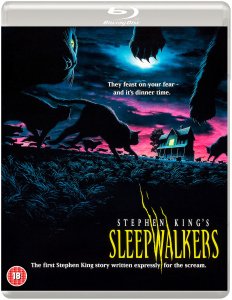
[ENDED] WIN a copy of SLEEPWALKERS on Blu-ray!

sleepwalkers stephen king

We’ve got three Blu-ray copies of SLEEPWALKERS to give away in our competition so do not delay enter below.

Eureka Entertainment to release Stephen King’s SLEEPWALKERS; a supernatural thriller about the small-town exploits of shape-shifting, incestuous, psychic vampires; on Blu-ray for the first time in the UK as part of the Eureka Classics range from 19 October 2020, featuring a Limited Edition O-Card Slipcase and Collector’s Booklet [First Print Run of 2000 copies ONLY].


Stephen King’s Sleepwalkers is a classic horror story that takes a perfect Normal Rockwell town… and turns it inside out.

Brian Krause, Mädchen Amick (Twin Peaks), and Alice Krige (Chariots of Fire) star in this terrifying tale of modern-day vampires who move from small town to small town to prey on virtuous young women. Imperceptibly inhuman to everyone except for felines, these vicious shapeshifters have their eyes on a new victim: Tanya (Amick), who has fallen for Charles, the new boy at her school.

Making its debut on Blu-ray in the UK, Eureka Classics is proud to present Stephen King’s Sleepwalkers

SLEEPWALKERS, Stephen King’s supernatural, psychic vampire thriller, is OUT NOW on Blu-ray and can be purchased here https://amzn.to/3231HTm 

 sleepwalkers stephen king

To be in with a chance to win a copy, just send your answer to the question below to [email protected] with the header ‘SLEEPWALKERS’ to arrive before 11:59pm on Sunday, October 30th

Which of the following statements is true?

A) Sleepwalkers was the inspiration for the hit musical Cats.

B) Sleepwalkers stars ageless pop singer Cher as a wise cracking but ultimately murderous bare knuckle fighter from the future.

C) Sleepwalkers was the first film written by King to not be based on one of his preexisting works.

Stephen King’s SLEEPWALKERS (Eureka Classics) Official Trailer 

Available to order from:

Eureka Store  https://eurekavideo.co.uk/movie/sleepwalkers/

Amazon https://amzn.to/3231HTm

BLU-RAY EDITION SPECIAL FEATURES

  • Limited Edition O-Card slipcase with silver laminate finish
  • 1080p presentation on Blu-ray
  • DTS-HD MA 5.1 and LPCM 2.0 audio options
  • English subtitles (SDH)
  • New Audio Commentary with director Mick Garris and film historian Lee Gambin
  • Audio Commentary with director Mick Garris, Mädchen Amick, and Brian Krause
  • “Feline Trouble” interview with director Mick Garris
  • “When Charles Met Tanya” conversation with actors Mädchen Amick And Brian Krause
  • “Mother & More” interview with actress Alice Krige
  • “Creatures & Cats: The FX of Stephen King’s Sleepwalkers” featurette
  • Behind-the-scenes footage
  • Theatrical trailer
  • Limited Edition collector’s booklet featuring new writing by Craig Ian Mann
Terms & Conditions:
STARBURST does not accept any responsibility for late or lost entries due to the Internet or email problems. Proof of sending is not proof of receipt. Entrants must supply full details as required on the competition page, and comply with all rules to be eligible for the prizes. No responsibility is accepted for ineligible entries or entries made fraudulently. Unless otherwise stated, the Competition is not open to employees of: (a) the Company; and (b) any third party appointed by the Company to organise and/or manage the Competition; and (c) the Competition sponsor(s). This competition is a game promoted STARBURST. STARBURST’s decision is final in every situation and no correspondence will be entered into. STARBURST reserves the right to cancel the competition at any stage, if deemed necessary in its opinion, and if circumstances arise outside of its control. Entrants must be UK residents and 18 or over. Entrants will be deemed to have accepted these rules and to agree to be bound by them when entering this competition. The winners will be drawn at random from all the correct entries, and only they will be contacted personally. Prize must be taken as stated and cannot be deferred. There will be no cash alternatives. STARBURST routinely adds the email addresses of competition entrants to the regular newsletter, in order to keep entrants informed of upcoming competition opportunities. Details of how to unsubscribe are contained within each newsletter. All information held by STARBURST will not be disclosed to any third parties

Tomm Moore & Ross Stewart | WOLFWALKERS

wolfwalkers

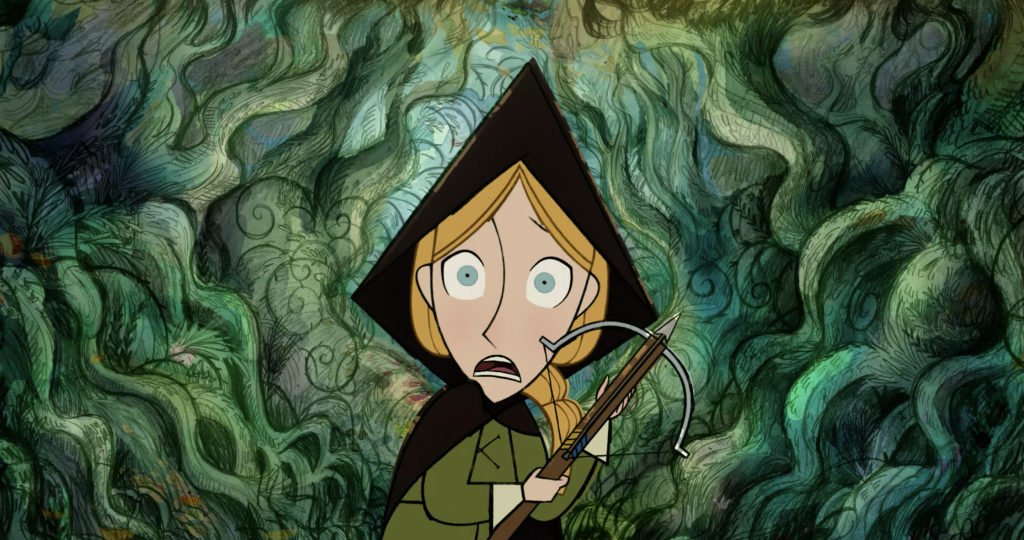
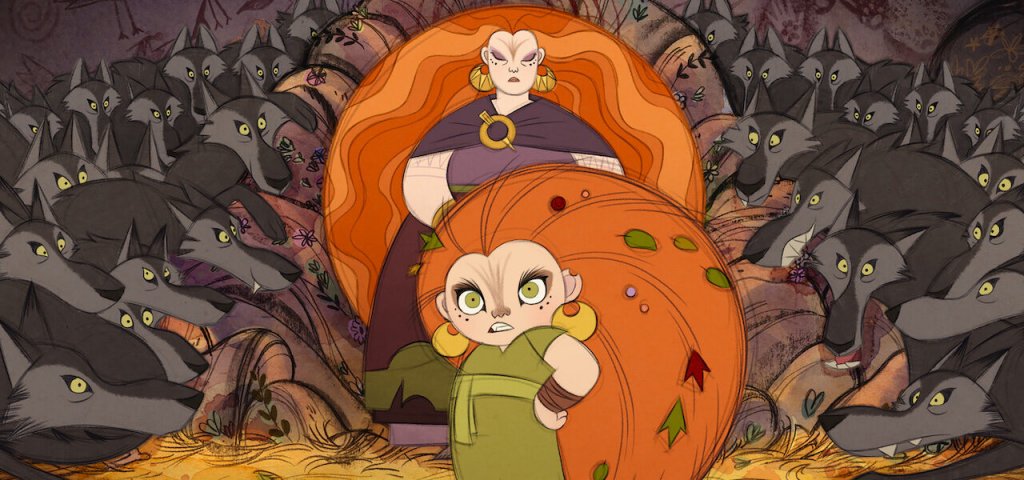
Renowned Irish animation studio Cartoon Saloon is back with Wolfwalkers, the third and final film in their informal ‘Irish folklore trilogy’. With their latest set to release theatrically in late October and premiere on Apple TV+ in December, Wolfwalkers has already become one of the top critically-acclaimed releases of 2020 and established itself as a strong contender come awards season. STARBURST spoke with directors Tomm Moore (also co-founder of Cartoon Saloon) and Ross Stewart about Wolfwalkers’ themes of environmentalism, colonialism and humans’ relationship to nature, as well as their artistic choices and inspirations.

wolfwalkers cartoon saloon

STARBURST: What inspired the story for Wolfwalkers, and what sort of research did you get into?

Tomm Moore: We were talking about species extinction, and the worldviews that the world was getting locked into, more and more. We kind of thought about Irish history during that period when the wolves were being made extinct – even though Ireland had once been called Wolf Land – and how significant that was for the culture, what was lost beyond just the wolves. And we see that happening all over the world today. So that was the inspiration, and so was this kind of Irish version of the werewolf mythology from where we grew up, here in Kilkenny. That was the folkloric and historic inspiration, but it was more the fact that it spoke to stuff that is so relevant today which drew us to it. And of course, we wanted to tell a story that spoke to modern children and modern audiences. So the focus always has to be the emotional journey of the characters; that’s the universal thing. The research that we did was all like a shopping trip to find the parts of history and folklore that would help boost that central story, that heart of the movie, which is the two girls.

Ross Stewart: And the research also involved understanding what life was like at the time. The attitude that the Irish people had towards wolves was really interesting in that they didn’t see this species as an enemy or as a species to be wiped out. That was a newer way of thinking brought by the English. The Irish were able to live in harmony or in some kind of symbiotic relationship with this megafauna.

Could you elaborate on how this period of history and the story you tell in Wolfwalkers are relevant today?

TM: I think it’s sadly so relevant. And this idea that there’s something instinctual about a society that fearfully gathers around this strongman type of ruler, which kids need to be able to see past if we’re going to survive into the next generation. You know these strongmen, tribal rulers who just tell everybody what to do to be safe – we have to go beyond that and face whatever fear it is that’s holding us back from seeing things from the point of view of the other. What is it that’s making us shelter behind tribal walls? Kids need to be able to think beyond that, because it’s really sad to see the world collapsing back into this sort of strongman authoritarianism that existed back in the 1600s.

wolfwalkers

RS: And also, what’s really bizarre is that at a time when the entire planet is under threat, our collective home, we still have factions of humans fighting against each other instead of all working together to try and save our world. Hopefully people get some sense of that from our film.

TM: You just have to be a small part of chipping away at that block. I think storytellers can’t expect to convert anybody, but they can work to influence their audience so that they start to slowly see things from another point of view. Then at some point, there will hopefully be some breakthrough in consciousness for the next generation. We all need that.

RS: Become a ripple in the sea that eventually becomes a wave. You know?

And another way you seem to put that across is in the animation and stylistic differences between the town and the forest, or the townspeople and the animals. Can you speak a little more on those decisions?

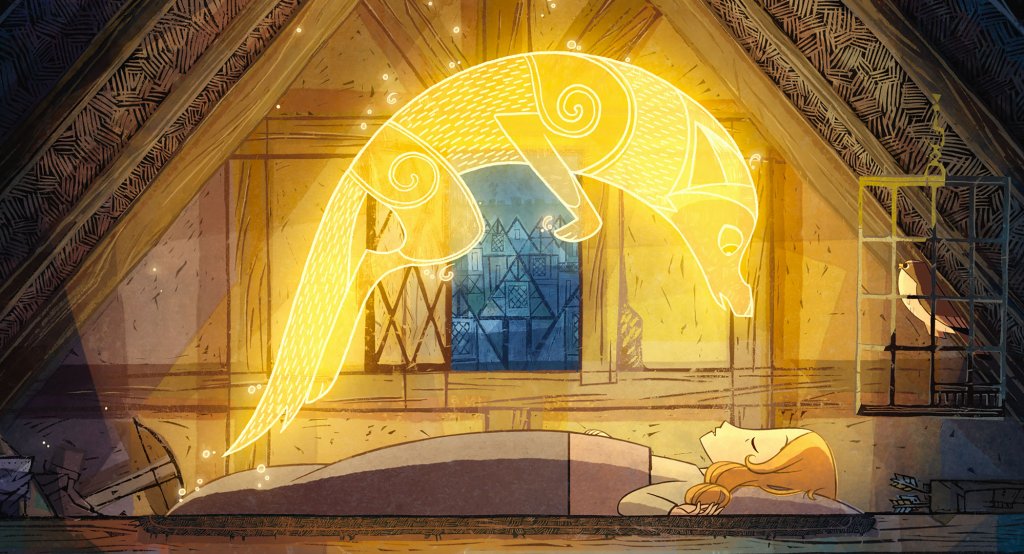
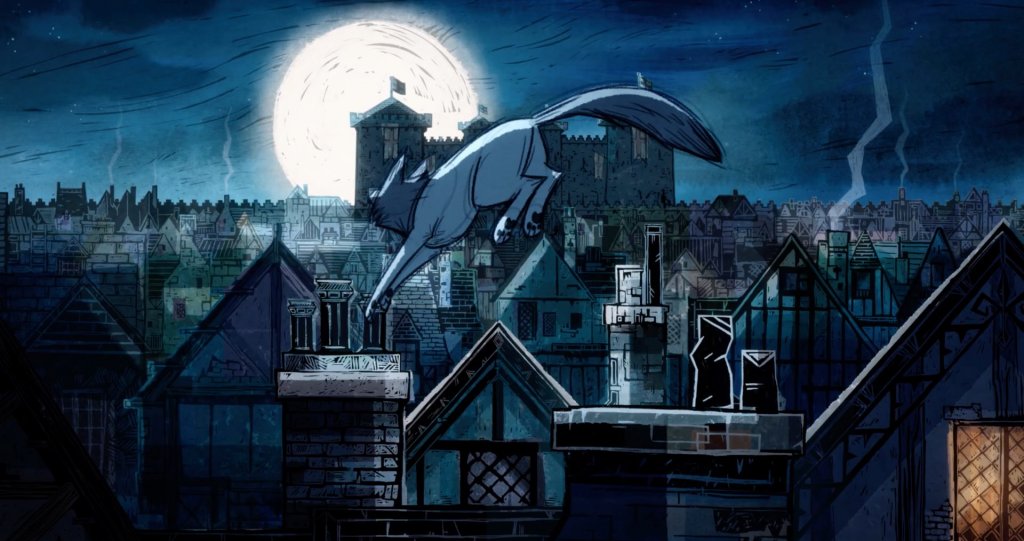
RS: Well, from the initial concept of the story that Tomm and myself had, we had two contrasting worlds: the townspeople’s where, especially following the puritanical invasion, everything was ordered and ruled over. It became like a cage for the people, and especially for Robyn. Then in contrast to that you have the forest where the wolves live, and the way they and the wolfwalkers interact with their world is based on instinct. There’s a freedom there and a kind of a chaos. The visual styles of both worlds have to reinforce what they’re about. That way, everything in the town is about horizontals and verticals, with very angular and quite aggressive mark-making and very oppressive areas of black. By contrast, the forest is based on curves, you know, domineering areas of black. The forest, by contrast, is based on curves, it’s very free and loose, and the compositions lead off the screen. Everything is very impressionistically painted, very free and wild. The styles very much serve the idea that there are two contrasting worlds within the story.

wolfwalkers

And you kept some of the sketch lines in the design, which is really interesting.

TM: Yeah, and it’s something which I think hand-drawn animation has lost, that sense that there’s an artist behind there. We have to keep that human element to it.

RS: And traditionally, clean-up departments would have been in charge of getting rid of the rough underdrawings and putting this perfectly clean line over it. We thought, let’s try and keep some of that rough underdrawing, because they’re beautiful. They’re part of the whole exploration of the characters.

The fact that those underdrawings appear much more in the wolf and forest scenes also emphasises that naturalism.

RS: Yes, totally. And it suggests this inner energy and inner life in them as well.

Another very interesting aspect, visually, happens when we see the world through wolfwalkers’ eyes. What influences or imagery did you draw upon to design those sequences?

TM: There was some research there into the way canines see the world with less colour but with much more powerful scent and hearing – we tried to represent that. And the wolf-vision was probably the most technically challenging. We worked with a small team that was led by Evan McNamara, who is a director and animator from Dublin that we worked with. We kind of combined a CG way of flying through the forest, and then everything after that was done hand drawn on paper. I think it gives a really unique look; it was a lot of work for just three minutes of movie, but it makes you feel like you’re completely immersed in the drawing. That wildness that we wanted to show is all around you, and we wanted to make it feel as exciting for the audience as it would be for Robyn to suddenly see the world through new eyes.

wolfwalkers

And lastly, what projects are you working on that we might look forward to?

TM: We’re deep in production on a new feature film. Nora Twomey, one of the partners in Cartoon Saloon, she directed The Breadwinner – she’s making a movie called My Father’s Dragon for Netflix. And that’s epic on a bigger scale than we’ve ever done before. I think it’s going to knock people out when it comes out. I’ve just finished a short film for Greenpeace about the destruction of the Amazon, so you’ll see that soon in late October, early November. Those are two immediate things, but we’ve got so much in the works in terms of series, and then another movie based on Puffin Rock. There’s a lot coming, so watch out for that.

WOLFWALKERS releases in cinemas October 30th, and on Apple TV + December 11th. 


The Top Apps To Make A Living Through

Technology is fantastic isn’t it? You can make money anytime anywhere, and as more and more of us get used to working remotely, there’s been a large rise in people taking the time to make money from their smartphone too. And there are dozens of ways to do it!

No matter what your interests, there’s a way you can make money through your smartphone, and below we’ve highlighted some of the best ways in which you can do so, in some cases going on to make a decent living, and even life-changing sums of money…

Selling Photos

We’re all keen on taking photos via our smartphone, but did you know you can also sell them?

If you’ve got a keen eye for photography there are tons of great apps out there which you can use to sell your images. With the likes of iPhones and many Android devices having fantastic lens’ these days, you can take high quality images that can then be sold on.

Apps such as Foap, Shutterstock, 500px and many more are excellent for selling photos and are often free to sign up to, with only a commission going to the app.

Whether it’s one person looking for a print for their wall, or companies looking to use images for marketing or advertising material, you can make some good money by selling the photos you’re taking.

Playing the Stock Market

The volume of investor apps is growing by the day and there are some fantastic apps out there ideal for both beginners and experts. Many will operate as virtual financial advisors and provide insight on where you should invest your money, while others can automatically invest for you, rounding up any spending you make and investing in particular fields.

The likes of Acorns, Robinhood and Betterment are all popular at the moment, with the former one of the most popular for some time.

Investr is one of the more serious apps on the market and is great for beginners too, with plenty of tutorials and allows you to invest with virtual money to get a feel for it before investing your own.

When it comes to robo-advisors, Betterment is up there among the best, and for a small management fee, it will help you build a portfolio based upon your preferences, from the amount of risk you wish to take, to any particular markets you want to explore.

Online Casinos

While the stock markets are risk equals reward, you can also play it as safe or risky as you like with mobile casinos too. Online casino wagering is hugely popular via mobile these days, with players enjoying a quick spin on the slots on the go, or full blown poker sessions from the comfort of their own home.

The games are more immersive than ever before and you’ll find a wide range of games from table games such as blackjack, baccarat and roulette, to online slots, video poker and plenty more.

The biggest mobile casino win of all time currently stands at $11.6million and there have been many other jackpots that have gone into the millions, completely transforming people’s lifestyles. Of course, you need to be responsible in how you play and just like investor apps you should give yourself budgets in order for it not to impact other aspects of your life.

Uber

While not entirely reliant upon an app, you need a car too, Uber drivers can make some nice money on the side and thousands do this on the side of their regular day job.

You work at hours to suit you, with it possible to earn around £500 a week for around £30 hours put in. There are other apps out there such as Lyft too, but Uber is the more established on the market in the UK currently.

As well as taxiing, you could also consider the likes of Deliveroo, Uber Eats and other food delivery services, which operate in the same way but you’re transporting food to people’s doorsteps rather than people themselves.

Sell Clothes

Depop is a popular place to sell second hand clothes, but some people have turned their hobbies into very lucrative ones. Many have become dedicated vintage clothes sellers in their spare time, and it’s been reported that some sellers are bringing in $300,000 a year!

It’s all about spending the time buying and selling, finding those interesting items that are worth some money and getting them online to sell. It’s a particular popular way to make money with students and there are tons of success stories out there too.

Dominic Monaghan | PET

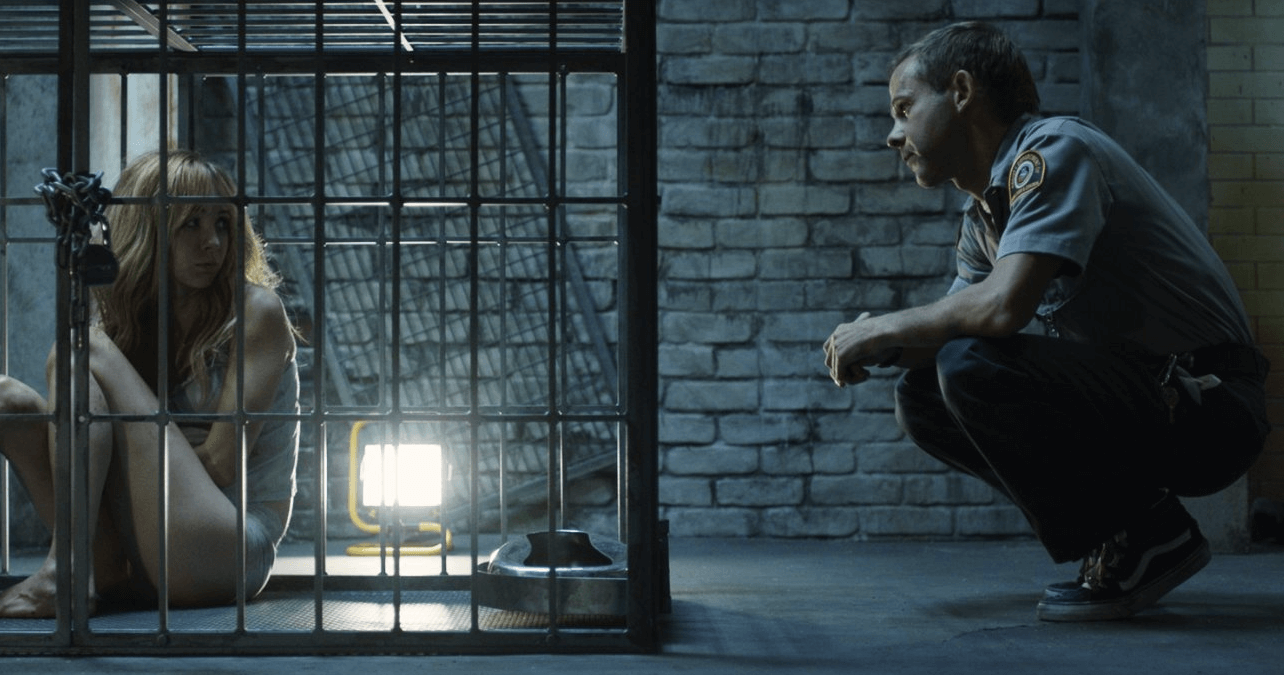
Dominic Monaghan is one of England’s most versatile and best loved actors. With roles in The Lord of Rings Trilogy and Lost he has established himself as one of the leading actors of his generation. Dominic took some time to talk with STARBURST about recent project Pet in which he stars with Ksenia Solo.

STARBURST: The film we’re talking about, Pet, has been around for a little while now. Is it interesting to be talking about it again?

Dominic Monaghan: That’s kind of how it is in my business, but thankfully this is a project I liked being involved in. There have been films and television shows over the years I’ve been less inclined to talk about. Pet is a project I really like and am really happy with how it turned out. It makes it much easier.

We understand you were involved quite a long time before production began?

I was attached to Pet in between Seasons One and Two of Lost but because of the writer’s strike and certain actresses we liked either getting pregnant or cold feet, it kept getting pushed. We needed an actress who could bring the necessary intensity to the role, so we waited and waited. Thankfully, we waited enough time for Ksenia to be involved.

Your character Seth is quite complex; introverted and a loner. When you approached the role what did you hope the audience would get from him?

I’ve probably spent a little more time alone than normal trying to explore that character. What I’m always trying to do with any character I play is have them move from the page to the screen. You have to make them as believable and real as possible. I’m always trying to think if this is a character someone could meet in the street or in a bar and for them to be real. With Seth, even though he is antisocial, and he does have his own behavioural issues, I’m trying to make him seem like someone you could meet and have a conversation with. And because the script is so well-written a lot of the hard work is done for you.

And then with what happens, he doesn’t think he’s doing anything wrong.

I think there are a lot of people who live their life justifying their actions whether it’s online or in real life, where they behave in various ways most elements of society would disapprove of. They feel justified by whatever injustices they’ve been through. We all have our own freaky things we shield from most people.

Did you work on the dynamic between Seth and Ksenia’s character Holly?

It’s not difficult for you to become beguiled Ksenia. She’s hugely charismatic, a very talented and beautiful woman. We allowed my natural inclination to be interested in her to keep going. She kept me at a nice arm’s length distance, both on and off camera which worked for the film. It’s a very well-written piece and once Ksenia got into her Holly outfit it’s easy to think she could be her.

There’s no real message in the film, and little guidance given to the audience as to how they should feel about the characters and what happens. Was that a conscious decision?

I think so. It was key to try and paint a bleak depiction of humanity, where everyone is struggling with their own demons. Perhaps initially the audience will feel sorry for Seth but then you realise he’s making decisions that could be morally wrong. Then you could feel sympathy for Holly but then that changes. We’re not one dimensional as human beings.

Your career has been varied in the roles you’ve had. Is there something that guides your decisions as you haven’t been pigeon-holed into one style or character?

I am passionate about not being so. It would have been easy to have taken several Hobbit-y type roles as I was constantly being offered them. Leprechauns, pixies, elves and all that stuff. Then when I played Charlie in Lost, I was offered lots of rock stars and drug addicts. That’s what motivates me; to consistently do what the audience doesn’t expect. Outside of that it’s the roles. I’m lucky enough to read 75-100 scripts a year and maybe passionately like six or eight, and out of those films maybe 3 or 4 are interested in me. It’s a very small pool.

Having been involved in Lost which was ground-breaking television, and as we’re now in what’s called a Golden Age, are you keen to explore the longer form more or do you prefer the film process?

Both mediums have great qualities. The great thing about film is that in 6 to 8 weeks you can be done, finished with a rounded character and move on. With television, you spend more time with the character which is more like life. You can watch the character evolve. I try not to let money dictate what I do now. Ultimately it all starts with the script.

Pet is now available on Prime Video.

Sam Ewing | THE SHED

Sam Ewing

Composer Sam Ewing has slowly but steadily made a name for himself over the last few years, thanks to his work with the massive talent that is composer Bear McCreary on shows like The Walking Dead and films like the Happy Death Day series. However, Ewing has also started doing work on his own, and the composer’s first solo score, for director Frank Sabatella’s vampiric horror, The Shed, was just released on vinyl from the folks at Enjoy the Ride Records. We spoke with the composer  about his career.


STARBURST: How did you come to be connected with the Enjoy the Ride folks?

Sam Ewing: All through Bear. I don’t know how much you know about my background – I will assume you and readers know nothing. I started working with Bear McCreary, who’s a well-established film composer, back in 2014, and I was his intern turned assistant. I just kind of got in at a really good time with him. Fast forward like five or six years five years and Adam Green had approached Bear to score his movie, Victor Crowley, which was his surprise release of this movie that he made in total secret.

Bear said, “I can’t do it, but my guys Sam and Jason can,” so I co-scored this movie with Jason Akers, who was also in a similar position as me with Bear. Since then, we’ve kind of been doing our own things. The producer from Victor Crowley, Corey Neal basically approached Bear again and said, “Hey man, I’ve got this movie called The Shed. Do you want to do a similar arrangement?” Bear basically hooked me up. It’s all Bear. That’s how it happened. It was a fun ride.

Is the fact that you do a lot of horror/other genre type stuff: is that because you are involved with Bear or is that also something that appeals to you as a composer and musician?

It’s kind of like chicken or the egg, you know? I think I’ve always had an interest in horror music. So, this is actually going back a little bit further – it’s pretty funny. I was at school at Berklee College of Music Writing. Even back then, I was kind of writing horror music and doing mock-ups and little orchestral recording sessions for Aleatoric music, which is really modern and scary-sounding and whatnot.

My professor at the time, Michael Sweet – I ran into him at a burger joint and he was like, “You should work for Bear McCreary. I feel like you guys would have a good musical connection,” so he recommended me to the person who was hiring interns at the time. It all started with that. So, honestly, I think I had that sort of interest to begin with, but it’s also one of those things that once you start doing something – pigeonholed is a strong word and I would never use that for my situation or Bear’s situation – but just one of those things you do a lot and I think people recognize you for that.

I co-scored The Walking Dead season 10 with Bear and it’s just another thing that kind of perpetuates the kind of guy that you are. Fortunately, I really like that kind of music. I think Bear does, too. Like, Bernard Herrman’s Psycho is one of my favorite scores of all time, so there you go.

One of the things I’ve noticed about your work is that a lot of the horror stuff that you work on has a very humorous or playful element to it and it seems like that lets your music do the same thing. Is that just the work that comes to you? Is that something that you appreciate? Because it does seem like it lets you be a little lighter. I’m thinking specifically of stuff like the Happy Death Day movies or Hulu’s Into the Dark – Pooka!, specifically.

That was so much fun. Pooka!, yeah – let me talk about that. First of all, the appreciation part of it: I so appreciate some lightness in all the horror. I also just think that’s a modern way of making horror films. I think Blumhouse is a really good example of that. Jordan Peele, I think he’s just setting the tone for Hollywood horror films.

You watch these movies and it’s like this ride: you get this thrill, but there are these buoys of lightness and humor that that make it a really fun ride. I just totally appreciate as a viewer – having having some lightness and some humor in the movies, so Happy Death Day and Pooka! were so fun. They’re just so fun and musically, I think there are two ways to look at it.

I think, on one hand, you wanna be careful as the composer and as the filmmaker, because when the music gets too comedic, then it kind of underplays the dark stuff and then somehow it’s not as funny. I’ve imagined test screenings of a comedy beat in a horror film where in one version, you’ve got funny music and in another, you’ve got really scary music. I think somehow the one that’s playing scary is always going to be funnier.

That’s all to say that I never like to step on the funny stuff and bring it out too much because underneath, there’s usually a guy with a knife who’s trying to kill our main character or something, so I think playing that and having the score really, functionally be attached to that is the most important thing, bottom line, always.

There’s something about these movies – and maybe it’s just the filmmakers. They bring this energy with them. On Happy Death Day, for example, we did stuff that was more traditional orchestration so there were these flavors of Alan Silvestri and Bernard Herrmann that are just so fun and I think, for a movie that might take itself too seriously, you might not get to go there, so it’s just a win-win. It’s all super fun.

What, for you as a composer is the difference between doing film and television? I guess Pooka! counts as a made-for-TV movie kind of thing, but you’ve also done these series where, in the case of Walking Dead, it’s been running forever. You’ve also done Agents of S.H.I.E.L.D., which is very hardcore tied into a cinematic property, while also doing Fantasy Island, which is a movie based on a TV show. You have all of this very interesting cross-platform stuff.

That’s really true. It’s tough to draw the line anywhere other than simply the deadlines. I hate to like go there, but with a movie, you spend months making a score for 60 minutes of music. On TV, you’ll crank out 60 minutes of music in two weeks, easily, so that creates differences in the music.

With TV, usually you need some help. Things are usually more broad strokes. You create some themes for the entire season and then you reuse them and develop them. Bottom line, I think that, no matter what – this goes for TV or movies, and especially with Bear, and this is something I have always appreciated about him – is we just like to keep everything cinematic, no matter what.

You’re watching and scoring into a vacuum and you ask yourself, “How can we make this as awesome as possible?”, whether it’s getting an orchestra or doing synths. You figure out the logistics later. S.H.I.E.L.D., for example: that show had seven seasons of almost 22 episodes for every season and we had an orchestra on every single one of them, but we made it work, so it sounds cinematic and awesome. I think, ultimately, it’s like the lines are really starting to blur and especially today, where people say we’re in the golden age of TV.

I think that’s true. I think TV is incredible right now. Tthe bar just keeps going higher and higher. The budgets become higher and the music gets carried along with that so they should all be treated the same, no matter what.

The Shed is getting a vinyl release from Enjoy the Ride. Are you a vinyl person?

I would be lying if I said I was a vinyl person. I’ve always appreciated vinyl and in my house, my dad had vinyl and an amp and crazy-good speakers growing up, and he would play The B-52’s and classic rock albums and stuff like that, but beyond that, it’s simply, for me – and maybe this is just an age thing, but I grew up in the ’90. I see vinyl as this really cool collector’s item that is more significant as a thing you hold in your hand than a listening experience. That’s just me. Maybe I’m just showing my age here, but that’s what it is to me: it’s this thing that you hold and it’s beautiful and in a way, it’s a relic of where music has come from and the fact that we can still make these things is like just so cool.

Will this be the first time you’ve had a physical release of any of your music?

It sure is. I’ve worked on a a bunch of things with Bear, of course, but my name is not on there as a sole composer, so this is absolutely the first physical release I’ve ever had. I’m so stoked. Huge shout out, by the way, to Frank Sabatella, who’s the director of The Shed. He was just pushing for this and pushing for vinyl, specifically. I was just kind of like, “Okay, yeah. We’ll see,” but he pushed me and pushed Bear and we made it happen and Joe Augustine helped coordinate everything so I’m so stoked.

The Shed can be ordered from Enjoy the Ride Records on either Vampire Sunrise (limited to 150 copies) or Shotgun Brain Blast (350 copies) vinyl. Each copy also includes a free 14 day trial to Shudder, a horror, thriller & supernatural Video On Demand service from AMC Networks.

[ENDED] Win 976-EVIL on Blu-ray

976 evil

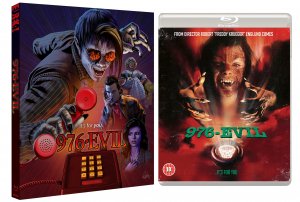
We’ve teamed up with the ever wonderful Eureka to bring you a chance of winning one of three Blu-rays of the cult classic 976-EVIL.

To be in with a chance of winning, simply answer the question below:

Robert Englund directed this movie but what character is he more commonly associated with?

a) Edward Scissorhands

b) Freddy Krueger

c) Duane Dibbley

Send your answer, along with your address details, to [email protected] labelled EVIL-976 before midnight on OCTOBER 30TH.

SYNOPSIS:

Eureka Entertainment to release 976-EVIL, an outrageously enjoyable ‘80s horror from Robert  Englund, on Blu-ray for the first time in the UK, as part of the Eureka Classics range. Available from 19 October 2020, featuring a Limited Edition O-Card slipcase and Collector’s Booklet [First Print Run of 2000 copies ONLY].


High school underdog Hoax (Stephen Geoffreys – Fright Night) fills up the idle hours in his seedy little hometown fending off the local leather-jacketed thugs, avoiding his overbearing mother (Sandy Dennis) and dreaming of a date with trailer park temptress Suzie (Lezlie Deane), But his quietly desperate life takes a terrifying turn when his cousin introduces him to an unusual new hobby – phoning in for his “horrorscope”. Hoax is hooked up with a compellingly hideous demonic force that slowly begins to overtake his entire life and now there’s more than just a phone bill to pay for anyone who ever dared cross “the neighbourhood nerd”.


Co-written by Brian Helgeland (L.A. Confidential, Mystic River) and featuring incredibly practical effects work from Robert Kurtzman and Howard BergerEureka Classics is proud to present 976-EVIL on Blu-ray for the first time in the UK.


BLU-RAY EDITION SPECIAL FEATURES:


  • Limited Edition O-Card slipcase[First Print Run of 2000 copies ONLY]
  • 1080p presentation on Blu-ray
  • DTS-HD MA 5.1 and LPCM 2.0 audio options
  • English subtitles (SDH)
  • Audio commentary with director Robert Englund and set decorate Nancy Booth Englund
  • 976-EVIL: home video version [105 mins, SD]: An extended version of the film from its original home video release on VHS
  • New interview with producer Lisa M. Hansen
  • New interview with special make-up effects artist Howard Berger (The Walking Dead)
  • New interview with special effects technician Kevin Yagher (Nightmare on Elm Street)
  • Limited Edition Collector’s Booklet [2000 copies ONLY] featuring new writing by Craig Ian Mann


KEY SELLING POINTS:


  • A film by Robert Englund(the iconic Freddy Kruger from the Nightmare on Elm Street series)
  • Stars Stephen Geoffreys(Fright Night), Jim Metzler (L.A. Confidential, Star Trek: Deep Space Nine)
  • Available on Blu-ray for the first time in the UK
  • Limited Edition O-Card slipcase[First Print Run of 2000 copies ONLY]
  • Limited Edition collector’s booklet[2000 copies ONLY] featuring new writing by Craig Ian Mann
  • Features an extended version of the filmfrom its original home video release on VHS

976 evil

Terms & Conditions:

EUREKA/STARBURST do not accept any responsibility for late or lost entries due to the Internet or email problems. Proof of sending is not proof of receipt. Entrants must supply full details as required on the competition page, and comply with all rules to be eligible for the prizes. No responsibility is accepted for ineligible entries or entries made fraudulently. Unless otherwise stated, the Competition is not open to employees of: (a) the Company; and (b) any third party appointed by the Company to organise and/or manage the Competition; and (c) the Competition sponsor(s). This competition is a game promoted STARBURST. STARBURST’s decision is final in every situation and no correspondence will be entered into. STARBURST reserves the right to cancel the competition at any stage, if deemed necessary in its opinion, and if circumstances arise outside of its control. Entrants must be UK residents and 18 or over. Entrants will be deemed to have accepted these rules and to agree to be bound by them when entering this competition. The winners will be drawn at random from all the correct entries, and only they will be contacted personally. Prize must be taken as stated and cannot be deferred. There will be no cash alternatives. STARBURST routinely adds the email addresses of competition entrants to the regular newsletter, in order to keep entrants informed of upcoming competition opportunities. Details of how to unsubscribe are contained within each newsletter. All information held by STARBURST will not be disclosed to any third parties