Paul-Mikél Williams, Glen Powell, and Jameela Jamil | JURASSIC WORLD: CAMP CRETACEOUS

jurassic

With Netflix recently debuting the animated spin-off JURASSIC WORLD: CAMP CRETACEOUS to much acclaim (read our review HERE), we were delighted to sit down with three of its stars – PAUL-MIKÉL WILLIAMS (who voices Darius), GLEN POWELL (Dave), and JAMEELA JAMIL (Roxie) – to talk about its reception, what lies ahead, the anxiety of the recording booth, massive tails, and more…

The story of Camp Cretaceous overlaps with the event of Jurassic World. How would these characters fair against Claire Deering or Ian Malcolm?

Paul-Mikél Williams: I would say that the main franchise is a big part of how this series is currently going. If it wasn’t in the main setting it would still be on the same path of a bunch of stuff breaking out, because the Jurassic franchise has a lot of adults making bad decisions, so I don’t think it would make that much of a change in storyline.

Glen Powell: Yeah, I would say Jameela’s way more responsible, her character. I have no responsibility; I assume I would be the first one to be eaten if I got on that side of the island.

Jameela Jamil: Yeah, and if anything, my character would eat him, if a dinosaur didn’t [laughs], for survival.
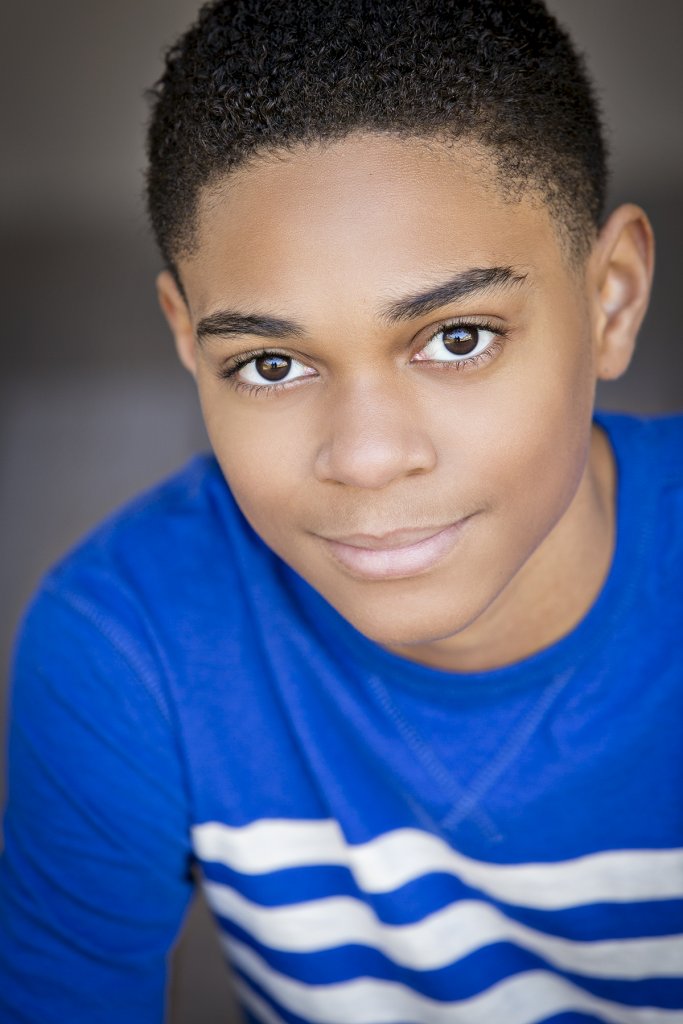
PAUL-MIKÉL WILLIAMS

Even though this is an animated show from such a beloved franchise, how do you all feel about coming in and joining it now. Obviously, it’s exciting, but is it also quite daunting for you?

JJ: I’m the biggest Jurassic Park freak, I have been since I was a child. I still think the original movie holds up, and I loved the reboot, which I was afraid I wouldn’t because of how much I enjoyed the original, so to be able to participate in just the legacy of Jurassic Park feels massive, especially to my inner kid, and to know that if I go on to have kids one day, that they’d be able to watch this means the world to me. I’m so glad to see how much people love it, I can’t believe how extraordinary it looks. When we’re doing it, we’re doing it to these very basic line drawings, so I think we were all so amazed to see how it turned out. It’s a massive honour, that I don’t think any of us take for granted.

GP: Also, when you take a beloved piece of IP or something that we all have a strong emotional connection to, it’s more often in Hollywood that it gets screwed up than it’s done right. Obviously having Steven Spielberg, Colin [Trevorrow], and Frank [Marshall], these amazing brains behind it to make sure that we don’t screw up what I consider to be holy ground in a cinematic world, I’m really glad we didn’t ruin it, because there’s a lot of people in my life that would tell me if we ruined it. And I didn’t have to answer to them, so that’s nice.

PMW: Joining this wonderful franchise was really a dream come true, because I loved the Jurassic World movies. The Jurassic Park movies got me enticed into the series, they gave me a newfound love for dinosaurs that I never thought I would have. Then, I got the surprise that these two would be joining me and I freaked out even more. This franchise just skyrocketed my love for it, and being a part of this show with these amazing people and their voice acting – they were some of my favourite characters I’ve ever seen in an animated series – I would say that I was very nervous in the beginning, but the more I got to know them, the more I listened to their recordings, the more I felt right at home.

JJ: Also, please make it known that the other cool thing of being a part of this franchise is just being able to ride Paul’s coattails, because he’s going to be a massive star.

GP: I don’t know how often you all came in for recordings but Paul, you must have been living in there. I feel like I came in there occasionally every once in a while and made some Dad jokes, but you run the show, man!

PMW: You guys got some amazing screen-time – you guys were iconic! I feel like you guys will be made into Funko Pops at some point because of how funny and amazing and creative your scenes were.

GP: It’s all I’ve ever wanted, man.
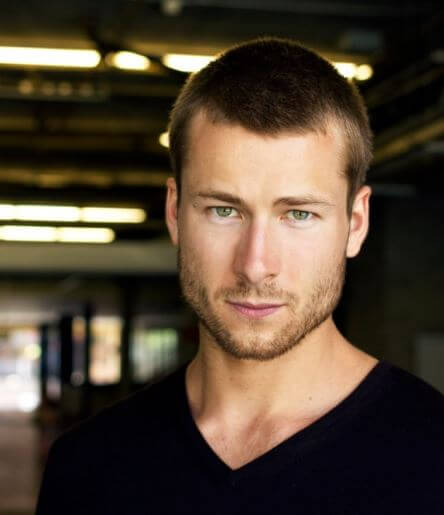
GLEN POWELL

It’s animation, so it’s a vocal performance, but how into it do you get inside that sound booth?

GP: Watching it, I realised how into it I really was [laughs], maybe a little too enthusiastic sometimes.  They kept telling me to bump up the energy and I was like “really?”. I’d go on drives home and I was light-headed from that amount of energy. I’d have to take a pre-workout before I went in for a voiceover, they really wanted the energy. I hope Dave isn’t annoyingly energetic, but I was sweating every time I left that booth.

Paul, how do you expect your character to develop moving forward in Season 2?

PMW: I feel like the campers are going to go through some crazy things, there are probably going to be a lot of things that I haven’t seen yet. Scott, the producer, I’m loving what he’s doing on the show, what the writers are doing, I’m a huge fan of them right now, but development-wise I want to say there’s going to be more than just dinosaurs; they’re going to dive into the lore of everything that we missed in the ‘quote unquote’ gaping hole of Jurassic World through Jurassic World: Fallen Kingdom. There are going to be a lot of things said that people didn’t think were going to be said, and I feel that development-wise Season 2 is going to be one heck of a ride!

There’s some quite dark moments in the show, so was there any apprehension from your side how the young audiences watching it would receive it?

JJ: I personally advocate telling kids the truth and not trying to keep them overly sheltered, and I think we did it in this really relatable way. I know kids as young as six or seven who are watching it who don’t feel too overwhelmed. I think we managed the balance correctly but, also, I think kids can handle more than we think, and it’s great for preparing them for big emotions. So, I like that it sets us apart from the rest of the franchise. Even though it’s animation it feels so human and so full of heart and I really like that.

GP: I think also when you look at Steven Spielberg’s Amblin work, the way he treats the kids, it’s usually through their point of view, and he always treats them with an adult perspective and responsibility. They’re the ones who save the world in all the early movies, and because he doesn’t treat them like an adult looking down at the kids, it’s kids lookingup at adults. He’s the master at that and he’s done it better than anyone, and I think that’s why a lot of young people are responding to the show. It doesn’t feel like they’re being talked down to, it’s like they’re saving the world because they know better than the adults.

PMW: I love how they’re idolising the kids in this series because the Jurassic franchise has really  been based on the adults and how they do things, and I love that they’re showing a kids side, even if it’s dinosaurs eating people they’re showing that kids have a voice. I like what Jameela said about not having it filtered towards a younger audience. It has so many morals that kids can learn, but it still has that action aspect, so it doesn’t feel too childish or too youthful. It explains friendship, teamwork, all of those things you need as a kid, but it also explains some of the other things you might be going through as a kid, like losing a parent or a family member. It’s good for awareness, not only for the kids but for the parents also.
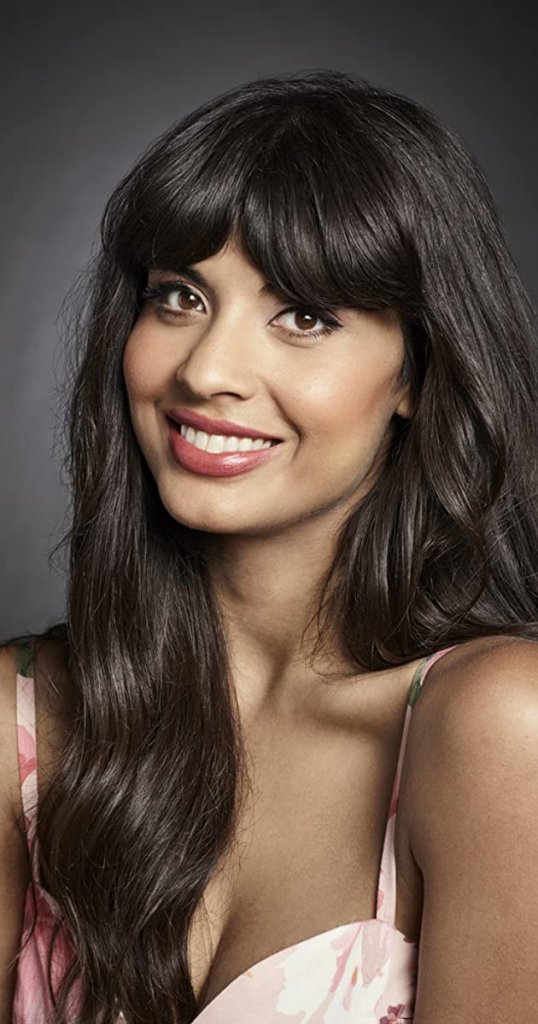
JAMEELA JAMIL

Did you realise when you came aboard the show that the story would overlap so neatly with Jurassic World?

JJ: I didn’t, and I wonder if they didn’t tell me that so I wouldn’t get too intimidated, because I think you can get in your head and the whole joy of animation is being completely lost, no inhibitions.  We’re English, we know how difficult it is to let loose and be free, so I had to really throw myself in and go to a place I didn’t even know existed in me in order to pull out these big screaming performances, and I think I wouldn’t have been able to do that if I’d felt intimidated by what was ahead.

GP: Did you ever feel intimidated when you did one of those emotional scenes and people are just silently watching?

JJ: Yeah, but also I was shouting and screaming and I had to use my arms to get into it, so I was very physical pretending to fall backwards, and then you see a bunch of very well-dressed executives blankly looking at you through the glass [laughs]. You feel like such a fool!

GP: It’s that silent moment right after you finish it. You realise how silent that booth is. You do all this crazy stuff, and then it’s the silence of your own insecurity. I’m glad that isn’t on film.

JJ: Oh my god, career ending.

GP: Totally.

PMW: I definitely agree with both of you on that one; this is one of the most crazy roles that I have ever gotten into. I’ve never run from dinosaurs in my life, I’m sure none of us have ever run from dinosaurs in our lives, and then I really relate to screaming in the booth. You’re chilling in the booth to see if they want you to do it again, and it really shows how much time goes into this because there are so many aspects of animation and also voice. The studio director and Scott were in there the whole time, and they put all of their time and effort into showing us how to do what we do and giving us things to relate to. They helped us so much with these roles.

Which dinosaur do you think you relate to the most?

JJ: Oh, I’m a T-Rex. Look at me on Twitter! [NB: This was recorded on a day where Jameela was trending worldwide on Twitter] Massive destruction, flailing around [laughs], just a big loud monster. I’ve always identified with the Tyrannosaurus Rex.

PMW: I would have to go with Ankylosaurus. Huge tail gentle giant, herbivore, I would never eat a person, I’m not a cannibal. Also, the gentle giant aspect of an Ankylosaurus, you have the power to do something, but you only use it when it’s really needed. With great power comes great responsibility.

JJ: Also, he has a massive tail [laughing when she realises that could be misconstrued]. Oh, no, I didn’t mean that! Look at me, T-Rexing around again!

JURASSIC WORLD: CAMP CRETACEOUS Season 1 is out now on Netflix, while Season 2 is due in 2021.

The Name’s Bond: Best Daniel Craig Moments

Ever since Dr. No was released in 1962, there have been some great films, actors, and action sequences in the 007 film franchise. It was in 2006 when Daniel Craig took on the role of James Bond in Casino Royale. Craig’s reinvention of Bond was positively received by critics and the film ended up earning close to $600 million at the Box Office.

In Casino Royale we saw 007 up against Le Chiffre playing for tens of millions of dollars in a game of Texas Hold’em; certainly higher stakes than most of us would see playing a few hands online at LeoVegas, but something that’s par for the course when you’re one of the world’s best known secret agents.

Since the release of Casino Royale back in 2006, Daniel Craig has been wowing audiences in the role of Bond again and again. In his time in the role he’s pulled off performances and action scenes that have given fans of the Bond franchise plenty to talk about, and with a new No Time To Die trailer recently released, audiences are getting excited for what is to be the last film with Daniel Craig as 007.

While we wait eagerly for the release, here are just some of best moments in Daniel Craig’s 007 career.

Casino Royale

The opening sequence

After the invisible cars and infamous tsunami surfing of Pierce Brosnan’s final Bond outing four years before it, the makers of Casino Royale made quite a statement when they opened their film with a stripped back, brutal fight between Bond and the henchman of a corrupt British official. It would take a watery ending for the henchman, and a bullet for his superior to let us know that Bond was back, but different this time.

The sinking building

Casino Royale’s dramatic conclusion keeps up the same frantic energy the film started with, as Bond fights his way through a crumbling and sinking building in the heart of the stunning city of Venice. Audiences get to see Bond fight his way through villain after villain as the building slowly begins to sink. Viewers also got to see a more emotional and raw side to 007 as he fights to save Vesper; the woman, and his love, who betrayed him. Bringing together both action, heartbreak, and mystery, it is the perfect scene that sets Bond up for revenge in the final scenes and for future sequels.

Quantum of Solace

A night at the opera

Though many criticise Quantum of Solace for taking on the breakneck directorial style of the Bourne franchise, the film still offered many classy Bond moments. One moment includes this stunning sequence at the opera, as Bond moves about amongst the strange angles and shadows behind the stage. Meanwhile the music of Tosca builds up to its own climax that brilliantly parallels the escalating action for Bond himself, as he takes on the henchman of the evil Dominic Greene.

Skyfall

The opening sequence

Drawing on Casino Royale’s breathless opening and taking it to the next level, Skyfall treats audiences to the non-stop roller coaster ride from its opening seconds with Bond and Moneypenny pursuing a thief of government secrets. From riding motorbikes on rooftops, to tearing apart a moving train with a digger, this scene has everything, including a jaw dropping cliff-hanger when Moneypenny misplaces her shot and we sink into the strings of Adele’s haunting Bond theme.

The Skyfall estate siege

While much of Bond’s life before MI6 is shrouded in secrecy, it’s the glimpse into his past life with Skyfall that is most intriguing. Where best to have an epic villain showdown than at the childhood home of 007?

After all the globetrotting adventures, Skyfall brings audiences to a stripped-down faceoff for its conclusion, with Bond, M, and a humble groundskeeper, left with only scavenged firepower and homemade defences to repel Javier Bardem’s villain and his small army.

The film racks up the tension with the sheer desperation of Bond’s situation, as it all builds up to a shocking conclusion across a frozen lake and inside an old chapel.

Spectre

Escaping from Blofeld

Injecting a bit of old school style and action into its central escape sequence, this brilliant scene from the underrated Spectre sees a great mix of the new Bond and classic Bond come together for a thrilling piece of cinema.

For long-time Bond fans, it was revealed in this sequence that Franz Oberhauser is actually Ernst Stavros Blofeld; the mysterious mastermind behind the SPECTRE organisation. The infamous Bond villain is responsible for many plots that Bond has fought against in his MI6 career and he hasn’t appeared on-screen since 1971’s Diamonds Are Forever.

This classic 007 sequence has a great villainous speech, torture devices, exploding gadgets, and blazing machine guns. When Bond finally escapes via helicopter, you are almost reluctant the action had to end so soon.

Brandon Cronenberg | POSSESSOR

possessor brandon cronenberg

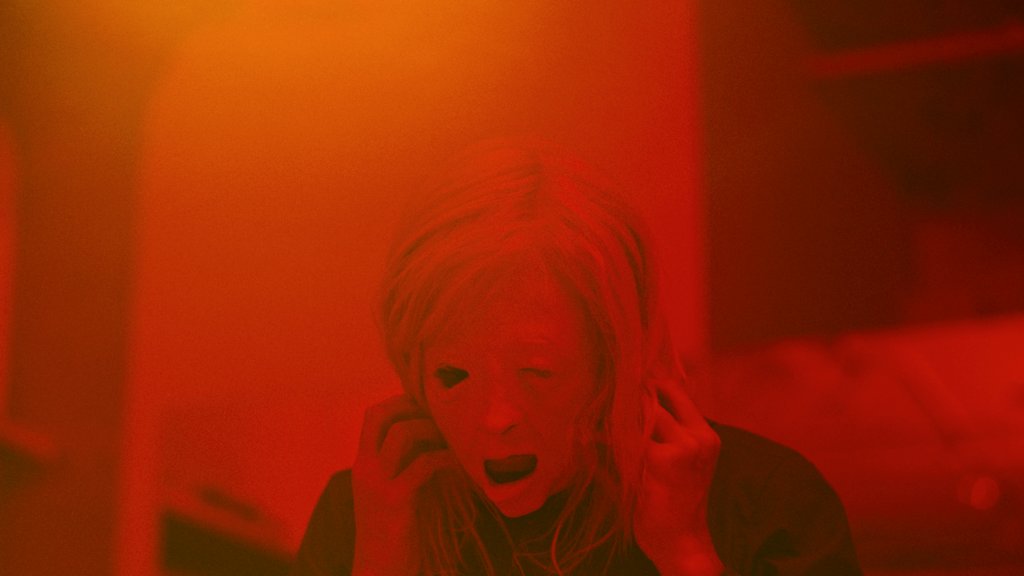
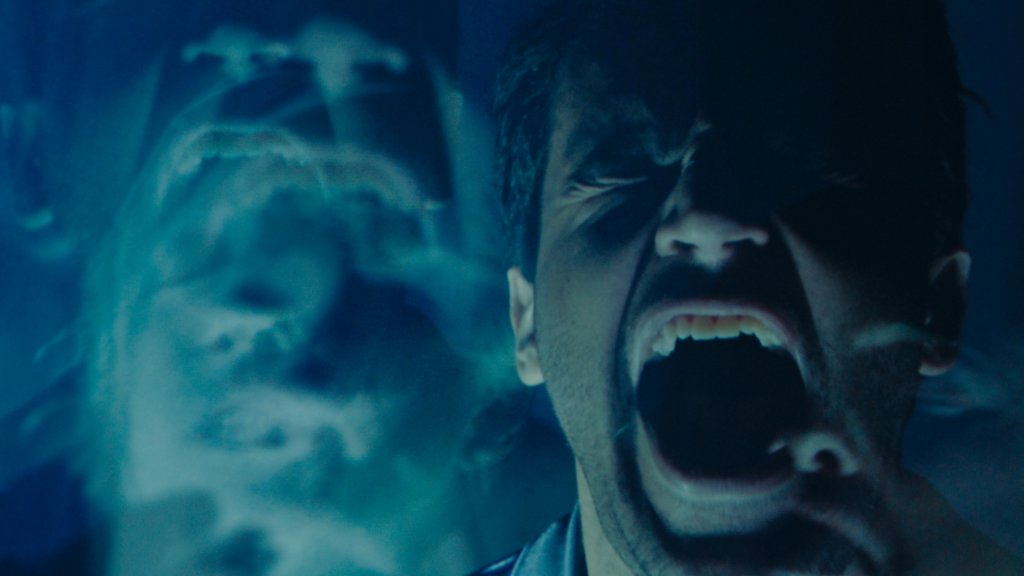
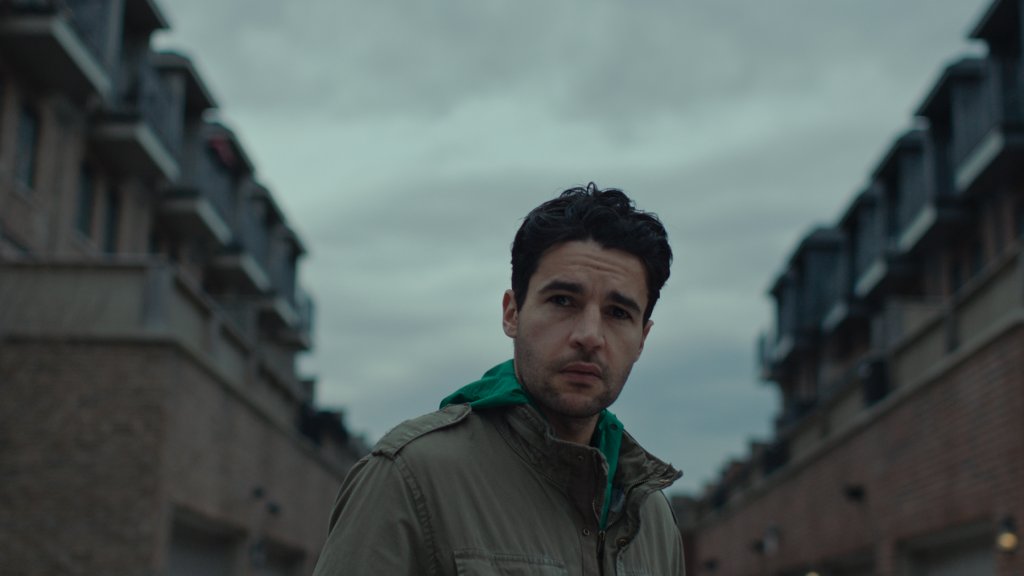
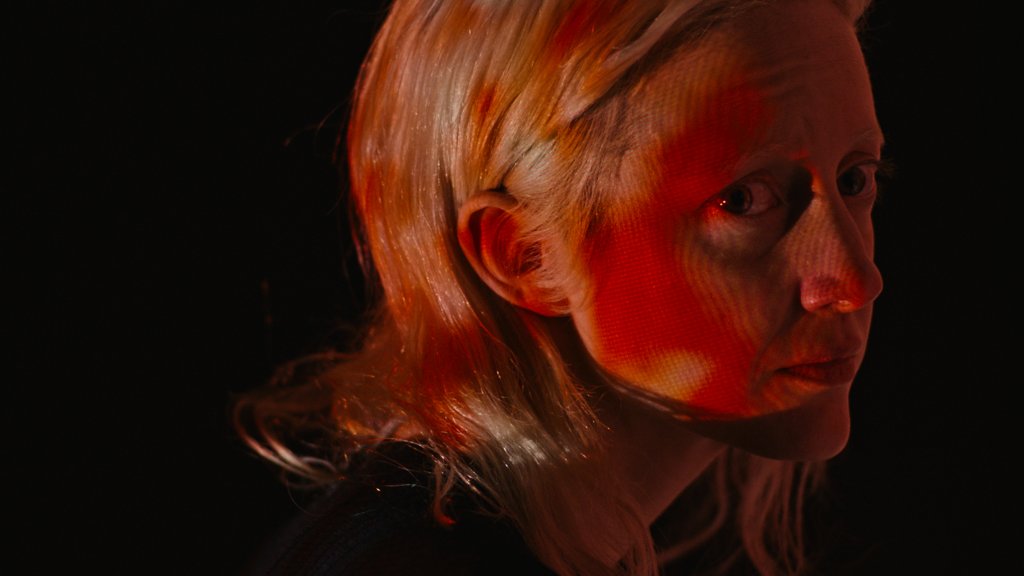
Possessor is a thrilling sophomore feature from writer-director Brandon Cronenberg (son of the legendary David Cronenberg) and stars Mandy’s Andrea Riseborough, Christopher Abbott, Jennifer Jason Leigh, Tuppence Middleton, and Sean Bean. This sci-fi horror follows Tasya Vos (Riseborough), a corporate assassin who uses brain-implant technology to take control of others’ bodies in order to kill her assigned targets. Her latest excursion sees Vos inhabit the body of Colin Tate (Abbott) for a seemingly routine assignment. However, it’s not long until things go awry and she begins to lose control, and her life threatens to unravel around her.

Screening at London Film Festival ahead of its UK release on November 27th, STARBURST spoke with Possessor’s writer-director Brandon Cronenberg about his original concept for the film and its ideas surrounding identity, selfhood, and control.

STARBURST: We wanted to start by asking, where did the concept for Possessor originate from?

Brandon Cronenberg: I think it initially came from a trivial, personal place. I was on the press tour for my first feature Antiviral and travelling with a film for the first time was a very surreal experience. You’re constructing this public persona, in a sense, you’re performing a version of yourself, this kind of media-self that then runs off and has its own strange life online without you. So because of that and a couple of other things, I was having a difficult time seeing myself in my own life; I was waking up in the mornings feeling like I was sitting up into someone else’s life and having to madly construct a character who could operate in that context. So I initially wanted to write a film about a character who may or may not be an imposter in their own life, and do that as a way of talking about how we create characters and narratives in order to function as people. And then the thriller and sci-fi elements kind of built up from there. The seed of the film was actually in those more dramatic scenes, the relationship and family scenes.

So would you say that Possessor is essentially about constructions of the self, and finding a unified sense of self?

I mean, I think it ended up becoming about a number of things. That was really where it started, about those characters that we perform not only for other people but also for ourselves, that self-image and those personal narratives we build. But other things also crept into it. For instance, the Snowden leaks happened as I was writing, and I was becoming very angry and depressed about the death of privacy through technology. And so that surveillance element also ended up in there.

It’s interesting that the Snowden leaks influenced that exploration of privacy, because conversations around that have found even more traction in recent years. Do you think it has found renewed relevance with concerns around the US elections and accusations of foreign intervention?

I would say so, definitely. Less in terms of surveillance – although there is that – but I think depressingly, it has become more relevant from a kind of mind-control perspective, I think. It’s interesting because, as people, we have this idea that we are coherent selves with our own wills and desires, and that we’re somehow unified entities. But actually, all human beings are this chorus of conflicted impulses and ideas, some of which come from our own brains, but some of which don’t. I mean, there’s incredibly interesting science for instance, about the ways that our microbiomes affect our personality, just the fact that we have micro-organisms in our bodies that are partly dictating our behaviour.

And, of course, we are also affected by what could be considered psychological infections, ideas that we pick up from other people and which end up defining us. And right now, I think we’re really seeing the beginnings of how the construction of our online society will dictate the next era of human behaviour – foreign interference in elections being just one example. I mean, there are many people who feel that they are operating as motivated by their own ideas, but their own ideas have actually been carefully crafted by foreign governments… which in another era would have sounded like a completely insane conspiracy theory! But that’s actually just daily life right now, and I think we’re only just starting to understand the repercussions of being in an online society.

How would you then define this idea of ‘the self’ in modern society?

I think it is a vague concept. I was looking into the neuroscience behind the kind of brain control aspects of the film, and although I don’t think this technology is actually around the corner, it is rooted in real neuroscience. In particular I was looking at this Dr. Jose Delgado who was a Spanish doctor working in the US in the 50s, and 60s, and he was doing experiments where he would put actual wires into people’s brains and then stimulate parts of their brains electrically, and found he could control a very wide range of behaviour and emotion. Alarmingly, not only motor function but also emotional and other behavioural functions. There is one experiment he described in his book, where he would press a button to activate the brain implant in a particular subject and, because of that trigger, the subject would get up from his chair, walk around it and then sit down. And every time the button was pressed, he would go through the same motions, but every time he did it, he would decide after the fact that he had done it of his own free will, and come up with an explanation for it. For instance, he would say, “I was looking for my shoes,” or “I heard a sound from the other room”.

And so it was like the subject’s brain had decided, after the action was performed, that it had been generated internally rather than by this implant. I think that that function of the human brain, the one that allows someone to claim ownership over certain ideas and certain actions is, first of all, very philosophically interesting, but I also think it’s at the heart of what we’re seeing with a lot of social media. People are deciding something came from them, even though it didn’t, because that’s just how we generate our ideas of ourselves.

You’ve touched on this already, but how do you think modern technologies are transforming our ideas of humanity?

Absolutely. I mean, again, I think it really comes from being online constantly. We’re constantly exposed to information through our phones – not to sound like an old person! But we’re carrying around these devices all the time which are, for one, plugging us into a constant stream of information, but are also being used to tailor that information in order to affect our behaviour. And so who we are is this process of push and pull, where we’re contributing to this online community but we’re also being very, very affected by it in some very nuanced ways. The part of the film where they’re looking through people’s webcams to see what kinds of curtains and blinds they own, and to then use that for commercial data mining purposes, that’s a joke in the film. Yet it’s only kind of a joke because we really are having our privacy violated in incredibly invasive ways, all for incredibly mundane reasons. So much of it is just about money and selling us things.

Possessor works as commentary on modernity and technology, but it also explores more organic ideas of the self – for instance there’s a fascinating scene in which Vos, in her otherwise female-presenting body, is seen with an erect penis instead of a vagina. Can you talk a little about exploring that relationship between gender and identity?

I think that if you’re someone who jumps into other people’s bodies, gender becomes incredibly complicated and fascinating. And sex becomes incredibly complicated and fascinating, because who we are is so rooted in our bodies, and not just our ideas of self but also in a basic, physical way. So of course, if you’re jumping into the body of someone who’s of a different biological sex, you’re going to be having a complicated relationship with that body; you’re experiencing a very different kind of physicality, but you’re also experiencing all of the cultural elements of gender that come with it. And I think Chris’s performance was very interesting because he was playing with those moments of being more female or more male, depending on how much of Tasya’s personality was coming through. And the shot with the penis was because I wanted to find a point in that scene where Vos was losing herself in Colin, not just physically but psychologically. She was Colin in that moment, and then suddenly also having this sense of her own self; that kind of disconnect between who she was, who she is within him and who he is, in this very physically intimate moment, that’s fascinating.

Possessor has an R-rated version and an unrated, uncut version. That was partially because of those sex scenes we’ve just mentioned, but also because the film features its fair share of graphic violence. Why was it important for you to keep that violence in the film, even as it meant a higher rating?

For the most part, the uncut version is fortunately the lead version of the film; I think the violence in the film is very narrative. So much of Vos’ character is about her relationship with violence, and the evolution of that relationship. So, for me, part of that is the need to communicate her experience of violence in a visceral way, because it has so much to do with her emotional and psychological state. I think the audience needs to connect with her on that level; and if they’re horrified, that’s important too. That’s part of her character, part of her relationship with her work. And the violence also really tracks with her psychology: sometimes it’s more observational, sometimes it’s more tactile, sometimes it’s a memory that’s very stylized because she’s looking back at it. That violence is so essential to the film that I didn’t want to tone that down for the sake of ratings.

And similarly, what inspired the use of body horror to visualise Vos’ consciousness taking over Colin’s?

I mean, when you have a scene where someone’s consciousness is remotely invading another person’s body, how do you communicate that in a way that allows the audience to feel it? Those scenes were in many ways about trying to visualise something that’s very hard to imagine. Not only because the technology is imagined, but because the concept itself is something that’s so abstract. Those scenes were an attempt to make it more concrete.

We just wanted to finish by asking you about what future projects you might have in the works?

I have two films that are fairly far along in development right now. One is called Infinity Pool, which is a kind of tourist resort satire with some sci-fi horror elements, and the other is a trippy space horror film called Dragon. I hope to shoot them back-to-back as soon as I get a chance.

You’re definitely speaking our language there. Thank you so much for your time.

POSSESSOR releases in cinemas from November 27th, courtesy of Signature Entertainment, or catch it as part of the BFI’s London Film Festival on October 16th, 9pm.

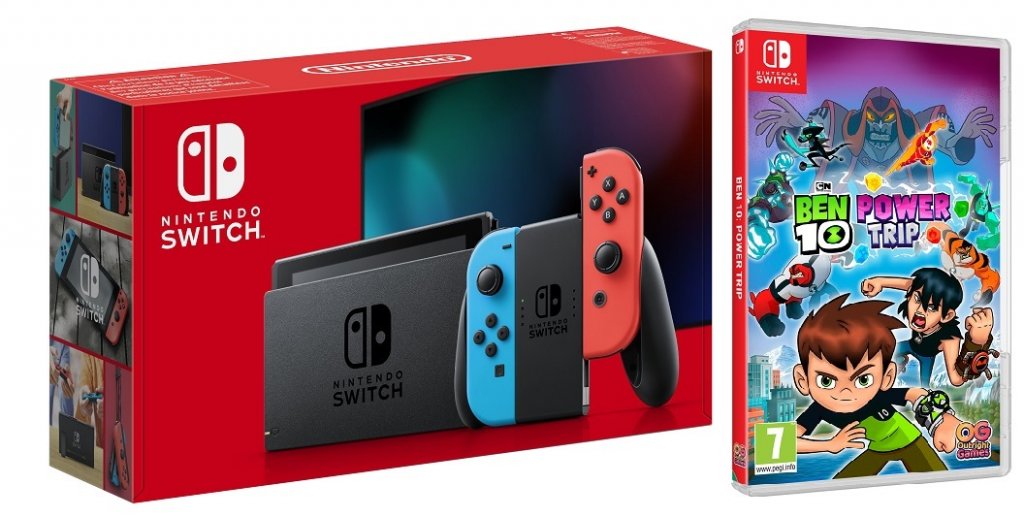
[ENDED] Win a copy of BEN 10: POWER TRIP and a Nintendo Switch to play it on!

Ben 10: Power Trip takes place in the animated universe of Ben Tennyson, where he uses his trusted Omnitrix to transform into different alien creatures and save the world. The game tells a unique story where Ben must uncover the truth behind four mysterious crystals that threaten to take over his world. Players will be able to transform into powerful aliens and work together to battle fearsome foes in this co-op adventure.

The game is out now on PC, PS4, Switch and Xbox One – and we’ve got a copy of the Switch edition here to give away, along with a Nintendo Switch console to play it on!

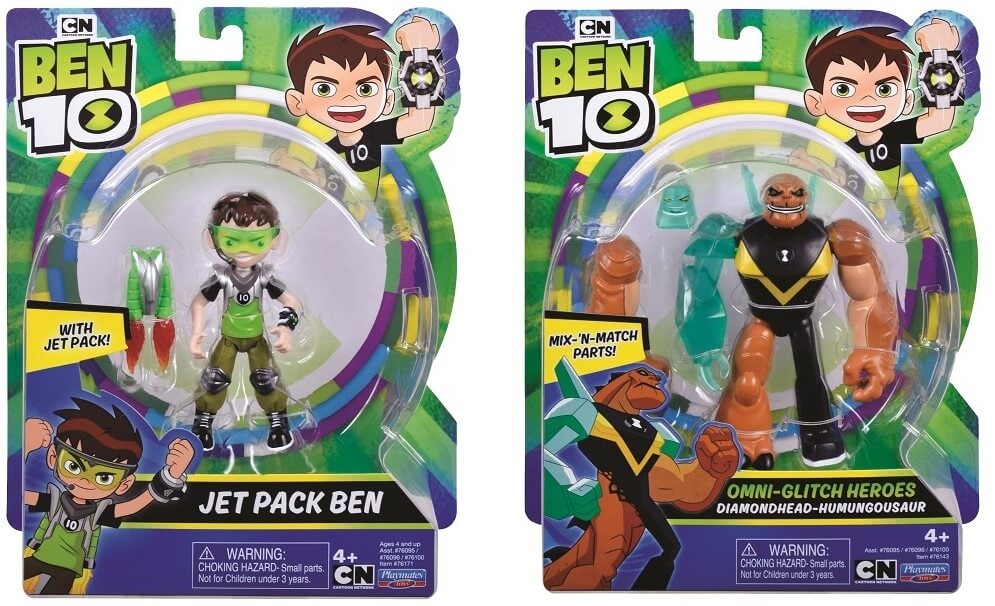
We’ll also throw in a couple of fancy toys, too!

To be in with a chance of winning, simply answer the following question:

In Ben 10: Power Trip, which character does player 2 control?

A) Gwen

B) Kevin

C) Karen

[Competition is now closed so we’ve removed the entry details!]

Competition in conjunction with Cartoon Network and Turner.

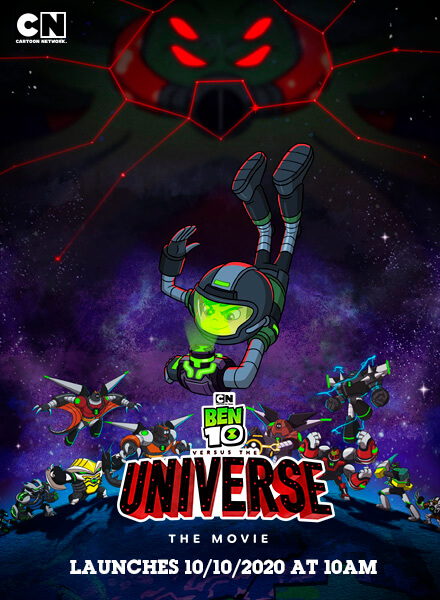
Ben 10 vs. The Universe: The Movie premiered on Cartoon Network on 10/10/20 – check listings for repeat viewings!


Terms & Conditions:

Entrants must be residents of the UK or Ireland and aged 18 or over.

Cartoon Network / STARBURST do not accept any responsibility for late or lost entries due to Internet or email problems. Proof of sending is not proof of receipt. Entrants must supply full details as required on the competition page, and comply with all rules to be eligible for the prize. No responsibility is accepted for ineligible entries or entries made fraudulently. Unless otherwise stated, the Competition is not open to employees of: (a) the Company; and (b) any third party appointed by the Company to organise and/or manage the Competition; and (c) the Competition sponsor(s). This competition is a game promoted STARBURST.

STARBURST’s decision is final in every situation and no correspondence will be entered into. STARBURST reserves the right to cancel the competition at any stage, if deemed necessary in its opinion, and/or if circumstances arise outside of its control. Entrants will be deemed to have accepted these rules and agree to be bound by them when entering this competition. The winners will be drawn at random from all the correct entries, and only they will be contacted personally. Prize must be taken as stated and cannot be deferred. There will be no cash alternatives.

STARBURST routinely adds the email addresses of competition entrants to the regular newsletter, in order to keep entrants informed of upcoming competition opportunities. Details of how to unsubscribe are contained within each newsletter. All information held by STARBURST will not be disclosed to any third parties.

Health Benefits of Watching Horror Movies You’ve Never Known Before

Do you like watching movies with frightening scenes? If so, you’re healthier than other people who like to spend their time watching popular TV shows. Do you want to know why? Well, it may surprise you, but horror movies bring some health benefits. Scroll down below and discover the health benefits of watching horror movies.

Horror Movies Can Burn Calories

Nope, a list of horror movies isn’t an alternative to regular workout in a gym. However, one 90-minute movie with scary scenes can burn 100-200 calories. It is equal to a small chocolate bar.

There are no secrets. Watching horror movies, both heart and breathing rates increase. Try to enable the pulse-measuring feature on a smart-watch or fitness band and track your heart rate changes in live time while watching a horror movie.

Also, they stimulate brain activity. In total, one terrifying movie can help lose some calories.

However, if you’re a student, it will be better to visit a gym to keep your body fit and strong. In case you have a tight schedule, it can be a good idea to pay someone to do your homework as it is very important to be healthy.

Improve Brain Activity


It’s a well-known fact that horror films improve brain activity. Several scientific studies found that frightening scenes in horror movies help increase the adrenaline level and release neurotransmitters in the brain.

Simple words, watching horror films, people not only look at their monitors. Most people analyze everything that happens on screens, try to find a possible solution, and think about what they would do in the same situation.

Therefore, if you feel extremely tired and squeezed, feel free to watch a horror film to refresh your mind and get back to work with new power. Otherwise, if you’re an undergraduate, you can find a company that allows you to place an essay order online and get an A+ assignment without any fuss.

Relieve Stress and Anxiety

There are a lot of different types of horror movies. However, most of them can be divided into two categories. The first one tries to scare people by showing paranormal activity. The second category implies films that show real-life situations when people become victims of maniacs.

Such movies help refresh the mind, make a self-journey, and discover that overdue payments are not real troubles that people can face.

In such a way, if you’re a student who doesn’t have enough time to pass an assignment until the past due, it’s not the end of your life. Feel free to explore the most popular academic writing companies and choose the best one to get a top-grade assignment within one day.

Help Release Helpful Hormones

It’s a well-known fact that frightening scenes in movies are a real adrenaline pump. However, most people don’t know that when scary scenes are over, the brain calms down and releases serotonin and dopamine. Those hormones help keep your body healthy and maintain a high level of brain activity.

It’s easy to check. Surf the Web and pick a popular scary film that you haven’t seen before. In case you’re an undergraduate who doesn’t have even a few free hours to watch a movie, get help with college papers online. Feel free to ask your friends, “Do you know someone who can write my essay online for cheap?” if you don’t know reliable essay writing platforms.

Decrease Depression

This health benefit is the result of another advantage that horror movies bring. When you watch a scary film with your partner, blood-curdling scenes drive you to spoon and snuggle with each other.

It helps promote your overall health and reduce depression. If you’re a single student who doesn’t want to watch horror movies alone, delegate your homework and hang out to meet your love.

In case you don’t know someone who can help you with your homework, open a browser and surf the following question, “Who can do my statistics homework?” on the Internet. Examine all essay writing companies from the search query and place an order at the best one.

Top Horror Movies

‘Paranormal Activity’ is the #1 in the list of hair-raising movies to watch. This film is about a couple of homeowners who face some extraordinary activity while sleeping. Therefore, they decide to record it on a camera. Watch this movie and discover what they filmed.

Talking about new-released horror movies, ‘The Platform’ is one of the most popular scary movies. It shows the prison of the future with its prisoners. The building has a vertical form with hundreds of floors. Each cell with two prisoners is a prison’s level.

There are no guards, so that prisoners are allowed to do all that they want. However, the main problem is the unfair system of delivering food because of what a lot of people starve.


Brandon Vietti | BATMAN: DEATH IN THE FAMILY

Batman death in the family red hood

In anticipation of the release of DC animation’s first interactive film, Batman: Death in the Family, STARBURST caught up with director, writer, producer, and all-round DC veteran Brandon Vietti to discuss Jason Todd’s story, inviting fans to choose his path, and why this arc has stayed so important to Batman’s development.

STARBURST: Firstly, why did you want to revisit this particular story in the Batman canon?

Brandon Vietti: Well, I think this particular story is famous for putting the choice of killing Jason Todd in the hands of the fans and of the comic book readers. So when we decided to do an interactive story for Blu-ray and for DC animation, this was the obvious choice: to take this famous point in comic book history, and explore it in a new way, give our audience more options, more choices to make other than should Jason Todd live or die. You get to make a whole bunch of choices and see how those choices play out going down different paths, in hopefully, very unexpected but entertaining ways, while still maintaining the core of the character. I think that was the fun part of this project, to really study who Jason Todd is and to maintain that character, no matter what happens to him, no matter what choices he makes, for him to still be that same guy.

We take it that means this movie was always going to be an interactive one?

It was, yeah. Again, because of that story being rooted in putting the choice in the hands of the audience. This was just the obvious choice. And it was such great fortune that we had already sort of touched on that story in Under the Red Hood. That story is one which fans really like and gravitate towards. It was great to revisit parts of that story, and to go back to other stories that we didn’t quite get to tell the first time. You get some new and familiar plots, but you see them in brand new ways or see them go in different directions. It’s an interesting exploration of that Jason Todd story from different angles that our audience gets to participate in.

And what do you think that participatory element adds to viewers’ understanding of the story and their appreciation of Jason Todd?  

I think it integrates them into the story more. And that’s the goal of this, I think. I think it will draw you in more deeply when you get to make the choices for the character. I think that makes you relate to the character more because you participate in the paths that they take. But you also feel the results of your choices more deeply. I tried to make sure that with each choice you make, the outcomes are not necessarily what you expect they’re going to be and you have to own that, because you drove the character in that direction. And those outcomes may be good, they may be bad. You just have to own it and feel that. I think that’s an interesting way to take part in the story, it connects you to the character and immerses you in the story in a deeper way, which is a really appealing concept to me as a storyteller.

You mention connecting with the character but in 1988, when fans were asked to vote on Jason’s fate, that was partly because most fans had taken a dislike to him. Why do you think Jason Todd continues to be a divisive character amongst fans?

He’s of the Batman family, but a family member who turned to the dark side. I think that’s a great story. Batman’s universe and Batman’s villains are very psychologically grounded, they’re not always about big superpowers or anything. There’s a complex psychology involved that makes them villains, and to have a character like Jason Todd, who came up under Batman’s wings, so to speak, cross over to the dark side and become a murderer himself… but from his point of view, he’s doing it to further Batman’s goals, in a way he feels Batman might be falling short. So this story really challenges Batman at the core of who he is, challenges his methods and the shape his drive for justice takes. It’s a challenge to his heroism. And it’s just a worst-case scenario for Batman, to have a family member that has gone so far astray, but still comes back to challenge him. That challenge of ideals is endlessly interesting.

You’ve done so much work with DC and with Batman in particular; what keeps you coming back for more?

Well, number one, I just love Batman. I’ve been a huge fan for a very long time. I also just love the DC Universe and its many characters, and how they’re very flexible. I’ve been very lucky to do a lot of different Batman shows with an incredible range of styles and tones, from Lego Batman to Batman: The Brave and the Bold, to this very dark and sophisticated Batman story that we’re doing with Death in the Family and Under the Red Hood. And, you know, I love that no matter the tone you drop Batman into, whether it’s comedy or drama, he remains the same character at his core.

DC SHOWCASE BATMAN: DEATH IN THE FAMILY is coming October 13th to Digital and October 26th to Blu-ray.

Vincent Martella | BATMAN: DEATH IN THE FAMILY

jason todd robin death in the family

Batman: Death in the Family is the latest animated feature from Warner Bros. Home Entertainment and DC, and their first interactive short movie. In anticipation of its release, STARBURST had to pleasure of speaking with Vincent Martella, best known for his roles in Everybody Hates Chris and Phineas and Ferb, who returned as Jason Todd after first voicing him in Batman: Under the Red Hood alongside Jensen Ackles, ten years ago.

STARBURST: We wanted to start by asking, how did it feel to return to the role of Jason Todd after so many years?

Vincent Martella: You know, I was very surprised to get the call that I’d be able to play him again, given everything that happens in Under the Red Hood. I was really excited and, to be quite frank, I didn’t have the most work to do in Under the Red Hood. I had a couple of scenes. And so getting an opportunity to really flesh this character out and really explore who he is, I was super excited to get the chance to do that. It’s what every actor likes to do, to really dig deep into a character.

What else excited you about this film, and about its interactive format in particular?

Well, what was interesting was that when I was first approached about it, I didn’t know that it was interactive. Once they sent the scripts, they started telling me that there’d be different options and that they’d explain it all when I got to the studio. Brandon Vietti [writer-director] and Wes Gleason [casting director] really helped me understand it, and they laid out an actual diagram of what each choice means and where it sends the character, and what that means for Jason Todd’s life, whether it adds trauma or takes things away from him, or… It was a learning process, but I was even more excited to do it once I knew the entire scope of the project.

From an audience perspective, what would you say the interactive element adds to the story and people’s understanding of Jason Todd?

I’m not going to say what some of the choices are, but they are big choices. So just having the power and the ability to do that and think, “Okay, this is about to take Jason’s life in a completely new direction,” that is something unusual and new to DC animation. And some of these choices give you a lot more footage, while others can wrap things up more quickly. So, I encourage people to explore a lot of the different options that they give you because there’s a lot of story there.

And of course, Jason Todd’s death is an arc that has remained a really important one to the Batman canon. Why was it a good one to revisit?

I mean, it’s something that Brandon discussed. He felt so attached to this storyline and felt like there was more of the story to tell. And I think when you have a character like Jason Todd where the fans are so invested in them, it’s generally beneficial for them to learn more about them. It just seemed like the right time to dive back into this character.

As you well know, there was a vote in 1988 and fans decided to kill Jason Todd. Do you think people would make the same choice now?

What’s interesting is that, yeah, fans voted for Jason to die, but given so much time has gone by, and how much fans now know about Jason Todd and the Red Hood, I am curious to know what choices are going to be the most common? What pathways are going to excite them most? That’s what I’m really looking forward to, is the fan response to seeing all the different and interesting places they can take this character. And it’s more than just one or the other now, there are so many options.

If you were offered to return to the role once again, would come back? Or are you now satisfied that you’ve gotten all you can out of this role?

I certainly would if there was more story to tell. I mean, that’s something which is up to the great writers DC has. This character is really fun to play, and who doesn’t like being a part of the Batman universe? I mean that’s so exciting personally, and I’m a fan of DC so I would absolutely come back for some more Jason Todd action. We’ll just have to see whether the opportunity arises.

And lastly, what projects have you got coming up?

This is coming up, of course. Phineas and Ferb the Movie: Candance Against the Universe just came out on Disney+ in August, and I hope everyone goes and watches that. And then I have a movie called Shallow Water coming out sometime next year, but who knows when movies are coming out!

DC SHOWCASE BATMAN: DEATH IN THE FAMILY is coming to Digital on October 13th, followed by a Blu-ray release on October 26th.

NYFF58: BEST OF THE FEST

letitia wright in mangrove

Today marks the last of twenty-five days of world cinema at the 58th New York Film Festival, screened both virtually and at NYC drive-ins. STARBURST has rounded up a selection of the best movies the Festival has to offer across its Main Slate, Spotlight, Currents, and Revivals categories.

As an aside, it’s worth noting that this list is based solely on the selection of films available for press & industry preview; some notable titles such as David Byrne’s American Utopia from director Spike Lee, Sofia Coppola’s On the Rocks, and German-French drama Undine were not given early access, hence their absence from this round-up. Now, and without further ado, let’s delve into our Best of the NYFF Fest!

Steve McQueen’s SMALL AXE Anthology

Produced by the BBC and Amazon Studios, acclaimed director Steve McQueen created five films as part of his Small Axe anthology. Three of these opened New York Film Festival: Mangrove, Lovers Rock, and Red, White and Blue. Set between the ‘60s and mid ‘80s, each film centres on the experiences of London’s West Indian community “whose lives have been shaped by their own force of will, despite rampant racism and discrimination.”

SMALL AXE

McQueen also added that although the films “are about the past, they are very much concerned with the present. A commentary on where we were, where we are and where we want to go.” Black Panther’s Letitia Wright stars in Mangrove, the first instalment of the series and a gripping dramatization of the events surrounding the landmark 1970 trial of the Mangrove Nine. It shines as a sharp indictment of the systemic racism in law and order, as timely a retelling as there could be in 2020.

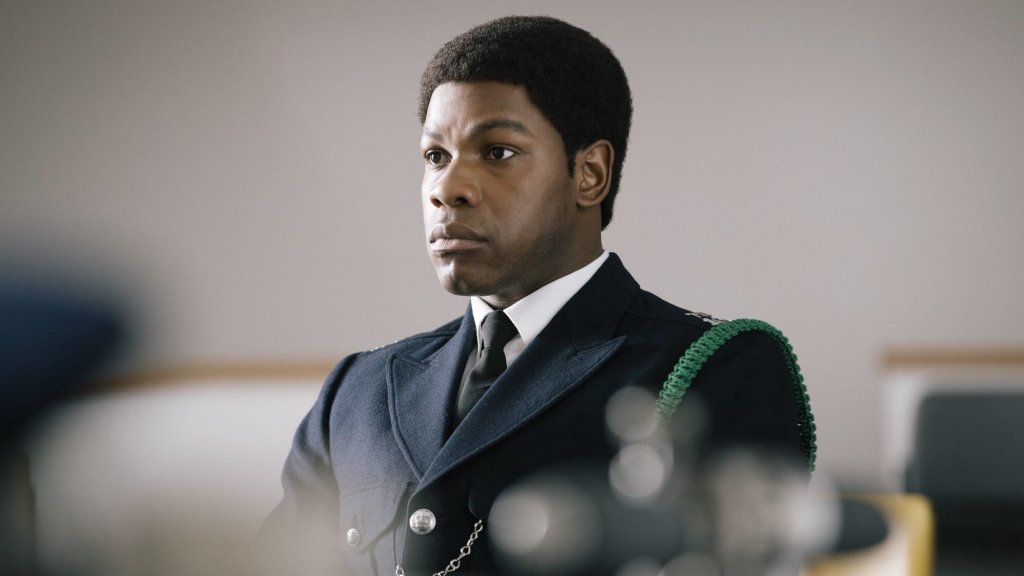
Lovers Rock is the second film, the only one in the series to not recount true events and possibly the most beautiful and enthralling among them. Lovers Rock perfectly captures a moment and feeling in time celebrating Black joy, music, and love. And lastly, Star Wars’ John Boyega gives a career-best performance in Small Axe’s final film, Red, White and Blue as real-life figure Leroy Logan. A member of the London Metropolitan Police Force, this biopic traces the early years of Logan’s career as he witnesses and experiences the organisation’s racism, one which he would eventually try to dismantle.

NOMADLAND, from Marvel’s THE ETERNALS director Chloé Zhao

Frances McDormand stars in Zhao’s beautifully sensitive third feature, adapted from Jessica Brudger’s 2017 nonfiction book about the lives of itinerant older Americans. McDormand is self-effacing in her performance as Fern, a widow who travels the American West in search of seasonal work after losing everything to the recession; Nomadland is also populated with a supporting cast of non-actors, playing versions of themselves. A compassionate portrait of those left behind by the 2008 crash, Nomadland is unmissable.

THE HUMAN VOICE, the English-language debut short from Pedro Almodóvar

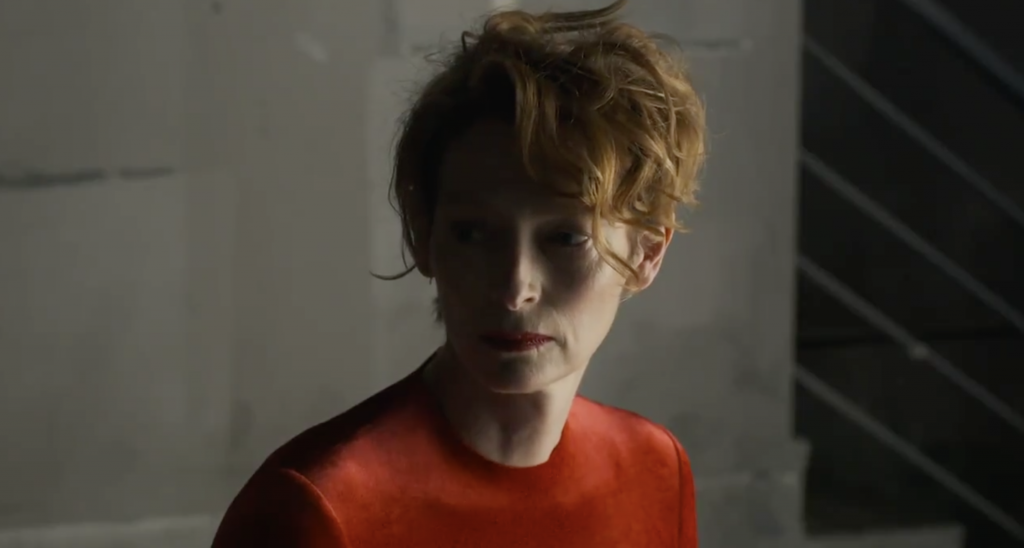
Tilda Swinton is hypnotic as a woman traumatised by the end of an affair, adapted from Jean Cocteau’s 1930 play of the same name. Drifting across her apartment in haute couture, Swinton gives a theatrical performance which proves surprisingly timely: trapped alone between four walls, trying to find connection in phone conversations, this short film proves to be a resonant portrait of loneliness. Stylish and featuring stunning set pieces, The Human Voice is above all a 30-minute visual delight.

THE HUMAN VOICE

FRENCH EXIT, starring a phenomenal Michelle Pfeiffer

Closing the 58th New York Film Festival is French Exit, an absurdist satire from director Azazel Jacobs which brings together an all-star cast which includes Michelle Pfeiffer, Lucas Hedges, Imogen Poots, Valerie Mahaffey, Danielle Macdonald, and Salem Saberhagen (looking notably sleeker and richer than he did in the 90s). At times uneven and slightly meandering, French Exit is nonetheless wryly funny and worth watching for the power of Pfeiffer’s performance alone.

IN THE MOOD FOR LOVE, at 20

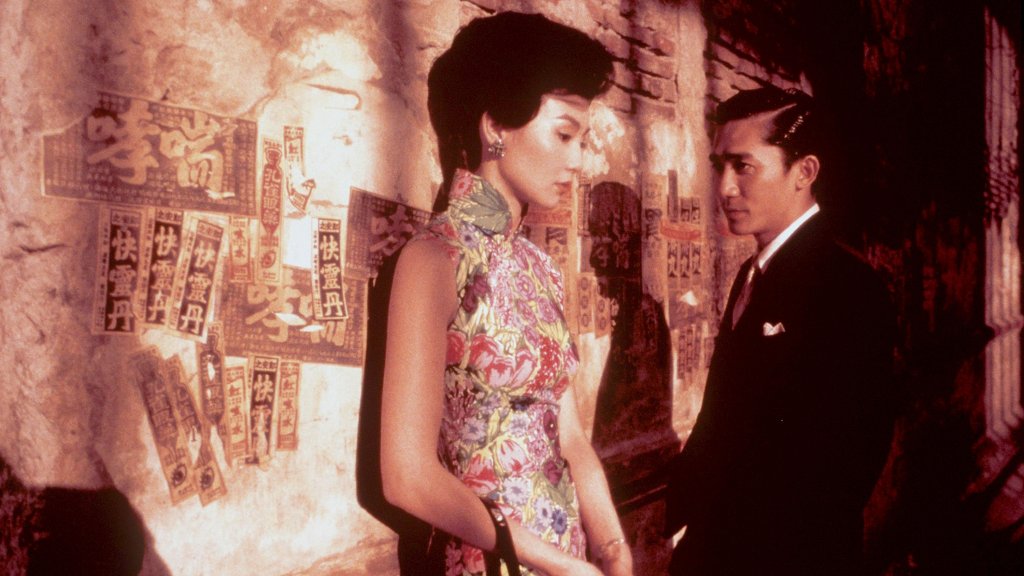
First released in 2000, In the Mood for Love is one of eleven films selected for NYFF’s Revivals slate. Wong Kar Wai’s gorgeous art house romance stars Maggie Cheung and Tony Leung as next-door neighbours in 1960s Hong Kong who discover their respective spouses are having an affair. The absence of their spouses leaves room for a platonic romance to blossom, as Wong teases a deliberately paced, “will they, won’t they” love story.  The cinematography alone is reason enough to seek out this swoon-worthy classic.

IN THE MOOD FOR LOVE

Nathan Hill | ALIENS DOWN UNDER

nathan hill aliens

We catch up with an Australian filmmaker whose enlightening documentaries are making waves down under…

STARBURST: What made you become interested in making documentaries?

Nathan Hill: To be honest, the part I like the most about owning a DVD or a Blu-ray is the special features and featurettes you can explore. The ‘making of’ and the reality side to movies has always intrigued me. So I guess delving into the documentary realm felt like a good transition, or additional stream to what I normally create – that being the ‘moving image’.

How far did you go to research Sex Down Under?

With SDU we really went very far down the rabbit’s hole. What started out as a fun topic to explore, but it became an ever quite seedy one as we progressed, sometimes even scarily, in fact. It was the darker side of the industry and a subject that I hadn’t fully encountered, living right beneath the city. What some people do to play out their sexual fantasies is gobsmacking.

What was the most startling thing you found while making it?

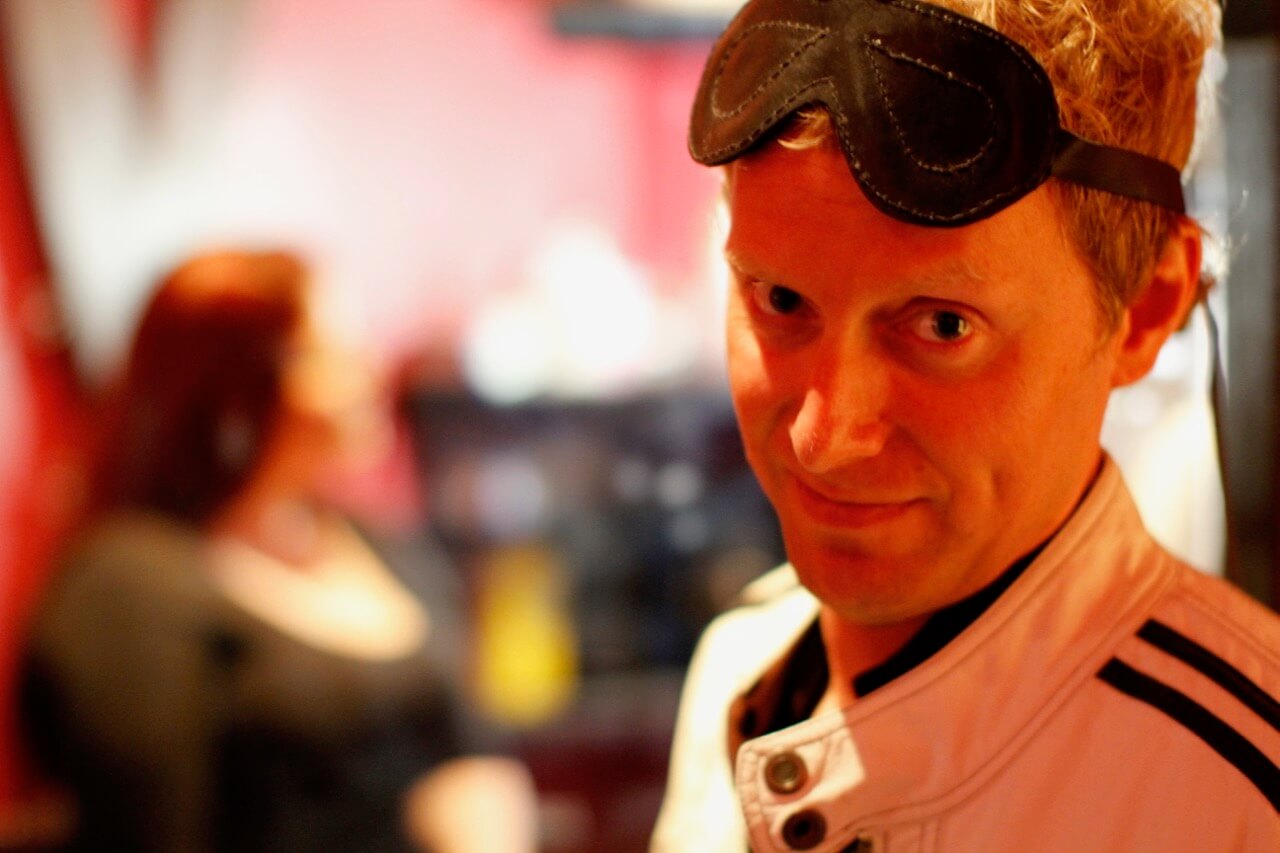
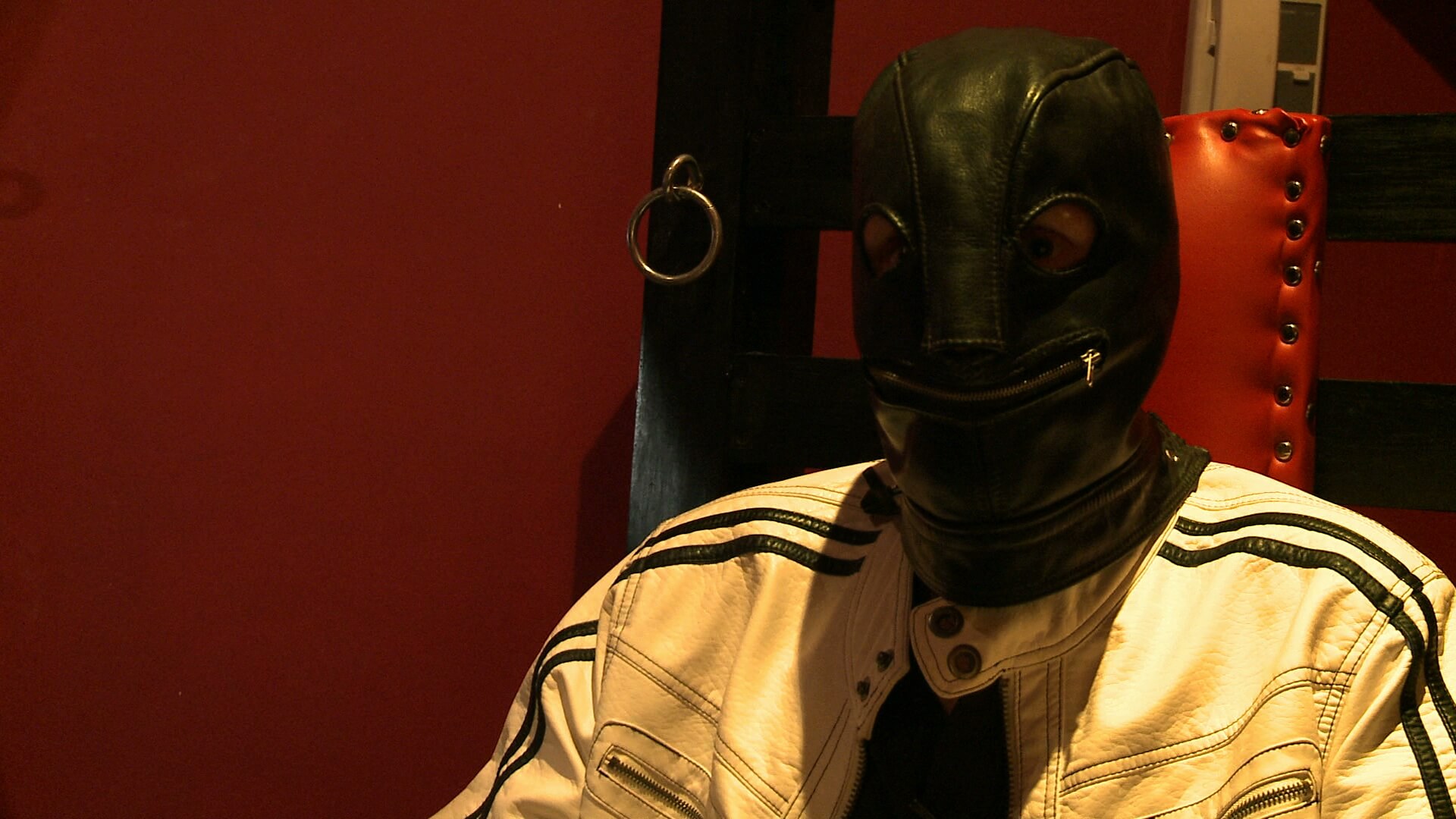
The most startling would have to be our discoveries inside an S&M dungeon, where  people enact their vile and sadistic tendencies and actually pay top dollar for. I was horrified to find out that most of the customers were in fact members of the police, fire-fighters, judges, and politicians, to name but a few. It seems that people of the most distinguished careers and professions are in fact the ones with the most vulgar taste for the sexually absurd.

Were there any moments you thought you wouldn’t be able to show?

There was one spot where they started to show us an instrument where a man would insert his head into a cage-like device. He would then allow a paid mistress to either urinate or excrete her faeces into his mouth. I almost vomited when I saw it and learned what it was used for. I became very claustrophobic in that environment and was constantly looking over my shoulder. It was truly horrible. What the walls had witnessed inside that place are not for the timid or faint hearted, I can tell you.

Did you have an interest in UFOs before making Aliens Down Under?

I’ve always had an interest in UFOs since I was a kid, I don’t know anyone who isn’t or hasn’t been interested in the subject at one time or another! My favourite fictional movies on the subject would probably be Xtro and The Man Who Fell to Earth. It’s foolish to think we are the only ones on the planet, or the solar system for that matter. ADU was the perfect chance for me to throw my hat in the ring and explore the subject on my own terms. It’s something that’s always fascinated me.

Are you a believer after making it?

The scariest thing about making this documentary is that all of the people I interviewed have never met, yet they all claim to have seen a similar thing. In fact Rebecca’s encounters really made me sit up and believe. She’s a really nice, dare I say simple, unthreatening person, who looks you dead in the eye and tells her story like it was yesterday. I couldn’t fault her.

What was the strangest, most compelling story of the film?

I think the most compelling story of ADU is the one told by Aaron. I mean, the guy’s a friggin’ science teacher and a physicist and when he speaks to you, you know it’s the truth. He’s seen a UFO a couple of times and had people alongside him to even share in the testimonials. It creeped me out and gave me a funny sense of déjà vu when he spoke. Watch and listen to him if you’re a disbeliever!

Which set of interview subjects did you find to be the most open – the sex workers or alien witnesses?

Strangely, I thought that the ADU interviewees would be the most open about the subject, but not in this case. They were quite guarded, reserved, and one would say ‘mature’. Whereas the SDU interviewees were quite liberated, open, and verbally loud about the topic. Sex was just an everyday thing, whereas the alien spotting was special, rare, and intriguing to say the least.

Are there any plans for more documentaries in the ‘Down Under’ banner?

I’m loving the Down Under films at the moment. In fact, we have a new one on the slate titled Bigfoot Down Under. This time, we delve deep into the Blue Mountains to try and spot the ‘Yowie’, which is the Australian term for Bigfoot. It’s already proving to be quite fascinating, with the first ever spotting recorded as early as 1795. Intriguing subjects and a slate of ideas are forming and I look forward to what the future brings. My goal is to release a box set of the work in a Down Under series when it’s all said and done. How many we will make? I’m not sure yet of the number.

Would you be interested in making narrative films?

Absolutely. In fact, I’ve made a few. I have decent concepts on just about all genres and feature-length scripts just waiting to be made. I’m also an actor, writer, producer, casting director and director so there’s not much I haven’t done, or can do, when it comes to film in front and/or behind the camera. It’s my life blood. I live, breathe and dream about film in all its genres, mediums and forms. I’m very passionate and enthusiastic about creativity. It is, as they say, king.

Aliens Down Under and Sex Down Under are available on DVD.

Mark Dacascos | THE DRIVER

driver

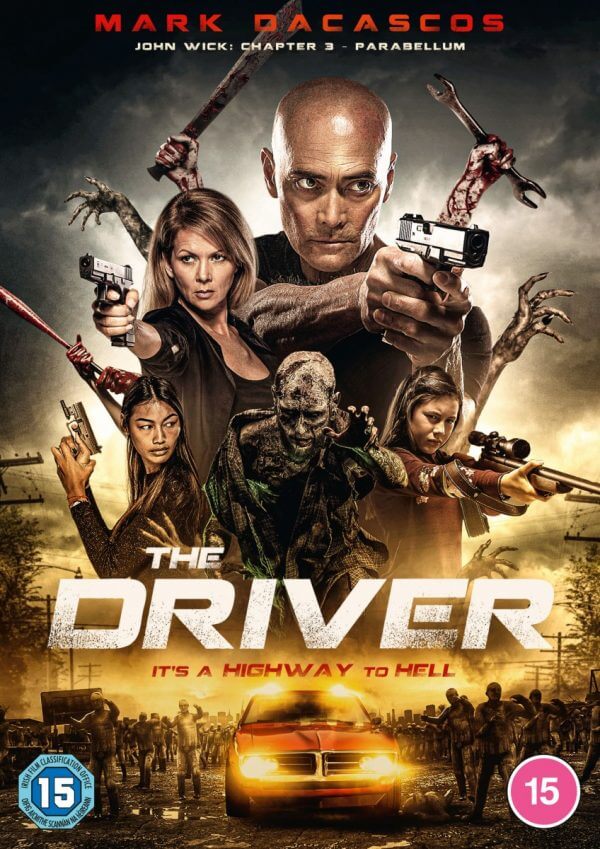
After fighting John Wick as Zero in the depths of Manhattan, actor MARK DACASCOS is now up against a supernatural threat with his new film, THE DRIVER. Directed by Wych Kaos, it tells the story of a former hitman who now has to survive a zombie apocalypse! Acting alongside his real-life wife Julie Condra and daughter Noelani Dacascos, this zombie flick aims for an emotional setting by putting the spotlight firmly on the family relationship. We caught up with Mark to discuss his new movie and more…

How did you get involved with The Driver?

Back in 2018, I had been friends with Wych Kaos, he is the director, writer, producer of The Driver. We did a movie many years before, in Thailand called The Lost Medallion: The Adventures of Billy Stone, we stayed in touch and we had a good rapport. He sent me the script while I was on the set of a Hallmark movie, The Perfect Bride. I read it during my break, and I loved it. I saw that there was a wonderful part for the daughter, and a part for the wife. I thought “I have a daughter, she’s an actress. I have a wife, she’s an actress.” So I thought I may as well submit them for those parts. I talked to Wych about it, he agreed that it could be interesting, and a couple of days later he said yes. Then he started working on trying to get the financing together. Cut to a couple of months later, I was invited by Chad Stahelski to join the John Wick franchise as Zero in John Wick: Chapter 3 – Parabellum. So once I got that, and it was announced, a couple of days later I heard that it was a lot easier to get our financing. So as soon as I wrapped on John Wick in July, a couple of months later, my wife Julie Condra, our daughter Noelani Dacascos and myself went off to Thailand to start shooting The Driver.

You’re once again working with director/writer Wych Kaos, can you elaborate on what it is you like so much about working with him?

I love his sensibility. He’s romantic, he likes action, quirky, interesting characters. I like the way he shoots. On a small budget, that we had for The Driver, we had to shoot fast anyway. I have a feeling, and hopefully Wych and I will find this out together, but on a bigger budget he’d still shoot pretty quick, and I like that. It keeps you in the story, the juices flowing, and it keeps you on edge. He’s really good like that. He brings depth, and I like his style of filmmaking, in that it’s still some-what full. What I love about Wych, is that you can take each character and go deeper with it if you want. He brings real relationships to this other world.

What it was like to work alongside your real-life wife (Julie Condra) and daughter (Noelani Dacascos) on screen?

So with Julie, we hadn’t worked together since Cyring Freeman back in 1994. It had been a long time. Neither of us had ever worked with our daughter Noelani, and of course we had never all worked together. The great thing about that was getting on set, to prepare for the scenes, as long as I was grounded, present – I won’t talk about what their process was because we’re all different – I could look in their eyes and get there in a flash. I had known my daughter since her first day, and she’s playing my daughter in the movie. She was the appropriate age for the character, everything was there. So all I had to do was look at her, and bam I could click in. It was the same with my wife. I want to believe that that chemistry transcends, and that the audience can also feel that. It’s about as real as you can get.

You obviously spent a lot of time filming with your daughter, so looking back on the movie, which scene did you find the most rewarding to work on with her, and why?

I won’t give any spoilers, but from the big compound scene we’re on edge the whole time. Of course, the final scene with us together was challenging, because you never want to have to say those words. However, it was also really wonderful, we got to connect on a very real level, because of who we are in our relationship. And then to also play with all of those wonderful feelings, knowing that after Wych yells cut, that we’d still be around to enjoy each other. It gave us a certain freedom to walk alongside death, in a very tangible way, without having to go there yet. It feels like with nearly every scene in the movie with her, because of the situation, it was deep.

Also, for you personally, what did you enjoy the most about playing a father figure in a zombie apocalypse?

Playing with my actual wife and daughter was just wonderful, because we got to not just experience our lives on the camera, but also off set. We got to go there, it’s really a fight or flight movie, we do both in it. For my daughter it’s a coming of age movie. She got to drive a car for the first time in her life, Wych taught her how to drive a BMW on the roads of Thailand, in the jungle. She had a blast doing that. Then on Halloween, her friends back in California were dressing up, and she was shooting zombies. It was really fun. What I just loved about it, was that we hit so many emotions, and found so many colours, because of our real relationships. We could go there and play with it.

Leading on from that, in the film, it seems like the bond between the father and daughter became closer by the end. So would you agree with that, and for you, how else do you think their relationship changed over the course of the film?

Yes, in the hours that the story takes place we go from zero to one hundred, of beginning and end. We have to put all of these things that I would normally have used, talked about, or tell her, show her through feelings, I’ve got to do that in a very short amount of time. So yes, the characters certainly grow together. As a real father and daughter, I feel like that brought us closer together playing that. We had to trust each other doing the scenes, and in the scenes our characters are 100% committed to each other. It’s weird, but it’s all connected.

You don’t have a lot of fight scenes in this one, however, as a martial arts pro, we must ask you which action scene did you enjoy putting together the most in The Driver?

I had a really fun time working with Brahim and his fighters in the compound, before we had to leave. With any smaller budgeted film, we did not have a lot of time to rehearse or film, but I think that actually added to the energy, because we knew we had to get it done. It had that chaotic vibe as it needed to have, because we were being invaded. That was really fun. To go from that, to the emotions of before, and then right after the fight, knowing what I had to go do, wondering what the outcome was for my family. All these things together, were really fun. It wasn’t just fighting an opponent, or a bad guy, it was fight to survive, and wondering if my family survived? There’s a lot of things going on that might of not been physicalised, but they were there emotionally.

driver

We hear that The Driver is part of a trilogy, with Dead Earth already released. Can you explain how The Driver fits into this trilogy overall, and maybe what else Wych has planned for it?

Yeah, it’s a trilogy, and I hope that Wych gets to do the third one. The script is great, I read all three of them, they’re all really fun, and you see how they progress. Whether he does it or not, I don’t know, but I hope so. He has Kane Kosugi slated for number three. They wanted to do a sequel or number four to The Driver, where Noelani is fifteen/sixteen and just a full-on fighter girl. I’m hoping, because I think that would be really fun for them, and the audience.

We can’t let you go without asking just one question about John Wick: Chapter 3 – Parabellum. What was it like to film that huge final glass fight scene with Keanu Reeves, and what were the creative team behind this film like to work with?

I loved being a part of that movie, for so many different reasons, but most of all, because the leaders of that show, from producers, of course to Chad Stahelski our director and Keanu Reeves, they were just ace human beings. We had a big budget, if Chad wanted to shoot in Grand Central Terminal, he’d do it. If he wanted to film in Times Square, he’d rent out Times Square. He had the studio to back him up. The humanity, humility, the collaborative spirits, and the professionalism was off the charts, as you’d hope it would be. Also, yes, Keanu is as cool, kind, collaborative and humble as we all hear. At least he was for me during the three months that I was working with him. We’re there shooting the finale fight in that glass building, and of course he is working longer hours than all of the other actors, he is there with full heart and passion. When we were doing the fight scene, and he grabs me and he goes for the throat, I had bruises on my forearm for two or three days after. I was hoping they would last longer, because I like to show everybody, like “Hey! Keanu gave me this bruise”. He is strong when he grabs. Chad and 87eleven Action Design trained him well, and obviously he put in the time, because when he grabbed me, I thought “Okay, I’m going flying!”. Fortunately for me, I’m really happy to say that Keanu and I did ninety percent of our own fight, but when it came to the heavy hits or throws – thank goodness for us – our wonderful talented stunt men took them! Keanu threw my stunt man around a lot. Keanu says that he is only a movie fighter, but, he’s got skills, and he’s really strong and athletic. So yeah, that was really fun, it also made it really easy to get into the character. In real life, obviously I am a Keanu Reeves fan, but, I’m also a John Wick fan. So, when I stepped into Zero’s skin, it was almost seamless. When I looked over, I had to really focus, because I’m looking at John Wick and I’m thinking “This is so cool, I’m fighting John Wick!” but that’s what my character would think anyway, so it’s perfect!

Lionsgate UK unleash THE DRIVER on Digital Download from October 12th and DVD from October 19th