Emmy Raver-Lampman | GATLOPP: HELL OF A GAME

gatlopp

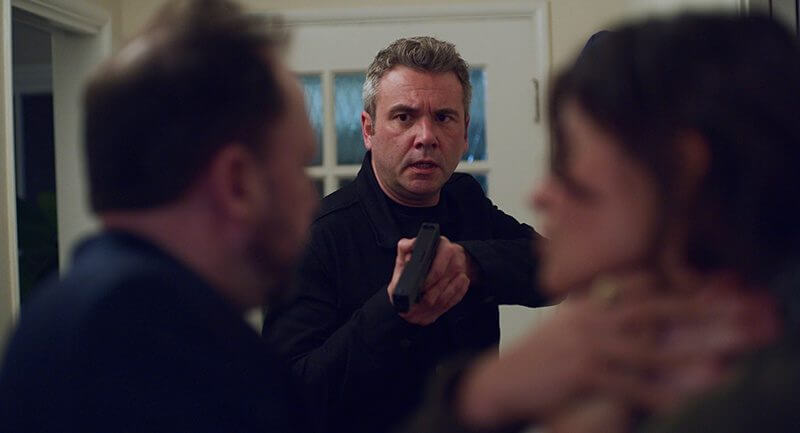
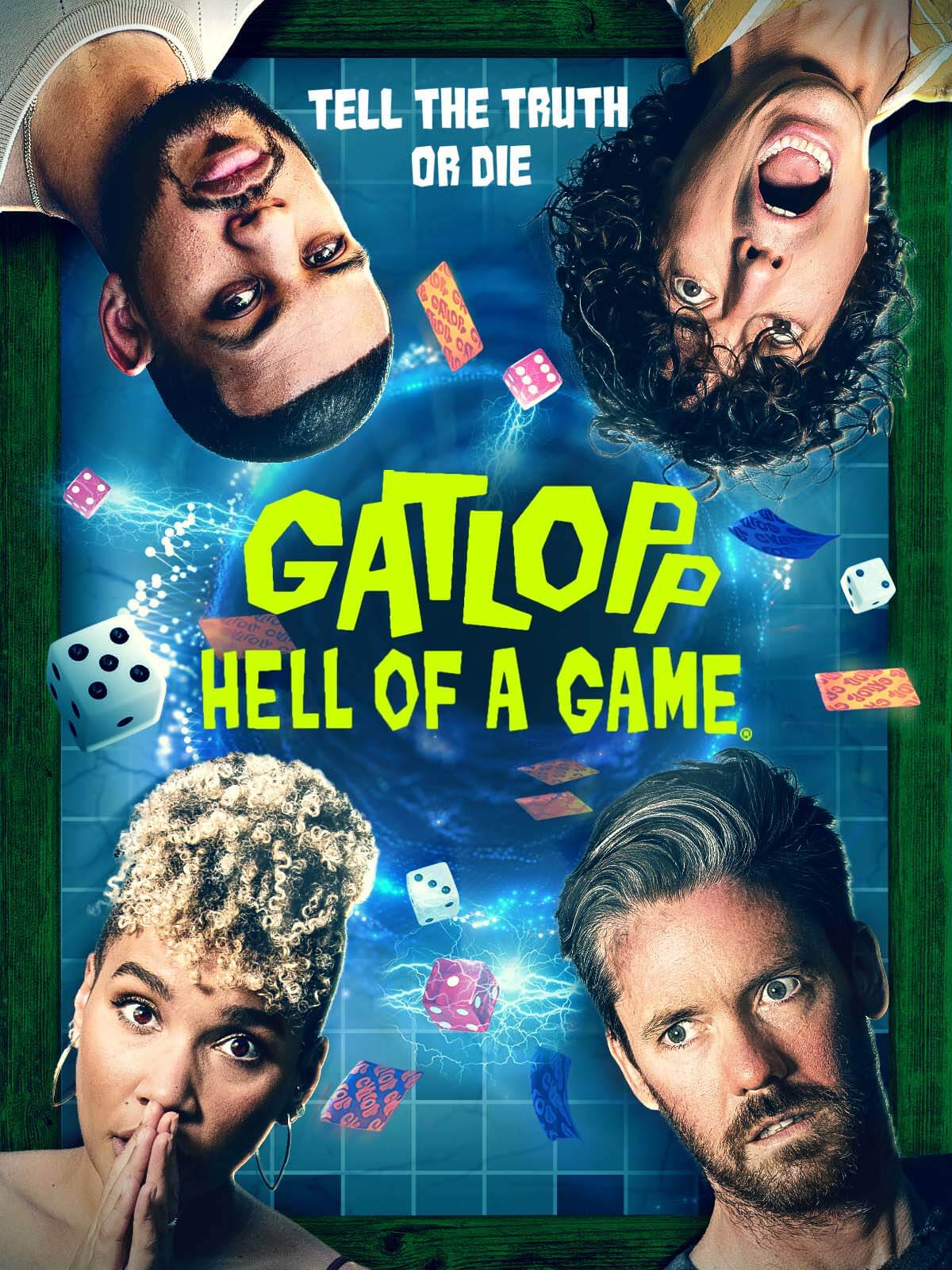
Jumanji meets Escape Room in horror-comedy Gatlopp: Hell of a Game. One night, four friends reunite for a nostalgic evening of fun and games after a decade apart, in the hopes of forgetting the pressures of adult life. With mischief, booze, and mayhem on the cards, are they playing the game or is the game playing them? With their lives on the line, the group must face their inner demons and come together by the time the sun rises or be forced to play the game for eternity – in hell. Gatlopp is written by Jim Mahoney and is directed by Alberto Belli; Mahoney also stars alongside Emmy Raver-Lampman (The Umbrella Academy), Jon Bass, Sarunas J. Jackson and Shelley Hennig. We caught up with Emmy to find out more about the film…

STARBURST: How did you get involved in this project, and what most attracted you to this story?

Emmy Raver-Lampman: I got involved towards the end of the summer of the year we all forget – 2020, which is when Jim Mahoney and Alberto, the director, reached out to me to gauge my interest in playing Sam. I had an awesome meeting with Alberto and we talked about his work, and what his vision for the movie was, and he was so excited. I thought the script was wildly creative, and funny, and I just loved the dynamic between these four friends. So, I jumped on! And I knew that they were shooting in LA and since it was in the middle of COVID, I didn’t really want to travel, so was happy to be able to work from my home city.

It was really wonderful to meet them and connect, and to hear their vision and their journey with the project. And then I said yes! And within a couple of days, I was on a Zoom doing chemistry reads with Troy, which is when I got to meet Sarunas. Then maybe a couple of days later, Jon Bass was attached. It was very quickly shaping out to be an awesome group, so when we all met in person on the first day, we just completely hit it off.

That must have been a relief! What was it that excited you about the role of Sam?

First of all, I think she’s really strong and independent, and really career-driven… and she’s a woman of colour in a position of power, which we need more of. So, I was really excited to portray a woman in that position; and I also think that she’s sassy, and she’s quick, and she loves to poke fun of these three men that she knows so well.

I see a little bit of her in myself in that way: you know that I love you if I make fun of you. I’ll troll you a little bit – it’s part of my charm [laughs]. And so, I think I was really interested in finding the dynamic between these characters… I think that’s a huge part of anything that draws me to a lot of the characters that I get – it’s about the opportunity to portray those relationships to the other people involved in the project. The character of Sam is so meaty – the relationship she has to her work; her bizarre relationship wit Troy that’s hard to decipher; and then there’s the heavy amount of guilt that she’s carrying about the loss of her mother. I just think that it was really brilliantly written, and I was really excited to delve into it all.
 

gatlopp


This boardgame movie subgenre that Gatlopp belongs to seems to be having quite the resurgence in recent years, with films like Game Night, Escape Room, Battleship, the Jumanji remake all finding big audiences. Do you have any theories as to why that might be?

I think Jumanji is such a cult classic. It was like a zeitgeist, this huge movie in my childhood. I remember going from being really young when it terrified me, to then being obsessed with it. I think it’s this idea that you get lost in a boardgame… I’m a big boardgame player, I grew up playing boardgames with my family a ton. And during COVID, I had a weekly Catan online night with two of my really good girlfriends; so now, I’m obsessed with Catan. And all I want to do is have people over, order tacos, and play Catan. But I think that’s why people love games like Dungeons & Dragons, it’s this idea of getting lost in a world that is not your own, in which there are endless possibilities. And it’s also about this feeling of nostalgia for a lot of people.

And then with this movie, you have that Jumanji aspect where the board is alive, and you have an Escape Room aspect where you’re inside the game. Then you add alcohol, what’s not to like?

COVID and lockdowns have definitely reignited many people’s love of boardgames.

That and puzzles. I’ve always loved puzzles, but I was doing a 2000-piece puzzle per week during the pandemic. I would just turn on a TV show and sit at my dining room table doing puzzles until like, 3 in the morning. And like, I go to bed at 9. I hadn’t gone to bed at 3 since I was in college, and here I am doing puzzles!

I would also say that with boardgames, playing Catan every Monday night with my two friends was the thing I looked forward to every week. It pushes you to communicate. We spend so much time in our devices and in our phones, and even though we were all thousands of miles away, it was a way to connect. And even when we transitioned back to seeing people, I was inviting people over and we would still sit around the table playing Catan. So really, I’m just glad boardgames are back!

I hope your games of Catan were a little tamer than Gatlopp!

I mean, I don’t know! People get really spiteful when they’re playing Catan! But what’s Catan without a little bit of spice? But it’s definitely not as intense as someone getting shot in the leg with an arrow.


Having filmed this under strange circumstances, do you recall a favourite memory on set, or a scene that you were really excited to tackle?

There’s so many. I really loved the dance scene. Learning the dance was a bit stressful – I mean, it’s an indie film, so there’s never enough time. We were learning the dance with the choreographer the night before, then rehearsing it up to the second we were filming. I luckily have a performance and dance background, but Sarunas, Jon and Jim do not, and they were absolute troopers. We learned the dance in two hours, which was high-stress, but I was so impressed with them and so pleased with that whole Jazzercise sequence.

I had really bad heartburn and indigestion the entire time we were shooting this movie, and it was because I was laughing so hard. Just constantly in a state of acid reflux, because I would to set from 7 in the morning until 10 at night, and we spent the whole time laughing at each other, at the movie, at the choices that were being made, and just at the general ridiculousness of what we were doing on any given day. I had a bottle of Tums in my bag just because my heartburn was so bad! I just couldn’t stop laughing.

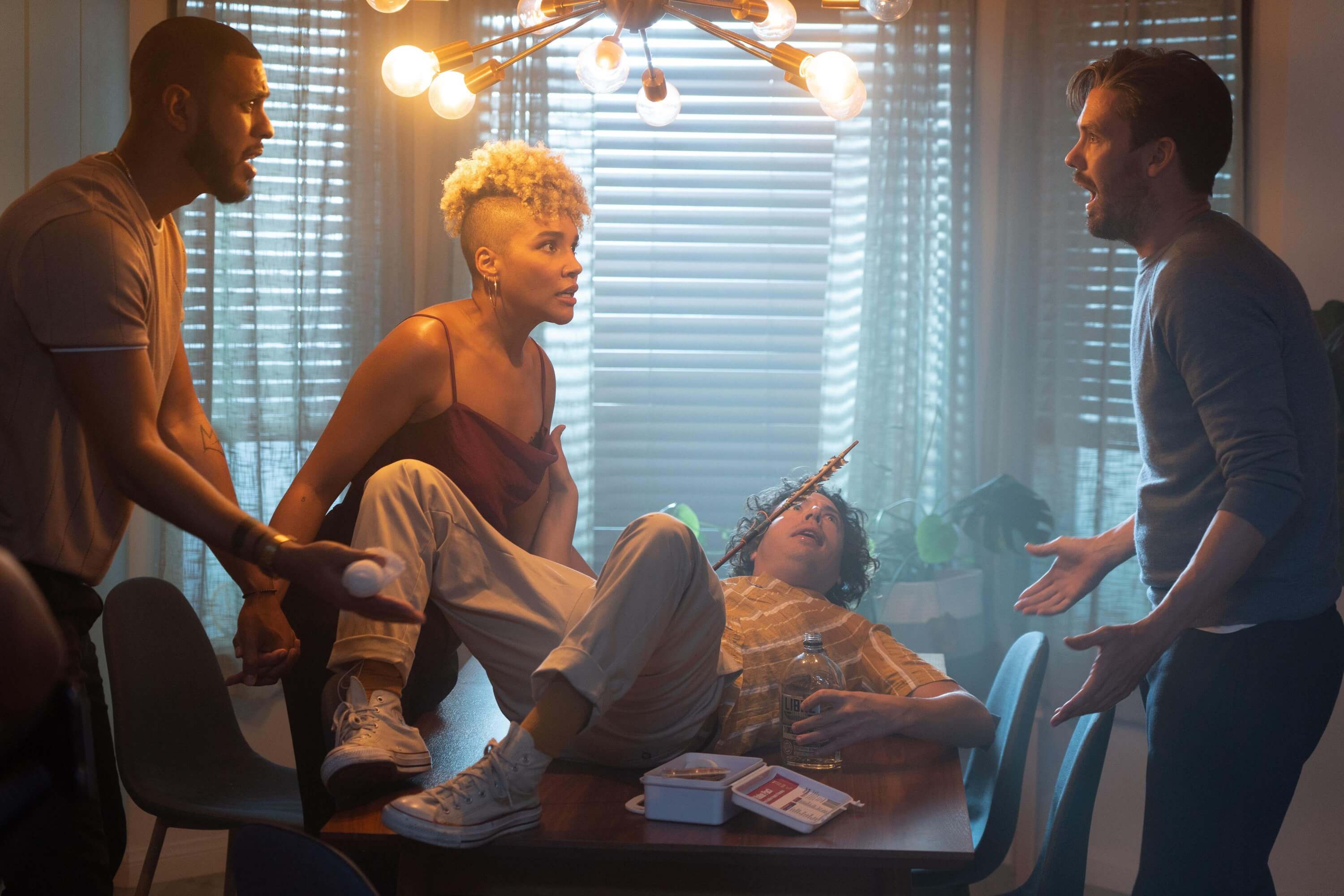
One scene in particular is after Jon’s character Cliff gets shot and he’s lying on a table, and there was a wild snafu with the blood mechanism that was attached to his leg; and then Jim’s character Paul gets banished to hell, and the whole thing was so chaotic. I think there are several moments where, if you watch closely, you can see the corners of my lips quivering. It took everything in me not to laugh; Jon was laying on the table, completely covered in blood for four hours, and he was miserable. And we were all standing over him laughing!

Man, I laughed. We shot the movie in twelve days, and those came towards the end of an intense, really heartbreaking, confusing, complicated year, and it was really nice to have this.

It’s interesting that Gatlopp is this supernatural fantasy with slight horror elements, that’s really funny with lots of heart – which is exactly what The Umbrella Academy is, a lot of the time. What is it in these roles that draws you in, and what do you look for when selecting projects?

I think the genre aspect of it all surprises me. I’m still wrapping my brain around the genre itself, and I think I’m just really attracted to complex, interesting characters that keep me guessing and surprise me, that are well-rounded and that feel genuine in their emotions and in what journey they’re on. Generally, I’m drawn to the character first, and I’ll look to see if I can find a way into the character. Then, I also really enjoy working in the fantastical space, whether it’s horror, supernatural, or sci-fi. I’m really enjoying using my imagination with these projects. And you really have to trust the creatives, and trust the process.

At times you’re standing there and it’s like, “What are we making? Are people going to find this funny?”. You learn to trust the people helming the thing. And it was the same with Umbrella Academy. During that first season, we were really questioning, “Are people going to watch this? There’s a talking monkey, and these siblings have the weirdest powers, and there’s so much going on!”

And even taking it back to Hamilton, I almost didn’t audition for it because on paper, it sounded like the worst musical of all time! Like, a musical about the Treasurer of State, that’s rapped all the way through? No one’s going to see that. You just have to trust the people whose vision it is, and give as much of yourself as you can, then just hope for the best. That’s art. I think in a weird way, we’re all gamblers. We put our energy, our time, our bodies and our spirits into these things, and it’s just a matter of crossing your fingers and hoping for the best. For me, it’s always about being able to walk away feeling like I did the best I could do. Everything else is a bonus.

And it’s just a bonus that these have turned out to be massive hits! As a last question, if you were to have a night in drinking with your closest friends, – aside from Catan – what boardgame would you bring out?

Clue. It was a toss-up between Clue and Scrabble, but I’m a true crime junkie so I love a good murder-mystery.

Signature Films and Signature Entertainment presents Gatlopp: Hell of a Game on Digital Platforms from June 27th.
 

gatlopp poster

Meghan Leon & AJ Bowen | NIGHT DRIVE

NIGHT DRIVE

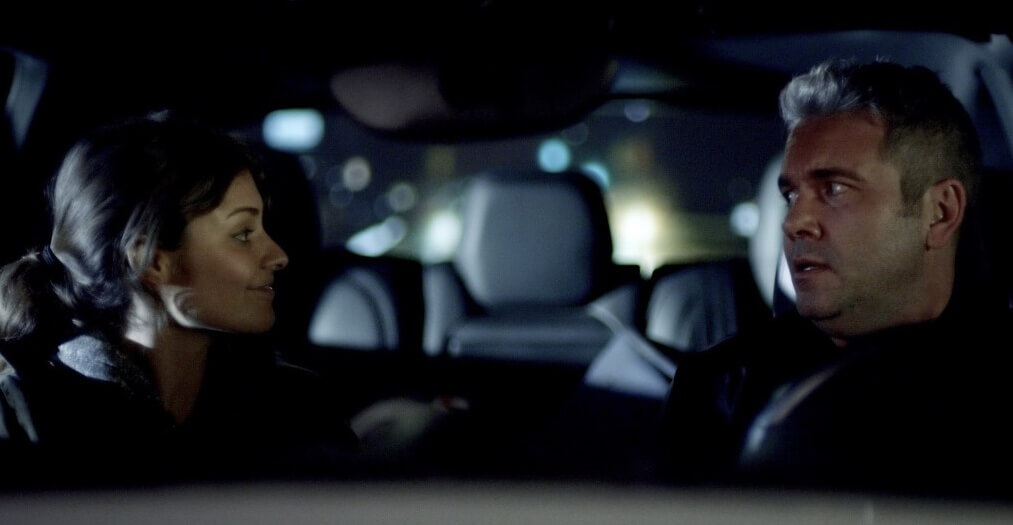
After successful festival screenings, comedy thriller Night Drive is heading to Horror Channel in the UK. We caught up with co-director Meghan Leon and lead actor and genre legend AJ Bowen to find out more about the film…

STARBURST: AJ, what drew you to the project and Meghan how did you come up with the story?

AJ Bowen: What drew me to the story was Meghan informing me that she’d written a script and written a character for me to play. That sounds like a joke, but Meghan and Brad [Baruh – co-director] and I had worked together before and we all get along really well. Meghan and I share really similar sensibilities about the types of films that we watch. Although I watch a fair deal more horror than she does. But our tone and our sense of humour are very similar. And so when they called me and told me that we’re going to make a movie, the answer is always going to be yes, so it was absolutely a no brainer. It was helpful that the script was great, but I would have done it anyway, even if it was shit.

Meghan Leon: Brad and I have worked together for about 12 years. We do a lot of behind the scenes stuff for films and documentaries, and he had directed Dead Night, which AJ and Sophie [Dalah] both starred, and we wanted to co-direct something together. I had been on the set of Dead Night with him and he appreciated my support and input and so it seemed like a good opportunity to work together, and we knew he wanted to work with AJ and Sophie because they have such a good rapport and are incredibly talented and just really chill and roll with a lot of crazy, crazy stuff happening on the set. For the longest time, I haven’t owned the car, and prior to the pandemic, I’d take rideshares so I always had that as a setup in the back of my mind. When Brad and I were trying to think of something pretty self-contained and that we could finance ourselves, it seemed like a good setup for the two of them. Thankfully, they both really dug the script and were really game to be trapped in a car with Brad and me for long periods of time. Brad and I wrote the story together and he was the one who came up with the third act twist. So we ended up backwards engineering the script to lead into that a little bit. And, yeah, that was, that was kind of how it all came together

Meghan, what was it like co-directing with Brad?

ML: It was pretty great because Brad is pictures and I’m words. So he shot the film, so he was able to really focus on the camera and the look of things and I was able to focus on AJ and Sophie. Because I also edited the movie that really helped us streamline what we needed and what we were going to shoot and there wasn’t a lot of stuff that we shot that we didn’t need, because we were able to kind of, kind of look into the future as far as like how things are going to be cut together. So it was a really good partnership because it really played into both of our strengths, and I don’t think either of us ever felt like we were pulled in too many directions on set, we were able to focus on the task at hand, which, when it’s a small shoot like that, it’s definitely a luxury to have somebody else to help make decisions with you.

AJ, your chemistry with Sophie is amazing. What was it like working with her again?

AJ: It was nice not having to play a grown person’s father again! Because yeah, there are some years between us but with Dead Night I was like, “This is making me feel too old”. But when we worked on Dead Night, there were a lot more characters on screen. And there were some sequences that become tricky pretty quickly, like from an editing and cinematography place because of coverage. Sophie and I, without even really discussing it, built up this father-daughter relationship that was happening whenever the cameras were rolling whether or not we were being covered. Especially in sequences like a dinner table where there’s a bunch of people sitting around, we were doing these things we were having unspoken conversations between the two of us, just in case there was an opportunity if they needed to throw the camera or cutaway at any point in time, there were things that were still logical there were just two human beings sitting there looking down playing Sudoku or whatever. And it was a good energy. And so, with this one, I’m getting to really play together in a very heightened, antagonistic way, and sort of discuss in a more dramatic fashion you know like generational differences. We already share a lot of interest when it comes to like food and music. But there are going to be differences because I’m Gen X and she’s whatever the newest one is. And, and so getting to play that out in real-time, was great, and, and it was, it was especially good, because like Meghan was saying the crew was so small I mean, if there was a lot of stuff where Meghan and Brad were in the backseat and Sophie and I were in the front and that’s 80% of the crew and cast and so getting to have everybody together made the whole process feel purely collaborative, and that that helps with things.

Meghan, were there any challenges with directing just two people for the most film?

ML: Not really. I had written the script for them, and obviously, Sophie is nothing like her character at all, but I knew the cadence of their voices and how they were able to fluctuate energy in the scene. It was pretty easy. As far as all of the challenges in the movie, the actors were at the bottom of the list.

AJ: Thank you!

ML: They were both really game, we had some weather problems, and obviously we’re trapped in a car together for long periods of time. Even when we did rear projection on a set, or on a stage, they were sitting in the car for most of the time and were able to just kind of roll with it. We had pretty unseasonably cold and windy weather, we had some flat tires, some really large mountain dogs and stinky goats and things like that, and everybody was game and rolling with it. One of the things that I’m really proud of with this film was that we were able to really make our days, and there weren’t any days where we went into crazy overtime or anything. Even though it was a small crew we were able to keep the hours really safe and short for everybody.

AJ: Yeah, I don’t think there was even one day to be honest where we took what the full day would be for a movie at this budget level. We were always done early. There were things that were acts of God and whatnot, you know like a tire blowing out on a super fancy car means you can’t just change it. When you’re 110 miles away from the closest place, well that can burn your day.

AJ, what’s it like to drive and act at the same time?

AJ: Shitty. But it’s a developed skillset. I’m into the technical components of filmmaking, and they are what drive my performance. So I always want to know what the shot is; I always want to know what the lens is; I always want to know what you’re trying to cut to because it’s going to impact what I do. There have probably been like a dozen movies where due to budget or whatever, we had to figure out how to drive a practical car with a camera on the hood with a light blasting you in the face, usually with somebody else in the car and being open to the camera, while also not wrecking the car or the camera or the people. And that can be terrifying at first, but to me, it’s really no different than actors who can sing or dance, it’s just a developed thing it’s like learning how to do it and I’ve been this one particular weird obscure skill on the resume is from years of doing it, and so it was never really stressful it, and especially when you’re working with like a small crew. There were shots when Meghan and Brad are in the backseat and Sophie’s with me and we’re driving, it makes it possible to be rolling on that and then if a car starts coming down the road and its lights are going to mess up a shot, you can just pause and drive. And then once that’s clear, it’s cool and we can just keep rolling with it. That also really helped us with efficiency.

What was the worst experience you’ve had in a taxi?

ML: I had a Lyft driver once who asked me if he could put on the country radio station because his dead sister’s ghost was in the car. Then he started talking about how our how we don’t really exist. We’re all just an avatar, and this is a simulation and our bodies are on another planet, and how he’s played this game multiple times before, so he’s probably going to win in this round of the simulation. Part of what makes you able to win is practising sexual purity and not doing drugs, and when I got out of the car, the last thing he said to me was “Remember sexual purity”. I immediately contacted Lyft and said this guy thinks there’s a dead woman in the car, this might not be a safe situation for people if he’s like hearing voices from his dead sister.

AJ: I don’t have anything to match that so I’m just not going to say anything at all!

Meghan, you’ve worked a lot on the Disney documentaries, what are they like?

ML: They’re great. We get so many hours of behind the scenes footage, and it’s really cool, you get to be a fly on the wall for all these films and see how they’re put together and take a lot of lessons from it without actually having to go through the slog of being on set or anything like that. It’s certainly been really enlightening. One of the cool things that Marvel does with their shoots, is that if a story’s not working, they’re very open to shooting additional stuff and not being married to an original story. I think that a lot of times when you’re trying to tell a story you get married to your original idea. And so there’s something reassuring that even people at the top of their game are able to have some humility and say, “No, this isn’t really working, let’s figure out another alternative”. It’s been a kind of bare-bones film school but it but it’s cool to be able to spy on these sets in a way and see all the goings-on, without having to work the crazy hours and everything,

What’s next for you both?

ML: I’m still plugging away on these docs. Brad and AJ and I are jonesing to do another movie, part of the concern, of course, is the pandemic and dealing with all of the safety protocols and everything, especially with an independent movie it’s just so difficult. I think we’re all in a holding pattern, hoping that things are kind of normalised a little bit.

AJ: A lot of writing. I have a seven-year-old at home so as far as the pandemic goes, I got to become like a de facto kindergarten and then first-grade teacher against my will. And to second what Meghan said, as far as I’m concerned, the perfect world scenario is that Meghan and Brad and I just keep making movies together and grow as collaborators. Whatever we end up shooting next I guarantee Meghan will have written it, and then we’ll get it and Meghan and I will argue with Brad that it’s okay that it’s funny. It doesn’t have to be just a straight-up slasher movie. That’s our creative process, we lightly argue with each other about what a thing is and then we figure out creative ways to shoot it. And then we end up talking to people outside of the United States about it, two or three years later, it’s kind of awesome.

Night Drive is available on digital platforms now. Read our review here. The film screens on Horror Channel on June 11th.

Tune into Horror Channel on Sky 317, Virgin 149, Freeview 41, Freesat 138.

Sam Riegel – EXANDRIA UNLIMITED: CALAMITY

Sam Riegel

Sam Riegel is best known for his work as a cast member on hit D&D show Critical Role.  The voice actor is also well known for roles including Dontello in 2003’s Teenage Mutant Ninja Turtles and as Phoenix Wright in the Ace Attorney games.
Sam joins Dungeon Master Brennan Lee Mulligan along with players Travis WillinghamMarisha Ray , Aabria IyengarLou Wilson and Luis Carazo in Critical Role’s latest campaign, Exandria Unlimited: Calamity. We caught up with him to find out more.

How would you pitch Exandria Unlimited: Calamity to the Sam Riegel from 2008?

I would start by saying “Yo man, you might want to buy some Bitcoin when it gets invented next year. Cool. Now that we got that straight…” and go on to explain that you would eventually get so comfortable playing D&D with your friends that you could have IMMENSE amounts of fun playing a game knowing you’re gonna die. I would pitch the show as one part Greek tragedy, one part Fantasy-Sci-Fi, one part psychological character study… and terribly addictive.

How different is Brennan’s DM-style from Matt? Does that change any choices you make when playing your character?

Brennan’s style meshes with Matt’s in a lot of ways – both are skilled at rolling with anything you throw at them and never seem overwhelmed. Both are excellent at playing NPCs, and both LOVE juicy lore. I would say Brennan kept pushing and prodding us in ways that probably have less to do with his style, and more to do with the fact that we had an enormous story to tell in just 4 episodes. That sense of urgency never let up – and was thrilling to experience.

Does the lore difference between Calamity and Bell’s Hells take any getting used to?

Calamity is a 4-part series, and as such, we had to get ALL the lore out pretty much immediately. The Bells Hells campaign doesn’t have a ticking clock, so the players are free to explore more, follow wild side quests, and make way more mistakes. Both are rewarding – just in different ways.

Are there any character options that you’ve considered too wacky for Critical Role?

I really want to play a brain in a jar. Dunno when that’s gonna happen. But I’m gonna do it.

Why are we seeing so many comedians and actors play D&D these days?

I actually think we’re seeing so many EVERYONE play D&D these days, and RPG’s in general. It’s a phenomenon that folks from all walks of life are getting into. The reason we see actors and comics streaming their games is only because those are the ones who are most comfortable doing it in the public eye. But I know teachers, oil rig workers, and even NFL Football Players who love playing these games too. It’s so fun!

What was the last movie you saw that you’d recommend to Starburst readers, and why?

“Coda” was just a wonderful movie. And it has a cappella music in it too. Bonus! My kids and I also watched the original “Jurassic Park” movie and DAMN it’s just a nonstop thrill-ride. Also, on TV, please go check out “Kids in the Hall”. And if you’ve got some time left over, why not “The Legend of Vox Machina”?

Exandria Unlimited: Calamity airs Thursday evenings at 7pm Pacific (that’s Friday 3am British Summer Time)  on Critical Role’s Twitch (twitch.tv/criticalrole) and YouTube (youtube.com/criticalrole) channels. VOD is available immediately for Twitch channel subscribers and will be available on Critical Role’s YouTube channel the following Monday. It is also available via SpotifyApple Podcasts, and Google Podcasts.

Brennan Lee Mulligan – EXANDRIA UNLIMITED: CALAMITY

Brennan Lee Mulligan

Brennan Lee Mulligan is a comedian and Dungeon Master, best known for his work on comedy channels such as College Humour and Dropout TV, as well as his own D&D show, Dimension20.   He is currently the Dungeon Master for Critical Role’s short series, Exandria Unlimited: Calamity, which sees  Sam RiegelTravis Willingham, Marisha Ray , Aabria Iyengar, Lou Wilson and Luis Carazo deep dive into the lore of Critical Role world. We caught up with him briefly to find out more.

How would you pitch Exandria Unlimited: Calamity to an old friend who hasn’t played D&D since THACO was still a thing ?

This is a four-part tragedy mini-series set in the ending of a Great Age of the world, about the choices that made that tragedy possible, with high level characters that intuitively want higher numbers instead of lower numbers and have an easy flow-sheet of when and where they add specific modifiers to their rolls.

How different is Calamity from Dimension 20?

Different in terms of objective more than execution, I would say. The big secret between these two shows is that Critical Role and Dimension 20 each love comedy and drama with all their hearts and feature them both pretty heavily. The only difference is the objective, I would say. Moments of levity in Calamity exist plentifully and are cherished, because at the end of the day, we know that our objective is to tell a tale of woe.


What was the hardest thing about running a campaign set in Exandria?

The team at Critical Role was so immensely supportive, and Matt so generous with his time, that I can’t in good conscience say that any part of this experience was hard. I might use the word “humbling” in its place: It was an honor to participate in something this beloved and immense; My greatest goal was to show the players at that table the respect  I hold for the years of hard work and love that they’ve poured into this world, and the gratitude I felt in getting to play in that world with them.

When creating the show, was there ‘no we can’t do that’ moment? What was it and did you do it anyway?

I opened every episode by reminding the audience that Exandria is not a globe but a cube and that if you walk to one of the eight corners of the cube you can jump into outer space where the gods live and tag one of them and get their job and that’s how the Raven Queen ascended, but they cut all of that out because they don’t want you to know the truth!


If you could run your own PC in this campaign, what would it be and why?

In Calamity? Oh MAN! I wish I could take a turn playing each PC’s character, because they’re all perfect. If I couldn’t do that, I’d definitely play an aeormaton.

What is the future of TTRPGs? Is it okay to pronounce TTRPG as ‘Titterpig?’

Titterpigs, by virtue of existing in the moment of their genesis due to the unique, irreplicable interactions of friends and loved ones engaging in a dual-reality of metanarrative bonding and extemporaneous story-telling, bear additional value to a culture which struggles at time to find connection, coherence and authenticity. No man can see the future, but the horizon of Titterpigs is bright indeed.

Exandria Unlimited: Calamity airs Thursday evenings at 7pm Pacific (that’s Friday 3am British Summer Time)  on Critical Role’s Twitch (twitch.tv/criticalrole) and YouTube (youtube.com/criticalrole) channels. VOD is available immediately for Twitch channel subscribers and will be available on Critical Role’s YouTube channel the following Monday. It is also available via SpotifyApple Podcasts, and Google Podcasts.

Tahmoh Penikett | GENZEROES

Tahmoh Penikett headshot for GenZeroes series interview

Battlestar Galactica, Dollhouse and Supernatural star Tahmoh Penikett recently spoke with STARBURST about his latest project, the first ever NFT-integrated live action series, titled GenZeroes. 

GenZeroes is a sweeping sci-fi series set two centuries in the future, after Earth has been left in ruins by a marauding alien species who stole the majority of the planet’s natural resources. Left in the wake of their destruction are 10 factions, each one with their own philosophy on how humanity should begin again.

Though Earth’s population is at its smallest since the Stone Age, thanks to the abandoned alien machines, the human race has never been more technologically advanced. Medicine, travel, and most importantly weaponry, are at such an advanced stage they would be thought of as pure science fiction today. But even as our technological achievements evolved exponentially, as always the slowest to evolve is our own nature. With humanity at stake, and each faction jockeying for control using the most advanced technology in our history, alliance and betrayal are still the most potent weapons.

As Penikett explains below, GenZeroes is not restricted to a single form of media. Season 1 will alternate formats between webisodes and comics. The even-numbered episodes will be 5-10 minute webisodes, and the odd-numbered episodes will be released as online comics. All chapters of GenZeroes are free to access via the show’s website.

For more on GenZeroes, hit up the official site.

Watch our interview with Tahmoh Penikett below or on our YouTube channel: 


Tomer Capone & Karen Fukuhara | THE BOYS

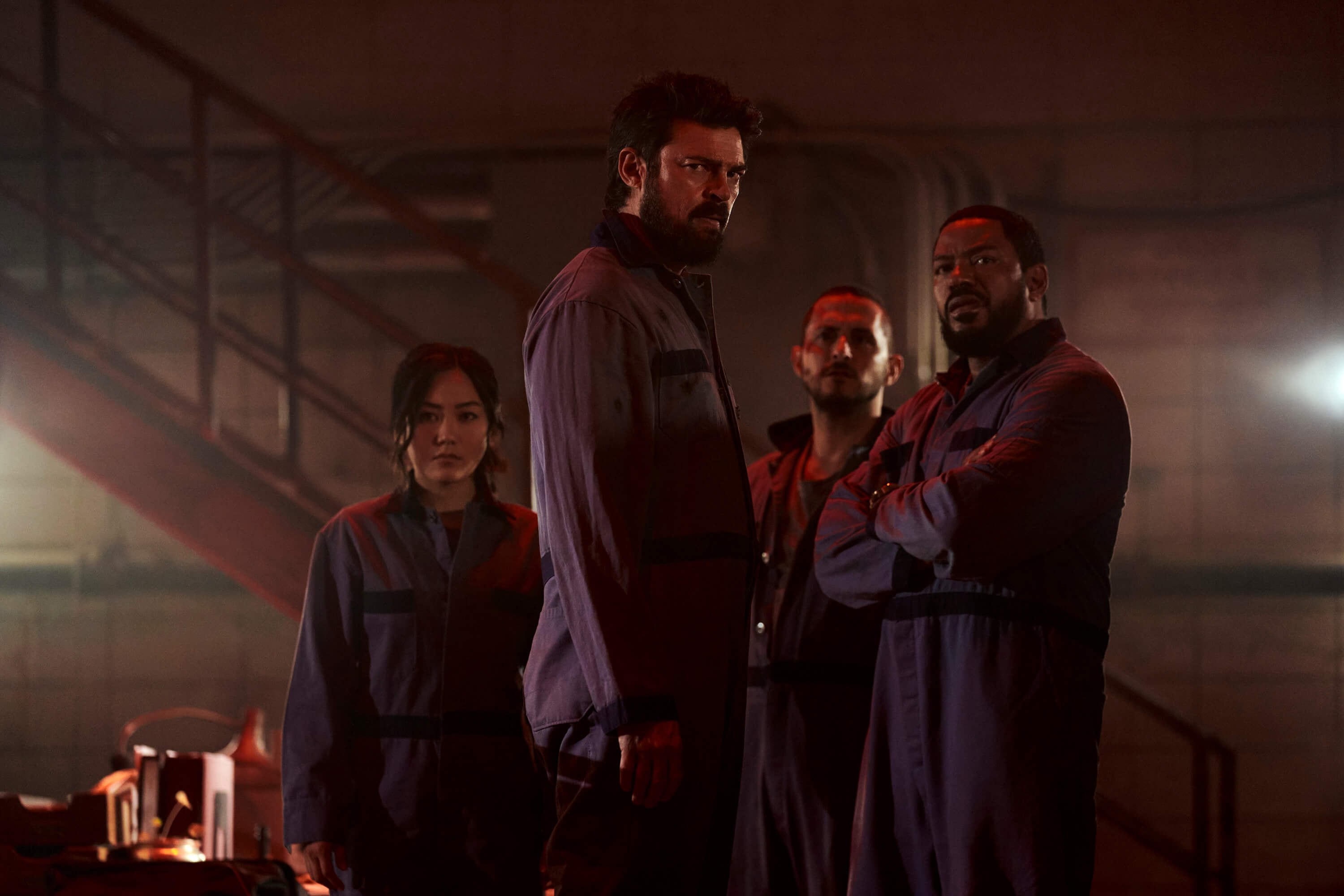
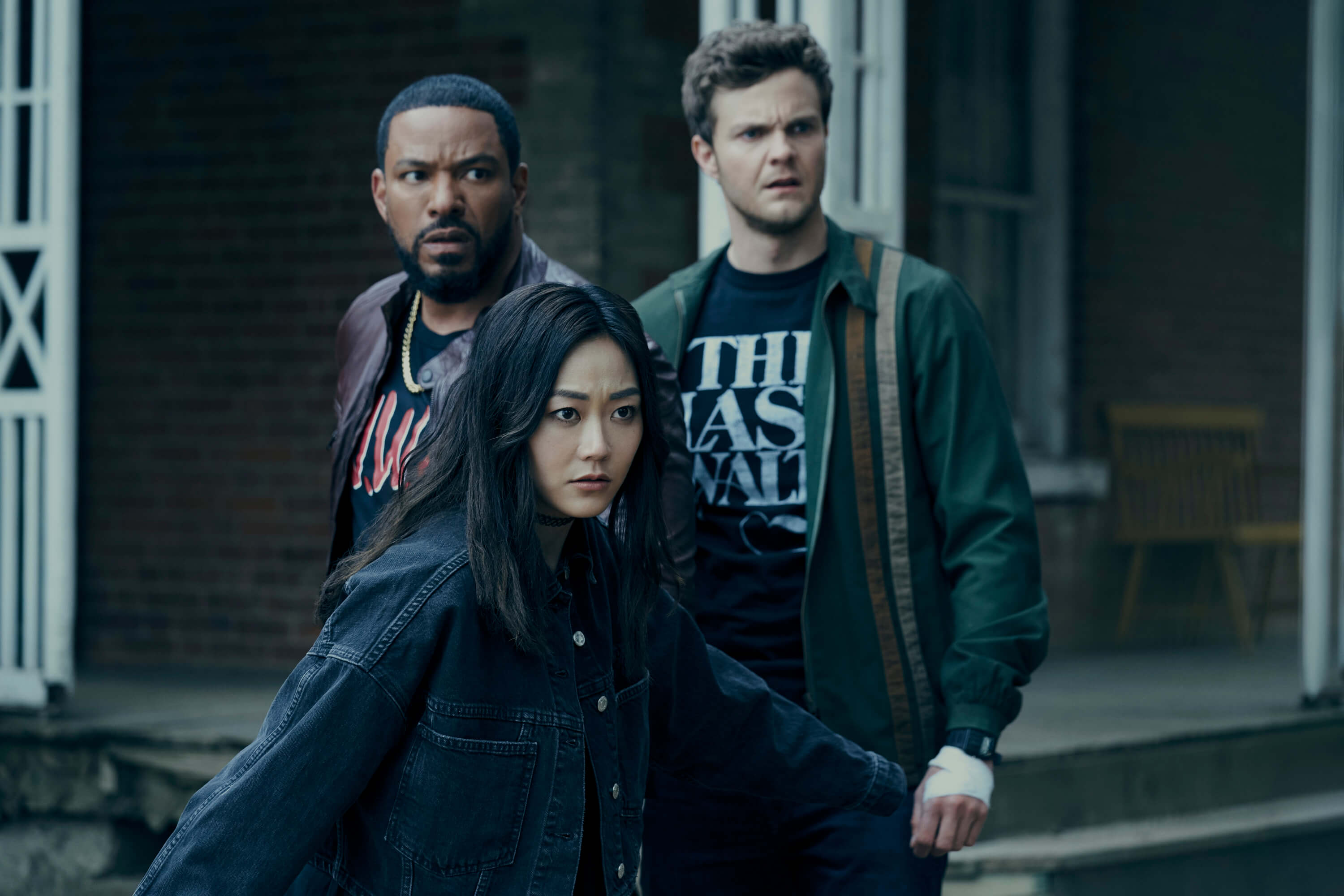
Tomer Capone as Frenchie and Karen Fukuhara as Kimiko/The Female in The Boys

You may be excited for The Boys season 3, but you’re most definitely not ready. After a too-long hiatus, Eric Kripke’s maniacal superhero satire returns June 3rd with even more mayhem, exploding body parts, and superhero orgies.

In anticipation of our favourite rag-tag team’s return, STARBURST sat down with Tomer Capone and Karen Fukuhara – aka Frenchie and Kimiko – to chat about their characters’ evolving relationship, sliding a musical number into the R-rated show, and what hardships season 3 might have in store for the two fan favourites.

We catch up with you both a year after the events of season 2. What have your characters been up to in that time?

Karen Fukuhara: This season starts off in a wonderful, lovely place for both the characters. Frenchie and Kimiko have gone dancing, he’s introduced her to all the greatest restaurants in town, and all the musicals – and yeah, we start in a really happy place. Kimiko is really trying to figure herself out in terms of what it’s like to be a normal woman in this world. That quickly takes a hard turn, but they started off in a really good, healthy, happy, tranquil place.

That can’t last!

Tomer Capone: [Laughing] No, but it was a really refreshing way just to open up the season. Those two are basically constantly running, hiding, and getting themselves into trouble. So just for us as actors, coming back to those characters from an optimistic point of view was refreshing. Yeah, things go shit sideways very quick, but we did have a little gap. Coming back to that was a lot more refreshing than returning to the characters when they’re both so depressed.

And one of the most beautiful things in terms of kicking off this season is the fact that Frenchie and Kimiko can really communicate. I mean, the second season ended with Frenchie asking Kimiko to teach him how to sign. And now he’s learned, and it just takes the relationship to another level.

And how was it for you, Karen, to finally have access to this means of expression as an actress?

Karen Fukuhara: One thing that I really want people to know is that sign language, is a language. Although it’s not verbal, it’s a language that people speak on Earth, and it’s just as powerful as any other language. And in terms of the show and Kimiko teaching Frenchie, that allows them to deepen their relationship.

And it’s not just about learning a language and communicating on a superficial level; it’s more about her letting him in and being more comfortable with allowing others to touch her at her core. I think she’s been very protective of that in the past, and the only person that could do that was Kenji. With him gone, she had to learn to be okay with having another human understand her.

With this season, what kind of character arcs can we look forward to for Kimiko and Frenchie? No spoilers, obviously.

Tomer Capone: Oh là là!

Karen Fukuhara: It’s a roller coaster of emotion. When there’s a high, there’s definitely a low.

Tomer Capone: The answer is so elusive and so slippery. When I read this season, it was like every episode is opening a new Pandora’s Box. It really backs them into corners that they’ve never been in and puts their relationship to the test.

More than anything, I always saw Kimiko and Frenchie as the outsiders of The Boys family – you know, they’re both foreigners. Being French in an American world, being silent in a speaking world… and then this time around, after figuring out who they are themselves, now we’re trying to figure out their place in The Boys family. And that’s a very, very interesting, down-to-earth subjects to explore in a show that tackles so many big things.

And I love what Karen said about signing. It’s a language and it’s loud. I think that’s part of what makes Kimiko and Frenchie the heart of the show. It’s those little things that are actually the biggest things, and I wished we paid more attention to that. I’m very excited for those small bits getting into their relationship and their place in the world. And then, of course, there’s all the crazy shit that is going on, because it is The Boys. And yeah, man, we’re going dancing!

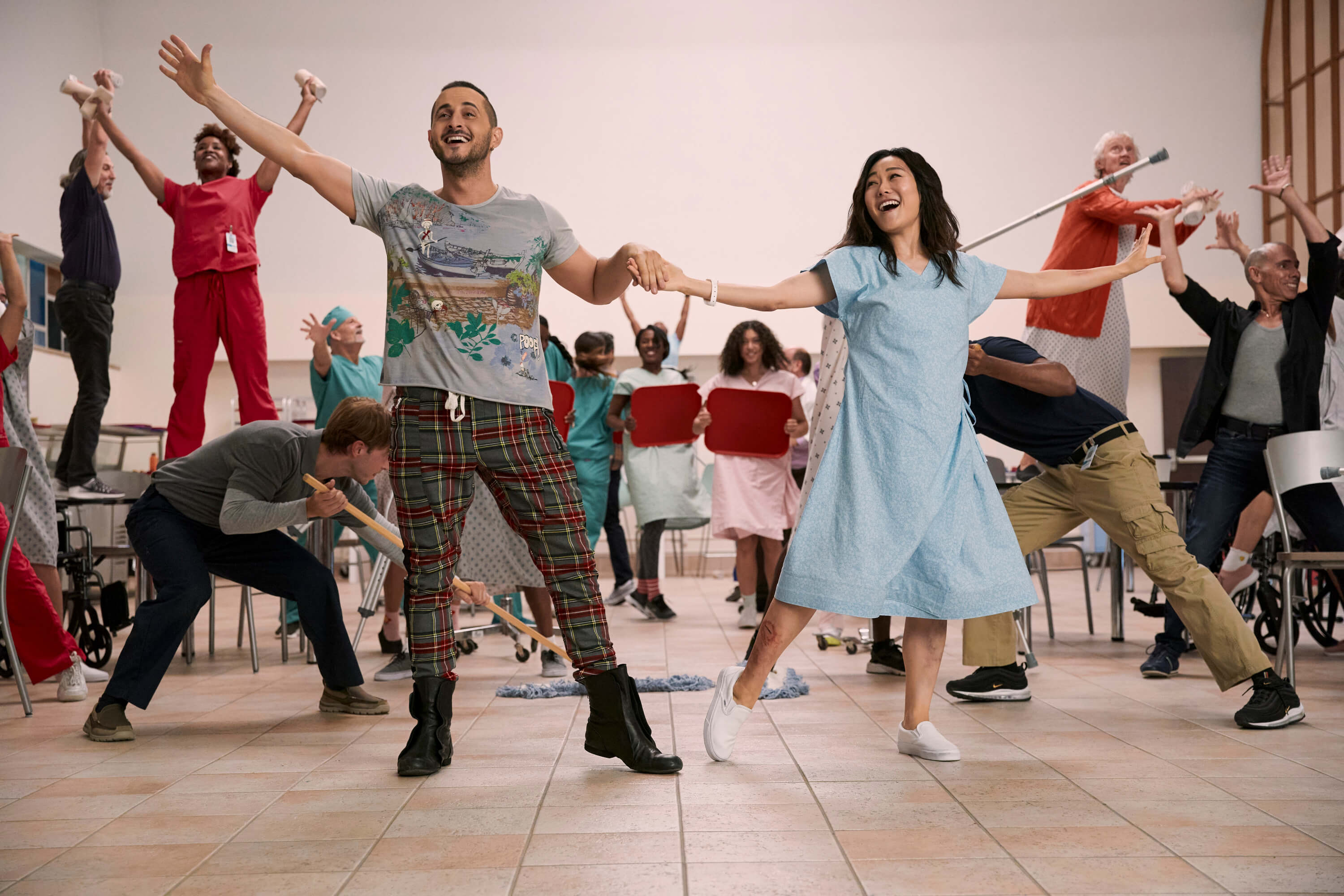
Everyone is very excited for the dancing! We only see the tiniest clip in the trailer, and already people can’t wait to see you in action. What was the preparation like for that whole sequence?

Karen Fukuhara: It was awesome. We worked with a wonderful dance coach named Amy [Wright] and she came up with all these crazy moves that were so difficult to learn and challenging, but so worth it in the end! I’ve got to give Tomer a lot of credit because – yes, the choreographer can come up with a number of fancy moves that are all wonderful, but it takes a lot for it to become your own and to put the character’s twist into the moves. You should’ve seen him as Frenchie dancing. There are so many little moments in there where you just think, “Oh, that’s such a Frenchie thing to do.” And he would come up with all these crazy, fun ideas. [Turning to Tomer] You did such an awesome job with the dance.

Tomer Capone: I know, thank you. [Laughs] Definitely the most fun part apart it was that we had this big number, and we got to put our characters into it. What I really loved about it, just in terms of how it goes into the show, is how it reflects everything going on within Kimiko. She’s such a defiant character in terms of physicality and in terms of her power, and the shift between the fighting Kimiko to this dancer is so beautiful.

And in terms of working on it, it was hard – very hard. And saying that, Karen would also have to learn her fighting sequences between learning her dance moves, which was crazy. But we really supported each other; it was day in, day out, and we really wanted to do something special with it. We danced everywhere, man! Between sets, at birthday parties, we were like, “We wanna show you our dance moves!”.

We watched a lot of oldies like Fred Astaire, and we’d take it to Amy and be like, we want to try that. It’s beautiful. And think about it, we’re in a show where practically every day we get covered in bloods and guts, and whatnot, and salty tears. And then you have this day with thirty dancers behind you, and there’s flowers, and music is playing… it was an experience. It was a cute one, and it was so much fun.

It’s been a few years of knowing each other now – so from your characters’ perspective, what draws Frenchie and Kimiko together, and what do they love about each other?

Karen Fukuhara: I think for Kimiko, Frenchie is someone who never gives up on her. Even in the moments when she doesn’t feel confident in herself, he is. He supports her and is a dear friend to her. And I think that’s what bonds her to him, because he believes in her more than she believes in herself.

Tomer Capone: I think it’s this calming energy they have on each other, and it’s exactly like what Karen just said. I really like it when Frenchie always thinks he’s on top of things, and you think he knows what he’s talking about and knows what to do, and then Kimiko goes, “No, you don’t know jack shit”. And he’s like, “I don’t? Yeah, I don’t”. It’s a back-and-forth kind of thing.

And I love that Frenchie thinks he’s got so much to teach her. If you want to throw it to real life, I always saw myself as Karen’s mentor in terms of backgammon. I taught Karen how to play backgammon and she was my little grasshopper. And then I said, “It’s amazing. Look at this, I created a little backgammon monster!”.

But guess what? The backgammon monster is owning my ass. That’s just a perfect reflection of the Frenchie-Kimiko relationship.

Working off the assumption that you both make it to the end of the season – and I don’t want to hear otherwise – where would you guys like to see your characters go?

Tomer Capone: No spoilers!

Karen Fukuhara: Honestly, I’d hate to answer this question because I feel like anything I come up with won’t be as good as the writers’. They do such a wonderful job and you just think, this is brilliant.

Tomer Capone: That’s true. They do such a good job, and they always surprise us.

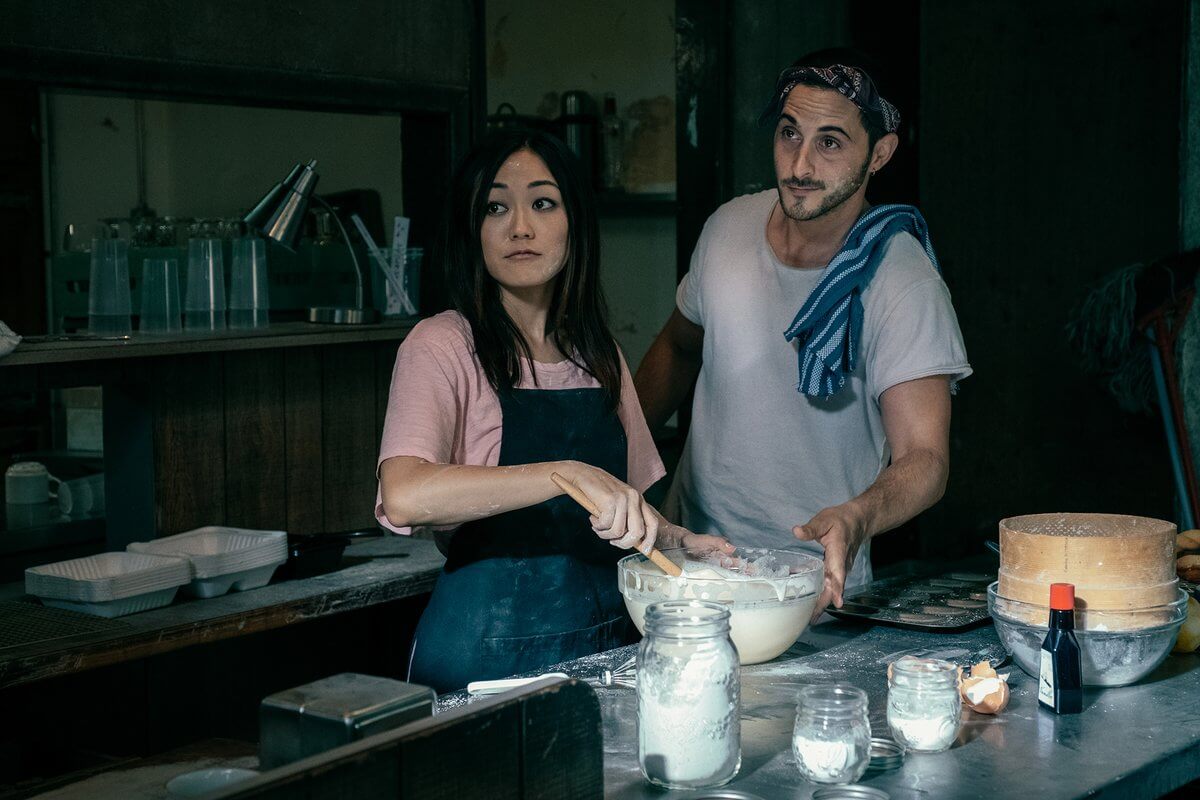
Karen Fukuhara and Tomer Capone as Kimiko and Frenchie in season 2 of The Boys

I can’t imagine how some of the scenes must read on the page.

Karen Fukuhara: I think what’s beautiful in the writing is, a lot of it sounds like someone is speaking to you – the scripts are written in a very conversational tone. I think in the script for the end of season 2, it said like, “See you next season, motherfucker!”. [Laughs] Or like there’ll be a scene with Hughie and it’ll say, “Hughie is covered in blood… again”.

Tomer Capone: It’s an interactive kind of reading, kind of like a comic book. It’s so good.

And finally, aside from the dance number, is there anything you’re particularly excited for people to see or that you found very challenging this season?

Tomer Capone: We do have a really hard scene towards the end. We always like to talk about the good stuff, so we talk about the dance – but we also had a day which was very hard for me emotionally. I can’t give away any spoilers, but me and Karen were looking to each other constantly, trying to hold on. We were in a weird place, and those characters are really going to go through it. In this specific scene, they really need each other but can’t reach each other.

Karen Fukuhara: It’s funny, isn’t it? I feel like on that day when both our characters are really going through their struggles, we really felt it. Even when the cameras were not rolling. There was something between us that felt so weird – that was the hardest day on set, for sure.

The first trio of episodes for The Boys season 3 releases on Prime Video Friday 3rd June, with subsequent episodes dropping weekly.

For everything you need to know about what to expect from this season, read here, and check out the full trailer here.

James Chinlund l THE BATMAN

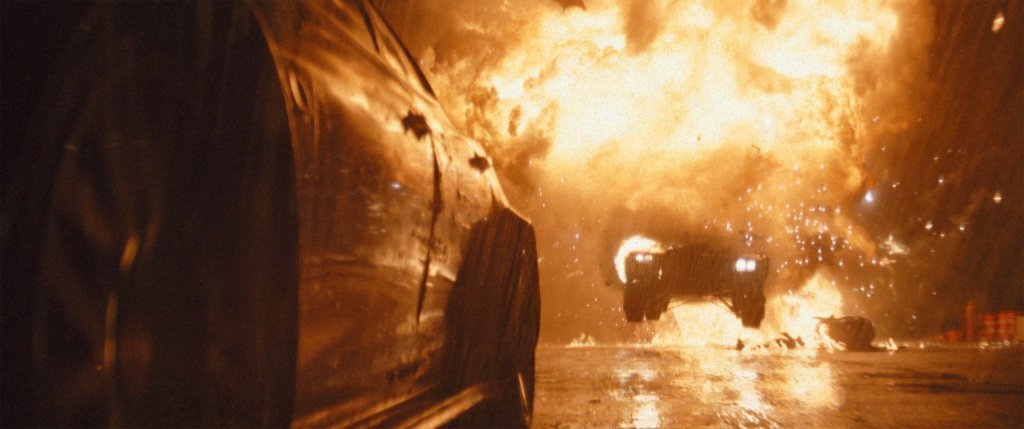
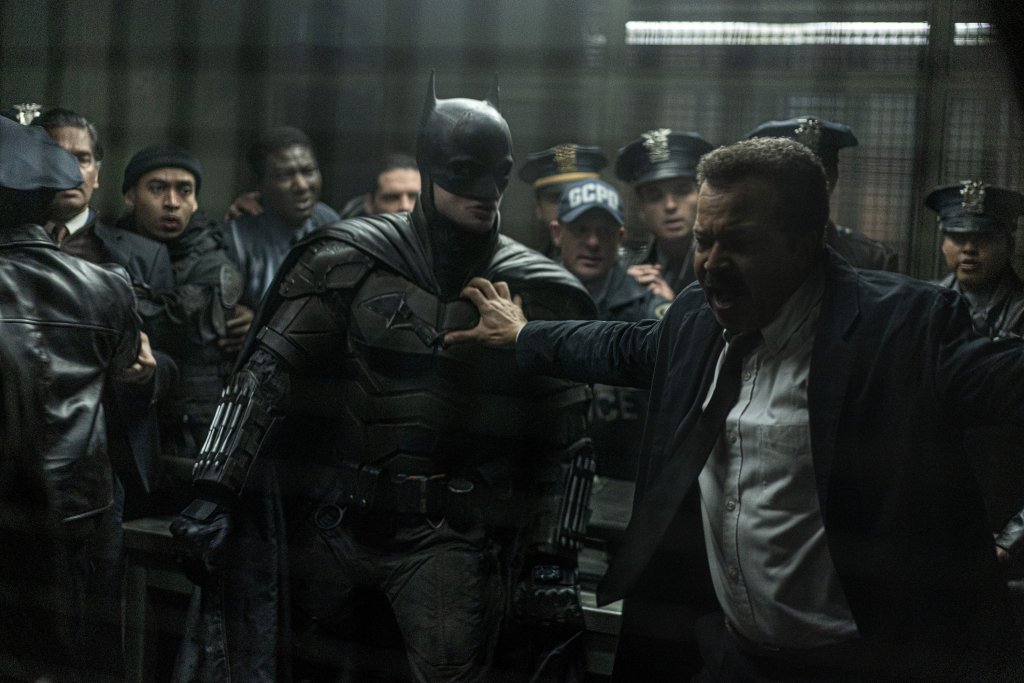
After enjoying an acclaimed collaboration on DAWN OF THE PLANET OF THE APES and WAR FOR THE PLANET OF THE APES, production designer JAMES CHINLUND was once more paired with director MATT REEVES to create a Batman movie that serves comic book fans while simultaneously feeling relentlessly real. STARBURST talks in-depth with James to uncover how the tone, look, and feel of THE BATMAN came together, from Gothic ornament, StageCraft technology, right through to the iconic Batmobile itself…

STARBURST: What do you remember about first being told you’d be working on The Batman?

James Chinlund: When I first heard that I was going to be doing it, I was gripped with intense fear and anxiety. There had been so many amazing iterations of the film that had came before us, and so many iconic pieces of design. Matt and I were both just really trying to figure out “Where’s the space, where’s our space? How can we find new space, that’s simultaneously familiar for the fans, but also our own.” So, we got right down to it, and it’s a testament to Matt’s vision and leadership that he found this take on Bruce Wayne. That was the key for us to start cracking into the design in a new way.

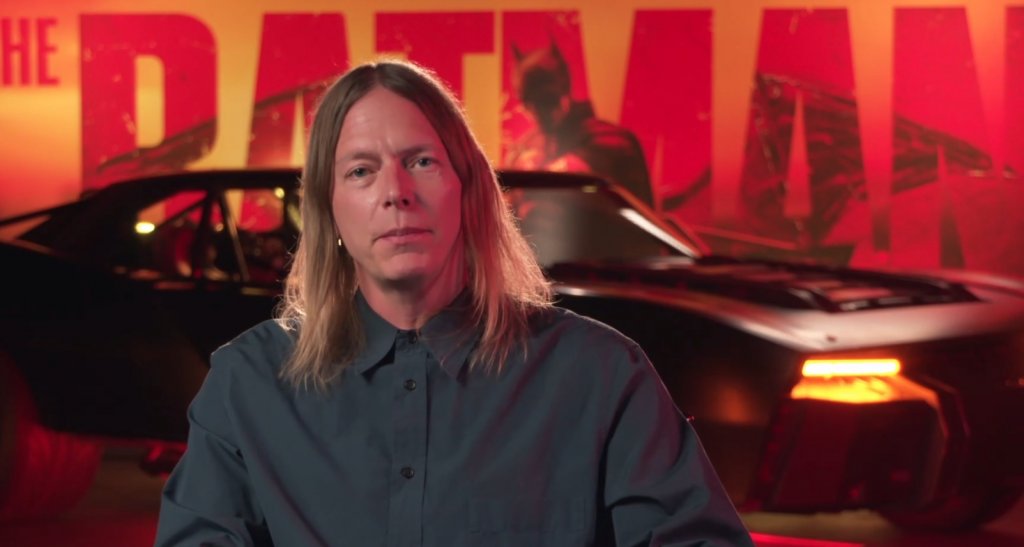
James Chinlund

You have obviously worked with Matt Reeves before, what is he like to collaborate with?

Matt and I had worked on two Planet of the Apes films prior to this, and we just had an amazing collaboration. On Dawn of the Planet of the Apes, I was actually hired by a different director who had left and so we were in limbo waiting, and then Matt came in and we were under pressure. He was writing while we were designing, we were on a short schedule and we needed to mount the world. We found ourselves to be very in sync, in terms of that take. It actually produced this amazing collaboration, that I had never had before, which was working with the director during the writing process, so we were talking about the ape civilisation, how they could build, what sort of spaces they could inhabit, and how those systems might weave their way into the script, and he would come to me with problems he had, like “I’m trying to get this character to move from this to this, and where could that be?”. It was just an amazing time of free-flowing communication and ideas that we carried forward into the next films. We did that on War for the Planet of the Apes, and we certainly did it on The Batman. So I mean he is just a master, and I think he is an incredible writer. It’s just a great gift to be able to work with someone like that.

There’s certainly the Gothic feel to the backdrop of the movie, but what other influences did you want to pour into the look and feel of the film?

We wanted the film to feel familiar to the fans. I grew up a Batman fan, that was my guy, absolutely. The Gothic take for us was trying to figure out a way to deliver that Gothic feeling without necessarily having everything be pure Gothic architecture. Which simply doesn’t exist in America, the cities in America are full of a variety of architecture that happens throughout time. So I think we were looking at different ways of expressing Gothic ornament, whether that’s through decay, or spindly shapes of antennas and things like that. Lots of different tools that we were developing to express those sort of spooky shapes. Without it necessarily feeling like you had stepped into a comic book world.

How did you and Matt go about making a Batman movie that felt so grounded and realistic?

I’d say that it starts with the script, and Matt’s take. He had a really smart take on Bruce, so seeing Bruce as this sort of DIY character, who wasn’t leaning into Wayne Industries for all of its bells and whistles. He was sort of down there in the garage doing it himself, saying “This is my mission, what do I need, I need a car! What is that car going to be, how can I build this car?” it was just him against the world. I think that really allowed us to expose his process, and the thoughts that he was having, as he was designing his character, and those are reflected in his car, in the Batcave, in the design of the costume, all of those things. I think that that was the initial part of the fabric that we started to knit the rest of the world together with.

Can you elaborate on what it was like to use VR technology in the making of the film?

On The Lion King, which is the film that I did before this, I had the incredible opportunity to work with Jon Favreau and his team. His goal was to basically create a film that felt entirely live-action. So in order to do that, we built the world of The Lion King in the computer. So this was the first film that had ever been shot entirely in VR. And so for me, it was sort of a two-year university course in VR tech. We had always been designing in the computer, but this was the first time that I had actually gone into the space, and experienced it like that. So I was very excited, coming off of that project, to bring those tools to Matt and show him what was possible. We designed the entire world of Gotham in the computer and he was basically able to walk into the spaces in VR. We had the entire camera system, and all of the lenses set up and he would work with animators and previs artists setting figures, running action sequences, and then running cameras. Basically, he was able to storyboard and shot list the whole film before we had built anything. So it was just an amazing tool for all of us in terms of being more efficient about what we build and also helping him get a real sense of what he was going to encounter on set.

On top of this, you also brought in StageCraft technology, which obviously went down extremely well on The Mandalorian. How fun was that technology to work with, and what do you think it brought to the movie?

Greig Fraser is an absolute master first of all on many levels. He had learnt so much on The Mandalorian, breaking those tools, and figuring out those systems, similar to my experience on The Lion King I think Greig was really excited to bring those tools over to The Batman and share those with Matt and the team. Obviously, it creates incredible opportunities for you. Long sequences at dawn and dusk, then also just the beauty of the light that you can generate from those films. We knew that we wanted it to be super low light, right on the edge of falling into inky blackness, I think Greig was really excited about the opportunities that that tech afforded him for like a realistic look. Which was in sync with our overall plan for the sets. Lighting as much as possible with practicals, really letting the light come from the set itself. It was a really tight integration between our departments to capture that.

We spoke to The Twins [Max & Charlie Carver] recently, so to sort of tie these interviews together, I wanted to discuss The Iceberg Lounge set with you? What were the main influences behind it, and how did you really want it to come across in the film?

As a young person, I spent a tremendous amount of time in nightclubs in New York. So I was excited about being able to represent that in a way that felt again grounded and real, and something familiar to me. So it was an amazing opportunity. It was also an incredible collision of narrative threads that were coming together. We had the Riddler’s perspective, Falcone’s, 44 Below, we had the club itself, the street outside with the diner. So there are a lot of threads that needed to come together spatially, as well as narratively. In terms of influences, I think I had been to a party at the Brooklyn Bridge Anchorage at one point, and was just blown away by that space, but also I was inspired by a story about Robert Moses, who was the architect of the freeway system in New York City, and he was this kind of nefarious character who had like destroyed all of these neighbourhoods by building expressways through them, and the legend is that his office was underneath the toll plaza of the Triborough Bridge, and there was a tube that ran from the tolls through his office, and all of the cash that came in the tolls was flowing through his office into a vault below, that he used to pay for his own security team. It was just an amazing idea for a bad guy lair that I had held onto. There’s a moment in the script where the lights go out in Falcone’s place, and I was excited about the idea that the lights from the roadway would be lighting up that fight scene. It was a really pivotal piece of geography in the film, and it allowed us to create this beautiful anchor, which was the Tricorner Bridge, that is the centre of that set.

For me personally, I got a Mad Max-style feel from this version of the Batmobile, would you say that’s fair, and also, can you tell us how the look for this version of the Batmobile came together?

First of all, I have maximum respect for Mad Max and all vehicles from those films. I just think it’s amazing how many ideas those filmmakers can pack into all of their props and vehicles, it’s just unbelievable. But I’m actually hopeful that ours is a bit more refined than Mad Max. I’d say for us, the comparison that I will cop to, and what I love about Mad Max is those are entirely bespoke vehicles, and each person’s car reflects their character, they’re making choices in terms of what they need out of the car, they may strip it down to make it lighter, or add extra armament, depending on what they’re trying to do. And that’s certainly the way we approached the design of the Batmobile, we wanted to create a car that was mission-specific, so everything on the car is related to some need that Batman has. It’s not there for design, it’s there for a purpose, and I also think that there is something about the toughness of a Mad Max car, and the toughness of our car. Basically, the main sort of superpower of the Batmobile is that it can charge through anything. It’s got this massive steel bumper and steel frame that runs through it, and obviously, you see in the chase sequence that they really take advantage of that superpower. So yeah, those would be the comparisons that I do see.

What was the most rewarding set for you to work on within The Batman, and why? 

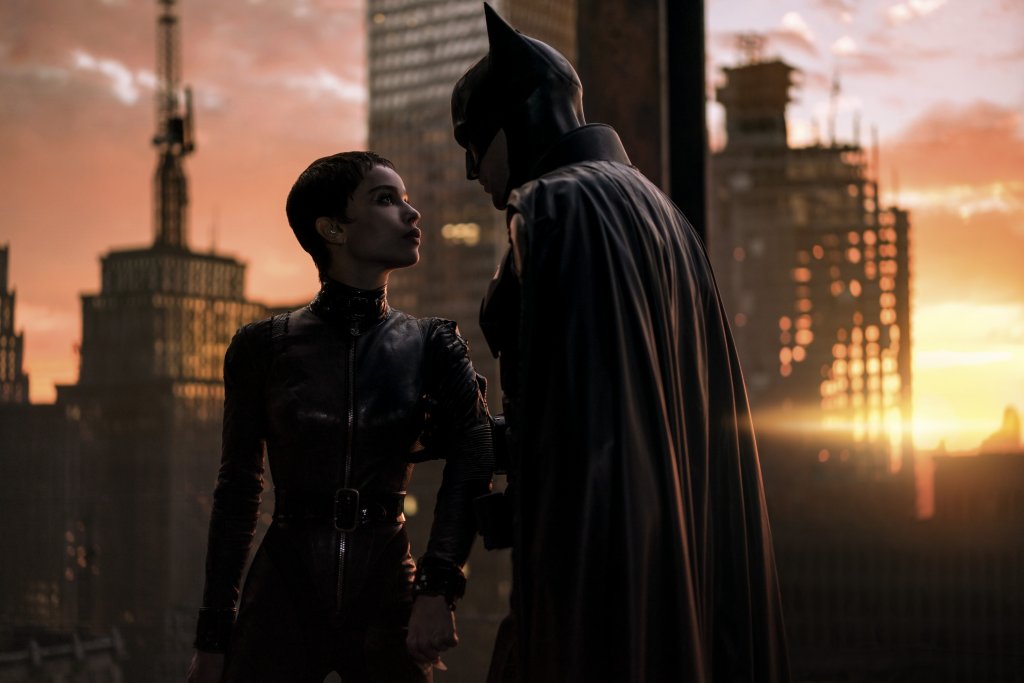
I think Wayne Tower for me was one of the most exciting spaces. It allowed us to really expand on Bruce’s character through some of those choices, I think we are really trying to reflect him as an urban Batman as opposed to a suburban Batman. It always bugged me that Batman would come into the city and fight crime, and then go back to his mansion in the country, to sort of recover. I really loved the idea of anchoring him in the heart of the city, and so Wayne Tower allowed us to do that. It was also just an incredible playground for us to be able to explore different versions of Gothic ornament, and really create this overall feel for his backstory, and then obviously the connectivity with the Batcave below. The idea that it was this old private train station that the Wayne’s had built way back when, and it had sort of been lost in time. It allowed us to create a world that felt plausible, and grounded, and at the same time it elevated the fantasy of Batman, and all the kinds of dreams we have as kids when we think about what his life might be like, and so I hope we ticked all of those boxes.

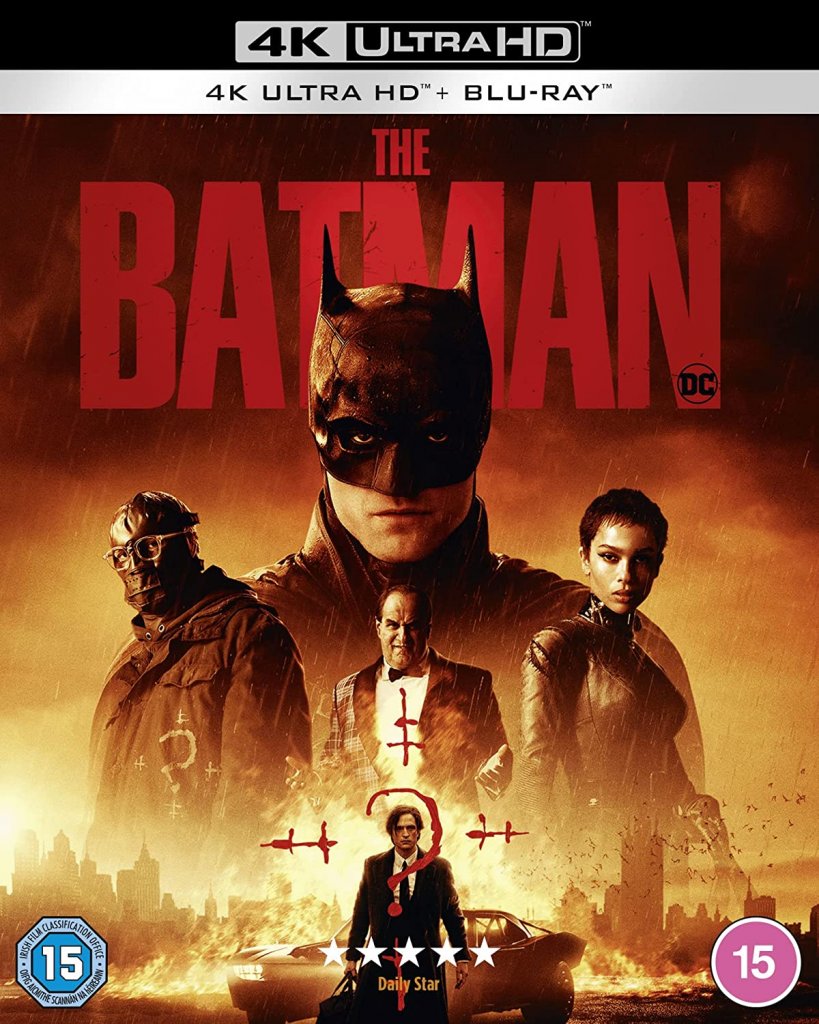
THE BATMAN is available to own on Digital Download right now and 4K UHD, Blu-ray, and DVD from June 13th.

Max & Charlie Carver l THE BATMAN

Tasked with being bouncers of the legendary Iceberg Lounge, The Twins (MAX & CHARLIE CARVER) do their best to keep a ruthless Batman at bay throughout the latest movie iteration of this classic DC character. STARBURST catches up with the acting duo to reflect on their time being submerged within that gritty and scarily realistic Gotham lifestyle alongside director Matt Reeves and opposite Robert Pattinson himself, while also discussing how they approached playing The Twins…

STARBURST: So growing up, how much of a Batman fan were both of you, and did you have a particular favourite?

Charlie: I’d say we were big Batman fans. I remember having a compilation of one of the first anthologies, a giant printed book of Batman comics. My favourite Batman movie up until this one was Batman & Robin.

Max: You loved Poison Ivy! I’ve got to say, then as a teenager I remember watching Batman Begins, The Dark Knight, the Christopher Nolan trilogy. That to me was groundbreaking in its own way, where it just felt like the genre got completely elevated, all of a sudden there was so much depth and weight to these characters. Then to speak to The Batman himself [Robert Pattinson], I remember reading what I could of this script, and just going “Oh wow, this is groundbreaking, next-level” So to  get to be a part of this most recent one, I still can’t believe it.

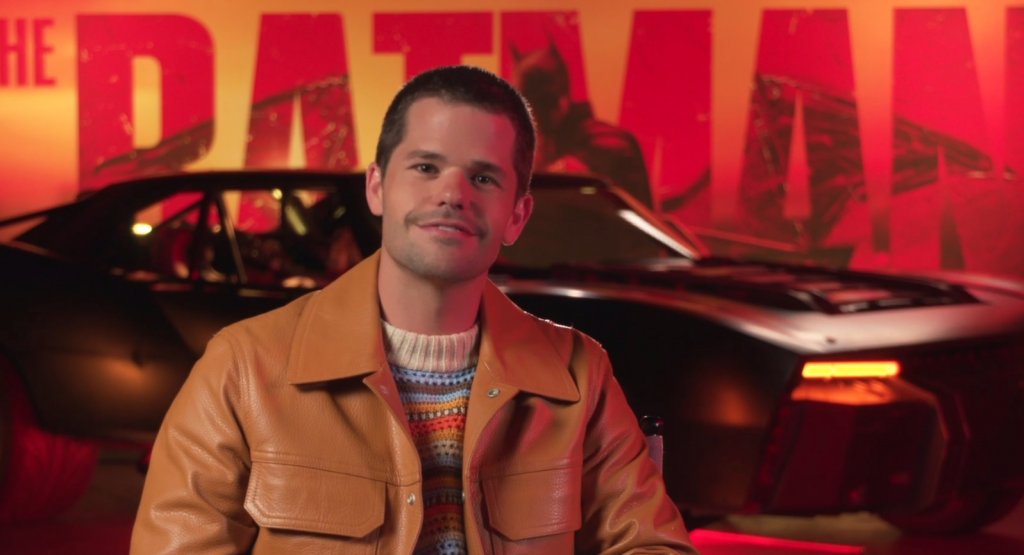
Max Carver

Leading on from that then, what do you guys remember the most about your first day on the set of The Batman?

Max: It was a trip, we get driven to set, at some oil refinery way east of London. Zoë Kravitz is there, Rob’s there, the whole crew’s there. Then all of a sudden this guy walks up and he’s got this limp, and he’s like “Hey, how are you? Good to see you!” and I was like “Who’s this guy, why is this guy on set, why are they letting him talk, we are all supposed to be quiet listening to Matt right now! Who’s this schmuck, walking around, just making all this noise?” and only after about five minutes did I realise “Oh, that’s Colin Farrell” I didn’t even recognise him in the flesh, I had no idea. I thought it was someone’s friend or agent, I had no clue what was going on.

Charlie: He loved it though, he was trolling all of us, and then he would just drop right into his Irish accent, that makeup was next-level.

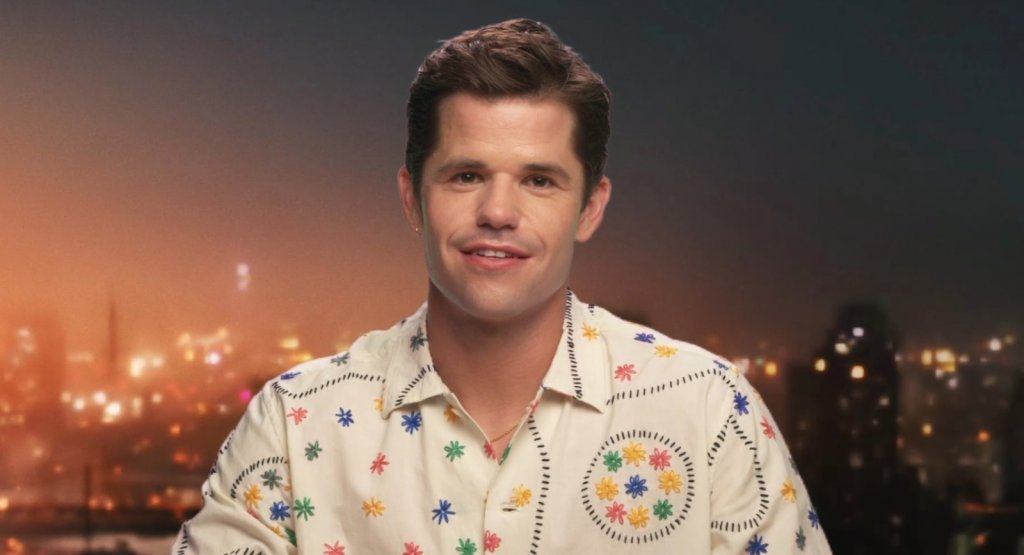
Charlie Carver

Can you elaborate on The Iceberg Lounge, what was it like to work within this huge, highly detailed set, and to just be so submerged in that Gotham lifestyle? 

Charlie: So The Iceberg Lounge was like a compilation of a couple of different locations, there was this amazing gigantic set that they built on the Warner Bros. backlot at Leavesden, and then I think the interior was at this place called Printworks in London, which is used as a dance space. We got in there and you kind of marvel at the size of the thing, and then we found out that we would be learning how to jump off these three-story balconies, so it went from genuine excitement to excited fear.

Max: What I loved about this rendition of Gotham, was that it was so accessible. Like we were saying earlier, with Batman & Robin it was kind of these otherworldly places that we were going to. This was like “I can imagine walking into The Iceberg Lounge right now, seeing the Penguin there and thinking I probably shouldn’t look at him, and attract too much attention” it just felt real. Everything felt very grounded.

Perfect! So we must of course ask, what do you remember the most about working opposite Robert Pattinson, and what do you think that he brings to this legendary character? 

Charlie: First of all Robert is just such a nice guy, what a great leader for the cast, and he is funny. It is interesting on set as you’re toggling between these really intense, dramatic action scenes, and then cut is called and Rob is just like warm, and lovely, and awesome. With his Bruce Wayne, it’s interesting, it’s this sort of flip where there’s this really wounded depth to Bruce, and Bruce is really only more himself when he is The Batman, and I think what’s so cool about this character’s journey through the movie is you see him realise that this persona of Bruce might come in useful in future films and stories. But I’ve never seen The Batman in so much pain, with the family story.

Max: It’s the first Batman where I felt like I could cry watching this person Bruce carry around this kind of wound, and for me, the romance between him and Catwoman had this special, almost childhood bond, which they shared throughout. There’s something really kind of wonderful, and childlike underneath this rainy Gotham that’s dark and “I am vengeance”, this incredible detective story. There was something that spoke to a real love underneath everything. And I think we see that at the end of the film, him discovering that.

So how did you both approach playing The Twins, was there something that maybe either of you really wanted to bring to how the characters came across on screen? 

Charlie: I think we were surprised and excited to get to do it. Matt just found something innately humorous about our dynamic, so we had to trust that that was there. Then the real fun was getting to build these characters with wardrobe and hair and makeup. Suddenly your eyebrows are getting shaved off; you’re getting a neck tattoo, and you’re like “I look tough!”

Max: Yeah, we don’t look that tough in real life! But there is something as well, I remember through the audition process, we had kind of read through these gritty 70s detective films like The French Connection, so you show up on set, and you meet the director, and you’re like “Hey Matt!” and he’s like “I’m so glad you guys are here” and we say, “What do you think?” and he’s like “You guys are just so funny” and you’re like “Wait, what?” So that’s where at a certain point you just trust the director, you do what you do best, you kind of immerse yourself in this world, like you said with The Iceberg Lounge, working for the Penguin, the Falcone Crime Family, etc. You have that behind you, and then you’ve got to trust the vision of the director, and fortunately, I think we got one of the best, maybe of all time. So, it wasn’t that hard.

Tough question time then, if It hasn’t already been covered, what was the most rewarding process when it came to being involved with The Batman, and why? 

Max: I’ll say what’s rewarding is when you’re in the process of making a film, you might have twelve different set-ups for one scene, and you might have all these takes that you do, and you kind of imagine what the end result will be, but it’s put together long after you’ve been on set. So to actually see that first sequence of The Iceberg Lounge, where Batman punches, knocking us out, and then walking into The Iceberg Lounge on this one shot, with all of the fighting – to see it actually put together is so rewarding, because you just go “Wow, all this stuff we had to do, all these individual parts got seamlessly put together to create this incredible experience for the audience”, and at the end of the day, that’s what is most rewarding for me.

Charlie: Ditto!

Obviously the sequel to The Batman has been announced, so if the Twins do return, what would you want to see from them?

Max: I think what was cool is that there are several scenes where we are rolling with the Penguin, we are driving to this drops deal, we were there, kind of always in the background, wherever the Penguin was we were like his shadows, and I loved working with Colin, so I would love to be more involved in that underworld element.

Charlie: Yeah it’ll be exciting to see how the Penguin evolves, and therefore, how everyone around him might evolve with him. So I don’t know if that means more status and power or a different look, but if the twins come back it could be fun to see what’s changed.

Final question. This Batman has gone down extremely well, so for you guys, why do you personally think that is? 

Max: I feel like this Batman really honoured Batman’s origins as a detective. It was such a different take. And I think what was wonderful about it, was just how grounded it was, how accessible it was. There have been other iterations of Batman which I enjoyed, which were, like I said, otherworldly, and fantastical. This felt like I could walk right off the lot, into Los Angeles and just run into Bruce Wayne, I could run into the Riddler. I remember we were even shooting stuff while something political happened in the world, going “Wait we’ve just shot something that felt just like this, this is crazy, it’s very much here”.

Charlie: What’s special about it is, Matt had such a vision, and he was so steeped in the mythology, and I think maybe he and the movie acknowledged in a way how weird it is that this billionaire is dressing up as a Bat. So when you have that kind of awareness of the story, that this is what that person has chosen to do with their free time, and with their life, then everything kind of organises itself around that, and like Max was saying there’s a level of believability and humanism in it that I think sets this Batman apart. Plus there’s a reverence for great filmmaking.

THE BATMAN is available to own on Digital Download right now and 4K UHD, Blu-ray, and DVD from June 13th.

Deborah Chow | OBI-WAN KENOBI

Deborah Chow interview for Obi-Wan Kenobi Disney+ Star Wars series

*This interview with Obi-Wan Kenobi series helmer Deborah Chow has been edited and condensed. For her full interview with STARBURST, look out for our print magazine Issue 478, available in stores and to order online from June 2nd.*


Ten years have passed since Obi-Wan Kenobi faced his greatest defeat – the downfall of his best friend and Padawan, Anakin Skywalker, who was corrupted to the dark side. A few lost limbs, third-degree burns and dead Jedis later, and an understandably depressed Obi-Wan is on the run from the newly risen Empire and its Jedi-hunting foot soldiers.

This is when fans reunite with the iconic Jedi Master in Obi-Wan Kenobi: post-Revenge of the Sith and pre-A New Hope, at the midpoint between two titanic trilogies. “One of the fundamental questions of the series for us was to figure out how Obi-Wan went from standing on the banks of Mustafar in such profound pain, to the calm and peace of Sir Alec Guinness in A New Hope,” series helmer Deborah Chow tells STARBURST. “There’s obviously something that happened to the character in those twenty years, a story that needed telling. For me, it presented a really interesting opportunity to explore that psychology and tell a character-driven story.”

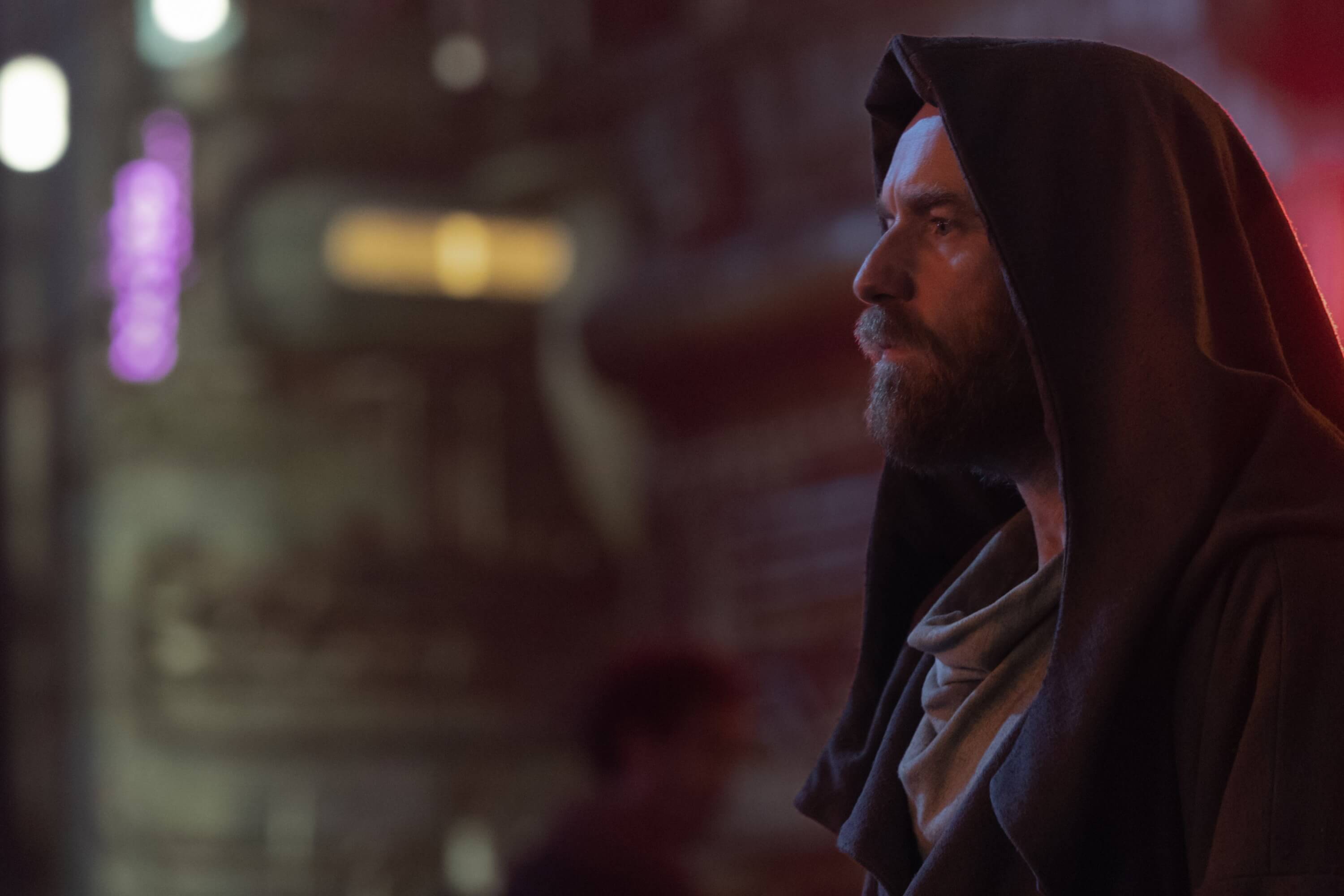
Ewan McGregor as Obi-Wan Kenobi in Deborah Chow Star Wars series


It’s been a long road to the Disney+ limited series. Seventeen Earth years since fans last saw Ewan McGregor don the cloak; seventeen years since Hayden Christensen rose from the ashes (and dry ice) to become one of pop culture’s most emblematic figures; seventeen years since Joel Edgerton and Bonnie Piesse held baby Luke Skywalker in their arms and watched the suns set on Tatooine.

Rumours of McGregor’s return to the franchise began to swirl following Rogue One’s success, when Lucasfilm began active development on an Obi-Wan standalone feature to be directed by Stephen Daldry. Those plans proved short-lived. The box office bombing of Solo: A Star Wars Story was quick to ensure any further Star Wars projects were carbon-frozen and shelved – that is, until the Rise of Disney+. Bob Iger, Disney’s CEO at the time, announced that the House of Mouse was entering the streaming race; with the news came a new hope for the future of Star Wars.

With a whole new release strategy in place and a format change to a limited series, it was finally time for the rise of Obi-Wan Kenobi. Cut to August 2019, as Ewan McGregor stepped onto the D23 Expo stage to announce his glorious return. The bag of credits, as they say, was secured.

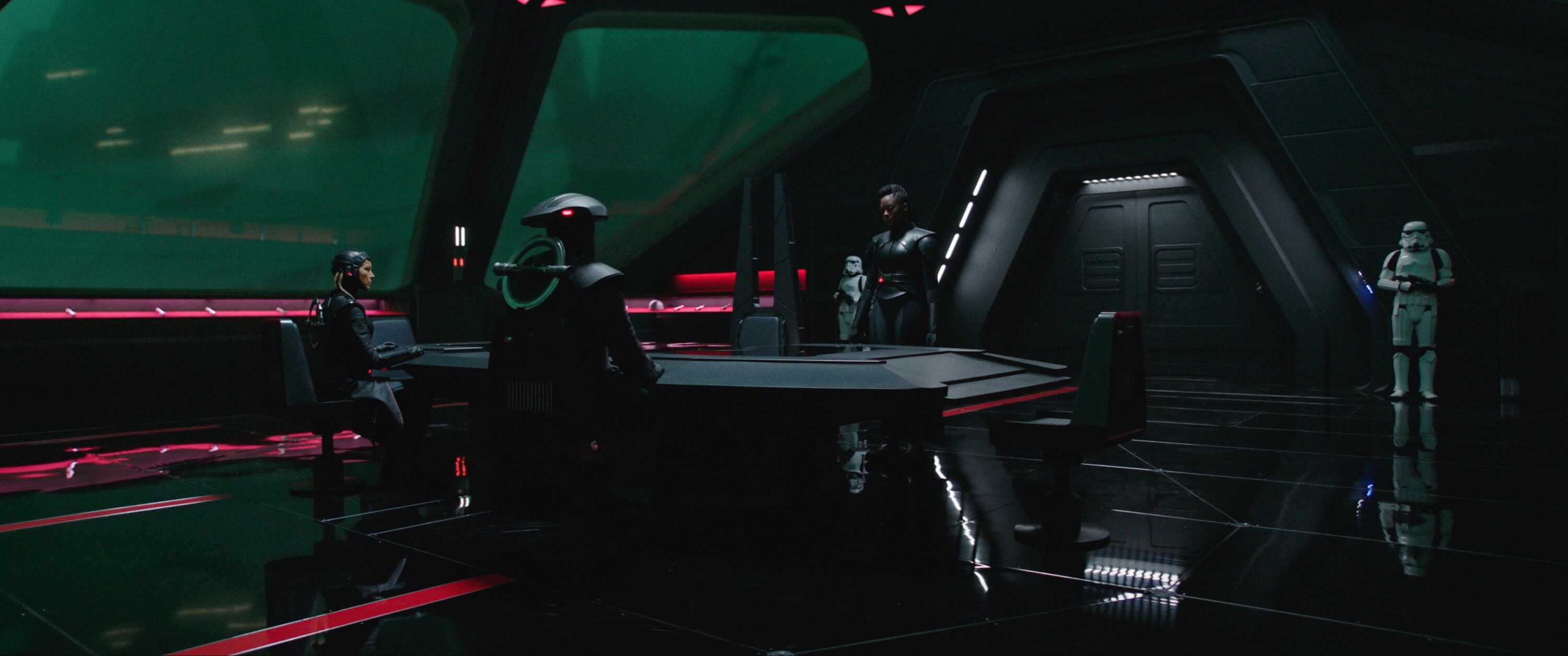
Moses Ingram as an agent of the Empire in Star Wars series Obi-Wan Kenobi


A month later, it was announced that The Mandalorian director Deborah Chow had boarded the project. “I was just a few months out from finishing Mandalorian,” she recalls. “I was still very much in a Star Wars headspace.” Chow, who is also known for directing episodes of American Gods, Better Call Saul, and Jessica Jones, was tapped by the studio to helm the entire series from start to finish. “I was obviously very excited at the prospect of taking on such a big project, but also a little daunted by the iconic nature of the character,” she confesses.

At the time, Hossein Amini was still attached as head writer, having been hired back when Kenobi was intended for the big screen. President of Lucasfilm and executive producer Kathleen Kennedy would later decide that Amini’s scripts were too dark, stating in an interview with Entertainment Weekly that she wanted the show to be a “hopeful, uplifting story”. Hence, the production was delayed from mid-2020 to 2021, while writer Joby Harold was brought on to make the required rewrites.

“It’s not just the story of Obi-Wan the Jedi, but also of Obi-Wan the man. And I think one of the huge benefits of doing a limited series is that we have more space to explore that across six episodes than we ever would in a feature,” says Chow of the project’s many changes and developments. “So that internal journey was something we were really trying to explore over the course of the series, starting with him in a very dark place and then gradually rebuilding him. And in terms of what Kathy said, for me, Obi-Wan has always been a character that epitomises the light side of the Force. There’s a warmth, a humanity, and a sort of wit to him that is lovely. That’s why I don’t think you can tell a story about Obi-Wan without some hope in it.”

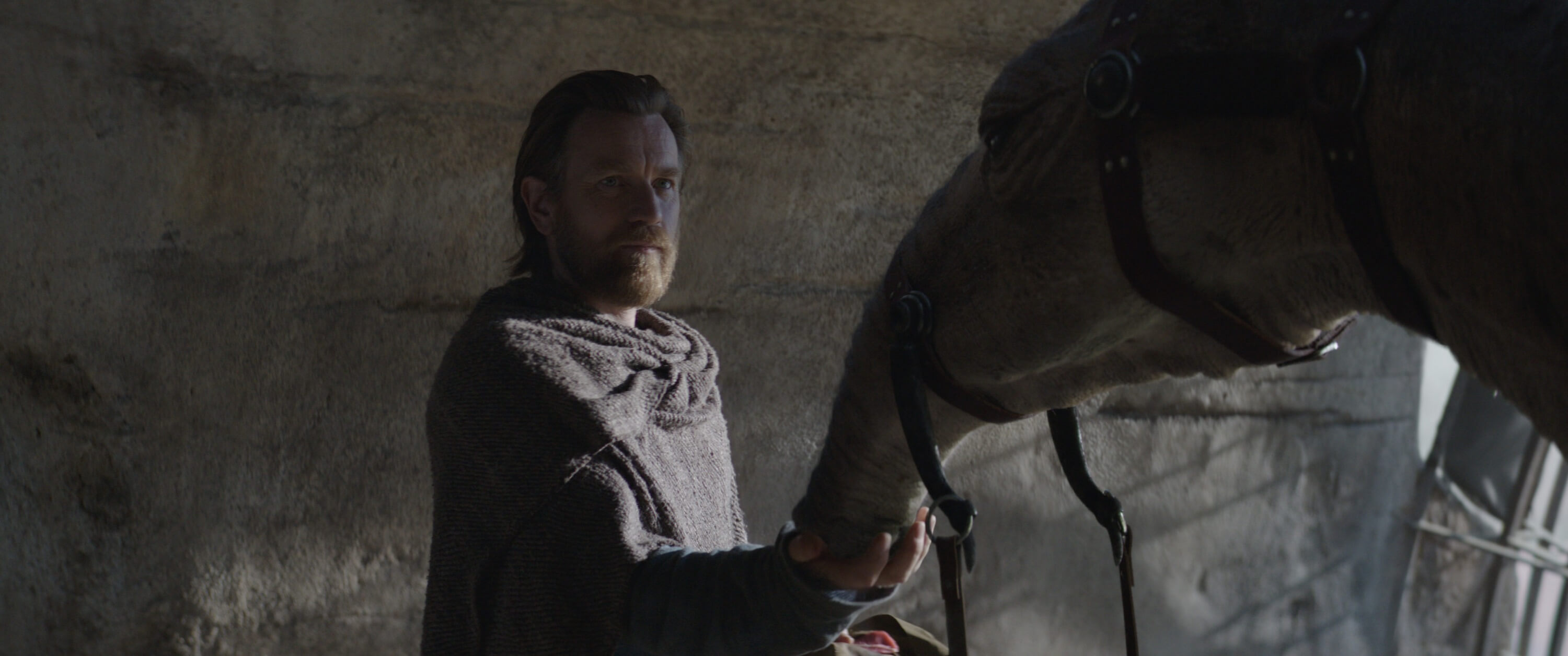
Ewan McGregor returns to his role as Obi-Wan Kenobi


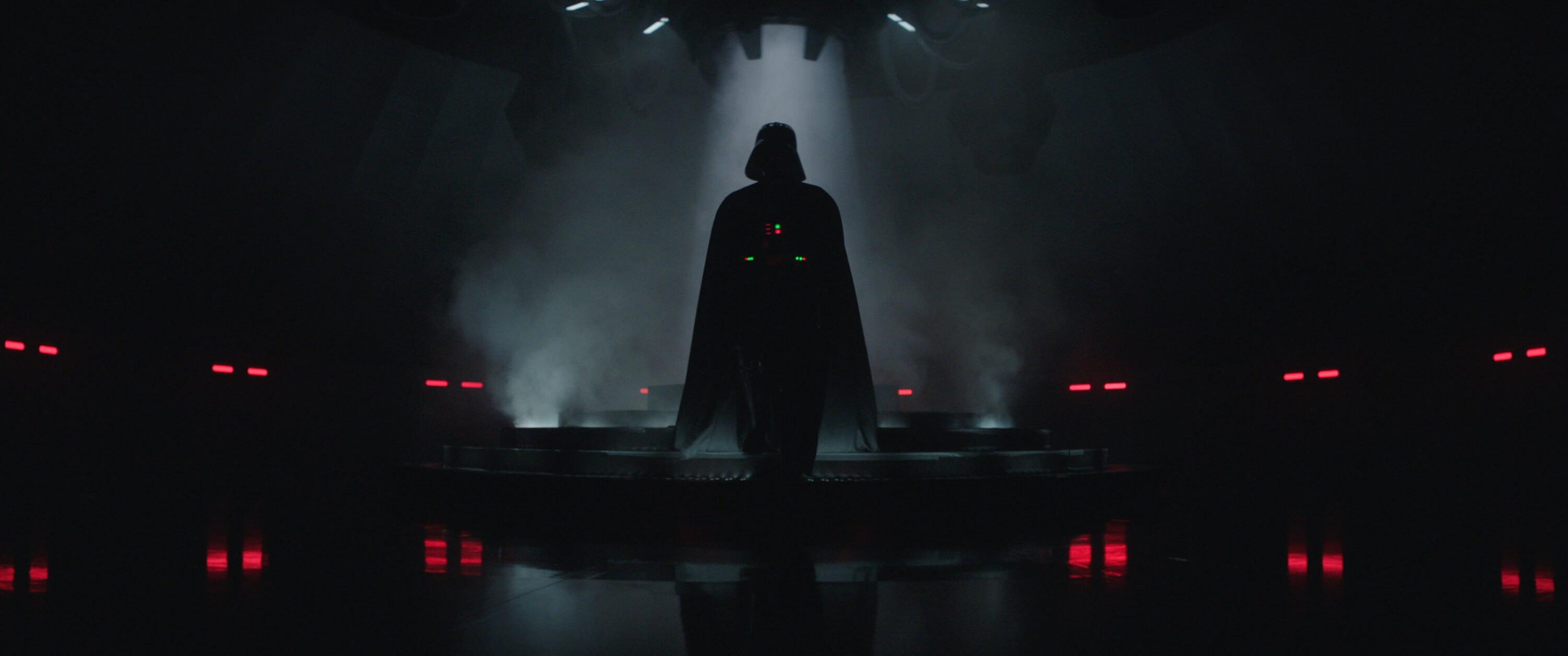
One thing has remained constant since the series’ earliest iteration, however: the roaring excitement for the potential – and later confirmed – return of a certain hard-breathing, helmet-wearing baddie. “Through the development period, obviously we had many discussions about many things, including whether or not we should bring in Vader… If we looked at Obi-Wan’s life and looked at where he was in the timeline coming out of Revenge of the Sith, then Anakin/Vader is an integral part of his story and his psychology. That, for us, is why we decided to bring him back into this story.”

But Deborah Chow wasn’t satisfied merely fulfilling every Star Wars fan’s dream. No, nothing less than total fandom meltdown would do. Cue – Hayden Christensen’s return.

After the 2005 release of Revenge of the Sith, Christensen famously stepped back from the limelight and bought a farm in the Canadian countryside; though he kept acting in a handful of not-so-successful films, the actor seemed content to keep a much lower profile than what he’d enjoyed during his involvement in the prequel trilogy. Then in 2016, any lingering hope that Christensen might one day return as Darth Vader looked to be dashed when Rogue One brought in former boxer Spencer Wilding and stunt man Daniel Naprous to depict the Sith Lord.

Deborah Chow discusses bringing Hayden Christensen back as Darth Vader in Obi-Wan Kenobi series


But if Ewan McGregor was going to return as Obi-Wan, could anyone but Christensen really portray his friend-turned-nemesis? “I met with Hayden,” Chow recalls. “We’re both from Toronto, so I met with him just outside of the city. It was actually a lovely way to meet him because we were very far from everything else, and it was just the two of us. We just talked about the project and what we were trying to do with it at this point in the timeline, where the character was, and just started there with him.”

Just like that, Darth Vader and Obi-Wan were reunited. “I think it was exciting for everyone,” says Deborah Chow of their return. “The first time we brought Vader to set, there was definitely a moment of silence among the crew. These are such iconic characters, and those actors have become an important part of the fabric of the Star Wars universe… they’ve long been a part of everybody’s lives, and to actually have them standing in front of you is something that took a moment to get used to, that’s for sure!”

Despite Vader’s towering presence, however, there is never any doubt about the series’ focal point: “The focus is Obi-Wan Kenobi. It’s his series, and it is about him in the biggest way. All the secondary characters are an honest part and consequential part of his story, otherwise they wouldn’t fit into that structure.” Chow goes on: “[Ewan] has such a strong presence and he’s just such a good actor. And there’s something of him in this role that just feels like such an organic, perfect fit; he holds the show in such a major way… It’s definitely his story, his series. For me, he’s the soul of the show.”

Obi-Wan Kenobi Star Wars series is inspired by westerns and samurai films, says Deborah Chow


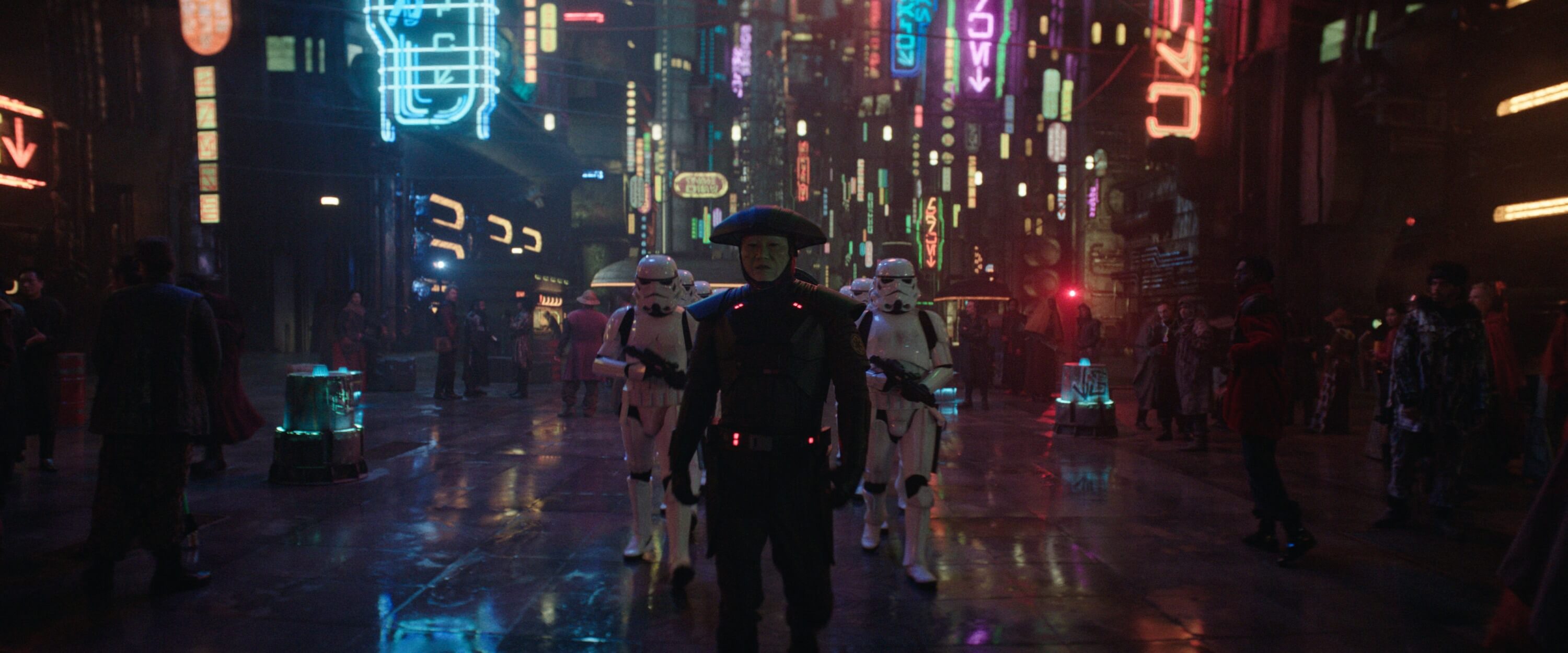
And as for what viewers might expect from Obi-Wan Kenobi as a stylistic whole, fans of Deborah Chow ’s contributions to The Mandalorian have every reason to be excited. “For me, I’ve always viewed Star Wars as belonging to a lineage of Westerns and Samurai films,” Chow muses. “There’s a method of storytelling in those genres that works really well for that world; the Western tropes are obviously very present in both Mandalorian and Obi-Wan, so I was looking to a lot of those cowboy Western classics. But more importantly, I was looking at ones that had a little bit more of a gritty, poetic feel to them – ones like The Proposition or The Assassination of Jesse James by the Coward Robert Ford. And from the Samurai film side, especially given the feel of [Obi-Wan’s] time period, I was frequently looking to various Akira Kurosawa films…

“It very much feels that in many ways, Obi-Wan is the last Samurai. He carries that attitude, that grief, that feeling of being part of something that’s been lost in a changed world.” But between darkness and defeat… hope survives.

Obi-Wan Kenobi debuts on Disney+ on 27th May with the first two episodes. Further episodes will release weekly on the platform.