Sarah Appleton & Phillip Escott | The Found Footage Phenomenon

found footage interview

With Rob Savage’s recent Host and the ongoing Paranormal Activity franchise – yes, an eighth film is on its way – the found footage genre shows no signs of running out of battery. So, to make sure you’re up to date filmmakers Sarah Appleton and Phillip Escott have produced The Found Footage Phenomenon, a documentary detailing the history and evolution of the sub-genre. Sarah and Phillip took some time to talk to us about their film and why the genre is so important.

STARBURST: What was the genesis of this project; were you found footage fans to begin with?

Phillip Escott: The genesis stemmed from a disc I was producing for Second Sight, of Lake Mungo for a Blu-ray release. Sarah is a huge found footage fan and she found out it was in the works. We had to make a documentary for the Blu-ray on found footage films, and while a great idea it was a bit big for the extras as we’d already locked a lot. So, why not think bigger so we did.

Sarah Appleton: Yeah, I was super disappointed as Lake Mungo is one of my favourites and I really wanted to work on it.

Where did you want to start to explore the history, as it seems every generation has their own found footage beginning?

SA: We didn’t want it to be just a list, so it was less about that and more about looking at it as a technique and a genre. We always knew it would start with Cannibal Holocaust, and Phil already knew a lot about that film. For me, I learned a lot about the pre-2000 period during this process. As a fan I definitely came to it more after the Paranormal Activity era.

PE: The history was what always appealed to me as it’s interesting how found footage has kept the horror genre relevant. If you look back it’s always done that. During the research phase it was interesting to see what happened before Cannibal Holocaust, some of the texts and things such as the War of the Worlds radio show, how creative people have always been fucking with people via the real or not approach.

So, did you then compile a list of people you want to speak to regarding different styles, and was there anyone you couldn’t get to speak to?

PE: We found that many people were available (because of lockdown). We wanted the wholly trinity: Ruggero Deodato, Eduardo Sánchez and Oren Peli. The three bastions if you will, the guys who gave the genre new life. But the one person we couldn’t get was one of the directors of Man Bites Dog, as we wanted to cover that a little more.

SA: Yeah, because that was one of the early ones. The films that were before the ‘big boom’ are interesting as they invented so much. That’s why I was so happy when we got Dean Alioto (writer and director of The McPherson Tape) as that film is such an enigma, this weird thing that no-one saw.

One thing that comes through is that it seems everyone who makes a found footage film is so open and honest, but also humble. No-one claims to take credit for influencing the genre and yet each one does.

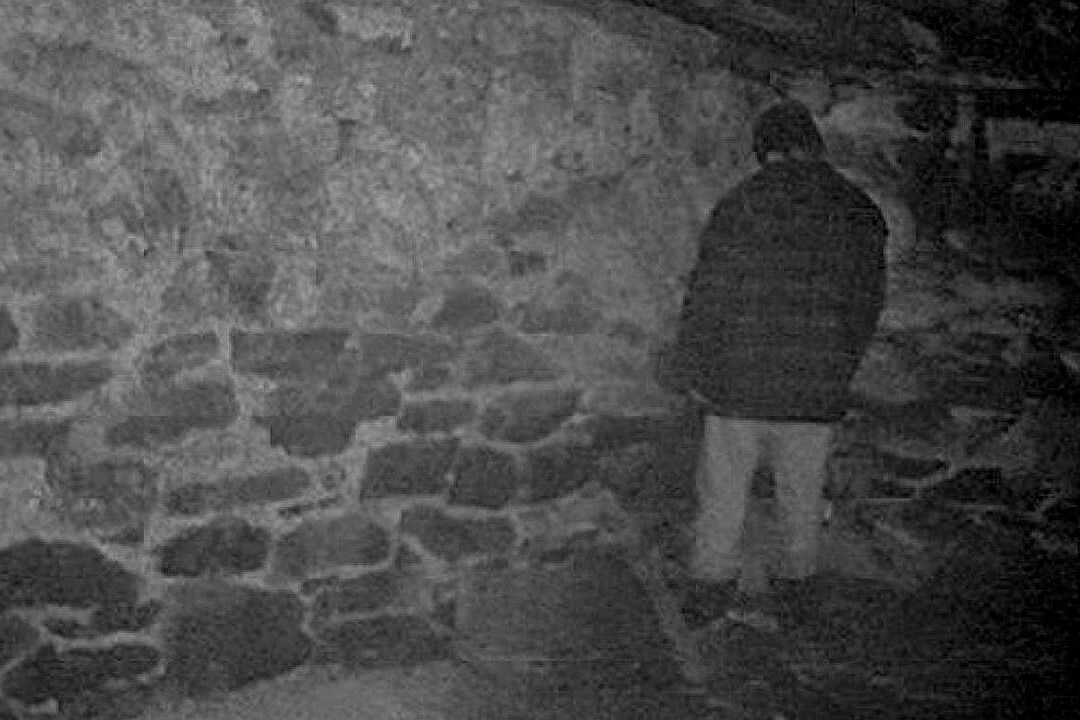
SA: A lot of people from earlier on had no idea what was to come, so it’s easier with hindsight to look back and see who invented found footage. With Dean Alioto, he kind of did the first home movie but as no-one saw it, it must just be in the zeitgeist. With The Blair Witch Project and The Last Broadcast they came at the same time but they didn’t know each other or anything. So, I guess it’s why people are reluctant to claim credit.

PE: I think it helps that a lot of the filmmakers are big film and horror fans, so they enjoy talking about other people’s work and films as well as their own.

SA: It is nice to ask filmmakers about other films when they’re fans. You can’t do that in other genres. I guess they are humbler about it, and they’re interested where other people took the genre after them.
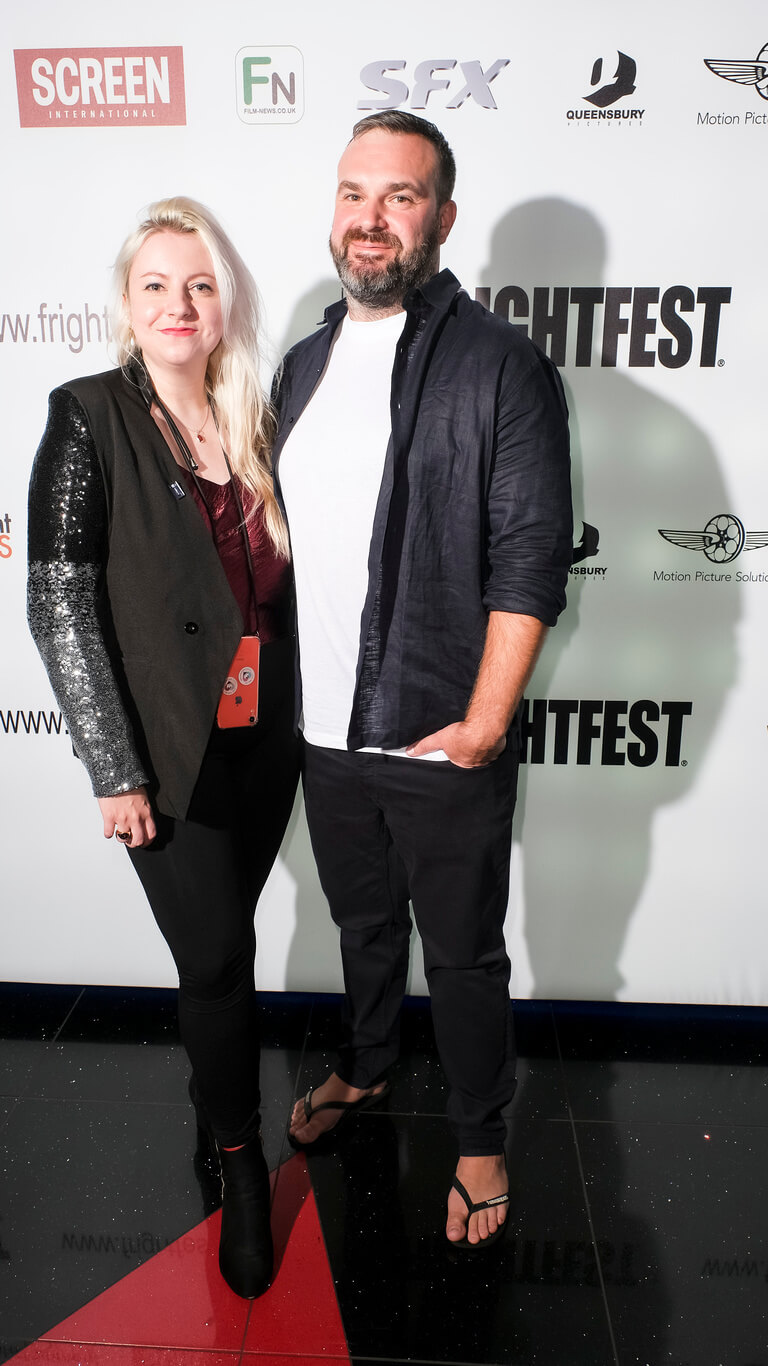
Sarah Appleton & Phillip Escott


Going back to The McPherson Tape, it’s a significant film in found footage history, but for anyone who isn’t as versed in the genre it could be quite a tough watch.

PE: Yeah, I think it’s also a product of its time. He only had $6,000, and it’s interesting that today you could make a much more polished film for that amount than you could in the late 80s. So, he was hindered by the technology but his passion for the craft is what carries it through. That’s its greatest asset, that intensity as Dean understood what works in horror.

SA: I don’t know if it’s entertaining anymore but it is super interesting if you’re interested in the history and technology of where found footage came from. If you just want to see some aliens, then maybe not.

Do you think that the realism, in films such as The McPherson Tape is what divides fans and critics?

PE: Yeah, I think that the true crime element, of something claiming to be true and then the audience being clearly lied to is a thing. I think it comes down to the individual.

SA: It depends on what you like. Personally, I love the reality. With horror, I prefer something set in the real world rather than fantasy so that’s what appeals to me. But I get that’s not everyone.

Do you think that the parameters of what constitutes found footage are changing as filmmakers need to push the boundaries?

SA: I really think that found footage doesn’t have to be a tape that’s been found and watched. Mockumentaries are found footage as they’re pertaining to be true and real, and that’s what I think the definition is. So, in that sense when you get films such as Host where you have an online platform, are we supposed to think it was found on someone’s hard drive and now we’re watching it? I’m not sure.

PE: It’s evolution. Back in the days of The Blair Witch Project it had to be literally found reels of film. As technology advances the sub-genre advances. It’s moved from VHS and film and not into streaming and digital.
 

Did you get the sense that there’s a ‘lightning in a bottle’ moment for these guys as few either return to the genre or replicate their initial success?

PE: A lot of it comes down to them having not having enough money to make a ‘real’ film. The sub-genre is perfect for student and low-budget filmmakers. It’s a format that allows you to get your foot in the door.

SA: But as much as they are accessible to make, they’re hard. I always refer to the example of Frankenstein’s Army. I know a lot of people haven’t seen it but it’s amazing how they did the long takes with the monsters, and the director said he had no idea how tough it was actually going to be.

Often found footage films can cause controversy, such as Cannibal Holocaust and Hate Crime, which is still banned in the UK. Why do you think that is? Do you think it’s the subject matter or perhaps how immersive they can be?

PE: Yeah, I mean, who wants to sit down and watch some Neo-Nazis terrorise a Jewish family for 90 minutes? There are lines that average filmmakers and audiences won’t cross. Sometimes films like Hate Crime, and also August Underground, only appeal for shock value, to see how far they’re going to go. It will close off a whole section of the audience, but some will be into it and get it and love it. It’s a risky move but can pay off.

What would you consider the underrated films of the genre, the ones that have passed people by somewhat?

SA: We included some of our favourites alongside those films that did something new and different. There are a few I like that we didn’t get to talk about. For example, My Little Eye which came out in 2001, we just couldn’t tangent off to it, but I really like the reality television side of found footage. The Houses October Built I love for the entertainment value.

PE: For me, it was more of the non-horror films we couldn’t get in such as Spinal Tap.

How important is found footage to the genre?

PE: I would say it’s vital. It’s our generation’s slasher film. In the ’70s and ’80s, you didn’t need much money, just some friends, and you can go make a slasher film. Now, it’s some friends and a decent camera and you can go off into the woods and make a found footage film. If you’re talented it will shine through. While that doesn’t mean everyone should make a movie, everyone can.

SA: That’s what makes horror so different and so special as you can’t do that with another genre. Horror is so different to everything else as it’s so accessible and has such a huge fanbase.

The Found Footage Phenomenon is out on Shudder now. Read our review here.
 

Ariel Marx | CANDY

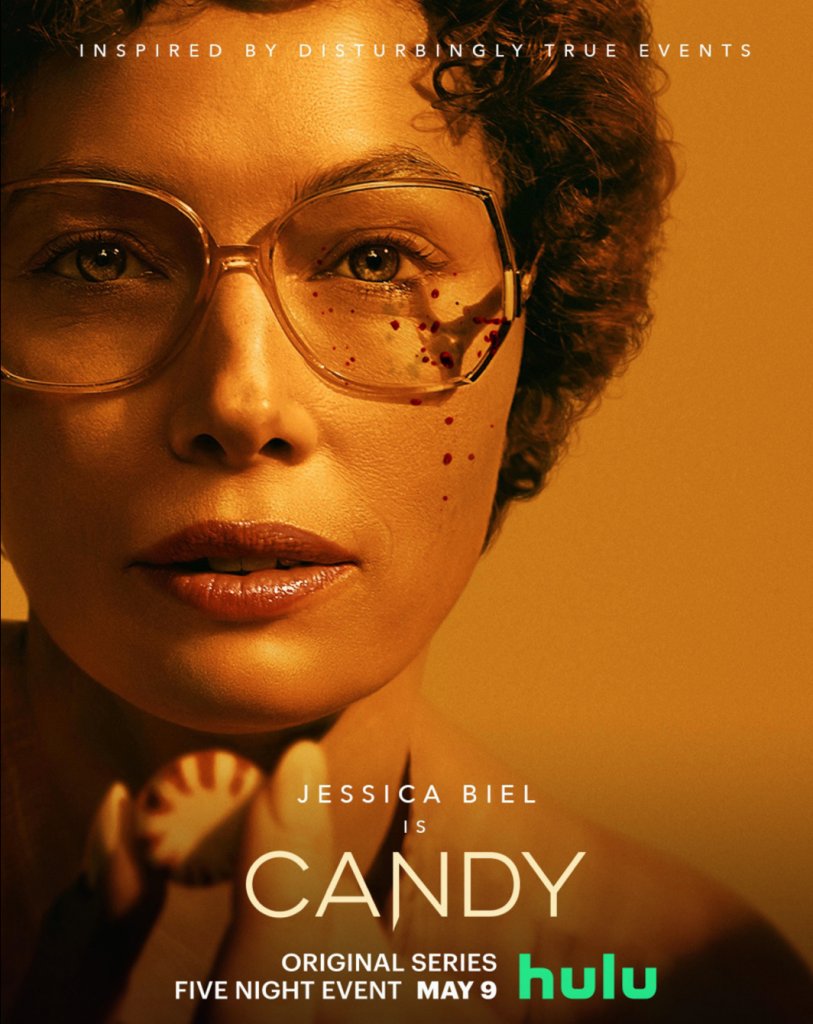
The new Hulu mini-series, Candy, is based on true events which happened over 40 years ago.

“On June, FRIDAY THE 13TH, 1980… in a small, bucolic town in Texas…
A loving, Christian mom named Candy murdered her friend Betty with an AXE.
Candy struck Betty 41 TIMES.”

Composer Ariel Marx’s score for the show looks to use the guiding principle of “oppressive sameness,” as she puts it, to craft the perfect music to mimic the feel of the town and the people who lived there – “simple, lush melodies that repeat themselves ad nauseam… dripping with unfulfilled potential” – counterbalanced by the violence, wherein Marx creates “unsettling sounds to feel Candy’s raw, detuned, animalistic rage in a blackout murder of music to break the monotony of the ‘sameness’.” It’s a lot to take in, much like the show itself, so we were excited to speak with composer Ariel Marx ahead of the show’s debut about Candy and her other work…

STARBURST: The music for Candy takes a journey that is quite impressive. What was it like for you, composing for a mini-series?

Ariel Marx: The beauty of television is that it’s an extended form. You have a lot of time to explore your ideas and a lot of really rewarding ways for reprisals and development and whatnot. With Candy, it’s such a complex story. I think Robin [Veith, creator] did such an incredible job exploring all of these different aspects of the time period – of what it was to be a housewife in the ’80s, the time period of what these women were going through, what it was to be a mother, what it was to be a working mother, what it was to be a bored housewife – all of these really, really complex emotional layers that I was able to dig into. It’s a really varied palate. A lot of it is very kind of fantasy, perfect-life driven. Then, on the other hand, it’s very severe and very “nerves are frayed” and at the end of one’s rope. The score gets quite violent, obviously – as the story does – but anyway, it was such an amazing opportunity to explore these hugely different ends up the spectrum, because the story really does that. It covers everything of their lives and how this happened.

You’ve done work for true crime mini-series and you’ve done work for what might be comedic drama, if you consider Shiva Baby in that realm. You’ve worked on American Horror Stories, so it seems like Candy encompasses elements of all of these things, where it is based on a true story, but it also has these very horrific elements, but it also starts out with a very deep friendship. Wherever did you start What was the thing you latched on to at first?

The very first theme that I composed is actually the theme that’s in the main titles. That was kind of like a first stab at, “What is this world?” Beyond the horror of it, there was a true, fully three-dimensional portrait of each of these people. The main entry into the pallet was through the lens of convincing one’s self that you have the perfect life and that you’re content but also, this theme also has elements of repetition and getting stuck in a loop and not being able to fully realize one’s potential. It’s very simple. It’s very lush, but it does get stuck. It’s like its rudders are stuck while still being beautiful. That was a main quality of the theme – of the intentions going right in and there were such wonderful nuggets in the script that I could draw from. There was this idea of oppressive that I really took to heart in terms of the aesthetic, in terms of the mundanity of every day feeling like the same, of the task being the same, and feeling like, how do you convince yourself you’re fulfilled with the status quo, floating on what’s comfortable. That [opening] scene illustrated all of these big ideas in terms of just wanting so badly to believe that you have everything you want, but you don’t, and how does the truth flip in? There are shards of darkness. Candy is so good at having a fixed smile and covering up her real emotion and really just proceeding as if everything’s normal, but there are cracks in her. How does that darkness and violence come through?

Because Candy is based on a true story, does that present difficulties for you or are you just trying to honour the story as it is on screen?

True crime is always tricky because you are accountable for these real lives and real tragedies. There’s a certain responsibility in everyone and in how they portray it because it does have consequences to the people who really lived through it and then by connection, my music is very deeply committed to honesty and I’m deeply committed to honouring all aspects of each of those characters.

With true crime, it can be easy to view it as a horrible accident on the highway that you look at briefly and then you move on but I think Candy does a really wonderful job at making you stay there in these characters and with these characters. The show – and then also, the music – was really devoted to, again, painting these three-dimensional characters and that Candy wasn’t just a vicious axe murderer.

There’s compassion in terms of, “How does a woman with no previous history of violence do this?” and “What led Betty to where she was with her own repression and her own overwhelming sense of duty as a mother and as a teacher?” I’m not painting these characters as one-dimensional, but really honouring that they’re fully-fledged human beings beyond the crime. That’s what we really tried to do with the music. It was never about making fun. It was never about making light. It was never about distancing you in a way that you didn’t connect.

CANDY is streaming now on Hulu in the US, and will arrive in the UK via Disney+ soon. For more on ARIEL MARX’s work, check out www.arielmarx.com

KATE HEARTFIELD – The Embroidered Book

Kate Heartfield is the author who’s works include The Magician’s Workshop and Armed in Her Fashion. Her debut novel won Canada’s Aurora Award, and her novellas, stories and games have been shortlisted for the Nebula, Locus, Crawford, Sunburst and Aurora awards. We caught up with her to ask questions about her latest mix of history and fantasy, The Embroidered Book.

How would you pitch The Embroidered Book to a big-shot Hollywood Movie producer who’s about to tuck into a big sandwich?

The Embroidered Book is a story about Marie Antoinette, queen of France, and her sister Charlotte, queen of Naples, as rival magicians. As teenagers, they’re sent to hostile courts to marry men they’ve never met, and over the coming decades, they’ll sacrifice everything to survive. Behind the actual wars and political earthquakes of the 18th century is a hidden world of magic and secret societies. It’s a book about how women wield power, and how history remembers – or misremembers – their achievements.

It’s quite a big book – why do we keep coming back to epic fantasy?

Big book, big hair, big dresses, big politics and big magic! I love short books too, but there’s something special about sinking into a world and staying there for a while. Stories are ultimately about change, and when that change is happening on the scale of something like the French Revolution, it takes some time to tell.

Why do we keep telling stories inspired by the French Revolution?

It’s such a fascinating period, and I think we can’t help but see the parallels to our own time. The 18th century was an age of marvels and a moment of such hope and possibility. Liberty, equality and fraternity were within our grasp – and yet it was also a time when science was being put to the service of racism and imperialism, and when demagogues used the hopes of the people to enrich themselves and set themselves up as tyrants.

It’s 2022, why are we still obsessed with Royalty?

It’s the dresses! Well, maybe it’s more than that. There’s a sense that a royal family belongs to everyone, somehow, and some comfort in that historical continuity (even when dynasties are broken or cobbled together). And I think there’s something grimly fascinating about the fact that the people who are in the best position to make things better – whether they’re royalty or just billionaires – usually don’t. Also, let’s face it, court politics are always fascinating to watch.

Why fantasy? Why Magic?

For me, looking at the world through a kaleidoscope is a way to get a new perspective. Fantasy shows us how truly weird reality is. And magic, to me, is the perfect metaphor for power. It expands and enriches those ‘what if’ questions that drive all fiction. And it’s a fun challenge to write.

Why does history based fantasy tend toward the grim and dark?

As Tom Stoppard’s Player said in Rosencrantz and Guildenstern Are Dead, ‘We can’t give you love and rhetoric without the blood. Blood is compulsory.’ There’s definitely some blood in The Embroidered Book, but there’s also a bright shining thread running through the novel: the love between two sisters. And there’s some romance too. To my mind, the best historical fiction holds a mirror to the full range of human experience.

What other periods of history fascinate you?

All of them! I seem to be drawn to periods of intense political, economic and social change: the Enlightenment, the Industrial Revolution, the Hundred Years War, the Renaissance, the transition from the Roman Empire to its successors. So far, my focus has been on Europe and (to a lesser extent) North America.

What other genres would you like to tackle?

My novella Alice Payne Arrives began in my mind as a mystery – but being me, I added a generous dose of time travel. At some point, though, it would be fun to write a classic murder mystery, without science fiction or supernatural elements.

Has the world of fantasy writing become more accessible?

At a fundamental level, I think all fiction is fantasy: it all asks to imagine a set of events that didn’t happen and might not ever happen. Of course, some plot elements place greater demands on our imagination than others! I do think that the world of fantasy has opened up to ever more readers in recent years – and I hope the continues to open up to more writers from all backgrounds. It’s an exciting time to be a reader.

What are you reading at the moment? What was the last book you enjoyed?

I’ve been doing a lot of research for my current work in progress, so I’ve been immersed in non-fiction. My most recent fiction reads were two science fiction novels, both of which I highly recommend: S.B. Divya’s Machinehood, and Light Years From Home by Mike Chen. Both of them have characters who will stay with me, and really fascinating and timely ideas and settings.

Apart from reading, what was the last good bit of media you experienced?

I’m late to the Peaky Blinders train but totally on board. What an amazing show with outstanding writing and performances. My favourite film from last year was The Green Knight, which was such a glorious interpretation of a very old and very weird story. I’ve also really been enjoying the series The Great, which is a completely off the wall look at female power in the 18th century, coming at some of the same themes as The Embroidered Book but from a different angle.

Dragons or Space-stations?

If I have to choose, dragons. But dragons on a space station is a very good story prompt.

Ball Gowns or Board Games?

I have gone bowling in a prom dress, but I have never played board games in a ball gown. Time to rectify that. I do play board games a lot, so that’s my pick, even though my kid beats me nine times out of ten.

Doctor Who or Doctor No?

Doctor Who! Number 11, for preference.

Truth or Beauty?

I think my queens, Charlotte and Antoinette, would fall on different sides of this one. I’m team Charlotte: Truth every time.

The Embroidered Book is out now, via all good book-sellers.

Composer Hesham Nazih Talks MARVEL’S MOON KNIGHT

Hesham Nazih Talks MARVEL'S MOON KNIGHT

Egyptian composer Hesham Nazih has worked on numerous scores in his native country, but his work for the recent Marvel Studios series, Moon Knight (streaming now on Disney+), marks his first foray into Hollywood. It’s a masterful collection of music, eclectic as the show which it soundtracks, jumping from fantasy to drama to action to psychological horror, sometimes all within the same episode. We spoke with Nazih via Zoom about the score to Moon Knight and what it’s like working for Marvel.

Watch the interview below:


MARIEKE NIJKAMP – At The End Of Everything 

MARIEKE NIJKAMP holding a sword. Credit: Karin Nijkamp

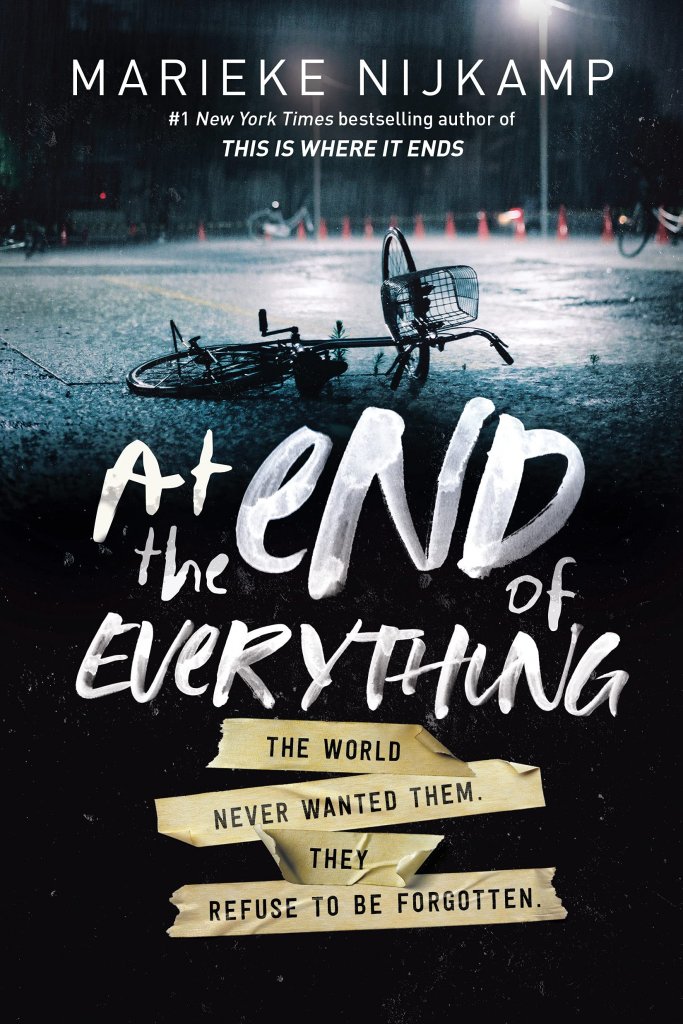
Marieke Nijkamp is a #1 New York Times bestselling author of novels, graphic novels, and comics, including This Is Where It Ends, At The End Of Everything, and The Oracle Code. Marieke’s short stories can be found in several anthologies. We caught up with her to talk about her recent book, At The End Of Everything.

So what is At The End Of Everything about? How would you describe it to some one who’s just started to get into genre fiction?

At The End Of Everything is a survival story about a group of teens in a juvenile correctional facility, who are left abandoned during an outbreak of the plague, and who have to learn to trust themselves and each other if they want to survive.

In terms of genre, it straddles the lines between current events and dystopia (basically: a familiar world, but everything is just a bit worse), so it’s very accessible to people who are just getting into genre!

When did you first come up with the premise for the novel?

January/February 2020, after I returned from a trip to the US. Obviously, everyone was already talking about Covid, but most of us—I think—didn’t quite know what was going to happen yet. And it fascinated me, and it scared me. I’ve studied history enough to not be too excited about the idea of living through historic times. But at some point, seeing what was happening sparked the idea for a story, because I was curious what an outbreak might mean for particularly vulnerable groups—such as the kids in the (very much fictional!) Hope Center.

How have current events affected the story?

I’d say current events affected the world around the story. Not so much the plot itself, but how the plague played out in the world, how people responded to it, how they talked about it, acted on it, a lot of those details were very much influenced by what I saw around me. And aside from that, a lot of anger at seeing and experiencing how people were left behind found its way into the story as well.

How different is At The End Of Everything from This Is Where It Ends?

I think, out of all my books, At The End Of Everything is closest to This Is Where It Ends. Both books follow a group of teens trying to survive the worst and finding ways to save each other in the process. They both have multiple narrators. And they’re both heart-breaking in their own way.


At The End of Everything Cover

Is there a different approach to writing a novel like this compared, to say, a tie-in book like Kith and Kin?

Not really, at least not in terms of process. Generally speaking, tie-in books require detailed outlines before you get to drafting, but I outline my original work too, so that comes naturally to me.

What character is the most fun to write?

In At The End Of Everything? Hm, I’d say Grace, because she’s so driven by anger. And she uses it for all the right reasons—most of the time—but she’s constantly balancing around that breaking point, and that was a really fun dynamic to tap into.

Which character seriously needs to have word with themselves?

Ha, so many. So let’s stick with Hunter, who is Hope’s resident bully. Where Grace wants to find a way to protect everyone, Hunter wants to take advantage of the situation by just getting out of there, which leads to a deadly situations.

Also, Emerson’s parents, for the cruelty of kicking their nonbinary teen out of the house.

If this was a graphic novel, what would be different?

Ooh, interesting. I think if this were a graphic novel, it would have a different main character than the three who currently headline the book. There’s a side character who spends a lot of time sketching, and I think she’d be perfect to tell this story from another perspective.

Is the genre world more accessible these days?

I love seeing how the genre world is expanding, both in terms of the stories told and the authors who are telling those stories. There is an absolute wealth of speculative fiction out there across all kinds of different media, and I don’t think there’s a better time to get sucked into the genre world.

Which writers inspire you?

Writers who tell their own stories passionately.

What tropes do you personally avoid the most?

I don’t generally set out to avoid any tropes (unless they’re harmful stereotypes, but that seems a given?). It really depends on the story what works and what doesn’t.

How would you describe your process?

My writing process is incredibly structured. The creation process is so very chaotic.

Simpsons or Futurama?

Honestly not that into either, but Simpsons wins purely for their dramatic re-enactment of The Raven.

Archer or Venture Bros?

Neither

Tigers or Spiders?

Tigers

Truth or Beauty?

Truth, no question.


At the End of Everything, published by Sourcebooks, is available to buy from all good bookshops instore and online.


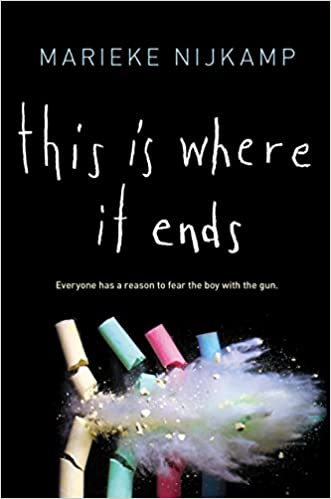
This Is Where It Ends book cover Nijkamp, Marieke

CARLOS PALOMAR – The Official Star Wars Encyclopaedia

Carlos Palomar is best known to sci-fi fans for his work on the Star Wars Encyclopaedia series, a collector set of 90 individual books that cover the world of Star Wars. We caught up with Carlos to find out more.

Who is the new Official Star Wars Encyclopaedia for?

If you’d love to walk into the Moss Eisley Cantina while the band is playing that tune. Or if you’d like to leave Tatooine jumping into the hyperspace, this is for you. We like fantasy stories and we want to know more. This collection is a discovery on every page. Not books to be read cover to cover. You can open any of these books randomly and you will get something new, a surprise, a deeper knowledge that will make you enjoy Star Wars even more.

How long did it take you to produce the books?

More than 2 years. Behind these volumes there is a team of around 25 people only in De Agostini. There are some other people involved at Lucasfilm (and whose participation is essential for this unique project). We have different roles and different responsibilities (from the story group to the writers of graphic designers), but with one thing in common: we are true Star Wars fans.

What was the most interesting element of this job?

We discovered something new every single day. We tried to go deep in details and sometimes we debated about some details never defined before. Or (even better) things that will come but can’t be told yet. It is in those moments when you discover the greatness of sharing. You enjoy Star Wars twice when you share it.

We are critical, there are things we don’t like, there are things we would change, but at the end of the day we love the Dark side, we would love to be a part of the Starfleet crew, and we dream of having our own droid. Don’t you?

What was the most difficult?

Hmmmm, this is a tricky question. We have put a whole universe in the pages of these volumes! Nothing has been easy. The first challenge was differentiating lore from Legends content.

Then we had to face the challenge of how to organize the tons of information. But perhaps the biggest challenge was making all of that engaging and exciting.

And I must say that we have succeeded!

What’s your earliest memory of Star Wars?

At the cinema! The best way to enter this universe. With “A New Hope”. I was a kid and didn’t know what movie I was going to see.

That was a magical moment!! That film remained etched in our memory. It changed us as spectators.

 We left the cinema fighting with imaginary lightsabres and Williams’ music still playing in our heads.

What’s your favourite Star Wars fact that not a lot of people know?

Knowledge about Star Wars is very different. Everyone thinks they know Star Wars because it is a very powerful brand.

But when you scratch the surface you realized they know Darth Vader but they don’t know what a kyber crystal is. How many things are they missing?

This Encyclopedia has revealed many things to me that I did not know, but the most interesting thing is realizing that there are thousands of things yet to be discovered. Thousands of stories that are yet to be explained. For instance, what is the backstory of Darth Bane (a legendary Sith Lord)?

Why do we need a book on the shelf when Wookie-pedia exists?

Why go to the movies if YouTube already exists? Why cook at home if you can go to a restaurant? They are not exclusive. The books go beyond a quick reference.

Every time I look for something in the Encyclopedia I can’t stop reading more and more pages. This is a different experience and I encourage you to discover it.

How hard is it to get into this sort lore-keeping?

In the real world, History is often confused with Legends and Myths. When George Lucas created a Universe, it’s not a figure of speech. Star Wars is so big that the imagination has free reign to create and invent. And that’s fine, it enriches the imaginary. However, we had to work closely with the Story group at Lucasfilm, reviewing and identifying gaps or mistakes. If you’re not sure if something is legend, check here for information. This is History.

With the world of Star Wars ever expanding, how do you keep up?

Star Wars is constantly expanding. We update the content as much as possible, but always with verified information. In the Encyclopedia you will find Mando and Grogu (for instance) but how much information do we have about Din Djarin? Surely some surprises await us. There will be future storytelling ramifications. We have to be patient and wait.

What other pulp sci-fi are you into?

Some months ago I went back to Flash Gordon comics. And it is impossible not to find echoes in Star Wars. I like Doc Savage too. When we talk about Star Wars and sci-fi some other titles come to my mind (beyond pulp): Space Odyssey (Arthur C Clark) , Foundation (Isaac Asimov) or Bradbury and his Martian Chronicles…

How much does Star Wars owe to its pulp origins, now that it has decades of it’s own lore to draw on?

There would be no Star Wars without those origins. There is the seed that will later become this saga. In this there are also areas of truth and areas of legend. In any case, it takes a special talent to pick up the previous tradition and bring it to the height of the Star Wars universe.

The Star Wars™ Encyclopedia  can be found via Fanhome.

FRANCESCA GIBBONS – Beyond The Mountains

Photo of Francesca Gibbons. Photographer Credit Ed Miller

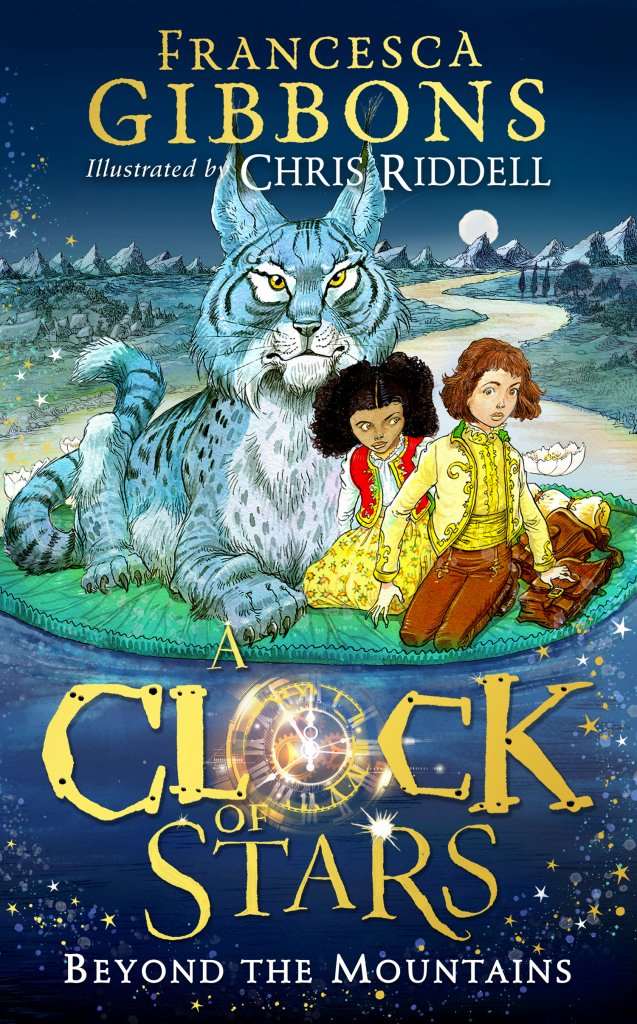
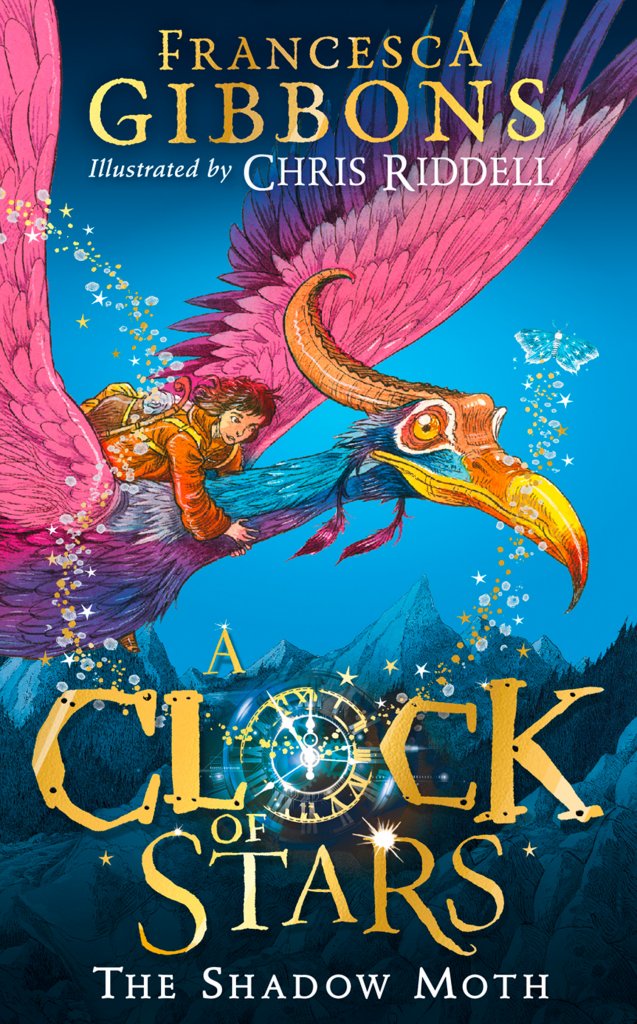
Francesca Gibbons is a critically acclaimed children’s author, best known for her debut novel, The Shadow Moth. Her new book, Beyond the Mountains continues the adventure from the first book and is illustrated by the award winning Chris Riddell. We caught up with her to find out more.


So what is Beyond The Mountains about? How would you describe it to a beloved but excitable young relative?

It’s the second book in the Clock of Stars series.

In the first book, we meet Imogen and Marie. They’re sisters and, like many siblings, they don’t always get along. They find themselves trapped in a magical world, populated by monsters and bears and a prince who lives in a tower.

In the second book, the sisters return to the magic world. But this time, Marie gets kidnapped. Imogen gives chase and the pursuit takes her beyond the mountains, to strange and dangerous lands… There are more monsters in this story – plus a very large and friendly cat.

Why a sequel?

In the first Clock of Stars book, the adventure is set within a valley and the mountains that surround it. It’s an insular and isolated place. I enjoyed writing in this kingdom, but I felt that the sisters were capable of more. In book two, I wanted to see how they coped on a bigger stage. I think I was curious to see what lay beyond the mountains too.

What character is the most fun to write?

Ah this is such a tough question. I enjoy writing them all, but there is something delicious about writing villains. Anneshka is my main “baddie”. She’s an aspiring queen with a bad attitude, who’s not afraid to have people killed. But she can also be pretty charismatic and I am much fonder of her than I should be.

There is also a new character, called Princess Kazimira. She’s only a child, and she’s not all bad, but she has a real thing about giant cats (like the one on the front cover). Kazimira is desperate to have one as a pet. I may not agree with her methods, but I do understand her desire!

Chris Riddell’s art is gorgeous, did it change the way you see the characters in any way?

Yes! His work is so beautiful and detailed. He always brings the characters to life as they are on the page, and then adds an extra layer of imagination.

He made the velecours more colourful than I had imagined. They are the giant birds on the cover of book one. When I saw what he’d done I loved it so much that I went back and added it to the text.

Which character seriously needs to have word with themselves?

Many of the characters have things to learn, but Princess Kazimira is an extreme case. She needs to stop dressing up newts as dolls. And she’s got to stop stealing other people’s giant cats.

What would you say the biggest influence on this book is?

The Narnia books, for sure. I loved those stories growing up. They really spoke to my desire for escapism – and showed me how books can be portals too – taking you from your bed to the snow-swept forests of Narnia. I think escapism is really important.

Is the genre world more accessible these days?

I think accessibility for readers is linked to how accessible the industry is for writers. Many of the best fantasy books I’ve read this year have been written by authors from marginalized backgrounds – and it’s exciting to see more books like this being published. But you don’t have to look at many stats to see that there’s still a long way to go.

How does magic change a society?

I often think of magic as a metaphor for nature. So, in my mind, we already have magic all around us. When I’m writing, I’m just making that magic more obvious and having some fun with it.

Which writers inspire you?

I’m loving Jordan Ifueko. Her stories are epic, unpredictable and give me goosebumps… I’m also revisiting Garth Nix’s Old Kingdom series and have been totally blown away the humour, creepiness and clarity of that world. In non-fiction, I have a Robert MacFarlane obsession. I thought Underland and The Wild Places were both mind-bending books.

What tropes do you personally avoid the most?

The well-behaved child protagonist. She never has a naughty thought because even in her head she is good.

How would you describe your process?

Process is a grand word. But on a good day, it’s like making a patchwork blanket. I write a mini adventure. I try not to get freaked out by looking at the whole thing. I write another mini adventure. I stitch them together. Eventually, I hope to make a quilt.

Simpsons or Futurama?

Simpsons!

Star Wars or Star Trek?

I still get them mixed up?

Tigers or Spiders?

In my house… definitely spiders.

Truth or Beauty?

The truth is a beautiful thing. Unless you’re Boris, of course.


The first two books of the Clock of Stars series are out in paperback right now, and can be found from all good book merchants. 


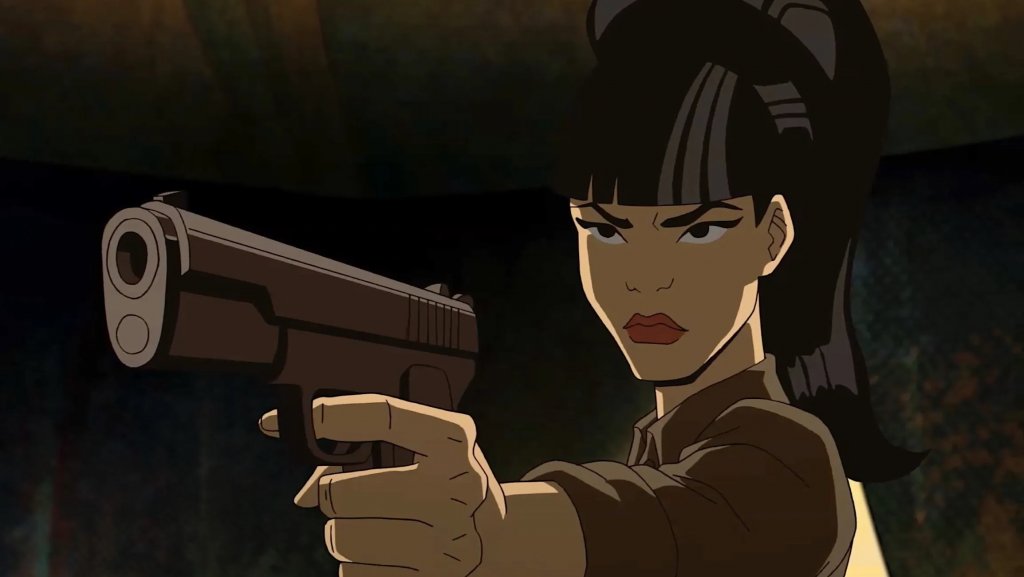
Matt Peters | DC SHOWCASE: CONSTANTINE & KAMANDI

Matt Ryans stars as Constantine in The House of Mystery directed by Matt Peters

Warner Bros. Animation continues to glean beloved characters from DC’s expansive library for their DC Showcase line of animated shorts, this time opting to elevate Constantine, Kamandi, The Losers, and Blue Beetle in their 2021-2022 compilation release.

While Kamandi: The Last Boy on Earth!, The Losers and Blue Beetle have previously appeared as enhanced content on past DC Universe Movies, the extended-length Constantine – The House of Mystery makes its debut as the anchor for this shorts compilation. The quartet are produced by Rick Morales (Mortal Kombat Legends franchise), Jim Krieg and Sam Register.

Ahead of the DC Showcase’s release, STARBURST caught up with Justice League Dark: Apokolips War and Injustice director Matt Peters to speak about his work on two of the shorts: the first is The House of Mystery, which sees Matt Ryan reprise his live-action and animated role as the Hellblazer himself.

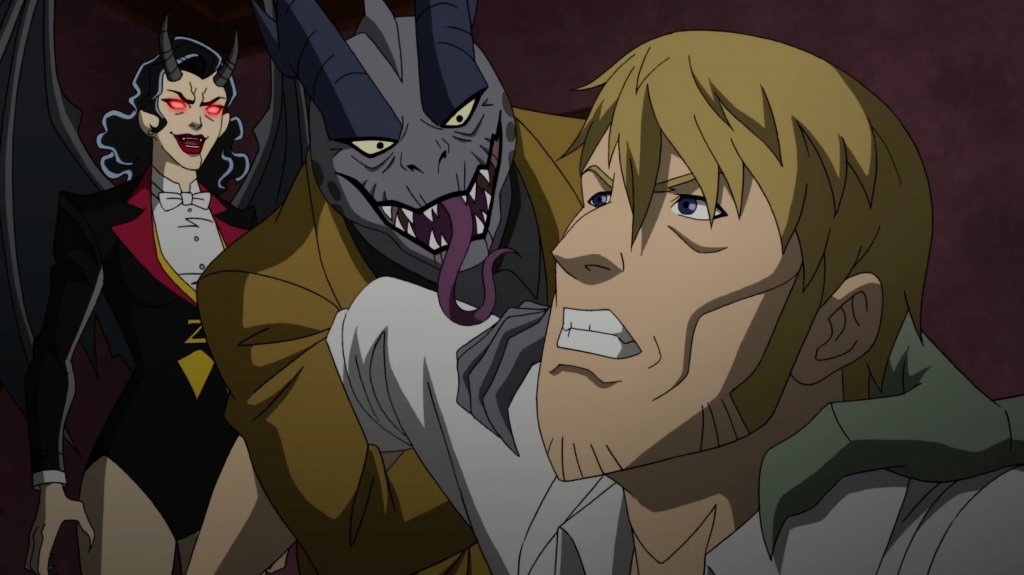
In this all-new extended short that takes place after the events of Apokolips War, John Constantine wakes up in the eerie House of Mystery with no recollection of how he got there. Fortunately, Zatanna and his friends are all there; unfortunately, they have a bad habit of turning into demons and ripping him to shreds in a hellish Groundhog Day arrangement.

Kamandi: the Last Boy on Earth directed by Matt Peters


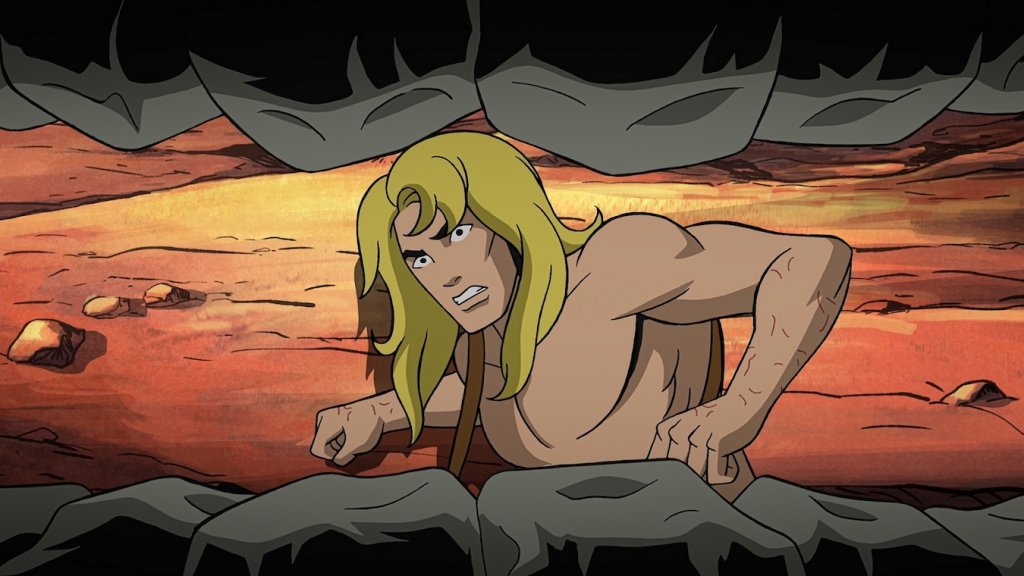
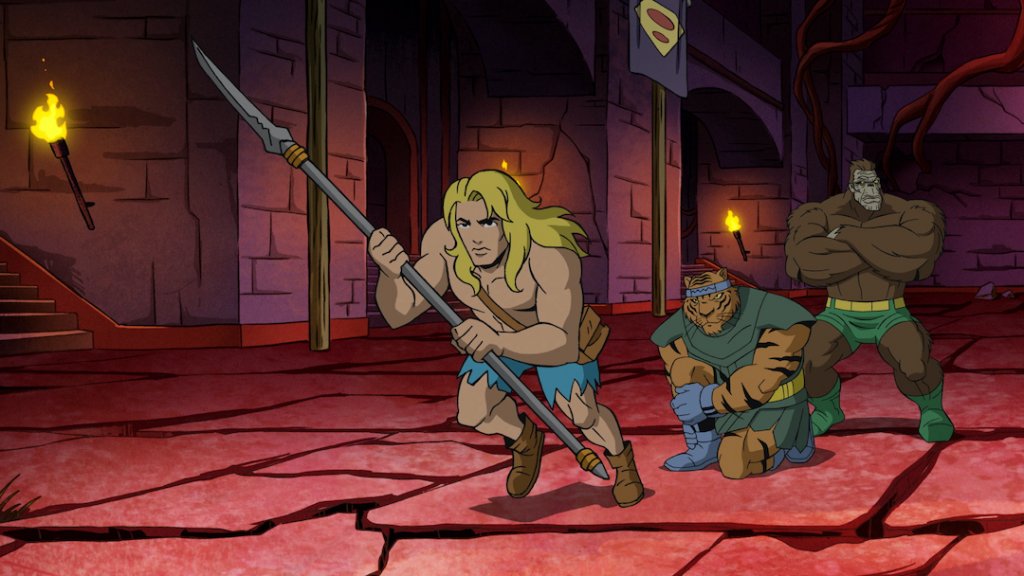
The second is Kamandi: The Last Boy on Earth! About the last civilised teenage boy on a post-apocalyptic Earth ruled by talking animals. In this short, Kamandi and his friends are kidnapped by a gorilla cult dedicated to finding the reincarnation of their god, The Mighty One. The cult puts Kamandi’s team through a series of deadly tests to find it any of them know the secret of The Mighty One.

Were you excited to return to the Apokolips storyline?

Matt Peters: It was great to get the opportunity to showcase all these different characters, and particularly when the opportunity rose to deal with Constantine more closely, it was kind of a no-brainer just to follow up on Apokolips War and see the kind of stuff we could add. This was like an epilogue of sorts.

Were you aware that you’d get that chance when you were still in production for Apokolips War, or did it come later?

Matt Peters: I’m pretty sure it came later. Because we thought we had a nice little finish there, and we felt pretty satisfied with it. But clearly people saw the opportunity to explore and put a little epilogue in there – and why wouldn’t we do it! It was a great opportunity.

And would you now say that’s the definitive end to that shared universe, or is there the possibility of a feature sequel?

Matt Peters: I think James Tucker has reached the end of what he wanted to do. He was really involved with all the films, and I think that he saw this as the end. But who knows, I never underestimate that guy! He’s always coming up with new ideas and always finds something brilliant.

In all fairness, House of Mystery does leave a door open for a potential sequel.

Matt Peters: I mean, I love those characters, so I know I’d love to work on it.

Constantine: The House of Mystery short directed by Matt Peters


Both Apokolips War and Injustice are very expansive projects, so what most excited you about zeroing in on a single character?

Matt Peters: Well with Apokolips, which I co-directed with Christina Sotta, we basically divided the movie down the middle, based on the characters that we love so much. She was a huge fan of Raven and I was a huge fan of Superman, so we could have a divide in the story structure based on our characters. With that, I didn’t really get a chance to work with Constantine’s character as much as I would have liked to. So, when somebody came to me asking if I wanted to go back and revisit Constantine, that was perfect.

And when it came to Kamandi, who is relatively unknown, how do you approach that differently to an established character like Constantine?

Matt Peters: Kamandi was more of a design challenge. And I think that Rick [Morales] really wanted to make sure that the short had the look and feel of a Jack Kirby comic from 1970. It was something that he worked really closely on with the designers, and really hammered out that style. It just blew my mind. That was the inspiration for me to try and capture as best we could the sensibilities of reading a comic from 1970. With House of Mystery, it was really putting a closing chapter on James Tucker’s universe. It was completely different doing Kamandi and it was so much fun to work on that film.

And from a directorial standpoint, how do you go about implementing those style identities?

Matt Peters: Working at Warner Bros, we’re always shifting styles and doing different things. It’s fun to find aspects that we can really play with so, reflecting back, it was fun to gear-shift from doing the James Tucker universe to a 70s comic style. They’re so different and each have their own strengths and challenges.

That’s one of the great things about Showcases, there’s lots of space for experimentation.

Matt Peters: Definitely, Showcases are tonnes of fun. I hope that the fans love them as much as we do because for us, it’s an opportunity to stretch out and do something different but put on a smaller scale so that we can jump in and back out without having to commit.

Kamandi the Last Boy on Earth directed for DC Showcase by Matt Peters


Any plans to jump back in with Kamandi?

Matt Peters: I think that if the fans want it, then to let people know. I think Rick wanted to keep the short open-ended because he knew that it was a really fun project, and he knew that it had a lot of potential. I think that everyone working at Warner’s wants to see these things to off, so we take any opportunity to see how fans will react to new projects. If there’s enough positive feedback, then it might get a greenlight to get stuck back into it!

How do you see all four shorts fitting together in this new compilation?

Matt Peters: There’s something very fun about the fact that they sample different styles, and use different places, different comic book textures. I think that’s the unifying element. What unites them is the variety that you get; each one is going to have its own signature style, and each one is going to be unique. That’s what fits them together.

And lastly, what are you working on at the moment?

Matt Peters: I’m not really sure. I just always keep my ear to the ground and see what Rick or James are working on!

DC Showcase Animated Shorts 2021-22 releases to Blu-Ray on May 2nd, Digital Download on May 3rd. 

Check out our interview with The Losers screenwriter Tim Sheridan here, and our interview with Blue Beetle and The Losers director Milo Neuman here.

Milo Neuman | DC SHOWCASE: BLUE BEETLE & THE LOSERS

Warner Bros. Animation continues to glean beloved characters from DC’s expansive library for their DC Showcase line of animated shorts, this time opting to elevate Constantine, Kamandi, The Losers, and Blue Beetle in their 2021-2022 compilation release.

While Kamandi: The Last Boy on Earth!, The Losers and Blue Beetle have previously appeared as enhanced content on past DC Universe Movies, the extended-length Constantine – The House of Mystery makes its debut as the anchor for this shorts compilation. The quartet are produced by Rick Morales, Jim Krieg and Sam Register.

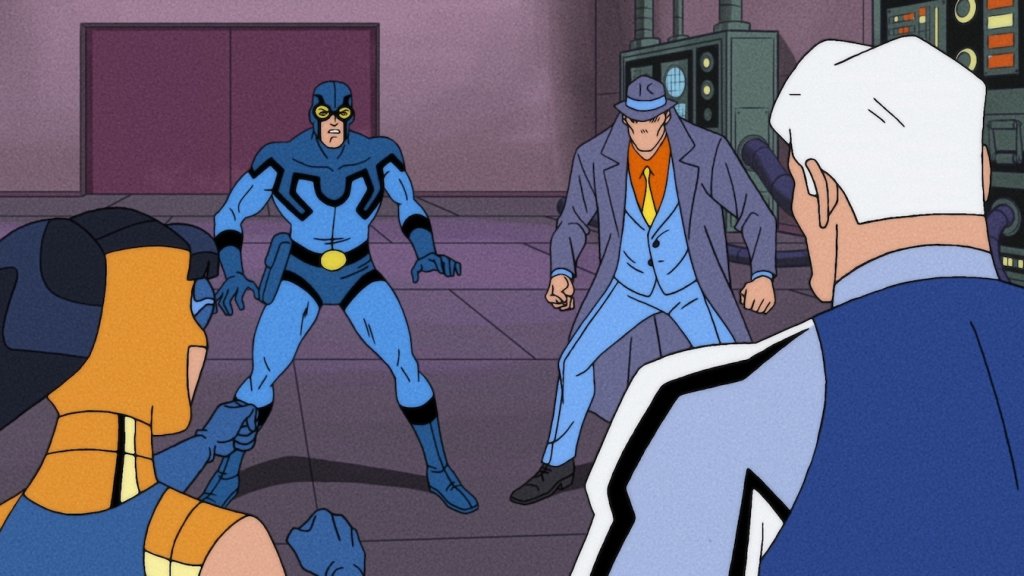
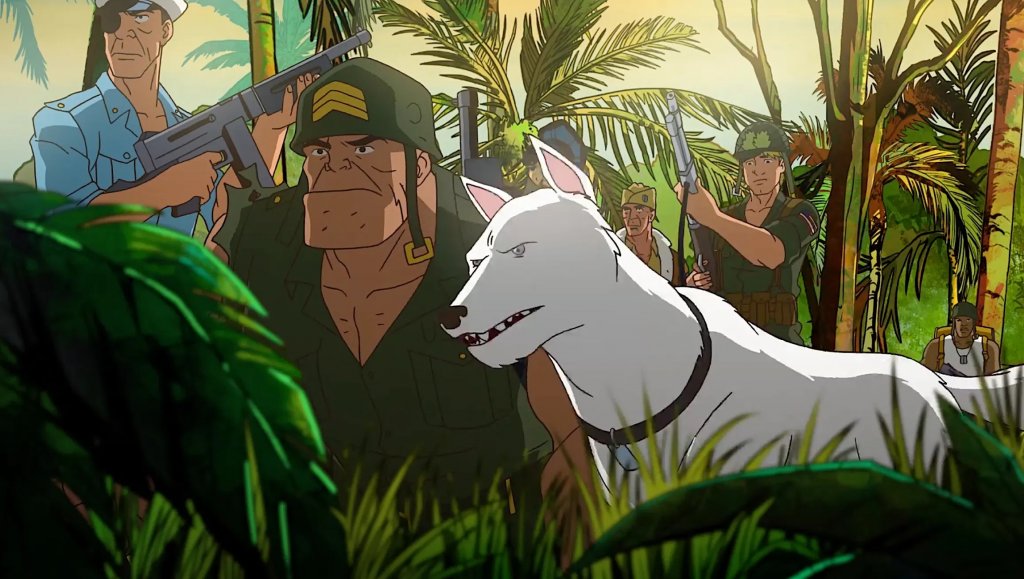
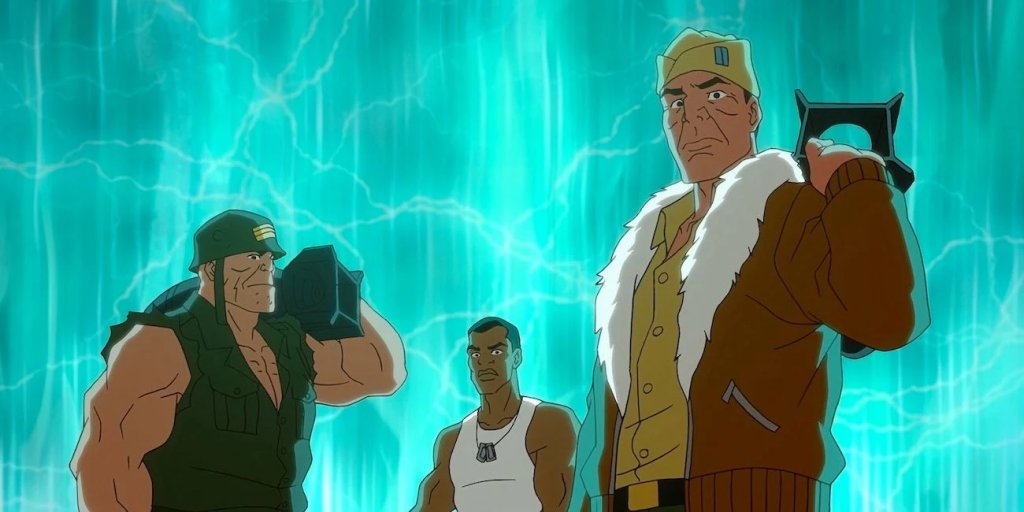
Ahead of the DC Showcase’s release, STARBURST spoke with Milo Neuman about directing two of the shorts: the first is The Losers, a story about a rag-tag team of World War II outcasts who find themselves marooned on an uncharted island overrun with dinosaurs; the second is Blue Beetle, an incredibly fun homage to 1960s Saturday-morning cartoons about Ted Kord (alias Blue Beetle) as he teams up with Captain Atom, The Question and Nightshade to battle Doctor Spectro.

You’ve worked as a storyboard artist for many years, but these shorts mark your directorial debut. How did you find the transition, and what attracted you to directing?

Milo Neuman: Before being offered the job, I hadn’t really thought too much about directing anything. A lot of storyboard artists go on to be directors at some point, so I assumed at some point I’d be doing too – but at the time, I’d only been storyboarding for three of four years. So, I didn’t really feel I was ready for that yet; maybe if I’d been boarding for ten years, then I’d start directing. But our producer Rick Morales, who I was working on the second Mortal Kombat with, just one day came to me and was like, “We need a director for one of the shorts, and do you want to give it a shot?”. I felt very unprepared for it but I wasn’t going to say no! And it was an amazing experience. You’re still doing a lot of the same jobs as you’d be doing as a storyboard artist, only on a larger scale and with a bit more overseeing – but fundamentally, the skill set is similar, which is nice.

Would you do it again?

Milo Neuman: I’d love to! I mean, I was working on these in 2019 and I haven’t directed since then, but I hope I get the chance. I’m not pursuing it too eagerly – I like doing storyboards and I have no complaints about that. But yes, I hope so!

DC Showcase: Blue Beetle short directed by Milo Neuman

Coming from an artistic background, what were your stylistic inspirations for each short?

Milo Neuman: As far as the design of the shorts, most of those decisions were made before I was brought on to either of them; the character designs, the general look and style had already been decided. Even for Blue Beetle we did a very old-fashioned Spider-Man cartoon style, and that decision was made before I was even hired to work on them. My brief was to take these styles – in the case of The Losers, it’s more of a pulp adventure story – and try to capture that essence.

When you were first approached, how knowledgeable were you about these respective characters?

Milo Neuman: Not very. I mean, I kind of knew of the Losers from the beginning of The New Frontier, which has always been one of my favourite DC comics. I hadn’t really read any of their old stuff, so I went back and read a bunch of their comics in the lead-up to directing the short. Interestingly, those comics weren’t about WW2 soldiers fighting dinosaurs like we did in the short, or like Darwyn Cook did in New Frontier – they were more a team-up group going around having very WW2 adventures fighting Nazis. And it was Darwyn Cook who mashed them up with these other comics about generic soldiers fighting dinosaurs [The War That Time Forgot], to create the alternate-universe The New Frontier series, which we decided to use in the short.

It’s funny how you can watch The Losers without batting an eye and it takes actually hearing it described out loud to realise how batshit it is.

Milo Neuman: [laughs] It’s a very pulpy concept, and I think that’s what’s fun about it. Personally, I really drew a lot of inspiration from George Lucas and Steven Spielberg in the 70s and 80s, who were doing these family adventure films that were rooted in this old-fashioned, pulp aesthetic sensibility, but revitalised and modernised for their generation. I was thinking about those films a lot when I was working on the short, as far as shot choices and the editing.

DC Showcase: The Losers short interview with Tim Sheridan screenwriter

When you first read the scripts and saw the initial storyboards, what elements were you most excited about in either project?

Milo Neuman: What we decided to do with Blue Beetle, I was so excited about. I think The Losers was a little bit more traditional, more the type of storytelling that I’m used to. But with Blue Beetle, we had this style we were going for that was really trying to evoke the classic Spider-Man cartoons of the 60s or the old Batman cartoons. And that entailed us making a lot of very deliberate mistakes to mimic the organic mistakes that they would make with those cartoons. It was a crazy thing to do, so I was very excited about it.

Do you feel like the short format gives you more or less freedom with the direction?

Milo Neuman: It’s probably more freedom than I would have had if I was working on a direct-to-video movie or something like that, because of the small scale. I didn’t have a lot of say in the story, just because the scripts were finished before I came in. We stayed very close to the script with Blue Beetle, and I think on The Losers we ended up having a few discussions with the producer to fix some story issues, but I think we ended up doing a pretty good job at the end of it! But again, I had some individual freedom but mostly it was a very collaborative process.

What kind of changes did you make in The Losers?

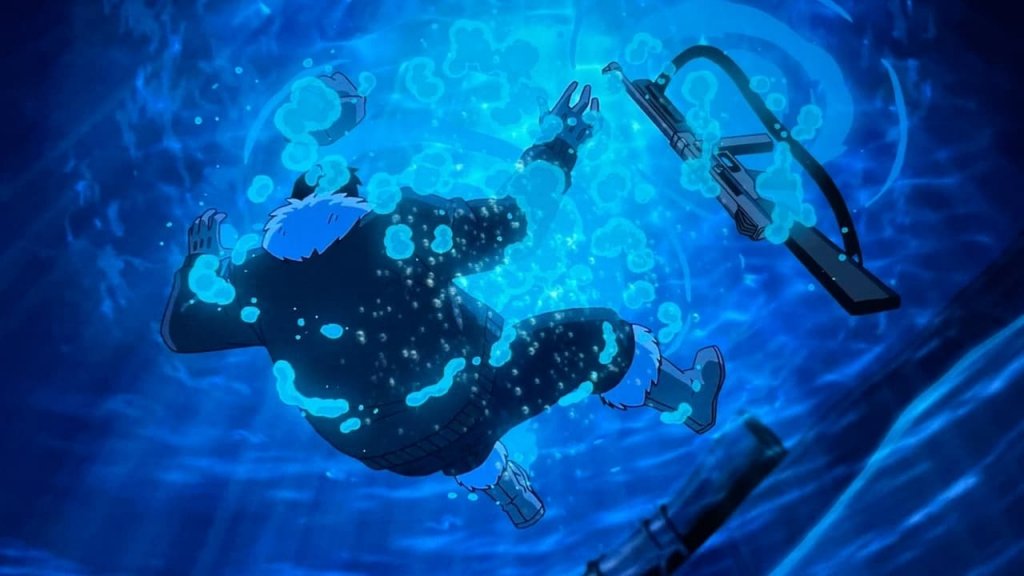
Milo Neuman: It’s been a couple of years, so I don’t remember the original script. I just remember that it felt like there wasn’t enough tension in the third act, so we did a first pass on the boards and tweaked the script a little bit. That was the part that we probably worked the hardest on as a team, particularly trying to put more tension into the bit where the T-Rex chases the main character and corners them. I think all the hard work paid off, but that was definitely one of the trickier elements.

You really see that Spielberg influence come through in that scene.

Milo Neuman: I think that was one of the bits where I wanted it to be like a live action movie as much as possible, even though it’s animated. I think a really quick way of making something look like a cartoon is to have characters running side by side on a flat plane, like Super Mario Brothers or something. That’s the stuff I try to avoid as much as possible, so any time I can have big foreground elements that are a little out of focus, that makes it feel like there’s space and things aren’t two-dimensional. Any time I can have characters running towards or away from the screen, that gives it depth, and that’s what I really love. That scene with the T-Rex was about creating a space that’s really claustrophobic and that makes you feel like you’re in there. That’s what I want, to transport people and make them feel like they’re part of the action.

Still from DC Showcase Blue Beetle directed by Milo Neuman

You’ve said you’re not actively pursuing directing at the moment but, in the future, if you could pick any lesser-known DC character to make a feature film about, who would you choose?

Milo Neuman: I would like to do more stuff on Blue Beetle, specifically the version we did in the short. Whether it be a DTV in the style of these old cartoons, or a series, I think that would be a blast. I don’t think it’s happening, but I keep going back to that in my head. It’d be really fun.

And do you have any projects lined up currently?

Milo Neuman: I’m making a webcomic, so there’s that, if anyone wants to read it! That’s my main project at the moment. I’m not actually working out of a studio right now; I’m just working on my comic.

Check out our interview with The Losers screenwriter Tim Sheridan here.

DC Showcase Animated Shorts 2021-22 releases to Blu-Ray on May 2nd, Digital Download on May 3rd. 

Tim Sheridan | DC SHOWCASE: THE LOSERS

DC Showcase: The Losers short interview with Tim Sheridan screenwriter

Warner Bros. Animation continues to glean beloved characters from DC’s expansive library for their DC Showcase line of animated shorts, this time opting to elevate Constantine, Kamandi, The Losers, and Blue Beetle in their 2021-2022 compilation release.

While Kamandi: The Last Boy on Earth!, The Losers and Blue Beetle have previously appeared as enhanced content on past DC Universe Movies, the extended-length Constantine – The House of Mystery makes its debut as the anchor for this shorts compilation. The quartet are produced by Rick Morales (Mortal Kombat Legends franchise), Jim Krieg and Sam Register.

Ahead of the DC Showcase’s release, STARBURST caught up with Batman: The Long Halloween and Superman: Man of Tomorrow screenwriter Tim Sheridan to speak about penning The Losers, a story about a rag-tag team of World War II outcasts who find themselves marooned on an uncharted island overrun with dinosaurs. Milo Neuman directs.

DC Showcase still The Losers, interview with screenwriter Tim Sheridan

Tell us about the inspiration for this short, and what titles you turned to for research.

Tim Sheridan: I have to say – and I’m fully telling on myself here – that when I was growing up, DC’s war genre comics weren’t readily found on the spinner rack. I was pretty focused on the Justice League, and Batman, and Superman, so I didn’t come across this particular genre until later in life, which was really when I was working on the Sgt. Rock Showcase Short with Bruce Timm and the Simonson’s. That’s when I started picking up Weird War Tales, Sgt. Rock, Creature Commandos and of course, The Losers.

That was where I was really introduced to these characters, and I couldn’t believe that there was such a long history with them. Obviously, there had been attempts to reboot and rebrand them with Vertigo Comics, but there was something about that original band of brothers story that really worked. And for somebody like me who doesn’t necessarily gravitate towards World War II genre stuff, I always expected that these were not comics for me.

But as I did that research, I found that I was just completely wrong – they were a great read, they were fun, they were character-based, had huge stakes, and infused with elements from different genres. And that’s also what we did with this short: it’s not just a war movie, it’s a sci-fi, horror, and mystery. In an earlier draft, there was also something of a romance. It’s almost like, in the same way that Dinosaur Island is a nexus point for time and space, this short is a nexus point for different genres of storytelling.

Beyond trying your hand at a new genre, you also tackle a group of characters that are relatively obscure – particularly when compared to the previous DC superstars that you’ve handled. Does treating a lesser-known property change your approach to writing?

Tim Sheridan: They are less known as characters, even though they have a huge history within DC – and by the way, a 15-minute short film doesn’t give you much room to grow these characters! But there’s something about these characters that are fairly archetypal; they exist in the zeitgeist, and you don’t need to be an aficionado of war movies to understand the code. We understand who they are right away. We don’t need to spend a lot of time explaining who they are.

So in one sense, you benefit from the fact that these are very familiar archetypes, but because they are not well-known as DC characters, I do feel like there’s not much opportunity to put my own spin on them. What the mission becomes for the storyteller is to figure out how to realise these characters in a way that feels authentic to their comic legacy. Especially in what is ostensibly their final story – I mean, The Losers is designed to be their last adventure and that creates a responsibility to really get it true to the comics. There’s something freeing about that, creatively.

Still from DC Showcase short The Losers

It’s interesting that you call it their last adventure because I found it very open-ended. Given the chance, would you consider writing a sequel?

Tim Sheridan: Maybe I should be careful about how I phrase that! It is designed as if it was their final adventure, but as you say, there are threads in the conclusion of this story that would lead you to wonder what’s happening next. There is something of a cliff-hanger built in there. We like a little record scratch at the end.

If somebody asked me to come back and work on these characters again, I’d love to have a little bit more time with them. There were other characters that we had considered and some that we had scripted originally, who we then had to cut along the way. And so, I would love to get to go back and explore some of those other dynamics and we’ll see what else we could do with these guys. I also think that if people enjoy this short, there’s a long history of stuff that we can mine from and explore and bring to the big screen for the first time. I hope to see it happen.

You’ve touched on scrapping a romance element, as well as several characters. Can you talk us through what the exact changes were, and why they were made?

Tim Sheridan: There was an earlier romance angle between Johnny Cloud [voiced by Martin Sensmeier] and Fan Long [the inimitable Ming-Na Wen], and there was a French Resistance fighter Marie who’s a very famous character in DC that we had to cut. She was a lot of fun on the page; everything she said was really interesting and funny, but ultimately it didn’t get us to the next thing in the story. And with a short film such as this, there are really hard choices to make to ensure everything is directly involved in the plot.

Ming-Na Wen as Fan Long in DC Showcase short The Losers

Other than that, though, we had a pretty clear vision about how it was going to play out. Certainly, the ending stayed the same – these are guys who think of themselves as losers. There’s an element of pride to the fact that they’re born to lose and what’s amazing is that they still hold out a measure of hope. Even when it looks very bleak, they still try. That’s what makes the Losers such an enduring group of character, and that’s what we convey with this short film.

It’s interesting that you wrote this short on the tail end of The Long Halloween, which was a huge contrast given it was stretched over two full-length features. Do you find the short format frustrating, or is it more of a welcome challenge?

Tim Sheridan: It was definitely challenging. I’m the guy who will write you what I think is a great scene between two characters, but that ultimately tells you just one tiny piece of information. And it’ll be really interesting, and the dialogue will be very intricate and full of banter – it’ll be great. But ultimately, you could probably have gotten that information out in just one line of dialogue. I love to put characters in a room and let them talk to each other for a while and see what happens. That’s the way I like to find the thread when I’m writing. But you give up that luxury when you’re doing a short film like The Losers, because it really just becomes about having a good structure. Thank goodness for Jim Krieg was there to just sit down and work through the story, figure out what we wanted to do and how we wanted it to begin and end. We were able to put that together, and I hope we were able to bring a little bit of magic to the Losers!

DC Showcase Animated Shorts 2021-22 releases to Blu-Ray on May 2nd, Digital Download on May 3rd.