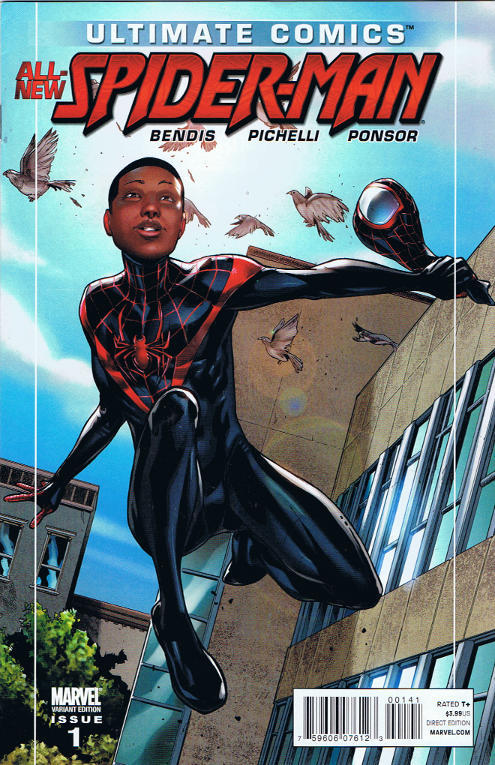
A highlight of the global calendar is the Trieste Science+Fiction Festival, which takes place in the beautiful Italian town in October. It encompasses all media and has plenty of things to get the local community involved, as well as attracting fans and talent from all over the world. Ahead of the event, we spoke with Sara Pichelli, the artist chosen to design the poster for this year’s fest. Comic book fans will be familiar with Sara’s work, as she co-created Miles Morales for Ultimate Spider-Man…
STARBURST: What inspired you to get into the illustration industry?
Sara Pichelli: I’ve always been into art since I was a kid. My favourite thing was watching anime and Disney movies. I kept drawing those characters over and over, even in my school books.
How did you come to work for Marvel?
After I graduated from animation school, I worked in the animation business as a character designer and storyboard artist. I started reading comic books in my late 20s; in fact, when I was fired from the animation studio in 2007, I thought I’d give it a try, and sent my stuff to the worldwide Marvel art contest ChesterQuest, which I was lucky enough to win!
Could you explain the process of co-creating Miles Morales for Ultimate Spider-Man?
The process took four to six months, starting with a brainstorming session with Brian M. Bendis and the Marvel team. We discussed things like the story and the most important things we needed to convey visually. Then I started working on the appearance of the character, his features, body language, and proportions. Same thing for the supporting cast. Once Miles Morales was created, I started searching for a new look for the costume!
What was your favourite comic or character to work on and why?
Miles Morales, because he was completely mine! I had the chance to create him ex novo; all his world and his cast.
Is there any comic book characters you’d like to illustrate that you haven’t already?
I’d love to draw Daredevil!
Which artists do you look up to and why?
There have been so many, and they keep changing as my own style does. My personal ‘holy trinity’ who never changed are Claire Wendling, Mike Mignola, and Stuart Immonen.
What was your process for designing the poster for this year’s Trieste Science + Fiction Festival?
It’s the usual process of creating art. We discuss the idea and then I let my mind go where she needs to! I then create a rough version of the poster and if I get the green light, I go ahead and complete it. I knew I would represent a human figure. What emerged was a woman who is frightened, furious, and trapped – yet ready to reclaim herself. Now more than ever, we must validate the effort to remain authentic, true to ourselves, and therefore human.
Do you have a favourite science fiction film or book?
The Man in the High Castle by Philip K. Dick.
Do you have any projects you’d like to do in the future?
I’d love to write and draw my own story.
The Trieste Science+Fiction Festival takes place in Trieste, Italy, from October 28th to November 2nd. For more information, head over to sciencefictionfestival.org.
To celebrate the VOD release of Joey Palmroos’ debut feature film Delivery Run, we at Starburst sat down with the Finnish director to talk all things filmmaking.
STARBURST: We really saw the inspiration from Steven Spielberg’s Duel – was that the vibe you were going for?
Joey Palmroos: Actually, you comparing this movie to Duel really means a lot – thank you for that. The idea for it actually came to me while I was driving behind a snowplough here in Finland. It was one of those light-bulb moments. I remember thinking, “Oh, can I please just pass this thing?” because they’re these huge, monstrous machines, you know?
And then I started imagining – what if I did try to pass it? It’s dark, the roads are narrow, snow is flying everywhere… what if something went wrong? Would the guy come after me? I’m there honking, thinking, “Okay, let’s not make him mad.” And then I just thought, wait a second — this could be a film!
Duel has always been one of my favourite movies – still is – and I absolutely love Spielberg. He’s a big inspiration for me and probably one of the reasons my filmmaking style leans the way it does. And of course, there are others I really admire too, like Tarantino.
The Protagonist of the film, Lee, played by Alexander Arnold, who a lot of our audience will remember from Skins is a very relatable character, which Alexander portrays brilliantly. What do you think it really is about his character or his situation that makes him relatable in order for audiences to really root for his survival?
Well, I think it’s actually pretty simple in a way. It all starts with the smallest little thing – like those envelopes of bills that just keep piling up. Right from there, you get a sense of where he’s at. I’ve been in that kind of situation myself – not to the same level, you know, not dealing with a local loan shark or anything like that – but I’ve had those moments where you start questioning even the tiniest decisions. Arguing on the phone with, not your provider exactly, but like, the delivery service or something – those everyday frustrations.
And then, of course, Reggie brings out the humanity in him. He starts to care, not just about himself, but about Reggie too. There’s something about Alex – the way he reacts, the way he handles situations – that really stood out. Like his first meeting with Mr. Blau, for example. That was something we explored a lot during casting.
It’s that genuine curiosity I was interested in capturing. He’s not a child, but there’s this childlike curiosity in him that I wanted to tap into, especially when it came to finding the magic in the film.
Throughout the whole film, there’s a lot going on. Lots of twists and turns, lots of chase scenes over very dangerous terrain. You mentioned you shot it in northern Finland – as the director, how did you and the production team tackle that particular challenge to not only make it incredibly thrilling and entertaining, but also very safe? From a logistical standpoint, it must have been a nightmare in the best way.
Yeah, it really was. And even for a Finnish group – I mean, we had such an amazing crew. Most of them were Finnish, and they’re so used to handling these kinds of projects in this part of the world. For the cast, especially those coming from the UK and the US, it was definitely a unique experience. But for the crew, it’s kind of just everyday production life here, you know?
I don’t want to sound too modest about it either – it was tricky. Some of the locations were really hard to get to. Like, if we wanted to set up a moonlight shot out in the forest, it could take hours because of the snow. So yeah, a lot of it just came down to careful planning.
We shot in this place called Tiliberon, and actually, in the movie’s prologue — I’m not sure if you caught it – but that’s me in there. That was a totally last-minute decision. There was just no way I could ask an actor to do that scene and still feel completely comfortable about their safety, even though everything was technically safe.
Another technical aspect that I really love is the attention to detail in the lighting and the grading, especially. It’s so important to really give a scope and feel of exactly what mindset the character is in, not just necessarily the location. Is that something that you’ve always liked to make sure is pretty high up on the list in terms of in post?
Yeah, no, 100%. And not just in post-production – I mean, I actually come from a commercial background, so the look of something is always really important to me. As soon as I found out we’d be filming up there, I started thinking about the kind of light we’d have in the middle of the night – that beautiful silhouetted forest in the background, the cloudy night sky, and, if we were lucky, maybe even some stars. Add a ton of snow on top of that, and it just created this perfect canvas to play with.
Then the next question was all about practicality. I really wanted to use actual vehicles and rely on practical lighting – like real headlights – instead of faking it. And then I thought, okay, cool, let’s really push it. Let’s get proper moonlight in there, make it feel cinematic but grounded. That’s also where the anamorphic lenses came in – figuring out how to use them so that Lee, the car, and especially the snowplough would pop against the background and feel alive.
Our DP, Ari Virem, was incredible. I’ve known him for years – he also comes from the same commercial world I do – so we clicked immediately. He totally understood how I see things. We got on the same page really fast, especially with me being a very hands-on director. I spend a lot of time planning my shots and making sure everything looks the way it should, but at the same time, I want my team to have room to explore. Ari got that. We share that same visual language, that same world — so it all came together naturally. And honestly, I really appreciate that.
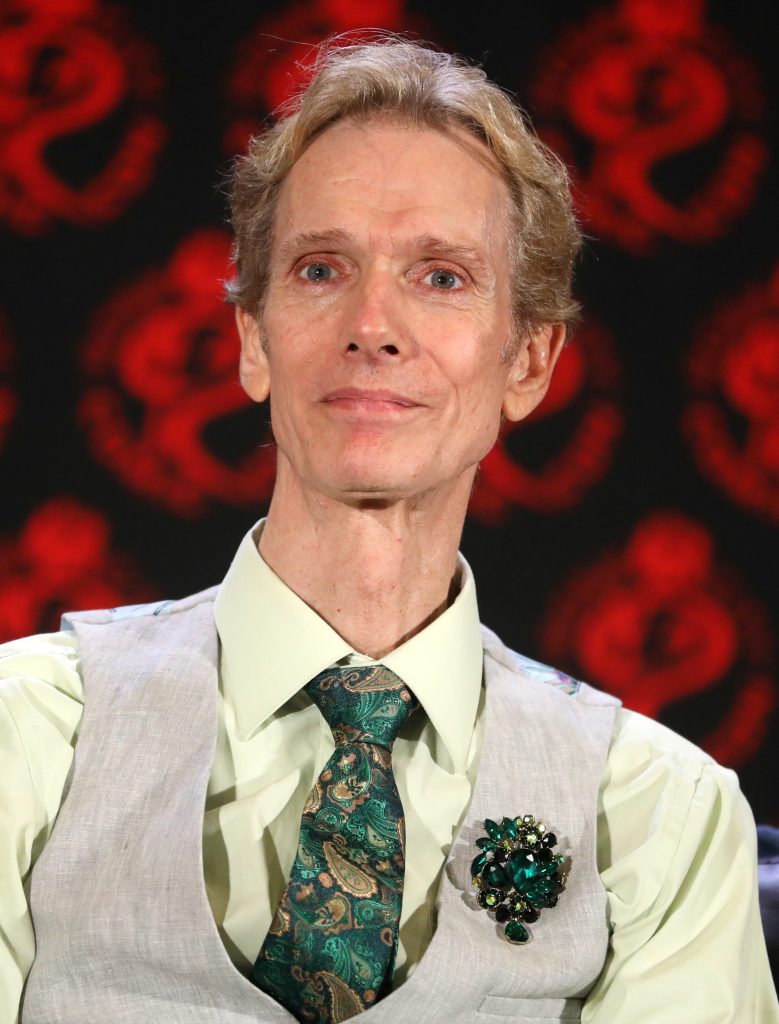
From the Thin Man in Batman Returns, Abe Sapien in Hellboy, to the Amphibian Man in The Shape of Water, legendary creature actor and performer DOUG JONES has seamlessly shaped and re-defined horror iconography in cinema and TV throughout his career. We caught up with Doug to reflect on his incredible career, working with Guillermo del Toro, as well as his other roles such as Silver Surfer, Saru, and The Baron…
pic: Gage Skidmore
STARBURST: How did you get involved with Batman Returns, and what was it like to work with Tim Burton?
Doug Jones: I actually watched it again last night on HBO here in the states! I was flipping channels, and I was like “Oh!” and it was just starting. So, I was reminded so much about Batman Returns while watching it. It came out 33 years ago, so it’s been a while. That might have been the first big studio movie credit I had in my career, before that I was doing a lot of TV commercials, some guesting on TV shows, some indie movies, and some smaller horror movies. But that was my first big, “OK, this a studio movie, it’s going to get released!” Meeting a director of note, like Tim Burton, was so wonderful. I was referred to the stunt department by a stuntman friend of mine, named Bob Yerkes, god rest his soul. He was a legendary stuntman in Hollywood, and was a friend of mine. He knew that I could put my legs behind my head. He was working with the stunt co-ordinator of Batman Returns to cast all of the people that were going to be the sidekicks for Penguin in the Red Triangle Circus Gang, because Bob had all of these circus people, jugglers, high-wire walkers, stilt walkers, sword swallowers, and flame throwers. All of it. He said “I know a contortionist,” he told the stunt department, and they called me out of the blue, asking if I’d be able to meet with them. I went down, went to the office and met with the stunt co-ordinator. He said, “Show me what you can do!” I did my bit, my legs over my head. “Huh,” he said, “hang on here, I want you to do that again for somebody, I’m going to get them real quick…” He leaves the office, comes back in with Tim fricking Burton… He said, “This is our director Tim, show him what you just showed me” Tim was like “Oh, wow, so we’re going to go into the next room and talk about you for just a minute, hang on” So they leave the room, leave me sitting there by myself, going, “I don’t know what just happened.” They come back in, two minutes later, and Tim says, “Congratulations, you got the part” I’m like, “The part? I haven’t seen a script! I thought I was just here for a side gag!” It turns out it was a seven week contract, to be one of Penguin’s sidekick henchmen, the Thin Clown. Because it was such a supporting role, I didn’t have a whole lot of one-on-one time with Tim. He was trying to look after that many supporting characters, a humongous cast, choreograph and block out scenes that were huge, with mayhem going on in Gotham City, or placing us in Oswald Cobblepot’s mayor headquarters when he’s running for mayor. There were a lot of people, he would always put me somewhere that was vocal. He liked me, and he kept me around. He killed off my partner somewhere in the middle of the movie, and then kept me around. My seven week contract turned into fourteen weeks. As a young actor looking for work, Batman Returns was a godsend for me that put a credit on my resume that was big enough that I could get into most doors after that. Shortly after I did Batman Returns, I auditioned for Hocus Pocus, and that became a signature piece for me thanks to Batman Returns being there.
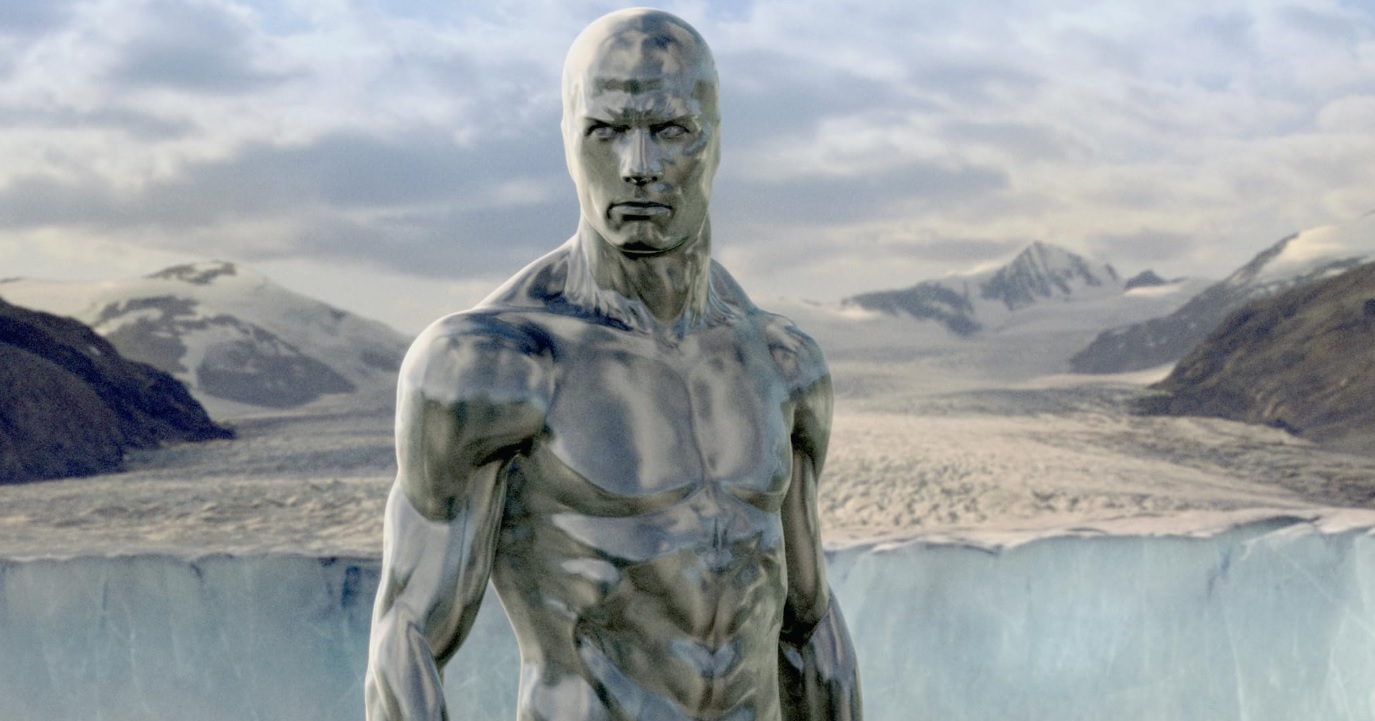
With the recent release of The Fantastic Four: First Steps, it seems like a good time to ask you about your time as Silver Surfer. Can you tell us about how you got involved with Fantastic Four: Rise of the Silver Surfer?
They reached out to me, I didn’t have to audition for this. By that time, apparently I was known as the guy who wears rubber bits pretty well! The creature effects shop, Spectral Motion had been hired to design and create the Silver Surfer, “What was he going to look like?” The creature effects teams over the years have been my champions. They were the ones who then suggested, “You know who should play this, Doug Jones!” They liked my tall skinny frame, they liked being able to build on me, and they could build the Silver Surfer’s beautiful muscular body with his perfect proportions on a really skinny guy to start with, because I had nothing to get in the way of that perfect design, as they built on, without getting too bulky. One of the producers on Fantastic Four: Rise of the Silver Surfer was Ralph Winter, who was the producer on Hocus Pocus, so we already knew each other, and he was like “Oh Doug! Of course, let’s get him!”
What kind of research did you do for the Silver Surfer?
I had watched The Fantastic Four cartoons on TV when I was a kid. I remember seeing The Fantastic Four comic books, The Silver Surfer was like, “I remember him being introduced…” but it was a more of a, tap the head, and try and remember, who exactly was the Silver Surfer. So I went to a comic book store, I went back to the source. God bless those geeky kids who work behind the counter, because without them we wouldn’t have comics, or the genre at all. I asked the kid behind the desk, “Listen, I’ve just been cast as the Silver Surfer in this new movie, do you have anything on him?” He was like, “Dude!” He goes running around the store, and I got about three different anthology books of The Fantastic Four where he was introduced, and then Silver Surfer’s standalone comics, these big thick compilations. So I had study material. I wanted to go back to the source material for that, because I knew that an audience was going to come looking for a portrayal on film that matched their memories of the comic books. Jack Kirby’s artwork and Stan Lee’s writing, need I say anything else? Those glorious poses that the artwork portrayed of the Surfer, he was so balletic and the poetry he spoke that Stan Lee had written for him – just gorgeous dialogue. I got what I needed really from that, about this outsider who’s visited from another planet, and he’s in a position where he’s a herald to this big planet devouring beast called Galactus, but against his will. It’s like he’s doing this as a sacrifice to save his own planet. He made a deal with Galactus to save his own planet, and the woman that he loved, back home. So now, he’s coming to earth, doing his daily duty, and realises that there’s something here worth saving. That’s a hero. A hero isn’t someone who wakes up and says “I’m going to do heroic things today”. True heroes seem to come from the reluctant part, like, “I don’t know if I’m worth it, but I guess if there’s a problem, and someone needs to fix it, I have the skills. I’m going to try this.” Surfer did what he could. As the relationship built on film with The Fantastic Four, I had such a blast working on that movie. I realised the gravity of it, too; that I was working on probably one of the biggest characters that I’ll probably ever play, as far as notable and recognisable. Getting to play opposite Jessica Alba, Chris Evans, Michael Chiklis, and Ioan Gruffudd was… I was thrust into the middle of a really famous room. And then, of course, Julian McMahon who played Doctor Doom, God rest his soul, we lost him recently to cancer. Everyone was so delightful, and so wonderful to work with. That’s a character that will live with me for the rest of my life, even through this reboot that you mentioned, with the new Fantastic Four movie. Marvel was very kind to invite me to the premiere. I thought that was a very nice gesture, for them to bring me to that, so that they can have the old and the new, showing up on the red carpet.
There have been some really great Star Trek shows over the last couple of years, and Discovery is certainly one of them. How did you initially get involved with the show?
As an actor who has been under lots of rubber bits for almost four decades, I was asked constantly, throughout my entire career “Have you ever done anything in the Star Trek universe?” I hadn’t. I was born in 1960, so I was watching Kirk and Spock on my TV in the first run, back in the sixties, and then when The Next Generation came along in the ‘80s/’90s, and then Voyager and Deep Space Nine, and Enterprise. It’s like, “There’s another opportunity”, and by then, I had grown up, I was in Los Angeles, I was an actor. It’s like “Maybe this…” and then nothing happened. So I was like, “Wow, with the number of aliens that are on these shows, you’d think somebody would have thought of me!” So finally, after Enterprise, there were no Star Trek TV series for I think about 15 years, if I’m not mistaken. Then, I get this random phone call, “Hey! They’re creating a new Star Trek series called Discovery, and they’re asking for you, for this one role, as part of a new alien species called Kelpien” By that time, I was 56 years old, so I said, “It’s about time!” So I went in and met with the showrunners and the writing staff. It was different, it wasn’t an audition for me, it was actually an audition for them. That’s how they were treating it. It’s like “Here’s everything with the show, here’s our sketches of props, here’s our designs for costumes, and here’s what you’ll look like, here’s a sculpture of what you’ll look like. Here’s some props and guns and things”. It was an unusual experience for an actor; to walk in, and have them trying to sell the show to me. I was like “I’m already sold, it’s Star Trek for crying out loud!” It was delightful, and wonderful. The opportunity to help create a new alien species for a beloved, long running franchise like this, was again, the gravity of that was not lost on me. I was relieved that I didn’t have to follow in the footsteps of another actor who had already done it really well. If I was going to be a Vulcan, a Romulan, or a Klingon – there had been many in the past that had done those kind of characters beautifully – I didn’t want to be compared. I didn’t have to be. I was going to be the first Kelpien ever on film that was a great honour. The challenge that came with it was “How do I make a Kelpien different, and memorable so that it can become a part of Star Trek lore”. That was my challenge, “How do I make this character stand out, so that other Kelpiens can come after me and be welcomed”.
Could you tell us about the background to the character?
With Saru, I loved the backstory that the writers gave me for him, that he comes from a planet where he was a prey species, and there was a predator species, so they were kept down, under the thumb of another species – that’s all he knew. Always looking over his shoulder, always in fear, always at the brink of extinction. Sensing death was a big deal, my threat ganglia came out of my neck, and the back of my head when I could sense a threat in the room or nearby. The thing about Saru is that I understood this innate fear, because I, Doug Jones, have lived with anxiety and fear all of my life. I’ve lived with an unreasonable fear of tomorrow. If I can’t see around the corner, I’m terrified of it. If I can’t see what’s coming, or anytime I open the mailbox and there’s something I have to respond to, “Oh gosh, I’m going to fail somebody, somehow.” So I understood that. What I loved about Saru was that I went on this journey with him as a person. Over the five seasons that I got to play Saru, I went on a journey of finding his confidence, finding his courage. In season one, and part of season two, he is still living under this innate fear that is built into his ecosystem, and he overcomes it daily, in order to do his task for the day. To complete whatever is in front of him. I admire that about him. Then, in Season Two, I went through the vahar’ai, where the threat ganglia get inflamed and fall out. We were told originally, that’s when you die, because our predator species, would do mercy killings when we got to that point, and now I’m on a ship by myself, there’s no one around to do a mercy killing, so I’m getting sickly, and going through this change, my threat ganglia would fall out, then, all of a sudden, I don’t have any fear any more. I’ve got courage, and strength, and confidence like I’ve never had before. He realises that the Ba’ul were lying to my species, all this time, and we were actually a stronger species than them, they figured it out, many decades ago, many generations ago. They erased our history, so we didn’t know. That was a huge discovery. So I thought, maybe I can live without fear in my own, personal life. Because the circumstances around Saru didn’t change. His attitude, his reaction to those circumstances, that’s what changed. So instead of looking at threat, looking at tomorrow, looking at the unknown as “We’re all going to die,” maybe I look at it with, “We’ll get through it” because I’ve lived this long, and we seem to get through it somehow. So it changes your perspective and I learned a lot from playing Saru. I’m really grateful.
What We Do in the Shadows recently got nominated for an Emmy; can you tell us a bit about what the Baron Afanas was like to play, and what that unique style of comedy was like to work within as an actor?
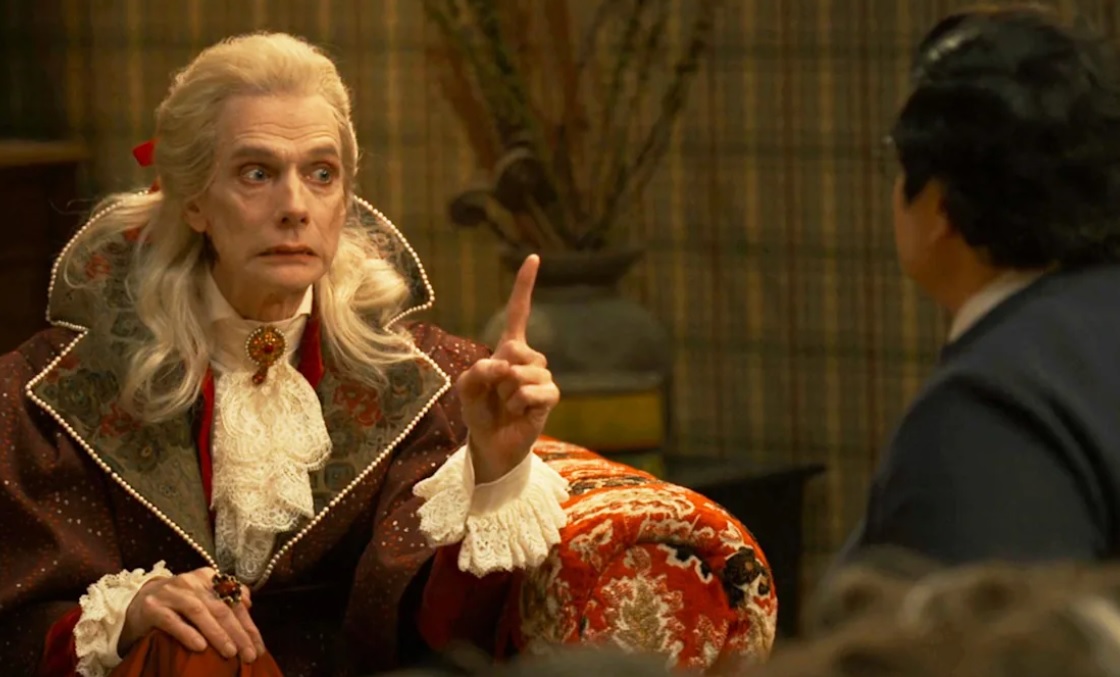
I loved the Baron so incredibly much. With this style of humour, that reality, mockumentary style, I was a big fan of The Office, so when you get to play a show that’s like The Office but has vampires, which takes it to the next step; one step further into absurdity. With the best writers in the world, writing the funniest material, and the funniest actors around me. As a recurring character getting asked back again and again, that’s a call I always welcomed like “Yes! Of course I’m coming back.” Because it had a reality feel to it, they encouraged improv and off-the-script playtime. So after we filmed a couple of takes, as scripted, which were brilliant – again, the writers were the best comedy writers I’ve ever worked with they gave us a couple of takes to, what they call, “The fun runs! “Here’s the fun run! Do whatever you want” and we could go as far off script as we wanted. Whether it was visually, action, dialogue or whatever. So much golden material was captured in those takes. All the cast, we all knew that opportunity was coming, so everybody would prepare. Look at the script, and be like “Oh yeah, I can work this bit in there, or I can say this here!” We all came to the set with pre-conceived ideas: “I think I’m going to try something when it gets to the fun run”. It was always brilliant. Everybody was so incredibly hilarious and funny in their own unique ways.
You’re appearing at For The Love of Horror, how excited are you that, and what can attending fans expect?
Yeah, I’ve not been in the UK for a convention in a long, long time. So it’s about time I come back, and I’ve never been to Northern England. It’ll be my first time ever in Manchester. I’m looking forward to seeing that part of England, meeting the demographic and the people there. The thing about horror fans, is that there’s a common thread through all of them. We know each other, we spot each other. We’re family, right from the get go. So I can’t wait to meet the British part of my horror family.
FOR THE LOVE OF HORROR takes place at BEC Arena, Manchester on October 18th and 19th. Find out more here.
You can follow Doug Jones on Instagram.
Independent filmmaker STEWART SPARKE has been on STARBURST’s radar for a while – with his Yorkshire-based company Dark Rift Horror, he’s directed the splatter-tastic movies Book of Monsters and How to Kill Monsters.
His latest project is something else entirely – DEAD RESET is a full-motion video game, or FMV, an interactive movie where players decide the protagonist’s actions. It stars Daniel Thrace as Cole Mason, a surgeon who finds himself on an underwater facility, dealing with time loops and a ferocious monster. We caught up with Stewart to discuss this exciting new production…
STARBURST: Congratulations on the release! So, how did you go from being an indie film director to making a video game?
Stewart Sparke: Wales Interactive got in touch with us in 2022. They’d seen Book of Monsters on Amazon Prime, and said, have you ever thought about making an interactive movie, an FMV game? We immediately hit it off, because I was already obsessed with that genre, and I’d played a lot of Wales Interactive’s more recent FMV games, like Late Shift, The Complex, and Who Pressed Mute on Uncle Marcus. At the time, we were just about to start production on How to Kill Monsters, so I said, we’re so busy, but let’s continue the conversation.
Later, they had Media Cymru running a scheme, getting traditional filmmakers and writers into a workshop with Wales Interactive and showing them how to write for interactive movies. My colleague Paul Butler and I got into that and went down to Wales for two days, learning how all this works. We got really excited about it, went away, and pitched them what became Dead Reset – an interactive horror movie in the style of our blood-soaked, practical effects-led popcorn horror. And within the year, we got the funding from Media Cymru and it all went through.
How do you approach writing a game like this? There must be new challenges compared to scripting a movie.
Yeah, it’s really hard, because you’ve got to consider multiple options and endings for the player. We’re not dealing with a passive audience, we’re dealing with an active player who engages with the story at all times. So after we had the basic idea down, we had to go, OK, what are the endings we want? And let’s work backwards from there.
Because every choice the player is allowed to make needs to inform the ending. The player’s journey has to make sense all the way through. For example, you can play Cole as a cold character who doesn’t want to make any friends. He’s going to try and get rid of the bad guys any way he can. If there’s an opportunity to kill someone or do something, he’ll take it. Or you can play Cole as the empathetic guy who is trying to make friends with everyone, ally with them, turn the bad guy into a good guy. The player’s journey has to be honoured no matter what they choose, as well as neutral options – they could be bad, good, bad, good, constantly changing.
So when you’re writing these scenes, you might have what would normally be a romantic scene between Cole and Fearne, the love interest. If you as the player had been treating her poorly or being distrustful of her, we also had to write an alternative scene that was a confrontation. At the same time, if you had played it in the middle ground, we had to have a third scene where you were indifferent towards each other. That had to happen constantly. So really, we made the equivalent of four feature films in one!
So how differently can Dead Reset‘s story diverge? We played it through once and it ended with a horrifically painful demise for Cole – surely that’s the worst ending?
There are three bad, in inverted commas, endings, and there’s one super happy, fun ending. But everyone’s got a different opinion of what the best ending is, because it’s a horror game. The best ending might be the worst for certain people because they want to see the most gruesome thing happen! My goal was to make them mostly horrifying so that you would want to play it again and try to get the perfect ending. And as well as those four major endings, you can also have a romantic relationship with one of the characters, your friendship with another character can be slightly different – there are variations.
How did the post-production process work? You’re used to editing films, but there must be a whole load of new challenges when you’ve got to incorporate all the game programming elements as well.
Wales Interactive have this incredible piece of writing software called WIST, which we were privileged to be able to use on this. That allowed us to write our scenes, connect the dots – you know, if this is true, go here, if you chose this, go here. Essentially, we edited every single scene as its own video file. We then gave it to Wales Interactive, and their development team put it all into the game engine. I was able to literally upload overnight, here’s the first 10 scenes of the game with all the alternate paths, and the next day I was playing it on Steam, testing it out. That was a long process, and a challenge, because you’re not just making one timeline, you’re editing 319 separate videos, and they’ve all got to have their own audio mix, colour grade, visual effects. There was a lot of spreadsheets involved along the way.
So, what’s next? Would you do another game or are you going back to filmmaking?
Right now, we have nothing to announce. We’re definitely working on stuff behind the scenes. We don’t know yet if it’s going to be an interactive movie or a normal movie. But what’s really exciting is that we’ve taken our first step into the gaming world; it’s opened a lot more options for us. I’m as excited as anyone else is at this point to find out what we’re going to do next.
DEAD RESET is available now on PC, PS5, PS4, Series X|S, Xbox One, Nintendo Switch, iOS and Android. A longer version of this interview, in which Stewart tells us about the practical effects that created the game’s monster and seeing his game streamed on Twitch, will be printed in STARBURST 492, available from starburstmagazine.store from November 29th.
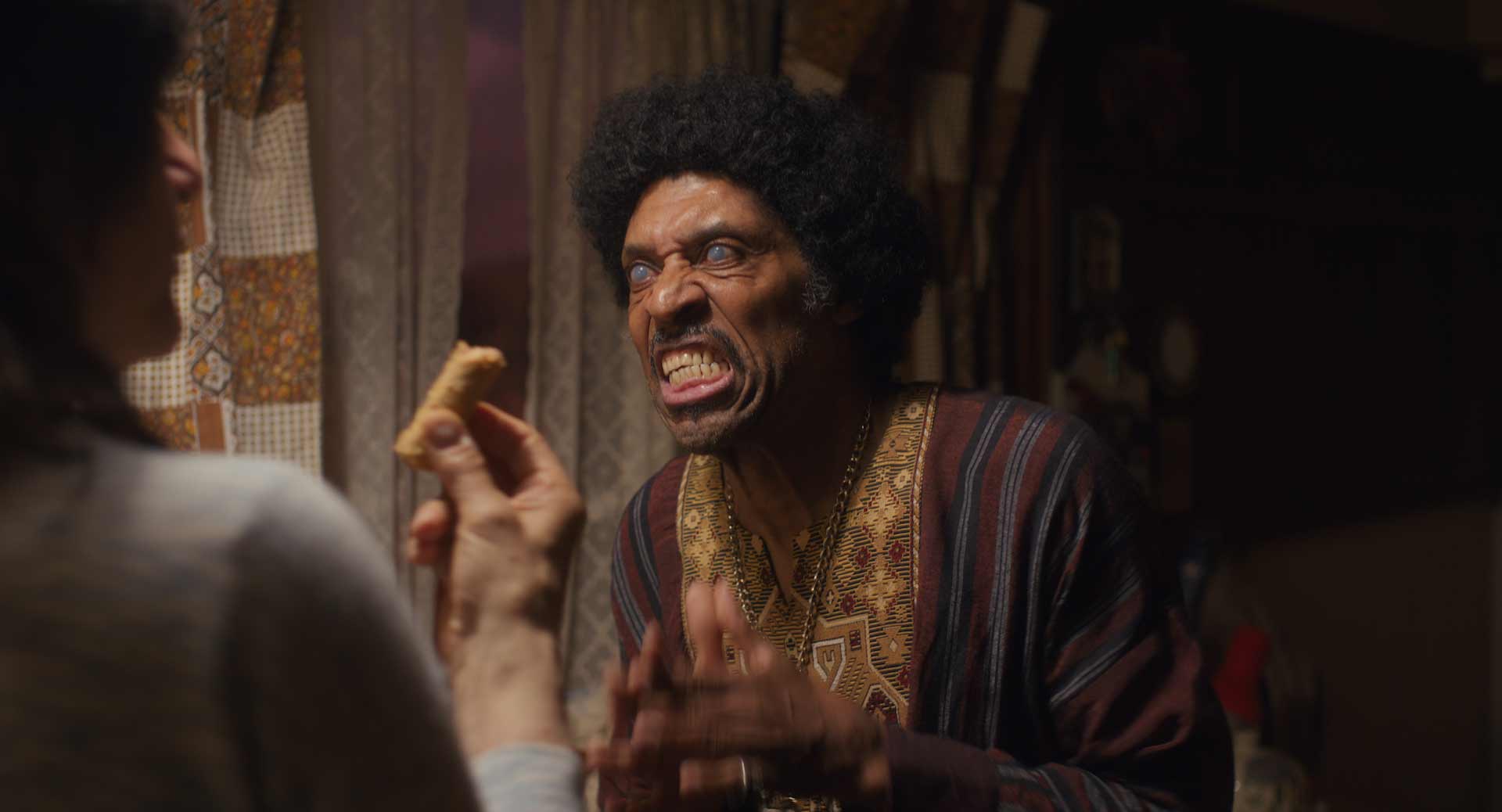
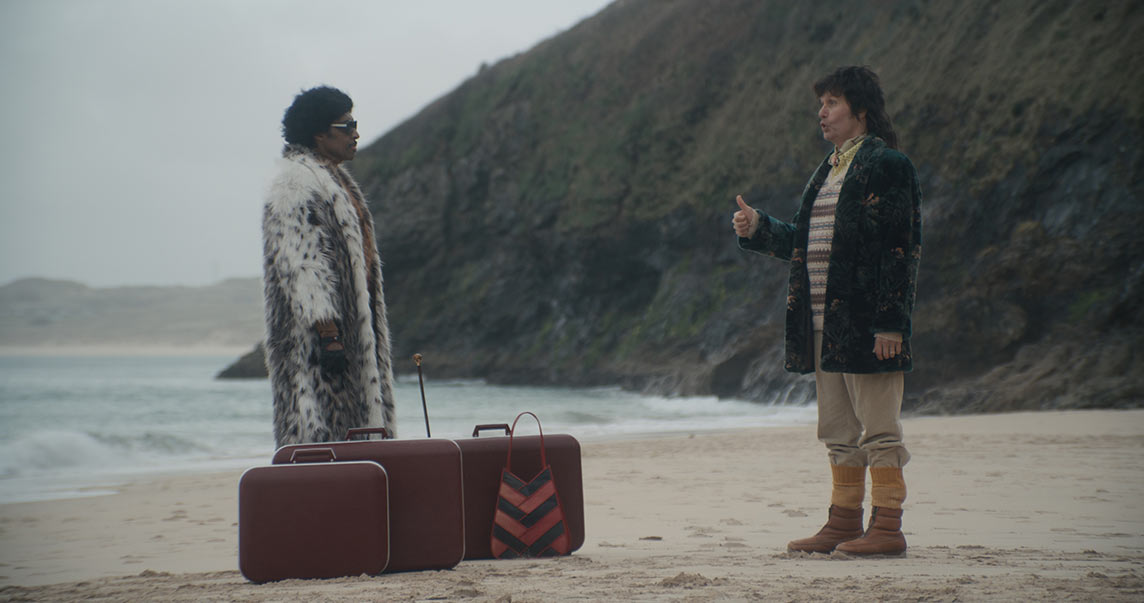
Following the STARBURST favourites The Greasy Strangler and An Evening with Beverly Luff Linn (and his superb, criminally underseen [adult swim] series Tropical Cop Tales), cult director Jim Hosking is back with his unique depiction of a meeting of two musical legends. Set in a remote Scottish cottage and eating only frozen breaded vegetarian ready meals made by ‘the wife’, Paul (Sky Elobar) and Stevie (Gil Gex) bond over naked beach exploits and hot chocolate. Not to mention sheep. This all makes for another wonderful, bizarre movie from one of the UK’s most unsung treasures. We caught up with Jim to pick his brains about Ebony and Ivory…
STARBURST: Were Sky and Gil your first choice for the characters in Ebony and Ivory?
Jim Hosking: I did write it specifically for the two of them, yeah. I think probably a big reason for wanting to make it was that I find Gil just so funny. And I had been wanting to make a film with Gil. Not that I can particularly remember the genesis of the idea or why I wanted to make this film! I think the idea just came to me unexpectedly and for no particular reason, because I’m the least strategic and creative person on the planet. I wasn’t tempted to make a credible, authentic biopic in any way, obviously. I think I may even have thought of Sky and Gil and thought, ‘What can I do with the two of them?’ The idea of them being Paul and Stevie, but being sort of very wonky versions and being a bit old, seemed very funny.
They are perfect in the roles…
Yeah, Sky has this quite cultivated, deadpan, Californian persona. So the idea of him trying to do a Liverpudlian accent made me laugh.
It’s brilliant. The opening shot on the beach is fantastic. How did that come about?
Well, I had the idea that Stevie would arrive in a rowing boat and Paul was waiting for him on the beach. But I was working with my friend Mårten Tedin, the DOP, who also shot The Greasy Strangler. He’s shot quite a lot of stuff for me. In Greasy, we had this shot where Ronnie and Brayden were waiting for the character Oinker to walk along the street towards them. And we were panning between the two of them, and Oinker. And it’s just funny, panning like something urgent is going to happen, yet nothing visually dramatic is happening. Mårten had this very funny idea. I can’t take the credit – I suppose part of directing is that when someone has an idea that you’re able to recognise whether it’s worth keeping or not – but he had this idea that when we panned away from Paul, he would step towards the camera. So we were giving him these different marks so that each time we panned back, he was nearing the camera.
Was it a conscious decision to give Sky a bigger penis this time?
This is going to sound strange whichever way I say it, but I thought about the penises in every way that you could imagine, you know, like within a sort of a six-hour stretch of thinking about them, because I was. My producers had told me that the director Sean Baker had written something about my second film, An Evening with Beverly Luff Linn, and I messaged a bit on Twitter and he was very nice. I watched his film Red Rocket, and there was a scene where Simon Rex was running along the street and was naked, and I didn’t realise he had a prosthetic penis. And then I was prepping Ebony and Ivory, and I didn’t want to make the penises look like the penises in Greasy. The only reason that they have fake penises anyway was because I thought that they’d feel too self-conscious, and it would feel a bit sad, and I didn’t want it to feel like I was laughing at the actors in the film. I wanted them to be able to be naked in the film, and it not to be a joke about their bodies, I suppose. And I wanted them to feel comfortable. So then I asked Sean Baker for the name of the person who provided the prosthetic for Red Rocket. And he said, there’s this guy, Matthew Mungle in the States, who does the best prosthetic penises. So I contacted this guy, and he said, Yes, I can provide two prosthetic penises for you. He sent me this very big PDF with every kind of penis you could imagine in his… well, penis box.
In his toolbox [laughs]?
Exactly! Because there’s one white penis and one black penis, I didn’t want it to be a joke about penis sizes between races or anything. It becomes a bit more of a sensitive issue than you imagine at first. I think it became quite a democratic thing of me wanting them both to have the same-sized penis. Although when the prosthetics arrived, somehow Paul’s penis seemed… maybe it was just something very straight about it… like it didn’t have as much bend or maybe as much pliability as Stevie’s penis. But yeah, I probably didn’t want to repeat the joke of him having a tiny penis, so I pumped for them having the same size penis. And I can’t remember right now whether they’re uncircumcised, but I could have had them circumcised, uncircumcised – any inch length. And I know that it was recommended to me that I go for a five-inch. I replied that it sounds too small, like, isn’t six inches meant to be the average length or something? I didn’t really do any research. It was some penis information that I gleaned over the years. But I decided to make them one inch longer. And then when they turned up, they were way bigger than I expected. And then I thought, oh god, I’ve made another penis film. My son was asking me, “Why are you fixated with penises?” Well, I’m not, but I suppose there is something quite funny about the indignity of male nudity. And also, you probably don’t see enough naked men in films.
We assumed it was to push the boundaries and give two fingers to what people expect…
I don’t know that it is that, really, because I genuinely don’t feel like I’m trying to push the boundaries with anything that I’m doing. It comes from quite an innocent place of what makes me laugh or what keeps me engaged in something. I suppose that the idea of Paul McCartney and Stevie Wonder deciding to go for a naked swim was funny.
You’ve used Andrew Hung once more for the score; he brings so much to your films. What is the process with him?
With Ebony and Ivory, we were more specific than we usually are. As an example, there’s a scene where Stevie is trying to guess the name ‘doobie woobie’. He knows that it begins with ‘D’ and then ‘W,’ so there’s a guessing game. I told Andy that I want it to be when the quiz begins, it’s suddenly like you’re in this kind of a club, this pounding music, it’s really intense, it’s kind of like a game show or a quiz show, but it’s really just relentless club music. He started composing this thing in front of me! It’s also funny how people react differently to it. I get very excited! I’m probably quite up and down, but I can get very serious and think, oh, god, this doesn’t work, this is terrible, but with that, I’d have been giggling and really excited, and Andy’s just completely straight-faced as he’s making this music that feels so funny to me and so ridiculous in a way. It’s not ridiculous because it’s played so straight, and that’s what’s so great about it. It’s ridiculous because it’s soundtracking these two oddball characters having a silly, illogical guessing game in a Scottish cottage.
EBONY AND IVORY is in UK cinemas from September 19th. You can read our review here.
Based on the Walter Mosley novel of the same name, The Man in My Basement initially sees down-and-out protagonist Charles Blakey (Corey Hawkins) attempt to keep up with the mortgage of his inherited family home by any means necessary, while working on damaged relationships with his close friends and family. Events take a turn with the arrival of Anniston Bennet (Willem Dafoe), a mysterious figure that wishes to rent out Charles’ basement, potentially providing an end to his financial conundrum… STARBURST talks with Nadia Latif to discuss her first feature-length movie as a writer/director, her theatre background, incredible acting performances, and just some of the important themes that live at the core of this movie.
STARBURST: Can you tell us a bit about how you got involved with this project?
Nadia Latif: I read the book like twenty years ago, when it was published. I just loved it, and I was obsessed with it. There were so many images in it that stuck with me for decades. I was a theatre director, and I’ve been one for a long time. I made my first short film, and I got my first agent. I heard that a film adaptation was in the works. You know, you hear whispers. I’m not a jealous person, generally, but I was like, “This is one of those books that I’d just love to adapt.” Anyway, I go back to my first agent, and I’m like “Did you hear about what’s happening with that film? I kind of just wanted to see it” and she was like “Actually, they’re looking for a director!” and I was like “Get me in the room! Just get me in the room!” I hadn’t even finished my short film at that stage. I just turned up with a 90-page deck, going, “This is how we do it.”
I so remembered reading it, and how it made me feel. It wasn’t like I had an encyclopedic knowledge of the book; I just remembered how it made me feel. I really cared about which images and which characters stood out to me. It made me know how I wanted to skew the story in a way that I think everyone would respond to. I flew to America, went to meet Walter Mosley, who was down to a pound, and it sort of just rolled from there. Walter and I didn’t write together on the same drafts. He wrote some earlier drafts, and I wrote the later drafts. It was my first screenplay. I’d worked a lot with writers. I’ve just been at the Sundance Lab for a different film, which feels very apt to talk about with the passing of Robert Redford. There, they encouraged me to do my own writing. They were like, “You’re a writer, you just need to just do it!” This was my first screenplay; I’ve since written a lot more.
What was it like to work opposite Walter Mosley, and was there anything that he maybe really wanted to see from the movie!?
Walter was very much like, “My book is on the shelf, you’re making the movie” he is an adept screenwriter himself, and he understands that they are two totally different mediums. He was always like, “Take what you need, leave what you don’t want.” I think I refer to the book and the film as being cousins, not twins. Most of it is in there, but there is definitely a different tone in the film. I think the film is darker, more baroque. I think it’s more interested in kind of, loneliness and grief, maybe a bit more than the book is. There’s quite a big pivot in the female characters between the book and the film. I was interested in how you can make a film where the two men are the current leads, but it is still about strong women. I hate when people in the background aren’t fully realised in that way. They all have very interesting lives. They could all be a protagonist. That’s always my goal with secondary characters, that you feel like “Everybody in this is interesting enough to be the protagonist” it’s just not their story, the story just happens to be about somebody else. Walter is a deeply funny person, and we were just a tiff together premiering the film; he is just so much fun.
So, you, Corey Hawkins and Willem Dafoe all have an extensive history in the world of theatre! We were curious to know what that brought to the creative process for everyone?
A lot of the British actors were theatre actors that I had wanted to work with for years, such as Jonathan Ajayi, etc. These are all people that I met in the theatre in London. The thing about a theatre background means that you’re very interested in the process. You’re very interested in like the rigour of what’s in the text, what are the physical actions really telling us. How do we really mine down into what is in here. Also, it feels really exciting for me to direct with a camera, because when you’re making work for a theatre audience, obviously you are trying to be as clear as possible, make sure that the cheap seats are getting as great a view as the seats that are closer. That they’re getting the same clarity of storytelling. So, there’s only one POV, which is from your seat.
In film, it feels like I can take the camera and I can put it wherever I want, and I can give a totally different perspective on the scene. It’s like I’ve been colouring with pencils and now I’ve got pastels, and oil paints. When you write things like “Top down shot” you think, “Wait? Do I have to bring a crane in for this” what does this mean? And it’s just a shot of somebody throwing some sausages. You’re like, “If I had known, maybe I wouldn’t have written it!” I think that’s one of the great things about making films for the first time. My friend, Charlotte Wells (Aftersun) sent this to me as a piece of advice, before I started making this, she said “The best thing about making your first film is that you make it naively.” She said, “after that, you’re full with the anxiety of that, second album kind of thing” so she said to just “Make it naively, don’t worry about the how and the what, it’ll happen. If you write it, it’ll happen” but occasionally I’d be like “Damn, all of this happens, because I wrote this?” There’s one shot in the film, where it was like, “Fish POV” they’re looking down at a fish, they’re looking back up at him. Honestly, half of us nearly fell in the drink. It’s January, in a harbour in Swansea, all of us at a risk of drowning, all of that, just because of two words: “Fish POV”.
At the start of the movie, you really get this feeling that no one trusts Charles, which is quite a different idea for a main character! How fun was it to work around that idea, and what did you want viewers to see from him at the beginning of the movie!?
I was really interested in, we talk about all of these binaries of heroes, anti-heroes, good or bad. I remember talking to Walter about that once, saying, “What’s a hero to you?” and he was like, “A hero is a guy you would ask for help”, and I said, “No one would ask Charles for help, he wouldn’t help them.” He said something to me really early on, like “No one likes Charles, his lawn is untidy, he is not contributing.” I liked that idea. I always wanted to situate that in his loneliness. So I think, the first time you meet him, he is being so abrasive with his friends. You don’t know why, like “Why is he picking this fight with them?” I wanted to spend the rest of the beginning of the film, slightly unpicking why that is. You meet the fact that he has no money, that the bank wants to take his house, and that his parents have died. So that the audience is going through a, “Oh OK, initially I’ve misjudged him, and now I have to try and unpick the motivations behind that.” I think motivation is slightly overstated as an idea. I quite like a mystery behind someone’s motivation. For example, that first scene in the film, where he is picking a fight with his friend, Clarence, it’s not until much later that he apologises for it. It wasn’t the whiskey; he was just jealous. I feel like a lot of that male banter, the negging that is inherent in a lot of groups of men. It might be that they give someone a mocking nickname. I really want to have a scene where two men admit what that really is, which is jealousy. Like, “I’m deeply jealous of you” he wants everything that his friend has, so he has to put him down. That’s his rather unpleasant reaction to that. But in a way, you don’t then need to go into the whole “I was jealous, because XYZ” you just have to put those ideas out there. So yeah, he is not a very nice guy, but that’s OK, you can make films about not very nice guys, there are loads of films about not very nice guys, but he is not a villain, and that’s the difference. I quite like that. With men, we like to push themselves to extremes, they either have to be villains or heroes, I quite like someone who is in the middle of like, he is not a bad person, well, maybe he is, in the film he says “I used to think I was a good person with bad luck, but that’s not true” he is trying to figure that out, he is trying to figure out whether he is a bad person, and whether as a person you’re defined by your intentions or your actions which I guess is one of the biggest questions in the film, it’s like, “Do intentions matter more than actions” and it’s why you see so many accidents happening in the film.
Willem Dafoe was amazing as Anniston! As an actor I feel like he is just incredible at hiding secrets, which works really well for this movie. Can you tell us about what he was like to work with, and what you wanted him to bring?
I first met Willem four years ago, I think. We started talking about this film, and we’d been through a really beautiful process of quite like a gentle, watching things, listening to music, looking at art, discussing it. More as to kind of understand my point of view as a film-maker, as a person, and how that is in the script. Rather than it being fully literal. Willem is obviously a magnificent actor, but he is also, is never trying to over embellish anything. It’s like, “What is the action in this scene? What is my character doing?” and then the psychology just comes. He understands the character, but he is never trying to put a performance out in front of him. Half the time, when you’re on set, it’s like “OK, so I’m going to pick up the tray, I’m going to take it over there”. Those are the things that you’re actually like worrying about, and discussing, and then it’s like, let’s turn it up, or turn it down. Our processes are very aligned in that way, where people are defined by what they do, you don’t need to explain the psychology to me. Sometimes people do things that they don’t understand about themselves. I think the fixation with psychology first assumes that people are completely self-aware. Loads of people are completely self-unaware; they’re just like “I have no idea why I did these things, but I did”, so maybe I’m going to spend the next ten years figuring that out, but right now I don’t know. Across the film, his character begins to experience things for the first time ever. He experiences fear for the first time ever, and that’s really exciting for him, and that’s sort of where his psychology comes unpicked.
There are some incredibly important themes about race that superbly thread their way through the movie, what was that like to bring to life, and what messages did you just really want to get across to the audience?
I think that when you make something about a black person and a white person, race is just in the room. It’s like, what is the difference between these two men if you’re describing them, one is black, and one is white. And therefore their experience of all things is different. The way they experience history, the way they experience power, the way they experience life is fundamentally different. Walter jokingly said in an interview once, he was like “The reason I wrote the book is that I was in an interview for a different book, and a black man in the audience asked him, Mr. Mosley, what do you think every black man in America needs? And he said what every black man needs, is a white man locked in his basement, so he can ask him questions like, why didn’t I get that promotion?” this idea of like “If you don’t have power, then talking to somebody who does have power, is like learning about the world from a different perspective.” Therefore, I wanted people leaving the film, wondering about how different people experience the world. The film is a project of empathy. I wanted people to be empathetic to the world, but also, I guess, conscious about who gets to tell history. History is happening right, something that’s happening today, that is history, a piece of news, that is history. But are you asking, who is telling you that, and what their perspective is, and how they’re influenced by who they are, what their upbringing is, what their race is, what their gender is. In a way I think we’re encouraged to flat these things out, but actually, difference is key. Of course it is. Typically, history has been told by white men, and therefore is the telling of it fact, or is it just one person’s perspective? There’s a lot of big things in there, I think it’s trying to be a film of ideas, and questions, and it doesn’t necessarily have all of the answers. I really hope people are still asking themselves the questions the next day. A month later, or like a year later, suddenly they might see something, and be like “Oh, The Benin Bronzes restored to Nigeria, OK, now I’m thinking about that slightly differently”, which is why can’t countries have their artefacts back? Like, why are they held in the British Museum. It might just slightly, tune you into those things a little bit more.
THE MAN IN MY BASEMENT is at select cinemas now, and it will also be available on Disney+ this autumn.
The creators of Gumball, Ben Bocquelet, Matt Layzell, and Erik Wiese, also known as Erik Fountain, talk to STARBURST about the return of the fan-favourite Cartoon Network show, the inspiration behind the film references, and what’s in store for the future.
THE WONDERFULLY WEIRD WORLD OF GUMBALL premieres on Cartoon Network and HBO Max October 6th.
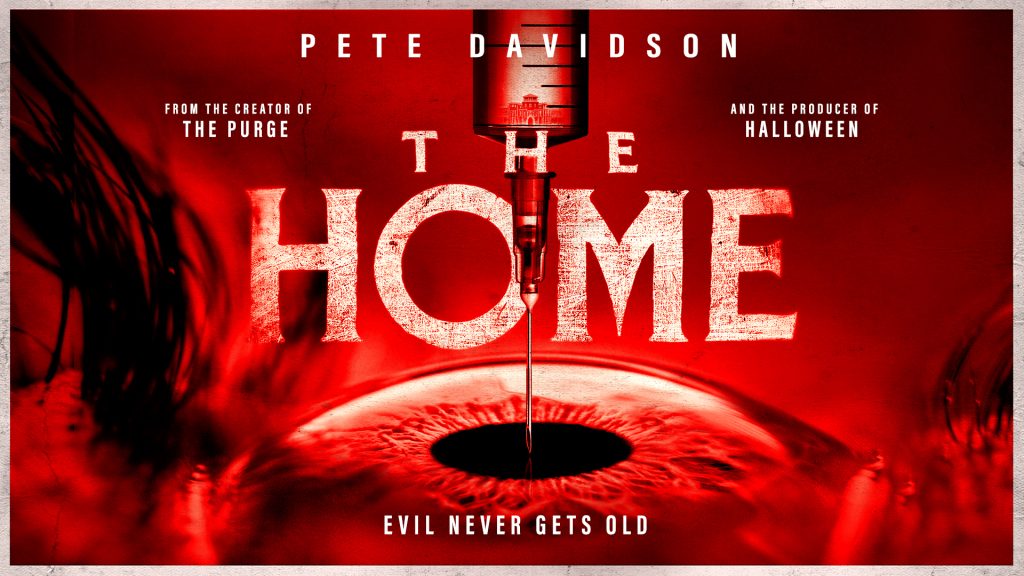
After getting in trouble with the police for his detailed graffiti, Max (Pete Davidson) is sent to do community work at a seemingly innocent elderly home in New Jersey called Green Meadows. But he quickly realises that everything is not quite as it seems, especially on the mysterious fourth floor…
Acting opposite Davidson is the legendary John Glover (Smallville, Scrooged), who takes on the quirky role of theatrical teacher Lou. STARBURST caught up with John to dig into acting dynamics, filming locations, horror, and everything else you need to know about James DeMonaco’s (The Purge) latest creative output, The Home…
How would you pitch the plot of The Home?
Beware of the fourth floor! Max broke into some place and painted something, and instead of sending him to jail for a while, they make him the janitor of Green Meadows. That’s how he gets into the home, and then things start happening. He is curious, so he starts looking, and then gets reprimanded. When The Home grabs you, you keep wondering “What’s going on, what are they doing?” I mean, these are elderly people, what’s up? And the question is answered very slowly…
How was the acting experience for yourself, and what can you tell us about your character, Lou?
It was an amazing kind of whirlwind, and the film is full of surprises. I play an off-Broadway actor, who has retired, and who lives at the home. I teach acting classes to the other inmates. I guess I was still in my 70s when I got the job, and I thought “I’m not old enough to be in an old age home”, but now I’m 81, and I can understand! It was great, and I’m very proud of it.
What was it like to work opposite Pete Davidson?
Pete Davidson comes out very well, and the camera just loves him. He is the centre of it. I wish that I had gotten a couple more close-ups with him, but you can’t tell the director that after the movie. He is just there, that’s what I say. It’s not that he is acting, he is just being, and it’s a wonderful performance. He’s got a face that’s just amazing. I’d love to work with him again.
Writer-director James DeMonaco has worked in horror quite heavily – what did his background in the genre bring to this film in particular?
Yeah, James did The Purge movies, which were frightening. I went and watched a couple of them when I found out that he was directing, because I wanted to see his work. They scared the crap out of me! I could only watch two because they were too horrifying. So, The Home is a really good horror movie, and things are not what they seem to be…
He put together a fantastic cast as well…
All of the actors are just wonderful. They’ve been acting all of their lives. There were a lot of New York actors that I knew, loved, and admired, so the movie is full of talented people. Everybody was gung-ho, and we had a ball. So, I’m hoping to work with James DeMonaco again.
Green Meadows is a real location! Did it bring a sense of realism?
Yeah, it was a nursing home in New Jersey, it was a dormitory for the nurses, so it was in that old home with all of those things, and people falling out of windows onto things… It was great, and it was part of the thing about being real, that we were in this big dormitory, that people worked in, and lived in. It’s just a blast, and I can’t say enough!
Finally, why should STARBURST Magazine readers watch The Home?
To have a good time and get a great scare on! I recommend it highly! I’m proud of my work in The Home. I recommend it for a nice scary night. Things start out very nice in an old age home, but I hope people don’t just think of it as a bunch of old people… It’s terrific. Go see it! It’s a really good movie, and it’s scary. I love to be somebody else, that’s when I’m most happy, when I’m playing somebody else, it frees me, and this one certainly did free me.
THE HOME is available now to buy and rent digitally.
When the mysterious USCSS Maginot crash-lands on Earth in the initial episodes of Alien: Earth, we are given very little details about what actually happened on the ship before impact. For closely following fans of the show, they’ll be excited to know that Episode 5 of Alien: Earth, titled ‘In Space, No One…’, finally uncovers what happened, and it’s a visually disturbing yet rewarding watch. Directed by series creator Noah Hawley (Fargo) the episode celebrates the claustrophobic atmosphere of Alien while bringing something new to the franchise. STARBURST talks with actress Richa Moorjani (Captain Zoya Zaveri) to dig into her brilliant character and a very crucial episode, which has just been released today, on Disney+!
STARBURST: With the USCSS Maginot being the exact same design as the Nostromo, I was wondering if you could tell us about what that set was like to step onto for the first time, and what else you remember the most from that day?
Richa Moorjani: The first time I stepped onto set, it was before I started shooting. I just came to visit when I arrived in Bangkok. My mind was blown to be honest. I couldn’t believe that they had built such an extraordinary set that really honoured the DNA of the original sets from the movies, and it didn’t feel like I was on a soundstage. I really felt like I was walking onto the Nostromo, or onto a spaceship. It really made everything feel so much more real for me, in my preparation, knowing that that was the set that I was going to be working on.
The design for the original Nostromo in Alien had windows, and then they took them out to create a sense of isolation. Did you feel that same sense of isolation with the Maginot?
Yeah, absolutely, when you’re inside there are no windows, no natural light coming in, and we are also on top of that inner soundstage. It was easy to feel like I was in space. We were really isolated inside this vessel together.
Noah Hawley directs the episodes you are involved with. Since you also worked together on Fargo, we’re curious to know what he was like to work with on Alien, and maybe how your working dynamic has evolved going into Alien: Earth?
So Fargo was the first time that I worked with him, so obviously, we were getting to know each other more on that set, but even on Fargo, and on this set as well, he has always been someone who is so incredibly open to collaboration. He is such a team player; he always asks for input. Everything from character choices to how my voice should sound. We talked about all of these things. Even when it came to naming my character in Alien: Earth, originally, my character’s name was not an Indian name. After he cast me, and after he asked me to do it, he asked me if I would like to have an Indian name for my character. That meant so much to me. That’s just one example of how thoughtful he is and how much he tries to work together with his actors.
Can you tell us a bit more about how you built Captain Zoya Zaveri with Noah, and was there maybe something specific that Noah wanted to see from her?
Yeah, so when I first got the script, and I read it, and we talked about it, he first of all emphasized how important this character is to this story, not just to this episode, but to the whole story, because you see the horror of what’s happening on this vessel, and that’s just before the vessel even crashes into earth. In the first episode, you don’t really get to know my character, so when I die, it’s awful, but as a viewer, you don’t really feel too sad. When you get to know the characters in this episode, everything feels so much more horrific and devastating. He really made it a point to make, not just my character, but every single character in this episode feel like a fully realised human being. I think he really wanted to create empathy with the audience, for each one of these characters’ deaths, so that none of them felt expendable. For my character specifically, one thing we discussed was that she is somebody who obviously puts her crew before anything, even before herself. That’s what drives her: her community and protecting her people. Sometimes that means she has to go against protocol. She’s tough, and she doesn’t take bullshit, but at the same time, she isn’t perfect. She doesn’t always know what the right thing to do is, and that’s what she is struggling with in this episode. She knows that the right thing to do is to protect her people, but she is caught between her morals and her duty. What MU-TH-UR is telling her to do, or what Morrow (Babou Ceesay) is telling her to do, which is to prioritise the cargo. So, we talked about all of these things, and how her struggling with that, and not always knowing what to do is really what makes her human. I think that’s why, when Morrow doesn’t let her into the impact room at the very end, it feels like the worst, most betrayed part of the whole episode. That’s worse than her being attacked by the Xenomorph.
The Alien movies are known for having a memorable dynamic between a very small group of people, so was there anything you really wanted to see from the back and forth between your crewmates? What was that like to build?
I think it was so incredible. First of all, it was the most international crew and cast I’ve ever worked with. In my episode, I think there were only two or three of us that are from North America. Everybody else was from the UK or other parts of the world, so it was truly such an internationally diverse cast. I think that was so wonderful. This is supposed to take place in the future, and a future that isn’t diverse, I don’t think that would make any sense. It wouldn’t feel authentic. I think Noah was really thoughtful about that. We had all met for the first time before we started shooting that scene of us all in the mess hall together. Most of the beginning is all ad-libbed by the actors. The first dialogue happens a couple of minutes into it. I was just amazed at how my fellow cast were able to create these relationships with each other so quickly, that you as the audience really feel like this crew on this spaceship has been together for 65 years. These are not people who just started working together. I was really amazed at how my cast was able to do that, and really make you feel like we’ve known each other for this long, been together for this long. I was really excited about that scene. I think it’s also what I think fans will be excited about because it is so much of a nod to the original film.
Your confrontation with the Xenomorph is brutal, and vicious, can you tell us about what it was like to work opposite a Xenomorph?
Yeah, getting to work with Cameron Brown, our lovely Xenomorph, it was all practical; there was no CGI, no green screen that I was working with. I was really working with Cameron the Xenomorph, and it was terrifying. Everyone told me about what it was going to be like. I was like, “It’s not going to be that scary, it’s just a costume” but when I was actually on set with him, and we were doing that scene, it was genuinely terrifying! I feel so blessed that Noah gave us the gift of working in that way, because I think it really helps to make the performances feel so much more real, than us having to work with someone wearing a green outfit.
Watching an Alien movie for the first time is a core memory for many, and one of the exciting prospects about Alien: Earth is that people can start their journey into the Alien franchise with the show. Can you talk about what you would love for Alien: Earth to do for someone who chooses the show as their starting point?
I just hope it gets people excited about the franchise. I personally had never seen the movies until I got this role. I watched them before we shot Alien: Earth, but I had also read the script before I watched the movie, so for me, after reading the scripts that I was about to do and then going back and watching the movies, I thought it was so exciting. It was exciting to see how this show was able to honour the original movies while also expanding on them, and making it totally fresh and relevant to the day that we are living in right now. I really hope that people who are new to the franchise and maybe see Alien: Earth for the first time, I hope it gets them excited and that it makes them want to go back and watch the old movies.
Episode 5 of ALIEN: EARTH ‘In Space, No One…’ crash lands onto Disney+ today!
In director Pierre Tsigaridis’ Traumatika, a young boy’s night terrors become reality when his mother begins showing signs of demonic possession. What he’s about to experience will haunt him for the rest of his life and claim countless lives across generations. It’s a wild ride of a movie that will leave you breathing heavily and wondering just what you’ve gotten yourself into. In addition to a standout lead performance from actor Rebekah Kennedy as Abigail, the movie features Sean O’Bryan, Emily Goss, and Sean Whalen in a key supporting role. We hopped on Zoom with Sean Whalen to discuss his role in the film, his work with Kennedy, and the enduring appeal of being ‘that guy’.
TRAUMATIKA hits US theatres on Friday, September 12th.