Independent filmmaker STEWART SPARKE has been on STARBURST’s radar for a while – with his Yorkshire-based company Dark Rift Horror, he’s directed the splatter-tastic movies Book of Monsters and How to Kill Monsters.
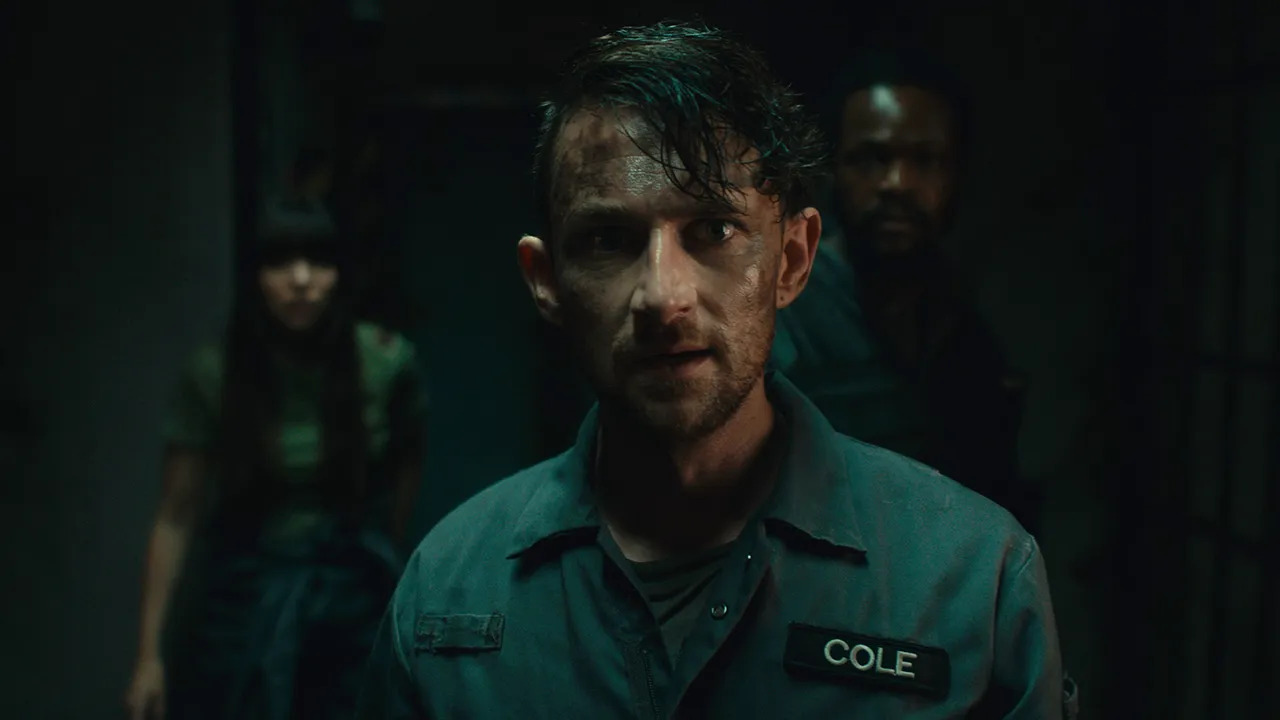
His latest project is something else entirely – DEAD RESET is a full-motion video game, or FMV, an interactive movie where players decide the protagonist’s actions. It stars Daniel Thrace as Cole Mason, a surgeon who finds himself on an underwater facility, dealing with time loops and a ferocious monster. We caught up with Stewart to discuss this exciting new production…
STARBURST: Congratulations on the release! So, how did you go from being an indie film director to making a video game?
Stewart Sparke: Wales Interactive got in touch with us in 2022. They’d seen Book of Monsters on Amazon Prime, and said, have you ever thought about making an interactive movie, an FMV game? We immediately hit it off, because I was already obsessed with that genre, and I’d played a lot of Wales Interactive’s more recent FMV games, like Late Shift, The Complex, and Who Pressed Mute on Uncle Marcus. At the time, we were just about to start production on How to Kill Monsters, so I said, we’re so busy, but let’s continue the conversation.
Later, they had Media Cymru running a scheme, getting traditional filmmakers and writers into a workshop with Wales Interactive and showing them how to write for interactive movies. My colleague Paul Butler and I got into that and went down to Wales for two days, learning how all this works. We got really excited about it, went away, and pitched them what became Dead Reset – an interactive horror movie in the style of our blood-soaked, practical effects-led popcorn horror. And within the year, we got the funding from Media Cymru and it all went through.
How do you approach writing a game like this? There must be new challenges compared to scripting a movie.
Yeah, it’s really hard, because you’ve got to consider multiple options and endings for the player. We’re not dealing with a passive audience, we’re dealing with an active player who engages with the story at all times. So after we had the basic idea down, we had to go, OK, what are the endings we want? And let’s work backwards from there.
Because every choice the player is allowed to make needs to inform the ending. The player’s journey has to make sense all the way through. For example, you can play Cole as a cold character who doesn’t want to make any friends. He’s going to try and get rid of the bad guys any way he can. If there’s an opportunity to kill someone or do something, he’ll take it. Or you can play Cole as the empathetic guy who is trying to make friends with everyone, ally with them, turn the bad guy into a good guy. The player’s journey has to be honoured no matter what they choose, as well as neutral options – they could be bad, good, bad, good, constantly changing.
So when you’re writing these scenes, you might have what would normally be a romantic scene between Cole and Fearne, the love interest. If you as the player had been treating her poorly or being distrustful of her, we also had to write an alternative scene that was a confrontation. At the same time, if you had played it in the middle ground, we had to have a third scene where you were indifferent towards each other. That had to happen constantly. So really, we made the equivalent of four feature films in one!
So how differently can Dead Reset‘s story diverge? We played it through once and it ended with a horrifically painful demise for Cole – surely that’s the worst ending?
There are three bad, in inverted commas, endings, and there’s one super happy, fun ending. But everyone’s got a different opinion of what the best ending is, because it’s a horror game. The best ending might be the worst for certain people because they want to see the most gruesome thing happen! My goal was to make them mostly horrifying so that you would want to play it again and try to get the perfect ending. And as well as those four major endings, you can also have a romantic relationship with one of the characters, your friendship with another character can be slightly different – there are variations.
How did the post-production process work? You’re used to editing films, but there must be a whole load of new challenges when you’ve got to incorporate all the game programming elements as well.
Wales Interactive have this incredible piece of writing software called WIST, which we were privileged to be able to use on this. That allowed us to write our scenes, connect the dots – you know, if this is true, go here, if you chose this, go here. Essentially, we edited every single scene as its own video file. We then gave it to Wales Interactive, and their development team put it all into the game engine. I was able to literally upload overnight, here’s the first 10 scenes of the game with all the alternate paths, and the next day I was playing it on Steam, testing it out. That was a long process, and a challenge, because you’re not just making one timeline, you’re editing 319 separate videos, and they’ve all got to have their own audio mix, colour grade, visual effects. There was a lot of spreadsheets involved along the way.
So, what’s next? Would you do another game or are you going back to filmmaking?
Right now, we have nothing to announce. We’re definitely working on stuff behind the scenes. We don’t know yet if it’s going to be an interactive movie or a normal movie. But what’s really exciting is that we’ve taken our first step into the gaming world; it’s opened a lot more options for us. I’m as excited as anyone else is at this point to find out what we’re going to do next.
DEAD RESET is available now on PC, PS5, PS4, Series X|S, Xbox One, Nintendo Switch, iOS and Android. A longer version of this interview, in which Stewart tells us about the practical effects that created the game’s monster and seeing his game streamed on Twitch, will be printed in STARBURST 492, available from starburstmagazine.store from November 29th.