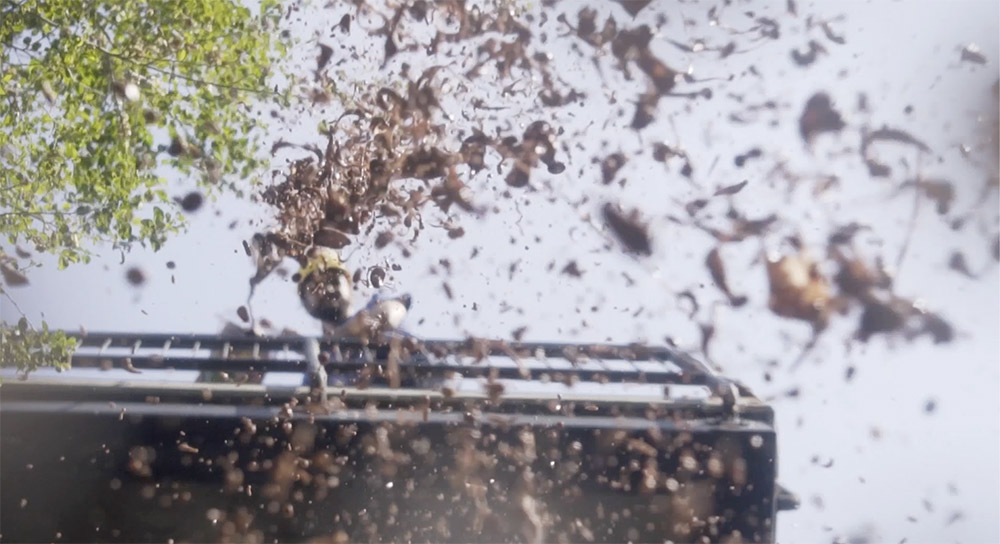
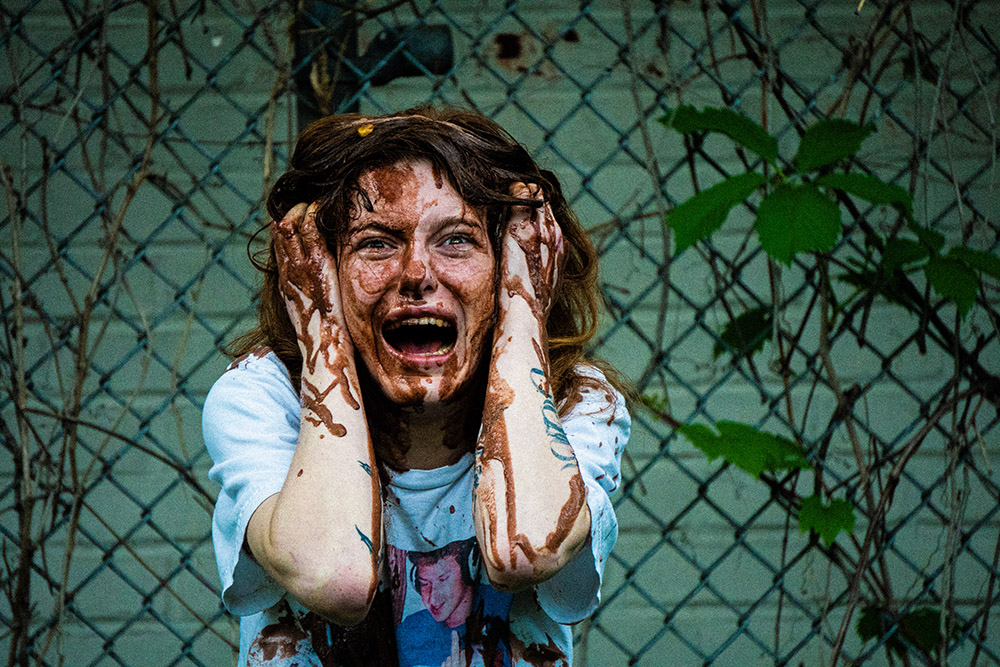
Rekha Shankar • DIMENSION20: NEVER STOP BLOWING UP

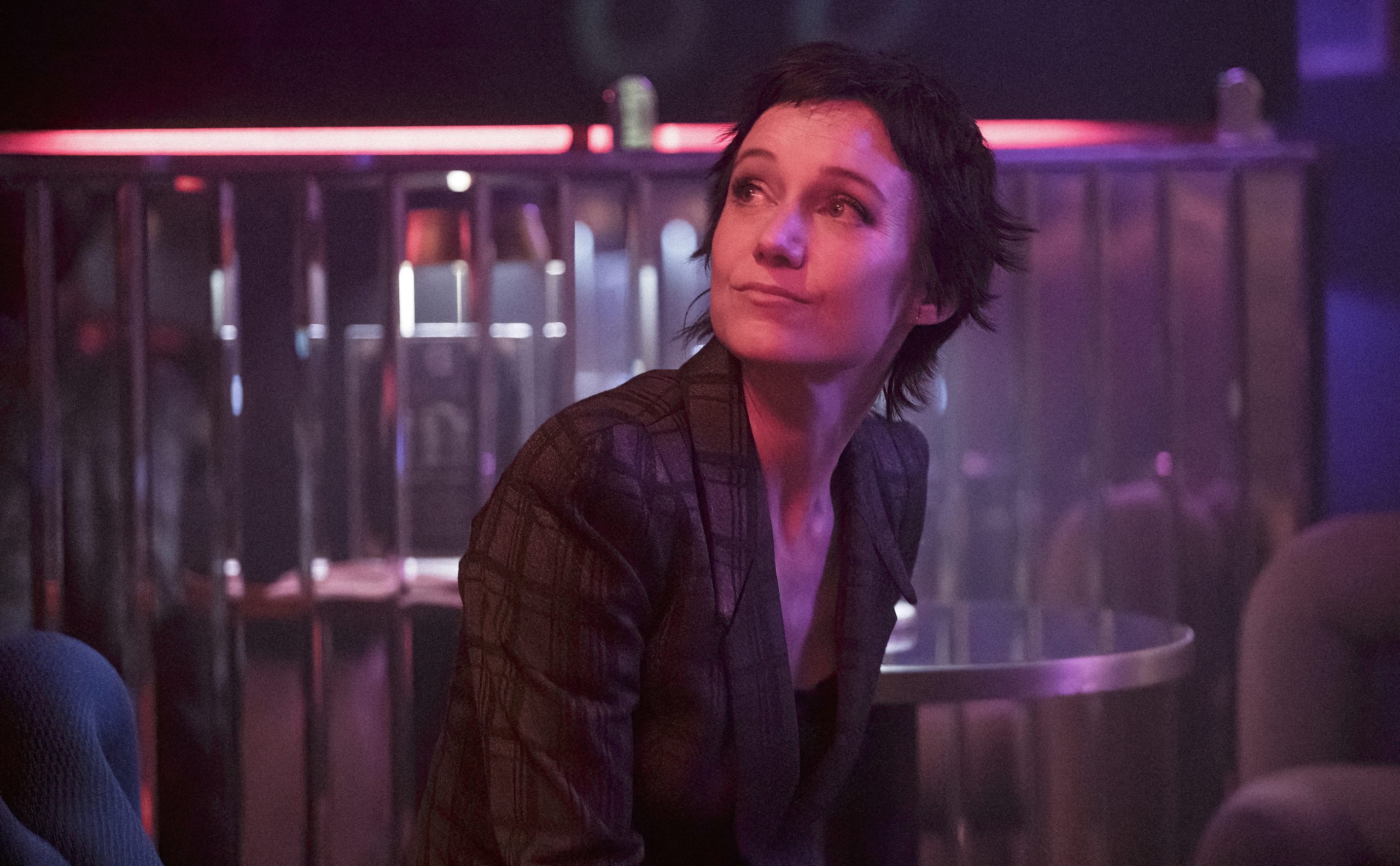
Rehka Shankar is an actress, writer and comedian, whose credits include  Magic for Humans and Astronomy Club: The Sketch Show. She is best known for her work on Dropout. TV Rekha is also a cast member of Dropout’s flagship show,  Dimension20: Never Stop Blowing Up, an action comedy D&D show with strong Last Action Hero meets Jumani vibes. We caught up with Rekha to find out more.

What is the pitch For Never Stop Blowing Up?
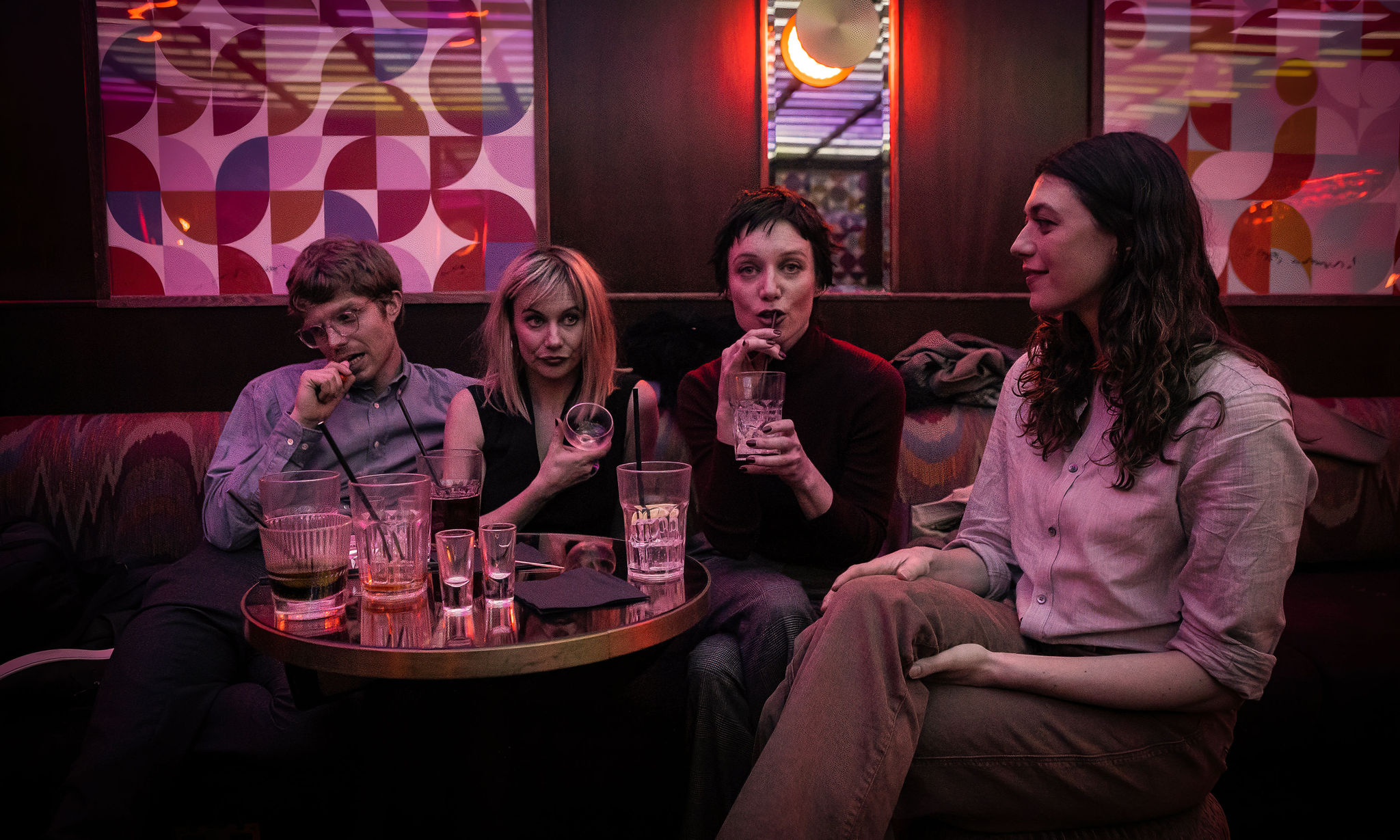
If the dumbest action comedy you’ve ever seen became a Dungeons and Dragons campaign, so every character is a loose cannon goofball making goofball choices within the framework of a Jumanji-type campaign.

Your character is a little old lady. Where did the idea for that come from?
So the old lady just came from me, asking myself,What do I like to play?

And I love playing kind of hapless, batty, detail-oriented, like detailed characters. They kind of have a heart of gold. And I love old people. I was half-raised by my grandparents. I know how to play an old Indian lady very well. And I had just done DesiQuest, which is an all South Asian Dungeons and Dragons campaign, and played an older lady there who was kind of tough his nails.  Aunty knows best!

I wanted to play something different from that. I wanted to play the kind of old lady who has issues with technology and works in the shop.  She’s been there a long time, and she’s the only one who knows their internal system of bookkeeping, kind of thing. And it’s so sweet, but probably so annoying at the same time.

For my inside-the-videotape character, I just wanted to go with the opposite. What’s the opposite of an old lady who hates technology? A young hacker, and hackers are totally the type of person you see in these action comedy movies.

So I based G13 on a mix of Riley from National Treasure, the guy in the van, and kind of took it to an extreme. I wanted it to be like an insular hacker who has loyalty to nobody, who has connections to nobody except himself. All he cares about is winning. All he cares about is who we can get something from, who we can steal something from.

Playing two characters at once sounds like a challenge, especially as Dimension20 has a very strong improv vibe. How hard was it to do?
It was really hard in the first few episodes. I was having a tough time embodying G13 and Usha at the same time because I could not grasp what she would know that he wouldn’t. And what he would know that she wouldn’t. And how I would marry those because I’m like, if Usha is sitting at the computer in G13’s body, does she know what G13 does? And my mind said, No, I think this woman is Fort Knox when it comes to ingesting new information about technology. She’s like a hacker’s worst nightmare, because she cannot be taught anything. You can’t break through there to the wall. But at the same time, she’s very susceptible. She’s an older lady who’s kind of gullible, so that’s why she ends up getting hacked. So I found it very hard to marry those things. So when in doubt, I kind of just looked into the rear-view mirror of what I established for Usha and for G13, and tried to make a decision from there.

What was your favourite moment in the show?
I loved the grenade-throwing bit. When I threw the grenade, and then immediately regretted it, and then tried to catch it, and then it exploded in Alex’s hands. I thought that was so unbelievably funny. And it was just so like, like, Naked Gun type of comedy, like, so unbelievably stupid.

What’s your favourite action movie?
National Treasure. So I did look up some stuff about the hacker character from there, and I looked up some of the moves that they used in that movie. But in terms of, like, my favourite action movies, I really like, like, stuff with cool choreography.  I thought, when I saw Rush Hour for the first time, I thought, like, Jackie Chan’s just incredible. Every clip I see of him is crazier than the next.

Simpsons or Futurama?
Futurama

Truth or Beauty?
Truth!

You can watch Never Stop Blowing up on Dropout.TV today. And if you have any questions, they’ve produced an FAQ. (We’ve updated this article to let you know that you can also join Dropout as Superfan, details are here.)


Siobhan Thompson • DIMENSION 20 – Fantasy High Junior Year

Siobhan Thompson is a British-American comedian and script-writer with credits such as Rick and Morty and Adam Ruins Everything.  She is also one of the intrepid heroes on Dropout.TV’s actual play D&D show, Dimension 20. We caught up with her to talk about the Dimension 20 campaign, Fantasy High Junior Year.

How would you pitch Fantasy High Junior Year to an elderly relative who loves Dungeons and Dragons?
First of all, very silly. But I think that a lot of it is about like, the consequences of your actions sort of catching up with you. And also, that moment in school, where you suddenly realise, oh no, I can’t coast anymore, I have to study and do my work. And for each character, that means sort of a different thing. And everybody has a different accent. At the end of the day, it’s full of fun, it’s a show about friends in high school. And that happened to be magical.

This is Season three of Fantasy High? How different is that from the first two?
The first one, we really didn’t know what we were doing, in a good way I think.  It’s always fun to go in not knowing anything, and so you can break rules that you don’t know exist. And then second season, because it was all live and we were shooting it week to week, it felt like we could tell a story in a way that is little different. Because we could get some kind of audience interaction. We didn’t have any of the minis. The structure of it was very different.

And then going into this third one, we’ve now been doing this show for five years. We’ve shot a lot of episodes of it. I couldn’t tell you how many, I mean, I shot thirty-six Dimension20’s last year. So we’re much more, I think comfortable playing the game, everybody knows the rules of the game, which we certainly didn’t going into freshman year.

We’re in a whole new, big, fancy studio that the air conditioning works properly, and we have crazy monitors and projections and exciting. All of the minis have LEDs in them now, and they’re so beautiful. I mean, they’ve always been beautiful, but they’ve leveled up so much this season. It’s so impressive.

Has the success changed the vibe. Because there was a 3am in the morning, you were in a warehouse in the middle of nowhere, vibe to the earlier shows has, has that success changed it in what way?

I think somehow it has. I think the nice thing about us shooting all of the seasons outside of the public eye is really nice in that we get to present a finished product where we’re not thinking week to week about what the response is going to be, because we’ve already done it. The whole cast work really hard. We’re also all great friends, even if the show has sort of changed our lives a little bit, and it’s a much bigger operation now. We still have that friendship, and that friendship is maintained and deepened over the years, and I think that that’s sort of the core of it, but we also work very hard at making it feel as small as possible when we’re in the dome.

You’re the only British person amongst the Intrepid Heroes, and British geek culture is very different. How often does that come out in the show?

Certainly you’ve been influenced by a lot of that stuff Pratchett especially. Pratchett is so huge all over the UK. He is probably my favorite writer, and I’ve drawn so much from him, especially like his ability to justify the stupidest thing on the planet. It is so delightful to me, like all of the Pratchett footnotes, that energy is something that I always try to bring into my writing. Like what’s the silliest idea? And then how can I justify that, so that it seems like it’s the only idea, or the best idea, or the actually the most sensible idea. And then there’s Lord of the Rings.

Over Christmas I often I re-listen to the BBC dramatization of Lord of the Rings with Ian Holm and Bill Nye, which is so wonderful. I grew up with Radio Four, so when Radio Four archives started coming out, that was also very huge for me. Especially because of The HitchHikers Guide To The Galaxy  which is wonderful. But suddenly, in the early 2000s, you got access to all of this old comedy, as well as the Radiophonic Workshop. Science Fiction that was made for Radio Four and then never rebroadcast or made easily available. Like John Wyndham dramatisations or, you know, Return to Mars.  They were just wonderful.

Doctor Who or Doctor No?
Doctor Who!

Rick or Morty?
Oh, Morty. Rick’s a nightmare.

Truth or Beauty?

At this point in my life, beauty, truth is transient. Beauty is forever.

You can find out more about DIMENSION 20 – Fantasy High Junior Year via Dropout.TV. (We’ve updated this article to let you know that you can also join Dropout as Superfan, details are here.)

Editorial note: This is a previous interview that has had it’s links updated. 

Charlie Tymms – THE HITCHHIKER’S GUIDE TO THE GALAXY

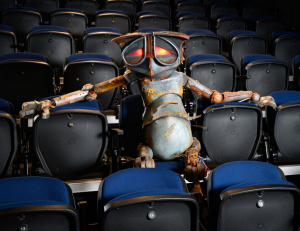
Charlie Tymms is a world-renowned puppet designer and maker who creates wonderful creatures for the theatre. Their work includes Hamlet, Spirited Away, The Wicker Husband, and Watermill Theatre’s production of Lord of the Rings. They also created Marvin the Paranoid Android for the new theatrical version of The Hitchhiker’s Guide to the Galaxy.  We caught up with Charlie to find out more.

How did you end working on Hitchhiker’s Guide to the Galaxy?
A cast of puppets, maybe led by Shelob, recommended me.

What was the appeal of making puppets for this project?

I grew up listening to The Hitchhiker’s Guide to the Galaxy and have long followed Douglas Adams. I think, like most fans, Marvin the Paranoid Android had a big emotional connection for me, so I was enchanted by the idea of realising him as a puppet for the stage.

What’s the coolest thing that you know that most people don’t know about puppets?
Puppets can see you.

What was your first introduction to Hitchhiker’s Guide to the Galaxy?

A teacher called Haggis introduced the radio series to my brother when I was little. It became a family favourite and to this day we still quote from it, and in particular Marvin.

Do you know where your towel is? What does that turn of phrase mean to you?

The towel is essential to me because I live on a ship and it serves not only multiple water-related purposes but porthole insulation on a cold night, a baffle when he plays the cajón and a robe when fending off a surprise attack from the pirates in the early hours. For the hitchhiker, it is the most important item they will ever carry.

What has been the biggest technical challenge?
The primary function of any puppet is the performance of life, and part of my job is to make an armature that can be expressive according to the actions needed within the script. Technically it was a challenge; we had one puppeteer who needed to have full mobility in all Marvin’s limbs, be able to wheel Marvin across the floor, sit him down and not lose control of his legs in the process. Andy Evans, our puppeteer, was brilliant in getting the right balance to enable all this to happen. Finding Marvin’s character and what he could look like was the hardest challenge due to the sheer weight of my perceived expectations from the fans. Marvin has a very emotional connection to so many people.

How do you describe your job to someone who’s never heard of Douglas Adams?
Zark, that’s a difficult question! Imagine a galaxy governed by alien bureaucrats called the Vogons who destroy our small insignificant planet, with only a ten-minute warning, to make way for their hyperspace express route. With the help of an alien claiming to be your best friend Ford, you are persuaded to hitch a ride on the Vogons’ spaceship where you are very unwelcome. My job is to make a personified robot puppet called Marvin with red eyes to help guide you on this journey through space and time. Douglas Adams was a visionary in imagining Marvin built as one of the many failed attempts at Genuine People Personalities, hence with a brain the size of a planet he suffers from severe depression, boredom and total contempt for most life forms he is bound to serve. At the heart, Douglas Adams was a brilliant, unpredictable, digressive author trying to make sense of all the data out there often by imagining radically different perspectives. He loved gadgets and technology but mercilessly satirised its users.

What’s your favourite thing about the project so far?

I love making puppets and so collaborating with the director, Arvind, on finding Marvin was an extraordinary process and working closely alongside the puppeteer Andy and puppetry director Romina to bring Marvin to life has been very rewarding.

What would your dream project be?

The Jungle Book.

What’s next?

We are in the very early stages of research and development for a puppet theatre production of The Whale Rider by Witi Ihimaera.

Thunderbirds or Captain Scarlet?

Neither. Muppets!

Tea or Coffee?

Coffee.

Truth or Beauty?

That’s a trial I am not willing or qualified to testify at and the courts have found life the guilty party anyway so why are you asking me?

Charlie can be found on Instagram and their own website. You can read our review of The Hitchhiker’s Guide to the Galaxy here.
The Hitchhiker’s Guide to The Galaxy runs until the 15th of February 2026 at the Riverside Studios London, you can book here. 

Brigitte Nielsen – RED SONJA

Brigette Nielsen

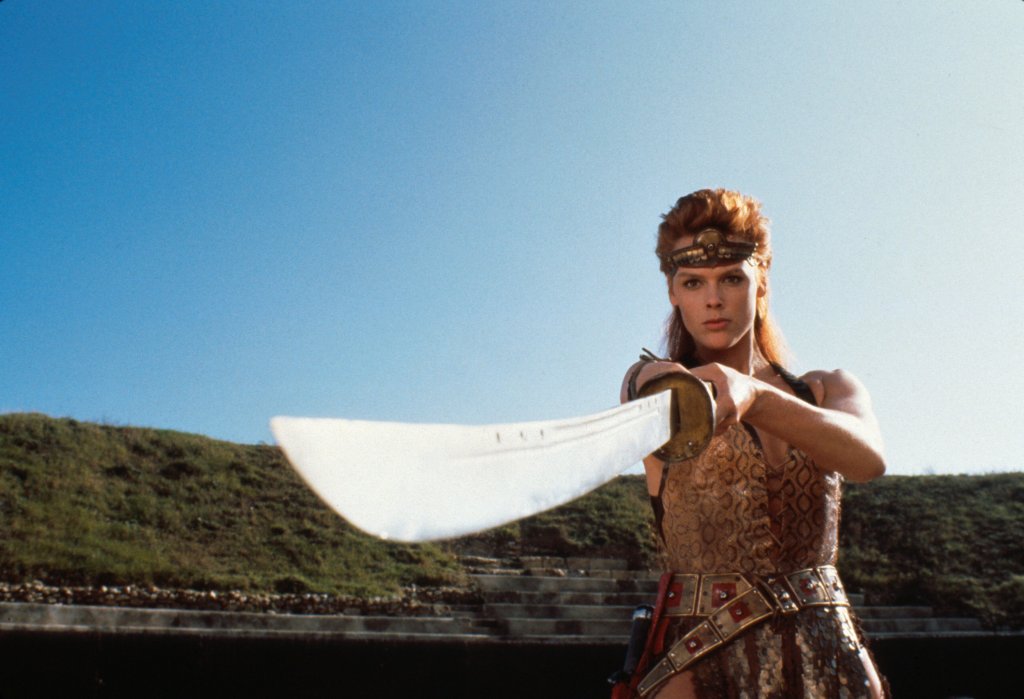
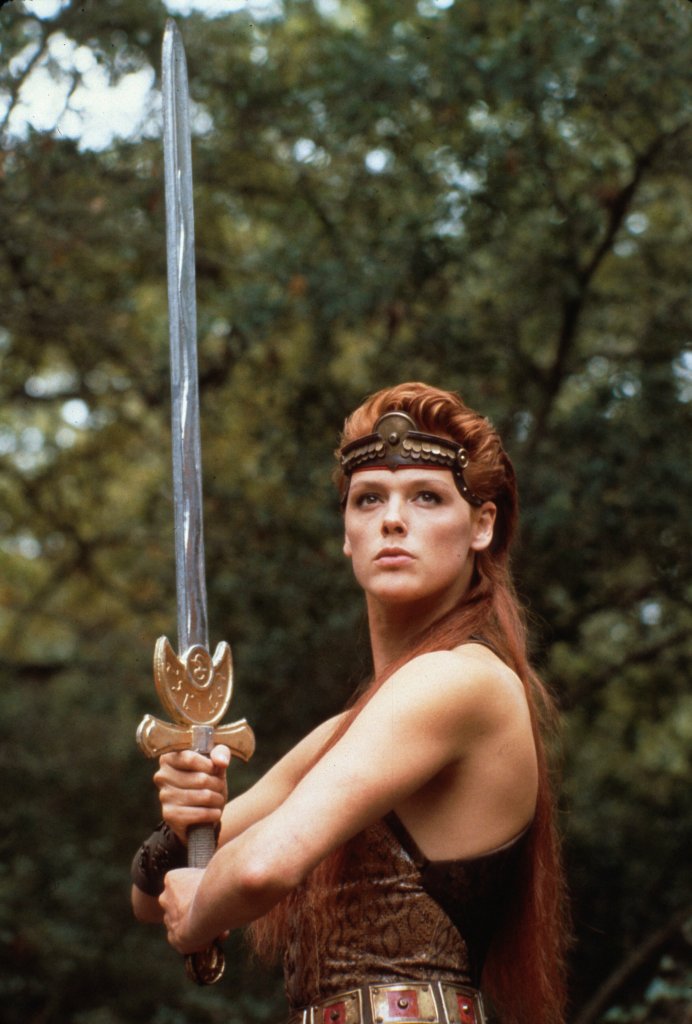
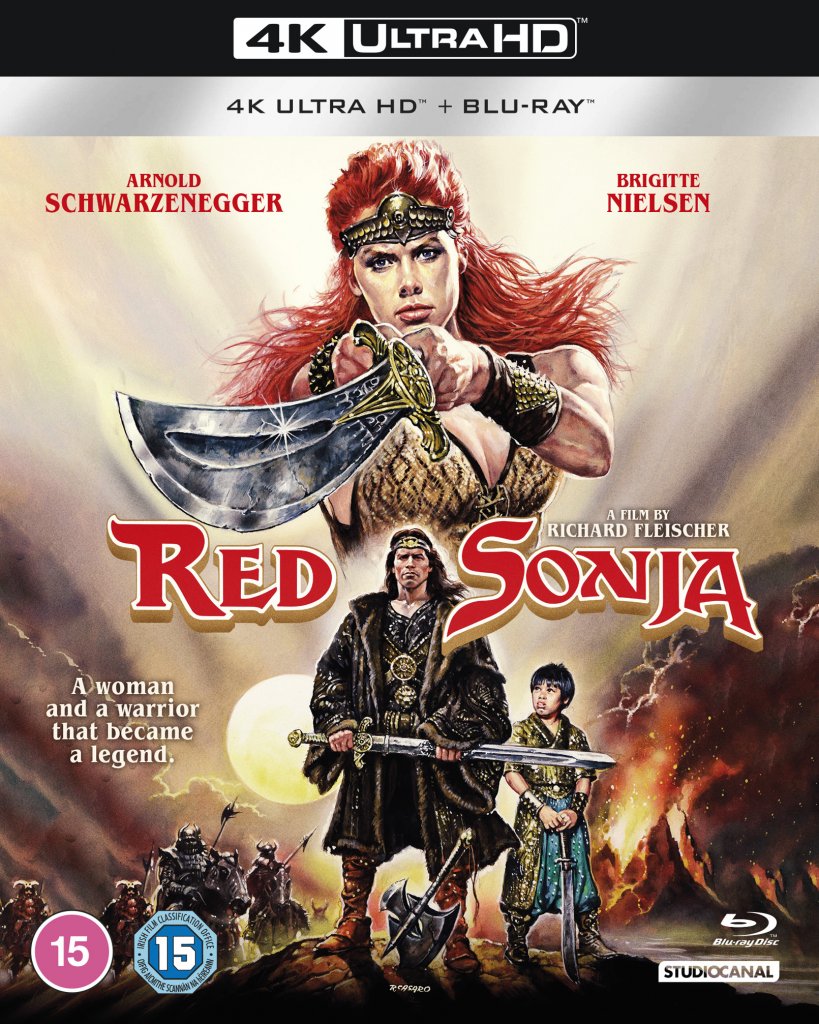
Brigitte Nielsen played the titular superheroine in 1985’s Red Sonja – the sword-and-sorcery epic directed by Richard Fleischer and produced by Dino De Laurentiis that would go on to become a cult classic. With the film celebrating its 4K re-release, STARBURST magazine sat down to chat with its star.

STARBURST: We’re here today to talk about the 4K re-release of Red Sonja. We just revisited the film, and it still holds up as a lot of fun. How do you remember the film?

Brigitte Nielsen: For me, it was an incredible moment in my life. I was taken out of my comfort zone and cast in a big movie. I never thought I was going to be a part of the movie industry at all. Recalling it, a great experience, wonderful people, including Richard Fleischer, and of course Schwarzenegger. I remember Dino [De Laurentiis] and Richard Fleischer telling me “you’re gonna be working alongside Schwarzenegger.” And I was saying “who?” I had no idea.

Have you revisited the film at all since its release?

I have re-watched it. I don’t watch it like you would, as I am emotionally attached in a different way. I think about funny times and tough scenes that took forever. Things that I could have done better. I remember for example, my first day, I started doing the scene without Richard Fleischer saying “action.” “Stop, stop,” he said. “This is how it works.” But it’s nice, because Red Sonja over the years became a cult [classic]. It’s nice that almost 40 years later, there’s a remaster.

What were your first thoughts when you heard that a 4K version of the film was being developed?

I thought, ‘good for them.’ Good for them, and good for all the people that really like it. It’s amazing how you can be doing a thing such a long time ago, and it’s gonna look different [now]. I feel proud and I feel happy that we did a movie back then that is still appreciated by a certain audience today. I wish Richard Fleischer and Dino were around to see this happen.

What was the experience like, Red Sonja being your first acting role?

I don’t think I realised how big of a deal it was. I was sent to London to work with an acting coach. I was studying with a stunt co-ordinator. I was already a very good horseback rider, but I would have to fight on horseback, so they had me immediately go to work. Everything to me was exciting. Both the script and the physical work didn’t frighten me, because I was excited and eager to be a part of it.

Do you have any specific memories from the shoot?

It was freezing. We shot on the outskirts of Rome, and I remember the little mini-skirt, and with the wind and the cold, I was freezing. They would have to wrap my frozen fingers around the sword. But besides that, a fantastic experience. It started a whole new life for me. I was ready to keep studying in Denmark, work in a bakery or library – a very normal life. I was taken out of that, abruptly and nicely.

It was also one of director Richard Fleischer’s last films. How did you find working with him?

He was very kind. I remember seeing him as tiny. He was this tiny, thin little man, and his hands were shaking. I remember thinking how fragile he looked in comparison to all these Viking-sized people that were cast. I had enormous respect for him. He almost had a director’s tone and a father’s tone. Some directors can terrify you; talking and overpowering and intimidating and running the set of their movie. Instead, Richard Fleischer was very quiet and calm and patient.

Arnold Schwarznegger expressed surprise that he was featured so prominently in the film, given he only signed on as a cameo. Did you feel short-changed, in that respect?

I didn’t think like that at all. You don’t have that kind of thinking on your first thing, you’re just happy to be there. We had a lot of fun, there was no competition between the two of us. There was a great friendship there.

It stands out for being a female-led sword and sorcery film in a time when that wasn’t really the norm. Did you feel like the film was ahead of its time, in that respect?

I think it was. You see what’s happening with Marvel today. Features today, they feel like if they don’t have Marvel attached, they’re not gonna go anywhere. I remember back then, filming the fish monster scene, the only thing filming Red Sonja I would have done differently, I would have made it look better than it was back then. However, the strong female opinion and look totally worked then and even better today. They should make a remake and make it beautiful. She’s a great character.

On that note, what would you personally like to see from a potential Red Sonja film?

She’s independent, she’s super strong, she’s funny, she’s wicked, she’s a good friend. I would want to see it become a movie that everybody should go see. It would be a representation of all us women out there. No matter your race, no matter your religion. She can take on anyone or anything, and anyone is allowed to be her in their way.

Were you ever approached about a sequel?

The film, when it came out, didn’t do what it was expected to. Red Sonja became popular with time. I think, back to your earlier question, it was probably not the right time to come out. But we did it, and it’s great that we did it. They just need to make a remake.

Would you hope to appear, to pass the torch, so to speak?

I would be more than happy to hand over the torch. There’s a lot of wonderful female actors. Do I see myself in there? I don’t know. Maybe I can play Red Sonja’s mum. Everything is possible in the film industry. Especially with the way that they take features today. Like what’s happening with Fast and Furious, people keep coming back.

Finally, the movie ends with a playful battle between Sonja and Arnold Schwarzenegger’s Kalidor. Who do you think would have won, if they had fought for real?

Red Sonja.

Hands down!

Of course. Please, don’t be blinded by those big – [laughs]. Definitely Red Sonja. Her strength and intimidation!

Brigitte Nielsen, thank you very much!

RED SONJA is out now on DVD, Blu-Ray and 4K UHD from STUDIOCANAL and available to stream on STUDIOCANAL Presents.

Luke Sparke • PRIMITIVE WAR

By adapting the first of Ethan Pettus’ novel series, PRIMITIVE WAR, to the screen, Australian writer-director LUKE SPARKE has stepped into the big time. We spoke with Luke to find out more about the ambitious movie…

STARBURST: What attracted you to the novel?

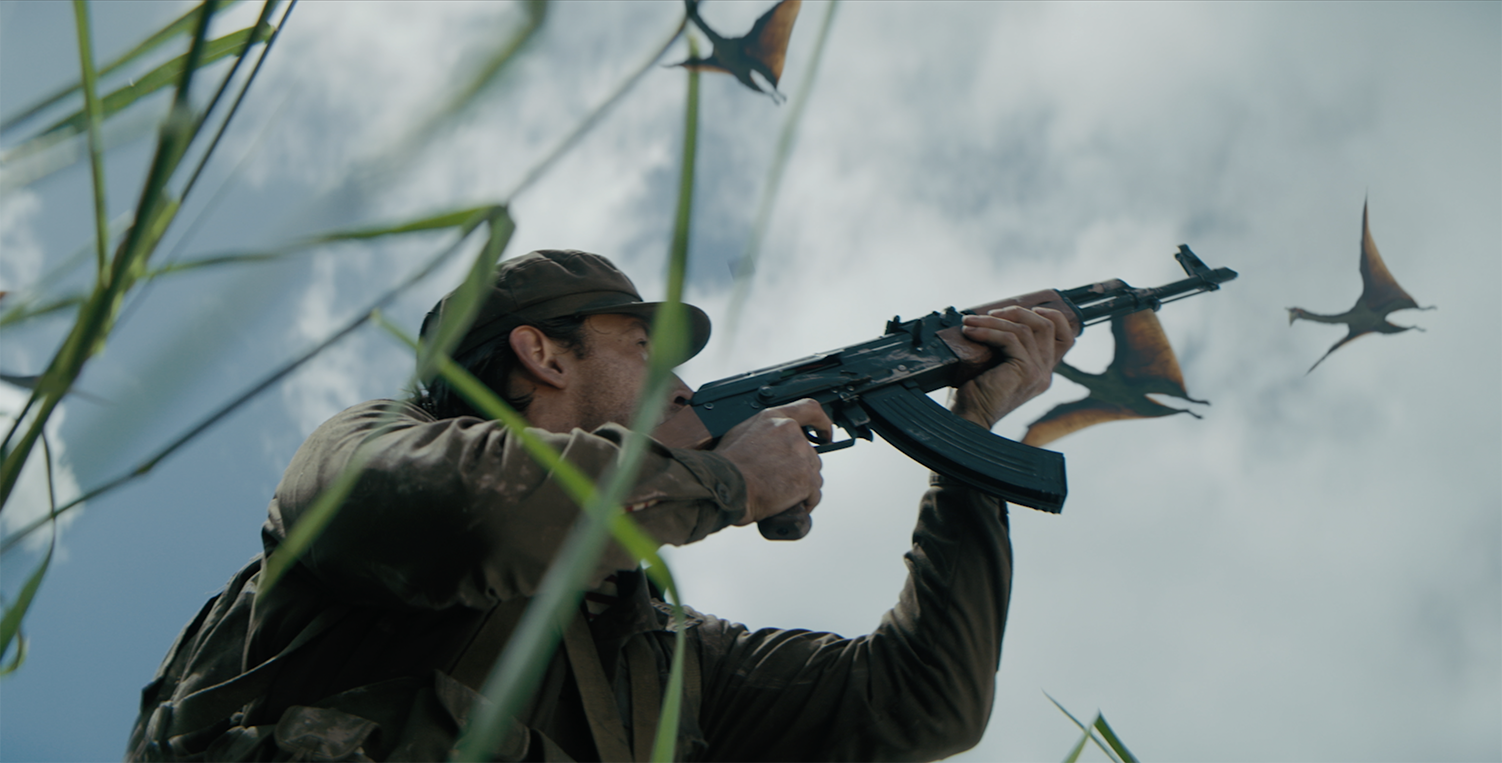
Luke Sparke: I think it worked for me in many different factors, because not only am I a huge dinosaur fan, I’m also a scholar of history. Part of our family’s business growing up here was military costumes and props. We’ve got the largest in the Southern Hemisphere, and I’ve worked on films like X-Men: Wolverine and The Pacific before I became a director. For the child in me, who grew up playing with GI Joes and Jurassic Park dinosaurs, it just appealed to me. So all these different things were coming at me when I read it, and I knew I would be the person to take this on.

How do you balance having a modest budget with your ambition?

It’s difficult. My ambition definitely outstrips all the budgets I’ve ever worked in. I’ve a very big imagination and a very big ambition to make things the biggest they can be!

My biggest catchphrase throughout the shoot and post-production is ‘the promise of the premise’. There have been too many films I’ve gone to as an audience member, where you think the trailer tells you one thing, and you leave disappointed that it never reached that. My biggest one was that if we’re going to pitch it as dinosaurs in Vietnam, or dinosaurs versus soldiers, we want to show at least scenes with dinosaurs versus soldiers! It’s always a battle, budget versus ambition, but my ambition always wins.

When you’re directing the actors with creatures that are probably not necessarily there at the moment, what was that like?

Yeah, I used every trick in the book I could. Obviously, I would’ve loved someone like Stan Winston to build a full-size T-rex, but that’s another reason why we went into the jungle to shoot it for real, because we wouldn’t be able to even put one where we’re filming in ravines and canyons for real. I used that as a way to help our visual effects team, then have to then up their skills to make sure that the T-rex matched the landscape, rather than trying to do it the other way around. But for the smaller raptors and the Utahraptors, we did have some large on-set puppets that we used, and some other guys with motion spots on themselves so we could actually have someone interacting and holding the actors down and feel like they’re actually fighting someone. Those days I could direct, and then other days there was literally nothing there and I had to be the dinosaur and jump around! Then in post-production, I was filming myself in our office, doing the motions of the dinosaurs and how I wanted the animators to do, so it was almost like a second directing version in post-production, to get these creatures to feel that they’re real.

PRIMITIVE WAR is in cinemas from November 28th. You can read more on the film from Luke in the latest issue of STARBURST – available here

Gerard Johnson & Polly Maberly • ODYSSEY

Poster for Gerard Johnson film Odyssey starring Polly Maberly

In Odyssey, an estate agent gets in over her head with debt and a frantic personal life. Things get even more perilous when the gangsters she owes insist she does them a favour. We caught up with the film’s director, Gerard Johnson (Tony), and his wife, Polly Maberly, who plays the lead character, Natasha, to find out more about the anxiety-inducing thriller…

STARBURST: What gave you the idea to run the story around an estate agency?

Polly Maberly: I used to work as a lettings agent in Islington. It’s a small boutique agency, and it was a jobbing actress resting job, so I was there on and off for a number of years, with several other actors, but when I came in, it was just a failing business. It was a nice setup, but it was starting to fall apart, and there were definitely things coming away at the seams; if you wrote it down, you’d think it was a bit far-fetched. And so I got to know the real ins and outs of the job without being so cut-throat as the character Natasha is about it, but I’d be drawing up contracts and moving money around which didn’t always add up, you know, fielding calls from tenants and landlords alike, and so I got to know that side of it. I told Gerard bits of stories from there that became the inspiration.

Gerard Johnson: So Polly knew that side of it and then I wanted to give her a character to really sink her teeth into, someone who’s quite different to who she is as a person in real life, and then put these obstacles in her way. I’m always interested in those kind of stories where you really are on the journey with someone and how they’re going to navigate through the horrible things that happen; the more in trouble they are, the more you’re wanting them to get out. They keep digging themselves in. That stressful kind of cinema is what I love as a viewer as well as in the films that I try to make.

The character’s fairly unlikeable, but you could see where she’s really dug herself into a hole and by trying to dig herself out she’s getting deeper and deeper. Polly, was it hard to get into that mindset?

Polly: It was hard, but it was lovely once I cracked something about her. We did three or four weeks rehearsal beforehand, and when we first got into the rehearsal space, we were discussing the hierarchy of the office. Gerard said, let’s set up the scene, and I had to walk out of the scene, and the others were inside the office, jumping around the script and riffing and improvising, which I’m slightly terrified of. I was outside the door and waiting to come in, listening to Charley Palmer Rothwell and Kellie Shirley riffing, very understated and brilliantly comedically. I came in, and I was doing the same – though I was trying to match them and failing. I was terrible and all over the place. By the end of the first 48 hours, I was basically saying to Gerard, you’ve got the wrong girl! I didn’t know what I was doing, having thought I had a good idea about her. Anyway, I had this epiphany where I realised that she didn’t really listen to anybody and she didn’t need to match them, she just needed to go through them, and it was enlightening. It felt very freeing, and so when I came to the set, it would have been such a different character if I hadn’t had that time. She was fantastic to play, because as soon as I made choices and I’d done a few days, I felt like I could do anything because it felt authentic. It’s great being bold and mean at the same time.

Is it easy enough to leave that behind at the end of the day?

Polly: Yes, you’re knackered! We live together and we have kids as well, but what was really nice was, we were both coming home and going to work at different times, and meeting on set. It’s nice when you’re making the same film rather than someone saying this happened, this happened. The whole crew and the whole cast become like a surrogate family and it’s really easy. I mean, it’s still stressful to make a film and it’s tiring, but it’s not bad stress.

Gerard: Also, because I do a long rehearsal period, we’ve had all those big questions and discussions. Once you’re on set, Polly and all the other actors are not going, “I don’t know about this scene”, we’ve had all those discussions. Filmmaking is so stressful in other areas, locations, camera, everything else, that if you’ve got all that stuff under control, you then have more freedom trying stuff out.

And was there a chance to try different takes?

Gerard: You’ve got that freedom, but you’ll find once we’re in that space, you pretty much know we’re going to do it this way. There are always opportunities, “can I just try this or try that” – yeah, why not!

Can you talk a little bit about the cinematography? Because there’s lots of wide-angle lens and very close shots.

Gerard: Yeah, we tested a lot of lenses, Korsshan Schlauer [DP] was using a lot of modern lenses, there were some Ukrainian lenses that I really liked but they’re all lacking a little bit of texture. Then we found these incredible Todd-AO lenses, which were the same lenses that were used in a lot of Apocalypse Now. They’ve got this beautiful anamorphic feel to them that’s almost blurring at the lines.

Yeah, there’s a bit of vignetting and things like that…

Gerard: There’s loads of vignetting, and the focusing was an absolute nightmare! There are a couple of times in the film where it does go a little bit soft. You wouldn’t get that on a new lens; it’s super sharp, but to pull focus, it took about half an hour. For a focus puller, that’s enormous, but for me, that’s the beauty, especially if you’re shooting on digital; the Alexa’s a fantastic camera but you need something to soften it and those lenses did a really beautiful job. I tend to shoot 360 so we’re out on the street, we go into a lot of places where there’s people, they’re not extras. They’re people not knowing we’re going to come in with the camera, that’s the sort of style that I love, it’s a semi-documentary, fairy tale-style that I’ve always loved doing. Because it’s not period, you can go out and about with the camera, and I’ve noticed now, much more so than when I started making film, people are less bothered about cameras. Everyone’s got a camera now, you could be doing anything.

You mentioned a little bit about a documentary style. Certainly, with the first few scenes, it could be something like The Office. Was that intentional before you lead up to the later horror?

Gerard: Yes, everything I do is between my two loves, the social realism and the genre, it’s always a mixture of those two. I don’t ever want to make straight genre or straight social realism. I keep it as authentic in the worlds that I’m making films about, but then there’s that side of me that starts to kick in, “okay where can we take it? How dark are we gonna go with this today?”

And what is that like for you as an actor, Polly?

Polly: It felt very concise, it was such a fast pace and there wasn’t room to breathe, you couldn’t post-mortem scenes; there were lots of night shoots, so I was living on this nervous, exhausted energy, which made me feel quite frenetically energised. I just rolled with it and I felt really strong, even though I looked a bit emaciated because I was full of nervous energy. I wasn’t stopping for meals much, but it was really lovely not to have to think about what just happened and keep moving on. When you don’t have time to think, I think you don’t comment all the time on it.

What was the biggest challenge during the film?

Polly: For me, bar the emotion of the journey she goes through, it was running in six-inch Yves Saint Laurent boots, fighting with the biggest guy in the house, but that was fun as well. And a glorious challenge was the scene with Tom Davis and Cavan Clerkin as the gay couple who I’m showing around the townhouse. Oh my god, Korsshan kept twisting the camera to find a straight face, but never did. We did about six takes, about 25, 30 minutes each time. There was so much more footage there, it could be made into a short film about a couple looking for a house to let.

Gerard: We didn’t have the main location, Calypso Farm, until about three weeks into the shoot. Not knowing that we were going to get that amazing house was the biggest challenge. On my one day off, going in cars up and down the country to try and find that location and then realising when we got there that it’s totally wrong! I think when you’re making films, it’s nice to challenge yourself and do stuff that might be out of your comfort zone. It was the first time I worked so much with stunts. I’ve had stunt guys before, but this was really breaking down every single part of that end sequence into ways of shooting that I’m not massively a fan of. I pretty much do 30-minute takes for everything I do. So that was a challenge, in a good way. It was like, suddenly I’m not really directing this anymore, the stunt guys are doing their bit. It was really nice working with storyboards as well, which is something that I don’t do because I’ve got it in my head a lot of the time, but this really needed to be played out.

And how long did it take to shoot that one scene at the end?

Gerard: It took a couple of days. We had to break it down because there’s fire, there’s prosthetics, there’s all these bits and pieces that could go wrong. I’m very pleased with the end result.

What was it like being covered in blood and stuff?

Polly: It was fine, I mean, geez, it was really not a hard day’s work. We only did it for a few hours, really. In the last scene with Mikael [Persbrandt, who plays The Viking], I kiss him goodbye, and every time we did it, we got the giggles because we were sticking together! So you see me leaning into his shoulder, and just pushing away. But it was great, I was lathered in lots of blood. We had only a couple of outfits that matched, which I took home with me.

ODYSSEY is available on Blu-ray and DVD from December 8th and on digital platforms from December 22nd. You can read our review here

Craig Fairbrass • CLIFFHANGER

Set against the stunning backdrop of the Italian Dolomites and directed by Renny Harlin (Die Hard 2), Cliffhanger is a legendary ’90s action film that literally grips its audience from its iconic opening sequence. To celebrate its new digital release on StudioCanal Presents, STARBURST magazine caught up with villain/muscle Craig Fairbrass to nostalgically reflect on an exciting journey through Hollywood, which led to a career-changing role as Delmar. We also discuss picturesque filming locations and what it was like to work alongside an incredible cast, which included Sylvester Stallone, John Lithgow, Janine Turner, Caroline Goodall, and Michael Rooker, to name just a few…

STARBURST: Can you tell us how you got involved with Cliffhanger?

Craig Fairbrass: To go right back to the beginning, I was in a TV series called Prime Suspect, with Helen Mirren. An American agent saw me in the show and was talking to my agent in London about bringing new acting faces out. This is in 1991. They were asking if they had any young actors who they felt might be right for the market out in the States. My agent said, “they love your look, they love everything about you, why don’t you do a six-week trip to LA?” I had always dreamt about Hollywood – it was this magical place. So I did, I lent some money, got an airline ticket and went out there.

I had a lot of meetings because, when you’re fresh and new, people want to meet you. Because they never know if they’re going to discover the next big thing. One of those general meetings was with a lady called Mindy Marin, who was the casting director for Cliffhanger. I went in, met her, had a really good meeting with her, and she told me they were putting this movie together with Renny Harlin from Die Hard 2 as the director. At the time, I was obsessed with Die Hard 2; I’d watched it about 100 times. Because all of my mates used to say to me, “See all of them geezers walking about, you could easily be one of them!” and that was one of the things that stuck in my mind when I met Mindy. I said, “Listen, I would love to meet Renny Harlin. I’m a massive fan. Whatever becomes of the film, I don’t care, I just want to meet that guy!” She set up a meeting, I met him, and he really liked me. He said, “We are trying to put this international group of villains together” They are all from all over the world. There’s no reason why we can’t have a cockney kid in there.” So basically, that was it. I did two scenes; everybody had to read the Qualen sides, the role that John Lithgow played, so I did that. I was going home in about a week, and I heard that they liked the tape. I went back to do Series 2 of Prime Suspect, and time went on, so I thought that had gone away.

Anyway, got a call from the agent, and he said to me, “Listen, they want you to do another scene in London” I said I’d already been up for it three times; they know what I look like; they know what I can do; they’re driving me mad! Anyway, you have to jump through those hoops; it’s all part and parcel with the root and the game you have to play. I did another scene. Originally, I was going to play Kynette, which was the role I read for and the one I was offered. Two weeks had passed, I’m in the bath one night, and the phone goes. My wife said, “It’s your agent, Mark.” I ran downstairs, soaking wet, and he said, “Craig, you got an offer on Cliffhanger, do you want to do it or not?” It was like a dream come true. It wasn’t until we got out there, when they put everybody together, in Cortina in Italy. They looked at us all, deciding who would do what, so that was it, I became Delmar. I was one of the team! I was the smallest one. I’m 6 feet 3, and I was standing there on tiptoes, trying to push myself up a bit.

A lot of the stunt sequences in Cliffhanger are legendary, could you tell us a bit about what you remember the most about working with the stunt team on this movie, and why you think their work on the film went on to become so well known?

Oh yeah, Joel Kramer was the stunt co-ordinator. Really lovely man. Very experienced. Everybody who was on that film was the same people who did all the epics, from Predator to Die Hard; it was the same teams. If there was a big, giant movie being done, this was the team. So I went in, I moved about with them, fighting and throwing punches. They loved that I could throw punches, but it wasn’t until Sylvester Stallone got involved that they were like, “We want to pull back from that.” We want to use your ethnicity, where you’re from, you’re British, it’s the football thing, the soccer thug, as they called it. So we went down that route. Michael Rooker, who I did a lot of my scenes with, is a naturally hard geezer. He was keen, did everything himself. Working with them, and then working on the film, over the four months, being around it, and watching Stallone do his stuff, they were very careful to treat everybody, look after them, abide by the rules. That was it. So one of my fights ended up being very football-oriented.

Your fight/death sequence with Michael Rooker (Hal) is iconic, and it’s set on top of a mountain, with a stunning backdrop! Can you tell us about how that whole sequence came together?

The problem was that it was pushed back three times because everybody was waiting to do their fight scene. Everyone’s anxious. In a movie like this, they’ll shoot over two or three days. It’s not like you do a low-budget film in England, and it’s done in a morning. We were fighting against the elements of the weather, so every time that fight was scheduled, you’d get constant, new schedules. New schedules were constantly coming in due to the weather because of where they wanted to film that actual fight, with that cinematic precipice, as far as the eye can see, mountains and blue sky. We had to wait until it was a really good day, and finally those days came around.

There was a lot of apprehension there for me, because it was quite a big deal. You’re always concerned, you don’t want to mess it up, you want to do the best job you possibly can, even though I’m under no illusions that the role I played was very small. It was integral because it counted down each baddie’s death. It was quite a big deal. I didn’t really realise, because of the undercurrent, and the undertone of the fight, the racism thing, the violence of it, the character I played, a lot of my stuff got cut. It wasn’t until I think many years later that the uncut version came out, because that fight was deemed the most violent in the film, because of the snapping of the bones, the stamping, the language that went with it. It was softened down in the original, cinematic, theatrical version when it first came out.

What was it like to work alongside Sylvester Stallone (Gabe), and what do you remember the most about that kind of acting dynamic with him?

It was a very special time for me. I was an unknown actor, I’d borrowed the money for an airline ticket, I’d gone out to the states, I had a lot of auditions, I got an offer on another little job that fell through, then all of a sudden, I sort of hit the jackpot. I was a massive Stallone fan; I was obsessed with the guy. He’s one of the reasons why I became an actor. When I first arrived in Cortina, our hotel rooms were side by side, because his villa wasn’t ready. So I had him as my neighbour for a couple of weeks. I remember the first time I met him. He came out, standing there, and he shook my hand, saying, “Welcome aboard! We love this. If you want to change or do anything, then just let me know”, and I just thought, “I’m standing here, talking to Rocky!” he is a lovely man. He gave me a lot of great advice, a lot of confidence. On a lot of occasions, if I wasn’t doing anything – we had a lot of time off, because it was such a massive shoot – you could always go to the set, and watch sequences being filmed. He was so gung-ho to do everything, always throwing himself about, jumping off things, doing stuff. He was a massive driving force, you just look at that man and you think about what he has achieved, still to this day, I idolise the guy.

Digging into the dynamic between the group of villains, what do you think Renny wanted to see from that, and what was that like to work on/develop alongside John Lithgow (Eric Qualan), and Caroline Goodall (Kristel)?

The funny thing is, Lithgow was cast right at the last moment; someone else was going to do it, and then he came in. I thought he was a fantastic Qualen, because he had the size, the presence, and the accent. Even though there were a lot of us, there was still a natural competitiveness. American actors can be very much like that. We’re all together in a line, I’ve never experienced that, working in London. I realised on the second day that it was every man for themselves, but I think the dynamic worked, because there was a lot of tension between the group, even though we had all been employed and pulled in from around the world. Everybody thought that they were the best, and that’s the attitude that Renny wanted. That brutal, care-for-nobody attitude.
Can you tell us a bit more about some of the locations? We heard you spent six months in Italy? Like, what did those particular locations bring, and why did they work so well?

I was finishing off Prime Suspect, and I flew from Manchester to Venice. I was picked up and driven to the top of the Dolomites in Cortina. It was like a constant dream, pinching myself, thinking, “Is this happening?!” We were based there for the first three chunks of the movie’s filming schedule, while they were building the sets. So then the three units moved. I was getting in helicopters to go to work, landing on top of mountains as the sun was rising, or going down. It was an incredible experience. It was an experience that I will never ever forget. Personally, for me, it was a massive achievement. I had a lot of negativity at the time, and I was 29. My background isn’t really in acting; I haven’t got another mate who’s an actor. All the geezers I grew up with, my mates, they were in the building game. So for me, it was quite a big deal to take that chance. I had two young babies as well. I’m glad I took that chance. I took myself out of my comfort zone, and I chased the dream. I still look back on it now, because it is on all the time. When I hear that music, it brings back all of those memories.

There’s a lot of really, ambitiously incredible cinematography in the movie. What was it like to have helicopters flying around, filming in the distance?

There were no drones then. So it was, as you said, mainly helicopter shots. It was one of the first films to use the big python, you know, with the big arm that would come out again, and go out again, like extend, extend, extend. You could sit on top of the cliff, and that camera could come around, like, an inch from your face. Renny’s choice of shots, and the DOP, Alex Thomson, achieved beautiful cinematography; those big, massive landscape shots are just breathtaking, they are just beautiful. They really take you there.
The rope bridge sequence, in particular, looked really intense to do!

They were! Because when you’re standing there, you think that a lot of these things have been built for the film, you’re going around mountain tops, changing ropes to clip yourself in. You look down, and you think to yourself (Even though we were really looked after), you’ve really got to be careful. You’ve got to have your wits about you, you’ve got to be on your toes, you can’t take any silly chances, because you could die quite easily.

We’ve talked about how visually epic the film looks. I was curious to know, like, what do you remember the most from watching the movie for the first time? That must have been quite a cool moment for you?

It was, don’t get me wrong, I was just glad to be there, but obviously, I would have loved a bigger role. That’s just an actor’s thing; you can’t help it. In hindsight, when I look at it, I’d love to go back and redo it, because I was young, I was inexperienced, I was naive. I was plopped in there because, at that time, at 29, they liked the look I had. Obviously, over time, I’ve grown as an actor, and I’ve learnt my craft. It was the right role for me at the right time. I remember going to the premiere at Mann’s Chinese Theatre in LA. I’m thinking, “I’m sitting in Hollywood, watching myself in a Hollywood movie!” This was the biggest dream I had from the age of 10, and I’m now doing it. Then I went to the premiere at the Marble Arch, another big, beautiful cinematic screen. You think to yourself, “This is all part of the journey”

Delmar did survive for quite a long time in the movie, so for an actor, it was still a huge achievement!

I remember Renny Harlin telling me, “You will definitely last until the end!” So I was pleased about that, because no one wanted to die on page two, even though the actors who did were in Italy for the entire time!

This interview is to celebrate the new digital release of Cliffhanger. Why do you think the movie has had such longevity? What makes it stand out in 2025?

For me, it’s an iconic film. Any action movie that is shot in the snow, tends to have a really long shelf life, plus it’s a beautiful film. It was Stallone’s comeback movie; he was eager, hungry, and driven in that film. He looks incredible. It was that era of the Die Hard movies, and everybody was looking for “What scenario can we put this in?” Then, Cliffhanger came along, set in the snow, in the mountains, with beautiful cinematography, the Dolomites of Italy. A gripping storyline. I just think it’s a film forever.
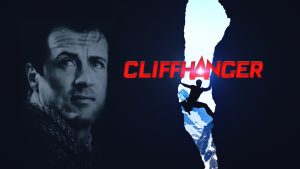
Cliffhanger is available to watch on STUDIOCANAL Presents (Prime Video) right now! Visit the Craig Fairbrass website and Craig Fairbrass on Instagram.

Derek Smalls • SPINAL TAP (formerly)

Legendary rock bassist  Derek Smalls is best known for his time in hard rockers Spinal Tap, having had his tenure with them twice documented in film, first in 1984’s This is Spinal Tap and again in this year’s Spinal Tap II: The Legend Continues. That said, Smalls walked out on his now-former bandmates, Nigel Tufnel and David St Hubbins, in September, and last month announced the release of the first song in his new solo career, “RVM (Rear View Mirror).”

In the new song, the erstwhile tap member declares, “Creative differences are different/ Nobody picks up the phone/ We were almost an actual thing/ Now I sit here alone.” The song is out now from Twanky Records, and were quite excited to hop on Zoom with Derek Smalls to speak on his career, both past and present.

STARBURST: We’re quite surprised that we’re having this conversation via Zoom rather than phone, given your history of internet addiction. Are you doing well with that now?

Derek Smalls: Well, this isn’t my internet. I mean, I’m borrowing someone’s equipment. I don’t have this myself, so yeah, I’m doing well. I’m controlling my impulses, at least in that regard.

“Impulses in that regard” is a good way to put this, given that your new single is very much not holding back, but it seems as though it’s both angry and a bit sad. What was the process of making this song?

Sadness is a big part of anger, isn’t it? I mean, if it didn’t make you sad, you wouldn’t be angry, you know? “Hey, you made me!” – that sort of thing. After the last Tap thing, as should we call it, I just was sitting alone on my bed, sitting in London and thinking, “Well, where does it go now?” and my answer was, “Nowhere.”

And from that, I thought, “Well, I don’t think I’ll be seeing these fellows again,” and then I thought, “Well, where will I see them?” and I realized, “Oh yeah – the rear view mirror, going away,” so that was the inspiration for the song. It was almost – well, I mean, it was literal in the sense that I saw it.

When returning to making music on your own, how do you find your group that is going to perform with you to make this music?

Well, my producer assembled this group originally for my first record, which was called Smalls Change and we’ve worked together ever since. We worked together on a tour, which was truncated by Covid. We did some dates before that closed us down. So it, it’s mates really now. I trust them.

They follow me, which is a good thing because I’ve been the follower for so long, I’d almost forgotten how to lead. It’s a great experience to have again, to be that leader. Going back to Tap for a moment, I always felt like I was the fourth wheeler on a three-legged stool.

We imagine it’s got to be difficult, given that the film came out this year and you’ve described it as “yet another hatchet job,” but there’s a follow up with your final concert coming next year. I am curious as to how you’re dealing with the emotions that come with that, given that it will once again be you on screen with Nigel Tufnel and David St Hubbins?

Who?

Your former bandmates.

Oh, yeah. Well, that concert has already been filmed. It happened in real life last August, and it was freezing in Stonehenge in August, which is why I guess the druids died out–because the weather in August was so wretched.

But it was like a part of a long goodbye. I was at one side of the stage and they were the other, and you know, they’d always regarded me as sort of a–David and Nigel were childhood chums. It was hard to break–well, it was impossible to break into that.

I was never a chum of theirs in childhood. Didn’t know them in childhood. I had a totally different childhood, so it was always like, “Hello, who’s in there?” and this was just the last bit of it. And it was freezing. Did I mention that?

You did. The press release for this single teases that there are more tracks to be announced. Have you recorded those?

Oh yeah. Oh yeah. We’ve recorded 12 tracks and they’re coming out the way the kids do these days, digital singles and all that. The next one, I don’t know exactly what order they’re coming in, but we’ve already one of the songs has been banned by the BBC, which I’m very proud of.

Why has it been banned by the BBC?

It’s called “Balls.”

Oh, well that’s fair.

I guess they just don’t like tennis. That’s a shame. Well, it’s tragic, really. I mean, it’s a great game.

And we assume it’s also a great track. How does tennis factor into your music making?

No, I’m just saying balls.

What do they think that’s about?

Oh, it’s balls generally. It’s a song about everything it takes balls to do.

We have to imagine that it does take balls to walk away from once again from a band you’ve been a part of for four decades plus.

Yeah, well, on and off. I mean I did leave the band at one point to join a Christian rock band for a while. Lambsblood, which was a great Christian rock band, but it was a Christian rock band. Had to get a a fish tattoo to be part of it, you know? And then when I went back to Tap, they went, “What’s that, then?” so I got a another tattoo of the devil eating the fish. But aside from that, yeah, it’s been a long time.

As you worked on these tracks, were you also working out some existential angst, as one might say?

I dunno what that is.

Were you working out some inner demons?

I cultivate my inner demons. Not as a worshiper, but as a partisan of Satan. I make best friends with my internal demons. Sometimes, they’re all I have. Friends come and go. Demons are forever.

Are there any particular demons within yourself to whom you can point as being particularly helpful?

Well, when I wake up in the middle of the night and I hear this voice whispering lyrics and I think, “That’s my that’s my rhyming demon.”

Is there a demon that helps you with your instrumentation?

No, it’s that’s waking stuff. We’re all, at least most of us, for awake for that. It’s the band. We all choose what we’re gonna do and then come together and go, “You’re not doing that, are you?” and that sort of thing.

You mentioned the fact that your last tour was cut short by Covid. Is there any possibility of a tour on this new music?

Well, that’s a great question. It really depends. I’d be fine if the music gets out there and people enjoy it in digital form or, if they really enjoy it, we could even come out with a vinyl, so forth. If there’s a demand, if I really feel like people are saying, “Derek, Derek, we wanna see Derek,” then I might browse myself to do that. Otherwise, you know I’m happy to, sit at home and watch telly.

Given your reaction to your onscreen appearances over the years, is there any chance of music videos for any of this music?

Oh, yeah, but they won’t be directed by Mr DiBergi. Hopefully he is gone back to doing dog food adverts. It’ll be somebody who isn’t trying to make a point about, “Oh, look what a fuck with Derek is,” you know. Won’t be that.

Do you have anybody with whom you’d really like to work?

Well, myself.

Directing your own videos?

I might do a bit of that. I did direct the title video for the last record, Smalls Change, so I’ve had a bit of experience doing that. I’d like to get my hands dirty again, and then of course, washroom at the end.

Derek Smalls’ new single R.V.M (Rear View Mirror) is out now. 

Dan Trachtenberg • PREDATOR: BADLANDS

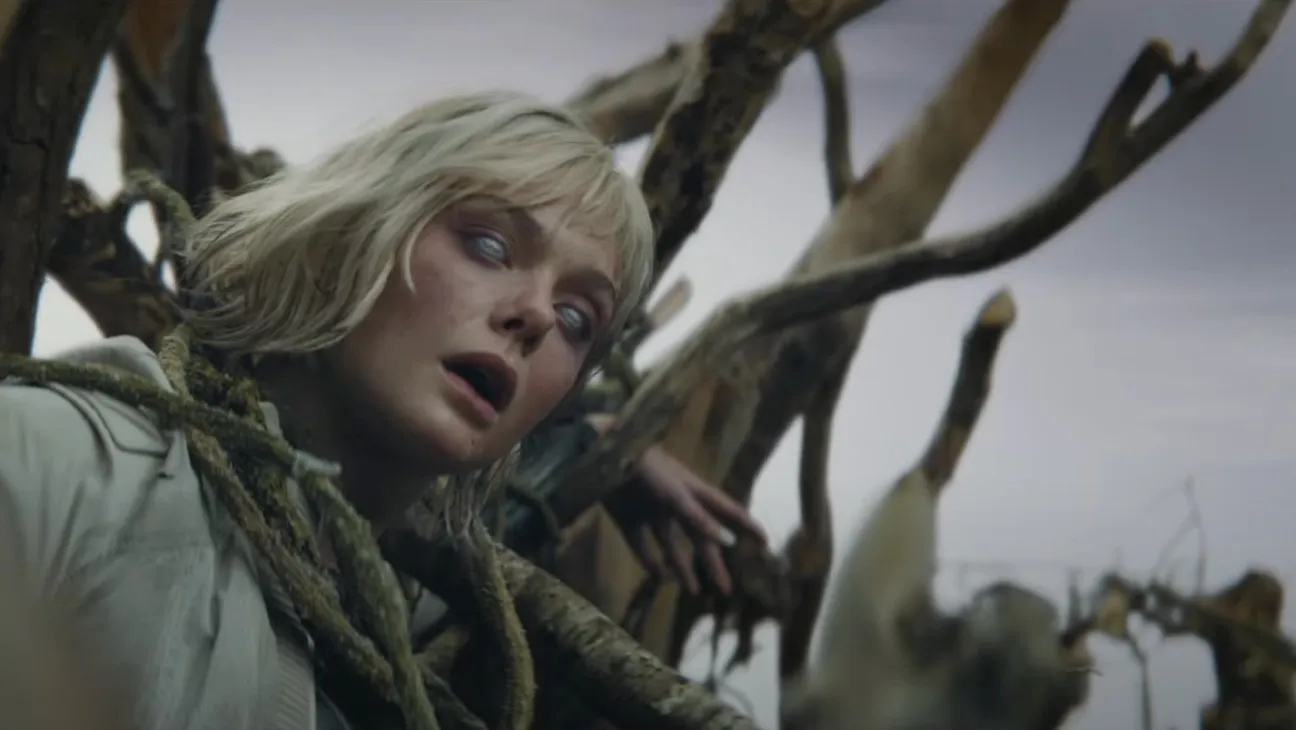
predator badlands director dan trachtenberg interview - image of predator with elle fanning as thia

With Badlands, Dan Trachtenberg once again rewires a classic genre from the inside out. After 10 Cloverfield Lanes claustrophobic reinvention of alien invasion and Preys stripped-down frontier survival story, his latest Predator film continues to push boundaries: now is the time for the Predator itself to step into the role of protagonist.

For the first time in the franchise’s nearly forty-year history, the Yautja – long defined by its brutal efficiency and mythic menace – becomes the hero. But Trachtenberg isn’t out to redeem a monster so much as to reframe what strength, empathy, and belonging mean in a universe built on violence. Badlands follows Dek, a runt cast out by his own kind, on a mythic journey of exile, discovery, and hard-won connection, paired with an android companion whose optimism mirrors his wounded resolve.

The result is an unexpectedly soulful epic – part survival saga, part anthropological deep dive – that reimagines Predator not as a tale of domination, but of self-definition. Speaking with STARBURST, Trachtenberg reflects on flipping the lens of the franchise, finding inspiration in Clueless and Conan, humanising one of cinema’s most enduring icons, and why, sometimes, the most radical act in a story about hunters is to make us care for the prey.

You’ve done something bold with Badlands – for the first time, we’re following the Predator as the protagonist, maybe even the hero. What drew you to that inversion?

Dan Trachtenberg: As long as the franchise has existed, we’ve never seen the Predator win. I thought, sure, we could make a film where he just wins in the end – but that felt uninspired. I didn’t want to make another slasher movie people have already seen.

The more interesting challenge was: what if you were rooting for the Predator? What if you actually cared about this modern movie monster? That idea felt totally new—not just for Predator, but for science fiction in general. That’s really what sparked Badlands.

Dimitrius Koloamatangi as 
Dek in predator: badlands

You create real empathy for this Predator, even though the species has always been known for its violent legacy. How did you want audiences to reconcile that?

Trachtenberg: Movies exist in their own worlds. It’s why we can empathise with hitmen in Goodfellas or The Professional. In reality, we wouldn’t necessarily feel that way, but when you meet them in the world of the movie, that’s where you form your bond.

I didn’t want to sanitise the Yautja. Their world is brutal and ferocious. If you’re the runt of the litter, you’re meant to be discarded. So while we acknowledge that there’s a reason why these Predators would be considered villains and monsters, by tethering the story to the runt and outcast, it allows us to tap into something very human and empathetic.

Dek begins as an outcast but goes on this mythic hero’s journey. What did you want that arc to say about belonging, strength, and self-worth?

Trachtenberg: Every Predator movie has explored what true strength means. Badlands continues that, examining the ideal and the idea of strength, and that there is more for us than what we’ve been burdened with by our legacy. Where we come from does not have to determine where we go.

There’s also that found-family element. Standing up to abusers, finding connection in unlikely places – that’s a kind of strength too.

The Predator has often been regarded as a symbol of hyper-masculine power. What does it mean to humanise a creature that historically represented dehumanisation?

Trachtenberg: What’s interesting is that Predator is that it came out around the same time as all the other slasher movie icons – Freddy, Michael Myers, Jason. They were all forces of nature. What made the Predator so scary to some, and captivating to others, was its intelligence. It wasn’t just a force of nature – it was a sentient being that had intelligence, a culture, a code.

I remember being more on edge, seeing that as a kid, because you always felt that you could outsmart the thing that walks really slow, or stab it, or jump out the window. But because this Predator was so intelligent, it was almost like meeting yourself and having to go toe to toe with something that was as capable, as smart.

That’s always fascinated me. From the first film, it wasn’t about random slaughter – it was about a hunter seeking the strongest opponent. Badlands just takes that obsession and reframes it through empathy and introspection.

elle fanning as thia in predator badlands

Do you see this as a reflection of how we’ve redefined strength and masculinity as a culture?

Trachtenberg: Those conversations are much more visible now, but they were there in 1987 too. That first Predator came out during the height of Stallone, Schwarzenegger, and Van Damme – a year before Die Hard shifted the archetype from musclebound hero to the everyman. Predator was already questioning what “tough” really meant.

Beyond Dek, there’s Thia, the android. Their dynamic feels like primal instinct meets synthetic empathy. How did you approach that relationship?

Trachtenberg: I loved the idea of two broken beings helping each other heal. Each sees in the other what they think is their own defect.

Oddly enough, I revisited Clueless during production. I remembered Cher as this superficial valley girl, but she’s actually incredibly optimistic and sees the good in people. That’s what makes her cool. That spirit is in Thia – she’s joyful, fearless, excited for adventure. She’s the glass-half-full counterpart to Dek’s wounded stoicism.

There’s a bit of Chewbacca and C-3PO energy too – this wild, often stoic creature paired with a nervous but endlessly curious companion.

One of the film’s strengths is how deeply it roots itself in Yautja culture. You’ve built a language, symbols, social customs, and approached it like an anthropologist. What was your guiding principle in making the culture feel authentic, as opposed to serving merely as cool sci-fi design?

Trachtenberg: I was inspired by Spartan society, Conan the Barbarian, and Frank Frazetta’s paintings – these brutal, nomadic, harsh, almost pirate-like cultures. There’s some Predator lore in the deep, deep ancillary Geekdom that suggests the Yautja were once a slave race who had an uprising, and their technology came from the race that oppressed them, the Amengi. I always thought that was really interesting, and could certainly inform what their culture would look and feel like.

We worked closely with Alec Gillis, who’s been with the franchise since 1987, and with linguist Britton Watkins to develop both the spoken and written Yautja language. Even the sounds make sense with the mandibles and throat structure. Everything had to feel real, not just cool.

With the franchise having such a long legacy, how do you decide what to keep, what to subvert, and what to leave behind when it comes to creating your own chapter?

Trachtenberg: We always start from the DNA of the franchise. For example, the idea of Predators wearing their trophies on their armour started with Prey and evolved here – it’s new, but it feels authentic to their culture. Given how much they pride themselves on hunting and collecting trophies, why would they not want to present them as part of their armoury? That was a new thing, but it stems from the spirit of what preceded it.

My rule is: if something could exist in Star Wars or Star Trek, it doesn’t belong. Every choice has to be something that could only happen in a Predator movie – something that’s uniquely of this universe and that only makes sense in the frame of this specific film.

Between Prey, Killer of Killers, and Badlands, you’ve built what feels like a trilogy of perspective, from human to historical to alien. Is Badlands a closing chapter or the start of a new one?

Trachtenberg: It feels more like an opening than a closing, or maybe the middle of something bigger. We’ll see.

Predator: Badlands is in cinemas from November 7th. Watch the trailer here

Braden Sitter Sr • THE PEE PEE POO POO MAN

The Pee Pee Poo Poo Man

Inspired by a real-life crime spree in which a man terrorised Toronto by dumping buckets of excrement over unsuspecting folk, The Pee Pee Poo Poo Man is the feature debut of director Braden Sitter Sr, who told us all about it…

STARBURST: What’s your background, and how did you get into filmmaking?

Braden Sitter Sr: Like lots of people in my age range, I got into film through making movies at school and getting hooked on it. iMovie, you know, pretty standard stuff. Then I went to Ottawa to study scriptwriting – a year-long program.

After that, I was just working whatever jobs. I’ve probably had 50 or 60 jobs in the last 10 years, just trying to keep the work hours low so I could have more time to do my own thing. I did a lot of medical studies too – they pay you a couple thousand dollars to spend the weekend in a facility, take whatever drug they’re testing, be a human guinea pig.

I did work on a lot of film sets as a location guy or production assistant, but it’s kind of a drag. They say the most simple, straightforward path to get to make movies is to work at the lowest level, and then slowly, over 20 years, claw your way up. I knew I wasn’t going to be able to do that. So the second path was: just make something. And so I made short films, web series, freelance corporate stuff.

Tell us about the real-life story behind The Pee Pee Poo Poo Man and how you came to adapt it.

This happened in Toronto in November 2019. It was a weird story. This guy went on a bit of a crime spree, dumping buckets of piss and shit on students. I think he got six students over the course of three days before they caught him. I didn’t really think about it as a movie at the time.

But three years later, I’d just rewatched the Alan Clarke film Elephant. I really liked the structure of repetition – the same thing iterated, but each one kind of different – and wanted to do something like that, but I wasn’t sure what the repeated action was going to be. My girlfriend had just moved to Toronto, and she didn’t know about the Pee Pee Poo Poo Man, and then it came up in conversation and got into my head.

In terms of the relationship the movie has with the true life story, it’s more inspired by it than based on it. The only things that they really have in common are the hard hat, Toronto, dumping buckets of piss and shit on people. Everything else is totally made up.

You mentioned Elephant; were there any other filmmakers who particularly inspired you when making this?

The filmmaker who actually influenced it the most in terms of the spirit of making it was Robert Rodriguez. I’d read his book Rebel Without a Crew when I was a teenager, and it always stayed with me, the attitude of doing it yourself and doing it cheap, and you can control everything. You don’t have to justify yourself to anybody.

we love that indie spirit! Let’s talk about the poop-dumping scenes… With members of the public around, what kind of reactions did you get?

We were never doing a dump and thinking, let’s wait for somebody to walk by and see how they react. It wasn’t that calculated. But we would show up and when we were ready and there were no cops around, we would do it. And people would happen to walk by, and I realised, oh, this is a lot more exciting when you see somebody react to it in the background.

One of the funniest ones is when the guy busking gets dumped on. There’s a guy going into the drug store behind who’s really horrified. And I felt so bad. We had four people standing within 10 feet of that with cameras and sound gear, and I thought, for sure he knows that it’s a movie. But it’s like a magic trick, sleight of hand – they just look at the most exciting thing.

What was the poo made of?

It was chocolate ice cream. You can get a big tub of four litres of it for five dollars. For a couple of years, I always had some on my counter, waiting for it to melt enough to put it in a bucket. And sometimes I would put a can of corn in it for texture. We had one guy who was vegan, so we used coconut milk for that with cocoa powder.

As well as seeing these guys getting dumped on, we spend a lot of time with the characters before and after, observing their lives in a very natural manner. What was the thinking behind that?

Yeah, this was part of the improvised approach I wanted to take. Originally, I thought it could be this three and a half hour epic, with all these storylines of these characters. We shot so much more than what is in the movie, like the love triangle with the couple and their breaking up. There’s an hour of just their story – it’s very mumblecore, lots of hanging out and not much happening. And then I realised, what am I doing? Making a movie three and a half hours long would have been a mistake.

Probably, yes! What kind of budget were you working with, and how did you raise it?

The first year, the budget was about a thousand dollars, and most of that was spent on ice cream. But after that, I was starting to believe in the movie more and I was ready to spend a bit more money.

So then the second year of shooting, we spent a lot more, and at the end of the day, it was about eight thousand dollars. And that was for everything, including the sound mix, the music, the dinosaur animation – I paid a thousand bucks for that one animated scene. It was all paid for with medical studies. I did a one-month medical study and they paid me thirteen thousand dollars for it!

THE PEE PEE POO POO MAN is available to stream via www.peepeepoopooman.com. A longer version of this interview, in which Braden tells us about the film’s poo-themed parody songs and how he’s self-distributing the movie, will be printed in STARBURST 492, available from starburstmagazine.store from November 29th.