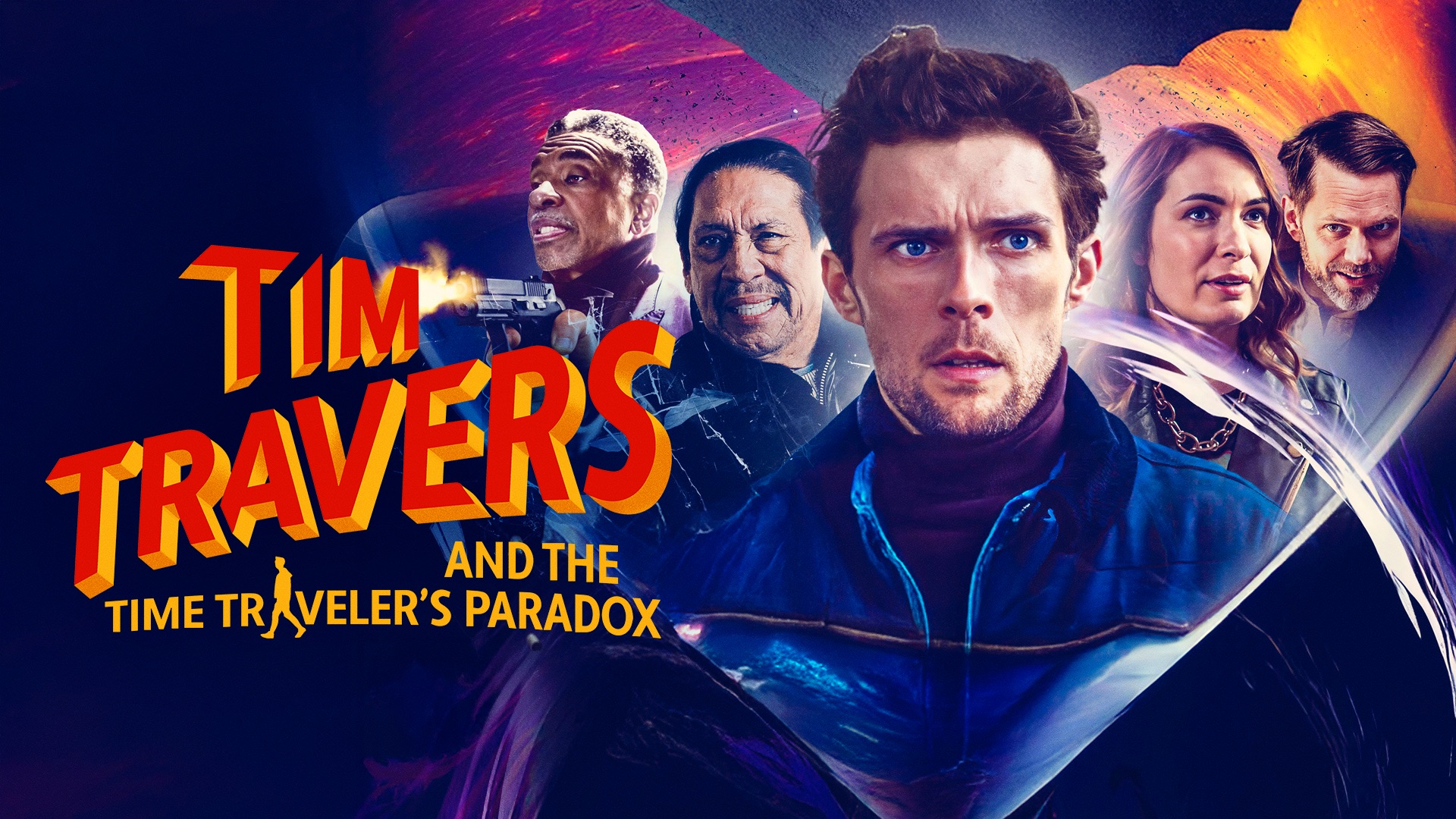
You travel back in time and kill your grandfather before your parent is conceived. That means you were never born. But if you were never born, how could you have travelled back in time to kill him? Terminally bored scientific genius Tim Travers sets out to solve the time traveller’s paradox by building a time machine and attempting to kill his younger self. The result? A chaotic, brain-bending sci-fi comedy that keeps you guessing the ultimate fate of Tim until the very last minute. Writer/director/actor Stimson Snead sits down with STARBURST to discuss Tim Travers and the Time Traveler’s Paradox…
STARBURST: What first drew you to the idea of a character travelling back in time and confronting their younger self?
Stimson Snead: I actually came at it by accident. I’d watched another time-travel movie and really didn’t like it, because I felt it was focusing on all the wrong things. It ignored the ideas that I personally find interesting. One of those ideas is very simple: what happens if you kill your younger self? That’s a real thought experiment in physics – the time traveller’s paradox. So I decided to build the entire narrative around that single question. There’s a lot of interesting stuff about time travel, but the depressing reality is that the interesting stuff is exactly why time travel doesn’t work, can’t work, and probably never will. Which is terrible news for the sci-fi nerd in me – but the upside is that I get to write fiction about it.
The film opens with a character so convinced of his own brilliance that he ignores every warning. Was Tim conceived as a satire on genius?
No, I originally conceived Tim as a role I thought I’d be great at! My ego was such that, while writing it, I thought, Who’s the most brilliant man who ever lived? Well, obviously… me. But thankfully, I came to my senses and found the absolutely amazing Samuel Dunning instead. Another idea behind Tim as a character is that people are always telling you your character has to be sympathetic. I’ve always been firmly against that philosophy. A character needs to be entertaining—they don’t actually need to be good, or even particularly likeable. Tim is an awful human being, but if he can learn to embrace himself, then anyone can. There’s a strong moral to be had there.
There’s a strong whiff of nihilism beneath the film’s comedy. Ultimately, is it suggesting that free will is just an illusion?
I am definitely not saying that. If anything, the film speaks to the contrary. Without getting too far into spoilers, you actually see more than one version of this character, and it only takes a few hours for each of these versions to become fairly distinct individuals. I’ve always pushed back on the idea of free will being an illusion. It’s one of those philosophical questions I find fascinating, even if it’s completely untestable. Even if free will were an illusion, it’s still irrelevant – because from our subjective perspective, we still have to make choices. That’s why I’ve always thought the notion of free will as an illusion is kind of a moral cop-out, often used to excuse oneself, as if to say, “I’m not responsible for my actions.” But, well… you kind of still are.
If Tim Travers existed in another timeline – one where he never built the time machine – do you think he’d be happier, or just destructive in a more conventional way?
Oh no, I think he’d be extremely unhappy and just as destructive, but in a different, unconventional way. Tim is the kind of person who, if he didn’t find a way for a time machine to destroy him, he would invent something else. He’d never do the usual self-destructive things, like getting on social media – he would always find a creative way to utterly annihilate himself. One way or another, he’s going to find a way to do it.
At its core, is the film really about self-discovery and learning to love yourself?
Absolutely. It’s about learning to love yourself – even if you’re an absolute bastard.
Do you have any favourite memories from making the film?
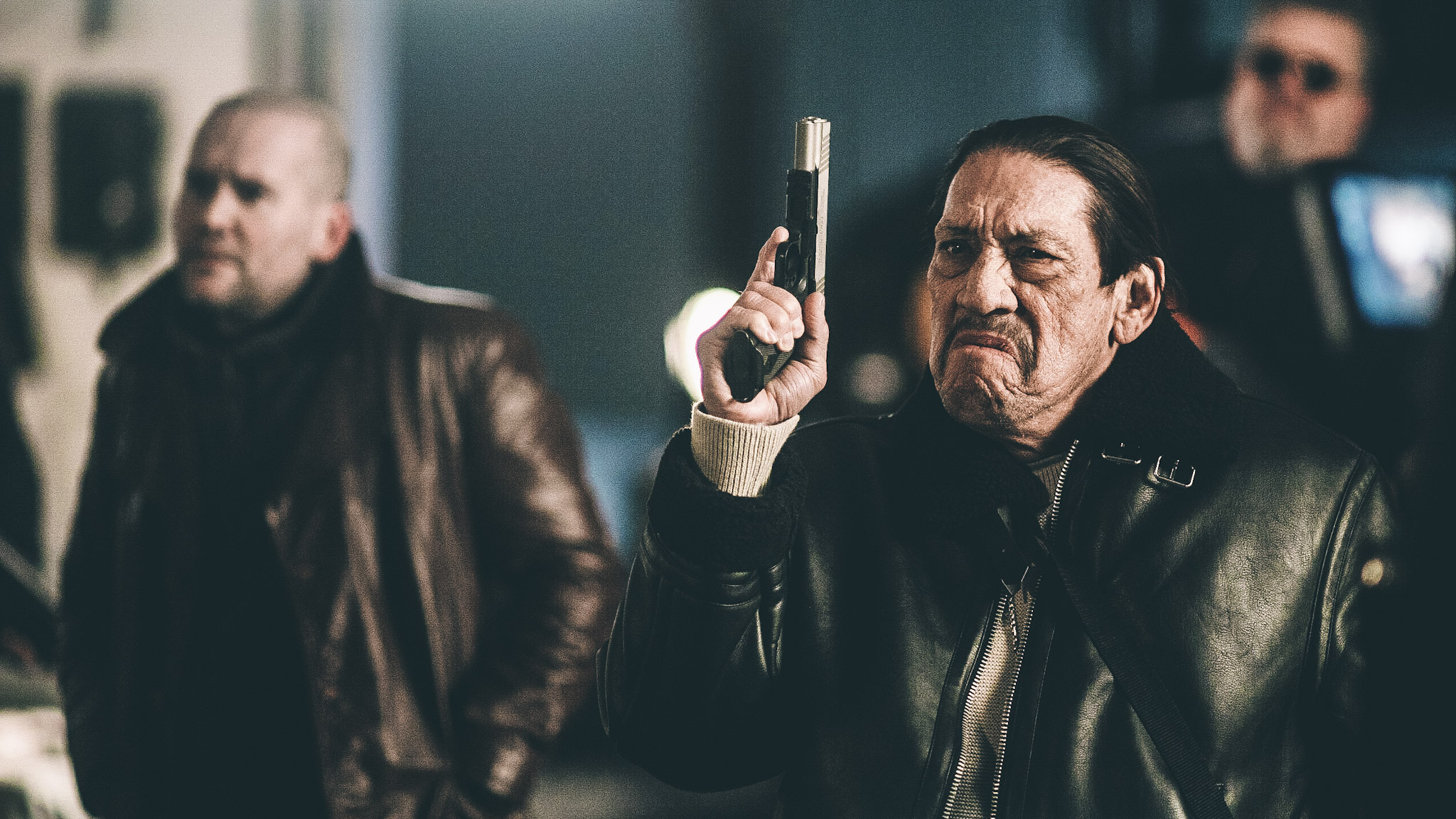
Oh, tons of them. Danny Trejo was wonderful to work with – he was having so much fun. I was convinced I was going to get him killed. We were shooting his outdoor scene, and if you look closely at the ears of the actors around him, they’re all bright red because we were freezing to death. I was basically reading the Wikipedia entry in my head: “Idiot filmmaker kills beloved character actor Danny Trejo with frostbite!” I also loved working with Keith David, who played the Simulator. He’s a voice I grew up with. When he was asked to appear in the film, he called me, and I almost crashed the car because I didn’t realise it was him. The second he spoke, I recognised the voice, and it took me straight back to my childhood – Gargoyles, Disney, everything. But I have to say, the real hero of this production was Felicia Day, who plays Delilah. She’s been our strongest promoter and an incredible producer to work with. She’s a friend, an ally, and someone I can’t recommend highly enough. And then we have Samuel Dunning as Tim Travers. The list of things he had to do in this movie – and how far he had to push himself – is insane. I remember saying to the other producers, “If we don’t have Sam, we don’t have the movie.” There’s simply no other actor who could have played that role. He’d played the character in an earlier short version of the film, so we’d already seen him in action.
What other projects do you have lined up?
I’ve got several features that we’re shopping around right now, and we’re chasing funding. I’m working on a kids’ family film aimed at Hocus Pocus and Monster Squad lovers – a horror film for kids. Joel McHale is attached to it; he was also in Tim Travers. I’ve also got a documentary coming up. It focuses on the recent history of Claymation studios and what’s happening with the people trying to keep the art form alive. The film will look at figures such as the legendary Phil Tippett and the team behind Robot Chicken.
TIM TRAVERS AND THE TIME TRAVELER’S PARADOX is on digital platforms from January 26th.
Shannon Eric Denton is a renowned comics/games/animation writer-artist and the founder of Monster Forge Productions. They are the writer and co-creator of Monster Forge’s newest title SPECTORS published by Titan Comics. We caught up with them to find out more.
How would you pitch Spectors to someone who likes Hell Boy?
First off, I think you should know that I too love Hellboy. I was there at the San Diego Comic-Con where Dark Horse gave out the ashcan debuting the character so I’ve been on board the Mignola train for a while! I feel like Spectors is adjacent to the world that BPRD, Hellboy and Lobster Johnson reside in!
And how would you pitch to a fan of super hero movies?
As a longtime fan of Blade/SwampThing/ManThing/WerewolfByNight/GhostRider/TheDemon and all the superhero books on the monstrous side of the superhero universe, our trio of monster hunters fit right in. “In a shadow-soaked world of secret cults and nightmare creatures, monster hunters Reginald, Debby, and their newest ally—Ollie, a supernatural enforcer with the heart of a child—unravel a decades-old conspiracy born in the haunted 1930s and rekindled in the modern day. Armed with a mystical blade, a weaponized prosthetic, and Ollie’s otherworldly strength, they confront twisted science, cursed asylums, and an ancient evil rising once more, racing to stop a cult’s apocalyptic scheme before their deadliest case becomes humanity’s final reckoning.”
What’s your personal favourite thing about this genre?
The things that lurk in the dark allow us to confront fears in a cathartic way. Horror and action, when done right go together so well.
If you could have coffee with any one character from Spectors who would it be and why?
Our Filipina monster-hunter Debby. I’d ask her to take me out for her favorite lumpia! Plus she’s the charm of the team and despite having her arm town off by the forces of evil, her innate goodness always shines through.
And which character really needs to calm down?
Definitely, Reginald. He’s the mastermind but that means he’s even more aware of what is going on in terms of the dark forces conspiring to end humanity.
How long does it take you to get to a first draft?
As a professional writer I feel obligated to say it matches the deadline assigned. However, on stuff like Spectors where I’m having a blast it’s usually a very fast process. I’m a “share early, share often” writer from my film and gaming career so the sooner I can get a version to folks I trust to give me honest feedback I can incorporate, the better.
What’s your favourite funny thing about the genre?
These days I think it’s how over the top and preposterous some villains seemed only to see so many real world counterparts popping up all around us. So it’s a sad funny.
What does the first day working on a book like this look like compared to the last day?
Both are moments of excitement. The beginning is the excitement of the creation. The end is the excitement of getting to share it out with everyone!
Wolfman or Frankenstein?
That’s a hard one as I love both but I’m gonna go Frankenstein. I have a large Frankenstein collection so I’ll let my buying habits be the deciding factor on this excellent question.
Dr-acula or Dr Who?
Surprisingly I’m gonna go Dr. WHO because if I pick him/her I know I’ll eventually get some Dracula!
Truth or Beauty?
Ooo, I’ve never gotten this one before. Gotta go truth. There’s beauty in the truth and the world needs truth now more than ever….and monster comics.
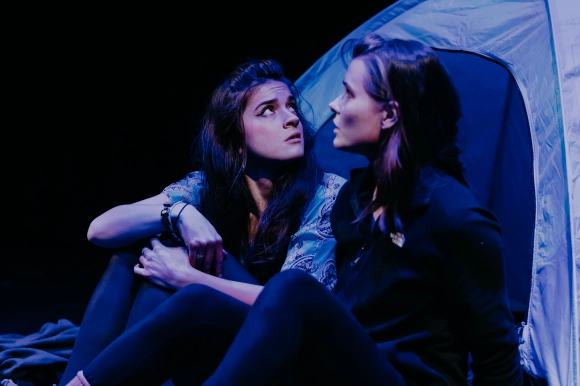
Black Bright Theatre’s Birdwatching has made quite the impression since it made its debut at the 2024 Edinburgh Festival Fringe. STARBURST’s own hawk-eyed theatre expert Ed Fortune described the three-woman show as “Chilling. Clever. Spooky as all hell. A horror classic in the making.” Since then, Birdwatching has made waves in China, been performed at horror festivals in both Camden and Brighton, and has just finished up its northern tour. We caught up with the show’s creators and performers after a Q&A following their penultimate show in Leeds to ask about Birdwatching’s origins, meaning, and possible future.
Helen Denning
STARBURST: Congratulations on an incredible northern tour of Birdwatching. What has the reception been like, and how has the show evolved over time?
Helen Denning [producer/company manager]: Thank you! It has been wonderful seeing the show develop and become what it is today, and hearing what audiences have to say at our post show Q&As. We continue to be amazed at the genuine emotions that Birdwatching evokes in people. We love hearing how the three characters – Poppy, Amelia, and Lauren – connect with audiences, and how some people can see themselves represented on our stage. Seeing social media posts praising the show from people we have never met always gives us a huge boost, and of course we love hearing how the show has scared people. It’s a horror, after all! Consistent feedback on this tour has been that this version of the show has kept the strengths the original show had, and has improved upon the previously less developed elements. As our team has gotten to know each other better, we’ve been able to dive deeper into the underlying themes of the show and build upon the history the girls have with each other. I think we’ve also strengthened the sense of the environment largely through the technical elements of the show, particularly in the sound design by Yanni Ng. When we first performed this show in Edinburgh, we had only had 10 days of rehearsal on this brand new project. Over the past year taking the show to different places (and even countries), it was inevitable that it would continue to be workshopped and changed. The northern tour of Birdwatching was weirder, more eerie, and all together more detailed than before. Sharing it with a number of sold out audiences across the north was a joy, and we want to thank everybody who came out to catch the show.
Maddie Farnhill
Can you tell us about the origins of the show? You’ve mentioned that it actually started out as more of a murder mystery, which you said would feature “lesbians and death, probably.” Why did you transition from that to a horror story?
Maddie Farnhill [artistic director-writer]: I conceived the characters for Birdwatching long before I did the story. I was stuck on this trio of co-dependent friends where one of them is the absolute centre of the other two girls’ attention, neither of them never quite knowing if they want to be with her or be her. I’ve always loved dark stuff so this inevitably got quite murderous the more I wrote it. I didn’t do anything with the girls until I watched The Witch by Robert Eggers, and I realised that I actually love folk-horror. I’ve always been interested in the literary connection between women and the wild – Tess of the d’Urbervilles is a classic example – and so I thought what better way to explore the murkiness of teenage female friendships then by placing them in a dark woodland, with just each other. The concept of them being watched from the trees, and that being an allegory for gendered voyeurism, unravelled from that starting point.
The paranoia in the show stems from this almost constant sensation of being observed, watched, or even stalked by something malevolent. How did you settle on this surveillance of women as the main theme for Birdwatching, particularly from queer and neurodivergent perspectives?
Maddie: I’ll never forget that quote from The Robber Bride by Margaret Atwood, about the man watching us [women] from inside our own heads. I was trying to find the sticking point for Birdwatching, and this internalised surveillance struck me as a compelling female-centred ‘horror’. With there being three of them, I also wanted to express how women police one another in order to conform, of which the examples are endless – telling each other that we need to shave, telling each other how to sit, telling each other that boys only like us when we do ‘this’ and not ‘that’. With Lauren then being neurodivergent, her desire to conform is even more layered. On top of having to ‘perform’ like a woman, Lauren feels she must ‘perform’ like a human being. In a similar vein, Poppy feels she must hide her queerness in order to protect herself. This manifests in intense shame around her body and desires – her Regatta fleece becomes a bit like body armour in that way. So while the surveillance of women is the overarching theme of Birdwatching, Poppy and Lauren bring a bit more intersectionality to that idea.
Helen: Something that we discovered while preparing for the northern tour came from Mimi, the actor who plays Amelia. Both actor and character are from Northern Ireland, which is currently the most dangerous state in all of Europe to be a woman. The statistics about femicide, violence against women and girls and harassment are truly horrific, and is something all members of the team feel extremely passionate about raising awareness of. A large part of developing the show came from honest conversations with our team about our own experiences, worries and traumas simply existing in society as female presenting people. The everyday voyeurism and constant feeling of unsafety is the real horror story that women exist in, and the normalisation of this epidemic serves as the perfect basis for Birdwatching. We’ve partnered with both Strut Safe and Cat Calls of Sheffield, both organisations who work to raise awareness about street harassment and provide services to help people feel safer and less alone.
You mentioned in the past that an area of exploration while writing the show was the historical link between tales of changelings and young people with learning difficulties or disabilities. Can you tell us more about that and how it made it into the show?
Maddie: Some contemporary scholars have theorised that ‘changelings’ were in fact neurodivergent and/or learning disabled children, whose nonconformity was explained by being ‘otherworldly’, fairyworldly, specifically. While the forest spirits in Birdwatching aren’t actually an existing piece of folklore, I felt the inclusion of a changeling not only grounds the play in some actual history, but also sharpens Lauren’s own neurodiversity: like Jack, she is othered by her peers, at times villainised, and feels strangely more at home in nature. And when the human world rejects them, they ultimately find belonging in the supernatural one – they are literally away with the fairies.
Like in one of your past shows, The Hunger, you favour rural settings over urban ones. I used to live in the countryside and the pitch black, particularly in forests, combined with the silence could prove almost overwhelming. Why does this setting appeal to you?
Maddie: What I love about the folk horror genre is that it draws on what already feels very visceral and primal to us: the fear of the dark, the fear of the unknown, the fear of the wild. While folk-horror oftentimes creates horror around the folk of the countryside, like Midsommar, The Wicker Man, I think the inhuman wild itself makes a frightening antagonist. I also happen to love rural regions, I have a very strong connection to my own home county Yorkshire. I think it’s beautiful and a bit bleak and endlessly inspiring for horror. That silence can be really confronting, I’ve often felt it when I’ve been out in the Peak District or in the Scottish countryside – sometimes the silence feels like a wall, other times like emptiness just gaping back at me. I love the darkness though, it’s like a big duvet. But in all that darkness and silence I also feel like just about anything could happen, worldly or otherworldly.
You mentioned films like Robert Egger’s The Witch and Ari Aster’s Midsommar as direct points of reference. These are both films that make strong connections between women and the wilderness. How have those stories and others influenced your vision?
Maddie: I love both those films! I was initially very keen to go down an eco-feminist route with Birdwatching, but I actually think this idea of women and the wild being ‘one’ ended up being flipped on its head a bit. Poppy, Amelia, and Lauren come into a space, into another ecosystem, with very little respect for it and expect everything to go their way. While the play is certainly about female-specific friendships, fear and experiences, I don’t think these disturbed forest spirits care that they’re women! This connection then ultimately transcends gender for me, particularly with the inclusion of Jack. So, while The Witch and Midsommar certainly influenced the play’s beginnings, as we embraced the character’s intersectional identities more this connection became broader – from just women and the wild, to the ‘other’ and the wild.
One thing that makes Birdwatching so impressive is the subtle details. Where the characters tend to gaze, the anecdotes they share, even the clothes they are wearing. During rehearsals, did this require a kind of constant vigilance to maintain, or did it come naturally to the performers?
Helen: The foundational strength of Birdwatching lies in the script. Maddie has a very descriptive and cinematic style to her writing, and she takes great care in the details of her plays. This being said, we have always had very collaborative rehearsal rooms, allowing the team opportunities to offer suggestions, additions and alterations, sharing what feels natural to them. Chan decided the show should be set in 2009. Though not vital in understanding the story, it was interesting to us to place the show in a time where being neurodiverse and queer were not spoken about as openly by young people as they may be today. The 00’s press were also famously horrific in their treatment of celebrities, particularly in how they shamed women and over sexualised them from a young age. The clothing worn by Amelia actually comes from Chantell’s wardrobe, and the use of a digital camera/looks of the other girls came from her memories of being a teenager in 2009. Lots of elements of the show were already embedded into the script, but there was definitely a focus in rehearsals of where the girl’s focus should be, how they specifically would read situations, and how they naturally would react to the strange events unfolding around them. Lauren, who is more open to the idea of a force outside of the reality the girls already accept, is often gazing upwards towards the trees and the sky, as if that is where she can get information from. Amelia, on the other hand, sticks to surveying the ground level, expecting a man to be nearby. Workshopping these elements helped us to flesh out an already strong storyline, breathing life to the lines.
The symbolism in the show is fascinating, particularly the eggs and the goshawks which can have such wildly differing meanings in different contexts. Why do you think they are central to the story?
Maddie: Goshawks do have some interesting mythology! Their symbolism is actually quite broad and varies culture to culture. I knew I wanted a bird of prey to haunt the girls, and the fact that Goshawks are a native bird with all this spirituality attached to them – and they’re a little bit scary looking, if you’re a mouse – made them seem like a good fit. But I also picked them for this one characteristic: they walk across the forest floor, which is not only quite unusual, but may explain why one might hear footsteps in the forest at night. Lots of people also picked up on the eggs specifically. I suppose I introduced them because I needed the girls to really tamper with something in the woodland, to offer that possible throughline that the woods are in fact punishing them. So whilst it was initially a device, we’ve had lovely conversations about what else they represent. Chan thought they represented the power in the group, which literally changes hands throughout the play. We also discussed how they represent the wild, the fragility of life, innocence, and then ultimately sacrifice.
You’ve had so many people offer their own different interpretations of the ending, particularly the final fifteen or so minutes. There are some of these in particular have stuck with you. Can you expand on any of these?
Helen: It’s so interesting hearing the different takes people have on the end of the show, and I think it’s fair to say that they’ve made us reconsider our own thoughts on what the ending means! In Salford somebody asked if we intended to make the ending represent an outpouring of queer joy, because that was exactly how it read to them. On the opposite end of the spectrum in Harrogate, somebody the characters seemed to be being groomed by the ominous presence. There was also lots of debate and intrigue into the fate of one character in particular, who leaves the stage before the show’s final moments. People have shared how their own experiences influence how they interpret the ending, and it is always fascinating hearing how these differ. I think there is something incredibly powerful about creating work that is open ended, in the sense that this allows an audience to explore the possibilities of a story beyond the confines of a run time. When people are left considering what an ending could mean to them, and plotting out the next scenes of a show in their own minds, you know you have made something worthwhile.
Would you like to tour Birdwatching again, is that correct? And given the show’s strong links to the North of England, can I assume you would hope to do a Northern Tour again if the opportunity arose?
Helen: Absolutely, we want to do Birdwatching again. Funding, or a lack thereof, is always the biggest issue that we face. We have had some incredible supporters and previous funders, like the Keep it Fringe Fund for Edinburgh Fringe 2024, and the power couple of independent production Swords & King, which have facilitated past productions. We would love this show to have a future life, and the dream would be to have a longer run in a venue of at least 2-3 weeks. We’d also love to take the show to different areas of the UK and internationally. We’ve talked about the potential of performing in Ireland, particularly as we place more of focus on Amelia’s Irish heritage now than we did in earlier iterations of the show. No matter what, we will always keep Black Bright’s roots. You absolutely aren’t getting rid of us, northern venues! For the coming year of 2026 we have decided to return to our first ever show The Hunger. We hope to bring it back to the Edinburgh Fringe, and look in the future to tour the show. This doesn’t mean we’re forgetting about Birdwatching, however, and are actively planning for the show to have a future. We’d love to talk to anybody looking to support an independent theatre company as to how they can get involved with Black Bright, and help us to continue to put on performances.
Ally Beardsley and Siobhan Thompson are core cast members, aka the Intrepid Heroes, of hit comedy show Dimension20. We caught up with them to find out more about the pulp-action adventure story, Cloudward Ho!
So, this Dimension20 campaign is steampunk! How did that come about?
Siobhan: It’s something that we’ve joked about for a long time, and we’re calling it steampunk, which is more of an aesthetic. Really, though, it’s a pulp action adventure on The Seven Seas, sort of an Indiana Jones-type adventure.
What’s the loudest laugh or the biggest chortle that you’ve had with Cloudward Ho!
Ally: The biggest chortle. I love that.
Siobhan: I mean, in this season, or just in general, I think anytime anybody goes fully off the rails and then commits to it as hard as they can. I think for us and probably all comedians, the funniest thing is always somebody doing the stupidest thing as seriously as possible. None of us go in to a day going, you know what? Today I’m going to go crazy.
Ally: So Zach is such a mild mannered player, but there was a NPC that he really hated this season, and there was just kind of like a fire in his eyes for how much he hated this NPC and that that was very funny, that was constantly making me laugh, was Zach saying, like, I’m gonna kill you, to an NPC quietly.
Which system are you using this time?
Siobhan: We’re using 5e (Dungeons and Dragons). We did look into some other systems and play-tested some stuff, but ultimately we just felt that 5e was the best fit for the story we were telling this time around. But we do have a lot of homebrewed stuff in it, including a couple of people who have fully home-brewed sub-classes.
We have also, just like a bunch of other little mechanics that we came up with over the course of the game, that are created by Brennan in conjunction with multiple different game designers.
Is commitment to the bit king?
Siobhan: I think that the two of us are probably the furthest poles of that in the six of us.
Ally: I mean, Murph is definitely a North Star for keeping things on the rails. But, yeah, totally.
Siobhan: I feel like I tend to keep the bit going by pretending to want to get back to the story. That’s great, but I don’t know, I think that we’re all following what gives us the most joy in the moment, knowing that we’ll get there eventually.
Ally: I also am doing some math, because I’m like, you only get one blimey every few seasons. So this season, I was, I was definitely playing like a little bit more of an on-rails character this season, which I love to do, I really liked playing Margaret Encino, that was like the kind of the end of the spectrum that I can get to that’s like most on the rails. And this character is still crazy, like she’s the youngest one in the group, so she is also just kind of like less mature, but not as crazy as Christina Applebees or K2.
Will we get a sequel to Cloudward Ho?
Ally: I hope we go back
Siobhan: I loved playing in this world. It really depends at this point, we have so many fun worlds to play in, and also it’s so fun to make a new thing. I feel a little spoiled for choice on it.
What is your quick pitch for the show?
Siobhan: It’s such a romp. It really doesn’t slow down. There’s so much fun stuff, there’s so much world building, there’s so many fun characters it playing. It really felt like what it felt like to watch Indiana Jones for the first time, or watch the Goonies for the first time. And I hope that we’ve sort of captured that energy and that essence within the show, because that’s really what it felt like to be there.
Ally: We’re doing steampunk. That’s the pitch. It’s steampunk with a matriarch as the kind of like storyline. I think it’s like a really fun version of legacy through a feminine lens, which it was one of my favorite parts. It was cool, cool.
AbbyTrott is an actor/singer who is best known for for their work voicing Momo in the English dub of Dan Da Dan, Nezuko in the English dub ofDemon Slayer, Magik in Marvel Rivals, and singing the Super Smash Brothers Ultimate theme, “Lifelight.” We caught up with them to find out more.
How did you end up working on Demon Slayer? I auditioned! I believe they were casting the main four characters first, which is why I only auditioned for Nezuko, even though I really wanted to try out for Inosuke. There were two scenes: the moment before Tanjiro heads off to the village and the struggle between Nezuko and Tanjiro as she wakes up as a demon and attacks him. Half of my audition was growling.
How different is the role of Nezuko from Dan Da Dan‘s Momo? Nezuko and Momo are similarin many ways.Including their desire to protect and fight for those they love. Nezuko, however, has more of a maternal quality, whereas Momo has a similar “auntie” energy to her grandmother, Seiko. Momo can be pretty goofy, too.
What’s the most challenging part of your day-to-day voice acting work? Maintaining your vocal health can be difficult. Personally, I deal with allergies, and they can really make things challenging. It’s also important to make sure you have adequate vocal rest when overextending your voice, which isn’t always possible when scheduling and trying to meet deadlines.
How do you ‘get into’ the role? How does that work with video game work? I always try to learn as much about the character and the project as I can from whatever materials I’m provided (or that I can glean from the internet). That being said, sometimes video games can be extremely secretive, and we’re not always provided a lot of info. I’ll try to fill in the gaps and have a general worldview going into the session. For example, are they an optimist or pessimist? Are they confident? Anxious? Are they masking their true feelings about someone or something, etc. From there, the director will steer the ship to make sure we’re honoring the writers’ intentions.
How do you describe your job to someone who has never heard of the word ‘anime’? I first ask them how in the world they’ve never heard of anime. Seriously though, it seems that anime has become so mainstream—it has come a long way since I was a kid. Most people have probably seen anime even if they don’t know what it’s called. I’d describe dubbing anime as “providing English voiceover for Japanese cartoons—you know, the ones where they have big beautiful eyes and perfect geometric hair.”
Dan Da Dan and Demon Slayer are both huge. How have you found the surge in interest? It’s been pretty surreal to watch the Demon Slayer fandom grow worldwide over the past 6+ years. Dan Da Dan has been even more shocking, as it seemed to explode almost overnight. (I think the killer opening theme helped). It has been so much fun to meet fans at conventions and share the excitement and passion for these projects. We are in the golden age of anime!
A lot of voice actors seem to be doing podcasts and actual play TTRPGs like Critical Role these days, does that appeal to you at all? Why? I love playing games with friends off-camera, but that isn’t to say I’m not open to streaming or recording gameplay…with the right crowd. In fact, I recently did a one-shot TTRPG for Little Nightmares, and you can watch it on YouTube! It was super fun.
What’s your favourite thing about meeting fans? I love hearing stories of how certain shows, games, or characters have impacted their lives. Demon Slayer was hugely impactful during the pandemic as it deals with themes of family, loss, and overcoming seemingly impossible odds. So many people relate to these themes, and they were living through them at that time. Lots of fans have told me how certain games and shows helped them get through tough times. It feels good to be part of something that has such an impact.
What non-voice acting media roles would you do? What would your dream project be? I love hearing stories of how certain shows, games, or characters have impacted their lives. Demon Slayer was hugely impactful during the pandemic as it deals with themes of family, loss, and overcoming seemingly impossible odds. So many people relate to these themes, and they were living through them at that time. A lot of fans have told me how certain games and shows helped them get through tough times. It feels good to be part of something that has such an impact.
What’s next? More video games! More anime! More cartoons! More… singing? Stay tuned!
Ghosts or Aliens? Aliens. You listening, E.T.’s? Take me to your planet, pleeeaase!
Vampires or Werewolves? Vampires, but only if I get to be one.
Zoe Flint is a performer and director specialising in immersive theatre, as well as the artistic director of Parabolic Theatre. She is the Associate Artist for Parabolic Theatre and a Creative Associate at Bridge Command, the critically acclaimed sci-fi immersive experience which allows you to be part of the bridge crew of a classic science fiction style starship and go on missions. We caught up with Zoe to find out more.
How did you end up working for Bridge Command?
I was one of the original team who co-created the initial R&D low-budget, version of Bridge Command in 2019 and I have been with the project ever since.
How does it compare to previous work you’ve done?
Bridge Command is certainly the most technically complex show I have ever worked on. What is particularly wonderful about this project is how it manages to achieve excellent artistry in a sci-fi setting.
And how would you describe Bridge Command to someone who has ‘opinions’ on how Starships work?
Bridge Command is an experience that allows its audience to step into our original sci-fi universe and take their place within the bridge crew of one of our Starships, giving them the opportunity to be the best version of themselves in a familiar feeling sci-fi setting.
How do you prepare for a role like this?
The expectations and demands on any performer working on this project are extremely high. Bridge Command’s performers portray many different characters, each of whom must be complex, compelling, and able to adapt to the needs of the audience seamlessly and quickly. We spend a lot of time investing and training our performers to be able to do this.
What’s your favourite way to warm up for this role?
A few stretches and a quick vocal warm up is usually all we have time for. A big coffee is definitely essential too.
What key thing does every performer need to know for Bridge Command?
That your role is to serve the story and the world of the show. That and which ship you’re supposed to be on.
What is the most rewarding part of your job?
Seeing the wonderful community of players that Bridge Command has organically created. Dozens of unlikely friendships between people who would have otherwise never met.
Is this the future of entertainment?
I believe so. Immersive experiences have often been called ‘theatre for a video game generation’ which I think is true, but Bridge Command goes one step further. Bridge Command has created a space where we invite the audience to be more than a spectator, rather an active participant who meaningfully contributes to the experience.
What’s the silliest thing you’ve done to get this show running?
I’m no stranger to an all-nighter with a 5am Deliveroo order.
What is your favourite moment in the show?
My favourite moment is watching audience step onto the bridge for the first time, that’s always magic.
What’s next?
Bridge Command has got a lot of stories left to tell, I can’t wait to share in them.
Daleks or Death Stars?
Can both franchises please consider me for future projects?
Orville or Enterprise?
Enterprise, specifically under Captain Pike.
Truth or Beauty?
To tell the truth is beautiful.
Jordan Myrick is a comedian, actor, writer, and content creator who is best known for their food related content. We caught up with them to talk about Gastronauts (now in it’s second season), a geeky food-inspired game show in which comedians challenge top chefs to make some very peculiar dishes. We caught up with Jordan to learn more.
How did Gastronauts come about? I was brought on when they already had a name and they knew they wanted to do a cooking show. Sam (Reich) had brought it up, k what I thought was jokingly a couple of times; “We got to do a food show. We got to do a food show.” And I was “okay, sure, this is never gonna happen, but that sounds great.” And then one day, I finally just got an email that was like, let’s do a food show! They wanted to bring me on as the host, and then also as a creative producer.
So what does that mean as creative producer? What are the things that you’re responsible for, apart from just presenting the show? I was in all of the meetings where we talked about creative vision, what the set might look like, what the casting might look like, kind of anything that like you see in that final product. I was in meetings for discussing what was going to happen with that.
We’re pretty familiar with the rotating cast of DropOut’s comedians. How did you select the chefs, because they’re new to the channel. So what was really important to us is obviously having people who are incredible at cooking, but we also needed people that really enjoyed being on camera, and maybe some people that even fancied themselves as funny or personable. And so we were looking for people that kind of fit that bill, and because of that, we ended up getting a lot of people who had people who had done other television cooking shows, which was great, so they had had experience in the space.
What was the vibe you were going for? I think two things that were really important to us were keeping the challenges extremely fun and creative, and then also making sure that everything we did was kind of fed through a positive light, a positive energy, because we wanted to watch creative people cooking and doing a good job. Does that mean everything’s perfect? No, but I think it feels good to watch people do something well, rather than watch people do something poorly. And we really wanted to lean into that.
What cooking show do you say this is the least like? I mean, my impulse is to say Bake Off, because I find Bake Off to be very kind of slow and calm and relaxing. And I don’t know if I would describe the energy of anyone at DropOut as slow or calm or relaxing. So I’d probably have to say that one, yeah,
You’re part of the Upright Citizens Brigade. You have a strong background in improv. Cooking itself can be very precise. Sometimes it’s spur of the moment. Was there a sense that you could get improv comedy and cooking to collide? Absolutely. I think that’s kind of the basis of the whole show, right? Because it’s these professional chefs that are truly at the top of their game that are having to come into our comedy space and really say yes and to these ridiculous challenges we’re giving them, which it means you end up drinking butter. And that’s not something I thought about going into it, but that is ultimately what happened.
How many calories are in the show?
Simply no way to know, did I feel like I was going to die by the end of it? Yes, but you know, you suffer for your art sometimes.
What was the most delicious moment I would say one of the most delicious moments is Lily Du, who hosts Dirty Laundry, who also happens to be my best friend in real life for many, many years. She just has absolutely horrible, well, I can’t even call it culinary skill. I don’t know what it is, whatever the absence of culinary skill is, that’s what Lily has. She doesn’t have a particularly refined palette. I was dreading her disgusting challenge, and the food that came out of her challenge ended up being some of the best food that I had the entire season of the show.
Will we see a cookbook?
You know, hadn’t even crossed my mind, but now it’s all I’ll think about until Sam lets me do it. So fingers crossed.
Truth or Beauty? God, this is so hard, because it’s hard to even know what it means. I I’m like, the truth is beautiful, but sometimes I don’t want the truth. Um, maybe. But I also don’t care about beauty that much. Neither.
Owen Kingston is a screenwriter, dramatist, theatre-maker, and artistic director of Parabolic Theatre. He’s the creative force behind London based Bridge Command, the critically acclaimed sci-fi immersive experience which allows you to be part of the bridge crew of a classic science fiction style starship and go on missions. We caught up with Owen to find out more.
How did Parabolic come to be?
About a decade ago I got fed up of making conventional theatre and started experimenting with highly interactive immersive work, inspired by companies like Punchdrunk and Secret Cinema. We started small with a single-performer show. Now we’re running Bridge Command which is a multi million pound project with a cast of over forty people.
How would you pitch Bridge Command to fan of the Marvel Movies?
It’s about working together with a bunch of people to be the bridge crew of a starship. A bit like the Guardians of the Galaxy, but less scrappy.
And how would you pitch it to someone who has never seen Star Trek?
It’s about working together with a bunch of people to be the bridge crew of a starship. Like in Star Trek. What do you mean you’ve not seen Star Trek. What’s wrong with you?!?
How different is this show from your previous productions?
It’s got a very expensive set. Genuinely, the set cost over 3.5 million pounds. Previously we’ve made very cool shows in found spaces for a fraction of that, but it’s hard to do sci-fi well without spending big money.
In a world of VR headsets and interactive consoles, what makes something like Bridge Command so unique?
It’s very tactile. We’ve built two complete starships that you can fully explore, and there isn’t a single fake button or control – everything does something meaningful, and we’ve built something that is the closest you can get to flying a starship while keeping your feet on terra firma. You also interact with live actors, and your decisions matter – we pivot story events around the decisions players make in a way that’s just not possible in a computer game.
Can you call it Live Action Roleplay, or is it something else?
It’s similar to LARP, but there are distinct differences. LARP can have quite a high bar to participate – there can be a lot of prep for participants beforehand. We’ve worked hard to make sure that Bridge Command is as easy to access as possible for members of the public. We also don’t require you to play a character – you can just be yourself, in space.
Is this the future of entertainment?
Yes. The most impressive thing Bridge Command does is break out of the decision tree model of interactive story telling. In a computer game, you would be limited by design to choice A or B or C – the writer of the game is not going to come to your house and re-write the game on the fly because you thought of a cool option D. Bridge Command is powered by live actors who are able to make those sorts of pivots on the fly. If you come up with a cool way of solving a problem that fits the world of Bridge Command and makes reasonable sense, we’ll find a way to make that happen if we possibly can. The unplanned option D should always remain possible.
What’s the zaniest thing you’ve done to get this show made?
Convince a multi-millionaire to fund it (it didn’t take much convincing – he wanted to build a spaceship as much as we did).
Is there any chance Bridge Command will travel, or is it very much tied to it’s London venue?
We can’t tour it – the set is integral to the show. We have a touring setup which allows us to demo the computer game element at expo shows, but for the full experience you need to come to our venue in Vauxhall. Maybe one day we’ll get to open sites elsewhere – we’ll have to wait and see.
How similar is this to other projects you’ve worked on?
Most of Parabolic’s shows are for small audiences where we work hard to make the decisions of the audience meaningful. In that sense, it’s very similar.
What is your favourite show prop?
Dr Greene’s medical kit. I love all the little details.
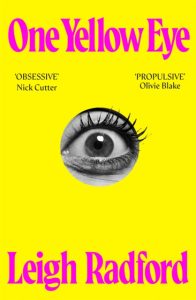
Leigh Radford is a broadcast journalist and writer, who has worked for the likes of the BBC and Time Out. Her novel, One Yellow Eye, is a novel zombie story that has been described as ‘a post-apocalyptic heartbreaker’ and ‘equally charming and grim.’ We caught up with Leigh to find out more.
One Yellow Eye is about how far we go to keep the ones we love alive. Even if they look like the cast of Night of the Living Dead. Maybe it’s Shaun of the Dead meets The English Patient, set in a post-zombie-apocalypse London.
Is the zombie infection the scariest thing about a zombie?
I think for me it’s the loss of agency and humanity, less so the biting and the bleeding. Zombies are us as we are on the cusp of losing everything that makes us human and when they reach that awful point of no return and succumb to the virus. Zombies as they change forever are about the clearest depiction of mankind’s ultimate capitulation to mortality as you’ll ever see or read. And that’s what makes them so frightening. They represent what lies in store for all of us.
Why do we keep telling each other horror stories?
Horror novels give us an emotive language to say the unsayable. Horror allows us to feel things more deeply, to process the grief inside, the pain and suffering around us, to embrace our fears wholeheartedly. By heightening the extremities of gore or jump scares – whatever the source of the horror might be – can perversely allow us to feel more alive than ever. Horror is oddly cleansing that way, it speaks to our endurance, our humanity and to the hope we never let go over, even when life feels very dark.
What inspired you to write this particular story?
One Yellow Eye was inspired by my experiences of nursing my lovely Dad, Roger, through terminal cancer. I lived with him for the last six months of his life, a time I’ll always cherish. But his was a slow and brutal death and I felt very changed by what I went through with him. I wrote the novel as a catharsis to try and exorcise my grief. A lot of the profound responsibility I felt caring for him – essentially holding his life in my inexpert hands – was humbling and at times overwhelming. I could not cry when I was with him, I had to keep my feelings locked tight. But that took its toll. I really, really loved my Dad, so writing a novel that it essentially a love story at its heart, felt like a good way to honour him.
If you could sit one of the characters from the books down and have a word with them, who would it be and what would you say?
I would give Jess a stiff talking too. There’s a good friend in there somewhere (I think?!) once you strip away the narcissism, jealousy and her unhelpful grief-fatigue. She ought to be more patient with Kesta and understand that grief never leaves you it simply changes shape. I would tell her, honey, this is not about you, it’s about Kesta and it might be about her indefinitely. You just need to show up, be there, be kind and not put a timer on your friend’s recovery.
Kesta is stricken by emotional dissonance. She’s living in two opposing realities; one in which her husband is dead, and the other in which she is still in the process of losing him, incrementally – and with this enormous weight on her shoulders alone to save him. No one around her knows the truth of what she’s dealing with. She’s in a kind of purgatory, unable to grieve Tim because he’s still sort of alive, but also unable to give up on him, to relinquish all hope. There is so much at stake for her, so many audacious, crazy risks she has to take, on her own, to try and keep that hope alive. Deep down in her scientific brain she knows the pursuit of a cure is likely futile, but love is never logical, is it?
What other projects would you like to work on?
I am keeping everything crossed that one day One Yellow Eye will be adapted for the screen. I would be over the moon to watch the film of it in a cinema – that would be mind-blowing! And I have several other novels plotted out across different genres, I just have to summon the courage to write them.
What’s next for you?
I’m currently ploughing through the painful second draft of my next novel, as yet untitled, a story about possession and exorcism. I don’t want to jinx it (?!) but I hope we’ll get it out in early 2027.
Pop Music or Opera?
Both depending on how deeply I want to feel.
Vampires or Werewolves?
I’ve got three rescue cats and I support a local colony of feral cats in my rural neighbourhood. So I’m already a mother of little werewolves.
How do you pitch the show to a beloved yet elderly relative? My grandparents do not understand what Dimension20 is at all. You know,I’d have to sort of get them to understand what Dropout is as a streaming service first. And then, once we got into that baseline, *laughs*. It’s like Wizard of Oz, but we’re improvising it.
What action movies did you watch for your roles? To be honest, I only watched Empire Records, which is not an action movie, but takes place in a Record Store.For the action stuff, I just trusted that I had a base knowledge and that I’d be inspired by the other players. Oh, and Jumanji, of course.
You’re comedians first and gamers next, and you’re playing two characters at the same time. How hard was it to spin all those plates? A lot. We had the base knowledge that we had been chosen for a reason, for our ability to go as insane as we possibly can. Once we got a feel for the tone, it was like, “Let me just say my most insane idea”, and see how Brennan responds to that.
What was your favourite moment? The gymnasts were really entertaining to me. The side-winders, who are all 30 years old. Oh and saving the dog.
How many times do you have to stop due to the laughing? Often. I feel like Brendan, sort of miraculously, was able to tie whatever fever, feverish moments we were going through into the plot somehow, like make it relevant that we were in the t-shirt store or whatever. He always had a way to get it back on track.
If you could make it so one piece of art survived till the sun went out, what would it be? A Sunday Afternoon on the Island of La Grande Jatte, though mostly because of the musical. I would go into that painting, Jumanji style.
(We’ve updated this article to let you know that you can also join Dropout as Superfan,details are here.And to also tell you that you can also find out more about Izzy’s other projectD(ea)dviawww.deadthefilm.com.