Exclusive TRANSFORMERS: RISE OF THE BEASTS ‘Making Of’ Clip

We interviewed the cast and crew of Transformers: Rise of the Beasts in our latest issue ahead of the film’s theatrical run, and now, to celebrate its digital drop, we present this exclusive ‘Making Of’ clip, which takes us even further behind the scenes!

Transformers: Rise of the Beasts is available to Download & Keep from the 14th August and on DVD, Blu-ray™, 4K UHD™, 4K UHD™ + Blu-ray™ SteelBook® and HMV exclusive 4K UHD™ + Blu-ray™ SteelBook® 9th October.


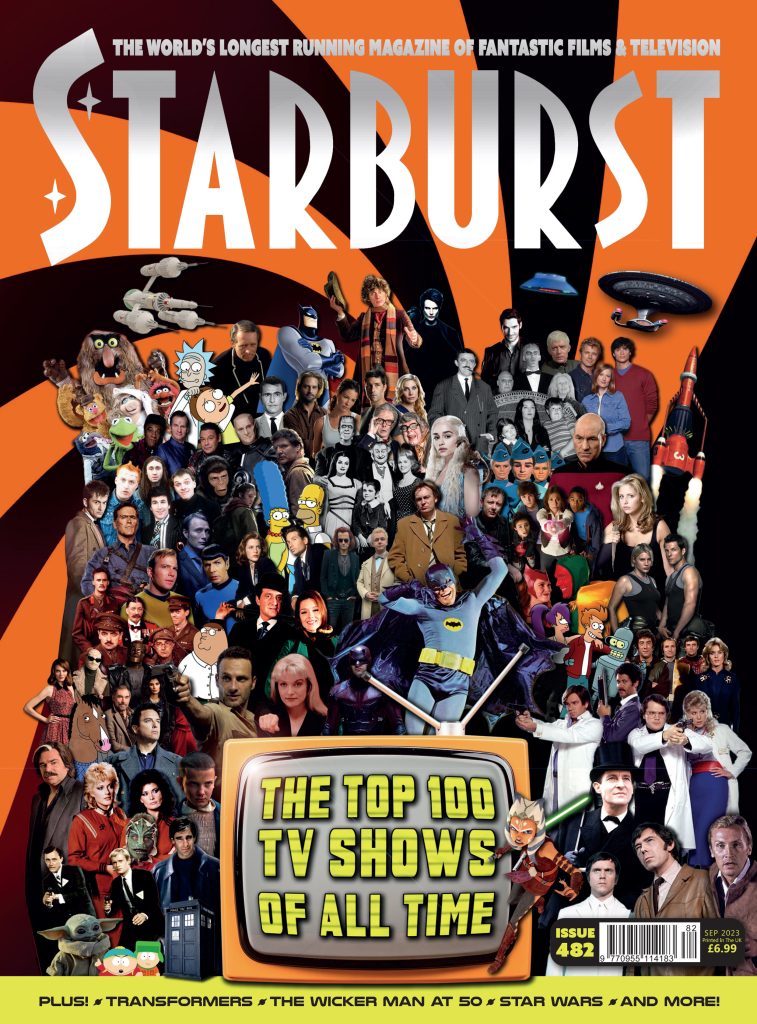
To read our interviews with director Steven Caple Jr., series producer Lorenzo di Bonaventura, and stars Anthony Ramos & Dominique Fishback, pick up a copy of our new issue in stores now, on digital through Magzter, or get it delivered to your door by clicking the cover below!

Ed Gamester | MYTHOS: RAGNAROK

Ed Gamester | MYTHOS: RAGNAROK

by Ed Fortune

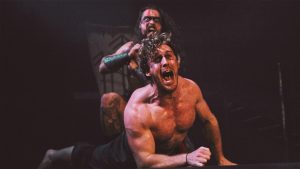
Ed Gamester is an actor, stunt performer, and ex-professional wrestler who is also the writer, director, and producer of Mythos: Ragnarok, the tale of the Norse Gods told in the form of wrestling. We caught up with him to find out more about this amazing show.

STARBURST:  What’s the pitch for Mythos: Ragnarok?

Ed Gamester: It’s an adaptation of ancient myths, retold through a unique combination of storytelling, theatre and stage combat. It follows the struggle for power between the Norse Gods from the creation of the world to the final battle of Ragnarok, which makes it equally enjoyable for fans of the myths and those who are totally new to them. It’s also the only theatre show in the world performed by a cast of professional wrestlers and the only time their skills have ever been used in this context!

Why are we so fascinated with Norse Myth?

The Norse myths are in our blood! They’re there alongside countless other ancient cultures and mythologies, too, of course, but the Nordic myths are relatively well documented and recorded compared to other Northern European mythologies, which makes them easy to share and reference.

From runestones, Wagner, and Tolkien to Zeppelin, Marvel, and Gaiman, references to the stories and characters within Norse mythology are scattered throughout our culture in a way that makes the themes and characters easy to recognise and relate to.

Quite aside from all that, the Norse myths are great! They’re weird, dark, hilarious, violent, shocking and sexy: they deal with universal experiences in a way that is very human and easy to relate to, and that means they’re still fresh and exciting 1000 years later.

How long did it take to coordinate the fight scenes?

Wrestlers coordinate fight scenes differently to – in my opinion, more efficiently than – other fight performers. We speak a physical language that allows us to link ideas and movements together extremely quickly, which allows us to coordinate fights in minutes – or in some cases, not coordinate them at all. Wrestling is also a very expressive art form that requires more fluidity and freedom than the stringently-rehearsed stunts, stage combat and dancing that people are used to seeing on stage and screen.

That means although some choreography stays the same every night, other fights change. Some of them we make up as we go along! Everything in Mythos is a work in progress: I’m still developing this form of theatre, and it’s important that we keep tweaking and changing and developing with every show.

Why has wrestling lasted so long?

Because it’s real! People love to call wrestling fake because of the choreography and pre-determined outcomes, but compared to the camera angles, crash mats, retakes and CGI in films and TV, there will always be something fascinating about seeing people do these things in reality.

It’s like watching sports live compared to watching a recording the next day: there’s drama, intensity and danger to know that there is no filter between what is happening and what you’re seeing.

Of course, what we do in Mythos isn’t pure wrestling: there are no rules, there’s no referee, there’s not even a wrestling ring – it’s not a sport in any way, shape or form. Mythos uses the performance combat style of wrestling to do something totally new and unique, which wrestling fans seem to appreciate, and people who have no interest in wrestling seem to find much more palatable.

Why theatre?  What does theatre bring to this story that other formats don’t?

In live theatre, there can be a unity between the cast and the audience that is simply unachievable through a screen or the pages of a book. Whatever happens in that room happens to all of us – but only us – and it happens just once. It’s a very special way to tell any story, but particularly one as intense and physical as the struggle for power between Norse Gods!

At the end of the day, as fun as it can be to read or listen to a story about Thor fighting a giant, it’s much more exciting to cheer him on as it happens right in front of your eyes!

Of course, we’re not traditional actors, and our story isn’t a traditional play. When we perform, the audience shares in our excitement, fear and pain; we don’t hide it away in the wings or in the outtakes: it’s right there, dripping down our faces – because what we’re doing is surprisingly real.

Nobody knows what it feels like to be hit with the force of a neutron star, so when it happens to Marvel’s Thor, it’s difficult to care. By contrast, most people know (or can imagine) what it feels like to be punched in the face or slammed to the ground, so I think it’s fair to say everyone feels like they’re in it together with the actors in our show.

Why the Edinburgh Fringe?

I want to share my story and show off the talents of my astonishing cast with as many people as possible because I want to reignite their passion both for these ancient myths and for the art of professional wrestling, which so many people overlook.

When it comes to getting your work seen and appraised by as many people as possible, you can’t beat Edinburgh Fringe: it’s the biggest showcase of performing arts in the world and – as difficult as it is to perform there – it’s the best way to test and improve your work in real-time.

There are thousands of shows at the fringe. Why should STARBURST readers seek this out?

There is no other show like this in the world, let alone the Fringe. We’ve had everyone come through our doors, from mythology PhDs and WWE fanatics to people with no interest whatsoever in Vikings or wrestlers, and they’ve all come out grinning. In fact, don’t take my word for it – you can read their opinions about the show on our website: I’ve kept and published every review we’ve ever been given. With my hand on my heart, I can tell you I don’t believe you’ll find a more intense and rewarding 70 minutes in Edinburgh.

This is a return to the fringe for you. Will this show run and run?

I’d like to think so. These stories have captivated us for a millennium, so I hope my version will run for a few more years at least! I think it will because the response has been phenomenal: people can see how hard we’re working and how much it all means to us, so they’re supporting us as passionately as wrestling fans support those who work in that industry too.

I’m constantly astonished by the number of people who come back to see the show time and time again and the number of places they come from. We’ve had people fly from the USA, Czech Republic, South America – even from Australia to see the show in London!

When we arrived at Edinburgh Fringe 2022, we had done three shows. Arriving at Edinburgh Fringe 2023, we’ve done 56 shows. By the time we make it to Edinburgh Fringe 2024, we’ll have done something like 200. So I feel like we’re just getting started.

How would you describe your process?

My process is unconventional by virtue of my own ignorance. From script writing and producing to acting and directing, I have no formal training or education in any of the roles I’ve taken on to create Mythos, and I’m sure it shows. I’ve simply focused on creating a show that I would want to see myself in while making opportunities for other people that I would appreciate too.

What media are you currently enjoying?

I know this sounds ridiculous, but I don’t have the time. At the start of this year, I bought a load of video games and added all kinds of things to my watch lists in an attempt to force myself to take some downtime. Thus far, I’ve not got any further than watching an episode of Detectorists while I eat my dinner… One of these days, I’ll hire a producer to take on some of my work while I focus on performing my show, but for now, I spend around 16 hours per day making sure the show actually goes ahead.

How can we help?

The best way to help is to see our show and then simply tell people what you think. That’s what took us from having one person in the audience on our first night of Fringe last year to sell out the rest of our run.

Our show is a collective experience: the more people there, the higher the energy and the better it is for everybody. Yet because nobody has ever made a show like this before, it’s challenging to explain what it is and why people should come in the first place. That’s why it means the world to us when people who have seen our show tell other people about it and bring them along to see it too.

Where can we see the show?

You can catch us at 9.20pm every night at the Assembly Roxy Central. If that sounds like a lot of high-impact shows, you’d be right: we’ll be very sore for a long time afterwards!

You can book tickets for the Edinburgh Fringe show here. And learn more about the show here.


Connor Ratliff | THE GEORGE LUCAS TALK SHOW / THE BARON AND THE JUNK DEALER

Connor Ratliff - THE GEORGE LUCAS TALK SHOW / THE BARON AND THE JUNK DEALER

by Ed Fortune

Occasional George Lucas impersonator Connor Ratliff is better known for being an actor, comedian and podcaster. He’s also one of the longtime performers at the Upright Citizens Brigade Theatre in New York. Film and TV credits include The Marvelous Mrs MaiselOrange Is The New BlackSearch Party, Mike Birbiglia’s feature film Don’t Think Twice and the upcoming Mean Girls movie musical. He happens to be the creator/host of the critically acclaimed, award-winning podcast Dead Eyes. We caught up with him to talk about the shows that are on at the Edinburgh Fringe this year.

STARBURST: What’s the pitch for The George Lucas Talk Show?

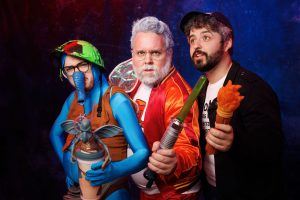
Connor Ratliff: Retired filmmaker George Lucas hosts a talk show alongside his CGI announcer/sidekick, Watto. Real guests being themselves! We’ve been doing this show for nearly a decade in NYC, and The New York Times has frequently told people to go see it because it’s funny.

It’s not your only show, though. If we enjoy that, what else can we see you in?

We’re doing the Talk Show once a week in Edinburgh – every Friday, late night – but the main show we are bringing is a George Lucas Talk Show Original Play called The Baron & The Junk Dealer. It’s a sci-fi tragicomedy that requires no additional context, though to some extent, it is “What if George and Watto did a serious play?” You don’t need to know who George and Watto are to enjoy it; their names are never mentioned even once.

I’ll also be doing four solo shows at the end of the month called GEORGE-prov: An Improvised Theatrical Experience.

Why are we so fascinated by Star Wars?
At the core of it, George Lucas created a modern fairy tale that resonated deeply with multiple generations. So, most of it as a cultural phenomenon is just people more or less enjoying it. But then you also have people who find it annoying to constantly have to hear about a thing that they never had any interest in. And there is also the small but loud faction of people who are furious because they think it somehow got ‘ruined’ by people making a few that they didn’t enjoy, which is basically like a bunch of middle-aged men yelling about how sugary cereal made for children doesn’t taste good to them anymore. But it’s hard to find someone who simply doesn’t have an opinion about Star Wars because it’s all over the place.

What is the best Star Wars movie?
I guess it depends what you mean by ‘best’. The easy answer for someone of my generation is The Empire Strikes Back because it deepened the characters and resonated as an ambitious movie for kids that had a mostly unhappy ending. I remember how that cliffhanger resonated in my 5-year-old mind for a couple of years, wondering what would come next. But in terms of writing and acting, a lot of the best Star Wars work has been done under Disney. That’s partly because they have done so much of it. If you take the first two trilogies and the Ewok movies and watch them back-to-back with things like The Last JediRogue One, and Andor, I think it’s difficult to argue that there hasn’t been a marked uptick in the quality of the acting and writing, overall. The two Lucas eras – the original trilogy and the prequels years – are more important in terms of impact. The first three movies are more significant in terms of film history, and the prequels more-or-less changed the way movies are made on a technical level.

Why Watto?
The short answer is that Griffin Newman had a take on the character that was hard to resist. Watto was one of the most problematic characters from the prequels, and Griffin knew how to play with that in a way that was perfect for the tone of the show.

Why theatre? What does theatre bring to this story that other formats don’t?
The live theatre experience is one thing that hasn’t been torn asunder by the digital streaming revolution. It can’t be pirated. You can’t do it on your phone. You literally have to be there. We usually put The George Lucas Talk Show up on our YouTube channel because we developed a live stream audience during lockdown, and we don’t want those fans to be totally left out now that we’re doing in-person shows again. But for the foreseeable future, I’d like The Baron & The Junk Dealer to be a thing that you have to experience in person.

Why the Edinburgh Fringe?
The Fringe has been on my bucket list for a while, and when I started writing The Baron & The Junk Dealer, I thought, “This might be the perfect thing to bring to Edinburgh.” It’s a weird play, and I felt like this is the place to bring something that is a little bit risky.

What else do you plan to do in Scotland?
I want to see a bunch of shows, but I’m also looking forward to developing a kind of daily routine. I lived in Liverpool and then London in the late ’90s/early ’00s, but I haven’t spent very much time in Scotland. I want to do some sightseeing. It depends on how much energy I have in the midst of doing 30 shows in 27 days with one day off.

There are thousands of shows at the fringe. Why should STARBURST readers seek this out?
Griffin and I both have a good track record on the comedy scene in NYC, and any time we’ve travelled with the show, it has gone over well. We did two sold-out shows in London last spring, and I think everybody who went to those would vouch for us. It’s a good time.

Should the Holiday Special be digitally remastered?
Of course! It’s the second Star Wars thing ever made, and that alone makes it an important piece of cinema history. Having said that, part of me thinks that it is more fun for it to remain a pirated thing, poorly recorded on VHS. I think cleaning it up to look brand new sort of cuts against its true nature. It’s a thing you’re not supposed to see.

Would any Star Wars painting be improved with a picture of Mr Spock inserted into it? Such as the iconic first issue of a now-famous science fiction magazine
I think Mr Spock would say that there needs to be a logical reason to insert him. My own criteria are much lower, and I think there should be a hidden Spock in as many Star Wars paintings as possible.

How would you describe your process?
I went to drama school and then later on trained as an improviser, so I think my process sort of feeds off those two disciplines. My foundation is character work, and that sort of dictated the kind of improv I do. With George Lucas, it’s easy to imagine what he wants in any given scenario. With my podcast, Dead Eyes, it was all about conveying a version of myself that had a singular goal and then looking to see the various ways I could make connections with other people that would tie in with that goal. Everything I do starts with a character.

What media are you currently enjoying?
Right now, I’m re-reading some old Disney comics by a man named Carl Barks, whose work I’ve been obsessed with since I was a child. I’m going to take another stab at reading Ulysses soon to see if I can finally get through it this time. I’m listening to a Miles Davis LP called Sorcerer, Elvis Costello’s The Boy Named If and Aimee Mann’s I’m With Stupid. I’m also listening to Billy Ray’s Strike Talk podcast.

Where can we see the shows?
The Baron and The Junk Dealer (Aug 2nd-24th) and GEORGE-prov (Aug 25th-28th) – will be at the Assembly Roxy Downstairs, and The George Lucas Talk Show will happen every Friday late night in August at Assembly George Square Studios, Studio 2. And, of course, 100s of hours of past shows can be found on The George Lucas Talk Show YouTube channel.

Connor Ratliff will present The George Lucas Talk Show at the Edinburgh Festival at Assembly George Square, 11.35pm on Fridays, 4th, 11th, 18th and 25th of August.

Connor Ratliff also stars in The Baron and The Junk Dealer, an original comic play about two fugitives stranded on a desolate planet (Assembly Roxy, 5.55pm August, 2nd – 24th not 15th) and George-Prov: An Improvised Theatrical Experience where “George Lucas” appears in the form of a digital avatar and delivers a one-person improv workshop like no other (Assembly Roxy, 5.55pm, August 25th – 28th)

The George Lucas Talk Show https://assemblyfestival.com/whats-on/the-george-lucas-talk-show,
George-Prov https://assemblyfestival.com/whats-on/george-prov-an-improvised-theatrical-experience ,
The Baron and the Junk Dealer
https://assemblyfestival.com/whats-on/the-baron-and-the-junk-dealer


Luke Thornborough | ALONE

Luke Thornborough | ALONE

by Ed Fortune

Luke Thornborough is based in Tāmaki Makaurau (Auckland, New Zealand). He’s a writer and director who works in film, theatre, and short documentaries. His show, ALONE has been touring for three years now around Australasia and has come to the Edinburgh Fringe for the first time this year. We caught up with him to find out more.

STARBURST: What’s the pitch for ALONE?

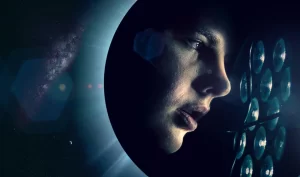
Luke Thornborough: ALONE is a one-room tense sci-fi drama that is set in the not-too-distant future. In the deep reaches of space, two scientists have made a potentially monumental discovery, but will they be able to make it count? Will their faith in science or an almighty allow them to hold the ship together long enough to bring this seed of life back to a dying planet? It is a suspenseful multi-award-winning production that has been described as a combination of “Interstellar meets Waiting for Godot”. Inspired heavily by Star Trek, ALONE is a philosophical look at the human condition and how much faith we have in our own survival.

Why science fiction?

Science fiction offers such an amazing opportunity for writers to explore what it is to be human. All our hopes, fears, ambitions and cruelties can be delved into in such a rich and diverse genre. However, I wanted it to feel grounded and real. I worked extensively with scientists from the University of Auckland to make sure that the world was as true to life as possible. We also based our set design on the industrial look and feel of films like Alien to try and demonstrate a resource-poor world and create a sense of analogue nostalgia that the audience could relate to.

Feminism, climate change, and David Bowie. That’s quite a combination. Do they blend well together, and was that a surprise?
I worked closely with the two lead actors – Courtney Bassett and Kat Glass – for about a four-month period, where they fed back on the script. Indeed, Courtney suggested the writing prompt that inspired the whole production. The feedback from these two amazing actors, as well as the feedback I got from read-throughs, really led the script to a theme of feminism. The strife of working in male-dominated fields – the Airforce and Scientific research – was evident in all the feedback and research and was very eye-opening for me. As for climate change… well, I feel that the more awareness and seriousness we give to conversations about climate change, the more likely we’ll band together as a species to avert it. It is something I’m deeply passionate about – and the inability of our modern time to truly put aside our differences in order to save our world is played out by our two heroes in ALONE. As for Bowie… well, who doesn’t love Bowie?

Why theatre? What does theatre bring to this story that other formats don’t?

The show plays out in real-time, and I have worked hard to try and make a truly immersive experience – I believe that theatre really offers a sense of realism to the science fiction genre that is not always achieved by film. There are no panning shots of the stars… or spaceships gliding over planets… but these two actors will show you what it is like to be trapped in a little tin can… and what that can do to a person.

Why the Edinburgh Fringe?

Edinburgh Fringe holds a special place for us New Zealanders! It’s a long way for us to go, and it represents somewhat of a Holy Grail for us as so many have gone on to break onto the world stage as a result of success at the festival. I was blown away when Assembly offered us a slot for us to put on our show!

How different is Scotland from New Zealand?

I’ve only been here a few days, but I’ve got to say Edinburgh is absolutely beautiful. The history and the architecture are just a world away from back home. Also, the people here are wonderfully friendly and have been incredibly helpful in helping our small group of Kiwis!

There are thousands of shows at the fringe. Why should STARBURST readers seek this out?

This is a play that we’ve been crafting over the last three years – always with the goal of pursuing greater realism and moving audiences. The performers know these roles inside out and show after show, they pour their hearts and souls into ALONE. It is a chance to see sci-fi done with thought and passion and with a true love for the genre.

What are you looking forward to at the fringe?

I’m looking forward to seeing as many shows as I can! I’ve never seen a festival of this size before, and I can’t wait to jump right in!

What media are you currently enjoying?

I’m a huge fan of Interstellar, Alien, Arrival, Dune, Ex_Machina, and anything that takes you to another world while asking you very real questions about yourself!

Where can we see the show?

Assembly George Square Studios, Studio One – Aug 4th -28th at 15:20 – https://assemblyfestival.com/whats-on/alone


RESIDENT EVIL: DEATH ISLAND Cast Interview

resident evil dead island interviews

During the Los Angeles premiere of Resident Evil: Death Island, STARBURST virtually caught up with actors Nicole Tompkins (Jill Valentine), Stephanie Panisello (Claire Redfield) and Matthew Mercer (Leon S. Kennedy) to discuss this iconic meeting of gaming horror characters, how fun it was to see them isolated on the island of Alcatraz, what we can expect from Death Island’s main villain Dylan Blake, and much more…

**This interview took place before the writers’ and actors’ strike**

STARBURST: Death Island is set on Alcatraz; why do you think this particular location works so well for a Resident Evil story?

Matthew: It’s definitely a location of historical mystery and intensity. It’s one of those names when you say Alcatraz, it evokes like, “Oh, bad stuff has gone down there in the past”. Why not just make more bad stuff happen there?

Stephanie: Agreed. Also, with Alcatraz, once you’re in there, you can’t get out. I think that element of not being able to escape kind of adds that too. You’re just stuck in there; there’s no way out. There’s a reason why you’re on Alcatraz because you are the worst of the worst, but now what if you’re not the worst of the worst, and you’re there, and you can’t get out?

Nicole: There’s something ghostly about the island in general, so then when you put zombies in that space, it very much has an undead feeling.

We really enjoyed how Dylan Blake took us back to the Racoon City era. How would you describe this villain, and what do you think his brutal backstory brings to Death Island?

Nicole: I think it’s really personal, and I think that it’s really nice to have that tie-in. I think they do a really good job of giving you just enough to kind of empathise with why the villain is the way they are, and I always like stories like that. I like villains that have trauma or a back story that you kind of get a little piece of so you just relate a little bit more to “Oh, I see how hurt they are, I see why these choices are being made from pain”. I think it reflects everyone’s story, but Jill’s story a lot in some ways, because she is directly contending with “I’ve been through so much pain, and I’ve still chosen to fight the good fight” and so there’s like a nice direct contrast of, “Yeah, you know what it was hard, I was there too.”

Matthew: Yeah, there are 25 years of history to this franchise, and so the ability to come back to that period of time later and still tie emotional narratives, both with main characters and a villain, back to those initial periods of where this really began to begin and flourish, is kind of a cool, homecoming narratively.

And this version of the T-virus can travel via tiny little drones! How exciting has that terrifying idea been to work with, and what does this version of the classic virus bring to the Resident Evil timeline?

Matthew: That definitely brings a visceral bit of reality in an age in which we are all contemplating the moral implications of advancing technology, but that’s what good stories, and especially good horror stories, do. They make you look at the things that are happening in your real life and be like, “Hmm, why does this spook me?”

Stephanie: And I guess it does make sense, too, timeline-wise, because the franchise has been around for so long that even within the franchise, we’re going with the technology, the advancement of technology, and where that direction is going. Honestly, I don’t know, drone T-virus that can be specifically channelled to you or you or you… yeah!

Matthew: That’s kind of one of the underlying themes of every Resident Evil, while you think of viruses, and viruses being a thing of nature, you know, by our cultural history, the whole purpose of the franchise is that the villain is the arrogance of humanity. It’s the arrogance of a person trying to gain through defeating nature in a way, and the drawbacks that come with that, and so now the technology advancing, becoming part of it even further, just pushes that narrative in a dangerous and unexpected way.

The film shows Leon (Matthew) and Jill (Nicole) together for the first time in the whole of the Resident Evil timeline. How exciting was this concept for you to take on as actors, and what can fans expect from this dynamic on-screen?

Nicole: I was so stoked when I read the initial “Leon? Jill?”

Matthew: You texted me that day!

Nicole: I did! I was over the moon, I think the dynamic is really well scripted, I think they have a really good meeting of humour and seriousness and mutual respect, and I think all of those things that everyone has waited for and expected in that dynamic, I actually think it played out really well.

Matthew: I agree, there’s so much build-up to that sort of union, like so much build-up and expectation to it, that it’s like “There’s no pressure… it’s fine!” but no, it was a lot of fun to do.

Matthew, you worked on Resident Evil: Vendetta – how has the process of bringing an animated Resident Evil movie to life changed since then? Have you noticed any major changes in technology, or maybe just the creative process in general?

Matthew: The creative process hasn’t changed too much, it’s a pretty tried and true process, but I will say that the technology involved in visuals continues to advance to an incredible degree, where with each iteration, it just gets more and more photo-realistic, more and more wild. The animations, and the action, just continue the climb of what I think is possible and cool with these features. Our process, at least in my experience, working on it from my end, it evolves, and it’s easier in some ways, but the exponential change is just in the quality of the final product.

There’s actually a fair bit of humour in the Resident Evil timeline, and we noticed it once more with Death Island. Leon has some great one-liners, for example. What do you think we can expect from the balance between humour and terror in Death Island, and what does that combination bring to a horror movie like this?

Stephanie: You have to have the terror with comedy. The tension is so high that otherwise, you would just be uncomfortable and not enjoy it, so I feel like the humour lands and hits in the right places to allow you that release of “OK! Maybe we are going to be OK!” and I feel like it’s necessary, especially when all the characters are together for the first time like you need humour, you need those moments of that, and it also allows each character to shine within their own personalities. So like each person, each character has their own version of what would be funny or how they could be quippy about something. I think it’s like crucial.

Nicole: I think humour tells you a lot about where a character is at as well, so even in really hard circumstances, if the humour comes out cynical, or if it comes out playful, or if it comes out silly, you can kind of see sort of where they are in their mental state, and their ability to cope. So yeah, I always love the humour in Resident Evil in general. These movies specifically are very high action, there’s all of these horror elements, intense terror, but I think that the humour mixes with the action because our favourite action films of all time have so much humour.

Matthew: Also, it’s a very viable trauma response. When you are under that much pressure, as a person, you have to release that tension somehow, so either you break, or you joke, and that’s a subtlety relatable thing to the whole Resident Evil franchise.

No Resident Evil instalment is complete without terrifying monsters. Without giving away too many spoilers, what kind of monsters should viewers be ready for in Death Island?

Stephanie: I don’t want to spoil anything, but there might be a licker!

Matthew: That’s part of the fun of Resident Evil. It’s like, “What weird mutations, what terrifying fleshy beasts are going to be unveiled in this, and in what unique way can they gross us out and make it extremely frightening” and I think this film definitely goes “Alright, well, hold my beer!”

And we have to ask you all about the Avengers Assemble-type scene at the end of the movie, where you all team up together to take on the final boss. Is there anything you can tell us about how this sequence came together and why fans should be excited for this moment?

Stephanie: Nicole and I were talking right away; it was so beautiful. I think just that one scene where they’re all dodging the creature, and each one has their own specific special move of how they dodge it – I loved it. I feel like Claire did some Captain America-like twists! It was just so epic, and I’m super stoked about it, and I feel like for us, if we’re excited, we’re fans ourselves, right, so at the end of the day, it’s not just that we are the actors in this, we’re also fans, we also nerd out on all of this, so yeah, it’s really a genuine excitement about everyone together.

Nicole: I think it’s very hard sometimes because everyone has been asking for the team up for everyone to be together, but the second you have too many characters in one place, and you manage everyone having the right amount of time, contributing to the story, feeling narratively relevant, doing something that’s helpful useful or funny kind of in this space, I think they do a really good job of balancing everyone coming together, everyone’s got a purpose, everyone’s doing something, and that’s a challenge, and that’s a testament to good writing weaving. Here are all of the characters, and they’re not just here for the sake of being here.

Stephanie: Also seeing who teams up with who too, throughout it as well, because you’ll see moments of everyone together, but then you’ll see moments of who kind of gravitates to what character, so that’s kind of cool to see too. Which I think is super neat.

Other than the sequence we’ve just discussed, what was the most rewarding scene for each of you to work on in Death Island and why?

Nicole: For me, it’s got to be the Leon and Jill meet, it’s a great scene, and they – no spoilers – have some really cool action. I loved it, and I was so excited when I was reading those lines, and it was just really fun to do.

Matthew: Same thing! There’s that momentous moment of it actually occurring, Leon saying Jill’s name, and then watching the dynamic of them knowing so much about each other, convening on screen together. It was really fun and satisfying.

Stephanie: Mine was… I can’t give away anything, though, so it’s hard. There’s an emotional scene that I feel is so powerful because, specifically for Claire’s character and stuff too, it’s how she sees it, and what kind of choice she is willing to make, and how big that choice is, and then how everyone together kind of interacts within the decisions and stuff that’s happening, it’s so big, I’m sorry, but I love it. When you watch it, then you will know exactly what it is!

Now we’ve had Alcatraz; where in the world would you really like to see these classic characters take on next, and why?

Matthew: Cabo, get a vacation, relax! Have a great week, sharing margaritas. The beach episode of Resident Evil – that’s what I’m looking forward to.

Stephanie: I think a jungle or something, I think that would be pretty cool, as long as it’s the full team up, as I know we see like a bit of that in 5, but maybe they get off some boat, and then they crash into some jungle-type area, and they have to survive that. Maybe they start figuring out like a certain virus is naturally producing because of stuff coming in from the water. I don’t know; I’m making all of this up! There’ll be jungle creatures – everything’s morphing! And then maybe the fear is that some zoos are starting to bring these animals in, and the virus is like sitting inside of them, but it hasn’t fully developed yet, and then it’s going to show itself, and then we have an outbreak, anyway! There it is.

Nicole: Lickers swinging from the trees from their tongues!

Finally, why should STARBURST readers check out Death Island?

Nicole: Because we’re in it! And it’s Resident Evil; everyone unites, so get in there! I also think that it has something for everyone, it’s a joy, it’s playful, if you’re looking to have fun, then I think you will.

Matthew: Hell yeah! It’s definitely built for everybody who has been following the franchise for a long time. It’s a lot of moments you’ve been waiting for, we all had so much fun making it, and I think you’re going to have a lot of fun checking it out.

Stephanie: Yeah, there’s a little bit for everybody, and I think that the pure nostalgia, and desire for that, to see Jill and to find out what the heck has been going on this whole time! That’s worth it. And in this new reboot version of Resident Evil, to see the Redfield’s together again, too, I just think that there is so much. And then Leon, let’s just be fair; Leon is our ultimate favourite, and we can’t get enough of Leon. And now, to see them all together, why wouldn’t you want to? I don’t think that there’s anything to lose, honestly. You only have everything to gain.

For even more info on Resident Evil: Death Island, you can pick up the latest issue of STARBURST, as Stephanie discusses her character Claire Redfield in detail.

You can rent/buy Resident Evil: Death Island from digital platforms right now and Blu-ray and DVD from August 21st. 

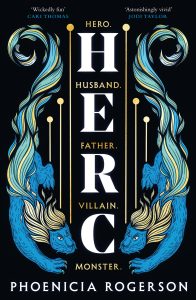
Phoenicia Rogerson | HERC

Phoenicia Rogerson - HERC

by Ed Fortune

Phoenicia Rogerson is a London-based writer with a rather less checkered past than Hercules. Her debut novel, Herc, is the result of a lifelong infatuation with Greek mythology, and she is greatly enjoying being able to claim her book purchases are for work. We caught up with her to find out more.

STARBURST: How would you describe HERC to someone who doesn’t know much about mythology?

Phoenicia Rogerson: Herc is the story of what it would be like to have a superhero as your neighbour if you lived in ancient Greece and the superhero has no impulse control.

What was the hardest piece to write?

Iolaus’ chapter and then his speech after they meet Hippocoon were both really difficult for me. Without going into spoilers, I put off writing them for ages because I didn’t want the events in them to happen. I really love them now, but they hurt to write.

Apart from HERC, what’s your favourite version of Hercules in modern media?

I’d be lying if I said anything other than the Disney version!

Why Hercules?

It sounds facetious, but because he’s Hercules. He’s the first hero I could ever name, and there’s just so much about him in the Greek myths. Even now, there are stories about him that surprise me. The character just goes deeper and deeper, and I love unravelling that mystery.

Do you have other books planned in a similar vein?

Yes! Though the exact subject is still a secret for now…

Why have the Greek Myths lasted so long?
This answer could probably be a book by itself! There are a lot of factors, but what has always drawn me to them is how human everyone is, even the gods. They’re constantly making human mistakes, which means the myths are both comedy and tragedy, often all rolled up into one.

If you were writing the labours of Hercules to include one modern task, what would that task be?

Getting all the sand out of your house after you go to the beach. Even flooding the place wouldn’t have got Herc out of that one.

What character is the most fun to write?

I had so much fun with Eurystheus, especially in his letters with Augeas. In the first draft, those were about seventeen pages long because I didn’t want to stop writing them. After that, Iolaus is a close-run thing. I’m a big overthinker, whereas Iolaus just blurts things out sometimes, so I really enjoyed playing with that freedom.

Which character seriously needs to have a word with themselves?

Omphale, for sure. She’s very lonely, and she lies to herself so she doesn’t have to admit it.

What would you say the biggest influence on this book is?

I fell in love with Terry Pratchett’s work when I was a teenager. It was the first time I read books with that magical combination of humour, fantasy, and history, and I think knowing that it’s possibly influenced me a lot.

Which writers inspire you?

Basically, anyone who writes and has small children. I don’t know how they do it.

What tropes do you personally avoid the most?

I don’t think about tropes too much when I’m drafting, which means anything I say here is inevitably going to show up in the book, but I find any problem that could be solved by two people having an honest conversation super stressful to read. Now that I think about it, exactly that situation happens in Herc…

Is it easier to write queer fiction these days?

Herc is my debut, so I can’t really talk about how it’s been for anyone else. What I can say is that I’ve had a really lovely experience with people’s reactions to the queer elements in Herc. It’s something I worried about a lot when I was writing and querying, that there would be clap-back about the idea of a queer Hercules, but I’ve experienced some incredible support and enthusiasm about it. I’m really thankful for everyone before me who’s made that the landscape I’m working in today.

If we like this book, what other books do you recommend?

This runs the risk of just being a list of books I love! In the vein of mythology and retellings, I’d say Joanne Harris’ Gospel of Loki, Natalie Haynes’ Stone Blind, and Luna McNamara’s Psyche and Eros. More broadly, anything by Becky Chambers.

HERC comes out August 31st 2023, and can be pre-ordered now.

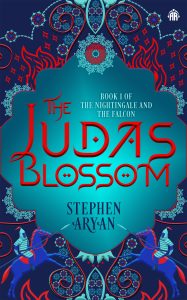
Stephen Aryan | THE JUDAS BLOSSOM

Stephen Aryan - THE JUDAS BLOSSOM

by Ed Fortune

Stephen Aryan is an award-winning fantasy author whose work includes the Quest for Heroes duology and the Age of Darkness and Age of Dread trilogies. We caught up with him to find out more about his new book, The Judas Blossom…

STARBURST: How would you pitch this book to someone who’s only read A Song of Ice and Fire?

Stephen Aryan: I would say that The Judas Blossom is similar, but only up to a point. It also has factions fighting for control, and there’s lots of politics, intrigue, espionage and battles. But the story is set on Earth, not a made-up world, and there are no dragons or direwolves. There is a fantastical element, but it’s not the focus of the story. This is about the expansion of the Mongol Empire as they attempt to conquer the whole world.

Why epic fantasy?
Fantasy is my favourite genre to read, so it was a natural fit for me to write it as well. Fantasy allows the author to tell any kind of story they want. It is an umbrella, and as long as a story contains certain elements, it will still be regarded as fantasy. I’ve written fantasy novels that were actually war stories, crime, horror, and supernatural.

Why multiple perspectives?
For this particular story, there were a lot of different aspects of the conflict that I wanted to explore. I’m telling the story from the perspective of both the conquerors and the people they are conquering. So, it would have been extremely limiting to do it from one point of view.

What is it about the Mongol Empire that fascinated us so?

I’m not particularly fascinated by them. Generally, I think any Empire that attempts to rule the whole world is an intriguing concept. Be it the Mongols, the Romans, or someone else. The idea of unifying every single country on every continent is both terrifying and intriguing. If, somehow, it were to happen (it won’t), what could the whole human race achieve if we were all moving in the same direction?

How sharply does this tale depart from history?

It doesn’t depart from it very much at all. All of the main events are real. Some of the characters are based on real people, but some are fictional. Some of the organisations and groups in the story are real. Some are not. Most of the time, I was dancing between the raindrops, and where there was a gap, I had more room to invent. The best example is Princess Kokochin. According to history, she came to Persia to marry a Khan, and three years later, she was dead. Not a lot is known about her. So there’s a big question mark, and that made me curious and intrigued. It also allowed me to create whatever I wanted.

How different is this book from your other work?

It’s very different because it’s set in 13th-century Persia, and this is my first time writing historical fantasy. Also, I’ve done big bombastic magic before [see the 6 Mage books], and The Judas Blossom is not that. There is something other, something fantastical, but it is only one facet of the story. It will not take over and become the whole of the story, as that would make it pure fantasy and not historical fantasy. No matter how much I change, I still want to make the story adhere to history, up to a certain point at least. So, you won’t suddenly see dragons in this series.

What character is the most fun to write?

That’s really difficult to answer. The most fun, or the most interesting character, is the one I’m working on right now for book 3. I have to find a way to relate and connect to all of them. I have to care about all of them as well so that I can make them feel as real as possible for the reader. That way, even if the audience doesn’t like a character, hopefully, they can understand their motives.

What was the hardest part to write?

Writing this whole book has been the biggest challenge of my writing career to date. Mixing fact and fiction together in a way that is hopefully seamless was the hardest thing. If someone is not familiar with this period of history, or even this part of the world, I don’t want them to be able to work out what I made up and what really happened. Writing a traditional fantasy novel requires a lot of imagination. This series required a lot of research because I can’t just invent some aspects of the story to make it fit.

Is it suitable for the squeamish?

Not really. The 13th century was an extremely turbulent period of history, with a lot of different factions fighting for power. There were a lot of violent conflicts, and the central core of the story in The Judas Blossom is about the Mongols attempting to create an empire that covers the whole world. So that involves a lot of destruction, sieges, politicking and back-stabbing.

What would you say the biggest influence on this book is?

The main tentpole events of the book are all historically accurate, up to a point at least. I changed some details to make the story flow in a more satisfying way for readers. So, history is the biggest influence on The Judas Blossom. While some people may be familiar with the Mongols, most stories focus on other parts of the world or other characters such as Kublai Khan. I wanted to set the story in the Ilkhanate, and more specifically, Persia, as most people do not know very much about the country and its history, which spans thousands of years. I also wanted to write about this part of the world because of my Persian heritage. Writing The Judas Blossom gave me a great excuse to do lots of research and add to my existing knowledge.

Which writers inspire you?

My early influences include Terry Brooks, David Eddings, Margaret Weis and Tracy Hickman, Ursula Le Guin, Tolkien, C.S Lewis, Frank Herbert, Stephen King, Dean Koontz, David Gemmell, Jim Butcher, Tad Williams and Robin Hobb. The list is long and gets longer all the time.

If we like this book, what other books do you recommend?

All of my other novels. There are eight of them. That should keep readers busy for a while as it will be a year until the second novel in The Nightingale and the Falcon trilogy is published in July 2024.

You can purchase The Judas Blossom here.

RUTHERFORD by Luxtress [Video Premiere + Q&A]

by Nick Spacek

Troma Entertainment alumnus Dylan Greenberg recently directed a sci-fi-themed video about the Rutherford Radium experiment for the artist Luxtress, an electro-pop artist who writes unorthodox but catchy pop songs about technology and late-stage capitalism. It’s the perfect mix of dance music and weird, low-budget sci-fi, and we’re proud to premiere it here, alongside a Q&A with both the artist and director…

STARBURST: Your video for “Haldol” had horror elements, much as the video for “Rutherford” has sci-fi elements. What’s the appeal of genre films for visuals?

Luxtress: I’m a huge horror and sci-fi film nerd. I think because of that I just naturally go in that direction with video. I think it’s sort of a gesture of appreciation for these genres and a way to make my own mini-film as well.

This track is way more poppy than anything you’ve done thus far. How’d you come to this sound?

Luxtress: I love music and playing around with different genres and sounds. I switch it up a lot to keep writing interesting and challenging for myself. I’ve written a lot of music over the years in various bands, most of which isn’t online. I decided a few years ago that as a solo artist I’d write and record whatever I felt like and not worry about a consistent sound.

How much of the concept for this video was yours, and how much was Dylan’s?

Luxtress: I remember I wanted a mad science lab vibe. The song was inspired by a certain scientist, among other things, so I explained this to Dylan who then came up with a lot of great ideas and went from there.

Why did you choose “Rutherford” as your next single?

Luxtress: I think it’s a fun song and I also thought it would make a great sci-fi-themed music video, which interested me. I was talking to Dylan about making a video for one of my unreleased songs a while back, and “Rutherford” seemed like the most logical and fun choice for us to base a video on.

How’d you come to work with Luxtress?

Dylan Greenberg: We met through the incredible Coney Island USA event Music of Curiosities when we both played a festival opening for The God Bombs. As solo music performers, we both like to make irreverent pop songs about obscure historical figures and inventors, so it was one of those odd, perfect coincidences that we met. I double as both a songwriter and a filmmaker so I was really excited when I got to work with Luxtress, who was very open to my bringing the sense of movement and performance I have from my own experience into this video. I definitely feel like both of us have very unique visions that blend well together.

What did your time with Troma bring to this video?

Dylan Greenberg: Troma taught me how to make a lot with a little, and certainly in the music video world that’s important. Unless you have a multi-million dollar budget, using your imagination is very important, and thankfully Luxtress and I were able to stretch our minds to turn a few props, some creative lighting and cinematography into an epic, dystopian story.

I definitely also think the concepts of radiation, poisoning and environmental pollution that I incorporated into the story were inspired by Troma. When one really pays attention to a Troma film, beneath the absurdist exterior is often a very profound message about the environment and the dangers of corporate irresponsibility at the expense of human life.

I was always struck by the disastrous health effects of radium being sold to people as, among many things, medicine, and was immediately drawn to this song when Luxtress brilliantly opens the lyrical story with this same concept.

Where was this shot?

Dylan Greenberg: The lab scenes were shot at my friend Kat Green’s studio! Kat is basically a mad scientist in real life, so she had a lot of these amazing props that worked great to create our surreal laboratory! For the factory scenes, we shot in Highbury Pub, which was generously opened up to us by my friend Adam Torkel! I realized that a bar counter works fantastic as a substitute for a conveyer belt [laughs], so with some clever use of backdrops, fog and good old-fashioned acting, a pub became a turn-of-century radium factory!

Find more music by LUXTRESS on Spotify, Apple Music, and Soundcloud

Yuval Adler | SYMPATHY FOR THE DEVIL

Yuval Adler | SYMPATHY FOR THE DEVIL

by Andrew Dex

When a character known as The Driver (Joel Kinnaman) attempts to park at the hospital for his pregnant partner, things quickly take a dark turn as a mysterious person, known only as The Passenger (Nicolas Cage) enters the back seat of his car with a weapon. Sympathy for the Devil sees The Driver being commanded around Las Vegas and beyond, and with a great dynamic between the two leads, we get an unpredictable watch! STARBURST talks with Sympathy for the Devil director Yuval Adler (The Secrets We Keep/Bethlehem) to find out how he got involved with the movie, what the main leads were like to work with, and how he went about capturing a tone that lives in transit…

STARBURST: Can you tell us about how you first got involved with Sympathy for the Devil and what it was like to work with its writer Luke Paradise?

Yuval Adler: It’s a strange story how this film came together. What happened was, after my first film, Bethlehem, came out like ten years ago, I had this moment in Hollywood where you read ten thousand scripts, but a lot of them were horrible. However, I did read two great scripts, Sympathy for the Devil, and another horror film. I pitched myself for both, I did a lot of work, but I didn’t get both of them because they’re not like Bethlehem, so I didn’t get them, that’s how it works. With Sympathy for the Devil, I remembered the script, and two–three years later, I was wondering if it got made. I looked on IMDb, and it was still not made. So I emailed the producer and became friendly with them, and they said that they were still working on it, it’s here, it’s there, this guy is attached, that guy is attached, it’s in development hell. Three years later, the same thing. Then the third time I asked, probably in 2021, they said that they lost the option, it all fell apart and went back to the writer. So I was like, “Really, interesting!”

So, I contacted Luke directly, and I said, “Look, I’m a director. You tried working with producers, they want to make the film, but there are also money constraints that I don’t have. I’ll make it for no money” I sold myself, and I got into it through my scare money. So at the end of 2021 or the beginning of 2022, I showed it to Alex Lebovici through my manager, who immediately loved it, and we decided to put it together. This can take many years, we were told Joel was available who I worked with, and Joel knew me, and he said “Let me read it” and he suddenly wanted to do it, and he had availability in August, and then Nic was available. It came together incredibly fast. Like a fairytale, it can sometimes take 10-20 years, but with this one, once I got it, it suddenly came together in a couple of months.

I worked with Luke on it; I’m a writer – that’s basically what I do – I get up in the morning and write, so I’m very sympathetic to writers, and I always keep them in the picture, and he was not so used to it, because with writers, sometimes once they get your script, they don’t care about you. I would send him stuff and say, “What do you think? Let’s do this?” and he was like, “I don’t know, but thank you for asking me!”

What do you like so much about working with Joel Kinnaman, and what did you want to see from The Driver?

With Joel, it’s a funny story because Joel came to The Secrets We Keep, and on that, we didn’t get along,  we had clashes on the set. To the point that in the middle of shooting, we had to go and have a coffee and straighten things up. Otherwise, we were in trouble. It’s funny because after that, we actually became friends, and we started to look for stuff to do together. So this film came, and he was on the top of our list when it came to who we wanted to offer The Driver role to. I could go to him directly and say it to him, but it came from the agent who told us about his availability in August. I already knew Joel, and I already had a rapport with him. My only worry was that Joel is kind of a strong character like he has such charisma, I didn’t want The Driver to feel like any way from somebody from The Suicide Squad. I wanted him to be like a substitute teacher, like a guy who disappears into it. It could be somebody that like Paul Giamatti would play, but Joel did it, he disappeared into this role, with his mannerisms, the way he was holding his body, everything. And then it kind of gives him the opportunity to make these big changes at the end and throughout the film. So that was the challenge for me, to have Joel kind of disappear into this very mundane, the existence of this very, kind of unremarkable guy. The one that we meet in the beginning.

Nicolas Cage is well-known for his energetic performances. How fun was it to work on an equally crazy character within your own movie, and what did he bring?

It was great; he immediately connected to the character of The Passenger. Our thought was that this character goes through a few phases, it’s much more thrillery and terrifying in the beginning, and he then becomes more of a Joker guy. He is terrifying, but he is funny, and then later on, there’s much more of an emotional thing going, but in a way, this transition between the three things and letting him go, in the sense that we already had a bunch of moments with dark humour, but to add to the humour, to push. With Nic, what would happen is that a lot of times, either we added stuff in rehearsal, and he comes up with tons of ideas all of the time, like a volcano, “Let’s try this, let’s say this” etc. Or on the set, you just don’t say cut, I learned that, I didn’t say cut, and he would go on, he would just try things. I would be behind the monitor just cracking up, he would say something and give you a look to confirm if it’s good, and I’d be like, “Yes, more!” and he would just go and do stuff that was funny. You would sit there, as his first audience in a way, just sitting there and reacting behind a monitor. So yeah, it was quite an experience. A lot of those funny moments were created on the set through improvisation and through his brilliant process of going off on his tangents.

And can you tell us about the filming process, especially when you captured those scenes in the car? How hard was that to shoot as a director and bring to life?

It’s a challenge because it’s a new technology, LED Volume technology, with all of those wrap-around screens of LED. It took us time to figure out how to work this. We were all new to it; even the studio that hosted us was new to it. We had 35 minutes in the car, which is a lot, and how do you connect what you see outside in the world with what you project in the studio and what you see with the car outside in the world? So we had to charter the whole drive, and then shoot plates for the whole drive, you know, with the car with eight cameras around, and then project it when the actors are inside, and then take a real car, drive outside, make all of the stuff that you see outside, the whole thing has to match. That was a huge technological challenge. It looks amazing compared to a blue screen. It’s all of these reflections and lights. Once you get it working, it allows you to shoot seven or eight pages a day, which is insane. It’s so fast because they are sitting, and it’s all working. However, to get it to work was incredibly difficult.

Sympathy for the Devil is out now in the US and screens at Pigeon Shrine FrightFest on August 27th.

Dan Collins – DUNE! THE MUSICAL

Dan Collins - DUNE! THE MUSICAL

by Ed Fortune

Dan Collins is a musician, storyteller, performer and lifelong fan of science fiction.  He’s also the genius behind DUNE! The Musical, which is coming to the Edinburgh Fringe this year following its excellent debut at this year’s CYMERA Festival, Scotland’s most exciting science fiction, fantasy and horror festival. We caught up with Dan to find out more about the show.

STARBURST: How would you pitch Dune! The Musical to someone who’s only heard of the movie?
Dan Collins: Dune! The Musical retells the story of the 1965 sci-fi epic by Frank Herbert. My show takes all the action and themes of the novel and distils them into one hour of musical storytelling. There are references to both David Lynch and Denis Villeneuve’s movies, and I even pay tribute to the Syfy channel miniseries – the best version, by the way -, but my show is not a parody. Make no mistake; you will laugh, but you may well cry too, it’s a challenging experience. Dune! The Musical features fifteen original songs that borrow from a range of influences and take the audience on a journey across the stars and deeper into themselves. It’s a trip!

Why a musical?
It started as a joke; all you have to do to make a musical is add an exclamation mark to a proper noun, for example, Oklahoma! and Oliver! I came up with the quip Dune! The Musical [accompanied by jazz hands] on a quiet afternoon whilst working a retail job, made me chuckle, so I wrote down some lyrics on a notepad. The song was daft and featured an interaction between the young protagonist Paul and his father, Duke Leto. It occurred to me that I could do a lot of exposition in a relatively brief piece without the info dump getting boring. Soon another song came to me, and another, and another. Before long, I had half a dozen songs that offered a basic form of the original idea. By this point, I had started reading the book a second time, taking notes as well as singing them.

How does one man with a guitar fit into the world of Dune?
In the show, I’ll be playing the role of Gurney Halleck; a fan-favourite character first introduced to readers as a troubadour-warrior. Gurney is a friend of the powerful Atreides family, who employ him for his unwavering loyalty and knife-fighting prowess but most of all for his singing and playing of the baliset, an instrument which fits the description of a Baroque Guitar. Incidentally, the baliset is first mentioned on page one! Thus far, Hollywood adaptations of Dune have presented Gurney Halleck as quite a stern figure like Patrick Stewart and Josh Brolin, but I read him as playful and funny, attributes he uses to deflect from the tragic past that haunts him. Gurney is present for much of the story of Dune, and in fact, the other characters in the novel frequently reference his in-universe musical works. I felt compelled to explore his perspective, and the more I played the more it worked.

Surely if you play with rhythm, you’ll attract the worm?
This was always a concern. The last thing we need is a sandworm showing up. Thankfully Scotland is damp enough to keep them away! They’re not awfully keen on water after all 😉

Why this show and why now?
There is an urgency to the creativity I experience; some things just have to be done. Simply put, the book spoke to me. Here is a story about facing fear, overcoming the odds and subverting expectations. Dune has inspired countless artists through the years by challenging them to wake up, question authority and think for themselves. I’d like to quote T.E. Lawrence, one of the real-world inspirations for the book;

“All men dream, but not equally. Those who dream by night in the dusty recesses of their minds wake up in the day to find it was vanity, but the dreamers of the day are dangerous men, for they may act their dreams with open eyes to make it possible.”

What is the appeal of the Edinburgh Fringe?
There’s nothing like it. I moved to Edinburgh in 2005, and at the age of 18 had never heard of the Edinburgh Fringe or festival. Over the years, I’ve got to know it as a busker, as a spectator and reviewer, and as a friend to actors, comedians and FOH. It’s always a blast! The city transforms for 3 weeks and becomes a fulcrum upon which the art world turns. The Edinburgh Fringe is a very open-minded festival, and over the years, I have seen some incredible performances in venues that range from castles to closets. Anything is possible at the Edinburgh Fringe!

Really, the entire book in one hour? How?
Yes, the whole book! In total, my show has just over 5000 words, including song lyrics. During the writing process, I had to make choices to omit certain subplots or scenes, as all adaptations do. There were some songs that didn’t make the final edit, even songs that I consider to be among my favourites. I had to be strict; unless they serve the plot, they have no place in the show! It was a challenge to work the story down into meaningful chunks without losing the essence. The secret to this feat lies in the magical ability of music to warp our perception of time and emotion.

Why theatre?  What does theatre bring to this story that other formats don’t?
Previous adaptations of Dune have tried to project the scale of Dune’s universe onto the silver screen with big effects, big stars and big budgets. Theatre is about bringing fire down from the mountain, taking the divine and making it human; it’s here at eye level that you and I can make a connection and share this story with all its pathos and absurdity. In the cinema, we sit back; my audience leans forward .

What other sci-fi stories do you really like?
I’m a long-time fan of the Hyperion cantos by Dan Simmons, particularly the first two books in the series. The scale of Simmons’ world-building and vision astounded me the first time I read it, and I enjoy the conclusion of the narrative so much that I’m currently listening to it again on audible. I also really like the classic sci-fi writer Arthur C. Clarke whose work straddles the scientific and the supernatural with expert precision; go read The Star.

There are thousands of shows at the fringe. Why should STARBURST readers seek this out?
If you’re a fan of Dune, you will love Dune! The Musical. It was written for you, and in fact, the more you know about the franchise, the more you’ll get from my show!

If you don’t know Dune that well, you will love Dune! The Musical. It was written to be accessible and enjoyable for everyone open to the experience!

Early audiences have loved the show, and after debuting it at the Cymera Science Fiction Festival, we’ve already been invited back next year. The songs will ring in your head for days, maybe weeks after and best of all; it’s part of the PBH Free Fringe, so you pay by donation.

Why wait for Villeneuve’s sequel? Come to Dune! The Musical and experience the story for yourself.

What was the hardest part to do?
I wrote the songs before the narration, and after settling on the tracklist, I started writing the speech that fills the gaps between the tunes. At this point, I was painfully aware of how much time remained to play with, and I calculated a words-per-minute goal to make sure all the key information was included in the allotted time. As they say, the value is in the edit, not the draft!

What’s your next project?
A little part of me wants to skip to book 4 of the Dune series, God Emperor of Dune, in the hope that James McAvoy will reprise his role as Leto II and join me on stage. I also like the idea of Cube! The Musical, but unfortunately, as far as I can tell, that film doesn’t have an oven-ready bard character for me to hijack. Whatever comes next, I’m open to the challenge, I feel I’ve learned so much with this project, and I can’t wait to see what’s around the corner!

Where can we see the show?
Dune! The Musical is playing from August 5th -27th – there are no shows on Monday and Tuesday, and Saturday 12th – at Slow Progress Records & Coffee at 53 Blackfriar’s Street. It’s right in the centre of Edinburgh, just off the Royal Mile, and the couple who run it are wonderful people!