Creator, writer, singer and all-round talented type Felicia Day needs little introduction to STARBURST readers. She has worked on everything from Buffy The Vampire Slayer to Supernatural, and is even producing a musical version of her hit web series, The Guild.
We caught up with her to find out more about her miniatures and gaming project, Felicia Day 3D.
It came about because I had been seeing so many wonderful works of art at conventions with fans and every time somebody walked up to me I would gasp and say where did you get that and turned out they had a 3D printed. So I’d already been really intrigued for a long time.
I ran into Paul from Thangs.com at a convention in Indiana. Thangs is a website where you can search for models thatyou’re interested in, and they also have a sort of subscription service for artists and designers and things like that for people to support and download their work.
When I got to talking with him, I was grilling him on whatprinter I should get, so he sent me a printer, and he’s like You need to get in this now.Let’s work together and develop your own line of 3D prints. And here we are.
What was the first thing you made?
The first thing I made was a prefab thing from the bamboo Labs files, and it was a puzzle of a Tyrannosaurus Rex. I know now that I should have made a benchy first. I did make a benchy second. But I did it out of order because the tradition in the whole 3D printing world is to do a benchy, which is again preloaded into the Bamboo.
Which Printer are you using now?
So I use a Bamboo X1 Carbon, and yes, I don’t have extensive experience with other models. I have seen them and tried to play with them just as a hobbyist, but the Bamboo from what I hear and also what I’ve experienced it’s almost Plug and Play.It’s very, very easy, and it’skind of making it much more accessible for people like me who are a little intimidated with the space to get into it in an easy way.
What sort of files to print can we find on your site?
Yeah, the wonderful thing is that Thangs is allowing me to collaborate with designers and artists to make the prints, and we work together to develop what we think is cool. And what I would personally want in my life. So I am not a 3D modeller at this point. I haven’t learned Blender or zBrush to get in there and Design. I love learning things most of all, but for now, I’m working with these incredible designers. Three of them at this point, and we’re working on three different categories. One is toys that you can make for and with your kid. I’m working with a wonderful designer, Memetics3D, on that. We made this really cool spider and some cool dragons.
Is the second category TTRPG minis?
One of the first things I wanted to do was The Guild minis because I’ve never been able to take the guild into an RPG space physically.
I’m working with this wonderful designer, Moonlight Minis Christine Van Patten, and she is astounding and how fast she works, but also how she just nails the style that I like, which is very artistic and flowy in a way, but also just embodies the characters in a great way. So we’re gonna be doing all of The Guild characters.
You will be able to, and if you’d like to, maybe blow it up to life size.I’m not gonna judge you if you date it. Lastly, we have a category of jewellery,…
Isn’t jewellery tricky to do? 3D printed textiles are famously a bit hard to work with
I’m passionate about this, and I love good jewellery. I always have way too much of it, and I’m working with Kaizen 3D, this wonderful textile designer, with whom we made this really cool necklace that you could print on fabric that kind of floats on the skin.
We have a whole line of horoscope D20 kind of talismans that are necklaces as well. And we’re gonna be accelerating our output to be able to get all 12 horoscope signs out. And yes, so those are the three categories: jewellery for cosplay, minis and toys you can make with or for your kids.
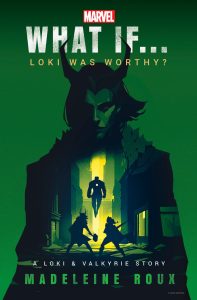
Madeleine Roux is the New York Times and USA Today bestselling author whose work includes Star Wars, World of Warcraft, and Dungeons & Dragons. Their new book, What If… Loki Was Worthy? features the Marvel Universe version of Loki in a multiverse adventure. We caught up with Madeleine to find out more…
STARBURST: How would you pitch What If… Loki Was Worthy? to an ancient god of mischief?
Madeleine Roux: What a fabulous question! Wow, no pressure. Okay! What if you had an idea for the funniest prank of all time, and it completely blew up in your face? That would be bad, right? Well, it gets so much worse! What if your family was furious, and they exiled you to Buffalo, New York? I know, I know, what’s a Buffalo, New York, you ask? Don’t worry, you’ll find out soon enough. But don’t worry, there will be boxed wine, football, and a pet lizard who opens your heart to new experiences. Stick around, do enough work on yourself, and you might get the powers of the God of Thunder, some friends, and a cool new costume.
What If… Loki Was Worthy? also features Valkyrie. Where do they fit in?
Valkyrie is sort of the truth north of this novel. She starts out very confident in where she fits into things, and when Thor dies – not a spoiler! – she has to go through a major upheaval. Ragnarok is a major part of life for Asgardians, and when the validity of that cycle gets called into question, it triggers an obvious identity crisis for most of them, Valkyrie included. So, she’s asking some massive questions about her own destiny and her own future while also being assigned to babysit Loki on Earth. Where he is chaotic and cunning, she is brave, competent, and confident. They play off of each other well, even if Loki is constantly exasperating to her.
What was the toughest part of writing this book?
My older brother passed just before starting work on the book. It was an intense coincidence that Marvel wanted me to do a book about sibling loss right after I had experienced it. I couldn’t look away from the coincidence, so I dove in. It was a way to stay connected to my brother even after he was gone. I spent every workday thinking about him, about the way his absence affects my life, and it allowed me to explore some raw, real things through these characters. That was tough because there was no escaping the similarities, but it also brought me to some meaningful truths and some beautiful moments of transformation for Loki, Valkyrie, Tony, and Jane.
Why do you think Loki is so popular as a character?
I think heroes can be self-serious, and sometimes you want that, but there’s something seductive and exciting about a misfit. Loki is a flamboyant, bisexual trickster with a ton of swagger – he’s not a square, he’s got a well-developed sense of humour, and at the end of the day, he’s most interested in pursuing what amuses him. That lack of restraint scratches something in our lizard brains. I also think there’s a deeply relatable side to him – he’s the outcast of the family, the black sheep, and many of us can see ourselves in the way that dynamic plays out with his family.
Why do you think the Norse myths have endured?
I don’t think we can ignore the strong aesthetic component of their lasting influence. The imagery is iconic, grandiose, and inspiring, and I think it will always appeal to humans. There’s also something fascinating about blending real-world myth with superheroes, who are modern mythology.
What other part of the Marvel Universe would you like to explore?
I would absolutely love to do a She-Hulk novel or comic. As a powerlifter, she’s one of my inspirations!
What other projects would you like to work on?
I quite honestly get to do my dream jobs each day. I’ve published over twenty novels, and most of them are my own original IPs. Just getting to do that is a blessing.
What’s next for you?
The third in my middle-grade series for Dungeons & Dragons (Dungeon Academy) is releasing in May, and my second romance novel, Much Ado about Margaret, will be out this fall. I’ve also got an exciting young adult novel on the way in 2025, and I’m about to pitch my first epic fantasy series.
Loki or Thor? Loki!
Cyborgs or Dinosaurs? I’m a huge Horizon Zero Dawn nerd, so…both? But if pressed, dinosaurs.
Kittens or Puppies? Puppies, I’ve got two of my own!
Truth or Beauty? I’d argue you can’t have one without the other, but again, if pressed, truth.
Dan Osbaldeston is a live interpreter, actor and performer best known for his work in interactive theatre and immersive works. He’s currently working with Lemon Difficult, a critically acclaimed immersive experience company, on their H.P. Lovecraft-inspired event, The Key of Dreams. We caught up with Dan to find out more…
STARBURST: How would you pitch The Key of Dreams to someone who’s really into costumes?
Dan Osbaldeston: Exploring a weird fiction mystery while in historical clothing sounds like great fun. Although there’s no requirement to attend Key of Dreams in costume, guests are perfectly welcome to dress for the occasion if they wish. Our previous offer, The Locksmith’s Dream, certainly saw many guests turn up in their 1920s finest or even just dessing for dinner. They plainly had a great time and looked great while doing so!
How did you get into The Key of Dreams?
I’m a live interpreter by trade, using costumed characters to help people better enjoy and understand a visit to a museum or historical site. My skills and networking have also led to involvement in many murder mystery treasure hunts and, since lockdown, online puzzle rooms. Live-action roleplay is another connection, of course. My LARP taste runs to vintage horror, which is obviously exactly the same well that The Key of Dreams is drawing from.
How is The Key of Dreams different from normal theatre?
Oh, I’m not going to get drawn into a discussion of what ‘normal theatre’ is! Where it differs from the theatre that most people might expect, however, is that there is no set script or stage directions. The guests aren’t so much an audience expected to sit in place and watch, but rather they are invited to participate, occupy, and explore the same space and world as the performers. Their input affects the way events unfold and can fundamentally change the stories and their outcome.
Why does horror work so well for this sort of event?
A suggestion of peril sets the heart beating a little faster and makes you more alert, with eyes and ears a little wider. You know it’s perfectly safe at one level, but your brain can still be tricked into releasing exciting chemicals. I think people ride rollercoasters or visit haunted house attractions for similar reasons – a sense of danger we know and trust is an illusion but feels thrilling nonetheless.
What was the most challenging part of the production?
It’s a very elaborate production, so I imagine everyone involved will have a different answer. For me, the most challenging part has been trying to get my head round the whole thing. Eventually, I realised I don’t have to know the exact ins and outs of what everyone else is doing, I just need to do my part right!
How do you prepare for a role like this?
There’s been a lot of reading material to get through – thank heavens for audio versions that I can put on while cooking or sewing, I say! For the most part, though, my preparation has been reminding myself that I’ve made a career out of being able to take a character brief and improvise appropriately with it. I can’t know exactly what the guests are going to ask or say or do, but that’s the joy (and terror!) of this sort of role.
Where do you find inspiration for the horror aspects of this role?
The Key of Dreams draws very much on the weird fiction of the early twentieth century (and a little earlier and later). H.P. Lovecraft is the big name there, of course, but we’re drawing on several other authors, as well as some original pieces written in their styles. The site itself is also an inspiration, of course. Treowen is a lovely old house in the Welsh Marches, very charming by daylight. But once night has fallen, it can feel very isolated from civilisation and the real world.
What’s next for you?
The Key of Dreams will run again, as will The Locksmith’s Dream. Other big features in my diary for the coming year include Open The Box Productions’ SOE: Resistance, a LARP exploring the work of the Special Operations Executive. I also hope to return to the Baltic for another voyage with Sailing4Adventure’s Demeter, a LARP set during Chapter 7 of Dracula.
What other projects would you love to be involved with?
Something set in Antarctica. Maybe with some Norwegians and a dog.
Dragons or Deathstars?
I have long wished for an orbital death ray.
Doctor Who or Doctor No?
Doctor Mabuse
Truth or Beauty?
Freedom, Love?
Booking for THE KEY OF DREAMS and THE LOCKSMITH’S KEY can be found here.
John Jackson Miller is an American comic-book writer, novelist and commentator known for the Knights of the Old Republic and Knight Errant comic books and the Kenobi novel. His latest book, Star Wars: The Living Force, focuses on Qui-Gon Jinn, his apprentice Obi-Wan Kenobi, and the twelve members of the Jedi Council. We caught up with John to find out more…
STARBURST: What is the elevator pitch for The Living Force?
John Jackson Miller: Qui-Gon Jinn walks into the Jedi Council chamber and challenges the masters to get out of the building and find out what they’re missing about the galaxy. “Help one person.”
The Phantom Menace is 25 years young this year, did that inform the writing in anyway?
Certainly. The story is set a year before those events so Qui-Gon Jinn and Obi-Wan Kenobi have been working with one another for a good while. I determined that Qui-Gon would be one of the ones most likely to notice what would have been an undercurrent at this time: that the Republic and the Jedi are no longer serving the needs of people like they once did, setting up the conditions for the troubles to follow. And certainly, what we see of the Jedi Council in the movie and attendant prose from this time period gave me a lot to work with. Some of the characters we see are well-established, while others we’re getting to know for the first time.
The Star Warsseries has a lot of authors creating work for it; how much negotiation is required to make the series fit together smoothly?
My editor, Tom Hoeler, kept me fully apprised of events in other books that might connect to mine – or provide opportunities for crossovers, as actually happened in the case of one character. Likewise, the Lucasfilm Story Group and fiction editor Jen Heddle communicated with us regularly to make sure everything fitted together and worked. I’m a veteran of the Knights of the Old Republic comics, the Kenobi novel, and the New Dawn novel among other things, so I have seen the process in a lot of different eras. Everyone’s been at this a long time and it’s a well-oiled machine. The book does interesting things with the Jedi Council. Can you tell us more?
While we see some members of the Council in action in the films and in The Clone Wars series, this novel really takes a look at the body itself. What the members think the Jedi should be doing in the galaxy; what they think the Council should be doing within the Jedi Order. It turns out not all of them have the same view of these questions. Mace Windu answers Qui-Gon Jinn’s challenge by arranging for the Council to reconvene on Kwenn, a planet that was once a showpiece for the High Republic, but since then has seen better days. This gives everyone on the body a chance to get out and interact with the people that they’re supposed to protect. It also lets us see a lot of the members of the Council working together – and interacting, as friends and colleagues – in some new ways. There’s a lot of humour in the book, in addition to the adventure. What part of the Star Wars universe would you like to explore next?
I’ve written in many different parts of the timeline over the years. The Original Trilogy remains a favourite of mine, but I also see a lot of places for new kinds of stories to be told elsewhere. It’s been a long time since I did a really extended storyline in something like a comics series; that could also be interesting to do again. Star Wars is rich with story opportunities, and I’m constantly finding angles I haven’t explored before.
If you could have a real working holocron, what would be in it?
All the books that I haven’t written yet. The Force can tell the future – maybe it can save me a little time on the next manuscript!
And if you could take one Star Wars thing and ensure that it would survive for thousands of years, what would it be?
Definitely the films – but also, if possible, something showing the context the films were released into. A New Hope on its own would be a treasure, but it’s a lot more fascinating if you can put it in its place in a Museum of 1977, to show how it changed society, filmmaking, and fandom. Because these pictures have that kind of lasting impact.
Ivan Caric is the Founder and Creative Director of Lemon Difficult, a critically acclaimed immersive experience company that blends immersive theatre, overnight historic stay vacations, narrative puzzles and fine dining into something rather unique. We caught up with him to find out more about the H.P. Lovecraft-inspired event, The Key of Dreams…
STARBURST: How would you pitch The Key of Dreams to someone who really likes scary movies?
Ivan Caric: We don’t have jump-scares, but if you relish creeping dread, that growing realisation that things aren’t quite right and that they might spiral and get out of control, then you’ll be right at home. The concept of apophenia, the idea that everything is connected, from a thrown-away phrase to a carved gargoyle on the wall, and the growing realisation of how it fits together, is part of what I love in scary movies. Discovering the stories that happened at the house, why and where. Also, how the characters currently in the house relate to them, and what their goals are, and more importantly what will you do to affect these stories, that’s the magic of what we’re hoping people will experience. One of the touchstones for our experience is a M.R. James quote that I particularly like:
“If any of [my stories] succeed in causing their readers to feel pleasantly uncomfortable when walking along a solitary road at nightfall, or sitting over a dying fire in the small hours, my purpose in writing them will have been attained.”
Where did the idea for Lemon Difficult and The Key of Dreams come from?
After the lockdown horror of the past few years, a key part of what I wanted to do was to create joy and connections. To capture that spark of joy you get when you make an intuitive leap or a link. This could be the solution to a puzzle, or more likely when you link motives, people, places and objects together and finding that “Oh, I understand what that means now!” moment. Through simple systems, actors, diegetic props, soundscapes, an incredible location and great writing, I wanted to create an experience that feels hospitable and genuinely delights people and has no right way to experience it.
The experiences we produce are truly unique. We cheerfully embrace multiple genres, including immersive theatre, roleplaying, escape rooms, puzzles, and gourmet dining. As it is an overnight experience, there is time to soak up the atmosphere of the incredible 17th-century manor house and grounds. Guests have time to build relationships with the characters and the other guests in a way that you simply can’t do in other immersive shows. They can explore interlinked narratives, solve puzzles, learn about the characters in the house, and discover the growing horror of the things that have happened, all the while being gently drawn further and further in until, by the end, they’re as bought into the setting and the events as the characters themselves.
It’s a lovely venue; what is the site selection process?
We spent a long time looking at venues, most of which would have worked fine, each with its own advantages, but Treowen felt special straight away. It has a curious liminal quality, it is old and grand, but still feel curiously homely. It hasn’t been modernised, so you feel like you could be in the past. The oak panelled walls and Morris papered walls would have been identical fifty or a hundred years ago. At night, it is even more unworldly; the lights are dim, the floors and doors creak, and with the darkness encroaching around you, there is a feeling that you could be in a strange dream, that the walls between the waking world and the sleeping ones are thin and who knows what you might experience.
How different is The Key of Dreams from The Locksmith’s Dream?
We’ve learned a lot from The Locksmith’s Dream – in fact, it’s still running. However, one of the things we wanted to explore that the audience loved was their agency and their relationships with the characters. We have a couple of unique advantages in that we have a really high actor-to-guest ratio – 1 to 4 – which means that you really get to know the characters and develop strong opinions one way or the other. Secondly, we have time; the audience spends 24 hours in this amazing house (which is a character all of its own) with these strange characters, you will break bread with them, debate and argue with them, cajole them, scold them even. All of this means that when you make a decision to help them, trick them, or even betray them, it actually means something because you know them, and you have an idea of how your actions will affect them.
Why did you decide to start running events like this?
I worked in large telecom corporations for nearly twenty years; it is as dull as it sounds! Sadly, my dad died at the end of 2020 during lockdown, and like lots of people did, I reevaluated what I was doing, decided to pack in my job and try to create something that brings a bit of joy into the world. Gaming – board gaming, TTRPGs, and, of course, computer games – literature, weird fiction and theatre have been a source of comfort, joy and connection for me throughout my life. I began wondering if combining these in unusual and unexpected ways would help me create something a little magical.
Are immersive experiences the future of theatre?
‘Immersive’ is a much-overused word at the moment, which means that the word is a bit of a vague and shifting term. Does it mean that the audience has agency, that they are in a world that they can wander around, or one in which the inhabitants acknowledge their presence? There’s value in all of these, and they can be delightful in their own way. I don’t think that immersive experiences are the future as such, although we certainly will see many, many more and more of these sorts of experiences, I personally love art with a strong authorial voice; whether I agree or disagree with it, I want to feel that what I’m watching, reading or experiencing has something to say, an opinion or a position that I can care about one way or the other. This can be harder with an immersive experience where there is strong audience agency, where often it is a collaborative experience. In this case, your experience is mediated by what the other audience members do, which can be amazing, or less so. This is one of the things that we are experimenting with to make sure that audience members can act to enhance the experience for themselves and others through their actions without having to be reliant on it.
What’s the most important thing you should consider before signing up for The Key of Dreams?
Just come; you’ll have a great time! One of the unique aspects is that it’s designed to cater to a range of different audiences, from immersive theatre buffs to people who love stories, puzzles, and roleplaying. There is genuinely no right way to experience it. But it is quite an active experience. You’ll get more out of it by travelling around the house and grounds, so decent footwear is a must!
What is your favourite part of the production?
The show structure follows a similar path to many weird fiction stories. Everything is mostly normal when the guests arrive; ‘investigation’ leads to hints of weirdness; this is confirmed in the ‘descent’, which is followed by a section we call ‘the door opens’. This is when the full strangeness of the experience will be realised This is followed by the ‘aftermath’ the next day, a sort of a moral hangover and realisation of the consequence of their actions. I think my favourite part is ‘the door opens’; by this time, the guests will hopefully be fully bought into the world and be acting on instinct rather than pure calculation.
What other works would you like to adapt?
Daniel Knauf’s tragically cut-short Carnivale TV series would be a fabulous setting for an audience to experience: a creepy 1920s carnival with stories to interact with, games to play, and difficult moral decisions to make. So, if Daniel is reading this, I’d love to talk!
The second thing we’d love to do (and bear with me on this one) is a Lovecraftian Wind in the Willows, designed for families. The kids get to do creepy folk horror stuff outside, and the adults do proper occult investigations inside – while perhaps sipping a cocktail or two – and the two converge at the culmination of the experience. Cults led by Ratty, Mole, and Badger!
What’s next for you?
After the first three shows, I intend to sleep for a month. After I wake up, there are more Key of Dreams shows to plan, a shorter experience based on it to design – the idea being to be run it in a large city – an epistolary weird fiction subscription in the KoD world, and a collaboration on a boxed narrative puzzle experience with a fabulously talented and well-known game designer based in the states.
Doctor Who or Doctor No? Doctor Who without a moment’s hesitation!
Dragons or Deathstars?
Deathstars, it’s the future, you know!
Truth or Beauty? Truth is Beauty even if it sends you mad
Booking for THE KEY OF DREAMS and THE LOCKSMITH’S KEY can be found here.
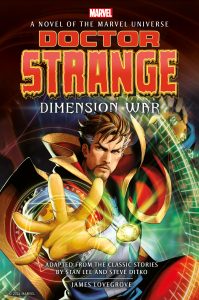
New York Times Bestselling Author James Lovegrove has written over fifty novels, including the highly regarded Pantheon series, the Dev Harmer novels and various tie-in works, including Firefly and Sherlock Holmes.His latest book Doctor Strange: Dimension War, sees Marvel’s infamous mage takes on challenges in a way the fans will have never encountered before. We caught up with James to find out more.
STARBURST: How would you pitch Doctor Strange: Dimension War to a reality-bending space wizard?
James Lovegrove: I’d suggest they buy copies for all their friends and family so that they can then say, “See? I told you I’d travelled to far-flung other-realms where there are dragon mouths floating in the sky and these pathways that bend in all directions and weird spiky spheres, and there’s this big flamey-head man who wants to rule the Multiverse and has a really cool niece who’s taken a shine to me. And oh, there’s also a lord of a dream dimension who keeps trying to destroy my astral form, and… Look, I know it sounds strange, no pun intended, but I’m sober, honestly, I swear.”
What was the toughest part of writing this book?
The original comics that I’ve adapted for Dimension War are wonderful stuff, Stan Lee and Steve Ditko in their prime. But they’re also scrappy and episodic, and while there is an overall narrative arc across the twenty or so issues I’ve focused on, it’s not always readily evident. I had to bend their plots in places and add and remove bits in order to produce a story with a consistent throughline. That was challenging but also fun. I then had to figure out how to convey Ditko’s artwork in prose form, that extraordinary surreality of his that’s somehow both trippy and earthy. I had a go at this by playing with typographic formatting in places, using text the way Ditko did pictures, but mainly by rendering his imagery into words as carefully as I could.
Why is Doctor Strange so popular as a character?
On the surface, he’s not very relatable, not in the way that, say, Spider-Man is with his youthful neuroticism. Strange is a former surgeon who had wealth and renown, but was also arrogant and self-serving. How are you supposed to root for a guy like that? As Lee and Ditko showed, the answer was to humble him, strip away all his worldly success, and force him to start over from the bottom up. By learning to become a powerful Master of the Mystic Arts and eventually Sorcerer Supreme, Strange travels the road to redemption. Who doesn’t love a character who learns from his mistakes and becomes a better person for it? And also has white sideburns and a cool goatee?
Why have stories about wizards endured for so long?
Reality is fixed, prosaic and not always your friend. But what if you had the power to alter it, bend it to your will and make it work for you? And what if you could step outside the mundane and perceive the cosmic patterns that underpin the universe? And what if you could zap your enemies with spells and maybe have a cloak that can make you fly? Perhaps it’s a childish thing, this idea that with a wave of your hand or a wrinkle of your nose, you can make objects appear or disappear or turn a dog into a cat or a cat into a human or a human into a dog, or give yourself an endless supply of Lindt Mini Eggs, or whatever. There’s still something very appealing about that, even to an adult. Reality is stifling. Magic, and the wizardly ability to use it, is a wish-fulfilling kind of transcendence.
What other projects would you like to work on?
I’m very much hoping that there’s another Marvel novel in my near future, an adaptation of perhaps the greatest Silver Age storyline of them all. I’d gladly do even more Marvel work because I’ve been a confirmed Marvelite pretty much since I learned to read. The Marvel Universe is my happy place.
What’s next for you?
I’ve just written a novel that’s a childhood dream come true, working on an IP I’ve been a massive fan of from the age of 11 onwards, namely Conan of Cimmeria. Thanks to Titan and also the licence holders Heroic Signatures, I’ve been allowed to romp around in the Hyborian Age, and I’ve been having a ball. I’m hoping this book will be the first of several.
Loki or Thor?
I’m an attention-seeking nuisance, so Loki, obviously. Also, I don’t have the physique for Thor. Or the long hair.
Cyborgs or Dinosaurs?
Cyborgs definitely. I’ve always loved The Six Million Dollar Man and also the Marvel character Deathlok the Demolisher. In fact, I’d do anything to write a Deathlok story, even have a cherished body part replaced by the mechanical equivalent. Not that dinosaurs aren’t cool, but they’re not half-robot cool.
Kittens or Puppies?
I used to be a confirmed cat person, but then we got a Yorkshire terrier, and she drew me to the canine side of the Force. Mind you, I’m not into kittens or puppies as such because they’re all just mess, disinfectant, rolls of kitchen paper, and getting your hand gnawed.
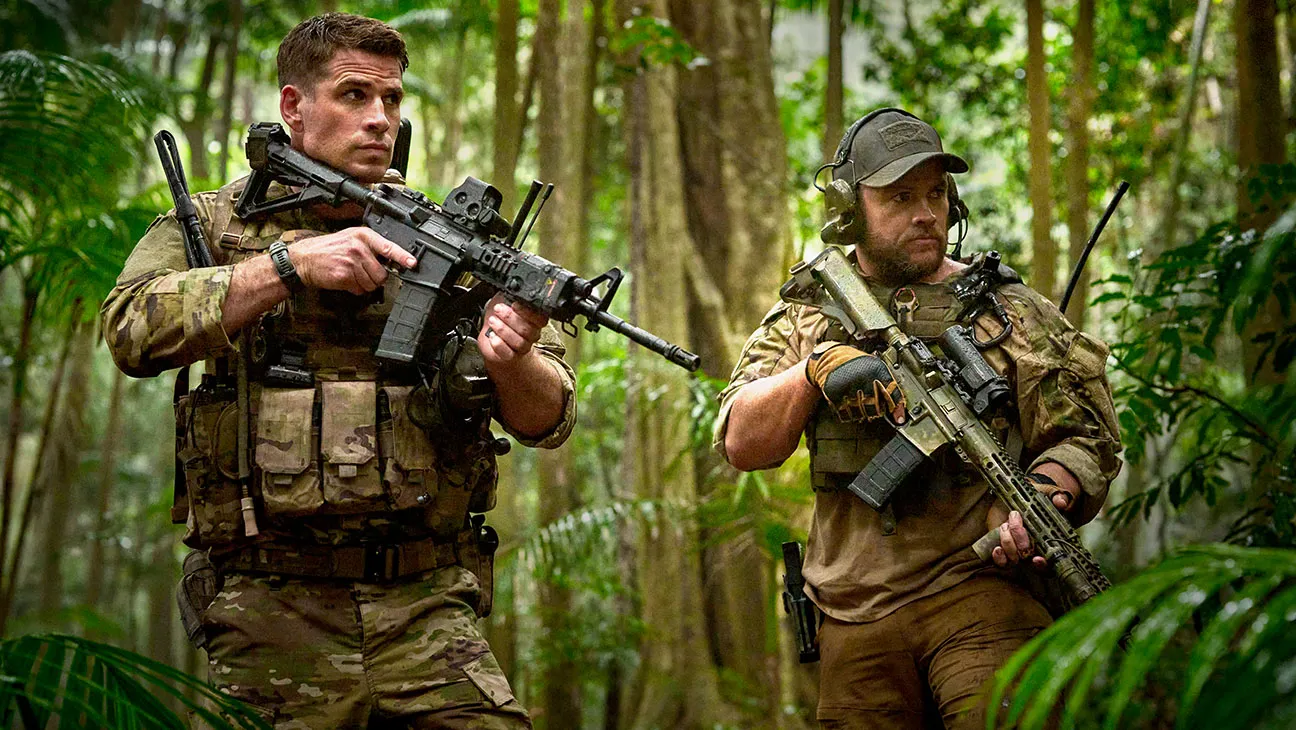
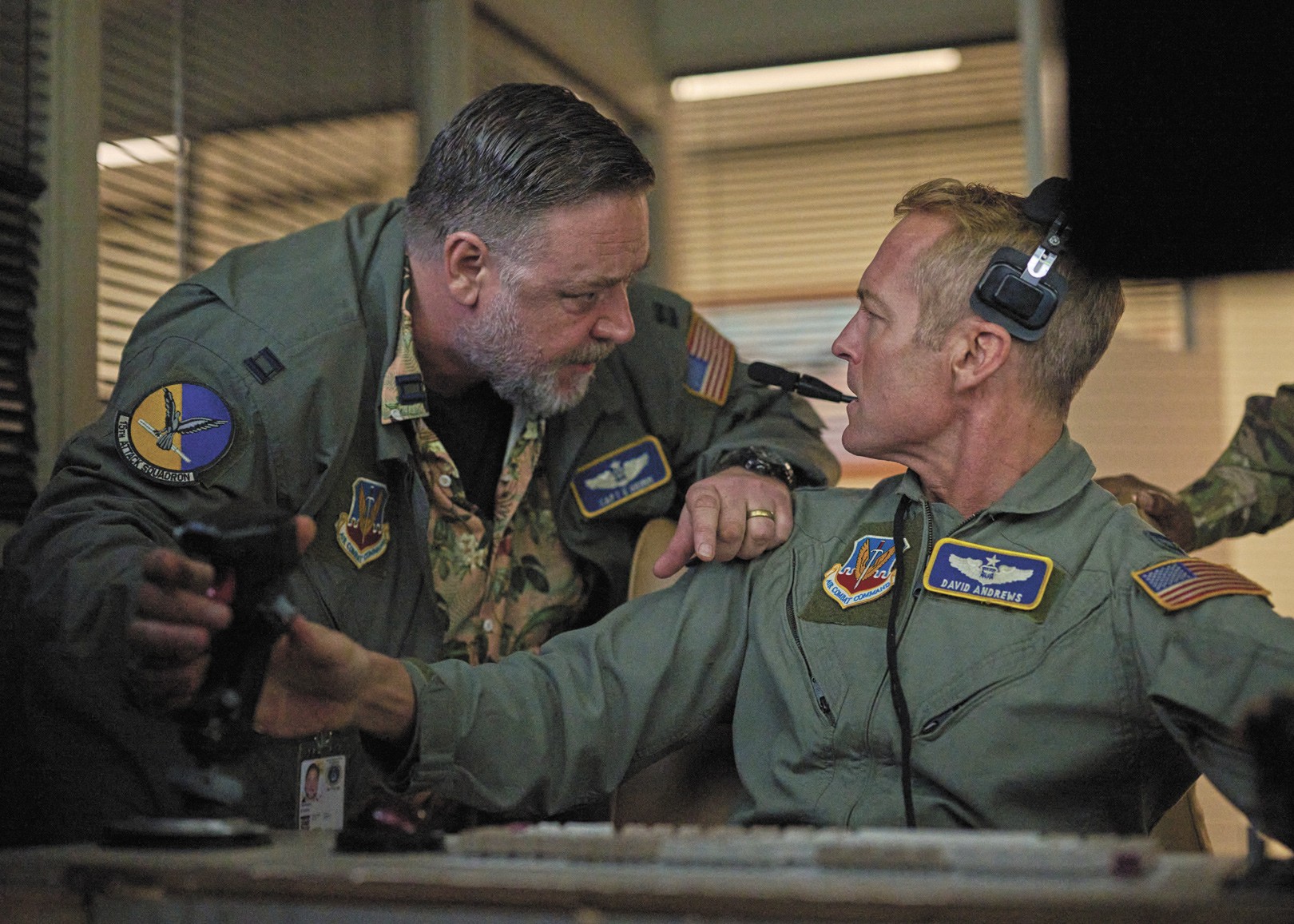
Thrown into a high-level military rescue operation at the very last minute, Land of Bad sees Sgt JJ Kinney (Liam Hemsworth) navigate a deadly and brutal mission, with the help of drone pilot Reaper (Russell Crowe). As events escalate and the stakes become higher, we witness a fantastic acting performance and dynamic from the two main leads. STARBURST talks with writer/director William Eubank (The Signal) to uncover the origins behind this original drone warfare-based idea, what the cast was like to work with, and how he went about capturing epic special effects for an action movie of this level…
STARBURST: We read that you came up with the story of Land of Bad some time ago; can you talk about how it first came to be?
William Eubank: Yeah, it was a long, long time ago. We were doing The Signal with one of my co-writers [David Frigerio]. Drone warfare, MQ-9s, and all of these different unmanned planes were really falling more into the public eye at the time. The Signal was such a crazy, quirky, sort of Lynchian, weird film. So we thought, “Man, we need more of a straight actioner to follow The Signal”. You’re always worried, especially on your first film, “Am I ever going to work again?” I felt because The Signal was so quirky, we kind of not over-corrected, but we thought “Let’s follow this with a more, straightforward action film.” And then, because other things happened, the movie was taking so long, and I got involved in another movie. At some point, we had been contacted by an actual JTAC [Joint Terminal Attack Controller], who had heard that we were writing a JTAC movie. He was a JTAC instructor at Point Irwin, and he wanted us to come out and see what they really do, and how they do it. That experience changed how I thought the movie would go. I learned how the guys worked, heard their stories, and saw how they worked together. We were like “Oh, gosh, we’ve got to start this script over.” So we really re-tooled it, and changed it to be really based around these guys and how they really work. Even the main character, Kinney, was actually named after the guy who had contacted us. The film isn’t a true story or anything, but Kinney was our advisor, really, as a JTAC, throughout the entire film. When it finally came time to shoot, all these years later, I wish I had the pictures. Kinney, on his Instagram or something, I look like a little kid at Fort Irwin. It was so many years ago. And then now, we’re both like overweight dads, working out in Australia. It’s crazy how times change, but it just goes to show how long a project can kind of sit on the back burner, and then finally, hopefully, it finds the light of day.
We love how before there’s even any action at all in this movie, as a viewer, you really feel on edge. There’s a tense atmosphere there. How did you capture that feeling of unease?
A big part of that is the jungle. You get all of those sounds out there; there are so many trees to hide behind, and there are animals. We were really in the jungle, and we would always wait a lot for the sun to go behind a cloud. There’s always a lot of patchy clouds in Queensland, Australia, where we shot. Not only does it look better, but it also feels denser not to have this bright, poppy sunlight. So that helps with the dread a lot. Another tactic is that we would lay tubes of death; it’s just a giant tube on a smoke fog maker, and you just roll it way out. I’d go in with the effects guy, and be like “Alright, I’m going in these directions, only shoot these directions” so they would go. There would always be a guy in the background running one of these tubes of death, creating a really heavy fog. It created a hazy smoke, which would hang in the jungle and really add to that feeling of dread. And it also provides a little bit of movement out there. So that was another big technique that we would use a lot.
Before the mission starts, JJ Kinney is really at the centre of the story. What did you want viewers to take from him at a surface level from the moment we see him?
The movie opens with him making a silly choice if you will. You want to know he’s green and a little over his head. Being pulled onto a mission at the last second like this is a bit overwhelming, and you’re just going to be trying to catch up the whole time. Obviously, it’s really about looking to the guys you hope will look out for you. Hopefully, they don’t wind you up too much, but at the end of the day, if you’re going to have to step up, you will have to step up.
From the start, there’s an interesting dynamic between Kinney and Bishop [Ricky Whittle], where Bishop almost sees Kinney as beneath the rest of them for using drones in combat. Can you elaborate on that writing idea and maybe what it brings to the movie?
You just felt like you had to say something about it in the movie. This was written so long ago that it was just a thought we had back then, but obviously now, it’s like, “No, duh!” I saw that Boston Dynamics has a brand new humanoid robot that they unveiled, and they’re retiring the old one that would jump around and do flips. The new one is like a contortionist, you’ve got to watch the video, it’s so crazy. It stands up in a way that no human could ever stand up; your legs would never move that way. It’s just terrifying and really scary. So, the tech vs the human element of warfare is such a, I mean, you can’t really watch the news these days without thinking about it to a certain degree. So, Bishop is really just saying, “No matter what you do, it’s not making it any better; it’s still killing.” We were stating the obvious, but I felt it was important to say in the movie, just with where we are and everything like that. Try not to be too political or anything, and just feel like, with drones and people on the ground, it’s worth mentioning or at least showing the different sides of this viewpoint and whatnot within the film.
Can you tell us a bit about what it was like working with Russell Crowe and what he brought to the character of Reaper?
I love Russell. He is the best. First off, he brought so much characterisation, so much humour, and so much light to the movie. What I really want to say about Russell is that he loves to work. He won’t be satisfied with anything, which is so cool. I kind of feel that way, so to work with such a pro, and to see him feeling the same way, at the highest level, for a role where we don’t need him for the whole movie, and for him to work that hard for it, is amazing. When you get someone great and big, you never know, and you don’t want anyone to phone it in or do anything like that, and that’s always the fear you have as a filmmaker. Russell did the opposite; I would go, “Oh my god, Russell, that’s amazing! Alright, we got it!” and he’d be like “, William, please, two more takes! Please. I promise it’ll be 15% better” I’m like “Oh my god, it’s so good already! What does 15% better look like?” So, he was awesome, and he worked so incredibly hard. He brought so much life and humour, and I want to say, kind of like hope to a movie that can obviously be pretty dark at times. I’ll say this: at the very end of the movie, without giving away any spoilers, that was his idea at the very very end of the movie. I remember him talking about it, and I was like, “No, that’s not going to be the end of the movie!” then we shot it, and people were emotional. And I was like, “That’s probably going to be the end of the movie!” I totally thought it would end in a helicopter, and when I saw that, I was like, “No way, that’s so cathartic.” He is just a genius. He really is. I was so lucky to work with him; hopefully, I’ll get to do more stuff with Russell in the future.
Sounds like what one might expect from an Academy Award-winning actor!
Yeah, there were many times when I was at the monitor, thinking like, “This is why he is an Academy Award-winning actor!” You know, you’re really thinking that. Just seeing how solid he is, how he works, how he just pieces together each take, you’re just like, “Damn, this guy is an Academy Award-winning actor! This is what you get!” It was pretty amazing.
What did you want to see from the dynamic between Reaper and Kinney, and how did you want it to progress through the movie?
We would always joke, “The next movie is going to be called Land of Dad.” Reaper has so many kids or whatnot. But, we were sort of saying it’s a little bit like a father and son relationship, to a certain degree. This person is looking out for this other person, and they’re trying to keep a watchful eye on them. That’s a little bit of the dynamic. It’s not really the whole dynamic, but that’s a hint of it. They become friends. In a situation where you’re really in over your head and where things are all going bad, you are hopeful that whoever the eye in the sky is is looking out for you in an emotional way. To really have your back. It was cool that Liam had just made another film with Russell, so they knew each other well, which helped. You didn’t have that early period where the guys are getting to know each other, they really, already knew each other and had a great relationship. And they were able, it’s much easier to pretend like you don’t have a relationship, just like Liam and Luke Hemsworth [Abell] do in the movie, and then, bring it in, and sort of connect through the film.
As a director, what was it like to capture a back and forth, where these two characters aren’t even in the same scenes or rooms together? What were the key points to making that feel realistic and grounded?
A lot of reading early on. In fact, I think Russell was doing The Pope’s Exorcist at the time. He was calling in at weird times from Ireland all the way to Australia to do readings in the hotel where we were staying with Liam. We knew we were obviously not going to be able to shoot them at the same time, so we wanted to identify any big changes that needed to be made. Because once you shoot the one side of the conversation, it’s very hard to change the other side. We did a lot of reading and got it all sorted, and then we would shoot the action stuff first with a drone; then when we were shooting all of the drone stuff later, Liam was able to be in another room on a headset, just sitting on a couch, relaxing. Unless he had to pretend stuff was going on, and then he’d be jumping around! Giving his dialogue. Russell was able to watch the drone footage, and he had a joystick, like, it was crazy, because in his bay, the art department built it so he could really control the footage from his joystick. Zoom in on it and move around like he was flying the drone. It’s really cool. It was a really cool workflow that was unique, enabling us to make the movie for a price. So, I’m sure on a giant movie, you would go back and forth and do it all at the same time. We did ours, action first, drone second.
Throughout your whole career, you’ve worked pretty heavily with practical effects, so with Land of Bad, what did you want to see from the practical effects within the movie?
I’m not making gigantic movies, I’m sure if I was doing one hundred million dollar movies you get like the same person doing all of your pyrotechnic every time. On this, you’re meeting your new pyrotechnic, special effects guy for the first time, you do a test with them, and you’re like, “Alright, show me what you got!” it was so funny. His name was Julian Summers, and he was from Australia. I swear to god, I want to use this guy in everything; he was so great. He was like Cody [Danny McBride] in Tropic Thunder. Julian was insane. He’d be like “OK, here’s a grenade” I’d be like “Woah, dude! That was not a grenade that was like a building size explosion” he was like, “Oh, you think that’s too big?” “It was gigantic!” He’d be like, “Hmm, I don’t know if you want to see the RPG then!” I’m like, “Alright, let’s see it!” and I’d say, “This is crazy!” We’d be like half a mile away from a scene, and he’d be like, “Alright, you might want to get behind a car, just in case anything goes flying”, and you’d literally feel a heat wave blast by you, and these were just his tests. Throughout the film, his explosions kept getting bigger and bigger and bigger. By the end, it was just so massive. It was just crazy, he was setting trees on fire, we’d have to have fire trucks. But I really loved this guy; he worked his butt off. With some of those night scenes, and with the crazy explosions, when cars are flying off the cliff, he would emerge from the end of that night covered in black soot. He’d have big explosive chords wrapped around his arms. He’d be like “Alright man? Was it cool?” and I’d be like “It was unbelievable!” but yeah, Julian did such an amazing job. I really want to use him again on anything else that has explosions on it. I’m flying him out of Australia. He’s great, a really good dude.
Emily Carding is a British Shakespearean Actor whose work includes Ghost Stories and Return To Silent Hill, as well as the award-winning Richard III(A One-Person Show) and Quintessence, a critically acclaimed post-singularity re-imagining of Mary Shelley’s Frankenstein. They are one of the performers for The Key of Dreams, a one of a kind Lovecraftian experience which combines immersive theatre, narrative puzzles and fine dining. We caught up with Emily to find out more.
STARBURST: How would you pitch Key of Dreams to an elder god disguised as a man?
Emily Carding: An extraordinary 24-hour experience in which you will be immersed in a world of stories that challenge, surprise, inspire, and disturb. Get to know the characters who live in the world, solve the puzzles of their lives, help or hinder as you choose and find your own place in this strange world as you help form its unfolding.
You’re best known for your energetic one-person shows; how does Key of Dreams compare?
The intimacy and responsiveness of solo shows such as Richard III (A One-Person Show) and Hamlet (An Experience) that I created with Brite Theater have given me the right kind of foundation for this work because even though it’s on a different scale in terms of space and time- taking place over the entire house and grounds over 24 hours instead of a small theatre over an hour- it’s the connection that’s formed with each audience member/ guest which is extremely personal. The solo shows both use the audience as characters in the story, and both Locksmith’s Dream and now Key of Dreams take that concept and really push it to the limit, giving guests real agency and the opportunity to not only form bonds with the characters but to affect the outcome of their stories.
How is Key of Dreams different from normal theatre?
Many, many ways. It’s very different even from immersive theatre that people might be familiar with. Theatre is really only one aspect of it, merged with puzzle solving, game elements, fine dining and, of course, the reality of the house, your room and location overall. It’s extremely site-specific, with the overarching stories being tailored to the house and land around it. There’s no script as such; the actors are in character and responsive to what you choose to bring (or not bring) to the event, and the outcome(s) is(are) fluid. By necessity, only small numbers are able to attend each event, so there’s a huge amount of 1:1 contact with characters, which will be completely unique to each guest. Of course, if you decide to, you can book a future event and make completely different choices and see how that affects your experience! Also, gotta mention the food again. The food is SO GOOD.
What was the most challenging part of the production?
Although there’s no script, that actually means that in order to be fully versed in the world and as naturally in character and responsive as possible, there’s a lot to read and learn – A LOT. Maintaining energy levels over the 24 hours is a challenge, but the world is so exciting to be in that it’s a real rush for us as performers as well as for the guests.
How do you prepare for a role like this?
Reading, reading, reading. For this role, I’m going to need to be very physically fit, too. This time, we’ve got the excellent Leo Doulton on board as director, so we have someone to bounce character ideas off, which is great, and make sure everything works well within the bigger picture. The key to being alive and in the moment is knowing who you are and what you want. Once that’s in place, you just trust yourself, and your character will take over.
Does horror always need to be personal to work?
Not necessarily, but it’s most effective when it has the key to some hidden part of yourself.
What’s next for you?
Other than Key of Dreams, I’ve got some international and UK dates coming up with some of my solo shows, and looking forward to the release of Return to Silent Hill later this year – I don’t know when, sorry! – in which I play a supporting character.
What other projects would you love to be involved with?
I’d love the chance to develop some new work. It’s difficult to get funding, even just for the time and energy it takes. There are a couple of ideas brewing. I’d also love to do more screen work, especially TV, which, for some reason, I haven’t had much opportunity to do yet. There are some great horror and fantasy shows being made these days. It’s a great time to be a nerd!
Why period drama? What is it about the past that makes horror work so well?
Both period drama and post-apocalyptic settings take away the distracting veneer of technology and society as we understand it now and force us to look at the wild mysteries that dwell beneath. It’s both familiar but slightly removed from our everyday or a subverted version of that which adds to the disturbing elements.
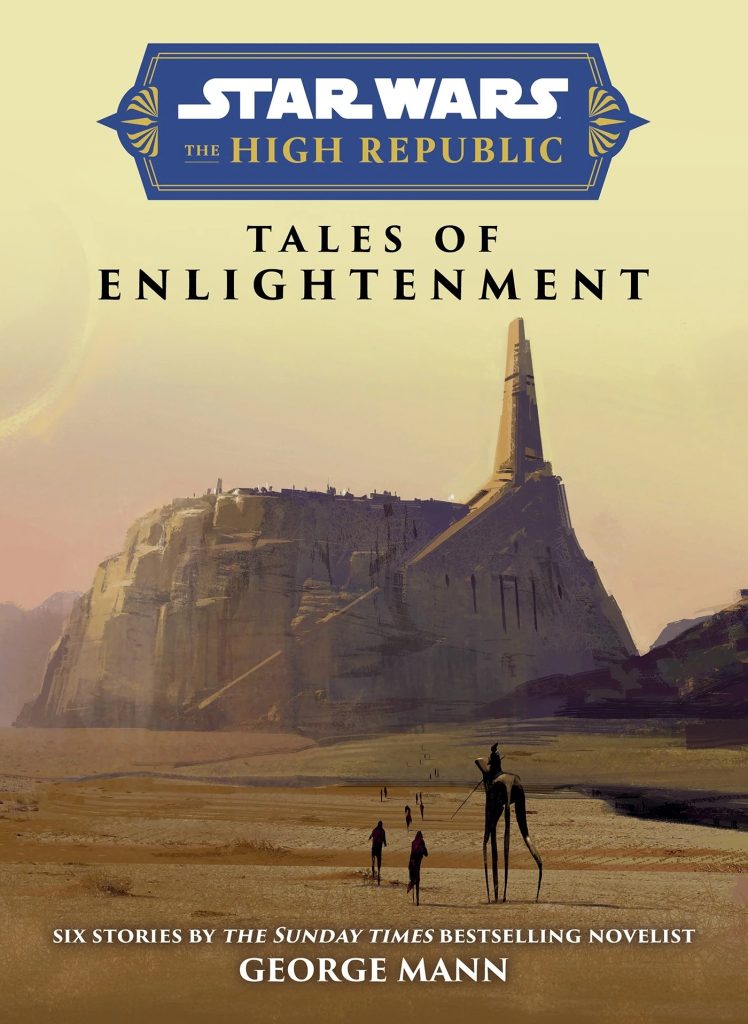
Out now from Titan Books, STAR WARS: THE HIGH REPUBLIC – TALES OF ENLIGHTENMENT is a brand-new anthology set in the galaxy far, far away. This special edition release contains six short tales, including a bonus story exclusive to the collection, as well as a complete guide to the award-winning second phase of THE HIGH REPUBLIC, and interviews with a selection of the authors. Here, TALES OF ENLIGHTENMENT’s author GEORGE MANN joins us to tell us about the anthology, his STAR WARS journey, and more….
STARBURST: Tales of Enlightenment takes place on Jedha – what made this iconic planet a good backdrop for this collection of Star Wars stories, and what kinds of characters will readers meet?
George Mann: Jedha is a writer’s dream of a Star Wars location. It’s a melting pot of Force-related faiths and sects, Jedi and non-Jedi, politics and peoples. There’s a huge amount of opportunity for storytelling and tension between different factions. In this era, it’s also a place where the Jedi aren’t quite as popular as they are around some other regions of the Republic. Here, they’re just another Force sect, and that, too, creates some interesting friction. Mostly, though, we chose Jedha as the location for these stories because of the huge, pivotal events that were happening there during Phase II of The High Republic storytelling. And we decided to set the stories in a tapbar [the titular ‘Enlightenment’] because it presented the chance to show the ground level view of local people of the events going on in the city, as well as being a great setup for having walk-on or guest characters appear in each story as they visit the bar.
You’ve been writing Star Wars since 2018’s short story collection Myths & Fables, can you remember how it was taking “your first steps into a larger world” – to paraphrase Obi-Wan; was it always a goal of yours to tell tales in the galaxy far, far away?
Yeah, it was pretty much a bucket-list gig. Star Wars has played such a part in my life, ever since I was a small child, and being able to contribute something meaningful to that story and galaxy is a real honour. I still pinch myself every time I have a character ignite their lightsaber when I’m writing!
How did the opportunity first come about?
Michael Siglain from Lucasfilm Publishing read one of my original novels and approached me about working on the Myths & Fables book. The novel I’d written featured a fictional mythology and I guess it showcased that aspect of my work. We had such fun working together on the first book that we did two more in the series, and it wasn’t long before I was invited to work on The High Republic project too. I owe Mike a lot for that initial approach!
At what stage were you first brought on board the High Republic team?
I joined the team towards the end of Phase I, when I wrote a Drengir-themed story for Star Wars: Dark Legends, and a couple of picture books for kids.
The stories featured in Tales of Enlightenment are all set during that era of Star Wars storytelling too; considering that the period has already produced 28 books and counting, is this anthology accessible to fans who might not have a deep knowledge of High Republic lore yet?
I believe so, yes. We try hard to make sure there are plenty of jumping on points to keep the stories accessible, and this collection is complete in and of itself, so readers can start and finish the story here. People should be able to pick up and enjoy these stories as they are.
When were you brought into the High Republic team, what characters stood out as favourites, and are there any who you’re still chomping at the bit to write about?
I do feel as though I’ve gotten to know a lot of these characters like old friends. I’d love to return to Silandra Sho and Rooper Nitani from Phase II. I had such fun developing those characters and I feel like there’s a lot of Pathfinder stories that could still be explored.
You’re an extraordinarily prolific author, having written countless – literally, we tried! – novels, comic books, screenplays, audiobooks, and non-fiction works since your debut in 2008. I guess our question is… how? What do your daily routines and disciplines look like in order to achieve such formidable output?
Technically, I debuted in 2000, but it wasn’t until 2008 that my first full-length novel appeared! I think the truth is that I like being busy, and I like working across different media. I try to keep my hand in across lots of different projects! I also try to keep office hours, but if I’m honest, it often spills into evenings and weekends too, particularly as I work a lot with people in different time zones. There’s no particular routine or anything – I just try to knuckle down and focus on what needs to be done. I always say writing a book is a bit like climbing a mountain – it’s about the day in, day out consistency, about always pushing forward. A novel is as much a test of endurance as anything else! What I love about writing scripts, be it comic, audio or screenplay, is the collaboration with other creatives. With a novel you tend to be working alone for long stretches and the end product is very much ‘you’. That can be very fulfilling. But at the same time, working with others means you’re often pleasantly surprised by the way things turn out, and the fact the actors or artists bring something new to the story is hugely exciting. So I try to get a good mix of different projects that I feel passionate about, some personal and some collaborative. Other than that, it’s just biscuits, tea and lots of hard work!
STAR WARS: THE HIGH REPUBLIC – TALES OF ENLIGHTENMENT is on sale from all good book shops, comic stores, and online NOW! And you can catch all-new and exclusive THE HIGH REPUBLIC – PHASE III stories in the current issues of STAR WARS INSIDER!
Tatiana Maslany, whose seventeen-character performance in Orphan Black made the Canadian actress a household name, and who recently rose to new heights of fame for her titular role in the MCU’s She-Hulk: Attorney at Law, gives her voice to Butterfly Tale, a heartwarming animated film about a determined, one-winged butterfly that will make your heart flutter.
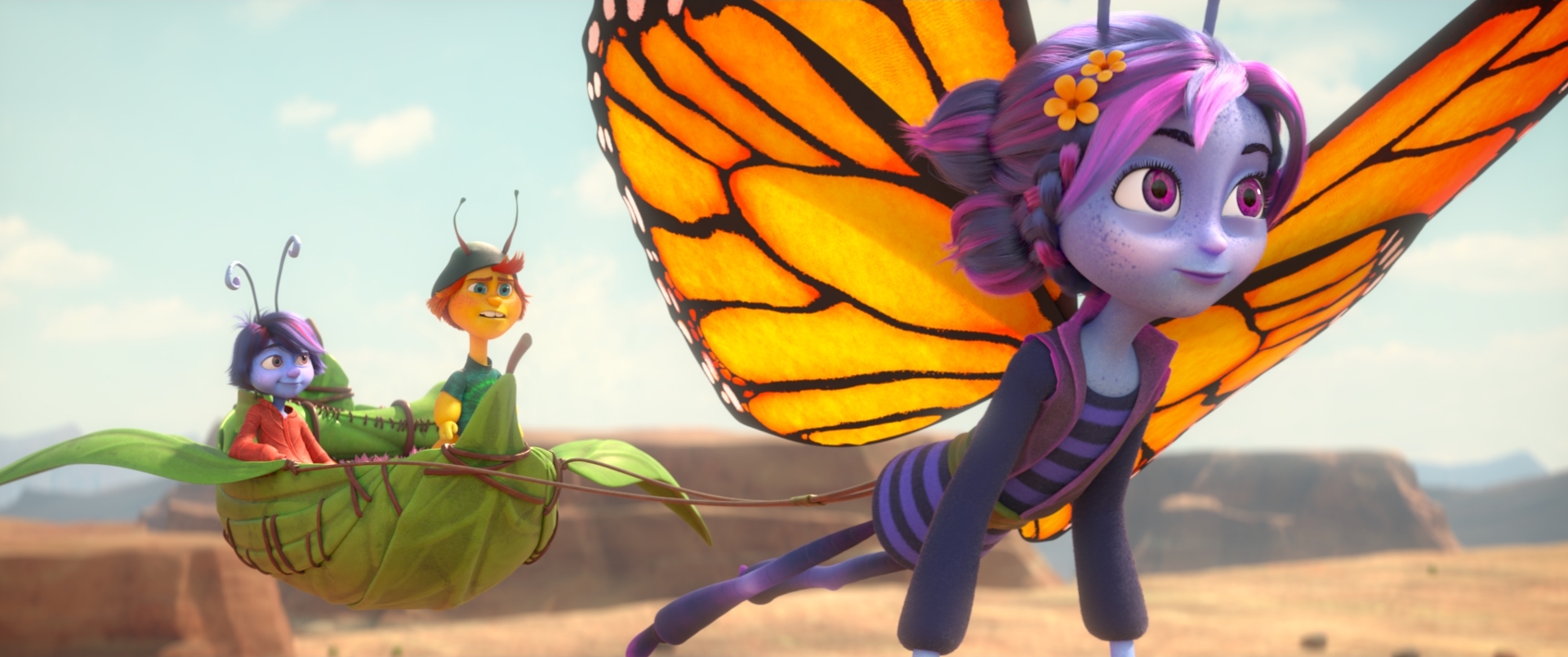
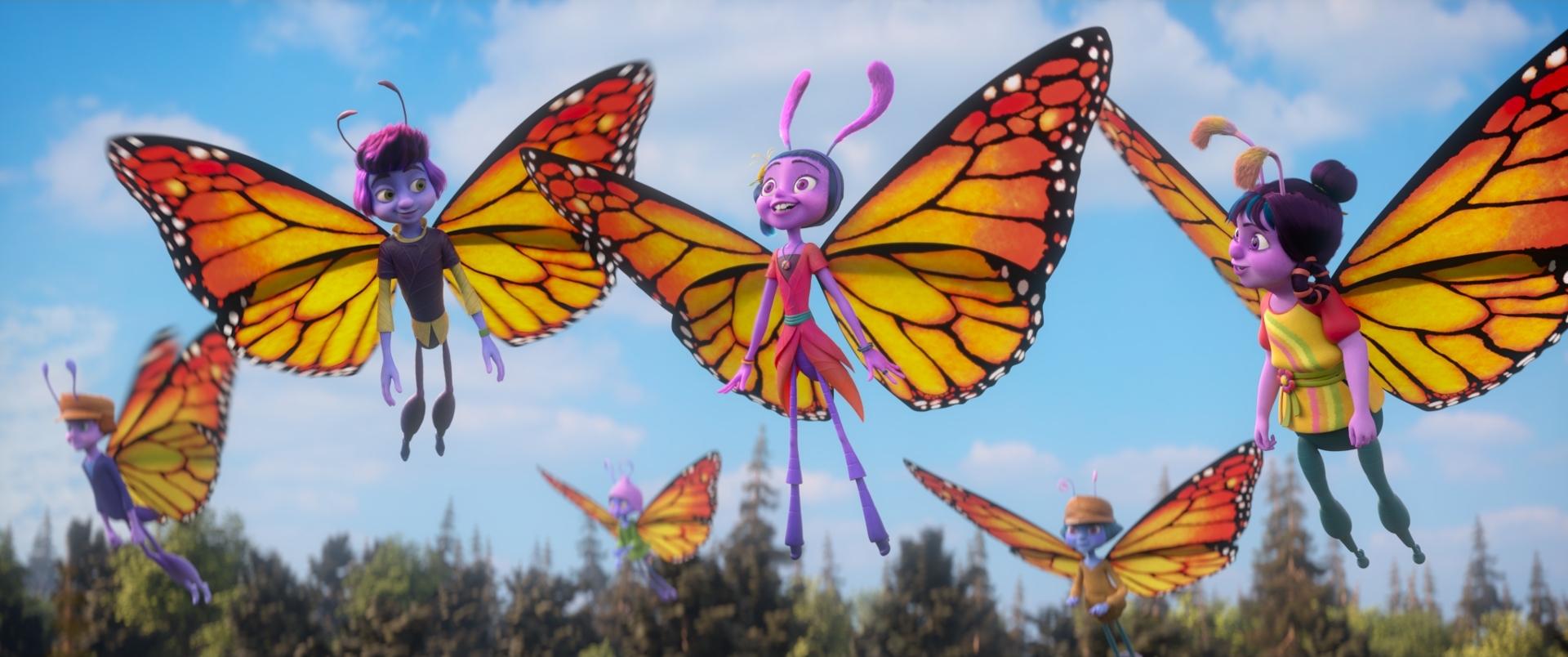
In Butterfly Tale, the audience follows Patrick (voiced by Mena Massoud), a brave but inept, one-winged butterfly determined to brave the great Monarch butterfly migration from Canada to Mexico despite being unable to fly. Patrick stows away in a milkweed trailer alongside his best friend, a caterpillar named Marty (Lucinda Davis), and Jennifer (Maslany), a butterfly afraid of heights for the journey of a lifetime. Heidi Foss, Lienne Sawatsky and Michael Solomon wrote the pic, which is directed by Double Dribble filmmaker Sophie Roy.
Ahead of Butterfly Tale‘s release in UK and Irish cinemas on April 19th, STARBURST had the pleasure of sitting down with Maslany to discuss her career so far, voice acting, and the importance of children’s films.
How did you come to be involved in this project?
Tatiana Maslany: My agent sent me the script, and I just got into reading it immediately and thought it was just so fun. I’m always excited to do animation because it’s one of my favourite art forms. I really revere voice actors, so any chance I get to play in that world is really exciting to me. I thought the story was really sweet and really funny, the character was great, and I just thought that kids would love this! It’s not often that I get to do something directly for kids.
What was it about the character of Jennifer that most appealed to you?
Tatiana Maslany: I think it’s that she’s a fun, prickly, but ultimately fearful character, which makes for a fun contradiction. To anyone on the outside, she comes across as super confident and knows herself, but she doesn’t have all her stuff together.
Besides your character’s arc of overcoming her fears, were there any aspects of the general story you were particularly excited to explore?
Tatiana Maslany: What’s amazing is not just that Monarchs travel the distance that they do with their tiny little wings – you know, 5000 km from Canada to Mexico – which is an incredible feat. They also come across weather patterns and other factors that are upsetting their trajectory, which obviously has undertones of a climate catastrophe and touches on things like climate change, which kids might not totally glom on to, but that could get them talking with their parents and hopefully start up that conversation. It’s not necessarily the most joyful conversation, but it’s definitely important to the Monarch’s story and their endangerment.
Even as an adult, you might find yourself in a research spiral on Monarch butterflies. I, for instance, found some depressing statistics that revealed that since the 1980s, the Monarch population has declined by around 90%. So, it seems like a very urgent discussion to be having, especially with the next generation.
Tatiana Maslany: Totally! And if you can do it in a way that lets these kids empathise with the characters, and make them feel protective of them, then even better. Children are by no means the greatest creators of climate catastrophe, but change is urgently required, and I feel like every generation can be getting smarter and more aware. At least, I hope that’s the case.
You said you’re a big fan of animation, and I’ve noticed that themes of ecological sustainability have a long history within that medium. What do you think makes animation the perfect medium for these kinds of discussions?
Tatiana Maslany: That’s interesting because I’m thinking of FernGully, too. I was so invested in it, and it speaks of the capitalist destruction of the forest in a way that’s personified in Hexxus. It’s such an adept way of pointing out who the villains really are: capitalism and deforestation threaten these characters that we love and who are about healing the forest. It’s a classic fairy tale where you learn a lesson through empathising with a character. And you’re right that animation has something to it… I know you’re a genre publication, and sci-fi or horror are similar in terms of creating a space to talk about familiar things whilst allowing you to feel it differently. You experience the story or viewpoint in a different way, and something like sci-fi can help you conceptualise a different way that the world could be.
You’ve done a fair bit of voice acting already in terms of animation. How does your approach to the performance differ from live action?
Tatiana Maslany: Visually, your body is stripped away, and you can’t use it as a cue for the audience as to who you are. But it was still such a physical job – there’s a different kind of energy that you have to put out because you can’t use subtle hand gestures or physical presence to signify something. You have to put it all in the voice, which requires some physicalisation, even when it’s auditory. I learned a lot from Sophie, the director. I would think I was portraying something specific through my voice, but she’d direct me to add something there or push something here. It really is like music. You have to expand your range. That’s part of why I reverse voice actors like Billy West so much.
We’ve already touched on the environmental dimensions of Butterfly Tale. Other than that, what message are you hoping that kids will walk away with?
Tatiana Maslany: So much of it is about Patrick’s journey and his determination to do something that’s very challenging because of his impairment. I think that kids watching will hopefully realise that whatever makes them different can actually make their worldview more interesting and exciting, and there’s a lot to be gained from that. Differences are really beautiful, and I hope kids see that.
Towards the beginning, there’s a scene where Patrick and Marty try to fix Patrick’s wing by weaving him a replacement. I was strangely relieved when that failed because it encourages people to work with their differences rather than trying to ‘fix’ themselves to fit, which is such a good message.
Tatiana Maslany: That’s absolutely true and reinforces the point that it isn’t about him being like everybody else. It’s not about conforming; it’s about finding his own way through.
Speaking more broadly about your career, given your significant and varied roles, what do you look for in a project when deciding to take it on?
Tatiana Maslany: It’s always different things. Sometimes, it’s a script that will surprise me and leave me with more questions than answers, and that will leave me wanting to keep asking those questions. Other times, it’s down to the character. With my trajectory, I really enjoy playing and transforming and finding somebody new inside that I haven’t expressed yet. I like to try on somebody who has lived a very different life from me. And then sometimes, there’s barely a script, but there’s an idea, and I’m excited to come play. I’m attracted to smaller projects that are about discovering something together.
Do you find that you feel a certain responsibility to take on projects that will educate the next generation? It’s a big question, but in terms of your work’s legacy now that you’re 30 years into your career, does that play on your mind?
Tatiana Maslany: Yeah, I think that started with me with Orphan Black. The response to that show surprised me and really alerted me to the way that storytelling can impact people, not just individuals’ lives, but also entire communities. With Orphan Black, people from all over the world found each other online over their love of this show and their connection to the characters and the concepts of gender and sexuality that are explored. Some became best friends, some got married, and some travelled across the world to meet each other. Some wrote books together about the science of Orphan Black. They wrote fanfic, they made art, and all of it was so powerful. Especially considering these were mostly people belonging to the LGBTQ+ community, how amazing is that impact? It was beyond anything any of us could have predicted or imagined.
It definitely made me conscious of the dialogues that films and series can open up. I never want to control the story around something, but I do like to offer up my ideas on it, and hope that other people will have their own thoughts and responses.
Butterfly Tale releases in UK and Irish cinemas from April 19th, distributed by Signature Entertainment. Watch the trailer below: