Damien Warren-Smith • GARRY STARR: CLASSIC PENGUINS

Damien Warren-Smith

Damien Warren-Smith trained with legendary clown teacher Philippe Gaulier, and is an award-winning clown in his own right.  He’s best known for his character of Garry Starr, who regularly reduces audiences to fits of giggles. We caught up with Damien to find out more about his latest showGarry Starr: Classic Penguins, which is coming to the Edinburgh Fringe this August. We caught up with Damien to find out more about Garry.

STARBURST: How would you pitch Garry Starr: Classic Penguins to someone who’s really into books?
Damien Warren-Smith: If you care even the teeniest weeniest of iotas about literature, you simply must see Classic Penguins! In the space of 60 minutes, Garry Starr tears – not literally – through every Penguin Classic novel with the utmost nincompoopery in order to save literature – and by extension, penguins – from complete and utter extinction.

Where did the inspiration for Garry come from?
It came from a visit to a bookshop in Western Australia. There was a book signing taking place, and the author was a penguin. Until that point, I hadn’t realised that penguins had written all of the Penguin Classic novels. I thought it was just a cute publishing name. With penguins also facing extinction, I came to the conclusion that if we all buy more books by penguin authors, we can kill two (flightless) birds with one stone and save both literature and our feathered friends from the chopping block.

What else would we know you from?
If you’ve ever stepped outside your comfort zone and ventured to an Edinburgh Fringe show that doesn’t involve someone standing there with a microphone telling jokes, you would very likely have heard my name being uttered amongst the slightly weird, thrill-seeking audience. You would not know me from the telly unless you caught my brief appearances on Law and Order: UK or the ill-fated BBC comedy series The Persuasionists.

Where does Damien end and Garry Begin?
This is an ongoing discussion with my therapist. It’s very likely that my next show will be a two-hander whereby Damien adapts Mary Shelley’s Frankenstein, casts himself as Victor Frankenstein and Garry Starr to play The Monster. I’m sure it will go very smoothly and be completely absent of metaphors.

How is Garry Starr: Classic Penguins different from normal theatre?
I think the key word there is ‘normal’. Normal theatre is allowed to be boring at times. You invest in the characters and the story, and through patience and commitment, one would hope the time you have invested pays off, resulting in you being enlightened or moved in some way. Garry Starr shows are never boring. But you may still be enlightened or moved.

The show is coming to Edinburgh, which, of course, is the home of the famous penguin, Major General Sir Nils Olav III, Baron of the Bouvet Islands. What do you think they’d make of the show?
I’ve actually been in constant communication with Major Turd – it’s a little nickname I have for him because he pronounces ‘the third’ as ‘de turd’. He calls me Garry-incredibly-well-hung Starr, which I think is sarcastic. He’s very excited about the show as he’s a distant relative of Henning Mankell.

What was the most challenging part of the production?

The most challenging part was during the research and development phase when I spent nine months in a penguin colony in Antarctica. Many authors still spend a good portion of their time there as it’s the safest place for them to breed and write. I immersed myself in order to get closer to their lived experience. I didn’t wear pants for the duration. The shrinkage I experienced was something else.

How do you prepare for a role like this?
In preparation for this role, I universally forwent pants and attempted, unsuccessfully, to grow feathers. Penguins don’t actually have penises, so I spent a good portion of my time tucked back, which makes it very difficult to wee.

What’s next for you?
As I mentioned earlier, I shall be adapting Mary Shelley’s Frankenstein as a two-hander between Damien and Garry. It will likely debut on Broadway.

What other projects would you love to be involved with?

I would really love to do a production of Jane Air whereby all cast members are airborne for the duration.

Emperor Penguins or Republican Penguins?

Can I choose Publican Penguins? More penguins should run pubs.

Doctor Who or Doctor No?

What? Yes.

Simpsons or Futurama?
Teenage Mutant Ninja Turtles all the way.

Truth or Beauty?
Treaut.

Classic Penguins is on at the Edinburgh Fringe 2024 and you can book tickets here. You can find out more about Damien and any future tours beyond the fringe here.

Sabrina Messer • A JAFFA CAKE MUSICAL

Sabrina Messer Jaffacake the musical

Sabrina Messer is plays Katherine in Gigglemug Theatre’s latest show, A Jaffa Cake Musical. She plays the badass barrister representing HMRC in the tribunal and has previously worked with Gigglemug on Timpson: The Musical. We caught up with them to find out more about their new project.

STARBURST: How would you pitch A Jaffa Cake Musical to a staunch fan of Chocolate Hobnobs?
Sabrina Messer: Well, I’d say you’re about to discover your new favourite biscuit! Or is it a cake…? You’ll have to come and find out, won’t ya! No, but seriously, you don’t even need to like Jaffa Cakes to enjoy this show – just please make sure you bring a sense of humour.

How did this come about? Why Jaffa Cakes?
I asked myself that same question, and when I couldn’t find the answer, I went to our writer/composer, Sam Cochrane, because surely he’d know, right? So, to quote Sam, “It’s the nation’s favourite snack, and it’s about to be the nation’s favourite show!”. Alright, Sam… calm down.

How similar is this to your other works like RuneSical or Timpson: The Musical?
This show has Gigglemug’s signature zaniness, that’s for sure! Like the others, it’s also completely family-friendly and very, very silly. And if you’ve seen RuneSical or Timpson: The Musical, then you might recognise some familiar characters.

You’ve been called the UK version of StarKid. How accurate is this?
Now, you see, I’m biased because I happen to think we’re pretty darnn good. With that in mind, I’d say that’s accurate.

What’s the best bit of A Jaffa Cake Musical?
That’s tricky because it really does have something for everyone – we dance, we sing, we act our socks off, and not to give any spoilers, but there are some pretty awesome props and set pieces… We believe that if we’re having the maximum amount of fun onstage then the audience will too.

Seriously though, are they cakes or biscuits?
If I couldn’t tell, I’d get fired. We do actually give you a definitive answer in the show, so come and find out what it is!

Why the Edinburgh Fringe?
Being in the same city as like-minded people with stories to tell, there’s nothing else like it. I can’t wait to be back after SIX years away!

What was the most challenging part of the production?

The show is all-sung, which means there are 30 songs in total! It was a lot to learn in a short space of time but we did it, and it’s sounding awesome!

Why do we love musicals so much?
They’re like plays, but with additional bangers, how could we not love them?! Anyone who says they don’t like musicals is lying, or hasn’t seen A Jaffa Cake Musical yet…

What other projects would you love to be involved with?
I’d love to do more comedy, specifically improv!

Simpsons or Futurama?

I grew up on the Simpsons, so that’s a no brainer!

Doctor Who or Doctor No?

Doctor Who – apart from the Weeping Angels, whoever wrote that episode is a genius but a terrible person! – but maybe that’ll be my next Halloween costume…

Full Moon or Total Eclipse?

Full moon – awhoooo! – but when it comes to Jaffa Cakes… Total eclipse!

Truth or Beauty?
To tell you the truth… Beauty 😉

A Jaffa Cake Musical can be found  at the Edinburgh Fringe from August 1st through to the 26th. Tickets for A Jaffa Cake Musical can be found here.

John Robertson – THE HUMAN HURRICANE

robertson

John Robertson is a globetrotting stand-up comedian best known for his show The Dark Room. He’s spent the last 21 years on the scene, hosting TV shows, writing kids’ books, hosting 50+ hour marathon charity shows, and mostly doing very, very funny improv. His new show, The Human Hurricane, is at the Edinburgh Fringe this year.

STARBURST: How would you pitch The Human Hurricane to folk who have only ever seen stand-up comedy on Saturday tea-time TV?
John Robertson: Hey folks, do you like laughter, but with a much higher chance of getting accidentally spat on? I mean, there’s a longer pitch to be made about the pleasure of being in a room watching a silly person do stuff that’s just for the crowd that night, but I have watched a LOT of people cover their drinks when I’m onstage.

And how would you pitch it to Commander Worf from Star Trek?
You listen to me, you petaq! Your quch is tiny and dishonourable! To a Klingon, this is kind of light-hearted abuse is heavy flirting, so the only way he’d miss the show now is if he wouldn’t get out of my bed.

How different is The Human Hurricane from The Dark Room?
People tell me my stand-up is wilder than The Dark Room, which I think has something to do with the complete lack of structure and the endless leaping on things. The Dark Room is the game show a clown with ADHD dreams u; The Human Hurricane is the ADHD unleashed. Let the spicy brain do the driving!

You’re mostly known for your improv; why the change of pace?
Oh, somewhere in my mishmash of crowd work, I really wanted a good excuse to wear a suit, shout some poems, and play some songs! I just like playing with people, and my tools are love, noise, and dirty words. And an electric ukulele because 1, I like ukulele and 2, when you plug it into an amp and a distortion pedal, it stops being a ukulele and becomes good. 

What is the one rule of comedy you think we should ignore?
The front row isn’t a scary place! Life is a scary place!

What makes you the human hurricane? Do you have superpowers?
Nope! But I do have to get the show done in exactly 45 minutes and then get across town to do my other show, The Dark Room, half an hour after this one finishes, so we thought it best to go with a title that suggested speed and also disaster!

You’ve previously done character comedy on your Twitch stream. Will we see these characters on the stage?
You will! Some, like Pope Gossip III, the gossipy pope, show up a fair bit. Some you won’t see again – a character called The Sex Dolphin bombed super hard once, which was a real bugger since I’d had 100 t-shirts made that said,Sex Dolphin’. That said, people bought them, and then Adrian Stout from The Tiger Lillies and I formed a one-night-only band called Sex Dolphin, and people SHOWED UP WEARING THE SHIRTS! So maybe the lesson is to overcommit to the bit. I dunno!

Why the Edinburgh Fringe?
There ain’t nothing like the world’s largest arts festival. Anything and everything can, will and does happen. The Edinburgh Fringe has directly and indirectly given me a lot of my audience, my books, the times I’ve been in TV development, my agents, and my firm belief that chips ncheese and a whole pizza every night for a month is a solid nutritional choice.

What was the most challenging part of the production?
I keep sitting down to write some silly little songs and accidentally cranking out sad bangers about dead people I know. Christ, I hope it doesn’t mean anything.

What else do you have planned?
I’ll go see some mates while I’m up there! Old Aussie pals Laura Davis, and Josh Makinda are super funny, Louis King and Laurie Black are up there doing songs, and might catch the legends The Umbilical Brothers, then there’s my hysterical cousin Marjolein Robertson, Sooz Kempner, Juliette Burton, Sam See, the late-night miracle of ACMS, and I’ll definitely see my pal Tom Crosbie do some damned clever thing with Rubik’s Cubes.

Where else can we see you?
On August 9th, you can see The Dark Room at Worldcon in Glasgow! It’s a rare pleasure to leave the world’s largest arts festival to go and perform at the world’s longest-running science fiction convention. I can’t waitAlso, The Dark Room is on tour, heading out to PAX West in Boston, PAX Australia, Pixel Expo in Perth, Western Australia, and a million other places – it’s all at www.thejohnrobertson.com/livedatesor you can see me stream on twitch.tv/robbotron!

Vampires or Werewolves?
I’d normally be so across vampires, but I just got a Warren Zevon tattoo. Aawooo, werewolf of left leg.

Diamond Dogs or Ruby Slippers?
Diamond Dogs, I like David Bowie and I just hate it when my flying house crushes old ladies.

Godzilla or Cthulhu?
Godzilla, though I do own two Cthulhu plushies to help fend off madness.

Luck or Destiny?
Luck, because if destiny’s real all this improv has been for naught.

THE HUMAN HURRICANE runs from August 1st to 25th, 2024 at the Edinburgh Fringe. Book tickets here.

Weston Razooli • RIDDLE OF FIRE

Writer/director Weston Razooli’s debut feature is the fantasy film Riddle of Fire, which evokes every weird movie you’ve ever caught some rainy Sunday afternoon in your childhood, while still being a refreshingly modern take on the genre.

In the rolling hills of Wyoming, three mischievous children are tasked with collecting a blueberry pie from their local store. However, what begins as a simple errand soon evolves into an odyssey across the American West, as the intrepid trio faces poachers, witches, huntsmen, and fairies, who all seek to challenge them on their quest. Will the bonds of friendship prove strong enough to guide them home?

We spoke with Weston Razooli about Riddle of Fire and how it came to be.

Icon Film Distribution presents Riddle of Fire on Blu-ray and Digital July 8th.

Amazon: https://amzn.to/4cQRgFd
iTunes: https://itunes.apple.com/gb/movie/riddle-of-fire/id1741324894

Robert Morgan • STOPMOTION

Stopmotion is a mind-bending psychological thriller that will unnerve you to your core. In his feature-length directorial debut, stop-motion animator Robert Morgan delves into themes of the tortured artist, imposter syndrome, and a descent into madness. With elements of a dissociative world and gore that strike disturbingly close to home, we had the opportunity to sit down with Robert to discuss the creation of this chilling film, the techniques he employed to achieve such an unsettling effect, and the inspirations behind Stopmotion

STARBURST: Stopmotion is very much focused on the idea of the tortured artist. Could you explain why you chose this main narrative and any other inspiration you had for the film?

Robert Morgan: The original idea was just that. I was excited by the idea years and years ago because my background is in stop-motion animation. I’d never seen stop-motion as a vocation depicted in a film. I’ve never seen a character who is a stop-motion animator in a film. And I thought it would be really interesting to explore a character who’s a stop-motion animator and everything that comes with that and make a psychological horror film out of it. Following the logic of it very naturally, I’ve had this experience where I’ve been working with puppets. Puppets have a strange way of feeling like they’re coming alive. It’s a bit disconcerting. You think you’re imposing your will on it, but is it telling you what it wants to be? I’ve had this kind of experience before. So very quickly, it became a film about a stop-motion artist who’s losing touch with reality and the things that are coming to light. Then, it just followed. It’s going to be the archetype of the artist who goes mad. That’s a story that we’ve seen many times, but I felt like showing that story through the lens of this particular art form, stop-motion animation. It excited me; the idea of doing the tortured artist story. We’ve seen it with painters, we’ve seen it with ventriloquists, we’ve seen it with ballet dancers. We’ve seen it with various art forms. We’ve never seen it with stop-motion animation. And for me, of all the art forms, that’s the one that I feel lends itself the most to going completely insane and puppets coming to life and haunting you. It does lend itself to a psychological horror film.

We believe that stop-motion animation is one of the hardest crafts to master, but for you, it’s your bread and butter. How was your experience creating a feature-length film with stop-motion compared to your history with shorts?

The challenges are bigger. The main thing is you’re essentially shooting a live-action movie but with animation incorporated into it. We shot this in 25 days. So it’s a pretty short, quick shoot, which was quite complex, as well. There were a lot of moving parts. The difference between the short films, where I’m mainly doing everything myself, and with this, is I had an amazing creative team around me. It was the sense of trusting the team, delegating, and letting go and choosing the team, carefully tuning them into the vision, and then giving them space, because you don’t have time to be changing your mind and steering into a different direction. Once that machine of production starts going, you’ve got to execute it, you’ve got like 10 things to get through today. Everything’s got to be working like clockwork. So it was the process of this different way of working, it’s less controlling and it’s more collaborative.

On the topic of having a good team behind you, we wanted to talk about the sound design because – and we say this in the best way – it was incredibly repulsive. So how did you achieve and create that really repulsive sound? 

The sound designer was a guy called Ben Baird, who is frankly a genius. He’s absolutely incredible. We had an absolute blast, he was coming up with a lot of stuff. He understood the film entirely but brought so much to the table that I hadn’t thought of. I always knew it was going to be squelchy. It had to be squelchy because that’s what I’ve always done in my shorts. It gives the puppets an extra dimension of physicality, when the sounds they make are extremely present in the film, it makes them much more difficult to dismiss as an invention. But what Ben brought additionally was, for example, his idea to do the squeaking of the armatures. I said to him, well, armatures don’t squeak. They don’t make a noise. But he said it doesn’t matter, it’s a dramatic thing, he was totally right. Because once we went with that, it really starts to become an eerie motif throughout the film, we can then start using it when the puppets are moving but we can also use it when the actors move. There are subtle scenes, for example, with Ella’s boyfriend, Tom; he turns his head and he squeaks. It’s like he’s got an armature inside. And that’s Ella’s perception, she’s starting to look at the people around her as meat puppets. Ben brought a huge amount to the table. He’s brilliant.

The other thing we wanted to talk about was the very visceral gore in the movie. How did you achieve that? And how did you get it so on par with how some of the puppets featured?

Again, it’s a collaboration thing. Dan Martin and his team did all the practical stuff. I also have to give a shout-out to Felicity Hickson, the production designer, who really was a real partner in this because she really oversaw the entire visual scheme with me. She really was very good at making sure these elements are working in conjunction with each other. It had to have an overall art-like feeling. It was very difficult to achieve, because we had to have puppets that were very organic, starting out with the practical materials like wax and then moving to meat. But then the ‘ash man’ shows up, then we had to make a real full size ‘ash man’ that needs to feel like it’s the same; it’s of the same family as the puppets, but it’s a man in a suit. So it’s a different kind of thing. But it all comes down to the fact that Ella starts using meat, it really comes from that idea. It’s morticians wax, first of all, it’s these macabre materials that she uses that dictates everything, including the stuff that happens with her leg and everything else. It all comes out of that one concept that she starts to believe that the puppets should be made out of life material itself.

We’ve watched some gory films and that scene really got to us. You could feel it!
I think the reason for it is because it’s actually quite small and intimate. It’s not as spectacular. I think for an audience, you understand it more. You don’t necessarily understand what it feels like for your head to explode; but you understand what it’s like when your leg has been cut or you’re pulling out a bit of skin or something. People could have experienced that, so they relate to it more. I think that’s why it’s so uncomfortable for people.

You’ve said this film has very much been your brainchild and how it’s been your vocation. But are there any very specific elements of the film that have been based on your own personal experience? The figures are very much very similar to what you’ve made before in the past.

I think there are elements of Ella’s character, obviously, I’ve never gone as far as Ella goes in it! The insecurity that she feels sometimes the feeling that like, do I have anything to say? Every artist, I think, can relate to that. I look at everything I’ve done and I’m like is it actually any good? Or is it crap? Am I kidding myself? Am I an imposter? It’s always a weird thing where you go “Okay, I’ve wanted to do this on my own and now I’m doing it”. Other people don’t know what it’s like to be me. They’re just looking at the work and they have different opinions. Some people like it, some people don’t, that’s fine. But my experience of having to go through and think of all these ideas and doubt them. It’s like, I have a different perception of it. That idea of impostor syndrome, self-doubt, that’s all autobiographical. I’ve been through all that and I think many artists have, too.

People are going to be your own worst critic at the end of the day, and to see that actualised in a film, and that feeling of never amounting to the master, which in this case is Ella’s mother. It’s such a tight-knit situation; it would drive us mad if we were in that position.

She can’t really win. She set herself such an impossible goal.

In a future project, if you could collaborate with anyone and I mean anyone, who would the dream partner be? 

I would love to co-write a screenplay with Edgar Allan Poe, an original screenplay with Edgar Allan Poe. I think I was talking about this the other day. I was asked who would be my dream date to take to the cinema and I said Poe, because he never saw a horror film. I would love to sit down with – maybe not a beer, because he had a bit of a drink problem – afterwards, go and take him to see a horror film, and talk to him about what he thought of this thing called cinema that can depict these kinds of states of horror that he wrote about. What would he have thought of a cinema, the dream that we all sit down and watch? Because I feel like the feverishness of a lot of his stories would really lend themselves to cinema. I mean, maybe I’d take him to go and see one of Roger Corman’s films. Maybe The Mask of the Red Death, but maybe that’s a bit too close. But to involve Poe with cinema would really be something, I think.

Do you have anything else coming up that we should keep on our radar?

Not right now in terms of making films, it’s various mountains that you climb, you know. You start at the bottom and you have to write the script, and then get the funding and then it gets made, and you promote it. And then that’s coming down again. I’m down the bottom of the other side of the mountain. I’m just writing new stuff. I’m starting that climb of the next mountain now. It won’t be for a while, but I’m developing various new projects. Stay tuned!

STOPMOTION is available on Blu-ray and DVD from July 1st.


China Miéville • the book of elsewhere

China Mieville - photo credit Barney Cokeliss

China Miéville is a critically acclaimed and multi-award-winning writer of weird fiction, whose work includes Perdido Street Station, Railsea and Un Lun Dun. His latest novel is the book of elsewhere, has been written in collaboration with The Matrix actor Keanu Reeves. The novel is set in the world of the Reeves’ BRZRKR comic book series and follows an immortal warrior on a centuries-long journey of their condition. We caught up with China to find out more about the book…

STARBURST: How would you pitch the
book of elsewhere to an immortal warrior you just happened to be trapped in a lift with for half an hour?

China Miéville: This is the story of someone – perhaps not entirely like you and many of us – in something of an existential funk. He is an immortal warrior who has lived for aeons and is in search of a way to end his immortality and discover what he was made for. He works for the dark side of the US government doing their dirty work and gets snared into strange and unfathomable goings-on. He is tracked by an impossible adversary and uncovers betrayal and intrigue at every turn. All in the search for mortality and maybe something vaguely akin to peace.

And how would you describe it to a fan of John Wick movies who’s really getting into books?

This is a sequence of the fighty bits of the movies you like – and that I, too, like – all with an unlimited budget and made to look precisely how you envisage them in your head, and all strung together with the kind of more expansive and ruminative explorations of ‘the self’ that you don’t always have time for in – some – films. Hopefully providing both what you enjoy, and also surprising you with what you weren’t expecting.

the book of elsewhere is a collaboration; how does this change your usual process?

Utterly. From the word go, it was vital that Keanu and I could envisage ways forward that both honoured the subject matter and/but also did unexpected things with it, that you might be able to do best in a novel that we agreed on a narrative framework and that we both stood by the formulations and articulations. I’m quite sure in many cases, this could be extremely frustrating or boring. I know it could be a boring thing to say, but the opposite was the case when working with Keanu. Sometimes, you have the most interesting ideas when you play with someone else’s toys – especially when they are generous with them. That’s how it was working alongside him on this project.

Every project is unique; what were the new challenges with this book?

Initially, making sure I was the right person. That I connected with the original comic BRZRKR, and that I also could come up with ideas that treated it with respect in ways that Keanu approved of while also trying to do new things with it. So, the challenges were mostly early on to ensure that the framework and approach worked. Once we had worked together on that, the actual writing and the back and forth of editing was fairly smooth, not least because we’d worked hard to make sure we were on the same hymn sheet.

How does this book compare to King Rat in terms of getting it written?

I was a baby when I wrote King Rat – 24, publishing when I was 26. I had no idea how to write a book. In certain respects, that made it easier because I wasn’t second-guessing myself in the ways I do now. That’s not a bad thing to do, in many ways I think it makes me a better writer, but it can also make the process more cautious. At this point, I can barely remember how I found the writing of King Rat. Difficult I think – I find writing books difficult. But I don’t feel like a noob now, so it wasn’t stressful in the same way. And it was lovely – unexpectedly so – to work with a collaborator, which minimised the isolation of the writing process.

How far from Perdido Street Station is the book of elsewhere in terms of scope and storytelling?

Perdido Street Station was very much not just about world-creation but creation of a world that was intended to be vast and baroque and very different, so the scale is very different. the book of elsewhere is more focused: it is much more recognisably ‘our’ world, though, of course, with some oddities in it. It is also shorter, because it is trying to create a sense of pace and of the tying together of scattered threads, rather than, as with Perdido, trying to create something of a sense of wandering through a dreamscape. I’d say the scope is very different. As ever, though, I am quite possibly a bad judge of this as is, I think, often the case for writers about their own work.

If you could take a single monster from the world of fiction, and add it into a historical even changing that event, what would that be?

I mean, where to even start? For absolutely no reason, I’m going to say the Creature from the Black Lagoon, which is euryhaline – and can thus live in brine as well as freshwater -, emerges from the depths to meet Narcis Monturiol when he was testing his submarine, the Ictineo – 1 or 2, doesn’t matter to me. That meeting fosters Monturiol’s utopian sense of wonder, of trans-species as well as human solidarity and potential, he establishes good relations with the Creatures, continues his subaquatic researches, does not move to the political right in his later years, and helps to establish a radical underwater polity.

Do genre labels matter? Does saying that a story is science fiction, fantasy, or Young Adult change anything about the experience of reading that story?

It inevitably does so, given that those labels provoke different ideas – and thus reading protocols – in readers and writers. But these are all very fuzzy sets, so I think being relaxed about those protocols is a good strategy. Certainly, such genre labels aren’t scientific categories, and the attempt to border-guard their edges always seems doomed to me.

What one thing makes writing easier for you?

Keeping analogue notes.

If you could write for a popular franchise, such as Star Wars or Dungeons & Dragons, what stories would you tell in those worlds?

It would depend on the world, of course, but I think the sweet spot is to write something that ‘obeys the rules’, keeps fans of the franchise happy, but that is also a surprise. Such as when Kim Newman, as ‘Jack Yeovil’, wrote a Warhammer novel, not about a wizard or a warrior but… a playwright. The trick, of course, is to do something counterintuitive like that while still managing to give readers something they enjoy – even to their own surprise. So, I don’t know – a Star Wars novel about a painter who abhors violence? It might suck, of course, but it would be interesting to try.

What books are you recommending to friends at the moment?

Everything by Celia Dale, particularly A Dark Corner. It is not fantasy/SF/horror, precisely, but utterly brilliant and very frightening.

If you could rescue one work of art or media and have it survive until Earth’s sun dies, what would it be?

The 73,000-year-old piece of crosshatching found in the Blombos cave by researchers from the University of Bergen. I love crosshatching as an artistic technique, and the fact that it goes back tens of thousands of years before most ‘cave art’ is giddyingly exciting to me.

What’s next for you?

I have just handed in a long novel I’ve been working on for 20 years. That’ll come out in the next year or so.

The Simpsons or Futurama?

If I can choose the era, Simpsons (early). If I have to take pot luck, Futurama.

Krakens or Giant Sharks?

Krakens. Obviously.

Doctor Who or Doctor No?

Doctor Who if it’s the Fourth Doctor.

Truth or Beauty?

Can I have Awe?

You can pre-order the book of elsewhere today. It will be released on July 23rd, 2024. Pre-order details can be found here.

Frank Henenlotter • BASKET CASE

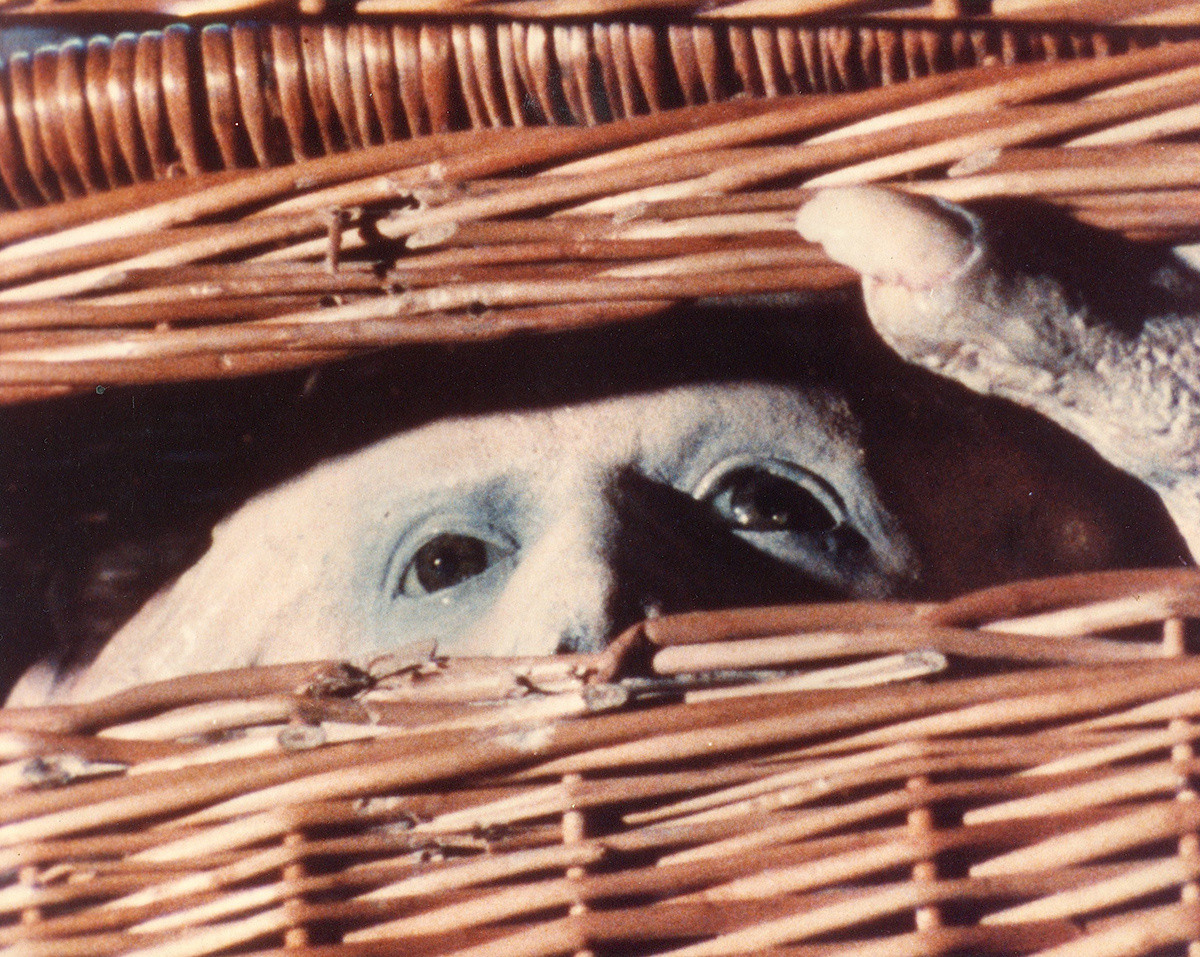
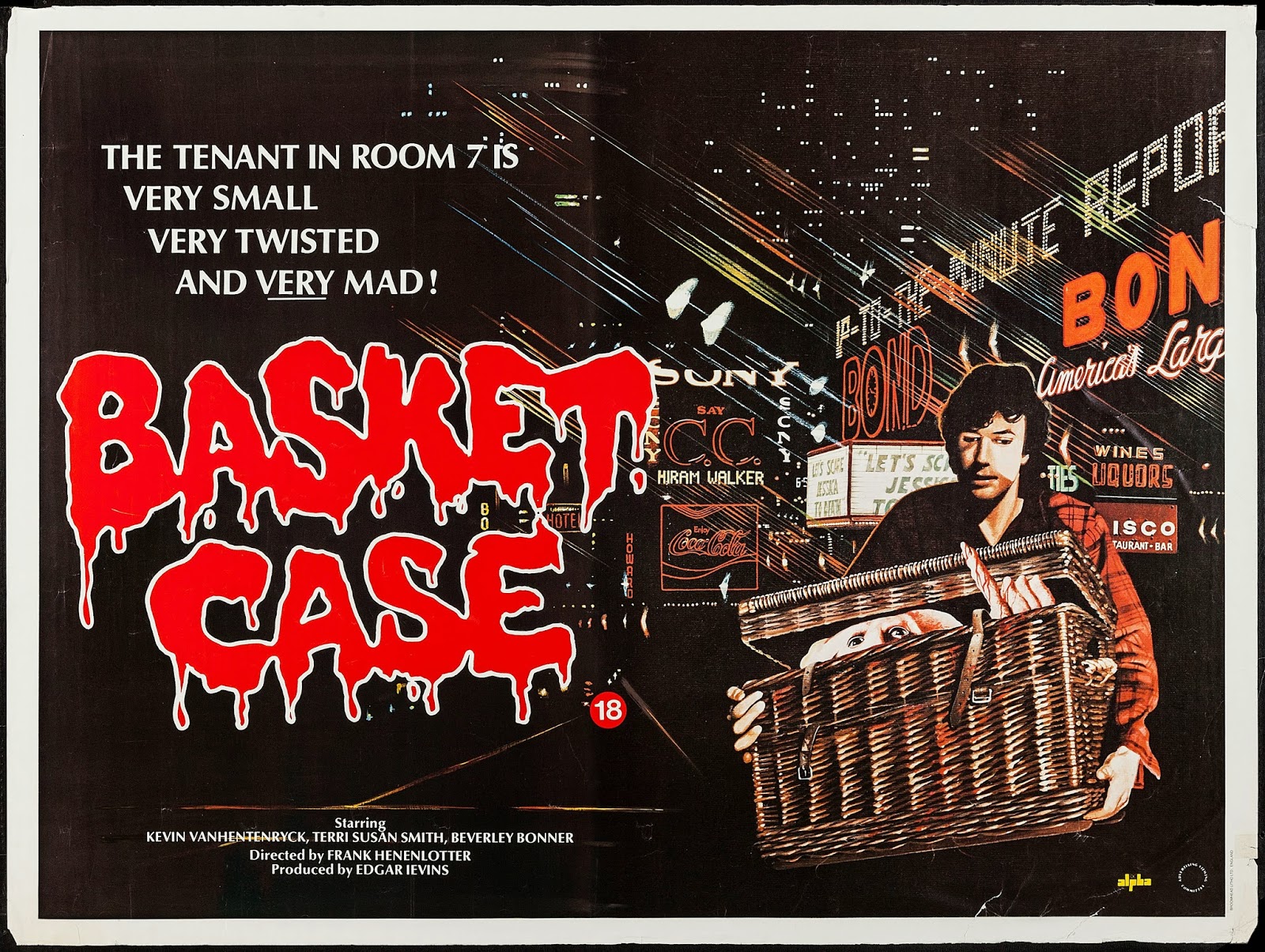
It’s one of the most beloved cult classics of the eighties, and now, over 40 years after its debut, BASKET CASE has been given a stunning 4K makeover. To celebrate its release, we spoke to writer/director FRANK HENENLOTTER to reminisce about making the movie… 

STARBURST: How you feel about the film standing the test of time, especially with Arrow releasing the 4K UHD version.

Frank Henenlotter: I’m so overwhelmed by it that I don’t think about it. I never expected this film to ever really be seen. All I wanted to do is to make a feature film. But, beyond that, I had no plans. I knew that I’d at least finish it no matter how terrible it turned out. In those days, you could find a distributor because the market was so strong for horror and exploitation films; there were so many distributors who dealt with crap. So no matter what crap you made, you’d find one. You wouldn’t make money on it, but you’d find a distributor. I thought, if all goes well, it would play 42nd street for a week and then disappear and I’d be happy.

And here we are over forty years later…

I’m honestly flabbergasted. I’m very grateful, obviously and now it’s been on every format. I’m happy but I don’t watch the film, but when I have think ‘if I could just go back and fix this or fix that and make this better’. I think I realised that it’s better if I don’t change anything, because then whatever it is that made the film work, why tamper with it?

Absolutely. It’s the little flaws that are that are endearing as well. How does it feel to be in the Museum of Modern Art?

Well, when I first got the email from Ron Magliozzi, the curator of MoMA, my only question to him was, “Before we go any further, have you seen it?” He assured me he’d seen it twice already, once with the film and once with my commentary. So, alright, you’re know what you’re getting into, we can proceed! I didn’t want the process to go forward and then them saying, “Holy crap, have you watched this?” It worked out well. They were highly supportive, sweet and everything, and I was very happy with them and I still am. I feel a sense of pride to to see the MoMA logo at the start. I’ll tell you how great it is, a friend of mine was at a screening, not one of mine, at Alamo Drafthouse and there were a couple of people around and this one guy was talking about all of his accomplishments. I had never heard of his movies and all this stuff. He said, “You’ve got to do something better than exploitation”. So I said, “Okay, but let’s put it like this. How many films do you have in MoMA?” [Laughs] Anyway, that was the end of that conversation.

What was the hardest part of the production?

Making it not having money. We literally had no money. I think the whole thing was shot at $35,000. Two months would go by where I didn’t see the footage we shot because we couldn’t pay to get it out of the lab. It was just a mess. I wasn’t happy. I felt I had written like maybe three versions of it as I knew we were approaching the poverty level of making. We raised no money whatsoever until we were shooting stuff, and we had something to show. But in the beginning, we started with $8,000 that I had in the bank at the time and shot with that I borrowed money from my grandmother. We shot with that. It was rough and each time I realised how we could I couldn’t do the ending I wanted, I couldn’t do this way I wanted, I couldn’t do this, this, and this.. There was a point where I was really depressed about it, and I didn’t even want to finish the film. I thought it was a disaster. I’ve got to wait till I can do it right. And the more I thought about that, I’m thinking, “Well, if you walk away from this one now, you’ll walk away from every other one you do. You can’t – you’ve got to finish it”. So I did, and it turned out to be remarkably different than what I had planned, but it probably worked better than what I had planned.

People love it and they love Belial.

I actually have Belial in the corner of my living room. He’s been there sitting there since we made the film. It’s the animation Belial because it had an inner core of, I guess, hard Styrofoam. It’s modelled after Kevin’s face.  The ugly puppet Belial was made of latex rubber and it disintegrated very quickly. It’s got a shelf life, and all of a sudden one day, you can’t put the glove on. You can’t touch it. It’s brittle. It shrinks. It’s just dead. The one that I have in the living room, because it has a core, it kept its shape, it hasn’t shrunk. If you touch it even gently, though, it’ll crack, and every so often, I lift the black sheet that’s covering it, and I’d see something else is starting to desegregate on it. Or I’d look and there’s a finger on the floor. I leave it over there, and no one ever asks what’s under the sheet. I don’t want to hide it, but then if I lift it up, people are like, “Oh my god!” and want to have a selfie with it.

BASKET CASE is available on 4K UHD from Arrow Video and available to stream on the Arrow service. You can read more of our interview with Frank in the new issue of STARBURST MAGAZINE, on sale here. 

Ann Landmann• CYMERA 2024

CYMERA logoWhiteonBlue

CYMERA is an Edinburgh based book festival for Science Fiction, Fantasy and Horror fans.  Now in it’s sixth year, the festival has become one of the highlights of the UK’s geek calendar. We caught up with festival director Ann Landmann to find out more.

STARBURST: How did Cymera come about?
Ann Landmann: Cymera was born out of a frustration that few of my favourite authors ever appeared at the Edinburgh International Book Festival. I love the buzz of a book festival, and I wanted to bring that experience to my favourite community. With my background in book events, starting up a genre-specific book festival was the obvious answer, and although I’ve been known to say that running a book festival as a hobby (Cymera is entirely run by volunteers) is a terrible idea, I have no regrets.

What’s new, and what have you kept from previous festivals?
2024 is our sixth festival, and we’re always tweaking the programme to make it more fun, attractive and inclusive. I am delighted that Strawmoddie Theatre are back with another Pratchett play, and our Games space is back with some exciting RPGs for people to join in. New for 2024 is our limited-edition merchandise – I am obsessed with the design by the brilliant Morag Hannah.

What are you looking forward to the most with the festival?
I can’t wait to see so many of my favourite people in one place, hopefully having a great time. From authors whose work love to publishers that have supported us to the readers that I’ve met through the festival and, of course, our brilliant festival volunteers, many have become regulars.

What’s been the most interesting challenge so far, when it comes to the festival?
It’s always what I refer to as the “Festival Jigsaw” – fitting all the different programme items into our limited space and time. Cymera could easily run for a full week, but our budget doesn’t allow it.

How hard is it to make something both online and offline?
We’re committed to making Cymera accessible to all, and offering a hybrid festival is part of that. We are very fortunate to be working with our livestream partner Channel 7A, who have supported us since our very first festival in 2019, when we streamed a few events to Facebook. For us it is just another part of the programme, and while it takes some extra resources, we love being able to connect with those that can’t join us in person.

If I can’t make it to the Festival, what’s the next best thing?
Join us online! All our events are live-streamed or on Zoom. And put the 2025 dates in the diary now – we’re back from June 6th to 8th, 2025.

What’s the next big thing you are working on that you want to tell the world about?

In November 2025, we’ll be back with our second Writers’ Conference. It’s a full day of talks, workshops and networking for genre writers, in-person in Edinburgh and online. We’re just confirming the date so keep an eye on our socials.

CYMERA 2024 runs from May 31st to June 2nd, and is available online and in-person. You can find out more here.

Frederick Fraleigh • BRIDE OF BLOOD

Headshot_Frederick Fraleigh

Frederick Fraleigh is a master of creature SFX. His credits include The Dark Crystal: Age of Resistance, Avengers: Infinity War, Captain America: Civil War, X-Men: Apocalypse, The Cabin in the Woods, Men in Black 2 & 3, Hellboy 1 & 2, Lady in the Water, Evolution, and Bicentennial Man. His current project (alongside Re-Animator: The Musical’s Amit Itelman) is called Bride of Blood, which is currently in residence at the Titmouse Warehouse in LA. We caught up with Frederick to find out more…

STARBURST: How would you pitch Bride of Blood to a fan of the Muppets?

Frederick Fraleigh: Bride of Blood is a play that takes the audience on a journey with King Solomon through time and space. On his quest to unlock the mystery of an ancient scripture, he encounters supernatural creatures. Bride of Blood utilises costumes and puppets to bring them to its audience.

What challenges did building props for a show at the Titmouse Warehouse present?

Most of the building of props and the creature, Asmodeus, took place in my one-bedroom apartment.  It was a bit of a challenge to construct such large pieces in my living room.

How different is making a show for the Hollywood Fringe from making something for a big production such as The Dark Crystal: Age of Resistance?

Working on a show like Bride of Blood is very different from working on a big Hollywood production. Everything is condensed and more simplified. There are way fewer people involved and way less money. There is one creative source, which was Amit Itelman. On smaller productions on the Hollywood fringe, everything comes together, mainly due to the sacrifice and devotion of the crew.

Amit and Frederick Hand of Fire

How did Bride of Blood come about?

Amit and I have a friend in common. Our friend Jeff mentioned to me that he was building a prop for Bride of Blood and that there was much more to be made.  I was intrigued and met with Amit to learn about the play and see his drawings. I took on the construction of the demon, Asmodeus. Later, I made a giant hand made of fire.

What is your all-time favourite fabrication project? How long did it take to build?

Among the many creatures, puppets, superheroes and costumes for the stage that I have made, one project stands out as my favourite. It was not for a movie or anything like that. It was for real life. I was asked to fabricate a prosthesis for a burn victim. The recipient was a young woman who had suffered a major burn in her infancy, resulting in significant tissue loss in her lower extremities. I hand-made a few sets of leggings that filled in her missing anatomy, giving her a natural, balanced physique.

What advice would you give the 16-year-old version of yourself

I would love to be able to impart some knowledge upon my 16-year-old self.  I would urge him to learn as much as he can from creative people around him and not to be afraid to ask questions.

And what advice would you give a young, horror-obsessed Ray Harryhausen fan looking to get into fabrication and SFX?

I grew up watching movies that inspired me to be an artist. One thing led to another, and I went down the path which led me to my current career. For me it was The Dark Crystal, Star Wars, and all of the Ray Harryhausen movies.  To be honest, getting into the special effects industry is not as easy as it used to be. There is less of a calling for creature fabrication. There is a lack of movie-making in general.  I think that we can all notice the shift of the desire for physical FX to digital FX.

Asmodeus Final_1 (Actor Tom Ballatore)

If you could take a single monster from the worlds of fiction and make it real, what would it be?

I love the idea of taking a monster from fiction and making it real. There are so many to choose from.  If I could, though, I wouldn’t bring any of them into our reality. How would they behave, be received, and what would happen to them? As much as I would love to see Godzilla, the Rancor, Pumpkinhead, Falkor, Totoro, they are the most real and vibrant in my imagination.

What one thing makes creating easier for you?

When I am creating something, I must have an understanding of what I am doing and why I am doing it. If I am making something for myself, I need only to follow my own intuition or my gut.  When I create something for someone else, I need their input and vision.

What books are you recommending to friends at the moment?

When it comes to books, my favourites are not novels. I’m talking about books that show how things are made, human anatomy, animals, nature, insects, puppets, masks, sculpting, drawing, architecture, dinosaurs, samurai armour, and so much more.

What’s next for you?

I am steadily working at Spectral Motion on multiple projects. These are for theme parks and stage performances. I can’t wait to get back to making monsters for movies again.

Dragons or Spaceships?

Dragons

Skeletons or Zombies?

Maybe dragon zombies

Doctor Who or Doctor No?

Neither

Truth or Beauty?

Truth

Laura Langrish • THE KEY OF DREAMS

Laura Langrish is a writer for Lemon Difficult, the UK-based immersive experience company behind The Locksmith’s Key and Key of Dreams. We caught up with Laura to find out more about The Key of Dreams.

STARBURST: How would you pitch The Key of Dreams to someone who likes big parties?
Laura Langrish: We do say The Key of Dreams is a revel. If you like big parties for the people, there are a lot of social elements. There can be up to 30 guests plus the actors and crew in the house – but the house is huge so it doesn’t feel crowded. There’ll be things to work at collaboratively, social dining – especially the amazing banquet dinner, and maybe even the odd party game.

I would also say, if you’re like me, and go to big parties because your partner or friend is going, there are quiet places to get away for a while and even a library – that’s my kind of party!

Where do you start when it comes to writing an event like this?
My focus is and will always be the stories. The joy of working on a show like this is that there is the capacity for lots of stories, and guests can explore and experience a range of them as the interest takes them.

As humans, we look for connections and often find them even where they don’t exist. I like to pull on narrative threads from the real world, and working in a place like Treowen, there is so much history to play with. I take these histories, and elements of folklore, and in this case, the plethora of weird fiction, and weave them together to create something new and exciting.

This leads to starting with a lot of what I enjoy, which is the nerdy research bit. You wouldn’t believe the amount of documents I create that are not a part of the show. While I would never refer to it, or consider it to be ‘world-building’, it does help everyone who is involved in the creative process (writers, actors, composers, artists) know when and how all the pieces fit. I also get to spend a huge amount of time reading historical and genealogical records, which I enjoy more than I thought!

How different is Key of Dreams from Locksmith?
We learned so much working on Locksmith’s Dream – which is still running and I am very proud of – and saw the ways in which some of the aspects that the guests enjoyed could be extended and developed.

The interconnected nature of the stories, the interactions with the characters and the feeling of consequence were all things that felt meaningful and enjoyable. We, therefore, set out with those ideas being at the core of the KoD experience. With Locksmith’s Dream, a large part of the experience is following a narrative to its end and discovering the outcome and the object at its heart. While learning the story is satisfying, and the objects are wonderful – they are a fixed point, although the outcomes for characters are affectable. For Key of Dreams, we decided to make the stories actually ‘unfinished’. As a guest, you will follow the story through its progression over the course of the day. However, how they end, who they affect and what the outcome of them will be is up to the decisions you make and the actions you take during the Hour when ‘The Door is Open’. The following morning, the guests and characters will have to face the choices that they have made and observe the outcomes of their actions.

What was the most challenging part of the production?
The nature of making everything interconnected means that it’s really difficult to ‘finish’ one thing, as everything relies on something else. Additionally, as the scope of this production is pretty vast, we have a bigger team than previously working on it. So, trying to coordinate directors, writers, puzzle designers, props and costuming, composers and actors is a real challenge!

As with Locksmith’s Dream, each individual part of the production is delightful; the stories are great, the props are beautiful, the soundscapes and effects are magical (composed and produced by the incredibly talented Ben Reid) and the actors are phenomenal. But the real magic happens when all of it comes together and it becomes more than the sum of its parts.

How is a script for this different from a theatrical script?
A theatrical script gives you words and stage directions, the order and manner of the things that happen. That is not something that works for a production where the audience has so much agency. Parts of the story are scripted, and the structure of the overall experience is mapped out. But the actors are mostly provided with stories to learn and understand, backstories to internalise, an understanding of their world views, and how they feel about the other characters and the stories. They have to know ‘if that, then this’ scenarios throughout the experience.

This is a challenge and we have a phenomenal team that pull it off so well. Having written scripts for short-form content, it is wonderful to hear your words living in the body of another. It is quite another feeling altogether to create a world for a day and see it inhabited and really living, where I don’t know what combination of choices will occur and therefore, even as a writer, how it will end this time.

Does horror always need to be personal to work?
I think there does need to be a personal connection, but that doesn’t necessarily have to be personal to you. In a horror story, the nature of the horror might not be something that you might find immediately scary for a variety of reasons. However, if you’ve made a connection with and developed empathy for the main character, you can understand why they would feel fear, and that way, you experience that vicariously.

At The Key of Dreams, that is at least partly the aim. There are characters present in the house through the actors and those that exist in the stories that you uncover. The recognition of the terrible things that happen to them and the reasons that are discovered should develop that creeping sense of dread.

In a show where you are involved so deeply, the stakes have to feel real and believable. At no point would you believe that the fate of the world really rested in your hands. However, you can genuinely affect the character that you sat with at dinner last night and choose to help them or not, and witness at least part of the result of your choices.

What’s next for you?
I’d like to say sleep, but I know that is not how my brain works! I’m already booked to attend a writing conference event the weekend after the shows.

Other than that, I’ve got a Key of Dreams epistolary subscription that I’ve been working on that we will be launching as a subscription in which subscribers will receive monthly letters and ephemera which develop the world further for those who have attended events and can also be a way into the world for those who have not. We’ve also been working with a fabulously talented puzzle designer on a boxed narrative puzzle experience, which is very exciting – so keep an eye out for that.

What other works would you like to adapt?
Honestly, I’d love to do something with the Rusty Quill team, particularly around The Magnus Archives, I think that could be wonderfully atmospheric. Ivan is keen to create a Lovecraftian Wind in the Willows. As someone with teenagers who are desperate to be involved, and I’m aware that several of our guests are in the same situation, I’d certainly be interested in developing a family experience.

Why Lovecraft? Why are his stories still so popular?
While many of Lovecraft’s works are ‘of their time’, the ideas explored are still very relevant. Lovecraft was writing in a time of great change and discovery. While many of his fears – of which he had a great many – are things we would now be very unhappy about using, his idea of being afraid of the unknown, of power that you can not understand let alone fight, is still a fear that everyone understands today. In a world of secretive governments, terrible disease and the vast unknown of space, that we now have an idea about just how vast and unknowable the universe is, cosmic dread is a real thing that people can identify with.

Simpsons or Futurama?
Simpsons probably

Bats or Rats?
BATS no doubt

Truth or Beauty?

Truth all the way – even though it can be scary.

You can find out more about Lemon Difficult here.