Taz Skylar • CLEANER

The action thriller Cleaner sees Daisy Ridley as a former elite soldier who is now working as a high-rise window cleaner following a dishonourable discharge. While scrubbing away one day, she comes across a hostage situation. She uses her skills and position to intervene. We caught up with actor Taz Skylar to find out what it was like playing a baddie alongside Clive Owens and much more…

STARBURST: When people see the advertisements for these movies, a lot of cinephiles are going to immediately have their own ideas of what it’s going to be. They’re going to have flashbacks to Die Hard. What do you think sets Cleaner apart from the action movies that have come before it that makes it different?

Taz Skylar: That’s such a good question, and I think what it does so well is unapologetically lean into what it’s trying to do, which is that when you talk about the Die Hard reference, it’s a film that exists so well in its own right it doesn’t need an imitation, right? But at the same time, it’s been so long since then. I used to watch those when I was a kid, and I can’t remember the last time as an adult that I got to watch a film that I wanted to re-watch as many times as Die Hard. I think it leans into that reputation and it leans into all the tropes that make you want to watch Die Hard time after time, it tries to withhold. And then it just puts a cast of people that wouldn’t usually be in those roles, whether it be Daisy, whether it be me, whether it be Clive, because Clive’s role isn’t also what you’d expect. And I think it puts people that you wouldn’t expect in roles that go in a way that you wouldn’t expect and turns everything that you think is going to happen into something else.

It’s good that you brought up Clive Owen because he’s playing your typical hard case villain, and you get to be the second in command. You get to be the crazy one. Do you find a lot of freedom in being able to embrace that kind of role where you get to be a little bit more fun on the edge?

Yeah. It was a really cool sudden one eighty for me, and especially with where it goes, I just bit it. I just wrapped my teeth around it, and I tried to dig as deep and as hard as I possibly could just to keep up. Just to keep up. When you got Martin [Campbell, director] behind the monitor and when you got Clive in front of you and you got three stories of a building that they’ve built for this purpose, and then suddenly, someone says, “Action,” you really hope that what you’re about to say isn’t stupid. And especially when Clive then answers the line back at you, there’s an element of like, wow, okay, well, let me just get my grips a second. Okay. Say your line, dummy!

Do you often have a problem being starstruck as you’re going into these films? It’s like you’re working with these big talents and you’re suddenly like… am I doing the right thing?

Not necessarily. I think starstruck is a different thing. I think the thing that happens to me a little bit more is that I go, first, I hope that we can have a great working relationship because you don’t necessarily know when you’re meeting someone if you are going to have a great working relationship. So much of acting is like anticlimactic. In the room, it could be quite clinical. So it’s more about trying to feel out what that relationship actually is, what that cadence is, and what that unspoken language is between the two. And doing one’s best to get that in sync. And when people do actually turn out to be as good as you thought they were going to be, then it’s just about making sure that you don’t get any imposter syndrome and you focus all your energy on doing the best job that you can.

When you’re reading the script, you’re playing the bad guy who has all this ideology. How much are you having to grapple with that, this idea of the lower classes being taken over by the upper classes, and how much do you have to bring your own spin on that to the character?

Well, I think that he has a point. I think that was the first thing that I latched onto, is that the things that he’s saying outside of the context of what he does to get his point across, things that he’s saying aren’t illogical. And Bodhi was a really big character reference for me from Point Break because I just remember how I was watching that movie and going, “Huh. Yeah, I love Keanu, but Bodhi’s cool and Bodhi has a point.” Bodhi’s side actually makes a lot more sense. And there’s that relationship with him throughout the whole film. And I think for me, it was very much about trying to find the things that grounded him in that. What makes him believable, what makes him somebody who has a point? What makes him someone that you actually find yourself liking a little bit in some ways? Even though that may be a very fleeting moment, and then he pulls it away from you with something else that he does. But I guess what I was trying to do more so than lean into the crazier sides of him.

How much of what we see in Cleaner can be attributed to the screenplay and your performance as opposed to the editor and Martin Campbell and all these other people who work along the production line?

Simon Uttley, who wrote the script, truly wrote a phenomenal script. So, I’d be taking on due credit away from him if I said that I was in any way me because he came up with phenomenal words and phenomenal fictional people to say those words, and I think he just did such an amazing job in crafting something that’s contained, but also making it feel like it never stops, which is a very difficult thing to do in such a small environment with not that many people because the cost isn’t that big. So you essentially have four or five people that really drive the story pinned by two of them, and that’s it. Simon did an amazing job, and then, where I also think it’s a product of Martin is that Martin would not accept anything but excellence. What he deemed to be excellence. He wouldn’t accept anything but that on even the smallest of scenes. And if it wasn’t what he thought it needed to be, we were going to do it again and again, and we were going to do it until he was happy with it. Which also gave, I think, as actors, it gives you such a sense of trust, because if you know that there’s no way that we’re moving on no matter what, unless he thinks it’s epic, then you’re like, all right, cool. Then when we moved on, I can be happy about it because he wouldn’t have moved on, if not.

You’re playing this villain, and like you said, you’ve got your director who’s bringing you in. You’ve got this amazing script that you’re working with. However, we assume you’re trying to expand your film career, right? You’re trying to make sure that you are going to be able to get more future roles. How do you navigate playing a villainous role without falling into ideas of archetype or typecasting?

Well, you know what? Honestly, I think I’m a little bit of a weirdo in some ways where I never rule out the possibility of never doing this again. And if anything, I’ve done that throughout my life a little bit, because I came to this job, as in acting, by accident and late in my life. It’s only been the last six, seven years that I’ve been acting. And I wanted to be a writer, more so than an actor. And I find myself in this position right now. Every time I do a new thing, I’m always looking at it like I’m really bad at playing the game, and I’m really bad at caring or giving any semblance of a fuck about the game. So, I just do it knowing, and in some way thinking that it could be the last one that I ever do and that that’s okay. And there’s something very freeing about that because it means that I’m not trying to calculate it. I’m just trying to do something I could be proud of and look back at and tell my kids one day like, “Hey, your pop did that once and it was cool. Right?” So yeah, I don’t know. Take that for what you will, but I don’t know where my train is going, and I’m glad I don’t know because if I knew, it’d be boring.

CLEANER is out now in the US and available in the UK on SKY Cinema.

Creator Profile: Froggy Flips

We quiz vintage toy collector and popular YouTuber Froggy Flips about how he made his hobby into something much bigger…

STARBURST: What inspired you to create a YouTube channel?

Froggy Flips: I pretty much turned to YouTube for anything I wanted to learn. It’s like having school in your pocket. Need to install a dishwasher? Let me find a YouTube video. Car making a funny sound? I’m sure I can find a YouTube video about it. After a while, I decided I wanted to be on the other side. The next thing I know, I’m watching videos about how to use a camera and how to edit videos. The rest is history!

What was the first thing you started collecting?

I collected guitars when I was younger. But when I got serious about toy collecting, the first thing I tried to do was replicate my childhood Masters of the Universe collection. It turned out that it wasn’t very challenging. Of course, there are very rare MOTU pieces out there but for the most part, you can find the bulk of that line pretty much anywhere. I’m one who likes a challenge and invites a journey, so it wasn’t long before I started going down other rabbit holes.

Do you have anything you kept from your childhood? 

Unfortunately, most of my childhood toys were lost in a fire a while back. Not a house fire, so no one was hurt, thankfully. They were all packed away in a garage. Somehow, I do still have what I believe was my first toy ever. It’s a small Monchhichi Monkey in a sailor suit. It’s an absolutely priceless piece to me!

What’s the one thing you used to have that you’re most glad to have re-bought later?

This one is very easy for me! My prized possession as a child was a Galoob Inspector Gadget figure my grandma gave me for Christmas. Even before I considered myself a toy collector, I wanted to track down a pristine example of the ol’ Inspector. It finally happened in late 2023 when I found a beautiful, unused boxed figure at an antique mall a couple towns over. I couldn’t get my wallet out fast enough!

What was your favourite toy when you were growing up?

As much as I loved my Madballs and my Garbage Pail Kids and even my extensive Masters of the Universe collection, the Galoob Inspector Gadget was definitely my favourite toy as a kid.

What’s more important to you: presentability or value?

I make no secret that I’m a huge fan of rare, expensive prestige pieces. But at the end of the day, presentability is actually more important to me. I take a lot of pride in displaying my collection and if something doesn’t look good on the shelf – if it doesn’t bring me joy to look at it – I may as well not even own it. It doesn’t feel real to me until it’s on display with everything else.

Has there ever been a time when you’ve thought “That’s more than I want to pay, but I have to have it?”

More times than I can count! The Madballs candy dispenser was one of those times. I definitely did not want to spend that kind of money on something like that… but I had to have it! I’d say it happens at pretty much every toy show I attend. Just watch any of my videos [laughs]!

You can learn more about Froggy Flip’s collection and watch him buy at toy shows on YouTube/@FroggyFlips. The new edition of STARBURST also sees Froggy Flips wax lyrical about Madballs! On sale now


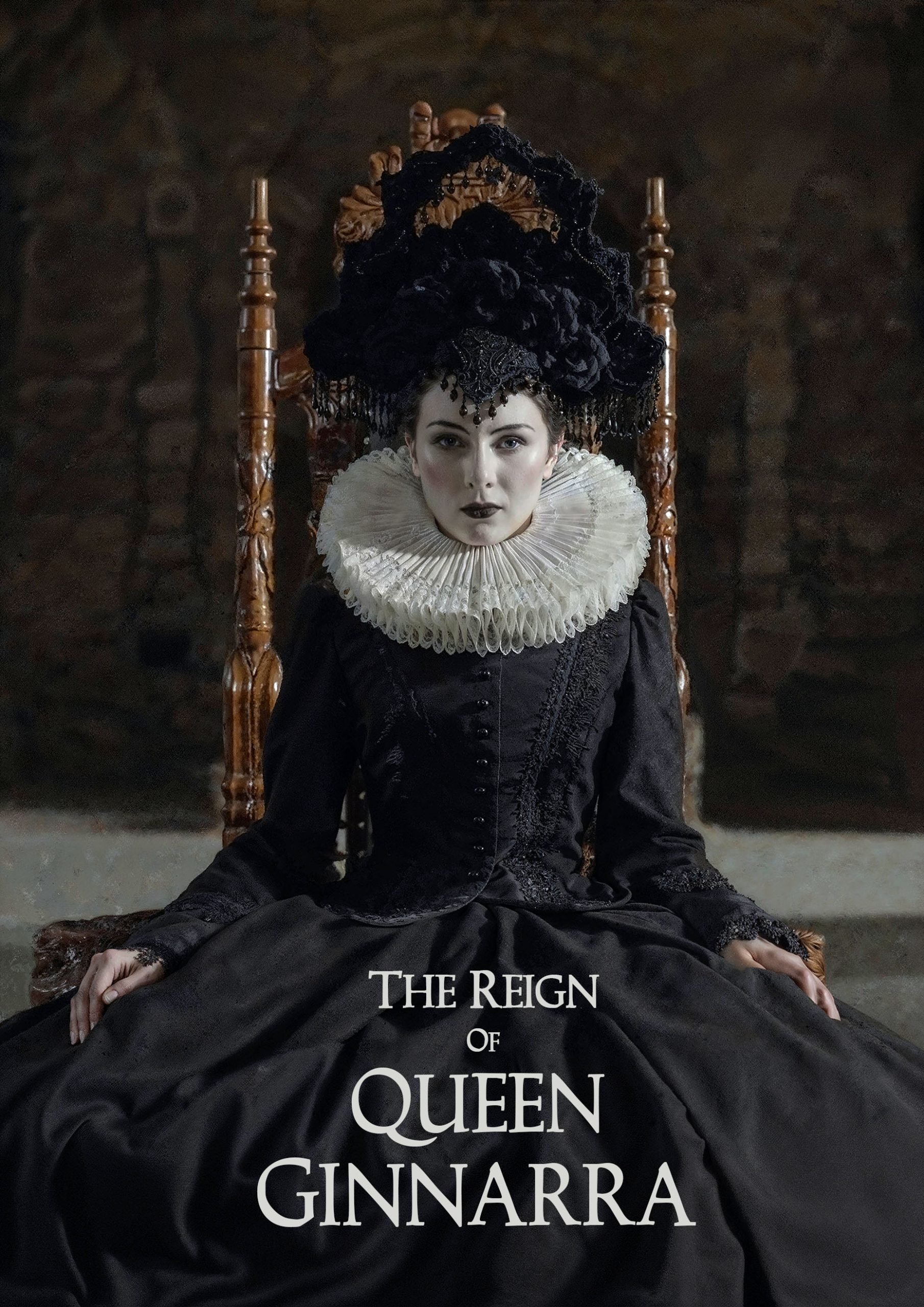
Megan Tremethick • THE REIGN OF QUEEN GINNARRA

The latest film from The British Horror Studio, helmed by Lawrie Brewster, is set to premiere at Romford Horror Film Festival. We caught up with the star of The Reign of Queen Ginnarra, Megan Tremethick, to find out more about it…

What’s the story for The Reign of Queen Ginnarra?

Megan Tremethick: The Reign of Queen Ginnarra is a Gothic horror-fantasy that mixes eldritch prophecy with the eerie, atmospheric dread of classic horror. Elderon [Andrew Gourlay], an exiled prince with no desire for the throne, is thrust into a battle for power when his kingdom falls into darkness. His sister, Queen Ginnarra [Tremethick], is a self-proclaimed prophet who believes she has been chosen by a dark god to lead her people into a new age. She communes with this ancient entity, wielding its power to maintain control – but as her connection to it deepens, so does her descent into madness.

What are the main difficulties of making a period piece?

From a production perspective, one of the biggest challenges in making a period piece is getting the details just right – even though The Reign of Queen Ginnarra is technically a fantasy, our director Lawrie Brewster took a lot of inspiration from history when designing both the script and the costumes. Wardrobe plays a huge role in bringing the world to life, and it can be a real process getting actors into full armour when required – it’s something that definitely has to be accounted for in the schedule!

Hair and makeup are just as important. Period-accurate styling can be tricky, especially on a lower budget, but we were so lucky to have talented makeup artists including Nike Johnston, Hazel Smith, and Caitlin Cunningham, who did an amazing job. Of course, Queen Ginnarra’s look is quite stylised, which made her even more fun to bring to life.

Finding the right locations can also be a challenge for a period-style film, but we were incredibly lucky to shoot the throne room scenes in the stunning Dunfermline Abbey. I’d never been there before, and stepping into the grand stone hall in full costume was a surreal experience.

From an acting perspective, one of the biggest challenges in a period-style role is making the character feel authentic while also capturing their depth and intrigue, especially in a fantasy setting. I love researching the historical inspirations behind a role to shape my performance. For Queen Ginnarra, I focused mostly on the Tudor period, and the legend of Countess Elizabeth Báthory! Understanding how rulers throughout history exercised power, dealt with court intrigue, and navigated their public versus private selves helped me to grasp Ginnarra’s character. Plus… it’s such a fascinating era!

Why did you choose to premiere at Romford Horror Film Festival?

The British Horror Studio is run by director and producer Lawrie Brewster and writer and producer Sarah Daly. The entire team absolutely love the Romford Horror Film Festival! They’ve been incredibly supportive of our work, having previously screened The Slave and the Sorcerer and Ghost Crew, and we’re so grateful for that.

Last year, a small part of our team had the chance to attend the festival, and it was an absolutely incredible experience. The event isn’t just about showcasing horror films – it has a genuine sense of community, bringing together filmmakers and horror lovers in a way that feels both exciting and welcoming. The calibre of films screened is fantastic, featuring a mix of established talent and fresh voices in the genre, and the audience is always so engaged and passionate.

It’s a place that truly celebrates indie horror, and that’s something we value deeply. So when it came time to choose where to premiere The Reign of Queen Ginnarra, Romford was our first choice – not just because of their excellent programming, but because it feels like a festival that genuinely champions the kind of bold, creative horror we love to make.

The British Horror Studio has a lot of films in production, is it hard spinning so many plates?

I think if you asked any of the team that, and they said it wasn’t at all hard… they’d be lying! But we’re definitely all lucky to be a part of a tight-knit group that has each other’s backs. The team is made up of the talented Lawrie Brewster and Sarah Daly, production manager and sound recordist Tom Staunton, director of photography Michael Brewster, art director and 1st AD Caz Paul – and these are just a few of the incredible people working behind the scenes.

Because we’re a small but dedicated studio, everyone wears multiple hats across different productions. One day, someone might be working in pre-production on one film, and the next, they’re on set in a completely different role. It’s a huge challenge to juggle, but that adaptability is also what makes working at British Horror Studio so exciting. There’s never a dull moment, and the energy of creating something fresh each time keeps us all going.

Right now, we have several films in production, all at different stages. In The Grip of Terror, directed by Lawrie Brewster and working in collaboration with the Amicus estate, is the first Amicus production in 20 years and stars Golden Globe nominee Jane Merrow alongside Laurence R. Harvey. Then there’s Black Chariot, which features Laurence R. Harvey, Dorian Ashbourne, Novarro Ramon, and Sam Barclay in a black-and-white neo-noir bank heist gone wrong, leading a group of criminals into a supernatural nightmare. My directorial feature debut, Spoiling You, is also in production – it’s an ASMR horror film starring Laurence R. Harvey, Stephen Kerr, and Nick Ford. And of course, The Reign of Queen Ginnarra is finally about to be released into the world, which is incredibly exciting!

Naturally, with so many projects in production, things take longer than if we were working on just one film at a time. But that’s part of what makes British Horror Studio unique – we’re constantly creating, constantly pushing forward. Being part of a studio that’s actively making so many indie horror films is a rare opportunity, and knowing that each of these stories will find its audience makes it all worth it.

And, of course, the team works incredibly hard to make it all happen… and Lawrie? Well, dealing with all this means he’s usually sipping from a glass of bourbon and spinning his revolver. 😉

You’ve become a big part of the British Horror Studio/Hex/Amicus story – what has that been like?

Becoming part of the British Horror Studio/Hex Studios/Amicus story has been an incredible journey. I first met the team from British Horror Studio at the Cannes Film Festival. Not too long after, I was cast as Jigme, the black-clad archer and assassin, in Dragon Knight. Now, working so closely with them feels like everything has come full circle.

One of the things that makes working with British Horror Studio so special is the creative freedom it allows. Unlike larger studio productions, there’s an intimacy to indie horror – you’re not just playing a role; you’re part of the entire storytelling process. I’ve had the chance to play a range of characters, from young, vulnerable but determined figures like Sandy in Ghost Crew to commanding and ruthless rulers like Queen Ginnarra, and each role has been a completely unique experience.

And, of course, being part of the revival of Amicus Productions is so surreal! Amicus has such an incredible legacy in British horror, and being part of its return is truly an honour. Films like Asylum and The House That Dripped Blood helped shape the horror anthology genre, and with In The Grip of Terror, we’re thrilled to carry on that tradition in our own way.

What’s the status of your feature film Spoiling You?

Spoiling You is well underway, with a large portion of it already filmed. We’re aiming to have the remaining scenes in the can by the end of March. It’s been a huge challenge, as it’s quite ambitious for my first feature, but it’s also been so much fun to shoot. The film blends psychological horror with ASMR elements, creating an experience designed to unsettle audiences on both a visual and auditory level that’s a little different from other horror films. There are plenty of wild scenes in it that will hopefully keep people guessing right until the end. It takes inspiration from J-Horror classics like Audition and Kairo – particularly in their use of slow-burning tension and an eerie sense of the uncanny.

Did you enjoy directing?

Yes, I loved getting to direct! I’ve directed three short films before this, each bringing a unique challenge. My first, Slot, was a giallo-inspired short where I experimented with bold visuals, surreal tension, and stylsed horror – a love letter to the genre. Then came The Haunter of the Dark, inspired by H.P. Lovecraft’s cosmic horror short story. To bring the Haunter to life, I collaborated with the genius Michael Brewster on cinematography and the super-talented Caz Paul, who built the creature costume. Their amazing creativity helped capture Lovecraft’s signature unseen terror on screen. My third short, Revenge of Innsmouth, was something entirely different – a full-on fishman war film! Lawrie Brewster was a very important collaborator particularly on this film, bringing so much depth to it. His influence elevated the storytelling and world-building, making it my most ambitious short in terms of action, scale, and creature horror.

Spoiling You is my first feature-length film, and it’s been a whole new experience. It’s a much more personal, psychological horror film. It focuses on slow-burning tension and atmospheric dread.

Having come from acting myself, I absolutely love working with performers to shape their characters and build tension through subtleties in performance. I know what it feels like to be on the other side of the camera, so I always want to create an atmosphere where actors feel supported and free to explore their roles fully.

Each time I direct, I learn something new, and stepping into feature filmmaking has been a huge but exciting challenge. Acting will always be my first love, but directing has given me a whole new way to push my creativity further.

The British Horror Studio self-distributes its output, will that continue with the Amicus films?

Yes, British Horror Studio will continue self-distributing its films, including the Amicus Production, In The Grip of Terror. One of the things that makes British Horror Studio stand out is its commitment to independent horror storytelling – self-distribution gives the team better creative control and allows them to connect directly with genre fans.

With the Amicus revival, that approach is just as important. Amicus was always about bold, distinctive horror, and keeping it independent means we can stay true to that legacy. It also allows for direct engagement with horror audiences, which is key – people who love classic British horror know exactly what they want, and self-distribution makes sure those films reach them in the way they were meant to be seen.

What can people expect from you next?

First up, The Reign of Queen Ginnarra is premiering at the Romford Horror Film Festival on Saturday March 1st at 8pm, with a second screening on Sunday March 2nd at 5pm. I’ll be attending along with several members of the team from British Horror Studio, and we’re so excited to watch the film with an audience!

Beyond Queen Ginnarra, I’ve got an exciting mix of projects ahead! I’ll be continuing my work with British Horror Studio, Hex Studios, and Amicus Productions, with some new horror films on the horizon. If you love gothic horror, psychological terror, and dark fantasy, there’s plenty to look forward to. If you want to keep up to date with everything happening at British Horror Studio, you can follow us on Patreon!

On the directing side, as I continue working on Spoiling You, an idea has already come to me for my next film… but I can’t say what just yet! What I can say is that, of course, it’s another horror film, and I’m really excited about where it could go.

THE REIGN OF QUEEN GINNARRA has its world premiere at Romford Horror Film Festival on March 1st. You can buy passes here.

Francis Galluppi and Jim Cummings • THE LAST STOP IN YUMA COUNTY

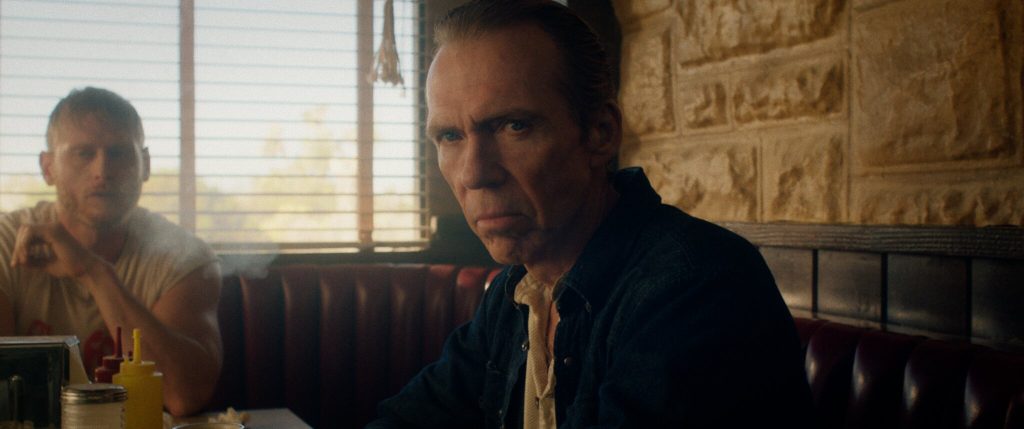
Francis Galluppi’s feature directorial debut, The Last Stop in Yuma County, is the kind of movie that hasn’t been released much recently. It’s an intimate arrangement of character actors portraying individuals stuck in a roadside desert diner, waiting for a gas truck to show up so that they might refill their tanks and be on their respective ways. Within the group, there’s a waitress, a travelling knife salesman, criminals, and an elderly couple, among others, all portrayed by genre stalwarts such as Jim Cummings, Richard Brake, Jocelin Donahue, Faizon Love, Gene Jones, Sierra McCormick, Alex Essoe, Jon Proudstar, and Barbara Crampton.

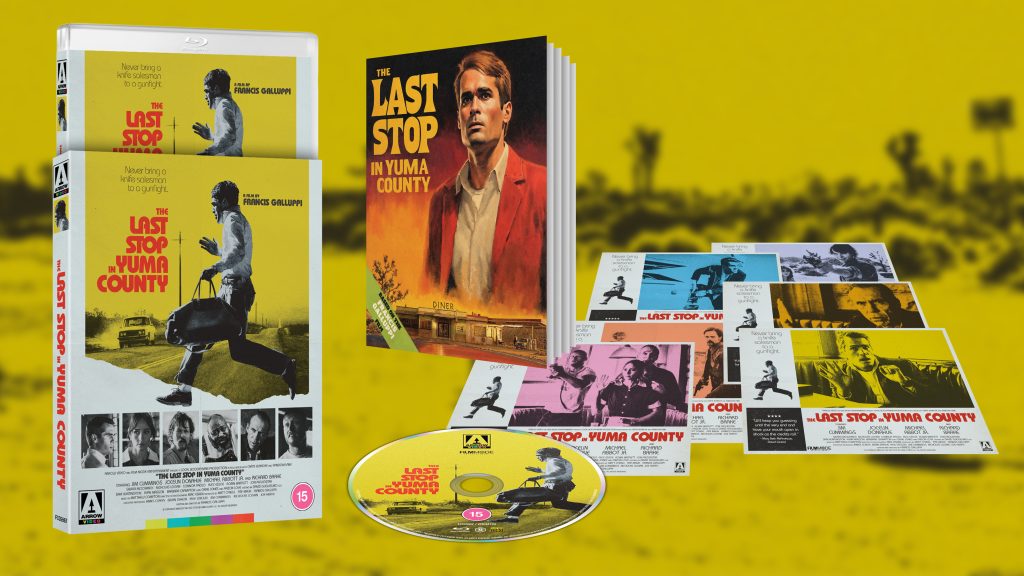
It’s an embarrassment of riches, and the way in which the story unfolds feels much like the cinema of the ’70s in which the film’s story is set. It’s gritty and shot through with blackly comic threads to offset the almost unceasing tension. The Last Stop in Yuma County gets a deluxe Blu-ray release from Arrow Video this week, and we took the opportunity to speak with director Francis Galluppi and star Jim Cummings to discuss everything that makes this neo-noir tick.

STARBURST: The Last Stop in Yuma County is the sort of movie that we don’t get to see as much anymore, where it is just this showcase for character actors. Francis, when you were putting this together and getting it cast, was that the idea: to have so many people who are like, “I know this face”?

Francis Galluppi: Yeah. Yeah. 100%. I mean, 90% of the cast I had in mind when I was writing the script and Jim specifically. Oonce that idea popped into my head, it just wasn’t going away. Like, it just was like, “This has to fucking happen.” I obviously never saw it another way before and especially now that the movie is done, I just can’t imagine anybody else playing the knife salesman.

Jim, you seem like you have a real knack for playing characters who end up in, in some awkward situations. Is there an appeal to playing characters who get backed into a spot where they have to find a way out?

Jim Cummings: Oh yeah, that’s interesting: drama and comedy. Most of the best comedies that I know and best drama is watching somebody participate in polite society until they can’t anymore. Something is going on, and we’re all pretending like it’s not happening, and it’s actually a hostage situation, and we gotta fucking actually break out of this thing and survive.

That’s the kind of crux of public freakouts and human drama, which I find so interesting. Anything that’s very good that I end up acting in has that stuff in it because it’s very fun to do. I think there’s a lot of stuff you can mine about the human experience and the masculine experience doing. So yeah, I really do love playing these kinds of characters.

The film feels very big for a small-budget picture. What were the challenges in making this feel bigger than a million-dollar budget might have allowed?

Jim: All of the challenges. Every single one of them.

Francis: That’s very true. We were lucky because I wrote the script for that specific location. We were able to spend 19 of those days without a single company move. We were there the entire time, which helped a lot, but what were the challenges? Oh God. Yeah. Wanting to do everything practical and using squibs and blanks and explosions and all that shit eats up a lot of your day – safety meetings and all that stuff.

So that was definitely a challenge, but in terms of like making it look bigger, we have our cinematographer, the incredible Mac Fisken – Jim uses them, too – and it was really about just utilising this space, this single room and trying to explore every single corner of that space and trying to not make it feel like a stage play and making it feel cinematic in a space that was a challenge, but I think, yeah, I think we pulled it off.

Jim, you’ve made movies yourself, like The Wolf of Snow Hollow and others. When you’re an actor, but you’re working with someone like Francis who this is their first bigger feature, was there a discussion? Were there some tips and tricks shared back and forth?

Jim: I mean, really, everything was done by the time we showed up to set. Francis had done so much pre-visualization and heavy thinking about how each moment was going to work and then, my job was to execute that. I don’t know. I mean, there are times where he and I spoke the same language. There are moments where he’s talking about how a cut is going to work or how the tension is going to work, and we have a shorthand together because we’ve both done this kind of thing before.

This was Francis’s first time doing a feature, but he had already done many shorts, and he and I were making the same jokes. I feel kind of like a comedian being cast in a comedy part because the director respected my comedy, so I don’t think there was any stepping on toes. It was more like, “Hey, how can we do the thing that we do to make the thing work?” and that’s just how it always is when you’re making something: “What do I need to do with my body and my delivery of these things to give you what you need?”

And then I’m always trying to inject stupid bullshit and comedy into it, and Francis would die laughing and then be like, “Yeah, okay, cool, let’s figure out how we put that in.”

Francis: Yeah. Or tell you to do more or less. Yeah. Please, please. We would do this thing on set where – ’cause the whole time, his character is not saying much for a lot of the movie, but there’s this internal panic happening in the entire time – so before every day, Jim would just start doing pushups on set.

Jim: Yeah, it was just to be out of breath and Francis was like, “Yeah, exactly.” He was like, “Come on, let’s do it. Let’s do a round of pushups.” I’m like, “Jesus Christ, okay, let’s do it.” It’s the best.

All of the songs in this film work so well, as though they’re almost commenting on the plot. Were those part of the script from the beginning?

Francis: Yes. Yeah. Everything was written into the script. We had to make sure that we would be able to afford the songs because I knew I wanted the actors singing along. It was still really stressful. And the whole time, I think everybody was like, “You should do a safety where they’re not singing along in case something happens,” and I just was, “No, we’re going to get it. Let’s just do it,” which was a really dumb decision.

I should have had a safety, but thank God it worked out. We were able to get all the songs, but yeah, everything was written into the script. The Roy Orbison [“Crying”] sequence was basically like all those shots were timestamped, and we shot it in my living room, cut it together, and made sure it was going to work. Essentially, as Jim would put it, we put a music video in the middle of the feature film. That’s kind of what we were doing.

How do you balance brutal violence and brutal carnage with comedy? What were the inspirations you had for trying to go from just some slapstick comedy of somebody having coffee spilt on them to literally like the Mexican standoff to end Mexican standoffs?

Francis: Oh, God, that’s a tough question. I don’t know. I mean, it’s one of those things where I just write what I think is funny, and sometimes you don’t know if it’s going to work. I mean, I remember I called Jim after I had a very rough cut, and I think what I told you, Jim, I was like, “I fucked up, dude. I think I made a movie that only me, you and Scott, like my best friend, are going to think is funny,” and then Jim said, “No, dude. You must remember that some people think Fargo is a serious movie. This will find its audience.”

I think it’s always about writing what your specific tastes are, what you think is funny, what you think like, and you kind of just got to go with it, but in terms of balancing the sort of brutality and the comedy? I don’t know. Jim, do you have a comment on that?

Jim: So, as a film kind of theorist and myself, I think like Francis and I grew up watching South Park, and we have a very specific sense of humour, which is to not take the medium too seriously. I think that we think that modern film audiences are so media literate and understand what’s happening that it’s like the Coen brothers can do No Country for Old Men. You can be fully immersed in this serious story, a period piece about violence in the South, which is kind of what we do.

There are good jokes throughout No Country, but with this, I feel like with modern audiences – this is the movie that ruins the title. The titular line of the film phrase only half says the title of the movie before it cuts to the next scene. This is for an audience that gets that we’re having fun. So, really, the fact that all of the violence and the tension is excellent is rare inside of this kind of movie, I do feel, in the same way, that Bong Joon Ho does it.

In order to win a modern audience, you have to be guiding them on the roller coaster and hitting different lobes of their brains. It’s got to be excellent as a pressure cooker engine of a thriller and then you also have to acknowledge that hostage situations are sometimes comical and pathetic and that not everybody’s a good hero. Sometimes, there’s a coward who’s supposed to be the protagonist. I think, really, it’s a really thoughtful response to the desires and the diet of the modern audience – especially for cinephile perverts, which is our core audience.

Being as how you are cinephile perverts, and I am a cinephile pervert, the reason we’re talking is because Arrow is putting out this deluxe Blu-ray of this. When you were making the film, did you have in mind a physical release and the sort of things you would like to see on it?

Francis: I mean, honestly, physical media, bonus features, all that stuff – that was my film school.

Jim: That’s what he thinks about. From the beginning, he’s like, “We’re gonna have this cool thing. It’s gonna be this physical thing.” He is such a collector in his mind. That’s how he fantasises about this thing. That is the end goal. It’s crazy.

Francis: Yeah, yeah, yeah. When I got the actual physical copies of this movie, it was literally a bucket list thing where I’m like, “Oh my God, Arrow physical release. It’s so cool,” but yeah, I mean that because that was my film school. I mean, I’ve spent more money on physical media than I would have if I would have paid to go to film school and it paid off.

I learned a lot, and in terms of specifics, there is a documentary I talk about all the time – The Snowball Effect, the Clerks documentary, is fucking amazing. That was a huge inspiration. There’s a few really funny ones that I love. There’s one on Tales from the Crypt presents Bordello of Blood, and it’s called Tainted Blood, and it’s you, if you haven’t seen it, it’s on the Shout Factory release.

Yeah, well, we actually have. Jim just saw a cut of a documentary that’s coming out on the making of Last Stop, which is going to be two hours long. It’s called Sell Your House. It’s a crazy fucking story.

The Last Stop in Yuma County is out now on Blu-ray from Arrow Video.

Angie Hoffmeister • THE LOTTERY AND OTHER DARK TALES

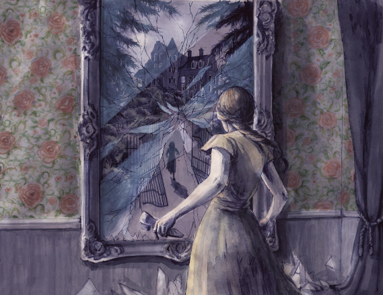
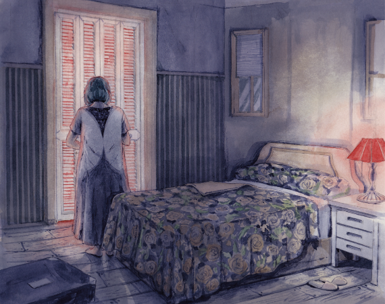
Out this week from The Folio Society is their limited edition of The Lottery and Other Dark Tales, which “presents a definitive selection of Shirley Jackson’s most unsettling works, including ‘The Lottery’ – the story that scandalized readers in 1948 and remains one of the most famous in American fiction.”

Limited to just 250 copies, this collector’s edition features illustrations by Angie Hoffmeister, bringing Jackson’s haunting visions to life. We spoke with Hoffmeister about the new collection and how the illustrator approached the work.

STARBURST: How familiar were you with Shirley Jackson’s work before this project?

Angie Hoffmeister: Before the first project, The Haunting of Hill House, I hadn’t read any of Shirley Jackson’s books. However, I watched the 1999 movie The Haunting a couple of times when I was around 13 or 14, and I really loved it at the time. My perspective changed significantly after revisiting it in preparation for illustrating the first Folio Society Jackson book. The book is much more subtle in its social commentary, and I feel the movie is only loosely based on it – it lacks many of the elements that make the book so unique.

After reading that first Jackson novel, I immediately got Hangsman and We Have Always Lived in the Castle, and over time, I’ve read almost all of her works. I really enjoy them, which makes the illustration process even more meaningful. It also adds pressure, though, because when you love an author’s work, you want to do it justice. I constantly find myself asking, “Would Shirley Jackson approve of my creative decisions?” Working with The Folio Society provides a lot of freedom and opportunities, so there are many important choices to be made.

What are the challenges of illustrating such well-known stories?

The more people are familiar with a book, the more diverse the preexisting expectations and interpretations become. As an illustrator, I want to bring my own vision to life while creating an edition that both the author and the readers will love. This makes it crucial to work closely with the art director and publisher. When immersed in a book project and torn between different anticipated expectations, the pressure can sometimes feel overwhelming. Professional communication really helps to manage that and keep things on track.

Where did you start your process?

I began with a lot of research, particularly gathering visual references. Since I live in Germany and have never been to the United States, it was important to me to get a sense of the world Shirley Jackson inhabited in order to better understand her vision. After that, it involved a lot of reading, rereading, taking notes, and sketching.

Who do you hope to reach with your work in this project?

I hope this third project resonates with every devoted Shirley Jackson reader, as well as those who appreciate special and limited editions. I also want to reach anyone interested in themes such as gothic literature, psychological horror, female madness, and the disintegration of the self. Let’s be honest – women today face many political and economic issues that can drive you mad. I think this is one reason Shirley Jackson’s books are so much more than just ‘horror’, even though they’re often labelled as such.

What is the appeal in making new art for classic tales?

I find it fascinating to see and compare different editions of the same story from various time periods. As an illustrator, I’m influenced by my surroundings and my own reality, which inevitably shapes how I perceive the book I’m illustrating. I think this applies to any illustrator. So, different editions of a book offer more than just the story – they reflect the era in which they were created. Even if subtly, these editions make a statement about the time, which is something I find particularly interesting.

Shirley Jackson’s The Lottery & Other Dark Tales is out now from the Folio Society.

Matt Busch • ALADDIN 3477

Matt Busch is well known to Star Wars fans as the illustrator of book covers, trading cards, posters, and more. He now enters the world of moviemaking with his feature film Aladdin 3477- I: The Jinn of Wisdom, the first of a planned trilogy. We spoke to him about making this epic sci-fi adventure on an indie budget…

STARBURST: I was going through my collection recently and found a wristband with Aladdin 3477 on it that I’m fairly confident you gave me 10 years ago, maybe longer – so how long has this project been gestating for?

Matt Busch: Ever since I was in college 30 years ago. It was 15 years ago that I put my foot down and said, you know what, it’s time I made my own sci-fi film, so I spent four years building maquettes and miniatures and props. Filming took almost five years to the day, and then it’s been another six years finishing the visual effects, editing, sound, and then finding a good distributor, marketing and putting everything in place for the first film.

When you started the project, did you know you’d have a hand in every aspect of it? Was that your expectation when you went in?

Pretty much, yeah. I think that stemmed from when I was young; I never thought any of this was attainable. I had this idea in my head that even if I did it with family and friends and whatever I had laying around, if I just did my very best, no matter how long it took, how would people not notice?

Another part of it was having lived in Los Angeles for eight years; when I started my career, it was easy for me to get into the movie business doing concept art and storyboarding. However, the suits and executives were only interested in me helping to make their projects look good. They were never interested in my ideas, they just wanted to keep me in my place, so I knew pretty early on that if I ever wanted to do this this epic trilogy, it would have to be off my own back, starting at ground zero and working my way up from there.

Why Aladdin? Where did this concept to develop the classic story come from?

I never set out to do a retelling. What happened was, I developed this huge saga when I was in college, and at the time it took place on another planet. It was about this intergalactic con artist who had a little floating robot named Fijit. I started drawing it as a graphic novel, and that was going to be my way to pitch it to Hollywood. I got 20 pages in when I realised, “Oh my gosh, my story really is the nuts and bolts of Aladdin.” There were a lot more characters, and it was larger in scope, but the basic thrust of everything was there. There was no genie or lamp, but there was a Princess and there was an oppressive ruler, and there was this inner circle city that was tough for this character to get into. It kept reminding me of Aladdin and I didn’t like that, so I kept trying to change up aspects of the story, but it didn’t have the flavour that I wanted. I was aware that Aladdin was public domain and that it would be possible to do, so slowly, over time, I started thinking “What if I do Aladdin?” I didn’t want to compete with Robin Williams and have a genie, so what if it was the opposite? What if it was more like an Obi-Wan Kenobi kind of wise sage. Over time, the idea of doing Aladdin became more and more interesting to me. 

Because the filming took a chunk of time, were the cast happy and willing to be invested in a project for as long as it took to come to fruition?

About half of the people that you see are family and friends. Anyone who had a main part still had to audition, and for about half of the parts I put out a casting call, but I mostly worked with people that were local because I knew it was going to take time. I didn’t think it was going to take as long as it did, but I knew I couldn’t afford to fly people in from out of state or from out of the country, so it was mostly people local to Michigan. Thank goodness everyone was supportive and patient with how long everything took. 

We rented a sound stage, and sometimes we could build a set in a couple of weeks, and sometimes a set would take almost a year, so people would have to wait patiently while we were building. We could film outdoor scenes in different places, but it was a really erratic schedule where we would shoot on weekends whenever people were available. It wasn’t easy scheduling everything, and I’m just so grateful we got through all three films.

Was the experience of pulling it all together anything like you expected?

One thing that I loved so much, but also was incredibly daunting, was the fact that this takes place on the other side of the world, throughout Asia and India, 1500 years in the future. We couldn’t film in someone’s living room or backyard without building sets, making the costumes and every single prop. Normally, independent films are either romantic comedies, mafia movies or horror films where if you need a vehicle – you can just say “Hey, does anyone have a pickup truck? Cool. We’ll use that.” “You just got home from a funeral, do you have black to wear?” “Yeah, I have black.” “Cool, wear that.” We could never do that. We had to make everything, I had so much fun kit bashing things together, but at the same time there was so much work to do that it really was daunting. I enjoyed every minute of it, but it was frantic because I didn’t want people to lose steam while waiting for everything to be done.

How did you fit in the rest of your career around pulling this together?

I’m a professor at a college here in Michigan and I have a pretty forgiving schedule, but because everyone else had day jobs, we could only film on weekends. That was the common denominator that we had for filming, but building sets was done whenever we could, and I was always the first person on set, even on days we were building things. I was the first there and the last to leave. Anything that I felt I could do myself, I did, because I didn’t want to wear people out. When I had favours, I wanted it to be something where I really needed people’s help before I asked. 

It was interesting, because there were times where I had Star Wars gigs that I had to pass on because I needed the time, but then there were Star Wars gigs that I said yes to because I needed the money to pay for materials and costumes. Sometimes I would be building sets during the day and then burning the midnight oil illustrating Star Wars trading cards at night. Whatever it took to get things done.

What are your hopes for Aladdin? What release schedule are you looking at for the next two, and is there a future for the world that you’ve developed?

The first film has been released on what we call TVOD, so that’s Amazon Prime, Apple TV Plus, and Fandango, then it’ll be DVD and Blu-ray. After that it’ll be AVOD, which is where you can watch it for free, but it has commercials. There may also be a short theatrical run here in the Midwest, kind of a mini-tour where me and some of the actors might be travelling from state to state just to have one-off showings. The next two are filmed, but there’s more visual effects and editing and sound that needs to be done, so there isn’t a release schedule yet, but ideally it’ll be the same as the first.

I’ve also been developing toys and books. When I grew up, it was really neat because movies weren’t just a movie – there were the official collector’s edition books, trading cards and toys – so I’m trying my best and we’ll see what sticks and what doesn’t. I’ve been trying my best to make this a franchise. 

My memories as a kid are of things like Star Wars. Back then, we couldn’t just watch the movie on demand at any time, so some of my greatest memories were playing with the action figures and swapping the trading cards with friends. I’m trying to create something based on the fun experiences I had growing up, trying to make something that’s a little bit more than just an independent film.

And finally, what else is going on with you at the moment?

Good question. I have two new Star Wars projects that I can’t talk about yet, and there’s a new Stranger Things art print that’s coming out soon. I’m just having a ball. I’m so grateful for this career that’s afforded me the ability to go after my dreams and make this cool, epic trilogy. At the same time, I’m not giving up my day job. I enjoy drawing Star Wars and all of these really cool properties. I’m just so grateful for all of it.

Aladdin 3477- I: The Jinn of Wisdom is now available to buy or rent on Amazon, Apple, and other digital platforms.

Elle O’Hara and Johnny Vivash • CARA

Following its world premiere at the 2024 Pigeon Shrine FrightFest, the pitch-black psychological thriller CARA is set for general release in February. We spoke to the lead actors to learn more about this disturbing tale…

STARBURST: Could you tell us a little bit about your characters?

Elle O’Hara: My character is Cara Tomlinson. She is in her mid-20s. She is a only child who’s had quite a dramatic upbringing. She tried to talk about her issues, but didn’t get anywhere. That led to different issues she had growing up, and being hospitalised a few times. She has very severe panic attacks where she disassociates. She imagined things that aren’t there and conversations that haven’t happened. She’s dealing with a lot, and she’s trying to figure out how to free herself from all of that.

Johnny Vivash: I play the character John Fisk. He’s very much a serial loner who’s had a troubled and traumatic past where he’s managed to elude the police force across numerous boroughs and counties. He’s taken lives before, but managed to get away with it. He’s also had a bit of time in jail, so he’s seasoned in that way, but he’s very much of solitary predator who gets very fixated on individuals, and that’s where his transgressions with concepts of power come from and how he wants to control and own people.

What was your reaction when you first read the script?

Elle: I was quite shocked! I knew I really wanted to play a dark, angry character. I thought a lot about the character, and fell in love with it a little bit more each time. I love the fact that it doesn’t shy away from these serious issues that do go on in the world. People pretend they don’t happen, but they do. We want to have people think about how society deals with people with mental health issues, what opinions people have about abuse in lots of different forms, murder, all these things do happen.

Johnny: I went, “Oh god!” I put it down and within 20 minutes, I had a cup of tea in my hand and I was reading it again. It’s a very odd sensation returning to a script again and again and again. In particular to the last 10 pages, which are this wonderfully disturbing and beautiful set piece, which is the culmination of John’s wants and desires, and where Cara needs or wants to go within her state. It really gets under the skin. Sometimes with scripts, you can put them down, go off, and come back a day later and pick up the story. With Cara, there was a necessity to go again, because it was written brilliantly. And more power to Hayden [Hewitt, writer/director], it was giving you more and more out of each read.

Elle, how did you get into the headspace of the character?

Elle: I started by writing what I thought of the character, what I got from the script. Then I sent it to Hayden, and we ended up with a Google doc, where we’d send ideas back and forth until we had a timeline of her life. Hayden was really part of the process of bringing Cara to life. I started to visualise and get a feel for what life had been like for her since she was very young, what her relationships are with the different characters in the script. I did a lot of reading and researching about dissociation. It’s a way that a lot of us deal with stress, to almost take ourselves out of reality.

Johnny, did you have any reservations about tackling your character?

Johnny: Not necessarily reservations. I’ve played a couple of darker characters before, and sometimes they do stick around, so there’s a certain amount of exorcism that you have to do. That’s part of a growing process as an actor. You need some self-care when playing these type of roles; it’s important not to send yourself off the edge. You have to know when to leave it, when to embrace it, when to honour the truth of it, and when to put it to bed. That’s on a day-to-day basis.

Elle, how did you leave the character behind when you finished for the day?

Elle: As I was so tired, I think it was genuinely ‘get home, eat, sleep, and repeat’. Everyone was lovely on set, so it was easy to take myself out of it. With the scenes that were a little bit more intense in terms of her mental state, people were right there.

Johnny, what research did you do for Fisk?

Johnny: Well, the availability of looking into the lives of quite disturbed individuals is now very freely available. YouTube tends to be my go-to for obscure documentaries from people who have certain specialist subjects. You go down that rabbit hole and started to get some really dark places. It’s amazing to see the ability of the human spirit not only to be incredible to each other, but also act in the most depraved way to each other. You have to pack in the documentary viewing and limit your news watching as well after a while. There’s only so much you can take. Then after that, it’s cat videos.

CARA is released on digital platforms on February 17th, 2025. A limited edition Blu-ray release will follow.

Hayden Hewitt • CARA

cara cast

Following its world premiere at the 2024 Pigeon Shrine FrightFest, the pitch-black psychological thriller CARA is set for general release in February. We spoke to the writer/director Hayden Hewitt to learn more about this disturbing tale…

STARBURST: Where did the idea for Cara come from?

Hayden Hewitt: I got together with Ken [Sunter], the other half of our production company Black Octopus, to work on a comedy idea. I had a script for a horror film and he said, “Well, let’s do that. I’ll raise the money”, so the pressure was on. I wanted to make something that was properly dark, not just gory, but serious. Where you can really dig into issues without being preachy, because I can’t abide that.

How was the shoot?

We only had 14 days; it was a lot of late nights, but we got pretty much everything we needed. It was a huge amount of fun. I’m living my best life. The film wouldn’t have happened without Graeme Booth [producer]. I surround myself with really talented people.

There’s a lot practical effects, what was that like?

Well, I could say things like, “Yes, I made an actor lie down in a bed covered in fake shit and blood. Yes, I’ve had guts and blood all over me. And yes, we did film one scene where, after it was finished, I had to go outside and have a minute with myself, thinking, ‘You’re a very bad man’. Baris Kareli from Artisn’t Art did the main core of the effects. He’s the closest I could find to a Tom Savini character. He’s a hugely talented sculptor. He seems capable of anything. Do you have any fake Stanley knives? Yeah, no problem. He’s one of those guys. His work is phenomenal. I love practical effects. Do as much as you can in camera, because that computer business, in the end, costs a lot of money.

You didn’t need any dinosaurs, then?

Not yet, anyway. Godzilla. Now we’re talking. I’d definitely make one of those.

CARA is released on digital platforms on February 17th, 2025. A limited edition Blu-ray release will follow.

Composer Jay Wadley Talks Scoring HEART EYES

Out now from Screen Gems, the new horror comedy Heart Eyes was directed by Josh Ruben, and written by Phillip Murphy, Christopher Landon, and Michael Kennedy. Starring Olivia Holt and Mason Gooding and featuring Jordana Brewster and Devon Sawa, in the film a masked maniac with glowing, red eyes returns every Valentine’s Day to terrorize unsuspecting couples. Composer Jay Wadley’s score reflects “lush rom-com melodies, spine-tingling horror motifs, and comedic beats,” reflecting the film’s unique tone.

We spoke with composer Jay Wadley to discuss his work on Heart Eyes, along with how he drew from the score work of John Debney, Bernard Herrmann, Christopher Young, and Krzysztof Penderecki to create Heart Eyes’ musical palette.

Composer Hrishikesh Hirway Talks COMPANION

Written and directed by Drew Hancock, the new sci-fi horror film Companion (out now from New Line Pictures) stars Jack Quaid (The Boys, Spider-Man: Across the Spider-Verse), Lukas Gage (Smile 2, Dead Boy Detectives), Megan Suri (Never Have I Ever, It Lives Inside), Harvey Guillén (What We Do in the Shadows, Blue Beetle), and Rupert Friend (High Desert, Asteroid City). In it, a weekend getaway turns bloody and violent when a subservient android that’s built for human companionship goes haywire. In the early stages of the film’s development, Hancock tapped close friend Hrishikesh Hirway, acclaimed musician and the creator of the award-winning podcast Song Exploder, to begin drafting a score from the script. The score ended up using lead actress Thatcher’s own voice, along with a 12-piece string ensemble, in “Iris’s Theme,” and weaves in and out of some amazing drops ranging from The Book of Love’s “Boy” to “Lil Boo Thang” by Paul Russell.

We spoke with composer Hrishikesh Hirway to discuss his work on the film and his career. The score is out now digitally through WaterTower Music, and the album will receive a limited colour vinyl release with artwork by Greg Ruth via Made By Mutant.