John Hannah | GENESIS

Hannah

John Hannah is one of Britain’s most adaptable and well-known actors. Having earned his big break as Matthew in Four Weddings and a Funeral (1994) John has developed a varied career starring in films such as Sliding Doors (1998) and The Mummy (1999), and television shows including the Spartacus series and Marvel’s Agents Of S.H.I.E.L.D.

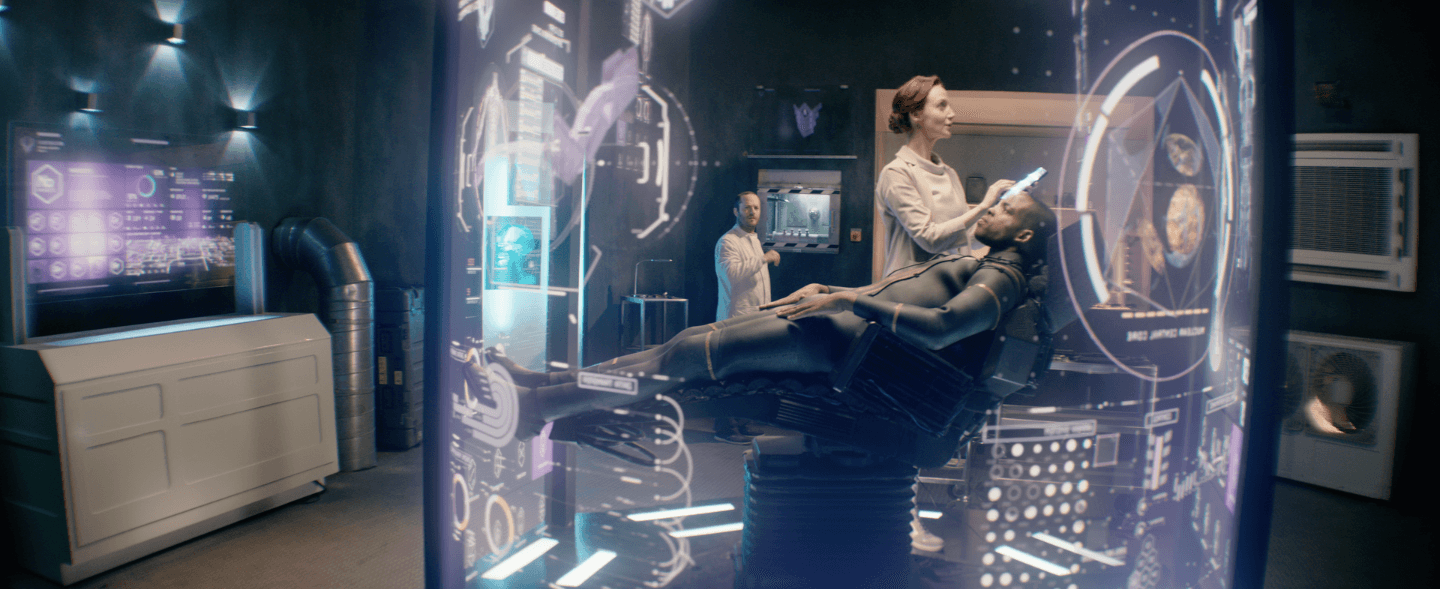
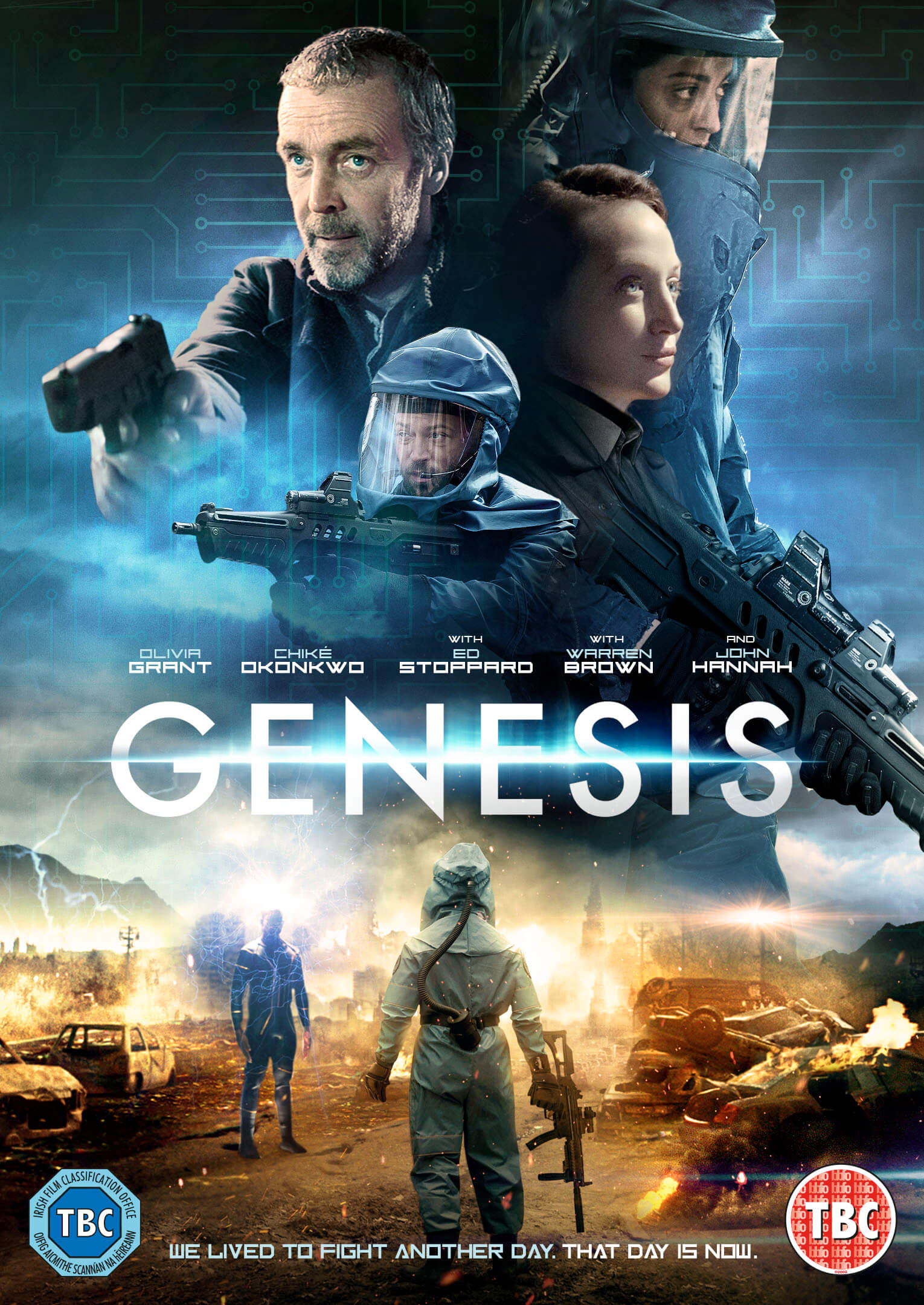
His most recent film Genesis is a dark sci-fi thriller full of political intrigue and questionable motives. John took some time to sit down with Starburst to discuss those themes, his career and voice his thoughts on how this film might relate to the times we’re living in.

STARBURST: Genesis portrays quite a bleak future for humanity and the Earth. What message do you think the film is trying to get across?

John Hannah: I think we’re living in a dark time in terms of the future, and what direction we’re going in is up for debate. There’s a lot of stuff in the mainstream press about technology and A.I., and who controls it and who are benefitting from it. I think that’s an element of the film, which we have the potential to destroy the planet and we’re led by these fucking muppets: May, Trump, Farage and all these Boris fucking Johnson twats. If they all get their way, then the future certainly is bleak. The film’s perceived as part of a trilogy, so I’m sure that Bart and Freddie (writers and directors Bart Ruspoli and Freddie Hutton-Mills) will be trying to direct it into a more positive, active way of contributing. It also touches on the individual and being able to take responsibility for your decisions and also the responsibility for the decisions being made on your behalf. I think that’s a little bit of the Brexit thing; everyone just read the side of the bus with the fearmongering, and we’ve gone down this route that, for me, is a dead end for the future and for young people.

The A.I. is key to the film’s story but really Genesis is about the character’s around that central premise, how they develop, and it seems to be trying to get the audience to make their own minds up.

I think that’s very much it. People often dismiss sci-fi as some space opera or just something with effects, or some sort of free-association fantasy of what a world might be and what creatures might be in it. But near-future sci-fi is very much dealing with real issues, and most of the major issues that have impacted on our planet have been technology based, whether you think of the loom or the Toe Puddle Martyrs (six 19th-century agricultural labourers largely responsible for the birth of trade unionism) or the industrial revolution, mass industrialisation; it’s always been technology that has created this friction and the one element in all of it I think is who has been in control of it and who benefits from it. With Brexit again, you have to ask who are benefitting from this, and it looks like people like Boris Johnson and international catalysts who’ll be working in a less regulated environment.

You clearly have strong views on this, and I wonder how much of that enters your decision-making process when choosing a role, asking yourself ‘is this a message I want to be a part of?’

Not consciously I don’t think, no. I tend to respond instinctively to the material. I try to put myself in the position of someone going to the cinema or sitting watching this program or another on television, and what they would get from it. And then when you start working on it, it’s the beginning of a journey where that journey is about discovering things yourself. It becomes something that nobody expected, and I think that’s a good thing. If the writers and producers and directors get exactly what they thought of at the beginning of the process, then I think it’s kind of failed. On the other hand, if they get something that’s surprised and delighted them and satisfied them from where they set out then, I think that’s a success. For Genesis, I think there was an organic development where the story is, although Bart and Freddie might tell you different and they probably would!

I wanted to pick up on your point about responding to the material as you’ve had an extremely varied career, but most recently it’s on television that you’ve had the greatest success and are probably best known. Do you have to change as an actor in how you approach a small, independent film such as Genesis when you’ve just worked on Spartacus or Marvel’s Agents Of S.H.I.E.L.D.?

I’ve always said that regardless of what the project is, from an actor’s point of view you do the same thing regardless. Whether it’s a multi-million-pound production, or a network television show or a little independent film, what you do in front of the camera remains the same. The discussions and the ability to influence what’s coming around the corner on a small budget is more organic. With the Americans; it’s a business, and they run it like that, and that’s great. You can go off and be a part of something that’s bigger than any of us as individuals, or you can mix it up on an independent film and be a part of that and in the discussions.

So you have no particular preference?

I try not to over-think it. I have a look and go and meet the guys and have a chat and go from there. Sometimes the reason it appeals or doesn’t is because it’s similar to something I’ve just done. It’s never been about career management, more cherry picking whatever’s in front of me.

We wanted to go back and ask about Rebus. Your version was very different to the Ken Stott version, being much darker and I’d read various things about why you left the role. Is it something you have fond memories of or think could have been done differently?

I have fond memories of doing it, but I never thought I was right for the part. The production company I was involved with were in the process of picking it up, but the company who owned it wanted me to do it. We wanted Peter Mullan to do it, but at that point, Peter hadn’t then won Best Actor at Cannes, so they pressed me, and I was seduced by the fact I really liked the material anyway. So you take a chance because that’s what you do or it’s all a bit boring. But I don’t suppose I was ever really right for it as I was a bit young. Ian Rankin said I was the same age as the character was when he started writing but I guess people just get an idea in their heads.

In your career, is there something that perhaps didn’t get the exposure it should have done, such as Circus or one of the smaller projects you’ve been involved in?

Circus is an interesting one in that I thought it was a brilliant, brilliant script by a young writer called Dave Logan but it was ruined by the director and two young producers who at that point were more interested in having the money to make the film rather than actually make it. They saw it as a business and wanted just to get on to the next step. They were just interested in money. They let the film down. No-one sets out to make a bad film, but sometimes it just happens.

Genesis is released on DVD and VOD on July 16th.

Automatic for the People: When Cinema Goes Wrong

automatic

Major cinema chains are pulling out all the stops these days to make a trip to the flicks a total experience, as we discovered at a recent 50th Anniversary screening of Stanley Kubrick’s artfully immense SF tentpole, 2001: A SPACE ODYSSEY…

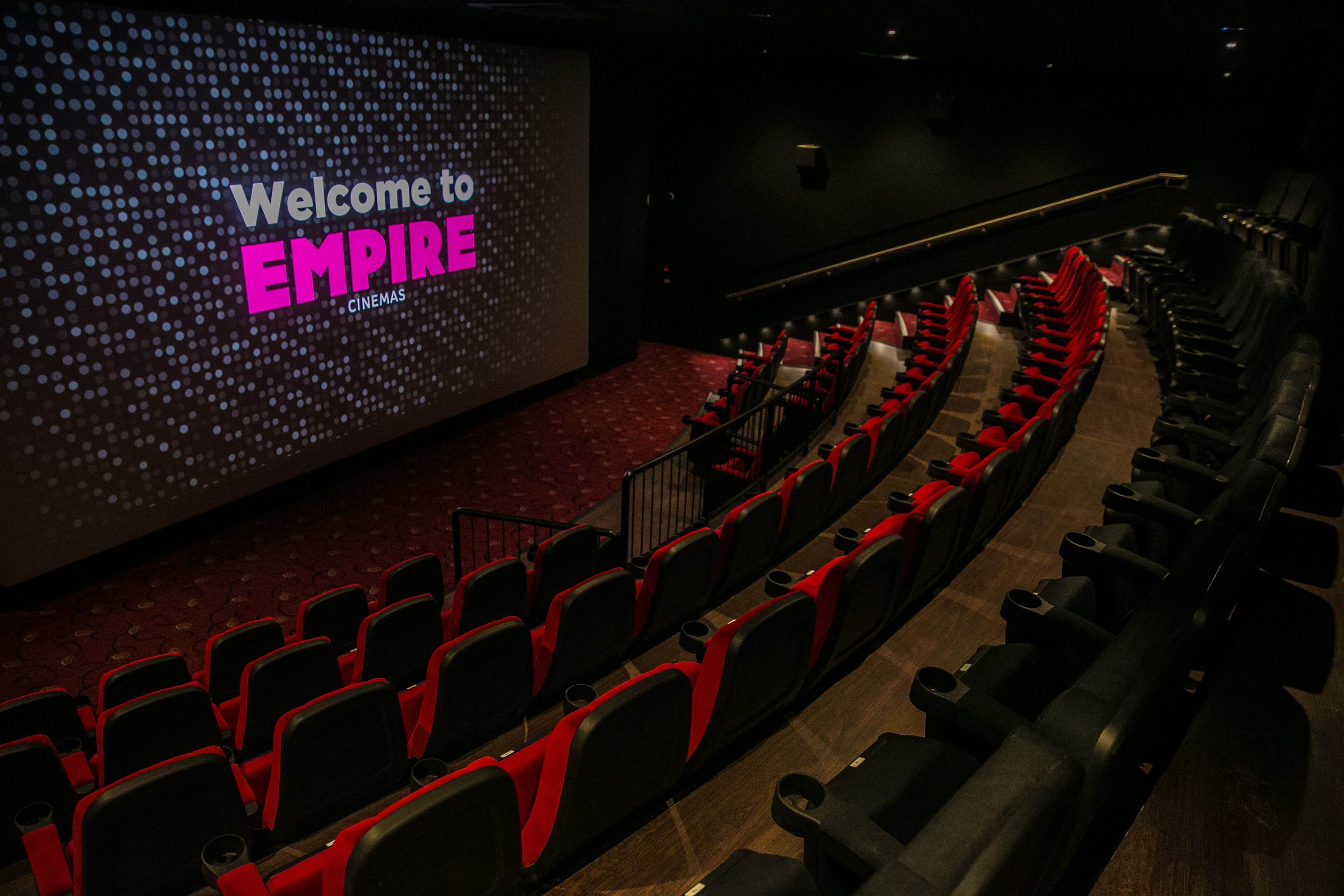
Empire Cinemas in a sleepy Suffolk township is this writer’s destination for what turns out to be a truly local presentation of “the proverbial really good science fiction movie” as Kubrick called it. Excitement is certainly running high. Upon arrival, the foyer hums with anticipation as seasoned geeks, some wearing HAL 9000 T-shirts, listen approvingly to a member of staff who informs us that, yes, the film will have a 10-minute intermission just like in 1968. What she doesn’t tell us is that at tonight’s screening we, each in our own way, will not so much view this landmark science fiction classic as become part of it.

The added-value shenanigans are upon us before the film even starts. Unlike a regular screening, the ‘trailer lights’ in the cinema remain on throughout the introductory atmosphere montage, the title sequence and into the film itself. As you probably know (come on, it’s 2001: A Bloody Space Odyssey!), this first sequence shows the arrival on ancient Earth of a mysterious, featureless dark monolith and the strange enlightenment it brings to a group of confused, hairy hominids. As this all unfolds, in a brilliant stroke of manipulation on the part of Empire Cinemas, we the audience find ourselves experiencing a similar level of confusion and denial – are we really paying to watch one of the greatest movies ever made with the lights up, thereby utterly killing the unique atmosphere Kubrick worked so hard to create? My God, I think we are.

An uncanny emotional synchronicity with events on-screen grows deeper as I find myself sharing a powerful empathy with Moonwatcher, the star ape-man (played brilliantly by mime artist Daniel Richter) as he senses the first stirrings of murderous violence in his monkey soul. Suddenly, we are one: he rising and going rogue from his placid group to seek the bone-head tool he will use to hunt warm flesh for the first time in human evolution; me rising from my seat (one of those nice sofas, actually) and leaving my placid group to seek out the bonehead tool who left the bloody lights up and get them switched off for the first time all evening. We are brothers across the eons, Moonwatcher and I.

I find a person, who patiently explains that the system is completely automated. It takes her an age to find the (presumably fairly dusty) manual light switch. As I return to my seat and await darkness, another moment of sublime stagecraft occurs as two other staff appear at the entrance and stare at us blankly, then stare up at the lights shining down on us; then back at us again. This goes on for some time. We all blink at our visitors. A giant philosophical question mark hangs between us.

…and lights out.

The next section of the film involves Dr Heywood Floyd (William Sylvester) jaunting off to the moon to get his picture taken with another monolith in the year 2001. On the way, he stops off at a space station for a spot of nervy chitchat with Rigsby out of Rising Damp. It’s the boring bit, really. But Empire Cinemas (the chuckling tricksters!) have anticipated this lull and have another ace up their velvety sleeve. Just as Rigsby gently probes an evasive Floyd as to why Clavius base has been sealed off, the sound volume in the cinema eerily drops lower… and lower… so that as Rigby is straining to make sense of Floyd’s cagey answers, we are straining to hear him too. Brilliant stuff, and at no extra cost to the price of admission, remember. You don’t get this at Secret Cinema.

Another artfully orchestrated moment of roleplay for me soon follows. In the very next scene, as Floyd is alone on the moon shuttle trying to make sense of the instructions on the door of the anti-gravity toilet, I find myself alone in the foyer (again) trying to make sense of the volume issue with another member of staff who explains it’s all automated (again) while regarding me like I’ve just shat on the ceiling of her moon shuttle. The thing is, that might not be a bad idea.

Discovery mission – the cool stuff! And how beautiful is that model? Even after 50 years, 2001 cannot be touched for meticulous space miniatures that simply demand to be seen on the big screen. And HAL 9000 is such a welcome B-plot, offsetting Keir Dullea and Gary Lockwood’s brilliantly all-talked-out astronauts. He’s paranoid as hell, of course, especially when he starts lip-reading the two men as they discuss switching him off. This leads straight into the fabled 10-minute intermission. It’s a good place to pause, buy some hot cheesy nachos and calm down a bit. 2001 is gripping enough without the rollercoaster ride Empire is laying on! What else lies in store?

The answer comes at the re-start with the night’s greatest bit of showmanship – total audience paranoia! Remember at the beginning when the lights were left on? Guess what – it happens again! Trailer lights still up, geeks sitting there like prunes, squinting at the bleached ‘darkness’ of outer space, some of them looking back at me expectantly because, well, I’m the guy who keeps storming out and seems to get results. And so it proves: for the third time, I feel myself rise like a lone wolf and depart this place, just as HAL 9000 does something terrible to Frank Poole, the rotter.

Through the empty corridors of Empire Cinemas, I stalk like Jack Torrance, in search of someone – anyone – to turn the lights out (again). Up ahead, I hear the chink of keys. I turn a corner and encounter a lady (not one I’ve met before) with a large bunch of janglers, waiting to lock up as soon as 2001 ends. “The lights are on again in Screen 4“, I calmly inform her, struggling to quell the churning madness within. “Oh…is that a problem?” she honestly replies. You know what? I’m not sure it is anymore.

The rest of the movie is a blur. My mind is jelly. As Dave Bowman shudders and sweats his way through the lobotomisation of HAL 9000, I am a quivering shell, driven to the brink of insanity by an automated system that controls everything on this ship – sorry, cinema – and is playing me like a chump. As Bowman speeds ‘beyond the infinite’ then transcends his mortal form to become a great big baby thing, I too am transmogrified in ways I may never fully understand. As the credits roll, I reel away to bed, The Blue Danube taunting me to a troubled sleep.

But what an experience. Be as cynical as you want about D-BOX, 4DX and all the other ‘immersive’ over-priced gimmicks the big cinema chains are touting nowadays, but Empire Cinemas are doing something a bit different. I look forward to future ‘experiences’ and can only wonder what they might have in store for The Shining or Full Metal Jacket. Or perhaps A Clockwork Orange – Kubrick really saw the multiplex coming there. Picture it: hundreds of paying customers sat in front of the silver screen with needles jamming their eyelids open… screaming.

[ENDED] Win CRUCIBLE OF THE VAMPIRE Graphic Novel

crucible comp

We’ve teamed up with Ghost Dog Films to bring you a chance to win a copy of the graphic novel adaptation of Crucible of the Vampire, written by Iain Ross-McNamee.

Official synopsis:

Isabelle, a young university researcher, is sent to a country manor house in rural Shropshire to verify an ancient artefact that a family has uncovered during the renovation of their home.

However, the artefact has a cursed history and it soon becomes apparent that the house holds a dark secret. While Isabelle sets to work verifying the object, she becomes the obsession of the owner’s daughter and they develop a dangerous attraction.

A chance finding of a 200-year-old journal confirms Isabelle’s suspicions that the family are not the only residents of the house and that there is something much darker lurking within its foreboding walls.

Uncovering the truth, she finds herself trapped in the clutches of the house’s malevolent occupants. She will be tested to her limits as she tries to escape from the Crucible of the Vampire, a story stretching from the English Civil War to the present day.

We have two signed limited edition copies to give away, along with a pair of posters each, just answer the simple question below and email your answer – marked Crucible of the Vampire – to [email protected], to arrive before midnight on July 29th.

What cult genre film did Neil Morrissey star in 1990?

A) The Revenge of Billy the Kid

B) I Bought a Vampire Motorcycle

C) Lesbian Vampire Killers

Terms & Conditions:


Ghost Dog Films and STARBURST do not accept any responsibility for late or lost entries due to the Internet or email problems. Proof of sending is not proof of receipt. Entrants must supply full details as required on the competition page, and comply with all rules to be eligible for the prizes. No responsibility is accepted for ineligible entries or entries made fraudulently. Unless otherwise stated, the Competition is not open to employees of: (a) the Company; and (b) any third party appointed by the Company to organise and/or manage the Competition; and (c) the Competition sponsor(s). This competition is a game promoted STARBURST. STARBURST’s decision is final in every situation and no correspondence will be entered into. STARBURST reserves the right to cancel the competition at any stage, if deemed necessary in its opinion, and if circumstances arise outside of its control. Entrants must be UK residents and 18 or over. Entrants will be deemed to have accepted these rules and to agree to be bound by them when entering this competition. The winners will be drawn at random from all the correct entries, and only they will be contacted personally. Prize must be taken as stated and cannot be deferred. There will be no cash alternatives. STARBURST routinely adds the email addresses of competition entrants to the regular newsletter, in order to keep entrants informed of upcoming competition opportunities. Details of how to unsubscribe are contained within each newsletter. All information held by STARBURST will not be disclosed to any third parties. 

Yannick Bisson | ANOTHER WOLFCOP

Yannick Bisson Another WolfCop

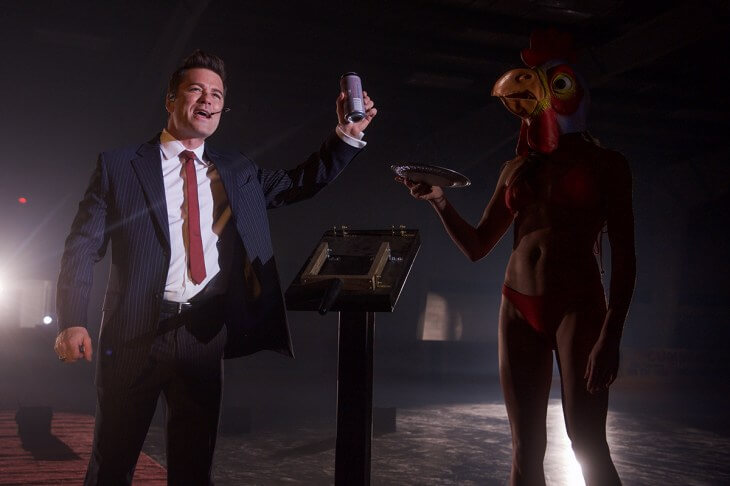
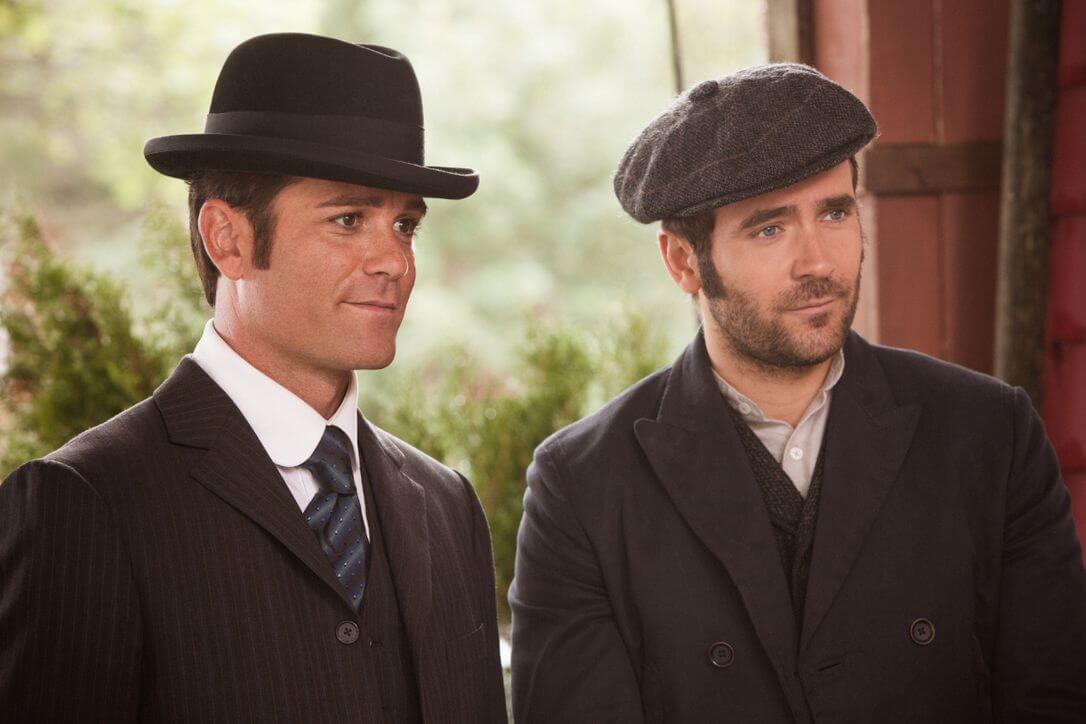
Yannick Bisson is best known for playing the titular William Murdoch in the hugely successful Murdoch Mysteries show that’s about to enter its twelfth year. Now though, the charismatic Montreal native can be found playing the slimy, nefarious Sydney Swallows in Lowell Dean’s Another WolfCop. Promising to win over the sleepy town of Woodhaven with the prospect of a brewery and a hockey team, Swallows is soon on a collision course with Leo Fafard’s alcoholic werewolf lawman. Ahead of the WolfCop sequel’s home release, we were lucky enough to grab some time with Yannick to discuss Another WolfCop and playing such a vastly different character to what audiences are accustomed to seeing him play.

STARBURST: Did you see the first WolfCop when it came out in late 2014?

Yannick Bisson: I was given a copy of it a short time prior to meeting about the second one. So, I hadn’t seen it as a release, no.

What were your first thoughts upon watching it?

I was really thrilled. First of all, the development process that basically got Lowell [Dean – writer/director] and Emerson [Ziffle – SFX supervisor] the gig of making the movie, I was really impressed by. I was really intrigued by how all that worked. I wanted to know everything about the entire process and also about those guys. Then, obviously, what the plan was going forward in terms of the sequel; potentially any information that they had about what else that they wanted to do with the franchise, ancillary to the movies. So, I was really keen. It’s just a nutty orgy of everything bad you could throw into this genre. I was really looking forward to being able to do something like that, because I cut my teeth in comedy as a kid. I’ve done a lot of different type of things outside of what I’m typically known for, so I was stoked. I was like, “Sure, I’ll be there. You don’t even have to pay me!” So, we all worked together, we all put together this crazy character. Then, I got to really contribute on a creative level with some of the stuff that I did for it. It was just a fun, fun process. I’m really glad that I had that opportunity.

You mention creative input. How much input did you have on the Swallows character, and was he always meant to be how we ultimately see him on the screen, or did he evolve as the production progressed?

Well, [executive producer] Bill Marks emailed me. We had actually worked together on some other things, and he said, “Hey, I’ve got this thing coming up and I think you could be good for it. I just don’t know if it’s your cup of tea.” He called me, and immediately after reading the material I said how I absolutely wanted to be involved in this. To add to my curiosity of the development process, I jumped in whole-heartedly – and I’m glad I did. The character, ultimately we’re all tasked with lifting something off of the page. It was already pretty out-there in terms of what was being said, but I added a lot of stuff. I added a lot of profanity on the floor, on the day. That’s my style. I try to always, in anything I do, always try and give a director as many choices as possible as much as I can within reason and within what time allows. So, I threw a lot of stuff their way, and they were really cool about it. And they fostered that environment of “Hey, if you come up with something, absolutely just throw it out there. If you want to do something different, for sure, let’s do it.” That’s always invaluable to foster that kind of atmosphere. Lowell and Emerson and [executive producer] J. Joly absolutely did do that.

Yannick Bisson Another WolfCop

Those guys were all involved in the first movie, as were Leo Fafard, Amy Matysio, Jonathan Cherry, and several others. How was it for you coming in to that existing environment, and was there a bedding-in process or did they make you feel at home straight away?

It was kind of like shift change time. We all showed up and they had already been shooting the front half of the movie. I showed up at the shift in Regina and they were just, “Hey man, how’s it going? Let’s go.” We shot the rest of the movie, and they were very welcoming. Obviously, they were happy that I was game. I think there may have been some reservations on other people’s part; I think they were looking at me with a little bit of “How on earth is this guy gonna pull off this character?!” So, I just went for it. I took down any sort of apprehension and reservation and I just went for it, and instantly we were all-in.

Throughout the movie, you got to spend a good chunk of your time on screen with Kevin Smith. How was it to work opposite Kevin?

We actually didn’t get to spend as much time together as it looked like. We were ships in the night because of our schedules. I ended up doing a lot of my stuff with the girls and with the crooks, you know, with the bad guy team. That’s the bulk of what I shared my work time with, and then they stitch it all together.

Away from Another WolfCop, you’re best known for playing William Murdoch in Murdoch Mysteries. How much fun was it to play such a slimeball of a bad guy here?

Oh, absolutely wonderful! I speak to my representatives all the time, always looking for things that are completely opposite of Murdoch, are different, as complex as possible. I’m synonymous with the show and the title character and the name, so it does have a very distinct brand and image. As an actor, it’s tough, because I don’t want to be known just for that and only for that. So, I will always look for things that are different – and this is as far out there as you can go, which I’m very happy for!

Yannick Bisson Murdoch Mysteries

What’s the response been over in Canada to you in Another WolfCop, given how different a role it is to the character you play in Murdoch Mysteries?

It’s funny, because they’re massive fans of that genre. Those folks are not necessarily the fans of my show, so I kind of wonder. I don’t get a huge amount of feedback. Even on my social media outlets when I was promoting it and talking about it, I think people’s eyes were glazed over because the people who watch Murdoch are not the people who are going to see Another WolfCop. It’s different worlds, it’s hard to get a metric on that. I wish I had a better answer.

And is it fair to say this is the most bizarre project you’ve worked on to date?

It’s right up there, definitely top five. It was a new genre for me, so yeah, I would say in that regard definitely at the top.

In terms of dipping your toes into the genre, you’ve gone all-in on a movie about an alcoholic werewolf lawman.

Yeah, and that’s really what it was like. I thought if I was going to show up there on set then I’ve got to really embrace it. These people have been doing it for a while, and I’m sure they’re thinking I’m not going to bring it. So I had to just be as despicable as possible.

During the production, what was the most fun scene to be involved in from your perspective?

Oh, my escape was a lot of fun. When I get away and I blow the place up and all of that, that was a lot of fun. There was a bunch of improv that we did there. I can’t remember the lines exactly, but I came up with a couple of good insults last minute. And I had to actually speak to the girls, because I’m a dad – a dad of three girls – and so criticising the girls and body-shaming them… but it was fun that they kept some of my improv in there, so I was happy about that.

Yannick Bisson Another WolfCop

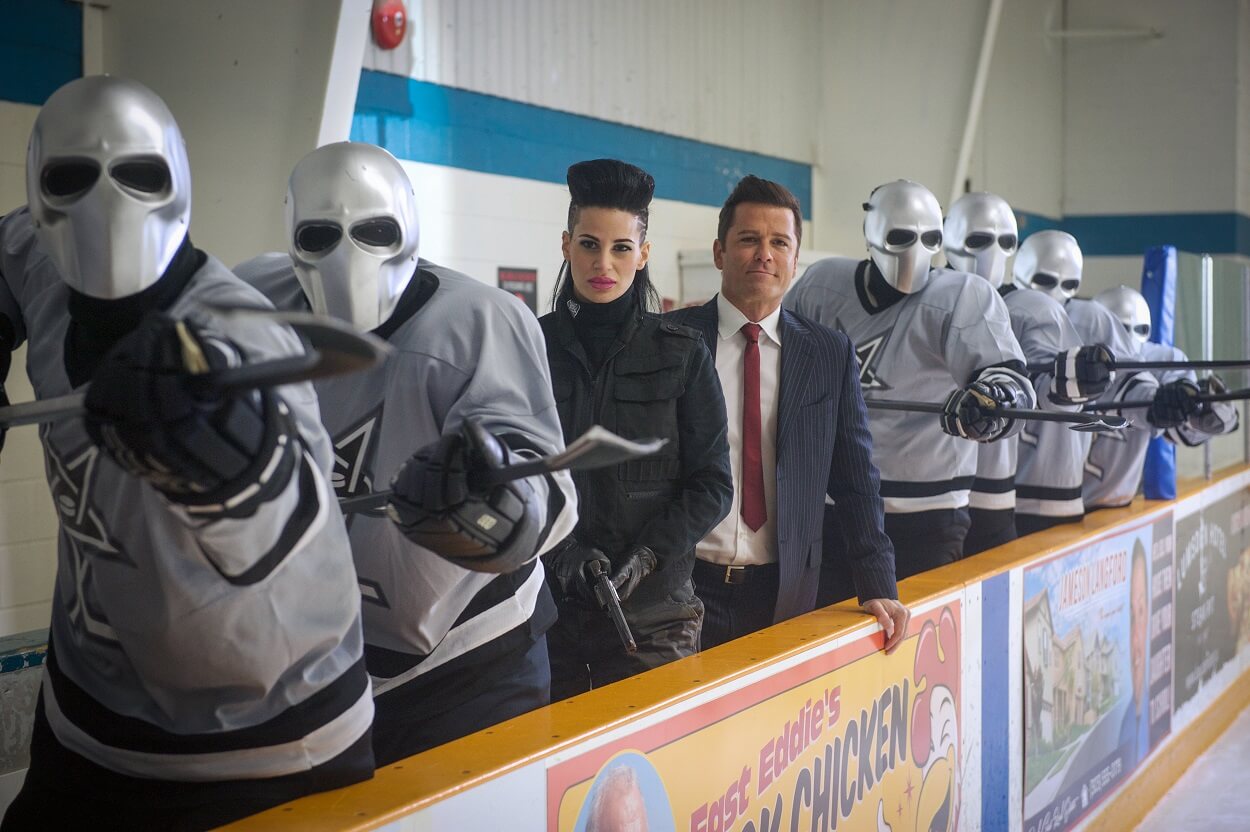
Your no-good character of Swallows tries to win over the Woodhaven public with the promise of beer and hockey. When we spoke to Leo Fafard, he went with beer, as it always leads to hockey, but if you could only choose one of those then which would it be?

Hockey. I was going to say the other way around – hockey always ends up leading to beer.

With Another WolfCop now in your rear-view mirror, what’s up next for you?

Well, I just started filming Season 12 of Murdoch this week. That will take me to November. But I also have a couple of books that I’ve optioned and we’re working away in the development process. One is called Boiler City Blues Trilogy and one is called Two Black Guys and the Unfinished Script. Then, there’s a few other concepts that are out there with producers. Actually, CineCoup and the Coup company who are the proponents of WolfCop and the IP, I liked the experience so much that I’ve actually become a partner. We’re looking to do other stuff, different stuff, not just movies. So yeah, that’s a real exciting side benefit.

On the Murdoch front, how is it as an actor to get that renewal for a new season, to get that almost safety blanket that means you can have more freedom with other projects that might come up?

It’s the ultimate. We all would love to have a successful series that we become synonymous with, especially in this case that my character is the name of the show – so it’s very identifiable. I’m so extremely grateful. The ratings keep going up and more and more countries watch it, it gets translated to more and more languages. It’s a global success. It’s a huge, huge blessing. Obviously, there are days where I wish I could be doing 10,000 other things, but I mean, how can you look upon this in any other way that just absolutely positive and grateful.

Another WolfCop is out now on Blu-ray, DVD, and VOD – and you can find our review here.

Leo Fafard | ANOTHER WOLFCOP

Leo Fafard Another WolfCop

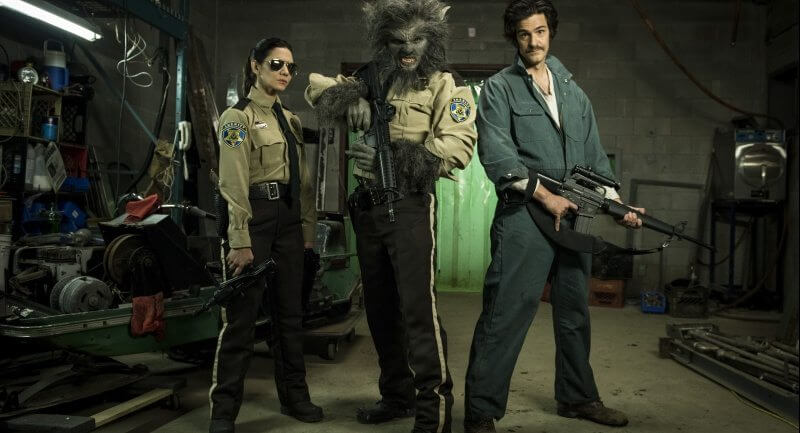
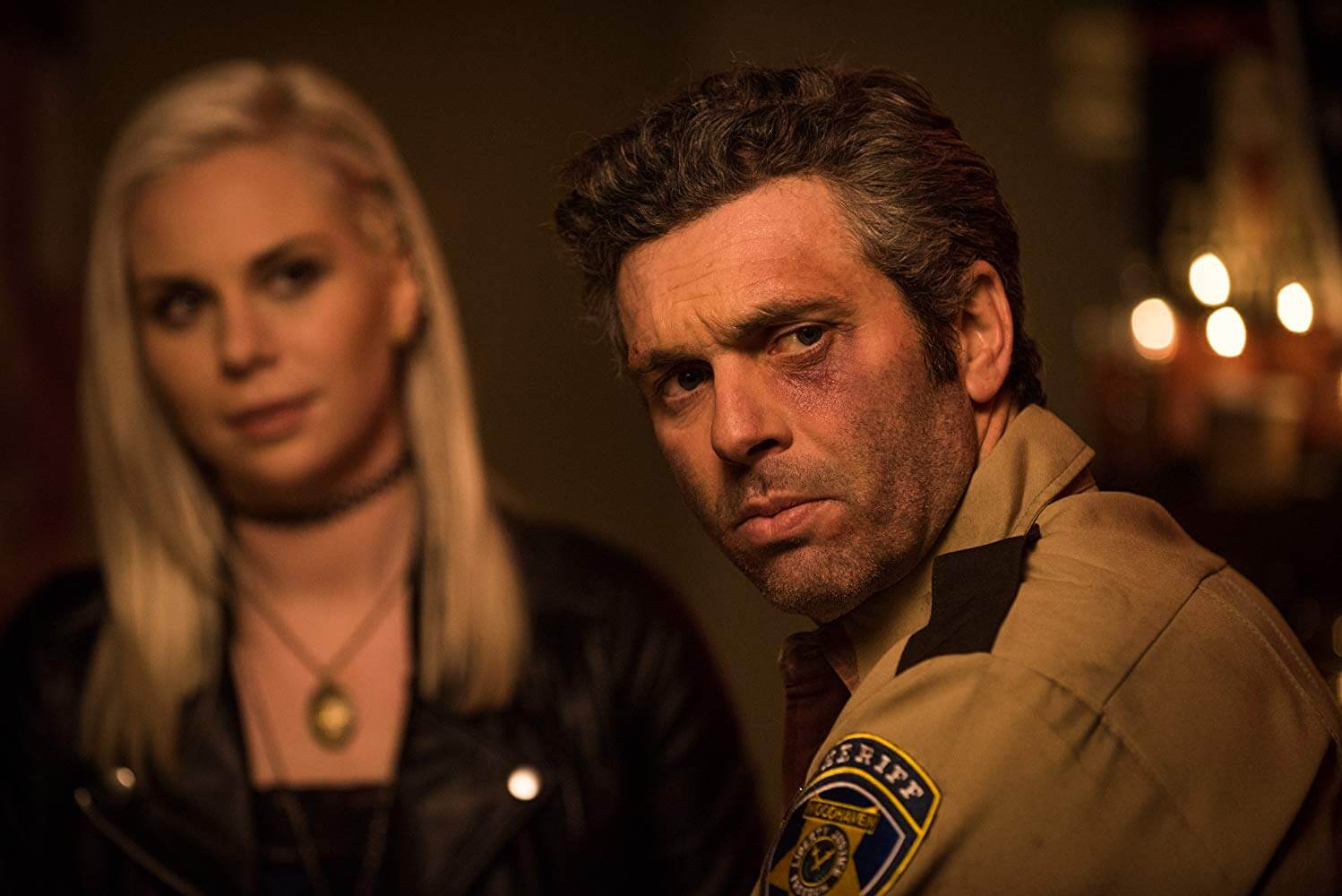
Back in 2014, Lowell Dean’s WolfCop proved to be hugely popular with many a genre fan, with Leo Fafard front-and-centre as alcoholic werewolf lawman Lou Garou. And now, with Another WolfCop available on home release, we caught up with Leo to discuss this furry follow-up.

STARBURST: Going back to the first WolfCop, how was it for you to see the reaction received by that picture back in 2014?

Leo Fafard: I don’t know if I say I was surprised, but I was amazed. I was just ecstatic at the time. I’d never been involved with something on that level before as an actor, so it was really enjoyable, it was this great thing to be a part of.

Was it a little bit surreal to be thrust into the spotlight after that picture?

Oh, absolutely. It was totally surreal, it was shocking. I’d never been in the spotlight like that before. It was certainly something to get used to, and all the social media coverage and attention was really humbling. There’s so much out there, there are so many people reacting to this, commenting on this. It kind of set me back on my heels for a little while, but I guess you get used to this thing, I suppose.

We guess it was a no-brainer, but you were always happy to return as Lou Garou then?

Yeah! Me and Lowell had always talked about doing a sequel, hoping that it would roll in to a series. We always thought that a great next step would’ve been a television series. The sequel, it was really good to experience that. You know, we have a lot of same players and a lot of the same crew as well. It was really nice to get back in the saddle with the same people and have a good time like that, doing it again. So we were all looking forward to it, I think.

Another WolfCop

Is it at the point now where it’s almost a like second family when you guys get together again?

[Laughs] It kind of is, it kind of is. It’s always a really good time and we all enjoy each other’s company. We really lucked out. It goes beyond the cast, it goes to the crew. It’s a really awesome bunch of people, we all get along so well. Anytime we get together is a really good time. We’ve done a feature film since then and used really a lot of the same cast and crew. We shot a feature that’s actually just getting distribution now called SuperGrid. Lowell directed it. We brought in a couple of new players, but Amy Matysio’s in there, Jonathan Cherry’s in there. I dunno, I guess we liked each other enough that we were looking for excuses to hang out.

Lowell has talked about how he wanted Another WolfCop to be crazier. For you, what was the craziest past of Another WolfCop?

Well, of course the intimate scene with the female she-cat or whatever the heck you call it – the sex scene. It was just so over the top and it got so graphic. It’s hard to compare other scenes as far as crazy and out of leftfield or just intense, inhibition-testing scenes. That would take the cake.

What lessons did you learn from that first movie that you brought to the sequel?

You know, Another WolfCop gave us a chance to round out the characters a little more, fill them out a little more – which was awesome. I’m hoping that that comes across, that we could inject a little more humanity into WolfCop and a little more vulnerability into Lou Garou. There’s a little bit more to both characters this time around. You know, I’m not a young fella. I’ve got a pretty deep well of experience, so I don’t know that I learnt a lot between the two [movies] that really spoke to either character in particular. It’s the type of movie that you just go out there, you put in 100% of your energy, and you do it to have a good time, to try and create something that’s extremely entertaining and that pushes the envelope a little. This isn’t a deep enough movie for that sort of character development, where you’re sitting there trying to figure out how you can give the characters that kind of depth. I just showed up and hoped I still had enough energy in me to conjure up the characters.

Leo Fafard

Everyone you speak to about WolfCop and Another WolfCop – and hopefully WolfCop 3 in a few years – will largely gravitate towards the WolfCop character, but how is it to just play plain ol’ Lou Garou?

I was really excited to have a second crack at Lou Garou and be able to give that character a little bit more attention. All through the first one, it was all so run-and-gun, so fast, just trying to get my lines out and hit my blocking, then we’re on to the next thing. I was very excited to be able to have a second crack and to fill him out, to make him look like a little bit more of a whole person than this two-dimensional womanizing drunk. I enjoyed it.

The bad guy of Another WolfCop worms his way in to Woodhaven with the promise of beer and hockey. If you could only keep one of those, which would it be?

That’s an easy question. It’d be beer, because where there’s beer, hockey will follow.

Another WolfCop is out now on Blu-ray, DVD, and VOD – and you can find our review here.

Lowell Dean | ANOTHER WOLFCOP

lowell dean

Back in late-2014, we were lucky enough to grab some time with Canadian writer/director Lowell Dean to discuss a bonkers-but-brilliant movie by the name of WolfCop. Focussing on alcoholic werewolf lawman Lou Garou, the film proved to be a huge favourite of many a genre fan – and the promise of a second WolfCop picture had fans chomping at the bit. Now, with Another WolfCop finally here, we were lucky enough to catch up with Lowell to discuss this furry follow-up.

STARBURST: The first WolfCop was pretty ‘out there’, so how did you go about trying to top the insanity of that first movie?

Lowell Dean: I actually thought it would be really easy to top the first film. The first film was made with very little money, very little time, just some ideas and some friends. We were really under the radar. I guess ignorance is bliss, because I thought it would be so easy to make a sequel – that we’d just need to up the ante a bit. But it proved to be very challenging. We had the same amount of time, we had way more ambition. A lot of the core team – myself, the producers, the actors, Emersen [Ziffle – make-up supervisor], the FX artists – were trying to be better, to do better for ourselves and for what we saw audiences responded to in the first film. It was an insane amount of pressure, too much pressure for something called Another WolfCop, I’d say. We just wanted to make it great, and maybe a little crazier. The word I put on my binder was “crazy”. I said that every scene had to be really crude, really weird, really sexy, or really insane – preferably all of the above!

For the first movie, you went through CineCoup – which you previously described as America’s Got Talent for filmmakers. Was it a little easier to get the financing this time out?

Again, it was easier in the fact that I didn’t have to sing and dance for a year. That was great. But the downside was that we wanted to be bigger. We dug our feet in the sand and said, “We can’t do this for the same budget!” We would’ve killed ourselves. We all agreed that we needed a budget of around $2 million – which was easier said than done for a little independent Canadian film. So, it took the producers a lot longer than I expected to raise the financing and pull it all together. It was funny, because if you look at the end of the first film it says “WolfCop 2, coming 2015!” We all agreed we’d make the first a year later, but that ended up taking a couple of years. I wanna get that on a t-shirt – “WolfCop 2, coming 2015!” We missed the boat on that one.

Another WolfCop ends with the promise of a third movie, but there’s no time scale mentioned this time out.

I think the producer didn’t want to put a date [laughs]. I just wanted to be as vague as possible this time. Like, “WolfCop will be back”.

Another WolfCop

Was there anything you wanted to do this time out that you realised was too crazy or you were forced to scrap?

A lot! Honestly, we storyboarded and planned out all the action. The end sequence at the hockey rink was going to be twice as big as it ended up being. We lost some financing and we lost some days towards the end of prep, so when it came time to shoot we all had this plan for something that was bigger. What kind of became heartbreaking was those hockey rink days where I had to pick and choose. As our clock was running out, I had to be like, “Okay, well let’s cut this fight scene down. Let’s do the first half of this one, then cut to this.” It was really stressful trying to cut and paste. One of the biggest things we ended up cutting, I cut because we all agreed that if we went in to this bigger idea or sequence or show that – we can’t do it unless we can do it right. So, we just put it on the shelf, I cut it out of the script, but it will happen. If we end up doing a third WolfCop, it will move over to there.

Given the success of the first movie, we’re guessing it was an easy sell to get all of the key cast and crew to return?

I think everybody wanted to come back. I think the core cast and crew of the first film, I think we all had a blast. It was a really fun experience, especially with the cast. We started to just figure it out. That’s the problem on a seventeen-day shoot. It’s not like a TV series, we just find our characters and our fun and our rhythm with each by the end of the seventeen days. This was very exciting to bring back Jonathan Cherry [Lou’s best pal Willie] and Amy Matysio [Lou’s cop buddy Tina] and Leo Fafard [Lou Garou/WolfCop] and say, “Now we know what you three are like with one another, let’s go farther. Let’s see how you connect.”

For the bad guy of the piece, you brought in Yannick Bisson as the extremely slimy Swallows. Was it always the plan to go with that sort of villain for the sequel?

No. Actually, in my first draft the villain was really different. It was more of an under-the-radar villain who was coming in to town. Through rewrites and feedback from producers, it was just, “Lowell, this character, he’s a weasel, but maybe rather than tricking Woodhaven or seducing Woodhaven, why don’t you have him publicly seduce Woodhaven?” So, he became a self-help guru at one point, then he was trying to show Woodhaven how to make money. Then we thought about what the simplest version of that was. “What does Woodhaven love? Beer! What does Saskatchewan and Canada love? Hockey! Okay, why don’t we have a guy come in to town like the Pied Piper and offer you hockey and beer?”

Another WolfCop

And while Canadians love hockey and beer, someone who is loud and proud of his love for Canada is Kevin Smith, who has a supporting role here as Mayor Bubba. How did he end up involved in the picture?

It was a great kind of fluke. He was scouting Moose Jaws in Saskatchewan, which is where the actual city of Moose Jaw is. I thought, “You’ve just gotta take the shot”, right? He’s someone who’d obviously be great in a movie like ours, he’d fit in so perfectly. One of our producers reached out, he luckily was in town, and he gave over and gave us six hours of his time. And we abused him for those six hours, and he was great. He was a gentleman. He comes from these smaller indie films, so he gave a lot of great advice and feedback, and he was fun.

What lessons do you think you learned from the first movie, and how do you feel you’ve progressed as a filmmaker since then?

I think technically I’ve progressed a lot. I think I’ve managed to get both more intense and more relaxed, which I know is a contradiction. I feel like I can see the forest from the trees and I know what I can take on. I know what not to short-change. It’s an ever-growing process, and I’m still learning, but to me it’s finding that balance of making something that’s not boring, that’s going to appeal to people, but that’s still going to speak to what I have to say inside me. And just the life of being on set is so chaotic. I’ve been learning to not get freaked out by the little things, to say, “Okay, when I do a film these ten things are going to go wrong. And when they do, how do we calmly and gracefully find a solution?”Another WolfCop

Like you said earlier, the end of the first WolfCop comes up with the promise of a sequel in 2015. Even though that was there at the end of that first movie, was there ever a point where you were uncertain over whether you wanted to make a follow-up?

Yeah, there was always that uncertainty. There’s never a guarantee. There was a time where I thought that it might just be a joke – “WolfCop 2, coming 2015!” But I loved the character; he’s my baby, I created him. So, I will always care about him and want to do more, but yeah, there were times where I was like, “Is this all I’m ever gonna do? Am I only ever going to make WolfCop films?” Luckily, I’ve been able to go off and make other things between the two, but he’ll always have a place in my heart. If it’s wrong then I won’t wanna do it. If people can come together in the right circumstance and there’s the right demand, I wouldn’t even stop to breathe. I’d take five years off and see, like, Old Man WolfCop.

Already the franchise has had aliens, interspecies erotica, wolf dicks aplenty, and the very concept of an alcoholic werewolf cop is a crazy idea in itself. Looking at WolfCop 3, where can you take this in terms of scope and scale?

I can think of a few places, honestly. I actually already have a pretty firm idea for what I’d love to do with the next one. But if I tell you, you’ll know [laughs]. I think there are some places to go, whether it’s a side story or cleaning up the story that we started with these first two films. I think this character can go on in a lot of different ways.

Such as following on with the revitalising moondust which Lou discovers in Another WolfCop?

Yeah, what’s going to happen to a guy like that? He’s going to have to have some repercussions at some point.

And we’re guessing moondust isn’t exactly easy to come by, should he need another fix?

Exactly! And how addictive is this? These are the things I’m curious about. That’s not going to be good for Lou.

Away from all things WolfCop, what other projects are you working on at the moment?

Since WolfCop 2, I’ve directed another film, another indie film, called SuperGrid – which is kind of like a post-apocalyptic, future Western. There’s a trailer out now. I don’t know when the movie is going to come out, but that was for producer Hugh Patterson, who was also the producer of WolfCop. He has been developing that and he brought me on to direct. It was really fun to do something with the same group of people but very tonally different.

Another WolfCop Lowell Dean Amy Matysio Leo Fafard

The last time we spoke, you said that your dream project was to one day tackle a superhero film. In a way, you could possibly label WolfCop as an antihero of sorts. Is a full-on superhero picture still a big dream, though?

It’s funny you bring that up, because since we talked all those years ago there’s been nothing but superhero films. While I love superheroes – of course, it’s on the bucket list – I don’t think the world is lacking superhero movies right now, so I’d rather do some of the other weirder things that are happening. I of course want to make things with bigger budgets, more time to explore visually some things, but I’ve got a long list of films I need to do.

With there being so many returning cast and crew for Another WolfCop, do you guys almost have a sort of ‘second family’ feel by this point?

Yeah, for sure. There are always people who change, but so much of the people behind WolfCop are a family. It is a family. It gets easier, in a weird way. WolfCopWolfCop 2SuperGrid – it’s like a homecoming. We have shorthand, we make fun of each other. It’s like going to camp rather than going to a job.

Given how they’re such strongly Canadian movies, what has the reaction been to the WolfCop movies over in Canada?

I think the first film was kind of mixed. I feel like we got a better response outside of Canada, which is hilarious. I guess we’ll find out on the second film. It had a limited theatrical run, but it’s only now coming out on Blu-ray and VOD everywhere. But I hope people respond to it. I hope they see it’s more funnier, more playful. Wherever it’s played, it’s gotten pretty decent reactions so far. So, fingers crossed, right?

Another WolfCop is out now on Blu-ray, DVD, and VOD – and you can find our review here.

[ENDED] Win Seven Awesome Fantasy, SF And Horror Books With Edge-Lit 7!

Edge Lit

Derby’s annual fantasy, sci-fi, horror and crime day returns to QUAD for its biggest year yet, with Edge-Lit 7 taking place on the 14th July, and we’ve got a mega stack of books to give away from just some of the authors taking part in the event!

This year’s Edge-Lit features one of its best line-ups ever, with Guests of Honour Frances Hardinge, Conn Iggulden, Paul Tremblay (heading from the US for his first ever UK event) and Adrian J Walker joined by a host of superb writing talent including RJ Barker, Rod Duncan, Zoe Gilbert, Vic James, Paul Kane, Mark A Latham, Laura Purcell, Anna Smith-Spark, Anna Stephens, GX Todd, Jen Williams and many more!

To check out all the latest information on this packed one-day event, or to book your tickets, just drop by the QUAD website at https://www.derbyquad.co.uk/events/edge-lit-7.aspx.

To celebrate the event, STARBURST has teamed up with Edge Lit to offer a fantastic book bundle from just some of the awesome authors taking part! If you fancied landing yourself the bundle below, all you need to do is answer one simple question…

Age of Assassins by RJ Barker (Paperback)
Unseemly Science by Rod Duncan (Paperback)
Sherlock Holmes and The Servants of Hell by Paul Kane (Paperback)
The Court of Broken Knives by Anna Smith-Spark (Hardback)
Godblind by Anna Stephens (Hardback)
Defender by GX Todd (Paperback)
The Ninth Rain by Jen Williams (Paperback)

Which Derby venue will be hosting Edge-Lit 7?

A) QUAD

B) PYRAMID

C) PARALLELOGRAM

The competition closes at 5pm on Thursday, July 6th.

Email your answer, along with your address details, to [email protected], and put “Book Me!” in the title.

Terms & Conditions:

Edge Lit and STARBURST do not accept any responsibility for late or lost entries due to the Internet or email problems. Proof of sending is not proof of receipt. Entrants must supply full details as required on the competition page, and comply with all rules to be eligible for the prizes. No responsibility is accepted for ineligible entries or entries made fraudulently. Unless otherwise stated, the Competition is not open to employees of: (a) the Company; and (b) any third party appointed by the Company to organise and/or manage the Competition; and (c) the Competition sponsor(s). This competition is a game promoted STARBURST. STARBURST’s decision is final in every situation and no correspondence will be entered into. STARBURST reserves the right to cancel the competition at any stage, if deemed necessary in its opinion, and if circumstances arise outside of its control. Entrants must be UK residents and 18 or over. Entrants will be deemed to have accepted these rules and to agree to be bound by them when entering this competition. The winners will be drawn at random from all the correct entries, and only they will be contacted personally. Prize must be taken as stated and cannot be deferred. There will be no cash alternatives. STARBURST routinely adds the email addresses of competition entrants to the regular newsletter, in order to keep entrants informed of upcoming competition opportunities. Details of how to unsubscribe are contained within each newsletter. All information held by STARBURST will not be disclosed to any third parties

<

Alfie Dennen | EVIL CORP

evil corp

Alfie Dennen is the co-founder of mobile blogging platform Moblog, and is responsible for various projects that fuse art and technology. His latest project is Evil Corp, a board game that allows you to imagine a world where billionaires plot to take over the world. We caught up with him to find out more.

STARBURST: Where did the idea for Evil Corp come from?

Alfie Dennen: My co-designer Allix and I were playing character sheet RPG with our table-top group. We were all really shit superheroes in 1908’s NY – the conceit was that our fatal flaws were so bad that none of the major superhero teams of the time would accept us. We were only two sessions into the campaign when in some moment or another we were chatting and the trope of Evil Corp came up (yes, we’re both film and TV nerds) and Allix said something to the effect of “Evil Corp… now that would make a good game.”

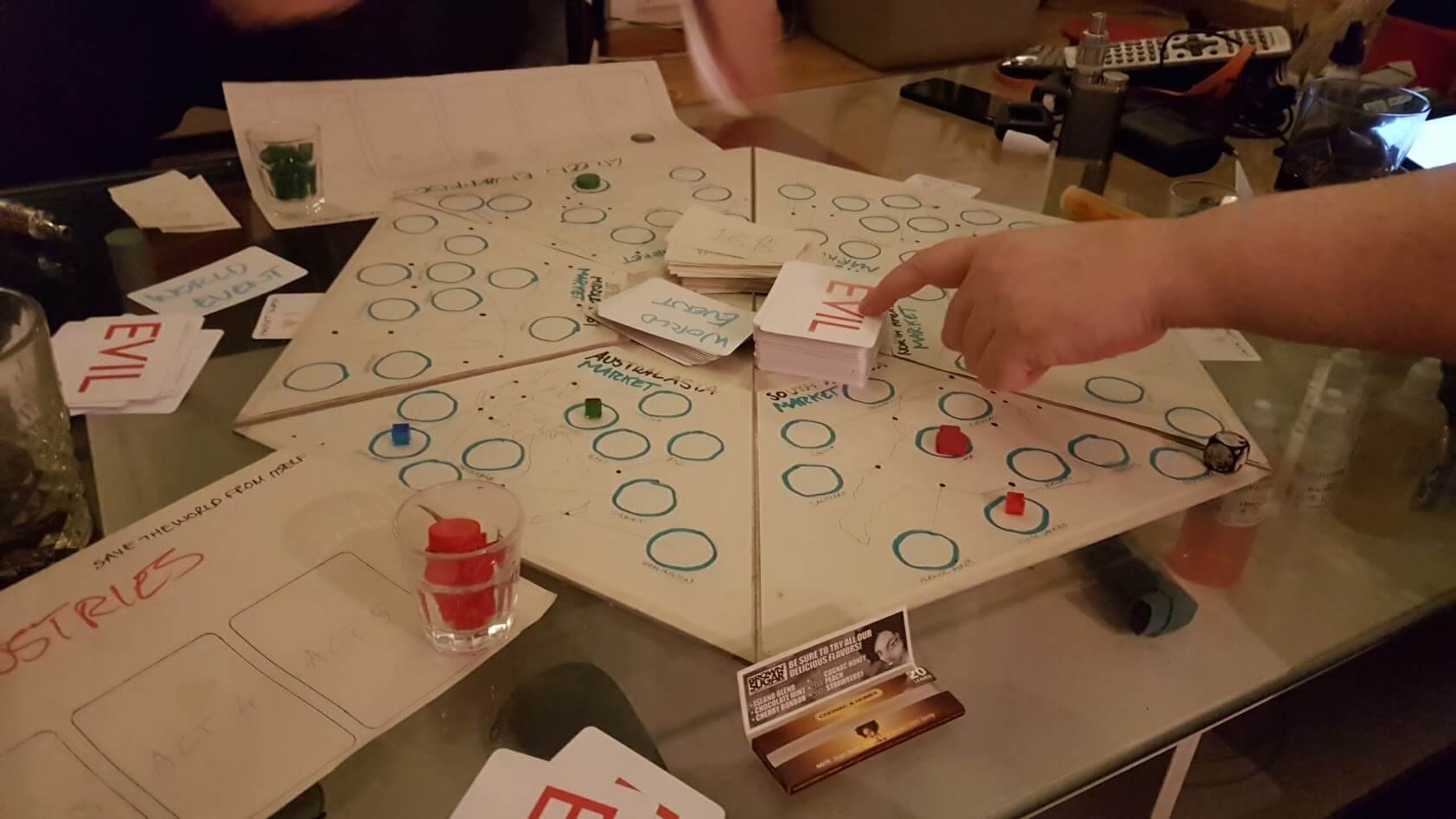
The next session the four of us thought about that game would look like instead of continuing the campaign. 2 sessions later it looked like this:

evil corp

It doesn’t look that different today to be honest.

Why a board game?

Because we’re talking about the actual world here, just a less nuanced Black Mirror type of version of it. We knew we had to have world events which would be out of a player’s control. We knew players would have characters that had to have agency in that world in-line with being Billionaires. Allix and I spent about 6 months making a video game about ten years ago. Its nature was defined by our idea for it (it was a mobile game). It’s the same thing with Evil Corp – it had to be a representation of the world.

Are we living in an age where Bond villains are plausible?

If only it was so romantic an age. Of course not. Our world has been made clearly visible to anyone who wants to understand it and it is chilling in its pedestrian murder and our own quiet complicity in the fact of it. I’m still not sure about Elon though.

What inspired Evil Corp?

I can’t speak for Allix but for me – my life. I don’t know if you Googled me but I’ve been doing mad shit for years: https://en.wikipedia.org/wiki/Alfie_Dennen; from start-ups in the early noughties to global activism against terrorism and art projects about how to make people feel connected to cities it’s always felt to me at least as though sure, the world is fucked, but it’s fucked in a way that’s sort of understandable and manageable. A couple of years ago neither of tat stopped being true. Post-capitalism isn’t a book it’s a street I cycle down on my way to work.

How would you pitch Evil Corp to non-gaming friends?

“Did you see Elon Musk sent a car into space?”

“yeah that was rad!”

“I know right!” I’ve got the game of it.”

Why do you think board gaming suddenly become so big?

I’m not qualified to answer that, I now f’all about board games. The only thing I know is something someone said to me recently: “There’s no such thing as the mainstream anymore”. And when you think about it that sort of explains everything. It explains why fake news is true to some people and it explains why clickbait about a 4k video of the moon unreservedly disproves the Fake Moon Landing conspiracy for others. Maybe the mainstream we’re in where board games are super fun and interesting has just met one or two others where caring about the environment and wondering how the world got so fucked up collide.

What’s your favourite mechanic in the game?

This is going to be controversial – in our endgame you have to use Agent cards to 1) infiltrate the startup 2) undermine the prototype and 3) destroy the ‘Killer App’. It is predicated on d6 rolls which are tactically offset by having spent assets in the preceding round on re-rolls and the chance to get as many agents as possible. As a group of players against the player who has just launched their Secret Plan suddenly you are thrown together in a romp where because of the chance aspect and your hope for your assets to work for you everyone’s excitement just dials up to 11. Because we are complete dickheads though, the chance of winning against someone who has managed to get to end game is about 1 in 12. It’s not the movies yo, the dashing super-agent doesn’t win, she dies.

Our game is low-medium strategic so min/max players often feel taken aback at this point in the game since it feels as though everything you’ve worked so hard for and literally spent Billions on is for nothing. Or at least very little. We’re also not *complete* dickheads though, we’re currently playtesting 2 ways to make the endgame what we want it to be while making it satisfying for players who want to use their work to its nth.

The game is very pretty. Where does the idea for the stark design come from?

It feels stark because it’s the world in front of us as we went through design. It basically couldn’t have been anything else. When I was first looking at design approaches I came across the work of Liam Brazier.

What I was looking for was a way to represent these Masters of the Universe type characters without giving them the dignity of humanity. I didn’t want people playing the game to genuinely connect with them. Liam’s low polygonal treatment of his subjects just jumped out at me the minute I saw this image as how to do that. Luckily a friend was his friend and after Liam saw an early prototype (and at least 5 beers later) he was signed up.

When it comes to the map that started with Allix and was refined by Michal like crazy. I would say the thing we are most proud of as a design team though are the cards. There are beasts, they contain so much information. Not in a game way but in an information architecture way.

If you were a billionaire, what would your world domination plan be?

To replace Government with something that works. Pretty Evil sounding right?

Why Kickstarter?

We invested probably about £25k of our money to make it good enough to put in front of people. Super happy to do that because it was fun and we learned loads and we’re not here to amuse people for one game.

The Kickstarter is currently running till the July 14th, 2018 and can be found here.

Where in the World Cup is the DOCTOR WHO Trailer?

world cup

With just one match of England’s World Cup campaign played at the time of writing, perhaps the biggest talking point outside of Tunisian attempts to drag Harry Kane into a spot of on-pitch wrestling came off the field of play when the much-rumoured trailer for Series 11 of Doctor Who failed to materialise at either half or full time during BBC Sport’s coverage from Volgograd.

Of course, anyone who saw last year’s men’s Wimbledon final will know Jodie Whittaker is no stranger to such things – the short scene confirming her casting was broadcast following Roger Federer’s win on Centre Court, a spectacle beyond even the machine mind of K-9 going by the events of The Stones Of Blood when he takes an instruction from the first incarnation of his mistress all too literally after she herself struggles with the most English of idioms spewed forth from the mouth of the man she’s been thrown together with by the White Guardian.

DOCTOR: Anyone for tennis?

ROMANA: Tennis?

DOCTOR: Yes, it’s an English expression. It means, is anyone coming outdoors to get soaked?

For her part, she knows nothing of the solid thwack of racquet on ball. Nor will the tin dog soon enough! “Forget. Erase memory banks concerning tennis. Memory erased.” The whole business, though, does raise a fair few questions. Firstly, when are we actually going to get a trailer? Secondly, would splicing a trailer into the coverage of the Three Lions really have been such a bad idea?

Consider the facts. Viewing figures released in the aftermath of the nervy 2-1 win for Gareth Southgate’s men suggest an average 13.7 million people fought the urge to put their feet through the screen and/or watched through their hands. Particularly as Kyle Walker’s elbow made contact with Fakhredine Ben Youssef and the resulting penalty was tucked away to make it all square, when it had earlier seemed there could only be one winner…

If we cross the pond just for a second we also have perhaps the most convincing argument for such a placement. Swapping the round ball for one of a more oval variety, the traditional NFL season finale- to use a spot of American telly parlance-brings with it a chance for the enterprising television network or film studio to muscle in on the popularity of the Super Bowl with the wider viewing public of the land of the free and home of the brave.

Trailers for several of the bigger cinematic and televisual releases, some of which went on to be reviewed in these hallowed pages, formed part of the spectacle as the Philadelphia Eagles stunned the New England Patriots 41-33 in this year’s showpiece, the most recent example of a long and productive relationship between the medium and one of the highlights of the US sporting calendar.

In light of which it seems almost an oversight to think that we got nothing of the sort during any similar event on these shores pre-Whittaker at Wimbledon. Not even a sniff of Who as an England then led by Steve McClaren kicked off 2006’s World Cup in Germany with a 1-0 win over Paraguay, part two of the Impossible Planet/Satan Pit doubleheader getting underway after a Carlos Gamarra own goal ensured a decent start for the Wally with the Brolly (as he was later dubbed by the tabloids) in the hottest seat in the country.

Fast forward to 2010 and we’d actually get a Doctor with aspirations of playing the beautiful game himself- on a far grander stage than Sunday League for the Kings’ Arms. Only a back injury stopped Matt Smith from pursuing the beautiful game as a career, though it took a Desert Island Discs appearance for him to really open up.

It was a tough time because I just felt unfulfilled, to be honest, I felt like I was so certain that that is what I was going to do. Fortuitously there was a drama teacher, Terry Hardingham, who said, ‘you were never meant to be a footballer, I always thought you were really great at acting’.”

He was, he later confirmed, also banned from taking part in a weekly kickabout for cast and crew in case he injured himself! ‘I’d love to play football now. Everyone at work plays on Tuesdays, but they won’t let me. I guess it’s the insurance companies and, realistically, if I turn my ankle over and we can’t shoot, then we’re screwed, aren’t we? You just can’t. It’s a small price to pay.’

Unless you count a solid 90 minutes alongside Craig Owens?

DOCTOR: Pub league. A drinking competition?

CRAIG: No, football. Play football.

DOCTOR: Football. Football. Yes, blokes play football. I’m good at football, I think.

Wearing the number 11 shirt he goes on to prove that indeed he is – BBC Sport tying in a special mini-episode of Football Focus as part of Doctor Who Confidential showing highlights of a win over the Rising Sun.

Though we never see the outcome of the following weekend’s game with the Crown and Anchor. Perhaps Smith and everyone else involved had one eye on preserving themselves for the bigger match on the Tuesday?

Or simply like most of the rest of the country wanted to nurse a pint and watch another English World Cup campaign get underway in South Africa with a 1-1 draw against the United States following a goalkeeping blunder by Robert Green over on ITV, kick off immediately following the final whistle of the Kings Arms match.

Disappointing perhaps, but better overall than the previous such meeting between the two in Brazil in 1950, a then part-time US team beating the Three Lions 1-0 well before their country’s turn to host the tournament and a Diana Ross missed penalty during the opening ceremony.

And yes, you did read that right! Whether the BBC will be left with its head in its hands ruing the missed opportunity to get a little more exposure for our newest Doctor minus of course the spot kicks (though Jodie doing a Diana might have been a more entertaining spectacle in itself than what we got instead, a 5-0 Russian whitewash of poor hapless Saudi Arabia) remains to be seen in lieu of an actual preview – but for now, they think it’s all over…

Joseph Willis | FEAR ITSELF

Willis

Sheffield born Joseph Willis is known for his love of horror theatre and a habit of carrying too much fake blood. He’s one of the minds behind horror theatre production company Danse Macabre. We caught up with him to find out more about their latest show, Fear Itself, which is heading to both The Edinburgh Fringe and the London Horror Festival. We caught up with him to find out more about the show.

STARBURST: Tell us a bit about Fear Itself?

Joseph Willis: Fear Itself is our brand new one-woman horror show that follows Dr. Amelia Greenwood, a former psychologist turned motivational speaker as she tries to conquer the audience of their fear. However, in doing so, she must confront the ghosts of her past both metaphorically and literally, awakening truths she thought had long been buried. It’s what would happen if you crossed a TED Talk with an MR James ghost story and then had Clive Barker do the rewrites.

What are the challenges in doing theatre on the stage?

The main challenge that has presented itself when producing horror theatre for the stage is the limitations on spectacle that the medium can create. For example, we are not able to use CGI like films do and have say someone turns into a giant pineapple and crush someone’s face in (as much as we would love to). However, whilst it is a limitation, it is also a huge benefit as it requires us to think more psychologically when devising our shows. For example, one of the best audience reactions we’ve had was through a very simple but terrifyingly effective piece of stagecraft. In our show Every Breath You Take, we had a scene where the main character’s flat had a blackout.

In this blackout, we played heavy breathing over the speakers and had members of our company touch various audience members on the shoulder. This leads to much screaming and was excellent evidence of how the intimacy of the theatre can be just as scary as a big CGI budget. The same goes for good old-fashioned storytelling as the lack of spectacle also makes you focus on telling stories that are much more insidious in their terrifying ideas. Stories which plant seeds of doubt in the audience minds, worming there way in so that they spring up from their bed at night to check under the covers. (I promise we’re nice people, honest!) These can be just as effective, if not more so, than the spectacle and so are also key weapons in horror theatre’s arsenal; further showing how these challenges are benefits.

What inspired Fear Itself?

The idea for Fear Itself came initially from our social media accounts being clogged up with various inspirational posts, quotes and videos telling us how to achieve, believe and grow. Which is all fine and good until we started fact-checking for fun some of these posts (we really need to get out more). Many of the quotes were mislabelled or videos falsified, and so we began to think about how often people believe what they want to believe. Creating their own narratives, often through this type of inspirational media to help them make sense of themselves and their lives.

Whilst not always a bad thing, it can sometimes cause people to overlook or ignore more negative aspects of their personalities, rather than making them address the problem. This then leads us to motivational speakers and how the bad ones use this to exploit the audience much like how a fake medium does with a show or séance, by giving false comfort. However, unlike the idea of a fake medium, where the horror potential of a show going wrong is both obvious and has been done numerous times, there had never been a horror piece about motivational speakers, even though the parallel between them both is quite significant. Thus, we thought a) why not and b) wouldn’t it be scarier? For it is often the terror within the mundane that is scarier than the terror of say a giant clown from space. For it’s closer to home, and much more likely to happen, especially for an audience member thinking about it as they walk home at night. Also, we really really wanted to buy a new microphone and the show allowed us to do that (it has multiple inputs and a lovely rich sound quality and everything!).

How would you pitch it to your grandmother?

A lovely heart-warming inspirational drama of a young psychologist getting over her ex-husband by confronting the metaphorical ghosts of her past. She abhors horror, so I think describing it as a Channel 5 afternoon movie might be the best bet to get her to come to see it. All it would need is Jennifer Grey from Dirty Dancing in the main role, and she would probably bring her whole coffee group. Love you, Shirley.

How did Lovecraft change horror?

For us, Lovecraft is king (or Shoggoth) as he removed resolution from the genre; or at least the need for it. For in all other classic pieces of horror before it, Frankenstein, Dracula etc. there was always a form of resolution, a sense that the monster or horror was dead and buried. This allowed the reader to sleep better at night, knowing that the monster could not come for them (unless it was a zombie or succubus because then things get a bit trickier, however both these terms weren’t really coined until the 20th Century, so we’re probably just invalidating our argument, but on the other hand steampunk zombies would be incredible, right?).

The genius of Lovecraft was that he brought in the idea of the horror having no end, that the old gods would always return whatever, and that there was nothing that we could do to stop it. There was no resolution, no safety net, just a terrifying existential dread that it was only a matter of time before that thing or sea creature appeared at your doorstep. This has obviously been used throughout horror ever since, from Halloween to It Follows (spoilers, sorry!), but its significance cannot be overlooked. So thank you, Lovecraft for this gift that keeps on giving and hail Cthulhu as the old ones will come for us eventually.

Does the stage make horror stories more intimate?

Definitely. Not only from a spatial point of view as the actor is only a few metres from your face, but also again in the sense of the stories that you can tell. As previously mentioned, theatre limits you in scope and scale, but this becomes beneficial, as it makes you come up with smaller more insidious scary ideas that you feed into the audience’s brain rather than spectacle. Thus, you can draw the audience in with effective storytelling and keep them up at night not with a shocking image but a shocking idea that makes them think twice before checking under the bed at night.

This is why I think people are repeatedly drawn to theatrical horror, because of this intimacy. It’s how Dickens used to go about telling A Christmas Carol and it’s the reason that The Woman in Black has been going on at the West End for more years than I’ve been alive (and probably will long after I’m gone or have returned as a flesh-eating immortal; god I hope that blood sacrifice wasn’t for nothing). It is a way of telling stories that no other medium has and a way of being scared that no other experience can give you.

Many horror fans are not regular theatregoers. What should they expect?

They should not expect to go in seeing gore and the effects budget of a blockbuster. However, they will get to see something much more quietly effective in chilling you to the bone. Something that will stick with you long after the applause has ended and bows have finished (and we’re not just talking about the chewing gum on the theatre floor; remember to pick up your rubbish on the way out).

As well as this, they shouldn’t expect to be safe in an auditorium. For whilst in a cinema or at home, the movie can end, or the film can be paused, in the theatre, the show is live and in your face. Anything could be behind you, or next to you in the dark, people could be hanging from the ceiling or even be under your seats (always remember to check under your seats). In the theatre, all rules are off and anything could happen, both good, bad, and horrifying. It’s what make horror theatre so great, but viewers of a nervous disposition should be warned (or if they want to ignore this warning at least bring a lid for your drink.)

What is the future of horror?

The future of horror hopefully lies in three different areas if all goes well (if not, well I’m already building my nuclear bunker in Sheffield, from VHS copies of the Leprechaun movies so I’ll be fine). Firstly, pieces which use the genre to heavily criticise and discuss social, political, and cultural issues will take precedent over quicker easy to make but exploitative media like Hostel or The Human Centipede.

Metaphor is nothing new to the genre, having been used since its inception (vampires were initially a way of talking about syphilis, Twilight fans!) but more frequently now it is being used in a more important and vital context, giving voice to ideas and thoughts that would be overlooked or ignored due to their political, social, or cultural content. By placing them in a horror context, they are more likely to slip under the radar and allow the piece to get made, whilst still being able to disseminate their ideas and create discussion.

An amazing example of this, of course, was the incredible Get Out and hopefully, more horror media follows it example. Secondly, pieces which are schlock but fun schlock will continue to survive and thrive and hopefully not be thrown out with the dirty dirty bathwater that is pieces like Hostel or The Human Centipede (if you haven’t gathered I really dislike this stuff and believe it ought to be fired into the moon or Mars, I have no preference on planet). For sometimes we, as horror audiences, don’t want to think and instead just want to see five teens go out to a cabin and things go awry.

But if this is the case, we still want it to be enjoyable or have interesting characters or a decent plot. If we make the blood splatter matter (yes it did take at least five hours and seven coffees to come up with that pun) as in pieces like IT or The Evil Dead, then we can still have our axe-wielding murders but without all the upsetting sadism and weird obsessions with sowing people together (though I would go to see the human pineapple any day of the week). Thirdly and finally, hopefully, horror theatre will continue to grow in its legitimacy to the point where it is on par with the cinematic medium. It is already beginning to do so thanks to the incredible work of London Horror Festival, its producer the amazing Katy Danbury, as well as the never-ending ghost train that is The Woman in Black but hopefully it will continue to go from strength to strength. If not, as I said, the bunker is starting to look sturdy right now.

Where do you draw your inspiration from?

From an artistic point of view, it is the usual touchstone of such greats as Rod Serling, Richard Matheson, Mary Shelley, Stephen King, Lovecraft, and George A. Romero as well as comedically the League of Gentleman, Dave Allen, and Peter Cook, but in all honesty, it mostly comes down to one person, my mum. From making me watch Alien when I was four to buying me a fake decapitated hand, she has always allowed and supported us in my passion for all things macabre (though sometimes she heavily hints that I should really get on writing something happy like a musical). She was the person who introduced me to all those touchstones above and who kept saying yes when others said no. So, in a way, I draw much of my inspiration from her, through her likes, recommendations, and support. Also, a lot of my ideas, have come from asking myself what would really scare my mum, as she is one of the hardest people to scare! Thus, she provides a great sounding board, as if I can manage to even get a sense of dread out of her, then I’m on the right track!

If you could ask one person, alive or dead, one question, who would it be and what’s the question?

Apart from asking Rod Serling what the actual postcode of The Twilight Zone is, I would love to know where Washington Irving got the idea of the Headless Horseman from. As a long-time love of mine, The Legend of Sleepy Hollow has been another constant inspiration in my work and it was a dream come true when last year we were able to perform a site-specific version of the story in some Yorkshire woods at night. However, whilst many other inspirations for ideas have been well-documented, the mental ticking’s of Irving has not really been discussed too much length (or I need to read more). Therefore, I would love to find out how he came up with one of the most prominent and brilliantly twisted characters of all time.

Why the Edinburgh and London Horror Festivals?

Having worked at the Edinburgh Festival multiple times before, I have always resisted taking a show up there as I have seen numerous companies come out the other end beaten, heartbroken and broke. However as 2018 has already done that to me, I thought what’s not to lose? Joking, of course. In all honesty, having been up their multiple times, I believe that we have enough know how that we can really appeal to audiences, especially in a time when horror theatre and experiences are beginning to gain huge traction.

Also getting to perform horror at the world’s largest arts festival will be an incredible experience, as well as allow us to do our part in providing the genre with a bit more legitimacy in the theatre. Some of my favourite shows and horror of all time have been from going to the Ed Fringe, and the ability to see work that you would never normally get to see is one of the festival’s biggest appeals. Thus, hopefully, people will be more open to seeing horror and come and discover us at Mint Studio at 8.50pm at Greenside Infirmary Street (sorry had to get the plug in somewhere!).

Regarding the London Horror Festival, it has always been an incredibly supportive platform and at the forefront of promoting theatrical horror. The team at the Old Red Lion led by Katy Danbury have always been helpful to new horror companies and especially ourselves, promoting, supporting us, and providing a home away from home in our work. Thus, there was no debate, we had to go! Also, because once again, Cthulhu commands it. All hail the elder lord.

What other shows would you recommend?

There are so many it’s unreal, but we’ll keep it to a small group so as not to take up all the space!

Firstly, horror shows that must be seen at Edinburgh are the wonderful horror comedy group Kill the Beast, who’s new show Director’s Cut, is terrifying and hilarious in equal measure. Imagine a physical theatre League of Gentleman and you’re halfway there! Another brilliant terrifying and funny show is Providence, which is a collaborative project by Simon Maeder of Superbolt Theatre and Dominic Allen of the Flanagan Collective telling a very Lovecraftian version of Lovecraft’s life.

Not to be missed. Also, not to be missed is Cast Iron Theatre’s One-Woman Alien, which is as it says on the tin, a one-woman version of the film Alien and just as good, if not better than the original. (Shush don’t tell Ridley!)

In the non-horror boat there are a number of incredible shows that should be seen Electrolyte by Wildcard Theatre, an electrifying piece of gig theatre looking at mental health, Orange Skies Theatre In Addition, which uses torchlight to tell a very possible future of a dismantled NHS, Hitchhiker Collective’s Pig Circus which makes Brexit seem fresh and funny and Not Cricket Productions A Gallant Life, which shines a light on First World War Female Ambulance Drivers.

Also, if you can’t make it to Edinburgh go see Out of the Forest Theatre’s Bury the Hatchet at the Hope Theatre from July 24 – August 11th, which a brilliant new re-examination of Lizzie Borden’s life is and recently won awards at the Vault Festival.

The London Horror Festival programme is still being fully decided but check back in on their website on the July 1st for more info!

Is the field of horror theatre growing?

Yes, not at a vast rate like The Blob or The Stuff but at a creeping rate like the monster from It Follows. In a couple of years, we have been going we’ve seen more companies come out of the woodwork and from out of the shadows to utilise the advantages of theatre in horror. Also, as already mentioned London Horror Festival has been huge in promoting horror theatre and showing that it is a legitimate part of the Art Scene. There’s still a long way to go, but in the next couple of years, it is going to hopefully grow and grow. This also partly comes down to a change in the way audiences are viewing the shows, not just as exploitation and gore, but stories with heart, humour, and soul, which also just happen to want to scare the living daylights out of you.

Why do we love scary stories so much?

I used to be pretty much terrified of everything. However, despite that I would keep watching scenes from The Thing and Halloween or reading Edgar Allan Poe even though I knew they would keep me up later that night. This was because I loved the feeling of my heart-rate going faster, the adrenaline pumping in my veins, and so would continue, as nothing else would give me an experience like it. This is why I initially loved scary stories and why I think many people get into scary stories also. For the kicks, the fun, the ‘I can’t believe you watched the whole thing’ conversations in the playground.  However, as I got older and like any junkie became more accustomed to the terrors and frights, this love transformed.

It no longer became about jumps and bumps but about how watching, reading, and listening to horror allowed me to confront my fears about the world. This is why scary stories have remained around so long, and why I think people have and will continue to enjoy them. That by telling these tales, we become less scared of the world around us. For it shows you that the scariest thing in the world is your imagination and that whilst you can come up with 14 horrific ways of dying in the 5 minutes that you are sat on the bus, the chance of any of them happening is extremely unlikely. In a way scary stories are therapy, making us feel safe and sleep better as we know in the end, that the demon under the bed is just the one we’ve come up with (unless there is a real demon there, then you’re really in trouble.

You can catch the Fear Itself at The Edinburgh Fringe at Venue 236 from August 3rd, 2018 until the August 18th. Check the programme for details.

It will also be at the London Horror Festival this October.