RED SNOW

RED SNOW

Quirky vampire novelist Olivia (Dennice Cisneros) is preparing for Christmas at her Lake Tahoe cabin. Publishers pass over her books, but she’s determined to break through with her latest book. Suddenly, she’s disturbed by a bat flying against her patio window. Seeing it’s injured, she takes it into her garage so she can get help for it. The next day, however, instead of a squeaking little bat, there’s a handsome naked man in his place. Despite her initial alarm, she comes around to the idea that she has a real-life vampire, Luke (Nico Bellamy), in her house and after feeding him with pig’s blood from the butchers (“It’s like the difference between drinking craft beer and hot piss”), she begins quizzing him about vampire life.

Unfortunately, Luke isn’t alone, as he has two other vampires looking for him – who are much more threatening than he is. There’s also a vampire hunter, Julius (Mad Max 2’s Vernon Wells), on their tail, who gives Olivia the creeps more than Luke does. She’s happily getting material for her book, but things are about to change when the other children of the night come calling…

Written and directed by Sean Nichols Lynch, Red Snow is a delight. Cisneros plays ditzy well, really embodying the character of Olivia. Her wide-eyed wonder at meeting a real vampire is infectious, and she carries the role beautifully. Likewise, Bellamy gives Luke the vampire a unique edge. While obviously still a dangerous beast, seeing him warm to his ‘captor’ while he wears her mother’s clothes is a nice change from the usual portrayals. The other vampires are more like the usual depictions, all super-strength and bent on bloodlust and destruction.

There’s a great balance between the comedic elements and the threat, and the fact it works so well while weighing heavier on the former is a credit to Lynch. It never resorts to spoof, the humour coming naturally through the conversations and Olivia’s character.

The vampire genre has become diluted over the years and has never really recovered from Twilight, so it’s great to have a film that embraces absurdity and meta-references but still has bite.

Red Snow is available on digital download from December 6th.

HABIT

habit

A trio of hard-talking women manages to get a large number of drugs stolen and have no way of back paying the dealer in this flat exploitation film. Mads (Bella Thorne) also has an unhealthy obsession with Jesus Christ (who makes an appearance late in the proceedings in the form of Wacko Jacko’s daughter Paris Jackson – a casting that gave Habit a little bit of pre-release furore). So she suggests that they dress as nuns to collect some money on the street. Unfortunately, this doesn’t raise enough, and with the local crime lord Queenie (Josie Ho) on their tale, they end up holed up in a convent.

While the plot might sound familiar, there’s nothing in writer/director Janell Shirtcliff’s film that comes close to the success of Sister Act. It will even rank lower than the woeful Nuns on the Run. The problems start with the characters. There isn’t a likeable one here at all. Bush frontman Gavin Rossdale attempts to convince as a faded TV star but fails to make an impact. Shirtcliff has attempted to make a movie with the shock power of the likes of John Waters and the style of Quentin Tarantino and sadly comes up short on both counts. Likewise, the dialogue isn’t as edgy as the filmmakers believe it is, and the girls’ actions are nowhere near as outrageous as they try to be.

Perhaps Habit was made as an attempt at gaining a cult following, and it’s possible that could happen, but likely for all the wrong reasons. We can’t see many people wanting to sit through the film more than once, even though its running time is a lean 80 minutes. On the plus side, there’s an impressive decapitation, but it’s too little too late to save the picture.

Habit is available on digital outlets now.

ENCANTO

encanto

Visually, Disney’s Encanto sets the bar high for the studio’s future animated efforts. It’s cheerful, funny, kind, and astoundingly beautiful. The film’s lush South American setting splashes the screen with deep purples, confident pinks, and buttery yellows, making it difficult to debate the splendour on display. But while Encanto may be Disney’s most vibrant entry in years, it never quite comes into its own as a story and an experience.

With their magic ebbing and their dynamics tested, the Madrigal family starts to despair. Gifted with magic years prior, the ever-growing family maintains a house in the jungle, a house that is imbued with the magic its owners were given. When the time comes for hopeful Mirabel Madrigal to receive her gift, the tradition disrupts itself by refusing to bestow Maribel with a magical ability.

A critical element that’s lacking here is the music. Lin Manuel-Miranda’s songs are catchy and insistent, but they don’t feel tailored to their performers as his other Disney collaborations did. Dwayne Johnson belting You’re Welcome in Moana felt cosmically perfect, and Miranda tapped into the character’s pride and inflated ego with the grace and ease of a songwriter who understood his subject. Here, the music is literally written about these characters rather than for them. Welcome to the Family Madrigal is a fine opening number, if only because it efficiently introduces a large cast and gives viewers a taste of the movie’s sense of humour.

Luckily, while its music disappoints, Encanto boasts enough passion and personality to keep fidgety viewers distracted. Most of its characters are fleshed out and likeable, and even the more troublesome members of the Madrigal family find ways to redeem themselves. Plucky young Mirabel never endears herself the way Moana or Judy Hopps so immediately did, nor are the stakes ever high enough to test our connections with the other characters. Consequently, Encanto isn’t nearly as resonant as what came before.

Encanto is fun, funny, and unquestionably good-hearted, but if you’re hoping it’s the next Disney classic, you may be disappointed.

ENCANTO is released in UK cinemas from November 24th and on Disney+ December 24th

GHOSTBUSTERS: AFTERLIFE

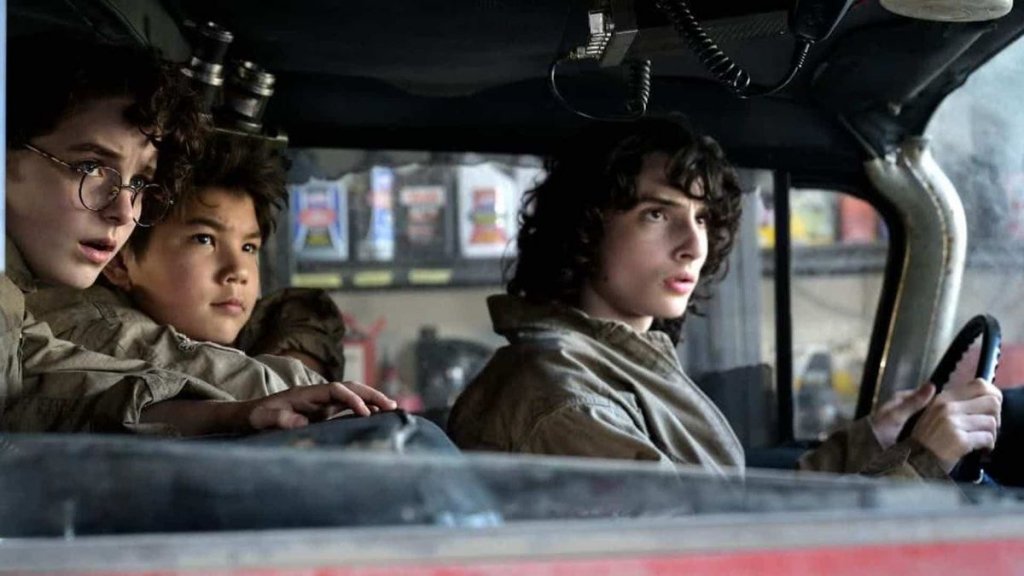
Logan Kim and Mckenna Grace in Ghostbusters: Afterlife

Ghostbusters: Afterlife beams with its love for the original film. Director and co-writer Jason Reitman (son of Ghostbusters’ Ivan) and Monster Houses Gil Kenan craft a perfectly paced blend of earnest buddy comedy and funhouse scariness that holds its roots close to its heart.

The focus is on single mother Callie (an ever-excellent Carrie Coon) and her two kids, typical teen Trevor (Finn Wolfhard, pedalling those Stranger Things vibes), and Phoebe (Mckenna Grace), a 12-year-old scientific genius who has a hard time connecting with others. Callie soon finds out that her estranged father has passed away, leaving her his dilapidated farmhouse and dirt farm; facing a financial crisis paying their apartment rent, she has little choice but to uproot her family and try to start some kind of new life in Summerville, Oklahoma.

Ghostbusters: Afterlife still

Summerville is a dusty midwestern town that’s stuck in time: its primary social hub is a drive-through diner where junk food is brought to you by high schoolers in skates, classrooms still use VHS tapes, the local cinema plays ‘73’s Cannibal Girls, and there’s hardly a bar of phone signal to be found. By keeping feelings of modernity and the ‘real world’ at bay, Afterlife allows viewers to immerse themselves in the feel of the original movie without the visuals being too manufactured. Reitman’s use of analogue SFX where possible to complement the CGI also helps to sell the aesthetic canonised by the ’84 classic.

Young Phoebe is undoubtedly the heart and soul of this film, a girl armed with shrewd curiosity and intentionally horrific jokes. She finds kindship – and the story finds its ghosts – with the introduction of two people from summer school: a 10-year-old podcaster with a flair for dramatic narration and passion for the paranormal (breakout star Logan Kim), and a moonlighting seismologist-slash-teacher (Paul Rudd as… Mr. Gary Grooberson) who’d rather throw on Cujo for his class than teach calculus. Together, the unlikely trio start to uncover everything that’s strange in this neighbourhood (and its surrounding landscape).

Mckenna Grace and Logan Kim in Ghostbusters: Afterlife

Grace has long been a go-to for Hollywood casting directors, playing younger versions of Carol Danvers, Sabrina Spellman, Tonya Harding, and many more. This time, the actress is given the space to inhabit a character that belongs solely to her, and she does so with the command, deadpan delivery, and endearing sincerity of a star beyond her years. She’s well-supported in the comedy department, thanks to a scene-stealing Kim and People’s Sexiest Man Alive 2021, who both supply the film’s biggest laughs. Meanwhile, Phoebe’s relationships with her mother and brother are what anchor Afterlife’s whackier ghostbusting elements, with Coon providing the emotional grounding for Grace to blossom.

Ghostbusters: Afterlife is appropriately reverential – both to its source material and its real-life history (in a thoughtful homage to original ghostbuster Harold Ramis) – without allowing the many Easter Eggs to overwhelm it. Instead, it carves its own corner of the universe with palpable enthusiasm; clever and self-aware without being snide (Ghostbusters 2016’s biggest mistake), it imprints every call-back with both warmth and a refreshing, forward-facing optimism. This ability to pull off an air of childhood magic without seeming twee or mawkish is one of Afterlife’s greatest achievements.

As a film that honours its past, asserts itself in the now, and keeps an eye on the horizon, Ghostbusters: Afterlife hits it out of the park, offering up a genuine crowd pleaser to newbies and devout fans alike.

Ghostbusters: Afterlife releases in cinemas November 19th. Watch the trailer here

P.S., be sure to stay for both post-credits scenes. You’re welcome.

HOME SWEET HOME ALONE

home-sweet-home-alone-starburst-review

Not since Ghostbusters (2016) has a trailer been met with such derision, as was the trailer for this reboot (cum sequel) to Chris Columbus’ holiday classic. But does Home Sweet Home Alone deserve it? 

The Disney+ exclusive sees young lad Max (Jojo Rabbit’s Archie Yates) feel lost in the melee of his own home but when the family go on a Tokyo trip, Max gets left – you guessed it – home alone? Only this time, there is more going on with the home invaders, whom Max ends up rebelling against in the most extreme and creative of ways.

Home Sweet Home Alone is not actually the worst entry in this “series”, but that is very little considering everything after the sweet Home Alone 2: Lost in New York and underrated Home Alone 3 was as disastrously downhill as a cart of exploding paint cans. We call it a series but wonder if anyone realises this is actually the sixth Home Alone film they have made?

Home Sweet Home Alone is as utterly forgettable as it gets. There may be some surprising references and home trap sequences, as well as an attempt to spin the franchise formula but the film is totally misjudged on all fronts. Not to give too much away but this new offering makes the intruders not quite all they seem but it completely de-stabilises the story, resulting in an ill-judged film with no real villains or heroes, or at least ones that are in the wrong roles and places, and have the wrong audience sympathies.

The cast give it a good go mind, especially Rob Delaney and Ellie Kemper, but the film cannot help but feel inferior and even on its own merits indistinguishable from the thousands of other Christmas films of this ilk you can see playing from seemingly earlier and earlier every year on those gaudy festive movie channels.

The many references to the 1990 original and multiple modernised tweaks only really serve to make us remember how much better the the original was and how much of the magic (not to mention the edge) has been well and truly lost in this rather crushingly sad transition from big screen festive family classic, to stream screen ‘slap it on if there’s nothing else’ background noise. Don’t just take our word for it, the script itself even at one point acknowledges its own franchise’s fall from grace, and this offerings own desperation. 

Unnecessary is putting it very lightly. Less Home Alone, more ‘Leave it Alone’!

Home Sweet Home Alone is showing now, exclusively on Disney+.

LAMB

lamb

Nottingham Forest supporters are familiar with the insult ‘sheep shagger’ being tossed about when playing rivals Derby County, but Valdimar Johannsson’s Lamb gives the phrase a whole new meaning…

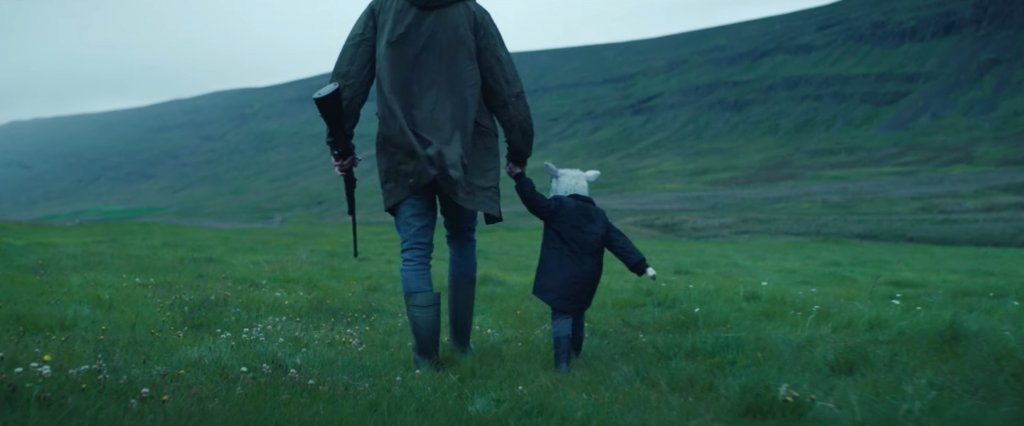
The introduction to Johannsson’s feature-length directorial debut is shuddering. In the first of its three chapters, we follow an unknown, heavy-breathing entity as it makes its way past a team of horses and towards a farm. Unfortunately, the rest of the chapter drops its initial chilling pull, and is replaced by worries of ‘this surely can’t be it?’. We watch farmer Maria (Noomi Rapace) and her husband Ingvar (Hilmir Snær Guðnason) tend to sheep, eat homecooked meals and repeat until one of their flock gives birth to a lamb, which the couple decide to raise as their own child. It’s here that the film really starts to pick up pace. It’s revealed that their new child is a half-sheep, half-human hybrid… And we know what you’re thinking – ‘eww, the husband had sex with a sheep!?’. Not quite. The truth is even weirder, and it has something to do with the mystery, breathing being at the start.

lamb

If there’s something Lamb has in abundance it’s originality. There’s not another film that springs to mind that is even remotely like the 2021 Icelandic drama, and because of this, there’s no room to try and predict what’s going to happen next (even if you did, you’d be dead wrong). The movie is also brilliant at pulling on your heartstrings. As the viewer, you feel an overwhelming amount of care towards the helpless sheep-come-toddler, named Ada, as she struggles to do things like pick up a bowl of cereal with her one hoof, and as she questions her identity. But, as Ingvar’s brother Pétur – who shows up uninvited in chapter two – very plainly puts it, “What the fuck is this?”

What the fuck is this film? There is no relief from the awkward intensity in Johannsson’s movie, which forces the viewer to uncomfortably laugh at some of the film’s sillier bits, like sheep-human Ada trying to turn off the radio. However, the biggest failure of Lamb is that it’s oversimplified: Maria’s nightmares about demonic sheep are not discussed; themes like masculinity and parenthood are never developed; and the relationships between the three central characters, Maria, Ingvar, and Pétur, are not fully explored. So what we’re left with is little dialogue and lots of shots, albeit beautiful shots, of Icelandic scenery.

Watching Forest lose to County would be more tolerable than sitting through Lamb for a second time. So, with that in mind, it’s only three stars from us.

LAMB is released in UK cinemas from December 10th

REPEAT

repeat

There have been plenty of films that ask the question ‘what happens when we die?’ in their premise. This inventive independent British film punches well above its weight and is a welcome entry to the afterlife thriller subgenre.

Ryan (Tom England) is a lecturer who, in his spare time, is working on a telepathy machine in his garage. By accident, he finds the contraption allows the dead to speak to him. He becomes obsessed with it and even displays it at performances at the university. His fixation gets dark when his daughter disappears from school. He and his wife, Emily (Charlotte Ritchie) have exhausted every lead, but would using his device make them admit the worst to themselves?

Repeat is a great example of using a high concept to underpin a powerful, heartfelt story. Written and directed by Richard Miller, the story focuses less on what’s on the other side as it does the emotional impact the machine is having on Ryan and Emily’s life. Not only do they have to deal with the stress of their daughter being missing, but their relationship is suffering too.

It’s as all the narrative strands are pulled together in the disorientating final act that the movie rises above its humble origins. It’s a confident, bold film with a satisfying conclusion that packs a hell of an emotional blow.

Repeat is available on digital platforms. 

BIGFOOT HUNTERS

bigfoot hunters

Desperate for credibility, internet journalist Brian Emond (playing what is presumably a heightened version of himself) desperately wants the vacant anchor role at the website he works for. Losing out, he and his camera operator Zach (director Zach Lamplugh) are instead sent to the Appalachian Mountains to interview cryptozoologist Jeff (Stephenson), self-proclaimed Cryptid Commander and Bigfoot Hunter. Out in the woods, Brian’s scepticism is tested, but will he get his big story?

Taking its inspiration from the sensationalist, VICE-like documentaries that adorn the internet seeking clickbait, Bigfoot Hunters is a faux-documentary comedy/horror that is neither funny nor scary enough. And the issues largely stem from a lack of clarity in the filmmaker’s intentions.

There are some effective comedic moments, and the story goes off on an interesting tangent later in the film. But there are too many misplaced gags peppered throughout; there’s a drunken redneck cousin who is there to, unsuccessfully, offer some light relief and Jeff, while going through some sort of mental breakdown, has begun drinking his own urine. It all feels a little misguided and confused.

What frustrates is that when Bigfoot Hunters reverts to its quieter moments the filmmakers find more success. The characters themselves are moderately likeable and their interaction, while a little earnest and awkward at times, is mildly endearing. And you find yourself wanting the best for them.

But then it’s as if everyone remembers why they’re here and we’re back to the ‘point and laugh’ humour where the film began.

There may still be gems to discover in the found footage and mockumentary genre, but Bigfoot Hunters isn’t one of them. It might make you smile on occasion, but that’s not really enough, is it?

Bigfoot Hunters is available on digital outlets.

STANDING WOMAN

Based on a story by novelist Yasutaka Tsutsui (Paprika, The Girl Who Leapt Through Time), Standing Woman is the latest short film from director Tony Hipwell.

It presents a solution to climate change more dystopian than anything we’ve heard coming out of COP26 – in this world, criminals are turned into trees. Even a minor breaking of the rules gets you a spot on public display; the slow process of arboreal transformation is torture, as you remain conscious, unable to move. Creepy.

The story follows Tom, a propaganda filmmaker tormented by the fact that his wife has recently been arrested and ‘planted’. He knows the safe thing to do would be to move on, but he can’t resist the urge to visit her in her semi-transformed state.

It’s evident that this is a low-budget, indie effort, and more money would have enabled the team to go a lot further with the gruesome imagery, but the prosthetics work is nevertheless impressive. The combination of actors’ bodies with various sections of tree – we see planted characters at various stages in their transformations – stands in grim contrast to the rural beauty of the Yorkshire locations.

And, as we’re reminded throughout Tom’s encounters, the true horrors lie in what humans do to each other as much as in the physical transformation. Tom’s conversation with his part-tree wife is genuinely chilling, thanks to screenwriter Max Gee’s sharp dialogue and the emotional performances from Anton Thompson and Yuriri Naka.

Standing Woman will screen at the Everyman Leeds on Sunday November 14th, as part of Leeds International Film Festival.

NIGHT AT THE EAGLE INN

eagle inn

Non-identical twins Spencer (Taylor Turner) and Sarah (Ameilia Dudley) are determined to investigate the disappearance of their father, who went missing on the day that they were born. The last place he was seen was the Eagle Inn, which is now run down and apparently haunted. The pair want to find out more about where they came from – they grew up in foster homes – and head to the Inn to attempt to get the bottom of things, documenting everything into a hand-held recorder. They find the Inn appears to have not changed since their mother gave birth to them there (and which caused her death). The manager (Greg Schweers) is helpful enough but it’s clear the place doesn’t get many visitors. Even though there is only one room available, there are no other guests. The enigmatic janitor (Beau Minniear) takes a shine to both of them too, but is unable to fix the television, which appears to be a window into the lives of the previous patrons of the Inn.

Night at Eagle Inn is co-written and directed by Erik Bloomquist (Ten Minutes to Midnight) and plays wonderfully into the mood of other haunted hotel films (it leans more to The Innkeepers than The Shining with the dialogue-heavy dynamic of the leads) and it doesn’t skimp on the scares. The interaction between Spencer and Sarah is natural and features many knowing nods to cinematic and televisual creepy tropes. This is handled well, without disappearing as far up itself as American Horror Story does at times. Taylor and Dudley are fantastic as the twins, both of them possessing a quirky quality and unique looks.

Thomson Nguyen’s cinematography makes the most of the limited location and enhances the grim atmosphere of the Inn. Tension is built up nicely and despite the film coming in at a swift 70 minutes, never feels rushed. Bloomquist once again shows that indie cinema can compete with the big boys when it comes to scares.

Night at the Eagle Inn is out now in the US.