THE SUPERDEEP

superdeep

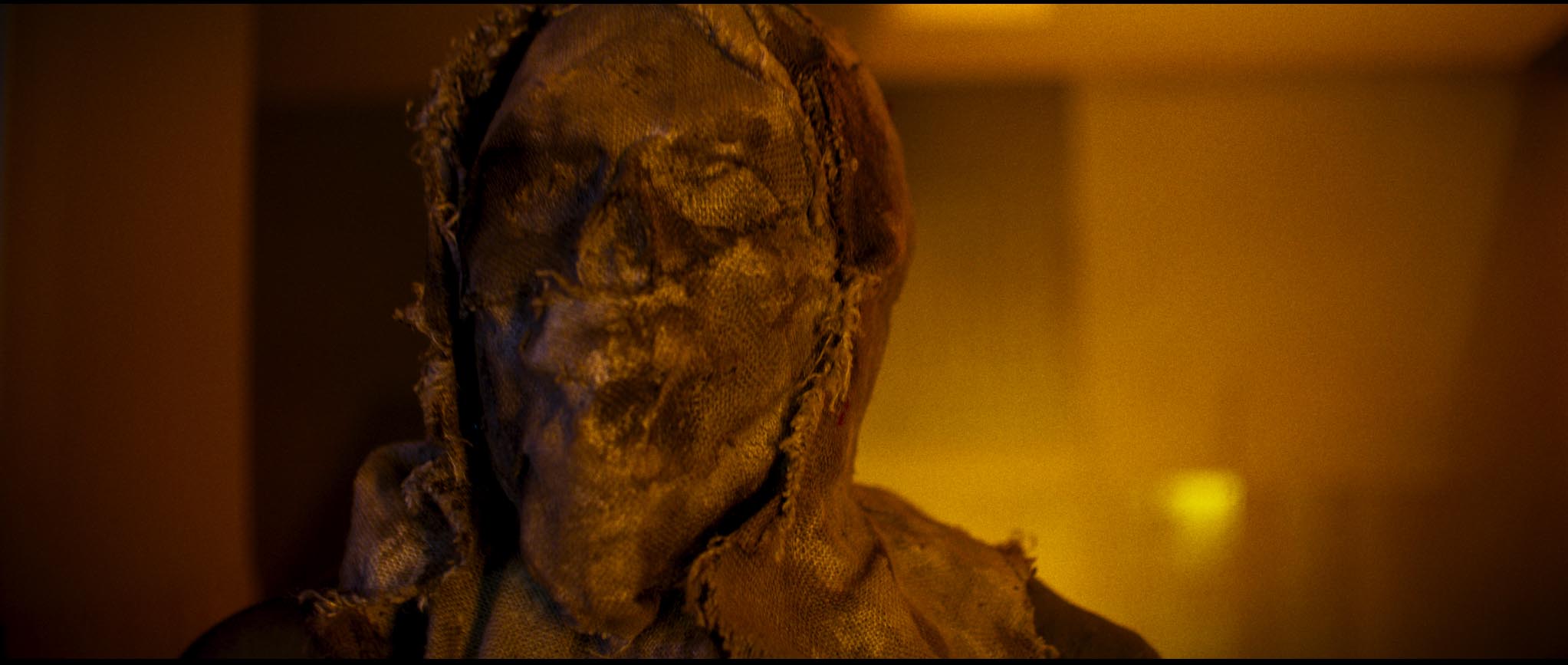
Fact meets fiction in spectacular style in The Superdeep, the latest moody sci-fi/horror hybrid hailing from Russia in the wake of last year’s surprise hit Sputnik. In the real world, the Kola Superdeep Borehole was a Soviet-scientific drilling project on the Kola peninsula close to the border with Norway that was attempting to drill as far as possible into the Earth’s crust. Drilling began in May 1970 and was ultimately abandoned in 1985 following the dissolution of the Soviet Union. In the interim period, the project managed to dig over seven miles into the planet’s crust and for over two decades, the borehole remained the deepest manmade penetration into Earth’s surface in human history. The Superdeep suggests, however, that the project was shut down for an entirely different reason, picking up on popular local urban myths as its narrative explains that in 1984, inexplicable scream-like sounds were recorded at a depth of more than 12 kilometres. A scientific/military expedition led by Milena Radulovic’s ethically-questionable epidemiologist Anya is sent to the site to find out what lurks down inside the borehole, and immediately on arrival, it’s clear that something is very amiss at the Kola site.

The Superdeep undeniably has elements of genre classics like The Thing and The Abyss and even last year’s less-memorable Underwater in its DNA, but it’s also very much its own thing, a moody and often quite dour body horror story (director Arseny Syuhin excels in recreating the very grey and concrete aesthetic we tend to associate with  Soviet Union-era Russia) that takes the audience to some dark and queasy places. Something very nasty is indeed lurking inside the borehole in the form of a rapidly spreading fungus and a lifeform that thrives and develops in a very particular and satisfyingly horrific style. Terrific and genuinely-icky physical effects, a refreshingly old-school approach in an era of CGI overload, carry the film to a tense and heart-stopping finale, which is literally a race against time to stop the underground horror reaching the surface and spreading its tentacles across the surface of the whole planet.

The Superdeep differs from its Hollywood counterparts in that the ‘hero’ figures are painted in very broad shades of grey (perhaps appropriately), and, ultimately, it’s up to Anya to set aside her own ambitions and her ethical ambiguities to work for the great good of humanity as the unspeakable and genuinely horrifying secret of the borehole threatens the future of humankind. In many ways, it’s not an easy watch; audiences used to the pace and spectacle of ‘mainstream’ cinema might find it a little laboured and its visual look a bit too drab, some might find its dubbing rather clumsy and the music soundtrack jarring. But The Superdeep is a darkly brooding affair delivering a unique and visceral experience even as it riffs on familiar themes and ideas.

The Superdeep is available on Shudder from June 15th.

Invisible Man (1933) Compared To 2020 Remake – A Change Of Perspective

While the 1933 Invisible Man film is a faithful retelling of H. G. Wells’ sci-fi classic, the 2020 remake flips the story on its head by telling it from a completely different point of view.

The original Invisible Man story was a sci-fi horror written by Wells and was serialized by Pearson’s weekly 124 years ago in 1897. Its instant popularity led to it being picked up by publisher C. Arthur Pearson and released as a novel that same year.

It has since gone on to become a significant part of modern popular culture, including the two film adaptions in 1933 and 2020. The novel was also reproduced as a comic book by Classics Illustrated in the 1950s and Marvel Comics in 1976.

The cultural impact of the character led to likeness and references to the character seeming to pop up everywhere, including an episode of the cartoon Tom and Jerry and the song by the world-famous band Queen called The Invisible Man.

There is also an official The Invisible Man slot by NetEnt. The slot is found at several casinos such as LeoVegas and 888, which rank as some of the most trustworthy casinos by sites like legit.org. However, there is no question the versions most people will be familiar with, besides the source material, are the two Hollywood films.

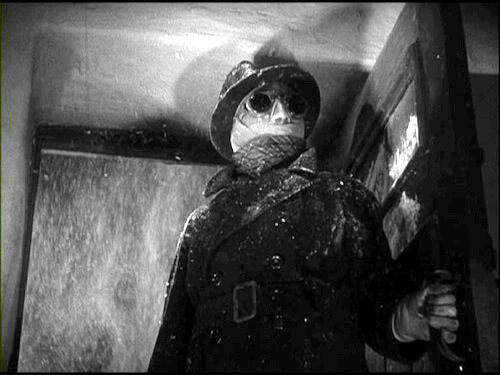
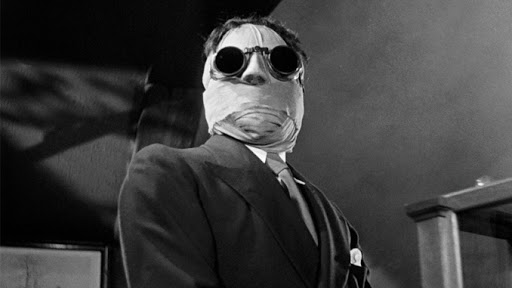
The 1933 retelling was directed by James Whale and produced by Universal Pictures. The idea to turn H. G. Wells masterpiece into a film had been floated since as early as 1931 as it was seen as a good follow up to Dracula, which had proven to be a massive hit for the studio.

In the end, Universal decided to make Frankenstein first, meaning The Invisible Man only hit theatres two years later in 1933. The film is, by and large, a faithful retelling of the original novel and follows the story of Dr Jack Griffin, a mysterious doctor that has discovered the ability to turn himself invisible but is yet to figure out how to reverse the condition.

During the process of trying to find a cure, Griffin is slowly driven insane by his condition as his feeling of superiority over other people leads him to begin performing harmless pranks that eventually escalate to murder.

The film was a massive critical, and financial success for Universal, and praise for the film holds up even to this day, with many modern film critics still listing it among their favourite films in the genre.

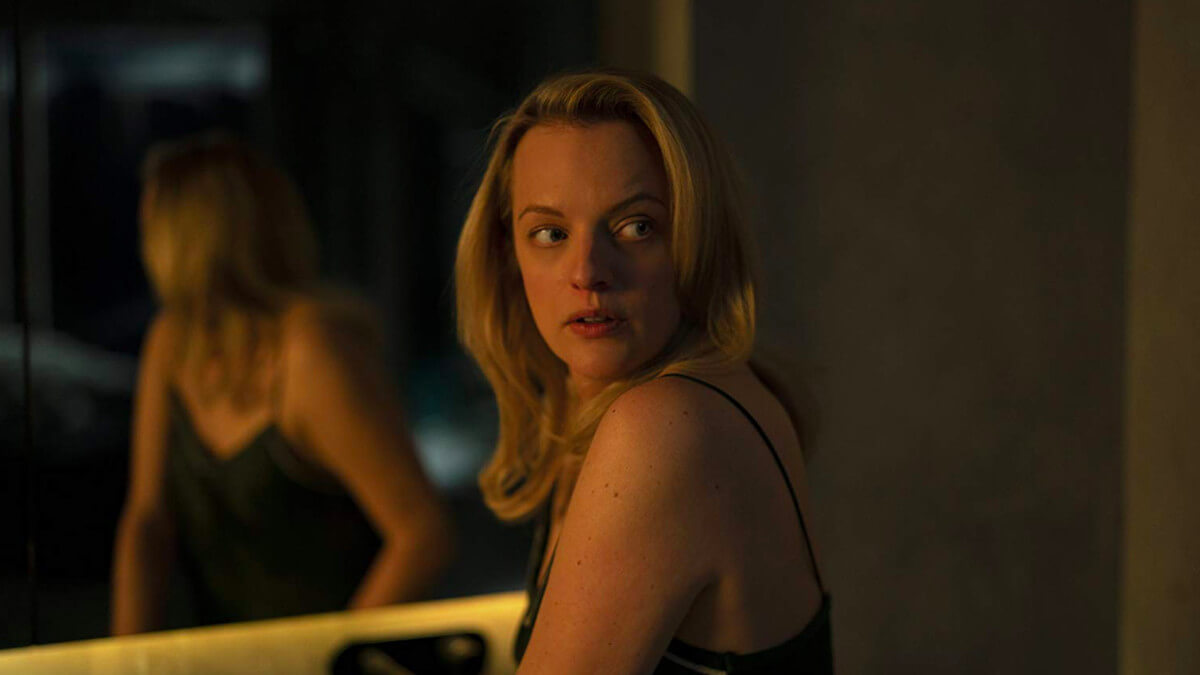
The 2020 remake tells the story from a completely different perspective, although some characters are familiar. Adrian Griffin is still a scientist that has figured out the secret to invisibility, except this version of the story follows Cecilia Kass, played by Elizabeth Moss, Griffin’s ex-girlfriend.

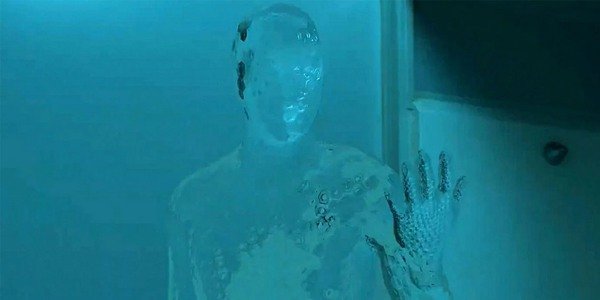
She believes that Griffin is stalking her and does not lose her suspicions even after an apparent suicide. Kass eventually figures out that he has managed to make himself invisible. It is a thrilling ride and an intriguing look into the other side of the story, which allowed the writers far more creative license than the first film.

It was also a huge success for Universal Pictures bringing in over $140-million at the box office against a budget of just $7-million. To allow the film to continue its momentum, the studio also made it available for digital rental just three weeks after its theatrical release.

The film also received critical acclaim, with reviewers praising the intelligent narrative and the use of a well-known story to explore the complexities of unhealthy human relationships and how people can be manipulated. Moss, in particular, was praised for her performance in the lead role.

Even though the two films are told from entirely different perspectives, the legacy of The Invisible Man is perfectly captured by both in unique ways, although it’ll probably be easier to get your hands on a copy of the 2020 version.

BLACKSTOCK BONEYARD

blackstock boneyard

The basis of this low budget film is the story of a real miscarriage of justice that took place in the racist Deep South in 1913. Two black farmers were framed and executed for the murder of an aged Confederate veteran and the rape of his wife. Here, director Andre Alfa and writer Stephen George go beyond the eventual pardon the pair got and bring them back to get their bloody revenge on the ancestors of those who tried them.

Lyndsy (Ashley Whelan) has received a message informing her that she is the only heir to a part of a property in the town of Blackstock, South Carolina. This just happens to be the same land that was stolen from the farmers who were conveniently killed by the state. The other part owners are the town Judge (Terry Milam) and lawyer (Jonathan Fuller). They want to strike it rich by selling the property, but need Lyndsy’s signature on the deed.

While Lyndsy and her accompanying friends are in the town, they are constantly being made to feel uncomfortable; sometimes by the strange locals and often by the ingrained racism. The Judge and his family don’t take likely to Lyndsy befriending a black lad, Jesse (Aspen Kennedy Wilson). Add to that there was almost a lynching the night they arrive and you get the message that this is not a town you’d want to settle down in. However, on the night the deeds are signed, something is stirring in the gaveyard…

Blending elements of The Fog and the retribution of Candyman, Blackstock Boneyard has enough going for it to be an entertaining revenge-from-the-grave thriller. The film’s lower budget doesn’t do it any favours when it comes to the blood-spattered CGI (although there’s a fun through-the-body shot that almost makes up for it with its audacity). If you can overlook that, there’s plenty of atmosphere and the nastiness of the characters will have you rooting for them to be on the death list.

The filmmakers make their point about the racial injustice that inspired the story well, and it’s clear who’s in the wrong throughout. The scenes of hate crimes and racism are difficult to watch, as they should be but handled without going for shock value.

The major failing here is the story is a little too rushed to be convincing (particularly the burgeoning relationship between Lyndsy and Jesse), but that’s a small problem since the film doesn’t outstay its welcome at less than ninety minutes. Blackstock Boneyard will be a treat for fans of low budget indie cinema.

Blackstock Boneyard is available now in the US on DVD and On Demand.

THE STYLIST

The Stylist

Having wowed with her 2016 The Stylist short, Jill Gevargizian makes her full-feature directorial debut here by expanding that short and delving deeper into the world of psychologically troubled hair stylist Claire (Najarra Townsend).

In this feature, The Stylist picks things up with Claire and her penchant for scalping those whose lives she’s envious of. Flipping from shy innocence to clinical and calculated murder at the drop of a dime, Townsend is fantastic as Claire – particularly as our titular stylist finds herself becoming more and more obsessed over her soon-to-be wed client Olivia (Brea Grant).

It’s this relationship that is at the heart of The Stylist, with the friendless Claire experiencing mixed emotions by the warmth and welcoming nature shown by Olivia. But the closer Claire gets to Olivia, the more she starts to veer towards a dangerous fixation.

Adding to the oft-trippy inner-workings of Claire, the colour palette and shooting style of The Stylist brings a whole other layer to Claire’s descent into madness. Jill Gevargizian had brought that same ambience to the 2016 short, and many wondered how Gevargizian would fare in utilising that same approach in a feature film. On that front, the filmmaker absolutely knocks it out of the park, bringing in colours, changing up the lighting, or slowing down the action at exactly the right moments.

Sticking with that topic, The Stylist is never anything but utterly beautiful to look at. Gevargizian and cinematographer Robert Patrick Stern have a gift when it comes to serving up delightful visuals, and likewise the musical beats of Nicholas Elert draped over the antics of Claire round out a stunning presentation.

Performance-wise, Najarra Townsend is phenomenal as the headline act here, with Townsend showcasing a genuine innocence and awkwardness to Claire while also bringing a level of emotional weight to the heinous acts that the character carries out. Simply put, this is a powerhouse performance. Then there’s Brea Grant, whose Olivia is never put too far in the rear-view mirror of The Stylist. While this movie is very much Claire’s story, Olivia is a pivotal, grounded piece of the puzzle in how that story plays out – and Grant is great in how she brings so much to Olivia as she finds herself thrown through her own mixed emotions. There also needs to be praise to Gevargizian, Eric Havens, and Eric Stolze for the screenplay they’ve put together here. The dialogue – or lack thereof, at times – always feels natural, and it’s this dialogue that often results in you having some semblance of sympathy towards the clearly unhinged Claire.

For a directorial debut, The Stylist is a brilliant movie. Directorial debut or not, though, and The Stylist is a brilliant movie, period, with so much for horror hounds to devour once the film gets a full release. When we spoke to Jill earlier this year, she jokingly teased how she already had plans for The Stylist 10 (Claire in space with Jason Voorhees, in case you were wondering), and if this movie is anything to go by, the twisted antics of Claire and the concept of The Stylist have so much potential to run with over the next however many years.

Release Date:  Out Now (Arrow VOD and Blu-ray). You can read our interview with director Jill Gevargizian here

FLASHBACK

Dylan O'Brien in Flashback, previously The Education of Fredrick Fitzell

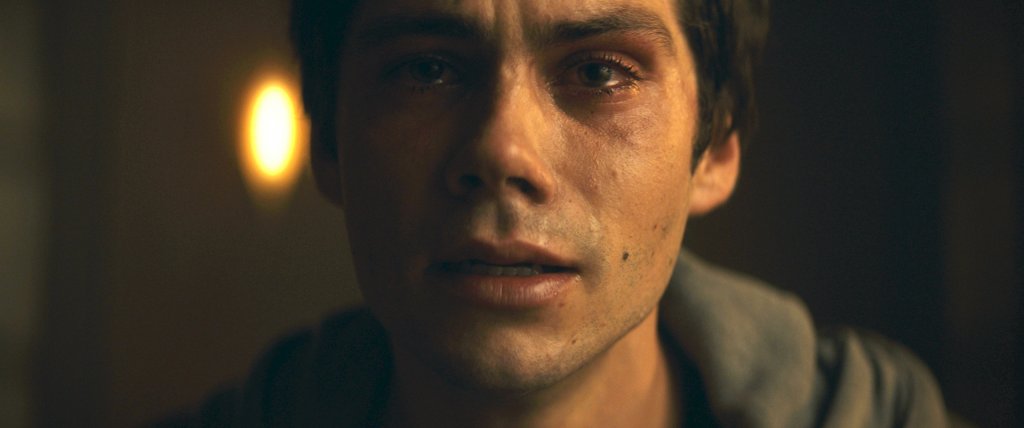
Dylan O’Brien (Maze Runner films, Teen Wolf) stars as Fred in Flashback – previously titled The Education of Fredrick Fitzell – Christopher MacBride’s sophomore feature. Fred is an ordinary guy staring down the barrel of full-blown adulthood; his future is clearly road-mapped, from the expectation to settle down with his long-term partner (Hannah Gross; Joker, Mindhunter) and caring for his dementia-stricken mother (Liisa Repo-Martell), to abandoning his artistic dreams in favour of a far more sensible role as a corporate office drone. That is, until a chance encounter triggers terrifying flashbacks that inspire Fred to go digging through his past in search of his forgotten friend, Cindy (Maika Monroe; It Follows).

Plagued by visions of things he doesn’t understand and obsessed with finding out what happened to Cindy, Fred seeks answers from high school friends Sebastian and Andre (Emory Cohen and Keir Gilchrist, respectively); fifteen years prior, they would all take Mercury together, a faddish drug with strange effects. Cindy seemed to believe that the drug opened a gateway to alternate realities, where “all points exist simultaneously”. In trying to put together the fragments of what happened all those years ago, Fred is forced on a mental odyssey through his own memories where past and present, what is and could have been, all blur together.

Dylan O'Brien as Fred in Flashback directed by Christopher MacBride

Flashback is an ambitious, high-concept psychological thriller (or is it science fiction? We’ll leave that up to you), anchored by a phenomenally layered and empathetic performance from O’Brien that proves him – yet again – to be one of the most consistent actors working today. Unstuck in time as the world spirals out of control around him, the audience can only hold on for dear life as they are placed into Fred’s perspective and thrown down the rabbit hole.

Is Flashback esoteric, or just overly cryptic? Does its lack of explanation mean it’s uncompromising, or half-baked? Does its refusal to answer its own questions make it thought-provoking, or shallow? This reviewer admits she’s not entirely sure where she stands but, needless to say, expect that MacBride’s film will divide opinion.

If one thing is certain however, it is that MacBride demonstrates full control of the storytelling and aesthetic of his film. From the moody widescreen cinematography and imaginative use of psychedelic effects to the sleek editing and ghostly score, Flashback is an impressively executed puzzle. At its core, it almost works better as an expression of intent than a fully formed piece; raw, uncut, and entirely reliant on the viewer doing the work, intellectually and emotionally.

MacBride advises that this film be watched blind and in the small hours. We would agree.

Vertigo Releasing presents Flashback on digital platforms June 4th, 2021.

THE UNHOLY

unholy

The Unholy is an adaption of the late James Herbert’s 1983 novel Shrine and you’d be forgiven for thinking that the film version was made shortly after the book’s publication and has been sitting on a shelf ever since. This is an unashamedly old-school horror chiller in the style of The Exorcist and The Omen (but obviously without the gut punch of either classic) and despite the fact that it’s outlandishly generic and its story the stuff of a hundred other lowbrow, low ambition horrors, it’s actually an enjoyable, hokey throwback to the less explicit and blood-obsessed days of horror cinema.

Jeffrey Dean Morgan plays Gerry Fenn, a disgraced and disillusioned journalist who travels to a small Boston community to investigate reports of inexpicable goings-on that turns out to be teenage pranks. He is about to leave when he finds a corn doll inscribed with an impossible date hidden at the base of a burnt-out tree (the same tree on which, in the film’s prologue, we see a young woman accused of witchcraft in 1845 and burned alive). Fenn casually crushes the doll underfoot but in doing so he unleashes something vengeful and malevolent and the tree quickly becomes a shrine when a local deaf-mute girl gravitates towards it and begins to talk.

Not unnaturally, Fenn senses a big story developing in the town, especially when Alice, who claims that she had been communicating with ‘Mary’, starts to display extraordinary healing abilities. However, her miracles are attracting attention and suspicion and slowly the truth about Mary begins to emerge and strange powers are intent on keeping her secret before invoking a satannic ritual requiring the townsfolk to pledge themselves to Mary three times, an act that will condemn their souls to Hell.

The Unholy attempts to marry the slow, smouldering atmosphere of classic horror with the jump-scares and CGI manifestations of contemporary horror. By and large, it’s an agreeable combination even as it abandons its occasionally dreary and slightly sluggish pace to accommodate a fiery, demonic climax in which a fully-realised CGI creature materialises and starts to wreak havoc at the satanic ritual. This is all clearly destined for the ‘seen this before, thanks’ box, a creative product from another time perhaps, but it’s powered by strong performances (Jeffrey Dean Morgan is excellent as the washed-up journalist) and a narrative that feels like an old friend, offering few surprises but plenty of atmosphere and a few nicely-judged jump scares.

The Unholy is in cinemas now.

THE AMUSEMENT PARK (1973/2019)

amusment park

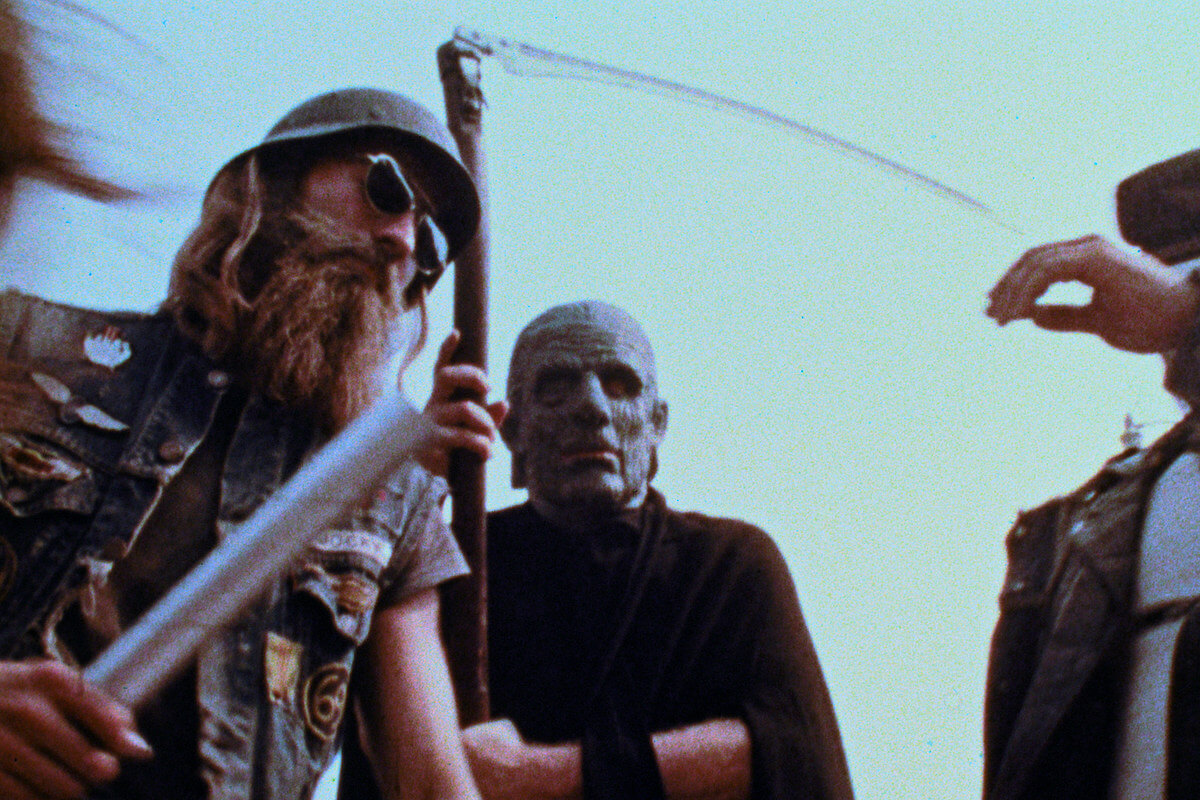
Filmed in 1973 by George A. Romero, this mid-length feature was produced by the Lutheran Society to promote a better attitude to giving respect and caring for the elderly. Upon seeing the finished product, they were not impressed and the film was shelved, only to be resurrected like the ghouls in Romero’s more famous films almost half a century later. While the director was always beloved in genre circles, it was posthumously that his genius was given the respect he deserved within the more conservative cineaste community. The Amusement Park proves that Romero’s intrinsic gift of injecting twisted social commentary into his work turns what would should have been a simple public information film into something surreally perverse and horrific.

The film is bookended with actor Lincoln Maazel (the overbearing grandfather in Romero’s Martin) explaining the film’s philosophy, and when we first see him in the film he’s in a white room, dressed in a Colonel Sanders white suit, all excited about his day out at the titular park. There’s a man sat there though, battered and bloodied, who looks remarkably like him. He’s downtrodden, though and certainly not in the mood to entertain the chirpy chap asking if he’d like to go outside with him. Over the course of the next hour, we can see why he thinks that way. Throughout his stay in the park, the man is treated badly. He’s looked down on while eating – as well as seeing how others who may not be able to afford the ‘tickets’ to buy food are treated. He witnesses a younger man collide with an older couple on the bumper cars, only to have his testimony doubted because he wasn’t wearing his glasses. He’s later assaulted and robbed by a group of hooligans. It’s not a good day at all.

Even without the introductory monologue, Romero makes it very clear about the horrors of old age and the way the elderly are treated in society. It’s a message that rings true to this day. He fills the joyous fairground with haunting visages, people wandering aimless and lost with plasters or bandages on their face; restrictions everywhere, they have become neglected monsters. By showing us how the story will end with the white room encounter, we become even more vigilant to the protagonist’s situation, although the message is not delivered subtly. The eerie quality of the park itself and the way it’s presented feels what Carnival of Souls would have been if it had been part of The Twilight Zone.

Behind the camera is Night of the Living Dead’s opening ghoul Bill Hinzman, and the hand-held approach foreshadows the found footage films that would follow decades later. Romero makes the dour situation enjoyable with flashes of humour as the disturbing becomes the ludicrous. A sequence in which a young couple consult a fortune teller and are presented with their bleak future is particularly potent.

Having been shelved for decades, it’s fascinating to see this treat from the Romero vault, and we should be grateful that it exists at all. The Lutheran society might not have appreciated Romero’s vision of respect for our elders, but his poignant vision and message rams home just as powerfully today.

The Amusement Park is available exclusively on Shudder from June 8th.

CRUELLA

Born brilliant, born bad and a little bit mad. In the grand pantheon of Disney villains, there’s few as iconic as Cruella de Vil. Nor, we would have thought, as irredeemable. After all, she was prepared to skin a hundred-odd puppies in the name of fashion. Some things just can’t be excused. Or can they? Disney and director Craig Gillespie have risen to the challenge with Cruella, an origin story for the devil – sorry, de Vil – herself.

She may have tried to rise above it, but Cruella (Emma Stone) always had a mean streak. This rags-to-bitches (referring to the dalmatians, to be clear) tale follows young Estella from troubled childhood to meek and mild fashion designer, through to her rebirth as Cruella de Vil. It’s part The Devil Wears Prada, part Joker. And, in its near-constant needle-drops, it’s also a bit Suicide Squad. There’s even an actual number from Suicide Squad.

In her sights: Emma Thompson’s Baroness – a sadistic fashion designer with ties to the death of Estella’s mother. With Estella developing a flamboyant alter ego to destroy the Baroness and claim London for her own, Cruella is more Batman villain than Disney foil. There’s even a shot where she rides a bin lorry through the streets of London, mimicking Heath Ledger in The Dark Knight.

Stone is more believable as Estella the street urchin than she is as the Cruella de Vil – ultimately failing to sell the villainess at her most… villainous. There are times when the eminently likeable Stone plays second fiddle to her supporting cast (Joel Fry, Paul Walter Hauser and Mark Strong) but she’s clearly having fun with the role. Luckily, Thompson gives the film the monster it needs – more Cruella than Cruella herself.

What it doesn’t need is its painful prequel-itis, feeling a desperate need to explain away everything we know about Cruella de Vil, from the car to the henchmen, mansion and the clothes. Cruella gets her Solo moment, as the film explains how she got her name, and then proceeds to lead directly into 101 Dalmatians with a series of horribly laboured setups. There’s absolutely no need for Roger (Kayvan Novak, wasted) or Anita Darling (Kirby Howell-Baptiste, slightly less so) to be in it, but here they are anyway, shoehorned into the thing. All of which pales in comparison to the film’s opening reveal – which sees Estella’s mother murdered by dalmatians before her very eyes.

Thankfully, that sort of thing is kept to a minimum. Cruella is darker and more serious than many will have expected; relatively grounded, for a Cruella de Vil prequel picture. The art direction and 70s setting make it one of the most visually appealing live-action Disney films to date. When it does fall back into old habits – horrible CGI animals and terrible action – it’s everything viewers feared it would be.

Largely, however, Cruella is a pleasant surprise. It’s better than it has any right to be, with commanding lead performances from the two Emmas, and a vibrant, stylish recreation of 70s London. The CGI is distracting, if not detrimental to the film itself, and the constant needle-drops and setups are unnecessary, but this is still one of the best live-action Disney remakes/reboots to date. Brilliant? Not quite. Bad? At times. Mad? A little bit.

A QUIET PLACE PART II

Emily Blunt in John Krasinski A Quiet Place Part II

A Quiet Place Part II will be many people’s first trip back to the cinema after months away. It seems fitting, given the extent to which the cinema experience is ingrained in the very premise of A Quiet Place – where the silence is hard-earned and heavy, and any sound, however muted, is experienced acutely. And while Part II may not be as lean and claustrophobic as its predecessor, it’s still a film best enjoyed with the big screen and the power of surround sound in its corner.

John Krasinski’s sequel initially backtracks to the day the alien species arrived. It’s a clever way to remind the audience of everything the Abbotts have lost, as well as developing some context for the introduction of Cillian Murphy’s Emmett. Flash forward 474 days, and the story picks up right after the devastating conclusion of A Quiet Place – it should be noted that having seen the first film is mandatory.

A Quiet Place Part II

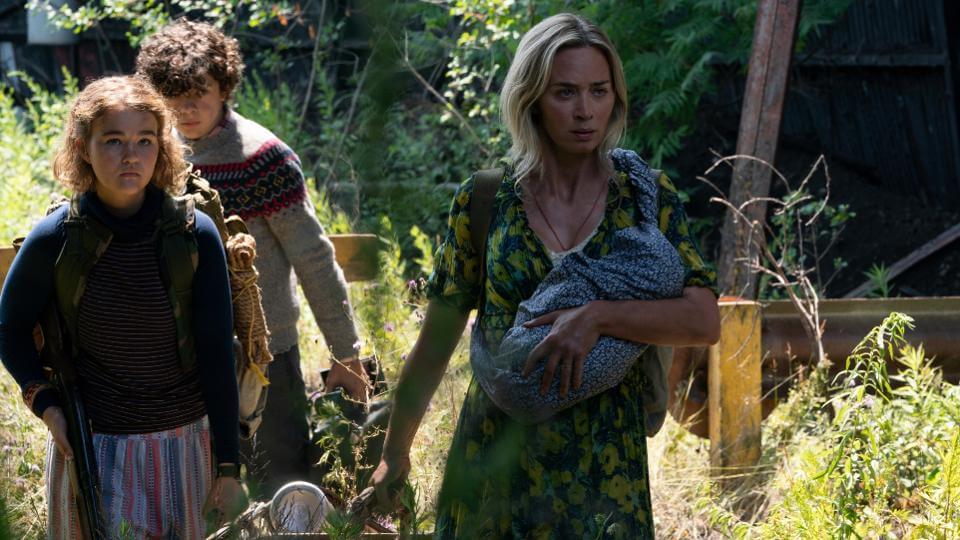
With the patriarch dead, what remains of the Abbott clan must leave the farm and find safety at one of the other encampments, signalled by bonfires in the distance. Evelyn (Emily Blunt) leads her children Marcus (Noah Jupe) and Regan (Millicent Simmonds) to away, newborn baby in tow. Luckily for them, the first person they encounter is their old friend and neighbour Emmett. The apocalypse has taken its toll on the grizzled survivor and yet, despite initial resistance, he agrees to take them in.

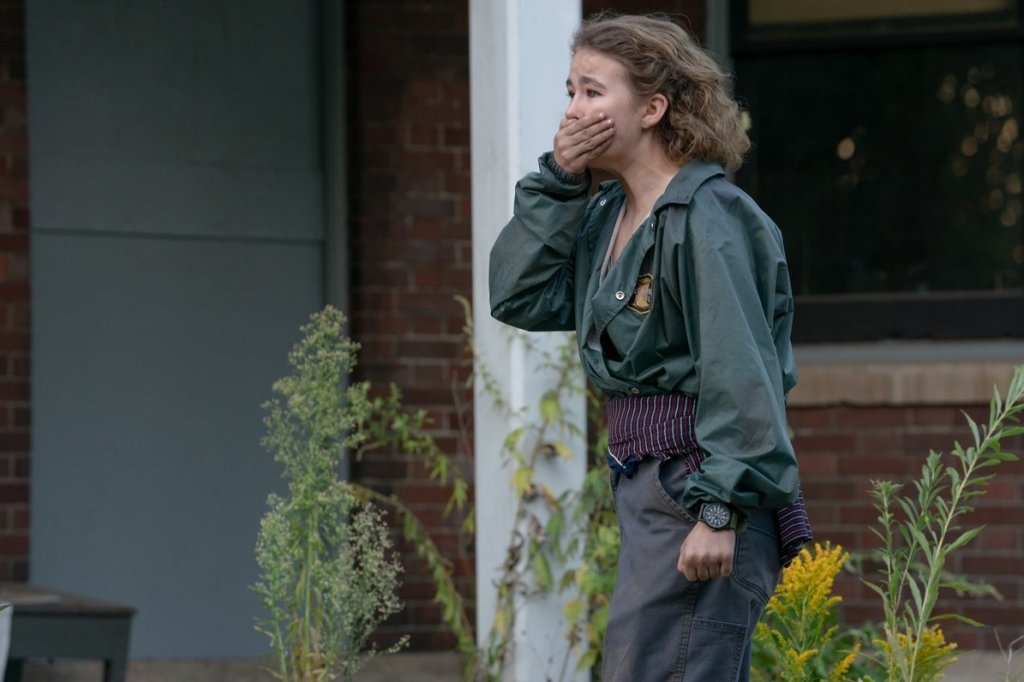
A Quiet Place Part II sees fan-favourite Regan takes centre stage, Simmonds showing every sign of a star in the making. She figures out there may be a community of survivors nearby who have established a sanctuary free from monsters and, driven by her grief and the desire to continue her father’s work, she ventures out alone to find them. Evelyn begs Emmett to bring her daughter back while she stays with an injured Marcus and the baby. Thus, the story forks off into parallel narratives, broadening the film’s focus.

This new approach doesn’t always work. Moving from place to place mostly lessens the tension and intimacy, and yet, would an exact recycle of the first film’s formula have been preferable? Probably not. There are longueurs where it the edges Part II are unravelling, unsure where to go next, and a few occasions when the viewer can’t help but feel frustrated at the characters’ questionable decision-making.

Millicent Simmonds as Regan in A Quiet Place Part II

Yet pairing off Simmonds and Murphy proves a fantastic creative choice. The young actress firmly holds her own opposite Murphy, counterbalancing Emmett’s bitterness with her own warmth and resilience, layered as it is with guilt and loss. A Quiet Place Part II may underutilise Blunt and (in particular) Djimon Hounsou, but it’s difficult to argue with the resulting spotlight on its young stars.

A Quiet Place Part II is to A Quiet Place what Aliens was to Alien. It’s a bolder, louder sequel that may not have the genius or innovation of its predecessor, nor be as focused and nerve-shredding, but Part II still serves up the thrills, action, and compelling characters of the first film. A Quiet Place Part II may be sitting in the shadow of the original but, as a more straightforward horror blockbuster with phenomenal lead performances and confident craftsmanship, it absolutely delivers.

A Quiet Place Part II releases in cinemas June 4th.

EARWIG AND THE WITCH

Studio Ghibli and Hayao Miyazaki are names that Anime fans the world over have a special affinity towards – and for good reason. With classics such as Howl’s Moving Castle and My Neighbor Totoro just scratching the surface of the extensive and spellbinding catalogue of works that the studio and mastermind possess, it’s clear to see that when the studio announced its first full CG film Earwig and the Witch was coming and would be helmed by Miyazaki-san’s son Goro, fans were excited and expectations were incredibly high. However, Goro-san’s third outing as Director has failed to live up to his father’s and the studio’s stellar reputation.

Earwig and the Witch, based on the novel of the same name by the late Diana Wynne Jones, follows the story of Erica “Earwig” Wig (Taylor Paige Henderson) who, as a baby, is left on the doorstep of an orphanage in early 1990s England by her mother who is on the run from witches. A few years later, she is adopted by a strange couple who reveal themselves to be a witch and a mandrake, and Earwig tries to get her new adopted parents to teach her magic. That is pretty much all there is for the plot.

The plot is so aimless and thin that even after fifty minutes of its 82-minute runtime, we found ourselves struggling to see exactly where the film was going to go and how it would end as nothing of note had really happened up until this point. In fairness, the film was originally made for Japanese television with a much younger core audience in mind, but even still, you can’t help but wonder if children will fully understand what is going on. Not only that but so many of the questions posed in the first 10 minutes were never addressed again and the film just abruptly ends leaving you feeling utterly disappointed.

With this being Studio Ghibli’s first full CG film, you can expect some roughness around the edges but the main glaring issue with this form of animation is that everything feels too pristine and jarring compared to the studio’s classic hand-drawn animation which put it on the map. The key anime elements are still there with some typical and entertaining facial reactions and otherworldly movement, but it just feels strange and out of place.

If the film were to have a much more coherent plot and if Goro-san had stuck to his father’s classic style, Earwig and the Witch would have been a much better end product but ultimately falls way short of the legacy and standard that the studio holds – we are sure that younger animation fans will have at least some fun with it though.

Earwig and the Witch is OUT NOW in UK Cinemas. Subbed and Dubbed (reviewed) versions available.