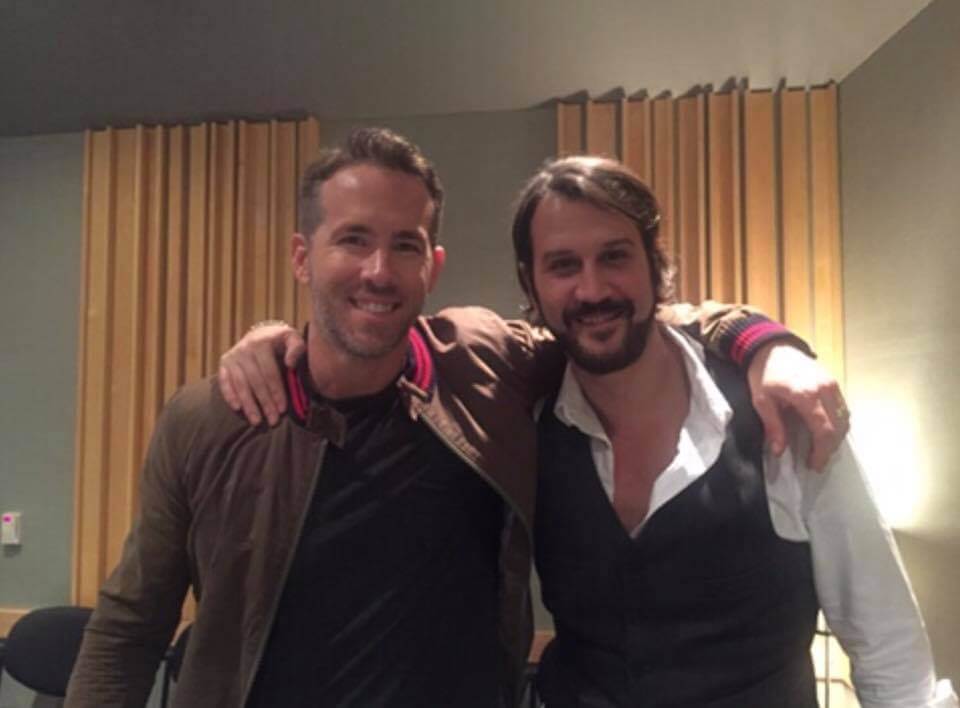
Yannick Bisson | ANOTHER WOLFCOP

Yannick Bisson Another WolfCop

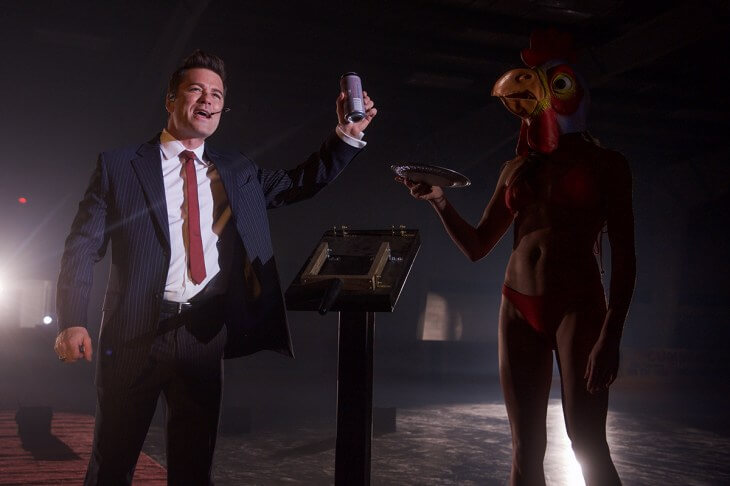
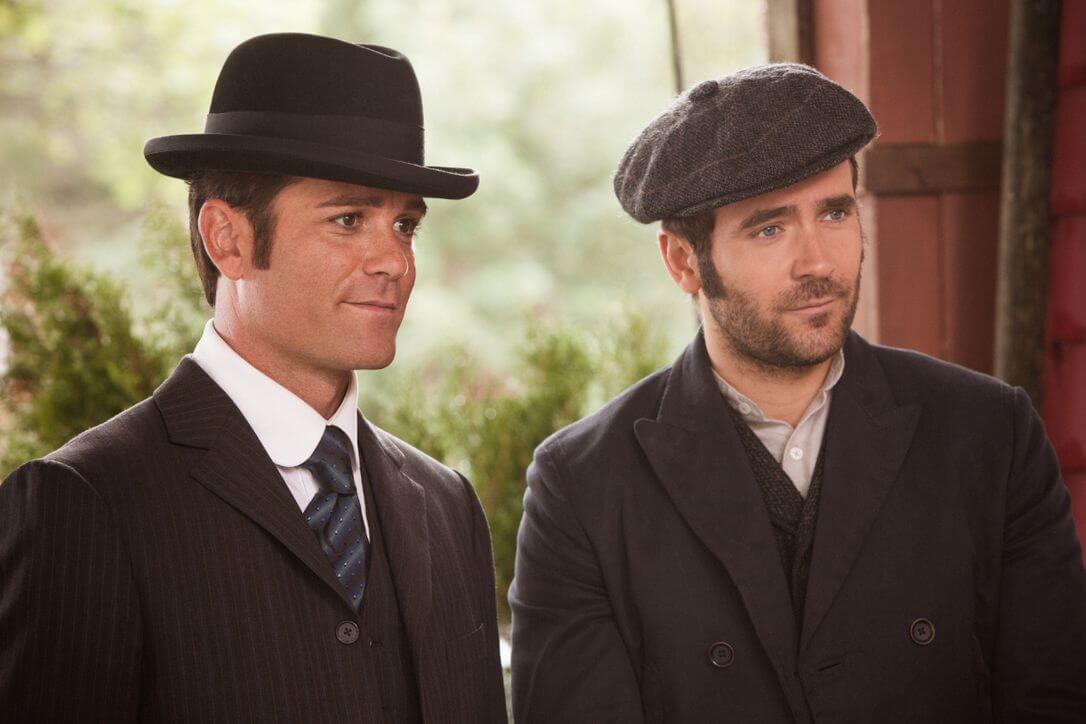
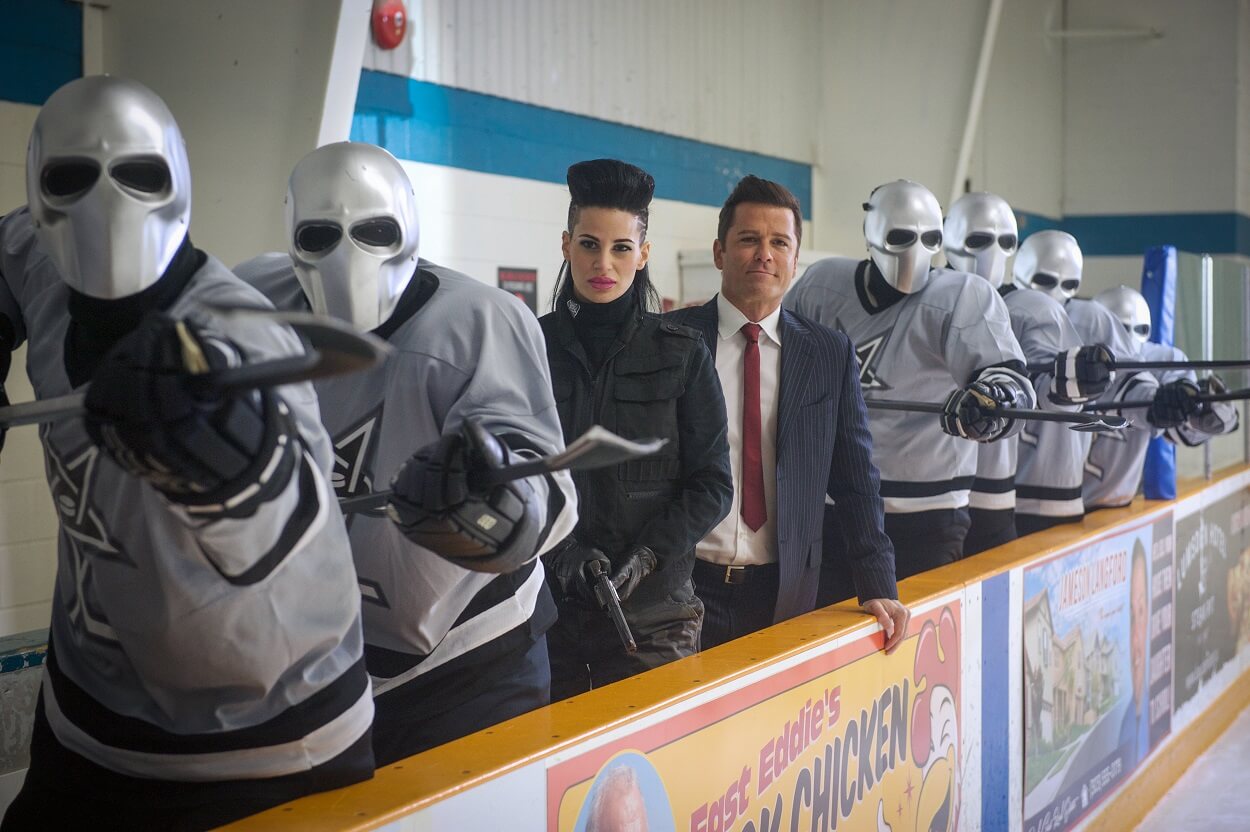
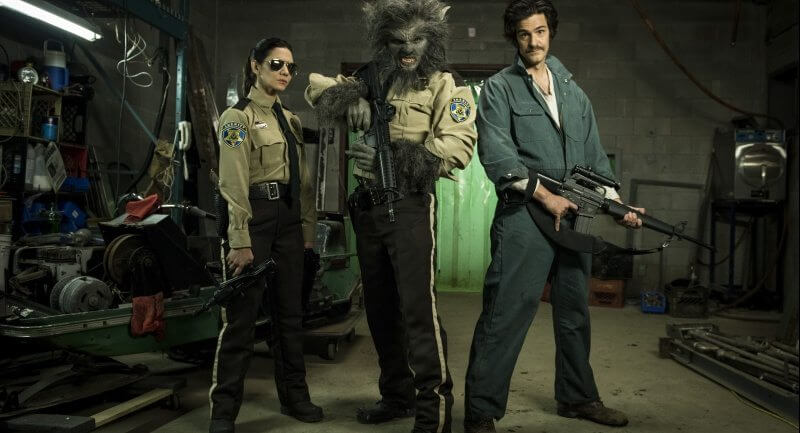
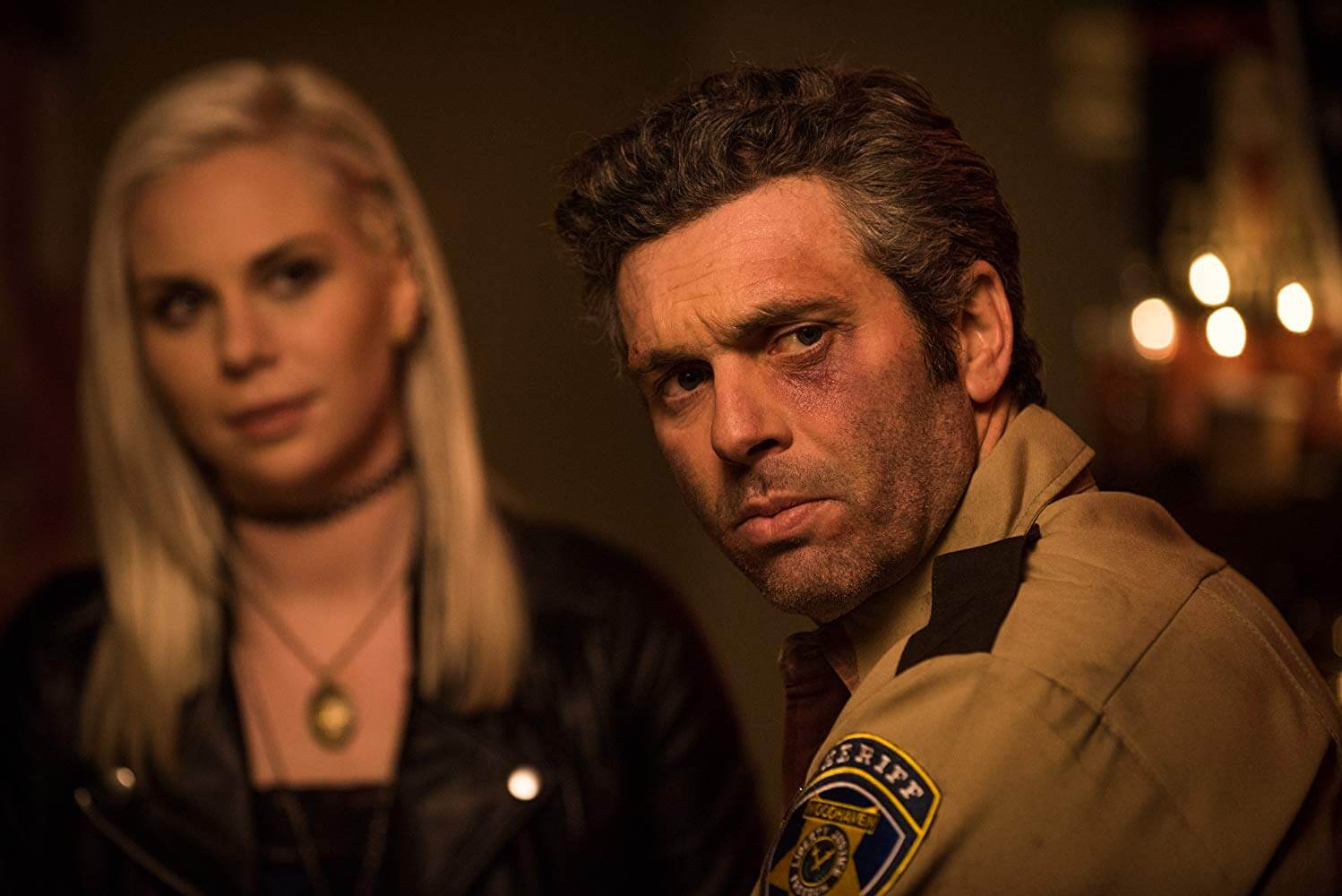
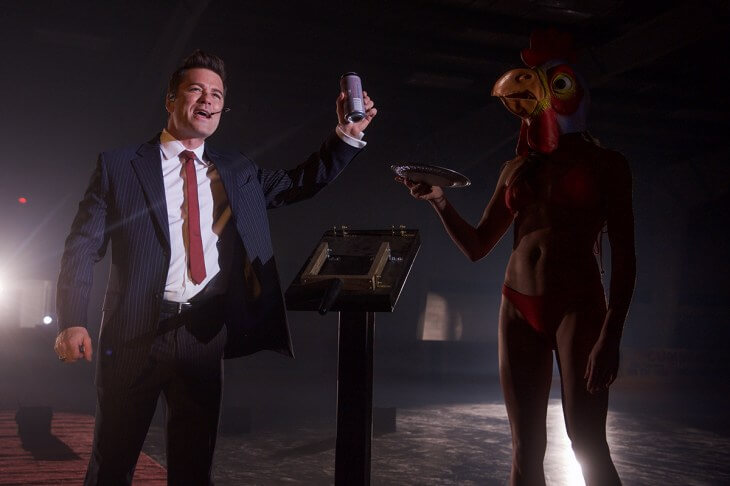
Yannick Bisson is best known for playing the titular William Murdoch in the hugely successful Murdoch Mysteries show that’s about to enter its twelfth year. Now though, the charismatic Montreal native can be found playing the slimy, nefarious Sydney Swallows in Lowell Dean’s Another WolfCop. Promising to win over the sleepy town of Woodhaven with the prospect of a brewery and a hockey team, Swallows is soon on a collision course with Leo Fafard’s alcoholic werewolf lawman. Ahead of the WolfCop sequel’s home release, we were lucky enough to grab some time with Yannick to discuss Another WolfCop and playing such a vastly different character to what audiences are accustomed to seeing him play.

STARBURST: Did you see the first WolfCop when it came out in late 2014?

Yannick Bisson: I was given a copy of it a short time prior to meeting about the second one. So, I hadn’t seen it as a release, no.

What were your first thoughts upon watching it?

I was really thrilled. First of all, the development process that basically got Lowell [Dean – writer/director] and Emerson [Ziffle – SFX supervisor] the gig of making the movie, I was really impressed by. I was really intrigued by how all that worked. I wanted to know everything about the entire process and also about those guys. Then, obviously, what the plan was going forward in terms of the sequel; potentially any information that they had about what else that they wanted to do with the franchise, ancillary to the movies. So, I was really keen. It’s just a nutty orgy of everything bad you could throw into this genre. I was really looking forward to being able to do something like that, because I cut my teeth in comedy as a kid. I’ve done a lot of different type of things outside of what I’m typically known for, so I was stoked. I was like, “Sure, I’ll be there. You don’t even have to pay me!” So, we all worked together, we all put together this crazy character. Then, I got to really contribute on a creative level with some of the stuff that I did for it. It was just a fun, fun process. I’m really glad that I had that opportunity.

You mention creative input. How much input did you have on the Swallows character, and was he always meant to be how we ultimately see him on the screen, or did he evolve as the production progressed?

Well, [executive producer] Bill Marks emailed me. We had actually worked together on some other things, and he said, “Hey, I’ve got this thing coming up and I think you could be good for it. I just don’t know if it’s your cup of tea.” He called me, and immediately after reading the material I said how I absolutely wanted to be involved in this. To add to my curiosity of the development process, I jumped in whole-heartedly – and I’m glad I did. The character, ultimately we’re all tasked with lifting something off of the page. It was already pretty out-there in terms of what was being said, but I added a lot of stuff. I added a lot of profanity on the floor, on the day. That’s my style. I try to always, in anything I do, always try and give a director as many choices as possible as much as I can within reason and within what time allows. So, I threw a lot of stuff their way, and they were really cool about it. And they fostered that environment of “Hey, if you come up with something, absolutely just throw it out there. If you want to do something different, for sure, let’s do it.” That’s always invaluable to foster that kind of atmosphere. Lowell and Emerson and [executive producer] J. Joly absolutely did do that.

Yannick Bisson Another WolfCop

Those guys were all involved in the first movie, as were Leo Fafard, Amy Matysio, Jonathan Cherry, and several others. How was it for you coming in to that existing environment, and was there a bedding-in process or did they make you feel at home straight away?

It was kind of like shift change time. We all showed up and they had already been shooting the front half of the movie. I showed up at the shift in Regina and they were just, “Hey man, how’s it going? Let’s go.” We shot the rest of the movie, and they were very welcoming. Obviously, they were happy that I was game. I think there may have been some reservations on other people’s part; I think they were looking at me with a little bit of “How on earth is this guy gonna pull off this character?!” So, I just went for it. I took down any sort of apprehension and reservation and I just went for it, and instantly we were all-in.

Throughout the movie, you got to spend a good chunk of your time on screen with Kevin Smith. How was it to work opposite Kevin?

We actually didn’t get to spend as much time together as it looked like. We were ships in the night because of our schedules. I ended up doing a lot of my stuff with the girls and with the crooks, you know, with the bad guy team. That’s the bulk of what I shared my work time with, and then they stitch it all together.

Away from Another WolfCop, you’re best known for playing William Murdoch in Murdoch Mysteries. How much fun was it to play such a slimeball of a bad guy here?

Oh, absolutely wonderful! I speak to my representatives all the time, always looking for things that are completely opposite of Murdoch, are different, as complex as possible. I’m synonymous with the show and the title character and the name, so it does have a very distinct brand and image. As an actor, it’s tough, because I don’t want to be known just for that and only for that. So, I will always look for things that are different – and this is as far out there as you can go, which I’m very happy for!

Yannick Bisson Murdoch Mysteries

What’s the response been over in Canada to you in Another WolfCop, given how different a role it is to the character you play in Murdoch Mysteries?

It’s funny, because they’re massive fans of that genre. Those folks are not necessarily the fans of my show, so I kind of wonder. I don’t get a huge amount of feedback. Even on my social media outlets when I was promoting it and talking about it, I think people’s eyes were glazed over because the people who watch Murdoch are not the people who are going to see Another WolfCop. It’s different worlds, it’s hard to get a metric on that. I wish I had a better answer.

And is it fair to say this is the most bizarre project you’ve worked on to date?

It’s right up there, definitely top five. It was a new genre for me, so yeah, I would say in that regard definitely at the top.

In terms of dipping your toes into the genre, you’ve gone all-in on a movie about an alcoholic werewolf lawman.

Yeah, and that’s really what it was like. I thought if I was going to show up there on set then I’ve got to really embrace it. These people have been doing it for a while, and I’m sure they’re thinking I’m not going to bring it. So I had to just be as despicable as possible.

During the production, what was the most fun scene to be involved in from your perspective?

Oh, my escape was a lot of fun. When I get away and I blow the place up and all of that, that was a lot of fun. There was a bunch of improv that we did there. I can’t remember the lines exactly, but I came up with a couple of good insults last minute. And I had to actually speak to the girls, because I’m a dad – a dad of three girls – and so criticising the girls and body-shaming them… but it was fun that they kept some of my improv in there, so I was happy about that.

Yannick Bisson Another WolfCop

Your no-good character of Swallows tries to win over the Woodhaven public with the promise of beer and hockey. When we spoke to Leo Fafard, he went with beer, as it always leads to hockey, but if you could only choose one of those then which would it be?

Hockey. I was going to say the other way around – hockey always ends up leading to beer.

With Another WolfCop now in your rear-view mirror, what’s up next for you?

Well, I just started filming Season 12 of Murdoch this week. That will take me to November. But I also have a couple of books that I’ve optioned and we’re working away in the development process. One is called Boiler City Blues Trilogy and one is called Two Black Guys and the Unfinished Script. Then, there’s a few other concepts that are out there with producers. Actually, CineCoup and the Coup company who are the proponents of WolfCop and the IP, I liked the experience so much that I’ve actually become a partner. We’re looking to do other stuff, different stuff, not just movies. So yeah, that’s a real exciting side benefit.

On the Murdoch front, how is it as an actor to get that renewal for a new season, to get that almost safety blanket that means you can have more freedom with other projects that might come up?

It’s the ultimate. We all would love to have a successful series that we become synonymous with, especially in this case that my character is the name of the show – so it’s very identifiable. I’m so extremely grateful. The ratings keep going up and more and more countries watch it, it gets translated to more and more languages. It’s a global success. It’s a huge, huge blessing. Obviously, there are days where I wish I could be doing 10,000 other things, but I mean, how can you look upon this in any other way that just absolutely positive and grateful.

Another WolfCop is out now on Blu-ray, DVD, and VOD – and you can find our review here.

Leo Fafard | ANOTHER WOLFCOP

Leo Fafard Another WolfCop

Back in 2014, Lowell Dean’s WolfCop proved to be hugely popular with many a genre fan, with Leo Fafard front-and-centre as alcoholic werewolf lawman Lou Garou. And now, with Another WolfCop available on home release, we caught up with Leo to discuss this furry follow-up.

STARBURST: Going back to the first WolfCop, how was it for you to see the reaction received by that picture back in 2014?

Leo Fafard: I don’t know if I say I was surprised, but I was amazed. I was just ecstatic at the time. I’d never been involved with something on that level before as an actor, so it was really enjoyable, it was this great thing to be a part of.

Was it a little bit surreal to be thrust into the spotlight after that picture?

Oh, absolutely. It was totally surreal, it was shocking. I’d never been in the spotlight like that before. It was certainly something to get used to, and all the social media coverage and attention was really humbling. There’s so much out there, there are so many people reacting to this, commenting on this. It kind of set me back on my heels for a little while, but I guess you get used to this thing, I suppose.

We guess it was a no-brainer, but you were always happy to return as Lou Garou then?

Yeah! Me and Lowell had always talked about doing a sequel, hoping that it would roll in to a series. We always thought that a great next step would’ve been a television series. The sequel, it was really good to experience that. You know, we have a lot of same players and a lot of the same crew as well. It was really nice to get back in the saddle with the same people and have a good time like that, doing it again. So we were all looking forward to it, I think.

Another WolfCop

Is it at the point now where it’s almost a like second family when you guys get together again?

[Laughs] It kind of is, it kind of is. It’s always a really good time and we all enjoy each other’s company. We really lucked out. It goes beyond the cast, it goes to the crew. It’s a really awesome bunch of people, we all get along so well. Anytime we get together is a really good time. We’ve done a feature film since then and used really a lot of the same cast and crew. We shot a feature that’s actually just getting distribution now called SuperGrid. Lowell directed it. We brought in a couple of new players, but Amy Matysio’s in there, Jonathan Cherry’s in there. I dunno, I guess we liked each other enough that we were looking for excuses to hang out.

Lowell has talked about how he wanted Another WolfCop to be crazier. For you, what was the craziest past of Another WolfCop?

Well, of course the intimate scene with the female she-cat or whatever the heck you call it – the sex scene. It was just so over the top and it got so graphic. It’s hard to compare other scenes as far as crazy and out of leftfield or just intense, inhibition-testing scenes. That would take the cake.

What lessons did you learn from that first movie that you brought to the sequel?

You know, Another WolfCop gave us a chance to round out the characters a little more, fill them out a little more – which was awesome. I’m hoping that that comes across, that we could inject a little more humanity into WolfCop and a little more vulnerability into Lou Garou. There’s a little bit more to both characters this time around. You know, I’m not a young fella. I’ve got a pretty deep well of experience, so I don’t know that I learnt a lot between the two [movies] that really spoke to either character in particular. It’s the type of movie that you just go out there, you put in 100% of your energy, and you do it to have a good time, to try and create something that’s extremely entertaining and that pushes the envelope a little. This isn’t a deep enough movie for that sort of character development, where you’re sitting there trying to figure out how you can give the characters that kind of depth. I just showed up and hoped I still had enough energy in me to conjure up the characters.

Leo Fafard

Everyone you speak to about WolfCop and Another WolfCop – and hopefully WolfCop 3 in a few years – will largely gravitate towards the WolfCop character, but how is it to just play plain ol’ Lou Garou?

I was really excited to have a second crack at Lou Garou and be able to give that character a little bit more attention. All through the first one, it was all so run-and-gun, so fast, just trying to get my lines out and hit my blocking, then we’re on to the next thing. I was very excited to be able to have a second crack and to fill him out, to make him look like a little bit more of a whole person than this two-dimensional womanizing drunk. I enjoyed it.

The bad guy of Another WolfCop worms his way in to Woodhaven with the promise of beer and hockey. If you could only keep one of those, which would it be?

That’s an easy question. It’d be beer, because where there’s beer, hockey will follow.

Another WolfCop is out now on Blu-ray, DVD, and VOD – and you can find our review here.

Lowell Dean | ANOTHER WOLFCOP

lowell dean

Back in late-2014, we were lucky enough to grab some time with Canadian writer/director Lowell Dean to discuss a bonkers-but-brilliant movie by the name of WolfCop. Focussing on alcoholic werewolf lawman Lou Garou, the film proved to be a huge favourite of many a genre fan – and the promise of a second WolfCop picture had fans chomping at the bit. Now, with Another WolfCop finally here, we were lucky enough to catch up with Lowell to discuss this furry follow-up.

STARBURST: The first WolfCop was pretty ‘out there’, so how did you go about trying to top the insanity of that first movie?

Lowell Dean: I actually thought it would be really easy to top the first film. The first film was made with very little money, very little time, just some ideas and some friends. We were really under the radar. I guess ignorance is bliss, because I thought it would be so easy to make a sequel – that we’d just need to up the ante a bit. But it proved to be very challenging. We had the same amount of time, we had way more ambition. A lot of the core team – myself, the producers, the actors, Emersen [Ziffle – make-up supervisor], the FX artists – were trying to be better, to do better for ourselves and for what we saw audiences responded to in the first film. It was an insane amount of pressure, too much pressure for something called Another WolfCop, I’d say. We just wanted to make it great, and maybe a little crazier. The word I put on my binder was “crazy”. I said that every scene had to be really crude, really weird, really sexy, or really insane – preferably all of the above!

For the first movie, you went through CineCoup – which you previously described as America’s Got Talent for filmmakers. Was it a little easier to get the financing this time out?

Again, it was easier in the fact that I didn’t have to sing and dance for a year. That was great. But the downside was that we wanted to be bigger. We dug our feet in the sand and said, “We can’t do this for the same budget!” We would’ve killed ourselves. We all agreed that we needed a budget of around $2 million – which was easier said than done for a little independent Canadian film. So, it took the producers a lot longer than I expected to raise the financing and pull it all together. It was funny, because if you look at the end of the first film it says “WolfCop 2, coming 2015!” We all agreed we’d make the first a year later, but that ended up taking a couple of years. I wanna get that on a t-shirt – “WolfCop 2, coming 2015!” We missed the boat on that one.

Another WolfCop ends with the promise of a third movie, but there’s no time scale mentioned this time out.

I think the producer didn’t want to put a date [laughs]. I just wanted to be as vague as possible this time. Like, “WolfCop will be back”.

Another WolfCop

Was there anything you wanted to do this time out that you realised was too crazy or you were forced to scrap?

A lot! Honestly, we storyboarded and planned out all the action. The end sequence at the hockey rink was going to be twice as big as it ended up being. We lost some financing and we lost some days towards the end of prep, so when it came time to shoot we all had this plan for something that was bigger. What kind of became heartbreaking was those hockey rink days where I had to pick and choose. As our clock was running out, I had to be like, “Okay, well let’s cut this fight scene down. Let’s do the first half of this one, then cut to this.” It was really stressful trying to cut and paste. One of the biggest things we ended up cutting, I cut because we all agreed that if we went in to this bigger idea or sequence or show that – we can’t do it unless we can do it right. So, we just put it on the shelf, I cut it out of the script, but it will happen. If we end up doing a third WolfCop, it will move over to there.

Given the success of the first movie, we’re guessing it was an easy sell to get all of the key cast and crew to return?

I think everybody wanted to come back. I think the core cast and crew of the first film, I think we all had a blast. It was a really fun experience, especially with the cast. We started to just figure it out. That’s the problem on a seventeen-day shoot. It’s not like a TV series, we just find our characters and our fun and our rhythm with each by the end of the seventeen days. This was very exciting to bring back Jonathan Cherry [Lou’s best pal Willie] and Amy Matysio [Lou’s cop buddy Tina] and Leo Fafard [Lou Garou/WolfCop] and say, “Now we know what you three are like with one another, let’s go farther. Let’s see how you connect.”

For the bad guy of the piece, you brought in Yannick Bisson as the extremely slimy Swallows. Was it always the plan to go with that sort of villain for the sequel?

No. Actually, in my first draft the villain was really different. It was more of an under-the-radar villain who was coming in to town. Through rewrites and feedback from producers, it was just, “Lowell, this character, he’s a weasel, but maybe rather than tricking Woodhaven or seducing Woodhaven, why don’t you have him publicly seduce Woodhaven?” So, he became a self-help guru at one point, then he was trying to show Woodhaven how to make money. Then we thought about what the simplest version of that was. “What does Woodhaven love? Beer! What does Saskatchewan and Canada love? Hockey! Okay, why don’t we have a guy come in to town like the Pied Piper and offer you hockey and beer?”

Another WolfCop

And while Canadians love hockey and beer, someone who is loud and proud of his love for Canada is Kevin Smith, who has a supporting role here as Mayor Bubba. How did he end up involved in the picture?

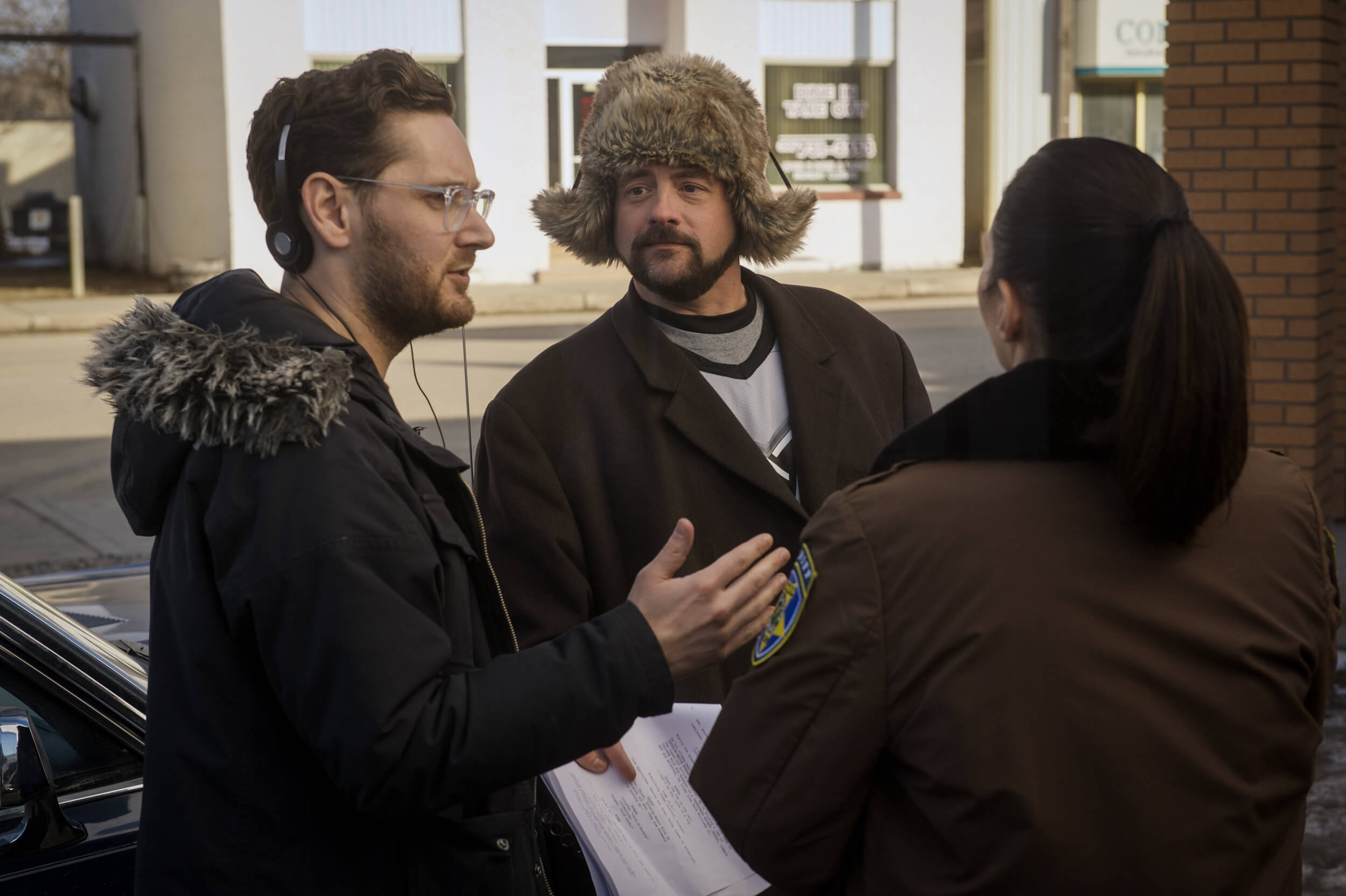
It was a great kind of fluke. He was scouting Moose Jaws in Saskatchewan, which is where the actual city of Moose Jaw is. I thought, “You’ve just gotta take the shot”, right? He’s someone who’d obviously be great in a movie like ours, he’d fit in so perfectly. One of our producers reached out, he luckily was in town, and he gave over and gave us six hours of his time. And we abused him for those six hours, and he was great. He was a gentleman. He comes from these smaller indie films, so he gave a lot of great advice and feedback, and he was fun.

What lessons do you think you learned from the first movie, and how do you feel you’ve progressed as a filmmaker since then?

I think technically I’ve progressed a lot. I think I’ve managed to get both more intense and more relaxed, which I know is a contradiction. I feel like I can see the forest from the trees and I know what I can take on. I know what not to short-change. It’s an ever-growing process, and I’m still learning, but to me it’s finding that balance of making something that’s not boring, that’s going to appeal to people, but that’s still going to speak to what I have to say inside me. And just the life of being on set is so chaotic. I’ve been learning to not get freaked out by the little things, to say, “Okay, when I do a film these ten things are going to go wrong. And when they do, how do we calmly and gracefully find a solution?”Another WolfCop

Like you said earlier, the end of the first WolfCop comes up with the promise of a sequel in 2015. Even though that was there at the end of that first movie, was there ever a point where you were uncertain over whether you wanted to make a follow-up?

Yeah, there was always that uncertainty. There’s never a guarantee. There was a time where I thought that it might just be a joke – “WolfCop 2, coming 2015!” But I loved the character; he’s my baby, I created him. So, I will always care about him and want to do more, but yeah, there were times where I was like, “Is this all I’m ever gonna do? Am I only ever going to make WolfCop films?” Luckily, I’ve been able to go off and make other things between the two, but he’ll always have a place in my heart. If it’s wrong then I won’t wanna do it. If people can come together in the right circumstance and there’s the right demand, I wouldn’t even stop to breathe. I’d take five years off and see, like, Old Man WolfCop.

Already the franchise has had aliens, interspecies erotica, wolf dicks aplenty, and the very concept of an alcoholic werewolf cop is a crazy idea in itself. Looking at WolfCop 3, where can you take this in terms of scope and scale?

I can think of a few places, honestly. I actually already have a pretty firm idea for what I’d love to do with the next one. But if I tell you, you’ll know [laughs]. I think there are some places to go, whether it’s a side story or cleaning up the story that we started with these first two films. I think this character can go on in a lot of different ways.

Such as following on with the revitalising moondust which Lou discovers in Another WolfCop?

Yeah, what’s going to happen to a guy like that? He’s going to have to have some repercussions at some point.

And we’re guessing moondust isn’t exactly easy to come by, should he need another fix?

Exactly! And how addictive is this? These are the things I’m curious about. That’s not going to be good for Lou.

Away from all things WolfCop, what other projects are you working on at the moment?

Since WolfCop 2, I’ve directed another film, another indie film, called SuperGrid – which is kind of like a post-apocalyptic, future Western. There’s a trailer out now. I don’t know when the movie is going to come out, but that was for producer Hugh Patterson, who was also the producer of WolfCop. He has been developing that and he brought me on to direct. It was really fun to do something with the same group of people but very tonally different.

Another WolfCop Lowell Dean Amy Matysio Leo Fafard

The last time we spoke, you said that your dream project was to one day tackle a superhero film. In a way, you could possibly label WolfCop as an antihero of sorts. Is a full-on superhero picture still a big dream, though?

It’s funny you bring that up, because since we talked all those years ago there’s been nothing but superhero films. While I love superheroes – of course, it’s on the bucket list – I don’t think the world is lacking superhero movies right now, so I’d rather do some of the other weirder things that are happening. I of course want to make things with bigger budgets, more time to explore visually some things, but I’ve got a long list of films I need to do.

With there being so many returning cast and crew for Another WolfCop, do you guys almost have a sort of ‘second family’ feel by this point?

Yeah, for sure. There are always people who change, but so much of the people behind WolfCop are a family. It is a family. It gets easier, in a weird way. WolfCopWolfCop 2SuperGrid – it’s like a homecoming. We have shorthand, we make fun of each other. It’s like going to camp rather than going to a job.

Given how they’re such strongly Canadian movies, what has the reaction been to the WolfCop movies over in Canada?

I think the first film was kind of mixed. I feel like we got a better response outside of Canada, which is hilarious. I guess we’ll find out on the second film. It had a limited theatrical run, but it’s only now coming out on Blu-ray and VOD everywhere. But I hope people respond to it. I hope they see it’s more funnier, more playful. Wherever it’s played, it’s gotten pretty decent reactions so far. So, fingers crossed, right?

Another WolfCop is out now on Blu-ray, DVD, and VOD – and you can find our review here.

Alfie Dennen | EVIL CORP

evil corp

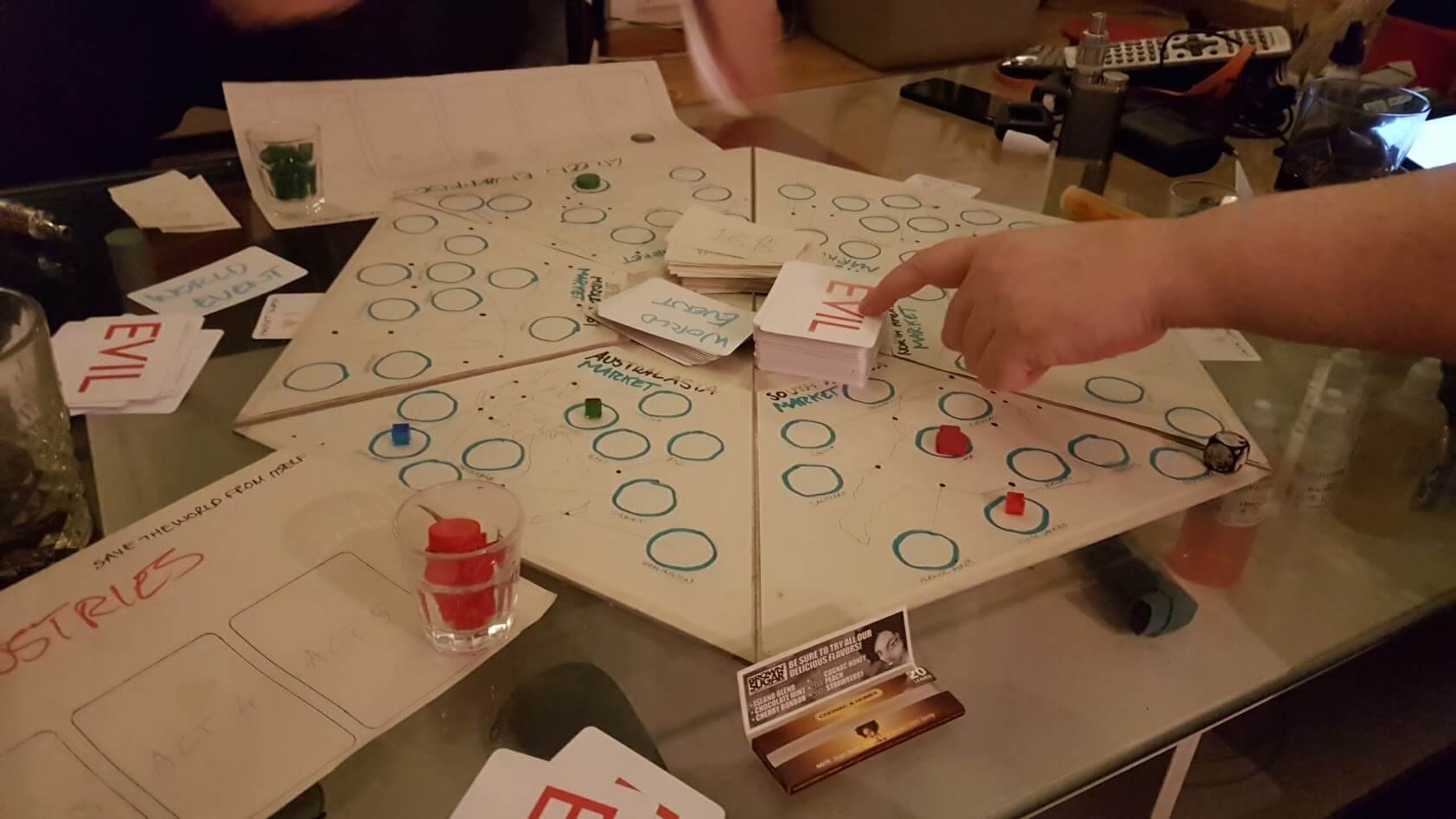
Alfie Dennen is the co-founder of mobile blogging platform Moblog, and is responsible for various projects that fuse art and technology. His latest project is Evil Corp, a board game that allows you to imagine a world where billionaires plot to take over the world. We caught up with him to find out more.

STARBURST: Where did the idea for Evil Corp come from?

Alfie Dennen: My co-designer Allix and I were playing character sheet RPG with our table-top group. We were all really shit superheroes in 1908’s NY – the conceit was that our fatal flaws were so bad that none of the major superhero teams of the time would accept us. We were only two sessions into the campaign when in some moment or another we were chatting and the trope of Evil Corp came up (yes, we’re both film and TV nerds) and Allix said something to the effect of “Evil Corp… now that would make a good game.”

The next session the four of us thought about that game would look like instead of continuing the campaign. 2 sessions later it looked like this:

evil corp

It doesn’t look that different today to be honest.

Why a board game?

Because we’re talking about the actual world here, just a less nuanced Black Mirror type of version of it. We knew we had to have world events which would be out of a player’s control. We knew players would have characters that had to have agency in that world in-line with being Billionaires. Allix and I spent about 6 months making a video game about ten years ago. Its nature was defined by our idea for it (it was a mobile game). It’s the same thing with Evil Corp – it had to be a representation of the world.

Are we living in an age where Bond villains are plausible?

If only it was so romantic an age. Of course not. Our world has been made clearly visible to anyone who wants to understand it and it is chilling in its pedestrian murder and our own quiet complicity in the fact of it. I’m still not sure about Elon though.

What inspired Evil Corp?

I can’t speak for Allix but for me – my life. I don’t know if you Googled me but I’ve been doing mad shit for years: https://en.wikipedia.org/wiki/Alfie_Dennen; from start-ups in the early noughties to global activism against terrorism and art projects about how to make people feel connected to cities it’s always felt to me at least as though sure, the world is fucked, but it’s fucked in a way that’s sort of understandable and manageable. A couple of years ago neither of tat stopped being true. Post-capitalism isn’t a book it’s a street I cycle down on my way to work.

How would you pitch Evil Corp to non-gaming friends?

“Did you see Elon Musk sent a car into space?”

“yeah that was rad!”

“I know right!” I’ve got the game of it.”

Why do you think board gaming suddenly become so big?

I’m not qualified to answer that, I now f’all about board games. The only thing I know is something someone said to me recently: “There’s no such thing as the mainstream anymore”. And when you think about it that sort of explains everything. It explains why fake news is true to some people and it explains why clickbait about a 4k video of the moon unreservedly disproves the Fake Moon Landing conspiracy for others. Maybe the mainstream we’re in where board games are super fun and interesting has just met one or two others where caring about the environment and wondering how the world got so fucked up collide.

What’s your favourite mechanic in the game?

This is going to be controversial – in our endgame you have to use Agent cards to 1) infiltrate the startup 2) undermine the prototype and 3) destroy the ‘Killer App’. It is predicated on d6 rolls which are tactically offset by having spent assets in the preceding round on re-rolls and the chance to get as many agents as possible. As a group of players against the player who has just launched their Secret Plan suddenly you are thrown together in a romp where because of the chance aspect and your hope for your assets to work for you everyone’s excitement just dials up to 11. Because we are complete dickheads though, the chance of winning against someone who has managed to get to end game is about 1 in 12. It’s not the movies yo, the dashing super-agent doesn’t win, she dies.

Our game is low-medium strategic so min/max players often feel taken aback at this point in the game since it feels as though everything you’ve worked so hard for and literally spent Billions on is for nothing. Or at least very little. We’re also not *complete* dickheads though, we’re currently playtesting 2 ways to make the endgame what we want it to be while making it satisfying for players who want to use their work to its nth.

The game is very pretty. Where does the idea for the stark design come from?

It feels stark because it’s the world in front of us as we went through design. It basically couldn’t have been anything else. When I was first looking at design approaches I came across the work of Liam Brazier.

What I was looking for was a way to represent these Masters of the Universe type characters without giving them the dignity of humanity. I didn’t want people playing the game to genuinely connect with them. Liam’s low polygonal treatment of his subjects just jumped out at me the minute I saw this image as how to do that. Luckily a friend was his friend and after Liam saw an early prototype (and at least 5 beers later) he was signed up.

When it comes to the map that started with Allix and was refined by Michal like crazy. I would say the thing we are most proud of as a design team though are the cards. There are beasts, they contain so much information. Not in a game way but in an information architecture way.

If you were a billionaire, what would your world domination plan be?

To replace Government with something that works. Pretty Evil sounding right?

Why Kickstarter?

We invested probably about £25k of our money to make it good enough to put in front of people. Super happy to do that because it was fun and we learned loads and we’re not here to amuse people for one game.

The Kickstarter is currently running till the July 14th, 2018 and can be found here.

Joseph Willis | FEAR ITSELF

Willis

Sheffield born Joseph Willis is known for his love of horror theatre and a habit of carrying too much fake blood. He’s one of the minds behind horror theatre production company Danse Macabre. We caught up with him to find out more about their latest show, Fear Itself, which is heading to both The Edinburgh Fringe and the London Horror Festival. We caught up with him to find out more about the show.

STARBURST: Tell us a bit about Fear Itself?

Joseph Willis: Fear Itself is our brand new one-woman horror show that follows Dr. Amelia Greenwood, a former psychologist turned motivational speaker as she tries to conquer the audience of their fear. However, in doing so, she must confront the ghosts of her past both metaphorically and literally, awakening truths she thought had long been buried. It’s what would happen if you crossed a TED Talk with an MR James ghost story and then had Clive Barker do the rewrites.

What are the challenges in doing theatre on the stage?

The main challenge that has presented itself when producing horror theatre for the stage is the limitations on spectacle that the medium can create. For example, we are not able to use CGI like films do and have say someone turns into a giant pineapple and crush someone’s face in (as much as we would love to). However, whilst it is a limitation, it is also a huge benefit as it requires us to think more psychologically when devising our shows. For example, one of the best audience reactions we’ve had was through a very simple but terrifyingly effective piece of stagecraft. In our show Every Breath You Take, we had a scene where the main character’s flat had a blackout.

In this blackout, we played heavy breathing over the speakers and had members of our company touch various audience members on the shoulder. This leads to much screaming and was excellent evidence of how the intimacy of the theatre can be just as scary as a big CGI budget. The same goes for good old-fashioned storytelling as the lack of spectacle also makes you focus on telling stories that are much more insidious in their terrifying ideas. Stories which plant seeds of doubt in the audience minds, worming there way in so that they spring up from their bed at night to check under the covers. (I promise we’re nice people, honest!) These can be just as effective, if not more so, than the spectacle and so are also key weapons in horror theatre’s arsenal; further showing how these challenges are benefits.

What inspired Fear Itself?

The idea for Fear Itself came initially from our social media accounts being clogged up with various inspirational posts, quotes and videos telling us how to achieve, believe and grow. Which is all fine and good until we started fact-checking for fun some of these posts (we really need to get out more). Many of the quotes were mislabelled or videos falsified, and so we began to think about how often people believe what they want to believe. Creating their own narratives, often through this type of inspirational media to help them make sense of themselves and their lives.

Whilst not always a bad thing, it can sometimes cause people to overlook or ignore more negative aspects of their personalities, rather than making them address the problem. This then leads us to motivational speakers and how the bad ones use this to exploit the audience much like how a fake medium does with a show or séance, by giving false comfort. However, unlike the idea of a fake medium, where the horror potential of a show going wrong is both obvious and has been done numerous times, there had never been a horror piece about motivational speakers, even though the parallel between them both is quite significant. Thus, we thought a) why not and b) wouldn’t it be scarier? For it is often the terror within the mundane that is scarier than the terror of say a giant clown from space. For it’s closer to home, and much more likely to happen, especially for an audience member thinking about it as they walk home at night. Also, we really really wanted to buy a new microphone and the show allowed us to do that (it has multiple inputs and a lovely rich sound quality and everything!).

How would you pitch it to your grandmother?

A lovely heart-warming inspirational drama of a young psychologist getting over her ex-husband by confronting the metaphorical ghosts of her past. She abhors horror, so I think describing it as a Channel 5 afternoon movie might be the best bet to get her to come to see it. All it would need is Jennifer Grey from Dirty Dancing in the main role, and she would probably bring her whole coffee group. Love you, Shirley.

How did Lovecraft change horror?

For us, Lovecraft is king (or Shoggoth) as he removed resolution from the genre; or at least the need for it. For in all other classic pieces of horror before it, Frankenstein, Dracula etc. there was always a form of resolution, a sense that the monster or horror was dead and buried. This allowed the reader to sleep better at night, knowing that the monster could not come for them (unless it was a zombie or succubus because then things get a bit trickier, however both these terms weren’t really coined until the 20th Century, so we’re probably just invalidating our argument, but on the other hand steampunk zombies would be incredible, right?).

The genius of Lovecraft was that he brought in the idea of the horror having no end, that the old gods would always return whatever, and that there was nothing that we could do to stop it. There was no resolution, no safety net, just a terrifying existential dread that it was only a matter of time before that thing or sea creature appeared at your doorstep. This has obviously been used throughout horror ever since, from Halloween to It Follows (spoilers, sorry!), but its significance cannot be overlooked. So thank you, Lovecraft for this gift that keeps on giving and hail Cthulhu as the old ones will come for us eventually.

Does the stage make horror stories more intimate?

Definitely. Not only from a spatial point of view as the actor is only a few metres from your face, but also again in the sense of the stories that you can tell. As previously mentioned, theatre limits you in scope and scale, but this becomes beneficial, as it makes you come up with smaller more insidious scary ideas that you feed into the audience’s brain rather than spectacle. Thus, you can draw the audience in with effective storytelling and keep them up at night not with a shocking image but a shocking idea that makes them think twice before checking under the bed at night.

This is why I think people are repeatedly drawn to theatrical horror, because of this intimacy. It’s how Dickens used to go about telling A Christmas Carol and it’s the reason that The Woman in Black has been going on at the West End for more years than I’ve been alive (and probably will long after I’m gone or have returned as a flesh-eating immortal; god I hope that blood sacrifice wasn’t for nothing). It is a way of telling stories that no other medium has and a way of being scared that no other experience can give you.

Many horror fans are not regular theatregoers. What should they expect?

They should not expect to go in seeing gore and the effects budget of a blockbuster. However, they will get to see something much more quietly effective in chilling you to the bone. Something that will stick with you long after the applause has ended and bows have finished (and we’re not just talking about the chewing gum on the theatre floor; remember to pick up your rubbish on the way out).

As well as this, they shouldn’t expect to be safe in an auditorium. For whilst in a cinema or at home, the movie can end, or the film can be paused, in the theatre, the show is live and in your face. Anything could be behind you, or next to you in the dark, people could be hanging from the ceiling or even be under your seats (always remember to check under your seats). In the theatre, all rules are off and anything could happen, both good, bad, and horrifying. It’s what make horror theatre so great, but viewers of a nervous disposition should be warned (or if they want to ignore this warning at least bring a lid for your drink.)

What is the future of horror?

The future of horror hopefully lies in three different areas if all goes well (if not, well I’m already building my nuclear bunker in Sheffield, from VHS copies of the Leprechaun movies so I’ll be fine). Firstly, pieces which use the genre to heavily criticise and discuss social, political, and cultural issues will take precedent over quicker easy to make but exploitative media like Hostel or The Human Centipede.

Metaphor is nothing new to the genre, having been used since its inception (vampires were initially a way of talking about syphilis, Twilight fans!) but more frequently now it is being used in a more important and vital context, giving voice to ideas and thoughts that would be overlooked or ignored due to their political, social, or cultural content. By placing them in a horror context, they are more likely to slip under the radar and allow the piece to get made, whilst still being able to disseminate their ideas and create discussion.

An amazing example of this, of course, was the incredible Get Out and hopefully, more horror media follows it example. Secondly, pieces which are schlock but fun schlock will continue to survive and thrive and hopefully not be thrown out with the dirty dirty bathwater that is pieces like Hostel or The Human Centipede (if you haven’t gathered I really dislike this stuff and believe it ought to be fired into the moon or Mars, I have no preference on planet). For sometimes we, as horror audiences, don’t want to think and instead just want to see five teens go out to a cabin and things go awry.

But if this is the case, we still want it to be enjoyable or have interesting characters or a decent plot. If we make the blood splatter matter (yes it did take at least five hours and seven coffees to come up with that pun) as in pieces like IT or The Evil Dead, then we can still have our axe-wielding murders but without all the upsetting sadism and weird obsessions with sowing people together (though I would go to see the human pineapple any day of the week). Thirdly and finally, hopefully, horror theatre will continue to grow in its legitimacy to the point where it is on par with the cinematic medium. It is already beginning to do so thanks to the incredible work of London Horror Festival, its producer the amazing Katy Danbury, as well as the never-ending ghost train that is The Woman in Black but hopefully it will continue to go from strength to strength. If not, as I said, the bunker is starting to look sturdy right now.

Where do you draw your inspiration from?

From an artistic point of view, it is the usual touchstone of such greats as Rod Serling, Richard Matheson, Mary Shelley, Stephen King, Lovecraft, and George A. Romero as well as comedically the League of Gentleman, Dave Allen, and Peter Cook, but in all honesty, it mostly comes down to one person, my mum. From making me watch Alien when I was four to buying me a fake decapitated hand, she has always allowed and supported us in my passion for all things macabre (though sometimes she heavily hints that I should really get on writing something happy like a musical). She was the person who introduced me to all those touchstones above and who kept saying yes when others said no. So, in a way, I draw much of my inspiration from her, through her likes, recommendations, and support. Also, a lot of my ideas, have come from asking myself what would really scare my mum, as she is one of the hardest people to scare! Thus, she provides a great sounding board, as if I can manage to even get a sense of dread out of her, then I’m on the right track!

If you could ask one person, alive or dead, one question, who would it be and what’s the question?

Apart from asking Rod Serling what the actual postcode of The Twilight Zone is, I would love to know where Washington Irving got the idea of the Headless Horseman from. As a long-time love of mine, The Legend of Sleepy Hollow has been another constant inspiration in my work and it was a dream come true when last year we were able to perform a site-specific version of the story in some Yorkshire woods at night. However, whilst many other inspirations for ideas have been well-documented, the mental ticking’s of Irving has not really been discussed too much length (or I need to read more). Therefore, I would love to find out how he came up with one of the most prominent and brilliantly twisted characters of all time.

Why the Edinburgh and London Horror Festivals?

Having worked at the Edinburgh Festival multiple times before, I have always resisted taking a show up there as I have seen numerous companies come out the other end beaten, heartbroken and broke. However as 2018 has already done that to me, I thought what’s not to lose? Joking, of course. In all honesty, having been up their multiple times, I believe that we have enough know how that we can really appeal to audiences, especially in a time when horror theatre and experiences are beginning to gain huge traction.

Also getting to perform horror at the world’s largest arts festival will be an incredible experience, as well as allow us to do our part in providing the genre with a bit more legitimacy in the theatre. Some of my favourite shows and horror of all time have been from going to the Ed Fringe, and the ability to see work that you would never normally get to see is one of the festival’s biggest appeals. Thus, hopefully, people will be more open to seeing horror and come and discover us at Mint Studio at 8.50pm at Greenside Infirmary Street (sorry had to get the plug in somewhere!).

Regarding the London Horror Festival, it has always been an incredibly supportive platform and at the forefront of promoting theatrical horror. The team at the Old Red Lion led by Katy Danbury have always been helpful to new horror companies and especially ourselves, promoting, supporting us, and providing a home away from home in our work. Thus, there was no debate, we had to go! Also, because once again, Cthulhu commands it. All hail the elder lord.

What other shows would you recommend?

There are so many it’s unreal, but we’ll keep it to a small group so as not to take up all the space!

Firstly, horror shows that must be seen at Edinburgh are the wonderful horror comedy group Kill the Beast, who’s new show Director’s Cut, is terrifying and hilarious in equal measure. Imagine a physical theatre League of Gentleman and you’re halfway there! Another brilliant terrifying and funny show is Providence, which is a collaborative project by Simon Maeder of Superbolt Theatre and Dominic Allen of the Flanagan Collective telling a very Lovecraftian version of Lovecraft’s life.

Not to be missed. Also, not to be missed is Cast Iron Theatre’s One-Woman Alien, which is as it says on the tin, a one-woman version of the film Alien and just as good, if not better than the original. (Shush don’t tell Ridley!)

In the non-horror boat there are a number of incredible shows that should be seen Electrolyte by Wildcard Theatre, an electrifying piece of gig theatre looking at mental health, Orange Skies Theatre In Addition, which uses torchlight to tell a very possible future of a dismantled NHS, Hitchhiker Collective’s Pig Circus which makes Brexit seem fresh and funny and Not Cricket Productions A Gallant Life, which shines a light on First World War Female Ambulance Drivers.

Also, if you can’t make it to Edinburgh go see Out of the Forest Theatre’s Bury the Hatchet at the Hope Theatre from July 24 – August 11th, which a brilliant new re-examination of Lizzie Borden’s life is and recently won awards at the Vault Festival.

The London Horror Festival programme is still being fully decided but check back in on their website on the July 1st for more info!

Is the field of horror theatre growing?

Yes, not at a vast rate like The Blob or The Stuff but at a creeping rate like the monster from It Follows. In a couple of years, we have been going we’ve seen more companies come out of the woodwork and from out of the shadows to utilise the advantages of theatre in horror. Also, as already mentioned London Horror Festival has been huge in promoting horror theatre and showing that it is a legitimate part of the Art Scene. There’s still a long way to go, but in the next couple of years, it is going to hopefully grow and grow. This also partly comes down to a change in the way audiences are viewing the shows, not just as exploitation and gore, but stories with heart, humour, and soul, which also just happen to want to scare the living daylights out of you.

Why do we love scary stories so much?

I used to be pretty much terrified of everything. However, despite that I would keep watching scenes from The Thing and Halloween or reading Edgar Allan Poe even though I knew they would keep me up later that night. This was because I loved the feeling of my heart-rate going faster, the adrenaline pumping in my veins, and so would continue, as nothing else would give me an experience like it. This is why I initially loved scary stories and why I think many people get into scary stories also. For the kicks, the fun, the ‘I can’t believe you watched the whole thing’ conversations in the playground.  However, as I got older and like any junkie became more accustomed to the terrors and frights, this love transformed.

It no longer became about jumps and bumps but about how watching, reading, and listening to horror allowed me to confront my fears about the world. This is why scary stories have remained around so long, and why I think people have and will continue to enjoy them. That by telling these tales, we become less scared of the world around us. For it shows you that the scariest thing in the world is your imagination and that whilst you can come up with 14 horrific ways of dying in the 5 minutes that you are sat on the bus, the chance of any of them happening is extremely unlikely. In a way scary stories are therapy, making us feel safe and sleep better as we know in the end, that the demon under the bed is just the one we’ve come up with (unless there is a real demon there, then you’re really in trouble.

You can catch the Fear Itself at The Edinburgh Fringe at Venue 236 from August 3rd, 2018 until the August 18th. Check the programme for details.

It will also be at the London Horror Festival this October.

Abel Ferrara | THE ADDICTION

Abel Ferrara

Abel Ferrara is a huge favourite of many a genre fan, and we were lucky enough to catch up with him a year or two ago when Arrow Video gave his notorious Driller Killer a 4K Ultra HD release. With Arrow now giving Ferrara’s 1995 The Addiction the same treatment, we sat down with the fascinating filmmaker to discuss what many view as arguably his finest movie to date.

STARBURST: When you first received the screenplay for The Addiction from longtime partner Nicholas St John, did you instantly think you could make that story work?

Abel Ferrara: The script is great. I’d worked with Nicky all my life; it wasn’t like I got a script from a stranger, this was my homeboy. We grew up together, we’d been working together since we were twelve years old. So we had a long, long, long relationship. I thought the script was great. It made me really want to do the film, but it wasn’t an easy film to get made.

Is it correct that you managed to convince the cast and crew to postpone their salary until after the movie was released?

Yeah, it was a case where we used the budget to finance the film and then we owned it as a group, the cast and the crew. That was a radical way.

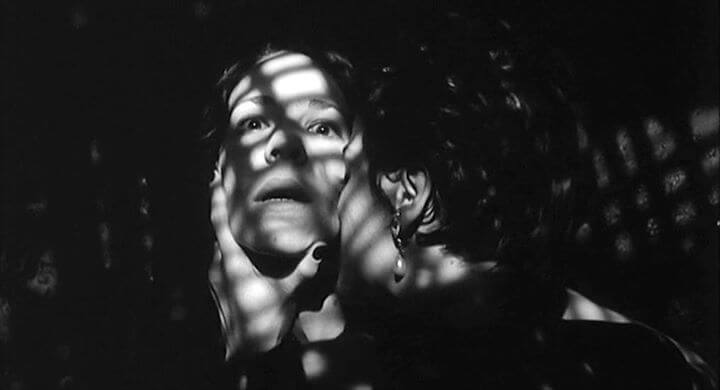
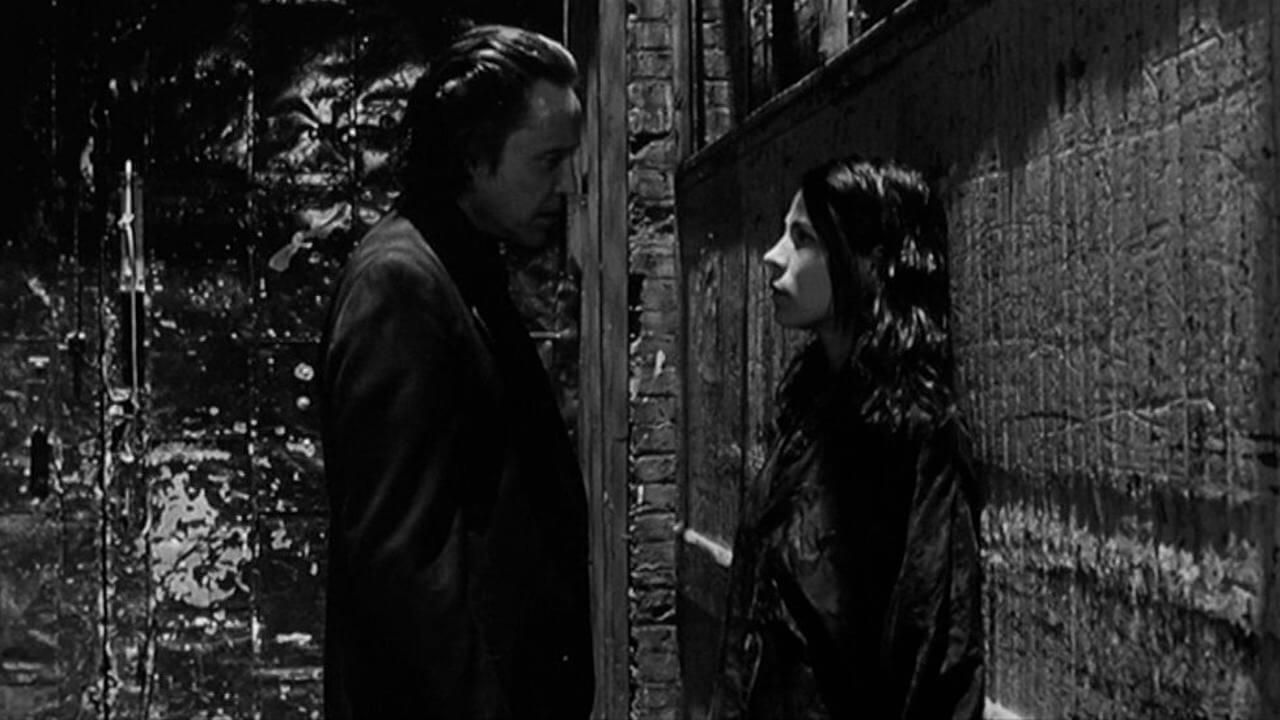
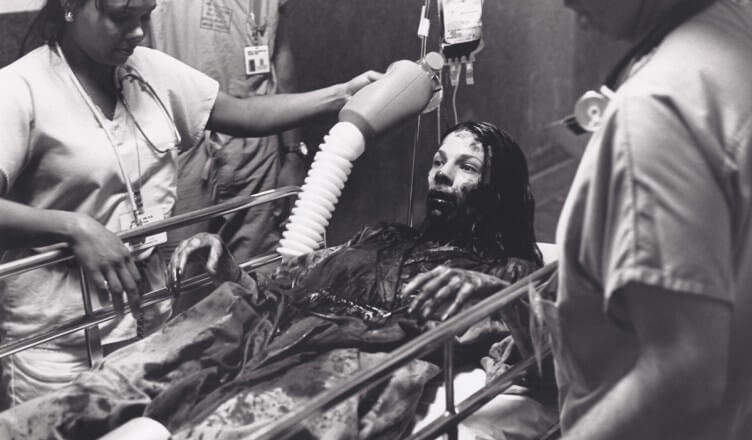
The black and white shooting style works brilliantly for the movie, but was there ever any talk of doing the picture in full colour?

Well, it was one of those things that I figured if we didn’t do it then, we’d never do it – make a black and white movie. Obviously, we wanted to make a black and white movie. Woody [Allen] when he was working with Gordon Willis, and Raging Bull with [Michael] Chapman and [Martin] Scorsese. We’re from that tradition of New York. The relationship between a DP and a director is special, and it was kind of now or never.

Your style of filmmaking, especially early on, is guerrilla making. How do you feel that films like this and Driller Killer have now been given a 4K release?

It’s not going to be the same. The ultimate definition of these films is a 35mm negative. They’re just trying to reflect the negative as close as possible, so they have a lot more leeway and they work from the original negative. And they worked with [The Addiction cinematographer] Kenny Kelsch. You’re seeing a digital fucking thing as oppose to watching a print of the movie, but it’s as close as you’re gonna get.

THE ADDICTION

When you did The Addiction, that was on the back of two Hollywood studio pictures – Body Snatchers and Dangerous Game. Was it refreshing to get back to independent filmmaking after those two movies?

It was cool being back in New York, but we did some of Dangerous Game in New York. Even though we had a big budget, that was done guerrilla style, you know? Body Snatchers was another kind of film altogether. I think it’s just a continuation of the raw style of filmmaking. It’s a budget film. We do our thing whether there’s a lot of money and a lot of executives or there’s no money and just us; we have one way of shooting a film, man.

A lot of your films are very much engrained in New York. How important is that place to you?

It was New York for a specific period. This is obviously shot in the streets in New York in the 1990s. That was the way it was that week or that month that we shot it, and it was never like that before and was never like it again. That’s what we got. When you’re shooting on the street with real people, you’re going to see what was there.

You’ve lived in Italy for several years now. Do you miss New York?

Nah, not really, man. I go back, I’m not crazy about Manhattan. I’m from Manhattan. I could move to Brooklyn or I could move to here. I was born in the Bronx, but I came to Manhattan at a young age and made films. I lived there for quite a long time. I’m not crazy about how my city has changed. I’m just not comfortable there. I don’t like the prices, I don’t like the people, I don’t like the intent on the life scale, what the cost of living is which reflects every aspect of somebody’s life, what it takes to be there, who is there, why they’re there.

That’s a shame…

Why? Why is it a shame?

It’s a shame that this place that was so special to you for such a long time has lost its appeal to you.

I had an opportunity to live somewhere else, experience a whole other kind of life. I’m Italian-American, so Rome, Italy? I’ve always been coming back here. I have family here. It’s not that foreign to me.

To many, The Addiction really put Lili Taylor on people’s radar in a major way. Some may have known her for Mystic Pizza, but this really put her on the map in a totally different role. She’s phenomenal in the film, but was she always your top choice to play Kathleen?

During the auditions, somebody brought her in and said we should meet her, that she was really special. We met her, and when you meet her you know it. She had read the script and had a real deep connection to it. It was a marriage made in heaven.

You and Christopher Walken go way back, and his role in The Addiction is a relatively small one. Was there ever any talk of expanding the Peina role once Walken came on board?

The funniest thing is, that role was originally written for a woman. We gave him the script for the opening scene that Annabelle [Sciorra] played; that was a male role, at least in our restricted minds. Walken doesn’t have these kinds of boundaries, you know? He thinks outside the box. He’s not looking at anything apart from the role he wants to play. It wasn’t so much about the gender.

The Addiction

Do you think a movie like this could get made today, or do you think people might get offended too easily by the tone and drug-driven nature of how the narrative unfolds?

Why not? Absolutely, as long as the filmmakers don’t get offended. Everything is going to offend somebody. There’s billions of people on Earth, man. You’re gonna offend someone.

What keeps your creative juices stimulated these days?

Just still shooting, man. Just doing the same thing. We’re starting to shoot a film next month.

The last time we spoke in late-2016, you were working away on Siberia. How’s that coming along at the moment?

We’re still working away, but I think we’re gonna start shooting in February. We’re doing another movie before.

And what are you able to tell us about this next picture?

It’s kind of like, did you see 4:44 Last Day on Earth? Check it out. [My film] is kind of like the Roman version of that.

You and Nicky St John worked together on so many movies and have known each other since childhood. You haven’t worked together since The Addiction and 1996’s The Funeral, but are you and Nicky still in touch?

No, we went our separate ways.

How is it to see your movies released for a new audience twenty, thirty, or forty years after their initial release?

Well, it’s been around. It’s not like it hasn’t been around. They play these films here and there, it’s on YouTube. People know about the films. Different audience, meaning what?

Like a new generation of people might discover them once they’re released on DVD, Blu-ray, or in this case on 4K Ultra UD.

I’m sure people 60 years old are going to be getting this video, too. Not just the younger generation.

The Addiction

What were the main things that you took away from your experience on The Addiction?

A lot! I learned a lot making this film. It’s hard to say one thing. You go through the process of making a film, it’s such a learning experience. That’s why you do it, to get to another place and an understanding of things: the process of learning. It was written, but it was reading it and putting it together; the shooting of it, shooting a film without paying people, the dedication of it, working with the people who were on it, the music that was on it, the editing process, seeing it in front of audiences, seeing different audiences, watching how different people related to it. It’s a universal learning.

The fact that people were prepared to change the perception of how things work in the movie business by postponing their salaries on the film, was that a humbling experience of sorts for you?

It’s not humbling, it’s a miracle! I watched a miracle happen. Most films, you find the financing, put the money together for the film. We didn’t. It was one guy, it was old school shit. A thousand people will say no, one guy will say yes. Then you’ve got the movie. The humbling? It’s how close this film came to never being made. And I’m grateful that it did get made. It got made and it got made for the right reasons, and that’s why it’s a fucking cool film.

Where would you rank it amongst your other pictures, or is it too hard to choose between them all?

I love them all. I’ve loved them all. They’re all like one long movie to me. I can’t look at this any different.

Do you think that there aren’t enough filmmakers like you around these days? As in, people seem to be afraid to look outside the box, to take risks, to break the mould.

There might be one too many [laughs]. There’s so many people on Earth and so many filmmakers, especially now. I just want to be one of the people that are not afraid. If you’re afraid, you shouldn’t be making films. And there’s nothing to be afraid about. What are you afraid about? I mean, I guess if you’re making a film in Iran or North Korea or some place like that, you’ve gotta be afraid. But I think I’m still a member of the free world. I think, but I’d better check the New York Times to see.

The Addiction is out on 4K Blu-ray from Arrow Video on June 25th – and you can find our review of this impressive new release here.

Scout Taylor-Compton | GHOST HOUSE

Scout Taylor-Compton

For over a decade now, Scout Taylor-Compton has been a huge favourite of many a genre fan. With her latest movie Ghost House having just been released, we were lucky enough to grab some time with the truly charming Scout to discuss this Bangkok-set terror ride, fellow new release Feral, her upcoming new podcast show, getting to hang out with Joan Jett on the set of The Runaways, her wish to tackle the Resident Evil franchise, her time working on Rob Zombie’s Halloween movies, the term Scream Queen, and a whole, whole lot more.

STARBURST: For those who have yet to see Ghost House, how would you best describe the movie?

Scout Taylor-Compton: Ghost House is about a young couple that goes on a vacation to Thailand and end up getting tricked. They find themselves haunted by a spirit because they disrespect one of their ghost houses.

Director Rich Ragsdale makes the movie look like it’s got a much bigger budget than it does, and part of that is in how he utilizes the stunning Bangkok location. How was it to be shooting in such a beautiful place?

Oh, it was absolutely wonderful. I was there before for the Bangkok Film Festival and I had such a great time. So, when I did hear about this project and I heard that it was in Bangkok, honestly, Thailand is one of my favourite places. The people are amazing, the culture I’m just obsessed with. I just have such a great time when I go to Bangkok.

Apart from Thailand, what caught your eye about the project initially?

Actually, it was a straight offer. Obviously going to Thailand was a big kicker, but I really like Julie. I thought there were a lot of moments, she was going through a roller coaster of emotions. I need a character that has ups and downs. Then when I met Rich Ragsdale, I was like, “Dude, you’re amazing!” He’s one of my closest friends now. It just kind of all worked and we moulded well together. I was just on board from the beginning.
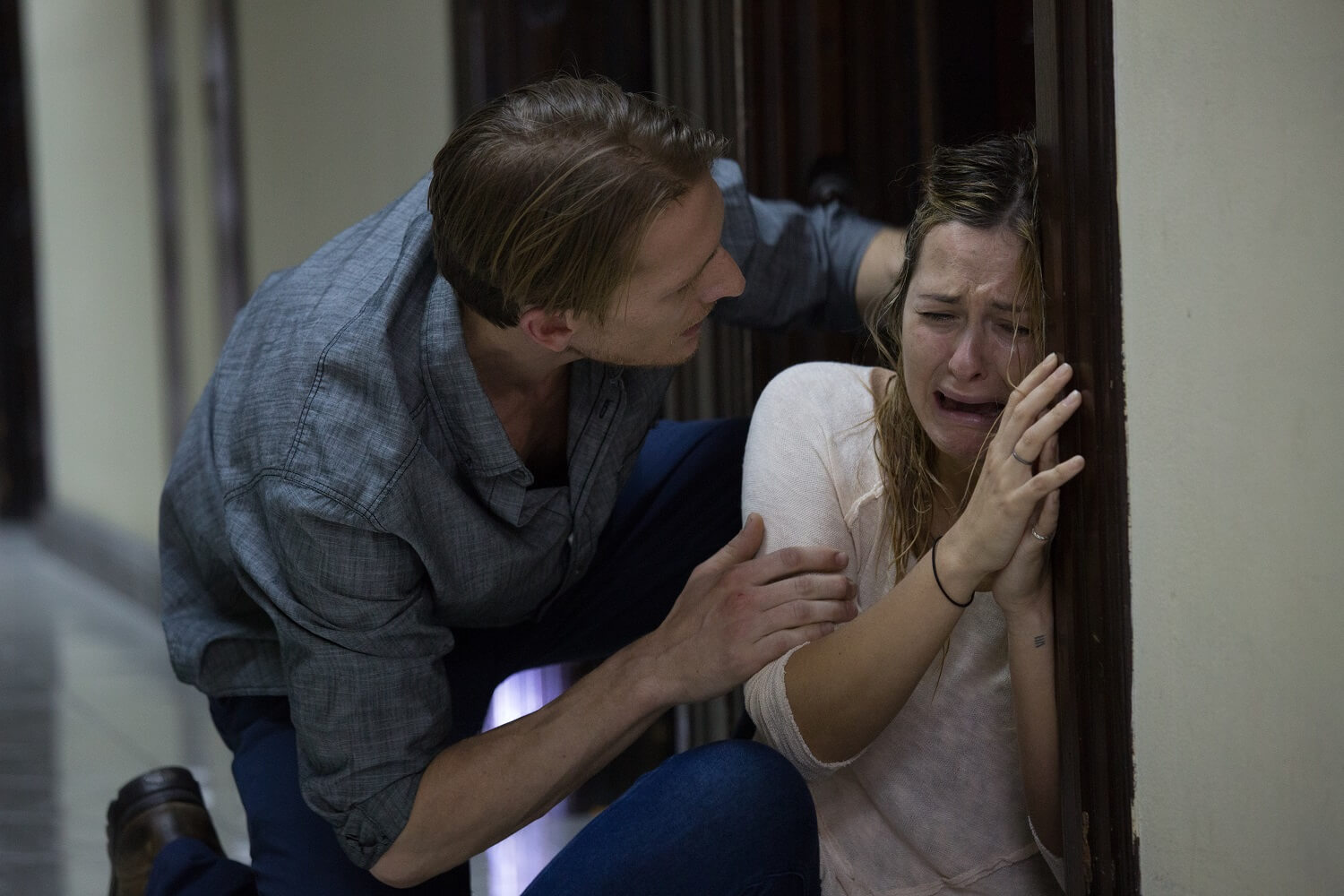
Ghost House

With the character of Julie, she really does go through a gamut of emotions along with James Landry Hebert’s Jim. And those emotional beats feel natural and unforced, with yourself and James working so well together. Was the chemistry you had with James instant or did you have to purposely work on that a little?

Okay, this is what happened. Me and James worked on a movie together, Get the Girl. We both played the bad guys, and I just really connected with James. We actually had someone that played my husband in Ghost House, but he fell out. I think it was four or five days before we were going to leave for Thailand, and I just threw James’ name out there because I thought he would be absolutely perfect. I spoke to James and said, “Do you want to come to Thailand and play my fiancé?” James is just always on board and he’s a really good actor to work with. We’ve only done two movies together but I feel like I’ve done so many movies with James because we have that chemistry that just works.

With the title of Ghost House, people might just chalk this off as just another generic ghost story, but there’s a whole lot more to the picture. Given how it’s steeped in Thai traditions and embracing another culture, is that something that also jumped out to you?

Completely! To be able to go to Thailand and find out their culture and beliefs, and to find out that they actually believe in their ghost houses, to the extent that they believe that something like this can happen to them. And I think that’s why it did so well overseas, because they believe this stuff. They absolutely believe this. I learned more about it as I was in Thailand filming, and it just added to it for sure.

What’s the response been to the movie in Thailand then?

Oh my god, huge! Absolutely huge! It was such a massive deal. It opened at #1. It was so big over there, it was everywhere. People who where in Thailand were texting me, “You are everywhere. It’s crazy!” So yeah, they loved it over there. And that makes me completely happy; going to Thailand, filming in their country, and then they loved our product.
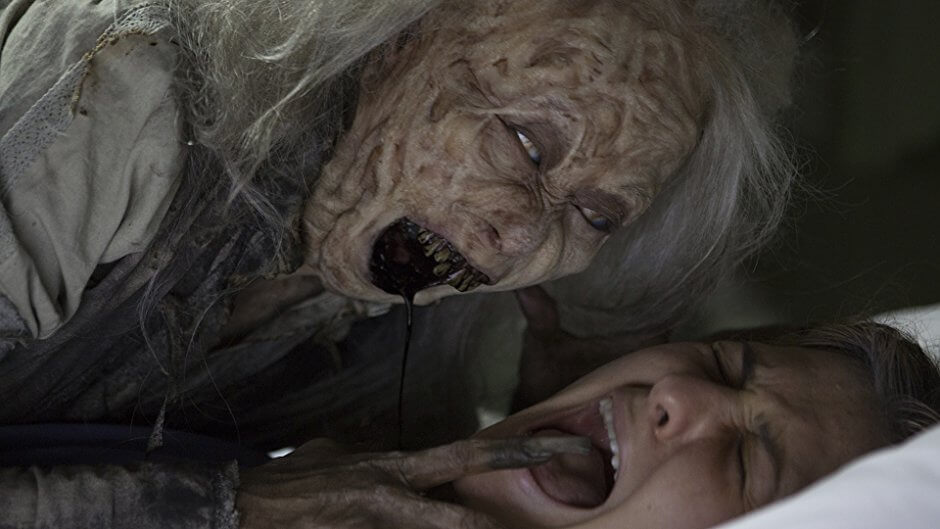
Ghost House

This might be a really stupid, obvious question, but were you always a horror fan?

You know, I was. My dad was a mortician and I grew up in a mortuary, so it was kind of introduced to me at a young age. I never realised how much of a horror fan I was. I guess I was raised on it.

What would be your favourites and go-to horrors that go you on board with the genre in the first place?

The Exorcist, for sure, was one of my top ones. Then this little indie movie called May I really digged. And I was a huge fan of the Chucky franchise. I was obsessed with Chucky. I don’t know what it is.

Do you ever feel that because you do such a lot of horror, you maybe get a little pigeonholed with the roles you get approached for?

Completely. It’s a huge thing, even for any category that any actor gets in to. Like comedians. You’ll never see them in any drama films. It’s the same thing with horror. Once you get in to it, it’s really hard to get out of it. And not get out as in get out, but to be able to do other roles. It is a struggle, but I do love the genre so I always have a fun time. I definitely have reached the age and the point in my career that whenever I am going to do another horror, I don’t want to do the same character over and over and over again. That’s one thing that I’m looking at – to be stimulated. To do that over and over, it doesn’t serve you very much.

Is it about keeping it fresh and interesting, and not just letting it become another movie that ticks the same boxes as the previous horrors you’ve worked on?

Exactly! And people ask me, “Oh, is horror really hard? It must be so hard for you to cry and act scared!” Yeah, maybe it was at one point, but now that I’ve done it so much it’s like writing. It’s like writing or reading, learning how to write and read. Now you know it, it’s second nature. How to drive a car. You do it so much that it’s easy.
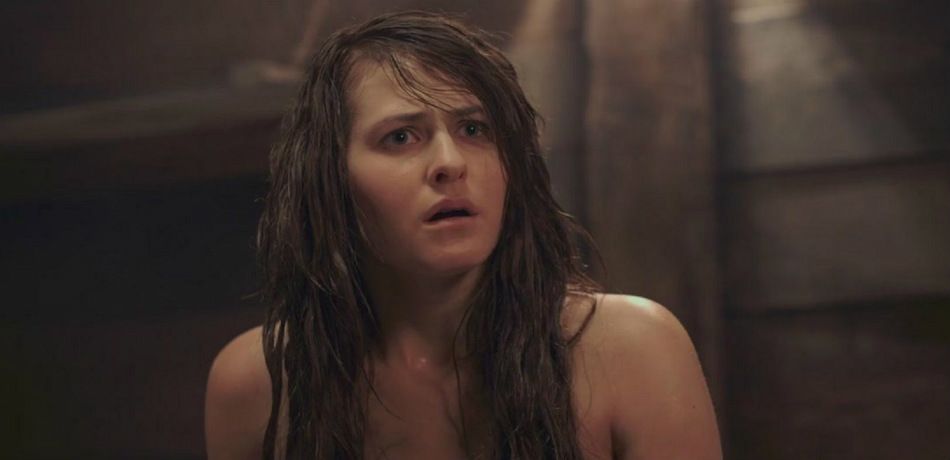
Scout Taylor-Compton Halloween

Was there a certain point or trigger moment where you just wanted people to start offering you more than those roles?

You know, the thing is, getting in to being Laurie Strode. That’s such an iconic role. Definitely, from that point there was just so much horror. So much. It’s always been a struggle for my career since I’ve done Halloween, but it’s okay, it’s something I do enjoy. But yeah, there’s much more that I can do. One day would be good to do an indie role in something and then people will go, “Oh, she can do this and this and this.” I wouldn’t change it, though. I’ve loved my career and what I’ve done. But it’s tough. It’s tough for everyone in this business.

With Halloween, many would argue that Laurie Strode is the most iconic character in horror if you discount the killers and monsters. Did you feel the pressure that came with that role at the time?

Yeah, it was an incredible experience for me. I was seventeen when I got it. At seventeen you don’t realise how much there’s a horror family. It means so much to a lot of people. The originals mean so much to a lot of people. So, I was instantly getting compared at seventeen, and people were just being completely vicious. I was just, “What am I getting in to?” At 29, now I understand it, I get it. For me, I like Dirty Dancing, so if anyone was to take that I’d be all, “Hey, no!”

Whether you loved or hated Rob Zombie’s Halloween movies, that doesn’t mean you can’t still enjoy what you used to enjoy about John Carpenter’s Halloween. Sometimes, people need to maybe learn to disconnect those things a little. Just because there’s something new you don’t like, that doesn’t stop you enjoying what you enjoyed about the original.

Exactly! It’s hard. I’d never go into a movie, if it is a remake, I never go in comparing. It’s two different generations, you know? I dunno, it’s crazy. I don’t see the disrespect in doing a remake. We have been doing a lot of remakes, though. We’re remaking everything.

Given the ending of Halloween II, what happened to the talked-about third movie?

Yeah, there was a third. There was talk of doing a third. I remember Dimension had called myself and Tyler [Mane – the Michael Myers of Zombie’s Halloween movies] about doing a third. They gave us a tentative date, and they were, like, “We don’t have a script and we don’t have a director yet, but we’re doing it.” And it was just so wacky at that point. Then it ended up not happening. I think it was probably for the best that it didn’t end up happening. It would have been so difficult for me to do a Halloween film without Rob. If it would’ve actually happened, I don’t know if I would have gone through with it. They probably would have just changed so much of what Rob had done, and I wouldn’t really want to do that.
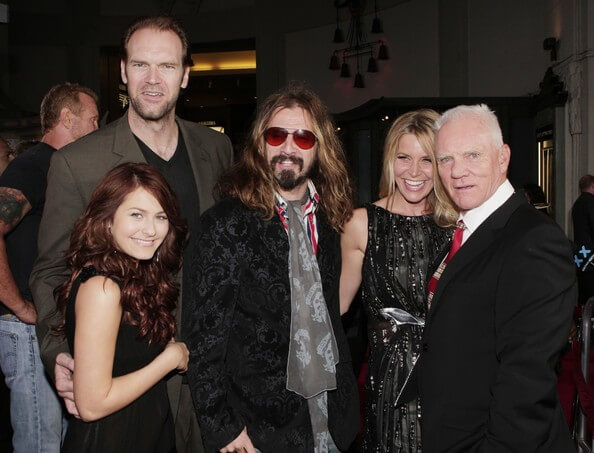
Scout Taylor-Compton, Tyler Mane, Rob Zombie, Sheri Moon Zombie, Malcolm McDowell Halloween

From briefly meeting Tyler at Wales Comic Con over here, he seems like just the nicest guy.

I absolutely adore him. He’s kind of like a dad to me, for sure. How is the UK with horror?

We’ve always been very passionate about horror, whether it’s the Hammer Horror stuff, the Christopher Lee movies, The Wicker Man. All of the stuff from the ‘60s and ‘70s, it’s kind of been ingrained in us over here that we naturally embrace horror. Plus, a lot of the more rural locations and towns lend themselves well to horror. As in, you could easily see yourself being butchered in a field or the woods. So yeah, we love our horror.

I’m doing a convention out there in Birmingham. I’m very excited to go out there and meet people. I just like talking to people. Every time I go to conventions, I just end up buying everything. I come home with so many things that I think are so rad. I’ve never been to an England one, so I’m excited. I’m going to be there for Halloween. I’m going to plan my day so that I can just have a good time in England for actual Halloween. It should be fun.

Moving away from horror for a moment, how much fun was it for you to be involved in The Runaways?

Oh, it was amazing. It was probably one of the best experiences of my life. I mean, Joan Jett was there every day on set, so that was just awesome. That was just incredible. We’d have band practice and then we’d go film, then we’d have band practice again. It was just one of the best experiences of my life, for sure. I like to sing. I enjoy it. I enjoy music in general and that whole world just interests me a lot, so it’s fun to incorporate that into movies. It was amazing. I would do a music biopic again because it was such a great time.
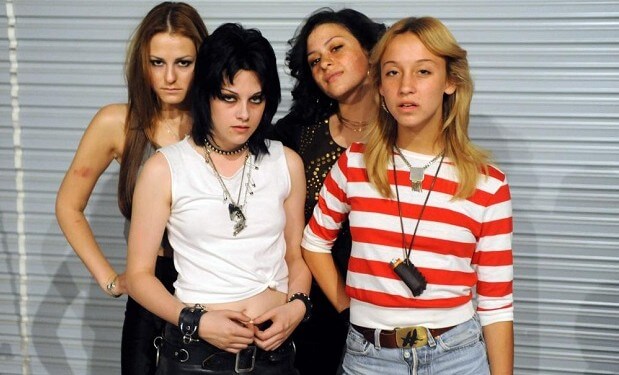
The Runaways

On that topic, if you could play any musician or artist in just such a biopic, who would it be?

You know, I actually went up for this role that I wanted so bad, but I don’t even think that they ended up doing it: Janis Joplin. When I was going up for this movie to play her, I just went in to like a Janis Joplin hole. I just absolutely love her. I got her mannerisms down, I could play this woman. So, I’d love to play her, and I’d love to play Lita Ford [Scout’s Runaways role] in a Lita Ford story.

Is that your ultimate passion project then, or is there something non-music based that tops that?

There’s two. I would love to do a Resident Evil kind of movie. I would love to do that. Action is my thing, I absolutely would love to do that. And then obviously I’d love to do a movie like The Notebook. What girl wouldn’t?

That’s two vastly different movies right there…

I know, I know. But I could do both. Those are my goals in my future.

Well, we believe that the Resident Evil franchise is being rebooted right now.

I know! Just an audition, man, let me in there [laughs].

Were you familiar with the Resident Evil games, or is it just the movies that grabbed you?

You know, I just love a powerful woman like that. I’m obsessed. Probably my favourite genre of film is action. I love it. Like Atomic Blonde, I was obsessed. I just want to be that woman so bad. And Kill Bill, that too. Quentin Tarantino is the one director I really wanna work with.

You’ve just had Feral released in the United States. What can you tell us about that?

I’m really stoked about Feral, I’m really proud of it. IFC picked it up, Lew Temple’s in it with me. It’s definitely a rough ride. I play Alice, a character that I’ve been wanting to play that kind of goes towards the whole Resident Evil kind of thing. She’s a strong character who is just in the wrong situation and doesn’t stop to think. She’s just a really strong character. I’m really excited about Feral. It seems like it’s been getting really good reviews and people have been liking it. It’s on in selected theatres, then it’s going to be on demand and all that good stuff. Hopefully, it will get over there for the UK. I’m pretty stoked about it.
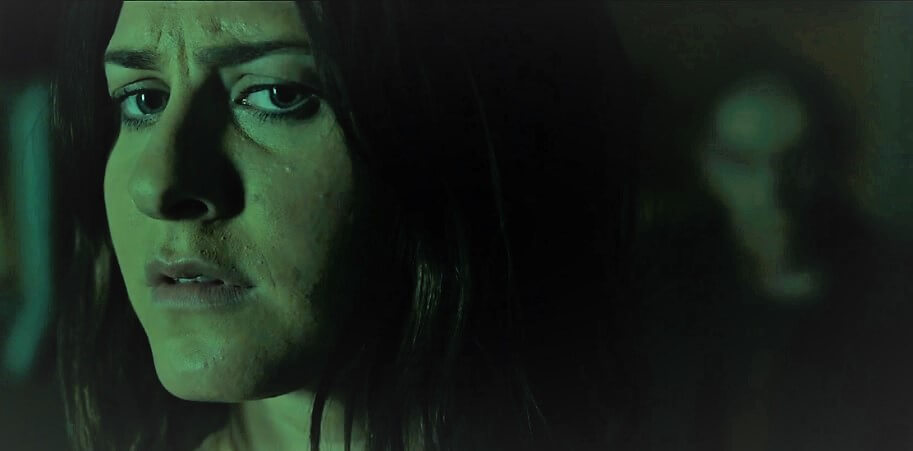
Feral Scout Taylor-Compton

You’ve talked about how you enjoyed playing Alice, but what’s your favorite character that you’ve played to date in anything you’ve done?

That’s a tough question! I don’t know, I find good things in all the characters that I play. I have noticed that in the beginning of my career I played very vulnerable characters, and now that I’m getting older I’m playing a lot of stronger female roles. But I think probably Lita Ford and Laurie Strode are probably my two very favourite characters, for sure.

As you touched upon earlier, you were seventeen when you took on that Laurie Strode role. Do you think being so young almost gave you a sense of no fear when tackling that role?

Actually, I owe it all to Mr. Zombie. It really was his doing. My first day on set, he could tell that I was a little bit nervous because of what was going on and I was at such a young age. He kind of just like, “Hey, just play her like you would play her. Don’t even think about anything else. Forget about what people are saying, just play her as you would play her.” So, I definitely owe it to him for sure.

Rob’s recently wrapped on 3 from Hell and that’s due for a release next year. Have you and he had talks about maybe working together again at some point?

You know, I would love to do something with Rob. Any time that he called me, I would absolutely love to work with him. I called him recently about a project that I’m doing, and we talked about him hopefully directing an episode of something of mine. But yeah, anything that he would want me to do I would totally do. And vice-versa.

So, if all goes to plan, we’re going to get the Rob Zombie-directed, Scout Taylor-Compton-starring Resident Evil remake then, yeah?

That would be sick [laughs]! If I had the rights, that would be so badass.
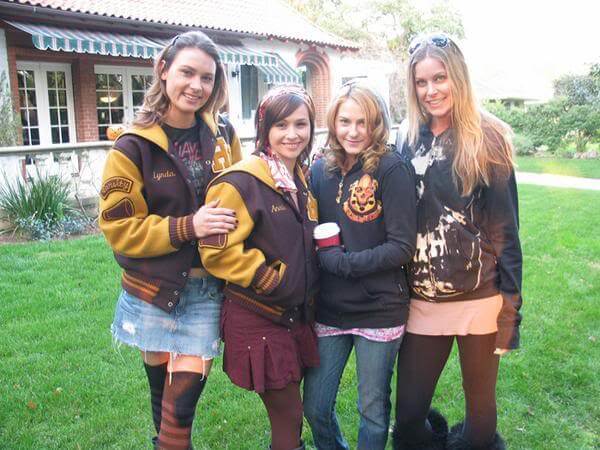
Halloween Rob Zombie Scout Taylor-Compton

You’ve said how Rob Zombie made you feel at ease from the very first day on Halloween, you’ve discussed how nice and friendly Tyler Mane was, and you’ve discussed in interviews how close you and [Halloween co-star] Danielle Harris are. It seems as if the horror community is just a big old family! Is it right to assume that, that it’s likely a second family?

It is. It’s not even what franchise you’re in, it’s just the whole horror community of actors is just a family. And it’s definitely like a big thing when you do conventions. You meet all these people and you just become like this odd family. It’s kind of like the Addams Family in a sense. It’s cool. I love it, I love them a lot. I’ve met such incredible people in the horror genre. Everyone’s normal, you know? I know horror’s crazy, but everyone’s just a normal person. It’s a community.

Do you feel that we’re now at a stage where females in horror aren’t necessarily there just to be the victims anymore?

Yeah, I was talking to my friend Trevor last night. We’re creating a podcast together. We were talking about how women are not used as bait anymore. Women are not bait, we’re stronger characters now. I feel like the audience don’t want to see that, they don’t want to see women used. It’s like, “Oh, the blonde naked girl over there? Yeah, she’s going to go first.” You don’t see that now as often.

Do you think that’s down to a change in society or do you think it’s that more women are involved in the industry as directors, screenwriters, and creative forces now?

Yeah, I think that has something to do with it, as well as just how we’re growing in the industry with women now and how we see them. I think it’s about everything; I think it’s everyone’s doing, from male to female. We’re all working together, that’s what it is.

And it would be cool to see a female-fronted franchise in terms of the killer. You’ve got Michael, you’ve got Jason, you’ve got Freddy, you’ve got Chucky, you’ve got Pinhead. The people that front the franchises in that sense, it seems as if horror’s been lacking a truly great female representative in that way. There’s Sheri Moon Zombie in Rob Zombie’s Firefly Family pictures, but even then she’s only one of a three.

You know, I’ve been toying with that idea. I’ve been really, really thinking about that, and I kind of want to write it and create something like that. It’s always men, you know? Then you get, “Well, a woman couldn’t do any of what a man could do when it comes to a horror icon.” But I think it would be really cool to have a woman horror icon.

There’s plenty of one-off movies with a female killer, but when it comes to a full franchise it’s something we’d like to think would’ve been explored by now.

Just having Freddy, Jason, Michael Myers, they’re all single people, they’re all by themselves. So, I think it would be cool to just see a female by herself. I think that would be really cool.
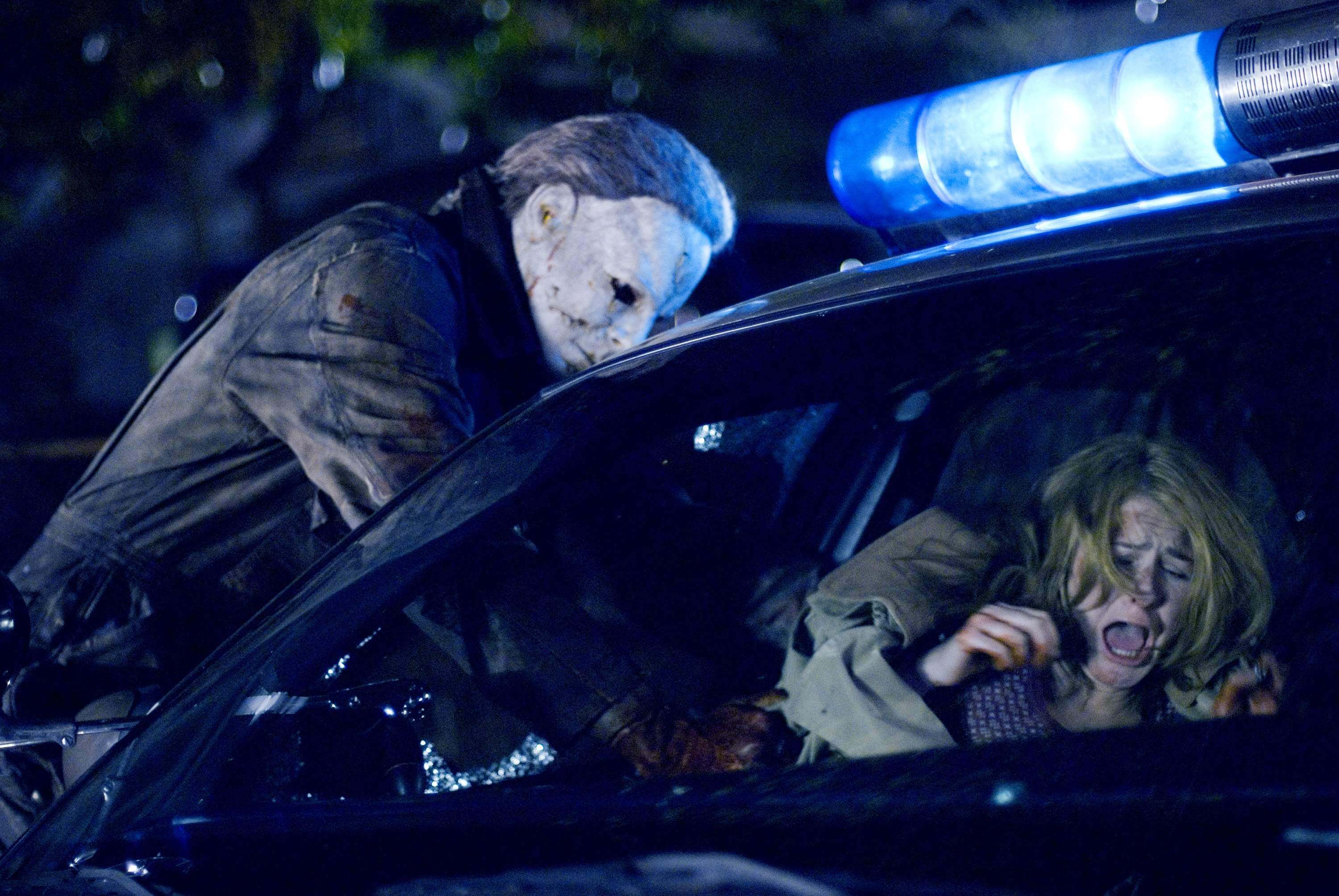
Halloween Rob Zombie Scout Taylor-Compton

Do you think there’s still a market for franchise killers, or do you see the days of a marketable franchise killer as an outdated concept in a way by this point?

I don’t think so. I feel like it hasn’t lost its touch. There’s Saw, even The Purge, The Strangers. I feel like they need to happen, because once you can be fearful of one monster and then build off of that fear and make multiple movies, I think it’s such a brilliant idea. I think it’s so good. And I hope it never dies, I really hope it doesn’t, because those movies are so good because of the success of not just one but how many you can do and have success with.

Speaking of The Strangers, have you had chance to see The Strangers: Prey at Night yet?

I have, I have. Bailee Maddison, she’s a friend of a friend, so I always support her. I think she’s great. I did like it, I liked it. There were parts in there that were really crazy, really intense. The first movie was so brilliant because it was just one place. When you try to do a sequel and you try to make it bigger, I think that it doesn’t always go well. There was just too much. I think what was so brilliant about the first one is that it was at one place.

We absolutely loved that first Strangers movie, but it seemed to turn off some audiences because the ending wasn’t all sunshine and rainbows…

That’s what pisses me off so much. There is so much shit in the world but we don’t want to ever see it. This stuff happens. When she turns up at their door, “Why are you doing this to us?” “Because you were home…” People do this shit, people do this stuff. Growing up with a dad who was a coroner, I’ve been obsessed with forensic files and all of this stuff, and I’ve definitely watched all of these stories. And this stuff happens. Daily. It just brings to light what rough shit actually happens. I don’t to want hide things and mask things to see good all the time, because it just isn’t. But then I also like Disneyland and fairy-tales, too. When there’s a rape scene and people walk out of a theatre? This stuff happens. We’re trying to show you what people are going through, and it’s really sad. It’s a tough thing. It’s a terrible part of the world that we don’t like to acknowledge so much. It’s like even in Halloween II, with Danielle [Harris]. She dies and I find her. Oh my god, that is nuts. It’s my favourite scene because it was so real, so raw. It’s so telling. It’s crazy.

Do you think that having a mortician as a father ever had a particular influence on your career or on the projects you’ve chosen over the years?

I think the only thing that it structured me as is it made me grow up a lot faster than normal kids. It made me become an adult a lot faster, and I think that’s why when I started at 10, most kids at my age were doing Disney Channel, I was doing all of the CSI stuff because I could handle adult content a lot easier than other kids. I grew up around adult content, so it just made me grow up a little bit faster.

Is it fair to say that you have a big interest in all things forensic then?

If you look at my queue on Hulu or Netflix, it’s all forensics or Dexter. It’s all just like that. I’m so in to all that stuff. I literally binge-watched all of the seasons just recently [of Dexter]. I got around to watching it and just couldn’t stop watching. The series finale sucked, but the whole show is great. That’s another one where I’m curious if they’re going to bring it back.
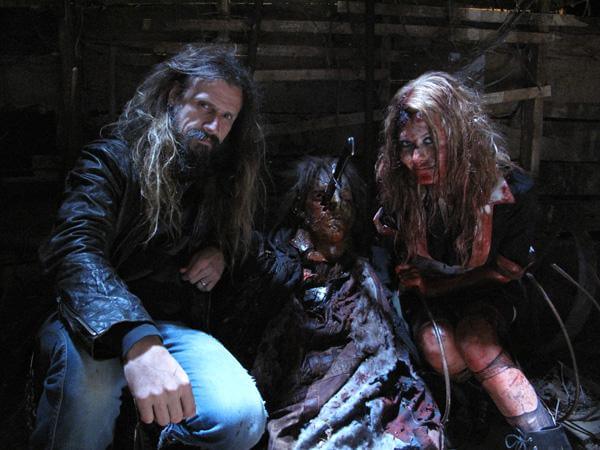
Halloween Rob Zombie Scout Taylor-Compton

Before we wrap things up, what are your thoughts on the whole Scream Queen tag? That’s something that’s been thrown around for decades, and you’ve been called that yourself over the years. Is that something that you see as a disrespectful term or do you embrace it?

I think it’s cool, I think it’s really rad. I never thought of myself as a Scream Queen, but then whenever I do interviews or meet people they’re, “You’re my favourite Scream Queen!” For me, it’s just, “Oh my god! I’m in that category with all those women!” I think it’s rad. I really love it, I really do dig it. I never think of it as anything negative at all. I embrace it, for sure.

What are you working on right now, and what have you got coming up?

Right now, I’m about to do a couple of films. I did a film called Star Light that’s going to be coming out. It’s so crazy, because people are looking at my IMDb and I forget what I’ve just done. It’s hard to remember them all. I’m doing a film called The Grooming that I’m going to start doing in July. But the focus right now is I’m going to be launching a podcast pretty soon with by friend Trevor. It’s called Behind the Mask, and I’m really dedicated to that. I also wrote a project, so I’m dedicated on getting that out and picked up by a studio or network. Those are my two focusses right now.

What’s the content of the podcast planned to be at this stage?

I have actors, directors, anybody in the entertainment business that I’ve worked with or my co-partner has worked with. It’s talking about what they’ve done that people are familiar with, but then I’m more interested in getting to the core of what makes them them. The stuff that people might not possibly know. Like Dee Wallace. She’s a healer. It’s interesting to learn other facts about them and not just their career. So it’s behind their mask, in a sense. We’re going to launch probably next month. So, I’m really excited to get that going. I love podcasts and radio. And Trevor, I was a guest on one of his shows a long time ago. We just hit it off. We just get along, so I came to him with this idea and now we’re creating it. It’s really rad.

Ghost House is out now, and be sure to follow Scout on Twitter and Instagram.

Jeff Russo | LEGION

Jeff Russo

In just a few short years, composer Jeff Russo has become the go-to person for genre scores. Beginning with the first season of Fargo in 2014, Russo has since scored the likes of serial killer drama American Gothic, Discovery, the latest instalment of the Star Trek franchise, all three series of creepypasta anthology Channel Zero, and the psychedelic FX superhero series, Legion. We took the time to speak with the composer about how he works and swaps between so many different tones.

STARBURST: Especially with the likes of Fargo and Channel Zero being linked thematically, but not necessarily plot wise, how do you make everything work? I assume it has to be a big production, in terms of everything being different each year, but trying to maintain a consistent vibe.

Jeff Russo: You know, it’s interesting; I try to think of each individual season as another chapter in the same book. The thoughts behind my choices are the same, but the choices need to feel unique to each season. With Fargo, it was a matter of finding the same melodic motifs for the new characters. We never really reuse any of the previous themes from the other seasons, so each season can have its own identity.

I treat Channel Zero the same way, which is to create a new palette, but to approach it in the same way every year, because the vibe of each of those individual seasons is similar, but the story for each is different, and the way the stories are told are different, so I have to think of it in a unique way for each season.

Was it tempting – especially with Fargo‘s second season – to maybe use some of the thematic elements for Alison Tolman’s character, Molly, when you were composing for Patrick Wilson’s character, which was her father, Lou?

Well, they’re very different characters, but the main through-line is the tone. The other through-line is the main show’s theme, which I would bring back into each season. But, I needed to treat them each as discreet character pieces. I tried to look to see if I gave them each a little bit of that theme, and it didn’t work. It just felt wrong, so I went back and had to rewrite new themes for everything.

It seems like shows such as Fargo or LegionFargo, more so – use quite a bit of pop music in them. Are you aware of all of this when you go in to compose?

I work closely with our music supervisor and our show runner to figure out how I’m going to get in and out of ‘score goes into song’ or ‘song goes into score’ and how that might work, so I am part of that conversation. I do need to be a part of that conversation in order to figure out how to deal with that, but that’s about the extent of my involvement.

Between the most recent season of Channel Zero, along with obviously Legion, you’ve become quite good at scoring madness. What’s the inspiration for that?

That sort of happened accidentally. I’m not quite sure how I came to channel that, as I don’t consider myself to be completely mad – although there are days that I have where I feel like I’ve gone completely mad. The idea is to approach it from the perspective that I am not aware of. I’ve read a lot about madness and what that can mean, from an aural perspective. I’ve done a little bit of research.

When I went to do Legion, Season One, I read a book called Hallucinations, and it described how audio hallucinations can be just as profound as visual hallucinations, and I try to incorporate that into how I construct a soundscape for a score that relates to that sort of idea, and I apply that same sort of knowledge to Channel Zero, as well.

When the score for Legion was released, we were obsessed with Seeing Things/Hearing Things, and put it on a lot of Halloween mixtapes, because that piece is just terrifying.

I wrote a lot of that music based on that first script – which is a lot of how I approach writing music for a story, which is to take the story and sort of apply how it makes me feel when I read it and apply that to what I’m writing. That particular piece of music was one of those things where we talked a lot about not wanting to give away whether or not our main character was in reality or in a hallucination.

I wanted to be able to slip back and forth between reality and non-reality, and in that particular piece of music, I was envisioning how I was writing it as I was writing it, and trying to flip back and forth between what it be like to not know the difference between reality and a hallucination. That was kind of the basis for the entire score: how do I make the score in a way that is not telling you what is real and not real, and let you slip back and forth between the two.

That’s a pretty fascinating idea: trying to not tip the plot via the music?

Well, our thought was, if the main character doesn’t know what’s real and what’s not real, we wanted to invite the viewer to also experience it in the same way.

You’ve gotten a couple of high-profile, straight sci-fi gigs recently – most notably, Star Trek: Discovery and Altered Carbon. In terms of Discovery, what is the approach one has to take with a 50-year-plus franchise?

That’s definitely standing in the shadow of giants. It was terrifying when I first thought about writing music for that franchise: wanting to live up to those predecessors and also wanting to create something that was unique to our version of the show. It’s a really tall task, but in the end, I felt like what I needed to concentrate on was music.

Like, what’s the melody for this character? What’s the motif, here? How do I make this feel classic and yet, new, in our show? It was a terrifying task, and I got more and more comfortable as the first season went on. Certainly, in Chapter Two of the first season – Episodes Ten through Fifteen – where I got to spread the musical wings, so to speak, with the Terran Mirror Universe themes.

It was really difficult and really terrifying, yet thrilling at the same time, because I’ve been a Star Trek fan since I was a kid. Never in a billion years did I ever imagine myself writing music for anything that had the words Star Trek in it. It’s still something that I look at and I listen to the music for it, as we put together the music for Chapter Two, and I’m still totally blow away that I’ve gotten to write music for this franchise. It’s just unbelievable.

Legion is currently airing Tuesdays at 9pm on Fox UK.

Wes Ball | THE MAZE RUNNER: THE DEATH CURE

Formerly a small-time director with few credits, Wes Ball found himself thrust into the spotlight following the success of The Maze Runner trilogy. The movies, adapted from James Dashner’s young adult book series of the same name, star Dylan O’Brien, Thomas Brodie-Sangster, Will Poulter, Kaya Scodelario, and I Hong Lee and function as Ball’s first foray into blockbuster filmmaking.

We recently spoke with Ball about the Blu-ray release of the franchise’s final film, The Death Cure, on May 28th. Ball spoke openly and happily about adapting Dashner’s story and how the experience helped shape him as an up-and-coming filmmaker.

STARBURST: What drew you to the Maze Runner franchise? 

Wes Ball: First, it was just that a studio offered me something to look at to direct. Just that alone was a lot. I kinda went away and read the book and what immediately connected to me was that it had some mystery. It’s a great concept. A kid wakes up in a giant maze and finds a way out. And then there was that kind of brotherhood thing. That Lord of the Flies little community that they had built for themselves and how they banded together to survive these crazy circumstances. That was what kind of hooked me in. Then I gave them a pitch and the rest is history. 

The thing about James that was really cool was that he had this flexibility to make the changes we needed and make something that works on a movie screen. Some things in a book don’t really work in the language of a film. James was always very gracious to let us do our thing. Obviously, we always had him there as a resource to make sure we weren’t contradicting the book or violating something we didn’t understand.

What parts of the books did you feel wouldn’t translate to a screen? For example, I know that Aris was a much bigger part of The Scorch Trials than he was in the movies. 

That character, in particular, was almost like another Thomas. That’s the way I read him in the books. We couldn’t support that. Even in the second movie, there are a lot of characters standing around that are kind of these strapping young men. We needed a little brother character. We tweaked that a little bit. That brings me back to the changes we made in the first movie. The maze was all underground and a virtual sky overhead and when I originally came on to the movie, my approach was to do something that felt very grounded and real. That meant taking the whole virtual thing out. It was stuff like that, which ripples through all the movies but hopefully still holds true to that core of the protagonist and his friends trying to find a way home.

There are a ton of emotional moments in this series. You’ve got Chuck, Newt, and Winston dying. You’ve got all these characters who are just kind of being picked off. Which one hit you the hardest? 

It’s tricky. Most of them are all in the books. We knew that the Newt thing was going to be an important one. Fans are all waiting for that knowing that it was going to happen. So how do we do it justice? How do we do it so we send him off rather than just kill him off? Make it the peak of drama for almost the entire series, something that’s really cinematic and interesting. It’s intense dramatically and emotionally. It’s the last movie that has most of the emotional, dramatic beats. I remember on that first movie (being my first movie too), there was that scene with Chuck. It’s fun to be there when everyone is in that raw space, essentially saying goodbye. That had a particular resonance.

We always found Newt to be Thomas’s rock, which is a role that other characters like Minho didn’t really play. 

Here’s what I saw: Minho was the badass warrior who needs a general. That’s Thomas. Someone who gives him a direction. Thomas had Newt, who was kind of the person who says, “Wait. Let’s think about this.” He’s the brains. He’s the person who makes sure they’re making the right choice. You’ve got this reckless nature in Thomas, who needs Newt to kind of keep him making the right decisions. And then, like I said, you’ve got Minho, who’s like, “Tell me where to go and I’m there for you.” It’s how we introduced him in the first movie. He was this character who literally abandoned Thomas in the maze. He chickened out. He actually talked to him when they survived that night in the maze. He says, “I tucked tail and ran while he stayed.” That was the moment for him to always follow Thomas everywhere. It’s a cool dynamic within that core group.

Which of Dashner’s other stories would you be interested in adapting? Any talks to do Eye of Minds or anything like that? 

Not me personally. I can’t say I’ve actually read those stories. I obviously know of them very well. I’ve got other things I’ve been messing around with. I’m kind of moving on for a little bit.

Can you reveal some of what you’re doing? 

Well, there’s this Mouse Guard comic that I’m adapting. It’s a very, very cool movie and I’m probably going to do it with Matt Reeves, director of the Planet of the Apes movies. We’re going to do something that’s very different and much bigger. It’s basically a big giant fantasy epic adventure with fighting mice. We’re writing the script and developing the technology to make it. It’s kind of fun that I’ve made three movies attached to the same universe and I’m extremely fortunate to have the opportunity. I’m also excited to move on to different stories.


MAZE RUNNER: THE DEATH CURE is released on VOD on May 21st and DVD, Blu-ray on May 28th.

Stefan Kapicic | DEADPOOL 2

Stefan Kapicic Colossus Deadpool 2

After years spinning its wheels, Deadpool finally made it to the big screen in 2016, wowing audiences and changing the superhero game. But while Ryan Reynolds’ Merc with a Mouth was the star attraction, many were equally as drawn in by the inclusion of iconic X-Men member Colossus. With Deadpool 2 hitting UK screens imminently, we caught up with the truly charming Stefan Kapicic – the man behind Colossus – to discuss this most hotly anticipated of sequels, his history as a huge comic book nerd, what may lie ahead for Colossus in the future, working with Ryan Reynolds, and so, so much more.

STARBURST: In terms of screen time and importance to the story, what can you tell us about the role of Colossus this time out in Deadpool 2?

Stefan Kapicic: After the first part, Colossus definitely became one of the fan favourites. I can’t talk a lot about the plot, but Colossus is involved in a big plot. I know the fans are going to be extremely happy in how we’re portraying Colossus, one of the iconic X-Men. The beautiful thing is the relationship between Colossus and Deadpool is being upgraded. Colossus is like a father figure, a big brother figure. He’s an old school superhero who is trying to get Deadpool on the right side. He knows that Deadpool has a good heart and that he can become an X-Men, he can become a real hero. That’s one of the missions that Colossus has in the comic books, and now in Deadpool 2 he’s still going to be pursuing that. In the trailers, Colossus says, “You have a good heart, we’re training you to become an X-Men.” So from that point of the plot, you will see Colossus still trying to get Deadpool to become a good person.

You’re a self-confessed massive comic book nerd. Which comic book characters would you highlight as your personal favourites growing up?

I was born in Germany but I’m originally from the ex-Yugoslavia, so we had a big influence from Italian comic books and European comic books like Corto Maltese or Sergio Bonelli. But then again, you get your first love with DC and Marvel Comics. As a kid, I used to like Superman and Batman, but Batman was my favourite. I can still remember when I got my first Marvel comic books. My grandpa bought them for me, these original comic books, and I remember the first one I grabbed was Wolverine #50. It’s a yellow front page with his claws tearing through the page. That’s when I fell in love with Wolverine and, of course, right away with the X-Men. So as a comic book geek, for me, having the chance to portray a character like Colossus, I’ve said it many times but it’s like an Academy Award for me. We all dream when we are kids to become a superhero, and I got this chance. It’s two years from the first Deadpool. This movie changed my life, Colossus as a character definitely changed my life, and this dream’s still going on. Sometimes I’m pinching myself, trying to understand if this is really happening to me. For a lot of actors, being a superhero or comic book character is just like a job. For me, it’s something really emotional. It combines the beauty of my job and my dreams, my childhood dreams. My first love was comic books, before even movies and theatre and acting it was comic books. It’s something for me that’s a dream that’s still going on.

Deadpool Colossus

Upon landing the Colossus role, did you go back and read any particular arcs to pull inspiration from?

I was really, really familiar with the X-Men and Colossus, but when I got the role I sat down with Tim Miller, the director of the first Deadpool. He’s a huge comic book geek. When you go his studios – Blur Studios – you can see a huge wall full of comic books. He knows every single character from the beginning to the end, so we were combining our comic book geek knowledge to see and find the perfect Colossus behaviour, characteristics, the voice, the accent. When we talk now, you can see I have an accent but it’s still not the Russian accent we have for Colossus. Tim Miller wanted to be honest to the comic books, that’s why we made, as fans say today, the perfect Colossus. Fans were not satisfied in how he’d been done in the X-Men franchise, so now they finally got their Colossus. Thank god he didn’t have that much time in the X-Men franchise as otherwise it would maybe be a different sort of character. But thanks to that, we got to make the Colossus people love. In the first part I did some CGI but mainly the voice. Now in the sequel, you can see the difference. Now I do everything, so you can see the face mapping, the facial expressions, and of course the voice. It was mine, Tim’s and Ryan’s creation, but now I’m much more Colossus. I’m really proud and I think we did an amazing job for the sequel. I really am, I’m just so proud and grateful to god and to Fox. I was working with Ryan Reynolds that much more closely, and we did so many new things to Colossus. I had so much help from Ryan Reynolds. Working with him is one of the best things in my career.

As alluded to, this time out you were a lot more involved with the motion capture side of Colossus in addition to the voice. What element would you say was more challenging?

In this situation, it was both at the same time. I’m a theatre actor first of all, so I started my career in theatre. This is so much like a theatre role. It was hard at the beginning because I was new to this. I did ADR [Automated Dialogue Replacement] but this is not like ADR, this is something that you’re creating; the character that will later be done through CGI and through computers. So I had to do all the fights, all the action so many times, but the beauty of the work is your working with something and talking these lines: these famous comic book lines. Sometimes people are talking about how it’s a superhero character so it’s not Shakespeare. But you know, I’m going to say this and I’m going to stand behind this, sometimes comic book characters are exactly the same as Shakespeare’s characters. You can make them real, you can justify them. This is a superhero being, not an ordinary person. Plus, with the voice you have to bring this soul. If you see my face and see me as a person, it would be much easier because you could see my real face and my facial expressions. In this way, it was such a big, big job to do. I’ve seen the final version and I’m so proud at what we did.

Deadpool Colossus

Being such a huge fan of Colossus, of the X-Men, was there a pinpoint moment where it hit you that “I’m a superhero!”, that this is real?

Man, I don’t want to sound funny but it’s happening every single day. Even this morning when I woke up. The movie is coming in a few days in the UK and a little bit later in the States. I’m thanking god every single morning when I wake up that I have this chance. I realise it, I get so happy, then I’m “is this real?” With this role, in the first movie we expected it to be a great film but we didn’t know that there would be this craze from the fans, this unbelievable marketing that Fox is coming out with, but we didn’t expect to become a record-breaking movie, especially because we’re R-rated. We’re not like Avengers: Infinity War where you can bring kids, we’re R-rated. So this success for an R-rated movie is unbelievable. I’m always saying how thankful I am, but it’s something that nobody expected so that’s why it seems like a dream.

There’s a lot of people returning for Deadpool 2, from screenwriters Rhett Reese and Paul Wernick, to Morena Baccarin, TJ Miller, Leslie Uggams, Briana Hilderbrand, and Karan Soni. Given that, is there almost a family feel to the production?

Yeah, those guys are amazing. The thing is, this cast, especially the cast from the first film, it’s like a family. I know a lot of actors will say that because it happens, it’s part of our job, but we were doing a movie full of action, a movie full of comedy, which makes you feel good every morning when you are going to the set. So you bond. Then you have the success with the first one, everybody that came back from the first part, and, of course, the new additions which are unbelievable! Zazie Beetz totally killed it as Domino. That girl is brilliant. And Josh Brolin, who is a great, amazing actor, and his portrayal of Cable is beautiful. I saw Briana last night, and I’m going and doing these Comic Cons all around the world. A lot of us are doing those. So this Deadpool saga is going great off the screen as much as it goes great on the screen. We’re just one really big, happy family.

David Leitch is on directing duties this time around. How would you describe the differences between him and Tim Miller, or was it a pretty seamless transition between directors?

You can never compare directors because each director brings their own signature. I’m not a person that would compare. Tim Miller started this franchise with Ryan Reynolds and Fox, then we have David Leitch, who is a massive action director. He brought his own signature to this, which people will see. Those are different universes. It’s a totally new view with new paths. I’m really happy how David did his job on this sequel. You will see the reactions to the movie. It’s something totally different. The good thing about Deadpool is when you are waiting for Infinity War you know what to expect. If you know your comic books then you know what to expect, that the story will go this way, it’s really serious, it’s heartbreaking. With Deadpool, you never know what to expect. Trust me, I’m in the movie and I didn’t know what to expect. I got surprised in so many ways, so I cannot wait to see how people will react to so many surprises that they don’t even know that’s going to happen.

Deadpool Colossus

In writing about Deadpool 2 ahead of its release, there are still even now so many question marks, such as the speculation over Jack Kesy’s role or the character played by Julian Dennison, which is quite refreshing to see from a movie these days.

Exactly! Trust me, it’s so well packed and nobody knows what’s going to happen. What you’ve seen so far is maybe 2% of what’s going on in the movie. With Deadpool, you never know what path it’s going to take. It’s a movie that really cannot be compared to anything. It’s its own genre. That’s really rare for you to be able to make a totally new genre. That’s the beauty of it. Of course, nothing really fits without Ryan Reynolds. That guy, I don’t think there would be anybody in the world who could portray Deadpool like Ryan Reynolds. That guy is Deadpool. That’s it, that’s the brilliance of that. This movie is some sort of a gift, it’s something that nobody expects. It’s a feel-good movie. That’s one of the powers of Deadpool, because you will not go out of the movie without laughing a thousand times. This is going to make you feel happy when you’re exiting the theatre. I’m a movie geek too, and in the last few years there’s not many movies where I’ve felt they’ve made my day, made my night, made me forget my problems. They are things that we did with Deadpool. People were crazy for it and were watching it so many times. My mum and dad are in their 60s and they saw Deadpool five or six times. They just loved the movie, they loved the energy, the optimism, and Ryan Reynolds.

For all we know it might happen in this film, but has there been any discussions of having a non-metal Colossus appear at some point in the future?

It was discussed, but right now this if the concept that’s working really well for Deadpool as a franchise. I can’t say anything about that, but it’s something that’s been discussed. The good thing about the UK is that for MCM London – which takes place May 25th to May 27th – myself, Briana and Zazie are going to attend. So that’s ten days after the film is released, so fans can come and that’s really good, that’s beautiful because I’ll be able to talk a lot more about the things that happen in the movie.

Based on how the reception was to Colossus in the first film – and we’re sure it will be just as good this time, if not even better – is there any chance of that character appearing in the main X-Men franchise?

There have been some talks, there’s some things going on, some things developing. There’s always the possibility, especially now with all of this success. You see what the first part brought to Colossus, and then there’s the sequel. It will be worth waiting for. And then, of course, there’s assembling the X-Force in this one. Everything is up to the studio, but then I’m just extremely happy that I have the chance to be a part of this franchise. My biggest reward is the fans’ recognition of Colossus. I’ve done Comic Cons all around the world, and people are just coming and giving me so much praise. It’s really humbling but it just feels so good that you make something like that. Fans can make you or break you. I’m one of the fans, so I don’t like when people destroy a character or its not done well. With this particular thing, we made it right.

Stefan Kapicic Ryan Reynolds

One last question, which isn’t particularly connected to Deadpool 2 or Colossus, but as such a huge comic book fan, whether it’s the X-Men or not, Marvel or not, what are your favourite comic book arcs or stories that you find yourself going back to on a regular basis?

There’s so many! It’s like asking which is your favourite movie of all time. There’s so many arcs that I really love. I don’t want to sound all about X-Men and Marvel, but from Giant-Size X-Men from 1975, the first appearance of the new X-Men with Storm and Nightcrawler, until #126 or #127 of Uncanny X-Men. The whole path of those ones. Maybe #124 as you have Colossus becoming Proletarian. But then again, I even loved Extraordinary X-Men, the new ones. Non-X-Men, I was a huge fan of the Punisher and I loved the Punisher War Zone series. Now you’ve got me, I could talk all day. I’m a huge fan of Preacher. Then again, Frank Miller, c’mon?! And Alan Moore, c’mon?! Every little thing that these guys are doing… Sin City is one of my favourite all-time comic books. Man, you’ve got me. I could talk about this stuff all day long. When I was in Madrid for Comic Con, Frank Miller did for me a sketch of Colossus, which he’s never drawn before. I’ve got this artwork from him of him drawing Colossus for me. There was a portrait, half-face of mine, half-face of Colossus. I’m getting all of this and I just love comic books, so this is unbelievable.

Deadpool 2 is in UK cinemas from May 15th.