John Cameron Mitchell | HOW TO TALK TO GIRLS AT PARTIES

jcmitchell

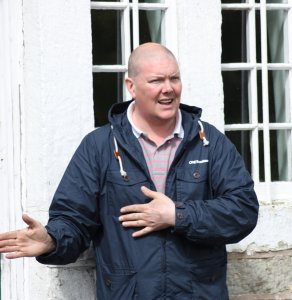
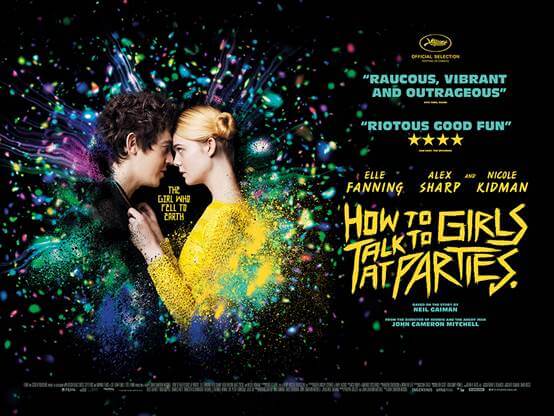
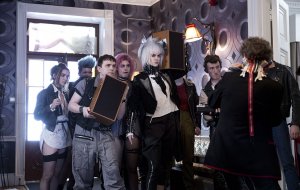
Having burst onto the scene with Hedwig and the Angry Inch and continuing to shock with Shortbus, writer/director John Cameron Mitchell is back with an adaptation of Neil Gaiman’s short story How to Talk to Girls at Parties. We caught up with him to find out more about the boy-meets-alien film set in the punk rock suburbia of Croydon in the seventies…

STARBURST: What drew you to Neil Gaiman’s short story?

John Cameron Mitchell: It was really my producer who got the rights – he produced my film Shortbus – and he wooed me over a couple of years. At first, I was like ‘I don’t want to do someone else’s story’. But Philippa Goslett, the first writer, really created such a beautiful world and extrapolated the story into a larger story that was becoming more of a Romeo and Juliet story. Bringing the punk element in, which was really Neil’s youth, the comic book artist element, all of that stuff started drawing me in. I grew up partially in the UK in the early ‘70s, my mother’s Scottish, and I was having memories and always wanted to do a story in the UK. My sense of humour springs from my years there and I was just drawn in – I fell in love. About two years into being wooed, I committed – just like a lover.

That’s some courtship!

Yeah – then it took a while to finance it because it’s not necessarily a genre film; it’s not the kind of film that is easily marketed. It’s more like a ‘70s midnight movie and a fairy tale, a YA romance. Things that have formulas today. In the ‘70s, you could make hybrids and it wasn’t a big deal; nowadays we’re a bit more rigid in our categories, and we need to have stars and things like that.
Were you a fan of punk back when you were growing up?

I wasn’t, because it was the glam period when I was there – so I was a fan of Bowie and The Sweet and in the punk years, I was in Kansas and we didn’t really get much punk. It was only in the ‘80s that I discovered the ‘70s punk. Oddly, it was coming out as gay that opened me up to all kinds of music – punk stuff especially. Being queer, certainly in the ‘80s and even now, was an oppositional orientation. It was the time of AIDS, and ACT UP was kind of punk organisation trying to fight AIDS and fight government inaction so it felt kind of punk to be queer at that time. I developed my character of Hedwig in a queer-punk scene – a club called Squeezebox – in New York in the ‘90s so my punk life came later.

Did you have to do a lot of research into the UK scene then?

I did! I worshiped the Buzzcocks and knew a lot about Sex Pistols and such but it was really fun to go through all the histories of the Roxy club and find out about all the characters, the Bromley Contingent, Vivian Westwood and Malcolm McLaren and get more details. There are a few lines in the film that came out of that research. At one point, our character Enn tells the story about picking tomatoes over by the sewage plant because tomato seeds don’t digest so they go right through the sewage and lots of tomatoes grow where there’s shit. They pick them to get money for photocopying. I thought that was a great punk thing to do – to sell the fruit of shit to make your ‘zine. So I loved going through all that history to find detail for our admittedly fairy tale punk scene. The punk enclave in Croydon that we create, ruled over by a fictional Queen Boadicea is a less patriarchal one. As she says, Boadicea was the first punk so that has a more matriarchal and queer setting – more of a Peter Shelley/Steve Strange punk than the macho versions of The Clash and such.

There is a heavy female presence in your punk scene, much like there was back in the day…

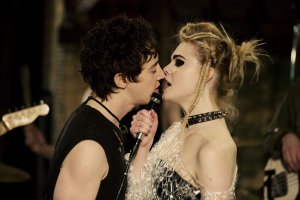
Yeah, we have a lot of queen mother figures. Ruth Wilson, Nicole [Kidman], Elle [Fanning], even Edward Petherbridge, who plays our Trans-Queen Elizabeth of the aliens, is a kind of matriarchal figure too. So I like our matriarchal punk.
Since the film was made, there has been a real surge of youth rebellion again, which is very much like the ‘70s, is that something you could see coming or just hope for?

Yeah, thank god! I was hoping for it because we shot this before Trump, before Brexit, but we have an accidental Brexit metaphor with the aliens wearing Union Jacks jumping off a building to avoid contamination. It’s taken Trump, Teresa May, Boris Johnson, Putin, and Viktor Orbán in Hungary to see the budding of a new kind of punk. It’s best exemplified by the Parkland teenagers in Florida who are incredibly articulate and are saying ‘no!’ Rather than just smashing the system, it’s about tearing down the NRA and other structures in order to correct the ills. As Enn says ‘to fix what your parents fucked up’. Sometimes that can come out in a political correctness sort of way, punk did disintegrate into a system of rules: ‘that’s not punk, that’s punk’ – it was an anti-conformist music that became kind of conformist, and that’s always a danger when you have a movement. It’s certainly coming from the right place. Punk never really died, it went dormant for some; it’s always rediscovered in a new way and redefined. So I’m really hoping they get more done and demand more change than the millennials did.

You got Nicole Kidman in again [she appeared in Rabbit Hole], did she really throw herself into the part?

She said that she hadn’t played a role like this and she had a good time with me, so let’s do it’. It was a bit of a rush job because she was coming off a West End play, and she was sick on our first day – vomiting everywhere, it was very punk! But I had to send her home. She came back and did two day’s work in one day and really killed it. We were moving so quickly that there’s wasn’t always safety concerns, she got hit with a guitar in the head and spat on by some of the punk actors – by accident! But it kept happening, so she smacked the actor across the face and I kept in the film so it was all good.
There’s been a rise in younger protagonists in TV and film – such as Stranger Things – since you made the movie, do you think this will reach that sort of audience as well?

Oh, I don’t know; that’s for someone else to decide. I can only make it for myself and my friends. If I made Hedwig thinking about the audience, I would have cast a star or something or when making Shortbus, I’d have cut out the sex to broaden the audience, but then it wouldn’t have been the same film. I do want them to be liked by people who are like-minded, which is why I’m very open to comments and input when I’m making the film. I also don’t want to kowtow to the current trends or tastes. I’m making the kind of films that I grew up with in the ‘70s. I’m making a midnight movie teenage love story, a punk fairy tale and if people come, they come. All my other films were not easily marketable because they didn’t fit into perfect genre slots but they were discovered later over time. I’d rather have a film that people want to make a tattoo of, than one that ten million people saw. It’s really more important to me how strongly people felt about it than how many people saw it or paid for it.

I have good feelings about the UK but I’m not sure about the US. I think people might come but then sort of pass it along later when it’s visible on other forms. I really do want it to be for the teenage Goth girl in all of us.

HOW TO TALK TO GIRLS AT PARTIES IN CINEMAS FRIDAY MAY 11TH, 2018

Dominic Brunt & Joanne Mitchell | ATTACK OF THE ADULT BABIES

adult babies

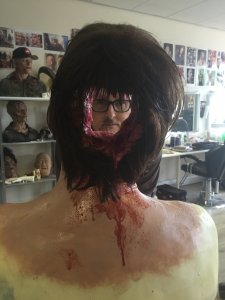
Following the huge success of his first two feature films as director – the searing BEFORE DAWN and the brutal BAIT – EMMERDALE star DOMINIC BRUNT is back this year with his third full-length movie. We spoke to Dominic and his wife, actor/co-producer JOANNE MITCHELL, about their latest project – prepare for the ATTACK OF THE ADULT BABIES…

STARBURST: Zombies, ruthless debt-collectors… and now Adult Babies! How? Why?

Dominic Brunt: Well, I was hired by a company called Radar Pictures in America to do their next film in Puerto Rico. I got all the visas sorted out and two weeks before, a few problems arose so they said ‘look, we’re going to put this one back a little bit’ – and I’d taken four or five months off work! We already had the idea of Adult Babies and the script was ready to go and a producer we knew really wanted to do it so we thought ‘why don’t we go with that?’ and as I had the time, rather than being a mad rush, it just fell perfectly so we had three and a half to four months to prep it and film it.

Joanne Mitchell: Dominic and I came up with the idea, we went away and worked on the story back and forth and then we gave it to Paul Shrimpton and he did a fantastic job and we were very happy with what he came up with. Because Paul did Inbred – amongst other things – he just suited this type of horror.

DB: I really like Paul’s way of working and I know he can deal with that side of things. It’s more Jo’s story, actually; I did little bits of it but Jo really broke it down scene-by-scene and then we passed it to Paul Shrimpton. He stuck rigidly to the storyline; he changed some of the ending and the dialogue, he put a few jokes in. He brought a fantastic pace to it and a shape that was far better than it had been. He wasn’t just a ‘writer for hire’; putting his dialogue over the top, he very much coloured it in.

So what’s the story behind Adult Babies?

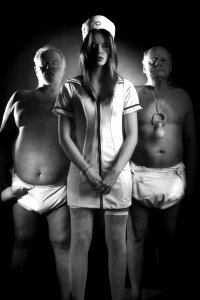
JM: The actual story is about a group of white, middle-aged businessmen who go to this beautiful big mansion in the countryside – almost Masonic, in a sense – which is where they relax and take refuge from the world and their high powered jobs. It’s a very stress-free environment, they’re looked after by nurses and they regress into adult babies. The story kicks off when three intruders disturb their peace and tranquillity because they’re searching for a top secret document that is being held in the mansion and from then on, the chase begins and it tumbles towards this rollercoaster of bizarre and horrifying events, which basically goes from the sublime to the ridiculous. But the babies are determined to make sure that no-one leaves alive!

DB: I wanted to tell a wider story about the banking system and the people in charge; the corrupt politicians and MPs and people in authority who seemingly have the power to tell us and everybody else what to do whereas they’re actually human beings too and more often or not, they are where the stories are because they’re corrupt. I’m sure there are good people in these positions, but they’re still human beings and it’s just a question of whether they should be there to tell everybody else what to do. It’s all to do with poking fun at that, not being too serious, trying to make a political point but putting it across satirically because nobody wants to listen to a political point anymore, certainly not over an hour and a half in a film. So we get to do it within the genre that we love, telling stories in the way that we know with loads of gore and special effects, which I love! Adult Babies is really about bringing very important men down to that level and poking fun at them that way. The imagery of an adult baby is great; once you’ve got the image across that it’s big fat men running around dressed in nappies chased by sexy nurses in suspenders – that image would carry me through an hour-and-a-half of any movie, to be honest with you!

Memories of The Benny Hill Show comes to mind and they really probably shouldn’t…

DB: It’s really dark. There may be humour in there but it’s as dark as anything. It’s very sombre, not farcical in any way, it’s the opposite of any Benny Hill you’ve ever seen so I’d get well away from any notion of it being anything like Benny Hill! It’s pretty gory and pretty serious. It’s not a Shaun of the Dead-type thing. There’s humour in there but it’s not presented as humour, it’s not like comedy actors acting in a comedy way or anything like that. Everyone plays it absolutely straight. In tone, it’s a bit like The Lobster where everything’s very strange and the funny things are ignored; it’s not played for laughs at all.

How difficult was it to find a cast willing to perform as ‘adult babies’?

JM: It wasn’t the easiest thing to cast as you can probably imagine because not many people want to be an adult baby – not that there’s anything wrong with being an adult baby – but it was difficult to entice actors to walk around in nappies all day! But the cast we got were all fantastic and all really up for it, which is so important in an indie film. We’d used Andy Dunn in Bait; he’s a great team player, which is great because there’s quite a big cast in this one, much more so than Bait and Before Dawn. Then we had Sally Dexter on board and when we saw her name we thought ‘we’ve got to have her’ because I know of her. She does a lot of stage work and I really respect her acting so we managed to get her which was fantastic – she loved the script and she’s outstanding in it. We had to go through the auditioning process for the two youngsters; we saw a lot of young actors and it was really hard because there are some great actors out there but for this sort of scenario, as with every film or production, you’ve got to get the chemistry right between the characters, so Mica Proctor and Kurtis Lowe hit it off together, they looked right so we chose them and it all worked out well.

DB: Casting eight men who would be willing to run around in nappies was the toughest challenge! We got Laurence R. Harvey, who just went ‘yeah, of course, I will!’  He looks great in a nappy! But we auditioned loads of people and then we asked directly for a lot of people we’d worked with before like Andy and Charlie Chuck and as Jo says we wanted to get Sally Dexter in anyway, so it was sort of half-and-half between people we auditioned and people we asked specifically to be part of it.

Would you say that Adult Babies is a step up in the scale of your films as Bait was a step up from Before Dawn?

DB: Definitely. The scale of this one is enormous, just bringing in all the different ways of telling the story with animation and Claymation, and I think that’s exciting. It was great because it was all in one location, so it was just a joy to do. I think we realise what we’re doing now and we’ve learned from our mistakes. There was a lot of pre-production because there’s a large cast in this one. It’s set in a massive manor house so we had to find one that we could all stay at and film in every day. We found one about sixty miles away called Broughton Hall, so we managed to live there and eat there as well so we could just get up in the morning and start filming and stop when we dropped. It was a relief because Bait was twenty-six locations and it was a nightmare dragging these massive lorries and seventy-three crew around.

JM: We’ve learned a lot more from doing Bait, which was itself a massive step up from Before Dawn in terms of scope and scale. But even though this is another step up it seemed a lot easier because we’re all reading from the same page now, we all know what we’re about. Dominic knows his cinematographer, he knows his ADs, his camera operator and all that gives you extra confidence, too. You want it to be a happy ship and I think it was and that’s a credit to Dominic as well. As a director, he’s very friendly, he gets on with everybody but at the same time he commands respect as a director and I think he did incredibly well with only three weeks to shoot it in!

There always seem to be ‘themes’ to your films, something a little bit deeper than the usual stalk-and-slash horror fare. Are you keen to make your films ‘about something’ rather than just random blood-letting and cheap scares?

DB: I was asked to do something where there was a monster after a group of kids staying in a house and I said ‘look, this is about a monster getting some kids in a house, the monster doesn’t represent anything, the kids don’t represent anything.’ I wouldn’t be interested in doing a straight story; even from seeing Romero’s stuff very early on I was thinking ‘Yeah, that’s really multi-layered and clever’ and I’d rather intelligently tell a story and put a point across within the genre where the monsters aren’t just monsters and the people aren’t just people and you’re not just telling these awful tales  and showing off the next piece of neck being cut. It’s got to be cleverer than that.

JM: It’s the same sort of approach as with Bait and Before Dawn in that we wanted it to be more than just a horror film, we wanted to tell a sort of political story without being wanky about it! I do think this does have that. Running alongside all the ridiculousness of what’s going on, we have a social commentary in the film.

But still with plenty of blood being spilt! How gory is Attack of thAdult Babies – on a scale of one to ten?

DB: I’d say an easy nine; yeah, it’s bonkers. The story’s really twisted, very unusual with some very odd imagery and the tone is very unsettling at times in what people are saying and doing but it’s not spiteful in any way. I’ve never liked films like Saw or Hostel, which look like they’ve come from some perverted 15-year-old’s mind – let’s torture people and kill women! – it’s not like that at all.

JM: I think I’ve said before that Dominic is the king of blood and gore, much more than I am, so he and Paul had lots of fun thinking up those sorts of scenarios and how far they could take them. I think it’ll really appeal to fans of the genre who like that kind of thing. It’s not nasty, though, it’s not torture porn; it’s very tongue-in-cheek.

We’ve still got a while to wait for the movie so how would you sum it up at this point?

DB: It’s about people getting out of their depth and it’s about tradition. It’s about greed and hypocrisy and I would say it’s very British in its outlook and maybe playing on what the world sees as British with its many traditions and the way that white, fat, middle-class or upper-class men rule from afar and these cabals that are running things. Although there are a lot of themes, I think it has its own identity and it does make sense with a very satisfying arc from beginning, middle to end. Without trying to be highbrow at all, we just had fun with it!

ATTACK OF THE ADULT BABIES is released on Blu-ray and DVD on June 11th.

Andrew Niccol | ANON

niccol anon

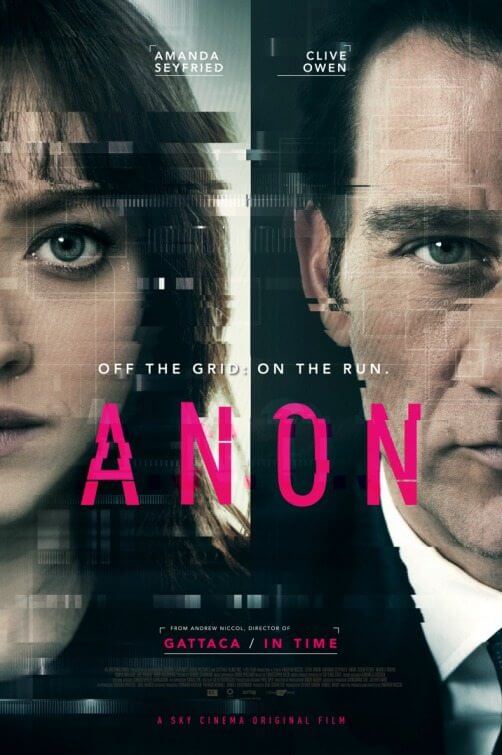
Since his debut movie GATTACA (1997) warned over the use of advanced eugenics, writer and director Andrew Niccol has continued to question the human and moral implications of advancements in technology with movies including THE TRUMAN SHOW (1999 – as writer), SIMONE (1992) and IN TIME (2011). His latest is ANON, a remarkably timely SF noir thriller about a society where everyone’s point of view experience is recorded and anonymity is a dirty word. Clive Owen – a detective on the verge of a nervous breakdown if ever we’ve seen one – stars as Sal Friedland, on the trail of a mysterious stranger played by Amanda Seyfried who  has found a way to opt out of this tyrannical system and use the power of her anonymity in a unique and profitable way…

STARBURST: Like most of your writing, this feels like a very short jump into the future.

Andrew Niccol: That’s what I call a parallel presence. You’re going to go out on the street right now and you’re going to see people looking down at devices. You’re going to go to a concert and you’ll seeing nothing but people videoing the concert. They’re never going to look back at those videos, by the way, but it doesn’t matter, they still have to have evidence. We are life-logging.

In line with your previous work, there’s a very explicit warning message in this movie, but you’re also looking to tell an entertaining story. How do you walk that line?

I think you can see this film on a number of levels. On one level, it’s a serial killer film, if that’s what you want. There’s also sex, drugs, and violence! But if you go for ideas, that’s always my aim. Just in researching it, this word ‘de-anonymising’ [data mining in which anonymous data is cross-referenced with other sources of data to re-identify the anonymous data source] is such a horrendous concept.

A key part of ANON’s futurism is the POV text and graphics we see from Clive Owen’s bio-implanted viewpoint. How did it evolve?

It was a nightmare for me because I had to write all of it myself, but for once in my life, I won’t mind if someone freezes the film because a lot of work went into writing it! All of it is legible and all of it makes its own sense in terms of biography. So, for example, the prostitute’s biography is very interesting because she gives a ‘military discount’, amongst other things. So when you just look at her for a second you can freeze the frame and find out. There are lots of nuggets in there.

Another cool aspect is the futuristic cars. We do love futuristic cars!

I love cars, too. It all goes back to Gattaca because on that I never had enough money, you know, I didn’t have the budget to build my ideal car of the future. So here, I thought, well, I’ll take the best of the past and drag it screaming and kicking into the future and just update it. My favourite vehicle in this is a Facel Vega, which now has a hydrogen cell in it and other updates. Again, that’s all POV information seen that you can freeze-frame.


The movie has a very specific, stylised visual look to it.

I went with two different aspect ratios. Interestingly enough, nobody really seems to have minded. I thought that might be jarring to some people, but it’s not. So, when it’s a subjective point of view it’s more square, its 16:9, full of clutter and shot with spherical lenses. And then in that same scene, when I look at it from an objective point of view, it’s 2:40:1, which is much more cinematic, the camera doesn’t move as much and there’s no clutter. I had to do some very weird things to make it work. He’s walking down the street, there’s a parking lot there with a physical sign, so I have to remove it. I removed all signage from the film, physically and digitally, because I knew that from a story point of view, it’s absolutely superfluous. Why would you have street signs when people get street signs automatically popping up in their mind’s eye?


How is your relationship with technology these days?

My relationship with technology is as it’s always been – dysfunctional. But I do think there’s hope. You just need to find the right countermeasures.

ANON has a limited theatrical release and can be seen exclusively on Sky Cinema from May 11th and Netflix in the US. You can read out review here

anon poster

K.M. McKinley | THE BRASS GOD

brass god

K.M. McKinley is the author behind the popular fantasy series, The Gates of the World. Her latest book, The Brass God, is out now. We caught up with her to find out more.

STARBURST: What’s the elevator pitch for The Brass God?

K.M. McKinley: An epic, multi-character fantasy set in a world undergoing a rapid, magically fuelled industrial revolution, where ancient gods sit uneasily alongside fantastical machines and a terrible evil stirs.

How would you describe the entire series to an elderly relative?

If I were as good a writer as either of them, Dickens meets George R. R. Martin.

Why is Fantasy making such a come back?

Did it every really go away? I’m not sure it did. Like all the elements of the speculative fiction family (horror, fantasy, and science fiction), its undergone peaks and troughs of popularity, but as far as I’m aware fantasy novels have always had the strongest sales. What’s changed in recent years is that the three genres are no longer treated with the contempt they once were. They have become more mainstream, or more accurately, all those thousands of people who read and enjoyed are no longer embarrassed to say so. That’s down to a loosening on the monopoly of opinion by cultural elites thanks to the Internet, but perhaps more important is the ageing and coming to influence of the generations raised on this stuff. The renaissance in TV has really helped all the fantastical genres. It’s a confluence of attitude and technology, in my opinion.

Which of your characters would you want to go lunch with?

The unkindly named Hag of Mogawn. She’d be a great lady to go out with. Though I suspect lunch wouldn’t finish until 4am the next day.

Which of your characters would you want to give advice to? What would it be?

All my characters are as real as I can make them, so none of them are perfect. They all need advice. Guis probably needs a kick in the backside to get over himself most though.

How important is world building to story?

I’ve read lots of books that other people love that I’ve hated because the world seemed unreal. I do tons of world building. There are perils aplenty around it though. Explain too much, it derails the story. Explain too little, people get lost. It’s probably not as important as I think it is, but let’s just say if you like ‘whole cloth’ settings, then you’ll like The Gates of the World (I hope. Ah, the terrible task of balancing publicising one’s fiction while being British).

What’s your favourite part of The Gates of the World series?

Again, another opportunity for me to cringe inside. I don’t like to say. I really believe that’s up to the reader. But if I had to pick, I’d have to say I’m pleased with the roundedness of both the characters and the world. It all feels satisfyingly real.

Which writers inspire you?

Adam Roberts, Richard Morgan (his fantasy stuff more than the SF), Neal Asher, JRR Tolkien, Ursula Le Guin, Michael Moorcock, Fritz Leiber… Too many to say!

If you had the change to write in someone else’s world, what world would that be?

That’s a tough one. I have written shared world fiction under, ahem, other names. But another writer’s private world? Hmmm. Middle-earth, maybe, or Moorcock’s multiverse. Perhaps Asher’s Polity. Yeah, the polity.

What are you reading (and enjoying) at the moment?

Haha! I have so little time to read, as I’m always writing. I really enjoyed the Dragon Round last year, by Stephen S Power, and I’ve got Adam Roberts’ The Real Town Murders lined up to read this weekend.

What are the most fun scenes to write?

Honestly? I don’t know. Every kind has something to recommend it. Every kind can be the most immense pain to write. I enjoy writing, and I hate it at the same time. I think a lot of writers are the same. Some scenes come easier than others. The best ones are those that pop into your head whole, and, if you’re lucky enough, when you get them down on paper they are as cool as you envisaged them being.

What’s next for you?

More words, every day. I’ve been pitching ideas to a couple of publishers, and have novels on the go that unfortunately I cannot speak of yet…

The Brass God is out now.

Johannes Roberts | THE STRANGERS: PREY AT NIGHT

The Strangers: Prey at Night Johannes Roberts

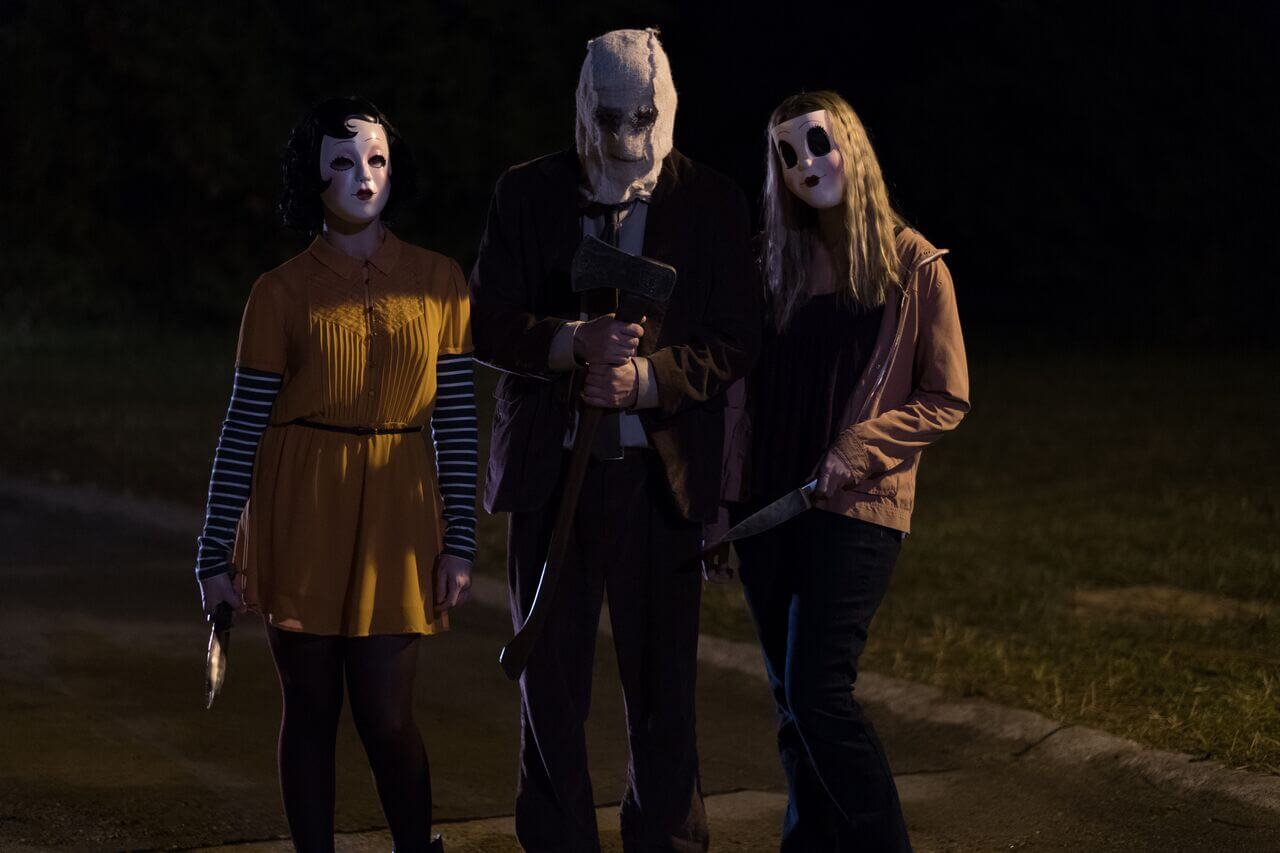
Over the past decade or so, Johannes Roberts has quietly been making quite the name for himself in the horror genre. With the likes of F and Storage 24 under his belt, the past two years has seen Roberts continue to impress with The Other Side of the Door and 47 Meters Down. And now, Roberts is the man tasked with directing The Strangers: Prey at Night – the hotly anticipated follow-up to Bryan Bertino’s 2008 horror favourite, The Strangers. We sat down with this fascinating fella to discuss Prey at Night, putting his own stamp on the sequel, his love of John Carpenter and Stephen King, what to expect from his upcoming 48 Meters Down, and a whole, whole lot more.

STARBURST: Give that the original film has such a strong following, was there any trepidation of tackling a sequel that has been anticipated for a decade now?

Johannes Roberts: Yeah, for sure. There was already a pre-built weariness inside of me waiting for the “it’s not as good as the first movie”. As if I don’t have enough to worry about with bad reviews, there’s now an extra layer that I have to deal with [laughs]. I was particularly worried because nobody quite knew what we were doing. Ten years is a long time in the landscape of cinema, especially horror. Obviously The Purge had come, You’re Next, a lot of these movies had come and taken what was fresh about The Strangers. There was a whole new audience who had never even seen the first movie, so I was like, “Are we rebooting it? Are we remaking it? What the hell are we actually doing with this project?” So there was this huge trepidation there. I think you can see with the movie it kind of evolved through the making of the film. I really sort of felt my way through that film. I loved the first movie, and this fit very well within that universe. It sort of works as a sequel, but then you can see that as the movie progresses it become its own beast that’s kind of crazy, fun, and much more my sensibilities; burning cars, Jim Steinman music. So yes, I was very nervous is the very long answer to your question.

How did you go about trying to put your own stamp on the movie?

It was one of those movies where I got to do stuff that I’d never done before. That was also because I hadn’t written it, I think. So you’re slightly divorced, you have this slight distance to the material that I wouldn’t have had with, say, The Other Side of the Door. I got to do stuff that I’ve wanted to do since I got in the industry. So the zoom lens is out of the box, and I got to direct the movie like I was doing a John Carpenter movie or a Brian De Palma one. It was great fun. Some of that stuff I was terrified of when we were doing it. These kind of shots, nobody’s done in forty years and for good reason. It was kind of like, “Well fuck it, let’s try it.”

The Strangers: Prey at Night

There’s clearly a lot of influences on display here, particularly John Carpenter and Christine, but was there anything maybe a little less obvious that you went back and watched beforehand to inspire you?

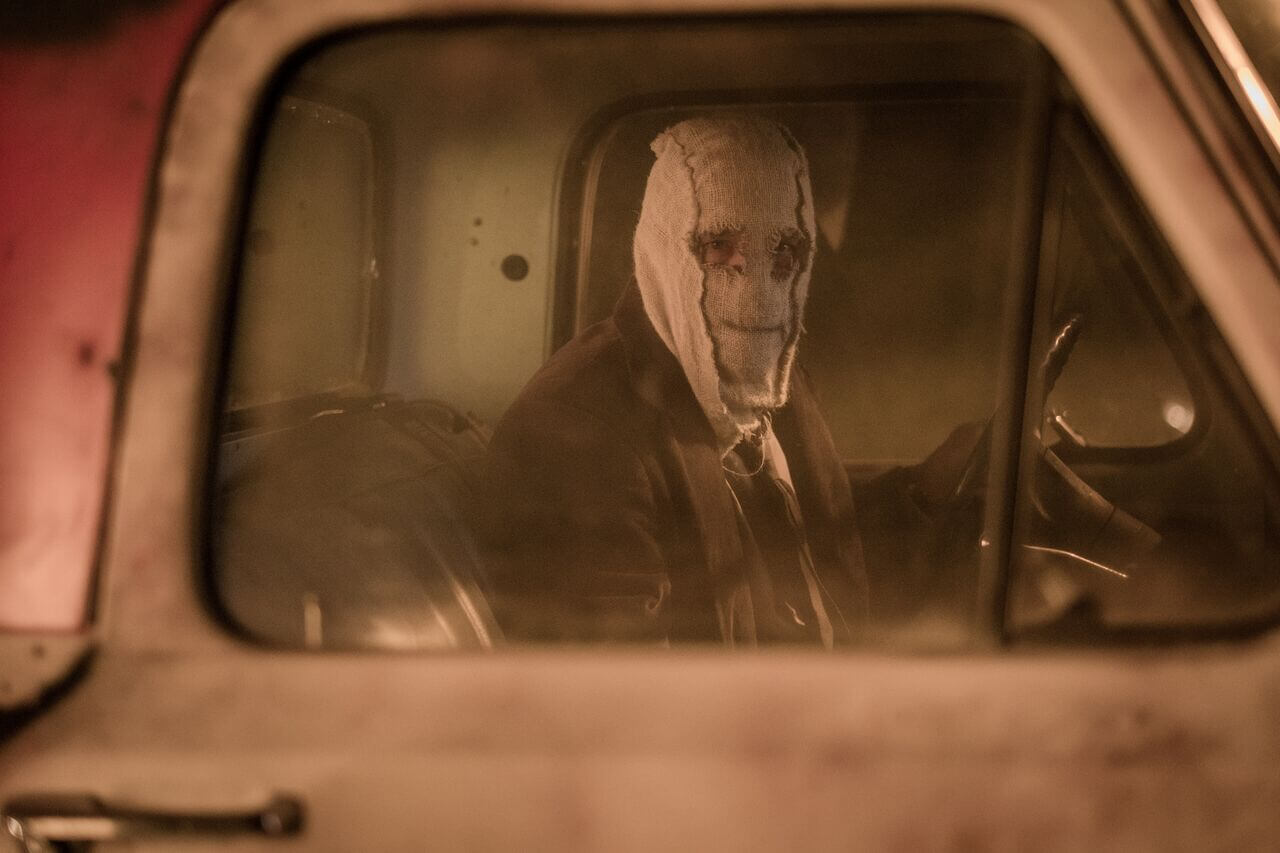
You know what, when I took the movie on I was like, “I wanna make Christine!” To be honest, it was as simple as that. I keep going in to Sony to ask them to let me do Christine. Nobody’s letting me do it. So I got the script and just thought it was perfect. I love that truck so much, and it just became a character throughout the movie. The more I filmed it, the more I just fell in love with it. The movies that I had on my desk in Kentucky during prep, I had Christine, I had Duel, I had The Car – which I’d never seen before and is a terrible movie – and then I had a lot of movies with crazy zooms in; so I had The Images, which was a Robert Altman movie I’d never seen before; I had Don’t Look Now; I think I had The Graduate because that had some great camera work. I had plenty of movies that were not the references you would necessarily jump to. The slasher side of it was inbuilt in me, that was already there. Duel was a massive influence. That movie’s great, I’ve not seen it in ages, and the fucking photography on that is insane! Those were the kind of things I looked at. So it was really retro, and I tried to really embrace it.

Like Liv Tyler and Scott Speedman’s characters in the first film, here we have a core group who had their problems long before the killers turn up. As the film opens, the family at the centre of this have their own issues and chips on their shoulders. Was there ever a concern that these characters might come off as unlikeable rather than sympathetic?

Oh god, yes. The script trod a fine, fine balance, to say the least. Yeah, I was very worried because you could hate every single one of them. I think we worked it as much as we could to make sure that didn’t happen, but really that’s the magic of casting. It was just a great cast. You end up caring about them – Bailee [Madison], Lewis [Pullman], Christine [Hendricks], and Martin [Henderson]. But that was a big worry for me.

The Strangers: Prey at Night

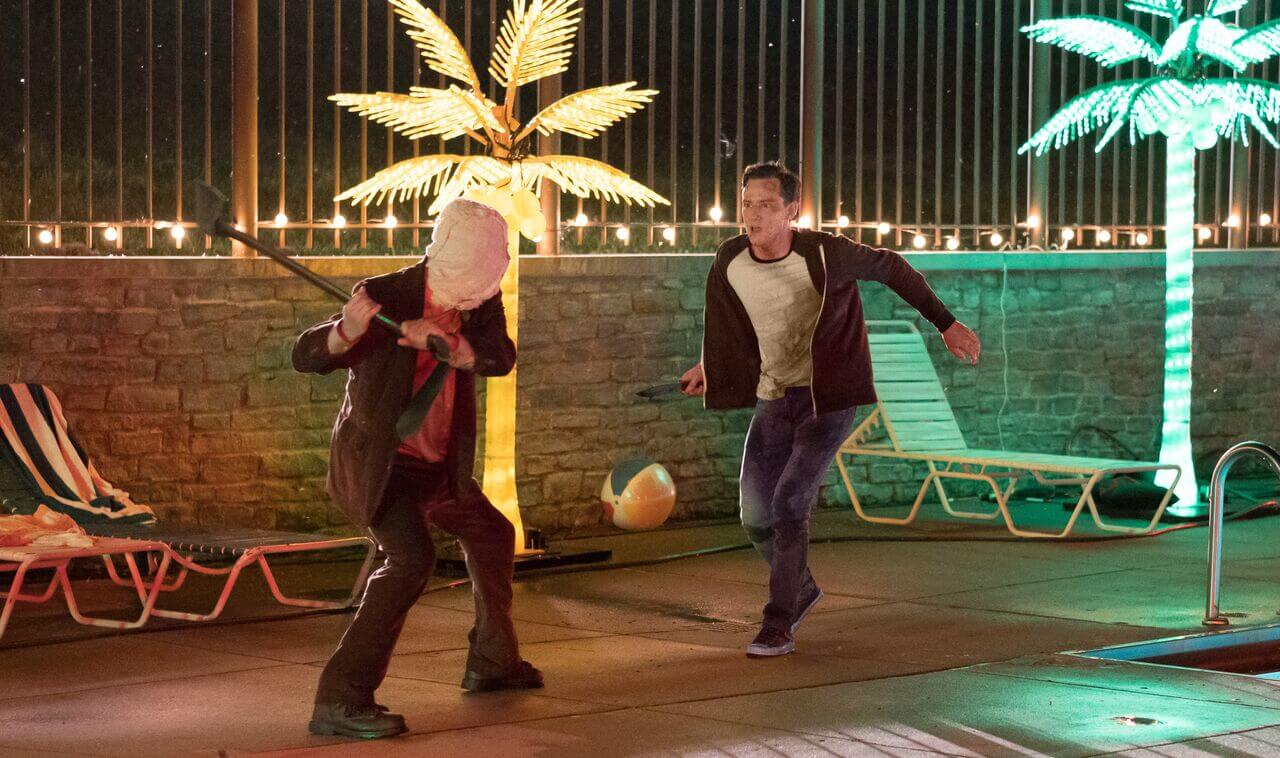
As the film plays out, there’s one of the great horror set pieces we’ve seen in many a year as Total Eclipse of the Heart blasts out over a neon-lit swimming pool. Was that sequence a particular challenge to put together?

If I had to tell you the hardest thing to shoot in that movie, I would say it was that fucking scene where the four of them were in the car and they were chatting, driving along.

The opening scene?

Yeah. It’s the first time I’ve ever down a low-loader, which is putting the car basically on a trailer and driving along. I’d never done one before, and people told me to do a green screen. And I thought that was terrible, I just wanted to do the low-loader thing. But fucking hell, man, I’m never doing that again! You’ve got police cars guiding you through traffic, technically you’re not in the car, you’re in a van in the front, there’s no way to communicate. It was just a fucking nightmare. It was on our second day of filming, and I was thinking that the actors were going to just hate me throughout this film. That was a fucking nightmare, whereas the pool sequence was a weird one. It was shot nowhere near where the whole trailer park was. It was shot in a totally different place. There was a pool sequence written in the script, but it was like a kind of motel pool, like you’d see in some Americana show. I can’t remember what the area was called, but it was in a higher tax break because it’s a slightly depressed area. I was introduced to this place, which is where we shot the playground as well, and I saw this swimming pool which was three times bigger than an Olympic pool. I just thought, “What the fuck am I going to do with this?!” It was insane but it just kind of came together.

Dealing with water, I’d done a whole movie – 47 Meters Down – so I wasn’t particularly freaked out by that. It took us ages to get all of the equipment there. We didn’t have a lot of money on this movie at all – that’s an understatement – so we didn’t have many toys to play with. There’s this beautiful shot in that sequence, where the camera goes up and over the Man in the Mask. We didn’t have the technical equipment to do that, so the Grip was actually sort of bolting stuff together to make that. On The Other Side of the Door, I had all of these technical things. Here, we had nothing, we were just making stuff up. While all of this was happening, I just went around with the doubles and cut the scene together on an iPhone, and then we went out and filmed it for real. It just kind of worked. I mean, that zoom shot in it is my favourite shot that I’ve ever done – where Pin-Up Girl runs out. That was my tribute to Exorcist III, which is one of my favourite movies. That was another movie that was on my desk, and that’s always a big influence on whatever I do. It’s a beautiful, beautiful movie, and I’d argue it has one of the best shot sequences in horror cinema – down the corridor when the guy goes to the nurse. And I wanted that sort of thing for this, for the zoom lens to create this dreamy horror sequence. It’s very subliminal. There’s something about it that really gets you, that you don’t quite know if it’s dream-orientated. But it just kind of worked. It was a weird one.

We were shooting at the other side of the swimming pool, shooting down and across. If you look across at the other angle though, there’s actually a river there. Literally, as soon as we turned the lights on we had the entire fucking insect life of Kentucky! It’s one of those things that you could never have thought about ahead of time, so I had to have ten, twenty people in between takes rushing around. By and large you can’t see them, but there are definitely some of the wider shots where water is absolutely bubbling because there’s so many creatures there. They were huge and just sort of landed in the pool! But you know what, it was not a hard sequence to film. I think probably for the DP and those on the technical side it was tricky to put together, but the low-loader sequence was way tougher.

47 Meters Down

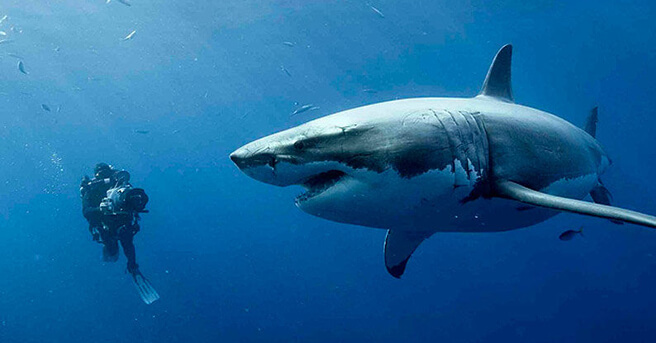
In recent years, it’s been a refreshing change to see some quality, serious shark movies out there. One such film is your 47 Meters Down, which has already been confirmed for a sequel. What can you tell us about 48 Meters Down apart from there’s an extra meter?

48 Meters Down is basically The Descent under water. So it’s a group of girls in Mexico and they are exploring an underwater iron city. The tunnels collapse and they’re trapped inside the city, and the sharks have come into the city. It’s going to make you feel pretty queasy. I learnt to cage dive when I was doing 47 Meters Down, and it’s the most terrifying thing in the world. I thought, “Yeah, if we ever go back to do a sequel then we’re doing this.” That kicks off reasonably soon.

You’ve mentioned Christine already, but are there any other dream properties you’d like to get your hands on?

I’d just love to do a Stephen King movie of some ilk. I keep circling around stuff, and I have the rights for Hearts in Atlantis, which we’re going back and forth on. It’s not horror, and I’m the horror guy, and he’s the horror guy, so people are asking where’s the clowns. And every month I seem to have dinner with Jeremy Bolt, who’s the producer of the Resident Evil films and Event Horizon movies. I always ask how can we make Event Horizon again, because I’d love to do a movie like that. It’s such a cool movie.

In your career to date, your films tend to have a lot more depth to them than simply being horror for the sake of horror, and it comes across that you really care about these pictures and the genre. Do you think that is something that’s particularly helped endear you to horror fans out there?

Truthfully, I don’t know. I definitely love the genre, and I wake up in the morning and either want to be John Carpenter or I want to be Stephen King, depending on which day it is. And that’s the kind of thing that keeps you going when you get battered on a movie or a movie does badly or things aren’t going your way. If you remember why you got in to this, you’re a nerd, you love the movies you love. I would hope that that comes across. You always get people that just attack stuff for whatever reason. Like The Other Side of the Door just because it had the Fox logo at the beginning. Some of the reviews for that labelled it a soulless studio thing. With The Strangers: Prey at Night, this is a cash-grab. And that always gets me a little bit because you don’t have to like the movie, that’s fine, but it’s never soulless. It’s done with just real, real love, and that always annoys me when I see that. I just hope this movie connects with the fans in the way that I would’ve connected with it if I’d watched it. Chatting to you, I think we have the same film references.

The Strangers: Prey at Night

To close things out, would you be up for doing another Strangers movie if there happened to be a third entry in the series?

You know what, they’re talking about it. I certainly would want to be involved. My sensibilities are that I’d love to guide the franchise. The first movie is very bleak, and my sensibilities aren’t so bleak. The first movie takes Texas Chain Saw as its sort of god, whereas mine takes John Carpenter. And within Carpenter you have movies like Big Trouble in Little China, so there’s a slightly lighter feel. I’d love the franchise to explore more those sorts of things. But we’ll see what happens. It’s done pretty well here in the States, so let’s see how it does in England and see if it happens.

The Strangers: Prey at Night hits UK cinemas on May 4th.

Kid Koala | FLOOR KIDS

Kid Koala

STARBURST catches up with the talented Canadian DJ and scratch artist who also dabbles in graphic novels to find out about his latest project – scoring a video game!

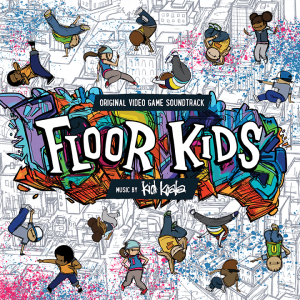
To his parents, he’s known as Eric San, but to millions of fans, he’s the astonishingly adept master of beats and turntables, Kid Koala. With six full-length albums, appearances on albums from Gorillaz and Deltron 3030, and more remixes than can be counted, where else could this talented man go?  Digitally, it appears. Working with animator JonJon, Kid Koala created the soundtrack to Floor Kids, one of the most well-regarded games for the Nintendo Switch. The breakdance battle game does for b-boys and b-girls what Tony Hawk Pro Skater did for shredders and thrashers, and while the gameplay and JonJon’s hand-drawn art are a big draw, Kid’s beats are just as much a part of Floor Kids.

STARBURST: How much did you and JonJon work on Floor Kids together; whose idea was it originally?

Kid Koala: I met him at the National Film Board, here [in Canada]. He was working on another film, and I was working on music for another animated film, and we just met and realised that we both had the same – well, he had the b-boy connection, and I had the scratch DJ connection – so, we hit it off right away.

He showed me, like, a pad of paper that he started flipping through, like an old-school flipbook, and it was Noogie, one of the characters doing a six-step or a swipe – something like that. I couldn’t believe what I was seeing. These awesome drawings that literally had that rhythm: the way he timed it and flipped it, this kid was dancing, and he was on-beat in these drawing. I was amazed by that. That might’ve been ten years ago…

Floor Kids is absolutely his baby. He’s the creator. But, when he showed me that first flipbook, I was like, ‘You got to make this a video. I’ll throw some beats behind it!’ and we started making little animated videos that sometimes I would screen on tour, and people always dug it. So, over the last ten years, there was this idea, we like working with each other and it’s a fun concept, but where do we take it? Do we make it a feature-length or a bunch of shorts?

So, we’re thinking about all these things, and then Rhyna, my manager, actually said ‘Maybe we should take it more into video games and the interactive sphere, somehow.’ That’s how that coalesced, and then I kind of cold-called the universe. We didn’t know any game developers. I reached out and I just said, ‘Are there any game devs out there who want to talk about maybe making something from some music and some art assets we think could turn into an interesting… thing?’

We didn’t know exactly what that was at the time, but that’s when we met the Hololabs kids. We all banded together and became MERJ, and then we produced Floor Kids, and that’s what we’ve been doing for the last three years, pretty much.

You produced so many genres for this game. What was the process like, in terms of visuals inspiring sounds?

Recently – I guess, in the last four or five years – I’ve been doing more film score work. Just trying to harmonise with the visual and the tone and stuff like that. Jon’s stuff, like I said, immediately already has this raw, sketchy drawing style and a lot of personality. When he showed me the concept drawings for some of the venues that he wanted to see in the game, like the corner or the arcade, or even the peace summit at the end of the game, it was for me this opportunity to get into the studio and just treat it like the video sandbox that it was.

I have this landfill of all these audio gadgets. Like, for instance, in the arcade, [Jon] really made it look like this ’80s arcade with all the consoles and the neon lights and stuff, so I was like, ‘I have to bring out the SID chip and 8-bit synthesisers.’ I’ve actually got a cartridge that turns your old NES into a MIDI-playable keyboard. Using its voice chip. It was just fun, for each venue, to dive into that world and just live in it for a couple weeks and make tracks for each one, and just have it exist.

There’s a lot of back-and-forth, too, where Jon would hear a track I was doing, and then that would inspire him, too, and he’d start adding things into the background, but it’s very much a collaborative process – with the game developers, too. Jon and I always consider ourselves like Dumb and Dumber because we don’t know anything about the process of making a game, but we were just excited to be a part of it.

When the game developers are telling us that you need main menu music here, and you need a sound when you scroll through the menu, a sound for this – they’re kind of educating us on all the requirements for that. It was just a fun project.

floor kids

How do you sort all of this music out, in terms of gameplay?

It’s interesting; the way the game is formatted, we decided to keep the rounds to just over two minutes. There are two ‘A’ sections, or verse sections, which are the freestyle sections, where it’s kind of like when you play Tony Hawk, and you can sequence a bunch of moves together, but it’s totally up to you, what you’re going for, and there are certain combos you can make to go for bigger points and stuff like that.

Then, that’s like a freestyle cypher throwdown, where I know from my DJing at break events that eventually someone’s going to hop into the cypher and start with the top rock and spin into some down rock and power moves and combos, and then end on some crazy freak. There’s a certain time for that, where it felt natural, like where you’re at a break battle, and it felt like that was how long someone would jump in.

Then, maybe, it might jump to the hook in the song, where everyone starts Brooklyn rocking – stabs or hits in the music that everyone synchronises to – basically, you just needed to break up the tracks like that, and it turns out for this purpose, that to have these tracks at this duration, where you have two freestyle sections, and then another where you have like, a rhythm target, it was a nice sort of balance there. They built the game engine to work like that, and I just had to make sure that the tracks could fit the format.

FLOOR KIDS: ORIGINAL VIDEO GAME SOUNDTRACK is out on Arts & Crafts on April 27th. Read the full interview in Issue 448 of STARBURST.

Main image credit: Corinne Merrell.

Paul P J Johnson | DEATH TRUCK

paul johnson

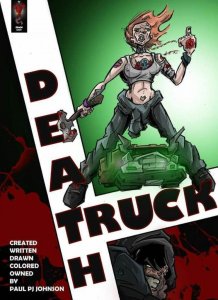
We caught up with comic book creator Paul P J Johnson to find out more about his latest release Death Truck.

STARBURST: Death Truck shows a lot for the B-movies of the ‘70s and ‘80s. What was it about them that you wanted to put in your comic?

Paul P J Johnson: ‘70s and ‘80s horror movies are what I love, I grew up on a healthy diet of slasher movies and crime thrillers and action films, if there were crazed killers, giant monsters, over the top heroes, sexy women and everything exploded, I was there, glued to the screen, I loved it and I still do. So when I started writing and drawing comics for myself (I do a lot of books for other creators to) I just used everything id watched as a kid as inspiration for the universe that I’m creating, the Beat The Demon comix universe is getting wider, huge, especially now with the Razor Bastard movie in pre-production, stuffs going to explode. But I love the horror, grindhouse genre, you can just go wild with it, and I do.

Do you think there are any particular advantages to telling the story through a comic book instead of a movie?

I’d love to make Death Truck as a movie, I think if you put the book into the hands of Robert Rodriguez you’d end up with one hell of a crazy movie. What I’d do as I’m writing and drawing, is I watch it in my head, it plays like a movie, I can hear the characters and the soundtrack blasting as I’m creating. It would work as well as a movie as it does as a comic, only the budget on the comic isn’t ten million dollars and I don’t have actors to deal with.

Why did you choose a truck as your principal antagonist?

I have a billion ideas a day for books I’m working on and books I’m going to work on. I’d just finished Razor Bastard: Rise Of Dick Machine and I was thinking about what to do next, I have Razor 3, 4, and 5 written but I was exhausted by him, you work on a book doing the writing, drawing, inking, colouring, lettering and then putting it together, eventually you get sick of the sight of it and the characters. So I wanted to do something fresh.so late one night I was sat chilling, watching the horror channel, next up Duel, Spielberg’s Duel. I’d not seen it for years but it’s a fantastic movie, and about halfway through I decide, I’m doing a killer truck book next. So that night, I sat up and pretty much wrote the whole of death truck.

Death Truck contains some wonderfully bizarre moments; when you wrote a scene would you build it around a particular moment already in mind or did they develop as you wrote?

Death Truck is insane, it starts at a ridiculous level and then escalates to beyond ridiculous. I know the review here says I didn’t go far enough, I was like whoa – not far enough, ok wait till you read the next book, They Melt lol. I have tons of crazy stuff pop in my head every day, sometimes they work and sometimes they don’t, everything just flows when I’m writing a book, I have my beginning my middle and end already laid out, but yeah as I’m writing some stuff gets added, very little is taken out. There’s stuff I wanted to add to Death Truck and I could have kept going, but I’d still be drawing it, it would never be finished, there comes a point where you have to say that’s it.

Do you think that the rise of digital comics has affected how you plan to market Death Truck to anyone who might want to buy it?

I’m the kind of guy that likes to buy things, comics, albums, DVDs, books etc. I’m not alone, there are people out there that want the physical copies of stuff, the smell of a new album as you take off the wrapper, and the smell of printed paper when you open a book. everything I do I self-finance, I don’t do Kickstarters, my books come out in limited runs and they’ve sold pretty well so far, I think Death Truck will too.

You can read our review of Death Truck here and find out more about Paul and Beat the Demon Comix on Facebook.

DEATH TRUCK

Sam Liu | SUICIDE SQUAD: HELL TO PAY

Sam Liu Suicide Squad: Hell to Pay

Over the past few decades, Warner Brothers and their animated DC output has regularly won plaudits and praise from fans and critics alike. One of the key figures of such work is Sam Liu, who’s previously directed a whole bunch of movies, such as Justice League: Crisis on Two Earths, All-Star Superman, Batman: Year One, Justice League vs. Teen Titans, Batman: The Killing Joke, Teen Titans: Judas Contract, and Batman: Gotham by Gaslight, and has been involved in a whole lot more of Warners’ iconic animated DC outings in some capacity. We were lucky enough to grab some time with Sam to discuss his latest directing gig, the impending Suicide Squad: Hell to Pay.

STARBURST: The whole world of DC animated movies is always ever-expanding, but when did you first hear about Hell to Pay coming together?

Sam Liu: It’s strange, because I feel like I’m more of a studio director working for Warner Brothers. It was just the next script I had. I’d known for a little while than Alan [Burnett – legendary wrtier/producer] was to retire, that this was to be his last one. So I’d heard about it, and I was pretty excited to do it, and I wanted to do it justice because it was his last one.

Given how the whole cast – bar Doctor Fate – is made up of villains, did you find it hard to try and find a figure for the audience to sympathise with or root for?

I think there are certain emotional things that are in place. In the story they had enough history; with Deadshot it’s his daughter, with Bronze Tiger it’s his code. So I think that just in the story, I think they gave enough for each character – well most of them, anyway – for you to empathise with them because you can understand where they come from.

There’s definitely a case to be made for sympathetic villains across comic books, but how hard is to get that balance in distinguishing between ‘bad’ bad guys and those bad guys who have a more sympathetic edge. Is it hard to establish those two distinct sides who are also kind of similar in so many ways?

I think it’s fun actually, to be honest. The production on this movie was more one of entitlement. There were some things that I wanted to do with it, like music-wise I wanted more variety, but the cycle was so short, and I was also working on another film at the time, that there was this other texture I wanted to bring to it. While we were filming it, I would refer to it as like a Quentin Tarantino film. As it got towards the end, it was more like a Robert Rodriguez film. There was a certain amount of artistry or poetry that I wanted to get in, but we didn’t really have enough time for that, so we went ‘basically it’s this, so let’s go with what we’ve got’. But again, for me it was a little bit more of the heart of it. Going back to your question, the whole thing of making a movie and trying to guide an audience through it, there’s this thing that, you know, how do you make an interesting journey? And a lot of it is who are these people and does this journey change them somehow, or does this journey change their nature somehow. This is great because, yes, they’re these homicidal killers, but if you get a shot at redemption would you take it? I think that’s a very powerful motivator. At the beginning, they are who they are, they’re these nasty characters, but at the end the ‘good ones’ help each other out, which is kind of against their nature. Like Copperhead, he gives his life to help them out. I think it’s harder with villains because they’re never going to say exactly how they’re feeling. They’re hardened criminals, y’know? So you have to do it through the visuals. I think it’s fun and it’s different.

At times, the film does certainly have a grindhouse-esque vibe while also feeling like a road movie. And it’s in those ‘road movie’ moments where the interaction between the characters shines. Was it hard to make sure that none of the key players were left feeling short-changed, though?

Given the time limit that we had, I think it was important to showcase the characters but without sacrificing the story. We tried to get everybody, but the story is really about two or three people. Harley [Quinn] is probably the most famous of the characters but she has a very, very small part, and Boomerang is maybe the second smallest. Harley is the least important in terms of story. I kind of feel, for the story, you still get a sense of who all of the characters are.

The opening five minutes of the film sets the tone, being pretty brutal. In terms of the violence involved in the movie, was there anything that you wanted to do but was ruled off limits?

No. The producers I worked with, the creative ones, most of them were all story people. We didn’t want to be excessive just for the sake of being excessive. We wanted it to be appropriate, in our eyes at least [laughs]. My mindset now, I want to make sure that I try to set the tone of the movie and what it’s about. When you make a movie and when you don’t do that, the audience just thinks it’s just a regular movie. In this one in particular, for sure, a lot of the beginning cycle was concoctive. Because of the location and the script, there was too many people and too many locations, so we wanted to keep it as an espionage mission. We wanted to show them being total badasses, being experts at what they do, which at times can be killing people.

You’ve been working on similar projects – be it DC or Marvel – for nearly two decades now, and we know it’s like asking you to choose a favourite child, but is there one project that stands out as your favourite to date?

That’s tough! On the one hand they’re all my children, but on the other hand – and this is gonna make me sound like a bad parent – there’s problems with all of them. It’s funny because I’ve spoken to some of the editors, but there are certain things… the highest profile one is The Killing Joke. That’s so short, and that was so problematic. I feel like I’ve never had one like that before, where the writing is just such a great plot. I think [Batman: Under the] Red Hood, the way structurally the story is. It’s almost a guaranteed hit for a fan. It had everything a fan would want. It’s raw, it’s heartfelt, it shows you a different side of that relationship. If I’m being sentimental though, I think it’s All-Star Superman. I love the psychology of that. There’s some things I wished we had more time for, but story-wise my sentimental favourite is All-Star Superman.

Suicide Squad: Hell to Pay is released on Blu-ray and DVD on April 16th.

JOHN KRASINSKI | A QUIET PLACE

john krasinski

John Krasinski is riding a wave of critical and imminent commercial success in light of the release of his latest directorial effort, the futuristic horror film A Quiet Place, which he co-wrote and co-stars with his wife, actor Emily Blunt. The latest release through Paramount and courtesy of Michael Bay’s Platinum Dunes production company, it is a tense and taut cinematic experience that has already wowed audiences at the South by South West Film Festival and is generating the same level of buzz as the award-winning Get Out. STARBURST had the pleasure of meeting John during his recent press tour in London…

STARBURST: You are directing your wife and co-star Emily Blunt in A Quiet Place. What are her creative strengths in a film like this?

John Krasinski: Everything. I know that this was always going to be my greatest collaboration. I knew she was extremely talented and funnily enough, I was in an editing bay where they were editing Mary Poppins and the director, Rob Marshall, said to me that I would see how talented she was when she was working on this film.

A Quiet Place is one of the latest films from the Platinum Dunes brand, which has been responsible for the likes of The Texas Chainsaw Massacre and Hitcher remakes. How much influence and involvement does Michael Bay, one of the founders of the brand, have on a film like yours, given his reputation for directing big-budget spectacles like Pearl Harbor and Transformers?

Michael, though he is one of the producers of the film and one of the founders of the Platinum Dunes brand, was actually very supportive of me in terms of actually securing the directing gig on A Quiet Place. He also understood and appreciated that it would be my experience primarily.

We read an interview with Emily recently where she mentioned that you shot A Quiet Place in six weeks in New York State, which is one week longer than it took Clint Eastwood to shoot Pale Rider in 1985. Did working a TV schedule like your work on The Office shape the rapid completion of this film?

Absolutely, one of the biggest pieces of advice given to me was actually during my work on The Office and it was more about getting to the truth of the piece and say the lines honestly. In the case of The Office, if they laughed then fine, if not, equally so.

You recently mentioned that you weren’t a big fan of horror films. Now that you have done one, what have you learned from the experience?

A whole lot. It is an incredible storytelling medium and at times it is not as bound in reality than if it was if you were making a film about a divorce. I knew that I wanted to do a movie that was a metaphor about a family and the art of survival.

What other genres do you wish to focus on as a director in the future?

Anything that hits me emotionally. I would love to do another horror film if they let me, but I would like to do other things in the future.

A Quiet Place is in cinemas now. You can read our review here.

John Russo | NIGHT OF THE LIVING DEAD

john russo

The Criterion Collection has released a brand-new 4K scan and restoration of George Romero’s classic NIGHT OF THE LIVING DEAD. Restored by the Museum of Modern Art and The Film Foundation, the zombie film that started it all is now available the way it was meant to be seen, along with a plethora of extras, including a work-print edit of the film entitled NIGHT OF ANUBIS, as well as commentary tracks from the 30th anniversary, interviews, and behind-the-scenes stories. Being as how this marvellous release is now available, and considering the film also celebrates its fiftieth anniversary this year, we spoke with the film’s co-screenwriter JOHN A. RUSSO, about the restoration.

STARBURST: How long was this restoration in the works?

John Russo: Probably about a year and a half. I didn’t directly supervise it, but for about fifty years, Russ Streiner and I have been the trustees of the corporation that made the movie, so I was involved with the contracts and what was going on. When the actual restoration was going on, George Romero was able to sit with the person doing picture and sound perfections, before he passed away in July.

I had the negatives at my house. I had all the materials that were needed, because the laboratory had shut down and the sheriff was coming to close down the lab in 2005, and the manager of the lab called me up and said, “You better get your stuff out of here.” I had to hire a truck and get a couple of people to help me load those negatives into a truck and get them to my house. I kept them in a cool, dry place, just like a lab was keeping them.

Gary Streiner and Russ came to my house, and our inspection of the materials was filmed, at my house.

We have that, in case we ever want to make a documentary about this. We then drove the materials to the Museum of Modern Art restoration facility in Pennsylvania, and the negative examiners looked at the material and declared it was in very good condition, and the restoration procedure began.

We like the fact that the restoration centre is in Pennsylvania. It feels like that’s very appropriate.

The movie was shot in Evans City, Pennsylvania, which, as you probably know, is about 40 miles north of Pittsburgh, because that’s where the farmhouse was. The negative restoration place is in the middle of the state, out in the country someplace that’s hard to find, even if you have GPS. The woman in charge of all of this [restoration], named Katie Trainor, happened to be the niece of a friend of mine, from my old hometown. So, that’s another coincidence that ties in with what you’re saying.

The fact that it’s out in the middle of nowhere, much like that farmhouse, makes it seem like everything came full circle.

Yeah! It’s almost like a secret installation you might find in a James Bond movie.

Were you amazed when you finally saw the restored version of Night of the Living Dead; has it ever looked this good?

Actually – everybody’s amazed by it, and we’re gratified by it, but I wasn’t expecting to see anything much different than what we saw back in 1968, whenever our first print was pulled – because that was a pristine print, made from the 35mm negative, which was hot on a 35mm Aeroflex camera. That was the same camera that was used on most pictures back then, so the film, now, with the restoration, looks like it did back in 1968, which is something amazing, and something to be proud of.

NIGHT OF THE LIVING DEAD is out now as part of the Criterion Collection on Blu-ray. John Russo’s latest film MY UNCLE JOHN IS A ZOMBIE is appearing at film festivals.