Kyle Dixon & Michael Stein | STRANGER THINGS

stein dixon

Kyle Dixon and Michael Stein’s music for the massively-popular Netflix series Stranger Things is a phenomenon in and of itself. The pair’s electronic sounds hearken back to the time in which the sci-fi horror program takes place, setting a mood as effective as the imagery onscreen. As the series name-checks ’80s genre favourites like Dungeons & Dragons, Ghostbusters and the like, so does Dixon and Stein’s score reference John Carpenter and Vangelis. It’s a perfect meeting of styles, and not for nothing can Stranger Things soundtrack albums be found in your local big-box stores alongside the latest releases from Lady Gaga and Bruno Mars.

We caught up with Dixon and Stein – from Austin and Los Angeles, respectively – for a wide-ranging discussion about the duo’s work on Stranger Things, putting out soundtrack LPs, and when we might get to hear a new record from their band, Survive.

STARBURST: How has the shutdown of almost everything affected the two of you, in terms of making music – both in general, and specifically in regards to Stranger Things‘ fourth season?

Kyle Dixon: We can’t travel. I mean, we could, but we aren’t, so we don’t get to work on music in the same room, at the moment. There’s no reason why we can’t make music – we have home studios. We don’t require other people’s facilities or other people to make music.

As far as scoring goes, everything’s on halt, so finding a project right now is unlikely. We lucked out and did find a project, but that’s only because it had already been shot and was completely done, but anything that would be in the works – like Season Four – that’s all on hold.

Michael Stein: We really like to collaborate on scoring, but we also have a band that’s four pieces, and the idea of getting all of us in a room to finish our album kind of was like, “No. Let’s not travel and get all bunkered-up together.”

When you went into the first season, we heard you have a lot of material ready to go. Was that the case?

MS: We actually didn’t have a lot of pre-written material going into this, necessarily, that we used to score Season One. We had a lot of stuff sitting around that we shared with them, and then we built on those ideas and developed some things that did work during the season. Season Two and Three, we got really busy, so we didn’t have any time to really do any preliminary work. This year, we have this Corona pandemic thing. That’s given us some time to come up with some ideas – just read the scripts, do a little bit of work – similar to what we did for Season One.

KD: Because we started so early on Season One, we ended up doing a lot of extra work that was just unnecessary. We had to re-do a bunch of stuff, because the edits were changing so much, and we didn’t want to that again, because we basically made twice as much work for ourselves, for no reason.

Knowing that, going into the next season – coupled with the fact that we got busy – we waited until the episodes were pretty much done.

MS: I don’t know if Season Three did this, but definitely in Two, they started sending us the more large scenes early. If there’s a really big, climactic scene or it just has a really important role in the narrative, they might send us something to score before an episode’s finished, so we can do a little preliminary work on that. It’s really helpful, because we like to see picture before we really dive in.

The music from Stranger Things‘ first season – along with groups like College and the soundtrack for Drive – seems to have really kickstarted a revival of synth-based instrumental music. The score the two of you made really found a lot of love. Did the popular response put any pressure on you to make sure that you didn’t repeat yourselves?

KD: I personally haven’t felt any pressure to meet people’s expectations or anything like that. Obviously, there is a pressure to finish and meet deadlines. Sometimes, they’re pretty short, so you have to work a lot, but really, that’s the only kind of pressure that I’ve felt.

MS: The pressure’s in the deadlines.

KD: We’d been doing this for ten years before we did Stranger Things – it’s just that we now had a platform that a ton of people saw, which is still pretty weird to think about. I kind of forget how huge the show is, honestly, and then something reminds me, and I’m like, “Oh, my god. It’s one of the biggest shows around.”

MS: It’s funny. A friend of mine sent me a screenshot the other day of a plug-in that somebody’d just released, that shows you analytics on your mastering: it shows you decibels and dynamic range. The track that’s in the ad says “Stranger Things, Kyle Dixon and Michael Stein.” It’s our theme song, and I’m like, “That’s a weird example piece of music to put in a mastering software,” but I guess it just shows the interest related to synthesis or electronics at home. I always forget that it is this really big thing.

KD: I listened to a podcast the other day, and the person who produces it also does music for it, and it’s very much instrumental synth, kinda College zone stuff. I tuned in, and he was like, “I’m gonna do a version of Stranger Things,” and I was like, “This is insane!” [laughs] This podcast has nothing to do with anything – it was just weird, but flattering, I guess.

Your band, Survive, ended up on Relapse Records. That’s not out of the ordinary, given that they also had Zombi, but it’s kind of weird to think of this epic metal label having this instrumental, synthesiser-based bands.

[Both laugh]

KD: That label’s been around for a long time, and I feel like they’re expanding. They’re growing up, kind of, and they’re not just going straight for metal all the time. Our band – especially when we first started – it was hard to find a bill that made sense when we would play shows. We’re not dance music. We don’t fit in with the DJs. We’re not twee indie or anything like that. We’re definitely not Americana on which Austin thrives. We don’t really fit in anywhere, but people who were into metal or hardcore would come up to us and be like, “I don’t usually like electronic music, but that was pretty cool.”

MS: We got put on a handful of bills with metal bands – like doom metal or stoner metal, and something that’s a little more mellow and heady – and we never felt like it was that off. The crowd would respond. If you think about it, the way people move to our music – because you can’t really dance – if you looked at a video of our audience moving, with no audio, they probably move to Survive the same way they move to a metal band. Thrashing a little bit harder, but slower than dubstep. It’s a similar motion.

Given that you said that it’s the deadlines that give you pressure, how does that relate to your ability to experiment, given that you’re honouring what’s onscreen and in the scripts, rather than other outside influences?

MS: I would cite the picture and the mood of what’s onscreen to be the main influencer of the music we make, besides all the built-in experience we have with the musical taste that we have.

KD: The deadlines definitely do not promote experimentation. They do not. You hope that you figure out how to solve every situation by the time the deadlines hit: Like, “This is how we’re doing action this time.”

MS: Sometimes, I’ll take a stab at a scene and totally miss it. Kyle’ll take a stab and totally miss it. Come back to me, still miss it. It’s like, ugh.

KD: Every season, there’s at least two or three scenes. They just take forever. The very first scene in the first season [Stranger Things] ever has in it – where the kids are biking – we didn’t get that until the very end. We tried a whole bunch of things throughout the whole scoring process. There’s just always a few scenes the Duffers have an idea about and it just takes a lot of tries to figure out what’s going to work there. I don’t think it has to do with the type of music, but it has to do with what the directors are kind of looking for.

MS: We’re not masters of writing comedy cues.

Every season seems to have a song of note within it, like The Clash’s Should I Stay or Should I Go? from the first, or The Neverending Story from the third. Do you let the pop music of the era in which Stranger Things is set influence you? Are you aware of it?

KD: Sometimes, we’re aware of it. It changes, though. I’m pretty sure it was supposed to be Break on Through in the first season, and then they couldn’t get that one. They were trying to go for the Upside-Down and Break on Through, conceptually – they wanted to use that.

MS: There have been examples. Like Kyle was saying, there might be a piece of music that gets swapped out. So, if you were composing, being like, “I’m gonna match the key signature with this cue,” so that if it goes directly into that piece of music, they would be overlapping, but then they throw something else in at the last minute, it’s either up to Dave [Klotz], the music editor to key-match, if it’s important.

This is a fact that people probably don’t think about, but it can sound jarring when two things collide, basically. In Season One, when they flashback to Barb getting taken, it’s a Foreigner song that they cut back-and-forth between and our score. We had to have a somewhat dissonant version of – but in the same key as – that piece of music. That was kind of weird. Sometimes, they can be very intertwined.

KD: Only if it’s overlapping does it ever inform what we’re going to write. We know Nora [Felder, music supervisor] and we talk to her during all the planning sessions. We don’t offer negative opinions, but if we do like a song, we make sure to let her know, “You should keep that.”

There have been times where they’ve done needle drops of stuff I’m sure people thought was us. There’s some Tangerine Dream stuff. There’s a New Order song [Elegia] that people thought that we wrote. Sometimes, they have temp stuff that just works perfectly, and we’re like, “If you want us to write something, we will, but if you can use that – use that. It’s already working perfectly.”

The score from the first season was released in two volumes, and it’s a massive amount of music, while Seasons Two and Three were tighter, single-disc releases. How do you distill an entire season’s worth of music down to one collection, but not get ear numbness from having to listen to things over and over again?

KD: Oh, you can’t avoid that. I’m very tired of hearing our music by the time we’re doing that. [laughs] It is just ear-numbing. The first one, we were just like, “Oh, that’s cool, put it on there.”

MS: We were more inclined to add in one minute, or minute-and-a-half, two minute things, but we still did the sequencing ourselves, and that was hard, because we would combine stuff to create longer cues. We were talking about key signatures earlier: we would combine pieces that would flow together, so that we felt that this random assortment of 70 or 80 pieces of music still had a flow that we felt was a decent listen. That was the trickiest part of that. Now, we focus more on building out our established, structured, stuff.

KD: Now, if it’s less than minute, we’re probably not going to put it on there anymore. There’s music that’s ‘score’, right – weird shit happens musically that’s not fun to listen to, but it’s important toward the picture. It’s a left turn out of nowhere or a weird chord that’s not in the same key or the rhythm changes that doesn’t make sense as a song. We’ve tried not to include those on the collections.

MS: Or, if it’s an atmospheric thing that doesn’t really do enough. While it sounds cool and has good sound design or a cool mood, you have to decide whether it’s considered filler or not. There’s a lot of colour-coding. You colour-code the regions and you shuffle them around, and make ’em all fit.

KD: We definitely look at it in terms of record sides. The first side is always going to be the cutesy, poppy stuff. That’s a label request, not from us. We’d definitely be like, “Let’s do some weird shit right out of the gate.” That’s more interesting to us, but that’s been the pattern – start off with the cutesy, poppy stuff, and then you can get into the weirder or darker stuff.

Stranger Things Season Four is expected to screen before the end of the year. You can buy the soundtrack albums on Amazon.

Mike Hodges | BLACK RAINBOW

hodges black

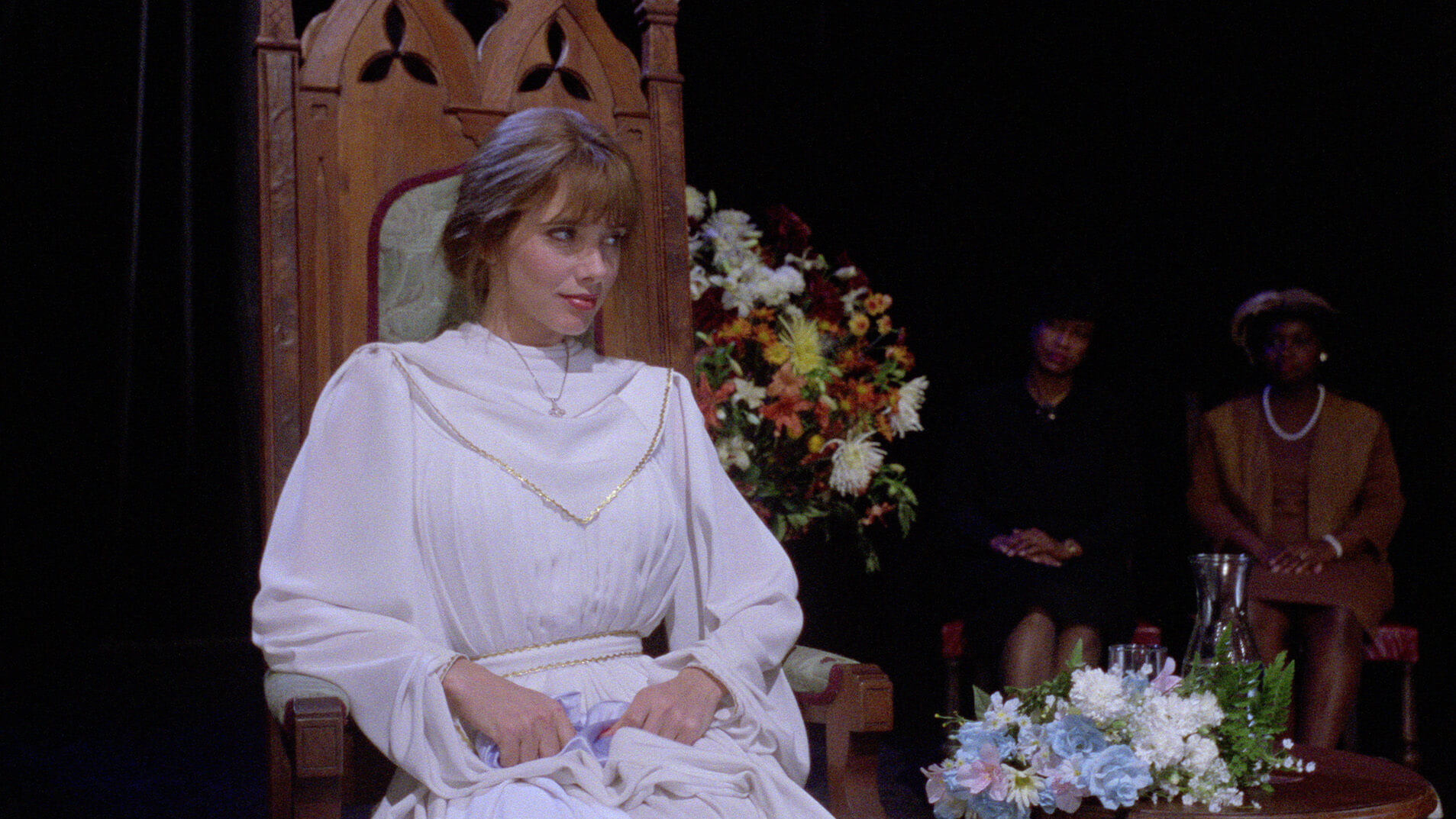
Life in lockdown hasn’t just been a strange new present, it’s also shone fascinating perspectives on the past. Black Rainbow, from acclaimed British director and screenwriter Mike Hodges (Get Carter, The Terminal Man, Flash Gordon) was barely seen on original release in 1989 due to distribution problems, but has just had a timely return on Blu-ray. Rosanna Arquette stars as Martha Travis, a medium in a touring clairvoyant show run by her alcoholic pappy (Jason Robards). But what seems a typical con act cleaning up in the God-fearing American South takes an intriguing turn into the supernatural when Martha foretells the death of a local factory worker-turned-whistle-blower…

We caught up with Hodges, now 88 and living in the splendid isolation of Dorset, to uncover the secrets of Black Rainbow before delving further back into his famous career to find out just what makes the man who made Michael Caine drink from a tall glass go tick…

STARBURST: What was the inspiration for Black Rainbow?

Mike Hodges: The strands of it were numerous. I wrote it on spec, I wasn’t commissioned to write it and its odd that it was 30 years ago and it’s been rejuvenated in the middle of a pandemic. I really became conscious of how damaging globalisation had become to the environment and I wanted to find some way of making a film that would be a thriller but touch upon this subject which really concerned me. There was a medium called Doris Stokes who was operating in this country and I saw her on TV and suddenly thought ‘that’s really interesting’ and I could have story with a medium who could foretell the future by describing what she was seeing there…

Was the small-town US setting shaped by first-hand experience?

Whenever I’d previously been working in America in my earlier career, I was going around looking for locations and went to quite a lot of small towns where the local newspapers were quite often reporting on factory workers being beaten up or even murdered – they were usually foreman or union officials. Upon investigation it would turn out that they had been whistle-blowers on health and safety, so I built that in to the script. And then back in the ‘60s when I was on World in Action [Hodges cut his teeth as a documentary filmmaker on the flagship ITV series] I’d gone to Detroit to interview the Reuther brothers, Walter and Victor, who were the mainstays of the United Automobile Workers Association. Both of them had been assaulted when they were trying to set up the union by G-men employed by the manufacturers. They’d both been shot at through their windows. Victor lost and eye and Walter lost an arm. So quite of lot of these elements started percolating into my head.

Do you believe in mediums or the paranormal?

I don’t really believe in mediums, frankly, but I watched Doris Stokes working the crowd and realised that she was gathering information to convince them that she was communicating with their loved ones. The one I’m dealing with in Black Rainbow, we never quite know if she’s for real or not but suddenly time is warped. In the beginning, you see her look at her watch and she’s a hour out. These are clumsy ways of saying that something is happening. I started playing around with time right the way through, actually, to the very end when the car is covered in this Kudzu weed, which is another thing I’d noticed when I was in the southern States, this weed climbing all over houses that had gone into decay like in Gone With the Wind. I used Kudzu as a kind of metaphor for nature fighting back because it will be there always, and long after we’re all gone and we finally self-destruct!

Black Rainbow is your least-known film. What happened to it back in 1989?

I’m grateful to Arrow for salvaging it because the film had just been totally lost. Whatever one thinks about the film, it should have been seen here. It was very successful in Europe and Japan, but here in the UK, because of distribution troubles with Palace Pictures and Miramax in America both being in financial trouble, they wanted to cash in as quickly as they could. Palace dumped it onto VHS within 4 or 5 weeks of it opening and Miramax stuck it on some obscure cable channel. By the time I got to look at it again, we were in this pandemic. Much of what the film is about is even more relevant because the pandemic has ripped the lid off society and opened a terrible can of worms, which was always there. It’s pretty grisly what we’re seeing in terms of the poverty and the deprivation people are going to have to suffer. It’s always the poor that get it.

You’ve previously described the engine that drives your work as “manipulation, exploitation and human gullibility”. Even for films as very different in tone as Get Carter and Flash Gordon, that’s the connecting thread…

I’m horrified by the things that we do to each other. It’s mind-boggling how cruel we can be to each other and I find that aspect of the human species very painful. I was brought up as a Catholic, but I soon abandoned it in my early teens. But who should teach at my school but William Golding, the novelist who wrote Lord of the Flies. So I was alerted at a very early age!

Get Carter was made in just six months, from the idea to the movie’s release. How did you pull it off?

I got Ted Lewis’ book [Jack’s Return Home, 1970] and the deal was done with me. Needless to say I only got £7,000 for writing and directing it plus residuals! Painful, but there you go, I was still grateful. I wrote the script, found the locations, cast the film, found the crew. We shot a scene in London in the flat at the beginning of the film and were filming on the train up to Newcastle. Six or seven weeks later, we’d finished shooting! It was made in such a white heat that you didn’t have time to stop to think about anything, frankly, and that does affect the experience of watching it. I thought it was going to be like that all the time but was I wrong! I did get to make another nine films but it took me 40 years…

Why does Get Carter still resonate so strongly?

It’s a very intense film, it’s like a Jacobean Tragedy, really. Caine is amazing as the star; I had a terrible fight to get all the cast around him to be British actors who had not made films, apart from Ian Hendry [then in the throes of alcoholism but brilliant as Carter’s slimy associate Eric Paice]. It was MGM money and they wanted all sorts of ridiculous people like Telly Savalas and there was an actress from Peyton Place who they wanted too. I literally resigned every time they suggested someone – I said forget it, I’m not making this. So I eventually got my way; the card I played was to include Britt Ekland who only has a small role anyway and is very good in it. But I knew with Caine in the lead role I wouldn’t need any other stars, it rooted Jack Carter having all these unknown faces. I mean Richard Attenborough, not to be rude about him, but he used to fill his films with star names so you spend the whole bloody movie going “oh look there’s whatsisname and there’s old so-and-so – hello there!” I just wanted Jack Carter away from all that.

After Get Carter you made another movie with Michael Caine called Pulp, which was a very different kettle of fish…

Pulp was a totally different film but in fact is a scream against fascism. When I made it in 1972, I couldn’t believe that the Fascist Party was winning in local elections and doing very well. I just couldn’t get my head around the idea that, after the war, the fascists were still in existence after the horrors that had been revealed. It was a comedy that got darker and darker as it went on. Eventually you realise the main character [Caine as paperback hack Mickey King] is trapped, although he’s a crap writer, in one of his own awful books. I’m not sure if I ever got quite the balance in the film between the serious elements and the comedic, but there we go.

Flash Gordon, which is celebrating its 40th Anniversary this year, was also a bit of a scramble to get made, was it not?

With that film, I didn’t have any control at all, the opposite of Get Carter really. I just improvised because there was no other way I could get through the film. But the same affect, it’s like a souffle, Flash Gordon – had to throw all the right ingredients in and luckily it rose!

Flash Gordon was produced by the legendary Italian empresario Dino De Laurentiis How did you two get along?

The joy of working with both [Get Carter producer] Michael Klinger and Dino was the fact that they just gave you an answer when you wanted something. The film industry quickly developed into being run by committees and producers who weren’t strong in that way. The people are quite rare who make a decision there and then and that was a delight with Dino because it wasn’t always like that. In the mid-‘80s I had terrible times with weak producers.

In 1974 you made The Terminal Man, based on the novel by Michael Crichton. It starred George Segal as a scientist who has computer circuitry implanted in his brain to stop his blackouts. Looking at modern medical science, it’s another concept whose time seems to have come.

It has and I’m hoping Arrow can get their hands on it. When I finished the film Warner Bros said the audience didn’t feel there was anyone to like in it, which is fine, they wanted someone in it to like. So I gave them a new scene, a pre-title sequence using photographs and I took a scene from later on and added that before the titles. I’ve always regretted doing it because it didn’t make a scrap of difference. If you didn’t sympathise with the main character, then you’re not human as far as I’m concerned. Warners inherited Get Carter from MGM and just a year after I made it they did Hit Man [1972] which was a black version [also adapted from Ted Lewis’ 1970 novel, it starred Blaxploitation mainstays Bernie Casey and Pam Grier]. And then they allowed another remake with Sylvester Stallone [in 2000]. They had the rights to do it, so they didn’t consult me or talk to me, but they used the same title and that really made me angry because people really do sometimes think I’m responsible for that piece of shit.

What are you up to these days?

I’m writing a lot [Hodges is also a novelist], including three novellas that are out Amazon – Bait, Grist, and Security. Then I’ve written about six or seven short stories which I hope will get published. Needless to say the literary world is just as bizarre as the film world. I don’t quite fit in there either. They’re satires and I think they’re very funny. But then again, I’ve got this bleak sense of humour…

Black Rainbow is out now Blu-ray from Arrow Video.

Matt Morton | APOLLO 11

A Trip to the Moon:

An Interview with APOLLO 11 Composer Matt Morton

MATT MORTON was part of the team behind last year’s documentary APOLLO 11, which used reconstructed archive footage to tell the story of the first moon landing in a way never shown in cinemas before. The film has been met with critical acclaim and has won a slew of awards. MATT MORTON, is in contention for an Emmy for his work on the documentary, having received several award wins and nominations in the past year. STARBURST got to talk to the composer recently, discussing the film and the work that he put into it…

STARBURST: Were you one of those children who were interested in space travel and science fiction growing up?

Matt Morton: Yeah. I had tonnes of science books. We have a place called COSI (the Centre of Science and Industry) so you could go there and they have lots of books. There are a lot of astronauts that are from Ohio; John Glenn, obviously Neil Armstrong, Jim Lovell who was on Apollo 13. And the Wright Brothers were from Dayton, Ohio. So there is a very strong history of aerospace in Ohio. So we have spaceships, planes and all kinds of stuff that we are exposed to growing up, and I was super nerdy about all of that kind of thing. I had LEGO versions of everything. So yeah I was definitely drawn to science as a kid.

The two biggest projects that I’ve gotten to score were Dinosaur 13 (2014) and Apollo 11, which are both scientifically focused. So it was really cool to dive into those worlds and learn even more than I already knew. Apollo 11 proved a dream come true, as it got to combine my two interests of science and music. For this project, we did a couple of test screenings at the National Air and Space Museum at the Smithsonian in D.C. We got to sit there in a theatre next to Michael Collins and his daughters. The guy who was in the rocket we are watching on this massive IMAX screen is right there, and we got to ask him about it afterwards! Mark and Rick Armstrong, Neil’s two sons, were at the screening and we got their input too. We also got to meet Buzz Aldrin in Switzerland – the documentary was given the Stephen Hawking Medal for Science Communication at the Starmus Festival. We got to meet him and most of the Apollo astronauts, Brian May from Queen, Brian Eno and Peter Gabriel. Hans Zimmer was there also. It’s funny to see all these people act so cool and then you watch Buzz Aldrin walk into the room and everyone turns into little boys! They want to meet him, and everyone’s like “that guy was the second guy ever on the moon!”

Does scoring a documentary present any unique challenges? 

That’s a hard question to answer. This film to me doesn’t feel very much like a documentary. There’s no narrator, no talking heads, no reviews. Very little in the way of subtitles explaining what you’re seeing. We very much took the viewpoint that the traditional documentary approach had already been done over and over. There have already been a lot of great documentaries about it like Moonwalk One or For All Mankind. Our approach was, ‘keep in your head that this is almost like Dunkirk in space.’ You’re getting dropped in the middle of history, and you’re experiencing it in real-time with all the fear and apprehension and all the not knowing what’s going to happen next. We want you to feel that just like it was a feature film. 1917 or something like that, where you’re experiencing history. We want you to forget that they come back safe. Because nowadays it almost feels like it wasn’t a big deal. We know they got back safe, and we didn’t lose anyone in space. People forget how dangerous that was. How unsure they were that it would work. It was mostly analogue technology, built by hand.

My main direction on the music was trying to underline how many things could go wrong. And also trying to emphasise the importance of the mission, because people forget about the historical context of Apollo 11. It’s not just one of our greatest accomplishments as humankind. If aliens are watching us and tracking our development and life on Earth asking ‘okay, what stage are they at now?’ this is a significant milestone. For life to evolve just to the point of having conscious thought is huge, but to then have the technological ability to leave the planet and go step on another one, and then return safely, has to be up there with the first time a being walked on dry land. It’s not just about ‘wow, look at what we Americans did’ or even ‘look at what we humans did’ but more like ‘look at what life on Earth did.’ We started out as single-cell creatures and now we’re walking on alien planets. So when the next asteroid comes along like the one that wiped out the dinosaurs, we will have already colonised the moon or Mars or something like that. So even if we are wiped out for a few million years on Earth, we could live on. I think the moon landing is a huge accomplishment.

I didn’t score Apollo 11 any differently than how I approach narrative or fiction films. Sometimes with documentaries, you get more artistic license. There are less cooks in the kitchen, there is less money involved, and if you get a director who believes in you and lets you run with an idea, it can be more fun to be on smaller projects. I think people have gotten used to documentaries being something of a ‘lesser artform,’ but I think it’s really having a renaissance now. If you look at the top documentaries of this year or even the last five years, the production quality is just going up and up. I would like to dabble a little bit more in scripted stuff, and I do have a project here in the wings for when Hollywood can open back up. But I think these days, documentary is just having a great time. And with COVID going on, archival documentaries and animations are the only things they can keep making anyway. So this could be an even stronger year for archival documentaries as long as they were at an advanced enough stage for post-production.

Apollo 11 is your fourth feature film collaboration with director Todd Douglas Miller. Was it him that encouraged you to initially get involved with the project?

He and I go back a long way. We had a band back in high school. He was the lead singer and I played guitar. When we graduated, he went away to film school and I went to college where I started a rock band. He studied film and started doing commercials and stuff like that. The first film we collaborated on was Gahanna Bill (2001) – a few songs from my rock band were licensed to be in that. We did a film called Scaring the Fish (2008), but the first one that really got people’s attention was Dinosaur 13. That went to the Sundance Film Festival in 2014, it was then bought by Lionsgate and CNN Films. It had a limited cinema release, then did really well on television and won an Emmy for Outstanding Science and Technology Programming. After that we did a short film for CNN Films and Great Big Story called The Last Steps (2016), which is about Apollo 17. So that is the missing link there, as it was our first space project. Based on the success of that, CNN gave us the nod when they saw the 50th anniversary of Apollo 11 coming up. Those are the bigger projects that are sort of the landmarks of our collaboration, but we’ve done a ton of short film stuff for all kinds of different clients.

I’d love to know how many hundreds of hours we have spent talking on the phone about films we like or dislike, scores we like or dislike, even down to what instruments I know Todd likes and doesn’t like. Him sending music back to me with notes of what he does and doesn’t like… that’s how we work. Sometimes he has his hands in the music, or sometimes I’ll send him music before he has even cut a scene. That happened a lot on this film, because we were waiting so long for all of the beautiful 70mm film to be scanned. It was being scanned on a prototype scanner – I think it was the only one in the world at the time that could scan the film in 16k – but they were having problems with the firmware and the programmers had to fly over from London to New York. I thought I was going to get a rough cut in April 2018 and I didn’t end up getting one until October. In that whole time, I had no footage to score to, so I was just pre-scoring, using my experience of working on The Last Steps. So sometimes Todd comes up with the ideas first and I work to that, and sometimes it’s the opposite. The fact that we have a musical connection that goes back 25 years is huge.

The score for Apollo 11 was recorded only with instruments and effects available at the time. Why did you decide to do this?

I came up with that while working on The Last Steps. That was similar to Apollo 11 as it was all archival, there’s no narrator, and you’re only seeing footage from the time of the mission or just before. Basically you’re seeing 1972 for the bulk of the film. I didn’t put any limitations on myself palette-wise or in terms of chronological musical history. I just used anything from the present and anything I had from before. As a result, you’re hearing some very modern, clean sounds in there. In some instances it’s really cool because there’s a juxtaposition, but sometimes it’s a bold but risky situation because sometimes the sounds don’t age very well. I think films usually work better if there’s a harmony or consonance between the visual language and the musical language. I think that score was a good one and it worked well with the footage. But when watching the final product there were times when I thought ‘what if everything you were hearing and seeing was from 1972?’ What if there was never anything to make you question that you were there and actually feeling it? So that was the idea, and with Apollo 11 I just thought it would be a cool experiment. I wanted the viewer to feel like there were no obstacles to experiencing and witnessing 1969, to the best of my ability. I had to use a computer to record with – if I was using a reel-to-reel recorder, it would just have been too much work. But as much as I possibly could I tried, instruments-wise and effects-wise too.

The first cue on Apollo 11 is called ‘The Burdens and the Hopes,’ and that came from a 49-minute improv on my Moog Synthesiser IIIc. I just hit record, and tried to make some weird sounds. I was kind of like an astronaut in the simulator, trying to figure out how it all works, asking ‘what does this button do? What does that knob do?’ I did 49 minutes of Moog and then 10 minutes on the cello. A different section of that 49 minutes is included as part of the ‘Countdown’ cue. The reason I chose to feature the Moog was that Apollo 11, and the whole Apollo programme, were the cutting edge of science and technology at the time. I wanted to find parallels between the technological advancements in aerospace and science, and advancements in musical technology that were letting people make new kinds of music. In the 1960s modular synthesisers were coming about and by the late ‘60s they were really starting to show their influence. There’s a Moog IIIp (the portable version of the IIIc) on The Beatles’ Abbey Road album. The synthesiser was really hot in ‘69, so I thought it would be the perfect instrument to feature on this.

It’s cool for me watching the film knowing that, if someone had wanted to, they could have made every sound that I made for the score. It would probably have taken a little more time than it took me, but the sources – the actual tones and sounds you can hear – are totally authentic to the period.

What was your reaction when you watched the finished film for the first time?

I was at Sundance when I saw the film for the first time. I thought it was incredible. We still made some changes to it after the festival – I wasn’t totally psyched about the mix and a few other aspects. But overall I think the film is an incredible achievement. I hadn’t seen beforehand any of the colour correction that Will Cox was doing at Final Frame in New York, and he’s just amazing. I don’t think all of Eric Milano’s sound design was in the film until then either. Experiencing just those two changes was just incredible. I think the film is a worthy continuation of the spirit of Moonwalk One (1972). I feel like it told the Apollo 11 story in a unique way, which is not easy to do when everybody and their brothers have had the opportunity to do that for the last 50 years! It was a great challenge for all of us to find a new way to tell the story and to make it new to people who either don’t even know about the Apollo programme or know about it and feel like it is just old news. Like how each new generation discovers The Beatles, or how each new generation discovers Citizen Kane (1941), the classics remain classics. Apollo 11 was in the Apollo programme such an important event that the story has to be retold using new tools.

Even though we tried to make this very archival and historically correct and all of that, I think the way that I approached the composition and the overall tone are different from how a composer in 1969 would have done it. But I didn’t do it like how a 1969 composer would have done it. I did it as a modern-day composer, but using the old tools. So you’re still using the kind of language that a modern audience expects to experience when watching a film, but you’re using the old tools so hopefully, you are able to bridge the gap between then and now. If I had scored it like a 1969 composer would have, or even if I wasn’t involved at all and we just used music from the time instead, I don’t think it would have had the emotional strength that it does. Because most of us weren’t even born at that point. I wasn’t – I was born in ‘77. So what do I know about writing music as if I was in my 30s or 40s in 1969? I think people can tell when you’re faking.

You have since won a number of awards, including Best Score at the 2020 Critics’ Choice Documentary Awards. How does it feel to see your work receive this kind of reception.

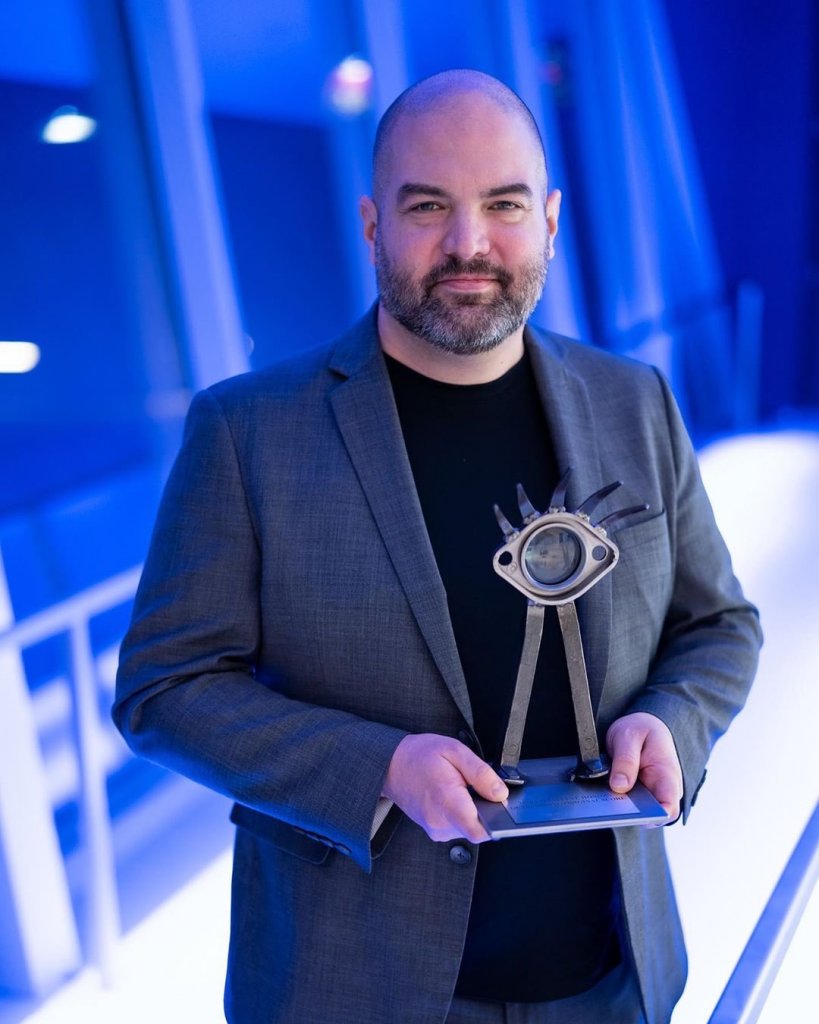
It’s really cool, and unexpected too. The Critics’ Choice Award and the Cinema Eye Award… those two particular are really cool, because on the one hand one is from the critics, so the people who watch everything and so for them to like it means a lot. But the judges at Cinema Eye are our peers. The only people who got to vote there were other people that were nominated. I was awarded Best Score by other people who know how hard it is to make a documentary. So that’s huge. I couldn’t be happier. It was also its own reward being able to work on something like this. If you set out to make a score that pleases people, I don’t think it works. I think that you make your best work if you try to make something that pleases yourself and you try to make something new. Although film scoring is a collaboration so you have to please all the people on the team too. I had to really fight for this vision of the score. Todd and I have a collaboration going back 25 years, and even he wasn’t totally sure where I was coming from when I said ‘I only want to use instruments from the time but I want it to feel modern.’ From the outset of Apollo 11, I would record the sounds I was getting and send them to him. Little by little, he and the others like the distributors grew more supportive of, for example, adding synthesiser at this point and so on. So I had to really campaign in order to get my vision through. If I had just went with what was easy, I would have just made the 100th orchestral score for an Apollo movie. I had a different vision and I had to fight for it, but I had this voice inside of me saying that this was the right way to go. I put the extra work in and I feel like it paid off, but I wasn’t trying to do what I knew would be popular or what would win an award. I just wanted to do what I thought would make me smile and almost giggle when I watched it.

Do you have any future projects coming up?

All I can say right now is that I’m working on a true-crime documentary score for a streaming platform. It will likely be out late this year or early next year. I was set to work on a scripted limited series for TV, but right when that was meant to start production was when Hollywood froze up. So that’s kind of TBD, but the subject of that series is really fun. The third thing I have in the wings is Todd and I have worked for years together on projects and we’re starting the next one. It will likely be the same team that made Apollo 11, Dinosaur 13 and all that stuff. We’re in the beginning stages now. So right now I have a long-term project and a short-term project. The documentary I’m working on right now… I think people are gonna dig the music.

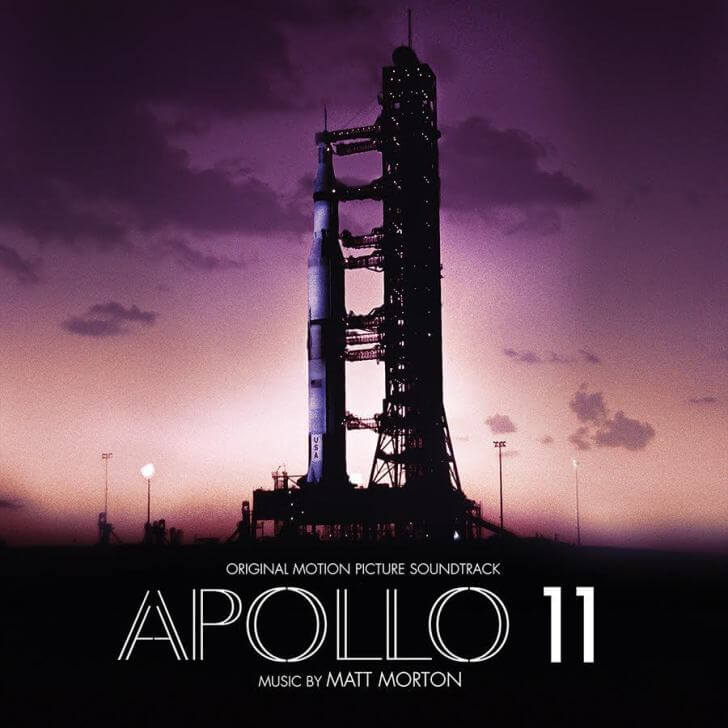
The APOLLO 11 Original Motion Picture Soundtrack can be bought/listened to by following the link here. You can read our review of the film here.

Joseph Trapanese | LADY AND THE TRAMP

Trapanese

Despite hailing from Jersey City, New Jersey, and only being 35 years old, composer Joseph Trapanese has rapidly ascended to join the ranks of today’s most exciting composers. Due in no small part to the composer’s work with such musical luminaries as French electronic acts M83 and Daft Punk) the latter of which he helped compose the massively successful score for Tron: Legacy), along with his work composing scores for films as diverse as the live-action Disney remake of Lady and the Tramp or musical The Greatest Showman, Trapanese seemingly defies categorisation. It’s a fascinatingly broad selection of work in a very short time, and so we were very excited to get the chance to speak with him about his career up to now…

STARBURST: How does a musician and composer who does film scores, who grew up in New Jersey, hook up with two of the biggest electronic-inspired bands out of France?

Joseph Trapanese: Yeah, the kid from Jersey City, right? I’ve no right doing any of this but, you know – I think the funny thing is, I remember going to school and learning about music, attending music conservatory, and just really putting in all this time to try to become a musician. One of the tough things about music conservatories, for me, was that there is always this talk about style. That’s important: you have a style now, but you know, I’m 18. I don’t know what style is. I have no idea; I’m still developing a taste.

I don’t come from a musical family, so it was so exciting you to learn about music. I think that led to me just being so naturally curious about music and what I found is that style is really a development of what your loves and passions are. So, for me, my love and passion were the orchestra. I grew up watching films and listening to film music, falling in love with classic film scores, which obviously use a lot of orchestra, so I naturally wanted to learn about the orchestra.

But at the same time, when I was younger, it was kind of the advent of the home studio. All of a sudden, you could make music on your own and so, I wanted to get my hands on with music. What music could you make on your own? It’s electronic music. You could have a computer make a beat or work with the synthesizer and make electronic music. I was very into producing electronic music just by myself and my bedroom and so, when I went to the music conservatory in New York – which is very classical and classically oriented, learning about Bach and Beethoven and doing that sort of thing – I was always the black sheep.

I’d go down into the basement and play with synthesisers all night, so I think ultimately what led me to hook up with these artists was that I had a certain skillset that helped translate what they were doing to the orchestra. I had such tremendous love and respect for what they did in the studio with electronics, which naturally made me a good collaborator, because there are a lot of people who come from an orchestral background who don’t actually respect that sort of music.

Me being curious and excited is a testament to me as a person. I’m just naturally curious and eager to collaborate and that really led to these these interesting opportunities where I get put in the studio with these amazing musicians.

A kid from New Jersey? How did this happen? I just happened to have this skill set that actually works really well for exactly that type of collaboration.

These are both artists who – even prior to you working with them  – did release albums which already had a cinematic lean to them, especially in the case of M83’s Saturdays=Youth, which is very much a concept album built around the idea of John Hughes’ ’80s teen movies and pop with a really glossy sheen to it. However, in addition to working with M83 and Daft Punk, you’ve done so much work in in the action realm. Was that also because it seems like electronic music has been slowly but surely like finding its way into action orchestral scores over the last decade?

Really strongly, and that’s a great point, because one thing to remember about films – that I always tell students if I’m speaking at USC or somewhere – is that directors want their films to be unique. No director ever makes a movie saying, “Oh, this movie’s just like that other movie.” Filmmakers worth working with have these visions and these ideas and a style and aesthetic and a goal.

An important thing is if the composer’s going to be able to bring an equally unique vision to the table. We started off this interview talking about style, and another thing it took me a long time to learn, that I really enjoy doing now is when a director approaches me to talk about a film – whether the film is shot or is going to be shot in two years, it doesn’t matter – is finding their vision for the film and then figuring out how I help delineate that stylistically on my end.

A movie that comes to mind is Only the Brave. Joseph Kosinski was a visionary director I loved working with, but one of the big things he brought to the table to talk about sonically was, first of all, how important guitars are, because these guys had guitars and will play guitars and the music they love was guitar-driven. I’m not a guitarist so, all of a sudden, I had to learn all about the guitar and work with guitar players and figure out how to form textures.

Another thing is the firehouse that these firemen were in – that was a movie about firemen – was just put together with corrugated metal. The outside is these sheets of corrugated metal so the idea was, “What does that sound like musically?” We were talking about Dobros and these metal guitars. It’s interesting: not every idea you have or not every inspiration you have is going to lead you down the right path to something successful, but it’s important, nonetheless, because you’re starting from a place of creativity, rather than building on the shoulders of some other idea.

To get back to your question about why new action scores have these sounds now is exactly that: even when Michael Bay’s making the 18th Transformers, I’d think, “What is the new thing happening here that we can build upon?” I think it’s especially important when you look at sequels. Say, “Hey, we have something already successful going, but if we just did that again, how boring would that be? How do we approach this with a renewed sense of artistry?”

Pic: Dan Goldwasser

Building on the shoulders of other ideas also seems to be something that your talents lend themselves to. When I think about movies as seemingly disparate as Straight Outta Compton, which is a biopic, and then, The Greatest Showman, which – while also technically a biopic – is an out-and-out musical, the music is the message in both of those films. These are movies where there’s already a wall of music and I’m curious as to how you work within those constraints to compliment and contrast?

That kind of goes back to the original question we were talking about: collaboration. That’s something that I feel strongly about: that I bring something where I’m looking at the whole picture. I’m not just thinking, “Oh, this is where my score begins or my score ends.” It’s like, “No – it’s important to think about the entire soundtrack of it as a whole,” and I even mean sound effects. Steven Spielberg famously said that sound is 50% of a movie and he’s right. Most good movies, you could close your eyes, listen to them, and know exactly what’s going on – even without dialogue – and so, it’s really important for me, personally.

The way I work and my aesthetic is for me to be fully aware of the entire sonic picture. That means soundtrack. That means songs. Regardless of whether is there’s one song or there 50 songs, I’d like to be aware. With Straight Outta Compton, the true star of that movie is the music, so it becomes even more important for me to understand my role in a film like that. To talk about Straight Outta Compton for a second: I had some friends say to me when news broke, “Oh, great – you’re going to write a hip-hop score.” I said, “No, I’m not writing anything to do with hip-hop next to the king of hip-hop, Dr. Dre.” Or maybe the Emperor? They’re beyond king, like the important people in hip-hop ever. I’m not going to do anything to compete with that. What I’m going to do is, I’m going to compliment that. I’m going to write music that fills in the blanks. For me, hip-hop is all about bravado, and energy, excitement, and confidence. What we were able to achieve in that biopic is that we looked at the humanity of these artists as people. That’s where the score came in. The score was able to underline the moments of humanity and weakness that we all have. I was able to score the parts of the movie that just couldn’t be going to be scored with hip-hop, so to speak.

The Greatest Showman – that was so much fun for me because, I think my involvement with that film was really full circle, because I started on that film very early, before it was greenlit and helped come up with some of the earliest demos of the songs. I helped Pasek and Paul develop the language of that music, so we kind of launched the film together with those early demos. Then I came back in later in the process to help beautify the score and the songs together and do final production, kind of unifying the tone of the film, so that was really exciting for me, too.

It was a great and really rewarding experience, because I got to work with those incredible songwriters. I got to work with John Debney, one of my musical heroes, and a legend in film scoring. Michael Gracey, I think he’s incredible. I have to pinch myself that, because of the little skill set I have, at times, found myself in these really unique situations which you’d be pressed to find an ‘average film composer’. That’s not necessarily the skill set you’re told to have when you went to become a film composer. Like Liam Neeson says, “I have a very particular set of skills.”

Pic: Dan Goldwasser

The live-action Lady and the Tramp is based on a film that already has a very notable score by Oliver Wallace, with Bella Notte being one of the Disney classics. The Raid: Redemption had a score for the original release in Indonesia. What is it like to have to go through and completely re-score a movie?

I’ll answer them separately, as they’re very both obviously very different scenarios. With Lady and the Tramp, you’re right: legendary music. I mean, how do you wanna ‘rescore’ a cinematic achievement like the original Lady and the Tramp? It kind of ties into something else we spoke about earlier, which is this creative intent. What is the creative intention behind remaking Lady and the Tramp? That’s something that Charlie Bean, the director – whom I’ve known for a very long time – that’s something we spoke about right away, because we didn’t want to fall into the trap of, “We’re remaking a movie because we can.” No. All credit’s due to Charlie. Charlie wanted to establish this for everything about the film: why we are making this film now and the reason for redoing this film now, musically, was because we wanted to dig deeper into the original intention of why the story was being told.

So, for instance the 1955 version of Lady and the Tramp takes place at the same time as our newer version. Our new the story takes place in the teens – around 1910-1915. Somewhere like that. If you watch the original film and you listen to the score and you listen to the songs, the actual quality of the music is very 1950s  – and I think this is great and fantastic ’50s music – but we said, “No, if we’re going to retell this story again, let’s dive deep into the music of the actual time period.”

What that led to was looking into the music of New Orleans; black American music and early jazz. All of a sudden, something that could have been this warmed-over, microwaved Lady and the Tramp music became something that had true intent and true direction, and the same thing in the score. For instance, we’re talking about both score and songs, and both score and songs had that intent of looking at that popular music of the 1910s. Then, even for the score, we said, “Okay, so for Lady’s character, she’s this upper middle class character. She’s trained. She has a family, but she has all these things that hint at being upper middle class. Where does that music come from?” and we said, “Oh, well, classical music is very formal – very, very trained. What was the classical music like at the time?”

We went back, digging deep into classical American music – Americana, that sort of thing – and then, what’s exciting is the way these two things met in the score. What wound up happening is Tramp’s character was driven by that early American jazz, and the music of New Orleans. He improvises. He’s fast on his feet – very joyous, but he’s untrained, whereas Lady comes from a more refined school of thought – but when these two characters meet and their lives start to intertwine, it’s the same, too, for their music. All of a sudden, as they meet on this dinner date, this music starts to starts to weave together.

The really exciting thing about our new score is that the music is an integral part of the storytelling process and I think that, if you were to point out one thing which gets me excited about going to the studio each day, it’s exactly that: music can have true intention behind and it can be a part of the storytelling process if you set that up right. It could really enhance the movie and so, I feel really strongly that we were able to do that on Lady and the Tramp.

If I was to talk about The Raid, that’s a whole different genre. The funny thing about The Raid was when Mike Shinoda and I came in, it’s kind of a way to spruce up the movie for American audiences. The film was done, but Sony said, “Hey, we want to do something cool. We’re bringing this to the US. Let’s do a cool score idea.” It’s never a great day when you replace another composers work, because it really is a brotherhood and sisterhood and a family – the family of musicians and artists – and you want to respect each other, so it was really important for me to just say, “I’m not going to listen to the old score. I’m just going to do this from scratch on our own and just see what happens,” and it was one of the most rewarding things to happen.

First of all, I have a great friendship and relationship with Mike Shinoda now. He’s an incredible artist and we’ve worked together since and it’s been such a pleasure to do that, I actually have a great relationship with the original composers that we replaced because, at one point in Sundance, Gareth Evans – our filmmaker – was asked, “Hey, your film was scored twice. Which was your favorite?” and he said, “I love them both. I think that my perfect score would be bits and pieces of both, put together.”

Well, guess what? We get to The Raid 2 and Mike, unfortunately, is too busy working on an album and Gareth says, “Hey, Joe – would you work with my original Indonesian composers on the sequel?” I said, “That sounds fun. That sounds great.” They flew to LA, they got an Airbnb about ten minutes from my house and, every day for a month, we worked together in the score. Gareth would come over in the evening – he was editing at another Airbnb down the street – and we would have dinner. The three of us have been working together all day on the score and it was some of the most fun I’ve ever had.

A lot of times people ask me, “Joe, why do you do all these collaborations? You’re a film composer – just establish your own solo voice?” What I say to them is, “I have done that. You could listen to my solo scores.” For me, to turn down opportunity to work with these cool people and collaborate? That’s ridiculous. I love collaborating with others. Both those stories are really great stories of collaboration – of this effort of working together to make music a real part of the storytelling.

Lady and the Tramp is available to stream on Disney+

Main image by Tim Navis

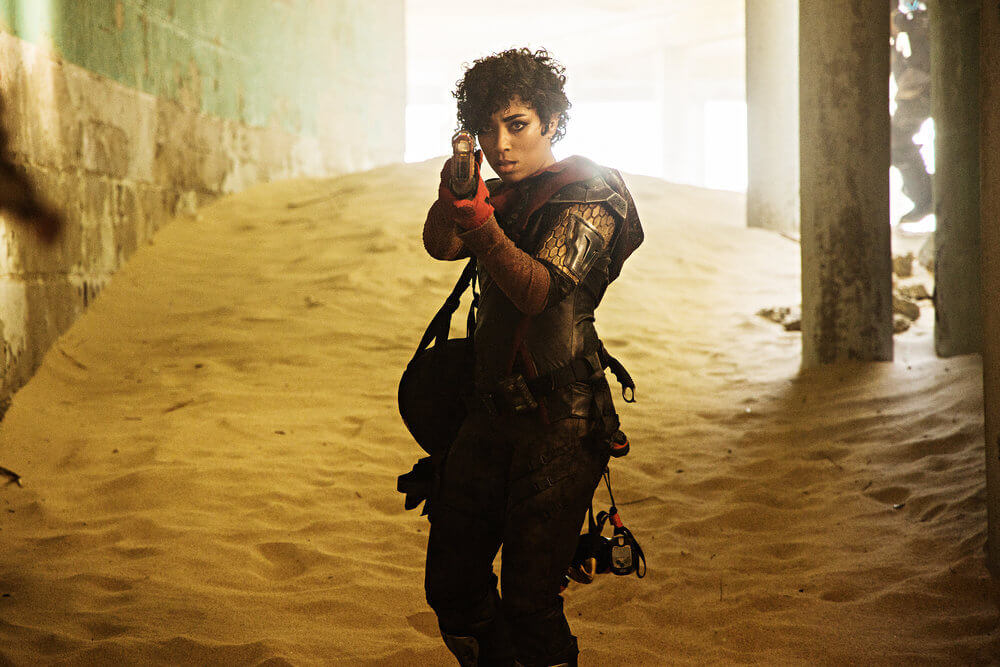
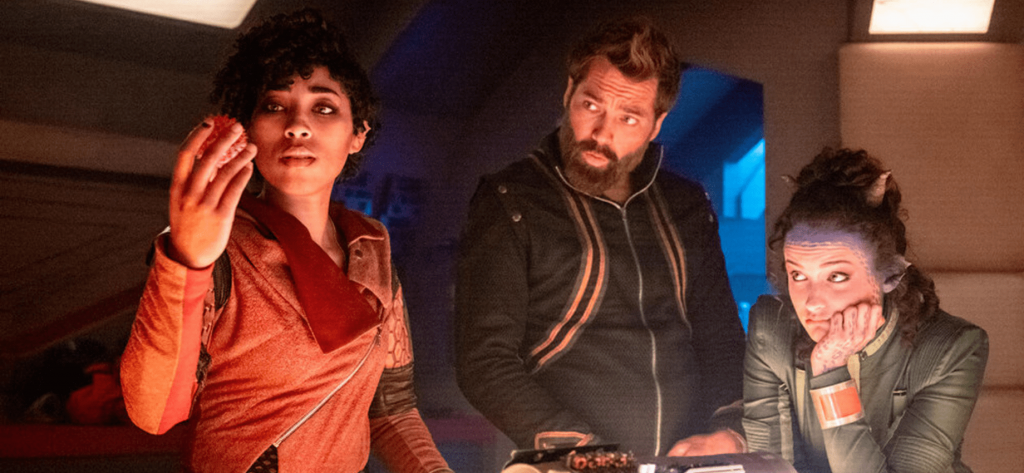
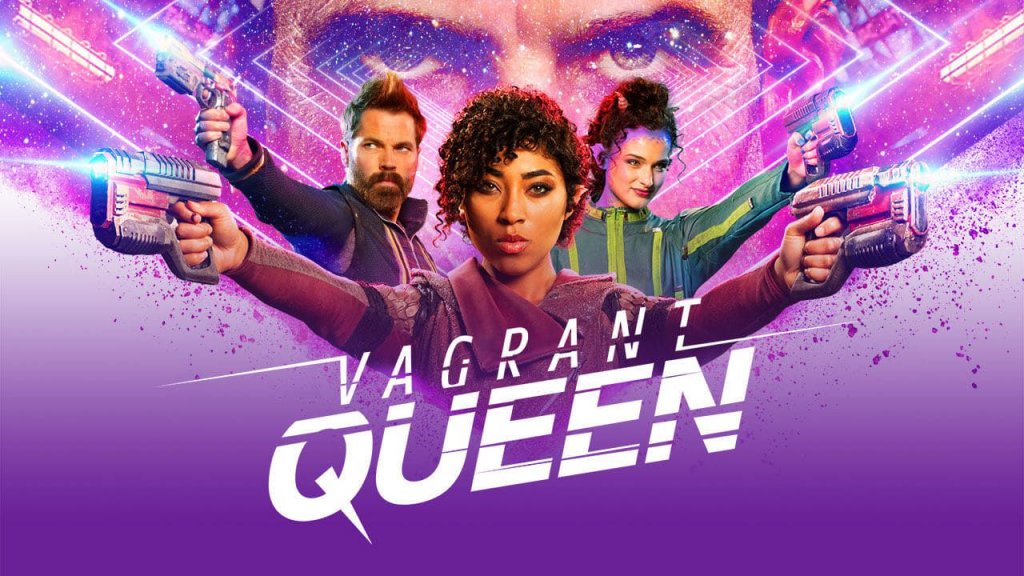
Adriyan Rae | VAGRANT QUEEN

We caught up with ADRIYAN RAE to talk about her role as the titular VAGRANT QUEEN in SyFy’s latest sci-fi action comedy show…

STARBURST: How would you describe Vagrant Queen to your grandma?

Adriyan Rae: It’s fun, it’s campy, it’s about journey and friendship. She’d be like, “Oh Okay, I think I’d love that!”.

How did you get cast in the show?

My manager received a call from their team for someone else and my manager thought that I would fit the role well and he pitched me for it. I auditioned – I just went all out because I instantly loved Elida. We sent the tape in and five or six days later I got a call from my manager asking if could speak to Elida. I just freaked out!

It’s a very physical show, how do you prepare?

I did a lot of dynamic training. As actors we’ve got to make sure we look aesthetically pleasing. I had to switch my work-out to be more athletic. More kick-boxing, MMA, weight-lifting of course. Working out and not really realising.  I did a lot of ropes, stairs, resistance bands and like actual learning fighting techniques. It was really cool to switch my workouts.

The show has some pretty ‘out there’ sets and costumes; how does that shape your performance?

It helps that it’s so practical. It helps that when I’m talking about space I can look back behind us and ‘see’ space. It helps that I am in a cockpit and I can touch the buttons and they actually move and they do things. It helps that when I’m talking to an alien they actually look like an alien and I can see how their mouths move in a way different than a humans. It’s a really fun place where you just get to use your skills and practicalities and imagination meet. It was super fun. 

There’s some great chemistry between the cast, how much of that is the script?

There’s definitely room for improv. Sometimes we just riff. Sometimes we just add a little spice into there as long as we get to the point of the line and we get across what the scene needs. Our showrunner and our directors were pretty open to us improvising and adding a little bit of the Elida, Issac, and Amae flair to it.

Where did your love of stranger stories come from?

For me it started when I worked on Light as a Feather, because that’s like a fantasy, horror thriller. It’s not that I had no idea, it’s just when I started I was not as much into the sci-fi world as I am now. When I got the script for Vagrant Queen it was cool, and then I’m on the set and it’s very cool. I was like ‘Oh, I get it’. With Light as a Feather it was the incorporation of magic into the script. I always loved magic and different things that aren’t of this universe. Then, luckily, I was cast in Vagrant Queen and it all came together for me!

Did you get spend any time with the the creator of the comics?

I did. Magdalene Visaggio visited South Africa for a while and so did [artist] Jason Smith. I was very grateful to meet with them and just see the smiles on their faces. It was very nice to chat with them and learn where it all came from. 

How have the sci-fi fans responded to the show?

It’s a whole family that I suddenly have and I’ve been getting to know them by popping onto Instagram and Zoom and Twitter! They are absolutely amazing. They’re so supportive. It’s astonishing.

Seen any Elida cosplay yet?

I haven’t seen it yet, Comic-Con has been pushed back but I know that they’re doing an online one now and I can’t wait. A lot of people are telling me they’re going to do that though and I honestly think I might cry!

What are your favourite memories of filming Season 1? 

There’s like a top three: one would be the time that Tim [Rozon] almost cut his finger open in the middle of a scene. He was such a professional that no one even knew, and then at the end of the scene blood was dripping from his hand and he says “we might need a medic”. Another was when somebody tased herself trying to show us how to use a Taser safely [laughs]! And lastly, was my birthday. I was in South Africa and all the cast and crew there knew it was my first time being out of the country on my birthday. I was going to be working all through that day. Everyone was nice and I was just covered in love the whole day! I remember crying so much. I’m a real crybaby [laughs]!

What do you know about the future of the show?

I always believe that everything is working out for my greater good and our greater good.  I’m sure something is coming whether that’s Season 2 or another project. People can follow me for updates on my Instagram and Twitter. I love to talk to fans.

VAGRANT QUEEN – SEASON 1 is available on NowTV until July 17th, and on DVD/Blu-ray from July 13th. To read our review, head HERE.

INTERVIEW WITH ADAM BAKER – AUTHOR OF OUTPOST AND JUGGERNAUT

Adam Baker Interview

With the novels Outpost and Juggernaut and a third instalment in the works, Adam Baker’s contribution to the world of zombiedom gives him a place amongst the greats. Managing a new take on the undead plague, Adam Baker deals effectively with mature themes and believable characters, has a unique writing style, and most importantly knows how to tell a good story.

Recently, Adam sat down with Starburst to chat about the ever-present zombie menace.

Starburst: Could you tell us a little something about your roots, previous jobs, and how you got started in the business?

AB: Gravedigger. Cinema projectionist. Slot machine mechanic in an Atlantic City casino. I didn’t set out to have a weird-ass CV. I’ve always wanted to be a writer.  People think creative ambition is a wonderful thing, but actually it’s a curse. It messes up your life. It leaves you discontent, unable to commit to the nine-to-five, drifting from town-to-town, job-to-job, unable to find a home.

SB: How did the concept behind Juggernaut and Outpost come about?

AB: Modern life is so oppressively organised that the idea of finding oneself marooned in an isolated environment has become a pretty attractive daydream. It would be terrifying to stagger from a plane wreck and find oneself alone in a jungle or stranded in a desert. But, at the same time, it would be exhilarating to be the master of one’s own fate.

SB: Both books have strong female leads. What is it about dominant females that you find so compelling?

AB: My books tend to be set in masculine environments (oil rigs, war zones) so a female protagonist automatically has outsider status. They participate in these macho worlds, but at the same time provide a sardonic commentary.

SB: Do you have a Zombie Contingency Plan?

AB: I’ve thought about this at great length. I’ve drawn up checklists, studied maps, and still haven’t finalised my plan. My first instinct would be bolt to Scotland. Seek refuge somewhere remote like the Isle of Skye. But what if every other survivor on the British mainland had the same idea? The place would be awash with refugees, just as dangerous as central London.

And the wilds of Wales and Scotland might contain additional hidden dangers. Allan Wiseman, in his excellent book The World Without Us draws attention to a survival issue that eludes most writers of post-apocalyptic fiction: nuclear power stations. Globally, there are about 500 nuclear power stations, and a similar number of military reactors. Sooner or later each of them would, in a de-peopled world, go into meltdown. The wooded hillsides of Scotland or Wales might seem an inviting hide-out for the average prepper toting a shotgun and bug-out bag, but both regions would soon be heavily contaminated by fallout from nearby power-stations. Europeans would be well advised to flee south to North Africa to avoid radiation sickness and a lingering death.

SB: Thoughts on horror: What is horror and why do we like to be scared?

AB: The reason is pretty obvious. Fear of illness and death. The pulp conventions of the horror genre help create an arena in which we can safely contemplate our mortality. For example, most zombie stories include scenes in which a sympathetic character gets bitten and has to come to terms with their own terminal decline. We observe their stoicism in the face of on-coming death; a rehearsal for the moment we confront a cancer diagnosis and brace ourselves for surgery, chemotherapy, weakness and emaciation.

SB: Do the things that scared you as a child still scare you today?

AB: Big time. As a kid, I used to be reduced to snivelling terror by mannequins. Creepy, impassive, blank-eyed effigies. They still freak me out. But, by the same token, fear can evolve into fascination. My childhood terror of mannequins has evolved into a love of Victorian automata.

SB: What’s an average working day?

AB: Coffee. More coffee. Arse around on Twitter and Facebook until mid-morning guilt makes me write something.

SB: The internet informs us of your self-confessed geekery; who then is your favourite Doctor and why?

AB: Tom Baker. He was my childhood idol. But classic Who DVDs have enabled me to watch the early black and white adventures for the first time. The Patrick Troughton adventure Tomb of the Cybermen remains a masterpiece.

SB: Cylons vs. Daleks, who would win?

AB: Daleks.

They have a lethal, insectoid simplicity. They lack the emotional and intellectual baggage of Cylons. They are single-minded; pursue their xenophobic mission with unwavering purpose. Cylons, on the other hand, are conflicted. They are burdened with existential angst. In short, they talk too much.

Daleks would kick their asses. Daleks would destroy Cylon base ships whatever the cost. They would chase the Cylons planet to planet until they had wiped out every last one. Daleks rock.

SB: Influences on your writing career. Any one author that made you stop and go ‘wow’.

AB: My favourite author is HP Lovecraft. I bought a collection of his stories as a kid and was transported to a strange and sinister realm. Each short tale hints at a larger narrative, a vast realm of cosmic horror. That’s my ultimate ambition. To construct a fictional universe that will absorb the reader and stay with them long after they have closed the book.

SB: What might we expect to see from you in the near future?

AB: My third novel features a rescue team battling their way through the ruins of post-apocalypse New York. The setting is familiar from a hundred movies and novels, but hopefully I can provide an original and entertaining spin.

SB: Thank you, Adam Baker.

Chris Bartlett | THE MANDALORIAN

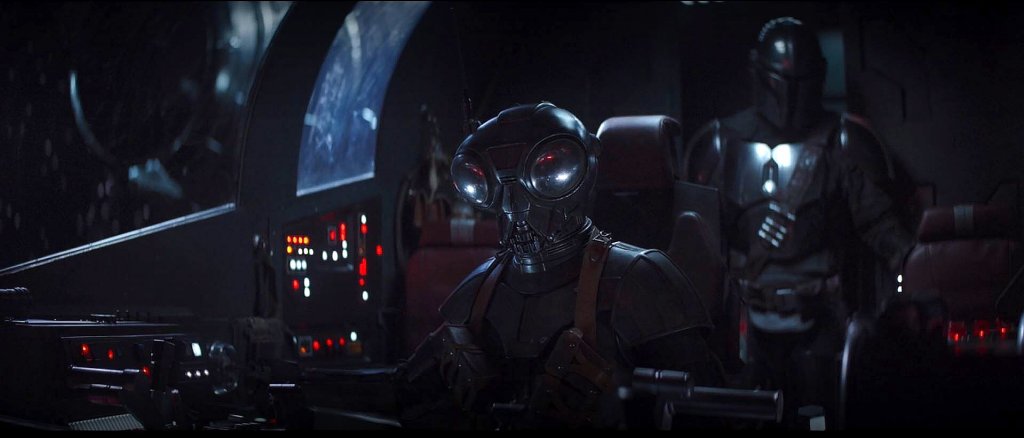
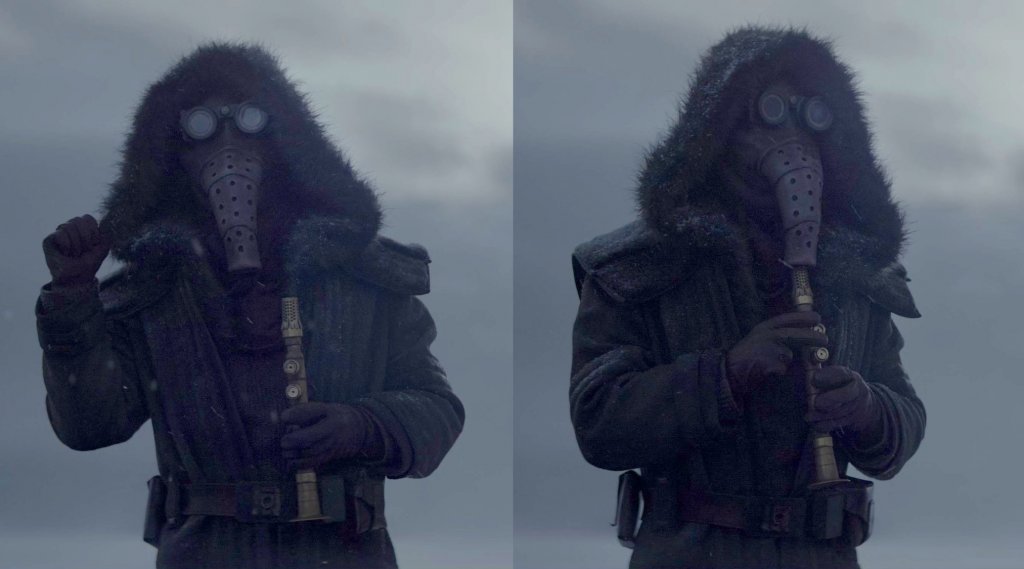
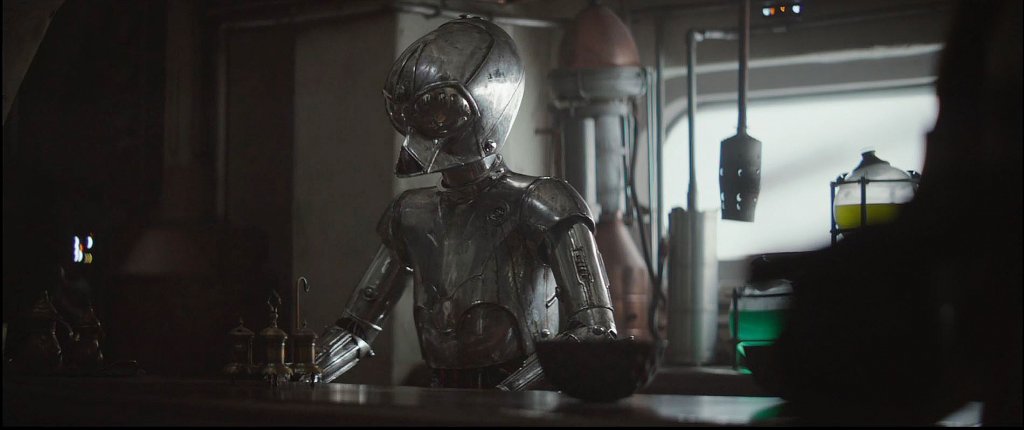
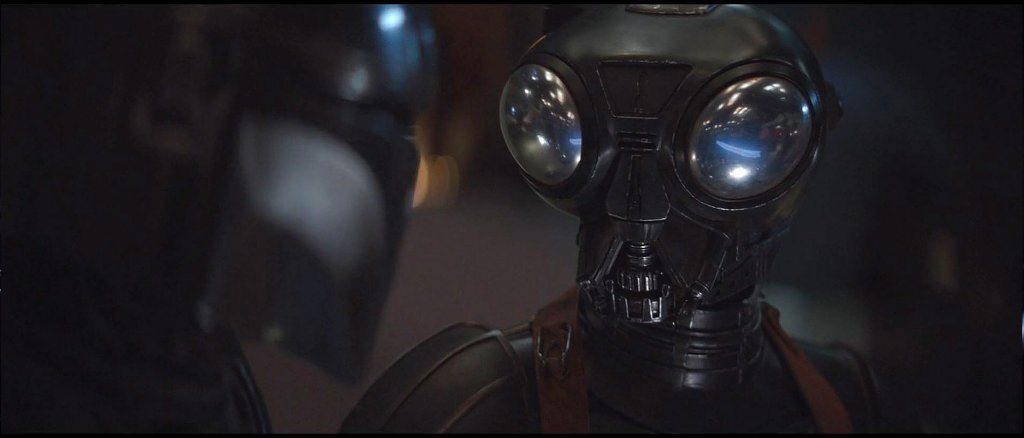
We talk with THE MANDALORIAN actor CHRIS BARTLETT to learn more of his STAR WARS journey in front of the camera, from professionally performing as C-3PO to his roles as The Ferryman, Zero, and a Death Star droid (which he made himself!), and what it’s like to work with the likes of show creator JON FAVREAU, Lucasfilm legend DAVE FILONI, and Mando body double BRENDAN WAYNE….

STARBURST: How did you first get involved with the Star Wars franchise?

Chris Bartlett: I had built the suit that we use on TV. I had worked on it just as a passion project for myself. When Lucasfilm found out about it, they invited me to Lucasfilm to finish building it there, which I did. Then we went on our first event, which was in Australia. There was a voice track provided, and I performed as C-3PO in the suit. A few years later and after I’d been doing TV appearances, Disney World contracted me through Lucasfilm to come out and do an appearance with Anthony Daniels, where he would be doing a show, talking about his career as C-3PO. He would be appearing on stage for the first time in public ‘with’ C-3PO, because Anthony Daniels ‘is’ C-3PO. He is the one who really created the character that we all love, so he wouldn’t appear with C-3PO because that’s him. However, Disney wrote a story, this show, then he decided that he liked the show, and that he would do it with C-3PO. He talks about his career for about 25 minutes, then in the last 5 minutes he goes behind the curtain, you see his silhouette, the light goes down, then the light comes back up. It’s the silhouette of C-3PO. C-3PO comes out, and then Anthony comes out, and they both see each for the first time. It’s a really emotional and cool moment for the audience. You can feel the audience have that nostalgic, really special feeling. In preparation for that, we had some rehearsals, where it was just him and I. He recorded lines for it, and I did the performance in the suit, but we worked out some timings.

Was that the first time you met Anthony Daniels?

No, years before that, the very first time I had finished building the suit, just as a fan I appeared at The Boston Museum of Science, where they have the Star Wars: Where Science Meets Imagination exhibit. On the opening day, Anthony Daniels was there. I heard he was going to be there. There were stormtroopers etc, and I thought it would be fun to appear in the costume, with the other costume characters. Anyway, he was backstage with us, when we were suiting up. This was the first time I met him, and he gave me some tips, like when you move you isolate your motion. The torso sever from your legs, sever from your head, arms. That really gave me the biggest tip on moving/performing as C-3PO. That was really useful. It’s not big sweeping motions, it’s individual parts that are moving. So that was cool. He was just giving me advice as a fan. Neither of us knew that later on I’d be performing as the media C-3PO for Lucasfilm.    

How did C-3P0 lead to The Mandalorian?

I got a call to go down for a fitting, as a droid. By this time I’d been performing as C-3PO for twelve years. On TV, in commercials, etc. Not just for fun! This was performing work. They knew about that, and they called me to go down for a fitting for a droid at Legacy Effects here in Los Angeles. They only had the costume from the waist up. They gave me some spandex to put on, then I put on the suit from the waist up. When I put it on, it was way more comfortable than C-3PO. It wasn’t so restrictive. They knew that I had a lot of experience as a suit performer, as a creature performer, and in small confined helmets. So once we put it on, I got to see the concept art, that you see of the crew at the end of Chapter 6. I saw Zero in that piece of art, how he was standing. Kind of standing like Boba Fett. So, I put on the costume, and we did a screen test on a grey background. I just moved around, initially like Boba Fett mixed with C-3PO. Where you have these droid motions, but a cold calculating motion also. They gave me a pistol, it wasn’t the one I used in the show, but I did some poses, and looked around, and they said “OK.” We did that for about 20 minutes, then they took that footage and sent it to Jon Favreau. I didn’t hear anything for a while until I got this call to come down for another fitting. For what they called The Ferryman. I said, “Oh, so I guess I didn’t get the droid that I auditioned for?” and they said “No! You’re going to be doing that too!” I said “OK great, that’s awesome news, because I really like that one!” I had no idea what The Ferryman was going to be. I said, “What is that character?” as I was picturing a shirtless, half goat creature, with ears. In my mind I was like “This doesn’t sound like Star Wars!” So I asked if they could tell me some more, in which they replied by saying “You’ll be playing the flute!” So, I guess that’s what it is! Anyway I got the email confirming my appointment to go down for that fitting, and it was spelled “Ferryman”, and I was like “Oh, Ferryman!” A guy who guides someone across a river maybe? I still had no idea what that one would look like. When I got down to suit up it was a character that looked a lot like the Garindan character from A New Hope who lets the sandtroopers know where our heroes are going to go. I just thought that was so cool. Again, it’s a confined mask, but that has its whole story as well. Back to Zero, they said I’d be flying The Mandalorian’s ship! All of a sudden my whole life rewound to when I was a seven year old in 1977, pretending in cardboard boxes to fly ships! So I really couldn’t wait for that day on set. I didn’t know that that would be until four months later, I thought that every time I had a scene as Zero I was going to be flying the ship. So that day was unforgettable. 

Droid mercenary Q9-0, aka ‘Zero’, pilots the Razor Crest

You act as The Ferryman in Chapter 1, alongside Brendan Wayne and Horatio Sanz, what was that particular scene like to film, and what do you remember the most from putting it together?

That was my very first day on set. Yeah, it was with Brendan Wayne who is the double for The Mandalorian. So most of my work was with Brendan, the grandson of John Wayne. It was just so cool to be able to work with him. All I’m seeing on set is his helmet. His manner – where he has to radiate through a faceless mask – was so cool! I’m a huge fan of Boba Fett, so I was in awe when I looked at this mask for the first time. Going to the moment, imagine you get the call to be in Star Wars, and you’re a huge fan of Star Wars, going all the back to your childhood. Inside you feel like there’s this massive dynamite that’s about to blow up with excitement! You can just imagine how that would feel, but you have to maintain your cool, because you need to be professional. You have a character to play, and a story to tell. You don’t have time to bubble around the set, being all excited. On the very first day they don’t give you your lines until you arrive at the set, so you only have a short amount of time to prepare. I was sitting in my room, going over my lines, which ended up being alien language anyway! They were English lines on paper. So, I was memorising them, doing them all correctly, saying them in the suit. They said “OK Chris, Dave Filoni is going to come in and go over your lines with you.” So Brendan and Dave came in, and Horatio Sanz who is the character from Chapter 1 in the first scene. They don’t give you any direction/background on this character, what his motivation is, what he sounds like, what he’s doing there. It’s just like we’re going to do the scene, and these are your lines. As an actor you have to bring something so that there’s not nothing there! I came up with the voice. I thought about how he’d be lonely, sitting out there on the ice, frozen ocean, he doesn’t get a lot of visitors, so he’s probably depressed, frustrated. I sat down with Dave – who I’d met before as C-3PO through Lucasfilm – and he was talking about what it was like to make Star Wars with George, and then Jon Favreau walks in. Now, this was the first time I knew Jon was even going to be there or that I’d ever met him. He walks in, just like a regular guy, your neighbour and says “Hey guys!”. I stand up and I’m like “Oh, hi – I’m Chris!”, I held my hand out, and Jon’s hands were full, with books, and a water bottle. He’s trying to shuffle his stuff to shake my hand, and I was thinking “Abort!” I felt like I was making a fool of myself. So I just stood there, and he did shake my hand, and we did the scene. Anyway, I thought that I’d ruined all of my chances by inconveniencing him. Then we did the reading, and again I just brought my voice. I imagined this frozen wasteland, like Siberia, maybe this guy has like a Russian/alien voice. In the scene, The Mandalorian asks for a speeder, and The Ferryman doesn’t like it, because Mando says no droids. My guy says “Well I assure you, this speeder is brand new”, and Jon goes, “That’s good, but let’s cartoon it down a little?”, and then Dave says “Would we even do an English for this?” and I was like “I don’t think so!” I talked about how fans would like it to be an alien language, then Jon was also saying the same thing, how this should be an alien language. It was cool to be able to see them make creative decisions that really affected the character you see on screen right then. It was neat. Then when it was time to go out on set, I had been anticipating this moment since I was seven. When they said “OK, it’s time to go out on the set, take your place up on the pier” literally as I was stepping up on to the pier, the whole thing flowed way down, my boot touching the pier, there was snow and wind blowing, there’s water on the pier that’s frozen. My whole life was rewound to when I was little. It was emotional. I was so excited to be there, but also scared, as I didn’t want to mess up this opportunity. We got up there, and the wind’s blowing, then The Mandalorian is walking towards me. I was like, “This is SO awesome!” I just couldn’t believe it. So I did my scene, my English lines over and over. Then we got the shot. The set was like this cylinder, from floor to ceiling, of monitors, that projects the environment all around you. It looks so realistic. There’s no green screens. The light & colour, bouncing off the characters, makes it look like they are really in that environment. It makes it so easy for the actor to feel like they are part of that real environment. It was an amazing experience. Something that I could never imagine. 

Star Wars is obviously known for its huge costume, and puppeteering workshops. So, can you tell us about what it’s like to see their epic workshops in real life, and how they’ve been applied to constructing the world of The Mandalorian? 

Legacy Effects were the ones that did the vast majority on the episodes that I worked on. The Child/Baby Yoda was there of course, everyone knows this one! I saw him on the first day, and I didn’t know that he was going to be such a central part of the story. It was more adorable than I thought any Ewok could be. Shortly after that, someone said that that was the bounty, that’s what The Mandalorian is searching for, and that’s what he is protecting through the whole season. It was a major thing that we had to keep quiet. I had seen all of the different variations of the armour for The Mandalorian, and I didn’t understand why there were so many different types until I had seen some scenes, where he was upgrading his armour. Stepping onto the set and seeing IG-11 lying on the table, which is from the last episode, where Kuiil was restoring him. That was the first time that I had seen him, laying on the table. I was going “Oh wow, that’s IG-88, he’s in this too!? That’s amazing!” Then as I was performing more on the set I realised that there were a lot of things on The Mandalorian that we recognise, that we are meant to possibly relate to because we’ve seen this character before. However, almost none of them are the real thing that we are thinking. For example, IG-11 looks almost exactly like IG-88 but he is just another one. IG-88 isn’t the only robot in the galaxy that looks like that, just like R2-D2 isn’t. I really like that about the show. There are a lot of characters, and creatures, droids, that we can relate to or remember. Like an R5 droid that appeared in The Gunslinger chapter. It could be R4 etc or just another one. It was just really neat to see it in real life. Jon and Dave have made a lot of effort. In the show they’ve dropped a lot of things that we remember from our childhood. It’s really cool, and Dave and Jon are the best people to be on this. They are just like us, lifelong Star Wars fans that just want to make more of it. You can see their love through the work. 

The Ferryman prepares safe passage for the Mandalorian

Which costume took the longest to get ready in?

Zero was pretty quick, because it was only the top half. The bottom half was CGI legs, so I’d be wearing spandex. I could sit down which was something that I could never do with C-3PO. The death star droid that was in the cantina in The Reckoning, I built that one. That was originally supposed to be a black protocol droid, very C-3PO looking. They knew that I built protocol droids, and wanted me to build one for this scene. I said that I do do that, but just on my own, I had just finished building my own Death Star droid. We had sculpted the head and the body, and had just finished the mould. I hadn’t painted it, or had it chromed just yet. So I said “Yes I could make you a C-3PO but I’m also making this, what do you think?” I got a note back from Colin Wilson, the Executive Producer, saying that they were really excited about the Death Star droid, and would like to use that one for the cantina. They said that they’d put me on a call tomorrow with Doug Chiang! I was like “Wow, Doug Chiang!” I had been following his work since 1999 with his concept artwork for the prequels. So I talked with Doug specifically about that one. Going back to your question, the Death Star droid took the longest. Normally my wife goes with me, she’s an actor herself, but also a character performer. She’s an expert at costuming. She worked for Disney for 13 years as a character performer. She is the one who usually travels with me, and dresses me up. She wasn’t with me on this one, but I did have Don from Legacy Effects. She helped me dress up as Zero and the Death Star droid. She did a great job putting it on, and taking it off. I was in great hands with Don as well. The Death Star droid was just more involved, as it fits together like a puzzle. All together it took about half an hour to put on, just because it was a new person. 

Bartlett’s home-built Death Star droid tends bar

You played Zero in Chapter 6, what was this robot like to play, and what did you enjoy the most about working on this episode in particular?

After the first sitting I went home. I was talking with my friend, Dee Tails, who is a character/actor and suit performer in The Force Awakens, The Last Jedi, Solo, Rogue One. He plays droids, and other characters. So he and I just connected on Facebook a while ago. I was talking with him, and we started talking about bugs. I was asking him for advice, on how he approaches characters, because he has done a lot of films. He was so helpful, and he was really my mentor on doing a new character. He even came out to LA, we got together, went out in the mountains and talked about acting as droids/creatures. How to approach each role. He’s an amazing individual and performer. We started talking about treating the character like a bug, because he kind of looks like a praying mantis. So I researched the praying mantis, how they moved, and how they keep their head still. They can twitch their head real fast, and look. So I looked at a bunch of praying mantis videos. You can see this when Zero walks down the ramp for the first time. When he is being introduced by the crew to The Mandalorian. When I first walked down the ramp, my eyes as a regular human are looking where I’m walking, so I don’t fall down the ramp, and ruin the scene. As I was doing that, I was thinking about how a droid wouldn’t watch where it was walking, its sensors would know where it was walking. So I made the decision to keep my head facing the crew, until I got to the bottom of the ramp, but the problem was that I couldn’t tell when I was going to get to the bottom. I was just hoping that I wouldn’t stumble. I did it once, I stumbled a little bit, and then we got it. Staring at them while my body is walking down the ramp. It made it look more robotic. You can also see when I’m looking for The Child, how I would snap my head when I look around. That came from a bug kind of approach. The eyes were really cloudy, and I could only see through these two tiny slits right in the middle of the face, that you can’t see. It made it a real challenge. Another thing that I did for the character was that I tried to come up with a voice for it. He had a lot of lines, and I learned all of the lines, performed all of the lines while I was in the suit. I also brought my own microphone and amplifier so that people could hear my voice. I mounted those. I wouldn’t drink water before I was going to go out onto the set. My idea for this character was that he was a more sinister C-3PO, maybe he’d be British – sorry! –  and have more of a gravelly voice.That’s how I did it the whole day. Then later when they got Richard Ayoade to do the voice, he did a gravelly British accent! I was so happy with his performance, he sounded great. It felt like we were on the same wavelength in regards to how this character might sound. When I was going around on set, talking to people, I tried to stay in character a little bit, not to be annoying, but just because I wanted them to feel that this was a robot. I did get a lot of comments, like “How am I doing this voice?” because people weren’t expecting a voice to come out of it. Another thing that I would do when I was walking is that I’d turn my head and stare at people, it had this real sinister feeling. I had no idea how cool this character looked until I saw it on the show, because I was inside it right, there were no mirrors on set. I was just trying to do my best.

Mando interrogates Zero

You may have noticed that this costume appears in Chapter 3, it’s in a couple of fleeting shots. It’s in the scene where all of the bounty hunters are descending upon The Mandalorian. When he’s got The Child in the street. I appeared in the costume in that as well, and they gave me a different weapon. It was like a Boba Fett EE-3 carbon rifle. It was foam, really light weight. So when we filmed, during the shoot out, it was easy to carry it around, and pretend to shoot. Then, in this different episode they gave me a weapon that felt like it weighed 20 pounds. I don’t know what it was made made out of. You can see the weight of it when I’m carrying it, but it was so heavy. When I was carrying it around in the ship, we had to do some tricks. For example when I crawled down the ladder to the cargo hold to look for The Child, there’s a guy at the top of the ladder holding the rifle, so I could just pretend like I was holding it the whole time. I could just reach up and come down. There was no way I could bring it down, because I would just fall to my death. Which, eventually I did, when The Mandalorian shot me. Actually, while filming this show I died twice in one week, two different characters. You’re in shoot outs, it’s all the stuff we pretended to be when we were kids, running through the streets/neighbourhood with cardboard weapons. It was all that, but real explosions, amazing costumes, super realistic environments. It was just a dream come true. 

How would you describe The Mandalorian to someone that’s never heard of Star Wars?

It is a lot like the old Clint Eastwood-style westerns, but in Star Wars. Just like George always called Star Wars a space western or space opera. This really feels literally like how George was describing it back then. If you go and watch the High Plains Drifter or Pale Rider, these films where a loner walks into a town, where it’s been terrorised by robbers or whatever. He has a special set of skills, they realise that, and they ask for his help, and he helps them. He is so helpful that they ask him to stay. Maybe there’s a widow that likes him a bit more than everyone else, maybe he’ll stay for her, but no he just can’t because this place isn’t for him. It’s like taking a familiar story, and then putting it into Star Wars to make it totally new. This is what I was talking about before, everything is familiar but everything is new. It just makes it something that you really connect to. It’s something you feel like you’ve seen before, but it’s something that you’ve never seen before. Plus, it’s Star Wars. If you don’t know anything about Star Wars, George always described it as a morality tale for the rising generation. Star Wars was always made for 7-12 year olds, a rising generation learning the difference between right and wrong, how to make a choice, seeing good triumph over evil. Those hopeful lessons. That’s who it is for. If you are ever watching a piece of Star Wars and it feels a little too childish, just remember that that’s who it’s meant for, for young people. However, Jon and Dave have taken something that although it’s meant for young people, there’s also an adult generation that love this world as well. They have put everything in it that they can, to make it a hug to that generation as well, and say that this was made for them also. That’s what really makes it special. The other thing is that there’s droids, creatures, ships, space, explosions, shoot-outs! It’s so fun, and the cool thing about it is that you don’t have to have seen Star Wars to enjoy The Mandalorian, because it’s action as well as a message and story that people can relate to.

All episodes of THE MANDALORIAN are available exclusively on Disney+

John Harrison | CHILDREN OF DUNE

children dune

STARBURST catches up with writer/director/composer John Harrison to look back at the miniseries Children of Dune

STARBURST: We’re always curious about whether a miniseries is more akin to making a film than making television or is it still TV, in the idea that you’re filming for beats where there are commercial breaks and episode breaks and things like that, or if it is it some sort of odd hybrid of the two?

John Harrison: With miniseries, the reason that I’ve loved doing any series is because, to me, they’re novelistic television. They are extended stories. They’re like long films – in the case of Dune, in particular, but also Supernova or Children of Dune – the story may be broken up into one two three nights or however many, but it is a complete story. It’s not episodic like a lot of television. Having said that, though, there are elements of the medium that have to be accommodated. First of all, there’s the money, which is always less than a feature film, so that constraint has to be factored in. Then there is the screen on which you’re delivering it. I think that has changed over the years, as we’ve gone to bigger and bigger screens, and the technology of what we can do with that as a field, All the sound production and everything else have changed and improved so that you can be much more cinematic with television than we used to be. So, you can think of production as film as opposed to just feel I’m just doing a television episode, so I think it is a kind of a hybrid.

The thing is, Dune has the people who love the book, and then there are people who love the book and the original film adaptation, and then there are people who love the miniseries. Is there something difficult when you’re tackling something that has already had a film adaptation?

Well, I was very lucky to have a different medium to play in. As much as I admire David Lynch as a filmmaker and as much as I admire a great deal of the Dune movie visually, I did not think it captured the essence of the book. We could go into hours of discussion about why that was: the difficulties that he had making it, about the choices the producers made – all of that is relevant.

I was approached and given the opportunity to take the book and have six hours to tell the story. David Lynch had two and a half hours – or four, depending on which cut you see – so I was able to think about it in a completely different way than had I been looking at it as a film adaptation. Denis Villeneuve is already breaking the book up into two parts, but if you know the book, you know how complicated that story is and how rich a tapestry it is – of characters and plots and environments – so it’s not something that can really be watered down if you really want to honour the story. I really didn’t reference the previous film at all.

When I was adapting Children of Dune, what I struggled with was how to turn this massive book into a visual experience. Luckily, as I say, I had six hours to do it. If you recall, the original book Dune is actually broken up into three sorts of sub-chapters: there’s Arrakis, there’s Muad’dib, and there’s The Prophet. There are three different sections to it and I was able to say to the producers, “This is how one can design the miniseries, with three different nights,” and so once I had that template, I was able to go back to the book and really start organising the drama along those lines. I really approached it as a completely unique, independent production.

Anybody who has any sort of issues with a new version of something based on something has to realise that like so many of the movies that we enjoy are, themselves, new incarnations of things that have come before, and if you want to get really into it, we can talk about the hero’s journey…

What you’re looking for is a filmmaker’s vision of his approach to that film, to that material. I mean, Kubrick took Steve’s book and he had a story in mind that came out of what Steve’s book was, and then there was a miniseries of Steve’s book, which may have been closer to the book. What I tried to do with Dune and then, subsequently, with Children of Dune – although that was a tougher adaptation – was to really find a way to honour the source material, because I happen to love the book. I saw no reason to veer from that.

What I had to struggle with was how to turn it into a different medium. For example, in the book, there’s a lot of internal monologue. Characters are thinking to themselves out loud and, in particular, Paul Atreides. Although David tried to do this, you really can’t be successful with having a character on screen staring at the camera and then hearing his voice, hearing his thoughts, his voice-over. The movie kind of comes to a dead stop at that point, so I had to figure out a way to externalise those interior monologues, either into dialogue or into some kind of visual representation of what the person was thinking.

Princess Irulan was another serious adaptation that I made. In the book, she is referred to, and each chapter has a lot of quotes from her memoirs later on but, to me, there was a very difficult way of translating those into a visual medium. I had to figure out, “Well, how am I going to get this information out?” There’s some really germane information going on here that, when you’re reading, is very important. How am I going to get it so that the audience watching this gets it?

I decided that I would just create the character on screen, so that she could say what she’s saying in the book. I didn’t invent this out of whole cloth. This was all in Frank’s book – I just had to figure out a way to make it to realise it on film. Those were the adaptations I had to do. Obviously, with any adaptations, there are things like shrinking time and conflating scenes together because you have to get the information out. You can’t have 20 scenes, when you can do it in two and so forth, but those are the normal adaptations that you do anytime you’re turning a book into a movie.

FRANK HERBERT’S CHILDREN OF DUNE will be available on Amazon Prime Video from June 26th.

Jason O’Mara | JUSTICE LEAGUE DARK: APOKOLIPS WAR

jason apocolips

Actor Jason O’Mara has been the animated Batman for the better part of a decade, but in Justice League Dark: Apokolips War, his take on the Caped Crusader has never felt fresher. From having Batman cry (see our interview with screenwriter Ernie Altbacker for context) to expressing other emotional aspects of the character that we haven’t seen before, O’Mara stays true to Batman’s essence while playing with some fun ‘stretching’ that adds new dimension to an already complex icon.

We were lucky enough to get some time with O’Mara, who brought us up to speed on what’s shakin’ in the DCAU (DC Animated Universe).

STARBURST: Could you give a brief synopsis of the film so that readers who haven’t checked it out can tune in? What’s going down in the DC Universe?

Jason O’Mara: Suffice to say that Darkseid has become so powerful now that it’s going to take the combined strength of the Justice League, Justice League Dark, Teen Titans, and Suicide Squad to go up against him. He will be corrupting various characters from the inside. So some members of these groups and organizations will be turned against each other. For me, it is the climax of 13 films I’ve been in. You can binge watch the entire thing, almost 30 hours’ worth of story, and there is a sequential order. Of particular interest to me is Batman’s relationship with Damian Wayne. That also comes to a head. There were times when they have been working together and getting along and times when they haven’t, and Damian has kind of gone off and done his own thing.

This is the final leg of the journey, the culmination of the story. We wanted to circle back to what you said about how your Batman has interacted primarily with Damian. Mixing influence with innovation is a necessary part of creating new art or giving new voice to old art. When you first started playing this character, how difficult was it to honour and retain the essence of Batman while still putting your own stamp on the character?

It was a real challenge at first just because Batman has been played by so many great actors, so many different media over the years. I believe that Batman is a character that’s larger than any of the actors who play him. We all have our favorite Batman actors but t’s about serving the character. So I had to try to put aside any Batman I had been influenced by and find my own voice. One that spoke to me.

That sounds really challenging…

As the father of a boy myself, I was able to bring out my own experience as a father, which I think helped. As it’s gone on, I feel like the voice has become more natural to me. It has come a little closer to my own. It’s a tall order for any actor to come into that kind of role but you have to put aside everything you know about a character like that.

What makes Apokolips War so compelling? What will fans love most?

I think that the story twists will be the most engaging cinematically. The story twists, and then it twists again… and then it twists again. I think that’s what fans will find most engaging and pretty shocking.

JUSTICE LEAGUE DARK: APOKOLIPS WAR is available now on digital download and on DVD and Blu-ray.

Brea Grant | AFTER MIDNIGHT

bea grant

Actor, writer, director, podcaster, and producer Brea Grant has been involved with some of our favorite genre fare of the last few years, taking roles alongside other favorites like Barbara Crampton, A.J. Bowen, and more in Beyond the Gates, All the Creatures Were Stirring, and more. She’s the ultimate multi-hyphenate, and anything with which Grant is involved is worth tracking down. She recently starred in Jeremy Gardner and Christian Stella’s emotional drama meets horror film, After Midnight – out June 8th from Arrow Video), as Abby, the girlfriend of Gardner’s Hank, whose disappearance hangs over the majority of the film. We spoke with Grant about After Midnight and her vast repertoire…

STARBURST: You’re in After Midnight at the beginning, but you don’t have a lot of dialogue. Then you disappear for a large portion of it, but when you come back you’ve got something to say in the form of this massive monologue. What it’s like to be an actor in a movie where you have these intense things to do and then you have a full day of press about the thing you did a year ago?

Brea Grant: Well, on a positive note, the full day of press is something that you’re not having to memorise!

What is it: an eight-minute monologue or something like that?

Jeremy [Gardner] would correct me right now if he was here but it’s like 12 or 14. It’s quite long, although to be fair with you, I would much rather be memorising an eight page monologue than doing interviews. No offense to you, by the way – I’m very bad in interviews. I can’t ever think on my feet quickly enough, but memorising? That’s something I’m great at.

It’s not only a monologue, but it’s also that the entire scene is the emotional heart of the film. The interaction between your character, Abby, and Jeremy Gardner’s Hank: have you ever had to deliver a speech like that before? It seemed like it was coming from a place of truth.

[laughs] I don’t think people aside from Jeremy Gardner write those kind of speeches. Particularly, horror movies don’t have page after page of monologue. Although, I am very talkative, so I’ve probably done an eight-minute monologue by accident.

This film continues something we’ve noticed about your work, which is that you get to work with the best people.

I’ve been very lucky and in the last few years, I’ve been able to be a little bit more picky, which is nice –  to get to choose who I’m working with. I was a fan of Jeremy and Christian before I did After Midnight, and I had no idea I would ever get to work with them. I was hoping I would, but I didn’t know if that opportunity would ever come so, of course, when it came, I definitely jumped on it. They had seen a movie I was in that never came out [Night Sky]. Jeremy saw it and then we met at Fantastic Fest very briefly. Then, Dave Lawson – the producer – reached out and was like, “Would you read the script for Jeremy Garner’s new movie?” and I was like, “Fuck, yeah!”

Working with somebody like Jeremy Gardner – who is also an actor, writer, and director – do you find that actors who are also writers and directors and vice versa have an ease of communication when it comes to like filmmaking, since you speak the same language?

In some aspects. I think in other ways – because I also do all three things – I think we’re more respectful of the roles and the time that those jobs take. If I’m on a movie just as an actor, I feel like I’m very respectful of the director and the director’s vision, and what he or she is trying to do because I want to make sure that vision is right.

Because I have been there, and I know how frustrating it is and how difficult of a job it is to direct a movie. I think with someone like Jeremy, he’s going to let me bring a lot more myself into the character, because he respects the role of an actor and knows, once he hires someone, that they’re gonna come in and take the role that he’s written and make it their own. That’s what I hope when I hire someone: I love hiring people who do multiple things.

On the movie I just directed, 12 Hour Shift, almost every actor was also a writer or director, because it was so much easier. They know what’s happening on the set. They understand all of the inner workings, and they’re just so polite. You end up with people cleaning up crafty who are the main actors in the movie.

You work with a lot of other very strong women; you’re in the feature version of Jill Sixx’s The Stylist, you’ve done several things with Barbara Crampton, your podcast with Mallory O’Meara. It seems like the women in the genre community – everyone from writers and directors, to even the people who are covering it in the journalism sphere – have each other’s backs. Is that the case?

First of all, I would hope people would say the same as me, but I do feel like a lot of people have had my back. I think, when you are somewhat of a minority in any sort of group, you’re going to find the other people like you. What you’re talking about, obviously, is women. I think, in general, the industry pits us against each other, which is terribly unfortunate and there’s obviously room for all of us. I think what’s interesting about horror is that, in horror, there is room for all of us.

I don’t feel like one woman getting to direct a genre movie means that I won’t be able to direct a genre movie. I feel like there is enough space for all of us, and we’ve kind of all come together and try to recognise that. For me, I want to try to support other female directors and female writers in any way I can, and I try to be really open about reading things for people and giving notes or acting in things when I’m available, because I would want them to do the same for me.

I know how hard it is to get started as a writer and director. I still feel like I’m really getting started in in that sphere, and a lot of female directors have been really, really kind to me over the course of the past few years. Just giving me advice and allowing me to buy them a coffee. I even talked to a huge female showrunner about directing TV on her drive. On the way to work, she took the time to talk to me. This is crazy, because I think we all know how hard it is to break into that side of things, and we want to make sure that other people have the same opportunities that we have had.

A lot of men have supported me, as well, in the genre community. I think the genre community can be quite supportive, as many problems as I know we’ve been having. That breaks my heart, because I want everyone to feel very welcomed in this sort of group. I think we all sort of identify as outsiders and weirdos, and you shouldn’t have to feel like an outsider in your own community.

Personally, I have always found it rather curious that people are just like, “Well, I’m a guy – how would I understand a woman in a movie? How could I understand a script written by a woman?” They seem to understand scripts written about aliens without any trouble, but think a female protagonist is just bonkers. I am a 40 year old white guy, and I’ve seen enough movies with me in it.

After Midnight was written by Jeremy Gardner. I think I’m bringing it full circle right now: I think Abby is a really well-written female character. All the people women who have interviewed me for After Midnight relate to her in some way and see themselves in her. I’ve had women reach out to me to be like, “Abby’s me.” I understand her frustration. I understand where she’s at in life, and I think Jeremy did an amazing job of writing a really complicated female character. There is definitely still room for men to be writing complicated women and interesting male roles. I just think now, we’re expecting a lot more of them.

After Midnight is released on Blu-ray from Arrow Video on June 8th. The limited edition version also includes Jeremy Gardner’s film The Battery.