Timothy Williams | WE SUMMON THE DARKNESS

williams summon

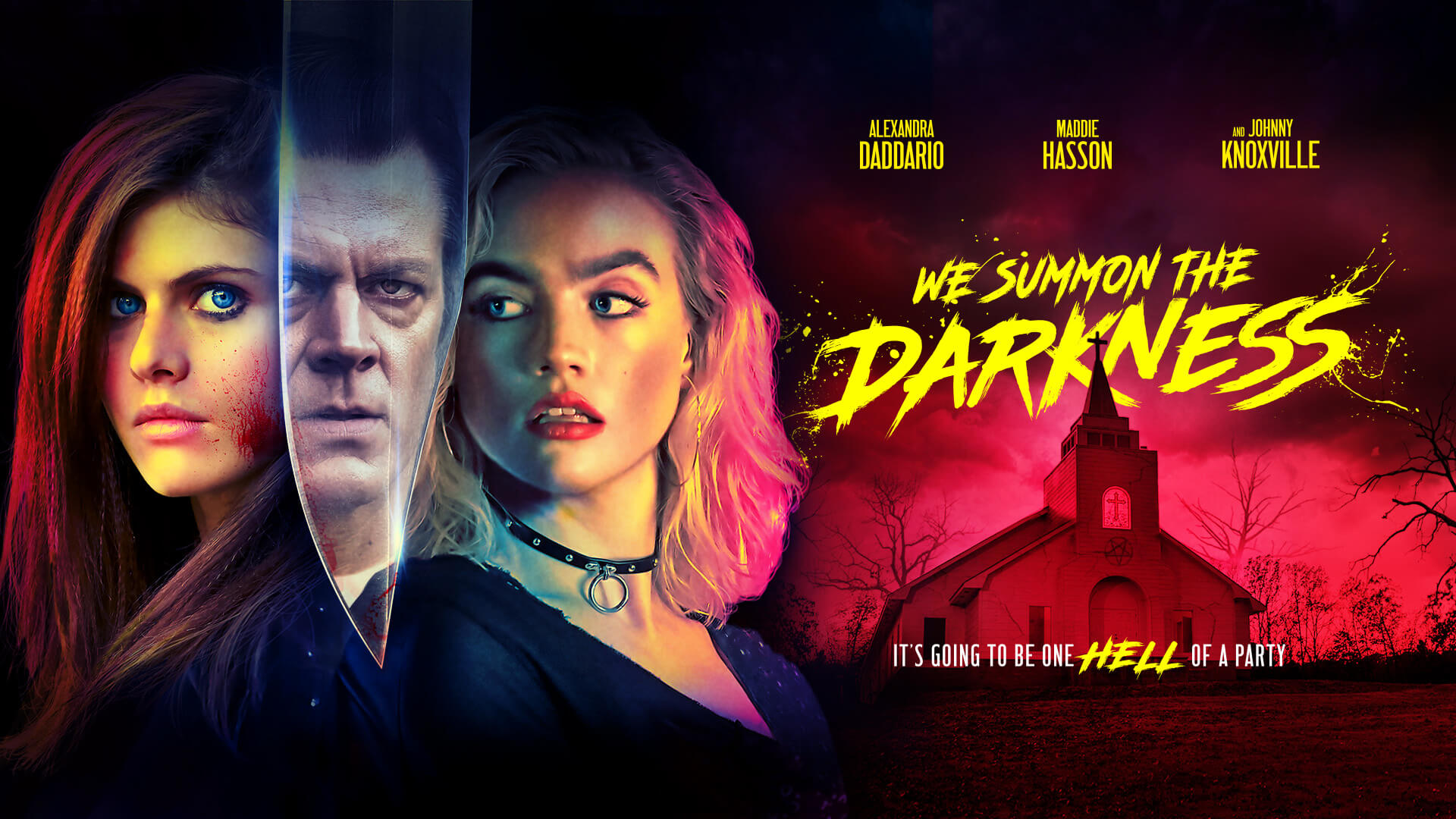
Composer Timothy Williams’ latest score is for the ’80s-set heavy metal horror of Marc Meyers’ We Summon the Darkness and in it, he leans heavily into the retro sounds of the era. Williams, whose previous composition work includes the superhero horror film Brightburn, has also worked as an orchestrator and composer for many other genre films, including both chapters of IT, Deadpool 2, and the Guardian of the Galaxy movies, among many others. We spoke with him about how he came to the sounds of We Summon the Darkness, as well as his vast back catalog.

STARBURST: We Summon the Darkness is the second horror film in quick succession that you’ve done as the primary composer and you’ve worked on a lot of genre entertainment here and there, as well. Was there something really appealing about being able to work in a retro mode for We Summon the Darkness?

Timothy Williams: Yeah. The interesting thing with horror is that it’s one of those great genres to score because you’re having to set up – ‘life normal’ is what I call it – you want to create music for people, so that you get to know and enjoy the characters. Then there’s ‘fucked up’, which is where things go horribly wrong. Trying to build that empathy into a character is really good because then, when things go wrong, the horror is much more intense because you really want the person to try and survive.

With Brightburn, what was what was really cool was it was a twist on the horror story. You had the typical elements of horror, but you also had the superhero side of things that need to be covered. Doing Brightburn was a lot of fun of trying to find a language to create horror, but also superhero, so When We Summon the Darkness came along, what was really exciting for me was, ‘how do I take those same elements of creating ‘life normal,’ but you’re in the ’80s? Then, when things go sideways, how do you create a horror language?’

The other thing that really appealed to me about We Summon the Darkness is that it’s actually a very funny film. It’s one of those films that is horror, but it’s primarily a dark comedy. When I watched it, it was that aspect that really appealed to me: that the music needed to not only be horror, not only be retro, but also needed to have some ability to very subtly support the comedy of the absurdity of the scenario.

As far as doing a retro score, what was really cool was I have a bunch of amazing synths from the ’80s. I have the the Korg Mono/Poly – one of the first early synths that came out. It’s so old, it doesn’t even have MIDI. MIDI is how you can connect computer to a synth and send the notes. This doesn’t have that. It has nothing that recalls anything, so you’re creating a sound by turning knobs and once that sound is what you want it, you have to record it right away.

That was very exciting: to do a score where, the moment you turn the knob, the sound has gone forever. It’s a very organic process and very experimental process, and this was the first opportunity I’d really had to score a film using vintage synths. The other synth I have is a Juno 106, and both these synths have those sort of classic ’80s sounds, so for me, being able to score something with a bit of a nod to John Carpenter and maybe even sort of Peter Gabriel – that kind of really interesting, dark ’80s feel – was exciting and something that you kind of dream of as a composer, you have that opportunity to just use different colours and different tones.
When we spoke with Junkie-XL for the release of the original Deadpool, he was very excited about getting to go back and like delve into sounds that he wouldn’t have any other reason to use sort. The specific one I’m thinking of is the Synclavier sound. He said, ‘once I’ve used it for this, I can’t use it in anything else because it’ll just seems so throwback and nodding to this specific sound’.

There’s something very wonderful about having a chance to use something you’d have no other reason to use. I think what’s also exciting about these synths is, that as you’re turning the knobs, it manipulates the sound. You can filter the sound and it’s so specific to that period of time. There are just so many sounds that you hear, where that kind of filter coming in and coming off impulses, and all that kind of stuff – that immediately evokes that period of time.

With the percussion: again, there’s nothing in this film that I can use again, because you’re dealing with the Synclavier. You’re dealing with the LinnDrum. These very, very specific percussion sounds. It was really fun, because I just don’t get to use these percussive sounds in current scoring, so it’s nice to be able to kind of go back. I grew up with these synths and this, for me, was such a great way to go back to what made me fall in love with writing music, which was the ability to manipulate sound and find really interesting, cool sounds. It was kind of a bit of a full circle, because I started on the Juno 106. That was the first thing I ever bought, so to go back and kind of relive that was a lot of fun.
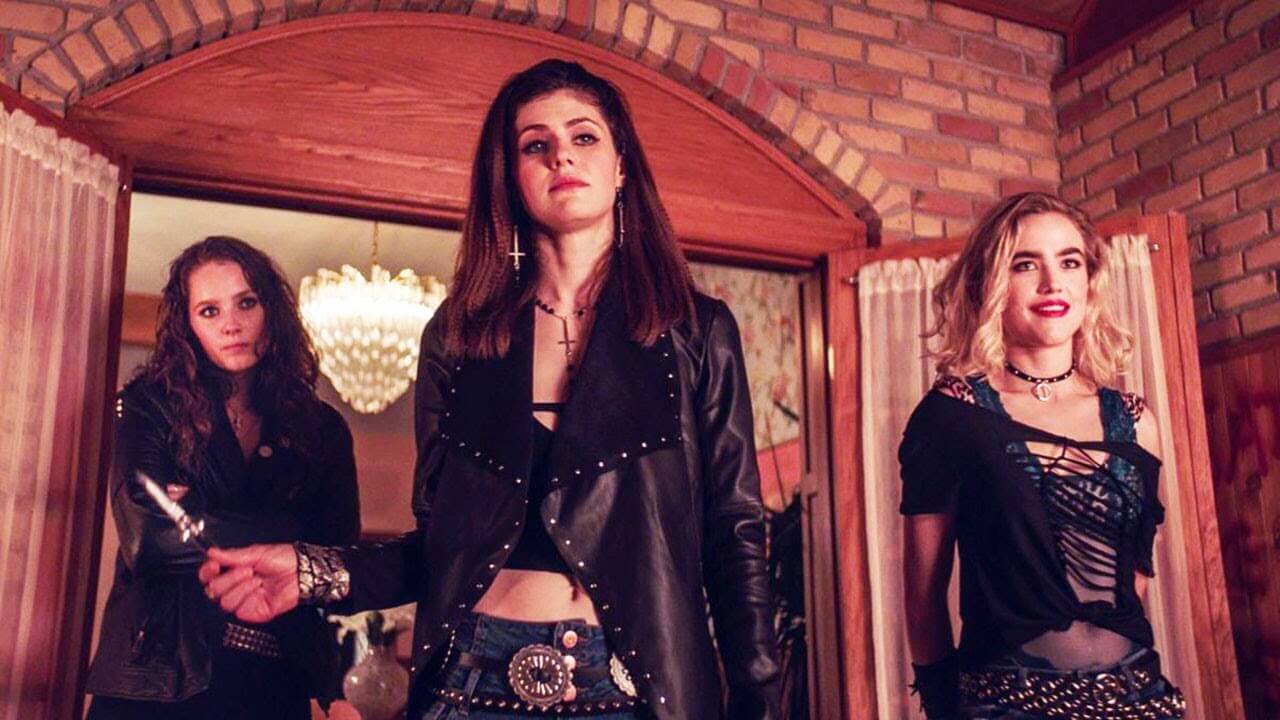
We Summon the Darkness, at the outset, has this very heavy metal tone. They use some very specific metal songs as part of it, such as Mercyful Fate’s Black Funeral. I know you’ve worked on some other films, such as Deadpool 2 and both of the Guardians of the Galaxy films, which are films that are very much built around pop song needle drops. What was the experience of working on We Summon the Darkness like – where there is this heavy metal tone, but there’s not a lot of heavy metal music, per se, once you get past the first like 10-15 minutes?

I think the premise of them going to the heavy metal concert is really to kick off the film. That was one of the things that Marc Meyers and I discussed, in terms of the tone of the score. You’ll notice, at the beginning of the movie, there’s this sound. I describe it as almost like a shark or some kind of predator stalking and I want to use ominous sounds. You hear it right at the beginning, and it’s a sort of rolling sound. It was one of the first sounds that I created and again, it’s sort of a throwback to this ’80s feel.

I said, “I just want the synth constantly, because you never know who the predator is and you want that sense of the predator right from the get-go.” There’s something stalking and, as you get more into the film, you start to realise there twists and turns, and you start to realise that the predator is closer than you think. Then, it starts to move more into – not to give away too much of the plot, but basically they’re not very good. The killers are not very good, so you get into this rather funny scenario.

Imagine if you had Jason being someone who really wasn’t a great serial killer. That, for me, was really the essence of the dark comedy – “What happens when you have a bad killer and it goes wrong and devolves from there?” We wanted some kind of a language that would hearken back to that kind of ’80s film score, but still be able to maintain some of the comedy in the later parts. If you think of Beverly Hills Cop and some of these other great ’80s films, there’s something inherently comedic sometimes about the pulsing, plucking sounds that you can create and so that, for me, was just making sure that we could keep that shift: going from keeping that kind of dark, predatorial feel but then, starting to inject comedy.

There’s a scene where two of the characters who are badly injured are basically trying to escape and they’re grabbing things from the kitchen, like cookie trays and whacking the attackers with those and it’s a really, really funny scene. I wanted a sense of this with bizarre little synth motifs that are almost like popcorn – just very straggling atonal sounds – to create the comedy of them just trying to escape, but not in a not in a very effective way. They’re just kind of grabbing whatever they can to get out of the situation.

That is what I loved about the film: it’s a really fun film. It’s not it is not the film you expect and what drew me to it was, I just I had a big smile on my face once I realised what was going on it. Also, thank you for phrasing it that way. I think that is a very perfect way of acknowledging a question I wasn’t quite sure how I’d be able to ask, because phrasing it wrong gives away the plot of the film. However, the fact is that, for the better part of the first 15-20 minutes, the viewer is not quite sure who the bad guys are or who are the villains in this piece. I was really kind of curious as to how you walk that line: how do you foreshadow, but you not tip your hat musically?

I said, “How much how much are we tipping the hat?” and Meyers said, “Not at all.” We’re setting the movie up as really not knowing what’s going on until there’s a great twist and I’m sure most people can probably guess what it’s going to be, but the twist is great and it just sets the movie up as something completely different.

One of the things that I loved about the film – and I just have to say it right up front – is the acting is out of this world. Alexandra Daddario, Keean Johnson, Maddie Hasson, Amy Forsythe, Logan Miller, and Austin Swift. It’s like a little ensemble piece and it’s really just the six people, plus obviously Johnny Knoxville and some great walk-ons.

Amy Forsythe is great in everything we’ve seen her in, but Maddie Hasson steals this movie so much.

Without giving stuff away, but just the hair product scenes and the fire and everything? Over the top. My favourite, of course, is the whole weedwacker scene. I watched the film and my mouth was on the floor. I was just howling hysterically for the back half of the film, just going, “This is brilliant! She’s so much fun,” but I thought the acting was so good. It’s just amazing, with really amazing turns.

Again, that was a part of the emotional journey. There’s a scene where the stepmom comes home and she’s basically trying to get her coat and her money and her passport upstairs. This was one of the funniest scenes I got to score, because you had so many balls in the air: you had killers in the house, you had the two guys in the pantry with an arm bleeding out and all of that, and then you have this clueless stepmom, coming to the house and heading up to grab her passport and do her lines of coke. For that, I just had this sort of ostinato that just kept going through the whole thing. It was percussion, 808s sort of drumming percussion and this ostinato riff on the synth.

You went from things that made you laugh to the dire circumstances of two guys in the pantry to Amy Forsythe and her emotional journey of just trying to work out what she was going to do. Within the space four or five minutes, there was a lot of different intercuts of different emotions, and I just wanted to keep this ostinato going through all of this, and just color each scene differently as you come to it: making it lighter for the mom, making it darker and more emotional for the other characters, and still keeping and building suspense through to the very end because it has a fairly gruesome outcome so building that suspense through the whole thing. It’s a lot of fun to try and juggle all the different colours while still keeping that this ostinato going through the whole queue one of the things.

We Summon the Darkness is out now on DVD and VOD.
David Gregory | BLOOD & FLESH: THE REEL LIFE & GHASTLY DEATH OF AL ADAMSON

david gregory

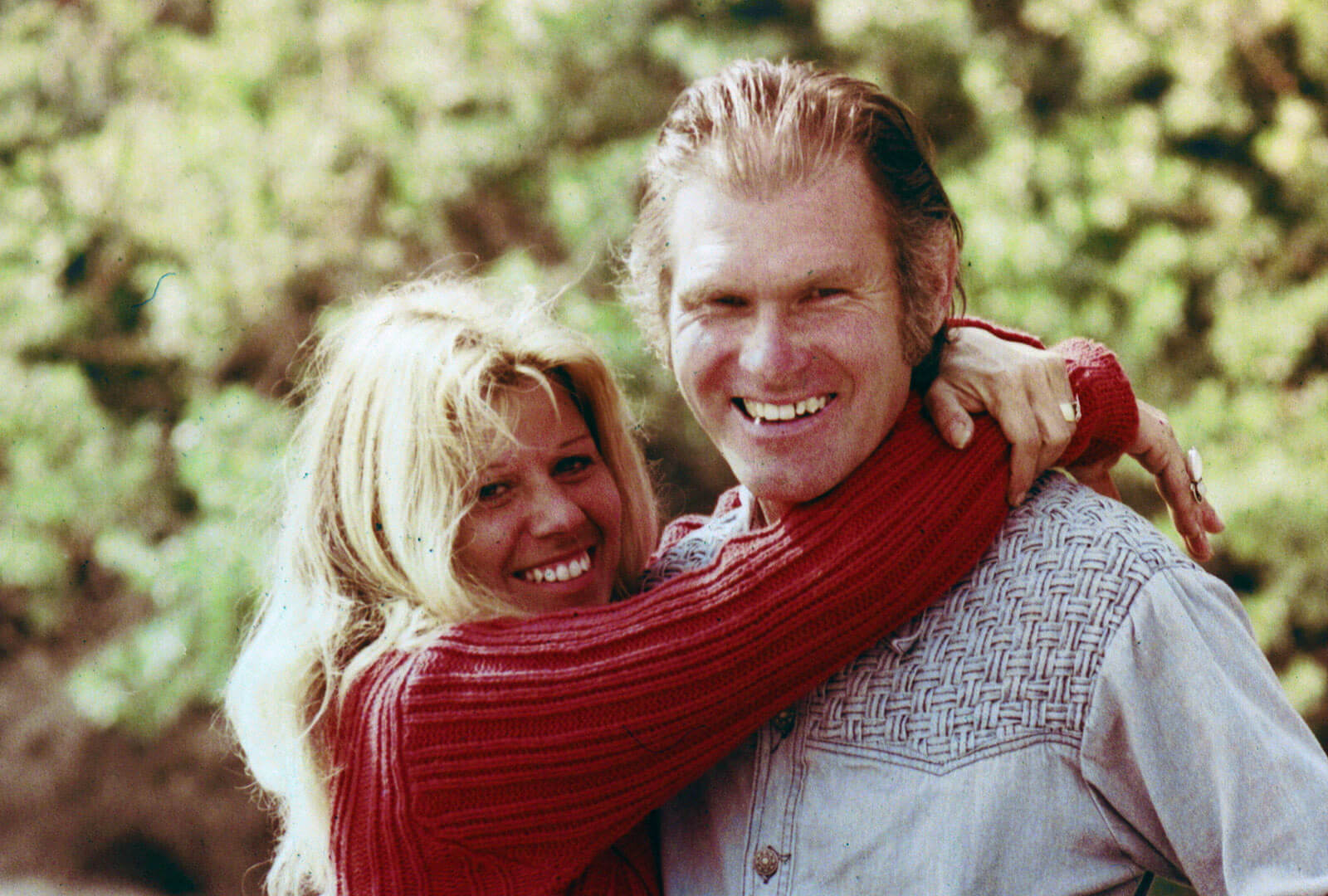
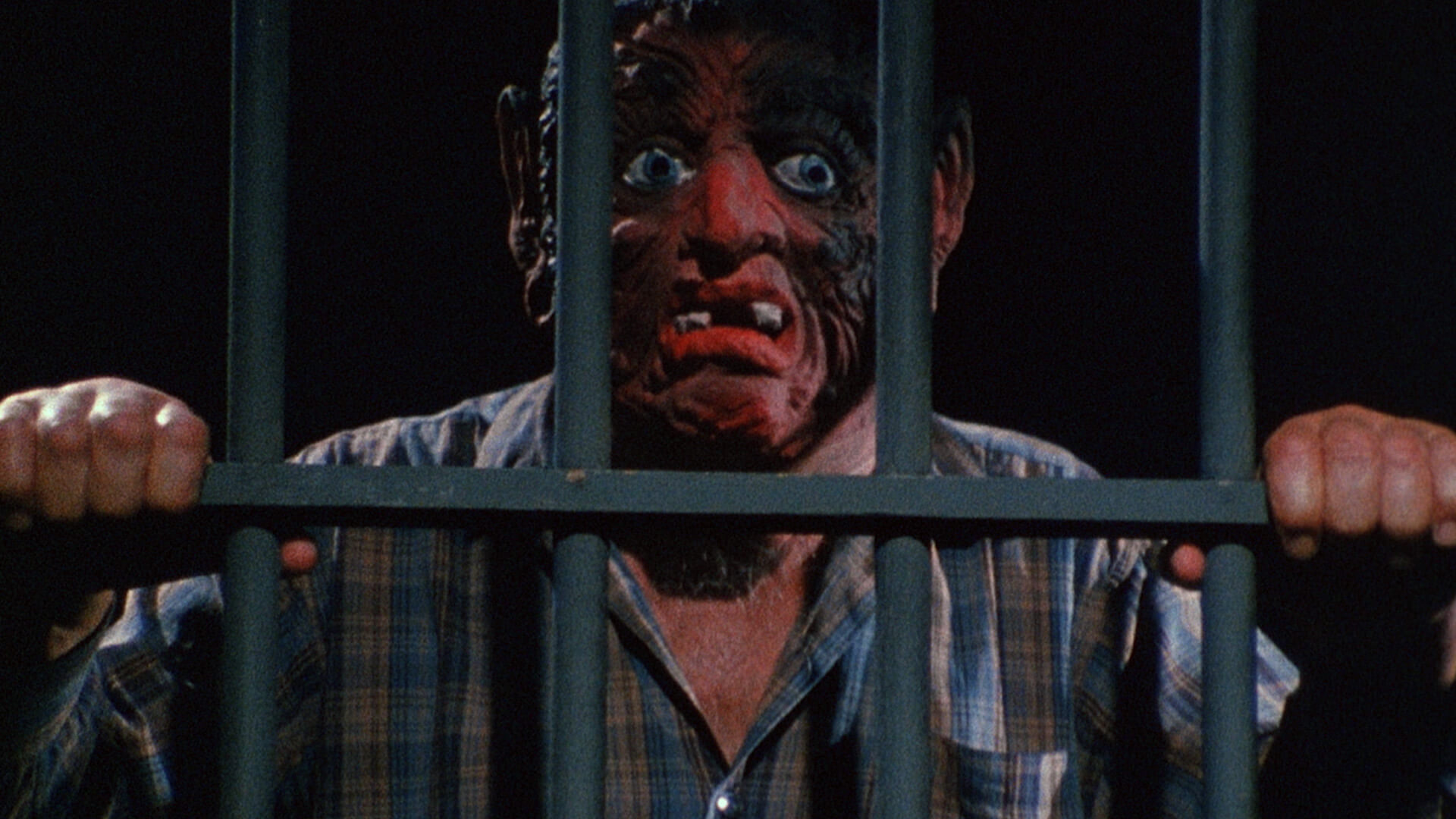
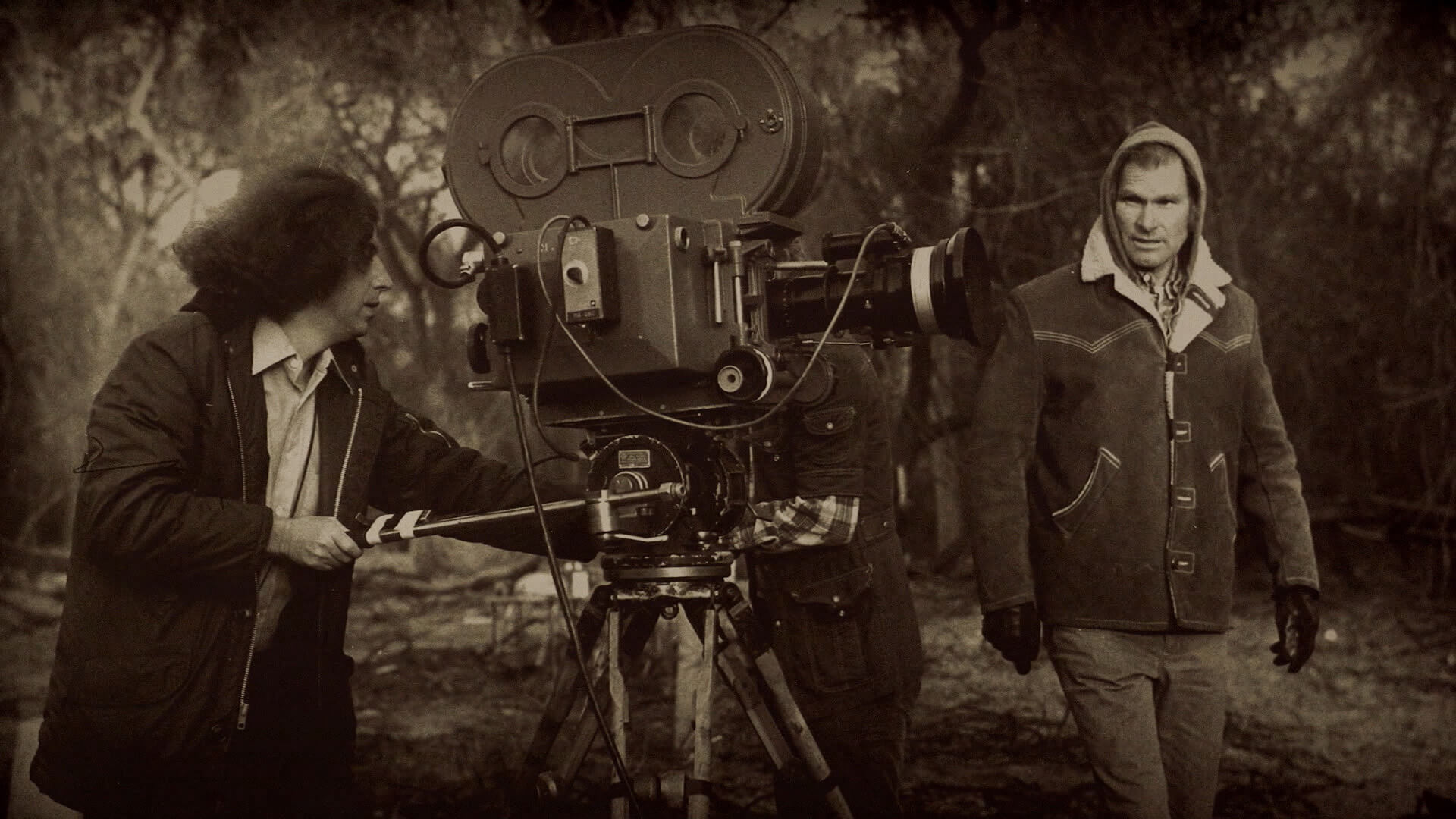
Fans of exploitation and cult movies might know some of the work of Al Adamson, his films Dracula vs Frankenstein, Blood of Ghastly Horror and many others have become midnight movie favourites for lovers of low budget independent cinema. A new documentary highlighting the work and sad fate of Adamson is released soon and we spoke to the director, David Gregory, who also directed Lost Soul: The Doomed Journey of Richard Stanley’s Island of Dr. Moreau, and as one of the heads of Severin Films is also releasing the definitive box set of Adamson’s movies…

STARBURST: What was it about Al Adamson that drew you to his story?

David Gregory: I was interviewing David Konow, who wrote the book Schlock-O-Rama, for an extra for Al’s film Carnival Magic, which was going to be a standalone release originally. And about halfway through the interview, it became pretty obvious that this was the story that would be would be worthy of a feature – you know, it was a proper story with a beginning middle and end that I thought was worthy of making into its own standalone piece rather than featurette. That’s not just because it has a true-crime aspect, although that is unique to stories about being movie makers, but also just because of the very colourful cast of characters that came in and out of Al’s life journeys career.

There’s a lot of stuff in it the film that could resonate with the filmmakers of today.

Yeah, and I think that’s something also that made it very interesting. I mean, we don’t necessarily think of independent filmmakers so much when you go back in time. You think of low budget filmmakers at that time, but you don’t necessarily think of the concept of the indie filmmakers – that seems to be something that’s fairly contemporary. And so the idea that this was a person who was using his own money, or his own contacts to get the money, to make the film and then gathering the people together and by hook or by crook getting a film made was something that resonated with me. And I think anyone who’s done their best to make a low budget horror movie or whatever can relate to a lot of the stories of just getting a film to the finish line come what may.

What was the hardest part of getting the documentary together?

I guess the hardest part was trying to find the people to do with the crime. Because the rest of it was really similar to how I do all the other documentaries and features. You’re basically finding people who are film industry people, so there are ways to contact them. A lot of them were retired and a lot of them had left the industry a long time ago. So that means that there’s certain amount of legwork involved in tracking them down. But with police, it’s different. Once they’re retired, they don’t generally have a profile online or anything like that, where you could just find them – there’s not a database of retired police. We had to get a private investigator involved. It was the same with the housekeeper, actually tracking her down took some time. She doesn’t speak English, so we had to get somebody to tell her what we were doing and get her confidence that what we were doing was worthy of being a part of. But that also made it kind of interesting for me because I hadn’t done anything in in that realm before. And it was important to me that will we went deep into his life and work so that it wasn’t just a true-crime story. It wasn’t a sensationalist piece on this B-movie maker who was murdered spectacularly, or whatever the headlines were at the time that didn’t really give a shit about what he did, he achieved, or what he had done.

So I wanted to start our documentary with kind of a teaser of that stuff. But then it goes back into and spends a lot of time with his life and his work. So by the time it comes back and it’s about to get sad and grim, you actually know the person, so hopefully, it’s a little more resonant.

You certainly get to love the films, even though they’re hokey! You get a whole new respect for them.

That certainly happened with me! As I was making it, we hadn’t planned the box set or the collection. That grew as we were making the documentary. It evolved into us doing a bunch more of the films once we’ve got Sam Sherman [Al’s producer on many of his films] involved. We licenced the big two – Dracula vs Frankenstein and Satan’s Sadists. And then as we got deeper into it, it was like well, we may as well do a handful more of them. And then we needed to get clips for the documentary. So then it became about doing a lot of legwork and archaeology to actually find film elements for these films, which had been left in storage for decades at this point. So once we were doing that, it just got to a point where we thought we might as well actually scan the entire movie rather than scan just the clips and licensed more. So then when it got to that point, we needed to find the ones that aren’t Sam Sherman productions – so we may as well just try and do everything that he’s ever done into this massive set. It looks impressive!

Which of Al’s films is your favourite?

Dracula vs Frankenstein just because it was the first one that I saw and I still find it highly entertaining. It’s funny, because Carl [Daft, co-owner of Severin Films with David] and I actually saw it when we were very young. It was one of the first ones we ever picked out of the video shop when we were about 10, I think. We didn’t notice that the story didn’t make sense or anything like that. We just saw all those elements that were in there that made it like this really unique horror movie. And, of course, at that time you were you were reliant on things like Dennis Gifford’s book and the House of Hammer magazine and stuff like that. So you were really only going by images, which were usually the makeup on the monsters and things like that. This had it all as far as we were concerned, even though even at that age, we could tell that’s not what Dracula’s supposed to look like. That’s not what Frankenstein’s monster is supposed to look like. You could tell that and it was confusing, but it didn’t matter because the movie itself was going along with it, so we had to go along with it too. I’m still very fond of it. I have to say that because I’ve seen them all now a few times, I did really enjoy Horror of the Blood Monsters this time. It’s got such a terrible reputation because of what it is – a patchwork job – but it is just so fun to watch and know how they and just going with story behind it of how they actually tried to put together this feature which wasn’t meant to be together. It has such audacity that it’s hard not to admire it.

A lot of Al’s films are available in unauthorised versions on the Internet, and they don’t really get the respect they deserve…

That’s right. And our box set, while I am reluctant to say it makes the films better, but it certainly gives them a fighting chance. They look the way that they’re supposed to look, or at least not the way that they looked in previous incarnations. Particularly in the case of something like Five Bloody Graves, which was shot in Cinemascope by Vilmos Zsigmond and, as you know, scope used to be cropped to a square, so you’re getting such a small percentage of the actual frame as it was framed by this brilliant cinematographer. Go back and see that these bums did actually have an eye behind the lenses as a good starting point.

It’s good that exploitation and B-movies films like that are now been respected…

Yes, I absolutely agree. I mean, they are the movies that I grew up on a lot of our audience grew up on. And, for me, they absolutely deserve the treatment that Criterion will give to some European art-house film. There’s nothing wrong with that either, but we actually one step further, certainly more than other studios would with their catalogue. With their so-called B-movies, once we get hold of them, we have absolute admiration for the filmmaking process and the films themselves. So you want to put a historical context on the best.

How did you get the interview with Fred Fulford, the guy who killed Al?

That was difficult, we were actually well into post-production when we got that phone interview with the murderer, and we had actually debated throughout whether we should even approach him and involve him. I’ve read all the court transcripts and all the articles in the media at the time. There was a pretty cut and dried case. It wasn’t like I was going to go in and do this investigative documentary and find out that he was innocent.

But it became the most frequently asked question: did you get the murderer? So it became pretty obvious that we should at least make the effort, and that led to a whole different journey! We had to find out what the rules are with getting an incarcerated person into a documentary, and in California, you can’t take cameras into prisons and interview inmates on-camera. Technically, you shouldn’t be interviewing them at all. But there are ways to do it that aren’t really particularly policed. And in this case, it was they’re allowed phone calls. So basically all we had to do was record a phone call. We did have to gain Fred’s trust, so to speak. It was my co-producer, Heather Buckley, who managed to do that. She actually became his pen pal for a while, receiving these strange rambling letters from him about how he’s innocent, you should look into these other people. Not actually explaining how he had cement on his hands, and that he’d admitted being the guy who filled in the Jacuzzi. She was the one who called him she called him twice. The first time she said ‘do you mind that we’re recording this?’ and he said he did mind, and he wanted to talk to her again about his innocence. But the next time, he agreed and had a person sitting with him to make sure he was answering things correctly. He didn’t really again give much in terms of detail when she asked other than he was railroaded by the courts and the judge didn’t like him because he looked at his girlfriend funny and stuff like that. So anyway, across an hour of recording we got we had two minutes of usable stuff, which is in the film.

Can you talk about what you’re doing next? We know there’s a Cliff Twemlow feature in the works…

There are several documentaries that I’m a producer on, including the Twemlow one, which is growing – once a I saw the rough cut, I was like, ‘okay, we need to go back and get more because this is a fascinating story’. Which is often the way these things happen – that’s ultimately what happened with Lost Soul and Adamson, they started as something much smaller and grew into what they became. We’ve got one, Kier-La Janisse is doing one on folk horror and Josh Johnson, who works with me, is doing one on Andy Milligan for a box set we’re doing later this year. And then my next one is about Bruceploitation – about all the fake Bruce Lees that came out after he died in the ‘70s. I’m in post-production at the moment, but it was shot a couple of years ago now. I was making it concurrently with Al Adamson and the Dark Shadows one that I did for MPI.

Blood & Flesh: The Reel Life & Ghastly Death of Al Adamson is released on Blu-ray on June 1st. Al Adamson: The Masterpiece Collection, a limited edition, 14-disc Blu-ray set is available to order now.

You can find out more by heading over to the Severin website. Follow Severin on Facebook and Twitter for more announcements.

Ernie Altbacker | JUSTICE LEAGUE DARK: APOKOLIPS WAR

justice

ERNIE ALTBACKER knows his way around the DC mythos. From spotlighting B-listers to giving Golden Age heroes a modern polish, Altbacker writes a DC Universe that’s as familiar to the faithful as it is fun for budding fans. And now, with JUSTICE LEAGUE: APOKOLIPS WAR, he has penned a story that’s chaotic, surprising, and emotionally resonant, all while reminding us why we hold these characters and their adventures so close to our hearts. We’re lucky Altbacker pulled out all the stops, not only for the sake of memorable storytelling but for the sobering fact that APOKOLIPS WAR marks the end of DC’s animated continuity. STARBURST recently caught up with Altbacker, who reflected on his time writing the movie, how the process challenged him, and why he emphasised certain characters and relegated others to tertiary roles. We were not ready for this shocker of a conclusion. You’re not, either.

STARBURST: How would you pitch Apokolips War to a new DC fan? 

Ernie Altbacker: If you’re talking about a new fan and they’ve been in a box and don’t know what a superhero is, it will be a little more difficult [to follow]. If they’re aware of Superman, Wonder Woman, Batman, and the Justice League, I would say the Justice League’s mightiest foe, a New God called Darkseid, attacks and conquers Earth. And then the remnants of them and the magical community of Justice League Dark and other superhero groups join together to try to take back the earth and beat Darkseid. 

What were some challenges or narrative obstacles that were unique to crafting Apokolips War? 

Luckily, we had James Tucker’s “Tuckerverse.” He knew all the elements that had to be in there. “I want this, I want this, I want these characters, don’t forget to have that character say something from that movie.” Through that we kind of made this tapestry, this worldwide fight to the death to try and save the planet. The hard parts were wishing you had more screen time for everything. Now you’ve gotta share with everybody. So I kind of centered it around Constantine. It’s going to be Justice League Dark, and I was like, “What if Constantine was the lynchpin, the key member in all of this?” I’ve seen the Justice League go fight a monster or a horde of aliens or something. I’ve seen that story. This one I hadn’t seen before and I kinda approached it through that. When I pitched that part of it, people liked it. 

Piggybacking off that – how did you decide which characters to focus on? How did you decide that it needed to be a Justice League Dark movie? Was it through the relationships you wanted to highlight? Was it through a pure plot perspective? 

Usually, what happens is we get into a room and Jim Krieg is the guy who oversees the writers on all of these (taking over for Alan Burnett). And you’d sit down and start hashing out the story. And James, with that view of the entire continuity, is like, “I wanna get this person in and I think we can get him in through this.” And that’s a big mess. It’s a pile of stuff. And then Mairghread Scott writes a first draft and then I take over after that and make it more Justice League Dark-y. 

Something we were really intrigued by was its emphasis on consequences. You get almost 90 minutes of our heroes messing up in these pretty significant ways. You’ve got Damian Wayne doing something pretty horrible to Dick Grayson. You’ve got these characters messing up for most of it. How do you, as a writer and storyteller, balance this triumph with these tragedies in a way that makes the victories feel hard-won and the losses more devastating? 

That’s kinda the whole thing. How do you make people care? And you wanna do something different. Sometimes, there’s a little bit of magic involved. It becomes apparent after several drafts that the screenplay is leaning toward this. And then during the notes session we would talk and go, “You know, this thing might be a little bittersweet at the end so let’s amp up some of these last-call moments.” On this bittersweet, hopeful note, which was kinda hard to do. Luckily, most people think we stuck the landing on that part but we’ll see five, ten years from now. [laughs]

It’s fascinating how you do that, and the key seems to be the relationships between the characters. The Damian/Batman dynamic, for example, was a really strong aspect of the film. 

We got Batman crying! Where else are you gonna see that? 

What was the most rewarding part of seeing those relationships play out in such a profoundly stressful crisis? 

You figure out – and they approve – who the main characters are gonna be. Constantine from Justice League Dark, Superman’s gonna be our proxy for the Justice League, Raven’s gonna be our proxy from the Titans, and then Suicide Squad—everyone gets an ending that they go to. And writing those, doing the Constantine stuff… Constantine and Zatanna only talk twice in the movie but I sweated both of those conversations because I was setting up these little things that you’ll probably only notice if you watch it twice. Some of the inventive things, some of the people coming back, without getting too spoilery, a lot of it was, “Wouldn’t this be a cool twist?” rather than writing myself into a hole. Writing that stuff was really cool because you usually only get one per movie and in those ones, I’ve got like a half a dozen!

JUSTICE LEAGUE DARK: APOKOLIPS WAR is available now on digital download and on DVD, Blu-Ray™, Blu-Ray™ Steelbook & Blu-Ray™ Minifig.

Matt Ryan | JUSTICE LEAGUE DARK: APOKOLIPS WAR

You would be hard-pressed to find an actor as passionate about a role as MATT RYAN is about portraying John Constantine. It’s a shame that hopes for a multi-season CONSTANTINE show were dashed early on but luckily, good news wasn’t far off. Following CONSTANTINE’s cancellation in 2015, Ryan only had months to wait before returning to the character, this time in the CW’s popular ‘ARROWVERSE’ continuity. He appeared in an episode of ARROW  and was later bumped up to series regular on LEGENDS OF TOMORROW, giving him ample room to explore and enjoy the fan-favourite character. His live-action turn as the chain-smoking occult detective eventually took him into the DC Animated Universe (DCAU), where he portrayed Constantine in JUSTICE LEAGUE DARK and now its series-capping sequel, JUSTICE LEAGUE DARK: APOKOLIPS WAR. We chatted with Ryan about the new film, Constantine’s role in it, and how the character evolves after the world goes to shit… 

STARBURST: Tell us a bit about what John Constantine is up to in Apokolips War for our readers who haven’t seen it yet. We’re also interested in how he’s challenged as a character and as the leader of Justice League Dark. 

Matt Ryan: So John is obviously the leader of Justice League Dark and he’s in a relationship with Zatanna, so that’s sort of what pulls him into this situation and he’s there to help out with this world-threatening situation. And what’s interesting is that all of the Justice League and all of the other heroes in the whole canon of the DC world are up against this terrible, terrible power. And ultimately they need John Constantine to help them but John’s not as reliable as most people. So he goes through a little bit of an emotional struggle before he can really, really get involved. 

Constantine is definitely the highlight. He kind of takes over the whole Justice League. He’s kind of the one who leads the charge. 

What I like about it is you look at all the different superpowers and all the heroes in the DC world and it’s little John Constantine who really gets things going. John Constantine was a blue-collar, working-class street magician, and you’ve got all these superpowers, Batman, Superman, Flash, he’s the one they need. And I really like that. 

Do you think he changes or grows during the movie? What kind of evolution does he go through here? 

A huge one. He really does go through a transformation with the world being what it is. The world is in complete disarray and John definitely does best in those circumstances. He turns to the bottle and he needs a real kick in the ass to get him going again. But I really do feel that he goes on a huge journey with loss and love and a struggle to save the world and overcome his own inhibitions to team up and join with these unlikely companions to save the world. 

Something that’s really different about this movie is its emphasis on consequences and how the heroes have to deal with them. And Constantine doesn’t do well with consequences. He tends to drown them. Like you said, boozin’ it up and chain-smoking and stuff like that. Do you think he rises to the occasion and meets these consequences head-on? 

John is not good with consequences at all. But there’s something that I absolutely love about this character. When you take him to the edge, he will stand up. There’s something about him that even when he’s in the depths of hell, sometimes literally, or when the world has literally gone to shit, that I love. There’s that spark of humanity in him that will drive him to save the world. He deflects, he drinks, but eventually he gets there and rises up to the occasion. He’s just this blue-collar guy and we need him to save the world.

There’s a moment in the film where shit’s kinda hitting the fan and there’s a moment where Constantine goes, “Well, it’s too late to turn back now so we might as well see it through.” And that kind of encapsulates what you’re saying. He changes by the end. He’s in it to win it. Or give it his best shot, at the very least. 

Yeah, totally. He does things off the cuff but if he focuses his attention on you and really goes after you, his adversaries better be quivering in their boots. 

Can you expand a bit on what appeals to you so much about playing Constantine? You touched on it earlier but I’m really curious about it and kind of what goes through your head when you play him. 

He’s so three-dimensional and he’s got all these complicated, human, normal kind of things going on, as well as all the demon shit. And that’s something I love digging into and navigating that and playing the character in all these different mediums and scenarios. It’s been great to flesh out the character across the board, really. He’s a normal guy and the closest character to him in the DC world is Batman. They just share something in common there and there’s something that attracts me to his humane kind of quality. Working class, normal guy quality. How he deals with torment and with the world how it is. His courage is questionable at times on the surface but below, the character is full of courage. I love playing John and working through scenes where he struggles with that. 

JUSTICE LEAGUE DARK: APOKOLIPS WAR is available now on digital download, and on DVD and Blu-Ray

Lucky McKee | THE WOMAN

lucky woman

With the Arrow Video release of The Woman (packaged with the prequel Offspring) due soon, we caught up with director Lucky Mckee to discuss the film nine years on…

STARBURST: How did you get round to co-writing The Woman with Jack Ketchum?

Lucky Mckee: I was pitching a project with this producer Andrew van den Houten. It was an adaptation of a Jack Ketchum novella called The Passenger. I pitched that hoping that maybe he could help get it financed, and he didn’t think he would get the budget that we thought was necessary to make that film, but he had just finished this his movie Offspring, which he directed from a Jack Ketchum book. He was curious if I was interested in doing a sequel to it and I was like, I don’t know, maybe. But I read the book, and I went up to New York, and I looked at the film that they had made, and I was really impressed with Pollyanna McIntosh did, and I gave Ketchum and Andrew my spin on where I thought the story should go. I was saying ‘you know we could do like what Kubrick and Arthur C. Clarke did with 2001 where we come up with a story together and then you go off and write the book, and I’ll make the movie’. He said why don’t we just write both together so on that night in a restaurant in New York, it was this amazing collaborative relationship started with Ketchum. We ended up writing two, we wrote the script in the book together and then a couple more novels and a bunch of short stories and stuff, and it’s just really special.

Did you have any idea of how different you wanted it to be at the time?

Yeah, I have my specific kind of style, I guess, and a very specific sense of humour. And also I didn’t want it to be Offspring continued. I wanted to do something different with it. Polly was the best thing about that movie. The ferociousness that she brought to that character, and that’s hard to do, without being worried about coming off as silly. She just completely committed to it and it’s a powerful, powerful force. I loved her character so much I was like well I’d like for her to the hero in the second movie. She didn’t know me when she read the script, so there’s no trust there. She was looking at it as if it was going to be made with the same style and tone as the previous film, She was like, ‘I don’t know if I can do this’, so we had a lot of conversations about it, and I told her how I like to handle that kind of material. I’m the kind of person who would like to be able to look myself in the mirror every night before I go to bed. So there are certain lines that I won’t cross with the subject matter. We built a mutual trust with each other early on, and she finally felt comfortable.

Now with Angela [Bettis], it always takes convincing with Angela to do anything. You know she wants to get to the core of why are you doing this – why do you want it? Why do you want to go to these places? Why do you want to go through the dark and this and that?

The young daughter, Lauren [Ashley Carter], who plays Peggy, I met in New York. She’d worked on a previous film with a producer, and I thought she was a really good match for being Angela’s daughter. We just got along instantly, and she really can be dark – she’s done really well for itself.

In terms of the male actors, Sean Bridgers was an old friend of Angela’s. She’d been trying to convince me to work with Sean, ever since we first met when we were making May. And, boy, what a joy to work with that guy. I’m worked mostly with women in my career, director to actor wise. So, this is the first time it has like a full experience with a dude. He’s amazing. That is the hardest part to play, especially if you’re a decent guy really, and he is that kind of person, and it’s fun to jump in those wicked roles and try to figure out how people get to a place where you think you could act like that.

I feel like this movie’s like even more appropriate now – even more on the button than nine years ago or whatever.

How has it been looking back at the film with the upcoming reissue?

Working with the people at Arrow Video has been the best experience I’ve ever had working with a distributor, they completely understand the movie. The artwork is beautiful, the presentation of the Blu-ray is beautiful, and they get it, you know? The trailer that they cut together just blew my mind it was like ‘wow they get it’.

Is it strange for you to have it paired up with Offspring?

Oh yeah, I’m totally fine with it. In the UK, it’s coming out in that double bill with Offspring, but in the States, The Woman is just coming out down alone – possibly because they’re waiting for the rights to turn back around on Offspring for North America. One of the most special things about The Woman being paired with Offspring is that my wife, Vanessa, got to do the cover for both, and it’s just beautiful. I love the colours that she painted for The Woman, and the one for Offspring also is just gorgeous. It’s really special that we get to do this stuff together, it’s pretty neat. I think it’s cool and I hope that when people see those two films that it leads them to Polly’s film Darlin’. It’s a very bizarre trilogy!

What was the most challenging thing about filming The Woman?

The subject matter – honestly – it’s not fun to shoot a rape scene. It’s not fun to shoot people being violent, trying to do that in a way that’s on it, you know, because the fucking terrifying, you know, like, there’s a scene where the parents are fighting in the kitchen. And towards the end of the film, the dad’s hitting the mom and the kid is just sitting right there, and you see this truly monstrous behaviour. That’s hard, man. My way of directing is getting in the mood with the actors and getting down on the ground with them – being as close to them as possible when we’re filming a given scene. I don’t like to just look up at the monitors, you know, I like to be close to them going through it with them.

It was hard to shake what it’s like writing the material. If you’re going to a very dark place psychologically and then acting it out with people, you go to a super dark place. And then you edit it for a year after that, and I had to go on the road and talk about it every day, it really wears on your soul, so the subject matter was hard – also the food. The food was terrible on the movie every day. The food was horrible so that that makes people pretty grumpy. The thing is, about halfway through the shoot, I figured out to get a friend of ours to go pick me up a hamburger every day, and that’s that got me through the rest of the shoot. It was a gritty four weeks in a super low budget movie.

One of the great things is you get to the end, and then it throws in something brand new that you’ve not seen throughout the whole film, just little references of dogs…

Yeah if you go back a second time, you can hear her the whole time, it’s all there, but yeah that was a really fun surprise. We call the character Socket – the girl that played her, Alexa Marcigliano, was really trying to get into the stunt world, and that movie really launched her, and now she is doing stunts on all these big shows and stuff like that, so that’s great.

When the film played at Sundance, you had some adverse publicity due to a member of the audience – did that help or hinder you at the time?

It ultimately helped the film. I mean, to go through it when it happened was not enjoyable! We did all the post-production in a house in Oklahoma in the middle of nowhere, like in the woods. It was three other guys putting the film together and me, so we’re really in a bubble making that movie. You know, I get really nervous before showing a film the first time, so going from that bubble to the Sundance Film Festival with hundreds of people sitting there watching your movie, I could barely stand up I was so nervous! Towards the end of the movie when stuff started getting more intense, this girl got up and started to walk out of the theatre and just completely tapped out and fell into the seats. They took care of her, and I was trying to get them to stop the movie, but they didn’t. Then when the movie was done, a guy walked up and just started railing on me and my team. Someone caught it on tape, and it ultimately gave us some more attention than it probably would have gotten, because it really, really pushed his buttons. I don’t think he knew what kind of movie he was in for! And then people were getting upset at him, yelling at the guy and defending me and filmmakers – it was crazy, man, it was very surreal because I’m already going through the anxiety of showing a film for the first time, and have that happen! But it’s a good memory, you know, funny when it wasn’t at the time.

What do you have next on the horizon?

I’m working on a very special project that I can’t talk about it yet, but it’s something that I’ve been wanting to make for a very, very long time. It’s something deeply personal in the way that May is really personal to me, and even The Woman actually is really personal to me. So, yeah, I’m very lucky that I get to work on this project, I just can’t talk about it.

Arrow Video’s release of The Woman and Offspring is available from Monday, May 25th. You can read our review here and order here.


Main photo credit: Chelsea

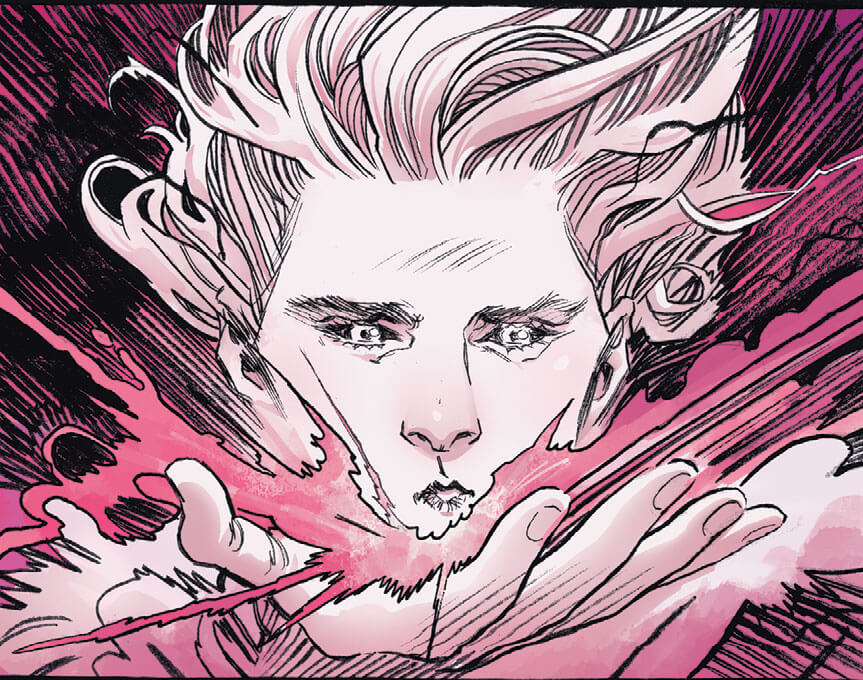
Simon Spurrier & Bilquis Evely | THE DREAMING

With works ranging from SIX-GUN GORILLA to STAR WARS: DOCTOR APHRA, writer SIMON SPURRIER has demonstrated a range that, even amongst his fellow heavy-hitters, is remarkable. Now, he’s winding down from THE DREAMING, a 20-issue, SANDMAN UNIVERSE-set series he worked on with Brazilian artist BILQUIS EVELY. THE DREAMING is as gripping and mystery-filled as it is profound, a richly told, gorgeously drawn story brimming with the weird, the wonderful, and the wildly imaginative. We caught up with the duo to discuss their wildly successful time spent in Neil Gaiman’s sandbox…

STARBURST: How do you feel, now that the final issue of The Dreaming has hit shelves?

Bilquis Evely: It’s hard to tell. It seems a sense of awe. I still can’t believe I’ve been working on this project for two years! So many things happened, I matured a lot as a professional and as a storyteller. All the study, all the images and layouts, seems endless now and somehow a bit far from me. Maybe it feels like a dream? I hope all the readers enjoy our last chapter. I enjoyed every minute of it. And I couldn’t be more thankful.

Something we’ve noticed about The Dreaming is how effectively it conveys the craziness and the confusion of the subconscious. How difficult was it to blend all of this fantastical, otherworldly stuff together in a way that felt seamless and comprehensible?

Simon Spurrier: Certainly not easy, but it comes with its own set of benefits. When your storytelling canvas is as wide and pluripotent as the shared human unconscious – which, after all, is what the Dreaming ultimately is – it pays to see the endless possibilities as a positive rather than a source of anxiety. You want to tell a tale about a self-help group for troubled monsters? Do it. Want to do a bottle-issue about a comatose girl’s mom grieving? Sure. Or an all-out demonic assault on a fairytale kingdom? Get involved. Like any story, at any scale, as long as you define the rules of the game and make a point of focusing on the human drama rather than getting lost in worldbuilding, you won’t go far wrong. It helps – no, that’s an understatement; it’s critical – that I shared this journey with Bilquis, among a few other exceptional artists. It’s one thing for me to mischievously mash genres and go racing off on flights of narrative fancy one simply couldn’t get away with in any other context, but it’s down to Bilquis’s unparalleled capacity to parse and humanise everything I threw at her that the book works so effortlessly well.

Bilquis, what was the most difficult part of putting this world onto the page? How did it challenge your process?

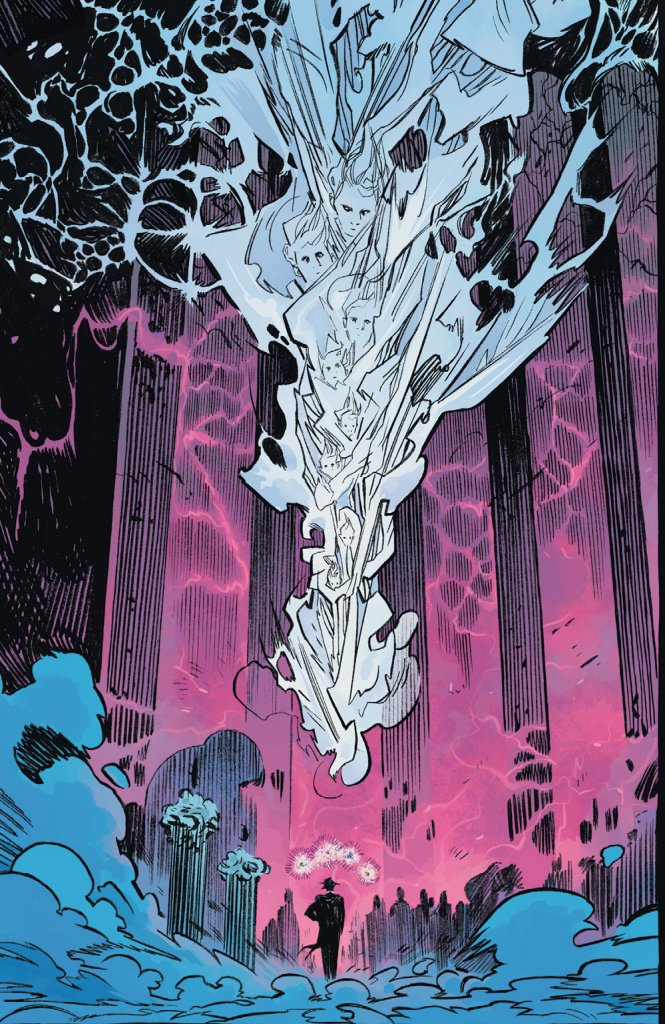
Bilquis Evely: The most difficult part of drawing The Dreaming were the big montages for the double-pages spread, undoubtedly. It was a different experience for me and took me a while to figure out the best process. Throughout the series, it got more comfortable, but it was always a fun challenge, like a puzzle.

It must have been daunting…

Bilquis Evely: I was very aware of my responsibility, but honestly, no, I wasn’t too intimidated, even knowing the enormity of this universe. Mainly because, since the beginning, I knew the project would match with my art style. Also, I had a couple of months to study everything I could and to develop the line art for the series. So I started the series feeling very comfortable. I felt like I was at home. I didn’t change my process, but as any other project, I changed the art style a little bit according to the atmosphere of the story. The lines are looser, dynamic and more organic than on previous projects, I guess.

Which characters are your favourites to draw? Who were you most excited to draw when you sat down to work on a new issue?

Bilquis Evely: I believe it’s Lucien. He’s an amazing and rich character with an emotional role on, therefore it gave me ample space to explore a range of emotions, which is something I love to do. Besides this, his design is perfect for my taste! Pointed ears and a bow tie. I’ll miss him.

How closely did you stick to Simon’s original script? Was his script super specific about what he wanted, or did he give you room and time to experiment and see what worked?

Bilquis Evely: There are specific descriptions of the script for crucial elements of the story, for example. Still, Si gives me a lovely space to create things, especially visual elements, and also to add my percentage on the storytelling as any good relationship between two creators. Simon has a brilliant imagination, and his visual ideas are incredible, always coming up with new great suggestions throughout the series and also pushing me to bring some innovation. The double-page spread was a bit different from the rest of the pages, with a long description mapping and explaining the whole concept. Then I started with the layouts, adding my visual ideas to make it work properly. But the principles were the same for every page, with a lot of addition from both sides. 

What would you say the thematic through-line of The Dreaming is?

Simon Spurrier: I mean, there are a lot of big chewy themes at work here – each different character has their own, frankly – but I guess, if I had to boil down the central trunk of the tree,  it’s a contemplation of the importance of mystery, irrationality and wonder, no matter how ridiculous, frightening or infuriating they may be.

When writing the last issue, what thoughts, feelings, fears, etc. ran through your head? Were you intimidated at all? 

Simon Spurrier: Oh, hugely intimidated. By definition the world in which it takes place has infinite possibilities, so it really would have been very easy to just keep going forever. But… always leave ‘em wanting more, right? I could see a way to close the main arc I’d been telling which felt honest and powerful, and which ended on a real rock’n’roll magical high, so I took it. Actually, I don’t think I was ever most worried about managing to close-out the big long-running mystery, namely: what happened to Lord Dream, and is there any way to get him back? I was far more nervous about the more human-scale stories, especially for Dora and Lucien. I think in the event they both end the series in a profoundly different, and, for me, more emotionally rich place, than they started it, which I’m taking as a win. Dora, in particular, feels like a character whose journey, through trauma and self-hatred, feels like an important and optimistic road to walk. The only other thing which gave me pause during the project was how the Sandman fanbase would react to the more science-fictiony elements I folded-in. In particular the notion of an artificial sentience which, through no fault of its own, comes to rule the Dreaming in the absence of its proper master. I’ve been really touched by how well that thread has been received. It never ceases to delight me how far you can push the boundaries of fantasy and sci-fi into one another without coming unstuck. They are, ultimately, the same thing: creative contexts in which to tell human stories.

Given the scope of the project, did you have to think, organise, or write differently to produce the book?

Simon Spurrier: Not really. As I’ve said, it’s a matter of context. I tend to believe that as long as a story-world feels functional it doesn’t matter whether it’s a small town in the Bible Belt, a mineral-mine inside the eyeball of a gigantic fish, a super-positional matrix, or a fantastical kingdom that exists in the sleeping minds of humanity. As long as it has internal logic, the characters are what truly matter. Oddly enough, in plot and structural terms, my approach to the series was to mentally position it as a Western. Specifically, it’s the story of a frontier town whose sheriff has disappeared. Seen in that light it doesn’t really matter that the sheriff is in fact an omnipotent anthropomorphic personification who’s been deposed, or that the bad guy is a silicon valley billionaire with a pet A.I. in the shape of a giant moth, nor that the scared townsfolk are the hard-working creators of all human dreams. The story, and the way in which it unfolds, are the same either way… just with a few more demonic sexytimes and the occasional foul-mouthed pumpkin thrown in too.

Do either of you plan on returning to the Sandman Universe?

Bilquis Evely: Oh, yes. Absolutely. The Sandman Universe is a great place for an artist to be. There’s vast space for imagination and artistic freedom and The Sandman Universe has a wonderful editorial team.

Simon Spurrier: Abstractly speaking I’m already there. One of the reasons I chose to wrap-up my run on The Dreaming rather than spinning it out further – and risking overstaying my welcome! – was because DC, and Neil, thought me the right fellow for the job of bringing back John Constantine to a mature audience. Hence the new Hellblazer series. We’re calling it a Sandman Universe title only in as much as it utilises a few hanging threads from Neil’s past oeuvre in order to get John back on his feet to where we need him, but old-school Vertigo Hellblazer fans will immediately recognise their guy. It’s been an absolute joy to bring one of my favourite characters back to his roots: as a surly, swindling, foul-mouthed magician who rarely relies on anything as tawdry as magic – preferring to outsmart opponents – who’s tormented by his many mistakes. The Constantine we present in Hellblazer is that most compelling of archetypes: a bastard with a conscience. We’re taking that story into some very dark – and very surprising – places.

Anything you can tell us about that or any of your other future projects?

I’d urge everyone to check out Alienated from Boom! In essence, it’s a story that asks “what if E.T. had been found not by a well-intentioned kid but three angry teenagers?” Oh, and “what if E.T. turned out to be an extremely hungry super-predator?”

Sold!

All individual issues of THE DREAMING are available through your favourite digital comics platform, with the final trade paperback collection coming July 14th.

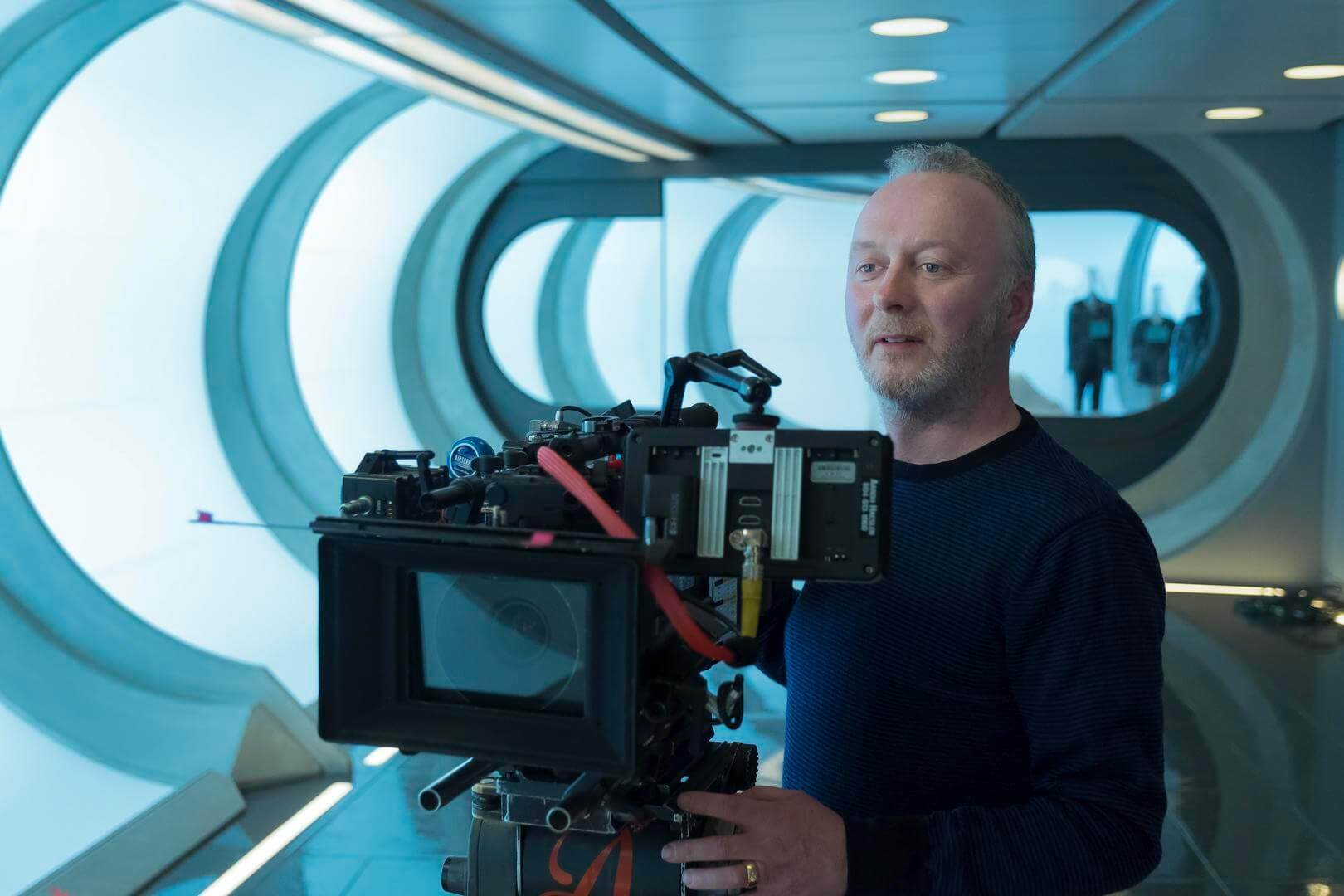
Neville Kidd | AMAZING STORIES

kidd amazing

Neville Kidd might not be a name with which you’re familiar, but you certainly know his work. The Edinburgh-born cinematographer and camera operator has served as director of photography on such instant-classic genre fare as Netflix’s Umbrella Academy, the first two seasons of Starz’s Outlander, the Day of the Doctor episode of Doctor Who, and the His Last Vow episode of Sherlock, which won him a Primetime Emmy in 2014.

Kidd’s work is some of the most fascinating, mesmerizing shots in recent genre history, so it was a real treat to speak with him about his career, as well as his latest work, the recent reboot of Amazing Stories for Apple TV+.

STARBURST: Could you, for the benefit of our readers, briefly explain the difference between a director of photography and a cinematographer?

Neville Kidd: Basically the two have married. It used to be that the director of photography was more television and then cinematographers were more for film and cinema. What’s happened, as streaming services popped up in the last five years – where you’re making high-end television at the same quality – the television DPs and your cinematographers are now both working in the streaming industry, so there’s a little bit of a merging of the two.

That makes a lot of sense because series on which you’ve worked recently are definitely more than just your typical drama.

They’re big budget, you know? It’s funny, because when you’re on a Netflix show, you’re not making a television show. You’re basically making a product that people are expecting the same high production value as cinema and I think that’s what people are getting. Game of Thrones started that ball rolling, where you’re getting a kind of binge television drama that’s basically a film that never stops.

It is a very interesting thing to think, but the idea that with streaming, you have television or episodic hour-long programs sitting cheek-by-jowl with Hollywood big-budget movies.

Yep, and the VFX is the same standard, and what’s happening is, again, the crews are crossing over, so when you’re working on series like Altered Carbon the quality of the crew are the guys that shoot the Star Trek movies, Mission: Impossible – all that kind of stuff. To get the standard of that kind of streaming service, you need to bring in the high standard crew, so I think it’s been fantastic to kind of come up through TV ranks. You’re used to working a fast pace, where the big thing about television is you’ve got to complete your date. I know you’ve got to make it on budget, on time.

The majority of your catalog involves so much documentary work before you started to really come to the things I think most of the folks reading this will know like Doctor Who, Outlander, and Sherlock, but it seems that your work in documentaries like would really lend itself especially well to the period piece work that you’ve done. Did you find that that was the case?

I think, living in Scotland, we DPs can cross discipline, you know? Because it’s such a small cottage industry in Scotland, if you were just doing drama, you would starve. We would do drama. We do commercials between documentaries. We would have a foot in each camp to just basically be able to make money, and so I spent a lot of time doing documentaries and always trying to feed the drama side. That’s what I wanted to say in my career, but there just wasn’t enough work in Scotland.

Then, I managed to get on an indie film called Solid Air that was like a show reel for the TV drama directors. After that, I started to get on BBC dramas and that managed to get me into Doctor Who, which then opened the gates to Sherlock.

All of those programs have very distinct visual styles, many of which are very different from one another. Doctor Who is different from Outlander is different from Sherlock is different from the Umbrella Academy. That last one, especially, is almost another thing entirely. How do you like coming into a program that already has a distinct visual style; how do you adapt how you work for these various programs?

Well, I think Doctor Who was quite good because it was almost like an anthology. It was like they were little movies within their own rights so you could put your own style on it, obviously with collaboration with the director and Steven Moffat. It was always going to different times. It was going to different places, different planets, or whatever, so you could go pretty out there with your style and lighting. I think that’s one thing I’ve always tried to do, is try and be different.

The same with Sherlock, which was, at that time, the best looking show in the UK, so really, you’ve been given the prize of British television and you’ve got to keep standards going up. I think that’s always a challenge. And that’s what was fantastic about working on Umbrella Academy. From a DP’s point view, you’re in heaven when your own style is at the beginning of a show and it ties on to the whole season.

The thing that we were most intrigued about with Umbrella Academy is because you’re taking not just storyboards or director’s vision. There is already a pre-existing visual style with Gabriel Ba’s artwork from the graphic novel. What is that like for you?

You’re taking something that’s so weird, and that world where one of the characters is a gorilla with a human head. You have these crazy, fantastic characters and you have to make that believable and that’s the challenge I love. I think we kind of – hopefully – we got it right. The success we had is the second biggest drama show on Netflix, but I think we just managed to get something that people believed could be possible. For the hour that they sat and watched an episode, they bought it and they went inside the world that we created and they stuck with it.

As a DP, you’ve got to try and grab people’s attention and keep it for that hour or however long they binge on the show. They never have to leave your world.

We feel everything you just said is almost equally applicable to Amazing Stories. Were you familiar with the original series when you began working on it and the pedigree that it had?

Because we didn’t have that in the UK, I did my homework and I watched all the older episodes and really enjoyed it, but I think we were kind of slightly reinventing Amazing Stories. We were kind of updating it into the world which exists now. I think that was one of the challenges for each director and DP: to tell a new amazing story in 2020.

Do you find yourself attracted to genre work or is that just how it has happened for you?

I think I’m always attracted to the challenge and I think I’ve probably slipped into that kind of genre of work because I like to kind of do something different. I think if you look back on my work – from Doctor Who to Sherlock to Outlander to Umbrella Academy to Altered Carbon – you know these are wildly different styles.

Very true. We imagine something of the appeal of Outlander is that you’re getting to do essentially a period drama but it has these little sprinklings of ‘other’ in there.

It’s two degrees to the left. Umbrella Academy‘s a world that we’re kind of familiar with, but it’s not quite right, in the same way that Doctor Who was always a world that didn’t exist or on a non-planet. Sherlock was a world where the main character was so clever, the camerawork had to kind of match it. That was the great challenge of Sherlock: you had to make the camera match the genius of Sherlock. I think with Amazing Stories, my job is to give the vision of the director, the writer, and the showrunner and put that into visual form. I always love to be intimate with my storytelling; to make it feel as natural and real in the environment as the story setting.

AMAZING STORIES is available now on Apple+.


Erica Lindbeck | FINAL FANTASY VII REMAKE

To celebrate the recent release of Final Fantasy VII Remake on PS4, we had the absolute privilege of chatting with Erica Lindbeck who portrays Avalanche member Jessie Rasberry in the masterful retelling of this incredible story. We talked with her about her character, the reaction of the fans and her incredible career in voice acting so far.

STARBURST: Congratulations on the launch of the game! It’s an absolute masterpiece and a big part of that is the voice casts performance including your own!

ERICA LINDBECK: Thank you so much! It’s so amazing to see the game get overwhelmingly positive reviews from every corner of the world. I’ve been on this project for over five years so to see the game not only finally come out but also receive such incredible reviews it feels like a dream.

Final Fantasy VII is arguably the biggest game in the history of gaming – with millions of fans the world over. How proud are you to be a part of the continued legacy of this beloved franchise by playing Jessie in Remake?

I remember the PlayStation experience in 2015 when the first trailer containing dialogue came out and I actually had the first line of English dialogue in the trailer which just blew my mind (Gideon Emery as Biggs and myself as Jessie were the first to be cast because of the trailer). I truly can’t even properly express how grateful I am to be involved with this amazing project. I could’ve never imagined as well how much people were going to love Jessie! [laughs] I mean, you’ve already got Tifa and Aerith as the two big female characters and then for Jessie to come along and steal the spotlight if you will is amazing to see. Back when I booked the role, I wasn’t super familiar with the original Final Fantasy VII. My experience with Final Fantasy is pretty weird as I’ve never played the games but I watched Final Fantasy VII Advent Children and was super confused with what was happening – and before too long I was on YouTube watching all of the Crisis Core cutscenes and that’s how I become obsessed with the lore and knew everything I needed to know about the main characters and their story.

When they first started to release screenshots for Remake and I first saw Jessie I had no idea who she was, but someone said to me that she had never had a voice. So when I booked the role I expected her to be a super small role but when I started working on it, it was so much more than that – and the fact she had the first voice lines in the trailer. In the original, she is a side character, but still well-loved, and in Remake with Avalanche’s story being expanded upon, I was still shocked to see how much of Jessie you actually get to experience.

You play Jessie Rasberry (which is the best surname ever in gaming). In the original game she was classed as a minor character but in Remake she has been incredibly well fleshed out (thanks to the writing and your performance) and now, in a lot of people’s eyes is seen as such an important part of the story. How does that make you feel?

It’s a dream to hear from people how much she is loved – so so positive. What’s also really cool is that I got the chance to originate her by being the first person to voice her – it’s also a relief as there’s no one for anyone to compare me to [laughs]. It’s one thing to be a part of a game that people love but it’s a whole other animal to be a character that people love within that game. Her story is so interesting and to be a part of that is just a total joy and honour. I still can’t believe it happened really! [laughs]

Before we properly get onto Remake, I wanted to talk a little about your career and your history. Where did your love of acting begin?

My goal was always to do film and/or theatre. I majored in Theatre at UCLA, it’s pretty much all I did throughout Middle School and High School. I grew up in North Carolina and it’s kind of the only thing I felt any sort of passion for. The voice-over gigs were always running parallel to theatre – that all stemmed from my love of video games and anime. I adore anime. Always will. I would come home from school every day and I’d put on Bleach or Hellsing or Naruto or whatever was on at the time and I just loved it because it understood me in a way that nothing else did. I remember my little brother actually had gaming consoles and I remember picking up Modern Warfare 2 and loved it – I started to play that online – and Assassin’s Creed. I loved all of those but I never thought that I wanted to do voices in games. Bioshock was the first game where the voice acting really stood out to me.

As I said, I’m a huge fan of Hellsing, so in my sophomore year at college I went to a class run by Crispin Freeman, who voices Alucard – if I must admit it, I went not because I wanted to learn voice acting but I just really wanted to meet Crispin! [laughs] So I went and read – he’s a fantastic teacher – and then took his other classes and got really interested in everything I was learning. At first, I wasn’t very good because I was trying to dub with these preconceived notions of these character tropes in Anime but then in my senior year of college UCLA brought in some alumni including Fred Tatasciore, who voices the Incredible Hulk and Soldier 76 for example, and he came in to talk to us and I was so fascinated with what he had to say and share. I ended up at the end of my senior year to make voice over demos as well as on-camera demos just because I had learned all these skills and it could open up so many more opportunities for me, which it did.

What are some of your favourite games that you’ve played?

When I was much younger, I would play Sims and Zoo Tycoon and Sid Meier’s Pirates – I love Naval Warfare games [laughs]. After COD and Assassin’s Creed, I moved onto Bioshock, those were really the games that shaped my taste as far as games go. A lot more recently I’ve gotten super into indie games.

Can you tell us about some of the other fantastic roles and projects you have been a part of?

When I started off with my agency I actually booked some anime by myself and then after a while, I booked incidentals in The Division, I was so incredibly stoked to play, you know, Vendor 1 and Civilian 3. And then the month after that, I booked the voice of Barbie – and because they were overhauling the brand, I got put on every single Barbie project. And because of that, I was able to pay my rent and most importantly I was able to adopt a cat [laughs]. The vast majority of my work is games, I still do anime from time to time, but games are the focus. I’m the voice of Futaba Sakura in Person 5, Miriam in Bloodstained: Ritual of the Night, Cassie Cage in Mortal Kombat 11 and Black Cat in Marvel’s Spider-Man – it’s crazy because I still feel like such a student yet so many people have said to me “You’ve done so much”. I also recognise how lucky I’ve been too.

I also want to mention the YouTube animated series I’m involved with called Helluva Boss where I voice Loona – we shot the pilot and it instantly became insanely popular so now we are working on more episodes which is very exciting.

Back onto Final Fantasy VII Remake, what drew you personally to the character of Jessie?

Nothing really stood out to me at the very beginning – a lot of the time we audition for parts and take what we can get. Nothing quote-unquote drew me to the character when I booked the role, but I remember when we did the trailer way back when and by then I knew exactly what Jessie’s journey in the game entails and just seeing everything come together made me very emotional as by then I had fallen in love with the character.

Cloud and Jessie’s relationship growth throughout Remake is simply wonderful – how did you approach bringing this to life during your performance?

Cody did an amazing job as Cloud – capturing the awkwardness about his character and his reactions to the people around him, especially when he’s with Jessie. I was reading a lot of hot takes on his character on how he doesn’t know how to handle a lot of stuff [laughs], I love it. He doesn’t know to handle Jessie and that’s something that I truly relate to as I think that a lot of people don’t know how to handle me [laughs]. That’s what I brought to it and that’s something that helped me connect to Jessie even more [laughs]. Their relationship is just such a blast for me as a performer to see evolve and for the players as well.

What were some of your favourite moments as Jessie when voicing her?

For me, anytime I got to yell “Cloud”, I just freaked out. Those moments just made me think “how did I even get here?” [laughs]. It’s like when I booked Futaba in Persona 5 and I got to yell “Joker” and “Persona” – just the idea of that was so crazy. I love the banter with Cloud throughout the game – she’s just so light-hearted and warm, I love her so much.

Have you become friends with the rest of the cast?

I’ve met Cody, John, Gideon, Matt, Briana, Britt – all of these people are just incredible and wonderful and the loveliest people ever. There’s not a diva amongst them [laughs], they are just so, so lovely and I’m so glad to be a part of this Final Fantasy family. We were all planning on hanging out around launch but with the lockdown, we haven’t been able to do that yet, but we will as soon as we can.

We’ve seen people posting online that they want a spin-off game or movie featuring Jessie, Biggs and Wedge. Would you be up for that?

Absolutely, that would be super, super fun! [laughs]

Can you tell us about any of your other upcoming projects?

I just did a game called XCOM: Chimera Squad where I voice a character called Torque – the funny thing was that I didn’t know she was a freaking snake until the game came out! [laughs] I’m also involved with DONTNOD’s latest game called “Tell Me Why” that comes out later this year and the cool thing is that the main character is transgender and that’s so great to see in gaming. As previously mentioned, I’m also working on more of that YouTube animated Helluva Boss which is incredibly fun.

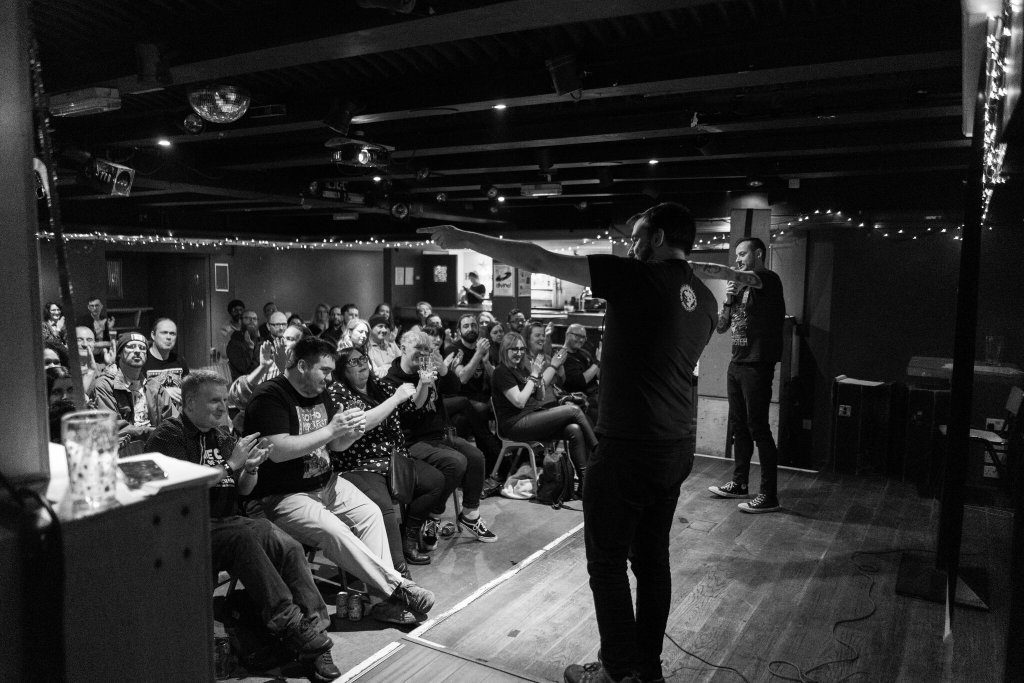
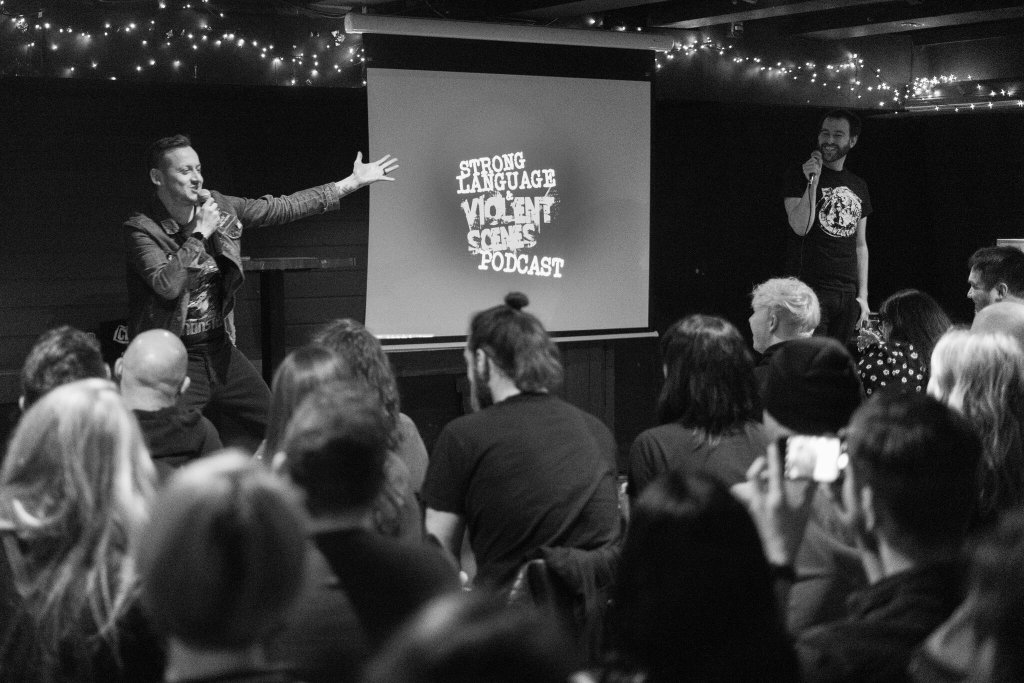
Mitch Bain & Andy Stewart Talk STRONG LANGUAGE AND VIOLENT SCENES

STRONG LANGUAGE AND VIOLENT SCENES is “the podcast giving a second chance to films that might not deserve them.” Hosted by filmmaker ANDY STEWART and musician MITCH BAIN, each episode sees them joined by a guest who defends a favourite horror movie with a poor reputation, and hilarity ensues…

STARBURST: How did the idea for the podcast come about?

Mitch Bain: When I first moved to Glasgow I didn’t really know many people, although I kind of knew Andy from general horror circles. We’d loosely become friends before then and we fell into a routine where I’d go to Andy and his wife Jackie’s house each week.

Andy Stewart: We wanted to make sure you were getting at least one hot meal a week. We’d also put on generally shitty films and as we were watching we’d talk shit about them.

MB: It eventually got to a point where, I think it was while watching Slugs, we were a couple of bottles of wine in and one of us wondered if there was room to do something with it, which makes it sound like ‘We started watching this and both realised we were hilarious!’ We spent about three months working the kinks out of the idea and coming up with some stuff, making it sound good, and lining up a few guests. We were really lucky after we started, with a bunch of people we had no business getting being very willing to come on and talk shite for a couple of hours. 

How do you decide what films are talked about?

AS: That is always the guest’s choice. Sometimes we’ll receive a selection and we’ll pick something from the choices. For the most recent live show with Graham Hughes, Godzilla topped his list and we decided that would be the funniest to talk about. Sometimes it comes down to what we think has the most value, but then in the case of other films like The Ninth Configuration with Heather Buckley, we’ll decide a film deserves to be talked about, despite it not being the easiest to laugh and joke about. We don’t always go for the daftest film where I can get in the most dick jokes.

MB: The Ninth Configuration is probably a really good example of what we’re trying to do. The film was really well regarded, but it winning a Golden Globe was so controversial that it damaged the awards’ credibility to the extent they almost didn’t televise it the following year. We decided everyone needed to see this and hear it talked about. We try to give the guests as free a reign as possible, but we’ve vetoed things in the past because they were wrong for the format.

AS: We had someone wanting to do Men Behind the Sun, which I didn’t think was appropriate.

MB: I’m not an expert, but I think we might have had a fight on our hands mining that for lols.

You’ve had some illustrious members of the horror community on as guests. Is there ever any shortage of people who want to defend their personal favourites?

AS: We’ve been pretty lucky in the guests we’ve had, but there have been times from a production standpoint that it’s been a bit of a scrabble to get someone. Filmmakers spend a lot of time on the press circuit talking about their own work, and we try to get people on when they’ve got something to promote and give them scope to do that at the end. I also think sometimes it’s just nice for them to come on and talk about something separate from that, something that’s a little bit more about themselves.

MB: A lot of the time, especially when somebody picks something that was a big deal for them when they were growing up, it’s a nice insight into what shaped them as filmmakers and creators.

One running joke is the truly staggering lack of films Mitch has actually seen. How much of an education has this been for you?

MB: Massive. I don’t mind playing up to the fact that I’ve seen basically fuck all in terms of classics. The areas I know the most about are post-2000s or maybe ‘90s onwards, but we don’t get that much of a window to talk about that stuff. There are things I have no idea how long it would have taken me to come across, if at all, had I been left to my own devices, with The Ninth Configuration and House of Mortal Sin being two that spring to mind, and I’m always just so grateful to the people who flag them up.

Andy, have you enjoyed educating him?

AS: That’s an interesting question. I have, but it’s always frustrating. Sometimes I’ll be waxing lyrical about how great something is and he’ll be nodding along despite not having a fucking clue what I’m talking about. Even away from the show a lot of our relationship is essentially what you get in the show, including my amazement at what he has and hasn’t seen. He’ll have not seen The Exorcist but has seen this really weird indie film that played the smallest screen of FrightFest. It’s a baffling list, but it seems to be balancing out, and certainly those episodes of me sitting with my head in my hands are less.

MB: The episodes of me sitting with my head in my hands are far more frequent, but for different reasons.

AS: That’s another thing I love about the show: just watching Mitch cringe into himself when I say something inappropriate.

MB: Sometimes he’ll say something that I know is going to get cut out in the edit and he’s just saying it to get a rise out of me. The annoying thing is it always works.

One of the most popular segments is Mitch’s Pitches [where Mitch invents a title and synopsis for a movie based on just a poster image]. How did that start?

AS: It came from our friend David Malcolm, who did an episode on Feast and whose short film Mannequins I produced. It was his idea to show Mitch a poster and get him to guess what the film is about. 

MB: The first couple of times I was taking them quite seriously, which I don’t do at all any more, mostly due to the listener submissions. The tone shifted from being something quite inward-looking that I mumbled my way through, to looking forward to seeing what people come up with week to week. I don’t brief Andy beforehand, so his reactions to the pitches being read out are genuine. It’s more fun for all of us if I keep the element of surprise.

One amazing aspect of the podcast is the high volume of listener interaction and the community that has built up around it. Do you find this makes for a better experience?

MB: It’s my favourite thing about the podcast. It blows my mind that we can go into every minisode on a Monday and confidently know that we’ll have a decent-sized feedback section.

AS: I’m happy to echo that sentiment. We never knew if anyone would listen when we started doing this. I don’t think anyone does when they start a podcast, unless they’re famous and people already give a fuck. When people started listening that was nice, but when people started to engage we were like, fuck, that’s a really lovely thing. Then they started to engage with one another. When we do live shows people meet up who have never met before, it’s just a really lovely heartwarming thing that we couldn’t have anticipated.

MB: The most gratifying thing about it is when you see that translate to real life. Before the live show at FrightFest, people were putting out feelers to meet up with one another. It’s the kind of thing we could never have expected, and we’ve made a lot of great friends through it as well.

AS: More than anything else, it’s the listeners who keep me coming back to do it every week. It’s also why I beat myself up so much on social media if for whatever reason we occasionally have to miss an episode or we’re going to be late putting one out. I just don’t want to let anyone down. 

MB: People are always exceptionally sound when that has to happen. One that sticks out most in my mind was the Final Destination 3 episode with Gabe Robertson. I was up at 5am to get in a couple of hours of film score composing before work, and the minute my alarm went off I got a text from Andy telling me his son was about to be born, meaning I’d have to edit the episode. That was the first time I’d ever done so, and my message was ‘We’re going to be late this week, but honestly, there’s a really good reason!’

AS: Since we started doing this we’ve had house moves, bereavements, babies, job changes, and all manner of crazy stuff, but we’ve managed to keep to the schedule, which just hearing the words come out of my mouth is wild. 

Do you have any specific films you’d like to get around to covering?

AS: I really want to do Tammy and the T-Rex and Riki-Oh: The Story of Ricky.

MB: I’ve not seen fuck all so I’m the wrong person to ask.

The standard or gore cut of Tammy?

AS: It’s got to be the gore cut. I’ve got the Vinegar Syndrome Blu-ray with both versions. I would prefer to do it live because it’s the kind of film that would get a much bigger response from the audience face to face. Hearing people laughing at a live show is my next favourite thing after the community that’s built up.

MB: My nightmare scenario is someone putting on a recording expecting laughs and sitting stone-faced for a 45-minute train journey. So when you do a live one and you get the laughs it validates everything.

Is there anyone, in particular, you’d like to have as a guest?

MB: I’d really like Lucky McKee. I’m a big fan of his work, in particular May, which was a big one for getting me into indie horror and looking past the likes of Paranormal Activity and Saw, as good as they are, and trying to find what else was out there. Joe Begos would be also be good.

AS: I’d love to get on Travis Stevens, Elijah Wood or Brea Grant. A lot of time we try to approach people who we think might be fun and not take it too seriously, who would get the format and we’d be able to have a laugh with. 

Do you have any plans to develop the format further?

MB: I think the format is fine, but we’re looking into the possibility of doing a Patreon that would see us trying a few extra things and see where that takes us, so the chances are you’ll see more stuff rather than any change. We’d also try and get out to do more live shows.

AS: If anything does change it’ll be the individual segments in the minisode. We’re also toying with the idea of a live podcast, where people can chat to you while you do it. In this weird time we find ourselves in where there are viruses lurking on every surface and around every corner, we’re quite keen to do what we can to just give people something to distract themselves from how fucked up everything is. A hundred main episodes down the line and over two hundred recordings in total and we’re doing what we did when we started, just picking out the ludicrous stuff in films that makes us laugh.

Strong Language and Violent Scene is released on Mondays and Fridays, and can be found on Stitcher, iTunes, Spotify, Google Podcasts, Podbean, Podchaser, Acast, TuneIn, and PlayerFM.

Lukas Feigelfeld & Mariel Baqueiro | HAGAZUSSA: A HEATHEN’S CURSE

To celebrate Arrow Video‘s stunning Blu-ray release of Hagazussa: A Heathen’s Curse, we here at STARBURST sat down with Director Lukas Feigelfeld and Cinematographer Mariel Baqueiro to talk about the film that they shot over four years ago finally getting a UK home disc release, the ideas behind the story and what makes it stand out from other modern horror films.

STARBURST: Congratulations on the film, I loved it – it’s incredibly atmospheric and poses a very unique approach to narrative. How proud are you to finally have a home disc release coming courtesy of the powerhouse that is Arrow?

LUKAS FEIGELFELD: Very, very happy. To be honest, we didn’t expect to be able to release it all over the world in the way that it has and especially getting a UK release is a huge deal as the English-speaking market is massive. When Arrow came to me and worked alongside me to create such a beautiful limited-edition version for people it was really great. I can’t wait to get my hands on it [laughs].

Lukas, you also wrote the film. Have you always been inspired by Gothic folk tales?

LUKAS: I wouldn’t say always, I think the source for the whole story came from folklore stories and traditions that come from the area where parts of my family are from in Austria which is also where the film was shot. When I was a kid I was confronted with a lot of these traditions, these kinds of horned masks and old pagan festivities and rituals that people still perform today. I was always terrified by stories of witches that were written in these woods around me so I just dove into my old nightmares to write the film. It kind of naturally evolved that it would be set in the middle ages and set in nature and didn’t turn into a horror film until later on.

I think we can both agree the Aleksandra’s central performance was absolutely inspired. How important was it to have someone that talented and captivating in the lead role to sell this character of Albrun?

LUKAS: I knew her before from a short film that we shot together, and she was a discovery by chance. She’s a Polish actress so her German is limited, she’s actually from Polish theatre. What I’ve seen is that she really brings a physical intensity to her performances. I discovered when shooting the short with her that she has a wide range of acting style in terms of physical performance and that she doesn’t shy away from doing weird shit [laughs]. She did everything with passion. You could put a camera in front of her and she would convey so much with limited or no dialogue by just using her eyes and face. She is amazing. I was so lucky.

Mariel, another standout aspect of the film was its cinematography. Every frame was oozing with atmosphere. How did you approach finding the perfect shots to truly capture the tense and mysterious elements of Lukas’ script?

MARIEL BAQUEIRO: Well I guess it was a long journey of discovery. Lukas and I worked together to really find the best places to shoot as we went scouting twice along with Aleksandra too. Lukas knew the area quite well so he had plenty of ideas of where we should shoot. For me, I didn’t grow up with any kind of folklore or fairytales, so it was really Lukas who had great ideas and I just used those to find the beauty and atmosphere in these locations. We also used a storyboard a lot during production and spent a lot of time together doing research which helped prepare for everything.

Lukas, it’s safe to say that the film is most certainly not your typical modern horror film. How important was it to create something that was ambiguous and treated the audience as intellectuals rather than hand-holding them through the experience?

LUKAS: I think it naturally evolved into this throughout production. The style and way that I approach anything aren’t entirely plot-driven anyway, there’s a lot of mood involved. I was listening to the music of Mohammad who did the soundtrack whilst writing so the whole bubble of everything had to be a complete package so of course the story is there but it didn’t dictate and I think that the way you remember a movie is similar to how you remember a dream. It may not be as exciting for other people but for you, it is an experience that stays with you. I like to trigger some kind of experience for the viewer and that they come out of the film with a certain feeling – it could be through the plot, or sound, or a particular shot.

Mariel, what other cinematographers inspire you?

MARIEL: It’s difficult because there are so many different styles and many cinematographers have many different styles themselves, it depends on the movie or project. Probably those who are very versatile and those who aren’t overly flashy and more human in the way that they work rather than ultra-technical.

What was your favourite shot in the film?

MARIEL: It’s a hard question but I’d definitely say that I remember that when we were shooting the swamp scene and she gets into the water it was really magic because everything was there from the frogs jumping around to natural lighting and colours – we just placed the cameras and everything came naturally! It was perfect.

LUKAS: We did that in one take, it was amazing. We scouted the location and it was full of mosquitos at the time, so we were lucky when we shot it. I’d say my favourite is the very last shot which I won’t spoil for those who have not seen it [laughs].

Lukas, another thing that we love about non-English horror films is that they are typically able to push the boundaries of gore – and this film certainly pushes the boundary. What shocking horror moments throughout history defined you as a horror fan?

LUKAS: I don’t know if I can state any particular film but we were trying to get a base of realism for sure. I tried to add that realism to the gory scenes without making them cheesy. I can say that more realistic films can be truly shocking that your typical horror movies in that regard. Michael Haneke is a good example of that.  They seem to go too far because of how real it is – it’s less of a gimmick essentially. This film in particular plays on that real fear of witches being women who eat children.

Are either of you able to talk about any upcoming projects?

LUKAS: There are a few things that I’m working on – some that I can talk about, some that I can’t. I have an English speaking script in development and a German Horror series in development but I can’t say too much more than that right now, unfortunately.

MARIEL: Same for me really, I’ve got a proposal for a few projects that are at various stages but as of right now with the current worldwide pandemic, I’m unsure when or if these projects will happen.

HAGAZUSSA: A HEATHEN’S CURSE is out now on VOD and May 11th on Blu-Ray via Arrow Video.