Jeff Schine | RESIDENT EVIL 3

To celebrate the recent release of the remake of Resident Evil 3 on consoles and PC, we had the absolute privilege of chatting with Jeff Schine who portrayed the charming U.B.C.S member Carlos Oliveira in this reimagining of the classic Survival Horror game. We talked about the amazing response of the RE community, how much the character means to him, working in mocap and his big upcoming superhero role.

STARBURST: Congratulations on the game. You and the rest of the team did an amazing job of capturing the spirit of the original whilst also being its own thing.

JEFF SCHINE: I’m so glad to hear that – as a performer that is so wonderful to hear.

How has the response been from the very vocal and passionate Resident Evil community?

I think as fans of anything, when there’s a project when you love the original, anytime you hear that they are going to be revisiting that story or property there’s always that moment of doubt because you are equally excited but worried, so I’m glad to hear that people loved it. The overall response has been really pleasing and gratifying because you put a lot of work into these projects that you love and then throw it out to the world and you never know what the reaction is going to be – you are always hopeful and it’s been so nice to get the feedback from the fans who seem to universally enjoy it. They’ve also been so welcoming to me into the Resident Evil family – I call it a family because the Resident Evil fans are incredibly passionate and very dedicated, they are simply awesome. I particularly love the massive amount of fan art that’s been sent my way. I try to engage with the community as much as I can as a way of repaying their generosity. The game also came out at a perfect time to allow people to escape from reality.

Before we get onto the RE3 Remake, let’s talk a little about your history as an actor. Where did your passion and love of acting begin?

Right from a super early age, I had an interest in performing and telling stories. When I was younger I would torture my family doing funny voices and things like that, you know, trying to make them laugh [laughs] – and I remember when I started watching movies that I wanted to keep a list of every single movie I watched. So I started the list and it got to something like five or six hundred at a very young age – I just loved the ability to escape into these worlds that could feel so real. But I didn’t realise that this was something you could do for a living until much later when I was in high school – that’s when I started taking it seriously. I just really enjoyed it and that’s where it really began.

Have you always been a video game fan? If so, what were some of your favourites growing up?

I’ve been a gamer since I was very young – I was always fascinated and just obsessed with games. I remember we used to go to our local video store called GoVideo just to rent a SNES. We used to have a babysitter that used to bring over his consoles and we would spend hours playing them. My mum and dad would restrict the amount of time I could play so I would cherish the time I would get with games. I loved so many games as a kid – Jackal, Contra, the original Zelda – one of my favourite games of all time is The Legend of Zelda: Ocarina of Time, Goldeneye, Bump ‘n’ Jump, Burger Time – all of these games were incredible. And then when I got hold of Street Fighter, it just blew my mind when it first came out. As I got older, I got super into shooters – Tom Clancy’s Rainbow Six was a personal favourite and then Ghost Recon. Halo was another moment when I realised that gaming is getting better and better. I’m a huge gamer. I actually took a stab at playing semi-professionally at one point too! Games have not only become a great vehicle for storytelling but also a demonstration in ability and skill and dedication. It’s a great art form in visual design and performance design. It’s an incredible medium.

Back onto Resident Evil 3 Remake, you play the charming Carlos Oliveira. What drew you to the character and what was the casting process like?

My agent got the audition for me – I believe the first part of that was a self-tape that I did at home. And then after that, we went into some producer sessions before going in with the director Steve. I liked Carlos immediately on the page. There was something about him that I identified with very quickly. The first of which is that I felt that he was very capable – but I also liked that amongst this capability was that he also didn’t take himself too seriously, I think he’s got this nice roundness to his character – he has a great sense of humour and is a shameless flirt but he’s not even particularly good at it [laughs]. I also liked that he was a good guy – he was doing things for the right reason. It was those attributes that I connected to and allowed me to play him how I wanted to. The team really allowed us to put our own spin on the characters which really helped everything flow naturally and ultimately it was a collaborative effort, but that freedom really helped.

You also did the mocap for Carlos too – have you ever done mocap work before? How much fun was it to take that extra step to get into the character?

I’ve had a number of mocap experiences prior to this – I worked on various Call of Duty titles and Mafia 3, so being on a mocap stage is very comfortable to me, but I think where a lot of that comfort comes from is that it’s not too dissimilar to film and television which is my background. The only real difference is that mocap is kind of a blend of theatre and tv where takes are long but it’s different that you can just play in this huge space. Getting into character for me never feels different whether I’m in the booth or on stage or on a volume doing mocap – I’m always using my body to move around when performing, well, as much as I can without causing issues if I’m in a small booth for example [laughs].

One of our favourite aspects of the story is Carlos’ relationship with Jill – can you tell us more about the development of that relationship over the course of the production?

What was really nice about the production is that we were all on location in Japan. There was a connection between myself, Nicole and Neil at the audition process – none of us knew each other but we managed to instantly find our chemistry even at that early stage. So during call-backs, we would be out in the parking lot and Nicole would come up to me and say “Hey, there’s some weapon handling stuff in our next scene, could you give me a couple of pointers” and stuff like that which was super cool. The same we Neil, he and I had a long conversation outside whilst we were waiting to go in about upcoming scenes – so we all found that early connection. By the time it got to actually shooting the game, we all knew each other so well that everything fell neatly into place and felt organic from the first take – being in Japan also helped our relationship grow as an acting family. All of that helped too with elevating Carlos and Jill’s relationship on screen. One of the big things when thinking about their connection is Jill never occurs as and therefore should never be treated as incapable – Carlos is a capable guy and after their first encounter, he begins to see how capable she is and that resonates with him.

You did an amazing job as Carlos and your performance really elevated the character to new heights! Do you see much of yourself in Carlos?

I think there’s some for sure. I think in a lot of ways, a lot of the characters you get to play over the course of your career, they all have bits and pieces of your personality that you get to play around with – some of that playful sarcasm that Carlos has, that’s definitely me. If you ask Nicole and Neil what I was like on set, then they would definitely agree with that [laughs]. His easy-going nature and capability as well, there’s a lot of parallels with me.

How was it working as part of the Resident Evil family? What was your favourite moment on set when doing the mocap and working directly with them?

It’s nice when that kind of relationship with your fellow castmates happens organically. It’s not always the case but you always hope that you have at least a professional relationship during the job but it’s so great when it turns out to be more than that and Neil and Nicole are like family to me now. The days when we looked at each other at the end of the working day and said “I think we did something special today” really stay with me and mean the world to me.

Favourite line of dialogue for Carlos?

“A cold, cruel, Carlos-less world” – I love that line. I also loved “Hey, fuckface” of course. I just loved whenever I got to say “supercop” to Jill – just the different ways I was able to say it throughout the story. What that word meant was different every time I said it – in the beginning, it was a bit of a jab, and by the end, it was a term of endearment. Just so many amazing lines.

Jill recently joined the survivors in the 4v1 online game RESIDENT EVIL RESISTANCE and Nicholai will soon be joining as a Mastermind. Is there any chance do you think that we will see Carlos make an appearance?

I would love for Carlos to make an appearance in the future, I can tell you truthfully though that I do not know if that’s going to happen as I haven’t been asked to record anything as of yet.

If given the opportunity to portray Carlos in the new set of live-action adaptations of Resident Evil that are currently in development, would you love to return to the role?

I’d be so happy to! Live-action is my true home, so getting the chance to get back into this world in any capacity would be truly awesome – it’s really a fun place to play.

Can you tell us about some of your upcoming projects including Marvel’s Avengers?

I did all of the mocap and performance capture for that role – that includes all body movements and facial movements, so the same as what I did on Resident Evil. I’m very excited and proud of it but I can’t say too much more than that, unfortunately. What I can talk about is that I’m involved in a game called Disintegration which is from Marcus Lehto who is one of the original creators of Master Chief from the Halo series – this is his first big game with his new company. It’s a cool story and universe and I’m excited for people to get the chance to see more very soon.

Nicole Tompkins | RESIDENT EVIL 3

To celebrate the recent release of the remake of Resident Evil 3 on consoles and PC, we had the absolute privilege of chatting with leading lady Nicole Tompkins who portrayed S.T.A.R.S member Jill Valentine in this reimagining of the classic Survival Horror game. We talked about the amazing response of the RE community, how much the character means to her and working in mocap.

STARBURST: Congratulations on the game. I loved it – as someone who considers the original Resident Evil 3 to be one of my favourite games of all time, you and the rest of the team did an amazing job on capturing the spirit of the original whilst also being its own thing.

NICOLE TOMPKINS: Thank you so much! That means the world to me. We thought of it as a reimagining in a way too when we shot it. We weren’t going in to copy or mimic anything, we were looking at these iconic characters and a story that is riveting and exciting and adding our own ideas – and clearly everything that Jill goes through before we see her in RE3 is something we were privileged to draw on as a backstory. In this game, I felt that we were able to explore the characters emotionally in a way that may not have been seen before.

How has the response been from the very vocal and passionate Resident Evil community?

I feel so grateful for being on the receiving end of so much enthusiasm and love for this game. I was warned that the Resident Evil community was pretty darn awesome and it’s definitely exceeded my expectations. I’ve just received such a warm welcome and so many comments on social media expressing how much this game and my performance means to them. I love that, you can’t ask for more than that as a performer really. I’m really proud of everything we did, it’s so rewarding. I love talking with people about it [laughs].

Before we get onto the RE3 Remake, let’s talk a little about your history as an actor. Where did your passion and love of acting begin?

I started at a really early age, I loved performing and storytelling from day one pretty much. I was a musical theatre nerd and did lots of shows and sang constantly. As much as I was an entertainer, I was also very introverted in some ways. I found performance was a way for me to connect with people and really get to know them through exploring the inner workings of someone else – acting provides the opportunity to live so many lifetimes in one and it’s really a study of humanity which something that I love. I’m fascinated with people and how they work and communicate with each other.

So as someone who loved narratives like that it was an easy transition into film and TV – I’m from Texas originally and I moved to LA because I decided at one point that this is what I wanted to do. When I got out to LA and had had some booth experience doing local commercials and being a singer, so I auditioned for a few voiceover jobs and someone clued in that I was good at it and I loved doing it – so I started developing the craft and I was very lucky to have my first video game role with voice and mocap in Middle-Earth: Shadow of War, and I was thrown in with the amazing talent of Troy Baker, Travis Willingham and Laura Bailey – all of these incredible voice actors who are big in the industry with a wealth of experience so I had amazing mentorship with all of them. It set the standard of video gaming acting super high for me and I was definitely up for the challenge. The mocap stage was such a wonderful blend of everything I’d done up to that point so it made a lot of sense to me and I loved it.

Have you always been a video game fan? If so, what were some of your favourites over the years?

I’ve always played games at some level – I have a very techy family; we love exploring all kinds of entertainment and narrative devices in some way. Recent I’ve played through the Uncharted series – it’s amazing and so much fun, also Horizon: Zero Dawn and I think that Ashly Burch is just awesome in it. And I’ve definitely been hitting it hard on Animal Crossing [laughs].

Back onto Resident Evil 3 Remake, you play the badass Jill Valentine. What drew you to the character and what was the casting process like?

Jill is such an iconic character that almost everyone knows because she was one of the early female characters that took the world by storm in gaming. I feel grateful that I had the chance to come into this character as Jill and step into those shoes of such a badass woman and be trusted with this beloved character that is such a strong woman but also a woman – she gets into a multitude of scenarios that shows so much of her character (she gets thrown around, A LOT!) yet keeps getting back up [laughs]. Being in survival horror, it really allows the audience to see who people can become in these horrible scenarios too which is amazing to be able to play around in and help tell the story of Jill.

In terms of the casting process, it was a pretty standard audition process – they were looking for something specific as they had a strong vision for Jill was going to look like. I knew the character and I knew the game, so I got to come in and give my version of how I see Jill on the basis of the script and that’s where a lot of the character was, in the writing. The script was so strong which was such an advantage, a great story that was handed to us – so it was super easy for me to pick up the character based on that. I was very lucky to hit it off so early with the creative team and with Steve Kneibhily, our cinematics director – we had a shared vision on what everything was going to look like. I read with tons of other actors during the early process too but I knew early on that they were happy with my version of Jill. I also thought straight away that Neil (Nicholai) and Jeff (Carlos) were the obvious clear choices for those roles too.

You also did the mocap for Jill too? How much fun was it to take that extra step to get into the character?

Technology has advanced so much which allows us to add so much to a character compared to days gone by. With mocap, it’s such a great tool to pick up those subtle moments that you feel when on the stage performing – from body language or a slight raise of the side of your mouth – and that just really lends itself so perfectly to this medium. It makes everything feel so natural – it’s very exciting from a performance perspective.

You did an amazing job as Jill and your performance really elevated the character to new heights even though she’s been around in the franchise since Day One! Do you see much of yourself in Jill?

Everything is coming out my body so I don’t think I can’t say that I see much of myself in Jill [laughs]. When performing I put myself in the moment and add how I would react to these situations. The reason it feels so natural is because we are working with what’s in front of us and using our imagination. I would love to say I see all of myself in Jill in terms of characteristics and strengths – don’t we all strive to as resilient as Jill Valentine? [laughs]. I’m nowhere near as cool as Jill but I sure as hell can pretend to be [laughs].

How was it working as part of the Resident Evil family? What was your favourite moment on set when doing the mocap and working directly with them?

Neil, Jeff and everyone else were just absolute pros – we got together and had instant chemistry and ended up becoming a family by the end of it all rather than just co-workers. Jeff Schine is a total gem – he does such a great job of taking lines that if you just read them on the page you’d be like “sorry, what?” and he makes them seem so charming and lovable the way he delivers them. And Neil, oh Neil, he is such a legend, one of the best ever.

Favourite line of dialogue for Jill? Ours was either the iconic “You want STARS, I’ll give you STARS” or “Next time, take the fucking hint”.

Nooo, don’t make me do it! [laughs] That’s such a difficult question! [laughs] She’s got so many good one-liners, I’d actually pick a Carlos line instead, as that’s easier to pick [laughs] – “a cold cruel Carlos-less word” is an instant favourite of mine. If I had to pick a Jill line, a lot of people love “Bitch, can’t even swim” – that’s definitely been made a meme already [laughs]. Jill is just incredible and her dialogue with Carlos is the best.

Jill recently joined the survivors in the 4v1 online game RESIDENT EVIL RESISTANCE – how was it returning to the character for that fun role? Did you get to improvise any lines?

We recorded the dialogue for that not long after wrapping the main game – it was a slightly different process. I remember getting in with that dialogue and being like “oh, they are having so much fun with this” – we had a blast with that.

If given the opportunity to portray Jill in the new set of live-action adaptations of Resident Evil that are currently in development, would you love to return to the role? What about if they do a RE-Remake of Resident Evil 1?

I’m so excited to see what they do! And of course, yes! Absolutely, 100% – I love Jill so much. I’ve been told my face matches one of her original looks so yeah, directors give me a call! [laughs]

RESIDENT EVIL 3 is out now on PC, PS4 and Xbox One.

Neil Newbon | RESIDENT EVIL 3

To celebrate the recent release of the remake of Resident Evil 3 on consoles and PC, we had the absolute privilege of chatting with industry veteran Neil Newbon who portrayed both Nicholai Ginovaef and Nemesis in this reimagining of the classic Survival Horror game. We talked about the amazing response of the RE community, his acting roots and his experiences on set.

STARBURST: Congratulations on the game. We loved it – you and the rest of the team did an amazing job of capturing the spirit of the original.

NEIL NEWBON: Thank you so much that means so much to me and the rest of the cast.

How has the response been from the very vocal and passionate Resident Evil community?

It’s been great. It’s been nice to get loads of really positive feedback through social media and interviews and so many people have been giving us praise. I tend as an actor not to read too much press about my performances– and whilst I don’t respond to individuals, I do read everything that people send me on social media. My experience is in the Volume. The audience’s experience is, obviously, the judgement of my character – as long as they have a reaction my work is done!

I’m happy that people enjoyed the experience and, most likely, hated my character [laughs] and that’s really nice – so from that point of view that’s enough [laughs]. People certainly like to hate Nicholai! It’s great to see how invested people get in Resident Evil as well – I’m a tiny cog in a massive machine and I’ve been very lucky to be able to play in the Universe, I feel very blessed as an actor to play not just one but two pivotal roles in the franchise – Nemesis being a real dream to be offered that. The community is also extremely sweet, and they’ve been so loving and welcoming – a big thank you to everyone who has sent their heart-warming feedback to me and my castmates.

Before we get onto the RE3 Remake, let’s talk a little about your history as an actor and motion capture artist. Where did your passion and love of acting begin?

I was lucky when I was a kid – I was into theatre, dance and music from a very early age. I was also a geek – massively into Role-Playing Games and computer games when it wasn’t “fashionable” to play them back in the 80s and 90s and a love for telling stories – I was a big reader and I was supported by lots of my teachers along with my mum who’s a big fan of theatre and drama. She used to take me to Stratford to see Shakespeare as I am from the Midlands and she’d also encouraged me to become a part of National Youth Theatre. This was pivotal, it was the most important moment of deciding that I wanted to become an Actor as well as her encouragement, I also had an amazing English teacher called Bob Melhuish who is still a close friend of mine as well as another teacher of mine Lisa Fair – they really lit a fire under me and cultivate a love of drama. National Youth Theatre, which was headed by the sadly now passed Ed Wilson, who was the most magnificently charismatic human being. The NYT is such an amazing resource, it’s a non-profit charity that puts on professional-grade theatre every year using kids from the age of 15 or 16 to do the courses and the following year you were invited back to be in the plays. The plays are critiqued by journalists who grade them against professional-level productions. The NYT has started many actors’ careers and it’s a wonderful resource. My love affair with acting started there for sure. I also trained for many years with Giles Forman at his school in Soho – I urge any young actors to seek the school out for their amazing courses. I was incredibly lucky to get into theatre early on and then into film and television thereafter. I’ve managed to work for every year of my career and about 10 years ago I got into performance capture at a time when few performers wanted to do it.

When I joined, I was a gamer and I was doing a lot of film indie projects but struggling financially until I saw an article in PC Gamer about performance capture. It instantly looked just like theatre and film combined to me. The first gig I did was Ghost Recon: Future Soldier – which was a massive shoot working alongside ex-US special forces. I was blessed to get involved exceedingly early and was helped immensely by industry professionals. It was a breath of fresh air as I was able to use every skill from acting to martial arts training to sword combat in one package.

In games, I have found a wonderful niche I specialise in multi-role character work, mocap, performance capture, stunts and combat and creature work as well as voice over. Often doing many lead, supporting or incidental roles in one game.

We were performing own stunts (as we were all trained in martial arts or gymnastics etc and we knew how to compose and perform them safely and professionally) and would regularly perform as an ensemble a huge variety of creatures and characters.

At that time there was about a dozen of us in the whole of the UK that was regularly doing motion capture as performers many years and we cut our teeth on the work finding solutions and performing multiple characters in a single shoot session, we were further honing our craft in this relatively new medium and it was a joy to play. It was like a working family – Audiomotion studios for me personally helped me start my career in this way, I was lucky enough to quickly start working with Andy Serkis’ Imaginarium and Centroid3d as well as other studios. All of us involved saw that this was the future of performance and storytelling. Tv, Film and theatre will always exist and now games were finally being seen as art and the new way to have immersive active storytelling in ways thus far not experienced. Whilst some were telling me it would damage my career I and others like me saw the potential and we were all grateful to be working in it.

Interestingly, it didn’t matter your background which was really wonderful.  Diversity in life and entertainment is a very important issue and it’s great that we are all championing it now and normalising the involvement and representation of all genders and all ethnic backgrounds. In mocap at that time, anyone could play anyone which was very cool as it meant, the work was based solely on your movement skill and performance and not what an actor would look like. There weren’t as many female roles as there are now ( a fantastic shift in the Games Industry and one I wholeheartedly support) and thus the main issue was at the time was that there were not many female actors working in mocap and indeed very few actors in general even knew about mocap.  The games industry, performance capture and voice over is an amazingly collaborative and creative experience and one that I feel very proud to be a part of. Cast and crew work close and with each other and there isn’t really the same division you get on a tv or film set at times.

As well as perform I now consult, direct and teach – my companies Performance Captured Ltd and Performance Captured Academy are both born from my love and passion for the work (www.performancecapturedacademy.com)

You were also in Detroit: Become Human, can you talk a little about your experience on that game and working with David Cage?

I knew about David and was a fan of his early work: starting with Fahrenheit / Indigo Prophecy as it is called in America.  I was lucky that I reached out at the right time for DBH and I got to speak to the wonderful Frédérique Barkoff, the casting director that was working with David. She was helping David cast the whole of Detroit which was approximately 120 roles.  I sent in a self-tape and I got asked to read for Gavin Reed who is kind of an asshole detective – the reception from that community has been amazing by the way [laughs]. So I was asked to come in to play Gavin and then David asked me to also read for Kamski as well.  The writing is so strong and that really helped me. Adam Williams, the lead writer and Benjamin and David are all amazing creative people – Quantic Dream are an incredible team full of 100‘s of talented individuals. I also got to work with Bryan Dechart a lot – he’s a real gentleman and a lovely person and talented actor. David was very kind to me and allowed me to play and add a lot of organic additions to the characters.

Back onto Resident Evil 3 Remake, you play the sinister Nicholai as well as the performance capture for Nemesis. How was it finding the balance between playing both of them?

I’m very humbled that I’m often given the trust to be a multi-role actor in a lot of the projects that I do and that the directors allow me to experiment and play very different characters. As they are such different animals it was easy to flip between the minds sets of them as I had spent a lot of time working by myself and then with the Capcom team and the incredible Actor’s director that is Steve Kneibhily. I found the whole experience energising and we didn’t have a single ‘bad’ day on set only physically challenging ones.

One of our favourite things about Nicholai is that he fits in perfectly as a villain of the piece (alongside obviously the massive monstrous Nemesis) – he has a purpose, doesn’t feel too cartoonish but the right level to fit in with the Resident Evil ethos and that is down really to your wonderful performance. How did you approach this, and did you do research into how he was represented in the original game all those years ago?

I like to think I never play Villains per se – I get cast as characters that do amoral or immoral things or things that people find upsetting but I never see my characters as bad people – I always see them as fully three-dimensional characters with wants, needs and objectives (as all actors do with their characters). So I try never to judge them – I try to love them for who they are and then try to work within the confines of the story for what they can and could do and what they should and might do. So, for me, Nicholai was always very fascinating because he was a born survivor and he’s also highly capable and very motivated and focused.

My take on him was very much my own based on the strong script and world,  as I never try to duplicate other people’s performances. I often take from real people that I have met on my own journey in life – inspiration from mannerisms or habits that I’ve found interesting. With Nicholai, I found the casual humour that he takes in his life, even when that is deeply troubling and on the darker side of humanity.  The fact that he’s at ease with it was so interesting to me. That he revels and feels free in it. He’s motivated by money, sure, but he’s motivated by experience too. That’s why I think we’re drawn to villainous roles as an audience member too.

One of the lines I delivered as Nicholai to Carlos (“She’ll get you killed”), I wanted to deliver it in a way that was not just a warning or a put down on Jill but was something that he truly didn’t want to happen to Carlos – you know, adding that extra layer of humility and humanity to Nicholai to allow me to see him as a real person and not just an antagonist.

How was it working as part of the Resident Evil family? What was your favourite moment on set when doing the mocap and working directly with them?

Nicole, Jeff and Steve (and others ) are like a born-again family to me – we never had a bad day on set. We still speak to each other all the time and see each other in London, LA and Japan. We keep in close contact; I love them all dearly. It’s not just them either, so many people work so hard when making a game and I urge everyone reading to please watch the credits on games, movies and TV shows to really celebrate and champion everyone that plays an integral part in making these amazing pieces of entertainment.

I had many favourite moments and it’s hard to single one out- I loved working with Capcom (Miguel Corti is also part of our family) and working with Tajiri and the team at the amazing Digital Frontier studios in Tokyo, one of my favourite places to shoot now.

What is your favourite line of dialogue for Nicholai?

“Where is your sense of self-preservation?” sticks out –  when I read it in the script it unlocked the character for me, it’s not just money that means so much to him but he also fundamentally believes that everyone should be strong enough to look after themselves and self-preservation is one of the key virtues to every human being I think because of our nature and evolution. I liked that line a lot because I found it engaging and a fun moment. Also, it’s in the first scene you see him in and it’s just as he shoots Murphy (Todd Haberkorn) in the head – Todd and I are now friends by the way. Both Jeff and Todd did this role (Jeff mocap, Todd’s voice) thus showing that a character in this work can be made up of a truly collaborative experience

It has been revealed that Nicholai is the next Mastermind in the 4v1 online game RESIDENT EVIL RESISTANCE – how much fun was it to return to the role in this side project?

A lot of the work for RE3 we did was shot and recorded at the studio of the main game. About a month or two after we finished the main game in Japan, Capcom came back and asked me to do the multiplayer section which I didn’t even know about beforehand. It was really fun and we were able to go a bit nuts with the character and we improvised quite heavily around the fun script as this side game is much less serious in tone to the main game [laughs]. Jamie the voice director in LA was a hoot to work with.

If given the opportunity to portray Nicholai in the new set of live-action adaptations of Resident Evil that are currently in development, would you love to return to the role?

Obviously! [laughs]. In fact, Johannes Roberts, if you are reading this please give me a call! [laughs]. I’d love to play Nicholai again in any iteration or medium- he was a blast!

RESIDENT EVIL 3 is out now on PC, PS4 and Xbox One.

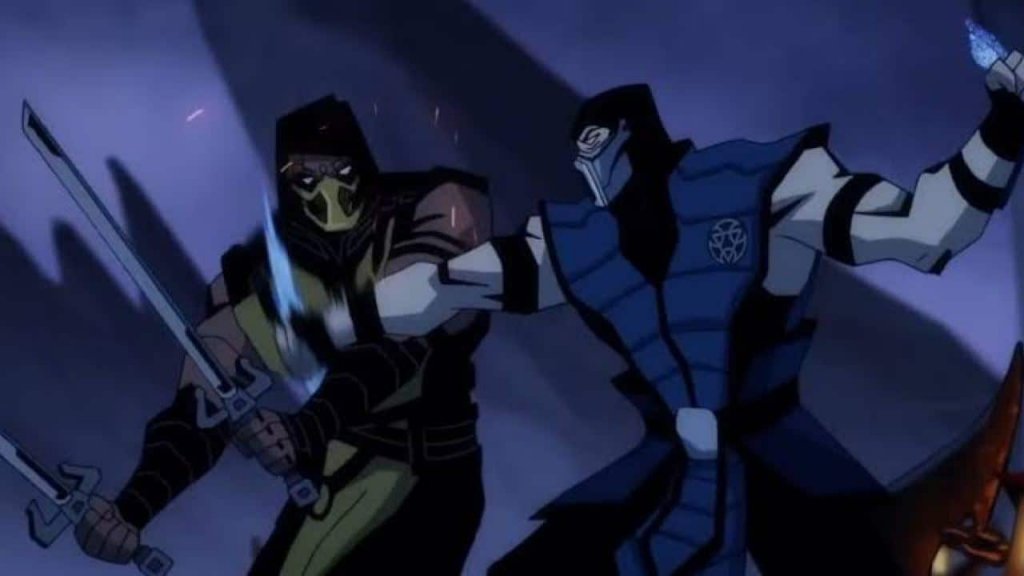
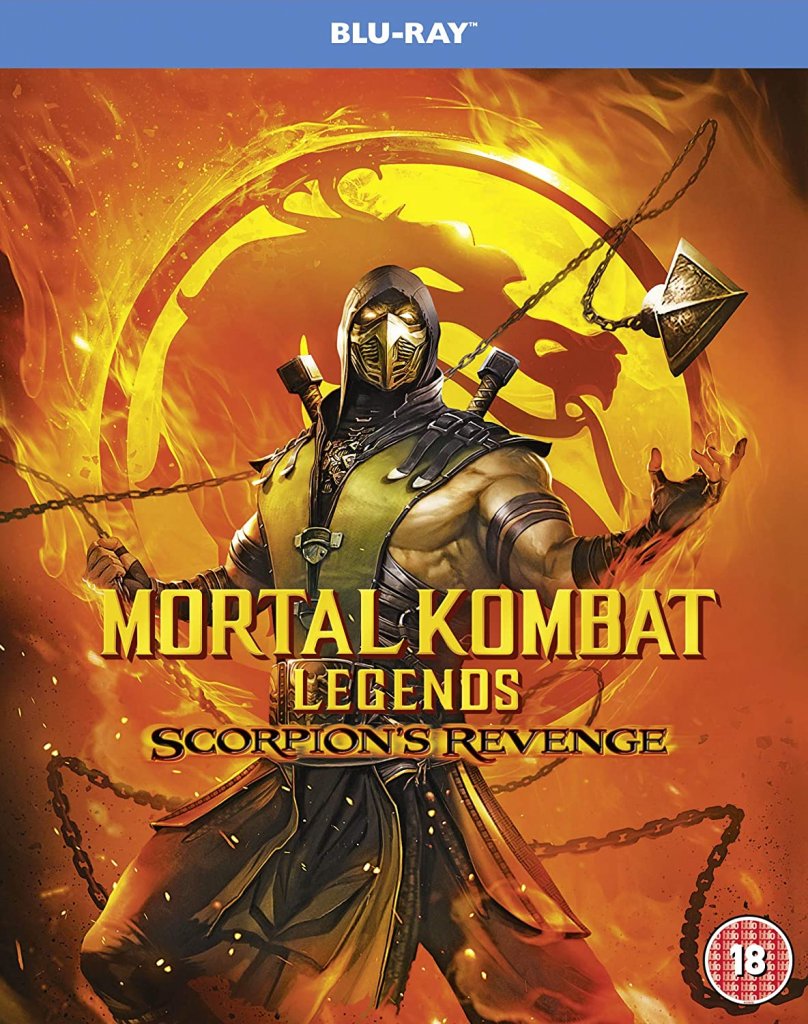
Patrick Seitz | MORTAL KOMBAT LEGENDS: SCORPION’S REVENGE

Voice actor PATRICK SEITZ enjoys a villain who gets shit done. From name-dropping Iago from Othello to positing that good antagonists are often protagonists, Seitz displays a knowledge of villainy running the gamut from Shakespearean scoundrels to vendetta-driven video game characters. And given his resume, it makes sense. Among his most prominent roles are Jiren from DRAGON BALL SUPER, Endeavor from MY HERO ACADEMIA, and now Scorpion in the brand-new animated feature MORTAL KOMBAT LEGENDS: SCORPION’S REVENGE. But talking with Seitz is a different experience entirely. Kind, knowledgeable, and pre-installed with in-depth answers to every question we asked, he is an absolute blast. And he was willing to spill the details on what Scorpion is up to in SCORPION’S REVENGE…

STARBURST: What kinds of things can Mortal Kombat fans expect from Scorpion’s Revenge that may be new or fresh to the franchise? 

Patrick Seitz: You’ve got a franchise – this story – that’s long-lasting and the question is, “What can be done? Where do you go from the games?” One nice thing about it is that while video games have gone more towards photorealism, photorealism, photorealism, the animation in the movie is stylized. And it just hits the ground running. I remember when I first watched it. Without giving any spoilers, I went, “Damn! Well, there we go!” But I looked and it was only five minutes into the movie. And it was like, “Oh! Ok. We’re not wasting any time.” It looks really good. 

That sounds like a tough balance to strike – keeping fans happy but also taking things in fun new directions. 

Yeah, I don’t know how anyone actually pulls it off, ever. 

Changing gears slightly here: You’ve played a lot of roles but we’re particularly fascinated by how you play villains and antagonists and, for lack of a better term, heroes who are aggressively themselves. You’ve played Endeavor from My Hero Academia, Jiren from Dragon Ball Super, Dio Brando from Jojo’s Bizarre Adventure, and now Scorpion. You’ve obviously played him before in the games so what appeals to you about these kinds of characters? 

[Laughs] In a dollars and cents kind of way, it seems to fall to the tenor of my voice. I play these aggressive, badass characters. Many of them are villains and in real life I’m like “Oh my God! There’s this video of a kitten!” It couldn’t be a further cry from who I am in my day-to-day life. I love how big and broad they are. I love how single-minded they are with pursuit of what they’re doing. Jiren’s a good example. He’s not a bad guy but he is a “I’m gonna get stuff done” kinda guy. To the detriment of maybe best practices or common sense at a certain point. This is how my voice has sounded since I was 16, 17 years old. I’ve always just sounded like an evil person. [Laughs] Or someone with darkness in them. It’s great though. But I think a character like Iago from Othello has just got this singularity of purpose. Yeah, he’s not a good guy. But you look back and you’re like, “Wow. This dude had a goal, however sort of petty it was, and just committed to it.” And when he was done, he was like, “Yeah, you can torture me but I’m not saying anything. I’ll let my record stand for itself.” I think that’s part what appeals to me with those kinds of characters. For better or worse, they’re like, “This is what I want to do and I’m going to do it.” I think, personally, that appeals to me because that’s sort of how I’ve lived my life. Like, “Oh, I wanna be an actor! I wanna do this thing. I wanna turn my back on the security of regular jobs and do what I wanna do!” I see that parallel of “I’m gonna do my thing, logic be damned. 

And Scorpion falls right into that because he’s on this quest for revenge and he’s very driven to accomplish his goal. And with Jiren, I agree that he’s not a bad individual. But he’s gonna protect his universe – in the Tournament of Power, if you lose, everything you know gets erased. So that kinda puts him more into antagonist territory because there is a difference between antagonists and villains. 

And you’ve got this moment when Jiren attacks the crowd. I remember reading the script and being like, “Whoa! That’s not how we play this.” When the stakes are that high, that’s what you have to do to beat this universe. Break some eggs to make an omelette, as it were. 

It kinda blurs that line between antagonist and villain. Antagonists are literally just people who oppose the protagonist. 

Yeah, there’s this thing where people think the protagonist moves the action. A lot of times I feel like the good guys, or the protagonists, are just kind of reactive to whatever the antagonist is doing. I think you could argue that characters like that are, in a sense, the protagonists because they’re moving stuff forward by their actions. 

Tell me a bit about what Scorpion is up to this time around as cryptically or as candidly as you want. You obviously can’t give a whole lot away, but do you think the murders of his loved ones changed him, or awakened something that was innate? 

I think a little of both. I think where he goes personality-wise after those murders may seem like, “Oh, it changed him!” The distinction might just be academic but the seeds of that are probably already there in people faced with those circumstances. It’s something that really isn’t going to get triggered unless something truly horrific happens to them or the people they love. But it might be that it wasn’t in them somewhere already. 

If we’re talking Dungeons and Dragons terms, lawful good is personally my least favourite alignment. It’s so by-the-book and stiff and it doesn’t leave a ton of room for playing or tinkering with a character like that. So it’s nice that there’s so many depths in these revenge-driven characters. 

Oh, yeah. It’s so cathartic. I go and put my time and energy into these archetypes and then leave work and get misty-eyed over cat videos. 

Is the Mortal Kombat franchise something you’ve always been a fan of or is it something you came to love after being so involved with it? 

Definitely both. I grew up around it. So many people – my age and older – did. I wasn’t great at it. I was not great at any of the fighting games. But it was still fun. It was still amazing. The magic of playing a video game and being like, “Oh my God, that’s my voice,” it gets to the point where it doesn’t freak you out as much. 

MORTAL KOMBAT LEGENDS: SCORPION’S REVENGE is out now on Digital HD Download, 4K UHD, Blu-ray, and DVD. For our review, head HERE.

Kirill Sokolov | WHY DON’T YOU JUST DIE!

To celebrate the upcoming home release of the hyper-violent, super zany thriller comedy Why Don’t You Just Die!, we sat down with the director Kirill Sokolov to talk about the film and his inspiration.

STARBURST: Congratulations on the film, it’s funny, gory and batshit insane and we loved it! It’s incredibly impressive for a feature-length debut too.

KIRILL SOKOLOV: Thank you so much, it’s so great to hear that audiences are enjoying the film.

How exciting is it that a wider audience can now experience the film?

It’s incredibly exciting – it’s just a shame it won’t be the big screen because of everything that is happening in the world. But it’s still great that they can watch it at home. I hope that this puts Russian cinema on the map for a lot of people.

It’s clear to see that the film is inspired format-wise by the likes of Tarantino and Ritchie whilst sharing a lot of stylish similarities to that of Edgar Wright. Would you say that those filmmakers are your inspiration?

Absolutely. A lot of Russian people don’t know a lot of directors except for Tarantino – so it’s really great that you and others have compared the film style to that of his. I’m a huge lover of film and am inspired by a lot of different creators and genres – especially Spaghetti Westerns which I think comes across in certain scenes in the film. One of the scenes involving the main character Matvei in the bathroom is heavily inspired by your Danny Boyle and his film 127 Hours which I love. But I’d also say that at its core it very much is a Russian film first.

You also wrote the screenplay for the film, where did the idea come from?

It really started during the MeToo movement, where I had a lot of friends and acquaintances come to me and tell me stories of the horrible things that they and their loved ones had endured. So I wanted to write a movie about someone getting revenge because of something tragic that happened to a partner when they were younger.

The majority of the film is set in the confines of a small apartment – what were some of the difficulties you faced creating a relentless dark action comedy in such a small location?

It wasn’t so much that it was difficult as I had always planned to make a film with a small location and limited actors due to not having a very big budget – and finding a producer for this type of film, especially in Russia was probably the most difficult part as a lot of companies and people don’t know how to sell this kind of movie. Once we had a producer, it was great as we were able to build a small set that we could smash up and makes holes in the floors and walls to make sure we could capture all of the action.

What was your favourite scene to shoot?

I loved shooting the whole movie really. But if I had to pick one it would be the opening fight scene as that was a lot of fun. The film does contain a lot of funny dialogue along with the action scenes – so in my next movie which is a chase-action movie, it will have a lot of action and less dialogue than this! [laughs]

Why Don’t You Just Die! is out on VOD & Blu-Ray on April 20th.

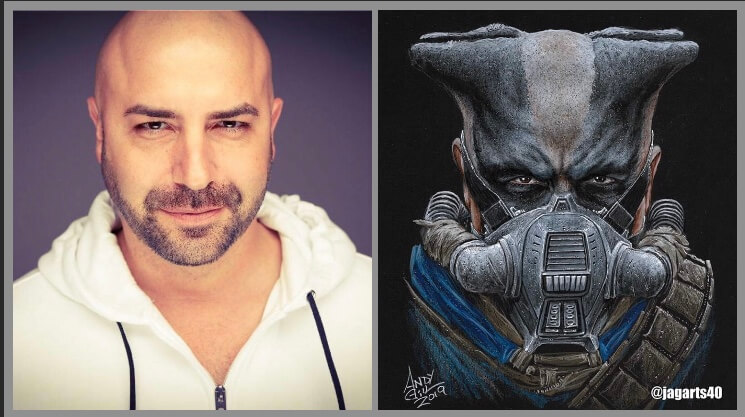
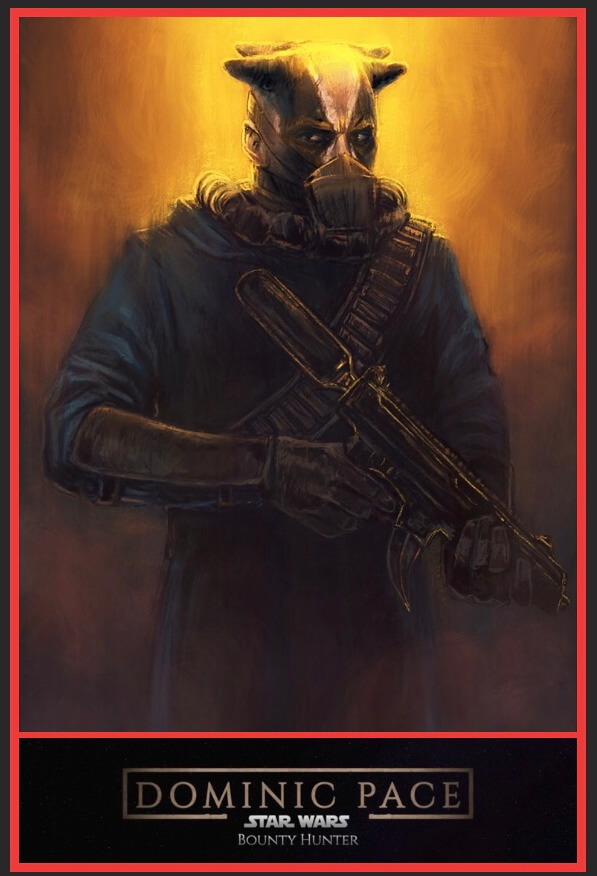
Dominic Pace | THE MANDALORIAN

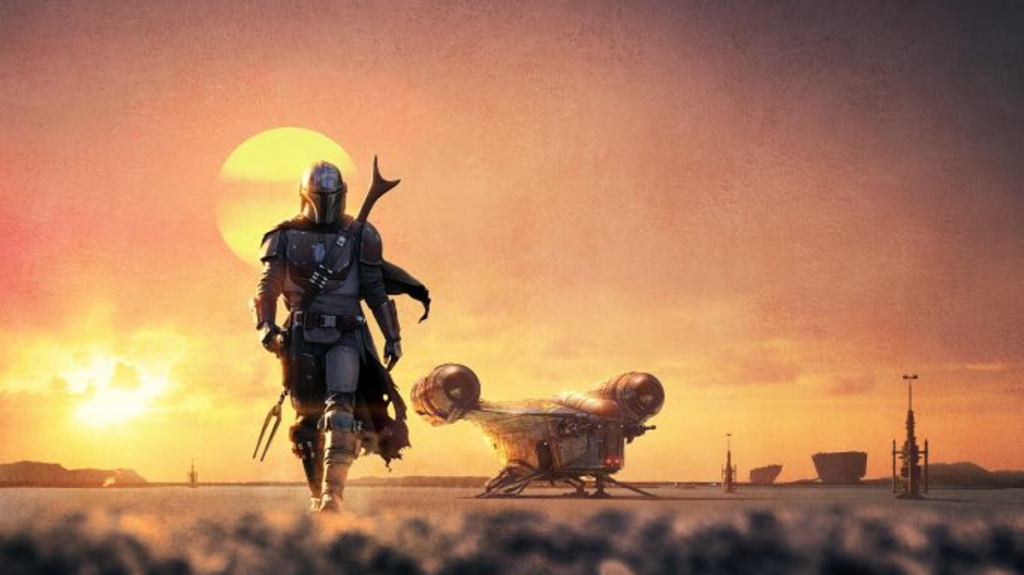
From a young age, DOMINIC PACE was already – like many – completely hooked on the world of STAR WARS, and dreams of harnessing a blaster in a space adventure consumed him. Years later, and after a successful make-up test, he went on to live out his imagination as bounty hunter Gekko in the gripping space western THE MANDALORIAN! We find out from the man himself what this incredible journey has been like….

STARBURST: How did you end up becoming involved in the world of Star Wars?

Dominic Pace: First and foremost I’d been a lifelong fan. If you check my IMDb I’ve been a twenty-plus year character actor veteran. With that being said, I’m a blue-collar actor, a working man’s actor, and I take every opportunity that I can. Work can be scarce depending on what time of year it is, depending on the momentum and flow of it. I’ve been so fortunate to have so many guest and co-starring roles. This happened to be a simple make-up test. I had experience with a prosthetics team in the past, through Will Kemp from the UK, he played the Wolf Man in Van Helsing. I photo-doubled, years ago, for Frankenstein, with Hugh Jackman, and my friend Will Kemp. So I have a little bit of prosthetics experience. I was invited in by a company called Legacy Effects. They are one of the most prestigious make-up companies in the world. They’ve been in the charge of Marvel, Disney, DC, Star Wars, etc. I had a six-hour make-up test, and I just so happened to hit it off with the make-up artist, Brian Sipe. Brian is one of the heads at Legacy Effects, and he actually worked with Dave Bautista through all of the Guardians of the Galaxy movies. He did the costume and prosthetics for Drax. He could never use the same mould twice. Long story short – too late [laughs] – I get invited to this project called Huckleberry, two weeks after the make-up test. There was no talk about what the project was. I go into the wardrobe room, it had a very secret feel, through the offices and the set. I walk in, and I see my name on a clothing rack. It says Dominic Pace, bounty hunter. You have to imagine, I’d been a Star Wars fan since I was five years old. So to have that, it was very special, and very meaningful to me in so many ways. It’s one thing to have an acting accolade, it’s another thing to be part of the Star Wars universe. To be your own, unique, one of a kind, bounty hunter. For me, this opportunity for those ten days while on set, was absolutely priceless, and it’s something that I’ll never forget. I can’t tell you how grateful I am to be immortalised in canon. Within the Star Wars universe.

Can you introduce your character, bounty hunter Gekko? Who is he, and how does he fit into The Mandalorian?

He’s part of the bounty hunter guild. He is featured throughout episodes one and three. He is part of a very crucial stand-off in the third episode, and he is the right-hand man to Greef Karga, played by Carl Weathers. You can see him throughout the cantina in episode one, the cantina in episode three, and the stand-off that I just mentioned.

What was it like to be on a Star Wars set?

It was absolutely priceless. What made it even more special, on the first day, walking into the cantina, none other than George Lucas was there with Jon Favreau and Dave Filoni! For me, I just needed a second to breathe, as it was an overwhelming experience. Everything that had inspired me to become an actor was right there. I know that Ewan McGregor and Samuel L. Jackson have stories of choosing their own lightsaber, and as a bounty hunter, I got to choose my own blaster! There’s about twenty blasters at the prop table, and they allowed me to choose my own. I just wish that every Star Wars fan had an opportunity like this. To be able to choose your own weapon, in this beloved universe, was just second to none. An experience that I’ll never ever forget.

Leading on from that, can you tell us about what directors Deborah Chow and Dave Filoni, and creator Jon Favreau himself were like to work with? 

It was a constant pull, and gentle pressure. You hear stories in Hollywood about Michael Bay, James Cameron, where there might be yelling and screaming. With these three, it was just such pleasantry, from start to finish. They were in control, and they knew what they wanted. At the same time they never put across a frantic feel on set. Everybody really knew what they were doing. There were no arguments or conflict. Everyone was on the same page, and it was just such a great feeling to be around. Another factor is that, not only for myself, but I think you had a good amount of the crew and the cast feeling like they were part of something very special. To be a part of that, was really amazing. Day in, day out. There was no tension at all, no ego. No shouting or yelling. You had commanders that were in control. If you were part of a naval ship, you’d want these people to be in control of your life, because from start to finish they had such great composure.

When it comes to the actors, can you tell us what it was like to work alongside Carl Weathers and Brendan Wayne to name just a few?

I’m an Italian American, and obviously one of the greatest film series in American history is Rocky. Carl was a major part of that. In terms of what that film shows, it’s not just about fighting, it’s about fighting for the struggle. Which, as a blue-collar actor, I relate to, as you have to fight for every opportunity that you receive in this time. So to be alongside him, and to be his left-hand man, during a pivotal scene in episode three meant so much to me. The man has such a stage presence, and it’s very inspirational. I believe he’s 70 years old, but you’d never be able to tell, because of his high energy, and presence. Even at the fifteenth hour. Brendan Wayne, the grandson of John Wayne, was in that outfit the entire time I was on set. I know that Pascal is the face of The Mandalorian, however, Brendan Wayne really deserves credit, as he was there through all the grunt work within that costume. He deserves all of the respect and admiration of the fanbase.

Stars Wars is known for its huge costume/puppet workshop. What was the make-up/costume process like for Gekko?

I was very humbled. Initially, they had to rush me to the set on day one, and they could not find the mouthpiece to my costume. I did not want to go without the oxygen mask. You would ask most actors, and they’d say that they’d want their face to be seen, but for me, I felt that the depth and darkness of a bounty hunter would be more layered, as opposed to his bare face. Which I did not really care for. I was based on this character that had been made two years prior, a female model called Gekko, that was the make-up, and the prosthetic inspiration. The Gekko head was originally two bumps on the top of his head, and when I did the screen test I had these two bumps, then a couple of the other bounty hunters were giggling. I said, “What’s the matter?”. They said that I look pretty awesome, but it looks like there’s breasts on my head! So, I go to Brian – who is so down to earth, genuine, calm and collected – I said: “Brian, I’m not a star, and I’m no place to say this, but for the love of God, Gekko would look really cool if you could change the prosthetics to horns”. He thought about it for a minute with David and Jon, and of course, it wasn’t my decision. I just suggested it to him. Thank God! That Monday, he changed the bumps on the original Gekko to horns. When it came to picking the blaster, being six foot four, and 260 pounds, I wanted to pick the biggest blaster! If he was going to be an action figure, I just wanted to make sure that he had the biggest blaster you could imagine! So I was very excited about that. I have these big gauntlets on my arm, which I like to think give him a bigger deflector shield than just the shielding from his forearms, almost like Wonder Woman. These gauntlets are so big that they can create a shield around him. To protect himself. I’m hopeful in terms of fan fiction, and with the upcoming Kenobi series, that Gekko is given one of the assignments to perhaps pursue Luke. Deborah Chow, who is also directing Kenobi, knows Gekko. I’m hopeful that the character will continue to be a part of canon. He didn’t die after episode three. I’m very excited for the future of Gekko, however, either way, every Star Wars fan would admit, that just to get a little taste of their lifelong dream come true is enough. Regardless of whether I return or not, I can’t tell you how grateful I am to Lucasfilm and Disney for this opportunity.

What was the most rewarding scene for you to work on?

Ultimately, to just be a character in the universe. The most rewarding aspect of it was to not only be in the Star Wars universe, but to be in a scene where there’s action. For every Star Wars fan growing up, you didn’t want to be a character that just sits in the bar, you wanted to carry a blaster, you wanted to have a little bit of gusto. A little bit of action. So that for me was priceless. So I got to have some action with the character, which meant so much to me. It was like returning to my childhood, and that made it very special. 

What was it actually like for you to see your character on screen, for the first time?

I’m not a drinker, but I got a text from a Twitter friend that they’d seen me in the trailer for the first time. You see this moment in the trailer where Greef Karga says, “They are all jealous of you.” It has this really cool pan of me, and two other bounty hunters, staring at him in disdain. At that time, I needed a little shot of scotch! I’m not going to lie, as it was really very overwhelming! This featured acting aspect meant more to me than any of my other credits in my entire career. Just because of how special to me it was as a child. I’m going to get a Gekko tattoo on my shoulder because that is how much Star Wars has meant to me throughout the course of my life. 

The Mandalorian has already received an incredible response; why do you personally think it’s done so well, and for you, what do you think is so special about it?

I think that Jon Favreau and Dave Filoni understand that it comes back to caring about the characters. They are also die hard fans. The reason why Star Wars is important is because it always comes back to relationships, the parallels of life which we relate to. If you just do a generic sci-fi movie, with some eye candy, I couldn’t care less. What makes films like Harry Potter special? It’s the relationships. I think that Filoni and Favreau understand this formula, and I think that they’re bringing this to us first hand. They are so talented, and they know what makes Star Wars magic.

UK readers can watch episodes of THE MANDALORIAN as they air weekly on Disney+


Mark Worgan | THE UNOFFICIAL MASTER ANNUAL

master annual

STARBURST chats to the Mark Worgan, the brains behind the unofficial DOCTOR WHO annuals that have gone down well with fans, about the latest addition focusing on everyone’s favourite archvillain… 

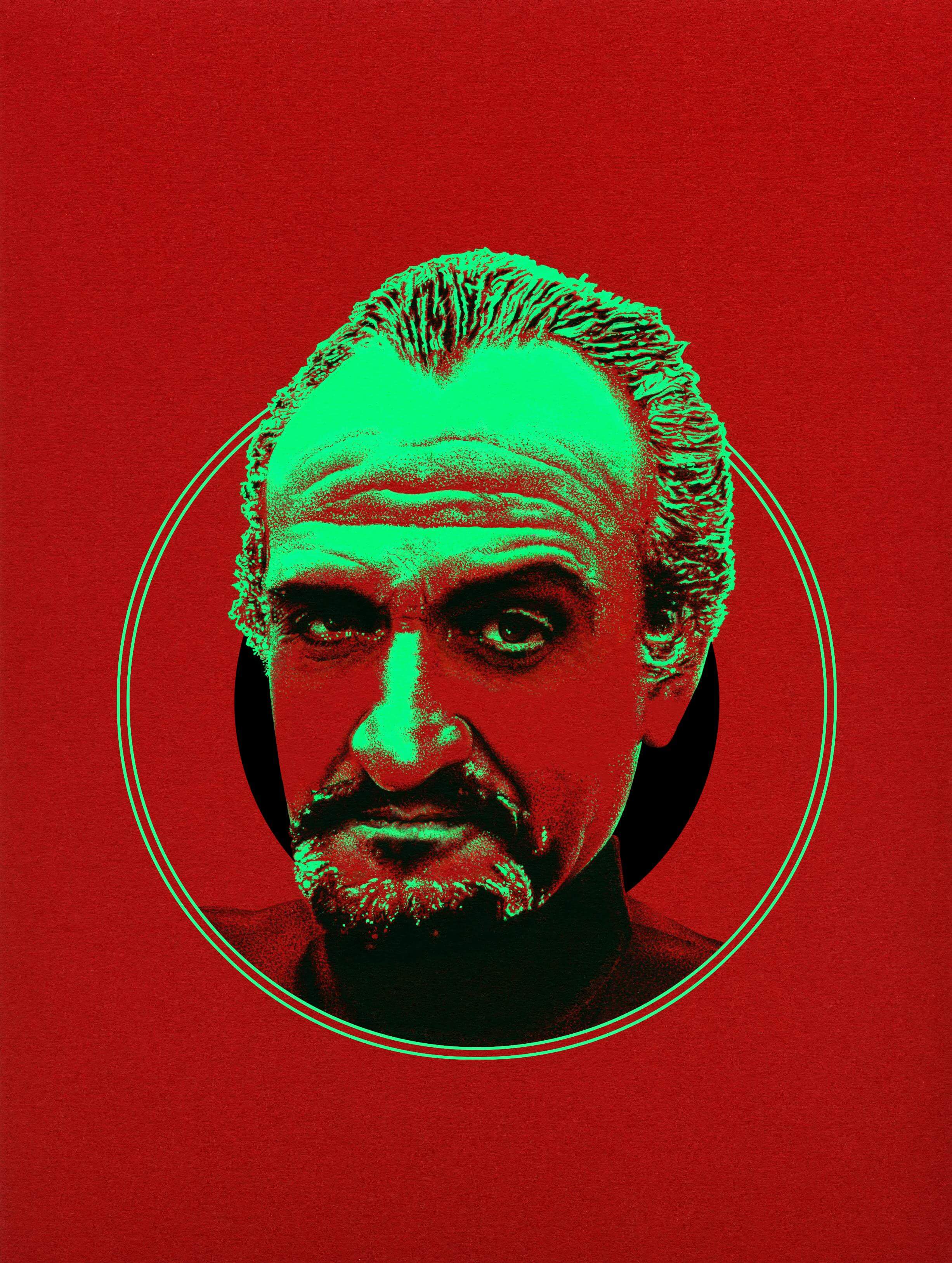
In 1971, with Jon Pertwee having established his credentials as the third Doctor in the first colour series of Doctor Who the year before, producer Barry Letts and his script editor Terrance Dicks decided to spice the series up even further by introducing a new recurring nemesis for the timeless Time Lord. They felt that if the Doctor was now a character as established in British culture as the legendary Sherlock Holmes, then it was time he had his own ‘Professor Moriarty’. He needed an enemy whose intellect was in many ways a match for the Doctor himself – even though Holmes’ ‘Napoleon of Crime’ only actually appeared in two of Conan Doyle’s stories chronicling the adventures of the Great Detective. The Master was to prove to be considerably more resilient. Portrayed initially by the urbane London-born actor Roger Delgado – complete with demonic salt and pepper goatee beard – the original Master –  was a suave and sophisticated opponent for Pertwee’s dashing all-action Doctor. “I am known as The Master, universally” as he tells the first unfortunate victim of his despicable hypnotic abilities.  Delgado’s Master was equally at home running a plastics factory as a cover for an alien invasion as he was hiding in plain sight as a vicar in a quaint English village, or masquerading as a space peacekeeper in the distant future. Delgado continued to play the character until his tragic death in 1973 and, after a respectful period, future production teams would revisit this iconic character who has appeared again and again in various increasingly hysterical incarnations. Plus like the Doctor, he has taken a female form more recently. The character even turned up in the most recent series of Doctor Who, with Sacha Dhawan delivering a tour de force performance as a maniac Master eaten away by his hatred for his bitterest enemy. That and, as we now know, the secrets he has discovered about the history of his own people the Time Lords and the Doctor herself.

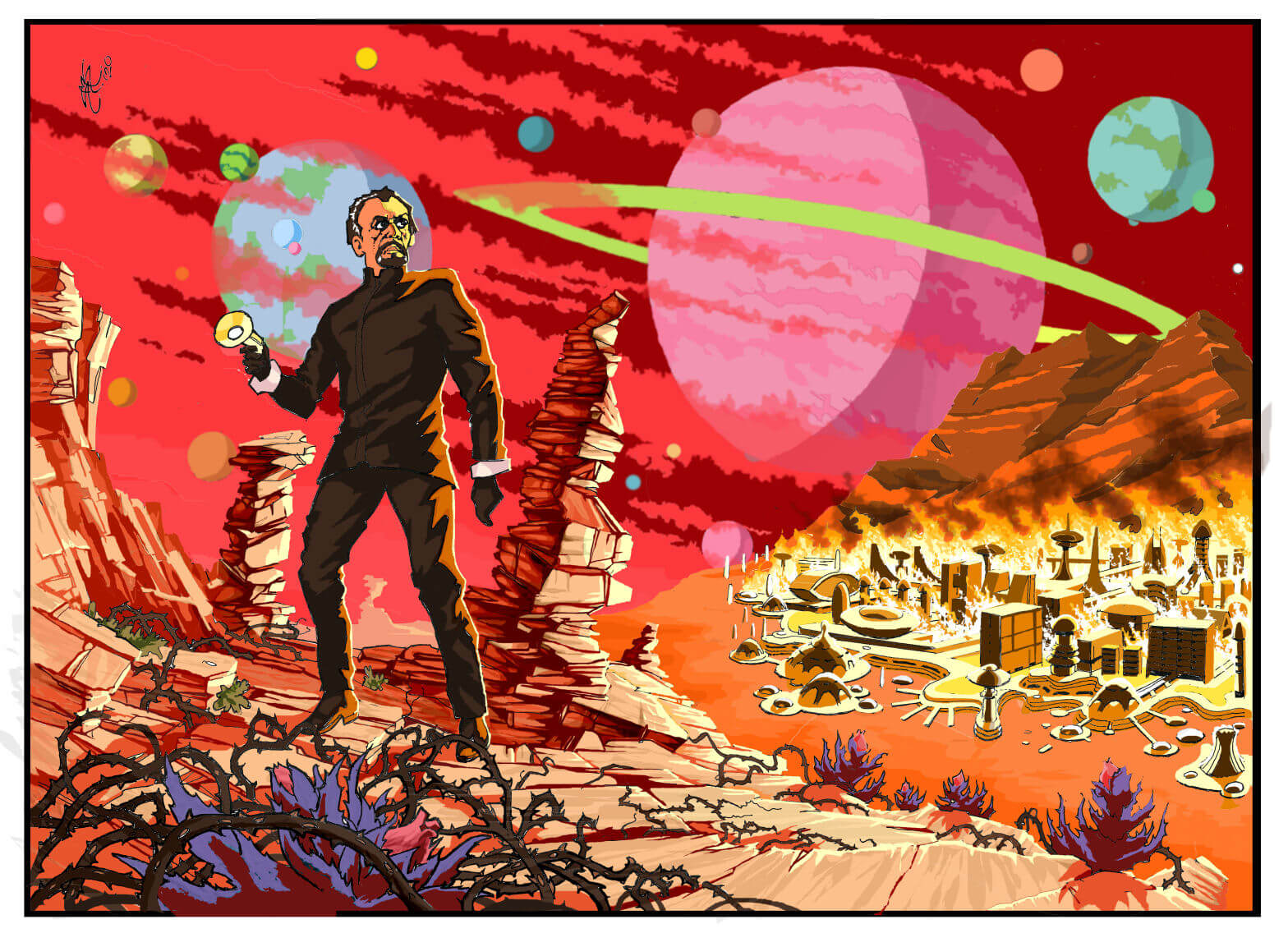
Many lives, many terrible, unspeakable plots and plans. But for most Doctor Who fans, the original Master is still the definitive incarnation of the Doctor’s most persistent foe and it’s this embodiment of the character that is celebrated in The Master Annual, the latest book from Terraqueous Distributors. The publication turns back the clock to the 1970s and gives us an idea what the Master might have been up to when his every move wasn’t being confounded by the Doctor and his chums at UNIT. A couple of years ago, Terraqueous set out to fill in that infuriating gap in Doctor Who collectors’ run of classic story annuals published by World Distributors from the 1960s to the 1980s by releasing the Unofficial Doctor Who Annual 1972. Last year, they picked up the mantle from World, whose run of annuals ended in 1986, by publishing the Unofficial 1987 Annual featuring Colin Baker as the Sixth Doctor. Fans might have been expecting the next annual to feature Sylvester McCoy’s Seventh Doctor, but Terraqueus publisher Mark Worgan (who we spoke to back in Issue 456) had other plans. “I just loved the idea of doing a Doctor-less annual next,” Mark told us. “What could be more thrilling than exploring the Doctor’s universe, without having the Doctor there to save the day? And what better tour guide than the Master himself? The Master is unique, not many villains who face off against the main character are adored. And if the tables were ever turned, and the Master was victorious every now and then – I honestly believe the viewer would cheer.  When a beloved villain is repeatedly defeated, he almost becomes the underdog. And now we get to see the Master come out on top. I decided to do the Master annual because on-screen his plans were always squashed by the Doctor. The Doctor is the hero and that’s how it should be. And when it came to the Daleks or Cybermen, the Doctor would defeat them too, of course. However, those enemies had an on-screen narrative and the viewer is told how feared the Daleks and Cybermen are across the universe because when the Doctor wasn’t around, whole planets and civilisations were destroyed by them. But for the Master, there was no such narration. And I thought there should be.

The real challenge, moving forward, was to put together stories that depicted an established ‘bad guy’ as ‘the hero’ in his own adventures. “I was really concerned about putting together a ‘children’s’ annual where the main character was well known for being ruthless and would kill anyone or any being that got in the way of his plans,” explains Mark. “It was essential to put some guidelines into place. For instance, I wouldn’t allow any stories to have any form of cruelty or torture. I knew people would want to go dark, and that really isn’t the Master. The Master has a lot of charm and cunning, he knows how to choose his battles. You don’t develop that kind of wisdom by smashing everything in sight. I wanted to explore just how successful the Master would be in his plans, without having the Doctor there to ruin things for him. And in the Unofficial Master Annual, we get to see just how successful he can be and it’s wonderful. Because sometimes, without it being intentional, and only because it suits his current scheme – he can be one heck of a hero. To that end, I didn’t want a collection of stories full of different characters each defeating the Master and his plans. This is the Master’s Annual and the Master, without the Doctor around – always wins. And if it suits his current agenda, he will be ‘the hero’. The stories we have in the annual have been carefully selected and I guarantee the reader is going to be cheering the Master on.”

Like the Doctor, the Master has endured numerous physical changes since he first appeared in 1971, but the Unofficial Annual was always destined to focus on the classic Delgado incarnation. “I did at first consider having various incarnations of the Master feature in the annual,” reveals Mark. “But I wanted to stay true to one Master at a time. Although I would love to do a Missy annual, with the cover done in the style of the old ‘70s Misty annuals (this was a well-known girl’s horror/supernatural annual and comic). If Michelle Gomez [who played Missy] writes a little foreword for it, then I’ll drop anything I’m working on to make it happen!

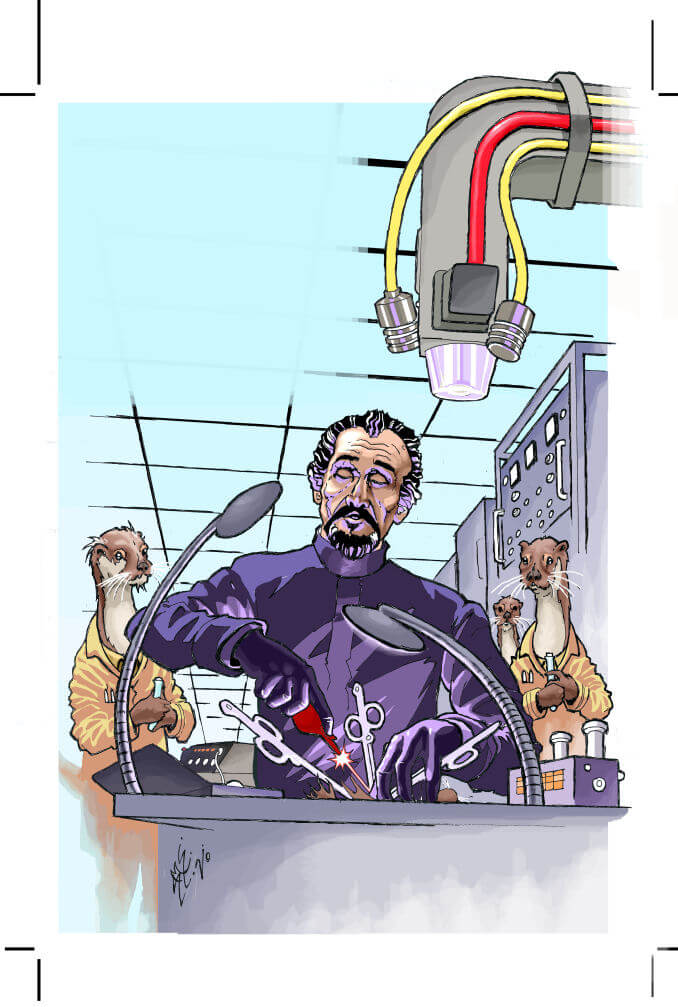
Fans of the previous Unofficial Books will have been impressed by the extraordinarily high standard both of the written content and the often stunning, evocative artwork. The Master’s own book certainly won’t be letting the side down with a thrilling variety of stories and the same high standard of illustration. “We have stories based on medieval worlds; stories based in the past and in the future,” Mark told us. “There are stories where the Master faces off against other renegade Time Lords. There are tentacled monsters, cool ‘60s spies, robot conductors. And we have the seriously cute Tarkan species. There’s plenty of good quality content.”

Mark continues by enthusing about the contributors, “We have some returning talent providing the art of course; we’ve snagged Alister Pearson again. There isn’t a Who fan around who hasn’t owned a Doctor Who novel or VHS with Alister’s artwork on the cover – and besides being a wonderful artist, he’s a great guy too. There’s also SMUZZ, an award-winning British science fiction, fantasy, and political illustrator and cartoonist best known for his work on the magazine 2000 AD. We also have Paul Cooke, who has done the artwork for the cover of the Master Annual as well as illustrating some stories. When I had the idea for this, one thing that stuck in my mind, was that the cover had to say ‘The Doctor has gone, the universe is no longer safe’. So this was to be the Master’s first annual, so what better place to start than doing a homage to the Doctor’s very first annual, and then completely remove the Doctor – he’s gone, the Master is the man in charge now. So I sent Paul a mockup I’d been working on for a few weeks of the cover, he instantly caught the vision of what I wanted to do and produced this amazing homage. We also have Andy Walker, who was one of the illustrators who worked on the official 2006 Doctor Who Annual. We also have other artists such as Arfon Jones, Richard Young, Malcolm Orr, and many more… and they’re all great, brilliant guys! One person I must mention is Rob Nisbet he has done a fantastic job of proofreading every single story and the annual would not have been possible without his efforts.

With the Unofficial 1972 and 1987 Annuals having gone down well with nostalgic fans, there’s clearly an audience hungry for further volumes. “The fans seem to have taken them to their hearts,” says Mark. “They love the quality of the stories and the artwork. I get a huge kick when people upload photos of their annual collection, and there between the 1971 and 1973 Word Distributor books, and after the 1986 annual, are the Terraqueous Distributors 1972 and 1987 annuals – that’s pretty cool. But these books are done out of love and there is no 9 to 5 working structure. The contributors love doing these books, but they also have real jobs and lives that demand their attention. It’s all down to these talented people who send me stories and illustrations – that’s what motivates me personally. I also have Asperger’s, which I am told plays a huge part in my obsession with the show. And people with Asperger’s have a pretty rough time, coping with day to day things. Doing these books are a great help to me personally, but we’ve now done three annuals in the space of 12 months and this kind of turnaround can’t be expected all the time. But as long as people keep loving the annuals, we will keep producing them. I have spoken with Alister Pearson about a possible Seventh Doctor annual and I’m very keen to do that. I would certainly like to do another Master annual. When the two previous annuals were released, people were asking “What’s next?” This time, once the Master annual is released, people are going to be asking ‘can we have another Master annual?’ and I’ll say yes, there will definitely be another Master annual in the future.”

THE UNOFFICIAL MASTER ANNUAL is available now  from Lulu. For more and news of future publications, visit the Terraqueus Distributors’ Facebook Page.

Daniel Roebuck | STAR WARS JEDI: FALLEN ORDER

We sit down with actor DANIEL ROEBUCK to talk about his experience working on one of our favourite video games in recent years, the now-classic STAR WARS JEDI: FALLEN ORDER….

STARBURST: Fallen Order was in development since 2014, what can you remember about first getting involved?

Daniel Roebuck: I went to audition for a video game called Rowboat, which was their fake title. I play a four foot tall, four armed, Lateron, a species that’s never been in Star Wars before. One of the audition scenes was the scene where I apologised for almost getting crew killed. So at that time I didn’t know that I was four foot tall, or that I had four arms. I was just playing the guy like the Ernest Borgnine from all of those great movies from the sixties and seventies. He was always such an enthusiastic guy. Anyway, I was doing my Ernest take, and the performance director Tom Keegan graciously liked what I was doing. He said “Do it again, but instead of saying Templar Knights, say Jedi Knights” and that’s the moment when I knew that I was auditioning for Star Wars. 

That must have been an exciting moment! How much of Star Wars fan were you before this point?

I’m 56, so in 1977, when the movie came out, I was thirteen, maybe fourteen. As far as I was concerned it was directed right at me. I know there were younger and older people in the audience, but doesn’t it seem like it’s a movie that’s made for a fourteen-year-old boy! The adventure, the swashbuckling. I grew up with Flash Gordon and all of the tropes that they kind of adapted to make Star Wars. I loved every second of it.

How did you go about getting ready for the role of Greez Dritus? Were there any particular acting influences that you looked at within the process maybe?

We started rehearsing it, and we shot it like a movie. It’s not vocal capture with us alone in a booth, although there were some lines that we recorded separately. So, for a lot of the performances we acted together. I’m a tall guy, and I was incorrectly trying to make Greez small. I was not feeling good about it, and the director and I had a conversation about it on the phone. I said “I’m going to work on it, I’ll figure it out!” Then I had an epiphany, little guys don’t act like little guys, they act like big guys. Let’s use a guy like Joe Pesci as an example, he doesn’t see himself as little. He’s an excellent actor, and you have a sense of him being larger than life. That’s when I realised that it wasn’t about being small, it’s about being the tallest Lateron on the planet. Even though I’m short on the other planet. So yeah, Pesci was one influence.

Were there any other moments during those very early days that really stood out?

We were all at a read through – Debra [Wilson], Cameron [Monaghan], Tina [Ivlev], and Elizabeth [Grullon] – we were all looking around going “What the hell is this?” they started showing us what a certain planet looked like, and what Mantis, the ship, looked like. Then they said “Here’s what Greez Dritus looks like!” and I was like “What?!” [laughs]. That’s the only thing they showed me, that one picture. We were all pinching ourselves. Cameron had a bit more knowledge than the rest of us obviously, as they’d been working to get him in there, and I’m sure they had to pitch to him, to be the main character. It was just extraordinary. We were over at EA’s office in Los Angeles, and I was so taken back by the multi-national and youthful appearance of all of the people who were writing and directing. Some were my age, but most of them were a lot younger. They were so enthusiastic, and they had been working for four years before we sat down with them. So I’m sure that they were excited to have the actors, as they were the last thing that they added. They probably put in visual place-holders until we were there. Then we come in, and filmed it. There’s multiple directors – you’ve got Stig Asmussen as the director of the game and there was Aaron Contreras, the story director, to name a few. I’d worked with Tom Keegan before on Dead Rising 3, and he was the person that we worked with directly, as he was the performance capture director. They were just all such great guys. I give Tom a lot of credit for how great the performances are in Fallen Order. They wrote us great characters, but in the context they gave us leeway to really expand and explore them, and ad-lib a little. You throw stuff in that felt right. Then we’d get done shooting it, and turn and look at the George Lucas representative, who was sitting in the studio with us, 100% of the time. We’d see if they were up for it, or no. If they were smiling, I’d be like “Yes! I got an ad-lib into Star Wars!

For those readers that haven’t played the game just yet, can you tell them about your character Greez Dritus? Who is he, and how does he fit into the game?

Greez is the star of the game! That’s a lie of course [laughs]. In the stock of Star Wars characters, there’s got to be someone that’s a little grumpy or reticent and that’s the role that Greez plays. However, the genius of the writing in this game, is if that’s all he is, then you’ll really appreciate where he goes in the story. When the player plays as Cal Kestis, they journey from planet to planet to planet, on the Mantis, the ship that I fly. I fly, Greez flies. I had to sit in the plastic ship and press the cardboard buttons, so I flew it too! We’re just part of the journey. The player plays as Cal, and we’re his support team. Cere Junda is expertly played by Debra Wilson, such a great actress. Then he’s got a foe in The Second Sister, Elizabeth Grullon. Also, Tina Ivlev who plays Nightsister Merrin, she’s great.

As part of the three main core trio, what was it like to work alongside Cameron and Debra?

Its strength was that we all had a different speciality. That’s my perception. I would doubt that either of them have done as much theatre as I have, and I haven’t done as much comedy as Debra has. Cameron, is essentially a TV star, but should really be a movie star. What really impressed me about Cameron was that he didn’t just play Cal, he was a very good link for all of us. Cameron had a great knowledge of gameplay, which I have no knowledge of. He always kind of knew where we were going. He was the real connection in regards to where we were in the cannon, where we sit. I believe that Debra Wilson is really the heart of the trio. She’s a generous, giving person, and she was that for all of us while we were filming. I really think that I was the joke guy. Here’s something interesting for you: the main characters are human, but I am, and always would be a cartoon. Even if it was in the Star Wars movies, or The Mandalorian, I would always be a CGI character. While working on make-up and prosthetics over the years I learnt a lesson from Roddy McDowall, He talked about how they had to act through the make-up in the original Planet of the Apes, because when they were doing it initially the masks weren’t moving. Then they realised that they had to really push their facial expressions. I do believe that I did that too, and I think successfully. The character has to respond like we recognise a cartoon responding.

Can you talk more about how the motion capture process works?

Cameron and Debra did such a great job, it sets the game apart, and I think that’s why people responded to it so positively, because of the legitimacy of the performances. When you’re working with Tom Keegan the day always begins with you getting all of the equipment on. Then you go to a room, stand in front of a computer where they alter your form into what you play in the game. So when I’m walking around on the set, I’m four foot tall, and I have four arms. We do that, so it scales us with each other, and then we do a really great 30-40 minute warm-up. It’s one of the highlights of working with Tom because your body is ready to go. Even if you’re a big bulky guy like me. I love the stretching, and the warm-ups, the waking up of every part of your body. Then we would just do the scenes as we would in a movie. Although you’re not cutting around. The whole thing is filmed in one swoop. So if it’s a seven-minute scene, then we do the seven minutes all at one time, with four main cameras, and a hundred others! Grabbing all of the information. If you screw up a line in the third last line of this seven-minute scene, then we’d go back to the beginning. You could maybe patch in the last line, but you couldn’t patch in all of the other stuff. I’m sure it’s down to how the computer is taking in information, and connecting my mathematical equation into its mathematical equation. You can’t intercut between them. We worked a lot until we got it right. We re-shot stuff throughout the process, we redid scenes, because the directors of the game wanted them different, a little more heightened, funny, heartfelt.

Tough question time: what was the most rewarding part about being involved with Star Wars Jedi: Fallen Order?

Just being present in the game. It’s not lost on me; I’m not an actor because I’m a master of the Royal Shakespeare Academy. I’m an actor because as a child I loved movies and TV shows. I learnt so much from them about how to do what I do. So to be able to go into a Star Wars project, it just gave me great pride to be part of the Skywalker storyline. It’s mind-blowing. To be the guy that people do really respond to; they really got the jokes and the layers. That’ll make any actor proud. I’m lucky to do what I do. Bottom line: to have this on my resume, and on my tombstone – one day [laughs] – is very gratifying.

The game has been highly praised by both Star Wars fans and critics. Why do you think it’s had such a great response, and what do you think makes it stand out from other Star Wars games? 

I hadn’t played any of the other Star Wars games, but the feedback from my own children, who are avid gamers, is that this isn’t just chasing people or shooting people, this is a real story, with a real journey for the hero. The player gets to go on the hero’s journey, and get better, smarter as the game goes on. It’s been very satisfying for people. So, it’s a great skill game, and it’s a great story.

What can our readers expect from you next?

I’ve just created this not for profit called www.achannelofpeace.org. Through it we are going to create faith-filled family entertainment. I know that’s a far cry from STARBURST and Star Wars [laughs]. However, one of the reasons why people are still clinging to Star Wars is that it’s something that you could watch with your kids, and be really entertained by. There’s three generations of people watching Star Wars together. I think creating content for that kind of medium is extraordinarily important. I directed a movie called Getting Grace, and the next movie I’m going to direct is called The Hail Mary. I do have to reveal something mysterious for your readers though… there’s a thing that I’m doing before the next movie, that, next to Star Wars, is perhaps the greatest gift that I’ve ever been given as an actor. I’m going to step into a role, created by someone else, and now I get a chance to be that character, in a really cool new thing…

STAR WARS JEDI: FALLEN ORDER is out now. For more information on Daniel’s projects (including the one he just teased!), follow him on Twitter @MrDanielRoebuck

Justin Benson & Aaron Moorhead | SYNCHRONIC

benson moorhead

Justin Benson and Aaron Moorhead are the directorial duo of genre-bending movies Resolution, Spring, and The Endless. After seeing their latest offering Synchronic at FrightFest Glasgow, we caught up with the pair at to talk about its genesis.

STARBURST: How did the idea for Synchronic develop from its inception to the final film?

Aaron Moorhead: I remember one day we were having lunch and you said you had this really cool idea but wasn’t quite sure what was yet, and it ended up being this idea for taking a pill to perceive time all at once. We then discussed how to investigate that kind of designer drug. We didn’t want the characters to be cops investigating people dying, because having guns and authority and kicking down people’s doors to ask questions is the easy way to do it. We decided they should be public servants of some kind, and would be dealing with death and people dying all the time. We also realised that one of them should be dying as well, and the other one needs a similar problem, which is his missing daughter. Then we thought that since we’re making this thing about friendship, we started talking about themes that were running through our own lives, and decided that one of them has to make a giant sacrifice for the other. The story was pieced together in that direction.

Jason Benson: I’ve realised in retrospect that the movie was unconsciously inspired by Doctor Manhattan. We both know Watchmen, everybody’s read that chapter and now everyone’s seen that episode of the TV show. That really helped giving our movie a basic comprehension. From Beyond, as well, with its pineal gland stimulation. I came across a gif for it and thought ‘What an interesting idea, I had no idea this existed.’

AM: We had a lot of imagery in the movie that mostly got pared out, but the pineal gland is where a lot of mystics see the third eye or the seat of the soul, and taking Synchronic can be viewed in some way as opening your third eye. There was a lot of pseudo-mystical imagery around the pineal gland being the third eye, and Steve, the guy who has cancer on it, is slowly dying and killing his third eye.

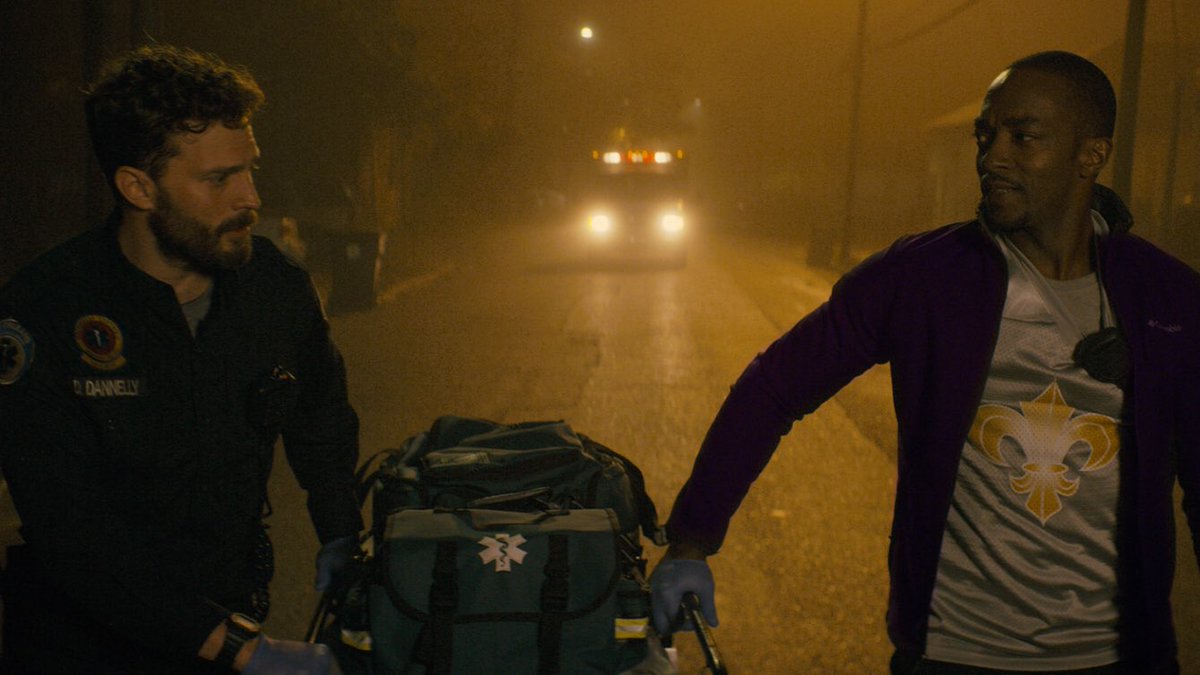
Appropriately for a time travel movie, Synchronic has a highly historical setting in New Orleans. How did the city’s history play into the story?

JB: There aren’t many cities in America where you can tell a time travel story. If it was in Los Angeles, every time you’d go back it would be a dirt lot. You might see some Native Americans.

AM: You’d go back in time and see the same person you just had a meeting with!

JB: This pill allows you to see the frozen river of time where everything happens simultaneously and go into the layers of that. New Orleans is the one city in America where there’s all kinds of interesting stuff. Yes, you still have things like the Ice Age, there’s also French colonialism, Spanish colonialism, and the fact that there are structures on property that literally was a swamp.  It gives us some more interesting places to go to.

Your films have a great deal of emotional content that genre movies often lack. Is that an important aspect of your filmmaking?

JB: Absolutely. I think it’s a shame when people don’t. There are lot of reasons why you’d want to make a story more character-based or more emotional and getting to know characters beyond the archetype they represent. You can make movies where you just drop in an archetype and don’t know anything about them because as a viewer you’ve seen that character in so many different movies. The idea is that if we can get people really caring about the character as a real person, then all the genre stuff will hopefully work so much better, because people feel like it’s a real person being put through this rollercoaster ride.

AM: Doing that, for us at least, takes time. You have to sit with them for a while and listen to them talk and see them make decisions. This ties into your last question, because it can feel like it’s slowing down your movie to take that time to get to know someone before the stakes matter, so you start trimming it back, but then you start losing the person. The genre stuff is cool, but who’s it happening to? You kind of know them, but not well enough. That’s one of the reasons we went back into the edit, to find small, interesting details and flesh them out to make them more human and bring their performances to the surface.

JB: We’ve realised over the course of four movies is that we want our characters to be flawed, but it’s really tricky because when you get feedback there’s a weird line. Audiences want them to be flawed, but not too flawed.

AM: I have a theory on this and I’ve been solidifying it over the last few weeks. I think likeability, when it comes to scriptwriting, is complete and total bullshit, and that likeability comes from casting. If you cast somebody who has a pathos to them they can do a lot of awful stuff and everyone still hopes they make it out okay, but if you cast someone who’s boring or super-charming they don’t like them and think they’re a douchebag. You can make someone likeable in a script, but if you make someone unlikable in a script you don’t actually know if they’re unlikeable in the movie until you cast them. I think as long as I want them to succeed, they’re likeable enough to me until I cast whoever it’s going to be. If you cast someone with a soulful face who gives a meaningful performance you’re going to get something great.

SYNCHRONIC will be released soon. You can read our review here.


Matthew Mercer | THE EXPLORER’S GUIDE TO WILDEMOUNT

mercer

Matthew Mercer is one of the most famous Dungeon Masters in the world today. His online show, Critical Role has inspired thousands of people to get into Dungeons and Dragons and has its own cult following. He recently collaborated with Wizards of The Coast to produce a new book for D&D called The Explorer’s Guide to Wildemount, which puts Mercer’s unique world of Exandria into the hands of gamers everywhere. We caught up with Matthew and asked him some questions…

STARBURST: How would you explain Critical Role to the Queen of England?

Matthew Mercer: Oh man… [laughs]. I would say something along the lines of “It’s a group of close friends who are performers, gathering to improvise and create a thrilling story of heroism and humanity together using dice rolls to determine outcomes. Then, we put it on the Internet for others to hopefully enjoy!”

How would the teenage version of yourself react to discovering what you do for a living these days? How would you explain it to him?

He would… not believe me. It wouldn’t make sense in that era (I mean, it barely makes sense now)! I would try to explain it as “You know those incredible moments in a TTRPG where emotional highs and lows emerge from the ether spontaneously, as gripping, visceral, and cathartic as any other visual media can accomplish? Now, it appears that much of that experience does translate to an audience if the players are genuine and invested!”

You run a 4-hour game for 6 players every week. How do you fight off getting burnt out?

It’s an ever-present fear that looms on the horizon, believe you me! I feel I manage to avoid it by ensuring I take breaks in a day when needed to change scenery, and ensuring that I don’t commit too much that I’m not genuinely, personally invested in. Honestly, I know I owe a lot to my players and cohorts in this unexpected business venture. They are my family, and our shared love of what we do is sustenance enough when I feel the well sometimes getting dry.

Which is your favourite NPC to be, and why? What makes an NPC fun for you?

Oh now… that’s an unfair question! I can’t pick among my children like that! I will say that I very enjoy stepping into Sean Gilmore’s glorious self, and have recently been really relishing the chaos of the Traveller.

Why is The Explorer’s Guide to Wildemount essential for all brave adventurers?

I wouldn’t say it’s essential for all adventurers, but I would say it is a great boon to those wanting to either live a life well-worn into the world of Wildemount, or a similar place. It’s a wonderful resource for inspiration for players and Dungeon Masters alike!

How did Explorer’s Guide to Wildemount come about?

It was largely Wizards of the Coast reaching out to me to inquire about my interest in collaborating on such a book! Given the opportunity to work with a company who really helped forge who I am today, I couldn’t say no.

What was the toughest part about making Exandria an ‘official’ D&D setting?

Hmmm… definitely wanting to live up to the expectations of such an endeavour. Not only to make something that feels like it can sit alongside all the other amazing D&D books and hold its own, but also a book that could be an enjoyable resource for people who aren’t necessarily into Critical Role or know anything about the world in advance.

D&D has many, many lovely settings; which one would you not run and why?

That’s such a tough question! I love so many, and would run any of them… but if I had to put one lowest on my priority list, I’d probably say Dragonlance, if only because it leans the closest to classic, OG fantasy where my usual campaign resides, when I’d want to run something strange and offbeat, like Planescape or Dark Sun.

If you could voice any D&D hero from the many D&D books and novels in an animated adaptation, who would it be?

[Laughs] Oh that one’s easy: either Raistlin or Jarlaxle.

Speaking of animated cartoons, what can we expect from The Legend of Vox Machina?

Expect something reeeeeally special! With so much faith put in us by the community to make this the best we possibly can, we’ve been putting everything we have into elevating it into something really amazing. From the design aspects, animation, and mood, to the writing, cast, and overall presentation… I think folks will be really pleased. It’s gonna be epic, it’s gonna be bloody, it’s gonna be crass, it’s gonna be unadulterated Vox Machina!

You’re best known for D&D but would you do another popular genre RPG?

I would, and look forward to doing more as time goes on! Critical Role‘s main campaign (and ancillary content) does take up a lot of my brain space, but when pockets of inspiration find me, I’d love to explore more Horror genre elements, or odd modern-adjacent games and settings.

You’ve inspired so many people to pick up D&D as a hobby and Critical Role has spawned many Actual Play podcasts and the like. Do you listen to other shows, and if so, which ones are you enjoying at the moment?

I listen in bursts, usually an episode here or there, jumping around. My lack of free time leaves me unable to follow anything religiously, but I enjoy checking in occasionally with the Adventure Zone, Rivals of Waterdeep, and High Rollers, to name a few.

What are you reading at the moment and which books would you recommend to experienced fantasy fans?

Right now? Nothing directly fantasy related, but I just finished a re-read of Scott McCloud’s The Sculptor, an incredible graphic novel that I had the pleasure of helping model for years back. It’s really a beautiful story. As for recommendations for fantasy fans, I’m a little out of the loop of modern fantasy publications! I’m more inspired reading non-fiction about ancient mythology and culture, as well as occult history. I find those types of tomes really help inspire me in my storytelling.

The Explorer’s Guide to Wildemount is out now and can be found at all good games stores. A preview is available on D&D Beyond and Roll20.net.

Main image: Gage Skidmore