Felicia Day | POOKA LIVES

felicia day

The latest instalment in Blumhouse Television’s series for Hulu, Into the Dark, marks the series’ first sequel. Following up last year’s Pooka! comes Pooka Lives!, a tale wherein ‘a group of thirty-something friends from high-school create their own Creepypasta about Pooka for laughs, but are shocked when it becomes so viral on the Internet that it actually manifests more murderous versions of the creature.’ A real 180-degree turn from the bleak weirdness of the first film, Pooka Lives! features a cavalcade of comedic talent, from Jonah Ray to Rachel Bloom to Wil Wheaton, along with Felicia Day.

We were lucky enough to speak with the latter about the film, what attracted her to it, and horror comedy in general.


STARBURST: We find it really interesting that you’re in Pooka Lives just because of its whole take on Internet culture, because that has been such a big part of your career.

Felicia Day: Yeah, I think I was subliminally attracted to it, because I do like the theme of the Internet being a jerk to somebody, but real life friendship overcoming it, in a sense.

A big part of the plot is people getting piled on, online: has that been something that you’ve ever experienced yourself?

Absolutely. There were incidents in the gamergate situation – I don’t really like talking about that, but I did put it in my book. I was driven out of doing a lot of gaming stuff. I stopped doing the gaming things, which were basically what I was known for, because several thousand people just followed me around doing whatever I did. I thought, you know, psychologically I was very affected in a negative way and so I kind of had to withdraw a lot. Even now I don’t do as much as I wish I could do in that. Now, it’s back to normal, but I have withdrawn a lot and in it you know it was hard to deal with, so I certainly empathise with the core message of the movie, in a sense.

It also seems like as if the role that you play in Pooka Lives seems almost tailor-made for you in so many different ways. We have to ask: are you that woo-woo in any aspect of your life?

My producing partner, Ryan Copple, write the script and I think he wrote the part for me. I came on as a producer and I had a lot of involvement in the script, as well, so I certainly had my hands in guiding the character, but he’s been my best friend for 10 years, so I think he’s already one-upped me on creating a role that I couldn’t say no to.

In real life? No, I am not like that. I certainly dabbled in that, but I’m more the skeptical person. When my friend gives me a crystal, I kind of throw it in the yard. [laughs] It was actually pretty fun to play, because I think inside I kind of love that stuff from a spectator point of view, but I’m more of a – instead of a real-life shaman healing me, I’m all into the magic D&D shaman.

You’re a mother in real life and you’re playing a parent in this. Even though the part of is kind of based on you, do did you worry about falling into a thing where it’s like, “Oh you’re a mom, so of course you can play a mom”?

This character is certainly not me in real life, and that’s what I kind of like about it – she’s a lot more outgoing and bolder and more social, in a sense – she’s sort of the social fabric for this group. She’s certainly not me. I’m like, the last to do anything with other people.

But, you’re right – I think this is one of the first times I played a mom. I think I’ve resisted that a lot in auditions and shows that I’ve been offered because, quite frankly, mom parts are real boring. They’re mostly written by guys and the mom part services other people’s stories and I feel like women in general are a lot more interesting than that. You know, just because you have a kid doesn’t mean you give up your personality. You have to give up some things, but you’re still an interesting person. Some of the most interesting people I know are women who have children.

So, a lot of these parts are not interesting, but what I love about this one and why I wanted to play it and I was like, “Oh, this could be me in six or seven years” – because I have a three-year-old – was because she does have a life, and she does have a vibrant sort of personality that doesn’t just kind of gets subsumed by other people’s needs for her. So, I’m excited. I really love the part. I’d love to play her again.

That’s such an important part of her as a character in that she’s very outspoken, especially in terms of like standing up for herself in her role in the marriage. It’s great, because they’re obviously people who have sort of grown up and maybe grown a little bit apart, but they still care for each other.

Ryan Copple, when he was talking about it, he was basing it on relationships he knew, where people had been together a really long time. There’s a lot of things you can go through. You can love each other and still be irritated that they still leave the toilet seat up. I lvoe that there are all these small emotional arcs that are built into the movie.

Normally, I think genre movies aren’t able to kind of infuse that sort of characterization and that’s why I think this movie is very much like Buffy or Supernatural, in that the relationships are the things that carry through, but the action is what makes it exciting. Again: the vibe of the movie is so in my wheelhouse, just as a fan and as a person who does what I do.

Are you a fan of creepypasta in general?

I am not! I have to tell you, I am a scaredy cat, in general. I couldn’t sleep after the Game of Thrones episodes where the dragons were slightly endangered so, like, [laughs] I have such a nervous anxiety that I have to steer clear of things that are too tense – so, certainly, creepy Internet memes. I’m more of a keyboard cat or the funny memes. I love those kind of things, both old school and the newer stuff. That’s what I gravitate towards. I certainly have not been diving in, wanting to be scared.

That’s what I like about this movie: that it does walk the line, tone-wise. It does have its horror moments, but it’s kind of a Sam Raimi/Buffy/Supernatural horror, versus like a hardcore kind of tone.

We were going to ask if that was what really attracted you to Pooka Lives – the idea that it’s a horror comedy with a really good emphasis on both aspects?

Yeah, and that’s a really difficult tone to try and nail. I think a lot of people try and fail and or they go into parody. This is not parody. These are real characters in real circumstances. It’s not building into cliches, but it does have that tonality of self-awareness and ridiculous things that people are reacting to. Honestly, I think it’s a hard tone to nail as a writer and I think the combo of Alejandro Brugués and Ryan Copple really works in favor of the film. Alejandro comes from the Sam Raimi school, in a sense, and so, in all the action sequences you can see that sort of infused in everything. Even though with a low budget, they really pop and are so fun and gasp-worthy. You’re laughing, but at the same time, you’re going, “Whoa!

I love it. I think it’s perfect zeitgeist for right now, when people don’t really want deep, traumatic horror. We’re all in our houses. Let’s have some fun, right?

In partnership with Blumhouse Television, INTO THE DARK is a monthly horror event series from prolific, award-winning producer, Jason Blum’s independent TV studio. Each feature-length instalment is inspired by a holiday and features Blumhouse’s signature genre/thriller spin on the story. Pooka Lives! is now streaming.

Bernard Bullen | THE MANDALORIAN

THE MANDALORIAN has finally arrived in the UK, and if you’re anything like us, you already have the first couple of episodes on repeat! To help bridge that wait between the episodes, we caught up with BERNARD BULLEN (the father of The Mandalorian) to discuss what it was like to work on such a huge and secretive set under the direction of Taika Waititi, and much more…

STARBURST: How did you get involved with The Mandalorian?

Bernard Bullen: It was a huge surprise for me as you can imagine. I was in LA, my manager told me that the casting office was asking for my dramatic reels. They were interested in me. They talked about Sarah Finn casting. I went through a process of selections, over a couple of months. That was in November 2018. Then in January after I came back from Christmas I found out. Until then I didn’t even know what the project was, the only thing they told us was that it was a huge Disney project, and that they wanted an hispanic father. When I came back and they told me that it was for The Mandalorian, I said “What’s The Mandalorian?” I went onto IMDb and saw that it was Star Wars, and I couldn’t believe it. 

How much of an impact had Star Wars had on your life before this point? Had you seen many of the films?

I’m past 40, so I grew up with the first three films, especially Return of the Jedi. I still have all of the toys from that era of the ‘80s. I saw the latest films, but I would have never imagined that I was going to be a part of the Star Wars universe. I’m still in shock really! 

What can you tell us about your character? Who is he, and how does he fit into the world of The Mandalorian?

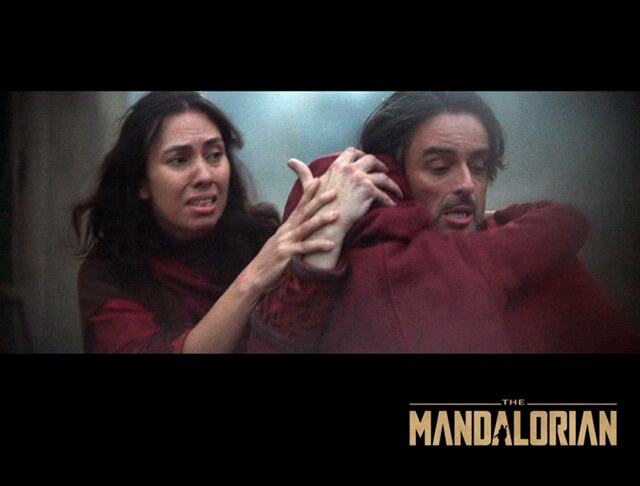
Obviously they didn’t give us a lot of information because they were keeping everything about the project secret. We got on set and we really didn’t know anything. Then we were filming for two days and a half, and found out that The Mandalorian obviously had a life before all of this. As a kid he lived on Mandalore with his parents. We had a lot of impact in his life, because of this childhood. His home, town, city was destroyed by the dark forces at the time. It was soon after the events of Return of the Jedi. The last image that he has is of his parents, carrying him around the city, trying to escape, and keep him safe. Obviously it had a lot of weight, because it’s deep inside him. Everything he knows, he knows from me. You’ll be able to see very dramatic scenes in the show. The father gives everything to save his child’s life. It’s understood that the parents die, but it’s never shown.  

Can you tell us about what you remember the most from your first day of working on set?

I was pinching myself! I was trying to keep my cool, because obviously I was like “Oh my god!”. I have to say that the whole team were so nice. So into it. 1000% percent. You could feel that. From make-up to crew, to runners, everyone. We had dress rehearsals and all of that, I just couldn’t believe it. When we got to the set they had built a whole town. The scenes where we are running through the streets were built sets, they were massive! So you realise, “My god, this is Star Wars!” Explosions, droids, everywhere. Only on the last day, when I had the last scene, the most dramatic one, and Taika Waititi – who directed our scenes – said that it was a wrap, that was when I realised what had happened in the last two days. I started crying like a baby. It was very emotional. 

What was Taika Waititi like to work with?

He is incredible, I only have amazing words for him. He is very funny, he’s very low key. One of my friends worked with him on Jojo Rabbit, and he came over to me and said that we had a friend in common! That made the whole two days amazing straight away. He is very intelligent, and he has a vision of things that are very unique. He makes everyone feel very comfortable. I was very happy to be working with him. I would love to work with him again. 

What did you learn the most from working on The Mandalorian, and how did it compare to anything that you’d done before as an actor?

I’ve done bigger roles, and longer ones. However, this was quite unique and amazing to see how something like this worked. It’s such a huge production. The technical aspects of everything. For example all of our scenes are in the middle of destruction and chaos. We have to be running in-between real explosions, and other ones that weren’t real. As an actor you learn how to work with what’s real, and what’s not. That mixed with a huge production, and how it was directed, it was quite incredible. All the behind the scenes that the audience can’t see. I learnt a lot about myself, because my role had a lot of physicality. It was very exhausting in that sense. They did warn me that I was going to be carrying a kid of ten years old for two days, for sixteen hours. I said “Oh well, I can manage!” However, it was tough. 

What was the secrecy of a set like this like to work with?

We signed an NDA of course. We couldn’t say anything. The funny thing with the secrecy of this, is that we had to walk from the trailers to the set while wearing a black cloak, so that no one could see what we were wearing. We were filming in Manhattan Beach Studios in Los Angeles. So until you get to the studio where the set is, there are other studios, other crews, actors. So no one could see what we were wearing. We could only take it off when we were on the set. We saw paparazzi climbing up the walls to try and take pictures. We were filming in a very secretive set. You really have to know where it is to find it. They were surrounded by huge walls. Still, there were paparazzi trying to get pictures of us. 

What was it like to see your character on screen for the first time? What do you remember from that moment? 

It was very exciting, very emotional. I love how they work with the flashbacks. I thought it was so amazingly shot. With all of the SFX, explosions, droids. It was amazing, and I couldn’t believe that it was me there on the screen. 

Will the show appeal to viewers who might not be overly familiar with the previous Star Wars movies?

Even if you aren’t a fan of Star Wars, it’s just so good. It’s so different, so original. It’s a completely different story and chapter in the Star Wars universe. There are new characters, so that makes it more attractive to an audience. In film, the story is currently ending, but, it’s just beginning on TV. I think the success of the show is the format, and how it’s written. The unique thing that you never see the face of The Mandalorian himself, yet it still works. It’s so well directed and shot. There’s a mystery about it. The Mandalorian says so much without showing his face, only by moving his body, or through the few lines he has. The story is very powerful. It’s been a huge success in the US, and we’re excited to have it out in the UK and Europe.

Episodes of THE MANDALORIAN are available weekly on Disney+

Soska Sisters | VENDETTA

Soska Sisters Rabid

Since exploding onto the map with Dead Hooker in a Trunk back in 2009, Jen and Sylvia Soska have gone on to become huge favourites of many a genre fan. As their 2015 movie Vendetta gets set to premiere on Horror Channel, we caught up with the Twisted Twins to reflect back on this brutal Dean Cain and Paul ‘Big Show’ Wight-starring actioner.

STARBURST: While it would be easy to talk about the headlining duo of Dean Cain and Big Show for Vendetta, first and foremost Michael Eklund is absolutely fantastic as the corrupt warden at the centre of this tale. Just how good is Michael?

Jen: He’s just the most amazing actor. He’s a method actor. There’s nothing that he can’t do. When he’s in character, he’s 110%. Not only is he such an amazing actor, he forces everyone around him to bring their game up. Not that he was teaching anything to Dean Cain, but Dean can go and Eklund can go.

Sylvia: Michael Eklund is such a team player. He was shooting another movie at the same time and there was a holiday in between, so people were like, “You’re not going to be able to get Michael, he’s double-booked on this other thing. If you get him, he’s literally going to have to leave where he is and come back to your set to do a 13-page day where it’s mostly him talking.” I was, “Don’t worry about it, it’s Michael Eklund, it’ll be fine.”

Jen: He’s such a comic book villain. He’s such a charming, charming guy. Vendetta is really our Punisher movie. Dean is our Punisher, Big Show is our Kingpin. Vincent D’Onofrio is a god, but Big Show will eat you alive, he will snap you like a toothpick.

Sylvia: Eklund is such a WWE fan, so there were points where we wanted to really push the physicality. It’s so much fun to have these movies with these big action sequences. At the end, when things are becoming unhinged, Eklund goes through so many layers with this character.

Jen: What I love about Action Movies vs. Horror Movies, is it doesn’t have to make sense. For half of a horror movie, you’re saying, “Why aren’t they calling the police?” I hate that, it’s so boring. In Vendetta it was more, “How do we kill this guy? We throw someone off the roof! Who cares, it’s WWE!” That was one of my favourite kills.

Sylvia: That was Dee Jay [Jackson]. He was so awesome. That guy took Dean Cain from room to room to room, so we wanted to give him one of the most memorable deaths.

Jen: And he was in Slither! We got absolutely spoilt for talent. Juan [Riedinger], who played the other main thug guy, he was from Grave Encounters – which we really loved.
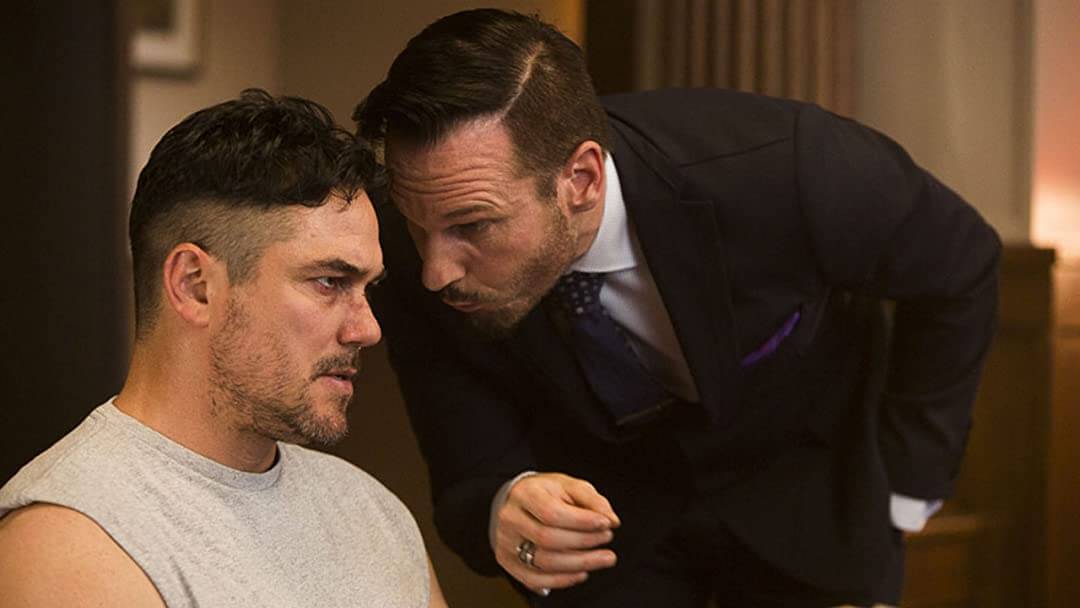
Michael Eklund Vendetta

You ladies are so synonymous with horror, and there’s definitely a sense of horror to some of Vendetta’s death scenes, but how was it tackle a straight-up action movie for the first time?

Sylvia: It was really cool that WWE wanted us for it. They were doing a six-part action series for Lionsgate and we were the first choice for directors. It was exactly the right call for us. We had so much fun with this.

Jen: The thing I love the most about an action movie is that you don’t even really need to care if somebody dies. In a horror movie, you have to care about every single death. If you don’t care about every single person then you’ve lost the audience. Would you believe they took the violence down? There was this flashback to how Big Show took over the prison, where he stomped on someone’s head and it just exploded. We asked Big Show how strong he was, and he showed us this video of him punching somebody and them just dropping. We had to adjust a lot. He’s much bigger than a normal person. He’s a really strong man, and it was really exciting to work with somebody who was just a destructive force of nature.

Sylvia: Paul is just such a good actor. There’s so much that he brought to the movie. One of my favourite scenes is the cafeteria scene where it’s like Mean Girls and he’s eating the food with his hands. He was explaining to me that this is an Alpha Dog thing and this is what he should be doing.

Jen: We also wanted it to have shades of I Saw the Devil, where the two of them start at different corners. If you watched the movie before, Big Show would be the good guy. You start this movie where Dean is the good guy, but if you watched the third movie then Dean would be the bad guy. We’re all one bad day away from being The Punisher.
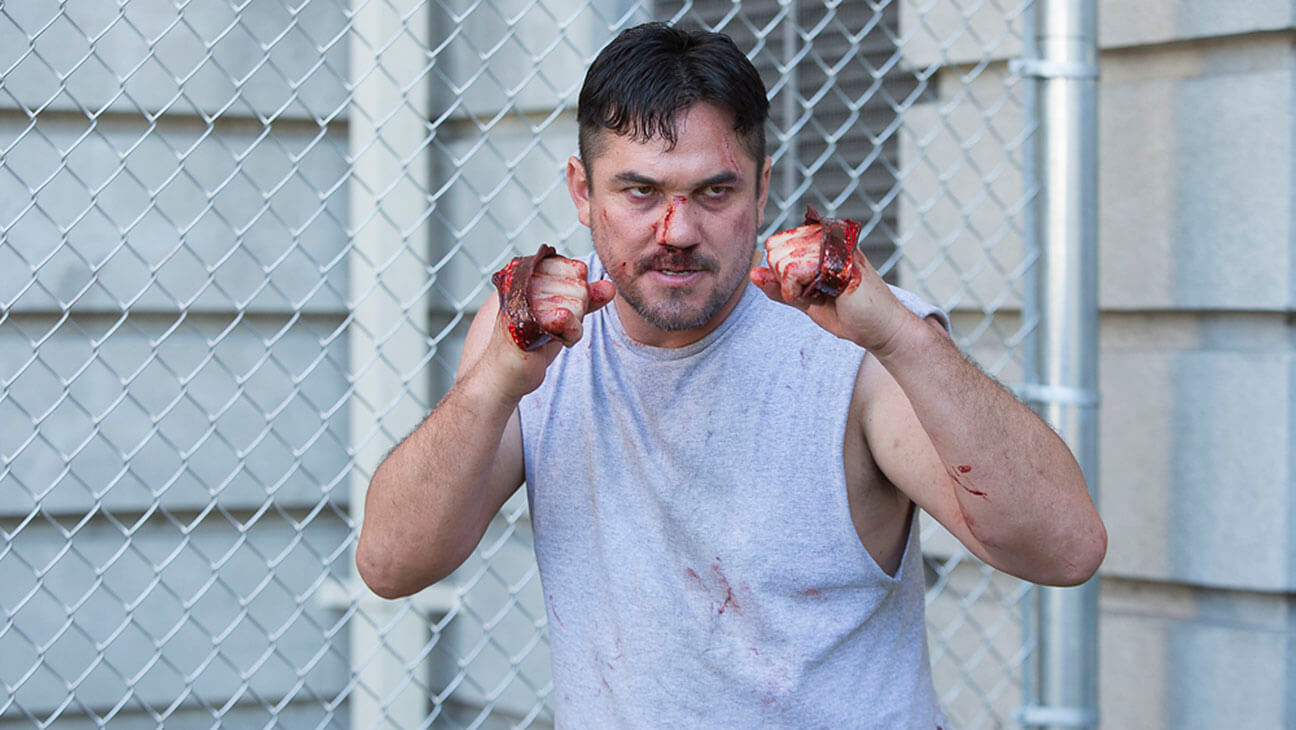
Vendetta

As such huge comic book fans, how was it getting to work on Vendetta with a former Superman?

Sylvia: I wanna say this one thing about Dean Cain. He is the most coolest guy I have ever worked with. Every day, not only did he have a coordinated stunt fight, but he would go home with the stunt team and train for his next-day stunt fight. He was so cool. He would go over and make sure all of the extras were getting treats and things. He was so humble, and he really showed everyone the attitude you should have. He was just such a good sport about everything.

Jen: He is such a gentleman. I’ve never seen somebody who is such a sweetheart and so charming to the cast and crew. He’s not a trailer guy, he’s not secluded like he’s some sort of alien. The one day that he met my mom and dad was the day when he was beaten the shit out of in the laundry room. He hugged my mom, he took pictures with my parents while he was all bloody and exhausted. He was such a good boy. We should all hope to marry a boy as good as Dean Cain.

Sylvia: Then after the first week he ordered us all pizza. He’s so down-to-earth and cool about everything.

Jen: He also liked being an asshole. Dean Cain has been a beautiful, good man his entire life. To get to have a bit of an edge and be a bit of a bastard, he loved playing Mason Danvers. He absolutely loved it when he lost his edge and was killing everybody. He had the time of his life, and I really want to help him kill people again.

You’d already done See No Evil 2 with WWE Studios before Vendetta. Was there any talk of you doing any other WWE projects at that time, or was it always Vendetta?

Sylvia: We were trying to get on the Marine series, as we love The Miz. Then there’s Bray Wyatt, where we so wanted to do a movie together. Bray’s the horror guy, we’re all buddies, and we’ve been trying do find something to do together forever. We also wanted to do Three No Evil, because we were just setting it up with See No Evil 2.

Jen: I would love it. We’d have all of the original cast to come back to cameo as psychotic delusions, and Glenn [Jacobs] said he’d shoot it.

See No Evil 2

In interviews, Glenn Jacobs seems like the nicest guy. Surely somebody who’s terrified people as WWE’s Kane and See No Evil’s Jacob Goodnight can’t be that nice?

Jen: Glenn is the nicest person in the world. He’s so nice that if we didn’t do a movie together then he’s too nice to be friends with us. He’s just a respectable gentleman and he cares so deeply about people. I remember on See No Evil 2 we asked him what he would do if he could do anything in the world, and he said he’d just want to take care of people. Then he said he wanted to be Mayor because he was worried about the country – and then he did it [Glenn Jacobs is now Mayor of Knox County].

Sylvia: I wouldn’t be surprised if Glenn went on to become a Senator or something. Even on his time off, he’d always be volunteering, he’d be going to hospitals and visiting people, he’d be going overseas to visit the troops. He’s always just a selfless guy in every aspect of his life. It’s always been kind of funny and contradictory to the person he is that he plays Kane, because nothing could be farther from the truth.

While we’re talking wrestlers, how was it to work with CM Punk on Rabid?

Sylvia: Phil has been supportive of us and our career since Dead Hooker in a Trunk. What I didn’t know is that when he got American Mary, he gave that to all of the wrestlers in the back who like horror movies. He was always super supportive. Eventually we met and became really good friends. When we got See No Evil 2, we were confused as it was just, “Why don’t we three work together because we like each other and we’ve already thought about making a movie?” And then Vendetta happened and we still didn’t get to work together. So as soon as we got offered Rabid – and we knew he loved zombies and that he wanted to do horror movies – we wanted him to play Brad, the love interest, but we got limited on how long we could have American actors for. He was cool enough to play Billy, who couldn’t be farther from the guy he really is. It was insane what he was able to do. He was so sweet and so humble.

Jen: Phil is absolutely amazing. I love what an asshole he is in the film, but he’s so loveable still. He reminds me so much of Bruce Campbell. I have this dream of doing Evil Dead: The Musical and I want it to star CM Punk as Ash. He has such an Ash quality to him. Even his delivery of his misogynistic lines makes him feel like kind of a sweetheart.
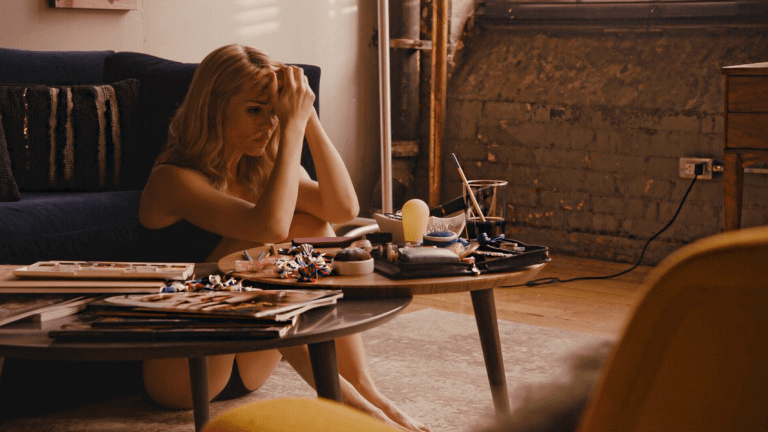
Laura Vandervoort Rabid

David Cronenberg’s Rabid is obviously such a beloved movie. How was the challenge and pressure of putting your own spin on that concept while still being respectful to the original 1977 film?

Jen: The first thing was the terrifying thought that no one had done it before, and if we said no then they’d just find somebody else. It was going to be made one way or another. Even though I’m a person who hates remakes usually and thinks they’re a cash-in and a manipulation of the fans that has nothing to do with the original apart from the time. I didn’t want that to happen to Mr Cronenberg. I knew that he was never really truly as appreciated as he should be, and I shuddered at the thought of the next generation seeing a shitty remake of one of his films and saying, “Urgh, this Cronenberg guy must suck.” That would’ve devastated me. I wanted to make a film that was not only a celebration of David’s work, but it would also be kind of a middle ground to introduce people to his work if they hadn’t seen it. Also, if you had seen it, it was just Easter eggs and celebrations and love letters galore.

Sylvia: Jen and I didn’t seek Rabid out. We got an email in the dead of winter one day, asking us if we’d like to make Rabid. It was explained how this came to us. Apparently, they usually do religious movies, and they’d made a religious horror movie that had made a ton of money for them. They were like, “These horror movies must be easy”. So they got Rabid, thinking it was like Jaws but with dogs, not knowing anything about David’s work. They wrote the script, and it was not reflective of David’s work whatsoever. They showed it to him and asked him to be a producer, and he said, “This is Rabid in title alone. You know nothing of my work.” They asked us, “Can you ladies explain to us what Cronenberg means? How ‘bout you ladies handle the creative and we’ll handle the money?” That was a great opportunity, so we hired cast and crew who had literally worked with David. We got so many people so that we could be, “What did David do? How did he handle this?” We wanted to be as respectable as possible.

Jen: There’s never been a more self-aware remake. Even how the main character is almost remaking and helping a master designer that she feels inferior to, but she feels a kinship with. Of course, he’s already accepted her as is, but it’s her own struggles to be able to see herself as that artist. She goes through self-doubt. There’s the beautiful scene towards the end about how many girls would kill for this opportunity. So it’s a very self-aware remake, a reimagining. We even altered our directing style. As you might have guessed, we’re very loud. David is not, so we had a sanctuary set, it was like a library, and if you needed to speak you would drop your voice. It was very, very pleasant. It was like going into a church.
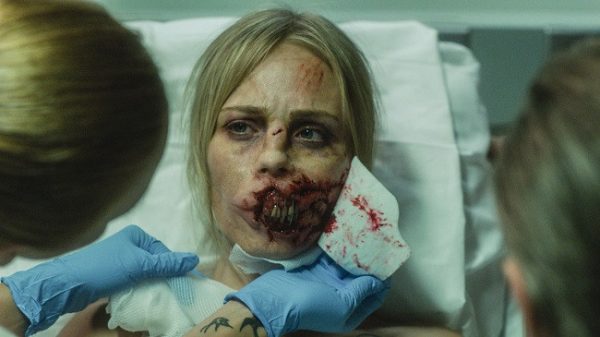
Rabid

What was the reaction of David to the end result of the movie?

Sylvia: It’s so interesting. There was such a tremendous pressure to get David involved in the film, and what most people don’t realise is that he met his wife making the original Rabid, and he had just lost her. It was something he told us when we met him after the film was done. Because of that, we wanted to be really respectful. That’s obviously a very special film to him. We were, “How would I want to have my relationship respected like that?” I remember talking to him, and he is just so wise. He talks about it as a wonderful vocation that we do, but even he can’t see his work as I would see it. He can’t see past, “This actress was difficult this day. I lost something there. This never worked out the way I originally planned.” That was so interesting. When we were finishing up our conversation, I was, “Well David, I really look forward to you eventually watching Rabid.” He looked at me surprised and was just, “You want me to watch it?!” “Well yeah, Jen and I basically just made it for an audience of you.” He had the most interesting reaction. He has a very dry sense of humour, and he looked at my and was, “Have you ever heard of the movie Raw? Same thing happened. There was this movie, people kept saying I should go and see it and check it out. You know, I actually quite liked it. If I like your film, I’ll let you know. But I’ll be quite honest with you about it.”

Jen: Truly, you have to be David Cronenberg to fully enjoy Rabid, because there are so many in-jokes that are just for him – things he’s said in interviews and director’s commentary. He did say that the film ended up where it should have, and he was a fan of American Mary. I’ve worked so hard to earn a place across from my hero and speak to him, and he said, “You know my son, you know Mary Harron, you know all these people, and I already respect you for your work.” I thought, “Oh my god, I didn’t even need to make this movie! I could’ve just called and asked to do lunch.” I was playing a really long game to be friends with Mr Cronenberg. You know what, sometimes you make a whole movie and you didn’t even realise. That was the whole joke – I was worthy the whole time!

If you could’ve just done lunch with David before you were offered Rabid, is there any other Cronenberg movie you’d have asked to tackle?

Jen: You’ve gotta be kidding – it’s obviously Dead Ringers! I love Dead RingersDead Ringers was actually one of the last Cronenberg films I saw, because I’d never seen a good depiction of identical twins. We’re such a fetishized, stereotyped group that people don’t even realise that what they do with twins is super degrading. We grew up in the normalization of fetishizing and objectifying twins because of the Olsen twins. I call them the real-life Truman Show. Being twins now, because it was okay to abuse those twins, it’s okay to be abusive to every twin. Those girls can’t even post a photo without, “Fucking ugly bitches!” I’m like, “They’re children! You watched them group up from babies. Why do you have so much hate towards them?!” So when I did finally see Dead Ringers, the emotional reaction Sylv and I had to that movie was just, “Oh my god, not only is this a movie about twins, but this person gets the intimacy about twins and being in sync with your twin, and how important that relationship is.” We always wanted to do a piece where it was identical twins telling a story about identical twins. We’ve never been able to really control our own narrative, it’s always just kind of projected on us.

Sylvia: I’m so glad that you mentioned the Olsen twins, because that’s our Dead Ringers pitch. It’s starring the Olsen twins. I know they don’t need to act, but just come on out of retirement, girls. Work with us once, control the narrative. Instead of them being gynaecologists, of course they’re proctologists. It would be fantastic.

Jen: They’d be master surgeons specialising in proctology. Instead of being caught up in drug addiction, they’d be caught up in black magic.
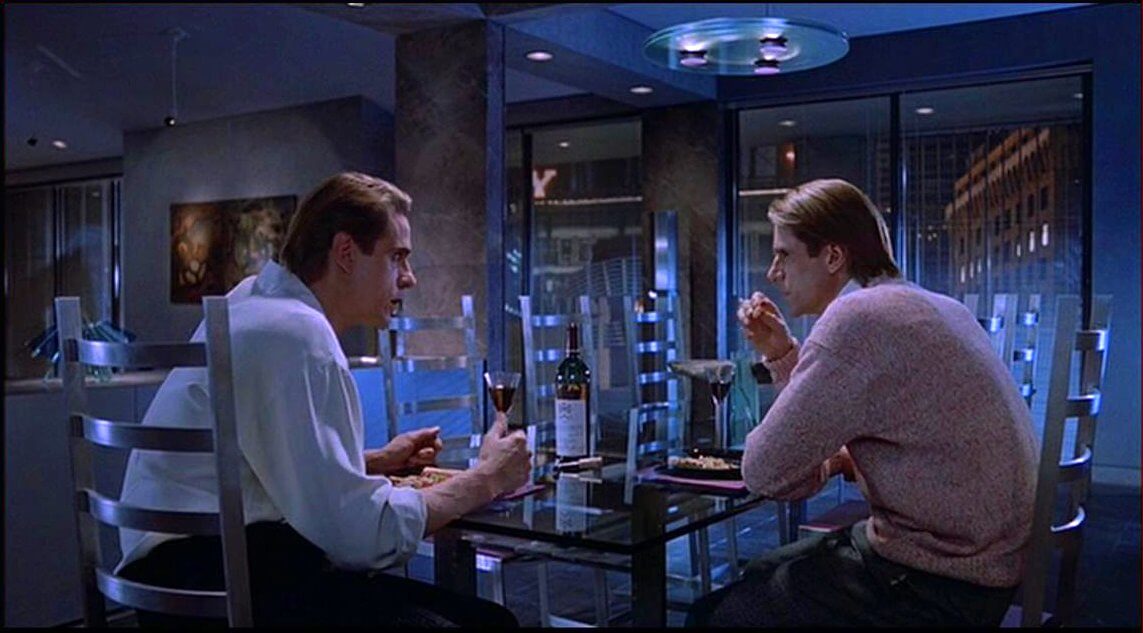
Dead Ringers

Having done Rabid and taken on the responsibility of reimagining a classic of yesteryear, would you want to do a remake again or is that itch now scratched?

Jen: Absolutely. I’ll say a horror movie and an action movie that I’d love to remake. The action movie hasn’t been in development for 11 years, but I’m such a fan of it. It’s also one of those movies that’s kind of a stupid franchise, but it’s sacred. It’s Highlander.

But there can be only one…

Jen: Then it should be me! I love it so much. I love how there are kid Highlanders. I love how people can wear a little leather jacket but be able to pull giant swords from it. I love the Quickening that blows up a city block. And of course, I just love that Freddie Mercury soundtrack just kicking you in the teeth. For horror, there’s actually a horror franchise that’s super-famous, by an artist that we love, that we pitched for many, many, many times. Fans will be, “Oh my god, you pitched for this and you didn’t get it? And you were going to get all the original cast?” All the original cast were going to be involved. It’s Hellraiser. I’ve always had a special place in my heart for Hellraiser. I saw Hellraiser at a time that I call ‘too young’. From the “Let me touch you, dammit,” I was all, “What the fuck is happening in this movie?” Then when I grew up, I was still, “What the fuck is happening in this movie?” Now as a much more mature woman who’s gone through a lot of darkness, who’s seen a lot of dark stuff, I get it – I’m there to make some fetishized demons.

Sylvia: I guess I’ll talk about the one I’ve always been chasing, which is Deadpool.

Jen: You’re going to remake and reimagine Deadpool?

Sylvia: Yeah! When See No Evil 2 happened, we did so well. I don’t know if I’m supposed to say who did this, but somebody was very, very impressed with us and we got to go to the offices of the bosses. We were thinking this was our big Hollywood moment. He was like, “Girls, you’ve been really successful with this and with this, and you’re now working in studio movies and being successful. Why don’t you tell us any project you can imagine – what do you want to do next?” Me and Jen both looked at each other and went, “Deadpool!” He was all, “Deadpool? Why does Deadpool sound so familiar?” He goes over to this pile of scripts and he picks Deadpool up and he puts it in my hand, and I go, “Oh my god, can we make this movie?!” He laughed and just said, “Sweetheart, nobody’s ever going to make this piece of shit.” In the end we made Twinpool because they were, “Listen, you just don’t have anything on your résumé that looks like Deadpool.” We shot a Twinpool thing where me and Jen fought each other. It even got to, and I don’t want to say who this is, but this person’s handler and they were all, “This is awesome. We’re going to give it straight to this guy and he’s going to love it.” It made it to him, but it turns out that he didn’t love it. I look at the comic I wrote for Marvel, and I’ve gotten a lot farther than most fans ever get. Will I chase Deadpool until I’m in my 70s? You’re damn right! Eventually someone’s gonna let me do it. Maybe the property will be worth fucking nothing when I get it, but I’ll get there eventually.

Jen: I can proudly say we did write the Deadpool XXX parody. One of our greatest reviews was, “It was so funny I forgot I was supposed to masturbate.” That’s a very kind and very honest review. I wish my film reviews were that kind.
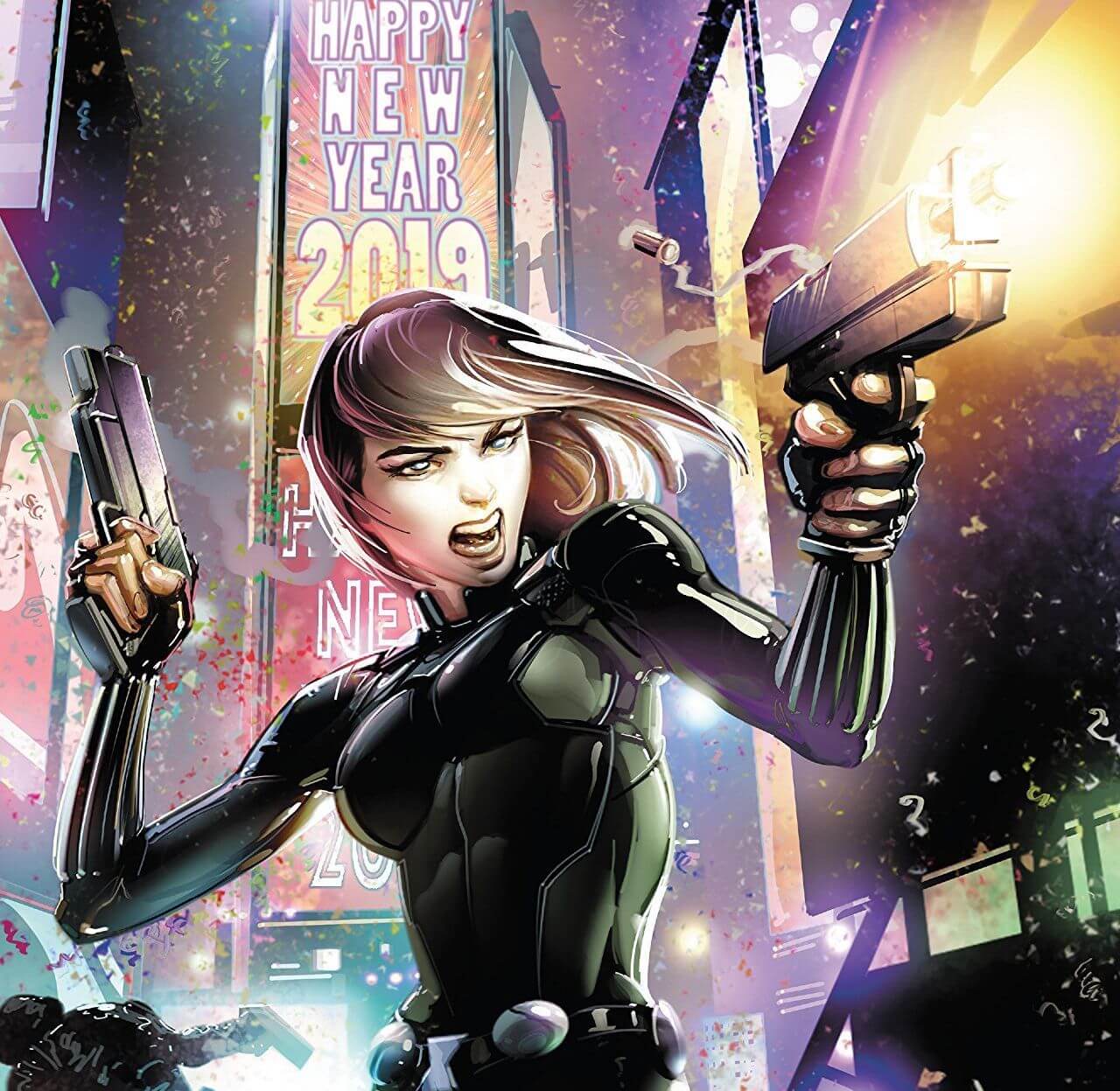
BLACK WIDOW #1

On the Marvel front, you most recently tackled Black Widow: No Restraints Play – which was an extremely adult-orientated story that touched on some very real and brutal subjects. Was there much push back when you presented that idea to Marvel, or were they actively looking to develop a more serious, gritty, brutal story?

Jen: I have to champion our amazing editor, Jake Thomas. He has always been the one getting us in the door. We wrote our Guardians of the Galaxy story because Neil deGrasse Tyson dropped out. Only Jake thinks, “Fuck, I’ve lost Neil deGrasse Tyson. I better call the Soska Sisters!” The way that you pitch a comic is like how you pitch a movie. You write an outline, you say who it’s for, you say the tone of it. A lot of the characters are very, very busy forever. Our first one was Night Nurse, and my god I couldn’t get a Marvel demon to save my life. Blackheart was busy, Mephisto was busy, Dormammu is busy. Every one of them is busy in other dimensions? How is this possible?! So you wait until there is an offer. Sylvia and I had pitched a Wiccan and Hulkling, first gay couple series which we loved. We pitched an Elektra one. We pitched what our Deadpool movie would be. Then we pitched Black Widow. To me, it was like Escape from New York. I wanted no other characters. I can take side characters, but I didn’t want it to be Natasha and Bucky or Natasha and a love interest. Natasha is so cool. Every one of her backstories are a Red Room story, and it’s been so rare for her actually to get to do something different. So we pitched this completely as it was, with everything – with the child sex trafficking – and at first they passed on it, which was fine.

Sylvia: Then we got a phone call six months later where they were just, “Ladies, remember that Black Widow story? We’re going to do it but there’s going to be one change – we’re going to get rid of the paedophile story. Captain America just killed Natasha, so she’s a clone and filled with existential rage. But it’s pretty much the same story exactly, right?” Torture shows are also called Red Rooms. The character is a trauma survivor. She doesn’t have the happy story of somebody coming to train her. She was very brutalised her entire life. She goes into this situation where there’s these people who could be destroyed for life, but she shows them that she’s a survivor. She deals with somebody who’s a survivor, who didn’t find their strength and who went into a very dark place as revenge for the life they had to live. When I was a kid, my mom would let me read Stephen King books and she would explain what they were about. I remember when I read Cujo, that was the first time I saw the word paedophile. I asked my mom what it meant, and she explained that it meant “adult who hunts children.” That was so scary, but it helped us to have a dialogue without having to know the whole horror of it. I thought it was a great opportunity with Black Widow, where parents can explain it to their kids that this is the world we live in and to just always be super careful, don’t go with strangers.

Jen: Marvel, especially classic Marvel when I was growing up, always had these much greater messages. One of my favourite characters was Adam Worlock, who I liked to call Space Jesus. He was very anti-organised religion, he was very much about absolute power corrupts absolutely. To read those themes as a child, it was tricking you into learning a moralistic lesson. And when I watched Little Shop of Horrors, I didn’t realise it was telling me not to be in an abusive relationship – but it was! So, watching Black Widow be able to take strength from her pain and suffering, and to have had these kids go through something so traumatic but have that trauma be the thing they take the most strength from. Spoiler alert: they have a really nice ending and Natasha burns a lot of people alive.

Sylvia: There’s even a little girl character who we created, who was a survivor of that. She ended up amputated, she gets new hands from Tony Stark, but I hope that character stays around. You don’t see that many storylines where you see something horrific then see what kind of strength that person has afterwards.

Black Widow No Restraints Play

While Black Widow is such a fantastic character, she’s often been an under-served character until recent years. How has it been to write for Marvel Comics, and how has it been to put your own stamp on a character like Natasha and showcase why she’s so great?

Sylvia: It was the greatest, most surreal experience of my life. Jennifer and I weren’t very popular growing up. I remember my grandmother would always get a funny book for us, and it would always end up being a classic Marvel comic. I started reading when Storm was leaving the X-Men. I would read those stories and I would learn about what it would be like to have friends like that, or what it would be like to be a grown woman with those kind of attributes. To be a part of that, I respect it so much. There are so many people who have nerd rage for not going and looking at the history of these characters, and there’s a good reason for it – because these lessons mean something to people, these stories mean something. I hope I get to do it forever, but every time Jen and I write a comic we write it like it’s the last one we’re going to write. I guess that’s why we’re so risqué with it and have such strong messages. You don’t have the guarantee that you’ll ever be able to do this again, so you might as well make you’re mark while you’re there.

Jen: It was such an honour when Jake Thomas reached out. What he basically said was that Natasha had really lost her identity in the films. They’ve used her to really service these storylines and these other characters, and they’ve kind of forgot that she’s so capable, so deadly, so amazing. At that time, the Black Widow movie was going to be rated R, so he asked, “Can you make Natasha be who she is again?” That was such an honour. It’s not like I had to grab some comic books and research Natasha. As Slyvie was saying, Natasha was my cool Russian friend when I was growing up. She was so sexy, and she was always telling me about her sexual exploits with Iron Man and with Daredevil – all of the hottest guys. I thought she was amazing, she was so cool, she was fearless, she was so empowered. As far as stories go, even including all of my films, this is the story I’m most proud of.

Sylvia: It was just before Disney took over Marvel. It’s funny because Jake also edits The Punisher, and then The Punisher went after child sex traffickers. In our Dear Readers letter, we talked about how the story is really cool but that we don’t have real-life Black Widows doing this for us, so we all have to be socially responsible when we hear about issues like this.

Now that Rabid and No Restraints Play are in your rear-view mirror, what can you tell us about what’s next up on your plate?

Sylvia: After we made Rabid, we were gifted with David Cronenberg’s producers, Martin Katz and Karen Wookey of Prospero Pictures. It’s been almost ten years since American Mary came out, which was the last time that we had an original script. That movie scared the shit out of people. At the time we were pitching American Mary, everyone was saying, “We would never make this movie. Could you maybe make a straightforward monster movie?” So we wrote this movie called Bob. It put people off so much that they went, “Let’s make the movie about the body modification girl. It certainly couldn’t be as bad as their monster movie…” which is what we’re actually making next. We’re extremely excited. It’s about trauma and the survival of trauma and how that really affects your perspective of life. When we were in Los Angeles we met with a few actors – one who we think is going to be the lead of the film, who is from a billion dollar franchise and is one of my favourite actors, and I’m very thrilled that we’ll be working together. He is in the perfect headspace for this character.

Jen: There’s a television show based on a book that was burnt that we’re developing. There’s another film that has an ending that every other director and studio walked away from. The ending was the reason why we were, “Aha, sign us up!” We’re also developing a comic book series. I’ve noticed how DC and Marvel have been so connected to so many corporations and branding that it’s difficult for them to really have a message or have a stance on everything – in the way that every superhero loves their country and loves their significant other, but nobody is anti-gun or pro the death penalty. Nobody really has an opinion either way, they’re just all generally kind of good people. I’d really like to write a series where you have people who are flawed, people who have opposing opinions, and watch how those people develop.

Vendetta receives its UKTV premiere Saturday, April 4th on Horror Channel.

Kate Dickie | THE COMPLEX

To celebrate the release of the newest Interactive film to hit the video game market, The Complex, we here at STARBURST had the privilege of sitting down with one of its stars, legendary Scottish actress Kate Dickie to talk about the interactive nature of the film, how it compares to her other work in film and working with a talented cast and crew.

STARBURST: Congratulations on the film/game. It’s a great thriller that had me on the edge of my seat questioning my personal moral compass with plenty of replayability.

KATE DICKIE: Thank you so much! That means the world to me. I loved everything to do with this project and I still keep in close contact with everyone as they were all such a joy to work with.

It’s safe to say that this is unlike anything you’ve done before. I know as an actress you are asked to do multiple takes during a shoot but how was it preparing for a role where your character would have multiple characteristics that have to change when the players go down multiple routes?

Absolutely, one hundred per cent. We were given not only a script but also a flowchart that showed all these different strands and it was like nothing I’d ever done before. Everyone involved from my castmates to the crew to Paul the Director, everyone was an absolute lifesaver in helping me understand the different paths that players could take which in turn helped me decide how to approach each scene and the way I should react to the other characters depending on events that had happened previously.

Can you tell us about your character Nathalie and what it was like playing her?

She was such an interesting character for me to play. At the time I said to [director] Paul, that a lot of the characters I’ve played in the past have been through real struggles but I’ve never played a big boss or CEO character or someone who’s kind of making decisions that may or may not be morally right so it was a really different part for me to play. It was so interesting to have lots of different endings for the story and my character as an actor – it allows you as a person to see how your choices play out and the knock-on effect of the smallest choices. It certainly made me think quite a lot, that’s for sure [laughs]. Onset working with Michelle, Al, Rachel and everyone were just wonderful because you are playing out really high stakes and you don’t know who’s hiding what – there are so many layers. Paul really helped me accurately portray being a boss, you know, the way I was supposed to stand and present myself, so that was really important and helpful.

How was it working with Paul Raschid and the rest of your fellow cast members?

Paul and our script supervisors were superb – I clung to them on set, for sure. There were times that I was like “what the hell is happening, what ending is this affecting!?” – there were cries of woes from me [laughs]. There were so many times that I needed help [laughs]. Paul knew everything inside and out so I could ask him anything and he was such a massive help and a pleasure to work with. The continuity of the script – I have no idea how Paul achieved that, but I said to him that if he can do this, then he can do anything. I want to also champion all the crew – they were incredible, it was a real team effort for sure.

What was it about the story that drew you to the project?

Truthfully, everything about it drew me to the project. I loved the interactive part and when I heard about the character I desperately wanted to be involved. I loved Paul’s previous film White Chamber – so there were a lot of reasons why I wanted to be involved. I just loved the whole thing from start to finish.

Are you a gamer at all? Have you played any FMV games before? If so, what are some of your favourites?

I’ve recently turned 49 so I’m not really into gaming – my daughter plays games, but my experience is maybe car racing [laughs] so I don’t really understand that world I’m afraid [laughs]. I’m just glad that, as an actor, people can still see this “game” as a film that they can directly impact and none of those story beats are lost due to the game nature of it.

Paul Raschid | THE COMPLEX

To celebrate the release of the newest Interactive film to hit the video game market, The Complex, we here at STARBURST had the privilege of sitting down with director Paul Raschid to talk about directing an interactive film against a traditional film, his favourite FMV games and what makes this title stand out from its peers.

STARBURST: Congratulations on the film/game. It’s a great thriller that had me on the edge of my seat questioning my personal moral compass with plenty of replayability.

PAUL RASCHID: Thank you so much! As a filmmaker, I refer to it personally as a film but it’s coming out on gaming platforms so it’s up to you really [laughs]. Yes, there are plenty of endings and it’s going to be so fun to see what everyone gets at the end of their playthroughs.

It’s safe to say that this is unlike anything you’ve done before. How was it as a traditional filmmaker transferring to making a live-action interactive film that is essentially multiple different films with different outcomes?

That’s a really good question. For me, especially with my previous film White Chamber and a lot of the scripts that I write, I tend to try and experiment with a structure quite a lot – a lot of fragmented timelines and alternative realities. So, my mind was already geared towards an atypical screenplay on a structural level. From the script stage and having to wrap my head around Lynn’s terrific script, it was something I really enjoyed because I think it was quite easy for me to transfer my skills across to adapt to the interactive narrative. Once I’d broken the script down and made my own flowchart of the events, it fell into place – the only issue with this format is that you have to obviously shoot a lot more and you have to make sure the continuity was there. Aside from that, I was able to stick to most things quite traditionally – rehearsals with the actors and everything like that.

What was it about the story that drew you to the project?

For me, first and foremost, it was the interactivity of the story. Some of my favourite films are hostage thrillers which are set in very contained spaces such as Phonebooth and Buried – chamber piece thrillers. Those kinds of stories are so skilful for screenwriters to make a narrative that is contained and riveting at the same time. I thought Lynn had done a fantastic job at that. I’m a casual gamer and I really enjoy interactive narratives the most – like Heavy Rain and Until Dawn, that is my favourite for sure.

What, in your opinion, makes The Complex stand out from the other interactive films that are currently out there?

I’d say it’s the relationship status tracker – the emphasis on relationships, I personally haven’t seen anything like that before. I know it was lightly touched upon in Late Shift, another titled published by Wales Interactive, and I thought it was something that I could build upon in The Complex. Relationships are built on decisions in the real world and I think that, especially as it is a chamber piece, it needed those relationships to really assist the character-driven story. As a screenwriter, you are always taught that true character is defined by the decisions that the characters make so I feel like there were a lot of things that motivated us to nail this key mechanic to the game. I hope people consider their choices really carefully, especially on who they trust and don’t trust.

After being popular in the 90s, FMV or interactive films have recently made a resurgence. How proud and excited are you to be a part of this rising genre of gaming and storytelling?

I’m really proud and really excited because I really believe in the format – I believe in the genre. Once you get into it, you can’t really go back as now every script I write is interactive! [laughs]. I think that we are truly in a golden age of film and TV and gaming, but I think its only natural that there’s more of a crossover between them all to audiences because they are essentially thrill-seekers, therefore, they are seeking emotional responses to things. Film fans especially have been crying out for things like this for years so that they can get more involved in the story. It’s a natural progression for sure. Netflix’s Bandersnatch has also done a world of good for the format as it introduced these types of stories and interactivity to a much wider, global audience that is even further than gamers.

The film stars a multitude of global talent including the wonderful Kate Dickie. How was it working with her and the rest of the cast?

We were really blessed with a fantastic cast on this – and they really all helped us wrap our head around everything and everyone was on board and knew exactly how to approach it, especially Michelle as she had the most scenes and her along with the rest of the cast made each decision feel like it was high stakes. I’ve been such a fan of Kate’s for the longest time – she is utterly magnetic on-screen and her diversity of work that she’s done genre-wise is unrivalled. She had such amazing energy on set and she’s such an intelligent actress, able to hit her mark on every single take – it was a blessing as a director to work with her, truly.

Can we expect another interactive film from you in the future?

One hundred per cent. Absolutely one hundred per cent! If anybody wants to hire me, please do! [laughs].

Doug Naylor | RED DWARF: THE PROMISED LAND

Naylor dwarf

As we prepare for another adventure for the RED DWARF crew, we caught up with co-creator DOUG NAYLOR to chat about the 90 minute special that he wrote and directed…


STARBURST: You’ve have had a long, incredible journey with Red Dwarf. When The End first aired in 1988, would you have been surprised by The Promised Land; would you have recognised where it’s gone?

Doug Naylor: [Laughs] No, I would be absolutely stunned! On all sorts of things. Personally, I always thought Red Dwarf was going to be a huge hit, I always was very confident about that. Maybe wrongly, but I was! And I thought it would do three series because that was what was considered to be a good run back then – and that would be it. But when I went on set and saw the set for the first time, I really worried that it was going to look cheap and kind of put a lot of people off. And to be fair I think it did, for quite a while. But then going forward to 2020 and seeing this it’s extraordinary. Not the difference, but the fact it’s lasted so long. And also what we’re able to do now that you just couldn’t do in 1988.

It’s wonderful how far each character can go while still being within the character parameters that you’ve had for all this time.

That’s one of the rules about sitcoms or comedy characters: they’ve got to remain flawed in the way they always are. They don’t change that much. But then something’s got to happen or else you’re just doing to same old jokes over and over and over. I think that’s the joy of science fiction; you’re able to take ideas like that and use them and you couldn’t do that in a traditional sitcom. People are very fond of saying “Oh, Red Dwarf is Steptoe and Son in space,” and it absolutely isn’t. I can’t say how much I disagree with that analysis of it! You can do all sorts of things with sci-fi tropes to look at characters from unusual angles that you can’t possibly do outside a hallucination or dream in a traditional sitcom. It was based on a radio show Rob and I did called Son of Cliché and a sketch called Dave Hollins: Space Cadet, which was a little bit of parody of Alien where the entire crew have been wiped out apart from one survivor and his computer. We did four or five of these sketches in Son of Cliché and then when we came down to ‘right, we want to write a sitcom for TV’, this was what we considered at the time was going to be our big one we thought wouldn’t it be great to develop the Dave Hollins thing, which was what we did And so we started off with last human and one computer, and okay, why is he the last human? Okay, something must have happened to the crew to have got killed. We were very keen not to have aliens because all science fiction series had aliens, so it was sort of back-engineered: okay, computers are generally brilliant, let’s make ours not brilliant; let’s make it senile in some sort of way. And then it was “how can we kill the crew?” and out of that evolved the idea of having a character who was a hologram. So to preserve the idea that we’ve just got one human, we had a hologram and then the idea came about through discussing how we would kill the crew that if Lister smuggled a cat on board he could evolve into something, a feline type humanoid. Okay, that would give us an unusual cast, now let’s go and write that explanation into the pilot show – and that’s what we did!

It’s great that all these years later that storyline from the first episode kept all its promises…

[Laughs] Promised Land – yeah, there you go. Well I hope it delivers and that the fans think it delivers.

What are you most proud of about The Promised Land?

That we managed to make it at all! With all the problems of Craig’s schedule, Craig turning on Morecambe Lights on Sunday night and getting back to Pinewood at five in the morning, Danny doing a stand-up tour, Robert being ill for the vast sections of it, it was just so tough but, of course, when you watch it, I don’t think you have any sense of that at all so that makes me – not just me, but the entire production team – extremely proud, because we had to work very hard. I think it was the ninth day of the shoot  and we hadn’t had the four of them together for more than half a day.

You’re a brave man!

Well, I didn’t choose that let me tell you! Circumstances forced that on us but anyway, yeah, that’s probably what I’m most proud of. It got made!

What’s next for you and Red Dwarf? Will you stick with the ninety-minute episodes?

I would love to stick with the ninety-minute episodes. I think it’s really exciting. Having said that, when UKTV – because it was UKTV’s idea – suggested we do a special, there was a bit of to-ing and fro-ing with Richard asking in what way was it going to be special, we’ll need more money if it’s going to be special! And they went away and came back and said okay, we get what you’re saying, we can’t just do a long episode of a sitcom, it’s got to be special. But there was real trepidation of “why we are fixing things when they ain’t broke?”, “why are we changing from the audience show that we and fans clearly liked and want more of after Series 11 and 12?” Long story short, we went that route and it was a logistical nightmare in terms of “how do you shoot ninety minutes in front of audiences?” because you can’t possibly shoot that in two nights. But Red Dwarf has been generally 50% in front of the audience and 50% played in to that audience, so you can get their laughter on it. So then we looked at that and Richard figured out a way of how that could be possible while also being very cognisant of the fact that the cast are not as young as they once were and there’s a limit to how much they can perform live on every single evening and have any chance of remembering their lines with the very small amount of rehearsal time the schedule allowed.


RED DWARF: THE PROMISED LAND is on UKTV’s Dave on April 9th. You can read an expanded edition of this interview in STARBURST #472, out soon.

Bob Richardson | SPIDER-MAN: THE ANIMATED SERIES

Spider-Man: The Animated Series

Right up there as one of the truly great superhero cartoon shows of all-time, November 1994 saw audiences first treated to Spider-Man: The Animated Series on FOX Kids. Running for a total of 65 episodes over five seasons, many still revere the series as the definitive Spidey show to this very day – and now the show can be found streaming in all of its glory on Disney+.

One person who was there for the entirety of that run is the fantastic Bob Richardson – who served as the main driving force behind the show in his position as the supervising producer and director responsible for developing Spider-Man. To mark 25 years since Spider-Man first aired, we were lucky enough to grab some time with Bob last year to reflect back on this most beloved of animated offerings and discuss why Spider-Man: The Animated Series was so special, how the series was put together, getting to explore so many characters, and just why ol’ Web-head is such an iconic pop culture figure. First printed in an abridged format back in STARBURST #467, here is that chat in its entirety.

STARBURST: Before you began working in animation, were you a comic book/Spider-Man fan? If so, what were your first memories of Spidey?

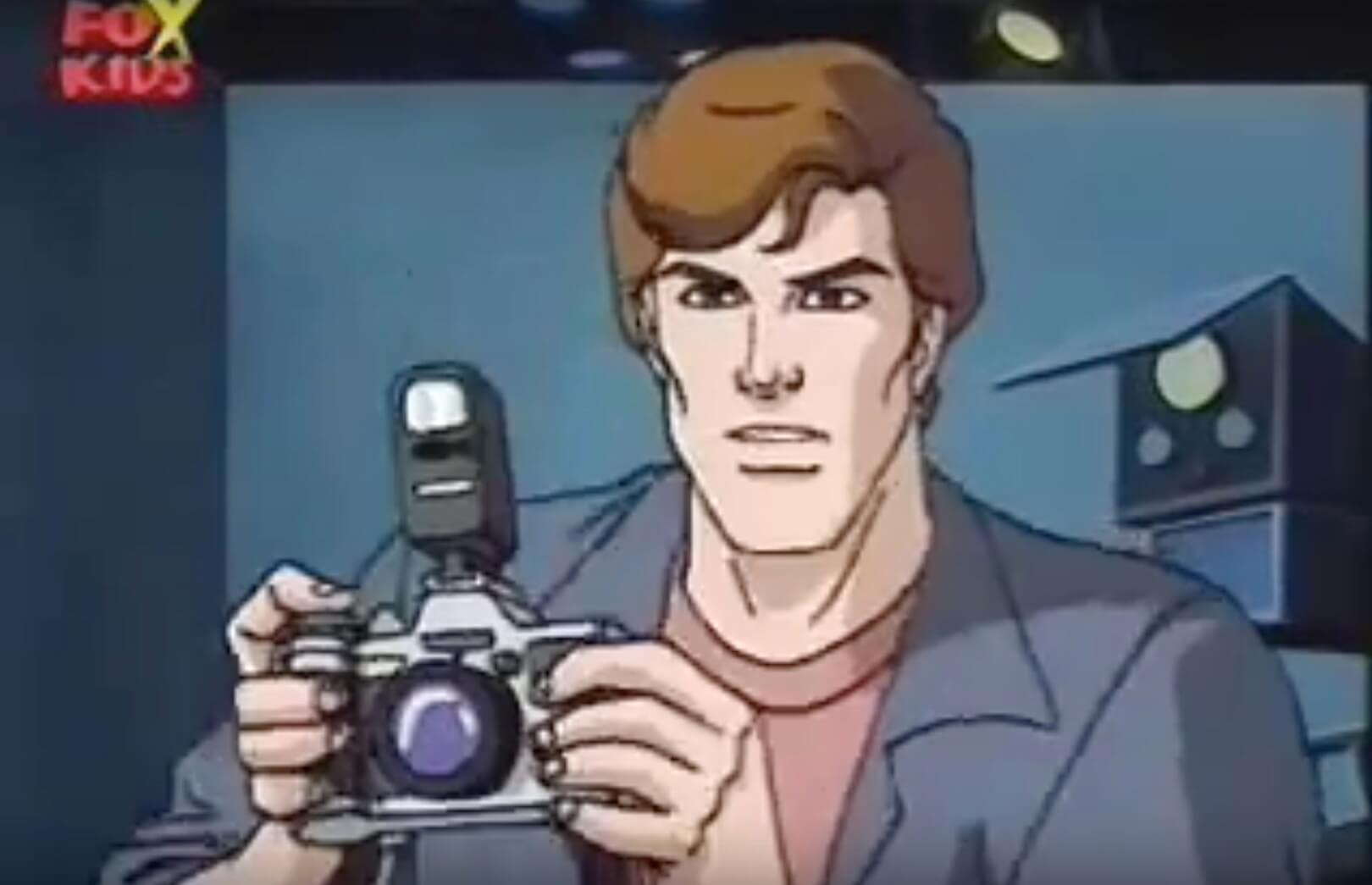
Bob Richardson: As a kid, I always liked to draw and was interested in everything regarding animation and comics, from Disney to Marvel to Mad Magazine. These were all being done by artists and writers that I wished I could emulate in some way. Spider-Man was particularly interesting to me, because it was about a real boy in a real city with the same problems that normal kids might have. Then, suddenly he has superpowers – probably every kid’s dream at some time in their life.

I also enjoyed DC’s Batman and Robin, but it was less realistic in setting and more serious and dark, whereas Stan always managed to get humour into the comics he did. This addition of comedy elevated the writing and made it much more interesting, entertaining and relatable.

When did you first hear that Marvel Films Animation was developing a new animated Spider-Man series, and how did you become involved in the show?

Stan Lee knew me and my work from the days when I worked for DepatieFreleng and Marvel Productions. I was just finishing up producing and directing a series at Film Roman, and Stan asked me to meet with him and Avi Arad about creating a new Spider-Man series. Once I met with them, I realised that we were going to create from scratch a whole new studio called Marvel Films that would produce 65 half-hours of Spider-Man, and possibly other titles.

On a recommendation from FOX Kids, Avi and Stan had already hired a story editor that I was unfamiliar with to start writing the pilot episode and bible for the show. I immediately hired John Cawley as Coordinating Producer, who I had worked with at Film Roman, and Dennis Venizelos as Art Director and background painter, who I worked with at Marvel. These were two key positions that were necessary to start into production on the series. In addition, I hired a talented production designer and layout artist – Vladimir Spasojevic, with an architectural background – to design the real New York that our characters would operate in. I brought on Hank Tucker assisted by Bill Riling, to lead a tremendous storyboard crew. With some preliminary work by Mike Peraza, I hired Dell Barras to finalize most of the character designs based on several comic artists I was a fan of, such as John Romita Sr. For all the major props I employed Wayne Schulz and Donn Greer. I brought in Bob Shellhorn, who I had worked with before, to handle sheet timing. Our Colorists were Allyn Conley and Derdad Aghamalian. Eventually, we would add many more people to the staff to handle the huge workload of this complex series. With that much in place, we started preproduction, designing the series, as we were building out the studio and creating the pilot script and bible.

After some months, the design work was coming together nicely and we were finalizing the look of the series. Unfortunately, the writing wasn’t working at all and this would require a serious change. The week that we decided to replace the story editor, my mother died and my wife had a heart attack – all in the same week. This was not an easy set of problems at this stage of production, but with most of the key talent in place, we somehow managed. We did hire a fine writer and story editor, John Semper, and were able to solve the writing problems we were having, but a great deal of preproduction writing time was lost forever. John was helpful in getting some great writers, like Gerry Conway (who wrote the pilot episode), Mark Hoffmeier, Stan Berkowitz, Marty Isenberg, Len Wein, Marv Wolfman, and Brooks Wachtel, just to mention a few. After that, things went pretty well, until we had a damaging earthquake and had to clear out of the building until they could determine if the structure was safe (never ask: “What else could go wrong?”). Fortunately, this only took a week or two, because the damage was mostly superficial.

Spider-Man Bob Richardson

How did you set out to make Spider-Man: The Animated Series different to what audiences had seen previously from Spider-Man and his world?

Stan always envisioned Peter Parker/Spider-Man living in a real city, not a fictional city like Gotham. We intended to make our city as close to the real New York as was artistically possible. By the same token, we wanted a less cartoony look, with the characters designed in a more realistic vein to mirror the comics and fit the real city they lived in. That way, you had the great contrast of these unique and unusual Marvel villains showing up in our real city with a real boy trying to fight them.

We also tried to introduce some 3D landscapes into some of the action scenes to make the series that much more exciting. However, with very little budget for this type of animation and the fact that at the time this really hadn’t been done in a 2D series before, this created a real problem to make it work. After a great deal of searching and interviewing, we finally found a small gaming company that was willing and able to generate a certain amount of 3D background animation to help us augment certain scenes with dimensional movement for some of Spidey’s flying scenes. However, because of the limited money and time, as well as the complexity of adding this material, we could only do a very small number of scenes like this. And that brings us to your next question.

Having previously worked on Spider-Man & His Amazing Friends, what experiences from that show did you bring with you to Spider-Man: The Animated Series?

In that earlier time, networks didn’t feel they had to follow what had been established in the comics if they thought they could increase their audience levels by making changes to the original property. So, in the case of Spider-Man, suddenly, he had a dog (pets probably tested well with children). Even though he was a struggling student with very little income, they decided to have his bedroom rotate into a high-tech lab where he could create anything he needed, such as web shooters and webbing. So, with this completely unrealistic set piece built into Aunt May’s house, they lost some of the dramatic realism that made the comic so outstanding. We were determined to not repeat any of those sorts of things and the FOX Kids network was completely supportive of that.

Spider-Man Bob Richardson

When did you realise that you had something truly special in Spider-Man: The Animated Series?

First of all, I worked hard to get the right financial deal done with TMS, a Japanese animation company known for their high quality of work. We got them to take the entire 65 half hours, which was very unusual for them to do, but it made them a partner in the project (their producer was Koji Takeuchi). Also, we got Joe Perry of Aerosmith to do the Main Title Theme to give the series a contemporary feel. Along with this, I wanted a full orchestral score throughout the episodes and was able to get a fine orchestra and composer, Udi Harpaz, in Israel to handle this at a cost we could afford.

My supervising editor, Richard Allen, set up the editorial department and staff, as well as a digital edit system, to make sure we could fine tune the digital picture elements as efficiently as possible. We had the sound and mixing done by Advantage Audio, a great facility run by Jim Hodson and Bill Koepnick. The final masters were done at Complete Post under the experienced supervision of Dennis Graham.

With all this in place, we felt that the series had great potential, but until we started seeing the finished episodes put together, you always have your guard up. Even so, if you’ve been in this business for any length of time, you know that it doesn’t take much to have everything go to hell, especially when you have 65 episodes to complete and deliver on time. The possibility of failure on some level always exists.

We did have some errors in the final season of shows. These last scripts were the most complicated to do because of the amount of characters and action in them. Unfortunately, these scripts were also about three months late. Because of this, the animation got more rushed, which always hurts the quality. In addition, last minute retakes were dropped in wrong in post, and I could not get upper management to okay a redo on the tape masters when we discovered the mistakes.

Spider-Man was one of the first animated shows to feature season-long narratives rather than one-and-done stories. What prompted the decision to go in that direction with the series?

Normally, in reruns, the network will change the order in which the episodes air to give it a fresher look, but if there is a continuing storyline, that makes that almost impossible. John Semper was an advocate of the season-long narrative and convinced everyone that it could work without hurting the network’s adjustment of series order in reruns that much. I would say it worked to a degree, but some episodes needed to be kept together in their original order when they were moved around.

Spider-Man Bob Richardson

What, if any, restrictions were put in place on the series?

There was an increased sensitivity to violence by the time we did our series, and the network’s Broadcast Standards and Practices people would look at various issues they felt were inappropriate for children. One thing that was somewhat annoying, was that because Batman had started earlier and was more cartoony, they let them do much more action that was considered “violent” than what they would allow us to do. We had more restrictions, because they felt that since our series was more realistic, it would have more of a negative effect on kids if the content was too violent.

Another restriction had to do with James Cameron, who was planning a live-action Spider-Man and had in his contract with Marvel exclusive rights to use the character Sandman – so we couldn’t use him.

Is there a particular run of episodes or a story arc that stands out as your favourite?

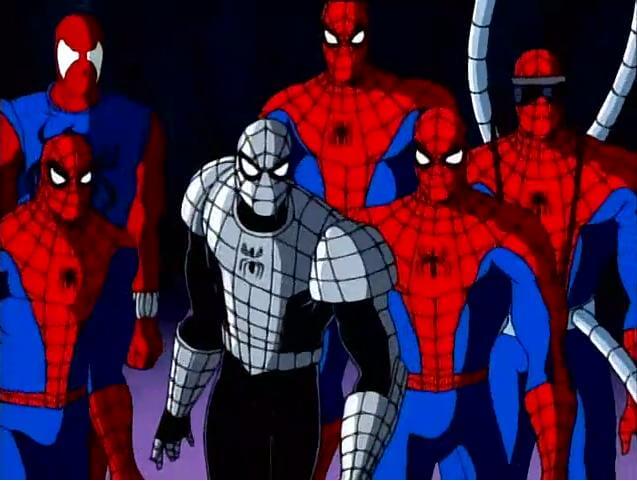
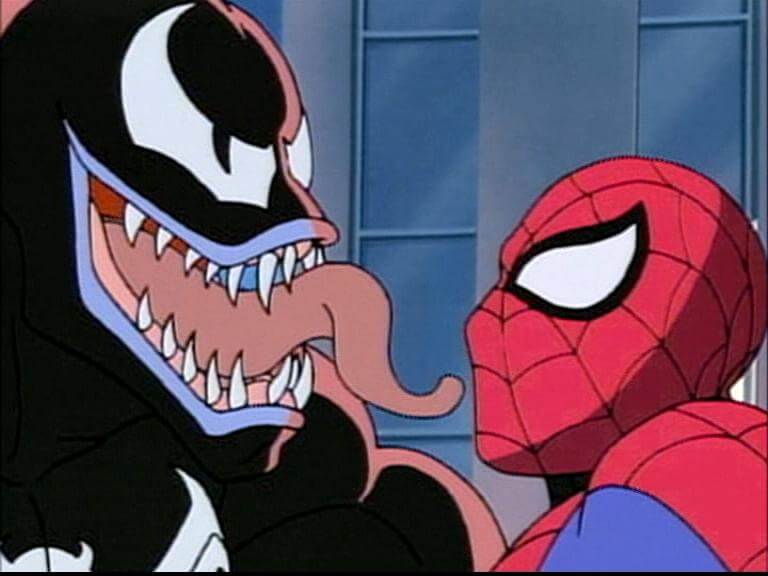
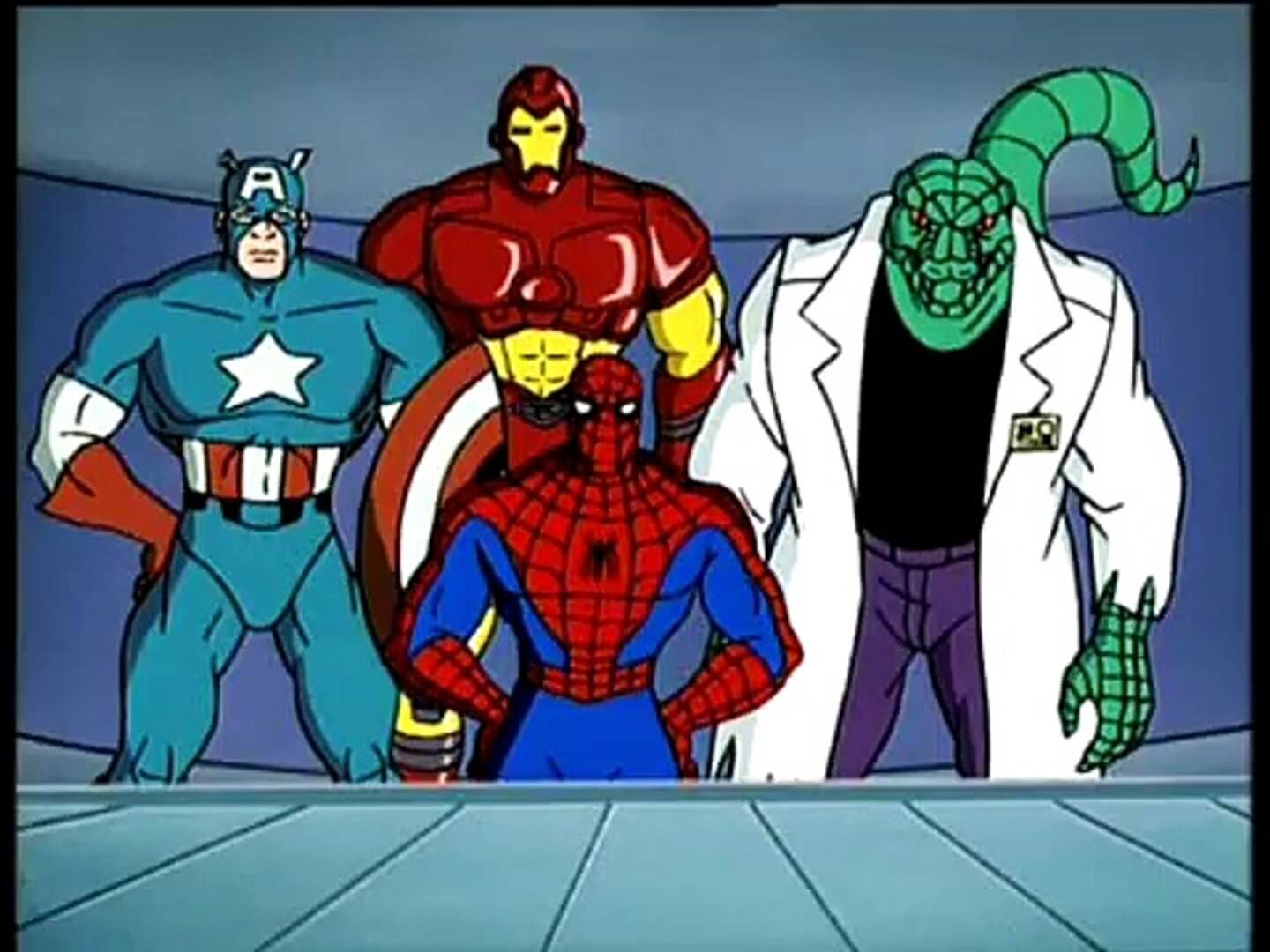
I’m particularly proud of what we did with the The Alien Costume series with Venom, but I’m also a big fan of what we did with the Kingpin, the Green Goblin, the Lizard, Hobgoblin, and the Black Cat, who I think is a great female character. Marvel has so many fantastic characters; it’s hard to choose a favourite, so we squeezed in as many characters as we could in the series.

Spider-Man Bob Richardson

Prior to Spider-Man: The Animated Series, X-Men and Batman: The Animated Series had both achieved major success. Were there any conversations of potentially taking Spider-Man in a darker direction similar to the Batman show?

We were trying to make Spider-Man adhere to the original concept that Stan envisioned for the comics, which was so unlike Batman, that as much as we liked that series, we were not trying to emulate it in any way.

Likewise, X-Men had its own style to govern it and it wasn’t anything that we wanted to try and copy, either. Our goal was to give our series its own unique style and look and still keep true to the vision of the comics.

Of the multitude of villains featured throughout the series, which one was the most fun to bring to life?

The characters that we had to play with were all so interesting that it’s hard to pick any one, but I particularly liked the character of Kingpin, who we made into a central figure located in the Chrysler building and voiced by the outstanding, Emmy nominated Roscoe Lee Browne.

Part of the fun of doing this series was the amazing voice talent that our voice director, Tony Pastor, brought in to give these characters life. Besides Roscoe and a slew of wonderful actors, we had some big names like Ed Asner, Joe Campanella, David Warner, Efrem Zimbalist Jr., Hank Azaria, Mark Hamill, Earl Boen, Martin Landau, Dorian Harewood, Paul Winfield, Eddie Albert, Brian Keith, Jonathan Harris, Malcolm McDowell and many, many more.

Spider-Man Bob Richardson

Bar a fleeting appearance, why did the show purposely steer clear of including Gwen Stacy?

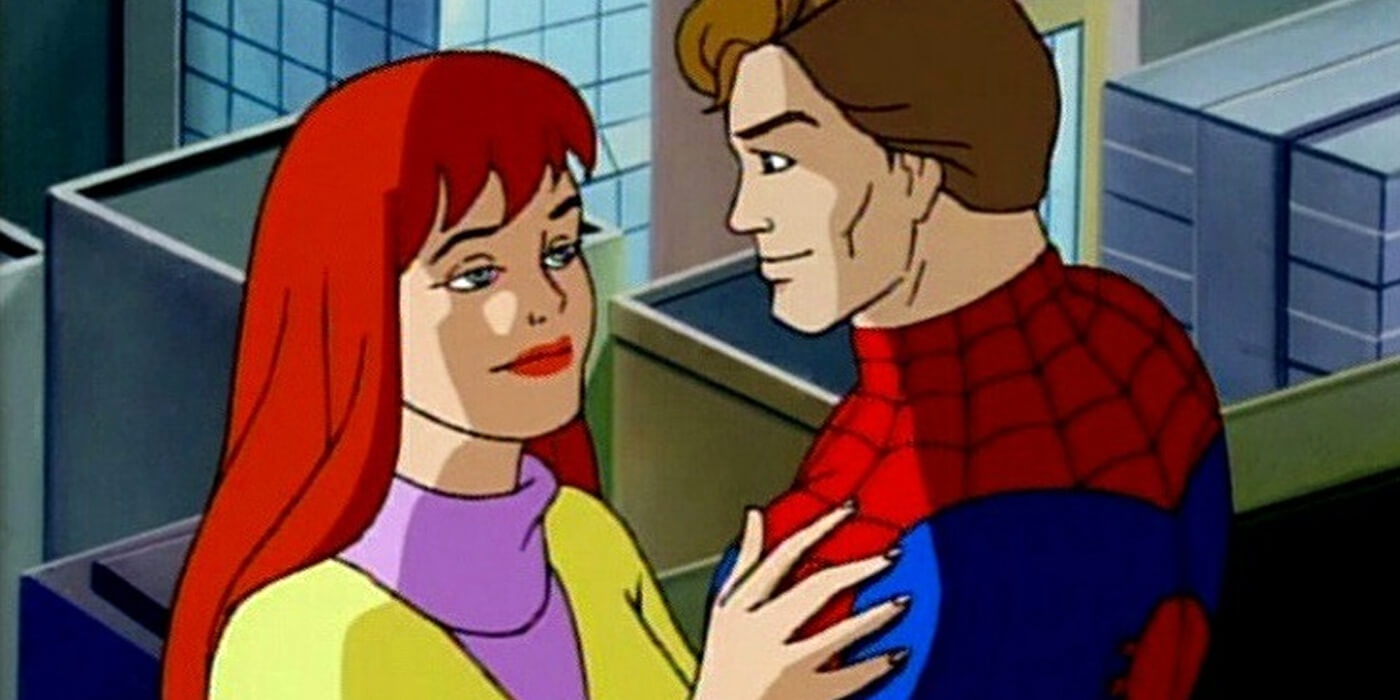
I think we wanted to concentrate on Mary Jane as Peter’s love life and avoid the whole Gwen Stacy death issue in Spidey’s fight with Green Goblin. Also, it was always a little wacky, from a story point of view, what Gwen actually died from: the shock of the fall; Spidey’s webbing breaking her fall and her neck and so on. Likewise, we weren’t really looking to get into the alternate universe of Gwen as Spider-Woman.

Were there any comic book Spidey stories that you wanted to adapt but didn’t have a chance to?

Before Marvel Films shut down, we were prepping for a series about the Silver Surfer and the development was looking pretty exciting. However, if we had the chance to do additional stories beyond the 65-episode order, we would have had fun breaking some new ground with the characters as well as doing the classics that everyone is familiar with.

Unless we had a Netflix contract, we would probably have to avoid stories like Shred, where Curt Connors as the Lizard eats his own son, Billy, before Spidey can get to him. We might even have done the Gwen Stacy backstory to see how that affected Peter/Spidey as a superhero and how Mary Jane helped him get past his grief over her death. Anyway, I know that John Semper had a number of stories he wanted to do that didn’t get made in the original 65-episode package.

Spider-Man Bob Richardson

The series was reportedly cancelled due to a disagreement between Avi Arad and FOX. What do you remember of the decision to cancel the series?

That is what has been alleged, and if it’s true it was probably a money issue, but you would have to talk with Margaret and/or Avi about that, because I’m not really at liberty to discuss it.

If the show wasn’t cancelled, how long do you realistically think it could have run for?

That’s a tough question, but realistically not more than a year or two at most. A major problem would have been getting TMS to continue doing the animation. I think we exhausted them doing the first 65 episodes.

Was there ever any talk of you being involved in the Spider-Man Unlimited series that began in 1999?

If there was, I never heard about it.

With Spider-Man Unlimited being cancelled after one season, are you aware if there were ever any discussions to bring Spider-Man: The Animated Series back?

So many changes happen in the film and TV business, that this was probably considered an impossibility to bring this exact series back once the studio and staff was disbanded and all had gone their individual ways. Personally, I was never contacted to try and restart what we had done before.

Spider-Man Bob Richardson

Since debuting back in 1962, Spider-Man has continued to be arguably the most popular character in comics. What do you think is the secret to his longevity from generation to generation?

Spider-Man is a great character that is very relatable to young audiences – a kid, who is kind of an outcast, without wealth or status living in a realistic city, New York, who suddenly finds he has tremendous powers and has to learn how to handle this in his daily life. You add Stan’s humour to that kind of relatable drama, and you have a winning recipe for any young audience to appreciate all the way into their adulthood.

Similarly, to this day many people view Spider-Man: The Animated Series as the definitive Spidey cartoon. Why do you think the show still holds up so well and has such a strong fan base?

Despite all the problems of production, we had a wonderful crew working on this series and wonderful actors doing the voices. The bosses – Stan and Avi and FOX Kids – wanted the best series we could make within our budget and time restrictions, and that allowed us to make the most of Spidey and a lot of the great characters that Marvel had in its library. I think that all the film issues that we solved – good writing, quality animation, wonderful music score and title theme – along with good design and use of CGI where we could, helped make this series a classic.

Spider-Man

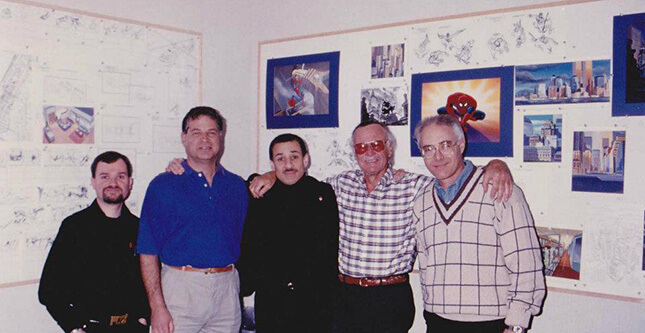
Bob Richardson, shown on the far right here


What are your fondest memories of being involved with Spidey throughout the years, and in particular being involved in Spider-Man: The Animated Series?

On this series, I had such a great crew that always gave their all even with the script delays that we had at the beginning and then toward the end. They made my job that much easier, by always giving me their very best efforts.

During all those terrific Spidey years, I got to know Stan very well, and he was such a great friend and mentor that even after I was no longer involved with the shows, doing other projects, we continued to converse by email and we always tried to make each other laugh at something in life or about the crazy film business. That’s a lot of years of enjoying Stan’s high energy and joyful outlook. I miss him tremendously.

Spider-Man: The Animated Series can now be found housed on Disney+.

Tom King, Mitch Gerads, Evan ‘Doc’ Shaner | STRANGE ADVENTURES #1

Writer TOM KING and artists MITCH GERADS & DOC SHANER talk DC Comics’ breakthrough new book, STRANGE ADVENTURES…

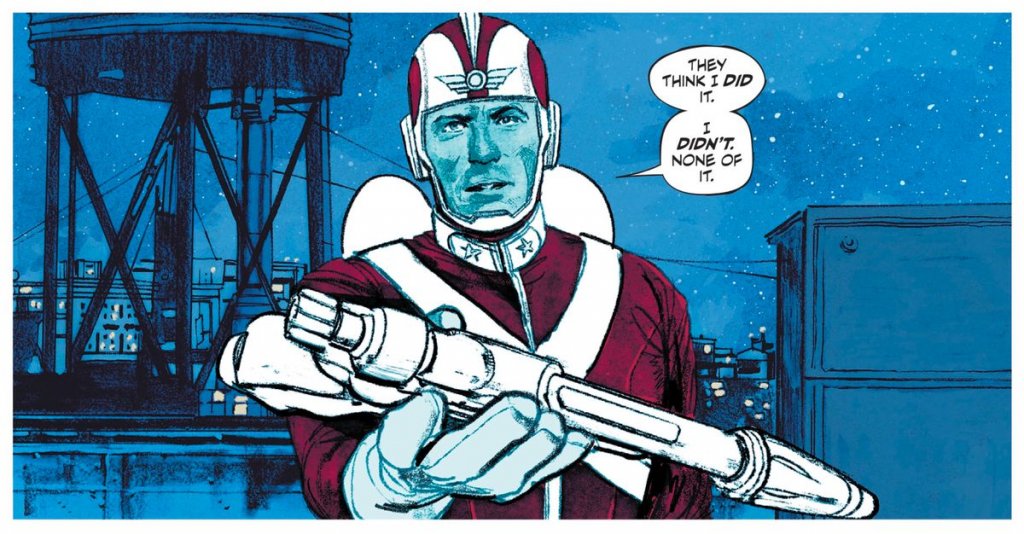
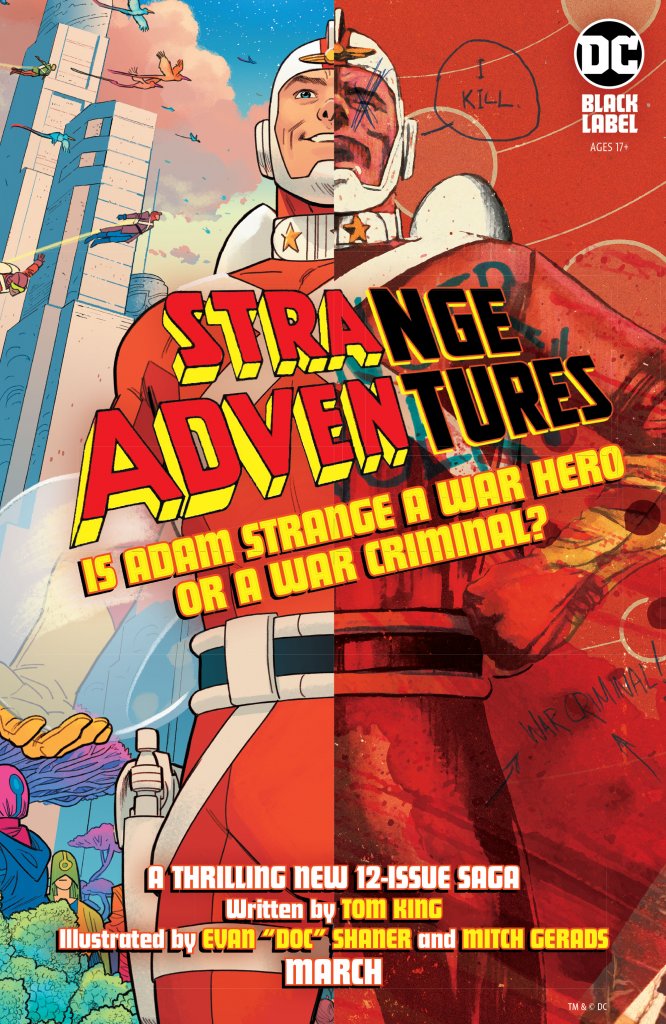
You’d be hard-pressed to find a storytelling trio as cosmically perfect as the one Tom King, Mitch Gerads, and Evan ‘Doc’ Shaner so effortlessly form. King and Gerads turned heads with Sheriff of Babylon and Mister Miracle, two books that helped cement the pair as one of the finest writer/artist teams in comics. Now, Shaner, another respected talent in the industry, joins the indomitable duo on a new series that promises to be just as fun and thoughtful as everything else they’ve done together. With the all-new, 12-issue Strange Adventures, King, Gerads, and Shaner bring new relevance and resonance to Adam Strange, a hero who hasn’t known this bright of a spotlight in years. The limited series tackles truth, lies, and the human way, showcasing a wise, even prudent, approach that emphasises the importance of inspection and introspection in a post-truth era. The first issue hit shelves recently and, as expected, it’s a showstopper. STARBURST caught up with King, Gerads, and Shaner at Chicago Comic and Entertainment Expo (C2E2), one of the largest pop culture conventions in the Midwest and a hub for comic creators…

STARBURST: How did this project come about?

Mitch Gerads: At my house. [laughs]

Tom King: [Laughs] Mister Miracle was doing well, and we were sort of looking for our next thing. I was at Mitch’s house for the baptism of his son, and we were literally going through his shelf being like, “What should we do next?” Mister Miracle was given to us and we had to shape it into something. And this time DC was like, “Find whatever you want.” And Mitch picked Adam Strange. That’s the best thing that can happen to a writer, when an artist picks a character. I went home and came up with the plot that night.

It’s got to be nice to see books on a shelf and be like, “I can pitch that to DC!

TK: That is nice, yeah.

MG: Absolutely. We’re in the car on the way to the church the next day, and he pitches the entire thing to me and goes, “And here’s the best part: We bring in another artist!

Doc Shaner: It really is!

So Doc, what was it like coming onto this book? Mitch and Tom have a proven chemistry, so it must be great to come into that and add to it. 

DS: I knew them before, so it’s not like it’s my first time working with them. I’ve worked with Tom before. So it’s exactly how I thought it would be. I knew these guys had a foundation going so it’s great walking into something like that. We’re just kind of adding to what they did before with Sheriff of Babylon and Mister Miracle. Knowing that there’s already consistency there and being able to jump into that is refreshing, actually.

Unlike Mister Miracle, which dealt with the effects of trauma, we know that this one deals more with truth and assumptions of truth and stuff like that. How is that depicted on the page? How did you translate Tom’s script into something that’s pretty abstract into art that could visually represent that? 

MG: I think Tom’s strength when he writes is that the characters feel real.

Tom King: What? [laughs]

MG: I’ve read a lot of scripts where it’s like, “Oh, these are comic book people doing comic book things.” And Tom writes human people doing comic book things. It’s a different way to approach it, and I think that emotion comes through. So you just kind of start with that emotion and you plug the characters into it.

TK: The idea was always, from the beginning, that we’re gonna do something that was about the difference between a fantasy and reality and how those two work together and how one influences the other. Mitch draws grounded comics, but he uses a lot of abstract stuff in his work. But somehow you feel the crack of the desert under your feet, as they say. The book is really weird because the art switches between panels, so it requires a lot of coordination.

DS: I agree with all of that. I can’t imagine doing this book with somebody I didn’t know.

Are the book’s themes at all influenced by today’s political climate? 

TK: Yeah. I think you can go as far as to say it’s driving it. Our attempt was to do what Watchmen did. It was a comic that existed for all time, but it also talked to the political climate and said something true about when it was created. And because it said something true, it’s become immortal. So yeah, this is very much about our current moment in world history, the same way Mister Miracle was about dealing with events that feel incomprehensible to you and seeing what that does to your family. This is about deciding if someone is lying to you. And it seems like in our current atmosphere, watching TV, doing anything, you’re constantly having to make a decision and ask yourself, “Is this a lie? Do I accept the lie?

MG: And then there are different ways that lies and the truth are being told. Sometimes it’s passive, sometimes it’s not. Or sometimes people don’t know they’re lying, but that’s their recollection. And then other times they’re lying because they’re trying to get a point through. The book speaks to a lot of that and kind of makes you wonder who’s on the up and up.

TK: The book takes place in two different timelines at the same time. Mitch’s portion is an investigation into Doc’s portion. It blends together. You get kind of a layered understanding.

DS: I’m drawing the story Adam Strange is telling when he gets back to Earth. It’s been interesting to explore those space adventures, and that’s the part I’ve been enjoying the most so far, kind of bringing that stuff into the DC universe and visualising the planet Rann. It’s nice to kind of expand on what Rann is. I’m excited!

STRANGE ADVENTURES #1 is available digitally through ReadDC.com or ComiXology

Yui Ishikawa | VIOLET EVERGARDEN: ETERNITY AND THE AUTO MEMORY DOLL

To celebrate the release of the Violet Evergarden spin-off movie, Violet Evergarden: Eternity and the Auto Memory Doll, we at STARBURST had the pleasure of speaking to the film and shows star voice talent Yui Ishikawa (Attack on Titan, Nier: Automata) to talk about the film, the success of the show and what made her want to play the character.

STARBURST: Violet Evergarden is based on a light novel. Had you read the source material before taking on board the role?

YUI ISHIKAWA: First of all, for the audition, I really wanted to play Violet, so I went looking for information. The book wasn’t that easy to find, so I ended up going to several bookstores before I could buy it and read it. That was the first time I did, but of course, after I actually got the part, I went back and read the original over and over again to create the character, or rather, to understand her.

For those of our readers who are yet to discover Violet and her world, could you describe to them what the series and movie are about?

Violet is the protagonist in the work. She had lived a previous life as a human weapon, but when the war is over, she ends up becoming a scriber… an Auto Memory Doll. Until then, she has got through life without any idea of what emotions are. But through her work, she meets all sorts of people, learning about human emotions through them… including love.

The movie is set after the events of the TV series, and it involves Violet playing an important role in connecting two sisters, Isabella and Taylor. Initially, when I was playing her, I had to put myself into an empty state, of knowing nothing. I didn’t invest any meaning in the words she spoke; I just treated them as if they were falling out of her mouth. But then she starts to get emotions, or emotions start to sprout within her after her contacts with other people. She learns many different things, and I tried to add bits, little by little.

Your portrayal of Violet beautifully balances innocence and determination – what influences did you draw upon to accomplish this?

Well, I am pleased to hear you say I managed to balance her innocence and determination. To play her, I was told to become Zero. The director at the recording told me: no emotions in the first episode.

How enjoyable was it for you to return to this role after the end of the first season?

I was very pleased to see Violet again because I love her and the work and I have lovely memories of her. Of course, after the TV series broadcast ended, it became a piece that was loved by so many people, so I felt a huge pressure, but I was helped especially by other cast members, and I believe it turned out to be a wonderful movie.

Did any of the narrative of the series or movie emotionally resonate with you – if yes, what part and why?

I think people who have watched the TV series understand, but everything resonates! So, to be honest, it is difficult to say what part. Really all I can say is all of it. This piece was truly created with care, both the story and the image and animation. Kyo Ani created everything so very attentively and with love, so there is nothing that does not resonate, yes!

Interview: Theresa Tilly | THE EVIL DEAD (1981)

Interview with Theresa Tilly

Starburst: You played Shelly in The Evil Dead. How did you come to be involved in the film?

Theresa Tilly: Unlike Ellen Sandweiss and Bruce Campbell who both went to Groves High School in Birmingham Michigan with Sam Raimi I was not a friend or classmate of Sam’s before filming ED. I had just graduated from St. Mary’s College of Orchard Lake with a BA in Communication Arts. I was struggling to be an actor in the Detroit area doing a lot of local theatre, setting up my own puppet shows in malls and schools, commercials and car industrials; whatever I could get my hands on in Motor City! I got a call from my agent – whom I barely knew – asking me if I was interested in auditioning for a feature film. Sam, Rob and Bruce had gone to local theaters looking for resumes for small time actors like myself who might be interested in working for “nothing” to be in his feature called The Book of the Dead. Sounded kind of good, there was even a “Book” in the title! I agreed to audition. I met Sam Raimi, Bruce Campbell and Rob Tapert at Sam’s parents’ house where we went down to his basement and read a few lines from the movie and screamed with horror several different ways, the rest is history.

Did you have any idea, making the film, that it would go on to be as successful and influential as it is?

I had no concern whatsoever about the notoriety this film might bring when I signed on. If I had I might not have done it since there was absolutely no budget and the conditions we shot under were gruesome and bordering on the ridiculous. I didn’t care, I was just thrilled to be hired to do a feature film. When you’re young you don’t have grand expectations and it took awhile before some of the low budget aspects of shooting started to sink in. We filmed this in Morristown which is a tiny city in the hills of the southern state of Tennessee. I had never left the Detroit area before this and I don’t think the others had either.

What do you think has been the key to its lasting appeal?

I do think it’s scary and yet it doesn’t take itself too seriously! And yet there’s a violent rape scene – but I think the key is that you never really see too much, it’s all in the imagination. To have that much gore and blood and that much violence, and still be campy, well that takes a lot of confidence.

What do you make of the fan affection – particularly towards the ladies of The Evil Dead?

I’m sure you’ve heard the story that the 3 of us were a little embarrassed by the movie initially; none of us used it on our resume or told anyone we were in it. I had seen it at the video stores but since I had used a different name (Sarah York) I figured I was safe, no one would ever know it was me. Betsy Baker and I had remained friends from the movie and when I moved to Los Angeles we spoke to each other somewhat regularly. She contacted me about a screening here in Hollywood back in 2001. She and I ended up going to that and doing a Q&A and saw how many fans were lined up to meet us. We were really amazed that it had such a following and soon contacted Ellen to form a trio and meet all these wonderful fans around the world.

Here in the UK, The Evil Dead was actually banned for a number of years. What did you make of the decision to ban the movie?

I’d ban it too if it were my kids/country! We often hear stories about how kids couldn’t see the movie and they finally snuck in or somehow got a hold of it they were so happy to see it. The whole forbidden fruit thing, I think that really plays into the fun and desire to see it. We heard a lot of stories about the Video Nasties in England when we were there. The idea of Sam speaking in Parliament in protection of his film is hilarious!

Sam Raimi and Bruce Campbell have gone on to become enormous cult figures since making The Evil Dead. What was it like working with them?

And now they’re making Evil Dead again! But we’ll always be the first! It’s funny when you think back on where we started and how low budget our movie was it was crazy to make it with our shoestring budget and lack of experience. But these guys were and continue to be visionary and that includes Rob Tapert who went on to become a pretty substantial producer too. The 3 of them were so inspired to do this that nothing seemed to get in their way. Day by day we’d run into all sorts of problems that to me seemed insurmountable but they’d just tackle them one by one. Their tenacity and drive, and of course their genius of movie making got them to finish and sell Evil Dead in spite of the many obstacles. We were just a bunch of kids having a good ole time shooting a movie for the most part – it was a lot of fun.

Following the first Evil Dead, the sequels went in a more noticeably comedic fashion, before becoming out-and-out Fantasy Comedy in Army of Darkness. What did you make of that?

I have always preferred the comedy based in reality of the original. But then again I’m partial aren’t I!

Was it difficult acting under the layers of make-up and gore FX as Deadite Shelly?

Ellen and I were the first to put on the masks and I was the first to die and therefore the first to perform with their original idea of the Deadite make-up and mask. I was unable to have much facial expression once the mask was used so I tried using my body to express things. Unfortunately I had on lenses that were completely blinding so my movements were very limited. It was pretty frustrating!

What is your abiding memory from making The Evil Dead?

I can’t believe I was so stupid to agree to get in a car and drive across that bridge which was ready to fall any minute. I am just happy I survived it all.

How was it re-uniting with your Evil Dead co-stars for Dangerous Women?

I only wish I could work with Betsy and Ellen more often, we will always be friends and we all seem to have the same type of professional ethic when we work, its how we met so I think making movies together just really works for us.

The Evil Dead remake is due to hit cinemas very soon. Will you be watching?

I just hope I won’t get too scared. I will have to go in the day light – but yes! The three of us really loved Evil Dead the musical when it was on off-Broadway.

Are you a fan of horror movies in general?

Not really; I get too scared.

What are you up to next?

I have a couple features that should be out soon, Old Days directed by Michael Rosenbaum and stars Morrena Baccaren from V who plays my daughter and Stomping Ground directed by Dan Riesser, a Big Foot romantic comedy with lots of scares. There is another big feature that I can’t really talk about but just check my IMDb every now and again!!

What are your future career ambitions?

Bigger parts!