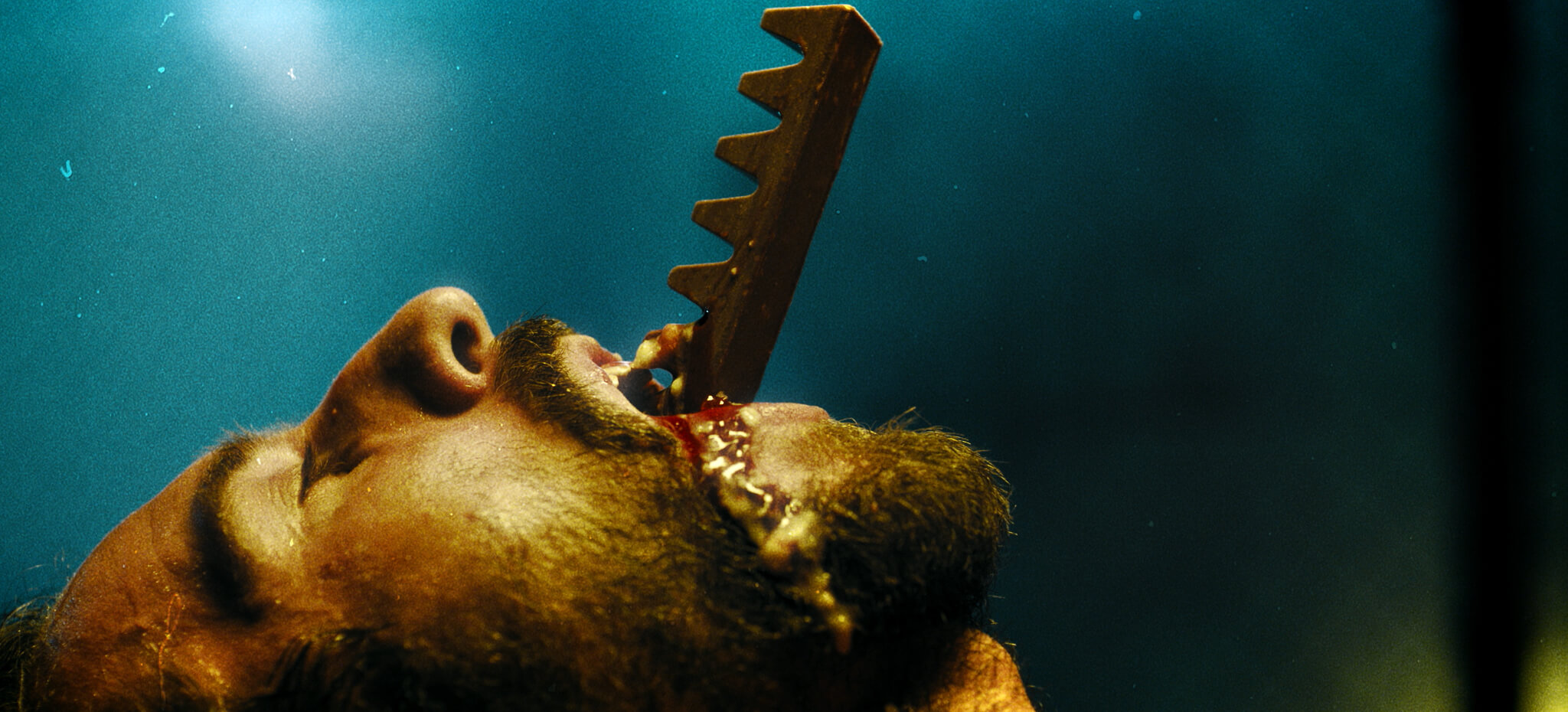
Following the success and popularity of the Iron Sky movies, you’d have wondered what could come next. Producer Tero Kaukomaa knows – Swissploitation! We caught up with him to find out about Mad Heidi, the film will show us that the hills are alive with the sound of screaming!
STARBURST: What was it about Johannes Hartmann’s idea for Mad Heidi that excited you?
Tero Kaukomaa: First and foremost, it was the concept of a real film first, a Swissploitation film, using famous Swiss clichés to spice the story. I have lived in Zurich for over 20 years and I love it, and I saw the potential for a great self-irony. I also fell in love in Johannes’ visual style, which is sparked by his clear vision. I think these two elements made me excited and I wanted to start making
it all real.
You worked on the Iron Sky films, how much will they influence the film?
I think the biggest influence is the attitude we have in making the film, meaning we wanted to involve our fans, for them to be part of it. We hope this collaboration will help to spread the word more widely all over about what is possible.
Producer Tero Kaukomaa
Other than Iron Sky, what sort of films influence the look and feel of the film?
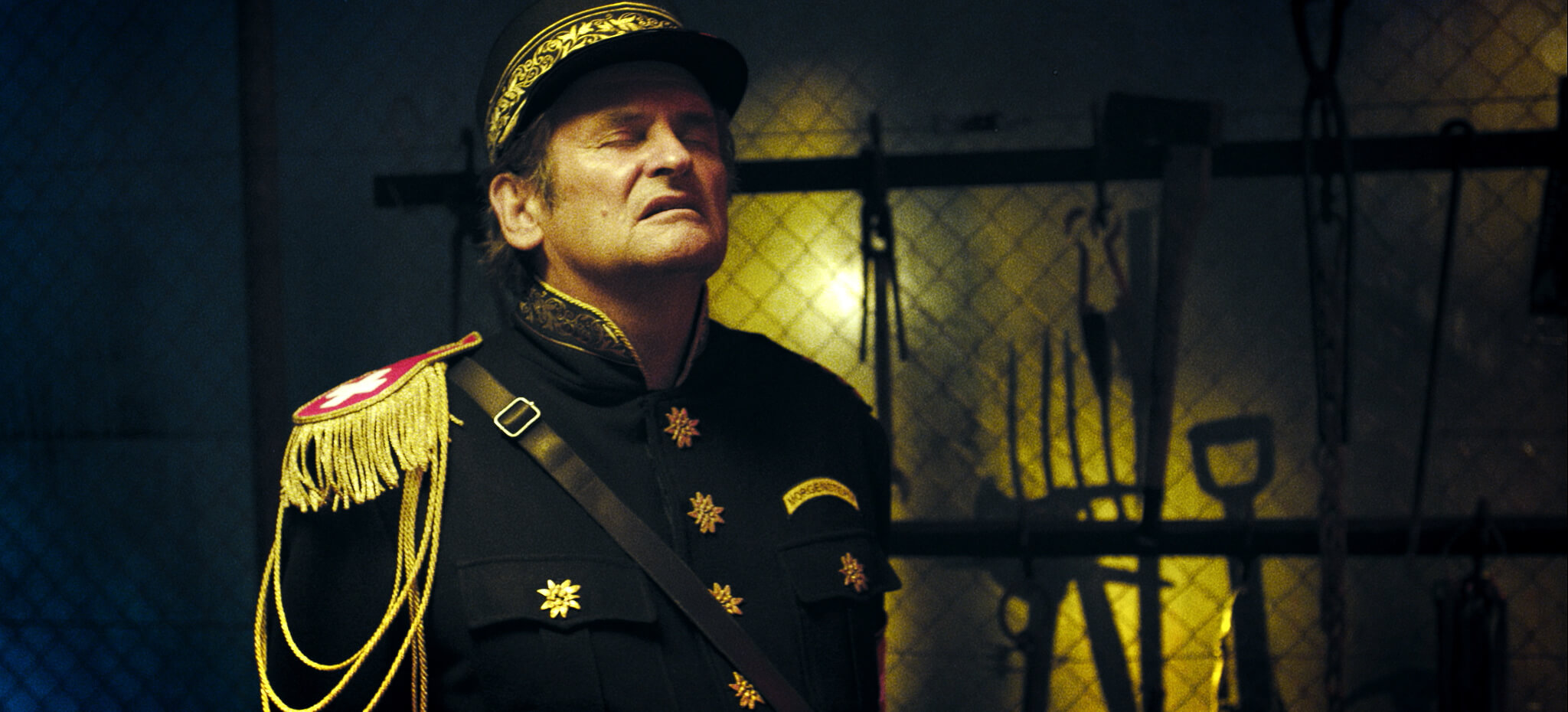
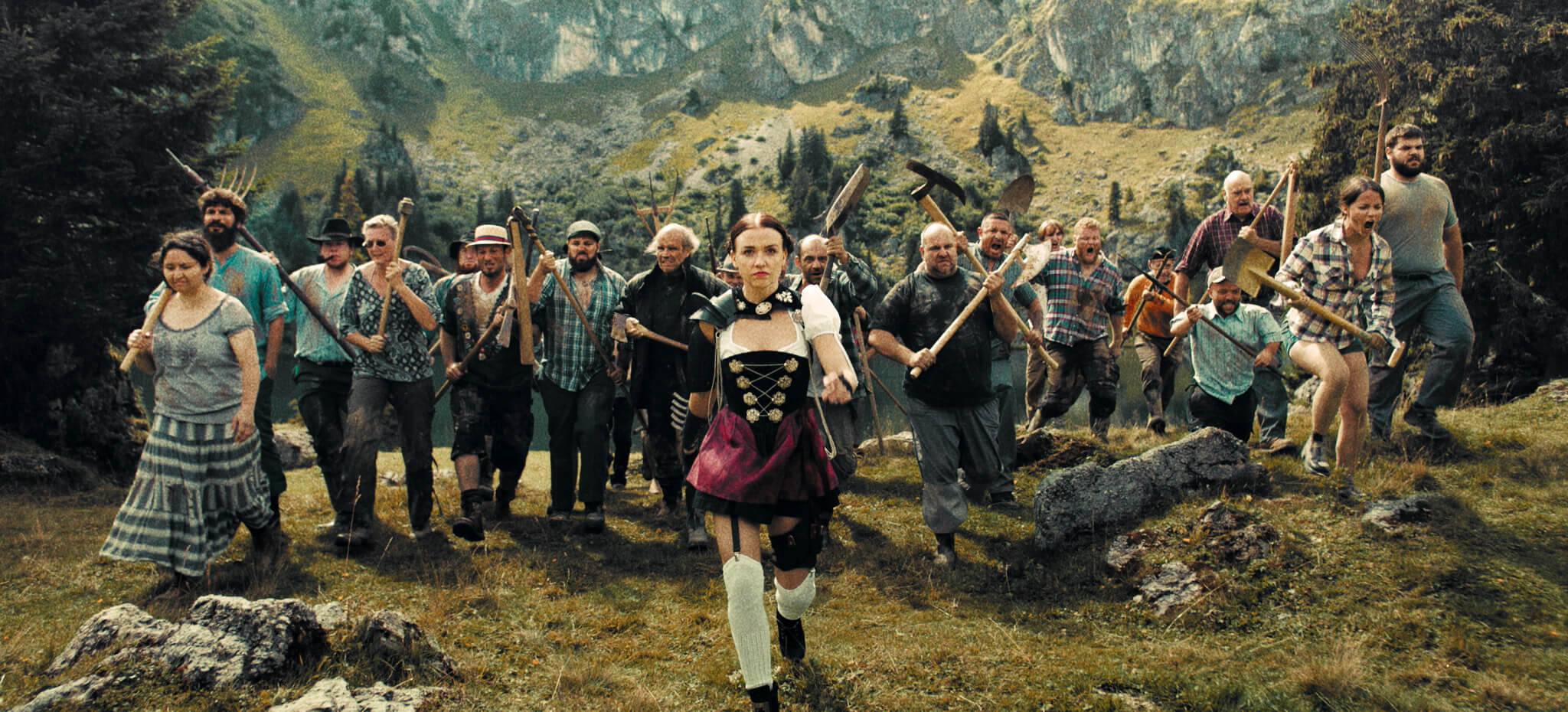
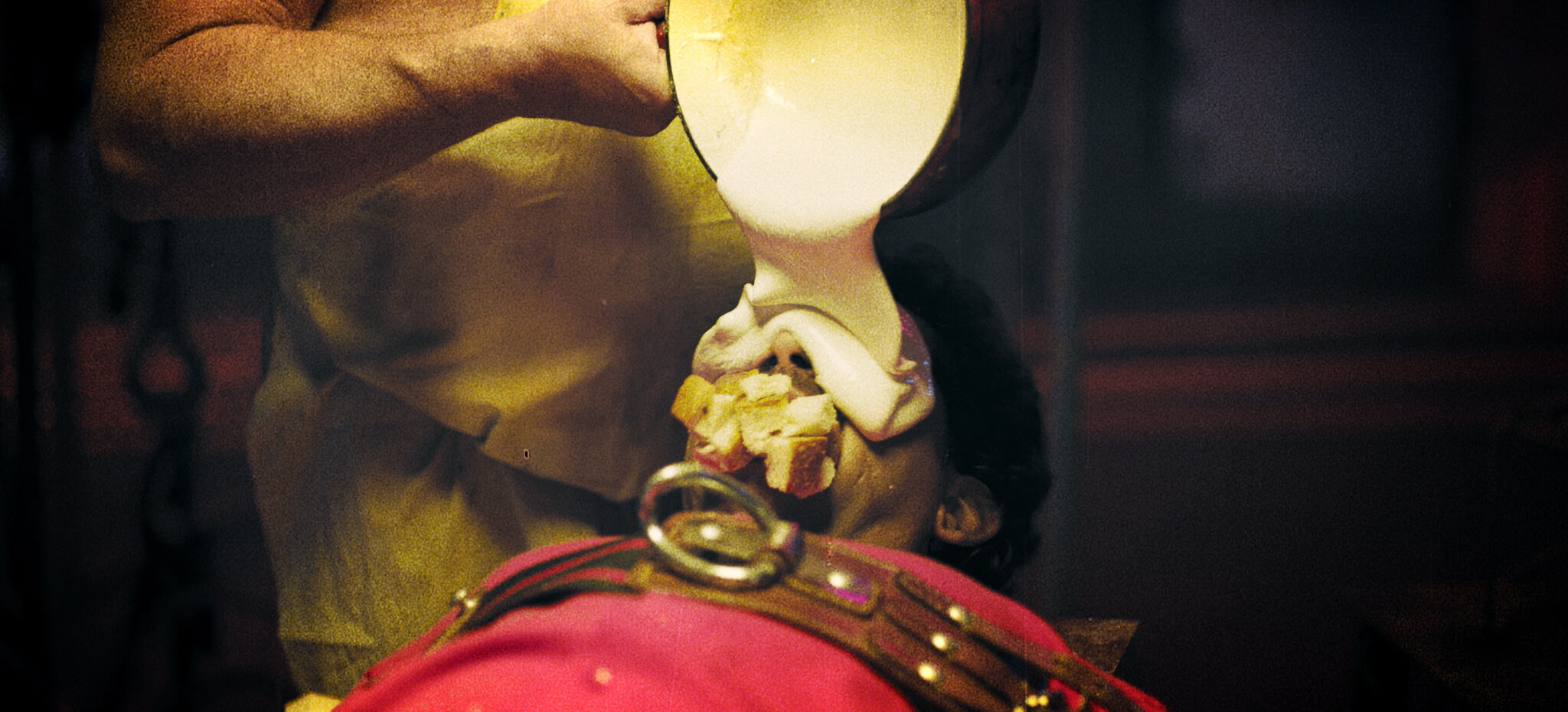
Personally, I´m thinking it is like Kill Bill meets The Sound of Music, but obviously there is
more to it than that. Mad Heidi is Johannes’ vision, inspired very much by the exploitation cinema of
the 1970s, combined with the alpine setting of the Swiss Heimatfilms [Homeland films] of the 1950s and ‘60s.
Will the teaser trailer footage be in the film or is it more ‘proof of concept’ footage?
It was done as a proof of concept and is not meant for the final film. But who knows, we may find a cool way to use some of it. Time will tell.
You’ve gone a different crowdfunding route by cutting out the likes of Kickstarter, why is that?
Actually, with Iron Sky, we started crowdfunding before Kickstarter even existed! We did
use IndieGoGo several times, and also some equity platforms. But maybe even more
importantly, we engaged the fans in so many ways like never before. Only recently, Jurassic Park actually copied our idea in their publicity campaign “Get killed by a Dinosaur”.
For Mad Heidi, we want to centre all fan engagement in one place – madheidi.com – from the
early development, financing, production, all the way to the release and beyond. We think having the platform is very important, and it is where the film will available globally and simultaneously for the fans. From day one. And I hope its success will result in cinematic Mad Heidi Fan premiere events around the world.
What is the budget that you’re looking to raise?
We need minimum of CHF 1 million to start the production, and then we will continue fundraising
with a total goal of CHF 2 to 2.6 million. The amount will vary depending on some production decisions to be made once we are underway. Also, I want to add that we treat the budget a bit different than a normal European film does, where you don’t include your marketing efforts in the budget because it’s going to be handled by the distributors. As we are doing distribution ourselves, we allocate around 25 % of the production budget to marketing. In practical terms, this means fan-powered activities. There are a lot of costs there, but it is all worth it if you compare it with normal advertising spending.
Do you have a timescale to finish the film?
We aim to shoot the film in summer 2021, and to be able to release Mad Heidi during 2022.
We will lockdown the exact date once we have started shooting, but it is most likely to be more in the autumn 2022.
There will be a launch of the unique investment opportunity for Mad Heidi at the Zurich Film Festival on September 29th. You can register your interest by heading to https://invest.madheidi.com/ – investors will get a share of the net revenue of the film and be part of the world’s first Swissploitation movie!
Find out more about how you can help Mad Heidi get made by heading to the website.
Along with her sister Chloe, musician Asy Saavedra forms the American synthpop duo, Chaos Chaos, and has been making music since her early teens. In recent years, Saavedra has become known for the inclusion of Chaos Chaos’ music in many of Justin Roiland’s projects, such as Rick and Morty. Her most recent project with Roiland is the score for his video game, Trover Saves the Universe. The game is a madcap romp through ‘a world of chaos, exploding bodies, and salty language’, but Saavedra’s score is alternately dreamy, epic, and joyously danceable. The musician has made reference to melding Ennio Morricone scores and K-pop, but the score for Trover also finds itself winding through the ethereal bops of artists like Grimes, as well.
You can get a glimpse of what this music looks and sounds like in the exclusive premiere of Hanging Out in the Sky, off the game’s soundtrack, which we are excited to share with you all, in addition to an interview with Asy Saavedra about how she came to work on the game and her creative process.
STARBURST: How did you originally come to do the music for Trover Saves the Universe? Was it because you’ve worked with Justin Roiland before – going all the way back to having Do You Feel It? on Rick and Morty?
Asy Saavedra: Yeah, it’s kind of a weird story and a weird situation that we ended up collaborating on so much stuff because it’s completely not an obvious like partnership in any way from the outside. He approached our band, Chaos Chaos, when we released our EP, Committed to the Crime, and he is a huge fan. I think it was right before Rick and Morty took off or something, but we didn’t even know who he was or anything about the show. I think one of us responded to him and were just like, “Oh, thank you so much for saying such nice stuff about the music.”
He wanted to use the music in the show and then we did that and then the show like flew us out to play a premiere party and we kind of met them that way, and then just started talking more. He just asked us to do more things because he really liked our music and it worked with the show in a funny, ironic way, because our music was more emotional and deep or whatever. It worked because the show would be really funny and then have these really deep moments in it and it was kind of an awesome thing, so I think that’s sort of why it ended up working out in the show.
Then, when Justin would do some other personal projects, he started asking me to do some work. I had done like a bit of his VR game stuff in the past and then he asked me to do Trover, which was really, really awesome because that was definitely something that was out of my comfort zone – just doing that whole project. I was super excited that he asked me and I think, at that point, he’d worked with me enough to know that he wanted me to do the music and he was gonna allow me to just kind of go all-out with the creating of the sound and stuff.
He definitely had a lot of trust in the sound, which was cool, because he let me off the leash for just creating, which was awesome.
We read the piece you wrote for Talkhouse, How to Score a Video Game, and what I found really interesting is that you admitted that you’re not really that good at games.
Yeah, I’m fucking horrible. Video game music is actually really interesting because I just got into it. I started studying it because I was like, “Oh, fuck: I need to research because I don’t know anything about game music,” and I was just realising that it’s its own thing and there’s this whole niche community that loves video game music. It’s just meditative and cool and I was like, “Wow, this is actually really cool, because I create stuff like this on my own that I just don’t use for anything, but it was natural to do it.”
You bring up that that word ‘meditative’. Video game music has to be listenable even as it’s repetitive. What were the difficulties in trying to figure out how to make a piece that’s going to sound good if you’re stuck on a level for an hour?
That was kind of a hard thing to do because I guess it was easy for me to create music or – it wasn’t easy, but it was more intuitive – to create music that could kind of just go on and on in the background and like have slight changes, but then there was a point when I was creating stuff and Justin was like, “Oh, yeah – you know, all of the melodies have to be able to layer and de-layer with whatever action’s happening in the game.”
It has to be this specific way of writing. so it all kind of fits into it, like a weird, Tetris way of thinking about music – and that was not how I normally think of music, so it was a bit hard at first, but it was actually fine. I just had to make sure that there were certain looping points that worked and that there could be these changes that would happen, but we’re never taking up too much space, because it has to be something that’s not going to distract the player in a bad way.
The music like has all of these different elements. There’s the single that you made the video for Hanging Out in the Sky, which is this very dreamy, vibey number but then there’s also stuff like The Man on Whom It Depends or the Battle things, which are full-on dance floor bops. Are you just sitting there, watching a game level play-through, where you get an idea and you’re just like, “This should be more dancey” or “This should sound like Swedish Blade Runner” or something like that?
I think, yeah, there were certain inspiration points I had. Everything was going to be done with synths and those kinds of instruments, for the most part, so I was listening a bit to the Blade Runner score, because it’s just super-emotional music, but it’s all synth, it sounds like it’s an orchestra or something. It’s so intense, and I felt like doing something that was just a bit over-the-top like that would be funny for Justin’s game.
I know that, with everything Justin does and the way that his characters are going to be, there’s always going to be a kind of ridiculous, really quirky element to it, so I wanted to kind of tap into that with the music and just have these really weird sounds, like these weird balloon sounds and just weird stuff. It doesn’t sound cool – it’s almost stupid-sounding, but just owning that and making it really bold was something I wanted to do. For The Man on Whom It Depends, that song was – I don’t know if it comes across at all, but I was trying to go for an Ennio Morricone vibe.
I love the fact that you name drop Ennio Morricone and Piero Piccolini, because those are both composers who made scores, which also stand on their own as listenable music. Did you also want this music to work as standalone music, not just as a score?
Definitely. I think it’s sort of impossible for me to make music that I don’t think of in that way, but I also wanted to make sure I wasn’t being too amateur about it. It was for the game, so that was the main priority but I just also wanted it to really almost be its own character or have its own persona that worked on its own, aside from the game.
You said ‘stupid but bold’, which I think can very much apply to a lot of the stuff that Justin Roiland has done but, going back to that Talkhouse interview – you put up some of the art that you consumed that helped you build the musical world for Trover. One of the things you put up there is The Moomins, which is a very great example: the music for that, as well as the show itself, is stupid but bold.
Yeah, I have a lot of respect for that kind of stuff and I think Justin definitely tapped into that. I think I’ve been tapping into that with my music, too, so it wasn’t something that felt forced. I was like, “You know, I kind of already like this type of stuff. I’m just going to try to absorb it even more and channel it into this,” and then I definitely was really inspired by a lot of visual stuff because, obviously, the game is visual. It was just more a part of the creative process, for me. I’m already a pretty visual person, but I tapped into that even more for the game. It really helped a lot
The video for Hanging Out in the Sky is fascinating in that it’s a music video for a piece from a video game, but there’s no video game footage in it. I know you wanted to show people a different kind of live performance, but were you trying to tie it into the game or make it stand apart?
I kind of knew that I couldn’t really create that game world, obviously, unless I like actually did some weird VR video thing – which actually would have been cool – but I thought it would be kind of interesting, just because I’m really a musician and composer and I was thinking that it would be interesting to show people soundtracks and that kind of stuff in a live setting.
I just felt, for this specific soundtrack, it would be cool to show it live. I just happened to be in the desert in that area and at first, I didn’t really want it to be a Joshua Tree kind of vibe. I wanted it to just feel otherworldly and weird, but I realised that there was no avoiding Joshua trees in that area. Hopefully, it has a weird vibe that’s not just a Coachella vibe or something like that.
Not at all Coachella. The crazy thing about the video is that, when it zooms out and does that wrap-around thing, it’s like very much a Little Prince thing where it’s like you’re on a very tiny planet of your own – which, I guess, is another tie-in to Rick and Morty.
I definitely liked that that vibe because I just want this to feel like its own world, so that’s good that that came across.
The score for Trover Saves the Universe is getting put out on vinyl by Mondo who are one the premier purveyors of vinyl soundtracks. Are you excited to be joining that cadre of people?
I’m definitely excited about it. I love Mondo and it’s just so cool that they do all these soundtracks and I’ve always been listening to soundtracks and to that kind of music. It’s super-inspiring to me, so it’s really humbling to be able to release something in that kind of category. I really love Mondo – everyone there is awesome and also, I’m pretty excited to do vinyl, because we haven’t done any vinyl as Chaos Chaos and I haven’t done any on my own. This is my first solo recording release thing, so I’m definitely really excited for that. I hope people buy it.
Weirdly, everything with the release sort of lined up perfectly with this horrible time that we’re in because vinyl is getting huge right now. Everyone is stuck in the virtual world and I think that’s why they’re really obsessed with old-fashioned stuff that is not virtual, you know?
The score for Trover Saves the Universe will be available on September 25th on vinyl and digitally via Mondo. You can pre-order that here.
To celebrate the UK release of new horror, Hunter’s Moon, we spoke to writer, director, and producer Michael Caissie about his directorial debut, what’s coming next, and his advice for new writers and filmmakers.
In Hunter’s Moon, three girls throw a party in their new country home when their parents leave town. After a group of dangerous local hoodlums show up, the women are forced to defend themselves from a predator, as well as a mysterious evil lurking in the orchard outside!
Caissie himself penned the Al Pacino thriller Hangman, and Hunter’s Moon stars Thomas Jane (The Punisher, Deep Blue Sea), Sean Patrick Flanery (TV’s Dexter, The Boondock Saints), Katrina Bowden (TV’s 30 Rock, The Bold and the Beautiful) and genre favourite Amanda Wyss (A Nightmare on Elm Street, TV’s Highlander).
STARBURST: How did the idea for Hunter’s Moon come to you?
Michael Caissie: I see it as a female empowerment movie. I was raised by my mother and grandmother and all the women I know are strong. I don’t like seeing weak women on screen, and I try to write strong female characters in all my stories.
Back when I wrote the script, I was running restaurants in Los Angeles, working ridiculous hours, with no free time to write. However, my script for Hangman was optioned so my wife and I talked about it and we took a leap of faith and I quit the day job. I decided to invest the same hours into writing that I had done for my job. I wrote script after script, blasting out first drafts in seven days, and out of that process one of the scripts was Hunter’s Moon, originally named The Orchard.
After developing it with my other producers, Christopher Sherman, Clayton Turnage and exec producer Arnold Rifkin, who is a huge mentor for me, I felt it would be a great first-time directing project. However, after a few months of hitting hurdles with financing and other issues, we decided to just go and make it our way. It would be harder, but it would be made on our terms. Fortunately, we still had financing in place.
What was the experience on set?
We started filming in Kentucky and were shooting back in 2017. The plan was to shoot what we could and cut a pitch trailer to show the production value. In that process we also ended up re-casting the sheriff role (which went to Thomas Jane) and when we totally finished filming, back in LA, the majority of the scenes had been re-shot.
It was a great, hugely educational experience but it was hard work at times. Even though it was quite a long process, the cast got to know each other really well and grew as a family unit, so it helped the film. The main family, played by Jay Mohr and Amanda Wyss as mom and dad, bonded a lot with their daughters, Katrina Bowden, Emmalee Parker and India Ennenga. That was an unforeseen benefit from having all that extra time.
Can you talk about the werewolf?
I didn’t want to push it too much within the film, and it’s a bit of a spoiler. In my mind, he’s one element in the story but not the main focus. However, the biggest inspiration for the werewolf was Jaws. I didn’t want to show much of the creature, which I know was a random thing for them since they didn’t want to show their mechanical shark. As we know today, that strategy turned out to be so iconic. So, while I’m not comparing my movie to Jaws, I really loved using that idea to show less and build tension. Our effects guru, Vincent J. Guastini, recommended a great stunt performer called Lucky who walks on stilts. So, we had him in the movie wearing the werewolf suit, all made practically with no CGI, and the werewolf stands 9 feet tall! It’s pretty cool and old school.
How do you develop new ideas, especially in horror, sci-fi, etc?
I’ve had a relationship over the years with a website called InkTip which is a platform for writers, where writers post their work and producers can connect with them. Recently, I was telling them what I was looking for, as a producer, and wanted something more skeletal which we could work on when it’s safe to do so.
One night I was up late, and it hit me, instead of trying to do just one movie, why not help shepherd multiple projects? My friend Clayton Turnage and I talked about a creative co-op where we pair five filmmakers with five up-and-coming writers on InkTip, we produce the five projects and I’ll direct one. I know a lot of filmmakers and know how much of a struggle it is in the indie world, no matter what genre you’re doing.
We’ve found some great filmmakers now, so we’ve just been working on budgets, schedules and putting together packages for financiers and distributors, with a goal of being ready to shoot once we’re able to get back to work. One big inspiration was to make the process fun for filmmakers and the way I wish it had been for me as a writer early in my career, because I’ve got horror stories – and not in a good way! The co-op aspect means we’re each bringing our experience to the table and helping each other.
For another creative outlet, I always wanted to write a novel and I have a screenplay that lends itself to that, so I’ve been adapting that which has taken up most of my writing time. I think if you’re any kind of creative, you just need to work at your craft. That’s my biggest advice.
What’s coming next?
Before the pandemic, I was in Armenia filming a new TV show called Purgatory with Clayton Turnage. I wrote 16 episodes and was co-directing but we had to stop half-way, so we’ve turned it into two seasons of eight episodes in order to get our first eight episodes out. We’ll go back to finish season two. The first season of Purgatory is streaming now on Popstar! TV which is available online and on Apple TV and Amazon Fire TV Stick. Hopefully people will enjoy checking that out.
A script I wrote even before Hunter’s Moon also got bought and made into a movie called Sin Origen and translated into Spanish. Rigoberto Castañeda is a cool horror director from Mexico and that’s supposed to be coming out in a few months, so people can look out for that. It’s about vampires whereas Hunter’s Moon is obviously about werewolves, so it’s fun to play with those conventions.
I love horror and I’m a lifelong fan. Stephen King is one of my heroes. In Hunter’s Moon, we wanted to create something fun, and even if you guess the twist, it doesn’t really matter. I just hope people have fun with it!
Dazzler Media presents Hunter’s Moon out now on DVD & Digital Download
Writer/director AMY SEIMETZ has been making genre films as an actor and director for several years now, but her latest, SHE DIES TOMORROW, is a massive leap forward. The indie film sees a slow contagion begin to spread out from a woman named Amy (Kate Lyn Sheil), who might be suffering a relapse into alcoholism or actually becoming cognizant of the fact that she will, in fact, die the next day. As the idea takes hold in Amy’s mind, she begins voicing it aloud, and it starts spreading out among her friends. Watching the contagion take root in the minds of everyone in the film is quiet, but nothing less than paralysingly terrifying. We spoke by phone with Seimetz about her process of writing and directing this stellar film.
STARBURST: We talked to you last year ahead of the release of Pet Sematary, and one of the things that you had said, regarding directing, was that it’s very important to have a grounded and emotional experience in horror. Was the reason so many people on She Dies Tomorrow were ones with whom you’ve worked before due to wanting to have a small and honest performance from every actor?
Amy Seimetz: Yeah, the reason I work with all of them so much is because – well, they’re great, but also we have throughout the years developed a shorthand. And that’s not just with the cast but with my cinematographer Jay Keitel. He and I have known each other for 17 years so, when you have that shorthand and that base of friendship and then also, collaboration over the years, you can go much deeper, in a way. There are a lot of things that you can reach or you can execute without having to say too many words. You have this trust and this understanding with these people that really get you on an intrinsic level. It’s almost like you don’t have to really over-direct them.
There’s a level of acceptance in all of the characters in this film. What led you to go with that? Jane (played by Jane Adams) is essentially the only character who really has a super freak out about this. Everybody else seems to be very accepting of their situation.
I guess we’ve already seen the apocalypse movie where everyone’s running from it. There’s this really great story by Ray Bradbury [The Last Night of the World]. It’s just a short short story in Esquire, and it’s about this couple who both realised that they had a dream that the end of the world is coming and they don’t really do anything but make tea and go to bed. What’s weird is that I had read that when I was younger and it wasn’t until we were well into the middle of shooting that my assistant, Alex, was like, “This reminds me of this short story.”
I reread it and I was like, “I have read this before and it’s somehow stuck in my subconscious.” It’s so overwhelming, you know – that feeling that I was trying to like have them express is that there is no arguing. It’s just a fact to them. The feeling is so overwhelming that it’s just become effectively like there is no argument of the feeling. It’s just going to happen. There is no fighting it. Once it comes, it’s like, “This is just a fact. There’s no refuting it. We can’t run from it. No matter where we are, even if we run, we might run and get hit by a car. It doesn’t matter.” It’s not the how: it’s just going to happen.
Jane has the hit her own freak out because she’s just trying to connect to people that understand the feeling and she wants to be with people that understand the feeling and then, with Katie Aselton – who plays Susan – her response is to blame Jane, as opposed to completely accepting it. It’s like, “We need to we need to blame Jane. It’s Jane’s fault.” Which happens a lot, in fact.
I feel like I’ve really responded to that Ray Bradbury story but, also – again, I forgot I had read that until well into shooting and I was like, “Oh good. If it’s good enough for Ray Bradbury, then it’ll be great for a movie,” because there is the temptation, if you’re making something like this – a contagious movie or apocalypse movie – to really push it into territory that you’ve seen before. I just was interested in watching, in a darkly comedic way, what if everyone’s kind of failing at having their last day, in a way?
It’s interesting you say that because it feels like the performances are so much more honest, because it’s things that hadn’t been in film before, but it’s things that are seen in real life. When people accept that something is over, their false front drops and there’s just this honesty. The conversation between Tilly (Jennifer Kim) and Brian (Tunde Adebimpe) is just refreshingly honest, while at the same time being absolutely brutal.
Oh, god, yeah. I want to say that was completely made up, but somebody actually said that to me when my dad died and I actually – this is really fucked up – I actually really appreciated it when he said to me, “I was waiting to break up with you until your dad died.” If you haven’t gone through it, on the surface it sounds so cruel, but it actually was telling me, “I know that you felt that this relationship was bad for a while, but like I was trying to be nice and not bring it up.” It was actually kind of kind.
Exactly. They were being honest but they weren’t being unnecessarily cruel.
Right? It would be different if it was like, “You’re a nightmare. I’m glad your dad’s dead” or something but it’s not what it was. It was like, “Now, we can breathe. Now, it’s time.”
Considering the use of sound and colour in the film, it seems as though ‘psychedelic’ is getting thrown around a lot regarding the light seen by the characters as they become infected, as well as the photographs that Jane takes of the bacteria under the microscope. Where did you pull this idea of using color for communication? It seems like light and color and flashing lights does seem very Close Encounters but where did you pull it from, particularly?
There is a little bit of that way otherworldly: whether it’s being abducted by aliens and being implanted with this knowledge, being probed with light, but also just based off of people having near-death experiences and trying to express visually – and sonically, with the sound design – what would that feel like, to be flooded with every single emotion.
The performances and what the actors are doing – I never said, “It’s purely fear.” While they’re so scared, what I wanted them to perform and they did a fantastic job doing is there’s a curiosity to the feeling. There’s a sadness. There’s an elation. There’s these ecstatic, really conflicting emotions that they’re feeling, so trying to reach that ecstatic state with the flashing colours was overwhelming the senses in the best way I could for a movie, because I only have sight and sound. If I had smell-o-vision, I don’t know, but they say people smell burnt toast when they’re having a stroke?
But, yeah: just trying to reach what I interpreted from reading near-death experiences or also physiologically what happens to the body, which is your body – when you die – it’s flooded with all of your hormones right. I wanted to think about how wild that would feel: it’s your serotonin, of course, and then they have this theory that DMT gets released from your perineal glands in mass quantities when you die, so it’s like all of the hormones essentially being released.
What would that look like? What would that sound like to you? What would it feel like to you?
Speaking of sound, was the Lacrimosa movement from Mozart’s Requiem that Amy listens to – where she’s just lifting the needle up and dropping it back down again at the beginning of that record – was that written into the script?
I wrote it into the script and I wanted to keep it. I wanted it so bad that I filmed it live with her listening to it, but then I had the Mondo Boys cover it and we replaced it, but I always wanted that. I double-checked and knew that we could get it if we covered it. That was the song that I was listening to over and over and over again, thinking that I’d go through some sort of metamorphosis and realise like, “Oh, I’m not scared of death anymore, because Mozart confronted it.”
I guess you could say in some ways, this would be my Requiem, but I didn’t really approach it that way. At the same time, I think it’s a fascinating sort of endeavour to really confront your own death with composers but then also just in writing. Johnny Cash had all those cover albums that he came out with. That, to me, would be a requiem.
The other song that I thought maybe would go in there, but it’s too sentimental and not the right thing, was Claire de Lune, which I listen to be really indulgent. Obviously, because the movie is confronting death or my way of confronting death in some way, I was like, “Oh, yes: this is perfect for this movie,” and also just the relationship of wanting to be so indulgent, too. I find myself doing that. Where, when I’m feeling sad – and everyone does this – I just want to listen to really sad music or really dramatic music.
Blue Finch Film Releasing presents SHE DIES TOMORROW on Curzon Home Cinema, BFI Player, and Digital Download on August 28th. Read our review here.
This month, Arrow Video is releasing a lot of its titles in 4K ultra HD. Among them is the 2000 classic Pitch Black, celebrating its 20th anniversary this year and which has since spawned a multimedia franchise centred on its antihero, Riddick. To celebrate, STARBURST had the chance to talk to Pitch Black star – and legendary actor – Keith David, who reprised his role of Abu ‘Imam’ al-Walid in the sequel The Chronicles of Riddick. With 320 acting credits spanning over 40 years, David is one of the most prolific figures in genre entertainment, making his name in John Carpenter’s The Thing and They Live, as well as lending his voice to an array of animated characters. We borrowed a brief moment of David’s time to talk about his memories working on Pitch Black, how he feels it compares to roles he has had since, and why he thinks it continues to have such an appeal.
STARBURST: We’re here talking about the 20th anniversary of Pitch Black. Looking back, what’s your fondest memory of making the film or watching the film?
Keith David: Oh well, I have great memories of making the film. I remember that there was so much of the film that was done in post. I never saw what the monsters looked like. When you’re making that kind of sci-fi, there’s a lot of simulations and things that you know definitely get taken care of after the movie after the main photography has been shot. So seeing it all put together was exciting. It really was. That’s one of the things that still fascinates me about the movies – angles. It only has to appear a certain way. It doesn’t have to necessarily be that way. And the way people do their movie magic never ceases to amaze me
Did you approach your role in any particular way? Did you go in with any particular mind-set for it?
Well, I’ve played many priests and preachers, but I’d never played an Imam. An Imam… I guess he’s like a bishop in the Muslim community. So I started doing a lot of research on Islam, and it was quite wonderful a lot of the things that I discovered. Of course all the major religions share a commonality; and that’s one of the things that I discovered was the commonality of our different belief systems. It was very interesting to me that both in Pitch Black and in the sequel, the enduring religion in the end was Islam. That’s the one that went out into space. Which only goes to show you how dangerous and wrong it is to lump a people into a generality, because you’ve had some bad experience with Muslims and whatever society, then you know you blanket them as all bad people because most Muslims are very, very peaceful people.
Why do you think the film, which has went down as a classic as many of your films have, has retained such a loyal following? What do you think fans of the film continue to get out of watching it?
I mean it’s a great ride. The one thing I learned doing The Thing… Kurt Russell, Richard Masur, and Charlie Hallahan – they were all quite big sci-fi buffs. I think if I remember correctly, Kurt might have done some script doctoring at some point. They knew craft-wise about scriptwriting and especially with science fiction, it’s the case of ‘I’ll believe anything you tell me as long as you keep with the premise that you set up’. You have to be honest to the story. Once you’ve set up a promise then, as long as you’re true to that, we’ll go along for the ride. The movie only starts to break down when you start saying ‘well, the monster does this, this, and this’ and then all of a sudden he starts doing other things. And sometimes even that can work depending again on the premise that you set up. In a bad hokey movie, it just falls apart and you say ‘ah that’s not what you said in the beginning.’ But other times, if you see the way they can make adaptations, you kind of go ‘oh, wow. That’s why he was able to do that’ and you get that feeling. But here, I think we stuck pretty much with what the premise was and that was it. That’s a good thing, you know.
Movies we enjoy the most are those like you were just talking about, that manage to take something that on paper can feel so fantastical and unbelievable and managed to convince you that not only is it genuine but it matters. Coraline, where you voiced the Cat, was one of this writer’s favourite films growing up. And that I think is a really good example. It took something that on paper seems so wildly imaginative and it makes you care deeply about it because it only goes as incredible and out there as it needs to, to keep you on board with it. At least that’s how I’ve always looked at that film. Is that why you think Pitch Black still has a lot of fans? They keep getting something out of it and appreciate its fantastical elements?
Yeah. It’s like when you read a book again, and when you see the movie the second, the third time, you always see something that you seem to have missed the first time. In your periphery, in your mind, you’ll say ‘I remember seeing that, but I didn’t realise it meant that’. It’s quite a wonderful feeling. When you can look at it and still get something else out of it.
How do you think the role compares to others you’ve had in the past. We know you said you’ve played a lot of preachers of the equivalent of preachers in your career – Greenleaf recently finished up – so how does it compare?
Well, first of all, I got to explore what it was like to speak English as a second language. That was a task I set for myself because I think Abu’s native tongue was Arabic. So in Pitch Black, I got to experiment with a little bit of Arabic. And it’s funny because I had an uncle who I think he was stationed in Morocco when he was in the air force. So when he came back he spoke a little Arabic. So I enjoyed that part of it. Whenever I hear Arabic spoken now, I keep my ears tuned and sometimes think ‘oh, I can say that’ or ‘I know that.’
Has much of it stayed with you?
Some of it has. I’d have to go back and review my notes!
You were, of course, in the follow up as well, The Chronicles of Riddick, which was in terms of the scale anyway a much bigger film since Pitch Black proved to be a hit; bigger budget, more visual effects… how is it taking the same character back, knowing that you have the success of the first film to build on and that the new film had a lot more weight and money thrown behind it?
It was great to see how they expanded the story; people growing up, people growing older, you know? I understand that they [Vin Diesel and David Twohy] are coming up with another one. I don’t know if I’ll get a chance to be in it except maybe like Obi-Wan Kenobi coming back as a ghost or memory or something, which would be nice. I love the way they fit him back in, and keep him woven into the story. So it would be interesting.
Looking ahead, as we mentioned earlier Greenleaf has finished up recently. Will we get to see that show in the UK?
If you haven’t seen it yet, it should be coming soon. It’s on Netflix.
Some other things you have coming up include The Seventh Day and Horizon Line. Are you able to tell us anything new about that?
I’ll have to keep The Seventh Day closer to the vest right now. What I can say right now is that it’s coming. Horizon Line… that one should be coming out soon too. So just look out for it, it’s coming out.
Lastly, what do you think the most important thing about Pitch Black is now it has been rereleased? If someone was to watch it now for the first time, what would you want them to think?
That there are more things out there. To quote Shakespeare, ‘there are more things in heaven and earth… than are dreamt of in your philosophy’. So, be aware. Because there could be things out there that you didn’t count on.
That’s the joy of a science fiction movie.
Yeah, that is the great joy of science fiction, because it is as real as your imagination.
The Ultra HD 4K and Blu-ray of Pitch Black are available now. Check out our review here. All five seasons of Greenleafare now available on Netflix UK.
An experienced film and television actor, Tania Raymonde is most noted for her roles in the J. J. Abrams series Lost and alongside Billy Bob Thornton in the Amazon drama Goliath. With her new movie Deep Blue Sea 3 out for release Tania sat down with us to discuss all things shark related.
STARBURST: How do you feel about the water now after making this movie?
Well, we had to learn how to scuba dive and get certified for this film. And I thought that because I was scared of flying and being all the way up there, how am I going to feel being all the way down there? But I absolutely loved it. I don’t think I’ve ever felt such a state of peace and tranquillity as I did under the water. It’s incredible; the light, the sound, it’s almost trancelike. You feel so calm underwater that it was hard to act in a panic for the film.
We presume you didn’t encounter anything underwater close to the size of the sharks in your film?
[Laughs] No, thankfully nothing like that. I’m sure if I did, I might feel differently about the water now!
The Deep Blue Sea franchise has always had strong female characters. Your character Emma is driven but there’s also a humanity to her. How would you describe her?
Emma is very motivated by her work, a true marine biologist and she cares deeply about climate change and the environment. And she carries a guilt because she can see how important sharks are for the eco-system. And she’s more comfortable around sharks than humans. So, at the beginning she’s firmly rooted in her belief of science and conservation, but she feels she’s fighting a losing battle. As the film the progresses she must figure out how to save her team and the sharks they protect from the bull sharks that come in and start killing.
Does the overall message within a film or series have a bearing on how you select a role?
I think it’s a combination of many things. It always starts with the script, though, as it must be entertaining. There was something in the writing here that was very direct and wasn’t winking at the audience in anyway. There was an earnestness in the way the film and the character were written and that made me invested in it. If I end up caring what happens then the choice becomes easy.
Is there something in the action or shark subgenre that’s enticing to an actor?
Yeah, sure. You know, this was one of the best sets I’ve been on in my life. I remember watching Waterworld with my Dad when I was a kid and this set looked exactly the same. As a little girl, I went to the Waterworld theme park ride and I remember thinking ‘there is nothing cooler than this’. And so when I walked on set it and it was the same it was amazing. It was such fun, like an adult Jungle Gym.
You did a great Instagram video from the set.
Yeah, that was my first day there. It was amazing, but it was cold. They couldn’t heat the water as it would change the colour or something, but it just felt so real.
Did you film in sequence as, without giving away spoilers, there are some explosions?
We sort of did; the third act was all filmed last. It was a shame because this amazing crew built this set and aged it, and then we destroyed it. I remember the first day things started blowing up we were all a little sad.
Why do you think shark films remain so popular?
I think it’s because it’s something that provides a universal, common fear. I think human beings are innately terrified of these prehistoric creatures under the surface of the water. The ocean is such a mystery and perhaps we feel at such a disadvantage in their world.
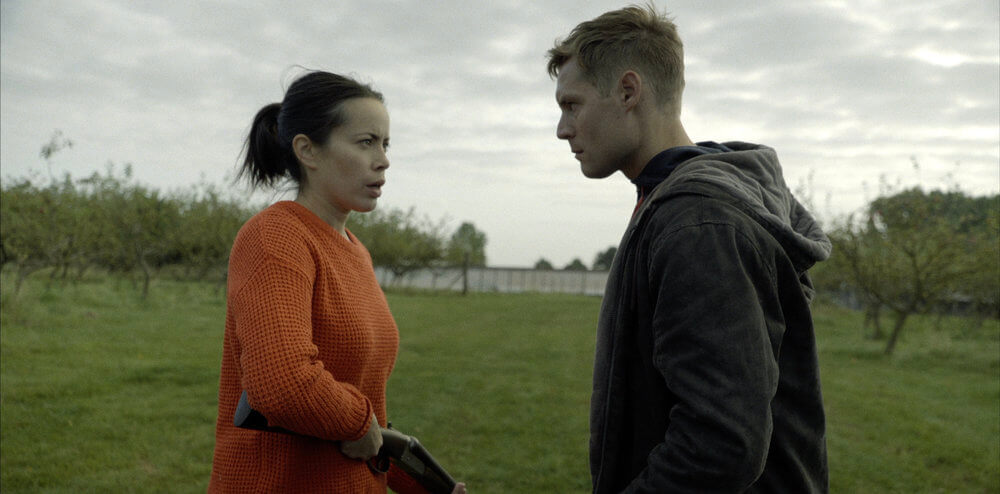
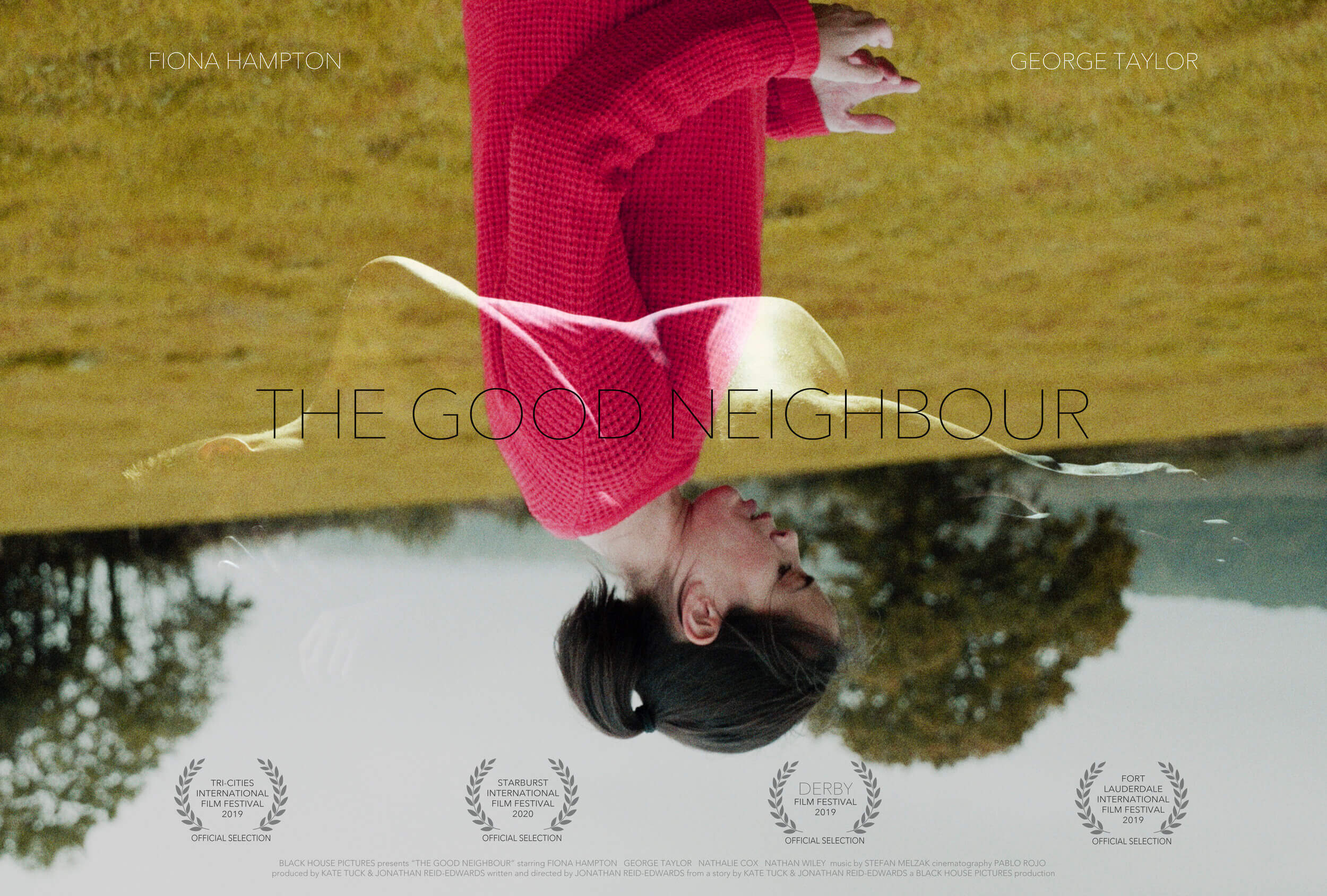
One of the standout films at this year’s STARBURST International Film Festival was The Good Neighbour. The film follows a woman struggling with a recent MS diagnosis who strikes a friendship with a man not from this world. As the film makes its way to Prime Video, we caught up with writer/director Jonathan Reid-Edwards and producer/writer Kate Tuck to find out more about the making of this engaging, very human sci-fi drama…
STARBURST: What was the genesis of the story?
Jonathan Reid-Edwards: Five years ago, I was diagnosed with Crohn’s disease during a pretty harsh relapse. I was juggling a day job and trying to get my first feature made and I couldn’t deal with the fact that I wasn’t as in control of my life as I thought I would be – I felt the disease was scuppering my chances at the life I wanted. In truth it was much simpler- I was too stubborn to ask for help.
Kate Tuck: When Jon started to feel a bit better, we went for a long walk and came up with the story for The Good Neighbour. We wanted to make something about the power found in asking for help and accepting it. It’s also important to us to tell stories from underseen points of view.
The film touches on the post-Brexit way of thinking, was it tempting to go further that way?
Jon: The initial script came about as the referendum was decided. Regardless of political opinion, it would have been impossible to not have Brexit leave a mark on the film. Yet at the same time, it was something we didn’t want to date the film, particularly as at the time of filming it was still up in the air with whether the Brexit process would actually go ahead. So we had to temper how far we went and keep the film universal.
Kate: If we were to go further into exploring the ramifications of Brexit, the film would have become about something else entirely. So as much as it was important to us to include the element of ’the fear of the other’ if we had delved too far deep into we would have lost the thrust of Jodie’s story.
You have a great cast, was it hard to find the right people?
Jon: It’s funny, we both went to drama school in our twenties and as a result a large proportion of our friends are working actors. It’s something we take for granted whenever starting a new project. In this instance, the lead roles were written with the actors in mind. From the very first round of ideas for the story, one thing was agreed: Fiona Hampton would be the lead, followed by George Taylor. Also, knowing them so well means you know the range available to them as actors – things a casting director may not be able to discern from the few roles they’ve seen them play.
Kate: The benefit of casting this way is that there is an in-built chemistry and ease of working. Jon, Fiona, and George are not only friends, but have worked together previously on several projects. Even when casting outside of our immediate circle, we were extremely lucky to be able to tap into the networks that our lead actors have developed through their own burgeoning careers. A great example of this is Fiona introducing us to Lucy Sheen, who plays her mother.
How long was the shooting schedule?
Kate: The shooting schedule was five weeks in total: four weeks on our main location – a farm in Saffron Walden – with another week shooting the remaining scenes including moving to a different location for the horse scenes. Before shooting we also had to build in time for some fight rehearsals and for Fiona to learn how to ride a horse. Shooting predominantly in one location meant that if need be, we could more flexible with the shooting schedule.
Jon: We had a lot of ambitious scenes to cram into the schedule that ultimately ended up not getting shot. As Kate said we had fight rehearsals – this was going to be for a grand action packed third act that half way through filming we realised wasn’t true to the story. So we shut down for two days and re-wrote the end of the film. As a result, fights were scrapped as well as some truly fantastic practical effects. But we did the right thing serving the story, and I still have sleepless nights imagining how bad it would have been to have kept those scenes.
You went to Indiegogo to finance the post-production – what was that experience like?
Kate: It was really successful so over all it was an overwhelmingly positive experience. It was great to connect with new fans and future collaborators. Some of the higher contributors became associate and executive producers on this project and are interested in working with us on future projects, which is really amazing. However for anyone about to undertake their own crowdfunding campaign you must always bear in mind that it takes over your whole life- you have to commit to it one hundred percent.
Jon: Considering we managed to shoot the film for £36,000, the money raised in post was a gift from the gods. To save money we do everything in house, and I edited, graded, mixed, and sound designed the film in post myself. So we were able to use that money to secure a proper soundtrack, cover VFX and more. We made it go a really long way. That said, I did kind of feel like Kubrick on Eyes Wide Shut in that the film took a much longer, more concentrated part of my life than I know any other film ever will in the future. Famous last words!
How does it feel to finally have the film out ‘in the wild’ for audiences to discover?
Jon: Having had this film such a huge part of my working life for so long, it’s a beautiful feeling handing it over. Kind of like sending the kids to university – I’m proud of it, obviously there are parts I would change if I could, but at the end of the day, it’s not mine any more. It’s about to start its life. Having seen the reaction to it at festivals both here and in the States, I’m excited by the fact that literally anyone can watch it now, that anyone can read whatever they want to into it.
Kate: The audience is the final component for any story, the element that completes the circle. So it feels great to finally put The Good Neighbour out there to see who it will connect with. We’ve been with this project for so long and it’s our first time going through the process of making and releasing a feature film. So it feels cathartic in a way, but we’re also really aware that the work isn’t over yet.
What’s next for you?
Jon: In terms of directing, I’m four drafts into what will hopefully be my second feature. It’s semi-autobiographical and with the Black Lives Matter movement, it’s suddenly become relevant. But it’s not a straight-up drama, it’s got a strong supernatural element – hence the stress on semi-autobiographical. I can’t wait to be able to talk about it.
Kate: As a filmmaking duo, I am working on the next film that we are going to make in-house, this time I’m writing and directing and Jon is producing. It’s going to be my debut feature as a director, I’m currently developing the script and we’re going to make it in the same way as The Good Neighbour. It’s written to be a low budget drama and we hope to be making it soon – but with the current pandemic, who knows?
The Good Neighbour will be available on Prime Video on August 7th.
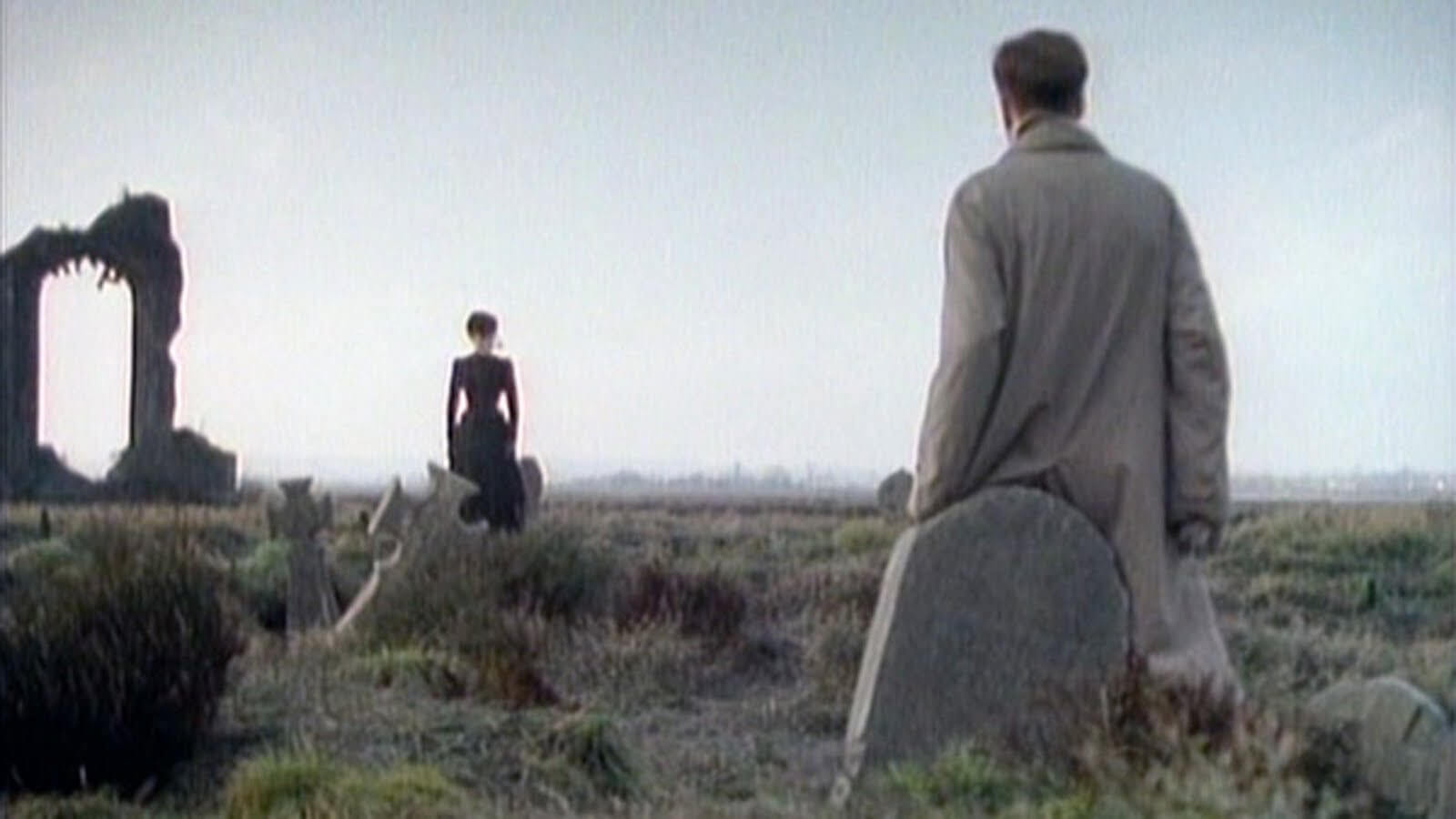
Andy Nyman is an English actor, writer and director whose work includes Ghost Stories, Peaky Blinders, Star Wars: The Last Jedi, and Something Wicked This Way Comes. He also appeared in the classic 1989 version of The Woman in Black, which is being released on Blu-ray this August. We spoke to him to talk about working on the classic adaptation.
STARBURST: What can you tell us about the time way back when you were on the set of The Woman in Black?
Andy Nyman: Well, I mean, the first thing to say, it is absolutely amazing that it’s finally getting a proper release and people are really going to get to see in all its beauty. I saw it last week because I did the commentary on it with Mark Gatiss – it looks like it was shot yesterday. Absolutely amazing. My memories are really vivid, actually, because it was the very first TV job that I ever did. And it was my very first TV audition.
So I got to meet Herby Wise, who I was kind of in awe of because of I Claudius, which was a big deal when I was a kid. You knew going in to meet him that this was a prestige job, because at that time there were only three channels, if you remember. And this was the big Christmas Eve film with a big budget. Then, on top of all that, as If I wasn’t excited enough anyway, it was a ghost story, which, of course, for me is just heaven. So I met Herby, who was absolutely charming. We had a very nice meeting and I got the job. It was so incredibly exciting. You know, for somebody who’s a heartfelt horror fan, going onto a proper set in a proper studio – Shepperton Studios where they were filming – on film because this was before HD digital. Oh, I feel ancient now, that’s ridiculous. Iit was just fantastic being on these sets with great actors, you know: David Ryall, Steven Mackintosh, and Adrian Rawlins, and I just loved every second of it, just watching the way it was working as a whole.
What was your response at the time when you realised that it was a script adapted by Nigel Kneale?
Well, he’s a legend, so it was incredibly exciting to be in a ghost story based on this brilliant book that was already fantastic. And then knowing Nigel Kneale was adapting it! I mean, it was just an amazing thing to find yourself part of. And what’s so exciting is, you know, they’ll be this new Blu-ray that will be bought by fans of it when it first went out. Those who have been crazy for it for years. But there’s also got to be a legion of new fans coming to it. You are just not going to believe how brilliant is because, hand on heart, I think it’s one of the best stories ever made. It’s really a fantastic piece of work. You have a combination of Susan Hill’s brilliantly dark story and Nigel Kneale’s unapologetic sensibility, which is very dark and the ending is just bleak! Bleak beyond words, and you can’t quite believe that with a Christmas Eve show. It’s a very happy marriage and all of those worlds coming together.
What is it about the Victorian setting and the ghost story that worked so well?
Well, I think there’s a lot to love about it. What’s interesting about The Woman in Black is the way the movie is made is that you are at the dawn of electricity. You’re coming out of that gaslight era. So there tends to be more shadows, more darkness. There’s more naïveté to the world, but I also think that there’s a Britishness, and an emptiness and a loneliness that goes with that world because they’re still dealing with a world that was a little island as opposed to where we are now, which is this global world where we have that extraordinary mix.
You know, it’s a completely different thing of what Britishness is compared to what it was in the Victorian era. There’s something very isolated about our world. It’s easy to forget that we are this little island. And I think the writings of M.R. James and Dickens, and what Susan Hill took on, reflected that isolation, loneliness, and bleakness. 70% of our weather is drizzly and a bit grim. That’s not the same if you’re on the prairie in America. It’s a different sensibility. So there’s something that really speaks to us about our heritage that comes from ghost stories.
Do you have anything more cheerful planned for your future projects?
Well, there’s definitely brightness within the world. Myself and Jeremy Dyson are close to completing our next film script and a play. Both of which live in the world of genre. Both of which will deliver scares and humour and thrills. It’s a world that fascinates us, you know. And both of those stories are, again, uniquely British. I think it’s one of the things we set out to do with the film of Ghost Stories, in particular, but also with the play, was to make it a British thing. Put that out into the world in a way that brings together all of these things I’ve talked about, about the isolation and loneliness, this unique sort of gallows humour that we have that goes with who we are. That was something I think that most delighted us as the film of Ghost Stories played so successfully around the world. The reviews were universally wonderful. And one of the things that that was often spoken about was how classically shot it was, how it had this in the best way, harking back to ‘that world’. The sort of world that makes The Woman in Black so memorable. Those stories at Christmas on the BBC and a world that wasn’t about athletics and CGI. They’re about allowing the story to get under your skin and slowly but surely ratcheting up so that when you do deliver in the way to The Woman in Black does. My god, it’s one of the best sustained moments of horror ever on film. I believe that bedroom sequence is up there with the greatest moments of genre cinema. It’s about being brave and Herbie Wise is just brilliant at this, just slowly building over two hours. You know, my god!
The British horror genre has a beautiful back catalogue of work. If you had the opportunity to rebuild or recreate or redo one of those works, what would it be?
I wouldn’t want to rebuild it or remake it. I just wish I’d have made it originally. It’s The Omen. I just think that first film is a work of art. You know, it’s just perfect. The acting’s perfect, the mythology, and the plotting are perfect. What you can’t believe that stuff is written, it’s not real. And yet it feels real. I love the way it’s directed. I love the way it’s made. When Jeremy and I are working on something, our dream is that 30 years from now when you ask someone that question, their answer will be Ghost Stories.
We understand that your next year will be appearing in a Disney movie with the Rock as a very traditional Englishman. What are you allowed to tell us about it?
I can’t really tell you anything about it, you know I can’t! It’s directed by Jaume Collet-Serra, who I had the joy of making The Commuter with. And I loved working with him on that. And I loved working with him on Jungle Cruise. I cannot wait to see it! That’s all I can tell you. The set I was filming on probably cost more than the entire budget of Ghost Stories. There was one moment of filming that I saw that’s just a whole different scale.
Going back to the other end of the spectrum. You mentioned that you’re working on a new stage play. What can we expect to see?
Our new play? Well, I’m going to tell you even less about that! We’ll try and do what we did last time, which is to create a piece of theatre that is thrilling, exciting, and complete and will make you jump, make you laugh, and take you on a proper journey. One of the things that will attempt to do within that as well, is to give you secrets that are worth keeping. We will say: “please don’t tell any of these twists and turns to anybody”. Let them come to fear, because that’s one of the things that we are so proud of with Ghost Stories. That play’s been on around the world for over a decade. Millions and millions of people have seen the film or the play. And you still can’t really find out what it’s about. Other than that, it’s about a Professor who looks into three cases, supernatural cases. That’s it. We’ve always said to people, please, can you keep a secrets if you enjoyed it? That’s fascinating, because everything is ruined for you these days, every plot is spoiled in these trailers or reviews. And there’s nothing like going to see a rattling good yarn knowing nothing about it. And that’s what we want to do. We want to just create something that can just will run and run and run and that people will love.
What would you say to a horror fan who doesn’t think theatre is for them?
It is interesting you ask that now, because we’re in a position where the art is being neglected in this pandemic totally. One of the things that’s about is this perceived snobbery of theatre. Like it’s just some sort of thing for the posh clever elites. And it could not be further from the truth. There will be some plays that you think are bollocks and some plays or musicals that you’ll think, oh that’s not for me. And then other things that you will not believe how exciting and brilliant it could be. And that was one of the amazing things with Ghost Stories. It brought in 60% of the audience on its first drop. People who had never been to the theatre before. That’s extraordinary. And the thing that you are just seeing, that thing will never, ever, ever be replicated again in the way it just has. You experience something utterly unique on that night.
The Woman in Black is released on Blu-ray exclusively from the Network website from August10th.
We caught up with James Wyatt and F.Wesley Schneider, the two lead designers behind the latest Dungeons and Dragons supplement Mythic Odysseys of Theros. Let’s find out more about this exciting addition to the world of D&D from the creators themselves.
How is Mythic Odysseys of Theros different from other D&D games?
James Wyatt: The thing that really sets Theros apart from other D&D settings is the role of the gods. As in Greek myth, the gods are constantly meddling and scheming, and their interactions can drive a whole campaign. Player characters, regardless of class (not just clerics) might get significant magical powers from a god and undertake quests on a god’s behalf. We’ve never put so much weight on both a character’s devotion to a god (reflected in the piety system) and the gods’ role in driving adventures and campaigns (reflected in the adventures chapter) in a D&D book before.
F. Wesley Schneider: In many ways, it’s not. It’s still D&D. It’s still heroes going on fabulous adventures and facing off against incredible evils. If you know how to play D&D, Theros offers one more set of tools for your gaming workbench. That said, Theros takes its inspirations from Classical Greco-Roman mythology—stories of Perseus and Pandora, of works like The Odyssey and movies like Clash of the Titans. The setting’s focuses are more on spears and hydras than swords and dragons, providing you with everything you need to run adventures that feel like timeless myths.
What should fans of Greek Myths being looking out for?
James Wyatt: The gods of Theros, of course, are inspired by the gods of ancient Greece, though you won’t always find a one-to-one correlation between them. The pantheon of Theros was built from the ground up to suit a fantasy world, so it resonates with Greek flavor but also works really naturally in a D&D campaign.
More than the gods, though, people who are interested in myth should enjoy the mythic scope and scale of the book. We really took the name of the book to heart and tried to help DMs and players tell the stories of grand odysseys and supernatural adventures that resonate deeply with the themes and elements of Greek myth.
F. Wesley Schneider: We want to encourage players to explore and participate in their favourite scenes and plots from classic myth: endless voyages in search of home; descents into and escapes from the Underworld; bargains and contests with fickle, fallible gods. Moreover, in Theros, from character creation on, every character is considered to be a hero—a living legend. Your deeds will shape the world for all time to come. It’s just up to you to determine how.
What should fans of Magic the Gathering be looking out for?
James Wyatt: Folks who remember the original Theros card sets (2013–14), as well as those who’ve played this year’s Theros Beyond Death, will recognize the vast majority of the art in this book, though you might never have seen it at this scale before. One of the things I love about doing books about Magic settings is the chance to show off the amazing art that our artists produce for Magic, but blowing it up to a much larger size so you can see the care and detail in every painting.
You’ll also recognize a number of the named characters and monsters who appear in the book—from Taranika, the current regent of Akros, to Tromokratis, the mythic kraken—who all appeared on cards in various Theros sets.
F. Wesley Schneider: If you loved something about Theros in Magic you’ll likely find it in Mythic Odysseys. From devotion and piety being central to the storytelling to your favourite divine and mortal characters, from devastating monsters to absolutely incredible art, it’s all there. Only now, there’s a D&D spin that lets you make these stories your own.
In the Greek Myths, one of the big things is that gods have their own ‘soap opera’ going on. How did you work that in for Theros?
James Wyatt: As they’re described in the book, each of the gods of Theros has their own agenda, their own complex web of relationships with other gods, and their own values that they strive to uphold through their champions. They’re a lot more complex than just an alignment—Heliod, the sun god, for example, upholds ideals of law and good, but he’s also an arrogant jerk who doesn’t like to be overshadowed by his champions. He’s got a long-standing rivalry with his brother Erebos, the god of the dead, that’s a lot deeper than a simple “good versus evil” conflict. So there’s a lot of texture for players to explore as they go through their adventures in Theros.
There’s also a short table for each god in the adventures chapter that gives ideas for the god’s most ambitious and world-shaking schemes, which could end up shaping the course of an entire campaign. Maybe Klothys, the god of destiny, decides that mortal worship of the gods has distorted the natural order of things and needs to be stopped, so she sends her agents on a crusade to abolish religion and destroy temples across the world. Or Heliod decides that the constant squabbling of the sibling war-gods Iroas and Mogis is causing too much disruption, and he kills them both. What happens to the world in their absence? Ideas like that can help Dungeon Masters craft a campaign that feels unlike anything else that you’ve ever seen in a D&D campaign . . . and also feels very true to Greek myth.
F. Wesley Schneider: In every way. The gods of Theros are one step removed from every plot and peril. They know who the characters are and they’re watching. They’re courting these mortals to do their will or they’re opposing them for their own ends. And they’re often willing to bargain. Have a hero get in over their head? Call out to the gods! I’m sure it’ll go just great.
How much did the existing art for Theros inspire the book?
James Wyatt: A lot! Most of the book’s art was previously published on cards. The book was, first and foremost, an effort to bring the world depicted on the cards—art and text alike—to life in a D&D framework. Most of the magic items in the book are things depicted on cards, and the same is true of (I think) all of the monsters.
F. Wesley Schneider: Richly. Deeply. Fantastically. The cards from Magic’s multiple Theros-focused sets provided not just hundreds of peeks into this world, but dozens of characters, in-world quotes, rules-suggested behaviours, and ongoing plotlines. It was truly an embarrassment of riches for our work. Also, my co-lead on the project, James Wyatt—on top of being a D&D veteran—is on the Magic worldbuilding team, so his knowledge of the breadth of Theros made him the perfect expert for this project. D&D team members Ari Levitch and Adam Lee also formerly worked on designing the Theros setting for Magic, and throughout the process their insights were invaluable!
What’s your favourite part of Theros?
James Wyatt: The mythic scope and scale is the thing I’m most excited about. We really tried to give you the tools to play a D&D campaign that feels super-heroic, earth-shaking, and fantastical. From creating characters with supernatural gifts (like an Anvilwrought character, forged by the hands of a god, or someone whose devotion to another hero carries magical weight) to adventure seeds loaded with divine intrigue, all the pieces fit together to make a really epic picture.
I’m also personally very proud of the omens table(s)—a hundred entries, divided into subtables for each god, that the DM can use when the gods are trying to communicate something to the player characters. It’s just fun!
F. Wesley Schneider: Everyone says the mythic monsters, so I’m going to pass on that. (But they are pretty great; Jeremy Crawford, Ben Petrisor, Dan Dillon, Orion Black, and others all did incredible work bringing those epic confrontations to life.)
Those beasties aside, I’m going to say the myths. Something I wanted capture was the experience of opening up a book of mythology in your grade school library and flipping through story after story of heroes, monsters, and explanations of why the world is how it is. To that end, throughout Mythic Odysseys of Theros are numerous myth sidebars—little stories related to truths and legends, histories and tales about the world. If you want to pick up the book and just read about the exploits of gods and heroes and how they shaped the world, you absolutely can. And if that provides ideas for your own characters and adventures, all the better!
Why should I run a Theros campaign instead of Eberron or Forgotten Realms?
James Wyatt: You should run what makes you (and your players) happy! In the case of Theros, maybe it’s because you love Greek myths of the feel of super-heroic fantasy. Maybe you’re intrigued by the politics and infighting of the pantheon and the role that pious (or iconoclast) characters might play in it. Maybe you want to recreate the feel and flavor of The Iliad or The Odyssey or the story of Orpheus. Maybe you’re just looking for a change of pace and want to try something new and different.
F. Wesley Schneider: I mean, the plane shift spell is wild. Why choose?
What’s your next D&D project?
James Wyatt: I recently finished work on an unannounced D&D project, for which I had the great pleasure of working with Wes again. Now I’m back at work on Magic stuff, working on sets that won’t see the light of day until 2022 or so. The next thing you’ll see with my fingerprints on it is the Zendikar Rising card set, coming this fall.
F. Wesley Schneider: Something with slightly fewer shark-headed chimeras, I’m afraid. Conjecture away!
If you could bring back one D&D or campaign world that isn’t yet in fifth edition, what would it be?
James Wyatt: My nitpicky technical answer to that is that since we wrote the core rulebooks to be expansive and encompass the whole multiverse of D&D, all our old worlds already are in fifth edition. That said, I’d love to see a fresh take (and new art!) for a number of older worlds—Dragonlance and Greyhawk come to mind.
F. Wesley Schneider: My stars and garters—that’s sort of a personal question, don’t you think?!
There are loads of news ‘actual play’ D&D shows on the internet right now (Critical Role, Questing Time, Rivals of Waterdeep,etc) do you have any recommendations? Or failing that, recommendation for fantasy novels/works?
James Wyatt: I think it’s really cool that this genre has taken off in the last few years. (I can remember conversations, many years ago, where we discussed and laughingly dismissed the idea that people would find enjoyment in watching other people play D&D. How wrong we were!) As with running a campaign, you should watch what makes you happy: find a show where you enjoy the storytelling and relate to the players.
F. Wesley Schneider: At the moment, I’m reading and loving The Devourers by Indrapramit Das—it’s easily my new favourite book about werewolves in India. I’m also relishing my much belated playthrough of the Phoenix Wright: Ace Attorney trilogy, which—if folks aren’t aware—features way more wizards than you might expect!
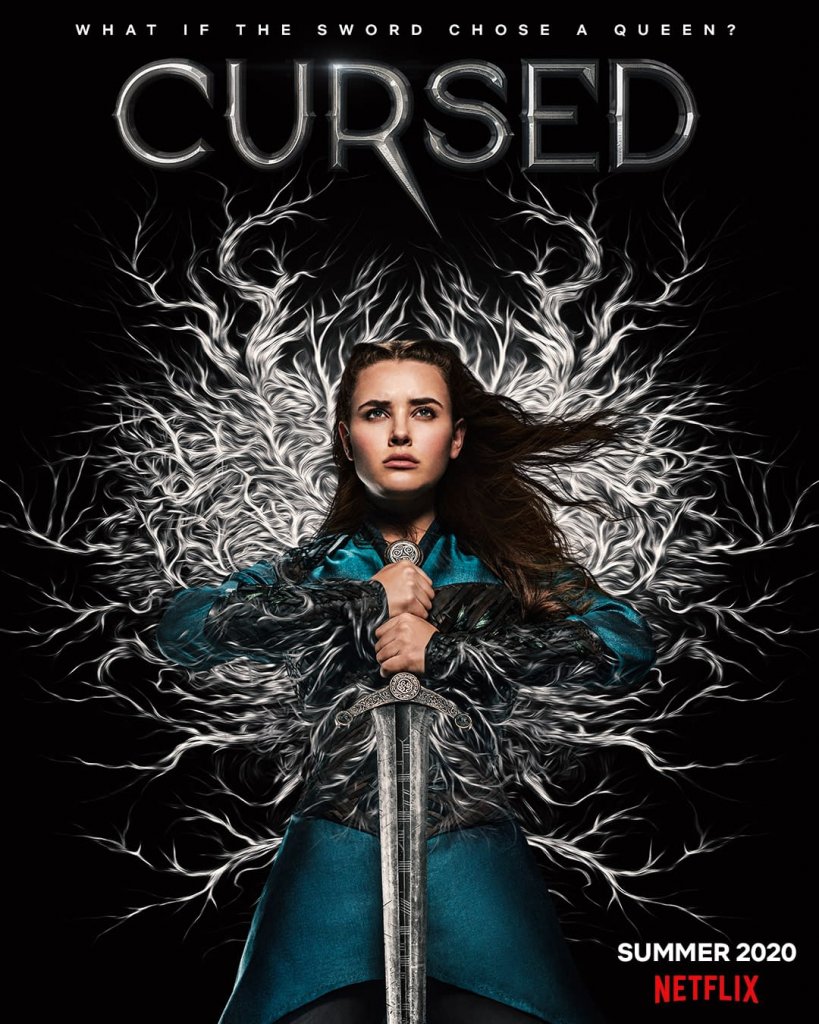
Legendary writer, director, producer, and artist FRANK MILLER talks CURSED, the latest of his celebrated works to be adapted for the screen…
STARBURST: With Netflix’s Cursed, you and co-creator Tom Wheeler are playing with perspective. It’s a retelling of Arthurian legend told from the Lady of the Lake’s point of view. What do you think exploring a story from a different angle does for both the original story and for the one spinning off of it? How does it enrich both?
Frank Miller: To use your word, it ‘explores’. This is material that’s open to endless exploration. It’s been examined and imagined by many talents over a very long period of time, as well as by amazing illustrators. And so, there are wondrous places to go. Tom and I are just going down all the different little paths and seeing what we feel like pulling out and examining and illuminating.
What is it about this character, about Nimue, that resonates the most with you? What was the selling point here?
I’ve always loved the legend and everything about it. This is just stuff that had to happen. But Nimue in particular… Tom’s inspiration was his daughter. She helped him bring a perspective to the legend and to tie everything together. He used her as a way to bring the magic into all of this. She is the magic of the story. Her hero’s journey gives us a fresh take that has never been examined before. It makes this less of a boy’s story.
There’s the concept of the hero’s journey, or the monomyth, and how humanity is essentially telling one story, describing one experience, in different voices. How does Cursed both honour that common human resonance and bring a fresh voice to the business of being alive?
That is something that I believe is largely discovered scene by scene. A hero is not defined so much by standing in front of a lightning bolt as it is by individual decisions made, particularly in times of stress. And with a young lead character in an alien hostile world, we see someone who has to face questions of intelligence, survival, and morality all the time. And there’s romance, where is as natural of a stage in our lives as any.
How do think viewers will connect with Nimue? You touched on it when you said she grows up, finds romance…
There’s this theme of nature being so powerful. But I think what’s really gonna sell Nimue is Katherine [Langford]. They’re gonna see all the stuff that Tom and I talk about coming through her eyes, in her voice, and you’re gonna fall in love with her.
In both the show and the book, there’s this mix of medieval superstition, blind fanaticism on the part of the antagonists, the Red Paladins, and this family loyalty to her mother that really enriches the story. But underneath all of it is this really cool exploration of fear and how her fear and the fear others show her impacts her evolution. Can you speak a little on that?
There’s a lot I love about that because it’s so much to do with her fear of what’s around her, obviously, but there’s also other people’s fear of her exceptionalism. That’s something I enjoy. She is not like the rest. And she’s going to learn that and know that better and her coming to know that to that extent and use it is really an integral part of the storyline. But also this is a world of fear. This is a world where demons dwell. Where ancient religions are in conflict with contemporary religions which are in conflict with internal truth.
Season 1 of CURSED launches on Netflix July 17th.
For more of our chat with Frank Miller, pick up issue 473, out July 30th.