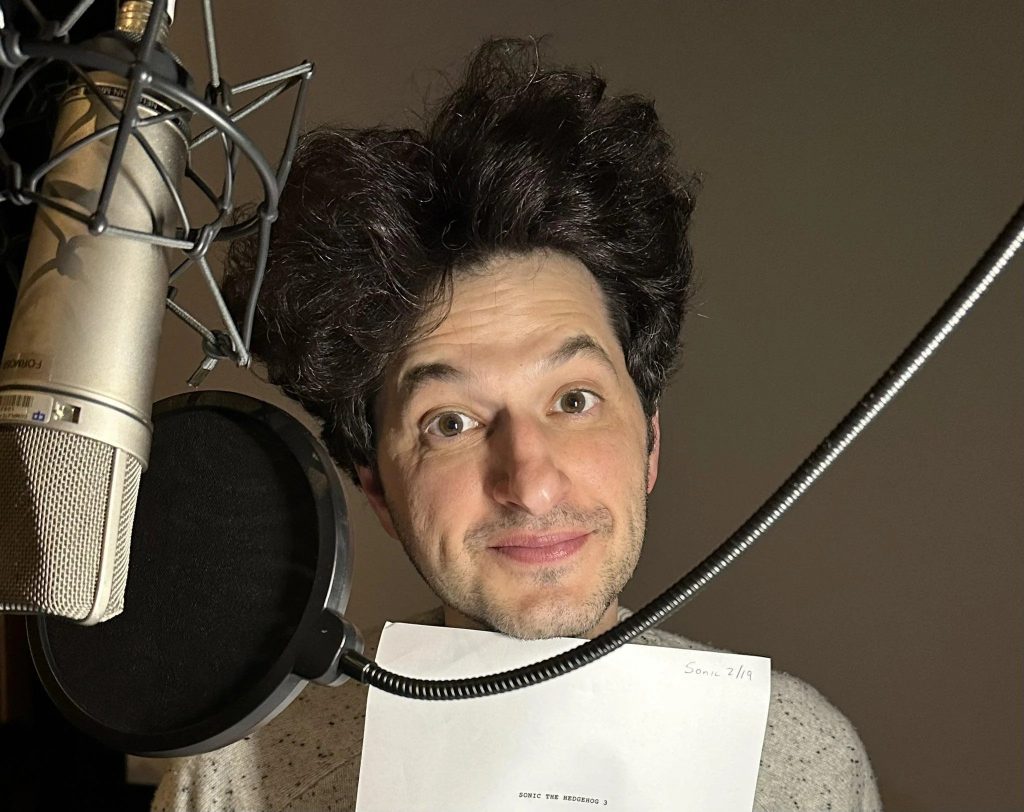
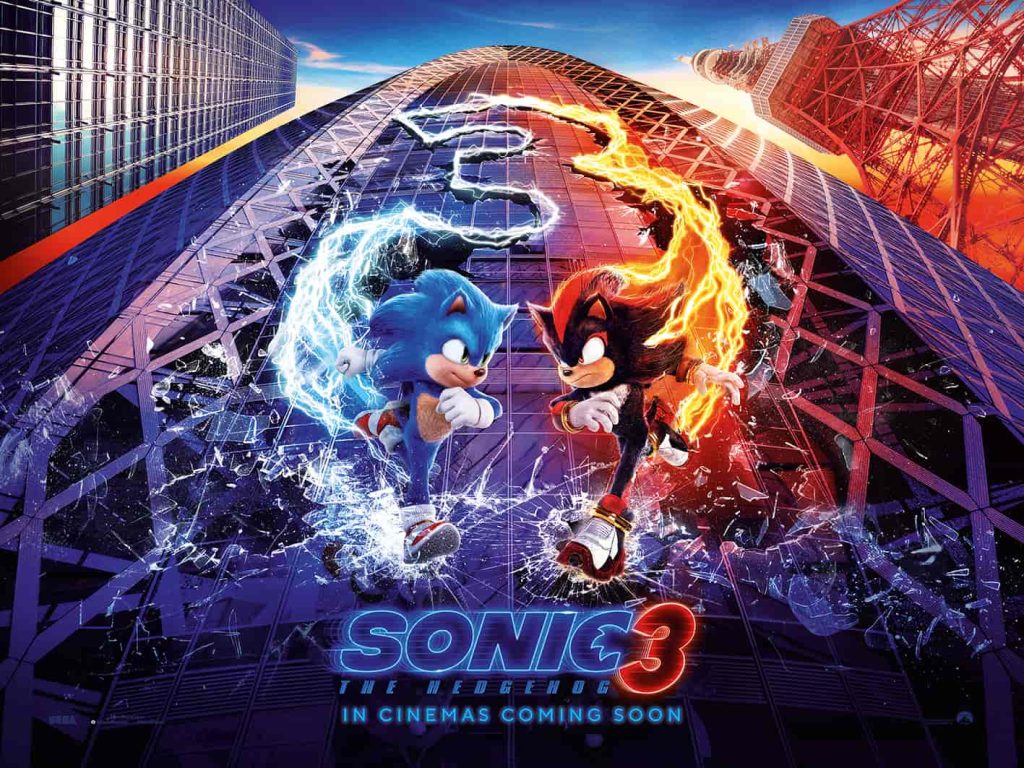
Sonic gained a family in the first movie, and then completely established himself as a superhero by the end of the second. With those roots now firmly planted, he’s going to use it as fuel for his showdown against fan favourite, Shadow in the SONIC THE HEDGEHOG 3! We momentarily manage to catch up with the voice behind the iconic speedster – BEN SCHWARTZ – to discuss family, villains, adventure, and everything else you can expect from the upcoming sequel…
STARBURST: By the end of the second movie, Sonic has gained close friends and a family. What can we expect from some of these dynamics this time around?
Ben Schwartz: It’s been so fun to watch Sonic grow! In the first movie, he was lonely, and he so desperately wanted friendship and a family, and then he got that in Tom and Maddie. In the second one he got real friends with Tails and then, ultimately, Knuckles. So I think you’re watching a kid grow up too. So it’s like, “Alright, he has a family now, but he is also a kid, so he can be a little rebellious sometimes, and not do what his parents say all of the time.” I think we are kind of growing with our audience as we go, which is really exciting. I love the idea that this movie has so much heart, and family, and caring, and teamwork. So I think we always try to keep that there, because if you cared, or invested in Sonic, then the laughs become even funnier, and the failures become even more heartbreaking.
It looks like Sonic is teaming up with Dr. Robotnik (Jim Carrey), how excited are you for fans to see that, and what does this new dynamic idea bring to the story?
One of the fun things about when you do enough movies, is you get to really explore different characters, like with teaming up. So the idea that there’s going to be two Jim Carreys in this movie, it’s going to be fun! And also, what does this look like for ‘Team Sonic’ – which is Sonic, Knuckles, and Tails – how are they gonna work as a team? What does that look like? Is Sonic pushing too hard to be the leader, is he trying to do everything himself? So, all of those relationships are great, and you’re never going to get a fight from me if we can have two Jim Carreys in a movie. I’m going to say yes, every time!
What does this third outing do for Sonic, like how does it add to his arc that has formed over the trilogy?
Well, he becomes supersonic at the end of the second movie, in that amazing sequence, which I love so much, but then he also learns that he can’t be that all of the time, so he gives The Master Emerald to somebody else. So I think with this one it is literally him learning how to be a leader, and him learning to rely on his friends, and to lean on them for help. I think a big theme in this movie is “You can’t do it all by yourself, it’s okay to ask for help”, which I think is a big thing for kids, and adults. It’s okay to ask for help, it’s okay to know when you can’t do something by yourself. So I think that’s the big theme in this one. And what does that mean for Knuckles and Tails, too? Being pushed to the side a little bit, when they feel like they should be out there with him.
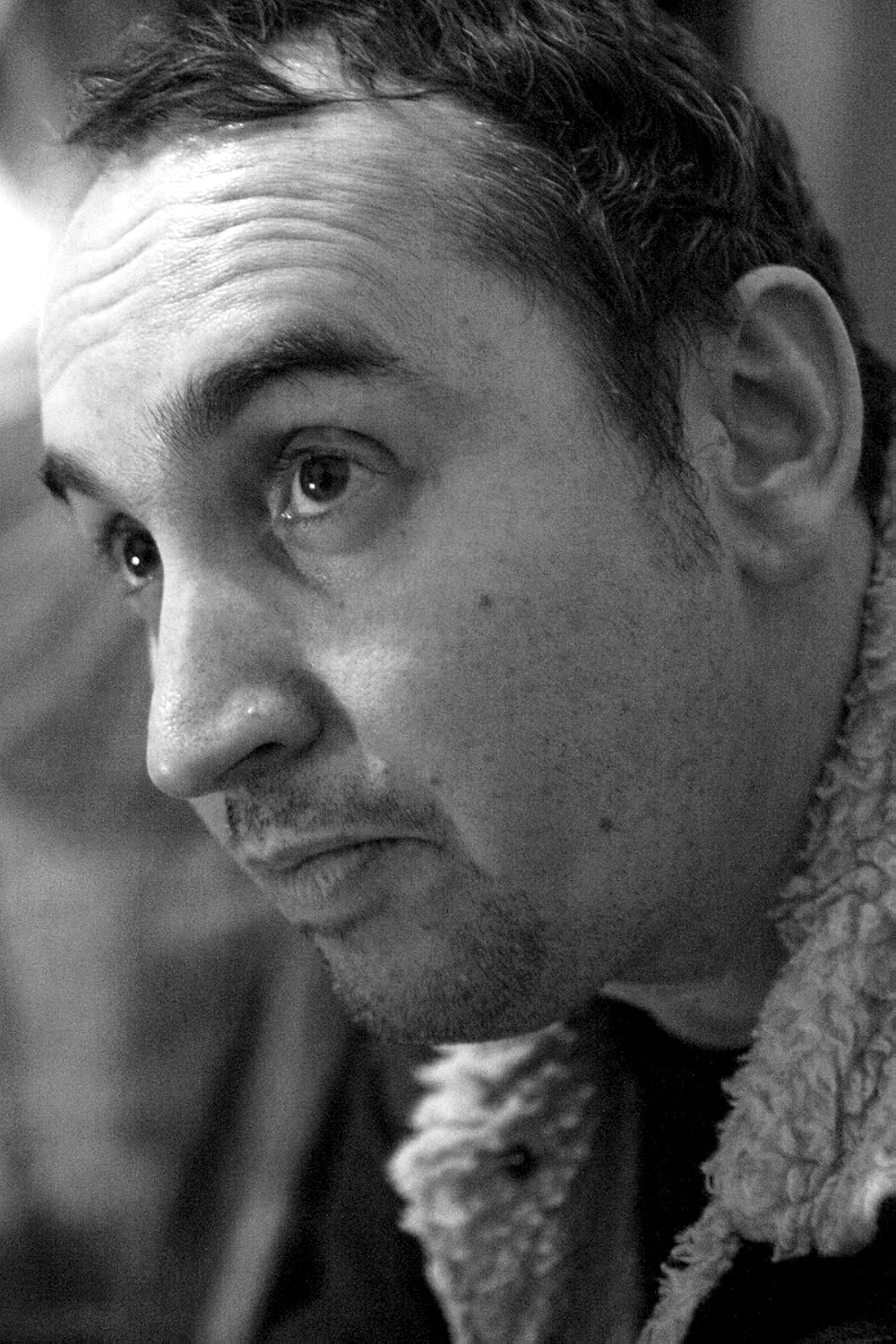
Ben Schwartz
In the first movie there’s a brief moment where Sonic is watching Speed – how insane is it to have Keanu Reeves take on the role of Shadow? It seems like the films just keep getting bigger!
It’s so good! The ultimate life-form, and he crushes it. The animation on Shadow is great – everything got notched up! The fight sequences are more intense and beautiful, the CG is incredible. The backdrops are all around the world. It just feels like, “Alright, we did Sonic 2, what can we do with 3 to make it even bigger and better?” So we took it to the nth level! What’s going to happen if we get a fourth one of these?! It’s been amazing to watch how big the scope of all of these movies are getting. When people support us and see the films, we have more opportunities to go even bigger for the next one.
We read that Sonic Adventure 2 and Shadow the Hedgehog are an influence on this movie; can you elaborate on that? What themes or ideas from those particular games have found their way into this?
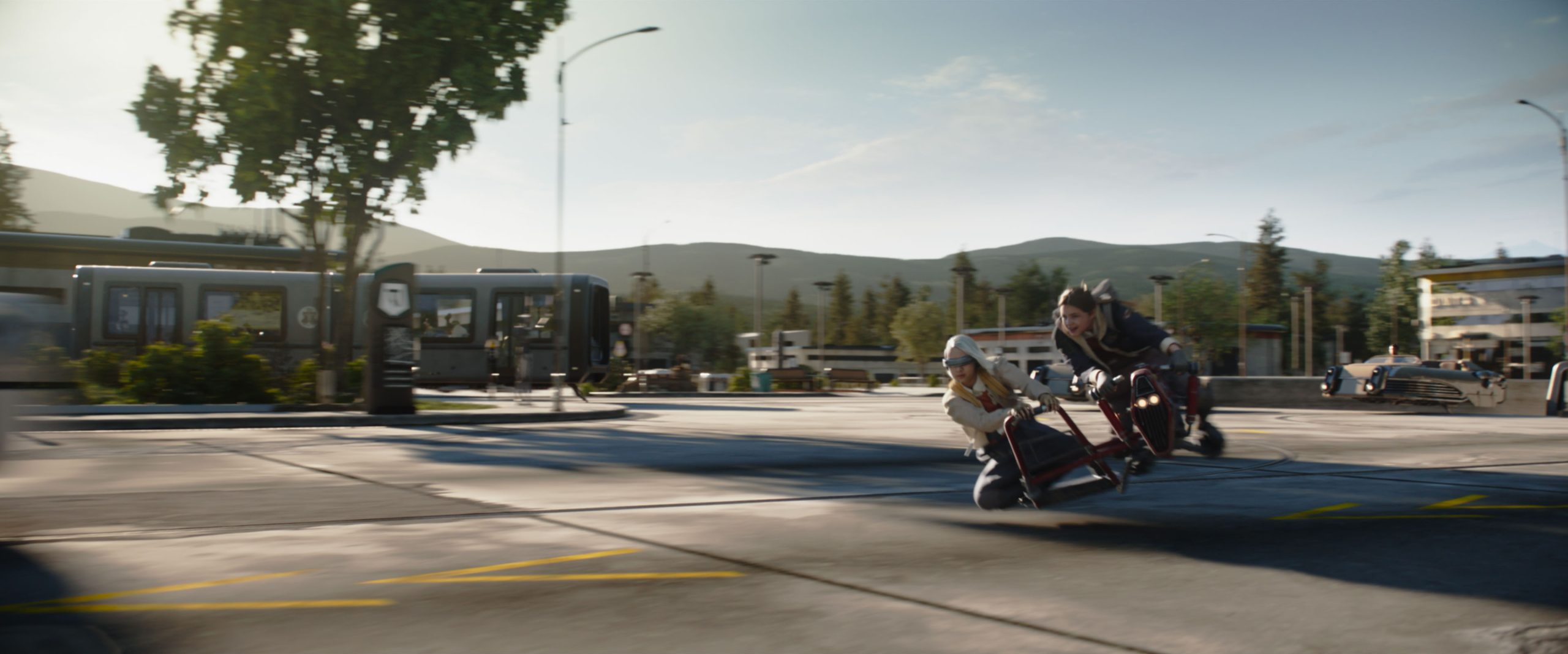
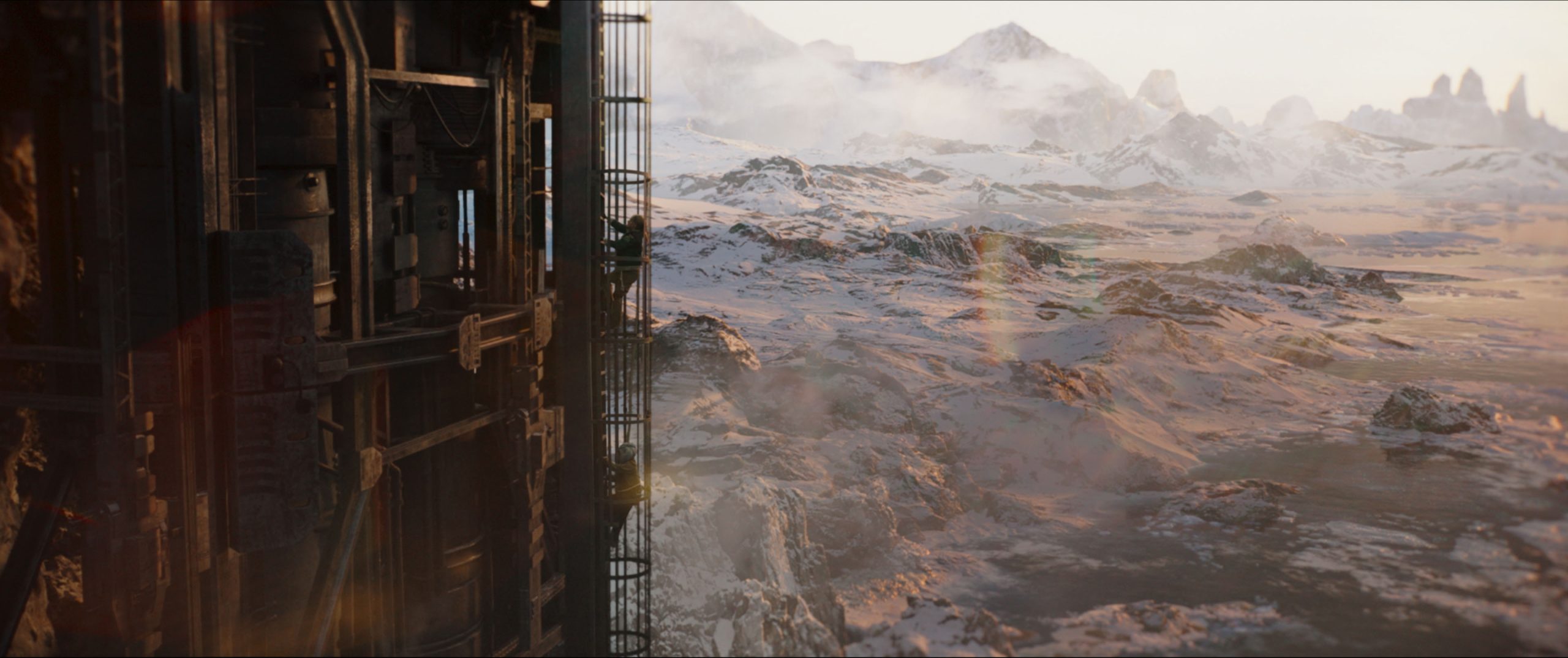
I think if you look at the trailer, first of all we see Shadow, second of all we see his teleportation, we see his bike, there is an Akira slide, which is not in Sonic Adventure 2, but it’s still very cool! You can even look at the locations in the trailer, and you’ll be like “Oh!” With the storylines, we play with a lot of different things in this. But I think if you’re going to do a Shadow story, you’d be hard-pressed not to start where the original, beautiful Shadow story started, with Sonic Adventure 2. So, you’re going to see a lot of Shadow, and a lot of story in there, and you’re going to see all of the action that brings. My hope is that there’s going to be a little bit of that music too. This movie is so cool, and if you’re a fan of Sonic Adventure 2, you’ll be very pleased with this film.
This is your third Sonic film with director Jeff Fowler, how has your creative collaboration grown or changed over that time?
He’s the best! He should get so much credit, because what he’s doing is so impossibly hard, he’s filming live-action people with no CG people there, then he’s doing the voice-over in CG, and he’s somehow putting all of the worlds together. He has to have such foresight when he’s doing live-action stuff, and understanding exactly where all of the action will be, and where all of the CG stuff is happening. We got so lucky that his first big thing was Sonic, because then we just get to keep him… until he’s sick of us! Him and I from the beginning were always really collaborative, he always lets me into the process, to give thoughts, think of ideas about how I can make my Sonic lines better, or thoughts on the movie in general. We had gotten so good at it that the amount of time it takes to do what we do is so much quicker, if it’s twenty recordings for the first one, and then for the next one it’s seventeen, this one is fourteen. We know it so well, and he also knows that I’m there whenever he needs me, If he needs me to come in and do one line, and it makes the movie point one percent better, I’m there in an instant. I care so much about the movie, he cares about the movie. All we are trying to do is make the best thing, so him and I can make a hundred more of these. I think the fans of the franchise know how lucky we are that we got him, because it’s not easy to make a successful video game movie, and he’s made two! My hope is that this third one will be even more successful and then we can make a fourth, because a fourth one would be bananas!
SONIC THE HEDGEHOG 3 zooms into cinemas on December 21st
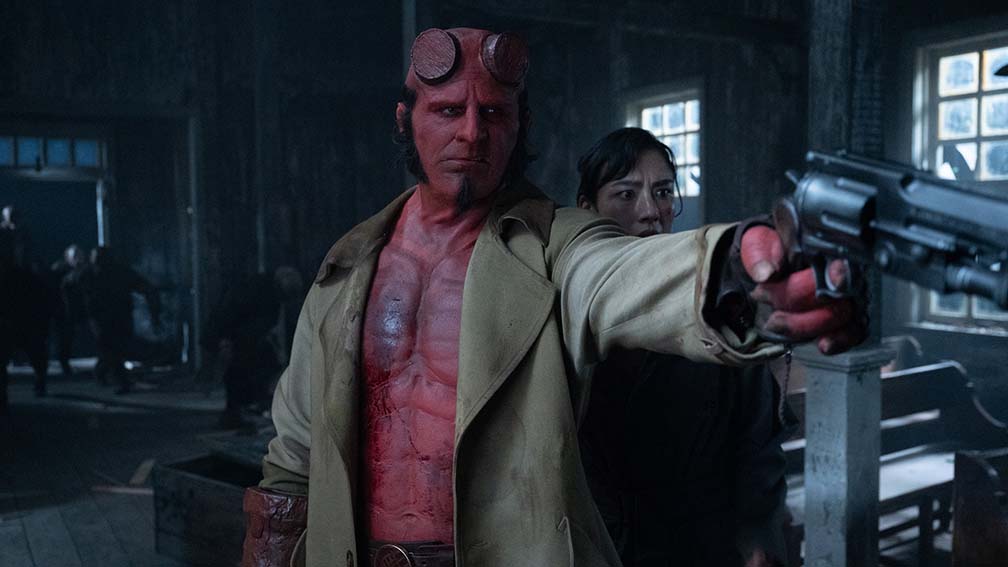
Hellboy: The Crooked Man marks the latest entry in the cinematic universe of the Dark Horse Comics character. With the script co-written by comic creator Mike Mignola, Hellboy makes a blazing return to the screen in what has already been dubbed the most faithful adaptation to date. The film focuses on the chilling horror of The Crooked Man’s limited comic stories.
To tell us more about this latest film and portrayal, we spoke to actor Jack Kesy (Deadpool 2, 12 Strong), who steps into the role of Big Red under the watch of co-writer/director Brian Taylor (Crank 1 and 2, Ghost Rider: Spirit of Vengeance).
In the 1950s, Hellboy is enlisted to aid rookie paranormal researcher, Bobbie Jo Song, in the transportation of a deadly creature. However, their mission soon goes awry when an accident leaves them stranded in the forests of rural Appalachia where a small community resides, haunted by demonic forces. With all clues pointing towards witchcraft as the culprit, Hellboy and his allies must hunt down the source of this evil – the ‘Crooked Man’ who has been sent to Earth to collect souls for the devil.
Taking this iconic character back to the source material, Kesy tells us more about the experience…
STARBURST: When did Hellboy first come into your orbit, was it from the movies, or the comics?
Jack Kesy: It was from the movies and, specifically, Guillermo del Toro’s great original film. My first legit job as an actor was working on The Strain, so I dived into all his movies as any excited actor would. When it came to Hellboy: The Crooked Man, I started with the script, as I always do. I’m like a technician in that I have my own process, but it has to begin with the script because that’s what everybody’s working from to tell the story. The script was co-written by Mike Mignola [Hellboy creator] and Brian Taylor, so that’s a good place to start! Then, of course, I also read The Crooked Man comics, especially for tone, visuals, and aesthetics, because that’s what Brian captured as our director. Then, I also find myself exploring this world and going down the rabbit hole.
How was it working with the cast and crew?
We were out there shooting in the woods with a very talented team, and everybody working so hard. The crew was phenomenal, and the cast are absolute pros, with no egos. Everyone really gave it their best. This isn’t on the massive scale of earlier Hellboy films. Although it’s about demons and witches, we’re telling a very down-to-earth, gritty, human story, which is the kind I personally connect with much more.
How did you feel about wearing the iconic red suit?
I didn’t know what to expect, and there was an element of excitement but also anxiety as I was thinking, ‘how are we going to tackle this?’ I’d never done a full-body prosthetic or, let’s call it, three-quarter prosthetic because it was really knee-high. I didn’t know if it would fit, or how it would feel. First, we had to get to a place where everybody was happy with how it looked, which they were, so that’s great. Then, I had to figure out my own movements within the suit and get used to wearing it almost every day, so it’s a learning process, but you figure it out as you go.
How hot was the suit?
It was very hot! The makeup effects team did an amazing job but it was unavoidably hot under there and I sweated constantly, which I realise made it challenging for them too! By the end of filming I’d lost 20 lbs! I was wearing a sauna suit everyday [laughs]. It takes mental focus to get through that and keep going. For me, the physical stuff is easy, I work out 5 days a week and have always been into sports and athletics. So, it’s the same with action scenes, punching and kicking, no problem. Fortunately, I was the appropriate physical size to come on board and play this character, so that aspect was seamless and I didn’t need to prepare differently. However, wearing the prosthetic suit was a new experience for me.
And finally, what do you hope audiences take away from Hellboy: The Crooked Man?
I’d love for people to enjoy this more grounded version of the character and come away feeling that I’m believable as Hellboy. Maybe it would give us the chance to explore the character further, maybe in a different period, but none of this is in our control. I just hope people enjoy experiencing this darker story and have a great time with it.
Icon Film Distribution presents HELLBOY: THE CROOKED MAN – out now on 4K Special Collector’s Edition, Blu-ray, DVD, and Digital
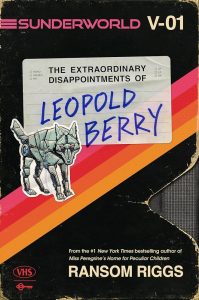
STARBURST: How would you pitch SUNDERWORLD, VOL. I: The Extraordinary Disappointments of Leopold Berry to a ghost that has just crawled out of your television? I would tell him it’s Deadpool meets Stranger Things with magic… and kindly don’t eat my soul.
And how would you describe it to a fan of Buffy The Vampire Slayer?
I would tell said fan that it’s about a kid named Leopold who discovers, and becomes obsessed with, an obscure, super-cheesy ’90s fantasy show called Sunderworld that he discovers on unmarked VHS tapes among his dead mother’s things. He starts seeing bits of Sunder – a magical realm hidden under the skin of Los Angeles – intrude into his own world, his everyday Los Angeles, but comes to believe these visions are just a result of his emotional trauma. Years later, at seventeen, the hallucinatory visions return at the worst possible time on the worst possible day – and now he becomes certain they’re real. Sunder is in dire trouble, and he assumes it needs him because the show he loved was a classic ‘chosen one’ story about a kid just like him. When he gets there, though, he goes through the portal, discovers the world in full, and signs up for the chosen one test – it turns out that he’s painfully, embarrassingly wrong. But Leopold’s story, and his association with Sunder, doesn’t end there; it’s only just beginning. It’s just going to be very different than he dreamed it would.
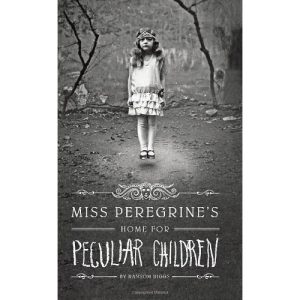
How different has writingSunderworldfromMiss Peregrine’s Home for Peculiar Children? Both series started from the point of analogue inspiration: Miss Peregrine from a collection of found vintage photos, and Underworld from an imagined collection of found VHS tapes. They are portal fantasies that use bits of media as mystery fuel, the spark that propels the protagonist toward both self-discovery and the discovery of another world. But the Peculiar books used real found photos – 50 or more in each – which I had to find, which was a whole job in itself, and then write them as seamlessly as possible into each novel. Loads of fun but also a very time-consuming challenge. Not having that creative constraint with Sunderworld freed me to write anything I could imagine, not just anything I could imagine and find a reasonably good vintage photo of (though sometimes the photos I found inspired bits of the story I never would’ve written, so it could be a creatively productive two-way street). So, it was easier in some ways. Set in Los Angeles, the beautiful and gross city I’ve grown to love over the last two decades, Sunderworlduses my favourite bits of old, obscure, nooks-and-crannies LA in much the same way that I used photos of old weirdos from the 19th century inPeculiar Children the strange all-night diners, bubbling tar pits, and fetid canals that lead nowhere all became characters.
Every project is unique; what were the new challenges with this book?
When I wrote Miss Peregrine, I didn’t know I was starting a series or if I’d be able to continue building out the world after that first book ended – so the world of the first novel is contained, really, to the little time-loop island where Miss P and the peculiar children live. I built out the world and its rules progressively over the course of four or five novels in the series. With Sunderworld I knew I was writing a series from the get-go, and I wanted to create the world in all its detailed glory – in my head, anyway – all at once. I spent a long time creating a world bible, complex rules, creatures and character indexes. But every time I sat down to write the book itself, I’d come up with something I liked better, find a reason to change the rules, etc. Finally, I just threw out the world bible and started following my instincts from page to page. I learned that I need to solidify the world as I write it, and to be just one or two steps ahead of Leopold as he discovers it.
It was also, strangely, a challenge to write about a city I know so well. The temptation to include a million details about LA that I find personally fascinating but wouldn’t have been particularly relevant to the story was huge! I had to cut so many in revisions. Still, Leopold’s best friend, Emmett, a teenager, happens to be a self-styled expert on weird LA history. Ahem. I hope that’s not stretching credibility too much.
Why has VHS made such a comeback?
I think everyone is exhausted by the noise and always-onness of the digital world, even young people. Perhaps especially young people. This happened with vinyl ten years ago. Now, I see teenagers wearing cassette walkmans. We all need a break, and media like VHS represent a slower, kinder-to-your-brain way of consuming media.
If you could take a single magical thing from the world of fiction and use it once in the modern day, what would it be and when?
Marty McFly’s DeLorean. I’d use it right before the world tips into unrecoverable chaos, which should be … oh, any day now!
Do genre labels matter?
I think they can be helpful for readers who are looking for a particular type of read and are happy to try out an author they’ve never heard of. But so many great books transcend or blend genre, so I’m not a fan of super strict genre labels. Miss Peregrine was called a horror novel for years, but it had only the slightest veneer of gothic horror. Like a tootsie pop, the inside was a candy gumball.
What one thing makes writing easier for you?
Espresso.
Should a good movie or TV adaptation resemble the source material in any way?
It should resemble it in some way, yes, or what was the point of adapting it? That said, I think adaptions can deviate from the source material in all sorts of ways that can end up making a better film. Film is such a different medium, and not all novels are particularly cinematic in their construction.
What books are you recommending to friends at the moment?
Right now, I’m reading and really enjoyingHorror Movie by Paul Tremblay. I also like to be reading one Big Serious Thing, which I’ll pick up and put down over the course of months until I’m done, which at the moment is Les Miserables. It’s incredible, but you need about three months to get through it.
If you could rescue one work of art or media and have it survive until Earth’s sun dies, what would it be?
Birdemic.
What’s next for you?
Sunderworld, Vol II!
Witches or Warlocks?
I’m still dealing with this ghost that crawled out of my TV, guys.
Mechanical Pandas or Cybernetic Racoons?
Pandas are enormous. I’m imagining some malevolent iteration of Beymax from Big Hero 6. Definitely the raccoon: smaller, potentially trappable.
Doctor Who or Doctor No?
Doctor No!
Truth or Beauty?
Oh man, we’re getting serious here. Truth, which I believe always beautiful if you open yourself fully to it. I don’t want to live surrounded by beautiful lies.
Jason Charles Miller is an American musician, singer, voice actor and songwriter best known for his work with industrial rock band Godhead. He’s also one half of Rezodrone, a band that will be familiar to fans of Cyberpunk 2077. We caught up with him to learn more about his new project, Knives In The Dark.
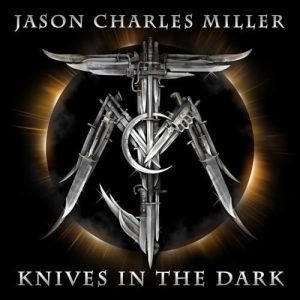
STARBURST: How would you pitch Knives in the Dark to a time-travelling vampire cowboy? Jason Charles Miller: Well, the first thing I’d do is say, “Hey, don’t suck my blood, partner.” Then I’d tell him about the song Darkest Horse that actually references vampires in the second verse! I’d also tell him about the song ‘Blood and Bone’ that mentions,,, well… blood!
And how would you pitch it to someone who loves playing D&D?
I’d tell them how the title track actually references several different chapters in The Fellowship of the Ring by J.R.R. Tolkien, and how Along for the Ride is about a bank heist gone wrong – TTRPGers love a good heist!
What was your favourite moment when creating Knives in the Dark? There were so many! One that comes to mind was when my two guitar players, Gary Joseph Potter Jr. and Allie Kay, worked on blazing duelling guitar solos on two different songs, Got Me on the Run and Along For the Ride. It was really quite fun seeing them come up with those different parts on the spot with producer Matt Hyde. Another time was with one of our guest vocalists, Ellis Hall [Tower of Power], and what he brought to the table with his powerful vocals and silky smooth keyboard playing. Another time was collaborating with Cristina Vee, who I know from my voice-over career but who I had yet to get to sing on one of my songs, even though we sang a video game theme song together previously.
How is Knives in the Dark different from your other projects? It’s the most cohesive and representative album of my career. It’s a culmination of all my influences and experiences, combined with an amazing collection of musicians to really bring it home!
How has your work on Starter Kit influenced this project? I’d say the creativity of working on different role-playing games and figuring out how to teach them to other people is always mind-expanding.
What was the most challenging part of the production? Time coordination! Matt Hyde is an in-demand producer who often works out of town, so we had to find creative ways to get everything done on time.
You’ve worked on some very cool projects for amazing franchises. Do you still have a ‘holy grail’ project, a thing that you’d love to create music for but haven’t yet? And if so, what is it? Anything Lord of the Rings related! That’s a bucket list item for sure!
What was it like to be a Killer Klown? Haha, it was a lot of fun but also a lot of hard work! That game [Killer Klowns from Outer Space] has a ton of effort noises and weird klown noises that will really get you out of breath!
What’s next for you? Next, I head to Saudi Arabia to sing in a series of orchestra concerts celebrating the music of Final Fantasy XIV. I sing four songs in the game, so I’m lucky enough to be asked to participate in these amazing concerts. So far, we’ve done them in England, China, South Korea, Vegas, and three in Japan.
Beholders or Beekeepers? Beholders!
Dungeons or Dragons? C’mon… you know the answer is BOTH!
When you ask a horror fan what are some of the most devastating and bleak films they have ever watched, Speak No Evil is bound to crop up. Released in 2022, the psychological horror thriller became a word-of-mouth hit online as people flocked to social media sights to share the emotional toll the film had taken on them. It tells the story of Bjørn (Morten Burian) and Louise (Sidsel Siem Koch), a Danish couple who meet Dutch couple Patrick (Fedja van Huêt) and Karin (Karina Smulders) while on holiday. They are invited their country house for a weekend holiday, but they soon find their limits tested by Patrick and Karin’s strange and increasingly hostile behaviour.
Speak No Evil became such a success that it attracted the attention of Blumhouse Productions, who released an American remake earlier this year starring James McAvoy, Mackenzie Davis, Aisling Franciosi, and Scoot McNairy. Though the remake received a lukewarm reception from critics, with many instead hailing the original film for its chilling ending and skin-crawling narrative. As the original film receives a DVD and digital release, we spoke with director Christian Tafdrup about the inspirations behind the modern classic horror film, whether the ending was always set to be so shocking, and his thoughts on his film’s remake…
STARBURST: What was the inspiration behind Speak No Evil?
Christian Tafdrup: I was on a holiday with my own family back in 2017 where we met a Dutch couple at a villa in Tuscany. We kind of made friends with them immediately, but there was something a little bit crazy about them as well. And then they invited us to see them in their private home, but we kindly declined. I just started to imagine how would that weekend look like if we had actually gone? And I immediately thought that it was more fun to place that in a horror setting than in a comedy setting. It’s based on some real events. But, of course, I added a lot of fiction.
A great deal of the horror of Speak No Evil comes from the awkward encounters between the two couples. Why did you decide to make this the focus of the film?
I think it’s a result of me making a horror movie, because I’ve never made horror movies. I’m not a big horror fan, but I thought that there was something about this genre that I liked and something I disliked. I’ve never been into ghosts, vampires, or anything with supernatural elements. The way I used to write is very much dealing with the unpleasantness and awkwardness between people, and there’s a lot of horror in that. And I thought, what if we include more satire, interactions between people, and all the social codecs, and combine that with the elements of horror. Writing the script, we tried to make it more of a classic horror, but it didn’t work for us. But then we kind of just trusted that the real horror is inside ourselves and between people, and what does that look like? Most of the time, this is a very slow burn story towards a horrible ending, but I think that’s why it connected to so many people. It’s such a recognisable situation. Everybody can relate to being uncomfortable and being with people they don’t know so well. The movie is about ignoring your red flags, trying to please others, and be nice, and all these things that are very relatable and that worked for us very well as a horror because you can identify with it instead of the usual jump scare.
A lot has been said by fans about whether they would/wouldn’t be in this situation and criticising Bjorn and Louise for returning to the home. What do you think of this?
It’s very easy when you look at the film and say, “I wouldn’t do that” because you have such a perfect picture of yourself. I related it to things I have done so many times. I have kids now, they’re a bit older at four and nine, but at the time when we wrote the film, my small girl lost her rabbit everywhere. Every time we went on a holiday she lost it, and I knew if I didn’t find it, she would go crazy and it would ruin the rest of our holiday. It was also a way of proving my masculinity to my girlfriend. I can’t fight or anything – I’m a very soft kind of shy person – but I can find this rabbit, and that was a way to gain their love and respect for me. When we watch films, we’re very used to the heroes doing all the good stuff and they beat the bad guys. But in real life, I don’t think it is like that. We are much more afraid, make a lot of wrong choices, but we do it out of humanity.
The ending is infamous now among horror fans. Was there ever a point that you almost didn’t have such a bleak ending?
It was the plan from the beginning. It was a handshake between my brother [Mads Tafdrup, writer] and I. We wrote it together and we decided that we were going to make the most horrible film in Denmark. The most disturbing film in Danish film history. We really wanted to go all the way, because many horror films don’t go all the way. We were tired of happy endings. I love when film endings stay with you. And life is not always pleasant – a lot of tragedy and misery happens in real life – and I think that should be reflected in movies. But we doubted it along the way because other people told us that it wouldn’t sell and that you have to create some kind of hope. We went back to the script, and we had four or five different endings that seemed happier or where they survived, but it didn’t work for us. Our gut feeling was that this will only work, and it will only prove what we have to say, if we go all the way and that they’re not making it. If they make it, it’s another premise. So it took some guts, but we chose to listen to ourselves in the end.
Speak No Evil became a word of mouth hit and really exploded online. What was that like for you to see word of your film spread so fast and with such high praise?
I must admit, it was very nice [laughs]. This is my third feature, and I’ve never experienced such a focus on something I did before. And the attention, of course, pleased me a lot. It was a very difficult film to make because of Coronavirus and a lot of other things, so it was great that it had a lot of attention. But I didn’t expect it. In Denmark, horror movies are like the worst thing you can make, so I thought it was a film that would go under the radar. I also thought it dealt with a very Scandinavian problem – this kindness, trying to please others, and stay polite. But I found it was much more universal and everybody could relate to this. Everybody has a situation in their lives where they did something that was against how they really felt. So even though it has been shown all over the world, people could relate to it. I spent seven years writing and making it, and the film is still alive. That’s just a magical feeling, and it doesn’t happen that often.
There are a lot of really heavy moments in the film. Was there anything you did before or after scenes to decompress?
We knew from the beginning there would be tough scenes, and we worked with children. We really tried to make a good relationship with the kids, but also with their parents. You have to create a set that is a lot of fun. And sometimes I get the feeling when you do a lot of tragic films or horror films, it’s a pretty fun process, but then sometimes when you do comedies, it can be a very hard process. When we did the tongue scene, for example, it seemed silly and people were laughing. It seemed like a children’s theatre, and the girl [Liva Forsberg, Agnes] thought it was so fun because it was all fake. But when you cut it together, and you place the right music with it, it has another effect. So I never experienced somebody being influenced or affected by the cruel nature of the story. Actors know what they’re going into but the children also had a lot of fun with it.
This year, we have had a remake of Speak No Evil. How were you approached about that?
I was flattered. From the beginning, it was not obvious that I should direct it, because they wanted to do something else with the story. I could never do what they did. For me, the film has to have this brutal ending. But I kind of liked that the film does something different, not just repeating what we did. For me, it’s a total other film. I had a very great, entertaining experience when I watched it in the US. There’s just something about the US audience, they love these kinds of stories that see the good guys beat the bad guys. I enjoyed it very much, and I’m very happy that the films are two versions of the same story, but on a personal note, of course, I prefer my own. But they already knew that. I’ve been very proud of being in that process. It’s very flattering when you sit in Denmark and suddenly there’s a worldwide release of your story.
What is in the future for you following Speak No Evil’s home video release?
I spent a couple of years now writing new stuff, and I have two scripts. One is a domestic film that I hope to do this summer, and then the other is an American film that I wrote with my brother again. It’s not another horror film, but we all always work with the uncomfortable and the creepy. I hope to get that in production next year.
SPEAK NO EVIL is now available on DVD and digital.
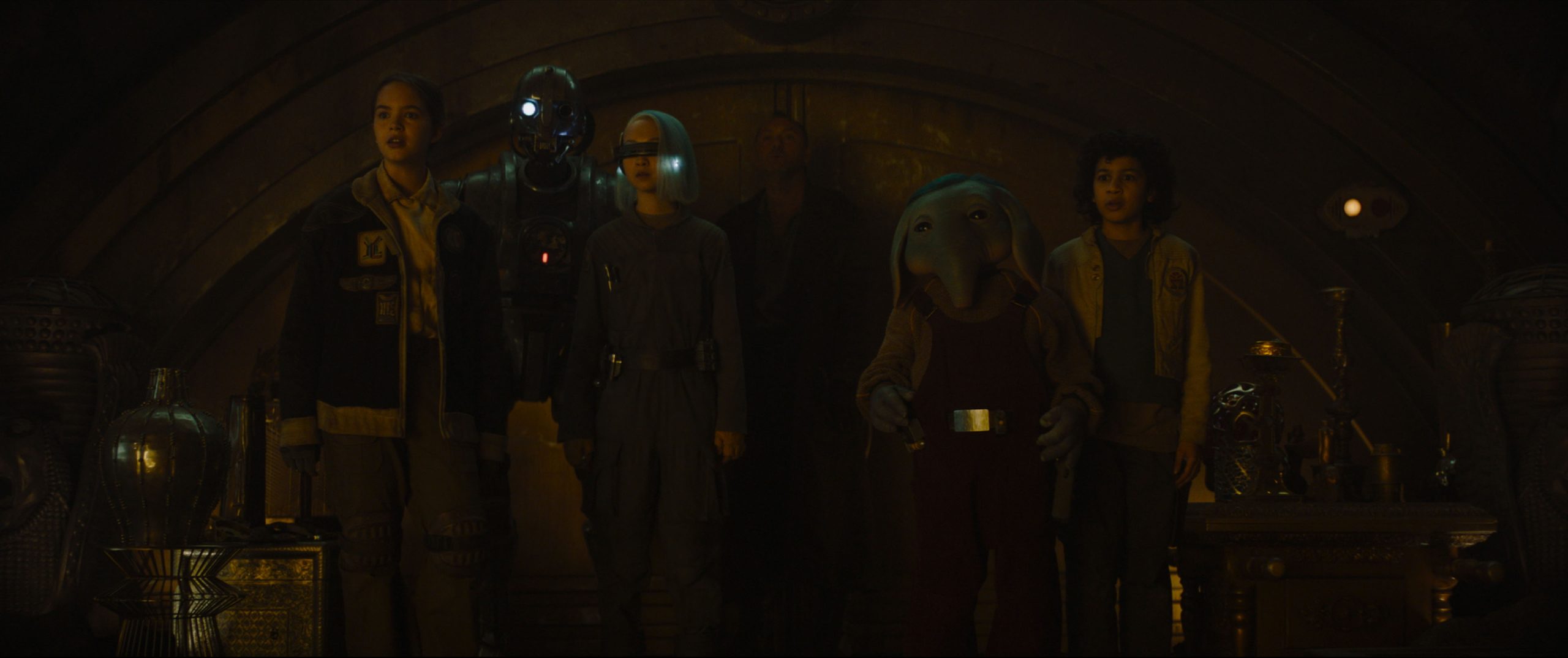
Stuck on a mysterious planet, the idea of Jedi and The Force is but a bedtime story for Wim (Ravi Cabot-Conyers) until an unpredictable event launches him on a galactic journey…. Described as The Goonies meets Star Wars, Skeleton Crew is designed for those who grew up in the Amblin Entertainment era, whilst being a unique and exciting introduction to the iconic sci-fi franchise. With the first two episodes now available on Disney+, we catch up with show creators Jon Watts (Tom Holland’s Spider-Man trilogy) and Christopher Ford (Spider-Man: Homecoming) to discuss everything you can expect from this pirate-themed adventure in a galaxy, far, far away….
STARBURST: Skeleton Crew is set after Return of the Jedi, in the New Republic Era; why did that feel this was the right time to tell this story within the Star Wars universe? Why does that era work so well?
Christopher Ford: I think because The New Republic isn’t as established as what we’ve seen in the past with The Old Republic or The Empire. So, this story is about kids getting lost and being left on their own in this big empty galaxy. So it was a kind of more lawless time. There are a bunch of pirates that are kind of out of control and running amuck, so it felt like the right time for us.
Jon Watts: It’s a really bad time for kids to get lost, but I feel like it’s a really good time from a story perspective!
In The Force Awakens, there’s a great scene where Han Solo describes how the Force and the Jedi are real. Before that point, it’s treated like a myth or a legend. How did you want the history of the Jedi to sit within Skeleton Crew, especially in those early episodes?
Chris: A big part of the inspiration for the show was our childhoods when we were fascinated by movies, science fiction, Star Wars and things like that. A big part of being a kid was dreaming about these magical adventures you could have. We realised that as much as maybe some people don’t believe in Jedi or the Force because it’s such a mystical, distant thing, people know about them. We realised that, for these kids, Jedis could be their bedtime stories; they would be like King Arthur or fairy tales to them. So we get to include them in this distant way.
Jon: Yeah, they don’t quite know what it is, or how it works either. So it’s fun to see them experience it without really knowing what’s going on.
Chris: But with a dreamy little kid like Wim, he is certain that Jedi are real and wants to be a Jedi someday. As the grown-up, adult version looking at him, you’re thinking, “You’re never going to be a Jedi.”
You’ve said that the show is influenced by The Goonies, and the back and forth between the main group is legendary. What did you want to see from the dynamic between Wim, Neel, Fern, KB and what that was like to work on?
Jon: What’s great in The Goonies is the kids are allowed to be kids, and they talk over each other. It’s really messy and chaotic and real, so to be able to bring a little bit of that spirit to our group was always in the back of our minds.
Chris: So, the whole feeling on set that we were trying to create, was a place where the kids could be comfortable to be themselves, to have fun, and be able to capture that.
Jon: Yeah, I got to meet Richard Donner before he died, and he said that when he was casting for The Goonies, he said “When you cast kids, you don’t cast kids to play roles, you cast kids because of who they are.” So that was something that we were always thinking about when we were casting, just like really looking for actors that embody the spirit of the characters we were imagining.
Another element from Skeleton Crew that’s reminiscent of The Goonies is the pirate theme. How did this part of the idea come together, and why do you think pirate culture translates so well into a Star Wars format?
Jon: Well, pirates have always been in Star Wars, they’ve been mentioned since the very beginning, but we haven’t really seen that much of the pirate world.
Chris: Yeah, and Jon Favreau and Dave Filoni were starting to flesh it out in that last season of The Mandalorian, which was so exciting. And then, when we had this story with these kids, and we knew they would run afoul of nefarious forces in this lawless time, the pirates were the perfect choice.
Jon: Yeah, there’s something very Treasure Island about it, too, where you get swept up in an adventure.
What did you want to see from the special effects, and is there something that you really wanted to bring that Star Wars fans haven’t seen before?
Jon: Selfishly, as fans, we wanted to try to do as many things as practically as possible. It makes for a more immersive environment for the kids, but it’s also just really fun to have people building animatronic props and doing stop-motion animation, which is something that I really wanted to do on the show.
Chris: It’s amazing how immersive it is now. With the animatronic characters like Brutus, he is fully animated in real life. His mouth moves to the dialogue that has been pre-recorded. It’s so real.
Jon: Yeah, to the point where he is an intimidating presence on set! You’re getting nervous to give him any direction because you’re worried he is going to rip your arm off.
Chris: It’s just so great to see those classic techniques because they’ve actually continued to improve. It’s not like that’s how they would have done it in the ’80s; the technology is even better now.
Jon: Yeah, it’s cutting-edge technology bringing all of these things to life now.
The Onyx Cinder set looked incredible. How do you go about creating a unique ship within the Star Wars universe, a place that already holds home to TIE fighters, X-wings, and the iconic Millennium Falcon?
Chris: What helped was that we had very specific story requirements for our ship. We fed those specs as an engineering brief.
Jon: Yeah, like the ship needs to do “this this this, etc. in these episodes”, and then you give that to incredible concept artists. With our production artists like Doug Chiang at Lucasfilm and his whole team, you give them all of these requirements, and then they come back to you with a ship that can meet them.
Chris: And that has that Star Wars feeling. Which was just, really really good design. It has a distinct silhouette. All those things we think of that feel like Star Wars are all about being just very good.
It’s a LEGO set already, which is always a good sign!
Jon: Oh yeah, I’ve put mine together! It’s on my desk, and it took a while! I love it. That’s when it got really real for me.
Chris: It’s such a well-designed set.
You’re using matte paintings, which many fans remember in those early Star Wars movies. It’s amazing! How did that decision come about, and what were those visuals like to see come to life?
Jon: Well, our VFX supervisor is John Knoll, who has been working on Star Wars forever, and he really encouraged us anytime we had an idea of wanting to do something in a more traditional or old-school way. He knew everyone who did that. He has literally worked with all of these people before. So when I said, “Let’s do some real matte paintings”, he said let me call up our matte painter, who has been retired for fifteen years and has become a fine art painter; let’s see if she wants to paint some planets for us.
Chris: A lot of this is a labour of love. The model of the ship we used for motion control technology was made by John Goodson at home in his garage.
Jon: John Knoll had to build a new motion control rig because our ship has multiple rotating engines, and no one has ever made anything with that many moving parts.
Chris: The ship and camera have moving parts, so it all adds up to more channels than you needed, and they created it like a hobby project of the highest level of hyper-level perfection.
Jon: It’s really great to have these people do things because they are so talented.
What was that like to work on with composer Mick Giacchino?
Jon: It was so exciting to work with Mick, because I had worked with his dad, Michael Giacchino, on the three Spider-Man films. I sort of watched Mick grow up and get better and better, and so now, to finally have him to step in and write all of this beautiful music was, it was really great to watch him do that. The fun challenge here was to combine the big orchestral sweep that you want from Star Wars with a little bit of a pirate sensibility as well, and to see what it’s like when those two things got woven together. He did it really seamlessly.
The first two episodes of SKELETON CREW are available to watch via Disney+ right now.
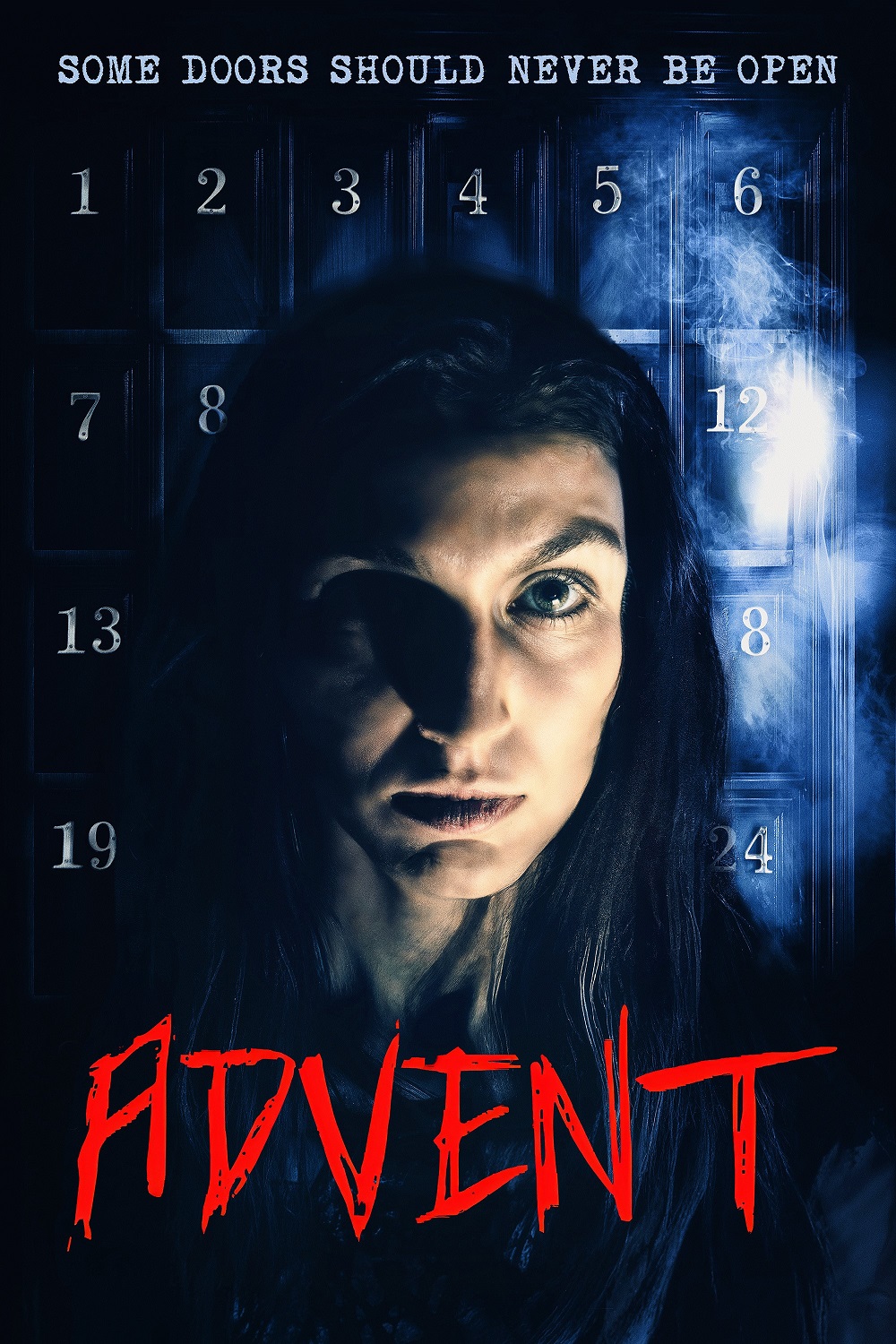
Following Werewolf Santa, writer/director Airell Anthony Hayles returns to the festive season with a creepy shocker in which a social media streamer obtains a supposedly cursed advent calendar. We caught up with the busy indie filmmaker to learn more about Advent…
STARBURST: Could you tell us a little bit about the film?
Airell Anthony Hayles: Advent is a ghost story. It’s about an advent calendar that, when you open the doors, you undertake certain challenges in the build-up to Christmas. The folklore behind this advent calendar is that you invoke the devil to take your soul on Christmas Day. And where this came from was in 2016 and 17, there was the ‘blue whale’ game, which was a suicide cult thing that really freaked me out. It began in Russia, I believe, and it was taking teenagers who were emotionally vulnerable and depressed and leading them through these challenges and to commit suicide on the 50th day of those particular challenges. It scared me so much that I wanted to put that idea into an advent calendar at Christmas but add a supernatural element because it seemed to me to be an evil and demonic process anyway. It seemed like it’d be more digestible as a ghost story to take that idea and examine just the evil behind that, behind tasks like don’t sleep tonight and don’t talk to anybody all day. How people were becoming cut off from anything good in life to the point where they took their own life at the end of the 50 days, putting that into the 24 days in our case of the advent calendar, because there’s no 25th day because you don’t live to see it, it seemed to me to be a very freaky idea.
There’s an element of Krampus in there as well.
I love Krampus. There’s the idea of a ghost, unseen Krampus. We don’t give too much away, but more of an idea of the notion of shadowy scratches on the door. Kind of like the calendar bringing this demonic Krampus spirit. Krampus was associated often with the devil as the idea of Krampus being the devil himself being invoked or invoked or over the buildup to Christmas. It used to be called The Krampus Calendar. We changed the title because you don’t have any title with the word calendar in it. It sounds like you’re at school. Well, there’s Calendar Girls, but that was a different genre [laughs]. And I thought it’s a very big mouthful, whereas the distributors rightly thought Advent kind of says the thing, and that means arrival. So it’s the arrival of a Krampus spirit through the calendar that’s going to take your soul if you go through these tasks that slowly give your soul over to him in this very nasty game that the girl in the film plays.
I always try to work with Nicholas. He’s got the best voice in the world and the best person in the world. We needed an authority figure because it was a faux documentary. He plays a professor of folklore who’s taking you through it. I felt that he was doing two things here: he was talking about the narrative unfolding as he had seen it online with so many people, or having heard about what happened to Haley, our character in the film, but he also felt really guilty that he didn’t step in and help because he was very busy the Christmas that these things happen to her. So you get this double-edged sword where Nicholas is portraying the documentary side and trying to tell the narrative as clear cut as he can, but there’s this emotional weight underneath it, and I think that’s where it became really exciting for me to see Nicholas dive into the acting side, rather than being just present at this time, two aspects of the film, the documentary part and watching the documentary.
What was it like making another Christmas film after Werewolf Santa?
I love these! We’ve got one coming up called Grotto set in a Santa’s grotto. I love watching Christmas movies. That’s why I love Terrifier 3. It’s so great because you got the Christmas tree esthetic, the lights, the music. You’ll see that I used a lot of that in the film, because you don’t get this really rich visual, audio world that you get with Christmas. And I think that’s why these films work great. I love Gremlins and stuff like that. I think when you turn it into a nightmare. I think Love Actually or something would be much better with more murder, ghosts, and blood! [Laughs]
Finally, what would you want if you could have one little treat in the last box of your advent calendar?
Well, it would be a voucher for a lifetime supply of chicken madras! I live off curry. In fact, the guy who runs the Indian restaurant I love in Kings Cross, came to the premiere of Advent. I don’t think many people bring their restaurant manager with them! That’s how much I love curry. Lots of horror movies work great with a midnight curry.
ADVENT will be available on digital platforms startingNovember 25th.
When released in 1999, no one could have predicted the cultural and cinematic impact The Blair Witch Project would have. While perhaps not the first found-footage film, it is undoubtedly the one that defines the genre, demonstrates how powerful the format can be, and opens doors for hundreds of ambitious filmmakers.
As Second Sight releases a new special edition Blu-ray for its 25th anniversary, we sat down with writers and directors Daniel Myrick and Eduardo Sánchez to discuss their film’s legacy, their relationship with it now, and where it all began….
STARBURST: Does it seem like 25 years have passed since you first released the film?
Eduardo: A lot has happened!
Daniel: It hits home sometimes when I see a grown adult say, ‘I was just a kid when your movie came out’. I’m like, oh, OK. It goes by so quickly.
The ’90s were an interesting time for horror, primarily with the post-slasher movement. What was the original genesis of the story against that backdrop?
Daniel: It sort of snuck up on us a little bit. Ed and I were big fans of the In Search Of series with Leonard Nimoy and pseudo-documentaries that were pretty popular in the late ’70s and early ’80s, like Legend of Boggy Creek and that sort of thing. So, we discovered in each other that we were fans of that genre of films. And we discussed how they had a certain interesting effect on the viewer, those documentary style films and photos. We wanted to try to capture that, something that was simple and straightforward and in that format. But we weren’t really sure how to go about doing so that would have that effect but still have a controllable narrative. Those old programmes were part of it, and we were discussing one time about coming across this old house in the woods, which you can imagine pretty clearly. You’re walking through the woods, it’s already dark, you have the single light of the camera, and you enter this old decrepit house. It’s really creepy when you describe it. So, that’s really the creative kernel of how we wanted to approach it and capture that primal essence it was invoking in us. At the time, a lot of movies had the pretext of being horror, but they weren’t really scary. They were self-reverential or big budget Hollywood films, but not really scaring us at the core level, not like The Exorcist or The Shining. So, we wanted to get back to that. And the documentary approach was something we thought we could exploit. We weren’t sure quite how we were going to do it, but that was really the genesis of our trajectory.
Eduardo: And it was definitely inspired by the fact that the discussion began with ‘What happened to scary horror movies?’ and what scares us. That’s how the weekend began, and we rented a bunch of videos the rest is history, I guess.
And a lot of films were based upon jump scares, not real fear…
Eduardo: They were fun. The movie that really started the discussion was Freddy’s Dead with Roseanne Barr and Tom Arnold. And it was a fun movie, but it wasn’t scary at all. It was just what was popular at the time. Like you said, we’d gone through the slasher phase, but people had kind of forgotten horror movies were meant to be scary.
For you, what is so scary about Blair Witch because you never really know what’s going on or what the characters are up against? They even say in the film that they suspect someone is messing with them.
Eduardo: This is something Dan and I discussed early on, too: camping and being lost in the woods is scary. I think one of the reasons the movie was successful all around the world is that people are simply scared of being lost in the woods. It’s like with Jaws, people have been in the water, and if they think there’s a shark, that’s a universal fear. The woods are a universal fear too, since we started being human. For us, it’s waking up at 2am and hearing a sound outside your tent, it’s probably a squirrel, but it sounds like a fucking bear or something. Dan and I are both Bigfoot fans, so is Sasquatch coming to visit me? Spending hours sitting in the dark and not being able to go to sleep as there might be something out there. I think that’s what drove the movie. It’s a first-person account of something horrific happening in the woods, and your imagination fills in the details and creates something much scarier than a filmmaker could show you. That’s the main reason it works.
It’s interesting to still be talking about Blair Witch today given how the genre has exploded, and perhaps been diluted somewhat. Did you have any idea what you had at the time?
Daniel: Not early on. Our expectations were like most filmmakers, trying to scrape together some money and make a movie. And we were hoping to get into a decent festival. By definition, it’s a very small film. We knew it was pretty experimental and we thought we have a pretty clever concept. Whenever we pitched it to people we got a positive reaction. But going into Sundance our hope was that we could sell it, make our money back and use it as a stepping stone to the next project. But it just kept building and building. And taking on a life of its own that we all felt along for the ride. So, before we knew it, Ed and I were in Cannes, and on this filmmaker panel with Ron Howard and Spike Lee, and we’re like ‘What the hell are we doing here?’ It just became surreal. A real eye-opening experience as to how the movie business works. We were just showing up at junkets and the more the press engaged with it the more the film took on its own energy. That was something to behold. To this day I’m still taken aback if I see Blair Witch referenced anywhere. We had no idea it would become so big and so ubiquitous throughout the world.
Eduardo: We’re just amazed by it. As Dan was saying, you have to be humble about it. The success was as surprising to us as it was to everyone else. The fact we’re still talking about it, it’s the gift that keeps on giving and while not all of it has been great, it’s defined my life, and a lot has come from it. And we get asked if we’re tired of talking about it but why would we be? I’m just amazed there’s so much interest. We say it all the time, we feel blessed to have been a part of what was a super collaborative film and try and keep it in check that this movie is doing what it’s doing. Just a small film that we never expected anything from.
You touched on this a little there, have you had a mixed relationship with Blair Witch over the years, perhaps with having so much success so early in your careers?
Daniel: Speaking for myself, I definitely felt that. Certainly, on the heels of Blair Witch, you’re like ‘What do we do next?’ You kind of burden yourself with a lot of that. But I always remind myself these are good problems to have. Nowadays, I’m pretty comfortable with the legacy of Blair Witch and feel fortunate and blessed to have been a part of it. It occupies a very warm place in my heart. That collaboration we did back in film school, you never have that again. That innocence you had back in those days that made Blair Witch happen; we didn’t know what we were doing. But there’s always that phase of how you live up to it.
Eduardo: Also, especially in our films after Blair Witch, there’s this thing of you want to use it because it’s the top thing on your resume, but also you need to say ‘This film’s not going to be Blair Witch. You understand that, right?’ Blair Witch is an anomaly.
There’s a scene that maybe you wouldn’t notice so much 25-years ago, but one that feels very prescient now. Josh turns the camera on Heather and says that he understands why she likes it so much, this separation from reality when you’re looking through the lens. Was that something that was scripted, improvised on the day, did you discuss that scene?
Daniel: We had talked about doing something along those lines as one of the biggest issues we were facing early in the process was ‘Why is the camera running?’ Especially on an intimate scene or something. Now everyone’s breaking out their cell phones but back then we had a dilemma. When the shit hits the fan why would they continue rolling? So, we were trying to come up with ways using Heather’s personality, and then maybe a survival journal, and Josh took that and embraced it. Being in that viewfinder is a protective space for Heather and by definition removes you from reality. It could be a safe space for her as a character, all with the purpose of convincing the audience why there is a reason to keep rolling. We weren’t sure if it was going to work, and there are some questionable moments.
Eduardo: There was this discussion with the actors when we first got to Maryland to just video everything. And I think we had talked about the photo-journalism thing, where if people are in a gunfight but they’re still filming. I remember I was allowed to video my sister having a c-section and when I was filming, I was like ‘This is amazing.’ But then watching the footage back I’m like ‘Oh my God!’ But Dan was right, that was our main problem. We were constantly putting notes in but then fighting against it with the characters arguing with each other about filming. We built it in there, but it’s always a struggle with found footage.
You have both revisited the format since. Do you think you would do so again as the genre always seems to reinvent itself with changing technology and so on?
Daniel: I enjoy the format. At the end of the day, it’s just a style choice. If you have a good story and so on, and the format lends itself to it, then it’s liberating and fun to shoot that way.
Eduardo: Yeah, Dan’s right. And it also limits you, as we said about the reasons for filming. I’ve been pitching a found footage movie and television show for a few months now, and we’re moving forward with that but in the early development stages. So yeah, it’s still very viable and why we’ve both come back and revisited it.
Second Sight releases THE BLAIR WITCH PROJECT on 4K UHD Limited Edition from November 11th. You can preorder here.
THE AMERICAN GENRE FILM ARCHIVEis “committed to preserving the legacy of genre films through our archival work, sharing these movies through our home video label, and promoting the power of genre through our theatrical distribution arm.” Over the course of their 15-year history, the organization has rescued lost films, restored forgotten classics, and become the foremost genre archive in the world. Be it distributing crisp digital prints of everything from ATOR, THE FIGHTING EAGLE to YOUR VICE IS A LOCKED ROOM AND ONLY I HAVE THE KEY or releasing deluxe Blu-rays of the works of Ruth Gordon and Ed Wood, among many other, AGFA is doing the work necessary to preserve genre films for the next generation and beyond. We spoke with AGFA’s Executive Director, JACKSON COOPER, about coming into the organization during their 15th anniversary, what they’ve done, and where they’re headed in the future…
STARBURST: You came into AGFA in the midst of its 15th anniversary – that’s a great time to get on board!
Jackson Cooper: Yeah, two months in, I think. It’s so thrilling. It’s an honor, of course, too, to be in this role and working with the board and the incredible staff. It’s just such a dream. To come into the 15th anniversary was also insane because I grew up with AGFA and so, to come in and be like, “Oh my gosh, it’s an anniversary year!”, it’s just so joyous to come in. It’s really exciting.
It has been amazing, as a fan of cult and genre cinema, to see the organization grow over the last decade and a half. Given how much it’s grown, how do you continue to do this on a manageable scale?
It’s a lot of trial, and I won’t say error, but opportunity. I think it’s a lot of stretching the gum to see how much we can expand and where our limits are, I should say, because we’re a very small staff. We are six people. It’s six now with me. Over the years, it was really driven by our love of these films first, and then it sort of evolved. It was the love and it was the the urgency of preserving films and saving these films because we love them, because the community loves them, and then over the years, it’s evolved really into even bigger mission work – the urgency of not just saving film, but saving the legacies of these filmmakers. People like Doris Wishman, people like the Something Weird catalogue, recognising that the world is changing where there’s so much available all the time that suddenly we are now the curators of the next generation and what they’re enjoying. It’s always been that, and I think what’s made it manageable, to be honest, has been the influx of such incredible companies who are our partners, like Severin and Vinegar Syndrome. Just people who are also doing the work has made it very manageable because we’re all doing our own thing, and we’re all talking to each other, so instead of us being like, “Oh, we’re the only genre film distributor,” we’re looking around and going like, “Severin’s putting this out. Cool. So we can do our thing and Vinegar Syndrome’s doing their thing.” It’s great. I think it’s been this evolution of this community, which has been really exciting.
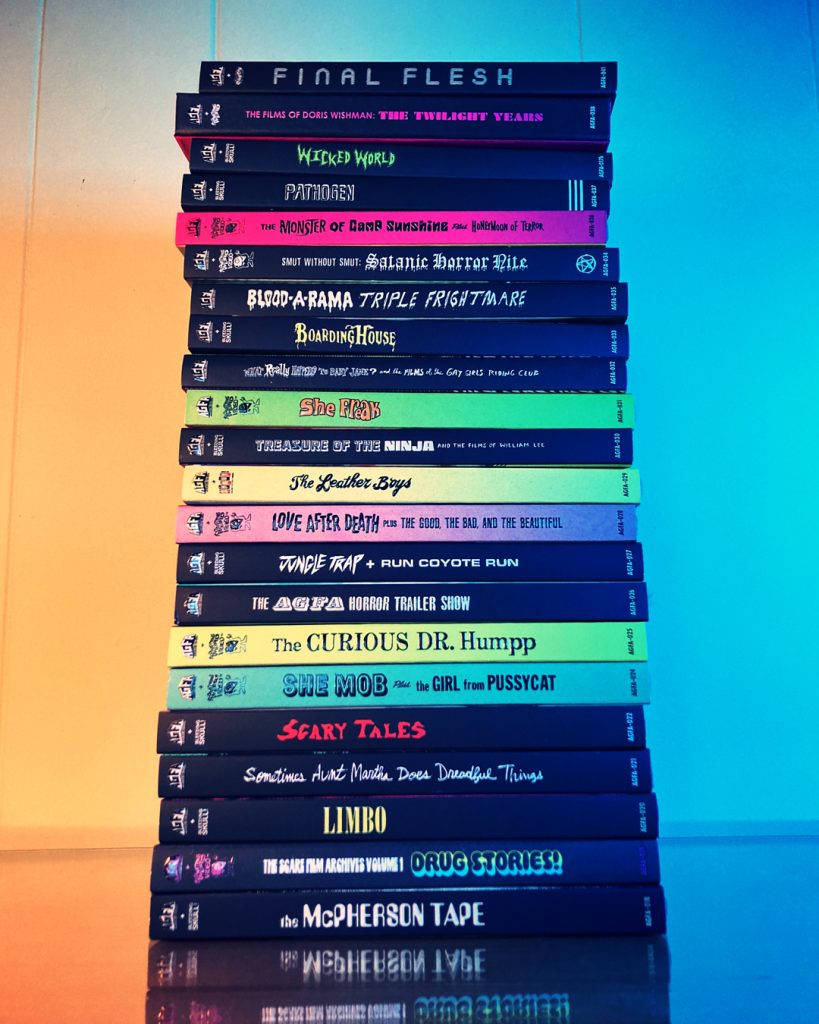
AGFA’s Blu-ray releases. // photo courtesy AGFA
The interesting aspect of it is it’s not just holding on to these films so that they’re not lost, but putting them out there and as you said, reintroducing films. How does one organisation that’s only six people balance DCPS and Blu-rays, along with doing work for other companies, as well?
How do we manage it all? Well, we all have our own specialised thing that we all do. The question I get a lot is, “How do you curate your titles?” and I go like, “It really starts and ends with the team.” It really does, because we all not just have a connection to AGFA, but all of us on the team are programmers by trade, to be honest, or writers or film handlers, we have that not just personal connection with our love of it, but also that mindset of, “What do people want to see?” Also, just our finger on the pulse with things. But yeah, how do we balance all that? We have a lot of conversations as a team, which is great. A lot of communications. We balance it – it’s our business. I hate that it sounds so straightforward, but it’s amazing that this is our job every day, that we get to save these films and talk about it.
Our Blu-rays really stem from the team’s decision from our catalogue of avails: the libraries we have, like Something Weird, and the archival prints that aren’t owned by studios. What do we as a staff not think will be good, but also our work is unique from Severin and Vinegar Syndrome and those other labels because we’re a nonprofit. All of our work is grounded in mission work. It’s grounded in a mission to really elevate the stories of, specifically, marginalised filmmakers who used genre as a way of expressing their identity, and of celebrating outsider art. When we put that lens on curating the home video line, that’s sort of where we start, the home video line and our restorations. That changes the conversation from being, “What films need to be saved?” to being “What films need to be saved and what stories are they telling?” Or, “What is the story of this filmmaker and why is it important?” I always tell people we’re carving out a new film history because we’re protecting the legacies of these filmmakers by restoring them and then putting them out on Blu-ray.
For DCP creation and such, that’s really determined by our partner labels like Severin and Vinegar Syndrome. They distribute those on Blu-ray and then we distribute the theatrical rights to those. Any time they put something out, we get the theatrical rights and then promote those to our repertory cinema partners, our micro cinemas, so it’s almost like there’s two things happening all at the same time. This theatrical world, which is really led by our head of theatrical, Brett Burke, who’s phenomenal and. And then our restoration and home video line, which is very team-led. We have a great head of film restoration. We have a great creative director who helps manage those. So there’s always something happening, which is really exciting!
To that end, this year’s releases saw something like Amanda and the Alien. It’s a step outside what most folks might think of as releases, but upon watching it, it fits right in. You also restored Santa Claus Conquers the Martians. You’re putting together the uncut version of Love Goddesses of Blood Island, which has a very weird and involved release history. What was the journey of that last film like?
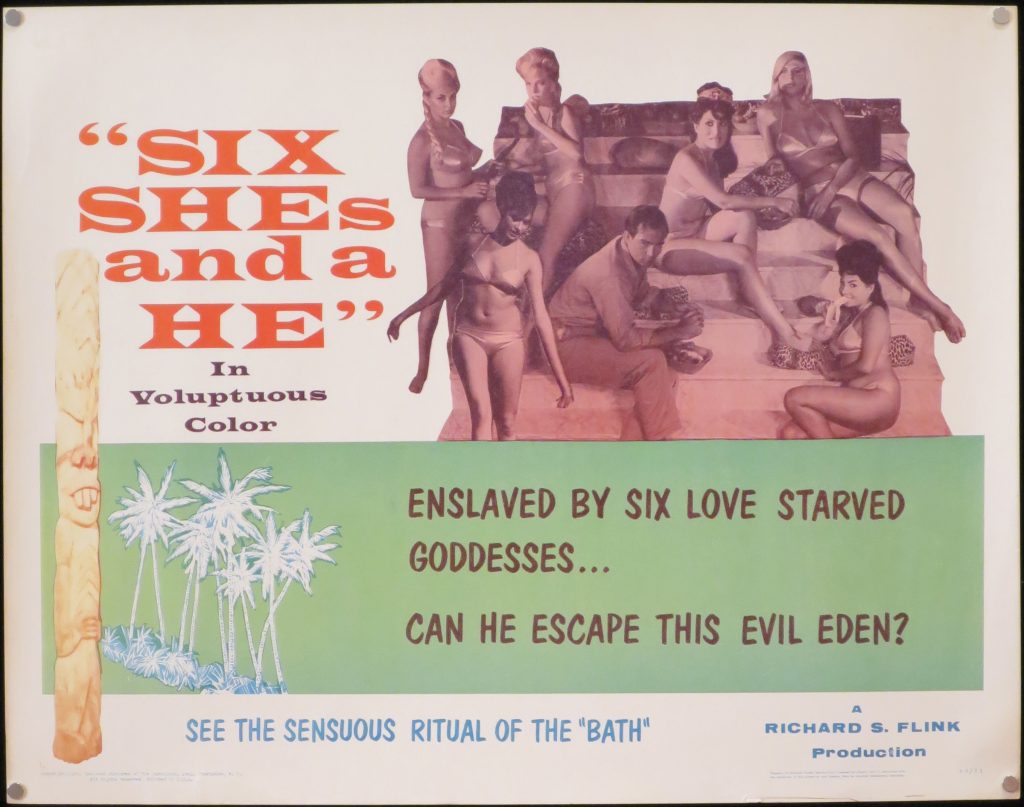
So, Love Goddesses, also known as Six She’s and a He, has had a very long, weathered history and, specifically, with this restoration, which we are extremely proud of, not just because it is, as you mentioned, a lost film. It was released on a DVD-R of one of the Something Weird prints a long time ago, but there was footage missing. There were minutes of the film missing, and allegedly, the only print that had that was in the Library of Congress and so, when we were doing the restoration, we reached out to the Library of Congress to grab the film prints and we found out that, in fact, it didn’t have the footage. It was still missing even from the Library of Congress print! Every print usually goes to the Library of Congress, of course, as a safe measure, copyright, things like that. The Library of Congress has quite a bit of film and prints of most movies that are made.
It was so funny – and I’ve been telling people that the film gods were on our side because – literally within a week of that conversation with the Library of Congress, the Harvard Film Archive had reached out to us about donating prints of genre films to us and on that list was Six She’s and a He. We’re going through the list and one of my team members was like, “Wait a minute. They have Love Goddesses of Blood Island, but under the original title Six She’s and a He!” So we write the Harvard Film Archive back and we go, “Oh my gosh, can you send us that print first? We want to look,” and that had the missing footage on it! We were able to – literally in the 11th hour of restoring it – put in the lost footage, thanks to this miracle that happened of the Harvard Film Archive. We also want to thank the Library of Congress because we used that print as well, but it’s crazy. That’s one of the reasons I love this job – because it’s a lot, it’s stressful, of course – but we have to have those conversations. When we got the Library of Congress’s print, we’re going to restore it, but it didn’t have the missing footage. Oh, darn. Okay. But then all of a sudden, a miracle like that happens!
It’s a kooky film. It’s a great underseen Blood Feast rip-off that’s going to be in a collection of Blood Feast Florida rip-offs! Florida-‘esque’ rip offs – they’re not all set in Florida, because we’re doing Undertaker and His Pals, which is California, but it’s like, “brightly-lit Blood Feast rip-offs,” we’re calling it. Yeah, Love Goddesses of Blood Island. We’re very proud of that restoration.
Given the sheer amount of material that must be in your archive, what are the challenges in making sure that everything remains intact. You do regular inspections and those sorts of things get posted to Instagram, but what are the unique challenges, especially when you’re talking about genre film, which traditionally haven’t been treated as well as it might’ve been?
No, you can say it – “Some of those prints are beat to shit.” I mean, it was called grindhouse for a reason, right? You know, it would just run until it run in the projector and until it was grinded up. How do we assess or how do we determine? We have very thorough notes of what’s in our archive from quite a bit ago. Our head of film restoration has handled a lot of the film and we had great film handlers before him and a restoration artist before him was also a film handler, so there’s a lot of physical inspection that went into place as the archive was being built up, which is great. Also, I think a challenge is that film, unless it’s preserved very well, and our archive is spread throughout several locations in Texas, not necessarily preserved in a way that is on the caliber of the Academy or Paramount, but it’s still doing well, but film fades fast. For us, it’s not just looking at the inspection reports to saying what is good, but also being like, “That was that inspection was done a few years ago so, what is it now? What do we have to get something on a scanner sooner rather than later?” We’re going through that process right now with just reassessing the collection. I think between all of us, there’s a shared knowledge of what films are in good tact and it’s not just the films we want to restore, but also the films that are just in our archive that we want to put out to theatrical distributors. It’s a constant race against the clock with what we do.
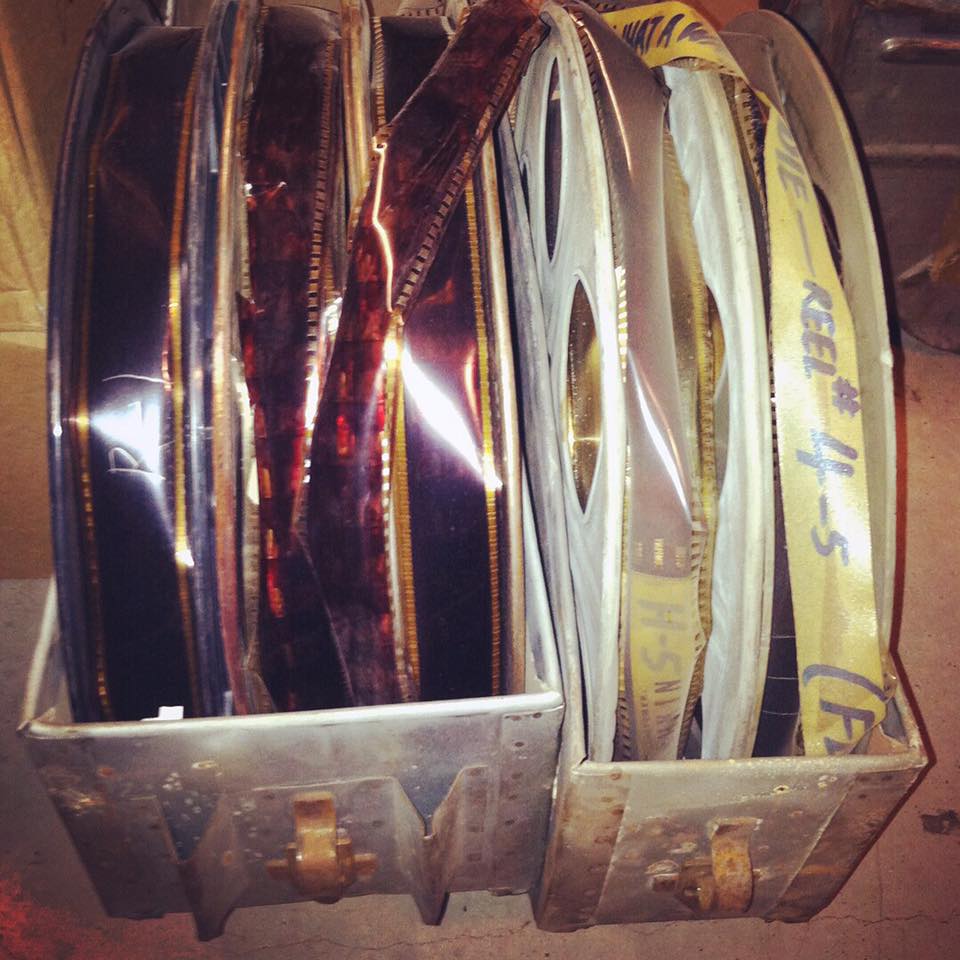
Old reels. // photo courtesy AGFA
Do conditions sometimes move things up in that production/release timeline in order to get them, as you said, on the scanner as soon as you can?
I will say there’s one project – I can’t say what it is, but there’s one project that we will be releasing that we may push up for that specific reason is because we’d been talking about it and then we assessed the materials and said, “Oh my gosh, we have to put that on the scanner sooner rather than later,” So, but, I mean, it’s twofold: either we can wait or we can put it on the scanner and that way, we have a file to work from for the restoration. But then, in terms of keeping that 35mm, we then have to make a decision where, obviously, will keep it in our archive, but we have to make sure that it’s saved and properly stored and treated well, so that if anybody wants that print to use, we can send it out. Otherwise, with the restoration, once it’s on the scanner and digitised, we work from there and we can actually strike a new print after the restoration is done. We can replace the vinegar syndromed print of this film with the new restoration. It’s constantly just needing to check the materials, talk with the people who donated or deposited the film prints themselves. With Something Weird, Lisa [Petrucci], who we work with, she knows those prints, and she knows the state of those prints pretty well, so we always go to her when we want to do something – “Do you remember how this print was? Let’s look at our inspection notes.” That’s been a lot of assessing the collection, but then also putting them on a scanner to digitise them so that, come time for us to restore something in our archive, it’s not beat up, but we already have a digital file to work from
The nature of preservation of any sort of thing, whether it’s books, or music, or film – especially in music, is that you run into what might be referred to as dead formats. Do you have to have machines that you keep running to be able to get them or is everything fairly much within the standard range?
S-VHS, we do have the capability to digitise that. Our gate on our scanner can do 16mm and 35mm so 8mm is something that we don’t really dabble with a lot, although we’re working on the restorations of the complete works of George Kuchar and so there’s quite a bit of 8mm that the Kuchar brothers used. We’re working with other partners who do have the capabilities to scan 8mm on that so I would say 8mm is probably just the one that we we have some trouble with, but there are other partners and archives that have that capability. We’re all one big community and ecosystem, so we’re always talking to each other. But yeah, S-VHS, VHS – we’ve digitised quite a bit of those, especially the Something Weird S-VHS, most recently for Hey, Folks, It’s Intermission Time. We digitised those directly from the masters themselves, which we have to take masters up. I would say 8mm is probably the thing that is our blind spot, but it’s also very unique among archives. A lot of a lot of state archives and government-funded archives, they have 8mm capabilities, but since that’s so rare for a filmmaker to have worked on, that’s not something that our scanner or gate has a capability on.
AGFA is finishing up their 15th anniversary. We’re towards the end of the year. What are the plans for AGFA going into 2025?
Well, one of the big things that we’ve learned about this year is that we’ve known that we’ve had such a great community of film fans, genre lovers, home video collectors, going into next year, one of the big things that we’re going to champion is we’re actually going back into the archive and going back into the collection. We’re going to be literally and figuratively going through the archive and the collection for a lot of stories in the collection, these journeys of filmmakers that we have yet to do. We want to connect the community with the collection; that’s what the next few years is going to be – really highlighting stories of the filmmakers, of the films themselves. Celebrating things like Something Weird. Celebrating the living filmmakers who are in our collection and archive, and really just helping the community understand that physical film is not going away. It will never go away. These filmmakers deserve to be championed. Protecting their legacies and then promoting the power of genre art movies for repertory cinemas and for local theatres who are screening these works.
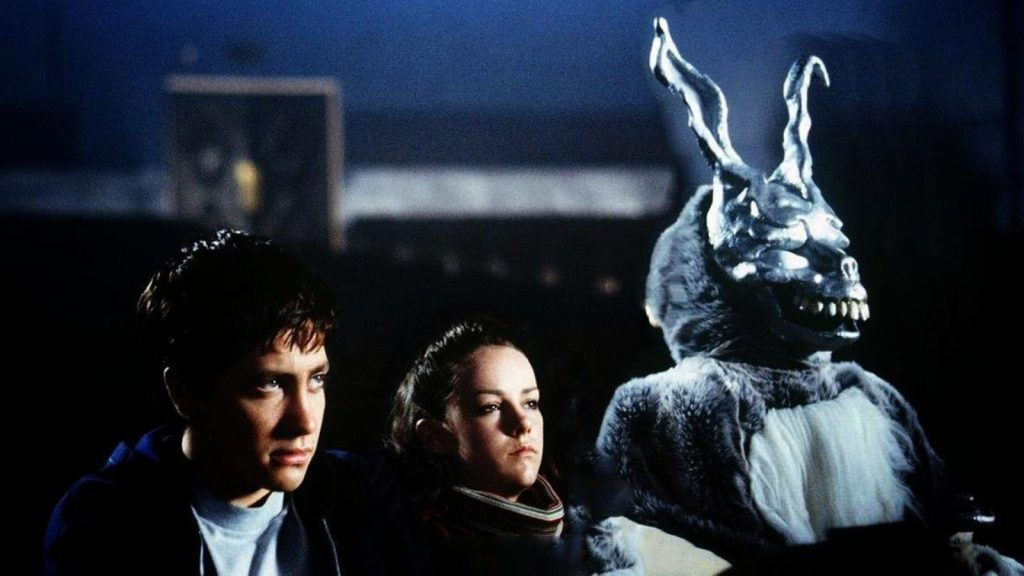
I think movie theaters are having a moment right now. It’s both a moment of joy and celebration and also, a moment of crisis, but what’s been fascinating is that we’ve found that genre – in particular, horror – has actually been the thing that brings people back into a movie theater, as well as that repertory curiosity for older films, is a key for movie theatres bringing in new audiences; for bringing in younger audiences. It’s no longer the tentpole blockbusters. It’s actually the old thing. It’s actually the the classics. We have the theatrical rights to Donnie Darko, thanks to our friends at Arrow Video who put out that beautiful 4k restoration. And you know, Donnie Darko is always playing somewhere across the country, across the world, and as popular as that title is, it’s a real testament, I think, to the power of these films. That these films will never, ever fade or go away. We want to sort of lean into that.
We also just want to lean into the stories in our collection. Who’s in our collection? What are the BIPOC, queer, trans, feminist Asian, underrepresented filmmakers in our collection who are using or used genre as a way of expressing their identity? That’s sort of where we’re at right now and it’s really exciting. It’s a really exciting place to be!
More information about the AMERICAN GENRE FILM ARCHIVE and its work can be found at their website.
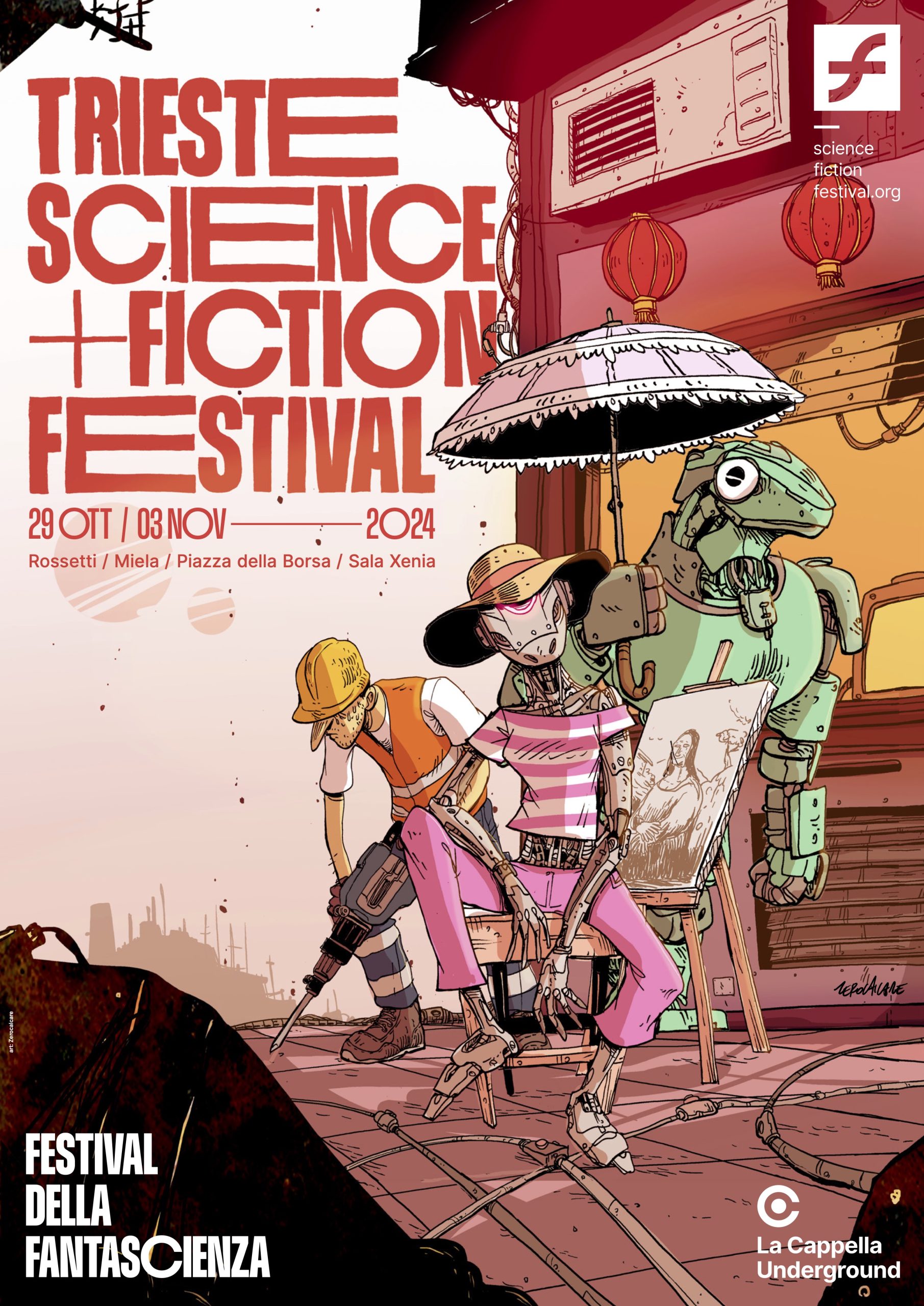
Ahead of the Trieste Science+Fiction Festival, which takes place in Italy at the end of October, we caught up with Artistic Director Alan Jones to find out about what makes the event so unique and what we can expect…
A hugely successful sci-fi film festival has been held in the lovely city of Trieste since 1963. It changed to its current format in 2000. Jones, one of the four co-directors of the UK’s biggest event for horror fans, FrightFest, and a famous genre journalist in his own right, has worked with the Italian festival for several years.
STARBURST: How did you come to be involved with the Trieste Science+Fiction Festival?
Alan Jones: They invited me to be on the jury several years ago. I liked the city so much that I bought a place there. It was going to be a holiday home, but then, when they offered me this job, so it’s become like my second base.
How does this festival differ from FrightFest?
The Trieste Science+Fiction festival is part of the Méliès International Festivals Federation, which promotes and supports European cinema, particularly fantasy, sci-fi, and horror. So it’s a part of something bigger, and I have to understand what’s going on within that. It’s a whole different way of looking at things. It can be quite hard. When I make a decision on FrightFest, it gets done within five minutes. I have to go through a committee with Trieste. It can be quite daunting. Having said that, the good side of Trieste is that we have a decent budget to work with whereas FrightFest has no public money at all. Being part of the Federation means we have to programme a quota of European films, and I have to be very careful about what we choose American-wise, as we can’t have too many. There are also the awards that come with being part of the Federation, the Asteroid and Méliès d’argent for films screening and the Silver Urania Award, which is like a lifetime achievement thing [past recipients include Dario Argento, Ray Harryhausen, George A. Romero, Christopher Lee, and Alejandro Jodorowsky]. The whole thing works differently. There are press conferences – we don’t do those at FrightFest – whereas here I have to do one with the mayor of the town sat next to me discussing how great it is! The audience is different, too. At FrightFest, people will chat and say, “I’ve enjoyed this and enjoyed that”. I have tried to change the Trieste ethos. I felt up until I joined, it was a bit too serious, a bit too academic. There’s a part of the audience who want that, but there’s got to be a certain amount of fun involved. It’s been hard trying to get some feedback from the audience. The Italian audience is quite laidback. At FrightFest, I go out and talk to people and it’s great. You try to do that at Trieste, they shrink back and they’re horrified. I said to some of them a couple of years ago, “What’s been the problem?” They came back with, “No more zombie movies!” We had a time when literally every single film was some variation on zombies and viruses. I thought okay, we’ll take that on board. But then, the genre is cyclical, so it’ll be back!
There’s also an online component to the festival, too, isn’t there?
Yes, while we did it with FrightFest in COVID times, with Trieste, we get government money to be able to make things accessible online. However, when you deal with the film companies, they don’t want you to do it. Through COVID, they were fine because that was the only way they could show them. Sometimes it’s fine with the independent movies, but it can prove quite difficult.
What can we expect from this year’s festival?
We’ll be opening the festival with MadS, which is a film all the festivals have wanted. It’s from David Moreau, who did Them [2006]. It’s a really good one-shot, an end-of-the-world, apocalyptic thing that works on surprise. There are a few films we had for this year’s FrightFest, such as The Bunker, and Joanne Mitchell’s Broken Bird. We’re also going to be showing The Invisible Raptor, which did really well at FrightFest, it’s a real crowd pleaser. Meanwhile on Earth is a really interesting take on the body snatchers subgenre. I saw it in Berlin and I said we’ve got to have this. Other festivals are a bit sniffy about it, but I really liked it. It’s directed by Jérémy Clapin, who did I Lost my Body, the animated hand thing that was on Netflix. Speaking of animation, we have Ishan Shukla’s Schirkoa, which is set in a dystopian future where people walk around with paper bags on their head because they’re not allowed to show who they really are. It’s so great. Asia Argento and Gaspar Noé do the voices. We’re going to be showing The Life and Deaths of Christopher Lee, the documentary. It’s by Jon Spira, who did Elstree 76. It’s so well done because Christopher Lee is brought back as animation – a glove puppet and things, and he talks about his life. There are all the usual talking heads, Peter Jackson’s in it all the way through. It’s one of the best documentaries I’ve seen for a very long time. There’s also Test Screening, which is really, really fantastic. Think Society meets The Thing, set in a Stranger Things landscape. These selections reflect my taste more than anything else. I can just say to them, “No, I like this film, it’s going to be in,” so there are no arguments about it, whereas we can actually have that with FrightFest [laughs].
Is sci-fi harder to programme?
Yes, very much. Horror films are ten-a-penny. Science fiction is really difficult, especially when you want to have some spectacle, you have to have some epics. These usually come from Russia, though. Unfortunately, we can’t show those anymore. Otherwise, you end up with four people in a room pretending they’re in a cube. We’ve been after a film called Youth for Ukraine for a long time but, of course, because of the war, they haven’t been able to complete it. We’ve been waiting for this one film to come through for three years! There can be a few epics coming from the unlikeliest places, usually Hungary or Sweden. Before I turned up to do the programming at Trieste, they were veering off and doing more and more horror. I came in and said “no, science fiction only”. Well, you can have one or two horror films, but you can’t have too many. There hasn’t been an epic to point to yet, but there is enough to go around some years, even if it’s just low budget. But then this works for horror, too. Sometimes, there’s a dearth of good stuff, so what do you do?
There’s an interesting category in the submissions calling for shorts produced using some form of artificial intelligence. Is there a worry that might prove controversial?
You’ve hit the nail on the head here! I visited the Pigeon Shrine studio in Coventry. They’re our sponsor for FrightFest. Tom Paton [CEO and filmmaker] also comes to train us to do things and talk about the whole AI experience. I wanted to see the studio, how it worked. It’s mind blowing what they’re doing. Every time I see Tom, I feel like I’ve been hit over the head with a time machine. I came out thinking of the possibilities, it’s just untrue. The backlash is completely misguided. They don’t understand what AI can do and can help with. If there’s something that can help you, why don’t you take it? Trieste is a city of science. Major geneticists are there. There are major laboratories. A lot of the students in all the universities are all geared towards a scientific career. I want AI to be part of that, so Tom is coming back to do another presentation.
What have been the standout moments for you from previous years?
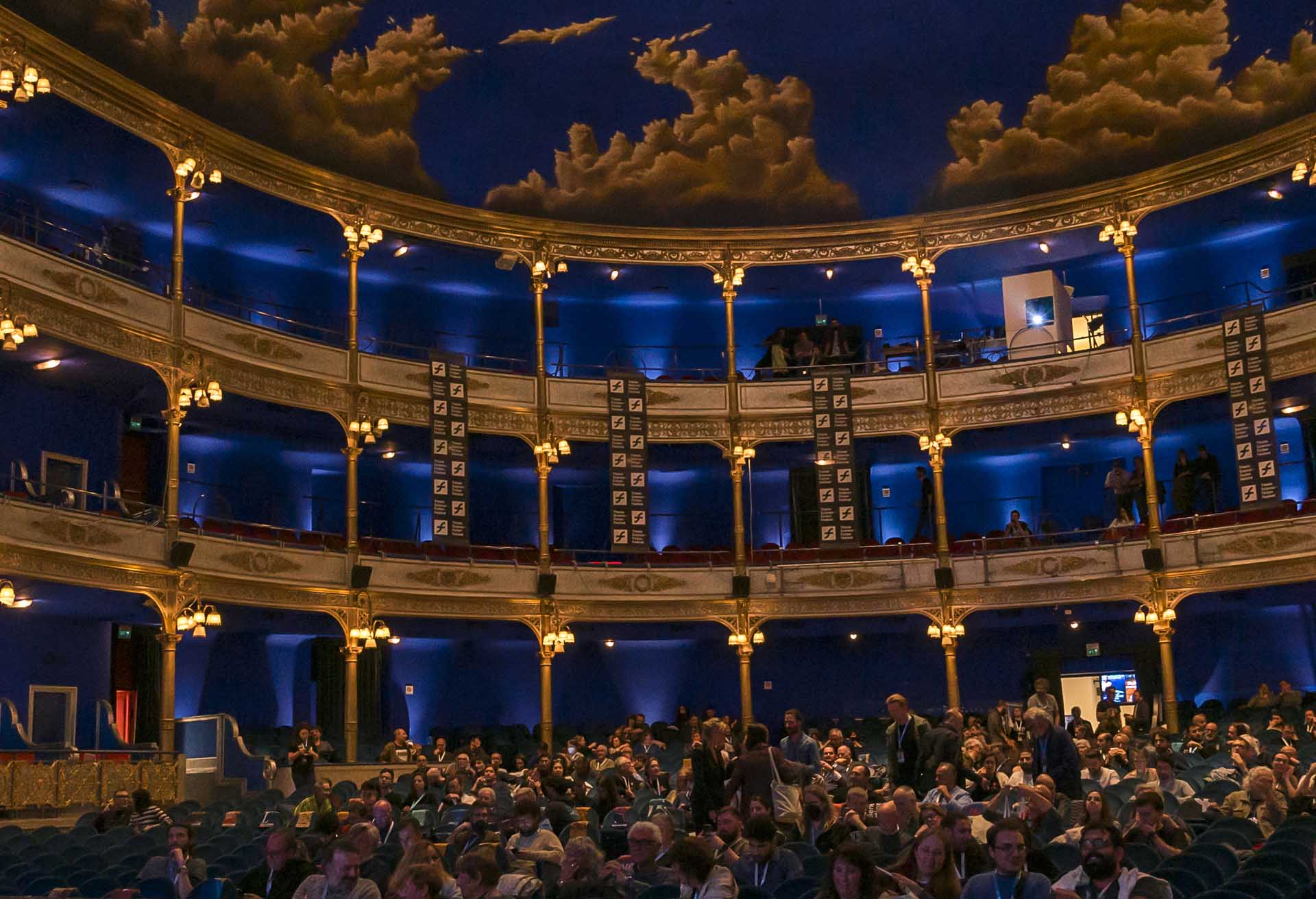
Well, last year’s opening was good. I dressed up as an astronaut and I pretended to crash-land through the theater to David Bowie’s Space Oddity. Unfortunately, we set the bar way too high now and we’re going to have to do something really ultra-spectacular this year. We’ve got something planned, but I’ve taken my guide for more FICCO in Mexico, who do the most amazing openings – it’s almost like a Busby Berkeley song and dance. It’s incredible. The venue in Trieste is a theater that is only a cinema for us. Outside of the Science+Fiction Festival, it’s used for touring shows like Mamma Mia. LesMisérables comes in straight after us.
We guess being a theatre it’s set up differently…
Yes, there are plenty of things you can’t do in a cinema. Half the time, you’re not allowed to do them because of health and safety, whereas in a theater, it doesn’t matter!
It would be remiss of us not to mention the book of STARBURST reviews from FAB Press…
I’m so thrilled with it – I love it. You can see my progression as a writer and the genre itself. Cinefantastique and STARBURST are two of the most important things in my life. I was lucky to be in that period of time when the genre explosion was happening. It’s all the reviews I did; I didn’t edit anything out. I didn’t change anything – only mistakes! I can’t believe some of the things I said and can’t believe we got away with it. Like saying Jeannot Szwarc should die of cancer for directing Supergirl. How did they let me get away with it? How did the PR companies not jump on me? I mean, I was so rude! Unbelievable.
The 24th Trieste Science+Fiction Festival takes place between October 29th and November 3rd. You can find out more and book tickets at sciencefictionfestival.org
STARBURST: The Complete Alan Jones Film Reviews 1977 – 2008 is available from fabpress.com