Jill Gevargizian | THE STYLIST

The Stylist

Right now, the world of modern horror has so many fantastic talents looking to stamp their mark on the genre – and one particular standout talent is the brilliant Jill “Sixx” Gevargizian. Having impressed many a horror hound with her short films, Jill’s The Stylist is a short that went on to win a slew of awards across the globe and well and truly put Jill on the horror map. As Jill gets set to take the concept of The Stylist and extend it to make her feature-film directing debut, we caught up with the ridiculously talented filmmaker to discuss the process of developing a short film into a feature-length movie, her plans for Najarra Townsend’s scalping-taking Claire, her influences within the genre, how the ’80s hindered horror, her love of Idle Hands, and a ridiculous amount more in what truly was one of the most fun interviews we’ve ever done here at Starburst.

STARBURST: Why was now the right time for you to take the jump and go the crowdfunding route for a feature-length take on The Stylist?

Jill Gevargizian: Well, we’ve been trying to get it made for a couple of years, but clearly it has not landed yet. We’ve been trying to make it for a much bigger budget than this Kickstarter budget. It’s really not written to be a micro-budget – which is what this Kickstarter budget reflects – so we were trying to get it made “the real way”, which was sending it out to potential investors and producers. We just weren’t getting anywhere. I’ve got multiple projects in that stage, and I’ve learned that that’s the kind of thing that you’re just lucky if it ever hits the right person at the right moment. I was just like, “I’m done doing this. We’ve been doing this for two years. Are we going to wait another five years to never make this movie?” I feel like I get the vibe that a lot of people who are potentially interested in my work are still thinking that they wish I had that experience of a feature already. It’s like this Catch 22, where everybody wants me to have the experience, yet nobody is giving me the opportunity – so I’ve got to figure it out myself.

Considering that the short itself has such a cinematic feel to it, you’d like to think that that would be enough for an investor to see the potential for you to helm a feature.

That’s what we hoped. There’s hundreds and hundreds, thousands upon thousands of filmmakers in my position every day, just sitting with features that they’re trying to get made. It’s just so much luck that it ends up happening where someone hands you $500,000 or more to make a movie. I just got fed up. I’ve been through a lot in life that teaches me that you can’t wait for stuff like this. If you want to do it, you need to figure it out.
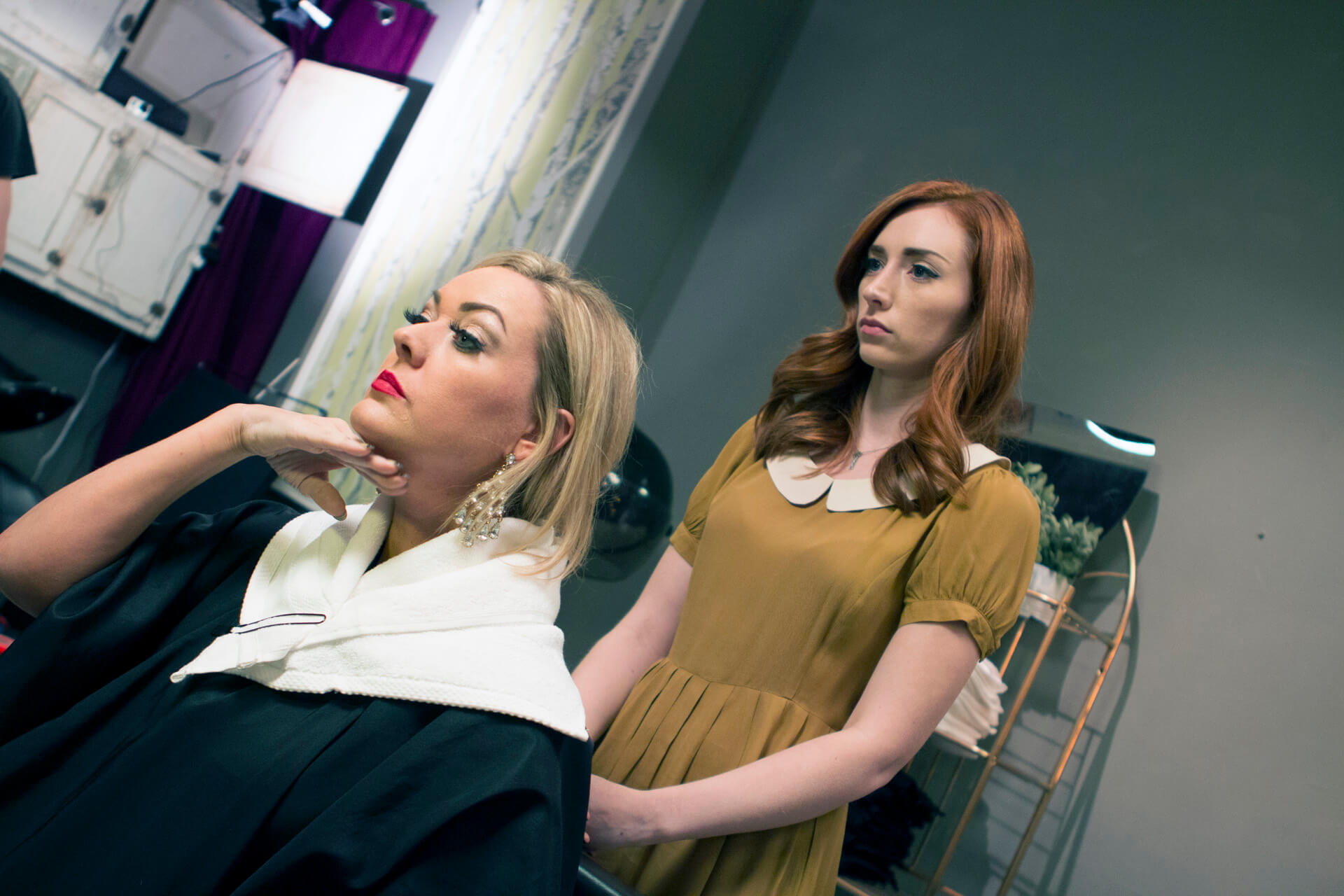
The Stylist

So far, we’ve obviously seen Claire’s story in a 15-minute short. Is it a daunting or more exciting prospect to look at fleshing this character and her world out for a 90-minute feature film?

Yeah, I was excited to do it. Really, the biggest question or challenge was what part of her life are we tackling here, how much are we showing. So many people wanted to know how did she become this way – that was the reaction we got so much from the short – and everyone wants everything to be explained. I’m not a big fan of that in movies. They need to leave you with stuff to think about, not just lay everything out for you. That’s really what led me to how we’ve structured the film. I was always wanting this to be a feature, so I’m so excited. It’s really a character piece that’s super-focussed on the character of Claire. You’ll all get to see and learn a lot more about her.

As you touched on there, it’s so often a fine balancing act between giving a peak behind the curtain as to what makes a character tick, while not wanting to give everything away.

I think there’s the kind of people that only think in such a practical way, the type of people who relate to movies and say, “Well, that would never happen.” It’s a movie, that’s the point, that’s what we’re trying to say as filmmakers. I struggled with how I would be able to tell her background without doing the flashback thing. The films I was really looking to as some of my biggest inspirations, they do that, but I really don’t want to do that. How can we do this without that? It just seems like a cheap way to give exposition about what’s happening or why.

And there’s also the notion of holding things back for any further Stylist movies that you do. Who’s to say that this won’t spin-off to become a thirteen-film franchise?!

That’s the dream. I’ve joked about The Stylist 10, where she’s in space with Jason.
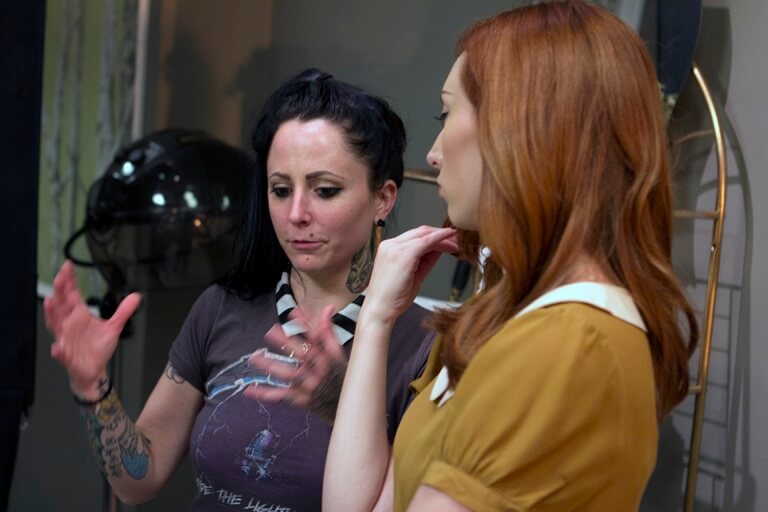
The Stylist is extremely minimalistic in terms of its characters, as in two people and a Chihuahua. We imagine that there’s more characters and more victims for a feature film, so have you got this world and new characters planned out?

We have! We’ve actually been working on the script since the second we finished the short – which was almost five years ago – so we’ve had a solid version of it that we’ve been in love with for the last year. I’ve been trying to make it tighter due to making it for almost no money at this point, but that has been interesting. It is still a very intimate story with Claire, but like you said, in an hour-and-a-half we’re going to go to more places than her salon and her home. It is a much bigger world, and there is one other character that is pretty large. It’s a client of hers that’s about to get married, and Claire’s doing her hair for the wedding. Through all of the preparation leading up to it, she’s really involved in it and included. This is a client that she’s had for years, but she views it as a much different thing than what’s really happening. She thinks they’re developing this really deep friendship, and this is something she’s never really had in her life – so she’s trying to be a better person and change for this person. When she realises it’s not what she perceives it to be, she just totally spirals out of control. In that way, it’s very similar to something like Single White Female. It has a lot of that thriller vibe, mixed with a slasher, but not nearly as slasher-y as Maniac or Friday the 13th. We’re not killing, like, ten people – spoiler alert! It really is more a psychological thriller to me, but I’m also a huge fan of gore so I’ve got to get that in there, too. It is a much bigger world. I would say that it’s not written for small budget. Normally when you do that, you really contain everything – maybe have one or two locations, a few characters – but this is over 15 locations, a lot of characters, and all the leads are female. So, it’s a big thing to tackle on a Kickstarter budget, but we can do it.

When you first envisioned adapting one of your shorts as a feature, was it always The Stylist or was it ever one of your other shorts, such as Call Girl?

It was always The Stylist. It wasn’t even that it just worked well, but, before I even made the short, it was a feature to me. I knew that I couldn’t make a feature yet, so I made the short. None of the other ones are features to me. I feel like some of them could be turned into that, but a lot of shorts that have done well are forced into a feature, and the features aren’t good for that reason because it was never that intention. Like Lights Out. This viral short film. I guarantee that filmmaker, it was never their intention to expand this one-minute thing to a feature film. It was always my intention with this one. Really though, we should have been prepared as soon as the short came out. We had a lot of interest back then from exciting people, exciting companies. They just approached me with, “This is a feature, right?” I was just, “Yeah, but not even close to being written.” I was really down on myself for a while about that, about not being prepared. Then I was, “Well, I’ve gotta do something about it.”
The Stylist

The Stylist was only the second short that you’d done, and it received universal praise from fans and critics across the board. Was it a little surreal or just outright awesome to get such great feedback?

It was. It was both of those things. I’m so excited and proud about it, and I’m not ashamed to be proud about it. It was so exciting, but I also think that affected my progress in getting the feature written, because I couldn’t stop focussing on why I didn’t already have it ready now, that I was missing my moment. All that gave us the confidence of doing a Kickstarter, though. We did it for the short, but that was a significantly less amount of money, and I was real nervous about raising so much. From talking to the team about the film, everybody thought that we could do it with how well the short did and how many people have seen it. It’s such a great thing to have when promoting the Kickstarter – we have all this imagery, we basically have a 15-minute trailer for you to watch.

It’s the perfect proof of concept!

People don’t realise that there’ll shoot proof of concepts that no one will ever see for films all the time. I’ve made a trailer like that for another feature we’ve got in development. It makes me sad that I can’t post it online, because we spent a lot of time on it. But if anything, I was just, “Well, we have this short to help us make the feature.” A lot of people ask whether this short exists in this feature, whether it’s in the beginning or the end. It doesn’t exist in the same story – it’s just capturing the same moment of her life in a shorter time span – and my intention for the short was to feel that she was spiralling out of control, because she was making a lot of bad decisions that would lead to her getting caught.

With Claire, in the short she comes across as this tragic, almost sympathetic villain. For the feature, is then plan to follow that sympathetic route or is there the urge to just make her into some crazed, bloodthirsty character?

No, I definitely want her to be sympathetic. My favourite kind of characters are the tragic characters, such as the classic monsters like Frankenstein’s monster or Dracula. A lot of these characters are presented like they are damned to their existence. They didn’t have a choice and they don’t necessarily like what they are or what they do, but they can’t control it. All the Frankenstein films have been very sad, they’re all tragedies. To me, Leatherface is kind of tragic – only in the original – and Candyman is tragic to me. A lot of those types of characters are scary, but it’s confrontational as a viewer because you get to know them more. A villain like Jason, for instance, is way more flat and more comedic, so it’s different. We don’t get to know a lot about those villains, so we don’t have any feelings about them. I like to get to know the people who are technically the “bad” person. I’m even sympathetic to things that I shouldn’t be in real life. My most recent short film is set in prison, which made me go on this crazy dive of only watching things about prison or only reading things about prison. That opened my eyes to whether these worst people in the world should be treated as less than human. Everyone came from something, everyone is traumatised and have a reason for why they became the way they are. I’m just really interested in that.
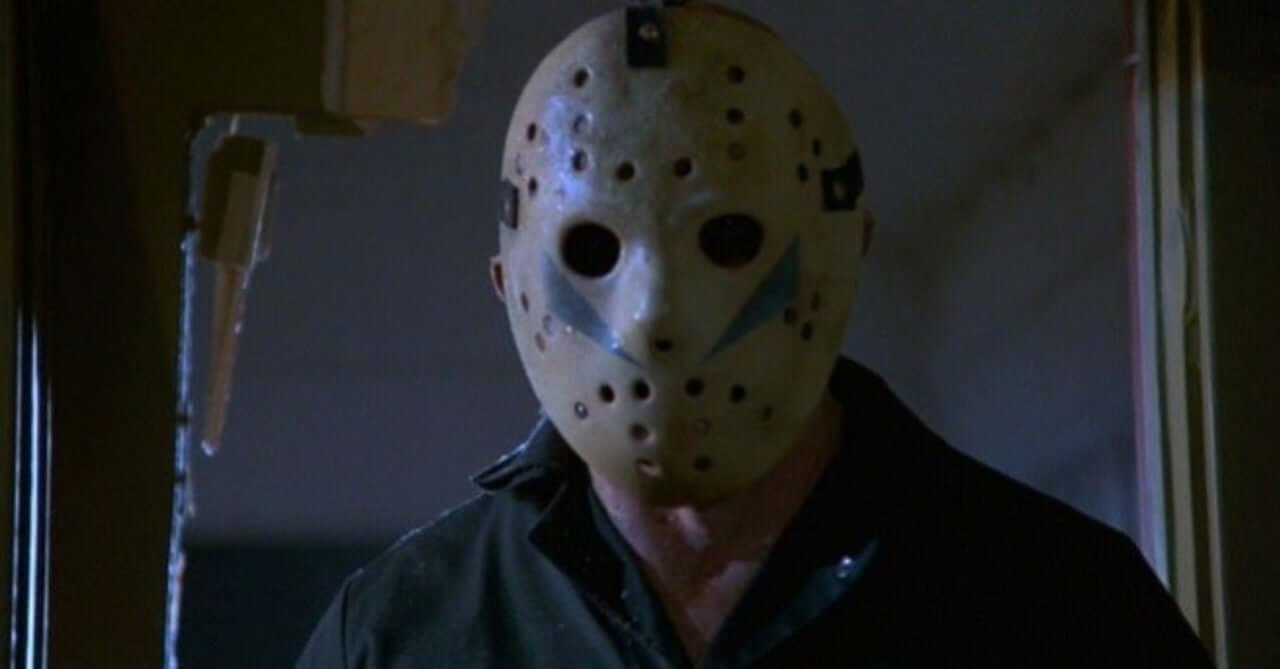
You mentioned Jason there, and there was certainly a spell in the ‘80s where the horror genre became all about body counts and relentless killers.

That’s definitely the ‘80s faults! I will say this – and horror fans hate me for it – but the ‘80s, as much as people love it, it’s also what made the genre a joke. The genre was respected before the ‘80s, then it turned into this blood ‘n’ boobs and low-quality filmmaking. I even like some characters, though. Take something as extreme a Henry: Portrait of a Serial Killer. That’s a film that really messes with you; that movie is like a gut punch. Sorry for anyone who hasn’t seen it, but the ending really fooled me. I really thought there was something good in this guy. Maybe the relationship with the female character, I believed that was real. And then he just kills her at the end! It was a really interesting point to make. I love films that end on a devastating moment.

You could even argue that that shocking, gut punch ending is a little bit of a lost art these days.

Hollywood and the more mainstream people want you to tie movies up a little nicer. Even at the end of the feature of The Stylist, I feel that a big-time person would convince me to add a scene on where it ends better.

Away from the financial side of things, what do you see as being the biggest challenge of taking The Stylist to a feature?

I can’t think about anything but the producer stuff. That’s so challenging. As a director, it really is related all to that. We’re trying to problem solve, like, “How can we shoot this in this many days?” The reality has been setting in only recently that once this Kickstarter is done, I’ve got a lot of work to do. We’re shooting this in January, so I need to storyboard the whole script. It’s going to be just such a huge project for me because I’ve only done short film. I’m an immaculate planner type. I spend four months planning out a short film, and I feel I only have that much time to plan out a feature. It’s not as if I can do that full-time, as I’ll be working a full-time job while preparing for this. But that’s kind of been my love. I joke that I really don’t have a social life outside of stuff that has to do with film. If you’re going to do something like this, you really need to put all of your time in it. It’s honestly a bit terrifying to realise that we’re actually going to be making this movie. It’s still just this exciting idea in my head. I’m always switching hats between being the producer and the director. On a budget this small, you have to be thinking in both ways. You have to think about how can you pull things off with the time that we have and the resources.
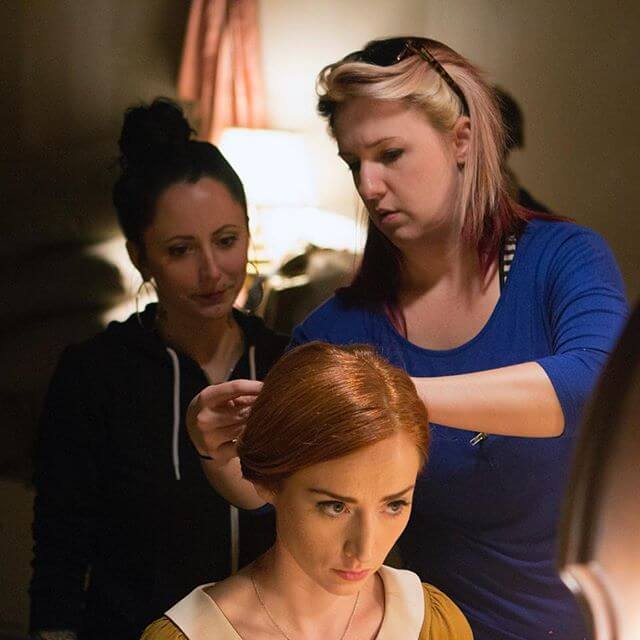
You’ve got Najarra Townsend returning as Claire, but will the rest of the core crew from the short be involved?

Most of the team from the short film will be returning. We haven’t approached every single position just yet because it’s a little too early, and we also need to know what our budget will be so that we know what we can offer people. The cinematographer Robert Patrick Stern and the production designer Sarah Sharp, the also helped produce the short with me and they’re both on this. They’re helping me produce this and they’ll do those crew positions as well. They’re the reason the short looks so good, and they really chaperoned me through making that short. They’re in Chicago but they’ve already come down to Kansas City twice in the last month to do location scouting. Then we really look to work with the same editor, same composer, same colourist, everyone. As far as writers, I wrote the short film with my friend Eric Havens, who also wrote Call Girl. We wrote it as a feature together for a few years, then I brought on another Eric to make it really confusing – Eric Stolze who wrote Late Phases, a werewolf film, and he also wrote my most recent short, One Last Meal. For a lot of things, we have to wait until we’re closer. We can’t expect people to commit to something six months down the line when we can’t offer them their professional rate. We have cast Brea Grant, though, and have cast a local actress, Sarah McGuire, who I’ve worked with a lot on music videos and shorts but haven’t yet had a juicy role for her – and now we finally do, so I’m excited about that. A lot of the other casting, we’re just waiting until we’re closer and we know exactly how much money we have.

Brea was phenomenal in John Schneider’s Smothered. How did you guys end up meeting?

Brea and I met on another project, another feature that we have in development called Permanent Address, written by Eric Stolze. It’s a supernatural film and we’ve been trying to get that made for a couple of years. I’m attached to direct it, Brea is the star of it, and I’m dying to make that. The idea is that if The Stylist does well, then we can right away make that one. Again, it’s another character piece. It’s about a woman in her mid-late 30s who’s just kind of starting over. I really love it.

As Jill the horror fan, what makes you tick? Is there a go-to movie or two that you have?

That’s a great question. What’s funny is right now I really want to see Hustlers, that movie about the strippers. Everyone’s saying it’s great, but I already wanted to see it before that. I feel like I haven’t really been watching movies lately because I’ve been so involved in this Kickstarter. I guess the first one that comes to mind for some reason is Final Destination. That’s one of my original comfort movies. All of the stuff at that time. Idle Hands starring Devon Sawa, I’m a huge fan of. I’m saying I like all of those heavy, serious sad characters, but I grew up in the ‘90s and so I loved all those ‘90s horror films like Scream and I Know What You Did Last Summer.
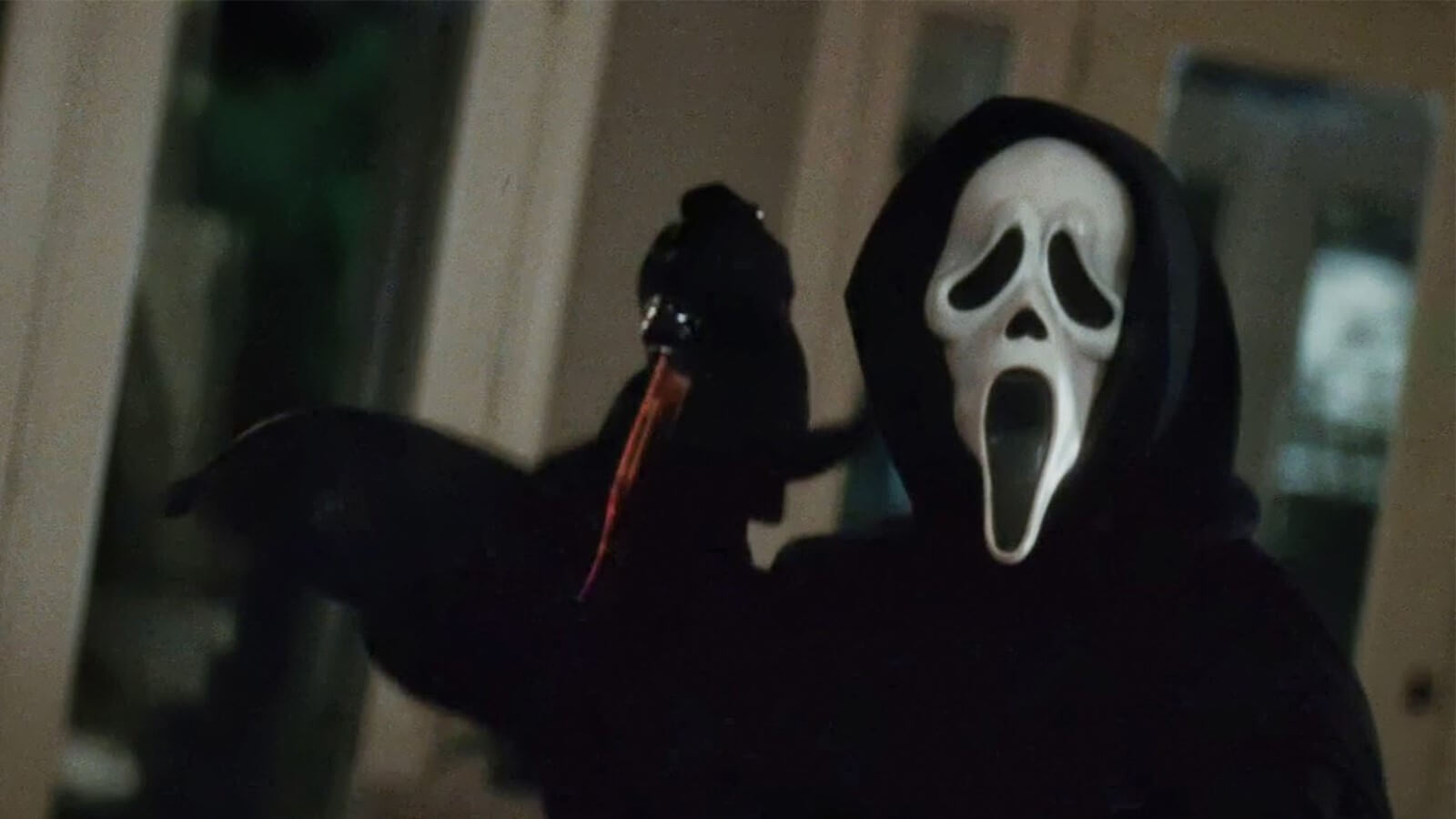
scream

Scream totally changed the game, and it could well be the movie that got horror out of that ‘80s funk once and for all by forcing the genre to change by poking fun at it – while still being scary!

I was hardcore obsessed with that film. It’s the kind of movie that, when I still watch it now, I’m just, “Oh my god, this movie is so good.” The way that Wes Craven managed to make fun at horror while making a scary horror movie, it’s some kind of magic. Whatever age I was when it came out, I remember finding this website when the Internet was barely working and was very slow, where they had listed out all these references or nods to other films within Scream. I used that list as, “This is how I’m going to become a knowledgeable horror fan. I’m going to watch all these movies.”

The first two were great moves, the third is a bit of a guilty pleasure, but then the fourth…?

It just didn’t have the same magic. People die hard about Scream 4. Every few weeks I’ll see someone on Twitter say Scream 4 is second in the franchise. It’s like, “You guys are fucking crazy!” Nothing’s better than the original cast. I don’t care if Neve [Campbell] or Courteney [Cox] are back for it, the original cast is so good. They were so good that I was so upset when Randy died in Scream 2. That was horrific. Even Courteney Cox – I also grew up a huge fan of Friends – to see her playing this psycho bitch, I just loved her in that film. The one thing that does make me sad, though, is that her and David Arquette didn’t work out. We all like to think that these movies brought them together.

To circle back to The Stylist, the obvious question that you’ve likely been asked a million times is, as a hair stylist, how much inspiration is there from you wanting pull someone’s scalp off?

None. Everyone asks that, though. I must have just been at work and been like, “How is there not a slasher movie about a hair stylist?” Especially in the early ‘90s, when they were making things like The Dentist and The Landlady. How does a version with a hair stylist not exist? There’s just so many weapons and devices that could be used as weapons within a salon. I thought that that would be a fun movie, but I’m more interested in characters and the psychological stuff. I just love brainstorming. The first time I wrote anything down about it – what could she be, what does she do – I just pictured this person twirling around in a room covered in scalps, like trophies on a wall, while wearing one of them. I pictured her as a Leatherface-type character at that point. It was also spawned from the teaching of indie, no-budget filmmaking. The idea behind it of writing backwards. You write for the things that you have access to or that you know a lot about, versus just writing any creative idea that comes to your mind. Setting the movie in space? Yeah, but how the hell are you going to do that. Instead, you look at all of the things you have at your disposal, like cool locations or a cool car – anything – and then you write about that. So I was also inspired by that way of thinking. I have access to salons, I am a hair stylist, I know how to write this from a perspective that I know what I’m talking about rather than people who write movies about professions that they don’t know anything about. We really used that to our benefit. Mostly it’s shot through mirrors, or the camera’s acting like it is the mirror, and we just used that to our advantage in every way we could. It was just all inspired from like, “How does this not exist? I’m going to do it somehow, and I can do it right. And a hair stylist can watch it and know that a hair stylist must have made this movie.” That was important to me.

Maybe it’s in The Stylist 7 that you decide to go all out with the weapons and the gimmicks…

That’s exactly what I’ve been saying [laughs] – even as far as Part 2. I’m a super fan of The Texas Chain Saw Massacre, so I’ll follow Tobe Hooper’s vision entirely and make Part 2 in ten years’ time and just go completely go over the top.
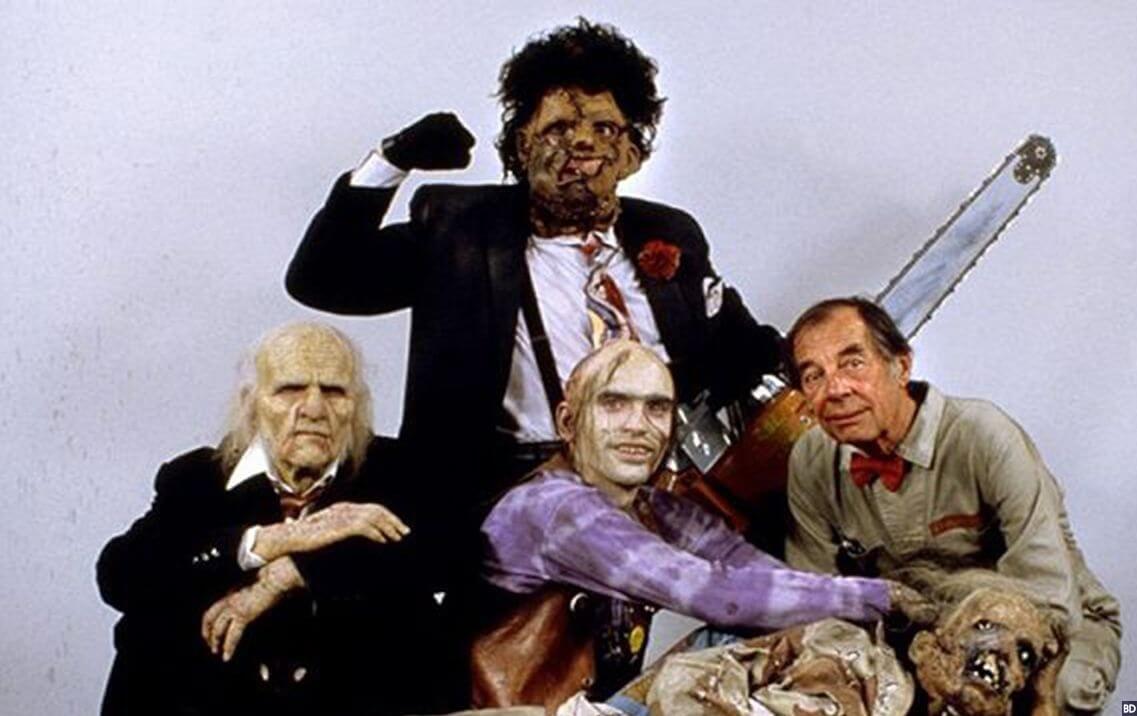
Texas Chain Saw Massacre 2 - Chop-Top

Maybe even get Bill Moseley involved?

He’ll play Chop-Top for no reason in The Stylist 2. That would be the dream.

You’ve directed, produced, written, and even acted at times. When you embarked on this journey into film, what was the endgame for you?

To direct. My first short was written by Eric Havens. I run a screening series here in Kansas City called Slaughter Movie House, which we do the first Monday of every month. I was doing that for a little over a year, meeting all these filmmakers, and I was so inspired. I didn’t realise that people just decided to make movies and then made them. It never dawned on me that it was a thing I could do. I remember I was in a friend’s film locally – House of Forbidden Secrets by Todd Sheets – and I wanted to go on the set and just see what it was like. Then my friend Eric had the script for Call Girl. I was going to kind of help produce it – which I didn’t even know what it meant at the time, but I was good at organising things – and then John Pata decided that he couldn’t direct it for a while, so I asked Eric whether I could direct it. I had no idea what I was doing or what I was really asking, but he said yes. I just started figuring it out from there. I’ve always worked both as a director and producer, though, but I still don’t think of myself as a writer. Whenever I write, I always write with people and I do like directing other people’s writing so long as I can be involved in it and feel connected to it. I’ve read plenty of scripts and just thought, “There’s no way that I can direct this movie.” If you don’t love this, it’s just not going to work. You need that passion. I grew up doing photography, so I’ve always had a love for the visual arts. Filmmaking is like a combination of all art forms, which is what I love about it. With The Stylist, I had an idea and I wrote it out, then I asked Eric to help me flesh it out and write a script. I really like to be involved in the writing, but I know it’s not my passion as I don’t sit around and write for hours every day

Of all the roles you’ve taken on so far, what brings the most pressure for you?

I’m really not an actor at all. I’m not trying to be, so no one think that I am [laughs]. I think the pressure is harder as a director. It’s different in different stages. On set, as a director I’m the end of the line. I don’t mean I’m a dictator and no one gets to say anything, but I have lots of pep talks in my head on my way to set every day. You need to make a decision, get on with it, be confident and move on. That is all it is all day, like, “What are we doing next? Where do you want this? What are we doing with this?” You can’t sit there and ponder over each question, otherwise you’ll be there for three days when it should’ve just been one day. So it is a lot of pressure, as ultimately everyone is going to look to you to have an answer for everything – so you better have one! Everyone needs a leader who they can be confident in or who has the vision for whatever’s happening.
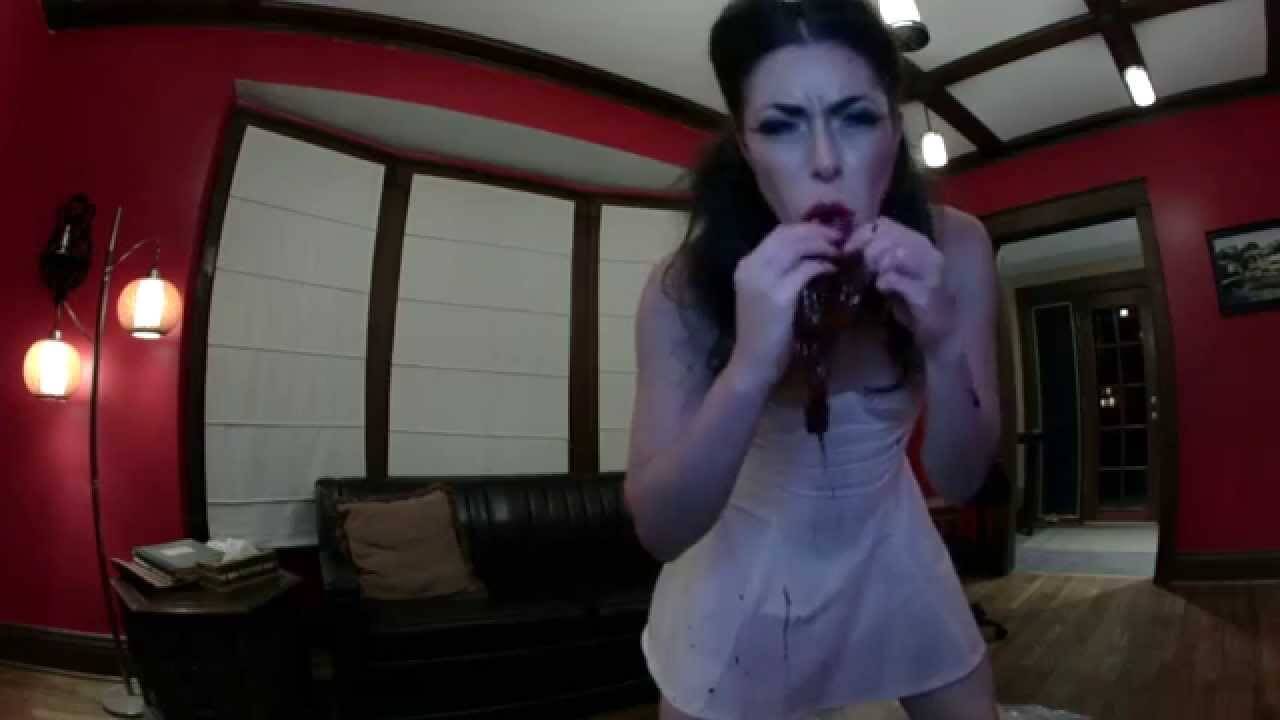
Tristan Risk Jill Sixx

From Call Girl to where you are now, how do you think you’ve changed as a filmmaker?

With Call Girl, it was a small project in some ways, but big because we had these genre actors who really intimidated me as a first-time director – both Tristan [Risk] and Laurence [Harvey], because of their experience compared to my zero. I’m always working with people I’m intimidated by. I want to be working with people that I look up to, which kind of makes me nervous in a way. Najarra still does that, and I’ve known her now for four years [laughs]. I guess what I’ve learned over the years – and I’m sure the people I’ve worked with are going to roll their eyes at this – is how to collaborate with people better. I think it’s natural for a director that you have a very specific idea in your head of what this is going to be, and you can get sensitive about that and appear crazy and controlling; you don’t let anyone else have input, and that’s not the way to be and that’s not how films work. For me, I just naturally react real sensitively. I have this very specific idea of how something is going to be or look or playout. When someone suggested something different, at first I was really thrown off by it. But I’ve learned that you just have to think clearly. Every single person on this project is here to make it the best it can possibly be – no one is here to sabotage it – so there’s no reason to believe that someone is here to mess it up. Let’s hear them out and hear they’re idea – and it’s probably freakin’ awesome. I’ve really learnt this in the editing process, when you’re in post-production. I storyboard, so I have essentially edited in my head before we shoot,  but editors will always have these crazy ideas to rearrange things or completely remove a line of dialogue that changes how the whole film feels. At first, those ideas give me a mini meltdown in my head, but we try the idea and it’s often amazing. If you have mapped out plan that you know is going to work, you might as well try the other things because you can always fall back on the original plan.

With your movies, do you feel that you pull particular influence from certain directors and certain movies?

Yeah, I do that for each movie, I make a watchlist of films I’m inspired by in different ways. Some of them will reflect a connection to a character or a story itself – nothing that is visually similar – but I seem to always, with every film, visually go to David Fincher’s work. He’s my biggest inspiration in many ways. His stories are a little different from what I’ve done so far, but I’m really obsessed with crime thrillers. He’s one of those psychotically meticulous filmmakers where every shot, everything that is happening within it, is so planned out. Everything you see in the background – the framing of it, the actor’s face, where they’re looking – everything has intention and reason, and it’s never just because it looks cool. That’s what makes me believe that the greats are the kind of people who take that time – that every little thing has a reason. A viewer might not know why every little thing is there or even perceive all of that, and I think that’s what makes those films better. We don’t necessarily know all of that, but somehow all of that is being absorbed into us. It makes me feel like a sell-out in some way that I don’t have some weird avantgarde filmmaker, but it’s him and someone like Martin Scorsese – who I think is the same type in terms of being meticulous. And both of their cinematography is similar, that they’re both the type who really never do handheld. It’s very controlled, beautiful cinematography that’s always operated by a thing, not a human. I’m really anti-handheld in my stuff, except when you can use it very sparingly and it can have an impact. I do see that there’s a place for it in filmmaking and that it’s a style choice, but it’s just not mine.

With Fincher and Scorsese, they’re two filmmakers who always seem to make every detail of every frame matter.

Scorsese, he’s made so many movies that so many people don’t even know half of them. He has the ten to 20 that are huge and everyone’s heard of, and they’re so often about these really bad male characters that are completely destroyed by their own fame and greed. I like that about his work, that there’s a clear theme in so much of it – these bad people that you feel for in a way.
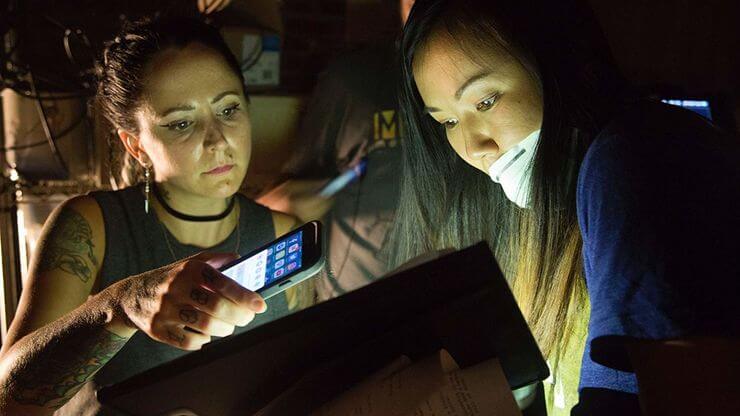
Jill Sixx Gevargizian

For The Stylist in particular, was there anything you used as direct inspiration?

I was really inspired by May, Lucky McKee’s film. Visually, the final scene in May when she’s at her vanity unit, we shot it exactly like that for the end of The Stylist. I was watching May over and over again, and David Fincher’s Zodiac, which isn’t anything like this story – it was the production design in that movie that I was focussed on, and the use of colour. I’ve became obsessed with colour, and every film since The Stylist we’ve picked out a very specific colour palette. Zodiac, to me, it looks hyper-stylised and there are certain shots that are almost like a comic book. There’s such bright yellow, with everything else just muted. It just opened my eyes to making a film just really artistic and not just like real life.

What are the pressures that you’ve found of going the crowdfunding route?

It’s been good. It’s very stressful, honestly. Every day I’m texting one of my producers, so he sees my emotional rollercoaster every day. At one point in the day I’m like, “Why did we do this?!”, then the next moment I’m, “We’re gonna make it, we’re almost there, we just got another huge donation!” But really, it’s stressful as hell. It’s an amazing feeling to see that we’ve got 311 backers so far, and that that many people are so excited about the project. It’s comforting because it can feel lonely for me at times, that I’m the only one who is really super stressed out about it actually making the goal.
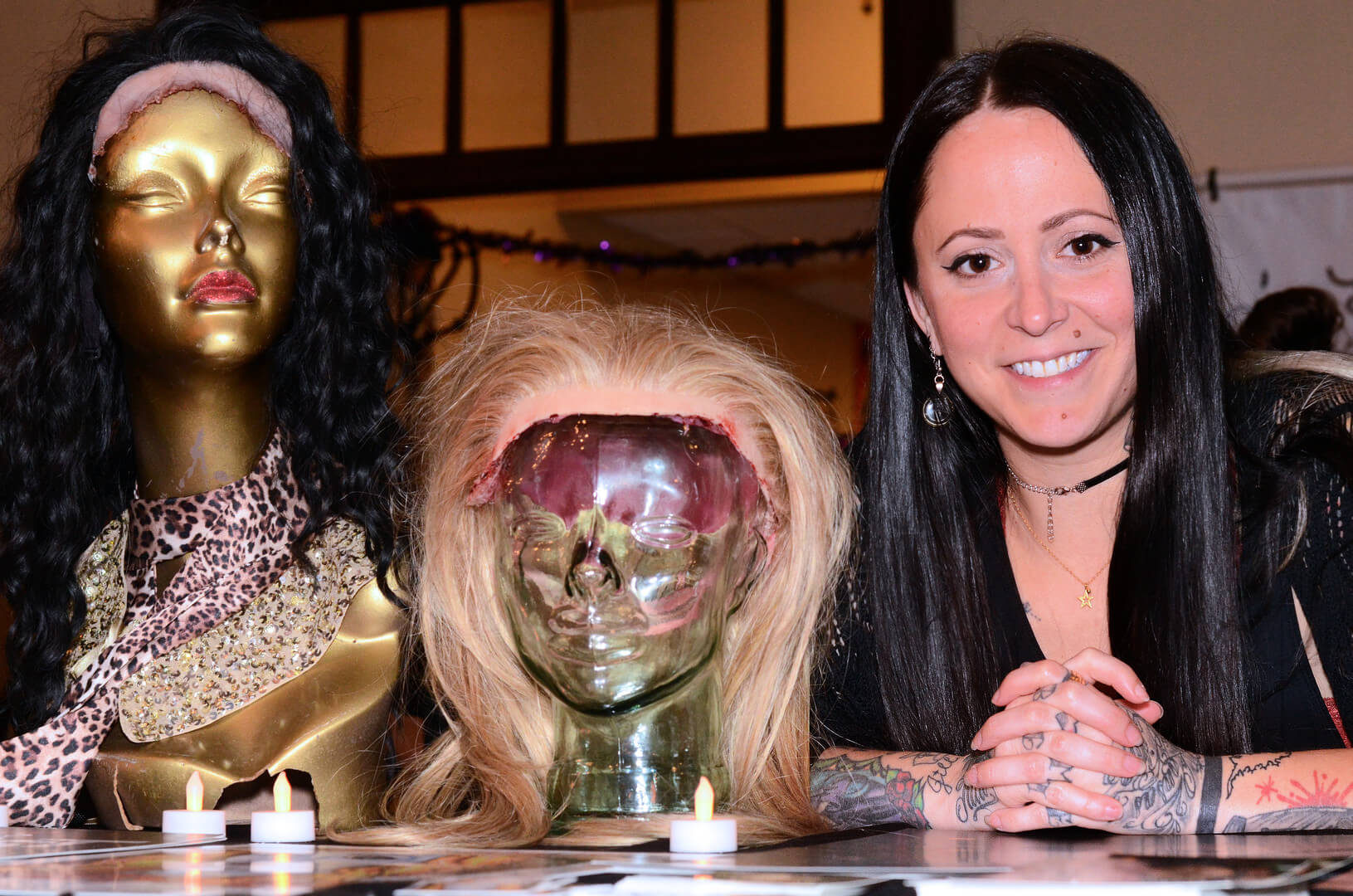
The Stylist

If all goes well, in an ideal world, when should people be expecting to see the feature film version of The Stylist?

We plan to shoot it in the beginning of next year, so ideally we would play a festival the following year. Huge films spend a couple of years in post-production, but we hope to have it done within a year; we hope to be playing somewhere in early 2021. As far as it being distributed, that’s something we have no way of knowing yet. We want to aim for the biggest possibility, so we can’t promise a date yet because, for all we know, we could get picked up by a big company. Because of that, our lowest rewards option of $25 means you get to watch the film through a private link straight after showing at said festival so that you won’t have to wait until the proper release to see it.

To wrap things up, as a horror fan and as someone working within the genre, why do you think horror is so special to so many people?

The genre itself, a lot of the films are exciting and it’s almost like challenging yourself to watch something. I just think that anyone who likes it is obsessed with it, clearly. It’s the same sort of fandom that spawns off comic books and other things. I think it’s the same sort of people who like an adrenaline rush, who like to push themselves and jump out of planes or bungee jumps. It’s a way of controlling anxiety [laughs].

The Stylist is funding on Kickstarter until September 26th and you can support the project by clicking here – and be sure to check out the award-winning The Stylist short below:

Out Now – Issue 465

465 ns

In the new issue of STARBURST, we open up the Arrowverse and look at the new recruit Batwoman. We also countdown to this year’s big crossover, Crisis on Infinite Earths.

We go under the spell of Disney’s Maleficent: Mistress of Evil as we preview the new movie, and reveal all about Aardman Animation ahead of The Shaun the Sheep Movie: Farmageddon. Also, he said he’d be back and he is – Arnie returns in Terminator: Dark Fate.

We find out the origins of Monty Python as they celebrate their 50th anniversary, and we get all Meta with Wes Craven’s New Nightmare. If that’s not enough, we give you the best of The Twilight Zone!

Plus a look back at Space: 1999 and examine Independents Day talks to the team behind The Rizen: Possession.

Plus all your favourite COLUMNS, NEWS, REVIEWS and much MORE from the worlds of SCI-FI, HORROR and FANTASY!

Radio Silence | READY OR NOT

ready or not

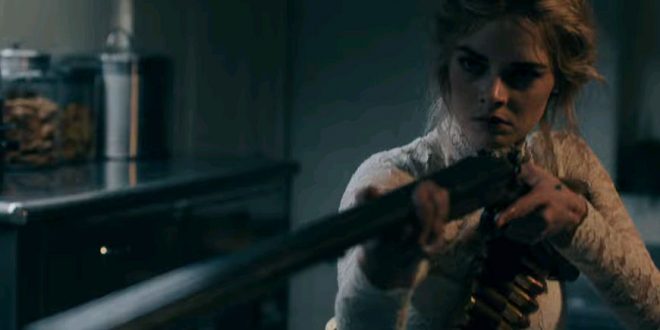
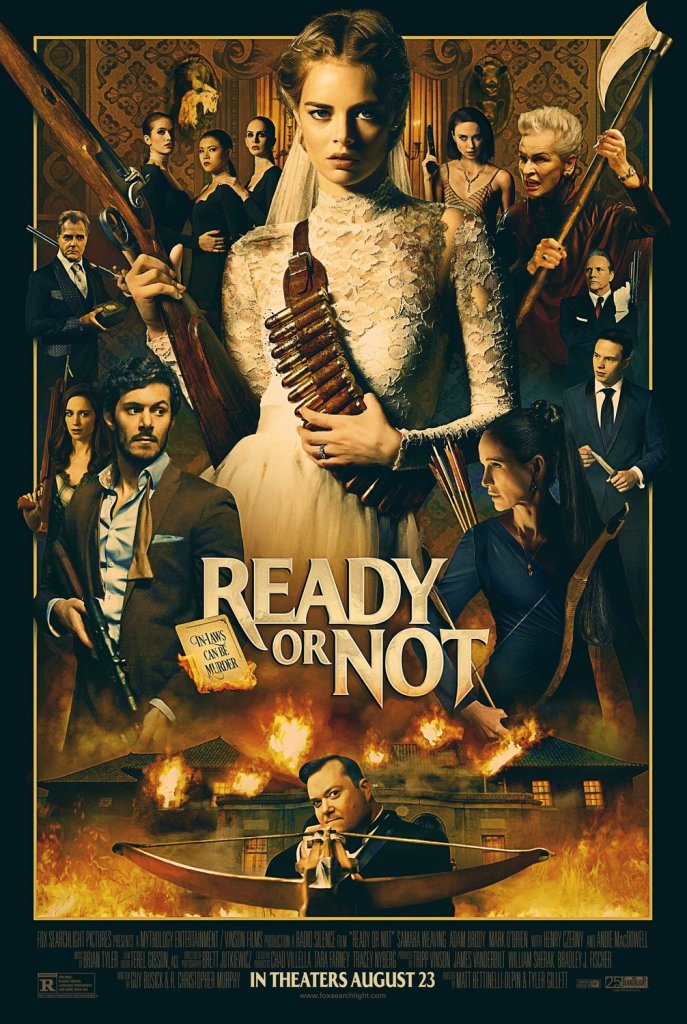
STARBURST spoke with co-directors MATT BETTINELLI-OLPIN & TYLER GILLETT and producer CHAD VILLELLA (otherwise known as the filmmaking collective RADIO SILENCE) about their latest movie, the critically acclaimed comedy-horror READY OR NOT…

STARBURST: We found Ready or Not hard to describe or classify genre-wise. What would be your elevator pitch of the film?

Matt Bettinelli-Olpin: You know, that difficulty is one of the things we really talked about. That tonally it’s a bit of a dance, and that it’s a mash-up of so many genres that we love. Typically, what we say is that this film is about a young woman who is marrying into this very wealthy and eccentric family. And on her wedding night, she realises that to be truly accepted into the family, she has to sit down with them and play a family game. And she happens to draw Hide and Seek, and Hide and Seek is the one game that you can’t win. And she spends the rest of her wedding night fighting for her life!

And despite the film defying pigeonholing, would you say that your film belongs to ‘social issue horror’ genre that’s been making noise recently?

Chad Villella: I definitely think there’s elements of that in all genre movies, and this one’s no exception. We love the way that Grace [Samara Weaving] came from a very underprivileged background, and now she’s married into this wealthy family, and how she sees the lengths the rich will go to in order to keep what they have. So yeah, I would say it fits into that category.

And what do you think makes horror the ideal vehicle for this kind of social commentary?

Matt Bettinelli-Olpin: I think it works well because it gives you context to talk about something you might not otherwise want to talk about. You have to create the language to talk about it. When things are uncomfortable, it might be hard to have a straightforward conversation, but a horror context gives you the jumping-off point. And all of a sudden, we’re having a discussion as a society! Horror’s always done that, but it’s especially true right now. It’s exciting to see people tap into it who aren’t strictly genre fans, and to see that hit the mainstream.

Yeah, it’s definitely a genre that’s previously been relegated to the fringes, or lacked the respect afforded to dramas and the like.

Matt Bettinelli-Olpin: Yeah, exactly. Like all of a sudden, it’s cool.

Oh, it’s cool. It’s getting Oscars! And would you say that your tendency to blend comedy and horror, something that’s prevalent in your filmography, is also to ease those conversations?

Tyler Gillett: That’s certainly part of it. And it’s also about letting the audience in and allowing them to relate to something that feels more emotionally grounded. The stories we love to tell are about normal characters that you see yourself in, walking into a heightened situation that they’re totally unprepared to deal with. It’s often that people think that comedy and horror are very separate, but that isn’t how real life is. They’re really compatible genres.

I think Samara Weaving’s portrayal of Grace does a huge amount to ground the film. What was it that sold you on her as the lead?

Chad Villella: She just got it right from the beginning. We knew that we needed to find a very strong Grace and base everything off her, and after our very first meeting with Samara, she was like, “I don’t want you to be scared the entire time, I want you to receive a little bit of lightness through me.” We knew that Grace had to have this punk rock image to show that rebellion, and Samara got it right from the start. She’s fantastic, and we can’t imagine having made the movie without her.

To be honest, the whole cast is amazing. How did that ensemble come together?

Matt Bettinelli-Olpin:  I don’t think we ever envisioned the cast we ended up getting, and we also can’t imagine what the movie would have been without them. We feel so lucky to have gotten everyone, especially since it was such a rush process. I think we got Adam Brody maybe two weeks before shooting, maybe a week and a half? We were really lucky that everybody vibed, and everybody understood the tone and their character – which goes back to your last question about grounding it. Samara is our ‘in’ for us, the audience, but then you also need each family member to have their unique point of view. It can’t be a nebulous body of bad people. And I think everybody brought their best and went beyond anything we’d hoped for.

Did the cast have any input in creating their characters?

Matt Bettinelli-Olpin: The characters were incredibly well drawn on the page, and a big part of what we loved about the script. But at the same time, as we got to know the actors, we had to give them room to create their own version of it. We wanted it to have dynamism, and everybody really brought something that I think we weren’t expecting.

It’s interesting that you resist making the family uniformly bad, to the point that you start sympathising with some of them.

Chad Villella: Yeah, that’s something we talked about very early on with Guy [Busick] and Ryan [Christopher Murphy], the writers. Their approach to it was that by giving the audience an inside look at those ‘bad’ characters, you get an insight into the effects of wealth and family tradition on people. And just talking about how privilege and wealth make people complacent in where they are in life, and ask what they’re willing to do to maintain that life. And you kind of feel for them because you see that they’re doing it for their family; Andie McDowell in particular really brought a maternal instinct that inspires sympathy.

This movie is obviously a satire on wealth and privilege, was there an element of catharsis to making this film, considering the current socio-political climate?

Tyler Gillett: Yeah, that was part of what interested us from the start creatively, and to have something fanatically dense to continue to draw from throughout the process was very, very valuable. And honestly, it gave us something to keep returning. It’s a well that never runs dry! And our first meeting with the studio [Fox] was the day after Trump got elected. That certainly did light a different fire under the project, because that theme became more of a megaphone to explore something that felt very urgent and vital. We really want it to resonate with people, but we also want the movie to be, first and foremost, a fun and exciting thrill ride. But that’s what the genre does, this great magic trick of entertaining you whilst also pushing you to think more deeply and to find the commentary.

As we finish, for the horror fans reading this, what would you recommend they go watch after they’ve seen Ready or Not?

Matt Bettinelli-Olpin: We talked about so many different movies, everything from like, Gosford Park to Seven, Alien, to inspire different elements, from the tone to the look. We also talked a lot about those movies where you just have to make it through the night. Like After Hours, The Most Dangerous Game, Adventures in Babysitting, Into the Night. Those keep the action going. Then there’s fun ones, like The People Under the Stairs, Clue. And ones that have a sense of humour without being comedies, like The Lost Boys, Nightmare on Elm Street, the Ghostbusters films. Also Joyride! A very underrated movie from 2001, and it’s one we go to all the time. It got written off because it came out right after 9/11 so it wasn’t really the tone, but it’s a really good, thrilling type of movie that’s also very funny. So quite a list!

UK audiences can seek out READY OR NOT when it sneaks into cinemas on September 25th. You can also read our review HERE.

Horror Movies We Wish Were Slot Games

Slots are the most popular game category at online casinos which is why you’ll always find more slots than any other game. This is because slots are easy, fun and worthwhile to play with a wide variety of themes, some even based on well-known horror films.

This begs the question of what are the best horror movies we wish were slot games? If you’re curious to find out stick around as we take you through our list of 5 top horror flicks we’d love to see translated to spinning reels and the biggest possible payouts.

These 5 horror slots made it onto our wish list because the films they’re each based on scared the living heck out of us. But before we start the countdown, if you want to play existing horror film-themed slot games online, you can get the spins for free here.

Below are the films we’d love to see as slots but heed this warning – their descriptions are packed with spoilers so if you haven’t watched them yet consider yourself alerted.

  1. The Exorcist slot

When this classic film adaption of William Peter Blatty’s hit 1971 novel debuted in movie theatres around the world in 1973, it left a long and lasting impression that exists even until today. That’s why it’s considered one of the most prolific horrors of all time.

Its theme, which involves a young girl who is possessed by the devil being pitted against two priests, would be great as a 5 reel, 243 pay line video slot. The graphics would be as scary as the film’s original soundtrack, and there would an abundance of features.

The Wild symbol, for instance, could be Regan MacNeil, the girl possessed, while the two Scatters could be Father Damien Karras and Father Lankester Merrin. The bouncing bed could be The Exorcist slot game’s Bonus symbol.

Landing three or more Father Karras symbols could activate a bonus game where a host of objects in Regan’s room would reveal their hidden value if selected, while three or more Father Merrin symbols could trigger a set of Free Spins as well as a Multiplier.

Land five Bonus symbols and the game’s top 50,000 coin payout would be all yours.

  1. The Texas Chain Saw Massacre slot

When upcoming writer, producer and director Tobe Hooper released his low budget horror The Texas Chain Saw Massacre in 1974, little did he know he would invent the ‘great American slasher flick’ and inspire generations of independent filmmakers.

The story of a small group of college students who end up at the wrong house on the outskirts of a small Texas town, and who subsequently find themselves at the mercy of the home’s family of psycho cannibalistic killers would thrill online video slot fans.

Sally Hardesty, the only student to survive this harrowing ordeal, would naturally be this 5 reel, 25 pay line slot’s Bonus symbol. Three or more would activate the bonus round where you’d select one of the cannibals as each conceals a random cash prize.

Leatherface, the chief chainsaw-wielding psychopath, would naturally be the game’s Wild, substituting for all other symbols except the Bonus or Scatter. The students’ green van could the Scatter, where 3 or more would trigger 10, 15 or 20 Free Spins.

Land 5 Wilds and you’d walk away with the top 40,000 credit prize – and your life.

  1. The Amityville Horror slot

If you haven’t seen the original 1979 film, see it today but don’t watch it alone. Based on a true story, this film has one of the creepiest storylines ever about a ‘haunted house’ that compels its owners to commit evil, as well as one of the scariest soundtracks.

In fact, Lalo Schifrin’s hair-raising score was nominated for an Oscar for Best Original Score. The story of a family who unwittingly move into the ‘house from hell’ starred Margot Kidder of Superman fame and Barbra Streisand’s hubby, James Brolin.

These characters could easily grace the reels of a 5 reel, 30 pay line online video slot with the haunted house as the backdrop. The house would be the game’s Wild symbol, while the husband could be the Scatter. Flies could be the slot’s Bonus symbol.

Get three Bonuses and you’d activate the bonus game set in the house’s basement which is the root of the evil. There you’d have to direct the family dog Harry to bark at one to four of the objects on display, your picks revealing their hidden prizes.

Land a full house (5) of flies and you’d win the slot’s 66,666-coin maximum payout.

  1. The Shining slot

When The Shining was released in 1980 it was marketed as ‘a masterpiece of modern horror.’ This slogan turned out to be on right the money because the film based on the Stephen King novel scared moviegoers from pole to pole and everywhere between.

Jack Nicholson in the lead succeeded in delivering one of the most frightening and menacing performances of his career. That’s why his psychotic character would work so well on a 5 reel, 50 pay line slot, set in the towering and isolated Overlook Hotel.

Writer and soon-to-become crazy man Jack would naturally be cast as the game’s Wild symbol, while his young son Danny would be the game’s Scatter and trigger for Free Spins. Dick, a hotel cook and ESP buddy of Danny’s, would be the game’s Bonus.

Landing 3 or more Bonuses would activate the game’s Maze Bonus game. There you’d be required to select and negotiate one of 4 mazes (one for every season), each with a different random prize at the end. But watch out for psycho Jack along the way.

If you landed 5 Wilds you’d win the game’s maximum payout of 100,000 coins.

          5. The Silence of the Lambs slots

The standout horror film of the 1990s has to be The Silence of the Lambs. It earned Welsh actor Sir Anthony Hopkin a well-deserved Oscar for his role as Hannibal the Cannibal, and Jodie Foster her second Oscar for playing the plucky Clarice Starling.

This psychological thriller about a rookie FBI agent who consults with a prolific serial killer in an effort to catch another one scared audiences all over the globe and spawned the popular catch phrase ’I ate his liver with some fava beans and a nice chiante.’

Set against the backdrop of Lector’s dungeon-esque prison cell, this film would translate well into a horror-themed video slot with 5 reels and 60 pay lines. While Clarice Starling would make a fitting Scatter, Dr Hannibal Lector would make an even better Wild.

As a successful psychiatrist he’d be ideal to substitute for all other symbols. She, on the other hand, would have the power to trigger Free Spins. In terms of a Bonus symbol that honour would belong to Dr Chilton, who ended up on Dr Lector’s dinner plate.

Collect 5 of Dr Chilton, and you’d unlock the game’s 80,000 coin maximum payout.

The Final Spin

Whether any of these suggested horror-themed slots will ever get made into actual games remains to be seen. One thing is for sure though; there’s nothing scary about winning huge sums from the comfort and/or convenience of your own home and/or mobile device.

What do we know about Indy 5?

jones

With Spielberg returning to direct, Ford back as Indiana, George Lucas as Executive Producer, and John Williams returning to compose, the film is taking its time to ensure the formula and the story are just right for the professor’s return to our screens. This Is Us writer, Dan Fogelman, is penning the script – with David Koepp and Jonathan Kasdan (son of Raiders of the Lost Ark writer, Lawrence Kasdan) having already turned in drafts that were ultimately rejected.

The film was initially set for us to see Shia LaBeouf’s character take the reins from Indiana Jones by the end of the fourth instalment, but production and LaBeouf himself have shot down the rumours, while Karen Allen, who plays Indiana’s wife, Marion Ravenwood, is hoping to return to the series. One thing that is cemented in the production company’s minds is that Indy 5 won’t be a one-off and that – like Star Wars and James Bond – the series will likely continue to see what an Indiana Jones of the 2020s would look like.

Do we need another Indiana Jones film?

One question that many people are asking is whether we actually need another Indiana Jones film or not. While some fans would rather remember the original trilogy as the great retro cinematic experience it is, others enjoy the prospect of the very same aspects of nostalgia that is set to be introduced to the 2021 sequel.

It’s fair to say that the legacy of Indiana Jones goes far beyond the Hollywood film industry. For example, the Elysium Waterpark is tipped to come to Bournemouth and will be inspired by Indiana Jones, featuring everything you’d expect from an indoor water park with added saunas, steam rooms, and spa elements.

Then there’s the abundance of Indy-inspired games found both on console and online. You can even play Egyptian slots at RegalWins.com that take inspiration from the idea of raiding pyramids and tombs for their hidden treasures, while also featuring archaeological themes, heavily based on the antics of Indiana Jones. Then there’s the extremely popular Lego Indiana Jones series, to the classic mobile game Temple Run – where you are chased by a giant boulder – which is also channelling the franchise’s aesthetic, with the boulder itself becoming synonymous with archaeology, exploring, and adventure.

Indiana Jones has left a lasting impression on cinemagoers, so many are concerned that a new instalment may water down the impact of the franchise. Others, however, are eager to see what a septuagenarian may bring to the role of the most valiant explorer and how Indiana Jones might fit into our modern expectations of what makes a good adventure film. One thing is for sure: whether the film succeeds or flops, Professor Indiana Jones has already made his mark on entertainment and on our cultural tapestry.

Nicholas Vince | I AM MONSTERS!

vince monsters

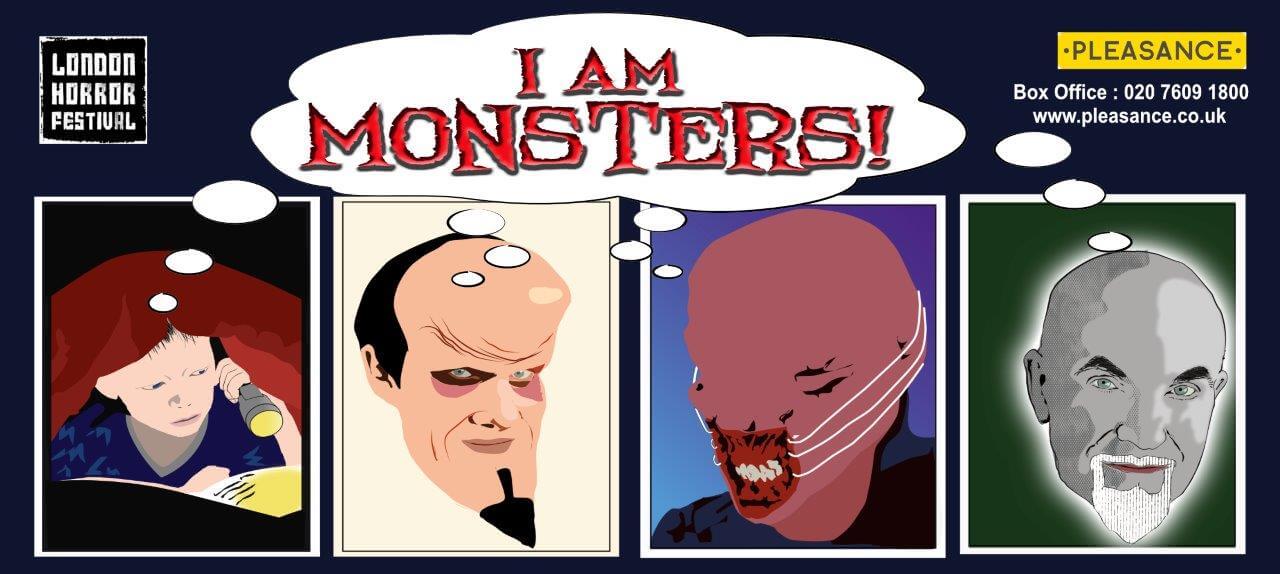
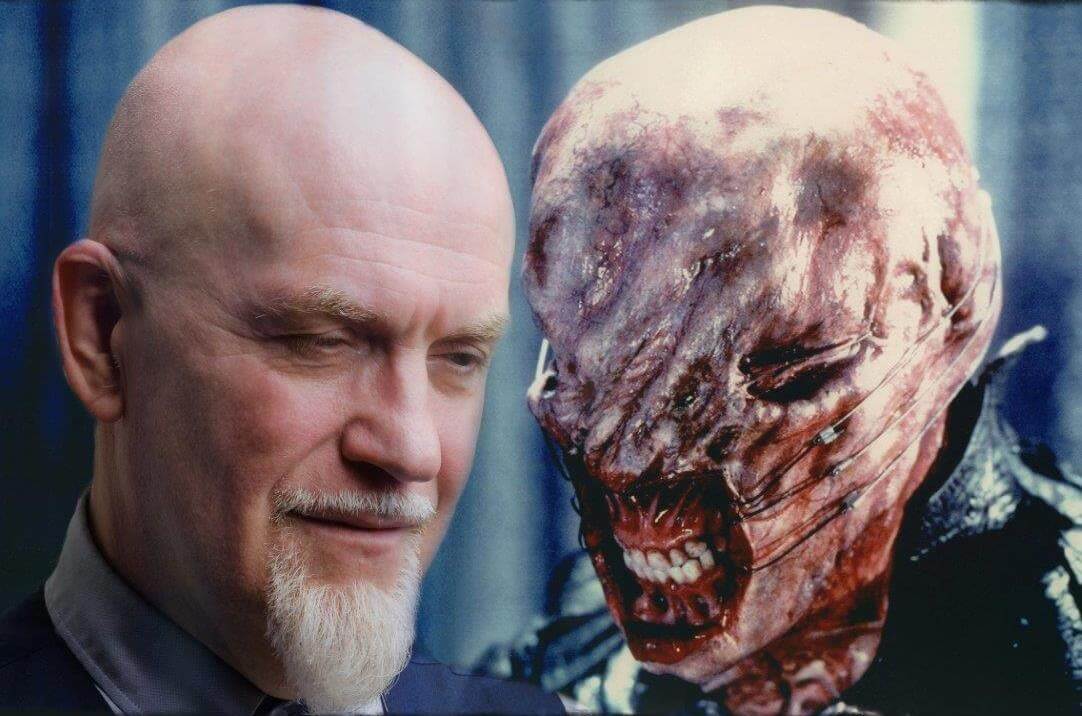
Writer and actor Nicholas Vince is famous for his portrayal of the Chatterer Cenobite in Hellraiser and Kinski in Nightbreed. He is about to head onto the stage for a one-man show entitled I Am Monsters!, which will be premiering at the London Horror Festival. We caught up with him to find out more…

STARBURST: Where did you fascination with monsters come from?

Nicholas Vince: Two sources: Doctor Who, I was four years old when the TV series started so I watched it from behind the sofa particularly Daleks but I knew by the age of five and a half, I was really entranced by the monsters on the programme, like the Zarbi, the giant ants. I can’t remember anything about the plot, but I remember making Zarbis out of cut offs of the pastry that because my mother was making. Then there was a book, the Golden Treasury of Myths and Legends that I read as an eight-year-old; I was fascinated with things like the Minotaur, Medusa, and the Sphinx; I vaguely remember the heroes’ names, but knew which monster they killed.

So what was the impetus to put this together into a stage show?

I’ve been telling all the stories about the makeup and so on, and the experience of making the films, which was a huge amount of fun. I just wanted to flesh out the background, and put it in a bit of social context. It’s also my personal story about being fascinated with monsters. I realised I was gay when I was 18 years old in the late ‘70s, and it wasn’t the easiest time to be gay. It got more challenging in the ‘80s with Thatcher; they were interesting times. I just wanted to share my love of monsters, I think that monsters are fun.

And they do say a lot about society today, there’s a lot of there’s a lot of a correlation there.

Yeah, absolutely.

So how did you manage to condense your whole life in to an hour?

[Laughs] With huge difficulty! There’s going to be a Q&A at the end, so I’ve got to learn about 50 minutes of me talking. When I did the first read-through, it was about an hour and 20 minutes, so it needs working on! I think it’s just concentrating on the points; I want it be about bringing home what’s important to me and make it an entertaining evening. I’m incredibly fortunate that Clive [Barker] asked me to be in Hellraiser, and then Hellbound and Nightbreed. It’s not going to be my long life! [Laughs] That would be a very long show!

Is there a structure to the show or is it more free flowing?

We’re still working on that at the moment. I’m working with a director and they keep coming up with good ideas: let’s try this, let’s do it like this. We started off kind of: ‘I was born, I fell in love with monsters, etc…’ We said that’s ok, but it’s not as interesting, so now it’s more weaving the story of making Hellraiser and then in flashback relating that to growing up and the monsters I’ve encountered and so on. There are a couple of biographical pieces in there as well. There have been times in my life when I’ve been made up to be a monster, but I’ve done things wrong in my life. Things I regret. It’s not all isn’t life lovely… there is fun, but there’s a little bit of darkness in there as well.

You have to have the light and shade.

Yeah, and I think I want to say to anybody who’s going through what I went through that it’s okay. It does get better, it’s true. There have been times in my life when I have been completely lost and not known what the hell was going on and I look back now and think ‘yeah, I’m okay’. I’ve been very lucky. From difficult times really interesting fruits can grow.

You did a couple of storybooks about monsters, did that influence you to to do this?

There’s been a couple of things. I’ve been the patron of the London Horror Festival since 2016, and I’ve been involved in it since 2013. I’ve watched a lot of their shows. I love horror theatre; there’s something very immediate it; it’s a completely different experience to being in a cinema. I was inspired by watching these people, but I’m not intending to terrify people as much as I have been in these shows! [Laughs] In terms of the books, you’re right. I’ve written short stories, and Hellraiser and Nightbreed comics back in the ‘90s. I was lucky enough to bring Clive’s characters from Nightbreed bring them back into the comics that Marvel did. The title of my first collection of short stories is What Monsters Do – the subtitle was ‘it is not our flesh but our acts which make us monsters’. Clive’s Nightbreed is about people who are strange, who are wonderful and human beings want to destroy that, because they’re different.

And very similar to the way homosexuals were treated; they were treated as monsters at one time…

Oh god, yes! When I was doing the research, a part of the show was very difficult to write – I went back to the Thatcher years, with Section 28, and there were horrible, horrible things said about gays that I found really distressing reading and listening to what politicians were prepared to say. You can see today that gay rights has come on leaps and bounds but the price of freedom is eternal vigilance.

A lot of what is wrong in the world is because people are scared. We saw it in the financial crash. Horrendous things were done to people in terms of losing their homes, jobs and job security. We’ve now got it that profit is everything and zero hour contracts. People are treated appallingly in the workplace. This is because power is moving towards the few rather than the many. We’ve got some tough times at the moment. You can see what happened during the last war that my parents were part of, a lot was being fought for, and you can see what was done then and how easy it is to exploit people’s fear of a group. The people who scare me the most are the bombasts who create monsters for their followers to fear.

Absolutely.

I was talking to Clive Barker about the show and he said, “It’s not that the demon’s different. It’s that difference is the demon”. We don’t handle different well. It seems we can only feel safe by oppressing another group. Those are the things that worry me.

Will there be any performances elsewhere?

We’re talking about that, I’m really hoping there will be. Either in this country or in the US. There are conversations already taking place. So Yeah, so if all goes well, that is the definite plan. It won’t just end as part of the London Horror Festival, I hope to take the show out on tour to various parts of the country and abroad.

So could it be performed at conventions and the like then?

Yes – I deliberately designed it so that it doesn’t require technical things. At the end of the day is making on stage telling stories and chatting with people. I was talking to an actor friend of mine and he said, “You’ll be fine, you’ve just got some people in your front room and you’re telling stories – that’s all it is”. I like that idea!

Nicholas Vince will be performing I Am Monsters! at the Pleasance Theatre in London as part of the London Horror Festival on October 8th to 10th at 7pm. For more information and to book tickets, head here.

Arvin Kananian | ANIARA

We here at STARBURST recently had the privilege of taking a journey to the end of the world with Swedish Actor Arvin Kananian to talk about his lead role in the new Sci-Fi epic, ANIARA.

STARBURST: Congratulations on the film, its a really interesting story and your performance along with your fellow cast members is stunning.

Arvin Kananian: Thank you so much, I really appreciate it.

What was it about the story that made you interested in taking part in the project?

Well many things but mainly because it’s a Swedish classic but in a very contemporary way. It was originally written in 1957 but it still holds up today and is so current. It was great to feel like I was apart of a classic piece of literature in a new medium. The film was also one of Sweden’s first Sci-Fi films and it was something I just had to be part of – something to tell the grandchildren, you know? [laughs]. Also, it was a really good script – when I first read it I was hooked from the first page.

You’ve worked with Pella and Hugo before, how great was it getting to work with them again?

When I first got the call from them saying I got the part I cried and screamed at the same time and then partied for three days straight [laughs]. It was huge to me, the best thing that’s happened in my career. Getting that dream part and being able to do so with friends who you’ve worked with before is just perfect especially for my first big role. It has a real family feeling.

How was the passion and attitude on set amongst the cast and crew?

It was 100% passion mixed with 100% stress. It was great, super fun, super stressful – everyone cared so much about making the best film possible.

You play the Captain of the ANIARA, a very stern individual who must make difficult choices for the greater good and wellbeing of the passengers. How hard was it preparing for the role knowing it was such an important part?

So, preparing for the role was a lot of fun – I got to go deep into the background of the character. I did military training by getting in contact with a Lieutenant in the Swedish Military Forces and I got to train with them for several weeks which was great for the character – it helped me get the stance, the authority and the language down to a tee. He makes all of his choices based on the ships wellbeing which in real life is tough to do so I wanted to capture that in my performance.

Had you read the source material before?

I had heard about it before but had never read it. So, this was the first time I was introduced to the source material. The first thing I read was the script and I read it twice – and I was just blown away that this story came from something written in 1957 and not within the past few years. It felt huge to be a part of it. There were so many sub-stories that take place within this world that could be explored in the future if they wanted to.

Could you share with us your favourite moment or theme that is presented in the story?

One of my favourite things about the approach to the story was that Pella and Hugo were under pressure with the budget but decided to make the technology as if we had it today – the Aniara is like a luxury cruise ship. I really respected that. They didn’t want to give humans an excuse for why this is happening – a respectable and clever way of making the film, in my opinion.

If given the opportunity to work with Pella, Hugo and/or Emelie again, would you?

Hell yes! [laughs] – any day, any time.

Pella Kågerman & Hugo Lilja | ANIARA

We here at STARBURST recently had the privilege of taking a journey to the end of the world with Swedish Directors Pella Kågerman & Hugo Lilja to talk about their new Sci-Fi epic, ANIARA.

STARBURST: Congratulations on the film, its a really interesting story and the presentation is simply remarkable.

Pella Kågerman & Hugo Lilja: Thank you so much, I’m blushing [laughs].

What was it about the source material that made you want to adapt it into a film?

Pella: In Sweden, Aniara the poem is one of the most famous pieces of literature to come out of our country – everybody knows about it. It’s written in verses and the language isn’t easy to understand but both me and Hugo understood the story beats but my love for it really came after my grandmother had a stroke and in whilst she was in hospital we read it together – as she got better we started to roleplay the poem and that’s when I got to really understand the true meaning.

From my research, I can see that this incredible journey you have been on has taken over 4 years. Just how pleased are you to finally have out in the world for people to experience?

Pella: I feel happy but also embarrassed [laughs].

Hugo: I’m so happy that people in the UK and US can now experience the film and also learn about a piece of Swedish culture as well. We both worked really hard for many years – and it’s a story that deserves to reach a bigger audience too. It’s such an important and topical story and extremely relevant.

Pella: It’s surprising how true it is to real-life today – it’s very much needed.

There are a lot of themes in the film with the most predominant one being about our place in the Universe. How do you think audiences are going to resonate with that theme?

Pella: We were living in a different world when we started to write the film and then shoot it – when we were in our hotel room this morning we were watching BBC News and really saw that the film has come at a really interesting time in human history with the climate crisis and everything like that. It’s scary how crazy that was to us. After a test screening about a year ago, the audience didn’t quite understand it but now audiences are much more aware of these themes and real-life events.

The use of lighting and close up shots give the narrative a sense of claustrophobia, was this a stylistic choice from the very beginning?

Hugo: Yes, and I think we wanted to have a sort of naturalistic feel to it and we wanted to make it contemporary as well. Instead of trying to build a future that we cant visualise, we used contemporary buildings such as shopping malls to get a real-world and current-day feel. We also wanted to have a visual style that had a claustrophobic feel but having a nice setting with that vastness of space just outside the window.

Pella: We did shoot a lot with macro lenses, in the visual effects there are so many layers and a lot of close-ups too.

You’ve both worked with Emelie and Arvin on some of your previous short films. Was it their performance in those and the existing working relationship that made you cast them in the two lead roles?

Hugo: Yes definitely. When we were writing the script, we always had Emelie in mind for the Mima role so we based that around her. And with Arvin, we love him as an actor but at first, we thought he was maybe too young to play the captain, so we tried older actors. But then we realised he was much better at it and thought that it was better for the character as a whole if he was a lot younger and inexperienced when tasked with what happens in the film.

Can you share with us any details of the next journey you two are setting off on?

Pella: We both agree this is the biggest project that we have done in our career – we also have a lot of ideas for more Sci-Fi films so we both want to stay in this genre so that’s what we are going to be continuing to do.

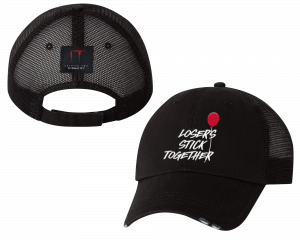
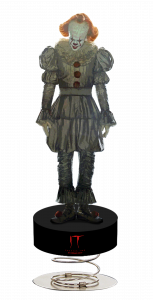
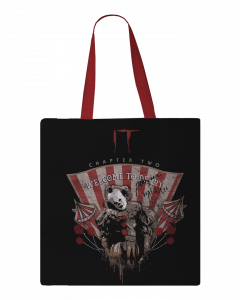
Win IT CHAPTER TWO Merch Bundle [ENDED]

it chapter two win

Evil resurfaces in Derry as director Andy Muschietti reunites the Losers Club in a return to where it all began with IT Chapter Two, the conclusion to the highest-grossing horror film of all time. Twenty-seven years after the Losers Club defeated Pennywise, he has returned to terrorize the town of Derry once more. Now adults, the Losers have long since gone their separate ways. However, kids are disappearing again, so Mike, the only one of the group to remain in their hometown, calls the others home. Damaged by the experiences of their past, they must each conquer their deepest fears to destroy Pennywise once and for all…putting them directly in the path of the clown that has become deadlier than ever.

Ahead of the highly anticipated epic finale IT Chapter Two on 6 September, we’re giving away four of the  ultimate creepy bundles.

To be in with a chance of winning, just answer the question below and email [email protected] with the heading ‘IT CHAPTER TWO’. Entries must arrive before 11:59pm on September 10th, 2019

Which actor plays the iconic role of Pennywise in It Chapter Two?

A) James McAvoy

B) Billl Skarsgård

C) Alexander Skarsgård

 IT CAPIT BOBBLEIT TOTEIT CUP


WATCH THE FINAL TRAILER HERE


IT CHAPTER TWO will be released nationwide on 6 SEPTEMBER 2019 by Warner Bros. Pictures

#ITCHAPTER2 #ITMOVIE

© 2019 Warner Bros. Ent. All Rights Reserved

Terms & Conditions:
WARNER BROS and STARBURST do not accept any responsibility for late or lost entries due to the Internet or email problems. Proof of sending is not proof of receipt. Entrants must supply full details as required on the competition page, and comply with all rules to be eligible for the prizes. No responsibility is accepted for ineligible entries or entries made fraudulently. Unless otherwise stated, the Competition is not open to employees of: (a) the Company; and (b) any third party appointed by the Company to organise and/or manage the Competition; and (c) the Competition sponsor(s). This competition is a game promoted STARBURST. STARBURST’s decision is final in every situation and no correspondence will be entered into. STARBURST reserves the right to cancel the competition at any stage, if deemed necessary in its opinion, and if circumstances arise outside of its control. Entrants must be UK residents and 18 or over. Entrants will be deemed to have accepted these rules and to agree to be bound by them when entering this competition. The winners will be drawn at random from all the correct entries, and only they will be contacted personally. Prize must be taken as stated and cannot be deferred. There will be no cash alternatives. STARBURST routinely adds the email addresses of competition entrants to the regular newsletter, in order to keep entrants informed of upcoming competition opportunities. Details of how to unsubscribe are contained within each newsletter. All information held by STARBURST will not be disclosed to any third parties

Adrienne Young | THE GIRL THE SEA GAVE BACK

adrienne young

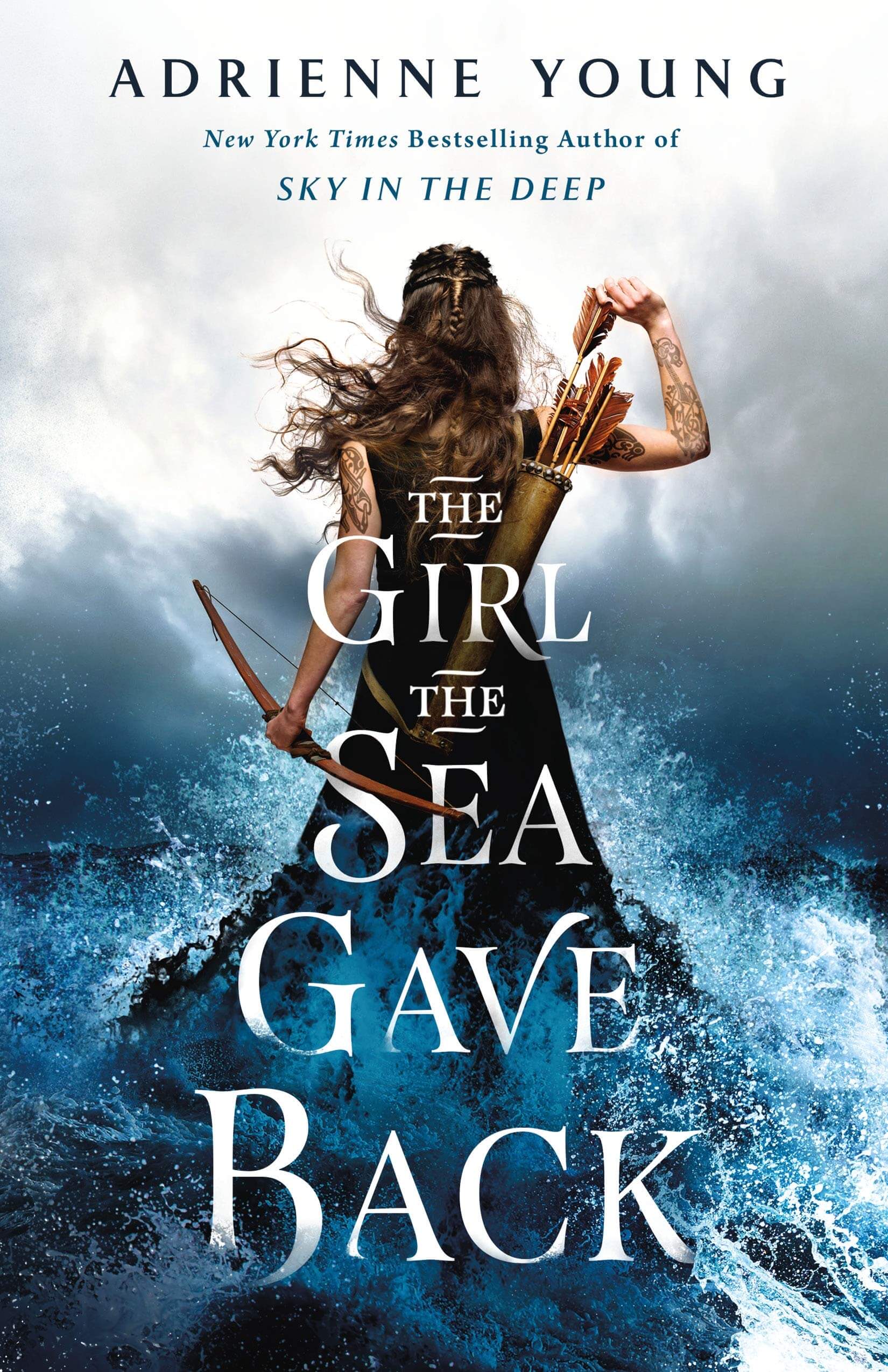
Texas-born author Adrienne Young is best known for her New York Times bestselling novel Sky in the Deep. Her new book, The Girl the Sea Gave Back, comes out September 3rd. We caught up with her to find out more about it…


STARBURST: What’s the elevator pitch for The Girl the Sea Gave Back?

Adrienne Young: A girl with a gift to read the rune stones and see the future holds the fate of her world in her hands.


What inspired the story?

After the events of Sky in the Deep, I really wanted to explore what the evolution of this world would look like. In Sky, two warring clans are forced to find peace. But that doesn’t mean peace is permanent. We also know that those two clans aren’t the only ones that exist in this world. So I wanted to look at how this newfound peace affects the greater society outside of the mountain and the fjord that Sky focused on.


How is it different from Sky in the Deep?

The heroine in The Girl the Sea Gave Back, Tova, is really different than Eelyn was. She’s not a warrior, but she has a quiet inner strength that has kept her alive. She’s really smart and strategic, and has a deeper understanding of what’s happening around her. We also dive deep into Halvard’s story and his doubts about his own ability to lead. Where Sky was so sure and determined, Sea is much more questioning in the nature of its characters and its plot.


Now you’ve finished The Girl the Sea Gave Back, would you have done anything differently?

I don’t think so. The process for writing this book didn’t come as easily to me as Sky did. I had to dig really deep and be a better writer in order to pull it off. It’s also different than anything I’ve attempted before, in that it’s dual POV and it’s a companion novel. There was a definite learning curve there and I’m really proud of the work I did.


Which character from the novel would you most like to meet in real life? And why?

I would love to meet Halvard. I just see him as this strong, quiet, sensitive being  – I feel like he loves so fiercely and is so dedicated to his community.


What approach do you take when writing fantastic elements such as predicting the future?

I really love approaching the fantastical with a heavy dose of reality. I love that in-between place of wondering if it’s real or not real. It’s the same in Sky, when we are looking at their gods and their superstitions. There’s nothing so overtly supernatural that you couldn’t imagine it in our own world and it’s the same with the idea of fate in Sea. I feel like it keeps the fantasy elements accessible and feeling as if they could be true.


How do you approach your writing?

The most important thing to me in writing is feeling connected to what I’m working on. If I don’t feel that gut connection, then it’s probably not what I should be writing. I’m an all-in type of person, and my work is no different.


Why do you think fantasy so popular now?

I think it’s kind of a timeless genre. There’s no expiration date on fantasy so it stays relevant across generations and time periods. There’s also the overarching truth about humans that we love to escape and there’s no better way to do that than to transport to a completely different world. I think fantasy will continue to stay steady in the market for both of those reasons.


When Sky in the Deep came out, what response delighted or surprised you the most?

I was totally blown away by the reader response to Sky. I had no idea that it would strike such a chord and although every author hopes for the best, it definitely surpassed my expectations. To hear from so many people who resonated with the book was really special and I feel so fortunate to have such amazing readers.


Is it easier to get published these days?

I think it is, but only because of the amount of information that’s out there. Anyone can figure out the steps to publication with a quick google search, which means more people than ever are trying to get their work published. Publishing houses are bigger, they have bigger lists, and with the trend of books getting turned into movies and TV shows, there’s a lot of demand for content. But that’s not to say that it’s easy. Getting published is an incredibly difficult, tedious process that usually takes years. I don’t think that part is likely to change.


What’s next for you?

I just finished revisions on my next novel, Fable. It’s the first book in a two-book series and it’s coming next year!


What authors are you reading? And why?

I’ve been reading a lot of poetry this last year, probably because I’ve been drafting so much and haven’t been able to really commit to reading novels. My current favourite that I keep coming back to is Mary Oliver.

The Girl the Sea Gave Back is published by Titan Books on September 3rd.