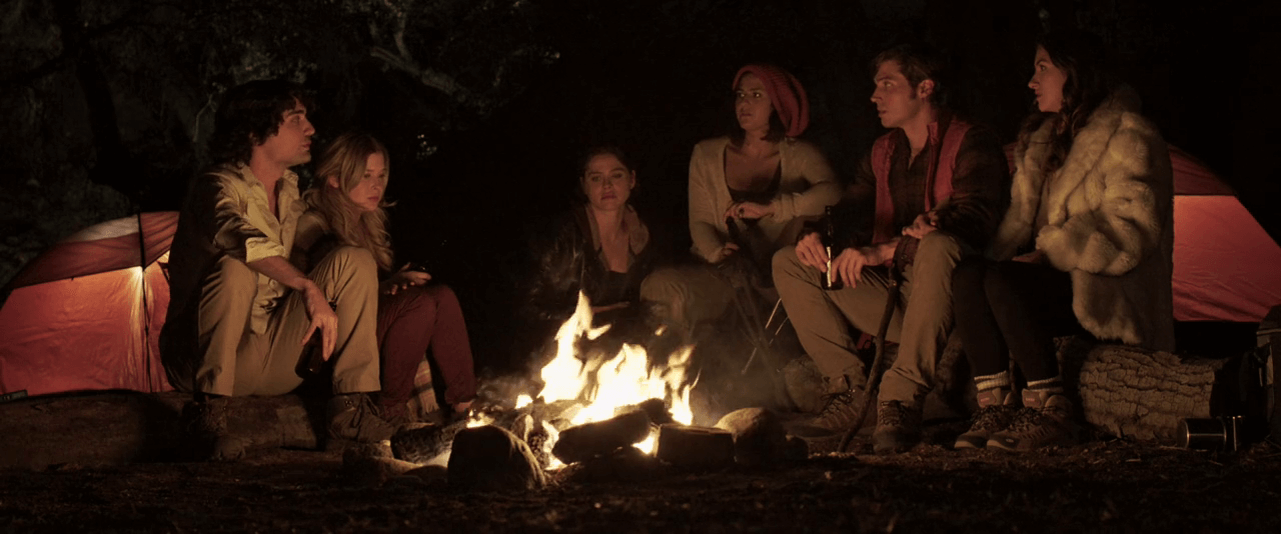
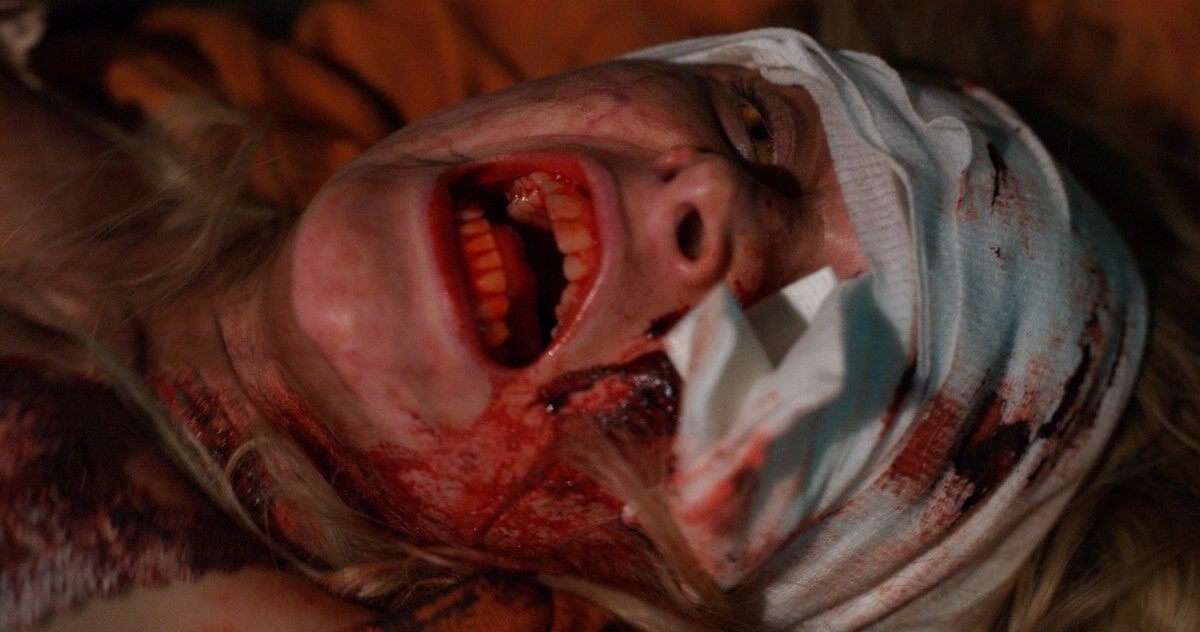
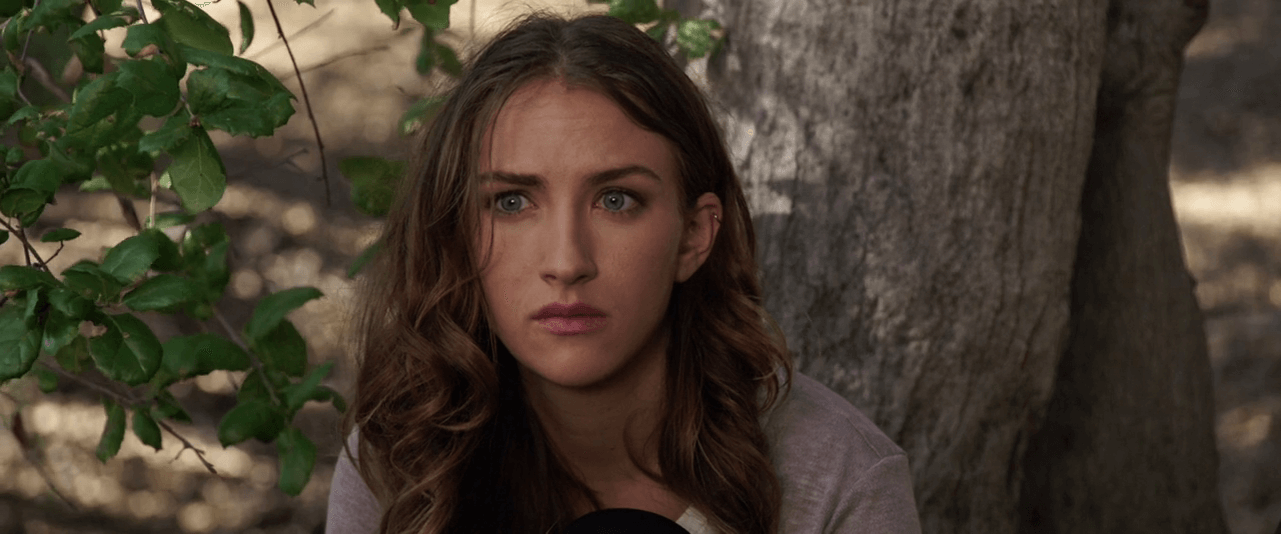
Scarlett Rayner | SIFF 2019 BEST PERFORMANCE

Rayner

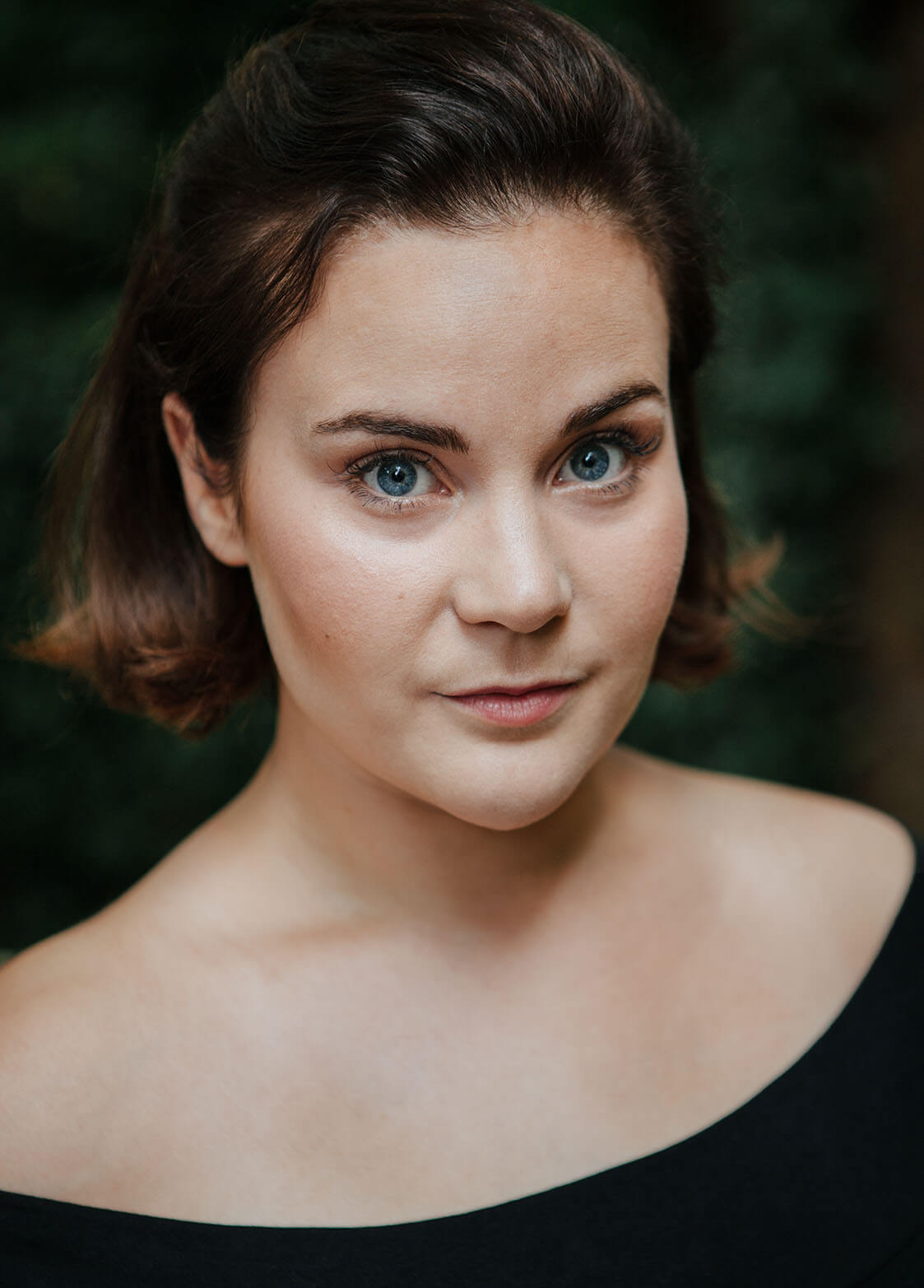
Fresh from her BEST PERFORMANCE win at the recent STARBURST INTERNATIONAL FILM FESTIVAL, rising star SCARLETT RAYNER talks with us about the acclaimed short film INDWELLER, her acting career, aspirations, Aaron Paul, and more…

STARBURST: Congratulations again on the award! How does it feel to win Best Performance?

Scarlett Rayner: Completely amazing. I’m so grateful, and shocked to be honest! I didn’t expect this at all. It’s so cool to have won this award. Thank you!

It’s well deserved! You won for your lead role in the wonderful Indweller, which is currently playing festivals. For those who haven’t had the chance to see it yet, what can people expect?

It’s a dark short which focuses on a young teenage girl and her mother, played by Zoe Cunningham, and their tricky relationship. The girl’s mind is clouded with darkness and she heads down a twisted path when confronted with weird goings-on in her new home.

It’s an extraordinarily accomplished film, how long did it take to shoot?

It was filmed over about six months. We filmed more or less every other weekend.  It took a long time as Alwyne Kennedy [the director] is an absolute perfectionist, and he literally did every element of the film, including the camera work, the lighting, editing, music, etc, etc, etc! Funny story, when we thought filming was over I got my hair cut into a bob, but then Alwyne changed his mind about one of the scenes… and that’s why I’m wearing a hair towel in the film!

Given the calibre of performances we had to judge from at SIFF 2019, your victory is an incredible achievement, doubly so when you factor in that you’ve only just turned 16. How long have you been acting?

 I can’t remember exactly, but I’ve been acting professionally since I was 10 and I have adored acting for as long as I can remember. I used to do LAMDA lessons, which I loved, with our good friend and now director Elizabeth Blake Thomas. When I was 9 she introduced me to a film director called Martin Gooch to do a short interview on aliens for the extras of his film. I was young, confident and a bit weird but it turned out Martin liked my personality… a year later he messaged my mum saying he’d written a film, The Gatehouse, with the lead character inspired by me! It was insane. I can’t thank Martin enough for that incredible opportunity, and he’s an amazing director! That film was the best experience, and I literally had the time of my life with all the cast and crew, including my fabulous on screen Dad Simeon Willis and brilliant producer Clare Pearce, amongst others. Since then I’ve done quite a few short films, and two more features, fortunately being one of the leads in them all. I also need to credit my amazing drama coach Sarah-Jayne Butler for all her support as, although I don’t see her often enough, she is truly inspirational!

Rayner

Was there any specific moment you remember that first inspired you to pursue acting? A film or performance perhaps?

Yes, as I said, I’ve always loved acting. It’s something about the opportunity to craft a character and see the world through someone else’s eyes that excites me. My drama teacher in primary school – Mr. Brockwell, a legend –  is probably the person who initially got me into acting. However, I think if it hadn’t been for The Gatehouse, I wouldn’t be as invested in acting as I am now. That film made me realise how much I love acting.

If you could appear in any film franchise or TV series, what would be your dream role?

Wow. Tough question.  I love to act in dark dramas and horrors. I like to play characters with a lot of depth to them. I was shortlisted for the lead in The Conjuring 2 when I was 12, and that was very exciting! That’s the kind of film I would like to work on. I guess it would be pretty cool to be in a TV series, something like Breaking Bad or Black Mirror.

Well, Black Mirror is showing no signs of ever stopping, so we’ll certainly be rooting for you to get that call from Charlie Brooker one day!

That would be crazy!

Are there any other areas of the film/TV business that you’d eventually like to try your hand at?

I love scriptwriting. When I was 11, I wrote a feature-length film script. Looking back, it’s probably quite rubbish, but still! I’d like to write more of them, and hopefully direct one day, too.

What do you enjoy most about being on a set?

I adore meeting new people. This is so off topic, but I just love how all people have different personalities and ways of being. Anyway, obviously I love the aspect of being able to transform into a character, but I also love working with the cast and crew.

Which stars do you admire most? Who inspires you?

The cast of Breaking Bad are phenomenal. I have a particular bias towards Aaron Paul because I’m in love with Jesse Pinkman. But yeah, the skill level that Bryan Cranston and Aaron Paul have is second to none.

Completely agree! Your last two films – Indweller and The Gatehouse – both deal in the supernatural. Where do you stand on the spirit world yourself? Do ghosts exist, and if so have you ever seen one?

Ha! Yeah, I don’t believe in ghosts – touch wood, even though I love being in horrors, I get scared pretty easily. Actually I have a BIG fear of the unknown – probably shouldn’t put that out there… don’t want it to be used against me – but unfortunately no, I don’t have a story about an encounter with a ghost.

Sounds like that’s probably for the best! So what project or projects are up next for you?

To be honest, it’s quiet at the moment due to my age, but I’ve just turned 16, so as soon as school’s over in June I’ll be ‘out of licence’ which means I can work without restrictions, which is great! I’m waiting for my last film October, which I filmed a year or so ago, to come out. That was filmed in Brittany and is about the end of the world. It was a great experience, with Tom Forbes playing my Dad. I’ve also been completely focused on schoolwork as I have my GCSEs coming up next month! I really miss auditioning for projects though! I have to say that GCSE drama at my school is phenomenal, and I’m just going to have to mention my drama teacher, Miss Amelia Morse. She’s AMAZING. I recently did my drama GCSE scripted piece and it was such a great experience. I played Paula from The Positive Hour. I’m staying at my school for A levels and then hoping to go to uni or drama school, but hopefully I’ll keep working at the same time!

INDWELLER is currently playing festivals, and THE GATEHOUSE is available on DVD, iTunes, Amazon Prime Video, Google Play, Rakuten TV, Sky Store, and Virgin. Scarlett’s 2017 family film PRETTY OUTRAGEOUS is also available via Amazon Prime Video.

Twitter: @ScarlettRayner | Instagram: @scarlettrayner | IMDb | Showreel | Spotlight

Currently Represented by: [email protected]

Mark Lawrence | ONE WORD KILL

one word kill

Mark Lawrence is best known for his fantasy novels, particularly The Broken Empire series. His latest work, One Word Kill, is science fiction fantasy novel inspired by gaming trends of the 1980s. We caught up with him to find out more…

STARBURST: What’s the elevator pitch for One Word Kill?
Mark Lawrence: I’ve managed nearly a decade as a published author without ever making an elevator pitch. The closest I can get is reading the headline off the back of the book. ‘Ready Player One meets Stranger Things.’ The next few floors of the ride are just going to be a comfortable silence.

And how would you pitch that to someone who isn’t into games?
Heh, “Ready Player One meets Stranger Things.” Neither of those was really about games, not even Ready Player One, which was set inside one. They were about people and about the trouble and adventure they fall into. Good Will Hunting wasn’t about mathematics. Good stories don’t require you to like the thing that they are ostensibly about – and One Word Kill isn’t about gaming in any event.

What character is the most fun to write?
Well, if we’re talking about the Impossible Times trilogy of which One Word Kill is the first book… then I would have to note that it’s written in the first person, which really makes it a no contest. But more generally, even on the rare occasions where I write multiple point of view stories, it is the story that is the fun thing to write, and it really doesn’t matter what character I happen to be seeing it through at any given time. If any of the characters wasn’t lots of fun to write then I would know something had gone wrong and would need to rethink.

How long did it take to write?
About 4 months. It’s a relatively short book. The whole trilogy will be released in 2019.

Why the Dungeons and Dragons references?
A D&D group seemed a nice nucleus to have, and the game itself offers an extra strand in the storytelling. It also fitted in with the setting: ‘80s London. I grew up in London, and my teenage years were in the ‘80s. And I played a lot of D&D back then! It’s the first book I’ve written in a real world setting and I wanted to do it in a setting I knew a lot about.

Is D&D cool again?
I don’t recall it ever being cool. I think it’s always attracted people who aren’t bothered about whether they’re cool or not.

What’s your favourite gaming story?
For my favourite book with a gaming theme, it would have to be Ready Player One, it’s basically the only one I’ve ever read. If we’re talking about literally my favourite story about gaming, then I would have to say that I don’t have one. Games don’t make good stories. It’s a bit like dreams. Having someone tell you about their dream is boring. Don’t do it to anyone. Dreams are good at the time. They do not make good stories. Similarly, don’t be a gaming bore. Games are fun at the time. They don’t make good stories. The D&D game in One Word Kill is not a recollection of an actual game – it’s crafted to be interesting after the event, while games exist to be interest as you play them.

 What has been the most interesting shift in genre writing in recent years?
That’s a bit like asking a fish about the ocean. The only thing I can think of, which may just be a local current, is that self-published fantasy seems to be gaining more acceptance and taking a larger share of the sales. Readers have often been put off by the sheer amount of choice when it comes to self-published work, not knowing what books are good – or at least popular. Efforts like the SPFBO contest I run have helped highlight some of the best work out there.

What’s next for you?
I’m writing a follow up trilogy to my Book of the Ancestor trilogy that starts with Red Sister. The new trilogy will probably be called Book of the Ice, and opens with The Girl and the Stars.

If you could take one piece of art/music/movie/book/etc, and ensure it would last until the sun dies out, what would it be?
A big responsibility! Is it terrible to say that I don’t really care what happens after everyone I know is dead, much less until the sun dies?

If you could give the 16-year-old version of yourself any advice, what would it be? Would you listen? Buy Apple shares. Lots of them. And yes.

One Word Kill comes out on May 1st, with its sequels following hot on its heels through out 2019.

Disasterpeace | UNDER THE SILVER LAKE

disaterpeace

The composer Disasterpeace – also known by his given name, Richard Vreeland – had been making scores for video games such as the indie hit, Fez, for several years when he was tapped by director David Robert Mitchell to score the 2014 horror film It Follows. The film and score were almost inexorably linked in reviews at the time, and much like John Carpenter’s music for the original Halloween, it became instantly iconic. Disasterpeace’s debut film score was an instant success.

In the time since, Vreeland has scored several more video games – most notably, Hyper Light Drifter – but recently returned to film scoring for Mitchell’s latest, a neo-noir starring Andrew Garfield, entitled Under the Silver Lake. The film’s both an homage to the genre, as well as coming up alongside more recent examples like Brick or Kiss Kiss Bang Bang with a modern sense of style and slyly subversive humor.

Unlike Vreeland’s previous work, the score isn’t chiptune or synth-based, but instead features a full orchestra, and would fit in perfectly alongside classic noir scores of the ’40s and ’50s. This is a Disasterpeace composition of another beast entirely, and we were excited to speak with Vreeland all about it.

STARBURST: How early in the process did you join Under the Silver Lake?

Disaterpeace: So, I was involved pretty early. I read the script before we started shooting. This movie has a bunch of music in it: not just score, but a lot of music on-screen, and a lot of the scenes where the actors are using music, playing music, at a concert – stuff like that. There was a lot of pre-production music that I had to write and help prepare, so I got involved in August of 2016, which was right around the time that they started shooting, so I was involved for over a year. It was a pretty long project.

Given the preponderance of ’90s music, a band as characters, and the songwriter, what challenges does all of that other music in the film present to your composition?

It’s interesting, because it definitely informed the score, but also, it had to be its own thing. The music of the world is going to have a different language to it than the score, which is sort of more of a commentary. What was fun about that was figuring out interesting ways to cross streams. One example is Turning Teeth, which is sort of the song of the summer or whatever, and it’s pretty much everywhere in the movie. It works its way pretty early into the score as sort of a motif.

There’s definitely quite a bit of that, even in circumstances where it’s not necessarily music that I wrote, but I was definitely thinking about. Things like Nirvana, where I’m just sort of thinking, ‘how can I weave this sort of feeling of a sort of early ’90s grungy period, this sort of touchstone for the character [of Sam]? If at all, is there a place for that in the score, even if the score is trying to do a very different thing?’

There’s a little bit of that that went into the thought process, and there are other examples that are like that: sort of the way that the film plays with the idea of being a kid and playing video games and discovering secrets and stuff – that sort of find its way into the score in different ways.

We definitely noticed the Legend of Zelda homage in the score at one point, where there’s that little chime of achievement…

Yeah, there’s a couple of scenes like that. There’s sort of when he discovers the underground tomb and when he’s going through the Nintendo Power. That’s just something that happened naturally when I was scoring that sequence. When you’re spending that much time with it – and even with first watch – there’s a sort of absurdity to it, but when you’re really inhabiting it, it becomes really obvious how ridiculous the whole thing, so it certainly presents itself as an opportunity to do something that’s a bit flippant and a bit comical – and also, fun, just playing with the boundaries of what’s real and what’s not. What’s underscore and what’s sort of breaking the fourth wall a little bit? Just being playful in that sort of way.

It’s definitely something that has been a hallmark of noir films since the beginning. If you look at them a little too closely, the conspiracies and crisscrossing paths can get to be a bit much. Were there any composers or scores you looked to when scoring Under the Silver Lake? The mix of noir and a sort of screwball comedy must’ve made for some interesting tonal shifts.

For sure. It was definitely a real challenge. On the reference side: I didn’t really go out and do a lot of just standalone listening, but at the beginning of the project, I had a bunch of different ideas for what the movie could sound like, and I was pretty far off from some of the intentions or hopes that David had for the score.

So, he recommended a bunch of movies for me to watch, to just get a better sense of the genre and what came before and how to bridge that gap. I went and watched Citizen Kane and Vertigo and Taxi Driver and Blue Velvet, and that was pretty much it. I watched each of those once and I just needed a little bit of reference for myself, because coming to the project, I basically had very little knowledge or familiarity with noir movies. Just seeing a couple different things that had a sort of commonality, started helping me develop a sort of language for the movie.

After we watched the film a couple of times, it seems like Under the Silver Lake operates in a modern time period, yet something apart from our actual reality. Was that appealing to you?

I think that’s sort of a thematic element that David has been developing. Certainly, It Follows was that way and I think this film is like that, as well. It’s interesting, because while this film has that anachronistic feel at times, it’s also meant to be a period movie, in a certain way. It’s meant to be set a certain time, but it’s just sort of the way that David paints this picture where – what’s real and what’s not real, it can be hard to tell.

His passion for films and references and the passions that he brings are so vivid and diverse that there’s almost a feeling that you’re a part of something that’s more than a particular point in time. It’s something that’s more connected to a bunch of different points along the way, as far as the history of movies.

Now that you’ve made a couple of movies with David Robert Mitchell, have you developed a shorthand to communicate what you’re both aiming for – is it easier or harder, at this point?

[Laughs] I think it’ a little bit of both. Working with someone multiple times, successfully, you definitely build a communications style, and a rapport and a trust with one another. I think there’s also more of an openness to be honest and to really push for your desires, and that can make things a little more adversarial at times, but ultimately, I think David and I have a ton of respect for each other, and I think we’re really proud of the work we’ve done together. We like each other, personally, so any of the challenges and hardships that come up as part of that process are easy to look past. Especially when you can look back and say, ‘we made something pretty amazing,’ there’s something to be proud of.

Whose idea was it to do a full orchestral score, then?

I think we both had the intention of working with an orchestra this time, but I think that we had somewhat different ideas about the specifics of that. I had an idea that it would be more of a melting pot, sort of grab-bag of different styles that would be even more video game stuff, and acoustic guitars. I think, David – his instincts were more towards a primarily classic film, orchestral kind of sound. Once we started playing with those ideas, I knew he had a really solid intuition about that idea, and it was the way to go.

We still knew that we wanted to pepper the score with other kinds of sounds and to have fun with it – to really sort of bring a breadth of ideas to the score. The way that the script brings a lot of ideas to the table, we really wanted to mirror that.

Disasterpeace’s score for Under the Silver Lake is out on Friday, April 19th via Milan Records.

Neil Jordan | GRETA

jordan greta

Neil Jordan leaves a maverick stamp on every movie he makes. After a successful, if turbulent, sojourn into telly and a return to his first love of writing, the award-winning director of Company of Wolves, The Crying Game and Interview with the Vampire has returned to the cinema and turned his attention to the psycho-stalker genre with Greta, which stars Isabelle Huppert as a mysterious widow living alone in New York, and Chloë Grace Moretz as the innocent young girl she first befriends, then enchants, then entraps. We dragged ourselves kicking and screaming to the Soho Hotel in London to talk with Jordan about strange obsession, Excalibur and the joy of Spanish dubbing…

It’s been seven years since Byzantium (2012).  Is it the case that as you get older you get choosier with projects?

You want to know the honest to god’s truth? They get much more difficult to make. I was doing The Borgias on TV for quite a while, then I made Byzantium, then I kind of walked off a TV series (the Sky Atlantic hit Riviera, which began in 2017 and Jordan disowned after his initial scripts were re-worked by others) and then I wrote a novel called ‘Carnivalesque’ because I’ve always written novels. All of which takes time, so that’s really what it was.

Did you have Isabelle Huppert in mind early on for the lead role?

No, it’s very simple; I was sent the script, it was by a Hollywood guy called Ray Wright who I had never met. It was very simple, a generic piece. I’d never thought of making a “stalker movie” but there was a simplicity to it that I found really intriguing, you know? Because I find it very difficult to be simple. And the fact it was between two women really intrigued me, so I thought if I can get somebody interesting to play this I’ll make it. Isabelle was interested, I met with her and I kind of re-shaped the part around her, it became a conversation and we ended up making the film. It was just the fact that felt I could build a character around her that would be memorable. She’s an icon of French cinema, she’s one of the most controlled and interesting actors in the world.

How did the part evolve once she was on-board?

The part in the script I was sent was simply a Hungarian widow in her late 60s. The interest, affection and contact between Frances (Chloë Grace Moretz) and Greta was more based on pity rather than fascination. So it was lovely to construct this character that had this French veneer and underneath it was something of this other widow character. Isabelle told me her background, that her Grandfather was Hungarian, which I never knew, and she had some acquaintance with the Hungarian language. So together we constructed this character, but she’s a really…I mean her face changes by the minute. That scene where she’s lighting those candles in a church, she looked Garbo-esque. That ‘invasive eye’ is normally played by a man – it could have been Nicholas Cage, it could have been Anthony Perkins, Terrance Stamp…

It makes for a very different take on the genre…

That’s the interesting thing, this is much more terrifying really. The sexual dimension is almost entirely removed and this woman’s logic then becomes absolutely clear: she wants a friend. And she was promised friendship even though she’s set this trap to bring this person into her life. And the fact that this girl rejects her so brutally gives rise to this pathology, it all made absolute sense. Because once you remove that sexual dimension, what kind of lengths can loneliness drive you to?


The only significant male role is played by your long-term collaborator Stephen Rae. How would you characterise your relationship?

Obsessive…needy? No, I think the word might be ‘symbiotic’, although what does that mean? I never quite understand the meaning of that, but there are certain parts that I kind of need Stephen to deliver for me, that only he can play. For example in The End of the Affair as the husband who had to accept that his wife was in love with Ralph Fiennes. Stephen could understand that kind of logic and make it really moving. When I did Interview with the Vampire I created this character Santiago who was straight out of the French comedy of the period. Stephen got the theatricality of that and could deliver it. In The Crying Game, I wrote that role specifically for him.

This movie is very small-scale by your usual standards. Is this the shape of things to come for you?

Oh no, I’m still gonna make massive movies, don’t worry. This is tiny because it needs to be tiny, that was the attraction to me. I was kind of thinking of the unmentionable Roman Polanski a lot as I was making it. Tiny is good if you’re into the realms of dread and characters that are punishing each other. But it’s even harder to get a movie like this made than a $200 million movie. It’s weird, I mean the big actors don’t even want to read the parts for you because they get paid nothing and they know they’ll end up in some godawful studio in Budapest or bloody Bulgaria. It’s getting harder and harder.

You started out in the 70s as a short-story writer, was it a surprise to you that you became a filmmaker?

I was a short story writer, then a novelist, then a filmmaker. What was a surprise to me was that the minute I became a filmmaker that was all I was known as. A big surprise that, but it’s the way the culture seems to work.

Your first step into the movie business was in 1980 on John Boorman’s Excalibur, a film dear to STARBURST’s heart. How did that come about?

That was brilliant, amazing. John was very generous to me. We had written a script together that he had been trying to make all his life called ‘Broken Dreams’. That was the first time I met him, and then he said he was doing Excalibur and he asked me to re-write the last draft of the script with him for which I didn’t get a credit, but I think he enjoyed the conversation and he wanted me around when he was making the film. So I said, well, why don’t I make a documentary on you making the film? He said sure enough and he gave me the money to do it – it was amazing, I’d no idea what filmmaking was about or anything. It was like going to film school.

Like Boorman, you’ve always appeared to be a very independent-minded director, you pretty much do what you want to do. But do you feel free these days?

I feel older…I feel I know more what filmmaking is about. I’m not going to give out about the current state of things. I mean, it’s good that Netflix is there. I wish they were making more Brian De Palma movies actually, and more John Carpenter movies, but it’s good they’re filling in the gap that Hollywood used to fill so happily. DVD sales have basically collapsed, so it’s good they’re doing their series and making a Martin Scorsese movie (this year’s The Irishman). It’s all fine, but I do like seeing things in a cinema and I think there should be a more rapid inter-change between cinema exhibition and streaming. I think that would solve a lot, because if films are getting a big audience in the cinema they should stay in the cinema and if they don’t manage to get a big audience they should go to streaming almost immediately. I wish it was all more fluid.

Have you ever been to see your films in a foreign country? For a film like Greta, which is so centred on a few key performances, good dubbing must be crucial?

I have seen them and it’s very simple: you see the films in Spanish – they appear pornographic; you see them in French – they appear highly intellectual; you see them in Italian – they appear more comedic. It’s just bizarre. But no, I don’t get involved at all in that. I know some director’s do.

Greta is three-hander with a very interesting character dynamic at play. How do you work with your actors?

I’m very selfish, I use rehearsal entirely as a space in which I can re-write the parts, it’s as simple as that. I go ‘let’s go through this scene’ and they read the scene and I go ‘OK…we can go further with that, we can change that’. I’m refining the script.

But you still get those moments of revelation looking through the camera?

On yeah, the entirety of this movie was constructed through the camera. We were on a tiny little stage in Ireland with two little sets, particularly that little ‘Hansel and Gretel’ apartment Greta has. All of the drama, all of the tension, all of the undertones of the whole film, it’s created through the camera and it’s amazing what you can do in a tiny room, that’s what I really loved about making this film.

Is the next project already coming together?

Well I wrote a novel called ‘The Drowned Detective’ and I’ve written a screenplay about that, which is… hell to get going, absolute hell. Getting the money is just extraordinarily difficult. I suppose if I was making movies that cost $2 million…but I can’t do that. I can’t do everything with a hand-held camera, running around the streets, you know? I have to create an image.

Greta is in cinemas from April 18th.

Christine Lynn Herman | THE DEVOURING GRAY

christine herman

Born in New York City but raised in Japan and Hong Kong, Christine Lynn Herman subscribes to the firm philosophy that home is where her books are. The Devouring Gray is her debut YA novel, a slow creep horror that has been impressing everyone who’s read it.

STARBURST: What’s the elevator pitch for The Devouring Gray?

Christine Lynn Herman: Stranger Things meets Riverdale in Four Paths, a small town in upstate New York where four teenagers must uncover dark family secrets to save everyone they love from a monster lurking in the woods.

And how would you pitch that to someone who isn’t into ghost stories?

If you enjoy stories about twisted family legacies in contemporary fiction, you’ll enjoy them even more with some messed-up magic thrown in. The Devouring Gray has both!

How would you describe The Devouring Gray series to an elderly relative?

There’s murder. You’ll like it.

What character is the most fun to write?

Harper’s POVs, and Isaac’s one-liners.

Which character seriously needs to have word with themselves?

The entire Hawthorne family is in serious need of some introspection. Especially Augusta.

How long did it take to write?

I got the idea in December 2014, wrote the first draft in spring 2015, signed with an agent in winter 2017, and sold it that summer – so, about four years of various drafts and revisions before it was finished.

Why the supernatural?

Because magic makes everything more interesting.

What’s with the name Four Paths?

There’s a reason, I promise. You’ll have to read the book to find out.

What has been the most interesting shift in genre writing in recent years?

The rise of a new generation of women who are true power players in adult science fiction and fantasy. Charlie Jane Anders, V. E. Schwab, Nnedi Okorafor, N.K. Jemisin, Samantha Shannon, and so many more writers are doing some really groundbreaking work right now. I’m really happy about it.

What’s next?

Right now I’m revising the sequel to The Devouring Gray, which is quite intense and a lot of fun. It’s slated to come out in spring of 2020.

What tropes do you personally avoid the most?

I’m not a huge fan of insta-love, although I do think it’s totally realistic for two characters to be attracted to one another the first time they meet. I also despise the trope of something bad happening to a woman solely to further the character development of a man. Hard pass on that one.

Describe your dream project?

One day, I really want to write something that reads like Heathers with dark magic. I’m still trying to figure the deeper idea out, though. It’s tough to get right.

If you could take one piece of art/music/movie/book/etc, and ensure it would last until the sun dies out, what would it be?

Probably Avatar: The Last Airbender – it’s an all-ages-appropriate masterclass in storytelling and character development.

If you could give the 16-year-old version of yourself any advice, what would it be? Would you listen?

I would tell her to keep writing and to stop worrying so much about what people think of her. She would listen to the writing part and completely disregard everything else.

The Devouring Gray is out now.


Tom Huddleston, Cavan Scott | CITY OF LIFESTONE, ATTACK OF THE NECRON

huddleston scott

Tom Huddleston and Cavan Scott are highly experienced writers who specialise in making popular franchise fiction accessible to younger audiences. These brave gentlemen have written the first Warhammer Adventures books, which bring the detailed and complicated (and quite mature) worlds of Warhammer to the 8-12 aged audience. We caught up with them to find out more…

STARBURST: Tom, what’s the elevator pitch for City of Lifestone?

Tom Huddleston: The story is set in the mortal realms of Warhammer: Age of Sigmar, a world of adventure and monsters and battles and general mayhem. It follows a slave-girl called Kiri who flees her captors and sets out to find the fabled city of Lifestone, but when she gets there nothing’s as she thought it would be. It’s about friendship and bravery and magic and giant talking rats.

Cavan, how about the story behind Attack of the Necron?

Cavan Scott: Three kids and an alien ape survive the destruction of their planet only to find themselves hunted by one of the aliens behind the cataclysmic event.

Warhammer 40,000 is a well-established franchise; how did you the tackle of creating a Grim Dark story a younger audience?

CS: It was important that we never talked down to younger readers. This is still a dangerous universe, but obviously we’ve got to be responsible, making sure that the peril and thrills are age-appropriate, never getting too scary, while still maintaining the danger that makes the franchise so popular in the first place.

Age of Sigmar is a complicated fantasy setting. What did you do to navigate it?

TH: I did a whole lot of reading. I didn’t grow up with Warhammer, so I had to absorb a large amount of lore in a very short space of time. Luckily, it’s all really cool, exciting, and memorable!

What one thing did you have to take out in order to make the book work?

TH: Truthfully, not much. We had to move some scenes around, but the book came out pretty much fully formed.

CS: Well, we couldn’t have the gore and excessive violence that Warhammer 40,000 is known for – but there’s still plenty of jeopardy.

What character is the most fun to write?

TH: Probably Kreech, the leader of those devious talking rat-men the Skaven. They have a totally unique manner of speech, which is always enjoyable to write, plus he’s just this wonderfully grasping, shallow, self-important, vicious little fiend. All great qualities in a villain.

CS: I think Fleapit the Jokaero, as who wouldn’t want to write a grumpy cybernetic alien orangutan?

Which character would you like to have a long chat with?

TH: Probably Vertigan, the wise old witch hunter who brings the heroes of the book together. He’d have some amazing stories, about everything he’s seen and done in his years roaming the mortal realms.

How long did it take to write?

TH: Longer than it takes to read.

CS: The book has had a long gestation as we spent a long time working out the character, the overall story arc and the right tone. The book itself probably took a month or so to write and edit.

How have the fans been?

TH: On the whole, terrific. There was some initial uncertainty about the prospect of writing Warhammer stories – which have traditionally been rather violent – for younger readers, but that died away pretty quickly once the books actually came out.  Obviously, myself and Cavan had to tread a fine line between satisfying the hardcore fans and still making the books kid-friendly, but from the responses I’ve seen I’d say we achieved it. The whole idea was to give Warhammer fans something to share with their own young ‘uns, and that’s exactly what they’ve been doing.

CS: At first, quite a few fans seemed to be worried that this would somehow water down the universe as a whole, but hopefully by now their worries have proved to be unfounded. Certainly, the response to the first book has been fantastic, with lots of parents telling us how great it is to have their kids’ reading. The parents seem to have been enjoying the books too.

What has been the most interesting shift in genre writing in recent years?

TH:  I’m sorry, that’s a question for someone else. I buy all my books in charity shops, and am rubbish at following trends.

CS: I think the growth of TV binge-watching and long-form storytelling, from season-long arcs to single-stories told over multiple episodes. That’s influenced everything from comics to books – and even film franchises. Just look at the MCU. Now everyone wants shared universes.

What tropes do you personally avoid the most?

TH: I don’t place a blanket ban on anything. If it works for the story, I’ll use it.

CS: And it was all a dream…

What’s next?

TH:  First up it’s the second Warhammer Adventures: Realm Quest book, Lair of the Skaven, in which our heroes have to infiltrate a warren teeming with savage rat men. I won’t spoil it, but let’s just say Indiana Jones and the Temple of Doom was a major influence.

Then I have a new original novel coming out in October, it’s called FloodWorld and it’s an action-packed adventure story for 10+ readers, set in a world where the oceans have risen, submerging the cities. It’s a bit sci-fi, a bit disaster movie, a bit political thriller, and all super exciting.

CS: The next book in the series leads on directly from Attack of the Necron and sees the kids exploring a derelict spaceship – a derelict spaceship stalked by an alien from their worst nightmares. Claws of the Genestealer comes out in May.

Describe your dream project for us.

TH: I’d love to work on a movie adaptation of one of my own books. I think FloodWorld would make a cracking film, though you’d need several hundred million dollars to do it justice.

CS: Writing Superman for any medium, but especially comics.

You’ve written a lot of franchise work. What’s next?

TH: Well, the Warhammer Adventures: Realm Quest series has only just begun, so I’ll be writing those for the foreseeable. There are some really cool stories coming up – as far as I’m concerned, the books just keep getting better. But I would say that.

CS:  I’ve written a new five-and-a-half-hour Star Wars audio drama which explores the past of Count Dooku, the Sith played by Christopher Lee in the Prequel trilogy. Featuring a full cast, Dooku: Jedi Lost is published by Del Rey on April 30th. Beyond that… well, that would be telling…

If you could give the 16-year-old version of yourself any advice, what would it be? Would you listen?

TH: I’d tell myself to be more confident in my own abilities. But to be honest, I told myself that at the time and I didn’t listen.

CS: Never stop playing. Life is supposed to be fun. And yeah, hopefully they would, once they’ve stopped trying to be painfully cool – and failing horribly!

Attack the Necron and City of Lifestone are out now. Keep an eye on the Warhammer Community website for the latest news of all things Warhammer.

[ENDED]Win DOCTOR WHO: THE DALEKS’ MASTERPLAN on Orange Splatter Vinyl

doctor who masterplan

We had such a huge response to our last Doctor who vinyl giveaway that we asked the lovely Demon Records to do another one! This time we’ve managed to get hold of the Amazon Exclusive Orange Splatter version which is even more limited! Glory days!

Here’s the question to answer for your chance to win :

What year was this story originally televised?

a) 1965

b) 1969

c) 1972

Email your answer, along with your address details, to [email protected] labelled DALEKS before midnight on  APRIL 25TH

From the press release:

In this classic 12 part ‘lost’ adventure, first shown on TV from October 1965 to January 1966, the Daleks threaten to destroy the fabric of time itself. In their quest to control the Solar System, they have taken possession of the devastating Time Destructor. Determined to stop them, the Doctor steals the core of the weapon before he and his friends are pursued across time and space by his ruthless, powerful nemeses.

From the eerie sonics of Ron Grainer & Delia Derbyshire’s original theme tune and the familiar ‘wheezing, groaning’ of the TARDIS, to soundscapes illustrating the jungles of Kembel and alien spacecraft, the story is brought to life by the unique sounds produced by the BBC’s Radiophonic Workshop .

Written by Terry Nation and Dennis Spooner, this is the longest single Doctor Who adventure ever made for television. Linking narration is provided by Peter Purves (Steven) and the cast includes Kevin Stoney as Mavic Chen, Nicholas Courtney as Bret Vyon, Jean Marsh as Sara Kingdom and Peter Butterworth as the Meddling Monk. The film recordings of all but three episodes of this story are lost from the BBC archives.

The prelude episode Mission to the Unknown is presented on its own single-sided disc with a unique Dalek (exclusive edition) or TARDIS (standard edition) etched reverse.

DOCTOR WHO: THE DALEKS’ MASTER PLAN / NARRATOR: PETER PURVES / CAST: WILLIAM HARTNELL, PETER PURVES, ADRIENNA HILL, JEAN MARSH, NICHOLAS COURTNEY, KEVIN STONEY, PETER BUTTERWORTH / LABEL: DEMON RECORDS / RELEASE DATE: OUT NOW

Terms & Conditions:

Bis/STARBURST do not accept any responsibility for late or lost entries due to the Internet or email problems. Proof of sending is not proof of receipt. Entrants must supply full details as required on the competition page, and comply with all rules to be eligible for the prizes. No responsibility is accepted for ineligible entries or entries made fraudulently. Unless otherwise stated, the Competition is not open to employees of: (a) the Company; and (b) any third party appointed by the Company to organise and/or manage the Competition; and (c) the Competition sponsor(s). This competition is a game promoted STARBURST. STARBURST’s decision is final in every situation and no correspondence will be entered into. STARBURST reserves the right to cancel the competition at any stage, if deemed necessary in its opinion, and if circumstances arise outside of its control. Entrants must be UK residents and 18 or over. Entrants will be deemed to have accepted these rules and to agree to be bound by them when entering this competition. The winners will be drawn at random from all the correct entries, and only they will be contacted personally. Prize must be taken as stated and cannot be deferred. There will be no cash alternatives. STARBURST routinely adds the email addresses of competition entrants to the regular newsletter, in order to keep entrants informed of upcoming competition opportunities. Details of how to unsubscribe are contained within each newsletter. All information held by STARBURST will not be disclosed to any third parties

Sam Elliott | THE MAN WHO KILLED HITLER AND THEN THE BIGFOOT

The Man Who Killed Hitler and Then the Bigfoot

With a career spanning 50 years, Sam Elliott is a hugely familiar face (and voice) to so many of us thanks to offerings such as The Big Lebowski, The Hero, A Star Is Born, Road House, We Were Soldiers, Ghost Rider and a ridiculous amount of other projects. Now, Elliott is headlining the massively impressive The Man Who Killed Hitler and Then the Bigfoot as Calvin Barr, a World War II soldier who, yes, did indeed off Adolf and is now on the trail of Bigfoot. But there’s a lot more to this feature than merely a gimmicky title, and we were lucky enough to grab some time with the absolutely charming Sam to discuss his latest movie, his career to date, being pigeonholed, the ever-changing film industry, Lady Gaga withdrawal symptoms, and so much more. And seriously, if there’s ever been a nicer, more genuine and sincere gentleman in the movie business, we’ve yet to make their acquaintance.

STARBURST: The concept of The Man Who Killed Hitler and Then the Bigfoot is a movie that’s far more than just an attention-grabbing title, so how was it to tackle such a unique and thoughtful picture?

Sam Elliott: I’ve not done a lot of press for this film because I’m working on this television show, The Ranch, and at the same time for the last three months I’ve been on that train for the awards season. It didn’t give me a lot of time with the people I would’ve loved to have been with, and that’s Robert [D. Krzykowski – director]. When the script came to me, immediately I thought “Wow!” I knew this was a first-time director and I was just kind of wondering where it came from. Robert is about 30 years old. On some levels it’s very simple yet on other levels it is very complex and thoughtful. I was amazed that I got such a script from such a young man, and through the course of it I became very attached to Robert. I have the highest regard for him, not only as a filmmaker but as a human being. He’s one of those guys that have a lot to offer, and I don’t think we’ve seen the last of him, for sure.

In the bonus content included with this release, Robert explains how he had been working on the movie in some form or fashion for 12 years – which is pretty crazy to think about.

It’s insane. And that’s the truth of it; it was a 12-year venture for him. There were a number of drafts along the way. He told me one time that his dad read one of the early drafts – when he felt like he had something he wanted to share, he showed it to his dad – and he said he got a lot of support, a lot of encouragement from his father to push on, to go on with it. Robert lives in Western Massachusetts, he lives this provincial existence – if that word means anything these days – and he’s just a lovely man and it’s a lovely family in this lovely community. Like I said, he’s a wonderful human being; he’s as far away from the Hollywood mentality as you can possibly get. He came up with this piece and I think it’s really going to resonate with film-lovers. It certainly has over here; it’s been well received, well reviewed. Unfortunately, it didn’t end up in the hands of anyone who’s going to get it in theatres, but it works really well and I think in the end Robert’s going to be pleased. And if he’s pleased, I’m gonna be pleased. I had a great run myself this year and I couldn’t be happier with what’s gone on and what’s come my way. I’m very fortunate, I’m very thankful for it, but to see Robert get the recognition that I feel so strongly that he deserves would be a wonderful thing. There’s a huge future coming for him.

With The Man Who Killed Hitler and Then the Bigfoot, when did the project first come to your attention?

I think it was not early on at all. The script that I got was basically the script that we shot, so I was a long way down the road. I had not met Robert or even heard of Robert. When the script came and the little short film came along with it, I think it was at that time that I heard the name John Sayles. I thought, “Wow, if John Sayles is backing this guy then there must be something going on here.” Then I later heard Douglas Trumbull, the Academy Award-winning special effects man. I thought, “How is it possible that this young kid has these older guys around him and showing him such support?” It just so happens to be that he’s a talented man. And I keep getting back to it, but Robert’s it’s humanity. He’s really an exceptional man on that level; he’s different, he’s a different kind of fish that swims in this larger pond.

There was a time, because of my work schedule on the Netflix series, that I was not going to do the film. I told Robert, and it was the same thing that happened with me on [The Amazing] Spider-Man. They got down to really the end of negotiations, and I had a conflict. With Robert, it was not over a conflict, it was the commitment to the show. Going to Massachusetts and working on a film, I just couldn’t do that so I wavered on it. I wasn’t going to do it and we kind of let it go. Then Robert sent a letter to my agent – it wasn’t to me, it was to my agent – thanking him for all of the support he’d given Robert. It wasn’t like he was, “I’m so mad at you guys. You have to make this work out. Sam said he’ll do it, now he says he won’t!” It wasn’t anything negative at all, it was just thanking this man for the support and the help that he’d given over the course of the last month and a half. My agent forwarded that letter on to me, and I picked up the phone right there and said, “Robert, I’ll be there. Just let me know when.” It was solely based on that letter. It wasn’t that he was nudging anybody, he was just thanking somebody who he didn’t even know for the support he’d given him. That just made me want to work with him and I wanted to help him achieve his vision.

In terms of the script itself, what was it that most appealed to you about it?

It’s brilliant on so many levels, there’s so much going on there. There’s the surface thing of killing Bigfoot and Hitler. I loved that, I loved the way it was dealt with on film – particularly the Hitler part. It’s such a fantastical tale that’s told in such a real, believable way. Quentin Tarantino had Hitler dying in a movie theatre in a fire [in Inglourious Basterds], so why not have some imposter walk into his office and blow him away in his tracks. Neither’s more preposterous than the other, it’s just great filmmaking. There was something about Calvin Barr. I’ve done contemporary military films throughout my career, and there was something about Calvin Barr that just spoke to me. This man who lost the love of his life, who I think suffers on some deep level from PTSD. There’s this loving relationship with his brother that’s not quite there, and he’s beloved by the community and his dog. There’s a lot going on in this guy’s soul. That’s what really appealed to me.

It’s just honest. It’s honest storytelling. The big stretch is obviously this Bigfoot, but that was dealt with in such a way that you kind of want to buy into it. It kind of reads in the movie like he [Calvin Barr] only killed two people, but I have no doubt that Calvin was quite the warrior during his service time in the military. He didn’t end up getting shipped over there to kill Hitler and get this reputation with the military and the FBI by killing one man. That’s the thing that causes such angst with PTSD. I really think that’s what it is: the killing. We’re the masters of getting boys to kill but we don’t know how to teach them to deal with the killing. I fully believe that.

The Man Who Killed Hitler and Then the Bigfoot Sam Elliott

Given how so much of the movie is based around the fallout of war and the sacrifices of it, would it be fair to say that the message of this picture is even more relevant these days than it was for the soldiers of World War II?

I think that’s absolutely true. And it’s that potential that really spoke to me; that that’s there, that we can recognise that the world is in such chaos right now. I don’t want to get in to politics but I hate what’s going on in this country right now. And I see it going on across the world – in your country with Brexit – it just seems like everybody’s polarised. Nobody’s talking to each other, everybody’s talking at each other. There’s no listeners in the world, just a bunch of loudmouths. It’s terrible. That’s another thing about this film; it’s this hope-filled tale and there’s just something so sweet about this picture. I think that’s what speaks to people. You see people weeping in this movie along with hooting at it. As preposterous as it is, you see people shedding a tear watching this.

It is certainly a very poignant picture. With the title, though, do you think that The Man Who Killed Hitler and Then the Bigfoot might give people the wrong impression as to what to expect from the movie?

Yeah, I certainly do. It certainly isn’t what the title indicates, by any stretch. I don’t think there’s a lot of hate groups who are going to go and see a movie called The Man Who Killed Hitler. I was fully expecting to start getting shit in the mail from some of those groups. In the end, it is a movie. We’re entertaining people. With the title, I have talked to Robert about it. I think the title serves it well. I think it is off-putting to some people because it doesn’t really represent anything in the film other than the killing of the two entities. So, I think it short-sells the movie on that level, but what else would you call it?

On a slightly lighter note, have you yourself ever had any bizarre encounters with urban legends such as Bigfoot?

No, not really. I grew up in the Northwest, in Oregon. I was born and raised in California, and that’s where Bigfoot was supposed to be hanging out. I only saw the bits of film that were supposed to be Bigfoot, but I didn’t put any thought into it. That didn’t mean that I didn’t completely not believe either.

The Man Who Killed Hitler and Then the Bigfoot Sam Elliott

As someone who’s been involved in the industry since 1969, how do you feel about the change to film over those years? Nowadays, anybody with a camera can make a movie and try to market it.

I think what you just said about anybody can make a film and market it today, it’s the technology that’s changed it all. Clearly, on every level, for everyone, it’s a different world. It’s cheap to do, it doesn’t cost a lot of money to make a film anymore. I remember back when I was starting, it was all about “Action!” and “Cut!” and preservation and not wasting film. Today, with this digital world, the camera runs forever. Also, there’s the insatiable appetite for everything. It’s constant now, people are never satisfied. I don’t think it’s healthy. It’s like going outside and seeing people just with their heads down, looking at their cell phone, walking across a busy street or sitting across from someone at a dinner table. There’s so little real interaction.

Throughout your career, you’ve done pretty much everything. From Westerns, to drama features, to action movies, to comedy, to voice work and animation, to even superhero movies with the Hulk and Ghost Rider features, but is there still that dream project out there that you’re dying to tackle?

I think at some point I’d like to do a musical of some sort. It’s the longest shot one can make, the hardest thing. I had a lot of singing in my background in local ensembles and choirs since I was a young kid. My mom dragged me to sing in a church choir when I was 4-years-old and I always sang in different things as I grew up, in college, in high school, in grade school. So that’s there. Whether that will ever happen, we’ll see. I just want to keep doing some good work. I don’t have any desires to retire or move along just yet. There’s nothing to move along to other than trout fishing.

Was there ever a point in time, especially coming off the back of the Westerns of the ‘60s and ‘70s, where you felt you were becoming pigeonholed at all?

There was. I’m not sure if that’s something I just felt and that it wasn’t really the case. I think it was not long before The Big Lebowski that I felt that way. I remember I was in Texas with John Millius on a thing called Rough Riders. It was a military story but the guy was still riding a horse and was a cowboy of some sorts. I was the cowboy. I remember getting the script [for Lebowski] from the Coen Brothers delivered to me on the set. I couldn’t wait to get back to my room and read it because I thought this could not possibly be a cowboy, it’s going to be some wacky fucking character that they’re the masters of creating and it’s going to be a chance to do something else. Then I went and read this thing and it’s clearly a cowboy, the drugstore cowboy, and then I kind of thought differently of it after that. I looked back over the course of things. That reputation that I had, I think it came from very early on when I was a contract player doing episodic television and playing these minor, minor roles in Westerns. As things progressed and bigger roles came around, I just think on some level that all of the really good stuff came my way because I had that reputation. It took me a while to figure that out. I believe that’s the truth, so I’ve got away from feeling like I was pigeonholed for a moment to just being thankful for everything.

Sam Elliott The Big Lebowski

From speaking to you for 30 minutes here, there’s just a great sense of humility and appreciation to you. Has that always naturally been the case or was there ever a point where you had to stop yourself from getting carried away in the bubble of celebrity and fame?

I don’t think so, I think it’s always been very clear where I came from. I had great parents, I was raised right, and I also grew up in a time when it was a lot of fun to grow up. Everybody was unified instead of polarised like we are today. I don’t mean that it was all ideal or to make this a generality, but it was a better time to grow up. I had good parents that were together until my dad died. My mother lived to be 97 years old and I was with her when she died. I had good parents and a long, long extended family. They were good people. There was a lot of history in my family from the state of Texas, and they were salt of the earth people.

It may be an impossible question, but throughout this 50-year career is there a particular project or two that stand out as your favourites?

I think the work that I’ve done over the last couple of years on some levels stand out. But then if I’m going to talk about anything, then it eliminates other things. I can’t eliminate Mask, I can’t eliminate Road House, I can’t eliminate some of the stuff that’s so far away from where I am today. So I guess the answer is there’s a lot of them that stand out. I think that, on some level, the thing that makes them stand out is the adventure itself, the people you work with. It’s not so much the part or the film in the end, it’s the people you’ve just encountered. Beginning with a movie called The Hero that was written for me a couple of years ago from Marc Bash, that eliminates Grandma. I’m just very, very fortunate is the truth of it. I’ve never had an experience that rivals what I’ve just had with A Star Is Born. The opportunity to work with Bradley [Cooper] and [Lady] Gaga, who I both love deeply, it was just a wonderful experience. I’m still going through the withdrawal of not seeing Lady Gaga once in a while.

Sam Elliott Bradley Cooper Lady Gaga

Of course, you were recently on the Oscars train with A Star Is Born, but for a long time now you’ve be one of so many people’s favourites actors. For you, would you say that you appreciate all of this more now than you may have done earlier in your career?

Oh, I think I appreciate it more after 50 years than I did initially. I wanted to do this since I was a little kid, since I was 8 or 9 years old. That was when I had my first really clear thought. I went to the movie theatre where I grew up in Sacramento and I remember thinking this sure looked like fun and that it was what I wanted to do; I wanted to be a movie actor. It was never about the theatre, it was never about being a legitimate actor on some level, it was always about making films. I kept my nose to the stone and I wanted a career out of it, and I knew I had to be careful about how I expose myself and why I worked. If you work for money, I’m afraid it’s going to be a short career. Money isn’t everything. It was always just about having a career, and I’ve been very, very fortunate.

You’ve been working on The Ranch again recently, but is there anything else in the pipeline that you can tell us about right now?

I don’t know what I’m going to do next. I’m going to take a break and spend some time with my wife. I’ve been working pretty steady for the last 2 years. First it was Bigfoot during my hiatus from The Ranch, then last year it was A Star is Born. I did Bigfoot right on the heels of A Star is Born. Then the year before that it was The Hero, so it’s been a busy, busy time. There’s a few irons in the fire but I’m not overly eager. The right one will show itself at some point.

The Man Who Killed Hitler and Then the Bigfoot is available now on digital download, with a Blu-ray and DVD release set for May 6th.

How Playtech Breathed New Life Into Classic Superman Movies

Playtech is one of the world’s foremost developers of casino games. It’s a huge company, listed on the London Stock Exchange and provider of games and software to some of the biggest gaming brands on the planet.

If we were to ask experienced casino players to describe Playtech’s gaming arm, they would arguably point to the fact that the company has lots of notable tie-ups with movies and tv shows. In a sense, it is a creator of branded casino games, officially-licenced titles that use movie clips and real imagery from their source material.

Indeed, Playtech’s most notable licensing agreement was signed with Warner Bros a couple of years ago, which has yielded around 15 games based on the entire spectrum of DC Comic movies. All of the main DC characters are there, so there is something for fans of Wonder Woman, Superman, Batman etc. – and there is even room for modern movies like Suicide Squad. You can see for yourself at Mansion Casino, which has one of the biggest selections of DC Super Heroes games.

Big-budget graphics and gameplay

The games are hugely expansive, laden with special effects and graphics, almost unrecognisable from traditional casino games. For example, if you play the heads or tails online arcade game at MansionCasino.com, which is arguably the simplest and oldest casino game around, and compare it to the big budget DC Comics games on the site, there is a vast difference.  While there is always room for simple, classic games, these pop culture-based slots offer something entirely unique.

As it so happens, two of the vey best games in the series are Superman: The Movie and Superman II, which are faithfully based on the Christopher Reeve classics released in 1978 and 1980 respectively. Both games are connected to the intertwined jackpot network of all DC Super Heroes games, but even as standalone titles, Superman: The Movie and Superman II slots are impressive.

The original, Superman: The Movie has 100 paylines, and two main bonus games. The Free Games Bonus has a cool feature where, just like the movie, Superman turns back time to repeat the feature for a second time. There is also a Crystal Bonus, which recalls scenes from Superman’s Fortress of Solitude, which the eagle-eyed among you will have spotted that is actually from the second film. Regardless, it’s an innovative and fun bonus game, one which could award you with 100s of times your stake.

Games recall Richard Donner’s classic movies

As for Superman II slot, it’s a little more ambitious than its predecessor. This one features 25 paylines, but there are five different bonus games on offer. The pick of the bunch is arguably the Skyline Fight Free Games, which features a titanic battle between Superman and General Zod across the reels. When Superman strikes, the free spins are limitless, when Zod appears, the countdown begins. Again, it’s a feature that is entertaining and potentially very lucrative.

There are other superman games released by Playtech in partnership with Warner Bros, including Man of Steel and Batman vs Superman: Dawn of Justice. Of course, he also appears as a main character in the Justice League slot. But like the original movies, there is arguably more charm in the Superman and Superman II slots. They are completely faithful to the style of Richard Donner and Richard Lester’s movies. In fact, they will probably make you want to watch them again.

Kansas Bowling: Exclusive Behind the Scenes Short

kansas

STARBURST catches up with young director and actor Kansas Bowling and gets and exclusive look behind the scenes of her as-yet-untitled next movie…

In 2016, director Kansas Bowling released B.C. Butcher, a 16mm prehistoric slasher film she had made at the age of 16. Shot almost entirely in her father’s backyard, the movie starred Rodney Bingenheimer, Kato Kaelin, and Kadeem Hardison, and was released by Troma Entertainment. In the years since, Bowling has directed a seemingly endless slew of eye-catching music videos for everyone from garage rockers the Death Valley Girls to the Fontaines.

The now 22-year-old Bowling’s newest film is in the editing stage at this very moment, and it looks to be another excellent throwback. In addition to directing, Bowling appears in the film as a professor, in the style of the Faces of Death films.

Instead of talking to the audience and showing them gore footage, I’m talking to them like they’re parents, and showing them footage of what their delinquent teenage daughters are doing that they don’t know about,” the director explains to us. “It goes into a bunch of vignettes about troubled, delinquent teenagers.

Brissa Monique

The film – whose title can’t be revealed while Bowling tries to line up the rights to the song that inspired it – is based on a bunch of girls with whom the director grew up, and looking back knowing how they turned out today.

It’s like: ‘Oh, that person’s dead, that person’s in rehab, that person’s homeless,’” Bowling explains. She continues on to say that it’s not exploitative, but actually a feminist film: “But not in a tacky way.

In the intervening years since B.C. Butcher, the director has learned quite a few things. That film was shot over nine straight days, with the same cast and crew every day. For this film, Bowling shot in bits and pieces over a year, and all over the United States – Los Angeles and the surrounding area, New York, Philadelphia, Baltimore, Las Vegas – and beyond, with one vignette set in Mexico City.

There’s over 100 people in the movie – almost 120, I think,” Bowling says. “Depending on which day or which vignette, we had this DP, Andres Garzas, shooting it, or sometimes I would shoot it. Some scenes, my boyfriend, Don De Vore, shot.

As if that wasn’t a massive scaling-up of operations in and of itself, there are also little movies within the movie, so, as the director says, it’s a very different style and a very different process than her first feature.  “Every time I do a shoot, I basically learn something new,” Bowling explains of the time she’s spent making music videos, and how that’s benefited her new feature. “I’ve become more confident in what I’m doing and I’ve been able to develop a very specific style, to me. I’ve definitely learned a lot. I’m confident to the point where I could be the entire crew by myself.

Bowling and her sister, Parker, can both be seen in the trailer for Quentin Tarantino’s upcoming film Once Upon a Time in Hollywood, but at the moment, the director and actor is mum on the experience: “Right now, all I’m allowed to say is that I’m in it, or else I’ll get in a lot of trouble,” she explains with a nervous laugh.

Ariel King

We have an exclusive behind the scenes preview of Kansas Bowling’s upcoming feature. Shot during the filming, it’s entitled Guerrilla, and was shot and edited by Douglas Burgdorff, and shows both the excitement and monotony of shooting an independent film. It’s for a segment of the film about two hitch-hiking girls that get kidnapped by some rednecks.

The people that can be seen in the video are the actors in the scene Bowling was filming: Lily Noyes, Nina Ljeti, James Landry Hebert, Tyler Bradberry, and Dylan Lusetich. Also in there are the people helping out on set that day: Tori Pope, Director of Photography Andres Garzas, the director’s sister, Parker Love Bowling, as well as her boyfriend, Don De Vore, and Townes, Bowling’s dog.

KANSAS BOWLING: GUERRILLA from Douglas Burgdorff on Vimeo.

You can keep up to date with Kansas on Instagram.

Don De Vore and Sierra Green

Cynda McElvana