Game of Thrones: 7 Spin-offs We’d Like to See

Game of Thrones

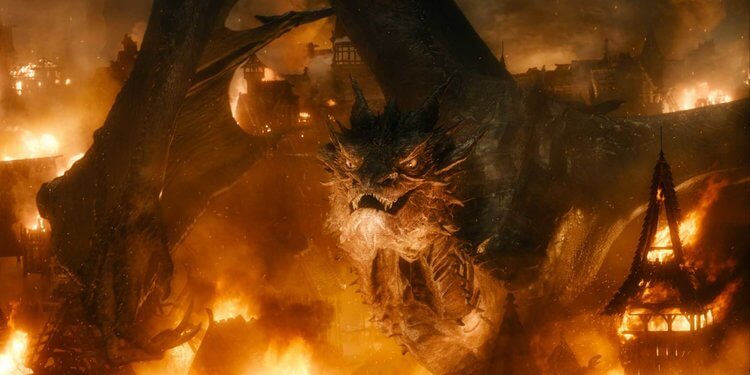
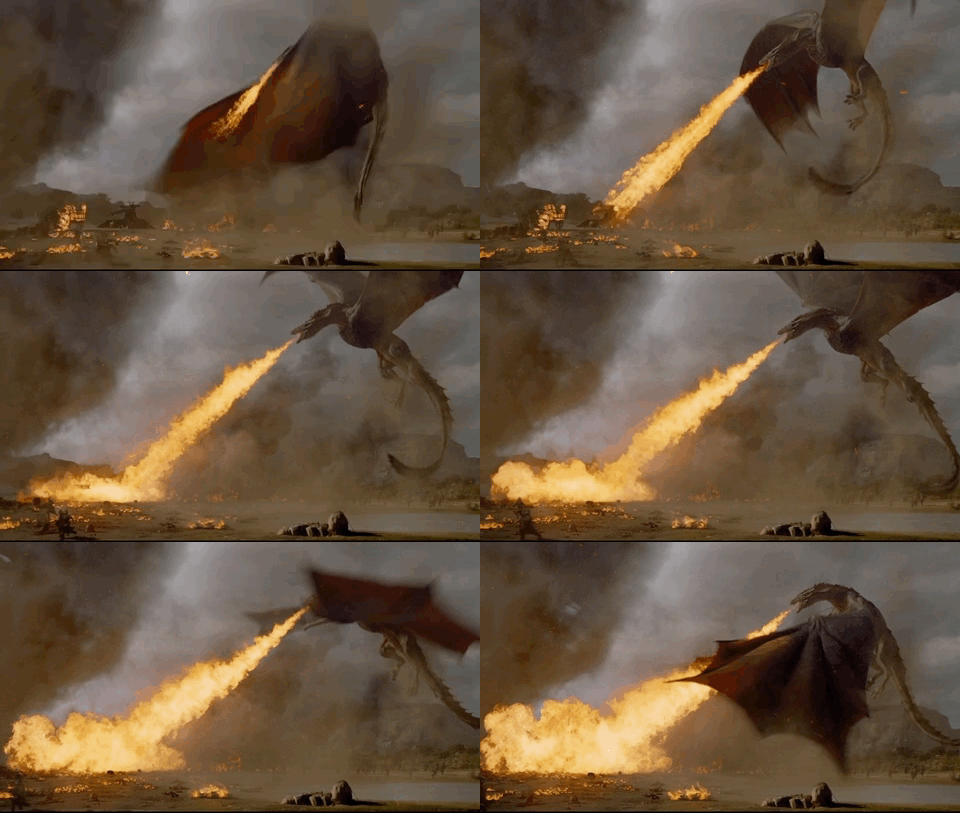
So Game of Thrones finally finished and reaction was mixed, to say the least. But it’s a billion-dollar franchise, and there’s no way that’s the last we’ve seen of Westeros (and the other, more exotic places that don’t matter as much). They’ve already announced some prequel series will be made but surely there’s legs in the current cast? Here’s seven spin-offs that would delight even the most cynical finale-hater…
West of Westeros

Game of Thrones

Go on, admit it: Arya Stark was your favourite, right? How could she not be!? From precocious tomboy to death-worshipping ninja assassin, Arya’s journey was at the heart of Game of Thrones, and when the show ended she was off on another one, taking a gap year to explore what’s west of Westeros. What is west of Westeros? NOBODY KNOWS! So join Arya and her merry band of intrepid sailors as they set off on the journey of a lifetime, into the parts of the map that, on any world, would be marked Here Be Dragons. We already know that, actually, there be dragons, so what’s where the dragons would be if they weren’t somewhere else? NOBODY KNOWS! Of course, when Columbus did this exact same thing, he was looking for a backdoor to India, and caused a huge kerfuffle when he found some people who’d probably much rather he’d not. What will Arya find..?

North of the Wall

Although you’d never know from the mardy look on his miserable face, Jon Snow’s exile to the Wall, and subsequent dereliction of that duty to go and live with the free folk (we don’t use the W word here), was the happy ending he always needed. There was something of the wild about Jon Snow, and he was never happier than when he was palling around with Mance Rayder and falling in love with his real-life wife Ygritte. Okay, so Mance is dead (thanks to Jon), and Ygritte is dead (also, mostly, thanks to Jon), but he’s still got his best mate Tormund and his dog, Ghost, to back him up! And Old Gods of the Forest know what’s still north of the wall! Maybe there’s still Children of the Forest lurking there? Perhaps that baby White Walker is taking its first steps at White Walker Kindergarten? Perchance there could be more giants? Giants are cool.

The Great Westerosi Bake Off

Hosted by everyone’s favourite purveyor of baked goods, Hot Pie, The Great Westerosi Bake Off introduces us to the dishes of the Seven Six Kingdoms. It’s not all poisoned pigeon pie, you know; imagine the ASoIaF versions of Paul Hollywood and Mary Berry being served a bowl of brown, Dothraki diced horse jerky or fermented crabs! Picture the delightful pastry decorations atop a lamprey pie! And thrill as Hot Pie’s pal, Arya, makes her return to Westeros to present her famous Frey Pie! It’s the Game of Thrones you love, but with more pie, basically.

The Unsullied Sally South

Benioff and Weiss’s post-Thrones project is going to be Confederate, a story of what happened in an America where the Civil War ended in a stalemate. Slaves being miserable, I’m guessing. Slavery was a big theme of Daenerys’s journey through Essos, where she freed Missandei and The Unsullied, and brought them with her to Westeros (presumably everything went fine for the others she left behind…). Well, Missandei didn’t make it to the end of the show, but Grey Worm and his Unsullied army followed through on his promise to her to go to her homeland of Naath, an island off the coast of Sothyros (Africa, basically). What awaits the Unsullied in Naath, a place apparently so pacifist that they may as well put up a billboard saying, “SLAVES HERE”? Have any of the other Unsullied got names? Will Grey Worm ever smile?

Still Rowing

Game of Thrones

Just Gendry. Rowing. During the events of Game of Thrones seasons four, five, and six.

The Iron Bank

Game of Thrones

Not everybody had a happy ending, of course. Well, actually, when you think about, the list of those who didn’t is probably as long as those who did. But not all of those paid with blood; the Iron Bank of Braavos loaned Cersei a ton of money to finance her defence of King’s Landing, and they’re just not getting it back. Mark Gatiss is Tycho Nestoris, a man under extreme pressure in a world where getting fired literally means a flaming death. He negotiated a deal with Cersei Lannister and now she’s dead… Can he deal his way out of this? What part do the Faceless Men play in his plan to recoup his losses? And is there a Braavosi financial ombudsman?!?

Yes, Maester

Game of Thrones

The tantalising glimpse of just how much fun the Small Council is going to be in the new, peaceful era for the Seven Six Kingdoms was not enough! Tyrion as Hand of the King, Bronn as Master of the Coin, and Davos as Master of Ships will provide endless entertainment, even as Mary Sue Sam Tarly hovers in the background with his oh so clever book of history. Throw in Brienne as Lord Commander of the Kingsguard, Ser Podrick Payne’s Confessions of a Window Cleaner-style sexual gymnastics, and King Bran the Broken just spacing out into some crows when he gets bored, and you have all the ingredients for a political dramedy to rival The West Wing. With dragons.

Bond and Baccarat – The Insider’s Guide

When the classic Bond film Dr No. was released in 1962, it properly introduced James Bond to movie goers all over the world. The novels of Ian Fleming had created a character that was suave, classy and debonair and it seemed only natural that the big screen would want a piece of the action.

Ian Fleming passed away in 1964, at the age of just 58, so we can only imagine what new adventures he might have dreamed up for Bond. As it is, however, a number of other authors have written fully authorized Bond novels and the character has been adapted for comics and video games as well as for television and radio too.

Casino scenes feature in a few of the movies and in Dr No we get our first taste of Bond playing the classic game Baccarat. It’s a game that intrigues many people and here is the lowdown on the scenes in the film and the game itself.

Baccarat and Bond

The first scene in the first film shows Bond sitting at a casino table in Monte Carlo. Here we see Bond as the classy, debonair gentleman with a taste for Martini.

He’s also a top class spy, looking sharp in his suit, and is a man who has an eye for a beautiful lady. He’s known for his poker face and his killer stance in the casino. In Dr No, he’s playing a game called Baccarat – or more specifically a version of the game called Chemin-de-fer. As a player he is cool, calm and collected and it’s here we get our first proper introduction to the character we came to know and love over many decades.

As he plays, he is being watched by a lady. He coolly opens his cigarette case, looks into her eyes and we hear him utter the immortal line “Bond…James Bond”. Many believe that any actor that followed Sean Connery in the role would have a supremely tough act to follow and that his role in Dr No. was the prototype for everything that followed.

What is Chemin-de-fer?

It’s a classic game, sometimes referred to as Chemmy, and one that you might not find online or in any casino inland!

The game preceded Baccarat as we know it today and this version came from France. It’s played with six decks of cards and the player who ends with a total of eight or nine, wins.

Chemmy relies on the player dealing the cards themselves and they all must take turns to be the banker. It’s an intense game, but very exciting and really made famous by that opening scene in Dr No. It’s not a card game for someone who wants quiet refinement!

How is Baccarat played?

It’s a slightly different game that has varying rules to Chemmy. A complete guide to Baccarat will explain that it’s a card game that is dealt from a shoe that holding either six or eight decks of cards.

A couple of hands are dealt out by the house dealer and have two hands. The ‘Banker’ and the ‘Player’.

Bets that win on a banker or player are paid 1:1. However, a commission of %5 must be charged on bank bets which effectively makes the net odds, 0.95-1!

Depending on who you read, or where you get your information from, some will say tie bets are paid 8:1. Others claim that tie bets are paid 9:1 and this will all be dependent on the casino’s rules.

If there is a tie, any bets are returned. However, once a bet is placed no decisions can be revised. This results in final hands of two or three cards for each.

How a hand is valued is based on adding the values of the individual cards.

  • Tens and face cards are valued at zero.
  • All other cards are counted by how many pips there are on the card face.

Only the last digit of the total can be used, this means that all baccarat hands are valued between 0-9 inclusive. A hand with a higher value wins. If the hands have the same value, the net result is a tie.

  • Player hand rules: If a player’s first two cards are worth six or more, the player has to stand without drawing a card. If the player’s first two cards are worth five or less, the player has to take one additional card.

Banker hand rules: If the banker’s first two cards are worth seven or higher, they must stand and not draw a card. If the total is zero, one or two then the banker has to draw one card. However, if they total three, four, five or six then it depends on whether the player drew as to whether the banker can draw.

Out Now – Issue 461

461 ns

In the new issue of STARBURST we celebrate the return of a real Monarch in Godzilla: King of the Monsters. As well as looking at the new movie, we run down our favourite other kaiju in a monstrous feature!

We have all the gossip from Star Wars Celebration from our man who was there, Tate Taylor, the director of the upcoming horror movie Ma talks to us, as does Linda Hayden, who recalls the making of terror classic The Blood on Satan’s Claw. We also go on the set of Avengement, the new film from UK martial arts superstar Scott Adkins and get the low-down on this blood-soaked East End revenge story.

The Toxic Avengers’ Melvin the Mop boy himself, Mark Torgl tells us all about the mockumentary Toxic Tutu and working with Troma.

And that’s not all, we also celebrate the 20th anniversary of the groundbreaking classic The Matrix and get the inside info on upcoming games The Sinking City and The Lord of the Rings: Journeys in Middle-earth.

Plus Horror Obscura looks at the remake of the controversial shocker Straw Dogs.

Plus all your favourite COLUMNS, NEWS, REVIEWS and much MORE from the worlds of SCI-FI, HORROR and FANTASY!


Ron Fogelman | THE TWILIGHT ZONE

Fogelman

Ron Fogelman is the producer behind bringing the legendary show The Twilight Zone to the stage. The show can be found at the Ambassadors Theatre, London, until June 1st 2019. We caught up with Ron to find out more about how he did it.

STARBURST: How did you get involved with the Twilight Zone?

Ron Fogelman: If you’re going to blame anyone, blame my kids. In our household I’ve got three kids. And there’s some amazing stuff coming out these days. Because you’ve got Netflix and Amazon you’re surrounded by content. It’s hitting you from every direction.  I grew up when they were just three channels on the telly and on a Saturday afternoon I didn’t have a choice. I’d watch a Western, or sci-fi, or  a drama or a Hitchcock film.  And you get a broader view of what you like. And you get used to older films which I think is a skill you have to develop when you’re younger.

I was very keen to have our kids to see lots of different film making material, just so they have the change to see it. So we’ve done everything from Billy Wilder to Frank Capra to David Lean. Within that sort of spirit I was looking at my boxed set of Twilight Zone. I wondered what my kids would make of it. I carefully selected some stories. What amazed me was the immediate effect. They were so well crafted and timeless in appeal. That’s where it started.

How would you define The Twilight Zone?

It’s a different kind of story-telling. The show often gets labelled as horror or science fiction, but I think it transcends that. If you look at the horror label they are two kinds. One where I go Boo! And you get a short adrenaline burst and you go that was fun. Your body acclimatises to it and you forget about. Then there’s what the Twilight Zone does; it looks at those things that unsettle you and unnerve you. Things that you try to bury. Through very careful surgery, it digs in and twists. It’s what it leaves behind that’s really matters.

How did you get started in this industry?

I always knew I wanted to work in entertainment and I’m a passionate devotee of genre. In the late ‘80s as I was getting into the business it was a period of change, and I wanted to use my mix of creative and business skills. I joined the FTSE100 company Rank which at the time one of the best collections of UK films, which is now owned by ITV.  It was investing in new movies and that was my first job in the industry. I then went on to Polygram, which then went onto become part of Universal studios and I became a suited executive for them.  Quite often you’ll have an amazing piece of material such as The Big Lebowski, but it’s one thing having the script and another thing to sell the licensing rights. You have to call on your storytelling skills because you’re trying to encapsulate what this project will become to people who are very cynical and will assume that everything will be a failure until proven otherwise.   That was really where I started with the business.

How much did you sharpen those skills?

I wanted to make sure I understood the creative side of things, so initially I read about a thousand scripts. I realised I was turning into a poor man’s critic; I could sense when something was good, but if something was not quite good enough, I didn’t have the skillset. I didn’t want to sit with the writer and say ‘I don’t like that page, why don’t you make it blue’.  I needed to understand how writing works. So I started reading up on it and I wrote an adaptation as an exercise. It eventually led to me working with a friend of mine who’s a very good graphic novel writer, a guy called Andrew Donkin. He’s got a very good book out this year called Illegal. We did spec scripts for Batman: The Animated Series. We sent of a script, it was called Right man for the Job to Allan Burnett and Bruce Timm. It went to LA. I didn’t have an agent. I wrote an impassioned letter and within 24 hours I got a called saying that he really want to work with me. Which is one of those things you don’t normally get.  At that time Batman had run its course and they were looking to develop Superman the Animate series.  We were very lucky as we got to work with Paul Dini on an episode called the Toyman. It was brilliant. I have some of the cells from that on the wall of my office.

And how has this lead to this?

It’s a strange life. I think it lends towards producing because Producer is not a job description. it’s not something you can train for.  You have to understand production, financing, distribution, marketing, finance and talent. Very few people get to build up those skills. Thankfully because of the diverse things I’ve done its helped produce this show.

The Twilight Zone is running at the Ambassadors Theatre in London until June 1st and you should hurry if you want to book tickets. You can read our review here and book tickets via this link.

Avengers: Endgame Sets a New World Record

avengers record

The long-awaited release of the final part of the saga about the team of superheroes, Avengers: Endgame was marked by a real victory based not only on the results of the home box office but also on its international rental. According to the official data, a fantastic blockbuster from directors Anthony and Joe Russo collected $ 1.2 billion worldwide on the first weekend. The previous record was set by its predecessor, which earned $ 640 million in the world box office.

As for the American box office, on its first weekend, the movie raised $ 350 million, which significantly exceeds the revenue of the previous part in 2018 ($ 257 million). What is more, this is not the only one record, on the premiere day, the blockbuster earned $ 157 million. Just for you to understand the main scale of the happening, the seventh episode of the famous Star Wars: The Force Awakens saga, directed by J.J. Abrams, collected $ 119 million in 2015. It is only possible to get such amounts by gambling in online casinos in Canada for real money; there hardly be an alternative.

It is noteworthy that China is in second place after the USA, where the final part of the Avengers managed to gain $107.2 million on the day of this release. The final part of the superhero saga, Avengers: Endgame, has set a new record; the movie has brought around two billion dollars in 11 days after its launch. The information about the success appeared on the website of the Walt Disney Studios distributor.

According to data published on the site, the exact amount of profits gained in 11 days after the world premiere, held on April 22, is $2.2 billion. The previous record was set by James Cameron, who shot the picture Avatar, the revolutionary movie released in 2009. At that time, the film earned two billion dollars in 47 days.

In the world history of cinema, it is only five films that have ever reached such a financial success. In addition to the above-mentioned Avatar and the final part of The Avengers, this list includes the previous part of the epic Avengers: Infinity War as well as Star Wars: The Force Awakens and Titanic.

According to the results of the first day of the movie rental, the film has earned 156.7 million dollars. According to this indicator, it has bypassed the past leader – Star Wars: The Force Awakens, which earned 119 million dollars on the day of the premiere in 2015.

In total, for the first weekend, the movie raised $ 350 million in the United States and Canada, and it brought $1.2 billion on worldwide markets. On April 27, it was reported that a cinema visitor in Hong Kong was beaten because of the Avengers spoilers. The man left the hall after the session and began to loudly tell what happened in the film. The spectators standing nearby, who were just about to watch the final part, decided to “punish” him.

Daniel Brodie | MORGAN’S ORGANS #3

Morgan's Organs

Having already impressed with the first two issues of the utterly unique Morgan’s Organs, creator Daniel Brodie has now launched a Kickstarter campaign for the third outing for Morgan and his, err, organs . We were lucky enough to grab some time with Daniel to discuss issue 3, how he came up with the bizarre but brilliant concept of Morgan’s Organs, his experience of using crowdfunding, what perks backers can expect, and a whole lot more.

STARBURST: Where did the initial concept for Morgan’s Organs originate from?

Daniel Brodie: Funny enough, the idea sprung up in the summer of 2013 while strolling along the streets of Amsterdam [cough, cough]. I don’t remember much of what went through my head, but I distinctly remember coming up with the name Morgan’s Organs and a vague thought of what if the organs inside our body each had their own voice?

I obsessed over the idea that summer and thought that it could make a great television show. Later that year, I decided I would make it happen myself.

How have you found the process of translating those initial ideas down into an actual physical comic book?

When I first began working on Morgan’s Organs as a comic book, it was definitely a challenge. For one, I had ZERO experience in producing comic books. I didn’t know proper comic book writing structure or how to layout a page.

Secondly, I have zero artistic talent, so it was difficult for me to perfectly visualize what I wanted for the look and feel of the series. Thank god I stumbled upon our lead artist, Robert Jennex, as he really is the person I need to give credit to for creating the visual foundation. Before him, it was just a story on paper.

With two issues having already been successfully backed, how have you found using crowdfunding?

Crowdfunding, specifically Kickstarter, has been absolutely fantastic and also pivotal to the success of this series. When I started on Book 1, I really had zero audience. And I also didn’t have much for funds. Kickstarter allowed me to balance my risks – I only produced 5 pages + cover for Book 1 before our Kickstarter launched, in case my hopes were wrong and people did not like my vision. Fortunately, the Kickstarter was a quick success and we were funded in about a week, which was all the motivation that I needed to keep working on the book and to continue the series.

Since then, we have seen a growing audience of supporters on Kickstarter for Book 2, which continues to tell me I am on the right path with the series.

What has been the biggest challenge of going the crowdfunding route?

The biggest challenge is really just patience. Since we are an indie series, all of us have day jobs that we need in order to allow us to work on our passion projects. That means it can take a long time for the books to be complete.

For me, once a Kickstarter is over, I really feel the pressure to deliver rewards by the time I’ve promised them. When we are talking 3-4 months after the campaign, it can be a struggle to keep patient while the artwork is still being complete.

How has the reader response been to the two issues so far?

The reader response has been incredible. From the sounds of it, people really enjoyed Book 1, but they loved Book 2 even more. I am really happy to hear that, as it means we are growing with each story. I hope what fans say next is they loved Book 3 the most!

How about the look of Morgan himself? Was there anybody you based him on?

Not really. The character description that I gave to Rob was probably, “make him look as average as possible”. He does kind of look like a grown-up Morty from Ricky & Morty though.

The characters in general, how much direction did you give Robert with the look of them or did you give him creative freedom?

I like to think I gave Rob a lot of creative freedom with their look. It was a lot of fun watching these characters come together. I basically just gave him a general description of each character, their personality, and any thoughts that I did have on visuals. Rob then just did a whole bunch of sketches of different character shapes and details within each option and we discussed which we both liked best. It was very collaborative!

Probably the character that we had the most debate on was Vee the Vagina, who is interested at the end of Book 1.

You’ve previously referred to the title as “Inside Out for adults”, but is there anything else that you’ve particularly drawn inspiration from for Morgan’s Organs?

To clear up the air, I wouldn’t say I’ve taken inspiration from Inside Out, mostly because I’ve never seen it! I just reference Inside Out because it is an easy reference point for connecting with new fans and explaining the series premise. I actually started development on Morgan’s Organs well before this movie was a thing.

I would say my biggest inspiration is Rick & Morty. I love the depth and breadth of comedy and stories in this show. They know how to perfectly balance dirty humour, smart humour and dark humour, all while telling a great story. I try to do the same for Morgan’s Organs.

Each of Morgan’s organs are a key part of the overall narrative, but is there a character that stands out as your favourite?

Tough to say if I have a favourite character! I honestly love all of them – each one is so unique in my mind and I really can distinguish personalities as I write for them, making it fun to write for them all. I know that Pepe the Penis, Andy the Appendix and Meats the Stomach are some fan favourites.

If all goes well with issue 3, do you already have further Morgan’s Organs stories envisioned and ready to move forward with?

Absolutely! I have so many stores planned, and spin-offs, and even a theme park (okay, maybe that’s stretching it). The main point is that the world of Morgan’s Organs has so much opportunity for new stories, inside and outside of the body, and I would love to continue to tell more of these stores.

I already know what I want the story to be for Book 4 and am at the initial stages of mapping out the story structure. If all goes well with the Kickstarter, I’ll be boosting up my work on developing Book 4!

Morgan's Organs

As an independent comic book writer, how do you find the fact that now anyone can make a comic – funding permitting. Is it more beneficial because the internet means you’re able to put yourself out there, or is it more a case of oversaturation making it harder to get noticed?

Good question. I feel like it is a bit of a double-edged sword. For one, I am thankful that we live in a world today that it is possible to make indie comic books and easily connect with a potential audience through crowdfunding. Without a platform like Kickstarter, I am really not sure how I could be where I am at today. On second hand, having something like Kickstarter so openly available makes it difficult to have your voice heard.

For me, I try to slice through that to find a peaceful middle ground. The audience will decide what the audience wants, so as long as I still have fans of the series, I know that I am doing the right thing and I should keep making more books. I try not to focus on what’s going on around me, and instead try to focus on the people that already love what I am doing as a starting point.

What can you tell us about the campaign and perks for issue 3?

In the past, I’ve focused more on the paper side of rewards, but I am excited to have some fun new collector’s items in this campaign. That includes an enamel pin of our series star, Bran the Brain. It also includes two really fun creations that were done by a couple of Canadian artists. There will be a Pepe the Penis 3D printed figurine and Angus the Anus Wall ornament. It’s so cool to see my characters in 3D format!

Anything else you would like to add?

Just that we launch our Kickstarter on Saturday May 11th – and anyone that backs in the first 48 hours will have a surprise extra goodie included in their package!

For full details on the latest Morgan’s Organs Kickstarter campaign, be sure to head here.

Morgan's Organs

Thomas ‘Dome’ Karukoski | TOLKIEN

Thomas Karukoski

Thomas “Dome” Karukoski is one of Finland’s most successful film directors, having won over 30 festival awards. His work includes The Grump and Tom of Finland. His latest movie is Tolkien, a biopic about the father of modern fantasy.

STARBURST: What was the elevator pitch for Tolkien?

Dome Karukoski: It’s a story about friendship, love and creation. It’s about how we see a young genius’s mind flourish and where the inspiration comes from. He’s confronting his own imagination, understanding it and learning to use it.

What drew you to Tolkien’s story?

There are two sides to it, as film maker and as a person. I read the Lord of the Rings when I was 13 and at that time I was an outsider. I was growing-up without a father who I later got to know, I was bullied, I was very alone and miserable.  Then I open up this book and basically it became an escape. Those stories became friends.   Fast forward 30 years and I’ve read almost all of his books, some of those twice. I knew about the Inklings/CS Lewis era, but I also knew about his youth years. And then you understand reading those stories that he was an outsider, that he became an orphan.  Then finding these friends whom he went to war with. And that story was so beautiful that I wanted to tell it.

What inspiration did you draw on when casting Tolkien and his childhood friends, the TCBS?

The casting process was quite easy. When I started meeting actors I didn’t really have a script I want to show them. I would meet a lot of actors –  I started with Nic because he was on the top of my list and top of the studios list. With actors I always try to find who they are and build upon them, because every actor has their own skill. With Nic he was inspirational. He’s very intelligent and very fast and witty. We always joked that he’s a bit of a hobbit even though he’s quite tall. The method was trying to find the true character in those people that resonates with the character portrayal later. After seeing Nic, it couldn’t be anybody else.  When building the characters, it was just research, a lot of it was finding the right pace and rhythm.  Everything I read about them said they were very witty, with a lot of pace and comeback lines. When you have that with friends that means you trust that they’ll understand your humour and understand your point.

Much of the movie’s focus hinges on the relationship between Tolkien and Geoffrey Smith. Why the focus?

Well of course they grew very close to each other in Oxford, and the other two went to Cambridge so they’d only see the others on the weekends, back and forth.  They grew very close to each other.  Stephen Beresford, who is one of the writers, is a gay man. He read Geoffrey’s letters and poems and he felt that there was a possibility that he was also gay.  We can’t claim that, of course. I read it as the relationship was intimate though not romantic.  Geoffrey was a bit younger, and his affection toward Tolkien was one of admiration. What’s beautiful about that story is that he was there for his friend during the darkest times.  Geoffrey’s letter to Tolkien is word by word how he wrote it. Thinking about Tolkien at a time he thought he was going to die. Their relationship was friendship to its purest level. To think that you’re going to die and know that there is one friend you have who will continue your aim and your mission, the one desire they have about the world.  I think that’s very beautiful.

How important was Edith’s perspective to you?

If I was to write that love story into a film that was untrue, and tell a tale about friendship and then love and then eternal love. The producers would say that would never happen. That it was too ‘Gone With the Wind’.  The problem is that Edith can be easily seen as an elven princess, which of course what I’m going to do because it inspired Tolkien’s story Beren and Lúthien.  When you starting reading about her, you find that she had this huge intellect and she was strong willed. She had character that Tolkien admired. It was very important to show these layers, that she was not just an elven princess and show her great stamina.  She’s also an orphan. She’s learned to be strong and learned to fight.

How much did the story of Beren and Lúthien influence the script?

It influenced, yes. But at this point in Tolkien’s life he hasn’t written the story yet.  We show the dance scene that inspired the idea of the story. He’s getting inspiration, he’s getting ideas and sounds and voices. He’s slowly building the theme of his life. Later he’s ready to build that world. The emotional truth of that story has to be in the film, but it’s not that story.

How much of a challenge was it to fold the fantastic elements?
In the movie, he’s not yet written the books.  The knight is perhaps the best example. He first sees the idea of a hero, but his ideal of a hero with a white horse is a notch higher, but then when he gets corrupted by war and bloodshed, that beautiful image becomes something else. It turns into a black knight. You might think it’s a Nazgûl but it’s not yet a Nazgûl . It’s something that has fallen. Internally, for him, it’s a battle of good and evil. How does he feel, what is his emotion here.  Dragons in mythology are about fear, and here we have the fear of losing your friend, of losing your love.  These aren’t taken from his books.

How different was this project from Tom of Finland?
They’re very different. One is the story of an artist growing into fame, the other is a young man growing up to become an artist. Tom of Finland was more difficult because the time from had to be told in forty years. Where Tolkien’s story is more of a story about friendship and love. It’s much more focused on the personal.

How has the response from Middle Earth Fandom been?

We’ve had several screenings and we had applause during the film, so that’s always a good sign. I was with the Finnish Tolkien Society and they praised the film. I think the fans have loved. There will always be people who don’t like it and they’ll be people who will debate the facts. With a film like that you have to choose between facts and emotion, and if you chose facts it doesn’t become drama. It’s about the emotional truth.

What’s next for you?

I’ve just done two biopics back to back. Biopics tend to be hard to make because of the research and you can lose perception as to what to do next. Rest is what’s next.

Tolkien is out now at all good cinemas and you should rush out and catch it while you can. You can read our review here.

Let Sleeping Straw Dogs Lie

sleeping straw

Sam Peckinpah’s 1971 film Straw Dogs was an instant cause célèbre when it was released, and that reputation only grew with the dawn of the video age. It was unthinkable for many that anyone would tackle such a controversial story again, but in 2011, director Rod Lurie did just that.

Times had changed during the interim years, and attitudes towards violence – particularly sexual violence against women – have quite rightly affected how we view such subjects on screen. The notorious rape sequence in the original movie is undoubtedly hard to watch and has, if anything, increased in intensity when viewed today. The remake, while not shying away from troubling issues, doesn’t go as far as Peckinpah’s classic, but still packs quite a punch.

The original film was partially based on The Siege of Trencher’s Farm, a novel by Gordon Williams. The remake follows the film’s narrative rather than going back to the source material and relocates the action from rural southern England to Mississippi and has James Marsden (X-Men’s Cyclops) and Kate Bosworth (Superman Returns’ Lois Lane) as David and Amy Sumner. They have just moved to Amy’s hometown following the death of her father and David – a screenwriter and ‘modern guy’ – stands out like a sore finger against the rugged locals, who are all testosterone and brawn. It’s underlined how alien this town’s attitude is to his when the local bar doesn’t even stock Bud Light. He’s an amiable chap, though, even hiring Amy’s former boyfriend, Charlie (played with evil relish by True Blood’s Alexander Skarsgård) and his gang to repair the roof on their garage. Amy has done well for herself since leaving town, becoming a TV star and all eyes are on her when she returns – for more than one reason.

Amy distracts the crew while they’re at work by jogging past them in very short shorts and a tank top with no bra underneath. Nothing wrong with that in a sensible world, of course, but these are backwoods types, and there’s a palpable pressure cooker of immature hormones from the start. They are the typical jock stereotype; they’ve been on the high school football team, which was looked after by a coach, whose toxic masculinity and prejudice have not softened since leaving the position. Played brilliantly by James Woods, Coach Tom Heddon is still looked up to by the town, holding court in the pub and spouting bile and hatred. It’s not hard to understand where the younger locals’ attitudes have been nurtured. David begins by pitying them and likening them to Chinese ‘straw dogs’, thus clumsily explaining the film’s title (dogs made of straw that were ceremonially revered in ancient China but disposed of when not needed). The team working with Charlie even start taking an interest in David’s vintage – and expensive – car, admiring the engine and bodywork in the same way they’d leer at a woman.

Charlie begins a campaign of bullying and undermining of David, who’s clearly not a physical type and is easily intimidated. His cowardice even extends to Amy, as his response to the ogling she received when jogging is “Perhaps you should have worn a bra”. Charlie’s advances increase – largely influenced by his disdain for the ‘weakling’ David, but also spurred by Amy’s clumsy posturing. Flaunting herself topless in front of the group while getting changed perhaps isn’t the wisest move. What should have been her show of strength, independence, and authority are interpreted by the Neanderthal local as a come-on.

Like in the 1971 version, Amy is brutally assaulted while left alone as David is attempting to bond with the men by going hunting with them. Charlie takes the opportunity to confront Amy, assuming that she still has feelings for him. After the attack, he realises what he’s done, but when one of his friends arrives and sees the situation, he decides to rape her too. Charlie watches almost helpless and in disbelief but doesn’t attempt to help or stop it. Thankfully, we’re spared the nasty details this time. The sequence is juxtaposed with David, walking through the woods with a rifle. He’s as uncomfortable with the weapon as we are with the sexual assault. When faced with a deer, he tellingly pauses and contemplates whether he can fire the shot.

Wracked with guilt, Amy doesn’t tell David of the attack. Instead she just insists that he dismiss them. Using the excuse that the repairs are taking too long, David does this, but Charlie uses his antagonistic attitude to force David to overpay for supplies already purchased. The group are clearly happy with a lucrative payday for the little work they did. Amy, however, attempts to keep her emotions about the attack under control but things are going to boil over in this particular pot very soon anyway.

As well as being a horrible loud-mouthed bigot, Coach Haddon is the father of a 15-year-old, Janice (Willa Holland, Thea Queen in Arrow), and he’s very protective of her. Barroom banter is one thing when it comes to women, but Janice is out of bounds. Particularly when it comes to Jeremy Niles (DC’s Legends of Tomorrow’s Dominic Purcell, in a role a million miles away from what we’re used to seeing him in), a mentally-challenged man whose mental age is nearer the young girls he enjoys playing with than his own. During a big football match (the American kind, obviously), Janice – a cheerleader and older than her years – takes Jeremy into the locker room and is rather forward with him. When Haddon realises his daughter has left her post, he immediately jumps to the conclusion that it’s Jeremy that’s taken her away. Hearing the angry Haddon looking for him, he accidentally smothers Janice. Jeremy panics and dashes away from the scene, while Haddon riles up his misguided disciples to become an angry mob, the likes of which we’ve not seen since the villagers were chasing Universal’s Frankenstein monster in the forties.

Things get worse as David knocks down Jeremy in his car as they are leaving, and take him back to their house to attempt to get help, but Charlie hears the call on his police scanner, and it’s not long before the mob are heading their way. As they descend on David and Amy’s place, it’s clear these people are a law unto themselves. David must step up to protect his wife, and he’s pushed to do things he wouldn’t even write in his screenplays. The siege is only substantial element transferred from the book on which it was based, and although it’s not as shocking as the 1971 version, there’s still a lot of brutality and disturbing moments.

Away from the exploitation angle (which isn’t as prevalent in Lurie’s version), the film poses a genuine psychological dilemma: how far do you have to be pushed before you break, and even more disturbingly, to what lengths will you go to protect those you love. In David’s case, he’s not just protecting his wife, but the life of someone who could have committed a horrendous crime. We’re used to seeing backwoods yokels being depicted as murderous inbreeds, but here they are all victims of a distorted patriarchal upbringing. It’s like the false cover of religion excusing many indiscretions. It’s something we see in real life the world over, and it’s hard ever to find a reason to excuse it. However it continues, and arguably, is getting worse in some cultures. The dichotomy of morals and emotion is strong on both sides here, though. Such as even though Charlie knows he has done wrong by attacking Amy, his upbringing doesn’t allow him to change or be a better person. The culture of the bully is a hard one to break, or so it would seem.

It’s unfair to dismiss Lurie’s version of Straw Dogs as ‘just another cash-in remake’ as there is plenty to recommend it, and providing you don’t spend the whole time comparing notes with the original, you’ll find it’s a completely engaging, utterly horrifying, and deeply disturbing film in its own right.

You can catch STRAW DOGS on Horror Channel . Tune in on Sky 317, Virgin 149, Freeview 70, Freesat 138.

Sam Liu | JUSTICE LEAGUE VS. THE FATAL FIVE

Sam Liu Justice League vs. the Fatal Five

With Warner Bros. and DC Entertainment having regularly wowed audiences for several decades now with their animated output, the next animated DC offering on the table is Justice League vs. the Fatal Five. Having directed fan favourites such as Batman: Year One, Teen Titans: The Judas Contract, Batman: Gotham by Gaslight and the two-part adaptation of The Death of Superman, Sam Liu is the person tasked with helming Justice League vs. the Fatal Five. We were lucky enough to grab some time with Sam to discuss the movie, returning to the Timmverse of characters, showcasing lesser-known heroes and villains, and a whole host more.

STARBURST: Of all the characters to call on, what prompted the decision to make the Fatal Five the villains of the piece in this latest movie?

Sam Liu: You know, I asked the same question when I got the script. Because it’s a Bruce [Timm] movie, he takes control over a lot of it and he just likes to use different characters. When we start a project, he goes through his rolodex and just sees what takes his fancy, what piques his interest. We do these so quickly, it’s not a case of “Have you done your favourites?” because I think he did his favourites ten years ago or more. So it became a case of how can we make this new and interesting.

Justice League vs the Fatal Five

Given that there’s someone like Bruce involved, then the writing team of Alan Burnett, Eric Carrasco and Jim Krieg, how does the creative process work for yourself as the director and is it almost like a studio system setup?

That’s a good question. I’ve since become a producer a couple of years ago, but I’m the junior producer; I still don’t necessarily get to pick. For the past maybe four years or so, it’s been primarily James Tucker and Bruce Timm. They’re the ones that spark the sort of, “Well, what do I want to do?” It comes from different places because it’s a mix of the big creative producer – whether it’s Bruce or James – and then DC or home video will have something that they want to push, something on their wish list. It’s either something Bruce or James wants to do, or it’s, “Oh, we want to do this character. Is there something you can create with this?” So where it comes from is a few main areas. That’s where it starts. They generally have a loose concept that they want, which they flesh out with the writer. At this time it’s Jim, but in the past it’s been Alan Burnett. They work with whoever is going to write it. Sometimes it’s Jim or Alan, but most times they have someone they target to write it. I usually come in during the draft. We read them, we have our notes and we sort of pound out the script. Before, when I was just a director, I would wait until the script was finished or close to finished – I would probably come in during the third draft – and I would have my notes. Now I have a little more input towards the direction of it.

In the past, we’ve had to do things like re-write the third act entirely. I’ve been doing that a little more with James, as James seems to embrace the collaborative a little more than Bruce – Bruce is a little more reluctant – but it’s been good. The last couple I’ve come in a little earlier, so I’ve been able to get some things in. Justice League vs. the Fatal Five, it was kind of earlier in my being a producer so I didn’t have as much say. As a director, you’re absolutely correct that it’s like a studio system. For the past four or five years, they have a project, they assign it to me. I think there’s a politeness where they ask me if I want to do it, and of course I want to do it, but after the script is finalised and the designs are picked the director works primarily on their own with a storyboard team. The producers will come back in after a first pass. In that sense, the director has a lot of creative control. That’s where the relationship between the director and the producer is: does the producer trust the director to carry out the vision they want? A lot of this is so fast, and as a director you’re only one person and as a producer you’re only one person, so it’s a lot of things to manage. The whole familiarity and trust is important. If everything I show Bruce or James is wrong, there’s no time to fix anything. That’s a lot of our job, actually. I almost parallel it as we’re trying to cook a Thanksgiving dinner and we have our shopping list. That’s what we send to overseas, but actually what comes back is what we have to work with. You go to the store and order all of the pieces that you want, then when you’re at home that’s all you’ve got. You can’t go back to the store. Sometimes you don’t have a good turkey, but you have to think about how you’re still going to make this meal.

In addition to the Fatal Five, the other big characters to be featured are Star Boy and the Jessica Cruz Green Lantern. Given the very real issues – such as PTSD and mental health concerns – that this duo has, how important was it to make sure that Star Boy and Green Lantern didn’t get overshadowed by the all-powerful bad guys or the more famous Justice League names?

I feel like I’ve done so much of these types of stories, and obviously Bruce has done way more than I have, that it was really refreshing. That was my favourite part of it, as to me it was very unique. The stories that I like or tend to focus on, it is that characterisation. With this one, it’s not something I have to dig out; it was on the page. Again, it wasn’t very difficult at all. Thankfully, we used the iconic designs and iconic voices attached to these designs that I felt like I didn’t have to catch people up; people already know who Superman is, who Batman is, who Wonder Woman is. People know already, so we didn’t have to set them up and it instead gave us time to set up the new people. My general theory on ensemble casts is you’ve got to pick. You have to give everyone their moments so they’re not entirely these cardboard people sitting in the background, but you have to pick stuff, pick who you’re going to be highlighting and who needs to fall into the background a little bit.

Justice League vs the Fatal Five

Where the Justice League is concerned in this film, was there ever any talk of featuring any other or alternative Leaguers or was it always to be the Holy Trinity, Miss Martian and Mister Terrific?

So much of this is based around what story we’re telling, what’s the plot. Then it gets torn down from there. It roughly breaks down to how many pages are in a script – which is usually limited to 90 or 100 pages – so there’s a certain point where you’re keeping those things in mind. That’s probably a better question for the writers, but there’s a certain point where you try to tell a manageable story. And most of the time we’re a little bit long, so we have to start cutting things out. Things like having all of these characters would be great and it works much, much better in a series as you can tell many more types of stories. Even with the characters we have, there’s a few of them who probably could’ve gone, that we didn’t 100% need. I think we were pretty good at picking who stayed, but adding more would have bloated it and made it longer without necessarily helping the plotting or the story we’re trying to tell.

Justice League vs. the Fatal Five uses the classic animation style of what many call the Timmverse or Diniverse. As someone who was making their first foray into this particular world, how was it to work in that realm and in that style?

People make a huge deal out of it, but if you ask Bruce then it’s always about telling stories. The Timmverse, the Diniverse, that’s Bruce’s take on stories. If you do enough of them then there’s certain consistencies. During ADR – the additional dialogue we record once we’ve done the body of it and we’re looking at the picture – hearing Susan [Eisenberg] in the booth and seeing the picture pair together, there’s just something about seeing his [Bruce Timm’s] Wonder Woman and his Superman. I’ve worked on Batman so much, but the Wonder Woman and the Superman, just seeing them…

When Wonder Woman shows up in the alleyway to meet Jessica, or even when Superman is doing his wind breath, I was just, “Wow!” There’s something about it that feels so classic. You do it, but then when it comes back and you see the combination of all the voices, the way those designs animate, it took me aback a little bit. I didn’t expect to have that kind of reaction, but seeing them and hearing them, there’s something magical about it.

Justice League vs the Fatal Five

Often it can be hard to make bad guys feel like a genuine threat, as we all know that the heroes will ultimately, usually save the day. With the Fatal Five, however, they instantly feel like a major threat. In these times, how hard it is to make the villains feel like a legitimate big deal?

Oh, it’s especially hard. The audience is a lot more critical these days than, say, 20 years ago. With the internet and video games, there’s an oversaturation. Back in the day, it was hard to find things. Fight choreography in Asia was so much better than in America in the ‘80s – I think that’s why Hong Kong cinema was so potent back then – but now it’s everywhere and people are used to it. It has to be good and it has to be done in a way that it’s earned, so it does make it difficult. I have to say, in this movie there are a lot of things that I wasn’t sure the audience were going to buy. Thankfully it hasn’t come up – I haven’t seen anything online, anyways – like how quickly the Justice League get taken down by the Emerald Empress. In order for that to happen, you have to make her extra powerful; there has to be these shows of power so that you’re, “Oh, well that could happen.” There’s a lot of cheating that happens.

Somewhere during the middle of this production, Bruce and I had gone through quite a few rounds of editing, we were trying things up and were just, “I don’t know if this is any good or not.” There are these huge things going on, then there’s these very personal things going on with two people, so you have no idea how people are going to react to this. There’s a lot in here, we’re using all of our instincts, both of us wear things close to our chest, and you have to almost be a hater when you’re watching it so that you can catch things that aren’t believable or that people won’t buy. But then you also have to be a dreamer as well, because you have to take people on an adventure. So a lot of the time, in the middle of the process, you’re wondering whether you’ve achieved this or not. With things like The Killing Joke, it caught me a little off-guard at the beginning. But as we were building it, I thought, “This is smooth” and that people would go along with that. Then we’d get the reaction that we do and it’s, “Oh, I guess people couldn’t go along with us on that ride.” You never know with these things, but in this case I remember telling Bruce, “I’m not sure if plot-wise it’s going to be a bumpy ride maybe. All I know is I really love these characters, I feel really attached to these characters, and I think it’s a really strong character story.”

In a world where everyone is quick to take to social media to let their thoughts be instantly known, how hard is to not get too carried away with either the praise or the criticism that comes your way for these projects?

It’s easier with the praise, obviously, because it’s like what athletes say or businesses say: it’s what have you done for me lately. The window of praise is always short, then people are always looking for the next thing that’s going to entertain them. So that’s easy and you know that you have a window where that’s potent and then the returns are going to be very low. But the hate seems to last longer, which I think is a by-product of the whole social media thing. I think people are more likely to get online to complain about something, whether it’s their job or entertainment, than to praise. It’s harsh at the beginning when people are hating something that you’ve done or calling for your head or your job. The first time you experience that, it’s a little shocking. I think that’s just the way the internet is and you just have to get used to it.

Even in things where people are these very popular reviewers, I think part of their schtick is to bash on things. I think that’s what the audience likes; they like turmoil and dramatics and things like that. But I guess it’s all entertainment, so whether it’s good or bad you have to pander to the audience a little bit.

Justice League vs the Fatal Five

You earlier mentioned how Bruce Timm is at a point where he’s looking at what characters he’s not used yet. Having done a lot of DC work yourself, is there still a character or comic book arc out there that you’re dying to get your hands on?

You know, I haven’t read comics in two decades. I’m an ‘80s, ‘90s sort of fan. I felt that that was the most potent for me, so I kind of feel like we’ve done most of the iconic ones from those eras. This is kind of my standard go-to one, and I really don’t know how it would be portrayed, but it’s always Neil Gaiman’s Sandman. The later part of my comics interest was Vertigo and all that stuff. I know that’s not really our audience as it’s more of a drama, and it would work better as a streaming series. I don’t think kids would be interested in it as it slow burns. I think it would be difficult to do and I don’t know how big the audience for that would be. But for me as a fan, those stories left a big impact on me. It’s a very niche fan base.

For years now, the animated DC output has been knocking it out of the park with so many brilliant movies and shows. So, what’s the secret to the constant success?

I’ve worked at quite a few major studios and I think it really comes down to the heads. They allow you to edit a certain way, they allow you to tell a certain kind of stories, they don’t want you to dumb it down. DC’s been very good and it’s great to have legendary people like Bruce and James, where they just leave us alone and let us do our stuff without too much outside influence.

Justice League vs. the Fatal Five is available on Blu-ray and DVD from April 29th, and you can find our review of the movie here.

Issue 460 – Out Now!

460 NS

Get ready to catch ‘em all as STARBURST looks forward to Pokémon Detective Pikachu with an in-depth feature on the phenomenon and the film.

We also look at clones in movies to coincide with the home entertainment release of Keanu Reeves’ latest Replicas and some real movie curses come under the spotlight – were the cast of Poltergeist and The Exorcist damned by their involvement? Make your mind up after considering the facts.

One of the most maligned films of the eighties is set for re-appraisal on Blu-ray, so find out everything you need to know about Howard the Duck – the character and movie.

If that’s not all we chat to legendary actor Sam Elliot about The Man Who Killed Hitler and Then The Bigfoot, classic horror author Ramsey Campbell, Christopher Caldwell and Zeek Earl, directors of Prospect, Nicolas Pesce tells about his follow-up to The Eyes of My Mother, Piercing.

Horror Obscura looks at a brace of alien invasion movies and Independents Day chats to Jared Bentley, the director of Intensive Care.

Plus all your favourite COLUMNS, NEWS, REVIEWS and much MORE from the worlds of SCI-FI, HORROR and FANTASY!