Neville Kidd | AMAZING STORIES

kidd amazing

Neville Kidd might not be a name with which you’re familiar, but you certainly know his work. The Edinburgh-born cinematographer and camera operator has served as director of photography on such instant-classic genre fare as Netflix’s Umbrella Academy, the first two seasons of Starz’s Outlander, the Day of the Doctor episode of Doctor Who, and the His Last Vow episode of Sherlock, which won him a Primetime Emmy in 2014.

Kidd’s work is some of the most fascinating, mesmerizing shots in recent genre history, so it was a real treat to speak with him about his career, as well as his latest work, the recent reboot of Amazing Stories for Apple TV+.

STARBURST: Could you, for the benefit of our readers, briefly explain the difference between a director of photography and a cinematographer?

Neville Kidd: Basically the two have married. It used to be that the director of photography was more television and then cinematographers were more for film and cinema. What’s happened, as streaming services popped up in the last five years – where you’re making high-end television at the same quality – the television DPs and your cinematographers are now both working in the streaming industry, so there’s a little bit of a merging of the two.

That makes a lot of sense because series on which you’ve worked recently are definitely more than just your typical drama.

They’re big budget, you know? It’s funny, because when you’re on a Netflix show, you’re not making a television show. You’re basically making a product that people are expecting the same high production value as cinema and I think that’s what people are getting. Game of Thrones started that ball rolling, where you’re getting a kind of binge television drama that’s basically a film that never stops.

It is a very interesting thing to think, but the idea that with streaming, you have television or episodic hour-long programs sitting cheek-by-jowl with Hollywood big-budget movies.

Yep, and the VFX is the same standard, and what’s happening is, again, the crews are crossing over, so when you’re working on series like Altered Carbon the quality of the crew are the guys that shoot the Star Trek movies, Mission: Impossible – all that kind of stuff. To get the standard of that kind of streaming service, you need to bring in the high standard crew, so I think it’s been fantastic to kind of come up through TV ranks. You’re used to working a fast pace, where the big thing about television is you’ve got to complete your date. I know you’ve got to make it on budget, on time.

The majority of your catalog involves so much documentary work before you started to really come to the things I think most of the folks reading this will know like Doctor Who, Outlander, and Sherlock, but it seems that your work in documentaries like would really lend itself especially well to the period piece work that you’ve done. Did you find that that was the case?

I think, living in Scotland, we DPs can cross discipline, you know? Because it’s such a small cottage industry in Scotland, if you were just doing drama, you would starve. We would do drama. We do commercials between documentaries. We would have a foot in each camp to just basically be able to make money, and so I spent a lot of time doing documentaries and always trying to feed the drama side. That’s what I wanted to say in my career, but there just wasn’t enough work in Scotland.

Then, I managed to get on an indie film called Solid Air that was like a show reel for the TV drama directors. After that, I started to get on BBC dramas and that managed to get me into Doctor Who, which then opened the gates to Sherlock.

All of those programs have very distinct visual styles, many of which are very different from one another. Doctor Who is different from Outlander is different from Sherlock is different from the Umbrella Academy. That last one, especially, is almost another thing entirely. How do you like coming into a program that already has a distinct visual style; how do you adapt how you work for these various programs?

Well, I think Doctor Who was quite good because it was almost like an anthology. It was like they were little movies within their own rights so you could put your own style on it, obviously with collaboration with the director and Steven Moffat. It was always going to different times. It was going to different places, different planets, or whatever, so you could go pretty out there with your style and lighting. I think that’s one thing I’ve always tried to do, is try and be different.

The same with Sherlock, which was, at that time, the best looking show in the UK, so really, you’ve been given the prize of British television and you’ve got to keep standards going up. I think that’s always a challenge. And that’s what was fantastic about working on Umbrella Academy. From a DP’s point view, you’re in heaven when your own style is at the beginning of a show and it ties on to the whole season.

The thing that we were most intrigued about with Umbrella Academy is because you’re taking not just storyboards or director’s vision. There is already a pre-existing visual style with Gabriel Ba’s artwork from the graphic novel. What is that like for you?

You’re taking something that’s so weird, and that world where one of the characters is a gorilla with a human head. You have these crazy, fantastic characters and you have to make that believable and that’s the challenge I love. I think we kind of – hopefully – we got it right. The success we had is the second biggest drama show on Netflix, but I think we just managed to get something that people believed could be possible. For the hour that they sat and watched an episode, they bought it and they went inside the world that we created and they stuck with it.

As a DP, you’ve got to try and grab people’s attention and keep it for that hour or however long they binge on the show. They never have to leave your world.

We feel everything you just said is almost equally applicable to Amazing Stories. Were you familiar with the original series when you began working on it and the pedigree that it had?

Because we didn’t have that in the UK, I did my homework and I watched all the older episodes and really enjoyed it, but I think we were kind of slightly reinventing Amazing Stories. We were kind of updating it into the world which exists now. I think that was one of the challenges for each director and DP: to tell a new amazing story in 2020.

Do you find yourself attracted to genre work or is that just how it has happened for you?

I think I’m always attracted to the challenge and I think I’ve probably slipped into that kind of genre of work because I like to kind of do something different. I think if you look back on my work – from Doctor Who to Sherlock to Outlander to Umbrella Academy to Altered Carbon – you know these are wildly different styles.

Very true. We imagine something of the appeal of Outlander is that you’re getting to do essentially a period drama but it has these little sprinklings of ‘other’ in there.

It’s two degrees to the left. Umbrella Academy‘s a world that we’re kind of familiar with, but it’s not quite right, in the same way that Doctor Who was always a world that didn’t exist or on a non-planet. Sherlock was a world where the main character was so clever, the camerawork had to kind of match it. That was the great challenge of Sherlock: you had to make the camera match the genius of Sherlock. I think with Amazing Stories, my job is to give the vision of the director, the writer, and the showrunner and put that into visual form. I always love to be intimate with my storytelling; to make it feel as natural and real in the environment as the story setting.

AMAZING STORIES is available now on Apple+.


Three Great Movies They Should Never Attempt to Reboot

It’s generally accepted now that we live in an era of the Hollywood reboot – remake, prequel, not-exactly-a-prequel, and sequel. Critics and movie journalists seem to have all but given up in criticising the trend, knowing that it is like trying to hold back the tide. If you take any previously popular film, there is more than a fair chance that you’ll find rumour reporting that it is being considered for a reboot.

From a business standpoint, it’s difficult to argue with; who wouldn’t be excited to hear Taika Waititi was set to direct Back to the Future 4? Or, that someone like Jordan Peele was going to have a crack at bringing The Lawnmower Man to the big screen, and we could then all forget the 1992 adaptation of Stephen King’s short story? The market has spoken, and the deep mining of nostalgia seems more likely than not to strike gold.

But we can argue that some movies should not be rebooted. Not because they are perfect, or that they represent some kind of hallowed artistic output. Instead, it’s a sense that certain films had a zeitgeist-like quality; they arrived at a particular point in history, and they worked because they said something that resonated with the audiences of that time. Here are five such movies we believe fit that bill:

The Breakfast Club (1985)

In truth, we could have picked several of John Hughes’ coming-of-age teen flicks, but the Breakfast Club seems most suitable for our purposes here. Watching back 35 years later, you can see that the characters were – or have become – stereotypes. But the film works because of its clichés, not in spite of them. For Hughes’ mid-80s audience, there was a strong reaction to seeing certain character traits blown up 10×10 on screen.


People like Judd Nelson’s Bender did not exist in real life, but parts of the character did. And, that needed to be underscored with caricature-like portrayals of The Rebel, The Jock, The Nerd, and so on. The dynamics of those stereotypes would no longer resonate with a modern teen audience. Without them, there is no longer much of a film to remake. There are still jocks, nerds, and beauty queens in high schools, but they have different stories to tell. It’s not this one.

Grease (1978)

You can’t always judge a movie before you’ve seen it, but the news that Paramount is working on a Grease prequel – a movie about the summer romance between Sandy and Danny – seems like a terrible idea. Like Breakfast Club above, Grease relied on caricature and stereotype, but, in this case, it did not hold up a mirror to the audience. Instead, it looked at the previous generation, perhaps the parents of the target audience. It took aim at the 1950s in a way that could only be fully appreciated in the 1970s. That’s not to say modern teenagers don’t get Grease, as they most certainly do. But there is still a disconnect from some of the elements that made Grease special.

There is also a lack of fandom surrounding Grease. The movie is incredibly popular, sure. But it’s not as if you would see posters of the Thunderbirds adorning college dorm walls. We found a Grease slot machine at a casino games website in Canada, but it’s difficult to find much in the way of fandom outside of the movie itself. And, that’s part of the point. Grease feels like a timeless movie – it is a timeless movie. However, it was also a way of saying, “we are here at this point, and we are looking back to this point”. Maybe we will all fall in love with Sandy and Danny when Summer Nights hits cinemas, but Grease was more than a romance with some catchy singalong tunes.

A Clockwork Orange (1971)

You would have a tough time pitching the ultra-violence of Anthony Burgess’ masterful novel to Hollywood execs now, and it’s really difficult to picture anyone but Stanley Kubrick at the helm. Moreover, it’s one of the few major films that gets overlooked for the remake buzz within the internet’s churning rumour mill. Why is that the case? It’s hard to say, but one feels like A Clockwork Orange is a tale that only needed to be told once in cinema.

We can go a little further here, though, and say that there was something of right place at the right time element to it. Kubrick could have made the movie ten years later, sure, but the cinematography of a decaying London emerging into the 1970s seemed to fit Burgess’ vision more than any other era. Like so many other great movies of the period, many of which could have made this list, it captures that gear shift from the optimism of the ’60s to the weariness of the 1970s. At almost 50 years old, it still remains a rough diamond in no need of polish.

Top 5 Movies About Gambling Every Gamer Must Watch

As a responsible gambler, you understand the need for regular breaks from gaming. Watching movies is a great pastime when away from gambling to consider.

Here are some of the best gambling movies that you have to watch;

  1. Ocean’s 11 (2001)

If you are looking for a movie that comes with the A-list characters and a great storyline that falls in place, then Ocean’s 11 is your stuff. The film is about a smooth operator from prison through parole. Instead of keeping a low profile for reforms, he sets to rob not one but three casinos.

Starring George Clooney and Brad Pitt, this movie makes you feel upping your slot game the next time you are in one.

  1. Molly’s Game (2007)

Most successful people have stories about their turning points in life. The same applies to the movie’s protagonist, whose point comes after a horrible accident while training for the Olympic qualifiers. Instead of heading to the law school later, as was the plan, Molly moves to Los Angeles to become the queen of the underground poker world.

Based on the real story of Molly Bloom, this award-winning film shows some of the best acts in Idris Elba, Jeremy Strong, and Kevin Costner.

  1. Casino (1995)

No significant casino movie list is ever complete without the Gambler. As one of the most popular casino movies, the film stars Robert De Nero, Joe Pesci Star, and Sharon Stone.

The film is all about the mob-controlled gambling scene in Las Vegas. De Nero runs the casinos on behalf of the mob bosses, while Joe Pesci is the trouble maker through his reckless stealing and murder.

The film manages to hold you through the memorable scenes and the high stakes.

  1. The Gambler (2014)

One of the top concerns that come with gambling is the prevalence of gambling problem. Even though most legislations are in place to help curb the menace, it is a significant challenge for most gamers. If you are looking for a movie that tackles problem gambling, there is none better than The Gambler.

The film explores the world of panic gambling, where the character loathes losing a game. It goes deeper into the world of chasing losses until it becomes an obsession. Watch this movie as a reminder for the need to keep a check while gambling.

  1. Casino Royale (2006)

No James Bond movie lover does not appreciate the great work that is Casino Royale. Starting Daniele Craig in one of his earliest roles as James Bond, the movie is all about a rookie agent following a high flying terrorist financier. The plan is to defeat him in a poker game he is using to raise money for the organization. The film comes with all the thrills and emotions due to the all-stake nature that keeps you rooting for James Bond without even realising it.

Bottom Line

Your time away from gambling does not have to be any gloomy. Use this list of movies to keep you glued to your screens.

To Baldly Go… Looking Back on STAR TREK: THE NEXT GENERATION

next generation

Purists may argue that The Original Series is the only offering in the franchise worthy of merit; however, the next time you’re in Ten Forward and some misguided soul tosses off TNG as a watered-down, family-oriented space opera, throw some of these facts at them before you down your shot of synthehol and saunter away. Of all of Star Trek’s incarnations, TNG was the longest-running, spanning seven seasons and 178 episodes. It received 19 Emmy awards and is the first and only syndicated show to be nominated for the Emmy for Best Dramatic Series.

If that isn’t enough to silence any naysayers, how about gently reminding them (read: shove it in their faces) that TNG is the only version of Star Trek to receive a Peabody Award for 1987’s fantastic ode to film noir, ‘The Big Goodbye’. Not too shabby for a show that Roddenberry was initially reluctant to take on.

After being bolstered by the success of 1986’s Star Trek IV: The Voyage Home, Paramount executives were looking for a way to cash in on the series’ popularity without having to pay the now hefty salaries of stars William Shatner and Leonard Nimoy. Roddenberry declined to be involved at first, recalling the strain TOS put on his family. But when Paramount dangled the first-run syndication carrot in front of his face and offered him total control, he came around.

Roddenberry assembled a team of Star Trek veterans and requested that Paramount executive Rick Berman be brought in to co-produce. They then set about imagining what kind of Starfleet would exist for the Federation of Planets 100 years after Kirk and his crew set sail on their five-year mission. In this reimagined world, the Klingons were now our tenuous allies, and the Enterprise wasn’t just on an exploratory journey – they carried a message of peace as well.

In this new Star Trek, deployments could be indefinite if ships carried all the trappings of home. Given that level of comfort, Roddenberry believed officers would no longer engage in petty power struggles or crabby banter. The bridge crew would become more like family – a creative point he insisted on that frustrated writers who wanted to mine personal strife for dramatic plotlines.

But despite their initial misgivings about his vision, the result was that this family-friendly, peaceful direction served to open the characters up to viewers. It allowed us to look at the bridge crew as people like us. These were friends who loved and laughed together. We could identify with them and see a little of ourselves inside each one.

Behind the gruff exterior of Security Chief Lt. Worf, we saw a man struggling to reconcile his Klingon roots with the love he had for the human race that adopted him when he was abandoned. There was pure goodness and honour in Lt. Cmdr. Geordi LaForge. Our hearts broke to watch his struggle with sight – appreciating his gift of infrared vision but knowing that deep down all he wanted was to see a sunset.

We laughed as Geordi struggled to explain humanity to his best friend, Lt. Cmdr. Data. His programmed devotion to pure logic coupled with his inability to lie carried the ‘straight man’ torch of Spock over to this new show. But Data’s child-like quest to learn what it means to be human mirrored our confusion as we grew up and learned of complex concepts like humour, deceit, and lust, and how to convey those feelings.

In the crew of the Enterprise, Data found a family that loved him and patiently tried to teach him the intricacies of humanity. The dashing, ‘coolest guy in the room’ older brother charm of Riker and sisterly empathy of Deanna helped guide him towards a better understanding of relationships. Dr Crusher wasn’t just a figurative mother-figure; she was a mother of her son as well. Her experiences as a single parent struggling to raise a teenage son while holding onto her career was a direct reflection of the lives of many TNG viewers, this writer’s own home included.

This makeshift family (and in the case of the Crushers, real family) all rested on the shoulders of our Captain. Fans can argue forever which Captain was superior, but in making TNG a show that focused equally on adventure, drama and relationships, we were given an insight into Jean-Luc Picard we were never afforded with James T. Kirk.

Here was a Commanding Officer who was flawed – a leader with a troubled past who grew into his command. Picard wasn’t a mythical, swashbuckling charmer. He made mistakes. He led with his heart and tried not to take it personally when his crew questioned his motives. He was cultured, learned, creative – and only rarely did he get the girl. But when he did, she was quality.

There is such a difference between Kirk and Picard that arguing over which one is the better Captain is irrelevant. Yes, we believe in a world where fans can love both men equally, see them both for their own merits, their strengths and weaknesses.

Ah, the strengths and weaknesses – that is what many believe made Sir Patrick Stewart’s performance as Jean-Luc Picard so electric. He portrayed Picard as a brave leader whose courage influenced his character just as much as his flaws did, and it made him instantly identifiable. Not bad for an actor that Roddenberry was initially completely against casting.

It was early TNG (and TOS) producer Robert Justman who discovered Stewart at a UCLA reading of Shakespeare. He only needed to utter his first line, and Justman was sold. But getting Roddenberry on board proved to be incredibly difficult. Justman recalled in an interview with the BBC: “He wouldn’t have him and he wouldn’t tell me why. But I knew why. I knew he had conceived of a Frenchman who was masculine, virile and had a lot of hair. Patrick didn’t fit that at all. Patrick was not so handsome, he was distinctive, and he was quite bald. Quite bald.

After Rick Berman saw Stewart on film, he was sold as well, and together they finessed Roddenberry until he eventually came around. Stewart himself spoke with Deadline Hollywood about how he initially couldn’t believe he had been cast as such an iconic character: “Why would they cast a middle-aged, bald English Shakespearean actor in this iconic role as captain of the Enterprise? It made no sense – it all felt borderline lunatic back then.

It took Stewart some time to grow into his role, but the resulting seven seasons of TNG live on as one of the best dramas ever created for television, which is why it is so frustrating for fans that the TNG era films never entirely delivered. After four films that failed to live up to expectations, the crew of the Next Generation was retired, and the franchise was to be reborn with J.J. Abrams’ reimagining of the original characters.

We want a future where poverty and hunger are things of the past. We know that we will never lose our love for exploration, or our desire to promote goodness throughout the universe while still being badasses about it. We love Star Trek because it reflects everything great about humanity. So no matter what happens, we still have hope in Roddenberry’s vision of the future, and we keep trekking because we believe in it with all our hearts.

STAR TREK: THE NEXT GENERATION will be screened from the begining on Horror Channel from May 6th. Sky 317, Virgin 149, Freeview 70, Freesat 138.

Mitch Bain & Andy Stewart Talk STRONG LANGUAGE AND VIOLENT SCENES

STRONG LANGUAGE AND VIOLENT SCENES is “the podcast giving a second chance to films that might not deserve them.” Hosted by filmmaker ANDY STEWART and musician MITCH BAIN, each episode sees them joined by a guest who defends a favourite horror movie with a poor reputation, and hilarity ensues…

STARBURST: How did the idea for the podcast come about?

Mitch Bain: When I first moved to Glasgow I didn’t really know many people, although I kind of knew Andy from general horror circles. We’d loosely become friends before then and we fell into a routine where I’d go to Andy and his wife Jackie’s house each week.

Andy Stewart: We wanted to make sure you were getting at least one hot meal a week. We’d also put on generally shitty films and as we were watching we’d talk shit about them.

MB: It eventually got to a point where, I think it was while watching Slugs, we were a couple of bottles of wine in and one of us wondered if there was room to do something with it, which makes it sound like ‘We started watching this and both realised we were hilarious!’ We spent about three months working the kinks out of the idea and coming up with some stuff, making it sound good, and lining up a few guests. We were really lucky after we started, with a bunch of people we had no business getting being very willing to come on and talk shite for a couple of hours. 

How do you decide what films are talked about?

AS: That is always the guest’s choice. Sometimes we’ll receive a selection and we’ll pick something from the choices. For the most recent live show with Graham Hughes, Godzilla topped his list and we decided that would be the funniest to talk about. Sometimes it comes down to what we think has the most value, but then in the case of other films like The Ninth Configuration with Heather Buckley, we’ll decide a film deserves to be talked about, despite it not being the easiest to laugh and joke about. We don’t always go for the daftest film where I can get in the most dick jokes.

MB: The Ninth Configuration is probably a really good example of what we’re trying to do. The film was really well regarded, but it winning a Golden Globe was so controversial that it damaged the awards’ credibility to the extent they almost didn’t televise it the following year. We decided everyone needed to see this and hear it talked about. We try to give the guests as free a reign as possible, but we’ve vetoed things in the past because they were wrong for the format.

AS: We had someone wanting to do Men Behind the Sun, which I didn’t think was appropriate.

MB: I’m not an expert, but I think we might have had a fight on our hands mining that for lols.

You’ve had some illustrious members of the horror community on as guests. Is there ever any shortage of people who want to defend their personal favourites?

AS: We’ve been pretty lucky in the guests we’ve had, but there have been times from a production standpoint that it’s been a bit of a scrabble to get someone. Filmmakers spend a lot of time on the press circuit talking about their own work, and we try to get people on when they’ve got something to promote and give them scope to do that at the end. I also think sometimes it’s just nice for them to come on and talk about something separate from that, something that’s a little bit more about themselves.

MB: A lot of the time, especially when somebody picks something that was a big deal for them when they were growing up, it’s a nice insight into what shaped them as filmmakers and creators.

One running joke is the truly staggering lack of films Mitch has actually seen. How much of an education has this been for you?

MB: Massive. I don’t mind playing up to the fact that I’ve seen basically fuck all in terms of classics. The areas I know the most about are post-2000s or maybe ‘90s onwards, but we don’t get that much of a window to talk about that stuff. There are things I have no idea how long it would have taken me to come across, if at all, had I been left to my own devices, with The Ninth Configuration and House of Mortal Sin being two that spring to mind, and I’m always just so grateful to the people who flag them up.

Andy, have you enjoyed educating him?

AS: That’s an interesting question. I have, but it’s always frustrating. Sometimes I’ll be waxing lyrical about how great something is and he’ll be nodding along despite not having a fucking clue what I’m talking about. Even away from the show a lot of our relationship is essentially what you get in the show, including my amazement at what he has and hasn’t seen. He’ll have not seen The Exorcist but has seen this really weird indie film that played the smallest screen of FrightFest. It’s a baffling list, but it seems to be balancing out, and certainly those episodes of me sitting with my head in my hands are less.

MB: The episodes of me sitting with my head in my hands are far more frequent, but for different reasons.

AS: That’s another thing I love about the show: just watching Mitch cringe into himself when I say something inappropriate.

MB: Sometimes he’ll say something that I know is going to get cut out in the edit and he’s just saying it to get a rise out of me. The annoying thing is it always works.

One of the most popular segments is Mitch’s Pitches [where Mitch invents a title and synopsis for a movie based on just a poster image]. How did that start?

AS: It came from our friend David Malcolm, who did an episode on Feast and whose short film Mannequins I produced. It was his idea to show Mitch a poster and get him to guess what the film is about. 

MB: The first couple of times I was taking them quite seriously, which I don’t do at all any more, mostly due to the listener submissions. The tone shifted from being something quite inward-looking that I mumbled my way through, to looking forward to seeing what people come up with week to week. I don’t brief Andy beforehand, so his reactions to the pitches being read out are genuine. It’s more fun for all of us if I keep the element of surprise.

One amazing aspect of the podcast is the high volume of listener interaction and the community that has built up around it. Do you find this makes for a better experience?

MB: It’s my favourite thing about the podcast. It blows my mind that we can go into every minisode on a Monday and confidently know that we’ll have a decent-sized feedback section.

AS: I’m happy to echo that sentiment. We never knew if anyone would listen when we started doing this. I don’t think anyone does when they start a podcast, unless they’re famous and people already give a fuck. When people started listening that was nice, but when people started to engage we were like, fuck, that’s a really lovely thing. Then they started to engage with one another. When we do live shows people meet up who have never met before, it’s just a really lovely heartwarming thing that we couldn’t have anticipated.

MB: The most gratifying thing about it is when you see that translate to real life. Before the live show at FrightFest, people were putting out feelers to meet up with one another. It’s the kind of thing we could never have expected, and we’ve made a lot of great friends through it as well.

AS: More than anything else, it’s the listeners who keep me coming back to do it every week. It’s also why I beat myself up so much on social media if for whatever reason we occasionally have to miss an episode or we’re going to be late putting one out. I just don’t want to let anyone down. 

MB: People are always exceptionally sound when that has to happen. One that sticks out most in my mind was the Final Destination 3 episode with Gabe Robertson. I was up at 5am to get in a couple of hours of film score composing before work, and the minute my alarm went off I got a text from Andy telling me his son was about to be born, meaning I’d have to edit the episode. That was the first time I’d ever done so, and my message was ‘We’re going to be late this week, but honestly, there’s a really good reason!’

AS: Since we started doing this we’ve had house moves, bereavements, babies, job changes, and all manner of crazy stuff, but we’ve managed to keep to the schedule, which just hearing the words come out of my mouth is wild. 

Do you have any specific films you’d like to get around to covering?

AS: I really want to do Tammy and the T-Rex and Riki-Oh: The Story of Ricky.

MB: I’ve not seen fuck all so I’m the wrong person to ask.

The standard or gore cut of Tammy?

AS: It’s got to be the gore cut. I’ve got the Vinegar Syndrome Blu-ray with both versions. I would prefer to do it live because it’s the kind of film that would get a much bigger response from the audience face to face. Hearing people laughing at a live show is my next favourite thing after the community that’s built up.

MB: My nightmare scenario is someone putting on a recording expecting laughs and sitting stone-faced for a 45-minute train journey. So when you do a live one and you get the laughs it validates everything.

Is there anyone, in particular, you’d like to have as a guest?

MB: I’d really like Lucky McKee. I’m a big fan of his work, in particular May, which was a big one for getting me into indie horror and looking past the likes of Paranormal Activity and Saw, as good as they are, and trying to find what else was out there. Joe Begos would be also be good.

AS: I’d love to get on Travis Stevens, Elijah Wood or Brea Grant. A lot of time we try to approach people who we think might be fun and not take it too seriously, who would get the format and we’d be able to have a laugh with. 

Do you have any plans to develop the format further?

MB: I think the format is fine, but we’re looking into the possibility of doing a Patreon that would see us trying a few extra things and see where that takes us, so the chances are you’ll see more stuff rather than any change. We’d also try and get out to do more live shows.

AS: If anything does change it’ll be the individual segments in the minisode. We’re also toying with the idea of a live podcast, where people can chat to you while you do it. In this weird time we find ourselves in where there are viruses lurking on every surface and around every corner, we’re quite keen to do what we can to just give people something to distract themselves from how fucked up everything is. A hundred main episodes down the line and over two hundred recordings in total and we’re doing what we did when we started, just picking out the ludicrous stuff in films that makes us laugh.

Strong Language and Violent Scene is released on Mondays and Fridays, and can be found on Stitcher, iTunes, Spotify, Google Podcasts, Podbean, Podchaser, Acast, TuneIn, and PlayerFM.

Moon – Where Humans are Really Just a Particle of Space Dust

The science fiction movies these days have been produced in a very lavish and spectacular way. They are delivering the thrills of interplanetary travel and uncovering new out of this planet territories. They even go a step beyond, by creating scenarios that destroy and create worlds in a matter of seconds. Space has been a frequent theme and inspiration not just in the movie industry, but also in gaming. Designers develop themes and scenarios where planets collide, spaceships fly, and stars burst in small particles like in this Starburst slot game.  However, sci-fi movies don’t necessarily flourish in deep space. The best ones blossom and mature over time, somewhere between the fertile grey matter, and that’s precisely where Moon is shot.

In films like J.J Abrams’s Star Trek or series like Battlestar Galactica, outer space can seem crowded and disturbing. Moon, on the other hand, offers another alternative, presenting a vision of a life beyond Earth that emphasises claustrophobia and isolation. This is a self-conscious drama of human loneliness, directed by Duncan Jones, the son of the late pop legend David Bowie.

The plot is set in a future world that has solved its energy crisis by mining fuel from the moon. Sam Rockwell plays Sam Bell, a guy that works as a lunar station keeper. He is the single human host in this mechanised moon-mine, where he spends his 3-year timeline of duty. His only companion is the AI voice of a computer named Gerty portrayed by Kevin Spacey. His chilling and mysterious voice fits perfectly with the mood of this movie.

Sam comes to the very end of his job contract, a duty which seems that has driven him round the bend.  But then, something strange starts to happen while he counts the last days in the lunar station. He has visions of a dark-haired woman that follows him around the lunar station. Even when he is driving across the gloomy moon surface in his big-wheeled truck, he can’t escape the feeling of being followed and supervised. Later, he overhears the space robot talking to the corporate controllers about a problem with the human employee.

We know Sam Rockwell as the ultimate Hollywood villain, but in Moon his character is very engaging and relatable. So engaging in fact that he may very well convince audiences that Duncan Jones’ film is a brainteaser for the sci-fi fans. He is pretty charismatic, as he holds the attention for two hours all by himself. In this film, he successfully illuminated a vulnerable and fractured personality that is both at war with itself and its own best friend. The actor proves capable of embodying all sorts of contradictory impulses as his character becomes self-aware for the situation.

 If you are familiar with the genre, you can see why Jones might have decided to film this movie and fill in a gap. In that time there haven’t been a lot of films to offer a lurk of the future that does not involve aliens or mutated humans adapted to survive in space. The story in Moon represents a throwback to an earlier breed of science fiction- a psychodrama with sceptical, isolated-in-space episodes.

The form of psychodrama blossomed for a time after Stanley Kubrick demonstrated a comforting dystopia in 2001: A Space Odyssey. Think about Silent Running (1971) with Bruce Dern trying to return the normal flora on the Earth, keeping what is left of the Earth’s plant life in pressurised geodesic domes out near the rings of Saturn. There is Tarkovsky’s Solaris, when a distraught space-station crew experienced hallucinatory episodes, slowly realising that they’re being caused by the planet they’re orbiting.

The strength of Moon is also its weakness – the summons of loneliness and the vast, silent reaches of outer space. The daily routine of Sam is more than fascination – doing the same routine for three consecutive years. You feel the need for another character to show up, apart from the disloyal computer voice. However, Sam does get to talk to someone, but we won’t reveal the secret here, as you’ll probably figure out very early in the beginning.

Like many science fiction movies, Moon is a reflection on the conflict between the technological progress and feelings that can’t be tamed by utilitarian imperatives. Rockwell’s intense introspective performance gives this dreary movie a beauty that’s more than skin deep. Shot in 33 days with a $5 million budget, this is a Sundance movie in outer space. With no giant explosions, no monstrous aliens and recalling flashbacks to sci-fi classics, Moon delivers a story about a profoundly isolated man in space, living through many unpleasant circumstances. This movie asks proper stimulating questions about what it means to be human, without being cold, distant or boring. If you are for a portion of brainfood that has a perfect visual presentation, this is the movie for you.


Patrick Seitz | MORTAL KOMBAT LEGENDS: SCORPION’S REVENGE

Voice actor PATRICK SEITZ enjoys a villain who gets shit done. From name-dropping Iago from Othello to positing that good antagonists are often protagonists, Seitz displays a knowledge of villainy running the gamut from Shakespearean scoundrels to vendetta-driven video game characters. And given his resume, it makes sense. Among his most prominent roles are Jiren from DRAGON BALL SUPER, Endeavor from MY HERO ACADEMIA, and now Scorpion in the brand-new animated feature MORTAL KOMBAT LEGENDS: SCORPION’S REVENGE. But talking with Seitz is a different experience entirely. Kind, knowledgeable, and pre-installed with in-depth answers to every question we asked, he is an absolute blast. And he was willing to spill the details on what Scorpion is up to in SCORPION’S REVENGE…

STARBURST: What kinds of things can Mortal Kombat fans expect from Scorpion’s Revenge that may be new or fresh to the franchise? 

Patrick Seitz: You’ve got a franchise – this story – that’s long-lasting and the question is, “What can be done? Where do you go from the games?” One nice thing about it is that while video games have gone more towards photorealism, photorealism, photorealism, the animation in the movie is stylized. And it just hits the ground running. I remember when I first watched it. Without giving any spoilers, I went, “Damn! Well, there we go!” But I looked and it was only five minutes into the movie. And it was like, “Oh! Ok. We’re not wasting any time.” It looks really good. 

That sounds like a tough balance to strike – keeping fans happy but also taking things in fun new directions. 

Yeah, I don’t know how anyone actually pulls it off, ever. 

Changing gears slightly here: You’ve played a lot of roles but we’re particularly fascinated by how you play villains and antagonists and, for lack of a better term, heroes who are aggressively themselves. You’ve played Endeavor from My Hero Academia, Jiren from Dragon Ball Super, Dio Brando from Jojo’s Bizarre Adventure, and now Scorpion. You’ve obviously played him before in the games so what appeals to you about these kinds of characters? 

[Laughs] In a dollars and cents kind of way, it seems to fall to the tenor of my voice. I play these aggressive, badass characters. Many of them are villains and in real life I’m like “Oh my God! There’s this video of a kitten!” It couldn’t be a further cry from who I am in my day-to-day life. I love how big and broad they are. I love how single-minded they are with pursuit of what they’re doing. Jiren’s a good example. He’s not a bad guy but he is a “I’m gonna get stuff done” kinda guy. To the detriment of maybe best practices or common sense at a certain point. This is how my voice has sounded since I was 16, 17 years old. I’ve always just sounded like an evil person. [Laughs] Or someone with darkness in them. It’s great though. But I think a character like Iago from Othello has just got this singularity of purpose. Yeah, he’s not a good guy. But you look back and you’re like, “Wow. This dude had a goal, however sort of petty it was, and just committed to it.” And when he was done, he was like, “Yeah, you can torture me but I’m not saying anything. I’ll let my record stand for itself.” I think that’s part what appeals to me with those kinds of characters. For better or worse, they’re like, “This is what I want to do and I’m going to do it.” I think, personally, that appeals to me because that’s sort of how I’ve lived my life. Like, “Oh, I wanna be an actor! I wanna do this thing. I wanna turn my back on the security of regular jobs and do what I wanna do!” I see that parallel of “I’m gonna do my thing, logic be damned. 

And Scorpion falls right into that because he’s on this quest for revenge and he’s very driven to accomplish his goal. And with Jiren, I agree that he’s not a bad individual. But he’s gonna protect his universe – in the Tournament of Power, if you lose, everything you know gets erased. So that kinda puts him more into antagonist territory because there is a difference between antagonists and villains. 

And you’ve got this moment when Jiren attacks the crowd. I remember reading the script and being like, “Whoa! That’s not how we play this.” When the stakes are that high, that’s what you have to do to beat this universe. Break some eggs to make an omelette, as it were. 

It kinda blurs that line between antagonist and villain. Antagonists are literally just people who oppose the protagonist. 

Yeah, there’s this thing where people think the protagonist moves the action. A lot of times I feel like the good guys, or the protagonists, are just kind of reactive to whatever the antagonist is doing. I think you could argue that characters like that are, in a sense, the protagonists because they’re moving stuff forward by their actions. 

Tell me a bit about what Scorpion is up to this time around as cryptically or as candidly as you want. You obviously can’t give a whole lot away, but do you think the murders of his loved ones changed him, or awakened something that was innate? 

I think a little of both. I think where he goes personality-wise after those murders may seem like, “Oh, it changed him!” The distinction might just be academic but the seeds of that are probably already there in people faced with those circumstances. It’s something that really isn’t going to get triggered unless something truly horrific happens to them or the people they love. But it might be that it wasn’t in them somewhere already. 

If we’re talking Dungeons and Dragons terms, lawful good is personally my least favourite alignment. It’s so by-the-book and stiff and it doesn’t leave a ton of room for playing or tinkering with a character like that. So it’s nice that there’s so many depths in these revenge-driven characters. 

Oh, yeah. It’s so cathartic. I go and put my time and energy into these archetypes and then leave work and get misty-eyed over cat videos. 

Is the Mortal Kombat franchise something you’ve always been a fan of or is it something you came to love after being so involved with it? 

Definitely both. I grew up around it. So many people – my age and older – did. I wasn’t great at it. I was not great at any of the fighting games. But it was still fun. It was still amazing. The magic of playing a video game and being like, “Oh my God, that’s my voice,” it gets to the point where it doesn’t freak you out as much. 

MORTAL KOMBAT LEGENDS: SCORPION’S REVENGE is out now on Digital HD Download, 4K UHD, Blu-ray, and DVD. For our review, head HERE.

Paul Mount’s TV ZONE

We’re in lockdown so what better time for another punt at WAR OF THE WORLDS? We dig deep into two new anthology shows, AMAZING STORIES and BLOODRIDE, and attempt to make sense of the DOCTOR WHO finale…

Enforced isolation means we’re all watching more TV than usual and at least these days we’re a little more spoiled for choice than we would have been back in the 1970s when there were only three TV channels in the UK and all this was still fields. Hopefully, this column and the TV Zone Plus Podcast will help you navigate your way through the TV minefield. What, then, has been ticking TV Zone’s taste-buds since we were last together a couple of months ago?

Typical, innit? You wait a hundred years for the War of the Worlds and then two come along almost at once. Tepid on the heels of the BBC’s right-on reworking of H.G. Wells’ iconic novel of interplanetary invasion last year (which we have decided to draw a discreet veil across) comes a new eight-part contemporary version of the now out-of-copyright novel written by Howard (Merlin, Misfits) Overman and produced by Fox Network Groups and Urban Myths Films backed by French film production and distribution company Studiocanal. But hold it right there, Wells fan; this new series (screened on FX/Now TV in the UK) bears about as much resemblance to the novel as the BBC version did to a bag of baked potatoes. This is the War of the Worlds in name only; it borrows the core concept of the book – the Earth attacked by hostile aliens from another planet – and then takes it in a wildly different (and frankly, even bleaker) direction. Wells’ fans will undoubtedly grumble that the sacred text has again been defiled, mutilated, and largely ignored but admirers of shows like Survivors and even The Walking Dead are likely to find that this is much more up their end-of-the-world avenue.

The show’s narrative flip-flops back and forth between London (although much of its UK content was filmed in Bristol and Cardiff) and France in the aftermath of a subtle alien invasion in which a strange magnetic power signal is emitted from spacecraft buried inside meteors that have been bombarding the Earth. The signal wipes out anyone and everyone out in the open and a few confused and terrified survivors emerge from shelter to find themselves picking their way through deserted, corpse-strewn streets. However, these aliens haven’t brought great towering death ray blazing tripod war machines with them; no, the streets are now prowled by creaking, wheezing four-legged robot dog creatures, which are intent on hunting down and brutally slaughtering any stray humans. An easy visual reference for these beasts would be the mechanical killers depicted in Metalhead from Season Four of Charlie Brooker’s Black Mirror and the creatures here – often seem roaming en masse – are as ruthless and pitiless as Brooker’s creation, the only difference being that, as we soon discover, there’s something fleshy and organic inside these clanking death machines.

War of the Worlds focuses on a handful of characters as they struggle to make sense of what’s going on and try to find a way to reunite with members of their families they were apart from at the time of the attack. In London, stressed mother Sarah Gresham (Natasha Little) is shepherding her teenage children Emily (Daisy Edgar-Jones) and Tom (Ty ‘stepson of David’ Tennant) through the apocalypse even as her husband Jonathan (Stephen Campbell Moore) tries to make his way back to the UK from France. Gabriel Byrne’s neuroscientist Bill Ward is reunited with his estranged wife Helen (Elizabeth McGovern), having inadvertently killed her new partner in the first episode, and tries to find a way to immobilise the organic dog-machines. Over in France, a group of soldiers and scientists from a bunker in the Alps emerge to find a strange, dead world as they try to isolate the source and portent of a new pulsating signal.

I’m happy to admit that, now I’m so over the fact that this really isn’t War of the Worlds as I’ve always known and loved it for decades, I’m really rather enjoying it – even  though I appreciate that it’s uncomfortable viewing in the current climate. In fact, it’d be fairly uncomfortable viewing in any climate. This is desperately, shockingly bleak and nihilistic stuff and it’s clear that writer Overman is quite prepared to throw any of his cast under a bus in order to shock and jolt his audience. This really hits home in Episode Two, when a new character is introduced and brutally – quite horribly – killed off shortly afterwards. Later episodes continue to put the cast through the wringer; brutal, bloody death is never far away and the death-dogs kill without conscience. In one episode, a victim is gunned down and, still alive, has his head split open by a bolt extruded from the ‘nose’ of one of the machines. It’s nasty. it’s ugly, and it’s a marker of the sort of unflinching story Overman is keen to tell as he deals with the underbelly of human nature (one storyline concerns an abusive and incestuous relationship) and the fragility of modern civilisation.  There’s precious little joy or optimism (and literally no humour) to lighten the tone. Inadvertently, this is a War of the Worlds for the world we find ourselves living in right now and it’s not easy viewing and probably not for those of an understandably nervous disposition, and certainly not for those looking for something more authentically ‘Wellsian’. Shot through with a growing sense of dread and unease, War of the Worlds is more concerned with humanity and human interaction and reaction rather than spectacle (although there are a few decent set-pieces dotted across the series) and there’s something inarguably disconcerting about the frequent scenes of silent cities, motorways strewn with abandoned or corpse-filled vehicles and bodies littering cold, whisperless suburban streets. If you are even remotely freaked out by current events then you’ll want to avoid War of the Worlds like…well, the plague. It’s about as far from feel-good TV as it’s possible to imagine. An alternative view, of course, is that no matter how bad things get outside your front door, at least they’re not as bad as this. The choice is yours. Season two is in production but, like most of our upcoming entertainment, is likely to suffer a significant delay.

AMAZING STORIES/BLOODRIDE

If you’re not in the mood for an ongoing narrative (and certainly not one as bloody depressing as War of the Worlds) then you might fancy giving a couple of new anthology genre shows a crack. As a fan of the classics like The Twilight Zone and The Outer Limits the revival of the fortunes of the anthology series over the last few years has been a particular personal joy. There’s something hugely enticing about dipping into a one-off, stand-alone story with a distinct beginning, middle and end.  The benchmark shows are, of course, Brooker’s Black Mirror and Reece Sheersmith and Steve Pemberton’s endlessly inventive Inside No 9 but there are a couple of new kids on the TV block which are worth your time even if they are very much standing on the shoulders of giants.

Apple + has resurrected the Steven Spielberg anthology title Amazing Stories, which pretty much came and went in the 1980s and on the evidence of the first three episodes from this new ten-episode run it seems very likely that it’ll do so again in the 21st century. Nostalgists may well fall for the time-locked charm of this new series as this is, by and large, fairly innocuous, family-friendly stuff dealing rather unimaginatively with well-worn genre tropes such as time travel, ghostly hauntings and wish fulfilment. Season opener The Cellar sees a man helping his brother restore a rundown farmhouse thrown back to 1919 following a storm where, largely unconcerned by the fact that he’s now a ‘man out of time’, he embarks on a rather insipid love affair – with no really interesting consequences. Better – mainly because of the performances – is The Heat in which a promising young track athlete is killed in a traffic accident only to return as a spirit who eventually manages to make contact with her fellow athlete and best friend. Episode Three, Dynoman and the Volt! is nothing like as exciting as its title suggests, dealing with a grumpy Grandad who becomes a superhero much to the delight of his superhero-obsessed grandson. Amazing Stories is watchable enough and fans of the original may well fall in love with its recreation of the largely sunny, upbeat typically Spielbergian tone of the original but times have changed, the world is now very different and this is just a bit too bland and unchallenging to pass muster for audiences who prefer a bit more grit and steel in their stories.

Bloodride (Netflix) is a significantly better bet. This is a six-episode Norwegian horror series that evokes the spirit of the likes of Tales from the Crypt and the old EG Comics in a symbolic opening sequence that depicts passengers on an old bus (the cast of the individual episodes) on a strange journey to… somewhere. The episodes are short and punchy, no more than thirty minutes apiece, and they are classic ‘twist in the tail’ yarns that set up the story and then just get on with it. Animal lovers might find series opener Ultimate Sacrifice a little difficult to stomach but standouts include the manic Three Sick Brothers, the barking mad Bad Writer (no comment), and the creepy The Old School. Like Amazing Stories, Bloodride isn’t hugely original in its subject matter but it’s shot through with shafts of dark Scandanavian wit and black humour that make it rather less sickly and smiley than Amazing Stories and a genuinely macabre and satisfying experience.

DOCTOR WHO

A while on from the controversial finale to the most recent season of Doctor Who and the show’s more hysterical fans are still ‘up in arms’, posting endless ranting YouTube videos about ‘how Chibnall killed Doctor Who’ and ‘how Doctor Who is ruined’. Numpties. These hate-watching clowns have seen just what they wanted to in Chris Chibnall’s audacious and imaginative finale – in which we discovered a little more about the Doctor’s secret origins – and decided that the show’s entire canon has now been rendered irrelevant and that the show has been fatally stabbed in the back. This, like most of the ‘thinking’ of these people, is utter nonsense. Nothing in the history of Doctor Who as shown on TV since 1963 has been changed; all Chibnall is done is add some colour and mystery to the character’s life before we first saw him/her in 1963, suggesting a (long) string of lives that the Doctor has no memory of because those memories were constantly erased by a secret cabal of Time Lords. The life of ‘the Doctor’ as we have known him/her began after he/she fled Gallifrey as we have understood it since 1969 when the Doctor’s origin was explained in the last episode of The War Games. The Doctor knows nothing of this previously unknown past so it really doesn’t matter to the series as we have known it nor, I suspect, going forward. Plus, of course, Chibnall has cleverly dangled the carrot that the whole thing might be a fiction concocted by the Master (Sacha Dhawan excelling in his return engagement as the Doctor’s now deranged nemesis) to torment the Doctor – but I really hope it isn’t as it’s been quite fun watching people old enough to know better throw their TARDIS toys out of the pram and scream that their childhood has been abused and despoiled. Get a grip. And no, before you ask, I can’t reconcile the Jo Martin Doctor (pre-Hartnell) owning a police box TARDIS without indulging in the sort of jot-joining hoop-jumping that has driven some Doctor Who fans to the very brink of lunacy. Let’s face it, she had a police box because it was a bloody good visual hook and Fugitive of the Judoon would have lost one of its great ‘wtf?’ moments without it. That’s how TV works, folks.

That’s it for now, except to say that yes, of course, I’ve been watching Picard and The Mandalorian; see you next time…

Check out the TV Zone Plus Podcast on Apple Podcasts or drop me an email on [email protected]. 

Has Gaming Defeated Hollywood?

Movies are in a state of flux at the moment as people take to their consoles to escape. We just had to share this infographic on how virtual reality is overtaking cinematic thrills…

Powered by Betway

Dominic Pace | THE MANDALORIAN

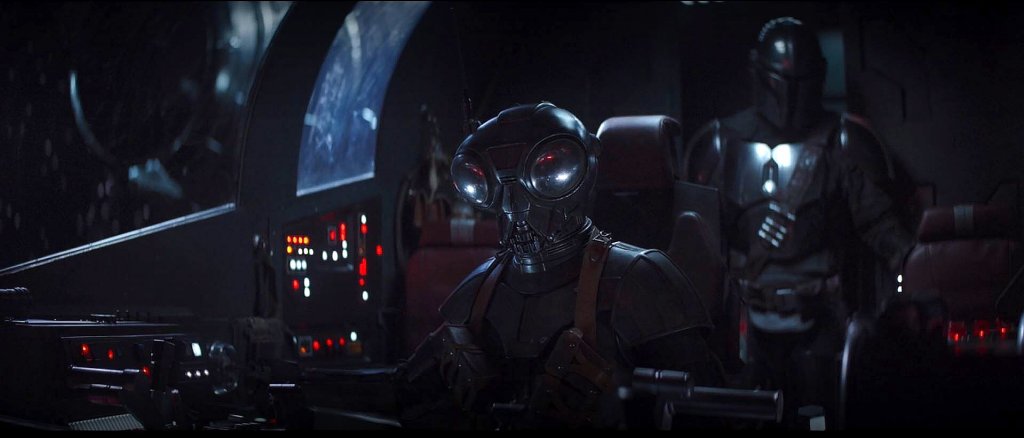
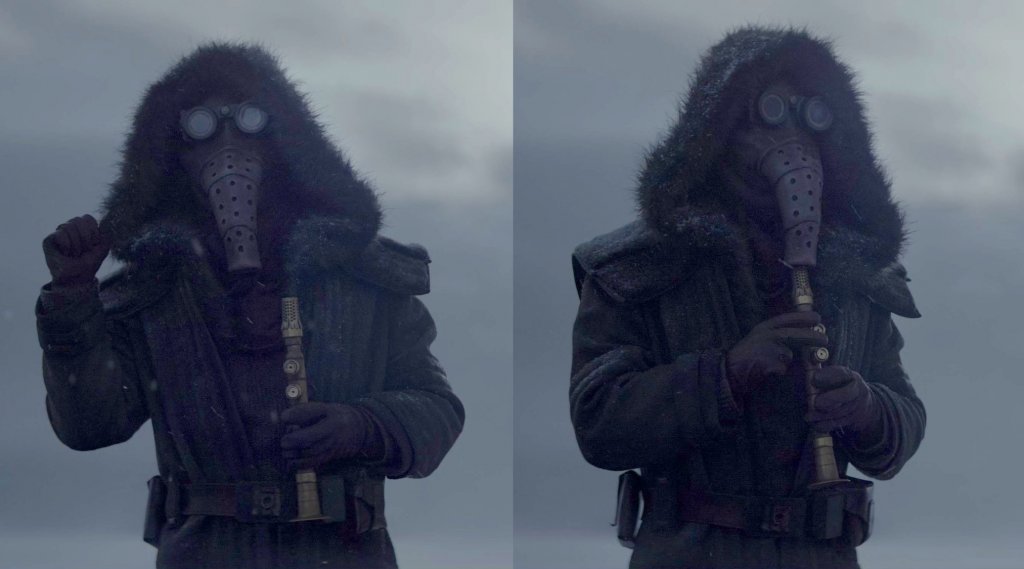
From a young age, DOMINIC PACE was already – like many – completely hooked on the world of STAR WARS, and dreams of harnessing a blaster in a space adventure consumed him. Years later, and after a successful make-up test, he went on to live out his imagination as bounty hunter Gekko in the gripping space western THE MANDALORIAN! We find out from the man himself what this incredible journey has been like….

STARBURST: How did you end up becoming involved in the world of Star Wars?

Dominic Pace: First and foremost I’d been a lifelong fan. If you check my IMDb I’ve been a twenty-plus year character actor veteran. With that being said, I’m a blue-collar actor, a working man’s actor, and I take every opportunity that I can. Work can be scarce depending on what time of year it is, depending on the momentum and flow of it. I’ve been so fortunate to have so many guest and co-starring roles. This happened to be a simple make-up test. I had experience with a prosthetics team in the past, through Will Kemp from the UK, he played the Wolf Man in Van Helsing. I photo-doubled, years ago, for Frankenstein, with Hugh Jackman, and my friend Will Kemp. So I have a little bit of prosthetics experience. I was invited in by a company called Legacy Effects. They are one of the most prestigious make-up companies in the world. They’ve been in the charge of Marvel, Disney, DC, Star Wars, etc. I had a six-hour make-up test, and I just so happened to hit it off with the make-up artist, Brian Sipe. Brian is one of the heads at Legacy Effects, and he actually worked with Dave Bautista through all of the Guardians of the Galaxy movies. He did the costume and prosthetics for Drax. He could never use the same mould twice. Long story short – too late [laughs] – I get invited to this project called Huckleberry, two weeks after the make-up test. There was no talk about what the project was. I go into the wardrobe room, it had a very secret feel, through the offices and the set. I walk in, and I see my name on a clothing rack. It says Dominic Pace, bounty hunter. You have to imagine, I’d been a Star Wars fan since I was five years old. So to have that, it was very special, and very meaningful to me in so many ways. It’s one thing to have an acting accolade, it’s another thing to be part of the Star Wars universe. To be your own, unique, one of a kind, bounty hunter. For me, this opportunity for those ten days while on set, was absolutely priceless, and it’s something that I’ll never forget. I can’t tell you how grateful I am to be immortalised in canon. Within the Star Wars universe.

Can you introduce your character, bounty hunter Gekko? Who is he, and how does he fit into The Mandalorian?

He’s part of the bounty hunter guild. He is featured throughout episodes one and three. He is part of a very crucial stand-off in the third episode, and he is the right-hand man to Greef Karga, played by Carl Weathers. You can see him throughout the cantina in episode one, the cantina in episode three, and the stand-off that I just mentioned.

What was it like to be on a Star Wars set?

It was absolutely priceless. What made it even more special, on the first day, walking into the cantina, none other than George Lucas was there with Jon Favreau and Dave Filoni! For me, I just needed a second to breathe, as it was an overwhelming experience. Everything that had inspired me to become an actor was right there. I know that Ewan McGregor and Samuel L. Jackson have stories of choosing their own lightsaber, and as a bounty hunter, I got to choose my own blaster! There’s about twenty blasters at the prop table, and they allowed me to choose my own. I just wish that every Star Wars fan had an opportunity like this. To be able to choose your own weapon, in this beloved universe, was just second to none. An experience that I’ll never ever forget.

Leading on from that, can you tell us about what directors Deborah Chow and Dave Filoni, and creator Jon Favreau himself were like to work with? 

It was a constant pull, and gentle pressure. You hear stories in Hollywood about Michael Bay, James Cameron, where there might be yelling and screaming. With these three, it was just such pleasantry, from start to finish. They were in control, and they knew what they wanted. At the same time they never put across a frantic feel on set. Everybody really knew what they were doing. There were no arguments or conflict. Everyone was on the same page, and it was just such a great feeling to be around. Another factor is that, not only for myself, but I think you had a good amount of the crew and the cast feeling like they were part of something very special. To be a part of that, was really amazing. Day in, day out. There was no tension at all, no ego. No shouting or yelling. You had commanders that were in control. If you were part of a naval ship, you’d want these people to be in control of your life, because from start to finish they had such great composure.

When it comes to the actors, can you tell us what it was like to work alongside Carl Weathers and Brendan Wayne to name just a few?

I’m an Italian American, and obviously one of the greatest film series in American history is Rocky. Carl was a major part of that. In terms of what that film shows, it’s not just about fighting, it’s about fighting for the struggle. Which, as a blue-collar actor, I relate to, as you have to fight for every opportunity that you receive in this time. So to be alongside him, and to be his left-hand man, during a pivotal scene in episode three meant so much to me. The man has such a stage presence, and it’s very inspirational. I believe he’s 70 years old, but you’d never be able to tell, because of his high energy, and presence. Even at the fifteenth hour. Brendan Wayne, the grandson of John Wayne, was in that outfit the entire time I was on set. I know that Pascal is the face of The Mandalorian, however, Brendan Wayne really deserves credit, as he was there through all the grunt work within that costume. He deserves all of the respect and admiration of the fanbase.

Stars Wars is known for its huge costume/puppet workshop. What was the make-up/costume process like for Gekko?

I was very humbled. Initially, they had to rush me to the set on day one, and they could not find the mouthpiece to my costume. I did not want to go without the oxygen mask. You would ask most actors, and they’d say that they’d want their face to be seen, but for me, I felt that the depth and darkness of a bounty hunter would be more layered, as opposed to his bare face. Which I did not really care for. I was based on this character that had been made two years prior, a female model called Gekko, that was the make-up, and the prosthetic inspiration. The Gekko head was originally two bumps on the top of his head, and when I did the screen test I had these two bumps, then a couple of the other bounty hunters were giggling. I said, “What’s the matter?”. They said that I look pretty awesome, but it looks like there’s breasts on my head! So, I go to Brian – who is so down to earth, genuine, calm and collected – I said: “Brian, I’m not a star, and I’m no place to say this, but for the love of God, Gekko would look really cool if you could change the prosthetics to horns”. He thought about it for a minute with David and Jon, and of course, it wasn’t my decision. I just suggested it to him. Thank God! That Monday, he changed the bumps on the original Gekko to horns. When it came to picking the blaster, being six foot four, and 260 pounds, I wanted to pick the biggest blaster! If he was going to be an action figure, I just wanted to make sure that he had the biggest blaster you could imagine! So I was very excited about that. I have these big gauntlets on my arm, which I like to think give him a bigger deflector shield than just the shielding from his forearms, almost like Wonder Woman. These gauntlets are so big that they can create a shield around him. To protect himself. I’m hopeful in terms of fan fiction, and with the upcoming Kenobi series, that Gekko is given one of the assignments to perhaps pursue Luke. Deborah Chow, who is also directing Kenobi, knows Gekko. I’m hopeful that the character will continue to be a part of canon. He didn’t die after episode three. I’m very excited for the future of Gekko, however, either way, every Star Wars fan would admit, that just to get a little taste of their lifelong dream come true is enough. Regardless of whether I return or not, I can’t tell you how grateful I am to Lucasfilm and Disney for this opportunity.

What was the most rewarding scene for you to work on?

Ultimately, to just be a character in the universe. The most rewarding aspect of it was to not only be in the Star Wars universe, but to be in a scene where there’s action. For every Star Wars fan growing up, you didn’t want to be a character that just sits in the bar, you wanted to carry a blaster, you wanted to have a little bit of gusto. A little bit of action. So that for me was priceless. So I got to have some action with the character, which meant so much to me. It was like returning to my childhood, and that made it very special. 

What was it actually like for you to see your character on screen, for the first time?

I’m not a drinker, but I got a text from a Twitter friend that they’d seen me in the trailer for the first time. You see this moment in the trailer where Greef Karga says, “They are all jealous of you.” It has this really cool pan of me, and two other bounty hunters, staring at him in disdain. At that time, I needed a little shot of scotch! I’m not going to lie, as it was really very overwhelming! This featured acting aspect meant more to me than any of my other credits in my entire career. Just because of how special to me it was as a child. I’m going to get a Gekko tattoo on my shoulder because that is how much Star Wars has meant to me throughout the course of my life. 

The Mandalorian has already received an incredible response; why do you personally think it’s done so well, and for you, what do you think is so special about it?

I think that Jon Favreau and Dave Filoni understand that it comes back to caring about the characters. They are also die hard fans. The reason why Star Wars is important is because it always comes back to relationships, the parallels of life which we relate to. If you just do a generic sci-fi movie, with some eye candy, I couldn’t care less. What makes films like Harry Potter special? It’s the relationships. I think that Filoni and Favreau understand this formula, and I think that they’re bringing this to us first hand. They are so talented, and they know what makes Star Wars magic.

UK readers can watch episodes of THE MANDALORIAN as they air weekly on Disney+