Free streaming channel NYX UK will debut a new, exclusive documentary about the controversial former video nasty Cannibal Holocaust in June, followed by a screening of Ruggero Deodato’s film.
Cannibal Holocaust: Exposed is hosted by renowned author and critic Kim Newman and FrightFest co-director (and former STARBURST writer) Alan Jones. The pair take a look at the notorious movie and its impact on horror cinema. The documentary and film screen on June 6th from 9pm.
Other titles heading our way in June are the classic Paul Naschy gorefest Horror Rises From the Tomb, another former video nasty, House on Straw Hill, the superb rural nightmare Jugface, the cult-star-filled anthology The Theatre Bizarre, werewolf thriller Wild Country, horror comedy Dead Dicks, and Ti West’s Trigger Man.
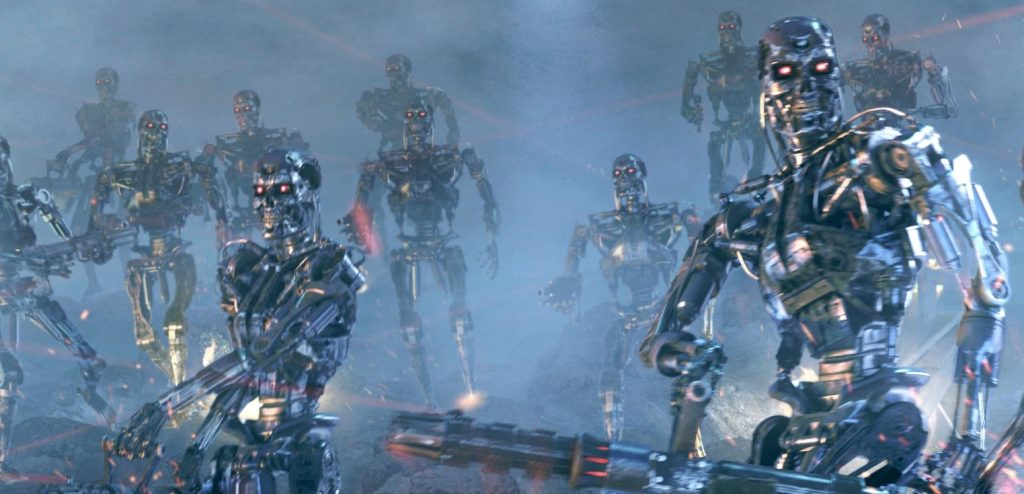
The Terminator and Terminator 2: Judgment Day had a huge impact on the world of sci-fi from the second they were released, and at this point, there probably isn’t a single person who doesn’t associate Arnold Schwarzenegger with being the Terminator. What he did with the character went on to become northing short of iconic. Surrounded by groundbreaking special effects and a stomping cast (Edward Furlong, Linda Hamilton, Robert Patrick, Joe Morton, Michael Biehn, to name just a few…) the films were so perfect that for a moment, no one dared to further the franchise, until, the idea for Terminator 3: Rise of the Machines came along that is…
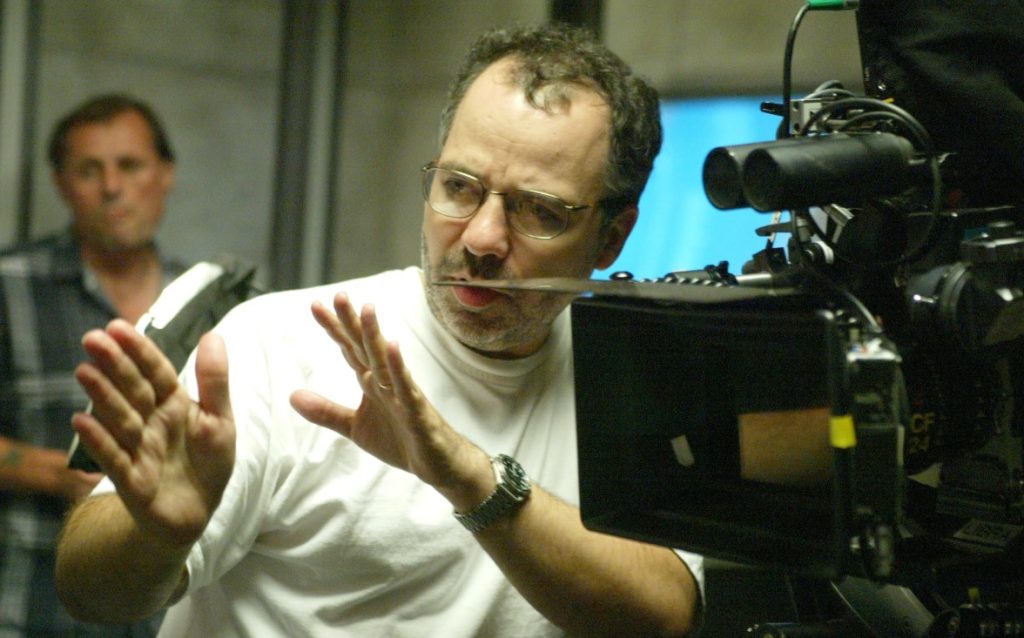
Like Arnold Schwarzenegger slicing through time in any Terminator movie, STARBURST is travelling back to the year 2003 with Rise of the Machines director Jonathan Mostow to revisit the third instalment. We discuss John Connor, special effects, presidential visits to the set, that hard-hitting ending, the initial scepticism about creating a third outing, and MUCH more! What better way to celebrate its 20th anniversary?
STARBURST: How did you get involved with Terminator 3: Rise of the Machines?
Jonathan Mostow:I got a call saying, “Are you interested in doing Terminator 3?” My first thought was “Oh, wow! They’re making a Terminator 3? I didn’t know!” So that was my first question, and then it was sort of like “Are you interested in doing it?” My initial reaction was just surprise that there was even going to be a third one.
What do you remember the most from reading the script for the first time?
What happened was, they sent the script, and I was busy with a lot of stuff, and I didn’t read it. Then, a couple of weeks went by, and then someone says “Are you going to read that script?” and I was like “Oh, OK, I’ll read it!” I was a little sceptical to read it. I was sceptical because I felt the first two were so great, and obviously if you’re talking to me, then it means James Cameron isn’t doing it. So, my Spidey sense said, “It sounds like the only reason someone wants to make this movie is because someone wants to make some money.”
I finally read the script. I had two takeaways; the first was, “You know what? There actually is more of this story that could be told” My other was, “But, I don’t want to do this script.” So, I met with the producers, and I said “Yeah, I’d be interested in doing another Terminator movie, because this is a great universe that James Cameron created, and I think there’s more story to be told, I’m a humongous Arnold Schwarzenegger fan, but I’d want to do it differently”, and they said, “OK, we’ll give you the creative freedom to do what you want on one condition, you agree that the enemy Terminator is a woman because that idea we’re attached to.” I said, “OK, I’m happy with that understanding.” Then we basically sat down and tried to figure out the story that we really wanted to tell.
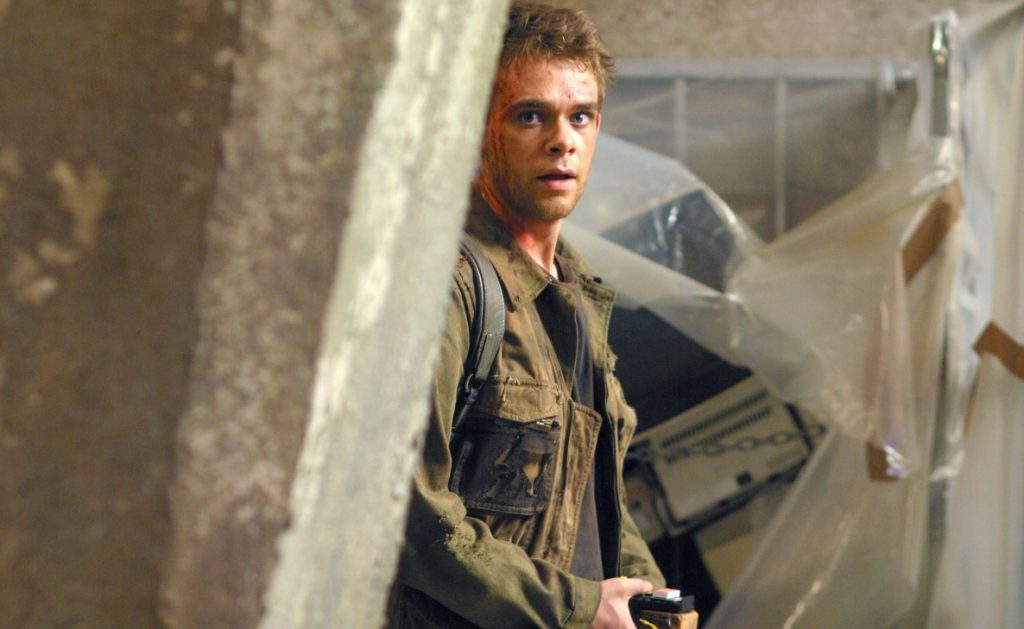
John Connor is obviously such a legendary character; he is at the centre of every Terminator movie. Could tell us about how you ended up casting Nick Stahl as John, and also, can you tell us what he was like to work with?
Yeah, we knew that it felt like the right time to set the story, would be significantly after the previous one. A lot of sequels these days, pick up five seconds after the previous one ended. The governing factor here was figuring out “What’s the right time to re-engage with this narrative.” As I recall, it felt like ten years later, after this kid had grown up. We were interested in the idea of “OK, what is it like for this kid, who is literally carrying the weight of the world on his shoulders? If he tried to explain to anybody what his situation is, nobody would believe it, because it sounds insane.” So, for an actor, we felt that we needed somebody who could project the gravitas of a character like that and also capture the private suffering. I had seen Nick’s work in some other films, and it felt like he was very much that guy. He was the opposite of a bubble gum pop star. We actually did a screen test, kind of confirmed it with on-screen, and then we went for it that way.
Going on from that, what did you want to see from the dynamic between Nick and Arnold? Arnold is a different Terminator in this movie, but that classic back-and-forth between their two characters really brought Terminator 2 to life!
These are tricky movies because they’re so outlandish in a sense. It’s like the joke I always have about time travel movies is every time travel movie has a scene in it where one character tries to explain to the other the time travel paradox because every time travel movie ultimately has a time travel paradox. So you’ll have the one character saying to the other, “No, you don’t understand because when I came back in time, it changed this thing and that thing” and then the other character goes “Stop, I can’t take it any more” the audience is also going “Oh, thank god because I can’t keep track of it” and then you sort of move on. The reason you’re doing the time travel thing is because it affords you the opportunity to have a story that you couldn’t otherwise have. Everybody wants to get on the ride for that story, and just enjoy it. So to bring it back to your question, for me, the way to do this kind of film, and the way that I enjoy them is that you play things for real. We live in a world now where there’s a lot of, I’ll just call them superhero movies, where things aren’t played for real. Things happen where physics isn’t obeyed, the laws of a lot of human inter-person relations aren’t really obeyed, or they’re done in a jokey way. What I loved about the Terminator movies was, again, a totally outlandish premise, where, by the way, at the time, it seemed outlandish to cast Arnold. It seemed like an outlandish casting choice. Jim cast Arnold in the first one when Arnold was essentially famous as a bodybuilder and in the Conan movies. Yet, everything is played for real. With the understanding that there is a lot of humour along the way because some of the situations are outlandish.
To go directly to your question, I wanted to make sure that the interpersonal dynamic between John Connor and the Arnold Terminator was based in some kind of reality. Like it felt credible, right? Even though crazy things were happening. Even though we did use a lot of humour, and we used a lot of humour intentionally. In subsequent years, some of the core fans have criticised the movie for having too much humour. Our approach going into it was that it had been twelve years since the last Terminator movie, and a lot of the audience was approaching it similarly to how I approached it when I was first sent the script. With scepticism. Like, “Wait a second, someone is just trying to get our money because there’s no good reason to make a Terminator movie.” So we knew that there was a little bit of resistance, or scepticism, from a part of the audience. We made a conscious attempt to try to use humour to break that down. Most of the humour in the movie is really front-loaded in the first half an hour, and then it kind of settles in. But we really used that to sort of, break down those audience defences. If you went to the theatre, and watched the movie with an audience, there was a lot of laughter in that first hour. We were trying to win over the audience; keep in mind that it’s very difficult; when you make a movie, you make a movie forever. The eye of the needle when we were making that movie, was the first thing we had to do was have the theatrical hit. There was no such thing as a streaming movie, so we had to have a movie that we knew would work in front of audiences, and we knew that, because of the nature of the franchise, those would be crowded theatres, the first few weeks, and there would be a certain kind of energy level, so the movie was geared to play to that dynamic of when you have a full house, and there’s this electricity in the air, and how you play that audience. So, that plays very differently when you look at it years later on home video. It has a different tenure to it. But that was our thinking at the time.
Talking of Arnold. He was originally a bit sceptical about working on the movie. What was it like to work with him and how did your relationship develop/progress over filming Terminator 3?
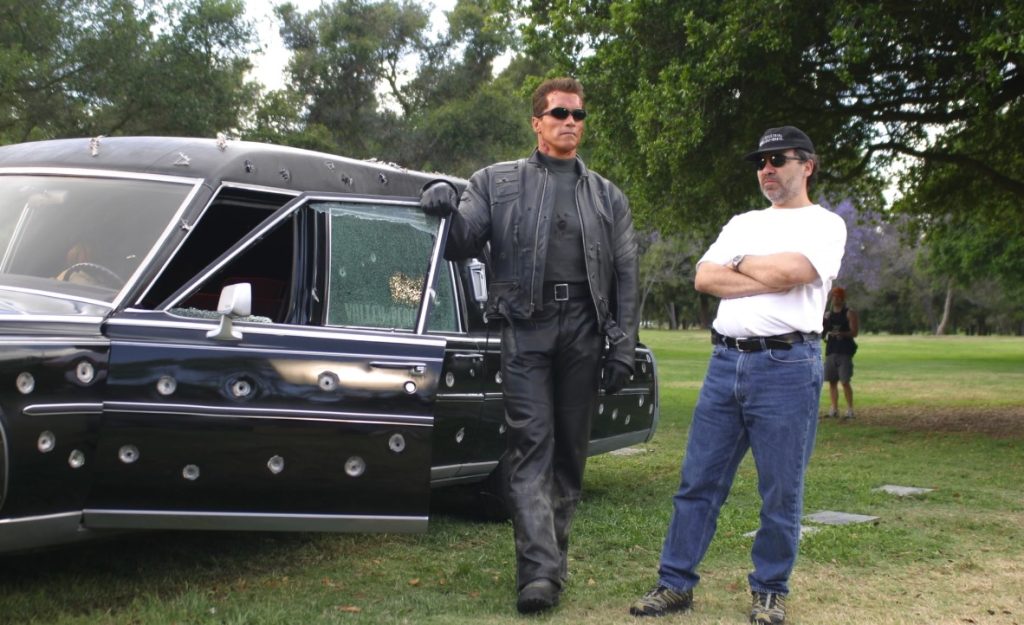
When I look back on doing Terminator, the indisputable highlight of the experience was getting to work with Arnold. I’ve had the good fortune to work with a number of different movie stars, and by the way, generally speaking, I’ve had great experiences. Almost all of the time. But Arnold is in a class by himself. Especially when he is wearing that Terminator outfit. That’s arguably the most famous character in the history of motion pictures. I don’t think there’s anywhere you can go on the planet and show him in those sunglasses and that black leather jacket and not have people recognise him. You can go to the most far places, where they don’t even have electricity, and people will go “That’s The Terminator!”
As a movie fan, that was just a kick for me, to get to have that experience. I remember the experience of seeing The Terminator movie for the first time, I remember going to the theatre to see Terminator 2, and if you had told me when I was going to watch Terminator 2, someday I’d be directing Arnold as the Terminator, in a Terminator movie, I would not have believed you. From the geeky, film buff inside me, in terms of having an outer body film fan experience, it was fantastic. In terms of his professionalism, there is a reason this guy became the most successful body builder of all time, there’s a reason he became the most successful movie star of all time, there’s a reason he became governor of the biggest state in the United States. When he sets his mind to something, he is like the Terminator, he is like a machine, he is just all about, let’s get the results, what do we have to do. I remember once we were doing a rather complicated shot, and we were doing our twelfth or thirteenth take of it, which is more than we would normally do. And I said “Oh, sorry, we’ve got to do another take!” and he was like “Don’t apologise! Relax, we’ll do as many as we need to, to get it right.” There was never any movie star attitude with him. He is 100% professional and just a delight to work with. He is super funny. He is a great guy. He is like everything you would hope he would be, like if you got to meet one of your movie idols. It’s everything you would hope and more. So, that was a great experience. And, look, obviously he knew how to play this character, so it was just really great.
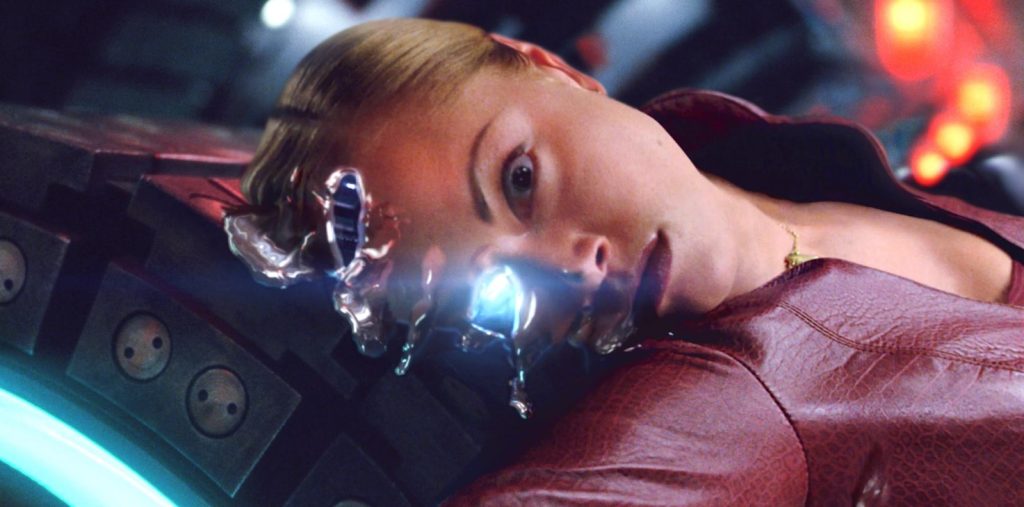
How did Kristanna Loken end up becoming T-X, and what did you want to see from this villain? Following Robert Patrick’s work as the T-1000 is a big task…
Robert Patrick did such an amazing job. People forgot what a great actor Robert Patrick was. I was fortunate enough to become friendly with him along the way. If you ever want to see a great actor doing great work, go back to that show The Sopranos, he did a whole season-long arc where he is a sporting goods store owner, and the mob comes in, I think he had some gambling debts or something, and they use that to worm their way into his sporting goods store, and destroy his life. It was like a six or eight episode arc, it was one of the most amazing performances I had seen in a long time. The problem is, Robert did such an amazing job playing that Terminator that he almost got shackled by that performance because the world sort of saw him as that and mistakenly thought, “How hard can it be to play a robot? Because it’s the opposite of acting, there’s no emotions, you’re just impassive.” The fact is, as it turns out and as I learnt first-hand, it’s really hard to play a robot because when you erase so many of the things that make us human, it’s actually super difficult.
In terms of your question and how we found Kristanna, we knew that we wanted an unknown. Because it would be too distracting to have somebody who was a known actress. So we did like an international casting search, we had casting people looking, our team went through thousands. I personally looked at a couple of hundred videotape auditions, and we kept whittling down until we were doing in-person auditions, and I looked at dozens and dozens. Then, we finally narrowed it down to our top ten. We brought them in for one or two days of this gruelling audition, where they had to do all of these different things, videotaping it, so we could analyse and study, and ultimately, Kristanna emerged victorious through that process. And it was a question of, you had to believe she was a robot, again it’s about movement, about behaviour, performance, and doing it in a way that’s captivating to watch.
I remember being with her on the press tour in Europe, and I think we were in Madrid, and we passed by their big soccer stadium. There was a giant hundred-foot-tall face of hers on the side of their biggest soccer stadium, and I could see it sinking in in that moment, of like, “Oh! This is how I’m going to be known for a long time.” But she was great, and also just a total delight to work with. Because that’s the scary thing, she’d been in a few TV shows, but basically, she was an unknown. So to be thrown into that situation where you’re suddenly in what was, at the time, the biggest budgeted movie of all time, in something so iconic as The Terminator franchise. And sort of filling the shoes of a predecessor that had been carved by Robert Patrick, who did such a mould shattering role himself, that’s so intimidating for a young actress. She was a total pro during the whole thing.
The Terminator franchise is known for its special effects, what did you want to bring on that front with Terminator 3?
That was the toughest part, and the most daunting task. Which is that, I think you can make a case that there have only been two movies in the modern era, in the last forty years, that revolutionised visual effects for audiences, and those two movies were Terminator 2, and I would say Jurassic Park. Terminator 2 blew people’s minds because no one had ever really seen CG before. The liquid metal effect was jaw-dropping. You were seeing something unbelievable happen before your eyes that looked entirely realistic. I mentioned Jurassic Park also in that category because it took the same technology that Industrial Light and Magic [ILM] developed, and Steven Spielberg used it to render recognisable objects, dinosaurs, which is, again, impossible, because we know that they don’t exist in modern days, but as kids, we all had little toy dinosaurs, we had seen pictures, we had been to museums. We know what they’re supposed to look like. Whereas with liquid metal, what the hell does liquid metal look like, nobody knows. No one in the audience is going, “Liquid metal wouldn’t do that!” but with the dinosaurs, everybody in the audience knows what looks real and what doesn’t look real because they already have in their consciousness some pre-formed idea, and obviously, it succeeded at that. Those two movies were revolutionary.
So, the problem I faced was doing a film that is now associated with groundbreaking visual effects. There was an unspoken expectation amongst the audience that if they were going to see a Terminator film, then it better blow their mind in the visual effects category like the second one did. That is not possible because I would argue, even though there have been films with amazing visual effects since those two movies, they had essentially been just really well-done visual effects. Both of those films broke through barriers that no one else could break through any more because they had been broken through.
So, we knew that the best we could do was execution because we weren’t going to work with people to get new groundbreaking special effects because it didn’t exist. For example, we put the big chase sequence in the film. I knew that, obviously, people expected it to be a great chase sequence, so I knew that whatever chase sequence we had had to be bigger, louder, and more extravagant than anything that had preceded it. So I think we did check that box, but it was frustrating not being able to check the visual effects box because we are using the most state-of-the-art visual effects available to us, we were using all of the best people at ILM, but again, it wasn’t something sort of new to be done.
Credit to James Cameron, I guess I’ll also have to put Avatar as doing something, obviously new, but that was operating in 3D.
The action doesn’t stop in Terminator 3, so I was curious to know what the huge car chase sequence in the first half of the movie was like to work on, and how it came together?
The fun thing about making movies is whether you’re the writer, or you’re not the writer, or whatever. But somebody dreams up some sequence where you go “Yes! We are going to do that!” with no regard as to how to do it, it’s just here’s something we’ve imagined that we’d like to see, and then you have to sit down. Sometimes you’re the person that came up with those ideas, and then you take off that hat, the creative hat, and then you have to put on your engineer hat and figure out, “Well, how do you do that?” It’s always the same, you always break what seems to be an insurmountable giant problem into all of its component parts. First, you break it up into all of the beats of the chase sequence, maybe the 150 beats of the chase sequence, and you think, “How are we going to execute each one of these?! Where are we using practical effects? Where are we using visual effects? Where are we using pyrotechnics? Where is it an actor? Where is it a stunt double?” Then you go deeply into all of these things, and it starts to be little trees in a forest because you’re deeply in it.
I also remember this one moment when we were filming it, and Bill Clinton came to the set to visit. The Secret Service pulls up and everything. He had been out of office for two years but still had all of the Secret Service and everything. He was wearing a suit, with a presidential tie, the whole thing, and he came to visit the set. I remember standing next to him, the former leader of the free world, we were shooting the chase sequence, and he was looking at everything, we built entire blocks of down town Los Angeles, we completely re-created it, because we were destroying them all. He was looking around us, and he goes “Now this is amazing! I’ve never seen anything like this” so you think “OK! If the leader of the free world is sitting there telling me that he is seeing something that is blowing his mind, then I think it is probably pretty impressive looking!” By that point, it was just my workplace; it was a place I was going to every day with my lunch box and my tools, and just doing my job. I’d lost all sense of “Oh yeah, this is pretty crazy, isn’t it!” so that’s definitely a memory that sticks with me.
The ending, to this day, haunts the audience, as they can’t actually stop Skynet. How did that moment/idea come together, and how did you go about keeping it a secret?
I don’t remember when we decided that would be the end of the film, but it sort of had to be. Inevitably, everybody is talking about this event that they are all trying to prevent. We just realised, “You know what, that is the best ending the movie can have” to actually have the event happen. I can’t remember the specifics of how it came up, but the moment we realised that that was the end of the movie, we realised we had to keep it a secret. It will come as a surprise only if we can keep it a secret. The question is “How do you do that in the Internet age?” I’m a big believer in doing test screenings for movies because I think you really learn a lot when you put it in front of an audience, but we knew that we weren’t going to be able to do the regular test screenings because it would leak out on to the Internet. So we had to screen, only in front of people that we knew and trusted, with close friends of friends, because if it were just friends, you wouldn’t get an honest response. We had to find like, somebody’s uncle’s auto-mechanic who they totally trusted. People that we felt we’d get an impartial reaction with, but they had some sense of responsibility where they wouldn’t go write about it on the internet. It also presented a challenge for the studio because we said to them that we don’t want them to do any advance press screenings because, again, it’s going to leak out. On a plus side, that was a big win for us, because it really did surprise audiences, nobody really saw that coming, and I think it really amplified the impact it had. The downside is, we probably ultimately so tied the studio’s hands in terms of the marketing that, in retrospect, if I had to do it all over again, I probably would have let the studio show it more in advance of the thing. Hopefully the individual journalist wouldn’t have leaked the specifics of it, and if they built up like “Oh wow, you won’t believe the big surprise” that might have helped us out eventually with more people showing up to the box office. It was tough, on a giant movie to keep something of that size totally secret.
That sounds like it was a huge decision…
Yeah, it was very ballsy. I really credit all of the people involved in financing the movie that they were willing to let us kind of go there because the criticism with a lot of Hollywood movies is that they get watered down and death by committee. Maybe it’s because we made Terminator as an independent production, so even though it was distributed by the studios, it was actually made independently. As were, by the way, the previous two as well. So, it didn’t go through that normal studio notes process that most studio movies go through. Maybe that’s why we got away with it. I don’t know.
Finally, with the rise of AI, how relevant do you personally think Terminator 3: Rise of the Machines still is?
The scary thing is I think it’s completely relevant. I was just having a conversation with somebody who is working a lot in AI, and they were saying to me, “Where we are at with AI now, is that the IQ is about 160, which is smarter than Einstein, and we are very close to being at 260.” You look at the world, you look at global warming, and all of the bad stuff that’s happening, from a machine intelligence perspective, you can say to it “What’s wrong with this picture?” it’ll say, “You know what’s wrong with this picture, humans! Humans are screwing up the planet, the best thing we can do for the planet is to just get rid of those humans, because they are the problem!” That’s really scary. The other thing to think about, is, in the history of mankind, every weapon that’s ever been invented has been used. Even if we put in safeguards and ethical AI, and all this kind of stuff, who knows what’s happening? Who knows what some hacker with AI capability is doing in their mother’s basement? So I think it is, sadly, even though Terminator movies are designed to be mass entertainment, they do sadly have that resonance. So let’s hope it stays in that realm of the make-believe.
TERMINATOR 3: RISE OF THE MACHINES is available to stream on Prime, so why not celebrate its 20th anniversary today?
It’s always a bit of an event when a season of Doctor Who ends, and the BBC have teamed up with CinemaLive to bring the last two episodes of Ncuti Gatwa’s first season to the cinema, making this a proper night out.
The two-part finale screening will start at 11 pm (UK time) on June 21st , with the penultimate episode, The Legend of Ruby Sunday (which will have already aired the previous week), followed by the final episode, Empire of Death, will play on the big screen.
Showrunner Russell T Davies said: “This is a great big rip-roaring finale with the Doctor, Ruby and friends old and new fighting the greatest enemy of their lives. I can’t wait for everyone to see it!”
This is not the first time Doctor Who has been on at the cinema. Back in the 1960s, two feature films, Dr Who and the Daleks and Daleks – Invasion Earth: 2150 AD, wowed cinema-going audiences. More recently, a 75-minute episode called Day of The Doctor was shown as part of the Doctor Who 50th celebrations. That showing also had a short message from The Doctor.
Players of Magic: The Gathering need all the luck they can get. Skill will only get you so far when it comes to Magic: The Gathering; you’ll always need a little bit of luck.
Fortunately, those fine folk at Wizkids have announced four plush key-ring charms to help amateur planeswalkers on their path to victory.
First up is the mouse-like Mabel from the Bloomburrow set. In the game, this Legendary Mouse Soldier can easily lead a legion of mice to tiny victory, so we can see why you’d want them as a key ring charm. Then we have the one-eyed Homunculus FBLTHP, which, honestly, we can’t even pronounce, so it must be lucky. Next up is the plague-doctor-esque creature called The Fisherman, which is both fuzzy and sinister. Finally, we have Rainbow Kaoi, a sparkly magical fish – presumably to give The Fisherman something to catch.
What’s more, each of these new charms comes with a unique code for Magic The Gathering Arena. This code not only adds a card sleeve to the game but also activates a companion animation for each character. This way, when you play Magic online, your opponents will know what key-rings you have, adding a fun and personalized touch to your gaming experience.
The UK Tabletop Industry Network has teamed up with the critically acclaimed SoulMuppet Publishing to organise a Table Top Roleplaying Meet-Up for creators, publishers and the like. This is a last-minute replacement for a Tabletop Creator’s Summit, which was abruptly cancelled.
The meet-up will be held this Friday, May 24th, 2024, from 14:00 to 18:00 BST at the Commercial Tavern near Spitalfields.
The event will run until 6pm, with talks and opportunities to network, before moving downstairs for drinks in the evening.
Event Itinerary
14.00-14.30: Turn up, settle in.
14.30-15.15: From Idea to Book, Tabletop RPG Production with Zach Cox at SoulMuppet Publishing
15:15-15:30: Break
15:30-16:15: Understanding Intellectual Property: The IP Champion’s Toolkit with Anna Poulter-Jones at Sheridan Solicitors
Scotland’s annual Science Fiction Literary Festival, CYMERA, has attracted some of the world’s most exciting science fiction authors. With over 50 events and 70+ authors, there’s plenty for everyone. CYMERA runs from Friday, the 31st of May, to the 2nd of June at The Pleasance Courtyard, Edinburgh.
Events include a chance to pitch your work to a top agent, various panels on publishing and science fiction, workshops, a quiz and performances such as Dune! The Musical and Terry Pratchett’s Men At Arms.
An online version of the event is also available for those who are not lucky enough to live in Scotland.
After much speculation, The Hollywood Reporter has confirmed that Adam Wingard will not be returning to direct the next Godzilla x Kong film for the Legendary MonsterVerse.
Wingard, who has directed the last two of the franchise’s entries – Godzilla v Kong, Godzilla x Kong: The New Empire– won’t be returning for this upcoming film, though the parting of ways has been described as amicable and stems solely from scheduling issues. Insiders state that he may return to direct the building-smashing kaijus further down the line.
The big question mark over his involvement in the next film has been hanging there since Adam Wingard revealed he would be directing a new original feature before taking on any other projects. Said feature, an action thriller titled Onslaught, was recently picked up in a competitive sale by A24, and is preparing to start filming this autumn.
#In their corner, Legendary was keen to move on swiftly with another monster flick, and have already hired Shang-Chi and the Legend of the Ten Ringsscribe Dave Callaham to begin penning the new script. There’s no word yet on what direction any future films might take, nor on who may star, but stay tuned for more information on the upcoming actioner as we hear it.
The revival of I Know What You Did Last Summer has a release date and, appropriately, it’ll release smack dab in the middle of summer. Sony Pictures has announced that its upcoming film, a reboot of the original 1997 slasher, will release in cinemas on July 18th, 2025. Jennifer Kaytin Robinson, best known for helming the Netflix black comedy Do Revenge, is directing the sequel from a screenplay she co-wrote with Sam Lansky, after an initial script by Leah McKendrick.
The cult classic I Know What You Did Last Summer starred Jennifer Love Hewitt, Freddie Prinze Jr., Sarah Michelle Gellar and Ryan Phillippe. It was written by Scream‘s Kevin Williamson and based on the 1973 novel of the same name by author Lois Duncan. The film followed four friends who, after a night of heavy partying, accidentally ran over and killed a man. When they decide to dump his body to conceal their secret, they’re unaware that the following year will see consequences knocking at their doors.
Hewitt and Prinze returned for the 1998 sequel I Still Know What You Did Last Summer, while 2006’s I’ll Always Know What You Did Last Summer featured an entirely new cast. Prime Video also launched a short-lived streaming series based on the IP in 2021.
We don’t yet know if any of the original cast will be returning for this reboot/sequel/legacy sequel, but it was previously reported that both Hewitt and Prinze were in negotiations to return.
In Never Let Go, Halle Berry plays the mother to twin sons battling an evil spirit closing in on the family’s wilderness home after a world-ending event, as seen in the trailer for Lionsgate’s horror-thriller.
Hailing from The Hills Have Eyes (2006) and Crawlfilmmaker Alexandre Aja, the film centres on a remote house in the woods, fitted with long ropes that enable mother and sons to remain connected in the face of unseen dangers. “The evil out there is clever. One touch without a rope is all it takes… that rope is your lifeline. Never let go.” Berry’s character explains in the trailer. But as a supernatural force engulfs their home, one of the twins begins to question whether this evil truly exists.
Speaking at CinemaCon (via THR), Berry states she took the role because she’s a “bona fide adrenaline junkie” who has always loved thriller movies. “These boys have never left the house that they were born in for 10 years,” Berry continued. “Right away, it was a creepy environment. I was challenged to bring reality to what that would be like. What does mothering look like in a house in the woods with no one around?”
For the role, she learned survival skills and said there was “a little bit of Method acting” going on. “There was no electricity, no lights, my character skinning squirrels, and they’re eating bugs and frogs — raw frogs — in the woods,” Berry said. “I had to really skin a squirrel. These things wildly challenged me to create some reality within this world that felt so foreign.” And she said she pulled from her own life as a mother of two to inform her performance: “Since I became a mother 16 years ago, playing these kinds of roles has wildly excited me. With this movie, it reminded me how I would protect my children with my life. We often say, ‘I would take a bullet for my kids.’ Would you take a knife for your kids?”
Never Let Go comes from the producers of Stranger Things and Arrival, and is being released by Lionsgate. Anthony B. Jenkins, Percy Daggs IV, Matthew Kevin Anderson, Christin Park and Stephanie Lavigne also star.
The horror-thriller is set for a theatrical release September 27th. Watch the trailer below:
Sales company Film Seekers has acquired the international rights to production company View35’s sci-fi thriller, The Draw, and will launch sales at the Cannes market.
The film, which is being billed as 1984 meets Equilibrium and stars The Hobbit’s Ryan Gage and War of the Worlds: The Attack’s Lara Lemon, hails from writer-director Tom Ruddock and producer Shelley Ruddock. Sanjeev Kohli, Samuel Clemens, Marie Everett, and Rozelle Gemma also star. The story is by Tom Ruddock and Dr Matthew Mills.
This debut feature from the filmmaking duo is set in an overpopulated world which is becoming increasingly digitised, with all analogue imagery restricted and replaced with a new technology called ‘The Eyelight’. In The Draw, two uncompromising characters try to navigate the system in a game that fights back.
Caroline Couret-Delègue, Managing Director of Film Seekers, says, “We are delighted to be able to present The Draw to buyers at the Marché du Film. The exciting debut of promising filmmaker Tom Ruddock is a poignant and thrillingly smart look at the continual integration of technology into all facets of our lives and feels all too close to the current trajectory of our future.”
Shelley Ruddock, producer, adds, “We wanted to create an energizing and thought-provoking film that explores the rise of technology and how it connects us so quickly, yet we somehow seem more and more dissociated with each other. The film is a conversation on human connection and relationship with the thrilling challenge of what the future might hold, in our rapidly fast paced society. We’re really excited to launch The Draw into the Cannes Market.”