Netflix has snagged up a hot new project: an adaptation of Charles Burns’ bestselling comic Black Hole, with acclaimed I Saw the TV Glowfilmmaker Jane Schoenbrun aboard as writer, director and series creator. New Regency will be the co-studio alongside Netflix, which has given the show a straight-to-series order.
In the series, there’s a myth that haunts the seemingly perfect small town of Roosevelt: if you have sex too young, you’ll contract “the bug”, a virus that turns you into a monster from your worst nightmares. “Absurd, right? That’s what Chris always assumed, until, after one reckless night at the beginning of senior year, she finds herself infected. Now she’ll be cast out to the woods to live with the other infected, where a chilling, new threat emerges: a serial killer who’s hunting them one by one.”
Author Burns will executive produce alongside Plan B, Erin Levy, Yariv Milchan, Arnon Milchan, Natalie Lehmann, and Laura Delahaye.
Black Hole was published as a 12-issue limited series from 1995 to 2004 before being collected as a graphic novel.
Meanwhile, Schoenbrun has their third film starring Hannah Einbinder and Gillian Anderson, Teenage Sex and Death at Camp Miasma, due out soon on Mubi. Their debut novel, Public Access Afterworld, will also soon be published.
Not only is a live-action feature version of The Jetsons reportedly in the works at Warner Bros. Pictures, but Jim Carrey is in talks to star in the project, which already has Colin Trevorrow attached to direct. Trevorrow and Joe Epstein are in talks to write the script.
The Jetsons, originally an animated comedy series that debuted in 1962, centred on a Space Age family made up of father George Jetson, mother Jane, their two kids, their robot housekeeper Rosie, and dog Astro. William Hanna and Joseph Barbera were co-creators. It was conceived as a futuristic counterpart to The Flintstones.
A live-action feature version has been in development in some shape or form for decades now, as was a live-action television series that was never picked up. Talents such as Adam Shankman, Robert Rodriguez, Conrad Vernon and Robert Zemeckis were all, at some point, attached to one iteration or another.
We haven’t seen much of Jim Carrey in recent years, with his big-screen roles mostly limited to portraying Dr. Robotnik in Paramount’s live-action Sonic the Hedgehog franchise. Trevorrow’s latest directorial effort, meanwhile, was 2022’s Jurassic World Dominion.
Stay tuned to find out who might star opposite Carrey in the upcoming feature.
Rachel McAdams and Dylan O’Brien face off in the trailer for Sam Raimi’s black comedy-horror feature, Send Help.
Send Help centres on co-workers Linda (McAdams) and Bradley (O’Brien), who find themselves as the only two survivors on a deserted island after their plane crashes en route to a company event. Forced to work together to survive, their time of crisis soon becomes a battle of wills and wits to make it out alive.
The 20th Century Studios film, which will be released January 30th, 2026, also stars Dennis Haysbert, Chris Pang, Edyll Ismail, Xavier Samuel, Thaneth Warakulnukroh and Emma Raimi.
Raimi directs from a script by Mark Swift and Damian Shannon, and serves as producer alongside Zainab Azizi. Though Raimi earned his stripes with horror titles such as the Evil Dead franchise and Army of Darkness, he hasn’t helmed a movie firmly set in the horror space since 2009’s Drag Me to Hell. His more recent directorial features include Oz the Great and Powerful and, most recently, Marvel’s Doctor Strange in the Multiverse of Madness.
“I’ve always loved stories where interesting, dynamic characters are pushed to extremes,” says director Sam Raimi. “In our story, the power shifts create an escalating situation that’s brimming with unexpected turns and suspense.”
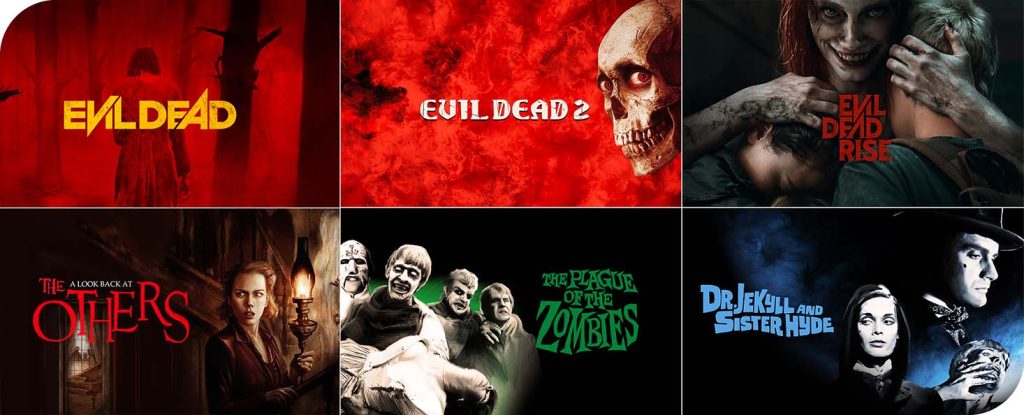
Streaming service STUDIOCANAL Presents has added a host of great horror movies to enjoy this Halloween, with enough content to give you the willies all night long.
Among the treats to be had on the run up to Samhain are:
Evil Dead (2013)
Fede Alvarez’s brutal and gruesome remake of Sam Raimi’s 80s horror classic sees Jane Levy (Don’t Breathe) beset by ghoulish creatures in the woods during a trip to a remote cabin and the discovery of a sinister, cursed book.
Evil Dead II (1987)
Horror genre legend Bruce Campbell (Bubba Ho-Tep) returns as Ash in director Sam Raimi’s outrageously entertaining, bigger budget sequel to the 1981 film, fending off demons with a chainsaw and a shotgun. Groovy!
Evil Dead Rise (2023)
Two sisters face off against evil spirits in this gory, jaw-dropping addition to the Evil Dead universe, written and directed by Lee Cronin (The Hole In The Ground), and starring Alyssa Sutherland (Vikings).
Doctor Jekyll and Sister Hyde (1971)
Ralph Bates (The Horror of Frankenstein) and Martine Beswick (Thunderball) are the title characters in Hammer’s offbeat sex swap reimagining of Robert Louis Stevenson’s famous tale.
The Plague of the Zombies (1966)
Strange things are afoot in a Cornish tin mine in this spine-tingling and influential Hammer offering directed by John Gilling (The Mummy’s Shroud), starring André Morell (Cash on Demand).
A Look Back at the Others (2023)
A fascinating documentary about the 2001 BAFTA-nominated period horror film, including interviews with director Alejandro Amenábar, producer Fernando Bovaira and stars Nicole Kidman and Christopher Eccleston.
STUDIOCANAL Presents is available on Apple TV and Prime Video.
Alpha, the third feature film from French filmmaker Julia Ducournau — the mind behind the cannibal film Rawand the wild, genre-defying Titane — has had its official trailer unleashed.
Starring Tahar Rahim (The Serpent, The Mauritanian), Golshifteh Farahani (The Patience Stone, Extraction), young actress Mélissa Boros, and Emma Mackey (Sex Education, Emma), the film recently screened at the London Film Festival and will be released in cinemas nationwide from the 14th of November, 2025.
Alpha is set amid the context of a strange and misunderstood, bloodborne disease which slowly turns its sufferers to marble. The feature tells the story of thirteen-year-old Alpha (Boros), who finds life with her mother (Farahani) turned upside down when she returns from a party with a tattoo on her arm, leading her mother to fear she has contracted the disease herself.
As has become expected from Ducournau’s work, Alpha continues to showcase the filmmaker’s obsession with the human body as landscape, though this feels like her most reflective work yet. Stay tuned for our exclusive interview with the Palme d’Or-winning filmmaker, in which we delve deep into the themes and social horrors at the heart of Ducournau’s latest.
Watch the trailer for Alpha below. Available in cinemas from November 14th.
The 25th edition of the Trieste Science+Fiction Festival will take place from October 28th to November 2nd in the beautiful Italian city, and the line-up of films, guests, and events promises to thrill and excite all attendees. Headline guests include directors Ben Wheatley (Sightseers) and Gabriele Mainetti (Freaks Out), and author Ted Chiang (Story of Your Life, adapted into the hit film Arrival, which will be screened in his honour).
The opening film will be L’Homme qui rétrécit (The Shrinking Man, France/Belgium, 2025) by Jan Kounen, adapted from Richard Matheson’s classic novel. Starring Jean Dujardin, the film follows a man who begins to shrink after a mysterious contamination, battling for survival in an ever-expanding world. The Italian premiere will take place on Tuesday, October 28th at 8:00 PM at the Politeama Rossetti, with the director in attendance. The evening continues with The Ugly Stepsister (Sweden/Denmark, 2025) by Emilie Blichfeldt – a bold, body-horror re-imagining of Cinderella – screening at 10:30 PM in collaboration with I Wonder Pictures.
Other standout screenings include Egghead Republic (Sweden, 2025) by Pella Kågerman and Hugo Lilja, a dystopian tale that imagines a world where the Cold War never ended. Bulk (UK, 2025) by Ben Wheatley (Kill List), a high-octane sci-fi horror filled with car chases, gunfights, and romance – introduced by the director himself. Arco (France, 2025) by Ugo Bienvenu, fresh from Cannes, tells the story of Iris, a young girl who helps a mysterious “rainbow boy” find his way home. Orion (USA, 2024) by Jaco Bouwer (Gaia), an intense thriller about a counterintelligence agent and an amnesiac astronaut uncovering the truth behind a deadly mission. Chien 51 (France, 2025) by Cédric Jimenez, a closing-night dystopian drama set in a divided Paris where a detective investigates the murder of an AI pioneer.
Festival Director Alan Jones, said of the line-up: “For its 25th Anniversary edition, the Trieste Science+Fiction Festival has assembled a multi-faceted diverse programme that will once more innovate, challenge, thrill, amaze and, of course, ultimately entertain. As is its unique mission, the festival draws from the keen imaginations of a global community of new, independent and established filmmakers, artists and writers, who are always eager to discuss their work passionately both on the stage and off. And, as ever, no matter where those vivid imaginations take us, the contemporary world is never far from view, as the continually dynamic sci-fi genre continues to comment on the stark present from an incredible future”.
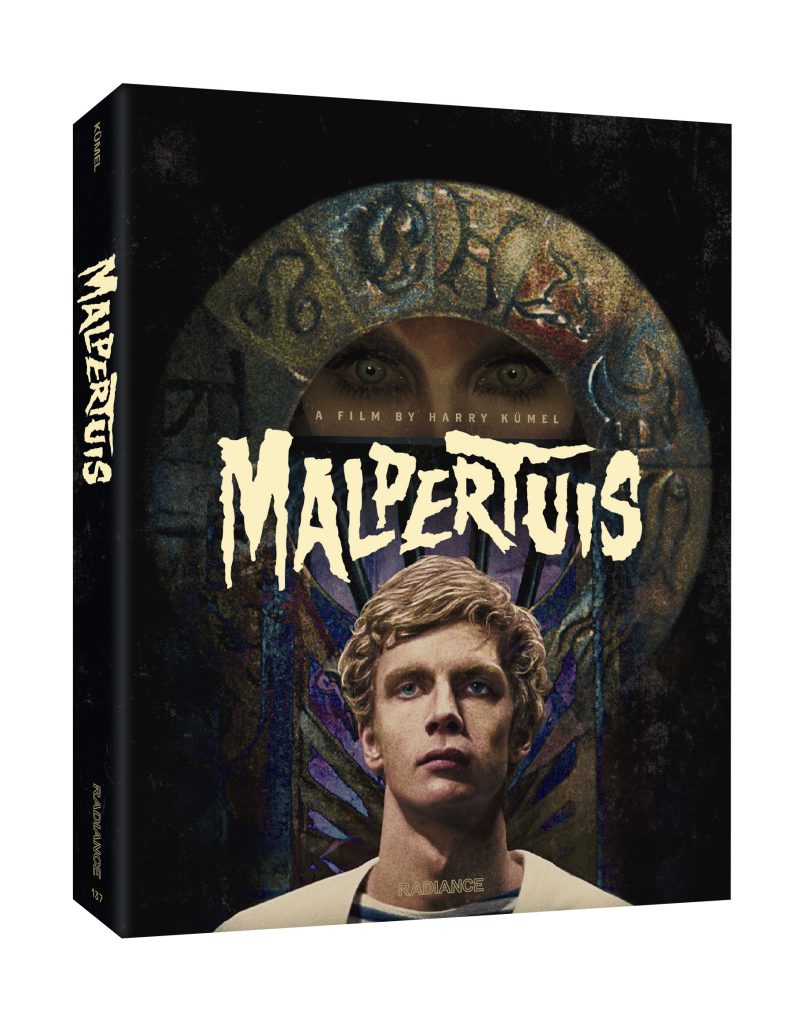
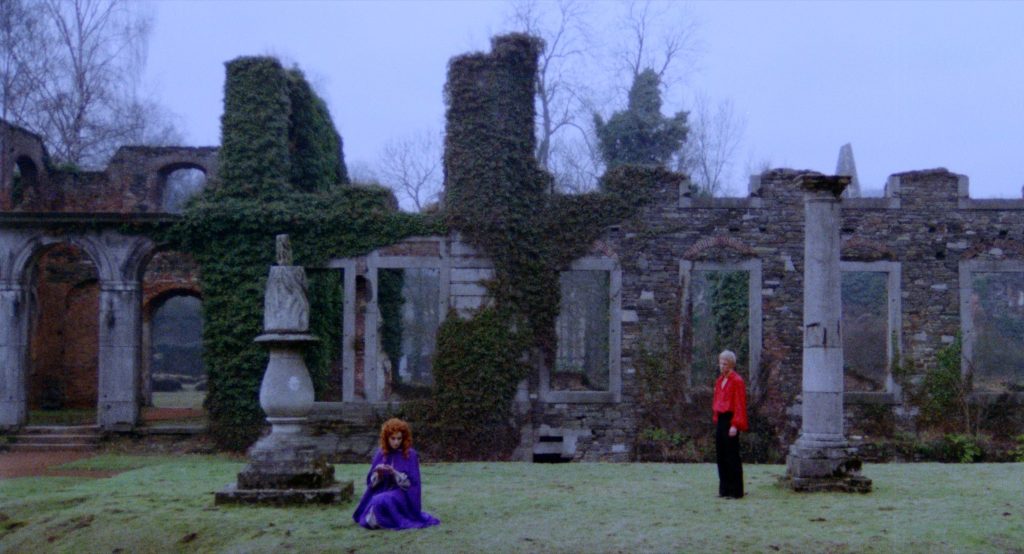
Belgian auteur Harry Kümel’s bold cinematic flair transformed European genre filmmaking in the 1970s. Now, two of his most striking and subversive works originally released in 1971, Daughters of Darkness and Malpertuis, have received brand new 4K restorations which premiered in August at FrightFest.
Both films will receive limited edition Blu-ray box set releases from Radiance Films this month, with Daughters of Darkness also getting a limited edition 4K UHD/Blu-ray box set. The “unforgettable gothic nightmare, set in an eerily deserted seaside hotel” of Daughters and the “haunting tale of ancient gods, crumbling mansions and cursed bloodlines” which is Malpertuis are absolutely essential viewing for anyone who wants “cinematic experiences that are as unsettling as they are unforgettable.”
We spoke with director Harry Kümel about his work on both films, as well as his lengthy career.
STARBURST: As you’ve been a teacher for so long, do you find that you have students who come to participate in your classes because they’ve seen your films?
Harry Kümel: I guess I do. They hired me every time in schools because of that. I mean, that’s normal. The, shall I say, good students appreciate it.
How has the response that the students have to your films has changed over the years?
It gets better every year. I’m extremely surprised. Actually at my age, that is what is my extraordinary surprise in general is that the films I made, there are very few, but young people seem to like them, which is very surprising because they have absolutely no relation with them whatever, except some films that are getting made now that begin to go back to something normal, shall we say. A satire is again a satire or dares to be a satire, like Eddington, for instance.
One of things we greatly appreciate about your filmography is the fact that you have directed so many films that are adaptations of novels and stories, except one. What’s the the appeal of adapting stories?
Because it’s easy. It’s easy. First of all, they’ve always asked me to do, except that when I wrote myself and with somebody, which is a satiric comedy nobody knows overseas anyway. I’m a director for hire and producers have a tendency, rightly so, to prefer to shoot novels because the story all is all there.
They don’t do it very well often, but it plays in stories. That’s always been the case.
You worked several times from scripts with Jean Ferry. What made you want to direct his scripts so often?
Well, I met him, and it stopped because he died. That’s very unfortunate. He’s the best I ever had. And I’ll never have an equal, just like Gerry Fisher was the best director of photography. Even if I had very good directors of photography, he was the best. I always hope to find the nice good one.
Jean Ferry, he was recommended to me by a French publisher, which I went to interview for television and I asked him, “Do you know somebody who could adapt Malpertuis, by Jean Ray? It is a very difficult job,” and he said, “There’s only one. That’s a person they have buried,” who had written 50 films, and with the greatest filmmakers, but was reduced to television work, which in France is really the dumps.
I went to see him and it was love at first sight. I mean, he understood immediately. And the fact was that I made Daughters of Darkness before Malpertuis because I was asked by the producers and I sent him the treatment we wrote, which was supposed to be an exploitation film and he made of it what it has become.
Both of these films that are getting these new restorations could have been very salacious pictures, but they became something else. How do you take a movie about lesbian vampires and make it something that is for the ages?
But salaciousness is very interesting. Only the British have problems with that. A certain category and films become what they become because of the filmmaker and the people who are around it. That is something one doesn’t control. I’ll make a parallel.
I just saw – because now you can see everything on YouTube, certainly via the Russian sites, who don’t care about author rights – a film nobody talks about called DuBarry Was a Lady which was made in ’43. An Arthur Freed production with Gene Kelly. Now the film is okay, but gets boring at certain moments, but every time Gene Kelly appears on the screen, everything explodes.
Also, the cameraman, the movements of the camera, the whole direction, everything changes. Of course, because he directed the musical scenes, but still, it is his appearance, and that’s the miracle of film. That’s the Marilyn Monroe problem every director tearing out his hair makes and then seeing the dailies and rushes at night and then you forgive everything because it’s something one doesn’t control in cinema. Films become what they are because they are what they are.
I consider myself one of the lucky people in filmmaking because my films remain, and with such a small production, that’s a very agreeable thought. It’s mostly mainstream cinema that has a tendency to grow, but not always.
I was talking about Eddington, which is shown in our country in art houses but to great success, fortunately and despite some mainstream media not liking it, of course, but it’s a film about the times, the changing times and that is also important, but it’s in the interior. It is not because it’s talking of that film about masks and, and COVID and everything or the rigmarole.
No, because underneath it, something moves it along. One can compare it to the terrible movie called The Brutalist. Boring thing, it schleps along and will never, never, never survive. Miller’s Mad Max films will survive. Strangely enough, not a very agreeable person.
I think you touched on something that really explains why Daughters of Darkness continues on – because it is about lesbian vampires, but when you have a vampire in any film, one of the things you can look to is someone who is trying to constantly be part of the present, despite having come from the past. Any vampire story is about a character trying to adapt to changing times.
Among other things, it’s a more sexual thing than anything else. And that’s demonstrated – not in the latest vampire thing – but in the Coppola film. Obviously, that’s one of the great movies ever made, even if he didn’t like it himself. Very strange.
In Daughters of Darkness, the main character is is represented by the image of a movie star of the ’30s. And I only chose that because that is an eternal image. The iconic effect of Marlene Dietrich – it is, of course, “immortal vampire”. That is the whole thing, but I’m not thinking that much about what I’m doing. I mean, that I leave to arthouse filmmakers.
Given that both Daughters of Darkness and Malpertuis are getting these very lovely restorations, how is it for you, getting to see these films look as good or if not better than the day they came out from a freshly struck print?
Oh, that is very normal. Digital is much better than analogue. It is very simple. I can do anything. I can control the skin colour, for instance, of the countess in Daughters of Darkness, that is continuous. That was impossible. One can separate everything so everything is manipulated and little things which are not changed for instance, as in Daughters of Darkness, a moment when the companion of the beautiful Andrea puts a red cloth muslin thing on a lamp because the lights disturbs her.
In the analogue film, it was done with a dissolve and a curtain. It was all right, but now it is perfect. The light comes out. It’s the effect I wanted, but I couldn’t do it. I couldn’t achieve. These little things – not little, the whole effect – but one must beware very much not to become too digital. One must keep always in mind it was a film. And so I like to destroy a little bit the sharpness and that kind of thing that that we do routinely. Unfortunately, digitalisation, the restorations are not very good generally, except the ones that belonged to, that went to Turner from MGM, and they had mostly the three for the Technicolor – the three negatives to make it.
At that time there was still in China a Technicolor machine. Now everything has disappeared. The greatest idiocy of all time. But we can still get those things. But now we can do that again more or less digitally by separating, even if we have only the negative by separating the three colors, and readjusting them and then you get everything right. I didn’t do that yet. I’m going to do it for my next restoration, which is not a Technicolor film, but there I can control the depth of the color and everything. That’s something unimaginable before.
One of the reasons Daughters of Darkness has lived on for as long as it has, in addition to the film, is François de Roubaix’s score. We were astonished when, a couple of years ago, it got an actual release for the first time, 50 years afterwards. There’d been a 45 single, but the fact that these this release came out – what was that like for you? Not just the film surviving, but the score having enough interest to where this sold out almost instantly?
Yes. Immediately. I always tell that, that my idea of the music was much more intellectual. That was Hungarian operetta music and the only one who could have done that was the Belgian composer who had done my first film, or the one who did Malpertuis [Georges Delerue], who you could ask everything musically. When I said to him, “When the light comes on the window, use the two first notes of Gounod’s ode he sings to Marguerite in Faust” and he executed that perfectly. So, Malpertuis, who cares among the public that I put in a Gounod note in? That’s for my pleasure.
But here, I didn’t have at all what I expected, first of all, because Francois was great, great guitarist and a fine jazz guitarist, and a fantastic jazz person. Very good. Didn’t understand the first thing about classical music. He was used to jazz notations, where you don’t write the notes like you do normally, but you only give clusters little things, and when I said I would like to have a cimbalom on there, and he looked at me with eyes of a deer looking at headlights and he said, “What is a cimbalom?”
And I said, “This is Hungarian instrument,” and he used it. He was very surprised to hear that instrument, which he had never, and he reused it for other things he used in it, but it never sounds Hungarian. My main producer was enthusiastic about the music.
I wasn’t, but the director never knows how this film does. We have an idea and then that doesn’t come out. Usually, an idea doesn’t come out like one wishes and boom, you are stuck with it. And you think, “Oh, yes, and I could have done better. You can always do better,” and that kind of thing. Every director will tell you that.
And in this case, slowly, I can’t say the music grew on me, but what I can say is that it has been sampled to the skies everywhere. What do you do against such a thing? Nothing. You just tell the truth and you say, “Well, I didn’t like it,” and, “Well, I thought is was – not ordinary in English – but low level,” and I thought, “Oh my goodness.”
Malpertuis was not commercial, not in that sense, but it was the best music he had ever written. That he said himself. I said to George at that time, “You didn’t make one sou from that film,” and he said, “I don’t care. I make so much money with the other trash I’m making for Godard with music I take out of my drawers. When I put music on your film, I don’t need to adapt the music to the film. It falls exactly.”
I don’t want to compare anything. I consider myself – because of my very small output – not such a big deal. But what epitomises a good director is rhythm. And you can see that in the most perfect form with the good films of Lubitsch, for instance, where everything goes like clockwork. You see that with John Ford also in his good films. It goes like a metronome. It works better because it changes naturally and that characterises films that have a tendency to remain because then they approach what a good painting is, and certainly what good music, is that it is it’s based on seven notes and afterwards comes the miracle.
That’s a saying somewhere, and that that is miracles, you don’t control anyway.
Malpertuis releases on October 13thand Daughters of Darkness releases on October 27th, both from Radiance Films.
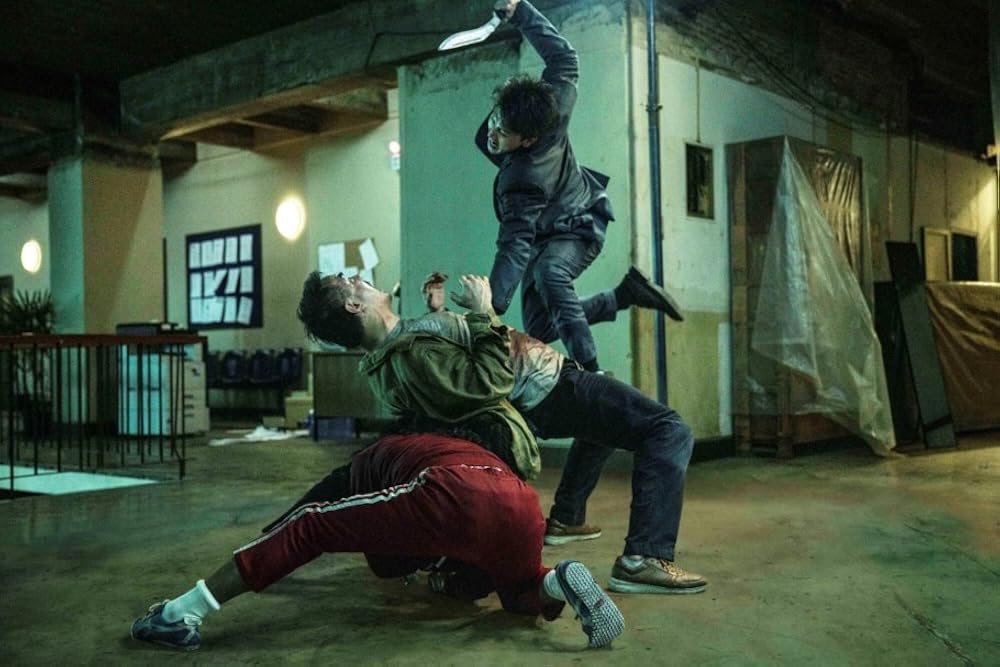
Director Kenji Tanigaki’s new film, The Furious, is a martial arts extravaganza with a strong sense of humor and heart. With a cast which includes Joe Taslim, Miao Xie, Brian Le, Joey Iwanaga, and Yayan Ruhian, and a pace as intense as the film’s title would imply, it was the talk of social media during Fantastic Fest, with everyone who saw it imploring anyone who could to check it out themselves.
In The Furious, a handyman’s daughter is abducted by a child trafficking ring, causing the father (Miao Xie) to set out on a rampage, confronting both the corrupt police and the criminals, determined to rescue his kidnapped daughter. In the process, he encounters Navin (Joe Taslim), a journalist trying to solve his wife’s disappearance. Together, the two unleash their formidable combat skills, fighting their way through dangerous obstacles to unravel crucial clues and successfully rescue Rainy and a group of innocent children.
The Furious is an intense feast for the eyes, and we were excited to get on Zoom and speak with director Tanigaki all about it.
STARBURST: Was it important for you when making The Furious to have your women characters be as strong as the men?
Kenji Tanigaki: Yeah, I think so, because I love that some weak people fight back. It’s not only the woman – our leading actor, who played the Chinese mute, because in his foreign country, he doesn’t wanna make noise anything but once the daughter kidnapped, he is fight back.
I love these kind of things because this is a good format for the action movie. Even Bruce Lee is the same. The people look down on him, but at some point he is coming back and fight back and I love this kind of things, whether is a man or a woman.
As you very clearly mentioned there, our lead characters in this movie do not have an easy time of it. How do you make a movie where your leads get regularly beaten down, but you still want to root for them?
Nowadays I feel, I believe many owners wanna see the actors struggling. So, this is the format of the action movie because they must struggle and the at the end, they will fight back. I hope every action scene looks different, so yeah – get beaten and coming back, get beaten, coming back. I don’t wanna do the same action or the same set pieces, same kind of action. Everything looks different.
It’s not the same scene time after time. You have a fight in the back of a truck, you have a fight in an ice factory. How did you come up with these wildly original set pieces?
When we start to make the story, at the same time, we consider what kind of set pieces will be good introduction. So, first thing, I wanna emphasize running, because running not every people get beaten by the hammer, right? But everybody have the experience to running running in hot, hot, hot and humid situation and maybe everybody can feel running by barefoot. It’s very, very painful. So first thing, I rather the running because running is most primitive movement by human being. That’s very important for me, so start from this.
In the nightclub, I wanna use a hammer. Another set piece is in ice factory, because as a movie fan, I’m a little bit tired about watching the fight in the factory. Many, many movie like that. But ice factory looks different and we shop in Thailand, Bangkok, so that’s a good homage for The Big Boss – Bruce Lee – ’cause in The Big Boss, they also use an ice factory. So homage-wise and the set pieces-wise, as ice factories, we can use a lot of different element.
So ice factory and the ghetto. We use a lot of building or other things that, that’s okay. In the ending fight, I need five guys fight. Five guys from the three different parties. That’s, I think, an interesting situation as, at the beginning, we just think that, “Okay, two bad guys, two good guys fight together,” but I wanna add one more dramatic changing moment. I love this fight. And after this, bicycle fight.
The bicycle fight was absolutely beyond, and that’s sort of a real hallmark of The Furious is that – with the exception of when our mute character pulls the hammer out of his jacket – they’re not bringing weapons with them to these fights. They are picking things up and using them in the moment. I feel like you’re showing how clever these guys are. Was that part of the intent – to just show how adaptable they were?
Yeah. Yeah, yeah. Because they’re using DIY so that the most familiar tools so that when he choose some weapons or that hammer, it very natural things.
And Navin’s the judo guy, so judo guy doesn’t have to bring anything. I think luckily they have their their martial arts background. And Wang Wei is a kung fu, so their fighting style, I can mix up. I just use their strong point and they use their strong point to choreograph. It’s very good and help us to make make a choreograph.
For example: at the security room is first time Wang Wei and Navin fight. The concept is how judo guy attack the kung fu guy because judo guy try to grab their sleeve, right? And kung fu need some distance, so the concept is judo guy try to get your sleeve and kung fu guy’s, “Ah, I don’t let you grab that.”
So, first half, we just expressed how they fight and second half – “Okay. Jacket off. You try to grab my sleeve? Jacket off,” and then judo guy is very tired. I don’t think every audience can understand these kind of things. Maybe some audience, all fight is fast movement. That’s fine. I think it’s fine. But some audience knows all that this non-verbal communication through the choreograph means a lot. Sometimes, everything that use a dialogue to explain is, to me, really too much.
For example, Chinese kung fu guy: how he won the main villain, he use a judo rule. Kung fu guy use a judo throw because of their friendship and maybe this Chinese guy learn from him. Or if we talk some cliche, maybe however Navin died, he helped the wrong way. Again, not every audience knows, but it, to me, it’s a richness to soothe. It tells something through the choreograph.
You have cast in a smaller role, but a very effective one, Yayan Ruhian. When he shows up in an action movie, people know that bad things are going to happen to your characters. Was part of the appeal of casting him in that you see his face and everyone immediately flashes back to Mad Dog from The Raid?
Absolutely right, because yeah – at least not good things happen, right? So but this time yeah, you’re right because his screen time is a bit short and I, I don’t have any good space to explain his background. We need a good introduction for him, so I wanna bring the archery. And let him, let him bring the sword because a lot of his movies, he using his arm and leg to fight this time actually and the knife is good for him because his screen time is shorter. I need you to know right away how strong he is.
THE FURIOUS had its world premiere at the Toronto International Film Festival.
Neon has released the trailer for acclaimed director Park Chan-wook’s latest effort, No Other Choice, the filmmaker behind Oldboy, The Handmaiden, and Decision to Leave.
Based on Donald E. Westlake’s 1997 novel The Ax, the black comedy thriller stars Lee Byung-hun (Squid Game), Son Ye-jin (Crash Landing on You), Park Hee-soon (Squid Game), Lee Sung-min (The Spy Gone North), Yeom Hye-ran (The Glory), Cha Seung-won (Night in Paradise), and Yoo Yeon-seok (When the Phone Rings).
Lee stars as a man who is abruptly laid off by the paper company where he has worked for many years. As he grows increasingly desperate in his hunt for new work, he finally finds his perfect job… and is willing to beat his competition by any means necessary.
The script was co-written by Park and Lee Kyoung-mi, Jahye Lee and Don McKellar.
No Other Choice was selected as the South Korean entry for the Best International Feature Film category for the 98th Academy Awards. It premiered at the Venice International Film Festival before going onto Toronto International Film Festival, Beyond Fest, New York, Sitges, and BFI London.
No Other Choice releases in select cinemas on Christmas Day, and everywhere else in January. Watch the trailer below:
Production has begun on The Wretched Devours, the sequel to 2020’s hit horror The Wretched, from filmmakers Brett and Drew Pierce. The feature has now announced its leads, per a Bloody Disgusting exclusive: Katie Parker (The Fall of the House of Usher) and Sam Huntington (Fanboys) will star in the body horror sequel.
The Pierce brothers return to write, direct, and produce Devours. Chang Tseng and Molle DeBartolo are on producing duties.
“We’re beyond excited to return to the terrifying world of The Wretched as we deepen the mythology of our favourite witch,” the brothers said in a statement. “We’re turning the body horror and grisly frights up to an eleven with this one!”.
In the 2020 film, a teenage boy struggling with his parents’ impending divorce faces off against a thousand-year-old witch, who is inhabiting the skin of their next-door neighbour. The Wretched Devours will see terror fall upon the entire town. Per the synopsis, it follows a small-town deputy as he’s pulled into a string of missing children’s cases, only to discover that the skin-changing witch is back and has been preying on the families of his community for over a century.
Starburst critic Paul Mount said of the film: “The Wretched won’t rewrite the horror rule book, but it’s a taut, punchy little film that plays effectively with half-remembered childhood tales of wicked witches carrying children off into dark, spooky woods. Strong visuals and some decent scares – the witch is a wild, nasty-looking creation – and the film’s commendably retro sensibilities work to create something rather refreshing from the familiar. Worthwhile and certainly not wretched.”