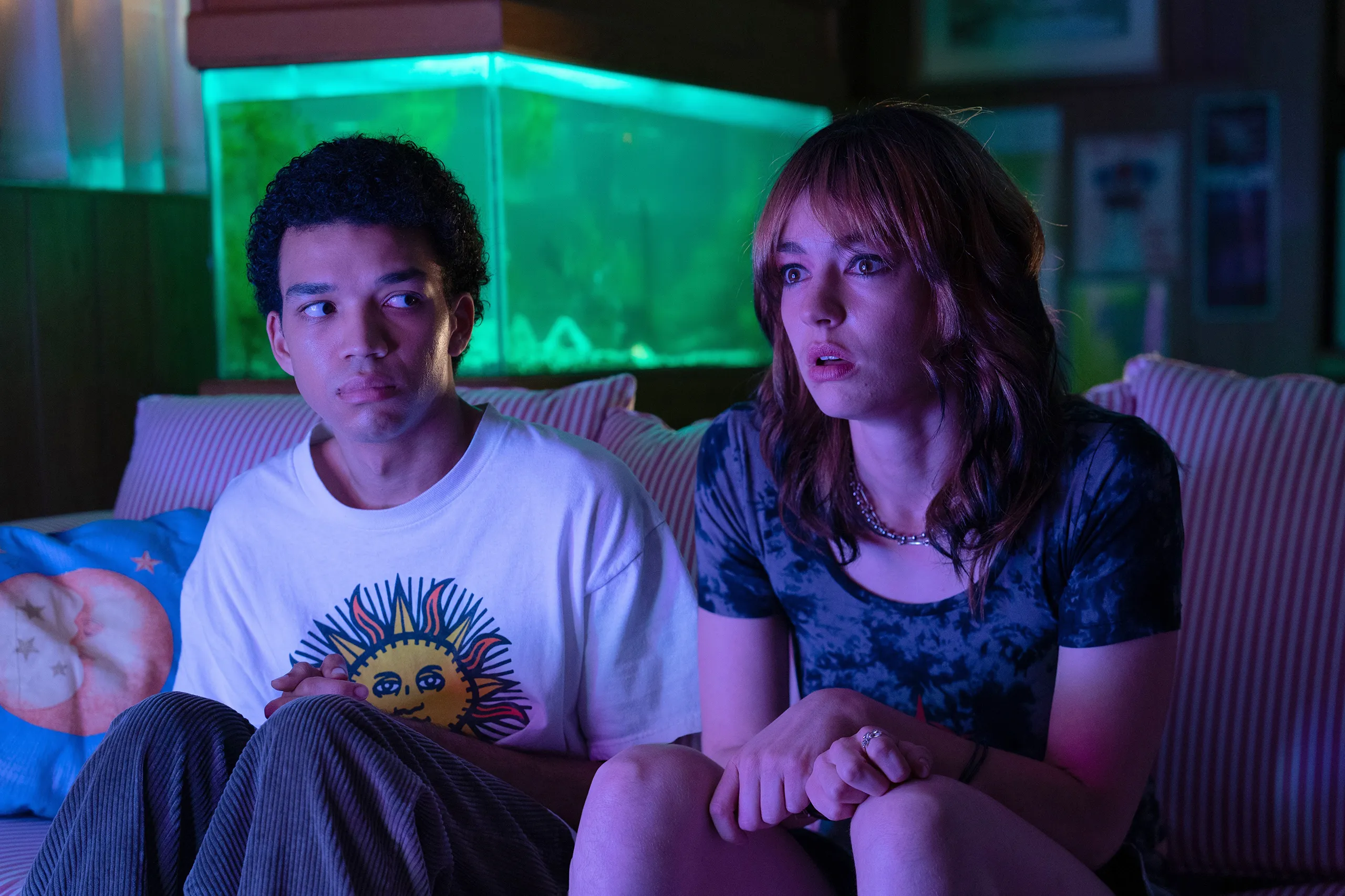
I Saw the TV Glow is one of the greatest films of the 2020s thus far and perhaps the most guttural cry of those living through the decade. It’s a generation that defines themselves by what they see on a screen, whether it be a comparison game to their friends on Instagram or a quiz asking which Hogwarts house they should call home. The windows that Conan Gray’s Generation Why escape through aren’t the opening kind; they’re illuminated screens where they can be their true selves.
Jane Schoenbrun’s sophomore horror film follows Justice Smith’s Owen through his extended time growing up in the suburbs. The only thing that seems to keep him going through his dreary high school and young adult existence is The Pink Opaque, a TV show in the vein of Buffy the Vampire Slayer and his only friend, Maddy (Brigette Lundy-Paine). His relationship with both is called into question when they both mysteriously disappear on the same night.
A beautifully rendered vision of disconnection from one’s core self, I Saw the TV Glow functions more like the creepypasta stories that inspired it than typical A24 horror fare. Its scares are existential and nearly cosmic, while its aesthetics defy conventions in a way that would make David Lynch proud. The performances are similarly heightened. Lundy-Paine, in particular, deserves awards for a third-act monologue alone, in which Maddy relays the journey toward realising their true self.
The metaphor TV Glow most closely adheres to is one personal to non-binary writer/director Jane Schoenbrun. Owen’s self-discovery is a queer narrative analogous to a trans person discovering the emotional truth of their gender identity deep within. A handful of critics have even bashed the film for being too simplistic and overt about its intentions as a queer narrative. They’re missing the brilliance of making this movie for those closeted kids who most need it. It’s no coincidence that it’s rated PG-13, features lore delivered via Easter egg hunting, and rocks a soundtrack loaded with devastating indie pop that makes you want to curl up in your room and feel numb. Schoenbrun is reaching, luring, trying to conjure their younger self from the past with the promise of all the things a young Jane would love. This makes the film a perfect fly paper for any other young trans kid out there looking for the kind of art they already love and elevated this beyond any simplicity in that queer core.
Although a trans journey is inextricably the film’s thematic core, what elevates TV Glow is the capturing of an entire generation’s identity. Schoenbrun expresses the patches of light in the suburbs’ darkness with neon pinks, purples, blues, and greens that evoke a childish kind of nightlife: carnivals, arcades, and fluorescent supermarkets. This is a story of a generation that feels lost in the excess of these spaces but couldn’t do without it. They are lost between the dimensions of code they must bury themselves in to feel anything. Their identities feel malleable and unrealised. They seek the relief of being whoever themselves is. Are we so disconnected from the present that we disassociate from our interiority?
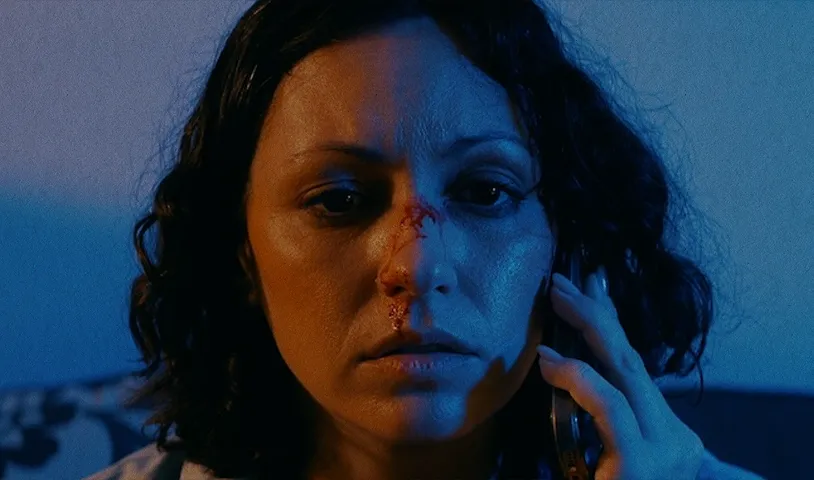
In one scene, Maddy sobs silently while viewing The Pink Opaque, overwhelmed simply by feeling so seen by a piece of art made for children. This is who so many children are in the 21st century; they care that the art sees them almost more than they see the art. Misunderstood by everyone around them, they look to the media to validate their feelings and choose bonds with others based on who feels similarly validated. They always have that sickening edge-of-a-party gut feeling of being on the outside of themselves looking in.
Later, Maddy monologues about how time passes differently for her and for Owen. “And then I was 19. And then I was 20.” Time slips away faster when you find yourself living between worlds. We are caught straddling the digital world and the real world. Are we on the STARBURST website reading the latest film review of an interesting movie? Or are we wherever we lay, inhaling, as we endlessly doomscroll on our screen of choice? This is what the film asks us to question about our reality as daily screen surfers.
Schoenbrun is certainly a filmmaker to watch for their iconic, original voice going forward. TV Glow has created a coda for the television age and a dogma for the iPhone era. The cure proposed here for the latter’s disconnection is to use these tools we call art to understand ourselves better and uncover our deepest identity to bring it to the surface. Only by being our truest selves can we be really happy on a level of reality that matters. Otherwise, as Owen is slow to discover, we will age into discontented nothingness, interrupted only by moments of our self-discovery forcefully interrupting the humdrum of our everyday. In a year full of other films like Ghostlight and Sing Sing about the power of art to heal our scars, I Saw the TV Glow is an ode to all the kids who couldn’t see their reflection in their external reality and found who they wanted to be in the glow of a TV.

I SAW THE TV GLOW is out now in the US and released in the UK on July 27th.