Andrea Romano | BATMAN: THE COMPLETE ANIMATED SERIES

Andrea Romano

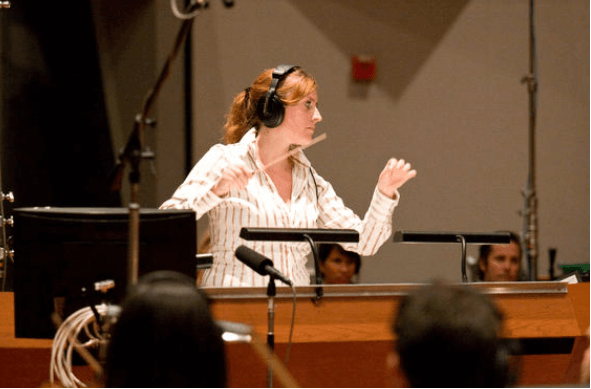
With Batman: The Animated Series having recently received a stunning new Blu-ray release, we conclude our deep-dive on this beloved series by spending some time with legendary casting and voice director, Andrea Romano. If you’re one of those who still hear the cast of BTAS when you’re reading the Bat-books of today, Andrea’s the one to thank. And in addition to being an absolutely pivotal piece of the animated adventures of the Caped Crusader, Andrea has worked on a slew of other genre favourites over the decades, plus was a complete and utter joy to sit down and chew the fat with as we discussed her early acting career, her move towards voice casting and directing, and all of the marvellous projects she’s worked on throughout her remarkable career.

STARBURST: First and foremost, you actually started as an actor before moving into the world of voice casting and voice directing. How did that all come about?

Andrea Romano: When I was a young child, I knew I wanted to be a part of the entertainment industry. I did not know in what capacity; I just knew I wanted to be a part of that industry because it seemed so exciting and compelling. The energy of the entertainment industry seemed to be in line with my energy. I did some high school plays and some high school musicals, and really enjoyed them. When I decided to go to college, my initial major was Music. Just before I went to State University of New York, at Fredonia, I was thinking really hard about, “Okay, life in music. Is this going to do it for me?” I just came to the conclusion that I didn’t think I could put all the energy that would be necessary into a music career. It just wasn’t thrilling me so much. Literally last minute, within two weeks of needing to appear at Fredonia to start school, I changed my major to Theatre Arts and studied as an actor. I just loved it. Loved it, loved it, loved it. This would be around 1974 or ’75. I did three and a half years of schooling at State University of New York as an acting student. I graduated a semester early because Fredonia is 60 miles south west of Buffalo, New York. For those who are familiar with that kind of climate, it rarely got above 0°C all winter. It was freezing cold; Chicago-type ice cold weather.

I graduated early, planning to move on and do whatever I was going to do in my career, and to leave that cold climate. However, the Fredonia High School reached out to me to direct their high school play. It was for the enormous sum at the time of $500. That really was a lot of money at the time, and so I ended up staying in freezing cold Fredonia. It really gave me my first chance of professional directing. I was compensated, I was paid, and I loved it. I loved working with actors to achieve a performance, to get something that we could all feel proud of, something that made sense to all of us without making anybody feel inferior. I say that because that’s something I’ve tried to carry on throughout my career; providing an environment where actors feel comfortable to do their best work. I’ve always wanted to treat actors the way I wanted to be treated when I was pursuing acting. There are some nasty casting directors out there, but it doesn’t have to be that way. I don’t know why that even exists – I think it’s partially an ego thing – but for me it’s all about working together to get a great performance, especially when it comes to animation. We are at the very beginning of the process, and if we don’t get a good vocal track, if we don’t have good acting from the beginning, then everything else is affected down the line.

Back to me and my acting career, though. I was there at Fredonia directing, and it really sparked me. I left Fredonia and went to do graduate work at Rutgers in New Jersey. So only a slightly warmer climate, but I wanted to study there because they had a terrific programme. It was the Mason Gross School of the Arts at the Douglass College of Rutgers University. I mention all those specifics because another alumnus of that school is John DiMaggio, the great voice actor.

A great voice actor who seems to be absolutely everywhere.

He really is, and he deserves to be because he’s so talented. I decided to study with the group of people there because they were all so professional. It was William Aspers, the acting teacher; it was Avery Brooks, the actor who taught speech and movement; it was Eileen Blumenthal, who was a critic for the Village Voice and who taught theatre history. I was her [Eileen’s] graduate assistant. I came from a very modest family, we had very little money, so all of my study had to be done with either scholarships or working at the same time. But a paid graduate assistant is a terrific way to make money while working in your own field of study. I only stayed there for a year, but I left it because Theatre History is such an interesting overview of society. Some of our earliest written words that we have are the plays of Aeschylus. These are ancient Greek plays and they teach us a lot about society and what was going on in the world. If you look at the recorded history of acting, you’ll see that actors went from being just slightly more respected than slaves; they were dispensable, if they died it was no big deal. And now you look at how actors are idolised and paid enormous sums of money for their work. It’s just a very interesting way of looking at society, studying Theatre History and how actors were treated throughout the generations.

This would now be around 1978, and I just needed to get out of academia. I didn’t want to be in school anymore after many, many years. I thought, “Let me give this a shot.” I moved to Manhattan. My days consisted of getting up, exercising, going to an audition or two, going to a dance-wear and an upscale clothing store. I worked there from 11am until 4pm, when I would get my lunch break and go out and try to get another audition in. I would go back to the store until closing at 8pm. Then I would leave there and go and do something like phone sales, or if I was lucky enough to be cast in a play then I’d go to rehearsals or performances. I’d get up the next day and just repeat, repeat, repeat. I did that for about a year or so, and then winter was coming and I thought, “I cannot bear another winter in the east.” I’d always had this draw to come out to California; I’d always felt that California was really special. I know part of that was because classmates would come back from spring vacation massively tanned and I would be so jealous. I had this strong pull to California, and I found out not too many years ago that I was actually conceived in Santa Monica, California. So that draw, those roots were actually based in some sort of reality of having these roots in California.
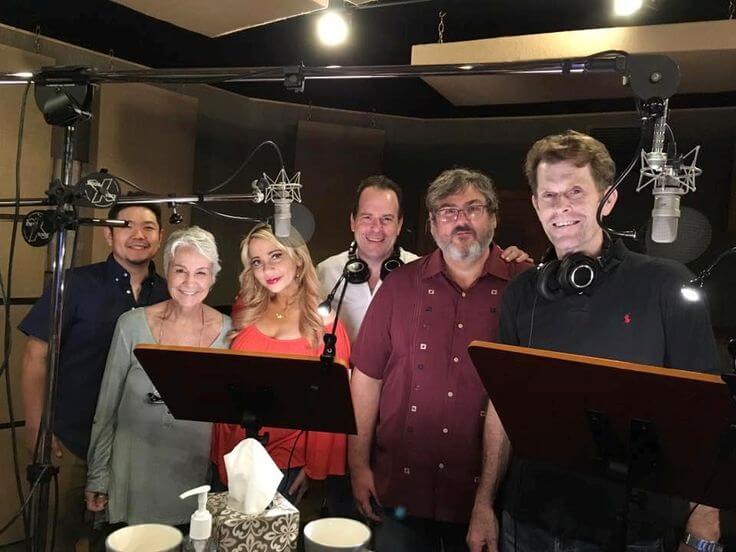
Andrea Romano

Even then, that must’ve been quite the big decision to make that move?

With $400 in my pocket, I packed up my life’s belongings in my mom’s attic and moved to southern California, to San Diego, just hoping that I could find some sort of career out here in the entertainment industry. I had a half-brother in San Diego, so that’s why I went to San Diego, but what they didn’t tell me is that there’s no real acting in San Diego. I was there for just a few months when I was contacted by someone from Fredonia, who at that point was an agent at a talent agency in Los Angeles. A voiceover agent had been in a car accident, and they needed someone to temp for her while she recovered. I went up to Los Angeles from San Diego, interviewed at Abrams-Rubaloff, and was hired practically on the spot to come up and be a voice assistant. What was really cool about that was that I knew nothing about voice acting, I knew nothing about the industry. That was where I got a very good sense of what this voiceover industry was. Keep in mind, we’re now talking about 1979. It was still kind of a secret; the voiceover industry was not well known; people didn’t really know what this voiceover thing was. I got a really good inside education as to how cartoons were made, how commercials were made, what kind of actors did voiceover. The girl I was temping for at Abrams-Rubaloff ultimately decided not to go back in to that industry – she was going to go on and do something else – and they franchised me. I became a franchise voiceover agent in 1980. For a very short period of time I was the youngest agent in Hollywood. I was maybe 23 or 24 years old and I loved it.

Becoming an agent at that young of an age, how helpful was it for you to have been involved in the acting field yourself?

It was so interesting in that I understood what actors were going through when they would say to me, “You know, I’m better at 2pm than I am at 10am. Could you schedule me for a later audition?” I was an agent at Abrams-Rubaloff for a year and a half, then I moved to a small boutique talent agency [Special Artists]. And what I mean by that is they only represented about 90 or 100 people, as opposed to Abrams-Rubaloff, who represented about 350 to 400 people. I started at the agency and was able to really bring some talents along and up, and really get my hands into this voiceover field. At both agencies – Abrams-Rubaloff and Special Artists – I did a lot of business with Hanna-Barbera. I loved Hanna-Barbera, I was a huge Hanna-Barbera fan. I got to become good friends with Ginny McSwain, who the casting director there. She had invited me several times to come and see some sessions, which I absolutely took advantage of right away. So I got to know Gordon Hunt, the voice director there, and I got to know Ginny quite well. She was very kind in meeting some of my clients. I had a pretty good client list, so she would hire lots of my clients very often. Then she called me one day, round about 1984, and said, “Andrea, I’m going to leave Hanna-Barbera and go direct for Marvel.” This was at the time of the second Golden Age of Animation, and she was leaving to go direct mini-series for Marvel. I said to her, “Oh my goodness. How are you going to find anybody who’s so good as an agent as you were to me? You were so kind to me when I was at Abrams-Rubaloff and at Special Artists. Who’s going to take over from you?” She said, “I don’t know yet. We’re seeing a bunch of people, so I’ll let you know.”

The next day Ginny called me and said, “Andrea, would you be interested in interviewing at Hanna-Barbera?” Literally, in true animation style, my phone was left spinning in the air as I sped over to Hanna-Barbera to be one of the first interviewed by Gordon Hunt for the casting job. Again, very luckily, I was practically hired on the spot. This was absolutely joyous for me; I can’t even tell you how happy this made me. I was such a huge Hanna-Barbera fan. I knew that casting would be right for me, I knew that I would be able to put together remarkable talent with wonderful projects. I started to learn that when you’re a voice agent in Hollywood you kind of are a casting director as well. All of the auditions, for the most part, are done in your office as an agent. So, someone sends you a breakdown – the description of what it is they’re looking for – you look through your client list, you say, “These five people would be really good for this character,” you bring them in, you audition them, you edit the tape, you send that to a casting director. And that’s essentially what a casting director does.
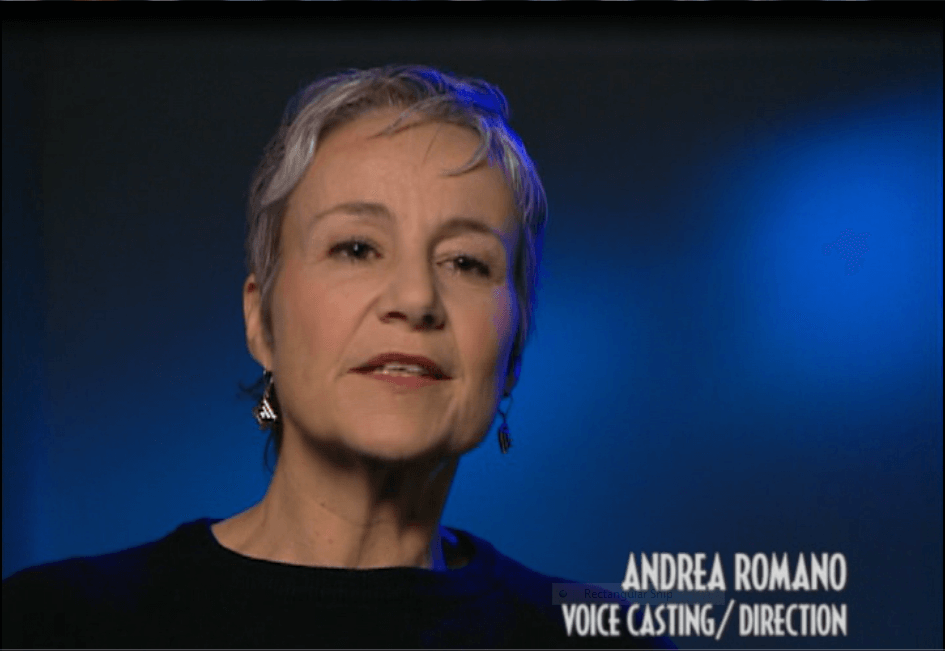
Andrea Romano

Moving from a voice agent to becoming a casting director was almost a natural progression, then?

This is a very common progression, to go from voice agent to casting director, because they’re such similar types of work when it comes to actually handling auditions. I was hired at Hanna-Barbera at 1984, and I was there from ’84 through ’89 during a time that I refer to as the second Golden Age of Animation. I believe that it was kicked off by the success of a show called Muppet Babies. That was at first a very successful puppet show, but then they made a very successful animated series based on younger versions of those characters as children. At Hanna-Barbera we made shows like Popeye and Son, Pink Panther and Sons, A Pup Named Scooby-Doo – all the younger versions of a lot of the classic Hanna-Barbera characters. What was happening at this time, and I don’t mean this in any negative way, Hanna-Barbera became quite the cartoon factory. We were cranking out so many cartoons that we were literally using up all the talent. It was a very small group of people who were making their living doing cartoon voices; it’s a very specialised field. Gordon Hunt and I decided that we needed to open this up to more actors; we needed to let on-camera actors know that, with the right training and the right skills, this whole other aspect of the entertainment industry could be open to them.

Was there a certain type of actor that you soon found yourself targeting?

What I discovered over the years is actors that have on-stage performance experience translate into animation voice acting much better than people who only have worked on camera, whether that’s for feature films or TV. That has to do with the energy, I believe. The camera captures everything very, very small. Your acting can be very subtle, but the camera catches it. For voiceover you have to be a little bit bigger, a lit bit broader, like you do for on-stage performances. Gordon Hunt had been the casting director at the Mark Taper Forum here in Los Angeles, and he thought, “That’s a good place to start, I have connections there. Let’s have a look at the actors I worked with there who would be perfect for this kind of work.” So it was people like Jeffrey Tambor or Ed Asner or Brian Stokes Mitchell. All of these people who had done stage work with Gordon got to come in and audition for us for various different cartoons, and they were all wonderful. Gordon was also a teacher at the time, and he was teaching predominantly on-stage and on-camera acting, but he asked me to come and guest speak at his classes once in a while. I’d watch these actors who were really appropriate for the work get really inspired, so I started teaching voiceover classes for people to make the transition from on-camera work to voiceover work. Suddenly, a whole new pool of talent was available to us. I loved my time at Hanna-Barbera, I loved working with all these remarkable actors, and when you’re a casting director, and later in my career when I became a voice director as well, it’s this remarkable position you’re in where you get the chance to reach out to people you’ve admired and ask for them to come and audition for you.

And how was it to approach such big-name actors during those days?

Sometimes you’re in a situation where the agent would say, “This needs to be offer only” – meaning the actor won’t audition but they would consider the job if you just came to them with an offer. For me, I’ve always felt that if the actors have no experience doing this work, they really should be okay with an audition. We just all need to see that they’re comfortable in this particular field. Just because they’re a good actor does not guarantee that they’re going to be a good voiceover actor. There are certain skills that need to be had to do voiceover acting. Most people were okay with auditioning. Almost everybody was interested in doing voiceover, and here’s why: on-camera actors are used to massive audition processes, they’re used to having to memorise tons of dialogue, they’re used to having to turn up in full hair and make-up, in costume, all kinds of things like this. Voiceover, essentially, as long as your voice is warmed up and you can do the work as far as having the talent and the technique, you could show up in your pyjamas, you don’t have to memorise a word of dialogue, your hair could be bed-head.

For a lot of on-camera actors, that appealed to them as far as steady work where you didn’t have to leave town for six months and be away from your family and be away from your home. It gave people a really good reason to stay in town. Once they were known as voice actors or they had this skill, every studio would reach out to them because, “Oh man, now Brooke Shields is coming in to do voices and she’s pregnant.” Voice talent like Jeffrey Tambor, these people would suddenly get really good at voiceover and it would be known that they had experience because they’d come to work for me at Hanna-Barbera or worked over at Marvel. Suddenly all the studios felt much more comfortable reaching out to these people, and that made me really happy to be a major part in getting other actors to come into it. That’s not to say in any way that I didn’t absolutely need all those wonderful voiceover actors who had been working for years – I always need to go back to those guys, they are the bread and butter of this industry – but we now had a bigger talent pool to pull from.
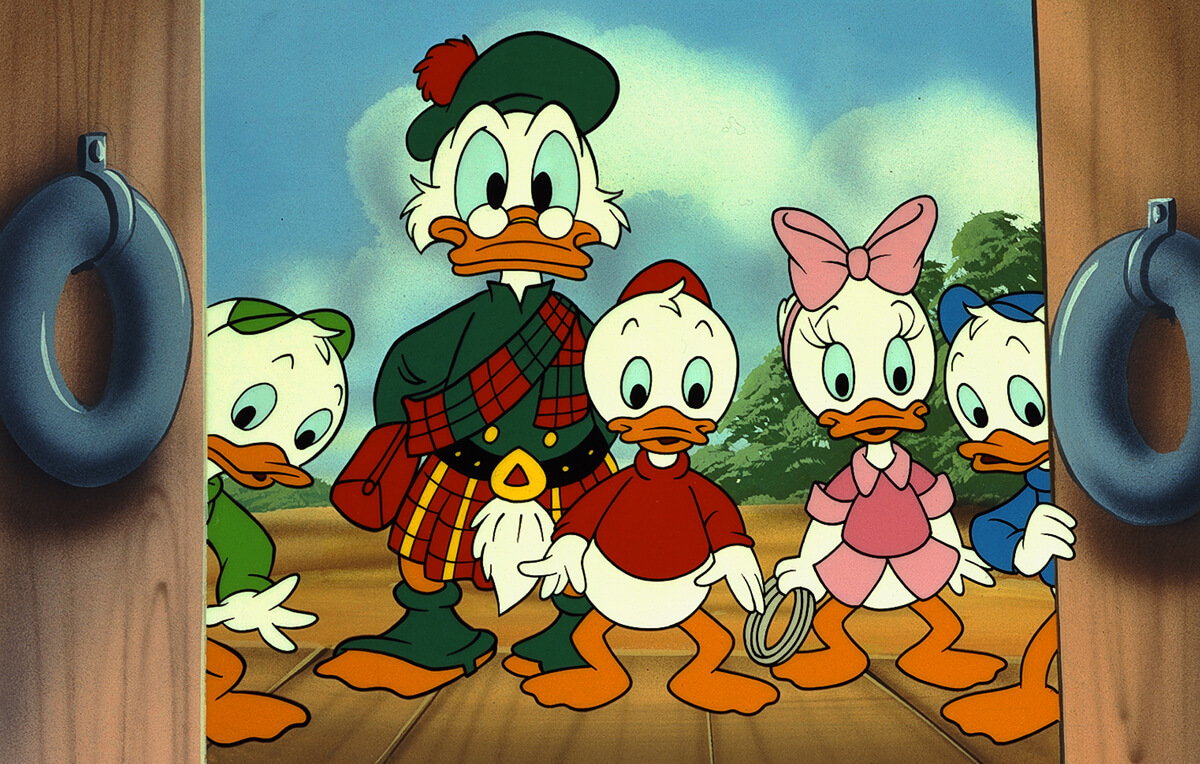
DuckTales

Is this around the time you began working at Disney?

We’re now at about 1986 or ’87 when I get a phone call from a gentleman called Tom Ruzicka, who had been at the advertising agency Leo Burnett. I had done a lot of business with him when I was an agent, and he called me to tell me he had left the advertising agency industry to go to Disney TV Animation. When I say “go to Disney TV Animation”, what I mean is to form Disney TV Animation. It did not exist before then. He said, “We’re going to do 65 episodes of a series called DuckTales. It’s based on Scrooge McDuck and his three nephews. We’re going to audition directors.” Now this was quite an unusual move, but I thought it was a great idea. He said, “Can you come in an audition by directing an episode? We’ll have five different directors direct five difference episodes, then we’ll make a decision on who we want to direct the rest of the 60.” This was an enormous amount of cartoons; 65 episodes was huge. We typically get orders of 13, 26, maybe 52, but 65 was just an enormous number. Of course, I jumped at the chance.

I went to Gordon Hunt and said, “May I have permission to do this thing?” He checked with Hanna-Barbera, and so I went over and directed the second episode of DuckTales – and I just loved it! It really was like a fish to water; I was crazy for it, I loved it, and I loved the actors and the process. I went over for a half-day, for four hours, and I got a call the next day from Tom Ruzicka saying, “We’re not even going to audition the other three directors if you will come and do the series for us.” That was a huge compliment! I went back to Hanna-Barbera and said, “How do you feel about this, if I go out one day a week to go direct this and still be the casting director at Hanna-Barbera?” This would never have been permitted now, but then they said yes. So I continued to cast at Hanna-Barbera while one half-day a week I would go over and direct DuckTales, which was joyous, heavenly, stunning. I just loved it so much. I finished out that series then did a movie for them, then I started doing a couple of other shows that Disney came to me and said, “We’d like you to do a few episodes of Chip ‘n Dale: Rescue Rangers and some Winne the Pooh episodes?” It got to be quite a few other episodes, and then at the same time I get a call from some of my pals over at Hanna-Barbera to say that they’re going over to form Warner Bros. TV Animation, and would I be willing to come over and cast and direct something called Steven Spielberg Presents Tiny Toon Adventures.  At this point, I realise there’s no way Hanna-Barbera could keep me on staff and let me do all of these shows, so I had to leave Hanna-Barbera, which was heartbreaking.

Having enjoyed your time at Hanna-Barbera so much, how hard was it to leave there?

We’re now at 1989 and I had to leave Hanna-Barbera and say goodbye to everybody there, and I loved them so much. But I was working with so many of my pals from Hanna-Barbera because they were now at Warner Brothers. So I was working for Disney TV Animation, Warner Bros. TV Animation, several others that would reach out to me at this point, Universal had started to make direct-to-home-videos like The Land Before Time – I did about five of those – and so now at this point I’m a freelance voice director. That was really scary because I had left a job that had paid vacation, paid sick days, all kinds of health benefits. I left that to become freelance, which is really scary because when a job was done I was as unemployed as the guy who got laid off at McDonalds; I was just one of the unemployed out there. But knock wood [audibly knocks on wood], from that point on I never was without work, I always had work, it was absolutely remarkable. I made that massive decision in 1989, and, of course, how could I turn down a show that had Steven Spielberg’s name in the title?! So we did 65 episodes of Tiny Toons, which was fantastic. That was with Tom Ruegger and a bunch of wonderfully talented people at Warner Brothers who did this wonderful work on Tiny Toons and then a second show there that we did called Animaniacs, then the spin-off called Pinky and the Brain. All wonderful series, all with Spielberg.
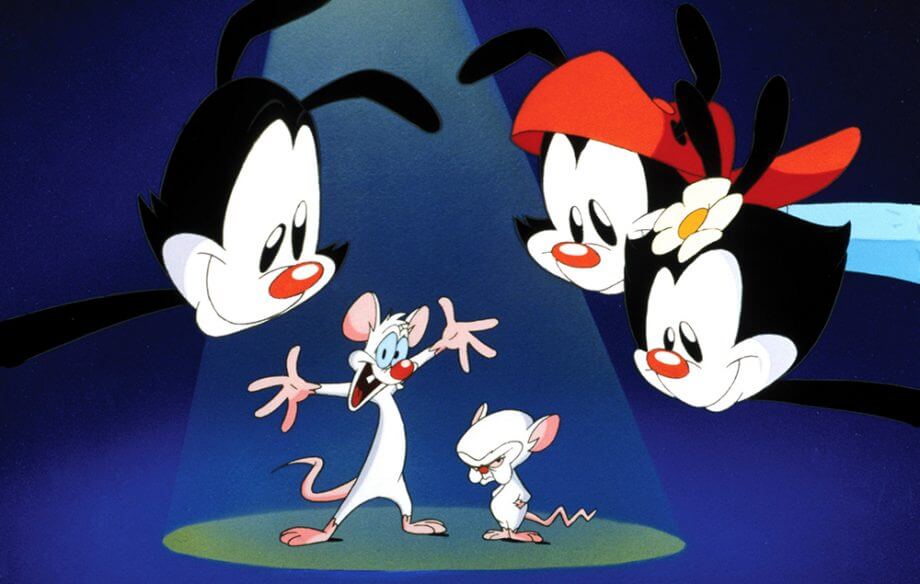
Animaniacs, Pinky and the Brain

From there, how did your involvement with Batman: The Animated Series come about?

I got a call from Jean McCurdy and a storyboard artist called Bruce Timm, saying, “Andrea, we’re going to do something that’s very different for Warner Brothers called Batman: The Animated Series.” Well, everybody has heard of Batman, but what was cool about this was that they described to me a Batman that had yet to be done. The Batman we were familiar with was Adam West, Burt Ward, the very cartoony live-action television series. Women my age didn’t really read Batman comics at that time; we were more into things like romantic comics or Archie Comics, those kinds of things. It was Betty and Veronica, it was not Batman. So I had to learn what this Batman was, and it was really wonderful to work with a genius like Bruce Timm and Kevin Altieri and Eric Radomski and all these guys who had a very clear image of what they wanted this new series to be; which was dark, dark, dark! I had never directed a series like that. It was a bit of a learning curve, and if you watched some of the first episodes of Batman: The Animated Series you’ll see some of the early ones are still a bit raw, a bit cartoony. Then we finally got into a rhythm and an energy, and together we understood what this thing was that we wanted to make.

Given the incarnations of Batman we’d seen before BTAS, how was it to have to pitch this new Batman show to voice talent?

What was really cool about Batman: The Animated Series was that, as far as being a casting director having to call up agents and explain to them what we were doing and what kind of auditions we need, there was a real benefit of working on an established property. Meaning, everybody knew who Batman was. I didn’t have to say, “There’s this guy called Bruce Wayne, and he’s got vengeance issues because his mom and dad were murdered in front of him in Crime Alley.” Everybody knows who Batman is, everybody knows who Bruce Wayne is. What I had to explain, though, was that we were making this dark, different version. This was not the Adam West series. Although it was animated, it was not cartoony. It was going to be requiring a different style of acting than most animation voice actors did. So it opened up again this pool of talent that we were looking for where acting was number one. And acting really always is number one with voiceover acting – it’s always going to be the acting first – then, if you can do multiple voices, that’s a benefit. But initially, you need good acting. What we were doing was really blanketing the industry with auditions for talent for this, because we wanted really special people to come and play. Back then, there was no internet. We had to literally call up all the agents, describe what the property was, tell them there was an audition package at the Warner Brothers reception for them. And that package would contain character design for each character we were auditioning, a breakdown description of what that character was. I would tell the agents, “You can audition as many people as you want but please only send me your ten best.”

How intense was the process of finding the absolute perfect fit for so many beloved characters?

I was sending this out to at least fifteen different agencies in Los Angeles, and then some New York agencies and a handful of places throughout the world. I’m auditioning about fifteen characters, so I knew from each agency I was going to be receiving hundreds of auditions. I was listening to hundreds of auditions. I needed them to limit it in some way. Well, what happened was, as to be expected truly, nobody wanted to eliminate any of their talent from these auditions because everybody was really good and it was a really, really important property. I listened to 750 voices just for Batman, just for the voice of Batman and Bruce Wayne! I don’t want to make it sound like I sat and listened to every audition from start to finish – after you’ve heard hundreds of auditions for a voice, you know after listening for about ten or fifteen seconds whether that actor is competitive with what you’ve already heard – but I’d listen briefly to some of the auditions and just say, “That’s not the right way, that’s not the right direction.” Other times I’d listen and go, “Although the direction isn’t great on this, although the director at the talent agency didn’t understand it, that actor, I know his work and I know his voice, and he should get a call back because I think he can do this thing.”
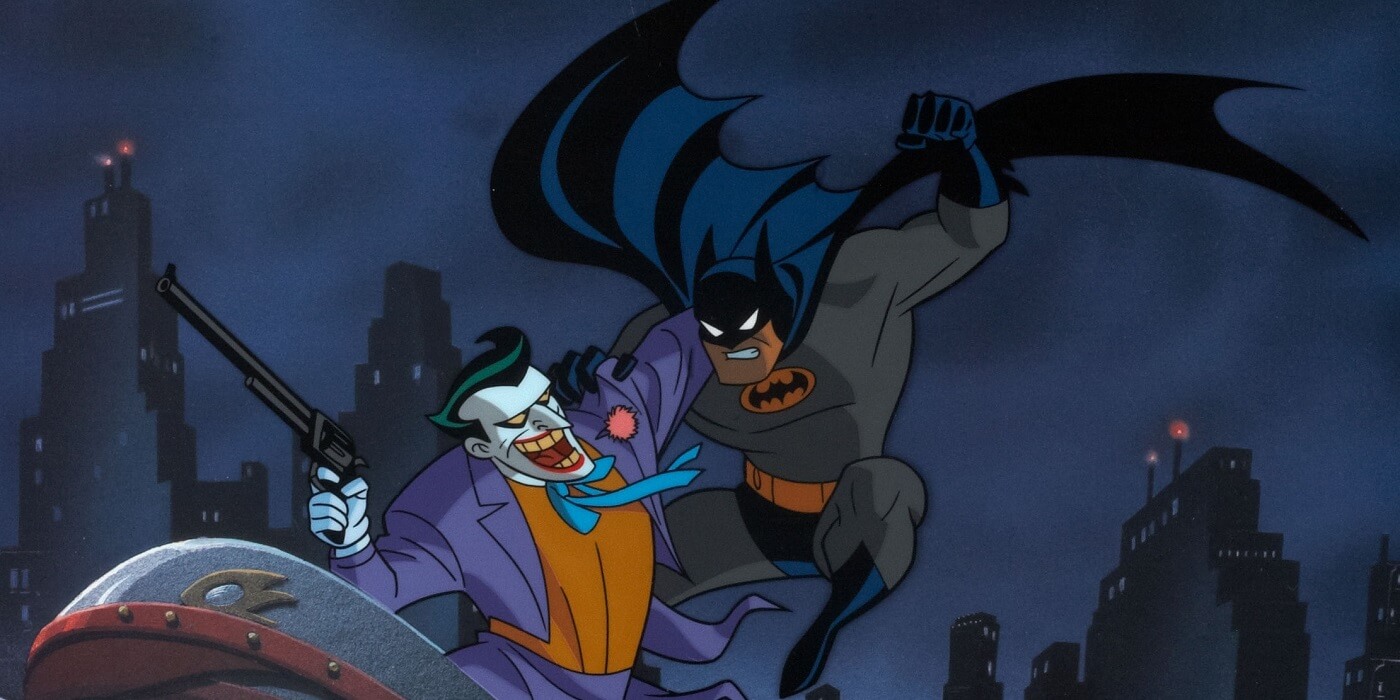
Batman The Complete Animated Series Blu-Ray Starburst Review

For Batman himself, it must’ve been a huge task to find the perfect person to play this pop culture icon?

I called back about 150 people just for the voice of Batman. At that point, I was auditioning them with Bruce Timm in the room with me, with some of the animation directors in the room with me. I’d get some feedback so that we could start eliminating some of these people, so that we could get it down to a respectable amount of people who we could submit for the final voice. And we’d do that with each character – we’d narrow it down to five people – for Jim Gordon, for Mayor Hill, for Harvey Bullock, for all of the major characters who would be in lots of episodes. We’re down to the final call-back, and Bruce Timm and I are realising, “Well, we have a handful of guys who could do it, but we haven’t fallen in love with anyone.” When you have such an important character on such an important series, you’ve gotta love the guy that you have as the title character.

I talked to my friend Anthony Barnao, who was my roommate here in Los Angeles and who just passed away. My dear, dear wonderful friend. He worked in the live-action field, so I said, “Do you know any actors that I should read for this?” He said, “There’s this wonderful soap opera actor who was Juilliard trained, who has this gorgeous voice, and who also does a lot of primetime soap operas and has some good film credits. His name’s Kevin Conroy. You should see him, you should bring him in for an audition.” So I brought Kevin in during the call-back process. He walked in and asked a few very, very sharp questions about how we were going to play this character, then opened his mouth and went through the copy. Bruce and I turned to each other with this, I don’t know how to describe it, but it was certainly this eureka moment. It was, “Oh… my… gosh! We’ve found Batman!” He had an understanding truly from an actor’s viewpoint. He understood this guy, and he told us about his thoughts on the process as he was going through the audition.

How did Kevin approach the role to make him stand out from the other candidates?

Kevin looked at it as if this guy is Hamlet, which is a really good analogy. This is a guy whose father has been murdered, he’s got vengeance on his mind, he’s a class act, he’s a wealthy man, he’s not just some street thug who’s going to try and seek vengeance. There were a lot of parallels that he drew that made great sense to me. As we go through the entire process, we finally find a group of people we adored. I had the most glorious cast for that show.

From what’s been said over the years, it seems as if Batman: The Animated Series was one of the first animated shows to try and bring the entire cast together for group recordings.

Not that I insisted upon it, but I worked as hard as I possibly could to do ensemble rehearsals and ensemble recordings. What that means is having everyone in the room at the same time to rehearse it, to set any new voices for characters that had come in for guests or what would be recurring characters. I would bring them all in together so that they could hear the style of the cartoon. Let’s say we’re fifteen episodes into the series and a new character called Harvey Dent is coming in. Well, I needed Richard Moll to hear what everybody else was doing so that he could fit his puzzle piece into it, so it would have a cohesive energy, a cohesive sound for the animated track. That track would then go off to animation with a through-line that made sense. We had characters that were very broad, like The Joker. The Joker is very large, but it fit in with everything else we were doing. The cast really loved it, and it helped also the production crew to find any problems that there might have been with the script as far as we’d peak too soon, maybe we needed to delay that energy peak to later in the script, or we’re not setting this up well enough to have it make sense when the reveal happens in the third act or whatever. It was a wonderful way to do it.

Unfortunately, now very few people have the time to do a table read or rehearsal. And that’s a shame, because that’s when a lot of problems are solved. I was right there at the very beginning of Batman: The Animated Series, when we first started working on it. We assembled not just a stunning main cast, but the people who came in to work as guests were just amazing. I kept a list of those that were major contenders, those who came close, so that I could find something else for them as guests to come in or maybe as recurring characters because they were so good but just Kevin Conroy was ultimately the best choice for Batman. But these were very good actors, so I was able to rely on those people to come in as well as now all of the agents were familiar with the project. I could reach out and say, “I need somebody who’s The Riddler, or Scarecrow, or whomever.” The agents now knew we were making something special, and they wanted their clients to be a part of this.
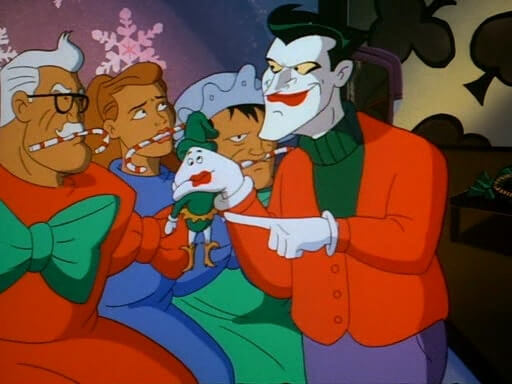
Paul Dini BTAS

While Kevin Conroy has been spectacular as Batman over the decades, across from him so often is Mark Hamill as The Joker. How did Mark’s involvement come about?

As part of this, I got a call from Mark Hamill’s agent saying, “Mark wants to be a part of the project.” So I bring Mark in, he does a wonderful guest spot, everybody loves him, he’s very generous with his Star Wars stories, the crew are all enamoured. Then Mark pulls me to one side and says, “Thank you so much, this was incredibly fun. I enjoyed being a guest, but I really want to be a part of this series.” I totally understood what he meant: he wanted to be recurring. Coincidentally, not far down the line, we needed to recast The Joker. And Mark did a ridiculously good job of coming up with a voice for that character and matching the mouth of the existing Joker. We were already in production, and so some of the animation had already been done. We needed to find somebody who could do a really stunning voice and match the mouth, and Mark was the guy. And still to this day he does The Joker for us on many projects – and he’s crazy good, absolutely wonderful! I’m not trying to pat myself on the back, but I do believe I’m responsible for at least partially jumpstarting his voiceover career. His and many other people who now have considerable voiceover careers. That makes me extremely proud, and I’m just glad to have played a part.

What was the toughest casting call you had to make on Batman: The Animated Series?

Sometimes absolutely one guy is head and shoulders above everybody else. Sometimes it’s literally three people and any one of those three could do the job really well, in which case the producer and I would just sit down and figure out whatever we can to make a decision. It made us consider things like, “Okay, how is his voice going to sound next to this guy’s voice? This guy’s going to play regularly against him, are they too similar? Are we better going with our second choice because our voice separation is better? Do we go with our third choice because he can do lots of additional voices, and financially that makes more sense?” This will make voice actors insane when they read this, but sometimes it really would come down to a coin toss. There would be two actors who were equally as good, either one of them could do the role, but we’d literally just flip a coin to decide it. I’d always be careful, too, that there wasn’t some history between an actor and the productions staff, like, “My ex-wife’s name was Bernadette. I don’t want any Bernadettes on the show.” It could be something as petty as that, but that was part of the decision-making process.

The joy of Batman was that it was familiar and, once episodes started airing, I just became overwhelmed with people wanting to be a part of it; regular voice actors, celebrities, on-screen actors. At that point, agents would just ring me up and go, “John Vernon wants to be a part of Batman.” And so we hired him as Rupert Thorne. All of these wonderful people, I’d just keep a list of them. As I was going through the breakdowns and casting for each episode, I would look at my list of people that wanted to come and play, and I had this enormous world of actors that wanted to come in and play. Casting that show, it was very difficult in that you wanted to honour the material, and it was really easy because I had an enormous talent pool to pull from.

Given some of the major names who auditioned for the show at various points, was there ever any pressure from higher-ups to go with some of the bigger A-list names for roles?

I am always interested in finding the best talent for the character, and if that happens to be one of the rank-and-file voice actors that work daily, I will fight, fight, fight for that person. If it happens to be a minor known actor, I’ll fight for that guy. If it happens to be a big celebrity, I’ll push for that person. For me, the casting is all about the right person. I’ve certainly had projects I’ve worked on where the producers really wanted celebs. Sometimes I could do that and satisfy my need for a really good actor as well, but there were other times where I’d say, “That is just casting celebrities for casting celebrities sake. That is not the best casting for this role.” A lot of these shows that I worked on were made for a wide audience, meaning it was not just kids, it was not just college students, it was not just adults. It was ideally for everybody. So my point would be to them that a 12-year-old isn’t going to turn off Batman: The Animated Series because there isn’t a celebrity in that episode; they’re going to turn it off if the acting is bad.

My job was to find the best actor for the role, to keep the acting consistently good so that everybody keeps watching regardless. Sometimes I’d have to really fight. If the on-camera actor was really appropriate for it, I would have absolutely no problem. But if they were not the right fit, I would fight for it – and usually I’d win that fight because the producers began to trust me over the years. They got to know that I had pretty good taste when it comes to who’s right for the role and for what performance I could get out of them. I could say that I represented them years ago, that they were a student of mine years ago, or I directed them in a series. On this particular series, there was not a massive amount of “You must use celebrities,” but there was a wonderful pool of talent that wanted to come and play. What was really cool about it is I had absolutely no shame in going out and asking any level of celebrity to come and do it. The worst that could happen is that they’d say no, but often they’d say yes. Suddenly we’d have these remarkable people coming in to play with us. To watch the cast’s eyes get big when Ed Asner is sitting in the seat next to them, or some other wonderful actor sitting next to them. It was really fun when Kevin Conroy would call me the day before to say, “Who’s coming in to play Scarecrow? Who’s coming in to play Mad Hatter?” That was really fun because I’d say, “Roddy McDowall” and he’d be head over heels. But I loved working with all of the actors on the series, whether they were rank-and-file or celebrities. They were all wonderful and it was one of the most remarkable projects to be a part of. I was very fortunate to be asked to do it.
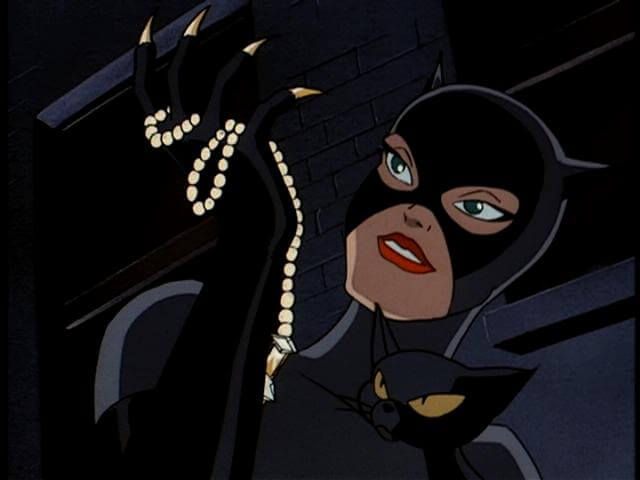
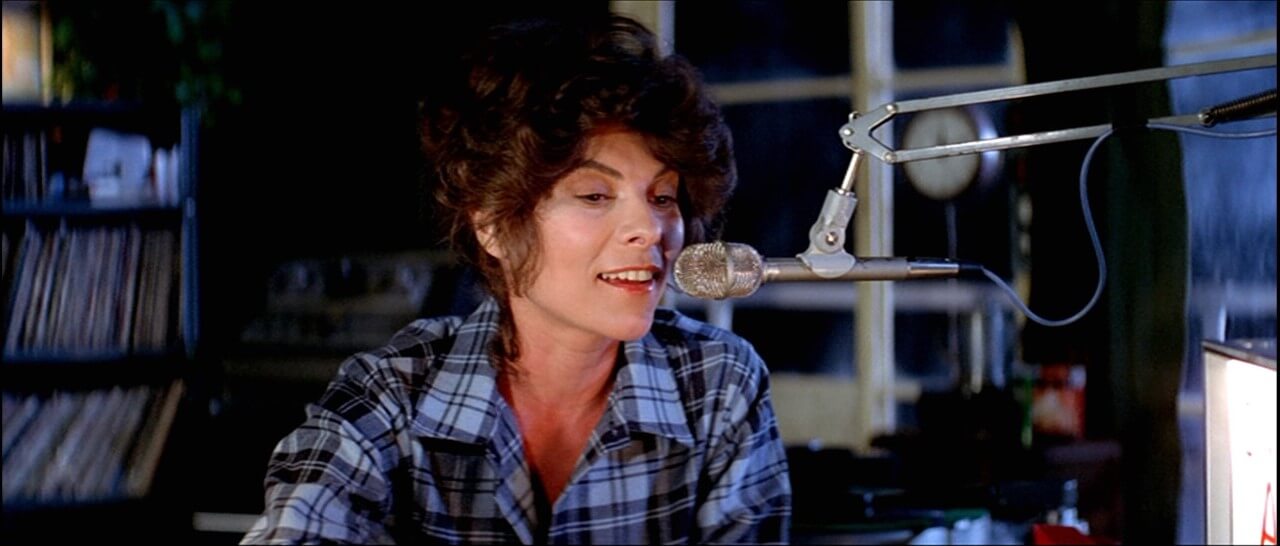
One such person who we were lucky enough to speak to about her time on BTAS was Adrienne Barbeau, who has been such a brilliant and versatile actress throughout her career. Batman: The Animated Series was one of her first voiceover gigs, with her then going on to have a hugely successful voice acting career, and she had nothing but complete and utter praise for you in how you helped her in so many ways.

Isn’t she great? That’s so lovely of you to say that. That’s cool, I’m so happy to hear her say that. I was so lucky. I loved her work so much and I knew she was the right level of celebrity. The same way, as you just mentioned, she’s a wonderful actress. Because Catwoman isn’t just a one level villain – she’s Selina Kyle and Catwoman – we needed to get a separation in those two personalities that requires really subtle acting changes. She was really able to do it and was so lovely, just a pleasure to know. I was very lucky to get her on the series. And it was that level of talent that I got used to. I kind of spoiled myself by bringing in that level of talent. That was relatively early in my career, and I’ve pretty much maintained surrounding myself with that kind of talent – which has made my job much more pleasant, and it’s been a beautiful career.

One of the many remarkable elements of BTAS is how fans viewed the minds behind the show as just as important as the voice talent involved. Fans talk just as much about yourself, about Paul Dini, about Bruce Timm, about Alan Burnett, etc just as much as they talk about the voice talent. How rewarding was that from your perspective?

I think you’re accurate. When I was a kid, and I’m 62 now, the idea of actually meeting any actors who did voiceover work for cartoons was unheard of. We never got to meet voice actors, we never got to meet people who made our favourite cartoons, we knew nothing about the name of producers or directors. All we’d know was, like, Hanna-Barbera. But, during my career, there was a big change in that people started to do publicity. Everything from DVD extras to behind the scenes footage. Not only could people meet these actors on camera, but they could watch them do the work. Nobody knew what a recording session looked like in 1970. Nobody had any idea unless you were lucky enough to go and watch a rehearsal. We’re in a time where the contributors to the product are as well known as the actors, and that’s lovely. I’m happy to be a part of that period of time. It helps me do my job better and doors opened more easier for me in procuring more work for myself and in getting actors to come and play with me. That’s always how I describe it. I would say to the agent, “Would you see if Joe Schmo wants to come and play on an episode of Batman?” If they’re not having fun making a cartoon, then we’re all doing something wrong.

I always like to think of creating that environment where people feel comfortable to be silly, to do their best work, to explore, to try something that may seem completely off the wall. Again, having been an actor first, trying to make them feel comfortable was key to me. They didn’t feel like, “Oh man, I don’t know why she cast me. This is the wrong role for me.” I wanted to make sure that everyone was comfortable. There have been a handful of times, fortunately not very many, when I had to replace somebody. These were the worst moments of my career, because I never, ever like to do that. I will always keep an actor after the session, I’d work with them individually, I’d do take after take. I’d do everything possible to not replace an actor. I don’t want anyone to experience that horrible feeling. The truth of it is, even the best voice actors in town have been replaced at one time or another. For whatever reason something didn’t click, something didn’t work right. I have had to do that, but I always try to not let that happen. We’d work, work, work really hard on it. Truly, a handful of people have I ever had to replace. It was not very many, but every time it happened it broke my heart. I hated having to replace people.
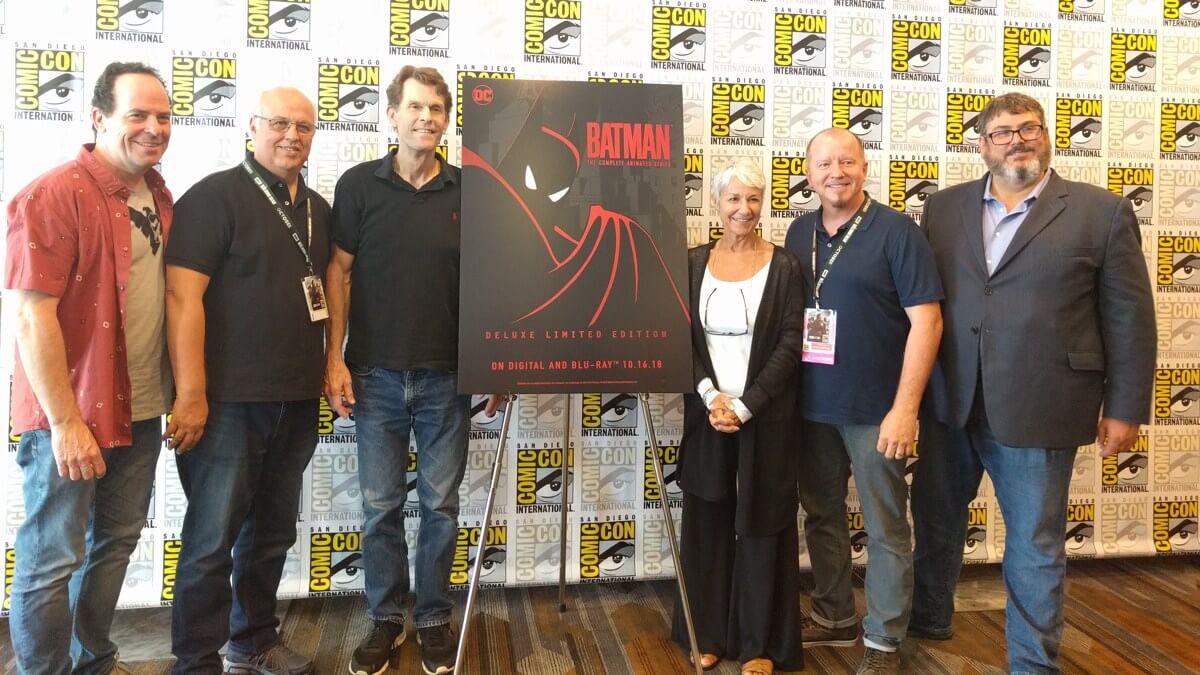
Andrea Romano

Having spoken to so many people involved in BTAS, it comes across that there was a sense of family to being part of the show’s cast or crew. Was that indeed the case?

Thank you for saying that; that’s lovely, that’s an incredibly kind compliment. I believe we worked so hard on it. When I say that, it’s not like we were struggling, it’s just we put our all into it. Number one, it was something new and different. Nobody was doing anything like this, there was nothing on the air like it. Number two, most of us were relatively early on in our careers and we were trying to find our way, to make a name for ourselves so that we could continue to work in this field that we really enjoyed. We worked especially hard and the results of it were so positive and so heart-warming.

I remember when we got some of the early footage back and we first got to see some of it, I thought, “This is remarkable. It’s beautiful, it’s feature quality, it looks like it should be in a theatre.” I loved the whole technique of the black paper to give it a much darker look for the backgrounds rather than using white paper and colouring it black. Black paper was the base and everything came off of that. And then, the whole visual helped us to create a vocal track that tied it all together. The actors, as they got to understand it more and more, we all worked incredibly hard to make sure that everything was good.

One example of how we worked so hard was most of the Automatic Dialogue Replacement that’s done after the fact. Most studios were doing what we call a library. That means we would do a session – and we did not do this for Batman – but we’d bring in, say, Kevin Conroy and have him do ten different sounds for throwing a Batarang. Then we would have him do ten different impacts getting punched in the stomach, ten different impacts of being hit with an uppercut to the jaw, ten different sounds of kicking. That would become a library. So, when the film was edited and the sound effects editors got into it, the dialogue editors got into it, they would edit some of those library sounds into the track. We didn’t want that, we wanted everything to be done specific to each episode and specifically to each action. So aside from any dialogue that we would want to tweak or any performances that we would want to tweak in ADR, we would do all of the fight stuff then. If Batman was climbing up a ladder, we would specifically do the sounds specific to that animation. That’s very time consuming and it’s expensive, but it totally paid off. It’s like individually scoring each episode. A lot of cartoons would do stock music cues. We didn’t do it that way, we would score each and every episode, which was marvellous and wonderful. There was a tremendous amount of time and effort and love put into this project. I think it totally paid off, and here we are 25 years later talking about it.

To those of us who watched BTAS when it first aired, as soon as you saw the opening title sequence you knew that this was something special. From being involved in the show, when did it first really hit home that you were making something so special?

I love to answer that. Part of my job was once a show was completely mixed and final – meaning the cartoon is done, it’s locked, that’s the cartoon that’s going to go out – I would get an advance copy and screen it in my office. I’d check the end credits to make sure the actors were properly credited with the voices that they did. I would watch the cartoon start to finish, before it aired, and make notes and make sure everything was all clean and clear. I remember watching the first several episodes and calling my staff into my office. At the time, I had about five people working for me at Warner Brothers, and I sat them down and made them watch those episodes with me. After the screening, I said, “We’ll be lucky if we ever get to work on a series as quality as this is.” As soon as the first episodes were final and able to be watched, that’s when I knew that we had a massive hit on our hands, that this was going to be evergreen, and it was going to be special to us working on it forever. I remember so vividly sitting my crew down with me and going, “You have to watch this.” They all were so impressed. They’d worked on little parts of the project, like issue payments properly and that sort of stuff, so they weren’t hands-on with the animation, and that made them a good audience to watch it. They were watching it fresh, and they were able to have the same reaction – which was, “This. Is. Crazy. Good.”
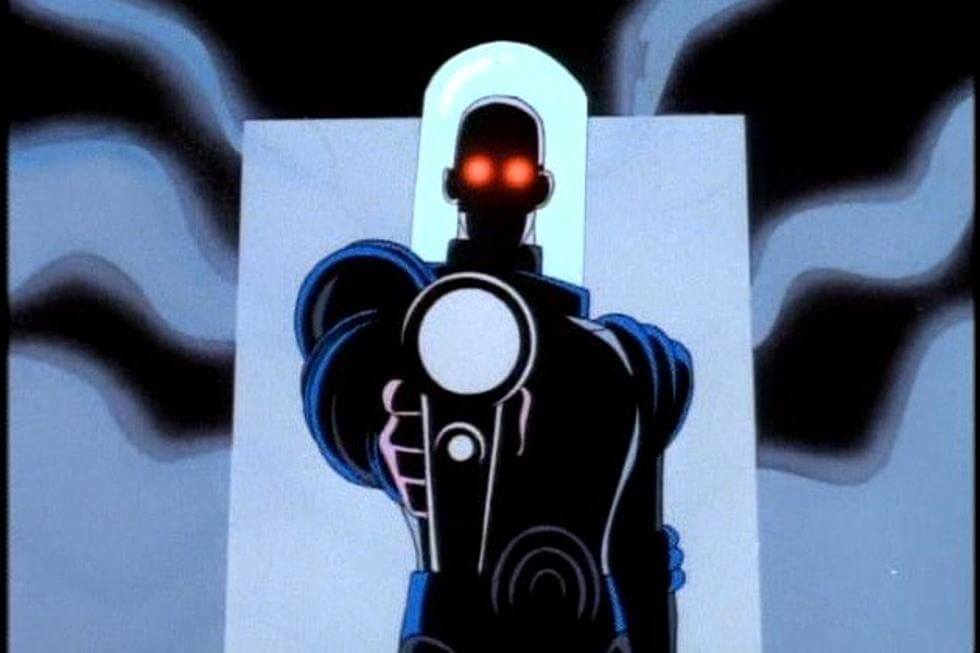
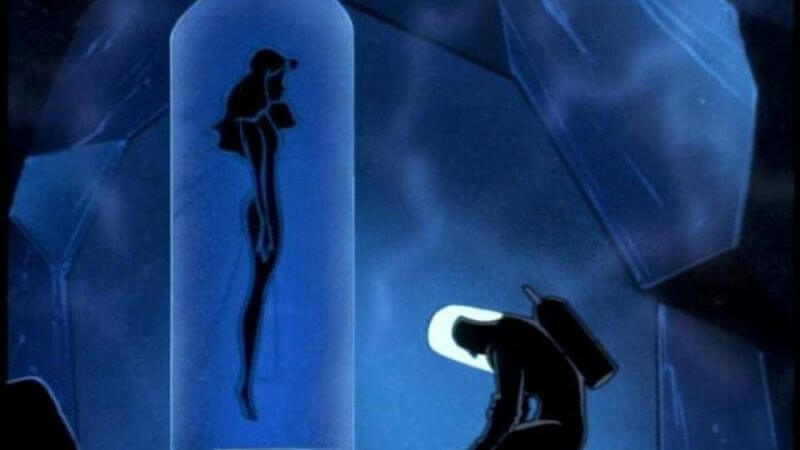
Batman: The Animated Series Heart of Ice Mr Freeze

What was it like as a casting director and voice director when you could take a B, C, or D-list character from the comics and transform them into a big-time player, a prime example being Michael Ansara as Mr. Freeze?

Those decisions, as to which characters would be animated and brought to the front, were done before I became a part of the process. I treated all of the characters as if they were all major characters, as if they were just as regular a cast member as Batman or Robin or Joker. They all got treated equally as far as who I was going to cast and getting the best performance from the actor for the role.

Michael Ansara is an excellent example. I loved his work. Again, it’s kind of a dream for me. There’s a publication called The Players Directory that’s like a big yearbook. It was a major directory of talent, and it would have a little photograph of the talent and their contact information. Say I was casting a villain, I’d page through it and see photographs of people that would remind me what their voice sounded like. I would go through the book and go through my lists of people who’ve been submitted and people I wanted to see, and there’s Michael Ansara. I thought, “Ooh, he would be a really cool Mr. Freeze.” He’s got a quality to his voice, a placement to it that’s really interesting. He came in and was cast, and I thought he did a terrific job. As we finished it, as we were getting towards the end of the recording session. We’d record a 22-minute episode in about 2 1/2 hours, but the Screen Actors Guild allows me four hours. At the 2 hour 15 minutes mark, Bruce Timm comes over and taps me on the shoulder to say, “The voice of Mr. Freeze isn’t working.” I said, “Okay, let’s keep Michael after, we’ll work with him on this. I know he’s the right guy for the role.”

Everybody else was released, Michael stayed after, and Bruce and Michael and I sat down together and talked about what we wanted Mr. Freeze to sound like. Ultimately what came through, what Bruce expressed, was that without deliberately creating the monotone, he wanted the frozen heart aspect of this character to come through vocally. So we played with Michael on several different options for the voice. Sometimes it came out kind of monotone and wasn’t right, but we just gave him a bit of time as an actor to process that information and to think it through. And then, he found this wonderful place which is what you hear now as Mr. Freeze. It is cold, it does have a detached sense to it, but how I think that works so beautifully is when you then do let him get emotional, when he talks about what happened to his wife. When he acts in Heart of Ice, it’s so touching, it’s so moving because this was once a man with very deep feelings and he had to get rid of those feelings in order to continue to exist – and then it became about vengeance. It was a very intricate process that 100% in my viewpoint paid off and just absolutely was the right thing to do. Michael was the right actor. Taking the extra time to find the voice for him was the right thing to do, and it was Bruce being articulate enough to describe what he was looking for. Without his [Bruce Timm’s] input I was actually happy with what we were getting, but I didn’t realise Bruce wanted to go one step farther and make this just a bit of a colder performance. Not that the actor didn’t engage, because he was incredibly engaged, it’s just we needed this to sound like a man who was once passionate but he had had that stolen from him. There needed to be a bit of resentment come through in the voice, there literally had to be a coldness in the voice, and I think he achieved that beautifully.

Even though it was clearly a Batman show, Batman: The Animated Series valued every single cast member and character and was never afraid to take the focus off of Batman in an episode.

Thank you for saying that. I think those were conscious decisions. Paul Dini and Bruce Timm and Alan Burnett and Kevin Altieri and Eric Radomski, they all made these decisions as to these wonderful characters that they would bring in. I had to use all of those gentlemen as professors, because they became my schooling. I’d say, “I don’t really know the backstory on this guy. What’s his deal?” They would give me a condensed version of why Mr. Freeze came to be Mr. Freeze, who Red Claw was, who was Dr. Kirk Langstrom. They would give me a really good bit of insight, and that would help me so much with the casting. The other thing, too, is I was open to any suggestions that they had. Sometimes they were spot on with their suggestions, sometimes they were way off the mark. I loved having their input.

I remember very well at the time we were casting, I went to a party at Frank Welker’s house. He was my client when I was an agent, so I knew him very well and he was a dear friend. I was at this party and Marc Singer was there. I had a good chance to chat to him – and what a nice guy he is! – and I said, “You know, I might have something for you on the Batman series. Would you be interested in coming in?” I reached out to him, found his agent, and ultimately cast him as Dr. Langstrom – a role he was terrific in. It would be as obscure ways of finding talent as that; as meeting them at a party. I’ll meet a lot of people at Comic Cons throughout the country and keep them in mind for other projects – be it John Noble or Michael Emerson, for example.
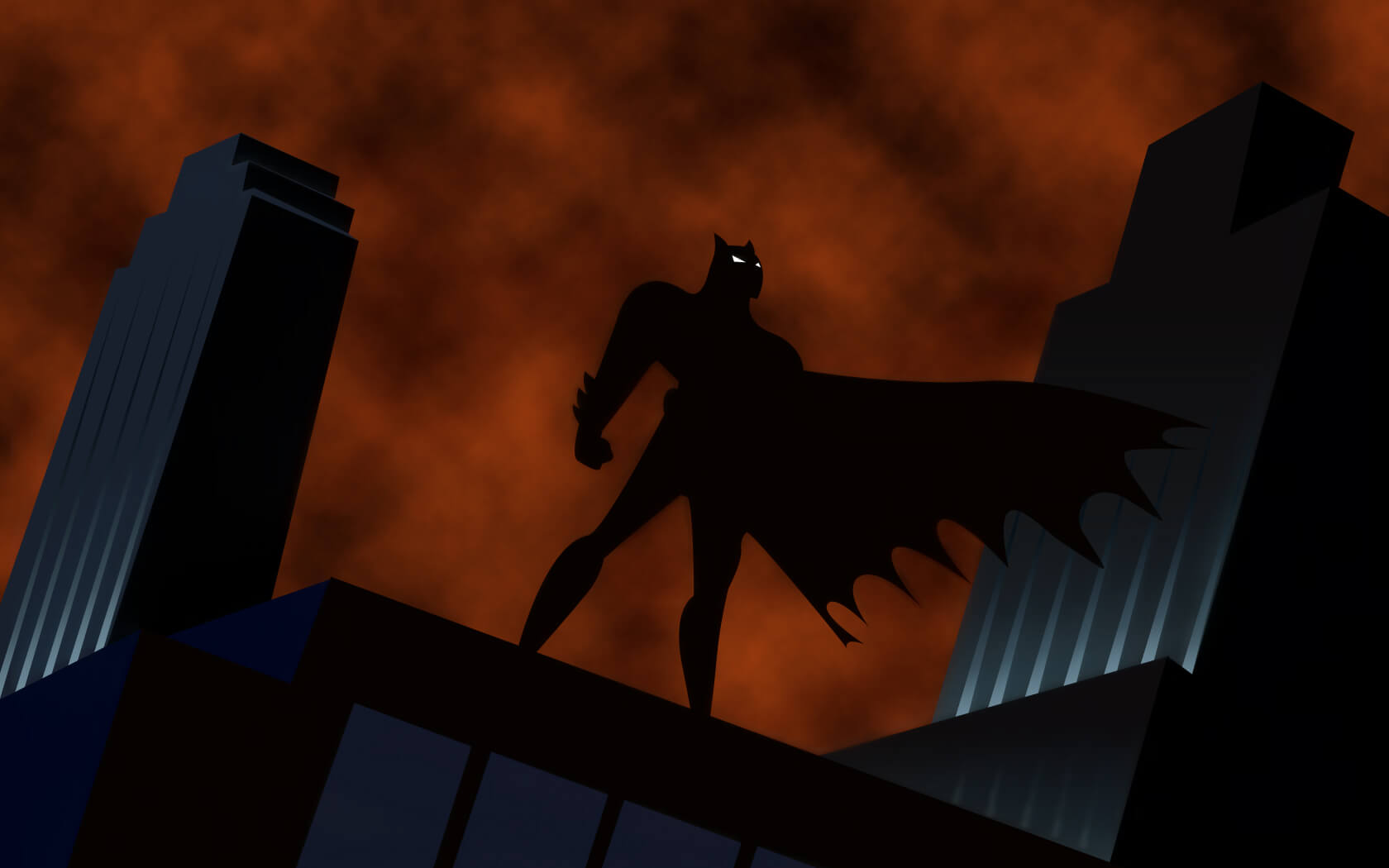
Paul Dini

Given the unique tone and style of Batman: The Animated Series, do you feel that the show could’ve been made in the way that it was were it not for Tim Burton’s 1989 Batman movie?

I think it probably opened some doors and it probably did make people a little more ready for it; it didn’t surprise them that there would be a true Dark Knight. Over the years I’ve gotten to know Michael Uslan, who’s a major influence on the Batman world. He’s been a producer on Warner Bros. Films for years. Really, why there is a dark Batman existing in a feature film is because of Michael Uslan. He’s written a wonderful book called The Boy Who Loved Batman. He tells fantastic stories about how it all came about. I do think that Batman did open the door for the audience being prepared for a less cartoony Batman than, say, the Adam West series. It’s so strange when you think of it. The Adam West Batman series was non-animated but very cartoony. Batman: The Animated Series was animated but not cartoony. I do think that people were more prepared for a dark Batman. I don’t know if it made any different in Bruce Timm’s conception of the series and how he was going to make it; I think he always wanted to make a true Dark Knight, too. I do think it opened the doors though, yes.

On the topic of Adam West, one of the greatest episodes of BTAS is Beware the Gray Ghost in which Adam played the Gray Ghost. I take it that his casting was a process you were involved in?

Heck, yeah! Number one, that was an excellent cartoon – I absolutely adore that episode – and I knew Adam West was absolutely the guy. I had known him from Hanna-Barbera; I had worked with him there. I reached out to him and sent a message specifically to him through his agent saying, “Here’s this remarkable Batman script. Here’s this wonderful character called the Gray Ghost. Please present it to Adam and let him know that I absolutely think this is such a wonderful opportunity for him to be able to sink his chops in to some real acting and let the world know what a good actor he is. But I want him to know that we are not making fun of his career by asking him to play a has-been actor, because none of us think of him as a has-been actor.” He sent back a message saying, “I love this role, I love that you thought of me. I’ll be there.” It was a wonderful mix of everyone agreeing he was the right guy, him himself thinking it was a good role, and the fans went nuts for it. Absolutely nuts for it. It’s a great cartoon episode on many levels; it’s a wonderful story, it’s wonderfully cast. It was also the first time Bruce Timm ever acted as himself and drew himself into the cartoon. And the truth of it is that Bruce Timm became a pretty good actor. It was a very special cartoon, I love it, it’s one of my very favourite episodes.
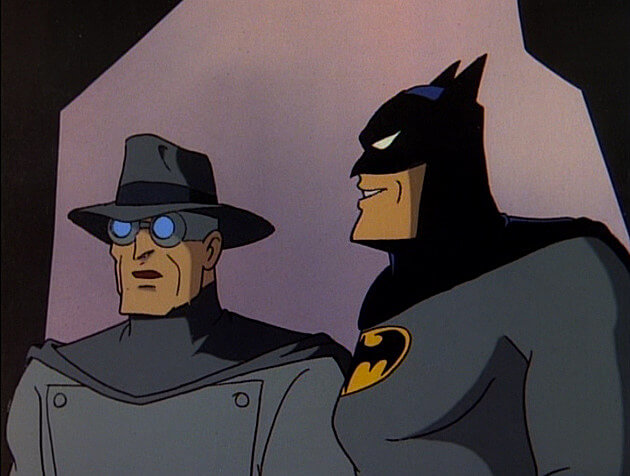
Batman - Beware the Gray Ghost

One of the most popular episodes of BTAS is ‘Almost Got ‘Im’. With that in mind, then, throughout your involvement on so many Batman projects over the years, was there ever a particular ‘one that got away’ when it came to a piece of casting?

I always wanted to work with Christopher Lee. I was very sad that I never got to work with him. I kept a wish list of people that I wanted to work with, and I got through most of them – which was glorious – but Christopher Lee was the fish that got away. It wasn’t that he didn’t want to come and play, it was that we never could make the schedule line up. However, who I wanted him for initially was Ra’s al Ghul. He would’ve been awesome, but we did get the brilliant David Warner instead, who I thought was an excellent Ra’s al Ghul. I loved working with David, and I was very sad when he decided to move back to England as it’s very hard to record with that many hours’ time difference on a regular basis. David did many series with me, he did Freakazoid! and a bunch of other shows. He’s just a wonderful actor. So even though I didn’t get Christopher Lee, I did get the awfully good David Warner.

You’ve mentioned about how this time in animation was a Golden Age, especially for Warners, and so many of the same creative minds were involved in shows like Freakazoid!, Animaniacs, Pinky and the Brain, and then Batman. How much fun was it to be a part of that group?

Because most of us began at Hanna-Barbera and broke off and formed Warner Bros. TV, we knew each other. Then, of course, we had to get artists and writers from all walks of life to put this together, but it was a baby company. Warner Bros. TV Animation was in its infancy, it was brand new. We knew there was a responsibility to do good programming, to not drop the ball, to make a special reputation for this company. Many of us were huge fans of the classic Warner Brothers cartoons; the Looney Tunes and various things that were made back then. We all were Hanna-Barbera fans as well, but that was more limited animation. What happened with Warner Brothers, we went back to more expensive cartoons. Hanna-Barbera used, I think, ten frames per second. That was very limited animation, but it was fine for the style and the time. We were spending many hundreds of thousands of dollars an episode on Batman: The Animated Series and Animaniacs and Pinky and the Brain. But we weren’t just spending money, we were spending money so that we had special cartoons. The proof was in the results.

When I go to a Comic Con, people come up to me and say, “Andrea, I grew up during the time of Animaniacs, Batman: The Animated Series, Justice League, and you absolutely affected my youth. You were in charge of babysitting for me at 3 o’clock in the afternoon when I got home from school.” I couldn’t get a greater compliment than that; that made me so very happy. I think it was because all of us knew we had a responsibility here, that it was not just a job. We were trying to have a career, and we all wanted to make cartoons that we wanted to watch; cartoons that would engage us. You can walk through the halls of Warner Brothers at 10am, and you could walk the halls at 10pm and see almost the same people there. All of us would stay late to make sure that the work we were doing was exceptional, that it was better than anything else that was being produced. We were really trying to make a mark for ourselves. We were all relatively the same age – which was young – and we all wanted to create a basis for a major career. And most of us have gone on to have substantial careers in the industry. I think that worked for all of us at the time, and a great deal of that credit goes to Jean McCurdy and to Tom Ruegger and to the various people who were there at the very beginning who helped Warner Bros. Animation become a major player in the field.
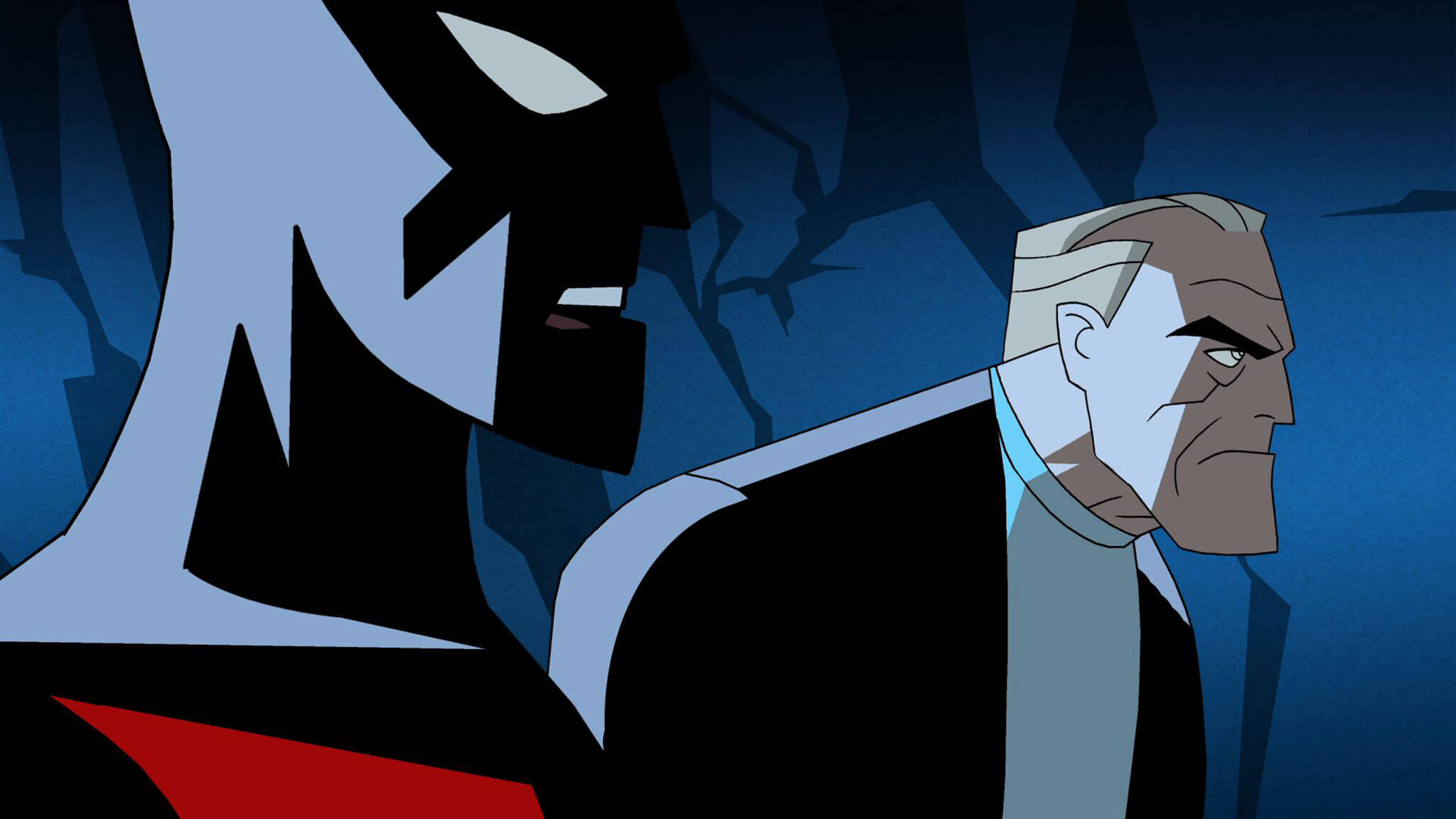
Batman Beyond

From Batman: The Animated Series, the show was brought back as The New Batman Adventures and then Batman Beyond. How was that change to be involved in?

For me, The New Batman Adventures didn’t make any difference in my job. Batman Beyond, however, was such a cool series. I’m surprised it hasn’t gotten more attention like Batman: The Animated Series did. I think it will have its time; it’ll come back around and people will embrace it. It was such a wonderful way to move the property forward so that it wasn’t just the Batman that everybody knew. This was a new, young Batman. I loved the fact that we were able to keep Kevin Conroy as Bruce Wayne. I thought that was awesome. It was a wonderful way to keep a continuity of sorts with our Batman projects. Then finding Will Frielde – who was such a lovely actor and totally in to what it was that we were doing – now we could look for a much younger base cast because they were high school students. When you’re doing that, there are a lot of adult actors who can do those voices convincingly. Then you can also hire some teenage actors, hoping that their voices don’t change so drastically that they no longer sound like teenagers. But the villain casting was also challenging and wonderful.

There was one period of time, right about the time that Batman Beyond was coming around, where I was casting and directing eleven series. That was just obscene, ridiculous. I didn’t sleep but I loved it. I realised that by being so busy I might not really be doing the best work that I could. For a period of time, Leslie Lamers assisted me in casting Batman Beyond. She was the casting director on the credits, but we always worked together in making decisions. You don’t ever cast in a vacuum; you always have the producers have an input on what you’re doing. But she helped us find some great people for that. I loved that, too. I thought Batman Beyond was a great new incarnation of the Batman property.

When putting together Batman Beyond, how hard was it to disconnect from what we’d seen in Batman: The Animated Series?

You can’t help but make comparisons, and you don’t want to repeat yourself. You need to make sure that people watching the shows aren’t going to get the same actors on Batman, on Batman Beyond, on Justice League. They need to get variety there, especially in the guest casting. You don’t want to cast someone as the same kind of character. Even though they might be doing the same sort of voice, you don’t want to repeat yourself. You want to keep it interesting for yourself as well as the audience. So there was a conscious decision to not use the same people. There are so many people now. There didn’t used to be this many voice actors, but now they all want to do voiceover as they know what a cool gig it is, how much fun it is, and a lot of on-camera actors want to do shows their kids can watch.

They may be on a show like CSI or a show that’s relatively graphic – the kids shouldn’t really be watching those shows with them – but shows like Batman: The Animated Series or Batman Beyond or any of those kind of shows, because it’s a cartoon, because it’s animated, those are the shows they can sit down with their kids to watch. Also, their kids may not care about their on-camera work; they couldn’t care less that their dad’s a big star on Bones or whatever. But tell them that they’re coming in to do an episode of Batman and the father is now the hero of the household. An enormous number of on-camera actors came to us and said, “What can I play? Just find a role for me.” So a lot of the Batman Beyond people came from that. Agents would call me up or email me with a list of actors who had come to them – their own clients – to say they wanted to be a part of the Batman world. Batman Beyond skewed for a slightly younger audience. We wanted to get the college students and teenagers to watch that, but I don’t think we lost any of the adult audience, too. It was still top quality, it still was compelling. I love the animation style change for Batman Beyond. It wasn’t massive, it was subtle, but it was really good. You knew if you tuned in in the middle of an episode, you knew it wasn’t a Batman: The Animated Series episode, but you knew you were still in that world. I think Bruce Timm did a wonderful job with that.
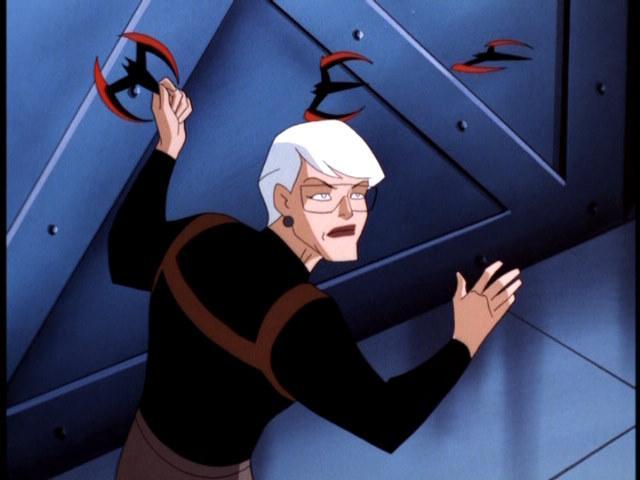
Batman Beyond

Bringing back Kevin Conroy for Batman Beyond was a masterstroke in terms of continuity, but was it ever considered to bring Tara Strong back to play Commissioner Barbara Gordon?

Commissioner Gordon, who Angie Harmon played, we had cast Stockard Channing in that role. She ultimately chose not to do the show and was now unavailable. We got Angie Harmon because we just liked her voice so much. If you remember what the character looked like, she’s considerably older. That’s not Tara’s strong suit; older women is not what Tara does the best. Even though she’s not a teenager, she does all that stuff brilliantly; she does really young voices brilliantly. If I were to show her a picture of Barbara Gordon as we did her in that series, at that time I don’t know if she could’ve done a voice that had enough age and gravitas to it to do that. There’s no question in my mind that she could’ve handled the acting, but this is purely about the vocal sound and the vocal quality of her voice. I don’t think she could have sounded old enough to cover the character that well. You never want to put somebody as talented as Tara in a position where she’s improperly cast, where she doesn’t sound right. You want to make sure everybody’s cast properly. I’ve hired Tara so often in my career, I adore her, and you kind of get protective like a mother hen. Every time I hire her I want to make sure it’s for the right character, and I did not think she was the right person to voice that character.

In the case of Tara Strong, she’s one of the most prolific voice talents out there, although Barbara Gordon is the one role where it’s actually her natural voice. When someone just has that voice as their natural voice, does that make the casting decision a little easier?

Although that may seem like it should be easy, it’s actually very hard. To get people to actually play themselves, using their own voice, especially someone who is a multiple-voice actor, who’s known for being able to do tons of different voices. I don’t mean this in any sort of negative way, but to not hide behind the character, to really have to reveal yourself because you’re using your own speaking voice, it’s very hard for some actors. She did it beautifully. What made me laugh about her audition, I think she thought that because it came easier to her to just do her own voice that she wasn’t working hard enough, and therefore didn’t deserve it. I always laugh because when things are easy for actors they don’t trust it. They assume that everything’s got to be hard. It’s my job to explain to them, “Just because it wasn’t hard doesn’t mean it wasn’t good. What you’re doing, Tara, using your own voice and just acting is exactly what we needed for that.” After an episode or two she was totally fine with it, but I remember the instance where she was, “Are you sure you don’t want me to put a tweak to it in some way?” “No, we just want your voice acting.” The reason she got cast is because she’s just such a good actress. Her voice was there. We cast her because we knew she could handle all the impact stuff, all the high energy stuff, all the intimate stuff. She’d be able to handle the acting with that slightly elevated cartoon energy. It’s very funny that actors, if you don’t beat them up enough, they don’t feel like they’re doing their job right.
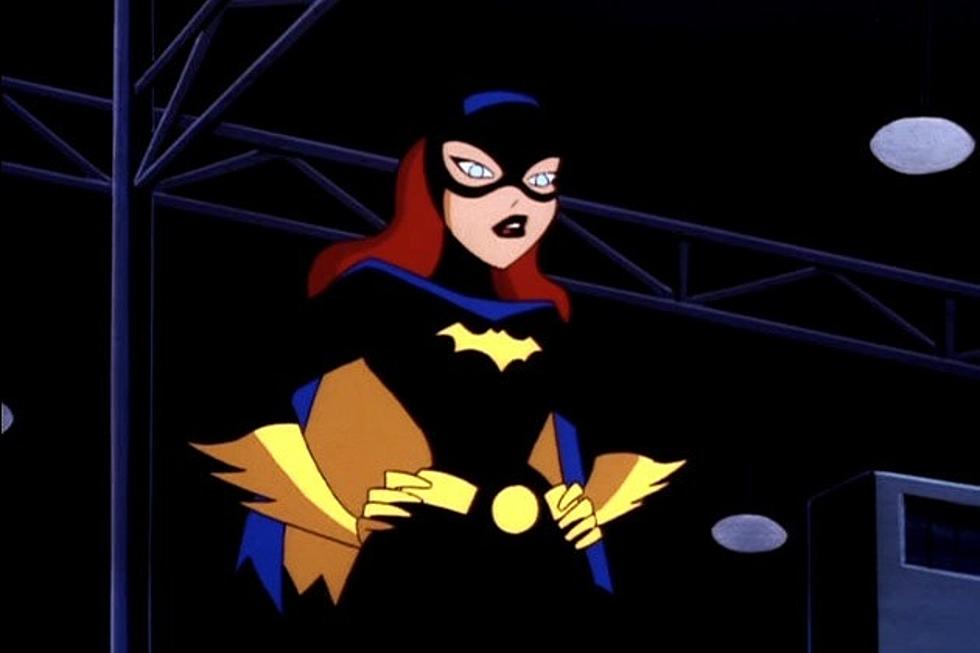
Tara Strong Batgirl

As a casting director and voice director, how satisfying is it for you to know that so many generations still hear the voices of Kevin Conroy, Mark Hamill, Loren Lester, Tara Strong, etc when they read the Bat-books of today?

When I would prep a script that Batman, Joker, Batgirl or any of those characters would appear in – whether it was meant to be cast as Kevin Conroy and Mark Hamill and Tara Strong or whomever – those are the voices I heard in my head when I prepped the script. I can’t help it. For me, they are the voices of these characters. That’s not to say that the other actors who’ve played these roles haven’t done stellar jobs, it’s just that for me and for many, many people, Kevin Conroy is Batman, Mark Hamill is The Joker, Tara Strong is Batgirl. They made such an imprint in my mind as to what those voices are and what they should sound like, that anything I read, those are the voices I hear in my head.

Just as you said, everybody tells me the same thing – they all just hear that. Again, I don’t want to speak ill of any of the other actors who’ve played these characters – they’ve been awesome, they’ve been really talented and really good – but whenever I’ve been brought a job that Batman was in or Joker was in, my first question would be, “Can I use Mark? Can I use Kevin?” Often times they would say, “Yes,” and other times they’d say, “No.” At times the no was because they wanted to use a completely different animation style, and with that different style they wanted a different voice to go with it. Because I’m a freelance voice director and freelance casting director, I could just say, “Okay, you know, I’m just not that interested in doing that.” Other times I’d look to recast it, but sometimes it was hard to recast it. After a while, it would be very hard to finally get another Batman. Several years ago, at a Comic Con I was at, somebody came up to me and said, “Andrea, do you realise that on all the different projects you’ve worked on, you’ve cast Batman seventeen different times?” By now, I’ve probably cast him another ten times since that. It gets harder every single time, because you’ve used up a lot of the different actors who would be good as Batman. It was hard to cast in the first place, and really hard and kind of heartbreaking to recast because it’s Kevin that I hear. He is my Batman.

Given how many different incarnations of Batman there have been in both live-action and animation over the decades, it’s a true testament to Kevin Conroy how people see him as the definitive Batman, period.

It makes me feel fantastic that, for many people, Kevin is the ultimate Batman – live-action, animated, either. There were times when people would bring me an article or review about one of the features, and it would say, “Why do they not pay attention to what Warner Bros. Animation are doing with the Batman character, with the voice, with the animation, with the stories? Why are they not going more that way?” That is a very high compliment. Often times people would mock Christian Bale’s vocal performance as Batman, and again they’d say, “What Kevin Conroy’s doing, do that!” I take that as a compliment, but I don’t want Christian Bale to be insulted because he works really hard and he’s a terrific actor. I’m very complimented when people say that, for them, Kevin is the voice of Batman, as he is for me, too.
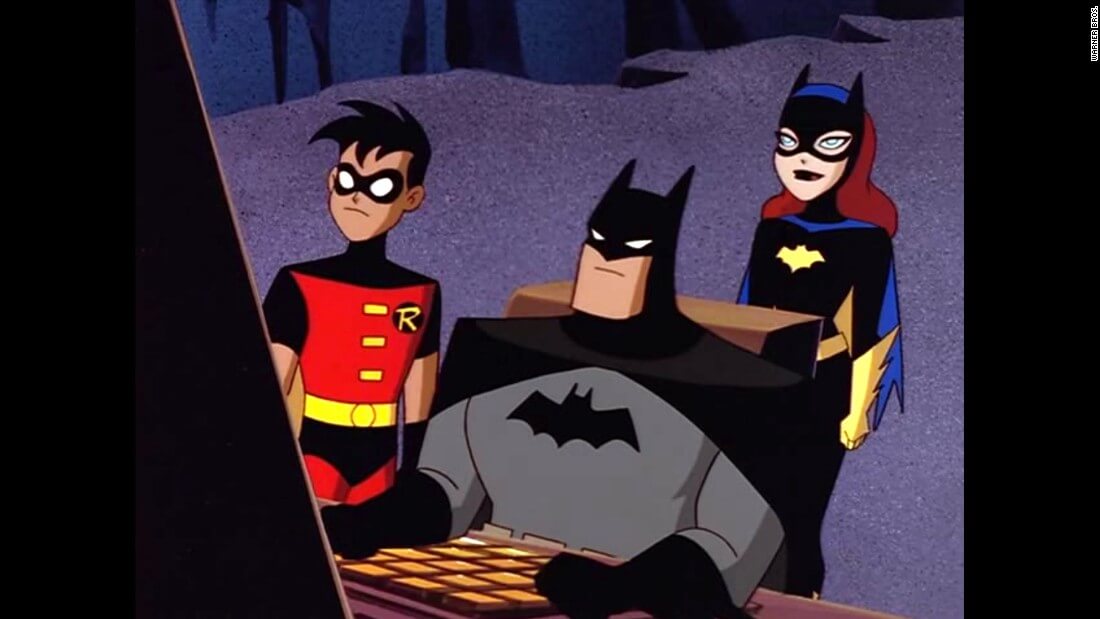
Batman Robin Batgirl

Similarly, many view Batman: The Animated Series as the definitive Batman world. Is that something you’d agree with?

It is for me, but I’m being very selfish when I say that. I think that Batman is one of those characters where whatever your first contact was or what you saw the most is important. if you were a 10-year-old boy and you read all the Batman comics, that’s probably your favourite Batman. If the Adam West series is the first Batman you ever saw and you watched that over and over again, that may be your favourite one. For me, even though I did watch the Adam West series, I certainly wasn’t as engaged as I was with Batman: The Animated Series. It’s very, very personal to me, because a big part of what I wanted to do with this series was make it accessible to women. This could have been a very male-oriented series, it could be made just for men, but I didn’t want it to be that way; I wanted women to find something that compelled them to watch this series, too. I wanted Batman to be attractive, I didn’t want him to be just a fighting machine. I also didn’t want Bruce Wayne to be just a foppish womaniser. I wanted us to see the human side of Bruce Wayne, the damaged side of Bruce Wayne that women always want to try to repair. And I also wanted the action and the storylines to embrace women’s mentalities as well. Not just a male-orientated show, but a show that women could watch and enjoy.

There were very few women on the crew, so I would try to throw in those notes and that input into the meetings. I’d say, “Can’t we have that be a female character? Can’t we be a little more sensitive to what a woman is going to react to when she sees that?” I found that to be a very important part of how I wanted Batman: The Animated Series to be viewed. I think a lot of women liked the Adam West series because it was light and had a lot of humour to it. It was fluff. This, we were taking far more seriously in terms of material. I wanted to make sure there was something for everyone. There’s some really scary stuff, some really violent stuff in it. I think there was only one episode that ever showed blood, but there’s an awful lot of assumed and real physical violence. For me it is the ultimate Batman.

I’m not dead yet, and they’re still making Batman stuff, so there may be something else that comes out that’s even better, but for me it seems to be the one that covered a larger group of fans; fans from all walks of life seemed to relate to this particular cartoon. Even people who didn’t typically watch cartoons watched this series. I think it brought them back in to animation. I think that was a big time for people to go, “Oh yeah, I remember animation. That was kind of a fun thing to watch when I was a kid. Maybe I’ll start watching it again, maybe I’ll start watching it with my kids.”

Having worked on so many episodes of so many various Batman projects, is it possible at all to even have a favourite moment, scene, or episode?

I truly do think Beware the Gray Ghost is right up there. That’s so good and so touching. The other one I really like is Perchance to Dream, the Mad Hatter episode. That was a two-parter that was crazy good. Like, really, really good. The truth is, we made so many and I haven’t had a chance to go through and watch very many episodes recently – and I’m sure there are others that come up – but there’s just so many. I loved Robin’s Reckoning, the original Robin’s story, when we find out how he became Robin, how his parents died.

Robin is such a fascinating character, regardless of who has that mantle, and Batman: The Animated Series had a huge role to play in making the character seem credible to mainstream audiences who had maybe viewed him as a joke figure.

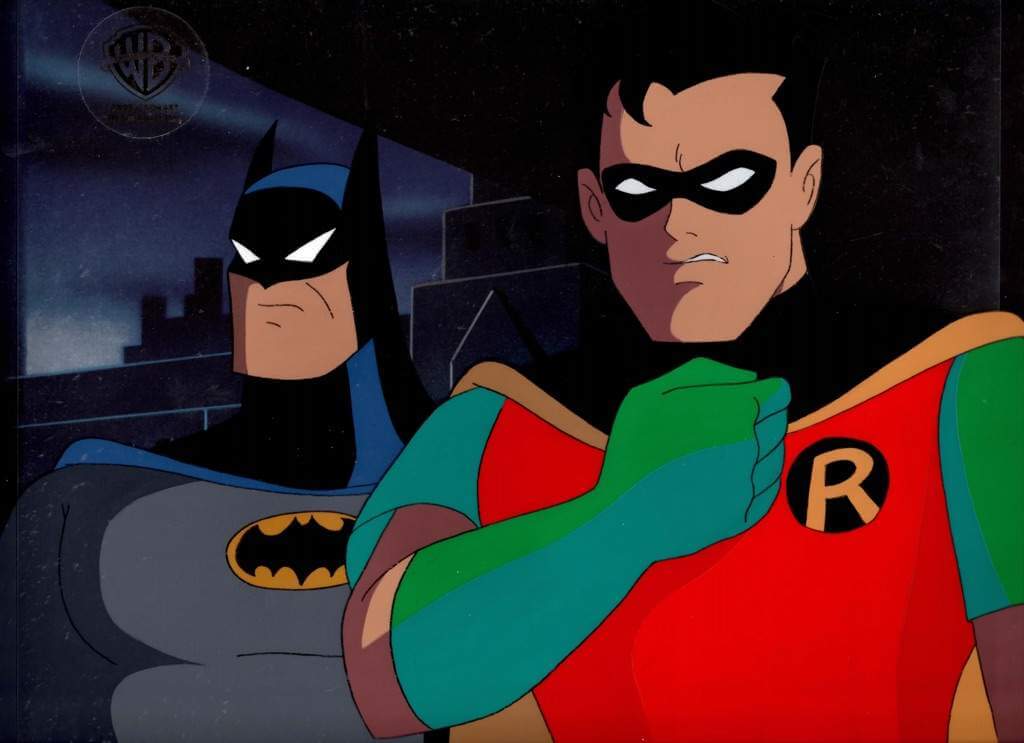
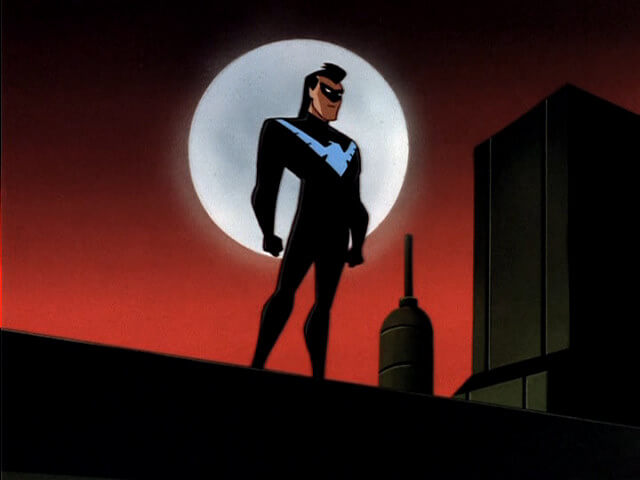
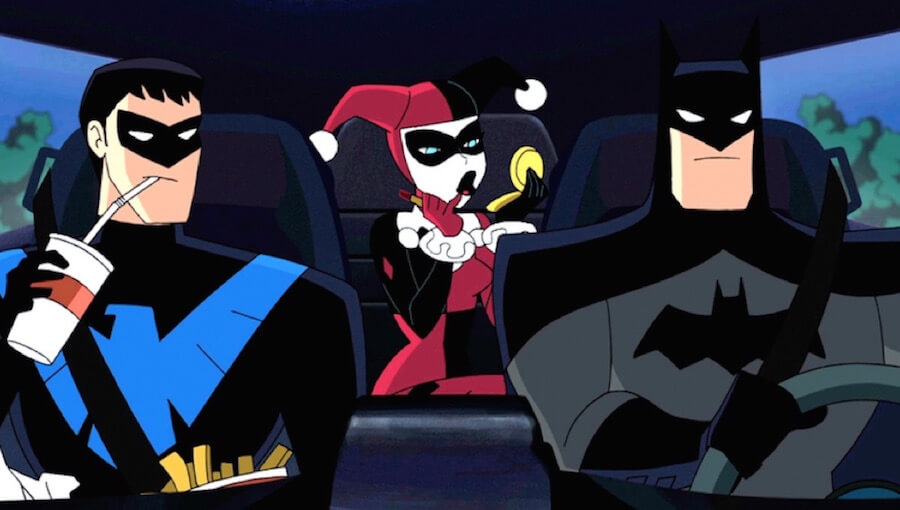
We were lucky in finding Loren Lester to play our first Robin for us. We were so blessed because that easily could’ve gone to a real kid, in which we’d have then had to recast as the voice changed. Loren Lester was a grown man with a very youthful sounding voice. Even today he can do that voice perfectly, and that’s wonderful to keep that continuity and to also work with an adult actor who’s got all those years of experience and can draw on all his acting from those years. That’s a really wonderful thing. Then, we had several different incarnations, of course, of Robin, and I’ve always been just a huge Nightwing fan. I think Nightwing is a fascinating character and I wish they’d do something that focuses more on that character. I love that character, I love his costume, and he’s just a character that’s yet to fully be explored – and I wish they’d take advantage of that.
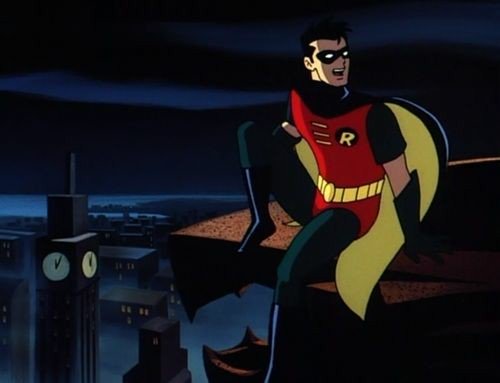
Batman: The Animated Series

The transition of Dick Grayson from Robin to Nightwing was handled brilliantly by Batman: The Animated Series and The New Batman Adventures, making him feel like his own man without it feeling too cheesy or too angsty.

Yes, and I loved that. You have to credit the actors, because they really made that work, they really did such a good job. It was a joy to direct them through these scenes. This was so organic, so real, so clear, and it feels like it’s truly happening because these actors are acting it so convincingly. It feels like these two guys are never going to speak to each other again – or at least for a while – and that was really, really cool.

The same can be said about how you brought Batgirl into the fold. How did you go about establishing that character as a truly massive deal and major player from the get-go?

Well, we have to care about her. Usually what would happen is you would have to put them in jeopardy. She’s a person who’s not just a superhero, she’s got a life, she’s got a father who is a very crucial figure in this world, a father who if he knew what was going on would not be happy about what she was doing. When we first meet her, like most teenagers, she’s finding a way to rebel against dad in her own way. Then we put her at risk and we have a part where she could get really hurt. We’ve got her dad worried about her, we’ve got Bruce Wayne worrying about her, but she’s strong and tough and independent. I think the way to make the audience care about a character is that when you write for her you write her as a sympathetic character that you can relate to – someone who has problems just like you have – and then you put them in jeopardy. You see them come out of that jeopardy and you find them doing the right thing, making the right choices. You give them options for choices where they could conceivably make a mistake and turn to the dark side, or they could make the right choices and continue on to make the world a better place and their lives better.

I think that a big part of what happens with a character like Batgirl, is you care for her. A lot of the villainesses get short shrift. We don’t know much about Poison Ivy, we don’t know much about Catwoman, we don’t know much about their backstory. Fortunately for Barbara Gordon, we get to know a bit about where she comes from, we know about her father, we know about her family. That helps us know her as a human being before we know her as a superhero. Plus you hire a really good actor [laughs]. They play to the heart, they play to the things that matter, and then when you put them in jeopardy you’re more concerned about them. You care what happens when they go out on a mission, and you care that they come back from that mission safe and sound.

With Batman: The Animated Series, the show was never all just about Batman. One other key figure that you touched upon there was Bob Hastings as Commissioner Jim Gordon. How important was that character in holding this entire world together?

I totally agree. I think Commissioner Gordon has to be someone who’s sort of the liaison between the Average Joe and this superhero. He represents all of the Average Joes, but he’s got a responsibility to reign Batman in as well. You don’t want Batman to go rogue, you need Batman to have some kind of authority figure over him. At this point there’s no Justice League, there’s nothing that’s keeping any of the superheroes or villains in line, so Commissioner Gordon has that responsibility and he’s got that love/hate relationship with Batman. He doesn’t really 100% trust him and it takes a long time before he was willing to call Batman in with the various problems. I love Bob Hastings, a wonderful actor, a lovely man, and what I liked so much about using him on the series was he has what we would call a voice with character. Meaning he didn’t really have to manipulate his voice in any sort of way – he’d just use his own voice – but his voice has some recognisable qualities to it, which is very cool. Even if you heard the voice off-screen without seeing him, you knew it was Commissioner Gordon. I loved that and I thought he brought some great acting chops to all the Batman stuff that we did. I just loved working with Bob.
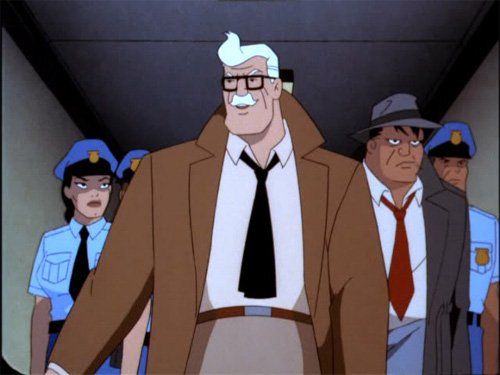
Batman: The Animated Series Renee Montoya Jim Gordon Harvey Bullock

Again, Batman: The Animated Series gave a certain sense of gravitas to Jim Gordon, particularly as audiences were used to Neil Hamilton in the ‘60s show and then Pat Hingle in the Tim Burton movies. BTAS made people care about Gordon.

Thank you, that’s so great to hear you say that. I think specifically with Commissioner Gordon, by adding the character of Harvey Bullock, we let him [Bullock] be kind of the jerk who would be flying off the handle – “Why the heck do we need Batman? Batman’s a criminal.” We let Bullock take on that attitude so that Gordon could be more sympathetic and could be someone who grew to rely on Batman a little bit more. I thought that was a very smart bit of story writing, whether it was Bruce’s idea or Paul Dini’s idea or Alan Burnett’s idea. I don’t know whose idea that was, but I loved bringing in that character of Bullock. Not that we hated Bullock, but you could look at Bullock and go, “What a jerk he is! Why can’t he see what good things Batman is doing?” That meant Commissioner Gordon didn’t have to have all of that bad stuff coming his way. It was more reality. It was more like what existed in real life, where there’s always going to be that one jerk who, no matter what good is being done, he’s always going to hate the person doing it.

There have been several different animated incarnations that have followed Batman: The Animated Series, both in terms of TV shows and movies. Even something as great as Peter Weller in Jay Oliva’s The Dark Knight Returns or Ben McKenzie in Lauren Montgomery and Sam Liu’s Batman: Year One, there’s always that first 5 or 10 minutes where it takes you a while to get over that this Batman isn’t Kevin Conroy. How is that process from your viewpoint?

They have to win you over. I have to tell you, I thought both Ben and Peter were excellent as Batman. They were excellent actors, they were excellent characters. I think Kevin Conroy could’ve easily played the Dark Knight in Jay Oliva’s two movies, I think he could’ve pulled that off, but I loved having Peter Weller. I was delighted to work with him and I thought he did a stellar job. I don’t know if Kevin could’ve pulled off the young Batman that was needed for Batman: Year One. It’s hard to convincingly, honestly sound younger without it sounding somewhat manufactured. It’s pitching the voice a little bit higher, it just requires a different kind of actor, and I think very often it comes off sounding fake. So rather than that, I found hiring Ben to come in and play – and I love Ben, he’s a wonderful actor and I thought that movie was fantastic – but you’re absolutely right in that it takes all of us a few minutes to get over that it’s not Kevin Conroy. Even when I’m directing, the first lines of dialogue coming out of an actor’s voice, I have to fight to hear that actor and not hear Kevin Conroy. I have to listen, listen, listen to what that actor is doing, where he’s placing the voice, and remember that this is a different interpretation, this is a different actor, don’t hold it against this actor, let him do it his way. That’s really hard because, for me, Kevin is Batman. Again, I want to say this over and over again, all of these other guys were really fantastic. It’s just kind of like your first love. Nobody is going to live up to that. He was my first Batman, just like my first boyfriend.

I did always feel like I was cheating on Kevin [laughs]. It felt like it was my marriage and I was cheating on my husband. There was always that weird thing, but it’s my job to get the best performance out of whomever they – “they” being the powers-that-be – tell me I’m using. Because I’m a freelance director, I could choose not to do it, I could say, “I don’t want to do this one, I don’t think it’s a good idea, I want it to be Kevin Conroy.” I just always try and do my best work, regardless, but there always was a big guilt in the back of my mind saying, “But you’re not using Kevin Conroy. You’re cheating on your husband.”
Kevin Conroy Batman

Why do you think that people still hold the show to such a high pedestal to this day?

I think people still relate to Batman: The Animated Series because it was well written, it was very well acted, it was beautifully drawn, it had fantastic music, and it touched people on a deep, emotional level. It wasn’t just fluff, it wasn’t just entertainment, it was something that made people feel like somehow they were a part of that world and somehow Batman could make them be better. Batman could make them feel better, Batman could make them be better people, because Batman is a human superhero. He has all the faults that humans have, he can make mistakes, he can make a bad judgement, and yet ultimately he makes the right decision and it works out for the best. I think that all of us being aware of the fact that we are flawed, that we can make a bad decision, but that ultimately that we can fix it, make the right decision and make things right, is something that we all see in ourselves and in Batman. And therefore it makes it relatable for all of us. It’s a beautiful series to look at, it’s entertaining to watch, and it means something to us.

As well as Batman: The Animated Series, you went on to work on Superman: The Animated Series and then Justice League. Was there ever that worry for you of whether those shows would be as good as BTAS?

I tried not to put that pressure on myself. All I could do was the best work that I could. And Superman was meant to be an entirely different tone to Batman. While I embraced that and was happy to do it, as a personal preference I liked the dark Batman tone. I also liked the fact that Batman was human, that he could make mistakes. Superman, for the most part, unless he’s under the force of Kryptonite or something, he’s pretty much always going to make the correct decision; his action is always going to be on the side of what is morally correct. Batman could just get angry enough that he makes a mistake, that he has a kneejerk reaction. That’s interesting. It’s not that Superman isn’t interesting, it’s just there’s something about that fine line that Batman walks on what is just and what is revenge. I liked that. But I liked Justice League so much because it married those two; it married Batman’s darkness and Superman.

With Justice League you have all of those characters who are in between and are so wonderfully played. Whether it’s Wonder Woman or Hawkgirl or those various characters, they were all so great. Working on Batman and Superman first gave me a lot of good experience that I could go into a show like Justice League and not be overwhelmed by all of those characters that I had to meet. Then you get a series that’s completely different like Batman: The Brave and the Bold, where it’s still Batman but it’s a completely different tone. That was really fun because it was so different that I didn’t really have to worry about honouring the other series I had done; we were really going in a different direction. Although there were certainly serious moments, the entire overall tone was completely different. Casting characters really was not a problem, because I was casting completely different characters. He may be called Batman but he’s unlike all of the Batmen that we’d met before.

I think there was an incentive to do something a little different for everyone. For some people, they wanted more towards that Adam West, goofy type of Batman product. I think Brave & the Bold supplied those people with what they wanted. That’s not everyone’s cup of tea, though. Some people wanted the really, really dark Batman. Other people wanted something in between. We made many, many different incarnations of this character, so hopefully everyone got the chance to see what they wanted to see. I directed, I think, 25 of the direct-to-home-video movies, and there’s a bunch of different Batmen in those, a bunch of different energy, a bunch of different styles, a bunch of different scripts. Somewhere in all of these projects I’ve worked on, I hope most people who are Batman fans found a Batman that’s relatable for them.
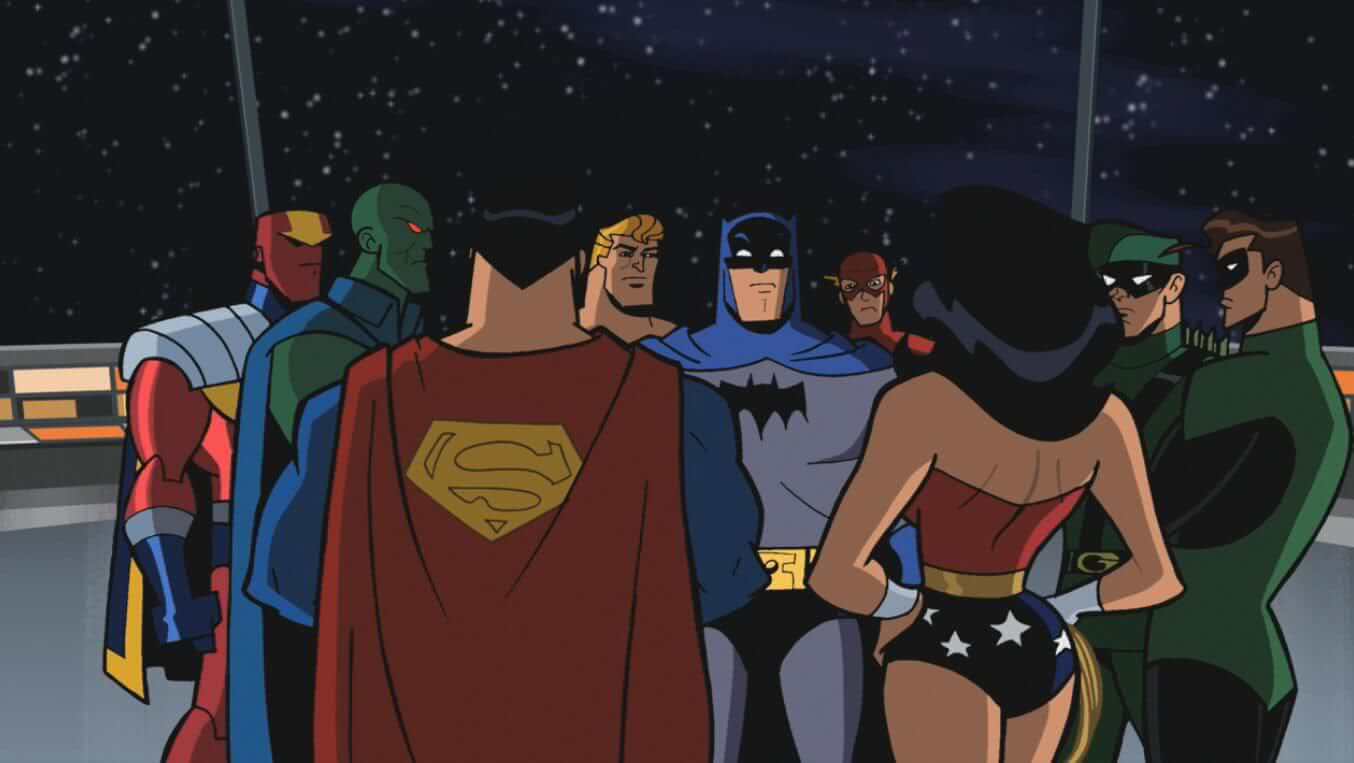
Batman Brave and the Bold

Of those various movies, is there one that stands out as your true favourite?

I loved Under the Red Hood. I thought it was really special and different and wonderful. I say that, and then I adored Mask of the Phantasm, the very first one I ever did. I loved Under the Red Hood, though. I knew nothing about the story until they sent me the script. Then, I just wanted so much to do a good job on that. Not that I didn’t want to on all of them, but that one touched me in a very special, human way. I was in the studio with the actor who was playing young Robin, Jensen Ackles. I’ve always been a director who doesn’t ever expect an actor to do something that I’m not willing to do. So, when I knew I had to get him massively involved emotionally in the scene where he says to Batman, “Why didn’t you kill The Joker?” I went in to the studio with him so that he wouldn’t feel alone during his acting. I was there with him and the two of us cried together. I mean, I cried silently so that my crying wasn’t on the mic, but I wanted him to know it was okay to lose it so much emotionally that it would move him to tears. I love that he was willing to go there. We did a handful of takes, and I don’t know whether the most weepy take was chosen, as Bruce Timm often pulled back a little bit on some of that emotional exposure, but I loved that emotional depth to get some of these stories across. Then I loved Mask of the Phantasm. That’s not one of Bruce’s favourite movies, but I loved it. I really, really did.

And in Under the Red Hood you go to cast John DiMaggio as The Joker, which must’ve been a whole lot of fun?

John had been a very, very experienced voice actor when I cast him, but then he told me later how incredibly nervous he was to play that character as he wasn’t sure he could do as good a job as he thought I expected from him. But I knew he could do it, that’s why I cast him, and he did a stellar job. It always surprises me when actors with massive experience get nervous. I get that we all get nervous in our jobs because we want to do a great job and want to do service to what we’re being asked to do, but I loved his humility in saying he was nervous about doing a good job.
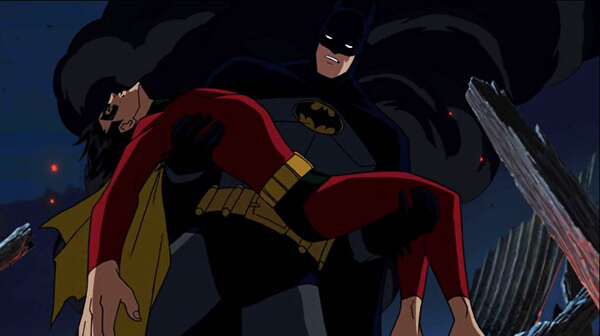
Batman Under the Red Hood

Given how synonymous certain actors were with certain Batman roles, was there often any trepidation from voice talent who were coming in to take over, for example, from Kevin Conroy as Batman or from Mark Hamill as The Joker?

Michael Emerson, the wonderful actor from Lost and Person of Interest and Arrow. I hired him as The Joker having met him at a Comic Con. I just walked up to him at a party there and introduced myself, saying, “I direct a lot of the DC properties, would you like to play?” So I hired him as The Joker. He was in New York at the time, I was in Los Angeles, but we had a camera on him and a camera on me so that we could see each other. We recorded the initial record, then the animation, and it was excellent. The animation went away and it came back eight or nine months later, recorded the ADR the exact same way. I said to him, “Thank you so much. I’m so glad that you came to play. You’re wonderful, you’re a wonderful Joker.” And he said, “This is the hardest work I’ve ever done.” That is so interesting. I knew I had beaten him up a little bit because I’ve got to, I had to, that’s what I do. I think it had to do with the fact that there’s so much of it that’s left to the imagination; he doesn’t have all that stuff in front of him, he doesn’t have any props in front of him, he doesn’t have a set in front of him. We showed him as much artwork as we could, but if you’re recording on your own then you are kind of recording in a vacuum. So he found it really, really hard, but I thought he was crazy good.

You just never know. You bring in actors and you treat them with respect and you give them as much material as you can, and ideally you’ve hired the right actor and they’re able to come through for you. If they’re having real trouble at the beginning, you work more, you identify what the problem is, you see if you can solve that problem, and then you move forward with the actor. You always make the actor feel like they’re not doing anything wrong. And typically they’re not doing anything wrong, it’s just they need to have it explained to them what animation energy is and why a certain line of dialogue has to be done with panting in the line of dialogue, why this line is so much louder than the line that follows it, why this line is whispered and next line is whispered quieter and then third line is shouted. All those specifics that may not be clear to them just from reading the script. That’s my job, to make sure they’re comfortable and that they can understand what’s going on so that they can do their best work.

To wrap things up then, again it might be like asking somebody to pick a favourite child, but is there a favourite piece of casting from over the decades?

Casting Kevin Conroy was a crowning glory of my career. It was absolutely the right actor for the right role at the right time. But I have to tell you, I had the opportunity to invite to play so many remarkable actors. Whether it’s directing Steven Spielberg, which I had the good fortune to do, or John Landis, or a bunch of other directors. It’s really fun to direct a director, and it’s also intimidating. For a show like Batman: The Animated Series, the fact that I could call up the agent for Elizabeth Montgomery and say, “Would you like to come and play?” and her to say, “Absolutely!” She came in and I said, “Miss Montgomery, it’s such a pleasure to meet you.” “Oh, call me Lizzy. Those kinds of moments are remarkable. Whether it’s Richard Dysart or Dick Gautier or Treat Williams or Joe Piscopo, Tim Curry, Michael York, Malcolm McDowell, all these wonderful people who said, “Yes, I’ll come play in a Batman episode!” Getting to meet them, direct them, and show them how much I respect them and then them have respect for me, that’s possibly the biggest compliment one could ever get. But truly, casting Kevin Conroy as Batman was probably my favourite child.

Batman: The Complete Animated Series is out now on Blu-ray.
Andrea Romano Kevin Conroy

Javier Botet | SLENDER MAN


Available now on DVD, we caught up with the SLENDER MAN himself, Javier Botet, for a quick chat about the film and his career so far…

STARBURST: First off, thank you for speaking to us today.

Javier Botet: Absolutely, thank you so much

It’s safe to say that in recent years you have become a household name when it comes to horror. What films inspired you to become an actor?

I remember when I was younger watching the Nightmare on Elm Street series with my family and it was the first horror movie that I watched. I watched it with my Uncle and my cousins and it was a great family moment being scared together. I was so absorbed in the world and the scares. I remember some other movies that I watched with other friends but it was difficult to get some of them here in Spain. The Shining, The Exorcist and The Omen were some of the best films I watched in the 80s. The end of the 70s and early 80s were the glory days of horror.

In your mind, what film do you see as your big break since you began acting?

I think that there are definitely two movies that are important in my career. The first one is one we did here in Spain called [REC] which was a huge success that we never expected to get that kind of reaction considering it was a low budget foreign horror, and we had so much fun doing the movie especially because we had no expectation. It was a very important movie for me here at home and around the world. Sony liked my performance so much that when they remade it a year later as a film called Quarantine, they wanted me to play the same role but I couldn’t unfortunately because of my visa at that moment in time.

A few years later, Mama came out and that’s where I met Guillermo Del Toro and Andy Muschietti. This was the next big step in my career, because [REC] was a great starting point but being involved with a big studio production really helped me out considering that here in Spain we don’t have the biggest film production presence. After this, other filmmakers and studios saw my Mama test footage which led to them offering me jobs because of seeing that video on YouTube. That’s definitely my showcase reel.

On a side note, [REC] is one of our all time favourite horror movies…

Thank you so much, it was crazy to see how popular the movie was outside of Spain after its release. Due to having to travel a lot, I meet many people who tell me how much they love the movie too.

When you were approached to play Slender Man, were you aware of the history of the story behind the character?

Yes I was always aware, I discovered Slender Man a long time ago and always kept my eye on the stories on the internet. I was always sure that I was a very good choice to play the character. Especially because of my body, so when the movie was announced I researched him in more depth and truly felt like I met Slender Man.

How did you prepare for the role? Did you play the games?

I played some of the games and that helped me out too. It was cool to see where the character’s popularity grew from its early days.

What was your favourite moment on set and during the film?

We had a very good time on set especially in the library when we got to really explore the scenario, and that was also the case for the high school scenes too. We did some scenes that didn’t make the theatrical cut so hopefully they will make the deleted scenes on the DVD. One of the other reasons that I enjoyed playing Slender Man so much was because the suit was very easy to wear in comparison to most of my other work! I didn’t have to sit in makeup for over 5 hours each day which meant I had more time and freedom to enjoy filming my scenes with my co-stars.

If you had to pick one famous monster or creature that you are yet to play, who or what would it be and why?

Absolutely, there are a lot of roles that I want to do. I have a special love and want to be involved with the story of Nosferatu. I think it would be very intense and special for me. I love all of the stories in the background of the role since the very first film. It would be an honour for me to be involved with a new take on that story.

Thank you once again for taking the time to speak with us!

Thank you for talking with me and I hope everyone enjoys the movie.

Jared Bentley | INTENSIVE CARE

bentley

44-year-old Jared Bentley has enjoyed a long and varied career in the entertainment industry, with highlights including a period spent as PA to The Simpsons voice artist Nancy Cartwright, one of the special effects crew on Army of Darkness and working as exclusive video director for the legendary band The Jacksons on their Unity tour. He’s currently a ‘content producer’ for Rotten Tomatoes and has just released his first full-length feature film as director. Intensive Care is a tough, no-nonsense thriller in which three low-life criminals attempt to rob an elderly dying woman’s home but find that her live-in nurse (played by stunt performer/actor Tara Macken) is much more trouble than they’d bargained for. The film wilfully evokes the spirit of the action movies of the 1980s and 1990s and STARBURST spoke to Jared about his time spent in Intensive Care…

STARBURST: How did you make the leap into making a feature film with Intensive Care? Presumably making a feature was always the plan but how did the opportunity arise?

Jared Bentley: My partners and I had been trying to secure financing on another project for a couple of years. The screenplay placed in a lot of credible festivals and we made a trailer as a proof of concept that people loved. But we found that people only wanted to take the idea from us, in exchange for a few bucks. That didn’t interest us. We decided that we had to take control and just do it ourselves. We didn’t know quite how we’d fund the whole thing, and just how far it would go, but we knew we needed to at least try. Self-funding a film is stressful and it can test the relationships of those involved.

When we were writing it, we thought we’d be happy just to get it on Netflix. Now it’s on every major platform in the US, as well as in several other countries and has just been released on DVD so the film’s reach far exceeded our expectations.

What inspired the idea for the film? Was it always your intention that it would be a vehicle to put Tara Macken front-and-centre on camera?

The genesis of the idea really came from one Darrin Scane, one of our executive producers and co-writers. He is our in-house martial arts expert, and he and I grew up on a steady diet of B-level action movies in the ‘80s and ‘90s. At first, the thought was that it was going to be a horror movie, but he pushed it into an action realm that was far more interesting to us. Tara Macken was actually one of the last pieces of the puzzle and, to be honest, before we found her, we were getting worried. We had auditioned about fifteen women for the role. There were some good applicants, but nobody was the complete package: a great actor who could be funny and sexy, with stunts or martial arts expertise, who was willing to take a risk on a low-budget film with an unproven production company. The women that meet that criteria are on a very short list… even in LA!

We were getting down to the wire, when Kevin Sizemore – the actor that plays Seth in the film, and who is also a producer on the project – forwarded me her stunt reel. I immediately said “Yes! Exactly! But can she act?” We brought her in to read, and we were so relieved and excited all at once because it became obvious from the get-go, that she was our Alex. I was very familiar with the films that she had performed stunt work in such as Suicide Squad and True Detective as well as the ones she acted in like Hunger Games and Fast and Furious 7, but I wasn’t specifically familiar with her.

What was Tara like to work with and what else did she bring to the production?

Tara was super pro and was game for everything we wrote in the script. We hung her, threw her through walls and windows, dragged her behind a car, drowned her, and had her give and take numerous beatings. She brought intensity and energy to every take and with great enthusiasm for the project. But the part that was a bonus, was what a great actress she was. She was very funny and showed great instincts. Plus, she and Jai Rodriguez – who plays Danny – had a fantastic chemistry together. I guess that’s where the Howard Hawks inspiration comes for me; a relationship where the couple is adversarial, yet amorous.

We noticed a very specific Tarantino influence to the film; it’s very definitely got an early ‘90s vibe. Were you aiming for that gritty, freewheeling feeling for the movie?

Absolutely, and I’ve been stealing a line from the STARBURST review and telling people it’s a “Tarantino-esque, bloody-nosed Home Alone”. CGI has its place but my partners and I aren’t big fans of it. We feel it robs the film of any drama or real tension because you know that these actors didn’t actually experience that. The reason Tarantino’s Death Proof is so intense is because Zoe Bell really was on the hood of that car the entire time. Intensive Care is definitely a throwback to simpler filmmaking, with practical special effects and fight scenes that are shot in a way in which the viewer can actually tell what is happening. We didn’t want the usual fourteen cuts and then boom, somebody is on the ground and you don’t know what happened. I had never directed an action film before, so I looked at ones I liked – John Wick, for example – and thought about what it really was that I was drawn to in them and it was how they filmed the action scenes in medium and wide shots, with minimal editing, instead of extreme close-ups. It makes it all much more engaging and visceral, but, of course, you need a talent like Keanu Reeves or Tara Macken to pull that off. It also helped that Pete Porteous and James Fuentez were there to oversee our stunts and special effects. We wanted old-school, practical effects and they brought decades of expertise to the project.

How would you describe the finished film? Does it bring your ‘vision’ to the screen as you’d hoped?

No filmmaker is ever 100% satisfied with their film, and anyone who says they are… don’t trust them. That being said, I’m very happy with the finished project. I had a very simple vision for this film, and tempered my expectations, knowing that we were attempting to do quite a lot with very little capital. But my vision was realised, and in many ways, it exceeded my expectations.

INTENSIVE CARE is available in the US now. A UK release will be announced soon. You can read our review here. Read more from Jared in Independents Day in a future issue of STARBURST.

Fred Walton | WHEN A STRANGER CALLS

Since its debut in the fall of 1979, director Fred Walton’s When A Stranger Calls has become a touchstone horror film. The opening twenty-minute sequence of a babysitter menaced by a frightening caller is absolutely iconic and justifiably famous. However, while the film’s been released on home video before, it’s never really been given the care and treatment due to something of its stature.

All of that’s changed with the upcoming Second Sight Blu-ray release. When A Stranger Calls has been restored, as has its sequel, When A Stranger Calls Back, made in 1993 for cable network Showtime. Both films look amazing, with wonderful new scans, and are the perfect way for these movies to make their UK Blu-ray debut. As an added bonus, the rarely (if ever) seen short film The Sitter – which Walton had made several years before and is essentially the film’s opening sequence with a different actress – also makes its first ever home video appearance.

It’s a glorious package, and so we were very excited to speak by phone with director Walton, who also co-wrote the film with Steve Feke. We discussed the film’s enduring legacy and how he came to be associated with the horror and thriller genres.

STARBURST: How involved were you with the restoration of When A Stranger Calls?

FRED WALTON: Is the short The Sitter part of the Blu-ray? Well, I had that. That only existed in one 35mm answer print, which I had held on to since my partner, Steve Feke, and I made it in the spring of 1977. I was able to pull it out of my garage and send in down to LA where they made a transfer of it. I was afraid that, because it had been over 40 years, and because it had been sitting in garages, attics, or basements of various houses that I’ve lived in, I didn’t know what sort of shape it would be in. I thought it might very well shred once it went through any sort of machine, but apparently not. It held up okay, so there you go.

It’s pretty amazing that people get a chance to see The Sitter, because it’s a pretty rarely-seen film.

Ever! We made it, Steve Feke and I – who was my co-writer and producer on the feature – we had been in college together, and when we made the short, the idea was that it would be a showcase for what we could do, and we would hopefully get work out of that, but we didn’t have the connections to get it seen, ultimately, by anyone who was in a position to help us.

So, we had the idea that, since that avenue isn’t working, maybe we can get it nominated – it doesn’t even have to win, if we can get it nominated for an Oscar for Live Action Short Subject, maybe that will help us to get work from it. At the time, in order for it to qualify for Oscar consideration something had to play for a week in a movie theater in LA or New York. We were actually able to pull some strings and get it shown in a theater in Los Angeles, and that was the first time I had seen it before a live audience.

At the time, short subjects were not that unusual, so it was playing before Looking For Mr. Goodbar, and so we go to this theater in LA to see it, and throughout, people are coming into the theater, and looking for their seats with their popcorn and their drinks, and they don’t know what the hell is playing. They’re up at the babysitter, and they’re saying “Is that Diane Keaton?” and we’re thinking “Oh, God, we’re just dying here”, but by the end, people get quiet and locked in, and at the end – there’s that moment where the door opens, and there’s the cop – there’s a big scream.

We thought “Wow! We’ve pulled it off”. We didn’t know until then that we’d made something that really worked. Of course, though, it didn’t get nominated, and we had to come up with something else, because we had gone into debt to make the short, so we came up with the idea to approach low-budget production companies like Roger Corman with this feature-length idea and say “Here’s the first act – it’s finished, and for a couple hundred thousand more, we can make a feature”, and eventually we got in contact with a guy named Mel Simon who had a production company, and he financed it, and he was like “We’ll just reshoot the whole thing with Carol Kane”.

It’s an amazing group of people who made When A Stranger Calls: you have Donald Peterman, who would go onto lens so many amazing films as your director of photography, Carol Kane, Charles Durning, Colleen Dewhurst, and cult folks like Rutanya Alda. How was the process of pulling all those people together? It seems like you captured lightning in a bottle.

Well, here’s the deal: the people who took us to Mel Simon, Barry Krost and Doug Chapin, they had a relationship with [him]. And, additionally, Krost and Chapin were talent managers, and one of their clients was Carol Kane, so they sort of insisted. “We need to remake this. Forget this business with this girl we’ve never heard of before. We’ll get Carol Kane to do it”.

I knew Carol Kane was a wonderful actress, but she would not have been my first choice, because we were looking for someone who was just like, an average babysitter, and Carol Kane is not average anything, talented as she is. But, it worked out. Then, Barry Krost knew that Mel Simon was a big fan of Charles Durning, and so we approached Durning and before he would commit to anything, he wanted to know “Who is this guy Fred Walton? He’s never directed anything”, so he had to see the short, and so we showed him the short, and he said “Oh, this is pretty good. I’ll be a part of this”.

Then he asked, “Have you filled any of the other roles?” We told him that we had Carol Kane, and he asked “What about this woman in the middle part? How about Colleen Dewhurst for it?” Colleen Dewhurst, at the time – and even now – was principally known as a Broadway actress who didn’t do movies, and we thought people would look at this as a low-budget, cheesy thing, and she’s not going to want to be involved, and Charlie said “Well, I know her, and I’ve worked with her, and I happen to know she needs to make some money right now” and so we talked to her, and we ended up with Colleen Dewhurst.

Charlie also said “Are you casting any black actors in this?” because he was very much involved in wanting to helping black actors or technicians to have a shot at making it in Hollywood, so that’s how we ended up with Ron O’Neal – Superfly! – as a cop. Tony Beckley came to us because he was a close personal friend of Barry Krost – a “look at his work” kind of thing – and he was real insistent about it, so he got hold of some film he had done, and we looked at it, and that’s how that happened.

Were you always interested in thrillers or scary movies, or was it just something you happened into after the success of When A Stranger Calls?

Happened into it. Happened into it. I have no particular love or affinity for scary movies. In fact, as a child, growing up, my parents wouldn’t let me go see scary movies. Psycho came out, and all my friends went, and I couldn’t go see it. But, when Steve Feke first told me this idea he claimed he had read about in a newspaper article n the LA Times back in 1972 as having taken place in Brentwood – an affluent suburb of Los Angeles – about this babysitter getting these phone calls, I just thought, “Wow, that’s incredible. Steve, we gotta make this”.

But, as I say, I never had an affinity for scary movies, and we made Stranger simply because I was trying to get a career going, and we came across this idea that happened to be scary that seemed – to me – to be wildly commercial, and couldn’t lose. After it came out, and was the success that it was, immediately I got pigeonholed and people wanted me to do another scary movie. I was resistant, but wasn’t able to convince anyone interested in the stories that I wanted to do, so eventually I had to make money and I was lucky enough at that time for April Fool’s Day to come along and other things.

When A Stranger Calls / When A Stranger Calls Back is out on Blu-ray on December 17th from Second Sight.

Steve Guttenberg | HECKLE

guttenberg

Steve Guttenberg has been such an integral part of film viewing since he made his debut in the 1977 thriller Rollercoaster. Recently he completed work on the UK horror film Heckle, written by Airell Anthony Hayles. STARBURST recently grabbed some time with him…

STARBURST: There was a time during the 1980s when you were seemingly everywhere and in recent years you have been involved in other various projects. What was the appeal of doing Heckle in the UK?

Steve Guttenberg: I loved the character of Ray Kelly and the production was a talented group of filmmakers. It was a great shoot.

What was it like working on Rollercoaster? Do you remember where you saw the film and whether you saw it in the original ‘Sensurround’?

Rollercoaster was the first speaking part I had in the movie business. Every day was a thrill.  I first saw it at Universal Studios, and it was exciting as heck. The theatre shook from the technology!

You then appeared in The Boys from Brazil in a small but pivotal role as Barry Kohler, the young man who discovered the multi-assassination plot by Mengele. What do you remember from that shoot?

Working with Lord Olivier, Greg Peck, Uta Hagen, and James Mason. It was unbelievable.

You then starred in Can’t Stop the Music, which was the Village People movie, and is considered a camp classic. How was that for you?

I believe it had the correct impact, and still is a laugh to watch.

Your 1980s filmography is quite an enviable one, with the likes of Diner, Police Academy, Cocoon, Short Circuit, and Three Men and a Baby. When you look back, what are your thoughts?

I look at every one of them as my opportunity to work with talented people.

What was your recollection of working with director John Badham and Ally Sheedy on Short Circuit?

John Badham gave us the room to play and create fantasy that became a worldwide hit.

Police Academy has been rumoured to be getting a reboot or another sequel. Any news on that for fans and readers of STARBURST?

It’s one of my favourites. Let’s wait a bit.

Three Men and a Baby was directed by Leonard Nimoy and was one of the biggest hits of that year and the decade. What was Nimoy like to work as a director?

He was a generous teacher, a talented filmmaker.

Heckle will be released in 2019. 

Lowell Dean | SUPERGRID

Lowell Dean SuperGrid

Over the past several years, Lowell Dean has wowed many genre fans with the exploits of alcoholic werewolf cop Lou Garou in his WolfCop movies. With the talented Canadian’s latest movie, SuperGrid, soon to be released, we caught up with Lowell to chat about this future-set Western, his Atomic Victory Squad comic book, upcoming projects, and, yes, that hard-drinking furball.

STARBURST: Firstly, how important was the Saskatchewan location in getting SuperGrid made?

Lowell Dean: I don’t think it was super vital. This movie is mostly just made because the producer Hugh Patterson really wanted to get it made and he’s from Saskatchewan. I think he’s more loyal than me right now, but he just really wanted to get it made. I think because he’s from Saskatchewan, a lot of his favours and friends are from Saskatchewan. So it kind of became a no-brainer that that was going to be the place where we were going to do it. Financially, it might have been smarter to do it elsewhere. I think the same about the WolfCop films. I think so much of what’s engrained in the concept and the heart of it, because we’re all from there, is from there. That plus all the favours made it a no-brainer. The DoP, Michael Jari Davidson did a great job. It was fun to show Saskatchewan. It’s a province that doesn’t get a lot of love visually. Even though it’s bleak, it’s still pretty beautiful.

The scenery throughout the movie looks absolutely stunning.

We picked a lot of great industrial car graveyards, closed down warehouses and junkyards to try and make it feel post-apocalyptic. Our first problem when we started editing, though, was that it looked too beautiful. So we had to grey up the skies, mute the lush and green grass.

Lowell Dean SuperGrid

So the idea for SuperGrid was one of Hugh’s that he had before you became involved in the project?

This was the easiest film I’ve ever had to get made, actually. I didn’t do any of the work; I was arguably a “director for hire” on this one. Hugh and Leo [Fafard] – who plays WolfCop – had the idea, and they brought on a writer, Todd McAuley. Todd and Hugh developed it for a few years. I always knew about it. They were working on this when we were even doing the first WolfCop. WolfCop was my baby and I brought Hugh along to produce it, and he always would tell me about SuperGrid, this post-apocalyptic movie. I was always, “Good luck with that!” After we survived two WolfCop movies together, Hugh was very kind to me and said he was impressed with how I handled the movies. When he had his own [idea], he told me that there was no one else he wanted to direct it. I was nervous and very honest, and I think I even turned him down a few times. I was scared to even make it. The first draft was 120 pages. It was a really ambitious film and much bigger than the film you see now. We always knew the budget was going to be around $1 million Canadian, shooting in Saskatchewan. For that kind of money, you should be doing a drama. We did the first WolfCop for that much, but even that movie, if you compare visually what we attempt in SuperGrid versus WolfCop, WolfCop is almost a little drama. There’s a couple of transformation scenes, there’s one and a half fight scenes. For SuperGrid, there was multiple chase scenes, explosions, shootouts, knife fights, and almost a full-on horror scene. I said to Hugh, “This is impossible.” He said, “Okay, well what’s the least amount of impossible we can make it?” So he brought me on and he brought on another writer, Justin Ludwig, and we just focussed on shaping it, tightening it, and adding a few more elements I wanted to see in there. By the end of it, I think our shooting script was 84 pages – like dangerously short. Even then, people were worried whether we had a full movie here. With the three and a half action scenes we have, we barely made it through our crazy seventeen-day shoot.

You and these short shoots!

It’s got to change. After WolfCop 2 and this movie back-to-back, we’ve talked about it before, I can’t do another seventeen-day shoot unless the script is different. I don’t want to be known for the suicide mission film shoots. I’m a firm believer in the pyramid of quality, time, and money. You have to find that balance if you want to make something great. I’m very proud of SuperGrid, but I also think it would’ve benefited immensely from five more days or maybe shrinking some of the action. Again, who wants to do that? You don’t want to cut it up.

Despite the intense shooting schedules, your sets always seem to be a whole lot of fun. How vital is it to create that vibe?

I always try to keep it fun. I’ve been on enough sets where it’s not fun. If you’re working on something really hard, there’s got to be some reward. If you’re not having fun and making light of it, why are you there?

Lowell Dean SuperGrid

In reality, was this a tougher shoot than the gruelling schedule you have for Another WolfCop?

I would say it was very close. I think it was tough in different ways. Another WolfCop, there was the pressure of making a sequel. I knew that enough people liked the first one, so I was very worried about letting people down. We had a bit more money, but we were really ambitious with the sequel. So much so, I was cutting stuff every day. SuperGrid benefited from Another WolfCop’s experience, because Another WolfCop was so out of control that I was learning lessons every day on how to manage a set, how to take on too much, and how to figure out a way that you might pull it off. The benefit with SuperGrid is that it was in the summer – which was nice, because that always helps – but we had lost so much more of our crew. We’re haemorrhaging through crew in Saskatchewan because we lost our tax credit. Every year that goes by that we don’t make a movie, all the skilled crew people have to quit film or leave the province. The difference between WolfCop and WolfCop 2 was we lost a lot of crew, but not enough to ruin the film. By the time we hit SuperGrid, half the people were new, they were very green; we had to pull back a lot of our favourites from other provinces but not everyone could make it. It was tough. Because we were taking on something really hard, we had a lot of people who hadn’t done it before. And we were in the middle of nowhere, too. Each had their challenges, but I would say that Another WolfCop was a little tougher due to the added pressure. With SuperGrid, I didn’t feel that people were writing to me every day online saying, “SuperGrid better be good!”

In addition to Leo Fafard being a key part of SuperGrid, other WolfCop alumni include Jonathan Cherry, Amy Matysio, and Emersen Ziffle. Leo was already involved, but were the other names already involved by the time you joined the project?

Because Hugh had done the WolfCop movies with me, I think he had promised them all some kind of involvement. When I came in, he handed it to me and said, “Well, good luck.” The only firm one was Leo was going to be the lead. I was like, “Oh great, Leo again…” The best part is when you work with someone multiple times, you do that because you like them and know they’re talented. I took SuperGrid as an opportunity to show a different side to pretty much everybody. Leo, my challenge there was, “We know you’ve got a great look. We know you’re really good with the werewolf make-up and you can put up with a lot of bullshit, but let’s really push you into your best performance yet.” Leo and I really worked hard together. He took it really seriously, and I think he’s the heart of the film. I think Leo arguably steals this film. His character is so well rounded; you feel his pain, and there are moments where I was almost tearing up on set when he was about to do something noble or heroic or bend over to risk his life for something. I was really drawn to Leo’s performance. We worked really hard on it together, and I think he killed it.

With Jonathan and Amy, my one big thing was that I don’t want to remake WolfCop in every sense. Even if I’m working with familiar friends, I want everything to be a little different; I want to show that we’re not a one-trick pony. I was really concerned with making a movie with heart, and a movie about hope in dark times. To me, that’s what this movie is: it’s about hope in dark times and the underdog doing the right thing. With Amy, she said, “I want to be in this movie,” and I always wanted her in this movie. I didn’t want her playing North, because that was the sharp-shooting assassin who has her shit together and who may or may not be involved with Leo. That’s WolfCop! So I didn’t want her playing the same exact girl with the gun saving Leo’s ass. I think it was her idea to say, “I should be Spanner, the mechanic.” That was written for a man, so we flipped that. And for Jonathan Cherry, there was talk of him being the brother. For me it was, “No, I don’t want him being the wisecracking guy with Leo getting angry at him.” Again, that’s WolfCop. The role of Lazlo, the villain, wasn’t in early drafts. That was something that was really written to bring in Cherry and to have him be the corporate middle man. With Emersen, we knew there wasn’t enough make-up effects. I don’t even think the one character that has some make-up effects, One-Eyed Jack, was even in the first draft. He’s an artist and we trust him, so it was just a case of diving in with both feet and taking on the challenge. I can say from experience, I hate being pigeonholed. People will say, “Well, it’s not a horror-comedy. Are you sure you can do it?” I don’t like that done to me, so I don’t like doing that to people I work with.

Lowell Dean SuperGrid

Whereas in WolfCop it’s hard not to have the attention on the titular werewolf cop, how was it here to try and give adequate screen time and character development to such a strong ensemble of so many characters?

That came down to the script. Honestly, we were very worried that there were too many characters. For me, it is about the brothers; everyone else is brought in to help or hinder them. There’s a lot of characters, maybe too many characters.

Before getting to work on SuperGrid, were there any particular movies that you went back and watched for inspiration?

Yeah, the big one for me, which maybe isn’t entirely obvious, is Escape from New York. If you look closely, you’ll see a lot of obvious things. Not that we ripped it off, but there’s tonal influences. The opening, we had the cheesy computer graphics to tell you the time and place and what’s happening. I loved how throughout Escape from New York it’s obviously a suicide mission, a character going in to get something. I loved the little touches that Carpenter has, like, “I thought you’d be taller.” For us it was, “God, you guys are ugly” or “Your car’s a piece of shit.” Every time they’re pulled over, someone comments on their look or the car’s look. And we shot it anamorphic, we used lenses from the ‘70s. In prep, Michael Jari Davidson really wanted to give it a look that felt a little off, to give it that post-apocalyptic feel. If you’re shooting on a RED camera, like most people are, how do you make it feel different? We ultimately landed on lenses. Obviously there’s Mad Max; the old Mad Max not the new one. I really felt like Mad Max was baked into the idea, into the storyline, into people’s expectations. Whenever that kind of happens to me, I like to go the other way. So I really looked at Escape from New York as for me it’s a future Western. I thought it was subtle, but then I watched the movie after and was just, “No, this is pretty overtly a Western. There’s people in cowboy hats, Jay Reso in a cowboy hat.”

Speaking of Jay Reso, at times he steals the movie with his mannerisms, his delivery, and his facial expressions. How did a former WWE World Champion end up in your future Western?

I’m pretty sure that was the distributor, Raven Banner. They love having wrestlers in films because obviously there’s a big fanbase. We always knew that the role of Kurtis was going to be a good cameo-type role. We knew it was going to be the kind of role that wasn’t a lot of day commitment but still carried a lot of weight. They always try and do some sort of stunt casting for those roles. We didn’t have anybody on board, and Raven Banner really wanted it to be a wrestler. That was probably the one role that I didn’t cast. To be frank, I was a little nervous because I didn’t know Jay Reso, I didn’t know his acting experience. I had a conversation with him, he seemed like a pretty great guy. Just going off the recommendation of the distributors and my producers and a conversation with him, I was just, “Okay, let’s do it.” I’ll be honest, I was very nervous. Even though I say stunt casting, this character is a make or break character for the movie; he’s the tide-turning character, he has to wear a lot of different hats. He did a great job. On his first day, he has 3-5 pages of dialogue that’s just him talking. I knew I’d know in one take if we were in trouble or not, and he killed it. Not only did he know all his lines, he had the greatest delivery and he could take it up and take it down. It was just really fun to watch him offer up different styles and do some improv. He really won me over and I was just blown away. I can’t recommend him enough, and I’d work with him again in a heartbeat. He just got it. Movies like this, and a lot of the movies I like to do, are sometimes a bit of a specific tone; it’s not straight drama, it’s not straight comedy, it’s not straight horror. I like playing with different shades of genres. He was able to give that slightly heightened reality. This isn’t done as straight drama but hopefully it’s not too high camp or cheesy.

Lowell Dean SuperGrid

While the WolfCop movies tend to have a more tongue-in-cheek approach to their action or violence, how was it to frame things in a more serious way in SuperGrid?

The second WolfCop is extremely goofy. I think the trick was bridging the gap. There are moments that are dark and serious, but I think there are also moments that are a lot of fun. I always lean on the Indiana Jones tone of action. There are these moments that are so tense that you’re genuinely worried, but then someone will get killed in the most ridiculous way and they’ll be a Wilhelm scream. It’s keeping that rhythm and that pace. Keeping it fun but not so silly that you can’t walk into a serious room for a minute. I jokingly told people when we were making the movie, “It’s Children of Men meets Dukes of Hazzard.” That was what it was for me. I want this world to be serious and bleak, and I want us to feel, but these two brothers are cocky, ridiculous guys who are just, “Fuck it, let’s go out in this dangerous world. It is what it is. If people come after us, let’s pull out the guns and go.” It’s that weird contradictory tone thing that I love.

The dialogue also has a great balance to it, with some brilliant one-liners dotted throughout. The script was loosely in place when you came on board, but did you have much of a say in the dialogue?

I’m big on improv. I’d say my biggest contribution and/or sin was adding a lot of humour to the film. It was very dour, I felt. It’s a serious topic in a serious world, but going back to that Indy tone, I really wanted it to have a bit of fun. Probably a lot of the one-liners or jokes were improvised – a lot of the stuff coming from Cherry, a lot of the stuff coming from Daniel Maslany‘s Owl. It’s picking the characters who can be a little more sarcastic, then making sure that if there is a little bit of dead space or an opportunity for a bit of levity that they could come in for a joke.

With the improv, were there any scenes that you couldn’t use because it just cracked everybody up on set?

No, I don’t think we ever went that far in this one. It wasn’t like WolfCop where we were attempting to make each other crack up. I was probably a little more controlled in the respect that I would say to people like Amy or Cherry or Daniel, “Okay, this isn’t a funny scene but if you have some punctuation that you want to throw on the end of this… where I’d usually cut I’m not going to cut, so you could maybe look at the wall and say something ridiculous.”

Lowell Dean SuperGrid

You mentioned One-Eyed Jack before. The Jacks themselves are a creepy design, but there’s a particular scene with One-Eyed Jack that’s completely gruesome. How much direct involvement did you have in the design of these characters?

I’m sure that was mostly Emersen and his team. To me, the Jacks are set up as the big threat but then there’s the realisation that they’re just as sick as anybody. So you’ve got to make sure this is so upsetting when you see it that you realise, “Oh my god, these people out here are really suffering.” They’re not just having a little cough like some people are; they are barely alive. We thought of an extreme version of leprosy, like the look of an extreme Freddy Krueger. The only thing I said was, “When the mask comes off, there definitely should be an audible gasp.”

One of the key components of the movie is the Campbell brothers’ car, the Shitbox. After the car broke down on the first day of shooting, did you think the vehicle was doomed to be the ‘Bruce’ of your production?

Yeah, of course. Having the budget we had and being in prep, we just kept talking about it. I was begging to have two copies of that. We were using a K5 Blazer. It was a really cheap vehicle. I said that we had to have at least a second one, just for the interior or even one that can’t move. I really wanted one for back-up in case anything went wrong. On a small show like this, it’s not that they were ignoring the request. It was more that everyone was busy with other obligations. By the time we were a week out and I was, “Where are we with the second Shitbox?” The response was, “Yeah, it’s not going to happen, we’re never going to have one in a week.” By the end of Day 1 I was definitely dishing out the I told you so’s. It’s like having your main actor maybe showing up on some days. You have to rely on them. The vehicle is a main character. Speaking strictly as a director in terms of logistics, what do I shoot? I’m going to run out of things to shoot real quick. Luckily it was a small thing and it didn’t really screw us over, but there was definitely an hour there where I was, “What are we going to do? Are we going to find a completely new car? Is it going to look good if we’re going to have to build it in 24 hours?” They’d spent weeks putting so much love and care into the original.

For a $1 million independent movie, there’s over 200 VFX shots featured in SuperGrid – which is pretty much unheard of.

I was nervous because I’m a practical effects guy. I was very afraid to do this, but for me it’s always based around who I work with. Trevor Corrigan is actually an ex-Regina guy who does effects in Toronto. He went to film school with Hugh, actually. When it came time to do the end credits for WolfCop 2, we wanted to do some really cool end credits. And Trevor is actually the one who did the animated end credits for WolfCop 2, which I love. After he did that, just working with him and seeing what he was capable of, he was our first call when we knew we were doing SuperGrid. It was, “Hey, you work so well in this digital blending with reality space. This isn’t going to be easy, you’re going to be doing way to much for what we can afford, but do you want to be the designer who creates the look of this world digitally?” He was very excited to do it, so it was a really fun marriage. It was definitely a two-way street; we couldn’t afford to have him on set, but he was engaged and he would see pictures. He would see our design stuff early on and fix our mistakes later. He would amp up the movie and fix our mistakes.

Lowell Dean SuperGrid

Given how there’s so many characters involved and the story itself is a slow unravel, it’s a testament to the editing work just how well the picture flows. How hard was it to keep the pace strong while similarly allowing the story to breathe?

Very. Almost to the point where I’m sure some people would say it’s too short, that there maybe could be another ten minutes on the last act. We used literally all we had. I talked of the script being really short, but in our first edit there was a lot more business that happens before they even get out on the Grid. Hindsight is 20/20, but I almost wish I would have baked in a lot more of that character development or maybe shuffled it to the big showdown at the end. When we saw the first cut of the film, the brothers don’t actually go out to the Grid until half an hour in to the film. I was all, “Oh my god, we’re screwed. This is so boring. The whole point of this movie is two brothers forced together to go and do a thing. You’re giving me half an hour before we even start that journey?” Our biggest problem and challenge in editing and post-production was taking that first half an hour. I literally wrote on a blackboard, “We have to cut this in two!” I scrutinised every line of dialogue, every single shot, and I was beating it until we only had 15 minutes before we hit the Grid. For me, I look at it and I’m just so paranoid about that.

With this essentially being Hugh and Leo’s baby, how did they feel about seeing certain parts of the story cut out?

I honestly don’t know. I want to believe that they both really trust me. There were other big decisions and changes that we made throughout the film, and I’m sure there’s a few that Leo was, “I don’t like what you’re doing here.” But I felt loved and trusted, and I never once felt like if I wanted to do something creative I was ever fought. Hugh knows I think things out; I’m not just someone who on a whim is, “Let’s change everything!” Hugh has always been very supportive of me. When I said we needed to lose 15 minutes from the first half, he was, “Okay, go for it.”

What particular moments were ultimately taken out?

It was more of Deke being sad, a little bit more antagonising of him, a little more fighting between the brothers. We took the best version of everything, I think. If there was a note that was played twice, we definitely thought long and hard about which one got the point across the best.

Since the movie received its world premiere, what’s the early response been so far?

Pretty good. It’s weird for me. This film definitely feels like an under-the-radar film, and I think that’s going to be the biggest challenge for SuperGrid. I think that’s also weirdly what I like the most about it. It’s not the same, it’s a little different, it’s a little quieter. The adjustment for me is just accepting that it’s not going to be big and flashy, and it is a little more subtle. Hopefully it will find its audience and be a bit of a cult thing. WolfCop is so in your face that it’s hard not to look at. With SuperGrid, my intent going in was making a hopeful story about two brothers. It’s not as sexy or as crazy as a werewolf cop.

Another WolfCop

Given just how memorable of a character WolfCop is, how is it for you to have people constantly tie you to that character regardless of what other projects you’re working on?

I have no shame in that. WolfCop, weirdly to me, is more personal than SuperGrid. It’s my baby, I’d baked it in my brain for years. SuperGrid is a different kind of gift for me. It was a chance to make something with my friends, people I know and trusted, but it also flexes a different muscle. It’s more, “Okay, it’s not jokey, it’s not gimmicky. Let’s try and be a little more earnest. Let’s take a swing.” I see SuperGrid as a gift that Hugh gave me, and I hope that people find it and dig it. Like I said, I have been learning that it’s going to be a different film and it’s going to get accepted in a different way. It’s not the crazy genre film. It’s going to hopefully find a certain different audience.

Away from SuperGrid, you’ve recently smashed the target of your Kickstarter campaign for the Atomic Victory Squad comic book. Where do things stand with that right now?

Thank you, it’s going good. Right now, we’re just trying to figure out fulfilling the perks. The comic is, believe it or not, almost done already. I’ve seen every page of it. The artist has done the inking and now he’s done the final colour pass. We still have lettering to do and try to figure out printing, how many copies we’re going to make, where we’re going to release it. We’re leaning towards an independent distribution just because it’s our first go at it. It’s fun. The hard work for the artist is almost over, and for me and Emersen it’s about to begin. It’s, “Oh god, we better make all these things and mail all these things.” Emersen’s already making things in Vancouver. Atomic Victory Squad has been a pure passion project. For better or worse, I’ve got no one to blame but myself. I’ve loved every minute of it.

These are characters that you’ve had in your head since childhood. The art that’s come back so far, is it always how you envisioned these characters to be?

It is. That’s the cool thing. That’s why I went with that artist, Javier Caba. It’s almost like picking the actor in a film. You have to take a risk, for sure, but you have to find someone who looks like they are playing the same instrument or in the same musical world. For me, I didn’t want someone who looked like they were doing a serious comic, but I also didn’t want to be like Simpsons cartoony. It’s a very Venture Bros. feel. When I saw Javier’s art in a few other comics, it was, “You are perfect for this!” Luckily he was interested. He’s from Spain. I never would’ve guessed I’d be working with an artist from Spain, but 21st century, 2018 technology is amazing. Every few days he sends me an email saying, “What do you think of page 8?” And I love it every time.

Atomic Victory Squad

What’s in the pipeline once Atomic Victory Squad is done?

I’ve got multiple things. I’ve written some TV pilots. This is the first year in a while I haven’t made a film, so I’m getting antsy to shoot something. In the last year, I’ve just had my head down developing stuff. I’ve got a handful of TV pilots that I’m just about ready to start pushing out into the world and trying to get people to take a look at. There’s some genre stuff, some familiar feeling stuff, and some weird stuff. I’m completely new to the TV game. I have a lot of friends who are in that space. It doesn’t sound like it’s that crazy of a leap from indie film, so I’m excited to get into that world as a creator. I was just reading online Guillermo del Toro talking about all the unproduced screenplays he’s got. That breaks my heart. I myself, I still have two or three feature films that I’ve put years of development in to that I really want to make. I haven’t given up on them yet. One’s a zombie script that is a pretty original take on zombies. I’ve been dying to make it for ten years. After SuperGrid, Hugh was, “Well, what do you want to do next?” I gave him the elevator pitch and he was just, “Why haven’t you made that yet?” I think he’s pretty eager to make that his next film, but we’ll see. I hope I can make it, because as much as I’m sick of the zombie genre, I don’t even know if I’d call this a zombie film. It’s going to be such a unique take on it.

So that’s looking like it could be your next feature?

I hope so. We’ll see. I think the thing is with film, you always have to have four or five irons in the fire. I actually have a drama-thriller, too. It’s written by Justin Ludwig, who’s one of the writers of SuperGrid. I’m really hoping to make that next year, and another film. So I’ve got three films I’m looking to make. I’m hoping if I push three films, one will hopefully happen next year. It’s the gambling that you have to do.

The last couple of times we’ve spoken you’ve made mention about how you’ve still got so many ideas for WolfCop. Are there still plans for a third movie for Lou Garou?

I think the idea of a third film is still very much up in the air; we are still decompressing from the second one. I, of course, love WolfCop and I’m just dying to make more WolfCop. It’s just going to be pulling everyone together and making it worthwhile for everybody. I’ll never not love WolfCop and I’m as eager as everyone to bring him back. Yeah, there’s lots of ideas for a third or fourth film, a TV series, I want to do it all.

Lowell Dean SuperGrid

To bring things back to SuperGrid, as a filmmaker what did you learn from the production?

I think I learned I want to do something with a bit of weight. I want to make something a little more personal. I like making a film with something to say. I’m not saying the WolfCop films didn’t have something to say, but it’s very gratifying to think that you’re saying something about the world or about what it’s like to be a human at this time. I made a lot of mistakes on SuperGrid. I hope I get to make a film soon enough so that I remember them and don’t repeat them. You have to think that way as a filmmaker; take stock and do post-mortems. What am I doing right? Am I wasting time here? Am I giving the actors enough time? Am I giving the crew enough time? Are we getting what’s needed across? Are these the best angles? The whole point of making movies is to say something and get better, and that’s the joy of it for me.

When is the film going to be widely available?

We’re doing a theatrical run in Canada, maybe in the United States. It’s out on VOD December 18th in Canada and the US, and I’m pretty sure it’s been picked up for other territories. I know that it’s going to have a Blu-ray release in February or March of next year, and we’ve got half an hour of extras and Hugh and Emersen and I did a commentary. There’s definitely going to be some fun stuff coming up.

How much fun was it to do a chat track for this film?

It’s fun. I did it on WolfCop and 13 Eerie. I like it when I’m doing it with friends, because then it’s more like a conversation. When you take it too seriously it’s kind of just fact-checking; it’s a bunch of statistics and you just want to mention everyone’s name and talk about what they did. The SuperGrid one was really loose and playful. The best thing we did in it is that we were very honest. We just talked about how hard it was to make the movie. Me as an aspiring filmmaker, which I think I still am, I just love listening to commentaries where there’s no bullshit; the directors or producers or actors or production designers or whomever just talk about what they wanted to accomplish, what their influences were, what their challenges were, and an honest assessment of that. I just love that stuff.

For more on SuperGrid and Lowell’s upcoming projects, be sure to follow @SuperGridMovie and @lolofilm on Twitter. And in the meantime, click here to check out our review of SuperGrid.

Lowell Dean SuperGrid

Adrienne Barbeau | BATMAN: THE ANIMATED SERIES

Adrienne Barbeau

Adrienne Barbeau is a huge favourite of many a genre fan, with her having appeared in iconic movies such as The Fog, Escape from New York, Creepshow, Swamp Thing, and so many more. Initially, we caught up with Adrienne to discuss her role as Catwoman in Batman: The Animated Series as that beloved show gets a new Blu-ray release, and we were lucky enough to grab enough time to touch on a whole range of other fascinating topics.

STARBURST: How did you first end up involved in Batman: The Animated Series?

Adrienne Barbeau: I have a voiceover agency that I’m signed to for doing voiceovers, and they just called and said, “Come on in, we’ve got an audition for you for Catwoman.” I went in, it was probably a 30-second recording, then a month later I got the call. I don’t remember watching Batman growing up. I knew [former Catwoman] Eartha Kitt because I had grown up listening to her recordings, but I didn’t know any of the women who’d gone before me in terms of the role. They just heard something in the audition that they thought would work.

As someone who was relatively unfamiliar with that world, how was it to come in to the show when so many of the people involved were such huge fans of Batman and comic books in general?

I don’t think I let on [laughs]. All I remember was thinking, “This is a fantastic job because I don’t have to get make-up on and I don’t have to wear a costume.” And I was working with all these great people. One of the delights of it was showing up at the studio and discovering who was going to be in the show that week; the guest artists or whatever. I had grown up watching Efrem Zimbalist Jr. [BTAS’ Alfred], so I was delighted to be working with him. I don’t think I knew any of the other cast members, but it was just a fun job to do.

Would you say you have a preference between live-action and voice acting, or do you just enjoy them both in different ways?

Both of them in different ways. It really comes down to the character and the project. In the last couple of years, I’ve done a handful of video games – some of them have just been voiceover, others have been motion capture – and that’s a whole different experience. Voiceovers just are easier. I don’t mean to make light of it, but, in terms of the demands, you don’t even have to memorise. With Batman, we were so fortunate to have Andrea Romano as our director because, for me at least, she just guided me through. As you know, we’re seeing a written script but we’re not seeing any visuals, we’re not seeing any animation, and Andrea is – she has the storyboards or whatever in front of her – and I remember there was one day where Catwoman goes running off the top of a building and lands on the street below. I ran off the top of the building and I land with an “Oomph” or something. Andrea said, “Adrienne, it’s a 20-story building not a 10-story building!” Then you make your adjustments. If I’d not had her there to tell me what the audience was seeing, I wouldn’t have been as loud.

Adrienne Barbeau

While you wouldn’t see the animation while you were recording the voice work, the show itself instantly just felt so special to watching audiences. When did you realise that this series was something quite special?

When fans started telling me [laughs]. You know, I’m one of those actors who does the work and then goes on to the next thing. Some of my films I’ve never seen, or I never watch anything more than once. The artwork I was aware was exceptional, the art deco take on it. I just knew that that was something we hadn’t seen before. But I didn’t watch cartoons, I’m not an aficionado, so it really started filtering back to me. And now it’s become so loved that you’re doing an entire magazine article about it. Most of my fans, at least at the conventions, aren’t even aware that I voiced Catwoman. Actually, more and more I’m having people bring up the little Pop! figures of Catwoman for me to sign.

With the Catwoman role then, did you realise that this character was such a big deal to so many people? Maybe role model isn’t the correct word, given some of her antics…

At the time we were doing it, no, I did not realise that. I have since come to realise it because that’s the kind of response I get, even now. People coming up and saying, “Oh my gosh, that was my favourite character in the world when I was growing up, and I wanted to be just like Catwoman.” But at the time, no, I wasn’t aware that she was as special as she is to so many people.

Whatever project you’ve been involved in over the decades – be it a movie, a TV show, a video game, an animated effort – you always manage to stand out and make the most of your minutes, often showcasing a huge range. Do you ever feel that you were a little pigeonholed at times, though?

I have been pigeonholed along the way. When I came to California, I was a Broadway actress, I was a musical comedy star, I had just won the Tony nomination for Grease. So my first label, I guess, was stage actress, theatre actress. Then my first show here was Maude, which was a half-hour sitcom, so then I was a comedienne, and nobody would see me for drama. Then I started getting the dramatic roles. By the time I did do The Fog I was associated with John Carpenter romantically, so suddenly I’m a genre actress or a horror actress. So, along the way there have been labels, but they’ve continued to change. Then I did The Cannonball Run and Back to School and all of those, and then I did a lot more TV and all of that. I think that it probably wasn’t until Carnivàle with HBO that maybe I was given an opportunity to show some other aspects of my ability. I’ve taken the roles I’ve taken for a lot of different reasons. I wrote a memoir in 2006 – and it was just rereleased as an eBook so I was able to update it – in it, I talk about when I hear a producer say, “Oh, there’s no sense in making the offer to her. We couldn’t possibly get her.” I think to myself, “Make the offer!” You never know why an actor takes the role. I filmed one of my movies because it was filming in Moscow and I wanted to be in Moscow. I knew it was going to be a terrible movie, but I wanted to go to Moscow. I’ve taken other jobs because I had termites and I needed to tend to my house. So, it’s been an eclectic career and continues to be. I just made nine movies in the last year and a half. Then there’s the writing and everything. And I do a lot of voice work these days which is not widely heard; I do video describing for the blind, which I really love to do – whether it’s features or television series or whatever. That’s just sort of for my own enjoyment really. Sometimes I think it’d be nice to have an animated series for the same reason I said to you at the beginning – it’s not quite as much work, it’s not 14-hour days in the middle of a blizzard – but it all just comes down to the role that’s offered. Actually, I have a project coming up that will be just voice. I can’t talk about it yet but it’s a podcast series that I’m looking forward to.

Adrienne Barbeau

To talk about The Fog for a moment, that was your first feature film and you were working with John, who you were then married to. Did you manage to keep your professional and personal lives detached on that shoot, or would ‘work’ often carry on over to ‘life’?

Yes, we got married on New Year’s Day of 1979. Then we started filming in probably February or March, maybe a little later than that. We had met about nine months before on Someone’s Watching Me. I remember the first day of shooting on The Fog, we were both determined to be extremely professional. We had taken separate hotel rooms and everything, nobody was going to say he was treating me differently. We were all great friends – Tom Atkins is one of my closest friends, and Nancy Loomis and Tommy Wallace were at our wedding – but nobody was going to say that he was treating me any different because we were married. About halfway through the morning, John came over to me and said, “I’m not having any fun at all. This isn’t going to work.” We weren’t even talking! Maybe it was because I knew John first as a director, and I trusted him completely. He had written the role of Stevie for me, so I assumed he trusted me as well. There was only one moment on the set when we had a little frisson. We were getting ready to do, I think, the scene where the piece of driftwood starts burning up. So John said, “Okay, sit down and we’ll shoot.” I said, “Sit down?! Oh John, I don’t think she’d sit down. She’s much too upset and nervous. I don’t think she’d sit down.” He said, “Okay, stand up and we’ll shoot.” That was the only time we had a disagreement about working together.

The Fog is very much a slow-burning classic ghost story that was very different to a lot of what else was being offered in the horror genre at that time. For you, why did that movie work so well?

I think it’s because you care. For me, there are two reasons. I think the location that he chose is as much a character in the film as the rest of us. It’s one of the most beautiful part of the country. We ended up buying a home up there, which unfortunately burned down years later. I think that’s a portion of it. And then, you care about the characters; you know them, you like them. So much of the material that I get these days, by the second page four people have been sliced to death in the most gruesome manner. You don’t even know who they are, and it doesn’t matter. This is people in jeopardy that you care about because they’re witty, they’re interesting. Those are what make the movie appealing to me. And I guess it’s really scary to a lot of people. There’s even one man out there who uses The Fog as a like a clock radio – he puts it on every night to fall asleep – and I have other people who say they watch it once a month, more than that. It’s not a genre that I am that familiar with except for what I’ve done, because I don’t like horror films. I don’t like to be scared, I don’t like to jump, I don’t like the tension. Of course, that’s the thing about John. Nobody can create tension like John can.

There’s certainly an irony there of you marrying a man often referred to as the Horror Master…

I’ll tell you my favourite story. The night that I went on The Johnny Carson Show and announced that John and I had gotten engaged, I went right from that taping to the first screening of Halloween. I had invited Tom Atkins and his wife at the time, Garn Stephens, and another friend of mine, Mews Small, who was in Grease with me. She was one of the two girls in One Flew Over the Cuckoo’s Nest – in those days her theatrical name was Marya Small. I mean, I’ve never even seen Psycho, so this wasn’t my sort of thing. I spent the whole film hitting John every time something happened! I’m sure he was black and blue by the time it was over. And Tom and Garn and Mews, who had not met him yet, when the film ended the three of them looked at each other and said, “We cannot let her marry him!”

Adrienne Barbeau

These days, John is often focussed on his music and touring – which sees him working with your son, Cody. How is it for you to see Cody and John working together?

I have to be honest, the first time I saw the show I was driving over there thinking, “Oh my gosh, an hour and twenty minutes of electronic music…” I was hoping John was going to sing, to do some music from The Coupe De Villes. I didn’t realise they were using the videos. I was just blown away by the show, it was so exciting. But for me to see the two of them communicating and working off each other, it brought tears to my eyes. It was just wonderful.

It would be remiss of us not to talk about Escape from New York, which was again with John and was a year after The Fog. How much fun was it to be involved in that and to get to play the badass role of Maggie?

Again, I had the advantage of having the director write the role for me [laughs]. I loved Maggie, I loved her morality. It’s all right there in that last scene, when she reaches out her hand for the gun from Snake because she’s going to try and do away with The Duke. I loved Maggie. It was an easier shoot for me than it was for all the guys, because most of my stuff was done here in LA at the USC Law Library. So, I wasn’t in St Louis working. It was very, very, very hot and they were working nights. It really was an exhausting shoot for John. But to have the opportunity to work with Donald Pleasance, who was one of the funniest men I’ve ever worked with, and Harry Dean [Stanton] and Ernie [Borgnine]. It was fantastic.

With you being such a popular genre figure and John still being involved directly with the Halloween franchise up until Halloween III: Season of the Witch, was there ever any point where there was talk of you joining the franchise during that time?

No. Well, I did do Rob Zombie’s Halloween, but it ended up on the director’s cut, it ended up on the cutting room floor. But no, I don’t remember ever discussing it. That was one of those things where Rob called me on the day it was premiering. He said, “Are you going to the premiere?” I said, “No.” He just wanted to warn me that I wouldn’t be seeing myself.

Adrienne Barbeau

Another huge favourite of so many is 1982’s Creepshow, where you again stole the show as the bitchy Wilma. How was it to work with George A. Romero and the fantastic ensemble cast put together for that anthology?

I had a ball, I just had the greatest time. If you get a chance, and it’s very cheap on Amazon, check out my memoirs, There Are Worse Things I Can Do. I have a whole chapter there about turning down Creepshow, because I read the script and I thought, “Oh gosh, I can’t do this. This is terrible! This is vile and bloody, and the language.” Then I called Tom Atkins and I said, “Tommy, you’re doing this movie?” Of course, John, to whom I was married at the time, was saying, “Are you kidding?! You’re going to turn down the opportunity to work with George Romero?” Tom said, “No, no, Adrienne, you don’t understand. It’s going to be a comic book, it’s going to be stylised. You’ve gotta do it!” I almost turned it down. And I don’t drink. I showed up to the rehearsal and said to George, “Look, if this isn’t what you want, you better send me back.” George created that role for me. It was the first time in my acting career where anyone ever said, “Go big or go home.”

To wrap things up then, is there a particular experience that stands out as the all-time career highlight or experience for you?

I loved doing Carnivàle. I don’t know if it’s seen very much in England, but it was just one of my all-time favourite jobs. Not only for the role but for the entire concept of the show, the metaphysics of it, the spirituality of it, the cast, the crew, even the caterers. It was the kind of job where I could still get my kids to school in the morning and sometimes be home before they went to bed. I just loved doing that, and I just loved the character. So Carnivàle stands out. Creepshow, of course. The Fog. I just was on the road with Pippin – the national tour of Pippin – where I was hanging upside down from a trapeze 15 feet in the air, singing my song and doing my trapeze act. That was a great job, too, but not in film and television. I’m just hoping they’ll bring it to the screen before I can’t do it anymore. You know, I’ve done a lot of stuff that I hope nobody ever sees, but everything I’ve done I’ve had a good time doing.

You can keep up to date with all of Adrienne’s upcoming projects by heading on over to her Instagram, Facebook, and Twitter pages or by visiting www.abarbeau.com.

Tom Ruegger | BATMAN: THE ANIMATED SERIES

Tom Ruegger Batman: The Animated Series

When it comes to classic cartoon shows, Tom Ruegger has worked on a who’s who of the industry – from Scooby-Doo, to Yogi Bear, to Taz, to Tiny Toons, to Animaniacs, to Pinky and the Brain, and so many more. On Batman: The Animated Series, Tom was on board as a writer, producer, and as one of the creative forces behind this juggernaut of a show, and so, with BTAS now having had a swanky new Blu-ray release, we caught up with this fascinating fella to talk the Caped Crusader and a whole host of other fun topics.

STARBURST: With Batman: The Animated Series, is a fair to say that you were involved with the concept right from the very, very start?

Tom Ruegger: I came in at Warner Brothers just about when the Tim Burton Batman movie was making its way through the production process. At that point, I was making Tiny Toon Adventures at Warner Brothers, with Steven [Spielberg] and Bruce Timm and Eric Radomski and Paul Dini – they all worked on Tiny Toons. With the success of the Batman movie, suddenly Warner Brothers were just rolling in cash. So, they could afford to make Tiny Toons with a full orchestra for every episode, and they could afford to pay Steven and make a pretty heavy budget production. Warner Brothers looked at their assets and thought, “Well, Batman is huge for us. Maybe we need to make an animated series.” At that moment, people on our crew were very excited. We were doing the comedy with Tiny Toons, but now here was an opportunity to create a real iconic show that built on the visual concept that the Fleischer Studios contributed to animation back in the ‘40s with the Superman animated theatrical series. That was the inspiration for the new Batman TV show. Bruce Timm and Eric Radomski separately came to Jean McCurdy and me and said, “Hey, here’s some designs for the Batman character.” That was Bruce Timm, and then Eric Radomski said, “Here’s the design concept for the backgrounds.” And that was unique, because the backgrounds were all painted on black paper. Normally people are starting with a white canvas and adding colour and shadow to it. Eric started with the black canvas and then built colours out of it – which is what I think gives the series its film noir quality that very few animated series have ever achieved. There’s a book – A History of Television – that says Batman: The Animated Series was created by Tim Burton, and that is not the case. Certainly, Tim Burton’s movie was an inspiration for Warners to pursue it, but it was definitely created in-house at Warner Brothers TV Animation.

Batman The Complete Animated Series Blu-Ray Starburst Review

Do you feel that BTAS couldn’t have been done in the style and tone that we ultimately saw if it wasn’t for that 1989 Batman movie?

I suspect the tendency would’ve been to go with a lighter quality if the Tim Burton movie hadn’t existed. Especially for TV animation, Batman: The Animated Series was unique. It wasn’t really aimed at a very young kid audience. Clearly, not every little kid should’ve been watching it, because it was a little bit rough or a little bit more violent. The music was by Tim Burton’s orchestrator, Shirley Walker. Danny Elfman had done the music for the feature film, and Shirley Walker had been Danny’s orchestrator. That’s one of the odd little moments with the series, because Shirley wrote the theme music for Batman: The Animated Series, and Danny Elfman was very unhappy that Shirley had gone off to do this. What happened with the theme tune is that Danny insisted that it be slightly rewritten so his name could be credited. That was between Danny and Shirley, but it worked out and Shirley did all of Batman: The Animated Series; she did all of the composing and she was just fabulously brilliant.

And as well as the music, there was obviously the vocal talent on show. To this day, so many of us hear those voices when reading that Bat-books of today.

Isn’t Kevin Conroy perfect? Mark Hamill, I think The Joker was maybe his first voiceover work. He embraced it and became The Joker and, as you know, is world renowned for being one of the best Jokers ever – the definitive one.

Can anyone truly voice Bruce/Batman who isn’t named Kevin Conroy?

He is perfect. No false moves. I dare you to find a scene where he blows the moment.

Every time there’s an animated movie or show that doesn’t feature Kevin Conroy’s voice as Batman, it always takes a little bit of getting used to.

Why are they imitating Kevin Conroy?! He’s available. When I was a kid, like you, Batman had a role in my life. In this case, I’m talking about the Adam West and Burt Ward series from the ‘60s. When I was a kid, that was the definitive Batman. When I was writing an episode called Beware the Gray Ghost

An episode that many view as one of the greatest episodes in the history of animated television, might we add…

Well, I had to drop that in [laughs]. As I was writing it, I definitely was hearing Adam West as the voice of the Gray Ghost. Bruce Timm and I had shared stories about our earlier life, and our favourite show was Batman with Adam West. So, in coming up with Bruce Wayne’s iconic hero as a child – the Gray Ghost – we thought, “We have to get Adam West to play this role.” I also insisted, with great resistance from Bruce, that he play the villain in this episode so that they [Kevin Conroy and Adam West] would have some screen time together.

Batman - Beware the Gray Ghost

Why do you think that Batman: The Animated Series is still seen as so special to this very day?

The character of Batman himself, he’s iconic. There have been lots and lots of comic book looks for each generation to enjoy, but really, the comic books were never really animated; they had never really been done in the way that they appear in the comics. I mean, Batman was this crimefighting superhero, and the only real animated versions of him were, first, a campy version in the ‘60s, then later really low-quality Super Friends episodes where he’s sitting around doing whatever, just kinda waiting for the call to go out, almost like a cop. So, it had never really been done properly. I think the series itself was really an answer to many fans’ request to do it right. I remember Batman: Mask of the Phantasm, it premiered here on Christmas Day. I know that a lot of people go to the movies on Christmas Day, but this was a $3 million animated movie, so that’s not really theatrical release quality. But Warner Brothers decided to put it out on Christmas Day. My kids were young at that point, so we all got in the car, we all went to the local movie theatre to see Batman: Mask of the Phantasm. Every kid in my kids’ school was there, each with a father. It made me realise that Batman really speaks to generations of children, whether they’re children right now enjoying the fantasy of superheroes, or they were Batman fans from childhood and they want to relive that. That was one of my favourite moviegoing experiences – Christmas Day, with neighbours and friends, watching this TV cartoon on the big screen. It was a lot of fun.

That must have been a tad surreal for you. And did the people there know that you were involved in the making of this movie?

There were people calling out to me during it. They’d punch me in the back of the head, “Hey, great line!” Of course, it was written by Alan Burnett. Certainly not everybody though, and the kids couldn’t care less – they just loved the movie.

Paul Dini

As a viewer, as a fan, and as a kid at the time, as soon as you see that opening title sequence for the first time, you instantly realise that this is something truly special. Being involved in the show, when did it hit home for you that this was going to be really, really good?

That is a perfect question, because that opening animated title is really where it began. That title, that is the refined beautiful version of that title. But the first proof of concept piece of animation that was made was a very rough version of that sequence. It was much more violent and there was a lot of gunfire in it, but it was basically the same sequence and it was Bruce Timm and Eric Radomski’s first piece of film that they ever produced professionally. It was Eric’s backgrounds, Bruce’s characters, and some really fun animation. This was reduced to a minute and ten seconds, and it was brought to the executives at Warner Brothers. They were always scared. When they have a hit like [Tim Burton’s] Batman, the last thing they want to do is diminish it in any way. So they were not chomping at the bit to make an animated series, because they didn’t want to spoil their golden goose. But when they saw this, this very violent, rough rooftop battle sequence with Batman, and they saw it was truly art – it was mood, it was film noir, it was splashes of red, it was this sinister character with his eyes narrowing – they said, “Oh, okay. Let’s make a series.” When the show first came on here, the first episode we aired was On Leather Wings. The animation performance in that, I felt if you’re going to start to make a good performance, that’s a great choice. It was beautifully animated, and it was very serious and dark, too. There was nothing kid-friendly about it.

Was there much pushback from the Warner Bros. higher-ups in regard to BTAS being slightly more violent and serious than the other cartoons of the day?

There are a few moments that are sort of humourous in BTAS, but for the most part it doesn’t really seek out to make audiences laugh. It seeks to thrill and, I think, maybe overwhelm your eyeballs. It really seeks to tell a big dramatic story with consequences. That’s something that just isn’t that common in children’s TV animation.

One of the best elements of BTAS is how you brought in lesser-known characters and made them feel important. A prime example is what you did with Mr. Freeze and how you gave audiences a piece of true TV gold in the A Heart of Ice episode. What was the motivation to use characters that people may not necessarily be too familiar with, and was it a case of believing in these characters or more the challenge of making them seem relevant?

On Heart of Ice, we had a staff of really talented writers and we had Alan Burnett and Paul Dini leading the charge. Both Alan and Paul, as kids, were big Batman fans. They were beyond aficionados; they were walking, talking Batman encyclopaedias. And Bruce Timm, certainly. Only those sorts of people can give these lesser characters the weight that they need to carry a story. Paul Dini is the kind of guy that can look at the Batman universe and realise The Joker needs a female assistant that is going to actually carry some weight. Another person walking in the door saying, “I wanna come up with a character named Harley Quinn…” They’re just not going to do it because they’re going to be too worried about getting The Joker right. But after our team had gotten a bunch of great Batman episodes under their belt, then they could start crafting brand new ideas and characters. And that’s where Harley Quinn comes in – she’s now one of the major characters in Warner Brothers’ vault. She’s super popular at all the Comic Cons. Everyone wants to be Harley Quinn, often in various stages of dripping make-up. Sometimes she looks great, sometimes not. There’s Harley at 10am, Harley at 10pm, and Harley at 3am.

Batman - Heart of Ice

How was it for those involved in the show when Harley Quinn became canon and appeared in the comic books for the first time?

She’s been a gamechanger really, because how many great, great women villains have been produced in the DC Comics universe. There are a few, but Harley’s taken her place at the top of the list now. They’ve teamed her up with Poison Ivy, and they’ve had all kinds of great stuff. I know that Bruce Timm drew the original Harley, and Paul Dini came up with the original material and concept of Harley, so I know those two guys are highly gratified that she’s become so iconic.

One new creation for Batman: The Animated Series that often gets overlooked is Renee Montoya…

Thank you. For the design of Bullock, he was a villain in the first animated sequence Bruce and Eric made. Bullock was the major tough guy Batman was beating up on the rooftop. He was such a great design that Bruce and the team didn’t want to waste him on a little promo piece, so he was cut out of the promo piece and became the tough cop who you can’t really trust all of the time. One of our first ever story editors was Sean Derek, and she brought life to Montoya in the first few episodes. We were making this series for FOX TV, and they were delighted to see the presence of someone who was a female in the series, because I think the show itself carried a lot of male testosterone. So FOX was very pleased and encouraged us to keep Montoya very much active in the series.

For the most part, BTAS was made up of one-episode stories, but were there ever any talks back then of doing season-long narratives at all?

In Great Britain and all over the world, shows – like Doctor Who – had long arcs and multi-season arcs. I think our TV shows didn’t figure that out until a lot later; we didn’t pick up on it. I think if we were making Batman: The Animated Series brand new today, that’d probably play into it. We were just frantic to make enough to get on the air in time. It was quite a rigorous process just getting the ones made.

Batman: The Animated Series Renee Montoya Jim Gordon Harvey Bullock

Were there any particular comic book arcs you looked to adapt but ultimately decided against doing so, be that in Batman: The Animated Series or The New Batman Adventures?

I’m not really answering your question, but there were a bunch of comics that we liked that were too dark for us ultimately to pursue. There was one story that I wrote that we didn’t make, and I don’t even know why because I spent a month writing this. Everyone knew I was writing it and they were all cool with it, and yet ultimately the network said, “Too dark, we can’t do it.” I’ve spoken about this a little bit before, but it was called The One and Only Gun Story. It started in a mine where different metals are being mined out of the ground, and we follow the metal to the factory where it’s melted down and turned to steel and different things. We watch this delivered to a manufacturer – and this is all before anyone speaks – but we find that where it’s been mined, there’s a Native American there saying, “This is sacred land, you shouldn’t be there.” So, the metal gets turned to a gun. The camera, which has been watching this rock taken out of the ground and turned to metal on a gun, it follows this gun, it gets put in a box, and the next thing we know the box is being opened in a gun store and someone’s buying the gun. You follow it home, it’s put into a safe, the safe is closed, then blackness. Years pass, then it turns out this is the gun that kills Bruce Wayne’s parents. We watch this gun, which gets flipped into the river and fished out by a kid. Ultimately, Bruce Wayne gets hold of this gun and, at the end of the episode, melts it down and turns it into a plaque for the grave of his parents. That’s The One and Only Gun Story that the network said, “No, we’re not making that!” This is self-serving, I guess, but it was a very good script. It was dramatic. Obviously, they had never aired anything like it. They were just scared. They thought, “Oh, this is going to get us a lot of attention, and it’s about guns, so we’re not going to do it.”

You used a whole lot of different characters throughout the series, but were there any ones out there that you were pushing for but couldn’t use?

No. I came from the whole Adam West era, so I was satisfied with what we had. I thought we had a better Joker, a really good Penguin, The Riddler worked, and I felt that Ra’s al Ghul was an improvement over King Tut [laughs].

Batman: The Animated Series

Due to your depiction of Dick Grayson in Batman: The Animated Series, many naysayers began to take Robin seriously and realise what a fantastic character he is.

You clearly have the Robin thing figured out. For some people, he’s the Scrappy-Doo of the Batman world. And poor Scrappy gets no love anymore. I think Robin worked out in our series pretty well, the Dick Grayson Robin. I think it was smart that we didn’t start with him, because I think immediately it looks almost like a spin-off.

It’s just a shame that Batman Forever and particularly Batman & Robin again soured some audiences on Robin.

No, I don’t think it did help.

So you didn’t ever think of incorporating nipples into your Batsuits, then?

[Laughs] George Clooney would shake his head ever so slightly in every scene so that his ears would wiggle. That’s not helpful either! Michael Keaton would always just stay very still.

Personally, Michael Keaton is always my Batman when it comes to live-action.

The thing about Keaton, I was shocked. I thought, “I don’t even wanna go and see this. Michael Keaton as Batman?!” But he was great. At the time, I didn’t know he could play serious. He’s constantly holding back information. I don’t know if it was the director or Michael, but the voice – the low voice – every line was very effective.

We’ve touched upon Heart of Ice, Beware the Gray Ghost, and Mask of the Phantasm. To you, what would you say would be your finest moment from your time involved in the world of Batman: The Animated Series?

It’s probably a dramatic scene between us and the network. I’m not giving you an episode, but early on the network wanted to get rid of Bruce Timm and Eric Radomski. They said, “These guys, they’ve never made an animated series before, they don’t understand TV, they’re not making a show for kids, we need this thing to be nicer.” I remember going to Bruce and Eric and telling them this. They said, “Can we quit now?” So, we made a stand against the network and said, “Listen, they’re not going. Cancel this series, because we’re making this with Bruce Timm and Eric Radomski. They have the vision that works alongside Tim Burton’s vision. You’ve seen the little clip that they’re capable of making. Now you just have to let them do it, clear out, and let’s just continue – or skip it!” We did get to that moment, and normally I think the network gets its way. At that point, we had had experience with the network in making the Steven Spielberg show [Tiny Toon Adventures]. On that production, they’d say, “Oh, we don’t like this, we don’t like that, we want that changed.” We’d go back with, “Well, Steven likes this, and we don’t want to change it.”

Let’s face it, Steven Spielberg is quite the name to have as back-up.

We knew that they had a breaking point. Tim Burton really wasn’t involved, but we knew that Eric and Bruce had a visual vision that would make this show unique and special. The network may have wanted it to be a better flavour of vanilla, but we did fight them on that. So, not an answer to your question. That was an episode, but there’s so many episodes of Batman: The Animated Series. I wrote the first Poison Ivy episode, and I realised that I loved the show and I loved the process when I was writing the first scene for that script. I realised, “Oh my gosh, this is like we’re making movies here. We’re actually making 22-minute feature films.” They were very dramatic. The first scene I had was Harvey Dent at dinner with the character who would become Poison Ivy. I believe he’s lamenting that Bruce Wayne couldn’t make it, “Where’s Bruce? He was supposed to come to dinner. But you know Bruce, he’s always a lowkey, loner of a guy who stays to himself and doesn’t like to go out much.” We’re intercutting everything Harvey Dent says with contradictory footage of Bruce as Batman beating the living crap out of a villain. I realised, “This is so much fun to write!” For me, that was like a turning point in that, “Oh, I don’t just have to write little shenanigans with Buster and Babs. I can write these really dramatic scenes and I have the freedom to let it go wherever it goes.” It was just a wonderful creative writing experience that I think was the turning point for me. This was the episode prior to Harvey turning into Two-Face.

Batman: The Animated Series - Harvey Dent, Poison Ivy

The great thing about Harvey becoming Two-Face is that you had already began to drop in elements of the Two-Face personality such as the short temper, the dual identity element of Big Bad Harv…

That’s Bruce Timm and Eric Radomski having the vision, and ultimately Paul Dini and Alan Burnett as story editors. Early on, Bruce and Eric knew where these characters were heading. Many series would’ve started with Harvey as Two-Face, and maybe in the midst of that story tell a backstory about what happened. But here’s a series that’s not worried about how it re-runs, what order the episodes are going. We were going to show Harvey Dent before he became Two-Face.

Decisions such as giving Harvey Dent a dual identity before he became Two-Face, and creating a female sidekick for The Joker, they’re bold choices that the fanbase could’ve easily rejected. If you were making this show today, in the midst of social media, do you think such bold calls and changes to established canon would go down well with fans?

I think it always has to do with the creative people that are closest to the material, that really have been hired to pursue it, to make it, and who really have the chops to do a great job. When those people are allowed to have the freedom to do it, I think they almost always turn out a great product. It’s when executives and the front office – and I’m not talking about the animation department, necessarily – the people who should allow the creative people to pursue it but instead get their fingers involved in it and start micromanaging it, that’s when it all goes to hell. The beauty of making this in the ‘90s is that we had a president of the division in Jean McCurdy who was not there to tell us how to make it, she was there to protect us from people. She picked the people that she thought could make the show well, then her job became keeping other people out of the kitchen until we were ready to show the pies that we’d made.

 Were you ever in the frame to return for The New Batman Adventures or Batman Beyond?

I wrote the story for Big Time used in Batman Beyond.

Having worked on shows like Tiny Toon Adventures, Animaniacs, Pinky and the Brain, and Taz-Mania, how much fun was it to go with a more serious narrative for Batman: The Animated Series?

Definitely a different muscle.  I would occasionally like to add jokes to my Batman work. In Never Too Late, I had Batman meet with a priest inside a church. In my initial draft, Batman spoke with the priest inside the confessional. As Batman leaves, two altar boys notice the Dark Knight leaving the confessional. One altar boy says to the other, “Funny, I always thought he was Episcopalian.” I fought to retain this scene, but the network insisted it be cut.

Animaniacs, Pinky and the Brain

Is it really true that Yakko, Wakko, and Dot of Animaniacs fame were based on your own kids? 

Yes. My three sons Nate, Luke and Cody served as the personality inspirations, while the character designs were based on a trio of characters I created for my college animated film, The Premiere of Platypus Duck. By putting red noses and ears that stick up on these characters, the platypus trio became the Warners.

How do you feel about the change to more CGI-driven animation these days, and do you think that takes away from some of what makes animation truly great?

There is a human quality to hand-drawn 2D animation that is eliminated by the plastic-looking models found in many CGI shows. Realism is more achievable in CGI, but movement and wild takes seem limited in CGI.

You’ve worked with so many great characters over the years, but is there any one animated character you’d love to work on but haven’t had the chance to?

I’d like to work on a feature with Bugs, Daffy and Elmer.

What can you tell us about what you’re currently working on or have in the pipeline?

Developing a few new animated series – two comedies and one drama. One with Paul Dini, another with a Hollywood icon. I’m developing all three with my son Luke Ruegger, who is an incredible artist, designer and animator, and who, as a kid, voiced The Flame on Animaniacs as well as Big Fat Baby and Billy the Kid on Histeria.

Batman: The Complete Animated Series is out now on Blu-ray, and you can keep up to date with Tom’s work by following him on Twitter.

Sunna Wehrmeijer | SHE-RA AND THE PRINCESSES OF POWER

Sunna Wehrmeijer

With She-Ra and the Princesses of Power having wowed many since landing on Netflix, we were lucky enough to catch up with composer Sunna Wehrmeijer to discuss her time working on this fan favourite project, her work on some truly huge Hollywood blockbusters, and a whole host more.

STARBURST: How did you career in music start?

Sunna Wehrmeijer: I studied composition and music production in the Netherlands, where I’m from. I always played music, I always composed pieces. I wasn’t quite sure what I wanted to do with it, but I wanted to do something with music. By the end of my studies, I decided I’d go to L.A. for a few weeks, see what that’s like and then I’d study something proper and get a normal job. Those few weeks in L.A., I fell in love with the place. Finally, it all made sense. I started working for other composers from there and really found my calling. It’s something I really love doing.

Moving from the Netherlands to Los Angeles is quite the big deal. How was it make the jump at such a young age?

It sounds weird, but it wasn’t really a big deal at the time. I’d just finished my studies, I didn’t have any responsibilities yet, it was just me. I found it very exciting. The initial plan was to go for eleven weeks. It never even entered my mind that I would move there. It wasn’t until someone in my class said, “Well, why don’t you move here and do the whole program?” That just made so much sense. I basically went home for Christmas and told everybody that I wouldn’t be coming back. It wasn’t such a huge thing like, “Oh, I’m packing up all my stuff.” I basically left and had my family do that for me [laughs]. It was such an exciting thing that I didn’t have to think much about it. I just felt that in L.A. the world was at my feet at that time.

Was there a certain moment or certain job that cemented to you that this would be your career?

It was so funny. You have to have these visas, which make things annoying. You get a visa for two years when you’re a student. During the first year, I started doing some unpaid internships. It was only three days a week that you actually had to go to UCLA. The second year, I’d already found a job as an assistant to Mark Streitenfeld. I told him during the interview, “I am very available to do this job, I want to do it, but could you help me with a visa?” That was extremely awkward. I was one of a lot of people wanting that job, so making requests was very uncomfortable. But he did end up sponsoring me, which was great. It’s one of those things. Leaving never entered my mind; I was just, “I will find a way to do this.” I wasn’t thinking about how this might not work or how I might have to go back home. I never thought about that because it was never an option. I never even considered it and thank god it worked out well.

Sunna Wehrmeijer

You have quite the eclectic array off credits to your name, from Dorothy and the Wizard of Oz, to Prometheus, to Robin Hood, to Drag Me to Hell, to Nightcrawler. Is there a certain genre that you prefer to work in or are you always open to exploring the right project?

I definitely love doing different sort of things. The fact that the two shows I’m doing now [She-Ra and the Princesses of Power and Dorothy and the Wizard of Oz] are animation is just a coincidence. Like you say, I’m not just an animation composer. I love a dramatic score, I love to write dramatic music for action, adventure, emotional drama. That’s just really what I enjoy doing. I enjoy writing the themes and thematic music. Obviously, sometimes you have to create tension, which I also enjoy doing. It’s not like I don’t like to do that. I don’t want to say I don’t like doing this, I do. I would say my first love is a dramatic score in which I can write and develop a nice theme. Which at the moment, I’m very lucky that I have a show in which I can actually do that.

There are always going to be certain similarities in your scoring work from project to project, but how conscious are you of not having projects sounding too similar to each other?

Obviously, there’s always the danger of that, especially because I sound like me. We all have a certain style and little things that we do. For instance, an action scene I’d write for She-Ra is very different to an action scene I’d do for Holmes & Watson. One is live-action, one is animation. They could be doing the same thing on screen, but in animation you’d score it differently. I’m always very inspired by the visuals, and because the visuals are always different to each other I will always come up with something just slightly different. Sure, I rip myself off by accident sometimes [laughs].

Do you have a preference between live-action and animation projects at all?

I love both. The good thing with animation is that you can often write lots of themes. The other side of that is that it takes a huge amount of work – especially with She-Ra. Every 22-minute episode is like a mini-movie. I’m emotionally drained by the end of it because it’s very intense. With some forms of live-action, you take a little bit of a step back as a composer because you don’t want to do anything that’s too much on the nose. It’s just a different way of scoring, but I have to say that I really enjoy both.

With She-Ra, did you get to see the animation before you put the music together or were you going in blind?

Yes, there was the demo phase. Getting the job, it was between me and a few others, and you get very early sketches to see what was going on. When I got the job and began working on it, I got a full episode to score. It wasn’t completely locked.

Sunna Wehrmeijer

How did your involvement in She-Ra and the Princesses of Power come about?

All these DreamWorks animated series, they usually try and find a new composer. I demoed for it, they listened to it blind so that they don’t know who it’s from, and that was the first round. After that, the demoing phase that I mentioned, I had three scenes with very rough pictures. I just did what I thought was right, and I guess that they liked that; they seemed to agree with that. So yeah, that’s how that happened.

Were you a fan of She-Ra as a child?

It’s so funny. I’m 34, and everyone I mention the show to, they’re all, “Oh my god, I used to love She-Ra!” Either it never made it to the Netherlands or I completely missed it, but I had no idea who She-Ra was. I can say it now, although obviously I didn’t mention it before [laughs]. But no, I didn’t watch it. I don’t know if it played there, but I guess it wasn’t a big thing in Holland. Even my husband when I mention it, he’s all, “Oh my god, I used to have the Greyskull castle!” I’m just, “Okay…”

So your first experience of She-Ra was when you got involved with Princesses of Power?

Yes it was, that’s right. I went back and had a look at it [1985’s She-Ra: Princess of Power series], and obviously it’s really cool. This is such a new approach and such a new thing, though. It’s much more cinematic, it’s much more emotional, the characters are much more developed. To me, I know their names are the same, but it’s such a new take on the whole thing that I don’t think the two need to be connected musically at all. The music worked very differently in the ‘80s. It suited it really well, but this take on it needed a more adventurous score. They were quite clear about what they wanted for the score. [Executive producer] Noelle Stevenson had worked on this for years before I came on. She’d gave it a lot of thought and wanted a classical orchestral adventure combined with contemporary ‘80s synth – which is exactly what it has become. There was a very good vision for it, and hopefully I’ve been doing what they asked for. It just fits the show really well. I don’t want to say anything bad about the ‘80s one, because it did what it did for that show and worked really well. I think that TV shows have become so much more cinematic, like mini films. That has a lot to do with the music also becoming more cinematic and helping to play the episodes like a movie. That’s probably where the biggest difference is.

Did you happen to see any of the weird backlash on the internet when She-Ra and the Princesses of Power was first announced, with middle-aged men saying that this character needs to be more sexualised?

It’s ridiculous. From what I’ve heard, young people are loving it, both boys and girls. The 40-year-old creeps in their basement, they don’t think she’s hot enough. I think we’re good [laughs]. It’s like, “I’m sorry this 16-year-old isn’t giving you an erection.”

And are we correct in thinking the second season has already been announced?

I’m allowed to say that there will be a second season.

And you will be back?

I hope so [laughs]. But yes, I will.

Sunna Wehrmeijer

Would you say that there’s now more respect and appreciation towards music than there maybe was for shows in the ‘80s and in to the ‘90s?

Maybe. To be honest, I can’t quite answer that as I wasn’t around in the ‘80s. Generally, whoever I’ve met in the film industry, they always find music important. We always come on later in the game, obviously, usually in post-production, and it’s only one part of the production. You’re not the main thing, you’re one of many elements. From my experience, there’s lots of appreciation for the music. Most filmmakers aren’t musicians, so they’ll find different ways of explaining what they want. I find that they respond with great enthusiasm about music that fits their film or their project.

You mention there how musicians are part of a larger production. Do you feel that when people first get into the industry, they maybe lose sight of that a little and try to overpower the overall project with their music?

It’s hard when you watch a project and you don’t know what the process was. If the music is too much, whose fault is it – the composer or the director? I think you have to be very aware that you’re not the most important person on this film. I only mean that in the sense that the filmmaker has many tools to make his film, and you’re just one of those tools. That’s just how it is. If you’re a concert composer, it’s so different. The filmmakers have been on these projects for years. I can come on later on, my job is to help them finish their movie in the best possible way. If that means rewriting something ten times, then that’s what that means. In fact, if I have to rewrite something ten times then they likely should’ve hired someone else [laughs]. But there’s going to be some rewrites involved or some rearranging. I put a lot in there, then I watch the final product and it gets taken down or it’s overpowered by sound effects. That’s just how it is. No, it’s not always fun, but it’s just how it is.

What is the process of working on something like She-Ra and the Princesses of Power like?

There’s a schedule, which is basically two weeks per episode. Then there’s another two weeks of adjustments and fixes before it gets made. So, one episode will usually take a month. There’s usually three things going on at once; you’re finishing one, doing fixes on another, and starting another one. Now, I’m much ahead of the ones that have just launched on Netflix. By now, it’s so much easier than it was on Episode 1, because you’re finding the sound, you’re coming up with themes, I’m making sure I’m doing what they’re looking for.

How much easier is it once you’ve established a signature theme for a character or location that you know you have in the bank and that you can go back to?

Absolutely, that is a relief. The thing with animation, because you’re hitting so much, it rarely happens that I can take a whole cue and take it somewhere else. That’s never going to work, but I can take bits. I think it’s always good to have that recurring feel, so people will notice, “Oh, this is about She-Ra or Glimmer or whomever it’s about.” I think that’s good in many ways.

Sunna Wehrmeijer

In your career, there have been small independent projects, giant Hollywood movies, animated efforts, and so much more. Is it possible for you to pick a particular career highlight so far?

A couple of things. First of all, getting She-Ra. DreamWorks just makes really nice things, so I was very excited to become part of that team in the DreamWorks world. On the big screen, I do still think it’s pretty cool that my vocals ended up in three out of four Hunger Games films. That was a nice moment, especially because it was so unexpected. That was so not ever my intention, so it was such a lovely surprise. I felt very appreciative.

How did it happen that your vocals made it in to the Hunger Games movies, then?

It’s a bit of a fun story. I was working for James Newton Howard at the time at his studio. He was writing Hunger Games and there was this one scene he did for Katniss, Jennifer Lawrence’s character. It was a very quiet cue, very beautiful, very lovely melody, a solo vocal. Vocals are very hard to sample, so the melody sounded great but the vocals sounded like shit. The next day, I just went in at 6am or 7am and re-recorded that vocal line myself and I said, “I put a little placeholder there so that you don’t have to listen to that horrible sample. You can re-record it with a vocalist later.” He really liked it, and so the actual recording I did myself is in Catching Fire, then Mockingjay – Part 1 and Mockingjay – Part 2. That was so weird but so nice. Then the vocal thing just kept kind of coming back. Maleficent I sang on, and now on She-Ra. A lot of scores don’t suit vocals at all, but She-Ra just makes so much sense.

What else are your currently working on or have in the pipeline at the moment?

There’s Dorothy and the Wizard of Oz, the Warner Brothers animated series that we’re starting Season 3 of. That’s playing around the world on Boomerang. The age group is a little younger than She-Ra, but it’s a really lovely show. It’s classic Warner Brothers cartoon music, it’s very exciting, the characters are really lovely. It’s just a really lovely show.

Having worked on dramatic films such as Prometheus, Robin Hood, Nightcrawler, and The Hunger Games, it must be nice to do something a little more light-hearted?

Yeah, it was. I have two kids, so it’s nice that they can walk in while I’m working. If they walked in on a scene I was doing from Prometheus, that wouldn’t be good. So yes, it is nice to do something a little lighter, for sure. They both love Dorothy, although they’re both slightly young for She-Ra. My son thinks that I get paid to watch cartoons all day for a living, which is kind of funny and not completely untrue either.

To keep up to date with Sunna and her upcoming projects, be sure to check follow her on Twitter or head over to http://sunnawehrmeijer.com.

Loren Lester | BATMAN: THE COMPLETE ANIMATED SERIES

Loren Lester Batman: The Animated Series

With Batman: The Complete Animated Series out now on Blu-ray, we continue our celebration of BTAS by catching up with one of the show’s mainstay voice talents: the brilliant Loren Lester. Whether as Robin or as Nightwing, Lester delivered a multi-layered Dick Grayson throughout BTAS and beyond, and we were lucky enough to grab some time with Loren to discuss a whole host of fun and fascinating topics.

STARBURST: When did it become clear to you that acting and voice acting was a realistic career for you?

Loren Lester: I started at a very young age – I was sixteen – and I was very lucky, because the agent that I had covered all of the different areas where actors worked. Now it’s very specialised – you have a voiceover agent, you have a commercial agent, you have a movie and TV agent – so this agent I had, my very first one, he had departments for all of the different areas. I started working immediately; I worked with the great Hanna-Barbera studio, I was very fortunate to do that, and the rest is history. I’ve been doing voiceovers, I’ve been doing commercials, I’ve been doing movies, I’ve been doing theatre. I’ve been very lucky. I’ve just passed forty years as a member of the Screen Actors Guild, which I’m very proud of. It came to me as a bundle – wherever we can sell you, wherever we think you can work you’ll work – and I was very lucky.

Until the mid ‘90s, it seemed as if voice acting was almost a closed shop of sorts – as in a lot of the same people did a lot of the shows out there.

It was very small group of people, and I was lucky enough to be embraced by that small community. Now, of course, it’s wide open, and especially a lot of celebrities are doing the work. They all have kids, so they love the idea that they’re going to be doing animated shows and their kids are going to hear them. It’s very, very fulfilling to them. Back then, it was kind of unusual. We had tonnes of celebrities do our show, but it was kind of the beginning of that. It was really the breakthrough of that. We had some incredible people, people who’d been working in television for many, many years. Especially a lot of them had been in radio. Bob Hastings, who played Commissioner Gordon, actually had a big radio career. He was familiar with voiceover, but he was also a TV actor. I remember him from McHale’s Navy. It was exciting for me to be working with all of these people I’d grown up with on television.

Loren Lester

You have a background in stage work, much like Kevin Conroy. Do you feel that there’s something about stage performers that translates perfectly to voiceover work?

Voiceover actors are simply wonderful actors. The best acting that people can get is in the theatre. Most people agree with that. A lot of people don’t get a theatre career anymore, they just say, “I want to be a voiceover actor.” But the best ones are people who are well trained actors, and the best training is in theatre. So yeah, that helped me. Kevin was a theatre actor, Mark Hamill, Bob Hastings, we were all theatre actors. And the celebrities, too. They all had had starts in theatre. So that was a big, big thing.

When BTAS was being cast, there was some major A-list competition for the key roles. How was the audition process for you, and do you know who you were up against?

I don’t know for certain, because I’m not on the other side of things, but I don’t think there were any celebrities. I know that every colleague of mine was up for the part, everybody wanted it; everybody really, really wanted the role of Robin. That was my pool of actors, all of my colleagues who I knew from auditions and work. I don’t think that there were any celebrities that they auditioned for it. Now, of course, that’s the first thing they do; they go for a celebrity. It’s too bad, because we have such a fantastic cast. We’ve become the icons of Batman and Robin and Nightwing. We are the icons of that, and it’s too bad that they say, “Well, let’s get a celebrity the next time we do a Batman or Robin show.”

It’s testament to those involved in BTAS that your voices have become synonymous with these characters. To this day, people hear your voices when they’re reading comic books.

I hear that so often, I hear that all the time. I’m at Rhode Island Comic Con and I know that I’m going to hear that at least a hundred times. And I’m saying that in a good way. It’s really an honour to hear a lot of people saying that to me. I have a very good friend who actually wrote a series of Nightwing comic books, and he said, “While I was writing it, I was hearing your voice in my head.” It’s just an honour and it means a lot.

Batman: The Animated Series

Were you a fan of DC Comics and the whole Batman mythos before you became involved in Batman: The Animated Series?

I had a real passion for the Batman series of the ‘60s. I was a very little child. Now I look at it and I see that it’s a spoof, it’s funny. As a kid, I took it very seriously. It would play on Tuesday and Wednesday, and Tuesday they’d leave a cliff-hanger. Tuesday, I’d say, “Oh my god, Batman and Robin are going to die! They won’t be back on Wednesday!” Of course, they would be. Everyone else who was older was just, “Of course they’re going to be back!” But to me, it was very, very serious. I had every possibly piece of memorabilia I could find. I had everything you could possibly get; the utility belt, there’s the Batman you threw up in the air and he’d land with a parachute. So I was a huge Batman fan. I wasn’t necessarily a big fan of Robin. I didn’t hate Robin or anything, but I was a Batman fan. So, when the opportunity came for me to audition for this, I was pretty excited about it. “Oh wow, I have the opportunity to be the voice of Robin!” I think only one other person at that point had been the voice of Robin, so it was an opportunity to kind of recreate that voice.

As someone who grew up reading comics, I always took Robin as a big deal – whether that was Dick, Jason, Tim, Stephanie, Damian…

No, no, no. There’s no other Robin, there’s just Dick Grayson [laughs].

For those who were only familiar with Robin from the Adam West and Burt Ward TV show, they often saw Robin as a joke character. In that regard, Batman: The Animated Series had such an important role in making people realise just how much of a fascinating character Dick Grayson is.

What they did was very smart. They started the Robin character in college, so that he was already older, he wasn’t this naïve kid. He was at a crossroads. He’s still young and naïve in some ways, but ready to transition. Later on, when they transitioned him to Nightwing, it was perfect because he was already on his way to getting there when they started him as Robin. By the time they got to Nightwing, he was ready for that. Interestingly enough, when I do these conventions and panels, I learn things that I never ever knew that were going on. Bruce [Timm] and Eric [Radomski] said they had no plans when they started the show of having Nightwing, which was interesting because it seemed like they were headed in that direction. Maybe it was subliminal or something, that they knew they wanted to go in that direction. And it was great, because he became his own man, he became his own superhero, and he was important as opposed to just being a sidekick.

Had did you approach that transition, from the Boy Wonder to a full-blown hero of his own?

It was very exciting, because when the show ended I thought that was the end of it. I didn’t know that they were going to go on and create The New Batman Adventures. Andrea [Romano] called me up and she said, “I have some good news and some bad news for you. You’re not going to be Robin anymore…” I was just, “Oh my god, why?!” “But, you’re now going to be Nightwing.” I was just so excited that that’s where they were taking the character. I think the show ended far too soon, because I think they really had plans to go even further with that, even create a Nightwing series at the time, but it never happened. If they ever made this Nightwing movie that they’re talking about, then maybe they will make a Nightwing series – and, y’know, I’m available. When they make the live-action Nightwing movie, there’ll be some young hunk in spandex, but then they’ll turn around and make an animated series. That’ll be me.

Loren Lester

When you’re so synonymous with a role, how is it to see other people voicing that character?

It’s not great. Every time they’ve done a new version of the show after our version of the show, they’ve actually made me audition for the role. They said, “We want something different, different than it used to be.” The fans don’t want it to be different. The fans want that. Every time I do these comic cons, they say, “When are there going to be new episodes? We want that show, not these other iterations.” Every time they do a new version, when they try to create something new from the ground up, it’s not really what the fans want. The fans want the show that we did. And you still have Kevin, you still have me, you still have Diane Pershing [Poison Ivy], you still have Paul Williams [Penguin], Mark Hamill. We’re all still here and we can all still do these voices. We could do this show again, and please not just one generation but two generations of fans. Every time I do these comic cons, I have people come in who watched the show originally, so they’re in their 30s, and they’re standing there with their kids who are 10, and they watch it together. Even the last show I did, which was Alamo City Comic Con, I had three generations. I had the grandfather, his son, and the grandson. That’s three generations that love that show and ask, “When is it coming back?” Hopefully after they release this Blu-ray, people at DC and Warner Brothers will say, “Hey, let’s do this again.”

It was, and still seems to be, a rarity to have an ensemble cast brought together for rehearsals and performance.

Nowadays, when you work you usually are by yourself. Especially with interactive games, you’re totally by yourself in a booth. So this was a great thing, and Andrea was very responsible for that. The group ensemble, it’s like doing a mini play, a mini radio play. We were all there, even the celebrities. Now, you’ll do a job and hear how so-and-so will do their own stuff when they’re available. With this, the celebrities were always there. We never had anybody be a prima donna; they were all there.

With BTAS, Dick Grayson didn’t turn up straight away, instead being introduced later down the line. Do you know what the thought was behind that?

What happened was I did the pilot episode. The original concept was Robin was going to be there from the beginning, but then they decided they wanted it to be a darker show, they wanted it to be like that first Batman movie with Michael Keaton. They wanted him to be a loner, very dark, and they drew the cells on dark paper, and the music was very dark and foreboding. They wanted a dark show, and they didn’t want it to be lightened up by the presence of Robin. After however many episodes it was, FOX Kids said, “Hey, where’s Robin? You can’t have Batman without Robin.” They started to put me in a few episodes, then they did this two-part episode called Robin’s Reckoning, which was a turning point. After they wrote that and after we recorded it, they saw that Robin was a really important part of the story. Things changed and Robin became a really important part of the show. That was an episode that won an Emmy, which was very nice. That was a great two-part story. I remember getting those scripts and thinking, “Wow, he’s really going to become part of the show.”

Audiences were instantly in love with BTAS, but, as someone who was involved in the series, when did you realise you were on to something truly special?

Remember, we record the voice first and then they animate to the voice. So, we didn’t see anything for six months to a year after we recorded it. Only then when we came back in for ADR, where we have to replace some of the dialogue, did we say, “Oh wow, this is really different.” It wasn’t a cartoon, it was truly a cinematic experience. That’s what Bruce Timm and Alan Burnett and all of these people, they were creating a cinematic experience like a movie not like a cartoon. It was at that point, after we’d recorded many, many episodes, that we started to see the show being completed. There was a richness and a subtlety. Cartoons aren’t very subtle, but you think about Robin’s Reckoning, one of my favourite moments is that you don’t see the death of Dick Grayson’s parents. You see a rope swing out of frame and then swing back broken. You know exactly what’s happened, and the drama of it is just as powerful, it not more powerful, than if you’d seen them go splat.

Loren Lester

Moments like that were just so cleverly constructed, covering some rather serious topics and dark moments but still managing to work within the restrictions of a kids cartoon show.

They were up against restrictions. No one ever died in that series, they couldn’t show blood. It’s just like in the golden age of Hollywood they couldn’t show sex or real violence. They could show a guy getting shot and dying, but the violence that we’re used to now, they couldn’t show any of that. But they created fantastic atmospheres, and that’s what this show did – it created a fantastic atmosphere even under the restrictions.

When we see Dick become Nightwing in The New Batman Adventures, was that still like putting on a familiar old slipper, or did you approach it a little differently?

In a way, but also the scripts for my character were much richer. When I got those scripts, there was so much more for me to sink my teeth into as an actor. It was very exciting coming back and seeing those scripts. At the time, and I don’t know if it’s still the case, but there was a policy where when you reach a certain number of episodes for syndication, you stop making the show and make a new show. Which is too bad, as I think there was a big audience then, and there’s a big audience now for it. The fans didn’t want it to end, we were hugely popular, yet they still ended the show because they felt that they had enough for syndication. It’s not like we jumped the shark – we didn’t have enough time to jump the shark!

The quality was definitely still there in The New Batman Adventures…

My favourite one from The New Batman Adventures was Old Wounds. I got to play both characters; I got to play Robin because they did a flashback, and then in the present I got to play Nightwing. They told the whole backstory of how Robin fell out with Batman and his conflicted moralities. He wasn’t going to put up with that anymore, so he punched Batman and he left to become his own man. That was a pretty thrilling episode from The New Adventures. We can see it again, they just need to pull the trigger.

That would be brilliant to see, although there’s the fact that Andrea Romano and Alan Burnett are now retired, and Paul Dini and Bruce Timm no longer seem to have a working relationship. Given that the crew of Batman: The Animated Series was just as important as the cast, it could prove tricky.

When we did Batman and Harley Quinn, that was Bruce’s film. I don’t know if he’s interested or what’s going on, but I think he could pull the trigger. Actors are the last people to know. When I did Batman and Harley Quinn, I got a call out of the blue. I had no idea they were writing it or doing it. So, I have no idea what they’re planning or what’s on the drawing board, be that DC or Warner Brothers. I think if they wanted to, they could definitely do it. We had a perfect reunion last year, so we could do it again – Kevin and me and Bruce, and it was terrific.

Nightwing Loren Lester

Why do you think that Batman: The Animated Series is still held up as so special by so many people?

People love comic books because comic books create three-dimensional characters with backstories and reasons for what they do, including the villains. They have reasons for what they do, and the show was very concentrated on that. All of the villains – except for The Joker, who’s just insane and we don’t know what his story is – everyone had a backstory for what they did and why the did it. It was three-dimensional characters, living, breathing human beings. That’s what makes a great comic book, and that’s what makes a great animated series. Nowadays, they don’t always follow that rule.

Was there ever a preference for you between playing Robin and Nightwing?

They were both incredibly fun, but I do have a special love for Nightwing. Nightwing really became his own man, and the scripts really became very multi-faceted for him. Robin was a sidekick in many, many of the episodes, but Nightwing was his own man – so I have a great affinity to that character. People tell me when they come up to me, “Nightwing is the coolest!” And I say, “You know what? You’re right!” He’s just a really cool character.

It might be like asking you to choose a favourite child, but is there a specific favourite episode, moment, or scene for you?

It’s three things. Mostly, it’s Old Wounds because I got to play both Robin and Nightwing, both sides of Dick Grayson. And then, Batman & Mr. Freeze: SubZero. That was a terrific movie. I’ve done a number of on-camera films, and that was like doing a really good on-camera film. Then, of course, Robin’s Reckoning.

As an actor, do you have a preference between live-action or animation work?

No, not at all. I’ve been very lucky to have a 40-year career doing all of this. When it’s a really good script and a really good director and everything is going terrific, it doesn’t matter if it’s animated or it’s live-action. Those experiences are unfortunately pretty rare. There’s usually a factor missing, like the script is good but everybody involved isn’t so good, or just other different variations of that. I did a movie called Red Eye that was directed by Wes Craven. That was a great example – a good script, a great director, the cast, everything was spectacular. Here [BTAS], I’ve had many, many episodes having that experience.

Is there a particular dream project out there for you, either Batman or not-Batman related?

I would love to take the next step. As you know, in the comic books Nightwing becomes Batman in Knightfall. It would be interesting, not to necessarily do it that way, but to have Kevin and I existing together as competing Batmen. With Kevin and myself, we love working together. I don’t want to speak for him, but I’m assuming that he feels the way that I do, that he would really love to do that.

Batman: The Complete Animated Series is out now on Blu-ray.