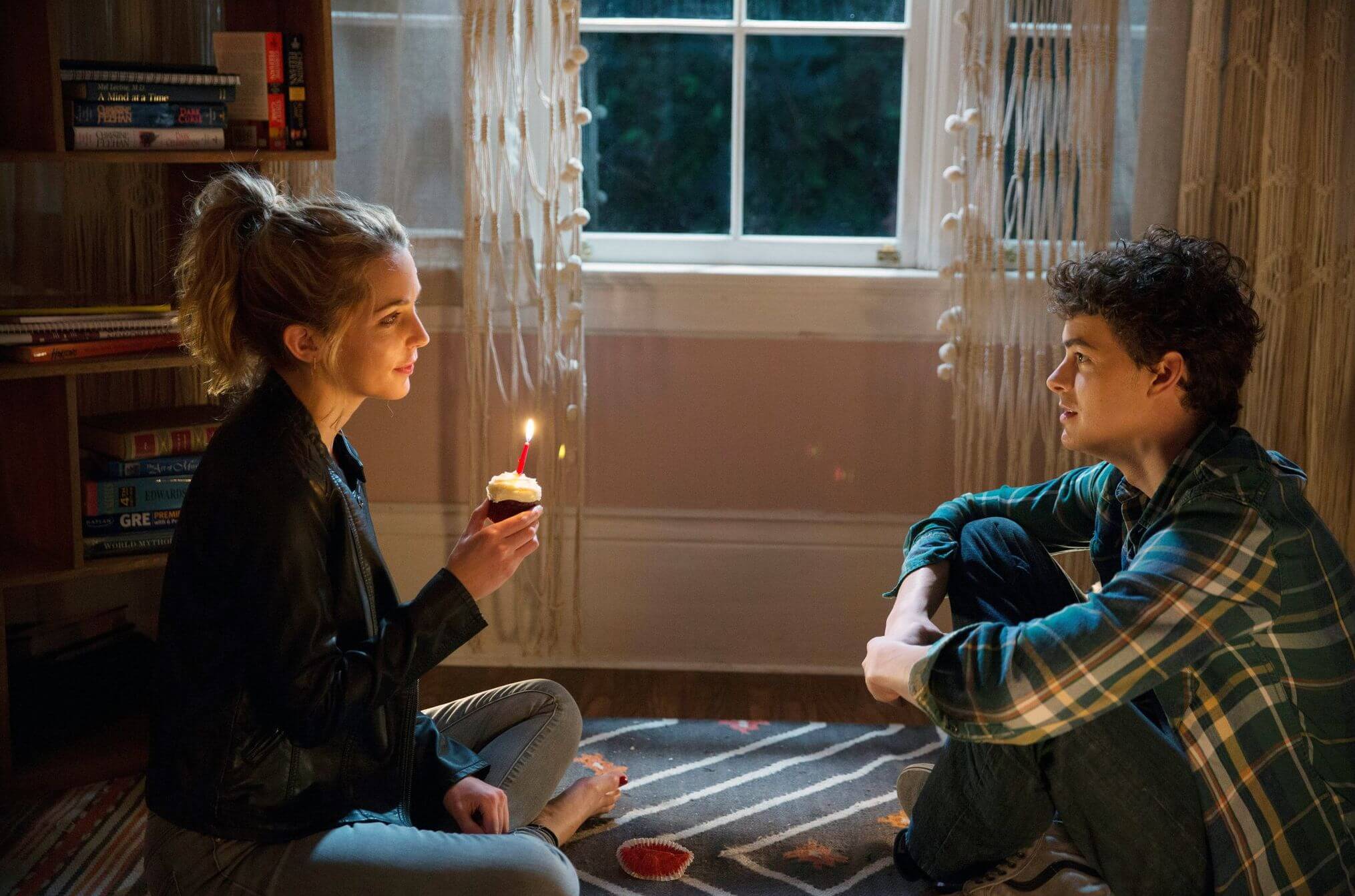
Jessica Rothe & Israel Broussard | HAPPY DEATH DAY 2U

jessica israel

STARBURST has a feeling of déjà vu as we get the lowdown on HAPPY DEATH DAY 2U from the film’s stars JESSICA ROTHE and ISRAEL BROUSSARD…

STARBURST: How was it getting back into the character of Tree/Carter for you?

Jessica Rothe: It was amazing and completely terrifying! Shooting the first film was an unbelievable experience because we bonded as a cast and crew and Chris Landon (the writer/director) was our captain. He is such an intelligent, generous, and kind human being that he set the tone on set and challenged everyone to be their best version of themselves. So when the opportunity for the second film came around, I was so excited to get the band back together again. But I was nervous because sequels are tricky and it’s easy to sit back and do all of the same things as the first one, but that can create a boring film. I have to commend Chris for saying we can’t do that; we have to turn this thing on its head to make it crazier and funnier and more emotional and continue evolving the world and expanding it. Once we put the focus on that, I realised that it’s just a continuation and I don’t have to replicate anything, and I can expand on what I did before.

Israel Broussard: It was little difficult, to be honest – Carter had such a happy-go-lucky vibe that I was worried the energy wouldn’t match from the first one, especially because of the continuity and starting the story from the next day. But once I got that out of my head and we started shooting, I fell right back into being Carter. It was super fun in the end.

It was a great choice was to have your character called Tree, meaning that her growth over time works on another level.

JR: Exactly! Chris is great like that. There’s also the joke about if a tree falls in the woods does it make a sound. Tree is in a metaphysical quandary, and I think another reason people connected with the film is she turns into such a badass and seizes her own destiny without having to wait for someone to save her – it doesn’t mean that she doesn’t need help or that she won’t ask for help, but she’s not the kind of person to run away from the killer. Blumhouse has been doing a great job with helping genre films with female empowered characters and leads – for example, look at the new Halloween movie, it had a purely female-driven protagonist story. I think that audiences are really ready to see that.

What are some of your favourites scenes (or more specifically, deaths) that you shot across both films?

JR: There is truly a plethora of fun and strange deaths that Tree has. There was a time on set that the game of the day was “What are all the weird and creative ways that we can kill Jessica?” [laughs] which was a very funny but morbid game. I loved shooting the skydiving scene in HDD2U, which was a reshoot; it was added after we had wrapped the second film. Chris had wanted to do and wasn’t sure if it would work, but once we did it, he said we have to use that. It was so much fun, and our costume designer nailed the bathing suit, and I got to do a trust fall, in which I fell kinda far. The electrocution death was also a lot of fun, that hairstyle was all my hair and lots of hairspray. These weren’t death scenes, but I also loved filming the scenes with Tree’s mum in the second film because they were emotionally challenging. They had a different energy and it as fun figuring out how to balance that with the rest of the film.

IB: I had fun re-watching the first one, and with this one, I had read the script but had no idea on how Chris was going to execute it. The dorm room scenes were always a lot of fun; in the second one, specifically, I loved the scenes with Tree and her mum. Almost every time I saw that I would tear up. That definitely gave the movie what the first one lacked, which was pure emotion and we did it while maintaining the main concept. And, of course, the skydiving scene [laughs], it was so much fun to film.

HAPPY DEATH DAY 2U is in cinemas now and you can read our review here. Read more from our interview with Jessica and Israel as well as director Christopher Landon in the latest issue of STARBURST #458 – on sale now.

Nick Castle | HALLOWEEN

Halloween

For last year’s Halloween, director David Gordon Green got fans on his side when it was announced that the original Shape, Nick Castle, would be making a cameo appearance as Michael Myers in the re-enivisioned sequel to John Carpenter’s 1978 horror classic. While Castle has been retired from acting and making films for several years, it seemed like those making the new Halloween were dead-set on connecting the new film to the original as much as possible. While he only appears in one scene – when Jamie Lee Curtis’ Laurie Strode first encounters Myers – Castle also recorded all of the sounds of the Shape, from his breathing to the grunts from the many hits he takes in the film’s no-holds-barred finale.

STARBURST: How far along in the process did you become involved with the new Halloween?

Nick Castle: About a year ago, August, I got a call from my agent who books me at horror conventions. He also represents all the other guys who played Michael Myers in the other films, and the casting people from the movie were calling him up, trying to get ideas. He suggested me, without asking me, and he called and asked, “Would you be interested? I found out that they’d be interested in you doing it, if you want to.” I knew that they were going to do a new Halloween. I didn’t know what the script was, but I knew John [Carpenter] was involved. So, that was in August [2017], and they were going to do it in October, but they delayed it a few months to work on the screenplay, and wound up shooting it, I think, in February.

The recreation of the famous on-set photo of you drinking a Dr. Pepper with the mask on suggests that shooting was pretty fun. Was it as enjoyable as that image suggests?

Oh, yeah. All that and more. First of all, it was great to be on a set again. Y’know, I’m a filmmaker, but I’ve been retired for a while, so I haven’t been on a set, so that in and of itself was nostalgic. Met a lot of great people – very talented and warm. Got a lot of pats on the back for my own career and my own movies – a lot of fans of those. And, because I had, for the last few years, been going to these horror conventions, I know the fans, and know how much they love this genre, and I know what they would like, so some of my suggestions of revisiting these old photos and reliving some of these old moments from the original were ones that both myself and the filmmakers there wanted to do, so we had a blast with that. A lot of fun – got to meet Danny McBride, one of my favourite comedy actors, and see Jamie Lee Curtis and John again, so it couldn’t have been more fun.

You’re the one who recorded all of the breathing for Michael Myers in this film. What’s that process like – is it kind of ridiculous, sitting in a recording booth, breathing heavily into a mask?

Well, that’s basically what it is. I got an email or a call – I don’t remember which – and David [Gordon Green] said, “Wouldn’t it be great if you did all the breathing?” and I went, “Oh, that’s great. I love that idea.” [chuckles] He said, “We’ll do it in L.A., and we’ll just send you to one of these post-productions houses,” and that’s what we did. I went there and Ryan Turek, who was one of the producers, was there, along with the post-production group, and that was the first time I got to see the movie, too – in stops and starts. We just played through all the scenes with Michael Myers and we started by me actually putting on a mask and breathing. Then, we took that off, and I just kind of ended up breathing into my hands, instead. That’s what we ended up using – it came out better than going through the mask itself. That was fun, and I got to be a part of the movie again.

Seeing all of those scenes with just the Shape – how did that prepare you for seeing the final, completed film?

Not only did David send the me the original script when I first got on, but was gracious enough to hear my thoughts on some of the scenes and things like that, so I was very much aware of the storyline. But, I was only on the set for about a week, so I saw material that was being done there, but seeing it [during post-production], it was hard to tell, because of stops and starts, but it looked like it was really working. What I really appreciated was the work they did on extending the ending of the movie. I thought that was really helpful to giving some impact to the finale.

Of all the scenes for which you recorded the sound, which required the most interpretation on your part?

Well, the entire ending. There were so many efforts – it’s not just breathing, but when you’re hit or when you get shot or what the character might do. Then, you leave it up to the director and the editors to decide how much of that impact they want to hear. Does it play within the setting of the scene, because it might not be as prevalent as if you’re alone in a closet, hearing the Shape’s menacing breathing. There’s not a lot of nuance you can give to these things – you’re breathing! [laughs] You just have to figure out how this is going to play – he’s a tough guy, so he’s not going to say, “Ouch,” out loud. You don’t want it to come off as comical – let’s just put it that way!

HALLOWEEN is available on Digital Download now, and 4K Ultra HD, Blu-ray and DVD on February 25th from Universal Pictures Home Entertainment.

Joe Cornish | The Kid Who Would Be King

cornish

It’s been the better part of a decade since writer/director Joe Cornish gifted us with his brilliant Brit sci-fi film Attack the Block. Eight years later and he has finally returned to the director chair with an equally excellent, family/ fantasy adventure. The Kid Who Would Be King tells the story of a boy called Alex (Louis Ashbourne Serkis) who discovers the mythical sword in the stone sticking out a slab in a London building site. The discovery triggers a series of events which sets Alex off a quest to save the world and learn the truth about his heritage in the process.

STARBURST recently met with Cornish to talk about his latest project and what he has been up to over the past eight years. We also discussed the films he nearly made, what it was like to have creative control on a big budget studio feature, his time co-writing Ant-Man and Tintin, and how The Kid Who Would Be King was part inspired by RoboCop.

STARBURST: You first came up with the idea for The Kid Who Would Be King when you were a kid yourself. How did you find developing it as an adult?

Joe Cornish: Obviously quite a lot of time has passed since I was twelve or thirteen! Back then, I had the idea for the set-up and that Merlin would be young and back in school. I also had the idea for the climax: this big battle where the kids defend the school like a medieval castle. It was the middle that I had to work on as a grown up, but I didn’t come back to it until about 2012.

It sometimes felt like a film from the ‘70s and ‘80s, the era when it was first conceived and partly recalled British kid’s TV films from that time like The Boy from Space and The Spaceman and King Arthur. Were you inspired by other films from that era while writing it back then and years later when developing it?

The thing that’s unusual about it is that it’s a live-action film for kids and starring kids. That kind of film doesn’t really get made anymore. Children have superhero movies which are full of adults playing dress-up. They have animated movies that are usually also about superheroes or based on famous toy-lines, but the era of making films for kids, starring kids, is something the industry has forgotten. I found it very exciting as a kid to go to the cinema and see myself on the big screen. So for people of my age, it evokes an era where you saw kids in live action adventure films.

As well as the King Arthur legend, mythologies and action, at its core was also a lot of deep, family drama and interesting characters which embellished it with so much heart. Did you draw from any personal experiences while writing that part of it?

It’s a thematic thing really. I noticed that in classic British family films and stories like Star Wars, Harry Potter, Oliver Twist, King Arthur and a lot of famous British stories… well, Star Wars isn’t British. Anyway, in a lot of famous myths, there’s this notion of an orphan who finds out they were abandoned by some magical or powerful relative then reclaims that inheritance. I saw that in lots of big children’s myths and thought it was a strange message to be putting across: the notion of being an individual with a hereditary specialness.

I wanted to write a story that countered that narrative and that’s really why Alex’s circumstances in the film are what they are. Why he wants to go on this journey and why his expectations are subverted. So that’s where that came from, and it also happened to tie into a common element in in ‘80s kid’s movies: divorce. Divorce was a new thing in the ‘70s and ‘80s; something that specific generation and society was adapting to and experiencing for the first time, so it got sewn into the fabric of a lot of ‘80s films. It’s the combination of that thematic story that I wanted to tell and trying to evoke the spirit of the movies from that era that I used to love.

Was it relatively easy to get green-lit considering it’s not based on a franchise and did the script go through any further changes following that?

There were quite a few re-writes but we did it quite quickly. I wrote it in 2015 and we were greenlit the next year then pre-production started in 2017. But because it’s an idea I’ve had from an early age, I have always been collecting bits and bobs and building it up in my brain. I also researched which was a very important stage, then went out into the world and found things. I went to Tintagel then to Bodmin Moor, visited all of the locations and took photos.

You had those gorgeous moors and countryside, but you also captured a side of London not typically seen in blockbuster fantasy films. There are hardly any red buses, phone boxes or famous landmarks getting destroyed, just chicken shops, road signs, building sites and backstreets. Were you trying to steer away from the identifiable sights to help it connect to an international audience?

We wanted Alex to be the most ordinary boy in the country, living in a very ordinary environment, so we didn’t put him in central London. It’s not like Attack the Block where we were using the architecture and socio-economic space as part of the story. He is supposed to be a suburban, pretty nothing kid, who feels like he doesn’t have any agency or influence in the world. The important thing in the film is the countryside: Bodmin Moor, Stonehenge, and Tintagel, the standing stones and the ruined castles. We wanted to tie the fantasy elements to reality to show that there is all this history, mythology and fantasy all around us; magic that we can’t see because of all the chicken shops and car parks. And that we live in a reality where you can scratch the surface of a car park in Leicester and find Richard the Third beneath it.

Both of your films as director are sci-fi/fantasy films about a group of kids. Are there other genres, styles of filmmaking you would like to explore?

It is interesting that they are both kids’ adventure films, but Attack the Block is definitely for an older audience. It’s got swearing and drugs and throats being ripped out whereas The Kid Who Would Be King is very much a family film. I don’t know why the both ended up being about gangs of kids with weapons setting out to save the day. I did try and do something different. A bunch of stuff I got attached to as a director fell through, like Snow Crash for Paramount, based on Neil Stephenson’s novel, and Section 6, which was the origin story of MI6. Both of those were very different, but this was the one that ended up getting financed. Maybe it’s because they saw something similar and made connections, I don’t know. I do have lots of other genres and ideas in mind though, including a fun idea for a horror that I really want to do.

Do you think you would feel more comfortable working on smaller scale projects, outside of the studio system?

Attack the Block was Studio Canal, which was more indie, but The Kid Who Would Be King is a big studio film with Twentieth Century Fox, yet they felt no different at all. Only this was just on a much larger scale with bigger sets and a longer shoot. All film-making always feels like there is never enough time or money, so it’s always a race against the clock and then there’s the pressure of resources. But it feels very similar. I think maybe because this is not a brand or franchise, I didn’t have that corporate, marketing presence breathing down my neck, worrying that I’ll mess up their toys. That probably took the pressure off. Not to say I wouldn’t want to do one of those films one day if I could find the right project and someone would trust me with it. Attack the Block and this are very much authored and my own thing, which is a great privilege and feels very good. We came up against it a bit on Ant-Man, which Edgar Wright decided to step out of because we didn’t have that creative freedom, but Tintin was very collaborative. I was one of quite a few writers on that.

Even though it’s set in the present day there is something about The Kid Who Would Be King that seems disconnected from our time. There were few references to modern technology, the Internet and social media, which was refreshing and made it feel more timeless. Did you consciously try and keep tech/net references out?

Well there were a few. The kids use their phones to organise the big battle at the end and there’s a little bit of texting at the beginning, but I don’t find people looking at phones very interesting. We wanted to combine the notion of a great quest or something out of The Lord of the Rings or a medieval fantasy with modern kids and ask; can they walk more than half a mile without complaining. Can they survive without the signals on their phones? How would they get on without the trappings of the modern world? There are some very good horror movies that use technology or are shot through phone/web cams. I still think there is a very clever, brilliant film to be made utilising modern phone tech, but for me and adventure films based in the world, staring at phones just isn’t very cinematic.

Thankfully this was. It was also so fast paced and entertaining. I looked at my watch at one point because I thought it was going to end and then was delighted to see there was still half an hour left.

Yes, it does have a bit of a double ending. I became fixated with that. Weirdly, when I wrote it, I had RoboCop in mind: how it came back to the prime directives during the finale. I liked how the chivalric code in The Kid Who Would Be King was a bit like the prime directives, which were set it up in the audiences mind at the beginning of RoboCop. Then at the end there’s that brilliant twist where he fires him and the directives return to the forefront of your brain after seventy minutes of screen time that have passed since you were first told about them. That really propels you back into the finale.

On a final note, many of us grew up watching you on the Adam and Joe show. Did you imagine back then while you were filming puppets and sketches in that bedroom, that you would one day be making a big budget blockbuster for Fox?

I imagined it quite a lot, but never thought it would happen. I always thought it was a crazy fantasy. But I did go to film school and trained as a director. Even before that, when me and Adam were at school, we made loads of Super 8 films at school when we were about fifteen or sixteen. We made a film called Twitch of the Death Nerve. Yes, we stole the title from Mario Bava. That was a modern re-telling of the Sweeney Todd legend. Louis Theroux was in it as the sidekick to Adam’s detective. We made a short film called A Few Friends for Dinner that starred Adam in drag. So my movie ambitions go way back. I feel very lucky somehow to have managed to wriggle my way into actually doing it.

The Kid Who Would Be King is released in UK cinemas on February 15th.


Professor Richard J Hand | HORROR AND HILARITY: THE LEGEND OF THE GRAND-GUIGNOL

hand

Richard J Hand is one of the foremost experts in ‘Grand-Guignol’, the ‘Granddaddy of Modern Horror’, which has influenced many of the classic horror films of past and present decades. STARBURST had the pleasure of speaking with him after his excellent lecture ‘Horror and Hilarity: The Legend of the Grand-Guignol’, which took place in London in February 2019.

STARBURST: When you look at the whole history of ‘Grand-Guignol’, would you say it encompasses everything we have grown to know and love, or are there specific films and subgenres of horror that it focuses on?

PROFESSOR RICHARD J HAND: What is probably most important to note about the original Théâtre du Grand-Guignol is that, despite being the ‘Theatre of Horrors’, it was not interested in the supernatural or the fantastic: rather, the horrors it focused on were possible. It emerged out of the tradition of realist and naturalist drama but pushed it to the max with graphic displays of violence with plays – often based on true news stories – of real-life terror and extremity accompanied with ultra-realistic special effects. The repertoire of the original theatre loved to start with a slice of life but descend into full-blown, full-blooded melodrama – without the audience noticing the join. The Grand-Guignol is full of monsters, but these are emphatically human monsters. So, in this way, Grand-Guignol is most accurately applied to those tales of feasible terror: serial killers, vendettas and revenge attacks, escaped axe murderers, lunatics who have taken over the asylum, deluded doctors and mad scientists whose experiments are less grandiose and a bit more squalid than Doctors Frankenstein or Jekyll. In terms of cinema, the most truthfully Grand-Guignol are therefore films like Psycho, Whatever Happened to Baby Jane?, Peeping Tom, Blood Feast, Texas Chain Saw Massacre, Halloween, Silence of the Lambs, Saw, Hostel and so on. At the same time casting a long shadow over the splatter genre; we must remember how much the Grand-Guignol audience relished the acting ensemble and core actors – such as its resident ‘scream queen’ Paula Maxa – and this emphasises how Vincent Price, Christopher Lee, Barbara Steele, Jamie Lee Curtis through to Vera Farmiga, Eva Green and Sarah Paulson have acted in the Grand-Guignol tradition of heightened performance whatever the specific horror narrative might be.

What struck us about your presentation in London recently was how naïve we have become in thinking we knew what it was and how clear a lot of the influences are. When did you first become interested in ‘Grand-Guignol’ and what specifically was it that sold it to you?

I remember as a child getting Denis Gifford’s book A Pictorial History of Horror Movies (1973) for Christmas. With a lurid green cover with drawings of Karloff, Cushing, Lugosi and others, I read it again (and again). The first chapter was called ‘How Grand was My Guignol’ and gives a concise outline of the Grand-Guignol before its detailed and wonderfully illustrated journey through horror film. It was then years later that I read Mel Gordon’s Theatre of Fear and Horror (1988) with its amazing pictures, plot summaries and sample scripts. When Michael Wilson and I started working together as lecturers at the University of Glamorgan in Wales, we shared a mutual admiration of Gordon’s book but wanted to learn more. So, we read Agnes Pierron’s excellent French anthology of Grand-Guignol plays (1995), visited library collections in Paris and located numerous original French scripts. We set up the Grand-Guignol Laboratory where we worked with drama students in mounting full in-house and touring productions of translated Grand-Guignol plays with recreations of special effects and the whole Grand-Guignol ‘experience’.

A lot of the Halloween and Chainsaw generation first heard the term via John McCarty’s classic horror volume Splatter Movies – Breaking the Last Taboo. Did you read his book and how comprehensive was the chapter he covered compared to your own books?

Yes, indeed. John McCarty gives an excellent account of the significance of the Grand-Guignol as the ‘root’ of the splatter genre and persuasively argues how Hammer’s landmark film The Curse of Frankenstein is an assimilation of the traditions of the French Grand-Guignol and the English Gothic. He sees the spectre of the Grand-Guignol in subsequent high points of cinematic horror: persuasively arguing, for instance, that The Exorcist is Grand-Guignol on an operatic scale. McCarty made a very important intervention in popular horror studies which signals, as it were, that before horror cinema there was horror theatre. There are even more depths and connections than McCarty has space to discuss: the story of the Grand-Guignol is richer and richer the more we look into it…

Censorship certainly was a big issue both here and in France and in the UK particularly with the Lord Chamberlain’s Office at the time when it came to London in the 1920s. Would you say the political and world context ‘Grand-Guignol’ found itself at the heart of helped shape it’s evolution until its demise?

Luckily, the Grand-Guignol had a comparatively easy ride in Paris, although there was considerable outrage at its use of the guillotine in various plays – a serious emblem of the state some felt should not be parodied on stage – and various critics (as well as, no doubt, some spectators) disapproved of its explicitness and immorality. In the notable London experiment in Grand-Guignol in the early 1920s, censorship was a complete nightmare for the company. The Lord Chamberlain’s Office – in charge of licensing plays for public performance in the UK – took great exception to the Grand-Guignol, including its comedies as much as its horror plays. It disliked this continental import and enforced edits and even banned outright numerous plays on the grounds of indecency, obscenity or profanity. Eventually, the Grand-Guignol in London will call it a day after being under the censor’s microscope for so long. However, the Grand-Guignol will recur on the London stage. We must remember that the Grand-Guignol used reality for its inspiration: both in France and the UK, there are remarkable and uncompromising plays about the First World War, plays which must have been arresting for the audience. Similarly, the Parisian theatre staged a play about the Boxer Rebellion and the brutal experience of the French legation siege which reconstructed recent horrors for its enthralled, perhaps voyeuristic, audience. The Grand-Guignol stayed open during the Second World War and was popular with the occupying German forces. The sadistic terrors of the Grand-Guignol probably didn’t seem quite so playful for the Parisians after that.

It was interesting to note that Noël Coward and Joseph Conrad, both classic writers, had an interest in ‘Grand-Guignol’. Tell us more about their contributions and how successful they were.

Noël Coward wrote The Better Half for the London Grand-Guignol. He was only twenty-two years old at the time. It is a dark and delectable comedy which is as witty as one would expect from Coward, in which we see a frustrated woman encouraging her rather bland husband to run off with her best female friend for the sake of everyone’s mutual satisfaction. Things turn very Grand-Guignol when her husband threatens to kill her. However, all ends happily. Indeed, it is interesting that the Lord Chamberlain didn’t object to a happy ending in which a married woman runs off ‘to find a lover and live in flaming sin – possibly at Claridges’. A writer at the other end of his career, Joseph Conrad, was also interested in seeing the Grand-Guignol imported to Britain. This grand old man of English letters went to see a Grand-Guignol performance and immediately wrote Laughing Anne, a very violent thriller set in Macao in which a group of gangsters attempt to rob a boat transporting money. Unfortunately, the Grand-Guignol politely declined staging the play as it was difficult to stage and, in two acts, probably somewhat long for the classic Grand-Guignol formula of short plays. I was lucky enough to be the first director to stage the play in 2000, eighty years after it was written.

In terms of putting on ‘Grand-Guignol’ – type productions these days – and we understand there are several companies throughout the world, including one in Liverpool who have put on regular productions. What advice would you give any enterprising theatre companies in terms of securing the performing rights and what should they be careful of in terms of the graphic violence that defines it?

I would, of course, encourage theatre companies to explore the Grand-Guignol. It is a wonderful form of theatre and for companies can be enormous fun to stage. All of the translations in the books by Mike Wilson and I are free to perform: all we ask is that companies get in touch with pictures or posters – we love to hear about any Grand-Guignol shows and add any documentation to our collection! Be warned: although the Grand-Guignol is fun and playful for a company and audience, it does handle very dark material. In this way, we always attempt to balance the horrors on display so that we don’t have an evening of plays in which just women are victims but ensure something more balanced and inventive. Similarly, we have had spectators faint during graphic scenes and I have been in shows where audience members have walked out. It may be theatre, but it is real people enacting realistic illusions on stage. The Grand-Guignol’s all-important douche écossaise (interspersing horror plays with comedies) is significant here: the Grand-Guignol was a theatre of laughter as well as its more famous horrors. Theatre ensembles must not forget that. Keep it intense and compelling but always keep it fun and playful. At the end of the day, the Grand-Guignol is something of an adrenaline-fuelled thrill-ride.

Tell us more about your experiences working on productions and some amusing and interesting anecdotes from a selection of these.

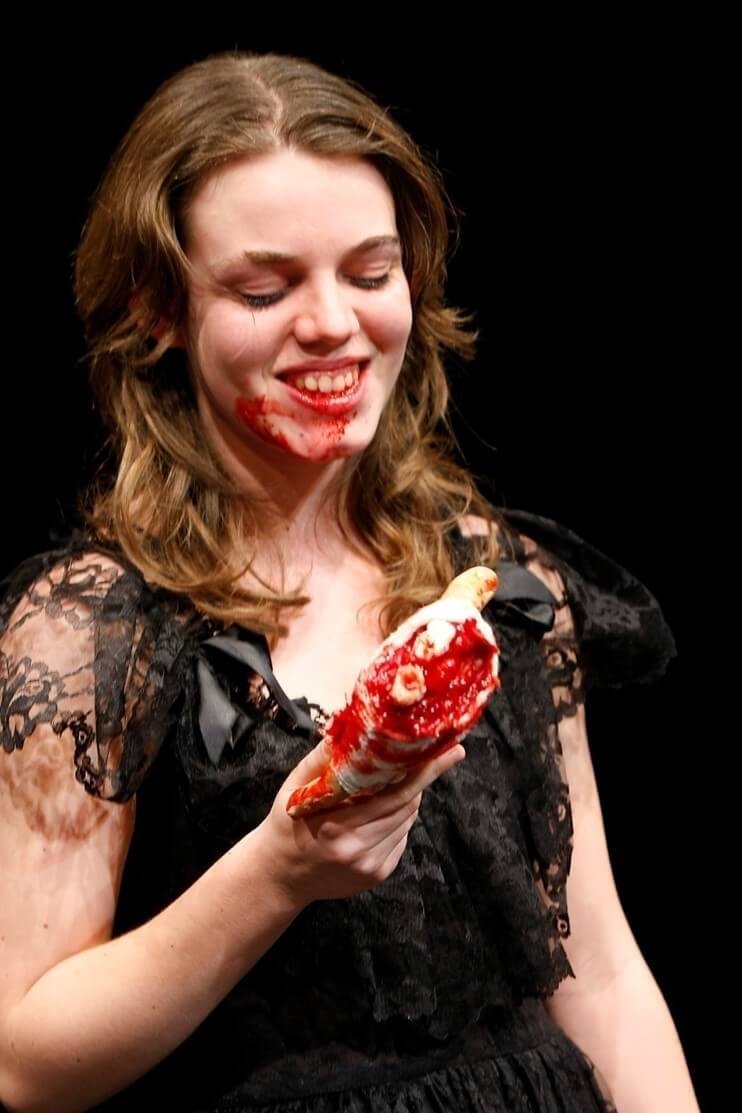
It is great fun putting together Grand-Guignol plays. I have staged all kinds of theatre but some of the biggest laughs and closest ensembles have emerged while doing Grand-Guignol productions. The actors may do awful things to each other on stage, but behind the scenes there is real camaraderie – there has to be! We once took a show to the Edinburgh Fringe which included a finale in which a female doctor castrated a male patient as an act of revenge. We even had a real doctor take the actors through a detailed description of the castration procedure in rehearsal. In early performances of this immaculately rehearsed play, we went to the trouble of ordering numerous pairs of sheep’s testicles from a specialist butcher. However, during one performance I was in the audience and overheard a spectator whisper in all earnest ‘Look, they are using plum tomatoes’. After this, we revised the scene so that the doctor’s scalpel punctured a concealed condom filled with stage blood. The resulting pool of red, gradually spreading over the patient’s white boxer shorts and dripping onto the floor proved to be much more effective. It gave us the desired result for the rest of the run: it made every male member of the audience gasp and cross his legs and every female roar with laughter. Sometimes, less is most definitely more!
What productions should people start off with in terms of reading and research?

I would obviously recommend Mike and my books! Each contain ten or more plays and substantial context and, in book 3 (Performing Grand-Guignol, 2016), lots of ‘how to’ stage a Grand-Guignol performance. In addition, do check out Mel Gordon’s classic study – it will certainly whet your appetite. Just as importantly, go and see some horror theatre in the broadest sense! There are major works like The Woman in Black and revivals of Jeremy Dyson and Andy Nyman’s Ghost Stories or the touring thrillers of Peter James. Also, festivals such as the London Horror Festival and the London H. P. Lovecraft Festival host wonderful displays of fringe-scale horror theatre. If you get chance to go further afield, go and see the Molotov Theatre Group in Washington DC, the Grand Guignol in Milan, or Vigor Mortis in Brazil – great custodians of the Grand-Guignol.

Please tell us about some of the key writers who contributed the classic works in their native France.

The single most important writer at the Grand-Guignol was undoubtedly André de Lorde, the prolific ‘Prince of Terror’ who joined in 1901 and wrote over 150 horror plays. Even when criticising the themes or morality of his plays, critics like the influential Georges Bourdon had to admit that ‘nobody surpasses Monsieur de Lorde in theatrical technique’. De Lorde was a great and generous collaborator, writing with experts from the world of science, history, psychology, and criminology to ensure the plays were as accurate as possible. It is also worth noting that other major writers were drawn to the Grand-Guignol: Maurice Level (much admired by H. P. Lovecraft), Gaston Leroux (Phantom of the Opera), Maurice Renard (The Hands of Orlac), and Octave Mirbeau (The Torture Garden) all write original plays for the Grand-Guignol.

Every art form evolves and has to move with the times to survive. Could contemporary theatrical companies create more ‘Grand-Guignol’ influenced modern works, in the same way that Dracula influenced Stephen King’s Salem’s Lot for example?

When I work with students and professional actors on the Grand-Guignol, I am always emphasising the contemporary potential of the form. Escaped lunatics and outrages in the colonies are probably dated anxieties which might make us giggle more than gasp. So what scares us now? Such angst was the spirit of the Grand-Guignol and contemporary interpretations (including our own) have created some fantastic modern terror plays: the world of social media, internet dating, house sharing, and fast food home delivery is ripe for latter-day Grand-Guignol! Fascinatingly, the content may have changed but the formula would be something de Lorde could still recognise!

Finally, what is your goal in terms of spreading the word about ‘Grand-Guignol’?

It is a shame that the original Théâtre du Grand-Guignol is long gone. Although the original venue is still a theatre the inside has been transformed and the giant angels and other residue of its days as a deconsecrated chapel are no more. The first-hand memories of the original are rapidly receding if not almost vanished. But the legend lives on. And unlike some legends, the true story of the Théâtre du Grand-Guignol is perhaps even more rich and fascinating. A world of gruesome tales of true terror, eye-gouging and blood-letting, tragic victims and sadistic villains. In other words, great writing, amazing special effects, and superb acting. In other words, a bloody good night out that can still be hugely thrilling and hilarious when restaged – the ultimate three-dimensional horror experience!

Check out Professor Hand’s books on Amazon.

David Gilbank | POLTERHEIST

gilbank

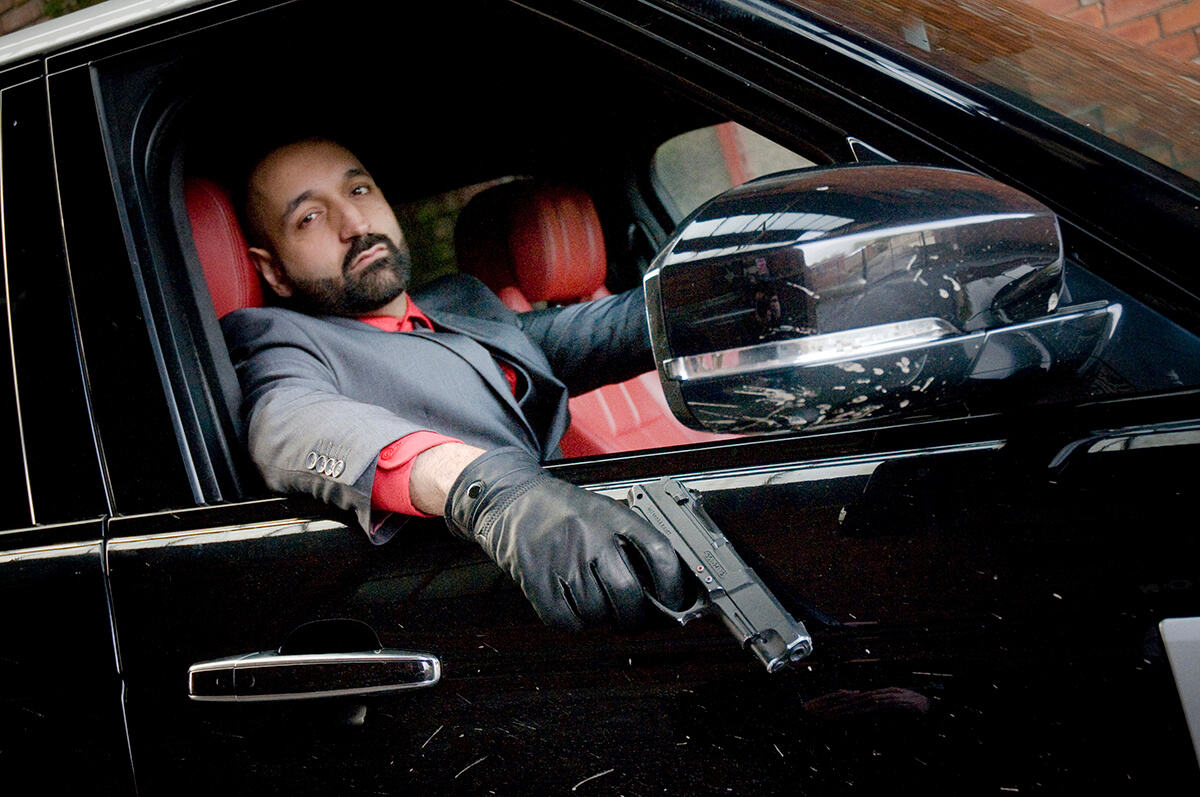
In 2016, a short film entitled POLTERHEIST caught our attention when it played at the STARBURST International Film Festival. We were delighted to when we heard that the team behind it were expanding it to feature length. Now that the film is available on DVD and VOD, we spook – sorry, spoke with the director David Gilbank to discuss making the gangster horror comedy…

STARBURST: Why did you decide to expand the original short to feature length?

David Gilbank: From the very start, the reason we made the short film version of Polterheist was to make a ‘shop window’ for our writing and filmmaking. Even though we didn’t have a feature-length screenplay of Polterheist, we always considered there was a 90-minute version lurking in the background somewhere that we would have to write one day. The short film was to be something we could shop around as a taster for someone to make it into a feature film. Of course, no-one is ever going to do that, or it’s a very rare occurrence, as we learned. There’s no avoiding hard work. Yet the short film won a bucket load of awards all over the world and attracted some favourable reviews. So we wrote an original screenplay that was OK.

Then we asked a Leeds-based theatre playwright called Gemma Head to add some magic to it. She gave the film some real humour and heart that is testament to her talent. So we had a screenplay, but nothing happened. I started to get frustrated that the film wasn’t getting made so I approached a few people asking for money, including a guy that broke my ribs in an international Rugby League match a few months previously. There was another guy who I played rugby with who gave us some money. I guess you could say I forced the agenda and just started filming with about 20K in the bank. I just started to make it without a plan. I just did it.

Then I asked a great producer called Pepe Fowler to come on board and help me get things organised and she did a fantastic job. So we started filming bits here and there over the course of a year, as and when the actors were available. We managed to get hold of a top-notch cast who really added some quality to the film. The acting and screenplay are really impressive.

What was the biggest challenge on the film?

Every first-time filmmaker with a small budget gets the same two pieces of advice: keep your costs low by a) setting your film in one location and b) have three characters only.

My response: fuck off. I’ve never taken advice that everyone follows. I love Apocalypse Now and Colonel Kurtz is an inspiration. My motto is ‘do what is necessary to achieve victory’. Fuck that one location rule. Fuck that three actor rule. So I gathered a team around me that fought tooth and nail to make it happen. We did. Everyone around me believed in what we were doing and we all marched together.

My ambition was to make a good film, and to that ends, Polterheist is set in over 20 different locations and uses a cast of hundreds. We used our money wisely with a few extravagances like set builds and car rental. We paid our actors and crew.

It’s a low-budget film, and that is a big challenge in itself. We auditioned all the key roles and when I saw the actor I wanted we did everything we could to get them in the film. Pushpinder Chani did a sensational audition for the psychotic crime lord Uday, and I knew he was the guy I wanted to be in the film. But Pushpinder is very much in demand as a stage and TV actor so we had to synch up his rare free days with those of the other cast members. Likewise, Jo Mousley (Alice the psychic) and Polly Lister (The cop). Both our main protagonists Siddique Akbar Ali and Jim Cymbal are also bust people. Getting them all together in the same room was a challenge.

Was there anything that you wanted to do but couldn’t, either for budget or other reasons?

We wanted to have a massive shoot-out between the Pakistani gang and the Polish gang towards the end of the film. I wanted to make it like Heat and Zulu but set in Bradford. The cost for it would’ve been extravagant. Paul Renhard loves guns and action films and he wrote a doozy… the audience would have felt the bullets ripping into skin. But, alas, it never happened. I imagined that the Polish gang were all ex-military so would have had that methodical approach but the Pakistanis were more feral and inventive. But in the end, we did perfectly well without it, but that scene would’ve been sensational.

The film looks as though it cost more than the low budget you had – how did you manage that?

Our cinematographers, Charlie Leek and Chris Powell are very, very talented and they shot it beautifully. But importantly, we worked with a post-production house in Brighouse, West Yorkshire called One Bright Dot. The guy there, Chris Brearley, has an amazing eye and gave the film a seriously good look, scene by scene. Chris went through the film and was meticulous. He’s an amazing talent, as was Nick Nestle, who did all the Foley and sound effects work. We were also very lucky to get Umberto Gaudino to do the film music. I discovered Umberto at the Leeds Conservatoire of Music. I approached one of the tutors and asked if there was any talented movie musicians there and he immediately told me about Umberto. I met with Umberto and agreed to work together. He went back to Italy soon after and completed the music from his bedroom in Turin. He’s one to watch. The music in the film, like all the other elements enables it to punch well above its weight.

POLTERHEIST is available on DVD, VOD, Digital Download and Prime Video. Read out review here. It will screen at the STARBURST International Film Festival with the director in attendance.  

Angus MacAllan | GATES OF STONE

Macallan

ANGUS MACALLAN is better known to fans of historical fiction as Angus Donald. When he’s not writing books about Robin Hood as a crime boss, he’s producing excellent fiction in other genres. His latest is the fantasy novel GATES OF STONE, due out soon. We caught up with him to find out more…

STARBURST: What’s the elevator pitch for Gates of Stone?

Angus MacAllan: Game of Thrones in Asia.

And how would you pitch that to someone who has only ever seen Game of Thrones?

I’d say, if you liked Game of Thrones, you’ll absolutely love Gates of Stone. My heroine Katerina Astrokova would eat Cersei Lannister for breakfast! She’s much more hardcore – and only 16 years old.

How would you describe the Empire of the Ice-Bear to an elderly relative?

The Empire of the Ice-Bear is sort of like 10th-century Russia but much bigger. It is a sprawling confederation of seven principalities, each with different national characteristics, that stretches from Frankland – Germany/France – in the west to the Celestial Republic – China – in the east. The main action in Gates, though, takes place in the Laut Besar – which is a warm tropical ocean, far to the south of the Empire, which is a little bit like 18th-century Indonesia and is studded with lush islands and infested with Malay pirates. The Laut Besar is the only place in this world that produces obat, an opium-like drug. The great national powers come to the Laut Besar to trade obat, and struggle bloodily with each other to control the incredibly lucrative production of this very addictive and destructive narcotic.

What character is the most fun to write?

Princess Katerina Astrokova. She has absolutely no moral qualms about doing anything: she will murder, manipulate or even marry anyone in order to get what she desires – which is power and wealth. But she can also be trusted always to keep her word. And she can be generous and kind, too, when she’s in the mood. But, at heart, she’s the ultimate kick-ass bitch-queen

And which character seriously needs to have a word with themselves?

Prince Jun from the tiny island of Taman, in the east of the Laut Besar, really needs to grow up. He’s a spoilt little princeling who thinks only of his own pleasures. He gets a rude awakening when a sorcerer invades Taman, kills his father and shatters Jun’s pampered life. He’s a bit of a dick at the start of the book, but he grows on you.

If Gates of Stone was set in another world, how different would it be?

Totally. The world of the Laut Besar is unique. Its obat-production drives the plot as well as providing a host of colourful characters – pirates, missionaries, gangsters, magic-wielding priests, cannibals, and weird and wonderful animals. If I set Gates of Stone somewhere else, it would be an unrecognisably different book.

Why epic fantasy?

I loved Game of Thrones, as well as reading all the usual suspects like JRR Tolkien, CS Lewis and Stephen Donaldson when I was a youngster. And I always wanted to create my own world. I have written a lot of historical fiction – 11 novels so far – and I think there is a good deal of crossover between history and fantasy – although many of my histfic colleagues would deny it. You ask why – the truth is, I don’t know. I had an idea for a world, for a story, and some interesting characters to put in it – and I just started typing.

How does magic change a society?

It takes away personal responsibility. And breeds paranoia. In societies that still firmly believe in magic, when something bad happens to you, people believe that it must be as a result someone wishing you ill. For example, if you get drunk and fall in a ditch on the way home, it’s an evil spirit that pushed you into the ditch, not just your own feet getting tangled after a dozen pints of beer. That evil spirit was probably conjured by your neighbour – who secretly hates you. I spent six months in Indonesia as an anthropology student in the 1980s, studying magic and sorcery in Balinese society. It was eye-opening, and on occasion, very frightening. But the magic in Gates of Stone is based on the magical practices I observed and recorded all those years ago in Bali. In a way, Gates of Stone is a result of my time spent as a young anthropologist.

Which writers inspire you?

I really like Joe Abercrombie, and Mark Lawrence is excellent, too. Outside the fantasy genre, I like George Macdonald Fraser’s Flashman books. I love the early spy stories of John Le Carre. But it was Bernard Cornwell’s Arthurian trilogy The Warlord Chronicles that inspired me to try my hand at writing nearly twenty years ago.

What fantasy tropes do you personally avoid the most?

Deus ex machina. I really hate it when the hero is in a tight spot and suddenly somebody new turns up to save him/her. Or he remembers he has a magic do-dad that can do this or that. Or the eagles swoop in and carry him to safety… All the solutions should already be there in the plot to get the hero out of the mire in the nick of time.

How would you describe your process?

Edit, edit, then edit some more. My first drafts are usually pretty dire. And it takes re-writing, re-jigging and restructuring and honing over many months to produce something that is fit to be read.

Simpsons or Futurama?

Simpsons – I quite like Futurama, too. But it’s not as much fun as Springfield.

Tigers or Bears?

I have some wonderful, massive, usually gentle but occasionally ferocious creatures in Gates of Stone called ‘Ghost Tigers’ who play a crucial role in the plot. I love them. I’d like one as a pet or to guard my house. But I also want to put some Ice-Bears in the next book.

Truth or Beauty?

Truth is beauty, doncha know! And beauty is truth.

GATES OF STONE is available from February 19th from all good suppliers of excellent fiction.

George Mann | THE REVENANT EXPRESS

revenant

GEORGE MANN is the author of THE AFFINITY BRIDGE, THE OSIRIS RITUAL, and GHOSTS OF MANHATTAN, as well as lots of tie-in fiction that includes DOCTOR WHO, DARK SOULS and WARHAMMER 40,000. His latest novel, THE REVENANT EXPRESS: A NEWBURY AND HOBBES INVESTIGATION, is a steampunk action novel that follows the further adventures of Mann’s titular creations. We caught up with him to find out more…

STARBURST: What’s the pitch for The Revenant Express?

The Revenant Express follows agent for the Crown Sir Maurice Newbury as he takes an epic train journey to St. Petersburg to fetch a clockwork heart from Faberge, which he’s hoping will be enough to save the life of his partner Veronica, who was mortally wounded at the end of the previous book. The story of what happens on the train interweaves with a case from a few months earlier, back in London, so we’re following both threads and seeing how – and if – they come together.

How would you explain it to a fan of trains?

At least half the book takes place aboard a massive train travelling from France to Russia, with murder, intrigue and danger onboard. Plus, there’s a very disturbing type of fuel being burned, too…

For the uninitiated, what is the world of Newbury and Hobbes like?

I see Newbury and Hobbes as a Victorian fantasy/mystery series, with a little dash of the occult. Anyone who likes the idea of a lovechild of Steed & Peel from the Avengers, Hammer Horror, Sherlock Holmes and Doctor Who should find something to enjoy in the stories! It’s a gloomy, fog-bound world, filled with danger, rogue agents, occult horrors and weirdness.

Ten Years of Newbury and Hobbes? What’s next?

For Newbury & Hobbes? Well, we have a collection of the comic series coming in April, and then there’s a new novella and another novel in the works too. I’m also really excited to be working on a N&H board game with the fine folks at Needy Cat Games. More on that soon, but it’s looking very special indeed! In terms of other, non-N&H projects, there are a few exciting things coming this year that you’ll be hearing about in the Spring, and I’m hoping to tackle something entirely new, too. Watch this space!

Do you have a different approach in writing the Newbury and Hobbes books compared to your Doctor Who or Warhammer 40,000 work?

There’s certainly a different level of freedom involved in writing your own worlds and characters when compared to writing something set in an existing, established universe. I try to make the most of that freedom. I’ve been writing those characters for so long now that I hear their voices in my head. It’s like returning to old friends. The key thing about writing tie-in work, for me, is that you can’t approach it with a cynical frame of mind. If you’re going to do your best work, you have to dive right in and believe in what you’re writing.

What’s the most fun you’ve had writing tie-in fiction?

To date, it’s probably writing the War Doctor book, Engines of War. That was a real honour, and so much fun. The BBC really just encouraged me to let loose and write something big, bold and epic, and I went all in. I still can’t believe I had the chance to write it.

What tie-in fiction world – that you haven’t worked on – would you like to write for next?

I’d love to write something set in the Star Wars universe. Plus, both Spider-Man and Batman are on my bucket list!

Back to Newbury and Hobbes – what is the appeal of Victoriana? Is nostalgia always misplaced?

I don’t think so, no, although we have to be careful to look back on things with a balanced view, remembering the social problems and horrors of a historical period alongside the stuff we want to celebrate, too. I think in the case of the Victorian era we’re at that point in our history where it’s not long passed out of living memory, and in many ways still feels very familiar to us – many families in Britain still have Victorian objects knocking about their houses, and stories about great-grandparents who lived through that era etc. But it’s also far enough gone that we can start to make a fantasy out of it, in a way that we perhaps can’t with more recent times. That said, the ‘80s seems to have become fertile ground for fantasy in recent years, so I suppose there’s a question about just how long we need to wait before we start fantasising our own past.

What elements make a fantasy world seem real to you?

Characters. For me, it’s all about the characters. If the people in the book feel real, and they interact with their environment in a way that seems real, as a reader, I’ll buy almost any fantastical element.

What one thing about yourself surprises most people?

That I’ve worked with books in one capacity or other since the age of 15.

Space Marines or Time Lords?

Time Lords, because Doctor Who has been such an important part of my life. But I’m fond of Space Marines too!

Jammy Dodgers or Hobnobs?

Hobnobs – as long as they’re the chocolate ones.

Truth or Beauty?

Truth.

The paperback edition of THE REVENANT EXPRESS: A NEWBURY AND HOBBES INVESTIGATION is out February 12th from Titan Books. It can be found at all good purveyors of fiction.

Mark Stay | THE END OF MAGIC

Magic

MARK STAY is one of those people who’s always up to something interesting. He’s the chap responsible for co-writing THE ROBOT OVERLORDS screenplay, he co-presented THE BEST SELLER EXPERIMENT podcast, and even has a bestselling book to his name. When he’s not writing scripts or working on a forthcoming TV drama, he’s writing novels. We caught up with him to find out more about his latest project, fantasy novel THE END OF MAGIC. 

Starburst: What is The End of Magic?

Mark Stay: I realised that what the world needs now is yet another fantasy novel by a white, middle-aged bloke! Seriously though, I really did wonder what I could bring to the genre, and it got me thinking about my own life. And even though I have it very cushy, why do I still have all these anxieties? So I created Sander Bree, a powerful mage, living a very privileged life, who still has the gall to complain and moan, and I proceed to torture the bugger in fun and exciting ways for 372 pages. Like most writing, it’s a form of therapy, I guess.

How would you pitch it to an elderly relative?

It’s like that Game of Thrones off the telly, but with no boobs. Yes, there are dragons and magic and big battles and stuff, but no boobs. Granddad, will you stop going on about the boobs?!

If you could take one of the characters out for a drink, who would it be?

Rosheen Katell is a freelance mage, one who has travelled the world with her griffin Anzu and seen and done some incredible things. I would ask her about her adventures and then ask for a ride on the griffin. The End of Magic is a one-and-done novel, but if I were ever to consider a spin-off, it would be with her. She’s got more stories to tell.

And if could sit one of them down and have a quiet word, what advice would you give?

I would tell Sander to get over himself and appreciate what he’s got, but the obstinate bugger would insist that he knows better and would only ignore me. You see why I had to make his life so miserable now, don’t you?

What is it about Griffins? How do you develop a character like that?

I’m allergic to anything with four legs and fur, so I’ve always been a little envious of people’s relationships with cats and dogs, and I wanted to explore that a bit. In my story, Griffins are your most loyal and lethal best friend, and Anzu the griffin is a sane voice in a world going to hell in a handcart. She has a perspective on humanity and its hubris that our main characters lack, so it’s a real shame what happens to her…

How does producing a book like this compare to project like Robot Overlords?

Robot Overlords was a wonderful collaboration and an amazing experience. I had so many pinch-me moments making that film, and I learned so much through the making of it. With The End of Magic the creative stakes are different in that I have much more freedom to do whatever the hell I want without the constraints of a budget, but it’s also all on me: if you hate it, I can only blame myself!

Will we ever see more Robot Overlords?

I hope so. There’s so much more of that world that Jon [Wright, co-writer and director] and I have written, and we are bursting with ideas. There’s some talk of a TV series, but I’ve learned not to get too excited until I’m actually standing on the set with actors and cameras and all that stuff.

Could The End of Magic end up in another format? TV for example?

It would be a bold producer who would pony up the dough for the epic battles, dragons, wyverns, killer mer-people, trolls, floating mountains crashing from the sky, heavily-populated citadels and exploding moons that I’ve stuffed into the book, but why the hell not? It would be a feast for the eyes!

Authors such as Joe Abercrombie, Den Patrick and Jen Williams have heralded a very British shift toward world building and ‘consequences based’ character arcs. How does your series compare?

Those are all big influences on me, though I’m less interested in the world building and more in the characters. Jen, in particular, was a joy to read in that I really clicked with her conflicted characters and their crackling dialogue and her imagination is extraordinary. It was after reading her work that I thought I could try something similar. I’m not a fan of never-ending series, or books with massive appendices, or extensive backstory. I just want a great story, well-told, and Jen is great at that.

How did your podcast, The Bestseller Experiment, influence your creative process?

Hugely! It’s like a weekly tutorial. Each week we speak to the most amazing authors – we’ve had Joe Abercrombie, Joe Hill, Joanne Harris, Tad Williams, Brandon Sanderson, Ben Aaronovitch, Jen Williams and many more on the show – and I learn something new every time. It’s improved my writing more than anything else I’ve ever done. There’s no magic secret, just lots of hard work, but it’s also taught me that a writer’s style is always evolving and with each book, you will change and, hopefully, improve.

What would you do differently now that the book is on its way to shelves?

Nothing! I’ve been blessed with an incredible agent, editor, copy editor and cover art. It’s all going suspiciously well so far… I’m sure that’s when the ground falls from under your feet, so ask me again in a year.

Why Unbound? Is Unbound’s approach the future of publishing?

The main reason I went with Unbound was the opportunity to work with the editor Simon Spanton. I knew him from Gollancz, and it was a real privilege to have him edit my book. We don’t talk about editors enough. They can make such a difference to how a book evolves, and they are so crucial to the creative process. If you want to make an author even more anxious than usual, tell them their editor is leaving for another publisher! Unbound’s crowdfunding approach has proven to be really successful and is giving voice to authors who might otherwise be overlooked by the bigger publishing houses. It’s an exhausting process, though. Pimping yourself and begging for money for a year or so will test your self-belief to its limits, but as the bigger publishers become more risk-averse I think we’re going to see more mid-list and debut authors having to adapt to new ways of publishing in order to get their books out there. Crowdfunding is maturing and becoming more accepted by the industry and readers, and it has already led to some extraordinary books making it to publication and winning awards.

What’s next?

I’ve just sent a draft of a kids’ science fiction novel to my agent. Tonally, it’s much more like Robot Overlords and I’m really happy with it. Hopefully, we can find a home for that soon. I’ve had a top-secret TV show optioned and we think we’ve found a showrunner, which is very exciting, and Jon Wright and I are working on a few TV things that we hope will get off the ground soon. Oh, and on the podcast we’ve challenged ourselves to sell ten thousand copies of our time travel novel Back to Reality by the end of Glastonbury… which is borderline insane, so wish us luck.

Simpsons or Futurama?

Disenchantment! All my favourite fantasy tropes rolled into one show. I love it.

Dragons or Death Stars?

Dragons have less vulnerable exhaust ports, so let’s go with them.

Truth or Beauty?

Beauty fades, but truth is eternal… Ooh, that’s almost profound!

THE END OF MAGIC by Mark Stay is available from all good dealers of fantasy fiction from Feb 7th. We also strongly advise you to catch ROBOT OVERLORDS, which is currently streaming for members of Prime Video.

Crater | WORLD OF SPORT WRESTLING

Old-school grapple fans were amazed when World of Sport returned to British TV in 2018, marking the first time that a home-grown weekly wrestling show had aired on a major channel since 1985. With a live tour on the horizon, we had a quick chat with WoS’s resident monster, Crater, to find out what we can expect when the show hits the road over the next few weeks…

STARBURST: Introduce yourself to the readers…

Crater: I’m WOS Wrestling’s Monster, Crater. I’m a professional wrestler who has been active around the UK and Europe for the last 12 years. I’m one of the biggest wrestlers in Europe at 36 stone, and I’m known for my domination of my opponents and agility not usually seen at this size.

You’ve been wrestling for quite a few years now. When did you start, and what made you want to do it in the first place?

It’s certainly been a rollercoaster. I started at Futureshock Wrestling in Manchester. I was a shy kid but always quite active. I used to play rugby in high school, and even though I watched some wrestling it was mostly the highlights that were on Sky One at weekends. My brother and I used to watch them and then one day I just thought how much fun it looked. I never thought there would be anywhere in England that trained wrestlers, but thought it was worth a Google search. Luckily I found Futureshock where I truly got hooked. It literally started as something to do instead of rugby that looked fun. It’s a choice I definitely don’t regret.

Fill us in on your wrestling achievements up to this point…

So far I’ve managed to win titles all over the UK and Europe, and I’ve worked for most of the major promotions that I’ve wanted to. I’ve become well respected as one of the best big men around and have also branched out to popping up on the odd UK TV show. And now, being the most dominant part of ITV’s WoS Wrestling, I have been a mainstay of Saturday afternoons for over a million people. With a live tour in January and February for WoS Wrestling I’ll be adding more names to my list of defeated opponents!

Any thoughts about the original WoS/old school British wrestling?

I’m a bit too young to remember World of Sport’s original showing, however my parents were fans and went to some of the local shows and obviously watched it on ITV. They had their favourites like Mick McManus and Giant Haystacks. I’ve since gone back and watched what I can find and was genuinely amazed at how innovative the wrestlers of that time were. To say they paved the way for everyone in UK wrestling today is an understatement. I like to think Crater pays homage to them in some ways.

World of Sport was revived in 2018 for a 10-part TV series, and follows up with a live tour over the next few weeks. Why now?

Wrestling has never been hotter in the UK right now. When I first started appearing on shows, the crowds were hitting 100 people if you were lucky and that was an amazing draw. Nowadays selling out venues is common and these venues can hold thousands in some cases. It used to be one company dominated and if you weren’t there then no one knew your name. Now, with the internet and ease of media creation it means people can be stars without ever setting foot in a “big” company. For example, the first time I appeared in Germany I came out to so many chants, one being “He does moonsaults” which people had seen from some highlights of big matches in the UK. It’s crazy how much social media has spread the word.

What’s it like being the biggest competitor on WoS?

It gives me a major advantage. “Mass moves mass”, it’s a phrase that’s known to be true. It also does put a target on my back but it’s not just size I bring. Being three times the size of your opponent and then being able to dropkick them in the face means that anyone that’s able to beat me one on one is special indeed. But you won’t find many. To be the man you have to beat the man. But how do you beat a Monster?

What’s next for Crater? Have you got your eye on anyone in particular?

The whole WoS roster is on notice. With the tour in January and February 2019 I’ll be all over the country showing that I’m the biggest and baddest. Bring on anyone and watch them learn that Monsters Are Real. And who knows, maybe I’ll decide to take the WoS championship soon. It’s not like anyone can stop me…

See Crater and the rest of the WoS folk at the following venues:

Friday 18th January: Southampton O2 Guildhall, Saturday 19th January: Newport Centre, Friday 25th January: Stoke Victoria Hall, Saturday 26th January: Blackpool Tower Ballroom, Saturday 2nd February: Northampton Derngate, Sunday 3rd February: London York Hall

Check out the World of Sport website for ticket info!

Photo © Tony Knox


Corin Hardy | THE NUN

Corin Hardy The Nun

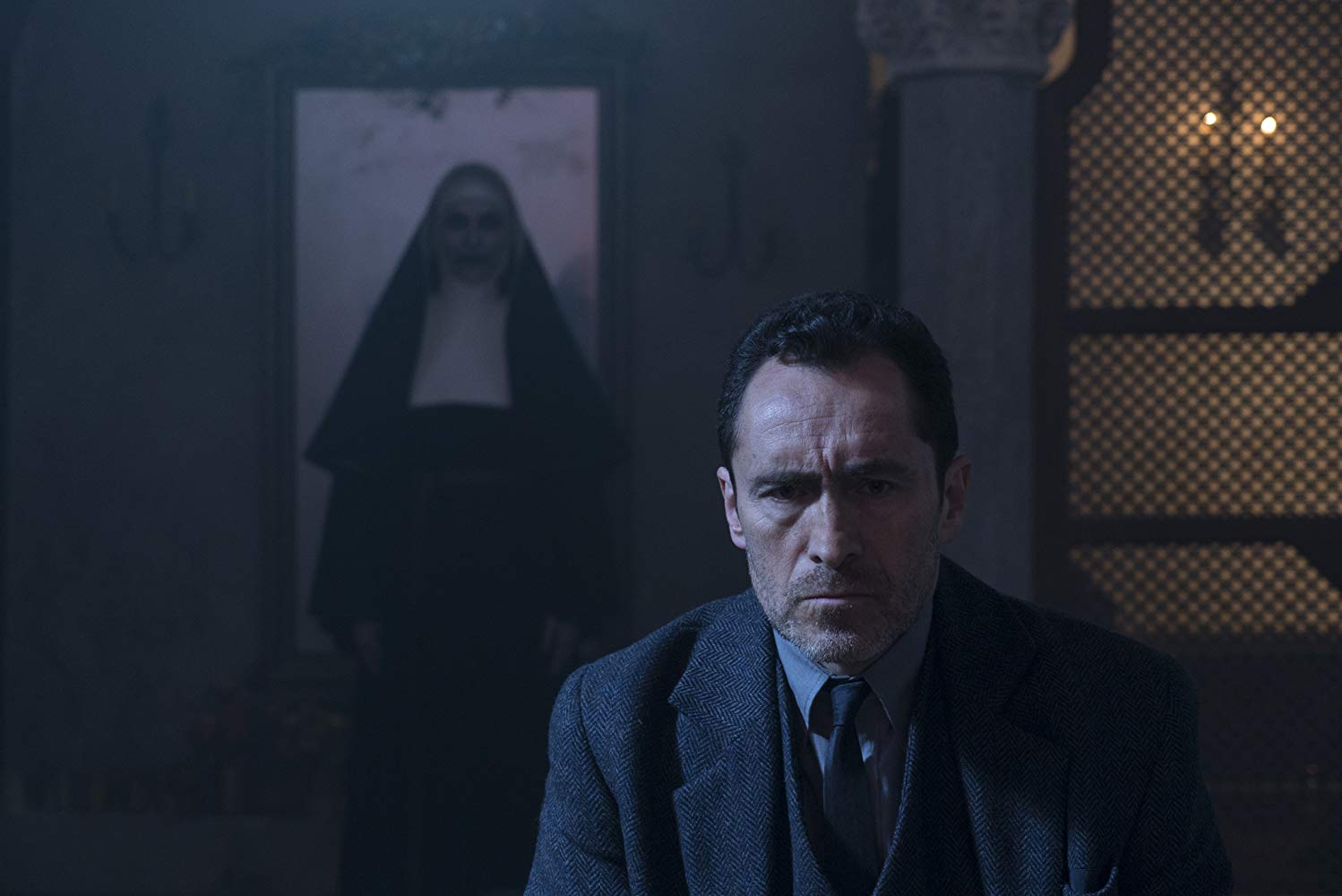
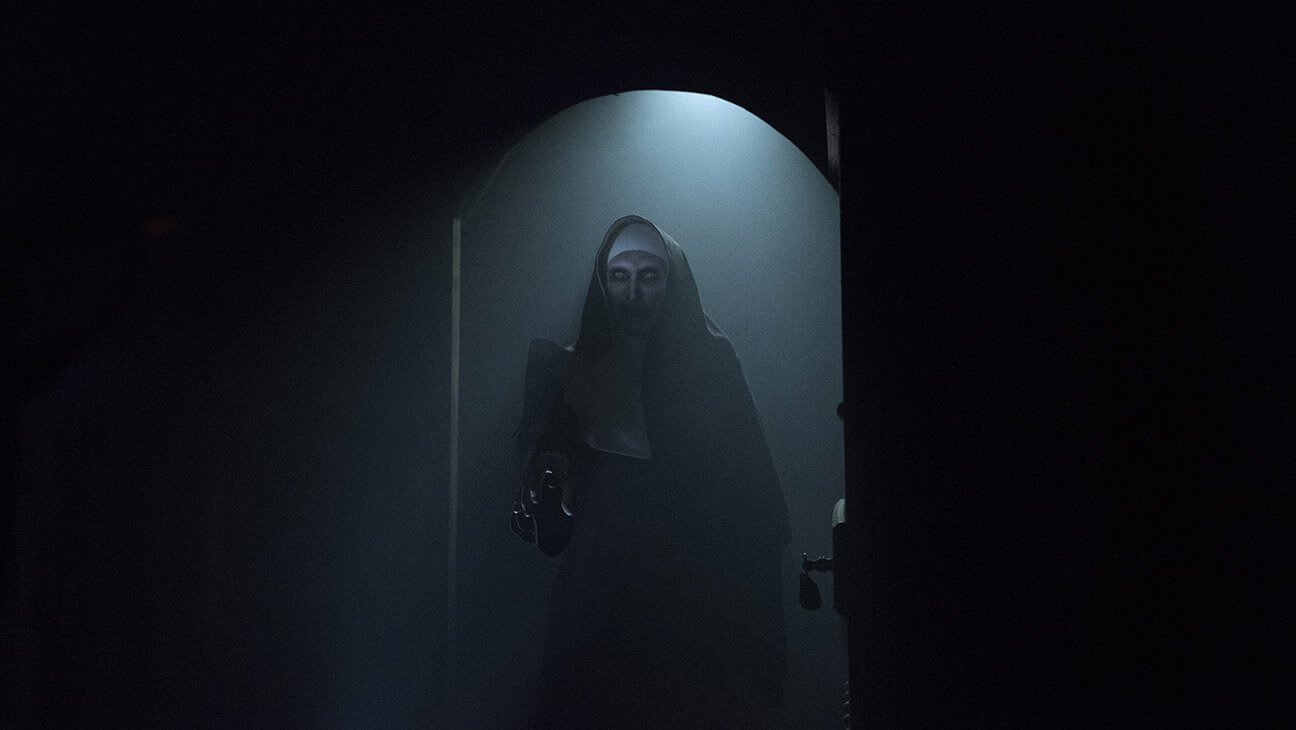
Having impressed many with his debut feature, 2015’s The Hallow, many genre fans were hugely excited at the prospect of Corin Hardy tackling The Nun. With that terrifying gothic entry in the shared Conjuring realm hitting home release next week, we caught up with Corin to discuss the movie, the charming gothic horrors of yesteryear, his real-life spooky encounters on the set of The Nun, and a whole lot more.

STARBURST: Firstly, how did your involvement in The Nun initially come about?

Corin Hardy: Well I was sent the script through James Wan’s Atomic Monster company. I was familiar with the character from The Conjuring 2, and I’m a horror fan so was familiar with James’ work. I was eager to see what the story would be, and I was surprised and excited by the mysterious adventure story that I read in the script. That enticed me to get involved. I pretty much read the script in the morning, had a Skype with him that afternoon, and was working on it the next day.

With The Nun being a part of an existing franchise that has such a strong fanbase, was there any trepidation from yourself in taking on the project?

Not really. I’ve got a number of my own projects and I’ve got a number of different stories that I’m juggling and wanting to tell, and when The Nun came around it was sort of a curveball. Like I said, I read it very quickly, then I thought, “Can I get my teeth into this?” Because it was such an old school gothic horror story with an adventure element that took place in a time and a place that was visually appealing and had a lot of elements of things that I love, I could see myself making it. From getting the job, there wasn’t a lot of time to sit back and contemplate or be concerned. I was very encouraged by James and by New Line – who have made some great movies – to do my thing with their support. It was a creative collaborative process.

The Nun

Given the rich charm of some of the classic gothic horrors of yesteryear, was there anything  in particular that you went back and watched for inspiration when putting The Nun together?

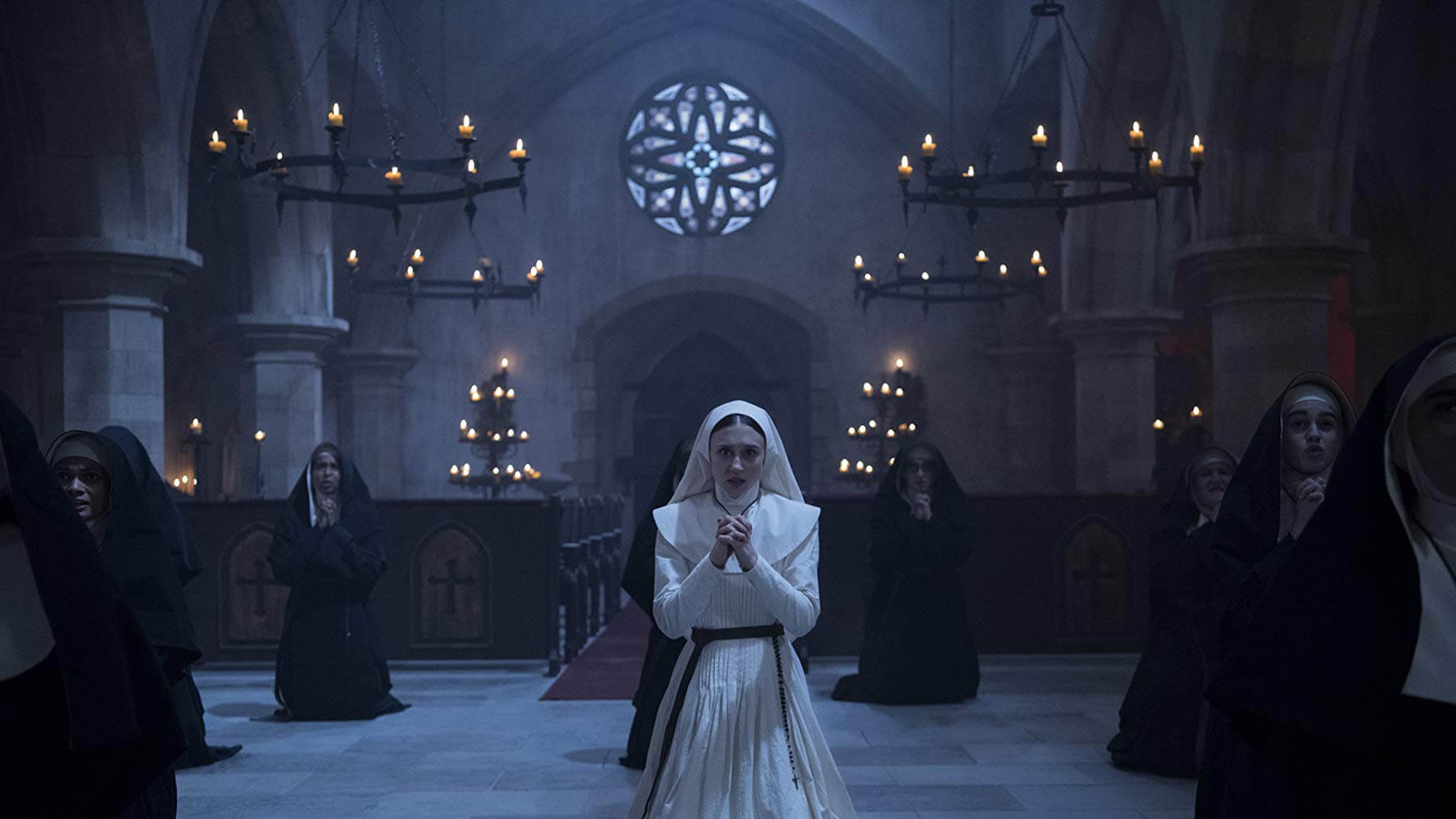
You said the word rich, and that’s a good word. I guess I’m a fan of these environments. It painted a lot of visuals in my head that harked back to a lot of movies that I loved growing up, that held a lot of mystery and horror, and I think the kind of movies that actually aren’t really being made now. A lot of horror tends to be very contemporary or current, with the exception of maybe something like The Witch, or it’s a blockbuster mega-budget adventure movie. I put together a mood book once I was getting involved in the project, to sort of share with my crew. It was full of references from classic horror movies; Hammer movies; The Exorcist; The Exorcist III; Name of the Rose; Evil Dead 2; Indiana Jones and the Temple of Doom; Dracula, both the Coppola and Hammer ones; science-fiction movies; Black Narcissus and the sort of rich colours and cinematography in a movie like that; there were some Italian horror movies. I guess that was the sort of colour palette and environmental palette of the castles and the mountains and forests, the candle-lit corridors that were flickering, the darkness. It’s the most potent, classic horror environment. When I was making the movie, it made me feel quite happy that it was my own little Dracula movie.

In the last four or five years – and a lot of it is down to people like James Wan – do you think that there’s been almost a resurgence in great horror?

I definitely think that there are cycles or styles of horror, of subgenres of horror, and we may be in between a couple at the moment. I think what James brought back, particularly with The Conjuring, he harked back to this Golden Era of horror – like The Exorcist – where you had great characters, great cast, beautiful cinematography, classic storytelling. You invested in it, it’s not cynical. It’s not for laughs but it can have humour in it, and it was respectful and contains a lot of mystery and fantasy that grounds it. I think that’s what people find attractive about the Conjuring movies, that they have a grounding. The Nun was intentionally a little bit different, a little bit more of a fantasy adventure with a gothic horror element. Then I guess you’ve got what Jordan Peele’s doing, recently there’s Hereditary. These are very contemporary stories that feel like they’re taking place in our real world and that can scare us in a different way.

The Nun

You touched on it there, that at times there is a little bit of lightness and humour in horror movies. In The Nun, the Frenchie character is often there to bring some levity to proceedings. How important was that character in balancing out the tone of the picture?

It’s something that you ultimately balance in the edit, but it was always written that his character was this sort of everyman character who was always a little bit slow and helped provide levity. In the testing period of making the movie, he got such a lot of love that he definitely became even more of a character in the final cut of the movie. It’s certainly not a comedy-horror, but when you have a horror movie and you can balance it and give license to letting the audience catch their breath, it enhances the scares and the ride that they’re on if you can suspend the belief around it. So it’s definitely a fine line. Frenchie is a very likable guy and Jonas [Bloquet] the actor is wonderful. I think one of my favourite scenes in the movie, spoiler alert, is towards the end when Father Burke, Irene and Frenchie have finally come together as a unit and Irene takes her vows. They’ve all been through hell and are preparing to go deeper, Frenchie’s loading the shotgun, and they’ve now gelled as a unit. I really liked that image. Then as they go down, they come across the Blood of Christ and there’s a little scene between them where it’s very holy and quite a tense moment as they retrieve this sacred artefact and Burke ends up giving it to Irene. We managed to get away with a little line from Frenchie that I think just underpins, just before they go in to the darkness and the scary place to encounter the demon Nun, that there’s a real moment where you can kind of breathe again.

There are certain stories that the set in Romania was blessed by a Priest and that you yourself had your own spooky encounter out there. How true is all of that?

Both stories are totally 100% true. New Line, who have done a lot of these movies, make a point on every movie they make – the Conjuring movies, the Annabelle movies, any movies with religious content – that they not only get the religious community involved and run the scripts by them as they don’t want to offend anyone, but also they get, in this case a Roman Catholic Priest, to come and bless the set. He blessed the castle. I was standing there, it took a good half an hour and I don’t know quite what he said, but he got a big bottle of holy water and was flicking it around. He flicked it right in my face and I got a whole eye-full of it. Maybe I was super protected for the shoot, but then during the shoot…

I’m a relatively sceptical person, and I don’t really say it lightly, but I did have what I can only amount to a supernatural experience while I was making the movie. It was during the Corridor of Crosses sequence, which was shot in a real underground fortress in Romania – a real and genuinely creepy, dark and strange labyrinth – and I was shooting the sequence where Irene is approaching the door that the Nun is behind. It was quite an elaborate, long 50ft track. I had to be based in a room off that corridor, which was a real dungeon-like square room with only one door that went out on to the corridor. There was only one way in and out. It was pitch black in that room, and as I went in to the room from the corridor we were shooting in to look at the monitors, I saw two men sitting in the darkness. I thought they were Romanian crew members, because you see a lot of crew hiding around corners, trying to get out the way of the shot in little spaces. I went in, I saw these two men in the dark at the back of the room, nodded to them, then turned my back to watch the monitor for 20 minutes while we rehearsed this shot that was quite difficult to get right. When we finally had the shot, I turned to announce my excitement of getting the shot. I turned to the two men behind me to find no one in the room at all. There was no one there, and they couldn’t have come in or go out. This was an old military fortress that have had death in, so I feel they must be Romanian ghosts checking in on what was going on while we were making The Nun.

The Nun

Before The Nun was released, James Wan said there could be the chance to do a sequel should the film do well. With the picture having taken over $360 million from a $22 million budget, would you be interested in returning for a Nun sequel or another movie set within the Conjuring realm?

We talked about it before shooting and during it, in terms of different ideas for the story and where it could take us. I’m always interested in furthering stories, so we’ll have to wait and see. James and I get on very well and we text each other about things we love and cool horror movies and stuff.

He just seems to be such a busy guy these days, with his fingers in so many different pies.

I think he’s got pies in pies [laughs]. He’s got a lot going on right now.

Having departed the upcoming reboot of The Crow earlier this year, what else do you have coming up that you can tell us about?

I have a number of feature projects to get in to next, but I’m shooting my first TV series – which I shoot in February – and that’s with Gareth Evans, who made the Raid movies. It’s called Gangs of London and it’s very exciting. It’s a very deep, dark family crime drama. Not like family for kids, but family like The Godfather or a Game of Thrones sort of thing. I’m just in the thick of prep at the moment, I’m shooting in mid-February. Gareth’s shooting his episodes at the moment. It is a contemporary series and it’s very thrilling and violent and action-packed and emotional.

Can audiences expect to see that towards the end of 2019, the beginning of next year?

You know, it’s HBO and Sky and I haven’t even actually asked when it will air. We’ve got a lot to do first.

The Nun is available on Blu-ray and DVD from January 14th.