Ron Fogelman | THE TWILIGHT ZONE

Fogelman

Ron Fogelman is the producer behind bringing the legendary show The Twilight Zone to the stage. The show can be found at the Ambassadors Theatre, London, until June 1st 2019. We caught up with Ron to find out more about how he did it.

STARBURST: How did you get involved with the Twilight Zone?

Ron Fogelman: If you’re going to blame anyone, blame my kids. In our household I’ve got three kids. And there’s some amazing stuff coming out these days. Because you’ve got Netflix and Amazon you’re surrounded by content. It’s hitting you from every direction.  I grew up when they were just three channels on the telly and on a Saturday afternoon I didn’t have a choice. I’d watch a Western, or sci-fi, or  a drama or a Hitchcock film.  And you get a broader view of what you like. And you get used to older films which I think is a skill you have to develop when you’re younger.

I was very keen to have our kids to see lots of different film making material, just so they have the change to see it. So we’ve done everything from Billy Wilder to Frank Capra to David Lean. Within that sort of spirit I was looking at my boxed set of Twilight Zone. I wondered what my kids would make of it. I carefully selected some stories. What amazed me was the immediate effect. They were so well crafted and timeless in appeal. That’s where it started.

How would you define The Twilight Zone?

It’s a different kind of story-telling. The show often gets labelled as horror or science fiction, but I think it transcends that. If you look at the horror label they are two kinds. One where I go Boo! And you get a short adrenaline burst and you go that was fun. Your body acclimatises to it and you forget about. Then there’s what the Twilight Zone does; it looks at those things that unsettle you and unnerve you. Things that you try to bury. Through very careful surgery, it digs in and twists. It’s what it leaves behind that’s really matters.

How did you get started in this industry?

I always knew I wanted to work in entertainment and I’m a passionate devotee of genre. In the late ‘80s as I was getting into the business it was a period of change, and I wanted to use my mix of creative and business skills. I joined the FTSE100 company Rank which at the time one of the best collections of UK films, which is now owned by ITV.  It was investing in new movies and that was my first job in the industry. I then went on to Polygram, which then went onto become part of Universal studios and I became a suited executive for them.  Quite often you’ll have an amazing piece of material such as The Big Lebowski, but it’s one thing having the script and another thing to sell the licensing rights. You have to call on your storytelling skills because you’re trying to encapsulate what this project will become to people who are very cynical and will assume that everything will be a failure until proven otherwise.   That was really where I started with the business.

How much did you sharpen those skills?

I wanted to make sure I understood the creative side of things, so initially I read about a thousand scripts. I realised I was turning into a poor man’s critic; I could sense when something was good, but if something was not quite good enough, I didn’t have the skillset. I didn’t want to sit with the writer and say ‘I don’t like that page, why don’t you make it blue’.  I needed to understand how writing works. So I started reading up on it and I wrote an adaptation as an exercise. It eventually led to me working with a friend of mine who’s a very good graphic novel writer, a guy called Andrew Donkin. He’s got a very good book out this year called Illegal. We did spec scripts for Batman: The Animated Series. We sent of a script, it was called Right man for the Job to Allan Burnett and Bruce Timm. It went to LA. I didn’t have an agent. I wrote an impassioned letter and within 24 hours I got a called saying that he really want to work with me. Which is one of those things you don’t normally get.  At that time Batman had run its course and they were looking to develop Superman the Animate series.  We were very lucky as we got to work with Paul Dini on an episode called the Toyman. It was brilliant. I have some of the cells from that on the wall of my office.

And how has this lead to this?

It’s a strange life. I think it lends towards producing because Producer is not a job description. it’s not something you can train for.  You have to understand production, financing, distribution, marketing, finance and talent. Very few people get to build up those skills. Thankfully because of the diverse things I’ve done its helped produce this show.

The Twilight Zone is running at the Ambassadors Theatre in London until June 1st and you should hurry if you want to book tickets. You can read our review here and book tickets via this link.

Daniel Brodie | MORGAN’S ORGANS #3

Morgan's Organs

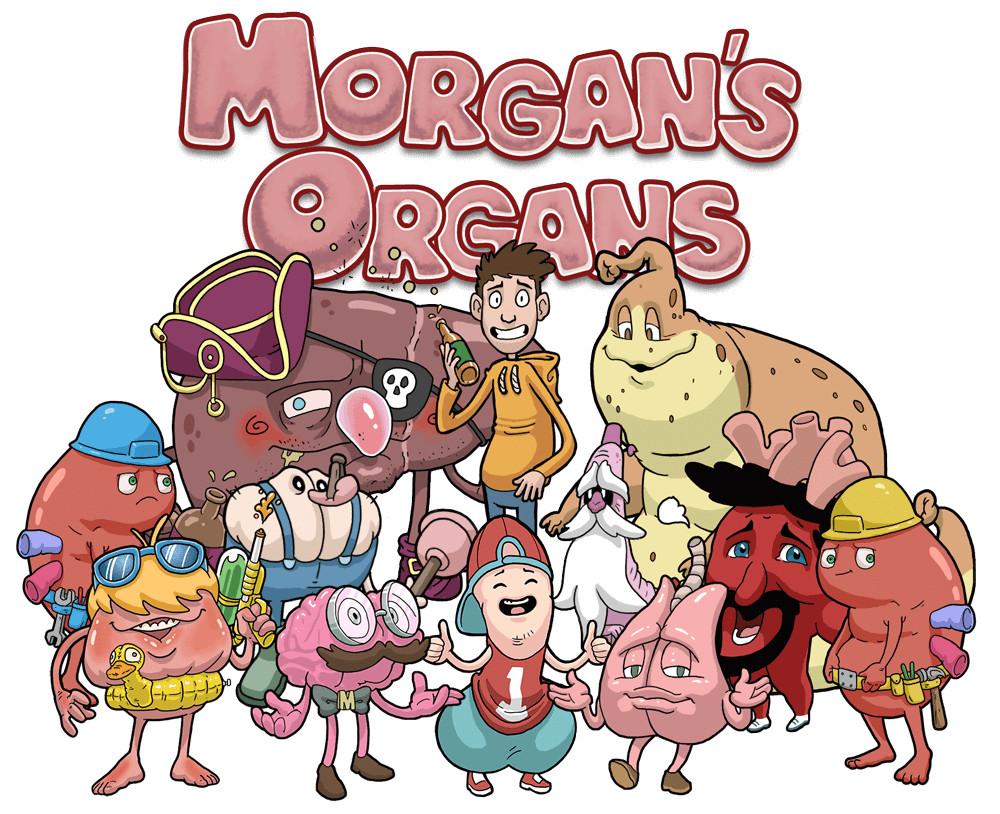
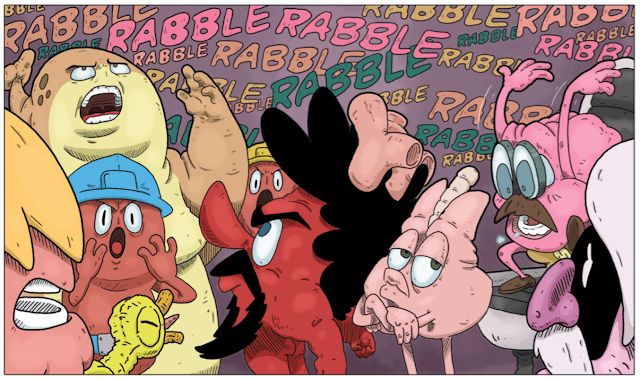
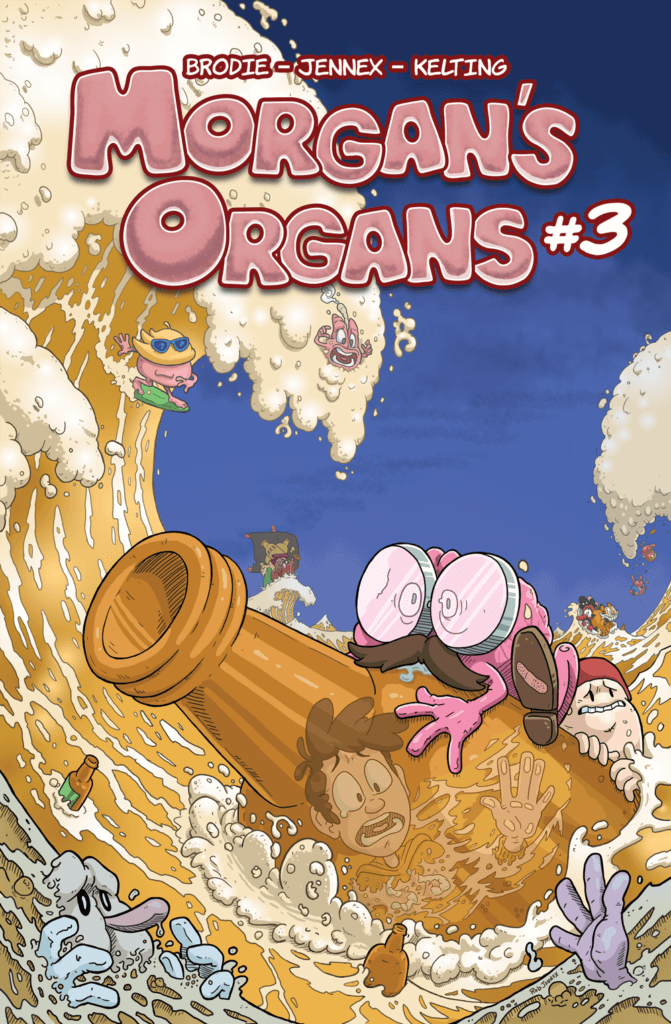
Having already impressed with the first two issues of the utterly unique Morgan’s Organs, creator Daniel Brodie has now launched a Kickstarter campaign for the third outing for Morgan and his, err, organs . We were lucky enough to grab some time with Daniel to discuss issue 3, how he came up with the bizarre but brilliant concept of Morgan’s Organs, his experience of using crowdfunding, what perks backers can expect, and a whole lot more.

STARBURST: Where did the initial concept for Morgan’s Organs originate from?

Daniel Brodie: Funny enough, the idea sprung up in the summer of 2013 while strolling along the streets of Amsterdam [cough, cough]. I don’t remember much of what went through my head, but I distinctly remember coming up with the name Morgan’s Organs and a vague thought of what if the organs inside our body each had their own voice?

I obsessed over the idea that summer and thought that it could make a great television show. Later that year, I decided I would make it happen myself.

How have you found the process of translating those initial ideas down into an actual physical comic book?

When I first began working on Morgan’s Organs as a comic book, it was definitely a challenge. For one, I had ZERO experience in producing comic books. I didn’t know proper comic book writing structure or how to layout a page.

Secondly, I have zero artistic talent, so it was difficult for me to perfectly visualize what I wanted for the look and feel of the series. Thank god I stumbled upon our lead artist, Robert Jennex, as he really is the person I need to give credit to for creating the visual foundation. Before him, it was just a story on paper.

With two issues having already been successfully backed, how have you found using crowdfunding?

Crowdfunding, specifically Kickstarter, has been absolutely fantastic and also pivotal to the success of this series. When I started on Book 1, I really had zero audience. And I also didn’t have much for funds. Kickstarter allowed me to balance my risks – I only produced 5 pages + cover for Book 1 before our Kickstarter launched, in case my hopes were wrong and people did not like my vision. Fortunately, the Kickstarter was a quick success and we were funded in about a week, which was all the motivation that I needed to keep working on the book and to continue the series.

Since then, we have seen a growing audience of supporters on Kickstarter for Book 2, which continues to tell me I am on the right path with the series.

What has been the biggest challenge of going the crowdfunding route?

The biggest challenge is really just patience. Since we are an indie series, all of us have day jobs that we need in order to allow us to work on our passion projects. That means it can take a long time for the books to be complete.

For me, once a Kickstarter is over, I really feel the pressure to deliver rewards by the time I’ve promised them. When we are talking 3-4 months after the campaign, it can be a struggle to keep patient while the artwork is still being complete.

How has the reader response been to the two issues so far?

The reader response has been incredible. From the sounds of it, people really enjoyed Book 1, but they loved Book 2 even more. I am really happy to hear that, as it means we are growing with each story. I hope what fans say next is they loved Book 3 the most!

How about the look of Morgan himself? Was there anybody you based him on?

Not really. The character description that I gave to Rob was probably, “make him look as average as possible”. He does kind of look like a grown-up Morty from Ricky & Morty though.

The characters in general, how much direction did you give Robert with the look of them or did you give him creative freedom?

I like to think I gave Rob a lot of creative freedom with their look. It was a lot of fun watching these characters come together. I basically just gave him a general description of each character, their personality, and any thoughts that I did have on visuals. Rob then just did a whole bunch of sketches of different character shapes and details within each option and we discussed which we both liked best. It was very collaborative!

Probably the character that we had the most debate on was Vee the Vagina, who is interested at the end of Book 1.

You’ve previously referred to the title as “Inside Out for adults”, but is there anything else that you’ve particularly drawn inspiration from for Morgan’s Organs?

To clear up the air, I wouldn’t say I’ve taken inspiration from Inside Out, mostly because I’ve never seen it! I just reference Inside Out because it is an easy reference point for connecting with new fans and explaining the series premise. I actually started development on Morgan’s Organs well before this movie was a thing.

I would say my biggest inspiration is Rick & Morty. I love the depth and breadth of comedy and stories in this show. They know how to perfectly balance dirty humour, smart humour and dark humour, all while telling a great story. I try to do the same for Morgan’s Organs.

Each of Morgan’s organs are a key part of the overall narrative, but is there a character that stands out as your favourite?

Tough to say if I have a favourite character! I honestly love all of them – each one is so unique in my mind and I really can distinguish personalities as I write for them, making it fun to write for them all. I know that Pepe the Penis, Andy the Appendix and Meats the Stomach are some fan favourites.

If all goes well with issue 3, do you already have further Morgan’s Organs stories envisioned and ready to move forward with?

Absolutely! I have so many stores planned, and spin-offs, and even a theme park (okay, maybe that’s stretching it). The main point is that the world of Morgan’s Organs has so much opportunity for new stories, inside and outside of the body, and I would love to continue to tell more of these stores.

I already know what I want the story to be for Book 4 and am at the initial stages of mapping out the story structure. If all goes well with the Kickstarter, I’ll be boosting up my work on developing Book 4!

Morgan's Organs

As an independent comic book writer, how do you find the fact that now anyone can make a comic – funding permitting. Is it more beneficial because the internet means you’re able to put yourself out there, or is it more a case of oversaturation making it harder to get noticed?

Good question. I feel like it is a bit of a double-edged sword. For one, I am thankful that we live in a world today that it is possible to make indie comic books and easily connect with a potential audience through crowdfunding. Without a platform like Kickstarter, I am really not sure how I could be where I am at today. On second hand, having something like Kickstarter so openly available makes it difficult to have your voice heard.

For me, I try to slice through that to find a peaceful middle ground. The audience will decide what the audience wants, so as long as I still have fans of the series, I know that I am doing the right thing and I should keep making more books. I try not to focus on what’s going on around me, and instead try to focus on the people that already love what I am doing as a starting point.

What can you tell us about the campaign and perks for issue 3?

In the past, I’ve focused more on the paper side of rewards, but I am excited to have some fun new collector’s items in this campaign. That includes an enamel pin of our series star, Bran the Brain. It also includes two really fun creations that were done by a couple of Canadian artists. There will be a Pepe the Penis 3D printed figurine and Angus the Anus Wall ornament. It’s so cool to see my characters in 3D format!

Anything else you would like to add?

Just that we launch our Kickstarter on Saturday May 11th – and anyone that backs in the first 48 hours will have a surprise extra goodie included in their package!

For full details on the latest Morgan’s Organs Kickstarter campaign, be sure to head here.

Morgan's Organs

Timo Vuorensola | IRON SKY: THE COMING RACE

Finnish Film Director Timo Vuorensola became a cult filmmaker when his 2012 film Iron Sky first came into the public’s eye with the “We come in Peace” trailer back in 2010. Now, seven years after the release of the first film, Timo is back with the second instalment in the Iron Sky universe with The Coming Race which is set multiple decades after the events of when we left Earth back in 2012.

We were lucky enough to sit down with Timo to talk about the sequel, the importance of fan support and what’s next in the ISU (Iron Sky Universe).

STARBURST: First, congratulations on finally getting the film made, it’s super fun! It’s been a long time coming since the first film, but the support of the fans has really helped you out hasn’t it?

TIMO VUORENSOLA: Yeah if it wasn’t for the fans, I would’ve quit many, many times because in many ways it’s a totally insane business is filmmaking. Especially when you are doing something this crazy on this scale, nobody’s going to call you and give you the money to do it so you’re going to have to work so hard for every freaking dollar you need. When you come to the post-production the low budget can cause massive issues that for bigger companies is no problem at all. So, all those moments the fans have been there, and they’ve never gone away which is unique and worth every moment. Sometimes it is hard to communicate with the fans but it’s always been worth it.

Not only have you directed both films, but you’ve co-written the screenplay too. How was the creative process of coming up with these crazy ideas along with Jarmo Puskala (the author of the original concept)?

Jarmo and I came up with the whole idea and I always had the idea that I wanted to tell three stories – so we’ve had the first film and now The Coming Race and there’s one more to go. All of this is something that both of us have been developing for many years since about 2005 so we’ve lived with these thoughts for almost 15 years. It’s turned into a bunch of crazy things that are constantly changing whether it be from stuff I see online or stuff that I read or watch. All these nuggets of craziness form over the years and create the story. It’s tough to make sure that they make at least a bit of sense when they are all put together. The process for the first Iron Sky was very tough getting things into place and then things were still tough but a little easier with The Coming Race because we had more of an idea of where things were going. It always begins with those crazy ideas picked from various parts of society.

What is mighty impressive about Iron Sky is the fact that you’ve created these outlandish set pieces and storylines for the audience without being offensive. How hard was it to find that balance especially the way people can be today?

The thing is we set up a clear tone in the first Iron Sky where we made fun of the Nazis and not the victims and when you establish something clear in your head it’s easy to follow along. We always look at it from that perspective as it’s very easy to fall into the trap of being offensive and excessively bloody and gory. If you direct it incorrectly it becomes unnecessary. You must be aware of the red lines which makes it difficult in the beginning. I’m just grateful that we now know our target audience – although we still have had quite a lot of people who got offended (laughs) especially with the Jobists that appear in the film – that idea stemmed from the fact that so many people nowadays are attached to their phones or other pieces of technology and we (the writing team and I) all thought that that would be something we had to bring into the film to poke fun at.

A lot of the original cast is back for this second instalment. How was it reuniting with everyone after all this time?

For me, it was great especially getting my good friend Udo Kier back and it was his idea to do a double role and play Hitler (he said it must be me) (laughs). It’s been such a long time but once you get on the set everything clicks again very quickly. It was a bit of challenge for some of the new actors I think because Iron Sky was such a unique film and we had to do a lot of explaining but there was a real sense of family which helped a lot. A lot of the new actors said it was a crazy and fun experience.

Out of all the memorable moments across both films, whether it be on screen or behind the camera, can you share with us some of your favourite moments?

I think for me I enjoyed working with Udo a lot and whenever I was fretting or getting stressed he was always there to help me out which was amazing, just his presence was enough to get me through the toughest of times – that is a priceless thing to have as a director. Working a lot with green screen to bring all my crazy ideas to life was also a special experience.

What can audiences expect from the future of Iron Sky? You’ve currently got a spin-off in the works called The Ark? Can you tell us more about that project?

The Ark is a Chinese movie that is its own story and doesn’t have a lot to do with Iron Sky except it’s under the same umbrella. In terms of the main storylines we’ve had Iron Sky and now The Coming Race and the third film which I originally wanted to title Endgame (but for some reason I had to change it), that will be the last instalment that I have in my head for the Iron Sky franchise but I, unfortunately, can’t say too much because we are still in the very early stages of developing it and some of the crazy plans we still need to sort out. I also have another Chinese movie coming which I directed which has similar elements to Iron Sky which stars Andy Garcia as the main villain so that’s going to be a lot of fun too!

Iron Sky: The Coming Race is out now on VOD, DVD & Blu-Ray.

Thomas ‘Dome’ Karukoski | TOLKIEN

Thomas Karukoski

Thomas “Dome” Karukoski is one of Finland’s most successful film directors, having won over 30 festival awards. His work includes The Grump and Tom of Finland. His latest movie is Tolkien, a biopic about the father of modern fantasy.

STARBURST: What was the elevator pitch for Tolkien?

Dome Karukoski: It’s a story about friendship, love and creation. It’s about how we see a young genius’s mind flourish and where the inspiration comes from. He’s confronting his own imagination, understanding it and learning to use it.

What drew you to Tolkien’s story?

There are two sides to it, as film maker and as a person. I read the Lord of the Rings when I was 13 and at that time I was an outsider. I was growing-up without a father who I later got to know, I was bullied, I was very alone and miserable.  Then I open up this book and basically it became an escape. Those stories became friends.   Fast forward 30 years and I’ve read almost all of his books, some of those twice. I knew about the Inklings/CS Lewis era, but I also knew about his youth years. And then you understand reading those stories that he was an outsider, that he became an orphan.  Then finding these friends whom he went to war with. And that story was so beautiful that I wanted to tell it.

What inspiration did you draw on when casting Tolkien and his childhood friends, the TCBS?

The casting process was quite easy. When I started meeting actors I didn’t really have a script I want to show them. I would meet a lot of actors –  I started with Nic because he was on the top of my list and top of the studios list. With actors I always try to find who they are and build upon them, because every actor has their own skill. With Nic he was inspirational. He’s very intelligent and very fast and witty. We always joked that he’s a bit of a hobbit even though he’s quite tall. The method was trying to find the true character in those people that resonates with the character portrayal later. After seeing Nic, it couldn’t be anybody else.  When building the characters, it was just research, a lot of it was finding the right pace and rhythm.  Everything I read about them said they were very witty, with a lot of pace and comeback lines. When you have that with friends that means you trust that they’ll understand your humour and understand your point.

Much of the movie’s focus hinges on the relationship between Tolkien and Geoffrey Smith. Why the focus?

Well of course they grew very close to each other in Oxford, and the other two went to Cambridge so they’d only see the others on the weekends, back and forth.  They grew very close to each other.  Stephen Beresford, who is one of the writers, is a gay man. He read Geoffrey’s letters and poems and he felt that there was a possibility that he was also gay.  We can’t claim that, of course. I read it as the relationship was intimate though not romantic.  Geoffrey was a bit younger, and his affection toward Tolkien was one of admiration. What’s beautiful about that story is that he was there for his friend during the darkest times.  Geoffrey’s letter to Tolkien is word by word how he wrote it. Thinking about Tolkien at a time he thought he was going to die. Their relationship was friendship to its purest level. To think that you’re going to die and know that there is one friend you have who will continue your aim and your mission, the one desire they have about the world.  I think that’s very beautiful.

How important was Edith’s perspective to you?

If I was to write that love story into a film that was untrue, and tell a tale about friendship and then love and then eternal love. The producers would say that would never happen. That it was too ‘Gone With the Wind’.  The problem is that Edith can be easily seen as an elven princess, which of course what I’m going to do because it inspired Tolkien’s story Beren and Lúthien.  When you starting reading about her, you find that she had this huge intellect and she was strong willed. She had character that Tolkien admired. It was very important to show these layers, that she was not just an elven princess and show her great stamina.  She’s also an orphan. She’s learned to be strong and learned to fight.

How much did the story of Beren and Lúthien influence the script?

It influenced, yes. But at this point in Tolkien’s life he hasn’t written the story yet.  We show the dance scene that inspired the idea of the story. He’s getting inspiration, he’s getting ideas and sounds and voices. He’s slowly building the theme of his life. Later he’s ready to build that world. The emotional truth of that story has to be in the film, but it’s not that story.

How much of a challenge was it to fold the fantastic elements?
In the movie, he’s not yet written the books.  The knight is perhaps the best example. He first sees the idea of a hero, but his ideal of a hero with a white horse is a notch higher, but then when he gets corrupted by war and bloodshed, that beautiful image becomes something else. It turns into a black knight. You might think it’s a Nazgûl but it’s not yet a Nazgûl . It’s something that has fallen. Internally, for him, it’s a battle of good and evil. How does he feel, what is his emotion here.  Dragons in mythology are about fear, and here we have the fear of losing your friend, of losing your love.  These aren’t taken from his books.

How different was this project from Tom of Finland?
They’re very different. One is the story of an artist growing into fame, the other is a young man growing up to become an artist. Tom of Finland was more difficult because the time from had to be told in forty years. Where Tolkien’s story is more of a story about friendship and love. It’s much more focused on the personal.

How has the response from Middle Earth Fandom been?

We’ve had several screenings and we had applause during the film, so that’s always a good sign. I was with the Finnish Tolkien Society and they praised the film. I think the fans have loved. There will always be people who don’t like it and they’ll be people who will debate the facts. With a film like that you have to choose between facts and emotion, and if you chose facts it doesn’t become drama. It’s about the emotional truth.

What’s next for you?

I’ve just done two biopics back to back. Biopics tend to be hard to make because of the research and you can lose perception as to what to do next. Rest is what’s next.

Tolkien is out now at all good cinemas and you should rush out and catch it while you can. You can read our review here.

Eric Carrasco & Jim Krieg | JUSTICE LEAGUE VS. THE FATAL FIVE

Justice League vs. the Fatal Five Eric Carrasco Jim Krieg

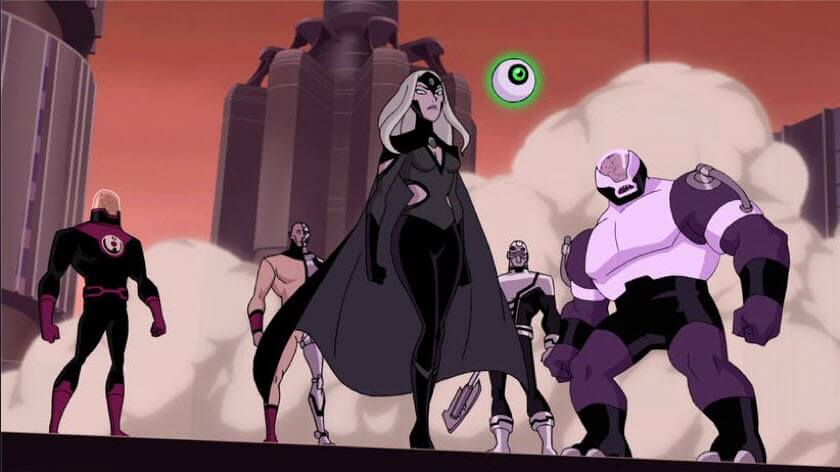
With the latest animated DC offering – the hugely impressive Justice League vs. the Fatal Five – now available on Blu-ray, DVD and digitally, we were lucky enough to grab some time with Eric Carrasco and Eric Carrasco. Having penned the tale with the legendary Alan Burnett, we sat down with Eric and Jim to discuss the nefarious villains of the piece, the personal traumas highlighted in the film, getting to work in the classic Timmverse realm, and a whole host more.

STARBURST: Firstly, why was the decision made to use the Fatal Five as the villains of the piece here?

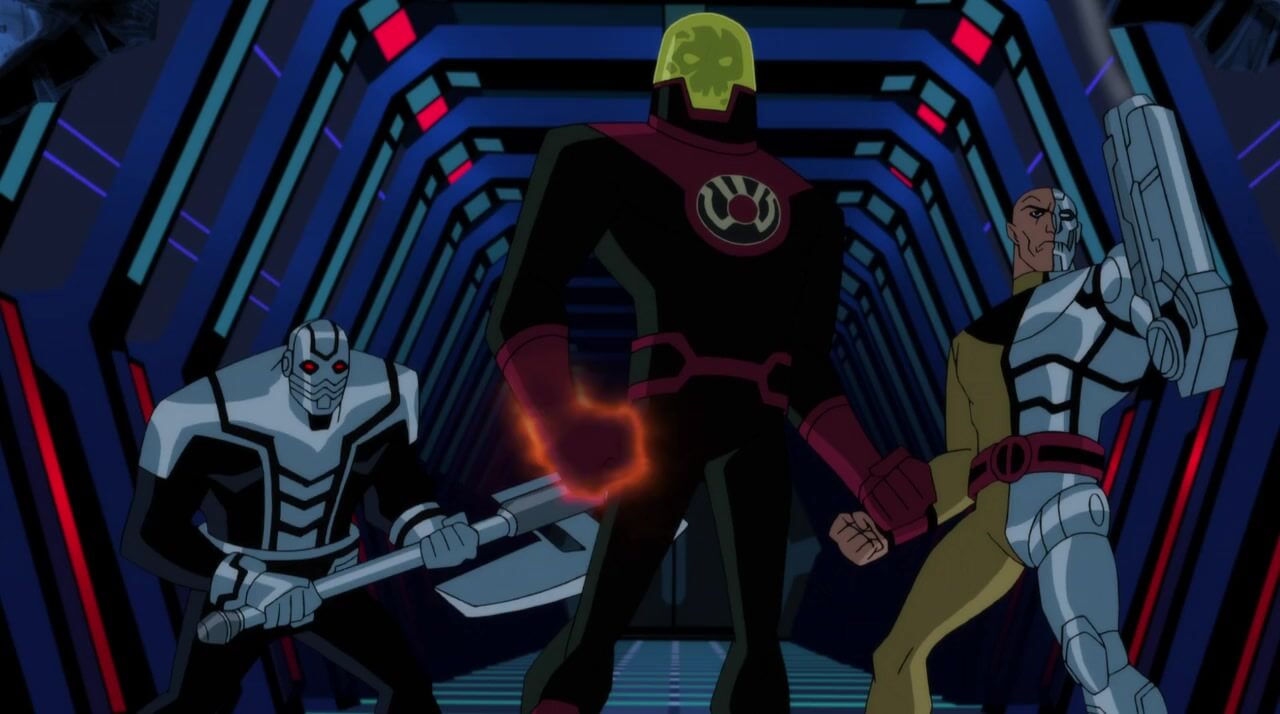
Jim Krieg: When we work with [Warner] Home Video, we generate a list of villains or potential threats to the Justice League. I think they read the words “Fatal Five” and they said, “Fatal Five? That sounds pretty scary.” We all have a hidden agenda to bring the Legion [of Super-Heroes] back or do the Legion in some form, and I think Bruce [Timm] was motivated to have a group of villains who can be a real threat to the Justice League without being an army.

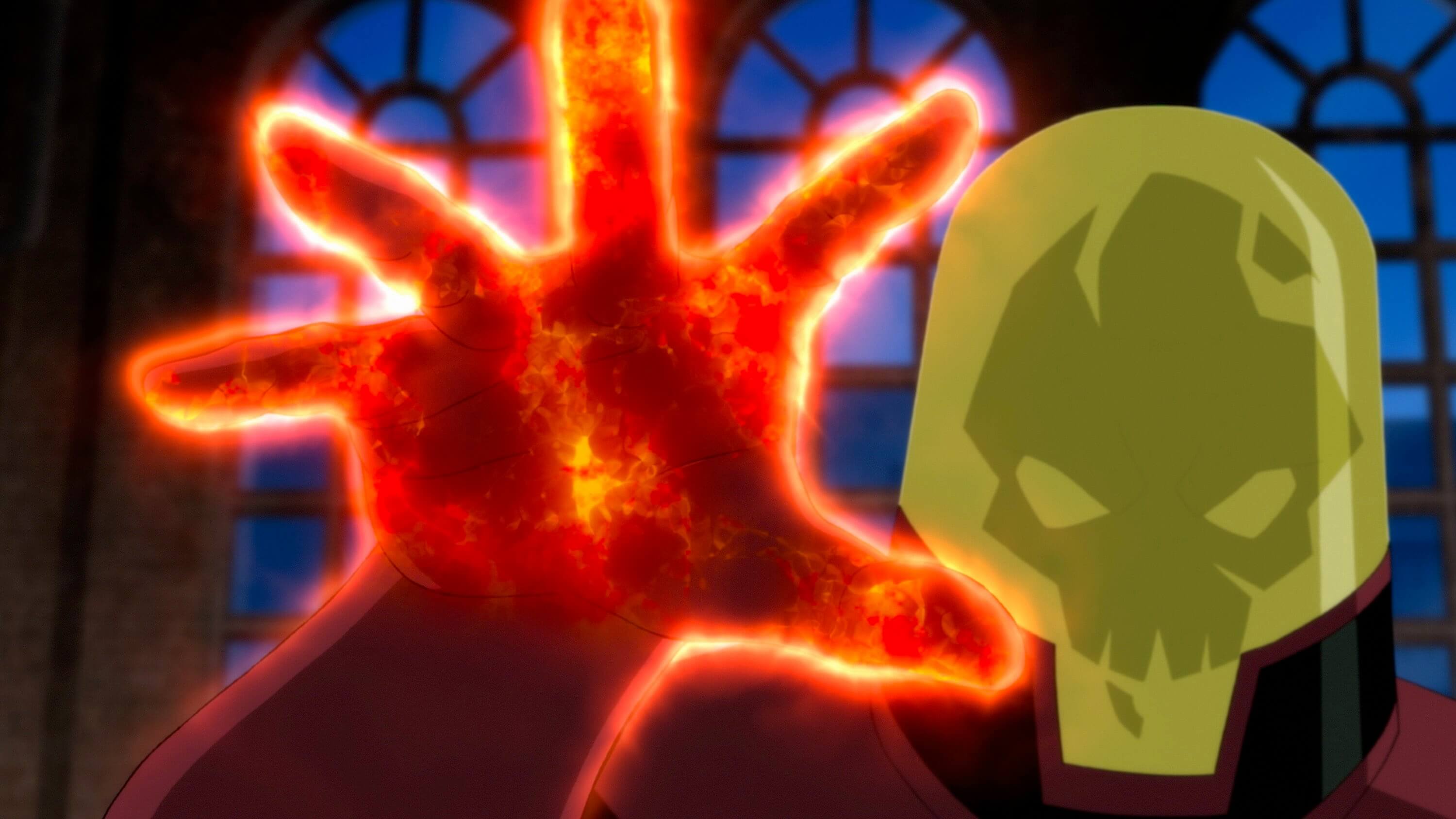
Eric Carrasco: That’s the thing that Bruce [Timm] was saying constantly in the early story sessions. He didn’t want a threat that would devolve into faceless Parademons or troops that the Justice League could just plough through easily. He wanted very unique villains with their own visuals and their own skillset and their own weapons. Here you have a guy whose hands can atomize anything, and an ask that can cut through anything, and the Emerald Eye of Ekron, and a giant creature that can shoot lightning bolts out of its brain. It’s a lot of really distinct stuff that pairs well with the Justice League’s powers.

These days, how hard is it to make villains feel like a genuine threat and not just throwaway characters?

Eric: That is one thing that goes way back to the first appearance of the Fatal Five, to the Jim Shooter Legion of Super-Heroes comics. They’re not even introduced as supervillains when we first meet them in the comics; they’re introduced like a Hannibal Lector necessary evil that the Legion of Super-Heroes turn to to defeat a great threat. So even in the comics they’re treated as so bad they’re actually allies, and they’re immediately set apart from all of the other villains the Legion had ever faced. Without doing that exact thing, we tried to play them as larger than life characters right from the start in the way they’re introduced in this movie. For a lot of this movie, there’s just three of the five running around.

Jim: Just the three of them are already such a huge threat. It really gives you an unspoken feeling of dread that all five are going to be even worse.

Eric: The trick was to separate them and make them so scary. They had to be held in a very special place when captured, they time-travelled right away. These were tricks to make them larger than life right from the jump.

Justice League vs. the Fatal Five

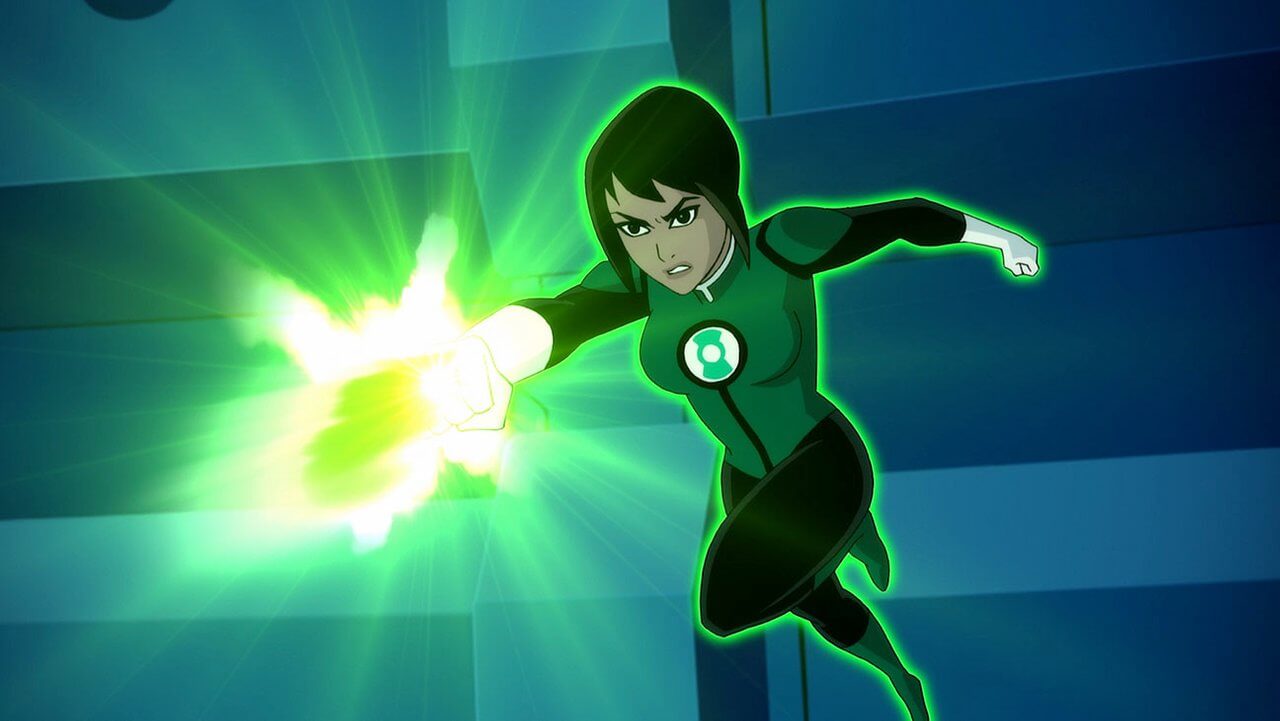
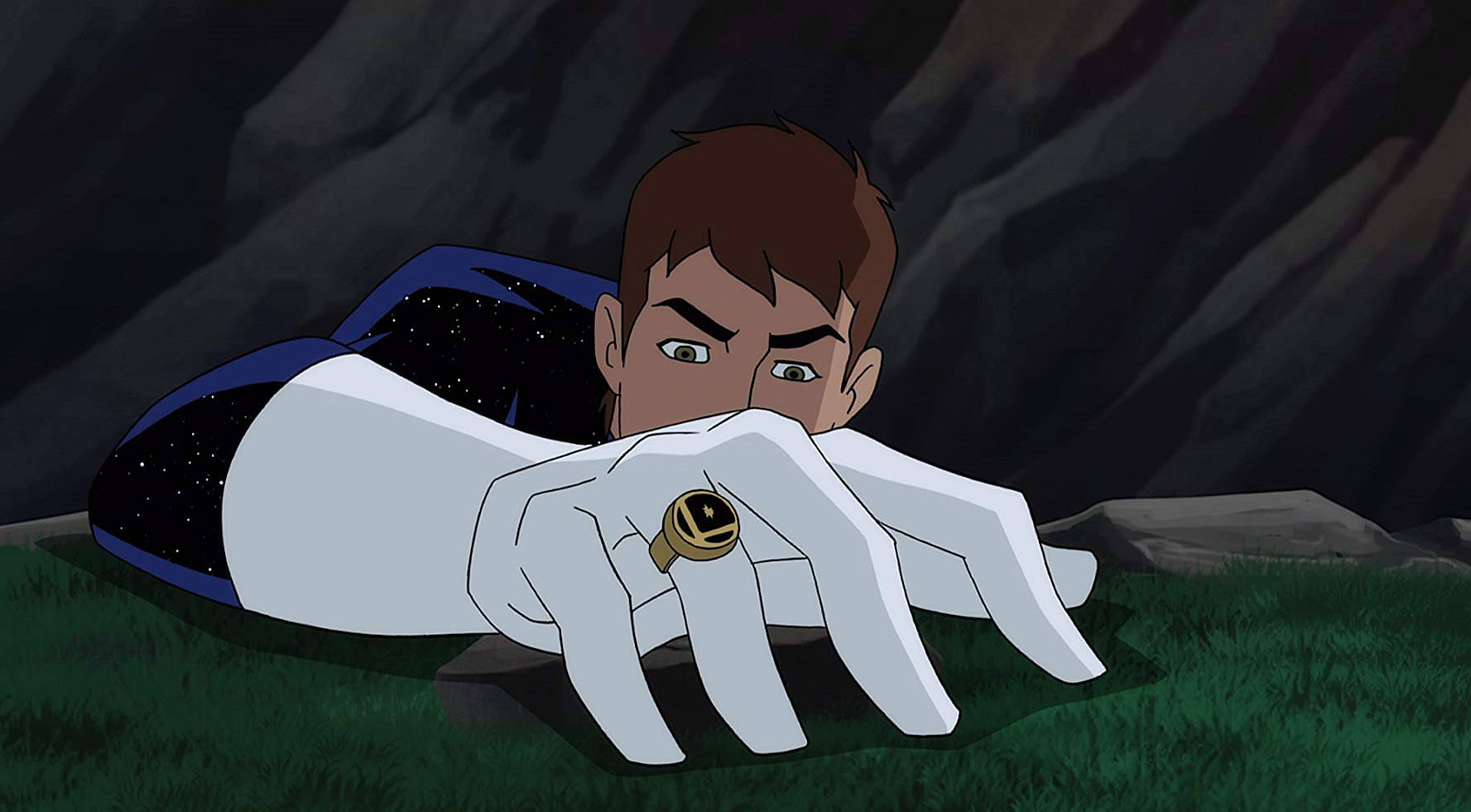
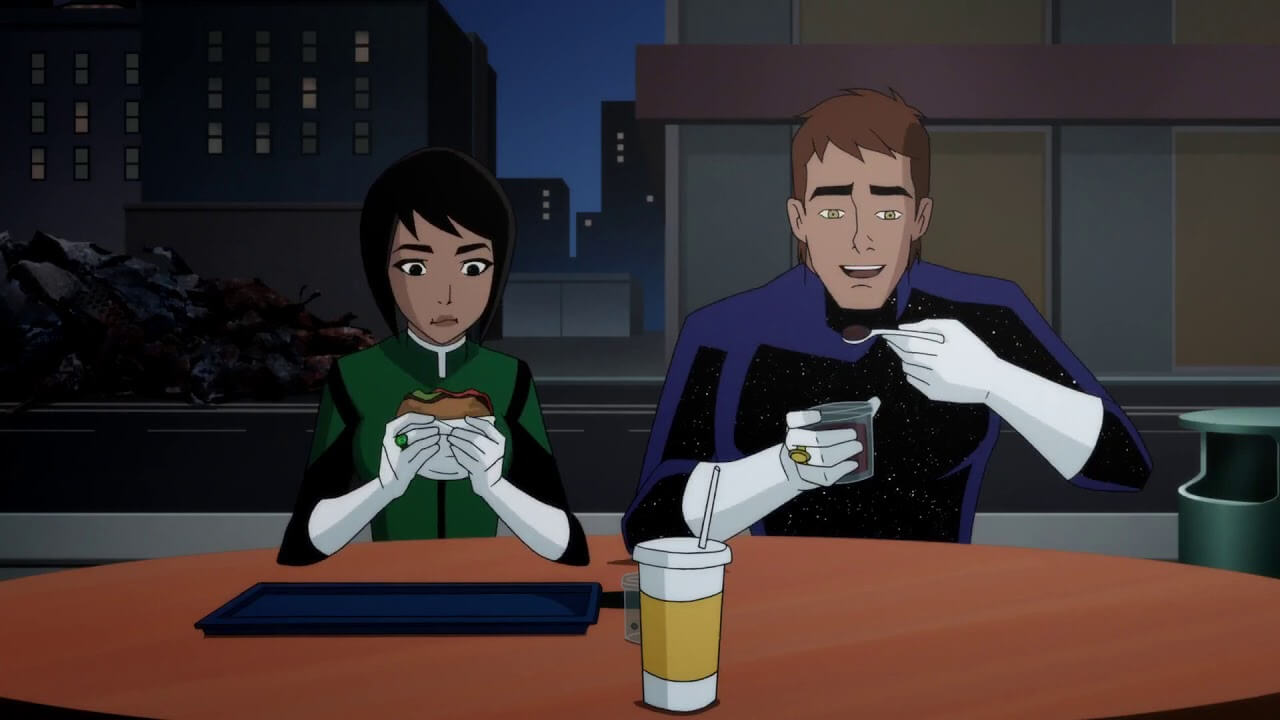
While casual audiences may be drawn in by the Holy Trinity, one of the most interesting elements of the movie is the battle that Star Boy and Jessica Cruz are having with issues such as PTSD and mental instability. How much fun is it to write something so meaty in comparison to just covering the usual superhero tropes?

Jim: It was really fun. I think what Eric brought to the group when we started talking about this story is Star Boy’s history from Justice Society by Geoff Johns. I think we were familiar with Jessica, but those two stories paired together so easily. That is kind of a classic trick, to use our bigger characters as an anchor. The Trinity is the anchor, then you showcase lesser-known characters. Like on Green Lantern: The Animated Series, we already know most of what’s going to happen. You can only do so much with Kilowog and Hal, but if you invent Aya and Razer then nobody knows what’s going to happen. And that’s when you can have some fun.

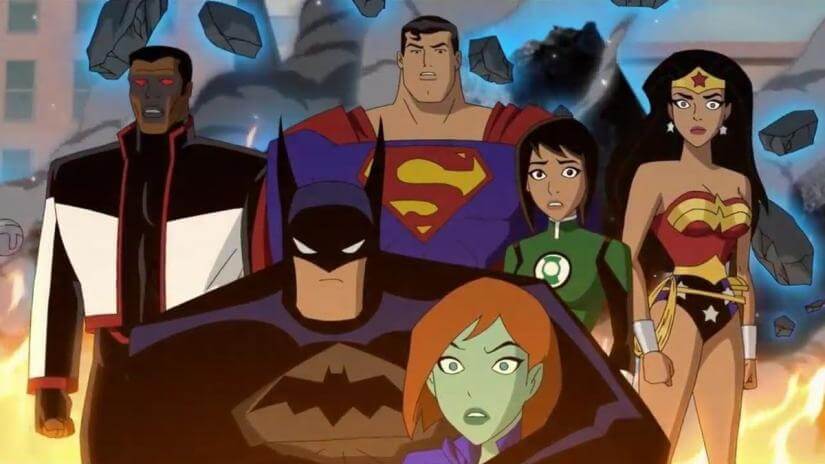
Eric: And we knew we were dealing with bad guys from the future, so we knew we were instantly in a world where we were talking about the legacy of the Justice League: will they be remembered in a thousand years? Knowing we were talking about legacy and what people leave behind, you can kind of work backwards from there and be, “Okay, this is a story where Star Boy grew up hearing stories about his favourite heroes in the Justice League and playing with Justice League figures. Now he gets to travel back in time and meet his heroes.” So having the original Trinity, having the original voice actors from the original Justice League cartoon, having the original Bruce Timm style of animation, even just subconsciously for the audience you can play that feeling of, “They were the toys I grew up with, this is the cartoon I grew up with.” It puts you in Star Boy’s shoes; it puts you in awe of the Justice League the same way Jessica Cruz is in awe of Wonder Woman.

Jim: Here’s a bit just for you. Eric had this great moment where they see the statues of the Justice League in the future, and there’s no Batman. Jessica’s feeling bad for Batman but Batman is super satisfied because he’s all, “No, no. My whole goal was to blend into the background and the shadows, which means I succeeded.” But we had to cut it, like every other brilliant idea. That’s mostly what we do; we have like a zillion great ideas and cut 80% of them.

Eric: Actually, if you look closely when we go into Star Boy’s mind palace, in the first room they enter you can see the Metro Tower playset in the background on one of Star Boy’s shelves.

Jim, with you having worked on GL: TAS, you clearly have an affinity for the Emerald Knights. Do you think that the Green Lanterns are sometimes a little short-changed in the grand scheme of things, though?

Jim: Oh yeah. I felt short-changed when episode 27 of Green Lantern: The Animated Series didn’t happen. There are so many stories to tell with these characters, and I think there’s a hunger to see them. I hope at some point in the future we can really dig into that mythology because it’s so rich and so satisfying. Obviously Geoff Johns expanded it so much with those other Lantern colours. I think there’s a real opportunity to see more of them, and hopefully we will before I retire.

Eric: Do it!

Justice League vs. the Fatal Five

Eric, having done some writing work on Supergirl – a series that has featured its own take on the Legion of Super-Heroes – did you pull any inspiration from that show for Justice League vs. the Fatal Five?

Eric: I was very lucky on Supergirl to co-write the Legion of Super-Heroes episodes that we did in Season 3 that introduced Brainiac 5. When I’m writing Brainiac 5’s voice, that sort of always comes out – Jesse Rath’s performance. So I always sort of write in that way, but Noel Fisher in this movie brought something different to it. Just by virtue of working on Supergirl and writing the Legion of Super-Heroes characters, I’d researched the Legion so much and read so many Legion comics that I had the vast stack of Fatal Five comics to come in to the office with to pitch to Bruce Timm and to Alan Burnett and to Jim with. It basically gave me a huge head start on the thinking for this and I’d already put a lot of thought into the Fatal Five and Star Boy even though they were not featured on Supergirl.

You both are clearly passionate about this world and were fans way before this became your job, so how crazy is it for you to now be going to the offices of people like Bruce Timm and Alan Burnett and having them as peers?

Eric: Now, it is very, very cool. The first time, very, very scary. But they’re great. Alan’s retired now, so I feel intensely lucky to have been on a project with him before he retired. To come to the office and geek out about superpowers and act out fight scenes with Bruce Timm, that’s unbelievable to me. I truly grew up on Batman: The Animated Series and Justice League, so it’s kind of crazy.

Jim: Even more interesting for me is the moment that it changed from, “Oh, these are legends that I get to work with” to “Oh, these are my friends.” You get to spend so much time with them and you get to know them so well, and that’s a strange corner to turn. We still have the same fan arguments that you had with your friends at the comic-book shop when you were 14, except they’re all kind of legends.

Similar to the awe that Star Boy has for the Justice League in this movie, then?

Eric: I think I said this on a panel, but it was pointed out to me later that I had, in the character of Miss Martian, kind of written myself. She’s super nervous to be a part of this Justice League, so I think she’s the me of this story.

Does that in turn make Bruce Timm your Batman?

Jim: Bruce is everyone’s Batman [laughs].

Justice League vs. the Fatal Five

The animated DC movies have been around for decades, with so many changes in the characters covered, the animation styles, the New 52 reboot with Flashpoint Paradox. How hard is it keep things fresh and show the audience something that they’ve not seen?

Jim: I think every movie that you write is a challenge, and you always want to surprise the audience. I don’t think that because we’ve done a lot of movies in the DC Universe adds to that challenge. In fact, it makes it easier because the amount of material we can be inspired by and draw from is so massive. Even in this entire floor of animators and producers who are all DC geeks, we have not read it all. Someone will say, “Did you read this? Do you know this story? This is my favourite story from when I was a kid.” And you’ll say, “No, that’s new to me.” Then you’ll figure out how to do your spin on that idea, then it becomes new again. The trick is, will it be new to the audience?

Eric: The challenge is the other direction. With 80 years of history to pull from, to be inspired by – clearly these stories work and have continued to work in comics and movies and TV shows, so that’s not the fear – you have to streamline these into 70-minute films. So you’re constantly going, “Okay, so what are we focussing in on this time? Where are we swinging the lens over to today?” Knowing you have this incredible universe to pull from and all these years to pull from and all these other movies to pull from and be inspired by, you just have to kind of focus it.

Jim: It is a challenge to tell a good story in the 72 minutes or however long we have with these and feel like you’re not disappointing someone. You’re disappointing someone, for sure, but it’s keeping that to a minimum.

How did the decision come about to return to the world and animation style of the classic Timmverse or Diniverse?

Eric: I was not there for that particular meeting, so I got a special call from Jim. It was, “Boy, have I got some news for you!” I was jumping up and down, I was so excited. Sometimes when you’re a younger writer on these, you sneak stuff in from your favourite cartoons. So I would pitch an episode of Justice League Action to Alan, and in my mind that’s not DCAU canon, that’s not Bruce Timm’s style, but Kevin Conroy’s Batman and stuff. And when you’re doing a Kevin Conroy Batman episode, you go, “Maybe we put it in the Iceberg Lounge? Maybe we get in these little elements so that I can pretend in my own head canon that this is part of my favourite cartoon…” This script had already sort of been written with Justice Leagie Unlimited in mind, with those stories in mind, with those voices of the characters in mind; I had already sort of pivoted it that way. Then you get the confirmation that the animation is going to look like that and the characters are going to sound like that, it’s great.

Jim: It actually happened! It’s so strange.

Justice League vs. the Fatal Five

Are there any particular classic stories or arcs that you’d love to tackle but that you’re weary of doing due to the confines of a 70-minute run time?

Jim: I can’t say, because I want to keep doing these [laughs]. The stories, I’m always pitching them. It’s just a matter of wearing down the powers-that-be until they want to do them. In terms of art style, there are some challenges in making every art style look right in animation. We ran up against that in Gotham by Gaslight and not being able to do the [Mike] Mignola style exactly. The intention is always to make it as close to the original artist, at least in tone and feel. But I’m not an artist, so I just sit back and say, “Wow, that’s great!”

Eric: Neither of us can draw.

With that said, then, what would be your dream arc or story to bring to life?

Jim: You know, I wrote a short that was Doctor Who meets the Scooby gang. I thought we were able to do it, but that ended up not happening. I’m always a little broken hearted that that didn’t happen.

Eric: How about Doctor Who meets the Legion of Super-Heroes? Time bubble, TARDIS, wibbly-wobbly, timey-wimey.

Jim: All I’ll say is Tom Baker is still alive, and his voice is great.

Eric: It’s a Legion of Doctors and a Legion of Super-Heroes!

Justice League vs. the Fatal Five is out now on Blu-ray, DVD and digital – and you can find our review of the movie here.

Lowell Dean | ATOMIC VICTORY SQUAD #2 & #3

Lowell Dean

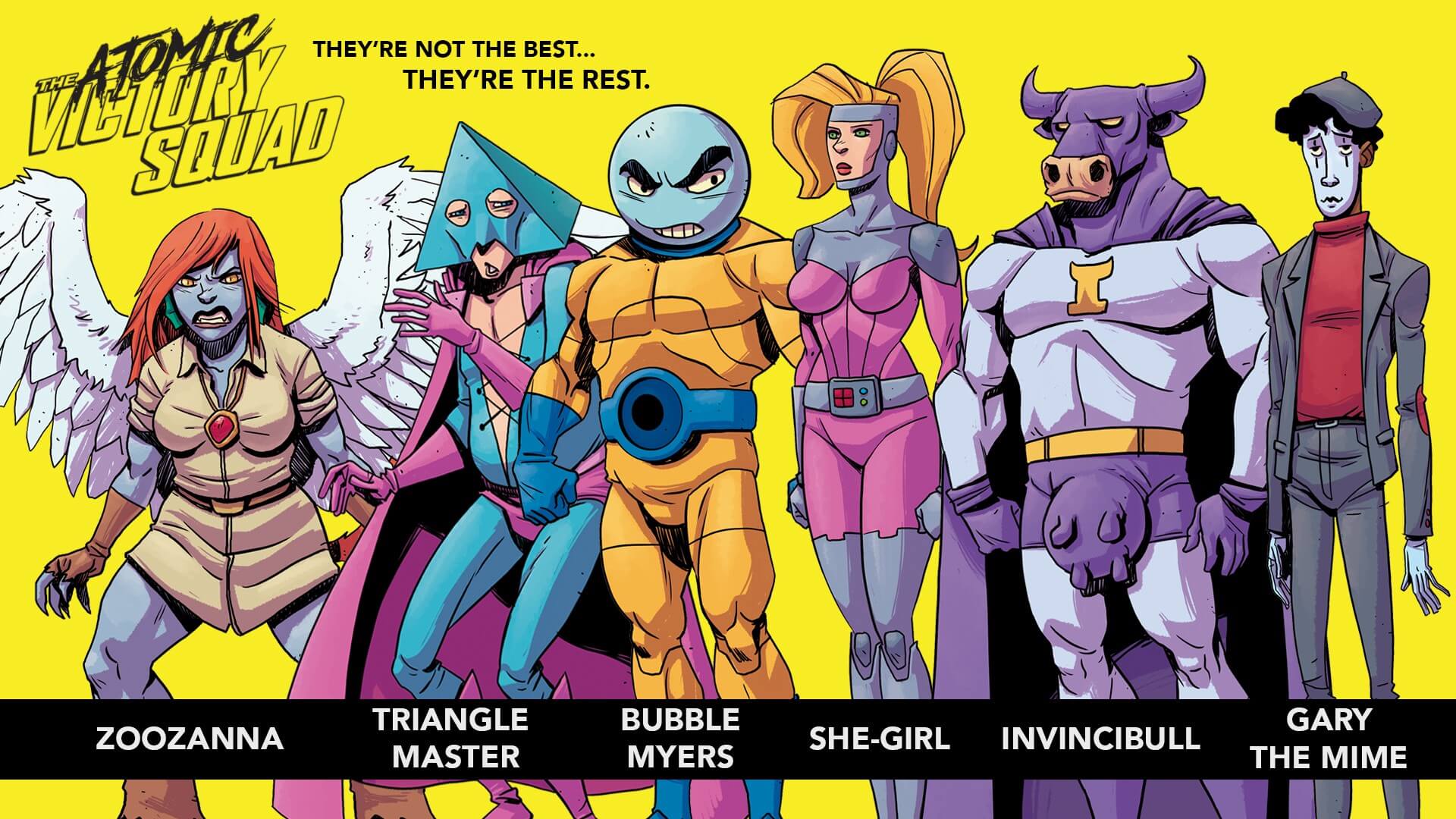
Having impressed many film fans with the likes of WolfCop and SuperGrid, Lowell Dean has recently turned his hand to the world of comics by bringing his childhood creation of the Atomic Victory Squad to life in the first part of a planned five-issue series. With the Indiegogo campaign now live for the next two issues of AVS, we caught up with Lowell to get the scoop on the fascinating Atomic Victory Squad and what lies ahead for this ragtag team.

STARBURST: With the first issue of Atomic Victory Squad now out in the world, how has the response been to the book?

Lowell Dean: It’s been good but very modest. Everyone’s been very positive. We’re growing very slowly, I’ll say, and that’s by design; I hadn’t made a comic book before, so I didn’t want to get too aggressive or make 10,000 copies. We’re trying to grow it grassroots and organic in a special way. We’re actually taking it to our first fan expo, by the way. We’re going to a fan expo in Calgary, then there’s one in Saskatchewan the following week. Even though we’ve done the first issue, I kind of feel like we’re just getting started now. Everything was hypothetical before, like, “Hey, trust us, this thing might be cool!” It’s the first time, these last few months, where we can say, “Here, look at it.” Now I just want to get right in to it.

Given that you’ve had these characters in your mind since childhood, how is it to finally see them in a physical comic book?

It’s definitely mind-blowing. I’d say it’s an addiction. I’m always someone who thinks ahead, I’m not someone who savours the moment, but the second I held the first issue and flipped through it, I had a second of excitement and joy. Then all I could think was, “Oh no, I need way more of this.”
Atomic Victory Squad

You’ve already done some comic book shop signings over in Canada. How was it so see your characters sharing wall and rack space with some of the greatest heroes and villains in comics history?

It’s really cool. I feel like you almost have to flex your salesman muscles as much as anything. Luckily, when you’re in a comic shop or at a fan expo, it’s not like you’re out on the street busking and saying, “Hey, look at this comic” to a bunch of people who may not care about it. At least you know that when they walk through the door there’s a part of them that likes comics. It was just having a conversation and finding the right ‘in’, and it was cool to meet some people who came in there just to get our comic. And the people who didn’t, it was, “Hey, do you want to see something really weird?” Or you’d see what they’re buying and go, “So, you like Batman. Well, what if Batman was a cow?”

Both must be rewarding, but is it more rewarding to know that someone has gone to a comic store solely for your book or is it more rewarding that someone who has no idea about your book is impressed and intrigued enough to give it a shot?

That’s tough. I feel like the latter is more gratifying because you feel like you’ve turned someone around to something, but it’s still very flattering when someone walks in and they walk right up to you and go, “I’m here for your comic.”

From speaking to you several times over the past few years, you always seem like quite a calm guy, but was there any point during the making of AVS where the panic hit that you’re really bringing these childhood characters to life?

Oh, every day. I’m feeling it right now. We literally just launched our new Indiegogo and I’m already like, “Oh my god, what if everyone hates this! What if no one backs this! Are we going to be able to finish it?!” There’s a part of me that kind of likes going in to the danger zone of stress and taking on something new. To be blunt, if we hadn’t had done it then there wouldn’t have been the first issue; no one is knocking down our door saying, “Hey guys, make a comic!” Basically, you have to be consumed by something and jump off the deep end. We’re doing it again right now and it doesn’t get any easier – I’m still very nervous.
atomic victory squad

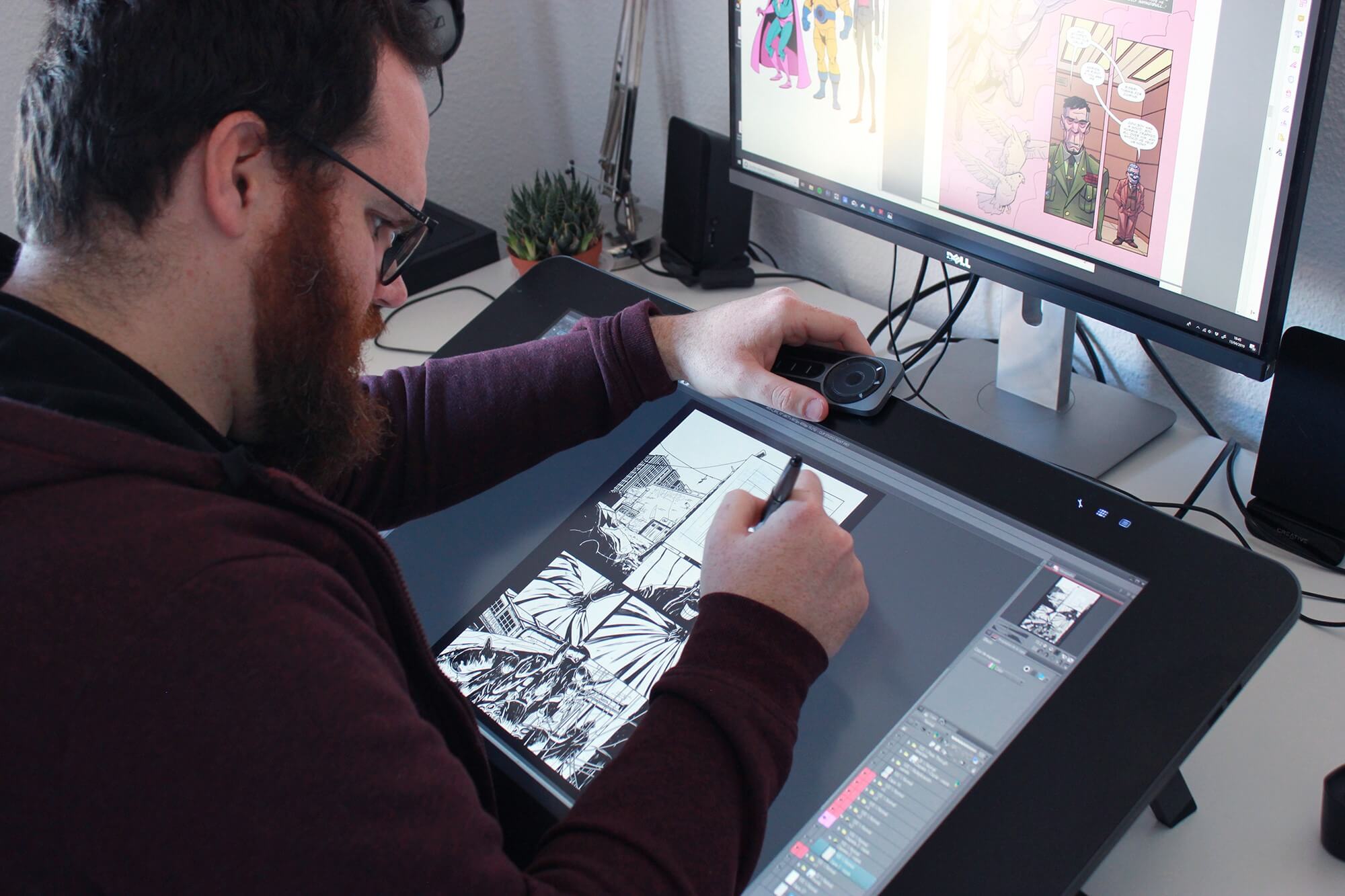
As a first impression, the art alone makes you want to dive straight in and check out the Atomic Victory Squad. How much creative freedom did artist Javier Martin Caba have, and how much does his art look like how you always imagined these heroes?

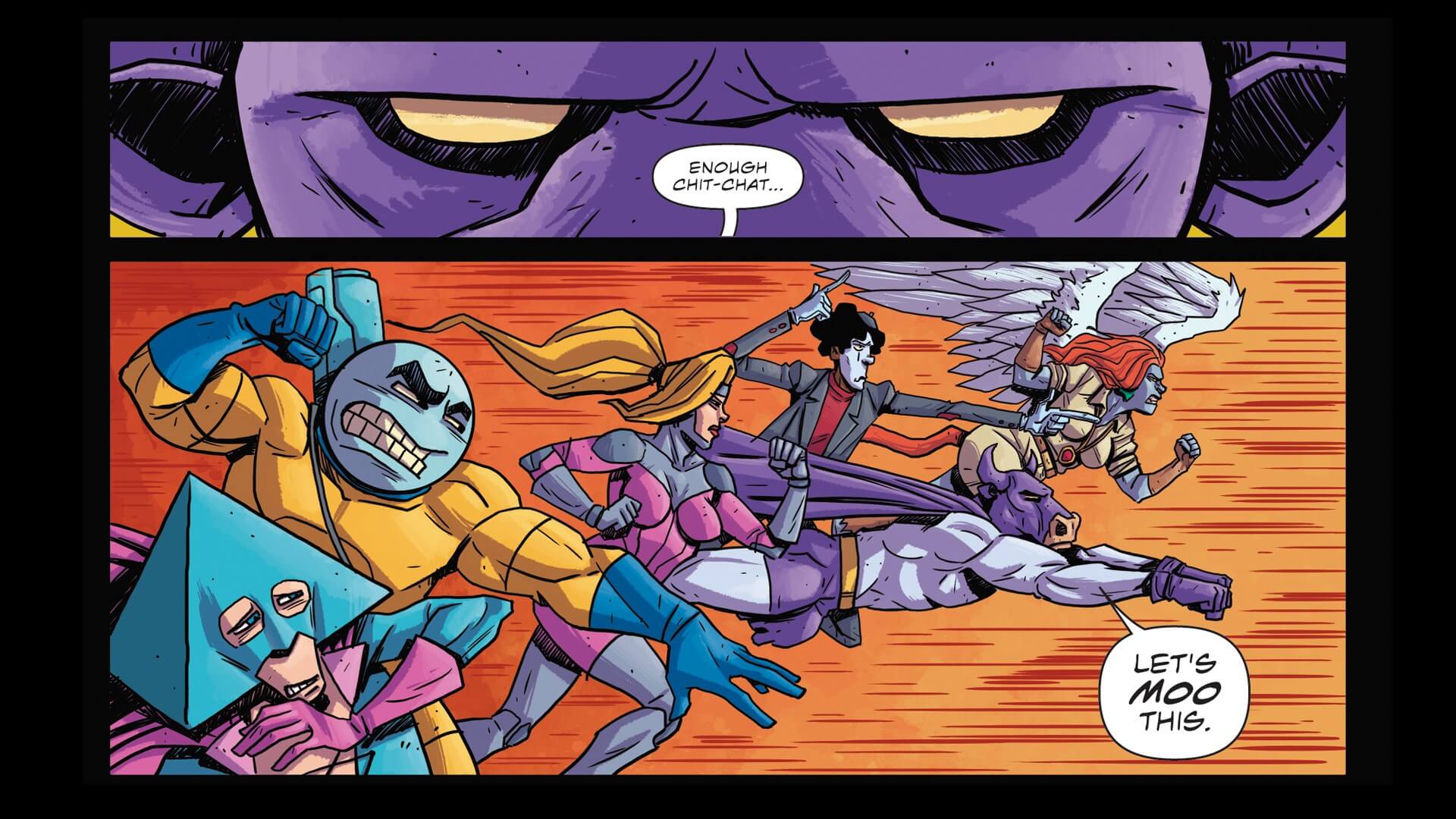
It’s really weird. With Javier, I feel like I haven’t said very much. But, that said, I feel like it looks exactly like it did in my brain. That just goes to show that he was the man for the job. Having never done a comic before, I haven’t read a bunch of comic scripts so I don’t know how detailed they are. I kind of describe it like a storyboard: I say who’s in a shot, how wide the shot is, what side of the frame I want them on. I might even give reference images that might not be in everyone’s brain. For example, when Invincibull’s being milked in the first issue, I think I described that panel as “Jesus on the cross, meets Weapon X, meets a cow.” It’s just cool to see how he brings it to life, and he honestly is so talented, so brilliant. I’ve said this to him directly, the best day of my week is the day where he says, “Hey, here’s a couple of new pages.”

With you guys having never even met in person yet, that just goes to highlight how great modern technology can be with such projects nowadays.

No, he lives in Spain. Our team is actually spread out all over. We’ve got a guy called Maurice Roy who does some of the graphic design and the layout, and he’s in Montreal. Emersen [Ziffle] right now is in British Columbia. Obviously, Javier is in Spain. Micah Myers, who’s our letterer, is in the United States. A project like this makes me really appreciate technology and the fact that we can all come together. It could be really cool if we make all these books and we’ve never met. In a way, that’s kind of beautiful.
atomic victory squad

While you created these heroes during your childhood, how did you go about creating villains such as Ridando for the book?

No, the villains were also from childhood. The fun thing is adapting them and saying, “Okay, you were this when I was 10. How am I going to make you relevant now?” That’s what I’m most excited about in the next few issues. We’ve had that alien Ridando who came to Earth to kill people, but there’s some really cool little showdowns coming in the next four issues. You’re going to have a villain who’s very familiar to fans of the The Joker. Then there’s a mastermind character who’s pulling all the puppet strings. There’s this very evil woman who’s really good at just getting inside people’s heads. The hardest part has been editing down what I want to do and accomplish, and how many villains can you introduce in five issues? I guess we’ll see.

As a major fan of DC Comics’ King Shark, one villain that instantly grabbed my attention during the first issue’s closing prison break was the humanoid shark. What can you tell us about him?

Good! He is definitely in the next issue. Issue 2, we pick up right away with the prison break. It’s kind of my fun cheat to showcase a lot of different villains from my childhood that I was like, “Okay, this isn’t really about you guys, it’s just about the team, but I can throw in a lot of cool weird guys.”

You being a filmmaker first and foremost, how has it been to adapt your skillset from making movies to making a comic book for the first time?

It’s actually quite different. It’s a different discipline, it’s a different medium, and I went in, maybe a little arrogantly, being all, “Oh, it’s the same thing, it’s just like my storyboards.” As pages came in and we started dealing with lettering and how to compose a frame, sometimes to Javier I was, “This frame, you’ve made the character too small, there’s too much dead space.” And he’d be, “Well, where are you gonna put the words?” “Oh yeah… this isn’t a movie.” So I feel like I’ve been humbled making the first issue, and it’s changed the way I think. Even though we were doing issue 1, I’d already written issues 2 and 3. The second the first one was done, I said, “Don’t start on anything! I need some time.” I had to go through and really realise how different it is. Maybe I’m thinking in terms of a movie: shot, reverse shot, wide shot. I was, “You know what, this story doesn’t need a panel. This exchange needs a wide shot, then a close-up of this character being sad because of what was said in the wide shot.” You have to retrain your brain.
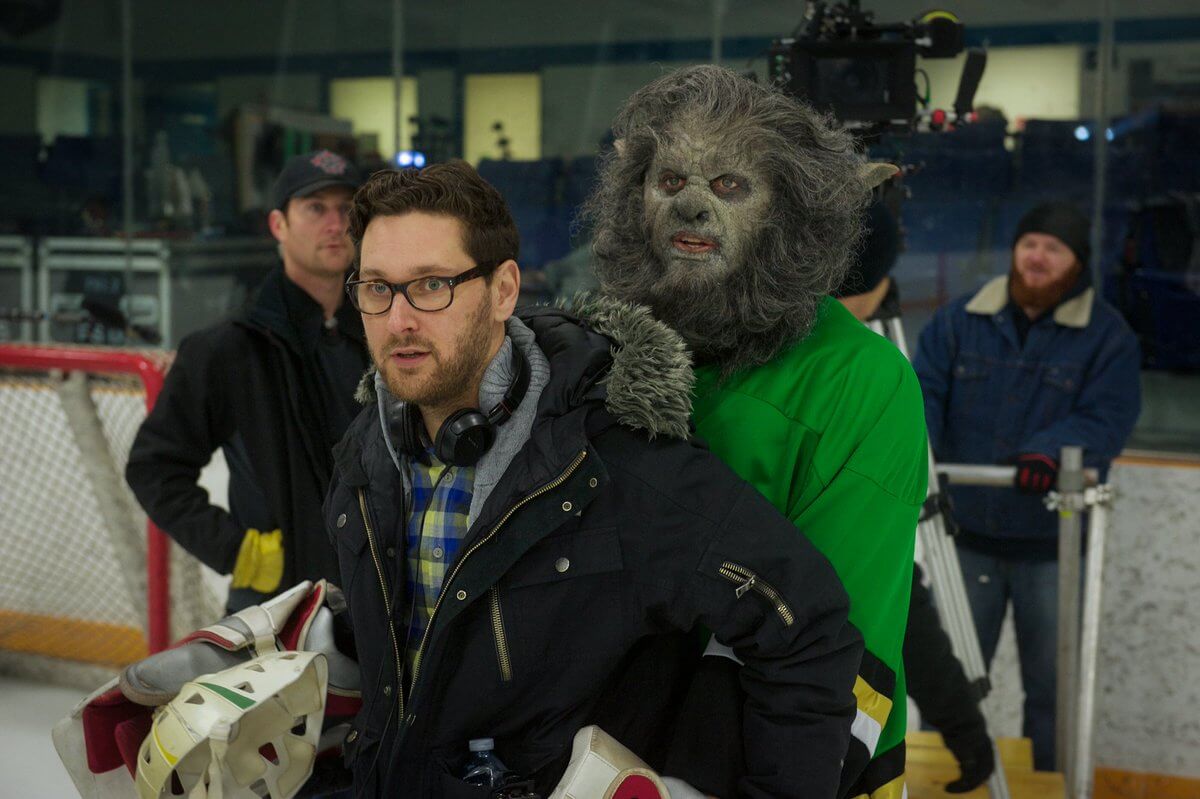
lowell dean

Obviously these characters are all your babies, but is there a particular favourite? And with each character having their own issues and problems, are there any personal experiences you pulled from for those?

Oh, 100%. Each of these characters represents something different. Something good and something bad. When I’m writing and when I’m looking at the characters and who would be in each scene and who should do what, I think about what’s the point of the scene. I think Invincibull is my go-to easy favourite because he is the moral right. He is my Superman, he is my Batman – all rolled into one. Someone like him, what’s fascinating to me is that he hates humanity but he also secretly, deep down just wishes they would understand him. I think each of these five, they’re something that’s in me. They’re my insecurities, they’re my hopes. Triangle Master, everyone thinks he’s crazy. I’ve had many times where people have been, “Why are you so weird?” So he represents that. Gary the Mime represents unbridled imagination at all costs; not even speaking because he’s just so in his own head. I relate to that, too. And She-Girl, she’s being misjudged for her appearance. I think anyone can relate to that. Zoozanna is just conflict and split personalities and wanting to be one thing but people tell you you’re something else. I could go on, but each of these characters are like children and it would be hard to pick a favourite. I think the most visually interesting, fun and weird is Invincibull, but on any given day I could write 10 books on these five or six characters.

And the Indiegogo campaign that you’ve just launched, it’s for both issues 2 and 3?

Yeah, we’re launching 2 and 3 at the same time.
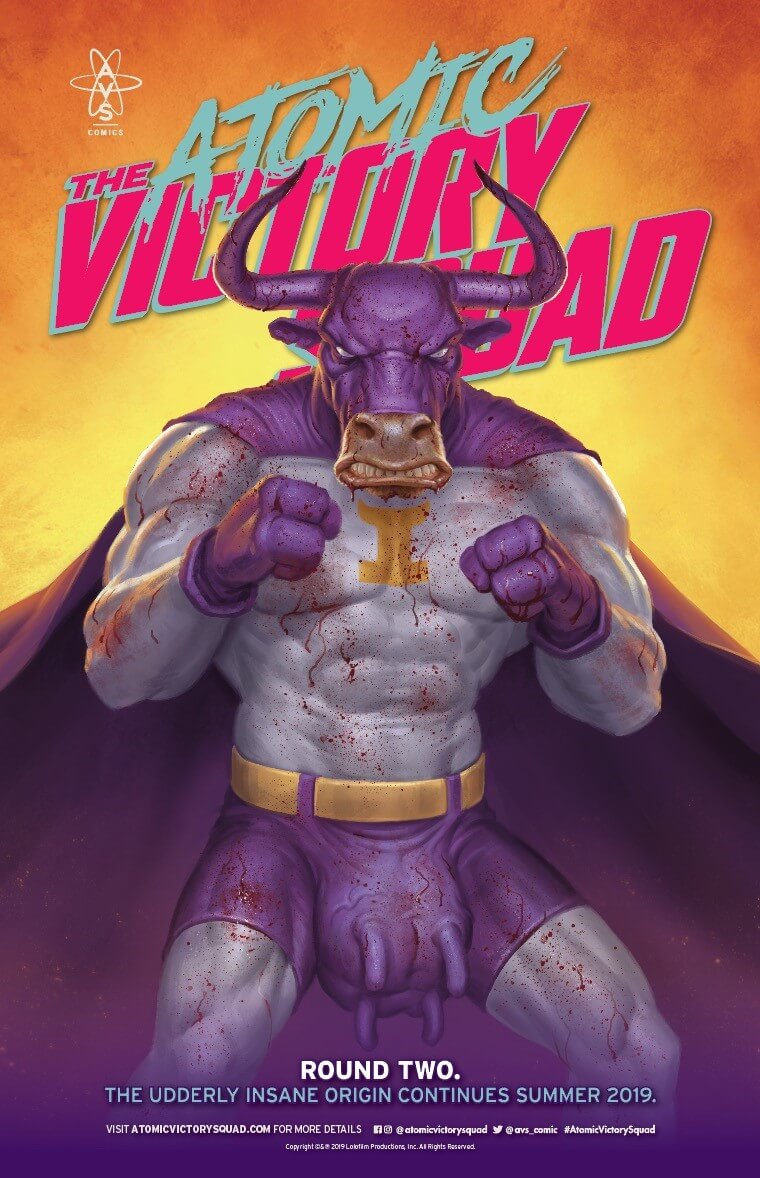
atomic victory squad

What perks can people look out for with the campaign?

It’s very similar to the first one. I’d say similar but better. I think we’ve gotten a little more efficient so we’ve lowered our costs a little bit, what it takes to get each item. On top of that, based on how people reacted for the first one, it seemed like a lot of people were interested in appearing in the comic. So we’ve definitely upped the ante on that one. Because there’s two issues, there’s a lot of cool opportunities for people to just be in a crowd shot or be a dangerous inmate or maybe be a character that is recurring. There’s a journalist and reporter who is in multiple panels over the issues. For me, that’s going to be the fun part. And that was probably one of the more fun parts of issue 1. At first I thought it might be a bit of a burden – having to work people in – then it became really fun, almost like casting a movie. It was funny. Only after we did the first issue, Javier was like, “Why are we not putting ourselves in this?” “Good point!” Maybe down the road I’ll try and put myself in the background or something. Right now, for me, it’s more fun that if someone is going to support us at that level, it’s trying to find a cool place to throw them into the comic.

The current plan is for this particular AVS story to go through five issues. Once that’s done and dusted, are you already plotting what could be next for the Atomic Victory Squad?

Right now, because I’m in the middle of the Indiegogo for issues 2 and 3, I have a little panic attack when you ask what is after. For now, we’ve just got to focus on getting these five done. I think that’s a natural story completion point for me. My goal, I’ve said, is an animated series at one point. I feel like once I have a 120-page graphic novel and all these original pieces of art and trading cards and posters, I feel I’ll be in a better position to walk in a room and show people this should be a show. In terms of whether I’ll continue the comic after the five, at that point it’s more a case of a stop and post-mortem sort of thing where we say, “Does the world want more of these characters? If so, should we be going to a publisher or distributor beyond ourselves? How do we merchandise or offshoot these things? Do we do standalone stories of these characters?” I think I’m going to let the world tell me if I should do more. I’m going to stubbornly get the first five out any way I can, but after that we’ll see what people want.
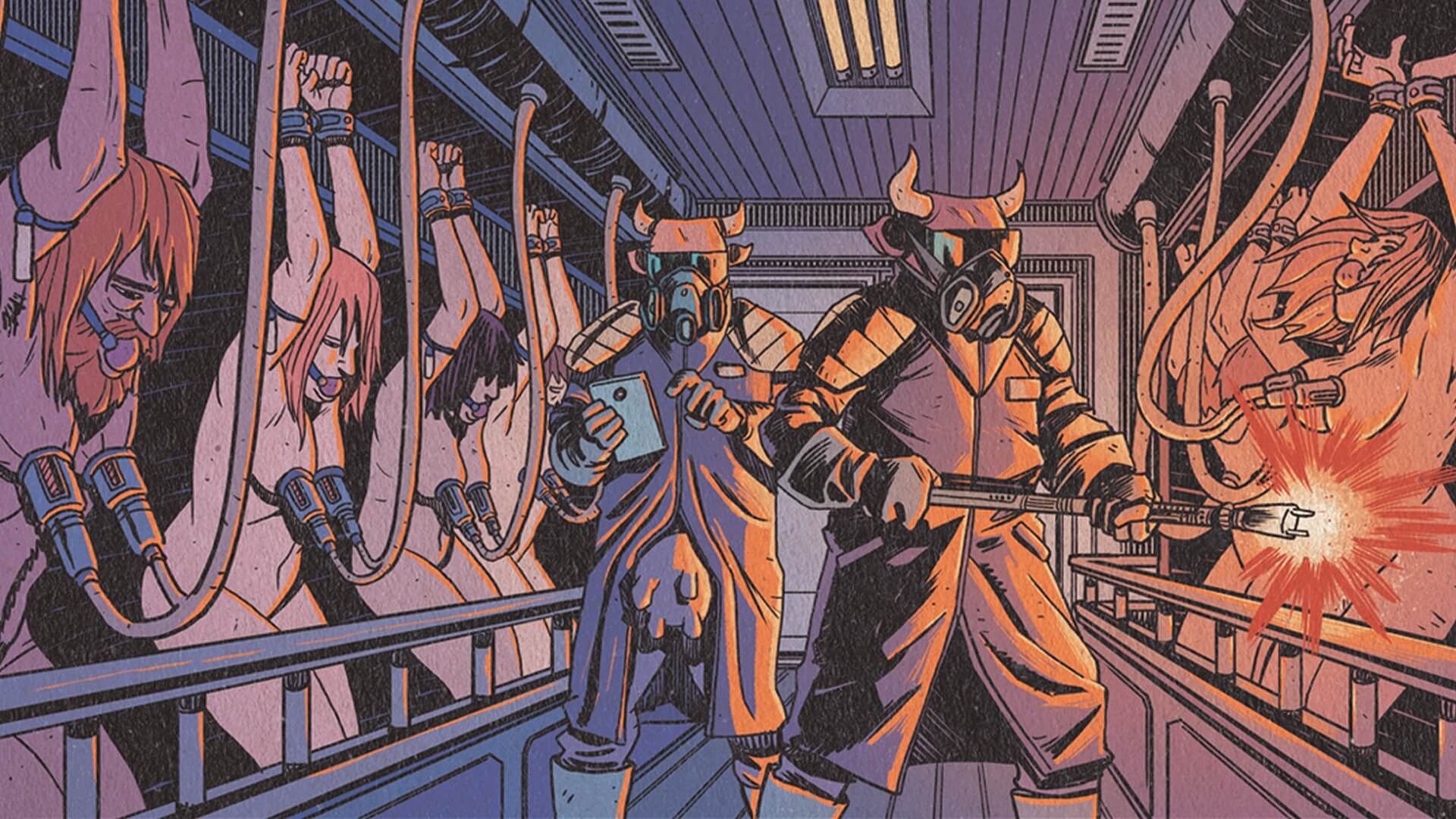
atomic victory squad

In terms of getting a comic book adapted for TV – be it in live-action or animated – it seems as if there’s never been a better time.

Here’s hoping. Honestly, part of the reason I dove into this now – these characters that have been around forever – is because it feels like we’re in a cool time in the world where the lines are blurring between genre and style. Shows like BoJack Horseman, Rick and Morty, it’s all, “You’re not just silly, you’re maybe not at all for kids, you’re all for adults, you’re walking all of these different emotional lines.” And that really gets me excited.

The creation of the Atomic Victory Squad is a result of the demise of the original Victory Squad. Was it always the plan to kill off a group of heroes in order to introduce this new ragtag team?

They were actually always going to die. Even when I was a kid, that was how the Atomic Victory Squad was going to begin. I have drawings, and my parents were very worried. The only colour was red; it was just a mass of blood. Truthfully, some of the original Victory Squad I kind of mixed and matched who I let live as some of them were on the Atomic Victory Squad. When I was putting together this version of the team, it was more a case of who represents what to me. The ones I didn’t know where to put them, I was like, “I’m just going to kill you.”

So you had the death of the original Victory Squad planned even as a kid?

It just kind of felt natural at a young age. In a world like Marvel or DC, the only reason they’d let a cow fight crime is if Batman or Superman were dead. It’s like, “Now we’re really desperate, everybody’s gone.”
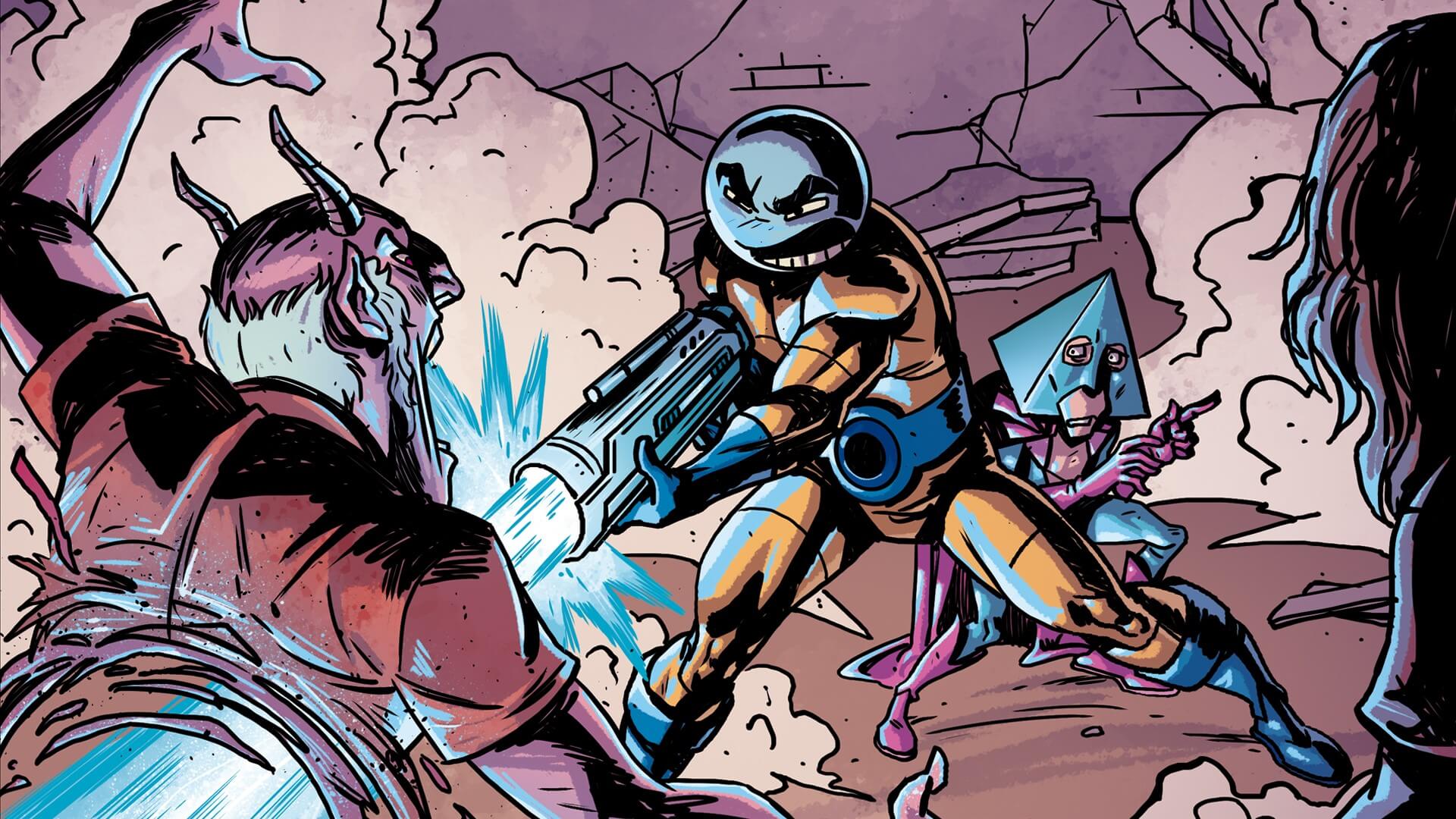
atomic victory squad

The tone of the dialogue is so well handled throughout Atomic Victory Squad #1, with lots of great one liners, some cheesy ‘80s action movie-esque exchanges, and lots of serious undertones to events. How was that to balance?

I think I’m always second guessing myself. Javier’s visuals really tell the story and put you in a certain kind of world – which is really fun and unique. For me, I think the script, the first draft is a little less funny than the final version. Once Micah has done the lettering pass, I kind of then look at it. It’s almost like watching a rough cut of a movie. Then I say, “Where am I missing a joke? There’s a bit of a dead space next to that character, where I don’t need to add another line but this joke popped in my head so I’m going to do it.” I’m sure that annoyed Micah a little bit because he’d do the comic and then I’d be like, “Hey, I want to add a joke on pages 2, 8, 12 and 19.”

If all goes well with the crowdfunding campaign, when can people roughly expect to see these next two issues?

We are aggressively working on them right now. Javier, the bulk of the work is on his shoulders. He has got a window right now to do some art, so he’s working away on it as we speak. Our goal is to have it done for the Fall, but at this pace, if we get the backing and support, and if his schedule remains clear and he doesn’t have to jump on to another book, I can see us delivering in the Summer if we’re lucky.
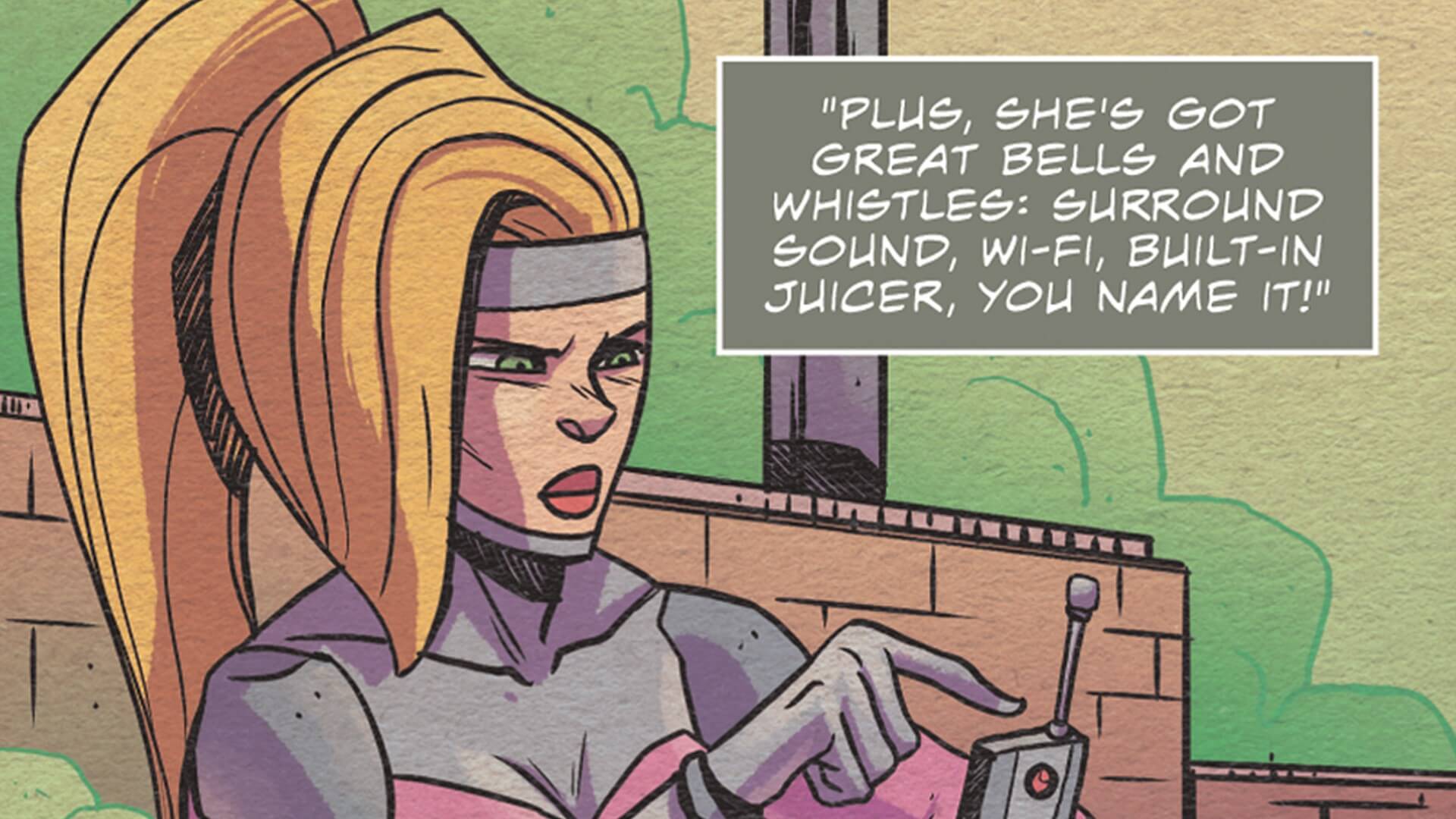
atomic victory squad

Considering you created so much of this world during your childhood, how has the reaction been from your family at seeing AVS brought to life?

I think they’re used to it by now. I don’t think anything shocks or surprises them; they’re kind of just, “Oh, that’s cool.” I have a very supportive family and they just encourage whatever madness I want to undertake. They just want me to keep going and do what makes me happy. I’m sure they found some familiarity with it. My sister, for sure, said, “Why am I not in your credits?! I was your slave labourer, doing your colouring when you were making this when you were 10.” I would say, “Hey, want to hang out? Colour these ten pages while I draw.” I’ve kind of always been barking orders.

With SuperGrid having been released since we last spoke – including screening at the recent Starburst International Film Festival – how has the reaction been for that movie?

It’s been much smaller, I’d say, in scope than the WolfCop films. But again, it’s a more modest, subdued, serious film. The reaction has been positive. It’s not been mind-blowingly big, but everyone’s been very kind. We’ve had some good screenings locally and at some festivals.

For a start, the title is a little more low-key than WolfCop or Another WolfCop…

That’s the thing. We’re competing already with the world of Mad Max movies, and the name isn’t flashy and there’s no big stars. It’s definitely an under-the-radar type of film. My hope is that it just sticks around and maybe gets in some people’s consciousness and they spread it like a disease.
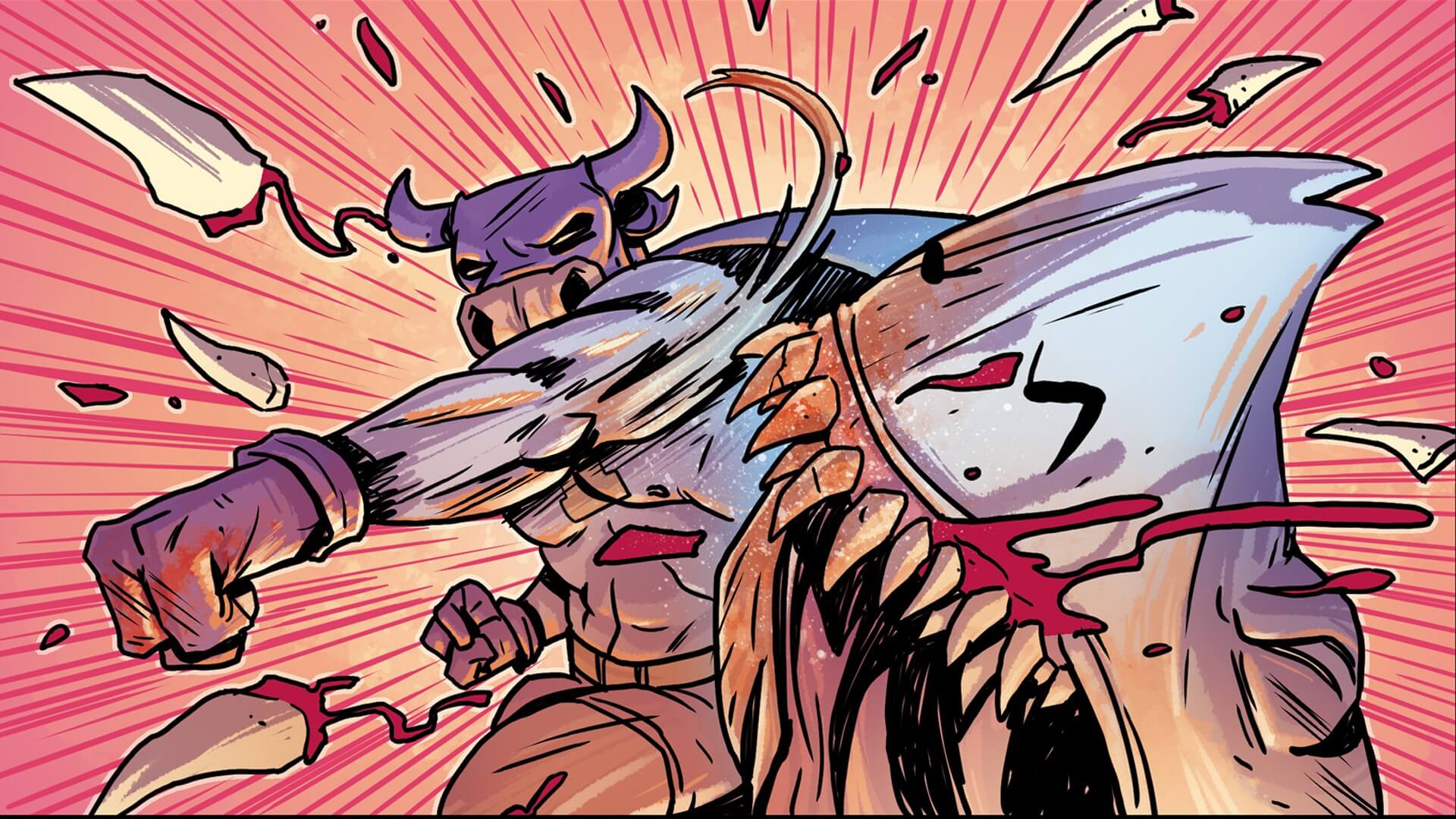
atomic victory squad

You always seem to be spinning plenty of plates, so what can you tell us about any other upcoming projects right now?

It’s still spinning plates. Projects are definitely in the air, and I feel like we’re getting to the season where we’ll find out announcements in terms of government funding that could really make things happen. If all goes well, I’ll know what my next movie is going to be by the summer. I’ve been pretty lucky; usually every second year I’m making a film. I’ve got one teed up that’s reasonable to do on a low budget, but I think will hopefully be my best film by far. I’m dying to make it. It’s another ‘from the vault’ type of thing. I wrote the script almost 10 years ago, and we’re now getting to a point where I feel like it’s evolved to something much stronger over time.

Be sure to head over to Indiegogo for further information on how to support the next two issues of Atomic Victory Squad, and you can find the project on Twitter at @AVS_comic.

Sam Liu | JUSTICE LEAGUE VS. THE FATAL FIVE

Sam Liu Justice League vs. the Fatal Five

With Warner Bros. and DC Entertainment having regularly wowed audiences for several decades now with their animated output, the next animated DC offering on the table is Justice League vs. the Fatal Five. Having directed fan favourites such as Batman: Year One, Teen Titans: The Judas Contract, Batman: Gotham by Gaslight and the two-part adaptation of The Death of Superman, Sam Liu is the person tasked with helming Justice League vs. the Fatal Five. We were lucky enough to grab some time with Sam to discuss the movie, returning to the Timmverse of characters, showcasing lesser-known heroes and villains, and a whole host more.

STARBURST: Of all the characters to call on, what prompted the decision to make the Fatal Five the villains of the piece in this latest movie?

Sam Liu: You know, I asked the same question when I got the script. Because it’s a Bruce [Timm] movie, he takes control over a lot of it and he just likes to use different characters. When we start a project, he goes through his rolodex and just sees what takes his fancy, what piques his interest. We do these so quickly, it’s not a case of “Have you done your favourites?” because I think he did his favourites ten years ago or more. So it became a case of how can we make this new and interesting.

Justice League vs the Fatal Five

Given that there’s someone like Bruce involved, then the writing team of Alan Burnett, Eric Carrasco and Jim Krieg, how does the creative process work for yourself as the director and is it almost like a studio system setup?

That’s a good question. I’ve since become a producer a couple of years ago, but I’m the junior producer; I still don’t necessarily get to pick. For the past maybe four years or so, it’s been primarily James Tucker and Bruce Timm. They’re the ones that spark the sort of, “Well, what do I want to do?” It comes from different places because it’s a mix of the big creative producer – whether it’s Bruce or James – and then DC or home video will have something that they want to push, something on their wish list. It’s either something Bruce or James wants to do, or it’s, “Oh, we want to do this character. Is there something you can create with this?” So where it comes from is a few main areas. That’s where it starts. They generally have a loose concept that they want, which they flesh out with the writer. At this time it’s Jim, but in the past it’s been Alan Burnett. They work with whoever is going to write it. Sometimes it’s Jim or Alan, but most times they have someone they target to write it. I usually come in during the draft. We read them, we have our notes and we sort of pound out the script. Before, when I was just a director, I would wait until the script was finished or close to finished – I would probably come in during the third draft – and I would have my notes. Now I have a little more input towards the direction of it.

In the past, we’ve had to do things like re-write the third act entirely. I’ve been doing that a little more with James, as James seems to embrace the collaborative a little more than Bruce – Bruce is a little more reluctant – but it’s been good. The last couple I’ve come in a little earlier, so I’ve been able to get some things in. Justice League vs. the Fatal Five, it was kind of earlier in my being a producer so I didn’t have as much say. As a director, you’re absolutely correct that it’s like a studio system. For the past four or five years, they have a project, they assign it to me. I think there’s a politeness where they ask me if I want to do it, and of course I want to do it, but after the script is finalised and the designs are picked the director works primarily on their own with a storyboard team. The producers will come back in after a first pass. In that sense, the director has a lot of creative control. That’s where the relationship between the director and the producer is: does the producer trust the director to carry out the vision they want? A lot of this is so fast, and as a director you’re only one person and as a producer you’re only one person, so it’s a lot of things to manage. The whole familiarity and trust is important. If everything I show Bruce or James is wrong, there’s no time to fix anything. That’s a lot of our job, actually. I almost parallel it as we’re trying to cook a Thanksgiving dinner and we have our shopping list. That’s what we send to overseas, but actually what comes back is what we have to work with. You go to the store and order all of the pieces that you want, then when you’re at home that’s all you’ve got. You can’t go back to the store. Sometimes you don’t have a good turkey, but you have to think about how you’re still going to make this meal.

In addition to the Fatal Five, the other big characters to be featured are Star Boy and the Jessica Cruz Green Lantern. Given the very real issues – such as PTSD and mental health concerns – that this duo has, how important was it to make sure that Star Boy and Green Lantern didn’t get overshadowed by the all-powerful bad guys or the more famous Justice League names?

I feel like I’ve done so much of these types of stories, and obviously Bruce has done way more than I have, that it was really refreshing. That was my favourite part of it, as to me it was very unique. The stories that I like or tend to focus on, it is that characterisation. With this one, it’s not something I have to dig out; it was on the page. Again, it wasn’t very difficult at all. Thankfully, we used the iconic designs and iconic voices attached to these designs that I felt like I didn’t have to catch people up; people already know who Superman is, who Batman is, who Wonder Woman is. People know already, so we didn’t have to set them up and it instead gave us time to set up the new people. My general theory on ensemble casts is you’ve got to pick. You have to give everyone their moments so they’re not entirely these cardboard people sitting in the background, but you have to pick stuff, pick who you’re going to be highlighting and who needs to fall into the background a little bit.

Justice League vs the Fatal Five

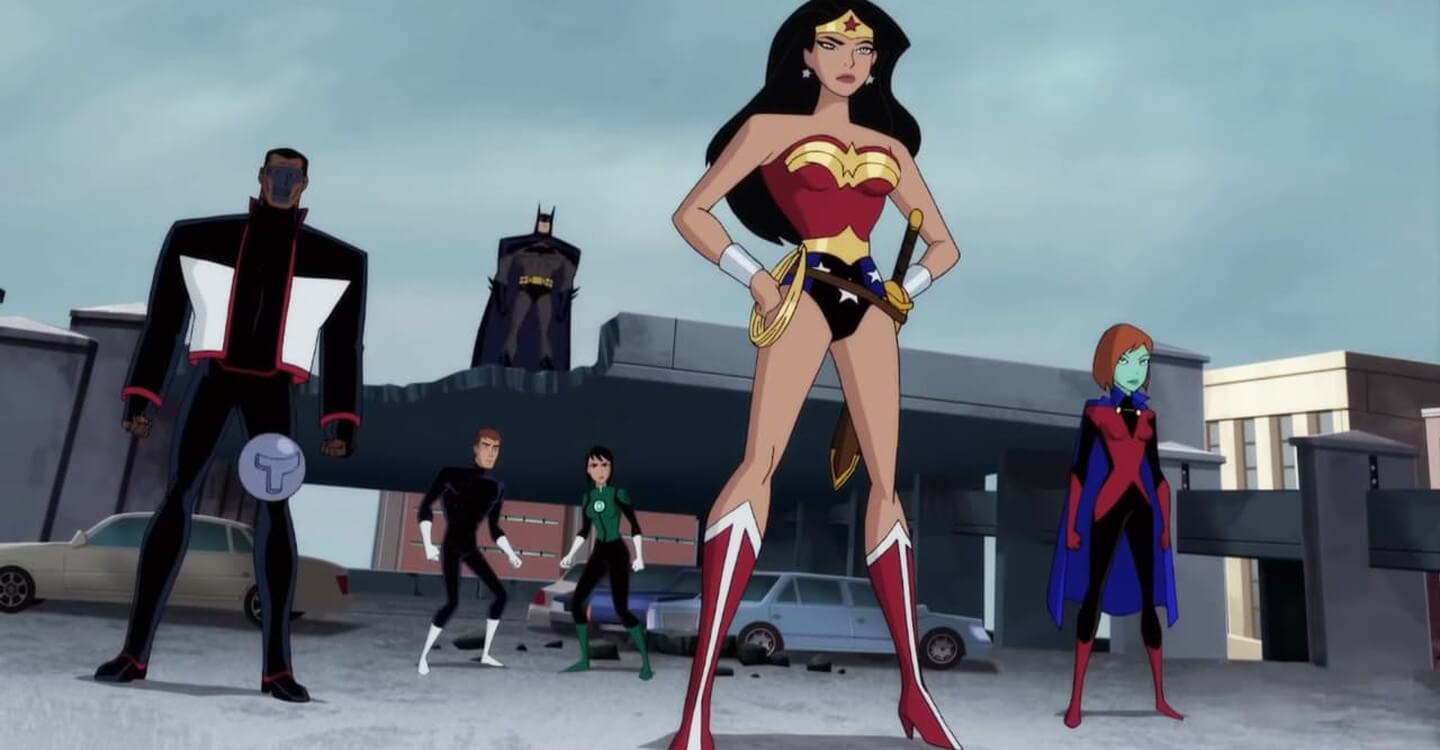
Where the Justice League is concerned in this film, was there ever any talk of featuring any other or alternative Leaguers or was it always to be the Holy Trinity, Miss Martian and Mister Terrific?

So much of this is based around what story we’re telling, what’s the plot. Then it gets torn down from there. It roughly breaks down to how many pages are in a script – which is usually limited to 90 or 100 pages – so there’s a certain point where you’re keeping those things in mind. That’s probably a better question for the writers, but there’s a certain point where you try to tell a manageable story. And most of the time we’re a little bit long, so we have to start cutting things out. Things like having all of these characters would be great and it works much, much better in a series as you can tell many more types of stories. Even with the characters we have, there’s a few of them who probably could’ve gone, that we didn’t 100% need. I think we were pretty good at picking who stayed, but adding more would have bloated it and made it longer without necessarily helping the plotting or the story we’re trying to tell.

Justice League vs. the Fatal Five uses the classic animation style of what many call the Timmverse or Diniverse. As someone who was making their first foray into this particular world, how was it to work in that realm and in that style?

People make a huge deal out of it, but if you ask Bruce then it’s always about telling stories. The Timmverse, the Diniverse, that’s Bruce’s take on stories. If you do enough of them then there’s certain consistencies. During ADR – the additional dialogue we record once we’ve done the body of it and we’re looking at the picture – hearing Susan [Eisenberg] in the booth and seeing the picture pair together, there’s just something about seeing his [Bruce Timm’s] Wonder Woman and his Superman. I’ve worked on Batman so much, but the Wonder Woman and the Superman, just seeing them…

When Wonder Woman shows up in the alleyway to meet Jessica, or even when Superman is doing his wind breath, I was just, “Wow!” There’s something about it that feels so classic. You do it, but then when it comes back and you see the combination of all the voices, the way those designs animate, it took me aback a little bit. I didn’t expect to have that kind of reaction, but seeing them and hearing them, there’s something magical about it.

Justice League vs the Fatal Five

Often it can be hard to make bad guys feel like a genuine threat, as we all know that the heroes will ultimately, usually save the day. With the Fatal Five, however, they instantly feel like a major threat. In these times, how hard it is to make the villains feel like a legitimate big deal?

Oh, it’s especially hard. The audience is a lot more critical these days than, say, 20 years ago. With the internet and video games, there’s an oversaturation. Back in the day, it was hard to find things. Fight choreography in Asia was so much better than in America in the ‘80s – I think that’s why Hong Kong cinema was so potent back then – but now it’s everywhere and people are used to it. It has to be good and it has to be done in a way that it’s earned, so it does make it difficult. I have to say, in this movie there are a lot of things that I wasn’t sure the audience were going to buy. Thankfully it hasn’t come up – I haven’t seen anything online, anyways – like how quickly the Justice League get taken down by the Emerald Empress. In order for that to happen, you have to make her extra powerful; there has to be these shows of power so that you’re, “Oh, well that could happen.” There’s a lot of cheating that happens.

Somewhere during the middle of this production, Bruce and I had gone through quite a few rounds of editing, we were trying things up and were just, “I don’t know if this is any good or not.” There are these huge things going on, then there’s these very personal things going on with two people, so you have no idea how people are going to react to this. There’s a lot in here, we’re using all of our instincts, both of us wear things close to our chest, and you have to almost be a hater when you’re watching it so that you can catch things that aren’t believable or that people won’t buy. But then you also have to be a dreamer as well, because you have to take people on an adventure. So a lot of the time, in the middle of the process, you’re wondering whether you’ve achieved this or not. With things like The Killing Joke, it caught me a little off-guard at the beginning. But as we were building it, I thought, “This is smooth” and that people would go along with that. Then we’d get the reaction that we do and it’s, “Oh, I guess people couldn’t go along with us on that ride.” You never know with these things, but in this case I remember telling Bruce, “I’m not sure if plot-wise it’s going to be a bumpy ride maybe. All I know is I really love these characters, I feel really attached to these characters, and I think it’s a really strong character story.”

In a world where everyone is quick to take to social media to let their thoughts be instantly known, how hard is to not get too carried away with either the praise or the criticism that comes your way for these projects?

It’s easier with the praise, obviously, because it’s like what athletes say or businesses say: it’s what have you done for me lately. The window of praise is always short, then people are always looking for the next thing that’s going to entertain them. So that’s easy and you know that you have a window where that’s potent and then the returns are going to be very low. But the hate seems to last longer, which I think is a by-product of the whole social media thing. I think people are more likely to get online to complain about something, whether it’s their job or entertainment, than to praise. It’s harsh at the beginning when people are hating something that you’ve done or calling for your head or your job. The first time you experience that, it’s a little shocking. I think that’s just the way the internet is and you just have to get used to it.

Even in things where people are these very popular reviewers, I think part of their schtick is to bash on things. I think that’s what the audience likes; they like turmoil and dramatics and things like that. But I guess it’s all entertainment, so whether it’s good or bad you have to pander to the audience a little bit.

Justice League vs the Fatal Five

You earlier mentioned how Bruce Timm is at a point where he’s looking at what characters he’s not used yet. Having done a lot of DC work yourself, is there still a character or comic book arc out there that you’re dying to get your hands on?

You know, I haven’t read comics in two decades. I’m an ‘80s, ‘90s sort of fan. I felt that that was the most potent for me, so I kind of feel like we’ve done most of the iconic ones from those eras. This is kind of my standard go-to one, and I really don’t know how it would be portrayed, but it’s always Neil Gaiman’s Sandman. The later part of my comics interest was Vertigo and all that stuff. I know that’s not really our audience as it’s more of a drama, and it would work better as a streaming series. I don’t think kids would be interested in it as it slow burns. I think it would be difficult to do and I don’t know how big the audience for that would be. But for me as a fan, those stories left a big impact on me. It’s a very niche fan base.

For years now, the animated DC output has been knocking it out of the park with so many brilliant movies and shows. So, what’s the secret to the constant success?

I’ve worked at quite a few major studios and I think it really comes down to the heads. They allow you to edit a certain way, they allow you to tell a certain kind of stories, they don’t want you to dumb it down. DC’s been very good and it’s great to have legendary people like Bruce and James, where they just leave us alone and let us do our stuff without too much outside influence.

Justice League vs. the Fatal Five is available on Blu-ray and DVD from April 29th, and you can find our review of the movie here.

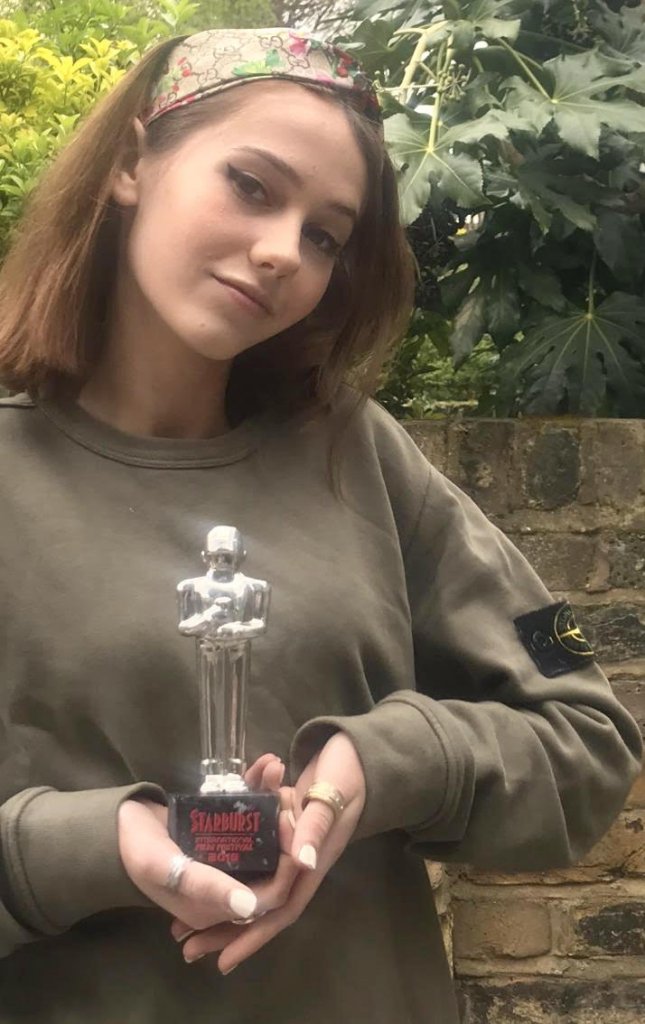
Scarlett Rayner | SIFF 2019 BEST PERFORMANCE

Rayner

Fresh from her BEST PERFORMANCE win at the recent STARBURST INTERNATIONAL FILM FESTIVAL, rising star SCARLETT RAYNER talks with us about the acclaimed short film INDWELLER, her acting career, aspirations, Aaron Paul, and more…

STARBURST: Congratulations again on the award! How does it feel to win Best Performance?

Scarlett Rayner: Completely amazing. I’m so grateful, and shocked to be honest! I didn’t expect this at all. It’s so cool to have won this award. Thank you!

It’s well deserved! You won for your lead role in the wonderful Indweller, which is currently playing festivals. For those who haven’t had the chance to see it yet, what can people expect?

It’s a dark short which focuses on a young teenage girl and her mother, played by Zoe Cunningham, and their tricky relationship. The girl’s mind is clouded with darkness and she heads down a twisted path when confronted with weird goings-on in her new home.

It’s an extraordinarily accomplished film, how long did it take to shoot?

It was filmed over about six months. We filmed more or less every other weekend.  It took a long time as Alwyne Kennedy [the director] is an absolute perfectionist, and he literally did every element of the film, including the camera work, the lighting, editing, music, etc, etc, etc! Funny story, when we thought filming was over I got my hair cut into a bob, but then Alwyne changed his mind about one of the scenes… and that’s why I’m wearing a hair towel in the film!

Given the calibre of performances we had to judge from at SIFF 2019, your victory is an incredible achievement, doubly so when you factor in that you’ve only just turned 16. How long have you been acting?

 I can’t remember exactly, but I’ve been acting professionally since I was 10 and I have adored acting for as long as I can remember. I used to do LAMDA lessons, which I loved, with our good friend and now director Elizabeth Blake Thomas. When I was 9 she introduced me to a film director called Martin Gooch to do a short interview on aliens for the extras of his film. I was young, confident and a bit weird but it turned out Martin liked my personality… a year later he messaged my mum saying he’d written a film, The Gatehouse, with the lead character inspired by me! It was insane. I can’t thank Martin enough for that incredible opportunity, and he’s an amazing director! That film was the best experience, and I literally had the time of my life with all the cast and crew, including my fabulous on screen Dad Simeon Willis and brilliant producer Clare Pearce, amongst others. Since then I’ve done quite a few short films, and two more features, fortunately being one of the leads in them all. I also need to credit my amazing drama coach Sarah-Jayne Butler for all her support as, although I don’t see her often enough, she is truly inspirational!

Rayner

Was there any specific moment you remember that first inspired you to pursue acting? A film or performance perhaps?

Yes, as I said, I’ve always loved acting. It’s something about the opportunity to craft a character and see the world through someone else’s eyes that excites me. My drama teacher in primary school – Mr. Brockwell, a legend –  is probably the person who initially got me into acting. However, I think if it hadn’t been for The Gatehouse, I wouldn’t be as invested in acting as I am now. That film made me realise how much I love acting.

If you could appear in any film franchise or TV series, what would be your dream role?

Wow. Tough question.  I love to act in dark dramas and horrors. I like to play characters with a lot of depth to them. I was shortlisted for the lead in The Conjuring 2 when I was 12, and that was very exciting! That’s the kind of film I would like to work on. I guess it would be pretty cool to be in a TV series, something like Breaking Bad or Black Mirror.

Well, Black Mirror is showing no signs of ever stopping, so we’ll certainly be rooting for you to get that call from Charlie Brooker one day!

That would be crazy!

Are there any other areas of the film/TV business that you’d eventually like to try your hand at?

I love scriptwriting. When I was 11, I wrote a feature-length film script. Looking back, it’s probably quite rubbish, but still! I’d like to write more of them, and hopefully direct one day, too.

What do you enjoy most about being on a set?

I adore meeting new people. This is so off topic, but I just love how all people have different personalities and ways of being. Anyway, obviously I love the aspect of being able to transform into a character, but I also love working with the cast and crew.

Which stars do you admire most? Who inspires you?

The cast of Breaking Bad are phenomenal. I have a particular bias towards Aaron Paul because I’m in love with Jesse Pinkman. But yeah, the skill level that Bryan Cranston and Aaron Paul have is second to none.

Completely agree! Your last two films – Indweller and The Gatehouse – both deal in the supernatural. Where do you stand on the spirit world yourself? Do ghosts exist, and if so have you ever seen one?

Ha! Yeah, I don’t believe in ghosts – touch wood, even though I love being in horrors, I get scared pretty easily. Actually I have a BIG fear of the unknown – probably shouldn’t put that out there… don’t want it to be used against me – but unfortunately no, I don’t have a story about an encounter with a ghost.

Sounds like that’s probably for the best! So what project or projects are up next for you?

To be honest, it’s quiet at the moment due to my age, but I’ve just turned 16, so as soon as school’s over in June I’ll be ‘out of licence’ which means I can work without restrictions, which is great! I’m waiting for my last film October, which I filmed a year or so ago, to come out. That was filmed in Brittany and is about the end of the world. It was a great experience, with Tom Forbes playing my Dad. I’ve also been completely focused on schoolwork as I have my GCSEs coming up next month! I really miss auditioning for projects though! I have to say that GCSE drama at my school is phenomenal, and I’m just going to have to mention my drama teacher, Miss Amelia Morse. She’s AMAZING. I recently did my drama GCSE scripted piece and it was such a great experience. I played Paula from The Positive Hour. I’m staying at my school for A levels and then hoping to go to uni or drama school, but hopefully I’ll keep working at the same time!

INDWELLER is currently playing festivals, and THE GATEHOUSE is available on DVD, iTunes, Amazon Prime Video, Google Play, Rakuten TV, Sky Store, and Virgin. Scarlett’s 2017 family film PRETTY OUTRAGEOUS is also available via Amazon Prime Video.

Twitter: @ScarlettRayner | Instagram: @scarlettrayner | IMDb | Showreel | Spotlight

Currently Represented by: [email protected]

Mark Lawrence | ONE WORD KILL

one word kill

Mark Lawrence is best known for his fantasy novels, particularly The Broken Empire series. His latest work, One Word Kill, is science fiction fantasy novel inspired by gaming trends of the 1980s. We caught up with him to find out more…

STARBURST: What’s the elevator pitch for One Word Kill?
Mark Lawrence: I’ve managed nearly a decade as a published author without ever making an elevator pitch. The closest I can get is reading the headline off the back of the book. ‘Ready Player One meets Stranger Things.’ The next few floors of the ride are just going to be a comfortable silence.

And how would you pitch that to someone who isn’t into games?
Heh, “Ready Player One meets Stranger Things.” Neither of those was really about games, not even Ready Player One, which was set inside one. They were about people and about the trouble and adventure they fall into. Good Will Hunting wasn’t about mathematics. Good stories don’t require you to like the thing that they are ostensibly about – and One Word Kill isn’t about gaming in any event.

What character is the most fun to write?
Well, if we’re talking about the Impossible Times trilogy of which One Word Kill is the first book… then I would have to note that it’s written in the first person, which really makes it a no contest. But more generally, even on the rare occasions where I write multiple point of view stories, it is the story that is the fun thing to write, and it really doesn’t matter what character I happen to be seeing it through at any given time. If any of the characters wasn’t lots of fun to write then I would know something had gone wrong and would need to rethink.

How long did it take to write?
About 4 months. It’s a relatively short book. The whole trilogy will be released in 2019.

Why the Dungeons and Dragons references?
A D&D group seemed a nice nucleus to have, and the game itself offers an extra strand in the storytelling. It also fitted in with the setting: ‘80s London. I grew up in London, and my teenage years were in the ‘80s. And I played a lot of D&D back then! It’s the first book I’ve written in a real world setting and I wanted to do it in a setting I knew a lot about.

Is D&D cool again?
I don’t recall it ever being cool. I think it’s always attracted people who aren’t bothered about whether they’re cool or not.

What’s your favourite gaming story?
For my favourite book with a gaming theme, it would have to be Ready Player One, it’s basically the only one I’ve ever read. If we’re talking about literally my favourite story about gaming, then I would have to say that I don’t have one. Games don’t make good stories. It’s a bit like dreams. Having someone tell you about their dream is boring. Don’t do it to anyone. Dreams are good at the time. They do not make good stories. Similarly, don’t be a gaming bore. Games are fun at the time. They don’t make good stories. The D&D game in One Word Kill is not a recollection of an actual game – it’s crafted to be interesting after the event, while games exist to be interest as you play them.

 What has been the most interesting shift in genre writing in recent years?
That’s a bit like asking a fish about the ocean. The only thing I can think of, which may just be a local current, is that self-published fantasy seems to be gaining more acceptance and taking a larger share of the sales. Readers have often been put off by the sheer amount of choice when it comes to self-published work, not knowing what books are good – or at least popular. Efforts like the SPFBO contest I run have helped highlight some of the best work out there.

What’s next for you?
I’m writing a follow up trilogy to my Book of the Ancestor trilogy that starts with Red Sister. The new trilogy will probably be called Book of the Ice, and opens with The Girl and the Stars.

If you could take one piece of art/music/movie/book/etc, and ensure it would last until the sun dies out, what would it be?
A big responsibility! Is it terrible to say that I don’t really care what happens after everyone I know is dead, much less until the sun dies?

If you could give the 16-year-old version of yourself any advice, what would it be? Would you listen? Buy Apple shares. Lots of them. And yes.

One Word Kill comes out on May 1st, with its sequels following hot on its heels through out 2019.

Disasterpeace | UNDER THE SILVER LAKE

disaterpeace

The composer Disasterpeace – also known by his given name, Richard Vreeland – had been making scores for video games such as the indie hit, Fez, for several years when he was tapped by director David Robert Mitchell to score the 2014 horror film It Follows. The film and score were almost inexorably linked in reviews at the time, and much like John Carpenter’s music for the original Halloween, it became instantly iconic. Disasterpeace’s debut film score was an instant success.

In the time since, Vreeland has scored several more video games – most notably, Hyper Light Drifter – but recently returned to film scoring for Mitchell’s latest, a neo-noir starring Andrew Garfield, entitled Under the Silver Lake. The film’s both an homage to the genre, as well as coming up alongside more recent examples like Brick or Kiss Kiss Bang Bang with a modern sense of style and slyly subversive humor.

Unlike Vreeland’s previous work, the score isn’t chiptune or synth-based, but instead features a full orchestra, and would fit in perfectly alongside classic noir scores of the ’40s and ’50s. This is a Disasterpeace composition of another beast entirely, and we were excited to speak with Vreeland all about it.

STARBURST: How early in the process did you join Under the Silver Lake?

Disaterpeace: So, I was involved pretty early. I read the script before we started shooting. This movie has a bunch of music in it: not just score, but a lot of music on-screen, and a lot of the scenes where the actors are using music, playing music, at a concert – stuff like that. There was a lot of pre-production music that I had to write and help prepare, so I got involved in August of 2016, which was right around the time that they started shooting, so I was involved for over a year. It was a pretty long project.

Given the preponderance of ’90s music, a band as characters, and the songwriter, what challenges does all of that other music in the film present to your composition?

It’s interesting, because it definitely informed the score, but also, it had to be its own thing. The music of the world is going to have a different language to it than the score, which is sort of more of a commentary. What was fun about that was figuring out interesting ways to cross streams. One example is Turning Teeth, which is sort of the song of the summer or whatever, and it’s pretty much everywhere in the movie. It works its way pretty early into the score as sort of a motif.

There’s definitely quite a bit of that, even in circumstances where it’s not necessarily music that I wrote, but I was definitely thinking about. Things like Nirvana, where I’m just sort of thinking, ‘how can I weave this sort of feeling of a sort of early ’90s grungy period, this sort of touchstone for the character [of Sam]? If at all, is there a place for that in the score, even if the score is trying to do a very different thing?’

There’s a little bit of that that went into the thought process, and there are other examples that are like that: sort of the way that the film plays with the idea of being a kid and playing video games and discovering secrets and stuff – that sort of find its way into the score in different ways.

We definitely noticed the Legend of Zelda homage in the score at one point, where there’s that little chime of achievement…

Yeah, there’s a couple of scenes like that. There’s sort of when he discovers the underground tomb and when he’s going through the Nintendo Power. That’s just something that happened naturally when I was scoring that sequence. When you’re spending that much time with it – and even with first watch – there’s a sort of absurdity to it, but when you’re really inhabiting it, it becomes really obvious how ridiculous the whole thing, so it certainly presents itself as an opportunity to do something that’s a bit flippant and a bit comical – and also, fun, just playing with the boundaries of what’s real and what’s not. What’s underscore and what’s sort of breaking the fourth wall a little bit? Just being playful in that sort of way.

It’s definitely something that has been a hallmark of noir films since the beginning. If you look at them a little too closely, the conspiracies and crisscrossing paths can get to be a bit much. Were there any composers or scores you looked to when scoring Under the Silver Lake? The mix of noir and a sort of screwball comedy must’ve made for some interesting tonal shifts.

For sure. It was definitely a real challenge. On the reference side: I didn’t really go out and do a lot of just standalone listening, but at the beginning of the project, I had a bunch of different ideas for what the movie could sound like, and I was pretty far off from some of the intentions or hopes that David had for the score.

So, he recommended a bunch of movies for me to watch, to just get a better sense of the genre and what came before and how to bridge that gap. I went and watched Citizen Kane and Vertigo and Taxi Driver and Blue Velvet, and that was pretty much it. I watched each of those once and I just needed a little bit of reference for myself, because coming to the project, I basically had very little knowledge or familiarity with noir movies. Just seeing a couple different things that had a sort of commonality, started helping me develop a sort of language for the movie.

After we watched the film a couple of times, it seems like Under the Silver Lake operates in a modern time period, yet something apart from our actual reality. Was that appealing to you?

I think that’s sort of a thematic element that David has been developing. Certainly, It Follows was that way and I think this film is like that, as well. It’s interesting, because while this film has that anachronistic feel at times, it’s also meant to be a period movie, in a certain way. It’s meant to be set a certain time, but it’s just sort of the way that David paints this picture where – what’s real and what’s not real, it can be hard to tell.

His passion for films and references and the passions that he brings are so vivid and diverse that there’s almost a feeling that you’re a part of something that’s more than a particular point in time. It’s something that’s more connected to a bunch of different points along the way, as far as the history of movies.

Now that you’ve made a couple of movies with David Robert Mitchell, have you developed a shorthand to communicate what you’re both aiming for – is it easier or harder, at this point?

[Laughs] I think it’ a little bit of both. Working with someone multiple times, successfully, you definitely build a communications style, and a rapport and a trust with one another. I think there’s also more of an openness to be honest and to really push for your desires, and that can make things a little more adversarial at times, but ultimately, I think David and I have a ton of respect for each other, and I think we’re really proud of the work we’ve done together. We like each other, personally, so any of the challenges and hardships that come up as part of that process are easy to look past. Especially when you can look back and say, ‘we made something pretty amazing,’ there’s something to be proud of.

Whose idea was it to do a full orchestral score, then?

I think we both had the intention of working with an orchestra this time, but I think that we had somewhat different ideas about the specifics of that. I had an idea that it would be more of a melting pot, sort of grab-bag of different styles that would be even more video game stuff, and acoustic guitars. I think, David – his instincts were more towards a primarily classic film, orchestral kind of sound. Once we started playing with those ideas, I knew he had a really solid intuition about that idea, and it was the way to go.

We still knew that we wanted to pepper the score with other kinds of sounds and to have fun with it – to really sort of bring a breadth of ideas to the score. The way that the script brings a lot of ideas to the table, we really wanted to mirror that.

Disasterpeace’s score for Under the Silver Lake is out on Friday, April 19th via Milan Records.