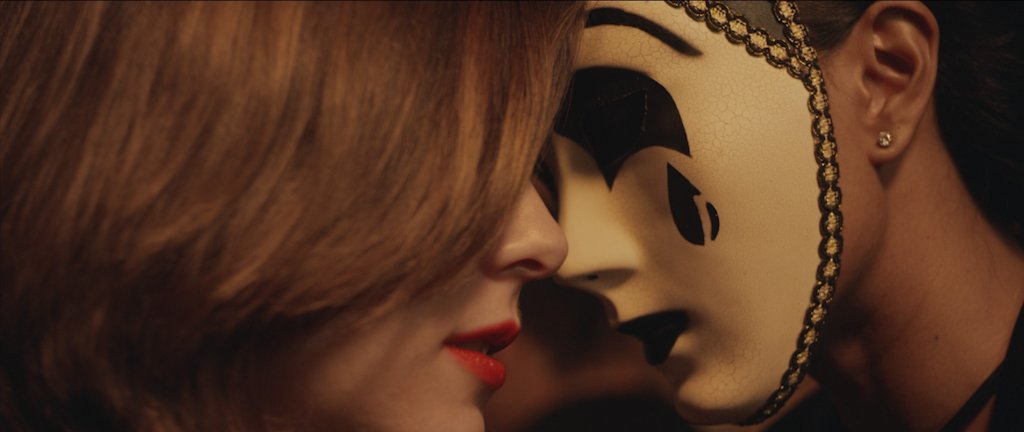
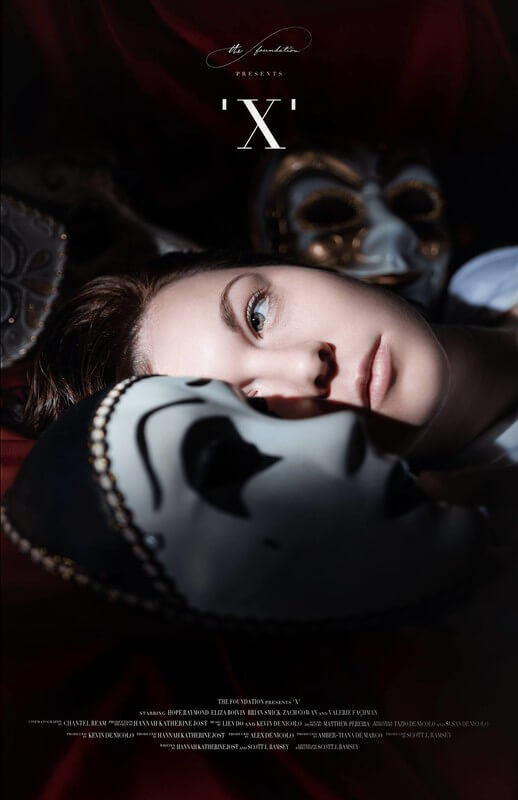
SCOTT J. RAMSEY’s debut feature X, an erotic thriller about a voyeur who hosts debauched masked balls, impressed us at the STARBURST International Film festival earlier this year. We spoke with Scott about becoming a filmmaker, the ideas behind the movie, and what’s next…
STARBURST: How did you get your start as a filmmaker?
Scott J. Ramsey: I’ve been a storyteller and an artist since I was four or five and could pick up a pen and write something down. I started making movies when I was in middle school and then went to study filmmaking at San Francisco State University. When I was there, I attempted to make a feature, and everybody told me that I was crazy – that I should start small and make a short first, but I didn’t listen to any of them. Inevitably, I didn’t finish it.
How important was that film school education?
What I got from film school that enabled me to make X and to be the filmmaker I am was all of the people I met – all the other filmmakers, actors, musicians, photographers. Even the ones I’ve worked with since then who I didn’t meet in school, I met because of someone I met at school. I really enjoyed the film program, but it was not necessarily any of the classes that helped, it was the network of people. I was in a co-ed cinema fraternity and that’s how I met a lot of the filmmakers who I ended up working with on X – that’s how I met Hannah [Katherine Jost, co-writer and producer], Kevin [De Nicolo], who’s one of the producers, and Hope [Raymond], the star of X.
For those who haven’t seen it, how would you pitch X?
The movie’s about a young woman named Christian who hosts monthly masked charity balls at her beachside estate that double as sex parties. Little do her guests know that she is a voyeur and has a hidden camera in the bathroom.
That’s quite an original concept, where did this idea come from?
The story came to me all in one burst, out of nowhere. I was working on that feature in college that wasn’t going anywhere. We had shot everything and I was in post, trying to finish it. The story of X was kind of a distraction from what I was supposed to be working on. I didn’t realise this when I first thought of the idea, but later when we had already shot it and I was reflecting on it, it occurred to me that as a queer person, you grow up with internalised shame and feeling like you are a pervert, so I think that is where the idea to have a main character who is a pervert – a voyeur – came from. To neither sympathise with her nor condemn her was important to us; we wanted to tell her story as honestly and thoroughly as we could.
The characters do have various queer sexual identities, though this isn’t the focus of the story. Would you define it as a queer film?
I would define it as a queer film, because more importantly than the characters being queer, it has a queer sensibility to it, and because the filmmakers are queer. But ultimately, it wasn’t about their sexualities, so it wasn’t necessary for us to make that the focus.
So what were your first steps with developing this idea?
I wrote an 80-page story treatment for the movie with the working title Rated X. Originally, Christian was male. I knew that I wanted to make it my next movie and I wanted it to be a feature. At first, I was going to write it myself, but then I realised I should have Hannah write it with me. She’s a much better writer of dialogue and I knew I was a little too close to it – it felt like I wasn’t able to see it from an outside perspective. So I brought it to Hannah and right before I brought it to her, I had the idea that Christian should be a woman. I gave her the treatment and said, this treatment has Christian as male, so let’s switch it. The first thing she said was: I like this, but I want to change the title, Rated X sounds like a middle school boy trying to be shocking. So I said, fine, how about just X? Christian signs the invitations to her parties with an X, because it means ‘kiss’ and because it’s a shortening of her name.
Are there any particular films, or artworks in other media, that inspired you?
I saw Mulholland Drive for the first time right before we started shooting X, so that was absolutely a stylistic influence. Obviously with the masked balls, we were looking at Eyes Wide Shut; I love that movie and we always get compared to it, so that was a reference. A Clockwork Orange was a reference, especially in constructing Christian’s voiceover. The films of Xavier Dolan; his movies are visually very rich and gorgeous but still have an indie movie sensibility, they don’t feel like they’re big budget, and we knew from the beginning that we weren’t gonna be big budget, so especially cinematographically his work was an influence. In terms of other media, when I brought it to Hannah, she had the idea to structure the movie like a Shakespearean play, so that’s why it’s in five-act structure, and we talked a lot about Shakespeare while writing it.
How did you raise your budget?
We brought the movie to Kevin, one of our close friends and a producer we’d worked with in school, and his parents had invested in other films by other students while we were in school. The three of us decided to pitch to his parents, hoping that they would get it and be into it. We put together an elaborate pitch and went to them with a PowerPoint presentation. They were extremely receptive and invested in us, so we’re eternally grateful and the movie would not have been made if it were not for them. The starting budget was $30,000, the number we asked for initially. After production was finished, the production budget had become $50,000, then post was $100,000. We were extraordinarily lucky that our investors were sympathetic, trusted in us, and were willing to fund until it was complete.
Even with that generous funding, no film ever has enough money, right? Did you have to make any compromises?
We wrote the movie and planned production knowing that we probably weren’t gonna have enough. The story is about kids our age throwing these balls, so the production design and cinematography reflect that. They’re just kids and they’re messy too, so that was built into the story because we knew we weren’t gonna have the budget for big elaborate sets.
What were the biggest challenges of shooting X?
The horror story we always tell is that, on the third day of shooting, we were in a garage, and we had brought all the expensive furniture and books from the homeowners into it. We had set up lights very near the ceiling, and one of the lights triggered the sprinklers. They came down on all the expensive furniture and on all our equipment. It was raining outside, so there was nowhere to go but out into the rain, and by some miracle we didn’t damage any of the equipment and damaged only very little of their property. The nice thing about that, which set the tone for the rest of production, is that the entire cast and crew stayed to help clean up – we were all in it together.
But then, from your budget troubles, it sounds like the real difficulty came in post?
Post-production was a big challenge, because we had to ADR [Automated Dialogue Replacement] the entire movie. We shot on a RED, which is a noisy camera, and we were shooting right by the beach. There was wind and cars, and every sound you can imagine. We had to re-record the whole movie and there was a challenge trying to get the texture of the sound to a place where it sounded natural, not like voiceover.
How did you handle directing the sexual content, and know where to draw the line with how much you could show?
There’s two different things at play – sexual stuff and nudity – and we kept those separate. In terms of the nudity, with the hidden camera stuff in the bathroom, it was necessary to have models or actors who were willing to show as much as they could to make it realistic. From the get-go, we set out to look for models who were comfortable with that, and made sure they understood what we were doing. For the actual sex, part of the story is that Christian doesn’t enjoy sex, she only enjoys watching. So sex itself is almost beside the point, there’s not a lot of sex in the movie – there’s the implication of sex, there’s nudity, and there’s certainly an erotic undertone. The one scene that you could categorise as a sex scene in a conventional way is when Christian is fantasising about Stella in the bathtub. For that, I told the actors Hope and Eliza that I wanted them to go as far as they were comfortable going, and I let them pretty much direct themselves. We let them watch playback and the first cut before we showed it to anyone and they liked it.
You made a couple of music videos alongside X – tell us about those.
Kevin – one of the producers of X and one of the composers of the score – and I have a music duo called The Major Arcana; we made three of the songs on the score. Those shorts are music videos that we shot to the songs and have used to promote the movie. We’ve promoted X as a transmedia project, storytelling on three different levels – the feature film, the album, and the three music videos. Two of them are already released, and a third is premiering at a festival this month and will be online two weeks after that. The music videos are surreal fever dreams that remix plot elements and visual elements from the movie and from the lyrics of the songs – not conventional short films, but more narrative than a montage music video.
And X itself is picking up a good number of festival screenings – how are you finding the process of self-distributing via festivals?
An interesting thing about film festivals that I did not know going in is that there are a lot that will accept your film but won’t screen it. We’ve gotten into many that haven’t screened X but have given us awards and made us an official selection, which has been strange. But people at festivals seem to like it and I’m glad that they do. I feel like the movie is suited for a theatrical experience more than an online experience, but the reality of the world now is that most people are going to see it on their computers. Festivals are incredibly necessary, but aren’t the only thing. I think that’s the biggest misconception that festivals are the end of the road, but at this part of the distribution process, it’s just the beginning. The other problem is, festivals are expensive!
So what’s the next stage of distribution?
We’re trying to secure distribution right now, and we have a few leads. We’re just letting things play out, and trying to show it to as many people as possible via festivals and other means. We are also considering some kind of self-distribution; theatrical on demand is appealing to us.
What’s your next project?
Hannah and I are writing another feature, we are shoulder deep in that. On top of that, The Major Arcana are recording more music and playing shows, and using that music to not only promote X but to tell stories moving beyond X.
What advice would you give to aspiring independent filmmakers?
Everything should be motivated by the characters. The characters are the core around which everything else rotates – where the story comes from, where every production design choice should come from, every cinematography choice, editing, music, etc. That’s my number one thing, my number two thing is to go with your gut and know when you’re wrong and when to listen to your collaborators.
With the beloved ‘80s family film FLIGHT OF THE NAVIGATOR enjoying a brand new, fully restored Blu-ray release (read our 10/10 review here), it was the perfect time to spend some time with its director RANDAL KLEISER…
STARBURST: You’d enjoyed huge success in the past, with your first feature film Grease and then later The Blue Lagoon, but stepping forward to 1987 and Flight of the Navigator, what’s your overriding memory of working on that film?
Randal Kleiser: Well, I’d always enjoyed sci-fi and I think this was my first time doing sci-fi and visual effects. Visual effects and sci-fi were always two of my great loves, so I was very excited about it. There had been a lot of movies about space and flying saucers and all of that, that were shot in a typical fashion, and I wanted to figure out a way to do something different, something that hadn’t been seen before. That was my biggest interest in it, to enter the world of visual effects and try something new.
It was certainly something new. That great ‘80s era still dominates pop culture to this day and Flight of the Navigator is right up there. I noticed during our research that your brother Jeffrey Kleiser was involved with the visual effects.
That’s right, he has always been on the cutting edge of visual effects. He went to university and there were no visual effects or computer graphics professors or courses, so he found somebody and had them convince the university to start teaching it. He worked on the original TRON, so he’s been there since the very beginning, always doing new things, so I went to see him when I was starting Flight of the Navigator to see if there were any new things he could show me. He had this commercial of a Tide bottle, for laundry, that was changing shape and I said can we make a spaceship do that and he said sure. He also showed me some other stuff where they were doing reflectance mapping, which is taking the background and wrapping it onto a wireframe computer model and turning it into a mirrored surface, so that’s how it all came about.
It’s the sweetest story, especially looking back now. How did the project come to you? Did you seek it out, did it pass by your desk, or did people come to you?
I know that I didn’t seek it out, it came to me in some way at Disney. I worked with Jeff Katzenberg on Grease. He was at Paramount and he came over to Disney, so I think they called me in to see if I’d be interested and I jumped all over it because of my interest in sci-fi.
It’s a simple enough story: an alien spaceship and a boy lost in time, but with that comes a lot of special effects. There were effects elements in Grease, as there are in most films, but how did you adapt to that, given that this was your first true sci-fi film?
Because of my brother, because he was the one leading the way and showing me how to do all of this. He was doing it in commercials, so he knew how to do all of that stuff, he was the leader of that. We also had a guy called Peter Donan who had done a lot of visual effects movies, and some of them were done the standard way with opticals, and the digital spaceship was a first.
Disney didn’t seem to be making too many live-action fantasy films in the mid ‘80s, so what made them take a chance on something like Flight of the Navigator when it wasn’t their forte?
Well, I believe they were doing a lot of live-action films, they started a company called Hollywood Pictures and Disney Pictures as well as a third unit, so there was a lot of live-action stuff coming out but they were under different names, it wasn’t all under Disney. Hollywood Pictures was doing most of the live-action.
The film was perfectly cast, with Joey Cramer as David, Paul Reubens as the voice of Max, and Sarah Jessica Parker as Carolyn. Because it’s always key to get the right people in the right roles, how did that process come together?
Yeah, the casting was by Valorie Massalas. I always rely on the casting director to bring in the best people. In this case Veronica Cartwright was in Alien, I loved her in that movie, and the great part about it was to be able to have her look so young and beautiful in the first part and then age, the same with Cliff De Young, we did some tricks to make them look older and then younger.
Sarah Jessica Parker would notably go on to great success and you also worked with Paul Reubens…
I’d met Paul and I knew him, and I asked him if he wanted to do the voice and he did, but he didn’t want to have credit for some reason. He wanted to have it be mysterious and use the name Paul Mall instead of Paul Reubens [laughs]. He sort of stayed in the background on this project, didn’t do any publicity for it. He’s an unusual guy and he has quirks and I guess that was one of them.
Now it’s available once again on a remastered Blu-ray edition, how pleased are you with the new version of the film?
It’s great, I was able to go back and polish it up, take out dirt and the ageing process of film and make the colours brighter. The extras are quite nice, we went back into the archives and found screen tests and visual effects tests to see how we slowly moved towards this way of doing the spaceship. We have tests with silver paint and with mylar, trying to find ways to do it before we discovered the digital way. All those funny tests on there look really silly, they didn’t work.
FLIGHT OF THE NAVIGATOR is out now on a limited edition Blu-ray release from Second Sight Films, available below.
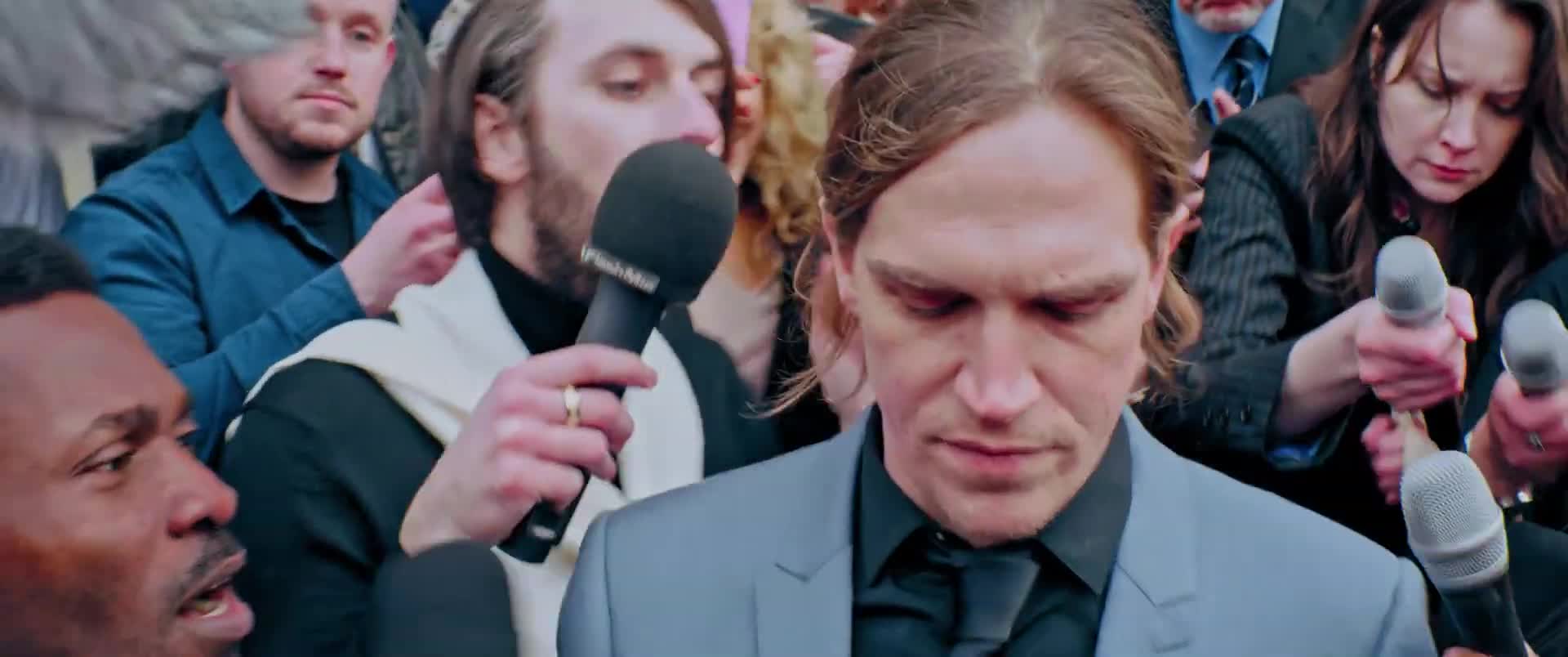
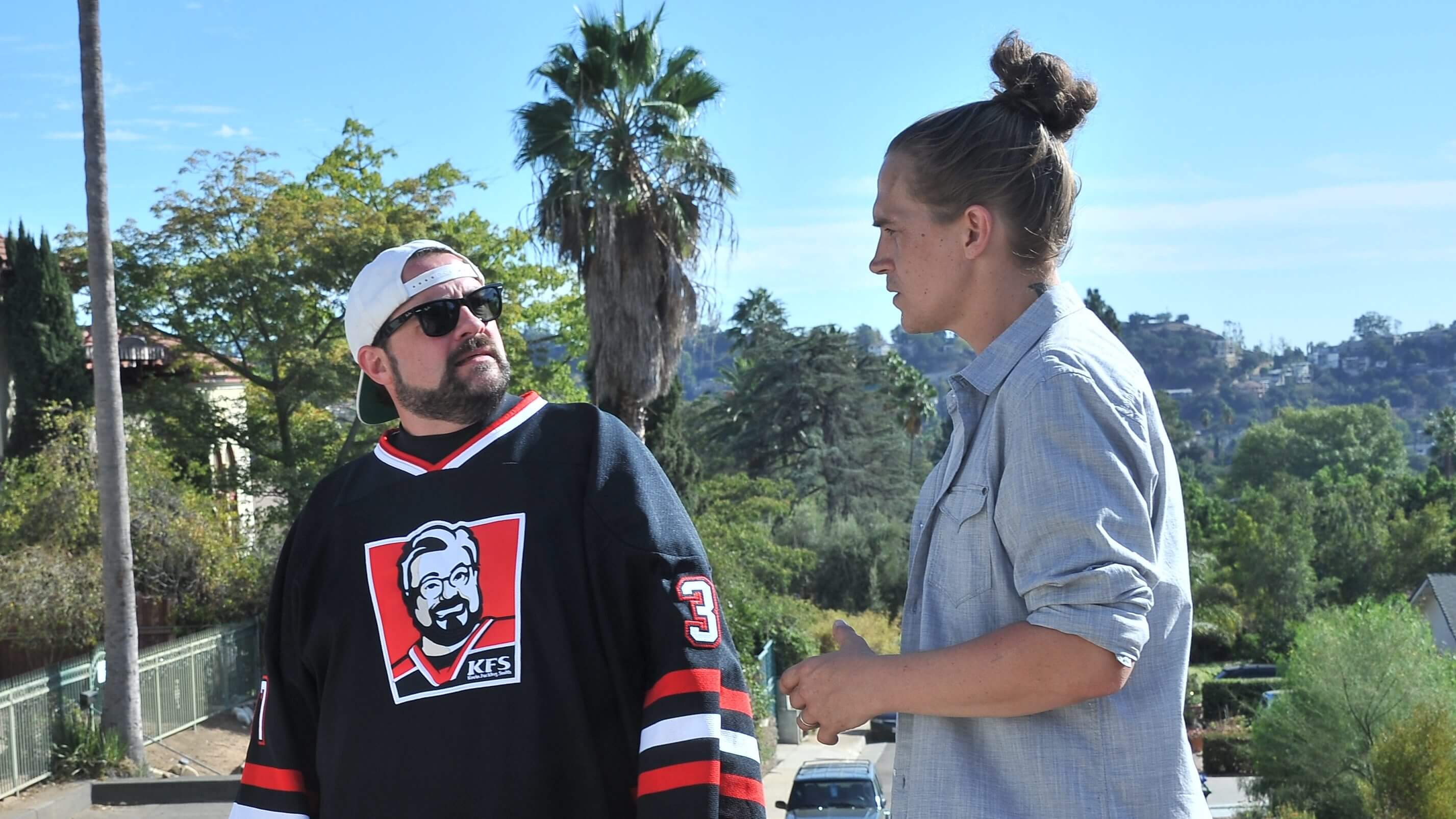
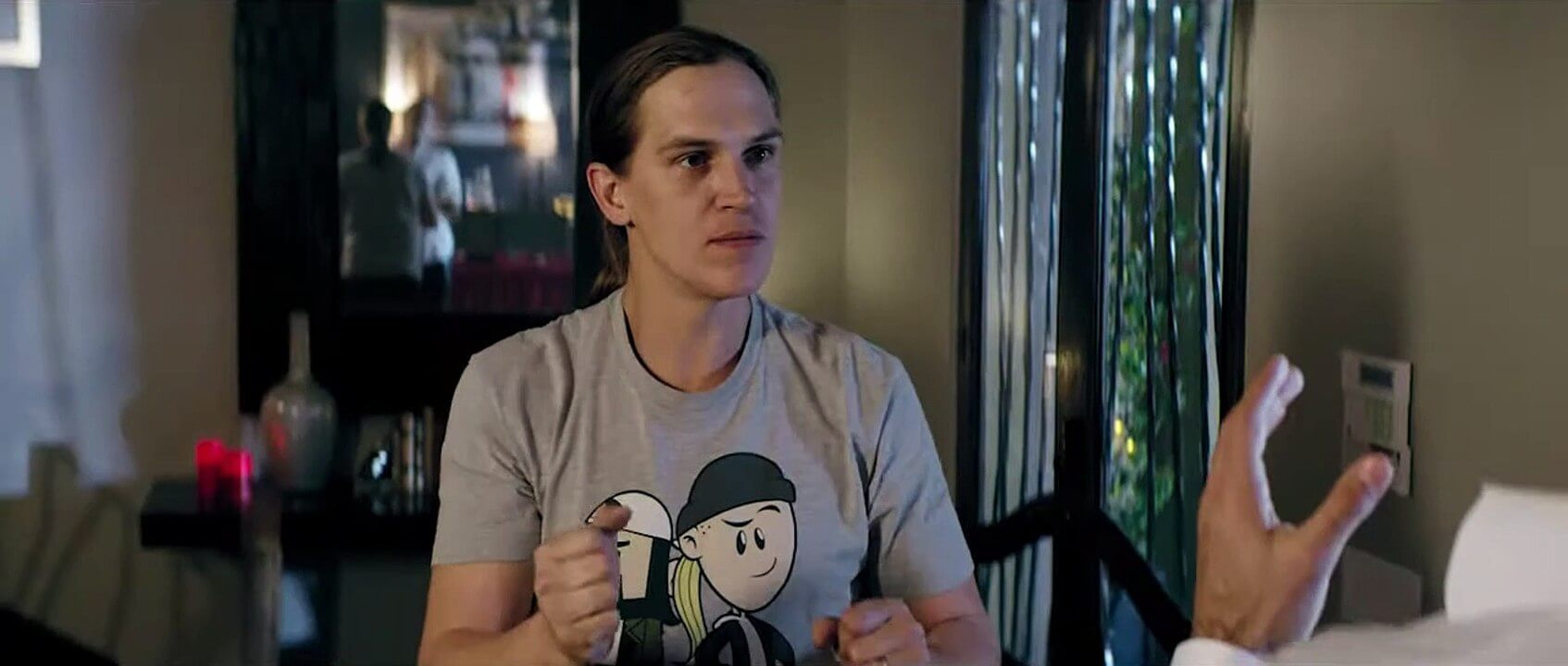
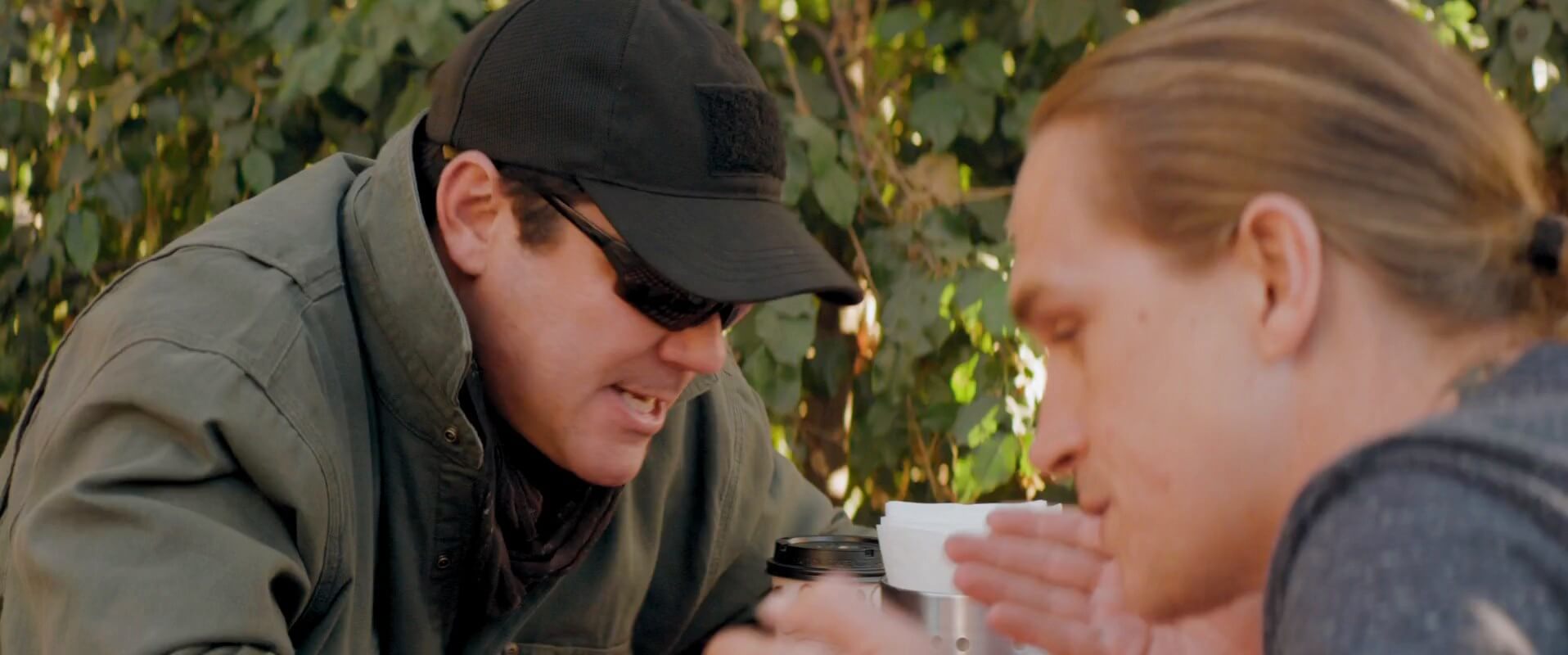
Jason Mewes became a huge favourite amongst genre fans for his turns as Jay in Kevin Smith’s View Askewniverse movies. While many have been quick to stereotype Mewes as the loveable stoner sort, the actor himself has been looking to branch out into more varied roles over the years – and now Jason’s making his feature film directing debut with Madness in the Method.
Centred on an alternate universe version of Jason Mewes whose quest to become the ultimate method actor has dark and sinister consequences, we caught up with Jason to discuss the film, the experience of being a first-time director, having to deal with being stereotyped for so long, his dream projects, and a whole host more.
STARBURST: The last time we spoke a couple of years ago, you mentioned how you were in loose talks to direct your first feature – and here we are! So how did Madness in the Method come about?
Jason Mewes: I was out in London doing a movie called Devil’s Tower and I met an awesome dude, Dominic Burns. He was producing this movie. I shot for three or four days, but whenever I go to London or Australia or wherever I always try to leave a couple of days earlier and stay for a couple of days extra. I need to get there early to adjust to the time difference – it takes me two or three days to adapt to the big time-jump – and I always like to stay a couple of days after because I like to do some sight-seeing. So I stayed around after the movie was finished and Dominic took me round. We were in Nottingham, so we did the whole Robin Hood thing. I was just hanging out with Dominic and he was, “Hey man, I hope you don’t mind me asking but what else do you want to do besides getting offered these roles as this slapstick funny guy, this stoner guy? What do you really want to do?” I said, “Look man, I would love to play a Hannibal Lecter-type character or American Psycho. I really want to challenge myself and play that dark character – to see whether I could pull it off.” I always call it a rogue cop, but shows like The Shield, too. Not that I feel like I’m a tough guy, but again I want to play that dirty cop. I told him that and I said, “But I also really, really want to direct.” Since Clerks, I’ve noticed that I see stuff in a director’s viewpoint. When I’m doing a scene, I’ll have ideas. I had directed a music video at that point and I really enjoyed it, and I did a PSA for a company and really enjoyed that – but I really wanted to direct a feature.
So anyway, that happened and a couple of months go by. He and I kept in touch a little bit here, a little bit there, a little email here, a little text there. Two months into it, he wrote me a text saying, “Hey bro, I’m going to send you something. I hope you don’t mind, I took it upon myself to write a script for you from what we spoke about.” I really liked it, and I gave him some notes. He also had this young man, Chris Anastasi, who jumped on board and we started going back and forth with these ideas. We went back and forth, back and forth, and it got to the point where we all really liked it. He was like, “I’m going to try to get money for this.” Again, people say stuff all the time. Six months went by and I really just thought he got another job. He produces stuff and he directed a World War II movie, so I just thought he went back to work. I was working with [Jay & Silent Bob] Get Old so just forgot about it. About six months went by and then all of a sudden he emailed me and said, “Hey, are you around? Can we talk later?” He called me and was like, “Bro, you’ll never guess. Not only did I get money for the movie, they’re going to let you direct the movie!” I was shocked. It was really awesome because Dominic had faith in that I could direct. When we found that out, we also tweaked the movie.
The movie wasn’t what it is now. It was, but it wasn’t. When I found out I was going to direct, I really wanted to stick to some of my strengths which I already know that I can do – which is comedy – so I thought, “Let’s make it a Jay Mewes but an alternate universe Jaw Mewes and everyone will play themselves.” So we went back and forth a little more and we tweaked the script. That’s how it came about. I really appreciate Dom Burns. Dom Burns is the one who thought I could play a different character and that I could totally direct. And he found the investors – people he had dealt with before. It was really awesome of him, and he was like that throughout the whole film. When I was in front of the camera doing my acting, he would be behind the monitor. He was super, super helpful and amazing.
This movie was written solely for you and is a film that only you could star in. Without Jason Mewes in the lead, this movie simply doesn’t happen. That must be quite flattering and humbling, no?
Definitely. It’s awesome that someone took the time to write it and thought of me. It’s hard to look at something about yourself, especially the scene with Kevin when we were supposed to go and do Get Old and I confront him and say some nasty things. In my head I was just, “I know Kevin. He’s not going to care, he knows it’s an alternate universe Jay and Kevin and that I don’t mean anything by it, but will it upset him?” Again, all of that was taken into consideration. It was also nice because all the people that you see in there, most of them jumped straight on board. It was really nice for me and humbling and flattering because I didn’t think Dean Cain, Teri Hatcher, Stan Lee, a lot of the people who were a part of the movie, would’ve been in the movie because we didn’t have a lot of money to offer people. So it wasn’t like, “Hey, we know we can get this person because they only work one day and it’ll be easy for them. It’ll be an hour or less to the location for them and we’re going to give them $50,000.” We didn’t have a lot of money to offer people, and most people were like, “Oh wow, it’s Jay’s first movie? His first directing job? We want to be part of this and see what happens.” That was super, super awesome. For me, it was definitely an eye-opener that people are really nice and sweet. I didn’t even think Teri Hatcher knew who I was or cared, but she did and it was awesome.
Whatever, she’s totally got posters of Jason Mewes on her walls!
[Laughs] You know, it’s funny. Every once in a while I’ll be at a convention and I’ll meet someone. Like, I’m a huge fan of Warehouse 13 with Eddie McClintock. I’m a fan of Eddie’s and a big fan of the show and the other things he’s done. All of a sudden, I saw him at a Comic Con once and he was, “Oh my god, dude! I’m Eddie. I wanted to meet you and I love your stuff!” And I’m just, “No, I love you!” It’s so interesting. I remember this one time Kevin and I were at this awards in, I think, London. Quentin Tarantino saw Kevin, and Kevin knows him of course, so he said hey to Kevin but then he looked over to me and goes, “Jay, I loved you in R.S.V.P.!” R.S.V.P. is a little indie movie that I did, and who would have thunk that he’d have seen it. Stuff like that still catches me off guard and blows me away, man.
The movie has plenty of familiar faces dotted through it, but was there anyone you wanted for Madness in the Method but you just couldn’t make it happen for one reason or another?
Not that I can think of. I definitely know that we had tried to reach out to some people, but there was no one specifically hardcore that we wanted that we reached out to and that they couldn’t do it. For me, I feel like it worked in this sense because I’m hoping that if things go really smooth in the end maybe we can do a sequel.
When it come to finally directing your first feature film, were you nervous, excited, a bit of both?
I think nervous excitement, for sure. I was super excited. It was something that I’d really wanted to do for a while. For me to get to do it and get to make a movie just seems surreal. We got to do two screenings at the Universal CityWalk. For me to walk up and see on the board “10:30am and 4:30pm screenings of Madness in the Method”, it was just so surreal to see the movie that I directed playing in a theater. So I was super excited and super nervous. It was more about the nerves of trying to direct and act in the same movie. What if I can’t pull the two off? And also, I’d never directed any actors before.
Some of it was easy because I’ve worked with or am friends with a lot of the people in there. Then there are some people, like Teri Hatcher. Teri did some awesome things, but there was one take where I was like, “I just want you to be a little more excited and not so mad” – but I didn’t want to give her direction. I was just, “Oh my gosh, I don’t want to give her direction. Will she take it like an insult?” I’d never dealt with that, so I didn’t know how to go about it. I remember way back in the day, Kevin in the beginning of his career gave someone a line reading and the actor was, “You don’t give actors line readings. That’s a no-no.” We didn’t know that back then. Now I know just from experience of working with people and being on sets. For me, it was that same thing of like, “I’ve seen people direct and I know people give you direction and it’s okay, but how much direction and do I cross the line of directing and acting?” There were those types of questions that I had, and the nervousness of stepping over the line. But again, I got a lot of good feedback while we were shooting and people took me to one side to say how well I dealt with situations.
Coming out of the movie, what skills do you think you’ve learned ahead of potentially directing another film?
I think two things. Firstly, I definitely wouldn’t want to direct myself again. Not saying ever, but if I did a feature then I’d maybe just want to be in one or two scenes. It would be fun to direct a movie like Chasing Amy, where Kevin put us in one scene – even if it was maybe two scenes – but I wouldn’t want to direct a movie and have me be in the whole thing. I just feel that I couldn’t put my focus 100% on directing and really get the feel of directing and directing rather than directing and acting. My mind, it was 80% on the movie and 20% on acting and memorising my dialogue, or I had to get wardrobe and hair and make-up. So that’s one thing, and the second thing is I definitely think that I got a good feel of talking with the actors and stuff like that. I think I definitely feel more comfortable doing that for when I’m in that situation in the future. And I think I need to do more.
I realise that, for me, I learnt a lot from being around Kevin for so many years and being directed by Kevin – but Kevin edits his own movies. A lot of directors don’t necessarily do that. When he writes a script, he writes, he directs and he edits. So if we’re shooting and you’re running late, he’s able to go, “You know what? I wrote this in the script – ‘the guy pulls up in the car, gets out of the car, walks across the street, goes in the door’”. In his editing brain he’ll be, “Well, I wouldn’t even use that because I would cut from the car screeching to a halt, cutting to the guy at the door looking through the peephole and busting in, so we can lose that crossing the street, walking up the stairs bit.” But I realise when an editor is reading the script separately and you’re not editing, you need all those extra bits to help piece together what he’s editing. When I was shooting I was just, “We don’t need that.” In my head, we cut from me running up, opening the door and then it cuts right inside – instead of it cutting me walking down the hallway, looking at every door, seeing which door is the right door. That’s just an example. But I realised, when we were editing stuff it took a little bit longer because they had to tape together what I said. We wrote down notes on that, so when I wasn’t there they could say, “Well, it’s going to go from here to there.” But I dunno, I guess, yeah, I had to sort of remember that I don’t edit the movie myself. I’m not sitting behind the editing machine piecing it together. These are little titbits I feel like I would have to sort of adjust my thinking to.
You’ve said how Madness in the Method is an alternate universe Jason Mewes, but there are still some very real moments of your life laid bare here. Over the years, you’ve been very open through the podcasts and the live tours, but did it feel a little more personal to this time see elements of your real life in a movie?
No. I guess you could see where it could be me to 100%, but I feel it’s not me playing me. It doesn’t bother me or make me uncomfortable because a) people know a lot about me, and b) I do feel that it is alternate universe – Earth-12 Jason Mewes, Earth-12 Kevin Smith. Everyone is playing somewhat themselves but none of it is 100%. It’s not like we’re really baring our souls on the big screen.
I feel like in the beginning, when I was younger, when I first did Clerks, Mallrats, Chasing Amy, people did try to only offer me the parts of the stoner funny guy. They were the only roles I got. Over time, people gave me an opportunity to do stuff like R.S.V.P., which was a different character, then a horror movie, then a movie called Bitten where I play an EMT, then a movie Cell K-11 that was a dark drama set inside of a prison.
So there was that sort of strand to help the movie kick off from what it was, but I do feel like there’s definitely pieces of the movie which are similar to real life – but I do feel it wasn’t set in stone. So no, it wasn’t hard. For me, the hard thing is that no matter if I’m playing Jay or playing Jason Mewes or anything, it’s not so much people seeing me tell my stories or even stories that are a different universe version, just in general, I don’t know why, it’s so hard for me to watch myself acting. I just feel like I’m so judgemental of myself – and I’m sure most people are. There are definitely moments where I see myself do something and I’m, “Wow, that was pretty smooth – I liked that!” But overall I just get really uncomfortable watching myself. I don’t know why I haven’t gotten over that, because I have to watch myself. I had to watch myself in this movie, Jay & Silent Bob Reboot I gotta watch myself. Stuff’s going to be happening and I do have to watch myself, I’m just saying it’s kind of tough. It’s hard for me to immerse myself in that fake world, that fantasy world. That’s why people ask me all the time, “All these TV shows – Arrow, Supergirl, The Flash – who would you want to play if you have a chance to play anybody?” I wouldn’t turn a character down, don’t get me wrong. If they were like, “Jay Mewes, you’re perfect, you don’t even have to audition” I would never say no. I’d want to be in those shows as Security Guard #1, but I love watching them so much. I could sit down and watch Avengers: Endgame and love that world, but if I see myself coming on screen and being all, “Let’s get ‘em, Avengers!” then that just wouldn’t be the same for me. When I sit down to watch these shows and movies, I can really bring myself to be all “Oh man, I’m in Gotham City right now with frickin’ Bruce Wayne. It’s awesome!” When I watch myself, though, it’s just kinda hard.
For you, is it harder for you to watch yourself in a serious role, then, or is it harder to watch you as Jay or a more comedic role?
Honestly, it’s tough to do any of them. I find myself not knowing if I’ve pulled something off. I guess it would be more serious, I guess. Only because I’ve less experience in that. I do know that in comedy if I’m saying something funny it ain’t hard for me to watch myself say something funny – especially if I’m watching it with an audience and I hear them laugh. But again, sometimes there literally will be a weird facial tick or something that might happen. You’ve gotta think that people are watching your every move. Again, not always me if I’m not the main character, but when my parts come up or I’m saying something or I’m trying to be romantic. There’s been a few movies where I’m trying to be silly romantic and in my head I’m just, “What was that? Did it come off good? No?” People will tell me that it’s great but then I’m thinking “Are they just being nice…?” It’s tough to know.
If you could go back in time to speak with 10-year-old Jason Mewes, what would his reaction be if you told him not only would he be an actor one day but that he’d also become a director?
I think I would think I was crazy. Even when we shot Clerks, I had no plans or ambition to act or do movies or be in entertainment in any sense. I just literally was planning on – at 10-years-old especially – just playing around. 14 was when I started working and I literally felt like, “Oh, I’m gonna be doing construction.” Later I got a roofing job, so I started roofing and was, “Ooh, I wanna become the owner of a roofing company. I know what I’m doing and I’m pretty decent at it, and the guy who owns the roofing company I work for seems to be doing really well.” We used to go to his house once in a while to pick up material for a job, and he had this wife that was 15 years younger and pretty, he had the nice Mercedes, he had a two-storey house. In my eyes, at 17 or 18 years old, I thought this guy was doing really well. Literally, that was my goal until I was about 20 years old. It wasn’t until we went and did Dogma that I stopped working construction and roofing and delivering pizza. It was literally Dogma that I stopped that stuff. Even after that I only got lucky because I was able to work at the comic book store that we have in Red Bank, New Jersey. I would help out around ViewAskew with merchandise and stuff like that. I still was doing labour, but it was fun labour – it was comic book store stuff and stuff I love. So, I would tell myself that I was crazy – “What, no one here in Highlands, New Jersey makes movies or directs movies or does anything of the sort!”
As a director now, what would be the dream project for you? What sort of film does Jason Mewes want to direct?
I feel like I would love to direct something like The Thomas Crown Affair or a Murder, She Wrote movie marathon. I love Murder, She Wrote, and they did four movies of that. Again, not saying it wouldn’t be tough because a big part of it is that the writing has to be good, the clues have to be good – you always point someone in the direction of “Oh, it’s gotta be the sister!” – and besides the writing being great to steer people wrong, you want to be able to shoot it well and cool and different. That honestly would be a lot of fun for me. I’d be excited to do horror, comedy, I’m really into anything. If I was told, “You have to pick one, it’s going to be your second movie, you’ve really gotta knock it out the park if you want to do number three”, I would really have to steer towards comedy. I’ve done comedy for so many years and I know comedy’s about timing, and I just feel like I could totally shoot that. I don’t know, I could be wrong. Maybe I could shoot drama better or action. Actually, definitely not action. I definitely wouldn’t want to shoot an action sequence where people are in front of green screen. I honestly feel like that would be really tough. I really would like to do either a mystery or some kind of drama. I would love to do something cool like The Thomas Crown Affair…
MGM is making plans for another remake of The Thomas Crown Affair, with the Russos producing…
Look at that. Someone’s going to read this interview, bro, and they’re going to give it to me. Nootch [laughs]!
What about Jason Mewes the actor, then. What does he want to do?
I would still love to play one of those roles that I’ve been saying. I got to toy around a little bit in my movie. I definitely loved that we got to do Reboot and I’m stoked that that happened, but I just think that I really would love to get on a TV show or do a movie where I play at least something a little more serious, a little darker. I’d love to get on one of these TV shows in a guest spot. I would love to play the FBI agent on NCIS: Los Angeles, where maybe I’m an FBI agent coming to help them and then I get to be in three episodes – and then they’re like, “Hey man, we’re gonna bring you back for next season.” They do that a lot. Hawaii Five-0, man. I was hoping. It was a small part so maybe I didn’t give them enough reason to, but Hawaii Five-0 I got to have a cameo in. I was the guy who worked at the gun range in Hawaii. They went there to get me and they chased me, then it cuts to them with me in the interrogation room. But again, I know on Hawaii Five-0 it happens a lot that people come back all the time. Again, something like that I think would be so awesome – to just be on a show that you like, to get to be in it. Kev and I got to play the security guards on The Flash, and I think it would be dope if we could be those security guards at the same place in a different series – like a Supergirl episode of a crossover or something. Something like that would be awesome. Seriously, I would love to do that. Or again, to do a movie where I play something serious. It doesn’t have to be this super serial killer, but I just think something a little more smooth and serious. We’ll see, man, we’ll see. There was something I was waiting to hear from. I can’t say right now because nothing’s ever set in stone until it’s set in stone. But there was actually a cool role that I’ve been waiting to hear back on. They want me but it’s more of a matter of they’re trying to get everything in place and what the dates are going to be. I’m waiting to hear, but honestly I’m stoked because it’s actually a really cool, different character for me. So we’ll see.
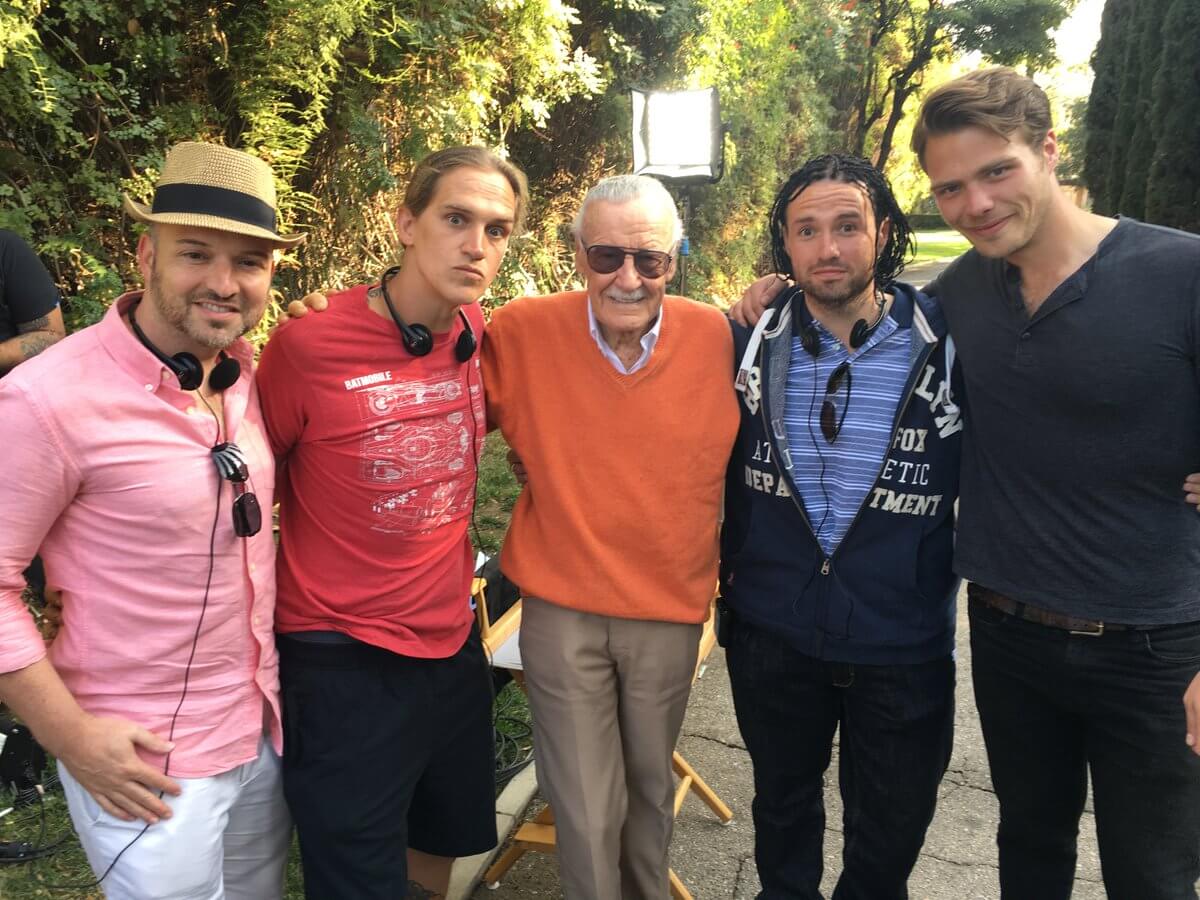
One thing we have to ask about is that you again got to work with Stan Lee on Madness in the Method. As somebody who loves the world of comics as much as you do, how cool and surreal was it to work with Stan again?
It was amazing. It was super, super amazing and sweet. For him to just come down and spend a couple of hours with us was super amazing, honestly. It was a surreal moment. So much so, after he did a couple of takes we had to do a new setup and move the camera, put up a couple of lights, and I literally walked away and started tearing up. My buddy Dominic Burns was like, “Oh, I see you, bro. Right? I’ve got the same way, it’s crazy!” It just was so surreal. We met him on Mallrats when I was a kid, but he’s so amazing, he’s such a hero of mine. I feel like it’s literally what brought Kevin and I to become friends. I was four years younger than Kevin and he was just, “Oh, he’s a little kid? I’m not hanging out with him.” He gave me his comics to leave him alone, and he’d give me more comics when I was done. Then he started driving me to the comic book store once a week, and I went to my first Comic Con with Kevin, Bryan [Johnson] and Walter [Flanagan]. That’s kind of what brought us together – Stan Lee and comic books.
Before we wrap things up, this October sees Jay & Silent Bob Reboot hit the big screen. How was it to go back to the View Askewniverse once more?
It was a lot of fun, man. I’ve been wanting to do another movie with Kevin forever. These were so much fun and they used to be every two years because they were studio movies. Back then, we would spend two or three months with people and then we wouldn’t see them for two years. Then you spend two months with people again. Kevin would hire the same people – the same script supervisor, producer, DP, catering – and it literally was like camp and it was so much fun. Of course, Kevin and I got to hang out for two or three months making believe together. It was always a blast, and so I’ve been wanting to do it for years. Kevin just was sort of hesitant on it for a while, and then he wanted to do Clerks III, then Clerks III couldn’t happen. It was just really awesome and I’m really glad we got to do it. So far, so good, man. The people who have seen it, the few who have gotten to come over to Kevin’s and watch it, it’s been getting really good feedback – so I’m really hoping people enjoy it as much as I do.
Madness in the Method receives its European premiere on Saturday, August 24h at FrightFest, before getting a home release at a to-be-confirmed date.
THE GROGNARD FILES is a popular podcast that discusses RPG from back in the day – North West England in the 1980s, to be precise – as well as more recent games. We caught up with genial host DIRK THE DICE for a quick chat…
STARBURST: How did the podcast come into being?
Dirk The Dice: It was originally conceived as a written memoir of our experiences playing role-playing games in the ‘80s. Back then, we were living the life that has been popularised by Stranger Things – patrolling our neighbourhood on our bikes while playing Dungeons & Dragons in our den. STARBURST was actually responsible for us getting into the hobby as it was an article in your magazine that explained how to play Fantasy Roleplaying games! It was written by Steve Jackson, one of the founders of Games Workshop and a writer who would go on to create the Fighting Fantasy books. We had great fun recalling our lives in ‘80s Bolton, and the strangeness of thinking that you were the only people playing role-playing games, and having to search the small ads in White Dwarf magazine for other players. Blythy and I have been friends since we were twelve and thought it would be good to capture some of our chats; the podcast format felt more immediate, and I think the reason it’s popular is that we have one foot in the past and the other in what’s happening today.
So you cover the contemporary gaming scene too…
Yes, but through the prism of nostalgia. We’re discovering some of the developments in RPGs over the past 30 years since we last played, but we never give an opinion on a game we haven’t played; we’re not collectors, so we’re not going to obsess over different editions – play is the thing, so when we get a game, we want to understand how it fits within the context of gaming history. Night’s Black Agents, for example, is interesting as it’s a game that emulates cinematic spy-craft, but with vampires. Jason Bourne against Dracula! It’s fresh and new, but you can definitely trace elements of the James Bond RPG that came out in the mid-‘80s. Podcasts are an aural fanzine, so we format it in a similar way as a magazine with regular features: Open Box is where we reflect on a game from back in the day – our nostalgic memories of it compared with what we think about playing it today; Judge Blythy Rules, is where our Rules Lawyer does a deep delve into the system rules; Gamesmaster’s Screen is where we pick random topics to discuss; in Starburst Memories, we reflect on some of the influences back in the day. There are also interviews and sample play. The podcast has been compared to the late-night Mark and Lard show in the ‘90s, but with less Nick Cave and more Runequest. That’s the mood we want: taking the subject seriously, but not ourselves.
Things have changed so much since the 1980s, especially with the advent of the Internet…
It’s been a fantastic way to reconnect with some of the people who were engaged with the hobby back in the day – such as Paul Cockburn [editor of Imagine magazine] and Tim Olsen [manager of Games Workshop’s Hammersmith store], but the most rewarding element is making connections with people around the country, and the world, who had similar experiences to us with the world of gaming. There’s a community that has built around the podcast; people are rediscovering the hobby, sharing their experiences and, perhaps more importantly, playing the games again. I started talking about vintage gaming on Twitter around the same time that Daily Dwarf started posting images from when the magazine featured RPGs. We struck up a dialogue and he agreed to submit to the podcast. His wonderfully witty and detailed examinations of the coverage in the magazine are the highlight of the month when they land in the in-box. I like how the internet has diversified the hobby with games to satisfy all tastes, covering every genre and style you can imagine. I don’t understand the hostility I see sometimes on forums; who has the right to determine the ‘right way to play’? Be nice. Be inclusive. It’s meant to be fun for everyone.
What else has developed from the podcast?
Every November we have the GROGMEET in Manchester – a small convention kindly hosted by Fan Boy Three, with over twenty-five games on offer from the early days of role-playing right up until the present day. In April we run a similar event online; playing games this way has given our participation in the hobby a new lease of life. There’s also the blog at www.thegrognardfiles.com.
What can we expect this year from the podcast?
Along with Ed, we’re looking at some of the films and TV programmes that influenced us back in the day, against the background of political and popular culture changes. We’ve just released a GROGGLEBOX podcast about Robin of Sherwood and we have another coming soon about Blake’s Seven.
Listeners can contribute to Patreon – what are the rewards?
Having the crowd-sourced ‘tips’ from listeners has been a great help as it’s covered production costs and allowed us to fund other projects like GROGMEET. We produce an annual fanzine as a gift to Patreons around the world, in the style of the ‘zines we used to enjoy, which includes the Daily Dwarf essays and an exclusive cover produced by Russ Nicolson.
This feature was designed to highlight one of our favourite podcasts each issue, are there any shows that you’d like to recommend to the readers?
There’s a wonderful catalogue of podcasts from Mr Jim Moon under the Hypnogoria stable that are detailed examinations of the strange and wonderful. When it comes to gaming, the UK has some really great RPG podcasts, including What Would the Smart Party Do? which has conversation and interviews about major gaming topics. Good Friends of Jackson Elias is a great podcast about horror gaming and horror films.
THE GROGNARD FILES can be found on Spotify and iTunes. For more information on the show, visit WWW.THEGROGNARDFILES.COM
[This article was originally published in STARBURST #460, May 2019. For that back issue and others, visit www.starburstmagazine.com/store]
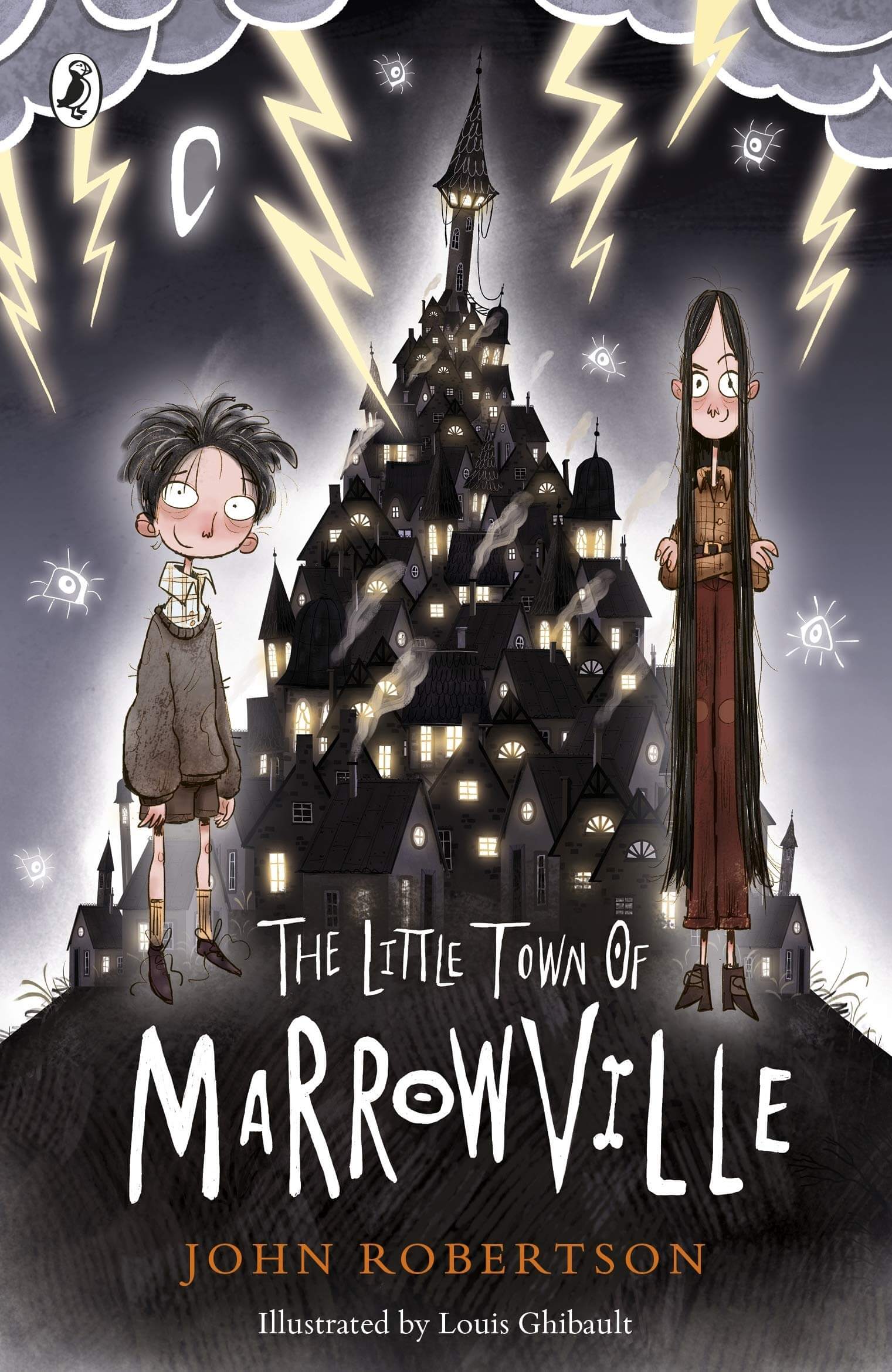
John Robertson is best known for his smash-hit comedy show The Dark Room, a pastiche on early computer adventure gaming. His latest project is a bizarre yet hilarious children’s novel called The Little Town of Marrowville. We got in touch to find out more.
STARBURST: Tell us about The Little Town of Marrowville…
John Robertson: A few years back, an editor named Gary Panton at Penguin turned out to be a big fan of my show The Dark Room. He was looking for someone to edit a Roald Dahl anthology and I put my hand up. He messaged back to say “Yeah, you didn’t get the job, but if you ever have any ideas for a kid’s book please let us know.”
At the time I was all “But I’m a grungey alternative comedian. I swear and I’m dark and I work with chasms of the human soul. And retro gaming. So a part of me was all ‘I’m not going to write a kids’ book”. Then he messaged me a second time and I was like “My god, Puffin aren’t going to message three times. I better come up with something.” So I wrote a thing where horrible six-fingered father named Howard Howard met his gruesome and funny demise and his children were happy about it. And they said “Gee that’s good. Why don’t you write a whole book.” So I did.
It is quite a gruesome book in place, though in a good way. Where does come from?
Well that comes from the history of children’s literature. Terry Pratchett said a very smart thing, which is kids love blood. I used to read Norse myths when I was a kid and that was the best thing in the world at age eight. It was so funny. My dad was a priest and we where being told that God was a being that created the Earth and it just was. Whereas the Vikings are all ‘and then Odin tore out the throat of Ymir the colossal giant and the stars are his entrails’. That kind of thing, when you’re eight, is very funny.
There’s a very apocalyptic feel to all your work. What is it about laughing at the darkness that appeals to you?
Every aspect of it. Darkness isn’t something to be shied away from. To look at death and have a wry smile on your face, I think is a wise thing to do. In terms of Marrowville, I think occasionally people don’t write for children. They write for what they think children are. I think you look back at your own childhood with rose tinted glasses and think everything was light and bunnies and flowers. I was an appalling little shit. I’m writing stuff that is as dark as I liked it when I was a kid. I wrote a story when I was ten years old. It was about a man stuck on a desert island who jumped off a cliff. He wasn’t trying to die, He was just trying to escape. He landed on a stick, and stick was stuck in his eye. My teacher said to me she enjoyed the story because the man was just walking around with this stick poking out of his eye which he didn’t seem to mind and it wasn’t mentioned again. That tickled her. Cartoonish violence.
I don’t like to patronise kids – when I was growing up, we all knew children who had mean dads – this guy liked to yell, this guy was scary, etc. – so it’s something I think all children are aware of – so in Marrowville, I wanted to give kids a funny way of getting rid of those guys. And if it could make you want to throw up your breakfast a little, that’s good too.
The art in Welcome to Marrowville suits perfectly. How did it come about?
That’s one hundred per cent Louis Ghibault. A bunch of different illustrators were suggested and Louis was by far the best. He’s absolutely fantastic. He really encapsulated the heart and the gore of Marrowville. I know we keep talking about the darkness but so help me, there’s a lovely little story in there, even though it’s caked with jokes and blood.
There’s a sequel already planned. Will it feature more of Aubrey and Aubrey’s sister?
Absolutely, it’s their story. To be fair, it’s Aubrey’s sister’s story. It’s just one of those things. When I was creating the characters, I thought here’s a little ten-year-old boy and his fourteen-year-old sister. When I started reading it to people, they really resonated with the teenage sister who was having a horrible time with her father. I think that happens with a lot of children. I think Aubrey’s sister is me expressing that. And it’s me saying what happens when you’re actually a very capable person but you find yourself surrounded by people who are incapable but are very, very loud and domineering.
What’s next for you?
The next project after this? It is more of The Dark Room on tour. We are making a Dark Room augmented reality game. They’ll be further development on the Dark Room game on Steam, because we’ve just got some grant money for that. And I’m working on the Island Next Door to the Little Town of Marrowville. Touring, novel, video game, other video game. I’m doing well for someone who doesn’t have to get off the couch to go to work.
How different is the stage work from writing?
Sitting down and writing a novel, aside from getting out and performing live to a group of people who are happy to see you, is just the single most pleasurable activity. I disliked the process of writing stand-up comedy to the point that I stopped doing that and started improvising. But just sitting down and getting to be in your own world and taking the time to work out the architecture or how ugly and bumpy a bad guys nose should be or coming up with an appallingly gruesome thing for a disgustingly sweaty man to do is a really fun activity. And then you have to figure out how you make a capable fourteen-year-old and their idiot ten-year-old get out of this one. It’s fun. I just sat down and had a really wonderful time.
Why is geek culture on the rise?
It’s a got a lot to do with exposure. The Internet has given us a lot of things, and never underestimate the sheer power of Disney buying something. If you want something to go mainstream, have the Mouse run it. You sometimes get these moments where superheroes start to inform the zeitgeist. I just get the impression where a lot of really good commercial understandable art has come out and thanks to the Internet people are doing their research. And theirs no longer the shame attached to these things. There’s people down my gym wearing Tony Stark T-shirts.
If you got to play in someone else’s sandbox and create something for an established franchise, what would it be?
To be fair, if anyone gives me their sandbox, they’re going to wake up tomorrow with the sand in every crevice and all of the characters dead and exploded. I would absolutely love to jump aboard just any Star Trek franchise. I would finish Deep Space Nine. I’d bring Sisko back, brutally aged and have a wonderful time. Deep Space Nine was the first Star Trek series where people were violent, flawed and occasionally had libidos, and now we are in an age where you can actually have that on television. Hot damn!
Photo credit: Mark Dawson Photography
The Little Town of Marrowville is out now and reviewed here. The Dark Room will be at the Edinburgh Fringe throughout August and touring the UK afterwards.
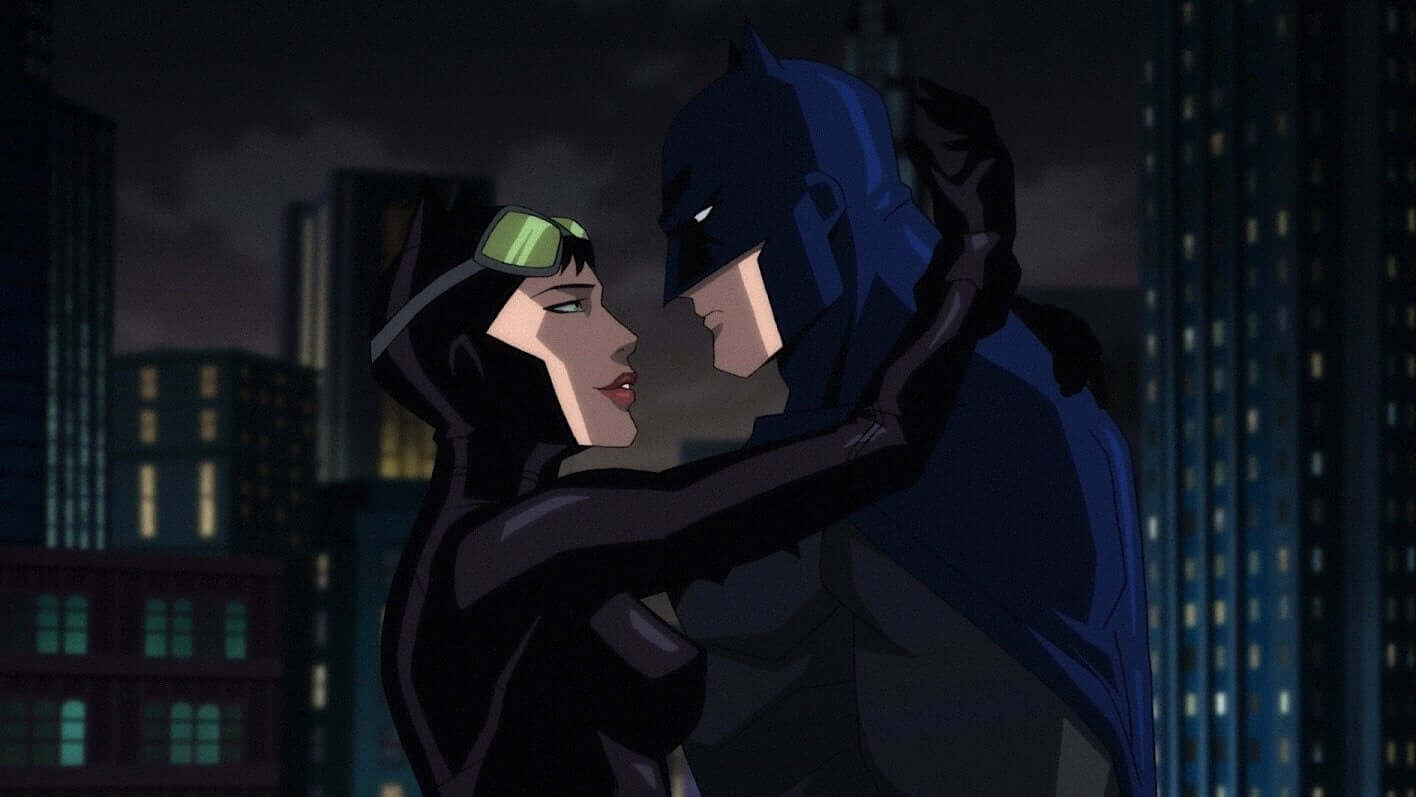
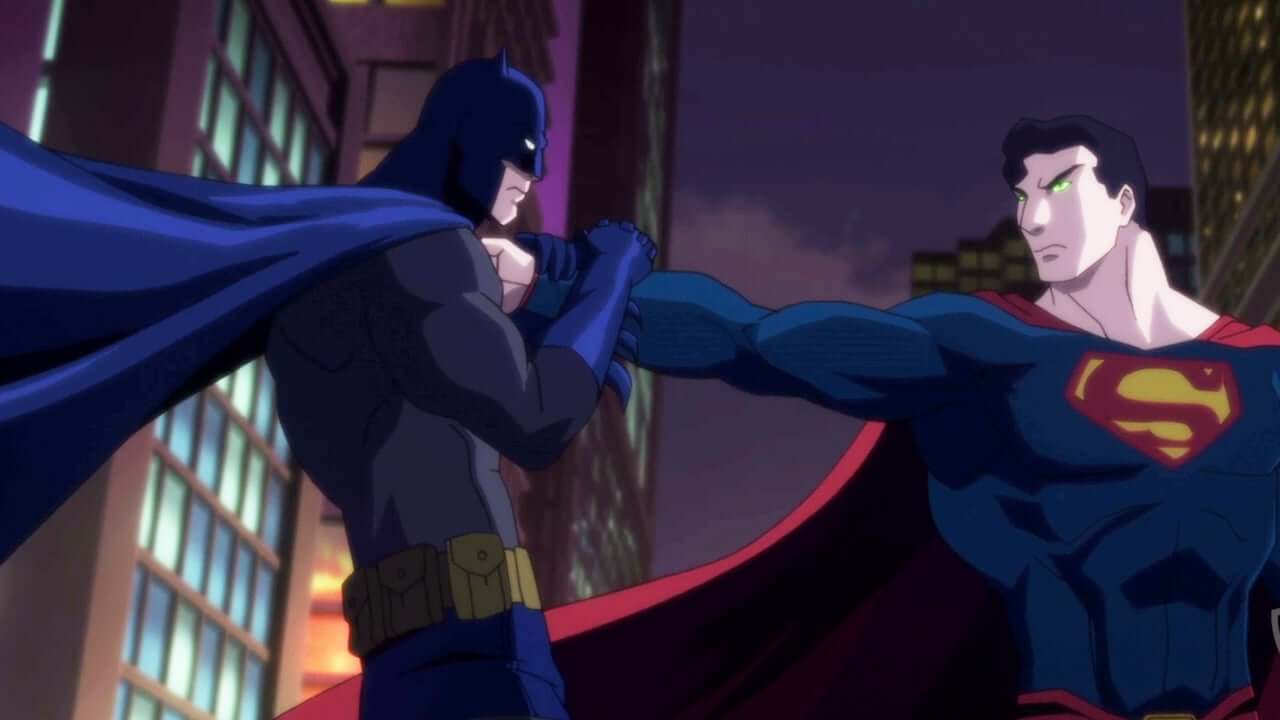
Having first voiced the iconic Dark Knight back in 2014’s Justice League: War, Jason O’Mara is now back for his tenth outing as the World’s Greatest Detective in Batman: Hush. An adaptation of Jeph Loeb and Jim Lee’s fan favourite comic book arc, O’Mara’s Batman is being attacked both in and out of the cowl as a mysterious new villain rears their head. We sat down with Jason to discuss the movie, his approach to voicing Bruce Wayne and the Caped Crusader, introducing a more vulnerable side to Batman, what makes this beloved character so special, and a whole lot more.
STARBURST: This is now your tenth movie voicing Batman. Did you always plan for this sort of longevity or was it just a case of taking each movie one at a time?
Jason O’Mara: It’s always a shock to me because I’ve only ever signed up for one movie at a time. It’s just sort of mounted up over the last seven or eight years. It’s kind of hard to believe the fact that it’s been ten. I’ve always thought each one would be my last. I always presumed I wouldn’t be asked back for the next one, but they always keep asking me and of course I keep saying yes. It’s just been a thrill. For it to be ten, it’s very strange. I never thought I’d be one of those Batman actors – one of those actors that played him multiple times.
When approaching the character, how do you handle differentiating between the two sides of Batman and Bruce Wayne?
Well, that’s changed and evolved. It used to be very clear when he was Bruce Wayne and when he was Batman, so it was a lot more straightforward. I worked with Andrea Romano initially on both of the voices, and now I work with Wes Gleason. Wes and I felt that in Hush the lines between Batman and Bruce Wayne become blurred – mostly because he’s so emotional as Batman in this movie. He’s being pushed so far by Hush and all the other villains, that it just didn’t seem right. And he’s also falling in love with Selina Kyle. You can’t really have Batman in his cape and cowl and with his disguised voice be a lover and a father and all these other things. I think for the first time – the first time I’ve ever seen it, anyway – there’s less of a distinction between Bruce Wayne and Batman in this movie.
Bar some of the earlier movies with Damian Wayne, this is the first real time in this canon that we get to see Bruce let his guard down. Was that a challenge to showcase that softer, more vulnerable side of Bruce Wayne?
Totally. From Batman’s point of view, I think the film is about him trying to figure out how far he’s willing to go for his principals, for his code, and whether he can decide if he’s capable of doing all of the things that he should and could do – like be a lover to someone or to get to the bottom of these extremely complicated case, take on all of these villains, and lose a friend. It’s whether he’s able to be pushed to the edge of his own human emotions, which is something that we don’t really talk about when we talk about Batman. And it’s whether he can come back from that in tact morally. From his point of view, it’s about struggling with all of that stuff. I don’t think you usually see that as much with your usual Batman. It feels like new ground, it feels fresh, and I feel very flattered and honoured that I was trusted with Batman in that way.
Were you familiar with the Hush comic book arc before the movie?
I was, yes. It was one of the better-known of the more recent comic books, I feel, and I’d always hoped they’d do Hush. I did not know or even presume that it would be within my continuity or with myself as Batman. I was next to Gary [Miereanu] when he announced it on stage a couple of years ago. It was really exciting, I must say. That was how I found out.
As you alluded to there, many view Hush as one of the greatest Batman stories of the modern-day. Being familiar with that story, were there any elements and panels that you were particularly looking forward to bringing to life?
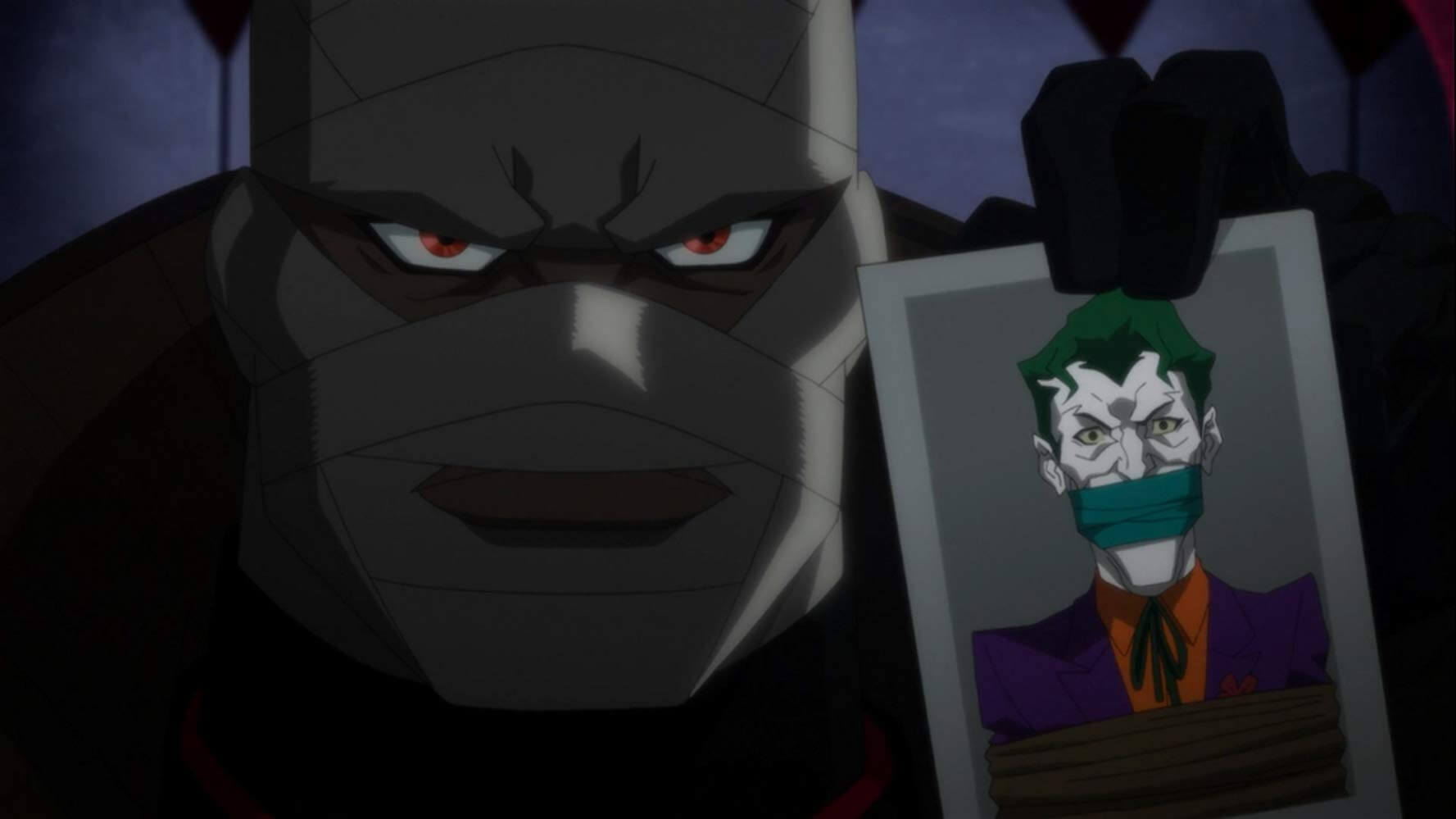
Obviously the love story is wonderful. I was expecting it to play in the movie as sort of a B-story, like a secondary plot to the main plot, but actually I think the love story really plays very well in the movie and is engaging enough and interesting enough to become almost the primary point of interest. And the work that Jennifer Morrison has done as Catwoman is terrific. So I was really pleasantly surprised how well the romance played out. I thought it played out pretty well in front of 4,250 people down at San Diego Comic-Con a couple of weeks ago. It really was a thrill to see that. Other than that, I always thought the scene between Batman and Joker is so iconic in the book. Funnily enough, it’s a scene that some people kind of have a problem with because they feel uncomfortable with Batman being out of control in that way. And I think that’s precisely why it’s one of the most interesting scenes in this story.
As has to often be the case when adapting an existing comic book tale into the canon of this animated world, there are always going to be slight changes and tweaks. For that crowd of 4,250 people, what was the general response to the film?
They seemed to be very open to it and almost cheering it on. It’s in the vein of a blockbuster popcorn movie. It’s not meant to be a small, arthouse film that ends with people talking in rooms. It felt right, especially playing to so many people on such a big screen and with the volume turned up to 11, it seemed right that the story had to open up at that point and to get bigger, for there to be some sort of final conflict and climax. I can completely understand why the writers did what they did, and I can sort of understand the comic book faithful having slight umbrage with it. But the comic book exists, it’s never going to change, it’s always there for you, and I think the writers of the movie think that they’ve built on something that was already great. Also, it had to tick the boxes of what this movie was going to do. It had to fit into this continuity, it had to fit into the 1 hour 20 minutes run time, and it also had to end with this final rousing scene. I think it delivers on those points.
The end result is handled very smartly in terms of the confines of the world in which this movie exists in, and the close of this movie felt like a mark in the sand to indicate that things are different for Batman, particularly with how things end for Bruce and Selina. Without giving too much away, where do you envisage things going from here on out for the Caped Crusader?
I don’t really know, but I think you’re right – I think there’s something unresolved with Selina Kyle. I think there are also hanging threads when it comes to Batman and Damian. This particular continuity is defined by Batman’s relationship with his son. Even though Justice League: War was the first one of this series, it really kicks off in Son of Batman in terms of the story that’s been threaded all the way through. It’s thirteen films now, I think, ten of which I’m in as Batman. I think that has to somehow be resolved, that story, and I would be looking forward to that. Beyond that, I can’t really say any more without giving too much away. I think next year is going to be an exciting year for Batman fans. There’s lots to come.
From speaking to Andrea Romano last year, she talked about how Kevin Conroy’s stage and theatre background helped him immensely when first getting the Batman job. As somebody who has that same sort of background, do you feel that it helped you when you first came to the role back in those early movies?
I think it does help. Most of the stage work I did was in England, in London on the West End. I did some stuff with The Shakespeare Company and some little smaller, great theatres in London like The Almeida and The Donmar. So yeah, I think I was able to bring some of that approach to it. Plus there’s something very intimate about the Batman work that stage experience can only help with so much. I feel like some of it is quite internalised, and in front of the mic I try to be as nuanced as possible. There’s a very narrow line when it comes to playing Batman and Bruce Wayne. You can play all you want in the sandbox, but one small vocal misstep and you’re not Batman anymore – and it’s almost the same with Bruce Wayne. So you can only play within that narrow range. You have to fully explore everything that’s available to you while you still sound like the character. In fairness, I did a little work with BBC Radio 4 and also The Complete Works of Shakespeare on CD – that was probably at the end of the ‘90s – and I think that really helped as well in terms of just spending time in front of the mic and developing character. It’s one thing to be a voiceover actor – and I do commercial voiceover work for other things – but taking time away from that and trying to characterise a voice is a completely different skill. Again, it’s time in front of the microphone and it’s unfortunately time listening to your own voice as you learn how to modulate and control it without pushing. It’s very easy to get in front of a microphone and really want to give it lots of emotion but it’s [finding] an alternative way of expressing the same emotion without pushing it. These are all things you acquire and learn. It took me 20 years of working as an actor before anyone asked me be Batman. I wasn’t an overnight success [laughs].
How did you end up landing the Batman role in the first place? Was it a standard audition process or did you get approached directly for the role?
I received a phone call saying “Would you like to be Batman?” – and if somebody asks you if you want to be Batman, you say yes.
That simple?
Sometimes it is that simple. Then the hard part is delivering on that. That’s when the work begins, and you’ve got to read and re-read the script and take notes as you figure out what you’re going to do. Then you go in and the recording sessions can be notoriously very quick – almost like a train wreck – and it’s over before you know it and you’re walking out going, “Oh gosh, I hope I left everything there. I hope I gave everything I could and responded to direction.” You have to go in as prepared as possible and lay it down. Sometimes you get another crack at it. Six months later they might bring you back in for ADR to add some dialogue or re-recording some bits, and that’s when you can go, “Ooh, I hear that. Can I just make a little adjustment there? Can I just pull back here or push it there?” It’s a collaboration, and like anything you’re creating it’s not really over until it’s over. So you just keep trying to develop it and make it the best it can be over time. And sometimes you get a third crack at it, but usually that third session is for fights and grunts and efforts, and you don’t always get to adjust the dialogue in that third session. You get these opportunities and you take them, and you just keep listening to producers and directors as you try to make the best story you can.
With Batman having recently turned 80 and been so successful in so many mediums across so many generations, why do you think the character is still so beloved to this day?
I think that’s a great question, and I think it says a lot about the psyche of Batman fans as to why he’s had this enduring appeal. I think there is something universally appealing about him. The fact that he had a flawed childhood filled with trauma – which so many of us can attest to – and that he’s channelled that pain and experience into something largely positive is inspiring to many people. And yes, he embraces the dark, but he hasn’t succumbed to it. Besides anything else, he’s just really, really cool. Don’t ask me how or why they managed to make a crazy character who dresses up as a flying mammal cool, but they did. None of it makes sense, really, if you take a step back and think about it. Bruce Wayne is quite insane. And I think he’s also defined by his villains. Joker is the other side of the same coin, and the other Batman villains define who he is. I think there’s a bit of madness in all of us, and we can identify with Batman’s world quite easily – scarily so.
Batman: Hush comes to DVD and Blu-Ray™ August 12th.
With a documentary about Hitchcock’s Psycho in his rear-view mirror and another about The Exorcist due later this year, director Alexandre O. Philippe is the go-to man for the feature-length revisiting of classic movies. His latest film is 40th anniversary look back at Alien…
STARBURST: What inspired you to make this film about Alien?
Alexandra O. Philippe: I was very interested in the idea of exploring the chestburster scene in a way that is similar to the way that I had explored the Psycho showed scene (in the 2017 documentary 78/52). And I very quickly realised that you can’t really approach the chestburster scene in the same way, because if you do, what you end up having is a behind the scenes documentary. I could have had a very interesting discussion on the behind scenes work, but I think it’s been done and it’s just not the kind of film that I make – I’m interested to go a lot deeper than that. In fact, I had put together a ‘sizzle’ reel fir that, but it just didn’t work. But there was this in story that I did find really interesting, which is of Ridley Scott showing the Frances Bacon triptych ‘Three Studies for Figures at the Base of a Crucifixion’ to HR Giger and pointing to it as a source of inspiration. Then I started doing some research into the idea that you’re looking essentially as a scene of crucifixion but those are the Greek Furies and that the Furies keep coming back again and again in Bacon’s work. I thought ‘OK, I want to go down this rabbit hole and see what I find’. The moment I started going down that path of mythology and looking at Alien from that perspective, doors started opening. In fact, shortly after that, very serendipitously I ended up getting introduced to Diane O’Bannon (wife of Alien screenplay writer Dan O’Bannon) who for the first time opened her husband’s extraordinary archives. Everything ensued from that and as a result Memory is a very different film than 78/52 and I think in many ways it goes deeper.
I found the Bacon connection very interesting. I remember as a kid my mates and I being fascinated by the imagery of Alien and chestburster scene in particular, which we saw in the Alien photo-novel, and also by Francis Bacon’s artwork, because Bacon had a weekend house in the village where we lived, and we’d peer through his letterbox at the weird paintings in his hallway, which spooked us. We definitely felt that Bacon’s work and Alien were somehow connected.
I think you’ve hit the nail on the head. Alien hits you in a way you don’t really comprehend because the imagery is rooted in iconography that as humans and has meant something to us for millennia. You respond to it without completely understanding what it is you’re responding to, and I fully believe that that is the reason Alien became as popular as it did at a time when was not supposed to work. It went completely against the grain of what people wanted in 1979 but resonated on a mythic level. People walked out of the theatre shaken; I think it took a long time for them to understand how it had affected them, and I think we’re still digesting – no pun intended – what Alien really is about, 40 years later.
Dan O’Bannon is a significant figure to the film, was it tempting to make the film entirely about his story, his contribution?
No question about it. At one point the title of the film was Dan O’Bannon’s Alien, but to me what became really central is this idea of the symbiosis between O’Bannon, Giger, and Scott giving us Alien in the way that we know it. I think Memory is fundamentally a film about the resonance of myth and our collective unconscious. That’s why it is an origin story very specifically examined through that lens.
The opening scene of the film is a dramatic sequence that really throws the audience loop…
[Laughs] Well I want to be careful not to tell you too much because I think it’s a scene that has to be experienced. It’s a scene that contains everything the film is about and it’s meant to experience on a purely visceral level. If you’re an Alien fan you’re gonna recognise some imagery and see they are linked to Alien but also connected to the ancient world. What’s going on? It’s a scene that quite frankly came out completely from the unconscious and it establishes this question of what is the connection between the Furies and Alien. It’s to keep the audience on their toes and make them realise that this is not the kind of film on Alien that they might expect it’s going to be.
Just as unnerving as the Alien itself at that time was the movie’s ‘adult’ approach to big-budget SF – the very naturalistic performances, the greasy food, the sweaty clothes, the smoking, the swearing…
Yeah that’s the genius of the movie, this very strange combination of blue-collar workers in space, a very realistic kind of world, with the completely out-there Lovecraftian universe of HR Giger. To marry those two worlds in a way that works so beautifully is so good, it’s just so good…
What have you got coming up next?
I’m actually finishing it now; it’s called Leap of Faith and it’s a completely unique take on The Exorcist. It’s essentially a chamber film, a very intimate portrait that goes to the heart of William Friedkin’s process as a filmmaker and an artist. So it’s only him and it’s the Exorcist via arts, classical music, classic cinema and it goes into his mind’s eye and his thought process. So we’re looking to premiere that in the fall, so it’s a big year!
MEMORY: THE ORIGINS OF ALIEN is in cinemas 30 Aug and on DVD and on demand 2 Sept and is reviewed here.
We here at STARBURST recently got the chance to pick the brains of Irish Horror Filmmaker Lee Cronin to talk about his debut feature The Hole In The Ground which is out now in the UK. Lee discusses with us the inspiration that made him start his filmmaking journey, the importance of being different and finding the perfect leading lady for this spine chilling film.
STARBURST: First of all, a huge congratulations on the film.
LEE CRONIN: Thank you so much, that means a lot.
What films inspired you to become a filmmaker?
I’d say there was a part of my life around about 8 or 9 years old when I decided I wanted to become a filmmaker – I saw a lot of films that I shouldn’t have at that age because of my older siblings being a lot older than me! Films like Jaws, Nightmare on Elm Street and The Shining definitely had an impact along with watching Evil Dead and Evil Dead 2 back to back which was a major moment for me. They all dug into my brain and stayed there and to me, creating a tense atmosphere and pushing the boundaries was what filmmaking was back then. You can’t escape your influences.
The main aspect of The Hole in the Ground that stood out to us was your attention to detail in the relationship between Sarah and Christopher. When writing the film, was that mother and son relationship always the focal point that you wanted at the core of the story?
Completely. It’s funny because when you hand over your film to distributors it’s not necessarily going to get presented or advertised in the way that you want. So the film in a lot of ways is a seen as a “creepy kid” film by the general audience but never once did I and my writing partner reference that it was about a creepy kid – it’s primarily about a son and his relationship with his mother and the mother’s paranoia and doubt when her son starts behaving differently. That relationship was everything we wanted and was always our primary focus.
With the film being different from the normal horror films of the modern era, was that the plan all along having something that would emotionally connect with the audience?
I think so, yes, I think that my natural instinct is that I’m drawn to the horror that you can create in domestic circumstances. My want and desires were to play around with that. It goes back to my first experience with horror, I would observe my siblings and other people freaking out and I thought “Wow, I have the power to do that”. So, making stories that people can identify with was the key. With The Hole in the Ground, you don’t need to have a kid to get it, we’ve all had somebody in our lives that you know really well or intimately and then to take that idea and twist it so we see them in a new light and make them a stranger is terrifying. I think that that aspect is what separates it from the rest and the fact it’s an independent Irish horror film we had to try something fresh.
How important was it to you to find the right actor to play Sarah? Seana did a tremendous job we’re sure you’ll agree!
Absolutely! When you make a film it’s an interesting journey because you write a script and then submit it and it’s not until you are put into the position to make decisions that you truly see what you want from it. So, I’d written the character of Sarah initially a lot as you see in the film but she was probably a little more vocal and chatty. What I saw in Seana was the ability to deliver a lot of internal emotion without having to verbalise so much so the instant impact that she had when I cast her was that I cut some of the dialogue in the film because I didn’t have to use that as a way of progressing the story. One of the things I’m very happy about with the film is where it goes in the final 15 minutes – that’s because we keep everything so grounded and that is helped out immensely by Seana’s performance too. She suited the tone perfectly. James, who played Christopher, was superb too, their chemistry was terrific.
The film never relied on lazy exposition – it all felt natural. We loved the way that you approached the ending. It was very light on dialogue, threw a monstrous curveball at the audience and left things ambiguous which is great in horror films. Was that creative decision decided early on?
A great question, I remember knowing that the script was ready to be made once I’d written the epilogue and there were moments where I debated on where it should end but I thought of something that helped me decide – When you’ve experienced negative things in your life or you’ve had difficult times or faced your monsters, you are left with scars that you carry forward – and I thought I have to show Sarah moving on. She enters the film with one set of scars and ends it with another set but that is what makes her who she is. Audiences are left questioning the meaning of the ending which is really interesting, and I think that makes it stand out. If this was a big studio production I probably wouldn’t have had that ability to make that decision.
As the writer and director, what was your favourite scene to bring from the page to the screen?
No one has asked me that question like that before! I don’t know what my favourite scene to bring to life was but I can tell you that my favourite scene to shoot was the eating of the spider. The reason why was because it was at the top of the second week of shooting – the first week had been a little quiet, a lot of the scenes that were quiet – so when we shot this, everything clicked and it properly felt like we were finally making a horror movie. I also love the fluidity and impact of the epilogue. The epilogue was the final day of the shoot too and it felt exactly the way that I imagined it when writing the screenplay.
Can you tell us about any of the other projects that you are working on?
I’ve just finished writing the second draft of a film called Box of Bones which I’m making with the exact same team as The Hole in the Ground, so that might be the next thing we shoot but I’m also working on something a bit more international that I can’t really talk about at this current moment in time.
The Hole in the Ground is out now on DVD, Blu-Ray and Digital Download in the UK.
Nick Setchfield is a journalist who specialises in genre matters. His work includes writing for the BBC and as a scriptwriter for ITV’s Spitting Image. The Spider Dance is a sequel to his first novel The War in the Dark. We caught up with him to find out more…
STARBURST: So what is The Spider Dance about?
Nick Setchfield: It’s the next adventure for supernaturally-inclined British Intelligence agent Christopher Winter. This time he’s mixed up with the stolen hearts of the undead, unholy criminal empires and a contract for a kill that demands a very strange bullet indeed. It’s a quest that spans the stranger corners of London, Budapest, Venice, Normandy, and Naples and the map certainly gets spattered with blood along the way.
And how would you pitch that to someone who is about to jump out of a plane?
The Day of the Jackal – with vampires. I’m assuming they have a parachute? Don’t want to lose a potential sale here.
Where did the idea for the Shadowless come from?
I wanted to refresh the vampire myth. Keep the essential glamour and horror of the creature but create a breed of vampire that would slot into a ‘60s-set spy thriller. The Shadowless are ruthless, rich, immaculate and organised – the Mafia with an ungodly thirst for blood. They’re also considerably harder to kill than traditional vampires, which makes them even more of a challenge for Winter. I do like to keep him on his toes.
Which character is the most fun to write?
Libby Cracknell, who’s the new SIS agent I introduce in this book. She represents the next wave of the ‘60s, the new generation about to reshape Britain – I picture her as a weaponised Twiggy. She has a taste for speed and I liked her cheek, courage and weakness for vinegar-soaked chips.
Which character seriously needs to have word with themselves?
Cesare Zerbinati. He’s an absolute bastard – but if he wasn’t, I wouldn’t have a villain, so perhaps he shouldn’t have too much of a word with himself. Maybe a brief, not entirely committed tut.
If The Spider Dance had to be set in another world, what world would you choose? How would it change the story?
I couldn’t tell this story in any other world, I’m afraid! It’s absolutely anchored in the Europe of 1965 and part of the challenge of writing the book was capturing the texture of the times, the atmosphere of the cities that Winter finds himself in. I love putting places on the page. It’s the frustrated travel writer in me, clearly.
Is the genre world friendlier these days?
I’ve never really known it to be unfriendly – I’ve made so many brilliant friendships through the things I love. I do worry it’s all becoming horribly polarised. But hey, 2019 all round.
Why spies?
Always loved them. I was given the Thomas Salter Spy Kit for my seventh birthday and from its codebreaker wheel to bundles of counterfeit currency it’s still the most thrilling present I’ve ever received. And spies fit tremendously well into an occult story. It’s all about secrets and shadows, isn’t it?
How does magic change a society?
Society will never know. And neither will you.
Which writers inspire you?
Ray Bradbury’s probably my favourite writer, for the poetry of his prose and the big, beating heart behind his stories. Joan Aiken’s another wonderful stylist and fantasist. Ian Fleming’s an obvious influence – all spy writers walk in his shadow to some degree – but I’m equally inspired by movies -Hitchcock, Spielberg – and music – Bowie, John Barry. Multi-sensory inspiration is where it’s at – anything that triggers the imagination.
What tropes do you personally avoid the most?
I think all tropes are there to be embraced, subverted, gently mocked, punched in the teeth, dyed a peculiar shade or otherwise twisted inside out until they become something new again.
How would you describe your process?
Getting punched back by tropes.
The Spider Dance will be published on July 16th, and it reviewed here. The War in the Dark is out now.
After we here at STARBURST were blown away by Michael Dougherty’s GODZILLA: KING OF THE MONSTERS, we were lucky enough to sit down with Alejandro Diego von Dorrer; the leader of the team at Ollin VFX who were one of the teams responsible for creating the stunning visual effects for the latest film in Legendary’s MonsterVerse, to talk about what it was like to work closely with Michael and what parts of the movie that he and his team were in charge of .
STARBURST: Congratulations on the film, it’s fantastic – how rewarding is it to see your work in all its glory on the big screen?
ALEJANDRO: It’s absolutely amazing. It’s so rewarding to see our work on the big screen and to know that people have really enjoyed it.
Can you tell us a bit about yourself, your history in the industry and some of the other projects that you have worked on?
We are a company that started over 20 years ago in Mexico and our dream from the very beginning is to work on big Hollywood movies. So, at first we worked on advertising in Mexico and it wasn’t until 13 years ago when we felt like we were ready to try and crack the Hollywood market and opened an office in LA. Now we basically dedicate our time and work to the US market and Godzilla: King of the Monsters is easily the biggest film we’ve ever worked on in our history. We’ve been lucky enough to work on many different films but in this project, we did over 530 shots which is double what we’ve done in the past. So, it was really exciting to get to work with Michael and his team on this gigantic film.
What was it like working with Michael Dougherty and helping him bring his vision to life through state-of-the-art special effects?
What I really loved about working with Michael is that we got to work in such an organised way. When you do twice as much work as you are used to a lot of things can go wrong especially in visual effects. Every film is different. Everything with Michael went really smooth and he was so professional. He’s a hardcore fan of Godzilla whereas I, of course, knew about Godzilla but have never really been a fan. It was really nice to see how involved and how much care Michael took with everything that went into it. You can definitely see that in the finished film – after working on it, you can consider me a real fan of Godzilla now [laughs]. He gave very clear direction and knew exactly what he wanted – we had meetings all the time which helped us out immensely because we could get feedback on what we were doing straight away.
What part of the VFX process did you and your team work on?
We actually did not work on any of the main battle scenes between the monsters – we really did everything else that goes on around it. We did a lot of set extensions, a lot of environments and atmospheric scenes (basically adding snow and thunder) and when they were in the ARGO flying around the world, we were responsible for showing the world outside the windows to make it feel that they are flying around. They originally wanted to do some of that practically by having a plane fly through some clouds but then Michael gave us the task to recreate that in CGI and of course they liked it so much because it looked photorealistic that they used us for a lot of similar bits. One of the scenes from the trailer where Rodan is coming out of the Volcano, we were responsible for adding the lava, smoke and fog – fun fact, they actually shot that in Mexico City! So, we did everything around the big shot to make sure there was continuity. Our artists in house were given a direct link to the director to work hand in hand with him so it was overall one of the best experiences we’ve had as a group. Another fun fact is that in the scene where Emma Russell is on the big screen saying that the Titans should be set free, that is actually two different takes – because the second take was lit differently, we had to overlap the second Emma with the first in order to keep in within continuity which was a challenge but incredibly rewarding. At the end of the film, we were responsible for about a third of the overall shots that you see!
With Godzilla being such a global phenomenon, did you feel any pressure to please the fans when taking on this project?
Absolutely – it was clear to us that we had to help take this film to the next level. Michael was the shepherd of the whole story but we as the herd had to make sure that we helped him achieve his goal to make a film worthy for fans of Godzilla. There’s a long legacy before us and there is a huge fanbase for this franchise, so everyone involved felt pressure but was definitely up for the challenge to take it to the next level. It was hard but a great challenge.
If you could work on any other franchise, which one would it be and why?
Oh wow, that’s a big question! I think for me, more than a franchise, as long as we get to work closely with a passionate director who has a crystal-clear vision, then we as a team are happy to work with them. Obviously, we would love to work on other fantasy movies including any Marvel movies but having a hard-working team is ultimately what we look for. We’ve worked multiple times with David Fincher over the course of 13 years and he has so much attention to detail and that elevates everyone around him which makes it a rewarding experience every time we work with him. Also, as stated before, we have loved working with Michael and would be thrilled to work on any other projects he does in the future.
We end on one of the most important questions for fans of the MonsterVerse – When Godzilla meets King Kong next year, who are you rooting for?
I, of course, have no idea what is going to happen [laughs] but I actually don’t think there’s going to be a winner – I think they are going to end up working together against a bigger evil. They’re probably going to fight at the beginning but will have to team up towards the end of the movie – that sounds really cool to me. At the end of the day, I think the audience will win whatever happens.
GODZILLA: KING OF THE MONSTERS is still in UK Cinemas – our review can be found here