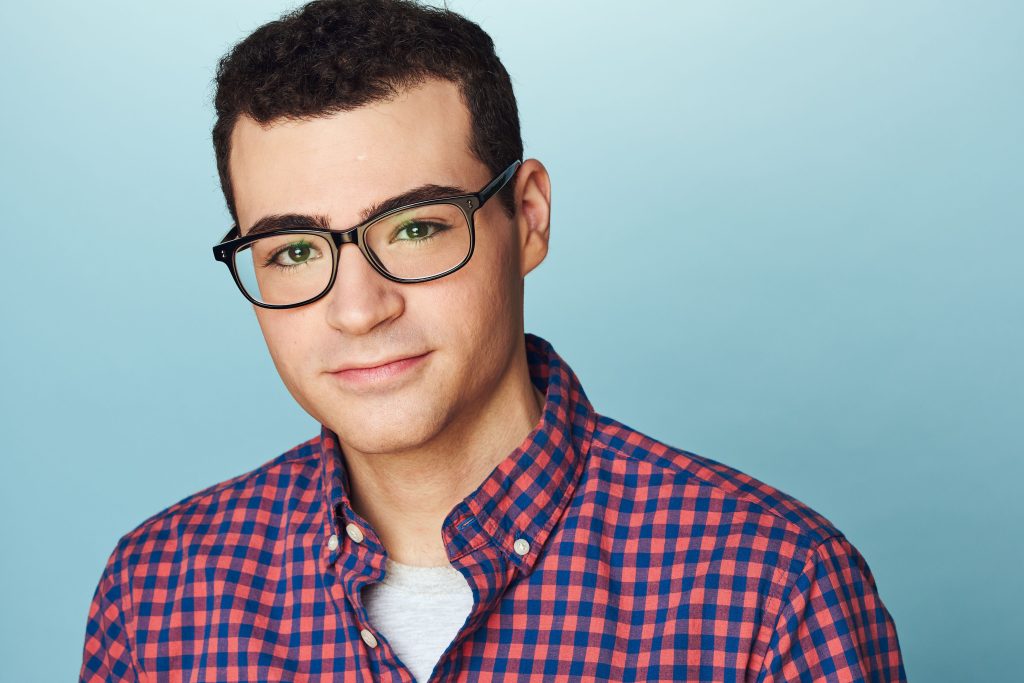
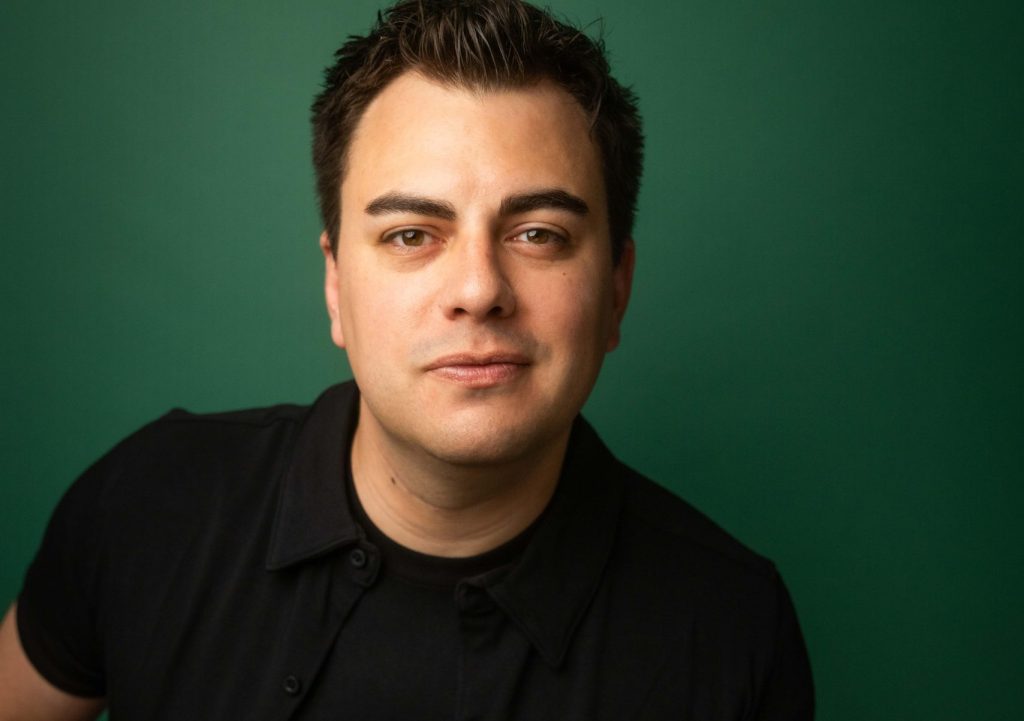
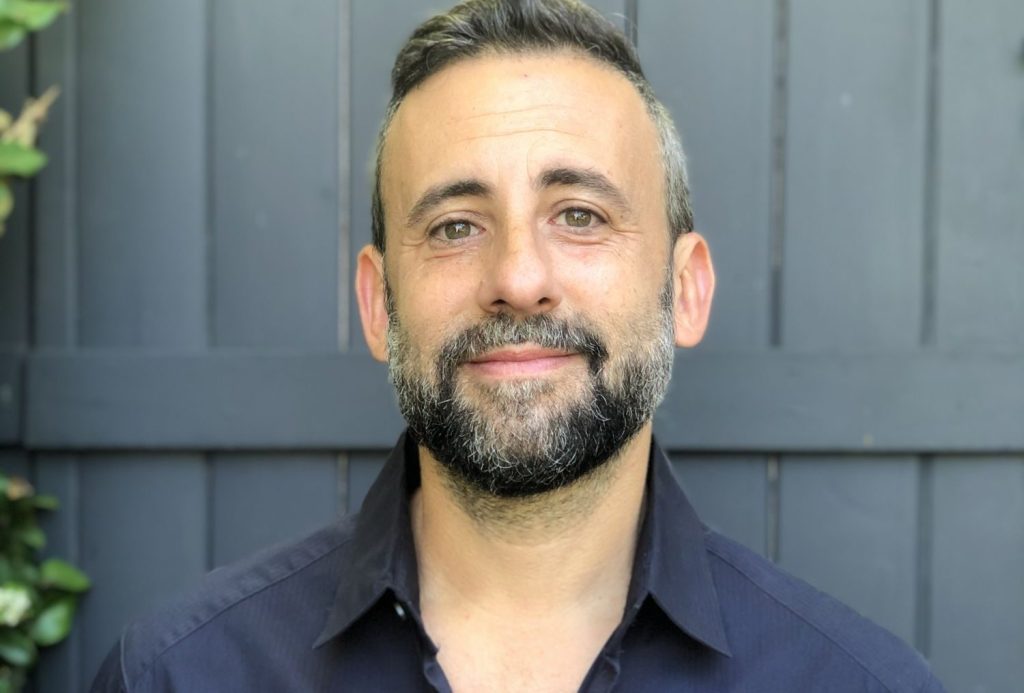
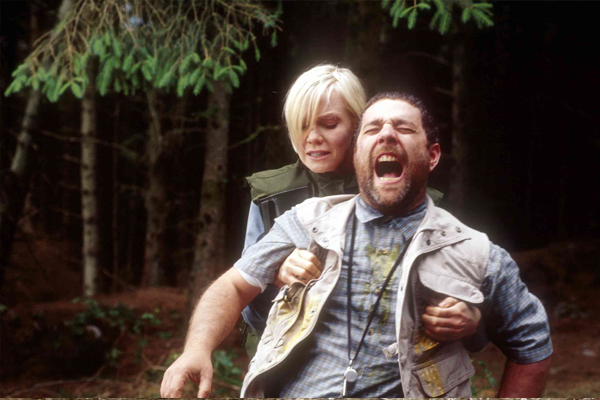
Daniel Foxx is a rising star in the British comedy scene, best known for his short comedy skits on social media and phenomenally sharp wit. When he’s not on TikTok, BBC One, or other TV screens, he’s writing musicals. We caught up with him to talk about The Little Mermaid parody, Unfortunate, currently on at the Southwark Playhouse Elephant until the middle of February 2024.
STARBURST: How would you explain Unfortunate to an elderly relative who loves cartoon fairy tales but has never heard of Wicked?
Daniel Foxx: I’d say, “Grandma, you know how the best character in all those cartoon fairy tales you watch is ALWAYS the big, glamorous camp villain?”. And she’d say, “Yes! I notice they’re always the best part, but we never get enough of them!” And I’d say, “well, we agree, so we made a musical that fixes that” and she’d say, “Wow, slay!”.
We’ve basically taken an icon and given her the stage time she deserves and the chance to tell her side of the story in all its rude, lewd, vivacious glory.
How different is the new show from the first draft? And how different is it from the show STARBURST saw in Edinburgh 2022?
Oh gosh, so different. The core is the same: it’s Ursula’s story, she is centre stage, and our aim always is a punchy comedy with proper belly laugh jokes. But it’s grown and grown with each production – compared to the first draft in 2019, this show is an extravaganza. Even since 2022, there are a tonne of new songs, new characters, new puppets, and new scenes. This is the biggest and best the show has been – it’s the version we always wanted to make.
I wrote my first play in 2015 and took it to the Edinburgh Fringe. We had a great time, and afterwards we were like, “this could be a good musical, actually”. The producer, Laura Elmes – who is now producing Unfortunate – put me in touch with “a great musical theatre writer she met recently”, Robyn. We fell in love and have been writing together ever since.
What other popular fairy tales/media franchises would you like to see given the Unfortunate treatment?
I’d love to see a really camp and fabulous Darth Vader musical.
You’re best known for short skits on TikTok; what do you find more rewarding: theatre or sketch comedy?
I love them both for different reasons. Making little skits for TikTok and Instagram is freeing because it’s just playing about in front of a camera in my kitchen and putting a video out that same evening. Putting on a musical is obviously a much more involved process, but I love working in a group with Robyn and Tim Gilvin, our composer. Nothing compares with sitting in the audience of something you’ve written and hearing a live audience laugh.
Your show at 2023’s Edinburgh Fringe, Villain, felt very personal and raw in some places. Is that typical of your approach to comedy?
Yes, I like it when you leave a comedy show feeling like you actually know the performer. I love comedians like Simon Amstell, Mae Martin, and Tig Notaro, where you obviously laugh a lot but also learn a little something about their lives.
What’s your favourite moment in Unfortunate?
Well, Robyn’s already said “Suckin on You”, our new ’80s power-ballad masterpiece, so I’ll go for the top of Act 2: there’s a scene between the French Chef and Sebastian the Crab, both of whom are played by Allie Dart. Watching her sprinting around, pulling off the quick changes, is hysterical.
What’s the most important thing about musical theatre?
Bops. Big, glorious bangers that make you go, “oh my god, what a song”.
What can we see you in next?
We’ve got an original musical in the works, telling the story of Medusa. In the meantime, I’m taking my standup show Villain around the UK in 2024 – so either find me in a venue somewhere, or on Instagram, as always!
Robyn Grant is one of the UK’s most exciting theatremakers and has been compared to Victoria Wood in terms of talent and energy. Her work includes Buzz: A Musical History of the Vibrator and Vulvarine, a distinctly feminist take on superheroes. We caught up with Robyn to talk about Unfortunate, a musical reimagining of The Little Mermaid, which is currently on show at the Southwark Playhouse Elephant.
STARBURST: How would you explain Unfortunate to a keen writer of fan fiction who’s just discovered musical theatre?
Robyn Grant: It’s basically what Wicked did to The Wizard of Oz. Ursula from The Little Mermaid‘s side of the story. But naturally, with her being a sassy, sexy, queer icon [the original cartoon was based on legendary drag queen Divine] our musical feels much more like how she’d tell it. It’s feisty, it’s fierce, and it’s certainly NOT family-friendly!
How did Unfortunate come about? What was the inspiration?
We are big Disney fans, and having written several musicals together previously, including a gender-swapped Beauty and the Beast parody, we both agreed that exploring Ursula’s story would be great fun! I don’t think we ever realised how large the show would grow… but our blend of camp naughty comedy really lends itself to Ursula’s voice.
How different was the production of Unfortunate from your previous work, such as Buzz or Vulvarine?
With Buzz and Vulvarine being original stories, Unfortunate already had existing source material and much-loved characters – this presented gifts and challenges. Figuring out how to satisfy the canon events whilst working our own spin through was fiddly but so satisfying when everything aligned.
Any chance we’ll see something like Vulvarine again?
Absolutely! We have a lovely catalogue of pre-written musicals ready to come back out to play, as well as some new stuff in the works. We’re hoping the success of Unfortunate allows us to explore more from our other shows, too. We just love making naughty new musicals!
Why The Little Mermaid?
It’s a story with a FABULOUS unexplored villain and is, at its core, about understanding the value of the female voice… It’s about power dynamics between younger and older women, beauty standards and how humans treat the ocean. It’s a much-loved classic, but it also felt super relevant.
What’s the most important thing about musical theatre?
Making goosebumps moments and being ambitious with live theatre that is focused on creating joy on a large scale! It can be a real high-budget commitment to the art of silliness and fun.
What other popular fairy tales/media franchises would you like to see given the Unfortunate treatment?
I think we’re probably taking a break from the parodies for now. But maybe it would be fun to see Minnie Mouse as a strong, independent widow in the city after Mickey gets murdered in a glue trap? Just spitballing here…
What’s your favourite moment in Unfortunate?
It has to be one of our new songs, Suckin on You, for me. It’s CAMP, ’80s, sexy joy… and Shawna Hamic and Tom Lowe are just so good together!
What’s your next project?
I’m working on a musical TV show, which is cool, whilst cracking on as the Associate Director of Danny Robbins’ awesome play 2:22 A Ghost Story – Dan and I are cooking up lots of trouble together still, of course… including a Medusa musical in the works! Watch this space!
In the spiky-haired shadow of RICK AND MORTY co-creator Justin Roiland’s departure from the show, two new voice actors were cast to fill the green portal-slinging lead roles. STARBURST was given the opportunity to talk to new cast members IAN CARDONI and HARRY BELDEN, along with current series showrunner SCOTT MARDER, about their challenges giving a new voice to the latest season…
STARBURST:Were you two fans of the show before you took over?
Ian Cardoni: A hundred percent! I’ve been watching since the early days, so to be working on one of my own favourite shows is a dream come true.
Harry Belden: Yeah, I’ve been a fan of the show since day one; it’s such an honour to step into these shoes.
Harry Belden (Morty Smith)
Rick and Morty are already such iconic characters, but as voice actors and artists, it must be difficult to bring your own creative voice to them, especially after, like you say, being there since day one. Do you feel you have the freedom to bring your own creative ideas to these characters?
IC: I certainly hope so, and I hope some of that has come through. I approach it as an actor would – these are fully fleshed-out characters with histories going back to 10 years of the show. We’ve been along for that ride growing with them, and now it’s just a matter of taking that forward; taking the next steps, growing with them just from the inside. It’s not lost on me that these characters mean a lot to so many fans, myself included, worldwide. So the goal is just to give my best Rick any time I walk into the booth.
Ian Cardoni (Rick Sanchez)
HB: I think that Ian and I are in a unique and privileged position that we’ve had six seasons of watching this show to get to see who these characters are and how they operate and to then step into their headspace. I think that by being unique individuals, as everyone is, of course, we’re going to bring something a little bit different, something about who we are, to that character. One of the big challenges of this season has not just been doing the voices, but staying true to the character and to the fantastic writing of the show.
The latest season has an emphasis on bringing back characters from previous episodes. You have Mr Poopybutthole in the first episode and Unity later on… it feels like it’s planting a foundation on its expanded cast in a Simpsons-style way. What led to this creative decision and is this Rick and Morty‘s directive going forward?
Scott Marder: Definitely not the directive! It was sort of a happy accident. The episodes come to life on an individual basis. We always have an idea going on like the background arc, but Unity ended up being a great fix to episode three, in that we needed this thing to bring everything together. Like, “oh you know what? It’d be really cool if Unity was the thing that brought everything together and it’d be even cooler if she came on the radar because she heard out in the galaxy the Rick was fucking around with the idea of Rick Prime again”. And even though they’re exes, she knows that it could be bad for him. So we knew in that episode we wanted to do a little lily pad that would get us to episode five. Unity was a really cool, organic way to do that because Rick hasn’t had a lot of relationships that have really mattered in terms of this show. Diane was the essential theme of this season and Rick Prime was a real conduit to that. But then Poopy just separately was… well, it made us laugh at the idea that everyone’s so used to him being in the tags at the end of the season that we thought, “they would never expect just to pick up where we left off the previous year and just really invest in him”. It was really organic to get the gang back together for that one. We felt like that was just a refreshing palette cleanser.
Scott Marder (Showrunner)
All three of you have inherited the show from other creatives and worked on it through a rather tumultuous break-up with one of its biggest voices. What is it that attracted you all to Rick and Morty creatively?
SM: I feel like all of us individually feel like we’ve won the lottery getting to work on it. I just worshipped it. I worshipped how every episode was so different: pushing the boundaries and splitting my brain. When I ended up getting the opportunity to actually step into the shoes, that enthusiasm just spilled out like day one. I’m like, “All right, give me the download on Evil Morty! Give me the download on this!” Give me all the things that I love and I want to keep running with them because I’m so pumped to be here. It was really cool when these guys joined to feel that enthusiasm match because everyone can feel it, you know? We have 100-200 people on the production, the whole crew can feel that energy. It pushes everybody. This is a hard show and every episode is a real marathon. So that energy and then enthusiasm gets us through the wild amount of rewrites we do to give you guys the best show that we can.
HB: I would completely agree with Scott. I mean as a fan of the show, it made me laugh, incredibly hard obviously – it’s a hilarious show – but I think the other thing that really attracted me was just that every time you started an episode, you couldn’t in a million years guess where it’s going to wind up… Rick and Morty will keep you guessing until the very, very end. It never goes the way you think. And to me that’s so much fun to sit down with a new episode and go, “I can’t wait to see what they do this week!”
IC: Yeah, I think these two really said it, and then having met my fellow cast mates and many people of those 200 that work on the show, seeing how much everybody working on it really cares… it makes me want to work harder. It’s calling me to bring my A-game and it’s so inspiring to see everybody coming together. So that’s really cool.
Season 7 of RICK AND MORTY is available to stream on Channel 4 and to purchase digitally via Apple TV.
From Severance to Ghost Stories to A Small Light, actor Andy Nyman has built up a diversely incredible acting portfolio alongside his writing. So it’s no surprise that ARROW has asked him to select some horror movies for their streaming platform! STARBURST reflects on just some of his brilliant acting highlights, whilst talking about his ARROW Select movie picks on the ARROW streaming service, including Deep Red, Ringu, and Zombie Flesh Eaters…
STARBURST: but how did you first get into acting?
Andy Nyman: I loved acting ever since I was a kid, but the big change for me was going to see Jaws at the pictures. Not only was the film just amazing, obviously, but as a little Jewish, curly-haired kid with glasses, sitting there and seeing Richard Dreyfuss, a little curly-haired Jewish guy with glasses. I just thought, “Oh my god!” So that was the thing that made me want to be an actor, I wanted to be in films. And I was twelve, something like that.
Severance is a wildly violent movie, to say the least! How fun was it to work alongside Danny Dyer, and why do you think that this film still holds up today?
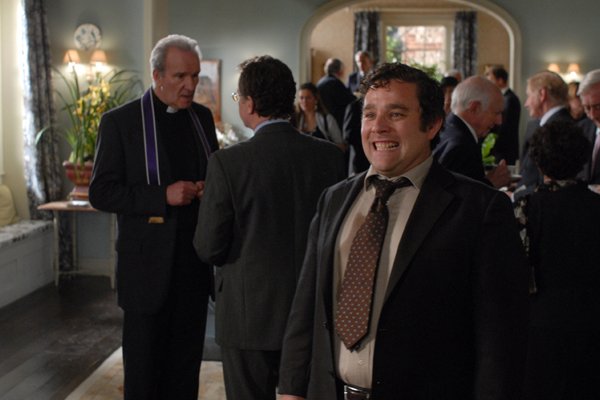
Why does it still hold up today? Because the script is fantastic. The funny is properly funny, but essentially the scary is properly scarily. So I think it really works, and it’s not horror comedy in a Shaun of the Dead way. Christopher Smith has got such a joy of the nasty, so that the horror in there is very dark. As well as the comedy. It’s a really well-made film. Danny Dyer is an absolute star. It’s very easy for people to underestimate what a brilliant actor he is, but he is sensational. He’s great in that film. It’s a terrific cast. Claudie Blakley, Toby Stephens. It’s just fantastic, and it was such a joy to do.
Death at a Funeral also makes humour out of something that can be so dark. What do you remember the most about working on it, and what was it like to work with humour like that?
I remember laughing. Laughing, laughing, laughing. Non-stop. It was the most gorgeous cast of people. Again, a brilliant script. It was directed by Frank Oz, so I was working with an absolute legend and filming at Ealing Studios. A dream come true. I’ve been an actor for nearly forty years, and that is an absolute highlight. On YouTube, look up the Death At A Funeral gag reel. We couldn’t breathe on that set. It was non-stop because it was a cast of gigglers as well. Matthew Macfadyen, Keeley Hawes, Alan Tudyk. It was just brilliant. The weird thing is, and I hear it a lot from a lot of people, that it’s their favourite film, which is such a lovely thing. However, that film was a box office smash worldwide apart from in the UK! It committed that cardinal sin of being middle class. Everyone wants to either be super posh or they want to be a hard-nosed gangster movie, thinking they’re working class. No one wants to admit that they’re middle class, and that film is as middle-class England as it gets. That’s why the rest of the world loved it. Because it was like, “That’s English!” it’s brilliant.
Dead Set is a clever idea, and it still gets talked about now. How did you get involved with the project, and what do you remember the most from reading the script for the first time?
I’d not done a TV job for ten years. I had stayed away from it because I sort of wanted to reinvent my career, so I had been going off to the States and doing movies and stuff. I got a phone call from my agent saying “Look, I know you’re not interested in TV, but we’ve had a script through, it’s called Balloon Walls, and it’s written by a bloke called Charlie Broo…” and as soon as she got to “Broo” I went “Charlie Brooker! Charlie Brooker has written a series? Yeah, let me read it” I loved Screenwipe and TV Go Home. I read the pilot, which was all they had released, and it was brilliant. So I went to meet Yann Demange, who was the director. That handlebar moustache I’ve got in the series – I had then! I just thought “I’m going to have a handlebar moustache like my dad did” I read that script, and thought “This is sensational”, but my big question, when they asked me to do it, as a horror fan was “Are you properly going to commit to the horror? Are we going to see what happens in the script, on the screen? Or will it be, sort of, softened?” they said, “No, no, no, we are going to show it all.” I was like “Oh my god. I’m in!” I just love it. I think it’s a cult favourite. Not only is the writing brilliant, it is so viscerally directed. I’m giving you lots to watch, but also on YouTube, I made a documentary about having my head ripped off in that. It’s called Andy Nyman, A Dream Come True I think it’s in two or three parts. I made a documentary all about it because it was literally a dream come true. I think they put it on the DVD of the series when it came out.
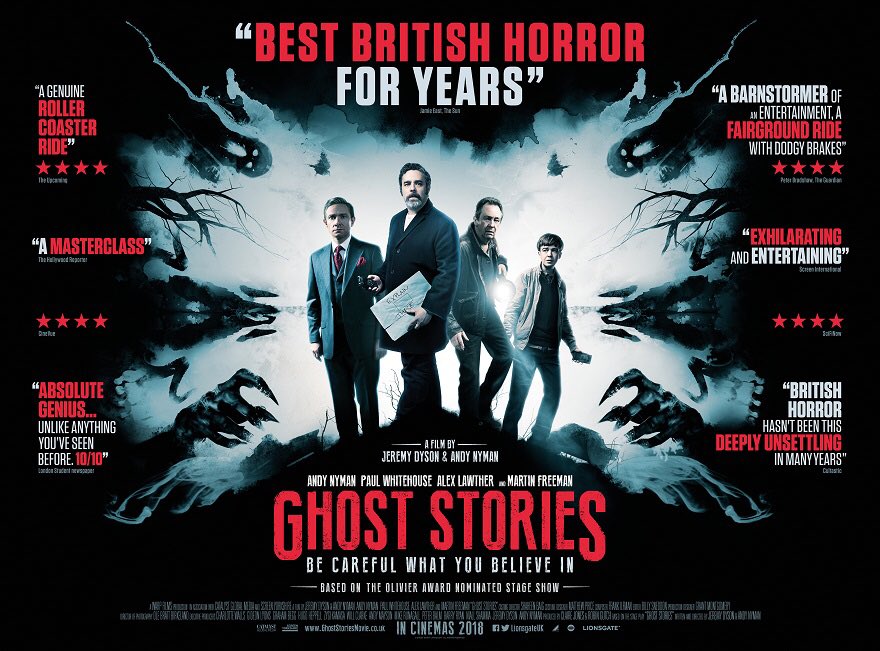
What was it like to adapt Ghost Stories into a movie, whilst being heavily involved with so many aspects of putting it together? Directing/writing/acting – it sounds pretty intense!
It was! It was eighteen months of work. The play – and the film – is like a Swiss watch, this thing is very intricately put together. Jeremy Dyson and I realised very early on, that you could not just put the play on film, because a lot of it is Professor Phillip Goodman doing a lecture to the audience, there in the moment. And that just wouldn’t work. So we had to come up with a whole construct of “Well, what could it be instead?” That’s where the whole Charles Cameron, his ex-mentor idea came from. So it has a very different path, the journey. It’s one of the most amazing, satisfying things.
You got to play Dan in the biopic Judy. What was that ‘show business’-type world like to be in as an actor, and what did you enjoy the most about working alongside an Oscar-winning performance from Renée Zellweger?
It was a very special project to be a part of. It really broke down into two bits for me, the first thing was the stuff where we went to see her in concert. She was staggering and lovely. She was lovely to every single person, the crew, the cast. The extras, there were probably three hundred extras at that, when she was singing live, and she was singing! She did it, and then she would stay, and she would be talking to people, and chatting to anyone and everyone. Lovely. We had quite a bit of time together in the makeup wagon, there’s quite a bit of prep for her. She was delightful. And then, those scenes with her were a joy to do. And I think that they live in a very special little world, those scenes. It’s like a little playlet within the rest of the film. I’m very proud of that. I think it’s a very sweet, touching storyline. And doing that with her was amazing. I loved it, and I loved working with her.
Recently, you were part of the miniseries A Small Light playing Hermann van Pels. Can you tell us what it was like to work on and how you think this World War II story stands out compared to other TV narratives within that genre?
That’s a big one. I’m very proud to be a part of that. It’s my heritage. How does a brilliantly adapted show, that tries to teach the perils of anti-Semitism to people in the current climate? I mean, it couldn’t be more needed because these are perilous times. I’m very proud of it, and I think that they did a truly brilliant job on that adaptation. It took what is a sort of sacred ‘story’ and made it very human. It’s very profoundly touching in a whole new way. It’s brilliant.
Talking of war, what was it like to play a younger version of Winston Churchill in Peaky Blinders?
I went in to audition, and it was very quick, because I was doing a matinee in the West End, and it really ran late. I said to them at the audition that I’d got two minutes because they were half an hour late. I said, “I’ve got to go, otherwise I’m not going to get on stage in the West End!” They were like, “OK, you can go in!” I went in, and I met the director, Otto Bathurst. He had directed one of the very first Black Mirror episodes, called The National Anthem, where the prime minister has it off with a pig. I said to him, “Oh my god, I’ve just got to say that I love that” and because Black Mirror was with Charlie Brooker, he knew about Dead Set. He said, “OK, I just want to say I love Dead Set. Should we do the scene?” So, I read two scenes. I had listened to Churchill quite a lot, but I tried to do me as Churchill, not a Churchill impression. Anyway, I then got a call a few days later saying that they thought I was great, but they wanted to make it more like a lookalike thing. I was like, “OK, cool!” then two days later, I got a call saying, “You know what, they’ve changed their minds, they want you to do it!” So, I got to do it! I was only available for the first series. Every time they asked after that, I was busy doing other stuff. I only worked with one person, which was Sam Neill, what a legend! He was amazing and I’d been very lucky. It sounds like I’m just kissing arse to everyone, I’m not. Honestly, he was a delight. We got on like a house on fire. I knew I liked him when the first scene I shot was at the end of the first episode. Churchill is in bed. It was the last thing they shot on that day, and Sam Neill waited all day so he could be in the room and do the off-lines. I knew that he was a good bloke from then. Then we met again on The Commuter, which is a recent action movie starring Liam Neeson and myself. He was on that, and it was five years later, so I thought he would never remember me. I walked on set, and he said, “Andy! How are you?” It was just wonderful. He is great and it was a joy.
Let’s get stuck into some of your ARROW Select choices. A handful of them are Dario Argento movies. Can you tell us a bit about this style of film?
The Dario Argento movies are The Bird with the Crystal Plumage and Deep Red. They’re Argento’s early films, and they are called giallo thrillers. Giallo is Italian for yellow, and they were called giallo thrillers because they were a particular type of murder mystery. So when you bought the book it had a yellow cover, so you knew that it was that type of Edgar Wallace mystery, where you were seeing things from the POV of the killer. So, Argento was after Mario Bava, who was the guy who pioneered the movies. What’s amazing about Argento is he also wrote Once Upon A Time in the West, with Bernardo Bertolucci and Sergio Leone. The three of them wrote it. But, the way he uses mystery, violence, and the camera, is amazing!
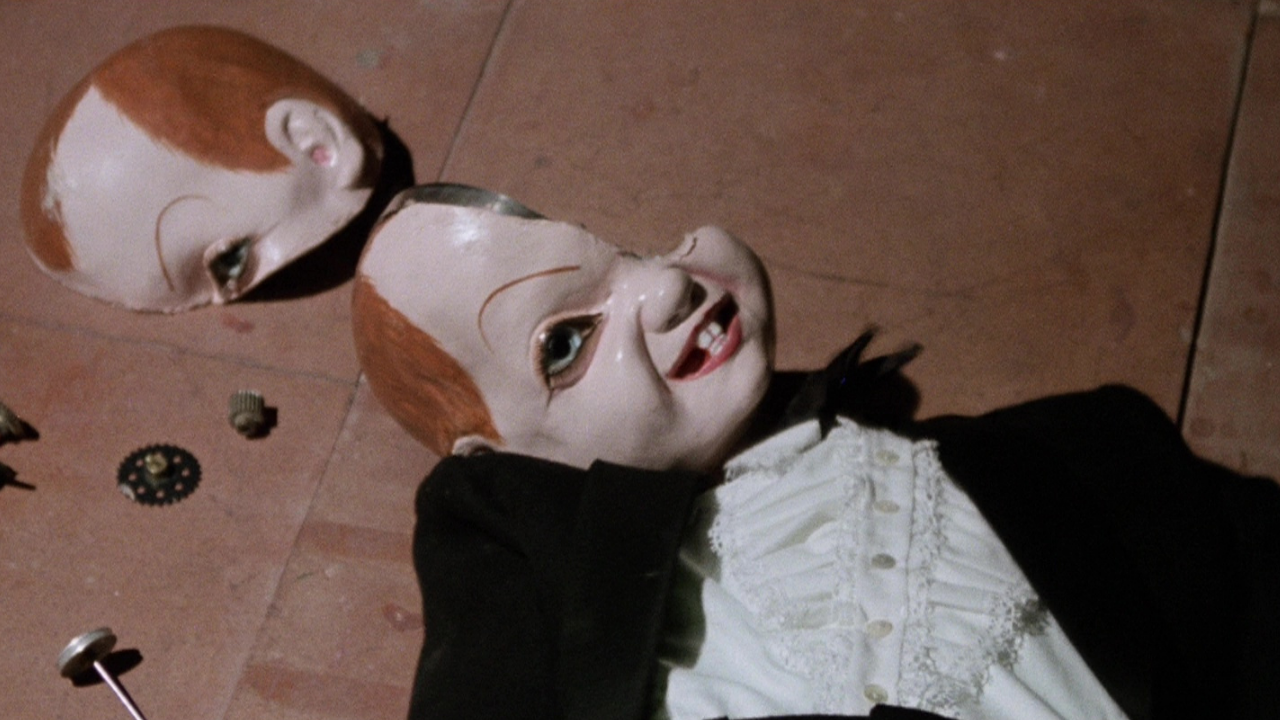
The Bird with the Crystal Plumage is an amazing murder mystery set in an Italian art gallery. But if you’ve never seen any of them, the one to watch first is Deep Red (Profondo rosso). It is another one of my ARROW choices, which I rented as a VHS during the video nasty era. Not knowing what to expect, and it’s mind-blowing. I don’t know which version they’ve got on ARROW, but if they give you an option, don’t watch the director’s cut, watch the theatrical cut. It is phenomenal, as a murder mystery. Because what is most amazing about it is that he doesn’t cheat. What happens is, and it’s something that we tried to do with Ghost Stories, is that you are in exactly the same shoes as the protagonist in Deep Red. Something terrible happens, and he witnesses it. I’m not spoiling anything, and he has a nagging feeling that something he saw isn’t right. As do you. And when you get to the end of the film, and it is revealed to you, you are shocked! And that’s truly what I experienced when I first watched it, I was fifteen. It completely changed what I thought about theatre, film, and storytelling. It’s amazing. Not only that, but the soundtrack! The beginning of the Ghost Stories play is the Goblin soundtrack from Profondo rosso. The way he uses a camera, honestly, you won’t believe it, it’s amazing. So that’s Deep Red, that was the third of his, kind of, murder mystery ones. The Bird with the Crystal Plumage is one that was before that, and it’s also brilliant! But when you watch it, there is a cheat in it, but it’s still phenomenal. Watch Deep Red first. It’s really amazing.
What can you tell us about Zombie Flesh Eaters?
Zombie Flesh Eaters is a piece of its time. I have a very special love for it. Lucio Fulci, who directed it, is a mental filmmaker. But within his madness are moments of absolute brilliance. Iconic images infiltrated cinema from then. So the look of zombies that we all know now as in Dead Set, Shaun of the Dead, right the way through to the remake of Dawn of the Dead. That look was invented for Zombie Flesh Eaters. And it was invented by an effects artist called Giannetto De Rossi. The reason I tell you this is that I did a movie for NBC years ago, a war film called Uprising. It was filming in Slovakia. I got there, and there were lots of big stars in it. Really super famous people that I was excited to work with. But with my death in the movie, I went down in a blaze of glory. I get burnt to death, but I come out on fire, and take a Nazi down with me. So they said, “You’re going to have a meeting today with this special effects guy doing the effects.” A guy called Giannetto, and I went, “Giannetto De Rossi? Hang on! Giannetto is doing the effects? Oh my god!” So I then went to see him, and I walked in, and I said “Oh my god, can we talk about Zombie Flesh Eaters?” and he said “Oh my god, please come and talk”. We had a big hug. It was a big secret for years, in regards to how he invented the zombie look. It’s amazing, because he then did it to me, as my burn make-up. It’s incredible, I videoed the whole thing, and it’s out in the open now. But it’s modelling clay. Literally that you would go and buy in an art shop. He sticks it on your face, and then carves it like a sculpture, and then paints it. And he did this thing to me, and it looked terrible until the last eight seconds when suddenly it was like, “Holy shit!” it was the greatest magic trick you’d ever seen in your life. So with Zombie Flesh Eaters, It’s mental, but I’m very nostalgic about it. Me and Giannetto sat and watched it together. There’s an incredible eye-gouging sequence in it. Even if you just watch that bit… the music, the cut! Imagine now, we see so much, and we are so used to the stuff we are exposed to, but even now, it has a visceral energy that is just amazing. It’s a piece of work, that’s for sure. It packs a punch.
Ringu is one of the scariest horror movies ever, what do you remember the most from watching this movie?
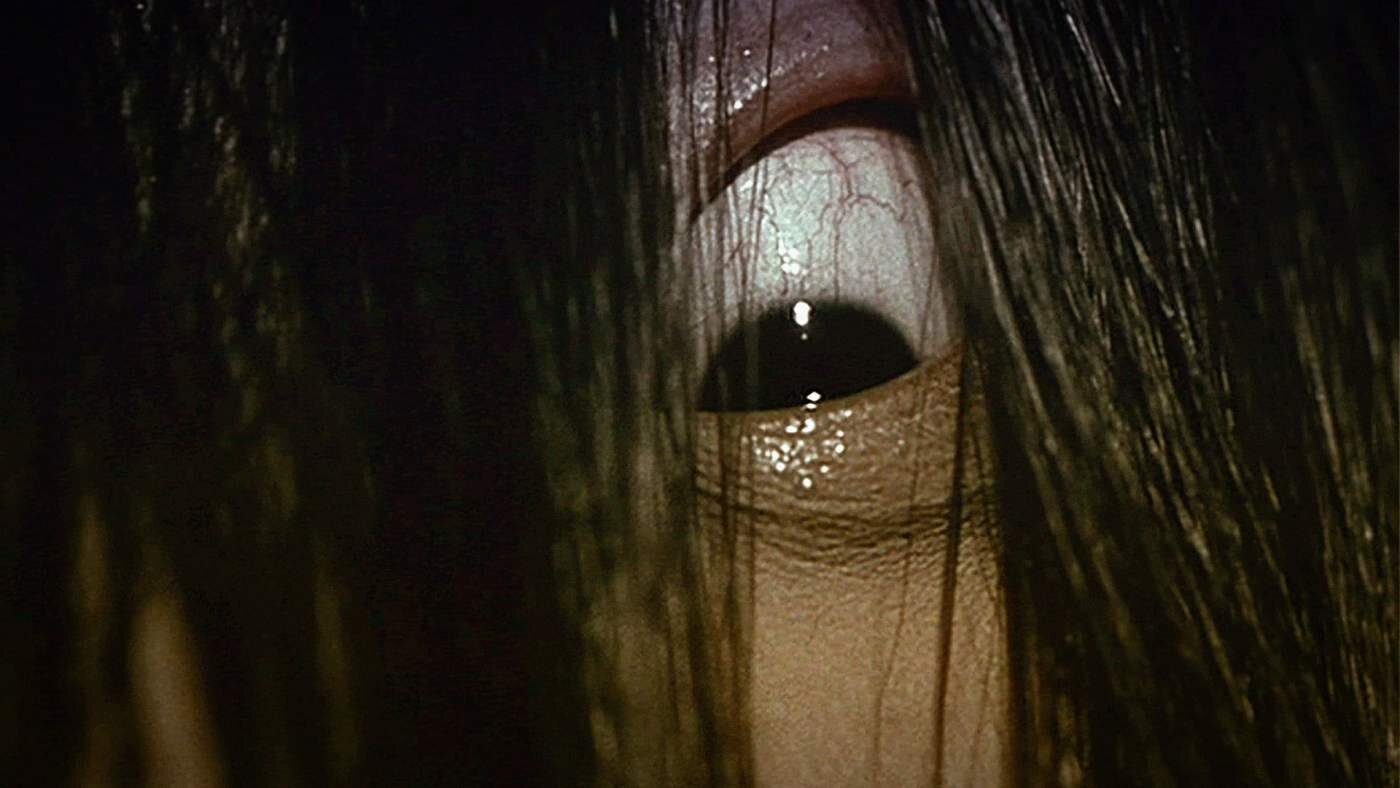
Ringu is an amazing movie! One of the reasons I love, what became affectionately known as J-horror – but I actually think that you can make it A-horror, as in Asian horror, really – Is that they are so akin to the British ghost stories in a way that American horror is not. Ringu is like one of the great M. R. James stories. It’s basically Casting the Runes, isn’t it? It’s the same as Night of the Demon. I’m handing you that cursed object, and now you have a limited amount of time before you die. But there’s something about the purity of the way the curse is handed on. The fact it fitted into VHS so beautifully. Again, it’s so easy now when things are so parodied and so much a part of the culture. But the first time you sat and watched that film and saw Sadako coming out of the TV. I mean, you can’t put into words the cold terror of it. There are so many brilliant things within it. In fact, the first TV job I ever did was The Woman in Black. The ITV version of it. Which if you haven’t seen, is available now. They did a Blu-ray a few years ago. I urge you to see it because it’s got maybe one of the best jumps ever filmed in anything. Not only is it a brilliant jump, it is a sustained moment of terror. It’s nightmares, proper nightmares. The Woman in Black is a real slow burn, so if you like your ghost stories and horror, then I urge you to see it. But the reason I say it, is that the performance makes the moment so terrifying, by the lady who plays the woman in black, Pauline Moran, it’s akin to the performance of the actress who plays Sadako in Ringu. There is such power in the vengeful spirit, when it’s done properly. Someone who has been wronged and is seeking revenge, and it’s driven out of an unstoppable pain. When you see, just the eye. It’s incredible. Then, the rictus that the people are left in when they die tells you the pain of this death. It’s phenomenal. My god, it’s such a brilliant film.
You’re noted for being an actor, writer, and magician, what can we expect to see from you in 2024?
Going into 2024. I’m starring in the West End in Hello Dolly in the summer. Also, I am in, although it’s not announced and I can’t say what it is, probably what is going to be the biggest film in the world next year. I’ll leave that to your imagination. Mine and Jeremy Dyson’s novel The Warlock Effect, which, if you haven’t read, you must read, came out this year, and we are adapting it for TV, so that’s a very exciting project.
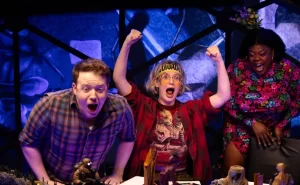
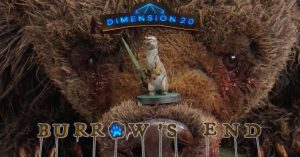
Aabria Iyengar is a world-renowned dungeon master whose work includes Adventure Zone, Dimension 20, and Critical Role. Her most recent project is Dimension 20’s Burrow’s End, a D&D-inspired show that blends Watership Down with body horror. It’s currently streaming on Dropout.TV. We caught up with Aabria to find out more…
STARBURST: Where did the idea for Burrow’s End come from?
Aabria Iyengar: There was definitely a silly little joke that popped up when I was in a photo shoot about a cyberpunk Watership Down that I took home. It was like, hold on! I know we were doing a fun little bit, but I think there is actually something here.
Watership Down is that sort of fiction that we give to children to teach them about what it means to be human, and we can be sort of brutal and mystical in a way that we might find inappropriate for children. If you make it a cute little animal doing it, you can talk about deeper, sadder, scarier themes. And then, of course, cyberpunk is a genre that comes very much from the fears, economic and social, of Americans in the 1980s.
I’m a poli-sci [Political Sciences] major. So I was like, Oh, cool. I wanna talk about systems and societies. So Last Bast was always in the DNA very early on, and sort of the thing that was hidden from the audience, but also a little bit from the table, as we’re gonna talk about, the expanding world of us versus them. At the very heart of it, there’s a very silly joke.
There’s an old dystopian movie called Equilibrium, and they have Gun Kata, which is absolutely ridiculous. If you do this very precise mechanical spin around, no one can hit you with their bullets. I just couldn’t stop thinking about what if there was a rabbit kicking a full-size human gun, and then we called it Bun Kata. And truly, that’s the dumbest joke that was in my head the entire time as you were writing it, and nothing could have made me more delighted.
BunFu! Yes! When we first started planning this, I sat for a very long time with Bunnies and Burrows because it’s Watership Down inspired. The reason I moved away from it fairly quickly is that it has the right instinct. If you’re playing “we’re rabbits in a big scary world”, you mostly want to get away from danger, not encounter it. I want to play in a space where you do not fear danger. The power level in D&D will make you more and more equipped to take on bigger and bigger things.
Stoats are sort of famous for fighting animals and creatures that are bigger than them, they really do swing at big monsters. So Bunnies and Burrows is such a cool system, but it didn’t quite give me the juice “if you see a problem, fight it.”
What other works of fiction did you draw on for Burrow’s End?
Oh, yeah, the big ones. I think we mentioned Secret of NIMH up top. But as we get into it, it’s very Animal Farm and very 1984. And Attack on Titan was the secret at the end. That idea that humans are coming. And they’re this big, unknowable, unfightable monster that you’re just trying to survive incursions with. That gives way to spoilers for the first season of Attack on Titan.
Burrow’s End contains a surprising amount of body horror. As DM, what were your rules for body horror? Where did you set your limitations for your players?
We had safety tools in place just in case anyone started showing any visible signs of stress. But I think the biggest table moment was coming out of the gate in Episode Two with the bear map, the grossest thing I’ve ever envisioned and everything I’ve ever wanted. If you set the tone early, then yeah, your first fight is inside a living, dying creature.
I think this is something so fun about talking about what you fear, and I think there’s a fear of agency externally, which is how we got into some of the undead themes about being taken over and being piloted and puppeted, but also that agency, that even while you’re alive, there’s something gross happening to you that you can’t stop and you can’t control.
My limits were; I’m not gonna say I have a personal limit because I hope to come back and do even worse horror. So, I will always say that my limit stands with the comfort level of my table, and I will always go further if allowed because I’m nasty.
No plan a Dungeon Master makes survives contact with the players. What happened during character creation that changed the story you were telling?
The moment they all agreed to play in a family unit. I told them to try to come up with things that are very interconnected. You’re all from the same warren, but you don’t necessarily have to be family members, and everyone doubled down immediately.
And they’re, “We’re gonna have kids. We’re gonna have three strict, well-understood generations within this family.” And I went, oh, great! We have a lot of mothers going on, so in the sort of weaving of horror, there is a pretty fun, strong note of motherhood. The trauma that you can pass on. The good intentions of a mother trying to protect their children. There’s a lot you can see in the First Stoats of Last Bast that feel very parental but to the detriment of the agency of the other adult stoats.
What are the things you do if you say you’re doing it out of fear and love for safety? That became a really strong theme really quickly. The bear map becomes a really gross analogy for pregnancy. So, there’s a weird motherhood theme that trickled through a lot of the writing.
Is that something that organically happened during improv, or did you guide it between sessions?
It’s a little bit of both. It’s my job to now take it and turn up the heat on it, boil it down, be a little more specific and give it back to you. So it feels like everything meant something, Even a bit, of some light interaction. Some of the showmanship, the razzle-dazzle, is making people think that a theme was there the entire time, when sometimes it’s “oh, that was introduced in play, and you saw me be excited about it in the moment.” I love a new tool. I’m gonna take that and give it back to you.
I always wanna see new people come in and shine. I love bringing in new players, players that are new to me, and people that I’ve played with before whohaven’t been here. I’ve played with Jasper. He’s run for me.
I’ve run for him, and I was if I could just find the project that could tempt him to cross the pond, for this came up, and I was, Oh, give me, Jasper! I think there’s also a sense that it would be remiss, not to mention that my desire is to see more diversity at the table, both within the dome and wherever we go.
When we look at casting, my brain is always looking to bring in different kinds of people with different perspectives because I think that always makes everything so much stronger because then you get fun moments like Rashawn’s “Hey, girl, hey?”
And again, Rashawn, someone who I’ve watched all of her other content at Dropout. But I hadn’t met her at that point, and before doing more research on her and I realised she was in a Monster of the Week podcast. I didn’t actually know that she played D&D before we started talking. She’s funny, and she’s brilliant and so quick. And I can teach the mechanics of D&D to anyone, but that storyteller ability? If you have that, you’ve done 80% of the work. The rest is just understanding your rules from moment to moment. So it was a joy and an honour to bring in people that were new to the dome.
You always have your killers. I will play with Brennan and Erica. I drag them and say, “Just, please be in this. I just you have to tell me no, eight times to my face.” I love them. We have a whole podcast about how much we love telling stories together. Siobhan, who wanted to play with forever. So this just turned into one of the most unreal tables. And Izzy, who I first met on this set of the Seven, and then we became friends.
It was one of those things where I’m, oh, we met where we were both players and across the two years of friendship haven’t run for you yet, so why not here? Why not now? So having people that I was like very comfortable and good with all those different levels of how comfortable and how familiar people are with each other, builds for like a very fun table that will surprise you in a lot of different directions.
I mean, that’s the dream. God, they’re all so brilliant. It’s just a matter of they happen to be so far away. So yes, if things align and the timing is right, I would happily work with all of them forever because, gosh! Everything to do is so good, and it’s so nice to be able to play with people whose work you are fans of.
What systems beyond D&D that you’d love to play with?
I love Dune. I love it so much. I have all the stuff for it, and I just sort of sit around going, “How do I get to do this?” At a scale, I mean. I’ve been kicking around whether or not to spin up a home game about it.
But when you talk about what’s big on the horizon, I’m very much looking forward to a little rest and recharge. Just sort of resetting and finding new things to be inspired by and think about.
But yeah, if I had to call a really big, very specific shot. I think I would call that shot around the DuneRPG. Seems so cool and so fun, and I just think that world is so big, broad, and interesting that there are a lot of ways to swing around and go.
I love Forged in The Dark; I think there is something around the cycle of role adjudication and negotiation that probably could be streamlined a little bit for actual play or for narrative play, but, like several projects, I work on or places I work, have an edit that might make that a little cleaner, a little easier.
I’ve run Hack The Planet and ran it on a podcast, and I’m still obsessed with that game. But Blades in the Dark is an absolute killer. I think I would probably sit down and do things that we’re spinning up for the future. I definitely wanna play a little bit more of my mash-up pile. I really liked hacking a little bit of The Fifth EditionD&D into Good Society forCourt of Fey and Flowers
I really enjoy cherry-picking little mechanics like we did in the flashback mechanics a couple of days in the dark for Exandria Unlimited: Kymal, so there’s something inside of that, and it has a lot of Forged in the Dark DNA going into it and seeing, like what we can push together, and what very interesting story comes from the intersection of seemingly disparate mechanics and like what thematically you’re starting to do.
Because, again, mechanics matter. The first thing almost every player does is look down at their sheet. Your mechanics give you the options to how you interact with the world. So having really fun and funky mechanics means that the kind of story you’re going to get out of your table will be really fun. So, probably something in and around that.
Almost at the end of the interview, so one sort of deep question, followed by some quick fire. If you could preserve one piece of art so it lasts until the sun dies out, what would it be?
Oh, my gosh! My husband made a little stick like a popsicle stick vase, and I’m obsessed with it, so I don’t care about the rest of the world, but a thing that has been that deeply loved. I would love to see it persist.
Simpsons or Futurama?
Oh, shoot, good question… Futurama.
Star Trek or Star Wars?
Star Trek.
Dungeons or Dragons?
Dragons.
Doctor Who or Dr. No? Doctor Who all day!
Truth or Beauty?
Beauty!
The complete BURROW’S END can be found on Dropout.TV
Joe Strickland is a prolific theatre maker, digital producer, and creative technologist with great energy and passion. He’s the artistic director for Chronic Insanity, the creative force behind the Data Driven Arts Festival, Puncture The Screen. We got in touch to find out more…
STARBURST: What is a Data Driven art festival?
Joe Strickland: Exactly what it says on the tin! A festival full of art that is driven by data, either inspired by data or that uses data in the way in which audiences interact with it. Work in the festival uses one of three kinds of data: Scientific or census data, the artist’s own data, the audience’s data, either volunteered personal data or behaviour data collected from the audience in real-time.
How did the Puncture The Screen come about?
I was undertaking a PhD about the value of personal data at the University of Nottingham and wanted to find examples of data being used in artworks, specifically audience personal data, but found it difficult to find examples. Given that I was interested in making this sort of artwork and performance myself, I decided to run the festival to give myself and other artists an outlet to experiment with this sort of emerging creative practice, as well as give audiences a platform to understand data, and data driven art, in more interesting ways than news reports and spreadsheets
What’s new, and what have you kept from previous festivals?
This year we have three new commissions – a play about private companies using NHS data to predict people’s deaths called Lifetimes by Lotty Holder; an interactive audio experience where a magic creature teaches you how to cook called Stewed by myself and Natalie Patuzzo; and a virtual reality hologram system where a short play can take place on a tabletop in your room, called Fabula.
What are you looking forward to the most with the festival?
Getting a chance to dedicate some time to creating and exhibiting data-driven work, and to really push the boundaries of what digital theatre can, and should be, moving forwards
What’s been the most interesting challenge so far, when it comes to the festival?
Trying to explain to people what data-driven work is, and also getting people to trust that data-driven work can be entertaining and not scary. Normally, when we hear about personal data, it’s in the context of some sort of security breach or mass manipulation of the public by a large corporation or government, but data is a neutral tool, and there can be entertaining and educational uses for it as an artistic material, especially to inform people about data and how to use it responsibly or creatively
Why Data Driven?
It’s one thing to write a play or create an artwork based on some fact or figure using data, but it’s a whole other thing to create an artwork that is alive with data, powered by it. A work that has data running through its core, that is driven by data, is so much more evocative and engaging than an artwork that merely reports on data or talks about it. Why talk about it when we can harness it and show it to audiences within the artwork in a way that is so much more informative and enlightening?
If I can’t make it to the Festival, what’s the next best thing?
Almost everything in the festival can be accessed online until December 17th, including recordings of our in-person events and workshops, plus all the digital artwork and educational videos from previous festivals that are being re-exhibited
What’s the next big thing you are working on that you want to tell the world about?
Chronic Insanity has been around since 2019 and has almost reached 100 shows in that handful of years. I think the next thing we’re working on might just be having a break!
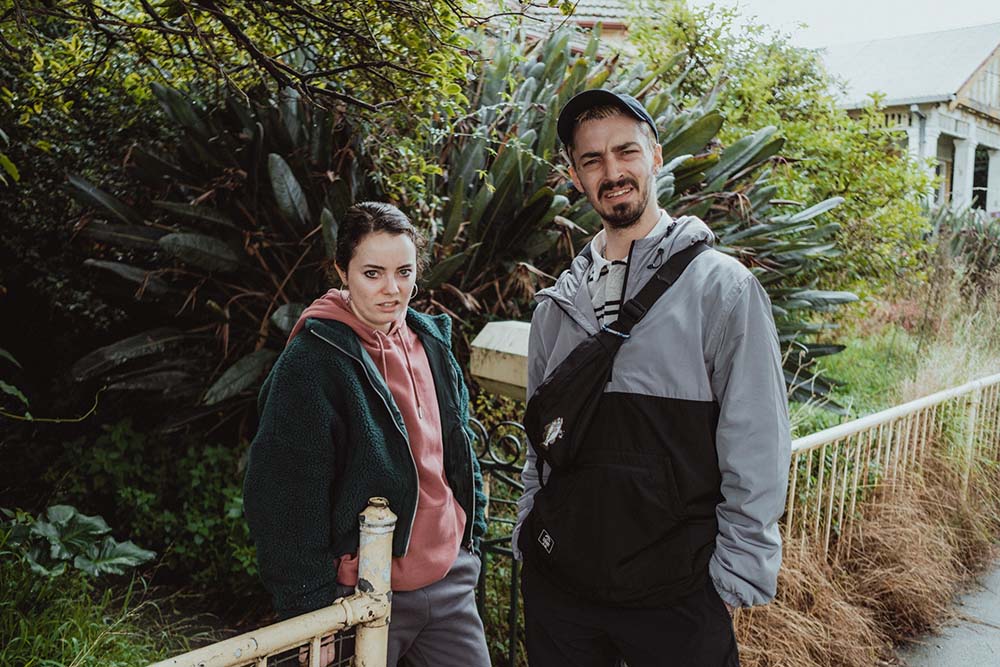
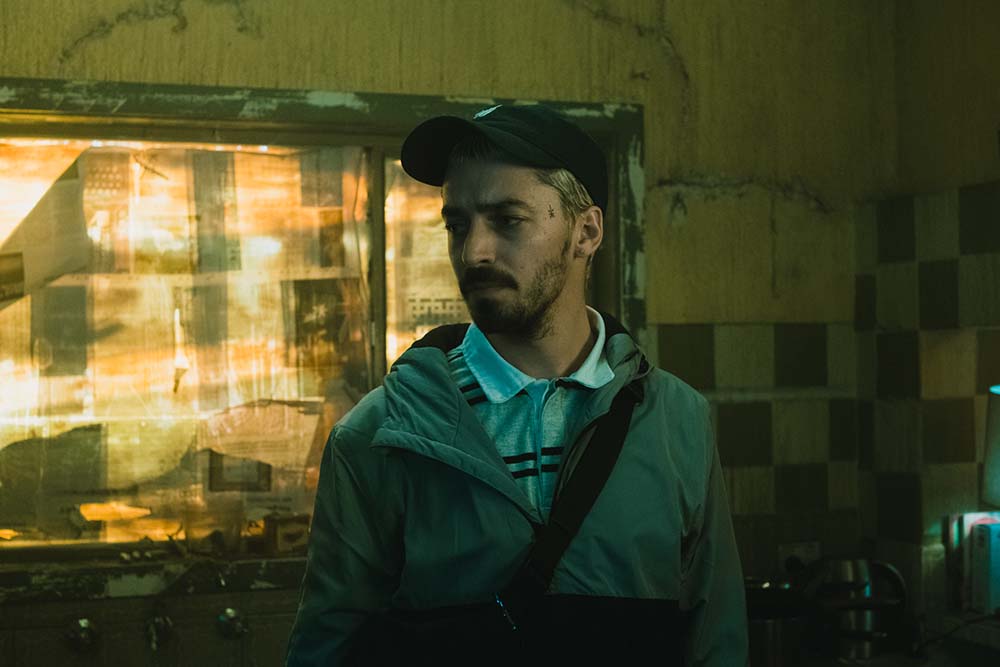
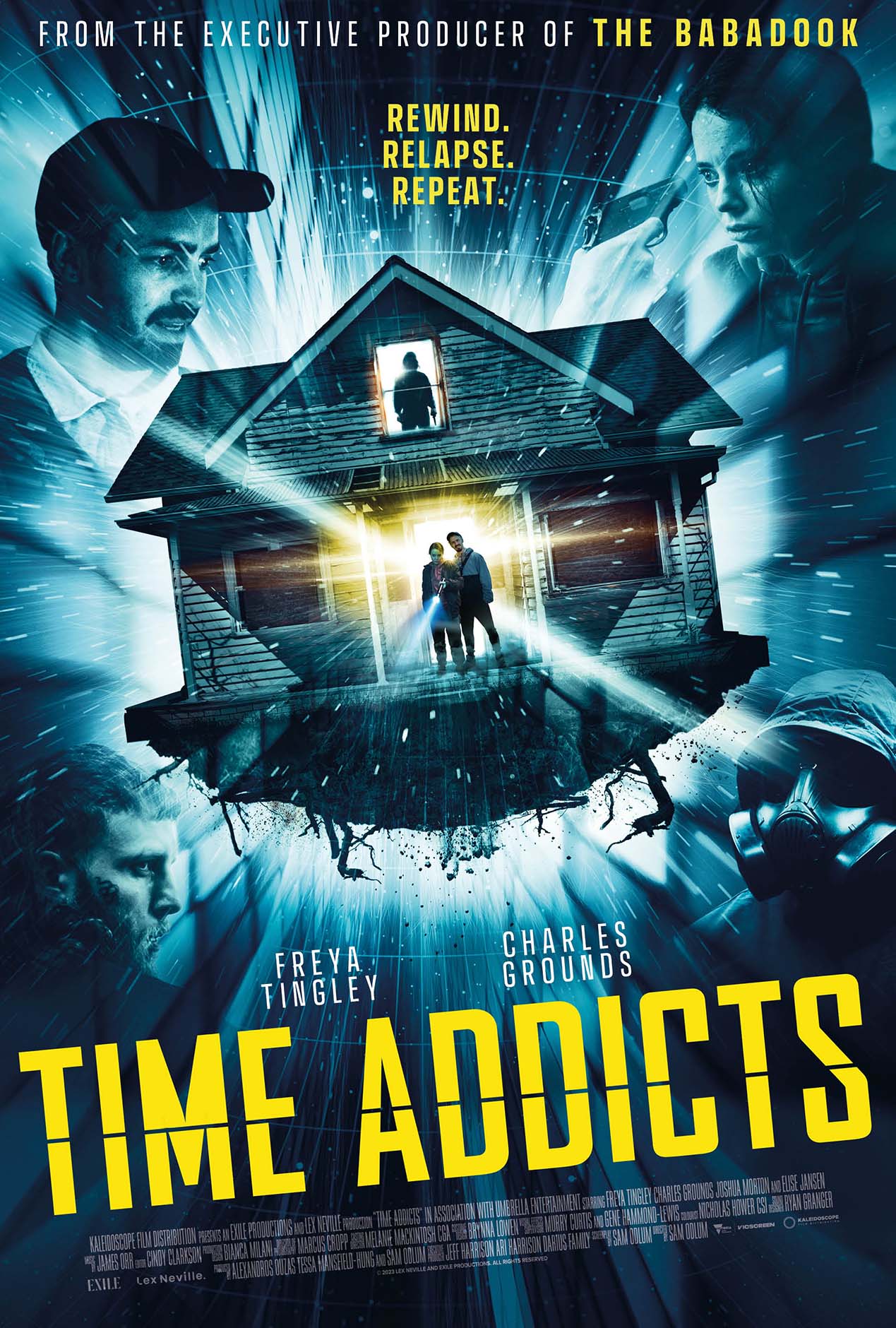
Based on the original short film, TIME ADDICTS is an audacious and brilliantly innovative new Australian feature. This captivating film stars Freya Tingley (Once Upon a Time) and Charles Grounds (Elvis). STARBURST spoke to writer and director SAM ODLUM about his experience working on this passion project and bringing his ambitious idea to life…
STARBURST: How easy or difficult was it to adapt the original short into a feature-length film? Did you find that having that original source material helped with the writing and directing process?
Sam Odlum: We shot the short around 2017. I had the idea for it a few years before, but I’d previously put off writing a feature-length film about time travel. It’s a lot to bite off and chew! I thought I’d see how it goes with the short. It wasn’t until I made the short and saw the response that I realised people seemed to really like it and gel with it. I was like, “Okay, maybe there’s something more here”. I think having the short really helped us get all the pieces in place to try to make the feature film. It definitely helped with the directing process of figuring things out. Also, because I edited the short film too, it was really handy when we came to make the feature. I could be the last port of call and say, “No, I don’t think this will work,” or “I think that’ll work”. In terms of writing it, the short was a help at first, but then things do start to expand!
What was your inspiration for telling this story?
I guess I wanted to make something unique. Australia can be quite conservative with genres. You either fit into a drama category, a thriller category, or a horror category, whereas I like a real mix of things. There was inspiration from a lot of different places. One big inspiration was A Scanner Darkly by Philip K. Dick. I thought it was masterful the way he was able to create these three-dimensional characters – who are hilarious – but at the same time, stick in the sci-fi world. That was when I thought that I could make a film where it’s got these interesting characters who have all these flaws and really unearth their behaviour and why they act the way they do, but then set it out in a world that’s a little bit different, a sci-fi kind of world. I felt that time travel gave us a good opportunity to do that because of how it sort of relates to drug use, in that you’re almost messing with your past self, messing with your future self, and I thought, ‘what could we say about that and getting stuck in loops?’ The thing about time travel stories is they often get bogged down with unpacking how time travel works, whereas we set the rules for time travel early on, and then the characters don’t always dig too deep on that front. I felt that was realistic because Denise seeing herself, for example, is probably not the craziest thing that she’s seen – she’s probably seen a lot worse! Then the pillars of screenwriting in general, goal, stakes and urgency, felt really inbuilt into that idea. They wouldn’t be asking a lot of questions because they’re just constantly dealing in the moment. That’s when I knew it was working when I felt like, yeah, the stakes are kind of inbuilt.
What was the research process when you were creating the film?
We didn’t go over the top with drug research because I felt like that’s such a rabbit hole. I wanted the story to be about these specific people, so I wouldn’t say this is cut and paste for anyone who has drug issues. I’ve had friends who’ve had problems, and it’s not really about research. It’s just being around it, or you just speak to people and find out what makes them tick. That’s something I spoke about with the actors, too; we didn’t want to play this over the top and make it really on edge and jittery. Everyone reacts differently to drugs. Like with Johnny, it’s almost like smoking just kicks in his OCD, and he’s tinkering with the plates and adjusting everything. It was more down to ‘What are we trying to say about the journey of the characters?’ and, ‘What are the other little elements that we’re going to pick up on to make them feel real, but not make them feel overly dramatised?’ There are many drug films that really ram it home, and I don’t know whether we always need to hear that. I feel like we already know it. For me, the drug use was more a symptom of other issues going on with the characters. It was ‘Well, let’s tackle the other issues’ and then use drug use as a vehicle for showing that journey.
Kaleidoscope Home Entertainment presents TIME ADDICTS on Digital from November 27th. You can read our review here and an expanded version of the interview in Issue 484 of STARBURST, which is on sale November 30th.
Kyle Shire is a games designer as well as one of the producers for the hit streaming show Critical Role. His latest game is Queen By Midnight. We caught up with him to find out more.
STARBURST: How would you pitch Queen By Midnight to a beloved family member who’s only ever played Monopoly and Settlers of Catan?
Kyle Shire: Queen By Midnight is a deck-building game where you play as powerful princesses who are battling to become the next Midnight Queen. Round by round, you play and purchase cards that add to your princesses’ unique arsenal of powers, tricks, attacks, and spells, an arsenal that you unleash upon your opponents. When the clocktower strikes Midnight, the game is over, and whoever has the most health and clout (and is still alive) is the winner!
Queen By Midnight is a straightforward introduction to the deck-building game genre with characters that vary in complexity. Play as Hephesta on your first game and give it three rounds. If it’s still not making sense to you after that, we can totally bust out Catan and fight over Longest Road.
All the princesses in Queen By Midnight have very specific looks and designs; what came first, the characters or the mechanics?
Definitely, the characters came first. As a writer and a theatre kid to the core, it was important to me to first figure out what princess archetypes I wanted to pull from, what twists and spins I could add to them, and then discern who they are as people. What do they care about? What are their outlooks? Their goals? And then, once I had all that mapped out, I used their stories to inform their mechanics and playstyles. Ludonarrative harmony is a thing of beauty to me. Rosaline, for example, is more than just a psychedelic twist on Briar Rose from Sleeping Beauty. She’s a powerful seer who dreamt of a great calamity that can only be averted if she becomes the next Queen. These powers and motivations are illustrated in her mechanics with things like her Trance cards and Prophecy Tokens, which she can use to avoid incoming attacks. Also, Rosaline has the highest Major Caster score of any princess, but her playstyle is slow, methodical, and defensive because she isn’t fighting for glory, ego, or power.
How did the clocktower board come out?
Back in the day, when I was imagining this game would only get made via crowdfunding, the ‘clocktower’ was just going to be a 2D mat. But once Alex Ubaldi from Darrington Press was brought on board, he had the inspired idea to add some table presence to the game by making the clocktower not just 3D but rotating as well, so every player sitting around the table can get a good view of the current round, what cards are available in the bazaar, etc. Then the intrepid team at Matt Paquette & Co figured out a way to somehow make the clocktower buildable, sturdy, and gosh darn gorgeous. I’m absolutely astounded at how it turned out.
You’re also a producer for Critical Role; what TTRPGS are you currently playing, and what are your all-time favourites?
Of course, I’m a huge D&D nerd and have been for almost 20 years. The Eberron campaign setting will always have a special place in my heart. I’m currently running a sandbox-style fantasy western set in Eberron as my home game. I also love the World of Darkness games, and I’m currently in a Changeling The Dreaming game that my partner Jon Sims is running, where we’re teenage fairies in Phoenix, Arizona, in 1996. The world of Shadowrun is hands down one of my all-time favourite game settings (it’s our world, in the future, but there’s magic, and a dragon was president, late-stage capitalism is the BBEG, it’s a great setting)). And now that the book is out, I’m super excited to spool up a Candela Obscura game of my own!
Did any of these inspire Queen by Midnight?
There are some narrative seeds within the Eberron Campaign Setting and Changeling The Dreaming that inspired a bit of lore within Queen By Midnight, specifically in dealing with how the fey realm works and the role stories play in its existence.
Do you have any expansions planned?
The continent Queen By Midnight takes place on is called Twelvefold, and you only meet six princesses in the core game, and that’s all I have to say about that 🙂
What’s your next big project?
I have about three projects in the hopper right now. I’m working on a TTRPG that unites my love of role-playing with my years of experience working in reality TV because, fun fact: there are a striking amount of similarities between what GMs do when plotting a TTRPG story and what reality TV story producers do when plotting a season of Real Housewives, or The Bachelor for example.
I’m also writing a 5e campaign module set in Eberron that’s more of a labour of love than anything.
And finally, I’m working on a spec TV pilot that I’m sure no one will ever see, but I don’t care! I’m doing it! 🙂
Shelley Page has had a long and interesting career in the world of animation, and is currently the Artist Liaison for Locksmith Animation. Her credits include Who Framed Roger Rabbit?, The Prince Of Egypt, Shrek, Madagascar,Kung Fu Panda, How to Train Your Dragon and, most recently, Ron’s Gone Wrong. She has a wealth of industry experience and will be part of the Animated Connections Conference at the Manchester Animation Festival. We caught up with her to find out more about her work…
STARBURST: What is your top tip for anyone looking to get a career in animation?
Shelley Page: This applies to most careers – but particularly to animation: be persistent! Becoming an animation professional is to embark on a lifetime of learning! Every project brings new challenges and opportunities to develop new skills – and our talented team are always trying out new tools and working methods to support our current and future projects. Working in a studio environment is the best opportunity to work alongside talented and experienced people – and never to be afraid to ask for advice on improving your own work – that’s how we all learn!
What’s the easiest mistake to make when approaching animation, both as a fan and as an aspiring professional?
This may seem an obvious one – but I would say that it’s a mistake not to stay informed about the latest developments in the industry. Every so often, a ground-breaking new animation feature or TV series drops – which has a huge impact on the next wave of projects. For example, Spider-Man: Into the Spiderverse – and the TV series Love, Death & Robots both had a big impact on character design and animation style in general. As an aspiring professional, it’s always great to have a thorough understanding of traditional animation techniques – but you also need to be aware of what studios are looking for currently. 2D animation skills are always appreciated, but for feature animation, we mainly need artists who can express these skills using 3D tools.
What’s been the most fun element of working with Locksmith Animation?
No question – it’s the lovely people I get to work with every day! I joined the studio just as the world went into lockdown – which should have made getting to know the team a bit more difficult. However, actually, the opposite happened! We all bonded over lengthy Zoom meetings and shared challenges, and working on our wonderful movie That Christmas throughout that time has definitely been one of the best and most fun experiences of my entire career!
What are you looking forward to the most with the Manchester Animation Festival?
Connecting with UK schools and students. For most of my career, I have primarily been working with international studios, which meant seeking out international talent, so now that I am working with a UK-based studio again, I’m really enjoying getting to know more about the current animation courses around the UK.
If I can’t make it to the festival, what’s the next best thing?
There are many great animation tutorials available online, including online access to some festival sessions. It’s always worth seeking out animation artists whose work you admire – to see if they have posted tutorials or ‘making of’ videos. For example, many top story artists from the major studios have posted interviews or podcasts online. Also – several of the leading animation schools in France post ‘making of’s’ or teasers of their graduation films via the school website. That’s a great way to see demo reels and portfolios that can be very inspiring. Try looking at the websites of top schools such as Gobelins, ESMA, MOPA, RUBIKA – and The Animation Workshop [Denmark].
What’s the next big thing you are working on that you want to tell the world about?
We’re currently in production on our next feature, That Christmas,which will be released in 2024.
That Christmas is based on the successful series of children’s books by filmmaker Richard Curtis [Four Weddings and a Funeral, Love Actually, Yesterday] and marks the feature film directorial debut of renowned character animation and story artist veteran Simon Otto [How to Train Your Dragon trilogy].
We also have an exciting group of new feature projects in development – check out our website[https://www.locksmithanimation.com] for a sneak peek at some of the amazing talents we are working with!
Steve Henderson is the editor and co-owner of skwigly.com, the UK’s biggest online animation magazine and community. He’s also the Director of the Manchester Animation Festival, the UK’s largest Animation Festival dedicated celebration of the animated art form.
STARBURST: What is your top tip for anyone looking to get a career in animation?
Steve Henderson: My top tip for anyone looking to get a career in animation is to hold on to that passion. Working in the animation industry isn’t like any other nine-to-five job. You take it with you absolutely everywhere. And if you don’t love it, then it’s not right for you. Also, look beyond the role of an animator or a director because the animation industry is huge, and there are lots of different roles that people can take. So you might not necessarily be good at drawing, but you might be incredibly well organised. Well, in that case, why not be a production manager? You might not be good at drawing, but you might have a passion for storytelling. Well, in that case, why not be a writer? There are lots of jobs in animation. But people often think about the people who can draw, the directors, etc and those guys are wonderful. However, there’s more to animation than animating.
How did the Manchester Animation Festival come about?
The festival was founded by myself, Jen Hall, Bill Lawrence, who founded the Bradford Animation Festival, and Deb Singleton, who was the director of the Bradford Animation Festival. Deb took me under her wing for the first few years at the Manchester Animation Festival before she retired, and I’m very lucky to have the three of them teach me so much about the world of film festivals. Bill and Jen are still teaching me to this day, it’s fair to say. MAF started on the final night of the Bradford Animation Festival.
People were coming up to me and Jen and asking what we were going to do about the closure of the Bradford Animation Festival because the animation crowd at BAF felt a little bit homeless. Jen and I didn’t know how to answer it that evening. But over the course of the year, we got together with Bill and Deb, and within a few short months, we established the idea of a festival in Manchester. Manchester is an obvious choice.
Bradford doesn’t have much of an animation history. But Manchester has this incredible legacy, as well as HOME, which is an amazing venue, which we thought, ‘well, that’ll be perfect for an Animation Festival. It also has this incredible history of Cosgrove Hall. So it all just came together. We decided we wanted to do a screening and see where we go from there, just start small. But gradually, the festival snowballed, and we had people contact us wanting to be a part of the festival and wanting to deliver masterclasses. And so, before we knew it, the festival has grown into something that incorporated workshops, masterclasses, and panel discussions and took on a life of its own. And before we knew it, the first Manchester Animation Festival was here.
What are you looking forward to most with the Manchester Animation Festival?
That’s a really difficult question. We have over 100 events at MAF this year. It’s like asking a mother to pick their favourite child. But I’ll have a go. We’re really proud of what we’ve been able to do over the years at the festival, and we have some incredible panels, workshops, and masterclasses this year. We’ve got Juan Pablo Reyes Lancaster Jones, who is coming over from America to deliver a talk on Disney’s upcoming blockbuster ‘Wish’. It’s superb to have the team behind Netflix’s Chicken Run: Dawn of the Nuggets come to deliver a behind-the-scenes masterclass on that and give us a screening of the film.
We’re also delighted to welcome Industrial Light and Magic (ILM), Passion Pictures, Kugali, and many more for workshops, panels, and master classes. But as ever, I always look forward to meeting people and discussing what they enjoyed about the festival. I look forward to hearing what films they enjoyed from our short film selection, what feature films they enjoyed, and which ones they think might win the competition. I enjoy hearing about what’s going on in the industry as part of our Industry Day. And I look forward to the conversations taking place at our Animated Connections Conference, which focuses on education and training.
And I look forward to seeing families engage in worldwide animation as part of our Family Day. And also working with our fantastic team here at MAF, so Jen and Greg. We just have such a great time working on putting the festival on, and it’s a joy to see it all come together with them. So what I’m looking forward to most is just the buzz, the atmosphere, the people, and people getting excited about animation.
What’s been the most interesting challenge so far when it comes to the festival?
Putting on an event the size of MAF is always a challenge. But it is a challenge that we always relish because we love animation, and we love showcasing animation. So, the outcome is worth any of the struggles. But our main challenge is not putting on the event. Our main challenge is getting people to understand animation.
When people think of animation, the first thing they might think about is probably something that keeps the kids quiet. So that could be an all-singing, all-dancing American CGI film, or it could just be a kid’s TV show. And those are brilliant, obviously. But there’s a lot more to animation than that. Our mission as a festival, our challenge as a festival, is to get people to understand that animation is everywhere. Animation is international.
And it is full of incredible ingenuity and variety. And so, whilst people might go to a film festival and come away culturally enriched, we want people to understand that they can do the same at an Animation Festival. Our challenge is to get people to understand to look beyond the simple answer when it comes to animation.
If I can’t make it to the festival, what’s the next best thing?
If you can’t make it to the festival in person, we have a brilliant online selection which features over 12 hours of content from the festival. You can catch up on some of our major talks, including Magic Light Pictures at 20 (The Gruffalo, Room on the Broom). We’ve got Nimona’s Fearless Journey with ND Stevenson talking about his journey making the film from a comic. We have a studio talk from Kugali, riding the waves of the changing world. We have online Q and A’s with directors. And as well we have the best of the festival in terms of the short films. So, over 12 hours worth of content as well as all these amazing things to offer as part of our online package.
Is there anything else that you’re working on that you want to tell the world about?
MAF 2024. It sounds like a flippant answer, doesn’t it? But MAF 2024 will be our 10th edition of the festival. We’re excited to have been embraced by the animation industry for ten editions. And we’re looking forward to putting on our biggest and best yet. Every year, we tend to excel, and we’ve got big, exciting plans for MAF as we go into the future.
The Manchester Animation Festival runs from November 12th to 17th on-site across Manchester and then continue online until the end of the month. Booking information can be found here…