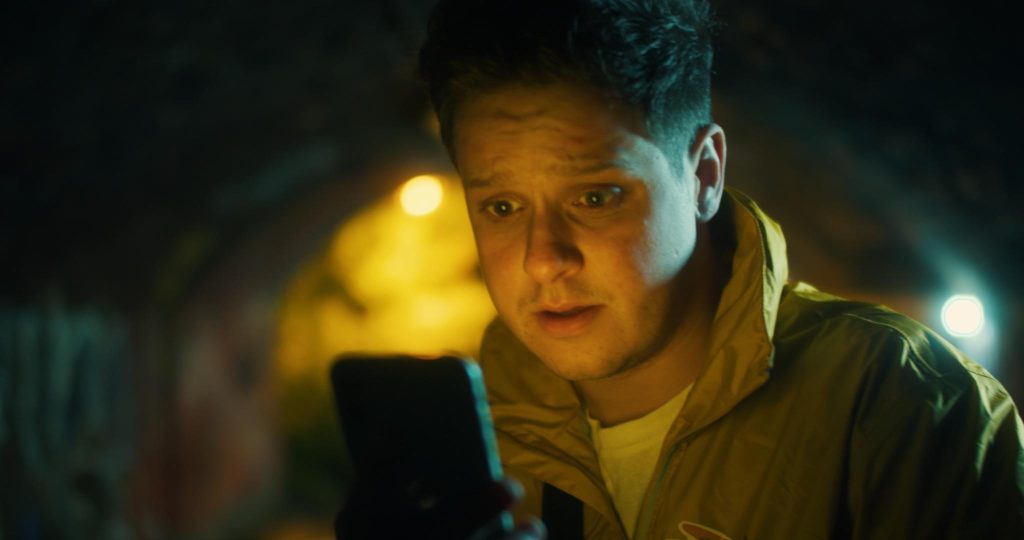
Babak Anvari | HALLOW ROAD

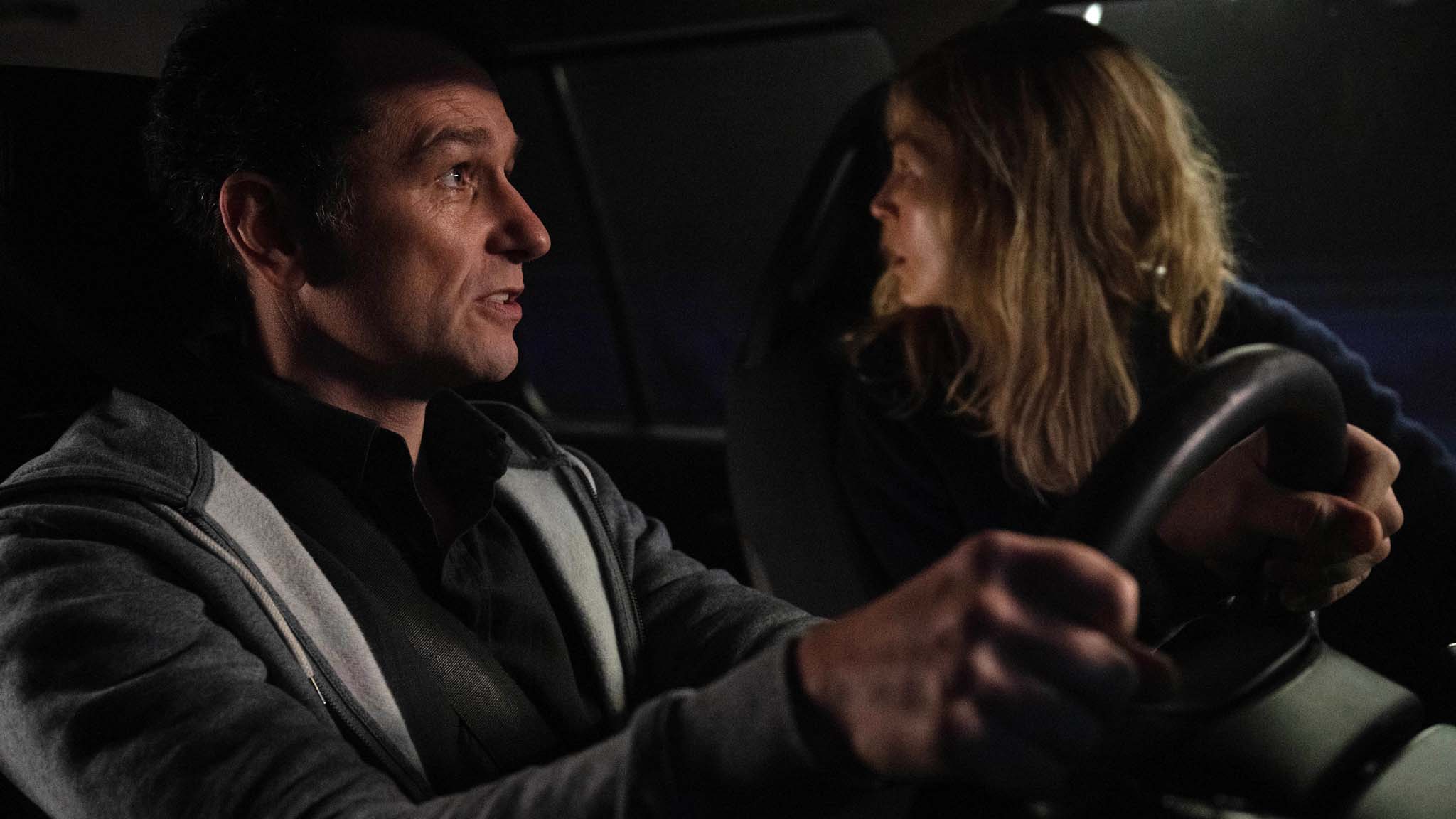
rosamund pike and matthew rhys in hallow road by babak anvari


Blending psychological tension with haunting fairy tale undertones, Hallow Road is a chilling, atmospheric thriller that unfolds almost entirely within a car’s confines — yet it spirals into something much deeper and more surreal. Directed by Babak Anvari (Wounds, Under the Shadow, and the upcoming Cloverfield sequel) with remarkable vision, the film follows a couple on a dark, winding journey that explores the devastating weight of parental guilt, the lingering echoes of past decisions, and the often fractured nature of family bonds. It’s a haunting, claustrophobic journey that blurs the line between the real and the imagined, forcing its characters to confront their deepest regrets as they race against time.

In this interview, we sit down with Babak Anvari to explore the inspirations behind Hallow Road, from Scandinavian chamber thrillers to classic fairy tales, and how the team used everything from LED volume stages to sound design to build a world that’s at once intimate and unsettling. We also dive into the psychological depth of the characters, the ambiguous nature of the film’s central mystery, and the cathartic thrill of making something so charged with unease.

What initially drew you to Hallow Road when you first read the script?
Anvari: Honestly, it was how great and intense the script was, written by Will Gillies. As a filmmaker, I was intrigued by the challenge of sustaining tension within the confined space of a car. That hook really set me off on this journey.

Did you draw on any external inspirations, like films or literature?
Anvari: Absolutely. First and foremost, fairy tales. The film feels like a dark, modern fairy tale about parents trying to change their child’s fate. Films like The Guilty and Locke inspired the confined, real-time structure, while Bergman’s Scenes from a Marriage and Persona influenced the emotional and psychological layers. There’s also a dreamlike quality in the film inspired by Lynch.

matthew rhys and rosamund pike in hallow road

The dynamic between Maddie and Frank is so emotionally charged. How did you work with Rosamund Pike and Matthew Rhys to build that relationship?
Anvari: We only had a week of rehearsal, but we made the most of it. We ran it like a play, dissecting every beat and even improvising scenes, like a family dinner, that weren’t in the script. Some of those moments actually made it into the final film. On the first day, I asked them to perform the entire film in one take with three cameras. They were so good, we ended up using a lot of that footage.

The film explores isolation, not just physical, but emotional. What drew you to that theme?
Anvari: That idea of feeling alone even when you’re with someone is deeply compelling. Maddie and Frank share space but are emotionally distant, while Alice is literally isolated. I used the car as a symbol of their anxious psyche. The deeper into the night and forest they go, the deeper into their unconscious we travel, reflected through sound and visuals.

The sound and visual design are striking. How did you approach creating that atmosphere?
Anvari: My DP Kit Fraser and I planned it all meticulously. We start in a grounded, urban realism, and gradually shift into a dreamlike, expressionistic state. Shooting on a volume stage with LED screens gave us the flexibility to build that immersive, evolving world.

rosamund pike hallow road

Is the supernatural element in the film a metaphor for psychological breakdown, or is it meant to be a literal threat?
Anvari: That’s up to the audience. I love that ambiguity. Some see it as a metaphor for trauma, others as a folk horror. To me, psychology and mythology are closely linked, and even if it’s in someone’s head, the experience is real for them.

Did you do any specific research into trauma or psychological theory while developing the film?
Anvari: Not specifically for this film, but I’ve long been fascinated by the relationship between external and internal worlds. I’m an anxious person myself, so tension is cathartic for me. I even recommended Motherhood by Jungian analyst Lisa Marchiano to Rosamund during our discussions.

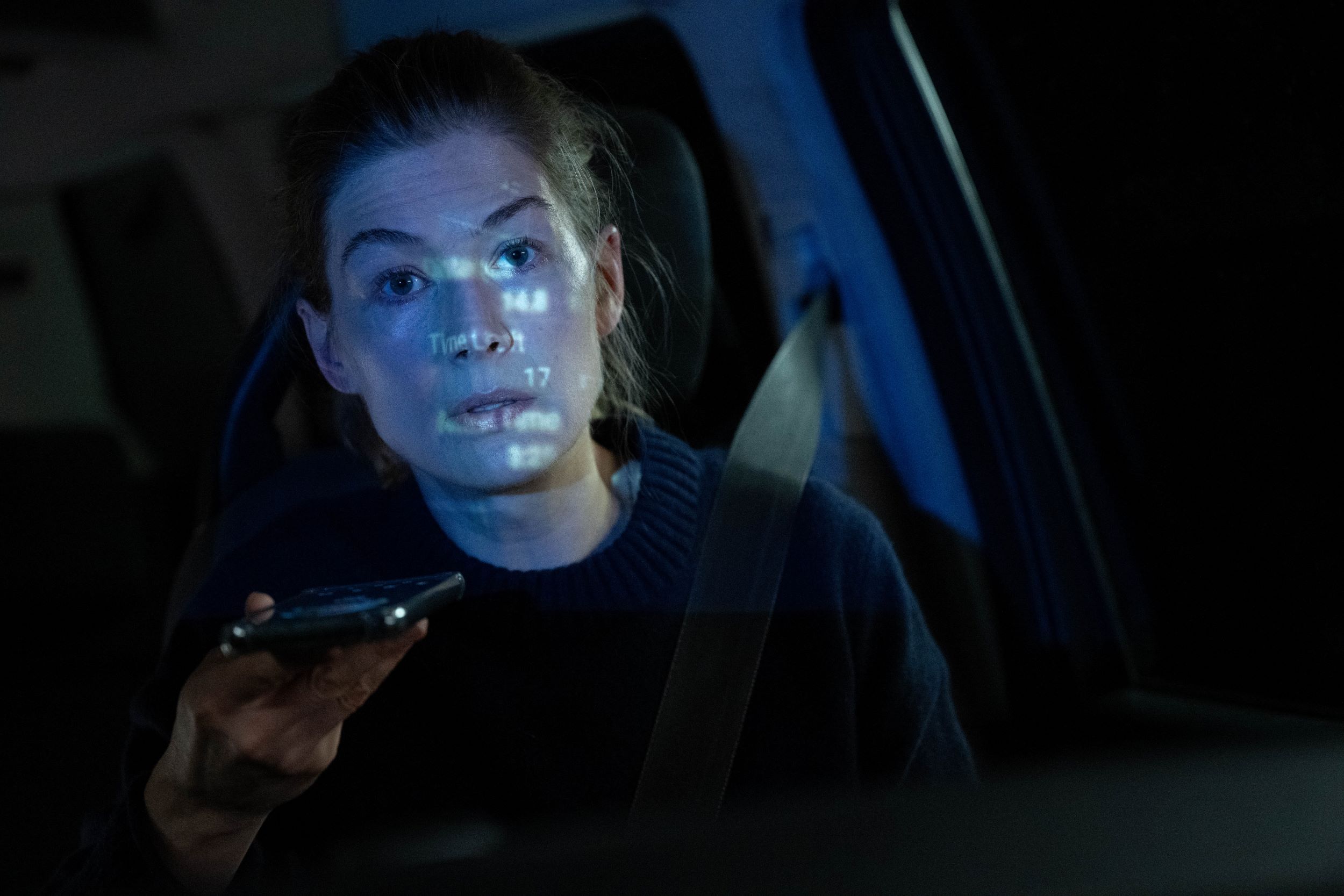
There are moments where GPS or signal projections appear on the characters’ faces. What do those visuals represent?
Anvari: They reflect the characters’ internal states. For example, when Maddie lies about being “a few minutes away,” the projection shows 17 minutes—her guilt manifesting visually. The turn signal appears as a symbol of choice, of missed opportunities to change course before it’s too late.

Alice is such a major presence, yet we never see her onscreen—only hear her voice. Was that always the plan?
Anvari: Yes, she was always meant to be just a voice. But Megan MacDonald, who plays her, was on set throughout, delivering her lines live to Rosamund and Matthew. Her presence was crucial, even if she remains unseen on screen.

*Spoilers ahead*

rosamund pike in hallow road

The mystery couple on the phone, voiced by Rosamund and Matthew, was a powerful reveal. What’s the significance of that choice?
Anvari: Spoiler alert for readers, but yes, that was intentional. I wanted the couple on the other end of the line to be a kind of “shadow self” of Maddie and Frank. It connects to the idea that “no parent wants to be the child’s monster.” It mirrors their guilt and darkest fears, like a Coraline-esque “other mother.”

Any final thoughts you’d like to share?
Anvari: Just that I love films that blend genres and invite interpretation. This film lives in that space between the real and the surreal, the psychological and the mythical—and that’s where I love to work.

Hallow Road is in UK and Irish cinemas now. Watch the trailer below: 

A KNIGHT OF THE SEVEN KINGDOMS Set to Get the Series Treatment

After the overwhelming success of Game of Thrones, HBO has been desperate to expand George R.R. Martin’s A Song of Ice and Fire universe in new ways. The first spinoff, House of the Dragon, has been a major hit, and there are various others in the pipeline.

One series that fans have regularly speculated over is the adaptation of Martin’s Tales of Dunk and Egg novellas. This has now been confirmed, and A Knight of the Seven Kingdoms is set for release in early 2026.

 #

Expanding the Game of Thrones Universe

Game of Thrones is one of HBO’s greatest moneymakers ever, and part of its success has been down to its franchising model. The fantasy offering has been represented across a range of media ever since it first started gaining popularity, with plenty of other touchpoints for people to learn about the series.

Branching out into games was a huge step forward for Game of Thrones, with the console and mobile offering of the same name from Telltale Games helping to provide more background detail to what was going on in the show. There have also been various online casino games, with Game of Thrones Power Stacks one of the most played slots in the UK. Tapping into the booming online casino industry was a masterstroke, and each season attracted more viewers than the last.

While many fans didn’t want Game of Thrones to ever finish, the story had to reach a climax at some point. Viewers were hungry for more Westeros content, though, and discussions at HBO swiftly moved to spinoffs. House of the Dragon details history from hundreds of years before the events of Game of Thrones, but A Knight of the Second Kingdom is set much closer to the beginning of the original series.

A Knight of the Seven Kingdoms Will Be Easy to Adapt

Numerous ideas for Game of Thrones spinoffs have been put on the table, but many have been rejected. These have included a series focusing on Aegon the Conqueror, Nymeria, and the Doom of Valeryia. The main problem with all of these is that there isn’t enough source material from Martin to work from. That could be a recipe for disaster, and a chance that HBO doesn’t want to take.

The great thing about A Knight of the Seven Kingdoms is that it has a lot of source material to use. Indeed, there have been three Tales of Dunk and Egg novellas to date, and the author intends to add to these in the future. These offerings are simple stories compared to A Song of Ice and Fire, with a tight focus on the adventures of the two main characters. This means that the books will be easy to adapt faithfully on the screen.

The wait for another Game of Thrones spinoff is almost over, with confirmation that A Knight of the Seven Kingdoms will hit HBO Max in early 2026. Hopefully, it will be a worthy addition to the franchise, and will run for multiple seasons.


Lorcan Finnegan | THE SURFER

nicolas cage with surfboard in australia for the surfer by lorcan finnegan

In a recent interview, filmmaker Lorcan Finnegan opened up about the creative choices behind his latest project, The Surfer, a psychological thriller that dives deep into themes of isolation, identity, and the fragile nature of masculinity. Known for his atmospheric storytelling and sharp social commentary, Finnegan has crafted a film that contrasts the untamed beauty of Australian nature with the unravelling psyche of its protagonist, played by none other than Nicolas Cage. It’s a story about a man trying to piece together his fractured identity while the world around him shifts and crumbles — a fitting metaphor for a life caught between nostalgia and harsh reality.

In our conversation with the filmmaker, Finnegan discussed the challenges of capturing this experience on screen, the power of casting an actor as iconic as Cage, and the dark allure of nostalgia that threads through the thriller. Read on for a deep dive into the making of The Surfer and the rich themes woven into its sun-soaked, sand-scoured frame.

The film explores themes of isolation, identity, and psychological erosion, all set against a backdrop often associated with freedom and tranquillity. Did you intentionally play up that contrast, and what inspired this approach?

Lorcan Finnegan: The story itself really inspired everything. The script and characters drive the world you have to create, and that world needs to feel real. It’s about finding a location and visual language that conveys that subjectivity, where the audience experiences the film through the main character’s experience. For example, if Nicolas Cage’s character starts becoming dehydrated, delusional, and confused, the audience should experience that too.

The landscape plays a huge role in this. We chose a location that was both idyllic and menacing — turquoise waters, golden sands, but also with its tangled, dry, and at times violent nature. Even the soundscape reflects this, with the low, anxiety-inducing pounding of the waves. It’s about bringing the audience on the same psychological journey as the character, pulling them into that unravelling mental state.

Speaking of Cage, his casting feels particularly potent. He brings a kind of mythology and history to the role. Did his involvement shape the narrative, or was the character already fully formed?

Lorcan Finnegan: The role was largely formed before Cage came on board, but obviously, his presence changes it. I remember reading the script and picturing him in every scene — it felt like a perfect fit. The role required a broad range, from drama to comedy to action, and he can pull all of that off.

I also wanted someone with an interesting, expressive face, because we use a lot of long-lens shots in the film. I even asked the actors to grow out their nasal hair, ear hair, and eyebrows! The idea was to use their faces as landscapes, contrasting the physical setting with these raw, unfiltered portraits of masculinity.

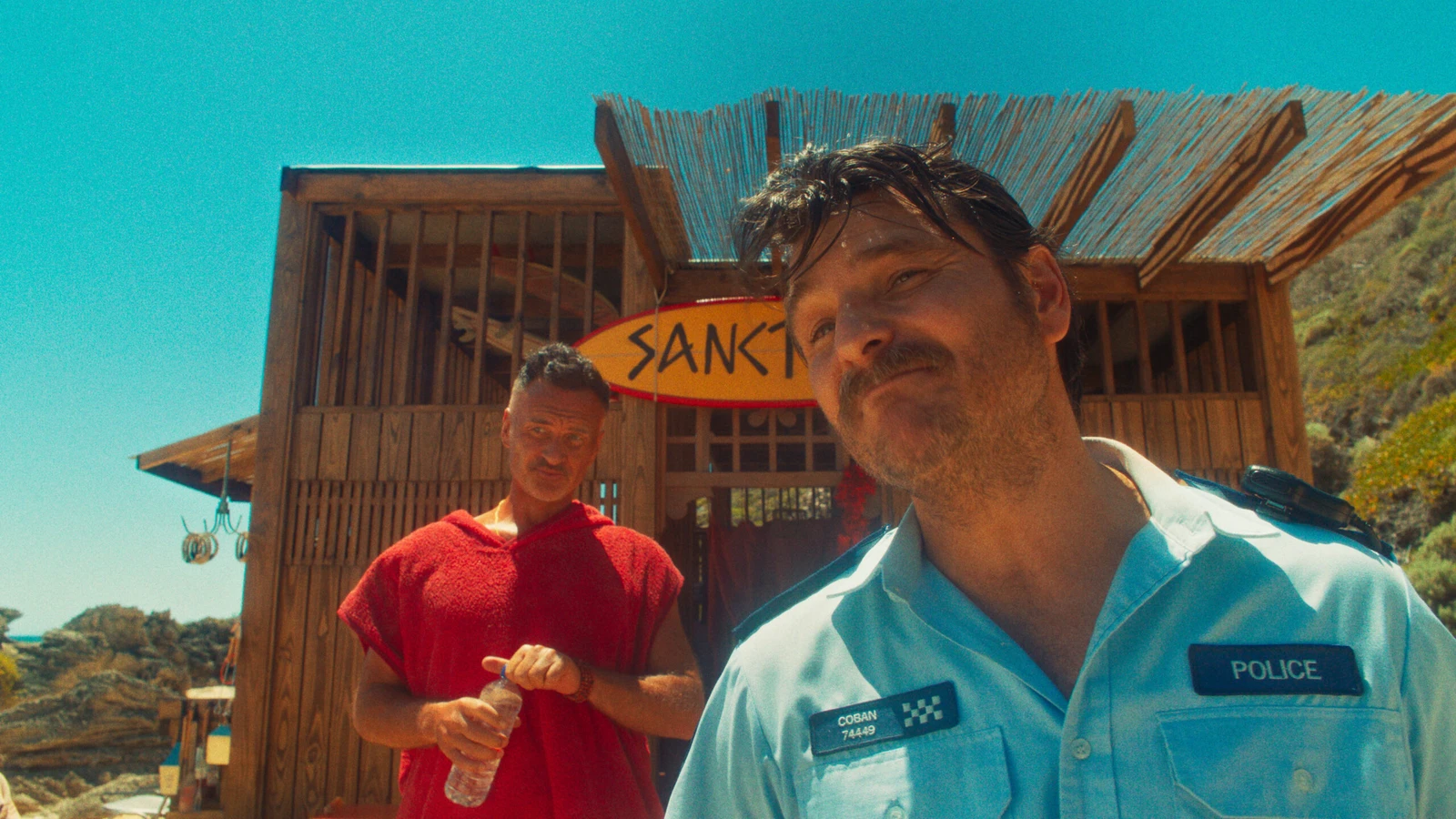
julian mcmahon in the surfer by lorcan finnegan

Do you see Cage’s character as a tragic figure or more of a cautionary tale?

Lorcan Finnegan: It’s more of a character study. He’s a man in his 50s, relationships crumbling, trying to hold onto material things like cars and watches, thinking they’ll fix everything. He’s chasing a nostalgic dream, thinking that buying a house will repair his family, without realising the deeper issues. And he’s imposing that on his son too, in his desire for his son to have the same experiences he had growing up.

There’s a Jungian journey here, stripping away materialism and his ego to confront the shadow self. He loses everything, only to come out the other side with a clearer understanding of what he truly needs, rather than what he thought he wanted at the beginning of the story. As a character, he’s an optimist and a dreamer, but it’s also his downfall.

There’s a strong sense of nostalgia in the film. Does this extend to a critique of traditional masculinity, especially given the tension between primal, tribal masculinity and more constructed, performative versions?

Lorcan Finnegan: Absolutely. The film explores masculinity in crisis, but from a contemporary perspective. Julian McMahon’s character is like a modern influencer type — someone who taps into primal, masculine instincts but then returns to the office. It’s a more subtle, coercive kind of masculinity compared to the raw, physical portrayals you’d see in New Wave Australian films like Wake in Fright.

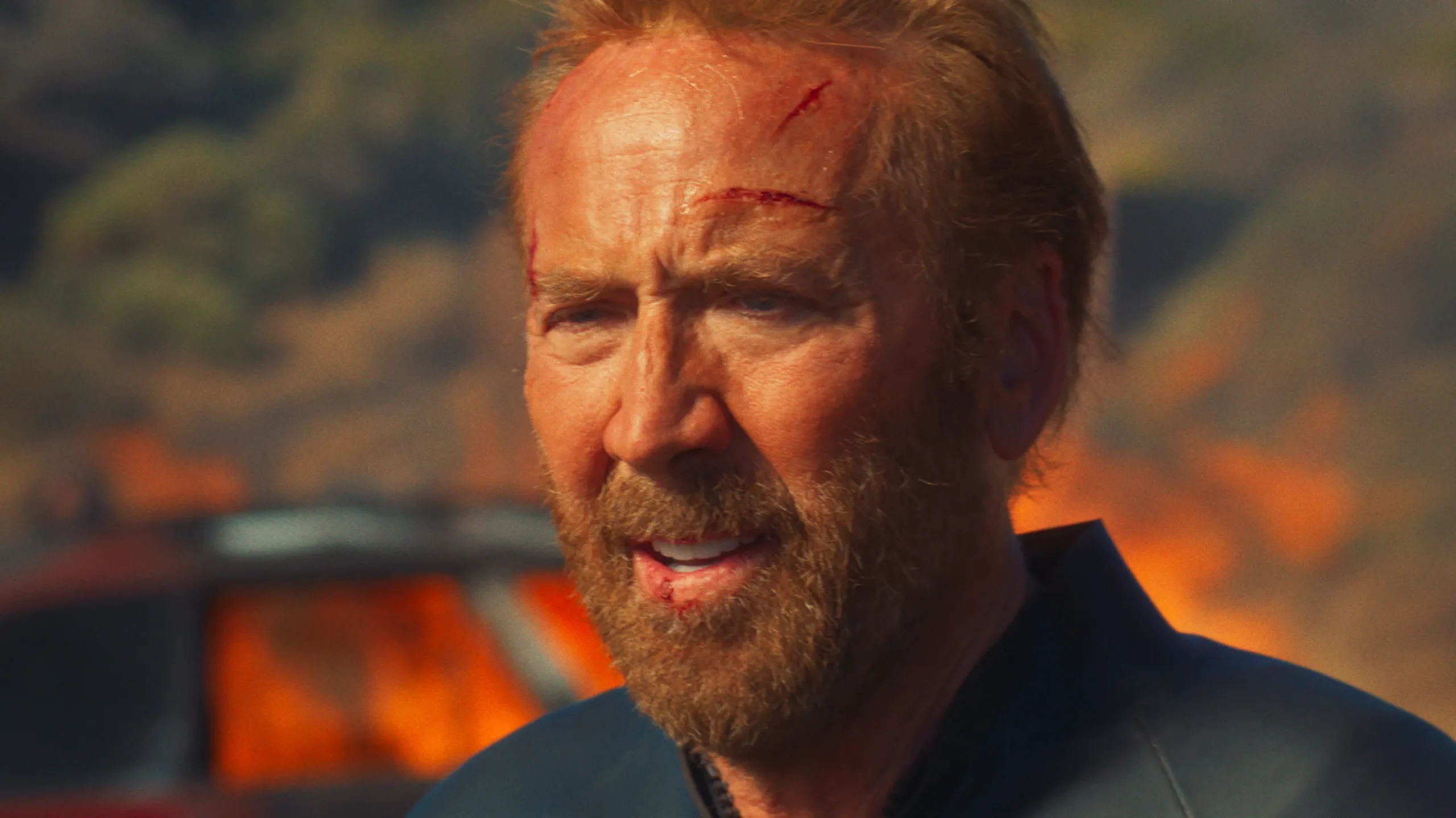
nicolas cage in the surfer from lorcan finnegan

We didn’t want to condemn this entirely but rather explore it from multiple angles. There’s this idea of men looking for belonging, for a sense of identity, and often finding it in figures who are manipulative and charismatic, but who have these philosophies promising clarity and power. These guys want a leader; they want someone who tells them what to do and how to think, so they can be in this club together.

It’s interesting, from a primal perspective, that these tribal, masculine gatherings are almost required for this group of people. They can play nice with their lovely families when they’re public-facing, but there’s this dark underbelly to society, especially among men, that we’re exploring in this film.

The film also touches on themes of belonging and identity, especially in the context of place and ownership. How did you approach this?

Lorcan Finnegan: That theme emerged naturally. There’s a sense in the film that no one truly belongs there, despite their claims to the land. It’s a subtle nod to Australia’s colonial history. Miranda Tapsell, an Indigenous Australian actress, plays the only character who genuinely belongs in the setting. She’s the only one who offers Cage’s character any kindness, even as she tells him he doesn’t belong there. But everyone is claiming ownership of this beach, even if none of them truly belong there.

We trimmed back some of the more overt references to colonisation and Indigenous erasure in earlier drafts to keep the focus tighter, but that undercurrent is definitely there.

THE SURFER will be released in UK and Irish cinemas from 9th May.

Dave Barclay • ‘My Life With Animatronics. Movies, Puppets and Beyond’

Thanks to incredible puppetry work, movies like The Empire Strikes Back, The Muppet Christmas Carol, The Dark Crystal have gone on to become legendary with their timeless approach. After a lifetime of working behind the scenes in the puppet department on these very films, second-generation puppeteer Dave Barclay has put together an autobiography called My Life With Animatronics. Movies, Puppets and Beyond to capture this incredible creative journey. Giving us an exclusive insight into what happens behind the scenes in the puppetry world. STARBURST catches up with Dave to reflect on just some of his standout projects, his lifelong love for puppetry and what else we can expect from his autobiography…

STARBURST: How did you become a puppeteer?

Dave Barclay: I started as a puppeteer because my parents were both puppeteers. Originally, they were actors; they met at RADA, the Royal Academy of Dramatic Art in London, and after a few years of acting, they decided they wanted to do something together, rather than always doing different acting jobs. So they formed their own puppet company called Pex Puppets, and it was an amazing success; it took off, and that’s what they did for the rest of their lives. So, from the age of four, I had puppetry all around me. I wanted to be the third puppeteer of their show when I was a kid, which I was for many years. So yes, puppetry, and puppet making, and writing stories, performing, that was all a part of my childhood. So, I guess I have the perfect excuse for being a puppeteer.

Your first major project was The Empire Strikes Back, what do you remember the most from your first day on set?

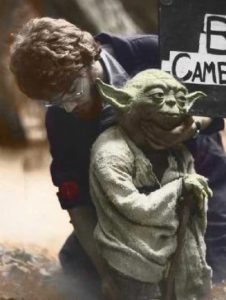
I started working on The Empire Strikes Back for Stuart Freeborn, in the makeup department in the make-up lab, working on building Yoda. Stuart Freeborn said “Oh! There’s been a problem, someone is allergic to something, we need a puppeteer to stand in immediately for the rest of the afternoon” and so, he knew I was a second-generation puppeteer, so he said “No, David, you should go to set and take over.” This is before mobile phones, so there was no way of getting in touch with anyone immediately. I was sent to the set, and my job was to grab the eye control and perform Yoda’s eyes for Frank Oz. I didn’t have any time to be nervous, because if someone had told me a day before, I would have been terrified. So, for this, I just went straight to set, picked up the eyes, and did the job, and tried to do what Frank asked me to do. That was my first day on set, performing in front of camera, on The Empire Strikes Back. If I had to audition, or anything like that, I would have certainly failed, I’m sure! But no, I just went in the deep end, and just went straight to it, and Frank liked what I did. So, I stayed on as a performer for Frank, for Yoda, for the rest of the shoot.

How did you make the character of Yoda feel so real?

Yoda looking real was all down to Frank Oz. He is a brilliant actor anyway, and a great director. A fantastic person, but also, no one had really done anything like this before. This was the first time that an animatronic character like this had to deliver a full performance like Yoda did, and so, he worked it out, initially as an actor. So, he physically moved it out, as a person, without the puppet, and he had all of us puppeteers, there was myself, Wendy Midener, and Kathy Mullen, so there’s a total of four of us to bring Yoda to life, with Frank being the chief puppeteer. Frank would walk us around, and we would have to exactly copy his rhythms, his movements, and his head movements. He would call out when we were rehearsing, when the eyes would move, when there would be a blink, when he would look down. Those sorts of things, so that we all knew the rhythm and the intent of the character. Because, for Frank, it’s all about character. So, it’s making that character come alive. So we all tried to get on the same wavelength as Yoda’s character. So, for the rest of the shoot, we were able to appreciate where Frank would be going, even if we weren’t sure, because we hadn’t had time to rehearse. It’s all about finding this character, and that’s all down to Frank Oz.

What else did you personally bring to playing Yoda?

One of the things that I contributed to, when doing the eyes, was using the eyes to try to get some emotion. I would try to keep them, not just moving like, you have seen some rather rough animatronics over the years, where you just get these mechanical eyes that go blink, blink, blink, and there’s no emotion to them. With Yoda, we wanted to have emotion, so that he is always fluctuating his eyes. And actually, when it comes to the way those particular mechanisms were built, you could control one eye very slightly differently from the other. So it would be slightly asymmetrical, and that made it look less mechanical. So I think the combination of everything really made Yoda look real.
 

Jabba the Hutt is obviously completely different to Yoda. However, what were the key differences, and how did working on Jabba within Return of the Jedi, compare to what you’d done with Yoda?

Yes, well Yoda is a typical hand puppet, so you’ve got your hand that goes straight into Yoda’s head. Frank’s thumb would be the jaw, his index and third finger would be the upper lip, and his middle finger was the eyebrow. We did the cable controls of the ears and the eyes, and then Kathy Mullen reached around and did the right hand for Frank, as Frank also did the left hand of Yoda. So, it’s like a typical Muppet style of performance, but obviously it’s a full animatronic. With Jabba, this was a body puppet, Toby Philpott and I were inside his head, and his shoulders, and I was reaching my whole arm out through a hole in, like, the chest area of Jabba, to wear a big rubber arm with mechanical extensions on my finger. Toby did the same with his left hand, and I grabbed Jabba’s jaw with my left, and then did the voice. I provided the voice on set for Jabba, so, in my rather high, British-style voice, obviously he was dubbed, and the voice was replaced for the final film, but while Jabba was on set, and working with the other actors, it was my voice that everyone heard. We were using a lot of our body weight to move his body around, and there were no fingers in the mouth; it was my entire arm and wrist controlling Jabba’s jaw.

For many, The Dark Crystal comes to mind first when they think about puppets in movies. Looking back, why do you think this movie stands out so much, and what was it like to work on sets of that size and detail?

It was amazing, because my first movie was The Empire Strikes Back, working with Frank Oz, Wendy Midener, and Kathy Mullen. Then, they all moved on to The Dark Crystal and invited me along. So, I was the first British puppet maker on The Dark Crystal, and I got to work with the amazing Lyle Conway, working on Skeksis, the earth Skeksis, and Aughra. So, we built 27 puppets in 9 months, and it was an amazing experience, because no one had ever done anything like this before. The closest thing was Yoda, so I was able to bring some of that knowledge through, but also, the puppet makers and designers on The Dark Crystal were developing new techniques that no one had ever tried before. There were no books or YouTube to find out how to do it. We were making it up as we went along, and trying to find the best way, and the lightest way of building all of these characters, because people had to perform these, 8-10 hours a day. So, they couldn’t be heavy things that you couldn’t manage; they had to be light. We wanted them to emote as much as possible, so it was an amazing experience, and the detail of the sets was phenomenal. It was just amazing, walking onto those sound stages, because, again, back in those days, in the original Dark Crystal and the original Star Wars films, everything was real. It was there in front of you. So, in Aughra’s orrery, where it’s all going around, this is this massive mechanical unit, which could literally take your head off if you’re in the wrong place. It was this amazing piece of engineering, and it was real. It was actually there. So, that was the amazing thing about those early films, everything that you saw on the screen, actually was there in real life.

Who Framed Roger Rabbit? is unique due to its crossover with animation and real life. How did that project compare to anything you’d worked on before?

Who Framed Roger Rabbit? was like nothing I had done before, and I don’t think anyone had tried anything like that before either. Like the other films, we were always at the cutting edge, and pushing the envelope as they say, of what was possible. Robert Zemeckis wanted the best interaction with the actors and the Tunes, that he could possibly do for the time. This was still pre-computers, so, everything had to be in front of the camera for real. With the initial tests, they did a test with a green screen and prop, and then they had a prop on wires. They found that with the green screen prop, you somehow instinctively knew it wasn’t in the set at the same time. So when you drew the weasel to hold that prop, for instance, you didn’t feel like the weasel was in there as well. Whereas, when they drew the weasel around the prop that was actually in the set, it gave the sense that the weasel was in the set, because you knew the prop was in the set. Somehow, you knew that. So, the whole idea was to have every single interaction happen on set, for real, at the same time the actors were acting. So this became like a huge invisible man film because the cartoons would be drawn in later, but we had to move the objects on their behalf, for them, before they were drawn. And we had to work with Don Hahn and Ken Ralston to make sure what we were doing would work later. And also work with Robert, and make sure that the acting of the props would link with the characters. It was really applied puppetry. I had to come up with all of these clever rigs, to move props invisibly, and sometimes, at the drop of a hat, they’d say, “Oh yeah, we need something over here, so we have to quickly rig something.” So I tried to do everything as simply as possible, but it could always be performed, and matched the requirements of production. It was an amazing experience.

When it comes to effects, nothing has come close to this movie since…

That’s true, I mean it really is hard to get that integration, where you’ve got a cartoon character, and some great actors. I just worked on a film, which unfortunately it looks like no one is going to see, called Coyote vs. Acme, where we did just that! We had an amazing interaction with Wile E. Coyote, I built a Wile E. Coyote puppet that we filmed. And of course, Wile E. Coyote doesn’t speak. He has no lines in the film, so how do you get this cartoon character to interact with the actors? You can’t just put a ping pong ball or a tennis ball on set, because there’s nothing there for the actors. So, I created a full, expressive Wile E. Coyote. His cheeks would frown or smile. His eyebrows would move. So his face could actually act with the actors. Everyone said that this was the greatest interaction since Roger Rabbit, but unfortunately, no one is going to get to see it, because Warner Bros has shelved the movie, and it is a very good movie. If it wasn’t a very good movie, you could go “Oh, yeah, I understand” but no, it’s a very good movie.

Fingers crossed it gets released at some point…

I sincerely hope so.

The Muppet Christmas Carol is obviously, popular every single year. What memories do you have from bringing that movie to life, and what did Brian Henson want to see from you?

Well, I think this was Brian Henson’s first solo directing, and he did an amazing job. I think it’s my favourite Christmas Carol movie, and it’s one of my favourite Muppet films. It was really lovely to work on. I worked on it pretty much every day, and I wasn’t one of the lead Muppet performers, that was people like Dave Goelz, Steve Whitmire, Bill Barretta. Those guys were doing the main characters, but they always have more than one character. So when two of their characters are on screen, they need a puppeteer to puppeteer the other character in the style of that puppeteer. So that was basically what I was doing. I also did rats and penguins, and all of the fun things that you can do on the film. I got to double for pretty much every muppet, and work with Frank Oz again, which was a delight. It was an amazing experience; it just brings out the love of puppetry that I have. It was the perfect vehicle for that.

Team America: World Police went on to become a cult classic. Its puppet work is legendary. What were Trey Parker and Matt Stone like to work with, and what do you think they really wanted to see from the film?

It’s an interesting one. I wasn’t one of the core puppeteers, as I was actually working on another project, and my good friend Kevin Carlson was puppet captain. So, he brought me in when I had a few days here and there. I started working with my parents, doing string puppets. Doing marionettes, I did that as a child for pretty much my entire childhood. From about four until I started in the movies, and it was some of my marionette work that got me through Roger Rabbit, because we did a lot of things on strings. So I performed puppets and marionettes for many years. So, that’s what I got to do on Team America. Matt & Trey were great, they would just be ad-libbing and changing everything all of the time. They did all of the voices. They had a little button that would open and close the puppets’ mouths. They were very much like the old-style Thunderbirds puppets. Little mouths, with little eye movements. So they had some puppeteers on radio control, doing the eyes, but usually, it was Matt and Trey doing the actual mouth movements, and the guide voices when they were filming. So, they would ad-lib and change stuff around. And it was just very much this fluid and creative process. It was just amazing seeing them work.

It stands up to this day!

It’s a lovely parody of the Thunderbirds, Stingray, the sort of Gerry Anderson shows that I grew up with when I was a kid.

You became an Academy Award Finalist after working on Cats & Dogs, so, what was that whole time like for you, and why do you think your work on that movie in particular stands out so much?

Well, the Cats & Dogs films were lovely. They were produced by Christopher DeFaria at Warner Bros, and we started off with the idea that they were going to shoot mainly animals, with some computer animation, and they wanted some animatronic photo doubles to fill in certain shots. The original plan for Mr Tinkles, was that they were going to do half a dozen grainy video shots of the puppet. Because at that point, really no one had built a realistic animatronic cat before. They always looked a bit rough. So that was our task, to try and build a photo realistic, expressive, life-size cat. It wasn’t like “Oh, you can build it as big as you want, get a person in it” or something. This was a tiny, real-size cat. So, I spent time designing all of the mechanisms, we had a great team of engineers and builders at the Jim Henson Creature Shop, who came up with this beautiful puppet. When Chris & Larry, the directors, saw it, they were very impressed. And from just, six grainy video shots, he was in the entire movie. They actually wrote new scenes for the puppet. They loved the puppet; the executives at Warner loved the puppet. And they wanted the film-makers to really start working out the scenes, because up to that point, it would be a shot of a dog, just looking somewhere. A shot of a cat, looking somewhere. They were going to do the facial replacement later, a bit like Roger Rabbit, where you don’t see it there and then. So it’s really hard to tell if a scene is working, before you get the facial animation. With the puppets, we were able to give them the fundamental storyline and character of the animals on Cats & Dogs, so, it was a real success for all of us. When we got to see the crew screening, I asked the crew members, the people that had worked with us, and the puppeteers, “How many animatronic puppet shots do you think made it into Cats & Dogs” and they said “Quite a bit, maybe 70” and I said “315!” they went “What!” So, there are a few clunkers in there, a couple of shots where I said “Please don’t put this shot in the film, it doesn’t really work, it looks very puppety” they said “Oh no, it’s fine!” But there are so many shots in that film that nobody knows are actual animatronics, because it blends seamlessly. So yeah, I was very proud of the entire team, doing that.

And then you came back for a sequel!

We pushed the envelope even further on Cats & Dogs: The Revenge of Kitty Galore. When I created a Mr. Tinkles with 76 miniature cables, just for his face. I was driven by computers and special data gloves that I made. We were using the height of computer technology and engineering, through miniature and custom-built cables, into this tiny cat’s face. I think a lot of people thought that the expressions on the face were either CGI-enhanced or completely animated by the computer. But no, it was an actual puppet. So, again, we were all very proud of Mr. Tinkles.

So, how did the idea for an autobiography first come about, and what were your initial thoughts on doing it?

Well, about twenty years ago, a good friend of mine, Murti Schofield, who is a brilliant artist and writer said “Dave, you’ve got to put some of these stories down, you’ve been in the industry for years, I’d be interested, and I’m sure your family would be interested to find out some of the details that they don’t know” so I said, “Yeah, that sounds like a great idea.” But, I didn’t do anything. COVID came along, I still didn’t do anything. I was thinking, “I’ve got so many stories for every single film, and I’ve done like 35 movies, this could be telephone directories of stories, how do I approach this?” And then, as I was looking into it, I found a whole series of photographs, and I thought, “Oh, that’s a good photograph, let’s see if I can get permission to use that one, and then another one came up, and that was the hook. My career has all been about the visual world and performance, so rather than just write a lot of text, I decided that I would add a lot of photos. So, basically the book is full of lots of photos that basically describe the journey that I’ve been on with each movie, and each project, and people that I’ve worked with. So I took the idea of taking a photograph, and then writing about that particular moment. So that the reader can actually see what I’m talking about rather than just visualising what it might be. So, that was the idea behind doing that. I was very lucky I got the Lucasfilm guys, and Disney, Frank Oz, Brendan Fraser, Mark Hamill, all to agree for me to put the photos in the book.

Photos can make it easier to jump into the story at any point

Yeah, there’s so much about different characters, and concepts that people might not know, or projects that people might not know, and “How do you describe that, and make it interesting?” So yeah, that seemed to be the way to do it for me.

You’ve worked on a lot of incredible movies, how did you decide which ones to cover?

Rather than write about every single movie in great detail, I thought I’d tell one or two stories from each movie, and try and get as many projects in that seem suitable. So, not every film is in there, but I think the most important ones, and some of the TV series, are as well. So, I was trying to give an idea of what my life and career has been like, as a puppeteer and a puppet designer. The ebbs and flows, the ups and downs, and the various different challenges from along the way. Most of the major films get some kind of mention, if not, a full description.

Finally, what do you want the reader to take away after reading My Life With Animatronics. Movies, Puppets and Beyond?

I’d like them to kind of understand and appreciate the love of puppetry that I have. That’s what I’m trying to put across, and how I’ve been so lucky, and so privileged to do what I do. Because, what I do, I absolutely love. I’ve loved it since I was a kid, and I’ve had an entire career doing it, so, yeah, if people can get a bit of that coming through, just how much I feel I’ve been really lucky, and how much I appreciate what I’ve been able to do, then that would be great.

Dave Barclay’s website is here.

Find out more here… 

Robbie Davidson • DICK DYNAMITE: 1944

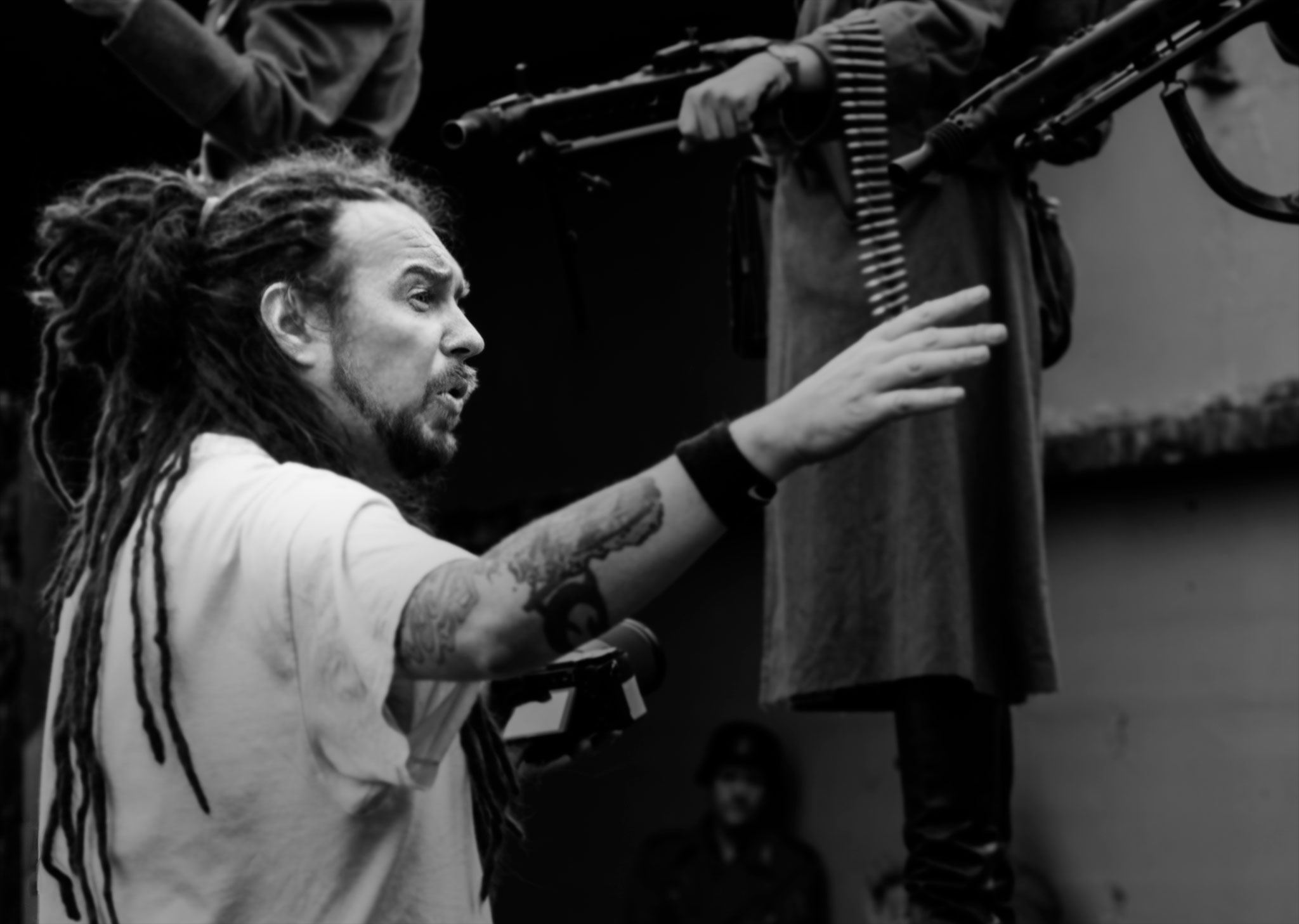
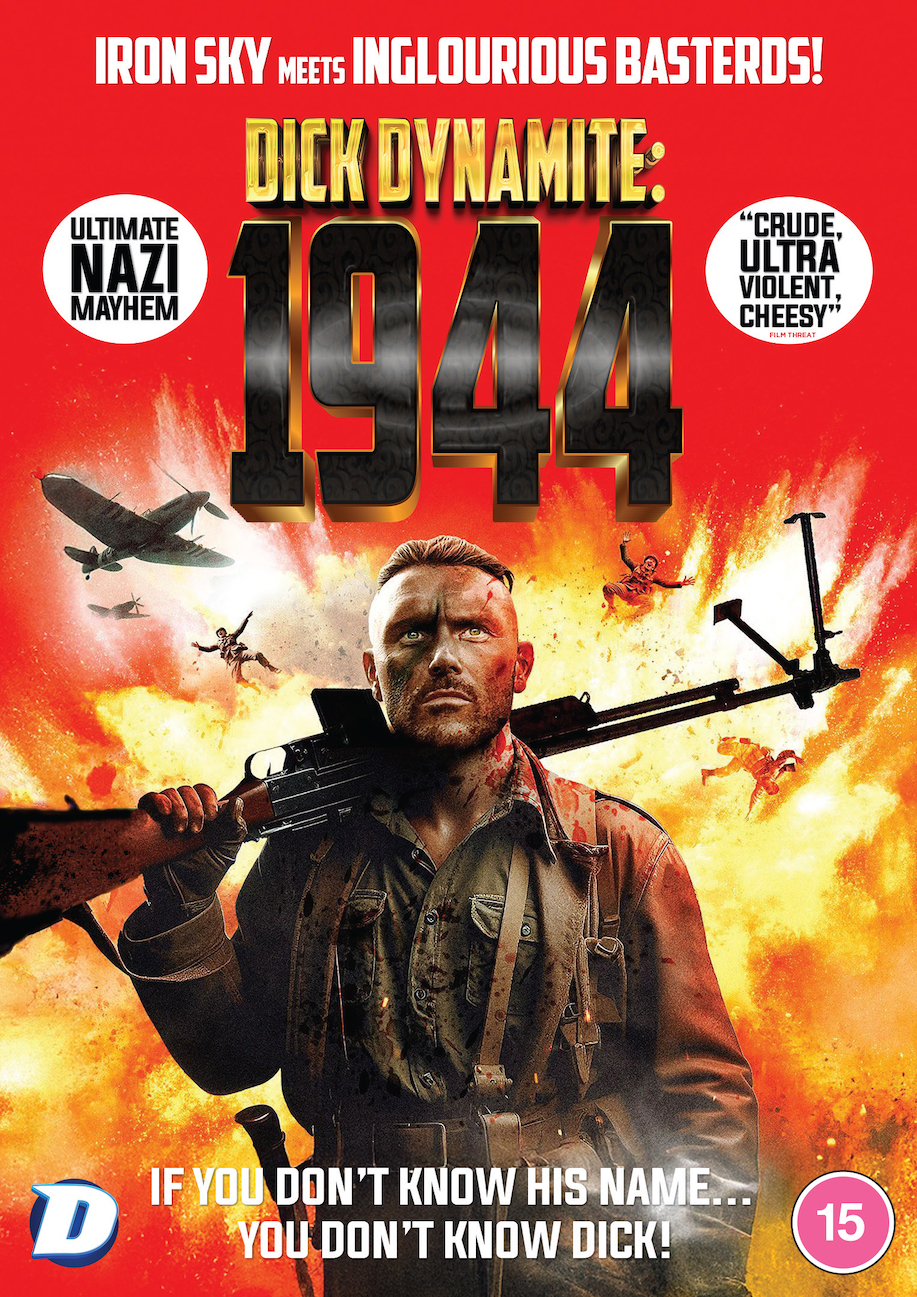
Best known as the guitarist for heavy bands The Exploited and Certain Death, indie filmmaker Robbie ‘Steed’ Davidson took on a daring directorial debut with his gory, tongue-in-cheek adventure, Dick Dynamite: 1944, which is out now.

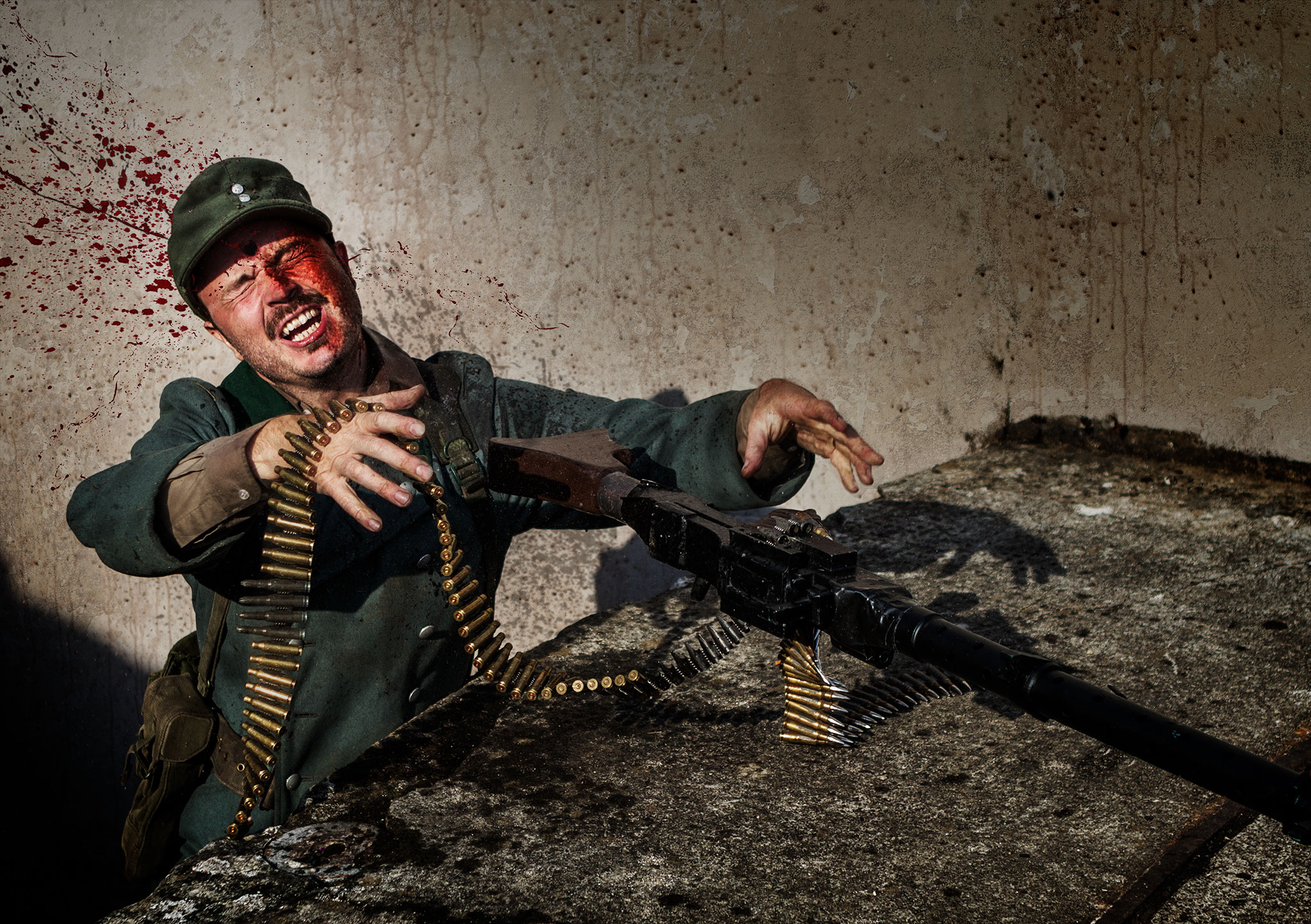
In a crazy plot involving an old-school action hero who takes on Nazis, zombies and ninjas, Davidson’s film features cameos from bands like The Exploited, Biohazard, Queens of the Stone Age, Suicidal Tendencies, Sleaford Mods, Agnostic Front, Rancid, Gorilla Biscuits and many more. 

Described as a retro-inspired love-letter to pulpy, gory action mayhem, the writer and director tells us more about Dick Dynamite, and how he made the film.

STARBURST: When did the idea for Dick Dynamite: 1944 present itself?

Robbie Davidson: I was on tour with The Exploited, looking around on the plane at what people were watching. I imagined the idea for a war movie starring Arnold Schwarzenegger, with all those classic one-man-army action tropes, so I wrote the script later.

I’ve made shorts and low-budget projects before, but never thought I’d have the budget or skillset to make something like this happen. However, much later, we made a crowdfunding video that went well, and we were off. It’s funny to think that we were a bunch of misfits making our crazy film at weekends over a long period of time. I’m a musician and we have a lot of band members and people involved, happy to join in, help us out and treat it like band practice.

We were resourceful and creative, too. Later, while filming, we got access to a Spitfire replica on location at a local airport in Scotland. I got press passes to the C-47s before they headed to Normandy for the 75th anniversary of D-Day, and we were able to film inside.

Leaning into the grindhouse influence, the film has a real mix of practical gore effects and CGI. How much did you know about creating this beforehand?

I had toyed with some of this stuff before but not to the extent we used in the film, especially on the practical side of things. On the CGI, we used muzzle flashes on guns, but largely it was about using CGI to edit things out, rather than adding things in, using a tool to enhance the physical effects. For example, we filled balloons with fake blood to achieve a splatter effect and had to edit them out in motion, before seeing the impact. But that could be tricky, so we had to enforce a rule whereby, anyone who missed throwing a balloon or if it bounced and didn’t explode, they would get hit with blood balloons afterwards, because it made my life so hard to fix! [laughs]

There are some crazy, violent scenes. In some ways, would you say that being a low-budget film helped you do this without restrictions?

Working to our own blueprint was certainly a blessing in many ways. We were working in a small, DIY indie way, which was fun but also tough, as any low-budget filmmaker knows. I realise if we’d been a bigger budget film or had producers on set, checking what we were doing, it might have been a lot harder, or we wouldn’t have managed to go as extreme. There’s a particular scene that I know is an audience favourite – no spoilers! – but I don’t think we would have been allowed to do it, had any outsiders been watching us [laughs]

Do you have a favourite scene in the film?

I’m proud of many scenes, but one that stands out is the long-take shootout through the bunker. Action-savvy audiences have seen that and said it was cool, and it obviously took more time and work to create.

Interestingly, some have said the nightmare sequence is their favourite, which is fine, but also strange to me, as it was a very easy scene to do! We were just coming out of lockdown and decided to shoot this wild scene in the forest with a bunch of people in bands, featuring guys with long hair and tattoos around a fire. So, it was a fun night, but it wasn’t the hardest scene by any stretch, especially compared to anything involving fights, practical effects or the bigger sets we had.

Do you have a favourite death scene?

The death of the boxer in the hangar was originally going to be quite different, and it wasn’t until I scouted the location with the replica Spitfire, and saw the design and everything up close, that I thought of a gory new finale. So now, this guy gets skewered on the plane, then gets his head cut off! It started with a small nod to Indiana Jones, with the guys fighting by the propeller, but then it took a more extreme turn [laughs]

What do you hope people take away from watching Dick Dynamite: 1944?

For me, it’s a real pizza and beer movie with friends! The age I am now, going to the cinema was a big event growing up. So, after all the film festivals, I’ve been happy to hear about audiences enjoying it in that environment. I’ve heard talk of a drinking game, or even bingo, in reaction to all the little nods to other films, so I sincerely appreciate that and hope people have a great time with it.

DICK DYNAMITE: 1944 is out now on Blu-ray, DVD, and Digital Download from Dazzler Media.

Extras include:

Director’s Commentary

Making Of

Dick Dynamite & Co go to Bute

Dick Dynamite goes to Japan

Toy advert

Glorious Basturts

Audition tape

VFX Breakdown

Deleted Scenes

Bobcat Goldthwait • GOD BLESS AMERICA

Bobcat Goldthwait is probably most famous for his work as a stand-up comedian and actor, appearing in everything from the Police Academy films to Disney’s Hercules. But starting with 1991’s Shakes the Clown, he’s carved out a name for himself as one of the most interesting filmmakers working today. His projects range from a found-footage bigfoot horror movie, Willow Creek, to a death-by-autoerotic-asphyxiation comedy and Robin Williams vehicle, World’s Greatest Dad, to the utterly hilarious and criminally undersung cinéma unawarité masterpiece, Windy City Heat. His film, God Bless America, follows Frank: a man on a killing spree after being diagnosed with a terminal illness. It took aim at American gun culture in an increasingly politically and socially divisive world, all the way back in 2011.

STARBURST: I remember God Bless America was my introduction to your work as a filmmaker. I’d rented it on DVD back in what must have been 2012. My housemate at the time came home with his girlfriend just as I had turned it on. For those unfamiliar with the film, there’s this opening scene with a baby… 

Bobcat Goldthwait: Shooting the baby, yeah.

It’s almost like shooting a clay pigeon, but with this baby… my housemate’s girlfriend just looked at the screen, looked at me and said: “Can you turn this off, please?

Haha, that should have been on the poster! When I was mixing that scene, I was in this place in Hollywood where other people were mixing. Gus Van Sant was working on something. I know him a little bit, and he came over as that was the scene that was playing out. I don’t know he’s behind me, and I turn around and he goes, “Uh, you really went for it…” 

It feels like a mission statement upfront: “If you’re not on board with this, get out now. Otherwise, settle in!

Yeah, I think I’ve done that in three of my movies. Certainly, in Sleeping Dogs Lie, there’s a little bit of bestiality at the beginning. And, then, in World’s Greatest Dad, I figured people would kind of know what happened in the movie, so I did a bait and switch where he is doing autoerotic asphyxiation, but that’s it.

My friend, Tom Kenny, had a theory on that. Tom Kenny, I’ve known since I was six. He’s the voice of SpongeBob. We’ve been friends our whole lives, and we started doing comedy as teenagers. He said I used to come out on stage, and people weren’t expecting this guy who was trembling. They weren’t expecting someone to gut fish on stage and not say any words, or I would read a Dear John letter and cry. But then people knew who I was, and they were kind of expecting that. Tom thinks that my movies are the place where I get to challenge people right out of the gate. He was like, “It makes sense you make movies because you could no longer flip people out doing stand-up”. 

Funnily enough, I wanted to ask you about Tom Kenny. He makes a cameo at the start of the film as an office worker.

Yeah.

I couldn’t find anything about this online, but I swear I also heard his voice three or four times at various points throughout the film.

Yeah, good ear! That’s Tom doing a lot of that. That goes back to Shakes the Clown. He’s doing a lot of what you hear on the radio and things like that. He does a lot of that in the movie. It was really fun. Him and another buddy of mine, Dave Boat, and Tom’s wife, Jill Talley. It’s interesting, when I did an episode of my anthology show, which was almost all animated, Tom came in when it was time to record the voices. He directs a lot of animation voices, and it was so amazingly helpful. He’s really great at that. So we work together as often as we can. 

God Bless America is streaming on STUDIOCANAL now, but the political and cultural climate is very different these days. How do you think the film has aged?

I mean, people say this a lot – they’ll say, “Oh, you couldn’t do that joke now” or “You couldn’t do this show anymore”. But I really don’t think you could make God Bless America. Certainly in the United States right now. But what fueled the whole thing was I was like “Where are we going?” because you could see the writing on the wall, how dark things were getting, but things actually got way darker than I imagined.

If you were going to try to make it now, is there anything you’d do differently?

There are a couple of scenes I would add to it, which is funny because it’s the only movie I’ve made where I regret a couple of scenes not being there. There’s a security guard that walks them out, then at the end of the movie, he encounters a security guard – it’s a different guy. It should have been the same guy. And there’s a scene in the middle I would add where that security guard goes to the authorities and says I know who it is and no one trusts him. No one believes him. I think that would have made it a better movie, but whatever.

Now that the movie is streaming, are you seeing a resurgence in popularity?

There are a lot of folks who take clips of Frank’s speech. Those are going around the internet, and I get tagged on those a lot. I believe it’s because people feel that it pertains to now, you know? Obviously, they do. They’re not getting nostalgic. They’re kind of saying, “This pertains to now”. 

What are your thoughts on Luigi Mangione?

Haha, I could do the pat answer and say, “Well, it’s a tragedy when anyone dies”. But no, I’m like, “Go Luigi, man”. If someone told me that Luigi had seen this movie and it inspired him, I would go “Right on!

I’ve moved out of the US. I live in Ireland now. America got too great, you know? Not that Ireland and the UK have the perfect government and don’t have setbacks and stuff, but the insanity that’s going on in the States right now is… that’s what it is: it’s insanity.

Your last scripted feature was 2013’s Willow Creek…

I believe it would be Willow Creek, yeah. And then I did the Call Me Lucky documentary. I did that anthology show I was talking about, Misfits & Monsters. I should try to work on getting it over here, you know? Because I don’t know where people can see it if you’re in Ireland or the UK. 

Please do! Are you working on any new films currently?

I have two screenplays that I feel are in shape right now, that I’m out, trying to get going. One of them, believe it or not, is a very sweet movie. I wrote a family picture. My friends read it and they said, “The most fucked up thing about this movie is you wrote it”. 

It’s not like a movie where I’m trying to sell out – it’s like every time I make a movie, I try to challenge myself. I just feel like the most punk-rock thing I could do right now is to make a sweet, hopeful movie. That’s really going against the grain right now. You want to want to piss off the fascists, you just need to be happy and that’ll piss them off, you know?

I have to make stuff, so I know if I get any more frustrated, I’ll go back to my roots and go make a movie with an iPhone and stuff – which I have no problem with, you know? I’m not sure where I’ll make a movie next, so that’s the biggie.

So you might make it in Ireland or the UK?

Yeah, I’d be really surprised if I don’t.

Talking about your future projects, are we ever going to see Gay Billy Jack?
[Billy Jack was the protagonist of a series of action movies starting with The Born Losers in 1967. Goldthwait spoke about his desire to make a gay reboot of it on an episode of Harmontown back in 2015.]

Oh, you know what’s funny? I actually dusted that off not long ago and started working on it. Billy Jack, he was kicking ass for hippie causes, and so I love the idea of a gay action hero, you know? Actually, this is weird: I’m bringing up Gus again. I said to him, “I want to make the coolest – that if you were a 12-year-old, gay kid, this would be the coolest movie outside of 800”. Wasn’t that the movie where the soldiers – was it 800?

Yeah, 300.

I added 500! I go, “Besides 300”. Gus says “Isn’t 300 a gay movie already?” I was like, “Oh yeah, OK”. 

But yeah, it’s funny. I did dust that one off. My daughter identifies as a lesbian, and I told her a scene in it where these guys are harassing these lesbians, and then, the Billy Jack character – he shows up and he starts defending them, and they go to him, “No, we got this”. And then they kick the bad guy’s ass. I go “Do you think that’s good?” and she goes “Yeah, I think that’s a good scene”.

That movie needs to be made like a ‘70s film, you know? With those zoom lenses and probably shot on Super16 or something. It should be made that way. It’s not ever going to get a studio budget, but I don’t think that would work anyway. 

Now our readers can check out God Bless America streaming on STUDIOCANAL, is there anything you’d like to say to prime them – either as first-time viewers or if they’re planning to revisit the film?

You know, I think sometimes people think the movie is like me with a grudge list. But it’s a violent film about kindness. But what happens is it has to be corrupted. They have to be doing a bad thing because murder is bad. I think, sometimes, people wanted them to have Kevlar vests on and stand back up, but I guess that’s how the sequel starts.

Is a sequel something you’d ever consider? 

No, you’d have to do like a Muppet Babies version and do, like, Frank as a teenager. Maybe that! But now that it’s streaming, you need to convert your roommate’s girlfriend.

I’ll send her this interview!

GOD BLESS AMERICA is available to stream on STUDIOCANAL Presents now.

Felipe Vargas and Emeraude Toubia • ROSARIO

Rosario is the feature debut of Colombian filmmaker Felipe Vargas, shot in his home town focusing on a Latina lead, her family, traditions, and ultimately, her identity and how accepting her past helps her in the present. Starring Emeraude Toubia, David Dastmalchian, José Zúñiga, Diana Lein, and Paul Ben-Victor, it follows the titular Wall Street stock broker (Toubia) going about her day-to-day business when she received a call from her grandmother’s landlord Marty (Ben-Victor) informing her she has passed away. It becomes apparent Rosario and Griselda’s (Constanza Gutierrez) was strained before her death, following the split of Rosario’s parents Oscar (José Zúñiga) and Elena (Diana Lein). After travelling to Griselda’s building and meeting Marty as well as Griselda’s eccentric neighbour Joe (Dastmalchian), she discovers unusual markings on the body and a secret area in her home filled with books on Palo, an African diasporic religion that sees practisers use bones of humans and animals to invoke spirits. Soon, Rosario begins to think Griselda placed a curse on her granddaughter and a demonic entity is plaguing the building. Ahead of the film’s release on May 2nd, STARBURST sat down with Vargas and Toubia to talk about the film’s influences, the fun on set, and the representation of grief and the familial unit in horror.

STARBURST: Where did the idea for the film came from and how you got the project off the ground?

Felipe Vargas: I worked with an extraordinary writer, Alan Trezza. He’s Colombian American, and we immediately connected over that. The script had everything I loved in film and more. It was body horror, it’s a multi-generational family story like the one I grew up in, and it was just a bloody fun roller coaster ride of horror. It was very [Sam] Raimi-esque, so it was a perfect fit. I worked with this incredible team whose entire vision and goal is to create these Latin American stories, but through a genre lens and for an American or international audience. It came together very quickly, until the [WGA and SAG-AFTRA] strikes, then we had to delay. What made this project really special was that we filmed it in my hometown in Colombia, so it just felt very full circle and the perfect first feature.

Did the strikes mean anything was changed with the script at all?

It was a blessing, as I was able to just really focus on the script and make it the best it could be with Alan. It also allowed us to bring on incredible talent, because there were limited projects. We were under the SAG waiver because it was an independent film, so we were able to bring on David Dastmalchian and Paul Ben-Victor, who are legends and incredible actors.

Emeraude, what attracted you to the role of Rosario?

Emeraude Toubia: I love how her façade that she has at the beginning is completely peeled for her to fight for survival. It was my first time doing horror, it was something that I wanted to do and see how it was. I really enjoyed working with Felipe and with the entire team to explore this genre. More than anything, I loved being a Latina lead in the horror genre. Latinos are the people who mostly see horror films, and we’re not always front row and centre, and this and this time we are, and I hope this continues to create more opportunities for people like us.

What inspirations did you bring to the role? Did you draw from any of your previous projects, or anyone in your personal life?

ET: I feel like a little bit of myself is in this role. My insecurities, how I sometimes pretend I’m someone different to fit in, and thinking that that’s what’s going to make them like me. On the contrary, I feel it’s only harming myself. Trying to be as authentic as I can and feeling proud of where I come from is what makes me free, and it makes me blossom into something a lot more beautiful.

Visually, we felt like there were a lot of genre films, such as Evil Dead and The Thing, which the film pays homage to. What were your inspirations behind the film?

FV: That’s a huge compliment. The Thing is one of my favourite films, and Raimi is one of my favourite filmmakers. Italian giallo films that have a ton of colour also influence the film, like the work of Mario Bava and Dario Argento. Santa Sangre, that Alejandro Jodorowsky movie is insane and so much fun. Those are the big influences, and a little bit of Guillermo del Toro with the set decoration, the romanticised sort of horror and the love of monsters.

Grief and fractured familial relationships has always been prevalent in horror, but it feels like it’s something that has been explored more frequently in the last decade. Why do you think this is?

FV: Horror has always been a mirror of society, what we’re struggling with or what we’re dealing with. Over the decades, you see these horror trends. You have the paranoia of the ‘50s and then the final girl of the ‘80s and the ‘90s. Now, I think there’s a new sort of version of horror beyond the grief and the family relationships. It captures the chaos and the uncertainties of life. At Rosario’s core, it’s about sacrifice, what we give up to fit in, or what we push away to succeed. It’s about the sacrifices that our parents and our grandparents made for us to be where we are today, and the burden of that sacrifice.

ET: I think we all can relate to it. We all experience it, and that’s why it’s something that, no matter where you are, where you live, it’s something that you can relate to and identify with.

As well as the genre elements of Rosario, there are a lot of comedic beats in the narrative, too. How did you find balancing these two contrasting angles?

FV: All props to our writer and then to Emeraude for bringing that humour to life. Trezza has such a biting, searing sense of humour and sarcasm, and then Emeraude is hilarious and charming and delivers on those moments. It was the right script and the right cast just brought to life that humour, and I think horror comedy are the opposite sides of a coin. They’re so interconnected because it’s all about the surprise and the misdirect.

There’s a lot of heavy subject matter addressed in the film. Emeraude, how did you get yourself into character, and then how did you shake it off after filming?

ET: The beautiful thing about the movie is that Rosario is finding everything out as we do. She’s trying to navigate it, and it kind of just helps me, because I’m also trying to navigate it. So I was just playing with what comes naturally, as a human being, with how we’re always trying to find things out. I’m very in and out of roles, I’m not very method-y when it comes to acting and and I like to live in the imagination. When it’s cut, it’s cut, and I’ve been pretty good at that. The set was just so, so realistic and beautiful, and it guided me and let me be. Everyone and everything on set worked itself so I could just let go.

Despite the terrifying contents of Rosario, you so often hear that these heavy, scary films make for the most fun times on set. Was that true for you both?

ET: It was so fun. I would pull up a lot, and I had scratches on my face, I was hanging out with worms and cockroaches, running away from dogs, and being in the cold. In the moment, it felt really heavy, but I would do it a million times. It was really fun to be very physically involved with the film.

FV: It was such a blessing, because even though it’s a New York story, and we filmed partially in New York, the bulk of the film was done in Colombia where I was born, where I’m from, so to be able to go back home in a way with this first feature was incredible. I was able to throw my parents in as extras, and as Emeraude said, it was just a joy every day. This is the magic of movies when you blend special effects, FX makeup, and creature effects. The fire and blood and gore and vomit all coming together to create this creepy, gross, fun experience. To me, that is pure joy.

Rosario is in US cinemas from May 2nd.


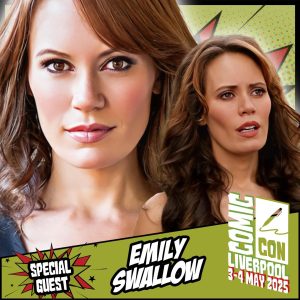
Emily Swallow • Liverpool Comic Con

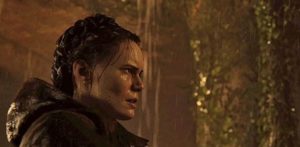
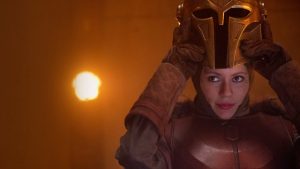
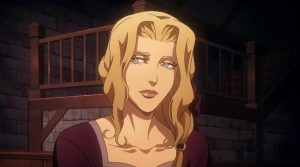
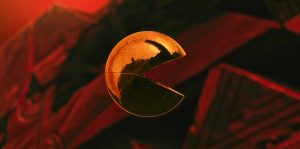
She’s been in one of the most brutal games ever made, The Last of Us Part II, she’s been on epic adventures through space as The Armourer in the monumental Star Wars hit The Mandalorian, and she’s even tackled the role of Puck in the disturbing alternative version of Pac-Man in Secret Level. Emily Swallow has built up an exceptional acting portfolio, filled with characters that have a realistic level of depth to them, and ahead of Liverpool Comic Con, STARBURST talks with her to reflect on her acting so far…

STARBURST: How did you get involved with the world of Supernatural, and how would you say that Amara compares to the other villains on the show? What makes her different?

Emily Swallow: I got involved simply because I auditioned for a lot of things, I feel like I’m always looking for work. It’s part of being an actor, and I got to audition for the show. I hadn’t seen it much. I’d seen a few episodes, because I had a lot of friends who had guest-starred in it, but I had not been an avid watcher. I watched a few episodes, to prep, and try and get some backstory, but I also think I benefited from just not knowing too much. It is such a testament to the creativity of their storytelling, but also to, the fact that the show always comes back to the family (Winchester family), and that relationship. I think that’s really the staying power. I think that every single character, even these like, totally out there villains, like Amara, they have such humanity. So that was really the way in for me. I think that was a way that she was really distinguished as a villain. Which she was at first, and then I think she became less so. It was my first time playing any sort of character that had supernatural abilities, a deity. There was nothing that I could relate to, with that! But, I could connect to her hurt, and her feelings of being misunderstood, and not being listened to. That was such an easy way in for me. I feel like a lot of people wound up connecting to her in spite of themselves, because of that. I think we can all relate to, feeling ostracized, and what she deeply wanted, whether or not she really knew it at the beginning, was this connection with the only family that she knew, and he was hiding out somewhere. Like, she didn’t even know where to find him. So I always say, I never condone smiting people, and sucking their souls, but I can certainly understand why she had these feelings of frustration, and why she acted out that way.

The Last of Us Part II is one of the most brutal games we’ve ever played. How would you describe the character you play, Emily (Seraphites), and what did Neil Druckmann and Halley Gross want to see from her in the game?

It’s one of the most brutal scenes, in one of the most brutal games. I was just captivated, talking with Neil Druckmann about this world. Because I played a lot of role-playing games, video games, and computer games when I was a kid. But it had been many years, and quite frankly I did not know how much that medium of storytelling had advanced, and I think particularly, with his way into it, even though I was this character that, I’m not in the game for that long, but Neil cares so much about the storytelling process. We had several meetings before I ever did my motion capture work. He explained to me the world, he explained to me what he was trying to say in a larger message with the first game. We talked through some of that, and we talked about how this world connected to that, and how it was a jumping off point. Then, he didn’t give me a ton of information about this character, but I think her actions say plenty about her. It’s always delicious as an actor when you get to play someone who is a villain or who is evil. Or, if we’re going to be softer about it, misguided. There’s something that is just so satisfying about giving in to that. Shooting that was really fun as well, doing motion capture work, it’s like going back to being a six-year-old, and just playing on the playground, because you don’t have a set, you don’t have costumes. Everyone is wearing these weird suits, with the little motion capture censors on them. You really have to use your imagination. I got to work with some people who had been a part of the first game. Everyone comes to it with such a feeling of play and freedom. Neil really cultivated that environment. It’s such an elaborate process, and there are so many people who are bringing so much skill to it. It was really cool to get to see the inside of that process, and then to see that the result is this game, which at times is like a movie, but you also get to step into it. You get to make these decisions as the characters, and explore the world that way. It’s such an incredible storytelling medium.

You got to do motion capture for the game as well. What was that like to do, and what do you think that process brings to the world of The Last of Us in general?

I think we have some awareness when we are playing a game like that, that it is real people who have gone in and created it, and like, whether or not we are thinking that the whole time, I feel like there’s a layer of that that must seep into our experience as the player. It just feels more real. Which, in some ways, is terrifying, I guess! When people go on a deep dive into these games. It’s such a special thing. It was really cool to watch the first season of the TV show, and to see that it’s a different story. It’s the same at the root, but the experience is so different. It was so interesting to me to see what they chose to pull out of this game that has multiple trajectories and multiple characters that you can explore. They kind of had to set it, and follow a very particular path. I thought it worked brilliantly. It is a different medium, and it evokes different experiences. It draws us in even more holistically.

Star Wars is known for its incredible use of practical effects, so I’ve got to ask, what do you remember the most from like, that side of the process as The Armourer on the set of The Mandalorian?

Everything that I shot in Season One was within a practical set – my little forge. I saw the volume, but I never worked with it on Season One. So, I got to have that for the whole first season. It was so important for a character like her. Even though she is doing space blacksmithing, it’s a very grounded, tangible thing to be a builder. And, I loved that it was sort of a sacred space that The Mandalorian would come and visit every time. We joked about how ridiculous it was that we had to sit at that tiny little table, and every time we would try to sit, the first few times, we inevitably bonked helmets. It was so awkward, because we were both in this big armour. The level of craftsmanship is just astonishing to me, and Tony Swatton, who is the blacksmith I trained with, built all of my tools for the show. He inspired Jon Favreau for what the Beskar should look like, because he had this Beskar steel and had these beautiful designs, which was what the Beskar was based on.

Even though Beskar doesn’t exist in the world as we know it, I know that it’s based on something that’s very tangible, and something I have gotten to see the process of making. One of my favourite things about being an actor is when I get to learn new skills. It was really satisfying with this character, to get to learn the art of blacksmithing, and to see how the rigour of that process informs her naturally as a person, and the way she goes about life in general. The most important thing is that everything has to be beautiful, but they also wanted to make sure that I felt comfortable using the tools. I am told that I have four different kinds of hammers on this show, I’m only aware of three, because I had one that I used for most of my actual blacksmithing, and then I had a foam one that I used whenever I had to beat somebody up. Then I had one that was their favourite to shoot, because it was the most beautiful. It was titanium, but it was like 20 pounds. So I couldn’t do anything with it except hold it. All of those are crafted to look the same, and you think it’s the same thing. The level of detail that has to go into that, and how they create those props, is incredible. Even when I did work on the volume, there would be days when I would walk onto the set, and it was really hard to tell where the physical set ended and the volume began, because both were just so exquisite. So it was a real delight, to get to do that. To be able to blend the practical world with the volumes, so we weren’t just using green screens and blue screens. It’s great to go into your imagination, but it’s also so much fun as an actor, when you have all of that.

The Armourer has some brilliant fight sequences in the show – you fight stormtroopers and The Mandalorian himself – which one was the most rewarding for you to work on, and why?

I have to give credit to all of our incredible stunt performers, because I do not have the skill to do all of the stunts. Also, I really appreciate them and I appreciate our stunt coordinators and fight coordinators, Ryan Watson and J.J. Dashnaw. They were willing to let us be a part of it as much as we could. The stunt performers who perform a lot of the stuff are Lateef Crowder, who is Mando’s stunt double; Lauren Mary Kim, who was my stunt double for Season One; and Joanna Bennett. They all worked with me, to train me, and to help me pick up as much of it as I could. I did try to learn every single sequence, whether or not they were going to actually let me actually shoot it, because some of them, they just won’t let us shoot it, because of risk and liability. It’s part of the language of expression, for the character. So, it was really important to me to know what they felt like in my body. I think the most satisfying one for me to learn, and to do, was the training sequence with the lightsaber. It was sort of like my Jedi moment, my Jedi training moment. With season one, I didn’t have any martial arts training, thank goodness I didn’t do any of that fight with the stormtroopers because it would not have looked nearly as good. But then for The Book of Boba Fett, I said, “Well, I want to train, I want to try and learn this.” And so, they gave me the time, and the space, and the instruction to do that. And so that was kind of one of the first ones that I took on, and was really able to do. It stands for so much in the show, and it was just so satisfying to get to do it, that I think that’s the one that I delighted in the most. But also, every time I get to see that one from season one with the stormtroopers, I have to laugh. I asked if I could do it, I knew there was going to be a fight, but I didn’t know what it was going to look like. I was like “I’ve done stage combat! I’m athletic, and I can learn things!” Ryan our stunt co-ordinator at the time, he said, “Do you have any martial arts training?” and I said “No, but I pick stuff up!” he said “That’s really cute…!” he was like “Yeah, you can train, but it’s based in Kali, you’re welcome to train, and see what you can pick up, but we are probably not going to use you for this one….” and this was like two weeks before we were shooting it. So I did like some transitional things, but I didn’t actually see the full sequence until the episode aired, and when I saw it, my jaw just dropped. I was like “OK, I get it!” It would not have looked like that. You would have seen me trying really hard, and you would have said “That’s so cute, she is making such an effort!” but it would not have been as exquisite.

As the show has gone on, The Armourer has become a much more central figure. What has that progression or story arc been like to work on for yourself, alongside Jon Favreau and Dave Filoni?

At first, it made me a little nervous. I think that she’s a character who benefits so much from mystery. As an actor, I want to work as much as possible. I was excited about being on set more, but I was also a little trepidatious about whether people would be less interested if they found out more. Jon and Dave are brilliant. They’re creative, like the best team coaches ever, because they know how to bring people together and ensure everyone has a voice at the table. Make sure everyone is focused on the central story point, which is so important on a show like that, where there is so much that’s going on technically, where we’re shooting out of order. We always have like two episodes shooting at once, so we’d be running back and forth. To scene six in episode six, and then going to do scene two in episode one, and trying to keep track of what the story arc is, is really important. They were so integral in keeping us rooted in that, and to listening to what our instincts are for these characters. They’re wonderful storytellers. They certainly have an idea for where it’s going, but they are not so glued to that that they’re beyond listening to input or noticing when something shifts. One of my favourite things about the process of making a movie or a TV or a play or whatever, is that there are words on paper. A writer can imagine how it’s going to play out, but then something different, either in large ways or small ways, happens when you have real, live human beings. Saying these words, and having these physical relationships. So there were dynamics that we discovered as we were shooting. So the story sometimes changed a little bit, and especially with my character being helmeted all the time, they very quickly realised, with any of us wearing our helmets, it was really easy if they needed to rewrite a scene. They don’t have to pay attention to how somebody’s mouth moves. For many of my scenes, we recorded different versions of lines or different options for dialogue. And then, I had to make sure that I was watching the episodes. I was doing non-stop conventions, whilst season three was airing, so I always had to make sure that I watched that week’s episode before I went and did conventions, so that I wouldn’t say the wrong things, so that I would know what the actual story was. They are just such a delight to collaborate with, because they are so smart. They’re always the smartest in the room, but they’re so humble, and it truly is like a real collaboration. I think when you create an environment like that, everyone just steps up to the plate with their A game. Everyone is firing on all cylinders, and it was just such a delicious space to be in, I just love working with them.

Castlevania went on to become a hit, when you look at the show, why do you think it’s gone down so well? Like, what really makes it stand out?

It was so smart of them, and it’s such a dark show. They set it up with this relationship with my character Lisa Tepes and Vlad. That opening scene between the two of them is almost like a romcom! It’s so silly, and she’s calling him out on basically just being rude. You get to see the heart of this guy, that we all know from like, legends of Dracula, and they have a very strong opinion of who he is. In the series, he wound up, sort of like Amara. He didn’t act out his feelings in healthy ways. You could see the root of that; you could see that he had the potential to be so loving and that he had real humanity. So I think that that gives a way into that pain, which feels a lot more accessible than if we are just thinking about Dracula! I started to hear people say this, and I saw this doing Supernatural, and I think it’s sort of the same, with a show like Castlevania. I think it helps people feel seen, and to get in touch with their own complex emotions, when light and dark are sort of, personified. There are a lot of people that I’ve talked to about Supernatural in particular, who feel like the mental darkness that they might struggle with, or personal demons, seeing that personified in this heightened way on a TV show, gives them access to things that feel in-accessible when they’re on their own. I think that there’s something that is so re-assuring about that, and makes us feel more connected to other people, who are having the same experience. So, I think Castlevania is probably like that. We have such strong forces of light and darkness fighting each other. Ultimately, you’re hoping that goodness wins, but you also see that goodness is different for different people. Depending on what life throws at us, we might respond in ways that are very relatable, but then wind up hurting people, and so, grappling with that, I think feels very accessible to people, and I think that’s one of the reasons that Castlevania gained such an audience. It’s beautiful, the animation is absolutely stunning, so there’s that as well! It’s nice and pretty to look at.

The idea for Secret Level is very unique, what attracted you to working on the show and what can you tell us about the episode that you’re a part of, PAC-MAN: Circle.

It was a job that was offered to me, I didn’t really know much about, the larger context of what I was recording, I didn’t know the whole context for the series Secret Level. Aleks Le, the other actor in that, he and I talked when we finally saw the screening, and we both expressed such surprise at what it looked like. We had some concept art, but we didn’t really know the world that we were voicing. It’s pretty clear just from the dialogue that it is a dark and unforgiving world, but I love the concept for the series as a whole. They had this wonderful concept, and they trusted the writers and the animators. They gave them free rein, to use any point of inspiration as a jumping off point for each episode. And so I love that there are episodes you watch, and you go, “Oh, yeah, I know exactly how that connects to this video game” but then there’s also this space for something like the Pac-Man episode, which is very divisive. I’ve heard some people say that they love it, and some people say, “That’s not Pac-Man! I want nothing to do with that!” In keeping with what we were talking about with Supernatural and Castlevania, I love that it taps into something deeper than just Pac-Man, and sort of the nature of some of our struggles in life. How we build up this fortitude, we learn lessons, and we advance, and then we get knocked back down again, and then, what are you going to do at that point of decision? Are you going to say “OK, I got knocked down, but I’ve acquired some more skills, so let me give it another go!?” Or, are you going to be completely demoralised? Are you going to open another door, and maybe go to a different level? So I loved that it played into that metaphor of life, and just video games in general. I think there is something that is so satisfying to us as humans, that in these games, we do get a chance. Like, even if we die, we can start over! We can say, “OK, I died that time, but now I’ve got this secret code, I know to avoid this guy, and I know to go through here” and so, we get to advance. I think it’s delicious, it’s so weird. I showed it to my nephews, and they were completely freaked out by it, and my brother was not a fan, but that’s OK. I’d rather be proud of something that’s very divisive, than something than something that is just kind of, meh.

How excited are you about your upcoming appearance at Liverpool Comic Con? There are going to be a lot of Star Wars actors there!

I love getting to do conventions! I started acting in theatre, and you have a very direct connection to the audience when you’re doing theatre, you’re living in the same space, you’re breathing the same air, and they’re an integral part of the experience. I really miss that when I’m doing film and TV, and I’ve realised with conventions, it’s a chance to complete that storytelling loop. I learn so much from the fans, especially with Star Wars, because Star Wars runs deep; people have so many varied connections to it. I’m doing a convention this weekend, with some of the kids from Skeleton Crew, and I’m so interested to talk to them, because they’re this entirely new generation, that is, just now getting into Star Wars. I love that I get to meet people my age, who are sharing it with their kids, there are grandparents who are watching it with their grand kids, it’s a multi-generational story, and I feel like it’s one of the myths of our time. So to get to meet people, find out what hits them, and what they take away from it, from Star Wars, and any of the projects I’ve been fortunate enough to be on. I love getting to meet people, and I love that I get to travel all over the world, and see how these stories hit in different places. It’s interesting to see what resonates in different areas of the world, and what people are drawn to. It’s just such a learning experience for me. I get to meet actors, and musicians, and performers that I’ve never worked with, but they’re doing these conventions as well, so I get to learn about them, and I get to be a fan girl.

Find out more about Liverpool Comic Con here.

The Mandalorian is streaming on Disney+ and Secret Level is streaming on Amazon Prime

Follow Emily Swallow on Instagram 

Fred Mollin • UNPLUGGED

With a career spanning decades, Fred Mollin’s prolific work producing iconic music and composing for film and television makes him a natural storyteller. In his book, Unplugged, Mollin draws upon his rich experiences to offer readers a fascinating glimpse behind the scenes of the entertainment industry, delving into his creative process, his collaborations with renowned artists, and his unique perspective on the evolution of music and entertainment. We spoke with Fred Mollin about the book, his work composing for things as varied as The New Gidget and Friday the 13th: The Series, as well as his work on the Disney Lullaby albums.


Kieron Moore • SECRETS OF A WALLABY BOY

Secrets of a Wallaby Boy BTS - Kieron Moore and Sam Jones

Paying homage to the cheeky Confessions comedies of the 1970s, Secrets of a Wallaby Boy follows a horny young gay chap who thinks his new job as a cycle courier might help score him some action. But he has no idea about the sinister truth behind Wallaby, Inc…

With the film now available on Prime Video and Tubi, we spoke to some of its key cast and crew, including writer and director Kieron Moore (who, when he’s not making movies, is also part of the STARBURST team!)…

STARBURST: Can you remember the first film you saw that prompted you to say to yourself, “I want to do ‘that’ for a living!”?

Kieron Moore: It was my teenage fandom for Star Wars – particularly the prequels! – and for Doctor Who that first got me thinking about how film and TV is made. But my early creative influences were mostly TV comedy, actually. In school, I used to watch shows like That Mitchell and Webb Look and then make little comedy sketches with my friends, and then at uni I made a web series which was basically The Thick of It but in a student union!

In recent years, I’ve moved more into independent film, because to make TV in the professional world, you have to have someone commission you, and that involves meetings and getting people to like you, and probably having to go to London.

Which filmmakers have most inspired you along the way, and have any in particular directly informed your style, would you say?

There’s a broad, disparate range of influences you can probably pick up on from my work! On the screenwriting side, Russell T Davies has been a big inspiration, as has the irreverent comedy of Chris Morris. When it comes to the actual filmmaking, I have a lot of respect for John Waters – how he made his early movies for very little money, and how he knew his niche and made movies that were unashamedly queer – in a way that mainstream cinema still hasn’t caught up to. There’s a reason those films became much-loved and have endured for decades, and I find that all very inspirational.

The sex comedy returned after a long hiatus with American Pie in 1999 and, for better or for worse, never really went away, but Wallaby is very much a direct homage to the output of ‘70s Britain, most notably Robin Askwith’s Confessions series. Can you identify the keys to successfully replicating their tone in the present day?

When you hear about the Confessions movies today, your first instinct can be to assume they’re really dated and sexist. And okay, some of the humour is ‘of its time’, but they’re absolutely not nasty or mean-spirited films, and that’s because it’s always the Robin Askwith character who’s the butt of the jokes. He’s a well-meaning idiot who finds himself out of his depth. The tone is cheeky rather than leery, and a lot of the humour is very silly. I carried all of that over into Wallaby.

So what was it in particular that prompted you to resurrect the subgenre? We can’t recall anyone else having a crack at it since 2004’s Sex Lives of the Potato Men!

It was in the lockdown of early 2021 that I was watching Mark Kermode’s Secrets of Cinema series, and there was an episode on British comedy with a segment about the Confessions films. I hadn’t seen Confessions of a Window Cleaner before and thought I’d check it out. I quickly went down a rabbit hole of watching more of these movies – well, I didn’t have much else to do at the time – and then thought, these are fun, but what if there was a gay version?

I had a lot of fun putting the first draft of the script together, and then sent it to [Wallaby’s producer] Pete Tomkies, who I knew from the film festival circuit. When the lockdown was over, we met up, and decided we’d actually have a shot at making this thing. I’d always had it in mind that my next project would be a micro-budget feature, and before long, we were deep in pre-production!

You mention it was micro-budget, are you allowed to give us an idea of what Wallaby was made for? 

Later on, when we were trying to look professional to impress distributors and festivals, we tactically described the budget as “under a million”. Which is true. But “under twenty thousand” is also true. At the beginning, Pete and I tried to work out what the cheapest we could make it for was, and decided on twenty thousand.

Most impressive! What route did yourself and Pete go through to pull that budget together?

This budget was mushed together from a range of sources: a crowdfunder; an investment from FAB Global Media; the profits my mid-length film Spectrum had made on streaming; some of my own savings; I sold some old LEGO I found in my parents’ garage; and loose change we found down the backs of sofas. We ended up with around fifteen grand – so less than our minimum – but decided, to hell with it, let’s make the thing anyway. I’m really proud of how good a film my team managed to make with so little, and of the fact that – excepting a couple of student volunteers – we were able to pay everyone.

Secrets of a Wallaby Boy key art

Every production has its fair share of challenges, but given your severe budget limitations, we’d imagine you had to wrestle with more than your average film; of them all, what would you say was the most demanding challenge you had to overcome?

One of the challenges of working with a micro-budget is that you have to get a lot done with not many people. On a typical shoot day, we had a crew of six or seven, which went up to a maximum of eleven for the ‘set piece’ days with more complex scenes.

What this meant was that everyone was doing jobs which, on a ‘properly’ budgeted movie, would be split between several people. I was director but also a unit driver; Katie Widdowson is credited as production director but covered everything to do with props, costume, set design, and also a lot of the catering. There was one day where pretty much everyone had to be an extra for a montage sequence, which meant that our first AD had to be the sound recordist while the sound guy was busy in front of camera – that kind of thing. It was all very intense!

But as well as a challenge, working with a small crew is something I enjoy. If you have six or seven good people who are dedicated to the project, you can achieve a lot, and you get to bond as a team more than you would otherwise. I don’t know how I’d cope if I had to be in charge of fifty people!

Hopefully it won’t be too long before you find out! So can you recall a particular shot or scene that proved the most difficult to pull off, whether it be budgetary limitations or otherwise? 

I was expecting those set piece days, with big locations and more complex scenes, to be the most difficult part of the shoot. But in fact, the toughest day was Day 2, when we were shooting some simple scenes of Tim and Jade at home.

The problem was, we were using my small flat, which didn’t have anywhere near enough space to put all our crew and equipment. For each shot, pretty much every spare inch of floor not seen on camera was covered in kit bags, and having to constantly move everything around cost us so much time. We ended up falling really behind that day, which worried me – if that happened every day, the film would basically not get made.

Thankfully, none of the other locations proved as difficult, and my amazing 1st AD Becky Casey managed to reschedule everything we’d missed into another day.

Speaking of challenges, it must be tricky to promote the film given that its plot goes in some very… erm… ‘unexpected’ directions, without giving anything away. Has it been difficult to resist revealing more of these aspects of Wallaby upfront in order to broaden its appeal? 

We’ve been focusing the marketing on the retro sex comedy angle, and it absolutely is that – fans of that genre won’t be disappointed or feel misled. But you’re right, the story does enter different territory in the second half.

I’m too cynical about the state of the gig economy, and the way workers are treated by all these new tech companies, that I couldn’t write a script about a delivery app courier without venturing into the dark side of it. One of my inspirations there was Boots Riley’s fantastic film Sorry to Bother You, which starts off as this daft comedy about a call centre worker before taking a seriously unexpected, dystopian twist.

So, there is something like that in Wallaby, and it has been tempting to put more of that into the marketing, but we’ve kept ourselves to just hinting at it – saying no more than I’m telling you now! The best way to experience the film is not knowing what’s coming, and hopefully preserving that experience will ultimately help the film to spread by word of mouth.

Wallaby’s cast ranges from unknowns to industry legends such as Mark Benton, Laurence R Harvey, and, of course, Colin Baker himself. As a longtime Doctor Who fan, how did you handle the fact that you were now working with the Sixth Doctor himself?

I was so thrilled when Colin liked the script and agreed to come onboard as the voice of Bruce, the AI wallaby mascot of the delivery app. Working with a Doctor is the dream of many a creative nerd, and directing the Sixth Doctor himself as a character of my own creation – wow!

We had a half day recording with Colin over video call, and he was a delight to work with. My main direction was that Bruce should sound like a somewhat flamboyant British actor who’s been hired by Wallaby Inc to voice their mascot, but is going too corny with the Australian accent – Colin took this and ran with it. It’s such a funny performance that adds so much to the film

Brandon McCaffrey [who plays the titular Wallaby Boy, Tim Coaster] is also a big Who fan, and joined the call from a side room at his day job. I was worried one of us was going to get sidetracked asking Colin about Who, but we both managed to keep it professional!

As a writer, how much research did you have to do to nail Bruce’s Australian dialect? Were there many Neighbours marathons involved?

Nah, I spent half an hour googling Australian slang and then winged it.

Fair dinkum, mate. So from a filmmaker’s perspective, what’s the most important lesson you learnt from directing your first feature? Any cautionary tales you can impart to those readers wanting to follow in your footsteps?

While the shoot was intense, the two hardest parts of the whole process were at either end – finding funding and finding distribution. Those are the bits they don’t teach you at film school!

And, I wish I’d thought earlier about approaching distributors. From pre-production through to post, I was putting that off as a “for later” problem, which was probably fair enough, but then I continued to put it off for another year while we entered festivals, meaning that there’s been almost two years between finishing post-production and the film getting released. Thankfully, we’ve now found a wonderful distribution partner in Bohemia Media, but I do wonder if we should have found them a year earlier!

Secrets of a Wallaby Boy poster

You touched briefly on your time at film school there; it’s often a subject of debate amongst established filmmakers over whether its an essential route into the industry versus the ‘just get your iPhone out and start shooting’ model. Where do you stand?

I did a degree in Film and TV Production at York Uni, which personally worked for me, and not just because I was nowhere near mature enough at 18 to go out into the real world. I’m still not quite there, in fact. That course did a good job of teaching me a lot of the essential skills of filmmaking, though you shouldn’t assume that a degree alone is guaranteed to put you on the path to being a successful filmmaker.

Where I am today is as much down to what I did at uni outside of the course than within it – I was taking part in the student TV society, making my own web series, making friends with similar interests, that kind of thing.

Of course, skipping that entirely and just finding like-minded people to make movies with is a very valid route too – especially given that higher education, particularly for the arts, is in a much worse place now than it was when I was a student. Everyone’s got to find the route that works for them.

The UK film industry has always struggled, but seems to be completely on its arse right now. Can it be saved, and if so, how?

Yeah, it’s bad. A lot of people I know who are professional film and TV freelancers are struggling. In terms of the higher-end, well-budgeted stuff, there’s a lot less being made. Part of the problem is that the studios, and especially the relatively new streaming-based services, have been putting too much money into a smaller amount of really high-budgeted blockbuster movies and series, and neglecting to fund much low- or mid-budget stuff.

For now, I don’t know what the solution is, other than wait for commissioners to realise that funding ten £20 million movies is a better bet – and provides more employment – than one £200 million one. It’s an industry of peaks and troughs, and it’s in a deep trough right now.

The good news, though, is that there’ll always be idiots like me for whom even £1 million is a pipe dream and who are happy to go out and get stuff made with what little we have. It’s not a British example, but my favourite movie of 2024 was Hundreds of Beavers, which was made by a crew of six with a super low budget – though admittedly more than Wallaby – and it’s been really successfully self-distributed. It warms my heart. Indie filmmaking will always march on!

Returning to Wallaby, are there any plans to take Tim Coaster on any other adventures in the future? If money was no obstacle, for example, what would a Wallaby trilogy look like?

Brandon has an idea for a sequel – which he’d worked out before we’d even finished shooting – called Travels of a Wallaby Boy, where the characters all go to Amsterdam. I think he just wants a free holiday.

Personally, I’m reluctant to do sequels unless this becomes super-successful, but if I did, I’d probably go down the Confessions route of having Tim take on a different job every film, and getting into scrapes while doing it. Like with him being a cycle courier in this first film, I’d want them to be jobs that have some kind of modern relevance – maybe Secrets of an Uber Driver, Secrets of an Influencer, or Secrets of an SEO Consultant. Actually, maybe not that last one.

And outside of the Wallabyverse, what other genres would you like to explore in the future as a storyteller?

Anything I write is always going to lean into comedy, as I’m not very good at taking things seriously, and I intend to keep the focus on LGBTQ+ subject matter. That’s the remit of my company, Weird Rainbow Films – that most queer movies tend to be serious, issues-driven dramas, and it can get pretty grim, so there’s a niche for lighter, more crowd-pleasing fare aimed at the LGBTQ+ community.

But within that remit, I’d love to explore some more high-concept or genre-based stories. Maybe it’s time for me to write my queer vampire movie. And when that all takes off and makes me rich, I can make my sci-fi epic, Space Twinks. It could be a Megalopolis-level catastrophe, but it’ll be a laugh.

We learnt many of Tim’s secrets during Wallaby’s runtime, let’s wrap things up with you sharing one of yours. Tell us a secret, Kieron…

I stole someone’s wine in a bar last week. Accidentally. I picked up a drink which was in front of me and started drinking, then later realised it wasn’t actually mine. But no one got angry with me, so I think I got away with it.

Secrets of a Wallaby Boy is now available to stream on Prime Video and Tubi.